
Bella伊娃
5k 投稿

Bella伊娃
📊 Spot Trader || Binance Square ✅ || Live streamer || Learn smart. Invest wisely || Binance since 2024✅ || Follow for real crypto vibes✅
取引を発注
高頻度トレーダー
2.5年
612 フォロー
11.7K+ フォロワー
10.1K+ いいね
投稿
ポートフォリオ
すべて
引用
動画
ライブ
翻訳参照
$BABY Every blockchain eventually reaches a point where users have to trust that the data they're seeing is correct. What interests me is how Babylon approaches that question without expecting everyone to verify every detail themselves.
One concept that stood out to me is ZK-SNARK-based verification.
The value isn't simply that proofs are smaller or verification is faster. It's that a complex computation can be validated without revealing the underlying data or forcing every participant to repeat the same work.
For a protocol that connects Bitcoin security with a broader staking ecosystem, that matters.
As networks grow, verification can become just as important as execution. If checking correctness becomes too expensive or too slow, decentralization starts to suffer because fewer participants can verify independently.
ZK-SNARKs offer a different direction. They reduce the cost of proving correctness while preserving privacy, making verification more practical as the system scales. Of course, they also introduce engineering complexity, so the challenge is finding the right balance between cryptographic sophistication and operational simplicity.
I think this is one of those technical choices that rarely gets attention because it's mostly invisible when everything works. Yet invisible infrastructure often determines whether a protocol can continue scaling without asking users to place more trust in intermediaries.
As Babylon evolves, do you think efficient cryptographic verification will become just as important as Bitcoin-backed security itself?
@BabylonLabs_io $BABY #baby $BANK
Which challenge do ZK-SNARKs help solve best?
One concept that stood out to me is ZK-SNARK-based verification.
The value isn't simply that proofs are smaller or verification is faster. It's that a complex computation can be validated without revealing the underlying data or forcing every participant to repeat the same work.
For a protocol that connects Bitcoin security with a broader staking ecosystem, that matters.
As networks grow, verification can become just as important as execution. If checking correctness becomes too expensive or too slow, decentralization starts to suffer because fewer participants can verify independently.
ZK-SNARKs offer a different direction. They reduce the cost of proving correctness while preserving privacy, making verification more practical as the system scales. Of course, they also introduce engineering complexity, so the challenge is finding the right balance between cryptographic sophistication and operational simplicity.
I think this is one of those technical choices that rarely gets attention because it's mostly invisible when everything works. Yet invisible infrastructure often determines whether a protocol can continue scaling without asking users to place more trust in intermediaries.
As Babylon evolves, do you think efficient cryptographic verification will become just as important as Bitcoin-backed security itself?
@BabylonLabs_io $BABY #baby $BANK
Which challenge do ZK-SNARKs help solve best?
🚀 Scalability
0%
🔒 Privacy
0%
✔️ Trustless Verification
0%
⚡ Efficient Validation
0%
0 投票 • 投票は終了しました
BTCステーカーとBABYステーカーの関係性は、Babylonにおけるより興味深い設計上の選択の一つであり、十分に注目されていないと思います。
一見すると、両グループが同じ仕事をしているように見えるかもしれません。なぜなら、どちらも同じエコシステムに資産をステーキングしているからです。しかし実際には、役割はかなり異なります。
BTCステーカーは、コインを自己管理(セルフ・カストディ)したまま、ネットワークの経済的なセキュリティの土台としてBitcoinを提供します。彼らの参加は、Bitcoinブロックチェーンそのものを超えてBitcoinのセキュリティモデルを拡張することで、プロトコルを強化する助けになります。
一方でBABYステーカーは、経済的なセキュリティを超えた責務を担います。彼らはバリデーター運用やガバナンスに参加し、ネットワークが時間とともにどのように進化するかを形作るのに貢献します。つまり、あるグループはセキュリティを提供し、もう一方は協調と意思決定を提供するのです。
この分離が興味深いのは、単一の資産にすべての役割を担わせることを避けているからです。代わりにBabylonは、参加者ごとに異なる責任を割り当てることで、セキュリティとガバナンスが結びついていながらも同一ではないシステムを作っています。
本当の問いは、このバランスがエコシステムの成長とともに機能し続けるかどうかです。より多くのユーザーが参加し、ネットワークがより分散化されていく中で、BTCステーカーとBABYステーカーの間のインセンティブは整合したままなのか、それとも新たなトレードオフが現れ始めるのでしょうか?
@BabylonLabs_io #baby
$DEXE
$EUL
$BABY
一見すると、両グループが同じ仕事をしているように見えるかもしれません。なぜなら、どちらも同じエコシステムに資産をステーキングしているからです。しかし実際には、役割はかなり異なります。
BTCステーカーは、コインを自己管理(セルフ・カストディ)したまま、ネットワークの経済的なセキュリティの土台としてBitcoinを提供します。彼らの参加は、Bitcoinブロックチェーンそのものを超えてBitcoinのセキュリティモデルを拡張することで、プロトコルを強化する助けになります。
一方でBABYステーカーは、経済的なセキュリティを超えた責務を担います。彼らはバリデーター運用やガバナンスに参加し、ネットワークが時間とともにどのように進化するかを形作るのに貢献します。つまり、あるグループはセキュリティを提供し、もう一方は協調と意思決定を提供するのです。
この分離が興味深いのは、単一の資産にすべての役割を担わせることを避けているからです。代わりにBabylonは、参加者ごとに異なる責任を割り当てることで、セキュリティとガバナンスが結びついていながらも同一ではないシステムを作っています。
本当の問いは、このバランスがエコシステムの成長とともに機能し続けるかどうかです。より多くのユーザーが参加し、ネットワークがより分散化されていく中で、BTCステーカーとBABYステーカーの間のインセンティブは整合したままなのか、それとも新たなトレードオフが現れ始めるのでしょうか?
@BabylonLabs_io #baby
$DEXE
$EUL
$BABY
🟠 BTC Stakers
50%
👥 BABY Stakers
50%
🤝 Both Equally Critical
0%
🔍 Need More Research
0%
2 投票 • 投票は終了しました
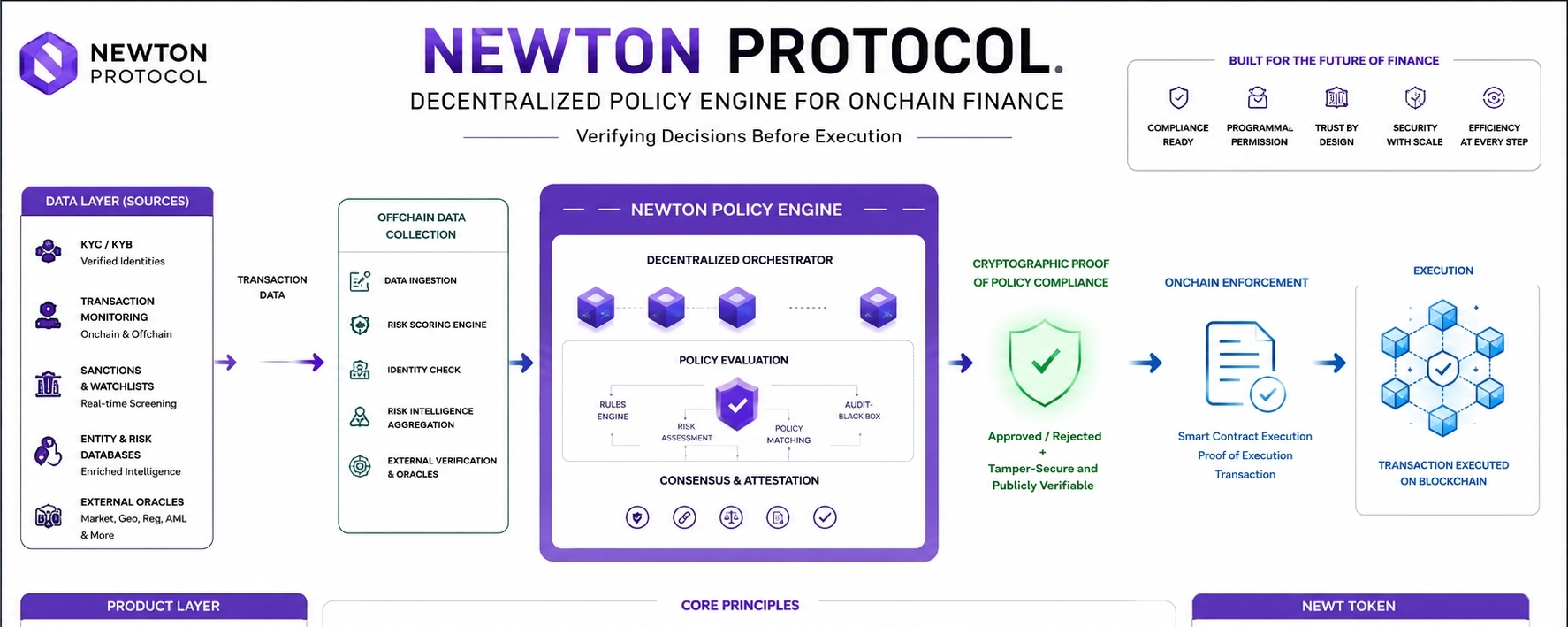
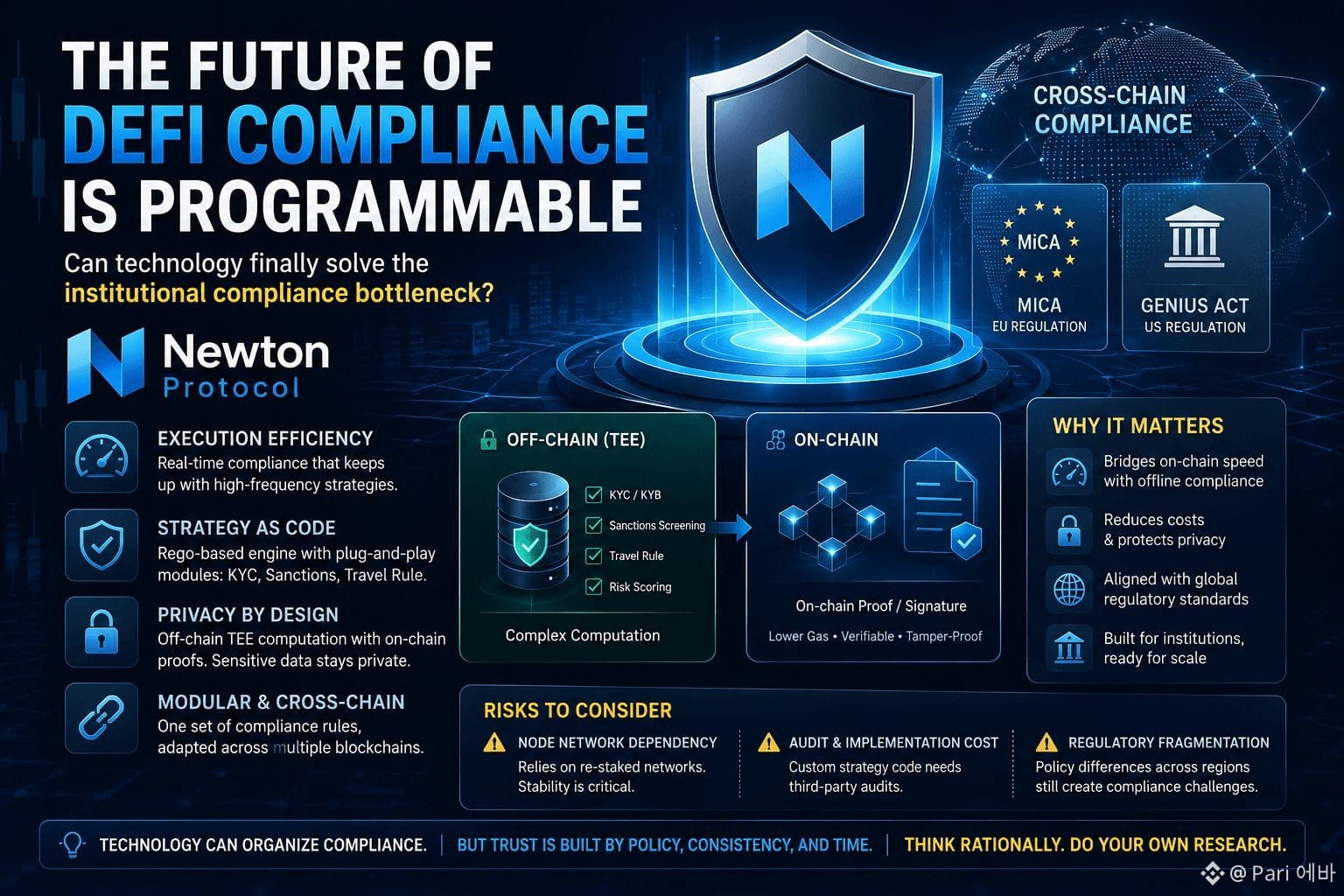
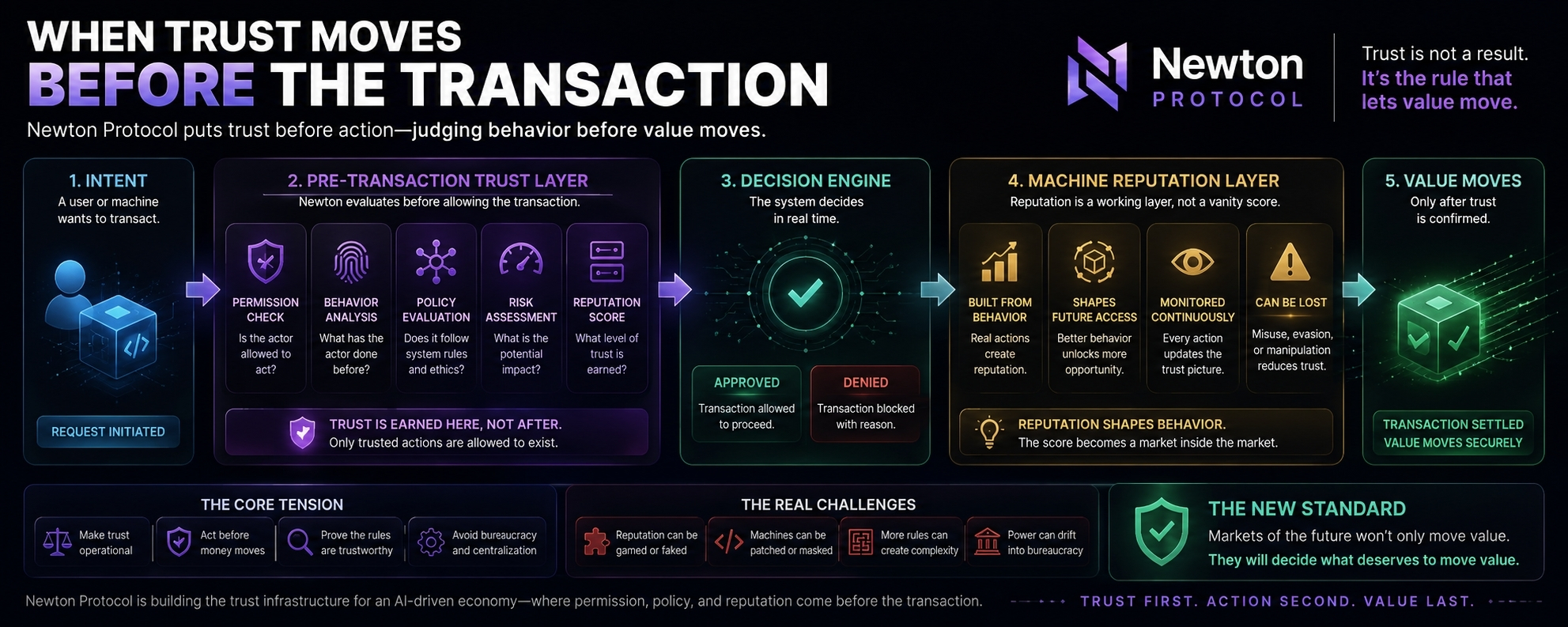
#newt 制度型DeFiでは、コンプライアンスを実行後のチェックポイントとして扱うことが多いですが、戦略がミリ秒単位で動作する場合、そのアプローチはまだ実用的なのでしょうか。コンプライアンスが常に取引の後に到着するとして、それは本当にリスクを減らせるのか、それともすでに起きたことをただ記録するだけなのでしょうか。この問いは、自動取引が加速するほど重要になってきます。
Newton Protocolは、遅い手作業のワークフローではなく、コンプライアンスをプログラム可能なルールに変えることで、この課題に別の方法で取り組みます。しかし、それは実際にはどういう意味なのでしょうか。ルールエンジンは単なるソフトウェアではなく、ポリシーのロジック、検証ステップ、権限の制御、自動化された意思決定を、1つの協調されたプロセスとして統合します。
人間のレビューにのみ頼るのではなく、あらかじめ定義された条件を、アクションが前に進む前に評価できます。
また、アーキテクチャは、信頼された環境を通じて重い計算をオンチェーン実行から切り離し、オンチェーンには暗号学的な証明のみを記録します。
これによりブロックチェーンのコストが下がり、機微なアイデンティティ情報の保護にも役立ちます。それでも、検証が外部ノードネットワークやカスタムのコンプライアンスロジックに依存する場合、インフラが変わったり、管轄によって規制が異なったりしたときに、どれだけの耐性があるのでしょうか。さらに大きな学びとして言えるのは、技術がコンプライアンスを整理することはできても、規制上の合意を生み出すことはできないという点かもしれません。
ポリシーが進化するにつれ、成功の本当の尺度は、より速い自動化そのものではなく、時間の経過とともに異なる法的環境の中でも信頼でき続けられる適応可能な枠組みになり得るかどうかにあるのかもしれません。
$NEWT $LDO $B3
@NewtonProtocol #Newt
Newton Protocolは、遅い手作業のワークフローではなく、コンプライアンスをプログラム可能なルールに変えることで、この課題に別の方法で取り組みます。しかし、それは実際にはどういう意味なのでしょうか。ルールエンジンは単なるソフトウェアではなく、ポリシーのロジック、検証ステップ、権限の制御、自動化された意思決定を、1つの協調されたプロセスとして統合します。
人間のレビューにのみ頼るのではなく、あらかじめ定義された条件を、アクションが前に進む前に評価できます。
また、アーキテクチャは、信頼された環境を通じて重い計算をオンチェーン実行から切り離し、オンチェーンには暗号学的な証明のみを記録します。
これによりブロックチェーンのコストが下がり、機微なアイデンティティ情報の保護にも役立ちます。それでも、検証が外部ノードネットワークやカスタムのコンプライアンスロジックに依存する場合、インフラが変わったり、管轄によって規制が異なったりしたときに、どれだけの耐性があるのでしょうか。さらに大きな学びとして言えるのは、技術がコンプライアンスを整理することはできても、規制上の合意を生み出すことはできないという点かもしれません。
ポリシーが進化するにつれ、成功の本当の尺度は、より速い自動化そのものではなく、時間の経過とともに異なる法的環境の中でも信頼でき続けられる適応可能な枠組みになり得るかどうかにあるのかもしれません。
$NEWT $LDO $B3
@NewtonProtocol #Newt
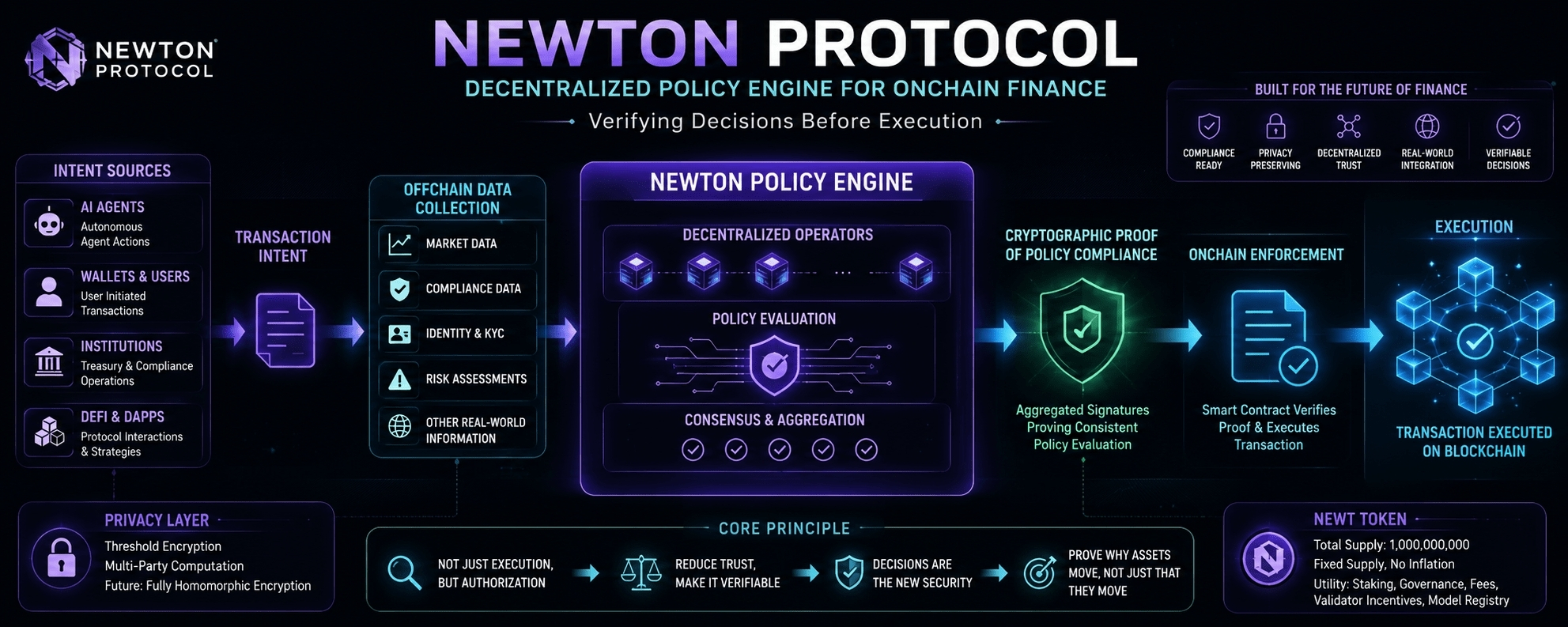
#newt $NEWT は一見するとおとなしく見えるトークンの一つですが、表の下で進んでいる物語は決して単純ではありません。
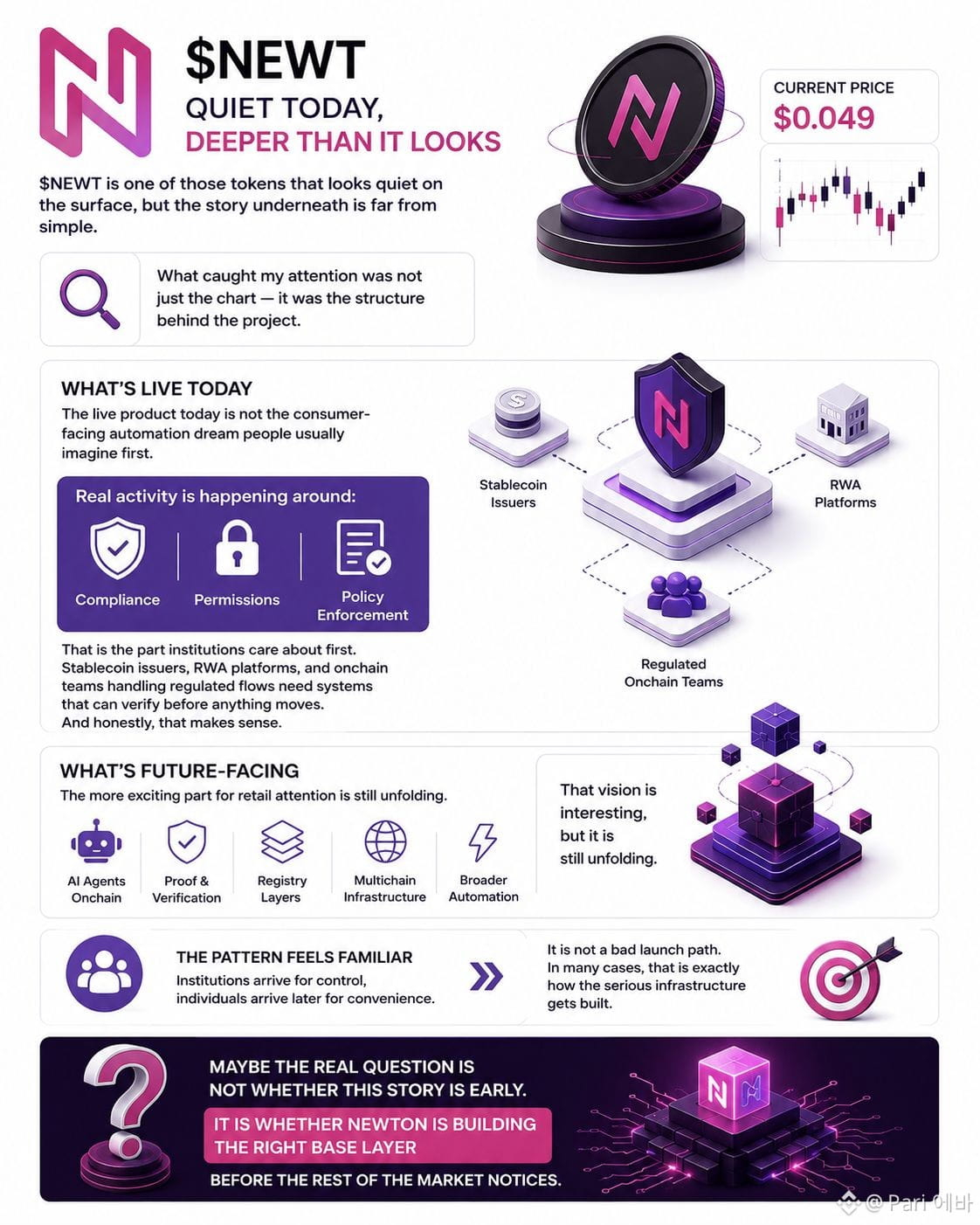
今日の価格はおよそ$0.049あたりで推移しており、私の目を引いたのはチャートだけではなく、プロジェクトの背景にある構造でした。Newton Protocolを掘り下げるほど、今日のライブなプロダクトが、一般に最初に想像されるような消費者向けの自動化ドリームではないことが、よりはっきりしてきました。$NEWT
現時点での実際の活動は、主にコンプライアンス、権限(パーミッション)、そしてポリシーの執行のあたりで進んでいるようです。機関(機関投資家や組織)が最初に気にするのは、この部分です。
ステーブルコインの発行体、RWAプラットフォーム、規制されたフローを扱うオンチェーンのチームは、何かが動く前に検証できるシステムを必要としています。
そして正直、それは理にかなっています。
まだ未来志向なのが、個人投資家の注目をより引きつける、より面白い部分です。つまり、証明付きでオンチェーン上のタスクを実行するAIエージェント、レジストリ層(登録レイヤー)、マルチチェーンのインフラ、そしてより広範な自動化ユースケースです。
そのビジョンは興味深いのですが、まだ展開の途上です。
だから、パターンとしては見覚えがあります。機関はまず統制のためにやって来て、個人は後から利便性目当てでやって来る。
悪いローンチの道筋ではありません。
多くの場合、まさにそうやって本格的なインフラが作られていきます。
本当の疑問が、「この話が早いのかどうか」ではなく、「市場の他の参加者が気づく前に、Newtonが適切な基盤レイヤーを築いているのかどうか」なのかもしれません。$NEWT
@NewtonProtocol #Newt
今日の価格はおよそ$0.049あたりで推移しており、私の目を引いたのはチャートだけではなく、プロジェクトの背景にある構造でした。Newton Protocolを掘り下げるほど、今日のライブなプロダクトが、一般に最初に想像されるような消費者向けの自動化ドリームではないことが、よりはっきりしてきました。$NEWT
現時点での実際の活動は、主にコンプライアンス、権限(パーミッション)、そしてポリシーの執行のあたりで進んでいるようです。機関(機関投資家や組織)が最初に気にするのは、この部分です。
ステーブルコインの発行体、RWAプラットフォーム、規制されたフローを扱うオンチェーンのチームは、何かが動く前に検証できるシステムを必要としています。
そして正直、それは理にかなっています。
まだ未来志向なのが、個人投資家の注目をより引きつける、より面白い部分です。つまり、証明付きでオンチェーン上のタスクを実行するAIエージェント、レジストリ層(登録レイヤー)、マルチチェーンのインフラ、そしてより広範な自動化ユースケースです。
そのビジョンは興味深いのですが、まだ展開の途上です。
だから、パターンとしては見覚えがあります。機関はまず統制のためにやって来て、個人は後から利便性目当てでやって来る。
悪いローンチの道筋ではありません。
多くの場合、まさにそうやって本格的なインフラが作られていきます。
本当の疑問が、「この話が早いのかどうか」ではなく、「市場の他の参加者が気づく前に、Newtonが適切な基盤レイヤーを築いているのかどうか」なのかもしれません。$NEWT
@NewtonProtocol #Newt
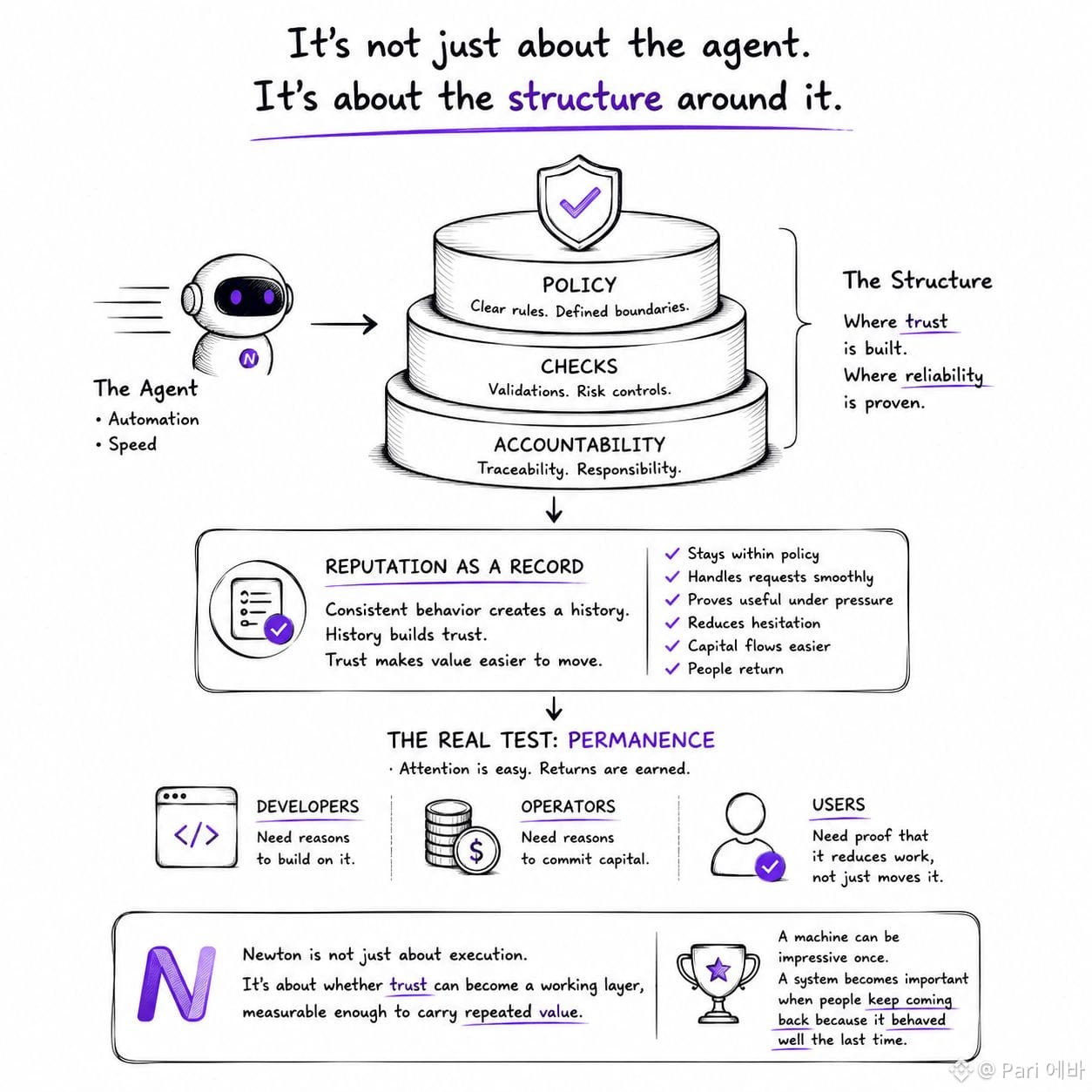
#newt ニュートンのことが、間違った端から理解されているように、ずっと考えています。人々はまず、エージェントそのもの、オートメーション、スピードを見ます。
しかし本当に重要なのは、エージェントの周囲にある構造です。つまり、ポリシー、チェック、そして説明責任です。
そこではじめて、機械は単なる“きれいなデモ”で終わらず、市場が実際に価値として信頼し得るものに見え始めます。
この変化は、問いそのものを変えます。もはや問題は、システムが素早く行動できるかどうかだけではありません。ルールの中で、何度も何度も行動できるか、そして後から他の誰かが片づけなければならない“ノイズ”を作らないかが問われるのです。
そういう意味で、ニュートンは単なる実行の話ではありません。実行を、再利用できるほど確実なものにできるかどうかの話です。
だからこそ、ここでは評判が中心に感じられます。ブランディングとしての評判ではなく、ふるまいの記録としての評判です。
もし機械が一貫してポリシーの範囲内にとどまり、摩擦なく依頼を処理し、プレッシャーの下でも役に立つことを示すなら、その歴史が経済的に意味を持ち始めます。ためらいを減らします。資本の配分がしやすくなります。
それは、戻ってくる理由を生みます。
しかし難しいのは永続性です。システムは、話が新しく聞こえるときには、すぐに注目を集めることができます。
本当の試練は、熱が冷めた後も、その活動がまた続いて戻ってくるかどうかです。
開発者には、それに積み上げるための理由が必要です。運用者には、資本を投じるための理由が必要です。利用者には、そのシステムが単に作業を移し替えるのではなく、仕事を減らしてくれるという証拠が必要です。だからこそ、私はニュートンのより深い物語はスピードだけではないと考えています。
信頼が、機能する層になれるかどうか、つまり、繰り返しの価値を支えるのに十分測定可能なものになれるかどうかです。
一度だけなら、機械は印象的になれます。
人々が、その前回きちんと振る舞ってくれたからという理由で、また戻ってくるようになったとき、システムは重要になります。
$NEWT $OP $B @NewtonProtocol #Newt
しかし本当に重要なのは、エージェントの周囲にある構造です。つまり、ポリシー、チェック、そして説明責任です。
そこではじめて、機械は単なる“きれいなデモ”で終わらず、市場が実際に価値として信頼し得るものに見え始めます。
この変化は、問いそのものを変えます。もはや問題は、システムが素早く行動できるかどうかだけではありません。ルールの中で、何度も何度も行動できるか、そして後から他の誰かが片づけなければならない“ノイズ”を作らないかが問われるのです。
そういう意味で、ニュートンは単なる実行の話ではありません。実行を、再利用できるほど確実なものにできるかどうかの話です。
だからこそ、ここでは評判が中心に感じられます。ブランディングとしての評判ではなく、ふるまいの記録としての評判です。
もし機械が一貫してポリシーの範囲内にとどまり、摩擦なく依頼を処理し、プレッシャーの下でも役に立つことを示すなら、その歴史が経済的に意味を持ち始めます。ためらいを減らします。資本の配分がしやすくなります。
それは、戻ってくる理由を生みます。
しかし難しいのは永続性です。システムは、話が新しく聞こえるときには、すぐに注目を集めることができます。
本当の試練は、熱が冷めた後も、その活動がまた続いて戻ってくるかどうかです。
開発者には、それに積み上げるための理由が必要です。運用者には、資本を投じるための理由が必要です。利用者には、そのシステムが単に作業を移し替えるのではなく、仕事を減らしてくれるという証拠が必要です。だからこそ、私はニュートンのより深い物語はスピードだけではないと考えています。
信頼が、機能する層になれるかどうか、つまり、繰り返しの価値を支えるのに十分測定可能なものになれるかどうかです。
一度だけなら、機械は印象的になれます。
人々が、その前回きちんと振る舞ってくれたからという理由で、また戻ってくるようになったとき、システムは重要になります。
$NEWT $OP $B @NewtonProtocol #Newt
私は「Newton Protocol」に入って、より速いAI自動化に関する別の会話がまた始まるのかと思いました。出てきたとき、考えていたのはまったく別のことでした。
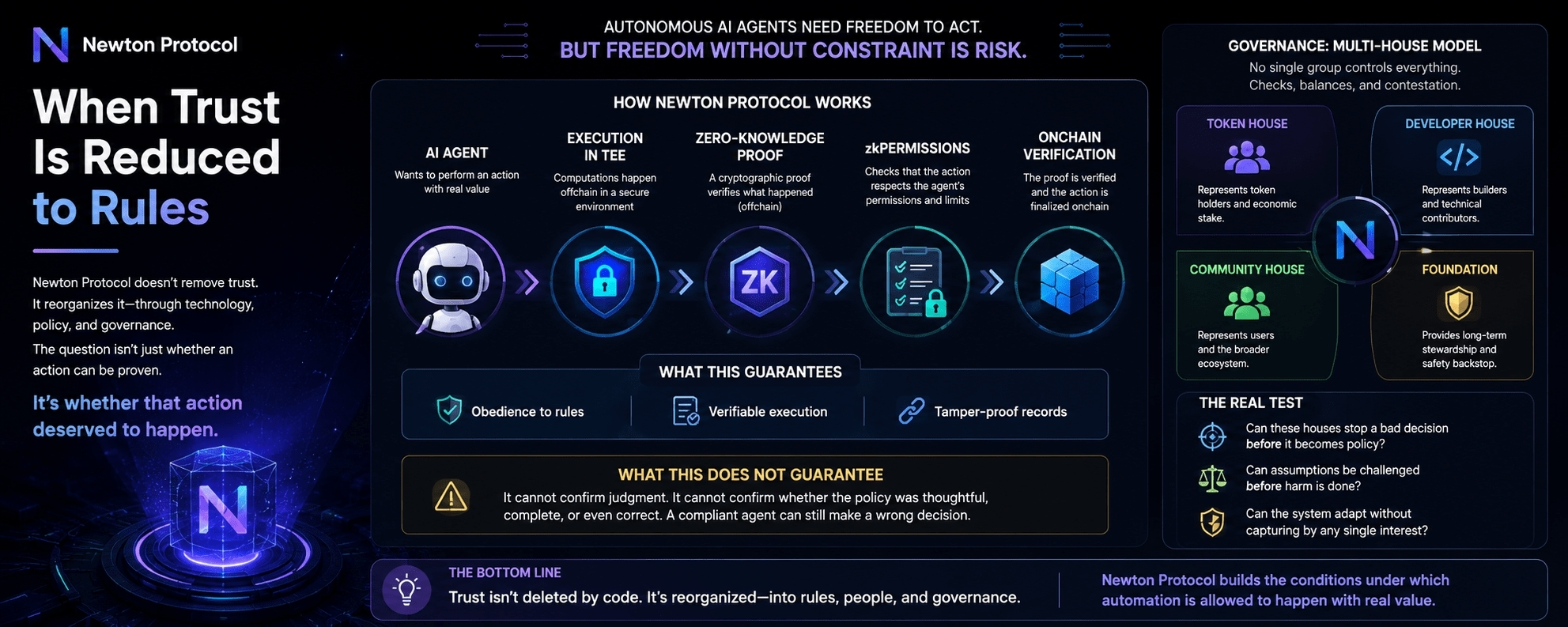
読むほどに、Newtonは実は「AIエージェントは行動できるのか?」と問うているのではなく、「AIエージェントは、行動する前に何を許されるべきなのか?」と問うているのだと気づきました。
この違いは重要です。業界は「検証可能(verifiable)」を、勝手に「正しい(correct)」という意味に結びつけすぎていると思います。違います。
暗号学的な証明は、エージェントが書かれた権限どおりに正確に従ったことを示せます。しかし、その判断が賢かったこと、あるいはポリシー自体があらゆるケースの抜けをすべて取り込んでいることまでは証明できません。
私にとって、それこそが本当の難題が始まる場所です。
信頼が人間からポリシーへ移されるなら、そのポリシーはシステムの中でも最も重要な構成要素の一つになります。そしてガバナンスがそれらのポリシーを形作る責任を負うなら、ガバナンスはもはや「投票」だけの話ではありません。システムが許されてよい「どんな間違いをする可能性があるのか」を決めることなのです。
だからこそ、Newton Protocolが私の関心を引きました。完璧な自動化を約束するからではなく、業界がまだ十分に向き合い始めていない、より深い問いをあえて露出させているからです。
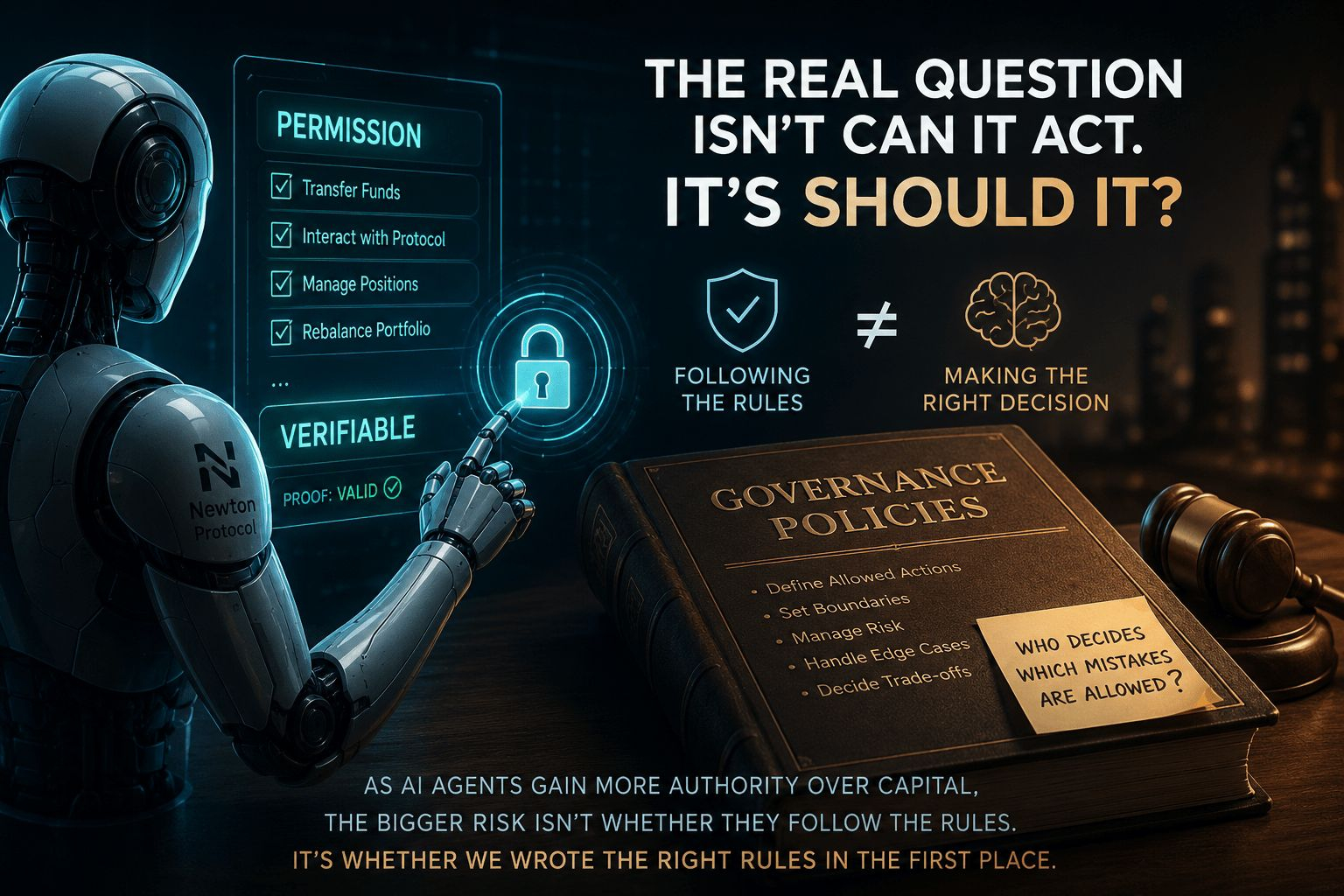
AIエージェントが資本に対する権限をより多く持つようになるにつれて、最大のリスクが「ルールに従うかどうか」だとは思いません。
より大きな問いは、最初に「正しいルール」を書けていたのかどうかだと思います。
$EVAA
$OGN
$NEWT
@NewtonProtocol #Newt #newt
読むほどに、Newtonは実は「AIエージェントは行動できるのか?」と問うているのではなく、「AIエージェントは、行動する前に何を許されるべきなのか?」と問うているのだと気づきました。
この違いは重要です。業界は「検証可能(verifiable)」を、勝手に「正しい(correct)」という意味に結びつけすぎていると思います。違います。
暗号学的な証明は、エージェントが書かれた権限どおりに正確に従ったことを示せます。しかし、その判断が賢かったこと、あるいはポリシー自体があらゆるケースの抜けをすべて取り込んでいることまでは証明できません。
私にとって、それこそが本当の難題が始まる場所です。
信頼が人間からポリシーへ移されるなら、そのポリシーはシステムの中でも最も重要な構成要素の一つになります。そしてガバナンスがそれらのポリシーを形作る責任を負うなら、ガバナンスはもはや「投票」だけの話ではありません。システムが許されてよい「どんな間違いをする可能性があるのか」を決めることなのです。
だからこそ、Newton Protocolが私の関心を引きました。完璧な自動化を約束するからではなく、業界がまだ十分に向き合い始めていない、より深い問いをあえて露出させているからです。
AIエージェントが資本に対する権限をより多く持つようになるにつれて、最大のリスクが「ルールに従うかどうか」だとは思いません。
より大きな問いは、最初に「正しいルール」を書けていたのかどうかだと思います。
$EVAA
$OGN
$NEWT
@NewtonProtocol #Newt #newt
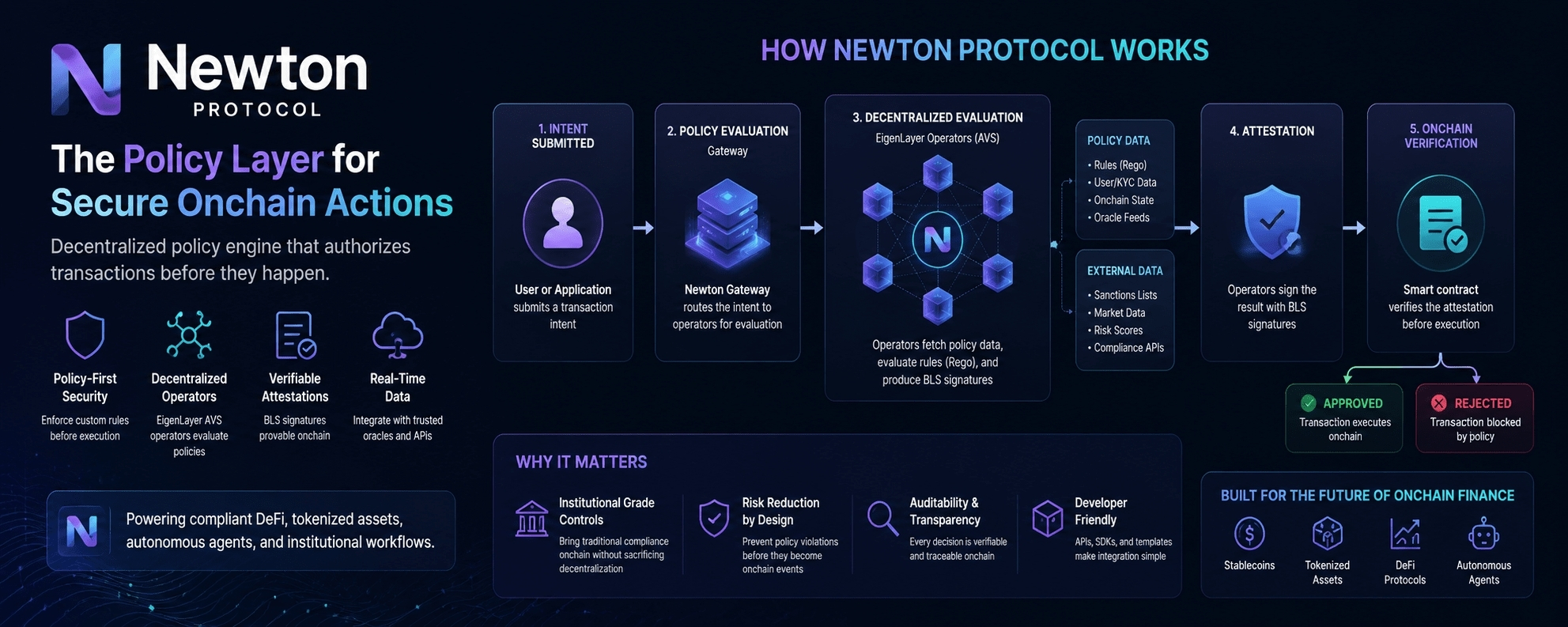
#newt 私はいつも、ひとつのシンプルな問いに立ち返ります。ブロックチェーンのシステムが価値を移せるほど十分に成熟しながら、同時に「それを行うべきかどうか」を判断するほど賢くはない場合、いったい何が起きるのでしょうか?
だからこそ、Newton Protocolは私の目にとまります。大々的に騒いだり、派手に見せようとしているわけではありません。
オンチェーン上の行動の前に立ち、ポリシーレイヤーを追加しようとしているのです。実行が単なる自動ではなく、「管理されたもの」になるように。
要するに、誰が行動できるのか、何ができるのか、そしてシステムがそれを許可する際のルールを、定義する手助けをしたいのです。
それは役に立ちそうですが、同時に問題そのものも変わります。
ポリシーがフローの一部になると、システムはもはやスピードだけで評価されなくなります。
明確さ、信頼性、そして現実のプレッシャーにどれだけうまく対処できるかで評価されるのです。
良い設計は混乱を減らせます。
一方で弱い設計は、新たな故障ポイントを生み出すことがあります。しかも、それが通常のプロセスに見えるため、気づきにくくなる。
私が最も興味を惹かれるのは、まさにその点です。Newton Protocolは、単に「どうすればもっと速く動けるか」を問うているだけではありません。「どうすれば判断を伴って動けるか」を問うています。$NEWT $HUMA $TRX @NewtonProtocol #Newt
だからこそ、Newton Protocolは私の目にとまります。大々的に騒いだり、派手に見せようとしているわけではありません。
オンチェーン上の行動の前に立ち、ポリシーレイヤーを追加しようとしているのです。実行が単なる自動ではなく、「管理されたもの」になるように。
要するに、誰が行動できるのか、何ができるのか、そしてシステムがそれを許可する際のルールを、定義する手助けをしたいのです。
それは役に立ちそうですが、同時に問題そのものも変わります。
ポリシーがフローの一部になると、システムはもはやスピードだけで評価されなくなります。
明確さ、信頼性、そして現実のプレッシャーにどれだけうまく対処できるかで評価されるのです。
良い設計は混乱を減らせます。
一方で弱い設計は、新たな故障ポイントを生み出すことがあります。しかも、それが通常のプロセスに見えるため、気づきにくくなる。
私が最も興味を惹かれるのは、まさにその点です。Newton Protocolは、単に「どうすればもっと速く動けるか」を問うているだけではありません。「どうすれば判断を伴って動けるか」を問うています。$NEWT $HUMA $TRX @NewtonProtocol #Newt
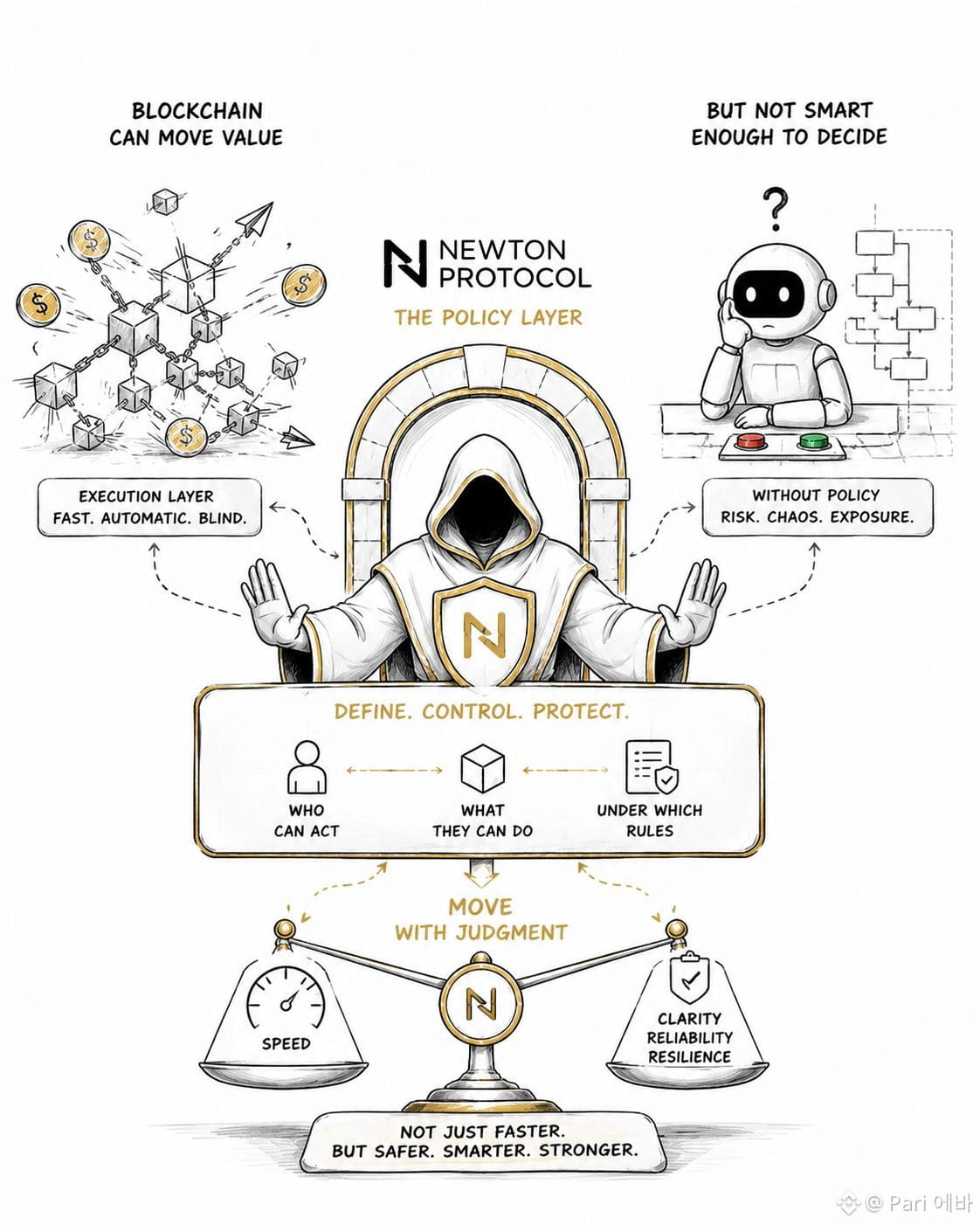
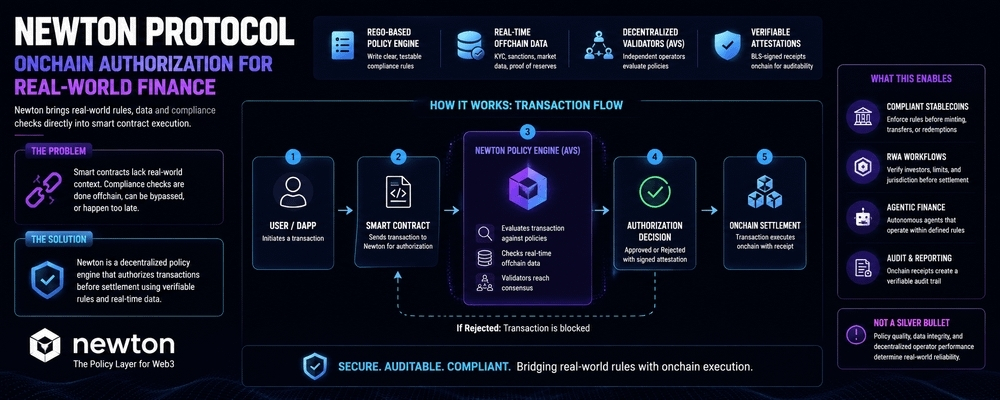
#newt 今日、私はさまざまな企業が社内の承認手続きをどう扱っているかを見直していて、ある点がずっと気になりました。
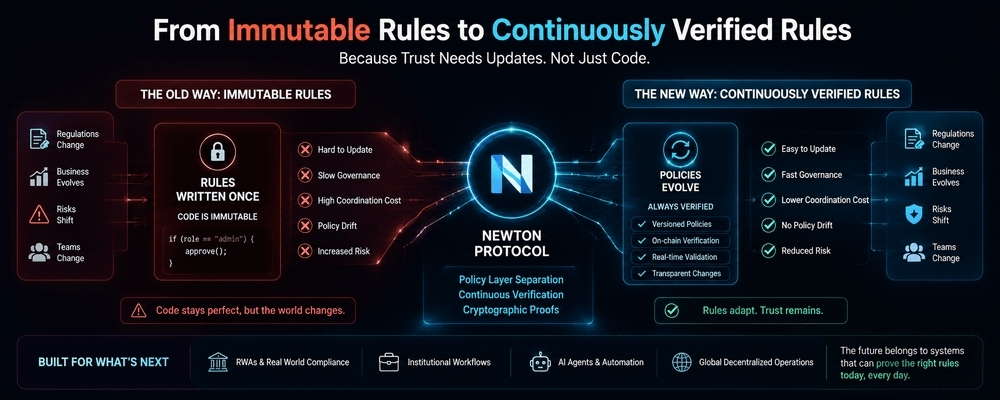
ほとんどの企業は、ずっと同じままで永続するルールに頼っていません。数か月ごとに誰かが権限を更新したり、コンプライアンス要件を調整したり、誰が何を承認できるかを変えたりします。
誰もそれを弱点とは見ていません。それは現実に合わせてビジネスの整合性を保つための一部に過ぎないのです。
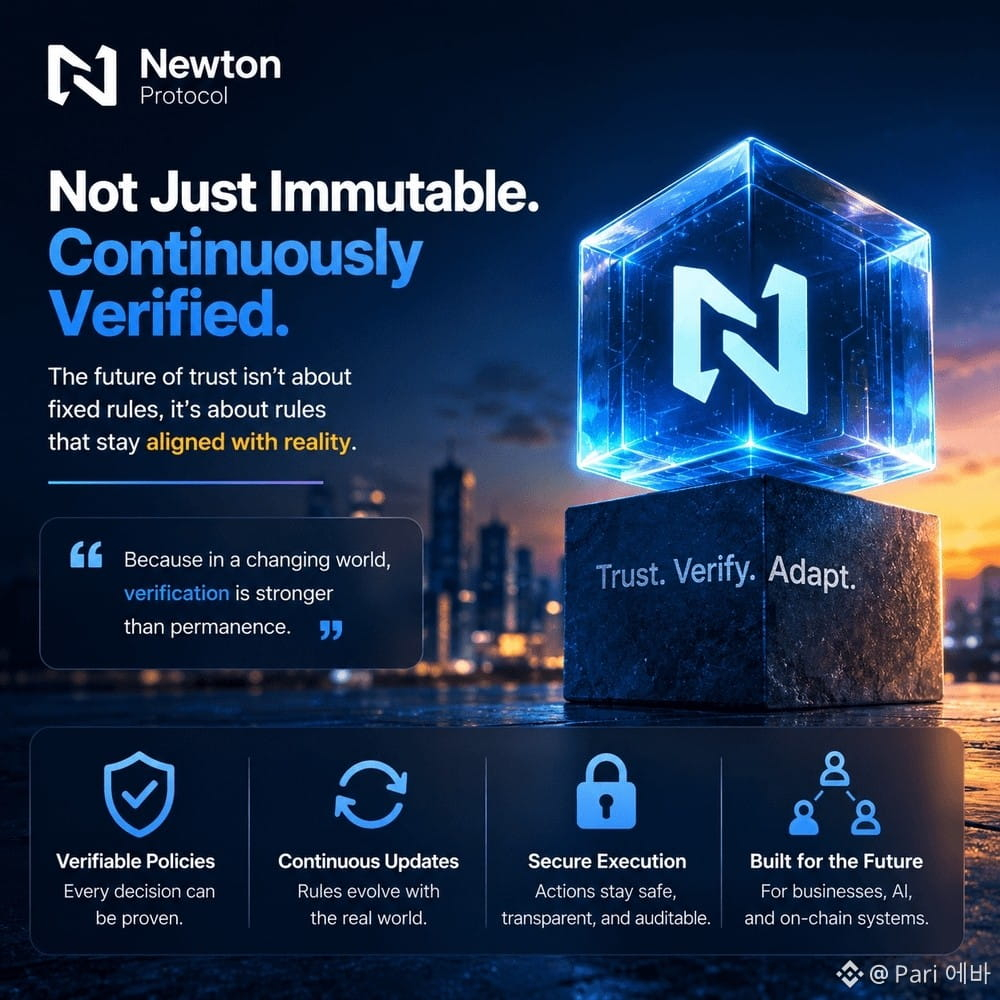
そこで私は、Newton Protocolを別の角度から見てみました。注目したのは、ルールを恒久に固定するという発想ではありません。重要なあらゆる決定を継続的に検証可能にするという発想です。
この2つには大きな違いがあります。
2年前に書かれたルールは今も存在しているかもしれませんが、それは今の規制、リスク、あるいは組織構造をまだ反映しているのでしょうか? それのほうがはるかに難しい問いです。
多くの場合、実際の難しさはオンチェーンで処理を実行することではなく、そのアクションの背後にある認可が、いまも正しいものであると証明することにあります。
だからこそ、私はNewtonのアプローチが興味深いと思います。それは、会話の一部を取引速度から「決定の健全性」へと移すのです。
ソフトウェア、組織、そしてAIシステムがより自律的な判断を始めるにつれ、ある行為が許可されている理由を継続的に検証することは、「それが行われた記録を残す」ことと同じくらい重要になっていくかもしれません。
考えれば考えるほど、次のブロックチェーンの進化は「決して変わらない仕組みを作る」ことではないのではないか、と感じます。人々に「信頼をやめるよう」求めることなく適応できる仕組みを作ることかもしれません。
それは、私は今後も繰り返し考え続けそうな問いです。
$TLM $CAP $NEWT #Newt @NewtonProtocol
ほとんどの企業は、ずっと同じままで永続するルールに頼っていません。数か月ごとに誰かが権限を更新したり、コンプライアンス要件を調整したり、誰が何を承認できるかを変えたりします。
誰もそれを弱点とは見ていません。それは現実に合わせてビジネスの整合性を保つための一部に過ぎないのです。
そこで私は、Newton Protocolを別の角度から見てみました。注目したのは、ルールを恒久に固定するという発想ではありません。重要なあらゆる決定を継続的に検証可能にするという発想です。
この2つには大きな違いがあります。
2年前に書かれたルールは今も存在しているかもしれませんが、それは今の規制、リスク、あるいは組織構造をまだ反映しているのでしょうか? それのほうがはるかに難しい問いです。
多くの場合、実際の難しさはオンチェーンで処理を実行することではなく、そのアクションの背後にある認可が、いまも正しいものであると証明することにあります。
だからこそ、私はNewtonのアプローチが興味深いと思います。それは、会話の一部を取引速度から「決定の健全性」へと移すのです。
ソフトウェア、組織、そしてAIシステムがより自律的な判断を始めるにつれ、ある行為が許可されている理由を継続的に検証することは、「それが行われた記録を残す」ことと同じくらい重要になっていくかもしれません。
考えれば考えるほど、次のブロックチェーンの進化は「決して変わらない仕組みを作る」ことではないのではないか、と感じます。人々に「信頼をやめるよう」求めることなく適応できる仕組みを作ることかもしれません。
それは、私は今後も繰り返し考え続けそうな問いです。
$TLM $CAP $NEWT #Newt @NewtonProtocol
ログインして、さらにコンテンツを読む