

Marketbtc
2k 投稿
Marketbtc
報告
ユーザーをブロック
5.3K+ フォロー
2.9K+ フォロワー
1.0K+ いいね
投稿
すべて
引用
動画
ライブ
·
--
ジュムア・ムバラク!🌙✨
あなたにも金曜日のご挨拶を - 良いバイブス、素晴らしい一日、強い心!4/9/2026
السلام علیکم ورحمتہ اللہ وبرکاتہ
おはようございます、金曜日おめでとう
今日という日は、あなたのために計り知れない祝福を運んでくる - アーミーン、ヤールッブ・アル=アーラミーン_ 🤲
祝福され、素晴らしい金曜日をお過ごしください!
ジュムア・ムバラク!🌙✨
あなたにも金曜日のご挨拶を - 良いバイブス、素晴らしい一日、強い心!4/9/2026
السلام علیکم ورحمتہ اللہ وبرکاتہ
おはようございます、金曜日おめでとう
今日という日は、あなたのために計り知れない祝福を運んでくる - アーミーン、ヤールッブ・アル=アーラミーン_ 🤲
祝福され、素晴らしい金曜日をお過ごしください!
あなたにも金曜日のご挨拶を - 良いバイブス、素晴らしい一日、強い心!4/9/2026
السلام علیکم ورحمتہ اللہ وبرکاتہ
おはようございます、金曜日おめでとう
今日という日は、あなたのために計り知れない祝福を運んでくる - アーミーン、ヤールッブ・アル=アーラミーン_ 🤲
祝福され、素晴らしい金曜日をお過ごしください!

10
·
--
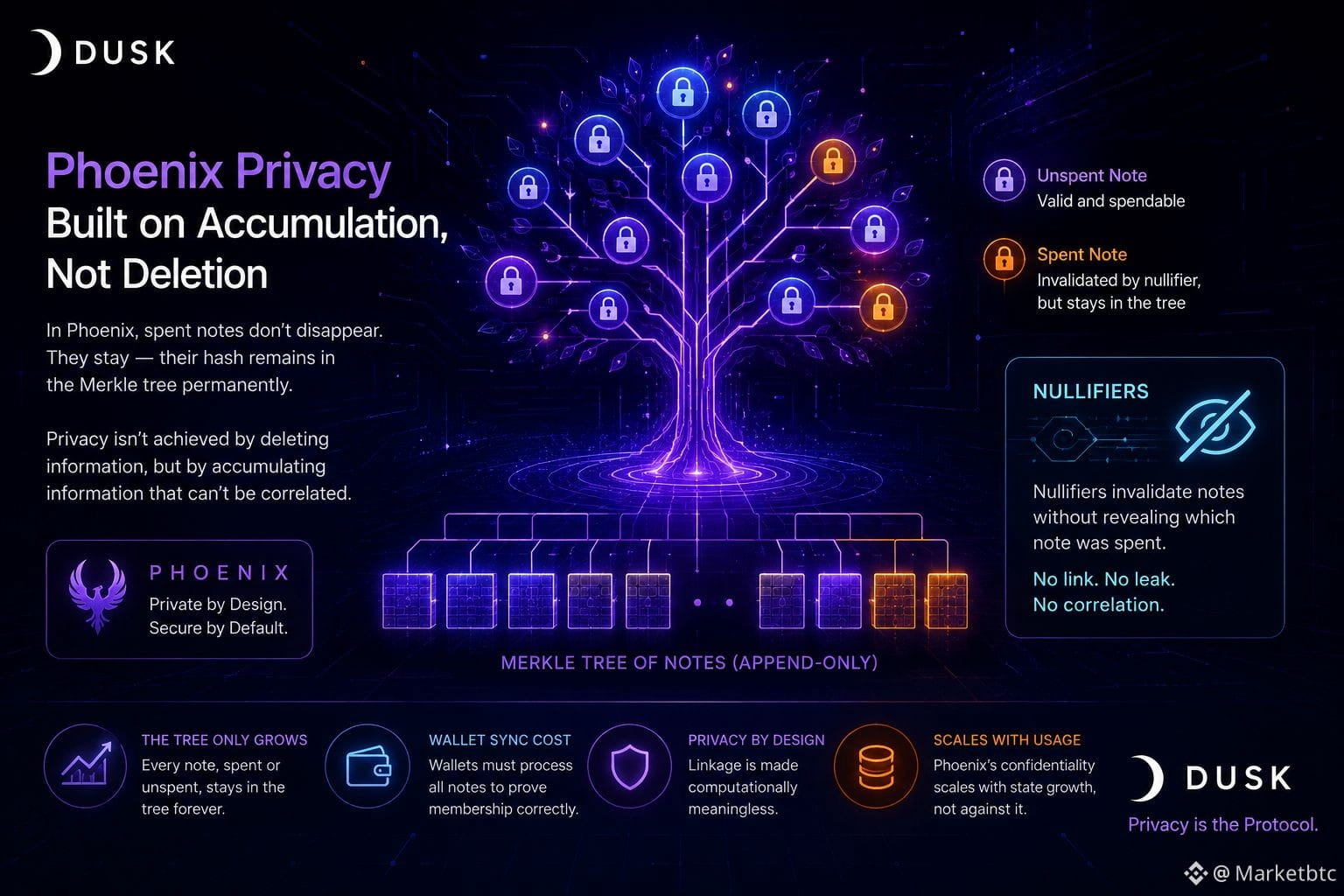
私は、フェニックスが使い終わったノート(spent notes)をどう扱うかを見ていて、無効化子(nullifier)が古いUTXOを静かに無効にして、そこで話が終わるだけだと思っていました。透明なチェーンがあなたに与えるのは、そういう思考モデルです。つまり、支払い(spend)が起きる→記録が更新される→古いデータは無関係になる、という流れ。
しかし、ここで起きているのはそれとは少し違います。古いノートは消えません。ハッシュはノートのメルクルツリーに永久に残り続けます——使われたかどうかにかかわらず、その葉(leaf)はそこにあります。ツリーは追記専用(append-only)であり、ネットワークは「本当の支払い(real spends)かどうか」をリークすることなく、特定のノートだけを選択的に刈り込む(prune)ことができないからです。ノートを今後無効化するのは無効化子で、さらにそれは、観測者が無効化子を、その元になったノートに結びつけられないように意図的に設計されています。
そこで立ち止まりました。ここでのプライバシーは、情報を削除することで実現されているのではなく、相関付けできない情報を積み上げることで実現されているのです。ツリーはただ増えるだけです。ウォレットがゼロから同期するとき、関心のある「実際の未使用残高(unspent balance)」よりも大きいノート集合を歩く必要があり——使われたノートは、そのウォレットがメンバーシップを正しく証明するために処理しなければならない死んだ(dead weight)負荷になります。
これは必ずしも欠陥というわけではありません。リンク(紐づけ)を、法的に禁じるのではなく、計算的に意味を成さなくするためのコストだからです。ですが、それはつまりフェニックスの機密性が「状態(state)の増加に対して」スケールしてしまう——状態の増加に逆らわない——ということでもあります。利用が積み上がっていくにつれて、注視すべき点です。#dusk $DUSK @Dusk_Foundation
私は、フェニックスが使い終わったノート(spent notes)をどう扱うかを見ていて、無効化子(nullifier)が古いUTXOを静かに無効にして、そこで話が終わるだけだと思っていました。透明なチェーンがあなたに与えるのは、そういう思考モデルです。つまり、支払い(spend)が起きる→記録が更新される→古いデータは無関係になる、という流れ。
しかし、ここで起きているのはそれとは少し違います。古いノートは消えません。ハッシュはノートのメルクルツリーに永久に残り続けます——使われたかどうかにかかわらず、その葉(leaf)はそこにあります。ツリーは追記専用(append-only)であり、ネットワークは「本当の支払い(real spends)かどうか」をリークすることなく、特定のノートだけを選択的に刈り込む(prune)ことができないからです。ノートを今後無効化するのは無効化子で、さらにそれは、観測者が無効化子を、その元になったノートに結びつけられないように意図的に設計されています。
そこで立ち止まりました。ここでのプライバシーは、情報を削除することで実現されているのではなく、相関付けできない情報を積み上げることで実現されているのです。ツリーはただ増えるだけです。ウォレットがゼロから同期するとき、関心のある「実際の未使用残高(unspent balance)」よりも大きいノート集合を歩く必要があり——使われたノートは、そのウォレットがメンバーシップを正しく証明するために処理しなければならない死んだ(dead weight)負荷になります。
これは必ずしも欠陥というわけではありません。リンク(紐づけ)を、法的に禁じるのではなく、計算的に意味を成さなくするためのコストだからです。ですが、それはつまりフェニックスの機密性が「状態(state)の増加に対して」スケールしてしまう——状態の増加に逆らわない——ということでもあります。利用が積み上がっていくにつれて、注視すべき点です。#dusk $DUSK @Dusk
しかし、ここで起きているのはそれとは少し違います。古いノートは消えません。ハッシュはノートのメルクルツリーに永久に残り続けます——使われたかどうかにかかわらず、その葉(leaf)はそこにあります。ツリーは追記専用(append-only)であり、ネットワークは「本当の支払い(real spends)かどうか」をリークすることなく、特定のノートだけを選択的に刈り込む(prune)ことができないからです。ノートを今後無効化するのは無効化子で、さらにそれは、観測者が無効化子を、その元になったノートに結びつけられないように意図的に設計されています。
そこで立ち止まりました。ここでのプライバシーは、情報を削除することで実現されているのではなく、相関付けできない情報を積み上げることで実現されているのです。ツリーはただ増えるだけです。ウォレットがゼロから同期するとき、関心のある「実際の未使用残高(unspent balance)」よりも大きいノート集合を歩く必要があり——使われたノートは、そのウォレットがメンバーシップを正しく証明するために処理しなければならない死んだ(dead weight)負荷になります。
これは必ずしも欠陥というわけではありません。リンク(紐づけ)を、法的に禁じるのではなく、計算的に意味を成さなくするためのコストだからです。ですが、それはつまりフェニックスの機密性が「状態(state)の増加に対して」スケールしてしまう——状態の増加に逆らわない——ということでもあります。利用が積み上がっていくにつれて、注視すべき点です。#dusk $DUSK @Dusk
58
·
--
翻訳参照
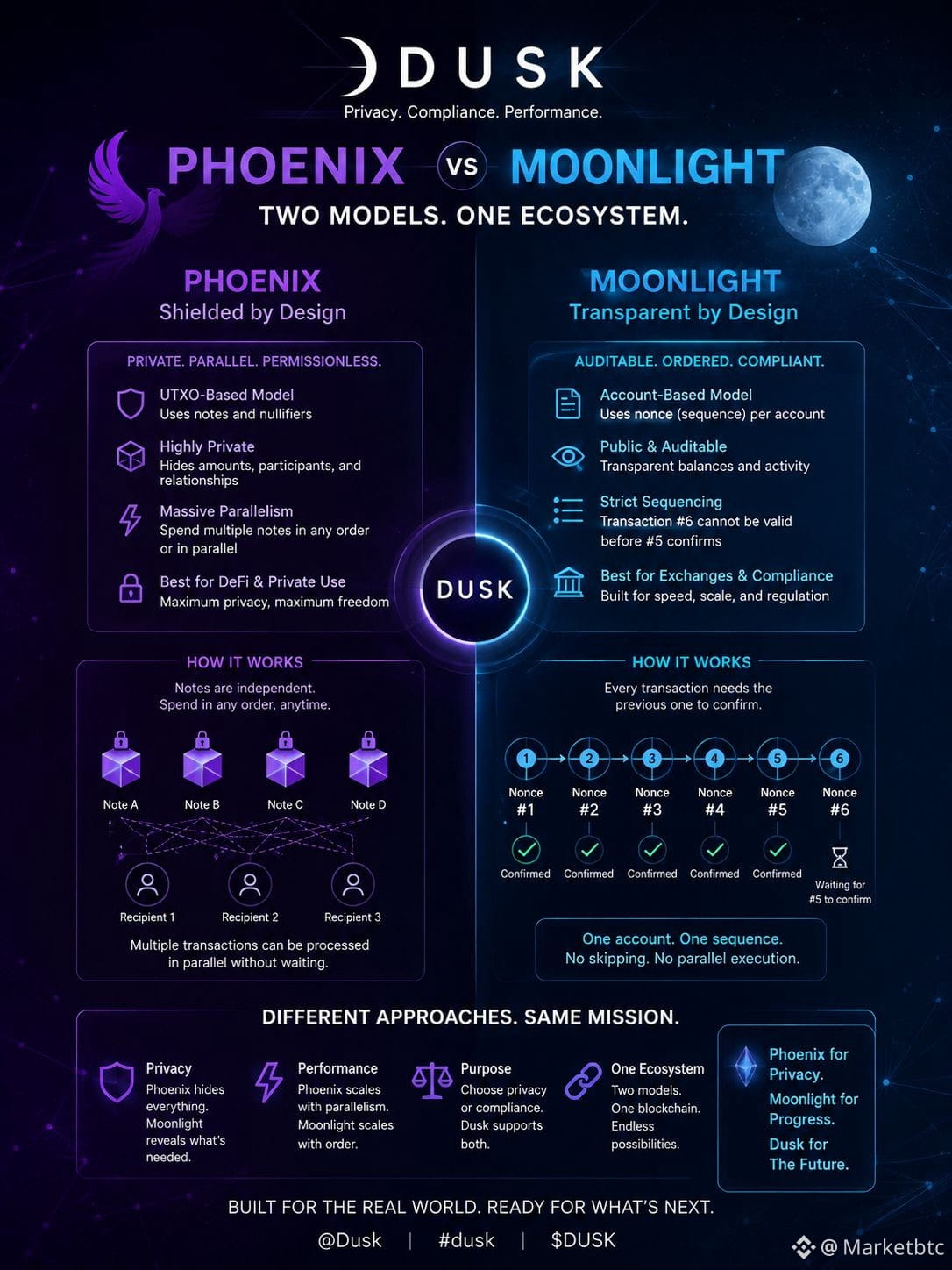
I was digging through Dusk's wallet provider docs, looking at how Moonlight transfers get submitted, and noticed the response includes a nonce alongside the hash. Small detail, but it stuck with me.
Phoenix, Dusk's shielded model, uses UTXO-style notes with nullifiers. Two notes owned by the same person are independent — you can spend them in any order, even in parallel, and the chain doesn't care which one lands first.
Moonlight breaks that. It's account-based, so every transaction increments a counter tied to your account. Wait — that means transaction #6 literally cannot be valid before #5 confirms. Not "shouldn't," can't. The protocol enforces strict sequencing.
That's where it gets interesting. Moonlight exists specifically for speed and compliance — exchange integrations, high-TPS use cases. But the thing that makes it auditable (a clean, ordered public ledger of account activity) is the same thing that makes it serially bottlenecked per account. You can't fire off five Moonlight transfers from one wallet simultaneously and expect them all through cleanly. Phoenix, ironically, has more parallelism precisely because it hides more.
I don't think this is a flaw — it's a reasonable trade for auditability. But it does mean "Moonlight = faster" isn't quite the full picture at the account level.
@Dusk_Foundation #dusk $DUSK
/Create a graphic design image background full screen
I was digging through Dusk's wallet provider docs, looking at how Moonlight transfers get submitted, and noticed the response includes a nonce alongside the hash. Small detail, but it stuck with me.
Phoenix, Dusk's shielded model, uses UTXO-style notes with nullifiers. Two notes owned by the same person are independent — you can spend them in any order, even in parallel, and the chain doesn't care which one lands first.
Moonlight breaks that. It's account-based, so every transaction increments a counter tied to your account. Wait — that means transaction #6 literally cannot be valid before #5 confirms. Not "shouldn't," can't. The protocol enforces strict sequencing.
That's where it gets interesting. Moonlight exists specifically for speed and compliance — exchange integrations, high-TPS use cases. But the thing that makes it auditable (a clean, ordered public ledger of account activity) is the same thing that makes it serially bottlenecked per account. You can't fire off five Moonlight transfers from one wallet simultaneously and expect them all through cleanly. Phoenix, ironically, has more parallelism precisely because it hides more.
I don't think this is a flaw — it's a reasonable trade for auditability. But it does mean "Moonlight = faster" isn't quite the full picture at the account level.
@Dusk #dusk $DUSK
/Create a graphic design image background full screen
Phoenix, Dusk's shielded model, uses UTXO-style notes with nullifiers. Two notes owned by the same person are independent — you can spend them in any order, even in parallel, and the chain doesn't care which one lands first.
Moonlight breaks that. It's account-based, so every transaction increments a counter tied to your account. Wait — that means transaction #6 literally cannot be valid before #5 confirms. Not "shouldn't," can't. The protocol enforces strict sequencing.
That's where it gets interesting. Moonlight exists specifically for speed and compliance — exchange integrations, high-TPS use cases. But the thing that makes it auditable (a clean, ordered public ledger of account activity) is the same thing that makes it serially bottlenecked per account. You can't fire off five Moonlight transfers from one wallet simultaneously and expect them all through cleanly. Phoenix, ironically, has more parallelism precisely because it hides more.
I don't think this is a flaw — it's a reasonable trade for auditability. But it does mean "Moonlight = faster" isn't quite the full picture at the account level.
@Dusk #dusk $DUSK
/Create a graphic design image background full screen
67
·
--
弱気相場
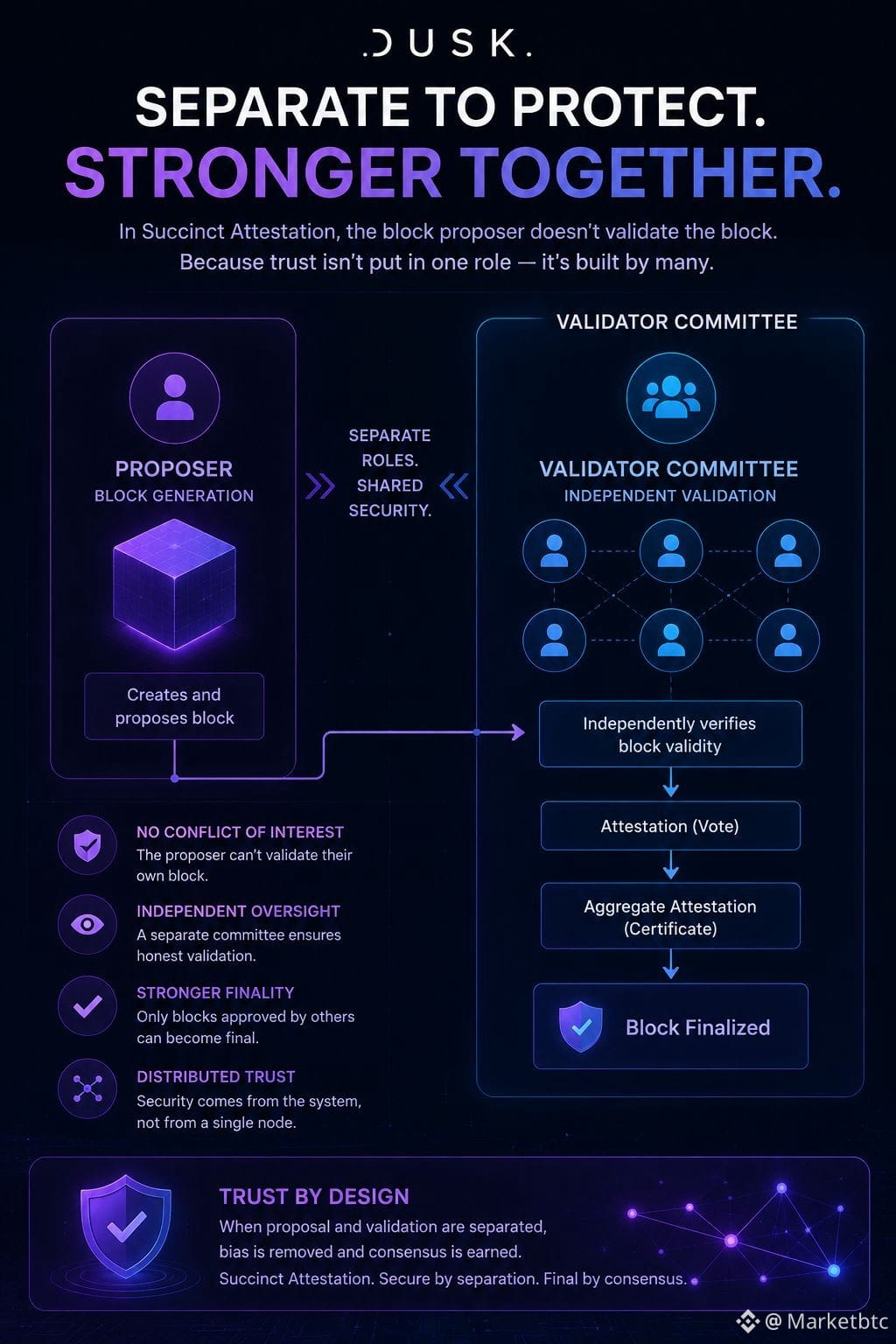
#dusk $DUSK @Dusk_Foundation 私はDuskの簡潔なアテステーションのコンセンサスを整理していて、小さな点で引っかかりました。つまり、次のブロックを生成するために選ばれたプロビジョナーが、それに対するバリデーション投票も同時に行わないのです。
最初の仮定は、これは単なる効率のショートカットなのだろう、というものでした。同じノードに二役をやらせる必要はないのでは。ですが、それだけではありません。生成と検証を分離することで、ブロックの正当性は、それを作った当事者だけに依存できなくなります。提案者は提案し、最終確定の前に別の委員会が、そのブロックが有効であることを独立して承認しなければならないのです。
ここが面白いところです。多くのコンセンサス設計では、「誰が提案するか」と「誰が確認するか」を、同じバリデータ集合内で役割が入れ替わるだけの、ほぼ同等のものとして扱いがちです。ところがこの分離は意図的に見えます。ブロックがバイアスの影響を最も受けやすい瞬間、つまり著者が内部の内容について最も多くの情報を持っている時点で、微妙な利害の衝突を取り除いているからです。
それがスループットやレイテンシにどれほど意味のある変化をもたらすのかは、まだ確信できていません。しかし、それによって私は「信頼がシステムのどこに置かれるのか」という考え方を変えられました。単一の選出されたノードに信頼があるのではなく、提案と合意が同じ手に決して集約されないことが要件になっているのです。
まだ、バリデータ数が増えた場合にどうなるかを検討中です。@Dusk_Foundation #dusk $DUSK
#dusk $DUSK @Dusk 私はDuskの簡潔なアテステーションのコンセンサスを整理していて、小さな点で引っかかりました。つまり、次のブロックを生成するために選ばれたプロビジョナーが、それに対するバリデーション投票も同時に行わないのです。
最初の仮定は、これは単なる効率のショートカットなのだろう、というものでした。同じノードに二役をやらせる必要はないのでは。ですが、それだけではありません。生成と検証を分離することで、ブロックの正当性は、それを作った当事者だけに依存できなくなります。提案者は提案し、最終確定の前に別の委員会が、そのブロックが有効であることを独立して承認しなければならないのです。
ここが面白いところです。多くのコンセンサス設計では、「誰が提案するか」と「誰が確認するか」を、同じバリデータ集合内で役割が入れ替わるだけの、ほぼ同等のものとして扱いがちです。ところがこの分離は意図的に見えます。ブロックがバイアスの影響を最も受けやすい瞬間、つまり著者が内部の内容について最も多くの情報を持っている時点で、微妙な利害の衝突を取り除いているからです。
それがスループットやレイテンシにどれほど意味のある変化をもたらすのかは、まだ確信できていません。しかし、それによって私は「信頼がシステムのどこに置かれるのか」という考え方を変えられました。単一の選出されたノードに信頼があるのではなく、提案と合意が同じ手に決して集約されないことが要件になっているのです。
まだ、バリデータ数が増えた場合にどうなるかを検討中です。@Dusk #dusk $DUSK
最初の仮定は、これは単なる効率のショートカットなのだろう、というものでした。同じノードに二役をやらせる必要はないのでは。ですが、それだけではありません。生成と検証を分離することで、ブロックの正当性は、それを作った当事者だけに依存できなくなります。提案者は提案し、最終確定の前に別の委員会が、そのブロックが有効であることを独立して承認しなければならないのです。
ここが面白いところです。多くのコンセンサス設計では、「誰が提案するか」と「誰が確認するか」を、同じバリデータ集合内で役割が入れ替わるだけの、ほぼ同等のものとして扱いがちです。ところがこの分離は意図的に見えます。ブロックがバイアスの影響を最も受けやすい瞬間、つまり著者が内部の内容について最も多くの情報を持っている時点で、微妙な利害の衝突を取り除いているからです。
それがスループットやレイテンシにどれほど意味のある変化をもたらすのかは、まだ確信できていません。しかし、それによって私は「信頼がシステムのどこに置かれるのか」という考え方を変えられました。単一の選出されたノードに信頼があるのではなく、提案と合意が同じ手に決して集約されないことが要件になっているのです。
まだ、バリデータ数が増えた場合にどうなるかを検討中です。@Dusk #dusk $DUSK
89
·
--
私は、Duskが実際にどのようにブロックを確定するのかを追跡していました。というのも、マーケティング文句が常に「数秒で不可逆の確定」であるからです。技術的には確かにその通りです。しかしドキュメントではブロックの状態が段階— Accepted(受理) / Confirmed(確認済み) / Stable(安定) / Final(最終確定)—に分けられていて、そこが面白いところでした。
ブロックが「Accepted」であるとは、単に、そのラウンドの3つの合意(コンセンサス)ステップを通過したという意味にすぎません。まだ再編成(リオーガナイズ)される可能性はあります。 「Confirmed」とは、その後のブロックがそれに基づいて構築されることを意味します。 「Final」だけが決定論的に保証され、暗号学的に不可逆な状態であり、確率的な確認ではなく、明示的な暗号のアテステーション(証明/証跡)によってブロックが確定されます
つまり、そのギャップは合意設計そのものにはありません。Succinct Attestationは、ナカモト式の確率的な決済を回避するように本当に作られています。ギャップがあるのは、ウォレット、取引所、またはインテグレータがそのブロックを「決済済み(settled)」として扱うタイミングです。ユーザーやアプリが「Accepted」を最終と読み取ってしまうなら、それはプロトコル上の欠陥ではなく、「まさにその間違いを防ぐために実際に構築されたプロトコル」の上に成立するUX(ユーザー体験)上の前提の問題です。
規制対象の資産の決済において、その区別は単なる見た目の違いではありません。適合した清算(クリアリング)イベントと、時期尚早なものとの差になります。
それでも気になっているのですが、取引量が$DUSK スケールして、ラウンドごとの少数のプロビジョナー委員会を超えてきたとき、保守的なインテグレータは結局ここをどういうデフォルトにしているのでしょうか。
@Dusk_Foundation #DUSK
私は、Duskが実際にどのようにブロックを確定するのかを追跡していました。というのも、マーケティング文句が常に「数秒で不可逆の確定」であるからです。技術的には確かにその通りです。しかしドキュメントではブロックの状態が段階— Accepted(受理) / Confirmed(確認済み) / Stable(安定) / Final(最終確定)—に分けられていて、そこが面白いところでした。
ブロックが「Accepted」であるとは、単に、そのラウンドの3つの合意(コンセンサス)ステップを通過したという意味にすぎません。まだ再編成(リオーガナイズ)される可能性はあります。 「Confirmed」とは、その後のブロックがそれに基づいて構築されることを意味します。 「Final」だけが決定論的に保証され、暗号学的に不可逆な状態であり、確率的な確認ではなく、明示的な暗号のアテステーション(証明/証跡)によってブロックが確定されます
つまり、そのギャップは合意設計そのものにはありません。Succinct Attestationは、ナカモト式の確率的な決済を回避するように本当に作られています。ギャップがあるのは、ウォレット、取引所、またはインテグレータがそのブロックを「決済済み(settled)」として扱うタイミングです。ユーザーやアプリが「Accepted」を最終と読み取ってしまうなら、それはプロトコル上の欠陥ではなく、「まさにその間違いを防ぐために実際に構築されたプロトコル」の上に成立するUX(ユーザー体験)上の前提の問題です。
規制対象の資産の決済において、その区別は単なる見た目の違いではありません。適合した清算(クリアリング)イベントと、時期尚早なものとの差になります。
それでも気になっているのですが、取引量が$DUSK スケールして、ラウンドごとの少数のプロビジョナー委員会を超えてきたとき、保守的なインテグレータは結局ここをどういうデフォルトにしているのでしょうか。
@Dusk #DUSK
ブロックが「Accepted」であるとは、単に、そのラウンドの3つの合意(コンセンサス)ステップを通過したという意味にすぎません。まだ再編成(リオーガナイズ)される可能性はあります。 「Confirmed」とは、その後のブロックがそれに基づいて構築されることを意味します。 「Final」だけが決定論的に保証され、暗号学的に不可逆な状態であり、確率的な確認ではなく、明示的な暗号のアテステーション(証明/証跡)によってブロックが確定されます
つまり、そのギャップは合意設計そのものにはありません。Succinct Attestationは、ナカモト式の確率的な決済を回避するように本当に作られています。ギャップがあるのは、ウォレット、取引所、またはインテグレータがそのブロックを「決済済み(settled)」として扱うタイミングです。ユーザーやアプリが「Accepted」を最終と読み取ってしまうなら、それはプロトコル上の欠陥ではなく、「まさにその間違いを防ぐために実際に構築されたプロトコル」の上に成立するUX(ユーザー体験)上の前提の問題です。
規制対象の資産の決済において、その区別は単なる見た目の違いではありません。適合した清算(クリアリング)イベントと、時期尚早なものとの差になります。
それでも気になっているのですが、取引量が$DUSK スケールして、ラウンドごとの少数のプロビジョナー委員会を超えてきたとき、保守的なインテグレータは結局ここをどういうデフォルトにしているのでしょうか。
@Dusk #DUSK
80
·
--
翻訳参照
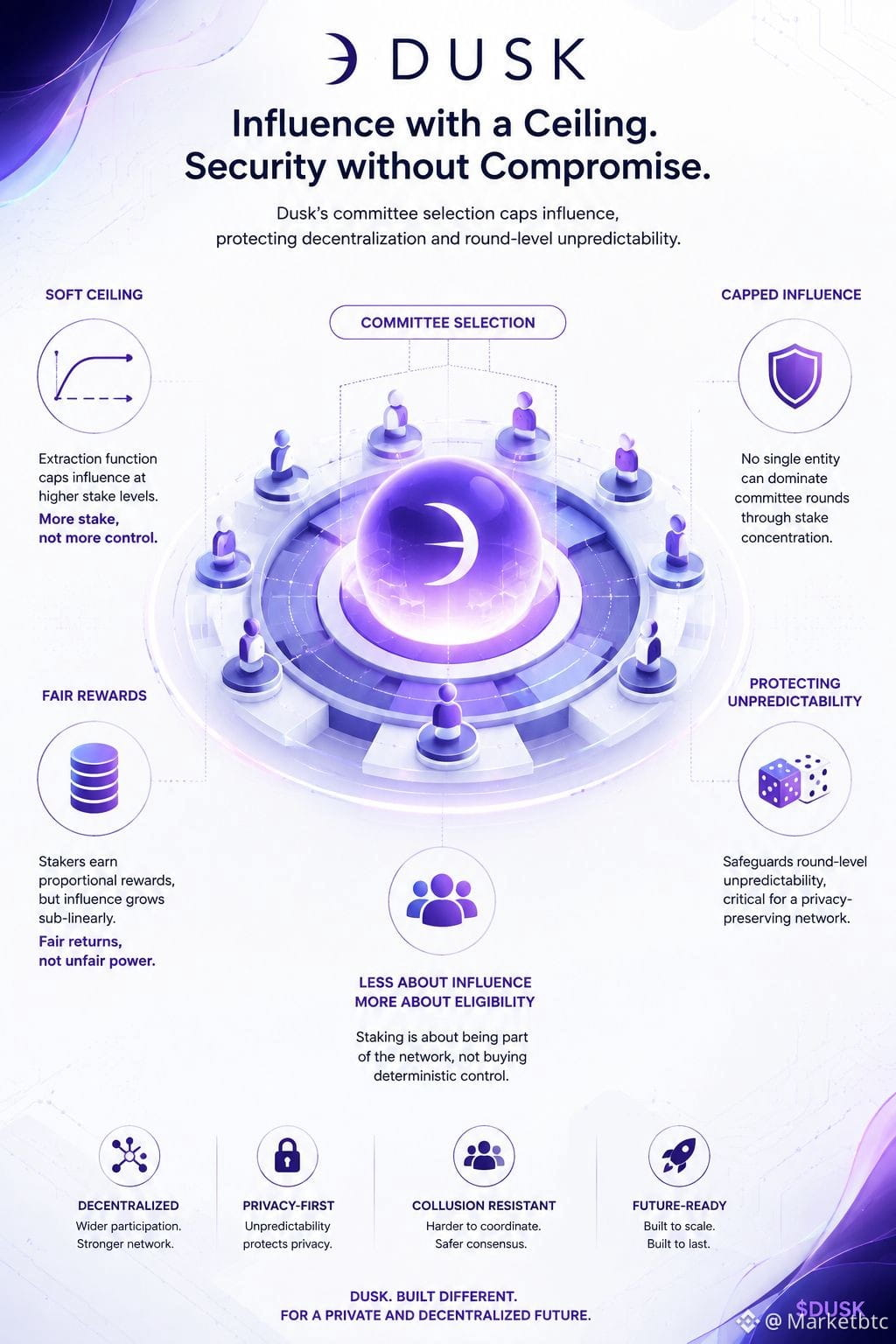
I was mapping how Dusk selects committees for block generation, expecting the usual story: stake weight in, voting power out, linear all the way. Bigger stake, bigger say.
Then I noticed the extraction function doesn't scale purely linearly once a staker's share gets large. There's a soft ceiling on how much influence any single stake position translates into for a given committee round. Wait — that's not how most PoS designs work.
Followed it further. If influence capped at the top, a whale can't just buy deterministic control over consensus rounds by concentrating stake. They still earn proportional rewards, but their probability of dominating committee selection doesn't grow at the same rate as their capital.
That's the part I hadn't considered: the mechanism isn't really about wealth redistribution, it's about protecting round-level unpredictability. Concentration risk in a privacy-preserving network is worse than in a transparent one — you can't just watch the mempool to catch collusion forming.
I'm not sure yet how this holds at 10x validator count, whether the cap becomes a bottleneck or stays a safeguard. But it reframed staking for me — less "buy influence," more "buy eligibility."
@Dusk_Foundation #dusk $DUSK
I was mapping how Dusk selects committees for block generation, expecting the usual story: stake weight in, voting power out, linear all the way. Bigger stake, bigger say.
Then I noticed the extraction function doesn't scale purely linearly once a staker's share gets large. There's a soft ceiling on how much influence any single stake position translates into for a given committee round. Wait — that's not how most PoS designs work.
Followed it further. If influence capped at the top, a whale can't just buy deterministic control over consensus rounds by concentrating stake. They still earn proportional rewards, but their probability of dominating committee selection doesn't grow at the same rate as their capital.
That's the part I hadn't considered: the mechanism isn't really about wealth redistribution, it's about protecting round-level unpredictability. Concentration risk in a privacy-preserving network is worse than in a transparent one — you can't just watch the mempool to catch collusion forming.
I'm not sure yet how this holds at 10x validator count, whether the cap becomes a bottleneck or stays a safeguard. But it reframed staking for me — less "buy influence," more "buy eligibility."
@Dusk #dusk $DUSK
Then I noticed the extraction function doesn't scale purely linearly once a staker's share gets large. There's a soft ceiling on how much influence any single stake position translates into for a given committee round. Wait — that's not how most PoS designs work.
Followed it further. If influence capped at the top, a whale can't just buy deterministic control over consensus rounds by concentrating stake. They still earn proportional rewards, but their probability of dominating committee selection doesn't grow at the same rate as their capital.
That's the part I hadn't considered: the mechanism isn't really about wealth redistribution, it's about protecting round-level unpredictability. Concentration risk in a privacy-preserving network is worse than in a transparent one — you can't just watch the mempool to catch collusion forming.
I'm not sure yet how this holds at 10x validator count, whether the cap becomes a bottleneck or stays a safeguard. But it reframed staking for me — less "buy influence," more "buy eligibility."
@Dusk #dusk $DUSK
2
1
101
·
--
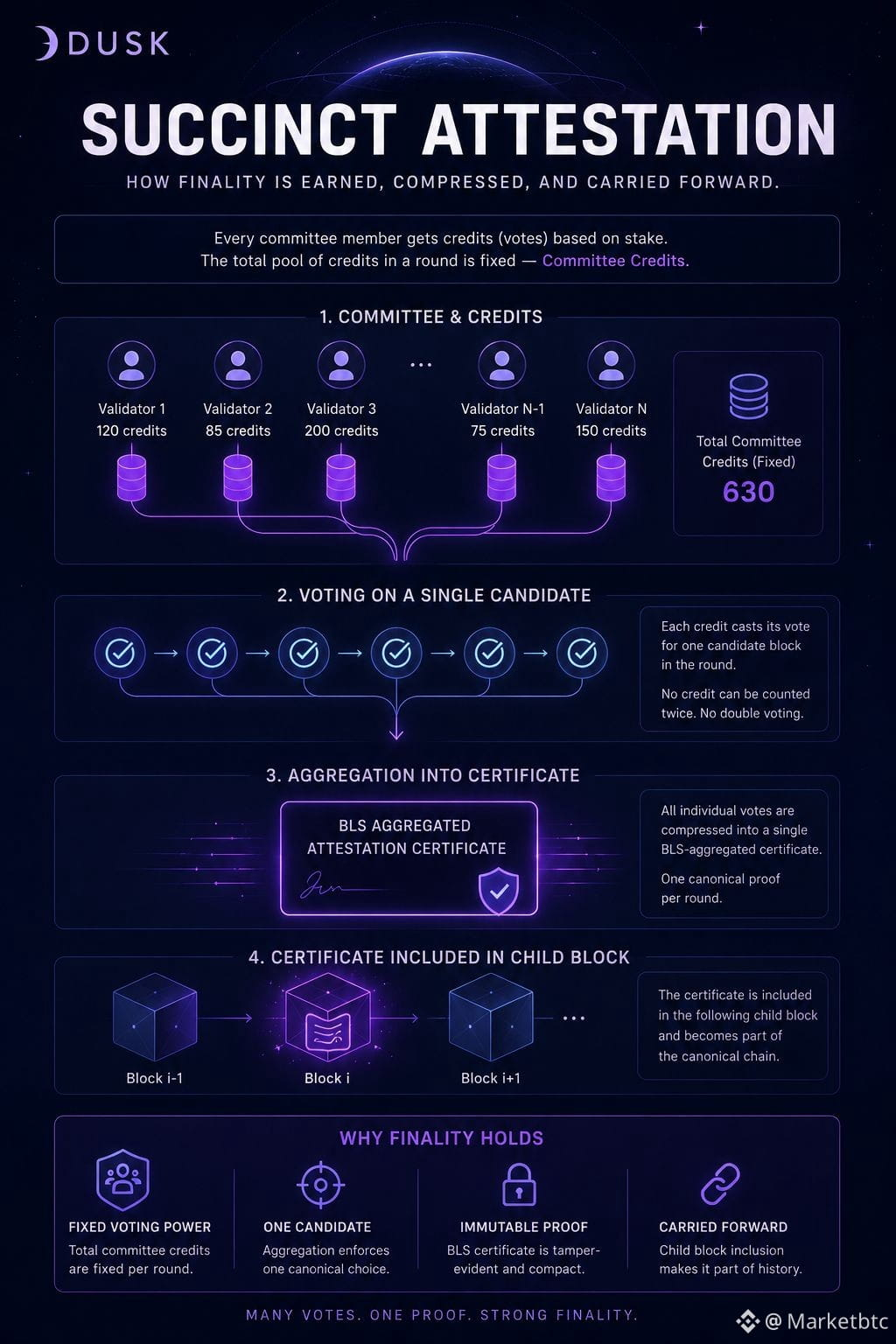
@Dusk_Foundation 暗闇(Dusk)のエンジニアリングアップデートを掘り下げて、Succinct Attestation が実際に「マーケティング文句の“高速な確率的ファイナリティ”」だけではなく、ブロックをどう最終確定するのかを理解しようとしていました。そこで引っかかったのは、各委員会メンバーが1つ以上の投票を持ち、それをクレジットと呼ぶ点です。そしてラウンドの総投票プールが固定されていて、その委員会の投票全体を Credits と呼びます。さらに、委員会内の投票数を Committee Credits と呼ぶ。なるほど、これは結局ステークによる重み付き投票です。意外ではありません。
ただ、後でそれらの個々の投票がどうなるのかは考えていませんでした。投票が別々の署名としてそこに残るだけではないのです。ブロックジェネレーターがそれらを回収し、ブロックの有効なアテステーションとなる証明書(certificate)を生成し、次の子ブロックにそれを含めます。つまり「ブロックが正当であることの証明」は、1人のバリデータの言葉ではなく、すべてのクレジット付き投票が1つの BLS 集約オブジェクトに圧縮されたもの。そしてそのオブジェクトこそが、将来のコンセンサスが実際に参照する対象です。
ここで、ユニーク性の問題が静かに消えます。集約によって、各クレジットは毎ラウンドの1人の候補に紐づくよう強制されるのです。投票を二重に数えることも、2つの競合するブロックに対して数えることもできません。なぜなら、証明書には“正準(canonical)なセット”が1つしか収まる余地がないからです。単なるUXの機能ではありません。ファイナリティが $DUSK #dusk のコンセンサスにおいて意味を持つようにする、その根本の仕組みです。とはいえ、重い反復(iteration)でタイムアウトが発生した場合にどう振る舞うのかは、まだよく分かりません。
@Dusk 暗闇(Dusk)のエンジニアリングアップデートを掘り下げて、Succinct Attestation が実際に「マーケティング文句の“高速な確率的ファイナリティ”」だけではなく、ブロックをどう最終確定するのかを理解しようとしていました。そこで引っかかったのは、各委員会メンバーが1つ以上の投票を持ち、それをクレジットと呼ぶ点です。そしてラウンドの総投票プールが固定されていて、その委員会の投票全体を Credits と呼びます。さらに、委員会内の投票数を Committee Credits と呼ぶ。なるほど、これは結局ステークによる重み付き投票です。意外ではありません。
ただ、後でそれらの個々の投票がどうなるのかは考えていませんでした。投票が別々の署名としてそこに残るだけではないのです。ブロックジェネレーターがそれらを回収し、ブロックの有効なアテステーションとなる証明書(certificate)を生成し、次の子ブロックにそれを含めます。つまり「ブロックが正当であることの証明」は、1人のバリデータの言葉ではなく、すべてのクレジット付き投票が1つの BLS 集約オブジェクトに圧縮されたもの。そしてそのオブジェクトこそが、将来のコンセンサスが実際に参照する対象です。
ここで、ユニーク性の問題が静かに消えます。集約によって、各クレジットは毎ラウンドの1人の候補に紐づくよう強制されるのです。投票を二重に数えることも、2つの競合するブロックに対して数えることもできません。なぜなら、証明書には“正準(canonical)なセット”が1つしか収まる余地がないからです。単なるUXの機能ではありません。ファイナリティが $DUSK #dusk のコンセンサスにおいて意味を持つようにする、その根本の仕組みです。とはいえ、重い反復(iteration)でタイムアウトが発生した場合にどう振る舞うのかは、まだよく分かりません。
ただ、後でそれらの個々の投票がどうなるのかは考えていませんでした。投票が別々の署名としてそこに残るだけではないのです。ブロックジェネレーターがそれらを回収し、ブロックの有効なアテステーションとなる証明書(certificate)を生成し、次の子ブロックにそれを含めます。つまり「ブロックが正当であることの証明」は、1人のバリデータの言葉ではなく、すべてのクレジット付き投票が1つの BLS 集約オブジェクトに圧縮されたもの。そしてそのオブジェクトこそが、将来のコンセンサスが実際に参照する対象です。
ここで、ユニーク性の問題が静かに消えます。集約によって、各クレジットは毎ラウンドの1人の候補に紐づくよう強制されるのです。投票を二重に数えることも、2つの競合するブロックに対して数えることもできません。なぜなら、証明書には“正準(canonical)なセット”が1つしか収まる余地がないからです。単なるUXの機能ではありません。ファイナリティが $DUSK #dusk のコンセンサスにおいて意味を持つようにする、その根本の仕組みです。とはいえ、重い反復(iteration)でタイムアウトが発生した場合にどう振る舞うのかは、まだよく分かりません。
74
·
--
翻訳参照
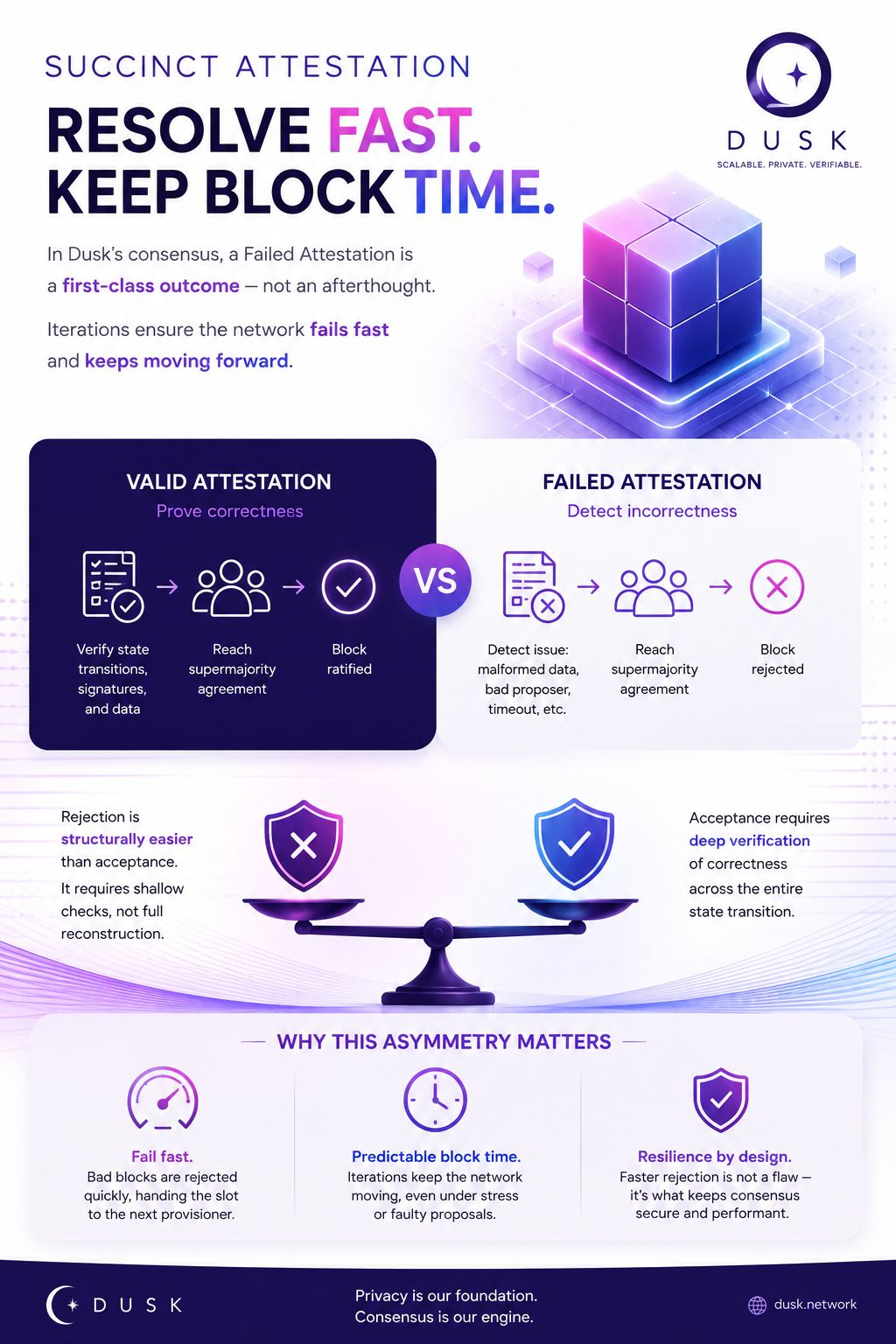
Been digging into how Succinct Attestation actually resolves an iteration, and something about the failure path kept nagging at me.
The obvious story: a committee validates a block, ratifies it, done. But Dusk's protocol doesn't just track "valid" — it tracks Attestations, and a Failed Attestation (a quorum agreeing a block is *not* valid) is a first-class outcome, not an afterthought.
Here's what I hadn't considered: rejecting is structurally easier than accepting. To ratify a valid block, the committee has to actually verify state transitions, signatures, the whole candidate. To reach a Failed Attestation, committee members just need supermajority agreement that *something* is wrong — malformed data, a bad proposer, a timeout. That's a much shallower check.
So mechanically, a bad block can clear its quorum threshold faster than a good one clears validation — not because the network favors invalid blocks, but because rejection doesn't require reconstructing correctness, just detecting its absence. That's not a flaw. It's actually why iterations exist at all: fail fast, hand the slot to the next provisioner, keep block time predictable.
Still working through what this asymmetry means once committee sizes shift with stake distribution. Does faster rejection become an attack surface, or just resilience by design?
@Dusk_Foundation #dusk $DUSK
Been digging into how Succinct Attestation actually resolves an iteration, and something about the failure path kept nagging at me.
The obvious story: a committee validates a block, ratifies it, done. But Dusk's protocol doesn't just track "valid" — it tracks Attestations, and a Failed Attestation (a quorum agreeing a block is *not* valid) is a first-class outcome, not an afterthought.
Here's what I hadn't considered: rejecting is structurally easier than accepting. To ratify a valid block, the committee has to actually verify state transitions, signatures, the whole candidate. To reach a Failed Attestation, committee members just need supermajority agreement that *something* is wrong — malformed data, a bad proposer, a timeout. That's a much shallower check.
So mechanically, a bad block can clear its quorum threshold faster than a good one clears validation — not because the network favors invalid blocks, but because rejection doesn't require reconstructing correctness, just detecting its absence. That's not a flaw. It's actually why iterations exist at all: fail fast, hand the slot to the next provisioner, keep block time predictable.
Still working through what this asymmetry means once committee sizes shift with stake distribution. Does faster rejection become an attack surface, or just resilience by design?
@Dusk #dusk $DUSK
The obvious story: a committee validates a block, ratifies it, done. But Dusk's protocol doesn't just track "valid" — it tracks Attestations, and a Failed Attestation (a quorum agreeing a block is *not* valid) is a first-class outcome, not an afterthought.
Here's what I hadn't considered: rejecting is structurally easier than accepting. To ratify a valid block, the committee has to actually verify state transitions, signatures, the whole candidate. To reach a Failed Attestation, committee members just need supermajority agreement that *something* is wrong — malformed data, a bad proposer, a timeout. That's a much shallower check.
So mechanically, a bad block can clear its quorum threshold faster than a good one clears validation — not because the network favors invalid blocks, but because rejection doesn't require reconstructing correctness, just detecting its absence. That's not a flaw. It's actually why iterations exist at all: fail fast, hand the slot to the next provisioner, keep block time predictable.
Still working through what this asymmetry means once committee sizes shift with stake distribution. Does faster rejection become an attack surface, or just resilience by design?
@Dusk #dusk $DUSK
96
·
--
翻訳参照
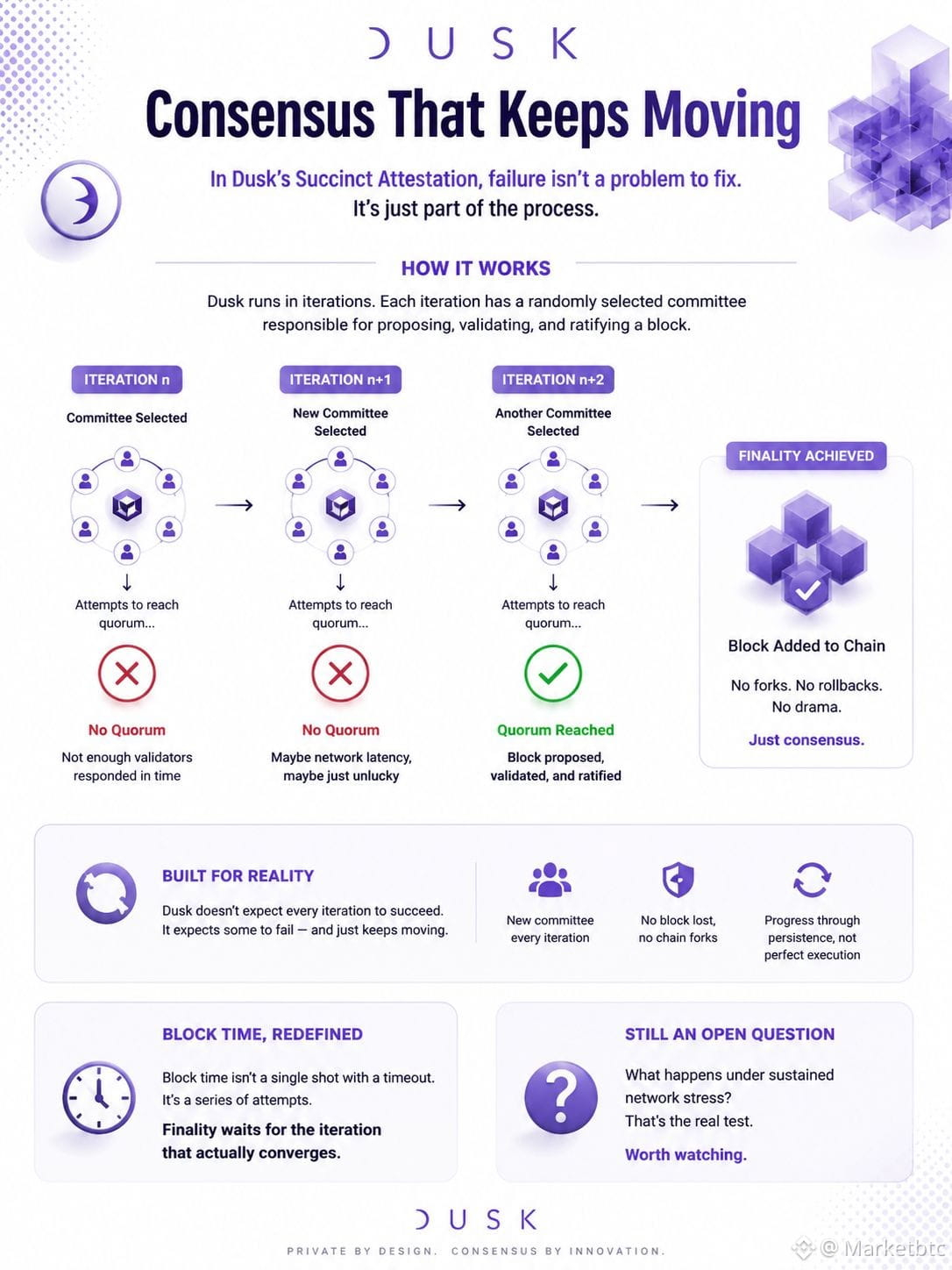
I was digging into Dusk's Succinct Attestation consensus, trying to understand what actually happens when a committee fails to produce a block in a given iteration. My assumption going in: a failed iteration means something went wrong — a fault, a missed slot, a problem to route around.
That's not quite it.
Dusk's consensus runs in iterations, each with its own randomly selected committee for proposal, validation, and ratification. If a committee doesn't reach quorum — maybe not enough validators responded in time, maybe network latency, nothing dramatic — the system doesn't treat that as a failure to patch. It just moves to the next iteration with a freshly selected committee. No block is lost, no chain forks, no rollback. The attempt simply expires and consensus tries again with different validators holding the responsibility.
What struck me is that this isn't a fallback bolted onto the design. It's the default expectation. The protocol assumes some iterations won't finalize, and builds the committee rotation around that assumption rather than around the hope that every iteration succeeds.
That changes how I read "block time" for Dusk. It's not one attempt with a timeout — it's a sequence of attempts where failure is routine, not exceptional, and finality just waits for whichever iteration actually converges.
I'm still not sure how this behaves under sustained network stress rather than isolated missed quorums. @Dusk_Foundation #dusk $DUSK
I was digging into Dusk's Succinct Attestation consensus, trying to understand what actually happens when a committee fails to produce a block in a given iteration. My assumption going in: a failed iteration means something went wrong — a fault, a missed slot, a problem to route around.
That's not quite it.
Dusk's consensus runs in iterations, each with its own randomly selected committee for proposal, validation, and ratification. If a committee doesn't reach quorum — maybe not enough validators responded in time, maybe network latency, nothing dramatic — the system doesn't treat that as a failure to patch. It just moves to the next iteration with a freshly selected committee. No block is lost, no chain forks, no rollback. The attempt simply expires and consensus tries again with different validators holding the responsibility.
What struck me is that this isn't a fallback bolted onto the design. It's the default expectation. The protocol assumes some iterations won't finalize, and builds the committee rotation around that assumption rather than around the hope that every iteration succeeds.
That changes how I read "block time" for Dusk. It's not one attempt with a timeout — it's a sequence of attempts where failure is routine, not exceptional, and finality just waits for whichever iteration actually converges.
I'm still not sure how this behaves under sustained network stress rather than isolated missed quorums. @Dusk #dusk $DUSK
That's not quite it.
Dusk's consensus runs in iterations, each with its own randomly selected committee for proposal, validation, and ratification. If a committee doesn't reach quorum — maybe not enough validators responded in time, maybe network latency, nothing dramatic — the system doesn't treat that as a failure to patch. It just moves to the next iteration with a freshly selected committee. No block is lost, no chain forks, no rollback. The attempt simply expires and consensus tries again with different validators holding the responsibility.
What struck me is that this isn't a fallback bolted onto the design. It's the default expectation. The protocol assumes some iterations won't finalize, and builds the committee rotation around that assumption rather than around the hope that every iteration succeeds.
That changes how I read "block time" for Dusk. It's not one attempt with a timeout — it's a sequence of attempts where failure is routine, not exceptional, and finality just waits for whichever iteration actually converges.
I'm still not sure how this behaves under sustained network stress rather than isolated missed quorums. @Dusk #dusk $DUSK
2
113
·
--
翻訳参照
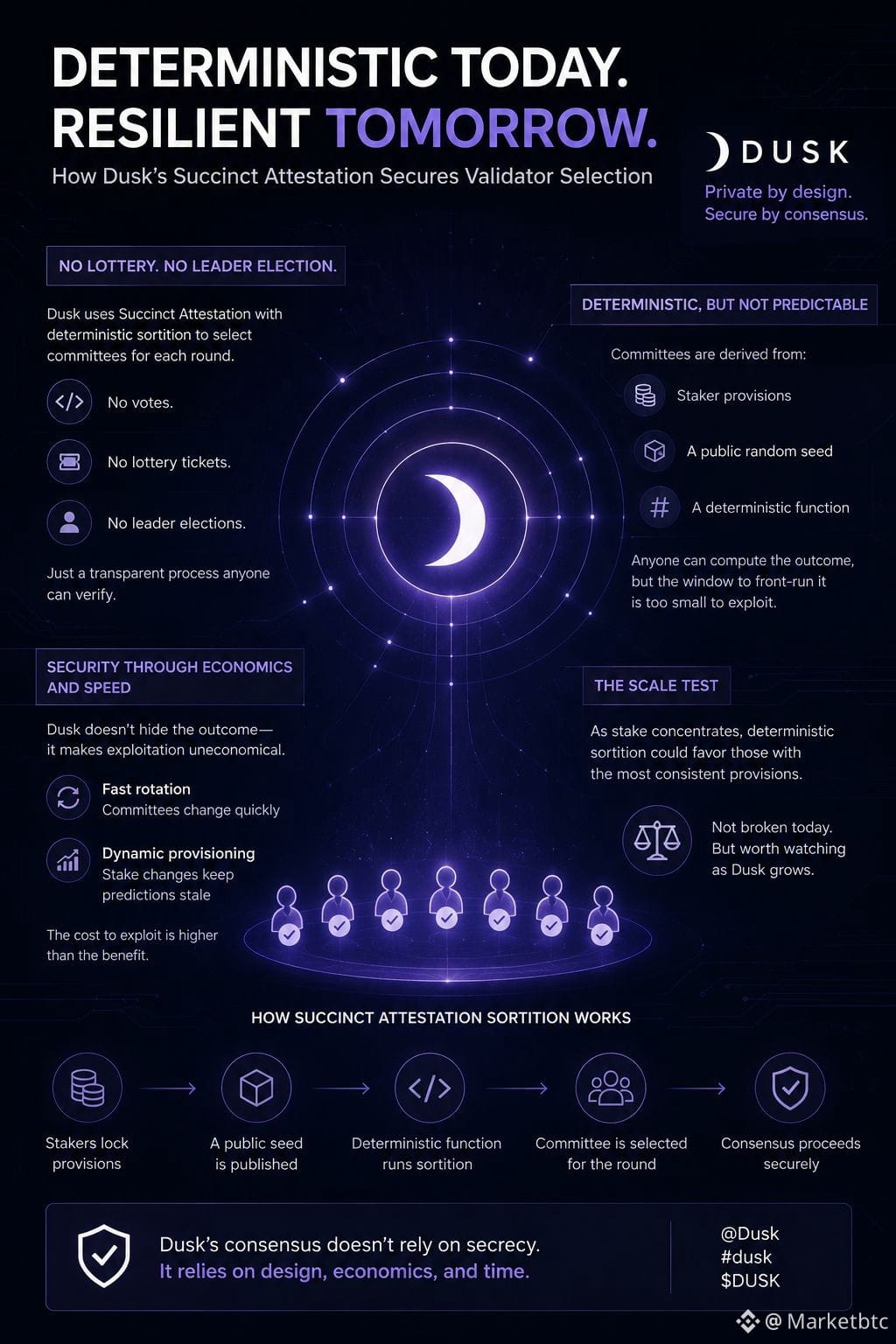
I was mapping out how validator selection actually works on Dusk, expecting to find something close to standard PoS block proposal. Instead I found Succinct Attestation running deterministic sortition — no leader election vote, no lottery ticket broadcast. Each staker's provisions and a public seed get run through a function that deterministically outputs a committee for that round.
Wait, deterministic? That's the part that made me pause. If it's deterministic, in theory anyone can precompute who's eligible before the round starts.
Turns out that's mitigated by timing, not secrecy — committees rotate fast enough, and provisioning changes frequently enough, that precomputation gives limited practical advantage. The security isn't "hide the outcome," it's "make the outcome expensive to exploit in the window you have."
That's a different trust model than I expected. It's not obscurity protecting the committee. It's economic cost plus rotation speed doing the work that secrecy does elsewhere.
Which raises the real question: as stake concentrates over time, does sortition still distribute committee membership evenly, or does deterministic selection quietly favor whoever holds the most provisions most consistently?
I don't think that's broken today. But it's the part of Dusk's consensus that scale will actually test.
@Dusk_Foundation #dusk $DUSK
I was mapping out how validator selection actually works on Dusk, expecting to find something close to standard PoS block proposal. Instead I found Succinct Attestation running deterministic sortition — no leader election vote, no lottery ticket broadcast. Each staker's provisions and a public seed get run through a function that deterministically outputs a committee for that round.
Wait, deterministic? That's the part that made me pause. If it's deterministic, in theory anyone can precompute who's eligible before the round starts.
Turns out that's mitigated by timing, not secrecy — committees rotate fast enough, and provisioning changes frequently enough, that precomputation gives limited practical advantage. The security isn't "hide the outcome," it's "make the outcome expensive to exploit in the window you have."
That's a different trust model than I expected. It's not obscurity protecting the committee. It's economic cost plus rotation speed doing the work that secrecy does elsewhere.
Which raises the real question: as stake concentrates over time, does sortition still distribute committee membership evenly, or does deterministic selection quietly favor whoever holds the most provisions most consistently?
I don't think that's broken today. But it's the part of Dusk's consensus that scale will actually test.
@Dusk #dusk $DUSK
Wait, deterministic? That's the part that made me pause. If it's deterministic, in theory anyone can precompute who's eligible before the round starts.
Turns out that's mitigated by timing, not secrecy — committees rotate fast enough, and provisioning changes frequently enough, that precomputation gives limited practical advantage. The security isn't "hide the outcome," it's "make the outcome expensive to exploit in the window you have."
That's a different trust model than I expected. It's not obscurity protecting the committee. It's economic cost plus rotation speed doing the work that secrecy does elsewhere.
Which raises the real question: as stake concentrates over time, does sortition still distribute committee membership evenly, or does deterministic selection quietly favor whoever holds the most provisions most consistently?
I don't think that's broken today. But it's the part of Dusk's consensus that scale will actually test.
@Dusk #dusk $DUSK
1
87
·
--
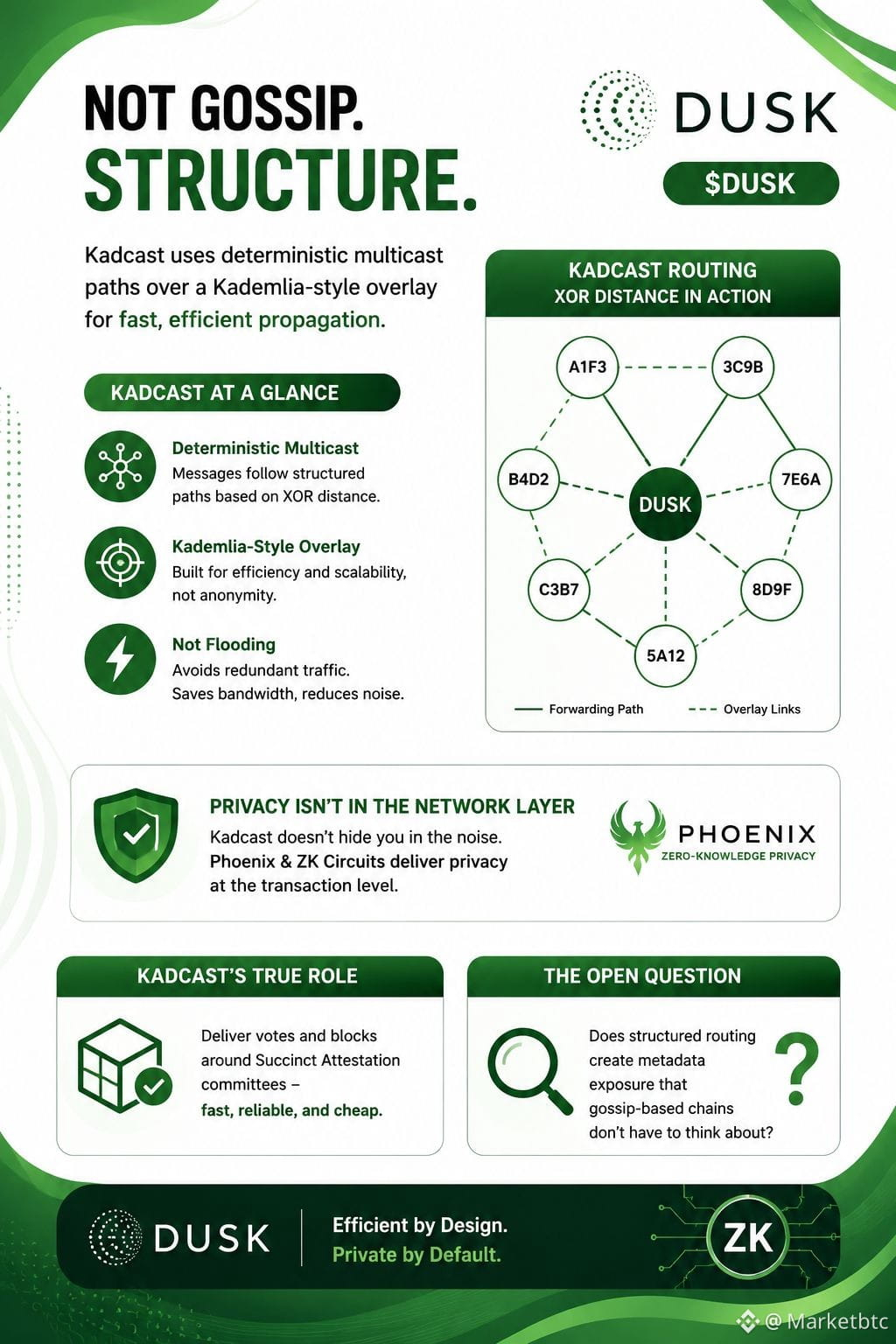
Kadcastについてプライバシーの話を期待して読んでいたのに、逆の緊張感を見つけた。
表面上は、難読化レイヤーのように聞こえる——洪水ではなく構造化されたルーティングなので、確かにオリジンはノイズに埋もれるはずだ。だが、実際の仕組みを追ってみると、KadcastはKademlia風のオーバーレイにおけるXOR距離にもとづいて、決定論的なマルチキャスト経路に沿ってメッセージを転送している。これは匿名性のためというより、帯域効率のために作られている。
面白くなったのはここだ。ランダムなゴシップはごちゃごちゃしていて、そのごちゃごちゃがオリジンの追跡を難しくする。一方Kadcastの構造は真逆——予測可能な経路のため、オーバーレイ内でのノードの位置はかなり一貫する。トポロジーを知っていれば、洪水型ゴシップよりも伝播パターンを推論しやすい。
だから、Kadcastに「プライバシー」を結びつけている人たちが言っているのは、実はネットワーク層から来ているわけではない。仕事をしているのはPhoenixとZK回路で、取引レベルでそれを担っている。Kadcastの役目は、Succinct Attestationの委員会の周りで票とブロックを素早く安く回すことだけだ。
致命的な欠陥というわけではない——最初に想定していたのとは別の設計目標だっただけ。とはいえ、こうした構造化オーバーレイは、ゴシップ型チェーンが考えなくていいようなメタデータの露出を生むのか、まだ気になっている。
@Dusk_Foundation #DUSK $DUSK
Kadcastについてプライバシーの話を期待して読んでいたのに、逆の緊張感を見つけた。
表面上は、難読化レイヤーのように聞こえる——洪水ではなく構造化されたルーティングなので、確かにオリジンはノイズに埋もれるはずだ。だが、実際の仕組みを追ってみると、KadcastはKademlia風のオーバーレイにおけるXOR距離にもとづいて、決定論的なマルチキャスト経路に沿ってメッセージを転送している。これは匿名性のためというより、帯域効率のために作られている。
面白くなったのはここだ。ランダムなゴシップはごちゃごちゃしていて、そのごちゃごちゃがオリジンの追跡を難しくする。一方Kadcastの構造は真逆——予測可能な経路のため、オーバーレイ内でのノードの位置はかなり一貫する。トポロジーを知っていれば、洪水型ゴシップよりも伝播パターンを推論しやすい。
だから、Kadcastに「プライバシー」を結びつけている人たちが言っているのは、実はネットワーク層から来ているわけではない。仕事をしているのはPhoenixとZK回路で、取引レベルでそれを担っている。Kadcastの役目は、Succinct Attestationの委員会の周りで票とブロックを素早く安く回すことだけだ。
致命的な欠陥というわけではない——最初に想定していたのとは別の設計目標だっただけ。とはいえ、こうした構造化オーバーレイは、ゴシップ型チェーンが考えなくていいようなメタデータの露出を生むのか、まだ気になっている。
@Dusk #DUSK $DUSK
表面上は、難読化レイヤーのように聞こえる——洪水ではなく構造化されたルーティングなので、確かにオリジンはノイズに埋もれるはずだ。だが、実際の仕組みを追ってみると、KadcastはKademlia風のオーバーレイにおけるXOR距離にもとづいて、決定論的なマルチキャスト経路に沿ってメッセージを転送している。これは匿名性のためというより、帯域効率のために作られている。
面白くなったのはここだ。ランダムなゴシップはごちゃごちゃしていて、そのごちゃごちゃがオリジンの追跡を難しくする。一方Kadcastの構造は真逆——予測可能な経路のため、オーバーレイ内でのノードの位置はかなり一貫する。トポロジーを知っていれば、洪水型ゴシップよりも伝播パターンを推論しやすい。
だから、Kadcastに「プライバシー」を結びつけている人たちが言っているのは、実はネットワーク層から来ているわけではない。仕事をしているのはPhoenixとZK回路で、取引レベルでそれを担っている。Kadcastの役目は、Succinct Attestationの委員会の周りで票とブロックを素早く安く回すことだけだ。
致命的な欠陥というわけではない——最初に想定していたのとは別の設計目標だっただけ。とはいえ、こうした構造化オーバーレイは、ゴシップ型チェーンが考えなくていいようなメタデータの露出を生むのか、まだ気になっている。
@Dusk #DUSK $DUSK
65
·
--
#dusk $DUSK @Dusk_Foundation
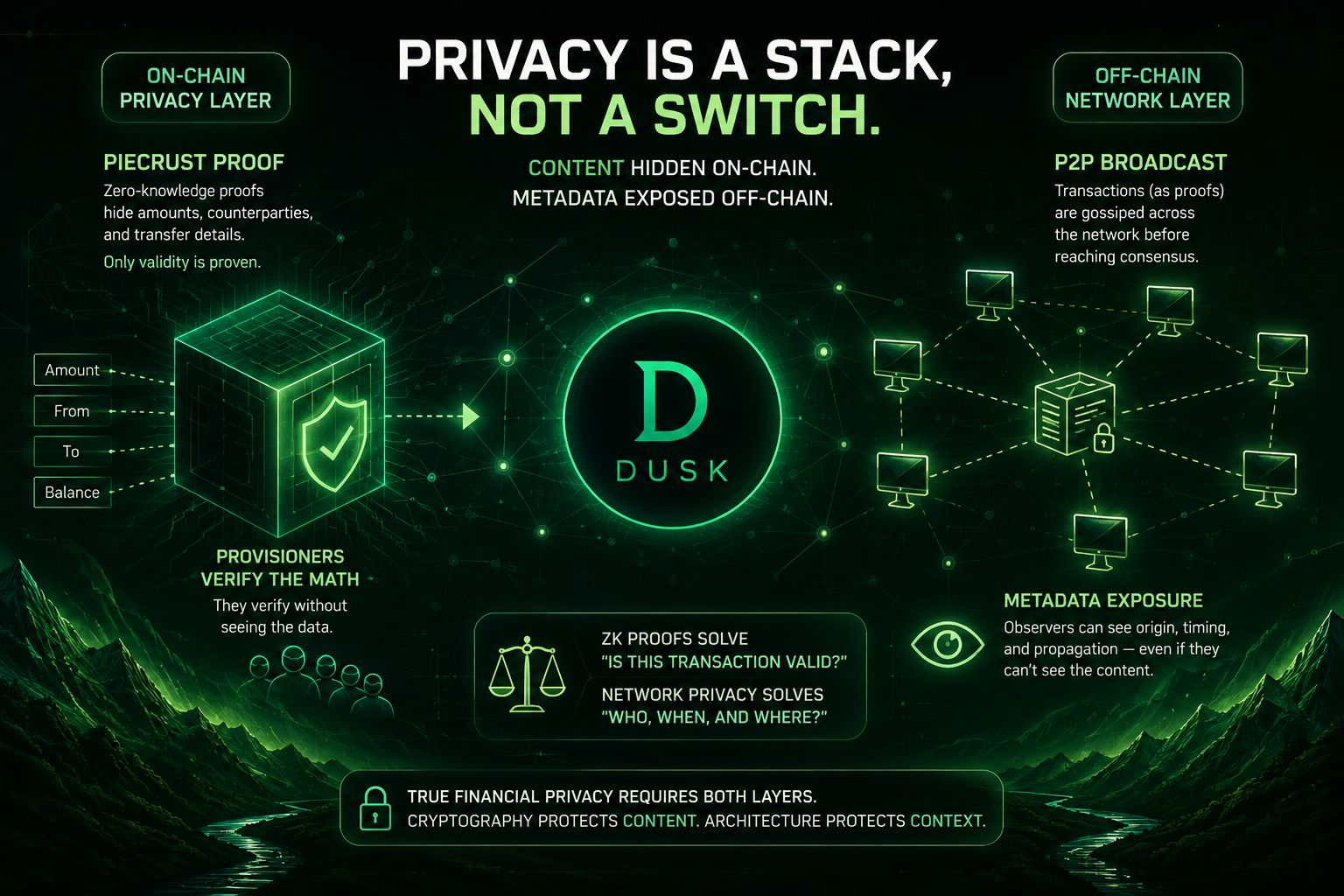
私は、Duskが実際にどのように取引を秘密に保っているのかを掘り下げて調べてきました。最初の層は、まさに予想どおりです――Piecrustは証明を生成し、金額や取引相手はチェーン上では隠されたままです。提供者(provisioners)は、元のデータを見ずに数学的な正しさを検証します。残高は機密のままです。誰も金額が動くのを監視できません。
皆が引用するのはまさにその部分です。そして多くの解説者はそこで説明を止めます。
しかし私が考えが及ばなかった点があります。証明はチェーンへ“テレポート”しません。合意に到達する前に、それはP2Pネットワークに対してブロードキャストされなければなりません。つまり、ブロックに収まるまでノード間でゴシップ的に伝播されます。そしてそのステップはPLONKを通りません。TCP/IPを通ります。
だからこそ、ここで私は立ち止まりました。メンプールを監視しているバリデータは、あなたの取引の中身を読み取れません。しかしバリデータ(または十分に多くのノードを動かしている誰か)がネットワーク層を監視していれば、取引があなたのピアから発生したこと、だいたいのタイミング、そしてどのように伝播したのかは見えてしまいます。ゼロ知識は“内容”を隠します。“内容が存在すること”や、“どこからグラフに入ってきたか”までは隠しません。
それは暗号の欠陥ではありません。暗号が最初からカバーするように設計されていなかった境界です。ZK証明は「その取引は、内容を明かさずに正しいか」を答えます。しかし「誰がいつ開始したのか」には答えません。これは、互いに別の2つのプライバシー問題であり、完全に別の2つの層――1つは暗号学的、もう1つはトポロジカル(ネットワーク構造)――によって解かれます。
そして次に、まだきれいな答えが出せていない疑問が湧きます。コンプライアンス水準の金融プライバシーには、本当に両方の問題の解決が必要なのでしょうか? 調査したいのが規制当局による取引内容なら、ZKでカバーできます。ですが関心が“タイミング”や“相関”や“起源”にある――あるいは、そのような観測を行う敵対者がいる――なら、それはネットワーク・プライバシーの問題であって、証明システムの問題ではありません。そしてDuskのアーキテクチャは、それを明確に解決すると主張しているわけではありません。
@Dusk_Foundation today. しかし、これは制度的なボリュームが増えるほど、重要性が増していく類のものではなく、むしろ重要でなくなっていく類の話です。 $DUSK #dusk @Dusk today
#dusk $DUSK @Dusk
私は、Duskが実際にどのように取引を秘密に保っているのかを掘り下げて調べてきました。最初の層は、まさに予想どおりです――Piecrustは証明を生成し、金額や取引相手はチェーン上では隠されたままです。提供者(provisioners)は、元のデータを見ずに数学的な正しさを検証します。残高は機密のままです。誰も金額が動くのを監視できません。
皆が引用するのはまさにその部分です。そして多くの解説者はそこで説明を止めます。
しかし私が考えが及ばなかった点があります。証明はチェーンへ“テレポート”しません。合意に到達する前に、それはP2Pネットワークに対してブロードキャストされなければなりません。つまり、ブロックに収まるまでノード間でゴシップ的に伝播されます。そしてそのステップはPLONKを通りません。TCP/IPを通ります。
だからこそ、ここで私は立ち止まりました。メンプールを監視しているバリデータは、あなたの取引の中身を読み取れません。しかしバリデータ(または十分に多くのノードを動かしている誰か)がネットワーク層を監視していれば、取引があなたのピアから発生したこと、だいたいのタイミング、そしてどのように伝播したのかは見えてしまいます。ゼロ知識は“内容”を隠します。“内容が存在すること”や、“どこからグラフに入ってきたか”までは隠しません。
それは暗号の欠陥ではありません。暗号が最初からカバーするように設計されていなかった境界です。ZK証明は「その取引は、内容を明かさずに正しいか」を答えます。しかし「誰がいつ開始したのか」には答えません。これは、互いに別の2つのプライバシー問題であり、完全に別の2つの層――1つは暗号学的、もう1つはトポロジカル(ネットワーク構造)――によって解かれます。
そして次に、まだきれいな答えが出せていない疑問が湧きます。コンプライアンス水準の金融プライバシーには、本当に両方の問題の解決が必要なのでしょうか? 調査したいのが規制当局による取引内容なら、ZKでカバーできます。ですが関心が“タイミング”や“相関”や“起源”にある――あるいは、そのような観測を行う敵対者がいる――なら、それはネットワーク・プライバシーの問題であって、証明システムの問題ではありません。そしてDuskのアーキテクチャは、それを明確に解決すると主張しているわけではありません。
@Dusk today. しかし、これは制度的なボリュームが増えるほど、重要性が増していく類のものではなく、むしろ重要でなくなっていく類の話です。 $DUSK #dusk @Dusk today
私は、Duskが実際にどのように取引を秘密に保っているのかを掘り下げて調べてきました。最初の層は、まさに予想どおりです――Piecrustは証明を生成し、金額や取引相手はチェーン上では隠されたままです。提供者(provisioners)は、元のデータを見ずに数学的な正しさを検証します。残高は機密のままです。誰も金額が動くのを監視できません。
皆が引用するのはまさにその部分です。そして多くの解説者はそこで説明を止めます。
しかし私が考えが及ばなかった点があります。証明はチェーンへ“テレポート”しません。合意に到達する前に、それはP2Pネットワークに対してブロードキャストされなければなりません。つまり、ブロックに収まるまでノード間でゴシップ的に伝播されます。そしてそのステップはPLONKを通りません。TCP/IPを通ります。
だからこそ、ここで私は立ち止まりました。メンプールを監視しているバリデータは、あなたの取引の中身を読み取れません。しかしバリデータ(または十分に多くのノードを動かしている誰か)がネットワーク層を監視していれば、取引があなたのピアから発生したこと、だいたいのタイミング、そしてどのように伝播したのかは見えてしまいます。ゼロ知識は“内容”を隠します。“内容が存在すること”や、“どこからグラフに入ってきたか”までは隠しません。
それは暗号の欠陥ではありません。暗号が最初からカバーするように設計されていなかった境界です。ZK証明は「その取引は、内容を明かさずに正しいか」を答えます。しかし「誰がいつ開始したのか」には答えません。これは、互いに別の2つのプライバシー問題であり、完全に別の2つの層――1つは暗号学的、もう1つはトポロジカル(ネットワーク構造)――によって解かれます。
そして次に、まだきれいな答えが出せていない疑問が湧きます。コンプライアンス水準の金融プライバシーには、本当に両方の問題の解決が必要なのでしょうか? 調査したいのが規制当局による取引内容なら、ZKでカバーできます。ですが関心が“タイミング”や“相関”や“起源”にある――あるいは、そのような観測を行う敵対者がいる――なら、それはネットワーク・プライバシーの問題であって、証明システムの問題ではありません。そしてDuskのアーキテクチャは、それを明確に解決すると主張しているわけではありません。
@Dusk today. しかし、これは制度的なボリュームが増えるほど、重要性が増していく類のものではなく、むしろ重要でなくなっていく類の話です。 $DUSK #dusk @Dusk today
2
1
89
·
--
#dusk $DUSK @Dusk_Foundation
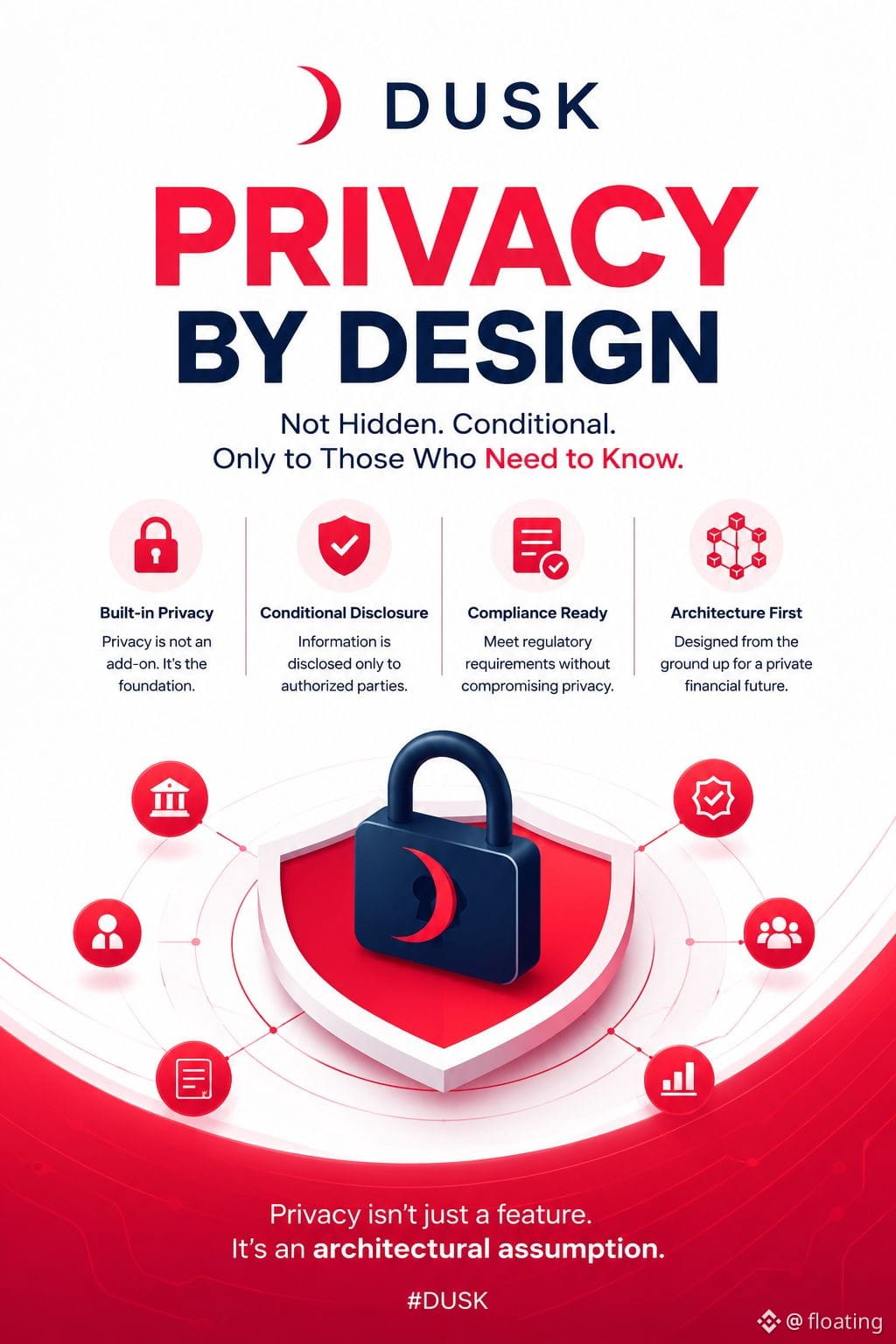
私はDuskに入って、そこでのプライバシーの話が主に取引データを隠すことにあるのだと思っていました。
アーキテクチャを見ていくほど、その説明はうまく機能しなくなりました。
面白いのは、Phoenixが機密取引をサポートできるという点だけではありません。プライバシーが、透明なブロックチェーンの上に後付けされる“レイヤー”として扱われるのではなく、取引モデルそのものにより近いところで扱われていることです。
それによって問いが変わります。
従来のパブリックチェーンでは、可視性はデフォルトで、プライバシーはその周りに“構築しようとする”ものです。Duskでは、設計の前提が別物になっています。すべての参加者がすべてを見る必要はない、という前提から始まるのです。
しかし、それはすぐに別の問題も生みます。
金融取引は、ルールから免除されなくても“非公開”にすることができます。誰かは、適格性を証明する必要があるかもしれません。コンプライアンス要件を満たす必要があるかもしれません。あるいは、認可された相手に対して特定の情報を開示する必要があるかもしれません。
そこで、私はDuskがより面白くなると思います。
プライバシーは必ずしも情報をアクセス不能にすることを意味しません。開示を条件付きにすることを意味する場合があるのです。
私が考えが及ばなかったのは、このことがアーキテクチャをどれほど変えるかという点でした。『どうやってこの取引を隠すのか?』と問うのではなく、『誰が実際に何を知る必要があるのか?』とシステムが問わなければならないのです。
増え続ける複雑な金融ワークフローに対して、このモデルがどれだけうまくスケールするのかは、まだ確信がありません。
でも、それによって私は@Dusk_Foundation を考え直しました。
ここでのプライバシーは、単なる機能ではありません。
それはアーキテクチャ上の前提です。
#dusk
#dusk $DUSK @Dusk
私はDuskに入って、そこでのプライバシーの話が主に取引データを隠すことにあるのだと思っていました。
アーキテクチャを見ていくほど、その説明はうまく機能しなくなりました。
面白いのは、Phoenixが機密取引をサポートできるという点だけではありません。プライバシーが、透明なブロックチェーンの上に後付けされる“レイヤー”として扱われるのではなく、取引モデルそのものにより近いところで扱われていることです。
それによって問いが変わります。
従来のパブリックチェーンでは、可視性はデフォルトで、プライバシーはその周りに“構築しようとする”ものです。Duskでは、設計の前提が別物になっています。すべての参加者がすべてを見る必要はない、という前提から始まるのです。
しかし、それはすぐに別の問題も生みます。
金融取引は、ルールから免除されなくても“非公開”にすることができます。誰かは、適格性を証明する必要があるかもしれません。コンプライアンス要件を満たす必要があるかもしれません。あるいは、認可された相手に対して特定の情報を開示する必要があるかもしれません。
そこで、私はDuskがより面白くなると思います。
プライバシーは必ずしも情報をアクセス不能にすることを意味しません。開示を条件付きにすることを意味する場合があるのです。
私が考えが及ばなかったのは、このことがアーキテクチャをどれほど変えるかという点でした。『どうやってこの取引を隠すのか?』と問うのではなく、『誰が実際に何を知る必要があるのか?』とシステムが問わなければならないのです。
増え続ける複雑な金融ワークフローに対して、このモデルがどれだけうまくスケールするのかは、まだ確信がありません。
でも、それによって私は@Dusk を考え直しました。
ここでのプライバシーは、単なる機能ではありません。
それはアーキテクチャ上の前提です。
#dusk
私はDuskに入って、そこでのプライバシーの話が主に取引データを隠すことにあるのだと思っていました。
アーキテクチャを見ていくほど、その説明はうまく機能しなくなりました。
面白いのは、Phoenixが機密取引をサポートできるという点だけではありません。プライバシーが、透明なブロックチェーンの上に後付けされる“レイヤー”として扱われるのではなく、取引モデルそのものにより近いところで扱われていることです。
それによって問いが変わります。
従来のパブリックチェーンでは、可視性はデフォルトで、プライバシーはその周りに“構築しようとする”ものです。Duskでは、設計の前提が別物になっています。すべての参加者がすべてを見る必要はない、という前提から始まるのです。
しかし、それはすぐに別の問題も生みます。
金融取引は、ルールから免除されなくても“非公開”にすることができます。誰かは、適格性を証明する必要があるかもしれません。コンプライアンス要件を満たす必要があるかもしれません。あるいは、認可された相手に対して特定の情報を開示する必要があるかもしれません。
そこで、私はDuskがより面白くなると思います。
プライバシーは必ずしも情報をアクセス不能にすることを意味しません。開示を条件付きにすることを意味する場合があるのです。
私が考えが及ばなかったのは、このことがアーキテクチャをどれほど変えるかという点でした。『どうやってこの取引を隠すのか?』と問うのではなく、『誰が実際に何を知る必要があるのか?』とシステムが問わなければならないのです。
増え続ける複雑な金融ワークフローに対して、このモデルがどれだけうまくスケールするのかは、まだ確信がありません。
でも、それによって私は@Dusk を考え直しました。
ここでのプライバシーは、単なる機能ではありません。
それはアーキテクチャ上の前提です。
#dusk
1
1
86
·
--
#dusk $DUSK @Dusk_Foundation
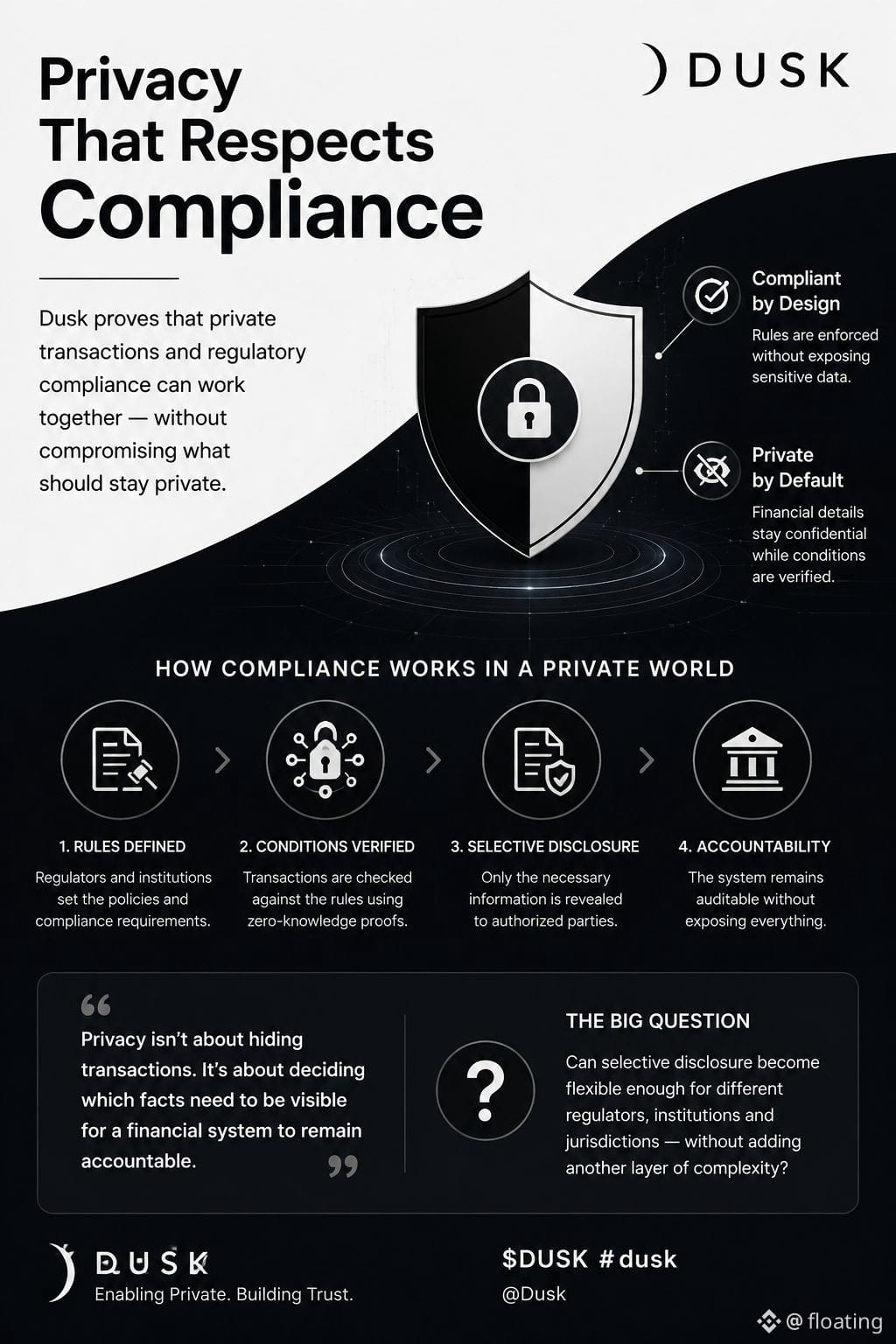
私は単純な疑問から、Duskのプライベート取引を調べ始めました。取引データが隠されているのなら、コンプライアンスはどうやって機能するのだろうか?
興味深いのは、プライバシーが「ネットワークがルールを忘れる」ことを意味しない点です。取引は、機密性の高い財務情報を秘密に保ちながらも、許可されるかどうかを決める条件に照らして確認され続けられます。
この違いは重要です。
透明なチェーンでは、コンプライアンスは可視性に大きく依存できます。残高、送金、取引相手、そして取引履歴が公開されるため、モニタリングは公開記録を調べることになります。
Duskは別の道を選びます。狙いは、取引の前提となるすべての詳細を公開せずに、その取引が必要な条件を満たしていることを証明に近づけることです。
しかし待ってください——それによってコンプライアンス層が消えるわけではありません。
誰かがルールを定義しなければなりません。何が検証可能なのかを決める必要があります。そして、一部の情報は、認可された当事者に開示する必要があるかもしれません。
それが、私の @Dusk に対する見方を変えました。
ここでいうプライバシーは、単に取引を隠すことではありません。金融システムが説明責任を保ち続けるために、どの事実を可視化する必要があるのかを決めることです。
私に残された未解決の問いは、選択的開示が、プライバシー・アーキテクチャを別の複雑性の層に変えてしまうことなく、異なる規制当局、機関、そして法域に対して最終的に十分柔軟になるのかどうかです。
$DUSK #dusk @Dusk_Foundation
#dusk $DUSK @Dusk
私は単純な疑問から、Duskのプライベート取引を調べ始めました。取引データが隠されているのなら、コンプライアンスはどうやって機能するのだろうか?
興味深いのは、プライバシーが「ネットワークがルールを忘れる」ことを意味しない点です。取引は、機密性の高い財務情報を秘密に保ちながらも、許可されるかどうかを決める条件に照らして確認され続けられます。
この違いは重要です。
透明なチェーンでは、コンプライアンスは可視性に大きく依存できます。残高、送金、取引相手、そして取引履歴が公開されるため、モニタリングは公開記録を調べることになります。
Duskは別の道を選びます。狙いは、取引の前提となるすべての詳細を公開せずに、その取引が必要な条件を満たしていることを証明に近づけることです。
しかし待ってください——それによってコンプライアンス層が消えるわけではありません。
誰かがルールを定義しなければなりません。何が検証可能なのかを決める必要があります。そして、一部の情報は、認可された当事者に開示する必要があるかもしれません。
それが、私の @Dusk に対する見方を変えました。
ここでいうプライバシーは、単に取引を隠すことではありません。金融システムが説明責任を保ち続けるために、どの事実を可視化する必要があるのかを決めることです。
私に残された未解決の問いは、選択的開示が、プライバシー・アーキテクチャを別の複雑性の層に変えてしまうことなく、異なる規制当局、機関、そして法域に対して最終的に十分柔軟になるのかどうかです。
$DUSK #dusk @Dusk
私は単純な疑問から、Duskのプライベート取引を調べ始めました。取引データが隠されているのなら、コンプライアンスはどうやって機能するのだろうか?
興味深いのは、プライバシーが「ネットワークがルールを忘れる」ことを意味しない点です。取引は、機密性の高い財務情報を秘密に保ちながらも、許可されるかどうかを決める条件に照らして確認され続けられます。
この違いは重要です。
透明なチェーンでは、コンプライアンスは可視性に大きく依存できます。残高、送金、取引相手、そして取引履歴が公開されるため、モニタリングは公開記録を調べることになります。
Duskは別の道を選びます。狙いは、取引の前提となるすべての詳細を公開せずに、その取引が必要な条件を満たしていることを証明に近づけることです。
しかし待ってください——それによってコンプライアンス層が消えるわけではありません。
誰かがルールを定義しなければなりません。何が検証可能なのかを決める必要があります。そして、一部の情報は、認可された当事者に開示する必要があるかもしれません。
それが、私の @Dusk に対する見方を変えました。
ここでいうプライバシーは、単に取引を隠すことではありません。金融システムが説明責任を保ち続けるために、どの事実を可視化する必要があるのかを決めることです。
私に残された未解決の問いは、選択的開示が、プライバシー・アーキテクチャを別の複雑性の層に変えてしまうことなく、異なる規制当局、機関、そして法域に対して最終的に十分柔軟になるのかどうかです。
$DUSK #dusk @Dusk
3
2
94
·
--
#dusk $DUSK 私は、バグのリストが見つかると思って、DuskのAEGISセキュリティ分析に入った。
しかし、私はバグが実際のネットワークに接触した後に何が起きるのかを考え続けてしまった。
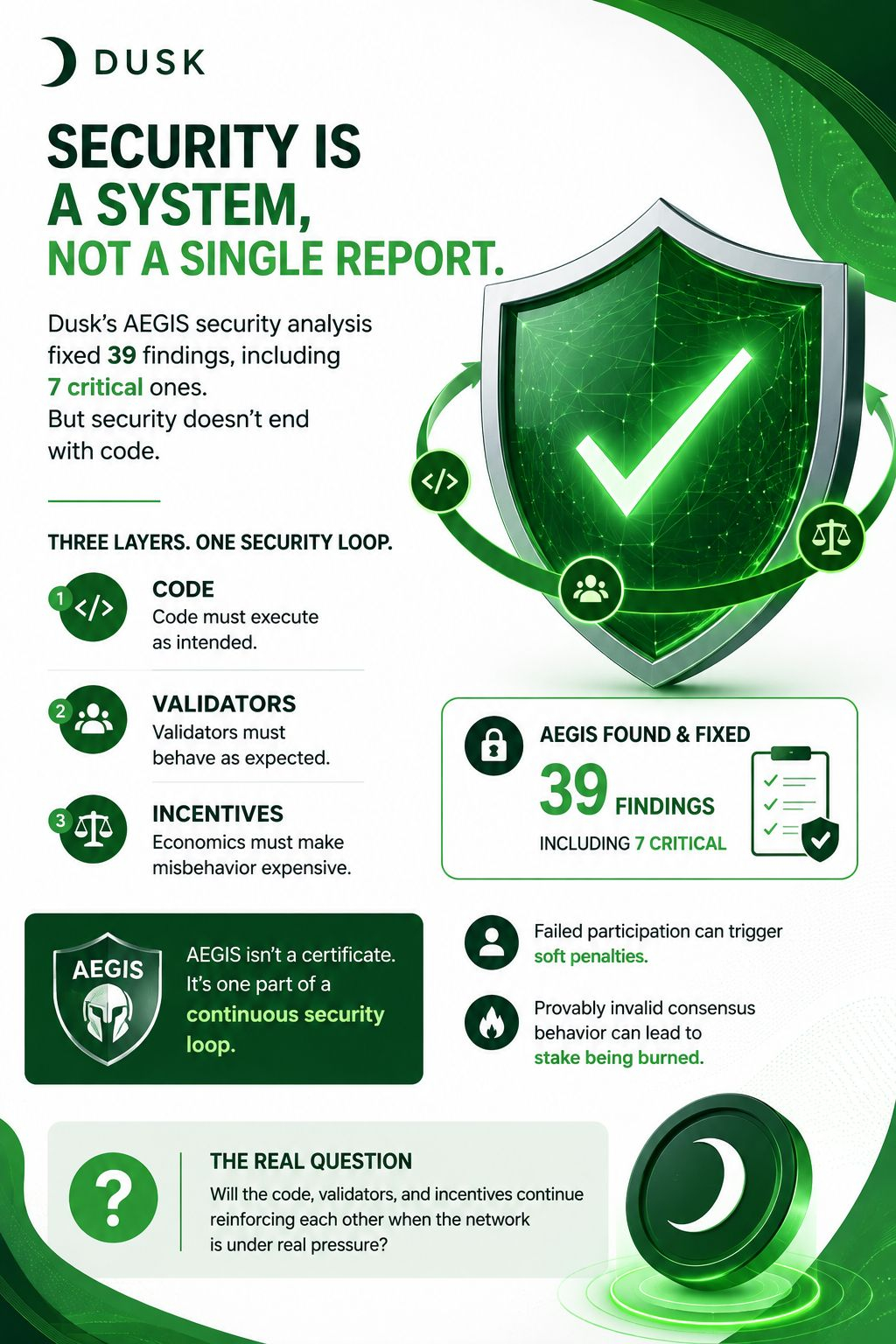
AEGISは39件の指摘を修正し、そのうち7件は重大なものだった。中には見た目だけの問題ではないものもあった。決定論的実行、コンセンサス認証、手数料の完全性、さらにはチェーンの稼働可能性にまで影響していた。
それで、私はセキュリティの捉え方を変えることになった。
コードレビューは技術的リスクを下げられるが、それだけでは、ストレス下でネットワークが正しく振る舞うことを保証できない。Duskのバリデータモデルは、さらにもう一層追加する。参加に失敗すればソフトペナルティが発動しうる一方、証明可能な無効なコンセンサス挙動はステークが焼却される原因になりうる。
つまり、ここには本当に3つの要素がある。コードは正しく実行されなければならない、バリデータは正しく振る舞わなければならない、そして経済性によって不正行為が高くつくようでなければならない。
これらの層は、別の層の代わりにはならない。
最初にAEGISを見たときには、私が考慮できていなかったのはまさにそこだ。今では、それを「セキュリティ証明書」として見るというより、より大きなセキュリティのループを構成する一部として捉えている。
@Duskにとっての興味深い問いは、コードをより安全にできるかどうかではない。
ネットワークが現実の圧力下にあるとき、コード、バリデータ、インセンティブが互いに支え合い続けるかどうかだ。
そのあたりに、より深いセキュリティの前提がある。
#dusk $DUSK @Dusk_Foundation
#dusk $DUSK 私は、バグのリストが見つかると思って、DuskのAEGISセキュリティ分析に入った。
しかし、私はバグが実際のネットワークに接触した後に何が起きるのかを考え続けてしまった。
AEGISは39件の指摘を修正し、そのうち7件は重大なものだった。中には見た目だけの問題ではないものもあった。決定論的実行、コンセンサス認証、手数料の完全性、さらにはチェーンの稼働可能性にまで影響していた。
それで、私はセキュリティの捉え方を変えることになった。
コードレビューは技術的リスクを下げられるが、それだけでは、ストレス下でネットワークが正しく振る舞うことを保証できない。Duskのバリデータモデルは、さらにもう一層追加する。参加に失敗すればソフトペナルティが発動しうる一方、証明可能な無効なコンセンサス挙動はステークが焼却される原因になりうる。
つまり、ここには本当に3つの要素がある。コードは正しく実行されなければならない、バリデータは正しく振る舞わなければならない、そして経済性によって不正行為が高くつくようでなければならない。
これらの層は、別の層の代わりにはならない。
最初にAEGISを見たときには、私が考慮できていなかったのはまさにそこだ。今では、それを「セキュリティ証明書」として見るというより、より大きなセキュリティのループを構成する一部として捉えている。
@Duskにとっての興味深い問いは、コードをより安全にできるかどうかではない。
ネットワークが現実の圧力下にあるとき、コード、バリデータ、インセンティブが互いに支え合い続けるかどうかだ。
そのあたりに、より深いセキュリティの前提がある。
#dusk $DUSK @Dusk
しかし、私はバグが実際のネットワークに接触した後に何が起きるのかを考え続けてしまった。
AEGISは39件の指摘を修正し、そのうち7件は重大なものだった。中には見た目だけの問題ではないものもあった。決定論的実行、コンセンサス認証、手数料の完全性、さらにはチェーンの稼働可能性にまで影響していた。
それで、私はセキュリティの捉え方を変えることになった。
コードレビューは技術的リスクを下げられるが、それだけでは、ストレス下でネットワークが正しく振る舞うことを保証できない。Duskのバリデータモデルは、さらにもう一層追加する。参加に失敗すればソフトペナルティが発動しうる一方、証明可能な無効なコンセンサス挙動はステークが焼却される原因になりうる。
つまり、ここには本当に3つの要素がある。コードは正しく実行されなければならない、バリデータは正しく振る舞わなければならない、そして経済性によって不正行為が高くつくようでなければならない。
これらの層は、別の層の代わりにはならない。
最初にAEGISを見たときには、私が考慮できていなかったのはまさにそこだ。今では、それを「セキュリティ証明書」として見るというより、より大きなセキュリティのループを構成する一部として捉えている。
@Duskにとっての興味深い問いは、コードをより安全にできるかどうかではない。
ネットワークが現実の圧力下にあるとき、コード、バリデータ、インセンティブが互いに支え合い続けるかどうかだ。
そのあたりに、より深いセキュリティの前提がある。
#dusk $DUSK @Dusk
1
68
·
--
バビロンのアンボンディング(解除)に関する数字が気になって、何度も戻って確認してしまいました。
BTCのステーキングは、1,008ブロック(約7日)後なら早期に退出できます。その後、出金トランザクションが実行され、コインはあなたの管理下に戻ります。最初から最後までセルフカストディ。ブリッジも介在者もありません。
最初はそれを「速い」と受け取りました。15か月のロックより速く、多くのPoSの終了よりもすっきりしている。
しかし実際の経路を追ってみると違いました。アンボンディングのトランザクションには、依然としてコベナント(制約条件)の署名が必要で、なおかつビットコイン上でマイニングされる必要があります。短いタイムロックは、その後に初めて始まります。しかも、ビットコインのブロック数でカウントされる。さらに、出金にはもう1つのビットコインのトランザクションが必要です。退出の全工程は、ビットコインの決済(セトルメント)時計に従って進みます。
一方で、BABYステーキングは同じビットコインのチェックポイントを使うことで、従来の21日間のアンボンディングを約2日に圧縮します。セキュリティ提供者はビットコインのペースを待ちます。連携用トークンは、そのペースによって加速される。
仲介者を取り除けばカストディリスクは減ります。でも、それはビットコインのブロック間隔を圧縮するわけではない。「速い」は相対的で、絶対的ではありません。ネイティブの流動性が動くのは、やはりビットコインの速度です。瞬時の退出は、やはりセカンダリーマーケットが必要です。
その非対称性こそ、私が十分に考慮できていなかった部分でした。
#baby @babylonlabs_io $BABY
{spot}(BABYUSDT)
バビロンのアンボンディング(解除)に関する数字が気になって、何度も戻って確認してしまいました。
BTCのステーキングは、1,008ブロック(約7日)後なら早期に退出できます。その後、出金トランザクションが実行され、コインはあなたの管理下に戻ります。最初から最後までセルフカストディ。ブリッジも介在者もありません。
最初はそれを「速い」と受け取りました。15か月のロックより速く、多くのPoSの終了よりもすっきりしている。
しかし実際の経路を追ってみると違いました。アンボンディングのトランザクションには、依然としてコベナント(制約条件)の署名が必要で、なおかつビットコイン上でマイニングされる必要があります。短いタイムロックは、その後に初めて始まります。しかも、ビットコインのブロック数でカウントされる。さらに、出金にはもう1つのビットコインのトランザクションが必要です。退出の全工程は、ビットコインの決済(セトルメント)時計に従って進みます。
一方で、BABYステーキングは同じビットコインのチェックポイントを使うことで、従来の21日間のアンボンディングを約2日に圧縮します。セキュリティ提供者はビットコインのペースを待ちます。連携用トークンは、そのペースによって加速される。
仲介者を取り除けばカストディリスクは減ります。でも、それはビットコインのブロック間隔を圧縮するわけではない。「速い」は相対的で、絶対的ではありません。ネイティブの流動性が動くのは、やはりビットコインの速度です。瞬時の退出は、やはりセカンダリーマーケットが必要です。
その非対称性こそ、私が十分に考慮できていなかった部分でした。
#baby @BabylonLabs_io $BABY
BTCのステーキングは、1,008ブロック(約7日)後なら早期に退出できます。その後、出金トランザクションが実行され、コインはあなたの管理下に戻ります。最初から最後までセルフカストディ。ブリッジも介在者もありません。
最初はそれを「速い」と受け取りました。15か月のロックより速く、多くのPoSの終了よりもすっきりしている。
しかし実際の経路を追ってみると違いました。アンボンディングのトランザクションには、依然としてコベナント(制約条件)の署名が必要で、なおかつビットコイン上でマイニングされる必要があります。短いタイムロックは、その後に初めて始まります。しかも、ビットコインのブロック数でカウントされる。さらに、出金にはもう1つのビットコインのトランザクションが必要です。退出の全工程は、ビットコインの決済(セトルメント)時計に従って進みます。
一方で、BABYステーキングは同じビットコインのチェックポイントを使うことで、従来の21日間のアンボンディングを約2日に圧縮します。セキュリティ提供者はビットコインのペースを待ちます。連携用トークンは、そのペースによって加速される。
仲介者を取り除けばカストディリスクは減ります。でも、それはビットコインのブロック間隔を圧縮するわけではない。「速い」は相対的で、絶対的ではありません。ネイティブの流動性が動くのは、やはりビットコインの速度です。瞬時の退出は、やはりセカンダリーマーケットが必要です。
その非対称性こそ、私が十分に考慮できていなかった部分でした。
#baby @BabylonLabs_io $BABY
1
1
79
·
--
こちらがあなたのBTCビデオ背景です3/8/2026
スタイリッシュなダークテーマ、発光するBTCコイン、動くローソク(キャンドルスティック)、ネオンのグリッド。トレーディング分析リール、Binance Squareの投稿、またはYouTubeショートに最適です。
トレーディングプランの投稿テキストを重ねる「忍耐がボラティリティに勝つ」
市場アップデート BTC価格のレベルを追加「モチベーションのある暗号資産コンテンツ。市場は忍耐に報いる」
この動画にもテキストを追加しましょうか?
オプション BTCレベル:$66K レジスタンス | $60K サポート
感情ではなく計画で取引する"*
どのキャプションを載せるべきですか?
こちらがあなたのBTCビデオ背景です3/8/2026
スタイリッシュなダークテーマ、発光するBTCコイン、動くローソク(キャンドルスティック)、ネオンのグリッド。トレーディング分析リール、Binance Squareの投稿、またはYouTubeショートに最適です。
トレーディングプランの投稿テキストを重ねる「忍耐がボラティリティに勝つ」
市場アップデート BTC価格のレベルを追加「モチベーションのある暗号資産コンテンツ。市場は忍耐に報いる」
この動画にもテキストを追加しましょうか?
オプション BTCレベル:$66K レジスタンス | $60K サポート
感情ではなく計画で取引する"*
どのキャプションを載せるべきですか?
スタイリッシュなダークテーマ、発光するBTCコイン、動くローソク(キャンドルスティック)、ネオンのグリッド。トレーディング分析リール、Binance Squareの投稿、またはYouTubeショートに最適です。
トレーディングプランの投稿テキストを重ねる「忍耐がボラティリティに勝つ」
市場アップデート BTC価格のレベルを追加「モチベーションのある暗号資産コンテンツ。市場は忍耐に報いる」
この動画にもテキストを追加しましょうか?
オプション BTCレベル:$66K レジスタンス | $60K サポート
感情ではなく計画で取引する"*
どのキャプションを載せるべきですか?
91
·
--
暗号通貨のコインのことを指しているなら、よく知られているものをいくつか挙げます:
ビットコイン(BTC)— 最初で最大の暗号通貨で、デジタルゴールドと見なされることが多いです。
コインゲッコー +3
イーサリアム(ETH)— スマートコントラクトや分散型アプリケーションを動かすブロックチェーン・プラットフォームです。
コインベース +4
BNB — バイナンス・エコシステムのネイティブコインです。
ソルana(SOL)— 高速で低コストの取引で知られています。
XRP — 国境を越えた送金に重点を置いています。
カルダノ(ADA)— リサーチ主導のアプローチによるプルーフ・オブ・ステーク(PoS)型ブロックチェーンです。
ドージコイン(DOGE)— 大きなコミュニティを持つ人気のミームコインです。
ライトコイン(LTC)— 最も初期の暗号通貨の1つで、より速い決済のために設計されています。
コインベース +4
もし「コイン」が別の意味(コイン収集、今日の値上がり上位、または取引のチャンスなど)を指しているのであれば、教えてください。内容を合わせて回答します
暗号通貨のコインのことを指しているなら、よく知られているものをいくつか挙げます:
ビットコイン(BTC)— 最初で最大の暗号通貨で、デジタルゴールドと見なされることが多いです。
コインゲッコー +3
イーサリアム(ETH)— スマートコントラクトや分散型アプリケーションを動かすブロックチェーン・プラットフォームです。
コインベース +4
BNB — バイナンス・エコシステムのネイティブコインです。
ソルana(SOL)— 高速で低コストの取引で知られています。
XRP — 国境を越えた送金に重点を置いています。
カルダノ(ADA)— リサーチ主導のアプローチによるプルーフ・オブ・ステーク(PoS)型ブロックチェーンです。
ドージコイン(DOGE)— 大きなコミュニティを持つ人気のミームコインです。
ライトコイン(LTC)— 最も初期の暗号通貨の1つで、より速い決済のために設計されています。
コインベース +4
もし「コイン」が別の意味(コイン収集、今日の値上がり上位、または取引のチャンスなど)を指しているのであれば、教えてください。内容を合わせて回答します
ビットコイン(BTC)— 最初で最大の暗号通貨で、デジタルゴールドと見なされることが多いです。
コインゲッコー +3
イーサリアム(ETH)— スマートコントラクトや分散型アプリケーションを動かすブロックチェーン・プラットフォームです。
コインベース +4
BNB — バイナンス・エコシステムのネイティブコインです。
ソルana(SOL)— 高速で低コストの取引で知られています。
XRP — 国境を越えた送金に重点を置いています。
カルダノ(ADA)— リサーチ主導のアプローチによるプルーフ・オブ・ステーク(PoS)型ブロックチェーンです。
ドージコイン(DOGE)— 大きなコミュニティを持つ人気のミームコインです。
ライトコイン(LTC)— 最も初期の暗号通貨の1つで、より速い決済のために設計されています。
コインベース +4
もし「コイン」が別の意味(コイン収集、今日の値上がり上位、または取引のチャンスなど)を指しているのであれば、教えてください。内容を合わせて回答します

114
ログインして、さらにコンテンツを読む
厳選トピックで世界の暗号資産トレーダーの仲間入り
⚡️ 暗号資産に関する最新かつ有益な情報が見つかります。
💬 世界最大の暗号資産取引所から信頼されています。
👍 認証を受けたクリエイターから、有益なインサイトを得られます。
メール / 電話番号
トレンドトピック
ZcashETFPostsFirstWeeklyOutflow$93.6M
閲覧回数 18,305
59人が討論中
#ZcashETFPostsFirstWeeklyOutflow$93.6M 📊 グレイスケールのスポット・ジーキャッシュ(ZEC)ETF、週次で9,360万ドルの資金流出を記録
機関投資家の資金フローに新たなダイナミクスが見え始めています。グレイスケールのスポットZcash ETFは、初の大きな週次ネット資金流出を記録したばかりで、これまでの強い立ち上がりの勢いからの注目すべき変化を示しています。
🔹数字 グレイスケールのスポットZEC ETF(ティッカー:ZCSH)は、過去1週間で約9,360万ドルのネット流出を記録しました。特筆すべき引き出しは9月下旬と10月上旬に集中していました。
🔹 背景 これは堅調な初期局面に続く動きです。グレイスケールのZcash Trustから転換し、8月下旬にNYSE Arcaへ上場した後、このファンドは9月中旬までに累計でネット流入が2億7100万ドルに達していました。
💡 市場への影響分析
•短期的なダイナミクス 大型ETFの資金流出は、償還請求に対応するためにファンドが保有を調整する過程で、基礎となる資産に一時的な売り圧力をもたらす可能性があります。
•センチメント&リバランス この下落は、ジーキャッシュの長期的な有用性やプライバシー重視の価値提案が根本的に変わったことというより、初期の機関投資家による通常の利確、あるいはポートフォリオのリバランスを反映しているのかもしれません。
•エコシステムの注目点 市場参加者は、これがZCSHに特有の一過性の出来事なのか、それともプライバシー志向のデジタル資産に対する機関の食欲が広く冷え込んでいることを示唆するのかを注視します。
💬 あなたの見解は? この週次の資金流出を、強いスタートの後の健全な市場調整と見ますか?それとも、プライバシー・コインへの向けた機関のセンチメントが変化しているサインだと見ますか?下のコメント欄であなたの考えを聞かせてください!
#Zcash #ZEC #CryptoETF #InstitutionalCrypto #MarketUpdate
これは教育目的のみです。投資助言ではありません(NFA)。常に自己調査(DYOR)を行ってください。
$GLMR $QI $ONE
piknkkk
·いいね:0件
·閲覧回数 24
GreekPoliceBustCryptoScamRingArrest17
閲覧回数 25,510
293人が討論中
BitcoinRejectedAt$87K
閲覧回数 93,776
119人が討論中