
S1R0Z
417 投稿

S1R0Z
6 フォロー
47 フォロワー
289 いいね
投稿
すべて
引用
PINNED
翻訳参照
#FedSeptRateHikeOddsRiseTo57%
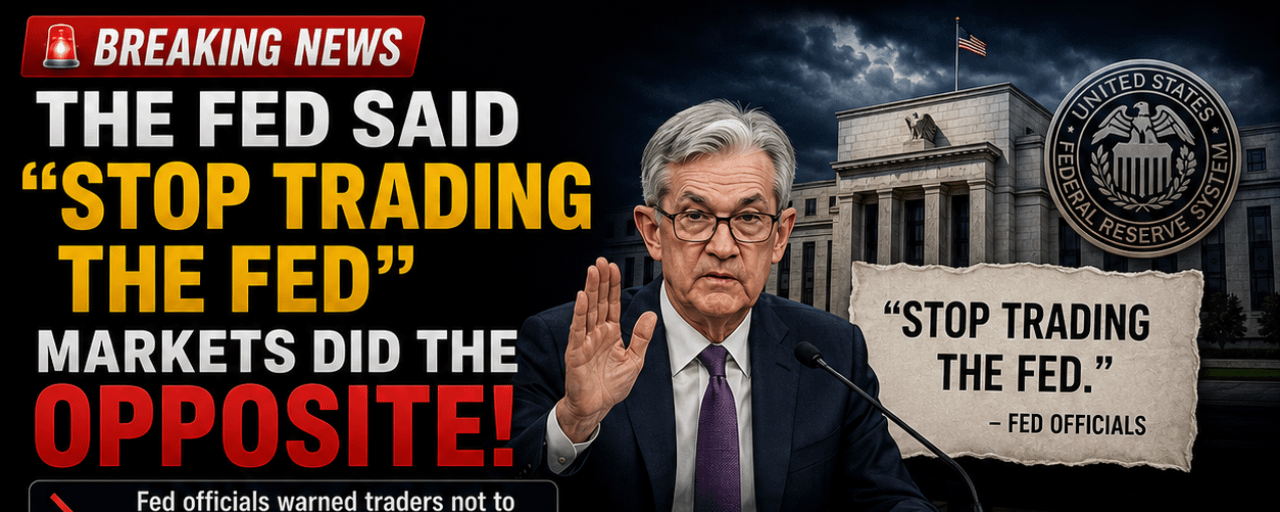
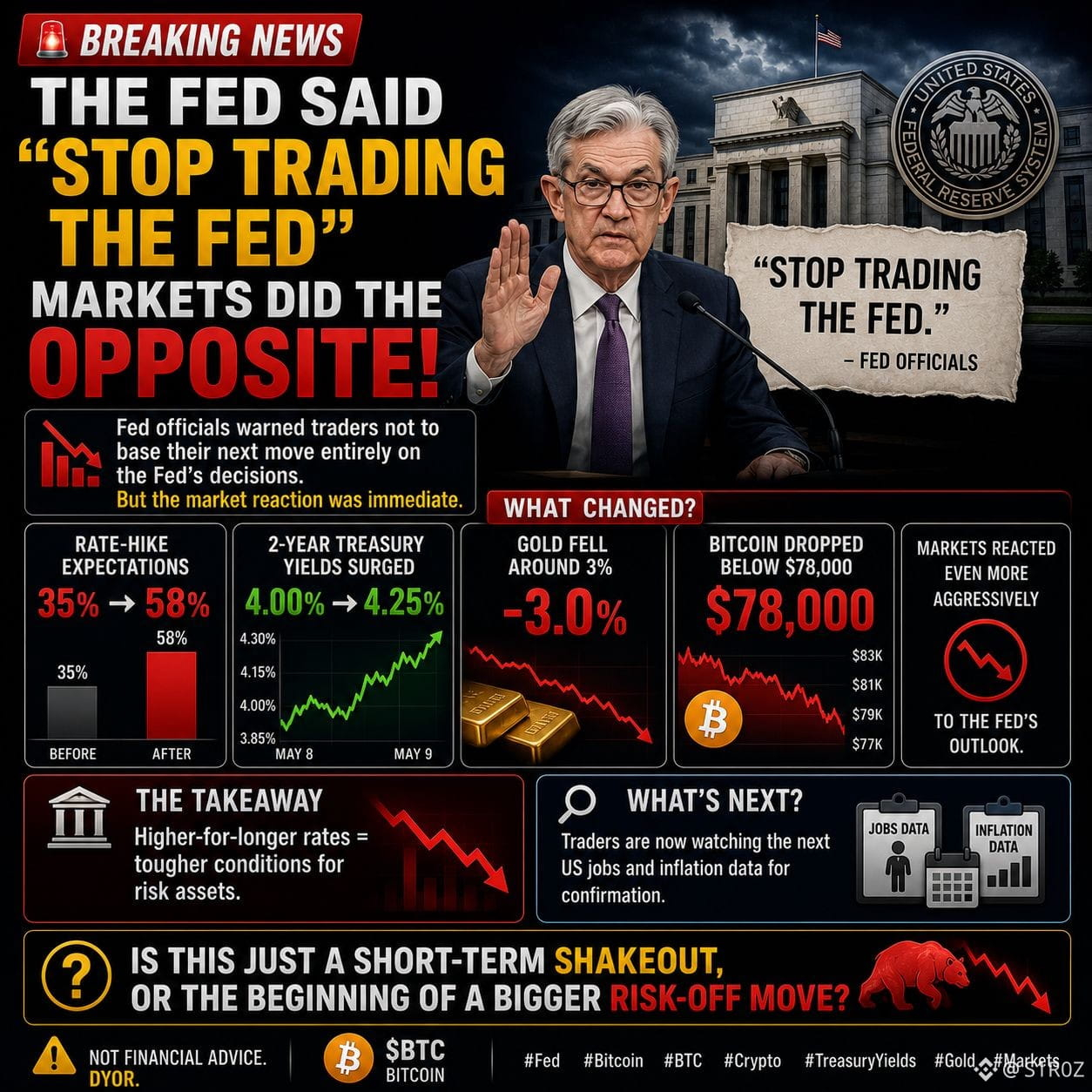
🚨 THE FED SAID “STOP TRADING THE FED” — MARKETS DID THE OPPOSITE! 📉
Fed officials warned traders not to base their next move entirely on the Fed's decisions.
But the market reaction was immediate. 👀
📊 What changed?
🔹 Rate-hike expectations jumped from 35% → 58%
🔹 2-year Treasury yields surged
🔹 Gold fell around 3%
🔹 Bitcoin dropped below $78,000
The message was supposed to discourage Fed-focused trading.
Instead, markets reacted even more aggressively to the Fed's outlook.
🏦 Higher-for-longer rates = tougher conditions for risk assets.
Now traders are watching the next US jobs and inflation data for confirmation.
🔥 Is this just a short-term shakeout, or the beginning of a bigger risk-off move?
⚠️ Not financial advice. DYOR.
$BTC
#Fed #bitcoin #BTC #Crypto #TreasuryYields #Gold #markets
🚨 THE FED SAID “STOP TRADING THE FED” — MARKETS DID THE OPPOSITE! 📉
Fed officials warned traders not to base their next move entirely on the Fed's decisions.
But the market reaction was immediate. 👀
📊 What changed?
🔹 Rate-hike expectations jumped from 35% → 58%
🔹 2-year Treasury yields surged
🔹 Gold fell around 3%
🔹 Bitcoin dropped below $78,000
The message was supposed to discourage Fed-focused trading.
Instead, markets reacted even more aggressively to the Fed's outlook.
🏦 Higher-for-longer rates = tougher conditions for risk assets.
Now traders are watching the next US jobs and inflation data for confirmation.
🔥 Is this just a short-term shakeout, or the beginning of a bigger risk-off move?
⚠️ Not financial advice. DYOR.
$BTC
#Fed #bitcoin #BTC #Crypto #TreasuryYields #Gold #markets
確認済み
#yenpasses160perdollartoonemonthlow
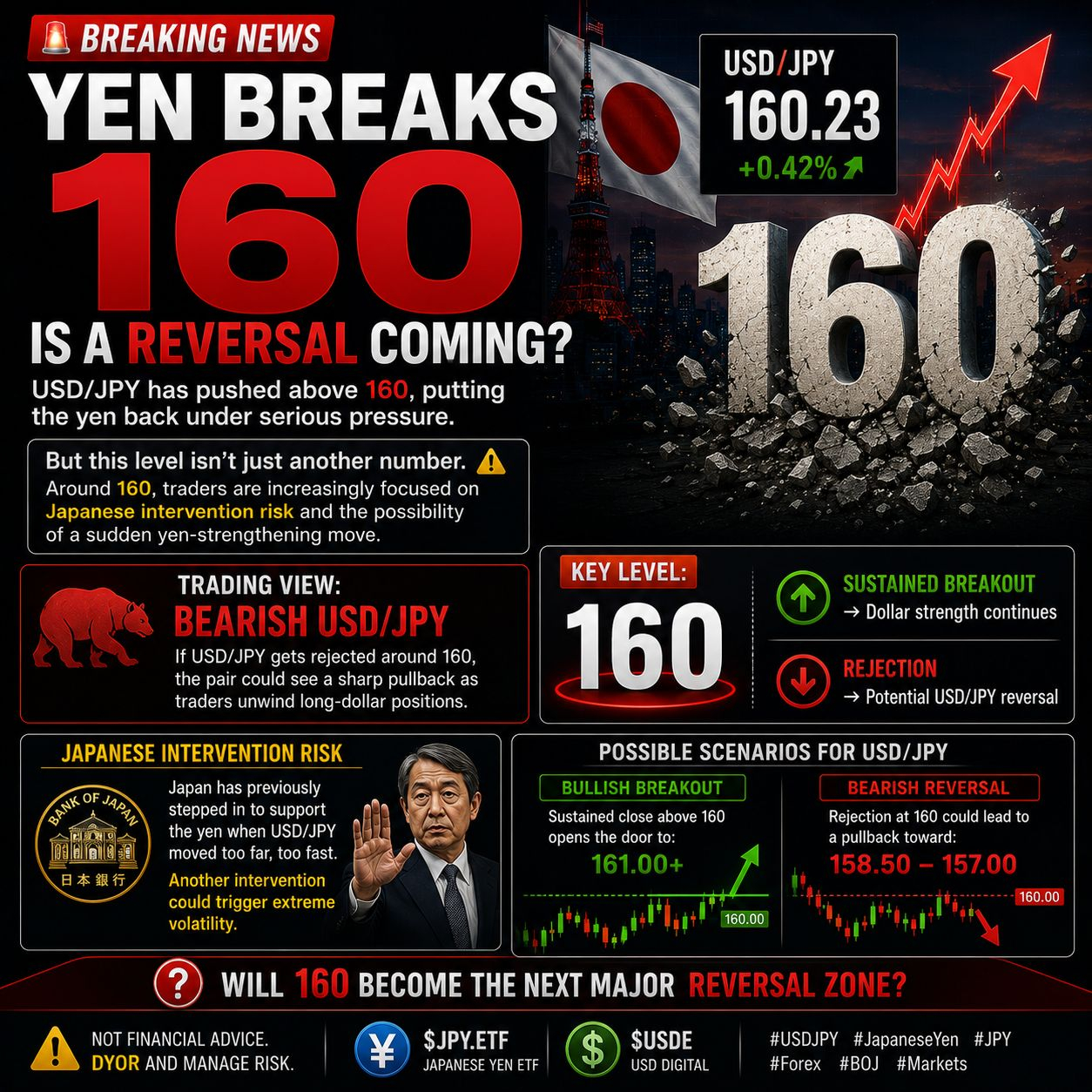
🚨 円が160を割り込む—反転は来るのか? 🇯🇵📉
USD/JPYは160を上抜けし、円は再び深刻な圧力を受けています。
しかし、この水準は単なる数字ではありません。 👀
160付近では、トレーダーの関心が日本の介入リスクや、突然の円高(円が強くなる)局面の可能性に集まりつつあります。
📊 TRADING VIEW:弱気のUSD/JPY
USD/JPYが160付近で跳ね返されると、ロングのドル建てポジションが解消されることで、ペアは急激な押し戻し(プルバック)を見せる可能性があります。
🔥 注目の水準:160
🟢 継続的なブレイクアウト → ドル高が続く
🔴 押し返し → USD/JPYの反転の可能性
日本の対応が最大のカタリスト(引き金)になり得ます。
160は次の主要な反転ゾーンになるのでしょうか? 👇
⚠️ 投資助言ではありません。DYOR(自分で調べる)し、リスク管理を行ってください。
$JPY.ETF $USDE
#USDJPY #JapaneseYen #JPY #Forex #BOJ
🚨 円が160を割り込む—反転は来るのか? 🇯🇵📉
USD/JPYは160を上抜けし、円は再び深刻な圧力を受けています。
しかし、この水準は単なる数字ではありません。 👀
160付近では、トレーダーの関心が日本の介入リスクや、突然の円高(円が強くなる)局面の可能性に集まりつつあります。
📊 TRADING VIEW:弱気のUSD/JPY
USD/JPYが160付近で跳ね返されると、ロングのドル建てポジションが解消されることで、ペアは急激な押し戻し(プルバック)を見せる可能性があります。
🔥 注目の水準:160
🟢 継続的なブレイクアウト → ドル高が続く
🔴 押し返し → USD/JPYの反転の可能性
日本の対応が最大のカタリスト(引き金)になり得ます。
160は次の主要な反転ゾーンになるのでしょうか? 👇
⚠️ 投資助言ではありません。DYOR(自分で調べる)し、リスク管理を行ってください。
$JPY.ETF $USDE
#USDJPY #JapaneseYen #JPY #Forex #BOJ
確認済み
#yenpasses160perdollartoonemonthlow
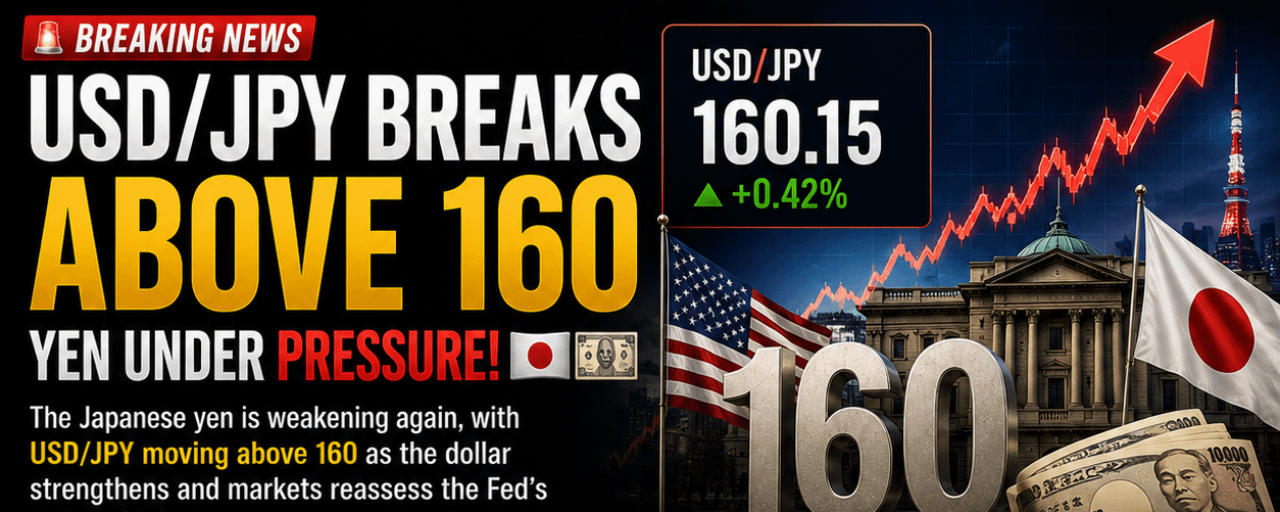
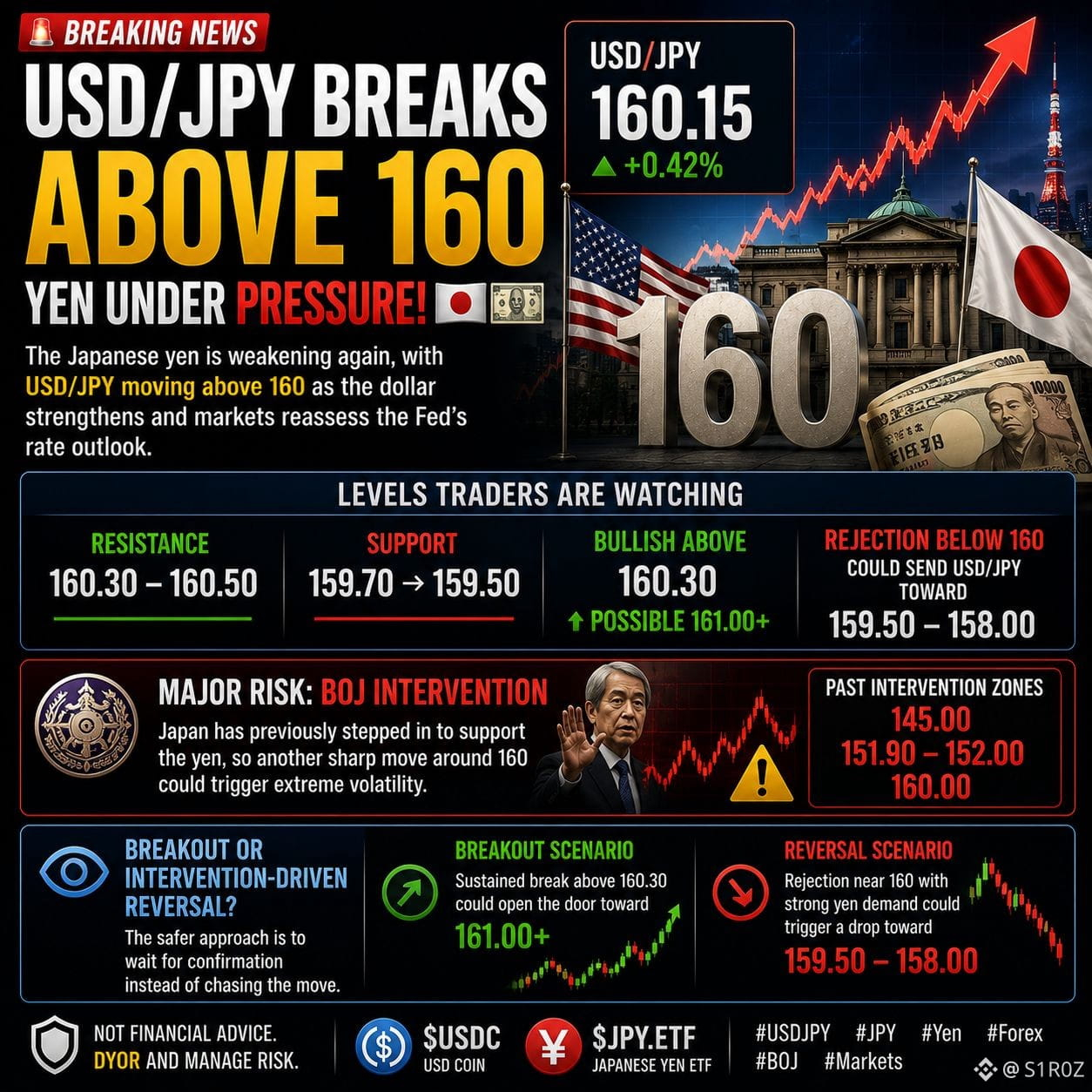
🚨 USD/JPY、160を上抜け — 円は圧迫される! 🇯🇵💴
ドルの上昇と市場がFRBの利下げ(/利上げ)見通しを再評価する中で、日銀円は再び弱含みとなり、USD/JPYは160を超えて推移しています。
📊 トレーダーが注目する水準:
🟢 レジスタンス:160.30〜160.50
🔴 サポート:159.70 → 159.50
🎯 強気(上抜け)の条件:160.30以上 → 161.00+の可能性
⚠️ 160を下回って跳ね返されると、USD/JPYは159.50〜158.00へ向かう可能性があります
ただし、これらの水準には大きなリスクがあります:BOJ(日本銀行)の介入。
日本は過去に円を支えるために介入しており、160付近で再び急激な動きが出れば、極端なボラティリティを引き起こすかもしれません。
👀 ブレイクアウトか、それとも介入主導の反転?
追いかけるよりも、確認を待つほうが安全です。
⚠️ 金融助言ではありません。調べて(DYOR)リスク管理を行ってください。
$USDC $JPY.ETF
#usdjpy #JPY #円 #FX #BOJ #markets
🚨 USD/JPY、160を上抜け — 円は圧迫される! 🇯🇵💴
ドルの上昇と市場がFRBの利下げ(/利上げ)見通しを再評価する中で、日銀円は再び弱含みとなり、USD/JPYは160を超えて推移しています。
📊 トレーダーが注目する水準:
🟢 レジスタンス:160.30〜160.50
🔴 サポート:159.70 → 159.50
🎯 強気(上抜け)の条件:160.30以上 → 161.00+の可能性
⚠️ 160を下回って跳ね返されると、USD/JPYは159.50〜158.00へ向かう可能性があります
ただし、これらの水準には大きなリスクがあります:BOJ(日本銀行)の介入。
日本は過去に円を支えるために介入しており、160付近で再び急激な動きが出れば、極端なボラティリティを引き起こすかもしれません。
👀 ブレイクアウトか、それとも介入主導の反転?
追いかけるよりも、確認を待つほうが安全です。
⚠️ 金融助言ではありません。調べて(DYOR)リスク管理を行ってください。
$USDC $JPY.ETF
#usdjpy #JPY #円 #FX #BOJ #markets
一部該当
#schwabplanstoaddsolavaxlinktrading
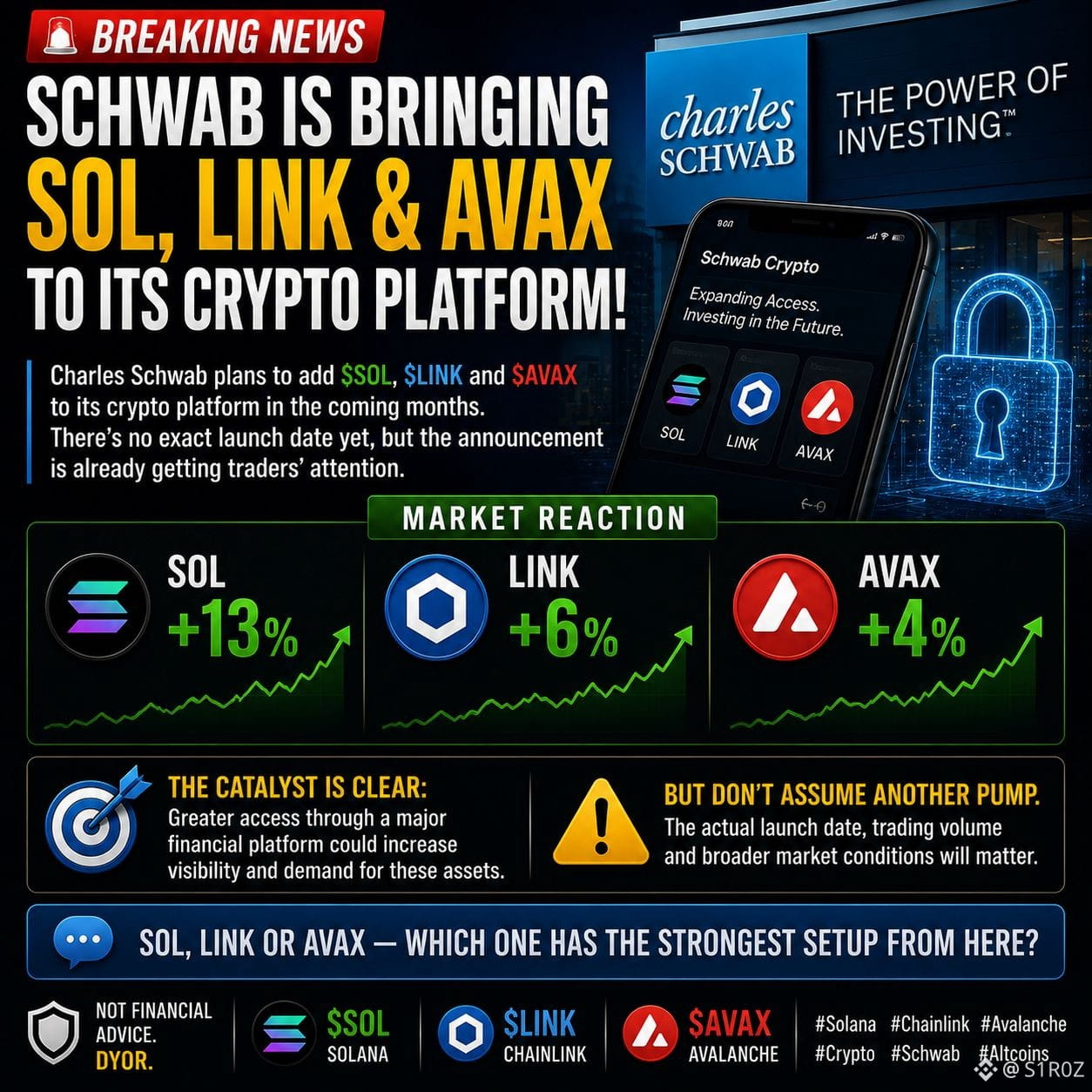
🚨 シュワブがSOL、LINK、AVAXを仮想通貨プラットフォームに導入へ!
チャールズ・シュワブは今後数か月で、暗号資産プラットフォームに$SOL 、$LINK および$AVAX を追加する計画だ。正確なローンチ日はまだ明らかになっていないが、この発表はすでにトレーダーの注目を集めている。
📈 市場の反応:
🟢 SOL:〜+13%
🟢 LINK:〜+6%
🟢 AVAX:〜+4%
きっかけは明確だ。大手の金融プラットフォームを通じたアクセス拡大により、これらの資産の認知度や需要が高まる可能性がある。
ただし、この発表が次の急騰(ポンプ)を確実に約束するとは思わないでほしい。実際のローンチ日、取引量、そしてより広い市場環境が重要になる。
👀 ここから先、SOL・LINK・AVAXのうちどれが最も強い仕掛け(セットアップ)?
⚠️ 金融アドバイスではありません。DYOR。
$SOL
#solana #Chainlink #Avalanche #Crypto #Schwab #altcoins
🚨 シュワブがSOL、LINK、AVAXを仮想通貨プラットフォームに導入へ!
チャールズ・シュワブは今後数か月で、暗号資産プラットフォームに$SOL 、$LINK および$AVAX を追加する計画だ。正確なローンチ日はまだ明らかになっていないが、この発表はすでにトレーダーの注目を集めている。
📈 市場の反応:
🟢 SOL:〜+13%
🟢 LINK:〜+6%
🟢 AVAX:〜+4%
きっかけは明確だ。大手の金融プラットフォームを通じたアクセス拡大により、これらの資産の認知度や需要が高まる可能性がある。
ただし、この発表が次の急騰(ポンプ)を確実に約束するとは思わないでほしい。実際のローンチ日、取引量、そしてより広い市場環境が重要になる。
👀 ここから先、SOL・LINK・AVAXのうちどれが最も強い仕掛け(セットアップ)?
⚠️ 金融アドバイスではありません。DYOR。
$SOL
#solana #Chainlink #Avalanche #Crypto #Schwab #altcoins
申し立て対象
翻訳参照
#usshorttermtreasuryyieldsjump
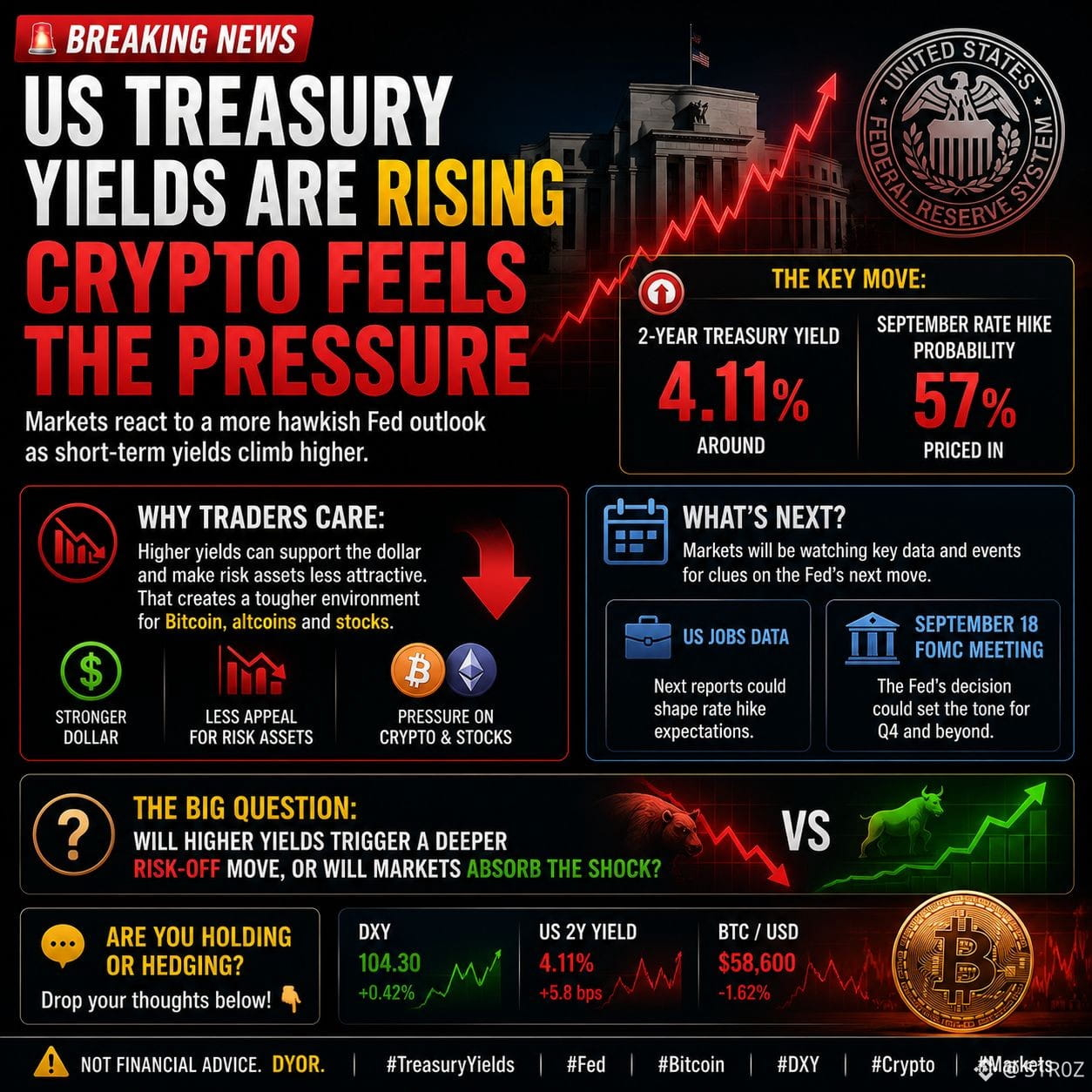
🚨 US TREASURY YIELDS ARE RISING — CRYPTO FEELS THE PRESSURE
US short-term Treasury yields are moving higher as markets react to a more hawkish Fed outlook.
📈 The key move:
The 2-year Treasury yield climbed to around 4.11%, while markets are pricing a higher probability of a September rate hike.
💥 Why traders care:
Higher yields can support the dollar and make risk assets less attractive. That creates a tougher environment for Bitcoin, altcoins and stocks.
👀 What's next?
Markets will be watching upcoming US jobs data and the September 18 FOMC meeting for clues on the Fed's next move.
The big question: Will higher yields trigger a deeper risk-off move, or will markets absorb the shock?
Are you holding or hedging? 👇
⚠️ Not financial advice. DYOR.
$BTC
#TreasuryYields #Fed #bitcoin #DXY #Crypto #markets
🚨 US TREASURY YIELDS ARE RISING — CRYPTO FEELS THE PRESSURE
US short-term Treasury yields are moving higher as markets react to a more hawkish Fed outlook.
📈 The key move:
The 2-year Treasury yield climbed to around 4.11%, while markets are pricing a higher probability of a September rate hike.
💥 Why traders care:
Higher yields can support the dollar and make risk assets less attractive. That creates a tougher environment for Bitcoin, altcoins and stocks.
👀 What's next?
Markets will be watching upcoming US jobs data and the September 18 FOMC meeting for clues on the Fed's next move.
The big question: Will higher yields trigger a deeper risk-off move, or will markets absorb the shock?
Are you holding or hedging? 👇
⚠️ Not financial advice. DYOR.
$BTC
#TreasuryYields #Fed #bitcoin #DXY #Crypto #markets
確認済み
翻訳参照
#trumpsaysusreachedvenezuelaoildeal
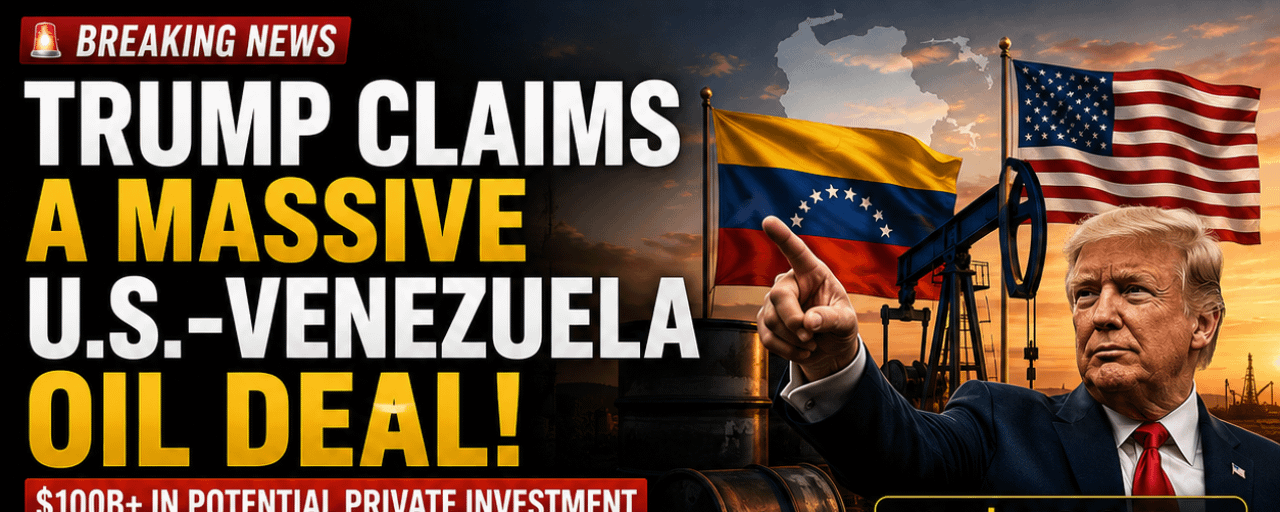
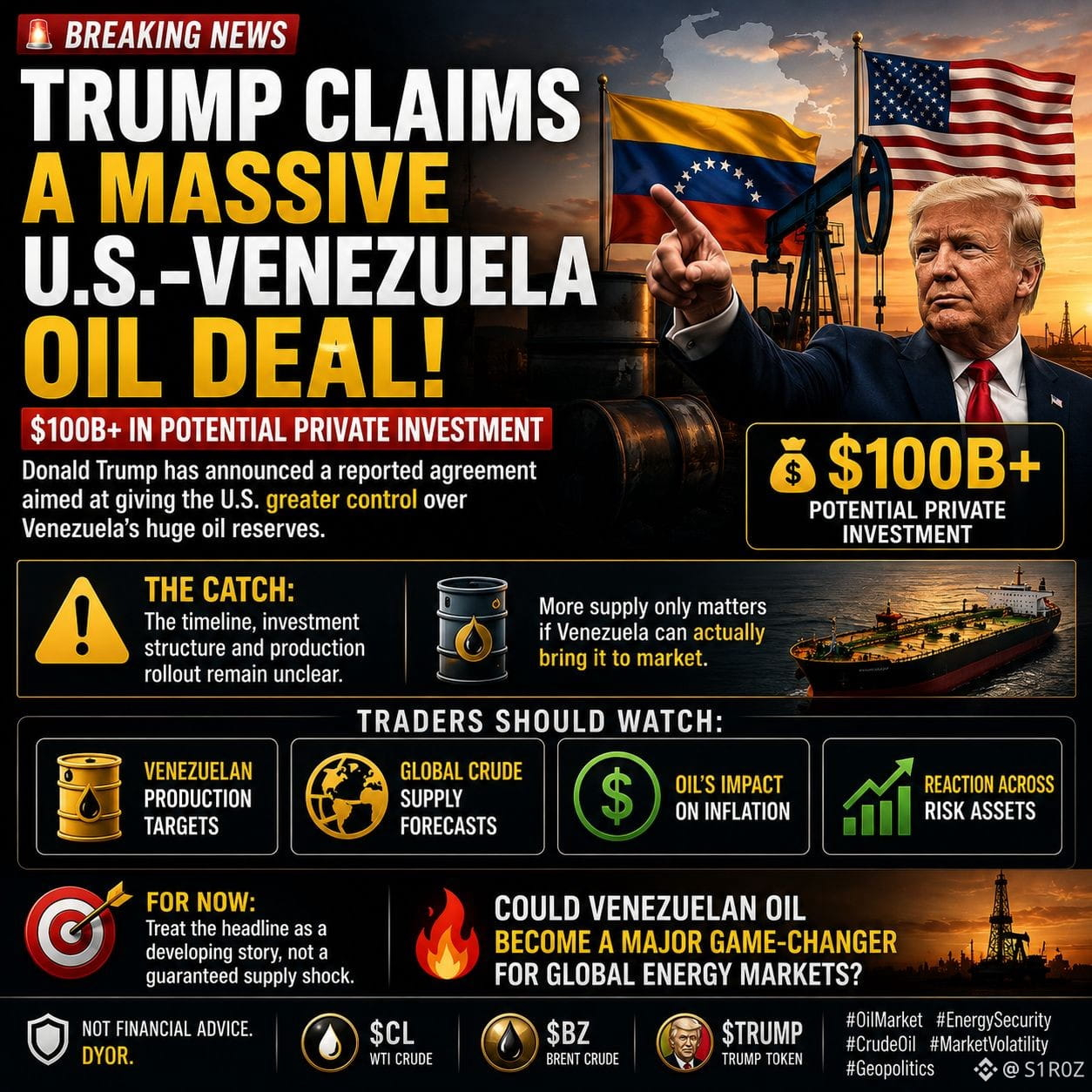
🚨 TRUMP CLAIMS A MASSIVE U.S.-VENEZUELA OIL DEAL! 🛢️🇺🇸
Donald Trump has announced a reported agreement aimed at giving the U.S. greater control over Venezuela's huge oil reserves, with claims of $100B+ in potential private investment.
If production eventually rises, the extra Venezuelan supply could reshape global oil forecasts, energy prices and inflation expectations.
But here's the catch: 👀
The timeline, investment structure and production rollout remain unclear. More supply only matters if Venezuela can actually bring it to market.
📊 Traders should watch:
🛢️ Venezuelan production targets
🌍 Global crude supply forecasts
💵 Oil's impact on inflation
📈 Reaction across risk assets
For now, treat the headline as a developing story, not a guaranteed supply shock.
🔥 Could Venezuelan oil become a major game-changer for global energy markets?
⚠️ Not financial advice. DYOR.
$CL $BZ $TRUMP
#OilMarket #EnergySecurity #CrudeOil #MarketVolatility #Geopolitics
🚨 TRUMP CLAIMS A MASSIVE U.S.-VENEZUELA OIL DEAL! 🛢️🇺🇸
Donald Trump has announced a reported agreement aimed at giving the U.S. greater control over Venezuela's huge oil reserves, with claims of $100B+ in potential private investment.
If production eventually rises, the extra Venezuelan supply could reshape global oil forecasts, energy prices and inflation expectations.
But here's the catch: 👀
The timeline, investment structure and production rollout remain unclear. More supply only matters if Venezuela can actually bring it to market.
📊 Traders should watch:
🛢️ Venezuelan production targets
🌍 Global crude supply forecasts
💵 Oil's impact on inflation
📈 Reaction across risk assets
For now, treat the headline as a developing story, not a guaranteed supply shock.
🔥 Could Venezuelan oil become a major game-changer for global energy markets?
⚠️ Not financial advice. DYOR.
$CL $BZ $TRUMP
#OilMarket #EnergySecurity #CrudeOil #MarketVolatility #Geopolitics
#californiabillwouldbarofficialmemecoins
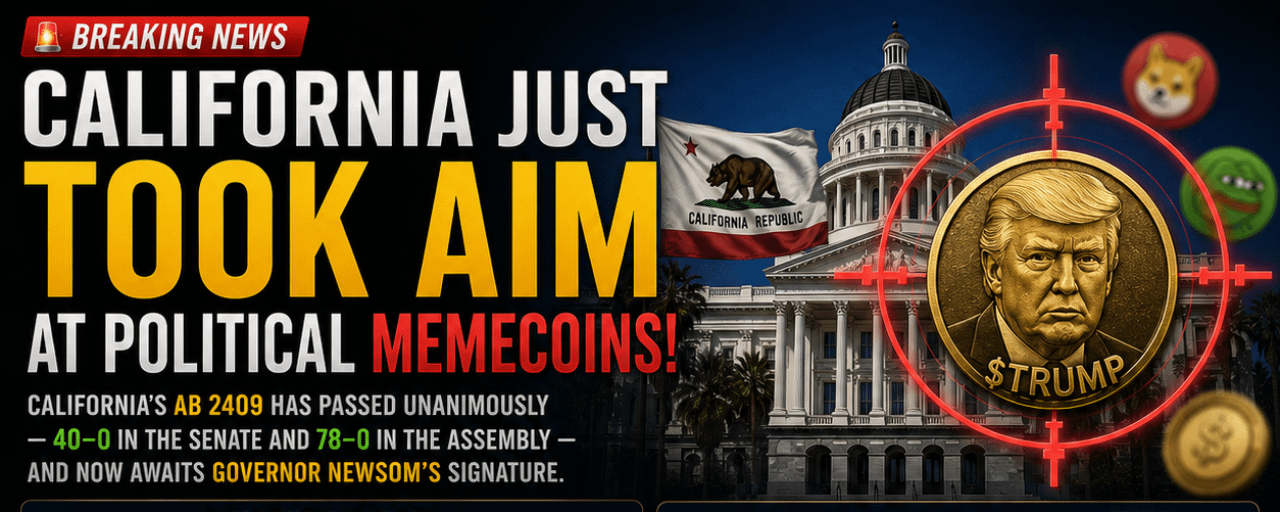
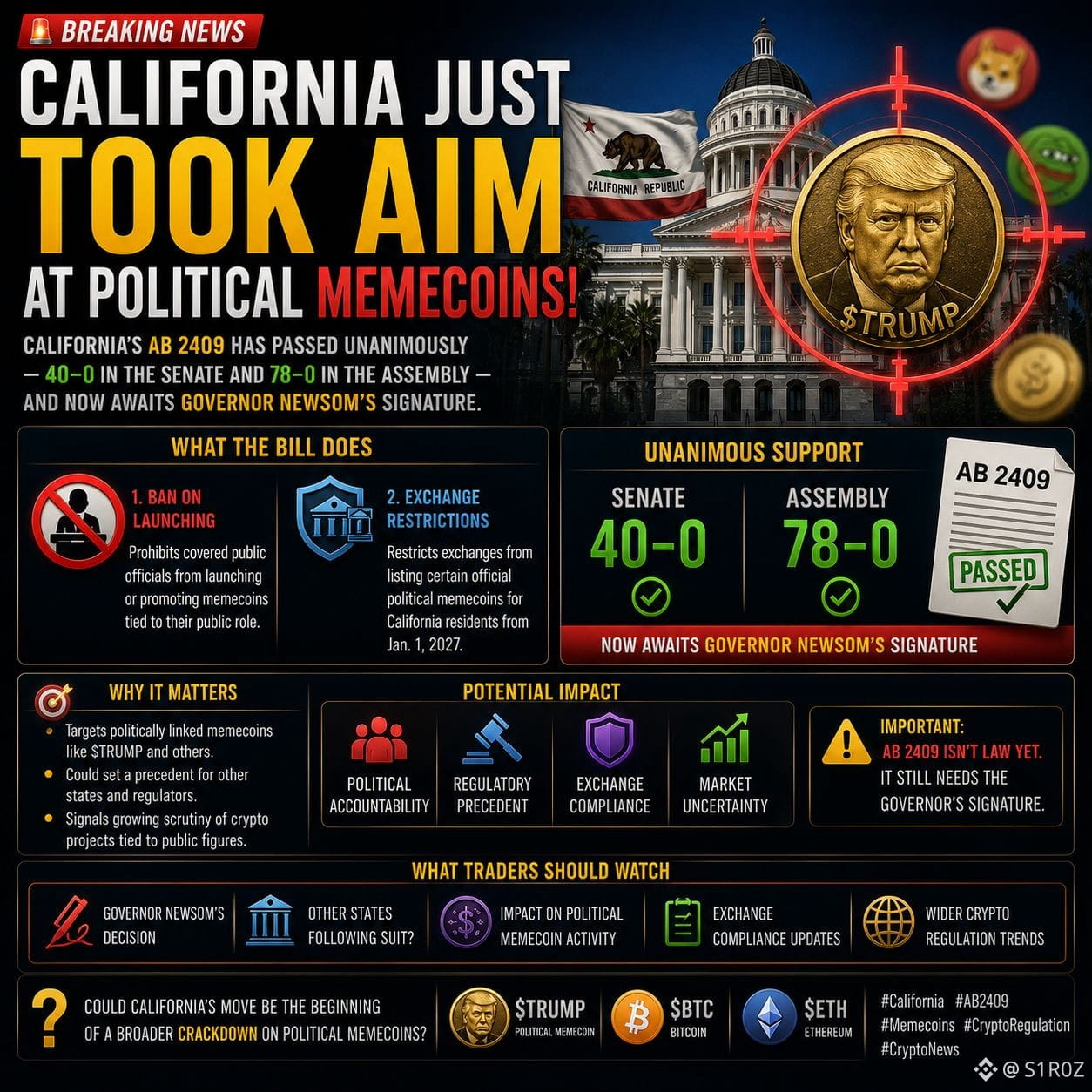
🚨 カリフォルニアが政治メメコインを狙い撃ち! 🇺🇸
カリフォルニア州のAB 2409が満場一致で可決されました――上院は40–0、下院(議会)は78–0。そして今、ニュースム州知事の署名を待っています。
署名されれば、この法案は以下を行います:
🏛️ 対象となる公職者がメメコインを発行することを禁止
🏦 取引所に対し、特定の公式な政治メメコインを(カリフォルニア州の居住者向けに)2027年1月1日から上場することを制限
これは、$TRUMP のような政治的に結びついたトークンに大きな影響を及ぼしうるほか、他の州にとって前例となる可能性もあります。
⚠️ 重要:AB 2409はまだ法律ではありません――州知事の署名が必要です。
👀 カリフォルニアの動きは、政治メメコインに対するより広範な取り締まりの始まりになるのでしょうか?
$BTC $ETH
#California #AB2409 #Memecoins #CryptoRegulation #CryptoNews
🚨 カリフォルニアが政治メメコインを狙い撃ち! 🇺🇸
カリフォルニア州のAB 2409が満場一致で可決されました――上院は40–0、下院(議会)は78–0。そして今、ニュースム州知事の署名を待っています。
署名されれば、この法案は以下を行います:
🏛️ 対象となる公職者がメメコインを発行することを禁止
🏦 取引所に対し、特定の公式な政治メメコインを(カリフォルニア州の居住者向けに)2027年1月1日から上場することを制限
これは、$TRUMP のような政治的に結びついたトークンに大きな影響を及ぼしうるほか、他の州にとって前例となる可能性もあります。
⚠️ 重要:AB 2409はまだ法律ではありません――州知事の署名が必要です。
👀 カリフォルニアの動きは、政治メメコインに対するより広範な取り締まりの始まりになるのでしょうか?
$BTC $ETH
#California #AB2409 #Memecoins #CryptoRegulation #CryptoNews
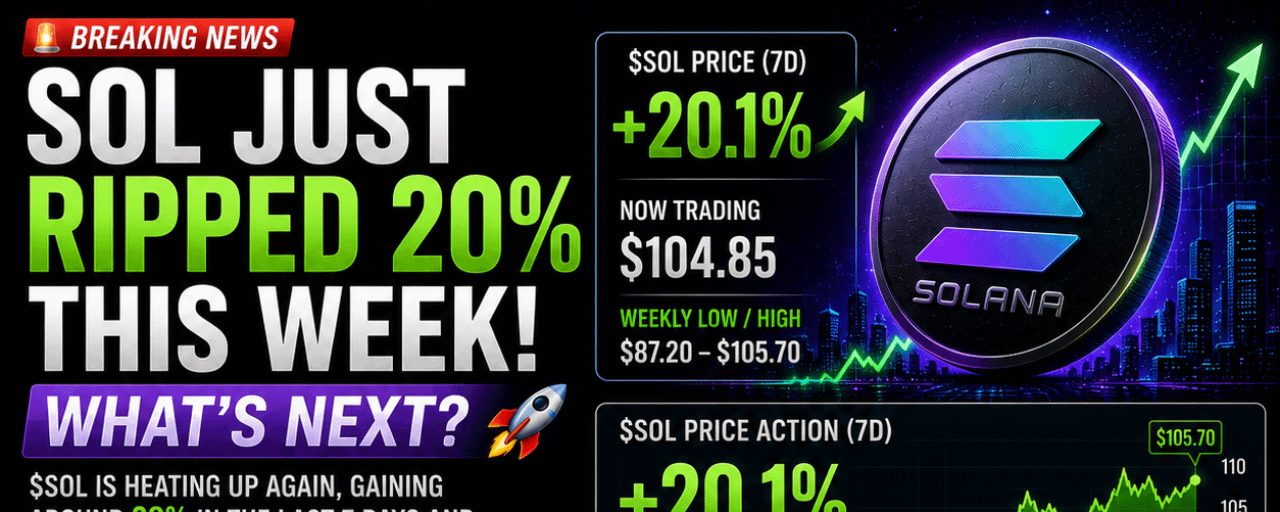
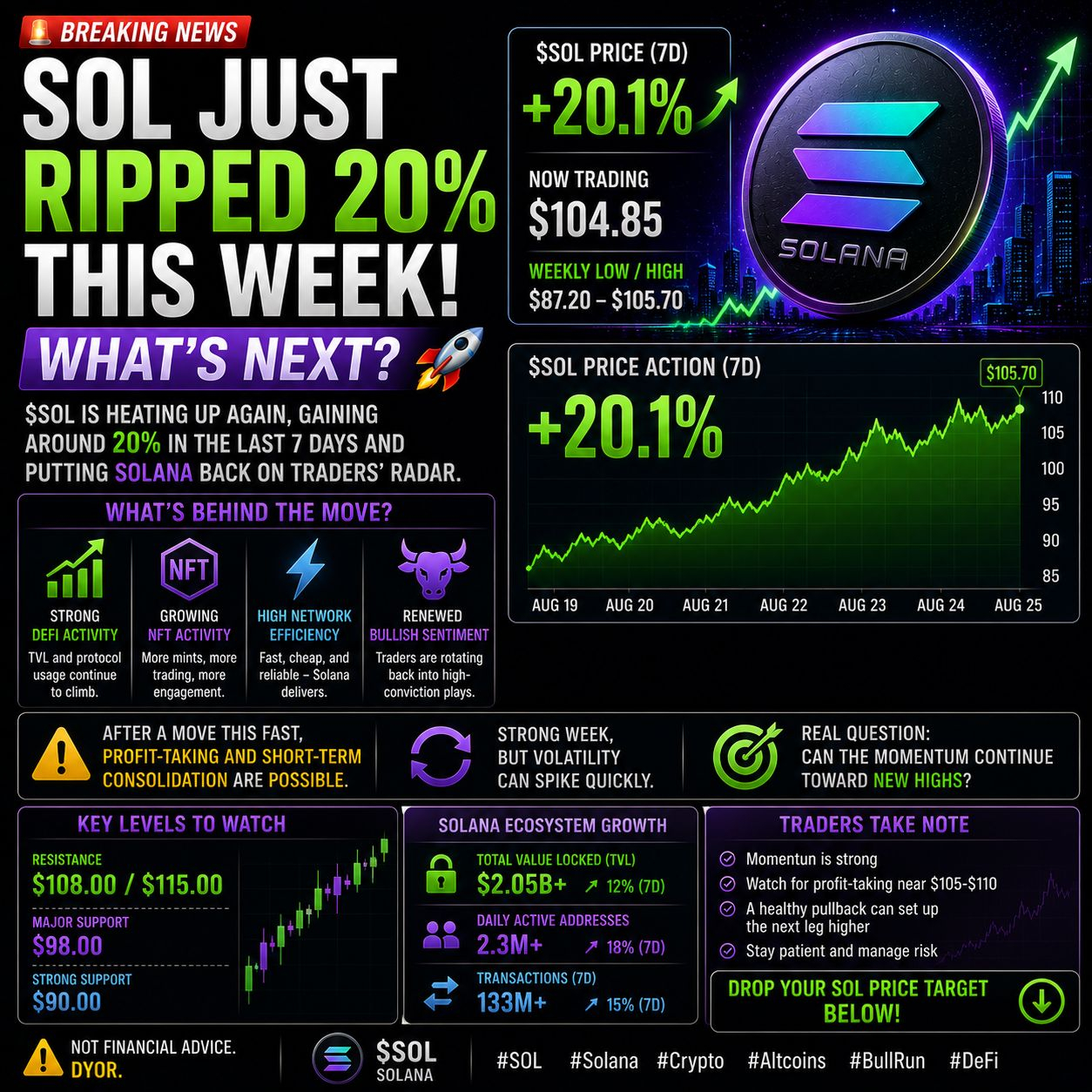
#soljumps20%ontheweek
🚨 SOLが今週20%急騰 — 次に何が起きる? 🚀
$SOL が再び勢いを増しており、直近7日で約20%上昇し、ソラナが再びトレーダーの注目を集めています。
🔥 動きの背景は?
📈 強いDeFiの活性
🎨 NFT活動の拡大
⚡ 高いネットワーク効率
🐂 エコシステム全体での強気ムードの再燃
しかし、このような急速な値動きの後は、利確と短期的な調整(もみ合い)に注意が必要です。
本当の問いは「SOLが強い週だったのか?」ではありません — それは明らかにそうです。
👀 この勢いは新高値に向かって続くのか、それとも先に押し目(調整)が来るのか?
下にあなたのSOLの目標価格を投稿してください。👇
$SOL
#sol #solana #Crypto #Altcoins #BullRun #defi
🚨 SOLが今週20%急騰 — 次に何が起きる? 🚀
$SOL が再び勢いを増しており、直近7日で約20%上昇し、ソラナが再びトレーダーの注目を集めています。
🔥 動きの背景は?
📈 強いDeFiの活性
🎨 NFT活動の拡大
⚡ 高いネットワーク効率
🐂 エコシステム全体での強気ムードの再燃
しかし、このような急速な値動きの後は、利確と短期的な調整(もみ合い)に注意が必要です。
本当の問いは「SOLが強い週だったのか?」ではありません — それは明らかにそうです。
👀 この勢いは新高値に向かって続くのか、それとも先に押し目(調整)が来るのか?
下にあなたのSOLの目標価格を投稿してください。👇
$SOL
#sol #solana #Crypto #Altcoins #BullRun #defi
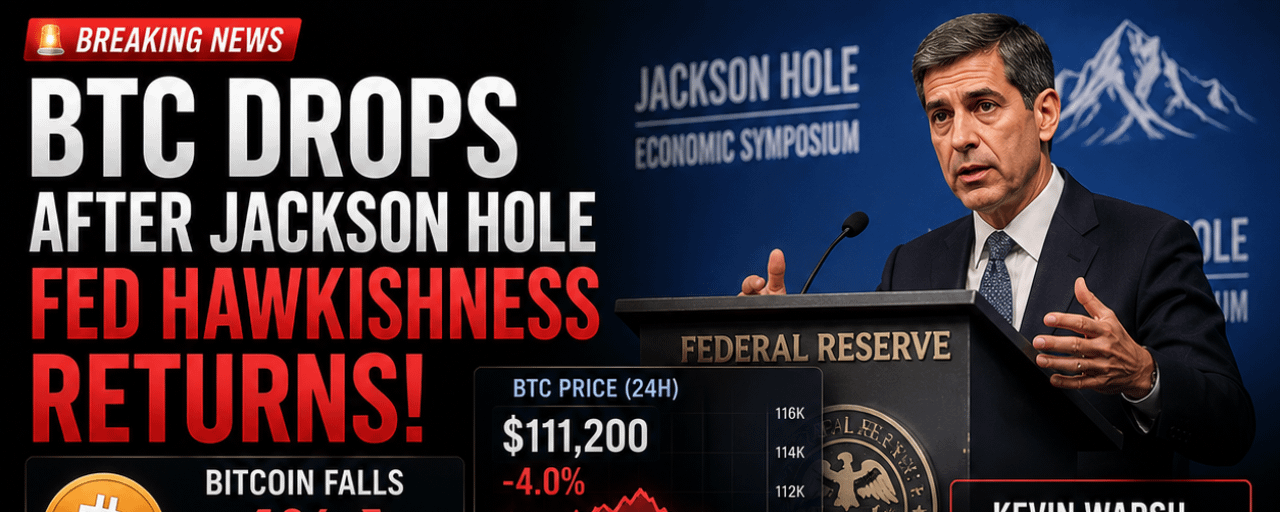
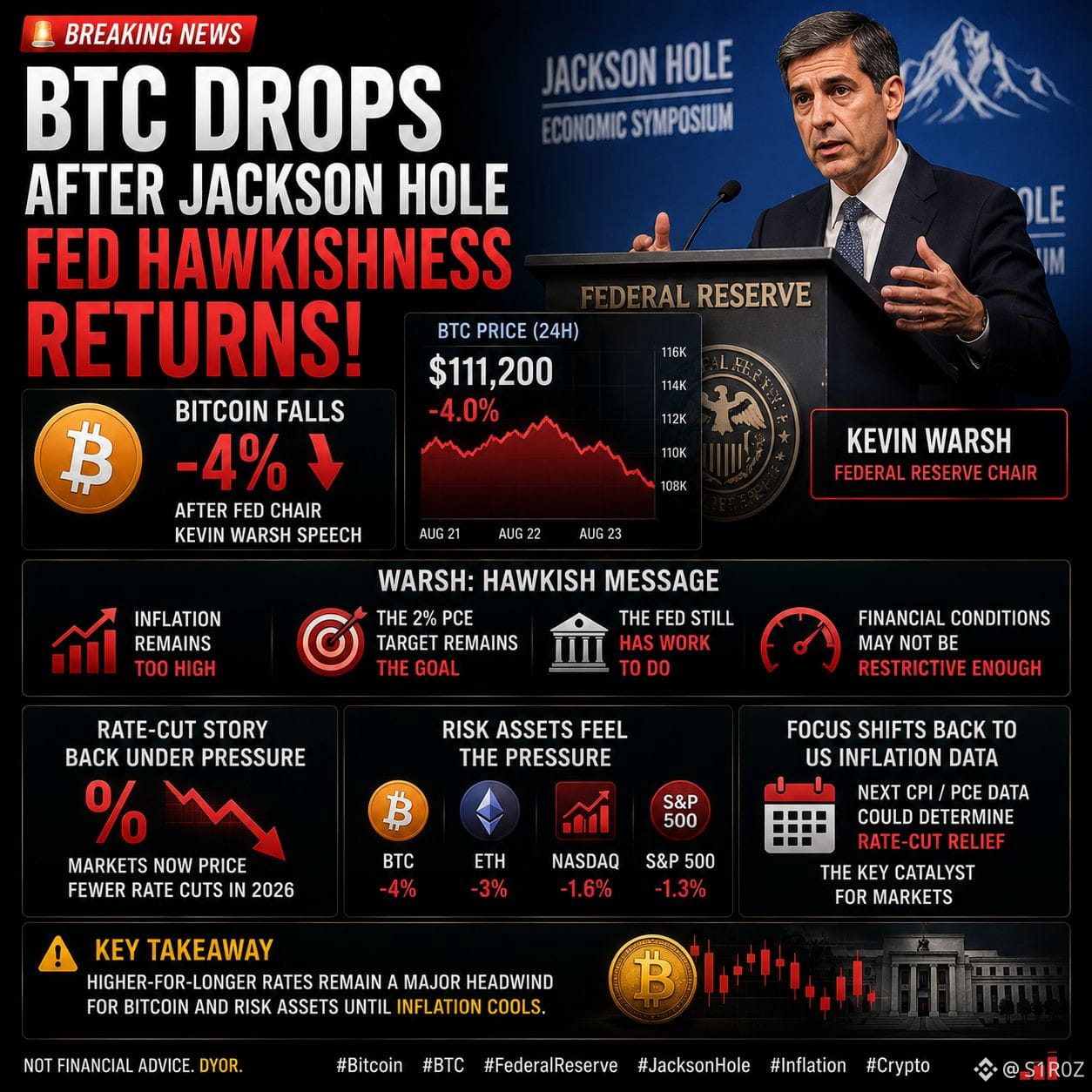
🚨 ジャクソンホール後にBTC急落 — FRBハト派が復活せず、より強硬(ハークィッシュ)に!📉
#warshsaysinflationisfedtopfocus
ビットコインは、FRB議長ケビン・ウォーシュが市場の予想よりも強硬なメッセージを伝えたことで、約4%下落しました。
🏦 ウォーシュは以下を強調:
インフレはまだ高すぎる
2%のPCE目標は引き続き目標
FRBにはまだやるべきことがある
金融環境が十分に引き締まっていない可能性
そのため、利下げストーリーへの圧力が再び強まります。
📉 ビットコインやその他のリスク資産にとっては、「高止まりの金利が長く続く」ことが大きな逆風です。
👀 いま注目は次の米国のインフレ指標へと移ります。これが、市場が期待するような利下げの“救済”が得られるかどうかを左右しうるのです。
$BTC
#bitcoin #BTC #FederalReserve #JacksonHole #インフレ #クリプト
#warshsaysinflationisfedtopfocus
ビットコインは、FRB議長ケビン・ウォーシュが市場の予想よりも強硬なメッセージを伝えたことで、約4%下落しました。
🏦 ウォーシュは以下を強調:
インフレはまだ高すぎる
2%のPCE目標は引き続き目標
FRBにはまだやるべきことがある
金融環境が十分に引き締まっていない可能性
そのため、利下げストーリーへの圧力が再び強まります。
📉 ビットコインやその他のリスク資産にとっては、「高止まりの金利が長く続く」ことが大きな逆風です。
👀 いま注目は次の米国のインフレ指標へと移ります。これが、市場が期待するような利下げの“救済”が得られるかどうかを左右しうるのです。
$BTC
#bitcoin #BTC #FederalReserve #JacksonHole #インフレ #クリプト
確認済み
#GoldRisesAbout14%InAugust
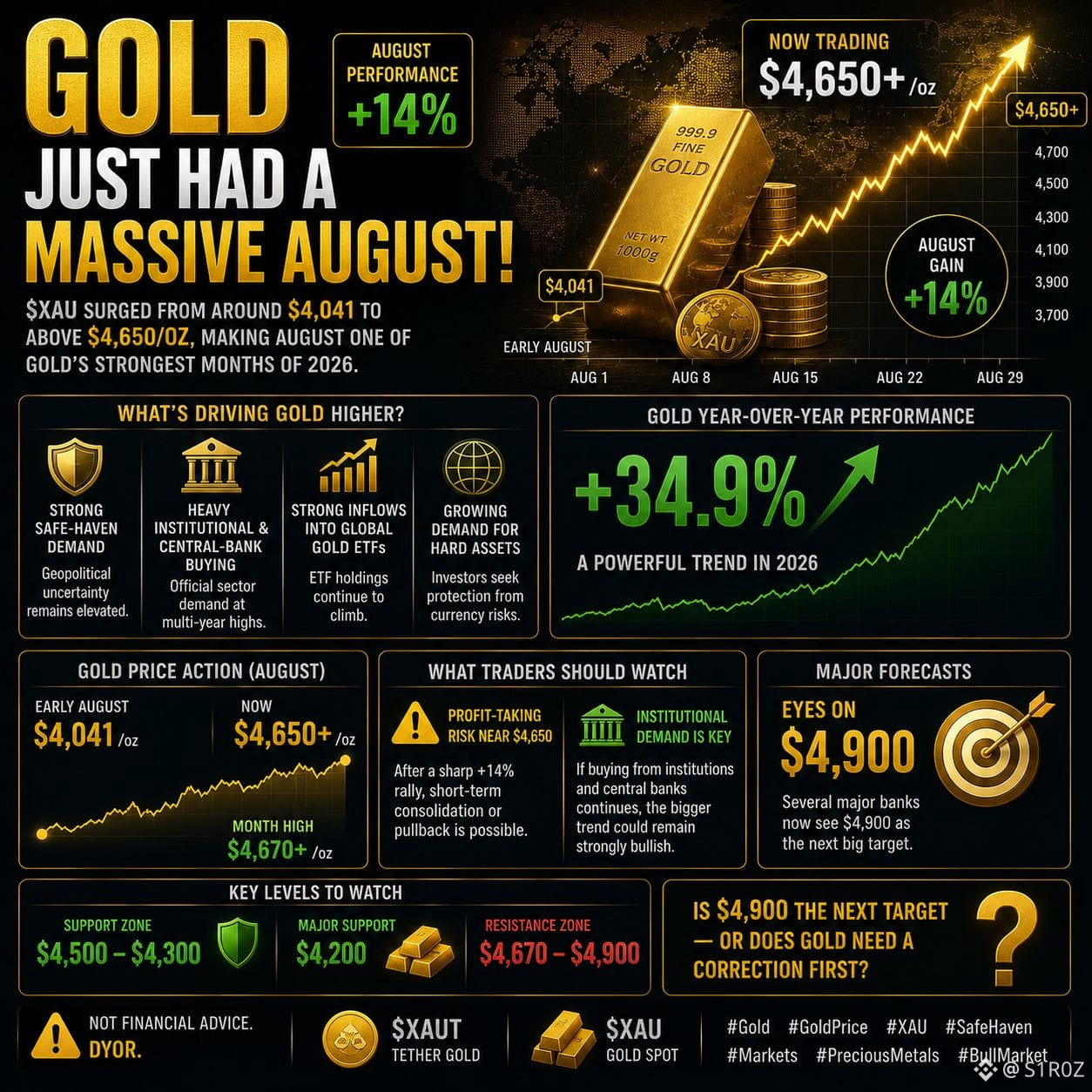
🏆 金は8月に大規模な急騰—+14%! 📈
$XAU は約4,041ドル前後から4,650ドル/ozを超える水準まで急伸し、2026年の8月は金にとって最も強い月の一つになりました。
🔥 値動きを動かしている要因は?
🛡️ 地政学的不透明感の中での強い安全資産需要
🏦 機関投資家や中央銀行による大規模な買い
💰 世界のゴールドETFへの資金流入の強さ
🌍 現物資産(ハードアセット)への需要の高まり
金は現在、前年比でおよそ34.9%上昇しており、より大きなトレンドがいかに強力になっているかを示しています。
⚠️ これだけ急な上昇の後は、4,650ドル近辺で利確が出る可能性があります。とはいえ、機関投資家の需要が強いままであれば、より大きなトレンドは強気のまま維持されるかもしれません。
🎯 主要な予測の一部は現在、4,900ドルに向けて動いています。
👀 次の目標は4,900ドル—それとも金は先に調整が必要でしょうか?
$XAUT $XAU
#GOLD #GoldPrice #XAU #SafeHaven #Markets #PreciousMetals
🏆 金は8月に大規模な急騰—+14%! 📈
$XAU は約4,041ドル前後から4,650ドル/ozを超える水準まで急伸し、2026年の8月は金にとって最も強い月の一つになりました。
🔥 値動きを動かしている要因は?
🛡️ 地政学的不透明感の中での強い安全資産需要
🏦 機関投資家や中央銀行による大規模な買い
💰 世界のゴールドETFへの資金流入の強さ
🌍 現物資産(ハードアセット)への需要の高まり
金は現在、前年比でおよそ34.9%上昇しており、より大きなトレンドがいかに強力になっているかを示しています。
⚠️ これだけ急な上昇の後は、4,650ドル近辺で利確が出る可能性があります。とはいえ、機関投資家の需要が強いままであれば、より大きなトレンドは強気のまま維持されるかもしれません。
🎯 主要な予測の一部は現在、4,900ドルに向けて動いています。
👀 次の目標は4,900ドル—それとも金は先に調整が必要でしょうか?
$XAUT $XAU
#GOLD #GoldPrice #XAU #SafeHaven #Markets #PreciousMetals
翻訳参照
#GoldRisesAbout14%InAugust
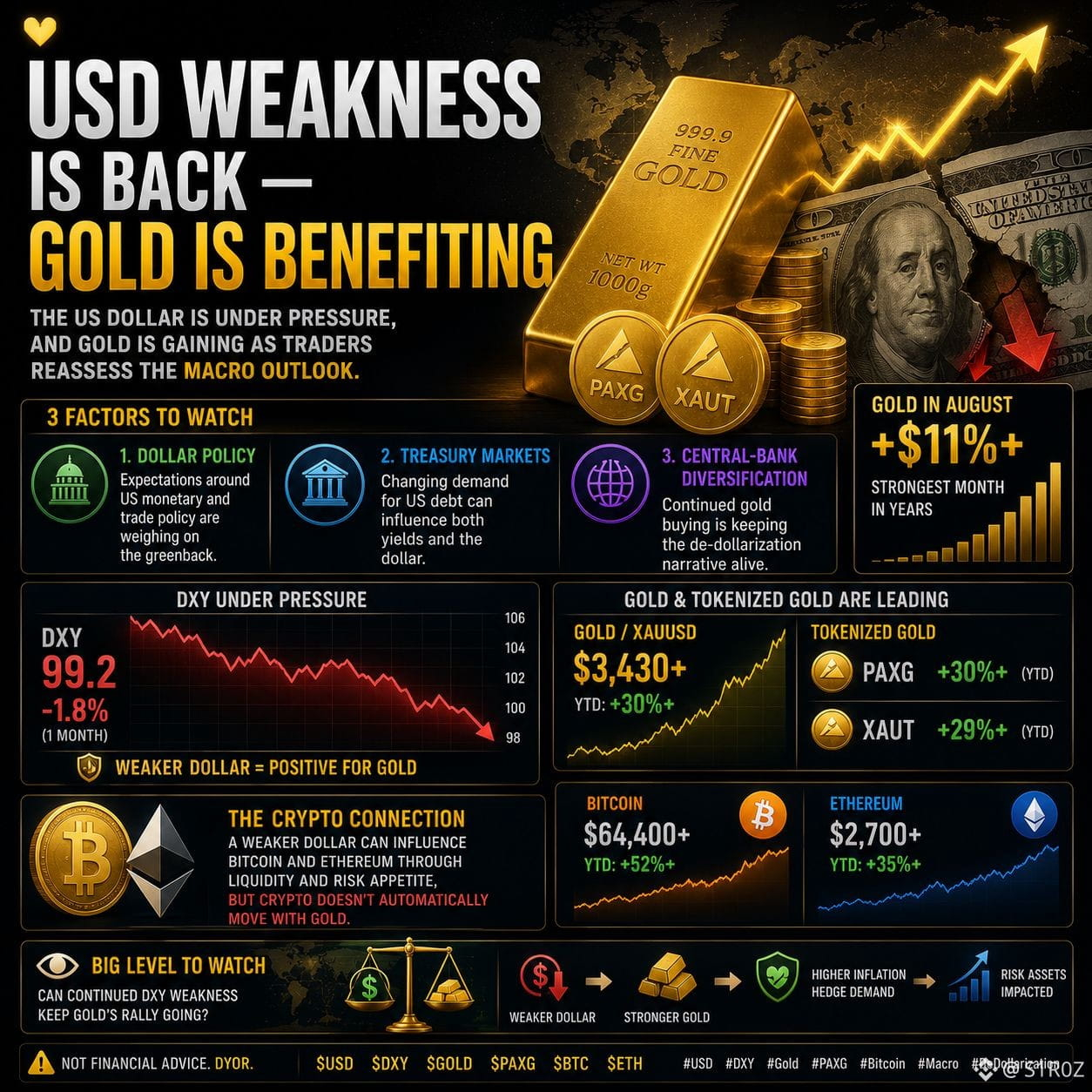
💛 USD WEAKNESS IS BACK — GOLD IS BENEFITING👀👀
The US dollar is under pressure, and gold is gaining as traders reassess the macro outlook.
3 factors to watch:
1️⃣ Dollar policy — Expectations around US monetary and trade policy are weighing on the greenback.
2️⃣ Treasury markets — Changing demand for US debt can influence both yields and the dollar.
3️⃣ Central-bank diversification — Continued gold buying is keeping the de-dollarization narrative alive.
🏆 Gold remains the standout:
Gold gained strongly in August, while tokenized gold such as $PAXG and $XAUT continues to track the broader move.
₿ The crypto connection:
A weaker dollar can also influence Bitcoin and Ethereum through liquidity and risk appetite, but crypto doesn't automatically move with gold.
👀 Big level to watch: Can continued DXY weakness keep gold's rally going?
$USDC $DXYZ.US $GOLD.US $PAXG $BTC $ETH
#USD #DXY #Gold #PAXG #Bitcoin #Macro #DeDollarization #DigitalGold
💛 USD WEAKNESS IS BACK — GOLD IS BENEFITING👀👀
The US dollar is under pressure, and gold is gaining as traders reassess the macro outlook.
3 factors to watch:
1️⃣ Dollar policy — Expectations around US monetary and trade policy are weighing on the greenback.
2️⃣ Treasury markets — Changing demand for US debt can influence both yields and the dollar.
3️⃣ Central-bank diversification — Continued gold buying is keeping the de-dollarization narrative alive.
🏆 Gold remains the standout:
Gold gained strongly in August, while tokenized gold such as $PAXG and $XAUT continues to track the broader move.
₿ The crypto connection:
A weaker dollar can also influence Bitcoin and Ethereum through liquidity and risk appetite, but crypto doesn't automatically move with gold.
👀 Big level to watch: Can continued DXY weakness keep gold's rally going?
$USDC $DXYZ.US $GOLD.US $PAXG $BTC $ETH
#USD #DXY #Gold #PAXG #Bitcoin #Macro #DeDollarization #DigitalGold
ログインして、さらにコンテンツを読む