

Just_Mike
39 Posting

Just_Mike
Laporkan
Blokir Pengguna
7 Mengikuti
22 Pengikut
41 Disukai
Posting
Semua
Kuotasi
·
--
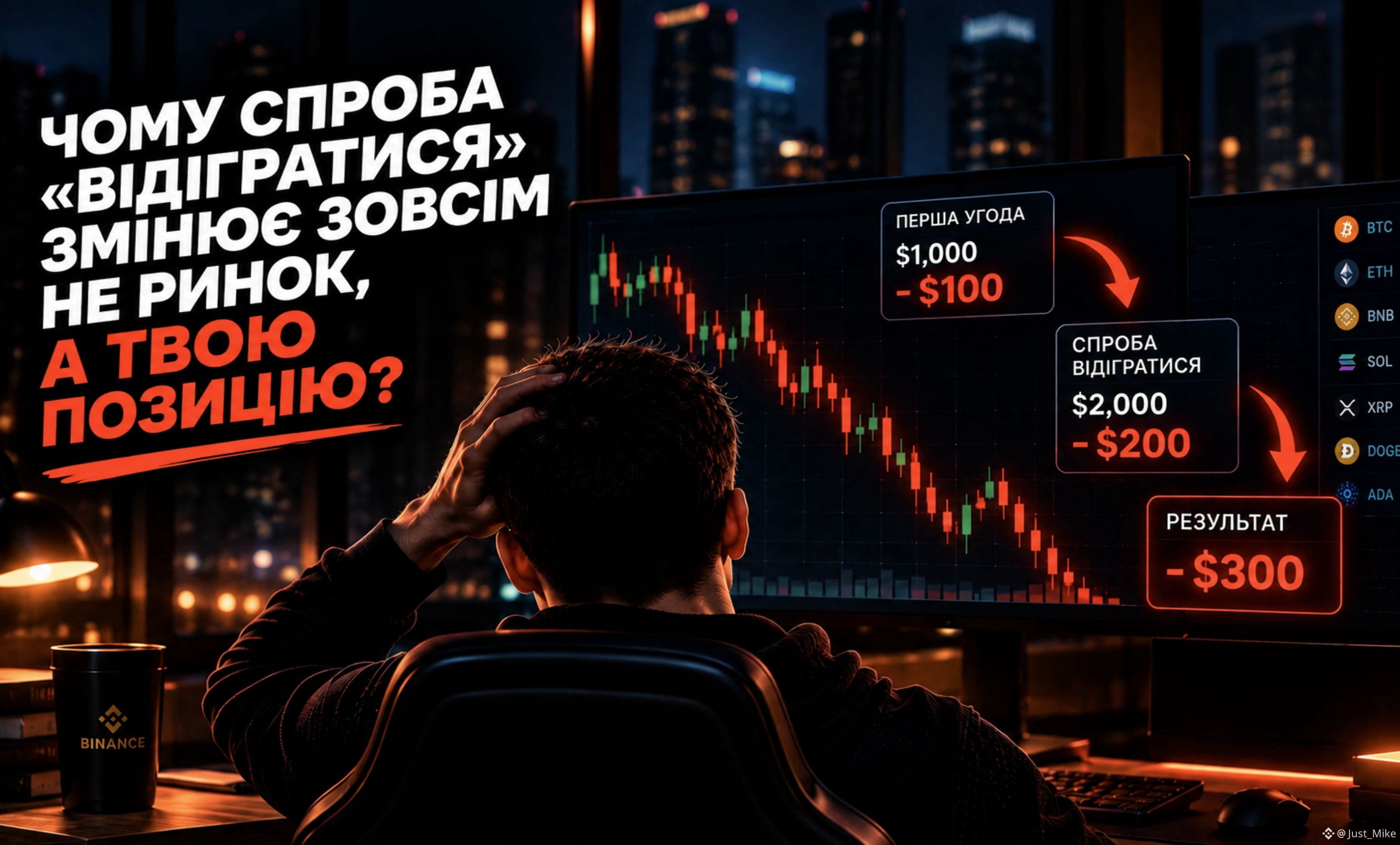
Mengapa upaya «membalas» tidak mengubah pasar sama sekali, tetapi justru posisimu?
Mari kita bayangkan:
Kamu membuka kesepakatan senilai $1.000 dan kehilangan $100.
Pemikiran pertama mungkin:
«Harus mengembalikan $100 itu lewat kesepakatan berikutnya».
Dan di sinilah yang sering berubah bukan pasarnya, melainkan perilakumu.
Daripada posisi senilai $1.000, kamu membuka posisi senilai $2.000.
Sementara itu, pasar sama sekali tidak tahu tentang kerugianmu sebelumnya.
Namun, risikomu telah berubah.
Jika posisi berikutnya juga bergerak melawanmu sebesar 10%:
−$100 → lagi −$200 = −$300.
Artinya, keinginan untuk «membalas» tidak meningkatkan peluangmu untuk mengembalikan kerugian. Itu hanya bisa meningkatkan jumlah yang siap kamu tanggung dalam kesepakatan berikutnya.
Di sinilah penting untuk membedakan:
pasar → bergerak secara independen dari kesepakatan sebelumnya yang kamu buat;
posisi → berubah tergantung pada bagaimana kamu memutuskan untuk terus trading.
Jadi setelah mengalami kerugian, pertanyaan utama bukanlah:
«Bagaimana mengembalikan uang ini secepat mungkin?»
melainkan:
«Apakah risikoku berubah karena keinginan untuk mengembalikannya?»
#Trading #RiskManagement
Mengapa upaya «membalas» tidak mengubah pasar sama sekali, tetapi justru posisimu?
Mari kita bayangkan:
Kamu membuka kesepakatan senilai $1.000 dan kehilangan $100.
Pemikiran pertama mungkin:
«Harus mengembalikan $100 itu lewat kesepakatan berikutnya».
Dan di sinilah yang sering berubah bukan pasarnya, melainkan perilakumu.
Daripada posisi senilai $1.000, kamu membuka posisi senilai $2.000.
Sementara itu, pasar sama sekali tidak tahu tentang kerugianmu sebelumnya.
Namun, risikomu telah berubah.
Jika posisi berikutnya juga bergerak melawanmu sebesar 10%:
−$100 → lagi −$200 = −$300.
Artinya, keinginan untuk «membalas» tidak meningkatkan peluangmu untuk mengembalikan kerugian. Itu hanya bisa meningkatkan jumlah yang siap kamu tanggung dalam kesepakatan berikutnya.
Di sinilah penting untuk membedakan:
pasar → bergerak secara independen dari kesepakatan sebelumnya yang kamu buat;
posisi → berubah tergantung pada bagaimana kamu memutuskan untuk terus trading.
Jadi setelah mengalami kerugian, pertanyaan utama bukanlah:
«Bagaimana mengembalikan uang ini secepat mungkin?»
melainkan:
«Apakah risikoku berubah karena keinginan untuk mengembalikannya?»
#Trading #RiskManagement
Mari kita bayangkan:
Kamu membuka kesepakatan senilai $1.000 dan kehilangan $100.
Pemikiran pertama mungkin:
«Harus mengembalikan $100 itu lewat kesepakatan berikutnya».
Dan di sinilah yang sering berubah bukan pasarnya, melainkan perilakumu.
Daripada posisi senilai $1.000, kamu membuka posisi senilai $2.000.
Sementara itu, pasar sama sekali tidak tahu tentang kerugianmu sebelumnya.
Namun, risikomu telah berubah.
Jika posisi berikutnya juga bergerak melawanmu sebesar 10%:
−$100 → lagi −$200 = −$300.
Artinya, keinginan untuk «membalas» tidak meningkatkan peluangmu untuk mengembalikan kerugian. Itu hanya bisa meningkatkan jumlah yang siap kamu tanggung dalam kesepakatan berikutnya.
Di sinilah penting untuk membedakan:
pasar → bergerak secara independen dari kesepakatan sebelumnya yang kamu buat;
posisi → berubah tergantung pada bagaimana kamu memutuskan untuk terus trading.
Jadi setelah mengalami kerugian, pertanyaan utama bukanlah:
«Bagaimana mengembalikan uang ini secepat mungkin?»
melainkan:
«Apakah risikoku berubah karena keinginan untuk mengembalikannya?»
#Trading #RiskManagement
100
·
--
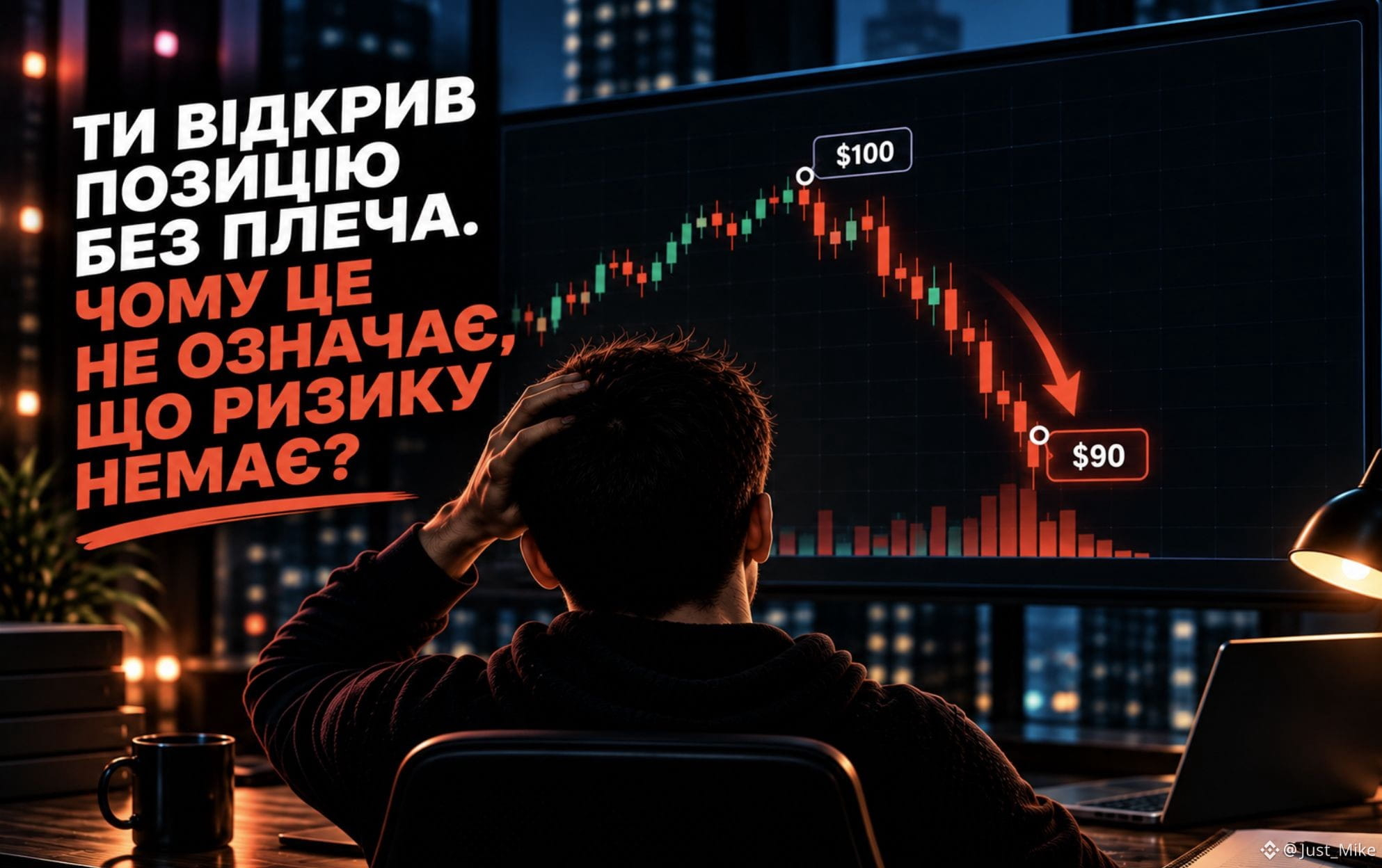
Kamu membuka posisi tanpa leverage. Kenapa itu tidak berarti risikonya tidak ada?
Banyak yang berpikir:
«Aku tidak menggunakan leverage → jadi aku tidak bisa dieksekusi/dilikuidasi → berarti risikonya hampir tidak ada».
Bagian pertama dari logikanya memang benar: tanpa leverage, tidak ada risiko likuidasi yang khas untuk posisi futures yang menggunakan leverage. Tapi itu tidak berarti posisi itu sendiri aman.
Mari kita bayangkan:
Kamu membeli aset senilai $1.000.
Aset turun 10% → nilai posisimu sekarang menjadi $900.
Tidak ada leverage. Tidak ada likuidasi. Tapi $100 dari nilai posisi tetap hilang.
Dan di sini masih ada risiko lain:
🔹 Risiko harga — aset bisa terus turun.
🔹 Risiko ukuran posisi — 10% dari $100 dan dari $10.000 adalah jumlah yang benar-benar berbeda.
🔹 Risiko likuiditas — untuk posisi besar, keluar dari posisi pada harga yang kamu inginkan bisa jadi lebih sulit, yang dapat menyebabkan slippage.
Jadi, «tanpa leverage» ≠ «tanpa risiko».
Leverage menambah satu lapisan risiko lagi — meningkatkan eksposur relatif terhadap modal sendiri dan dapat mendekatkan likuidasi.
Tapi bahkan tanpa itu, tetap ada baiknya bertanya pada diri sendiri:
seberapa banyak kerugian yang bisa terjadi jika harga bergerak melawan aku?
#Trading #RiskManagement
Kamu membuka posisi tanpa leverage. Kenapa itu tidak berarti risikonya tidak ada?
Banyak yang berpikir:
«Aku tidak menggunakan leverage → jadi aku tidak bisa dieksekusi/dilikuidasi → berarti risikonya hampir tidak ada».
Bagian pertama dari logikanya memang benar: tanpa leverage, tidak ada risiko likuidasi yang khas untuk posisi futures yang menggunakan leverage. Tapi itu tidak berarti posisi itu sendiri aman.
Mari kita bayangkan:
Kamu membeli aset senilai $1.000.
Aset turun 10% → nilai posisimu sekarang menjadi $900.
Tidak ada leverage. Tidak ada likuidasi. Tapi $100 dari nilai posisi tetap hilang.
Dan di sini masih ada risiko lain:
🔹 Risiko harga — aset bisa terus turun.
🔹 Risiko ukuran posisi — 10% dari $100 dan dari $10.000 adalah jumlah yang benar-benar berbeda.
🔹 Risiko likuiditas — untuk posisi besar, keluar dari posisi pada harga yang kamu inginkan bisa jadi lebih sulit, yang dapat menyebabkan slippage.
Jadi, «tanpa leverage» ≠ «tanpa risiko».
Leverage menambah satu lapisan risiko lagi — meningkatkan eksposur relatif terhadap modal sendiri dan dapat mendekatkan likuidasi.
Tapi bahkan tanpa itu, tetap ada baiknya bertanya pada diri sendiri:
seberapa banyak kerugian yang bisa terjadi jika harga bergerak melawan aku?
#Trading #RiskManagement
Banyak yang berpikir:
«Aku tidak menggunakan leverage → jadi aku tidak bisa dieksekusi/dilikuidasi → berarti risikonya hampir tidak ada».
Bagian pertama dari logikanya memang benar: tanpa leverage, tidak ada risiko likuidasi yang khas untuk posisi futures yang menggunakan leverage. Tapi itu tidak berarti posisi itu sendiri aman.
Mari kita bayangkan:
Kamu membeli aset senilai $1.000.
Aset turun 10% → nilai posisimu sekarang menjadi $900.
Tidak ada leverage. Tidak ada likuidasi. Tapi $100 dari nilai posisi tetap hilang.
Dan di sini masih ada risiko lain:
🔹 Risiko harga — aset bisa terus turun.
🔹 Risiko ukuran posisi — 10% dari $100 dan dari $10.000 adalah jumlah yang benar-benar berbeda.
🔹 Risiko likuiditas — untuk posisi besar, keluar dari posisi pada harga yang kamu inginkan bisa jadi lebih sulit, yang dapat menyebabkan slippage.
Jadi, «tanpa leverage» ≠ «tanpa risiko».
Leverage menambah satu lapisan risiko lagi — meningkatkan eksposur relatif terhadap modal sendiri dan dapat mendekatkan likuidasi.
Tapi bahkan tanpa itu, tetap ada baiknya bertanya pada diri sendiri:
seberapa banyak kerugian yang bisa terjadi jika harga bergerak melawan aku?
#Trading #RiskManagement
599
·
--
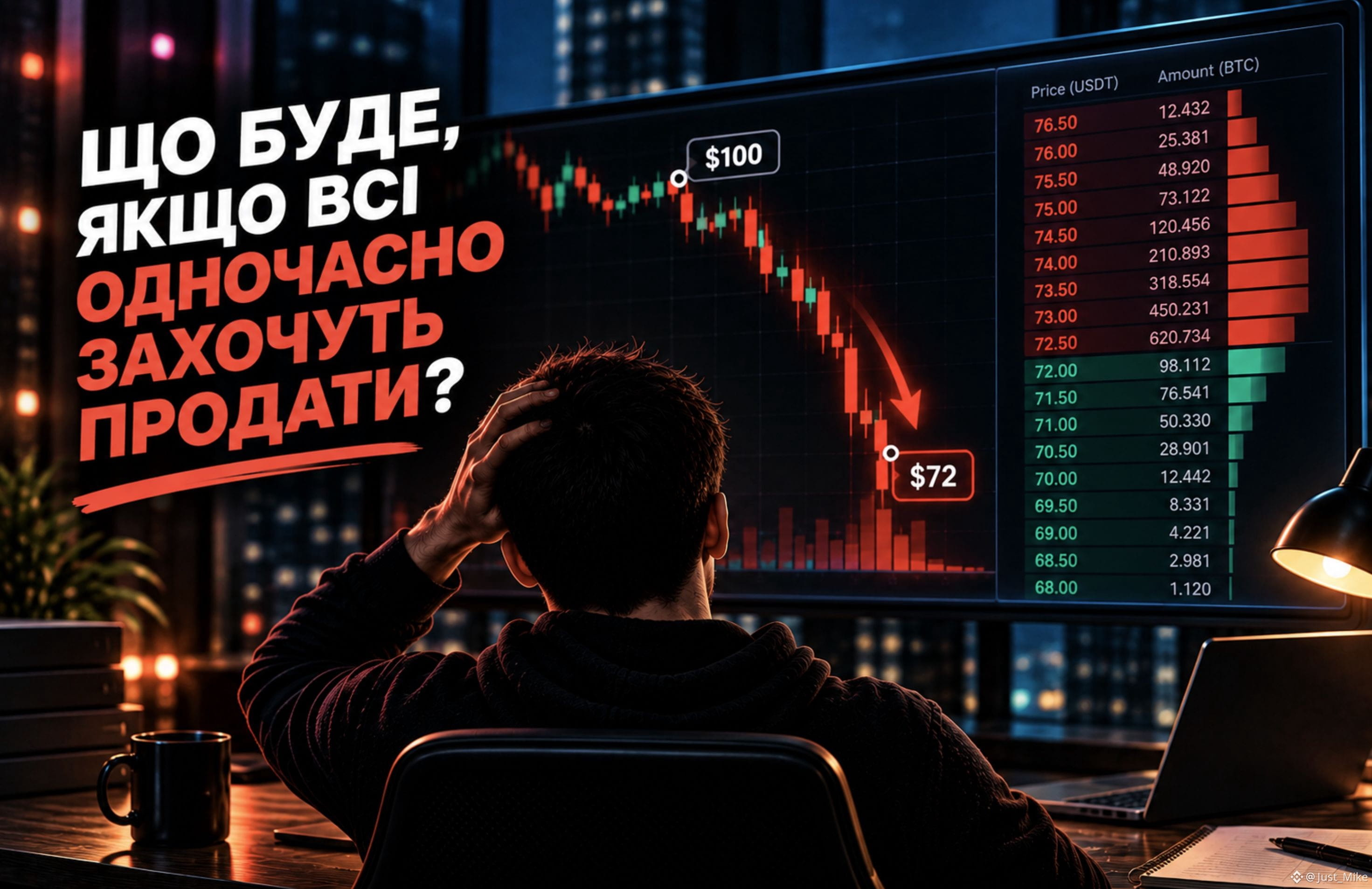
Apa yang terjadi jika semua orang ingin menjual secara bersamaan?
Mari bayangkan situasi ini:
kamu membeli suatu aset seharga $100.
Lalu, di pasar, pada saat yang sama muncul banyak sekali penjual.
Apa yang terjadi?
Pembeli dengan harga $100 mungkin saja tidak cukup untuk menampung seluruh volume penjualan.
Maka, para penjual mulai mengambil tawaran pembeli yang lebih rendah:
$100 → $99 → $98 → $95…
Dan harga bisa turun sangat cepat.
Di sinilah likuiditas menjadi penting.
Likuiditas menunjukkan seberapa mudah untuk membeli atau menjual suatu aset tanpa memengaruhi harga secara signifikan.
📉 Likuiditas tinggi → banyak order di pasar, sehingga volume besar dapat dieksekusi dengan dampak yang lebih kecil terhadap harga.
📉 Likuiditas rendah → order lebih sedikit, jadi bahkan order yang relatif besar pun bisa menggeser harga dengan kuat.
Karena itu, penurunan yang tajam tidak selalu berarti bahwa aset tiba-tiba menjadi “lebih buruk”.
Kadang masalahnya justru ada di hal lain:
jumlah penjual menjadi jauh lebih banyak daripada calon pembeli pada harga saat ini.
Itulah sebabnya saat terjadi pergerakan yang tajam, penting untuk melihat tidak hanya harga aset, tetapi juga seberapa besar likuiditas yang ada di pasar.
#Trading #Liquidity
Apa yang terjadi jika semua orang ingin menjual secara bersamaan?
Mari bayangkan situasi ini:
kamu membeli suatu aset seharga $100.
Lalu, di pasar, pada saat yang sama muncul banyak sekali penjual.
Apa yang terjadi?
Pembeli dengan harga $100 mungkin saja tidak cukup untuk menampung seluruh volume penjualan.
Maka, para penjual mulai mengambil tawaran pembeli yang lebih rendah:
$100 → $99 → $98 → $95…
Dan harga bisa turun sangat cepat.
Di sinilah likuiditas menjadi penting.
Likuiditas menunjukkan seberapa mudah untuk membeli atau menjual suatu aset tanpa memengaruhi harga secara signifikan.
📉 Likuiditas tinggi → banyak order di pasar, sehingga volume besar dapat dieksekusi dengan dampak yang lebih kecil terhadap harga.
📉 Likuiditas rendah → order lebih sedikit, jadi bahkan order yang relatif besar pun bisa menggeser harga dengan kuat.
Karena itu, penurunan yang tajam tidak selalu berarti bahwa aset tiba-tiba menjadi “lebih buruk”.
Kadang masalahnya justru ada di hal lain:
jumlah penjual menjadi jauh lebih banyak daripada calon pembeli pada harga saat ini.
Itulah sebabnya saat terjadi pergerakan yang tajam, penting untuk melihat tidak hanya harga aset, tetapi juga seberapa besar likuiditas yang ada di pasar.
#Trading #Liquidity
Mari bayangkan situasi ini:
kamu membeli suatu aset seharga $100.
Lalu, di pasar, pada saat yang sama muncul banyak sekali penjual.
Apa yang terjadi?
Pembeli dengan harga $100 mungkin saja tidak cukup untuk menampung seluruh volume penjualan.
Maka, para penjual mulai mengambil tawaran pembeli yang lebih rendah:
$100 → $99 → $98 → $95…
Dan harga bisa turun sangat cepat.
Di sinilah likuiditas menjadi penting.
Likuiditas menunjukkan seberapa mudah untuk membeli atau menjual suatu aset tanpa memengaruhi harga secara signifikan.
📉 Likuiditas tinggi → banyak order di pasar, sehingga volume besar dapat dieksekusi dengan dampak yang lebih kecil terhadap harga.
📉 Likuiditas rendah → order lebih sedikit, jadi bahkan order yang relatif besar pun bisa menggeser harga dengan kuat.
Karena itu, penurunan yang tajam tidak selalu berarti bahwa aset tiba-tiba menjadi “lebih buruk”.
Kadang masalahnya justru ada di hal lain:
jumlah penjual menjadi jauh lebih banyak daripada calon pembeli pada harga saat ini.
Itulah sebabnya saat terjadi pergerakan yang tajam, penting untuk melihat tidak hanya harga aset, tetapi juga seberapa besar likuiditas yang ada di pasar.
#Trading #Liquidity
143
·
--
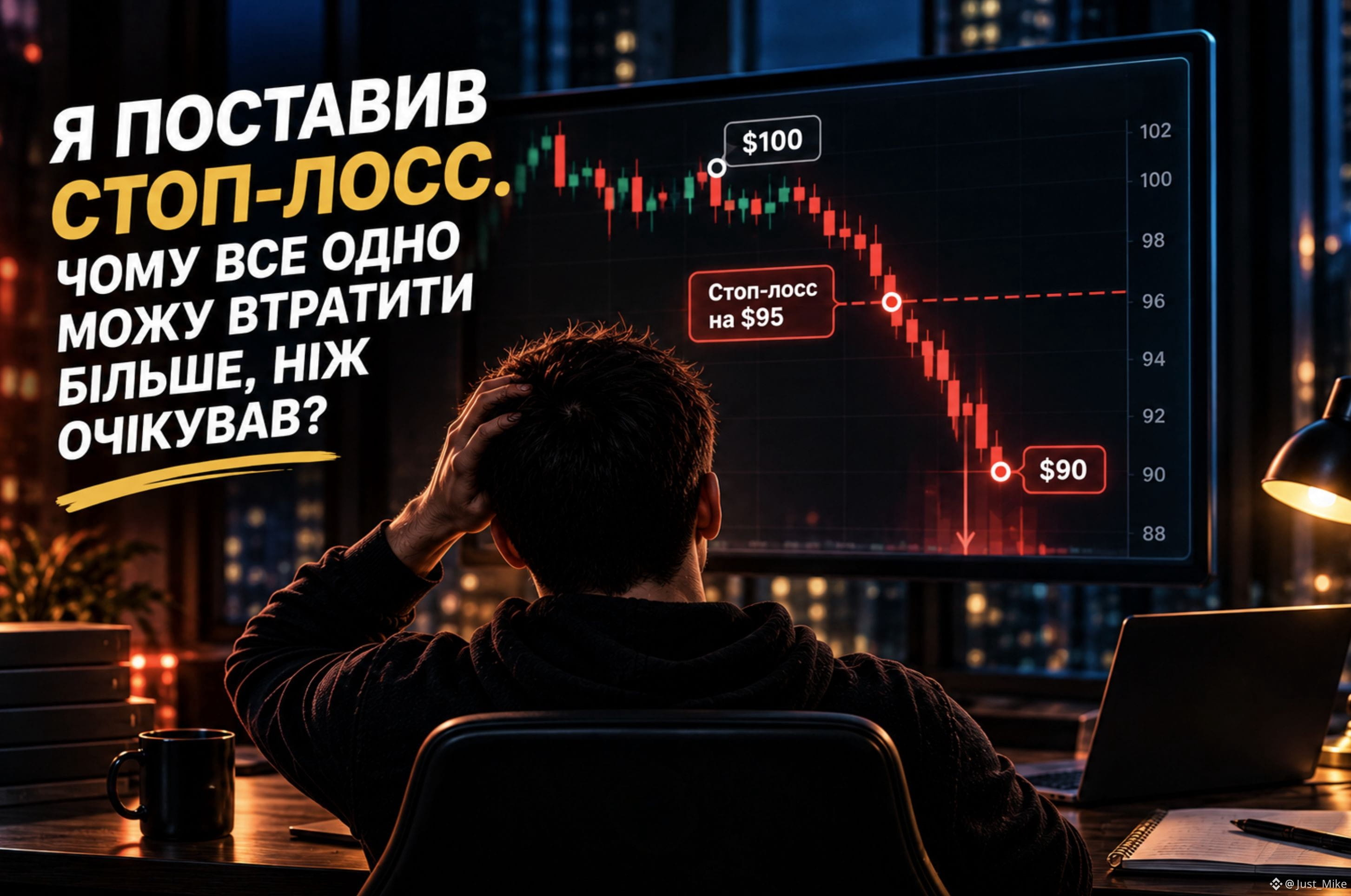
Saya memasang stop-loss. Kenapa tetap saja saya bisa kehilangan lebih dari yang saya perkirakan?
Mari kita bayangkan:
Kamu membeli aset seharga $100 dan memasang stop-loss di $95.
Logikanya sederhana:
«Saya memperkirakan akan rugi sekitar 5%».
Tapi pasar tidak selalu bergerak dengan mulus.
Jika harga tiba-tiba turun:
$100 → $95 → $90
stop bisa tereksekusi bukan di $95.
Dengan order stop-market, setelah pemicu terjadi, order dieksekusi pada harga yang tersedia. Pada volatilitas tinggi, bisa terjadi slippage antara harga pemicu dan harga eksekusi sebenarnya.
Sedangkan dengan stop-limit, situasinya berbeda: kamu mengontrol harga eksekusinya, tetapi jika pergerakannya terlalu cepat, order bisa saja tidak tereksekusi.
Jadi, stop-loss bukan jaminan:
«Saya pasti rugi tidak lebih dari 5%».
Itu adalah alat manajemen risiko, namun cara eksekusi order juga penting.
Karena itu, sebelum memasang stop, sebaiknya pahami tidak hanya:
«Di mana saya akan keluar?»
melainkan juga:
«Apa yang akan terjadi jika harga melewati level ini dalam satu detik?»
#Trading #RiskManagement
Saya memasang stop-loss. Kenapa tetap saja saya bisa kehilangan lebih dari yang saya perkirakan?
Mari kita bayangkan:
Kamu membeli aset seharga $100 dan memasang stop-loss di $95.
Logikanya sederhana:
«Saya memperkirakan akan rugi sekitar 5%».
Tapi pasar tidak selalu bergerak dengan mulus.
Jika harga tiba-tiba turun:
$100 → $95 → $90
stop bisa tereksekusi bukan di $95.
Dengan order stop-market, setelah pemicu terjadi, order dieksekusi pada harga yang tersedia. Pada volatilitas tinggi, bisa terjadi slippage antara harga pemicu dan harga eksekusi sebenarnya.
Sedangkan dengan stop-limit, situasinya berbeda: kamu mengontrol harga eksekusinya, tetapi jika pergerakannya terlalu cepat, order bisa saja tidak tereksekusi.
Jadi, stop-loss bukan jaminan:
«Saya pasti rugi tidak lebih dari 5%».
Itu adalah alat manajemen risiko, namun cara eksekusi order juga penting.
Karena itu, sebelum memasang stop, sebaiknya pahami tidak hanya:
«Di mana saya akan keluar?»
melainkan juga:
«Apa yang akan terjadi jika harga melewati level ini dalam satu detik?»
#Trading #RiskManagement
Mari kita bayangkan:
Kamu membeli aset seharga $100 dan memasang stop-loss di $95.
Logikanya sederhana:
«Saya memperkirakan akan rugi sekitar 5%».
Tapi pasar tidak selalu bergerak dengan mulus.
Jika harga tiba-tiba turun:
$100 → $95 → $90
stop bisa tereksekusi bukan di $95.
Dengan order stop-market, setelah pemicu terjadi, order dieksekusi pada harga yang tersedia. Pada volatilitas tinggi, bisa terjadi slippage antara harga pemicu dan harga eksekusi sebenarnya.
Sedangkan dengan stop-limit, situasinya berbeda: kamu mengontrol harga eksekusinya, tetapi jika pergerakannya terlalu cepat, order bisa saja tidak tereksekusi.
Jadi, stop-loss bukan jaminan:
«Saya pasti rugi tidak lebih dari 5%».
Itu adalah alat manajemen risiko, namun cara eksekusi order juga penting.
Karena itu, sebelum memasang stop, sebaiknya pahami tidak hanya:
«Di mana saya akan keluar?»
melainkan juga:
«Apa yang akan terjadi jika harga melewati level ini dalam satu detik?»
#Trading #RiskManagement
139
·
--
Jika perpetual mengikuti harga saham, lalu mengapa dia butuh funding?
Pada pandangan pertama, funding tampak seperti biaya tambahan belaka.
Namun perannya jauh berbeda.
TradFi Perpetual melacak harga aset dasar, tetapi kontraknya sendiri diperdagangkan secara terpisah. Karena itu, harganya bisa menyimpang dari underlying.
Dan di sinilah muncul pertanyaan:
bagaimana cara mendekatkan dua harga ini, jika pada perpetual tidak ada tanggal kedaluwarsa (expirasi)?
Untuk itulah funding dibutuhkan.
Jika perpetual diperdagangkan di atas harga underlying, funding menjadi positif — posisi long membayar posisi short.
Jika perpetual diperdagangkan di bawah harga, funding bisa menjadi negatif — posisi short membayar posisi long.
Logikanya sederhana:
harga terlalu tinggi → short menerima pembayaran → muncul insentif untuk menjual
harga terlalu rendah → long menerima pembayaran → muncul insentif untuk membeli
Dengan begitu, funding membantu menjaga agar harga perpetual tetap lebih dekat dengan underlying.
Ada satu hal penting:
funding bukanlah biaya yang Binance kenakan karena saya memegang posisi.
Ini adalah mekanisme saling bayar (interaksi) antara long dan short yang membantu mempertahankan keterkaitan dengan aset dasar.
Binance mencatat bahwa pembayaran funding berpindah di antara para trader, bukan dipotong oleh bursa sebagai komisi.
Jadi perpetual tidak punya expirasi, tetapi funding membantu menjaga keterkaitannya dengan underlying.
#TradFi
Jika perpetual mengikuti harga saham, lalu mengapa dia butuh funding?
Pada pandangan pertama, funding tampak seperti biaya tambahan belaka.
Namun perannya jauh berbeda.
TradFi Perpetual melacak harga aset dasar, tetapi kontraknya sendiri diperdagangkan secara terpisah. Karena itu, harganya bisa menyimpang dari underlying.
Dan di sinilah muncul pertanyaan:
bagaimana cara mendekatkan dua harga ini, jika pada perpetual tidak ada tanggal kedaluwarsa (expirasi)?
Untuk itulah funding dibutuhkan.
Jika perpetual diperdagangkan di atas harga underlying, funding menjadi positif — posisi long membayar posisi short.
Jika perpetual diperdagangkan di bawah harga, funding bisa menjadi negatif — posisi short membayar posisi long.
Logikanya sederhana:
harga terlalu tinggi → short menerima pembayaran → muncul insentif untuk menjual
harga terlalu rendah → long menerima pembayaran → muncul insentif untuk membeli
Dengan begitu, funding membantu menjaga agar harga perpetual tetap lebih dekat dengan underlying.
Ada satu hal penting:
funding bukanlah biaya yang Binance kenakan karena saya memegang posisi.
Ini adalah mekanisme saling bayar (interaksi) antara long dan short yang membantu mempertahankan keterkaitan dengan aset dasar.
Binance mencatat bahwa pembayaran funding berpindah di antara para trader, bukan dipotong oleh bursa sebagai komisi.
Jadi perpetual tidak punya expirasi, tetapi funding membantu menjaga keterkaitannya dengan underlying.
#TradFi
Pada pandangan pertama, funding tampak seperti biaya tambahan belaka.
Namun perannya jauh berbeda.
TradFi Perpetual melacak harga aset dasar, tetapi kontraknya sendiri diperdagangkan secara terpisah. Karena itu, harganya bisa menyimpang dari underlying.
Dan di sinilah muncul pertanyaan:
bagaimana cara mendekatkan dua harga ini, jika pada perpetual tidak ada tanggal kedaluwarsa (expirasi)?
Untuk itulah funding dibutuhkan.
Jika perpetual diperdagangkan di atas harga underlying, funding menjadi positif — posisi long membayar posisi short.
Jika perpetual diperdagangkan di bawah harga, funding bisa menjadi negatif — posisi short membayar posisi long.
Logikanya sederhana:
harga terlalu tinggi → short menerima pembayaran → muncul insentif untuk menjual
harga terlalu rendah → long menerima pembayaran → muncul insentif untuk membeli
Dengan begitu, funding membantu menjaga agar harga perpetual tetap lebih dekat dengan underlying.
Ada satu hal penting:
funding bukanlah biaya yang Binance kenakan karena saya memegang posisi.
Ini adalah mekanisme saling bayar (interaksi) antara long dan short yang membantu mempertahankan keterkaitan dengan aset dasar.
Binance mencatat bahwa pembayaran funding berpindah di antara para trader, bukan dipotong oleh bursa sebagai komisi.
Jadi perpetual tidak punya expirasi, tetapi funding membantu menjaga keterkaitannya dengan underlying.
#TradFi

77
·
--
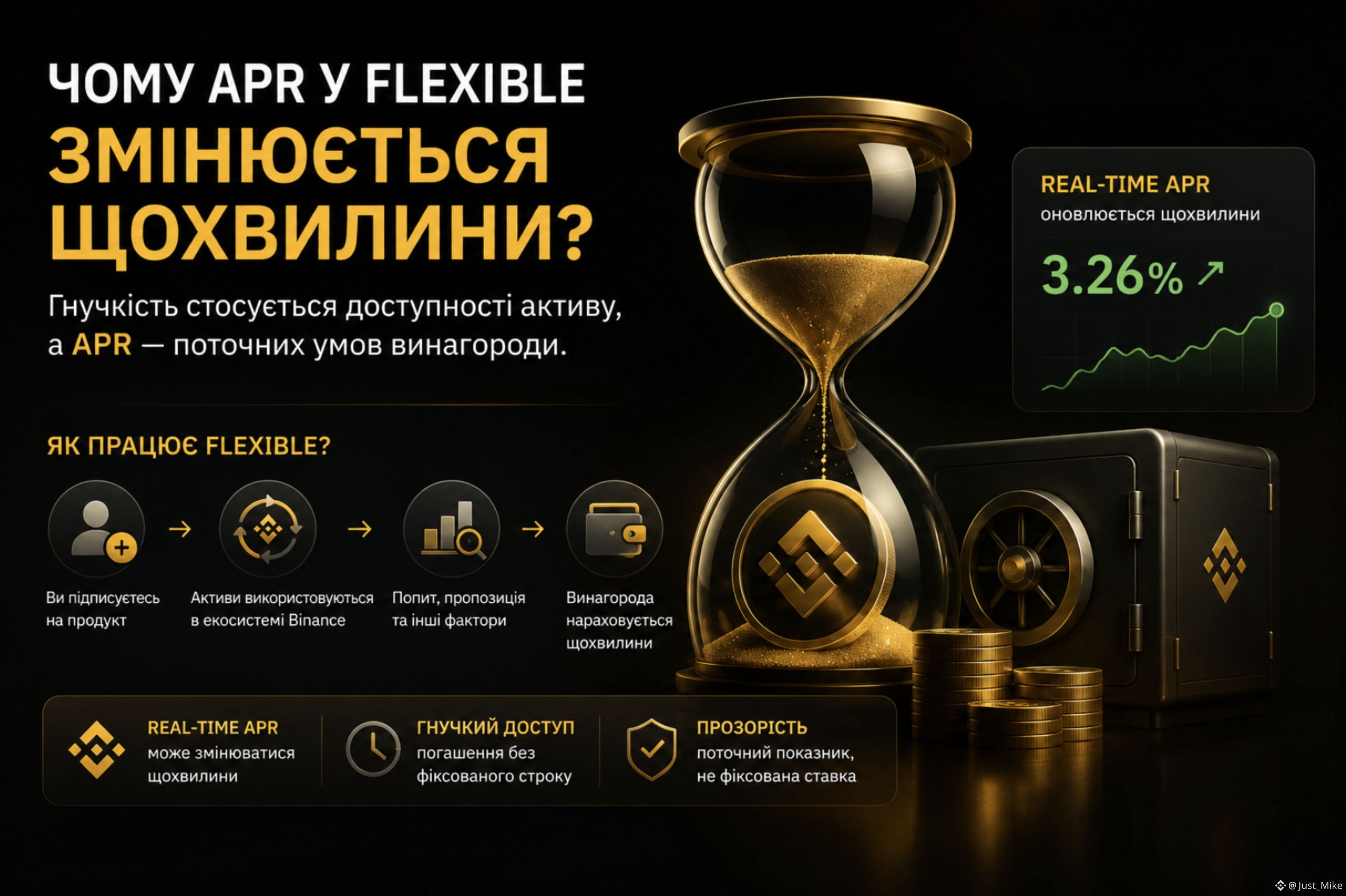
Jika aset di Flexible dapat dilunasi tanpa jangka waktu tetap,
mengapa APR-nya berubah setiap menit?
Dulu saya menganggap Earn cukup sederhana:
menaruh aset ➞ mendapatkan hasil ➞ jika perlu menarik aset.
Namun di Flexible Products ada detail menarik.
Binance menyebut suku bunga ini sebagai Real-Time APR — nilainya dapat berubah setiap menit, dan imbalannya dihitung per menit.
Dan di sinilah saya punya pertanyaan:
jika jangka waktunya tidak tetap, dari mana sebenarnya bergantung pada tingkat hasil saat ini?
Ternyata mekanismenya lebih menarik daripada sekadar “Binance membayar persentase karena kamu menyimpan aset”.
Berdasarkan informasi dari Binance, aset di Flexible Products dapat digunakan untuk berbagai operasi, termasuk untuk pinjaman melalui Margin dan Loan. Real-Time APR untuk token memperhitungkan permintaan, penawaran, dan faktor lainnya.
Jadi, APR di sini bukanlah janji untuk suku bunga yang tetap.
Itu adalah indikator imbalan saat ini, yang dapat berubah seiring dengan kondisi-kondisi yang memengaruhi penggunaan aset.
Dan hal inilah yang menurut saya paling menarik tentang Flexible:
fleksibilitas berkaitan dengan ketersediaan aset, sementara APR berkaitan dengan kondisi imbalan saat ini.
Jadi, melihat hanya angka APR saja tidak cukup.
Lebih penting untuk memahami dari mana angka itu berasal dan mengapa bisa berubah tak lama setelah kamu melihatnya.
#BinanceEarn #SimpleEarn
Jika aset di Flexible dapat dilunasi tanpa jangka waktu tetap,
mengapa APR-nya berubah setiap menit?
Dulu saya menganggap Earn cukup sederhana:
menaruh aset ➞ mendapatkan hasil ➞ jika perlu menarik aset.
Namun di Flexible Products ada detail menarik.
Binance menyebut suku bunga ini sebagai Real-Time APR — nilainya dapat berubah setiap menit, dan imbalannya dihitung per menit.
Dan di sinilah saya punya pertanyaan:
jika jangka waktunya tidak tetap, dari mana sebenarnya bergantung pada tingkat hasil saat ini?
Ternyata mekanismenya lebih menarik daripada sekadar “Binance membayar persentase karena kamu menyimpan aset”.
Berdasarkan informasi dari Binance, aset di Flexible Products dapat digunakan untuk berbagai operasi, termasuk untuk pinjaman melalui Margin dan Loan. Real-Time APR untuk token memperhitungkan permintaan, penawaran, dan faktor lainnya.
Jadi, APR di sini bukanlah janji untuk suku bunga yang tetap.
Itu adalah indikator imbalan saat ini, yang dapat berubah seiring dengan kondisi-kondisi yang memengaruhi penggunaan aset.
Dan hal inilah yang menurut saya paling menarik tentang Flexible:
fleksibilitas berkaitan dengan ketersediaan aset, sementara APR berkaitan dengan kondisi imbalan saat ini.
Jadi, melihat hanya angka APR saja tidak cukup.
Lebih penting untuk memahami dari mana angka itu berasal dan mengapa bisa berubah tak lama setelah kamu melihatnya.
#BinanceEarn #SimpleEarn
mengapa APR-nya berubah setiap menit?
Dulu saya menganggap Earn cukup sederhana:
menaruh aset ➞ mendapatkan hasil ➞ jika perlu menarik aset.
Namun di Flexible Products ada detail menarik.
Binance menyebut suku bunga ini sebagai Real-Time APR — nilainya dapat berubah setiap menit, dan imbalannya dihitung per menit.
Dan di sinilah saya punya pertanyaan:
jika jangka waktunya tidak tetap, dari mana sebenarnya bergantung pada tingkat hasil saat ini?
Ternyata mekanismenya lebih menarik daripada sekadar “Binance membayar persentase karena kamu menyimpan aset”.
Berdasarkan informasi dari Binance, aset di Flexible Products dapat digunakan untuk berbagai operasi, termasuk untuk pinjaman melalui Margin dan Loan. Real-Time APR untuk token memperhitungkan permintaan, penawaran, dan faktor lainnya.
Jadi, APR di sini bukanlah janji untuk suku bunga yang tetap.
Itu adalah indikator imbalan saat ini, yang dapat berubah seiring dengan kondisi-kondisi yang memengaruhi penggunaan aset.
Dan hal inilah yang menurut saya paling menarik tentang Flexible:
fleksibilitas berkaitan dengan ketersediaan aset, sementara APR berkaitan dengan kondisi imbalan saat ini.
Jadi, melihat hanya angka APR saja tidak cukup.
Lebih penting untuk memahami dari mana angka itu berasal dan mengapa bisa berubah tak lama setelah kamu melihatnya.
#BinanceEarn #SimpleEarn
152
·
--
Seorang kurator mungkin terlihat seperti orang yang memutuskan ke mana modal Vault dialokasikan.
Namun, seberapa besar keputusan itu sebenarnya dibuat sebelum kurator memilih sebuah pasar?
Vault multi-pasar tidak dimulai dengan daftar pasar yang tak terbatas.
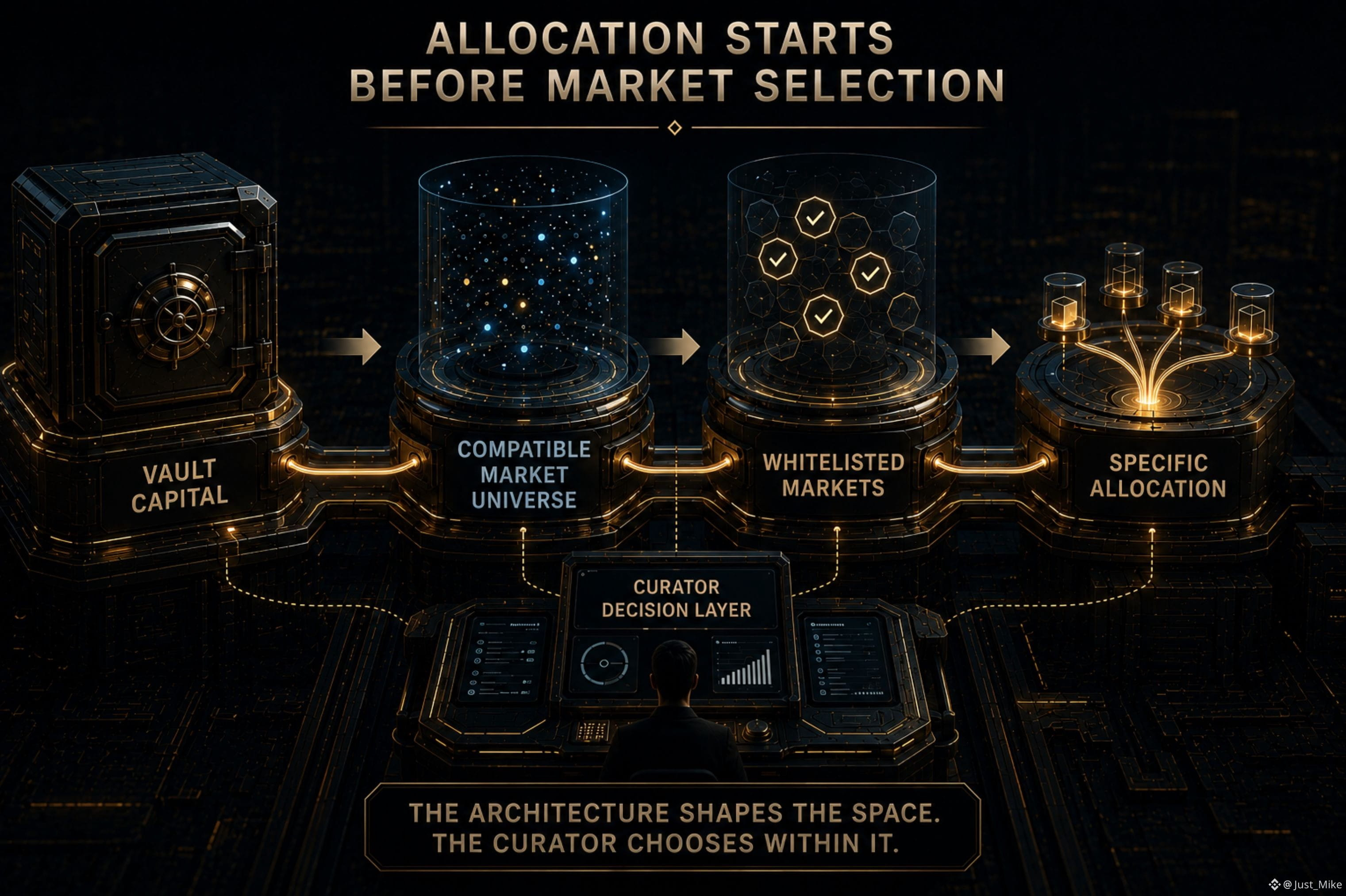
Arsitekturnya sendiri sudah menetapkan syarat tentang pasar mana yang dapat dihubungkan: pasar-pasar di dalam Vault yang sama harus menggunakan Token Utang yang sama.
Daftar putih pasar kemudian semakin menentukan pasar mana dari kelompok tersebut yang benar-benar bisa digunakan untuk order.
Hanya setelah batas-batas itu ada, barulah kurator membuat keputusan alokasi spesifik.
Jadi prosesnya lebih mirip:
Modal Vault
→ alam semesta pasar yang kompatibel
→ pasar-pasar yang ada di daftar putih
→ alokasi spesifik
Itu mengubah cara saya berpikir tentang alokasi Vault.
Kurator tetap memilih ke mana modal pergi.
Tapi pilihan itu dibuat di dalam alam semesta pasar yang arsitektur protokol sudah sebagian definisikan sebelumnya.
Dengan kata lain:
Alokasi ≠ sekadar memilih sebuah pasar.
Alokasi = memilih di dalam alam semesta pasar yang didefinisikan oleh arsitektur.
Mungkin pertanyaan yang lebih menarik bukan hanya tentang di mana kurator menaruh modal.
Melainkan seberapa banyak dari pilihan itu yang sudah ada sebelum pilihan dibuat.
#termmax @termmax
Seorang kurator mungkin terlihat seperti orang yang memutuskan ke mana modal Vault dialokasikan.
Namun, seberapa besar keputusan itu sebenarnya dibuat sebelum kurator memilih sebuah pasar?
Vault multi-pasar tidak dimulai dengan daftar pasar yang tak terbatas.
Arsitekturnya sendiri sudah menetapkan syarat tentang pasar mana yang dapat dihubungkan: pasar-pasar di dalam Vault yang sama harus menggunakan Token Utang yang sama.
Daftar putih pasar kemudian semakin menentukan pasar mana dari kelompok tersebut yang benar-benar bisa digunakan untuk order.
Hanya setelah batas-batas itu ada, barulah kurator membuat keputusan alokasi spesifik.
Jadi prosesnya lebih mirip:
Modal Vault
→ alam semesta pasar yang kompatibel
→ pasar-pasar yang ada di daftar putih
→ alokasi spesifik
Itu mengubah cara saya berpikir tentang alokasi Vault.
Kurator tetap memilih ke mana modal pergi.
Tapi pilihan itu dibuat di dalam alam semesta pasar yang arsitektur protokol sudah sebagian definisikan sebelumnya.
Dengan kata lain:
Alokasi ≠ sekadar memilih sebuah pasar.
Alokasi = memilih di dalam alam semesta pasar yang didefinisikan oleh arsitektur.
Mungkin pertanyaan yang lebih menarik bukan hanya tentang di mana kurator menaruh modal.
Melainkan seberapa banyak dari pilihan itu yang sudah ada sebelum pilihan dibuat.
#termmax @TermMax
Namun, seberapa besar keputusan itu sebenarnya dibuat sebelum kurator memilih sebuah pasar?
Vault multi-pasar tidak dimulai dengan daftar pasar yang tak terbatas.
Arsitekturnya sendiri sudah menetapkan syarat tentang pasar mana yang dapat dihubungkan: pasar-pasar di dalam Vault yang sama harus menggunakan Token Utang yang sama.
Daftar putih pasar kemudian semakin menentukan pasar mana dari kelompok tersebut yang benar-benar bisa digunakan untuk order.
Hanya setelah batas-batas itu ada, barulah kurator membuat keputusan alokasi spesifik.
Jadi prosesnya lebih mirip:
Modal Vault
→ alam semesta pasar yang kompatibel
→ pasar-pasar yang ada di daftar putih
→ alokasi spesifik
Itu mengubah cara saya berpikir tentang alokasi Vault.
Kurator tetap memilih ke mana modal pergi.
Tapi pilihan itu dibuat di dalam alam semesta pasar yang arsitektur protokol sudah sebagian definisikan sebelumnya.
Dengan kata lain:
Alokasi ≠ sekadar memilih sebuah pasar.
Alokasi = memilih di dalam alam semesta pasar yang didefinisikan oleh arsitektur.
Mungkin pertanyaan yang lebih menarik bukan hanya tentang di mana kurator menaruh modal.
Melainkan seberapa banyak dari pilihan itu yang sudah ada sebelum pilihan dibuat.
#termmax @TermMax
93
·
--
Siapa yang berhak membuat keputusan yang mana?
Pasar dengan tarif tetap bisa tampak seperti hubungan sederhana:
pemberi pinjaman ↔ peminjam
Namun TermMax memisahkan lebih banyak keputusan daripada itu.
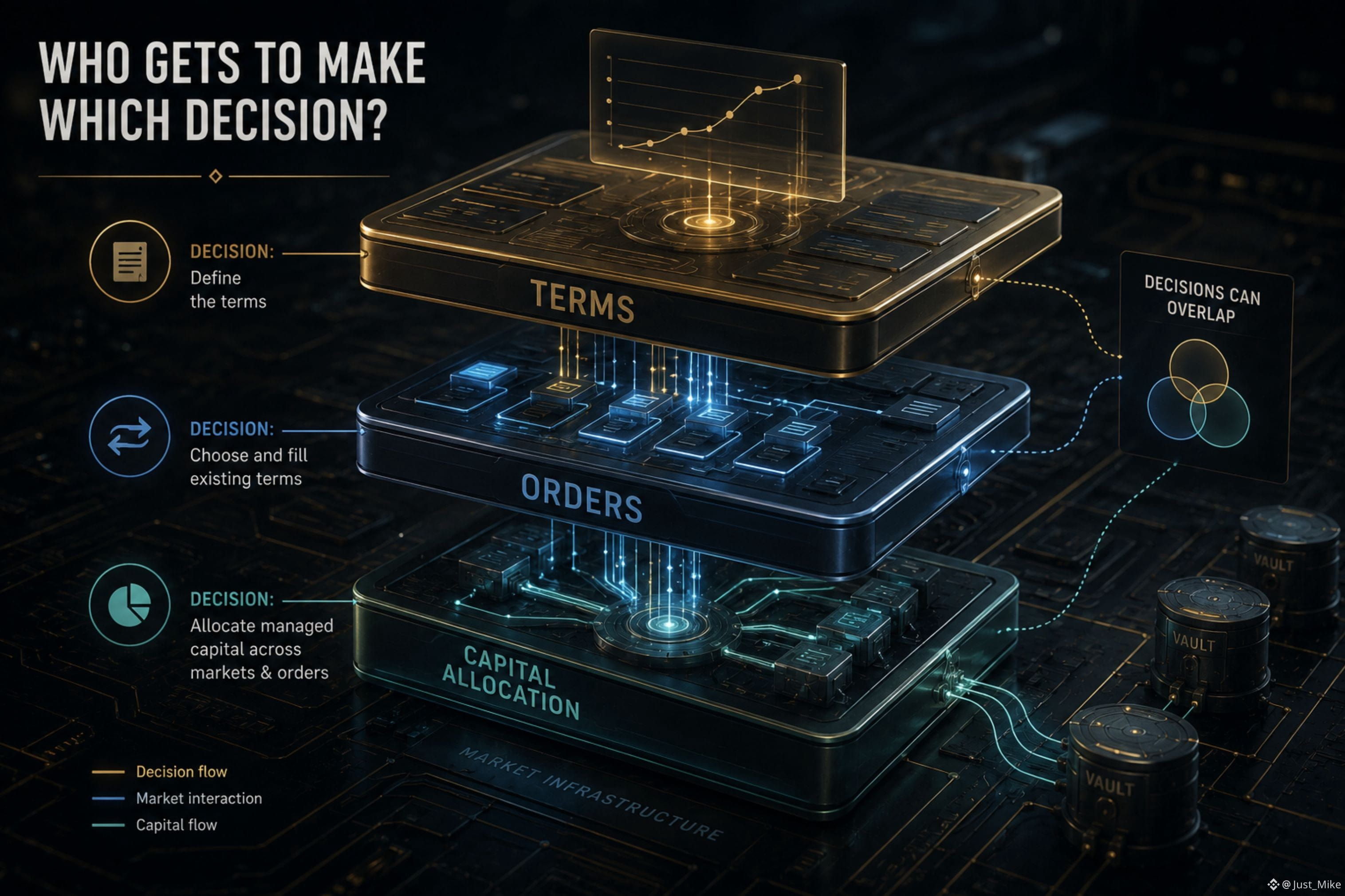
Satu peserta dapat menentukan persyaratan pada Range Order. Peserta lain dapat memilih untuk mengisi persyaratan yang sudah ada itu. Dan seorang kurator Vault dapat memutuskan ke mana modal terkelola dideploy di berbagai pasar dan order.
Perbedaan ini penting karena ini adalah keputusan yang berbeda.
Menetapkan persyaratan tidak sama dengan menerima persyaratan.
Dan itu pun tidak sama dengan memutuskan ke mana modal gabungan harus dideploy.
Bagian yang menarik adalah fungsi-fungsi ini dipisahkan secara konseptual, tetapi tidak selalu di antara tiga aktor yang benar-benar independen.
Misalnya, seorang kurator bisa mengelola modal Vault sekaligus membuat dan mengelola order yang didukung.
Jadi saya tidak akan memikirkan TermMax sekadar sebagai:
pemberi pinjaman bertemu peminjam.
Saya akan memikirkannya sebagai beberapa lapisan keputusan yang saling berinteraksi:
persyaratan ditetapkan
↓
order diisi
↓
modal terkelola dialokasikan
dengan demikian tercipta cara membaca pasar yang berbeda.
Pertanyaan kuncinya bukan hanya siapa yang menyediakan likuiditas.
Melainkan:
siapa yang memutuskan persyaratan, siapa yang memutuskan apakah akan menerimanya, dan siapa yang memutuskan ke mana modal terkelola pergi?
Pemisahan keputusan ini mungkin merupakan salah satu bagian paling menarik dari struktur pasar TermMax.
#termmax @termmax
Siapa yang berhak membuat keputusan yang mana?
Pasar dengan tarif tetap bisa tampak seperti hubungan sederhana:
pemberi pinjaman ↔ peminjam
Namun TermMax memisahkan lebih banyak keputusan daripada itu.
Satu peserta dapat menentukan persyaratan pada Range Order. Peserta lain dapat memilih untuk mengisi persyaratan yang sudah ada itu. Dan seorang kurator Vault dapat memutuskan ke mana modal terkelola dideploy di berbagai pasar dan order.
Perbedaan ini penting karena ini adalah keputusan yang berbeda.
Menetapkan persyaratan tidak sama dengan menerima persyaratan.
Dan itu pun tidak sama dengan memutuskan ke mana modal gabungan harus dideploy.
Bagian yang menarik adalah fungsi-fungsi ini dipisahkan secara konseptual, tetapi tidak selalu di antara tiga aktor yang benar-benar independen.
Misalnya, seorang kurator bisa mengelola modal Vault sekaligus membuat dan mengelola order yang didukung.
Jadi saya tidak akan memikirkan TermMax sekadar sebagai:
pemberi pinjaman bertemu peminjam.
Saya akan memikirkannya sebagai beberapa lapisan keputusan yang saling berinteraksi:
persyaratan ditetapkan
↓
order diisi
↓
modal terkelola dialokasikan
dengan demikian tercipta cara membaca pasar yang berbeda.
Pertanyaan kuncinya bukan hanya siapa yang menyediakan likuiditas.
Melainkan:
siapa yang memutuskan persyaratan, siapa yang memutuskan apakah akan menerimanya, dan siapa yang memutuskan ke mana modal terkelola pergi?
Pemisahan keputusan ini mungkin merupakan salah satu bagian paling menarik dari struktur pasar TermMax.
#termmax @TermMax
Pasar dengan tarif tetap bisa tampak seperti hubungan sederhana:
pemberi pinjaman ↔ peminjam
Namun TermMax memisahkan lebih banyak keputusan daripada itu.
Satu peserta dapat menentukan persyaratan pada Range Order. Peserta lain dapat memilih untuk mengisi persyaratan yang sudah ada itu. Dan seorang kurator Vault dapat memutuskan ke mana modal terkelola dideploy di berbagai pasar dan order.
Perbedaan ini penting karena ini adalah keputusan yang berbeda.
Menetapkan persyaratan tidak sama dengan menerima persyaratan.
Dan itu pun tidak sama dengan memutuskan ke mana modal gabungan harus dideploy.
Bagian yang menarik adalah fungsi-fungsi ini dipisahkan secara konseptual, tetapi tidak selalu di antara tiga aktor yang benar-benar independen.
Misalnya, seorang kurator bisa mengelola modal Vault sekaligus membuat dan mengelola order yang didukung.
Jadi saya tidak akan memikirkan TermMax sekadar sebagai:
pemberi pinjaman bertemu peminjam.
Saya akan memikirkannya sebagai beberapa lapisan keputusan yang saling berinteraksi:
persyaratan ditetapkan
↓
order diisi
↓
modal terkelola dialokasikan
dengan demikian tercipta cara membaca pasar yang berbeda.
Pertanyaan kuncinya bukan hanya siapa yang menyediakan likuiditas.
Melainkan:
siapa yang memutuskan persyaratan, siapa yang memutuskan apakah akan menerimanya, dan siapa yang memutuskan ke mana modal terkelola pergi?
Pemisahan keputusan ini mungkin merupakan salah satu bagian paling menarik dari struktur pasar TermMax.
#termmax @TermMax
86
·
--
Bagian yang menarik dari Vault TermMax mungkin bukanlah apa yang bisa dilakukan kurator.
Itu mungkin adalah apa yang tidak bisa dilakukan kurator.
Seorang kurator mengelola strategi, tetapi kendali itu tidak tak terbatas.
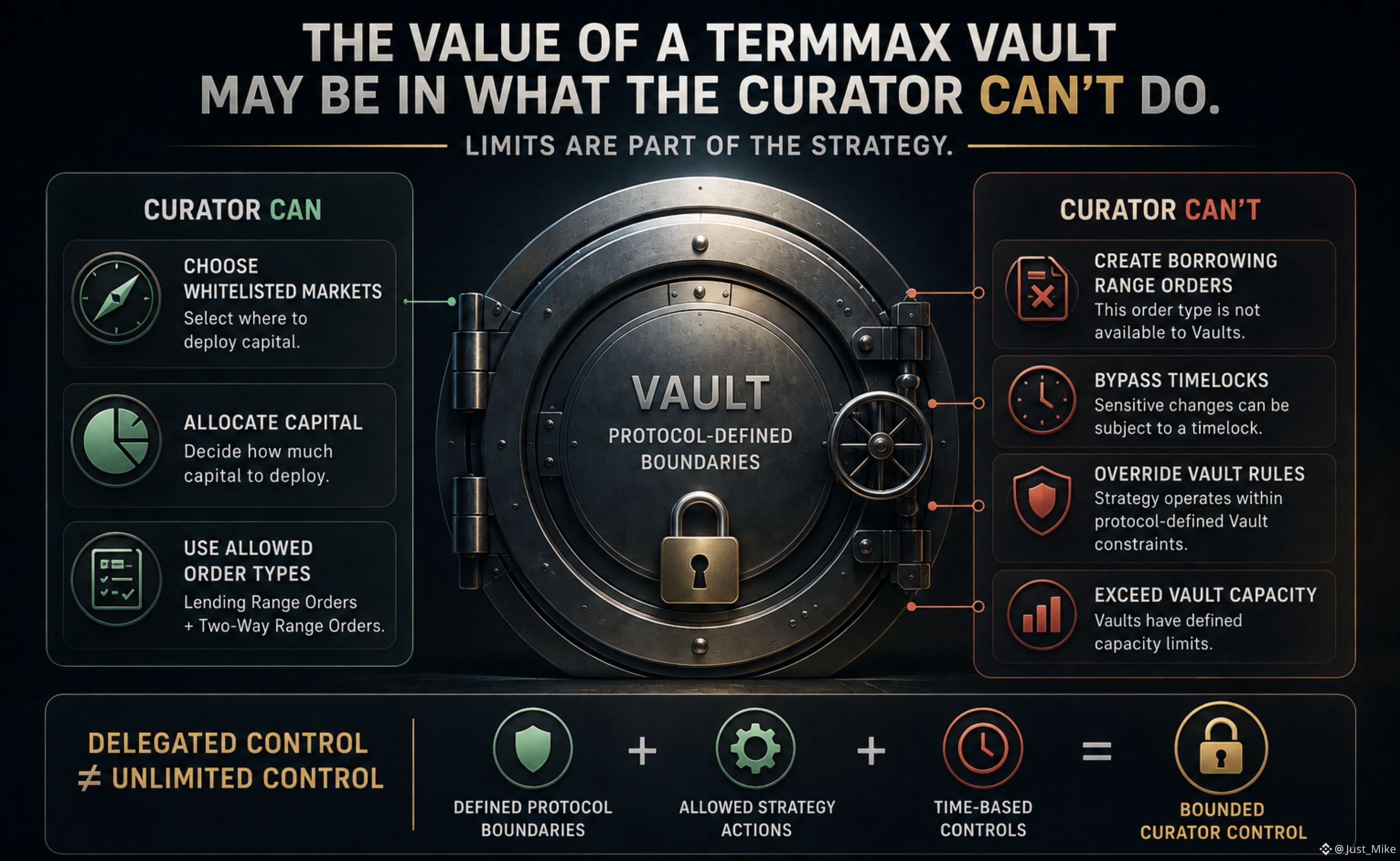
Pertama, modal hanya dapat dideploy ke pasar yang ada dalam daftar yang diizinkan (whitelist).
Lalu ada batas kapasitas, yang membatasi seberapa banyak modal yang dapat diterima Vault dan membantu mencegah terlalu terkonsentrasi.
Kendala yang lebih menarik adalah apa yang sebenarnya dapat dilakukan Vault di dalam pasar-pasar tersebut.
Vault dapat menggunakan Lending Range Orders dan Two-Way Range Orders, tetapi tidak dapat membuat Borrowing Range Orders.
Dan bahkan pada Two-Way Order, Vault tidak bisa begitu saja menjaminkan asetnya lalu meminjam. Vault harus meminjamkan terlebih dahulu, kemudian bisa meminjam dengan menjual FT yang diperoleh melalui aktivitas peminjaman tersebut.
Terakhir, perubahan yang bersifat sensitif tidak selalu terjadi secara langsung. Perubahan bisa melewati timelock, memberi waktu kepada Guardian untuk meninjau dan membatalkan perubahan yang masih tertunda.
Jika digabungkan, ini bukan sekadar fitur Vault yang terpisah.
Ini menetapkan ruang keputusan yang terbatas bagi kurator:
→ ke mana modal dapat dialokasikan
→ berapa banyak yang dapat dideploy
→ jenis order apa yang dapat dibuat
→ seberapa cepat parameter strategi dapat berubah
Kesimpulan saya: Vault yang dikelola kurator bukan sekadar kendali yang didelegasikan.
Itu adalah kendali yang didelegasikan di dalam batas-batas yang ditentukan oleh protokol.
Dan itu mungkin cara yang lebih menarik untuk memikirkan desain Vault.
#termmax @termmax
Bagian yang menarik dari Vault TermMax mungkin bukanlah apa yang bisa dilakukan kurator.
Itu mungkin adalah apa yang tidak bisa dilakukan kurator.
Seorang kurator mengelola strategi, tetapi kendali itu tidak tak terbatas.
Pertama, modal hanya dapat dideploy ke pasar yang ada dalam daftar yang diizinkan (whitelist).
Lalu ada batas kapasitas, yang membatasi seberapa banyak modal yang dapat diterima Vault dan membantu mencegah terlalu terkonsentrasi.
Kendala yang lebih menarik adalah apa yang sebenarnya dapat dilakukan Vault di dalam pasar-pasar tersebut.
Vault dapat menggunakan Lending Range Orders dan Two-Way Range Orders, tetapi tidak dapat membuat Borrowing Range Orders.
Dan bahkan pada Two-Way Order, Vault tidak bisa begitu saja menjaminkan asetnya lalu meminjam. Vault harus meminjamkan terlebih dahulu, kemudian bisa meminjam dengan menjual FT yang diperoleh melalui aktivitas peminjaman tersebut.
Terakhir, perubahan yang bersifat sensitif tidak selalu terjadi secara langsung. Perubahan bisa melewati timelock, memberi waktu kepada Guardian untuk meninjau dan membatalkan perubahan yang masih tertunda.
Jika digabungkan, ini bukan sekadar fitur Vault yang terpisah.
Ini menetapkan ruang keputusan yang terbatas bagi kurator:
→ ke mana modal dapat dialokasikan
→ berapa banyak yang dapat dideploy
→ jenis order apa yang dapat dibuat
→ seberapa cepat parameter strategi dapat berubah
Kesimpulan saya: Vault yang dikelola kurator bukan sekadar kendali yang didelegasikan.
Itu adalah kendali yang didelegasikan di dalam batas-batas yang ditentukan oleh protokol.
Dan itu mungkin cara yang lebih menarik untuk memikirkan desain Vault.
#termmax @TermMax
Itu mungkin adalah apa yang tidak bisa dilakukan kurator.
Seorang kurator mengelola strategi, tetapi kendali itu tidak tak terbatas.
Pertama, modal hanya dapat dideploy ke pasar yang ada dalam daftar yang diizinkan (whitelist).
Lalu ada batas kapasitas, yang membatasi seberapa banyak modal yang dapat diterima Vault dan membantu mencegah terlalu terkonsentrasi.
Kendala yang lebih menarik adalah apa yang sebenarnya dapat dilakukan Vault di dalam pasar-pasar tersebut.
Vault dapat menggunakan Lending Range Orders dan Two-Way Range Orders, tetapi tidak dapat membuat Borrowing Range Orders.
Dan bahkan pada Two-Way Order, Vault tidak bisa begitu saja menjaminkan asetnya lalu meminjam. Vault harus meminjamkan terlebih dahulu, kemudian bisa meminjam dengan menjual FT yang diperoleh melalui aktivitas peminjaman tersebut.
Terakhir, perubahan yang bersifat sensitif tidak selalu terjadi secara langsung. Perubahan bisa melewati timelock, memberi waktu kepada Guardian untuk meninjau dan membatalkan perubahan yang masih tertunda.
Jika digabungkan, ini bukan sekadar fitur Vault yang terpisah.
Ini menetapkan ruang keputusan yang terbatas bagi kurator:
→ ke mana modal dapat dialokasikan
→ berapa banyak yang dapat dideploy
→ jenis order apa yang dapat dibuat
→ seberapa cepat parameter strategi dapat berubah
Kesimpulan saya: Vault yang dikelola kurator bukan sekadar kendali yang didelegasikan.
Itu adalah kendali yang didelegasikan di dalam batas-batas yang ditentukan oleh protokol.
Dan itu mungkin cara yang lebih menarik untuk memikirkan desain Vault.
#termmax @TermMax
89
·
--
Saya kira SK Hynix hanya punya satu saham. Lalu saya melihat pencatatan di AS.
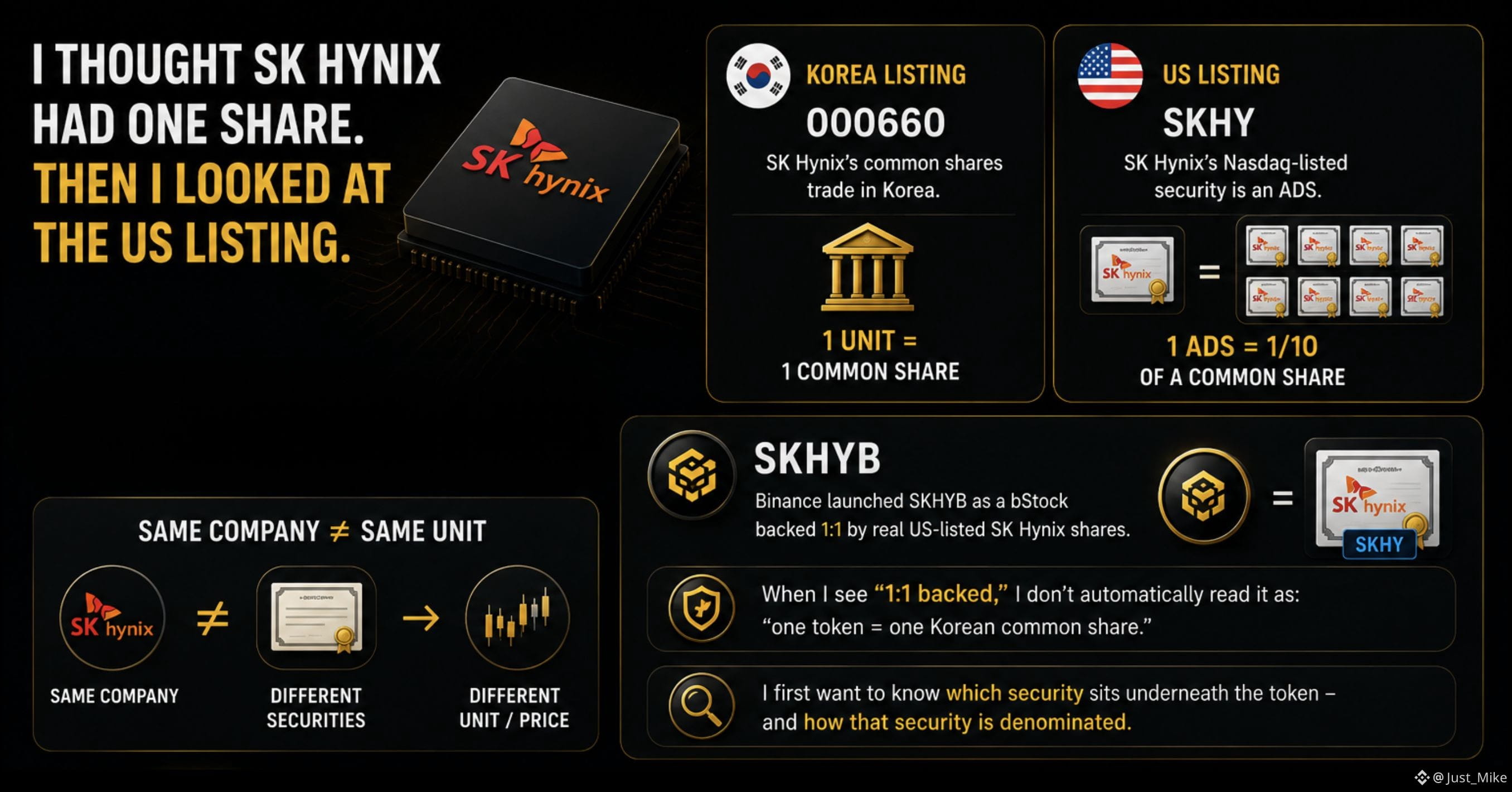
Saham biasa SK Hynix diperdagangkan di Korea dengan kode 000660.
Sekuritasnya yang tercatat di Nasdaq, SKHY, adalah sebuah ADS — dan 1 ADS mewakili 1/10 dari satu saham biasa.
Kedengarannya seperti detail teknis.
Tapi itu mengubah cara saya membaca harga.
Sebuah harga hanya masuk akal setelah saya tahu satuan apa yang diwakilinya.
Lalu ada SKHYB.
Binance meluncurkan SKHYB sebagai bStock yang didukung 1:1 oleh saham SK Hynix yang benar-benar tercatat di AS.
Jadi ketika saya melihat “1:1 backed”, saya tidak otomatis membacanya sebagai:
“satu token = satu saham biasa Korea.”
Itulah sebabnya “1:1 backed” hanya titik awal bagi saya — saya juga ingin tahu sekuritas apa yang sebenarnya dirujuk oleh angka 1 itu.
Pertama-tama saya ingin tahu sekuritas mana yang berada di bawah token — dan bagaimana sekuritas itu dinominasikan.
Perusahaan yang sama ≠ satuan yang sama.
Itu pemeriksaan yang berguna untuk saya:
sebelum membandingkan harga, periksa dulu apa yang benar-benar diwakili oleh satu unit.
#bstockscis @BinanceCIS
Saya kira SK Hynix hanya punya satu saham. Lalu saya melihat pencatatan di AS.
Saham biasa SK Hynix diperdagangkan di Korea dengan kode 000660.
Sekuritasnya yang tercatat di Nasdaq, SKHY, adalah sebuah ADS — dan 1 ADS mewakili 1/10 dari satu saham biasa.
Kedengarannya seperti detail teknis.
Tapi itu mengubah cara saya membaca harga.
Sebuah harga hanya masuk akal setelah saya tahu satuan apa yang diwakilinya.
Lalu ada SKHYB.
Binance meluncurkan SKHYB sebagai bStock yang didukung 1:1 oleh saham SK Hynix yang benar-benar tercatat di AS.
Jadi ketika saya melihat “1:1 backed”, saya tidak otomatis membacanya sebagai:
“satu token = satu saham biasa Korea.”
Itulah sebabnya “1:1 backed” hanya titik awal bagi saya — saya juga ingin tahu sekuritas apa yang sebenarnya dirujuk oleh angka 1 itu.
Pertama-tama saya ingin tahu sekuritas mana yang berada di bawah token — dan bagaimana sekuritas itu dinominasikan.
Perusahaan yang sama ≠ satuan yang sama.
Itu pemeriksaan yang berguna untuk saya:
sebelum membandingkan harga, periksa dulu apa yang benar-benar diwakili oleh satu unit.
#bstockscis @BinanceCIS
Saham biasa SK Hynix diperdagangkan di Korea dengan kode 000660.
Sekuritasnya yang tercatat di Nasdaq, SKHY, adalah sebuah ADS — dan 1 ADS mewakili 1/10 dari satu saham biasa.
Kedengarannya seperti detail teknis.
Tapi itu mengubah cara saya membaca harga.
Sebuah harga hanya masuk akal setelah saya tahu satuan apa yang diwakilinya.
Lalu ada SKHYB.
Binance meluncurkan SKHYB sebagai bStock yang didukung 1:1 oleh saham SK Hynix yang benar-benar tercatat di AS.
Jadi ketika saya melihat “1:1 backed”, saya tidak otomatis membacanya sebagai:
“satu token = satu saham biasa Korea.”
Itulah sebabnya “1:1 backed” hanya titik awal bagi saya — saya juga ingin tahu sekuritas apa yang sebenarnya dirujuk oleh angka 1 itu.
Pertama-tama saya ingin tahu sekuritas mana yang berada di bawah token — dan bagaimana sekuritas itu dinominasikan.
Perusahaan yang sama ≠ satuan yang sama.
Itu pemeriksaan yang berguna untuk saya:
sebelum membandingkan harga, periksa dulu apa yang benar-benar diwakili oleh satu unit.
#bstockscis @BinanceCIS
72
·
--
Tokenisasi aset dunia nyata hanya permulaan.
Pertanyaan yang lebih menarik adalah apa yang sebenarnya bisa Anda lakukan dengannya setelah berada di-chain.
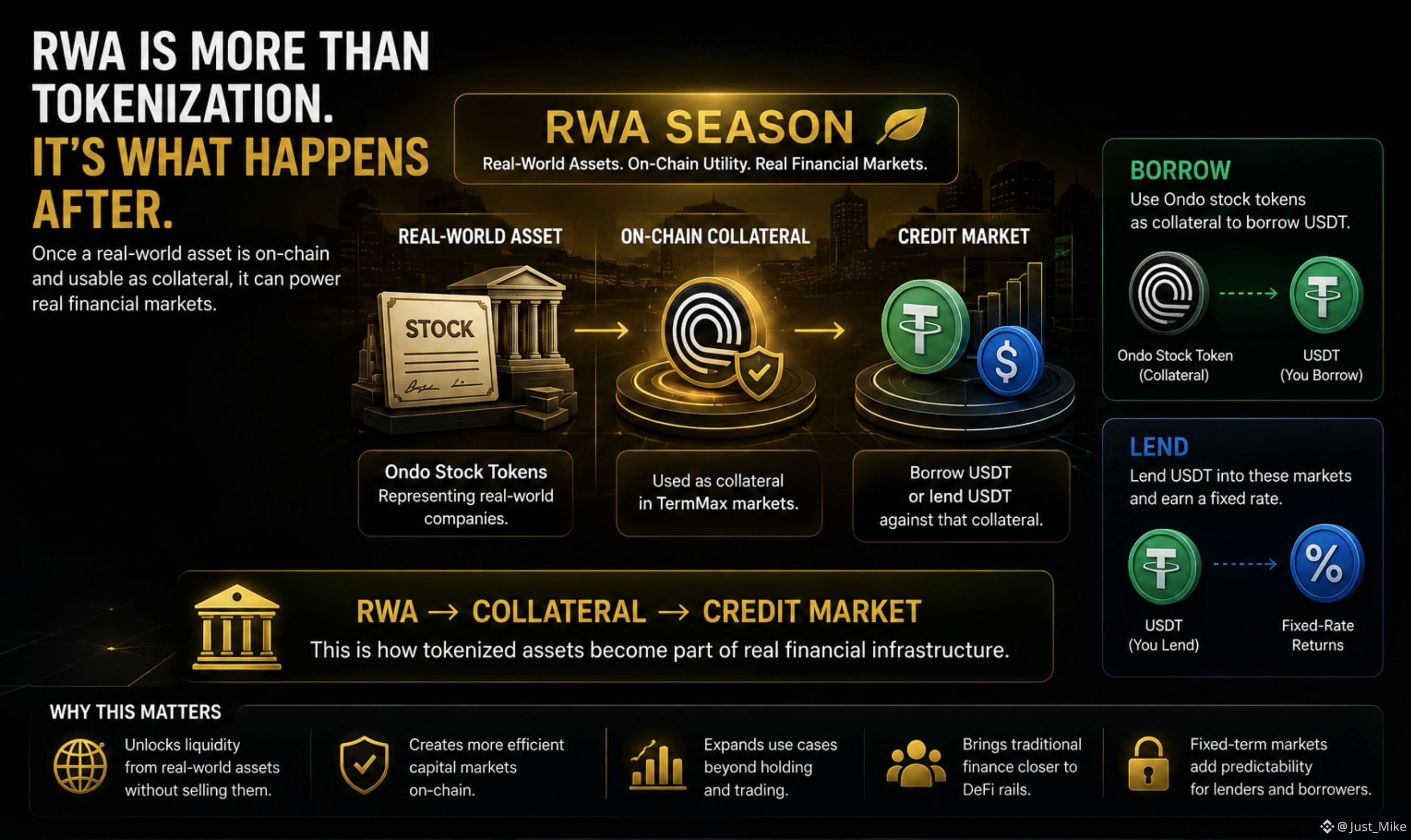
Musim RWA TermMax saat ini memberikan contoh yang cukup praktis.
Token saham Ondo dapat digunakan sebagai jaminan untuk meminjam USDT di BNB Chain.
Dan di sisi lain, pengguna dapat memberikan pinjaman USDT ke pasar-pasar tersebut.
Jadi strukturnya menjadi:
RWA → jaminan → pasar kredit
Itu adalah gagasan yang jauh lebih besar daripada sekadar memasukkan saham yang ditokenisasi ke dalam sebuah dompet.
Begitu sebuah aset menjadi jaminan yang dapat digunakan, ia dapat menjadi bagian dari pasar keuangan yang nyata.
Di situlah saya pikir RWA menjadi menarik.
Bukan:
“Bisakah kita men-tokenisasi aset ini?”
Melainkan:
“Apa yang bisa dilakukan aset tersebut setelah ditokenisasi?”
TermMax sedang bereksperimen dengan salah satu kemungkinan jawabannya: pinjam-meminjam dan pemberian pinjaman dengan jangka tetap di sekitar aset yang ditokenisasi.
#termmax @termmax
Tokenisasi aset dunia nyata hanya permulaan.
Pertanyaan yang lebih menarik adalah apa yang sebenarnya bisa Anda lakukan dengannya setelah berada di-chain.
Musim RWA TermMax saat ini memberikan contoh yang cukup praktis.
Token saham Ondo dapat digunakan sebagai jaminan untuk meminjam USDT di BNB Chain.
Dan di sisi lain, pengguna dapat memberikan pinjaman USDT ke pasar-pasar tersebut.
Jadi strukturnya menjadi:
RWA → jaminan → pasar kredit
Itu adalah gagasan yang jauh lebih besar daripada sekadar memasukkan saham yang ditokenisasi ke dalam sebuah dompet.
Begitu sebuah aset menjadi jaminan yang dapat digunakan, ia dapat menjadi bagian dari pasar keuangan yang nyata.
Di situlah saya pikir RWA menjadi menarik.
Bukan:
“Bisakah kita men-tokenisasi aset ini?”
Melainkan:
“Apa yang bisa dilakukan aset tersebut setelah ditokenisasi?”
TermMax sedang bereksperimen dengan salah satu kemungkinan jawabannya: pinjam-meminjam dan pemberian pinjaman dengan jangka tetap di sekitar aset yang ditokenisasi.
#termmax @TermMax
Pertanyaan yang lebih menarik adalah apa yang sebenarnya bisa Anda lakukan dengannya setelah berada di-chain.
Musim RWA TermMax saat ini memberikan contoh yang cukup praktis.
Token saham Ondo dapat digunakan sebagai jaminan untuk meminjam USDT di BNB Chain.
Dan di sisi lain, pengguna dapat memberikan pinjaman USDT ke pasar-pasar tersebut.
Jadi strukturnya menjadi:
RWA → jaminan → pasar kredit
Itu adalah gagasan yang jauh lebih besar daripada sekadar memasukkan saham yang ditokenisasi ke dalam sebuah dompet.
Begitu sebuah aset menjadi jaminan yang dapat digunakan, ia dapat menjadi bagian dari pasar keuangan yang nyata.
Di situlah saya pikir RWA menjadi menarik.
Bukan:
“Bisakah kita men-tokenisasi aset ini?”
Melainkan:
“Apa yang bisa dilakukan aset tersebut setelah ditokenisasi?”
TermMax sedang bereksperimen dengan salah satu kemungkinan jawabannya: pinjam-meminjam dan pemberian pinjaman dengan jangka tetap di sekitar aset yang ditokenisasi.
#termmax @TermMax
107
·
--
Penempatan penyimpanan energi Tesla melonjak 53%. Jadi mengapa marginnya hampir menyusut separuh?
Bisnis energi Tesla menarik perhatian saya karena ada alasan yang tidak terlihat dari judul pertumbuhan tersebut.
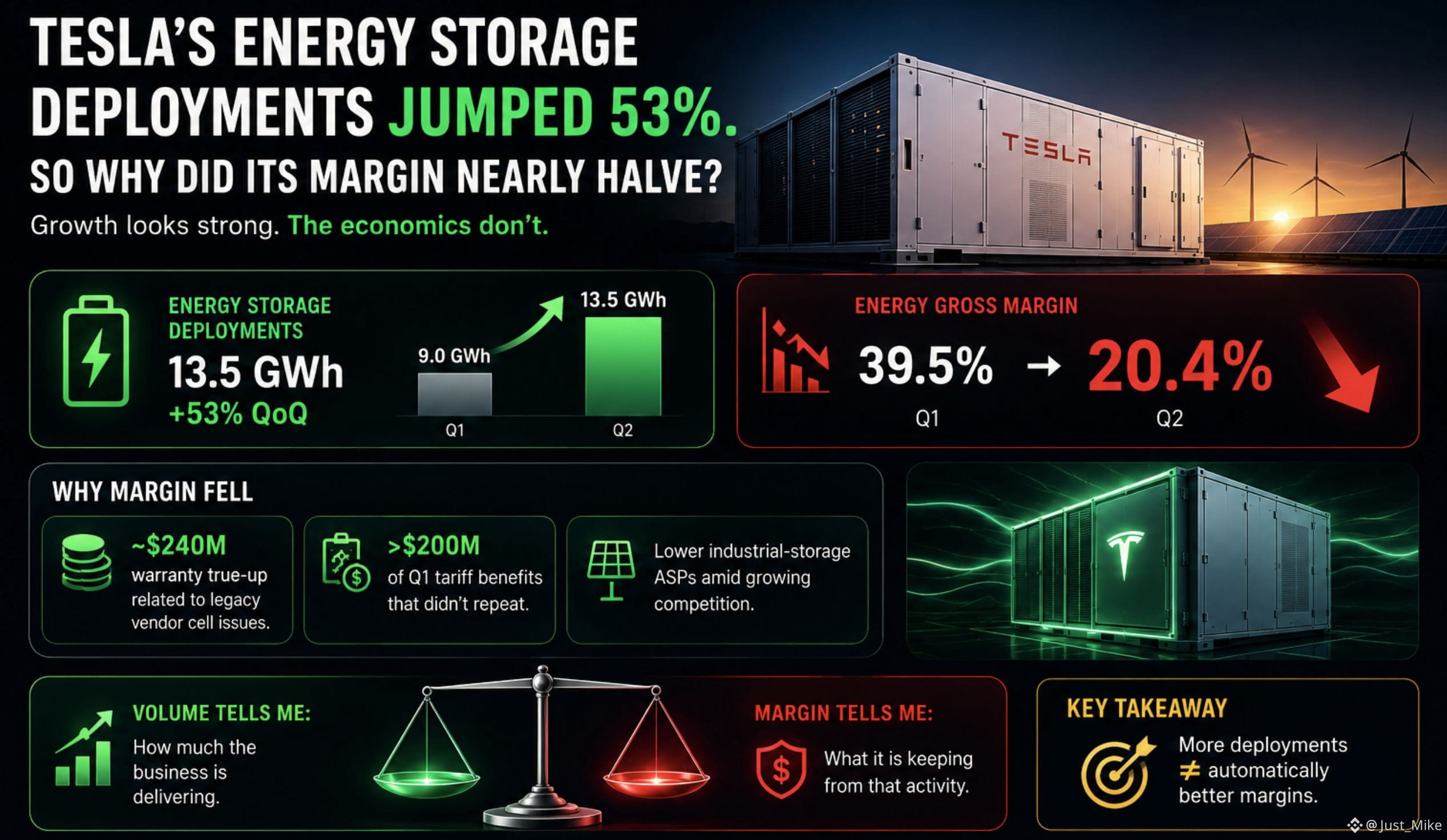
Di Q2, Tesla menempatkan 13,5 GWh penyimpanan energi, naik 53% secara kuartal ke kuartal (QoQ).
Kedengarannya persis seperti yang ingin Anda lihat dari bisnis yang sedang bertumbuh.
Lalu saya melihat margin.
Margin kotor energi turun dari 39,5% menjadi 20,4%.
Itu mengubah cara saya membaca angka penempatannya.
Penjelasannya tidak sesederhana “pertumbuhan itu mahal.”
Tesla menunjuk beberapa faktor:
perkiraan penyesuaian garansi senilai sekitar $240M yang terkait masalah sel dari vendor lama,
lebih dari $200M manfaat tarif Q1 yang tidak berulang,
dan turunnya ASP penyimpanan skala industri di tengah meningkatnya persaingan.
Jadi bisnis itu menempatkan jauh lebih banyak penyimpanan, sementara ekonomi untuk setiap dolar dari bisnis tersebut menjadi kurang menguntungkan pada kuartal itu.
Itulah yang menurut saya menarik tentang TSLAB sebagai bStock.
Pertanyaan yang jelas adalah:
“Seberapa cepat bisnis energi Tesla bertumbuh?”
Saya juga akan bertanya:
“Apa yang terjadi pada ekonomi dari pertumbuhan itu?”
Bagi saya:
Lebih banyak penempatan ≠ otomatis margin lebih baik.
Volume memberi tahu saya seberapa besar bisnis itu memberikan kontribusi.
Margin memberi tahu saya berapa yang bisa disimpan dari aktivitas tersebut.
#bstockscis @BinanceCIS
Penempatan penyimpanan energi Tesla melonjak 53%. Jadi mengapa marginnya hampir menyusut separuh?
Bisnis energi Tesla menarik perhatian saya karena ada alasan yang tidak terlihat dari judul pertumbuhan tersebut.
Di Q2, Tesla menempatkan 13,5 GWh penyimpanan energi, naik 53% secara kuartal ke kuartal (QoQ).
Kedengarannya persis seperti yang ingin Anda lihat dari bisnis yang sedang bertumbuh.
Lalu saya melihat margin.
Margin kotor energi turun dari 39,5% menjadi 20,4%.
Itu mengubah cara saya membaca angka penempatannya.
Penjelasannya tidak sesederhana “pertumbuhan itu mahal.”
Tesla menunjuk beberapa faktor:
perkiraan penyesuaian garansi senilai sekitar $240M yang terkait masalah sel dari vendor lama,
lebih dari $200M manfaat tarif Q1 yang tidak berulang,
dan turunnya ASP penyimpanan skala industri di tengah meningkatnya persaingan.
Jadi bisnis itu menempatkan jauh lebih banyak penyimpanan, sementara ekonomi untuk setiap dolar dari bisnis tersebut menjadi kurang menguntungkan pada kuartal itu.
Itulah yang menurut saya menarik tentang TSLAB sebagai bStock.
Pertanyaan yang jelas adalah:
“Seberapa cepat bisnis energi Tesla bertumbuh?”
Saya juga akan bertanya:
“Apa yang terjadi pada ekonomi dari pertumbuhan itu?”
Bagi saya:
Lebih banyak penempatan ≠ otomatis margin lebih baik.
Volume memberi tahu saya seberapa besar bisnis itu memberikan kontribusi.
Margin memberi tahu saya berapa yang bisa disimpan dari aktivitas tersebut.
#bstockscis @BinanceCIS
Bisnis energi Tesla menarik perhatian saya karena ada alasan yang tidak terlihat dari judul pertumbuhan tersebut.
Di Q2, Tesla menempatkan 13,5 GWh penyimpanan energi, naik 53% secara kuartal ke kuartal (QoQ).
Kedengarannya persis seperti yang ingin Anda lihat dari bisnis yang sedang bertumbuh.
Lalu saya melihat margin.
Margin kotor energi turun dari 39,5% menjadi 20,4%.
Itu mengubah cara saya membaca angka penempatannya.
Penjelasannya tidak sesederhana “pertumbuhan itu mahal.”
Tesla menunjuk beberapa faktor:
perkiraan penyesuaian garansi senilai sekitar $240M yang terkait masalah sel dari vendor lama,
lebih dari $200M manfaat tarif Q1 yang tidak berulang,
dan turunnya ASP penyimpanan skala industri di tengah meningkatnya persaingan.
Jadi bisnis itu menempatkan jauh lebih banyak penyimpanan, sementara ekonomi untuk setiap dolar dari bisnis tersebut menjadi kurang menguntungkan pada kuartal itu.
Itulah yang menurut saya menarik tentang TSLAB sebagai bStock.
Pertanyaan yang jelas adalah:
“Seberapa cepat bisnis energi Tesla bertumbuh?”
Saya juga akan bertanya:
“Apa yang terjadi pada ekonomi dari pertumbuhan itu?”
Bagi saya:
Lebih banyak penempatan ≠ otomatis margin lebih baik.
Volume memberi tahu saya seberapa besar bisnis itu memberikan kontribusi.
Margin memberi tahu saya berapa yang bisa disimpan dari aktivitas tersebut.
#bstockscis @BinanceCIS
3
3
110
·
--
Saya telah menilik TermMax di luar narasi biasa “sekadar protokol peminjaman DeFi lainnya”.
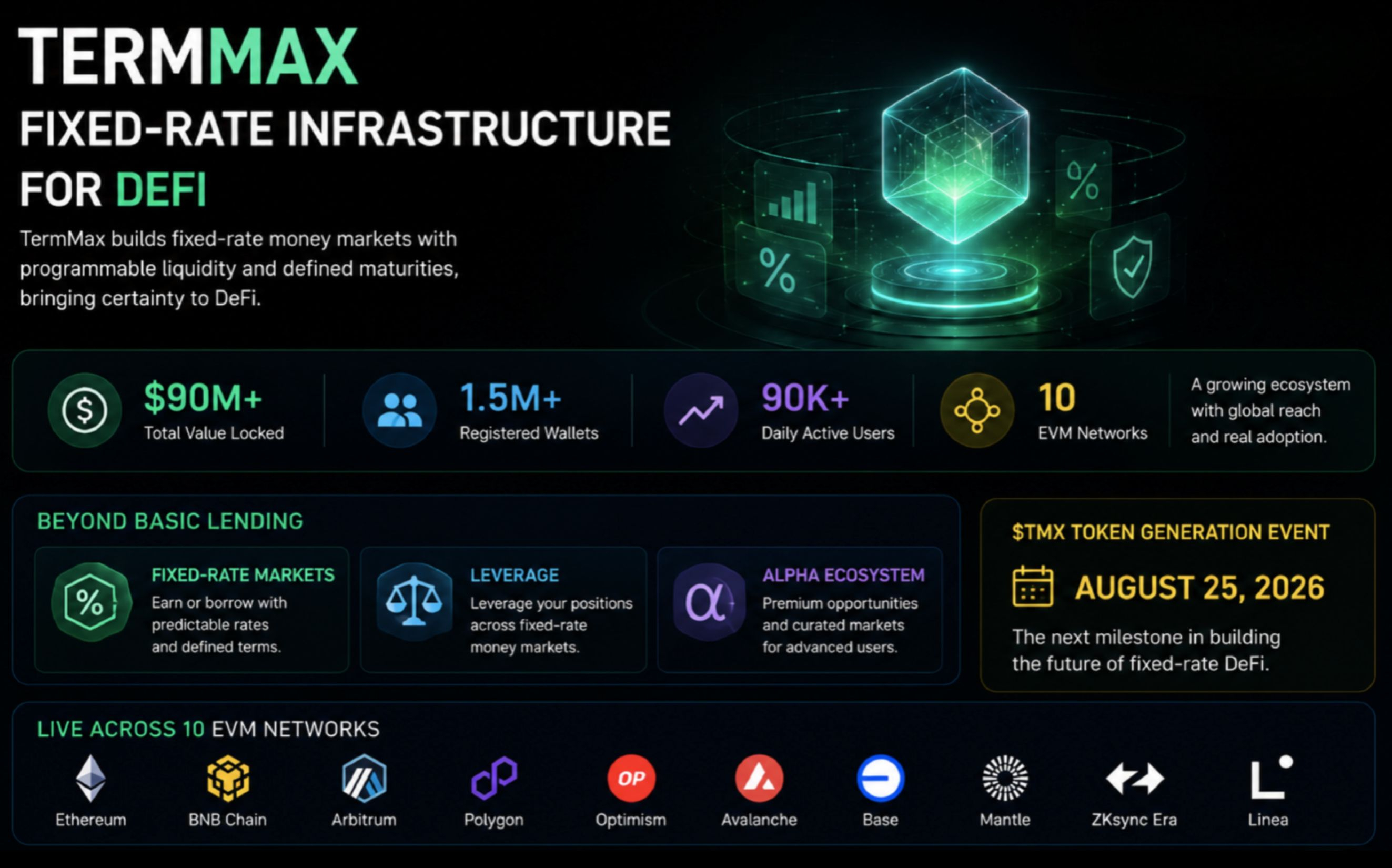
Gagasan besarnya adalah infrastruktur suku bunga tetap untuk DeFi: pasar yang dibangun di sekitar jatuh tempo yang didefinisikan, posisi suku bunga tetap, dan likuiditas yang dapat diprogram.
Beberapa angka dari proyek ini saat ini menonjol:
• $90M+ TVL
• 1.5M+ dompet terdaftar
• 90K+ pengguna aktif harian
• dideploy di 10 jaringan EVM
Dan produknya melampaui sekadar peminjaman, dengan pasar suku bunga tetap, leverage, serta ekosistem Alpha-nya.
Tanggal lain yang patut diperhatikan: TermMax telah mengumumkan TGE $TMX untuk 25 Agustus.
Yang paling menarik bagi saya adalah apakah pasar suku bunga tetap bisa menjadi lapisan infrastruktur DeFi yang berarti, bukan hanya produk pinjaman lainnya.
#termmax @termmax
Saya telah menilik TermMax di luar narasi biasa “sekadar protokol peminjaman DeFi lainnya”.
Gagasan besarnya adalah infrastruktur suku bunga tetap untuk DeFi: pasar yang dibangun di sekitar jatuh tempo yang didefinisikan, posisi suku bunga tetap, dan likuiditas yang dapat diprogram.
Beberapa angka dari proyek ini saat ini menonjol:
• $90M+ TVL
• 1.5M+ dompet terdaftar
• 90K+ pengguna aktif harian
• dideploy di 10 jaringan EVM
Dan produknya melampaui sekadar peminjaman, dengan pasar suku bunga tetap, leverage, serta ekosistem Alpha-nya.
Tanggal lain yang patut diperhatikan: TermMax telah mengumumkan TGE $TMX untuk 25 Agustus.
Yang paling menarik bagi saya adalah apakah pasar suku bunga tetap bisa menjadi lapisan infrastruktur DeFi yang berarti, bukan hanya produk pinjaman lainnya.
#termmax @TermMax
Gagasan besarnya adalah infrastruktur suku bunga tetap untuk DeFi: pasar yang dibangun di sekitar jatuh tempo yang didefinisikan, posisi suku bunga tetap, dan likuiditas yang dapat diprogram.
Beberapa angka dari proyek ini saat ini menonjol:
• $90M+ TVL
• 1.5M+ dompet terdaftar
• 90K+ pengguna aktif harian
• dideploy di 10 jaringan EVM
Dan produknya melampaui sekadar peminjaman, dengan pasar suku bunga tetap, leverage, serta ekosistem Alpha-nya.
Tanggal lain yang patut diperhatikan: TermMax telah mengumumkan TGE $TMX untuk 25 Agustus.
Yang paling menarik bagi saya adalah apakah pasar suku bunga tetap bisa menjadi lapisan infrastruktur DeFi yang berarti, bukan hanya produk pinjaman lainnya.
#termmax @TermMax
92
·
--
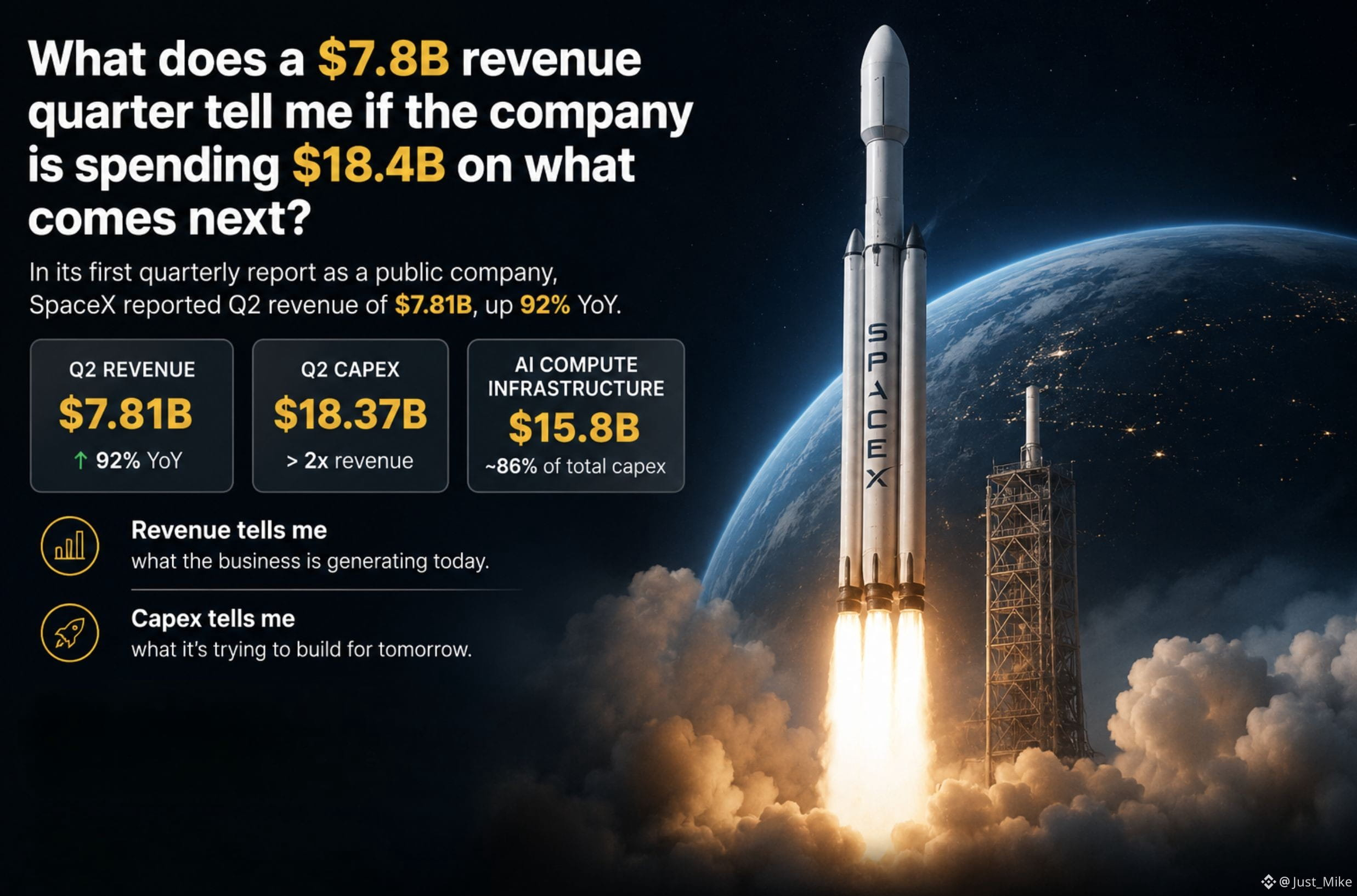
Apa yang saya dapat dari satu kuartal pendapatan sebesar $7,8B jika perusahaan membelanjakan $18,4B untuk apa yang akan datang?
Dalam laporan kuartal pertamanya sebagai perusahaan publik, SpaceX melaporkan pendapatan Q2 sebesar $7,81B, naik 92% YoY.
Lalu saya melihat capex:
$18,37B untuk kuartal tersebut.
Itu lebih dari dua kali pendapatan kuartalan perusahaan.
Dan itu mengubah cara saya membaca angka pertama.
Pendapatan memberi tahu saya skala bisnis saat ini.
Capex memberi tahu saya berapa modal yang dikomitmenkan perusahaan untuk membangun tahap pertumbuhan berikutnya.
Sekitar $15,8B dari capex Q2 itu digunakan untuk infrastruktur AI.
Itu tidak otomatis berarti pengeluaran tersebut tidak efisien—capex adalah investasi, bukan beban.
Namun itu memberi tahu saya sesuatu yang tidak ditunjukkan oleh pertumbuhan pendapatan saja:
seberapa agresif perusahaan berinvestasi untuk tahap pertumbuhan berikutnya.
Itulah yang saya anggap menarik tentang SPCXB sebagai bStock.
Kode sahamnya memberi saya eksposur ke SpaceX.
Namun alih-alih hanya bertanya:
“Seberapa cepat pendapatan tumbuh?”
Saya juga akan bertanya:
“Untuk membuat tahap pertumbuhan berikutnya menjadi mungkin, perusahaan membelanjakan apa?”
Bagi saya:
Pendapatan memberi tahu saya apa yang dihasilkan bisnis saat ini.
Capex memberi tahu saya apa yang sedang dicoba untuk dibangun untuk besok.
#bstockscis @BinanceCIS
Apa yang saya dapat dari satu kuartal pendapatan sebesar $7,8B jika perusahaan membelanjakan $18,4B untuk apa yang akan datang?
Dalam laporan kuartal pertamanya sebagai perusahaan publik, SpaceX melaporkan pendapatan Q2 sebesar $7,81B, naik 92% YoY.
Lalu saya melihat capex:
$18,37B untuk kuartal tersebut.
Itu lebih dari dua kali pendapatan kuartalan perusahaan.
Dan itu mengubah cara saya membaca angka pertama.
Pendapatan memberi tahu saya skala bisnis saat ini.
Capex memberi tahu saya berapa modal yang dikomitmenkan perusahaan untuk membangun tahap pertumbuhan berikutnya.
Sekitar $15,8B dari capex Q2 itu digunakan untuk infrastruktur AI.
Itu tidak otomatis berarti pengeluaran tersebut tidak efisien—capex adalah investasi, bukan beban.
Namun itu memberi tahu saya sesuatu yang tidak ditunjukkan oleh pertumbuhan pendapatan saja:
seberapa agresif perusahaan berinvestasi untuk tahap pertumbuhan berikutnya.
Itulah yang saya anggap menarik tentang SPCXB sebagai bStock.
Kode sahamnya memberi saya eksposur ke SpaceX.
Namun alih-alih hanya bertanya:
“Seberapa cepat pendapatan tumbuh?”
Saya juga akan bertanya:
“Untuk membuat tahap pertumbuhan berikutnya menjadi mungkin, perusahaan membelanjakan apa?”
Bagi saya:
Pendapatan memberi tahu saya apa yang dihasilkan bisnis saat ini.
Capex memberi tahu saya apa yang sedang dicoba untuk dibangun untuk besok.
#bstockscis @BinanceCIS
Dalam laporan kuartal pertamanya sebagai perusahaan publik, SpaceX melaporkan pendapatan Q2 sebesar $7,81B, naik 92% YoY.
Lalu saya melihat capex:
$18,37B untuk kuartal tersebut.
Itu lebih dari dua kali pendapatan kuartalan perusahaan.
Dan itu mengubah cara saya membaca angka pertama.
Pendapatan memberi tahu saya skala bisnis saat ini.
Capex memberi tahu saya berapa modal yang dikomitmenkan perusahaan untuk membangun tahap pertumbuhan berikutnya.
Sekitar $15,8B dari capex Q2 itu digunakan untuk infrastruktur AI.
Itu tidak otomatis berarti pengeluaran tersebut tidak efisien—capex adalah investasi, bukan beban.
Namun itu memberi tahu saya sesuatu yang tidak ditunjukkan oleh pertumbuhan pendapatan saja:
seberapa agresif perusahaan berinvestasi untuk tahap pertumbuhan berikutnya.
Itulah yang saya anggap menarik tentang SPCXB sebagai bStock.
Kode sahamnya memberi saya eksposur ke SpaceX.
Namun alih-alih hanya bertanya:
“Seberapa cepat pendapatan tumbuh?”
Saya juga akan bertanya:
“Untuk membuat tahap pertumbuhan berikutnya menjadi mungkin, perusahaan membelanjakan apa?”
Bagi saya:
Pendapatan memberi tahu saya apa yang dihasilkan bisnis saat ini.
Capex memberi tahu saya apa yang sedang dicoba untuk dibangun untuk besok.
#bstockscis @BinanceCIS
2
1
124
·
--
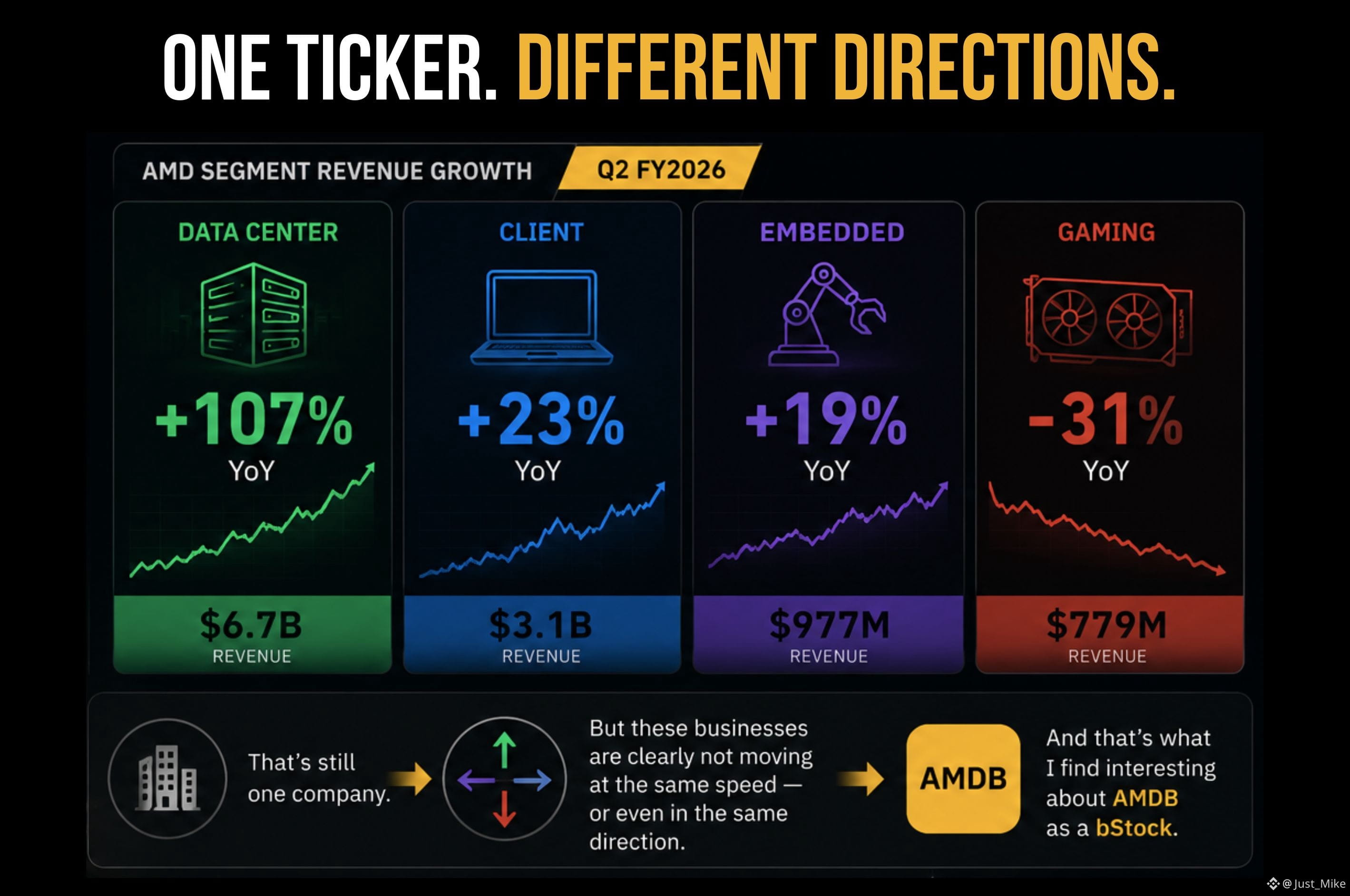
Satu ticker bisa berisi bisnis yang bergerak ke arah berlawanan.
Saat saya melihat AMDB, rasanya menggoda untuk menganggapnya sebagai satu kisah besar pertumbuhan AMD.
Namun angka terbaru AMD membuat saya melihat ticker tersebut dengan cara yang berbeda.
Pada Q2 FY2026:
Data Center: +107% YoY
Client: +23%
Embedded: +19%
Gaming: −31%
Itu tetap satu perusahaan.
Tapi bisnis-bisnis ini jelas tidak bergerak dengan kecepatan yang sama — atau bahkan tidak bergerak ke arah yang sama.
Dan itulah yang membuat saya tertarik tentang AMDB sebagai bStock.
Ticker itu memberi tahu saya perusahaan mana yang saya dapatkan eksposurnya.
Komposisi bisnis memberi tahu saya apa yang sebenarnya mendorong eksposur tersebut.
Jadi ketika saya melihat “pertumbuhan AMD”, saya tidak ingin berhenti pada judulnya.
Saya ingin bertanya:
Bagian mana dari AMD yang sebenarnya sedang tumbuh?
Bagi saya, cara membaca satu ticker seperti itu jauh lebih berguna.
#bstockscis @BinanceCIS
Satu ticker bisa berisi bisnis yang bergerak ke arah berlawanan.
Saat saya melihat AMDB, rasanya menggoda untuk menganggapnya sebagai satu kisah besar pertumbuhan AMD.
Namun angka terbaru AMD membuat saya melihat ticker tersebut dengan cara yang berbeda.
Pada Q2 FY2026:
Data Center: +107% YoY
Client: +23%
Embedded: +19%
Gaming: −31%
Itu tetap satu perusahaan.
Tapi bisnis-bisnis ini jelas tidak bergerak dengan kecepatan yang sama — atau bahkan tidak bergerak ke arah yang sama.
Dan itulah yang membuat saya tertarik tentang AMDB sebagai bStock.
Ticker itu memberi tahu saya perusahaan mana yang saya dapatkan eksposurnya.
Komposisi bisnis memberi tahu saya apa yang sebenarnya mendorong eksposur tersebut.
Jadi ketika saya melihat “pertumbuhan AMD”, saya tidak ingin berhenti pada judulnya.
Saya ingin bertanya:
Bagian mana dari AMD yang sebenarnya sedang tumbuh?
Bagi saya, cara membaca satu ticker seperti itu jauh lebih berguna.
#bstockscis @BinanceCIS
Saat saya melihat AMDB, rasanya menggoda untuk menganggapnya sebagai satu kisah besar pertumbuhan AMD.
Namun angka terbaru AMD membuat saya melihat ticker tersebut dengan cara yang berbeda.
Pada Q2 FY2026:
Data Center: +107% YoY
Client: +23%
Embedded: +19%
Gaming: −31%
Itu tetap satu perusahaan.
Tapi bisnis-bisnis ini jelas tidak bergerak dengan kecepatan yang sama — atau bahkan tidak bergerak ke arah yang sama.
Dan itulah yang membuat saya tertarik tentang AMDB sebagai bStock.
Ticker itu memberi tahu saya perusahaan mana yang saya dapatkan eksposurnya.
Komposisi bisnis memberi tahu saya apa yang sebenarnya mendorong eksposur tersebut.
Jadi ketika saya melihat “pertumbuhan AMD”, saya tidak ingin berhenti pada judulnya.
Saya ingin bertanya:
Bagian mana dari AMD yang sebenarnya sedang tumbuh?
Bagi saya, cara membaca satu ticker seperti itu jauh lebih berguna.
#bstockscis @BinanceCIS
4
3
105
·
--
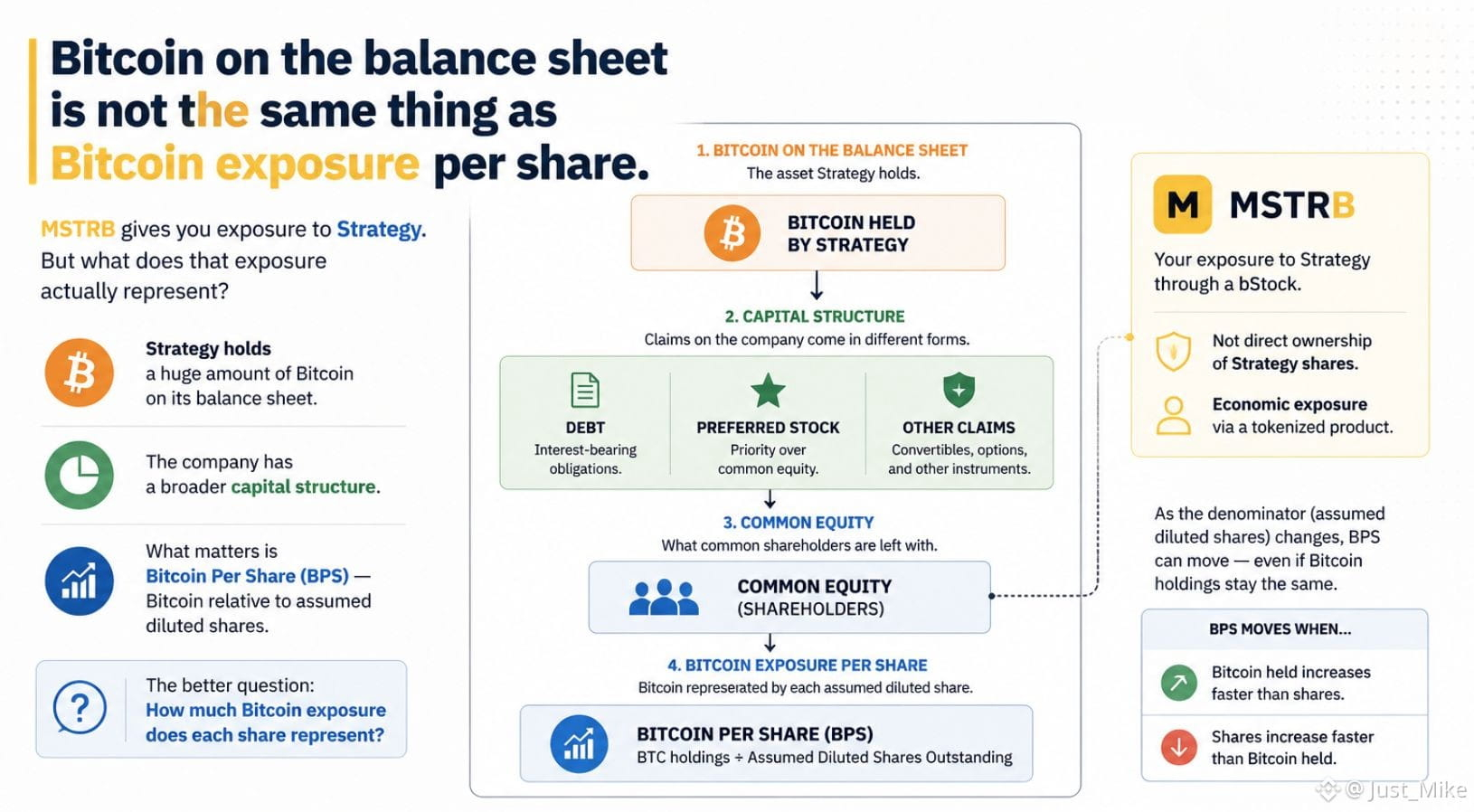
Bitcoin di neraca tidak sama dengan eksposur Bitcoin per saham.
Strategi menyimpan jumlah Bitcoin yang sangat besar di neraca.
Jadi, pada pandangan pertama, memiliki MSTRB mungkin terlihat seperti cara sederhana untuk mendapatkan eksposur Bitcoin melalui sebuah perusahaan.
Namun ada lapisan lain yang perlu diperhatikan.
Strategi sendiri mengukur Bitcoin Per Share (BPS) — jumlah Bitcoin yang diwakili per asumsi saham terdilusi.
Dan rasio ini penting karena pembilang dan penyebut dapat bergerak secara independen.
Jika Strategi menambah Bitcoin, BPS bisa meningkat.
Tapi jika perusahaan menambah jumlah saham terdilusi yang diasumsikan tanpa menambah Bitcoin dengan kecepatan yang sama, BPS bisa bergerak ke arah yang berlawanan.
Itulah sebabnya saya menganggap MSTRB lebih menarik daripada sekadar mengatakan:
“Strategi memiliki banyak Bitcoin.”
Pertanyaan yang lebih baik adalah:
Seberapa besar eksposur Bitcoin yang benar-benar diwakili oleh setiap saham?
Dan inilah juga yang membuat eksposur tokenisasi menarik bagi saya.
Dengan bStock seperti MSTRB, Anda mendapatkan eksposur terhadap perusahaan yang mendasarinya melalui produk yang ditokenisasi — bukan kepemilikan langsung atas Bitcoin yang berada di neraca Strategi.
Jadi, sebenarnya ada dua lapisan yang perlu dipikirkan:
Bitcoin yang dimiliki perusahaan.
Eksposur Bitcoin yang diwakili oleh sekuritas.
Aset utama hanya lapisan pertama.
Saat sebuah perusahaan menjadi kendaraan untuk sebuah aset, perhatikan struktur yang berada di antara Anda dan perusahaan tersebut.
#bstockscis @BinanceCIS
Bitcoin di neraca tidak sama dengan eksposur Bitcoin per saham.
Strategi menyimpan jumlah Bitcoin yang sangat besar di neraca.
Jadi, pada pandangan pertama, memiliki MSTRB mungkin terlihat seperti cara sederhana untuk mendapatkan eksposur Bitcoin melalui sebuah perusahaan.
Namun ada lapisan lain yang perlu diperhatikan.
Strategi sendiri mengukur Bitcoin Per Share (BPS) — jumlah Bitcoin yang diwakili per asumsi saham terdilusi.
Dan rasio ini penting karena pembilang dan penyebut dapat bergerak secara independen.
Jika Strategi menambah Bitcoin, BPS bisa meningkat.
Tapi jika perusahaan menambah jumlah saham terdilusi yang diasumsikan tanpa menambah Bitcoin dengan kecepatan yang sama, BPS bisa bergerak ke arah yang berlawanan.
Itulah sebabnya saya menganggap MSTRB lebih menarik daripada sekadar mengatakan:
“Strategi memiliki banyak Bitcoin.”
Pertanyaan yang lebih baik adalah:
Seberapa besar eksposur Bitcoin yang benar-benar diwakili oleh setiap saham?
Dan inilah juga yang membuat eksposur tokenisasi menarik bagi saya.
Dengan bStock seperti MSTRB, Anda mendapatkan eksposur terhadap perusahaan yang mendasarinya melalui produk yang ditokenisasi — bukan kepemilikan langsung atas Bitcoin yang berada di neraca Strategi.
Jadi, sebenarnya ada dua lapisan yang perlu dipikirkan:
Bitcoin yang dimiliki perusahaan.
Eksposur Bitcoin yang diwakili oleh sekuritas.
Aset utama hanya lapisan pertama.
Saat sebuah perusahaan menjadi kendaraan untuk sebuah aset, perhatikan struktur yang berada di antara Anda dan perusahaan tersebut.
#bstockscis @BinanceCIS
Strategi menyimpan jumlah Bitcoin yang sangat besar di neraca.
Jadi, pada pandangan pertama, memiliki MSTRB mungkin terlihat seperti cara sederhana untuk mendapatkan eksposur Bitcoin melalui sebuah perusahaan.
Namun ada lapisan lain yang perlu diperhatikan.
Strategi sendiri mengukur Bitcoin Per Share (BPS) — jumlah Bitcoin yang diwakili per asumsi saham terdilusi.
Dan rasio ini penting karena pembilang dan penyebut dapat bergerak secara independen.
Jika Strategi menambah Bitcoin, BPS bisa meningkat.
Tapi jika perusahaan menambah jumlah saham terdilusi yang diasumsikan tanpa menambah Bitcoin dengan kecepatan yang sama, BPS bisa bergerak ke arah yang berlawanan.
Itulah sebabnya saya menganggap MSTRB lebih menarik daripada sekadar mengatakan:
“Strategi memiliki banyak Bitcoin.”
Pertanyaan yang lebih baik adalah:
Seberapa besar eksposur Bitcoin yang benar-benar diwakili oleh setiap saham?
Dan inilah juga yang membuat eksposur tokenisasi menarik bagi saya.
Dengan bStock seperti MSTRB, Anda mendapatkan eksposur terhadap perusahaan yang mendasarinya melalui produk yang ditokenisasi — bukan kepemilikan langsung atas Bitcoin yang berada di neraca Strategi.
Jadi, sebenarnya ada dua lapisan yang perlu dipikirkan:
Bitcoin yang dimiliki perusahaan.
Eksposur Bitcoin yang diwakili oleh sekuritas.
Aset utama hanya lapisan pertama.
Saat sebuah perusahaan menjadi kendaraan untuk sebuah aset, perhatikan struktur yang berada di antara Anda dan perusahaan tersebut.
#bstockscis @BinanceCIS
102
·
--
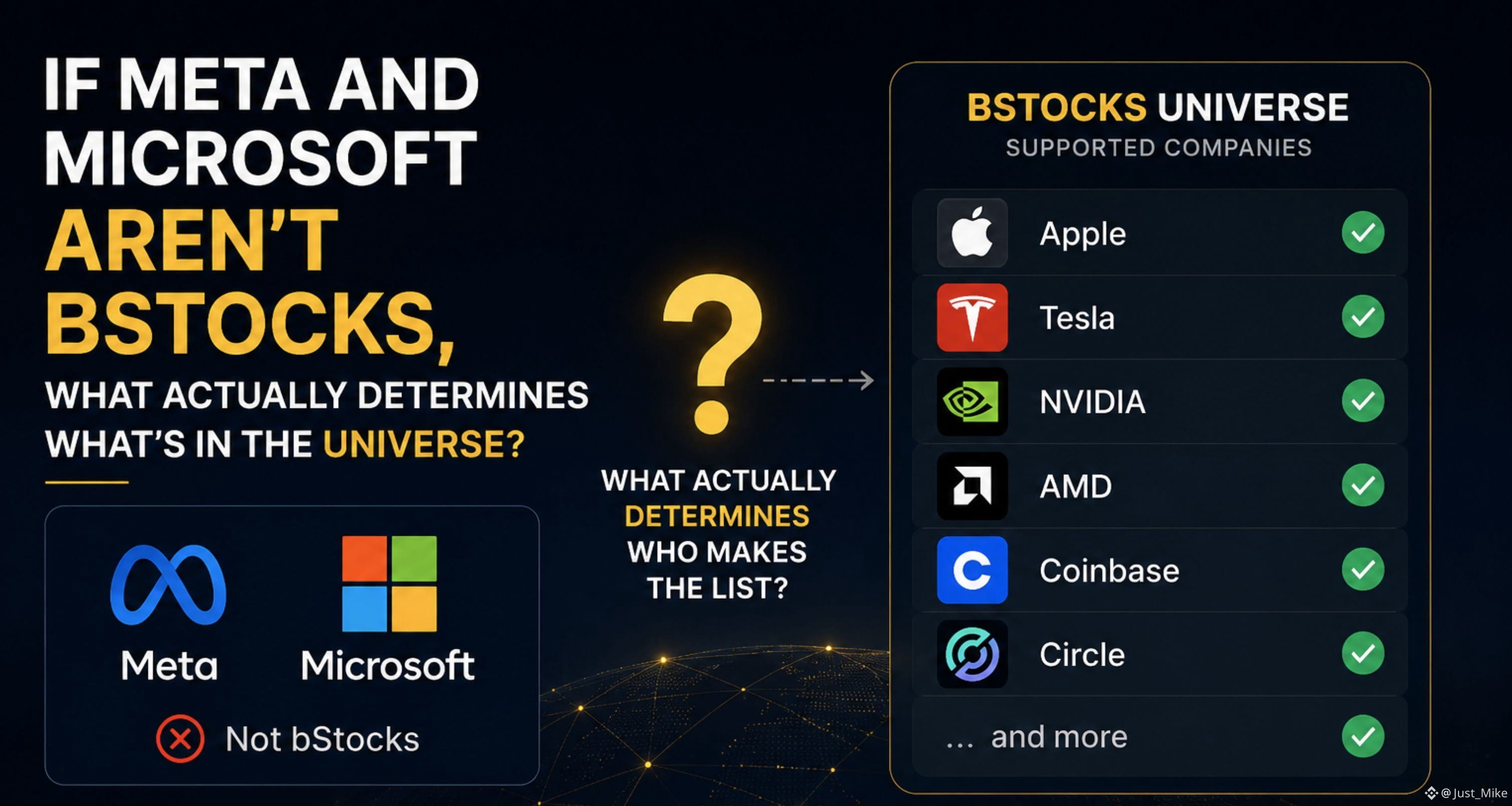
Jika Meta dan Microsoft bukan bStocks, apa yang sebenarnya menentukan siapa yang masuk daftar?
Saat pertama kali melihat semesta bStocks, saya membuat asumsi sederhana.
Jika sebuah perusahaan adalah perusahaan publik besar dan terkenal, saya mengira perusahaan itu akan tersedia sebagai bStock.
Lalu saya menyadari sesuatu yang menantang asumsi itu:
Meta dan Microsoft bukan bStocks.
Keduanya adalah perusahaan publik besar.
Tapi menjadi perusahaan publik besar dan tersedia sebagai bStock jelas bukan hal yang sama.
Itu membuat saya melihat daftar Perusahaan yang Didukung dengan cara yang berbeda.
Alih-alih bertanya:
“Kenapa Meta tidak ada di sini?”
Saya mulai bertanya:
“Apa sebenarnya yang menentukan apakah sebuah aset menjadi bagian dari semesta bStocks?”
Karena daftarnya bukan sekadar cerminan perusahaan-perusahaan yang sudah saya kenal dari pasar saham AS.
Daftar itu adalah kumpulan khusus dari eksposur saham tokenisasi yang didukung.
Dan menurut saya perbedaan itu penting.
Saat saya melihat bStock sekarang, saya tidak ingin berasumsi bahwa familiaritas dengan perusahaan yang mendasarinya memberi tahu saya apakah eksposur tersebut tersedia.
Saya lebih memilih memulai dengan pertanyaan yang lebih sederhana:
Apakah aset ini benar-benar didukung sebagai bStock?
#bstockscis @BinanceCIS
Jika Meta dan Microsoft bukan bStocks, apa yang sebenarnya menentukan siapa yang masuk daftar?
Saat pertama kali melihat semesta bStocks, saya membuat asumsi sederhana.
Jika sebuah perusahaan adalah perusahaan publik besar dan terkenal, saya mengira perusahaan itu akan tersedia sebagai bStock.
Lalu saya menyadari sesuatu yang menantang asumsi itu:
Meta dan Microsoft bukan bStocks.
Keduanya adalah perusahaan publik besar.
Tapi menjadi perusahaan publik besar dan tersedia sebagai bStock jelas bukan hal yang sama.
Itu membuat saya melihat daftar Perusahaan yang Didukung dengan cara yang berbeda.
Alih-alih bertanya:
“Kenapa Meta tidak ada di sini?”
Saya mulai bertanya:
“Apa sebenarnya yang menentukan apakah sebuah aset menjadi bagian dari semesta bStocks?”
Karena daftarnya bukan sekadar cerminan perusahaan-perusahaan yang sudah saya kenal dari pasar saham AS.
Daftar itu adalah kumpulan khusus dari eksposur saham tokenisasi yang didukung.
Dan menurut saya perbedaan itu penting.
Saat saya melihat bStock sekarang, saya tidak ingin berasumsi bahwa familiaritas dengan perusahaan yang mendasarinya memberi tahu saya apakah eksposur tersebut tersedia.
Saya lebih memilih memulai dengan pertanyaan yang lebih sederhana:
Apakah aset ini benar-benar didukung sebagai bStock?
#bstockscis @BinanceCIS
Saat pertama kali melihat semesta bStocks, saya membuat asumsi sederhana.
Jika sebuah perusahaan adalah perusahaan publik besar dan terkenal, saya mengira perusahaan itu akan tersedia sebagai bStock.
Lalu saya menyadari sesuatu yang menantang asumsi itu:
Meta dan Microsoft bukan bStocks.
Keduanya adalah perusahaan publik besar.
Tapi menjadi perusahaan publik besar dan tersedia sebagai bStock jelas bukan hal yang sama.
Itu membuat saya melihat daftar Perusahaan yang Didukung dengan cara yang berbeda.
Alih-alih bertanya:
“Kenapa Meta tidak ada di sini?”
Saya mulai bertanya:
“Apa sebenarnya yang menentukan apakah sebuah aset menjadi bagian dari semesta bStocks?”
Karena daftarnya bukan sekadar cerminan perusahaan-perusahaan yang sudah saya kenal dari pasar saham AS.
Daftar itu adalah kumpulan khusus dari eksposur saham tokenisasi yang didukung.
Dan menurut saya perbedaan itu penting.
Saat saya melihat bStock sekarang, saya tidak ingin berasumsi bahwa familiaritas dengan perusahaan yang mendasarinya memberi tahu saya apakah eksposur tersebut tersedia.
Saya lebih memilih memulai dengan pertanyaan yang lebih sederhana:
Apakah aset ini benar-benar didukung sebagai bStock?
#bstockscis @BinanceCIS
1
110
·
--
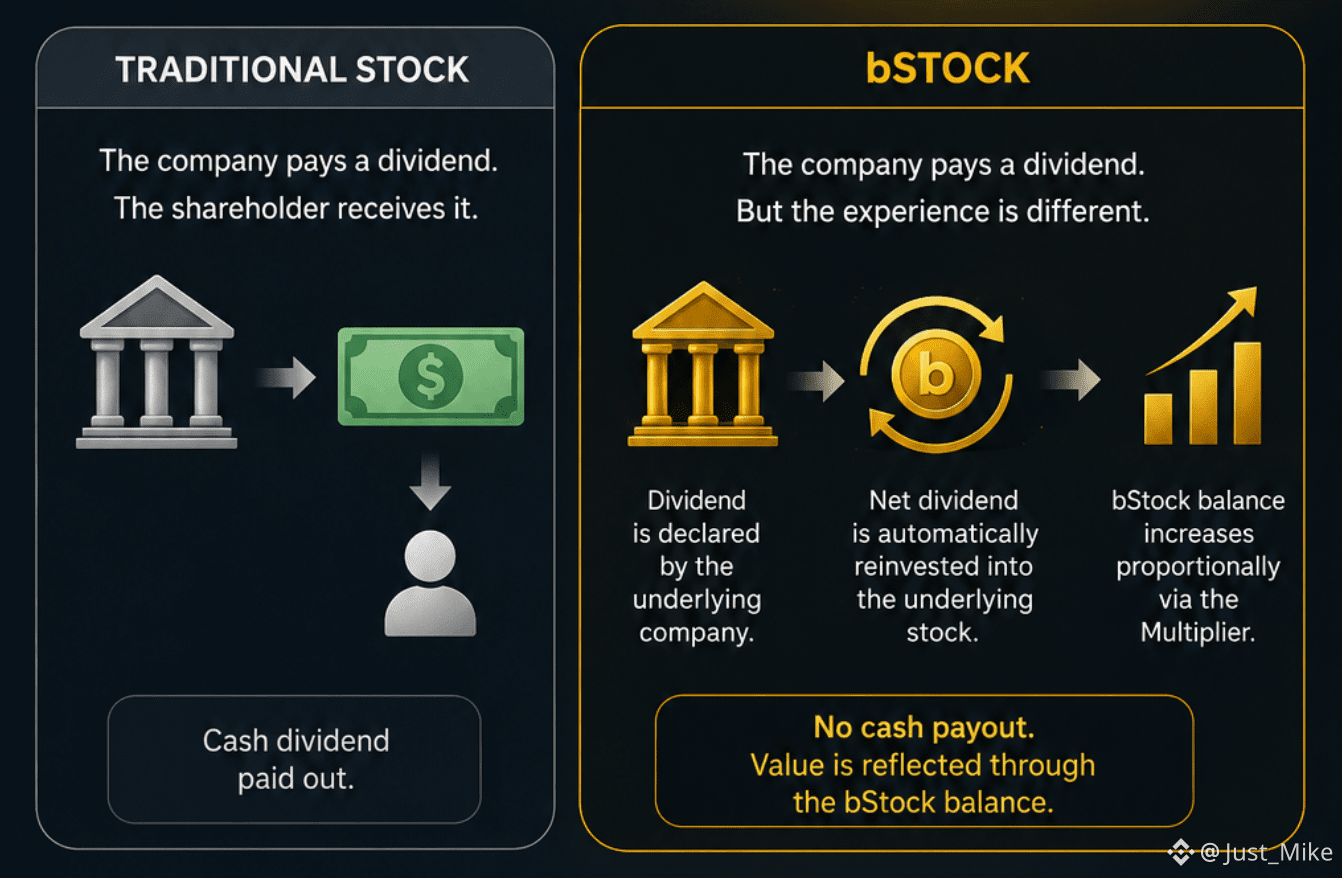
Apa yang terjadi ketika saham yang menjadi dasar bStock membayar dividen?
Dulu saya menganggap dividen sebagai salah satu bagian paling sederhana dari memiliki saham.
Perusahaan membayar dividen.
Pemegang saham menerimanya.
Sederhana.
Tapi kemudian saya mulai melihat bagaimana dividen bekerja dengan bStocks.
Saham yang menjadi dasar masih bisa membayar dividen, namun pengalamannya tidak sama seperti memegang saham tersebut secara langsung.
Pada bStocks, dividen bersih tidak dibayarkan dalam bentuk uang tunai.
Sebagai gantinya, dividen itu secara otomatis diinvestasikan kembali ke saham yang menjadi dasar, dan nilainya tercermin melalui peningkatan yang proporsional pada saldo bStock melalui Multiplier.
Itu membuat saya memikirkan sesuatu yang sebelumnya belum saya pertimbangkan.
Memiliki paparan ke perusahaan yang sama tidak selalu berarti mengalami setiap peristiwa korporasi dengan cara yang sama.
Perusahaan yang menjadi dasar bisa saja sama.
Manfaat ekonominya masih dapat tercermin.
Namun cara manfaat itu sampai kepada saya bisa sama sekali berbeda.
Dan saya pikir inilah salah satu hal yang paling menarik dari aset yang ditokenisasi.
Perusahaan yang mendasarinya sama tidak selalu berarti pengalaman investor yang sama.
#bstockscis @BinanceCIS
Apa yang terjadi ketika saham yang menjadi dasar bStock membayar dividen?
Dulu saya menganggap dividen sebagai salah satu bagian paling sederhana dari memiliki saham.
Perusahaan membayar dividen.
Pemegang saham menerimanya.
Sederhana.
Tapi kemudian saya mulai melihat bagaimana dividen bekerja dengan bStocks.
Saham yang menjadi dasar masih bisa membayar dividen, namun pengalamannya tidak sama seperti memegang saham tersebut secara langsung.
Pada bStocks, dividen bersih tidak dibayarkan dalam bentuk uang tunai.
Sebagai gantinya, dividen itu secara otomatis diinvestasikan kembali ke saham yang menjadi dasar, dan nilainya tercermin melalui peningkatan yang proporsional pada saldo bStock melalui Multiplier.
Itu membuat saya memikirkan sesuatu yang sebelumnya belum saya pertimbangkan.
Memiliki paparan ke perusahaan yang sama tidak selalu berarti mengalami setiap peristiwa korporasi dengan cara yang sama.
Perusahaan yang menjadi dasar bisa saja sama.
Manfaat ekonominya masih dapat tercermin.
Namun cara manfaat itu sampai kepada saya bisa sama sekali berbeda.
Dan saya pikir inilah salah satu hal yang paling menarik dari aset yang ditokenisasi.
Perusahaan yang mendasarinya sama tidak selalu berarti pengalaman investor yang sama.
#bstockscis @BinanceCIS
Dulu saya menganggap dividen sebagai salah satu bagian paling sederhana dari memiliki saham.
Perusahaan membayar dividen.
Pemegang saham menerimanya.
Sederhana.
Tapi kemudian saya mulai melihat bagaimana dividen bekerja dengan bStocks.
Saham yang menjadi dasar masih bisa membayar dividen, namun pengalamannya tidak sama seperti memegang saham tersebut secara langsung.
Pada bStocks, dividen bersih tidak dibayarkan dalam bentuk uang tunai.
Sebagai gantinya, dividen itu secara otomatis diinvestasikan kembali ke saham yang menjadi dasar, dan nilainya tercermin melalui peningkatan yang proporsional pada saldo bStock melalui Multiplier.
Itu membuat saya memikirkan sesuatu yang sebelumnya belum saya pertimbangkan.
Memiliki paparan ke perusahaan yang sama tidak selalu berarti mengalami setiap peristiwa korporasi dengan cara yang sama.
Perusahaan yang menjadi dasar bisa saja sama.
Manfaat ekonominya masih dapat tercermin.
Namun cara manfaat itu sampai kepada saya bisa sama sekali berbeda.
Dan saya pikir inilah salah satu hal yang paling menarik dari aset yang ditokenisasi.
Perusahaan yang mendasarinya sama tidak selalu berarti pengalaman investor yang sama.
#bstockscis @BinanceCIS
72
·
--
Jika saya memperdagangkan bStock di Binance, siapa sebenarnya yang menerbitkannya?
Saat pertama kali melihat bStocks, secara alami saya menghubungkan produknya dengan Binance.
Saya melihat tickernya di Binance.
Saya memperdagangkannya di Binance.
Saya mengelola posisinya melalui Binance.
Jadi saya mulai bertanya-tanya:
Siapa sebenarnya yang menerbitkan sertifikat yang sedang saya pegang?
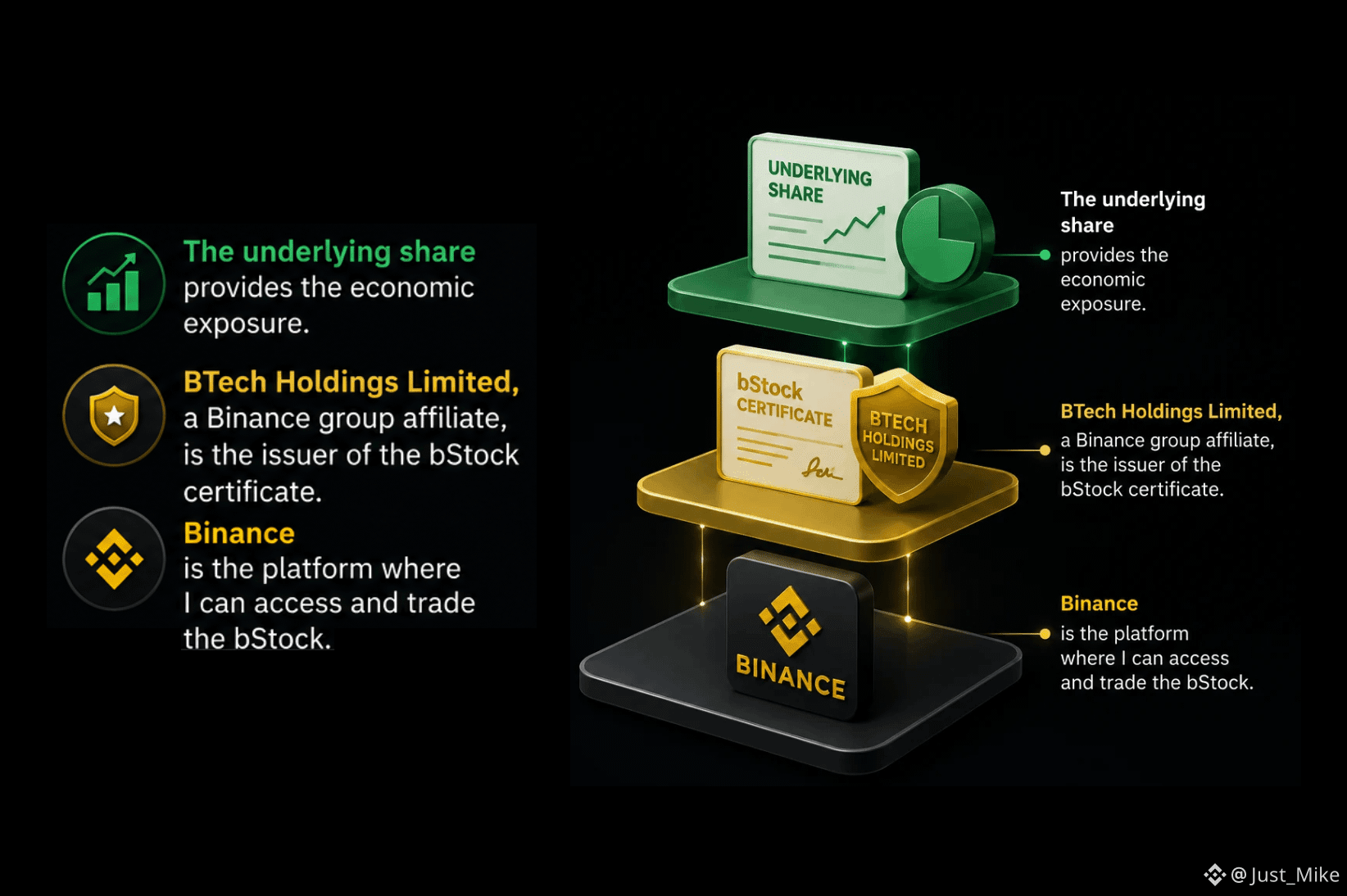
Jawabannya sedikit mengejutkan saya: BTech Holdings Limited, afiliasi grup Binance, adalah penerbitnya.
Dan perbedaan itu menarik perhatian saya.
Binance adalah tempat saya mengakses dan memperdagangkan aset tersebut.
BTech Holdings adalah penerbit sertifikat bStock.
Dua hal itu mudah digabungkan secara mental ketika semuanya tampak ada dalam satu antarmuka yang sama.
Namun, keduanya menggambarkan bagian yang berbeda dari struktur.
Dan saya pikir itu pertanyaan penting saat melihat aset yang tokenisasi.
Ketika saya melihat suatu aset di dalam bursa, saya seharusnya tidak langsung mengasumsikan bahwa bursa itu sendiri adalah penerbitnya.
Jadi sekarang, selain:
“Token ini didukung oleh apa?”
Saya juga bertanya:
“Siapa yang sebenarnya menerbitkan sertifikat yang sedang saya pegang?”
Bagi saya, ini menambah lapisan lain untuk memahami seperti apa sebenarnya aset yang ditokenisasi.
Ticker memberi tahu saya eksposur apa yang sedang saya lihat.
Penerbit memberi tahu saya siapa yang menerbitkan sertifikat yang mewakili eksposur tersebut.
#bstockscis @BinanceCIS
Jika saya memperdagangkan bStock di Binance, siapa sebenarnya yang menerbitkannya?
Saat pertama kali melihat bStocks, secara alami saya menghubungkan produknya dengan Binance.
Saya melihat tickernya di Binance.
Saya memperdagangkannya di Binance.
Saya mengelola posisinya melalui Binance.
Jadi saya mulai bertanya-tanya:
Siapa sebenarnya yang menerbitkan sertifikat yang sedang saya pegang?
Jawabannya sedikit mengejutkan saya: BTech Holdings Limited, afiliasi grup Binance, adalah penerbitnya.
Dan perbedaan itu menarik perhatian saya.
Binance adalah tempat saya mengakses dan memperdagangkan aset tersebut.
BTech Holdings adalah penerbit sertifikat bStock.
Dua hal itu mudah digabungkan secara mental ketika semuanya tampak ada dalam satu antarmuka yang sama.
Namun, keduanya menggambarkan bagian yang berbeda dari struktur.
Dan saya pikir itu pertanyaan penting saat melihat aset yang tokenisasi.
Ketika saya melihat suatu aset di dalam bursa, saya seharusnya tidak langsung mengasumsikan bahwa bursa itu sendiri adalah penerbitnya.
Jadi sekarang, selain:
“Token ini didukung oleh apa?”
Saya juga bertanya:
“Siapa yang sebenarnya menerbitkan sertifikat yang sedang saya pegang?”
Bagi saya, ini menambah lapisan lain untuk memahami seperti apa sebenarnya aset yang ditokenisasi.
Ticker memberi tahu saya eksposur apa yang sedang saya lihat.
Penerbit memberi tahu saya siapa yang menerbitkan sertifikat yang mewakili eksposur tersebut.
#bstockscis @BinanceCIS
Saat pertama kali melihat bStocks, secara alami saya menghubungkan produknya dengan Binance.
Saya melihat tickernya di Binance.
Saya memperdagangkannya di Binance.
Saya mengelola posisinya melalui Binance.
Jadi saya mulai bertanya-tanya:
Siapa sebenarnya yang menerbitkan sertifikat yang sedang saya pegang?
Jawabannya sedikit mengejutkan saya: BTech Holdings Limited, afiliasi grup Binance, adalah penerbitnya.
Dan perbedaan itu menarik perhatian saya.
Binance adalah tempat saya mengakses dan memperdagangkan aset tersebut.
BTech Holdings adalah penerbit sertifikat bStock.
Dua hal itu mudah digabungkan secara mental ketika semuanya tampak ada dalam satu antarmuka yang sama.
Namun, keduanya menggambarkan bagian yang berbeda dari struktur.
Dan saya pikir itu pertanyaan penting saat melihat aset yang tokenisasi.
Ketika saya melihat suatu aset di dalam bursa, saya seharusnya tidak langsung mengasumsikan bahwa bursa itu sendiri adalah penerbitnya.
Jadi sekarang, selain:
“Token ini didukung oleh apa?”
Saya juga bertanya:
“Siapa yang sebenarnya menerbitkan sertifikat yang sedang saya pegang?”
Bagi saya, ini menambah lapisan lain untuk memahami seperti apa sebenarnya aset yang ditokenisasi.
Ticker memberi tahu saya eksposur apa yang sedang saya lihat.
Penerbit memberi tahu saya siapa yang menerbitkan sertifikat yang mewakili eksposur tersebut.
#bstockscis @BinanceCIS
1
1
101
·
--
Jika kira-kira 73% pemegang saham dalam dorongan perdagangan saham yang lebih luas dari Binance berasal dari pasar berkembang, apakah akses ekuitas seharusnya bekerja dengan cara yang sama di mana pun?
Salah satu angka dalam materi bStocks menarik perhatian saya:
Binance mengatakan kira-kira 73% pemegang saham dalam dorongan perdagangan saham yang lebih luasnya berasal dari pasar berkembang, dengan CIS termasuk dalam basis tersebut.
Itu membuat saya memikirkan tokenisasi secara berbeda.
Kita sering memperlakukan akses ke saham global seolah infrastruktur di balik akses tersebut harus terlihat sama di mana pun.
Saya tidak yakin itu seharusnya.
Jika pengguna sudah beroperasi melalui infrastruktur kripto, mengapa akses ekuitas harus selalu mengikuti jalur yang sama seperti yang terjadi di pasar broker tradisional?
Jadi pertanyaan yang menarik bukan hanya:
“Apakah saham bisa ditempatkan di-chain?”
Namun juga:
“Mengapa jalur menuju ekuitas global harus sama di mana pun?”
Dan saya pikir angka 73% membuat pertanyaan itu semakin menarik.
Mungkin masa depan akses ekuitas tidak akan berupa satu model universal.
Mungkin pasar yang berbeda akan menggunakan jalur yang berbeda untuk mencapai aset global yang sama.
#bstockscis @BinanceCIS
Jika kira-kira 73% pemegang saham dalam dorongan perdagangan saham yang lebih luas dari Binance berasal dari pasar berkembang, apakah akses ekuitas seharusnya bekerja dengan cara yang sama di mana pun?
Salah satu angka dalam materi bStocks menarik perhatian saya:
Binance mengatakan kira-kira 73% pemegang saham dalam dorongan perdagangan saham yang lebih luasnya berasal dari pasar berkembang, dengan CIS termasuk dalam basis tersebut.
Itu membuat saya memikirkan tokenisasi secara berbeda.
Kita sering memperlakukan akses ke saham global seolah infrastruktur di balik akses tersebut harus terlihat sama di mana pun.
Saya tidak yakin itu seharusnya.
Jika pengguna sudah beroperasi melalui infrastruktur kripto, mengapa akses ekuitas harus selalu mengikuti jalur yang sama seperti yang terjadi di pasar broker tradisional?
Jadi pertanyaan yang menarik bukan hanya:
“Apakah saham bisa ditempatkan di-chain?”
Namun juga:
“Mengapa jalur menuju ekuitas global harus sama di mana pun?”
Dan saya pikir angka 73% membuat pertanyaan itu semakin menarik.
Mungkin masa depan akses ekuitas tidak akan berupa satu model universal.
Mungkin pasar yang berbeda akan menggunakan jalur yang berbeda untuk mencapai aset global yang sama.
#bstockscis @BinanceCIS
Salah satu angka dalam materi bStocks menarik perhatian saya:
Binance mengatakan kira-kira 73% pemegang saham dalam dorongan perdagangan saham yang lebih luasnya berasal dari pasar berkembang, dengan CIS termasuk dalam basis tersebut.
Itu membuat saya memikirkan tokenisasi secara berbeda.
Kita sering memperlakukan akses ke saham global seolah infrastruktur di balik akses tersebut harus terlihat sama di mana pun.
Saya tidak yakin itu seharusnya.
Jika pengguna sudah beroperasi melalui infrastruktur kripto, mengapa akses ekuitas harus selalu mengikuti jalur yang sama seperti yang terjadi di pasar broker tradisional?
Jadi pertanyaan yang menarik bukan hanya:
“Apakah saham bisa ditempatkan di-chain?”
Namun juga:
“Mengapa jalur menuju ekuitas global harus sama di mana pun?”
Dan saya pikir angka 73% membuat pertanyaan itu semakin menarik.
Mungkin masa depan akses ekuitas tidak akan berupa satu model universal.
Mungkin pasar yang berbeda akan menggunakan jalur yang berbeda untuk mencapai aset global yang sama.
#bstockscis @BinanceCIS
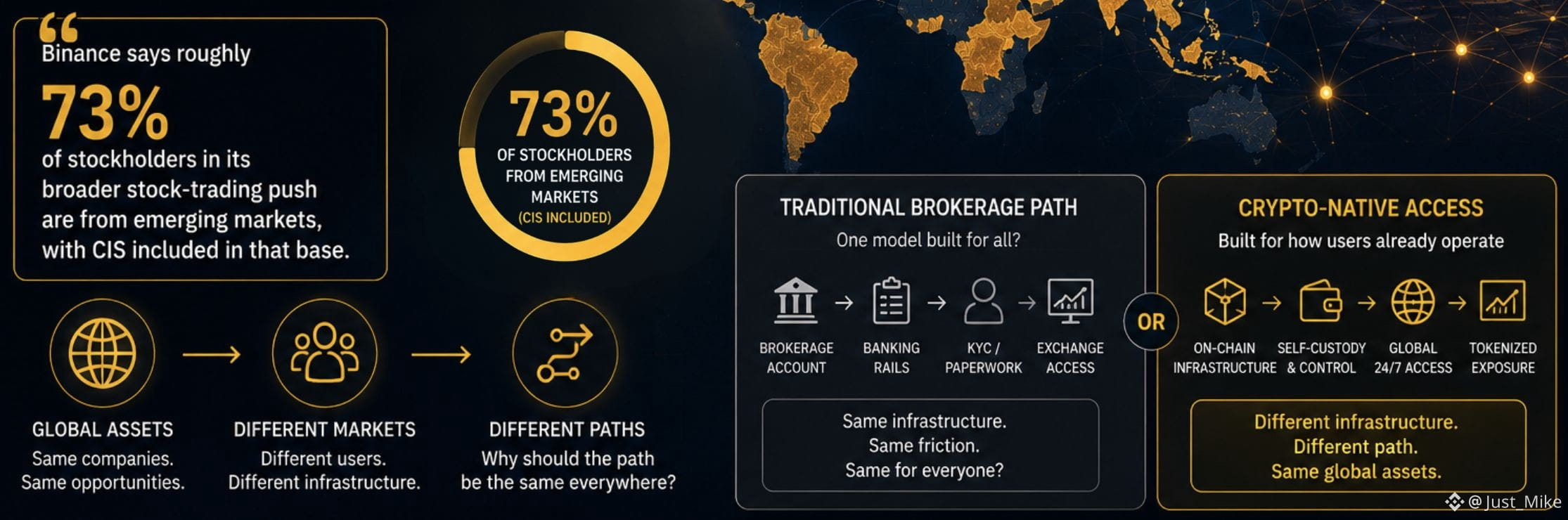
2
1
104
Masuk untuk menjelajahi konten lainnya
Bergabunglah dengan pengguna kripto global di Binance Square
⚡️ Dapatkan informasi terbaru dan berguna tentang kripto.
💬 Dipercayai oleh bursa kripto terbesar di dunia.
👍 Temukan wawasan nyata dari kreator terverifikasi.
Email/Nomor Ponsel
Topik Sedang Tren
NvidiaApproves$150BBuyback
513 penayangan
20 Berdiskusi
#NvidiaApproves$150BBuyback
Guncangan Buyback Nvidia Senilai 150 Miliar Dolar: Apakah Arus Kas AI Mendorong Reli Pasar Berikutnya? 🚀
Siklus super AI baru saja mengirimkan guncangan di seluruh pasar tradfi dan kripto! Dewan Direksi NVIDIA mengotorisasi kenaikan besar-besaran sebesar $150 miliar untuk program pembelian kembali sahamnya, sehingga total otorisasi buyback yang masih tersisa perusahaan menjadi $235 miliar.
Ini menandai otorisasi buyback saham terbesar dalam sejarah korporasi AS, melampaui patokan Apple sebesar $110 miliar.
📰 Sorotan Utama & Rincian Pasar
Pengembalian Modal Rekor: Pendiri dan CEO NVIDIA, Jensen Huang, menyebut "pergeseran platform sekali dalam satu generasi menuju AI" dan arus kas perusahaan yang kuat sebagai pendorong utama pengembalian modal kepada pemegang saham.
Membelokkan Penurunan Pasar: Meski tekanan ekuitas yang lebih luas dan imbal hasil U.S. Treasury yang meningkat, saham $NVDA melonjak lebih dari 3% setelah pengumuman, menunjukkan kepercayaan institusional pada aset teknologi.
Efek Turunan ke AI Terdesentralisasi: Secara historis, berita-berita bullish besar untuk NVIDIA memicu sentimen positif bagi protokol infrastruktur AI terdesentralisasi (seperti NEAR, RENDER, dan FET), karena proyek web3 AI mengikuti valuasi sektor AI yang lebih luas.
❓ Poin Diskusi
Nvidia mengumumkan buyback besar senilai $150 miliar! Apakah kenaikan saham teknologi akan merembet ke Bitcoin dan token AI?
$RENDER
📊 Sinyal Perdagangan Kripto Terkait: RENDER/USDT
Bias Perdagangan: Bullish
Zona Entry: $5,20 – $5,45
Target 1 (TP1): $6,10
Target 2 (TP2): $6,85
Stop Loss (SL): $4,85
Leverage (Futures): 3x – 5x (Terisolasi)
Alasan Teknis: RENDER cenderung bereaksi kuat terhadap perangkat keras Nvidia dan perkembangan arus modal AI. Harga sedang mengonsolidasikan diri dekat dukungan moving average kunci dengan volume spot yang meningkat setelah $NVDAB
berita.
#HackersDrainOver12.4MXRPFromDCENTWallets #CryptoNews #AITokens #TradingSignals
Lily星星
·Disukai 0 Kali
·9 penayangan
OpenAIDelaysGPT6.1OverSafetyIssues
1,924 penayangan
131 Berdiskusi
AMDToAcquireWorldLabsFor$8.2B
321 penayangan
21 Berdiskusi