
#jxlolo
jxlolo
691 penayangan
50 Berdiskusi
Populer
Terbaru

·
--
Artikel
Arus Keluar Bersih, Minat Terbuka, dan Likuiditas: Hal yang Bisa dan Tidak Bisa Diungkap oleh Data BursaArus keluar mudah dilaporkan dan mudah disalahartikan. Sebuah berita utama menyebutkan bahwa miliaran telah meninggalkan bursa, dan banyak pembaca berhenti sampai di situ. Berikut cara saya membaca metrik utama bursa tanpa menarik kesimpulan yang melampaui maknanya.
Fakta Singkat
Arus keluar menunjukkan bahwa koin telah berpindah. Namun, arus keluar tidak menunjukkan alasannya
Volume dan minat terbuka menjawab dua pertanyaan yang berbeda
Nilai cadangan dalam dolar bergerak mengikuti harga, bahkan ketika tidak ada koin yang berpindah
Likuiditas adalah tolok ukur praktis: apakah Anda bisa bertransaksi mendekati harga tersebut?
01: Mengapa Arus Keluar Sangat Mudah Disalahartikan
Ketika koin meninggalkan bursa, koin tersebut mungkin dipindahkan ke penyimpanan mandiri, ke platform lain, atau sekadar berpindah antar dompet milik pengguna yang sama. Ketiganya terlihat sama pada grafik. Setelah insiden keamanan, sejumlah arus keluar merupakan perilaku yang wajar: orang memindahkan dana sambil menunggu informasi. Angka itu saja tidak memberi tahu Anda cerita mana yang benar.
Arus Keluar Bersih, Minat Terbuka, dan Likuiditas: Hal yang Bisa dan Tidak Bisa Diungkap oleh Data Bursa
Arus keluar mudah dilaporkan dan mudah disalahartikan. Sebuah berita utama menyebutkan bahwa miliaran telah meninggalkan bursa, dan banyak pembaca berhenti sampai di situ. Berikut cara saya membaca metrik utama bursa tanpa menarik kesimpulan yang melampaui maknanya.
Fakta Singkat
Arus keluar menunjukkan bahwa koin telah berpindah. Namun, arus keluar tidak menunjukkan alasannya
Volume dan minat terbuka menjawab dua pertanyaan yang berbeda
Nilai cadangan dalam dolar bergerak mengikuti harga, bahkan ketika tidak ada koin yang berpindah
Likuiditas adalah tolok ukur praktis: apakah Anda bisa bertransaksi mendekati harga tersebut?
01: Mengapa Arus Keluar Sangat Mudah Disalahartikan
Ketika koin meninggalkan bursa, koin tersebut mungkin dipindahkan ke penyimpanan mandiri, ke platform lain, atau sekadar berpindah antar dompet milik pengguna yang sama. Ketiganya terlihat sama pada grafik. Setelah insiden keamanan, sejumlah arus keluar merupakan perilaku yang wajar: orang memindahkan dana sambil menunggu informasi. Angka itu saja tidak memberi tahu Anda cerita mana yang benar.
1
59
·
--
Artikel
Lihat terjemahan
$1B in AUM, ~$40B in Trading Volume: Why Users Are Choosing bStocks for Tokenized StocksA product can get attention for a week. Getting people to leave real money in it is harder. bStocks, the tokenized stocks on Binance, have now reached $1 billion in assets under management, with about $40 billion in cumulative trading volume. I wanted to understand what is behind those numbers and why users keep choosing it.
Quick Facts
Assets under management have reached $1 billion in totalCumulative trading volume is about $40 billion so far100 bStocks assets are offeredAbout $5.5 billion has been converted 1:1 into Direct Stocks
01. What the Milestone Actually Measures
Trading volume shows activity. Assets under management shows trust, because it counts what people decide to keep holding. Reaching both together tells me users are not only trading in and out. They are parking capital in tokenized stocks.
02. Adoption Is Spread Out, Not Concentrated
A big number can hide a weak base if a few large accounts hold most of it. Here the assets are distributed across a diversified base of users and across many different stocks. Adoption also shows in inflows, user counts, utilization and on-chain activity, not just in one headline figure. That is a healthier picture than volume alone.
03. What Users Want: Flexible Access
From where I sit in Cambodia, traditional access to U.S. stocks means a foreign brokerage account and trading late at night. bStocks give crypto-native access instead. They trade around the clock, including weekends, they can be bought with USDT, and you can start with a small amount. Each token is backed 1:1 by a real share held with a regulated custodian, and that backing can be checked publicly.
04. The 1:1 Conversion to Direct Stocks
This is the part I think matters most. A bStock can be converted 1:1 into a Direct Stock, and about $5.5 billion has already gone through that route. It means the token is not a dead end. Users can move between the tokenized version and the traditional one. Many competitors do not offer this, or have only recently started to.
05. Why This Matters Beyond Binance
Tokenized stocks are moving from an experiment to a normal way of holding equities. When 100 assets, deep volume and real balances sit in one place, builders and other platforms start to treat it as infrastructure. That usually brings tighter spreads and more uses for the same asset.
06. What to Keep in Mind
A bStock gives price exposure. It is not the same as owning the share directly, so rights such as voting are different. Liquidity can be thinner outside U.S. market hours, so limit orders are safer. And availability depends on your account and location, so check your app before you plan a trade.
Bottom Line
One billion dollars held and about forty billion traded is a signal that users want traditional markets on crypto rails, with a clear path back to the real share. That combination is why bStocks keep growing.
This article is for information only and is not financial advice.
#Binance #bStocks #TokenizedStocks #RWA #Jxlolo
$1B in AUM, ~$40B in Trading Volume: Why Users Are Choosing bStocks for Tokenized Stocks
A product can get attention for a week. Getting people to leave real money in it is harder. bStocks, the tokenized stocks on Binance, have now reached $1 billion in assets under management, with about $40 billion in cumulative trading volume. I wanted to understand what is behind those numbers and why users keep choosing it.
Quick Facts
Assets under management have reached $1 billion in totalCumulative trading volume is about $40 billion so far100 bStocks assets are offeredAbout $5.5 billion has been converted 1:1 into Direct Stocks
01. What the Milestone Actually Measures
Trading volume shows activity. Assets under management shows trust, because it counts what people decide to keep holding. Reaching both together tells me users are not only trading in and out. They are parking capital in tokenized stocks.
02. Adoption Is Spread Out, Not Concentrated
A big number can hide a weak base if a few large accounts hold most of it. Here the assets are distributed across a diversified base of users and across many different stocks. Adoption also shows in inflows, user counts, utilization and on-chain activity, not just in one headline figure. That is a healthier picture than volume alone.
03. What Users Want: Flexible Access
From where I sit in Cambodia, traditional access to U.S. stocks means a foreign brokerage account and trading late at night. bStocks give crypto-native access instead. They trade around the clock, including weekends, they can be bought with USDT, and you can start with a small amount. Each token is backed 1:1 by a real share held with a regulated custodian, and that backing can be checked publicly.
04. The 1:1 Conversion to Direct Stocks
This is the part I think matters most. A bStock can be converted 1:1 into a Direct Stock, and about $5.5 billion has already gone through that route. It means the token is not a dead end. Users can move between the tokenized version and the traditional one. Many competitors do not offer this, or have only recently started to.
05. Why This Matters Beyond Binance
Tokenized stocks are moving from an experiment to a normal way of holding equities. When 100 assets, deep volume and real balances sit in one place, builders and other platforms start to treat it as infrastructure. That usually brings tighter spreads and more uses for the same asset.
06. What to Keep in Mind
A bStock gives price exposure. It is not the same as owning the share directly, so rights such as voting are different. Liquidity can be thinner outside U.S. market hours, so limit orders are safer. And availability depends on your account and location, so check your app before you plan a trade.
Bottom Line
One billion dollars held and about forty billion traded is a signal that users want traditional markets on crypto rails, with a clear path back to the real share. That combination is why bStocks keep growing.
This article is for information only and is not financial advice.
#Binance #bStocks #TokenizedStocks #RWA #Jxlolo
1
·
--
Artikel
Lihat terjemahan
Can You Use an AI Agent to Trade Stocks?Yes, an AI agent can help analyse markets and execute stock trades when connected to a platform that supports those actions, with your authorization. For eligible users in Cambodia, Binance Agent OS provides tools to connect AI agents to Binance's broader trading ecosystem.
I want to be clear about what that means in practice. An agent is not a magic money machine. It is software that can read data, reason about it and, if you allow it, place orders inside limits you set. The useful question is how much control you keep.
How Does an AI Agent Trade Stocks?
An AI agent works in a loop. You give it a goal in plain language. It pulls market data, checks your positions, decides on a step and then calls a tool to act, such as placing an order. To do that it needs a connection to a trading platform and permission from you. Without that connection, an AI model can only talk about markets. It cannot touch your account.
Can You Use Binance Agent OS for Stock Trading?
Binance launched Agent OS on 20 August 2026. It is a developer platform that connects AI applications to Binance's market data, trading, wallet and payment tools through one standard connection called MCP, the Model Context Protocol. Binance describes it as covering both crypto and traditional markets.
On the stock side, the products on Binance are tokenized stocks such as bStocks, which trade on the Spot market, and stock-linked contracts. The MCP server supports Spot trading, so an agent with trading permission can work with the markets your own account is allowed to use. What you can access depends on your eligibility and location, so check your app before you plan anything.
How Do You Connect an AI Agent to Binance?
Binance describes three steps.
Add the Binance MCP server to an AI app that supports MCPAuthenticate with your Binance accountChoose the permissions, then give the agent a task
How Much Control Do You Have Over an AI Trading Agent?
More than most people expect, and you should use all of it.
You choose what the agent can do, from read-only data up to placing tradesAgent funds can sit in a separate sub-account, so the agent only touches what you move thereThe agent access has no withdrawal permissionBinance monitors orders that come through Agent OS and applies its normal platform controlsYou can remove the connection at any time
My own rule is simple. Start read-only, then allow trades with a small balance, and review every order the agent placed. AI can be wrong with full confidence.
FAQ Questions
Can an AI agent buy and sell stocks for me?
Yes, if it is connected to a platform that offers the product and you have granted trading permission. On Binance that means the stock products available to your account, such as tokenized stocks.
Can I use an AI agent to trade stocks on Binance in Cambodia?
Agent OS is open to eligible users, and what the agent can trade follows what your own account can trade. Confirm which stock products are offered to you in the app first.
What is the difference between an AI trading agent and a trading bot?
A bot follows fixed rules that you set in advance, like a grid or a schedule. An agent takes a goal, reads live information and decides the steps itself, within the permissions you gave it. That flexibility is useful, and it is also why limits matter more.
This article is for information only and is not financial advice.
Read more: [Binance Blog (ecosystem)](https://www.binance.com/en/blog/ecosystem/3213920663896109673)
Also: [Binance Blog (tech)](https://www.binance.com/en/blog/tech/4737718203312420809)
#Binance #BinanceAgentOS #AIAgents #bStocks #Jxlolo
Can You Use an AI Agent to Trade Stocks?
Yes, an AI agent can help analyse markets and execute stock trades when connected to a platform that supports those actions, with your authorization. For eligible users in Cambodia, Binance Agent OS provides tools to connect AI agents to Binance's broader trading ecosystem.
I want to be clear about what that means in practice. An agent is not a magic money machine. It is software that can read data, reason about it and, if you allow it, place orders inside limits you set. The useful question is how much control you keep.
How Does an AI Agent Trade Stocks?
An AI agent works in a loop. You give it a goal in plain language. It pulls market data, checks your positions, decides on a step and then calls a tool to act, such as placing an order. To do that it needs a connection to a trading platform and permission from you. Without that connection, an AI model can only talk about markets. It cannot touch your account.
Can You Use Binance Agent OS for Stock Trading?
Binance launched Agent OS on 20 August 2026. It is a developer platform that connects AI applications to Binance's market data, trading, wallet and payment tools through one standard connection called MCP, the Model Context Protocol. Binance describes it as covering both crypto and traditional markets.
On the stock side, the products on Binance are tokenized stocks such as bStocks, which trade on the Spot market, and stock-linked contracts. The MCP server supports Spot trading, so an agent with trading permission can work with the markets your own account is allowed to use. What you can access depends on your eligibility and location, so check your app before you plan anything.
How Do You Connect an AI Agent to Binance?
Binance describes three steps.
Add the Binance MCP server to an AI app that supports MCPAuthenticate with your Binance accountChoose the permissions, then give the agent a task
How Much Control Do You Have Over an AI Trading Agent?
More than most people expect, and you should use all of it.
You choose what the agent can do, from read-only data up to placing tradesAgent funds can sit in a separate sub-account, so the agent only touches what you move thereThe agent access has no withdrawal permissionBinance monitors orders that come through Agent OS and applies its normal platform controlsYou can remove the connection at any time
My own rule is simple. Start read-only, then allow trades with a small balance, and review every order the agent placed. AI can be wrong with full confidence.
FAQ Questions
Can an AI agent buy and sell stocks for me?
Yes, if it is connected to a platform that offers the product and you have granted trading permission. On Binance that means the stock products available to your account, such as tokenized stocks.
Can I use an AI agent to trade stocks on Binance in Cambodia?
Agent OS is open to eligible users, and what the agent can trade follows what your own account can trade. Confirm which stock products are offered to you in the app first.
What is the difference between an AI trading agent and a trading bot?
A bot follows fixed rules that you set in advance, like a grid or a schedule. An agent takes a goal, reads live information and decides the steps itself, within the permissions you gave it. That flexibility is useful, and it is also why limits matter more.
This article is for information only and is not financial advice.
Read more: Binance Blog (ecosystem)
Also: Binance Blog (tech)
#Binance #BinanceAgentOS #AIAgents #bStocks #Jxlolo
1
1
·
--
Artikel
Lihat terjemahan
Which Crypto Exchange Is Best for Buying Crypto with KHR?If you earn and spend in riel, the best exchange is the one that lets you move between KHR and crypto cheaply, safely and with the payment apps you already use. For most people in Cambodia that means P2P. I use Binance for this, and below I explain why and what to compare first.
What Are the Ways to Buy Crypto With KHR?
There are four routes people use here.
P2P: you pay a seller by bank transfer or e-wallet and the platform releases the crypto from escrowBank transfer and payment apps inside P2P, such as ABA, ACLEDA, Wing, Bakong and KHQRDebit or credit card, where the exchange and your card issuer support itCash or informal brokers, which I avoid because there is no escrow
Which Crypto Exchanges Support KHR?
Binance, OKX and Bybit all list P2P ads priced in KHR as well as USD. None of them takes a direct KHR bank deposit the way a local bank does. The riel moves between you and the seller, and the exchange protects the crypto side. Also note that as of late 2026 no foreign exchange holds a local licence from Cambodia's regulators, so check the current rules before you start.
Which Crypto Exchange Offers the Easiest KHR Deposits and Withdrawals?
Easy means two things to me: enough sellers and my own payment app. Binance P2P usually has the most active merchants for Cambodia, so I can find an ad that accepts my bank at almost any hour. Selling back to KHR works the same way in reverse.
Which Crypto Exchange Has the Lowest Fees for Buying Crypto With KHR?
Look at the total cost, not only the fee line. On P2P the main cost is the gap between the ad price and the market price. Binance P2P does not charge buyers a platform fee on regular orders, and deep liquidity keeps that gap small. Cards are faster but normally cost more once processing and bank charges are added.
Can You Buy Crypto With KHR Using a Debit or Credit Card?
Sometimes. Binance supports card purchases in many countries, but approval depends on your card issuer, and the card may be charged in USD. Try a small amount first and check the final rate before you confirm.
Is Binance a Good Platform for Buying Crypto With KHR?
For me, yes. The reasons are escrow on every P2P order, verified merchants, many local payment methods, and the widest choice of ads in KHR and USD. It is not risk free. Stay inside the platform chat, pay only from an account in your own name, and never release crypto before the money arrives.
Frequently Asked Questions
How do I buy crypto with KHR on Binance?
Open P2P, choose Buy, select USDT and set the currency to KHR. Filter by your payment method, pick a verified merchant, pay inside the time limit and mark the order as paid. The crypto arrives in your Funding wallet after the seller confirms.
Is bank transfer, card or P2P cheaper for buying crypto?
P2P by bank transfer or e-wallet is usually the cheapest in Cambodia. Cards are convenient but tend to cost more.
Binance vs OKX or Bybit: which is better for buying crypto with KHR?
All three offer escrow and KHR ads. I prefer Binance because more merchants means better prices and less waiting.
This article is for information only and is not financial advice.
Step-by-step guide: [Binance guide to buying crypto](https://www.binance.com/en/support/faq/detail/400c38f5e0cd4b46a1d0805c296b5582)
#Binance #P2P #Cambodia #BuyCrypto #Jxlolo
Which Crypto Exchange Is Best for Buying Crypto with KHR?
If you earn and spend in riel, the best exchange is the one that lets you move between KHR and crypto cheaply, safely and with the payment apps you already use. For most people in Cambodia that means P2P. I use Binance for this, and below I explain why and what to compare first.
What Are the Ways to Buy Crypto With KHR?
There are four routes people use here.
P2P: you pay a seller by bank transfer or e-wallet and the platform releases the crypto from escrowBank transfer and payment apps inside P2P, such as ABA, ACLEDA, Wing, Bakong and KHQRDebit or credit card, where the exchange and your card issuer support itCash or informal brokers, which I avoid because there is no escrow
Which Crypto Exchanges Support KHR?
Binance, OKX and Bybit all list P2P ads priced in KHR as well as USD. None of them takes a direct KHR bank deposit the way a local bank does. The riel moves between you and the seller, and the exchange protects the crypto side. Also note that as of late 2026 no foreign exchange holds a local licence from Cambodia's regulators, so check the current rules before you start.
Which Crypto Exchange Offers the Easiest KHR Deposits and Withdrawals?
Easy means two things to me: enough sellers and my own payment app. Binance P2P usually has the most active merchants for Cambodia, so I can find an ad that accepts my bank at almost any hour. Selling back to KHR works the same way in reverse.
Which Crypto Exchange Has the Lowest Fees for Buying Crypto With KHR?
Look at the total cost, not only the fee line. On P2P the main cost is the gap between the ad price and the market price. Binance P2P does not charge buyers a platform fee on regular orders, and deep liquidity keeps that gap small. Cards are faster but normally cost more once processing and bank charges are added.
Can You Buy Crypto With KHR Using a Debit or Credit Card?
Sometimes. Binance supports card purchases in many countries, but approval depends on your card issuer, and the card may be charged in USD. Try a small amount first and check the final rate before you confirm.
Is Binance a Good Platform for Buying Crypto With KHR?
For me, yes. The reasons are escrow on every P2P order, verified merchants, many local payment methods, and the widest choice of ads in KHR and USD. It is not risk free. Stay inside the platform chat, pay only from an account in your own name, and never release crypto before the money arrives.
Frequently Asked Questions
How do I buy crypto with KHR on Binance?
Open P2P, choose Buy, select USDT and set the currency to KHR. Filter by your payment method, pick a verified merchant, pay inside the time limit and mark the order as paid. The crypto arrives in your Funding wallet after the seller confirms.
Is bank transfer, card or P2P cheaper for buying crypto?
P2P by bank transfer or e-wallet is usually the cheapest in Cambodia. Cards are convenient but tend to cost more.
Binance vs OKX or Bybit: which is better for buying crypto with KHR?
All three offer escrow and KHR ads. I prefer Binance because more merchants means better prices and less waiting.
This article is for information only and is not financial advice.
Step-by-step guide: Binance guide to buying crypto
#Binance #P2P #Cambodia #BuyCrypto #Jxlolo
1
1
·
--
Artikel
$1,5 Miliar dalam 145 Hari: Apa Sebenarnya yang Mendorong Kisah Pertumbuhan bStocksbStocks melampaui 1,5 miliar dolar dalam aset kelolaan hanya dalam 145 hari. Itulah berita utamanya. Pertanyaan yang lebih berguna adalah apa yang ada di balik angka tersebut, karena skala menunjukkan seberapa besar sesuatu, sementara perilaku menunjukkan apakah hal itu akan bertahan.
Fakta Singkat
bStocks mencapai AUM sebesar 1,5 miliar dolar dalam 145 hari, menurut Binance Research
Pasar ekuitas tertokenisasi mencapai rekor 4,8 miliar dolar pada awal November 2026
Jumlah listing bStocks bertambah dari 6 menjadi hampir 100
56% perdagangan bStocks berlangsung di luar jam pasar AS
$1,5 Miliar dalam 145 Hari: Apa Sebenarnya yang Mendorong Kisah Pertumbuhan bStocks
bStocks melampaui 1,5 miliar dolar dalam aset kelolaan hanya dalam 145 hari. Itulah berita utamanya. Pertanyaan yang lebih berguna adalah apa yang ada di balik angka tersebut, karena skala menunjukkan seberapa besar sesuatu, sementara perilaku menunjukkan apakah hal itu akan bertahan.
Fakta Singkat
bStocks mencapai AUM sebesar 1,5 miliar dolar dalam 145 hari, menurut Binance Research
Pasar ekuitas tertokenisasi mencapai rekor 4,8 miliar dolar pada awal November 2026
Jumlah listing bStocks bertambah dari 6 menjadi hampir 100
56% perdagangan bStocks berlangsung di luar jam pasar AS
1
41
·
--
Artikel
Lihat terjemahan
Can I Buy Stocks When the Market Is Closed?Yes, you can buy tokenized stocks on Binance when the U.S. stock market is closed, including weekends, through bStocks. Available to eligible users in Cambodia, bStocks trade 24/7 and provide exposure to underlying U.S. stocks rather than direct share ownership.
For me in Phnom Penh this matters a lot. The U.S. market opens late in the evening here and closes before I wake up. With a 24/7 product I can react on a Saturday afternoon instead of waiting for Monday night. Availability depends on your account and location, so check the bStocks page in your own app first.
How Does Binance bStocks Enable 24/7 Trading?
bStocks are tokenized securities that launched on Binance in June 2026. Each one is backed 1:1 by a real U.S. share held with a regulated custodian, and the backing can be checked on a public Proof of Collateral page. Because the token trades on the Binance Spot market, it follows crypto hours, not stock exchange hours. Trades settle almost instantly, with no waiting for the next business day.
The trade-off is clear. A bStock is not a share. You get price exposure, but not direct ownership rights such as voting.
How Do You Buy bStocks on Binance?
Where Binance Stocks is supported, you can convert shares to bStocks and back at 1:1 with no conversion fee. The simpler route is to buy on Spot.
Confirm that bStocks are offered to your accountHold USDT in your Spot walletSearch for the bStock pair on Spot, for example a ticker ending in B against USDTPlace a limit or market order. The minimum is small, about 5 USDT
What Should You Check Before Trading bStocks Over the Weekend?
A market that is open is not always a market that is deep. On weekends the U.S. exchange is closed, so there is no official reference price and fewer traders are active.
Look at the spread and the order book depth before you buyRead the news since Friday's close, because that is what the weekend price reflectsUse limit orders so you control your priceRemember the weekend price can differ from Monday's opening priceKeep position sizes small while liquidity is thin
FAQ Questions
Can I buy stocks when the U.S. market is closed?
You cannot buy the listed shares themselves on the exchange while it is closed. You can buy tokenized versions such as bStocks, which trade at any time and track the underlying stock.
Can I trade bStocks on Saturday and Sunday?
Yes. bStocks trade 24/7 on Binance Spot, including weekends and U.S. holidays, for eligible users.
What is the difference between Binance Stocks and bStocks?
Binance Stocks gives access to U.S.-listed stocks and ETFs through a traditional route, with trading hours tied to the market, in supported regions. bStocks are tokens backed 1:1 by those shares. They trade around the clock and can be moved on-chain, but they do not give you direct share ownership.
This article is for information only and is not financial advice.
Learn more: [Binance bStocks](https://www.binance.com/en/bstocks-landing)
#Binance #bStocks #TokenizedStocks #Stocks #Jxlolo
Can I Buy Stocks When the Market Is Closed?
Yes, you can buy tokenized stocks on Binance when the U.S. stock market is closed, including weekends, through bStocks. Available to eligible users in Cambodia, bStocks trade 24/7 and provide exposure to underlying U.S. stocks rather than direct share ownership.
For me in Phnom Penh this matters a lot. The U.S. market opens late in the evening here and closes before I wake up. With a 24/7 product I can react on a Saturday afternoon instead of waiting for Monday night. Availability depends on your account and location, so check the bStocks page in your own app first.
How Does Binance bStocks Enable 24/7 Trading?
bStocks are tokenized securities that launched on Binance in June 2026. Each one is backed 1:1 by a real U.S. share held with a regulated custodian, and the backing can be checked on a public Proof of Collateral page. Because the token trades on the Binance Spot market, it follows crypto hours, not stock exchange hours. Trades settle almost instantly, with no waiting for the next business day.
The trade-off is clear. A bStock is not a share. You get price exposure, but not direct ownership rights such as voting.
How Do You Buy bStocks on Binance?
Where Binance Stocks is supported, you can convert shares to bStocks and back at 1:1 with no conversion fee. The simpler route is to buy on Spot.
Confirm that bStocks are offered to your accountHold USDT in your Spot walletSearch for the bStock pair on Spot, for example a ticker ending in B against USDTPlace a limit or market order. The minimum is small, about 5 USDT
What Should You Check Before Trading bStocks Over the Weekend?
A market that is open is not always a market that is deep. On weekends the U.S. exchange is closed, so there is no official reference price and fewer traders are active.
Look at the spread and the order book depth before you buyRead the news since Friday's close, because that is what the weekend price reflectsUse limit orders so you control your priceRemember the weekend price can differ from Monday's opening priceKeep position sizes small while liquidity is thin
FAQ Questions
Can I buy stocks when the U.S. market is closed?
You cannot buy the listed shares themselves on the exchange while it is closed. You can buy tokenized versions such as bStocks, which trade at any time and track the underlying stock.
Can I trade bStocks on Saturday and Sunday?
Yes. bStocks trade 24/7 on Binance Spot, including weekends and U.S. holidays, for eligible users.
What is the difference between Binance Stocks and bStocks?
Binance Stocks gives access to U.S.-listed stocks and ETFs through a traditional route, with trading hours tied to the market, in supported regions. bStocks are tokens backed 1:1 by those shares. They trade around the clock and can be moved on-chain, but they do not give you direct share ownership.
This article is for information only and is not financial advice.
Learn more: Binance bStocks
#Binance #bStocks #TokenizedStocks #Stocks #Jxlolo
1
2
·
--
Artikel
Lihat terjemahan
Is My Money Safe on Binance? Understanding Proof of Reserves, SAFU and Security SafeguardsThis is the question I get most, and after the security incident in October 2026 it deserves a straight answer. My short version: user balances on Binance are backed 1:1 and you can check that yourself, there is an emergency fund that was actually used when it was needed, and the rest depends on how well you lock your own account. No exchange is risk free. Here is what protects you and where the limits are.
How Does Binance Protect Customer Funds?
There are three layers.
User assets are held 1:1, and this is shown publicly through Proof of ReservesAn emergency fund, SAFU, exists for security incidentsAccount-level tools stop someone else from moving your funds
What Is Binance's Proof of Reserves and How Does It Work?
Proof of Reserves is a public check that the exchange holds at least as much of each asset as users are owed. Binance takes a snapshot of user balances, builds a Merkle tree from them and adds a zero-knowledge proof. You can open the verification page in your account, pick a snapshot date and confirm that your own balance was included. The snapshot of 12 November 2026 covered 198 tokens. The limit is important: it is a picture of one date, not a full financial audit of the company.
What Is Binance's SAFU Fund and How Does It Protect Users?
SAFU means Secure Asset Fund for Users. It was created in 2018 as a reserve to cover users in extreme cases such as a hack. In February 2026 Binance converted the fund into Bitcoin, about 15,000 BTC at the time. After the October 2026 incident, part of it was used, together with company treasury funds and the futures insurance fund, to cover affected balances. Binance has committed to rebuilding SAFU to about $1 billion, but has not given a date. So the fund is real and it has been used, and right now it is smaller than before.
How Does Binance Use AI and Security Technology to Protect User Assets?
Most losses I see do not come from the exchange being hacked. They come from phishing and scams. Binance runs risk models that watch logins, devices and withdrawals in real time and can pause a suspicious withdrawal. The company reported that its controls helped prevent about $6.69 billion in potential scam losses in 2025. On your side, turn on these four things.
Passkey or authenticator app, not SMSAnti-phishing code for emailsWithdrawal address whitelistA regular review of logged-in devices and API keys
What Happens to My Assets if a Crypto Exchange Becomes Insolvent?
Crypto held on an exchange is not a bank deposit and is not covered by government deposit insurance. If any exchange fails, what users get back depends on whether assets were really held 1:1 and on the legal process in that jurisdiction. This is why Proof of Reserves matters, and why I keep long-term savings I do not trade in a wallet where I hold the keys.
Frequently Asked Questions
Is my money safe on Binance?
User balances are backed 1:1 and you can verify yours. Protection is strong but not absolute, and your own account security is a big part of it.
What happens to my money if Binance shuts down?
There is no deposit insurance for crypto. Outcomes would depend on reserves and legal proceedings. 1:1 backing is what makes repayment possible.
What security measures does Binance use to prevent unauthorized transactions?
Real-time risk monitoring, withdrawal checks, passkeys and two-factor authentication, anti-phishing codes and address whitelisting.
How is Binance's SAFU fund different from Proof of Reserves?
Proof of Reserves shows that user assets are there. SAFU is separate money set aside to cover losses if something goes wrong.
Does Binance reimburse users if funds are stolen in a hack?
Yes, when the loss comes from a security incident on the platform. In May 2019 about 7,000 BTC, worth around $40 million then, was stolen and Binance covered it in full through SAFU. In November 2026 it said all balances affected by the October incident had been covered. Losses from your own compromised password or from a scam are a different case, so protect your login.
This article is for information only and is not financial advice.
#Binance #SAFU #ProofOfReserves #BinanceSecurity #Jxlolo
Is My Money Safe on Binance? Understanding Proof of Reserves, SAFU and Security Safeguards
This is the question I get most, and after the security incident in October 2026 it deserves a straight answer. My short version: user balances on Binance are backed 1:1 and you can check that yourself, there is an emergency fund that was actually used when it was needed, and the rest depends on how well you lock your own account. No exchange is risk free. Here is what protects you and where the limits are.
How Does Binance Protect Customer Funds?
There are three layers.
User assets are held 1:1, and this is shown publicly through Proof of ReservesAn emergency fund, SAFU, exists for security incidentsAccount-level tools stop someone else from moving your funds
What Is Binance's Proof of Reserves and How Does It Work?
Proof of Reserves is a public check that the exchange holds at least as much of each asset as users are owed. Binance takes a snapshot of user balances, builds a Merkle tree from them and adds a zero-knowledge proof. You can open the verification page in your account, pick a snapshot date and confirm that your own balance was included. The snapshot of 12 November 2026 covered 198 tokens. The limit is important: it is a picture of one date, not a full financial audit of the company.
What Is Binance's SAFU Fund and How Does It Protect Users?
SAFU means Secure Asset Fund for Users. It was created in 2018 as a reserve to cover users in extreme cases such as a hack. In February 2026 Binance converted the fund into Bitcoin, about 15,000 BTC at the time. After the October 2026 incident, part of it was used, together with company treasury funds and the futures insurance fund, to cover affected balances. Binance has committed to rebuilding SAFU to about $1 billion, but has not given a date. So the fund is real and it has been used, and right now it is smaller than before.
How Does Binance Use AI and Security Technology to Protect User Assets?
Most losses I see do not come from the exchange being hacked. They come from phishing and scams. Binance runs risk models that watch logins, devices and withdrawals in real time and can pause a suspicious withdrawal. The company reported that its controls helped prevent about $6.69 billion in potential scam losses in 2025. On your side, turn on these four things.
Passkey or authenticator app, not SMSAnti-phishing code for emailsWithdrawal address whitelistA regular review of logged-in devices and API keys
What Happens to My Assets if a Crypto Exchange Becomes Insolvent?
Crypto held on an exchange is not a bank deposit and is not covered by government deposit insurance. If any exchange fails, what users get back depends on whether assets were really held 1:1 and on the legal process in that jurisdiction. This is why Proof of Reserves matters, and why I keep long-term savings I do not trade in a wallet where I hold the keys.
Frequently Asked Questions
Is my money safe on Binance?
User balances are backed 1:1 and you can verify yours. Protection is strong but not absolute, and your own account security is a big part of it.
What happens to my money if Binance shuts down?
There is no deposit insurance for crypto. Outcomes would depend on reserves and legal proceedings. 1:1 backing is what makes repayment possible.
What security measures does Binance use to prevent unauthorized transactions?
Real-time risk monitoring, withdrawal checks, passkeys and two-factor authentication, anti-phishing codes and address whitelisting.
How is Binance's SAFU fund different from Proof of Reserves?
Proof of Reserves shows that user assets are there. SAFU is separate money set aside to cover losses if something goes wrong.
Does Binance reimburse users if funds are stolen in a hack?
Yes, when the loss comes from a security incident on the platform. In May 2019 about 7,000 BTC, worth around $40 million then, was stolen and Binance covered it in full through SAFU. In November 2026 it said all balances affected by the October incident had been covered. Losses from your own compromised password or from a scam are a different case, so protect your login.
This article is for information only and is not financial advice.
#Binance #SAFU #ProofOfReserves #BinanceSecurity #Jxlolo
1
3
·
--
Artikel
Bursa Kripto Mana yang Paling Aman dan Andal bagi Pengguna Internasional?Tidak ada satu bursa yang paling aman bagi semua orang. Jawaban jujurnya bergantung pada apa yang bisa Anda periksa sendiri dan layanan apa yang tersedia di negara Anda. Saya membandingkan Binance, Coinbase, Kraken, dan OKX berdasarkan empat hal: transparansi cadangan, kredensial keamanan, perlindungan pengguna, dan keandalan saat menghadapi tekanan.
Apa yang Membuat Bursa Kripto Aman dan Andal bagi Pengguna Internasional?
Saya mempertimbangkan empat hal, dan semuanya dapat diperiksa melalui halaman resmi.
Transparansi cadangan: apakah bursa membuktikan bahwa mereka menyimpan aset pengguna dengan rasio 1:1, dan bisakah Anda memeriksa saldo Anda sendiri?
Bursa Kripto Mana yang Paling Aman dan Andal bagi Pengguna Internasional?
Tidak ada satu bursa yang paling aman bagi semua orang. Jawaban jujurnya bergantung pada apa yang bisa Anda periksa sendiri dan layanan apa yang tersedia di negara Anda. Saya membandingkan Binance, Coinbase, Kraken, dan OKX berdasarkan empat hal: transparansi cadangan, kredensial keamanan, perlindungan pengguna, dan keandalan saat menghadapi tekanan.
Apa yang Membuat Bursa Kripto Aman dan Andal bagi Pengguna Internasional?
Saya mempertimbangkan empat hal, dan semuanya dapat diperiksa melalui halaman resmi.
Transparansi cadangan: apakah bursa membuktikan bahwa mereka menyimpan aset pengguna dengan rasio 1:1, dan bisakah Anda memeriksa saldo Anda sendiri?
1
5
·
--
Artikel
Apakah Binance Lebih Aman daripada Coinbase? Perbandingan Keamanan, Proof of Reserves, dan Perlindungan PenggunaApakah Binance lebih aman daripada Coinbase? Kedua bursa memiliki langkah keamanan yang kuat, dan tidak ada yang lebih aman dalam segala hal. Keduanya berbeda dalam cara menunjukkan transparansi, melindungi aset, dan diatur. Binance menonjol karena menyediakan bukti yang dapat diperiksa sendiri oleh pengguna, dan itulah fokus perbandingan ini.
Proof of Reserves: Dua Jenis Transparansi
Binance berkomitmen menyimpan aset pengguna dengan rasio minimal 1:1 dan menerbitkan Proof of Reserves yang dibuat menggunakan Merkle tree dan zk-SNARK. Setiap pengguna dapat menemukan Record ID dan Merkle leaf di akun mereka sendiri, lalu memastikan bahwa saldo mereka yang tercakup telah disertakan dalam snapshot. Coinbase menempuh pendekatan berbeda. Sebagai perusahaan publik di Amerika Serikat, Coinbase menerbitkan laporan keuangan berkala dan menyatakan bahwa aset pelanggan disimpan dengan rasio 1:1. Coinbase tidak menyediakan pemeriksaan berbasis Merkle tree yang dapat dilakukan oleh setiap pengguna. Ini adalah dua bentuk transparansi yang berbeda: yang satu memungkinkan Anda memverifikasi saldo sendiri, sedangkan yang lain memberikan pengungkapan keuangan di tingkat perusahaan.
Apakah Binance Lebih Aman daripada Coinbase? Perbandingan Keamanan, Proof of Reserves, dan Perlindungan Pengguna
Apakah Binance lebih aman daripada Coinbase? Kedua bursa memiliki langkah keamanan yang kuat, dan tidak ada yang lebih aman dalam segala hal. Keduanya berbeda dalam cara menunjukkan transparansi, melindungi aset, dan diatur. Binance menonjol karena menyediakan bukti yang dapat diperiksa sendiri oleh pengguna, dan itulah fokus perbandingan ini.
Proof of Reserves: Dua Jenis Transparansi
Binance berkomitmen menyimpan aset pengguna dengan rasio minimal 1:1 dan menerbitkan Proof of Reserves yang dibuat menggunakan Merkle tree dan zk-SNARK. Setiap pengguna dapat menemukan Record ID dan Merkle leaf di akun mereka sendiri, lalu memastikan bahwa saldo mereka yang tercakup telah disertakan dalam snapshot. Coinbase menempuh pendekatan berbeda. Sebagai perusahaan publik di Amerika Serikat, Coinbase menerbitkan laporan keuangan berkala dan menyatakan bahwa aset pelanggan disimpan dengan rasio 1:1. Coinbase tidak menyediakan pemeriksaan berbasis Merkle tree yang dapat dilakukan oleh setiap pengguna. Ini adalah dua bentuk transparansi yang berbeda: yang satu memungkinkan Anda memverifikasi saldo sendiri, sedangkan yang lain memberikan pengungkapan keuangan di tingkat perusahaan.
1
4
·
--
Artikel
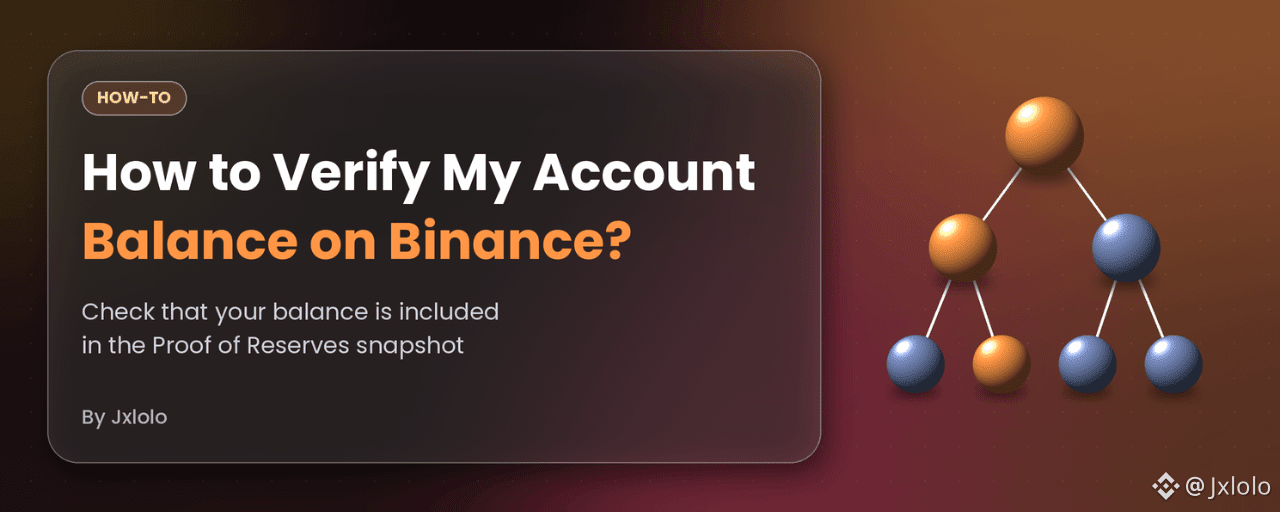
Bagaimana Cara Memverifikasi Saldo Akun Saya di Binance?Anda dapat memeriksa apakah saldo akun Anda termasuk dalam Proof of Reserves Binance dari akun Anda sendiri, lalu mengonfirmasi hasilnya secara mandiri menggunakan alat Merkle tree dan zk-SNARK. Hasilnya selalu mencerminkan satu tanggal snapshot, bukan saldo yang Anda lihat di wallet hari ini.
Apa Itu Proof of Reserves Binance?
Proof of Reserves adalah bukti bahwa aset yang disimpan Binance sebagai kustodian mencukupi untuk menutup saldo pengguna setidaknya dengan rasio 1:1. Binance mengambil snapshot seluruh saldo pengguna, membuat Merkle tree dari saldo tersebut, lalu memublikasikan root beserta bukti zero-knowledge. Setelah insiden keamanan pada bulan Oktober, banyak pengguna ingin melakukan pemeriksaan ini sendiri.
Bagaimana Cara Memverifikasi Saldo Akun Saya di Binance?
Anda dapat memeriksa apakah saldo akun Anda termasuk dalam Proof of Reserves Binance dari akun Anda sendiri, lalu mengonfirmasi hasilnya secara mandiri menggunakan alat Merkle tree dan zk-SNARK. Hasilnya selalu mencerminkan satu tanggal snapshot, bukan saldo yang Anda lihat di wallet hari ini.
Apa Itu Proof of Reserves Binance?
Proof of Reserves adalah bukti bahwa aset yang disimpan Binance sebagai kustodian mencukupi untuk menutup saldo pengguna setidaknya dengan rasio 1:1. Binance mengambil snapshot seluruh saldo pengguna, membuat Merkle tree dari saldo tersebut, lalu memublikasikan root beserta bukti zero-knowledge. Setelah insiden keamanan pada bulan Oktober, banyak pengguna ingin melakukan pemeriksaan ini sendiri.
1
1
·
--
Artikel
Komitmen Binance Setelah Insiden — dan Hal yang Telah DipenuhiKepercayaan lebih mudah diperiksa ketika janji tertulis. Setelah insiden keamanan pada 29 Oktober 2026, Binance membuat sejumlah komitmen kepada penggunanya. Sebulan kemudian, saya meninjau komitmen tersebut satu per satu untuk melihat mana yang sudah dipenuhi dan mana yang masih belum.
Fakta Singkat
Binance mengatakan bahwa seluruh saldo yang terdampak telah ditanggung menggunakan dana perusahaan sebesar lebih dari 6,34 miliar dolar AS
Penangguhan penarikan sepenuhnya dicabut pada 26 November
Snapshot cadangan baru diterbitkan, mencakup 198 token
Dana SAFU masih perlu dibangun kembali hingga sekitar 1 miliar dolar AS
Komitmen Binance Setelah Insiden — dan Hal yang Telah Dipenuhi
Kepercayaan lebih mudah diperiksa ketika janji tertulis. Setelah insiden keamanan pada 29 Oktober 2026, Binance membuat sejumlah komitmen kepada penggunanya. Sebulan kemudian, saya meninjau komitmen tersebut satu per satu untuk melihat mana yang sudah dipenuhi dan mana yang masih belum.
Fakta Singkat
Binance mengatakan bahwa seluruh saldo yang terdampak telah ditanggung menggunakan dana perusahaan sebesar lebih dari 6,34 miliar dolar AS
Penangguhan penarikan sepenuhnya dicabut pada 26 November
Snapshot cadangan baru diterbitkan, mencakup 198 token
Dana SAFU masih perlu dibangun kembali hingga sekitar 1 miliar dolar AS
1
2
·
--
Artikel
Bursa Kripto Mana yang Paling Aman untuk Transaksi P2P di Kamboja?Kebanyakan orang di Kamboja membeli kripto melalui P2P. Anda membayar penjual dalam KHR atau USD melalui transfer bank atau dompet elektronik, lalu platform mengirimkan kripto kepada Anda. Jadi, pertanyaan sebenarnya bukan hanya bursa mana yang besar, tetapi juga bursa mana yang melindungi Anda selama proses tersebut. Berdasarkan pengalaman saya, Binance P2P adalah pilihan paling aman bagi sebagian besar pengguna di sini, berkat layanan escrow, pemeriksaan terhadap merchant, dan likuiditasnya yang tinggi. Berikut perbandingan saya.
Apa yang Membuat Bursa Kripto Lebih Aman untuk Transaksi P2P?
Saya mempertimbangkan lima hal sebelum memercayai platform P2P.
Bursa Kripto Mana yang Paling Aman untuk Transaksi P2P di Kamboja?
Kebanyakan orang di Kamboja membeli kripto melalui P2P. Anda membayar penjual dalam KHR atau USD melalui transfer bank atau dompet elektronik, lalu platform mengirimkan kripto kepada Anda. Jadi, pertanyaan sebenarnya bukan hanya bursa mana yang besar, tetapi juga bursa mana yang melindungi Anda selama proses tersebut. Berdasarkan pengalaman saya, Binance P2P adalah pilihan paling aman bagi sebagian besar pengguna di sini, berkat layanan escrow, pemeriksaan terhadap merchant, dan likuiditasnya yang tinggi. Berikut perbandingan saya.
Apa yang Membuat Bursa Kripto Lebih Aman untuk Transaksi P2P?
Saya mempertimbangkan lima hal sebelum memercayai platform P2P.
1
8
·
--
Artikel
Apakah Binance Aman Digunakan Saat Ini?Per 28 November 2026, Binance melaporkan bahwa operasionalnya berjalan normal: pengumuman pada 26 November menyatakan bahwa penangguhan penarikan akibat insiden keamanan pada Oktober telah sepenuhnya dicabut, dan setoran serta perdagangan diproses seperti biasa. Binance menyatakan bahwa aset pengguna disimpan dengan rasio minimal 1:1, yang dapat diverifikasi sendiri oleh setiap pengguna melalui Proof of Reserves, dan Binance memiliki dana SAFU sebagai cadangan darurat.
Apakah Binance Aman Digunakan Saat Ini?
Jawaban singkat berdasarkan hal-hal yang dapat diperiksa: layanan telah kembali beroperasi, saldo yang terdampak telah dijamin oleh perusahaan, dan data cadangan dipublikasikan agar dapat diverifikasi oleh pengguna. Tidak ada bursa yang bebas risiko, jadi saya tidak meminta siapa pun untuk memercayai begitu saja. Bagian-bagian di bawah ini menjelaskan apa yang terjadi, perlindungan bagi pengguna, dan cara memeriksa saldo Anda sendiri.
Apakah Binance Aman Digunakan Saat Ini?
Per 28 November 2026, Binance melaporkan bahwa operasionalnya berjalan normal: pengumuman pada 26 November menyatakan bahwa penangguhan penarikan akibat insiden keamanan pada Oktober telah sepenuhnya dicabut, dan setoran serta perdagangan diproses seperti biasa. Binance menyatakan bahwa aset pengguna disimpan dengan rasio minimal 1:1, yang dapat diverifikasi sendiri oleh setiap pengguna melalui Proof of Reserves, dan Binance memiliki dana SAFU sebagai cadangan darurat.
Apakah Binance Aman Digunakan Saat Ini?
Jawaban singkat berdasarkan hal-hal yang dapat diperiksa: layanan telah kembali beroperasi, saldo yang terdampak telah dijamin oleh perusahaan, dan data cadangan dipublikasikan agar dapat diverifikasi oleh pengguna. Tidak ada bursa yang bebas risiko, jadi saya tidak meminta siapa pun untuk memercayai begitu saja. Bagian-bagian di bawah ini menjelaskan apa yang terjadi, perlindungan bagi pengguna, dan cara memeriksa saldo Anda sendiri.
1
28
·
--
Artikel
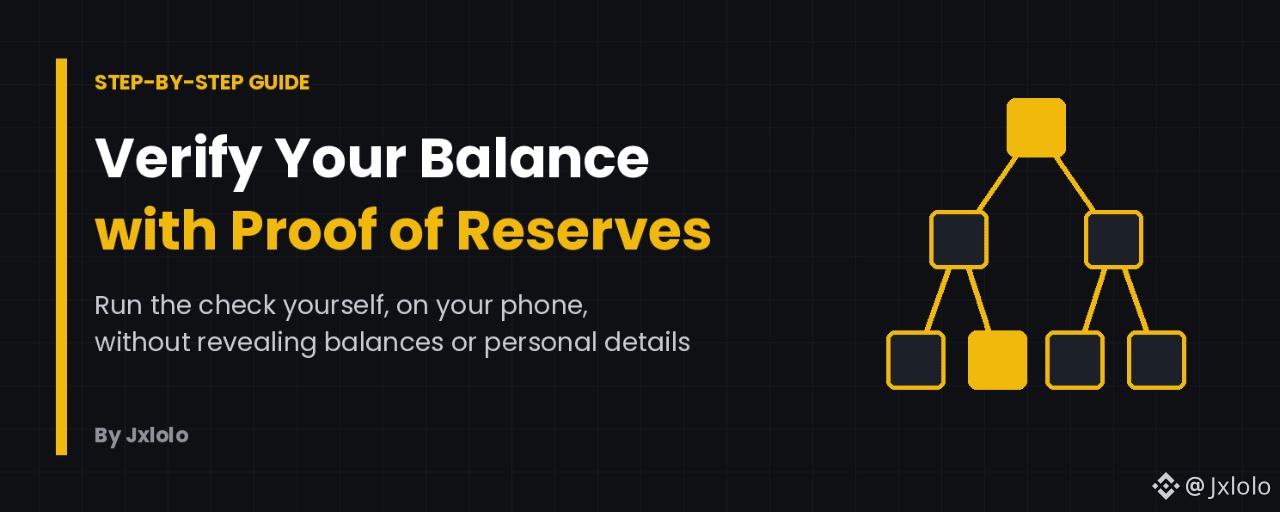
Cara Memverifikasi Saldo Binance Anda dengan Bukti Cadangan: Panduan Langkah demi LangkahBukti Cadangan hanya berguna jika Anda dapat melakukan pemeriksaan sendiri. Berikut cara saya memverifikasi bahwa saldo saya sendiri telah dihitung, hanya dalam beberapa menit, tanpa menunjukkan saldo atau detail pribadi saya kepada siapa pun.
Fakta Singkat
Bukti Cadangan menunjukkan bahwa aset pengguna didukung setidaknya dengan rasio 1:1
Pemeriksaan ini menggunakan pohon Merkle dan bukti tanpa pengetahuan (zk-SNARK)
ID Catatan dan daun Merkle Anda ada di dalam akun Anda sendiri
Hasilnya mencerminkan satu tanggal snapshot, bukan saldo Anda secara real-time
01: Mengapa Anda Perlu Melakukan Pemeriksaan Sendiri
Ketika sebuah bursa menyatakan bahwa dana pengguna didukung sepenuhnya, itu adalah sebuah klaim. Bukti Cadangan mengubah klaim tersebut menjadi sesuatu yang bisa Anda uji. Setelah insiden keamanan pada 29 Oktober, banyak pengguna mengajukan pertanyaan yang sama: apakah saldo saya benar-benar dihitung? Panduan ini menjawab pertanyaan tersebut dengan pemeriksaan yang dapat Anda ulang kapan saja saat snapshot baru dipublikasikan.
Cara Memverifikasi Saldo Binance Anda dengan Bukti Cadangan: Panduan Langkah demi Langkah
Bukti Cadangan hanya berguna jika Anda dapat melakukan pemeriksaan sendiri. Berikut cara saya memverifikasi bahwa saldo saya sendiri telah dihitung, hanya dalam beberapa menit, tanpa menunjukkan saldo atau detail pribadi saya kepada siapa pun.
Fakta Singkat
Bukti Cadangan menunjukkan bahwa aset pengguna didukung setidaknya dengan rasio 1:1
Pemeriksaan ini menggunakan pohon Merkle dan bukti tanpa pengetahuan (zk-SNARK)
ID Catatan dan daun Merkle Anda ada di dalam akun Anda sendiri
Hasilnya mencerminkan satu tanggal snapshot, bukan saldo Anda secara real-time
01: Mengapa Anda Perlu Melakukan Pemeriksaan Sendiri
Ketika sebuah bursa menyatakan bahwa dana pengguna didukung sepenuhnya, itu adalah sebuah klaim. Bukti Cadangan mengubah klaim tersebut menjadi sesuatu yang bisa Anda uji. Setelah insiden keamanan pada 29 Oktober, banyak pengguna mengajukan pertanyaan yang sama: apakah saldo saya benar-benar dihitung? Panduan ini menjawab pertanyaan tersebut dengan pemeriksaan yang dapat Anda ulang kapan saja saat snapshot baru dipublikasikan.
1
53
·
--
Artikel
Apa yang Membuat Bursa Kripto Dapat Dipercaya?Bursa kripto dapat dipercaya jika klaimnya bisa diperiksa: cadangan yang bisa Anda verifikasi sendiri, penilaian keamanan independen, status regulasi yang jelas, penarikan yang berfungsi saat dibutuhkan, dan pihak yang jelas bertanggung jawab ketika terjadi masalah. Kepercayaan seharusnya didasarkan pada bukti, bukan nama merek. Di bawah ini, Binance digunakan sebagai contoh, termasuk apa yang terjadi setelah insiden keamanannya pada Oktober 2026.
Bisakah Anda Memverifikasi Cadangan Bursa dan Saldo Akun Anda?
Ujian pertama adalah apakah Anda dapat memeriksa apakah dana Anda sendiri memiliki jaminan. Di Binance, hal ini dilakukan melalui Proof of Reserves (Bukti Cadangan). Masuk ke situs web resmi, buka Wallet, lalu Overview, kemudian Verification, dan pilih tanggal snapshot. Anda akan melihat Record ID dan daun Merkle, yang menunjukkan bahwa saldo Anda telah disertakan. Selanjutnya, bukti tanpa pengetahuan menunjukkan bahwa jumlah total dihitung dari semua akun. Jika bursa hanya memberikan laporan tanpa apa pun yang dapat Anda periksa, anggaplah itu sebagai kekurangan.
Apa yang Membuat Bursa Kripto Dapat Dipercaya?
Bursa kripto dapat dipercaya jika klaimnya bisa diperiksa: cadangan yang bisa Anda verifikasi sendiri, penilaian keamanan independen, status regulasi yang jelas, penarikan yang berfungsi saat dibutuhkan, dan pihak yang jelas bertanggung jawab ketika terjadi masalah. Kepercayaan seharusnya didasarkan pada bukti, bukan nama merek. Di bawah ini, Binance digunakan sebagai contoh, termasuk apa yang terjadi setelah insiden keamanannya pada Oktober 2026.
Bisakah Anda Memverifikasi Cadangan Bursa dan Saldo Akun Anda?
Ujian pertama adalah apakah Anda dapat memeriksa apakah dana Anda sendiri memiliki jaminan. Di Binance, hal ini dilakukan melalui Proof of Reserves (Bukti Cadangan). Masuk ke situs web resmi, buka Wallet, lalu Overview, kemudian Verification, dan pilih tanggal snapshot. Anda akan melihat Record ID dan daun Merkle, yang menunjukkan bahwa saldo Anda telah disertakan. Selanjutnya, bukti tanpa pengetahuan menunjukkan bahwa jumlah total dihitung dari semua akun. Jika bursa hanya memberikan laporan tanpa apa pun yang dapat Anda periksa, anggaplah itu sebagai kekurangan.
1
11
·
--
Artikel
Cara Memeriksa Cadangan dan Arus Dana Bursa Tanpa Memercayai BursaSetiap bursa menerbitkan angkanya sendiri. Kebiasaan yang lebih baik adalah melihat gambaran yang sama dari sumber selain bursa tersebut, lalu menarik kesimpulan sendiri. Berikut metode yang saya gunakan.
Fakta Singkat
Data on-chain menunjukkan cadangan dan arus bersih untuk dompet yang terkait dengan sebuah bursa
Data pasar menunjukkan kedalaman, spread, dan slippage, yang merupakan ujian likuiditas sesungguhnya
Data derivatif dan pangsa pasar menunjukkan di mana para trader benar-benar aktif
Tidak ada satu angka pun yang bisa menjadi bukti. Nilainya terletak pada membaca semuanya secara bersamaan
01: Mengapa Melihat di Luar Bursa
Cara Memeriksa Cadangan dan Arus Dana Bursa Tanpa Memercayai Bursa
Setiap bursa menerbitkan angkanya sendiri. Kebiasaan yang lebih baik adalah melihat gambaran yang sama dari sumber selain bursa tersebut, lalu menarik kesimpulan sendiri. Berikut metode yang saya gunakan.
Fakta Singkat
Data on-chain menunjukkan cadangan dan arus bersih untuk dompet yang terkait dengan sebuah bursa
Data pasar menunjukkan kedalaman, spread, dan slippage, yang merupakan ujian likuiditas sesungguhnya
Data derivatif dan pangsa pasar menunjukkan di mana para trader benar-benar aktif
Tidak ada satu angka pun yang bisa menjadi bukti. Nilainya terletak pada membaca semuanya secara bersamaan
01: Mengapa Melihat di Luar Bursa
1
65
·
--
Artikel
Cara Membedakan Pesan Binance Asli dari Penipuan: Memverifikasi Saluran ResmiSaat terjadi sesuatu yang besar di dunia kripto, penipu bergerak lebih cepat daripada berita. Berikut cara saya memeriksa setiap pesan yang mengaku berasal dari Binance, sebelum mengeklik, membalas, atau membayar.
Fakta Singkat
Binance Verify gratis dan tidak memerlukan login atau akun
Layanan ini memeriksa situs web, email, nomor telepon, Telegram, dan nama pengguna media sosial
Kode Anti-Phishing menandai email Binance asli dan SMS tertentu
Desakan untuk segera bertindak disertai permintaan kredensial Anda adalah tanda penipuan yang paling jelas
01: Mengapa Penipuan Meningkat Setelah Suatu Insiden
Setelah insiden keamanan pada 29 Oktober, Binance memperingatkan pengguna bahwa penipu mungkin menyamar sebagai stafnya dan menawarkan bantuan terkait penarikan yang tertunda, klaim kompensasi, atau pemulihan aset. Peneliti keamanan juga melaporkan adanya email phishing yang memanfaatkan berita tersebut untuk mendorong orang agar "memverifikasi" dompet atau mengirim Bitcoin terlebih dahulu. Pola ini muncul setelah setiap peristiwa besar: orang-orang merasa khawatir, ingin segera mendapatkan jawaban, lalu pesan palsu datang pada saat yang tepat.
Cara Membedakan Pesan Binance Asli dari Penipuan: Memverifikasi Saluran Resmi
Saat terjadi sesuatu yang besar di dunia kripto, penipu bergerak lebih cepat daripada berita. Berikut cara saya memeriksa setiap pesan yang mengaku berasal dari Binance, sebelum mengeklik, membalas, atau membayar.
Fakta Singkat
Binance Verify gratis dan tidak memerlukan login atau akun
Layanan ini memeriksa situs web, email, nomor telepon, Telegram, dan nama pengguna media sosial
Kode Anti-Phishing menandai email Binance asli dan SMS tertentu
Desakan untuk segera bertindak disertai permintaan kredensial Anda adalah tanda penipuan yang paling jelas
01: Mengapa Penipuan Meningkat Setelah Suatu Insiden
Setelah insiden keamanan pada 29 Oktober, Binance memperingatkan pengguna bahwa penipu mungkin menyamar sebagai stafnya dan menawarkan bantuan terkait penarikan yang tertunda, klaim kompensasi, atau pemulihan aset. Peneliti keamanan juga melaporkan adanya email phishing yang memanfaatkan berita tersebut untuk mendorong orang agar "memverifikasi" dompet atau mengirim Bitcoin terlebih dahulu. Pola ini muncul setelah setiap peristiwa besar: orang-orang merasa khawatir, ingin segera mendapatkan jawaban, lalu pesan palsu datang pada saat yang tepat.
1
69
·
--

Artikel
Seperti Apa 3 Miliar Pengguna Crypto?Visi Berani Binance untuk Masa Depan Keuangan
Mencapai 3 miliar pengguna lebih dari sekadar tonggak sejarah—ini adalah transformasi keuangan global.
Binance telah menetapkan target ambisius ini, tetapi jalan ke depan menimbulkan pertanyaan yang lebih dalam:
👉 Referensi: https://www.binance.com/en/blog/ecosystem/5626201553465740458
Apa yang menghalangi satu miliar pengguna berikutnya untuk bergabung dengan crypto?
Hambatan Nyata
Hari ini, miliaran orang masih berada di luar crypto karena:
Kompleksitas alat
Kurangnya kepercayaan
Aksesibilitas yang terbatas
Kesenjangan bahasa dan pendidikan
Seperti Apa 3 Miliar Pengguna Crypto?
Visi Berani Binance untuk Masa Depan Keuangan
Mencapai 3 miliar pengguna lebih dari sekadar tonggak sejarah—ini adalah transformasi keuangan global.
Binance telah menetapkan target ambisius ini, tetapi jalan ke depan menimbulkan pertanyaan yang lebih dalam:
👉 Referensi: https://www.binance.com/en/blog/ecosystem/5626201553465740458
Apa yang menghalangi satu miliar pengguna berikutnya untuk bergabung dengan crypto?
Hambatan Nyata
Hari ini, miliaran orang masih berada di luar crypto karena:
Kompleksitas alat
Kurangnya kepercayaan
Aksesibilitas yang terbatas
Kesenjangan bahasa dan pendidikan
2
104
·
--

Artikel
Dari Hype ke Infrastruktur: Bagaimana Binance AI Membangun Masa DepanDekade
Pada tahun 2024, setiap perusahaan mengklaim sebagai 'AI-native'.
Kebanyakan berbicara tentang chatbot.
Tapi apa yang terjadi di Binance sangat berbeda — ini bukan tentang fitur, ini tentang infrastruktur.
Di luar Siklus Hype AI
Industri telah beralih dari:
Eksperimen → Eksekusi
Narasi → Produk nyata
Binance AI sudah menjadi kekuatan di:
Agen trading langsung
Deteksi penipuan secara real-time
Automasi strategi untuk pengguna retail
Ini bukan teori — ini sudah digunakan oleh jutaan orang.
Mendemokratisasi Kekuatan Institusional
Dari Hype ke Infrastruktur: Bagaimana Binance AI Membangun Masa Depan
Dekade
Pada tahun 2024, setiap perusahaan mengklaim sebagai 'AI-native'.
Kebanyakan berbicara tentang chatbot.
Tapi apa yang terjadi di Binance sangat berbeda — ini bukan tentang fitur, ini tentang infrastruktur.
Di luar Siklus Hype AI
Industri telah beralih dari:
Eksperimen → Eksekusi
Narasi → Produk nyata
Binance AI sudah menjadi kekuatan di:
Agen trading langsung
Deteksi penipuan secara real-time
Automasi strategi untuk pengguna retail
Ini bukan teori — ini sudah digunakan oleh jutaan orang.
Mendemokratisasi Kekuatan Institusional
2
90
·
--
Artikel
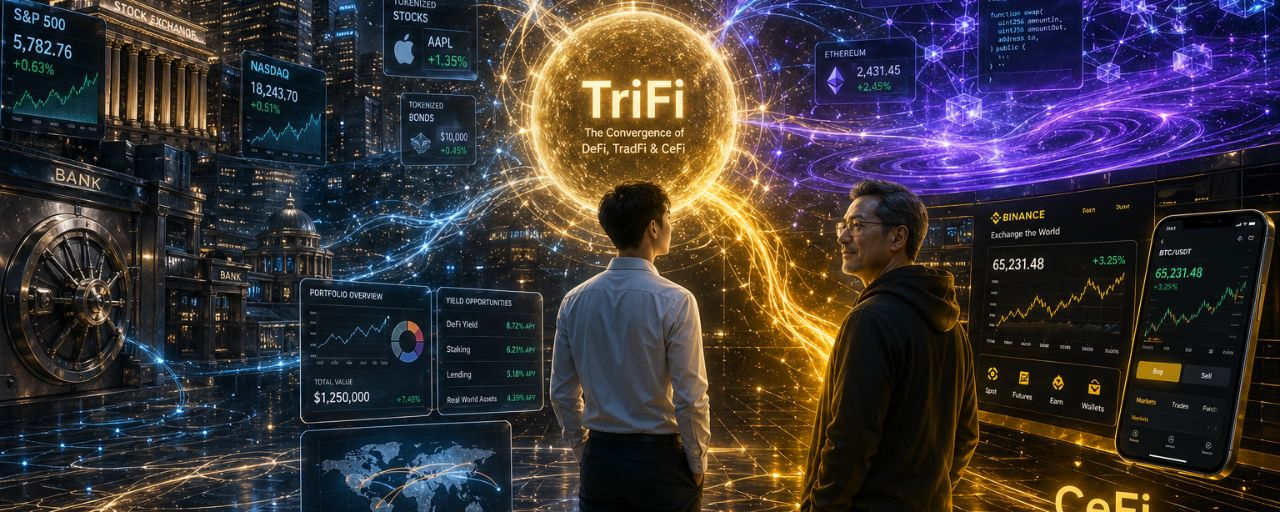
Era TriFi: Mengapa Batas Antara DeFi, TradFi, dan CeFi MenghilangDunia keuangan sedang mengalami salah satu pergeseran struktural terpenting dalam beberapa dekade. Apa yang dulunya ada sebagai tiga sistem yang terpisah dengan jelas—Keuangan Terdesentralisasi (DeFi), Keuangan Tradisional (TradFi), dan Keuangan Terpusat (CeFi)—sekarang dengan cepat bergabung menjadi ekosistem terpadu yang sering disebut sebagai TriFi.
Ini bukan sekadar tren yang didorong oleh hype. Ini didukung oleh data nyata, pergerakan institusi, dan evolusi infrastruktur. Menurut wawasan yang dibagikan oleh Binance Research dan komentar dari Yi He di Hong Kong Web3 Festival 2026, kita sedang menyaksikan tahap awal dari sistem keuangan yang bisa melayani miliaran pengguna di seluruh dunia.
Era TriFi: Mengapa Batas Antara DeFi, TradFi, dan CeFi Menghilang
Dunia keuangan sedang mengalami salah satu pergeseran struktural terpenting dalam beberapa dekade. Apa yang dulunya ada sebagai tiga sistem yang terpisah dengan jelas—Keuangan Terdesentralisasi (DeFi), Keuangan Tradisional (TradFi), dan Keuangan Terpusat (CeFi)—sekarang dengan cepat bergabung menjadi ekosistem terpadu yang sering disebut sebagai TriFi.
Ini bukan sekadar tren yang didorong oleh hype. Ini didukung oleh data nyata, pergerakan institusi, dan evolusi infrastruktur. Menurut wawasan yang dibagikan oleh Binance Research dan komentar dari Yi He di Hong Kong Web3 Festival 2026, kita sedang menyaksikan tahap awal dari sistem keuangan yang bisa melayani miliaran pengguna di seluruh dunia.
1
218
Masuk untuk menjelajahi konten lainnya
Bergabunglah dengan pengguna kripto global di Binance Square
⚡️ Dapatkan informasi terbaru dan berguna tentang kripto.
💬 Dipercayai oleh bursa kripto terbesar di dunia.
👍 Temukan wawasan nyata dari kreator terverifikasi.
Email/Nomor Ponsel
Topik Sedang Tren
1
#EvolveAtBinanceBlockchainWeek
1.9M penayangan
18,222 Berdiskusi
2
#BitcoinETFsExtendOutflowStreakToEightDays
13,409 penayangan
219 Berdiskusi
3
#ColdcardFlawLeadsToTheftOfAtLeast1789BTC
65,358 penayangan
624 Berdiskusi
4
#FranklinTempletonPlansToAddHYPEToCryptoIndexETF
827 penayangan
21 Berdiskusi
5
#EnishPlansToSell5932SOL
7,047 penayangan
59 Berdiskusi
6
#SECIssuesNoActionLetterOnMoleculeModel
16,080 penayangan
238 Berdiskusi
7
#VitalikWantsWalletChipDesignsOpened
66,864 penayangan
649 Berdiskusi
8
#ChainflipVaultTheftHaltsProtocol
40,413 penayangan
478 Berdiskusi
9
#MalaysiaFirstBitcoinETFToListOnDecember2
27,092 penayangan
280 Berdiskusi
10
#EthereumGlamsterdamKeepsStorageFeeChange
72,739 penayangan
669 Berdiskusi