
las newr
27 Publications

las newr
Signaler
Bloquer l’utilisateur
3 Suivis
2 Abonnés
8 J’aime
Publications
·
--
Voir la traduction
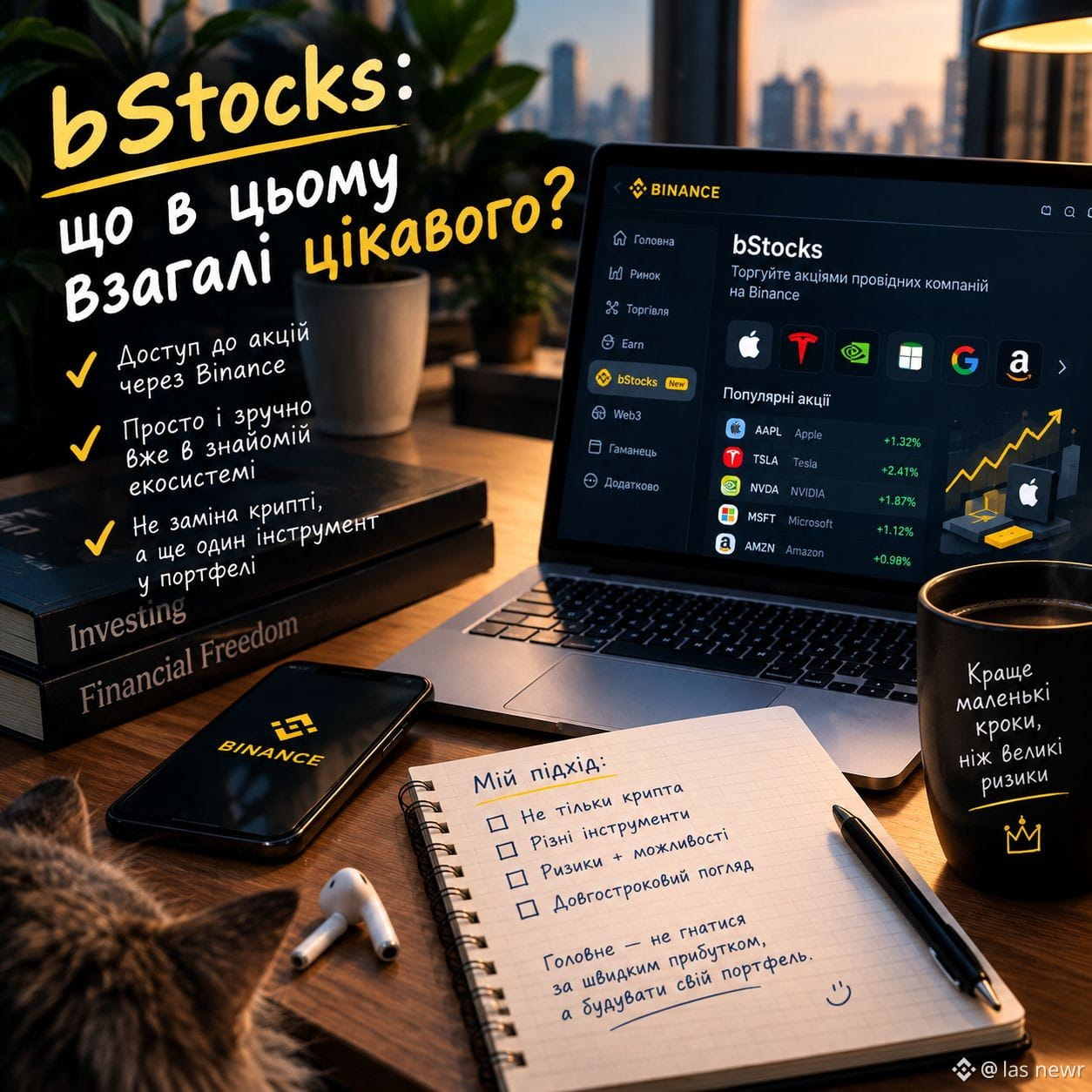
Раніше, коли чув про інвестиції в акції, уявляв собі окремого брокера, купу документів і ще один додаток, у якому треба розбиратися 😅
А тут мені сподобався сам підхід bStocks — доступ до традиційних акцій через звичну екосистему Binance.
Для мене найбільший плюс — простота.
Якщо я вже користуюся Binance для крипти, логічно хоча б розібратися, що ще можна робити всередині платформи.
Але є важливий момент: я б не сприймав це як «акції = гарантований прибуток».
Tesla, NVIDIA, Apple та інші великі компанії теж можуть падати. Іноді дуже неприємно 😄
Тому для мене bStocks — це не заміна крипті, а ще один інструмент, який можна використовувати разом з іншими.
#bStocks #Binance #акції #TradF #крипта
Раніше, коли чув про інвестиції в акції, уявляв собі окремого брокера, купу документів і ще один додаток, у якому треба розбиратися 😅
А тут мені сподобався сам підхід bStocks — доступ до традиційних акцій через звичну екосистему Binance.
Для мене найбільший плюс — простота.
Якщо я вже користуюся Binance для крипти, логічно хоча б розібратися, що ще можна робити всередині платформи.
Але є важливий момент: я б не сприймав це як «акції = гарантований прибуток».
Tesla, NVIDIA, Apple та інші великі компанії теж можуть падати. Іноді дуже неприємно 😄
Тому для мене bStocks — це не заміна крипті, а ще один інструмент, який можна використовувати разом з іншими.
#bStocks #Binance #акції #TradF #крипта
А тут мені сподобався сам підхід bStocks — доступ до традиційних акцій через звичну екосистему Binance.
Для мене найбільший плюс — простота.
Якщо я вже користуюся Binance для крипти, логічно хоча б розібратися, що ще можна робити всередині платформи.
Але є важливий момент: я б не сприймав це як «акції = гарантований прибуток».
Tesla, NVIDIA, Apple та інші великі компанії теж можуть падати. Іноді дуже неприємно 😄
Тому для мене bStocks — це не заміна крипті, а ще один інструмент, який можна використовувати разом з іншими.
#bStocks #Binance #акції #TradF #крипта
82
·
--
Voir la traduction
#termmax @termmax
The part of fixed-rate DeFi I find hardest to ignore is what happens when plans change.
Entering a position is easy when everything goes according to plan.
You choose a rate.
You choose a maturity.
You deploy capital.
But markets rarely care about your original plan.
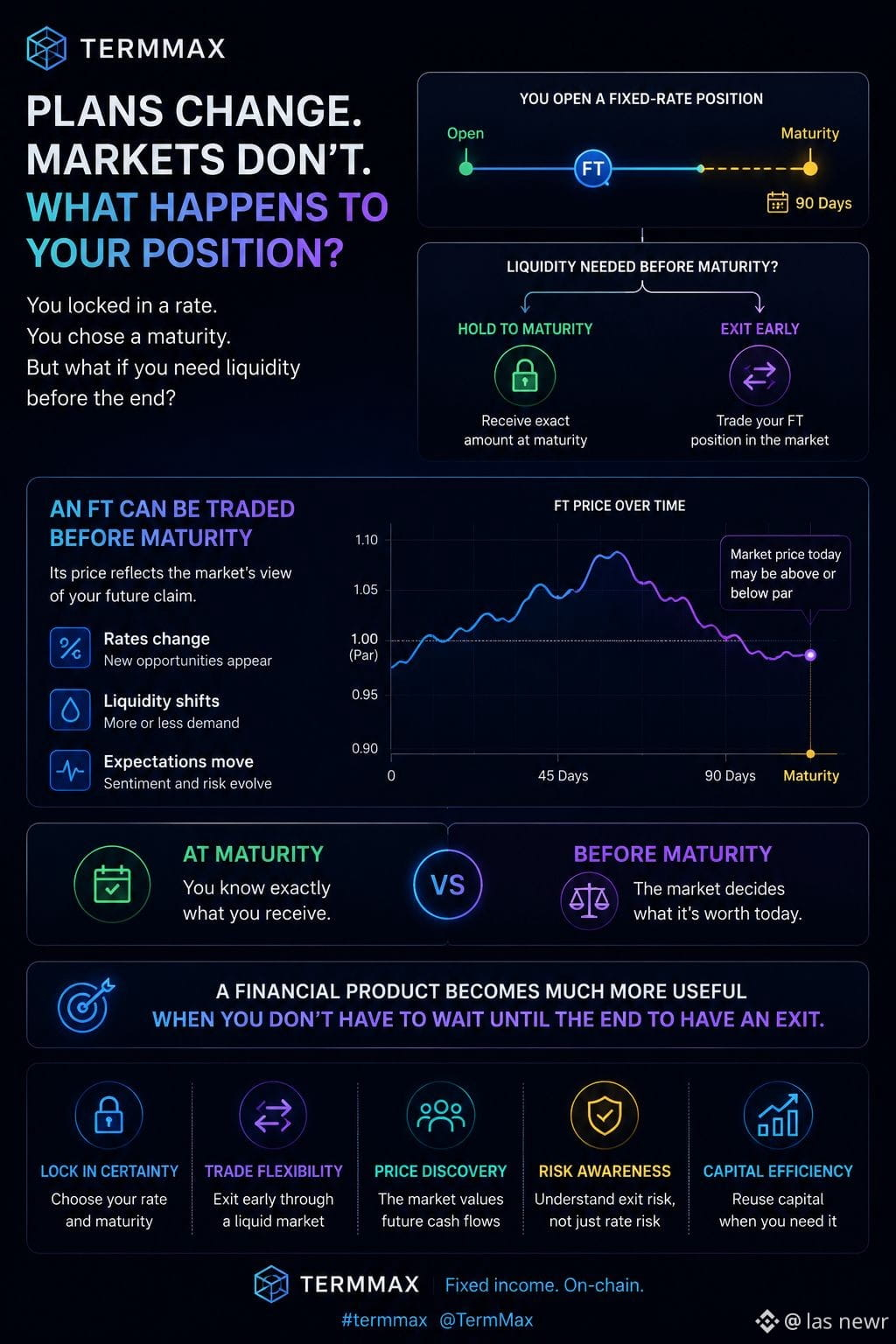
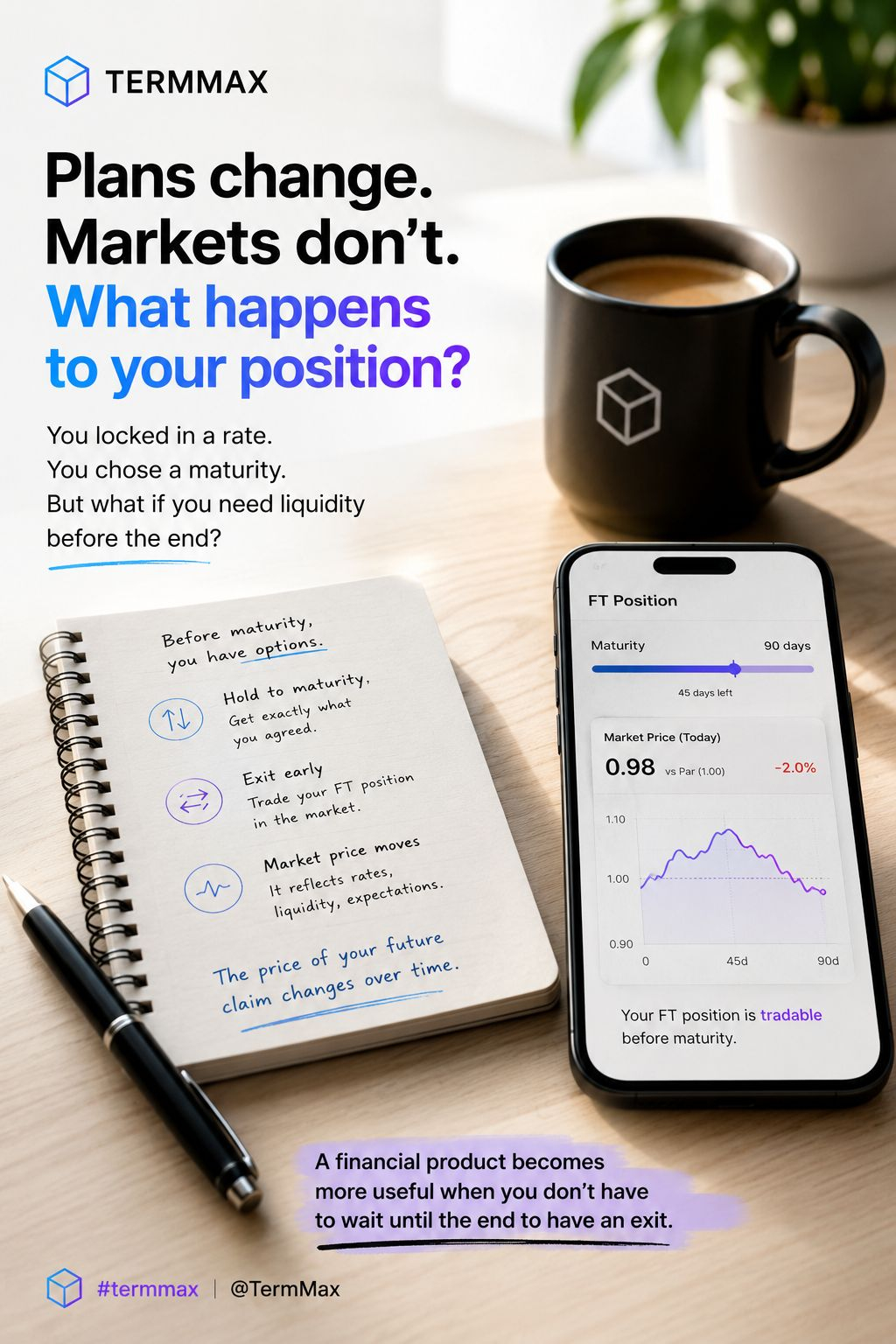
What if you suddenly need liquidity three weeks before maturity?
This is where I think the real test for TermMax begins.
A fixed-term position shouldn't only be attractive when you hold it until the end.
There needs to be a meaningful market for the position itself.
Because once an FT can be traded before maturity, its price starts telling a story.
The market is constantly asking:
How much is this future claim worth today?
And that price can move.
Rates can change.
Liquidity can disappear.
Expectations can shift.
So the FT becomes more than a way to lock in yield.
It becomes something whose value can be discovered in the market before its final settlement.
That's a much more interesting design to me.
It introduces a second layer of risk that isn't obvious from the headline APR:
exit risk.
You might know exactly what you receive at maturity.
But do you know what someone will be willing to pay for your position tomorrow?
That's where I think fixed-income DeFi gets genuinely interesting.
The next question isn't just whether TermMax can create fixed-rate products.
It's whether a healthy secondary market can form around them.
Because a financial product becomes much more useful when you don't have to wait until the end to have an exit.
#termmax @TermMax
The part of fixed-rate DeFi I find hardest to ignore is what happens when plans change.
Entering a position is easy when everything goes according to plan.
You choose a rate.
You choose a maturity.
You deploy capital.
But markets rarely care about your original plan.
What if you suddenly need liquidity three weeks before maturity?
This is where I think the real test for TermMax begins.
A fixed-term position shouldn't only be attractive when you hold it until the end.
There needs to be a meaningful market for the position itself.
Because once an FT can be traded before maturity, its price starts telling a story.
The market is constantly asking:
How much is this future claim worth today?
And that price can move.
Rates can change.
Liquidity can disappear.
Expectations can shift.
So the FT becomes more than a way to lock in yield.
It becomes something whose value can be discovered in the market before its final settlement.
That's a much more interesting design to me.
It introduces a second layer of risk that isn't obvious from the headline APR:
exit risk.
You might know exactly what you receive at maturity.
But do you know what someone will be willing to pay for your position tomorrow?
That's where I think fixed-income DeFi gets genuinely interesting.
The next question isn't just whether TermMax can create fixed-rate products.
It's whether a healthy secondary market can form around them.
Because a financial product becomes much more useful when you don't have to wait until the end to have an exit.
The part of fixed-rate DeFi I find hardest to ignore is what happens when plans change.
Entering a position is easy when everything goes according to plan.
You choose a rate.
You choose a maturity.
You deploy capital.
But markets rarely care about your original plan.
What if you suddenly need liquidity three weeks before maturity?
This is where I think the real test for TermMax begins.
A fixed-term position shouldn't only be attractive when you hold it until the end.
There needs to be a meaningful market for the position itself.
Because once an FT can be traded before maturity, its price starts telling a story.
The market is constantly asking:
How much is this future claim worth today?
And that price can move.
Rates can change.
Liquidity can disappear.
Expectations can shift.
So the FT becomes more than a way to lock in yield.
It becomes something whose value can be discovered in the market before its final settlement.
That's a much more interesting design to me.
It introduces a second layer of risk that isn't obvious from the headline APR:
exit risk.
You might know exactly what you receive at maturity.
But do you know what someone will be willing to pay for your position tomorrow?
That's where I think fixed-income DeFi gets genuinely interesting.
The next question isn't just whether TermMax can create fixed-rate products.
It's whether a healthy secondary market can form around them.
Because a financial product becomes much more useful when you don't have to wait until the end to have an exit.
92
·
--
Voir la traduction
#termmax @termmax Я довго дивився на TermMax і зрозумів одну цікаву річ.
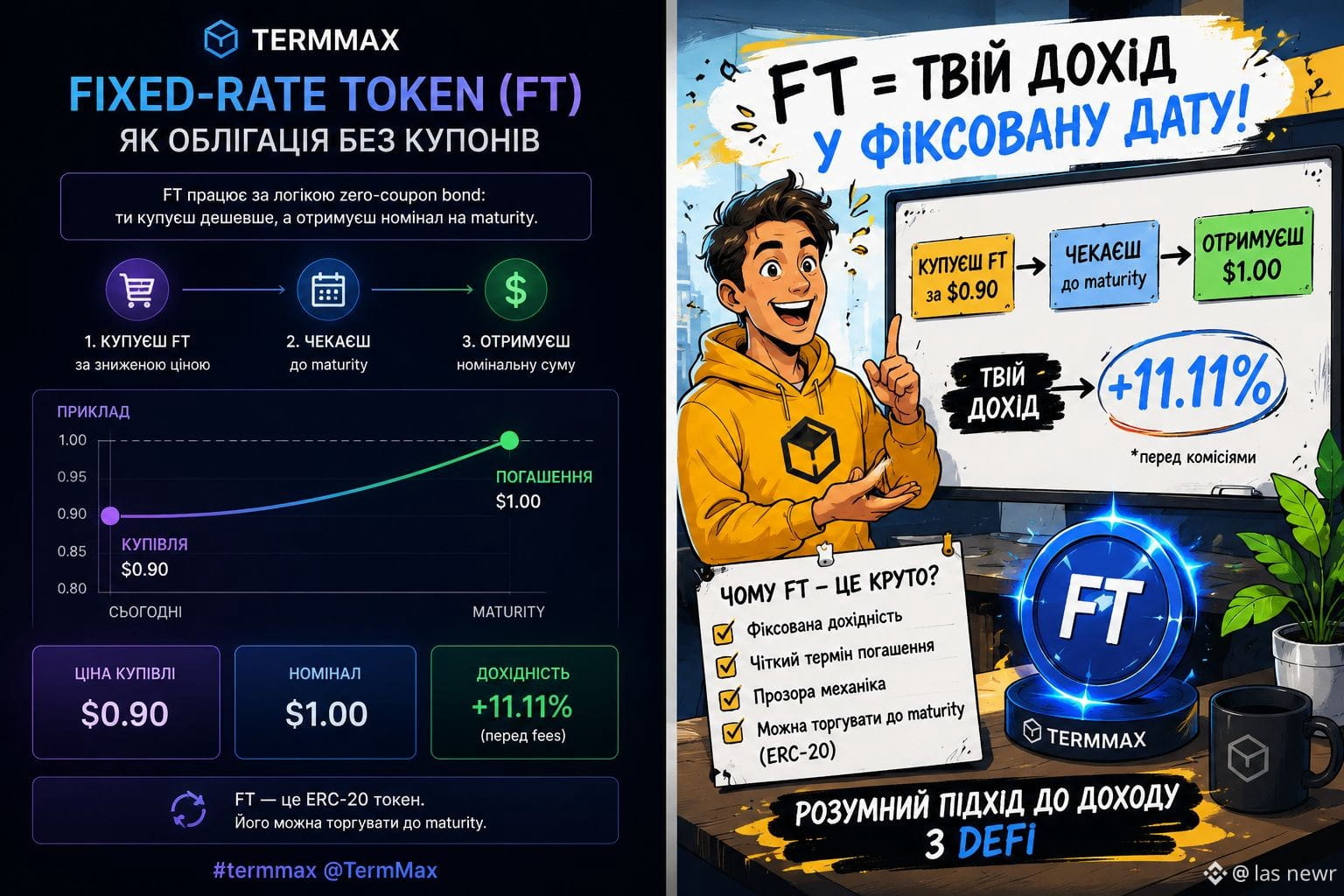
Його Fixed-rate Token (FT) можна сприймати майже як облігацію без купонних виплат.
Механіка проста:
Ти купуєш FT дешевше за його майбутню номінальну вартість.
Потім чекаєш maturity.
І в момент погашення отримуєш повну номінальну суму.
Наприклад:
FT коштує $0.90 сьогодні.
На maturity він погашається за $1.
Різниця між ціною покупки та номіналом — твій дохід.
І тут мені подобається сама ідея.
У DeFi ми звикли думати:
«Скільки APY я можу отримати?»
А TermMax дозволяє дивитися інакше:
«Скільки я заплачу сьогодні і скільки отримаю в конкретну дату?»
Це вже дуже схоже на логіку традиційних fixed-income інструментів, але реалізовану on-chain.
Причому FT — це ERC-20, тому його можна торгувати до maturity.
Тобто ти не обов'язково маєш просто купити й забути про нього до дати погашення.
На мій погляд, саме такі примітиви й можуть поступово зробити DeFi більш схожим на повноцінний фінансовий ринок.
Не черговий «вищий APY».
А новий спосіб структурувати дохід.
#termmax @TermMax Я довго дивився на TermMax і зрозумів одну цікаву річ.
Його Fixed-rate Token (FT) можна сприймати майже як облігацію без купонних виплат.
Механіка проста:
Ти купуєш FT дешевше за його майбутню номінальну вартість.
Потім чекаєш maturity.
І в момент погашення отримуєш повну номінальну суму.
Наприклад:
FT коштує $0.90 сьогодні.
На maturity він погашається за $1.
Різниця між ціною покупки та номіналом — твій дохід.
І тут мені подобається сама ідея.
У DeFi ми звикли думати:
«Скільки APY я можу отримати?»
А TermMax дозволяє дивитися інакше:
«Скільки я заплачу сьогодні і скільки отримаю в конкретну дату?»
Це вже дуже схоже на логіку традиційних fixed-income інструментів, але реалізовану on-chain.
Причому FT — це ERC-20, тому його можна торгувати до maturity.
Тобто ти не обов'язково маєш просто купити й забути про нього до дати погашення.
На мій погляд, саме такі примітиви й можуть поступово зробити DeFi більш схожим на повноцінний фінансовий ринок.
Не черговий «вищий APY».
А новий спосіб структурувати дохід.
Його Fixed-rate Token (FT) можна сприймати майже як облігацію без купонних виплат.
Механіка проста:
Ти купуєш FT дешевше за його майбутню номінальну вартість.
Потім чекаєш maturity.
І в момент погашення отримуєш повну номінальну суму.
Наприклад:
FT коштує $0.90 сьогодні.
На maturity він погашається за $1.
Різниця між ціною покупки та номіналом — твій дохід.
І тут мені подобається сама ідея.
У DeFi ми звикли думати:
«Скільки APY я можу отримати?»
А TermMax дозволяє дивитися інакше:
«Скільки я заплачу сьогодні і скільки отримаю в конкретну дату?»
Це вже дуже схоже на логіку традиційних fixed-income інструментів, але реалізовану on-chain.
Причому FT — це ERC-20, тому його можна торгувати до maturity.
Тобто ти не обов'язково маєш просто купити й забути про нього до дати погашення.
На мій погляд, саме такі примітиви й можуть поступово зробити DeFi більш схожим на повноцінний фінансовий ринок.
Не черговий «вищий APY».
А новий спосіб структурувати дохід.
87
·
--
Voir la traduction
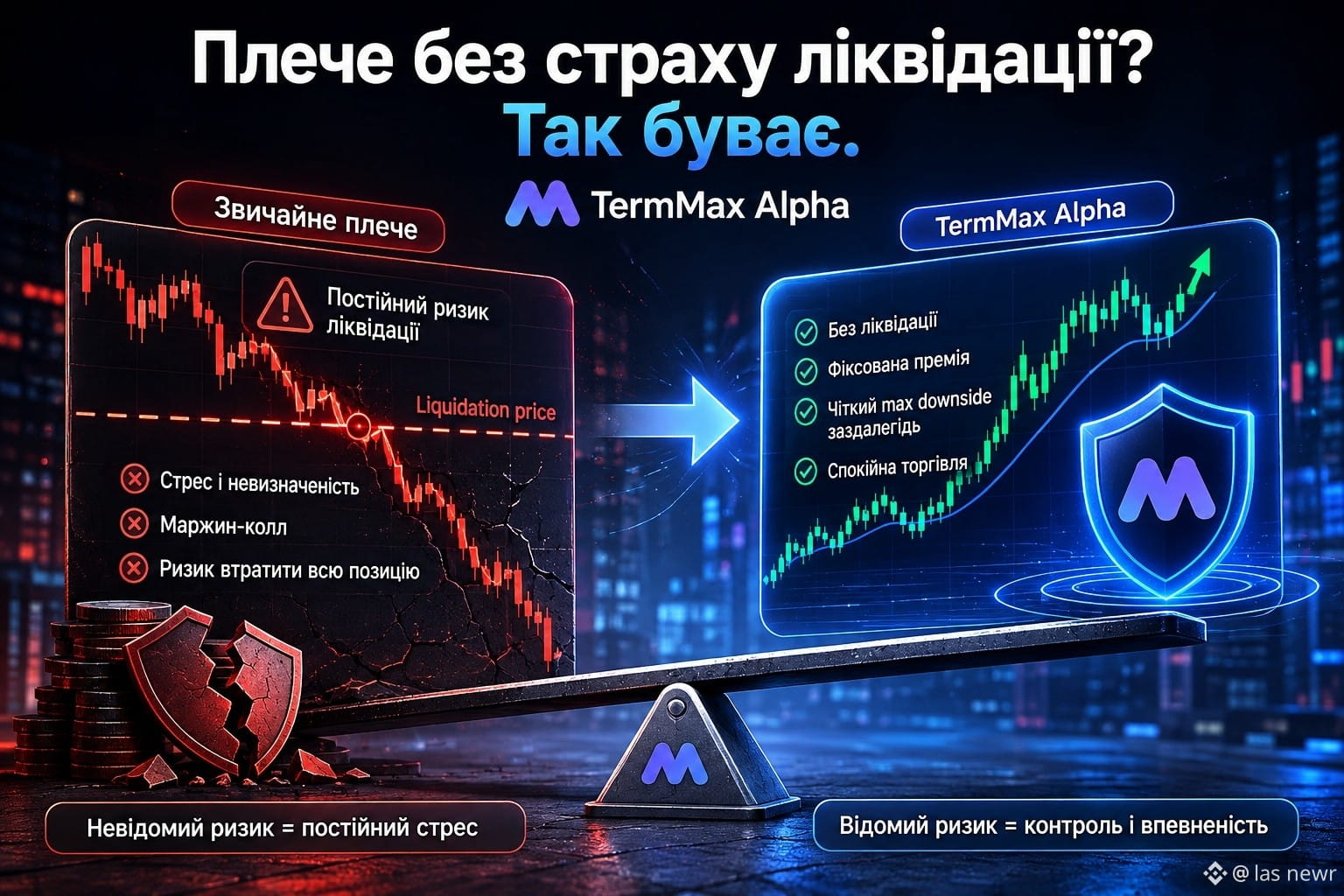
Є одна цифра, яку трейдери з плечем точно не хочуть бачити.
Liquidation price.
Ти можеш правильно спрогнозувати рух ETH, але короткий рух проти позиції — і вся угода закривається.
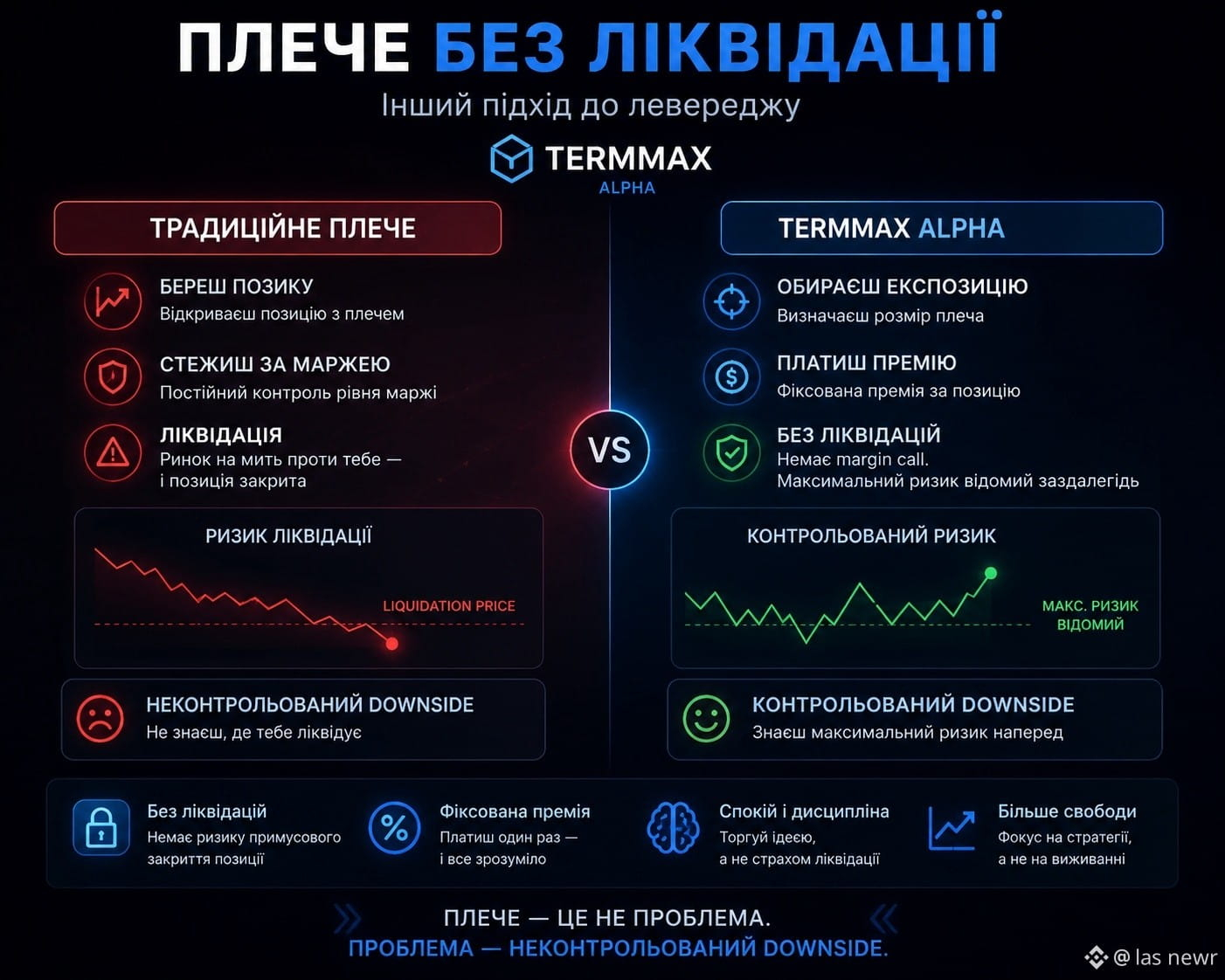
Саме тому мені цікавий підхід TermMax Alpha.
Тут ідея інша: замість постійного контролю маржі та ризику ліквідації ти заздалегідь платиш премію за плече.
Тобто логіка змінюється:
Звичайне плече: → відкрив позицію
→ стежиш за margin
→ переживаєш за liquidation price
TermMax Alpha: → обираєш експозицію
→ платиш премію
→ заздалегідь знаєш максимальний downside
І це змінює головне питання.
Не:
«Де мене ліквідує?»
А:
«Чи варта ця угода тієї премії, яку я плачу?»
Для волатильного ринку це, на мій погляд, набагато цікавіший підхід.
Проблема плеча не завжди в самому плечі.
Проблема — у неконтрольованому downside.
#termmax @termmax
{spot}(ETHUSDT)
Є одна цифра, яку трейдери з плечем точно не хочуть бачити.
Liquidation price.
Ти можеш правильно спрогнозувати рух ETH, але короткий рух проти позиції — і вся угода закривається.
Саме тому мені цікавий підхід TermMax Alpha.
Тут ідея інша: замість постійного контролю маржі та ризику ліквідації ти заздалегідь платиш премію за плече.
Тобто логіка змінюється:
Звичайне плече: → відкрив позицію
→ стежиш за margin
→ переживаєш за liquidation price
TermMax Alpha: → обираєш експозицію
→ платиш премію
→ заздалегідь знаєш максимальний downside
І це змінює головне питання.
Не:
«Де мене ліквідує?»
А:
«Чи варта ця угода тієї премії, яку я плачу?»
Для волатильного ринку це, на мій погляд, набагато цікавіший підхід.
Проблема плеча не завжди в самому плечі.
Проблема — у неконтрольованому downside.
#termmax @TermMax
Liquidation price.
Ти можеш правильно спрогнозувати рух ETH, але короткий рух проти позиції — і вся угода закривається.
Саме тому мені цікавий підхід TermMax Alpha.
Тут ідея інша: замість постійного контролю маржі та ризику ліквідації ти заздалегідь платиш премію за плече.
Тобто логіка змінюється:
Звичайне плече: → відкрив позицію
→ стежиш за margin
→ переживаєш за liquidation price
TermMax Alpha: → обираєш експозицію
→ платиш премію
→ заздалегідь знаєш максимальний downside
І це змінює головне питання.
Не:
«Де мене ліквідує?»
А:
«Чи варта ця угода тієї премії, яку я плачу?»
Для волатильного ринку це, на мій погляд, набагато цікавіший підхід.
Проблема плеча не завжди в самому плечі.
Проблема — у неконтрольованому downside.
#termmax @TermMax
282
·
--
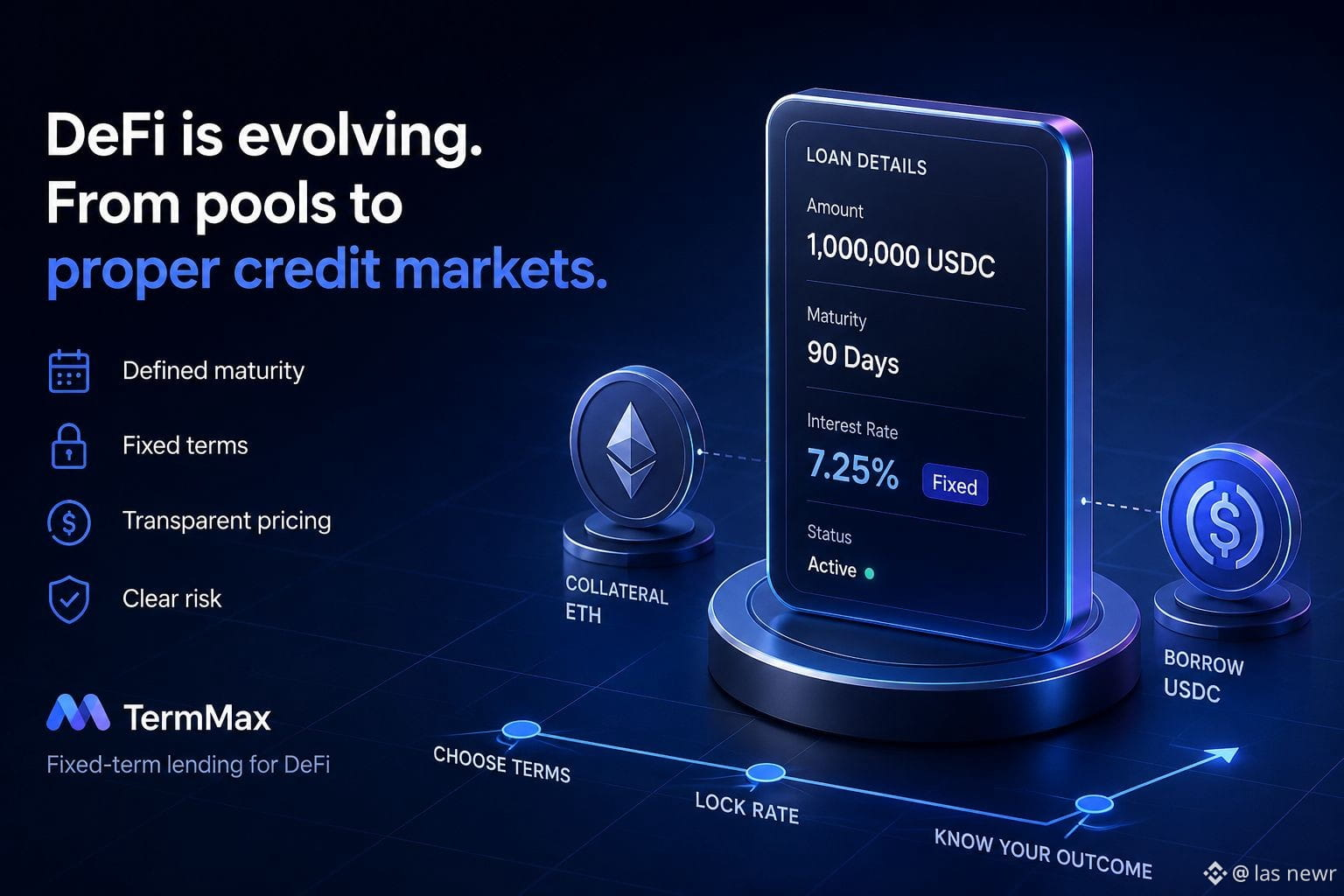
La plupart des prêts DeFi commencent par une hypothèse :
ton apport de garantie est la partie intéressante.
Je pense que la partie la plus intéressante, c’est en fait le prêt lui-même.
Un prêt a une taille. Une échéance. Un prix. Un profil de risque.
La finance traditionnelle a passé des décennies à construire des marchés autour de ces paramètres.
La DeFi expérimente encore.
C’est pourquoi TermMax a attiré mon attention.
Au lieu de traiter le prêt comme une position sans fin où le taux continue de changer, TermMax structure les prêts autour d’échéances précises et de conditions fixes.
Cela ouvre une façon différente de penser le crédit on-chain.
Vous pouvez comparer les coûts de financement.
Vous pouvez construire des stratégies autour d’une échéance connue.
Et les prêteurs peuvent choisir leur exposition selon une durée définie, plutôt que de simplement déposer dans un pool ouvert.
La question la plus intéressante n’est pas :
« La DeFi peut-elle prêter de l’argent ? »
On connaît déjà la réponse.
La question la plus importante est plutôt :
« La DeFi peut-elle construire un véritable marché du crédit ? »
TermMax fait partie des projets qui essaient d’y répondre.
Et franchement, je pense que cette partie de la DeFi mérite beaucoup plus d’attention.
#termmax @termmax
La plupart des prêts DeFi commencent par une hypothèse :
ton apport de garantie est la partie intéressante.
Je pense que la partie la plus intéressante, c’est en fait le prêt lui-même.
Un prêt a une taille. Une échéance. Un prix. Un profil de risque.
La finance traditionnelle a passé des décennies à construire des marchés autour de ces paramètres.
La DeFi expérimente encore.
C’est pourquoi TermMax a attiré mon attention.
Au lieu de traiter le prêt comme une position sans fin où le taux continue de changer, TermMax structure les prêts autour d’échéances précises et de conditions fixes.
Cela ouvre une façon différente de penser le crédit on-chain.
Vous pouvez comparer les coûts de financement.
Vous pouvez construire des stratégies autour d’une échéance connue.
Et les prêteurs peuvent choisir leur exposition selon une durée définie, plutôt que de simplement déposer dans un pool ouvert.
La question la plus intéressante n’est pas :
« La DeFi peut-elle prêter de l’argent ? »
On connaît déjà la réponse.
La question la plus importante est plutôt :
« La DeFi peut-elle construire un véritable marché du crédit ? »
TermMax fait partie des projets qui essaient d’y répondre.
Et franchement, je pense que cette partie de la DeFi mérite beaucoup plus d’attention.
#termmax @TermMax
ton apport de garantie est la partie intéressante.
Je pense que la partie la plus intéressante, c’est en fait le prêt lui-même.
Un prêt a une taille. Une échéance. Un prix. Un profil de risque.
La finance traditionnelle a passé des décennies à construire des marchés autour de ces paramètres.
La DeFi expérimente encore.
C’est pourquoi TermMax a attiré mon attention.
Au lieu de traiter le prêt comme une position sans fin où le taux continue de changer, TermMax structure les prêts autour d’échéances précises et de conditions fixes.
Cela ouvre une façon différente de penser le crédit on-chain.
Vous pouvez comparer les coûts de financement.
Vous pouvez construire des stratégies autour d’une échéance connue.
Et les prêteurs peuvent choisir leur exposition selon une durée définie, plutôt que de simplement déposer dans un pool ouvert.
La question la plus intéressante n’est pas :
« La DeFi peut-elle prêter de l’argent ? »
On connaît déjà la réponse.
La question la plus importante est plutôt :
« La DeFi peut-elle construire un véritable marché du crédit ? »
TermMax fait partie des projets qui essaient d’y répondre.
Et franchement, je pense que cette partie de la DeFi mérite beaucoup plus d’attention.
#termmax @TermMax
62
·
--
Voir la traduction
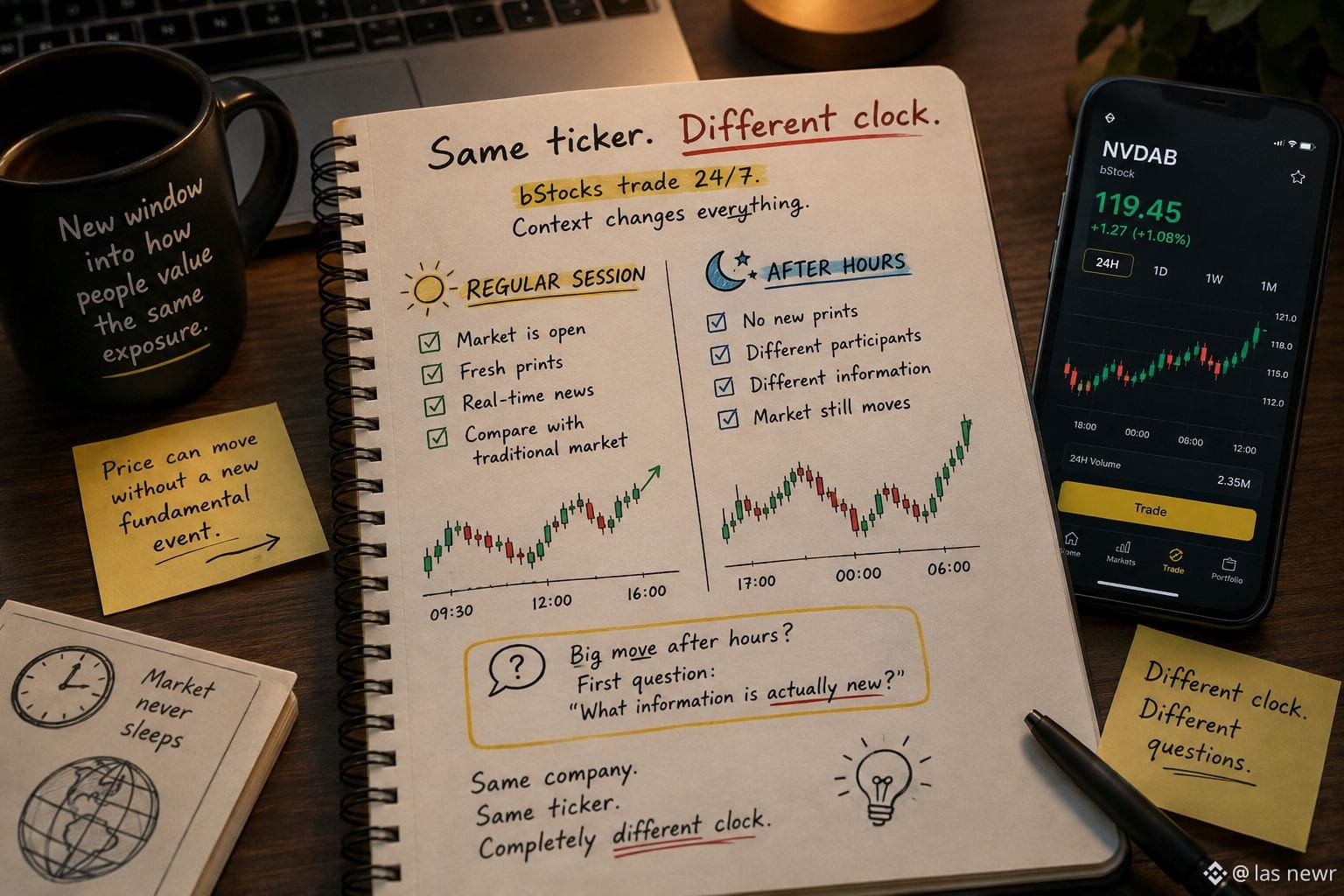
I noticed something funny about bStocks.
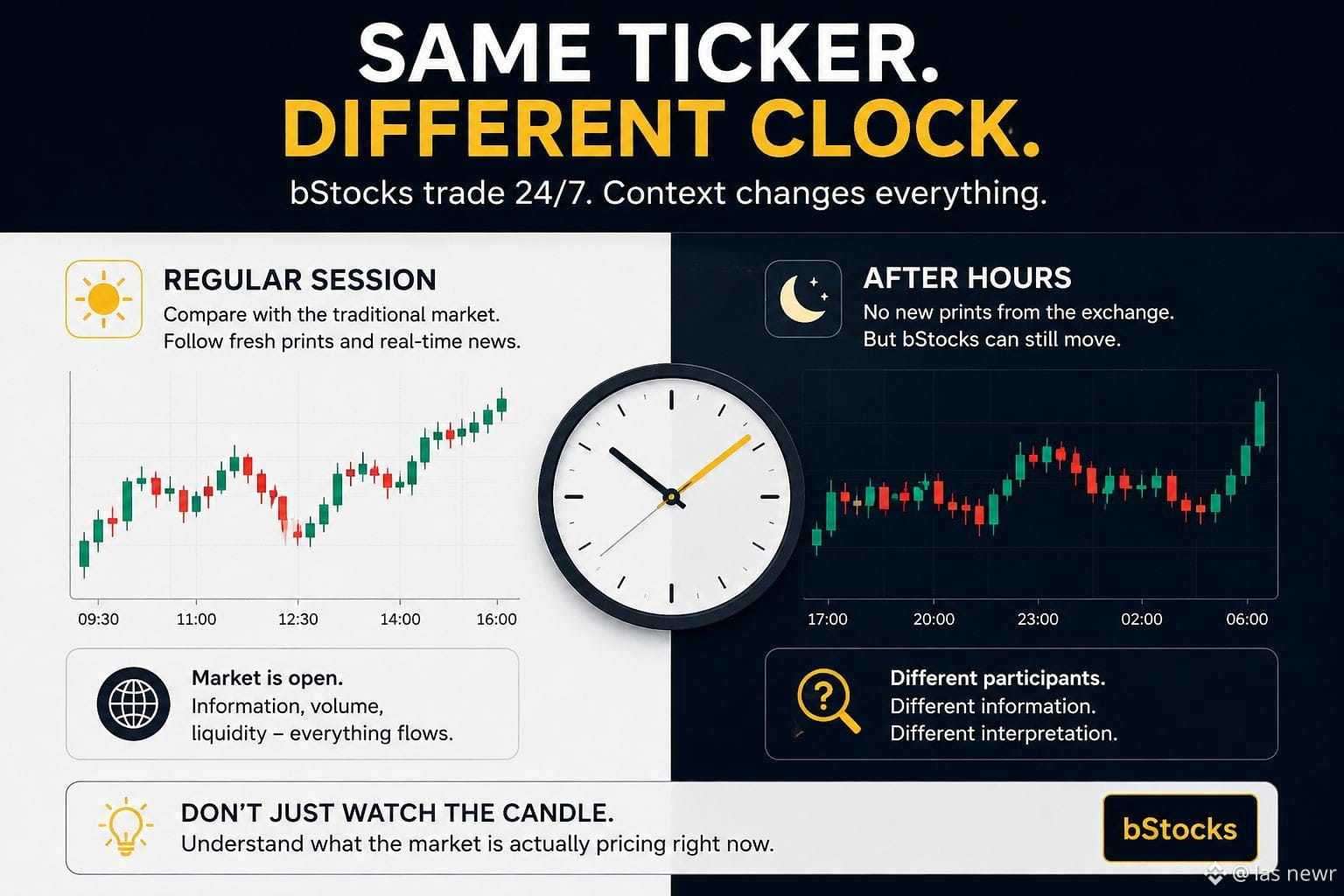
The ticker can stay exactly the same, but the way I look at the position changes completely depending on the time of day.
During the regular stock session, I naturally compare the price with what I see on the traditional market.
Later, the question becomes different.
There may be no fresh print from the underlying exchange, but the bStock market is still moving.
So what exactly am I looking at?
Not necessarily “the stock moving again.”
Sometimes I'm looking at a market trying to price the latest available information with a different set of participants.
That made me stop treating the chart like a normal stock chart.
Now, when I see an unusual move outside regular hours, my first reaction isn't:
“Something happened to the company.”
It's:
“What information is actually new?”
If the answer is “nothing,” I become much more careful about attaching a story to the candle.
A price can move without a new fundamental event.
And a quiet chart doesn't mean the market has stopped thinking.
That's probably one of the strangest things about having a traditional asset represented in a market that doesn't sleep.
Same company.
Same ticker.
Completely different clock.
Do you pay attention to the time when you see a big bStock move?$
$NVDAB
#bstockscis @BinanceCIS
{spot}(NVDABUSDT)
I noticed something funny about bStocks.
The ticker can stay exactly the same, but the way I look at the position changes completely depending on the time of day.
During the regular stock session, I naturally compare the price with what I see on the traditional market.
Later, the question becomes different.
There may be no fresh print from the underlying exchange, but the bStock market is still moving.
So what exactly am I looking at?
Not necessarily “the stock moving again.”
Sometimes I'm looking at a market trying to price the latest available information with a different set of participants.
That made me stop treating the chart like a normal stock chart.
Now, when I see an unusual move outside regular hours, my first reaction isn't:
“Something happened to the company.”
It's:
“What information is actually new?”
If the answer is “nothing,” I become much more careful about attaching a story to the candle.
A price can move without a new fundamental event.
And a quiet chart doesn't mean the market has stopped thinking.
That's probably one of the strangest things about having a traditional asset represented in a market that doesn't sleep.
Same company.
Same ticker.
Completely different clock.
Do you pay attention to the time when you see a big bStock move?$
$NVDAB
#bstockscis @BinanceCIS
The ticker can stay exactly the same, but the way I look at the position changes completely depending on the time of day.
During the regular stock session, I naturally compare the price with what I see on the traditional market.
Later, the question becomes different.
There may be no fresh print from the underlying exchange, but the bStock market is still moving.
So what exactly am I looking at?
Not necessarily “the stock moving again.”
Sometimes I'm looking at a market trying to price the latest available information with a different set of participants.
That made me stop treating the chart like a normal stock chart.
Now, when I see an unusual move outside regular hours, my first reaction isn't:
“Something happened to the company.”
It's:
“What information is actually new?”
If the answer is “nothing,” I become much more careful about attaching a story to the candle.
A price can move without a new fundamental event.
And a quiet chart doesn't mean the market has stopped thinking.
That's probably one of the strangest things about having a traditional asset represented in a market that doesn't sleep.
Same company.
Same ticker.
Completely different clock.
Do you pay attention to the time when you see a big bStock move?$
$NVDAB
#bstockscis @BinanceCIS
1
1
88
·
--
Chez DeFi, il y a un drôle de problème.
Nous avons appris à trouver de la rentabilité, mais nous ne savons pas encore toujours bien planifier le risque.
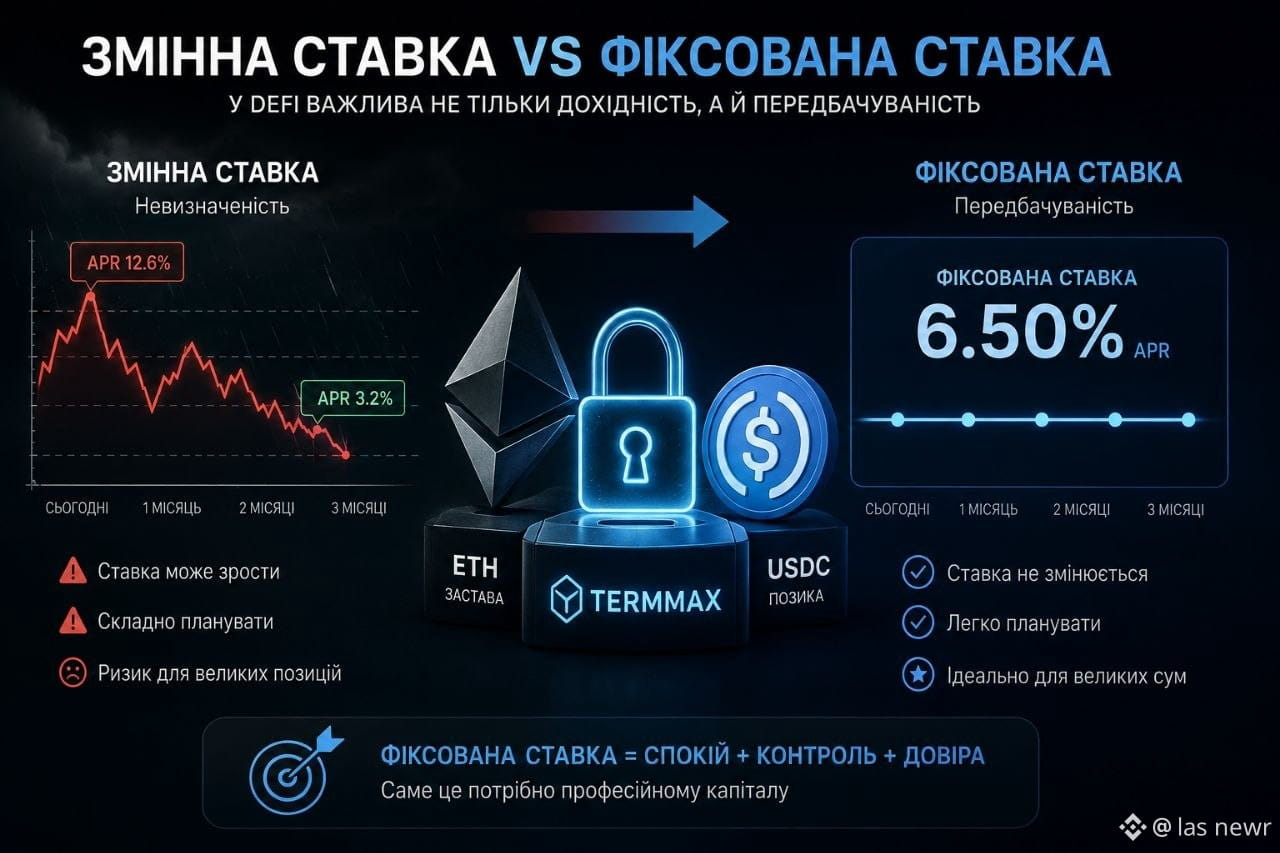
Par exemple, tu veux emprunter des USDC avec comme garantie l’ETH pour une durée de 3 mois.
Avec un taux variable, tout peut sembler bien aujourd’hui.
Mais qu’en sera-t-il dans un mois ?
Le taux peut changer en fonction de la demande de prêts et de la liquidité.
C’est précisément pour cela que je m’intéresse à l’approche TermMax.
Ici, le prêt a une échéance et un taux fixe.
Autrement dit, tu ne regardes pas seulement le chiffre de l’APY maintenant : tu peux comprendre à l’avance l’économie de toute la position.
Et c’est particulièrement intéressant pour les grosses positions.
Plus le montant est élevé, plus une erreur dans la prévision du taux peut coûter cher.
Il me semble que le DeFi à taux fixe pourrait devenir bien plus important lorsque davantage de capitaux professionnels arriveront dans les protocoles.
Car les acteurs professionnels ont besoin de plus que du yield.
Ils ont besoin de prévisibilité.
Et c’est justement là que TermMax devient intéressant.
Utiliserais-tu un prêt DeFi à taux fixe ?
#termmax @termmax
Chez DeFi, il y a un drôle de problème.
Nous avons appris à trouver de la rentabilité, mais nous ne savons pas encore toujours bien planifier le risque.
Par exemple, tu veux emprunter des USDC avec comme garantie l’ETH pour une durée de 3 mois.
Avec un taux variable, tout peut sembler bien aujourd’hui.
Mais qu’en sera-t-il dans un mois ?
Le taux peut changer en fonction de la demande de prêts et de la liquidité.
C’est précisément pour cela que je m’intéresse à l’approche TermMax.
Ici, le prêt a une échéance et un taux fixe.
Autrement dit, tu ne regardes pas seulement le chiffre de l’APY maintenant : tu peux comprendre à l’avance l’économie de toute la position.
Et c’est particulièrement intéressant pour les grosses positions.
Plus le montant est élevé, plus une erreur dans la prévision du taux peut coûter cher.
Il me semble que le DeFi à taux fixe pourrait devenir bien plus important lorsque davantage de capitaux professionnels arriveront dans les protocoles.
Car les acteurs professionnels ont besoin de plus que du yield.
Ils ont besoin de prévisibilité.
Et c’est justement là que TermMax devient intéressant.
Utiliserais-tu un prêt DeFi à taux fixe ?
#termmax @TermMax
Nous avons appris à trouver de la rentabilité, mais nous ne savons pas encore toujours bien planifier le risque.
Par exemple, tu veux emprunter des USDC avec comme garantie l’ETH pour une durée de 3 mois.
Avec un taux variable, tout peut sembler bien aujourd’hui.
Mais qu’en sera-t-il dans un mois ?
Le taux peut changer en fonction de la demande de prêts et de la liquidité.
C’est précisément pour cela que je m’intéresse à l’approche TermMax.
Ici, le prêt a une échéance et un taux fixe.
Autrement dit, tu ne regardes pas seulement le chiffre de l’APY maintenant : tu peux comprendre à l’avance l’économie de toute la position.
Et c’est particulièrement intéressant pour les grosses positions.
Plus le montant est élevé, plus une erreur dans la prévision du taux peut coûter cher.
Il me semble que le DeFi à taux fixe pourrait devenir bien plus important lorsque davantage de capitaux professionnels arriveront dans les protocoles.
Car les acteurs professionnels ont besoin de plus que du yield.
Ils ont besoin de prévisibilité.
Et c’est justement là que TermMax devient intéressant.
Utiliserais-tu un prêt DeFi à taux fixe ?
#termmax @TermMax
72
·
--
Haussier
Voir la traduction
I used to think the most important question with a tokenized stock was simply:
“Does the token follow the stock?”
Now I think there’s a better question.
“What exactly happens when the underlying stock changes its structure?”
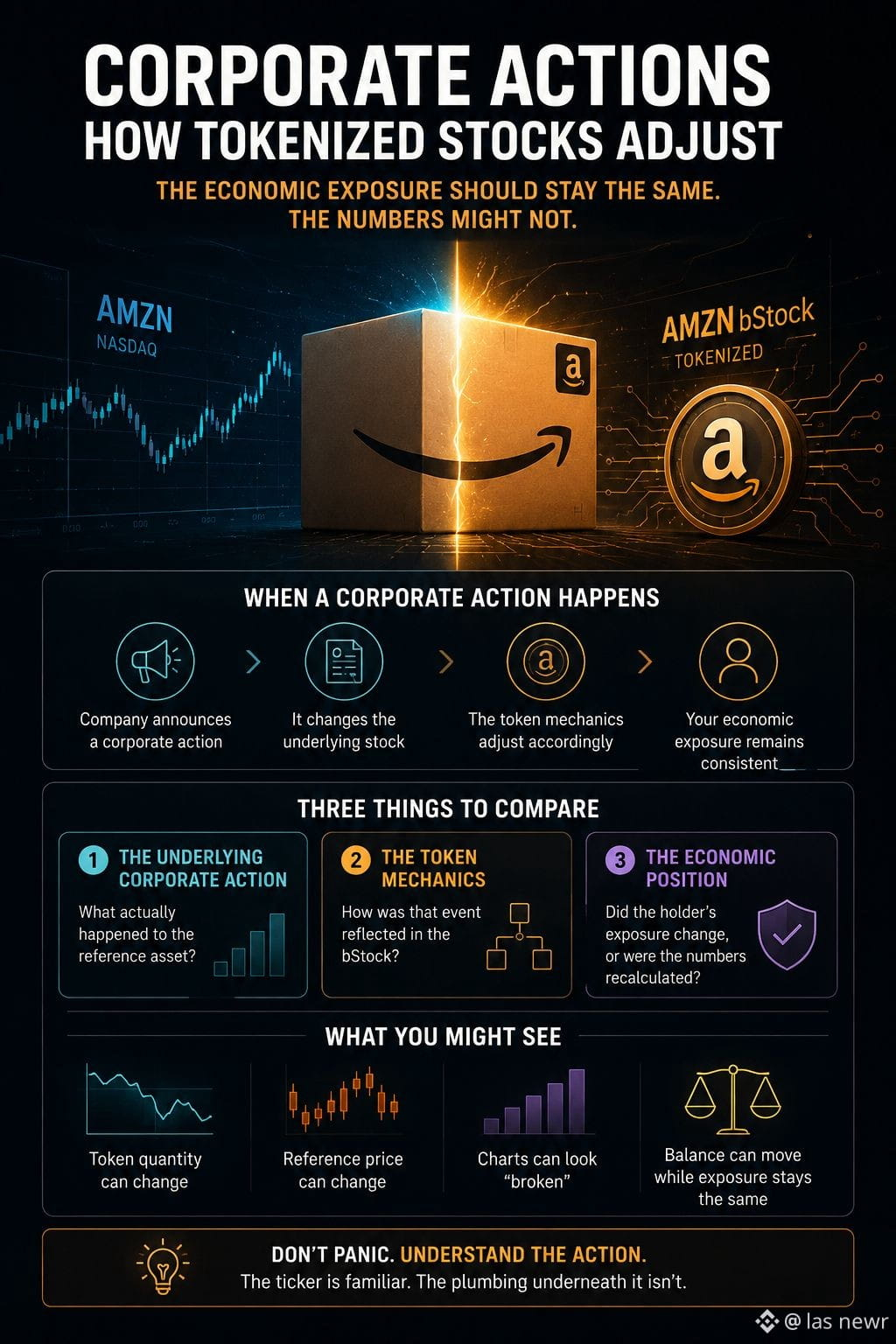
Take #AMZN as an example.
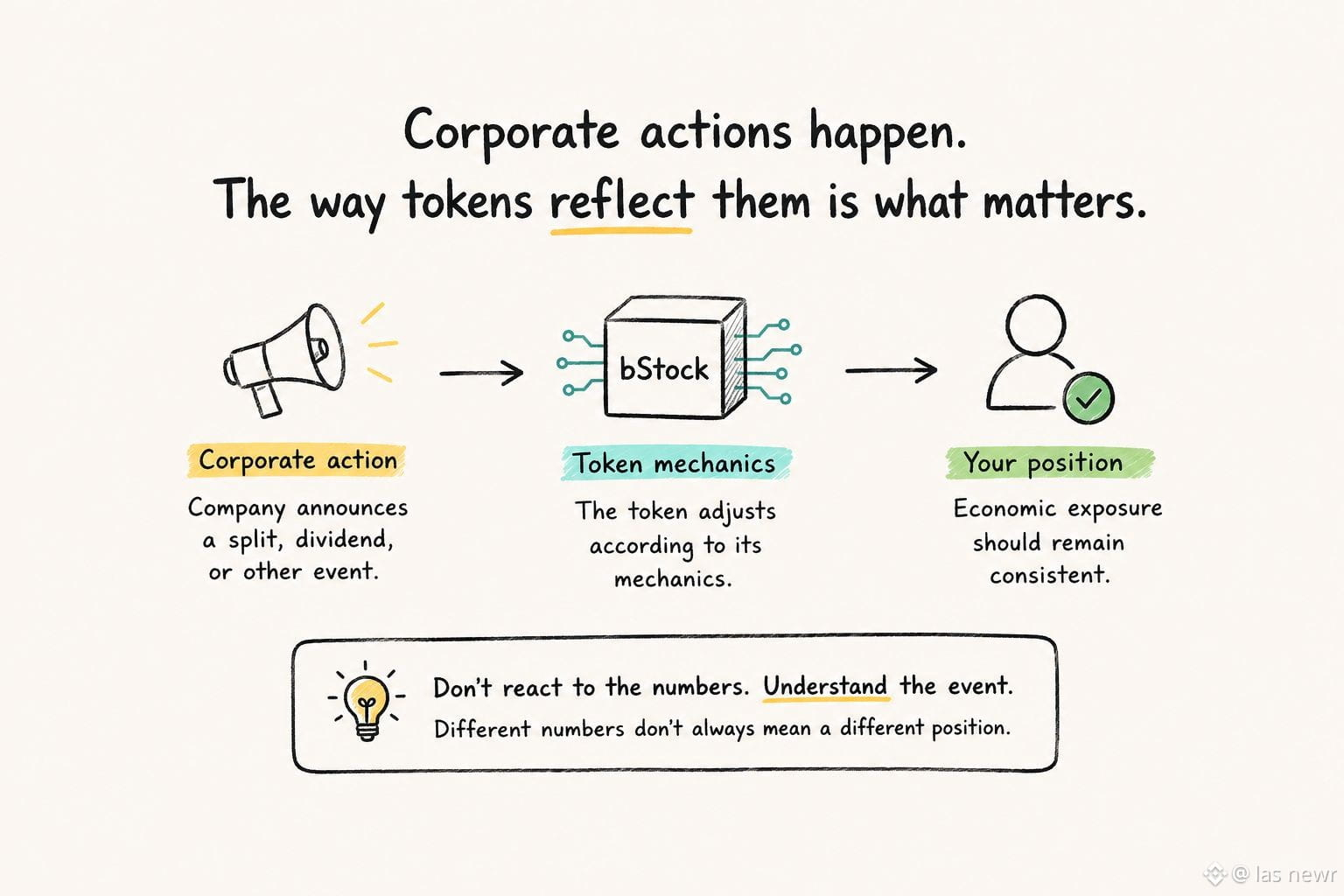
Imagine Amazon announces a corporate action that changes the number of shares, the economic value per share, or the way the underlying security is represented.
With a normal stock position, the broker handles the adjustment in the background.
With a bStock, I would want to understand how that adjustment appears on the token side.
Not because something is necessarily wrong.
Actually, the opposite.
A clean adjustment can make the token look strange for a short period:
the token quantity can change;
the reference price can change;
historical charts can suddenly look “broken”;
the displayed balance can move even when the economic exposure was intended to remain consistent.
That is why I wouldn’t judge a tokenized stock by looking at one number before and after a corporate action.
I’d compare three things:
1. The underlying corporate action
What actually happened to the reference asset?
2. The token mechanics
How was that event reflected in the bStock?
3. The economic position
Did the holder’s exposure change, or did the numbers simply get recalculated?
This distinction is easy to miss.
A chart can show a dramatic move while the economic position barely changes.
And the reverse can also happen: the displayed price may look normal while the mechanics underneath deserve a closer look.
That’s probably the part of tokenized markets I find most interesting.
The ticker is familiar.
The plumbing underneath it isn't.
So when I see something unusual around #AMZN, my first reaction wouldn't be “the token is broken.”
I'd ask:
“What changed in the underlying asset, and how did the tokenization layer translate it?”$MSFTB
#bstockscis @BinanceCIS
I used to think the most important question with a tokenized stock was simply:
“Does the token follow the stock?”
Now I think there’s a better question.
“What exactly happens when the underlying stock changes its structure?”
Take #AMZN as an example.
Imagine Amazon announces a corporate action that changes the number of shares, the economic value per share, or the way the underlying security is represented.
With a normal stock position, the broker handles the adjustment in the background.
With a bStock, I would want to understand how that adjustment appears on the token side.
Not because something is necessarily wrong.
Actually, the opposite.
A clean adjustment can make the token look strange for a short period:
the token quantity can change;
the reference price can change;
historical charts can suddenly look “broken”;
the displayed balance can move even when the economic exposure was intended to remain consistent.
That is why I wouldn’t judge a tokenized stock by looking at one number before and after a corporate action.
I’d compare three things:
1. The underlying corporate action
What actually happened to the reference asset?
2. The token mechanics
How was that event reflected in the bStock?
3. The economic position
Did the holder’s exposure change, or did the numbers simply get recalculated?
This distinction is easy to miss.
A chart can show a dramatic move while the economic position barely changes.
And the reverse can also happen: the displayed price may look normal while the mechanics underneath deserve a closer look.
That’s probably the part of tokenized markets I find most interesting.
The ticker is familiar.
The plumbing underneath it isn't.
So when I see something unusual around #AMZN, my first reaction wouldn't be “the token is broken.”
I'd ask:
“What changed in the underlying asset, and how did the tokenization layer translate it?”$MSFTB
#bstockscis @BinanceCIS
“Does the token follow the stock?”
Now I think there’s a better question.
“What exactly happens when the underlying stock changes its structure?”
Take #AMZN as an example.
Imagine Amazon announces a corporate action that changes the number of shares, the economic value per share, or the way the underlying security is represented.
With a normal stock position, the broker handles the adjustment in the background.
With a bStock, I would want to understand how that adjustment appears on the token side.
Not because something is necessarily wrong.
Actually, the opposite.
A clean adjustment can make the token look strange for a short period:
the token quantity can change;
the reference price can change;
historical charts can suddenly look “broken”;
the displayed balance can move even when the economic exposure was intended to remain consistent.
That is why I wouldn’t judge a tokenized stock by looking at one number before and after a corporate action.
I’d compare three things:
1. The underlying corporate action
What actually happened to the reference asset?
2. The token mechanics
How was that event reflected in the bStock?
3. The economic position
Did the holder’s exposure change, or did the numbers simply get recalculated?
This distinction is easy to miss.
A chart can show a dramatic move while the economic position barely changes.
And the reverse can also happen: the displayed price may look normal while the mechanics underneath deserve a closer look.
That’s probably the part of tokenized markets I find most interesting.
The ticker is familiar.
The plumbing underneath it isn't.
So when I see something unusual around #AMZN, my first reaction wouldn't be “the token is broken.”
I'd ask:
“What changed in the underlying asset, and how did the tokenization layer translate it?”$MSFTB
#bstockscis @BinanceCIS
1
1
73
·
--
Je pensais que la partie la plus intéressante des actions tokenisées consistait simplement à pouvoir les trader en dehors des heures de marché traditionnelles.
Ensuite, j’ai commencé à l’analyser sous un angle différent.
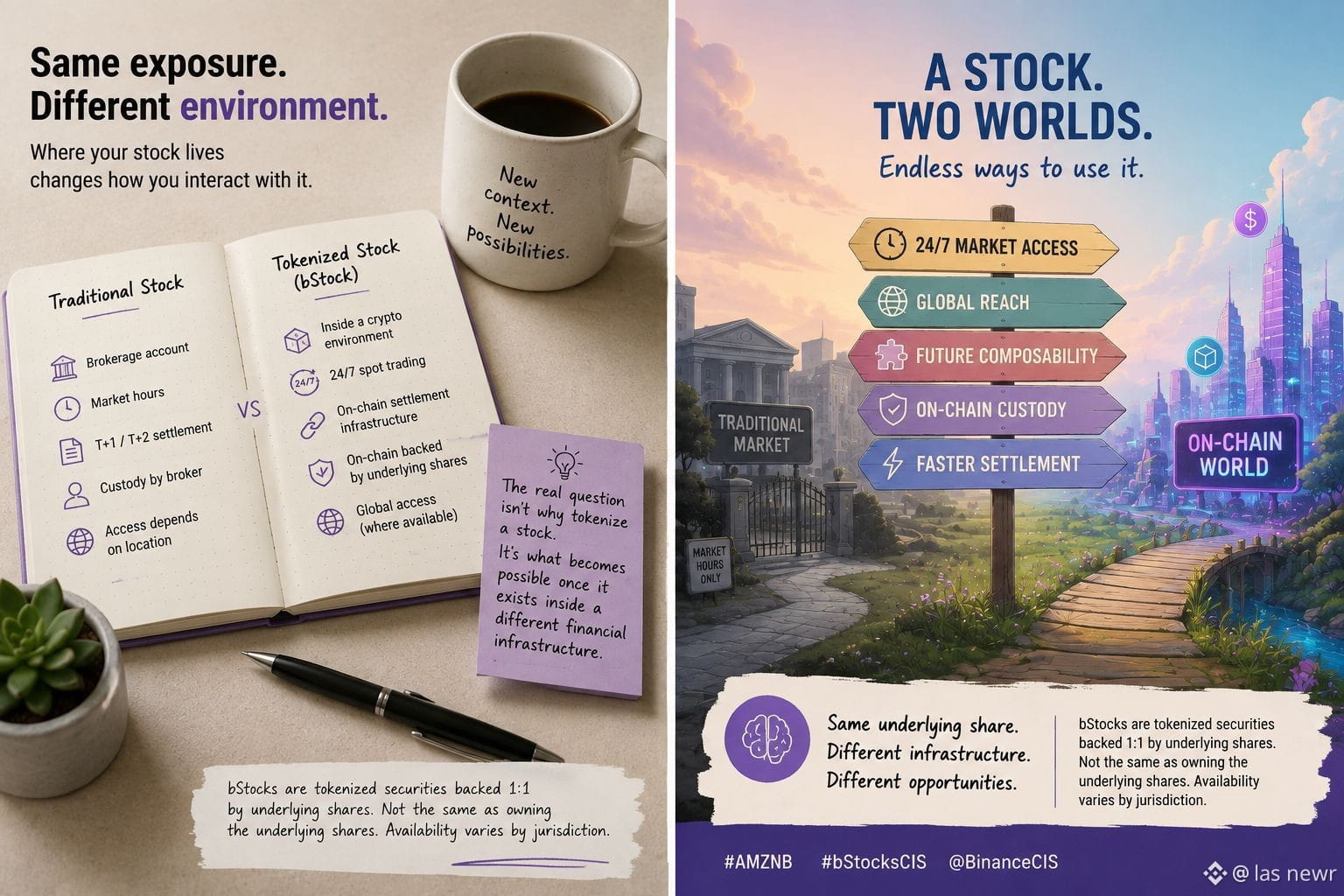
Le changement le plus important pourrait en fait être l’endroit où l’actif s’inscrit dans le workflow de l’investisseur.
Une action traditionnelle se trouve généralement dans un compte de courtage.
Un bStock, lui, se trouve dans un environnement crypto.
Cela ressemble à une simple distinction technique.
Ce n’est pas le cas.
Avec un titre tokenisé, le même acteur du marché qui gère déjà USDT, BNB ou d’autres actifs numériques peut rencontrer un instrument lié à des actions sans devoir changer complètement d’environnement financier.
Cela modifie le contexte dans lequel l’actif peut être utilisé.
Et c’est pour moi là que la tokenisation devient vraiment plus intéressante.
Pas :
« Des actions, mais sur une blockchain. »
Plutôt :
« Qu’arrive-t-il lorsqu’un actif lié à des actions devient une partie d’un écosystème financier on-chain ? »
Cela ouvre un débat bien plus vaste autour de la compensation, de la garde (custody), de la portabilité et, à terme, de la composabilité.
Bien sûr, un bStock n’est pas la même chose que posséder directement les actions de la société sous-jacente. C’est un titre tokenisé adossé 1:1 à une action sous-jacente, et sa disponibilité dépend de la juridiction. �
Binance Academy +1
Pour moi, la question importante a changé.
Je ne me demande plus :
« Pourquoi quelqu’un tokeniserait-il une action ? »
Je me demande :
« Que devient possible une fois que l’action peut exister au sein d’une infrastructure financière différente ? »
C’est une question bien plus intéressante.
#bstockscis @BinanceCIS #AMZNB
{spot}(AMZNBUSDT)
Je pensais que la partie la plus intéressante des actions tokenisées consistait simplement à pouvoir les trader en dehors des heures de marché traditionnelles.
Ensuite, j’ai commencé à l’analyser sous un angle différent.
Le changement le plus important pourrait en fait être l’endroit où l’actif s’inscrit dans le workflow de l’investisseur.
Une action traditionnelle se trouve généralement dans un compte de courtage.
Un bStock, lui, se trouve dans un environnement crypto.
Cela ressemble à une simple distinction technique.
Ce n’est pas le cas.
Avec un titre tokenisé, le même acteur du marché qui gère déjà USDT, BNB ou d’autres actifs numériques peut rencontrer un instrument lié à des actions sans devoir changer complètement d’environnement financier.
Cela modifie le contexte dans lequel l’actif peut être utilisé.
Et c’est pour moi là que la tokenisation devient vraiment plus intéressante.
Pas :
« Des actions, mais sur une blockchain. »
Plutôt :
« Qu’arrive-t-il lorsqu’un actif lié à des actions devient une partie d’un écosystème financier on-chain ? »
Cela ouvre un débat bien plus vaste autour de la compensation, de la garde (custody), de la portabilité et, à terme, de la composabilité.
Bien sûr, un bStock n’est pas la même chose que posséder directement les actions de la société sous-jacente. C’est un titre tokenisé adossé 1:1 à une action sous-jacente, et sa disponibilité dépend de la juridiction. �
Binance Academy +1
Pour moi, la question importante a changé.
Je ne me demande plus :
« Pourquoi quelqu’un tokeniserait-il une action ? »
Je me demande :
« Que devient possible une fois que l’action peut exister au sein d’une infrastructure financière différente ? »
C’est une question bien plus intéressante.
#bstockscis @BinanceCIS #AMZNB
Ensuite, j’ai commencé à l’analyser sous un angle différent.
Le changement le plus important pourrait en fait être l’endroit où l’actif s’inscrit dans le workflow de l’investisseur.
Une action traditionnelle se trouve généralement dans un compte de courtage.
Un bStock, lui, se trouve dans un environnement crypto.
Cela ressemble à une simple distinction technique.
Ce n’est pas le cas.
Avec un titre tokenisé, le même acteur du marché qui gère déjà USDT, BNB ou d’autres actifs numériques peut rencontrer un instrument lié à des actions sans devoir changer complètement d’environnement financier.
Cela modifie le contexte dans lequel l’actif peut être utilisé.
Et c’est pour moi là que la tokenisation devient vraiment plus intéressante.
Pas :
« Des actions, mais sur une blockchain. »
Plutôt :
« Qu’arrive-t-il lorsqu’un actif lié à des actions devient une partie d’un écosystème financier on-chain ? »
Cela ouvre un débat bien plus vaste autour de la compensation, de la garde (custody), de la portabilité et, à terme, de la composabilité.
Bien sûr, un bStock n’est pas la même chose que posséder directement les actions de la société sous-jacente. C’est un titre tokenisé adossé 1:1 à une action sous-jacente, et sa disponibilité dépend de la juridiction. �
Binance Academy +1
Pour moi, la question importante a changé.
Je ne me demande plus :
« Pourquoi quelqu’un tokeniserait-il une action ? »
Je me demande :
« Que devient possible une fois que l’action peut exister au sein d’une infrastructure financière différente ? »
C’est une question bien plus intéressante.
#bstockscis @BinanceCIS #AMZNB
78
·
--
Voir la traduction
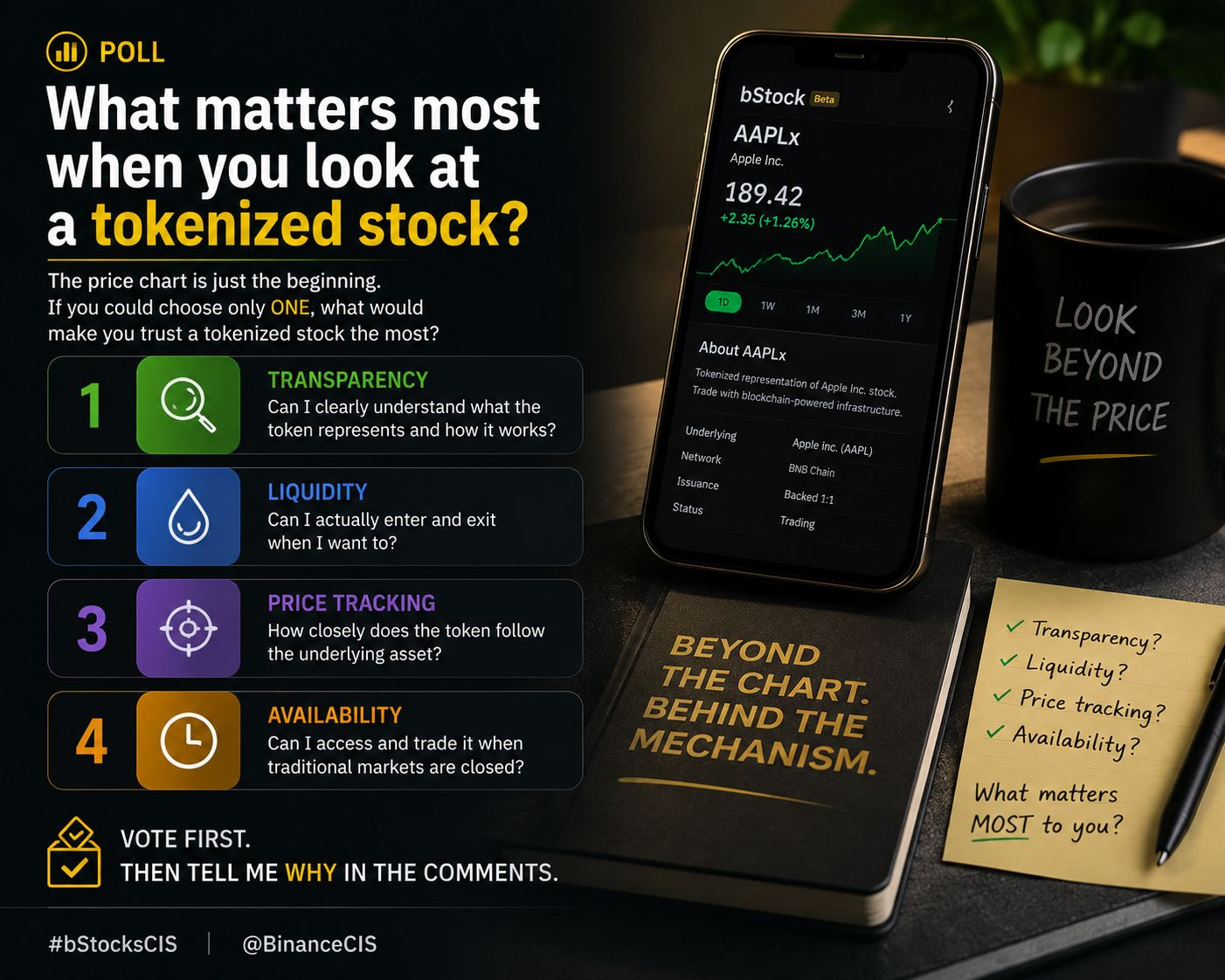
When you look at a tokenized stock, what would make you trust it more?
For me, the price chart is only the beginning.
A token can follow its underlying asset closely and still leave other questions unanswered.
So I would break the decision into four things:
1️⃣ Transparency
Can I clearly understand what the token represents and how the structure works?
2️⃣ Liquidity
Can I actually enter and exit when I want to?
3️⃣ Price tracking
How closely does the token follow the underlying asset?
4️⃣ Availability
Can I access and trade it when traditional markets are closed?
I think people may rank these very differently depending on what they actually use tokenized equities for.
So let's test it.
If you could choose only ONE, what matters most to you?
🟢 Transparency
🔵 Liquidity
🟣 Price tracking
🟠 Availability
Vote first.
Then tell me why in the comments.
#bstockscis @BinanceCIS
When you look at a tokenized stock, what would make you trust it more?
For me, the price chart is only the beginning.
A token can follow its underlying asset closely and still leave other questions unanswered.
So I would break the decision into four things:
1️⃣ Transparency
Can I clearly understand what the token represents and how the structure works?
2️⃣ Liquidity
Can I actually enter and exit when I want to?
3️⃣ Price tracking
How closely does the token follow the underlying asset?
4️⃣ Availability
Can I access and trade it when traditional markets are closed?
I think people may rank these very differently depending on what they actually use tokenized equities for.
So let's test it.
If you could choose only ONE, what matters most to you?
🟢 Transparency
🔵 Liquidity
🟣 Price tracking
🟠 Availability
Vote first.
Then tell me why in the comments.
#bstockscis @BinanceCIS
For me, the price chart is only the beginning.
A token can follow its underlying asset closely and still leave other questions unanswered.
So I would break the decision into four things:
1️⃣ Transparency
Can I clearly understand what the token represents and how the structure works?
2️⃣ Liquidity
Can I actually enter and exit when I want to?
3️⃣ Price tracking
How closely does the token follow the underlying asset?
4️⃣ Availability
Can I access and trade it when traditional markets are closed?
I think people may rank these very differently depending on what they actually use tokenized equities for.
So let's test it.
If you could choose only ONE, what matters most to you?
🟢 Transparency
🔵 Liquidity
🟣 Price tracking
🟠 Availability
Vote first.
Then tell me why in the comments.
#bstockscis @BinanceCIS
107
·
--
Haussier
Voir la traduction
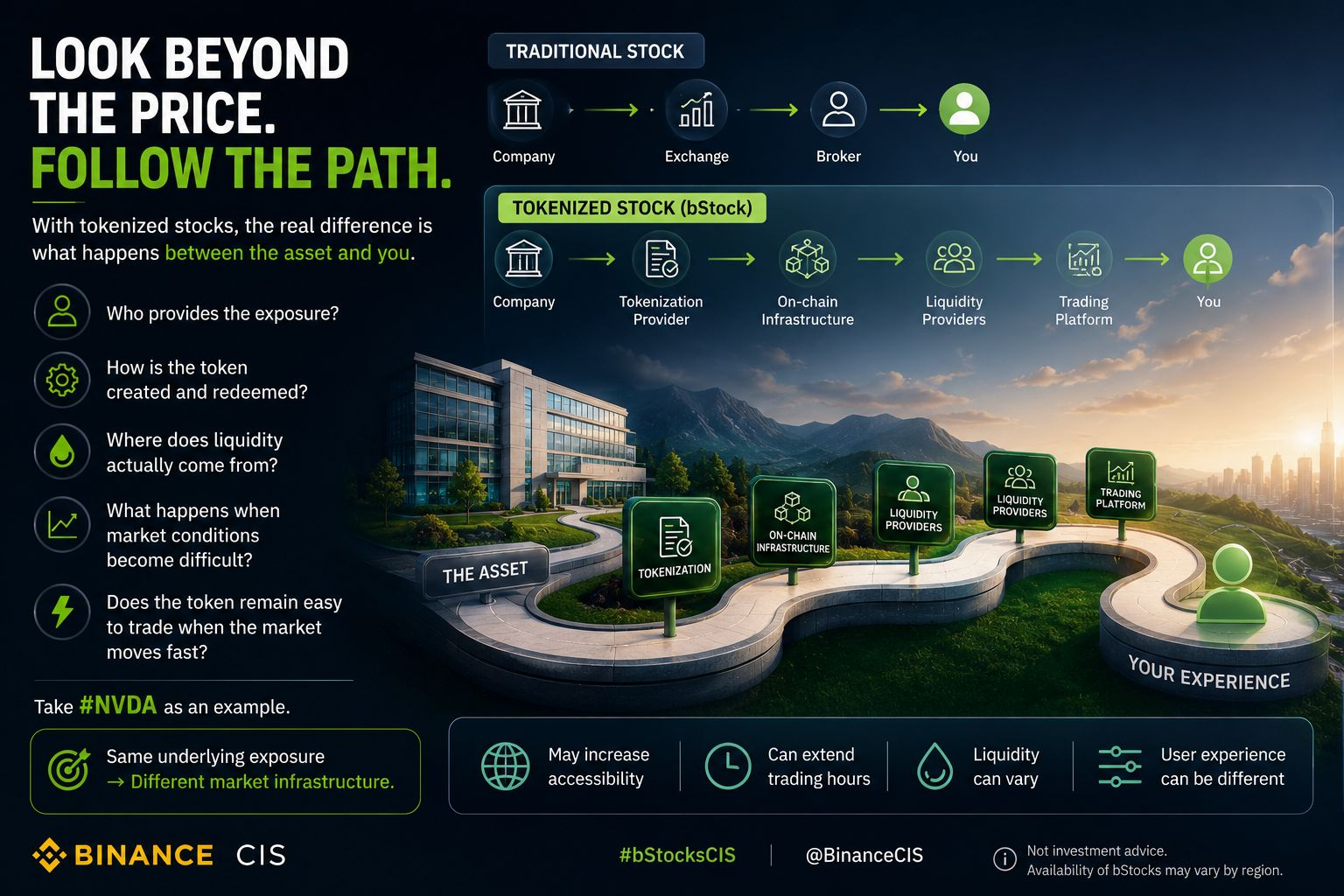
One thing I would watch with tokenized stocks is not the headline price.
It is the path between the asset and the person trading it.
With a traditional stock, most of the infrastructure is familiar.
With a tokenized version, there can be another layer between the underlying asset and the trading experience.
That makes me ask a different set of questions:
Who provides the exposure?
How is the token created and redeemed?
Where does liquidity actually come from?
What happens when market conditions become difficult?
And perhaps the most important one:
Does the token remain easy to trade when the market moves fast?
Take #NVDA as an example.
The interesting comparison isn't simply:
stock vs token.
It is:
same underlying exposure → different market infrastructure.
That difference can affect accessibility, trading hours, liquidity, and the overall user experience.
So when I look at a bStock, I don't want to stop at the chart.
I want to understand what is happening behind the chart.
#bstockscis @BinanceCIS
One thing I would watch with tokenized stocks is not the headline price.
It is the path between the asset and the person trading it.
With a traditional stock, most of the infrastructure is familiar.
With a tokenized version, there can be another layer between the underlying asset and the trading experience.
That makes me ask a different set of questions:
Who provides the exposure?
How is the token created and redeemed?
Where does liquidity actually come from?
What happens when market conditions become difficult?
And perhaps the most important one:
Does the token remain easy to trade when the market moves fast?
Take #NVDA as an example.
The interesting comparison isn't simply:
stock vs token.
It is:
same underlying exposure → different market infrastructure.
That difference can affect accessibility, trading hours, liquidity, and the overall user experience.
So when I look at a bStock, I don't want to stop at the chart.
I want to understand what is happening behind the chart.
#bstockscis @BinanceCIS
It is the path between the asset and the person trading it.
With a traditional stock, most of the infrastructure is familiar.
With a tokenized version, there can be another layer between the underlying asset and the trading experience.
That makes me ask a different set of questions:
Who provides the exposure?
How is the token created and redeemed?
Where does liquidity actually come from?
What happens when market conditions become difficult?
And perhaps the most important one:
Does the token remain easy to trade when the market moves fast?
Take #NVDA as an example.
The interesting comparison isn't simply:
stock vs token.
It is:
same underlying exposure → different market infrastructure.
That difference can affect accessibility, trading hours, liquidity, and the overall user experience.
So when I look at a bStock, I don't want to stop at the chart.
I want to understand what is happening behind the chart.
#bstockscis @BinanceCIS
1
89
·
--
Voir la traduction
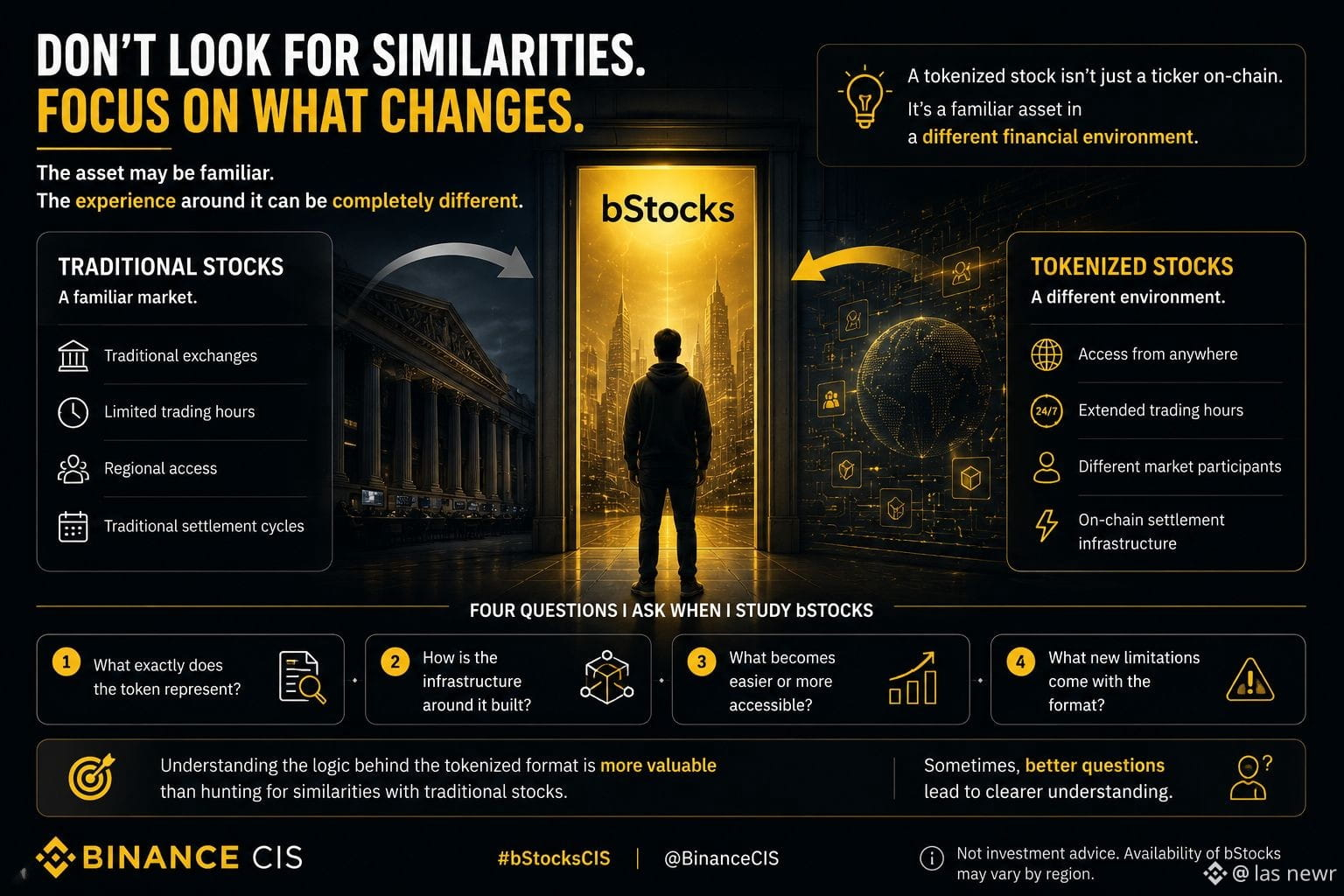
The more I learn about bStocks, the less useful I find one particular question:
“How similar are they to traditional stocks?”
It sounds reasonable, but it can lead you in the wrong direction.
A more interesting question is:
What changes for the user when a familiar market asset appears in a tokenized form?
Because the point isn't simply to take a ticker and add the word “token.”
The asset enters a different infrastructure — with a different interface, different ways of moving capital, and different possibilities for interacting with it.
And I don't think the goal should be to immediately decide which format is “better.”
It's more useful to understand what each format is designed to do.
So when I look at bStocks, I try to ask four things:
— What exactly does the token represent?
— How is the infrastructure around it built?
— What becomes easier or more accessible?
— What new limitations come with the format?
That last question matters just as much.
Every new financial structure adds something, but it also introduces its own rules.
That's why I'm less interested in finding similarities between bStocks and traditional stocks, and more interested in understanding the logic behind the tokenized format.
Sometimes a product becomes easier to understand not when you find more answers.
But when you finally start asking better questions.
@BinanceCIS #bstockscis
The more I learn about bStocks, the less useful I find one particular question:
“How similar are they to traditional stocks?”
It sounds reasonable, but it can lead you in the wrong direction.
A more interesting question is:
What changes for the user when a familiar market asset appears in a tokenized form?
Because the point isn't simply to take a ticker and add the word “token.”
The asset enters a different infrastructure — with a different interface, different ways of moving capital, and different possibilities for interacting with it.
And I don't think the goal should be to immediately decide which format is “better.”
It's more useful to understand what each format is designed to do.
So when I look at bStocks, I try to ask four things:
— What exactly does the token represent?
— How is the infrastructure around it built?
— What becomes easier or more accessible?
— What new limitations come with the format?
That last question matters just as much.
Every new financial structure adds something, but it also introduces its own rules.
That's why I'm less interested in finding similarities between bStocks and traditional stocks, and more interested in understanding the logic behind the tokenized format.
Sometimes a product becomes easier to understand not when you find more answers.
But when you finally start asking better questions.
@BinanceCIS #bstockscis
“How similar are they to traditional stocks?”
It sounds reasonable, but it can lead you in the wrong direction.
A more interesting question is:
What changes for the user when a familiar market asset appears in a tokenized form?
Because the point isn't simply to take a ticker and add the word “token.”
The asset enters a different infrastructure — with a different interface, different ways of moving capital, and different possibilities for interacting with it.
And I don't think the goal should be to immediately decide which format is “better.”
It's more useful to understand what each format is designed to do.
So when I look at bStocks, I try to ask four things:
— What exactly does the token represent?
— How is the infrastructure around it built?
— What becomes easier or more accessible?
— What new limitations come with the format?
That last question matters just as much.
Every new financial structure adds something, but it also introduces its own rules.
That's why I'm less interested in finding similarities between bStocks and traditional stocks, and more interested in understanding the logic behind the tokenized format.
Sometimes a product becomes easier to understand not when you find more answers.
But when you finally start asking better questions.
@BinanceCIS #bstockscis
82
·
--
Voir la traduction
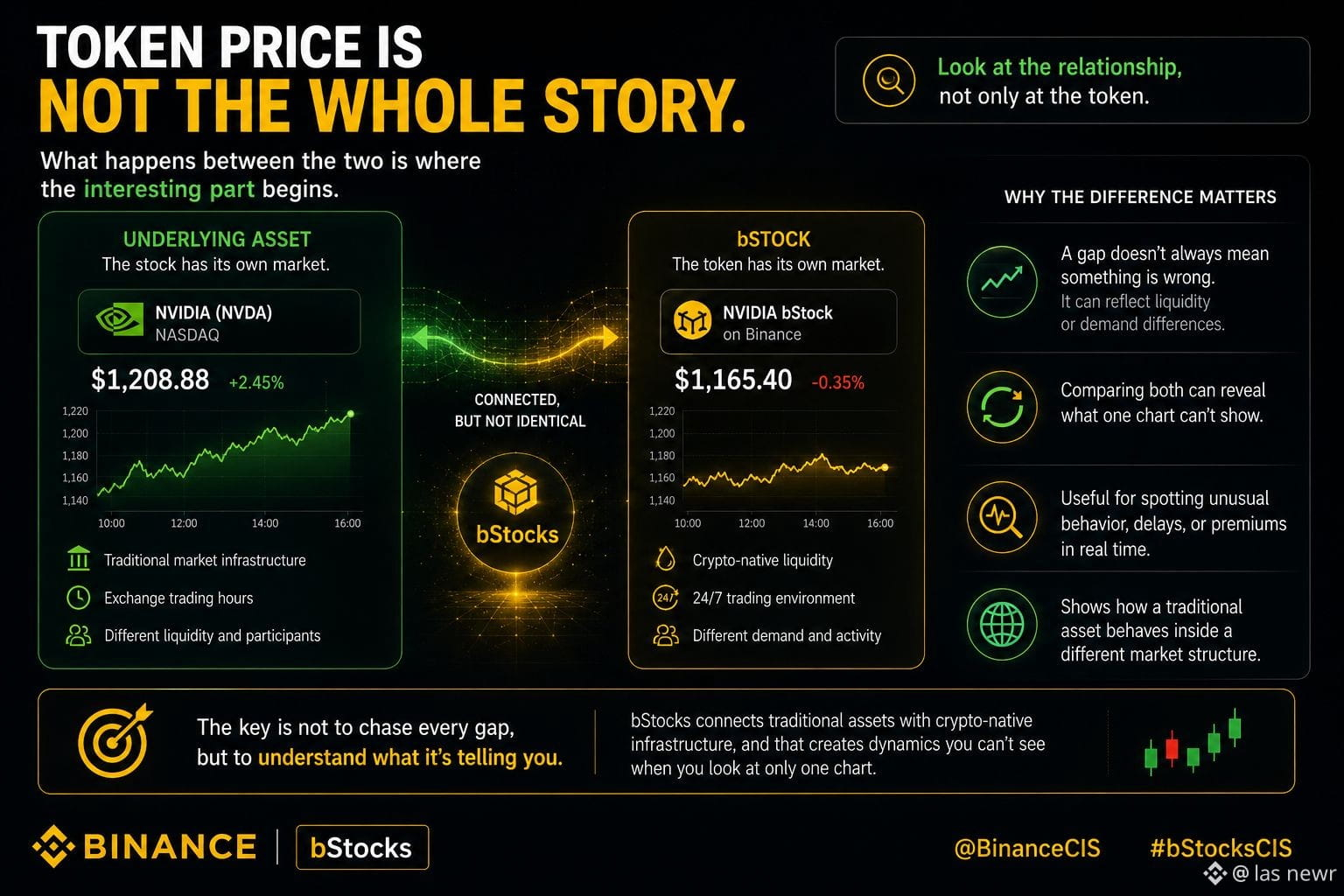
One thing I find interesting about bStocks is that the token price is not the whole story.
At first, I looked at the price and thought:
“Okay, it follows the underlying stock. Simple.”
But then I started thinking about what happens between the two.
The underlying asset has its own market.
The bStock has its own liquidity, trading activity and market participants.
So even when they are connected, the two prices don't have to move in exactly the same way at every moment.
That difference is actually one of the things I'd watch most closely.
Not because every gap means something is wrong.
Sometimes it can simply show where liquidity or demand is different.
For me, this makes bStocks more interesting to analyze than just looking at a price chart.
You have to look at the relationship between the asset and the token, not only at the token itself. 👀
That is probably the part I would pay the most attention to over time. 📊
@BinanceCIS #bstockscis
One thing I find interesting about bStocks is that the token price is not the whole story.
At first, I looked at the price and thought:
“Okay, it follows the underlying stock. Simple.”
But then I started thinking about what happens between the two.
The underlying asset has its own market.
The bStock has its own liquidity, trading activity and market participants.
So even when they are connected, the two prices don't have to move in exactly the same way at every moment.
That difference is actually one of the things I'd watch most closely.
Not because every gap means something is wrong.
Sometimes it can simply show where liquidity or demand is different.
For me, this makes bStocks more interesting to analyze than just looking at a price chart.
You have to look at the relationship between the asset and the token, not only at the token itself. 👀
That is probably the part I would pay the most attention to over time. 📊
@BinanceCIS #bstockscis
At first, I looked at the price and thought:
“Okay, it follows the underlying stock. Simple.”
But then I started thinking about what happens between the two.
The underlying asset has its own market.
The bStock has its own liquidity, trading activity and market participants.
So even when they are connected, the two prices don't have to move in exactly the same way at every moment.
That difference is actually one of the things I'd watch most closely.
Not because every gap means something is wrong.
Sometimes it can simply show where liquidity or demand is different.
For me, this makes bStocks more interesting to analyze than just looking at a price chart.
You have to look at the relationship between the asset and the token, not only at the token itself. 👀
That is probably the part I would pay the most attention to over time. 📊
@BinanceCIS #bstockscis
83
·
--
Voir la traduction
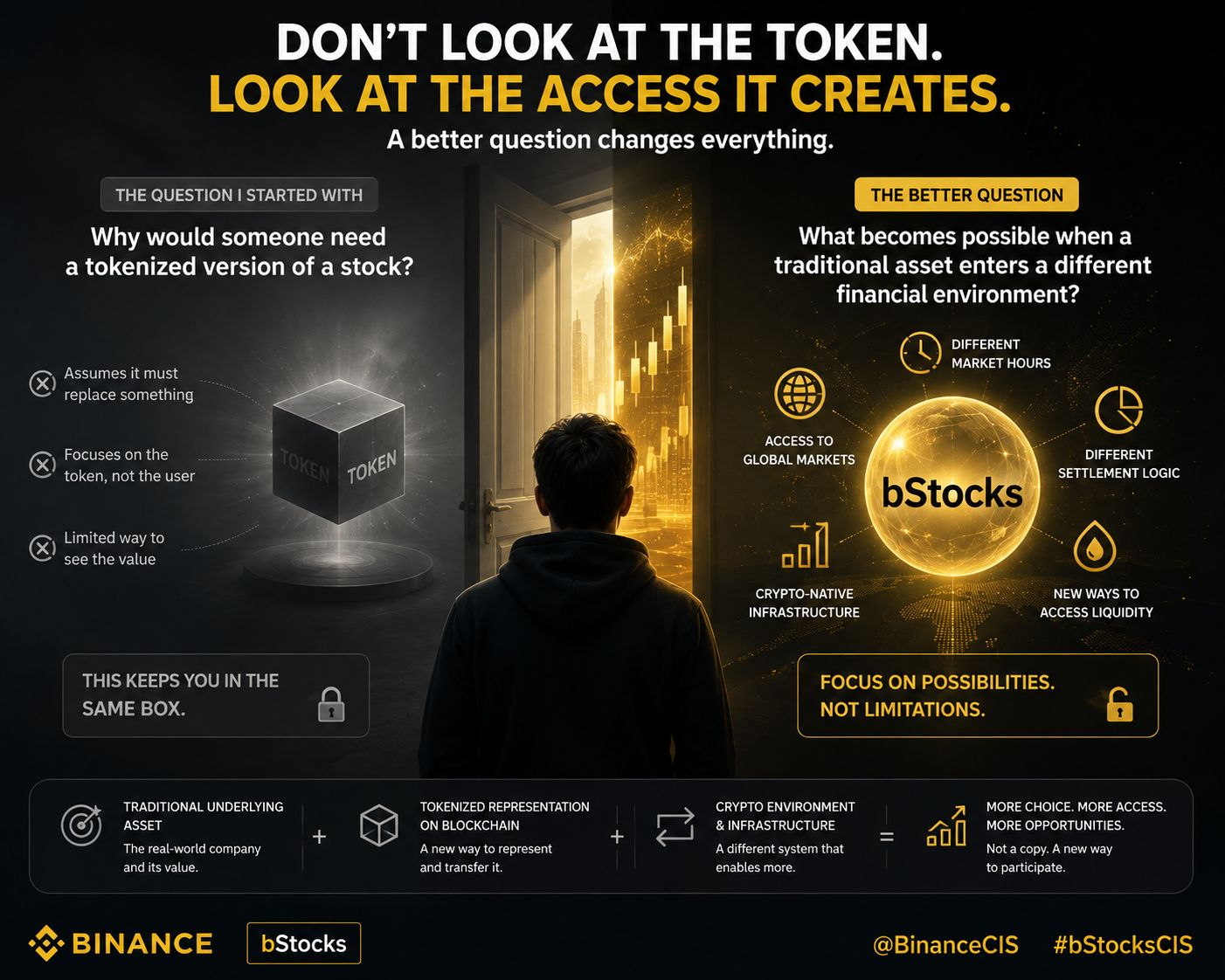
One thing I started noticing while learning about bStocks:
I was looking at the token first, instead of looking at the access it creates.
At first, I kept asking:
“Why would someone need a tokenized version of a stock?”
But that question already assumes the token has to replace something.
A better question is:
“What becomes possible when a traditional asset enters a different financial environment?”
That changed how I look at bStocks.
The interesting part isn't simply putting a familiar name on-chain.
It's the combination of a traditional underlying asset with crypto-native infrastructure.
Different market hours.
Different settlement logic.
Different ways of accessing liquidity.
So now I try not to ask whether tokenized stocks are “better” than traditional stocks.
I ask what they allow users to do that wasn't as simple before.
For me, that's a much more interesting way to understand RWA. 👀
@BinanceCIS #bstockscis
One thing I started noticing while learning about bStocks:
I was looking at the token first, instead of looking at the access it creates.
At first, I kept asking:
“Why would someone need a tokenized version of a stock?”
But that question already assumes the token has to replace something.
A better question is:
“What becomes possible when a traditional asset enters a different financial environment?”
That changed how I look at bStocks.
The interesting part isn't simply putting a familiar name on-chain.
It's the combination of a traditional underlying asset with crypto-native infrastructure.
Different market hours.
Different settlement logic.
Different ways of accessing liquidity.
So now I try not to ask whether tokenized stocks are “better” than traditional stocks.
I ask what they allow users to do that wasn't as simple before.
For me, that's a much more interesting way to understand RWA. 👀
@BinanceCIS #bstockscis
I was looking at the token first, instead of looking at the access it creates.
At first, I kept asking:
“Why would someone need a tokenized version of a stock?”
But that question already assumes the token has to replace something.
A better question is:
“What becomes possible when a traditional asset enters a different financial environment?”
That changed how I look at bStocks.
The interesting part isn't simply putting a familiar name on-chain.
It's the combination of a traditional underlying asset with crypto-native infrastructure.
Different market hours.
Different settlement logic.
Different ways of accessing liquidity.
So now I try not to ask whether tokenized stocks are “better” than traditional stocks.
I ask what they allow users to do that wasn't as simple before.
For me, that's a much more interesting way to understand RWA. 👀
@BinanceCIS #bstockscis
73
·
--
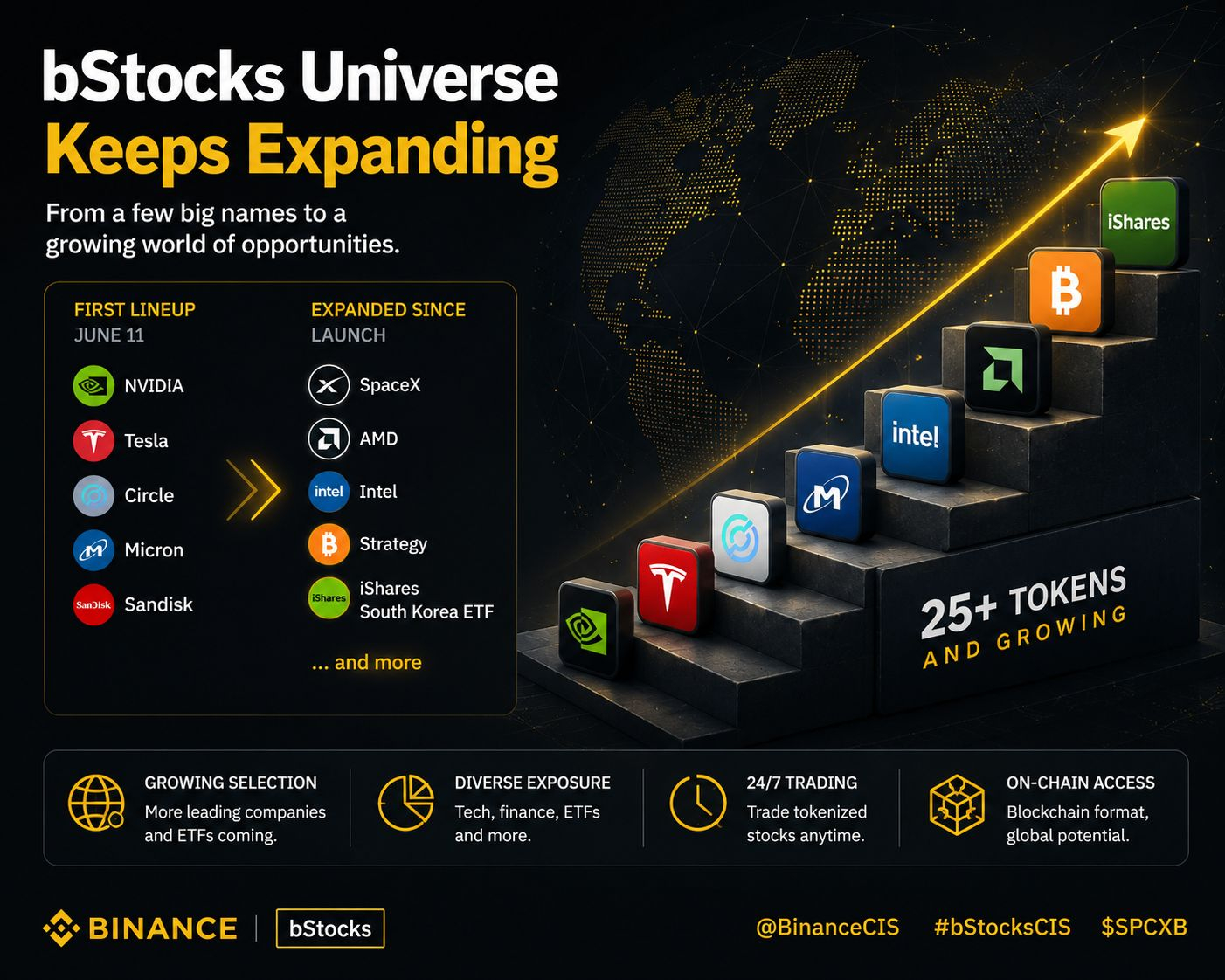
Une chose que j’aime avec bStocks, c’est que l’histoire ne se limite pas aux premiers tokens.
Le plus intéressant, c’est à quelle vitesse la sélection peut s’étendre. On peut commencer avec des noms familiers, puis soudain voir apparaître des secteurs et des entreprises complètement différents dans le même format tokenisé.
Pour moi, cela rend bStocks plus intéressant que de simplement avoir des « stock tokens » dans une liste.
On a l’impression qu’il s’agit d’un marché en croissance, où le choix des actifs traditionnels est progressivement amené vers un environnement de trading basé sur la blockchain.
Je préfère observer la façon dont cet écosystème se développe plutôt que d’essayer de deviner quel token va bouger ensuite. 👀
@BinanceCIS $SPCXB #bstockscis
Une chose que j’aime avec bStocks, c’est que l’histoire ne se limite pas aux premiers tokens.
Le plus intéressant, c’est à quelle vitesse la sélection peut s’étendre. On peut commencer avec des noms familiers, puis soudain voir apparaître des secteurs et des entreprises complètement différents dans le même format tokenisé.
Pour moi, cela rend bStocks plus intéressant que de simplement avoir des « stock tokens » dans une liste.
On a l’impression qu’il s’agit d’un marché en croissance, où le choix des actifs traditionnels est progressivement amené vers un environnement de trading basé sur la blockchain.
Je préfère observer la façon dont cet écosystème se développe plutôt que d’essayer de deviner quel token va bouger ensuite. 👀
@BinanceCIS $SPCXB #bstockscis
Le plus intéressant, c’est à quelle vitesse la sélection peut s’étendre. On peut commencer avec des noms familiers, puis soudain voir apparaître des secteurs et des entreprises complètement différents dans le même format tokenisé.
Pour moi, cela rend bStocks plus intéressant que de simplement avoir des « stock tokens » dans une liste.
On a l’impression qu’il s’agit d’un marché en croissance, où le choix des actifs traditionnels est progressivement amené vers un environnement de trading basé sur la blockchain.
Je préfère observer la façon dont cet écosystème se développe plutôt que d’essayer de deviner quel token va bouger ensuite. 👀
@BinanceCIS $SPCXB #bstockscis
107
·
--
Voir la traduction
I’ve been thinking about one thing with bStocks that is easy to miss.
The interesting part isn’t only that stocks can be represented on-chain. It’s the change in the way you can interact with them.
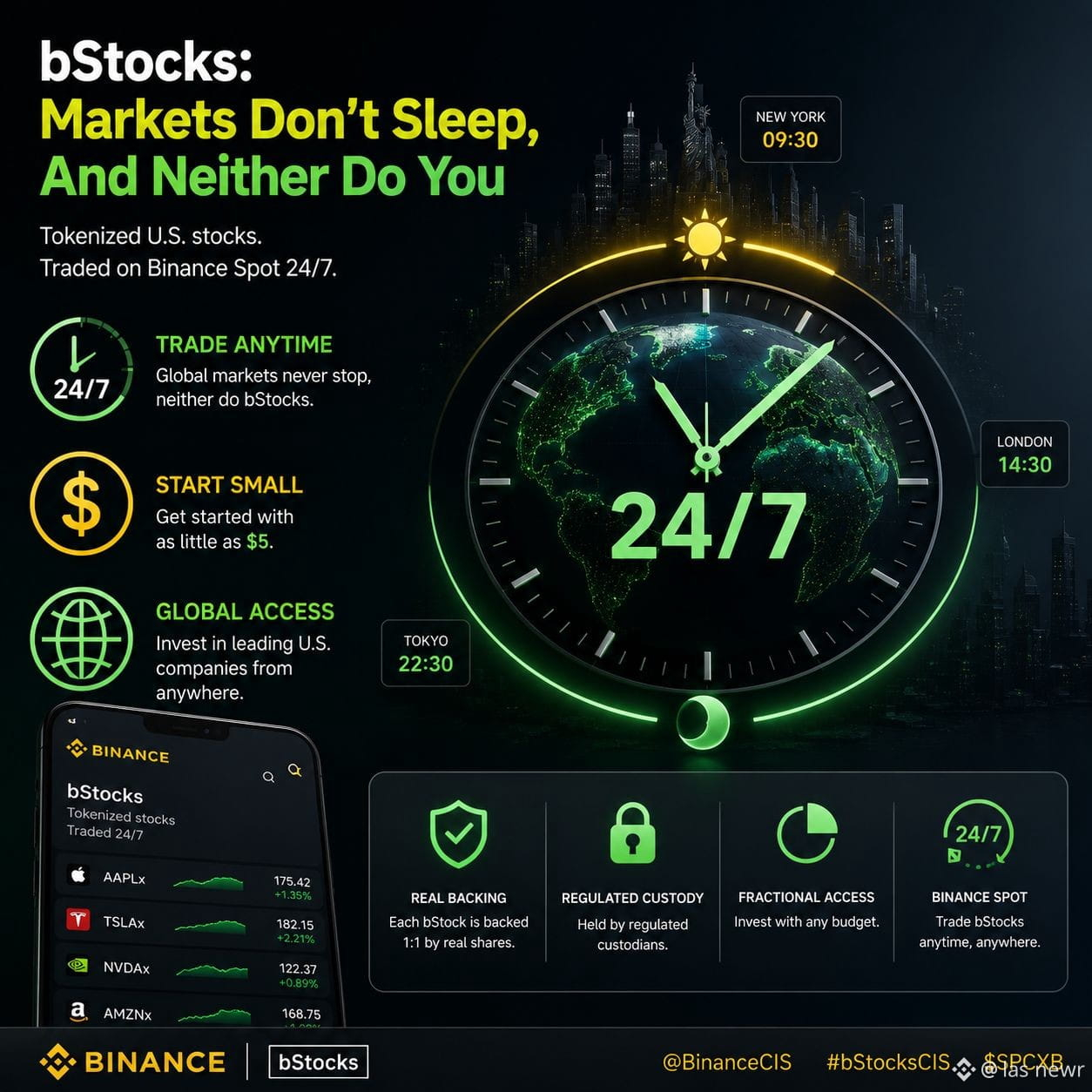
Traditional markets have their own schedules. bStocks can be traded on Binance Spot 24/7, which makes the whole experience feel much closer to the crypto market.
And the fractional format is another detail I like. You don’t necessarily need a huge amount of capital just to get started and learn how it works.
For me, the combination of traditional assets + blockchain access is the part worth watching. 👀📈
@BinanceCIS $SPCXB #bstockscis
I’ve been thinking about one thing with bStocks that is easy to miss.
The interesting part isn’t only that stocks can be represented on-chain. It’s the change in the way you can interact with them.
Traditional markets have their own schedules. bStocks can be traded on Binance Spot 24/7, which makes the whole experience feel much closer to the crypto market.
And the fractional format is another detail I like. You don’t necessarily need a huge amount of capital just to get started and learn how it works.
For me, the combination of traditional assets + blockchain access is the part worth watching. 👀📈
@BinanceCIS $SPCXB #bstockscis
The interesting part isn’t only that stocks can be represented on-chain. It’s the change in the way you can interact with them.
Traditional markets have their own schedules. bStocks can be traded on Binance Spot 24/7, which makes the whole experience feel much closer to the crypto market.
And the fractional format is another detail I like. You don’t necessarily need a huge amount of capital just to get started and learn how it works.
For me, the combination of traditional assets + blockchain access is the part worth watching. 👀📈
@BinanceCIS $SPCXB #bstockscis
106
·
--
Voir la traduction
I've been reading more about bStocks lately, and one thing stands out to me.
People often focus on price first, but I think understanding how a product works is much more important. Tokenization isn't about replacing traditional finance — it's about connecting it with blockchain technology.
For me, that's the most interesting part of bStocks.
Do you usually learn about a product before trading it, or do you explore it afterwards? 🤔📚
@BinanceCIS
#bstockscis
I've been reading more about bStocks lately, and one thing stands out to me.
People often focus on price first, but I think understanding how a product works is much more important. Tokenization isn't about replacing traditional finance — it's about connecting it with blockchain technology.
For me, that's the most interesting part of bStocks.
Do you usually learn about a product before trading it, or do you explore it afterwards? 🤔📚
@BinanceCIS
#bstockscis
People often focus on price first, but I think understanding how a product works is much more important. Tokenization isn't about replacing traditional finance — it's about connecting it with blockchain technology.
For me, that's the most interesting part of bStocks.
Do you usually learn about a product before trading it, or do you explore it afterwards? 🤔📚
@BinanceCIS
#bstockscis

1
1
·
--
L’idée derrière bStocks est assez intéressante.
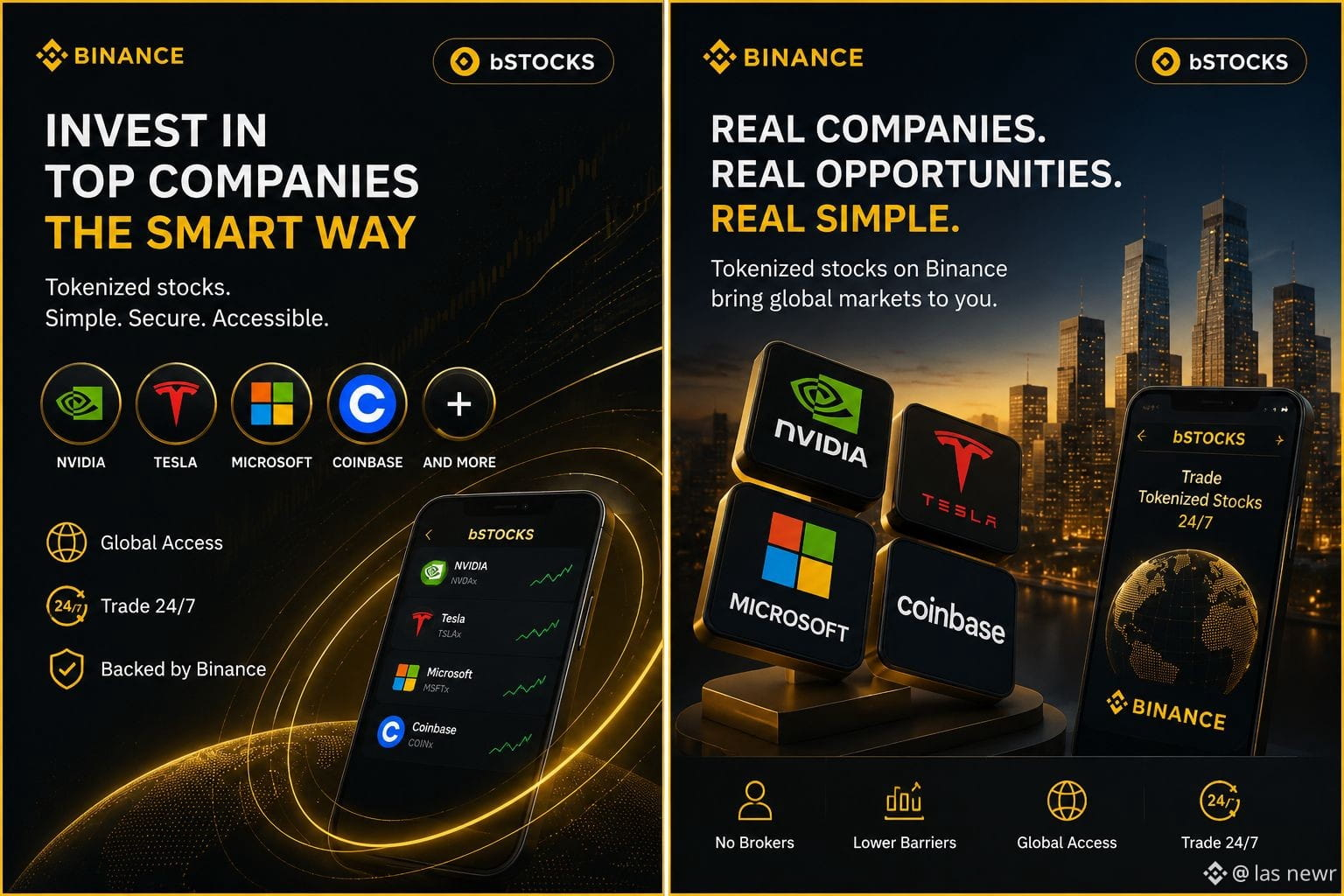
Les actions tokenisées rendent plus facile le suivi et l’accès à certaines des plus grandes entreprises du monde depuis une seule plateforme. Pour de nombreux utilisateurs, c’est une expérience bien plus fluide que l’utilisation de plusieurs services.
La technologie continue de rendre l’investissement plus accessible.
@BinanceCIS #bStocksCIS #Binance
L’idée derrière bStocks est assez intéressante.
Les actions tokenisées rendent plus facile le suivi et l’accès à certaines des plus grandes entreprises du monde depuis une seule plateforme. Pour de nombreux utilisateurs, c’est une expérience bien plus fluide que l’utilisation de plusieurs services.
La technologie continue de rendre l’investissement plus accessible.
@BinanceCIS #bStocksCIS #Binance
Les actions tokenisées rendent plus facile le suivi et l’accès à certaines des plus grandes entreprises du monde depuis une seule plateforme. Pour de nombreux utilisateurs, c’est une expérience bien plus fluide que l’utilisation de plusieurs services.
La technologie continue de rendre l’investissement plus accessible.
@BinanceCIS #bStocksCIS #Binance
1
85
·
--
Aujourd’hui, je me suis demandé pourquoi le sujet de la tokenisation devient de plus en plus populaire.
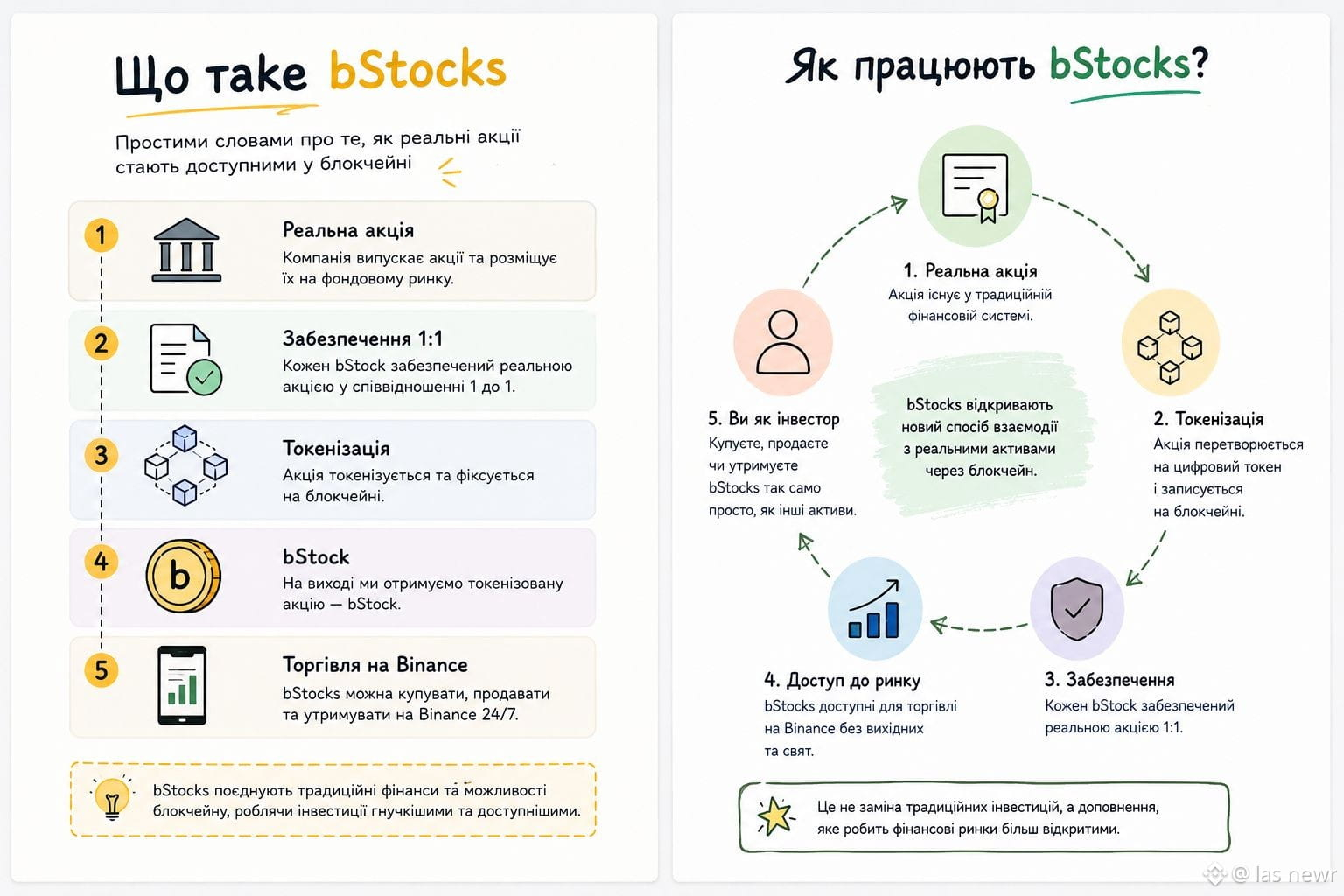
Il me semble que l’une des raisons en est la tentative de combiner des instruments financiers habituels avec les possibilités de la blockchain. C’est précisément cette idée que mettent en œuvre bStocks : des actions réelles sont représentées sous forme de tokens, ce qui permet d’interagir avec elles via l’écosystème de Binance.
Pour moi, ce n’est pas un remplacement du marché boursier traditionnel, mais plutôt un autre format d’accès aux actifs. Il est intéressant d’observer l’évolution de ce domaine.
Et vous, que pensez-vous de la tokenisation d’actifs réels ?
@BinanceCIS $SPCXB #bStocks #bstockscis
Aujourd’hui, je me suis demandé pourquoi le sujet de la tokenisation devient de plus en plus populaire.
Il me semble que l’une des raisons en est la tentative de combiner des instruments financiers habituels avec les possibilités de la blockchain. C’est précisément cette idée que mettent en œuvre bStocks : des actions réelles sont représentées sous forme de tokens, ce qui permet d’interagir avec elles via l’écosystème de Binance.
Pour moi, ce n’est pas un remplacement du marché boursier traditionnel, mais plutôt un autre format d’accès aux actifs. Il est intéressant d’observer l’évolution de ce domaine.
Et vous, que pensez-vous de la tokenisation d’actifs réels ?
@BinanceCIS $SPCXB #bStocks #bstockscis
Il me semble que l’une des raisons en est la tentative de combiner des instruments financiers habituels avec les possibilités de la blockchain. C’est précisément cette idée que mettent en œuvre bStocks : des actions réelles sont représentées sous forme de tokens, ce qui permet d’interagir avec elles via l’écosystème de Binance.
Pour moi, ce n’est pas un remplacement du marché boursier traditionnel, mais plutôt un autre format d’accès aux actifs. Il est intéressant d’observer l’évolution de ce domaine.
Et vous, que pensez-vous de la tokenisation d’actifs réels ?
@BinanceCIS $SPCXB #bStocks #bstockscis
1
66
·
--
Voir la traduction
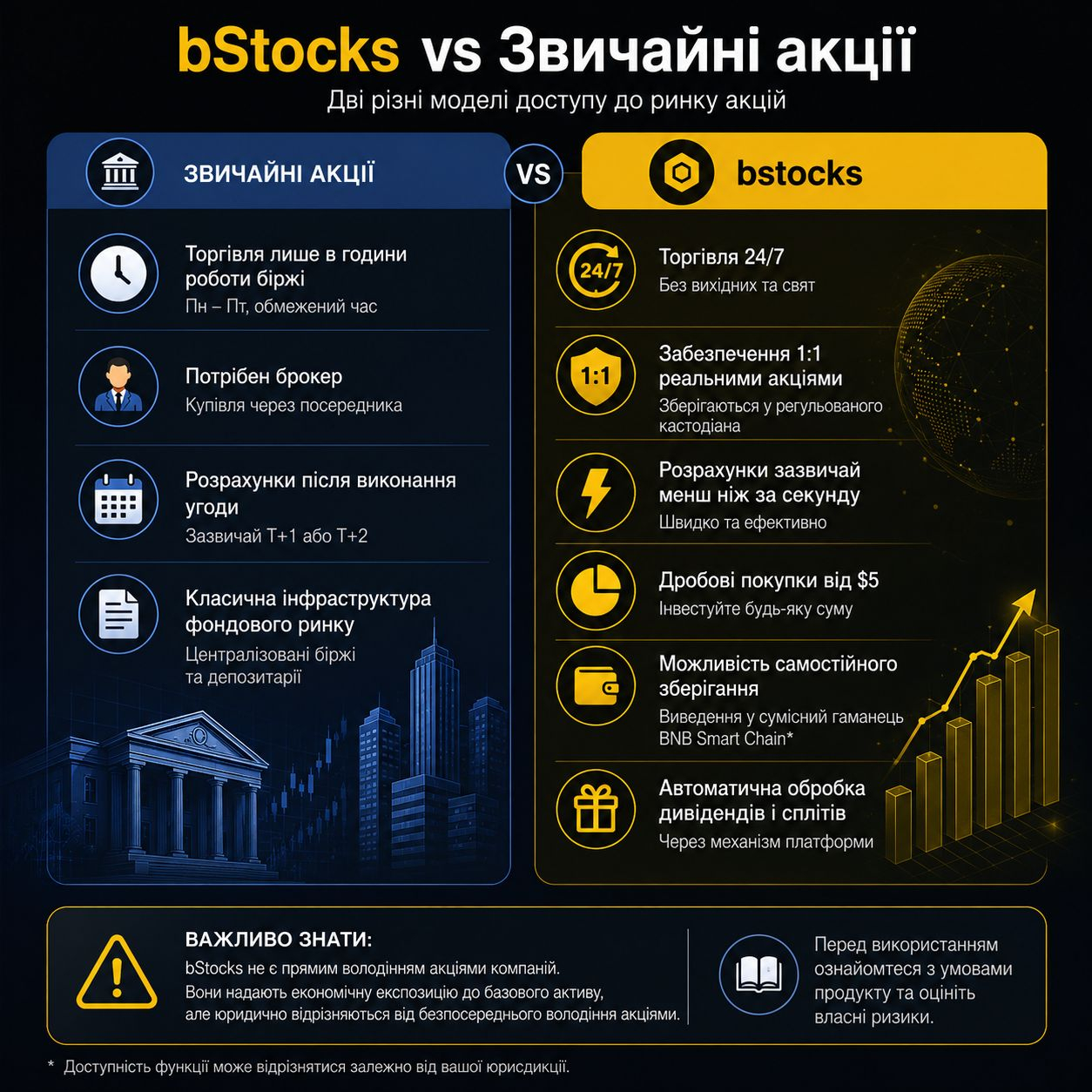
Чим bStocks відрізняються від звичайних акцій? Просте порівняння 👇
Коли я вперше почув про bStocks, подумав, що це просто «акції на блокчейні». Насправді є важливі відмінності.
📊 Звичайні акції • Купуються через брокера. • Торги проходять лише в години роботи фондового ринку. • Розрахунки займають певний час після угоди. • Зберігаються через інфраструктуру брокера або депозитарію.
🟡 bStocks • Це токенізовані цінні папери, забезпечені 1:1 відповідними акціями, які зберігаються у регульованого кастодіана. • Торгівля доступна 24/7 на Binance. • Доступні дробові покупки — від невеликих сум. • Токени можна вивести у сумісний гаманець BNB Smart Chain (для підтримуваних юрисдикцій). • Корпоративні дії, такі як спліти та дивіденди, обробляються автоматично відповідно до механізму платформи.
⚠️ Важливий нюанс: bStocks — це не пряме володіння акціями компанії. Вони надають економічну експозицію до базового активу, але юридично відрізняються від безпосереднього володіння акціями.
@BinanceCIS #bStocksCIS #SPCXB #bnb
Чим bStocks відрізняються від звичайних акцій? Просте порівняння 👇
Коли я вперше почув про bStocks, подумав, що це просто «акції на блокчейні». Насправді є важливі відмінності.
📊 Звичайні акції • Купуються через брокера. • Торги проходять лише в години роботи фондового ринку. • Розрахунки займають певний час після угоди. • Зберігаються через інфраструктуру брокера або депозитарію.
🟡 bStocks • Це токенізовані цінні папери, забезпечені 1:1 відповідними акціями, які зберігаються у регульованого кастодіана. • Торгівля доступна 24/7 на Binance. • Доступні дробові покупки — від невеликих сум. • Токени можна вивести у сумісний гаманець BNB Smart Chain (для підтримуваних юрисдикцій). • Корпоративні дії, такі як спліти та дивіденди, обробляються автоматично відповідно до механізму платформи.
⚠️ Важливий нюанс: bStocks — це не пряме володіння акціями компанії. Вони надають економічну експозицію до базового активу, але юридично відрізняються від безпосереднього володіння акціями.
@BinanceCIS #bStocksCIS #SPCXB #bnb
Коли я вперше почув про bStocks, подумав, що це просто «акції на блокчейні». Насправді є важливі відмінності.
📊 Звичайні акції • Купуються через брокера. • Торги проходять лише в години роботи фондового ринку. • Розрахунки займають певний час після угоди. • Зберігаються через інфраструктуру брокера або депозитарію.
🟡 bStocks • Це токенізовані цінні папери, забезпечені 1:1 відповідними акціями, які зберігаються у регульованого кастодіана. • Торгівля доступна 24/7 на Binance. • Доступні дробові покупки — від невеликих сум. • Токени можна вивести у сумісний гаманець BNB Smart Chain (для підтримуваних юрисдикцій). • Корпоративні дії, такі як спліти та дивіденди, обробляються автоматично відповідно до механізму платформи.
⚠️ Важливий нюанс: bStocks — це не пряме володіння акціями компанії. Вони надають економічну експозицію до базового активу, але юридично відрізняються від безпосереднього володіння акціями.
@BinanceCIS #bStocksCIS #SPCXB #bnb
1
68
Connectez-vous pour découvrir plus de contenu
Rejoignez la communauté mondiale des adeptes de cryptomonnaies sur Binance Square
⚡️ Suviez les dernières informations importantes sur les cryptomonnaies.
💬 Jugé digne de confiance par la plus grande plateforme d’échange de cryptomonnaies au monde.
👍 Découvrez les connaissances que partagent les créateurs vérifiés.
Adresse e-mail/Nº de téléphone
Sujets d’actualité
FedRateWatch
1.4M vues
6,619 mentions
Partagez et gagnez une récompense de trafic dans notre campagne de hashtag tendance
✨Sujet : FOMC de septembre — Quelle sera la prochaine décision de la Fed ?
👉Comment participer :
Publiez une courte publication ou un article avec le hashtag #FedRateWatch
Créez du contenu à partir des angles ci-dessous :
- L’inflation cœur de l’IPC d’août a augmenté de 0,3% d’un mois sur l’autre, et les chances d’une hausse de 25 points de base cette semaine sont désormais proches de 90%. Anticipez-vous une hausse des taux cette semaine ? Est-ce un cas isolé, ou le début d’un cycle de hausses plus long ?
- Si la hausse a lieu, comment cela se répercute-t-il sur le BTC, les valeurs technologiques et l’or ? Plutôt haussier ou baissier ?
- Comment comptez-vous trader ensuite ? Partagez votre trading/positions BTC, actions ou or avec notre widget de partage de trades.
⏰Période de la campagne :
- 2026-09-15 11:00 - 2026-09-17 3:00 UTC
🎁Récompense :
- Les publications éligibles qui respectent les consignes ci-dessus et contiennent plus de 100 mots seront examinées et pourraient recevoir un boost aléatoire de trafic de 500 à 3 000 vues. Vous recevrez une notification de votre secrétaire de flux si votre publication est sélectionnée.
- Ayez une chance de faire apparaître votre article sur Binance Square Official
Vous manque-t-il des idées pour votre publication ? Visitez la page du sujet #FedRateWatch ou le Square Guide on How to Post for Better Reach.
Binance Square Official
·643 mentions J’aime
·1.6M vues
ZcashRises6%
44,621 vues
598 mentions
XRPSinks10%
30,294 vues
393 mentions