
KellyTID
248 Publications

KellyTID
Signaler
Bloquer l’utilisateur
Still Building / web3 enthusiast
Ouvert au trading
Trade occasionnellement
3 an(s)
93 Suivis
26 Abonnés
144 J’aime
Publications
Portefeuille
Tous
Citations
PINNED
·
--
À l'époque où j'ai d'abord découvert $PIXEL , je l'ai vu de la même manière que tous les autres jetons de jeu : jouer au jeu, gagner le jeton, le dépenser, répéter. Un cycle simple. Semblait assez solide à l'époque.
Mais à mesure que j'observais, l'image a commencé à changer. Cela a cessé de ressembler à une activité confinée à un seul jeu. Au lieu de cela, tout le système a commencé à s'étendre sur plusieurs expériences, les reliant ensemble. C'est alors que ma perspective a basculé.
Si Pixels évolue vraiment au-delà d'être juste un jeu et devient l'infrastructure sous-jacente qui distribue de la valeur à travers beaucoup, alors $PIXEL se transforme. Il devient la couche intermédiaire qui déplace l'attention, les récompenses et les joueurs d'un monde à l'autre.
Cela semble prometteur pour la croissance... mais cela ne fonctionne que si les gens continuent de revenir et de réutiliser réellement le jeton.
Je pensais autrefois que chaque nouvelle intégration stimulerait automatiquement la demande. Maintenant, je suis plus sceptique. Lorsque les joueurs cultivent, retirent immédiatement, ou n'interagissent avec le jeton qu'une fois par session, l'offre continue de circuler sans jamais être verrouillée ou absorbée. L'activité de surface semble forte, mais le véritable maintien et la rétention ? Toujours fragiles.
C'est pourquoi je soupçonne que nous pourrions encore être tôt.
La véritable infrastructure se prouve lorsque l'utilisation devient habituelle — pas quand elle a besoin de nouvelles incitations à chaque fois pour attirer les joueurs.
Ces jours-ci, je suis moins enthousiaste à propos des annonces de nouveaux jeux rejoignant... et beaucoup plus concentré sur la question de savoir si $PIXEL commence à être réutilisé organiquement à travers l'écosystème sans carottes constantes.
PIXEL est-il en route pour devenir la colle qui maintient l'univers des Pixels ensemble, ou fonctionne-t-il encore comme un jeton de type play-to-earn typique ?
Curieux d'entendre vos pensées.
@pixels
À l'époque où j'ai d'abord découvert $PIXEL , je l'ai vu de la même manière que tous les autres jetons de jeu : jouer au jeu, gagner le jeton, le dépenser, répéter. Un cycle simple. Semblait assez solide à l'époque.
Mais à mesure que j'observais, l'image a commencé à changer. Cela a cessé de ressembler à une activité confinée à un seul jeu. Au lieu de cela, tout le système a commencé à s'étendre sur plusieurs expériences, les reliant ensemble. C'est alors que ma perspective a basculé.
Si Pixels évolue vraiment au-delà d'être juste un jeu et devient l'infrastructure sous-jacente qui distribue de la valeur à travers beaucoup, alors $PIXEL se transforme. Il devient la couche intermédiaire qui déplace l'attention, les récompenses et les joueurs d'un monde à l'autre.
Cela semble prometteur pour la croissance... mais cela ne fonctionne que si les gens continuent de revenir et de réutiliser réellement le jeton.
Je pensais autrefois que chaque nouvelle intégration stimulerait automatiquement la demande. Maintenant, je suis plus sceptique. Lorsque les joueurs cultivent, retirent immédiatement, ou n'interagissent avec le jeton qu'une fois par session, l'offre continue de circuler sans jamais être verrouillée ou absorbée. L'activité de surface semble forte, mais le véritable maintien et la rétention ? Toujours fragiles.
C'est pourquoi je soupçonne que nous pourrions encore être tôt.
La véritable infrastructure se prouve lorsque l'utilisation devient habituelle — pas quand elle a besoin de nouvelles incitations à chaque fois pour attirer les joueurs.
Ces jours-ci, je suis moins enthousiaste à propos des annonces de nouveaux jeux rejoignant... et beaucoup plus concentré sur la question de savoir si $PIXEL commence à être réutilisé organiquement à travers l'écosystème sans carottes constantes.
PIXEL est-il en route pour devenir la colle qui maintient l'univers des Pixels ensemble, ou fonctionne-t-il encore comme un jeton de type play-to-earn typique ?
Curieux d'entendre vos pensées.
@Pixels
Mais à mesure que j'observais, l'image a commencé à changer. Cela a cessé de ressembler à une activité confinée à un seul jeu. Au lieu de cela, tout le système a commencé à s'étendre sur plusieurs expériences, les reliant ensemble. C'est alors que ma perspective a basculé.
Si Pixels évolue vraiment au-delà d'être juste un jeu et devient l'infrastructure sous-jacente qui distribue de la valeur à travers beaucoup, alors $PIXEL se transforme. Il devient la couche intermédiaire qui déplace l'attention, les récompenses et les joueurs d'un monde à l'autre.
Cela semble prometteur pour la croissance... mais cela ne fonctionne que si les gens continuent de revenir et de réutiliser réellement le jeton.
Je pensais autrefois que chaque nouvelle intégration stimulerait automatiquement la demande. Maintenant, je suis plus sceptique. Lorsque les joueurs cultivent, retirent immédiatement, ou n'interagissent avec le jeton qu'une fois par session, l'offre continue de circuler sans jamais être verrouillée ou absorbée. L'activité de surface semble forte, mais le véritable maintien et la rétention ? Toujours fragiles.
C'est pourquoi je soupçonne que nous pourrions encore être tôt.
La véritable infrastructure se prouve lorsque l'utilisation devient habituelle — pas quand elle a besoin de nouvelles incitations à chaque fois pour attirer les joueurs.
Ces jours-ci, je suis moins enthousiaste à propos des annonces de nouveaux jeux rejoignant... et beaucoup plus concentré sur la question de savoir si $PIXEL commence à être réutilisé organiquement à travers l'écosystème sans carottes constantes.
PIXEL est-il en route pour devenir la colle qui maintient l'univers des Pixels ensemble, ou fonctionne-t-il encore comme un jeton de type play-to-earn typique ?
Curieux d'entendre vos pensées.
@Pixels
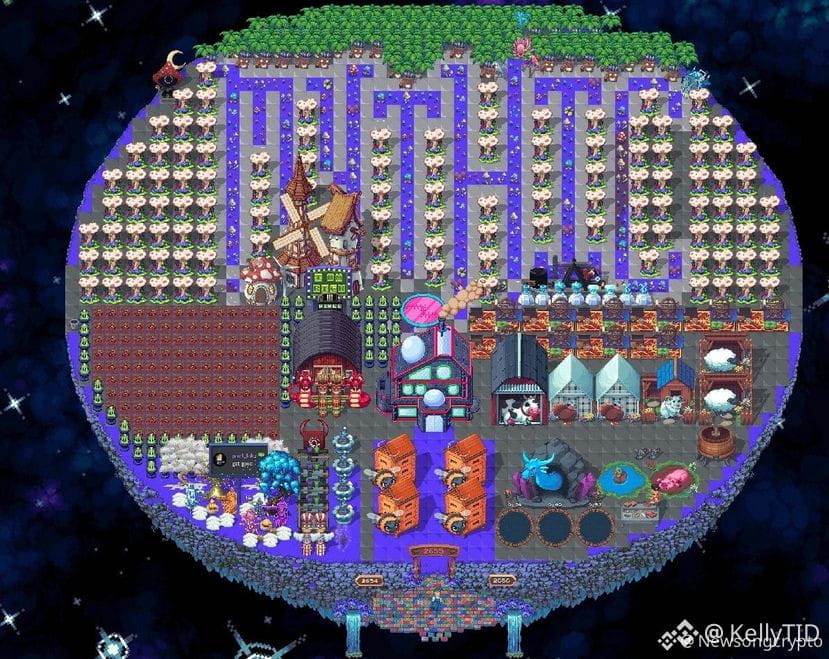
31
36
6.3k
·
--

Article
Le marché a fait la sieste pendant la hausse. Il s’est réveillé avec le ton.Hier, la Réserve fédérale a fait ce que tout le monde attendait. Aujourd’hui, les marchés négocient ce qu’ils n’avaient pas envie d’entendre.
La hausse de 25 points de base vers 3,75%–4,00% était intégrée dans les prix. Le vote de 12 contre 0 était intégré. Ce qui n’était pas entièrement pris en compte, en revanche, c’est le fait que le président Kevin Warsh a déclaré que l’inflation est « trop élevée et ce, depuis trop longtemps », ainsi qu’un graphique en points où 16 des 18 responsables souhaitent encore au moins un mouvement supplémentaire cette année. 
C’est l’histoire du 17 septembre.
Qu’est-ce qui a changé pendant la nuit
Les contrats à terme ont rebondi. Les futures sur le S&P 500 étaient en hausse d’environ 0,8% en début de séance à New York ; les futures sur le Nasdaq 100 gagnaient environ 1,1%. Le rendement à 10 ans est repassé sous 5%. Le pétrole a de nouveau baissé. C’est un rebond « acheter le fait » classique après une réunion plus ferme — pas une déclaration que le cycle est terminé. 
Le marché a fait la sieste pendant la hausse. Il s’est réveillé avec le ton.
Hier, la Réserve fédérale a fait ce que tout le monde attendait. Aujourd’hui, les marchés négocient ce qu’ils n’avaient pas envie d’entendre.
La hausse de 25 points de base vers 3,75%–4,00% était intégrée dans les prix. Le vote de 12 contre 0 était intégré. Ce qui n’était pas entièrement pris en compte, en revanche, c’est le fait que le président Kevin Warsh a déclaré que l’inflation est « trop élevée et ce, depuis trop longtemps », ainsi qu’un graphique en points où 16 des 18 responsables souhaitent encore au moins un mouvement supplémentaire cette année. 
C’est l’histoire du 17 septembre.
Qu’est-ce qui a changé pendant la nuit
Les contrats à terme ont rebondi. Les futures sur le S&P 500 étaient en hausse d’environ 0,8% en début de séance à New York ; les futures sur le Nasdaq 100 gagnaient environ 1,1%. Le rendement à 10 ans est repassé sous 5%. Le pétrole a de nouveau baissé. C’est un rebond « acheter le fait » classique après une réunion plus ferme — pas une déclaration que le cycle est terminé. 
La hausse de 25 points de base vers 3,75%–4,00% était intégrée dans les prix. Le vote de 12 contre 0 était intégré. Ce qui n’était pas entièrement pris en compte, en revanche, c’est le fait que le président Kevin Warsh a déclaré que l’inflation est « trop élevée et ce, depuis trop longtemps », ainsi qu’un graphique en points où 16 des 18 responsables souhaitent encore au moins un mouvement supplémentaire cette année. 
C’est l’histoire du 17 septembre.
Qu’est-ce qui a changé pendant la nuit
Les contrats à terme ont rebondi. Les futures sur le S&P 500 étaient en hausse d’environ 0,8% en début de séance à New York ; les futures sur le Nasdaq 100 gagnaient environ 1,1%. Le rendement à 10 ans est repassé sous 5%. Le pétrole a de nouveau baissé. C’est un rebond « acheter le fait » classique après une réunion plus ferme — pas une déclaration que le cycle est terminé. 
83
·
--
Voir la traduction
Hi guys go on x and see the trending update on $ANSEM airdrop on solana.
Hi guys go on x and see the trending update on $ANSEM airdrop on solana.
·
--
Ce que @pixels fait brillamment, c'est cacher son infrastructure Web3.
Vous n'êtes pas confronté à des portefeuilles, des frais de gaz ou des discours sur les tokens dès le départ. Vous jouez d'abord. Le progrès semble mérité par l'action, pas par la théorie. Les NFTs, les animaux de compagnie et les rendements passifs existent silencieusement en arrière-plan tandis que le monde pixelisé reste accessible et amusant.
Après avoir éliminé l'ère inflationniste du $BERRY et affiné la tokenomics autour de $PIXEL en tant que monnaie premium, l'économie semble enfin durable. Plus de chutes alimentées par l'engouement, juste une utilité stable grâce à un engagement quotidien réel.
C'est pourquoi il compte plus d'un million d'utilisateurs actifs quotidiens avec une forte rétention en 2026. Pas parce qu'il crie “crypto”, mais parce qu'il ressemble à une ferme numérique vivante.
#pixel $PIXEL
Ce que @Pixels fait brillamment, c'est cacher son infrastructure Web3.
Vous n'êtes pas confronté à des portefeuilles, des frais de gaz ou des discours sur les tokens dès le départ. Vous jouez d'abord. Le progrès semble mérité par l'action, pas par la théorie. Les NFTs, les animaux de compagnie et les rendements passifs existent silencieusement en arrière-plan tandis que le monde pixelisé reste accessible et amusant.
Après avoir éliminé l'ère inflationniste du $BERRY et affiné la tokenomics autour de $PIXEL en tant que monnaie premium, l'économie semble enfin durable. Plus de chutes alimentées par l'engouement, juste une utilité stable grâce à un engagement quotidien réel.
C'est pourquoi il compte plus d'un million d'utilisateurs actifs quotidiens avec une forte rétention en 2026. Pas parce qu'il crie “crypto”, mais parce qu'il ressemble à une ferme numérique vivante.
#pixel $PIXEL
Vous n'êtes pas confronté à des portefeuilles, des frais de gaz ou des discours sur les tokens dès le départ. Vous jouez d'abord. Le progrès semble mérité par l'action, pas par la théorie. Les NFTs, les animaux de compagnie et les rendements passifs existent silencieusement en arrière-plan tandis que le monde pixelisé reste accessible et amusant.
Après avoir éliminé l'ère inflationniste du $BERRY et affiné la tokenomics autour de $PIXEL en tant que monnaie premium, l'économie semble enfin durable. Plus de chutes alimentées par l'engouement, juste une utilité stable grâce à un engagement quotidien réel.
C'est pourquoi il compte plus d'un million d'utilisateurs actifs quotidiens avec une forte rétention en 2026. Pas parce qu'il crie “crypto”, mais parce qu'il ressemble à une ferme numérique vivante.
#pixel $PIXEL
5
8
18
·
--
Article
Pixels en tant qu'entraînement comportemental : L'intégration silencieuse dans une nouvelle économie numériqueLa prise originale peint @pixels comme un piège furtif attirant les joueurs avec une agriculture innocente, pour ensuite les accabler avec une gestion, une pression d'optimisation et un entretien croissants qui remplacent tranquillement le plaisir. C'est un récit captivant, surtout pour ceux qui plongent profondément et ressentent le poids de systèmes en constante expansion. Mais il existe une autre perspective qui mérite d'être explorée : que se passerait-il si ce "changement" n'était pas une perte de plaisir, mais la maturation naturelle d'un jeu bien conçu qui récompense différents styles de jeu à différentes profondeurs ? Et si la complexité croissante n'était pas un fardeau caché, mais une invitation à un engagement plus profond que de nombreux joueurs apprécient activement, et si le véritable génie de Pixels résidait dans le fait de laisser les joueurs choisir leur propre relation avec lui ?
Pixels en tant qu'entraînement comportemental : L'intégration silencieuse dans une nouvelle économie numérique
La prise originale peint @Pixels comme un piège furtif attirant les joueurs avec une agriculture innocente, pour ensuite les accabler avec une gestion, une pression d'optimisation et un entretien croissants qui remplacent tranquillement le plaisir. C'est un récit captivant, surtout pour ceux qui plongent profondément et ressentent le poids de systèmes en constante expansion. Mais il existe une autre perspective qui mérite d'être explorée : que se passerait-il si ce "changement" n'était pas une perte de plaisir, mais la maturation naturelle d'un jeu bien conçu qui récompense différents styles de jeu à différentes profondeurs ? Et si la complexité croissante n'était pas un fardeau caché, mais une invitation à un engagement plus profond que de nombreux joueurs apprécient activement, et si le véritable génie de Pixels résidait dans le fait de laisser les joueurs choisir leur propre relation avec lui ?
6
6
88
·
--

Article
La vie privée par conception : Pixel peut-il résoudre le piège de la transparence de la blockchain ?Dans le monde cyclique de la cryptomonnaie, de nouveaux projets arrivent souvent avec des revendications audacieuses, un marketing flashy et des feuilles de route ambitieuses. De temps en temps, cependant, l'un d'eux émerge avec une confiance plus calme : une critique soigneusement raisonnée du statu quo, associée à une tentative techniquement sophistiquée de le corriger. @pixels semble correspondre à ce modèle plus rare alors qu'il aborde la Phase 1 de son déploiement.
La thèse centrale du projet est simple mais profonde : les blockchains d'aujourd'hui exposent bien trop. La transparence radicale où chaque adresse de portefeuille, transaction, solde et interaction reste de manière permanente visible, traçable et liée est depuis longtemps célébrée comme une pierre angulaire de l'absence de confiance et de l'auditabilité. Elle permet à quiconque de vérifier le registre sans s'appuyer sur des intermédiaires centralisés. Mais cette vertu a un côté sombre. En pratique, cela transforme les histoires financières personnelles en dossiers publics, plus proches de la surveillance que de l'argent souverain. Le comportement économique ordinaire prospère sur un certain degré de discrétion ; peu de gens souhaitent que leurs habitudes de dépenses, avoirs ou contreparties soient gravés de manière permanente dans une base de données publique immuable pour que tous puissent analyser, lier et exploiter.
La vie privée par conception : Pixel peut-il résoudre le piège de la transparence de la blockchain ?
Dans le monde cyclique de la cryptomonnaie, de nouveaux projets arrivent souvent avec des revendications audacieuses, un marketing flashy et des feuilles de route ambitieuses. De temps en temps, cependant, l'un d'eux émerge avec une confiance plus calme : une critique soigneusement raisonnée du statu quo, associée à une tentative techniquement sophistiquée de le corriger. @Pixels semble correspondre à ce modèle plus rare alors qu'il aborde la Phase 1 de son déploiement.
La thèse centrale du projet est simple mais profonde : les blockchains d'aujourd'hui exposent bien trop. La transparence radicale où chaque adresse de portefeuille, transaction, solde et interaction reste de manière permanente visible, traçable et liée est depuis longtemps célébrée comme une pierre angulaire de l'absence de confiance et de l'auditabilité. Elle permet à quiconque de vérifier le registre sans s'appuyer sur des intermédiaires centralisés. Mais cette vertu a un côté sombre. En pratique, cela transforme les histoires financières personnelles en dossiers publics, plus proches de la surveillance que de l'argent souverain. Le comportement économique ordinaire prospère sur un certain degré de discrétion ; peu de gens souhaitent que leurs habitudes de dépenses, avoirs ou contreparties soient gravés de manière permanente dans une base de données publique immuable pour que tous puissent analyser, lier et exploiter.
La thèse centrale du projet est simple mais profonde : les blockchains d'aujourd'hui exposent bien trop. La transparence radicale où chaque adresse de portefeuille, transaction, solde et interaction reste de manière permanente visible, traçable et liée est depuis longtemps célébrée comme une pierre angulaire de l'absence de confiance et de l'auditabilité. Elle permet à quiconque de vérifier le registre sans s'appuyer sur des intermédiaires centralisés. Mais cette vertu a un côté sombre. En pratique, cela transforme les histoires financières personnelles en dossiers publics, plus proches de la surveillance que de l'argent souverain. Le comportement économique ordinaire prospère sur un certain degré de discrétion ; peu de gens souhaitent que leurs habitudes de dépenses, avoirs ou contreparties soient gravés de manière permanente dans une base de données publique immuable pour que tous puissent analyser, lier et exploiter.
27
24
494
·
--
Pixel, entrant dans la Phase 1, correspond à ce modèle.
Les blockchains d'aujourd'hui exposent trop.
Chaque portefeuille, transaction et interaction est définitivement visible, excellent pour l'auditabilité, terrible pour la vie économique normale. La transparence radicale commence à sembler moins comme une absence de confiance et plus comme une surveillance intégrée.
L'approche de Pixel a du sens : utiliser des preuves à zéro connaissance pour vérifier sans révéler. La vie privée et la vérifiabilité ne doivent pas être des ennemies. C'est un juste milieu réfléchi et attendu.
Mais dans cet espace, les bonnes idées ne sont jamais la ressource rare. Le véritable test est de savoir si l'architecture survit aux utilisateurs réels. Les systèmes ZK apportent de la complexité, et la complexité a tendance à freiner l'adoption : les développeurs hésitent, les utilisateurs rebondissent, la demande reste théorique.
Donc, la question demeure : La vie privée est-elle un besoin profond et durable qui vaut le frottement, ou juste un autre récit convaincant qui s'efface lorsque la réalité frappe ?
Pixel peut avoir une réponse crédible. La Phase 1 est là où la théorie rencontre la résistance.
Que pensez-vous, la vie privée ZK va-t-elle enfin percer ?
@pixels
#pixel $PIXEL
Pixel, entrant dans la Phase 1, correspond à ce modèle.
Les blockchains d'aujourd'hui exposent trop.
Chaque portefeuille, transaction et interaction est définitivement visible, excellent pour l'auditabilité, terrible pour la vie économique normale. La transparence radicale commence à sembler moins comme une absence de confiance et plus comme une surveillance intégrée.
L'approche de Pixel a du sens : utiliser des preuves à zéro connaissance pour vérifier sans révéler. La vie privée et la vérifiabilité ne doivent pas être des ennemies. C'est un juste milieu réfléchi et attendu.
Mais dans cet espace, les bonnes idées ne sont jamais la ressource rare. Le véritable test est de savoir si l'architecture survit aux utilisateurs réels. Les systèmes ZK apportent de la complexité, et la complexité a tendance à freiner l'adoption : les développeurs hésitent, les utilisateurs rebondissent, la demande reste théorique.
Donc, la question demeure : La vie privée est-elle un besoin profond et durable qui vaut le frottement, ou juste un autre récit convaincant qui s'efface lorsque la réalité frappe ?
Pixel peut avoir une réponse crédible. La Phase 1 est là où la théorie rencontre la résistance.
Que pensez-vous, la vie privée ZK va-t-elle enfin percer ?
@Pixels
#pixel $PIXEL
Les blockchains d'aujourd'hui exposent trop.
Chaque portefeuille, transaction et interaction est définitivement visible, excellent pour l'auditabilité, terrible pour la vie économique normale. La transparence radicale commence à sembler moins comme une absence de confiance et plus comme une surveillance intégrée.
L'approche de Pixel a du sens : utiliser des preuves à zéro connaissance pour vérifier sans révéler. La vie privée et la vérifiabilité ne doivent pas être des ennemies. C'est un juste milieu réfléchi et attendu.
Mais dans cet espace, les bonnes idées ne sont jamais la ressource rare. Le véritable test est de savoir si l'architecture survit aux utilisateurs réels. Les systèmes ZK apportent de la complexité, et la complexité a tendance à freiner l'adoption : les développeurs hésitent, les utilisateurs rebondissent, la demande reste théorique.
Donc, la question demeure : La vie privée est-elle un besoin profond et durable qui vaut le frottement, ou juste un autre récit convaincant qui s'efface lorsque la réalité frappe ?
Pixel peut avoir une réponse crédible. La Phase 1 est là où la théorie rencontre la résistance.
Que pensez-vous, la vie privée ZK va-t-elle enfin percer ?
@Pixels
#pixel $PIXEL
12
12
116
·
--
#pixel $PIXEL
Pixels @pixels n'est plus simplement de l'agriculture.
Cela se transforme en un champ de bataille où les jeux se battent pour votre temps et $PIXEL enjeux.
Vous misez sur ceux en lesquels vous croyez. Plus de joueurs et de mises = plus grande part de récompense. L'activité réelle gagne.
Des jeux ennuyeux ? Les joueurs s'éclipsent rapidement. Les récompenses s'épuisent. Mort.
Cela force les développeurs à créer des expériences qui valent la peine d'être jouées, pas seulement de l'agriculture.
Ancien méta : émissions infinies.
Nouveau méta : les récompenses suivent l'attention.
Vous n'êtes plus simplement en train de moudre.
Vous vous positionnez tôt dans les jeux qui peuvent réellement retenir les joueurs.
Si vous le faites bien, vous cessez d'être une liquidité de sortie.
#Pixels #PIXEL
#pixel $PIXEL
Pixels @Pixels n'est plus simplement de l'agriculture.
Cela se transforme en un champ de bataille où les jeux se battent pour votre temps et $PIXEL enjeux.
Vous misez sur ceux en lesquels vous croyez. Plus de joueurs et de mises = plus grande part de récompense. L'activité réelle gagne.
Des jeux ennuyeux ? Les joueurs s'éclipsent rapidement. Les récompenses s'épuisent. Mort.
Cela force les développeurs à créer des expériences qui valent la peine d'être jouées, pas seulement de l'agriculture.
Ancien méta : émissions infinies.
Nouveau méta : les récompenses suivent l'attention.
Vous n'êtes plus simplement en train de moudre.
Vous vous positionnez tôt dans les jeux qui peuvent réellement retenir les joueurs.
Si vous le faites bien, vous cessez d'être une liquidité de sortie.
#Pixels #PIXEL
Pixels @Pixels n'est plus simplement de l'agriculture.
Cela se transforme en un champ de bataille où les jeux se battent pour votre temps et $PIXEL enjeux.
Vous misez sur ceux en lesquels vous croyez. Plus de joueurs et de mises = plus grande part de récompense. L'activité réelle gagne.
Des jeux ennuyeux ? Les joueurs s'éclipsent rapidement. Les récompenses s'épuisent. Mort.
Cela force les développeurs à créer des expériences qui valent la peine d'être jouées, pas seulement de l'agriculture.
Ancien méta : émissions infinies.
Nouveau méta : les récompenses suivent l'attention.
Vous n'êtes plus simplement en train de moudre.
Vous vous positionnez tôt dans les jeux qui peuvent réellement retenir les joueurs.
Si vous le faites bien, vous cessez d'être une liquidité de sortie.
#Pixels #PIXEL
5
5
24
·
--
Voir la traduction
Thanks for sharing! @pixels to the moon.
Thanks for sharing! @Pixels to the moon.


MAYA_
·
--
Haussier#pixel $PIXEL
Honnêtement... je me demande pourquoi je continue à penser à une chose - quand un jeu se transforme progressivement d'un endroit où jouer à un système économique entier, comprenons-nous vraiment où cela cesse d'être un jeu ?
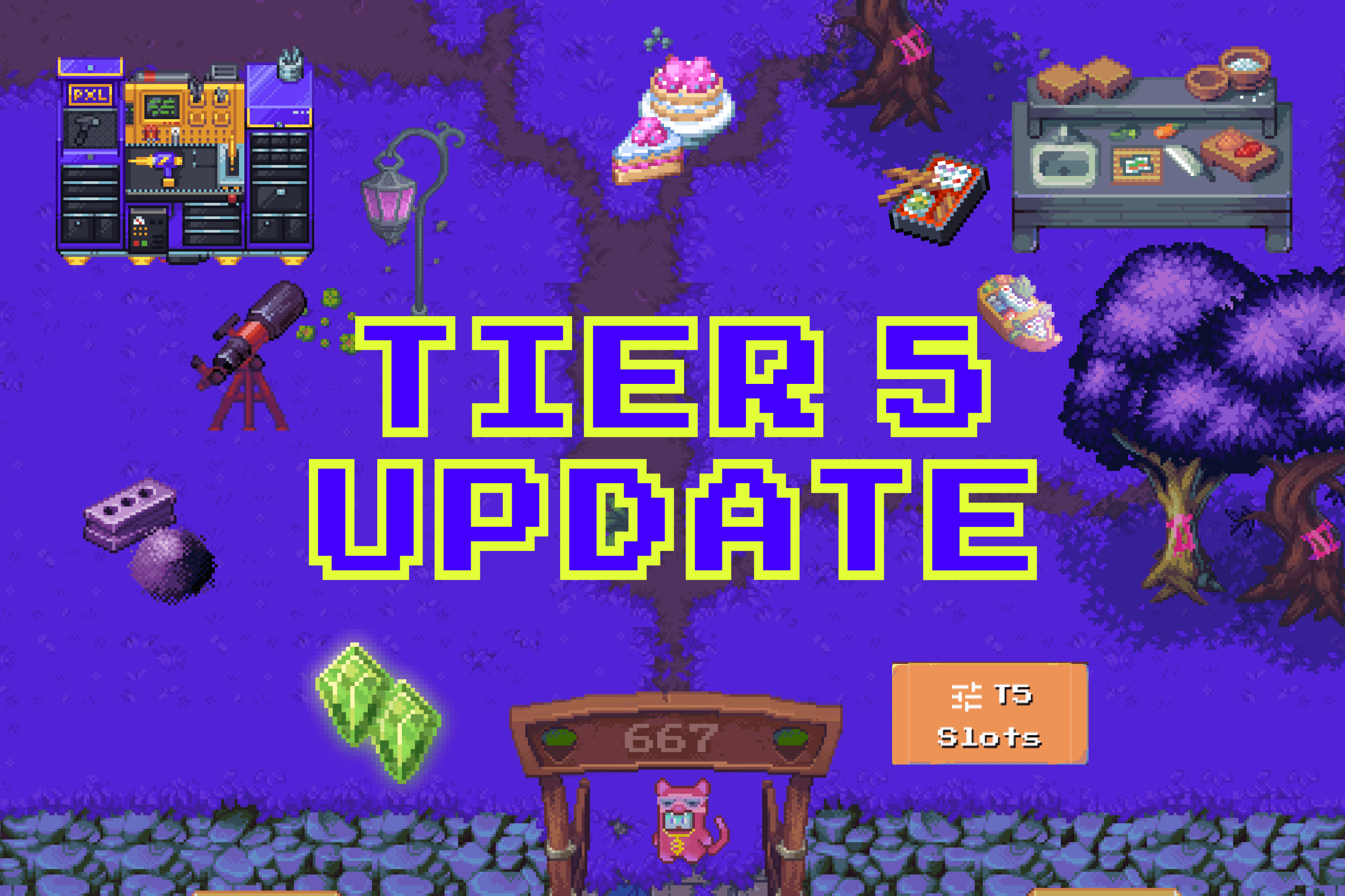
Si je devais dire que cela ressemble vraiment... @Pixels semble être la même chose. De l'extérieur, c'est toujours un jeu de ferme ou de fabrication, mais si vous regardez les couches internes, vous pouvez voir qu'il y a une infrastructure qui se construit lentement ici... ce n'est pas seulement limité aux récompenses ou aux économies de jetons. Par exemple, l'augmentation de l'importance des terres NFT, l'installation de titres de propriété séparés pour les machines T5 - cela crée en fait un ensemble de règles basé sur les actifs plutôt que sur le gameplay, et quand vous y pensez - je suis tho purai obak... D'après ce que je comprends, le véritable tournant ici est la propriété. Avant, la propriété dans les jeux était très nominale - vous jouiez, vous amélioriez, mais le système pouvait vous remplacer très facilement. Maintenant, la terre, les titres de propriété, le système de renouvellement - tout cela ensemble donne l'impression que vous ne jouez pas seulement, vous gérez une petite opération numérique. Et pour soutenir cette opération, il faut une participation régulière, une gestion des ressources et une planification. Mais c'est ici qu'une pression étrange est également créée. Parce que le jeu n'est plus seulement un endroit pour se détendre. Il devient un peu une "responsabilité continue". Renouvellements de 30 jours, accès aux emplacements basé sur le siège - tout cela ensemble ressemble à une mini-économie qui est toujours en mouvement. Mais je ne vois pas du tout le tout de manière négative. Parce qu'il y a une grande expérience qui se déroule à l'intérieur, très largement. Pour voir où se rencontrent les frontières entre le jeu et le comportement économique réel. Peut-être qu'à l'avenir, un tel système deviendra la norme, où les jeux ne sont pas seulement un divertissement mais une couche de production numérique à petite échelle.
En fin de compte, la question revient - est-ce encore un jeu ou sommes-nous en train de voir lentement une structure qui crée lentement un nouveau type d'économie au nom des jeux ? Voyons ce qui se passe.....🤔👀
Honnêtement... je me demande pourquoi je continue à penser à une chose - quand un jeu se transforme progressivement d'un endroit où jouer à un système économique entier, comprenons-nous vraiment où cela cesse d'être un jeu ?
Si je devais dire que cela ressemble vraiment... @Pixels semble être la même chose. De l'extérieur, c'est toujours un jeu de ferme ou de fabrication, mais si vous regardez les couches internes, vous pouvez voir qu'il y a une infrastructure qui se construit lentement ici... ce n'est pas seulement limité aux récompenses ou aux économies de jetons. Par exemple, l'augmentation de l'importance des terres NFT, l'installation de titres de propriété séparés pour les machines T5 - cela crée en fait un ensemble de règles basé sur les actifs plutôt que sur le gameplay, et quand vous y pensez - je suis tho purai obak... D'après ce que je comprends, le véritable tournant ici est la propriété. Avant, la propriété dans les jeux était très nominale - vous jouiez, vous amélioriez, mais le système pouvait vous remplacer très facilement. Maintenant, la terre, les titres de propriété, le système de renouvellement - tout cela ensemble donne l'impression que vous ne jouez pas seulement, vous gérez une petite opération numérique. Et pour soutenir cette opération, il faut une participation régulière, une gestion des ressources et une planification. Mais c'est ici qu'une pression étrange est également créée. Parce que le jeu n'est plus seulement un endroit pour se détendre. Il devient un peu une "responsabilité continue". Renouvellements de 30 jours, accès aux emplacements basé sur le siège - tout cela ensemble ressemble à une mini-économie qui est toujours en mouvement. Mais je ne vois pas du tout le tout de manière négative. Parce qu'il y a une grande expérience qui se déroule à l'intérieur, très largement. Pour voir où se rencontrent les frontières entre le jeu et le comportement économique réel. Peut-être qu'à l'avenir, un tel système deviendra la norme, où les jeux ne sont pas seulement un divertissement mais une couche de production numérique à petite échelle.
En fin de compte, la question revient - est-ce encore un jeu ou sommes-nous en train de voir lentement une structure qui crée lentement un nouveau type d'économie au nom des jeux ? Voyons ce qui se passe.....🤔👀
·
--
Voir la traduction
Lets go!!!
Lets go!!!

Crypto Expert BNB
·
--
HaussierJ'ai examiné $ASTER la nuit dernière. Cela commence à sembler plus qu'un simple jeton aléatoire...
Mais ce qui a attiré mon attention...
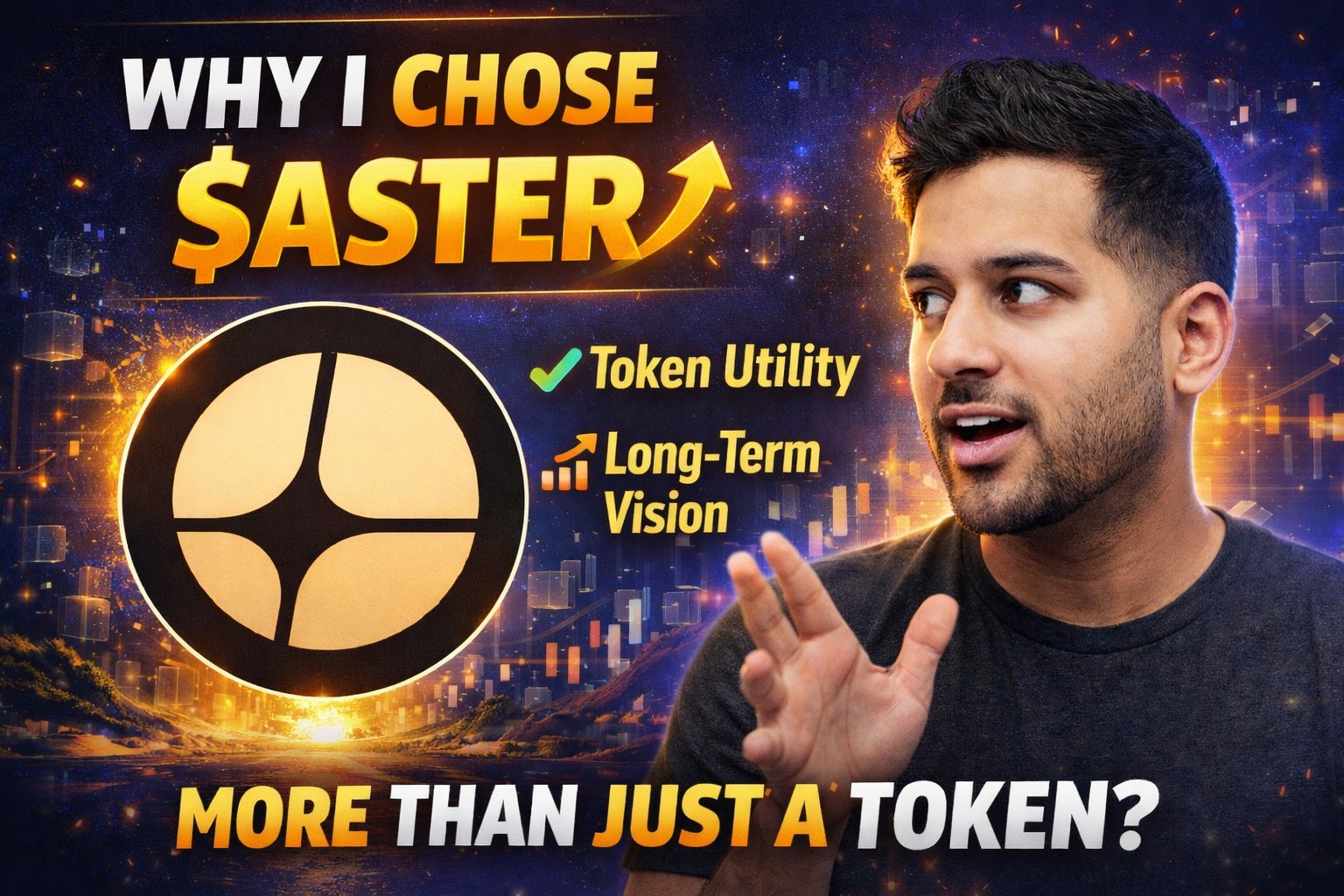
D'abord, c'était son utilité. Ce n'est pas juste là pour le battage médiatique. Il joue en fait un rôle dans l'écosystème. D'après ce que je vois, $ASTER est conçu pour alimenter les transactions, soutenir les activités DeFi et potentiellement agir comme un actif central au sein de l'Aster Chain. C'est une base solide.
Mais ce qui me rend vraiment curieux, c'est la vision à long terme...? 🤔
On a l'impression que l'équipe vise à construire quelque chose de plus grand, un réseau évolutif où DeFi, IA et expérience utilisateur se rejoignent. S'ils exécutent cela correctement, cela pourrait ouvrir des portes à une véritable adoption, pas juste à une spéculation à court terme.
Je ne dis pas que c'est un succès garanti, la crypto ne fonctionne jamais comme ça. Mais les projets avec une utilité claire + une réflexion à long terme se démarquent généralement avec le temps 📊
Après avoir analysé tout cela, je dirais qu'ASTER est un bon jeton pour un investissement à long terme.
Pour l'instant, je regarde de près... et peut-être que je me positionne tôt.
Quel est votre avis sur $ASTER partagez-le avec moi dans les commentaires...
#Aster #ASTER #AsterDEX #BinanceSquare
Mais ce qui a attiré mon attention...
D'abord, c'était son utilité. Ce n'est pas juste là pour le battage médiatique. Il joue en fait un rôle dans l'écosystème. D'après ce que je vois, $ASTER est conçu pour alimenter les transactions, soutenir les activités DeFi et potentiellement agir comme un actif central au sein de l'Aster Chain. C'est une base solide.
Mais ce qui me rend vraiment curieux, c'est la vision à long terme...? 🤔
On a l'impression que l'équipe vise à construire quelque chose de plus grand, un réseau évolutif où DeFi, IA et expérience utilisateur se rejoignent. S'ils exécutent cela correctement, cela pourrait ouvrir des portes à une véritable adoption, pas juste à une spéculation à court terme.
Je ne dis pas que c'est un succès garanti, la crypto ne fonctionne jamais comme ça. Mais les projets avec une utilité claire + une réflexion à long terme se démarquent généralement avec le temps 📊
Après avoir analysé tout cela, je dirais qu'ASTER est un bon jeton pour un investissement à long terme.
Pour l'instant, je regarde de près... et peut-être que je me positionne tôt.
Quel est votre avis sur $ASTER partagez-le avec moi dans les commentaires...
#Aster #ASTER #AsterDEX #BinanceSquare
1
·
--
C'était une expérience incroyable et j'adore l'aventure sur $PIXEL
C'était une expérience incroyable et j'adore l'aventure sur $PIXEL
1
70
·
--
Voir la traduction
There are rare digital spaces that stop feeling like games and start feeling like places where you can truly breathe, build, and belong.
Pixels is quietly becoming one of them.
Beyond the farming and blockchain mechanics, it’s building something deeper a living digital home where your time feels respected, your actions matter, and your presence leaves a gentle mark.
In Pixels, every small choice today shapes the world you return to tomorrow. Your land becomes a reflection of how you play whether you optimize for growth, design cozy spaces, or simply enjoy the peaceful rhythm of the game. The world doesn’t reset when you leave. It continues. And when you come back, it feels like it remembers you.
Progress here rewards consistency, not speed. Community turns individual actions into a shared, living environment. Even the $PIXEL token is tied to real participation rather than speculation.
In a noisy Web3 world full of hype, Pixels stands out by moving slowly and thoughtfully creating a space where effort turns into presence, and presence turns into belonging.
A gentle reminder that the best digital experiences aren’t always the loudest. Sometimes they’re the ones that simply feel like home.
@pixels
There are rare digital spaces that stop feeling like games and start feeling like places where you can truly breathe, build, and belong.
Pixels is quietly becoming one of them.
Beyond the farming and blockchain mechanics, it’s building something deeper a living digital home where your time feels respected, your actions matter, and your presence leaves a gentle mark.
In Pixels, every small choice today shapes the world you return to tomorrow. Your land becomes a reflection of how you play whether you optimize for growth, design cozy spaces, or simply enjoy the peaceful rhythm of the game. The world doesn’t reset when you leave. It continues. And when you come back, it feels like it remembers you.
Progress here rewards consistency, not speed. Community turns individual actions into a shared, living environment. Even the $PIXEL token is tied to real participation rather than speculation.
In a noisy Web3 world full of hype, Pixels stands out by moving slowly and thoughtfully creating a space where effort turns into presence, and presence turns into belonging.
A gentle reminder that the best digital experiences aren’t always the loudest. Sometimes they’re the ones that simply feel like home.
@Pixels
Pixels is quietly becoming one of them.
Beyond the farming and blockchain mechanics, it’s building something deeper a living digital home where your time feels respected, your actions matter, and your presence leaves a gentle mark.
In Pixels, every small choice today shapes the world you return to tomorrow. Your land becomes a reflection of how you play whether you optimize for growth, design cozy spaces, or simply enjoy the peaceful rhythm of the game. The world doesn’t reset when you leave. It continues. And when you come back, it feels like it remembers you.
Progress here rewards consistency, not speed. Community turns individual actions into a shared, living environment. Even the $PIXEL token is tied to real participation rather than speculation.
In a noisy Web3 world full of hype, Pixels stands out by moving slowly and thoughtfully creating a space where effort turns into presence, and presence turns into belonging.
A gentle reminder that the best digital experiences aren’t always the loudest. Sometimes they’re the ones that simply feel like home.
@Pixels
12
10
20
·
--
Voir la traduction
Beyond Farming: How Pixels Is Building a Living Digital HomeIn the crowded landscape of Web3 gaming, where hype often outpaces substance, @pixels stands apart as something quieter and more enduring. It’s not another flashy play-to-earn scheme chasing quick flips. Instead, it has evolved into a living, breathing digital world a cozy, pixel-art farming MMO on the Ronin blockchain that feels less like a game and more like a place where people return because it quietly respects their time and presence.
Launched as a free-to-play social farming and exploration experience, Pixels draws inspiration from classics like Stardew Valley but layers in true ownership through NFT land plots, pets, and on-chain progression. What began as simple crop-tending has grown into an interconnected ecosystem of farming, crafting, questing, community building, and personal expression. In 2026, with reports of over a million daily active users, it has proven that blockchain mechanics can enhance rather than distract from genuine enjoyment.
The Heart of Pixels: Simple Human Truths in a Digital World
At its core, Pixels understands a fundamental truth: people don’t stay for complexity or forced grinding — they stay for feeling. The design taps into natural behaviors like exploration, creation, collection, and steady growth, then weaves them into a responsive system that evolves with the player.
You plant crops, raise animals, gather resources, level skills, and craft items in a charming 16-bit open world. But unlike traditional games where progress resets or fades when you log off, @pixels creates continuity. The world keeps turning. When you return — whether after a day or a week your farm reflects the care you’ve invested. That small sense of being “remembered” by the game builds a subtle emotional attachment that many players describe as calming and rewarding.
The rhythm is gentle: small actions today lead to slightly bigger outcomes tomorrow. This creates a quiet loop of satisfaction rather than pressure, turning casual play into something that feels meaningful over time.
A Living Ecosystem Where Everything Connects
What truly sets Pixels apart is its interconnected design. Farming flows naturally into crafting. Crafting supports progression. Progression ties into ownership. And ownership influences your long-term role in the shared world.
Land isn’t just a static asset — it’s your personal corner of the universe. There are limited NFT farm lands (only about 5,000 exist), available in different types like regular, water, or space plots, each with unique traits that affect yields and possibilities. Some players optimize for efficiency and high production. Others treat their land as a creative canvas, decorating and designing cozy spaces that reflect their personality. Over weeks and months, these choices shape not just your farm but your identity within the community.
Free “Speck” plots let anyone start farming immediately, while owned NFT lands offer deeper functionality, better yields, and the ability to host others. Everything feels purposeful because nothing exists in isolation — your actions ripple through the ecosystem.
Ownership That Feels Personal, Not Just Technical
Blockchain integration in Pixels avoids the common pitfall of feeling gimmicky. True ownership here translates to emotional investment. Your land, builds, pets, and progress are yours on-chain. You can trade, upgrade, or simply cherish them as extensions of your playstyle.
This isn’t abstract financial speculation for most players. It’s closer to tending a real garden or decorating a personal space. Some focus on strategic resource flow and long-term planning. Others experiment with aesthetics and social hosting. The result is a world full of diverse “presences” — players who leave visible traces of their time and creativity behind.
When your digital space starts mirroring how you think and play, it becomes harder to walk away. That attachment turns temporary curiosity into lasting commitment.
Progression Rooted in Consistency and Presence
Pixels rewards time and attention differently from games built around dopamine spikes or pay-to-win shortcuts. Progression emphasizes steady effort over burst activity. Daily tasks, seasonal rewards, skill advancement, and returning to your farm all contribute to a sense of earned growth.
This design fosters quiet pride. Players often speak of the satisfaction that comes from watching their farm mature through consistent care, rather than chasing fleeting highs. In a world full of instant gratification, Pixels makes consistency feel valuable — and memorable.
Community as a Shared, Living Environment
No virtual world thrives in isolation, and Pixels excels at turning individual actions into collective vitality. Players aren’t just farming side-by-side; they’re shaping the same evolving space. Some build impressive structures, others explore hidden systems or optimize resource networks, while many simply enjoy the peaceful atmosphere and social interactions.
The result is a world that feels inhabited even during quieter moments. Guilds, visitor hosting on lands, collaborative quests, and community events add layers of connection. It becomes a digital third place — somewhere between home and the wider internet — where presence itself adds value.
The $PIXEL Token: Tied to Behavior, Not Pure Speculation
The native $PIXEL token serves as premium utility within the ecosystem. It’s used for upgrades, crafting certain high-tier items, guild features, pet minting, VIP perks, and other convenience or expressive elements. While it has governance potential and can be staked for rewards, its primary role supports active participation rather than external trading hype.
This inward focus rewarding contribution, engagement, and long-term play helps align incentives with healthy behavior. Players think more about what they’re building right now than what the token might do on exchanges tomorrow. Recent economic adjustments, including the shift away from the earlier $BERRY model toward a more sustainable system with off-chain Coins for daily activities, reflect ongoing efforts to create positive “return on reward spend.”
Pixels as a Quiet Experiment in Meaningful Digital Spaces
In the broader conversation about the future of virtual worlds, Pixels is testing something important: What happens when time spent online feels respected and transformative rather than disposable?
It isn’t claiming to revolutionize everything overnight. It’s simply building, chapter by chapter — adding combat systems, expanded exploration, creator tools, and cross-game integrations while staying true to its cozy roots. The vision points toward a platform where players can even build their own experiences with native digital collectibles.
For now, Pixels offers a rare example of blockchain enhancing emotional depth instead of overshadowing it. It creates a space where effort becomes presence, presence becomes memory, and memory becomes a sense of belonging.
In an industry often criticized for burnout and fleeting trends, that’s no small achievement. Pixels isn’t shouting about being the future. It’s patiently becoming a place worth returning to a gentle, growing world that remembers you in its own pixelated way.
Whether you’re tending virtual crops for relaxation, expressing yourself through land design, or connecting with a global community of fellow builders, Pixels invites you to play at your own pace. And in doing so, it reminds us that the best digital experiences aren’t always the loudest. Sometimes, they’re the ones that simply feel like home.
Play Pixels for free at play.pixels.xyz
Follow the journey: @pixels_online
Token: $PIXEL on Ronin
Beyond Farming: How Pixels Is Building a Living Digital Home
In the crowded landscape of Web3 gaming, where hype often outpaces substance, @Pixels stands apart as something quieter and more enduring. It’s not another flashy play-to-earn scheme chasing quick flips. Instead, it has evolved into a living, breathing digital world a cozy, pixel-art farming MMO on the Ronin blockchain that feels less like a game and more like a place where people return because it quietly respects their time and presence.
Launched as a free-to-play social farming and exploration experience, Pixels draws inspiration from classics like Stardew Valley but layers in true ownership through NFT land plots, pets, and on-chain progression. What began as simple crop-tending has grown into an interconnected ecosystem of farming, crafting, questing, community building, and personal expression. In 2026, with reports of over a million daily active users, it has proven that blockchain mechanics can enhance rather than distract from genuine enjoyment.
The Heart of Pixels: Simple Human Truths in a Digital World
At its core, Pixels understands a fundamental truth: people don’t stay for complexity or forced grinding — they stay for feeling. The design taps into natural behaviors like exploration, creation, collection, and steady growth, then weaves them into a responsive system that evolves with the player.
You plant crops, raise animals, gather resources, level skills, and craft items in a charming 16-bit open world. But unlike traditional games where progress resets or fades when you log off, @Pixels creates continuity. The world keeps turning. When you return — whether after a day or a week your farm reflects the care you’ve invested. That small sense of being “remembered” by the game builds a subtle emotional attachment that many players describe as calming and rewarding.
The rhythm is gentle: small actions today lead to slightly bigger outcomes tomorrow. This creates a quiet loop of satisfaction rather than pressure, turning casual play into something that feels meaningful over time.
A Living Ecosystem Where Everything Connects
What truly sets Pixels apart is its interconnected design. Farming flows naturally into crafting. Crafting supports progression. Progression ties into ownership. And ownership influences your long-term role in the shared world.
Land isn’t just a static asset — it’s your personal corner of the universe. There are limited NFT farm lands (only about 5,000 exist), available in different types like regular, water, or space plots, each with unique traits that affect yields and possibilities. Some players optimize for efficiency and high production. Others treat their land as a creative canvas, decorating and designing cozy spaces that reflect their personality. Over weeks and months, these choices shape not just your farm but your identity within the community.
Free “Speck” plots let anyone start farming immediately, while owned NFT lands offer deeper functionality, better yields, and the ability to host others. Everything feels purposeful because nothing exists in isolation — your actions ripple through the ecosystem.
Ownership That Feels Personal, Not Just Technical
Blockchain integration in Pixels avoids the common pitfall of feeling gimmicky. True ownership here translates to emotional investment. Your land, builds, pets, and progress are yours on-chain. You can trade, upgrade, or simply cherish them as extensions of your playstyle.
This isn’t abstract financial speculation for most players. It’s closer to tending a real garden or decorating a personal space. Some focus on strategic resource flow and long-term planning. Others experiment with aesthetics and social hosting. The result is a world full of diverse “presences” — players who leave visible traces of their time and creativity behind.
When your digital space starts mirroring how you think and play, it becomes harder to walk away. That attachment turns temporary curiosity into lasting commitment.
Progression Rooted in Consistency and Presence
Pixels rewards time and attention differently from games built around dopamine spikes or pay-to-win shortcuts. Progression emphasizes steady effort over burst activity. Daily tasks, seasonal rewards, skill advancement, and returning to your farm all contribute to a sense of earned growth.
This design fosters quiet pride. Players often speak of the satisfaction that comes from watching their farm mature through consistent care, rather than chasing fleeting highs. In a world full of instant gratification, Pixels makes consistency feel valuable — and memorable.
Community as a Shared, Living Environment
No virtual world thrives in isolation, and Pixels excels at turning individual actions into collective vitality. Players aren’t just farming side-by-side; they’re shaping the same evolving space. Some build impressive structures, others explore hidden systems or optimize resource networks, while many simply enjoy the peaceful atmosphere and social interactions.
The result is a world that feels inhabited even during quieter moments. Guilds, visitor hosting on lands, collaborative quests, and community events add layers of connection. It becomes a digital third place — somewhere between home and the wider internet — where presence itself adds value.
The $PIXEL Token: Tied to Behavior, Not Pure Speculation
The native $PIXEL token serves as premium utility within the ecosystem. It’s used for upgrades, crafting certain high-tier items, guild features, pet minting, VIP perks, and other convenience or expressive elements. While it has governance potential and can be staked for rewards, its primary role supports active participation rather than external trading hype.
This inward focus rewarding contribution, engagement, and long-term play helps align incentives with healthy behavior. Players think more about what they’re building right now than what the token might do on exchanges tomorrow. Recent economic adjustments, including the shift away from the earlier $BERRY model toward a more sustainable system with off-chain Coins for daily activities, reflect ongoing efforts to create positive “return on reward spend.”
Pixels as a Quiet Experiment in Meaningful Digital Spaces
In the broader conversation about the future of virtual worlds, Pixels is testing something important: What happens when time spent online feels respected and transformative rather than disposable?
It isn’t claiming to revolutionize everything overnight. It’s simply building, chapter by chapter — adding combat systems, expanded exploration, creator tools, and cross-game integrations while staying true to its cozy roots. The vision points toward a platform where players can even build their own experiences with native digital collectibles.
For now, Pixels offers a rare example of blockchain enhancing emotional depth instead of overshadowing it. It creates a space where effort becomes presence, presence becomes memory, and memory becomes a sense of belonging.
In an industry often criticized for burnout and fleeting trends, that’s no small achievement. Pixels isn’t shouting about being the future. It’s patiently becoming a place worth returning to a gentle, growing world that remembers you in its own pixelated way.
Whether you’re tending virtual crops for relaxation, expressing yourself through land design, or connecting with a global community of fellow builders, Pixels invites you to play at your own pace. And in doing so, it reminds us that the best digital experiences aren’t always the loudest. Sometimes, they’re the ones that simply feel like home.
Play Pixels for free at play.pixels.xyz
Follow the journey: @pixels_online
Token: $PIXEL on Ronin
Launched as a free-to-play social farming and exploration experience, Pixels draws inspiration from classics like Stardew Valley but layers in true ownership through NFT land plots, pets, and on-chain progression. What began as simple crop-tending has grown into an interconnected ecosystem of farming, crafting, questing, community building, and personal expression. In 2026, with reports of over a million daily active users, it has proven that blockchain mechanics can enhance rather than distract from genuine enjoyment.
The Heart of Pixels: Simple Human Truths in a Digital World
At its core, Pixels understands a fundamental truth: people don’t stay for complexity or forced grinding — they stay for feeling. The design taps into natural behaviors like exploration, creation, collection, and steady growth, then weaves them into a responsive system that evolves with the player.
You plant crops, raise animals, gather resources, level skills, and craft items in a charming 16-bit open world. But unlike traditional games where progress resets or fades when you log off, @Pixels creates continuity. The world keeps turning. When you return — whether after a day or a week your farm reflects the care you’ve invested. That small sense of being “remembered” by the game builds a subtle emotional attachment that many players describe as calming and rewarding.
The rhythm is gentle: small actions today lead to slightly bigger outcomes tomorrow. This creates a quiet loop of satisfaction rather than pressure, turning casual play into something that feels meaningful over time.
A Living Ecosystem Where Everything Connects
What truly sets Pixels apart is its interconnected design. Farming flows naturally into crafting. Crafting supports progression. Progression ties into ownership. And ownership influences your long-term role in the shared world.
Land isn’t just a static asset — it’s your personal corner of the universe. There are limited NFT farm lands (only about 5,000 exist), available in different types like regular, water, or space plots, each with unique traits that affect yields and possibilities. Some players optimize for efficiency and high production. Others treat their land as a creative canvas, decorating and designing cozy spaces that reflect their personality. Over weeks and months, these choices shape not just your farm but your identity within the community.
Free “Speck” plots let anyone start farming immediately, while owned NFT lands offer deeper functionality, better yields, and the ability to host others. Everything feels purposeful because nothing exists in isolation — your actions ripple through the ecosystem.
Ownership That Feels Personal, Not Just Technical
Blockchain integration in Pixels avoids the common pitfall of feeling gimmicky. True ownership here translates to emotional investment. Your land, builds, pets, and progress are yours on-chain. You can trade, upgrade, or simply cherish them as extensions of your playstyle.
This isn’t abstract financial speculation for most players. It’s closer to tending a real garden or decorating a personal space. Some focus on strategic resource flow and long-term planning. Others experiment with aesthetics and social hosting. The result is a world full of diverse “presences” — players who leave visible traces of their time and creativity behind.
When your digital space starts mirroring how you think and play, it becomes harder to walk away. That attachment turns temporary curiosity into lasting commitment.
Progression Rooted in Consistency and Presence
Pixels rewards time and attention differently from games built around dopamine spikes or pay-to-win shortcuts. Progression emphasizes steady effort over burst activity. Daily tasks, seasonal rewards, skill advancement, and returning to your farm all contribute to a sense of earned growth.
This design fosters quiet pride. Players often speak of the satisfaction that comes from watching their farm mature through consistent care, rather than chasing fleeting highs. In a world full of instant gratification, Pixels makes consistency feel valuable — and memorable.
Community as a Shared, Living Environment
No virtual world thrives in isolation, and Pixels excels at turning individual actions into collective vitality. Players aren’t just farming side-by-side; they’re shaping the same evolving space. Some build impressive structures, others explore hidden systems or optimize resource networks, while many simply enjoy the peaceful atmosphere and social interactions.
The result is a world that feels inhabited even during quieter moments. Guilds, visitor hosting on lands, collaborative quests, and community events add layers of connection. It becomes a digital third place — somewhere between home and the wider internet — where presence itself adds value.
The $PIXEL Token: Tied to Behavior, Not Pure Speculation
The native $PIXEL token serves as premium utility within the ecosystem. It’s used for upgrades, crafting certain high-tier items, guild features, pet minting, VIP perks, and other convenience or expressive elements. While it has governance potential and can be staked for rewards, its primary role supports active participation rather than external trading hype.
This inward focus rewarding contribution, engagement, and long-term play helps align incentives with healthy behavior. Players think more about what they’re building right now than what the token might do on exchanges tomorrow. Recent economic adjustments, including the shift away from the earlier $BERRY model toward a more sustainable system with off-chain Coins for daily activities, reflect ongoing efforts to create positive “return on reward spend.”
Pixels as a Quiet Experiment in Meaningful Digital Spaces
In the broader conversation about the future of virtual worlds, Pixels is testing something important: What happens when time spent online feels respected and transformative rather than disposable?
It isn’t claiming to revolutionize everything overnight. It’s simply building, chapter by chapter — adding combat systems, expanded exploration, creator tools, and cross-game integrations while staying true to its cozy roots. The vision points toward a platform where players can even build their own experiences with native digital collectibles.
For now, Pixels offers a rare example of blockchain enhancing emotional depth instead of overshadowing it. It creates a space where effort becomes presence, presence becomes memory, and memory becomes a sense of belonging.
In an industry often criticized for burnout and fleeting trends, that’s no small achievement. Pixels isn’t shouting about being the future. It’s patiently becoming a place worth returning to a gentle, growing world that remembers you in its own pixelated way.
Whether you’re tending virtual crops for relaxation, expressing yourself through land design, or connecting with a global community of fellow builders, Pixels invites you to play at your own pace. And in doing so, it reminds us that the best digital experiences aren’t always the loudest. Sometimes, they’re the ones that simply feel like home.
Play Pixels for free at play.pixels.xyz
Follow the journey: @pixels_online
Token: $PIXEL on Ronin
12
10
12
·
--
Article
Voir la traduction
Pixels Is Learning the Hard Truth: Not All Growth Is Good GrowthWhen Pixels first exploded onto the scene as a browser-based farming game on the Ronin blockchain, the narrative was simple and intoxicating: flood the funnel with daily active users, spark token activity, and let momentum carry the project. More players meant more noise, more transactions, and a thriving tokenized economy. Or so the story went.
But raw scale has a way of revealing its limits in web3 gaming. @pixels proved it could deliver massive audiences it became the top web3 title by daily active users in 2024, reportedly generating around $20 million in revenue that year. Yet success on paper masked deeper issues: runaway token inflation, persistent sell pressure from rewards, and an economy that often subsidized short-term activity rather than building lasting value.
The game’s own evolution tells the real story. By late 2024 and into 2025, the team confronted the unsustainability of “growth at all costs.” Rewards were flowing out faster than revenue was flowing back in. The response? A deliberate pivot away from chasing the biggest possible audience toward cultivating a better one.
At the heart of this shift is a metric that sounds deceptively simple but carries profound implications: RORS, or Return on Reward Spend. It’s the ratio of revenue earned back versus rewards paid out. Pixels has indicated RORS hovering around 0.8 in recent periods. On the surface, that’s a familiar game industry benchmark. Dig deeper, and it’s subsidy accounting in disguise. It reveals an economy that still isn’t fully self-sustaining every new player isn’t automatically accretive. Some are net extractors.
This realization forces a financial filter on retention. In a tokenized system, you can’t afford to treat every newcomer as equally valuable. The focus moves from vanity metrics like peak DAUs to player quality: who stays, who spends, who reinvests tokens back into the ecosystem, and who generates usable behavioral data for smarter future loops.
Market conditions only amplify the need for precision. As of mid-April 2026, the $PIXEL token trades with a market cap in the $25–28 million range (with some data points varying based on recent volatility), high 24-hour volumes relative to its size, and roughly 3.38 billion of its 5 billion total supply already circulating. That high turnover suggests constant repricing and movement rather than quiet accumulation exactly the environment where loose reward distribution can accelerate leakage instead of loyalty.
In response, Pixels has introduced smarter targeting, expanded VIP tier structures (where spending $PIXEL earns points and escalating perks), added withdrawal friction in places, and designed more spend-oriented gameplay loops. These aren’t just retention tweaks; they’re attempts to reward players more likely to create durable value those who treat the game as a hobby with skin in the game rather than a quick farm.
The upside is clear: lower user acquisition costs, reduced waste on low-quality traffic, and a tighter feedback loop for improving the product. Better players generate better data, which in turn enables more precise incentives. It’s a virtuous cycle that many traditional games have long optimized for.
Yet the risks are real and worth watching. A system optimized for quality can start to feel gated or less welcoming to true casuals. If the “precision” filter hardens into exclusion, the playful, open-world charm that helped Pixels stand out could erode. The challenge is balancing sustainability with accessibility—keeping the farm fun without turning it into an exclusive club.
This strategic recalibration doesn’t happen in isolation. It mirrors broader dynamics in crypto. The total market cap sits near $2.5–2.6 trillion, with Bitcoin dominance holding steady around 57%. Liquidity is present but increasingly selective and defensive. Stablecoin supply hovers above $300 billion, while Bitcoin ETF flows remain volatile strong inflows one week (like the $871 million into IBIT in a recent period) can give way to outflows the next. In such an environment, “rented” attention from incentive-driven users evaporates quickly when rewards soften. Weak economies get exposed fast.
What Pixels appears to be building is quieter but more ambitious than the initial hype suggested. It’s evolving from a simple farming game with a token attached into a measured acquisition and retention engine—where the token’s primary utility is improving player quality and economic health over time.
The industry as a whole is making a similar transition. In an era shaped by data, AI-driven personalization, and maturing tokenomics, who stays predictably matters far more than who arrives noisily. Counting heads was phase one. Classifying behavior and lifetime value is phase two.
In the end, Pixels isn’t abandoning growth. It’s rejecting the kind of growth that leaves nothing behind—no habits, no spend, no ecosystem value. In a space littered with projects that chased explosive user numbers only to collapse under their own inflationary weight, this measured approach feels like a necessary maturation.
Whether it fully succeeds will depend on execution: Can the team keep the experience engaging while tightening the economics? Can they attract high-quality players without alienating the casual base that gave them their early scale? The answers will matter not just for Pixels, but for the next wave of web3 games trying to prove that tokenized economies can be sustainable—not just speculative.
$PIXEL isn’t just a farming token anymore. It’s becoming a loyalty signal. And in crypto gaming, that might be the scarcest resource of all.
Pixels Is Learning the Hard Truth: Not All Growth Is Good Growth
When Pixels first exploded onto the scene as a browser-based farming game on the Ronin blockchain, the narrative was simple and intoxicating: flood the funnel with daily active users, spark token activity, and let momentum carry the project. More players meant more noise, more transactions, and a thriving tokenized economy. Or so the story went.
But raw scale has a way of revealing its limits in web3 gaming. @Pixels proved it could deliver massive audiences it became the top web3 title by daily active users in 2024, reportedly generating around $20 million in revenue that year. Yet success on paper masked deeper issues: runaway token inflation, persistent sell pressure from rewards, and an economy that often subsidized short-term activity rather than building lasting value.
The game’s own evolution tells the real story. By late 2024 and into 2025, the team confronted the unsustainability of “growth at all costs.” Rewards were flowing out faster than revenue was flowing back in. The response? A deliberate pivot away from chasing the biggest possible audience toward cultivating a better one.
At the heart of this shift is a metric that sounds deceptively simple but carries profound implications: RORS, or Return on Reward Spend. It’s the ratio of revenue earned back versus rewards paid out. Pixels has indicated RORS hovering around 0.8 in recent periods. On the surface, that’s a familiar game industry benchmark. Dig deeper, and it’s subsidy accounting in disguise. It reveals an economy that still isn’t fully self-sustaining every new player isn’t automatically accretive. Some are net extractors.
This realization forces a financial filter on retention. In a tokenized system, you can’t afford to treat every newcomer as equally valuable. The focus moves from vanity metrics like peak DAUs to player quality: who stays, who spends, who reinvests tokens back into the ecosystem, and who generates usable behavioral data for smarter future loops.
Market conditions only amplify the need for precision. As of mid-April 2026, the $PIXEL token trades with a market cap in the $25–28 million range (with some data points varying based on recent volatility), high 24-hour volumes relative to its size, and roughly 3.38 billion of its 5 billion total supply already circulating. That high turnover suggests constant repricing and movement rather than quiet accumulation exactly the environment where loose reward distribution can accelerate leakage instead of loyalty.
In response, Pixels has introduced smarter targeting, expanded VIP tier structures (where spending $PIXEL earns points and escalating perks), added withdrawal friction in places, and designed more spend-oriented gameplay loops. These aren’t just retention tweaks; they’re attempts to reward players more likely to create durable value those who treat the game as a hobby with skin in the game rather than a quick farm.
The upside is clear: lower user acquisition costs, reduced waste on low-quality traffic, and a tighter feedback loop for improving the product. Better players generate better data, which in turn enables more precise incentives. It’s a virtuous cycle that many traditional games have long optimized for.
Yet the risks are real and worth watching. A system optimized for quality can start to feel gated or less welcoming to true casuals. If the “precision” filter hardens into exclusion, the playful, open-world charm that helped Pixels stand out could erode. The challenge is balancing sustainability with accessibility—keeping the farm fun without turning it into an exclusive club.
This strategic recalibration doesn’t happen in isolation. It mirrors broader dynamics in crypto. The total market cap sits near $2.5–2.6 trillion, with Bitcoin dominance holding steady around 57%. Liquidity is present but increasingly selective and defensive. Stablecoin supply hovers above $300 billion, while Bitcoin ETF flows remain volatile strong inflows one week (like the $871 million into IBIT in a recent period) can give way to outflows the next. In such an environment, “rented” attention from incentive-driven users evaporates quickly when rewards soften. Weak economies get exposed fast.
What Pixels appears to be building is quieter but more ambitious than the initial hype suggested. It’s evolving from a simple farming game with a token attached into a measured acquisition and retention engine—where the token’s primary utility is improving player quality and economic health over time.
The industry as a whole is making a similar transition. In an era shaped by data, AI-driven personalization, and maturing tokenomics, who stays predictably matters far more than who arrives noisily. Counting heads was phase one. Classifying behavior and lifetime value is phase two.
In the end, Pixels isn’t abandoning growth. It’s rejecting the kind of growth that leaves nothing behind—no habits, no spend, no ecosystem value. In a space littered with projects that chased explosive user numbers only to collapse under their own inflationary weight, this measured approach feels like a necessary maturation.
Whether it fully succeeds will depend on execution: Can the team keep the experience engaging while tightening the economics? Can they attract high-quality players without alienating the casual base that gave them their early scale? The answers will matter not just for Pixels, but for the next wave of web3 games trying to prove that tokenized economies can be sustainable—not just speculative.
$PIXEL isn’t just a farming token anymore. It’s becoming a loyalty signal. And in crypto gaming, that might be the scarcest resource of all.
But raw scale has a way of revealing its limits in web3 gaming. @Pixels proved it could deliver massive audiences it became the top web3 title by daily active users in 2024, reportedly generating around $20 million in revenue that year. Yet success on paper masked deeper issues: runaway token inflation, persistent sell pressure from rewards, and an economy that often subsidized short-term activity rather than building lasting value.
The game’s own evolution tells the real story. By late 2024 and into 2025, the team confronted the unsustainability of “growth at all costs.” Rewards were flowing out faster than revenue was flowing back in. The response? A deliberate pivot away from chasing the biggest possible audience toward cultivating a better one.
At the heart of this shift is a metric that sounds deceptively simple but carries profound implications: RORS, or Return on Reward Spend. It’s the ratio of revenue earned back versus rewards paid out. Pixels has indicated RORS hovering around 0.8 in recent periods. On the surface, that’s a familiar game industry benchmark. Dig deeper, and it’s subsidy accounting in disguise. It reveals an economy that still isn’t fully self-sustaining every new player isn’t automatically accretive. Some are net extractors.
This realization forces a financial filter on retention. In a tokenized system, you can’t afford to treat every newcomer as equally valuable. The focus moves from vanity metrics like peak DAUs to player quality: who stays, who spends, who reinvests tokens back into the ecosystem, and who generates usable behavioral data for smarter future loops.
Market conditions only amplify the need for precision. As of mid-April 2026, the $PIXEL token trades with a market cap in the $25–28 million range (with some data points varying based on recent volatility), high 24-hour volumes relative to its size, and roughly 3.38 billion of its 5 billion total supply already circulating. That high turnover suggests constant repricing and movement rather than quiet accumulation exactly the environment where loose reward distribution can accelerate leakage instead of loyalty.
In response, Pixels has introduced smarter targeting, expanded VIP tier structures (where spending $PIXEL earns points and escalating perks), added withdrawal friction in places, and designed more spend-oriented gameplay loops. These aren’t just retention tweaks; they’re attempts to reward players more likely to create durable value those who treat the game as a hobby with skin in the game rather than a quick farm.
The upside is clear: lower user acquisition costs, reduced waste on low-quality traffic, and a tighter feedback loop for improving the product. Better players generate better data, which in turn enables more precise incentives. It’s a virtuous cycle that many traditional games have long optimized for.
Yet the risks are real and worth watching. A system optimized for quality can start to feel gated or less welcoming to true casuals. If the “precision” filter hardens into exclusion, the playful, open-world charm that helped Pixels stand out could erode. The challenge is balancing sustainability with accessibility—keeping the farm fun without turning it into an exclusive club.
This strategic recalibration doesn’t happen in isolation. It mirrors broader dynamics in crypto. The total market cap sits near $2.5–2.6 trillion, with Bitcoin dominance holding steady around 57%. Liquidity is present but increasingly selective and defensive. Stablecoin supply hovers above $300 billion, while Bitcoin ETF flows remain volatile strong inflows one week (like the $871 million into IBIT in a recent period) can give way to outflows the next. In such an environment, “rented” attention from incentive-driven users evaporates quickly when rewards soften. Weak economies get exposed fast.
What Pixels appears to be building is quieter but more ambitious than the initial hype suggested. It’s evolving from a simple farming game with a token attached into a measured acquisition and retention engine—where the token’s primary utility is improving player quality and economic health over time.
The industry as a whole is making a similar transition. In an era shaped by data, AI-driven personalization, and maturing tokenomics, who stays predictably matters far more than who arrives noisily. Counting heads was phase one. Classifying behavior and lifetime value is phase two.
In the end, Pixels isn’t abandoning growth. It’s rejecting the kind of growth that leaves nothing behind—no habits, no spend, no ecosystem value. In a space littered with projects that chased explosive user numbers only to collapse under their own inflationary weight, this measured approach feels like a necessary maturation.
Whether it fully succeeds will depend on execution: Can the team keep the experience engaging while tightening the economics? Can they attract high-quality players without alienating the casual base that gave them their early scale? The answers will matter not just for Pixels, but for the next wave of web3 games trying to prove that tokenized economies can be sustainable—not just speculative.
$PIXEL isn’t just a farming token anymore. It’s becoming a loyalty signal. And in crypto gaming, that might be the scarcest resource of all.
1
21
·
--
Voir la traduction
Pixel is moving beyond the typical “game token” vibe and into something deeper: a true living in-game economy.
What stands out isn’t just farming or progression it’s how resources, land, crafting, and social layers all interconnect.
Every decision creates ripple effects that build real depth and momentum.
With @pixels , value isn’t only about holding assets. It’s about compounding your position through smart gameplay tied to $PIXEL . The shift toward a persistent world feels right: players aren’t just chasing rewards they’re shaping their place in the ecosystem over time.
If this direction continues, Pixels could set the standard for dynamic, player-driven Web3 economies. Interconnected, strategic, and actually fun.
#Pixels @pixels #Web3Gaming
Pixel is moving beyond the typical “game token” vibe and into something deeper: a true living in-game economy.
What stands out isn’t just farming or progression it’s how resources, land, crafting, and social layers all interconnect.
Every decision creates ripple effects that build real depth and momentum.
With @Pixels , value isn’t only about holding assets. It’s about compounding your position through smart gameplay tied to $PIXEL . The shift toward a persistent world feels right: players aren’t just chasing rewards they’re shaping their place in the ecosystem over time.
If this direction continues, Pixels could set the standard for dynamic, player-driven Web3 economies. Interconnected, strategic, and actually fun.
#Pixels @Pixels #Web3Gaming
What stands out isn’t just farming or progression it’s how resources, land, crafting, and social layers all interconnect.
Every decision creates ripple effects that build real depth and momentum.
With @Pixels , value isn’t only about holding assets. It’s about compounding your position through smart gameplay tied to $PIXEL . The shift toward a persistent world feels right: players aren’t just chasing rewards they’re shaping their place in the ecosystem over time.
If this direction continues, Pixels could set the standard for dynamic, player-driven Web3 economies. Interconnected, strategic, and actually fun.
#Pixels @Pixels #Web3Gaming
54
·
--
Voir la traduction
Love the insight.
Love the insight.

Immaculatep
·
--
Pourquoi 99% des jeux Web3 échouent et comment Pixels vient de réécrire le livre des règles
🎯 Les villes fantômes du Metaverse
Soyons réalistes un instant. Nous y avons tous été.
Nous voyons le lancement d'un nouveau jeu Web3 "révolutionnaire" avec une bande-annonce flashy et une feuille de route "Vers la Lune". Nous achetons les jetons, nous nous battons pendant des heures, puis le silence. Le prix du sol tombe, le discord se transforme en une mer de "wen moon" et "dev fais quelque chose," et le jeu devient une autre ville fantôme numérique. J'ai vu ce cycle se répéter plus de fois que je ne veux l'admettre.
La dure vérité est que 99% des jeux Web3 échouent. Ils échouent parce qu'ils sont construits sur un château de cartes : un modèle "Play-to-Earn" (P2E) non durable où la seule raison pour laquelle quelqu'un est là est d'extraire de la valeur et de la jeter. C'est une course vers le bas.
Soyons réalistes un instant. Nous y avons tous été.
Nous voyons le lancement d'un nouveau jeu Web3 "révolutionnaire" avec une bande-annonce flashy et une feuille de route "Vers la Lune". Nous achetons les jetons, nous nous battons pendant des heures, puis le silence. Le prix du sol tombe, le discord se transforme en une mer de "wen moon" et "dev fais quelque chose," et le jeu devient une autre ville fantôme numérique. J'ai vu ce cycle se répéter plus de fois que je ne veux l'admettre.
La dure vérité est que 99% des jeux Web3 échouent. Ils échouent parce qu'ils sont construits sur un château de cartes : un modèle "Play-to-Earn" (P2E) non durable où la seule raison pour laquelle quelqu'un est là est d'extraire de la valeur et de la jeter. C'est une course vers le bas.
·
--
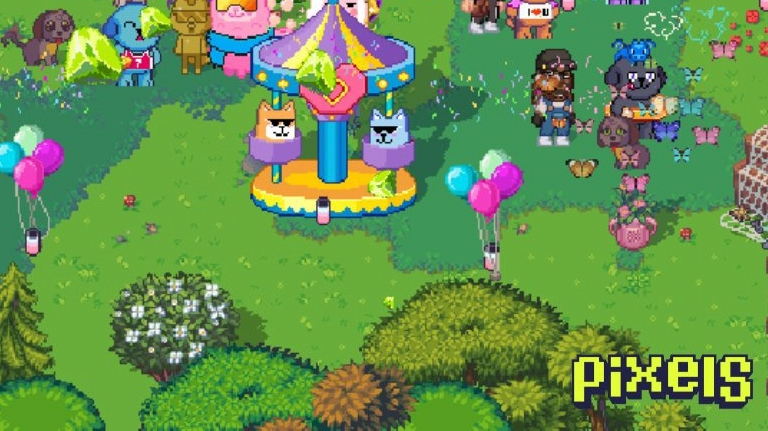
Article
Voir la traduction
Pixels: The Web3 Farming Game That Turned Time, Strategy, and Community Into Real ValueIn the crowded and often volatile landscape of Web3 gaming, where many titles chase quick hype cycles only to collapse under unsustainable token emissions and player fatigue, Pixels stands out as a thoughtful outlier. Built as a free-to-play social farming and exploration game on the Ronin blockchain, Pixels has steadily demonstrated that a player-driven economy can be both engaging and resilient prioritizing meaningful gameplay, strategic depth, and community over pure extraction.
From Pixel Art Charm to Blockchain Depth
At its heart, Pixels draws inspiration from classics like Stardew Valley and Runescape, wrapping nostalgic 2D pixel-art visuals around an open-world experience of farming, resource gathering, crafting, and social interaction. Players manage virtual land, grow crops, raise animals, explore, complete quests, and build relationships in a shared universe. What elevates it beyond a simple life-sim is the seamless integration of true ownership: land plots, assets, and progress are backed by blockchain, giving players real agency over what they build.
Unlike many early play-to-earn experiments that reduced gameplay to mindless grinding for token dumps, Pixels designs its loops so that time, strategy, and consistency drive progress. Resource management, land optimization, and collaborative activities feel natural. Logging in becomes about nurturing a growing virtual homestead or trading with neighbors, not just chasing daily rewards. This casual-yet-deep approach has helped Pixels amass millions of players, with peaks of hundreds of thousands of daily active users, making it one of the most played decentralized applications in the space.
The Evolution of a Sustainable Economy
Pixels’ economic model has matured significantly. It once featured a dual-token system with $BERRY (an inflationary soft currency) alongside the premium $PIXEL token. Recognizing the pitfalls of unchecked inflation common in Web3 games the team transitioned to a more focused structure. $BERRY was phased out and largely converted, replaced in part by an off-chain “Coins” currency for everyday transactions, while $PIXEL became the central utility and governance asset.
Today, $PIXEL serves as the backbone of the ecosystem. Players use it for:
• Upgrading assets
• Minting NFTs (such as pets or premium items)
• Joining or creating guilds
• Accessing VIP features
• Purchasing Coins
• Participating in staking for rewards and ecosystem influence
This utility-driven design helps maintain relevance even as reward emissions are managed carefully. Staking $PIXEL unlocks boosts, exclusive perks, and the ability to shape future developments, turning holders into active stakeholders rather than passive farmers. Recent initiatives, including heavier withdrawal fees redistributed to stakers and experiments like the Stacked rewards app, further aim to create positive feedback loops where player spending and engagement generate sustainable revenue.
Land ownership exemplifies the strategic layer. Farmland NFTs aren’t cosmetic; they directly influence productivity, resource yields, and long-term earning potential. Players must think about layout, crop rotation, animal care, and market conditions rather than simply grinding repetitive tasks. This balance between effort, planning, and social elements reduces burnout and encourages deeper investment in the world.
Community, Iteration, and Social Stickiness
What truly differentiates Pixels is its emphasis on social gameplay. Trading goods, cooperating on quests, joining guilds, and sharing strategies create a vibrant network effect. Players aren’t isolated wallets farming in silence they’re part of a living community where collaboration adds layers of value beyond tokens.
The development team reinforces this trust through consistent, player-informed updates. Patches refine mechanics, improve user experience, introduce new features (such as exploration elements, task boards, and events), and address economic balance without disrupting the core fun. Recent roadmap items point toward Chapter 2 enhancements focused on guilds and economic overhauls, and even Chapter 3 explorations into combat systems, signaling a commitment to long-term evolution.
Additional experiments like mobile-native spin-offs and rewards hubs show ambition to expand the $PIXEL universe into a broader platform where user-generated content and multiple games can coexist, all natively supporting digital collectibles.
Challenges on the Horizon
No Web3 game is without hurdles. Balancing token supply to avoid saturation, sustaining organic player growth amid broader market volatility, and ensuring new features don’t alienate casual users remain ongoing priorities. External factors, such as crypto market cycles, also influence sentiment. Yet Pixels has navigated these by adopting a measured, long-term mindset focusing on revenue generation alongside rewards, lowering reliance on pure token incentives, and drawing lessons from both traditional gaming and successful Web3 precedents.
Why Pixels Matters for the Future of Web3 Gaming
In an industry still recovering from overhyped play-to-earn cycles that often left players disillusioned, Pixels offers a compelling blueprint. It demonstrates that earning can be a natural byproduct of enjoyable, meaningful gameplay rather than the sole driver. When players stay because they’re invested in their land, their community, and the evolving world not just the token price the economy gains genuine resilience.
With millions of players, a maturing single-token utility model, strong social features, and a roadmap that keeps the experience fresh, Pixel is positioning itself as more than just another blockchain game. It’s building a living digital economy where participants have real agency, strategy rewards patience, and fun remains front and center.
For Web3 enthusiasts, farmers at heart, or anyone curious about the next evolution of gaming on the blockchain, Pixels is worth exploring. In a space that has seen too many short-lived hype trains, this is one project steadily laying tracks for something more enduring.
Play for free at pixels.xyz and discover your own corner of the Pixels universe.
The soil is fertile what will you grow?
#PIXEL #Web3Gaming
Pixels: The Web3 Farming Game That Turned Time, Strategy, and Community Into Real Value
In the crowded and often volatile landscape of Web3 gaming, where many titles chase quick hype cycles only to collapse under unsustainable token emissions and player fatigue, Pixels stands out as a thoughtful outlier. Built as a free-to-play social farming and exploration game on the Ronin blockchain, Pixels has steadily demonstrated that a player-driven economy can be both engaging and resilient prioritizing meaningful gameplay, strategic depth, and community over pure extraction.
From Pixel Art Charm to Blockchain Depth
At its heart, Pixels draws inspiration from classics like Stardew Valley and Runescape, wrapping nostalgic 2D pixel-art visuals around an open-world experience of farming, resource gathering, crafting, and social interaction. Players manage virtual land, grow crops, raise animals, explore, complete quests, and build relationships in a shared universe. What elevates it beyond a simple life-sim is the seamless integration of true ownership: land plots, assets, and progress are backed by blockchain, giving players real agency over what they build.
Unlike many early play-to-earn experiments that reduced gameplay to mindless grinding for token dumps, Pixels designs its loops so that time, strategy, and consistency drive progress. Resource management, land optimization, and collaborative activities feel natural. Logging in becomes about nurturing a growing virtual homestead or trading with neighbors, not just chasing daily rewards. This casual-yet-deep approach has helped Pixels amass millions of players, with peaks of hundreds of thousands of daily active users, making it one of the most played decentralized applications in the space.
The Evolution of a Sustainable Economy
Pixels’ economic model has matured significantly. It once featured a dual-token system with $BERRY (an inflationary soft currency) alongside the premium $PIXEL token. Recognizing the pitfalls of unchecked inflation common in Web3 games the team transitioned to a more focused structure. $BERRY was phased out and largely converted, replaced in part by an off-chain “Coins” currency for everyday transactions, while $PIXEL became the central utility and governance asset.
Today, $PIXEL serves as the backbone of the ecosystem. Players use it for:
• Upgrading assets
• Minting NFTs (such as pets or premium items)
• Joining or creating guilds
• Accessing VIP features
• Purchasing Coins
• Participating in staking for rewards and ecosystem influence
This utility-driven design helps maintain relevance even as reward emissions are managed carefully. Staking $PIXEL unlocks boosts, exclusive perks, and the ability to shape future developments, turning holders into active stakeholders rather than passive farmers. Recent initiatives, including heavier withdrawal fees redistributed to stakers and experiments like the Stacked rewards app, further aim to create positive feedback loops where player spending and engagement generate sustainable revenue.
Land ownership exemplifies the strategic layer. Farmland NFTs aren’t cosmetic; they directly influence productivity, resource yields, and long-term earning potential. Players must think about layout, crop rotation, animal care, and market conditions rather than simply grinding repetitive tasks. This balance between effort, planning, and social elements reduces burnout and encourages deeper investment in the world.
Community, Iteration, and Social Stickiness
What truly differentiates Pixels is its emphasis on social gameplay. Trading goods, cooperating on quests, joining guilds, and sharing strategies create a vibrant network effect. Players aren’t isolated wallets farming in silence they’re part of a living community where collaboration adds layers of value beyond tokens.
The development team reinforces this trust through consistent, player-informed updates. Patches refine mechanics, improve user experience, introduce new features (such as exploration elements, task boards, and events), and address economic balance without disrupting the core fun. Recent roadmap items point toward Chapter 2 enhancements focused on guilds and economic overhauls, and even Chapter 3 explorations into combat systems, signaling a commitment to long-term evolution.
Additional experiments like mobile-native spin-offs and rewards hubs show ambition to expand the $PIXEL universe into a broader platform where user-generated content and multiple games can coexist, all natively supporting digital collectibles.
Challenges on the Horizon
No Web3 game is without hurdles. Balancing token supply to avoid saturation, sustaining organic player growth amid broader market volatility, and ensuring new features don’t alienate casual users remain ongoing priorities. External factors, such as crypto market cycles, also influence sentiment. Yet Pixels has navigated these by adopting a measured, long-term mindset focusing on revenue generation alongside rewards, lowering reliance on pure token incentives, and drawing lessons from both traditional gaming and successful Web3 precedents.
Why Pixels Matters for the Future of Web3 Gaming
In an industry still recovering from overhyped play-to-earn cycles that often left players disillusioned, Pixels offers a compelling blueprint. It demonstrates that earning can be a natural byproduct of enjoyable, meaningful gameplay rather than the sole driver. When players stay because they’re invested in their land, their community, and the evolving world not just the token price the economy gains genuine resilience.
With millions of players, a maturing single-token utility model, strong social features, and a roadmap that keeps the experience fresh, Pixel is positioning itself as more than just another blockchain game. It’s building a living digital economy where participants have real agency, strategy rewards patience, and fun remains front and center.
For Web3 enthusiasts, farmers at heart, or anyone curious about the next evolution of gaming on the blockchain, Pixels is worth exploring. In a space that has seen too many short-lived hype trains, this is one project steadily laying tracks for something more enduring.
Play for free at pixels.xyz and discover your own corner of the Pixels universe.
The soil is fertile what will you grow?
#PIXEL #Web3Gaming
From Pixel Art Charm to Blockchain Depth
At its heart, Pixels draws inspiration from classics like Stardew Valley and Runescape, wrapping nostalgic 2D pixel-art visuals around an open-world experience of farming, resource gathering, crafting, and social interaction. Players manage virtual land, grow crops, raise animals, explore, complete quests, and build relationships in a shared universe. What elevates it beyond a simple life-sim is the seamless integration of true ownership: land plots, assets, and progress are backed by blockchain, giving players real agency over what they build.
Unlike many early play-to-earn experiments that reduced gameplay to mindless grinding for token dumps, Pixels designs its loops so that time, strategy, and consistency drive progress. Resource management, land optimization, and collaborative activities feel natural. Logging in becomes about nurturing a growing virtual homestead or trading with neighbors, not just chasing daily rewards. This casual-yet-deep approach has helped Pixels amass millions of players, with peaks of hundreds of thousands of daily active users, making it one of the most played decentralized applications in the space.
The Evolution of a Sustainable Economy
Pixels’ economic model has matured significantly. It once featured a dual-token system with $BERRY (an inflationary soft currency) alongside the premium $PIXEL token. Recognizing the pitfalls of unchecked inflation common in Web3 games the team transitioned to a more focused structure. $BERRY was phased out and largely converted, replaced in part by an off-chain “Coins” currency for everyday transactions, while $PIXEL became the central utility and governance asset.
Today, $PIXEL serves as the backbone of the ecosystem. Players use it for:
• Upgrading assets
• Minting NFTs (such as pets or premium items)
• Joining or creating guilds
• Accessing VIP features
• Purchasing Coins
• Participating in staking for rewards and ecosystem influence
This utility-driven design helps maintain relevance even as reward emissions are managed carefully. Staking $PIXEL unlocks boosts, exclusive perks, and the ability to shape future developments, turning holders into active stakeholders rather than passive farmers. Recent initiatives, including heavier withdrawal fees redistributed to stakers and experiments like the Stacked rewards app, further aim to create positive feedback loops where player spending and engagement generate sustainable revenue.
Land ownership exemplifies the strategic layer. Farmland NFTs aren’t cosmetic; they directly influence productivity, resource yields, and long-term earning potential. Players must think about layout, crop rotation, animal care, and market conditions rather than simply grinding repetitive tasks. This balance between effort, planning, and social elements reduces burnout and encourages deeper investment in the world.
Community, Iteration, and Social Stickiness
What truly differentiates Pixels is its emphasis on social gameplay. Trading goods, cooperating on quests, joining guilds, and sharing strategies create a vibrant network effect. Players aren’t isolated wallets farming in silence they’re part of a living community where collaboration adds layers of value beyond tokens.
The development team reinforces this trust through consistent, player-informed updates. Patches refine mechanics, improve user experience, introduce new features (such as exploration elements, task boards, and events), and address economic balance without disrupting the core fun. Recent roadmap items point toward Chapter 2 enhancements focused on guilds and economic overhauls, and even Chapter 3 explorations into combat systems, signaling a commitment to long-term evolution.
Additional experiments like mobile-native spin-offs and rewards hubs show ambition to expand the $PIXEL universe into a broader platform where user-generated content and multiple games can coexist, all natively supporting digital collectibles.
Challenges on the Horizon
No Web3 game is without hurdles. Balancing token supply to avoid saturation, sustaining organic player growth amid broader market volatility, and ensuring new features don’t alienate casual users remain ongoing priorities. External factors, such as crypto market cycles, also influence sentiment. Yet Pixels has navigated these by adopting a measured, long-term mindset focusing on revenue generation alongside rewards, lowering reliance on pure token incentives, and drawing lessons from both traditional gaming and successful Web3 precedents.
Why Pixels Matters for the Future of Web3 Gaming
In an industry still recovering from overhyped play-to-earn cycles that often left players disillusioned, Pixels offers a compelling blueprint. It demonstrates that earning can be a natural byproduct of enjoyable, meaningful gameplay rather than the sole driver. When players stay because they’re invested in their land, their community, and the evolving world not just the token price the economy gains genuine resilience.
With millions of players, a maturing single-token utility model, strong social features, and a roadmap that keeps the experience fresh, Pixel is positioning itself as more than just another blockchain game. It’s building a living digital economy where participants have real agency, strategy rewards patience, and fun remains front and center.
For Web3 enthusiasts, farmers at heart, or anyone curious about the next evolution of gaming on the blockchain, Pixels is worth exploring. In a space that has seen too many short-lived hype trains, this is one project steadily laying tracks for something more enduring.
Play for free at pixels.xyz and discover your own corner of the Pixels universe.
The soil is fertile what will you grow?
#PIXEL #Web3Gaming
2
·
--
Voir la traduction
Pixel #Pixel is leveling up in a big way with their new stacking mechanics.
It’s not just another “lock your tokens” feature it’s a proper strategic layer that lets you compound progress while staying fully active in the game world.
You farm, trade, build, and explore… and your stacked positions keep getting stronger at the same time. It creates this beautiful feedback loop where real engagement actually rewards you more over time.
No more pure short-term farming meta. This pushes players toward consistency, smart decisions, and long-term value creation instead.
If Pixels keeps building in this direction, they’re showing the whole Web3 gaming space how to do utility, progression, and sustainable economies right all powered by $PIXEL .
Really impressed with where this is headed.
What do you think are you stacking yet? $PIXEL
Pixel #Pixel is leveling up in a big way with their new stacking mechanics.
It’s not just another “lock your tokens” feature it’s a proper strategic layer that lets you compound progress while staying fully active in the game world.
You farm, trade, build, and explore… and your stacked positions keep getting stronger at the same time. It creates this beautiful feedback loop where real engagement actually rewards you more over time.
No more pure short-term farming meta. This pushes players toward consistency, smart decisions, and long-term value creation instead.
If Pixels keeps building in this direction, they’re showing the whole Web3 gaming space how to do utility, progression, and sustainable economies right all powered by $PIXEL .
Really impressed with where this is headed.
What do you think are you stacking yet? $PIXEL
It’s not just another “lock your tokens” feature it’s a proper strategic layer that lets you compound progress while staying fully active in the game world.
You farm, trade, build, and explore… and your stacked positions keep getting stronger at the same time. It creates this beautiful feedback loop where real engagement actually rewards you more over time.
No more pure short-term farming meta. This pushes players toward consistency, smart decisions, and long-term value creation instead.
If Pixels keeps building in this direction, they’re showing the whole Web3 gaming space how to do utility, progression, and sustainable economies right all powered by $PIXEL .
Really impressed with where this is headed.
What do you think are you stacking yet? $PIXEL
1
3
18
·
--
Voir la traduction
Hi guys don’t stop making those baby steps… it will pay off eventually.
Hi guys don’t stop making those baby steps… it will pay off eventually.

3
Connectez-vous pour découvrir plus de contenu
Rejoignez la communauté mondiale des adeptes de cryptomonnaies sur Binance Square
⚡️ Suviez les dernières informations importantes sur les cryptomonnaies.
💬 Jugé digne de confiance par la plus grande plateforme d’échange de cryptomonnaies au monde.
👍 Découvrez les connaissances que partagent les créateurs vérifiés.
Adresse e-mail/Nº de téléphone
Sujets d’actualité
BOJRaisesRatesTo31YearHigh
154,366 vues
2,376 mentions
#BOJRaisesRatesTo31YearHigh
🚨 L’ère de l’argent gratuit est terminée : la Banque du Japon surprend le marché ! 🚨
Dans un revirement saisissant de sa politique monétaire, restée inchangée pendant des années, la Banque du Japon (BOJ) a relevé son principal taux directeur à 1,25 %, atteignant son plus haut niveau depuis 31 ans.
#BOJ #JapanEconomy #BinanceSquare #CryptoNews
$G
$ONE
$CELR
Jacob trade
·0 mentions J’aime
·107 vues
BuffettStepsDownAsBerkshireChairman
73,669 vues
1,214 mentions
XRPExchangeReservesHitSevenYearLow
80,836 vues
1,097 mentions