
#eurequireswalletmakersreportflawsin24hours
eurequireswalletmakersreportflawsin24hours
Populaire
Récents

·
--
Voir la traduction
#eurequireswalletmakersreportflawsin24hours 🔐
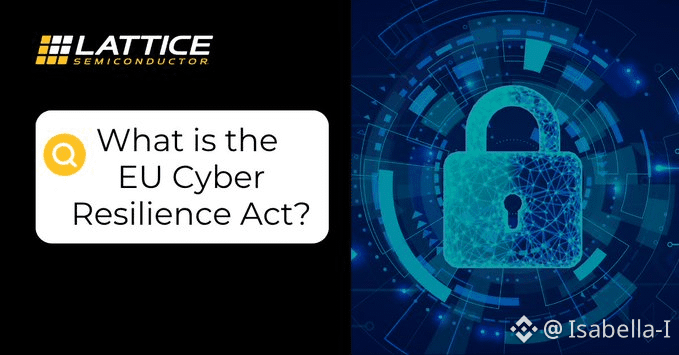
The EU CRA is raising the bar for connected product security. Starting Sept. 11, 2026, vulnerability and incident reporting obligations begin, including 24-hour reporting to ENISA. See how Lattice FPGAs can help support readiness:$ZRX $INTW $ETHFI
#eurequireswalletmakersreportflawsin24hours 🔐
The EU CRA is raising the bar for connected product security. Starting Sept. 11, 2026, vulnerability and incident reporting obligations begin, including 24-hour reporting to ENISA. See how Lattice FPGAs can help support readiness:$ZRX $INTW $ETHFI
The EU CRA is raising the bar for connected product security. Starting Sept. 11, 2026, vulnerability and incident reporting obligations begin, including 24-hour reporting to ENISA. See how Lattice FPGAs can help support readiness:$ZRX $INTW $ETHFI
2


·
--
Haussier
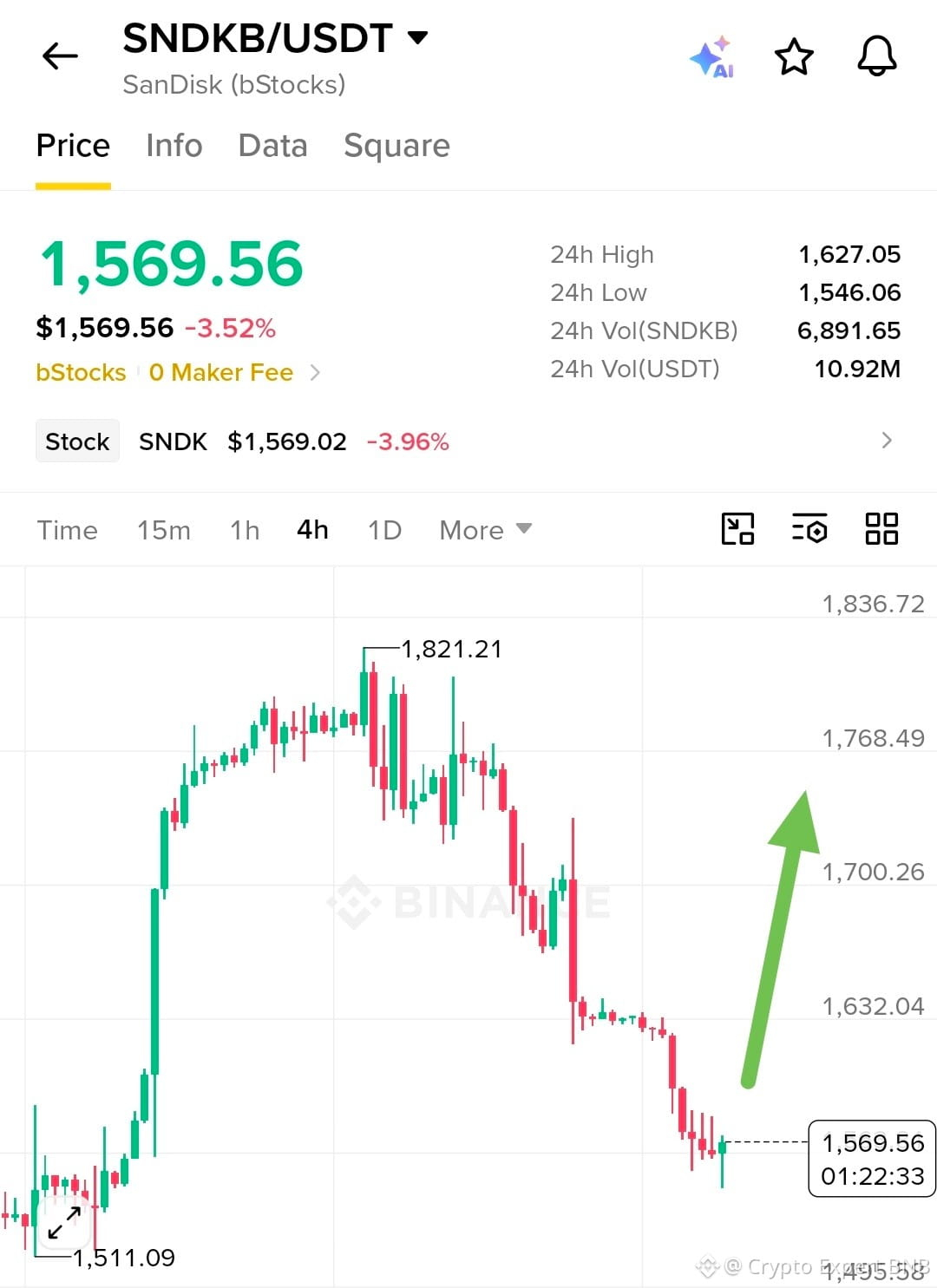
$SNDKB SNDK $1,569 | 1H Trade Setup
$SNDK Acheter/Long 🟢
🔹 Entrée : 1 550–1 575 $
🎯 TP1 : 1 610 $
🎯 TP2 : 1 665 $
🎯 TP3 : 1 720 $
🛑 SL : 1 505 $
$SNDK
Tendance : Bullish sur une reprise de la zone des 1 575 $. Les données techniques récentes indiquent que l’élan a faibli et que le RSI s’approche de la zone de survente ; un scénario de rebond est donc possible, mais la confirmation est essentielle.
⚠️ Si SNDK perd 1 505 $ avec des ventes solides, évitez le long et attendez un nouveau setup.#EURequiresWalletMakersReportFlawsIn24Hours
$SNDKB SNDK $1,569 | 1H Trade Setup
$SNDK Acheter/Long 🟢
🔹 Entrée : 1 550–1 575 $
🎯 TP1 : 1 610 $
🎯 TP2 : 1 665 $
🎯 TP3 : 1 720 $
🛑 SL : 1 505 $
$SNDK
Tendance : Bullish sur une reprise de la zone des 1 575 $. Les données techniques récentes indiquent que l’élan a faibli et que le RSI s’approche de la zone de survente ; un scénario de rebond est donc possible, mais la confirmation est essentielle.
⚠️ Si SNDK perd 1 505 $ avec des ventes solides, évitez le long et attendez un nouveau setup.#EURequiresWalletMakersReportFlawsIn24Hours
$SNDK Acheter/Long 🟢
🔹 Entrée : 1 550–1 575 $
🎯 TP1 : 1 610 $
🎯 TP2 : 1 665 $
🎯 TP3 : 1 720 $
🛑 SL : 1 505 $
$SNDK
Tendance : Bullish sur une reprise de la zone des 1 575 $. Les données techniques récentes indiquent que l’élan a faibli et que le RSI s’approche de la zone de survente ; un scénario de rebond est donc possible, mais la confirmation est essentielle.
⚠️ Si SNDK perd 1 505 $ avec des ventes solides, évitez le long et attendez un nouveau setup.#EURequiresWalletMakersReportFlawsIn24Hours
1
190
Voir la traduction
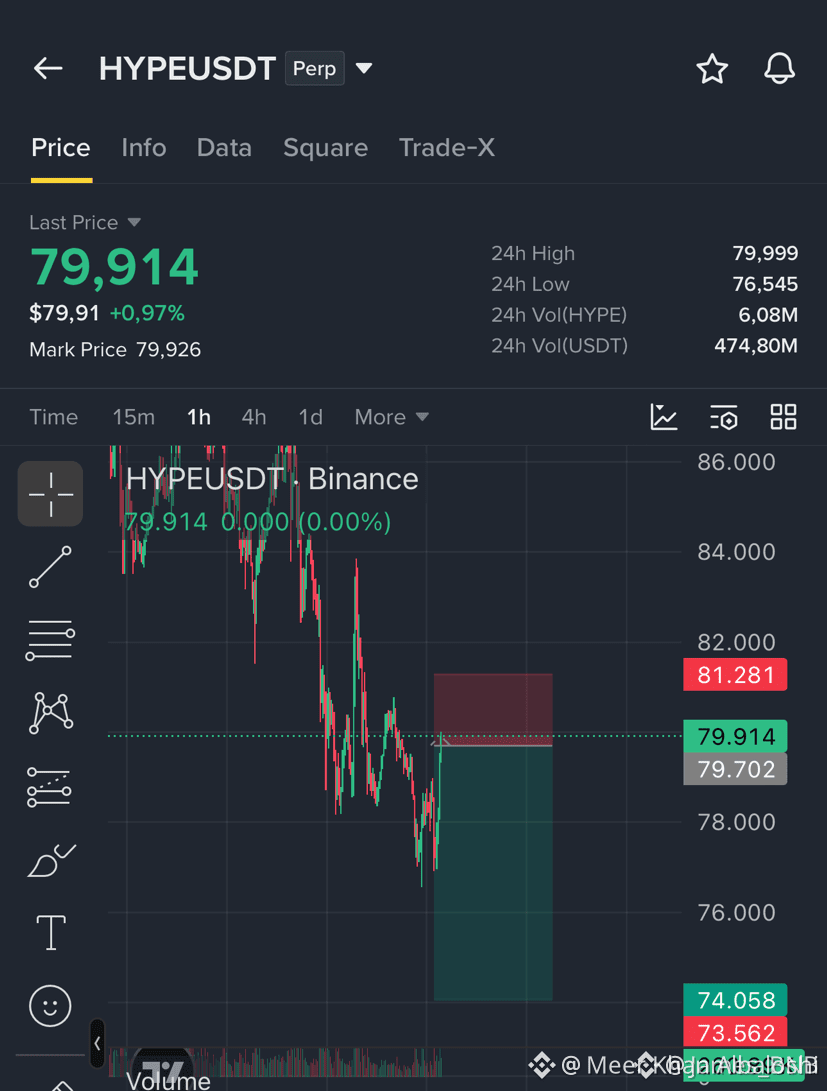
$HYPE pay attention to this coin . it's price is going down .Now it is a good time to take Big Short 10x . thanks me later #EURequiresWalletMakersReportFlawsIn24Hours
{future}(HYPEUSDT)
$HYPE pay attention to this coin . it's price is going down .Now it is a good time to take Big Short 10x . thanks me later #EURequiresWalletMakersReportFlawsIn24Hours
59

·
--
Voir la traduction
If you are still treating a single confirmation on the blockchain as instant finality, stop now.
Waiting for transactions to clear while arbitrage windows slam shut is frustrating enough, but getting caught on the wrong side of an orphaned block can erase your trading profit in seconds.
Seeing three single-block reorganizations on $BTC within just four weeks has stirred up some uncomfortable memories. We used to laugh off isolated reorgs as harmless orphan races between mining pools with slight latency differences. But when it happens with this frequency, it starts looking less like accidental network jitter and more like aggressive block propagation battles reminiscent of what proof-of-work networks like $ETC dealt with in earlier cycles.
It is not a structural collapse, but it does force exchanges and liquidity providers to quietly bump required confirmations before crediting your $USDT deposits. Back in 2013, a consensus fork caused genuine market panic, whereas today the mempool friction just silently delays capital rotation while everyone pretends network propagation is perfectly synchronized.
Do you think this is purely innocent mining pool latency, or are miners quietly pushing the limits of MEV extraction on Bitcoin?
#BitcoinThirdSingleBlockReorgInFourWeeks #EURequiresWalletMakersReportFlawsIn24Hours
If you are still treating a single confirmation on the blockchain as instant finality, stop now.
Waiting for transactions to clear while arbitrage windows slam shut is frustrating enough, but getting caught on the wrong side of an orphaned block can erase your trading profit in seconds.
Seeing three single-block reorganizations on $BTC within just four weeks has stirred up some uncomfortable memories. We used to laugh off isolated reorgs as harmless orphan races between mining pools with slight latency differences. But when it happens with this frequency, it starts looking less like accidental network jitter and more like aggressive block propagation battles reminiscent of what proof-of-work networks like $ETC dealt with in earlier cycles.
It is not a structural collapse, but it does force exchanges and liquidity providers to quietly bump required confirmations before crediting your $USDT deposits. Back in 2013, a consensus fork caused genuine market panic, whereas today the mempool friction just silently delays capital rotation while everyone pretends network propagation is perfectly synchronized.
Do you think this is purely innocent mining pool latency, or are miners quietly pushing the limits of MEV extraction on Bitcoin?
#BitcoinThirdSingleBlockReorgInFourWeeks #EURequiresWalletMakersReportFlawsIn24Hours
Waiting for transactions to clear while arbitrage windows slam shut is frustrating enough, but getting caught on the wrong side of an orphaned block can erase your trading profit in seconds.
Seeing three single-block reorganizations on $BTC within just four weeks has stirred up some uncomfortable memories. We used to laugh off isolated reorgs as harmless orphan races between mining pools with slight latency differences. But when it happens with this frequency, it starts looking less like accidental network jitter and more like aggressive block propagation battles reminiscent of what proof-of-work networks like $ETC dealt with in earlier cycles.
It is not a structural collapse, but it does force exchanges and liquidity providers to quietly bump required confirmations before crediting your $USDT deposits. Back in 2013, a consensus fork caused genuine market panic, whereas today the mempool friction just silently delays capital rotation while everyone pretends network propagation is perfectly synchronized.
Do you think this is purely innocent mining pool latency, or are miners quietly pushing the limits of MEV extraction on Bitcoin?
#BitcoinThirdSingleBlockReorgInFourWeeks #EURequiresWalletMakersReportFlawsIn24Hours
25

·
--
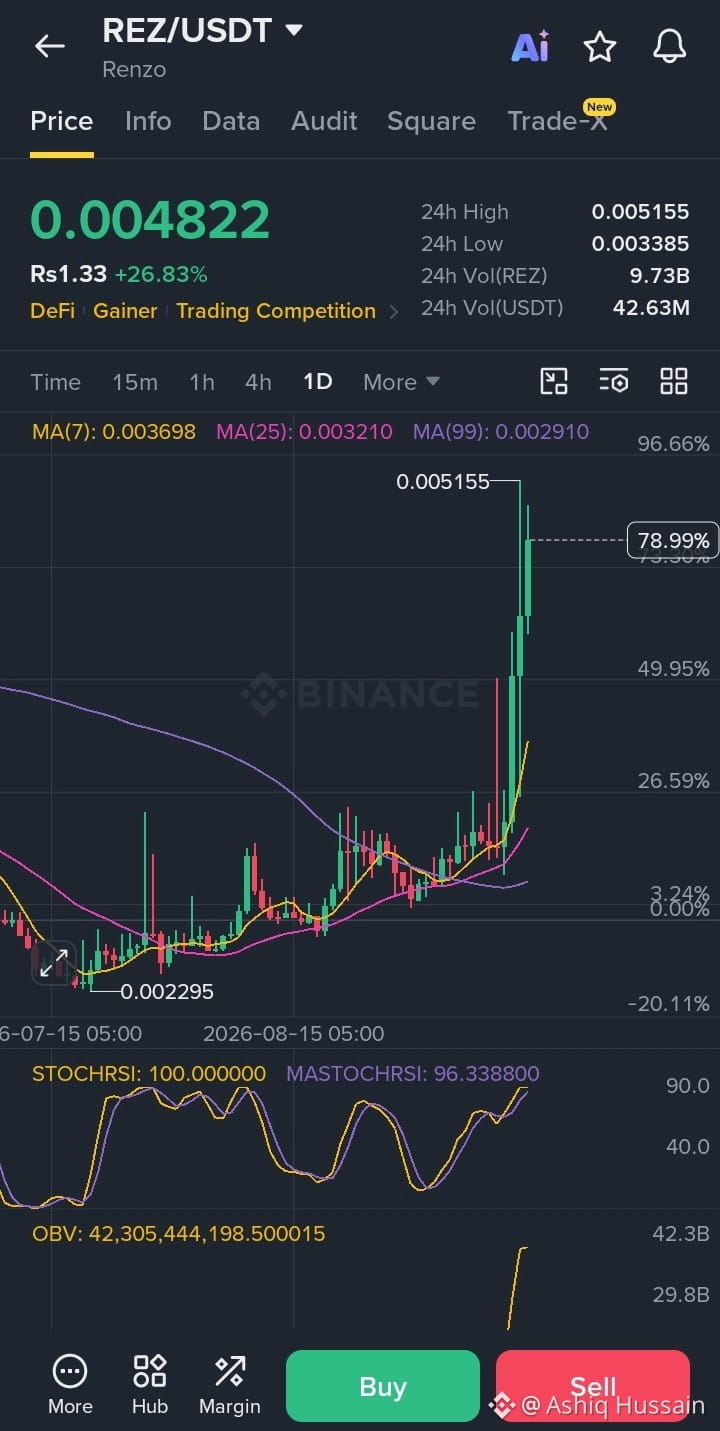
$REZ est actuellement à 0,004804 $ sur Binance Spot, en hausse d’environ +26,8% sur les dernières 24 heures par rapport à un cours d’ouverture de 0,003789 $. Sa fourchette sur 24 heures est de 0,003385–0,005155 $, avec environ 42,63 M$ de volume de transactions en REZUSDT.
{spot}(REZUSDT)
#rez #SECReceivesGrayscaleLitecoinTrustETFFiling #AnthropicChoosesNasdaqForPotentialIPO #ZcashNU7VoteEndsSeptember14 #EURequiresWalletMakersReportFlawsIn24Hours
$REZ est actuellement à 0,004804 $ sur Binance Spot, en hausse d’environ +26,8% sur les dernières 24 heures par rapport à un cours d’ouverture de 0,003789 $. Sa fourchette sur 24 heures est de 0,003385–0,005155 $, avec environ 42,63 M$ de volume de transactions en REZUSDT.
#rez #SECReceivesGrayscaleLitecoinTrustETFFiling #AnthropicChoosesNasdaqForPotentialIPO #ZcashNU7VoteEndsSeptember14 #EURequiresWalletMakersReportFlawsIn24Hours
#rez #SECReceivesGrayscaleLitecoinTrustETFFiling #AnthropicChoosesNasdaqForPotentialIPO #ZcashNU7VoteEndsSeptember14 #EURequiresWalletMakersReportFlawsIn24Hours
51
·
--
Voir la traduction

RAMESSES Tob TRD
·
--
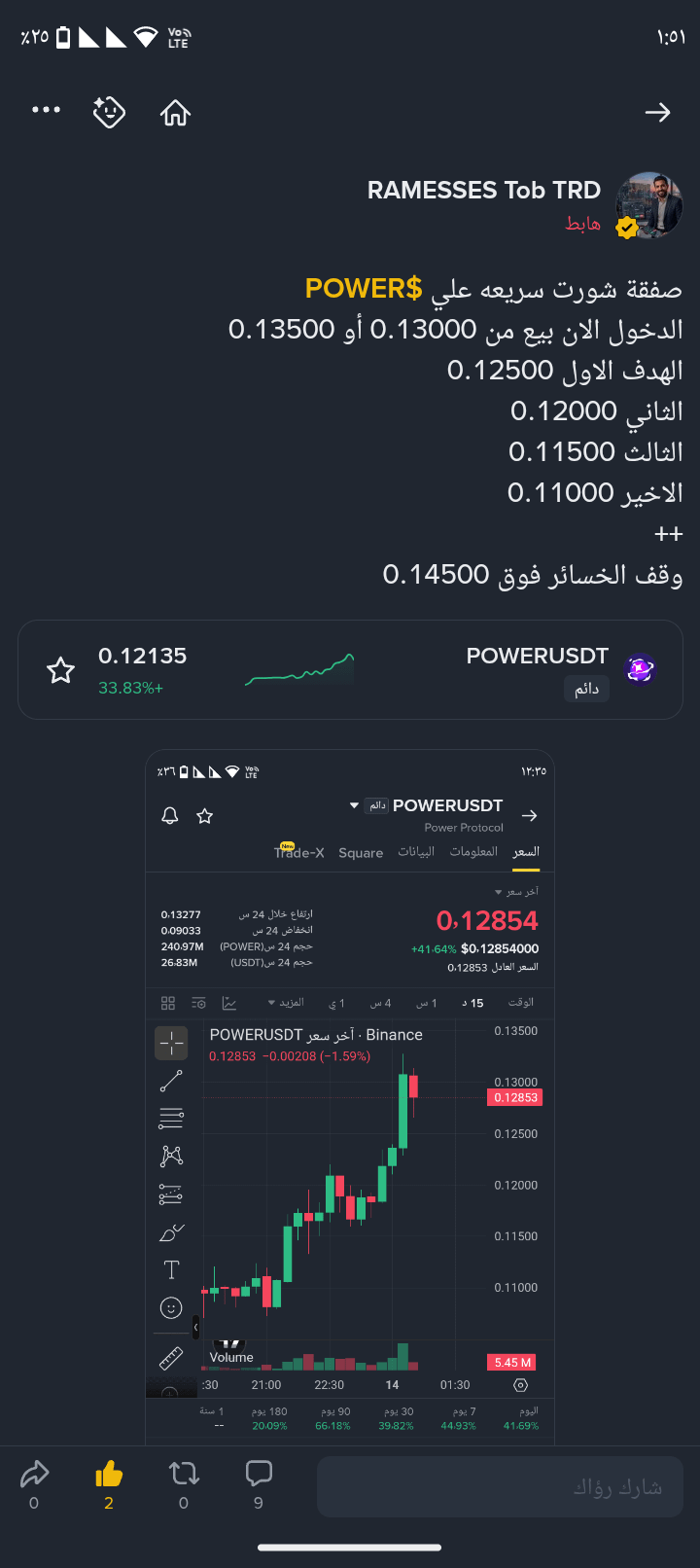
BaissierBOOOOOM 💰👇$POWER
Votre chance est arrivée 💰👇💆
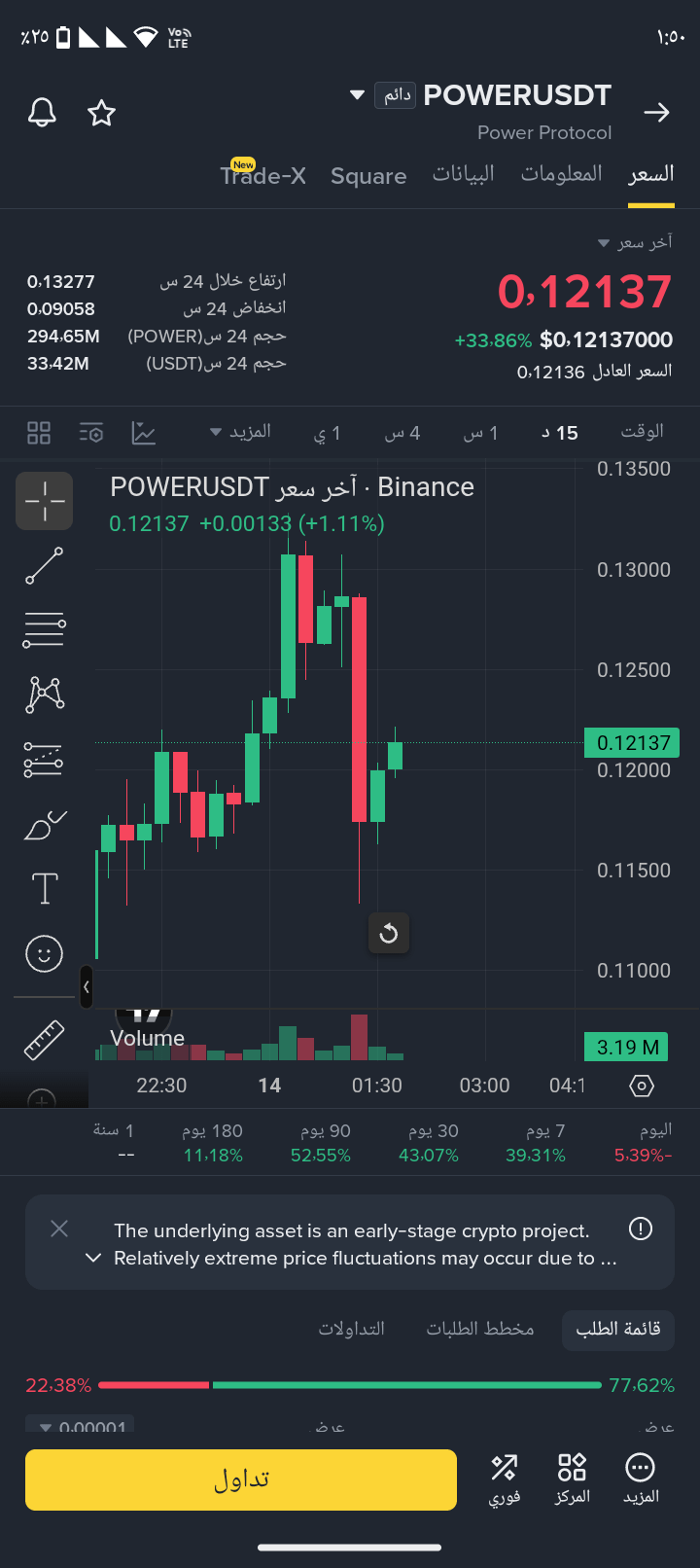
Félicitations à tous ceux qui nous ont rejoints sur $POWER
Le taux a atteint 0.11200, je n'ai pas cassé ta sécurité de profits. Félicitations à toi 🎉🤑💰👇
Votre chance est arrivée 💰👇💆
Félicitations à tous ceux qui nous ont rejoints sur $POWER
Le taux a atteint 0.11200, je n'ai pas cassé ta sécurité de profits. Félicitations à toi 🎉🤑💰👇

·
--
Haussier
Voir la traduction
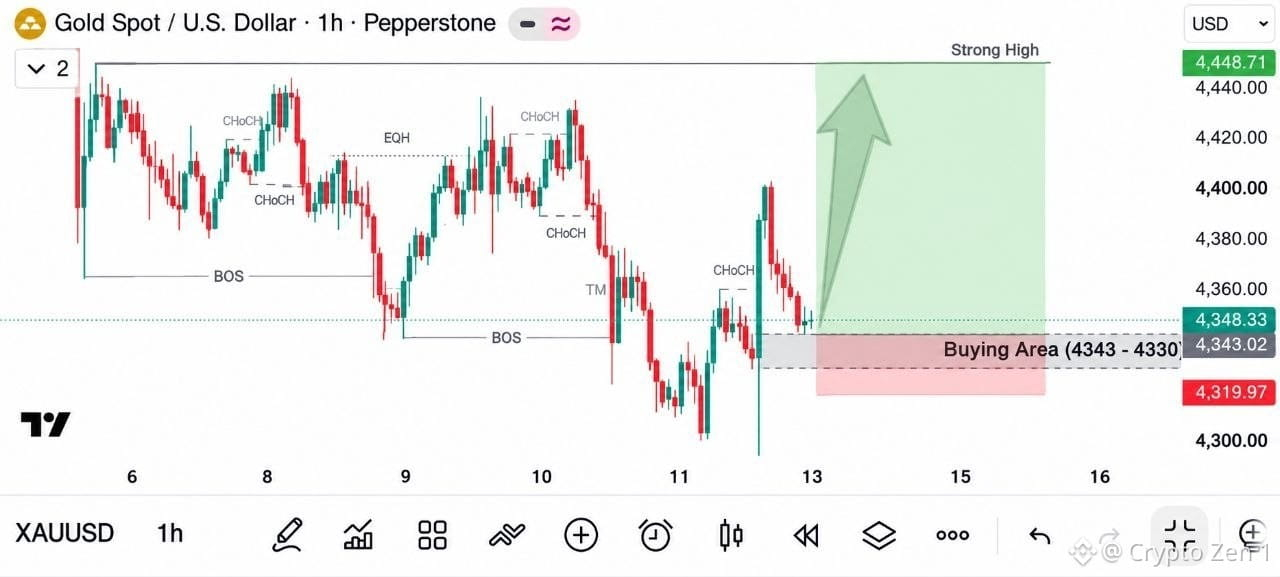
🔥 $XAU USD BUY SETUP
$GOLD.US is holding the 4343 to 4330 area and buyers are stepping in after the dip
EP 4343 to 4330
TP 4400 to 4448+
SL Below 4320
The reaction from this zone looks strong and a move toward the previous high could be next 📈
Stay patient and manage risk
#EURequiresWalletMakersReportFlawsIn24Hours
🔥 $XAU USD BUY SETUP
$GOLD.US is holding the 4343 to 4330 area and buyers are stepping in after the dip
EP 4343 to 4330
TP 4400 to 4448+
SL Below 4320
The reaction from this zone looks strong and a move toward the previous high could be next 📈
Stay patient and manage risk
#EURequiresWalletMakersReportFlawsIn24Hours
$GOLD.US is holding the 4343 to 4330 area and buyers are stepping in after the dip
EP 4343 to 4330
TP 4400 to 4448+
SL Below 4320
The reaction from this zone looks strong and a move toward the previous high could be next 📈
Stay patient and manage risk
#EURequiresWalletMakersReportFlawsIn24Hours
44

·
--
Haussier
Voir la traduction
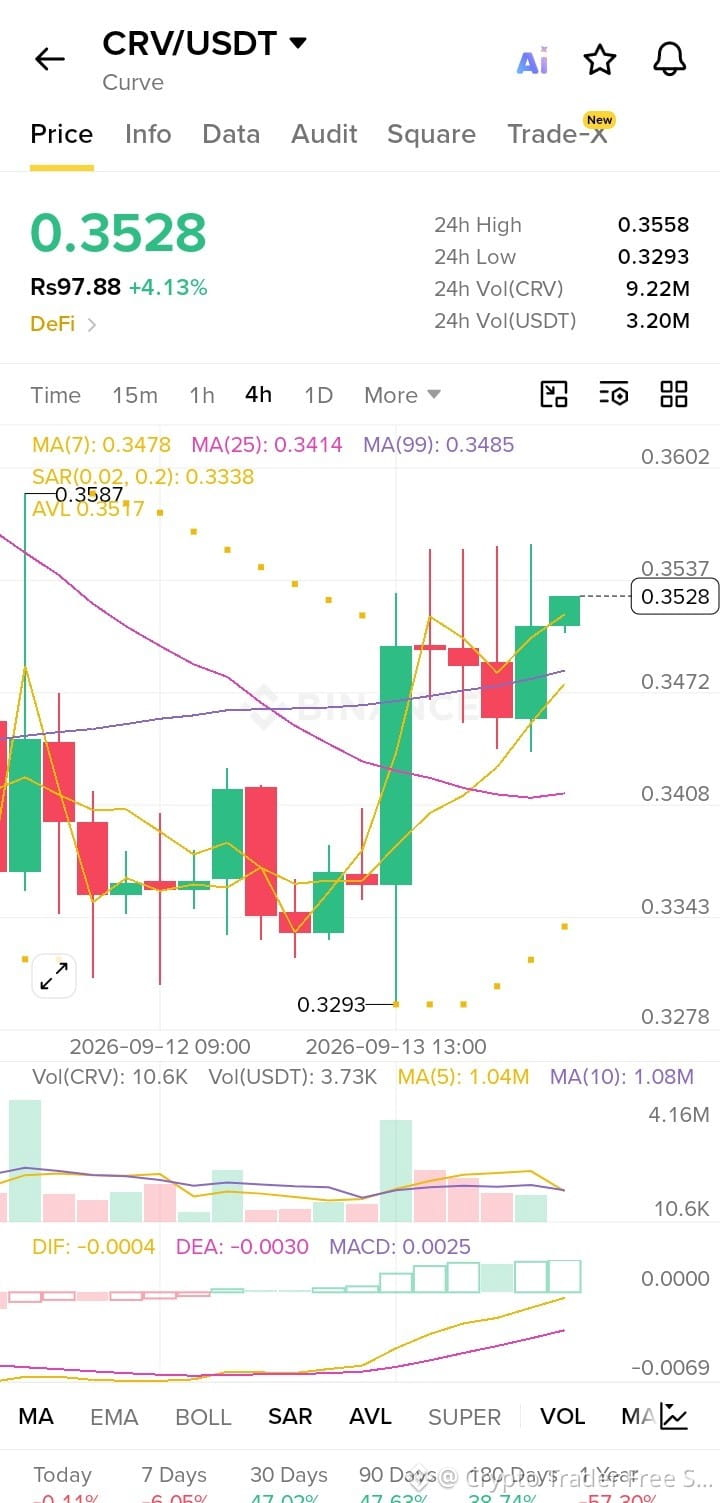
$CRV 🚀 THE NEXT GREEN MOVE COULD START HERE! Buyers are showing interest and momentum is improving. Don’t miss THIS chance—keep your eyes open and watch the trend.#EURequiresWalletMakersReportFlawsIn24Hours
{spot}(CRVUSDT)
$CVC
$INJ
$CRV 🚀 THE NEXT GREEN MOVE COULD START HERE! Buyers are showing interest and momentum is improving. Don’t miss THIS chance—keep your eyes open and watch the trend.#EURequiresWalletMakersReportFlawsIn24Hours
$CVC
$INJ
$CVC
$INJ
1
2
·
--
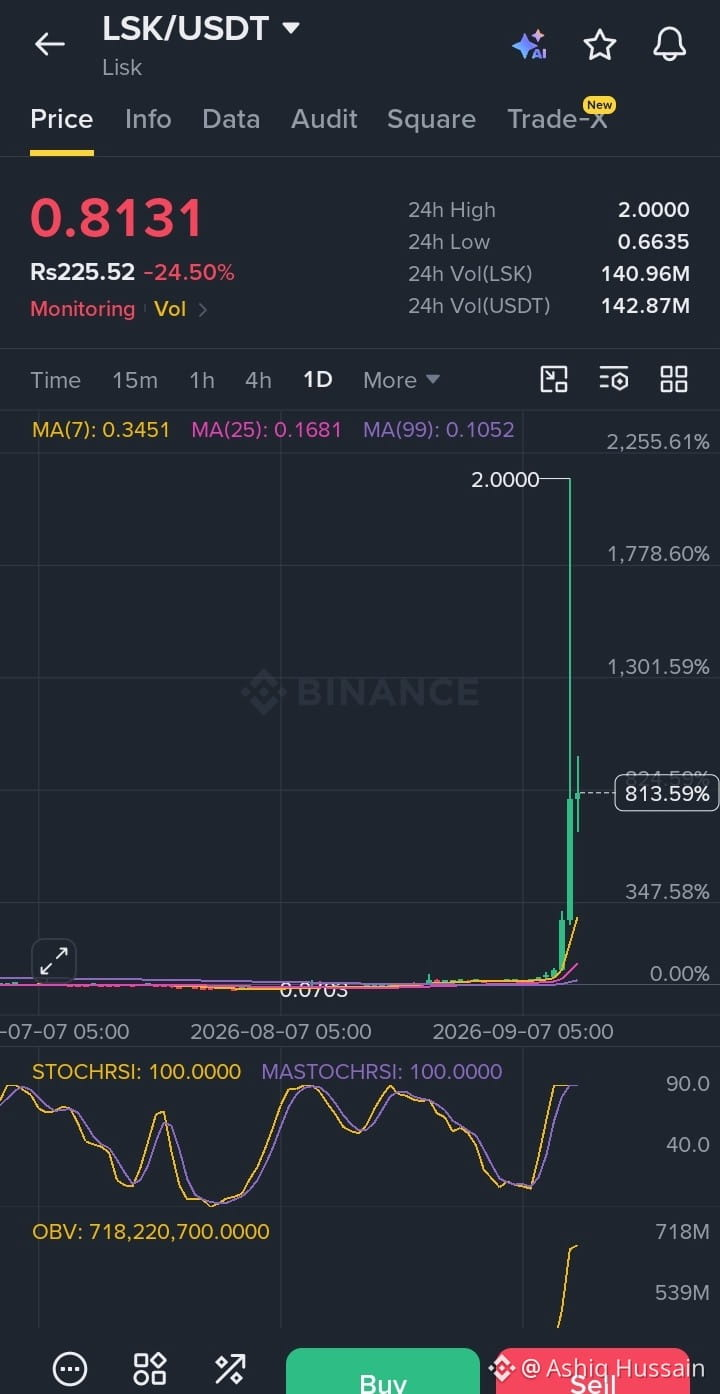
$LSK est négocié à 0,8147 $ sur Binance Spot, contre une ouverture sur 24 heures de 1,0599 $ (-23,1 %). La fourchette de la séance a été exceptionnellement large : 0,6635–2,0000 $, avec environ 143,3 M $ de rotation sur LSKUSDT. Cela fait suite à un fort rallye signalé dans le point marché de la veille, où LSK était en hausse de +267,6 % sur 24 heures.
{spot}(LSKUSDT)
#lsk #LSKSurgesOver515%In24Hours #KoreaCryptoTaxDelayPetitionMeetsReviewThreshold #EURequiresWalletMakersReportFlawsIn24Hours #ZcashNU7VoteEndsSeptember14
$LSK est négocié à 0,8147 $ sur Binance Spot, contre une ouverture sur 24 heures de 1,0599 $ (-23,1 %). La fourchette de la séance a été exceptionnellement large : 0,6635–2,0000 $, avec environ 143,3 M $ de rotation sur LSKUSDT. Cela fait suite à un fort rallye signalé dans le point marché de la veille, où LSK était en hausse de +267,6 % sur 24 heures.
#lsk #LSKSurgesOver515%In24Hours #KoreaCryptoTaxDelayPetitionMeetsReviewThreshold #EURequiresWalletMakersReportFlawsIn24Hours #ZcashNU7VoteEndsSeptember14
#lsk #LSKSurgesOver515%In24Hours #KoreaCryptoTaxDelayPetitionMeetsReviewThreshold #EURequiresWalletMakersReportFlawsIn24Hours #ZcashNU7VoteEndsSeptember14
46

·
--
🚨 Bitcoin vient de subir un nouvel important réarrangement de bloc
$BTC aurait connu sa troisième réorganisation monophasée en l’espace de seulement quatre semaines.
Une réorganisation d’un seul bloc n’est pas forcément le signe que le Bitcoin est « cassé » : des blocs concurrents, de courte durée, peuvent se produire pendant que les mineurs se disputent la découverte du bloc suivant.
Mais trois occurrences sur une période aussi courte suffisent à rendre l’événement digne d’intérêt.
Le réseau de Bitcoin est conçu pour résoudre ces forks temporaires.
La grande question est :
Est-ce simplement un comportement normal du réseau, ou quelque chose change-t-il en dessous de la surface ?
{future}(BTCUSDT)
#cpiwatch #AnthropicCEOCallsForAISlowdown #BitcoinThirdSingleBlockReorgInFourWeeks #LSKSurgesOver515%In24Hours #EURequiresWalletMakersReportFlawsIn24Hours
🚨 Bitcoin vient de subir un nouvel important réarrangement de bloc
$BTC aurait connu sa troisième réorganisation monophasée en l’espace de seulement quatre semaines.
Une réorganisation d’un seul bloc n’est pas forcément le signe que le Bitcoin est « cassé » : des blocs concurrents, de courte durée, peuvent se produire pendant que les mineurs se disputent la découverte du bloc suivant.
Mais trois occurrences sur une période aussi courte suffisent à rendre l’événement digne d’intérêt.
Le réseau de Bitcoin est conçu pour résoudre ces forks temporaires.
La grande question est :
Est-ce simplement un comportement normal du réseau, ou quelque chose change-t-il en dessous de la surface ?
#cpiwatch #AnthropicCEOCallsForAISlowdown #BitcoinThirdSingleBlockReorgInFourWeeks #LSKSurgesOver515%In24Hours #EURequiresWalletMakersReportFlawsIn24Hours
$BTC aurait connu sa troisième réorganisation monophasée en l’espace de seulement quatre semaines.
Une réorganisation d’un seul bloc n’est pas forcément le signe que le Bitcoin est « cassé » : des blocs concurrents, de courte durée, peuvent se produire pendant que les mineurs se disputent la découverte du bloc suivant.
Mais trois occurrences sur une période aussi courte suffisent à rendre l’événement digne d’intérêt.
Le réseau de Bitcoin est conçu pour résoudre ces forks temporaires.
La grande question est :
Est-ce simplement un comportement normal du réseau, ou quelque chose change-t-il en dessous de la surface ?
#cpiwatch #AnthropicCEOCallsForAISlowdown #BitcoinThirdSingleBlockReorgInFourWeeks #LSKSurgesOver515%In24Hours #EURequiresWalletMakersReportFlawsIn24Hours
27


·
--
Voir la traduction
Everyone thinks a confirmed Bitcoin transaction is set in stone the second it hits the ledger, but actually, 1-block reorganizations happen more often than you realize.
If you are transferring large amounts of $BTC or swapping into $USDT on a single confirmation, a sudden reorg can leave your deposit delayed or temporarily stuck. It is the kind of quiet technical glitch that causes unnecessary panic when you need fast liquidity.
Think of a single-block reorg like two delivery couriers arriving at the exact same doorstep at the exact same second. When two miners solve a block simultaneously, the network briefly splits until the next block decides which route becomes official history. The orphan block is discarded, and its transactions simply go back into the queue to be picked up again.
For everyday users or anyone holding $ETC, this rarely means lost funds since transactions get confirmed in the following blocks anyway. The real headache hits services and traders who credit balances on just one confirmation. Waiting for at least two to three confirmations remains the simplest way to stay safe during network jitter.
How many confirmations do you usually wait for before considering a transfer completely settled?
#BitcoinThirdSingleBlockReorgInFourWeeks #EURequiresWalletMakersReportFlawsIn24Hours
Everyone thinks a confirmed Bitcoin transaction is set in stone the second it hits the ledger, but actually, 1-block reorganizations happen more often than you realize.
If you are transferring large amounts of $BTC or swapping into $USDT on a single confirmation, a sudden reorg can leave your deposit delayed or temporarily stuck. It is the kind of quiet technical glitch that causes unnecessary panic when you need fast liquidity.
Think of a single-block reorg like two delivery couriers arriving at the exact same doorstep at the exact same second. When two miners solve a block simultaneously, the network briefly splits until the next block decides which route becomes official history. The orphan block is discarded, and its transactions simply go back into the queue to be picked up again.
For everyday users or anyone holding $ETC , this rarely means lost funds since transactions get confirmed in the following blocks anyway. The real headache hits services and traders who credit balances on just one confirmation. Waiting for at least two to three confirmations remains the simplest way to stay safe during network jitter.
How many confirmations do you usually wait for before considering a transfer completely settled?
#BitcoinThirdSingleBlockReorgInFourWeeks #EURequiresWalletMakersReportFlawsIn24Hours
If you are transferring large amounts of $BTC or swapping into $USDT on a single confirmation, a sudden reorg can leave your deposit delayed or temporarily stuck. It is the kind of quiet technical glitch that causes unnecessary panic when you need fast liquidity.
Think of a single-block reorg like two delivery couriers arriving at the exact same doorstep at the exact same second. When two miners solve a block simultaneously, the network briefly splits until the next block decides which route becomes official history. The orphan block is discarded, and its transactions simply go back into the queue to be picked up again.
For everyday users or anyone holding $ETC , this rarely means lost funds since transactions get confirmed in the following blocks anyway. The real headache hits services and traders who credit balances on just one confirmation. Waiting for at least two to three confirmations remains the simplest way to stay safe during network jitter.
How many confirmations do you usually wait for before considering a transfer completely settled?
#BitcoinThirdSingleBlockReorgInFourWeeks #EURequiresWalletMakersReportFlawsIn24Hours
16

·
--
Haussier
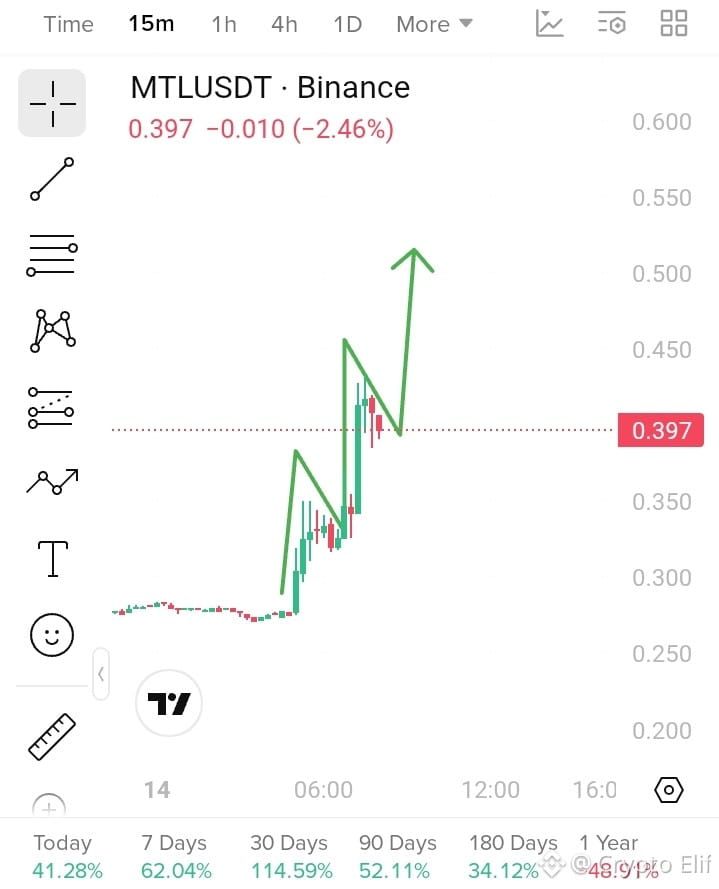
$MTL LONG SETUP IS BUILDING MOMENTUM 🚀
$MTL montre une structure de reprise solide avec des plus hauts plus élevés et des plus bas plus élevés. Un repli vers la zone actuelle pourrait offrir une autre opportunité avant la prochaine expansion à la hausse vers la résistance indiquée.
Zone d’entrée : 0.397–0.400 Stop Loss : Sous 0.375 Take Profit : 0.450 / 0.500 / 0.520
Le momentum est fort, mais gérez le levier avec prudence et protégez votre capital.
{spot}(MTLUSDT)
#ZcashNU7VoteEndsSeptember14 #EURequiresWalletMakersReportFlawsIn24Hours #ClarityActLawIn2026OddsRiseTo30% #LSKSurgesOver515%In24Hours #AnthropicCEOCallsForAISlowdown
$MTL LONG SETUP IS BUILDING MOMENTUM 🚀
$MTL montre une structure de reprise solide avec des plus hauts plus élevés et des plus bas plus élevés. Un repli vers la zone actuelle pourrait offrir une autre opportunité avant la prochaine expansion à la hausse vers la résistance indiquée.
Zone d’entrée : 0.397–0.400 Stop Loss : Sous 0.375 Take Profit : 0.450 / 0.500 / 0.520
Le momentum est fort, mais gérez le levier avec prudence et protégez votre capital.
#ZcashNU7VoteEndsSeptember14 #EURequiresWalletMakersReportFlawsIn24Hours #ClarityActLawIn2026OddsRiseTo30% #LSKSurgesOver515%In24Hours #AnthropicCEOCallsForAISlowdown
$MTL montre une structure de reprise solide avec des plus hauts plus élevés et des plus bas plus élevés. Un repli vers la zone actuelle pourrait offrir une autre opportunité avant la prochaine expansion à la hausse vers la résistance indiquée.
Zone d’entrée : 0.397–0.400 Stop Loss : Sous 0.375 Take Profit : 0.450 / 0.500 / 0.520
Le momentum est fort, mais gérez le levier avec prudence et protégez votre capital.
#ZcashNU7VoteEndsSeptember14 #EURequiresWalletMakersReportFlawsIn24Hours #ClarityActLawIn2026OddsRiseTo30% #LSKSurgesOver515%In24Hours #AnthropicCEOCallsForAISlowdown
1
157
·
--
$B
{alpha}(560x6bdcce4a559076e37755a78ce0c06214e59e4444)
Le prix en direct du token BUILDon (B) est d’environ 0,21 $ US, reflétant une hausse récente sur 24 heures d’environ 12 % à 14 %. [1, 2]
Aperçu du marché
Prix : ~0,21 $ US (environ 52,09 PKR)
Capitalisation boursière : ~205 millions à ~217 millions de dollars US
Offre en circulation : 1 000 000 000 tokens B
#ClarityActLawIn2026OddsRiseTo30% #EURequiresWalletMakersReportFlawsIn24Hours #AnthropicCEOCallsForAISlowdown
$B
Le prix en direct du token BUILDon (B) est d’environ 0,21 $ US, reflétant une hausse récente sur 24 heures d’environ 12 % à 14 %. [1, 2]
Aperçu du marché
Prix : ~0,21 $ US (environ 52,09 PKR)
Capitalisation boursière : ~205 millions à ~217 millions de dollars US
Offre en circulation : 1 000 000 000 tokens B
#ClarityActLawIn2026OddsRiseTo30% #EURequiresWalletMakersReportFlawsIn24Hours #AnthropicCEOCallsForAISlowdown
Le prix en direct du token BUILDon (B) est d’environ 0,21 $ US, reflétant une hausse récente sur 24 heures d’environ 12 % à 14 %. [1, 2]
Aperçu du marché
Prix : ~0,21 $ US (environ 52,09 PKR)
Capitalisation boursière : ~205 millions à ~217 millions de dollars US
Offre en circulation : 1 000 000 000 tokens B
#ClarityActLawIn2026OddsRiseTo30% #EURequiresWalletMakersReportFlawsIn24Hours #AnthropicCEOCallsForAISlowdown
68

·
--
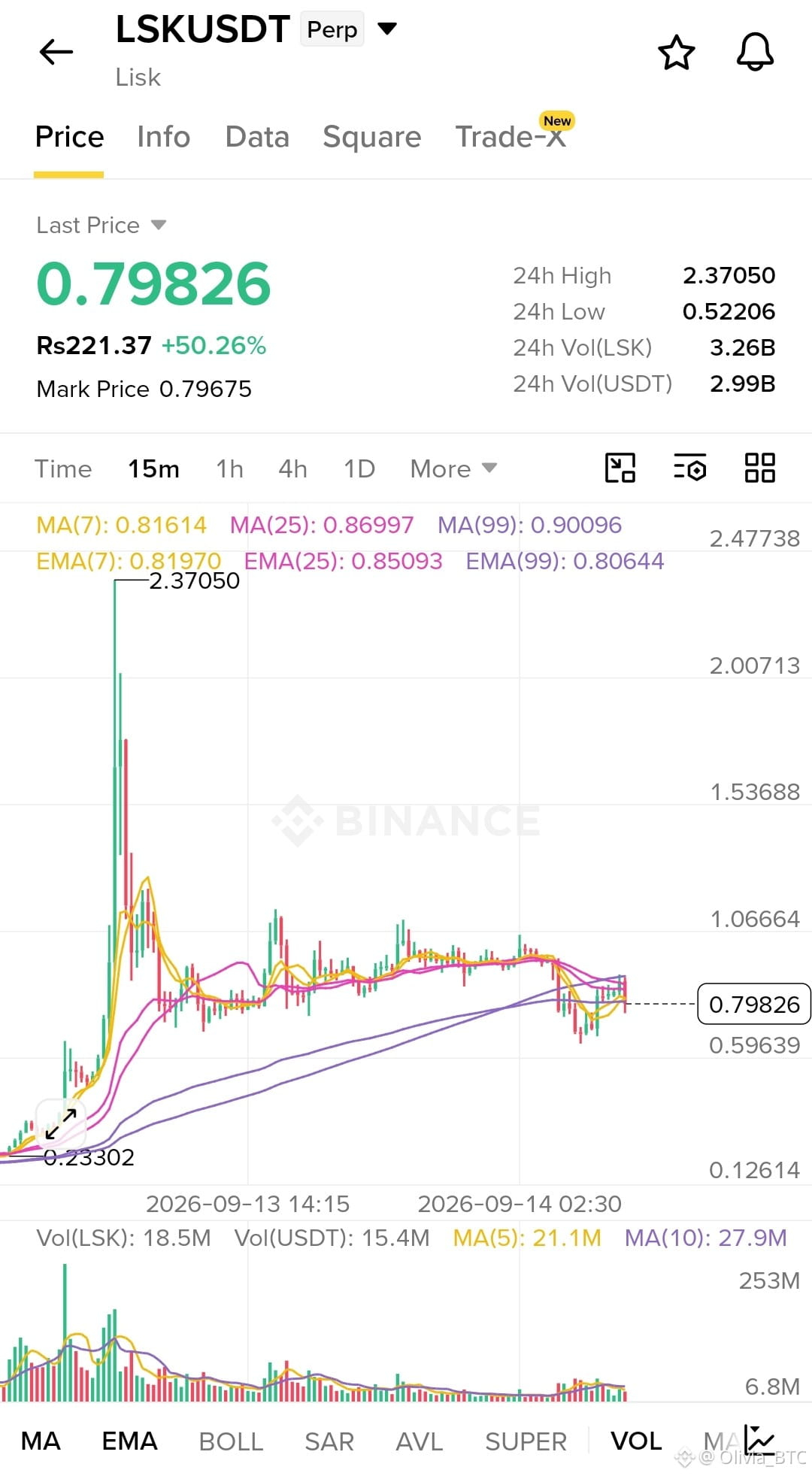
$LSK affiche une forte dynamique haussière, et j’observe comment elle réagit autour du prochain support.
Le prix se situe autour de 0,2579 $, en hausse nette, avec un volume qui explose de plus de 435 %. Après un mouvement aussi fort sur 24 heures, la volatilité est élevée, donc je préfère attendre une entrée maîtrisée plutôt que de courir après la hausse.
📍 Zone d’entrée : 0,2400–0,2500 $
🎯 Objectif 1 : 0,2700 $
🎯 Objectif 2 : 0,2800 $
🎯 Objectif 3 : 0,3000 $
🛑 Stop Loss : 0,2250 $
Je cherche des acheteurs pour défendre la zone de 0,2400 $ et maintenir un volume solide. Si cela se produit, la cassure peut continuer vers 0,2800–0,3000.
Le scénario fonctionne parce que l’entrée est proche du support clé, tandis que les objectifs sont placés autour des prochaines zones de résistance. Si LSK perd 0,2400 $ et que la pression vendeuse augmente, j’éviterai de forcer la transaction. 👀#AnthropicCEOCallsForAISlowdown #BitcoinThirdSingleBlockReorgInFourWeeks #LSKSurgesOver515%In24Hours #EURequiresWalletMakersReportFlawsIn24Hours #ZcashNU7VoteEndsSeptember14
$LSK affiche une forte dynamique haussière, et j’observe comment elle réagit autour du prochain support.
Le prix se situe autour de 0,2579 $, en hausse nette, avec un volume qui explose de plus de 435 %. Après un mouvement aussi fort sur 24 heures, la volatilité est élevée, donc je préfère attendre une entrée maîtrisée plutôt que de courir après la hausse.
📍 Zone d’entrée : 0,2400–0,2500 $
🎯 Objectif 1 : 0,2700 $
🎯 Objectif 2 : 0,2800 $
🎯 Objectif 3 : 0,3000 $
🛑 Stop Loss : 0,2250 $
Je cherche des acheteurs pour défendre la zone de 0,2400 $ et maintenir un volume solide. Si cela se produit, la cassure peut continuer vers 0,2800–0,3000.
Le scénario fonctionne parce que l’entrée est proche du support clé, tandis que les objectifs sont placés autour des prochaines zones de résistance. Si LSK perd 0,2400 $ et que la pression vendeuse augmente, j’éviterai de forcer la transaction. 👀#AnthropicCEOCallsForAISlowdown #BitcoinThirdSingleBlockReorgInFourWeeks #LSKSurgesOver515%In24Hours #EURequiresWalletMakersReportFlawsIn24Hours #ZcashNU7VoteEndsSeptember14
Le prix se situe autour de 0,2579 $, en hausse nette, avec un volume qui explose de plus de 435 %. Après un mouvement aussi fort sur 24 heures, la volatilité est élevée, donc je préfère attendre une entrée maîtrisée plutôt que de courir après la hausse.
📍 Zone d’entrée : 0,2400–0,2500 $
🎯 Objectif 1 : 0,2700 $
🎯 Objectif 2 : 0,2800 $
🎯 Objectif 3 : 0,3000 $
🛑 Stop Loss : 0,2250 $
Je cherche des acheteurs pour défendre la zone de 0,2400 $ et maintenir un volume solide. Si cela se produit, la cassure peut continuer vers 0,2800–0,3000.
Le scénario fonctionne parce que l’entrée est proche du support clé, tandis que les objectifs sont placés autour des prochaines zones de résistance. Si LSK perd 0,2400 $ et que la pression vendeuse augmente, j’éviterai de forcer la transaction. 👀#AnthropicCEOCallsForAISlowdown #BitcoinThirdSingleBlockReorgInFourWeeks #LSKSurgesOver515%In24Hours #EURequiresWalletMakersReportFlawsIn24Hours #ZcashNU7VoteEndsSeptember14
56

$AAPLB should i buy this? Any suggestion?#BitcoinThirdSingleBlockReorgInFourWeeks #EURequiresWalletMakersReportFlawsIn24Hours #LSKSurgesOver515%In24Hours
$AAPLB should i buy this? Any suggestion?#BitcoinThirdSingleBlockReorgInFourWeeks #EURequiresWalletMakersReportFlawsIn24Hours #LSKSurgesOver515%In24Hours

3

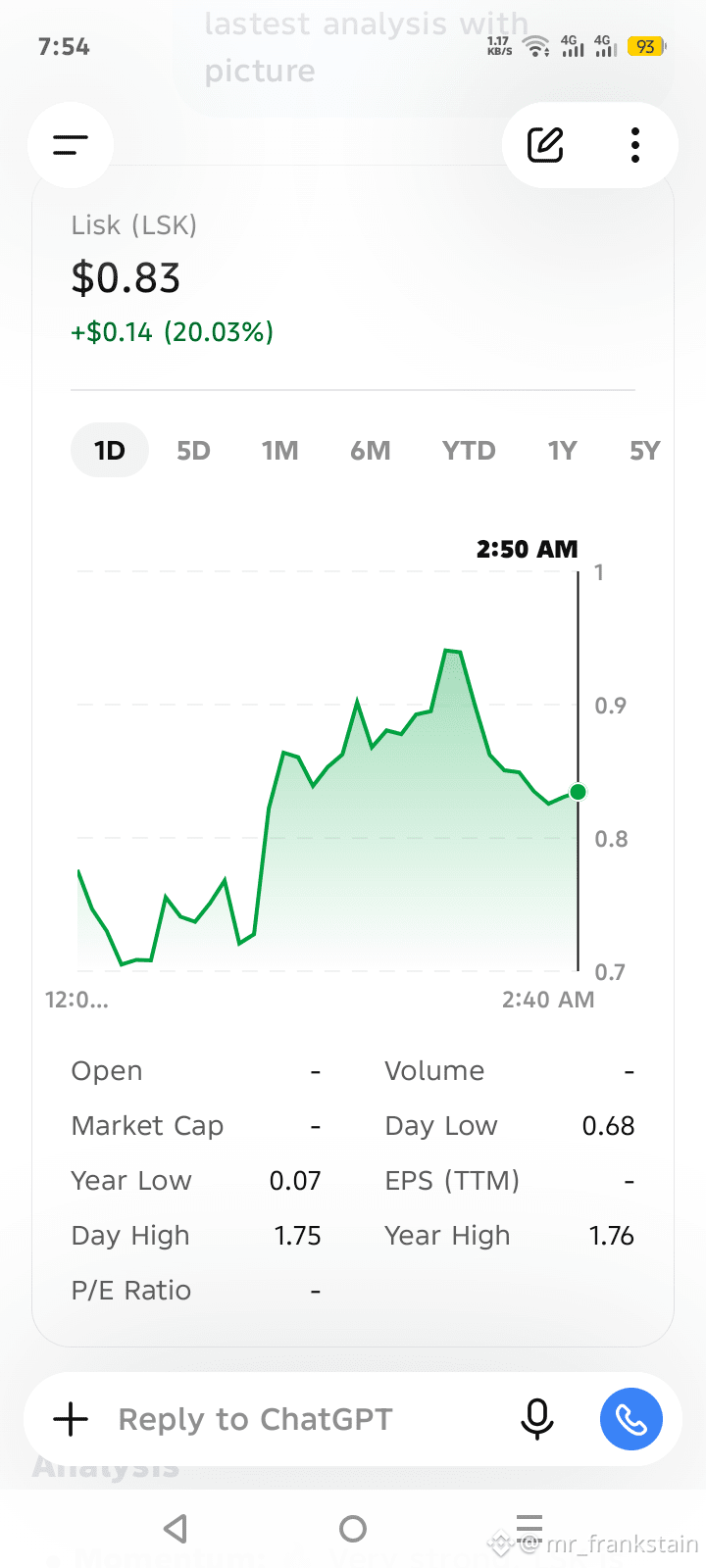
Lisk ($LSK ) — Analyse du meilleur gagnant du moment
Momentum : 🔥 Très fort. LSK figure actuellement parmi les principaux gagnants du secteur crypto, avec des sources indiquant une hausse marquée sur 24 heures. �
CoinGecko +1
Zone actuelle : autour de 0,63 $–0,83 $ selon la plateforme/le flux de données.
Résistance : 1,00 $, puis 1,20 $.
Support : autour de 0,68 $–0,70 $.
Après un mouvement aussi important, il est possible de voir une prise de profits et un repli.
Perspectives : 🟢 Bullish tant que LSK maintient la zone de support clé ; une cassure nette au-dessus de 1,00 $ renforcerait le scénario haussier.
Global : 🔥 Bon momentum, mais risque élevé après le pump rapide.$LSK
{spot}(LSKUSDT)
#AnthropicCEOCallsForAISlowdown #BitcoinThirdSingleBlockReorgInFourWeeks #LSKSurgesOver515%In24Hours #EURequiresWalletMakersReportFlawsIn24Hours
Lisk ($LSK ) — Analyse du meilleur gagnant du moment
Momentum : 🔥 Très fort. LSK figure actuellement parmi les principaux gagnants du secteur crypto, avec des sources indiquant une hausse marquée sur 24 heures. �
CoinGecko +1
Zone actuelle : autour de 0,63 $–0,83 $ selon la plateforme/le flux de données.
Résistance : 1,00 $, puis 1,20 $.
Support : autour de 0,68 $–0,70 $.
Après un mouvement aussi important, il est possible de voir une prise de profits et un repli.
Perspectives : 🟢 Bullish tant que LSK maintient la zone de support clé ; une cassure nette au-dessus de 1,00 $ renforcerait le scénario haussier.
Global : 🔥 Bon momentum, mais risque élevé après le pump rapide.$LSK
#AnthropicCEOCallsForAISlowdown #BitcoinThirdSingleBlockReorgInFourWeeks #LSKSurgesOver515%In24Hours #EURequiresWalletMakersReportFlawsIn24Hours
Momentum : 🔥 Très fort. LSK figure actuellement parmi les principaux gagnants du secteur crypto, avec des sources indiquant une hausse marquée sur 24 heures. �
CoinGecko +1
Zone actuelle : autour de 0,63 $–0,83 $ selon la plateforme/le flux de données.
Résistance : 1,00 $, puis 1,20 $.
Support : autour de 0,68 $–0,70 $.
Après un mouvement aussi important, il est possible de voir une prise de profits et un repli.
Perspectives : 🟢 Bullish tant que LSK maintient la zone de support clé ; une cassure nette au-dessus de 1,00 $ renforcerait le scénario haussier.
Global : 🔥 Bon momentum, mais risque élevé après le pump rapide.$LSK
#AnthropicCEOCallsForAISlowdown #BitcoinThirdSingleBlockReorgInFourWeeks #LSKSurgesOver515%In24Hours #EURequiresWalletMakersReportFlawsIn24Hours
171

🔥 La Wallet de Binance étend le support du Meme Rank
La Wallet de Binance a mis à niveau le Meme Rank pour inclure des jetons sur la chaîne Robinhood et sur la chaîne BNB. La mise à jour regroupe les classements des pièces mèmes des deux écosystèmes dans un seul tableau de bord unifié, ce qui facilite la découverte, la comparaison et le suivi de l’activité des tokens en un seul endroit.
Pour les utilisateurs qui suivent des marchés de tokens mèmes en mouvement rapide, une couverture plus large peut améliorer la visibilité — mais les classements et l’élan peuvent changer rapidement. Il reste donc important de tenir compte de la liquidité, des risques liés aux tokens et des détails des contrats.
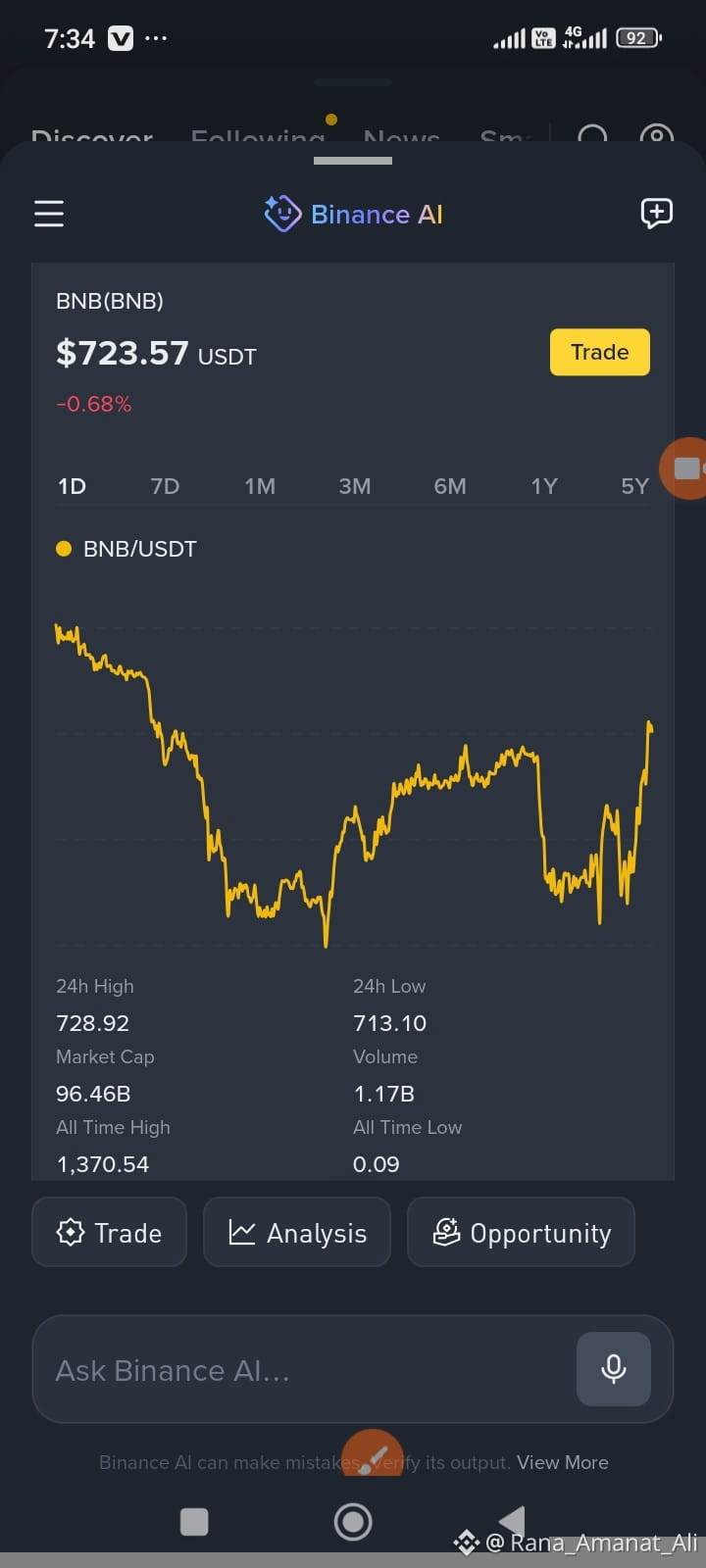
Aperçu du marché spot BNB sur Binance : BNB s’échange à 723,62 $ USDT, en baisse d’environ 0,67 % sur les dernières 24 heures. Son plus haut sur 24 heures était à 728,92 $ et son plus bas à 713,10.
$BNB
{spot}(BNBUSDT)
#AnthropicCEOCallsForAISlowdown #BitcoinThirdSingleBlockReorgInFourWeeks #LSKSurgesOver515%In24Hours #EURequiresWalletMakersReportFlawsIn24Hours #ZcashNU7VoteEndsSeptember14
🔥 La Wallet de Binance étend le support du Meme Rank
La Wallet de Binance a mis à niveau le Meme Rank pour inclure des jetons sur la chaîne Robinhood et sur la chaîne BNB. La mise à jour regroupe les classements des pièces mèmes des deux écosystèmes dans un seul tableau de bord unifié, ce qui facilite la découverte, la comparaison et le suivi de l’activité des tokens en un seul endroit.
Pour les utilisateurs qui suivent des marchés de tokens mèmes en mouvement rapide, une couverture plus large peut améliorer la visibilité — mais les classements et l’élan peuvent changer rapidement. Il reste donc important de tenir compte de la liquidité, des risques liés aux tokens et des détails des contrats.
Aperçu du marché spot BNB sur Binance : BNB s’échange à 723,62 $ USDT, en baisse d’environ 0,67 % sur les dernières 24 heures. Son plus haut sur 24 heures était à 728,92 $ et son plus bas à 713,10.
$BNB
#AnthropicCEOCallsForAISlowdown #BitcoinThirdSingleBlockReorgInFourWeeks #LSKSurgesOver515%In24Hours #EURequiresWalletMakersReportFlawsIn24Hours #ZcashNU7VoteEndsSeptember14
La Wallet de Binance a mis à niveau le Meme Rank pour inclure des jetons sur la chaîne Robinhood et sur la chaîne BNB. La mise à jour regroupe les classements des pièces mèmes des deux écosystèmes dans un seul tableau de bord unifié, ce qui facilite la découverte, la comparaison et le suivi de l’activité des tokens en un seul endroit.
Pour les utilisateurs qui suivent des marchés de tokens mèmes en mouvement rapide, une couverture plus large peut améliorer la visibilité — mais les classements et l’élan peuvent changer rapidement. Il reste donc important de tenir compte de la liquidité, des risques liés aux tokens et des détails des contrats.
Aperçu du marché spot BNB sur Binance : BNB s’échange à 723,62 $ USDT, en baisse d’environ 0,67 % sur les dernières 24 heures. Son plus haut sur 24 heures était à 728,92 $ et son plus bas à 713,10.
$BNB
#AnthropicCEOCallsForAISlowdown #BitcoinThirdSingleBlockReorgInFourWeeks #LSKSurgesOver515%In24Hours #EURequiresWalletMakersReportFlawsIn24Hours #ZcashNU7VoteEndsSeptember14
1
66

·
--
Haussier
$LSK COUPS D’ENFER
$5.1376K en positions courtes ont été liquidés à $0.88214, montrant que les acheteurs forcent les shorts à sortir près de la zone des $0.88.
📍 Support : $0.8600
🚧 Résistance : $0.9100
🎯 Prochaine cible : $0.9400
Se maintenir au-dessus de $0.8600 maintient la pression haussière. Une cassure nette au-dessus de $0.9100 pourrait faire monter $LSK vers $0.9400.
💡 Astuce : Surveillez de près $0.91. Une cassure pourrait déclencher un autre squeeze sur les positions courtes.
⚠️ Gérez le risque. Faites vos propres recherches (DYOR).
$LSK #AnthropicCEOCallsForAISlowdown #BitcoinThirdSingleBlockReorgInFourWeeks #LSKSurgesOver515%In24Hours #EURequiresWalletMakersReportFlawsIn24Hours #ZcashNU7VoteEndsSeptember14
{future}(LSKUSDT)
$LSK COUPS D’ENFER
$5.1376K en positions courtes ont été liquidés à $0.88214, montrant que les acheteurs forcent les shorts à sortir près de la zone des $0.88.
📍 Support : $0.8600
🚧 Résistance : $0.9100
🎯 Prochaine cible : $0.9400
Se maintenir au-dessus de $0.8600 maintient la pression haussière. Une cassure nette au-dessus de $0.9100 pourrait faire monter $LSK vers $0.9400.
💡 Astuce : Surveillez de près $0.91. Une cassure pourrait déclencher un autre squeeze sur les positions courtes.
⚠️ Gérez le risque. Faites vos propres recherches (DYOR).
$LSK #AnthropicCEOCallsForAISlowdown #BitcoinThirdSingleBlockReorgInFourWeeks #LSKSurgesOver515%In24Hours #EURequiresWalletMakersReportFlawsIn24Hours #ZcashNU7VoteEndsSeptember14
$5.1376K en positions courtes ont été liquidés à $0.88214, montrant que les acheteurs forcent les shorts à sortir près de la zone des $0.88.
📍 Support : $0.8600
🚧 Résistance : $0.9100
🎯 Prochaine cible : $0.9400
Se maintenir au-dessus de $0.8600 maintient la pression haussière. Une cassure nette au-dessus de $0.9100 pourrait faire monter $LSK vers $0.9400.
💡 Astuce : Surveillez de près $0.91. Une cassure pourrait déclencher un autre squeeze sur les positions courtes.
⚠️ Gérez le risque. Faites vos propres recherches (DYOR).
$LSK #AnthropicCEOCallsForAISlowdown #BitcoinThirdSingleBlockReorgInFourWeeks #LSKSurgesOver515%In24Hours #EURequiresWalletMakersReportFlawsIn24Hours #ZcashNU7VoteEndsSeptember14
148

·
--
Voir la traduction
Picture this: you send a transfer during peak traffic, watch the block confirm, and minutes later realize the network quietly swapped that block out for another one.
Few things rattle a trader more than settlement uncertainty, especially when moving large sums where a stale block could mean stuck funds or delayed arbitrage. Most of us take instant finality for granted until the underlying consensus shows a brief flicker.
What we saw this month with the third single-block reorg on the $BTC network is a classic case of block propagation races. When two miners solve a proof-of-work puzzle at almost the exact same second, nodes temporarily disagree on which tip to follow until the next block resolves the tie. Unlike the catastrophic multi-block deep reorgs that once plagued networks like $ETC, single-block orphans are technically benign, yet seeing three in four weeks points to rising mempool congestion and latency between mining pools.
Modern proof-of-stake systems like $DOT approach this differently by enforcing deterministic finality gadgets, trading off pure Nakamoto consensus simplicity for mathematical finality. For proof-of-work, however, probabilistic settlement remains the rule of thumb.
This is why major desks rarely rely on a single confirmation when volatility spikes. The real takeaway here is not that the chain is broken, but rather a healthy reminder of why exchange deposit thresholds exist in the first place.
Do you think services should start requiring more confirmations as mining competition intensifies, or is this just harmless network variance?
#BitcoinThirdSingleBlockReorgInFourWeeks #EURequiresWalletMakersReportFlawsIn24Hours #ClarityActFacesProceduralVoteSept15
Picture this: you send a transfer during peak traffic, watch the block confirm, and minutes later realize the network quietly swapped that block out for another one.
Few things rattle a trader more than settlement uncertainty, especially when moving large sums where a stale block could mean stuck funds or delayed arbitrage. Most of us take instant finality for granted until the underlying consensus shows a brief flicker.
What we saw this month with the third single-block reorg on the $BTC network is a classic case of block propagation races. When two miners solve a proof-of-work puzzle at almost the exact same second, nodes temporarily disagree on which tip to follow until the next block resolves the tie. Unlike the catastrophic multi-block deep reorgs that once plagued networks like $ETC , single-block orphans are technically benign, yet seeing three in four weeks points to rising mempool congestion and latency between mining pools.
Modern proof-of-stake systems like $DOT approach this differently by enforcing deterministic finality gadgets, trading off pure Nakamoto consensus simplicity for mathematical finality. For proof-of-work, however, probabilistic settlement remains the rule of thumb.
This is why major desks rarely rely on a single confirmation when volatility spikes. The real takeaway here is not that the chain is broken, but rather a healthy reminder of why exchange deposit thresholds exist in the first place.
Do you think services should start requiring more confirmations as mining competition intensifies, or is this just harmless network variance?
#BitcoinThirdSingleBlockReorgInFourWeeks #EURequiresWalletMakersReportFlawsIn24Hours #ClarityActFacesProceduralVoteSept15
Few things rattle a trader more than settlement uncertainty, especially when moving large sums where a stale block could mean stuck funds or delayed arbitrage. Most of us take instant finality for granted until the underlying consensus shows a brief flicker.
What we saw this month with the third single-block reorg on the $BTC network is a classic case of block propagation races. When two miners solve a proof-of-work puzzle at almost the exact same second, nodes temporarily disagree on which tip to follow until the next block resolves the tie. Unlike the catastrophic multi-block deep reorgs that once plagued networks like $ETC , single-block orphans are technically benign, yet seeing three in four weeks points to rising mempool congestion and latency between mining pools.
Modern proof-of-stake systems like $DOT approach this differently by enforcing deterministic finality gadgets, trading off pure Nakamoto consensus simplicity for mathematical finality. For proof-of-work, however, probabilistic settlement remains the rule of thumb.
This is why major desks rarely rely on a single confirmation when volatility spikes. The real takeaway here is not that the chain is broken, but rather a healthy reminder of why exchange deposit thresholds exist in the first place.
Do you think services should start requiring more confirmations as mining competition intensifies, or is this just harmless network variance?
#BitcoinThirdSingleBlockReorgInFourWeeks #EURequiresWalletMakersReportFlawsIn24Hours #ClarityActFacesProceduralVoteSept15
29
Connectez-vous pour découvrir plus de contenu
Rejoignez la communauté mondiale des adeptes de cryptomonnaies sur Binance Square
⚡️ Suviez les dernières informations importantes sur les cryptomonnaies.
💬 Jugé digne de confiance par la plus grande plateforme d’échange de cryptomonnaies au monde.
👍 Découvrez les connaissances que partagent les créateurs vérifiés.
Adresse e-mail/Nº de téléphone
Sujets d’actualité
1
#AnthropicCEOCallsForAISlowdown
71,215 vues
994 mentions
2
#BitcoinThirdSingleBlockReorgInFourWeeks
4,492 vues
184 mentions
3
#EthereumFallsBelow$2500
402 vues
42 mentions
4
#BitcoinDropsToIntradayLow$76367
157 vues
6 mentions
5
#BitcoinSpotETFsRecord$463MNetOutflowLastWeek
0 vues
0 mentions
6
#LSKSurgesOver515%In24Hours
4,458 vues
135 mentions
7
#ClarityActLawIn2026OddsRiseTo30%
2,043 vues
57 mentions
8
#KoreaCryptoTaxDelayPetitionMeetsReviewThreshold
359 vues
37 mentions
9
#EURequiresWalletMakersReportFlawsIn24Hours
801 vues
50 mentions
10
#ZcashNU7VoteEndsSeptember14
3,241 vues
63 mentions