

Sienna Leo-你真棒-带我走
10k Publications

Sienna Leo-你真棒-带我走
 Compte Square Vérifié+
Signaler
Bloquer l’utilisateur
内容创作者🔹积极思考者🔹高级分析者🔹高精准预测者🔹影响力人物🔹深度研究与高频现货交易策略🔹区块链 | WEB3 | 未来科技研究 | 🔹 ID#285783567 🔹X.@SiennaLeo80
800 Suivis
35.7K Abonnés
28.1K+ J’aime
Publications
Portefeuille
Tous
Citations
Vidéos
Direct
PINNED
Claim Reward
Claim Reward

SAC-King-你真棒-带我走
·
--
💥🌹💘 SAC-KING Square Family 🏡
✳️ Follow & 🔃🔃 REPOST
✳️ LIKE & COMMENT
✳️ SHARE
✳️ GO FAST ⏩ ➡️ ⏩ ➡️
#BinanceSquareFamily #GrowWithSAC #Write2Earn
✳️ Follow & 🔃🔃 REPOST
✳️ LIKE & COMMENT
✳️ SHARE
✳️ GO FAST ⏩ ➡️ ⏩ ➡️
#BinanceSquareFamily #GrowWithSAC #Write2Earn

4
217
Partiellement vrai
🚨 JUST IN:
🇮🇷🇾🇪🇷🇺🔥 Crude Oil climbed back above $100+ as Houthis declare the continued blockade on Bab El-Mandab, Iran-US 7-day-proposal rejected and heavy restriction on Russian oil exports.
#GrowWithSAC #OilMarket #iran $SD $DOT $ETC
🚨 JUST IN:
🇮🇷🇾🇪🇷🇺🔥 Crude Oil climbed back above $100+ as Houthis declare the continued blockade on Bab El-Mandab, Iran-US 7-day-proposal rejected and heavy restriction on Russian oil exports.
#GrowWithSAC #OilMarket #iran $SD $DOT $ETC
🇮🇷🇾🇪🇷🇺🔥 Crude Oil climbed back above $100+ as Houthis declare the continued blockade on Bab El-Mandab, Iran-US 7-day-proposal rejected and heavy restriction on Russian oil exports.
#GrowWithSAC #OilMarket #iran $SD $DOT $ETC


1
814
🇺🇸🇮🇷 DIPLOMACY RETURNS, BUT THE US-IRAN STALEMATE REMAINS!
The first US-Iran shuttle talks in months have taken place at the UN, with mediators carrying messages between Washington and Tehran.
Iran is offering to reopen the Strait of Hormuz as part of a broader deal to end the fighting, but Washington has yet to publicly accept the proposal.
The diplomatic door is open. The question is whether both sides are ready to walk through it.
#GrowWithSAC #iran $FIL $GS $USDT
🇺🇸🇮🇷 DIPLOMACY RETURNS, BUT THE US-IRAN STALEMATE REMAINS!
The first US-Iran shuttle talks in months have taken place at the UN, with mediators carrying messages between Washington and Tehran.
Iran is offering to reopen the Strait of Hormuz as part of a broader deal to end the fighting, but Washington has yet to publicly accept the proposal.
The diplomatic door is open. The question is whether both sides are ready to walk through it.
#GrowWithSAC #iran $FIL $GS $USDT
The first US-Iran shuttle talks in months have taken place at the UN, with mediators carrying messages between Washington and Tehran.
Iran is offering to reopen the Strait of Hormuz as part of a broader deal to end the fighting, but Washington has yet to publicly accept the proposal.
The diplomatic door is open. The question is whether both sides are ready to walk through it.
#GrowWithSAC #iran $FIL $GS $USDT

2
825
Vérifié
#aistockswhatnext
🤖 AI Stocks: What Next After the Rally? 🤖
The trading screen keeps flashing green, but the mood has changed. After another surge in AI-linked shares, investors are no longer asking whether AI is powerful enough, they are asking whether expectations have become too powerful.
The Nasdaq recently reached an intraday record as optimism around AI adoption and corporate earnings returned to the market. Semiconductor names have also been driving much of the renewed momentum.
But here is the uncomfortable part: AI enthusiasm now carries an enormous investment bill. Goldman Sachs estimates that nearly half of 2026 S&P 500 earnings growth has been connected to AI-related investment, while warning that the pace of AI capital spending may become harder to sustain into 2027.
That creates two competing forces. Strong demand for computing infrastructure can keep supporting revenues, while expensive data centers, rising supply and pressure to turn AI spending into actual profits can challenge valuations.
So what comes next may be less about another headline rally and more about earnings quality. The market will increasingly reward companies that demonstrate real monetization rather than simply announcing bigger AI budgets.
For crypto, the connection is liquidity and risk appetite. If investors continue embracing growth assets, crypto can benefit from the broader environment; if AI valuations face a serious reset, risk assets could become more sensitive to the fallout.
The AI trade is entering its proof-of-value phase: spending must eventually become earnings.
❓Do you think AI stocks have more room to run, or is the market approaching an expectations reset?
Disclaimer: Educational content only, not financial advice. Markets can be highly volatile.
#Aİ #GrowWithSAC $NIL $BCH $MET
#AIStocksWhatNext
#aistockswhatnext
🤖 AI Stocks: What Next After the Rally? 🤖
The trading screen keeps flashing green, but the mood has changed. After another surge in AI-linked shares, investors are no longer asking whether AI is powerful enough, they are asking whether expectations have become too powerful.
The Nasdaq recently reached an intraday record as optimism around AI adoption and corporate earnings returned to the market. Semiconductor names have also been driving much of the renewed momentum.
But here is the uncomfortable part: AI enthusiasm now carries an enormous investment bill. Goldman Sachs estimates that nearly half of 2026 S&P 500 earnings growth has been connected to AI-related investment, while warning that the pace of AI capital spending may become harder to sustain into 2027.
That creates two competing forces. Strong demand for computing infrastructure can keep supporting revenues, while expensive data centers, rising supply and pressure to turn AI spending into actual profits can challenge valuations.
So what comes next may be less about another headline rally and more about earnings quality. The market will increasingly reward companies that demonstrate real monetization rather than simply announcing bigger AI budgets.
For crypto, the connection is liquidity and risk appetite. If investors continue embracing growth assets, crypto can benefit from the broader environment; if AI valuations face a serious reset, risk assets could become more sensitive to the fallout.
The AI trade is entering its proof-of-value phase: spending must eventually become earnings.
❓Do you think AI stocks have more room to run, or is the market approaching an expectations reset?
Disclaimer: Educational content only, not financial advice. Markets can be highly volatile.
#Aİ #GrowWithSAC $NIL $BCH $MET
#AIStocksWhatNext
🤖 AI Stocks: What Next After the Rally? 🤖
The trading screen keeps flashing green, but the mood has changed. After another surge in AI-linked shares, investors are no longer asking whether AI is powerful enough, they are asking whether expectations have become too powerful.
The Nasdaq recently reached an intraday record as optimism around AI adoption and corporate earnings returned to the market. Semiconductor names have also been driving much of the renewed momentum.
But here is the uncomfortable part: AI enthusiasm now carries an enormous investment bill. Goldman Sachs estimates that nearly half of 2026 S&P 500 earnings growth has been connected to AI-related investment, while warning that the pace of AI capital spending may become harder to sustain into 2027.
That creates two competing forces. Strong demand for computing infrastructure can keep supporting revenues, while expensive data centers, rising supply and pressure to turn AI spending into actual profits can challenge valuations.
So what comes next may be less about another headline rally and more about earnings quality. The market will increasingly reward companies that demonstrate real monetization rather than simply announcing bigger AI budgets.
For crypto, the connection is liquidity and risk appetite. If investors continue embracing growth assets, crypto can benefit from the broader environment; if AI valuations face a serious reset, risk assets could become more sensitive to the fallout.
The AI trade is entering its proof-of-value phase: spending must eventually become earnings.
❓Do you think AI stocks have more room to run, or is the market approaching an expectations reset?
Disclaimer: Educational content only, not financial advice. Markets can be highly volatile.
#Aİ #GrowWithSAC $NIL $BCH $MET
#AIStocksWhatNext

1
1.5k
Vérifié
#wallstreetearningsrevisionsturnbearish
🚨 Wall Street Earnings Revisions Turn Bearish: A Warning for Risk Assets? 🚨
The mood on Wall Street had been calm for weeks, with analysts repeatedly nudging earnings estimates higher. Then the tone changed, and suddenly the market had a new question: what happens when optimism starts running backward?
Citigroup's earnings-revision gauge has reportedly turned negative for the first time in 23 weeks, meaning analyst downgrades are now outnumbering upgrades for U.S. companies. The shift follows the Federal Reserve's first rate hike since 2023.
That matters because earnings expectations have been one of the foundations supporting equity valuations. Rising yields and persistent inflation pressure can make future profits less valuable while also raising companies' financing costs.
AI remains an important counterweight. Recent research shows AI-related investment has supported a large share of 2026 earnings growth, but Goldman Sachs has warned that the current AI capex surge may become harder to sustain into 2027.
The key distinction is between a single weak revision cycle and a broader deterioration. Other recent research still showed positive earnings revisions across major regions, meaning the current signal is cautionary rather than proof that corporate earnings have collapsed.
For crypto, the connection is liquidity. If tighter financial conditions pressure risk appetite, Bitcoin and altcoins can feel the impact even when their own fundamentals remain unchanged.
When earnings expectations turn, markets often start repricing before the headlines catch up.
❓Could weakening earnings revisions become the next major catalyst for crypto volatility?
Disclaimer: Educational content only, not financial advice. Crypto and financial markets carry significant risk.
#Crypto #Bitcoin #GrowWithSAC $BCH $METAB $SUPER
#WallStreetEarningsRevisionsTurnBearish
#wallstreetearningsrevisionsturnbearish
🚨 Wall Street Earnings Revisions Turn Bearish: A Warning for Risk Assets? 🚨
The mood on Wall Street had been calm for weeks, with analysts repeatedly nudging earnings estimates higher. Then the tone changed, and suddenly the market had a new question: what happens when optimism starts running backward?
Citigroup's earnings-revision gauge has reportedly turned negative for the first time in 23 weeks, meaning analyst downgrades are now outnumbering upgrades for U.S. companies. The shift follows the Federal Reserve's first rate hike since 2023.
That matters because earnings expectations have been one of the foundations supporting equity valuations. Rising yields and persistent inflation pressure can make future profits less valuable while also raising companies' financing costs.
AI remains an important counterweight. Recent research shows AI-related investment has supported a large share of 2026 earnings growth, but Goldman Sachs has warned that the current AI capex surge may become harder to sustain into 2027.
The key distinction is between a single weak revision cycle and a broader deterioration. Other recent research still showed positive earnings revisions across major regions, meaning the current signal is cautionary rather than proof that corporate earnings have collapsed.
For crypto, the connection is liquidity. If tighter financial conditions pressure risk appetite, Bitcoin and altcoins can feel the impact even when their own fundamentals remain unchanged.
When earnings expectations turn, markets often start repricing before the headlines catch up.
❓Could weakening earnings revisions become the next major catalyst for crypto volatility?
Disclaimer: Educational content only, not financial advice. Crypto and financial markets carry significant risk.
#Crypto #Bitcoin #GrowWithSAC $BCH $METAB $SUPER
#WallStreetEarningsRevisionsTurnBearish
🚨 Wall Street Earnings Revisions Turn Bearish: A Warning for Risk Assets? 🚨
The mood on Wall Street had been calm for weeks, with analysts repeatedly nudging earnings estimates higher. Then the tone changed, and suddenly the market had a new question: what happens when optimism starts running backward?
Citigroup's earnings-revision gauge has reportedly turned negative for the first time in 23 weeks, meaning analyst downgrades are now outnumbering upgrades for U.S. companies. The shift follows the Federal Reserve's first rate hike since 2023.
That matters because earnings expectations have been one of the foundations supporting equity valuations. Rising yields and persistent inflation pressure can make future profits less valuable while also raising companies' financing costs.
AI remains an important counterweight. Recent research shows AI-related investment has supported a large share of 2026 earnings growth, but Goldman Sachs has warned that the current AI capex surge may become harder to sustain into 2027.
The key distinction is between a single weak revision cycle and a broader deterioration. Other recent research still showed positive earnings revisions across major regions, meaning the current signal is cautionary rather than proof that corporate earnings have collapsed.
For crypto, the connection is liquidity. If tighter financial conditions pressure risk appetite, Bitcoin and altcoins can feel the impact even when their own fundamentals remain unchanged.
When earnings expectations turn, markets often start repricing before the headlines catch up.
❓Could weakening earnings revisions become the next major catalyst for crypto volatility?
Disclaimer: Educational content only, not financial advice. Crypto and financial markets carry significant risk.
#Crypto #Bitcoin #GrowWithSAC $BCH $METAB $SUPER
#WallStreetEarningsRevisionsTurnBearish

3
1.6k
Vérifié
#cardanojoinsx402paymentstandard
⚡ Cardano Joins X402 Payment Standard: Is ADA Entering the AI Payment Era? ⚡
Imagine an AI agent needing a dataset for one task, paying for it automatically, and moving on without creating an account. That future is exactly where Cardano's latest x402 integration becomes interesting.
Cardano has been added to the official x402 software kit, allowing developers to build applications and AI agents that can make web payments using ADA and Cardano-issued tokens.
x402 turns the HTTP "402 Payment Required" response into an automated payment flow, allowing services to charge per request instead of relying on accounts, API keys, or subscriptions. The standard is now governed by the x402 Foundation under the Linux Foundation.
The more important point is utility. If autonomous agents become regular users of APIs, data and digital services, blockchain networks need payment rails that machines can actually use without constant human intervention.
But there is an important reality check: Cardano's current facilitator has completed transactions on a pre-production network, while mainnet commercial payments at scale have not yet been demonstrated.
ADA is therefore gaining a new narrative around machine-to-machine payments, but the real test will be developer adoption and actual transaction activity, not headlines alone.
Infrastructure becomes valuable when people, apps, and now machines actually use it.
❓Could x402 become a meaningful adoption catalyst for Cardano and ADA?
Disclaimer: This content is for educational purposes only, not financial advice. Crypto assets are volatile and involve significant risk.
#Cardano #ADA #GrowWithSAC $ADA $BCH $METAB
#CardanoJoinsX402PaymentStandard
#cardanojoinsx402paymentstandard
⚡ Cardano Joins X402 Payment Standard: Is ADA Entering the AI Payment Era? ⚡
Imagine an AI agent needing a dataset for one task, paying for it automatically, and moving on without creating an account. That future is exactly where Cardano's latest x402 integration becomes interesting.
Cardano has been added to the official x402 software kit, allowing developers to build applications and AI agents that can make web payments using ADA and Cardano-issued tokens.
x402 turns the HTTP "402 Payment Required" response into an automated payment flow, allowing services to charge per request instead of relying on accounts, API keys, or subscriptions. The standard is now governed by the x402 Foundation under the Linux Foundation.
The more important point is utility. If autonomous agents become regular users of APIs, data and digital services, blockchain networks need payment rails that machines can actually use without constant human intervention.
But there is an important reality check: Cardano's current facilitator has completed transactions on a pre-production network, while mainnet commercial payments at scale have not yet been demonstrated.
ADA is therefore gaining a new narrative around machine-to-machine payments, but the real test will be developer adoption and actual transaction activity, not headlines alone.
Infrastructure becomes valuable when people, apps, and now machines actually use it.
❓Could x402 become a meaningful adoption catalyst for Cardano and ADA?
Disclaimer: This content is for educational purposes only, not financial advice. Crypto assets are volatile and involve significant risk.
#Cardano #ADA #GrowWithSAC $ADA $BCH $METAB
#CardanoJoinsX402PaymentStandard
⚡ Cardano Joins X402 Payment Standard: Is ADA Entering the AI Payment Era? ⚡
Imagine an AI agent needing a dataset for one task, paying for it automatically, and moving on without creating an account. That future is exactly where Cardano's latest x402 integration becomes interesting.
Cardano has been added to the official x402 software kit, allowing developers to build applications and AI agents that can make web payments using ADA and Cardano-issued tokens.
x402 turns the HTTP "402 Payment Required" response into an automated payment flow, allowing services to charge per request instead of relying on accounts, API keys, or subscriptions. The standard is now governed by the x402 Foundation under the Linux Foundation.
The more important point is utility. If autonomous agents become regular users of APIs, data and digital services, blockchain networks need payment rails that machines can actually use without constant human intervention.
But there is an important reality check: Cardano's current facilitator has completed transactions on a pre-production network, while mainnet commercial payments at scale have not yet been demonstrated.
ADA is therefore gaining a new narrative around machine-to-machine payments, but the real test will be developer adoption and actual transaction activity, not headlines alone.
Infrastructure becomes valuable when people, apps, and now machines actually use it.
❓Could x402 become a meaningful adoption catalyst for Cardano and ADA?
Disclaimer: This content is for educational purposes only, not financial advice. Crypto assets are volatile and involve significant risk.
#Cardano #ADA #GrowWithSAC $ADA $BCH $METAB
#CardanoJoinsX402PaymentStandard

7
5.5k
Vérifié
#ZECBreaksAbove$1600AtRecordHigh
🚨 $ZEC Breaks Above $1,600 at Record High: The Privacy Comeback Gets Real 🚨
For a moment, the chart looked almost unreal. Zcash had already climbed aggressively, but then buyers pushed through $1,600 and turned a major resistance zone into the center of attention.
ZEC crossed $1,600 for the first time since 2016, reaching above $1,640 during the latest move. The breakout comes as Zcash records its strongest shielded-transaction activity in years, while institutional products are also drawing capital toward the asset.
One important catalyst is the arrival of Europe’s first Zcash ETP from 21Shares on Euronext Paris and Amsterdam. That gives investors another regulated route to gain exposure to ZEC without directly holding the coin.
But price alone does not tell the whole story. ZEC’s recent rally has been accompanied by heavy trading activity and sharp liquidations, showing that both genuine demand and leveraged positioning are contributing to the volatility.
My take: the $1,600 breakout matters most if ZEC can turn that level into support. A sustained hold would strengthen the breakout narrative, while a fast rejection could reveal that momentum became overheated.
The headline is impressive, but the real test begins after the breakout.
❓Do you think ZEC can establish support above $1,600, or will profit-taking pull it back?
Disclaimer: This is for educational purposes only, not financial advice. Crypto assets are highly volatile and involve significant risk.
#ZEC #PrivacyCoins #GrowWithSAC $MUBARAK $NIL
#ZECBreaksAbove$1600AtRecordHigh
🚨 $ZEC Breaks Above $1,600 at Record High: The Privacy Comeback Gets Real 🚨
For a moment, the chart looked almost unreal. Zcash had already climbed aggressively, but then buyers pushed through $1,600 and turned a major resistance zone into the center of attention.
ZEC crossed $1,600 for the first time since 2016, reaching above $1,640 during the latest move. The breakout comes as Zcash records its strongest shielded-transaction activity in years, while institutional products are also drawing capital toward the asset.
One important catalyst is the arrival of Europe’s first Zcash ETP from 21Shares on Euronext Paris and Amsterdam. That gives investors another regulated route to gain exposure to ZEC without directly holding the coin.
But price alone does not tell the whole story. ZEC’s recent rally has been accompanied by heavy trading activity and sharp liquidations, showing that both genuine demand and leveraged positioning are contributing to the volatility.
My take: the $1,600 breakout matters most if ZEC can turn that level into support. A sustained hold would strengthen the breakout narrative, while a fast rejection could reveal that momentum became overheated.
The headline is impressive, but the real test begins after the breakout.
❓Do you think ZEC can establish support above $1,600, or will profit-taking pull it back?
Disclaimer: This is for educational purposes only, not financial advice. Crypto assets are highly volatile and involve significant risk.
#ZEC #PrivacyCoins #GrowWithSAC $MUBARAK $NIL
🚨 $ZEC Breaks Above $1,600 at Record High: The Privacy Comeback Gets Real 🚨
For a moment, the chart looked almost unreal. Zcash had already climbed aggressively, but then buyers pushed through $1,600 and turned a major resistance zone into the center of attention.
ZEC crossed $1,600 for the first time since 2016, reaching above $1,640 during the latest move. The breakout comes as Zcash records its strongest shielded-transaction activity in years, while institutional products are also drawing capital toward the asset.
One important catalyst is the arrival of Europe’s first Zcash ETP from 21Shares on Euronext Paris and Amsterdam. That gives investors another regulated route to gain exposure to ZEC without directly holding the coin.
But price alone does not tell the whole story. ZEC’s recent rally has been accompanied by heavy trading activity and sharp liquidations, showing that both genuine demand and leveraged positioning are contributing to the volatility.
My take: the $1,600 breakout matters most if ZEC can turn that level into support. A sustained hold would strengthen the breakout narrative, while a fast rejection could reveal that momentum became overheated.
The headline is impressive, but the real test begins after the breakout.
❓Do you think ZEC can establish support above $1,600, or will profit-taking pull it back?
Disclaimer: This is for educational purposes only, not financial advice. Crypto assets are highly volatile and involve significant risk.
#ZEC #PrivacyCoins #GrowWithSAC $MUBARAK $NIL

2
3.1k
#BitcoinBreaksAboveMayHighNears$86K
🚨 Bitcoin Breaks Above May High, Nears $86K: Is the Market Waking Up? 🚨
The screen was quiet, then Bitcoin suddenly pushed through a level traders had been watching for months. What looked like another resistance test quickly became a serious statement from buyers.
Bitcoin has now pushed above the May high area and traded around the $86K zone, reaching an eight-month high above $87K earlier today. Binance market data also showed BTC briefly moving back below $86K, highlighting how quickly this breakout is being contested.
The move is not coming from one factor alone. Recent coverage points to stronger U.S. spot Bitcoin ETF demand, short covering, improved regulatory sentiment and broader risk appetite supporting the rebound.
But this is where the chart becomes more interesting. Breaking resistance is one thing; holding above it is another. If buyers can defend the reclaimed zone, the breakout gains technical credibility. A sharp rejection would suggest sellers are still active near these higher levels.
My takeaway: Bitcoin has changed the conversation from recovery to confirmation. The next phase is less about celebrating the breakout and more about watching whether price can build acceptance above it.
In markets, the strongest move is not always the first candle. It is the level that survives the retest.
❓Do you think BTC can establish a stable base above $86K, or is another rejection coming?
Disclaimer: This is for educational purposes only, not financial advice. Crypto markets are highly volatile and involve significant risk.
#Bitcoin #BTC #GrowWithSAC $BTC $BCH $PENGU
#BitcoinBreaksAboveMayHighNears$86K
🚨 Bitcoin Breaks Above May High, Nears $86K: Is the Market Waking Up? 🚨
The screen was quiet, then Bitcoin suddenly pushed through a level traders had been watching for months. What looked like another resistance test quickly became a serious statement from buyers.
Bitcoin has now pushed above the May high area and traded around the $86K zone, reaching an eight-month high above $87K earlier today. Binance market data also showed BTC briefly moving back below $86K, highlighting how quickly this breakout is being contested.
The move is not coming from one factor alone. Recent coverage points to stronger U.S. spot Bitcoin ETF demand, short covering, improved regulatory sentiment and broader risk appetite supporting the rebound.
But this is where the chart becomes more interesting. Breaking resistance is one thing; holding above it is another. If buyers can defend the reclaimed zone, the breakout gains technical credibility. A sharp rejection would suggest sellers are still active near these higher levels.
My takeaway: Bitcoin has changed the conversation from recovery to confirmation. The next phase is less about celebrating the breakout and more about watching whether price can build acceptance above it.
In markets, the strongest move is not always the first candle. It is the level that survives the retest.
❓Do you think BTC can establish a stable base above $86K, or is another rejection coming?
Disclaimer: This is for educational purposes only, not financial advice. Crypto markets are highly volatile and involve significant risk.
#Bitcoin #BTC #GrowWithSAC $BTC $BCH $PENGU
🚨 Bitcoin Breaks Above May High, Nears $86K: Is the Market Waking Up? 🚨
The screen was quiet, then Bitcoin suddenly pushed through a level traders had been watching for months. What looked like another resistance test quickly became a serious statement from buyers.
Bitcoin has now pushed above the May high area and traded around the $86K zone, reaching an eight-month high above $87K earlier today. Binance market data also showed BTC briefly moving back below $86K, highlighting how quickly this breakout is being contested.
The move is not coming from one factor alone. Recent coverage points to stronger U.S. spot Bitcoin ETF demand, short covering, improved regulatory sentiment and broader risk appetite supporting the rebound.
But this is where the chart becomes more interesting. Breaking resistance is one thing; holding above it is another. If buyers can defend the reclaimed zone, the breakout gains technical credibility. A sharp rejection would suggest sellers are still active near these higher levels.
My takeaway: Bitcoin has changed the conversation from recovery to confirmation. The next phase is less about celebrating the breakout and more about watching whether price can build acceptance above it.
In markets, the strongest move is not always the first candle. It is the level that survives the retest.
❓Do you think BTC can establish a stable base above $86K, or is another rejection coming?
Disclaimer: This is for educational purposes only, not financial advice. Crypto markets are highly volatile and involve significant risk.
#Bitcoin #BTC #GrowWithSAC $BTC $BCH $PENGU

2
4
4.1k
#$14BBitcoinOptionsExpireFriday
🚨📊 $14B+ Bitcoin $BTC Options Expire Friday 📊🚨
The market has barely finished digesting Bitcoin’s latest surge, and another clock is already ticking. By Friday, a huge derivatives position reaches its deadline.
Roughly $14 billion or more in Bitcoin options are set to expire on September 25. Current Deribit data shows about $16.24 billion in BTC options open interest for that expiry, making it one of the week’s biggest market events.
The timing is interesting because Bitcoin just pushed above $87,000 before pulling back toward the mid-$85,000 area. That leaves traders watching whether the options settlement adds volatility to an already active market.
Here is the part many headlines miss: options expiry does not automatically mean Bitcoin will rise or fall. What matters is how traders adjust hedges, roll positions, close contracts, and manage exposure as settlement approaches.
With BTC recently posting a sharp rally, positioning around key strike prices could become more important than the headline size itself.
My take: Friday should be treated as a volatility event, not a guaranteed directional signal. A large expiry can amplify short-term price movement, but broader liquidity and spot demand still matter more for sustained trends.
The real story is not $14B expiring. It is how the market behaves when that $14B deadline arrives.
❓ Will Friday’s options expiry bring a volatility spike, or will Bitcoin absorb the event quietly?
Disclaimer: This content is for educational purposes only and is not financial advice.
#Bitcoin #CryptoMarket #GrowWithSAC $MUBARAK $XNO
#$14BBitcoinOptionsExpireFriday
🚨📊 $14B+ Bitcoin $BTC Options Expire Friday 📊🚨
The market has barely finished digesting Bitcoin’s latest surge, and another clock is already ticking. By Friday, a huge derivatives position reaches its deadline.
Roughly $14 billion or more in Bitcoin options are set to expire on September 25. Current Deribit data shows about $16.24 billion in BTC options open interest for that expiry, making it one of the week’s biggest market events.
The timing is interesting because Bitcoin just pushed above $87,000 before pulling back toward the mid-$85,000 area. That leaves traders watching whether the options settlement adds volatility to an already active market.
Here is the part many headlines miss: options expiry does not automatically mean Bitcoin will rise or fall. What matters is how traders adjust hedges, roll positions, close contracts, and manage exposure as settlement approaches.
With BTC recently posting a sharp rally, positioning around key strike prices could become more important than the headline size itself.
My take: Friday should be treated as a volatility event, not a guaranteed directional signal. A large expiry can amplify short-term price movement, but broader liquidity and spot demand still matter more for sustained trends.
The real story is not $14B expiring. It is how the market behaves when that $14B deadline arrives.
❓ Will Friday’s options expiry bring a volatility spike, or will Bitcoin absorb the event quietly?
Disclaimer: This content is for educational purposes only and is not financial advice.
#Bitcoin #CryptoMarket #GrowWithSAC $MUBARAK $XNO
🚨📊 $14B+ Bitcoin $BTC Options Expire Friday 📊🚨
The market has barely finished digesting Bitcoin’s latest surge, and another clock is already ticking. By Friday, a huge derivatives position reaches its deadline.
Roughly $14 billion or more in Bitcoin options are set to expire on September 25. Current Deribit data shows about $16.24 billion in BTC options open interest for that expiry, making it one of the week’s biggest market events.
The timing is interesting because Bitcoin just pushed above $87,000 before pulling back toward the mid-$85,000 area. That leaves traders watching whether the options settlement adds volatility to an already active market.
Here is the part many headlines miss: options expiry does not automatically mean Bitcoin will rise or fall. What matters is how traders adjust hedges, roll positions, close contracts, and manage exposure as settlement approaches.
With BTC recently posting a sharp rally, positioning around key strike prices could become more important than the headline size itself.
My take: Friday should be treated as a volatility event, not a guaranteed directional signal. A large expiry can amplify short-term price movement, but broader liquidity and spot demand still matter more for sustained trends.
The real story is not $14B expiring. It is how the market behaves when that $14B deadline arrives.
❓ Will Friday’s options expiry bring a volatility spike, or will Bitcoin absorb the event quietly?
Disclaimer: This content is for educational purposes only and is not financial advice.
#Bitcoin #CryptoMarket #GrowWithSAC $MUBARAK $XNO

188
Vérifié
#bnbmarketcappassesbnymellon
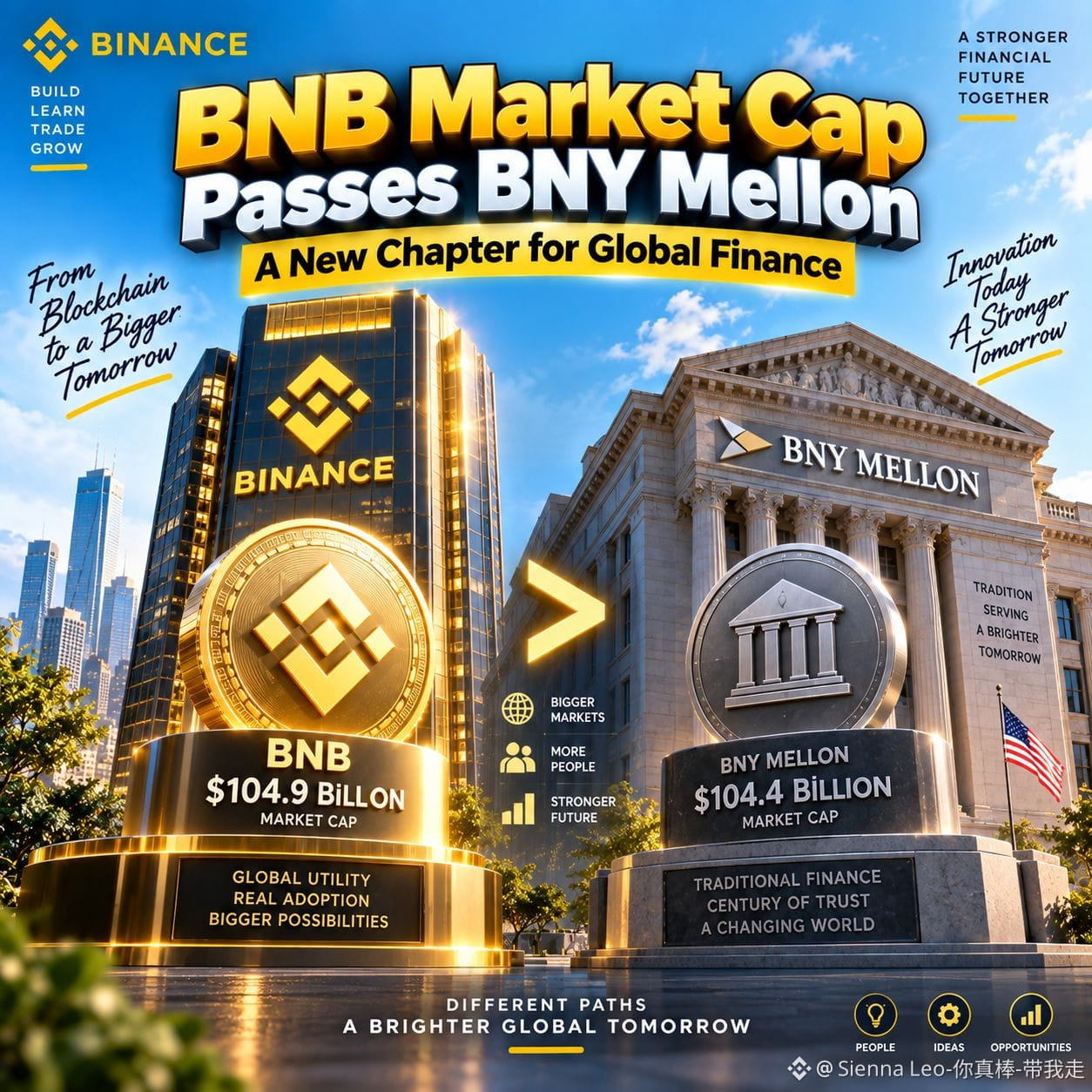
🚨🏦 $BNB Market Cap Passes BNY Mellon 🏦🚨
The numbers flashed across the screen, and suddenly a crypto asset was standing beside a century-old financial institution. For a moment, the comparison felt almost unreal.
BNB has now reached roughly $104.9 billion in market capitalization, putting it above The Bank of New York Mellon, whose market value was about $104.4 billion at the September 21 close.
This is not just a leaderboard reshuffle. BNB has climbed from around $711 in mid-September to roughly $787 now, while its market capitalization expanded by billions in the same period.
The underlying driver is market repricing. BNB is participating in the broader crypto rebound, while activity around the BNB ecosystem, including tokenized assets and increased market attention, has added another layer to the narrative.
My take: comparisons like this are powerful because they translate crypto's scale into traditional financial terms. But market capitalization alone does not mean BNB and BNY Mellon represent the same type of economic value or business.
BNB's next challenge is therefore not simply crossing another company. It is proving that this valuation can remain supported through different market conditions.
Sometimes the most interesting crypto milestone is the one that changes the comparison everyone makes.
❓ Does BNB passing BNY Mellon signal a deeper shift in how global financial value is being measured?
Disclaimer: This content is for educational purposes only and is not financial advice.
#BNB #CryptoMarket #GrowWithSAC $MUBARAK $XNO
#BNBMarketCapPassesBNYMellon
#bnbmarketcappassesbnymellon
🚨🏦 $BNB Market Cap Passes BNY Mellon 🏦🚨
The numbers flashed across the screen, and suddenly a crypto asset was standing beside a century-old financial institution. For a moment, the comparison felt almost unreal.
BNB has now reached roughly $104.9 billion in market capitalization, putting it above The Bank of New York Mellon, whose market value was about $104.4 billion at the September 21 close.
This is not just a leaderboard reshuffle. BNB has climbed from around $711 in mid-September to roughly $787 now, while its market capitalization expanded by billions in the same period.
The underlying driver is market repricing. BNB is participating in the broader crypto rebound, while activity around the BNB ecosystem, including tokenized assets and increased market attention, has added another layer to the narrative.
My take: comparisons like this are powerful because they translate crypto's scale into traditional financial terms. But market capitalization alone does not mean BNB and BNY Mellon represent the same type of economic value or business.
BNB's next challenge is therefore not simply crossing another company. It is proving that this valuation can remain supported through different market conditions.
Sometimes the most interesting crypto milestone is the one that changes the comparison everyone makes.
❓ Does BNB passing BNY Mellon signal a deeper shift in how global financial value is being measured?
Disclaimer: This content is for educational purposes only and is not financial advice.
#BNB #CryptoMarket #GrowWithSAC $MUBARAK $XNO
#BNBMarketCapPassesBNYMellon
🚨🏦 $BNB Market Cap Passes BNY Mellon 🏦🚨
The numbers flashed across the screen, and suddenly a crypto asset was standing beside a century-old financial institution. For a moment, the comparison felt almost unreal.
BNB has now reached roughly $104.9 billion in market capitalization, putting it above The Bank of New York Mellon, whose market value was about $104.4 billion at the September 21 close.
This is not just a leaderboard reshuffle. BNB has climbed from around $711 in mid-September to roughly $787 now, while its market capitalization expanded by billions in the same period.
The underlying driver is market repricing. BNB is participating in the broader crypto rebound, while activity around the BNB ecosystem, including tokenized assets and increased market attention, has added another layer to the narrative.
My take: comparisons like this are powerful because they translate crypto's scale into traditional financial terms. But market capitalization alone does not mean BNB and BNY Mellon represent the same type of economic value or business.
BNB's next challenge is therefore not simply crossing another company. It is proving that this valuation can remain supported through different market conditions.
Sometimes the most interesting crypto milestone is the one that changes the comparison everyone makes.
❓ Does BNB passing BNY Mellon signal a deeper shift in how global financial value is being measured?
Disclaimer: This content is for educational purposes only and is not financial advice.
#BNB #CryptoMarket #GrowWithSAC $MUBARAK $XNO
#BNBMarketCapPassesBNYMellon
1
636
#museovertakeschatgptastopfreeiosapp
🚨🤖 Muse Overtakes ChatGPT as Top Free iOS App 🤖🚨
Imagine opening the App Store expecting to see the familiar AI giant at the top, only to find a new name sitting above it. That moment says more about where consumer AI is heading than another benchmark ever could.
Meta’s Muse has climbed to No. 1 among free iPhone apps in the U.S., overtaking ChatGPT after launching on September 8. The ranking reflects download momentum, not necessarily long-term usage.
What makes Muse different is the ambition. Meta describes it as a personal AI agent designed not only to answer questions, but to carry out tasks across services using a dedicated secure environment.
That distinction matters. Chatbots mainly respond to prompts, while agentic AI aims to move from conversation toward execution: researching, scheduling, managing tasks and acting with user approval.
The bigger signal is consumer behavior. Muse reaching the top of Apple's free chart so quickly suggests users are increasingly curious about AI that can do work for them, not simply talk about it.
Still, a chart ranking is only an early indicator. Retention, reliability, privacy, permissions and real-world usefulness will ultimately determine whether the initial attention becomes lasting adoption.
The AI race is shifting from who answers best to who can actually get things done.
❓ Do you think AI agents will eventually replace traditional chatbot apps for everyday users?
Disclaimer: This content is for educational purposes only and is not financial advice.
#ArtificialIntelligence #AI #GrowWithSAC $MUBARAK $XNO $KERNEL
#MuseOvertakesChatGPTAsTopFreeIOSApp
#museovertakeschatgptastopfreeiosapp
🚨🤖 Muse Overtakes ChatGPT as Top Free iOS App 🤖🚨
Imagine opening the App Store expecting to see the familiar AI giant at the top, only to find a new name sitting above it. That moment says more about where consumer AI is heading than another benchmark ever could.
Meta’s Muse has climbed to No. 1 among free iPhone apps in the U.S., overtaking ChatGPT after launching on September 8. The ranking reflects download momentum, not necessarily long-term usage.
What makes Muse different is the ambition. Meta describes it as a personal AI agent designed not only to answer questions, but to carry out tasks across services using a dedicated secure environment.
That distinction matters. Chatbots mainly respond to prompts, while agentic AI aims to move from conversation toward execution: researching, scheduling, managing tasks and acting with user approval.
The bigger signal is consumer behavior. Muse reaching the top of Apple's free chart so quickly suggests users are increasingly curious about AI that can do work for them, not simply talk about it.
Still, a chart ranking is only an early indicator. Retention, reliability, privacy, permissions and real-world usefulness will ultimately determine whether the initial attention becomes lasting adoption.
The AI race is shifting from who answers best to who can actually get things done.
❓ Do you think AI agents will eventually replace traditional chatbot apps for everyday users?
Disclaimer: This content is for educational purposes only and is not financial advice.
#ArtificialIntelligence #AI #GrowWithSAC $MUBARAK $XNO $KERNEL
#MuseOvertakesChatGPTAsTopFreeIOSApp
🚨🤖 Muse Overtakes ChatGPT as Top Free iOS App 🤖🚨
Imagine opening the App Store expecting to see the familiar AI giant at the top, only to find a new name sitting above it. That moment says more about where consumer AI is heading than another benchmark ever could.
Meta’s Muse has climbed to No. 1 among free iPhone apps in the U.S., overtaking ChatGPT after launching on September 8. The ranking reflects download momentum, not necessarily long-term usage.
What makes Muse different is the ambition. Meta describes it as a personal AI agent designed not only to answer questions, but to carry out tasks across services using a dedicated secure environment.
That distinction matters. Chatbots mainly respond to prompts, while agentic AI aims to move from conversation toward execution: researching, scheduling, managing tasks and acting with user approval.
The bigger signal is consumer behavior. Muse reaching the top of Apple's free chart so quickly suggests users are increasingly curious about AI that can do work for them, not simply talk about it.
Still, a chart ranking is only an early indicator. Retention, reliability, privacy, permissions and real-world usefulness will ultimately determine whether the initial attention becomes lasting adoption.
The AI race is shifting from who answers best to who can actually get things done.
❓ Do you think AI agents will eventually replace traditional chatbot apps for everyday users?
Disclaimer: This content is for educational purposes only and is not financial advice.
#ArtificialIntelligence #AI #GrowWithSAC $MUBARAK $XNO $KERNEL
#MuseOvertakesChatGPTAsTopFreeIOSApp

801
Vérifié
#tokenizedstockplatformscouldlaunchnextquarter
🚨📈 Tokenized Stock Platforms Could Launch Next Quarter 📈🚨
Picture the market opening one morning and discovering that a stock exchange no longer needs to look like an exchange. The familiar ticker is still there, but the rails underneath have changed.
That possibility moved closer this week after the SEC introduced a five-year exemption framework for certain blockchain-based tokenized stock trading platforms. The framework requires tokenized stocks to preserve shareholder rights such as dividends and voting, while excluding synthetic products that merely track stock prices.
A report today says an eligible tokenized stock platform could begin taking shape as early as next quarter. That does not mean every platform will launch immediately, but the regulatory door is clearly opening.
The bigger shift is already underway. Binance offers bStocks, OKX has rolled out more than 40 tokenized U.S. stocks and ETFs in selected regions, while traditional market infrastructure is also preparing tokenization services.
My take: the real breakthrough is not putting stocks on a blockchain. It is making regulated equity ownership more programmable, transferable and potentially available beyond traditional market hours.
But regulation, issuer participation, liquidity and jurisdictional access will determine how quickly this becomes mainstream.
The next chapter of markets may not replace the stock exchange. It may rebuild its rails.
❓ Would you trust a tokenized stock platform if the underlying shareholder rights remained protected?
Disclaimer: This is for educational purposes only, not financial advice.
#TokenizedStocks #TokenizationTrend #GrowWithSAC $MUBARAK $XNO $KERNEL
#TokenizedStockPlatformsCouldLaunchNextQuarter
#tokenizedstockplatformscouldlaunchnextquarter
🚨📈 Tokenized Stock Platforms Could Launch Next Quarter 📈🚨
Picture the market opening one morning and discovering that a stock exchange no longer needs to look like an exchange. The familiar ticker is still there, but the rails underneath have changed.
That possibility moved closer this week after the SEC introduced a five-year exemption framework for certain blockchain-based tokenized stock trading platforms. The framework requires tokenized stocks to preserve shareholder rights such as dividends and voting, while excluding synthetic products that merely track stock prices.
A report today says an eligible tokenized stock platform could begin taking shape as early as next quarter. That does not mean every platform will launch immediately, but the regulatory door is clearly opening.
The bigger shift is already underway. Binance offers bStocks, OKX has rolled out more than 40 tokenized U.S. stocks and ETFs in selected regions, while traditional market infrastructure is also preparing tokenization services.
My take: the real breakthrough is not putting stocks on a blockchain. It is making regulated equity ownership more programmable, transferable and potentially available beyond traditional market hours.
But regulation, issuer participation, liquidity and jurisdictional access will determine how quickly this becomes mainstream.
The next chapter of markets may not replace the stock exchange. It may rebuild its rails.
❓ Would you trust a tokenized stock platform if the underlying shareholder rights remained protected?
Disclaimer: This is for educational purposes only, not financial advice.
#TokenizedStocks #TokenizationTrend #GrowWithSAC $MUBARAK $XNO $KERNEL
#TokenizedStockPlatformsCouldLaunchNextQuarter
🚨📈 Tokenized Stock Platforms Could Launch Next Quarter 📈🚨
Picture the market opening one morning and discovering that a stock exchange no longer needs to look like an exchange. The familiar ticker is still there, but the rails underneath have changed.
That possibility moved closer this week after the SEC introduced a five-year exemption framework for certain blockchain-based tokenized stock trading platforms. The framework requires tokenized stocks to preserve shareholder rights such as dividends and voting, while excluding synthetic products that merely track stock prices.
A report today says an eligible tokenized stock platform could begin taking shape as early as next quarter. That does not mean every platform will launch immediately, but the regulatory door is clearly opening.
The bigger shift is already underway. Binance offers bStocks, OKX has rolled out more than 40 tokenized U.S. stocks and ETFs in selected regions, while traditional market infrastructure is also preparing tokenization services.
My take: the real breakthrough is not putting stocks on a blockchain. It is making regulated equity ownership more programmable, transferable and potentially available beyond traditional market hours.
But regulation, issuer participation, liquidity and jurisdictional access will determine how quickly this becomes mainstream.
The next chapter of markets may not replace the stock exchange. It may rebuild its rails.
❓ Would you trust a tokenized stock platform if the underlying shareholder rights remained protected?
Disclaimer: This is for educational purposes only, not financial advice.
#TokenizedStocks #TokenizationTrend #GrowWithSAC $MUBARAK $XNO $KERNEL
#TokenizedStockPlatformsCouldLaunchNextQuarter

2
4.2k
#CryptoMarketCapReclaims$3Trillion
🚨🌐 Crypto Market Cap Reclaims $3 Trillion 🌐🚨
The screen was red, confidence was fading, and then the market suddenly changed character. Within hours, billions returned to digital assets and the $3 trillion milestone came back into view.
The total crypto market capitalization briefly reclaimed $3 trillion on September 22 as Bitcoin and major altcoins extended a broad rally. Bitcoin climbed toward $86,000, while Ethereum, XRP, Solana and BNB also advanced.
The important part is not simply crossing a psychological number. Market breadth has improved, with Bitcoin's market share remaining below 60%, suggesting capital is spreading beyond BTC rather than staying concentrated in one asset.
But there is another side to this rally. Perpetual futures open interest has risen sharply, while large short liquidations helped accelerate the move. That means momentum is real, but leverage is also becoming part of the story.
My take: reclaiming $3 trillion is a meaningful confidence signal, but the next test is whether spot demand can sustain the move after forced liquidations and short covering fade.
If liquidity keeps rotating into major and emerging crypto assets, the market structure could become increasingly important to watch.
The $3 trillion milestone is back, but what happens after the headline may matter even more.
❓ Do you think this recovery is being driven more by genuine demand or short-term leverage?
Disclaimer: This content is for educational purposes only and is not financial advice.
#Bitcoin #CryptoMarket #GrowWithSAC $BTC $PHA $TAO
#CryptoMarketCapReclaims$3Trillion
🚨🌐 Crypto Market Cap Reclaims $3 Trillion 🌐🚨
The screen was red, confidence was fading, and then the market suddenly changed character. Within hours, billions returned to digital assets and the $3 trillion milestone came back into view.
The total crypto market capitalization briefly reclaimed $3 trillion on September 22 as Bitcoin and major altcoins extended a broad rally. Bitcoin climbed toward $86,000, while Ethereum, XRP, Solana and BNB also advanced.
The important part is not simply crossing a psychological number. Market breadth has improved, with Bitcoin's market share remaining below 60%, suggesting capital is spreading beyond BTC rather than staying concentrated in one asset.
But there is another side to this rally. Perpetual futures open interest has risen sharply, while large short liquidations helped accelerate the move. That means momentum is real, but leverage is also becoming part of the story.
My take: reclaiming $3 trillion is a meaningful confidence signal, but the next test is whether spot demand can sustain the move after forced liquidations and short covering fade.
If liquidity keeps rotating into major and emerging crypto assets, the market structure could become increasingly important to watch.
The $3 trillion milestone is back, but what happens after the headline may matter even more.
❓ Do you think this recovery is being driven more by genuine demand or short-term leverage?
Disclaimer: This content is for educational purposes only and is not financial advice.
#Bitcoin #CryptoMarket #GrowWithSAC $BTC $PHA $TAO
🚨🌐 Crypto Market Cap Reclaims $3 Trillion 🌐🚨
The screen was red, confidence was fading, and then the market suddenly changed character. Within hours, billions returned to digital assets and the $3 trillion milestone came back into view.
The total crypto market capitalization briefly reclaimed $3 trillion on September 22 as Bitcoin and major altcoins extended a broad rally. Bitcoin climbed toward $86,000, while Ethereum, XRP, Solana and BNB also advanced.
The important part is not simply crossing a psychological number. Market breadth has improved, with Bitcoin's market share remaining below 60%, suggesting capital is spreading beyond BTC rather than staying concentrated in one asset.
But there is another side to this rally. Perpetual futures open interest has risen sharply, while large short liquidations helped accelerate the move. That means momentum is real, but leverage is also becoming part of the story.
My take: reclaiming $3 trillion is a meaningful confidence signal, but the next test is whether spot demand can sustain the move after forced liquidations and short covering fade.
If liquidity keeps rotating into major and emerging crypto assets, the market structure could become increasingly important to watch.
The $3 trillion milestone is back, but what happens after the headline may matter even more.
❓ Do you think this recovery is being driven more by genuine demand or short-term leverage?
Disclaimer: This content is for educational purposes only and is not financial advice.
#Bitcoin #CryptoMarket #GrowWithSAC $BTC $PHA $TAO

244
Vérifié
#strategyadds950bitcoin
🚨📈 Strategy Adds 950 $BITCOIN : The Accumulation Signal Gets Louder 📈🚨
Imagine watching Bitcoin push higher while one of the market’s biggest corporate holders quietly opens its wallet again. Then the number appears: another 950 BTC.
Strategy purchased 950 Bitcoin for approximately $75.7 million, bringing its total holdings to 846,000 BTC. The purchase covered the week ending September 20 and was funded with cash reserves.
The average purchase price was about $79,670 per Bitcoin. That matters because BTC has since traded above $85,000, placing the latest accumulation within a rapidly strengthening market environment.
But the bigger story is not simply the 950 coins. Strategy had paused Bitcoin purchases since late August, making this return to accumulation more notable.
There is another side to watch. Strategy also repurchased approximately $174 million of its STRC preferred shares during the same period, showing that capital allocation is not focused exclusively on BTC.
My take: corporate accumulation can strengthen the long-term demand narrative, but it should not be treated as a guarantee of continued price appreciation. Bitcoin still depends on broader liquidity, ETF flows, sentiment, and risk appetite.
The memorable part is simple: when a major Bitcoin treasury resumes buying after a pause, the market pays attention.
❓ Do you think Strategy’s renewed accumulation could become an important signal for Bitcoin’s next phase?
Disclaimer: This post is for educational purposes only and is not financial advice. Crypto markets are highly volatile.
#Bitcoin #CryptoMarket #GrowWithSAC $BTC $MUBARAK
#StrategyAdds950Bitcoin
#strategyadds950bitcoin
🚨📈 Strategy Adds 950 $BITCOIN : The Accumulation Signal Gets Louder 📈🚨
Imagine watching Bitcoin push higher while one of the market’s biggest corporate holders quietly opens its wallet again. Then the number appears: another 950 BTC.
Strategy purchased 950 Bitcoin for approximately $75.7 million, bringing its total holdings to 846,000 BTC. The purchase covered the week ending September 20 and was funded with cash reserves.
The average purchase price was about $79,670 per Bitcoin. That matters because BTC has since traded above $85,000, placing the latest accumulation within a rapidly strengthening market environment.
But the bigger story is not simply the 950 coins. Strategy had paused Bitcoin purchases since late August, making this return to accumulation more notable.
There is another side to watch. Strategy also repurchased approximately $174 million of its STRC preferred shares during the same period, showing that capital allocation is not focused exclusively on BTC.
My take: corporate accumulation can strengthen the long-term demand narrative, but it should not be treated as a guarantee of continued price appreciation. Bitcoin still depends on broader liquidity, ETF flows, sentiment, and risk appetite.
The memorable part is simple: when a major Bitcoin treasury resumes buying after a pause, the market pays attention.
❓ Do you think Strategy’s renewed accumulation could become an important signal for Bitcoin’s next phase?
Disclaimer: This post is for educational purposes only and is not financial advice. Crypto markets are highly volatile.
#Bitcoin #CryptoMarket #GrowWithSAC $BTC $MUBARAK
#StrategyAdds950Bitcoin
🚨📈 Strategy Adds 950 $BITCOIN : The Accumulation Signal Gets Louder 📈🚨
Imagine watching Bitcoin push higher while one of the market’s biggest corporate holders quietly opens its wallet again. Then the number appears: another 950 BTC.
Strategy purchased 950 Bitcoin for approximately $75.7 million, bringing its total holdings to 846,000 BTC. The purchase covered the week ending September 20 and was funded with cash reserves.
The average purchase price was about $79,670 per Bitcoin. That matters because BTC has since traded above $85,000, placing the latest accumulation within a rapidly strengthening market environment.
But the bigger story is not simply the 950 coins. Strategy had paused Bitcoin purchases since late August, making this return to accumulation more notable.
There is another side to watch. Strategy also repurchased approximately $174 million of its STRC preferred shares during the same period, showing that capital allocation is not focused exclusively on BTC.
My take: corporate accumulation can strengthen the long-term demand narrative, but it should not be treated as a guarantee of continued price appreciation. Bitcoin still depends on broader liquidity, ETF flows, sentiment, and risk appetite.
The memorable part is simple: when a major Bitcoin treasury resumes buying after a pause, the market pays attention.
❓ Do you think Strategy’s renewed accumulation could become an important signal for Bitcoin’s next phase?
Disclaimer: This post is for educational purposes only and is not financial advice. Crypto markets are highly volatile.
#Bitcoin #CryptoMarket #GrowWithSAC $BTC $MUBARAK
#StrategyAdds950Bitcoin

6
3.9k
#aistockswhatnext
🤖 AI Stocks + What Next? The AI Boom Is Growing, But Where Is the Next Opportunity? 🤖
AI stocks are commanding attention, but the bigger question is no longer whether AI demand exists. It is whether investors are paying too much for companies expected to capture it.
The fundamentals remain powerful. NVIDIA reported $96.2 billion in quarterly revenue, up 106% year over year, while Data Center revenue reached $89 billion, up 117%. AWS and NVIDIA also announced plans for 2 million additional GPUs as AI infrastructure demand accelerates.
But strong demand does not automatically mean unlimited upside. AMD crossed a One trillion valuation after a huge 2026 rally, while the BIS warned that rising AI investment, leverage and expectations can create financial-stability risks.
My view is cautiously neutral: AI's buildout is real, but crowded positioning makes valuation and diversification more important. If AI multiples become harder to justify, opportunity may shift toward assets benefiting from the same expansion without identical expectations.
That includes energy and power infrastructure, because data centers require enormous electricity. Google announced a $15.1 billion AI infrastructure investment in Finland alongside a long-term nuclear power agreement, showing how compute growth is becoming linked to energy supply.
BTC and gold can serve portfolio roles, but they are not automatic AI substitutes. Their drivers are not the same, and conditions can change quickly.
The opportunity may be beyond obvious AI winners: follow the infrastructure, capital flows and bottlenecks behind the boom.
If AI stocks keep rising, would you rather follow the leaders or look for the infrastructure supporting the AI economy?
Disclaimer: This post is for educational purposes only and is not financial advice.
#AIStocksWhatNext #GrowWithSAC $NVDAB $NVDA.US $AAPL.US
#aistockswhatnext
🤖 AI Stocks + What Next? The AI Boom Is Growing, But Where Is the Next Opportunity? 🤖
AI stocks are commanding attention, but the bigger question is no longer whether AI demand exists. It is whether investors are paying too much for companies expected to capture it.
The fundamentals remain powerful. NVIDIA reported $96.2 billion in quarterly revenue, up 106% year over year, while Data Center revenue reached $89 billion, up 117%. AWS and NVIDIA also announced plans for 2 million additional GPUs as AI infrastructure demand accelerates.
But strong demand does not automatically mean unlimited upside. AMD crossed a One trillion valuation after a huge 2026 rally, while the BIS warned that rising AI investment, leverage and expectations can create financial-stability risks.
My view is cautiously neutral: AI's buildout is real, but crowded positioning makes valuation and diversification more important. If AI multiples become harder to justify, opportunity may shift toward assets benefiting from the same expansion without identical expectations.
That includes energy and power infrastructure, because data centers require enormous electricity. Google announced a $15.1 billion AI infrastructure investment in Finland alongside a long-term nuclear power agreement, showing how compute growth is becoming linked to energy supply.
BTC and gold can serve portfolio roles, but they are not automatic AI substitutes. Their drivers are not the same, and conditions can change quickly.
The opportunity may be beyond obvious AI winners: follow the infrastructure, capital flows and bottlenecks behind the boom.
If AI stocks keep rising, would you rather follow the leaders or look for the infrastructure supporting the AI economy?
Disclaimer: This post is for educational purposes only and is not financial advice.
#AIStocksWhatNext #GrowWithSAC $NVDAB $NVDA.US $AAPL.US
🤖 AI Stocks + What Next? The AI Boom Is Growing, But Where Is the Next Opportunity? 🤖
AI stocks are commanding attention, but the bigger question is no longer whether AI demand exists. It is whether investors are paying too much for companies expected to capture it.
The fundamentals remain powerful. NVIDIA reported $96.2 billion in quarterly revenue, up 106% year over year, while Data Center revenue reached $89 billion, up 117%. AWS and NVIDIA also announced plans for 2 million additional GPUs as AI infrastructure demand accelerates.
But strong demand does not automatically mean unlimited upside. AMD crossed a One trillion valuation after a huge 2026 rally, while the BIS warned that rising AI investment, leverage and expectations can create financial-stability risks.
My view is cautiously neutral: AI's buildout is real, but crowded positioning makes valuation and diversification more important. If AI multiples become harder to justify, opportunity may shift toward assets benefiting from the same expansion without identical expectations.
That includes energy and power infrastructure, because data centers require enormous electricity. Google announced a $15.1 billion AI infrastructure investment in Finland alongside a long-term nuclear power agreement, showing how compute growth is becoming linked to energy supply.
BTC and gold can serve portfolio roles, but they are not automatic AI substitutes. Their drivers are not the same, and conditions can change quickly.
The opportunity may be beyond obvious AI winners: follow the infrastructure, capital flows and bottlenecks behind the boom.
If AI stocks keep rising, would you rather follow the leaders or look for the infrastructure supporting the AI economy?
Disclaimer: This post is for educational purposes only and is not financial advice.
#AIStocksWhatNext #GrowWithSAC $NVDAB $NVDA.US $AAPL.US

59
·
--
Haussier
Vérifié
#cardanoaddedtox402kitforadapayments
🚀 $ADA Cardano Added To x402 Kit For ADA Payments: Is ADA Entering The Agent Economy? 🚀
Imagine an AI agent needing an API, reaching the payment wall, and instead of opening an account or waiting for a human, simply paying for that request with ADA. That small moment could represent a much bigger shift in how software transacts.
Cardano has now been integrated into the official x402 SDK, giving applications and AI agents a way to pay for API calls using ADA or Cardano-native tokens through HTTP requests.
The important part is not simply another payment integration. x402 is designed around machine-to-machine payments, where software can request a service, receive a payment requirement, settle it, and continue without traditional accounts, API keys, or subscription flows.
Cardano's implementation includes client, server, and facilitator components, while its facilitator has already completed an end-to-end transaction on pre-production infrastructure. Mainnet operation has not yet been demonstrated, so real-world scale remains an open question.
My take: this gives ADA a potential utility path beyond human-driven transfers. If the agent economy expands, programmable pay-per-request infrastructure could become an important use case for blockchain networks.
But integration is not adoption. The real signal will be whether developers actually build services around it, agents use those services, and transaction activity moves beyond testing.
The bigger story is not that Cardano can make a payment. It is that machines may soon become blockchain users too.
❓Do you think AI agents could become a meaningful source of ADA transaction demand?
Disclaimer: This is informational content, not financial advice. Crypto assets are volatile, and adoption remains uncertain.
#Cardano #Aİ #GrowWithSAC $GSB $ONE
#CardanoAddedToX402KitForADAPayments
#cardanoaddedtox402kitforadapayments
🚀 $ADA Cardano Added To x402 Kit For ADA Payments: Is ADA Entering The Agent Economy? 🚀
Imagine an AI agent needing an API, reaching the payment wall, and instead of opening an account or waiting for a human, simply paying for that request with ADA. That small moment could represent a much bigger shift in how software transacts.
Cardano has now been integrated into the official x402 SDK, giving applications and AI agents a way to pay for API calls using ADA or Cardano-native tokens through HTTP requests.
The important part is not simply another payment integration. x402 is designed around machine-to-machine payments, where software can request a service, receive a payment requirement, settle it, and continue without traditional accounts, API keys, or subscription flows.
Cardano's implementation includes client, server, and facilitator components, while its facilitator has already completed an end-to-end transaction on pre-production infrastructure. Mainnet operation has not yet been demonstrated, so real-world scale remains an open question.
My take: this gives ADA a potential utility path beyond human-driven transfers. If the agent economy expands, programmable pay-per-request infrastructure could become an important use case for blockchain networks.
But integration is not adoption. The real signal will be whether developers actually build services around it, agents use those services, and transaction activity moves beyond testing.
The bigger story is not that Cardano can make a payment. It is that machines may soon become blockchain users too.
❓Do you think AI agents could become a meaningful source of ADA transaction demand?
Disclaimer: This is informational content, not financial advice. Crypto assets are volatile, and adoption remains uncertain.
#Cardano #Aİ #GrowWithSAC $GSB $ONE
#CardanoAddedToX402KitForADAPayments
🚀 $ADA Cardano Added To x402 Kit For ADA Payments: Is ADA Entering The Agent Economy? 🚀
Imagine an AI agent needing an API, reaching the payment wall, and instead of opening an account or waiting for a human, simply paying for that request with ADA. That small moment could represent a much bigger shift in how software transacts.
Cardano has now been integrated into the official x402 SDK, giving applications and AI agents a way to pay for API calls using ADA or Cardano-native tokens through HTTP requests.
The important part is not simply another payment integration. x402 is designed around machine-to-machine payments, where software can request a service, receive a payment requirement, settle it, and continue without traditional accounts, API keys, or subscription flows.
Cardano's implementation includes client, server, and facilitator components, while its facilitator has already completed an end-to-end transaction on pre-production infrastructure. Mainnet operation has not yet been demonstrated, so real-world scale remains an open question.
My take: this gives ADA a potential utility path beyond human-driven transfers. If the agent economy expands, programmable pay-per-request infrastructure could become an important use case for blockchain networks.
But integration is not adoption. The real signal will be whether developers actually build services around it, agents use those services, and transaction activity moves beyond testing.
The bigger story is not that Cardano can make a payment. It is that machines may soon become blockchain users too.
❓Do you think AI agents could become a meaningful source of ADA transaction demand?
Disclaimer: This is informational content, not financial advice. Crypto assets are volatile, and adoption remains uncertain.
#Cardano #Aİ #GrowWithSAC $GSB $ONE
#CardanoAddedToX402KitForADAPayments

3
1.9k
#xrprises8%
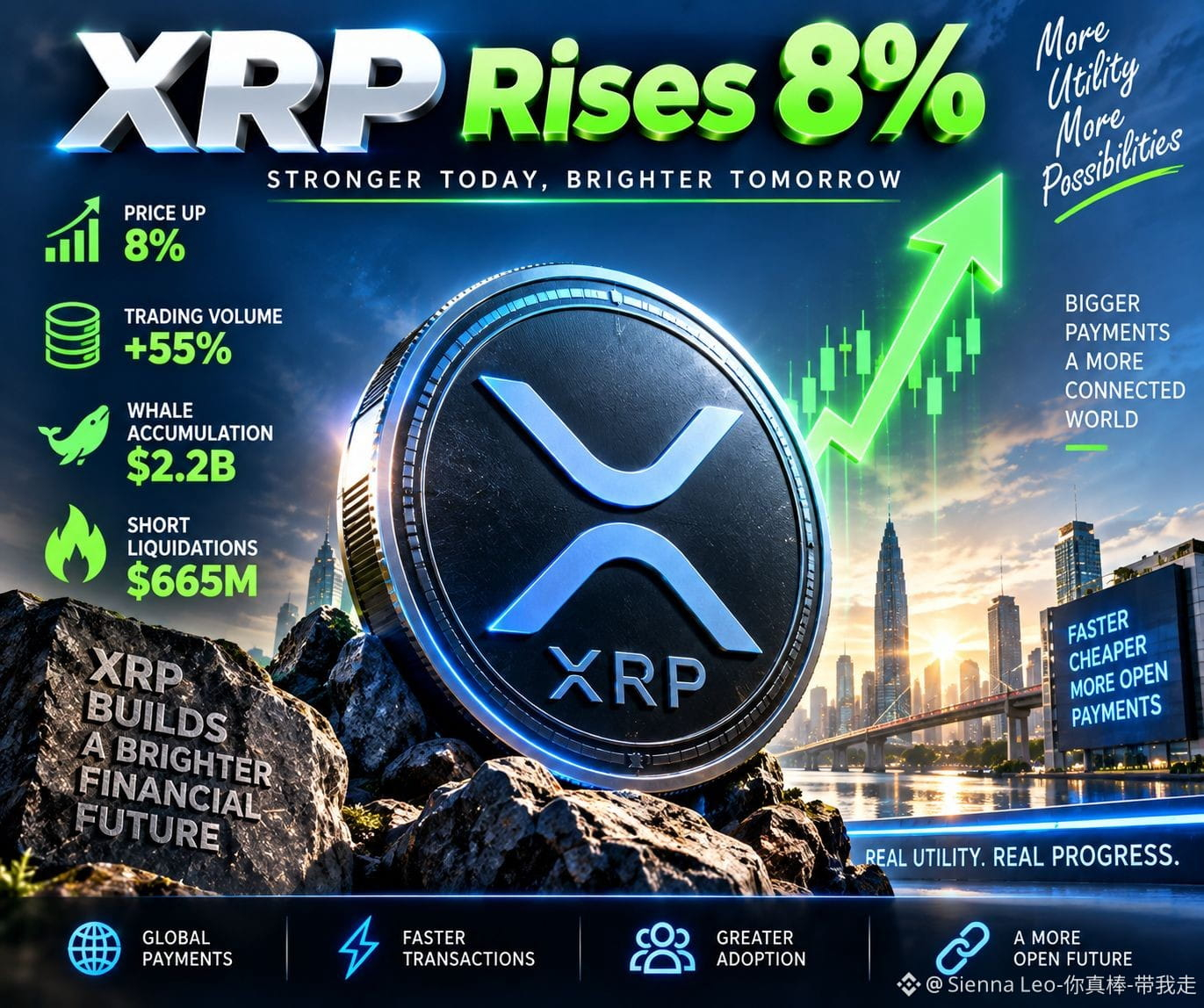
⚡ $XRP Rises 8%: The Move Behind the Sudden Surge ⚡
The market had been moving quietly, then XRP suddenly accelerated. One strong push was enough to turn a sleepy chart into one of the day's most watched altcoin moves.
XRP climbed more than 8% over 24 hours, reaching around $1.51 as broader crypto momentum strengthened. Trading activity also jumped sharply, with reported XRP volume rising roughly 55%.
The key driver appears to be a combination of broad market strength and aggressive positioning. Crypto-wide short liquidations reached about $665 million, creating additional buying pressure as bearish positions were forced to close.
There is another layer worth watching: recent on-chain analysis reported large-holder accumulation of roughly $2.2 billion worth of XRP over several days. That does not guarantee further upside, but it adds context to the renewed demand.
My take: this rally is more meaningful than a random green candle, but the distinction matters. A short squeeze can accelerate price quickly, while sustained demand is what determines whether momentum survives after the forced buying fades.
XRP is also approaching a zone where traders may reassess risk, so chasing an already extended move can be very different from observing confirmed strength.
The real test is not whether XRP can spike, but whether buyers can keep control after the squeeze ends.
❓Do you think XRP's next move will be driven by sustained demand or another burst of short covering?
Disclaimer: This content is for educational purposes only and is not financial advice.
#XRP #CryptoMarket #GrowWithSAC $SLF $BETA
#XRPRises8%
#xrprises8%
⚡ $XRP Rises 8%: The Move Behind the Sudden Surge ⚡
The market had been moving quietly, then XRP suddenly accelerated. One strong push was enough to turn a sleepy chart into one of the day's most watched altcoin moves.
XRP climbed more than 8% over 24 hours, reaching around $1.51 as broader crypto momentum strengthened. Trading activity also jumped sharply, with reported XRP volume rising roughly 55%.
The key driver appears to be a combination of broad market strength and aggressive positioning. Crypto-wide short liquidations reached about $665 million, creating additional buying pressure as bearish positions were forced to close.
There is another layer worth watching: recent on-chain analysis reported large-holder accumulation of roughly $2.2 billion worth of XRP over several days. That does not guarantee further upside, but it adds context to the renewed demand.
My take: this rally is more meaningful than a random green candle, but the distinction matters. A short squeeze can accelerate price quickly, while sustained demand is what determines whether momentum survives after the forced buying fades.
XRP is also approaching a zone where traders may reassess risk, so chasing an already extended move can be very different from observing confirmed strength.
The real test is not whether XRP can spike, but whether buyers can keep control after the squeeze ends.
❓Do you think XRP's next move will be driven by sustained demand or another burst of short covering?
Disclaimer: This content is for educational purposes only and is not financial advice.
#XRP #CryptoMarket #GrowWithSAC $SLF $BETA
#XRPRises8%
⚡ $XRP Rises 8%: The Move Behind the Sudden Surge ⚡
The market had been moving quietly, then XRP suddenly accelerated. One strong push was enough to turn a sleepy chart into one of the day's most watched altcoin moves.
XRP climbed more than 8% over 24 hours, reaching around $1.51 as broader crypto momentum strengthened. Trading activity also jumped sharply, with reported XRP volume rising roughly 55%.
The key driver appears to be a combination of broad market strength and aggressive positioning. Crypto-wide short liquidations reached about $665 million, creating additional buying pressure as bearish positions were forced to close.
There is another layer worth watching: recent on-chain analysis reported large-holder accumulation of roughly $2.2 billion worth of XRP over several days. That does not guarantee further upside, but it adds context to the renewed demand.
My take: this rally is more meaningful than a random green candle, but the distinction matters. A short squeeze can accelerate price quickly, while sustained demand is what determines whether momentum survives after the forced buying fades.
XRP is also approaching a zone where traders may reassess risk, so chasing an already extended move can be very different from observing confirmed strength.
The real test is not whether XRP can spike, but whether buyers can keep control after the squeeze ends.
❓Do you think XRP's next move will be driven by sustained demand or another burst of short covering?
Disclaimer: This content is for educational purposes only and is not financial advice.
#XRP #CryptoMarket #GrowWithSAC $SLF $BETA
#XRPRises8%
2
2.4k
#AMDHits$1TrillionMarketCap
🚀 $AMD Hits One Trillion Market Cap: AI Demand Pushes Valuation Higher 🚀
The trading floor was already moving when AMD crossed a line few companies ever reach. For a moment, the number on the screen changed the conversation around who is really winning the AI hardware race.
Advanced Micro Devices surpassed a 1 Dollor Trillion market capitalization for the first time on September 21, with shares reaching a record around $615. The move came as investors increased their bets on AMD's expanding role in AI computing.
The primary driver is not simply market excitement. AMD is benefiting from rising demand for AI computing, stronger data-center expectations, and growing confidence in its ability to compete across CPUs, GPUs and broader AI systems.
The scale of the move is striking. AMD shares gained about 9.6% in the session, while the broader semiconductor sector also advanced as AI-related optimism returned to the market.
My take: the trillion-dollar milestone matters less as a number than as a signal. Investors are increasingly valuing semiconductor companies according to their position inside the expanding AI infrastructure chain.
But valuation milestones do not remove risk. Expectations are now high, meaning future earnings, AI demand and execution will have to justify the enthusiasm.
AI is no longer just a software story; the companies supplying its physical infrastructure are becoming the story too.
❓Can AMD turn this milestone into sustained leadership in the AI hardware race?
Disclaimer: This content is for educational purposes only and is not financial advice.
#AI #Semiconductors #GrowWithSAC $AMDB $G
#AMDHits$1TrillionMarketCap
🚀 $AMD Hits One Trillion Market Cap: AI Demand Pushes Valuation Higher 🚀
The trading floor was already moving when AMD crossed a line few companies ever reach. For a moment, the number on the screen changed the conversation around who is really winning the AI hardware race.
Advanced Micro Devices surpassed a 1 Dollor Trillion market capitalization for the first time on September 21, with shares reaching a record around $615. The move came as investors increased their bets on AMD's expanding role in AI computing.
The primary driver is not simply market excitement. AMD is benefiting from rising demand for AI computing, stronger data-center expectations, and growing confidence in its ability to compete across CPUs, GPUs and broader AI systems.
The scale of the move is striking. AMD shares gained about 9.6% in the session, while the broader semiconductor sector also advanced as AI-related optimism returned to the market.
My take: the trillion-dollar milestone matters less as a number than as a signal. Investors are increasingly valuing semiconductor companies according to their position inside the expanding AI infrastructure chain.
But valuation milestones do not remove risk. Expectations are now high, meaning future earnings, AI demand and execution will have to justify the enthusiasm.
AI is no longer just a software story; the companies supplying its physical infrastructure are becoming the story too.
❓Can AMD turn this milestone into sustained leadership in the AI hardware race?
Disclaimer: This content is for educational purposes only and is not financial advice.
#AI #Semiconductors #GrowWithSAC $AMDB $G
🚀 $AMD Hits One Trillion Market Cap: AI Demand Pushes Valuation Higher 🚀
The trading floor was already moving when AMD crossed a line few companies ever reach. For a moment, the number on the screen changed the conversation around who is really winning the AI hardware race.
Advanced Micro Devices surpassed a 1 Dollor Trillion market capitalization for the first time on September 21, with shares reaching a record around $615. The move came as investors increased their bets on AMD's expanding role in AI computing.
The primary driver is not simply market excitement. AMD is benefiting from rising demand for AI computing, stronger data-center expectations, and growing confidence in its ability to compete across CPUs, GPUs and broader AI systems.
The scale of the move is striking. AMD shares gained about 9.6% in the session, while the broader semiconductor sector also advanced as AI-related optimism returned to the market.
My take: the trillion-dollar milestone matters less as a number than as a signal. Investors are increasingly valuing semiconductor companies according to their position inside the expanding AI infrastructure chain.
But valuation milestones do not remove risk. Expectations are now high, meaning future earnings, AI demand and execution will have to justify the enthusiasm.
AI is no longer just a software story; the companies supplying its physical infrastructure are becoming the story too.
❓Can AMD turn this milestone into sustained leadership in the AI hardware race?
Disclaimer: This content is for educational purposes only and is not financial advice.
#AI #Semiconductors #GrowWithSAC $AMDB $G
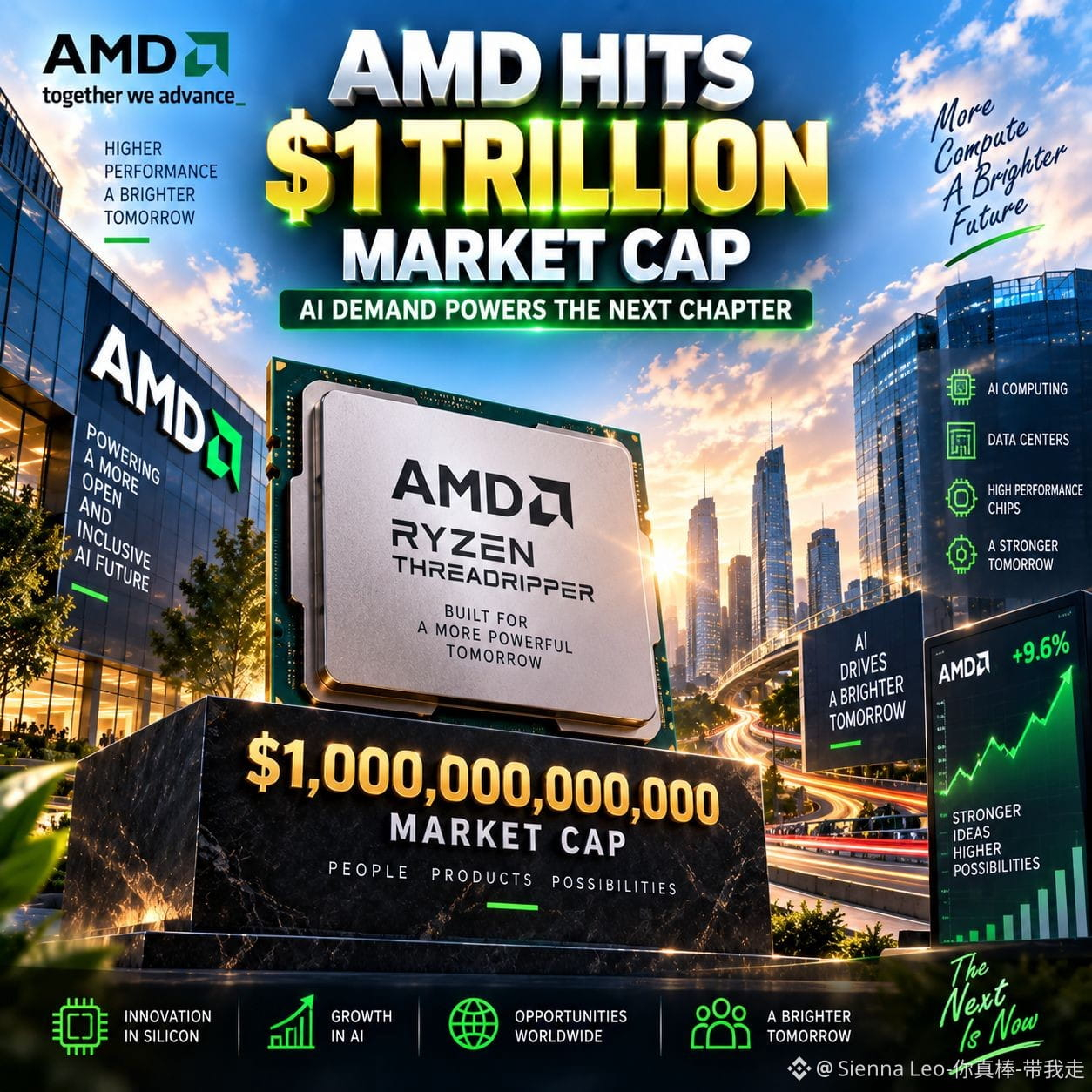
1
367
#NvidiaToBuyAnother$1.5BSBEnergySharesPreIPO
⚡ Nvidia To Buy Another $1.5B In SB Energy Shares Ahead Of IPO ⚡
Imagine watching the AI boom from the front row, then realizing the real bottleneck may not be chips at all. It may be the power needed to keep those chips running.
Nvidia is set to invest another $1.5 billion in SB Energy through newly issued shares, reportedly at 90% of the IPO price. That would bring Nvidia's total investment to about $3 billion.
SB Energy is building infrastructure for AI data centers, with about 8.8 gigawatts of capacity across projects in Texas and Ohio. The move shows Nvidia's interest extending beyond computing hardware into the infrastructure supporting AI growth.
But there is an important twist: SB Energy's planned IPO has been delayed amid growing investor caution around the sustainability and financing requirements of the AI data-center boom.
That makes Nvidia's investment more interesting, not necessarily simpler. Nvidia appears willing to deepen its exposure to the infrastructure layer while public-market sentiment around that same layer is becoming more selective.
My take: the bigger signal is strategic. AI demand creates a chain reaction: chips need data centers, data centers need electricity, and electricity requires enormous infrastructure investment.
The AI race is increasingly becoming an infrastructure race.
❓Do you think Nvidia's SB Energy investment signals where the next major AI bottleneck will emerge?
Disclaimer: This content is for educational purposes only and is not financial advice.
#Aİ #NVIDIA #GrowWithSAC $KERNEL $FORM $PHA
#NvidiaToBuyAnother$1.5BSBEnergySharesPreIPO
⚡ Nvidia To Buy Another $1.5B In SB Energy Shares Ahead Of IPO ⚡
Imagine watching the AI boom from the front row, then realizing the real bottleneck may not be chips at all. It may be the power needed to keep those chips running.
Nvidia is set to invest another $1.5 billion in SB Energy through newly issued shares, reportedly at 90% of the IPO price. That would bring Nvidia's total investment to about $3 billion.
SB Energy is building infrastructure for AI data centers, with about 8.8 gigawatts of capacity across projects in Texas and Ohio. The move shows Nvidia's interest extending beyond computing hardware into the infrastructure supporting AI growth.
But there is an important twist: SB Energy's planned IPO has been delayed amid growing investor caution around the sustainability and financing requirements of the AI data-center boom.
That makes Nvidia's investment more interesting, not necessarily simpler. Nvidia appears willing to deepen its exposure to the infrastructure layer while public-market sentiment around that same layer is becoming more selective.
My take: the bigger signal is strategic. AI demand creates a chain reaction: chips need data centers, data centers need electricity, and electricity requires enormous infrastructure investment.
The AI race is increasingly becoming an infrastructure race.
❓Do you think Nvidia's SB Energy investment signals where the next major AI bottleneck will emerge?
Disclaimer: This content is for educational purposes only and is not financial advice.
#Aİ #NVIDIA #GrowWithSAC $KERNEL $FORM $PHA
⚡ Nvidia To Buy Another $1.5B In SB Energy Shares Ahead Of IPO ⚡
Imagine watching the AI boom from the front row, then realizing the real bottleneck may not be chips at all. It may be the power needed to keep those chips running.
Nvidia is set to invest another $1.5 billion in SB Energy through newly issued shares, reportedly at 90% of the IPO price. That would bring Nvidia's total investment to about $3 billion.
SB Energy is building infrastructure for AI data centers, with about 8.8 gigawatts of capacity across projects in Texas and Ohio. The move shows Nvidia's interest extending beyond computing hardware into the infrastructure supporting AI growth.
But there is an important twist: SB Energy's planned IPO has been delayed amid growing investor caution around the sustainability and financing requirements of the AI data-center boom.
That makes Nvidia's investment more interesting, not necessarily simpler. Nvidia appears willing to deepen its exposure to the infrastructure layer while public-market sentiment around that same layer is becoming more selective.
My take: the bigger signal is strategic. AI demand creates a chain reaction: chips need data centers, data centers need electricity, and electricity requires enormous infrastructure investment.
The AI race is increasingly becoming an infrastructure race.
❓Do you think Nvidia's SB Energy investment signals where the next major AI bottleneck will emerge?
Disclaimer: This content is for educational purposes only and is not financial advice.
#Aİ #NVIDIA #GrowWithSAC $KERNEL $FORM $PHA

1
352
#BitcoinSpotETFs$999MNetInflow
🚨 Bitcoin $BTC Spot ETFs Pull In $999M: Institutional Demand Roars Back 🚨
Picture the market after a long night of hesitation. Then, almost silently, nearly 1 Dollor billion flows through the ETF door in a single session, and suddenly Bitcoin's story looks different.
U.S. spot Bitcoin ETFs recorded roughly $999 million in net inflows, their strongest single-day inflow in about a year. The scale matters because ETF flows offer a direct window into institutional and traditional-market demand for BTC.
This is more than a headline number. Strong ETF buying arrives while Bitcoin has pushed above $85,000, showing that capital is returning alongside the price move rather than simply chasing a distant narrative.
My take: the primary driver here is capital flow, not supply mechanics. When regulated investment vehicles absorb meaningful spot exposure, available market liquidity can tighten and amplify price movements.
But one strong inflow should not be treated as a permanent trend. ETF demand can reverse quickly, and Bitcoin remains sensitive to macro conditions, rates, liquidity, and positioning.
The useful signal is therefore not “$999M means BTC must rise.” It is that institutional demand is currently strong enough to become a major force in Bitcoin's price discovery.
When capital changes direction, the chart usually tells the story afterward.
❓Do you think sustained ETF inflows can become the next major engine of Bitcoin's momentum?
Disclaimer: This content is for educational purposes only and is not financial advice.
#Bitcoin #BitcoinETF #GrowWithSAC $KERNEL $ONE
#BitcoinSpotETFs$999MNetInflow
🚨 Bitcoin $BTC Spot ETFs Pull In $999M: Institutional Demand Roars Back 🚨
Picture the market after a long night of hesitation. Then, almost silently, nearly 1 Dollor billion flows through the ETF door in a single session, and suddenly Bitcoin's story looks different.
U.S. spot Bitcoin ETFs recorded roughly $999 million in net inflows, their strongest single-day inflow in about a year. The scale matters because ETF flows offer a direct window into institutional and traditional-market demand for BTC.
This is more than a headline number. Strong ETF buying arrives while Bitcoin has pushed above $85,000, showing that capital is returning alongside the price move rather than simply chasing a distant narrative.
My take: the primary driver here is capital flow, not supply mechanics. When regulated investment vehicles absorb meaningful spot exposure, available market liquidity can tighten and amplify price movements.
But one strong inflow should not be treated as a permanent trend. ETF demand can reverse quickly, and Bitcoin remains sensitive to macro conditions, rates, liquidity, and positioning.
The useful signal is therefore not “$999M means BTC must rise.” It is that institutional demand is currently strong enough to become a major force in Bitcoin's price discovery.
When capital changes direction, the chart usually tells the story afterward.
❓Do you think sustained ETF inflows can become the next major engine of Bitcoin's momentum?
Disclaimer: This content is for educational purposes only and is not financial advice.
#Bitcoin #BitcoinETF #GrowWithSAC $KERNEL $ONE
🚨 Bitcoin $BTC Spot ETFs Pull In $999M: Institutional Demand Roars Back 🚨
Picture the market after a long night of hesitation. Then, almost silently, nearly 1 Dollor billion flows through the ETF door in a single session, and suddenly Bitcoin's story looks different.
U.S. spot Bitcoin ETFs recorded roughly $999 million in net inflows, their strongest single-day inflow in about a year. The scale matters because ETF flows offer a direct window into institutional and traditional-market demand for BTC.
This is more than a headline number. Strong ETF buying arrives while Bitcoin has pushed above $85,000, showing that capital is returning alongside the price move rather than simply chasing a distant narrative.
My take: the primary driver here is capital flow, not supply mechanics. When regulated investment vehicles absorb meaningful spot exposure, available market liquidity can tighten and amplify price movements.
But one strong inflow should not be treated as a permanent trend. ETF demand can reverse quickly, and Bitcoin remains sensitive to macro conditions, rates, liquidity, and positioning.
The useful signal is therefore not “$999M means BTC must rise.” It is that institutional demand is currently strong enough to become a major force in Bitcoin's price discovery.
When capital changes direction, the chart usually tells the story afterward.
❓Do you think sustained ETF inflows can become the next major engine of Bitcoin's momentum?
Disclaimer: This content is for educational purposes only and is not financial advice.
#Bitcoin #BitcoinETF #GrowWithSAC $KERNEL $ONE

1
230
Connectez-vous pour découvrir plus de contenu
Rejoignez la communauté mondiale des adeptes de cryptomonnaies sur Binance Square
⚡️ Suviez les dernières informations importantes sur les cryptomonnaies.
💬 Jugé digne de confiance par la plus grande plateforme d’échange de cryptomonnaies au monde.
👍 Découvrez les connaissances que partagent les créateurs vérifiés.
Adresse e-mail/Nº de téléphone
Sujets d’actualité
BitcoinClears$85200
16,398 vues
239 mentions
We got the move, and $BTC is standing exactly where we were before the data. That’s what actual patience for a trade looks like.
The data came in mixed but with some important numbers. ADP Non-Farm Employment Change came at 90K vs 73K forecast, while Core PCE came in at 0.2% vs 0.3% expected. Final GDP was also stronger at 2.2% vs 1.5% forecast, while Personal Spending came in at 0.9% vs 0.8% expected. At the same time, Personal Income missed at 0.2% vs 0.5% forecast.
BTC initially surged to $85,600 and is now back where it needs to be. I’m still looking toward the lower ranges at $82,759 and the $80,000 liquidity, because the overhead liquidity is done and dusted.
We had a live session during the data, and during that session we saw the market at $83,800, then $85,600, and then back toward $83,000 and we still didn’t enter a trade.
That’s what patience is.
We can’t force an entry when the market has no clear direction. The same range is still in focus, and we’ll wait for the market to give us the setup.
Let me know, guys, how was the session? And should we have more regular sessions with our respected members so we can have proper discussions regarding the market?
#BitcoinClears$85200 #AltcoinSeasonIndexHoldsAbove60For5Days #USADPAdds90000JobsInSeptember #BitcoinSlipsBelow$84000 #SECToClarifyOnChainFundraisingRules
Crypto_LUX
·27 mentions J’aime
·23.6k vues
AltcoinSeasonIndexHoldsAbove60For5Days
80,360 vues
1,316 mentions
USADPAdds90000JobsInSeptember
36,066 vues
722 mentions