

#tradingwisdom
tradingwisdom
819,199 vues
745 mentions
Populaire
Récents

TRADING WISDOM
One lesson I keep learning in trading: my biggest losing days often start after a very profitable one.
Why?
More profit creates more confidence.
More confidence creates more trades.
More trades create more chances to make mistakes.
Then one mistake becomes a loss. The loss creates frustration. Frustration turns into revenge trading. And suddenly, a great day becomes a terrible one.
The problem was not always the market.
Sometimes the problem was simply not knowing when to stop.
A trader doesn’t need to catch every move. After a strong session, protecting the profit can be more valuable than searching for another setup.
Overtrading destroys discipline slowly. Revenge trading destroys it quickly.
Knowing when to enter is important.
Knowing when to stop is just as important.
No trade is also a trading.
Protect the capital. Protect the mindset. Come back when the edge is there.
#TradingWisdom #RiskManagement #TradingPsychology #FuturesTrading
TRADING WISDOM
One lesson I keep learning in trading: my biggest losing days often start after a very profitable one.
Why?
More profit creates more confidence.
More confidence creates more trades.
More trades create more chances to make mistakes.
Then one mistake becomes a loss. The loss creates frustration. Frustration turns into revenge trading. And suddenly, a great day becomes a terrible one.
The problem was not always the market.
Sometimes the problem was simply not knowing when to stop.
A trader doesn’t need to catch every move. After a strong session, protecting the profit can be more valuable than searching for another setup.
Overtrading destroys discipline slowly. Revenge trading destroys it quickly.
Knowing when to enter is important.
Knowing when to stop is just as important.
No trade is also a trading.
Protect the capital. Protect the mindset. Come back when the edge is there.
#TradingWisdom #RiskManagement #TradingPsychology #FuturesTrading
One lesson I keep learning in trading: my biggest losing days often start after a very profitable one.
Why?
More profit creates more confidence.
More confidence creates more trades.
More trades create more chances to make mistakes.
Then one mistake becomes a loss. The loss creates frustration. Frustration turns into revenge trading. And suddenly, a great day becomes a terrible one.
The problem was not always the market.
Sometimes the problem was simply not knowing when to stop.
A trader doesn’t need to catch every move. After a strong session, protecting the profit can be more valuable than searching for another setup.
Overtrading destroys discipline slowly. Revenge trading destroys it quickly.
Knowing when to enter is important.
Knowing when to stop is just as important.
No trade is also a trading.
Protect the capital. Protect the mindset. Come back when the edge is there.
#TradingWisdom #RiskManagement #TradingPsychology #FuturesTrading
1
113
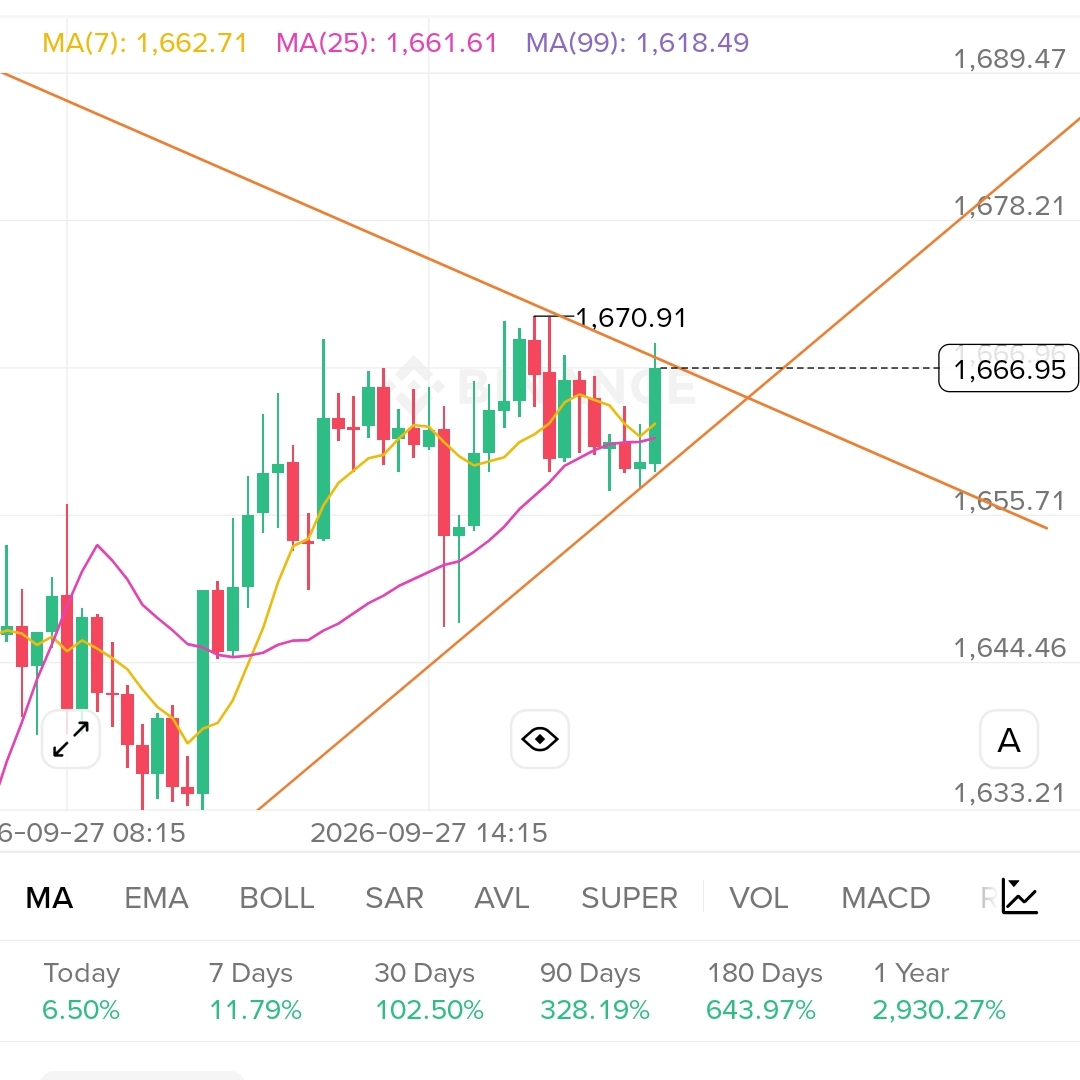
🚫🧠 Folks, knowing when *not* to trade is critical. I learned this painfully. After a big loss, resist revenge trading. I blew $600 trying to 'get it back' in minutes. Rule: Walk away for 24 hours after a significant draw-down.
Never trade before major news (FOMC, CPI). Market goes wild, whipsaws liquidate. Rule: Flat 30 mins before any major economic release. Protect your capital.
Third, never trade tired or emotional. Judgment compromised, leading to oversized positions. I lost 10% of my capital trading on 3 hours' sleep. Rule: If not 100% sharp, don't trade.
Finally, low liquidity periods are traps. Spreads widen, slippage eats stops, wick-hunts abound. Unless trading a specific low-volume strategy, avoid deep night hours. Save your account.
#TradingWisdom #BinanceFutures #RiskManagement #AvoidMistakes #CryptoTrading
🚫🧠 Folks, knowing when *not* to trade is critical. I learned this painfully. After a big loss, resist revenge trading. I blew $600 trying to 'get it back' in minutes. Rule: Walk away for 24 hours after a significant draw-down.
Never trade before major news (FOMC, CPI). Market goes wild, whipsaws liquidate. Rule: Flat 30 mins before any major economic release. Protect your capital.
Third, never trade tired or emotional. Judgment compromised, leading to oversized positions. I lost 10% of my capital trading on 3 hours' sleep. Rule: If not 100% sharp, don't trade.
Finally, low liquidity periods are traps. Spreads widen, slippage eats stops, wick-hunts abound. Unless trading a specific low-volume strategy, avoid deep night hours. Save your account.
#TradingWisdom #BinanceFutures #RiskManagement #AvoidMistakes #CryptoTrading
Never trade before major news (FOMC, CPI). Market goes wild, whipsaws liquidate. Rule: Flat 30 mins before any major economic release. Protect your capital.
Third, never trade tired or emotional. Judgment compromised, leading to oversized positions. I lost 10% of my capital trading on 3 hours' sleep. Rule: If not 100% sharp, don't trade.
Finally, low liquidity periods are traps. Spreads widen, slippage eats stops, wick-hunts abound. Unless trading a specific low-volume strategy, avoid deep night hours. Save your account.
#TradingWisdom #BinanceFutures #RiskManagement #AvoidMistakes #CryptoTrading
30
Patience isn't just "waiting." For me, it was the brutal realization that *not trading* was the hardest, yet most profitable, move. After blowing that $600 chasing 100x pumps on SOL, DOGE, ADA, I learned patience is permission to step back. It’s letting the market breathe, trusting your plan, and knowing the best trade is often no trade at all. Don't force it. The market isn't going anywhere.
#TradingWisdom #PatienceIsKey #CryptoLessons #NoFOMO #ProtectYourCapital
Patience isn't just "waiting." For me, it was the brutal realization that *not trading* was the hardest, yet most profitable, move. After blowing that $600 chasing 100x pumps on SOL, DOGE, ADA, I learned patience is permission to step back. It’s letting the market breathe, trusting your plan, and knowing the best trade is often no trade at all. Don't force it. The market isn't going anywhere.
#TradingWisdom #PatienceIsKey #CryptoLessons #NoFOMO #ProtectYourCapital
#TradingWisdom #PatienceIsKey #CryptoLessons #NoFOMO #ProtectYourCapital
60

FAILURE IS JUST PART OF THE PROCESS — $BTC 🚀
The master has failed more times than the beginner has even tried. That quote hits different when you're staring at a red candle on your $YFI position or watching $DEXE chop sideways. Every drawdown I've taken taught me more than any winner ever did.
Right now, the market is shaking out the impatient hands. Volume is thinning on the lower timeframes, and that's usually when the smart money starts accumulating quietly. Are you stacking while others are panicking?
Not financial advice. Always manage your risk.
#BTC #YFI #DEXE #TradingWisdom #Mindset
💎
FAILURE IS JUST PART OF THE PROCESS — $BTC 🚀
The master has failed more times than the beginner has even tried. That quote hits different when you're staring at a red candle on your $YFI position or watching $DEXE chop sideways. Every drawdown I've taken taught me more than any winner ever did.
Right now, the market is shaking out the impatient hands. Volume is thinning on the lower timeframes, and that's usually when the smart money starts accumulating quietly. Are you stacking while others are panicking?
Not financial advice. Always manage your risk.
#BTC #YFI #DEXE #TradingWisdom #Mindset
💎
The master has failed more times than the beginner has even tried. That quote hits different when you're staring at a red candle on your $YFI position or watching $DEXE chop sideways. Every drawdown I've taken taught me more than any winner ever did.
Right now, the market is shaking out the impatient hands. Volume is thinning on the lower timeframes, and that's usually when the smart money starts accumulating quietly. Are you stacking while others are panicking?
Not financial advice. Always manage your risk.
#BTC #YFI #DEXE #TradingWisdom #Mindset
💎
175
Alright folks, before I touch a single chart these days, especially after my $600 ADA/DOGE/SOL disaster on 100x, I do three crucial things. First, I check my internal emotional thermometer, because a stressed mind makes leveraged mistakes, every single time. Second, I confirm my pre-defined daily limits – profit target and maximum loss – because chasing quick pumps burnt me hard and fast. Third, I take five minutes to scan macro headlines and the overall market vibe, because even your favorite altcoin can't defy gravity forever. Don't be like old me; always check your emotional thermometer first. Stay safe out there.
#CryptoTips #TradingWisdom #RiskManagement #Futures #AvoidLiquidation
Alright folks, before I touch a single chart these days, especially after my $600 ADA/DOGE/SOL disaster on 100x, I do three crucial things. First, I check my internal emotional thermometer, because a stressed mind makes leveraged mistakes, every single time. Second, I confirm my pre-defined daily limits – profit target and maximum loss – because chasing quick pumps burnt me hard and fast. Third, I take five minutes to scan macro headlines and the overall market vibe, because even your favorite altcoin can't defy gravity forever. Don't be like old me; always check your emotional thermometer first. Stay safe out there.
#CryptoTips #TradingWisdom #RiskManagement #Futures #AvoidLiquidation
#CryptoTips #TradingWisdom #RiskManagement #Futures #AvoidLiquidation
1
1
115
Morning fam. Before I even think about opening a single chart, I hit pause. This ain't vague advice, this is what I wish someone told me before I learned the hard way.
First, I check *me*. Am I well-rested, clear-headed? If your mind's a mess, your trades will be too, guaranteed. Second, I look at my *actual life bank balance* – not just the trading one – and how much capital I've truly allocated for the day. This brutal honesty stops me from chasing ridiculous gains with money I can't afford to lose. Third, I do a quick scan of major macro news or my personal calendar. A surprise CPI report or a family emergency will absolutely wreck your focus and your positions.
Seriously, that second one? Know your real capital. Stay safe out there.
#CryptoTips #TradingWisdom #RiskManagement #FuturesTrading #BinanceSquare
Morning fam. Before I even think about opening a single chart, I hit pause. This ain't vague advice, this is what I wish someone told me before I learned the hard way.
First, I check *me*. Am I well-rested, clear-headed? If your mind's a mess, your trades will be too, guaranteed. Second, I look at my *actual life bank balance* – not just the trading one – and how much capital I've truly allocated for the day. This brutal honesty stops me from chasing ridiculous gains with money I can't afford to lose. Third, I do a quick scan of major macro news or my personal calendar. A surprise CPI report or a family emergency will absolutely wreck your focus and your positions.
Seriously, that second one? Know your real capital. Stay safe out there.
#CryptoTips #TradingWisdom #RiskManagement #FuturesTrading #BinanceSquare
First, I check *me*. Am I well-rested, clear-headed? If your mind's a mess, your trades will be too, guaranteed. Second, I look at my *actual life bank balance* – not just the trading one – and how much capital I've truly allocated for the day. This brutal honesty stops me from chasing ridiculous gains with money I can't afford to lose. Third, I do a quick scan of major macro news or my personal calendar. A surprise CPI report or a family emergency will absolutely wreck your focus and your positions.
Seriously, that second one? Know your real capital. Stay safe out there.
#CryptoTips #TradingWisdom #RiskManagement #FuturesTrading #BinanceSquare
125

·
--
My 365-Day Trading Lesson in One Screenshot (-$630)
This past year wasn't kind to my portfolio, but it was a masterclass in discipline.
Seeing -$630.01 (-4.93%) over 365 days is humbling. It’s not a catastrophic loss, but it represents a year of hard work negated by a few critical mistakes. Here is what this red number taught me:
1. Risk Management is Everything
I realized I was gambling, not trading. I entered positions without a clear Stop-Loss, hoping for "moonshots." That 4.93% drawdown could have been a 20% gain if I had simply cut my losers earlier. Protecting capital is more important than chasing profits.
2. The "Perfect Entry" Trap
I spent hours analyzing charts for the perfect entry, only to watch the market reverse. I learned that waiting for confirmation is better than trying to catch a falling knife.
3. Embrace the Boredom
I traded too much. Overtrading killed my profits. The best traders sit on their hands. Patience in a bull market beats frantic activity every time.
To my fellow Binancians: don't fear the red. Use it as fuel. I’m not quitting; I'm recalibrating.
Let’s get it back in Year 2. 🚀
#TradingWisdom #Binance #cryptotrading #RiskManagement #LessonsLearned
$AKE $BANK $RIF
My 365-Day Trading Lesson in One Screenshot (-$630)
This past year wasn't kind to my portfolio, but it was a masterclass in discipline.
Seeing -$630.01 (-4.93%) over 365 days is humbling. It’s not a catastrophic loss, but it represents a year of hard work negated by a few critical mistakes. Here is what this red number taught me:
1. Risk Management is Everything
I realized I was gambling, not trading. I entered positions without a clear Stop-Loss, hoping for "moonshots." That 4.93% drawdown could have been a 20% gain if I had simply cut my losers earlier. Protecting capital is more important than chasing profits.
2. The "Perfect Entry" Trap
I spent hours analyzing charts for the perfect entry, only to watch the market reverse. I learned that waiting for confirmation is better than trying to catch a falling knife.
3. Embrace the Boredom
I traded too much. Overtrading killed my profits. The best traders sit on their hands. Patience in a bull market beats frantic activity every time.
To my fellow Binancians: don't fear the red. Use it as fuel. I’m not quitting; I'm recalibrating.
Let’s get it back in Year 2. 🚀
#TradingWisdom #Binance #cryptotrading #RiskManagement #LessonsLearned
$AKE $BANK $RIF
This past year wasn't kind to my portfolio, but it was a masterclass in discipline.
Seeing -$630.01 (-4.93%) over 365 days is humbling. It’s not a catastrophic loss, but it represents a year of hard work negated by a few critical mistakes. Here is what this red number taught me:
1. Risk Management is Everything
I realized I was gambling, not trading. I entered positions without a clear Stop-Loss, hoping for "moonshots." That 4.93% drawdown could have been a 20% gain if I had simply cut my losers earlier. Protecting capital is more important than chasing profits.
2. The "Perfect Entry" Trap
I spent hours analyzing charts for the perfect entry, only to watch the market reverse. I learned that waiting for confirmation is better than trying to catch a falling knife.
3. Embrace the Boredom
I traded too much. Overtrading killed my profits. The best traders sit on their hands. Patience in a bull market beats frantic activity every time.
To my fellow Binancians: don't fear the red. Use it as fuel. I’m not quitting; I'm recalibrating.
Let’s get it back in Year 2. 🚀
#TradingWisdom #Binance #cryptotrading #RiskManagement #LessonsLearned
$AKE $BANK $RIF
3
670
·
--
Missing a trade is better than forcing a bad one. Opportunities return; lost capital doesn't always. 🎯
#TradingWisdom #CryptoConfusion #BinanceSquare
Missing a trade is better than forcing a bad one. Opportunities return; lost capital doesn't always. 🎯
#TradingWisdom #CryptoConfusion #BinanceSquare
#TradingWisdom #CryptoConfusion #BinanceSquare
79

·
--
Haussier
Reglas de Oro antes de presionar el botón de Compra
1 Nunca inviertas dinero que necesites a corto plazo: El mercado no respeta tus urgencias financieras.
2 Diversificación estratégica: No metas todo a una sola narrativa. Equilibra entre Layer 1 maduras y sectores de alto crecimiento (como IA o Infraestructura).
3 Cero emociones: Si una moneda subió 40% en un día, el momento de compra probablemente ya pasó. Espera retrocesos técnicos.
#CryptoTips #RiskManagement #TradingWisdom
$SOL $NEAR $ETH
Reglas de Oro antes de presionar el botón de Compra
1 Nunca inviertas dinero que necesites a corto plazo: El mercado no respeta tus urgencias financieras.
2 Diversificación estratégica: No metas todo a una sola narrativa. Equilibra entre Layer 1 maduras y sectores de alto crecimiento (como IA o Infraestructura).
3 Cero emociones: Si una moneda subió 40% en un día, el momento de compra probablemente ya pasó. Espera retrocesos técnicos.
#CryptoTips #RiskManagement #TradingWisdom
$SOL $NEAR $ETH
1 Nunca inviertas dinero que necesites a corto plazo: El mercado no respeta tus urgencias financieras.
2 Diversificación estratégica: No metas todo a una sola narrativa. Equilibra entre Layer 1 maduras y sectores de alto crecimiento (como IA o Infraestructura).
3 Cero emociones: Si una moneda subió 40% en un día, el momento de compra probablemente ya pasó. Espera retrocesos técnicos.
#CryptoTips #RiskManagement #TradingWisdom
$SOL $NEAR $ETH
110

3 Golden Rules for Crypto Trading 🚀
Never trade with emotions.
Here are 3 rules every crypto beginner needs to follow:
Risk Management: Never invest more than you can afford to lose.
Do Your Own Research (DYOR): Don't follow the hype blindly.
HODL with Strategy: Have clear entry and exit points.
Which rule is the hardest for you to follow? Let me know below! 👇
#CryptoTips #BinanceSquare #TradingWisdom #education
3 Golden Rules for Crypto Trading 🚀
Never trade with emotions.
Here are 3 rules every crypto beginner needs to follow:
Risk Management: Never invest more than you can afford to lose.
Do Your Own Research (DYOR): Don't follow the hype blindly.
HODL with Strategy: Have clear entry and exit points.
Which rule is the hardest for you to follow? Let me know below! 👇
#CryptoTips #BinanceSquare #TradingWisdom #education
Never trade with emotions.
Here are 3 rules every crypto beginner needs to follow:
Risk Management: Never invest more than you can afford to lose.
Do Your Own Research (DYOR): Don't follow the hype blindly.
HODL with Strategy: Have clear entry and exit points.
Which rule is the hardest for you to follow? Let me know below! 👇
#CryptoTips #BinanceSquare #TradingWisdom #education
77
·
--
Baissier
One of the hardest trading lessons is knowing when to stop.
If you already had a good winning day, the next trade does not automatically have the same quality.
A common mistake is giving back profit because confidence turns into overtrading.
My rule is simple:
After a strong win, risk should go down — not up.
If the next setup is not A-grade, I stop.
Protecting profit is also part of trading.
You don’t need to win every move. You just need to avoid turning a good day into a bad one.
Sometimes the best trade after a big win is no trade at all.
$QNT $OGN
#TradingWisdom #RiskManagement #FuturesTradingPro
One of the hardest trading lessons is knowing when to stop.
If you already had a good winning day, the next trade does not automatically have the same quality.
A common mistake is giving back profit because confidence turns into overtrading.
My rule is simple:
After a strong win, risk should go down — not up.
If the next setup is not A-grade, I stop.
Protecting profit is also part of trading.
You don’t need to win every move. You just need to avoid turning a good day into a bad one.
Sometimes the best trade after a big win is no trade at all.
$QNT $OGN
#TradingWisdom #RiskManagement #FuturesTradingPro
If you already had a good winning day, the next trade does not automatically have the same quality.
A common mistake is giving back profit because confidence turns into overtrading.
My rule is simple:
After a strong win, risk should go down — not up.
If the next setup is not A-grade, I stop.
Protecting profit is also part of trading.
You don’t need to win every move. You just need to avoid turning a good day into a bad one.
Sometimes the best trade after a big win is no trade at all.
$QNT $OGN
#TradingWisdom #RiskManagement #FuturesTradingPro
1
1.3k
A small reminder for anyone following my posts:
Please don’t copy my trades blindly.
I trade both directions. I can be bullish in one setup, bearish a few hours later, and reverse again if the market structure changes.
Price is dynamic. My view is dynamic too.
What I post here is simply my personal trading journal, how I read momentum, structure, risk, and invalidation at that moment.
By the time you see a post, my position, stop, or thesis may already have changed.
So take the idea, study the logic, and build your own plan.
Follow the process, not the position.
Nothing I post is financial advice or a suggestion to enter a trade.
#TradingWisdom #RiskManagement #TradingSignals
A small reminder for anyone following my posts:
Please don’t copy my trades blindly.
I trade both directions. I can be bullish in one setup, bearish a few hours later, and reverse again if the market structure changes.
Price is dynamic. My view is dynamic too.
What I post here is simply my personal trading journal, how I read momentum, structure, risk, and invalidation at that moment.
By the time you see a post, my position, stop, or thesis may already have changed.
So take the idea, study the logic, and build your own plan.
Follow the process, not the position.
Nothing I post is financial advice or a suggestion to enter a trade.
#TradingWisdom #RiskManagement #TradingSignals
Please don’t copy my trades blindly.
I trade both directions. I can be bullish in one setup, bearish a few hours later, and reverse again if the market structure changes.
Price is dynamic. My view is dynamic too.
What I post here is simply my personal trading journal, how I read momentum, structure, risk, and invalidation at that moment.
By the time you see a post, my position, stop, or thesis may already have changed.
So take the idea, study the logic, and build your own plan.
Follow the process, not the position.
Nothing I post is financial advice or a suggestion to enter a trade.
#TradingWisdom #RiskManagement #TradingSignals
1
42

·
--
A common mistake in crypto is confusing a bull market with personal investing skill. When prices rise across the board, it is easy to assume every trade was brilliant. Real risk management isn't tested when everything is green; it shows up when the trend reverses. Always stick to your plan regardless of market hype.
#CryptoEducation #RiskManagement #TradingWisdom
A common mistake in crypto is confusing a bull market with personal investing skill. When prices rise across the board, it is easy to assume every trade was brilliant. Real risk management isn't tested when everything is green; it shows up when the trend reverses. Always stick to your plan regardless of market hype.
#CryptoEducation #RiskManagement #TradingWisdom
#CryptoEducation #RiskManagement #TradingWisdom
25
·
--
One of the most common mistakes in crypto is ignoring position sizing. Even if your thesis on a token is completely correct, allocating too much capital to a single trade can destroy your portfolio during a normal market pullback. Risk management always comes before chasing returns. Protect your downside first, and the longevity in the market will follow.
#CryptoEducation #RiskManagement #TradingWisdom
One of the most common mistakes in crypto is ignoring position sizing. Even if your thesis on a token is completely correct, allocating too much capital to a single trade can destroy your portfolio during a normal market pullback. Risk management always comes before chasing returns. Protect your downside first, and the longevity in the market will follow.
#CryptoEducation #RiskManagement #TradingWisdom
#CryptoEducation #RiskManagement #TradingWisdom
45
·
--
The biggest mistake beginners make in crypto isn't buying the wrong coin—it's ignoring risk management. No strategy works 100% of the time, which is why protecting your capital comes before chasing gains. Always define your risk tolerance and have an exit plan before entering any position. Surviving the market cycles is the real key to long-term progress.
#CryptoEducation #RiskManagement #TradingWisdom
The biggest mistake beginners make in crypto isn't buying the wrong coin—it's ignoring risk management. No strategy works 100% of the time, which is why protecting your capital comes before chasing gains. Always define your risk tolerance and have an exit plan before entering any position. Surviving the market cycles is the real key to long-term progress.
#CryptoEducation #RiskManagement #TradingWisdom
#CryptoEducation #RiskManagement #TradingWisdom
61
·
--
One of the biggest mistakes in crypto is confusing a bull market with skill. When prices are rising, it is easy to assume every trade is genius. But true resilience is built during sideways or declining markets through strict risk management. Protect your capital first, and let your strategy matter more than luck.
#CryptoEducation #RiskManagement #TradingWisdom
One of the biggest mistakes in crypto is confusing a bull market with skill. When prices are rising, it is easy to assume every trade is genius. But true resilience is built during sideways or declining markets through strict risk management. Protect your capital first, and let your strategy matter more than luck.
#CryptoEducation #RiskManagement #TradingWisdom
#CryptoEducation #RiskManagement #TradingWisdom
85

·
--
More than 70% of blown futures accounts do not come from bad entry points, but from stubborn traders refusing to accept when the trend has turned against them.
We have all been there, staring at a screen while watching unrealized losses bleed out equity and praying for a miracle reversal. That emotional trap of holding onto a losing position has ended far more trading careers than any bear market ever could.
Just recently, an open short on $ZEC perpetuals was sitting on a staggering -89,134.50 $USDT unrealized loss, paired with desperate hopes that price would collapse back down. When you find yourself bargaining with the chart just to break even, you are no longer trading price action; you are gambling on hope.
I saw the exact same pattern play out during the 2021 cycle as $BTC squeezed legacy coins and crushed shorters who assumed old resistance levels were unbreakable. The market does not care about your liquidation price, and disciplined risk management is the only thing that keeps you in the game long term.
At what drawdown percentage do you force yourself to cut a losing position?
#TradingWisdom #CryptoEducation #FuturesTrading
More than 70% of blown futures accounts do not come from bad entry points, but from stubborn traders refusing to accept when the trend has turned against them.
We have all been there, staring at a screen while watching unrealized losses bleed out equity and praying for a miracle reversal. That emotional trap of holding onto a losing position has ended far more trading careers than any bear market ever could.
Just recently, an open short on $ZEC perpetuals was sitting on a staggering -89,134.50 $USDT unrealized loss, paired with desperate hopes that price would collapse back down. When you find yourself bargaining with the chart just to break even, you are no longer trading price action; you are gambling on hope.
I saw the exact same pattern play out during the 2021 cycle as $BTC squeezed legacy coins and crushed shorters who assumed old resistance levels were unbreakable. The market does not care about your liquidation price, and disciplined risk management is the only thing that keeps you in the game long term.
At what drawdown percentage do you force yourself to cut a losing position?
#TradingWisdom #CryptoEducation #FuturesTrading
We have all been there, staring at a screen while watching unrealized losses bleed out equity and praying for a miracle reversal. That emotional trap of holding onto a losing position has ended far more trading careers than any bear market ever could.
Just recently, an open short on $ZEC perpetuals was sitting on a staggering -89,134.50 $USDT unrealized loss, paired with desperate hopes that price would collapse back down. When you find yourself bargaining with the chart just to break even, you are no longer trading price action; you are gambling on hope.
I saw the exact same pattern play out during the 2021 cycle as $BTC squeezed legacy coins and crushed shorters who assumed old resistance levels were unbreakable. The market does not care about your liquidation price, and disciplined risk management is the only thing that keeps you in the game long term.
At what drawdown percentage do you force yourself to cut a losing position?
#TradingWisdom #CryptoEducation #FuturesTrading
49
·
--
Most market participants spend years waiting for the perfect red candle to hit the buy button, yet institutional balance sheets accumulate regardless of daily chop.
Watching the tape bleed while your portfolio shrinks triggers that familiar instinct to freeze or panic-sell at the absolute bottom. Every cycle feels uniquely terrifying when you are staring at red numbers, making you second-guess your entire thesis while bigger players quietly execute their playbook.
MicroStrategy just absorbed another 1,666 $BTC for approximately $138M, completely ignoring short-term volatility. When you look back at 2018 or 2022, the pattern never changes. Retail waits for certainty that only arrives at cycle tops, whereas systematic capital builds positions through conviction and average cost.
Whether watching moves in $ETH or broad market corrections across $SOL, dollar-cost averaging through fear has historically outperformed trying to catch exact cycle wicks. Long-term accumulation demands patience over emotional precision.
How are you approaching your position sizing during this phase of the cycle?
#Bitcoin #CryptoStrategy #TradingWisdom
Most market participants spend years waiting for the perfect red candle to hit the buy button, yet institutional balance sheets accumulate regardless of daily chop.
Watching the tape bleed while your portfolio shrinks triggers that familiar instinct to freeze or panic-sell at the absolute bottom. Every cycle feels uniquely terrifying when you are staring at red numbers, making you second-guess your entire thesis while bigger players quietly execute their playbook.
MicroStrategy just absorbed another 1,666 $BTC for approximately $138M, completely ignoring short-term volatility. When you look back at 2018 or 2022, the pattern never changes. Retail waits for certainty that only arrives at cycle tops, whereas systematic capital builds positions through conviction and average cost.
Whether watching moves in $ETH or broad market corrections across $SOL , dollar-cost averaging through fear has historically outperformed trying to catch exact cycle wicks. Long-term accumulation demands patience over emotional precision.
How are you approaching your position sizing during this phase of the cycle?
#Bitcoin #CryptoStrategy #TradingWisdom
Watching the tape bleed while your portfolio shrinks triggers that familiar instinct to freeze or panic-sell at the absolute bottom. Every cycle feels uniquely terrifying when you are staring at red numbers, making you second-guess your entire thesis while bigger players quietly execute their playbook.
MicroStrategy just absorbed another 1,666 $BTC for approximately $138M, completely ignoring short-term volatility. When you look back at 2018 or 2022, the pattern never changes. Retail waits for certainty that only arrives at cycle tops, whereas systematic capital builds positions through conviction and average cost.
Whether watching moves in $ETH or broad market corrections across $SOL , dollar-cost averaging through fear has historically outperformed trying to catch exact cycle wicks. Long-term accumulation demands patience over emotional precision.
How are you approaching your position sizing during this phase of the cycle?
#Bitcoin #CryptoStrategy #TradingWisdom
21

Over 90% of retail crypto traders blow up their entire portfolio not from ten bad calls in a row, but from one uncontrolled trade during a wild market spike.
You watch an asset like $AKE pump over 63% in hours, get hit by intense FOMO, and enter a heavy position without a stop-loss to catch the turn. Minutes later, a sudden squeeze erases months of hard-won capital, leaving you staring at an empty balance in utter disbelief.
I have seen this exact nightmare repeat itself across every cycle going back years. When tokens make violent moves, volatility expands exponentially, which means your normal position size becomes lethal. If your position sizing does not scale down when volatility spikes, a single bad entry on $BTC or a fast-moving altcoin like $ETH will wipe out your capital before you can even react.
Surviving this market long-term is never about how much you make on your best days, but how strictly you control your loss on your worst ones. Experienced traders survive because they cap their maximum risk on any single trade to a tiny fraction of their total account, ensuring that no single mistake can ever take them out of the game.
What is the strict position sizing rule that saved your portfolio from blowing up?
#CryptoTrading #RiskManagement #TradingWisdom
Over 90% of retail crypto traders blow up their entire portfolio not from ten bad calls in a row, but from one uncontrolled trade during a wild market spike.
You watch an asset like $AKE pump over 63% in hours, get hit by intense FOMO, and enter a heavy position without a stop-loss to catch the turn. Minutes later, a sudden squeeze erases months of hard-won capital, leaving you staring at an empty balance in utter disbelief.
I have seen this exact nightmare repeat itself across every cycle going back years. When tokens make violent moves, volatility expands exponentially, which means your normal position size becomes lethal. If your position sizing does not scale down when volatility spikes, a single bad entry on $BTC or a fast-moving altcoin like $ETH will wipe out your capital before you can even react.
Surviving this market long-term is never about how much you make on your best days, but how strictly you control your loss on your worst ones. Experienced traders survive because they cap their maximum risk on any single trade to a tiny fraction of their total account, ensuring that no single mistake can ever take them out of the game.
What is the strict position sizing rule that saved your portfolio from blowing up?
#CryptoTrading #RiskManagement #TradingWisdom
You watch an asset like $AKE pump over 63% in hours, get hit by intense FOMO, and enter a heavy position without a stop-loss to catch the turn. Minutes later, a sudden squeeze erases months of hard-won capital, leaving you staring at an empty balance in utter disbelief.
I have seen this exact nightmare repeat itself across every cycle going back years. When tokens make violent moves, volatility expands exponentially, which means your normal position size becomes lethal. If your position sizing does not scale down when volatility spikes, a single bad entry on $BTC or a fast-moving altcoin like $ETH will wipe out your capital before you can even react.
Surviving this market long-term is never about how much you make on your best days, but how strictly you control your loss on your worst ones. Experienced traders survive because they cap their maximum risk on any single trade to a tiny fraction of their total account, ensuring that no single mistake can ever take them out of the game.
What is the strict position sizing rule that saved your portfolio from blowing up?
#CryptoTrading #RiskManagement #TradingWisdom
90
·
--
A single 15-minute candle printing a wick to $145,194 does not mean the market just entered price discovery.
Too many traders wake up in a panic, seeing phantom spikes on isolated charts and market-buying out of pure FOMO. It is one of the quickest ways to donate your hard-earned capital directly into a liquidity trap.
During a recent session, a sudden wick on a thin perpetual contract blasted all the way to 145,194 while that exact candle maintained an open of 78,450, a high of 78,814, and a close of 78,762. If you looked only at that isolated derivatives feed, you would have thought $BTC effortlessly shattered its 52-week high near $126k in seconds.
In reality, underlying spot depth was calmly changing hands in the $80k,$82k range. I have seen this exact scenario play out across multiple cycles, where illiquid leverage books get swept clean while spot markets barely flinch.
When derivatives disconnect from underlying spot $USDT pairs, chasing the wick almost always leaves you holding someone else's bad fill. Real structural moves happen where spot volume leads, not where leveraged books break down.
How do you verify whether a sudden breakout has real spot backing before taking a trade?
#CryptoTrading #Bitcoin #TradingWisdom
A single 15-minute candle printing a wick to $145,194 does not mean the market just entered price discovery.
Too many traders wake up in a panic, seeing phantom spikes on isolated charts and market-buying out of pure FOMO. It is one of the quickest ways to donate your hard-earned capital directly into a liquidity trap.
During a recent session, a sudden wick on a thin perpetual contract blasted all the way to 145,194 while that exact candle maintained an open of 78,450, a high of 78,814, and a close of 78,762. If you looked only at that isolated derivatives feed, you would have thought $BTC effortlessly shattered its 52-week high near $126k in seconds.
In reality, underlying spot depth was calmly changing hands in the $80k,$82k range. I have seen this exact scenario play out across multiple cycles, where illiquid leverage books get swept clean while spot markets barely flinch.
When derivatives disconnect from underlying spot $USDT pairs, chasing the wick almost always leaves you holding someone else's bad fill. Real structural moves happen where spot volume leads, not where leveraged books break down.
How do you verify whether a sudden breakout has real spot backing before taking a trade?
#CryptoTrading #Bitcoin #TradingWisdom
Too many traders wake up in a panic, seeing phantom spikes on isolated charts and market-buying out of pure FOMO. It is one of the quickest ways to donate your hard-earned capital directly into a liquidity trap.
During a recent session, a sudden wick on a thin perpetual contract blasted all the way to 145,194 while that exact candle maintained an open of 78,450, a high of 78,814, and a close of 78,762. If you looked only at that isolated derivatives feed, you would have thought $BTC effortlessly shattered its 52-week high near $126k in seconds.
In reality, underlying spot depth was calmly changing hands in the $80k,$82k range. I have seen this exact scenario play out across multiple cycles, where illiquid leverage books get swept clean while spot markets barely flinch.
When derivatives disconnect from underlying spot $USDT pairs, chasing the wick almost always leaves you holding someone else's bad fill. Real structural moves happen where spot volume leads, not where leveraged books break down.
How do you verify whether a sudden breakout has real spot backing before taking a trade?
#CryptoTrading #Bitcoin #TradingWisdom
416
Connectez-vous pour découvrir plus de contenu
Rejoignez la communauté mondiale des adeptes de cryptomonnaies sur Binance Square
⚡️ Suviez les dernières informations importantes sur les cryptomonnaies.
💬 Jugé digne de confiance par la plus grande plateforme d’échange de cryptomonnaies au monde.
👍 Découvrez les connaissances que partagent les créateurs vérifiés.
Adresse e-mail/Nº de téléphone
Sujets d’actualité
1
#BinancePick
340,781 vues
48,633 mentions
2
#TeslaSlides5%PreMarket
105,266 vues
1,091 mentions
3
#KOSPISinks3.52%ToLowestCloseSinceApril
29,198 vues
694 mentions
4
#TeslaAndNvidiaToInvest$2.8BInSamsungElectroMechanics
3,236 vues
72 mentions
5
#ChinaSeeksToSeize61800BTC
64,924 vues
810 mentions
6
#BitcoinETFsPullIn$1.08BInThreeDays
6,709 vues
67 mentions
7
#EarningsSeason
2.7M vues
12,953 mentions
8
#EthereumSurpasses$2500
47,174 vues
267 mentions
9
#BitcoinDropsBelow$84K
26,293 vues
109 mentions
10
#FirstUNIBlockTradeViaRegulatedTradFiChannelCompleted
3,166 vues
83 mentions