

#coindcx
coindcx
213,744 vues
366 mentions
Populaire
Récents

·
--
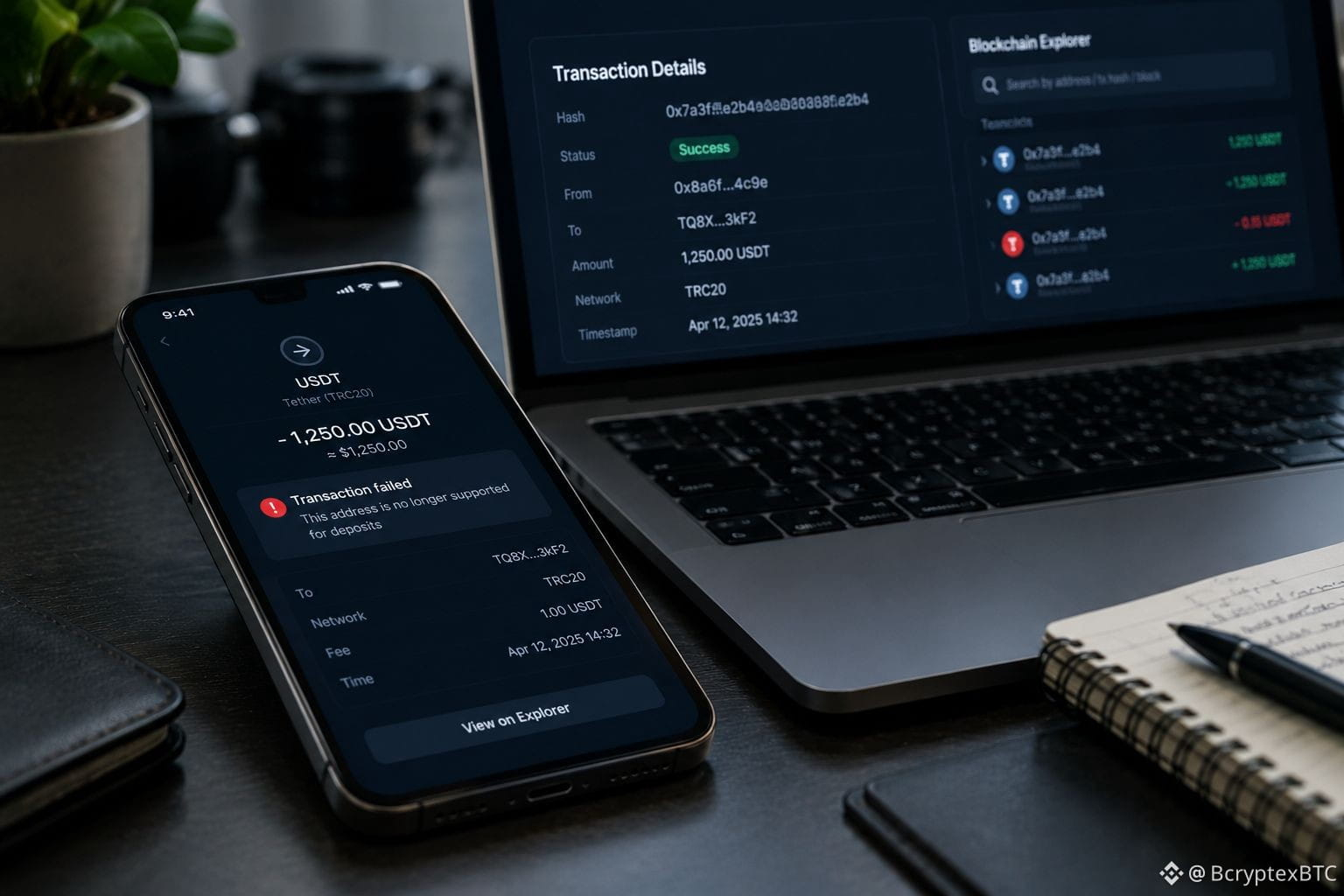
$16M Lost — Who Is Responsible When Old Deposit Addresses Still Work?
CoinDCX reportedly absorbed a $15.99M $USDT loss after users sent funds to retired deposit addresses following its 2025 security breach. Customer balances reportedly remain unaffected.
A retired address doesn’t disappear from the blockchain. Users may still send funds to it, even when an exchange no longer supports deposits through that address.
This highlights a critical security gap: users must verify deposit details, while exchanges need clear warnings and effective recovery procedures.
Should the responsibility fall on the user, the exchange, or both?
#CryptoSecurity #CoinDCX #Blockchain $BTC
1
116

*The $16M Lesson: 'Retired' does NOT mean 'Disconnected'*
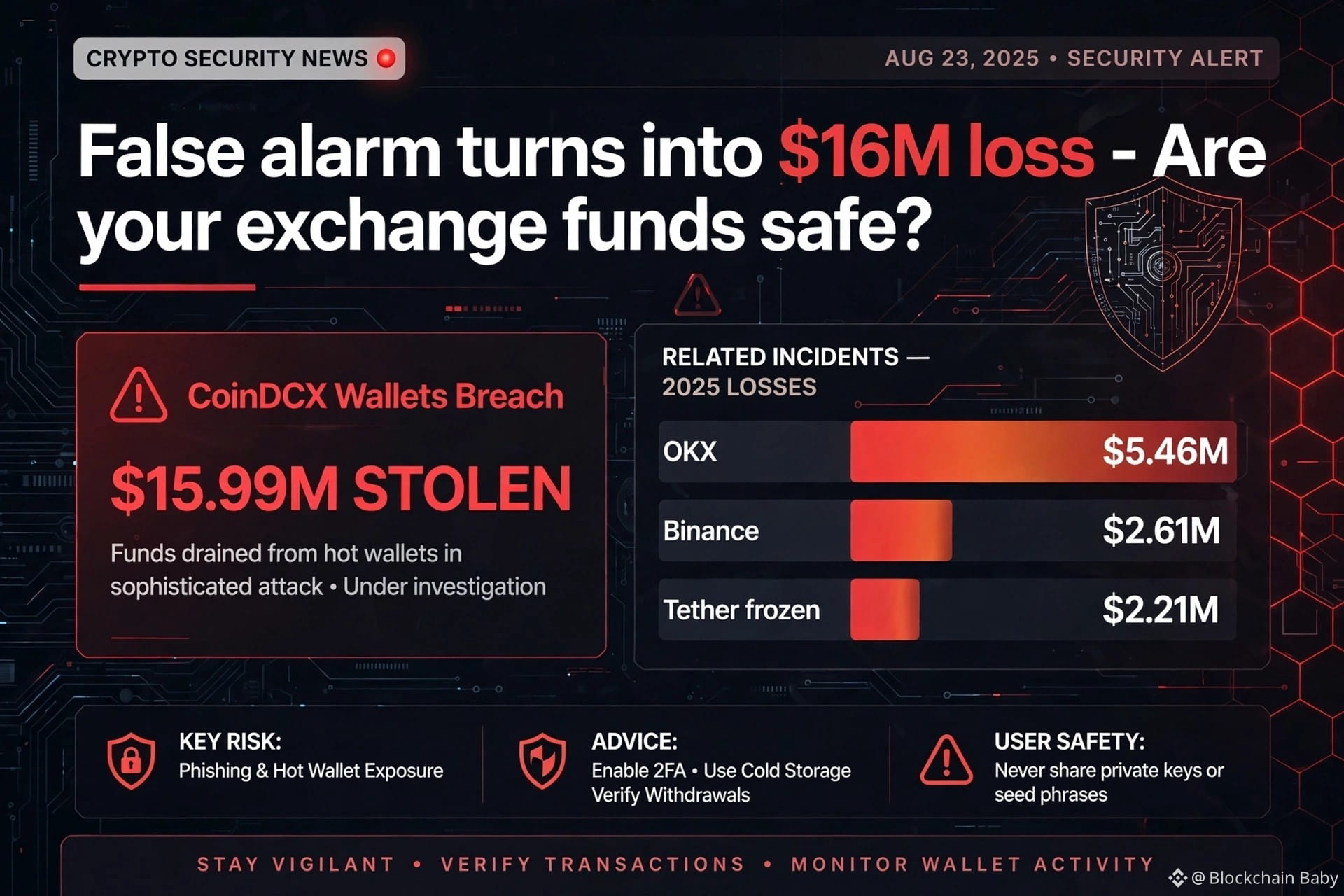
The CoinDCX case is scary not because $15.99M was stolen, but HOW it was stolen.
Look at the on-chain data you posted:
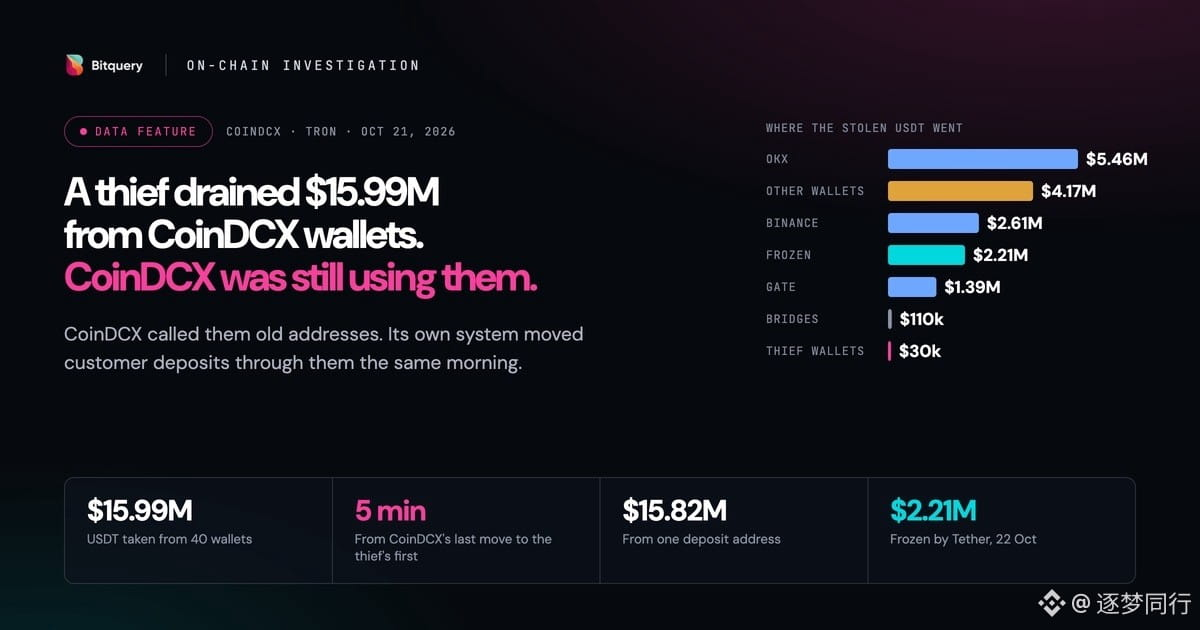
- *$15.99M USDT taken from 40 wallets*
- *$15.82M from ONE deposit address alone*
- *5 MINUTES* after CoinDCX's own system moved a customer deposit through that same old address, the thief moved in.
- OKX $5.46M, Other wallets $4.17M, Binance $2.61M, Only $2.21M frozen by Tether.
CoinDCX called them "old addresses". But their own system was STILL sweeping customer deposits through them that same morning!
This is the key point @Susano_Tr made and I agree 100%:
> If money can be sent to these addresses, deposited into the customer's account and then swept into the main wallet via an external service, then these are still part of the exchange's risk. 'Retired' should NOT mean disconnected.
*So, are our funds safe on exchanges?*
Proof of Reserves is not enough. It proves what they HAVE, not what they could LOSE through old infrastructure.
What exchanges should be doing after any wallet migration:
1. *Hard Kill Switch:* Old deposit addresses must be disabled at the smart contract / sweeping level, not just hidden from the UI.
2. *Clear Warnings:* If a user somehow sends to an old address, block it and warn: "This is a retired address".
3. *Balance Alerts:* Real-time alert if any old wallet receives > $1. Never let $15.82M sit in one "retired" address.
4. *Reconciliation Checks:* What customers owe vs what is actually in ALL wallets (including old) must match every hour.
5. *Post-Migration Monitoring:* Monitor old wallets for at least 12 months after migration. Someone else is monitoring them — attackers.
CoinDCX did the right thing saying they absorbed the loss and customer balances were not impacted. But the next exchange might not be able to afford that.
Your funds are as safe as an exchange's *worst old wallet*, not its newest cold wallet.
What do you think — should exchanges be forced to publicly disclose when they retire addresses and how they are disabled?
#CoinDCX
59

·
--
⚠️ COINDCX CONFIRMS A $16M LOSS DAYS AFTER CALLING IT A "FALSE ALARM"
The Indian exchange now admits it:
→ User deposits piled up in old wallets that were retired after its $44M hack in July 2025
→ An automated fund-sweeping system failed, and about $15.99M in USDT was drained from TRON deposit addresses
→ Losses from the two incidents now total nearly $60M
CoinDCX says it will cover the loss and that user funds are safe. Onchain investigator ZachXBT, who challenged the first denials, is urging customers to withdraw.
Lesson for every platform: "retired" wallets are still wallets. If keys were compromised once, they stay compromised.
How much of your crypto do you keep on exchanges right now? 👇
#CoinDCX #CryptoSecurity #Hack #CryptoNews
1
81


·
--
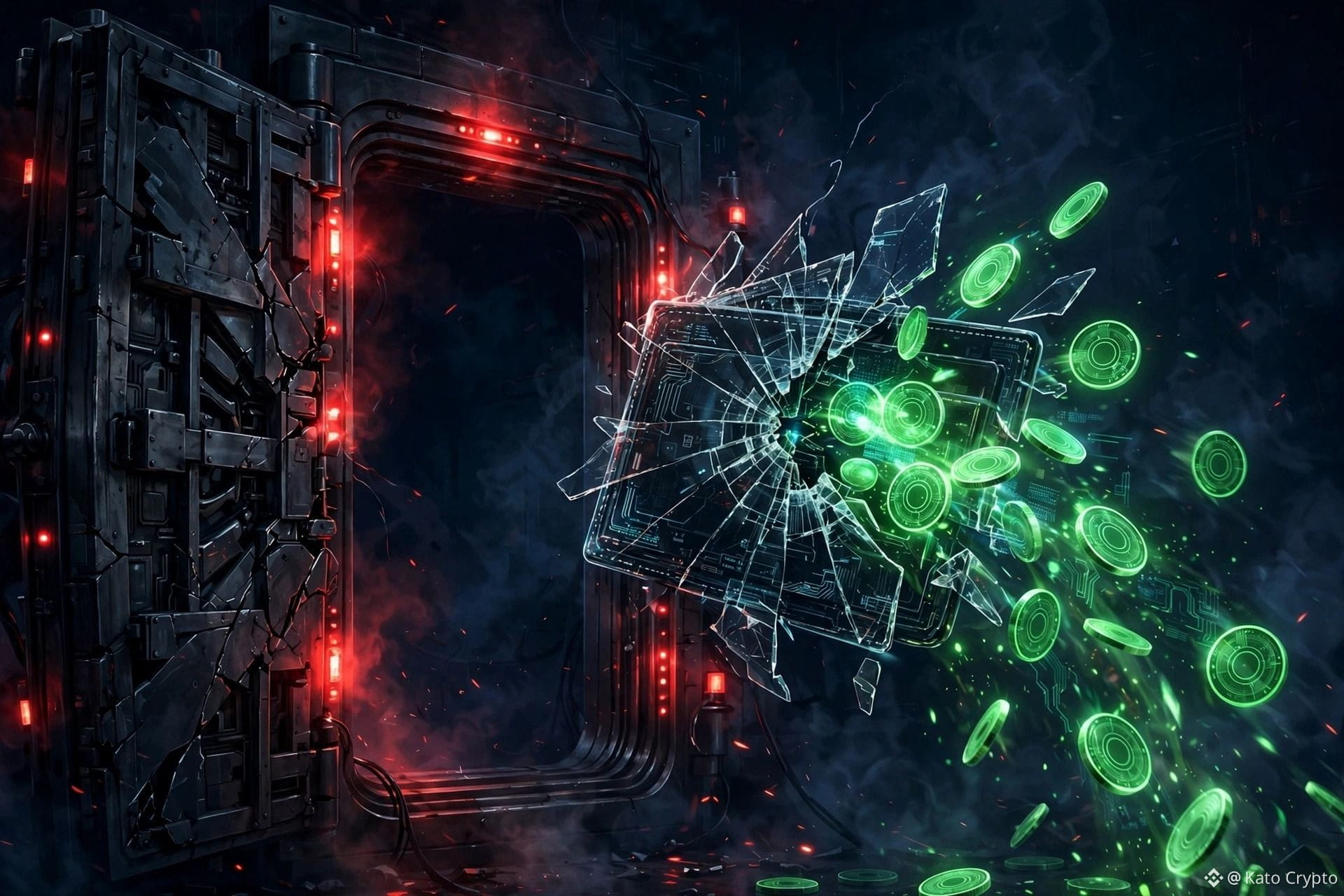
CoinDCX just confirmed a $15.99M loss, and the details are worse than the headline.
India's largest exchange says attackers drained 15.99M $USDT from deprecated wallets left over from its July 2025 hack. An automated sweeping service failed, so user deposits kept piling up in old, vulnerable addresses until they were emptied on October 21 and routed onward to major exchanges.
The uncomfortable part is the reversal. CEO Sumit Gupta first dismissed the outflow reports as a "false alarm," only to confirm the loss days later after onchain investigators pushed back. The exchange says it absorbed the loss, user funds in segregated cold wallets are safe, and trading was never interrupted.
Oldman view: $16M is survivable for a top exchange, but a second incident on the SAME deprecated infrastructure is an operational failure, not bad luck. Until CoinDCX explains how the wallets were exploited and when the sweeps stopped, trust, not price, is the real damage here.
Risk to watch: the exploit method is still unexplained, and it is unclear whether the same actors from 2025 are involved. This is an exchange security story, not a reason to panic sell the wider market.
📌 Sharing personal opinions only, not financial advice or a recommendation to buy/sell. Crypto is highly risky; DYOR and you are solely responsible. No coin promotion.
#CoinDCX #CryptoSecurity #CryptoExchange #Binance
Abu Fahadأ:
💛
1
858

·
--
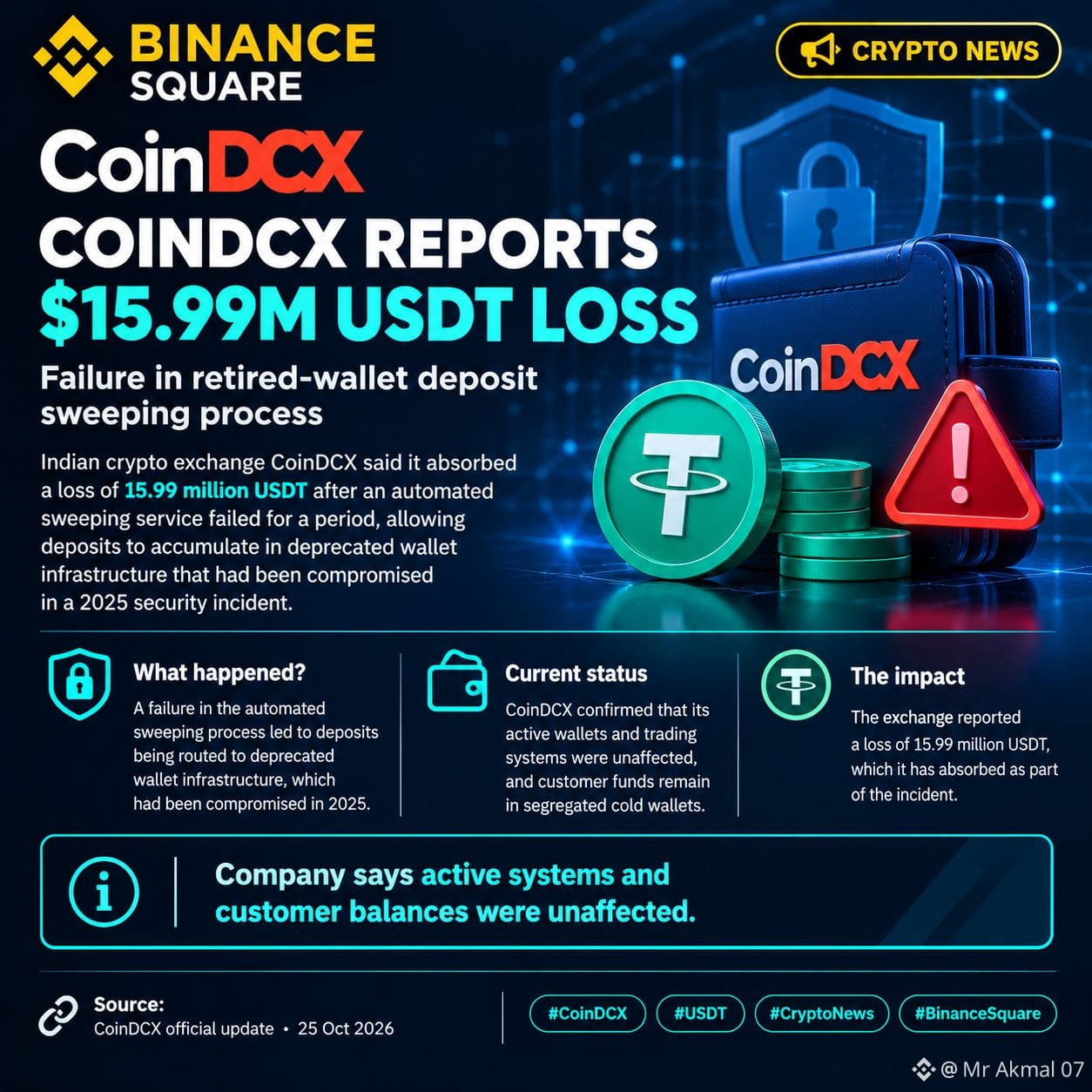
$DCX.US 🚨 COINDCX REPORTS $15.99 MILLION USDT LOSS
Indian crypto exchange CoinDCX has confirmed a loss of 15.99 million USDT linked to old wallet infrastructure affected by a previous security incident.
🔍 What happened?
• An automated service designed to move deposits from retired wallets failed for a period.
• Some deposits accumulated in the old wallet infrastructure.
• CoinDCX says the company absorbed the loss.
• The exchange says customer balances, active wallets and trading systems were unaffected.
🛡️ Why it matters: This incident highlights the importance of wallet security, monitoring legacy systems and communicating transparently when security concerns arise.
📌 These details reflect CoinDCX’s statement; the company’s claims about customer funds have not been independently verified here.
🔗 Official source: https://coindcx.com/blog/coindcx-news/on-chain-wallet-activity-update-21-oct-2026
What security measures should crypto platforms prioritize to protect users? 👇
#CoinDCX #USDT #CryptoSecurity #blockchain #CryptoNews
{stock_us}(DCX.US)
$DCX.US 🚨 COINDCX REPORTS $15.99 MILLION USDT LOSS
Indian crypto exchange CoinDCX has confirmed a loss of 15.99 million USDT linked to old wallet infrastructure affected by a previous security incident.
🔍 What happened?
• An automated service designed to move deposits from retired wallets failed for a period.
• Some deposits accumulated in the old wallet infrastructure.
• CoinDCX says the company absorbed the loss.
• The exchange says customer balances, active wallets and trading systems were unaffected.
🛡️ Why it matters: This incident highlights the importance of wallet security, monitoring legacy systems and communicating transparently when security concerns arise.
📌 These details reflect CoinDCX’s statement; the company’s claims about customer funds have not been independently verified here.
🔗 Official source: https://coindcx.com/blog/coindcx-news/on-chain-wallet-activity-update-21-oct-2026
What security measures should crypto platforms prioritize to protect users? 👇
#CoinDCX #USDT #CryptoSecurity #blockchain #CryptoNews
DCXUS+1,29%
33

·
--
🚨 CoinDCX Confirms $15.99 Million USDT Loss! 😱
India’s Crypto Exchange Reveals A $15.99 Million Loss After An Automated Wallet-Sweeping Failure In Previously Compromised Wallet Infrastructure. CoinDCX Says Customer Balances And Active Trading Systems Remain Unaffected. 💰🔐
#CoinDCX #cryptoindia #BreakingNews @Binance_South_Asia @Binance_News @Binance_Square_Official $NVDAB
🚨 CoinDCX Confirms $15.99 Million USDT Loss! 😱
India’s Crypto Exchange Reveals A $15.99 Million Loss After An Automated Wallet-Sweeping Failure In Previously Compromised Wallet Infrastructure. CoinDCX Says Customer Balances And Active Trading Systems Remain Unaffected. 💰🔐
#CoinDCX #cryptoindia #BreakingNews @Binance South Asia @Binance News @Binance Square Official $NVDAB
56

·
--
A “false alarm” that became a $16 million loss? That makes me uneasy. 😬
CoinDCX, India’s largest crypto exchange, initially dismissed reports of suspicious outflows. Now it says an internal process failure tied to a retired wallet caused a $16 million loss—and the exchange will absorb it.
I’m relieved it’s taking the hit, but that reversal deserves scrutiny. 🔍
What matters more to your trust: absorbing the loss or explaining exactly how the failure happened?
#Crypto #CoinDCX #ExchangeSecurity
109

·
--
CoinDCX, India's largest crypto exchange, absorbed a 6 million loss after an internal sweeping process failed to move customer deposits from a retired wallet.\n\nThe wallet was deprecated following a July 2025 security incident, but users kept depositing to it. The broken sweep process left 5.99M USDT stuck, which the exchange covered.\n\nCoinDCX says all user funds remain safe in segregated cold wallets. What's your take on exchange operational risks?\n\n#CoinDCX #CryptoSecurity
CoinDCX, India's largest crypto exchange, absorbed a 6 million loss after an internal sweeping process failed to move customer deposits from a retired wallet.\n\nThe wallet was deprecated following a July 2025 security incident, but users kept depositing to it. The broken sweep process left 5.99M USDT stuck, which the exchange covered.\n\nCoinDCX says all user funds remain safe in segregated cold wallets. What's your take on exchange operational risks?\n\n#CoinDCX #CryptoSecurity

1
134

·
--
{spot}(BTCUSDT)
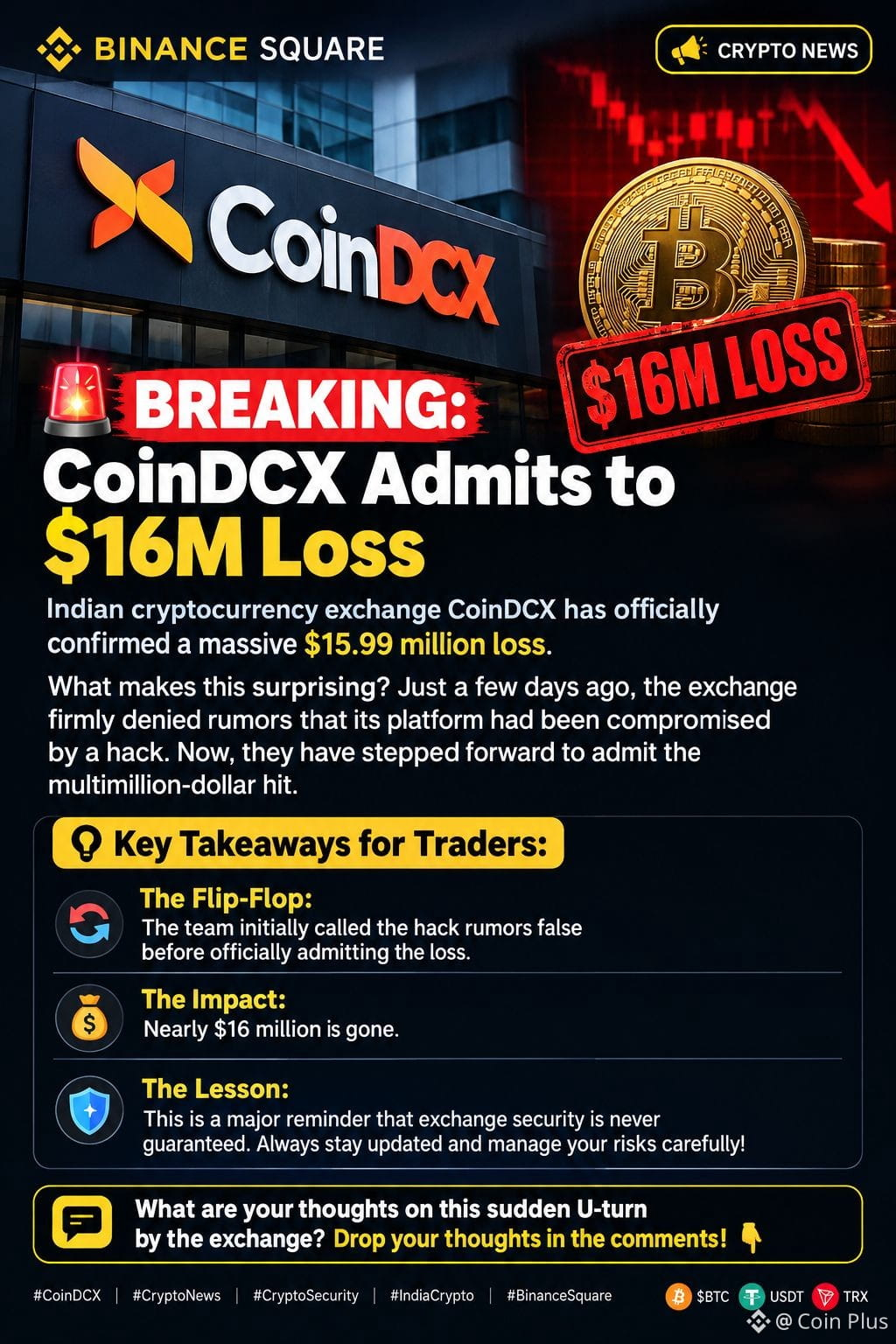
🚨 BREAKING: CoinDCX Admits to $16M Loss 🚨
Indian cryptocurrency exchange CoinDCX has officially confirmed a massive $15.99 million loss.
What makes this surprising? Just a few days ago, the exchange firmly denied rumors that its platform had been compromised by a hack. Now, they have stepped forward to admit the multimillion-dollar hit.
Key Takeaways for Traders:
🔹 The Flip-Flop: The team initially called the hack rumors false before officially admitting the loss.
🔹 The Impact: Nearly $16 million is gone.
🔹 The Lesson: This is a major reminder that exchange security is never guaranteed. Always stay updated and manage your risks carefully! 🛡️
What are your thoughts on this sudden U-turn by the exchange? Drop your thoughts in the comments! 👇
#CoinDCX #BinancePick #BİNANCESQUARE #Binace #crypto
$BTC $BNB
125

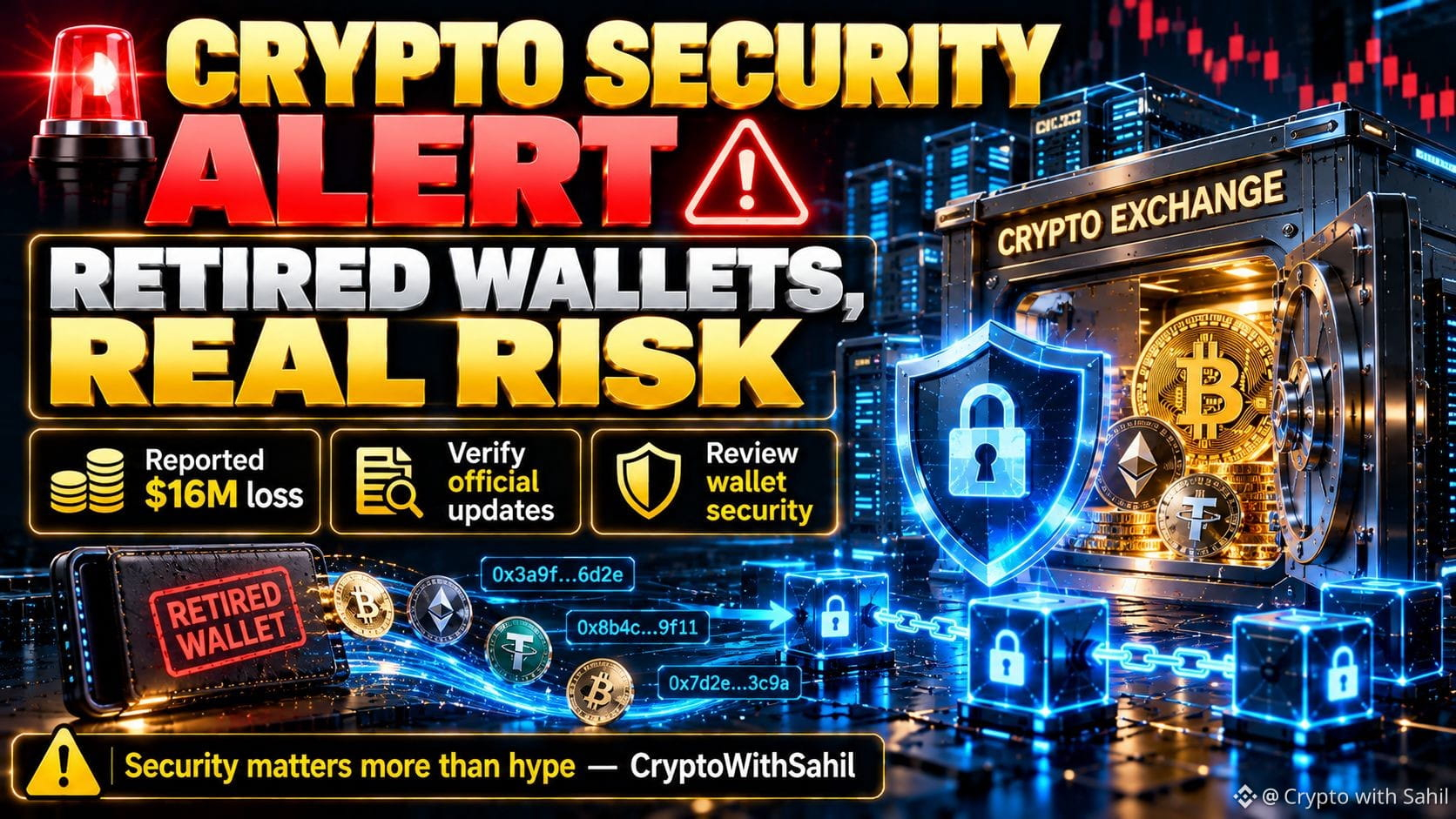
🚨 CRYPTO SECURITY ALERT: REPORTED $16M LOSS AT COINDCX! 🔐
A new report says Indian crypto exchange CoinDCX confirmed a loss of approximately $16 million involving retired wallets. The incident highlights why wallet management and security controls matter—even after addresses are no longer actively used.
🔎 3 important lessons for every crypto user:
🔐 Review wallet security: Retired addresses and old infrastructure still need proper controls.
🛡️ Verify the facts: Follow official exchange statements and avoid spreading unconfirmed claims.
⚠️ Protect yourself: Never share your seed phrase, private keys, or one-time passwords with anyone.
💬 Question for the community: Do you think crypto platforms should publish regular independent security audits? Why or why not?
🔔 Follow CryptoWithSahil for daily crypto news, market insights, and blockchain updates!
#CoinDCX #CryptoSecurity #blockchain #CryptoNews #Web3
73

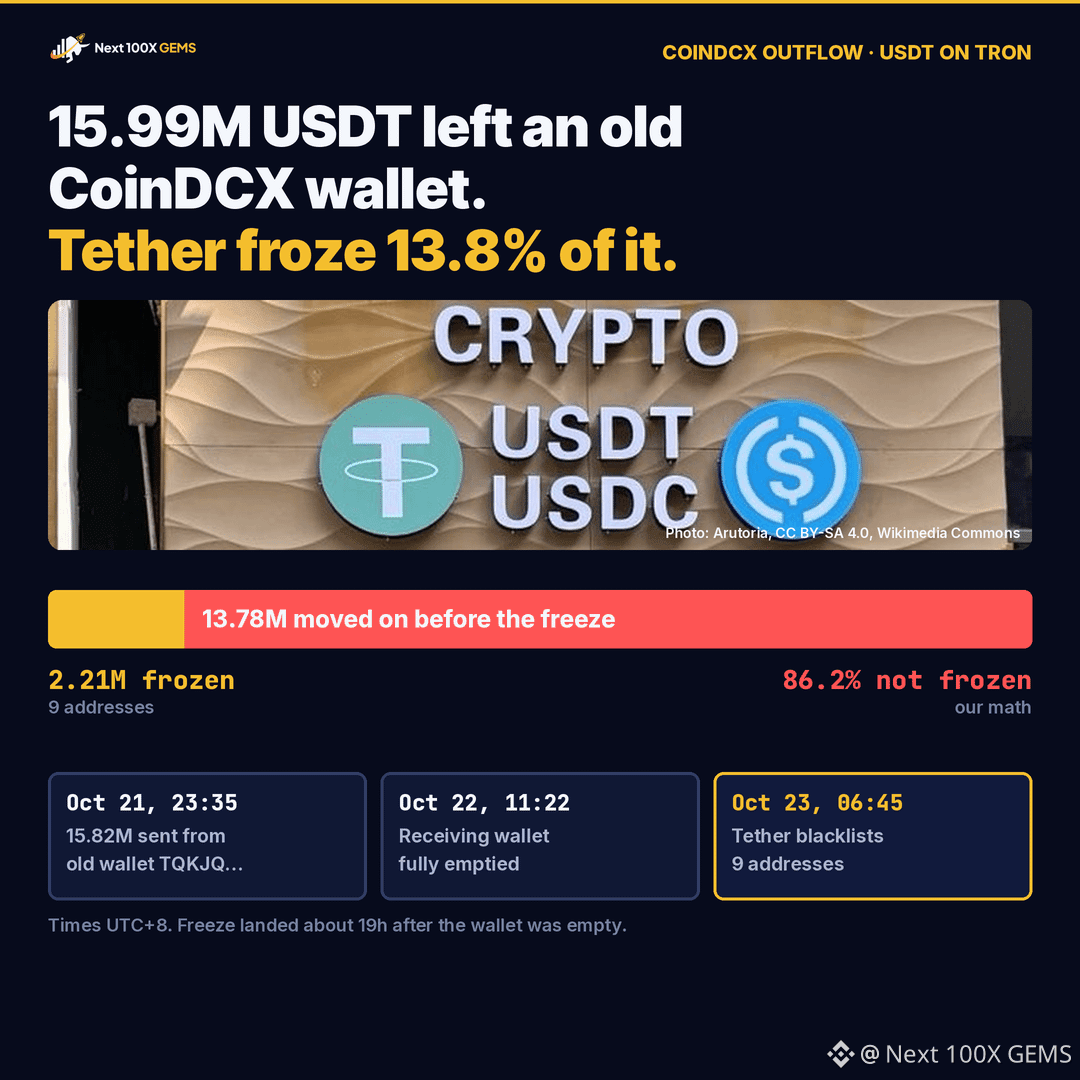
CoinDCX has now put a number on its TRON outflow: 15.99M USDT, lost from an old wallet it had called retired. Tether froze 2.21M of it. That is 13.8%.
On Oct 21 at 23:35 UTC+8, the old address TQKJQ sent 15,819,002 USDT in one transfer to a new wallet, which also took about 172,000 USDT from 39 smaller addresses. By 11:22 UTC+8 on Oct 22 that wallet had sent everything on to six addresses.
Tether blacklisted nine linked addresses at 06:45 UTC+8 on Oct 23, about 19 hours after the first wallet was empty. Those nine hold 2,212,850 USDT. By our math, about 13.78M, or 86.2%, had already moved on.
In a blog post on Oct 25, CoinDCX said the loss hit "old, deprecated wallet infrastructure which had unknown vulnerabilities", that its sweeping service had failed for a period, and that it absorbed the loss. It says customer balances are fully accounted for.
On-chain records read by CryptoWatchDesk show the same old address forwarding USDT as late as May 2026.
A freeze only catches what is still sitting still. Only deposit to the address your exchange app shows you today, never to one saved from before.
$USDT
#CoinDCX #Tether
NFA. DYOR.
150
·
--
🔴 CoinDCX Confirms $16M Loss From Its "Retired" Wallets
India's largest crypto exchange has finally put a number on it: $15.99M in $USDT drained on October 21 from legacy wallet infrastructure it says was retired after its July 2025 hack.
Why this admission matters: CoinDCX first denied a new breach. On-chain investigators led by ZachXBT then showed the "retired" address had still been sweeping user deposits as recently as May 2026. Only now, in a blog post shared Sunday, has the exchange confirmed the exact loss, saying it absorbed the cost and that customer deposits were credited and trading was unaffected.
The lesson for every exchange user is blunt: on a key-based chain, a "retired" wallet is not switched off. The key still works. If the sweep fails, funds pile up exactly where attackers already know to look.
⚠️ Honest risk: CoinDCX insists user funds are safe, but independent investigators dispute its account and no forensic report has been published. Until one appears, treat any "legacy wallet" explanation as unverified.
🔑 for self-custody, 🏦 for exchange trust. Which side are you on?
📌 Sharing personal opinions only, not financial advice or a recommendation to buy/sell. Crypto is highly risky; DYOR and you are solely responsible. No coin promotion.
#CoinDCX #CryptoSecurity #Crypto #Binance
889


CoinDCX这事,丢的1599万U不是重点,重点是"假警报"那三个字。
时间线捋一下:10月21日链上有人盯到TRON地址异常流出,CEO Sumit Gupta周三在X上说听起来像false alarm。到了周日,官方自己承认:1599万USDT没了,钱是从2025年7月那次4400万事件之后"退役"的旧充值地址里被搬走的。原因是自动归集服务挂了一段时间,用户还往旧地址充,钱就堆在那,等着被人收割。
你品品。旧地址都知道有问题,还能继续收用户充值,归集停了没人发现,链上侦探先发现了,老板第一反应是辟谣。
现在官方口径是"历史基础设施的运营问题,不是新的入侵",损失公司自己扛,活跃用户资金在冷钱包。扛下来是对的,这点给分。但"不是新入侵"这种措辞,说白了就是把同一个洞算成去年的账,今年的报表好看点。Tether冻了大约13.8%,剩下的基本别想了,两次加起来快6000万。
今天CEO终于出来说当初叫假警报是自己的错。晚了。交易所出事,先说"一切正常"再慢慢改口,这剧本谁没见过。
对散户就一句:交易所给你的充值地址不是永久的,每次充值前重新复制,别用通讯录里存了一年的老地址。长期仓位,自己拿着。另外这几天冒充CoinDCX的钓鱼邮件已经出来了,"补偿通知"一律当骗子。
#CoinDCX #交易所安全
2

·
--
印度CoinDCX退役钱包再被盗1600万美元USDT,CEO先称假警报
交易所的「退役钱包」再次成为攻击目标,这次是印度老牌平台CoinDCX。事件从一次被CEO公开定性为「假警报」的告警,最终坐实为约1600万美元USDT的实际损失,暴露出托管环节长期被忽视的风控隐患。
据Decrypt报道,这家总部位于孟买的交易所披露,约1599万枚USDT从其一笔已退役的冷钱包中被转走。这笔资产此前来自去年那起约4400万美元的黑客攻击,事件后本应进入长期封存、逐步处置的「退役」状态,如今却再度出现资金流失。
值得注意的是时间差:CEO曾对外称这是「假警报」,随后才证实损失真实发生。这种从否认到确认的转变,本身比损失金额更值得市场警惕——它意味着在风险初现时,信息披露与内部判断可能存在滞后或误判。
从资金面角度看,这次被盗资产几乎全部为USDT,与BTC、ETH等主流币的价格关联较弱,因此对整体市场流动性的直接冲击有限。这也决定了事件更偏向个案风险,而非系统性危机的信号。不过,稳定币恰恰是本轮资金面叙事的核心载体,一个主要交易所的USDT托管出现漏洞,难免与近期关于稳定币资金流向、储备可信度的讨论形成对冲。
市场可能的反应相对克制:由于损失以USDT计价且规模可控,短期内对大盘的传导有限,更多是情绪与信任层面的扰动。真正需要关注的是CoinDCX后续能否完整披露资金轨迹、是否启动补偿,以及同类退役资产的管理流程是否会被重新审视。
反方因素在于,单所交易所的安全事件通常不会蔓延至全行业,且USDT的脱钩风险主要取决于发行方储备,而非某个交易所的钱包安全。
接下来观察什么:若关注稳定币资金面叙事,交易层面更重要的是看此类事件是否动摇市场对USDT储备与托管的信任,而非短期价格波动。需要观察交易所后续披露的完整性,以及退役资产的管理流程是否会被重新审视。
#CoinDCX #USDT #CryptoSecurity
以上为信息整理与个人分析,不构成投资建议。
后续如有重要进展,我会继续跟踪更新。
1
62

·
--
印度大交易所CoinDCX曝出1600万美元系统损失 $BTC
印度加密交易所CoinDCX被曝出现约1600万美元的系统损失,在本来就弱势的行情里又添一层阴影。具体成因还没完全公开,但用户最关心的永远是一句话:我的钱安不安全。
交易所事故年年有,分散存放资金、别把全部家当放一家,这道理讲一百遍都不过分。行情可以跌,平台不能倒,你现在的资产都放在哪?评论区聊聊。#交易所 #CoinDCX
印度大交易所CoinDCX曝出1600万美元系统损失 $BTC
印度加密交易所CoinDCX被曝出现约1600万美元的系统损失,在本来就弱势的行情里又添一层阴影。具体成因还没完全公开,但用户最关心的永远是一句话:我的钱安不安全。
交易所事故年年有,分散存放资金、别把全部家当放一家,这道理讲一百遍都不过分。行情可以跌,平台不能倒,你现在的资产都放在哪?评论区聊聊。#交易所 #CoinDCX
印度加密交易所CoinDCX被曝出现约1600万美元的系统损失,在本来就弱势的行情里又添一层阴影。具体成因还没完全公开,但用户最关心的永远是一句话:我的钱安不安全。
交易所事故年年有,分散存放资金、别把全部家当放一家,这道理讲一百遍都不过分。行情可以跌,平台不能倒,你现在的资产都放在哪?评论区聊聊。#交易所 #CoinDCX
97

·
--
Baissier
CoinDCx的1599万美元:最危险的不是黑客,是“已停用”的旧地址
CoinDCx CEO先称“误报”,10月25日交易所承认损失1,599万USDT,并表示承担损失、客户资金不受影响,同时承认本可以更早披露。链上侦探此前已发现相关Tron地址异常流出。
问题不在黑客二次入侵,而在流程静默失败
2025年7月CoinDCx遭4,400万美元黑客攻击后,旧存款钱包被退役。但部分用户仍向旧地址转账,交易所本应通过自动清扫器把存款转入安全钱包并记账。结果清扫器停止工作,币持续堆积在已泄露地址中。两次事件损失合计接近6,000万美元。
这比“交易所被黑”更值得警惕:客户可能完全按指示操作、收到存款确认、账户余额正确,却不知道后台托管流程已经失效。冷存储、强加密、储备证明,都补不上一个静默失败的运营环节。
$BTC 放交易所安全吗?
这次“安全”,是因为公司选择赔付。但交易所存款没有FDIC或SIPC式保障,那是商业信用与公司选择,不是制度保证。更准确地说:交易所余额是信用敞口,不是保险箱。
可执行的三条纪律
1. 交易所只留交易余额,长期持有回到自托管;
2. 每次存款使用新地址,不向“已停用”地址惯性转账;
3. 把“缓慢披露”和“先否认后承认”视为风控警告信号,而不只是公关问题。
观察结论
评估交易所安全,不能只看它“有没有冷钱包”,还要看资金穿过系统时,失败操作会不会被及时发现、及时拦截、及时披露。黑客攻击是事件,流程失效是系统性风险。
#BTC #交易所安全 #CoinDCx #MacroInsights #风险提示
176

·
--
#CoinDCX confirma el robo de 16 millones de dólares tras inicialmente descartar los informes
El exchange de criptomonedas indio CoinDCX ha confirmado la pérdida de 15,99 millones de USDT como resultado de una brecha en las billeteras que fueron desactivadas después del hackeo de julio de 2025. La admisión se produjo tres días después de que el investigador de #blockchain #zachxbt alertara públicamente sobre el presunto robo.
El cofundador y CEO, #SumitGupta , inicialmente descartó los informes en #X como rumores, pero el exchange posteriormente cambió de postura. CoinDCX explicó que algunos usuarios continuaron enviando depósitos a las antiguas direcciones de billetera después del incidente de julio, y un sistema automatizado diseñado para transferir esos fondos a un almacenamiento seguro falló, dejando los activos expuestos y, finalmente, drenados por los atacantes.
El exchange declaró que los fondos de los usuarios no están en riesgo y que la pérdida se cubrirá con los fondos de reserva de la empresa. Este incidente destaca los riesgos operativos continuos asociados con los procedimientos de migración de billeteras después de una brecha de seguridad, especialmente cuando las direcciones antiguas permanecen parcialmente activas.
164

·
--
CoinDCX confirmó pérdidas que su CEO había minimizado.
La exchange de Mumbai reportó 15.99 millones de USDT drenados de wallets que había retirado tras el hackeo de 44 millones del año pasado.
La suma de ambos golpes ya roza los 60 millones.
Lo llamativo: el CEO había calificado el asunto como falsa alarma días antes.
Y ahora la plataforma absorbe el impacto por su cuenta.
¿Qué te genera más ruido, la cifra o el cambio de versión?
$BTC #CoinDCX #Cripto
27

·
--
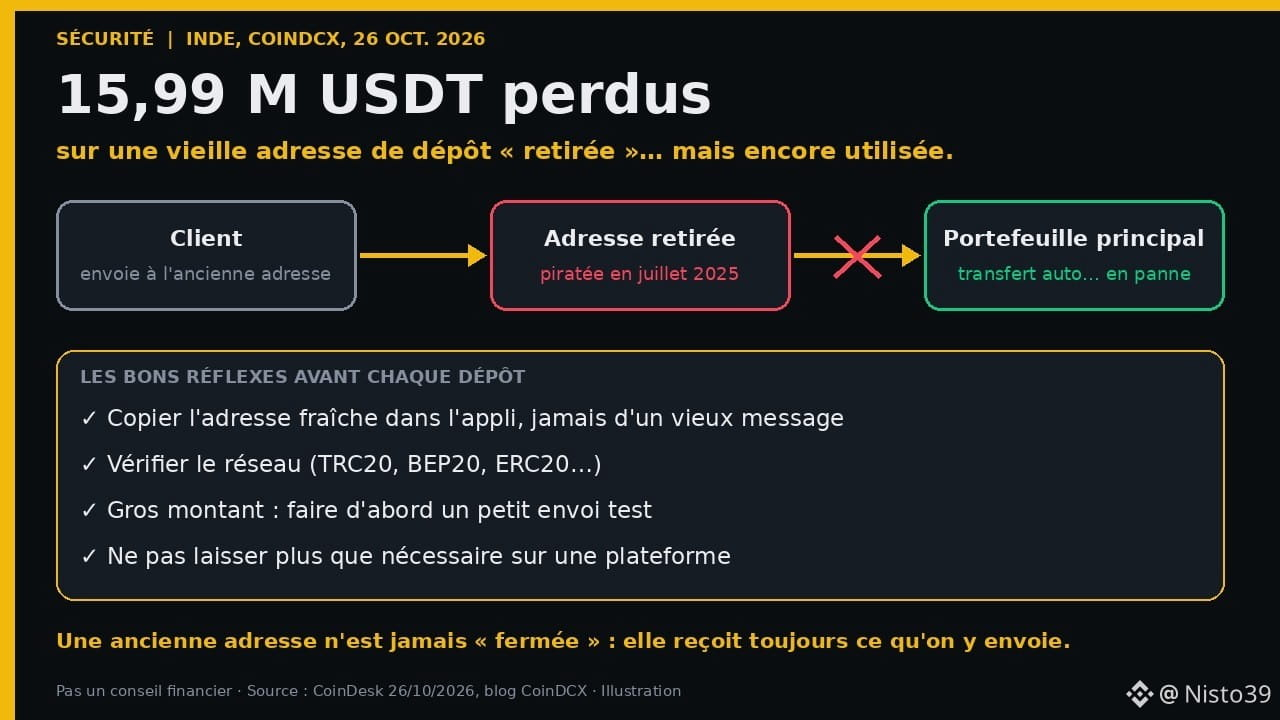
Article
CoinDCX : 16 millions d'USDT perdus sur une vieille adresse. La leçon pour tes dépôtsMariam est couturière à Ouagadougou. Il y a un an, elle a copié l'adresse de dépôt de sa plateforme crypto dans son téléphone, et depuis, elle envoie toujours ses $USDT à cette même adresse, sans revérifier. C'est pratique… jusqu'au jour où l'adresse n'est plus la bonne. Ce qui vient d'arriver en Inde à CoinDCX montre pourquoi ce petit réflexe compte.
📋 Les faits (CoinDesk, 26 octobre 2026)
• CoinDCX, la plus grande plateforme crypto d'Inde en volume, dit avoir absorbé une perte de 15,99 millions d'USDT (environ 16 millions de dollars).
• La semaine dernière, des enquêteurs « on-chain » ont repéré environ 16 millions de dollars de sorties suspectes depuis des portefeuilles liés à la plateforme. Le PDG a d'abord parlé de « fausse alerte ».
• Ces adresses dataient de janvier 2025. Elles avaient été compromises lors du piratage de juillet 2025 (environ 44 millions de dollars de perte à l'époque) puis « retirées » par la plateforme.
• Problème : des utilisateurs ont continué à envoyer des fonds vers ces vieilles adresses. CoinDCX créditait leur compte, puis un service automatique devait déplacer les fonds vers le portefeuille principal. Ce service a cessé de fonctionner pendant une période, et l'argent s'est accumulé sur l'adresse fragile.
• L'enquêteur ZachXBT affirme qu'une de ces adresses servait encore en avril et mai 2026.
• La plateforme assure que les soldes des clients sont intacts et reconnaît qu'elle « aurait pu être plus proactive » dans sa communication.
🧠 Le mécanisme, expliqué simplement
Une plateforme te donne une adresse de dépôt, comme un guichet. Quand elle change de guichet (après un piratage, par exemple), l'ancien reste ouvert dans la blockchain : n'importe qui peut encore y envoyer de l'argent. Si la plateforme ne vide pas ce vieux guichet très vite, l'argent qui y arrive est exposé. Ici, les clients ont été crédités, donc c'est l'entreprise qui a payé la perte. Mais ce n'est pas toujours le cas.
🤔 Pourquoi ça nous concerne ?
1️⃣ Beaucoup d'entre nous déposent par habitude, avec une adresse copiée il y a longtemps, ou partagée par un ami ou un groupe WhatsApp.
2️⃣ Une plateforme peut changer d'adresse sans que tu le remarques, surtout après un incident.
3️⃣ La communication compte : quand une plateforme dit « fausse alerte » puis reconnaît une perte quelques jours plus tard, la confiance prend un coup.
⚖️ La nuance
CoinDCX dit avoir couvert la perte et que les fonds clients sont en sécurité dans des portefeuilles hors ligne. Personne ici n'a perdu son solde, selon l'entreprise. Mais la plateforme n'a pas dit clairement qui a déplacé les fonds ni comment. Et ZachXBT conteste la version officielle. Donc : prudence, sans panique.
🌍 Les bons réflexes pour Mariam (et pour nous)
• Avant chaque dépôt, reprendre l'adresse directement dans l'application de la plateforme. Jamais depuis un vieux message, une capture d'écran ou un groupe.
• Vérifier le réseau (TRC20, BEP20, ERC20…) : une bonne adresse sur le mauvais réseau peut aussi faire perdre les fonds.
• Pour un gros montant, faire d'abord un petit envoi test.
• Lire les annonces de sa plateforme après un incident de sécurité.
• Ne pas laisser sur une plateforme plus que ce qu'on utilise vraiment.
🎯 À retenir
• CoinDCX : 15,99 millions d'USDT perdus sur une vieille adresse « retirée » mais encore utilisée par des clients.
• Une ancienne adresse de dépôt n'est pas fermée : elle reçoit toujours ce qu'on y envoie.
• Toujours copier l'adresse fraîche dans l'appli, au moment du dépôt.
💬 Toi, tu revérifies l'adresse à chaque dépôt, ou tu utilises toujours la même ? Dis-le en commentaire, ça peut aider quelqu'un.
Source : CoinDesk (26/10/2026), billet de blog CoinDCX, déclarations de ZachXBT. Personnage fictif. Pas un conseil financier.
#CryptoAfrique #Sécurité #USDT #CoinDCX
CoinDCX : 16 millions d'USDT perdus sur une vieille adresse. La leçon pour tes dépôts
Mariam est couturière à Ouagadougou. Il y a un an, elle a copié l'adresse de dépôt de sa plateforme crypto dans son téléphone, et depuis, elle envoie toujours ses $USDT à cette même adresse, sans revérifier. C'est pratique… jusqu'au jour où l'adresse n'est plus la bonne. Ce qui vient d'arriver en Inde à CoinDCX montre pourquoi ce petit réflexe compte.
📋 Les faits (CoinDesk, 26 octobre 2026)
• CoinDCX, la plus grande plateforme crypto d'Inde en volume, dit avoir absorbé une perte de 15,99 millions d'USDT (environ 16 millions de dollars).
• La semaine dernière, des enquêteurs « on-chain » ont repéré environ 16 millions de dollars de sorties suspectes depuis des portefeuilles liés à la plateforme. Le PDG a d'abord parlé de « fausse alerte ».
• Ces adresses dataient de janvier 2025. Elles avaient été compromises lors du piratage de juillet 2025 (environ 44 millions de dollars de perte à l'époque) puis « retirées » par la plateforme.
• Problème : des utilisateurs ont continué à envoyer des fonds vers ces vieilles adresses. CoinDCX créditait leur compte, puis un service automatique devait déplacer les fonds vers le portefeuille principal. Ce service a cessé de fonctionner pendant une période, et l'argent s'est accumulé sur l'adresse fragile.
• L'enquêteur ZachXBT affirme qu'une de ces adresses servait encore en avril et mai 2026.
• La plateforme assure que les soldes des clients sont intacts et reconnaît qu'elle « aurait pu être plus proactive » dans sa communication.
🧠 Le mécanisme, expliqué simplement
Une plateforme te donne une adresse de dépôt, comme un guichet. Quand elle change de guichet (après un piratage, par exemple), l'ancien reste ouvert dans la blockchain : n'importe qui peut encore y envoyer de l'argent. Si la plateforme ne vide pas ce vieux guichet très vite, l'argent qui y arrive est exposé. Ici, les clients ont été crédités, donc c'est l'entreprise qui a payé la perte. Mais ce n'est pas toujours le cas.
🤔 Pourquoi ça nous concerne ?
1️⃣ Beaucoup d'entre nous déposent par habitude, avec une adresse copiée il y a longtemps, ou partagée par un ami ou un groupe WhatsApp.
2️⃣ Une plateforme peut changer d'adresse sans que tu le remarques, surtout après un incident.
3️⃣ La communication compte : quand une plateforme dit « fausse alerte » puis reconnaît une perte quelques jours plus tard, la confiance prend un coup.
⚖️ La nuance
CoinDCX dit avoir couvert la perte et que les fonds clients sont en sécurité dans des portefeuilles hors ligne. Personne ici n'a perdu son solde, selon l'entreprise. Mais la plateforme n'a pas dit clairement qui a déplacé les fonds ni comment. Et ZachXBT conteste la version officielle. Donc : prudence, sans panique.
🌍 Les bons réflexes pour Mariam (et pour nous)
• Avant chaque dépôt, reprendre l'adresse directement dans l'application de la plateforme. Jamais depuis un vieux message, une capture d'écran ou un groupe.
• Vérifier le réseau (TRC20, BEP20, ERC20…) : une bonne adresse sur le mauvais réseau peut aussi faire perdre les fonds.
• Pour un gros montant, faire d'abord un petit envoi test.
• Lire les annonces de sa plateforme après un incident de sécurité.
• Ne pas laisser sur une plateforme plus que ce qu'on utilise vraiment.
🎯 À retenir
• CoinDCX : 15,99 millions d'USDT perdus sur une vieille adresse « retirée » mais encore utilisée par des clients.
• Une ancienne adresse de dépôt n'est pas fermée : elle reçoit toujours ce qu'on y envoie.
• Toujours copier l'adresse fraîche dans l'appli, au moment du dépôt.
💬 Toi, tu revérifies l'adresse à chaque dépôt, ou tu utilises toujours la même ? Dis-le en commentaire, ça peut aider quelqu'un.
Source : CoinDesk (26/10/2026), billet de blog CoinDCX, déclarations de ZachXBT. Personnage fictif. Pas un conseil financier.
#CryptoAfrique #Sécurité #USDT #CoinDCX
125
Connectez-vous pour découvrir plus de contenu
Rejoignez la communauté mondiale des adeptes de cryptomonnaies sur Binance Square
⚡️ Suviez les dernières informations importantes sur les cryptomonnaies.
💬 Jugé digne de confiance par la plus grande plateforme d’échange de cryptomonnaies au monde.
👍 Découvrez les connaissances que partagent les créateurs vérifiés.
Adresse e-mail/Nº de téléphone
Sujets d’actualité
1
#CanMicrosoftDeliverOnAI
83,417 vues
769 mentions
2
#CanGoogleDefindItsCore
42,064 vues
561 mentions
3
#FOMCWatch
9.1M vues
27,982 mentions
4
#EthereumDropsBelow$2300
11,000 vues
159 mentions
5
#BitcoinSlipsBelow$80KAgain
30,880 vues
123 mentions
6
#ThailandLaunchesWORPTStablecoinToQRPaymentApp
63,205 vues
800 mentions
7
#StrategySkipsBitcoinPurchasesSpends$205MOnSTRCBuybacks
11,935 vues
98 mentions
8
#BitmineAdds10452ETH
109,053 vues
1,212 mentions
9
#SouthKoreaConsidersEducationTaxOnCryptoExchanges
65,677 vues
853 mentions
10
#OCCUrgesCommunityBanksToEnterStablecoinPayments
44,257 vues
607 mentions