
#realyield
realyield
79,162 vistas
625 están debatiendo
Hot
Lo último

🌾 ¿Primavera DeFi? Los rendimientos sostenibles vuelven a los protocolos
El 29 de junio de 2026, las finanzas descentralizadas muestran señales de resurgimiento. Aunque la capitalización total del mercado es de $2.14T, DeFi vuelve a generar rendimientos reales. La demanda de préstamos, la integración de RWA y la actividad orgánica están impulsando la economía on-chain. Ethereum $ETH domina DeFi, pero otras cadenas ganan cuota. La próxima ola de DeFi puede ser más silenciosa, pero más sostenible: centrada en ingresos reales en lugar de programas de incentivos de tokens inflados.
📌 Idea clave:
Los rendimientos reales en DeFi señalan una demanda orgánica: la próxima ola se construye sobre ingresos sostenibles, no sobre la inflación de tokens.
#DeFi #RealYield
#BinanceAlphaAlert
🌾 ¿Primavera DeFi? Los rendimientos sostenibles vuelven a los protocolos
El 29 de junio de 2026, las finanzas descentralizadas muestran señales de resurgimiento. Aunque la capitalización total del mercado es de $2.14T, DeFi vuelve a generar rendimientos reales. La demanda de préstamos, la integración de RWA y la actividad orgánica están impulsando la economía on-chain. Ethereum $ETH domina DeFi, pero otras cadenas ganan cuota. La próxima ola de DeFi puede ser más silenciosa, pero más sostenible: centrada en ingresos reales en lugar de programas de incentivos de tokens inflados.
📌 Idea clave:
Los rendimientos reales en DeFi señalan una demanda orgánica: la próxima ola se construye sobre ingresos sostenibles, no sobre la inflación de tokens.
#DeFi #RealYield
#BinanceAlphaAlert
El 29 de junio de 2026, las finanzas descentralizadas muestran señales de resurgimiento. Aunque la capitalización total del mercado es de $2.14T, DeFi vuelve a generar rendimientos reales. La demanda de préstamos, la integración de RWA y la actividad orgánica están impulsando la economía on-chain. Ethereum $ETH domina DeFi, pero otras cadenas ganan cuota. La próxima ola de DeFi puede ser más silenciosa, pero más sostenible: centrada en ingresos reales en lugar de programas de incentivos de tokens inflados.
📌 Idea clave:
Los rendimientos reales en DeFi señalan una demanda orgánica: la próxima ola se construye sobre ingresos sostenibles, no sobre la inflación de tokens.
#DeFi #RealYield
#BinanceAlphaAlert
20

·
--
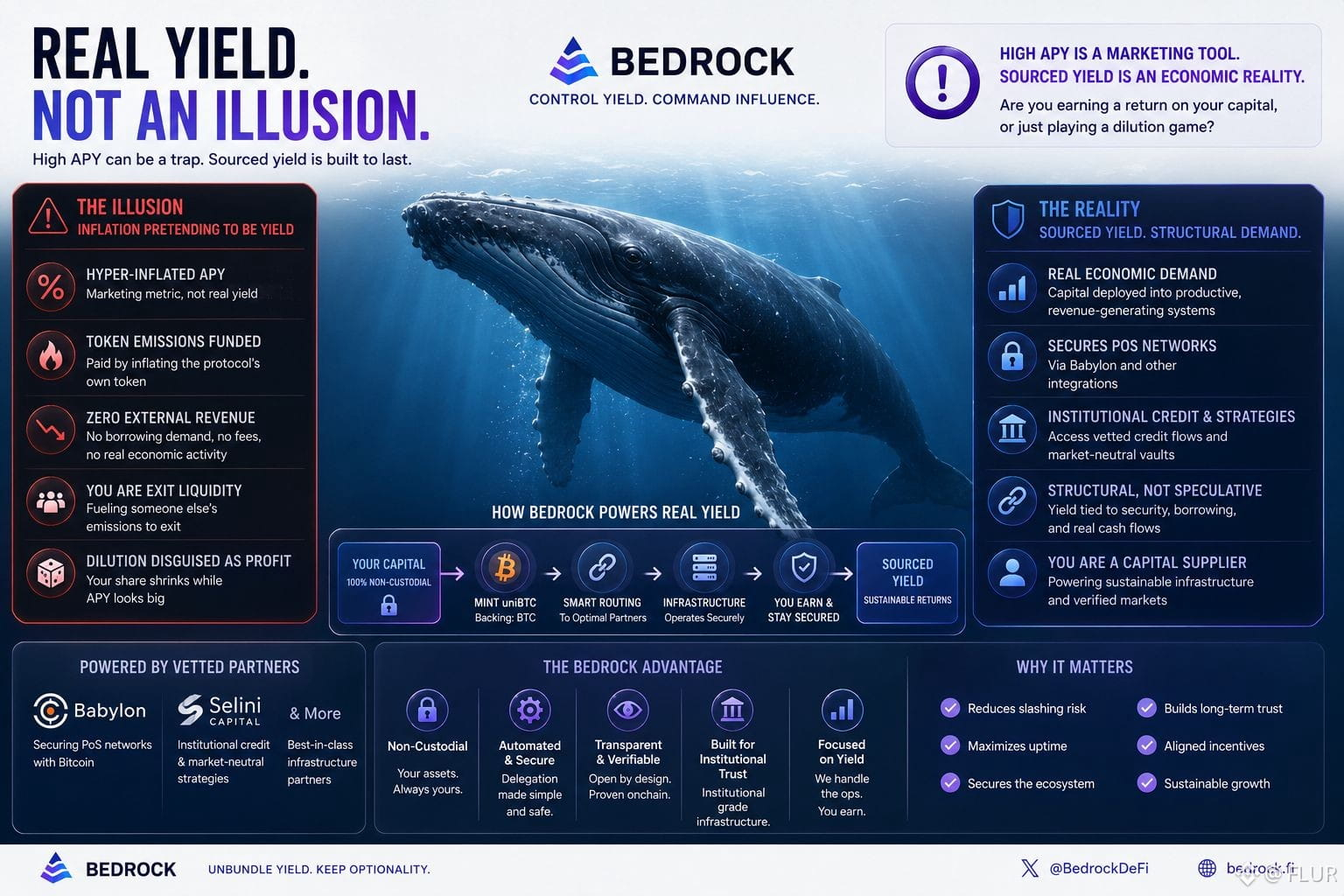
La semana pasada estaba observando un pool de liquidez que anunciaba un 40% de APY en Bitcoin envuelto.
En el mundo cripto, estamos biológicamente programados para perseguir el porcentaje más alto. Vemos un APY masivo en un panel y automáticamente asumimos que el protocolo es altamente rentable.
Asumimos que el yield es una recompensa por nuestro capital.
Pero cuando rastreé la ruta real en la cadena, no había ingresos externos.
Cero demanda de préstamos.
Cero tarifas de red.
El protocolo solo estaba hiper-inflando su token nativo para pagar a los depositantes.
No era una tasa de interés.
Era una tasa de inflación localizada.
Esencialmente estaban sobornando a los usuarios con un activo que se deprecia rápidamente solo para inflar artificialmente sus métricas.
Constantemente confundimos la dilución con el beneficio.
Esta trampa de comportamiento es exactamente por qué he estado prestando tanta atención al origen de la estructura de yield de Bedrock.
Bedrock no fabrica un APY sintético de la nada.
Cuando acuñas uniBTC, el Bitcoin subyacente se despliega en entornos impulsados por la demanda económica real.
En lugar de depender de un bucle de token inflacionario, el capital proporciona seguridad criptoeconómica fundamental a redes PoS a través de Babylon, o se conecta directamente a flujos de crédito institucional y estrategias neutrales al mercado mediante bóvedas gestionadas profesionalmente (como su integración con Selini Capital).
El yield está atado a la seguridad estructural de la red y al préstamo institucional, no a la impresión interna de tokens.
Cambia fundamentalmente tu rol en el ecosistema.
Dejas de actuar como la liquidez de salida para un programa de emisión temporal, y comienzas a actuar como proveedor de un mercado de crédito verificado y sostenible.
Un alto APY es una herramienta de marketing.
El yield obtenido es una realidad económica.
¿Realmente estás generando un retorno sobre tu capital, o solo estás participando en un juego de dilución multijugador?
@Bedrock #Bedrock $BR
{future}(BRUSDT)
#BTCFi
$BTC
{future}(BTCUSDT)
$RIF
{future}(RIFUSDT)
#RealYield
La semana pasada estaba observando un pool de liquidez que anunciaba un 40% de APY en Bitcoin envuelto.
En el mundo cripto, estamos biológicamente programados para perseguir el porcentaje más alto. Vemos un APY masivo en un panel y automáticamente asumimos que el protocolo es altamente rentable.
Asumimos que el yield es una recompensa por nuestro capital.
Pero cuando rastreé la ruta real en la cadena, no había ingresos externos.
Cero demanda de préstamos.
Cero tarifas de red.
El protocolo solo estaba hiper-inflando su token nativo para pagar a los depositantes.
No era una tasa de interés.
Era una tasa de inflación localizada.
Esencialmente estaban sobornando a los usuarios con un activo que se deprecia rápidamente solo para inflar artificialmente sus métricas.
Constantemente confundimos la dilución con el beneficio.
Esta trampa de comportamiento es exactamente por qué he estado prestando tanta atención al origen de la estructura de yield de Bedrock.
Bedrock no fabrica un APY sintético de la nada.
Cuando acuñas uniBTC, el Bitcoin subyacente se despliega en entornos impulsados por la demanda económica real.
En lugar de depender de un bucle de token inflacionario, el capital proporciona seguridad criptoeconómica fundamental a redes PoS a través de Babylon, o se conecta directamente a flujos de crédito institucional y estrategias neutrales al mercado mediante bóvedas gestionadas profesionalmente (como su integración con Selini Capital).
El yield está atado a la seguridad estructural de la red y al préstamo institucional, no a la impresión interna de tokens.
Cambia fundamentalmente tu rol en el ecosistema.
Dejas de actuar como la liquidez de salida para un programa de emisión temporal, y comienzas a actuar como proveedor de un mercado de crédito verificado y sostenible.
Un alto APY es una herramienta de marketing.
El yield obtenido es una realidad económica.
¿Realmente estás generando un retorno sobre tu capital, o solo estás participando en un juego de dilución multijugador?
@Bedrock #Bedrock $BR
#BTCFi
$BTC
$RIF
#RealYield
En el mundo cripto, estamos biológicamente programados para perseguir el porcentaje más alto. Vemos un APY masivo en un panel y automáticamente asumimos que el protocolo es altamente rentable.
Asumimos que el yield es una recompensa por nuestro capital.
Pero cuando rastreé la ruta real en la cadena, no había ingresos externos.
Cero demanda de préstamos.
Cero tarifas de red.
El protocolo solo estaba hiper-inflando su token nativo para pagar a los depositantes.
No era una tasa de interés.
Era una tasa de inflación localizada.
Esencialmente estaban sobornando a los usuarios con un activo que se deprecia rápidamente solo para inflar artificialmente sus métricas.
Constantemente confundimos la dilución con el beneficio.
Esta trampa de comportamiento es exactamente por qué he estado prestando tanta atención al origen de la estructura de yield de Bedrock.
Bedrock no fabrica un APY sintético de la nada.
Cuando acuñas uniBTC, el Bitcoin subyacente se despliega en entornos impulsados por la demanda económica real.
En lugar de depender de un bucle de token inflacionario, el capital proporciona seguridad criptoeconómica fundamental a redes PoS a través de Babylon, o se conecta directamente a flujos de crédito institucional y estrategias neutrales al mercado mediante bóvedas gestionadas profesionalmente (como su integración con Selini Capital).
El yield está atado a la seguridad estructural de la red y al préstamo institucional, no a la impresión interna de tokens.
Cambia fundamentalmente tu rol en el ecosistema.
Dejas de actuar como la liquidez de salida para un programa de emisión temporal, y comienzas a actuar como proveedor de un mercado de crédito verificado y sostenible.
Un alto APY es una herramienta de marketing.
El yield obtenido es una realidad económica.
¿Realmente estás generando un retorno sobre tu capital, o solo estás participando en un juego de dilución multijugador?
@Bedrock #Bedrock $BR
#BTCFi
$BTC
$RIF
#RealYield
1
232


Artículo
💰 ¿Se acabaron los «tokens fantasma»? En 2026, la DeFi entra en la era de los ingresos realesPendant des années, une grande partie des jetons de gouvernance DeFi souffrait du même problème : ils donnaient un droit de vote... mais très peu de valeur économique directe à leurs détenteurs.
En 2026, ce modèle évolue rapidement.
Les investisseurs accordent désormais plus d'importance aux protocoles capables de générer des revenus durables plutôt qu'aux simples promesses de croissance. Une nouvelle tendance s'impose : le partage des revenus (Fee Switching) et le Real Yield.
📊 1. Des jetons qui capturent enfin la valeur
💰 ¿Se acabaron los «tokens fantasma»? En 2026, la DeFi entra en la era de los ingresos reales
Pendant des années, une grande partie des jetons de gouvernance DeFi souffrait du même problème : ils donnaient un droit de vote... mais très peu de valeur économique directe à leurs détenteurs.
En 2026, ce modèle évolue rapidement.
Les investisseurs accordent désormais plus d'importance aux protocoles capables de générer des revenus durables plutôt qu'aux simples promesses de croissance. Une nouvelle tendance s'impose : le partage des revenus (Fee Switching) et le Real Yield.
📊 1. Des jetons qui capturent enfin la valeur
En 2026, ce modèle évolue rapidement.
Les investisseurs accordent désormais plus d'importance aux protocoles capables de générer des revenus durables plutôt qu'aux simples promesses de croissance. Une nouvelle tendance s'impose : le partage des revenus (Fee Switching) et le Real Yield.
📊 1. Des jetons qui capturent enfin la valeur
38

·
--
Los rendimientos de las bóvedas en swaps perpetuos de DEXs NO son equivalentes “manzanas con manzanas”. 🏦
Dos fuentes muy distintas:
• Bóvedas solo de emisiones/puntos: APRs anunciados de 200–400%, pero el valor = emisiones de tokens. Depende por completo de que el precio del TGE se mantenga. Alta variabilidad.
• Bóvedas de rendimiento real: se pagan con comisiones de trading reales. Menor cifra anunciada, pero no se desvanece.
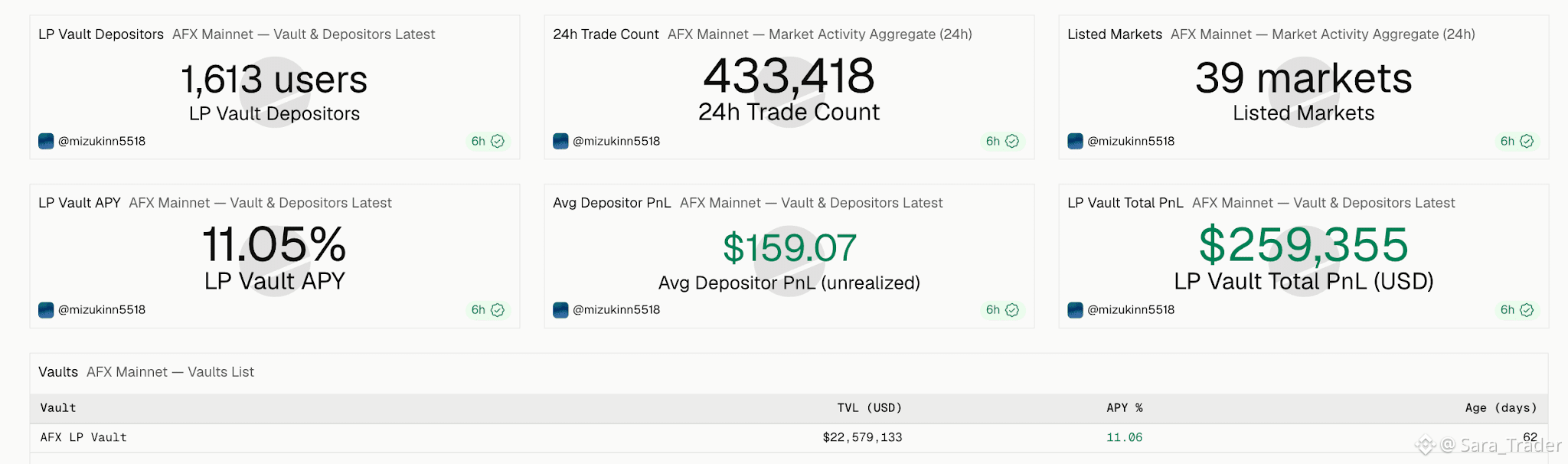
@AFX_XYZ La bóveda es del tipo de rendimiento real: ~11.44% APY por reparto de comisiones, además de puntos por encima, sin penalización. Así que tu desventaja tiene un “suelo” basado en comisiones mientras aún obtienes potencial al alza en puntos.
Regla general: separa el APR “real” del APR “si el token se mantiene” antes de que calcules el tamaño.
#AFX #RealYield #YieldFarming #DeFi NFA. 👉
https://app.afx.xyz/?src=bn3
Los rendimientos de las bóvedas en swaps perpetuos de DEXs NO son equivalentes “manzanas con manzanas”. 🏦
Dos fuentes muy distintas:
• Bóvedas solo de emisiones/puntos: APRs anunciados de 200–400%, pero el valor = emisiones de tokens. Depende por completo de que el precio del TGE se mantenga. Alta variabilidad.
• Bóvedas de rendimiento real: se pagan con comisiones de trading reales. Menor cifra anunciada, pero no se desvanece.
@AFX_XYZ La bóveda es del tipo de rendimiento real: ~11.44% APY por reparto de comisiones, además de puntos por encima, sin penalización. Así que tu desventaja tiene un “suelo” basado en comisiones mientras aún obtienes potencial al alza en puntos.
Regla general: separa el APR “real” del APR “si el token se mantiene” antes de que calcules el tamaño.
#AFX #RealYield #YieldFarming #DeFi NFA. 👉
https://app.afx.xyz/?src=bn3
Dos fuentes muy distintas:
• Bóvedas solo de emisiones/puntos: APRs anunciados de 200–400%, pero el valor = emisiones de tokens. Depende por completo de que el precio del TGE se mantenga. Alta variabilidad.
• Bóvedas de rendimiento real: se pagan con comisiones de trading reales. Menor cifra anunciada, pero no se desvanece.
@AFX_XYZ La bóveda es del tipo de rendimiento real: ~11.44% APY por reparto de comisiones, además de puntos por encima, sin penalización. Así que tu desventaja tiene un “suelo” basado en comisiones mientras aún obtienes potencial al alza en puntos.
Regla general: separa el APR “real” del APR “si el token se mantiene” antes de que calcules el tamaño.
#AFX #RealYield #YieldFarming #DeFi NFA. 👉
https://app.afx.xyz/?src=bn3
1
118

$AFX VOLUMEN ACUMULADO CERCA DE $1.000 MILLONES - MÁQUINA DE RENDIMIENTO REAL 🔥
El volumen acaba de alcanzar $946M con $20.71M bloqueados y los ingresos anuales del protocolo en $1.07M. El programa VIP devuelve el 30-50% de esos ingresos por comisiones como rendimiento en USDC duro a traders activos. Sin emisiones inflacionarias de tokens, sin APR falso: solo rendimiento real respaldado por actividad on-chain.
Esto no es solo hype. Los números están subiendo rápido y el impulso es real. ¿Un L1 soberano que ofrece ejecución institucional mientras comparte la mitad de los ingresos con sus usuarios? Eso es una rueda de inercia que vale la pena seguir.
¿Estás buscando oportunidades de rendimiento real o sigues persiguiendo granjas de emisiones?
No es asesoramiento financiero. Gestiona siempre tu riesgo.
#AFX #DeFi #RealYield #Derivatives
🔥
$AFX VOLUMEN ACUMULADO CERCA DE $1.000 MILLONES - MÁQUINA DE RENDIMIENTO REAL 🔥
El volumen acaba de alcanzar $946M con $20.71M bloqueados y los ingresos anuales del protocolo en $1.07M. El programa VIP devuelve el 30-50% de esos ingresos por comisiones como rendimiento en USDC duro a traders activos. Sin emisiones inflacionarias de tokens, sin APR falso: solo rendimiento real respaldado por actividad on-chain.
Esto no es solo hype. Los números están subiendo rápido y el impulso es real. ¿Un L1 soberano que ofrece ejecución institucional mientras comparte la mitad de los ingresos con sus usuarios? Eso es una rueda de inercia que vale la pena seguir.
¿Estás buscando oportunidades de rendimiento real o sigues persiguiendo granjas de emisiones?
No es asesoramiento financiero. Gestiona siempre tu riesgo.
#AFX #DeFi #RealYield #Derivatives
🔥
El volumen acaba de alcanzar $946M con $20.71M bloqueados y los ingresos anuales del protocolo en $1.07M. El programa VIP devuelve el 30-50% de esos ingresos por comisiones como rendimiento en USDC duro a traders activos. Sin emisiones inflacionarias de tokens, sin APR falso: solo rendimiento real respaldado por actividad on-chain.
Esto no es solo hype. Los números están subiendo rápido y el impulso es real. ¿Un L1 soberano que ofrece ejecución institucional mientras comparte la mitad de los ingresos con sus usuarios? Eso es una rueda de inercia que vale la pena seguir.
¿Estás buscando oportunidades de rendimiento real o sigues persiguiendo granjas de emisiones?
No es asesoramiento financiero. Gestiona siempre tu riesgo.
#AFX #DeFi #RealYield #Derivatives
🔥
20

·
--
$GRVT ESTÁ REDEFINIENDO LA UTILIDAD DE TOKENS COMO UNA MEMBRESÍA VIVA 🔥
La mayoría de los tokens de intercambio son solo entradas. Comprar y esperar. GRVT cambia completamente ese modelo. Los titulares del token obtienen comisiones más bajas, mayor rendimiento, participación en los ingresos del protocolo y acceso anticipado a nuevos productos — todo mediante el uso activo de la plataforma.
El 100% del excedente económico se devuelve a los titulares mediante recompras y reinversión. Eso significa que cada dólar que gana la plataforma incrementa directamente el valor intrínseco de $GRVT. Sin exageraciones, solo una alineación real de flujo de caja.
Con el TGE acercándose, esta es una de las pocas estructuras en las que tu token realmente trabaja para ti en lugar de quedarse inactivo. ¿Qué factor crees que será más importante para el valor a largo plazo?
No es asesoramiento financiero. Gestiona siempre tu riesgo.
#GRVT #Tokenomics #RealYield #Crypto
🔥
$GRVT ESTÁ REDEFINIENDO LA UTILIDAD DE TOKENS COMO UNA MEMBRESÍA VIVA 🔥
La mayoría de los tokens de intercambio son solo entradas. Comprar y esperar. GRVT cambia completamente ese modelo. Los titulares del token obtienen comisiones más bajas, mayor rendimiento, participación en los ingresos del protocolo y acceso anticipado a nuevos productos — todo mediante el uso activo de la plataforma.
El 100% del excedente económico se devuelve a los titulares mediante recompras y reinversión. Eso significa que cada dólar que gana la plataforma incrementa directamente el valor intrínseco de $GRVT. Sin exageraciones, solo una alineación real de flujo de caja.
Con el TGE acercándose, esta es una de las pocas estructuras en las que tu token realmente trabaja para ti en lugar de quedarse inactivo. ¿Qué factor crees que será más importante para el valor a largo plazo?
No es asesoramiento financiero. Gestiona siempre tu riesgo.
#GRVT #Tokenomics #RealYield #Crypto
🔥
La mayoría de los tokens de intercambio son solo entradas. Comprar y esperar. GRVT cambia completamente ese modelo. Los titulares del token obtienen comisiones más bajas, mayor rendimiento, participación en los ingresos del protocolo y acceso anticipado a nuevos productos — todo mediante el uso activo de la plataforma.
El 100% del excedente económico se devuelve a los titulares mediante recompras y reinversión. Eso significa que cada dólar que gana la plataforma incrementa directamente el valor intrínseco de $GRVT. Sin exageraciones, solo una alineación real de flujo de caja.
Con el TGE acercándose, esta es una de las pocas estructuras en las que tu token realmente trabaja para ti en lugar de quedarse inactivo. ¿Qué factor crees que será más importante para el valor a largo plazo?
No es asesoramiento financiero. Gestiona siempre tu riesgo.
#GRVT #Tokenomics #RealYield #Crypto
🔥
13

·
--
El desagüe de mayo aclaró algo que la mayoría de los portafolios no quieren admitir.
Los activos sin rendimiento fueron los más castigados. Los productivos se mantuvieron relativamente mejor — y esa brecha importa de cara a junio.
$ETH post-Pectra está generando un rendimiento real de staking mientras las tarifas de blob comprimen costos. Eso es una presión de oferta Y un volante de demanda funcionando simultáneamente. $BNB las quemas continúan superando la emisión a los niveles de actividad actuales — un mecanismo deflacionario que se acumula en silencio. $ADA las recompensas de staking siguieron corriendo mientras todos estaban refrescando en pánico los gráficos de precios.
Mientras tanto, los bonos de TradFi están cerca del 5%. Ese telón de fondo no mata a las criptos — eleva el nivel. Los activos que sobreviven en un mundo competitivo de tasas son los que generan mientras mantienes.
Las salidas de BTC ETF dominaron los titulares de esta semana. Nota qué cadenas no hicieron la lista de salidas. La divergencia no es ruido — es la verdadera tesis del portafolio.
Mayo fue una prueba de estrés. Junio es donde descubres si tus holdings la pasaron.
El comercio de activos productivos está de vuelta en el menú. La exposición genérica ya no es suficiente.
#Crypto #RealYield #DeFi #CryptoInvesting #Altcoins
El desagüe de mayo aclaró algo que la mayoría de los portafolios no quieren admitir.
Los activos sin rendimiento fueron los más castigados. Los productivos se mantuvieron relativamente mejor — y esa brecha importa de cara a junio.
$ETH post-Pectra está generando un rendimiento real de staking mientras las tarifas de blob comprimen costos. Eso es una presión de oferta Y un volante de demanda funcionando simultáneamente. $BNB las quemas continúan superando la emisión a los niveles de actividad actuales — un mecanismo deflacionario que se acumula en silencio. $ADA las recompensas de staking siguieron corriendo mientras todos estaban refrescando en pánico los gráficos de precios.
Mientras tanto, los bonos de TradFi están cerca del 5%. Ese telón de fondo no mata a las criptos — eleva el nivel. Los activos que sobreviven en un mundo competitivo de tasas son los que generan mientras mantienes.
Las salidas de BTC ETF dominaron los titulares de esta semana. Nota qué cadenas no hicieron la lista de salidas. La divergencia no es ruido — es la verdadera tesis del portafolio.
Mayo fue una prueba de estrés. Junio es donde descubres si tus holdings la pasaron.
El comercio de activos productivos está de vuelta en el menú. La exposición genérica ya no es suficiente.
#Crypto #RealYield #DeFi #CryptoInvesting #Altcoins
Los activos sin rendimiento fueron los más castigados. Los productivos se mantuvieron relativamente mejor — y esa brecha importa de cara a junio.
$ETH post-Pectra está generando un rendimiento real de staking mientras las tarifas de blob comprimen costos. Eso es una presión de oferta Y un volante de demanda funcionando simultáneamente. $BNB las quemas continúan superando la emisión a los niveles de actividad actuales — un mecanismo deflacionario que se acumula en silencio. $ADA las recompensas de staking siguieron corriendo mientras todos estaban refrescando en pánico los gráficos de precios.
Mientras tanto, los bonos de TradFi están cerca del 5%. Ese telón de fondo no mata a las criptos — eleva el nivel. Los activos que sobreviven en un mundo competitivo de tasas son los que generan mientras mantienes.
Las salidas de BTC ETF dominaron los titulares de esta semana. Nota qué cadenas no hicieron la lista de salidas. La divergencia no es ruido — es la verdadera tesis del portafolio.
Mayo fue una prueba de estrés. Junio es donde descubres si tus holdings la pasaron.
El comercio de activos productivos está de vuelta en el menú. La exposición genérica ya no es suficiente.
#Crypto #RealYield #DeFi #CryptoInvesting #Altcoins
100

·
--
🚨 Alpha: Deflación agresiva y el poder del "Real Yield" en $ASTER
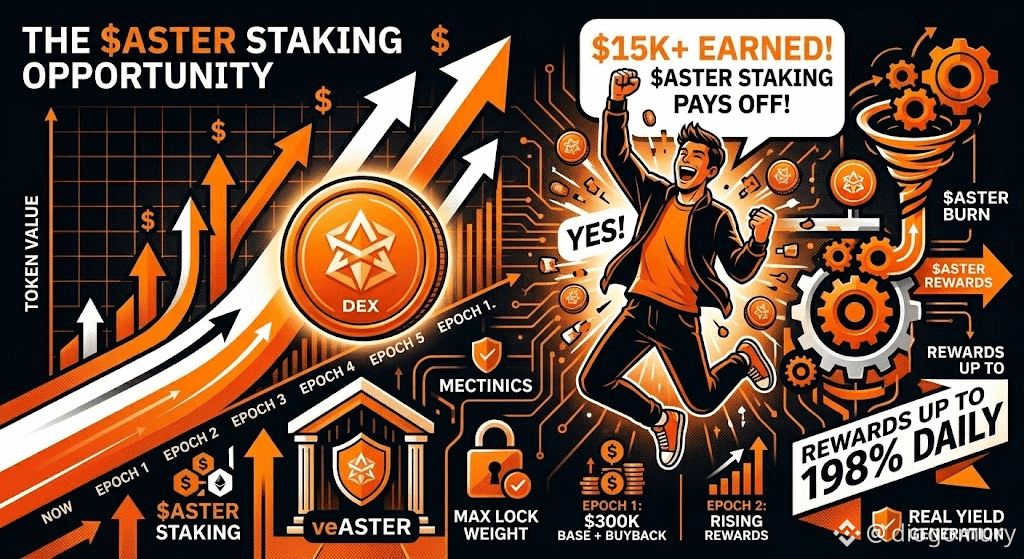
Estaba investigando la nueva actualización de tokenomics de Aster y el modelo económico que han implementado llamó mucho mi atención. Han puesto en marcha un sistema de Buyback (recompra) y Burn (quema) que puede llegar al 198%. ¿Qué significa esto en la práctica?
🔥 Recompra: 99% de las comisiones diarias generadas por la plataforma se utilizan para recomprar $ASTER en el mercado (presión compradora constante). 🔥 Quema: Una cantidad equivalente (más 99%) se quema de las reservas del equipo, reduciendo el suministro total (la meta es bajar de 8 mil millones a 3 mil millones de tokens).
Pero el gran truco está aquí: los tokens recomprados no desaparecen, van directamente a los Loyalty Rewards. Es decir, el usuario que hace staking a largo plazo y bloquea sus tokens (generando veASTER) es quien captura todo ese valor en comisiones de la corretora.
Modelos que utilizan los propios ingresos del protocolo para recompensar a quienes sostienen la red (Real Yield) se están convirtiendo en el estándar dorado para la supervivencia en DeFi.
¿Alguien aquí ya está echando un ojo o farmeando en este ecosistema? 👇
#ASTER $ASTER #RealYield #CryptoInsights
🚨 Alpha: Deflación agresiva y el poder del "Real Yield" en $ASTER
Estaba investigando la nueva actualización de tokenomics de Aster y el modelo económico que han implementado llamó mucho mi atención. Han puesto en marcha un sistema de Buyback (recompra) y Burn (quema) que puede llegar al 198%. ¿Qué significa esto en la práctica?
🔥 Recompra: 99% de las comisiones diarias generadas por la plataforma se utilizan para recomprar $ASTER en el mercado (presión compradora constante). 🔥 Quema: Una cantidad equivalente (más 99%) se quema de las reservas del equipo, reduciendo el suministro total (la meta es bajar de 8 mil millones a 3 mil millones de tokens).
Pero el gran truco está aquí: los tokens recomprados no desaparecen, van directamente a los Loyalty Rewards. Es decir, el usuario que hace staking a largo plazo y bloquea sus tokens (generando veASTER) es quien captura todo ese valor en comisiones de la corretora.
Modelos que utilizan los propios ingresos del protocolo para recompensar a quienes sostienen la red (Real Yield) se están convirtiendo en el estándar dorado para la supervivencia en DeFi.
¿Alguien aquí ya está echando un ojo o farmeando en este ecosistema? 👇
#ASTER $ASTER #RealYield #CryptoInsights
Estaba investigando la nueva actualización de tokenomics de Aster y el modelo económico que han implementado llamó mucho mi atención. Han puesto en marcha un sistema de Buyback (recompra) y Burn (quema) que puede llegar al 198%. ¿Qué significa esto en la práctica?
🔥 Recompra: 99% de las comisiones diarias generadas por la plataforma se utilizan para recomprar $ASTER en el mercado (presión compradora constante). 🔥 Quema: Una cantidad equivalente (más 99%) se quema de las reservas del equipo, reduciendo el suministro total (la meta es bajar de 8 mil millones a 3 mil millones de tokens).
Pero el gran truco está aquí: los tokens recomprados no desaparecen, van directamente a los Loyalty Rewards. Es decir, el usuario que hace staking a largo plazo y bloquea sus tokens (generando veASTER) es quien captura todo ese valor en comisiones de la corretora.
Modelos que utilizan los propios ingresos del protocolo para recompensar a quienes sostienen la red (Real Yield) se están convirtiendo en el estándar dorado para la supervivencia en DeFi.
¿Alguien aquí ya está echando un ojo o farmeando en este ecosistema? 👇
#ASTER $ASTER #RealYield #CryptoInsights
102


·
--
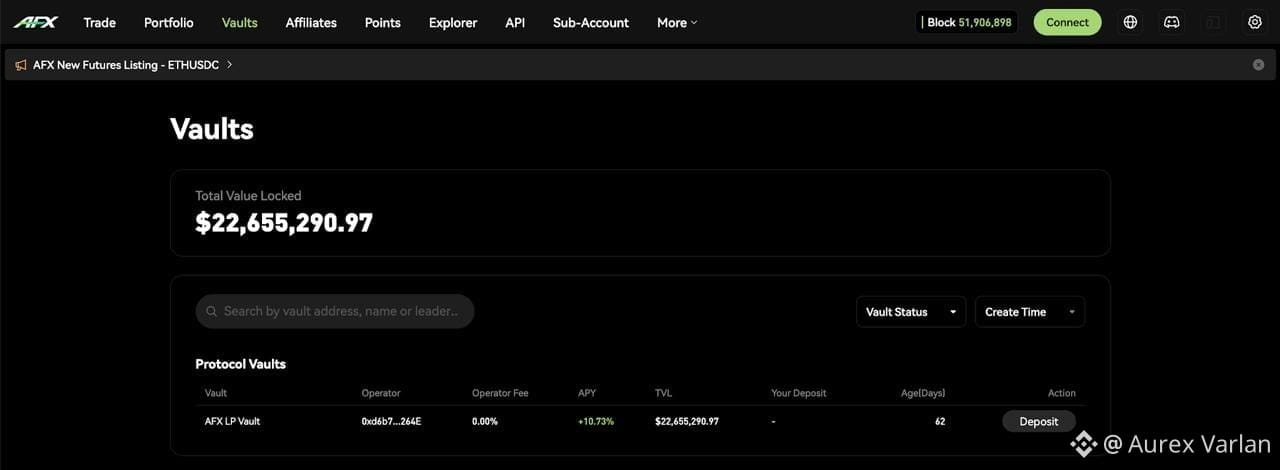
Si eres un agricultor de “bajo esfuerzo y alta eficiencia de capital”, vale la pena echarle un vistazo a la Vault @AFX_XYZ . 🏦
• Rendimiento real base: ~11,44% APY (reparto de comisiones, no emisiones)
• + puntos mientras esté depositado
• Sin penalización: los puntos no reducen tu rendimiento
Ejemplo oficial de su página de puntos: 5.000 USDC en la Vault durante 7 días ≈ 50 pts. Esos son puntos pasivos además de un rendimiento real de dos dígitos (antes de cualquier posible ventaja por TGE).
Agricultura de “poner y olvidar” mientras se ejecuta la Temporada 1. Este es el nivel “duerme bien” del farming en un perp DEX.
👉 https://app.afx.xyz/?src=bn2
#AFX #YieldFarming #PerpDEX #RealYield
NFA.
Si eres un agricultor de “bajo esfuerzo y alta eficiencia de capital”, vale la pena echarle un vistazo a la Vault @AFX_XYZ . 🏦
• Rendimiento real base: ~11,44% APY (reparto de comisiones, no emisiones)
• + puntos mientras esté depositado
• Sin penalización: los puntos no reducen tu rendimiento
Ejemplo oficial de su página de puntos: 5.000 USDC en la Vault durante 7 días ≈ 50 pts. Esos son puntos pasivos además de un rendimiento real de dos dígitos (antes de cualquier posible ventaja por TGE).
Agricultura de “poner y olvidar” mientras se ejecuta la Temporada 1. Este es el nivel “duerme bien” del farming en un perp DEX.
👉 https://app.afx.xyz/?src=bn2
#AFX #YieldFarming #PerpDEX #RealYield
NFA.
• Rendimiento real base: ~11,44% APY (reparto de comisiones, no emisiones)
• + puntos mientras esté depositado
• Sin penalización: los puntos no reducen tu rendimiento
Ejemplo oficial de su página de puntos: 5.000 USDC en la Vault durante 7 días ≈ 50 pts. Esos son puntos pasivos además de un rendimiento real de dos dígitos (antes de cualquier posible ventaja por TGE).
Agricultura de “poner y olvidar” mientras se ejecuta la Temporada 1. Este es el nivel “duerme bien” del farming en un perp DEX.
👉 https://app.afx.xyz/?src=bn2
#AFX #YieldFarming #PerpDEX #RealYield
NFA.
10
10
331
·
--
Rendimiento real vs. emisiones inflacionarias: el momento de madurez de DeFi
Durante años, los protocolos DeFi compitieron en una sola métrica: APY. Cuanto más alto era el número, más liquidez atraían. ¿El problema? La mayoría de esos rendimientos se pagaban en tokens de gobernanza recién acuñados: emisiones inflacionarias que diluían a los tenedores existentes y ocultaban la ausencia de actividad económica real.
Por fin, el mercado está valorando esto correctamente.
El rendimiento real —ingresos generados por el uso real del protocolo, distribuidos a los stakers y a los LPs— se está convirtiendo en el referente que persigue el capital sofisticado. Los protocolos que generan ingresos genuinos por comisiones a partir del volumen de negociación, los diferenciales de préstamo y los flujos de liquidación están superando a las granjas de emisiones puras en la retención de TVL a largo plazo.
El cambio también importa para $ETH holders. EIP-1559 convirtió a ETH en un activo con rendimiento respaldado por la demanda real de la red. La alta actividad de L2 devuelve las quemas de comisiones a la mainnet, ajustando la oferta. $BNB sigue un modelo similar con quemas trimestrales vinculadas al rendimiento de BNB Chain.
Los protocolos que sobrevivan al próximo ciclo bajista serán aquellos en los que puedas abrir los libros y ver ingresos reales, no trucos de tokenomics. En el próximo capítulo de DeFi, el flujo de caja manda.
Reduce el campo. Apoya el rendimiento real. $AVAX ecosistemas se enfrentan a la misma prueba.
#DeFi #RealYield #CryptoInvesting #BinanceSquare #Web3
Rendimiento real vs. emisiones inflacionarias: el momento de madurez de DeFi
Durante años, los protocolos DeFi compitieron en una sola métrica: APY. Cuanto más alto era el número, más liquidez atraían. ¿El problema? La mayoría de esos rendimientos se pagaban en tokens de gobernanza recién acuñados: emisiones inflacionarias que diluían a los tenedores existentes y ocultaban la ausencia de actividad económica real.
Por fin, el mercado está valorando esto correctamente.
El rendimiento real —ingresos generados por el uso real del protocolo, distribuidos a los stakers y a los LPs— se está convirtiendo en el referente que persigue el capital sofisticado. Los protocolos que generan ingresos genuinos por comisiones a partir del volumen de negociación, los diferenciales de préstamo y los flujos de liquidación están superando a las granjas de emisiones puras en la retención de TVL a largo plazo.
El cambio también importa para $ETH holders. EIP-1559 convirtió a ETH en un activo con rendimiento respaldado por la demanda real de la red. La alta actividad de L2 devuelve las quemas de comisiones a la mainnet, ajustando la oferta. $BNB sigue un modelo similar con quemas trimestrales vinculadas al rendimiento de BNB Chain.
Los protocolos que sobrevivan al próximo ciclo bajista serán aquellos en los que puedas abrir los libros y ver ingresos reales, no trucos de tokenomics. En el próximo capítulo de DeFi, el flujo de caja manda.
Reduce el campo. Apoya el rendimiento real. $AVAX ecosistemas se enfrentan a la misma prueba.
#DeFi #RealYield #CryptoInvesting #BinanceSquare #Web3
Durante años, los protocolos DeFi compitieron en una sola métrica: APY. Cuanto más alto era el número, más liquidez atraían. ¿El problema? La mayoría de esos rendimientos se pagaban en tokens de gobernanza recién acuñados: emisiones inflacionarias que diluían a los tenedores existentes y ocultaban la ausencia de actividad económica real.
Por fin, el mercado está valorando esto correctamente.
El rendimiento real —ingresos generados por el uso real del protocolo, distribuidos a los stakers y a los LPs— se está convirtiendo en el referente que persigue el capital sofisticado. Los protocolos que generan ingresos genuinos por comisiones a partir del volumen de negociación, los diferenciales de préstamo y los flujos de liquidación están superando a las granjas de emisiones puras en la retención de TVL a largo plazo.
El cambio también importa para $ETH holders. EIP-1559 convirtió a ETH en un activo con rendimiento respaldado por la demanda real de la red. La alta actividad de L2 devuelve las quemas de comisiones a la mainnet, ajustando la oferta. $BNB sigue un modelo similar con quemas trimestrales vinculadas al rendimiento de BNB Chain.
Los protocolos que sobrevivan al próximo ciclo bajista serán aquellos en los que puedas abrir los libros y ver ingresos reales, no trucos de tokenomics. En el próximo capítulo de DeFi, el flujo de caja manda.
Reduce el campo. Apoya el rendimiento real. $AVAX ecosistemas se enfrentan a la misma prueba.
#DeFi #RealYield #CryptoInvesting #BinanceSquare #Web3
1
90

⚡ LA CADENA ROBINHOOD INVIRTE Y PONE LA MIRA EN $HYPE CON $4.13M EN INGRESOS EN 24H! 📊
Las métricas de DefiLlama acaban de registrar un enorme cambio estructural en las comisiones del protocolo. La Robinhood Chain atrajo una cifra asombrosa de $4.13 millones en las últimas 24 horas, arrebatando oficialmente a $HYPE ($2.7M) para reclamar el tercer puesto a nivel global. 📊
Los ingresos acumulados ahora ascienden a $20.69 millones, señal de una demanda subyacente implacable y una generación de rendimiento real que el dinero inteligente simplemente no puede ignorar. 🌊 El flujo de órdenes es claramente canalizado hacia capas de ejecución de alto rendimiento mientras los traders tradicionales se quedan puentes en silencio. 💡
Con la generación de comisiones acelerándose a esta velocidad, ¿estás acumulando ya beneficiarios del cambio de comisiones o esperas a que la narrativa termine de cotizarse por completo? 👇
⚠️ No es asesoramiento financiero. Gestiona siempre tu riesgo. 🛡️
🏷️ #HYPE #DeFi #Crypto #RealYield #DefiLlama
🔥 💎
⚡ LA CADENA ROBINHOOD INVIRTE Y PONE LA MIRA EN $HYPE CON $4.13M EN INGRESOS EN 24H! 📊
Las métricas de DefiLlama acaban de registrar un enorme cambio estructural en las comisiones del protocolo. La Robinhood Chain atrajo una cifra asombrosa de $4.13 millones en las últimas 24 horas, arrebatando oficialmente a $HYPE ($2.7M) para reclamar el tercer puesto a nivel global. 📊
Los ingresos acumulados ahora ascienden a $20.69 millones, señal de una demanda subyacente implacable y una generación de rendimiento real que el dinero inteligente simplemente no puede ignorar. 🌊 El flujo de órdenes es claramente canalizado hacia capas de ejecución de alto rendimiento mientras los traders tradicionales se quedan puentes en silencio. 💡
Con la generación de comisiones acelerándose a esta velocidad, ¿estás acumulando ya beneficiarios del cambio de comisiones o esperas a que la narrativa termine de cotizarse por completo? 👇
⚠️ No es asesoramiento financiero. Gestiona siempre tu riesgo. 🛡️
🏷️ #HYPE #DeFi #Crypto #RealYield #DefiLlama
🔥 💎
Las métricas de DefiLlama acaban de registrar un enorme cambio estructural en las comisiones del protocolo. La Robinhood Chain atrajo una cifra asombrosa de $4.13 millones en las últimas 24 horas, arrebatando oficialmente a $HYPE ($2.7M) para reclamar el tercer puesto a nivel global. 📊
Los ingresos acumulados ahora ascienden a $20.69 millones, señal de una demanda subyacente implacable y una generación de rendimiento real que el dinero inteligente simplemente no puede ignorar. 🌊 El flujo de órdenes es claramente canalizado hacia capas de ejecución de alto rendimiento mientras los traders tradicionales se quedan puentes en silencio. 💡
Con la generación de comisiones acelerándose a esta velocidad, ¿estás acumulando ya beneficiarios del cambio de comisiones o esperas a que la narrativa termine de cotizarse por completo? 👇
⚠️ No es asesoramiento financiero. Gestiona siempre tu riesgo. 🛡️
🏷️ #HYPE #DeFi #Crypto #RealYield #DefiLlama
🔥 💎
44
·
--
DeFi está madurando y el rendimiento real es cómo lo sabes
Los protocolos de DeFi que siguen en pie después de dos mercados bajistas comparten un rasgo: generan ingresos reales.
No emisiones de tokens. No incentivos de minería de liquidez. Comisiones reales del protocolo, pagadas en activos que los usuarios realmente quieren mantener.
Esta diferencia importa más que nunca. A medida que el capital institucional evalúa DeFi con seriedad, la primera pregunta no es el TVL, sino de dónde proviene el rendimiento. El APY impulsado por emisiones colapsa en cuanto se reducen los incentivos. El rendimiento impulsado por comisiones se capitaliza a medida que crece el uso.
$ETH está en la base de esto. El quemado por EIP-1559 más el rendimiento por staking crea un mecanismo dual de compresión donde la oferta se reduce a medida que aumenta la demanda de espacio de bloque. La economía del protocolo funcionando exactamente como fue diseñado.
$BNB ejecuta un plan similar. Las quemas trimestrales vinculadas a la actividad on-chain significan que la tasa de deflación se acelera con el crecimiento del ecosistema, no en su contra. Ese es un ciclo impulsado por comisiones, no un subsidio a los tokens.
$AVAX subnets está resolviendo en silencio algo que DeFi no había logrado escalar: entornos de riesgo aislados con liquidez compartida. El DeFi institucional necesita esta arquitectura más que otra granja de APY alto.
El rendimiento real es el filtro. Si un protocolo no puede explicar de dónde provienen las comisiones sin mencionar su propio token, eso te dice todo lo que necesitas saber. Los protocolos que sobrevivan el próximo ciclo serán los que cobren por una utilidad genuina hoy.
#DeFi #CryptoInvesting #RealYield #Blockchain #Web3
DeFi está madurando y el rendimiento real es cómo lo sabes
Los protocolos de DeFi que siguen en pie después de dos mercados bajistas comparten un rasgo: generan ingresos reales.
No emisiones de tokens. No incentivos de minería de liquidez. Comisiones reales del protocolo, pagadas en activos que los usuarios realmente quieren mantener.
Esta diferencia importa más que nunca. A medida que el capital institucional evalúa DeFi con seriedad, la primera pregunta no es el TVL, sino de dónde proviene el rendimiento. El APY impulsado por emisiones colapsa en cuanto se reducen los incentivos. El rendimiento impulsado por comisiones se capitaliza a medida que crece el uso.
$ETH está en la base de esto. El quemado por EIP-1559 más el rendimiento por staking crea un mecanismo dual de compresión donde la oferta se reduce a medida que aumenta la demanda de espacio de bloque. La economía del protocolo funcionando exactamente como fue diseñado.
$BNB ejecuta un plan similar. Las quemas trimestrales vinculadas a la actividad on-chain significan que la tasa de deflación se acelera con el crecimiento del ecosistema, no en su contra. Ese es un ciclo impulsado por comisiones, no un subsidio a los tokens.
$AVAX subnets está resolviendo en silencio algo que DeFi no había logrado escalar: entornos de riesgo aislados con liquidez compartida. El DeFi institucional necesita esta arquitectura más que otra granja de APY alto.
El rendimiento real es el filtro. Si un protocolo no puede explicar de dónde provienen las comisiones sin mencionar su propio token, eso te dice todo lo que necesitas saber. Los protocolos que sobrevivan el próximo ciclo serán los que cobren por una utilidad genuina hoy.
#DeFi #CryptoInvesting #RealYield #Blockchain #Web3
Los protocolos de DeFi que siguen en pie después de dos mercados bajistas comparten un rasgo: generan ingresos reales.
No emisiones de tokens. No incentivos de minería de liquidez. Comisiones reales del protocolo, pagadas en activos que los usuarios realmente quieren mantener.
Esta diferencia importa más que nunca. A medida que el capital institucional evalúa DeFi con seriedad, la primera pregunta no es el TVL, sino de dónde proviene el rendimiento. El APY impulsado por emisiones colapsa en cuanto se reducen los incentivos. El rendimiento impulsado por comisiones se capitaliza a medida que crece el uso.
$ETH está en la base de esto. El quemado por EIP-1559 más el rendimiento por staking crea un mecanismo dual de compresión donde la oferta se reduce a medida que aumenta la demanda de espacio de bloque. La economía del protocolo funcionando exactamente como fue diseñado.
$BNB ejecuta un plan similar. Las quemas trimestrales vinculadas a la actividad on-chain significan que la tasa de deflación se acelera con el crecimiento del ecosistema, no en su contra. Ese es un ciclo impulsado por comisiones, no un subsidio a los tokens.
$AVAX subnets está resolviendo en silencio algo que DeFi no había logrado escalar: entornos de riesgo aislados con liquidez compartida. El DeFi institucional necesita esta arquitectura más que otra granja de APY alto.
El rendimiento real es el filtro. Si un protocolo no puede explicar de dónde provienen las comisiones sin mencionar su propio token, eso te dice todo lo que necesitas saber. Los protocolos que sobrevivan el próximo ciclo serán los que cobren por una utilidad genuina hoy.
#DeFi #CryptoInvesting #RealYield #Blockchain #Web3
64
·
--
La métrica de DeFi que aún muchos inversores siguen equivocando: TVL.
Total Value Locked suena como un proxy de salud, pero no lo es. Un protocolo puede tener $5B de TVL construido enteramente con capital mercenario persiguiendo emisiones inflacionarias de tokens. En el momento en que esas emisiones se desaceleran, esa TVL se evapora durante la noche.
El rendimiento real cambia por completo la ecuación. El rendimiento real es el ingreso del protocolo distribuido a los participantes: no tokens recién acuñados, sino comisiones reales generadas por actividad económica genuina. Comisiones de swap, intereses por préstamos, ingresos por liquidaciones. Cuando los protocolos de DeFi basados en $ETH generan comisiones que superan su tasa de emisión de tokens, pasan a una categoría de riesgo fundamentalmente distinta.
Por eso importa más la calidad de la TVL que el tamaño de la TVL:
— TVL impulsada por emisiones: frágil, mercenaria, con desventaja reflexiva
— TVL impulsada por comisiones: estable, basada en convicción, señal de salud del protocolo
$BNB chain DeFi se está madurando en silencio en este aspecto: los volúmenes de comisiones del DEX en BNB Chain han crecido estructuralmente incluso en mercados bajistas. $AVAX subnet DeFi empieza a mostrar características similares a medida que se desarrollan mercados de comisiones específicos por subnet.
Antes de perseguir el APY más alto en cualquier protocolo, haz una pregunta: ¿este rendimiento proviene de actividad económica real o el protocolo está imprimiendo su propio token para alquilar tu liquidez?
La respuesta te dice todo sobre cuánto tiempo va a durar.
#DeFi #RealYield #CryptoInvesting #BNBChain #FinanzasDescentralizadas
La métrica de DeFi que aún muchos inversores siguen equivocando: TVL.
Total Value Locked suena como un proxy de salud, pero no lo es. Un protocolo puede tener $5B de TVL construido enteramente con capital mercenario persiguiendo emisiones inflacionarias de tokens. En el momento en que esas emisiones se desaceleran, esa TVL se evapora durante la noche.
El rendimiento real cambia por completo la ecuación. El rendimiento real es el ingreso del protocolo distribuido a los participantes: no tokens recién acuñados, sino comisiones reales generadas por actividad económica genuina. Comisiones de swap, intereses por préstamos, ingresos por liquidaciones. Cuando los protocolos de DeFi basados en $ETH generan comisiones que superan su tasa de emisión de tokens, pasan a una categoría de riesgo fundamentalmente distinta.
Por eso importa más la calidad de la TVL que el tamaño de la TVL:
— TVL impulsada por emisiones: frágil, mercenaria, con desventaja reflexiva
— TVL impulsada por comisiones: estable, basada en convicción, señal de salud del protocolo
$BNB chain DeFi se está madurando en silencio en este aspecto: los volúmenes de comisiones del DEX en BNB Chain han crecido estructuralmente incluso en mercados bajistas. $AVAX subnet DeFi empieza a mostrar características similares a medida que se desarrollan mercados de comisiones específicos por subnet.
Antes de perseguir el APY más alto en cualquier protocolo, haz una pregunta: ¿este rendimiento proviene de actividad económica real o el protocolo está imprimiendo su propio token para alquilar tu liquidez?
La respuesta te dice todo sobre cuánto tiempo va a durar.
#DeFi #RealYield #CryptoInvesting #BNBChain #FinanzasDescentralizadas
Total Value Locked suena como un proxy de salud, pero no lo es. Un protocolo puede tener $5B de TVL construido enteramente con capital mercenario persiguiendo emisiones inflacionarias de tokens. En el momento en que esas emisiones se desaceleran, esa TVL se evapora durante la noche.
El rendimiento real cambia por completo la ecuación. El rendimiento real es el ingreso del protocolo distribuido a los participantes: no tokens recién acuñados, sino comisiones reales generadas por actividad económica genuina. Comisiones de swap, intereses por préstamos, ingresos por liquidaciones. Cuando los protocolos de DeFi basados en $ETH generan comisiones que superan su tasa de emisión de tokens, pasan a una categoría de riesgo fundamentalmente distinta.
Por eso importa más la calidad de la TVL que el tamaño de la TVL:
— TVL impulsada por emisiones: frágil, mercenaria, con desventaja reflexiva
— TVL impulsada por comisiones: estable, basada en convicción, señal de salud del protocolo
$BNB chain DeFi se está madurando en silencio en este aspecto: los volúmenes de comisiones del DEX en BNB Chain han crecido estructuralmente incluso en mercados bajistas. $AVAX subnet DeFi empieza a mostrar características similares a medida que se desarrollan mercados de comisiones específicos por subnet.
Antes de perseguir el APY más alto en cualquier protocolo, haz una pregunta: ¿este rendimiento proviene de actividad económica real o el protocolo está imprimiendo su propio token para alquilar tu liquidez?
La respuesta te dice todo sobre cuánto tiempo va a durar.
#DeFi #RealYield #CryptoInvesting #BNBChain #FinanzasDescentralizadas
50
·
--
Rendimiento real vs. emisiones inflacionarias: la división DeFi que importa
Durante años, los protocolos de DeFi compitieron por el APY. Cuanto mayor el número, más fuerte el marketing. Pero gran parte de ese rendimiento era falso: tokens de gobernanza recién acuñados diluían tu posición más rápido de lo que las recompensas podían compensar.
El mercado maduró. El capital sofisticado ahora filtra DeFi por un criterio por encima de todo: ¿este rendimiento está respaldado por ingresos reales del protocolo, o solo es inflación impresa?
Los protocolos de rendimiento real —aquellos que distribuyen ingresos reales por comisiones a stakers y LPs— han demostrado una fidelidad estructural que los modelos basados en emisiones simplemente no pueden replicar. Cuando cae el precio del token, las recompensas inflacionarias se desploman en términos de dólares, el TVL huye y comienza el espiral de la muerte. Los protocolos de rendimiento real resisten las caídas porque sus ingresos provienen de usuarios que pagan para usar el protocolo, no de la creación de nueva oferta.
$ETH configura la plantilla aquí. La quema EIP-1559 + recompensas de staking financiadas por una demanda real de espacio de bloque convirtieron a ETH en el referente para una tokenómica sostenible. $BNB siguen un modelo similar de quema y utilidad. $AVAX está construyendo hacia ingresos impulsados por comisiones a medida que madura su ecosistema.
El guion para el próximo ciclo de DeFi está claro: los protocolos que generan flujos de caja reales atraerán capital institucional; los que dependen de emisiones lo irán drenando.
Antes de perseguir cualquier rendimiento en DeFi, pregúntate: ¿de dónde sale? Si la respuesta es inflación de tokens, ajusta el tamaño en consecuencia.
#DeFi #RealYield #CryptoInvesting #Tokenomics #Web3
Rendimiento real vs. emisiones inflacionarias: la división DeFi que importa
Durante años, los protocolos de DeFi compitieron por el APY. Cuanto mayor el número, más fuerte el marketing. Pero gran parte de ese rendimiento era falso: tokens de gobernanza recién acuñados diluían tu posición más rápido de lo que las recompensas podían compensar.
El mercado maduró. El capital sofisticado ahora filtra DeFi por un criterio por encima de todo: ¿este rendimiento está respaldado por ingresos reales del protocolo, o solo es inflación impresa?
Los protocolos de rendimiento real —aquellos que distribuyen ingresos reales por comisiones a stakers y LPs— han demostrado una fidelidad estructural que los modelos basados en emisiones simplemente no pueden replicar. Cuando cae el precio del token, las recompensas inflacionarias se desploman en términos de dólares, el TVL huye y comienza el espiral de la muerte. Los protocolos de rendimiento real resisten las caídas porque sus ingresos provienen de usuarios que pagan para usar el protocolo, no de la creación de nueva oferta.
$ETH configura la plantilla aquí. La quema EIP-1559 + recompensas de staking financiadas por una demanda real de espacio de bloque convirtieron a ETH en el referente para una tokenómica sostenible. $BNB siguen un modelo similar de quema y utilidad. $AVAX está construyendo hacia ingresos impulsados por comisiones a medida que madura su ecosistema.
El guion para el próximo ciclo de DeFi está claro: los protocolos que generan flujos de caja reales atraerán capital institucional; los que dependen de emisiones lo irán drenando.
Antes de perseguir cualquier rendimiento en DeFi, pregúntate: ¿de dónde sale? Si la respuesta es inflación de tokens, ajusta el tamaño en consecuencia.
#DeFi #RealYield #CryptoInvesting #Tokenomics #Web3
Durante años, los protocolos de DeFi compitieron por el APY. Cuanto mayor el número, más fuerte el marketing. Pero gran parte de ese rendimiento era falso: tokens de gobernanza recién acuñados diluían tu posición más rápido de lo que las recompensas podían compensar.
El mercado maduró. El capital sofisticado ahora filtra DeFi por un criterio por encima de todo: ¿este rendimiento está respaldado por ingresos reales del protocolo, o solo es inflación impresa?
Los protocolos de rendimiento real —aquellos que distribuyen ingresos reales por comisiones a stakers y LPs— han demostrado una fidelidad estructural que los modelos basados en emisiones simplemente no pueden replicar. Cuando cae el precio del token, las recompensas inflacionarias se desploman en términos de dólares, el TVL huye y comienza el espiral de la muerte. Los protocolos de rendimiento real resisten las caídas porque sus ingresos provienen de usuarios que pagan para usar el protocolo, no de la creación de nueva oferta.
$ETH configura la plantilla aquí. La quema EIP-1559 + recompensas de staking financiadas por una demanda real de espacio de bloque convirtieron a ETH en el referente para una tokenómica sostenible. $BNB siguen un modelo similar de quema y utilidad. $AVAX está construyendo hacia ingresos impulsados por comisiones a medida que madura su ecosistema.
El guion para el próximo ciclo de DeFi está claro: los protocolos que generan flujos de caja reales atraerán capital institucional; los que dependen de emisiones lo irán drenando.
Antes de perseguir cualquier rendimiento en DeFi, pregúntate: ¿de dónde sale? Si la respuesta es inflación de tokens, ajusta el tamaño en consecuencia.
#DeFi #RealYield #CryptoInvesting #Tokenomics #Web3
25
·
--
Rendimiento real vs. rendimiento inflacionario: por qué la distinción importa ahora
Durante años, los protocolos de DeFi atrajeron liquidez mediante emisiones de tokens. APYs altísimos que se desplomaron en el momento en que se agotaron los incentivos. Esa era se está desvaneciendo.
El rendimiento real —rendimientos generados a partir de los ingresos reales del protocolo en lugar de la impresión de tokens— se está convirtiendo en el nuevo punto de referencia para evaluar proyectos de DeFi. La lógica es sencilla: un protocolo que te paga con comisiones por swaps, ingresos por liquidaciones o márgenes de préstamos está gestionando un negocio sostenible. Uno que te paga diluyendo su propia oferta de tokens está pidiendo prestado al futuro.
Este cambio importa enormemente para la posición a largo plazo. Los protocolos con actividad real que genera comisiones tienden a conservar el TVL durante los mercados bajistas, atraen proveedores de liquidez de calidad y construyen efectos de red de capitalización. Sus tokens también tienen un suelo fundamental: recompras, quemas o distribuciones tipo dividendo vinculadas al flujo de caja real.
El ecosistema $ETH conduce hasta aquí. Los principales DEX, mercados de préstamos y plataformas de derivados en Ethereum ahora generan cientos de millones en comisiones anuales. $BNB chain ha seguido el ejemplo con un volumen AMM profundo y estructuras de reparto de comisiones. $AVAX ecosystems están madurando de manera similar mientras las capas de aplicaciones nativas se profundizan.
La conclusión práctica: al evaluar cualquier posición en DeFi, pregúntate de dónde proviene el rendimiento. La emisión de tokens es un incentivo a corto plazo. Los ingresos del protocolo son un foso a largo plazo. El mercado está valorando lentamente pero con seguridad esta distinción.
El rendimiento real no es solo una narrativa. Es la base del DeFi sostenible.
$ETH $BNB $AVAX
#DeFi #RealYield #CryptoInsights #Binance #Web3
Rendimiento real vs. rendimiento inflacionario: por qué la distinción importa ahora
Durante años, los protocolos de DeFi atrajeron liquidez mediante emisiones de tokens. APYs altísimos que se desplomaron en el momento en que se agotaron los incentivos. Esa era se está desvaneciendo.
El rendimiento real —rendimientos generados a partir de los ingresos reales del protocolo en lugar de la impresión de tokens— se está convirtiendo en el nuevo punto de referencia para evaluar proyectos de DeFi. La lógica es sencilla: un protocolo que te paga con comisiones por swaps, ingresos por liquidaciones o márgenes de préstamos está gestionando un negocio sostenible. Uno que te paga diluyendo su propia oferta de tokens está pidiendo prestado al futuro.
Este cambio importa enormemente para la posición a largo plazo. Los protocolos con actividad real que genera comisiones tienden a conservar el TVL durante los mercados bajistas, atraen proveedores de liquidez de calidad y construyen efectos de red de capitalización. Sus tokens también tienen un suelo fundamental: recompras, quemas o distribuciones tipo dividendo vinculadas al flujo de caja real.
El ecosistema $ETH conduce hasta aquí. Los principales DEX, mercados de préstamos y plataformas de derivados en Ethereum ahora generan cientos de millones en comisiones anuales. $BNB chain ha seguido el ejemplo con un volumen AMM profundo y estructuras de reparto de comisiones. $AVAX ecosystems están madurando de manera similar mientras las capas de aplicaciones nativas se profundizan.
La conclusión práctica: al evaluar cualquier posición en DeFi, pregúntate de dónde proviene el rendimiento. La emisión de tokens es un incentivo a corto plazo. Los ingresos del protocolo son un foso a largo plazo. El mercado está valorando lentamente pero con seguridad esta distinción.
El rendimiento real no es solo una narrativa. Es la base del DeFi sostenible.
$ETH $BNB $AVAX
#DeFi #RealYield #CryptoInsights #Binance #Web3
Durante años, los protocolos de DeFi atrajeron liquidez mediante emisiones de tokens. APYs altísimos que se desplomaron en el momento en que se agotaron los incentivos. Esa era se está desvaneciendo.
El rendimiento real —rendimientos generados a partir de los ingresos reales del protocolo en lugar de la impresión de tokens— se está convirtiendo en el nuevo punto de referencia para evaluar proyectos de DeFi. La lógica es sencilla: un protocolo que te paga con comisiones por swaps, ingresos por liquidaciones o márgenes de préstamos está gestionando un negocio sostenible. Uno que te paga diluyendo su propia oferta de tokens está pidiendo prestado al futuro.
Este cambio importa enormemente para la posición a largo plazo. Los protocolos con actividad real que genera comisiones tienden a conservar el TVL durante los mercados bajistas, atraen proveedores de liquidez de calidad y construyen efectos de red de capitalización. Sus tokens también tienen un suelo fundamental: recompras, quemas o distribuciones tipo dividendo vinculadas al flujo de caja real.
El ecosistema $ETH conduce hasta aquí. Los principales DEX, mercados de préstamos y plataformas de derivados en Ethereum ahora generan cientos de millones en comisiones anuales. $BNB chain ha seguido el ejemplo con un volumen AMM profundo y estructuras de reparto de comisiones. $AVAX ecosystems están madurando de manera similar mientras las capas de aplicaciones nativas se profundizan.
La conclusión práctica: al evaluar cualquier posición en DeFi, pregúntate de dónde proviene el rendimiento. La emisión de tokens es un incentivo a corto plazo. Los ingresos del protocolo son un foso a largo plazo. El mercado está valorando lentamente pero con seguridad esta distinción.
El rendimiento real no es solo una narrativa. Es la base del DeFi sostenible.
$ETH $BNB $AVAX
#DeFi #RealYield #CryptoInsights #Binance #Web3
81
·
--
La auténtica revolución del rendimiento: por qué los ingresos por protocolo están revalorizando DeFi
Durante dos años, los protocolos de DeFi compitieron en APYs basados en emisiones — imprimiendo tokens de gobernanza para atraer liquidez. Funcionó a corto plazo, pero destruyó la tokenómica. El capital mercenario se fue en cuanto cayeron las recompensas. Los precios de los tokens se desangraron.
Ahora el relato ha cambiado. Los protocolos que ganan en 2026 están generando ingresos reales por comisiones: comisiones de swap, diferenciales por préstamos, penalizaciones por liquidación — y distribuyéndolos a los tenedores de tokens o quemando suministro. Este es un rendimiento real: ingresos que existen porque los usuarios pagan por un servicio, no porque un tesoro se esté inflando.
¿Por qué esto importa para la valoración? Porque el rendimiento real te permite aplicar por primera vez un marco de precio/beneficio (price-to-earnings) a DeFi. Un protocolo que genera 200M$ en comisiones anuales con un FDV de 1B cotiza a 5x ingresos — comparable a una fintech de alto crecimiento. Esto ancla la valoración en algo tangible, no en el hype.
$ETH sits se encuentra en la base de la mayoría de los stacks de rendimiento real — el rendimiento por staking ahora deriva parcialmente de comisiones tras la fusión. $BNB se beneficia de la velocidad de comisiones del ecosistema BSC. $AVAX los ingresos por comisiones del subnet se están componiendo a medida que crece la adopción empresarial.
El filtro para el próximo ciclo de DeFi es simple: sigue la facturación por comisiones. Las emisiones se reducen. El rendimiento real se acumula.
#DeFi #RealYield #CryptoInvesting #BinanceSquare #Web3
La auténtica revolución del rendimiento: por qué los ingresos por protocolo están revalorizando DeFi
Durante dos años, los protocolos de DeFi compitieron en APYs basados en emisiones — imprimiendo tokens de gobernanza para atraer liquidez. Funcionó a corto plazo, pero destruyó la tokenómica. El capital mercenario se fue en cuanto cayeron las recompensas. Los precios de los tokens se desangraron.
Ahora el relato ha cambiado. Los protocolos que ganan en 2026 están generando ingresos reales por comisiones: comisiones de swap, diferenciales por préstamos, penalizaciones por liquidación — y distribuyéndolos a los tenedores de tokens o quemando suministro. Este es un rendimiento real: ingresos que existen porque los usuarios pagan por un servicio, no porque un tesoro se esté inflando.
¿Por qué esto importa para la valoración? Porque el rendimiento real te permite aplicar por primera vez un marco de precio/beneficio (price-to-earnings) a DeFi. Un protocolo que genera 200M$ en comisiones anuales con un FDV de 1B cotiza a 5x ingresos — comparable a una fintech de alto crecimiento. Esto ancla la valoración en algo tangible, no en el hype.
$ETH sits se encuentra en la base de la mayoría de los stacks de rendimiento real — el rendimiento por staking ahora deriva parcialmente de comisiones tras la fusión. $BNB se beneficia de la velocidad de comisiones del ecosistema BSC. $AVAX los ingresos por comisiones del subnet se están componiendo a medida que crece la adopción empresarial.
El filtro para el próximo ciclo de DeFi es simple: sigue la facturación por comisiones. Las emisiones se reducen. El rendimiento real se acumula.
#DeFi #RealYield #CryptoInvesting #BinanceSquare #Web3
Durante dos años, los protocolos de DeFi compitieron en APYs basados en emisiones — imprimiendo tokens de gobernanza para atraer liquidez. Funcionó a corto plazo, pero destruyó la tokenómica. El capital mercenario se fue en cuanto cayeron las recompensas. Los precios de los tokens se desangraron.
Ahora el relato ha cambiado. Los protocolos que ganan en 2026 están generando ingresos reales por comisiones: comisiones de swap, diferenciales por préstamos, penalizaciones por liquidación — y distribuyéndolos a los tenedores de tokens o quemando suministro. Este es un rendimiento real: ingresos que existen porque los usuarios pagan por un servicio, no porque un tesoro se esté inflando.
¿Por qué esto importa para la valoración? Porque el rendimiento real te permite aplicar por primera vez un marco de precio/beneficio (price-to-earnings) a DeFi. Un protocolo que genera 200M$ en comisiones anuales con un FDV de 1B cotiza a 5x ingresos — comparable a una fintech de alto crecimiento. Esto ancla la valoración en algo tangible, no en el hype.
$ETH sits se encuentra en la base de la mayoría de los stacks de rendimiento real — el rendimiento por staking ahora deriva parcialmente de comisiones tras la fusión. $BNB se beneficia de la velocidad de comisiones del ecosistema BSC. $AVAX los ingresos por comisiones del subnet se están componiendo a medida que crece la adopción empresarial.
El filtro para el próximo ciclo de DeFi es simple: sigue la facturación por comisiones. Las emisiones se reducen. El rendimiento real se acumula.
#DeFi #RealYield #CryptoInvesting #BinanceSquare #Web3
123
·
--
Rendimiento real vs. rendimiento inflacionario: la brecha de sostenibilidad de DeFi
No todo el rendimiento de DeFi es igual — y la diferencia importa más de lo que la mayoría se da cuenta.
El rendimiento inflacionario son tokens impresos por el protocolo que se entregan a los proveedores de liquidez. En el papel se ve atractivo, pero diluye a los titulares existentes, crea una presión de venta constante y se evapora cuando terminan los incentivos. La mayor parte del primer ciclo de DeFi funcionó con este modelo. Financiaba un crecimiento explosivo y ocultaba la fragilidad subyacente.
El rendimiento real es fundamentalmente distinto. Se genera a partir de ingresos reales del protocolo — comisiones de trading, intereses por préstamos, pagos por liquidaciones — que se distribuyen a los stakers o a los LPs. Es sostenible porque escala con el uso real, no con matemáticas de tokenomics.
¿Por qué esto importa ahora? Los protocolos que sobrevivieron al desapalancamiento de 2022-2023 están compitiendo cada vez más por el rendimiento real. Se están activando cambios de comisiones. Los modelos de reparto de ingresos están reemplazando diseños pesados en emisiones. Así es como DeFi madura en tiempo real.
La señal a vigilar: cuando el APY de un protocolo proviene principalmente de comisiones, significa que existe una demanda genuina del servicio que ofrece. Esa es una señal fundamentalmente más saludable que la alquimia de tokenomics.
$ETH and $BNB chains alojan hoy los ecosistemas de rendimiento real más profundos. A medida que entra capital institucional en DeFi, el rendimiento real se convertirá en el filtro — no el titular del APY.
El rendimiento sostenible no es aburrido. Es la base sobre la que se construye DeFi resistente a ciclos.
#DeFi #RealYield #CryptoInsights #BinanceSquare #Web3Finance
Rendimiento real vs. rendimiento inflacionario: la brecha de sostenibilidad de DeFi
No todo el rendimiento de DeFi es igual — y la diferencia importa más de lo que la mayoría se da cuenta.
El rendimiento inflacionario son tokens impresos por el protocolo que se entregan a los proveedores de liquidez. En el papel se ve atractivo, pero diluye a los titulares existentes, crea una presión de venta constante y se evapora cuando terminan los incentivos. La mayor parte del primer ciclo de DeFi funcionó con este modelo. Financiaba un crecimiento explosivo y ocultaba la fragilidad subyacente.
El rendimiento real es fundamentalmente distinto. Se genera a partir de ingresos reales del protocolo — comisiones de trading, intereses por préstamos, pagos por liquidaciones — que se distribuyen a los stakers o a los LPs. Es sostenible porque escala con el uso real, no con matemáticas de tokenomics.
¿Por qué esto importa ahora? Los protocolos que sobrevivieron al desapalancamiento de 2022-2023 están compitiendo cada vez más por el rendimiento real. Se están activando cambios de comisiones. Los modelos de reparto de ingresos están reemplazando diseños pesados en emisiones. Así es como DeFi madura en tiempo real.
La señal a vigilar: cuando el APY de un protocolo proviene principalmente de comisiones, significa que existe una demanda genuina del servicio que ofrece. Esa es una señal fundamentalmente más saludable que la alquimia de tokenomics.
$ETH and $BNB chains alojan hoy los ecosistemas de rendimiento real más profundos. A medida que entra capital institucional en DeFi, el rendimiento real se convertirá en el filtro — no el titular del APY.
El rendimiento sostenible no es aburrido. Es la base sobre la que se construye DeFi resistente a ciclos.
#DeFi #RealYield #CryptoInsights #BinanceSquare #Web3Finance
No todo el rendimiento de DeFi es igual — y la diferencia importa más de lo que la mayoría se da cuenta.
El rendimiento inflacionario son tokens impresos por el protocolo que se entregan a los proveedores de liquidez. En el papel se ve atractivo, pero diluye a los titulares existentes, crea una presión de venta constante y se evapora cuando terminan los incentivos. La mayor parte del primer ciclo de DeFi funcionó con este modelo. Financiaba un crecimiento explosivo y ocultaba la fragilidad subyacente.
El rendimiento real es fundamentalmente distinto. Se genera a partir de ingresos reales del protocolo — comisiones de trading, intereses por préstamos, pagos por liquidaciones — que se distribuyen a los stakers o a los LPs. Es sostenible porque escala con el uso real, no con matemáticas de tokenomics.
¿Por qué esto importa ahora? Los protocolos que sobrevivieron al desapalancamiento de 2022-2023 están compitiendo cada vez más por el rendimiento real. Se están activando cambios de comisiones. Los modelos de reparto de ingresos están reemplazando diseños pesados en emisiones. Así es como DeFi madura en tiempo real.
La señal a vigilar: cuando el APY de un protocolo proviene principalmente de comisiones, significa que existe una demanda genuina del servicio que ofrece. Esa es una señal fundamentalmente más saludable que la alquimia de tokenomics.
$ETH and $BNB chains alojan hoy los ecosistemas de rendimiento real más profundos. A medida que entra capital institucional en DeFi, el rendimiento real se convertirá en el filtro — no el titular del APY.
El rendimiento sostenible no es aburrido. Es la base sobre la que se construye DeFi resistente a ciclos.
#DeFi #RealYield #CryptoInsights #BinanceSquare #Web3Finance
115
·
--
El rendimiento real es el indicador de DeFi que de verdad importa
El verano de DeFi nos dejó una lección brutal: un APY alto impreso en tokens nativos no es rendimiento; es inflación con pasos adicionales. Los protocolos que recompensaban a los proveedores de liquidez con tokens recién acuñados, en esencia, te pagaban con una participación diluida en ellos mismos.
El rendimiento real cambia el guion. Mide los ingresos del protocolo distribuidos a stakers y LPs en activos reales: normalmente $ETH, $BNB o stablecoins. Si un protocolo no genera comisiones, no produce rendimiento real. Punto final.
Esta distinción importa muchísimo para la asignación de capital:
• El APY inflacionario disminuye a medida que crece la oferta de tokens y aumenta la presión de venta
• El rendimiento real escala con el encaje producto-mercado real: el uso genera comisiones, y las comisiones impulsan las distribuciones
• Los protocolos con rendimiento real tienen un suelo natural: cuando cae el precio del token, los rendimientos atraen más capital
Los protocolos de DeFi que sobrevivieron al mercado bajista de 2022 fueron, casi exclusivamente, negocios de rendimiento real. Tenían usuarios que pagaban, captura de comisiones auténtica y tokenómica sostenible.
A medida que $SOL ecosystems profundizan sus capas de DeFi, se aplica el mismo filtro. Persigue los protocolos donde los usuarios pagan por usar el producto, no los que subsidian la liquidez con emisiones. Esa es la diferencia entre un negocio y un Ponzi disfrazado con contratos inteligentes.
El rendimiento real no es glamuroso. Y justo por eso funciona.
#DeFi #RealYield #CryptoInvesting #BinanceSquare #Web3
El rendimiento real es el indicador de DeFi que de verdad importa
El verano de DeFi nos dejó una lección brutal: un APY alto impreso en tokens nativos no es rendimiento; es inflación con pasos adicionales. Los protocolos que recompensaban a los proveedores de liquidez con tokens recién acuñados, en esencia, te pagaban con una participación diluida en ellos mismos.
El rendimiento real cambia el guion. Mide los ingresos del protocolo distribuidos a stakers y LPs en activos reales: normalmente $ETH , $BNB o stablecoins. Si un protocolo no genera comisiones, no produce rendimiento real. Punto final.
Esta distinción importa muchísimo para la asignación de capital:
• El APY inflacionario disminuye a medida que crece la oferta de tokens y aumenta la presión de venta
• El rendimiento real escala con el encaje producto-mercado real: el uso genera comisiones, y las comisiones impulsan las distribuciones
• Los protocolos con rendimiento real tienen un suelo natural: cuando cae el precio del token, los rendimientos atraen más capital
Los protocolos de DeFi que sobrevivieron al mercado bajista de 2022 fueron, casi exclusivamente, negocios de rendimiento real. Tenían usuarios que pagaban, captura de comisiones auténtica y tokenómica sostenible.
A medida que $SOL ecosystems profundizan sus capas de DeFi, se aplica el mismo filtro. Persigue los protocolos donde los usuarios pagan por usar el producto, no los que subsidian la liquidez con emisiones. Esa es la diferencia entre un negocio y un Ponzi disfrazado con contratos inteligentes.
El rendimiento real no es glamuroso. Y justo por eso funciona.
#DeFi #RealYield #CryptoInvesting #BinanceSquare #Web3
El verano de DeFi nos dejó una lección brutal: un APY alto impreso en tokens nativos no es rendimiento; es inflación con pasos adicionales. Los protocolos que recompensaban a los proveedores de liquidez con tokens recién acuñados, en esencia, te pagaban con una participación diluida en ellos mismos.
El rendimiento real cambia el guion. Mide los ingresos del protocolo distribuidos a stakers y LPs en activos reales: normalmente $ETH , $BNB o stablecoins. Si un protocolo no genera comisiones, no produce rendimiento real. Punto final.
Esta distinción importa muchísimo para la asignación de capital:
• El APY inflacionario disminuye a medida que crece la oferta de tokens y aumenta la presión de venta
• El rendimiento real escala con el encaje producto-mercado real: el uso genera comisiones, y las comisiones impulsan las distribuciones
• Los protocolos con rendimiento real tienen un suelo natural: cuando cae el precio del token, los rendimientos atraen más capital
Los protocolos de DeFi que sobrevivieron al mercado bajista de 2022 fueron, casi exclusivamente, negocios de rendimiento real. Tenían usuarios que pagaban, captura de comisiones auténtica y tokenómica sostenible.
A medida que $SOL ecosystems profundizan sus capas de DeFi, se aplica el mismo filtro. Persigue los protocolos donde los usuarios pagan por usar el producto, no los que subsidian la liquidez con emisiones. Esa es la diferencia entre un negocio y un Ponzi disfrazado con contratos inteligentes.
El rendimiento real no es glamuroso. Y justo por eso funciona.
#DeFi #RealYield #CryptoInvesting #BinanceSquare #Web3
1.3k
·
--
DeFi tiene un problema de ingresos — Y el rendimiento real es la respuesta
Durante años, los protocolos de DeFi compitieron mediante emisiones. APYs altísimos, financiados por la inflación de tokens, atrajeron liquidez, pero el capital mercenario se marchó en el momento en que los rendimientos se comprimieron. ¿El resultado? Protocolos con suministros de tokens inflados, demanda real poco profunda y gráficos de precios que contaban toda la historia.
El rendimiento real cambia el cálculo. En lugar de pagar a los proveedores de liquidez con tokens recién acuñados, los protocolos distribuyen ingresos reales por comisiones — el tipo generado por usuarios que realmente quieren el servicio. Esto es fundamentalmente distinto. Es la diferencia entre una startup que quema dinero de VC y un negocio que genera ganancias.
Los protocolos que han entrado en el territorio del rendimiento real comparten algunos rasgos: casos de uso resistentes, volumen de trading real y calendarios de emisiones ajustados. Los ingresos por comisiones de DEX, la captura del spread en préstamos, las comisiones de financiación en perpetuos: son fuentes de ingresos duraderas que pueden sostener recompensas para tenedores de tokens sin espirales de muerte por dilución.
El mercado está empezando a valorar esta distinción. Los protocolos con ratios sólidos de ingresos sobre market cap se mantienen firmes a través de retrocesos que borran las estrategias basadas solo en emisiones. Las instituciones que ejecutan estrategias de tesorería en DeFi se están inclinando hacia estos mismos protocolos — porque el rendimiento respaldado por ingresos es auditable e inatacable.
Para una posición de DeFi a largo plazo, el filtro es simple: sigue los ingresos por comisiones, no el titular de APY.
$ETH $BNB $AVAX
#DeFi #RealYield #CryptoInvesting #Web3 #BinanceSquare
DeFi tiene un problema de ingresos — Y el rendimiento real es la respuesta
Durante años, los protocolos de DeFi compitieron mediante emisiones. APYs altísimos, financiados por la inflación de tokens, atrajeron liquidez, pero el capital mercenario se marchó en el momento en que los rendimientos se comprimieron. ¿El resultado? Protocolos con suministros de tokens inflados, demanda real poco profunda y gráficos de precios que contaban toda la historia.
El rendimiento real cambia el cálculo. En lugar de pagar a los proveedores de liquidez con tokens recién acuñados, los protocolos distribuyen ingresos reales por comisiones — el tipo generado por usuarios que realmente quieren el servicio. Esto es fundamentalmente distinto. Es la diferencia entre una startup que quema dinero de VC y un negocio que genera ganancias.
Los protocolos que han entrado en el territorio del rendimiento real comparten algunos rasgos: casos de uso resistentes, volumen de trading real y calendarios de emisiones ajustados. Los ingresos por comisiones de DEX, la captura del spread en préstamos, las comisiones de financiación en perpetuos: son fuentes de ingresos duraderas que pueden sostener recompensas para tenedores de tokens sin espirales de muerte por dilución.
El mercado está empezando a valorar esta distinción. Los protocolos con ratios sólidos de ingresos sobre market cap se mantienen firmes a través de retrocesos que borran las estrategias basadas solo en emisiones. Las instituciones que ejecutan estrategias de tesorería en DeFi se están inclinando hacia estos mismos protocolos — porque el rendimiento respaldado por ingresos es auditable e inatacable.
Para una posición de DeFi a largo plazo, el filtro es simple: sigue los ingresos por comisiones, no el titular de APY.
$ETH $BNB $AVAX
#DeFi #RealYield #CryptoInvesting #Web3 #BinanceSquare
Durante años, los protocolos de DeFi compitieron mediante emisiones. APYs altísimos, financiados por la inflación de tokens, atrajeron liquidez, pero el capital mercenario se marchó en el momento en que los rendimientos se comprimieron. ¿El resultado? Protocolos con suministros de tokens inflados, demanda real poco profunda y gráficos de precios que contaban toda la historia.
El rendimiento real cambia el cálculo. En lugar de pagar a los proveedores de liquidez con tokens recién acuñados, los protocolos distribuyen ingresos reales por comisiones — el tipo generado por usuarios que realmente quieren el servicio. Esto es fundamentalmente distinto. Es la diferencia entre una startup que quema dinero de VC y un negocio que genera ganancias.
Los protocolos que han entrado en el territorio del rendimiento real comparten algunos rasgos: casos de uso resistentes, volumen de trading real y calendarios de emisiones ajustados. Los ingresos por comisiones de DEX, la captura del spread en préstamos, las comisiones de financiación en perpetuos: son fuentes de ingresos duraderas que pueden sostener recompensas para tenedores de tokens sin espirales de muerte por dilución.
El mercado está empezando a valorar esta distinción. Los protocolos con ratios sólidos de ingresos sobre market cap se mantienen firmes a través de retrocesos que borran las estrategias basadas solo en emisiones. Las instituciones que ejecutan estrategias de tesorería en DeFi se están inclinando hacia estos mismos protocolos — porque el rendimiento respaldado por ingresos es auditable e inatacable.
Para una posición de DeFi a largo plazo, el filtro es simple: sigue los ingresos por comisiones, no el titular de APY.
$ETH $BNB $AVAX
#DeFi #RealYield #CryptoInvesting #Web3 #BinanceSquare
63
·
--
Prueba de madurez de DeFi: rendimiento real vs. minería de liquidez
La narrativa de DeFi se ha dividido en silencio en dos bandos, y la diferencia importa para la asignación de carteras a largo plazo.
Los protocolos de minería de liquidez atraen capital con emisiones de tokens infladas. La TVL se ve impresionante en pantalla, pero en el momento en que las emisiones se desaceleran, el capital rota igual de rápido que cuando llegó. Es liquidez alquilada, no convicción propia.
Los protocolos de rendimiento real obtienen ganancias de la actividad real del protocolo: comisiones de trading, diferenciales de préstamos, ingresos por liquidaciones— y lo distribuyen a los tenedores de tokens o lo usan para recompras. Es la diferencia entre un modelo de negocio y una campaña de marketing.
Qué vigilar:
• Los ingresos por comisiones en relación con la TVL son la señal, no la TVL por sí sola.
• Los protocolos con emisiones en caída pero TVL estable están mostrando retención real de capital.
• En $ETH, los exchanges descentralizados y las plataformas de préstamos que generan ingresos sostenibles por comisiones se están separando del ruido.
• En $BNB Chain, los protocolos con volumen real de comisiones y liquidez entre cadenas están acumulando ventajas estructurales.
• Las capas base de alto rendimiento hacen viable la agregación de micro-comisiones a escala: un modelo de rendimiento real que es más difícil de replicar en cadenas más lentas.
DeFi está madurando. Los ganadores no serán los protocolos con el presupuesto de emisiones más grande. Serán los que generen ingresos que justifiquen su valoración.
El capital reajustará esta distinción— y ya está empezando.
$ETH $BNB $AVAX
#DeFi #RealYield #CryptoInvesting #Blockchain #Web3
Prueba de madurez de DeFi: rendimiento real vs. minería de liquidez
La narrativa de DeFi se ha dividido en silencio en dos bandos, y la diferencia importa para la asignación de carteras a largo plazo.
Los protocolos de minería de liquidez atraen capital con emisiones de tokens infladas. La TVL se ve impresionante en pantalla, pero en el momento en que las emisiones se desaceleran, el capital rota igual de rápido que cuando llegó. Es liquidez alquilada, no convicción propia.
Los protocolos de rendimiento real obtienen ganancias de la actividad real del protocolo: comisiones de trading, diferenciales de préstamos, ingresos por liquidaciones— y lo distribuyen a los tenedores de tokens o lo usan para recompras. Es la diferencia entre un modelo de negocio y una campaña de marketing.
Qué vigilar:
• Los ingresos por comisiones en relación con la TVL son la señal, no la TVL por sí sola.
• Los protocolos con emisiones en caída pero TVL estable están mostrando retención real de capital.
• En $ETH , los exchanges descentralizados y las plataformas de préstamos que generan ingresos sostenibles por comisiones se están separando del ruido.
• En $BNB Chain, los protocolos con volumen real de comisiones y liquidez entre cadenas están acumulando ventajas estructurales.
• Las capas base de alto rendimiento hacen viable la agregación de micro-comisiones a escala: un modelo de rendimiento real que es más difícil de replicar en cadenas más lentas.
DeFi está madurando. Los ganadores no serán los protocolos con el presupuesto de emisiones más grande. Serán los que generen ingresos que justifiquen su valoración.
El capital reajustará esta distinción— y ya está empezando.
$ETH $BNB $AVAX
#DeFi #RealYield #CryptoInvesting #Blockchain #Web3
La narrativa de DeFi se ha dividido en silencio en dos bandos, y la diferencia importa para la asignación de carteras a largo plazo.
Los protocolos de minería de liquidez atraen capital con emisiones de tokens infladas. La TVL se ve impresionante en pantalla, pero en el momento en que las emisiones se desaceleran, el capital rota igual de rápido que cuando llegó. Es liquidez alquilada, no convicción propia.
Los protocolos de rendimiento real obtienen ganancias de la actividad real del protocolo: comisiones de trading, diferenciales de préstamos, ingresos por liquidaciones— y lo distribuyen a los tenedores de tokens o lo usan para recompras. Es la diferencia entre un modelo de negocio y una campaña de marketing.
Qué vigilar:
• Los ingresos por comisiones en relación con la TVL son la señal, no la TVL por sí sola.
• Los protocolos con emisiones en caída pero TVL estable están mostrando retención real de capital.
• En $ETH , los exchanges descentralizados y las plataformas de préstamos que generan ingresos sostenibles por comisiones se están separando del ruido.
• En $BNB Chain, los protocolos con volumen real de comisiones y liquidez entre cadenas están acumulando ventajas estructurales.
• Las capas base de alto rendimiento hacen viable la agregación de micro-comisiones a escala: un modelo de rendimiento real que es más difícil de replicar en cadenas más lentas.
DeFi está madurando. Los ganadores no serán los protocolos con el presupuesto de emisiones más grande. Serán los que generen ingresos que justifiquen su valoración.
El capital reajustará esta distinción— y ya está empezando.
$ETH $BNB $AVAX
#DeFi #RealYield #CryptoInvesting #Blockchain #Web3
24
Inicia sesión para explorar más contenidos
Únete a usuarios globales de criptomonedas en Binance Square
⚡️ Obtén información útil y actualizada sobre criptos.
💬 Avalado por el mayor exchange de criptomonedas en el mundo.
👍 Descubre perspectivas reales de creadores verificados.
Email/número de teléfono
Temas populares
1
#US10YTreasuryYieldHitsHighestSinceNov2023
498 vistas
48 están debatiendo
2
#USTreasuryToBuyBackUpTo$6BLongDatedDebt
7,538 vistas
122 están debatiendo
3
#BitcoinSurpasses$79K
50,484 vistas
244 están debatiendo
4
#BrentCrudeTops$100
106,872 vistas
368 están debatiendo
5
#USADPWeeklyEmploymentRises12000
75,404 vistas
986 están debatiendo
6
#BankOfAmericaGroupPilotsUSBDCStablecoin
58,807 vistas
787 están debatiendo
7
#RippleLobbiesToAdvanceCLARITYActVote
89,963 vistas
1,051 están debatiendo
8
#GrayscaleZcashETFTops$500M
14,073 vistas
122 están debatiendo
9
#LAPTOPFoundationXAccountSuspended
1,946 vistas
35 están debatiendo
10
#ChinaAugustCPIRises0.8%YoY
63,406 vistas
1,091 están debatiendo