

徐戈解密
159 Posts

徐戈解密
Report
Block User
巅峰产生虚伪的拥护,暗夜见证虔诚的信徒。
为何关注老徐?财务出身,略懂marketing,2014年入局交易圈,曾登过山巅,也扛过2020年B本位单笔大额回撤,盈亏冷暖皆亲测,踩过的坑比讲过的理多。投资本是概率博弈,风险自担,观点仅作参考,独立判断方为长久之道。
全网同名,谨防仿冒。
15 Following
586 Followers
813 Liked
Posts
All
Quotes
Videos
·
--
Article
The Federal Reserve will not cut interest rates in the first half of the year, the script for cryptocurrency and US stock market trendsThe Federal Reserve's interest rate cut rhythm has been set for the first half of the year, and the probability of a rate cut before June is slim.
This week, several Federal Reserve voting committee members have frequently spoken publicly, conveying two important messages.
Firstly, the unified statement indicates a firm commitment to defending the independence of the Federal Reserve.
Secondly, apart from Milei, who is a disruptor, it is generally believed that the economy is resilient and inflation remains high, so policies need to stay restrictive. The market expects that the Federal Reserve will not cut rates again until June.
Let's focus on the impact on the scripts of various market trends.
Continue to maintain a high interest rate dormant period, which is a suppression on the performance of the US stock market. The direct impact is that if negative factors are compounded, it is easy to plummet, and then the positive stimuli will be constrained in the rise. This directly weakens the foundation for a broad rise in US stocks, and the market's shift from 'loose expectation-driven' to 'fundamentals-driven' characteristics will become increasingly evident.
The Federal Reserve will not cut interest rates in the first half of the year, the script for cryptocurrency and US stock market trends
The Federal Reserve's interest rate cut rhythm has been set for the first half of the year, and the probability of a rate cut before June is slim.
This week, several Federal Reserve voting committee members have frequently spoken publicly, conveying two important messages.
Firstly, the unified statement indicates a firm commitment to defending the independence of the Federal Reserve.
Secondly, apart from Milei, who is a disruptor, it is generally believed that the economy is resilient and inflation remains high, so policies need to stay restrictive. The market expects that the Federal Reserve will not cut rates again until June.
Let's focus on the impact on the scripts of various market trends.
Continue to maintain a high interest rate dormant period, which is a suppression on the performance of the US stock market. The direct impact is that if negative factors are compounded, it is easy to plummet, and then the positive stimuli will be constrained in the rise. This directly weakens the foundation for a broad rise in US stocks, and the market's shift from 'loose expectation-driven' to 'fundamentals-driven' characteristics will become increasingly evident.
This week, several Federal Reserve voting committee members have frequently spoken publicly, conveying two important messages.
Firstly, the unified statement indicates a firm commitment to defending the independence of the Federal Reserve.
Secondly, apart from Milei, who is a disruptor, it is generally believed that the economy is resilient and inflation remains high, so policies need to stay restrictive. The market expects that the Federal Reserve will not cut rates again until June.
Let's focus on the impact on the scripts of various market trends.
Continue to maintain a high interest rate dormant period, which is a suppression on the performance of the US stock market. The direct impact is that if negative factors are compounded, it is easy to plummet, and then the positive stimuli will be constrained in the rise. This directly weakens the foundation for a broad rise in US stocks, and the market's shift from 'loose expectation-driven' to 'fundamentals-driven' characteristics will become increasingly evident.
1
480
·
--

Article
Mind Reading with Data: Are U.S. Non-Farm Payrolls, GDP, Inflation, and Other Economic Data All Fake?Many seasoned veterans often conclude that U.S. economic data are all fake.
Whenever Old Xu releases videos analyzing data, Da Shuai Bao often brings up this point to argue.
Old Xu himself jokingly refers to the U.S. Bureau of Labor Statistics as the 'Drawing Line Bureau'; it's not new news that the yellow-haired ones interfere with data.
So, are these economic data real or fake? Do they have value for our market activities? Is analysis necessary?
Pay close attention—this is the only time Old Xu will explain this concept. If your understanding of data undergoes a 180-degree transformation, then from now on, call me Old Xu the Master.
Mind Reading with Data: Are U.S. Non-Farm Payrolls, GDP, Inflation, and Other Economic Data All Fake?
Many seasoned veterans often conclude that U.S. economic data are all fake.
Whenever Old Xu releases videos analyzing data, Da Shuai Bao often brings up this point to argue.
Old Xu himself jokingly refers to the U.S. Bureau of Labor Statistics as the 'Drawing Line Bureau'; it's not new news that the yellow-haired ones interfere with data.
So, are these economic data real or fake? Do they have value for our market activities? Is analysis necessary?
Pay close attention—this is the only time Old Xu will explain this concept. If your understanding of data undergoes a 180-degree transformation, then from now on, call me Old Xu the Master.
Whenever Old Xu releases videos analyzing data, Da Shuai Bao often brings up this point to argue.
Old Xu himself jokingly refers to the U.S. Bureau of Labor Statistics as the 'Drawing Line Bureau'; it's not new news that the yellow-haired ones interfere with data.
So, are these economic data real or fake? Do they have value for our market activities? Is analysis necessary?
Pay close attention—this is the only time Old Xu will explain this concept. If your understanding of data undergoes a 180-degree transformation, then from now on, call me Old Xu the Master.
3
895
·
--
A structural big rebound is here, let's see if we can push for a wave of 10. Many imitation projects will have a rebound with a decent range, let's go, everyone.
{spot}(LPTUSDT)
{spot}(AUCTIONUSDT)
A structural big rebound is here, let's see if we can push for a wave of 10. Many imitation projects will have a rebound with a decent range, let's go, everyone.
508
·
--

Article
The Impact of the US Attack on Venezuela on Cryptocurrency and US StocksThe United States attacks Venezuela, is it bullish or bearish for US stocks and cryptocurrency?
Many brothers are quite confused about the impact of localized wars on US stocks and cryptocurrency, and their understanding is often at odds with the actual situation.
The understanding king is very selective, choosing to launch an attack on Venezuela on Saturday.
First of all, you should know that no one cares more about keeping US stocks strong than Trump, especially with the midterm elections in 2026.
It’s a bit of a worldview shock; localized geopolitical conflicts are actually positive for US stocks, otherwise, the understanding king wouldn't be stoking fires all over the world.
Localized wars will only scare US stocks and cryptocurrency in the short term, but in the medium to long term, they are positive—
The Impact of the US Attack on Venezuela on Cryptocurrency and US Stocks
The United States attacks Venezuela, is it bullish or bearish for US stocks and cryptocurrency?
Many brothers are quite confused about the impact of localized wars on US stocks and cryptocurrency, and their understanding is often at odds with the actual situation.
The understanding king is very selective, choosing to launch an attack on Venezuela on Saturday.
First of all, you should know that no one cares more about keeping US stocks strong than Trump, especially with the midterm elections in 2026.
It’s a bit of a worldview shock; localized geopolitical conflicts are actually positive for US stocks, otherwise, the understanding king wouldn't be stoking fires all over the world.
Localized wars will only scare US stocks and cryptocurrency in the short term, but in the medium to long term, they are positive—
Many brothers are quite confused about the impact of localized wars on US stocks and cryptocurrency, and their understanding is often at odds with the actual situation.
The understanding king is very selective, choosing to launch an attack on Venezuela on Saturday.
First of all, you should know that no one cares more about keeping US stocks strong than Trump, especially with the midterm elections in 2026.
It’s a bit of a worldview shock; localized geopolitical conflicts are actually positive for US stocks, otherwise, the understanding king wouldn't be stoking fires all over the world.
Localized wars will only scare US stocks and cryptocurrency in the short term, but in the medium to long term, they are positive—
11
1.9k
·
--
Don't get too happy too soon, the next structure is likely to be a wave of false bullish sentiment, followed by a drop. Currently, the overall market is still in a state of structural liquidity tightening. The key point of contention now is the magnitude of this Bitcoin rebound. If it can touch 100,000, it would be quite meaningful. $BTC $ETH $SOL
Don't get too happy too soon, the next structure is likely to be a wave of false bullish sentiment, followed by a drop. Currently, the overall market is still in a state of structural liquidity tightening. The key point of contention now is the magnitude of this Bitcoin rebound. If it can touch 100,000, it would be quite meaningful. $BTC $ETH $SOL
2
1.1k
·
--
Article
The Fatal Trap Beneath the Benefits of the Federal Reserve's Interest Rate Cuts90% of people have a wrong understanding of the Federal Reserve's interest rate cuts.
Imagining that rate cuts can lead to a bull market is a fatal misconception that is causing countless people to lose all their investments.
Most people, including many bloggers, believe that the easing effect of the Federal Reserve's interest rate cuts is far superior to Japan's interest rate hikes. The rate cut is a significant positive, simply because they think the size of the US dollar suppresses all negative factors, making the Federal Reserve invincible.
If you think that way, you're doomed; you're completely stuck in amateur subconscious thinking.
1. Whether the Federal Reserve's interest rate cuts have had an effect can be directly observed by looking at the decline in the yield of 10-year US Treasuries. The rate cut itself does not directly create liquidity; liquidity also requires optimistic expectations for participation. Currently, the medium to long-term US Treasury yields remain high, and the cost of capital is still elevated, indicating that the current rate cuts have limited effects on liquidity release.
The Fatal Trap Beneath the Benefits of the Federal Reserve's Interest Rate Cuts
90% of people have a wrong understanding of the Federal Reserve's interest rate cuts.
Imagining that rate cuts can lead to a bull market is a fatal misconception that is causing countless people to lose all their investments.
Most people, including many bloggers, believe that the easing effect of the Federal Reserve's interest rate cuts is far superior to Japan's interest rate hikes. The rate cut is a significant positive, simply because they think the size of the US dollar suppresses all negative factors, making the Federal Reserve invincible.
If you think that way, you're doomed; you're completely stuck in amateur subconscious thinking.
1. Whether the Federal Reserve's interest rate cuts have had an effect can be directly observed by looking at the decline in the yield of 10-year US Treasuries. The rate cut itself does not directly create liquidity; liquidity also requires optimistic expectations for participation. Currently, the medium to long-term US Treasury yields remain high, and the cost of capital is still elevated, indicating that the current rate cuts have limited effects on liquidity release.
Imagining that rate cuts can lead to a bull market is a fatal misconception that is causing countless people to lose all their investments.
Most people, including many bloggers, believe that the easing effect of the Federal Reserve's interest rate cuts is far superior to Japan's interest rate hikes. The rate cut is a significant positive, simply because they think the size of the US dollar suppresses all negative factors, making the Federal Reserve invincible.
If you think that way, you're doomed; you're completely stuck in amateur subconscious thinking.
1. Whether the Federal Reserve's interest rate cuts have had an effect can be directly observed by looking at the decline in the yield of 10-year US Treasuries. The rate cut itself does not directly create liquidity; liquidity also requires optimistic expectations for participation. Currently, the medium to long-term US Treasury yields remain high, and the cost of capital is still elevated, indicating that the current rate cuts have limited effects on liquidity release.
2
3
3.7k
·
--

Article
Analysis of the Script for US Stocks and Cryptocurrency Trends in This Round of Interest Rate Cut CycleLet's have a big discussion and chat about the script of US stocks and cryptocurrency trends in this round of the Federal Reserve's interest rate cut cycle. (Note: This is just one possibility, a probability game, for entertainment purposes only)
In this round of the Federal Reserve's interest rate cut cycle, the long-term script for US stocks and cryptocurrency is clear to see, with the core logic hidden in liquidity and market games.
First, let's talk about US stocks. Currently, preventive interest rate cuts are continuously advancing, and with the Federal Reserve set to restart short-term Treasury bond repurchases in January 2026 and officially stop balance sheet reduction, this is essentially implicit QE. Although it is not publicly acknowledged, it can indeed marginally improve liquidity. Additionally, there are expectations of easing with the new Federal Reserve chair coming into office.
Analysis of the Script for US Stocks and Cryptocurrency Trends in This Round of Interest Rate Cut Cycle
Let's have a big discussion and chat about the script of US stocks and cryptocurrency trends in this round of the Federal Reserve's interest rate cut cycle. (Note: This is just one possibility, a probability game, for entertainment purposes only)
In this round of the Federal Reserve's interest rate cut cycle, the long-term script for US stocks and cryptocurrency is clear to see, with the core logic hidden in liquidity and market games.
First, let's talk about US stocks. Currently, preventive interest rate cuts are continuously advancing, and with the Federal Reserve set to restart short-term Treasury bond repurchases in January 2026 and officially stop balance sheet reduction, this is essentially implicit QE. Although it is not publicly acknowledged, it can indeed marginally improve liquidity. Additionally, there are expectations of easing with the new Federal Reserve chair coming into office.
In this round of the Federal Reserve's interest rate cut cycle, the long-term script for US stocks and cryptocurrency is clear to see, with the core logic hidden in liquidity and market games.
First, let's talk about US stocks. Currently, preventive interest rate cuts are continuously advancing, and with the Federal Reserve set to restart short-term Treasury bond repurchases in January 2026 and officially stop balance sheet reduction, this is essentially implicit QE. Although it is not publicly acknowledged, it can indeed marginally improve liquidity. Additionally, there are expectations of easing with the new Federal Reserve chair coming into office.
1
434
·
--

Article
Analysis of the Bank of Japan's Interest Rate Hike Crisis Script, with Operational SuggestionsThe naive can collapse.
The probability of the Bank of Japan raising interest rates in December has been rising these days and has reached 80%. I believe everyone should be aware through various financial bloggers that the Federal Reserve is also likely to cut interest rates in December, and now the Bank of Japan's interest rate hike is at 80%, which will lead to a sharp reduction in interest rate differentials, resulting in concentrated liquidation of carry trades, which will impact the US stock market and various cryptocurrency markets.
Of course, some people say that the Bank of Japan has been talking about raising interest rates for a long time, and it has already been priced in, so the impact won't be too great.
But what I want to say is that the return of the Bank of Japan's interest rates to neutrality is itself a groundbreaking event, as they have been playing with low interest rates for 35 years. However, their core CPI is currently on an upward trend, exceeding 2%, and even reaching 3% in October. At this time, they have the confidence to initiate such a rate hike.
Analysis of the Bank of Japan's Interest Rate Hike Crisis Script, with Operational Suggestions
The naive can collapse.
The probability of the Bank of Japan raising interest rates in December has been rising these days and has reached 80%. I believe everyone should be aware through various financial bloggers that the Federal Reserve is also likely to cut interest rates in December, and now the Bank of Japan's interest rate hike is at 80%, which will lead to a sharp reduction in interest rate differentials, resulting in concentrated liquidation of carry trades, which will impact the US stock market and various cryptocurrency markets.
Of course, some people say that the Bank of Japan has been talking about raising interest rates for a long time, and it has already been priced in, so the impact won't be too great.
But what I want to say is that the return of the Bank of Japan's interest rates to neutrality is itself a groundbreaking event, as they have been playing with low interest rates for 35 years. However, their core CPI is currently on an upward trend, exceeding 2%, and even reaching 3% in October. At this time, they have the confidence to initiate such a rate hike.
The probability of the Bank of Japan raising interest rates in December has been rising these days and has reached 80%. I believe everyone should be aware through various financial bloggers that the Federal Reserve is also likely to cut interest rates in December, and now the Bank of Japan's interest rate hike is at 80%, which will lead to a sharp reduction in interest rate differentials, resulting in concentrated liquidation of carry trades, which will impact the US stock market and various cryptocurrency markets.
Of course, some people say that the Bank of Japan has been talking about raising interest rates for a long time, and it has already been priced in, so the impact won't be too great.
But what I want to say is that the return of the Bank of Japan's interest rates to neutrality is itself a groundbreaking event, as they have been playing with low interest rates for 35 years. However, their core CPI is currently on an upward trend, exceeding 2%, and even reaching 3% in October. At this time, they have the confidence to initiate such a rate hike.
1
5
1.3k
·
--

Article
A broader bull market is brewingBehind the U.S. tariffs lies an astonishing secret that goes against common sense.
On December 3, U.S. Treasury Secretary Bessent delivered another speech. He emphasized that a 15% to 20% tariff like the one understood by the king will become the norm. Moreover, even if the Supreme Court overturns the current tariff policy, they will find other ways to re-establish a similar tariff structure. In other words, no matter how you do it, I will push tariffs to the end.
At the same time, it is strange that Bessent emphasized that tariffs will not cause inflation, or that inflation has already been absorbed.
Logically speaking, the wool comes from the sheep. If you increase tariffs by 15 to 20 percentage points, that will definitely be passed on to American consumers, and it will definitely raise inflation, right?
A broader bull market is brewing
Behind the U.S. tariffs lies an astonishing secret that goes against common sense.
On December 3, U.S. Treasury Secretary Bessent delivered another speech. He emphasized that a 15% to 20% tariff like the one understood by the king will become the norm. Moreover, even if the Supreme Court overturns the current tariff policy, they will find other ways to re-establish a similar tariff structure. In other words, no matter how you do it, I will push tariffs to the end.
At the same time, it is strange that Bessent emphasized that tariffs will not cause inflation, or that inflation has already been absorbed.
Logically speaking, the wool comes from the sheep. If you increase tariffs by 15 to 20 percentage points, that will definitely be passed on to American consumers, and it will definitely raise inflation, right?
On December 3, U.S. Treasury Secretary Bessent delivered another speech. He emphasized that a 15% to 20% tariff like the one understood by the king will become the norm. Moreover, even if the Supreme Court overturns the current tariff policy, they will find other ways to re-establish a similar tariff structure. In other words, no matter how you do it, I will push tariffs to the end.
At the same time, it is strange that Bessent emphasized that tariffs will not cause inflation, or that inflation has already been absorbed.
Logically speaking, the wool comes from the sheep. If you increase tariffs by 15 to 20 percentage points, that will definitely be passed on to American consumers, and it will definitely raise inflation, right?
1
1
2k
·
--
Article
Bitcoin Strongly Rebounds to 93000, Full Analysis of the Mid-December Short-Term Trend ScriptBitcoin rebounded directly from the position of 83000 to above 93000 with a leap, boosted by the Bank of Japan's hawkish stance, regaining morale and repeating the rebound script before the Federal Reserve's interest rate cuts.
It is highly likely to benefit from the Federal Reserve's official cessation of balance sheet reduction on December 1st. This specifically refers to stopping the active reduction of the balance sheet and rolling over maturing government bonds and MBS, which means reinvesting, this move will prevent market liquidity from further decreasing and strongly support the prices of various assets, especially risk assets like Bitcoin.
Because at 3 a.m. on December 3rd, Trump shouted that a significant statement would be announced, with mainly three things worth mentioning.
Bitcoin Strongly Rebounds to 93000, Full Analysis of the Mid-December Short-Term Trend Script
Bitcoin rebounded directly from the position of 83000 to above 93000 with a leap, boosted by the Bank of Japan's hawkish stance, regaining morale and repeating the rebound script before the Federal Reserve's interest rate cuts.
It is highly likely to benefit from the Federal Reserve's official cessation of balance sheet reduction on December 1st. This specifically refers to stopping the active reduction of the balance sheet and rolling over maturing government bonds and MBS, which means reinvesting, this move will prevent market liquidity from further decreasing and strongly support the prices of various assets, especially risk assets like Bitcoin.
Because at 3 a.m. on December 3rd, Trump shouted that a significant statement would be announced, with mainly three things worth mentioning.
It is highly likely to benefit from the Federal Reserve's official cessation of balance sheet reduction on December 1st. This specifically refers to stopping the active reduction of the balance sheet and rolling over maturing government bonds and MBS, which means reinvesting, this move will prevent market liquidity from further decreasing and strongly support the prices of various assets, especially risk assets like Bitcoin.
Because at 3 a.m. on December 3rd, Trump shouted that a significant statement would be announced, with mainly three things worth mentioning.
7
692
·
--

Article
Japan Raises Interest Rates, U.S. Lowers Rates: December Crypto Regional DifficultyThe always ambiguous Bank of Japan surprisingly clarified today that it intends to adopt a hawkish stance and raise interest rates, with the probability of a rate hike in December now rising to 76%.
In a short time, Japan's medium to long-term government bond yields have reached historical highs again.
You might wonder why the movements of the Bank of Japan are so surprising; firstly, in terms of finance, Japan's small economic practices are even more aggressive and seasoned than those of the United States. Modern Monetary Theory (MMT) was first practiced there. Most people only know that the U.S. financial hegemony harvests globally, but in reality, Japan has secretly used yen credit overseas to 'create' another Japan. Today, apart from the Federal Reserve, the Bank of Japan has a significant impact on global capital markets.
Japan Raises Interest Rates, U.S. Lowers Rates: December Crypto Regional Difficulty
The always ambiguous Bank of Japan surprisingly clarified today that it intends to adopt a hawkish stance and raise interest rates, with the probability of a rate hike in December now rising to 76%.
In a short time, Japan's medium to long-term government bond yields have reached historical highs again.
You might wonder why the movements of the Bank of Japan are so surprising; firstly, in terms of finance, Japan's small economic practices are even more aggressive and seasoned than those of the United States. Modern Monetary Theory (MMT) was first practiced there. Most people only know that the U.S. financial hegemony harvests globally, but in reality, Japan has secretly used yen credit overseas to 'create' another Japan. Today, apart from the Federal Reserve, the Bank of Japan has a significant impact on global capital markets.
In a short time, Japan's medium to long-term government bond yields have reached historical highs again.
You might wonder why the movements of the Bank of Japan are so surprising; firstly, in terms of finance, Japan's small economic practices are even more aggressive and seasoned than those of the United States. Modern Monetary Theory (MMT) was first practiced there. Most people only know that the U.S. financial hegemony harvests globally, but in reality, Japan has secretly used yen credit overseas to 'create' another Japan. Today, apart from the Federal Reserve, the Bank of Japan has a significant impact on global capital markets.
6
3
44
13k
·
--
Article
Bitcoin returns to 90,000, stocks are really on the chainBitcoin has not really retraced but has stubbornly risen to 90,000.
It's slightly stronger than I expected, the script for the short to medium term has already been written in previous articles.
Currently, the price movement of BTC has resonated with the US stock market at a historical low point, and simply deriving from macro logic can easily lead to losses.
From a trading perspective, entering a tailing market, the technical analysis school that focuses solely on drawing lines and ignores outside matters will be more handy, simply weighing the risk-reward ratio.
Since the 16th, the yield on the U.S. 10-year Treasury bond has been declining, which means that the probability of a rate cut in December is increasing.
Bitcoin returns to 90,000, stocks are really on the chain
Bitcoin has not really retraced but has stubbornly risen to 90,000.
It's slightly stronger than I expected, the script for the short to medium term has already been written in previous articles.
Currently, the price movement of BTC has resonated with the US stock market at a historical low point, and simply deriving from macro logic can easily lead to losses.
From a trading perspective, entering a tailing market, the technical analysis school that focuses solely on drawing lines and ignores outside matters will be more handy, simply weighing the risk-reward ratio.
Since the 16th, the yield on the U.S. 10-year Treasury bond has been declining, which means that the probability of a rate cut in December is increasing.
It's slightly stronger than I expected, the script for the short to medium term has already been written in previous articles.
Currently, the price movement of BTC has resonated with the US stock market at a historical low point, and simply deriving from macro logic can easily lead to losses.
From a trading perspective, entering a tailing market, the technical analysis school that focuses solely on drawing lines and ignores outside matters will be more handy, simply weighing the risk-reward ratio.
Since the 16th, the yield on the U.S. 10-year Treasury bond has been declining, which means that the probability of a rate cut in December is increasing.
1
1
1
768
·
--

Article
Web3.0 may be a false proposition.Can you imagine that the Massive Adaptation that the crypto community has been longing for will never be widely adopted, and that national-level applications like WeChat, X, and TK will never emerge with blockchain backing.
What brought us success also brought us failure. The cornerstone of Web3's value lies in decentralization and trustlessness, which can establish trust through blockchain technology.
At the same time, the more blockchain nodes there are, the more secure it is, but the more backup nodes there are, the higher the cost and the lower the efficiency.
In meeting people's general needs, the inefficiency of decentralization means it can't compete with centralized organizations in satisfying national-level demands.
"Web3" will have a wide range of applications in specific fields, especially in the financial sector, such as the currently popular prediction market polymarket, but it is almost impossible for it to have a national-level application.
Web3.0 may be a false proposition.
Can you imagine that the Massive Adaptation that the crypto community has been longing for will never be widely adopted, and that national-level applications like WeChat, X, and TK will never emerge with blockchain backing.
What brought us success also brought us failure. The cornerstone of Web3's value lies in decentralization and trustlessness, which can establish trust through blockchain technology.
At the same time, the more blockchain nodes there are, the more secure it is, but the more backup nodes there are, the higher the cost and the lower the efficiency.
In meeting people's general needs, the inefficiency of decentralization means it can't compete with centralized organizations in satisfying national-level demands.
"Web3" will have a wide range of applications in specific fields, especially in the financial sector, such as the currently popular prediction market polymarket, but it is almost impossible for it to have a national-level application.
What brought us success also brought us failure. The cornerstone of Web3's value lies in decentralization and trustlessness, which can establish trust through blockchain technology.
At the same time, the more blockchain nodes there are, the more secure it is, but the more backup nodes there are, the higher the cost and the lower the efficiency.
In meeting people's general needs, the inefficiency of decentralization means it can't compete with centralized organizations in satisfying national-level demands.
"Web3" will have a wide range of applications in specific fields, especially in the financial sector, such as the currently popular prediction market polymarket, but it is almost impossible for it to have a national-level application.
1
614
·
--
Article
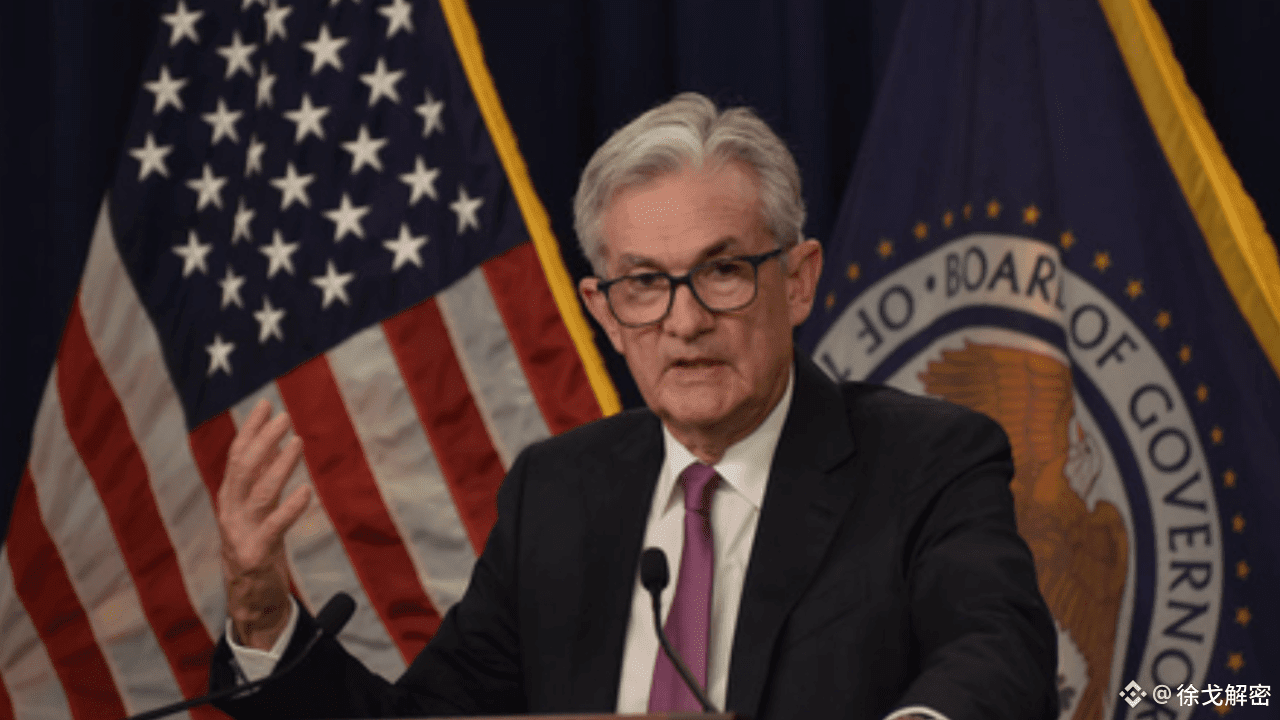
Will the Federal Reserve cut rates in December, and how will Bitcoin perform?Personally, I tend to think that the Federal Reserve will continue to cut rates in December, and the probability of a 50bp cut is small, but it's not unimaginable.
This means that regardless of whether it's cryptocurrency, US stocks, or A-shares, there will be a rebound after a bit of grinding.
As for Bitcoin, let's see if it revisits 82000. After some grinding, if the Federal Reserve continues to adopt a dovish stance, there will likely be a decent rebound before the interest rate cut is finalized on December 11, and it could very well rise above 100,000.
When the interest rate decision was announced in November, the market expected a 90% probability that the Federal Reserve would continue to cut rates in December.
However, the joyful atmosphere did not last long. Several Federal Reserve officials came out to release hawkish signals. Philadelphia Fed President Harker stated that 'the interest rate cut is on dangerous ground,' while Chicago Fed President Goolsbee said, 'I would rather vote against it than agree to continue cutting rates.' Cleveland Fed President Mester also believes that the current financial environment is 'too loose'. This caused the probability of a 25bp rate cut on Polymarket to drop to 30%.
Will the Federal Reserve cut rates in December, and how will Bitcoin perform?
Personally, I tend to think that the Federal Reserve will continue to cut rates in December, and the probability of a 50bp cut is small, but it's not unimaginable.
This means that regardless of whether it's cryptocurrency, US stocks, or A-shares, there will be a rebound after a bit of grinding.
As for Bitcoin, let's see if it revisits 82000. After some grinding, if the Federal Reserve continues to adopt a dovish stance, there will likely be a decent rebound before the interest rate cut is finalized on December 11, and it could very well rise above 100,000.
When the interest rate decision was announced in November, the market expected a 90% probability that the Federal Reserve would continue to cut rates in December.
However, the joyful atmosphere did not last long. Several Federal Reserve officials came out to release hawkish signals. Philadelphia Fed President Harker stated that 'the interest rate cut is on dangerous ground,' while Chicago Fed President Goolsbee said, 'I would rather vote against it than agree to continue cutting rates.' Cleveland Fed President Mester also believes that the current financial environment is 'too loose'. This caused the probability of a 25bp rate cut on Polymarket to drop to 30%.
This means that regardless of whether it's cryptocurrency, US stocks, or A-shares, there will be a rebound after a bit of grinding.
As for Bitcoin, let's see if it revisits 82000. After some grinding, if the Federal Reserve continues to adopt a dovish stance, there will likely be a decent rebound before the interest rate cut is finalized on December 11, and it could very well rise above 100,000.
When the interest rate decision was announced in November, the market expected a 90% probability that the Federal Reserve would continue to cut rates in December.
However, the joyful atmosphere did not last long. Several Federal Reserve officials came out to release hawkish signals. Philadelphia Fed President Harker stated that 'the interest rate cut is on dangerous ground,' while Chicago Fed President Goolsbee said, 'I would rather vote against it than agree to continue cutting rates.' Cleveland Fed President Mester also believes that the current financial environment is 'too loose'. This caused the probability of a 25bp rate cut on Polymarket to drop to 30%.
7
3.7k
·
--
Brothers and sisters, click to follow, the more fans, the more diligent we will be, love you all, touch the big one.
Brothers and sisters, click to follow, the more fans, the more diligent we will be, love you all, touch the big one.
徐戈解密
·
--
Detailed Breakdown of Why Bitcoin Plummeted in November
I've seen a lot of speculation.
First of all, the most popular narrative domestically is that the U.S. is targeting Bitcoin whales, triggering a wave of selling. They confidently cite the confiscation of 61,000 coins in the Zhimin case and 127,000 coins in the Zhi case as examples. This narrative is widely circulated on major short video platforms and is the soul narrative for most retail investors who are bearish on the market.
Strictly speaking, there is a certain impact. Many large investors do indeed find themselves panicking and unable to hold onto their beliefs, leading to impulsive selling.
Secondly, it is rumored that MSTR may be removed from the MSCI index, which could lead to an outflow of approximately $2.8 billion from MicroStrategy and affect its subsequent financing capabilities.
Of course, MSCI is not just targeting MicroStrategy. Any treasury company holding more than 50% of its total assets in digital assets is included in this. If the resolution passes and prompts related index providers to follow suit, the total outflow could reach up to $8.8 billion. Perhaps Wall Street is currently seeking to target treasury companies, forcing them to surrender their chips. MicroStrategy's price has already fallen 67% from its peak.
First of all, the most popular narrative domestically is that the U.S. is targeting Bitcoin whales, triggering a wave of selling. They confidently cite the confiscation of 61,000 coins in the Zhimin case and 127,000 coins in the Zhi case as examples. This narrative is widely circulated on major short video platforms and is the soul narrative for most retail investors who are bearish on the market.
Strictly speaking, there is a certain impact. Many large investors do indeed find themselves panicking and unable to hold onto their beliefs, leading to impulsive selling.
Secondly, it is rumored that MSTR may be removed from the MSCI index, which could lead to an outflow of approximately $2.8 billion from MicroStrategy and affect its subsequent financing capabilities.
Of course, MSCI is not just targeting MicroStrategy. Any treasury company holding more than 50% of its total assets in digital assets is included in this. If the resolution passes and prompts related index providers to follow suit, the total outflow could reach up to $8.8 billion. Perhaps Wall Street is currently seeking to target treasury companies, forcing them to surrender their chips. MicroStrategy's price has already fallen 67% from its peak.
1
226
·
--
Article
Detailed Breakdown of Why Bitcoin Plummeted in NovemberI've seen a lot of speculation.
First of all, the most popular narrative domestically is that the U.S. is targeting Bitcoin whales, triggering a wave of selling. They confidently cite the confiscation of 61,000 coins in the Zhimin case and 127,000 coins in the Zhi case as examples. This narrative is widely circulated on major short video platforms and is the soul narrative for most retail investors who are bearish on the market.
Strictly speaking, there is a certain impact. Many large investors do indeed find themselves panicking and unable to hold onto their beliefs, leading to impulsive selling.
Secondly, it is rumored that MSTR may be removed from the MSCI index, which could lead to an outflow of approximately $2.8 billion from MicroStrategy and affect its subsequent financing capabilities.
Of course, MSCI is not just targeting MicroStrategy. Any treasury company holding more than 50% of its total assets in digital assets is included in this. If the resolution passes and prompts related index providers to follow suit, the total outflow could reach up to $8.8 billion. Perhaps Wall Street is currently seeking to target treasury companies, forcing them to surrender their chips. MicroStrategy's price has already fallen 67% from its peak.
Detailed Breakdown of Why Bitcoin Plummeted in November
I've seen a lot of speculation.
First of all, the most popular narrative domestically is that the U.S. is targeting Bitcoin whales, triggering a wave of selling. They confidently cite the confiscation of 61,000 coins in the Zhimin case and 127,000 coins in the Zhi case as examples. This narrative is widely circulated on major short video platforms and is the soul narrative for most retail investors who are bearish on the market.
Strictly speaking, there is a certain impact. Many large investors do indeed find themselves panicking and unable to hold onto their beliefs, leading to impulsive selling.
Secondly, it is rumored that MSTR may be removed from the MSCI index, which could lead to an outflow of approximately $2.8 billion from MicroStrategy and affect its subsequent financing capabilities.
Of course, MSCI is not just targeting MicroStrategy. Any treasury company holding more than 50% of its total assets in digital assets is included in this. If the resolution passes and prompts related index providers to follow suit, the total outflow could reach up to $8.8 billion. Perhaps Wall Street is currently seeking to target treasury companies, forcing them to surrender their chips. MicroStrategy's price has already fallen 67% from its peak.
First of all, the most popular narrative domestically is that the U.S. is targeting Bitcoin whales, triggering a wave of selling. They confidently cite the confiscation of 61,000 coins in the Zhimin case and 127,000 coins in the Zhi case as examples. This narrative is widely circulated on major short video platforms and is the soul narrative for most retail investors who are bearish on the market.
Strictly speaking, there is a certain impact. Many large investors do indeed find themselves panicking and unable to hold onto their beliefs, leading to impulsive selling.
Secondly, it is rumored that MSTR may be removed from the MSCI index, which could lead to an outflow of approximately $2.8 billion from MicroStrategy and affect its subsequent financing capabilities.
Of course, MSCI is not just targeting MicroStrategy. Any treasury company holding more than 50% of its total assets in digital assets is included in this. If the resolution passes and prompts related index providers to follow suit, the total outflow could reach up to $8.8 billion. Perhaps Wall Street is currently seeking to target treasury companies, forcing them to surrender their chips. MicroStrategy's price has already fallen 67% from its peak.
7
2
66
6.5k
·
--
Article
Things have gone wrong; Bitcoin is experiencing an atypical bear market.Bitcoin has broken below 90,000, and the structure has become very ugly.
The probability of reaching 150,000 by the end of the year is decreasing, but you also cannot expect the price to drop smoothly to 40,000 or 50,000.
The overall environment is not bad right now; even if it drops to 70,000 again, it is still possible to rise to 100,000 or even 120,000 within one to two months to create a triple top.
Some say that altcoins should be shorted if possible, which can be very deadly. In this wave of Bitcoin's decline, many altcoins did not fall; some even rose. As long as the market is not abandoned, altcoins can rebound at any time with a short squeeze-style surge. Of course, this is the best opportunity to clear positions.
Things have gone wrong; Bitcoin is experiencing an atypical bear market.
Bitcoin has broken below 90,000, and the structure has become very ugly.
The probability of reaching 150,000 by the end of the year is decreasing, but you also cannot expect the price to drop smoothly to 40,000 or 50,000.
The overall environment is not bad right now; even if it drops to 70,000 again, it is still possible to rise to 100,000 or even 120,000 within one to two months to create a triple top.
Some say that altcoins should be shorted if possible, which can be very deadly. In this wave of Bitcoin's decline, many altcoins did not fall; some even rose. As long as the market is not abandoned, altcoins can rebound at any time with a short squeeze-style surge. Of course, this is the best opportunity to clear positions.
The probability of reaching 150,000 by the end of the year is decreasing, but you also cannot expect the price to drop smoothly to 40,000 or 50,000.
The overall environment is not bad right now; even if it drops to 70,000 again, it is still possible to rise to 100,000 or even 120,000 within one to two months to create a triple top.
Some say that altcoins should be shorted if possible, which can be very deadly. In this wave of Bitcoin's decline, many altcoins did not fall; some even rose. As long as the market is not abandoned, altcoins can rebound at any time with a short squeeze-style surge. Of course, this is the best opportunity to clear positions.
1
4
663
·
--
Article
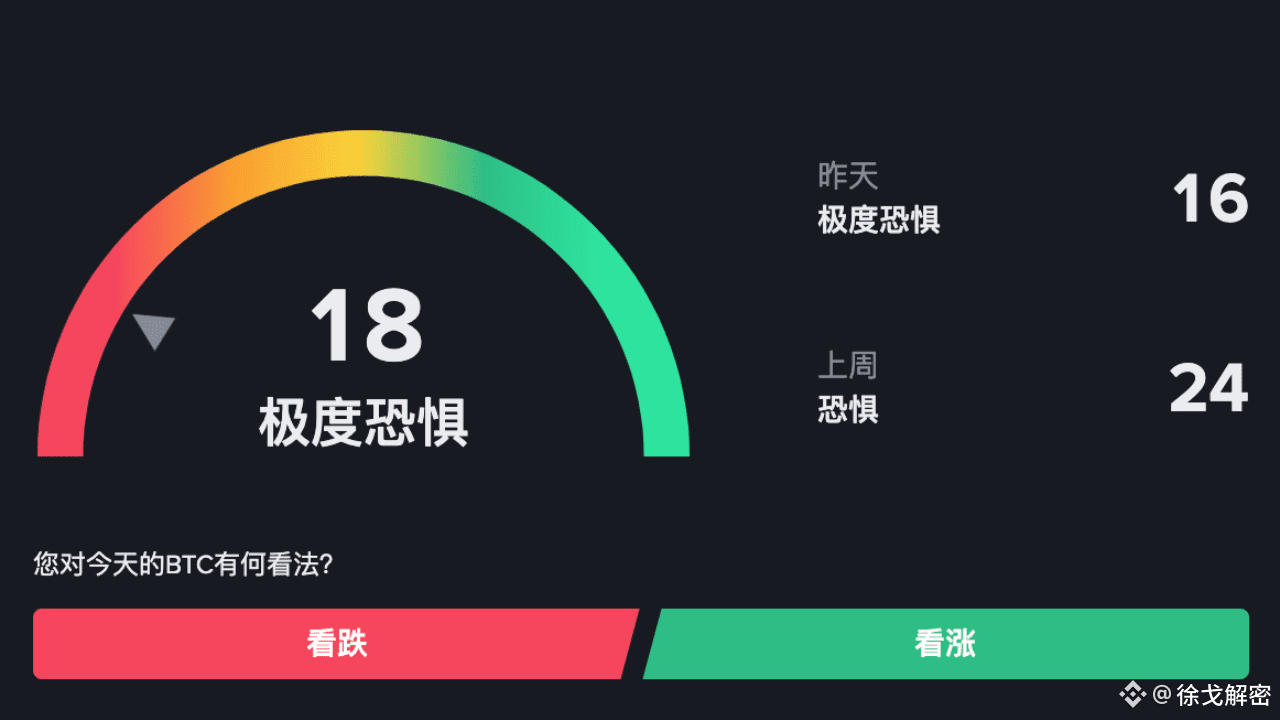
Fear Index 18, is the crypto bear coming? Pay attention to structural opportunitiesThe market sentiment fear index indicated by the universe's largest exchange was 16 yesterday and 18 today.
The most wonderful wealth-indicating number points to the greatest fear of humanity, a bit of dark humor.
The weekend market has shown little fluctuation, hovering between 94000 and 96000, looking like it's about to die.
Come, let's face a question directly, is it a bear market?
For most altcoins, it's worse than a bear market, the excess has been compressed to a heap of withered kindling.
As for Bitcoin, it has only pulled back about 20 points from its high, defining a bear market as left-side trading.
From the macro environment, we are currently in a window of gradually releasing liquidity, the U.S. has reopened, and is about to stop tapering, with no bear market backdrop at all.
Fear Index 18, is the crypto bear coming? Pay attention to structural opportunities
The market sentiment fear index indicated by the universe's largest exchange was 16 yesterday and 18 today.
The most wonderful wealth-indicating number points to the greatest fear of humanity, a bit of dark humor.
The weekend market has shown little fluctuation, hovering between 94000 and 96000, looking like it's about to die.
Come, let's face a question directly, is it a bear market?
For most altcoins, it's worse than a bear market, the excess has been compressed to a heap of withered kindling.
As for Bitcoin, it has only pulled back about 20 points from its high, defining a bear market as left-side trading.
From the macro environment, we are currently in a window of gradually releasing liquidity, the U.S. has reopened, and is about to stop tapering, with no bear market backdrop at all.
The most wonderful wealth-indicating number points to the greatest fear of humanity, a bit of dark humor.
The weekend market has shown little fluctuation, hovering between 94000 and 96000, looking like it's about to die.
Come, let's face a question directly, is it a bear market?
For most altcoins, it's worse than a bear market, the excess has been compressed to a heap of withered kindling.
As for Bitcoin, it has only pulled back about 20 points from its high, defining a bear market as left-side trading.
From the macro environment, we are currently in a window of gradually releasing liquidity, the U.S. has reopened, and is about to stop tapering, with no bear market backdrop at all.
2
2
1
1.2k
·
--
Article
After the door opened, the US stock market crashed, crypto also collapsed, what to do?The Americans seem to have opened the door but also seem not to have, the CPI data is still not released, and the Federal Reserve officials are hesitating and intimidating that there will be no interest rate cuts in December.
The market is shocked, the good news from a few days ago has fallen back, the Nasdaq plunged 2.29%, tech stocks plummeted, Tesla dropped nearly 7 points, and Nvidia fell from its 200+ throne to 186.
In the crypto sector, Bitcoin fell by about 6 points, ETH dropped by around ten points at its peak, and of course, altcoins generally fell around ten points as well.
The risk warning has already been done: Beware of the severe collapse of the AI asset bubble soon.
After the door opened, the US stock market crashed, crypto also collapsed, what to do?
The Americans seem to have opened the door but also seem not to have, the CPI data is still not released, and the Federal Reserve officials are hesitating and intimidating that there will be no interest rate cuts in December.
The market is shocked, the good news from a few days ago has fallen back, the Nasdaq plunged 2.29%, tech stocks plummeted, Tesla dropped nearly 7 points, and Nvidia fell from its 200+ throne to 186.
In the crypto sector, Bitcoin fell by about 6 points, ETH dropped by around ten points at its peak, and of course, altcoins generally fell around ten points as well.
The risk warning has already been done: Beware of the severe collapse of the AI asset bubble soon.
The market is shocked, the good news from a few days ago has fallen back, the Nasdaq plunged 2.29%, tech stocks plummeted, Tesla dropped nearly 7 points, and Nvidia fell from its 200+ throne to 186.
In the crypto sector, Bitcoin fell by about 6 points, ETH dropped by around ten points at its peak, and of course, altcoins generally fell around ten points as well.
The risk warning has already been done: Beware of the severe collapse of the AI asset bubble soon.
1
198
·
--

Article
Nowhere else, let's talk about Duan Yongping's investment and life philosophy at 5 o'clock.About three to five days in advance, I saw on Douyin that on November 11, Xueqiu's founder Fang Sanwen would have a 90-minute exclusive interview with the Eastern Buffett Duan Yongping.
Yesterday, I specifically set up a phone to listen to the entire session at 1.5 times speed.
Of course, afterwards there were overwhelming AI summary articles, and I believe interested followers may have already bowed down and respectfully excerpted them.
The reason for writing this is to share some bizarre thoughts that flowed through Lao Xu's mind at that time.
1. Regarding Duan Yongping, he is known as the Eastern Buffett among the public, especially in the eyes of stock investors, as he is the true hidden billionaire in China.
Nowhere else, let's talk about Duan Yongping's investment and life philosophy at 5 o'clock.
About three to five days in advance, I saw on Douyin that on November 11, Xueqiu's founder Fang Sanwen would have a 90-minute exclusive interview with the Eastern Buffett Duan Yongping.
Yesterday, I specifically set up a phone to listen to the entire session at 1.5 times speed.
Of course, afterwards there were overwhelming AI summary articles, and I believe interested followers may have already bowed down and respectfully excerpted them.
The reason for writing this is to share some bizarre thoughts that flowed through Lao Xu's mind at that time.
1. Regarding Duan Yongping, he is known as the Eastern Buffett among the public, especially in the eyes of stock investors, as he is the true hidden billionaire in China.
Yesterday, I specifically set up a phone to listen to the entire session at 1.5 times speed.
Of course, afterwards there were overwhelming AI summary articles, and I believe interested followers may have already bowed down and respectfully excerpted them.
The reason for writing this is to share some bizarre thoughts that flowed through Lao Xu's mind at that time.
1. Regarding Duan Yongping, he is known as the Eastern Buffett among the public, especially in the eyes of stock investors, as he is the true hidden billionaire in China.
435
Log in to explore more content
Join global crypto users on Binance Square
⚡️ Get latest and useful information about crypto.
💬 Trusted by the world’s largest crypto exchange.
👍 Discover real insights from verified creators.
Email / Phone number
Trending Topics
SECHaltsCryptoETFReviewsAmidFundingLapse
94,244 views
871 Discussing
🚨 SEC FREEZES CRYPTO ETF REVIEWS!
A major development is shaking the crypto market!
Due to the U.S. government funding crisis, the SEC has reportedly paused reviews of more than 90 crypto ETF applications. #SECHaltsCryptoETFReviewsAmidFundingLapse
This could have a serious impact on the market.
$SOL , $DOGE and other altcoins waiting for ETF approvals may face significant delays.
ETF approvals are one of the biggest potential catalysts for institutional money entering crypto. Any delay could weaken short-term expectations and increase market uncertainty.
However, this is not a rejection. Once the funding situation is resolved, reviews could resume.
Personally, I think this is a development worth watching closely. The longer the uncertainty continues, the greater the potential impact on altcoin sentiment.
DYOR.
Kripto Kurdu
·6 Likes
·976 views
ZcashETFPostsFirstWeeklyOutflow$93.6M
68,981 views
218 Discussing
GreekPoliceBustCryptoScamRingArrest17
241,515 views
1,665 Discussing