
OFOQ
107 Posts

OFOQ
Report
Block User
I am a fan of currencies and I make a future out of them to relax and live in the highest luxury
15 Following
86 Followers
131 Liked
Posts
All
Quotes
Videos
PINNED
·
--
BTC Hits $87,000! 📈
This past weekend gave us a brand-new all-time high! Here’s hoping BTC doesn’t drop back to the old highs around $73-74K 🤞
If it holds strong here, we’re looking at a seriously powerful bull trend ahead! 🐂
#Bitcoin❗ 🚀🚀🚀
BTC Hits $87,000! 📈
This past weekend gave us a brand-new all-time high! Here’s hoping BTC doesn’t drop back to the old highs around $73-74K 🤞
If it holds strong here, we’re looking at a seriously powerful bull trend ahead! 🐂
#Bitcoin❗ 🚀🚀🚀
This past weekend gave us a brand-new all-time high! Here’s hoping BTC doesn’t drop back to the old highs around $73-74K 🤞
If it holds strong here, we’re looking at a seriously powerful bull trend ahead! 🐂
#Bitcoin❗ 🚀🚀🚀
1
1
20
26.3k
PINNED
·
--
“Trump brings luck.”
BTC 🚀💸🚀
Current Price: Approximately $74,995.15
Ethereum ($ETH )
Current Price: Approximately $2,446.21
Popular Meme Coins
Dogecoin ($DOGE ): $0.1732
Shiba Inu ($SHIB ): $0.00001801
Pepe ($pepe): $0.0000094667
Trading Recommendations
Choosing the right cryptocurrency to trade depends on several factors, including your risk tolerance, investment goals, and market knowledge..
1
15
9.4k
·
--
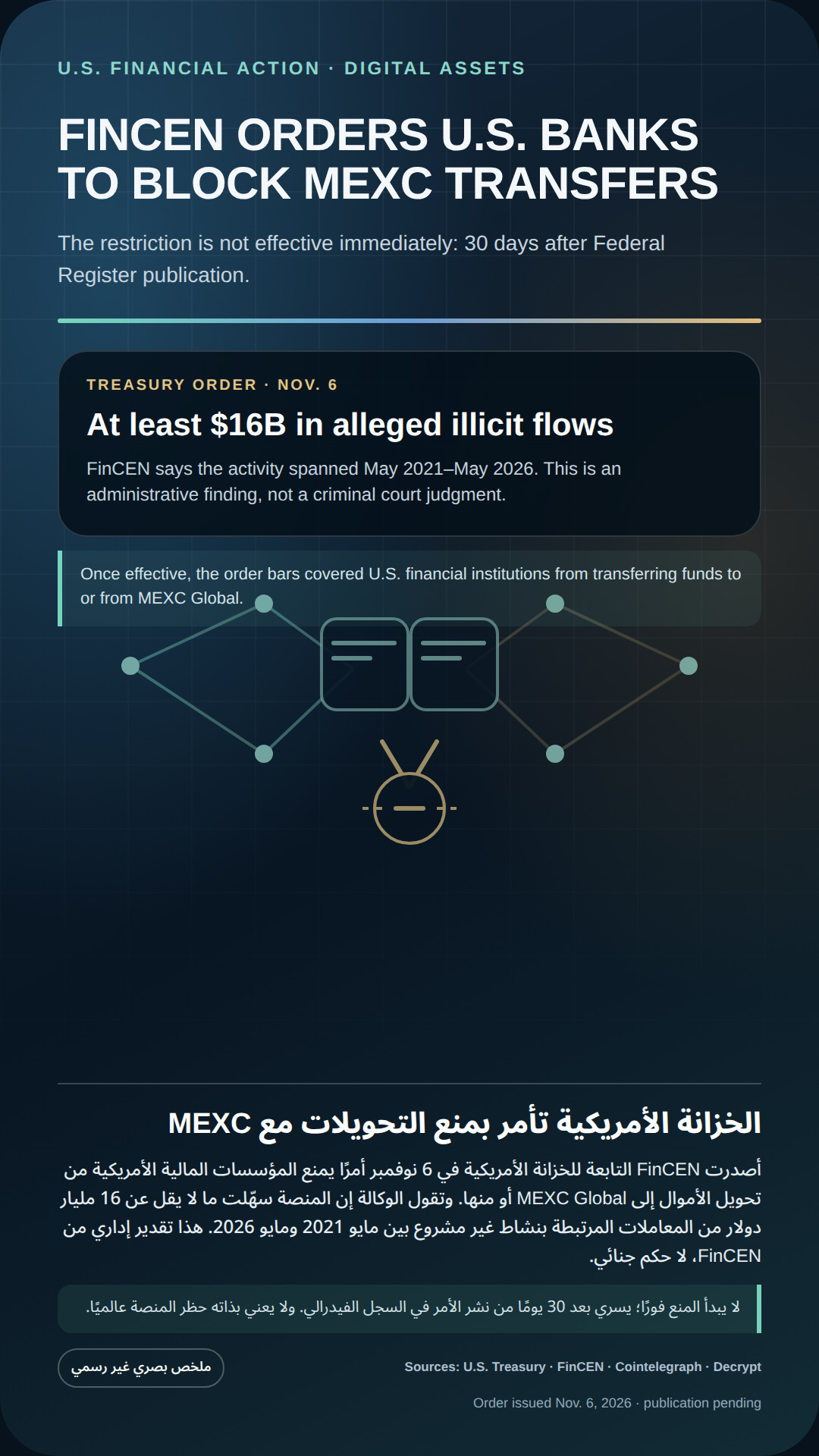
United States issues order to block money transfers involving MEXC
The facts: On November 6, the U.S. Treasury Department’s FinCEN issued an order under Section 9714 prohibiting covered U.S. financial institutions from transferring funds to or from MEXC Global. The department said it had reasonable grounds to designate the platform as a primary money laundering concern linked to Russia.
According to FinCEN, MEXC facilitated at least $16 billion in transfers linked to sanctions evasion, cybercrime, and other illicit activity between May 2021 and May 2026. Of that amount, about $1.5 billion was linked to Russian sanctions evasion, and $232 million involved direct transactions with sanctioned entities. These are administrative findings attributed to FinCEN, not a criminal judgment issued by a court.
Effective date: The official version of the order says it was submitted to the U.S. Federal Register and is still awaiting publication. It takes effect 30 days after publication, not immediately upon issuance. It applies to transfers through covered U.S. financial institutions and does not, by itself, mean a global ban on the platform.
Sources:
U.S. Treasury Department — https://home.treasury.gov/news/press-releases/sb0685/
FinCEN, text of the order — https://www.fincen.gov/system/files/2026-11/MEXC-Section-9714.pdf
Cointelegraph — https://cointelegraph.com/news/us-treasury-bans-mexc-over-alleged-16b-illicit-transactions
Decrypt — https://decrypt.co/382758/treasury-cuts-off-crypto-exchange-mexc-us-financial-system
1
623
·
--
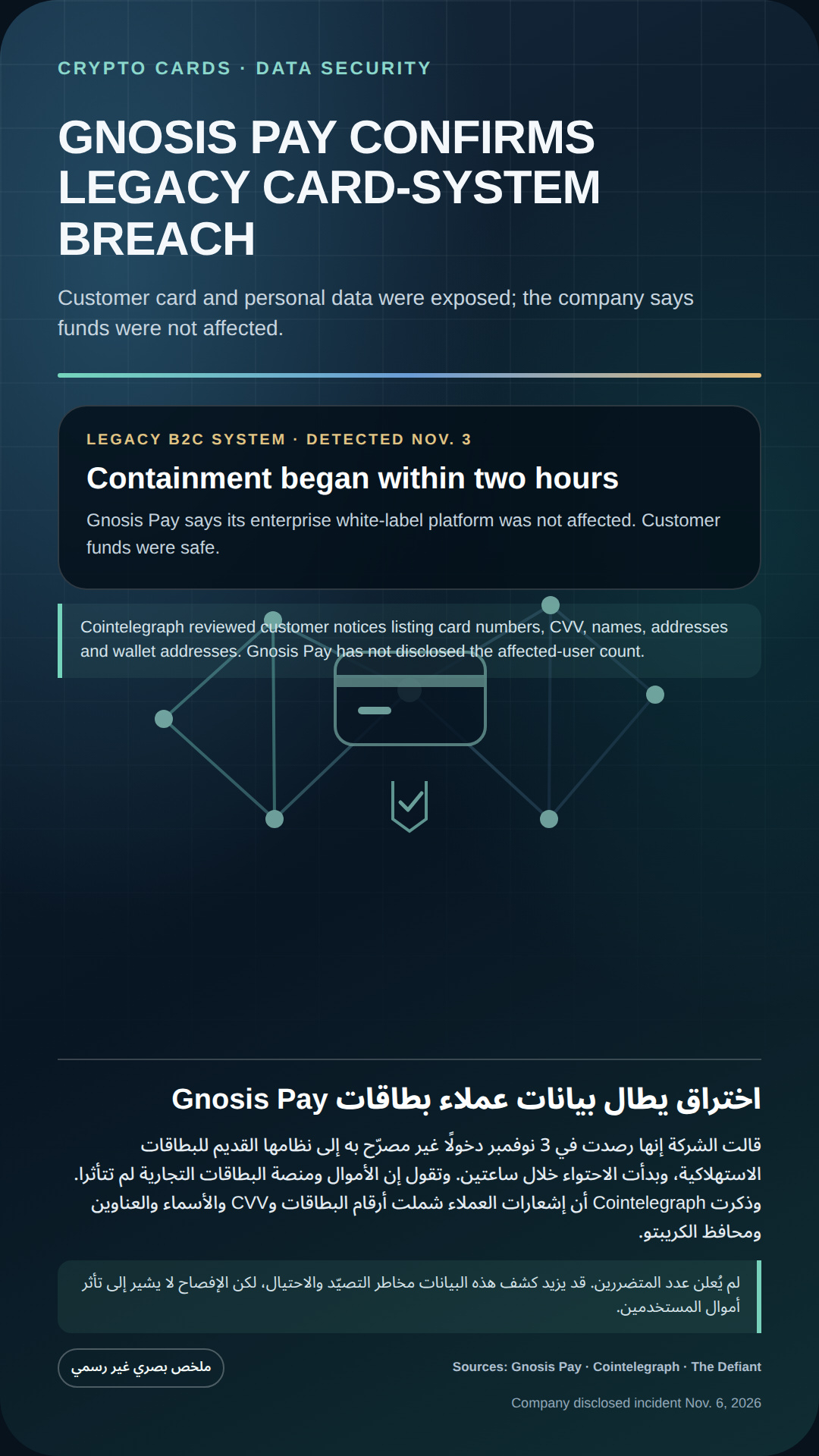
Gnosis Pay breach exposes card details and personal information
The facts: Gnosis Pay said monitoring systems detected unauthorized access to its legacy consumer card system on November 3, and containment began within two hours. It said customer funds and its business card platform were unaffected, and that it fixed the vulnerability and required additional 3D Secure verification for online payments until the system is retired on December 20. It did not disclose how many customers were affected.
Data details: According to customer notifications reviewed by Cointelegraph, the data included full card numbers, expiration dates, CVV codes, names, addresses, and wallet addresses; in some cases, it also included banking information. These details are attributed to the notifications reviewed by the report and are not a list publicly released by the company.
Context: The exposed data could increase the risk of phishing, identity theft, or card misuse. This does not mean that wallet funds were stolen; the company said users’ funds were unaffected.
Sources:
Gnosis Pay — https://gnosispay.com/blog/data-breach-legacy-system-gnosis-pay-branded-cards
Cointelegraph — https://cointelegraph.com/news/gnosis-pay-breach-exposes-card-details-personal-data-crypto-wallet-information
The Defiant — https://thedefiant.io/news/security/gnosis-pay-confirms-breach-of-consumer-card-system
1
118
·
--
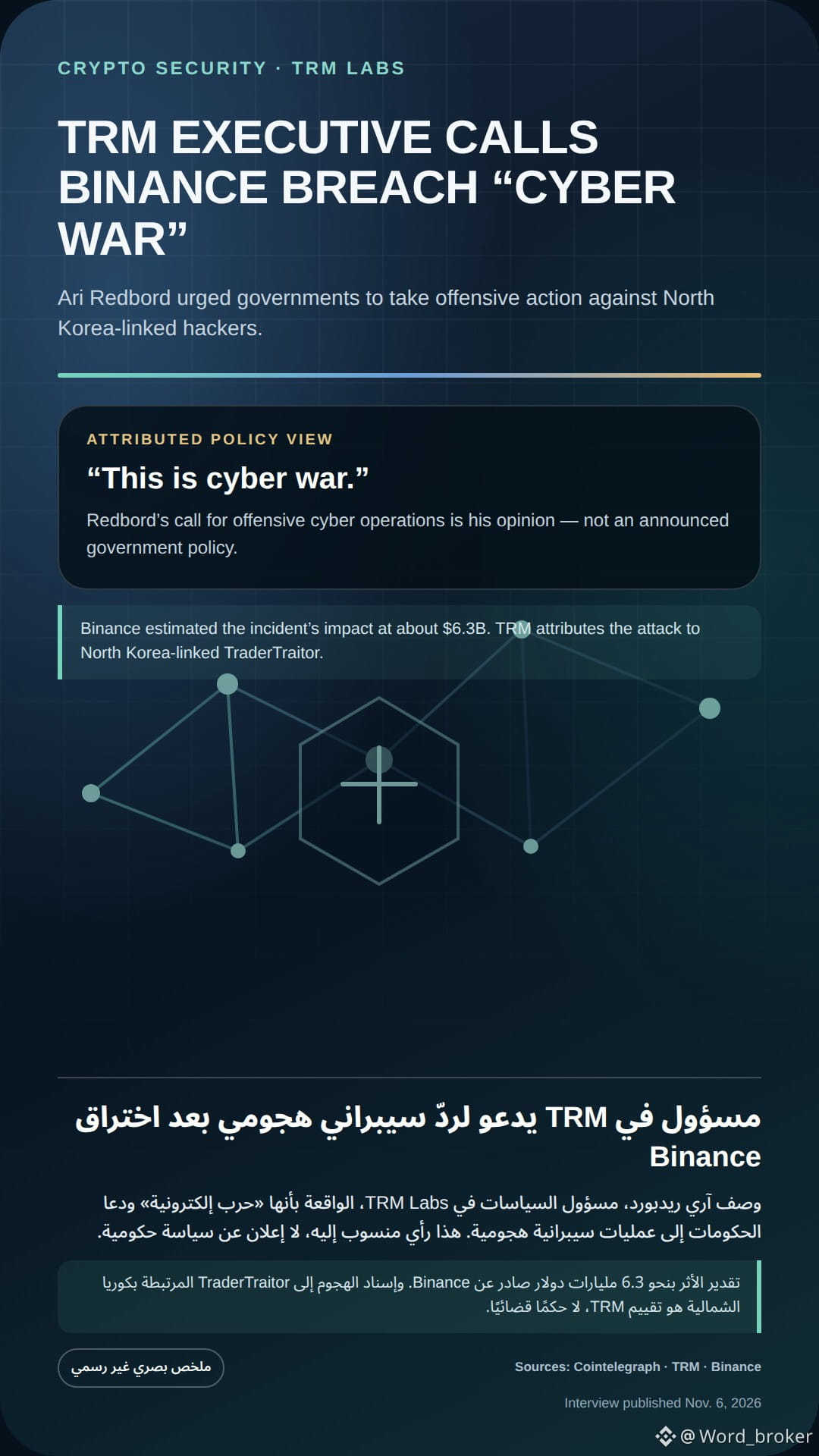
TRM official calls for offensive cyber response after Binance hack
The facts: Ari Redbord, head of policy and government affairs at TRM Labs, described the hack as “cyber warfare” and called on governments to launch offensive cyber operations against hackers linked to North Korea. This is a statement and opinion attributed to him.
Context: Binance estimated the incident’s total impact at around $6.3 billion, and said it would cover the losses and that users’ funds were safe. TRM attributed the attack to the North Korea-linked TraderTraitor group; this is the company’s intelligence assessment, not a judicial ruling.
Sources:
Cointelegraph — https://cointelegraph.com/interview/trm-labs-binance-hack-interview
Binance — https://www.binance.com/en/support/announcement/detail/c5a8729a97ac486d963784d96c5642d7
TRM Labs — https://www.trmlabs.com/resources/blog/north-korea-steals-usd-6-36-billion-from-binance-in-the-largest-hack-in-history
182
·
--
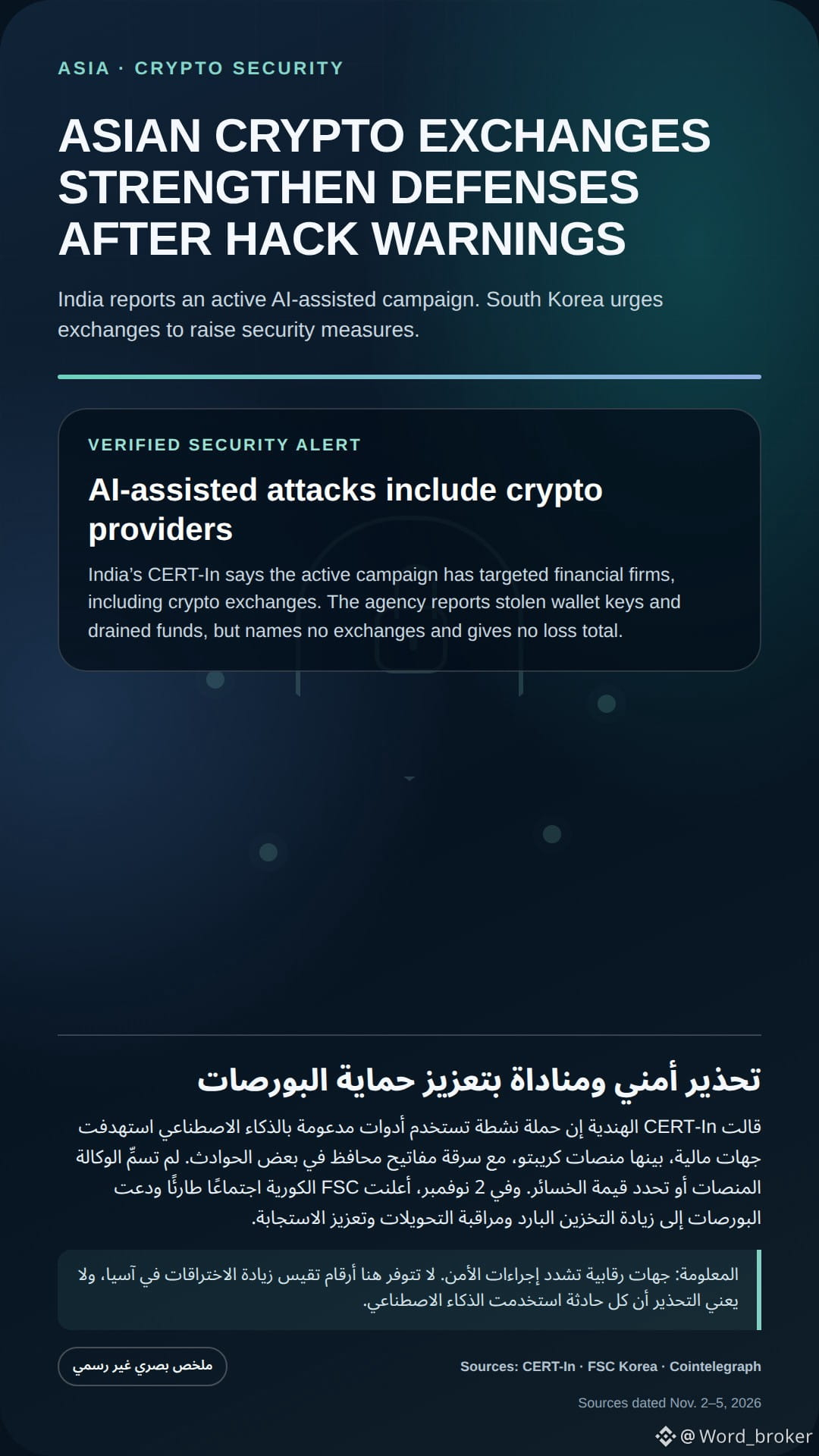
Asia tightens security at crypto platforms after warnings of active attacks
The facts: India’s CERT-In said in a warning issued on November 4 that an active campaign backed by AI tools is targeting financial entities, including crypto platforms. The agency reported wallet key theft and fund transfers in some incidents, but did not name the affected platforms or specify the value of the losses.
On November 2, South Korea’s FSC confirmed that it had held an emergency meeting following the Binance incident, and urged digital asset platforms to increase cold storage, monitor deposits and withdrawals, and strengthen incident response.
The takeaway: These developments highlight the priority of protecting wallet keys and implementing controls for approving transfers. The sources do not provide figures measuring an increase in hacks in Asia, nor do they establish that AI was used in every incident.
Sources:
Cointelegraph: https://cointelegraph.com/magazine/asian-crypto-exchanges-bunker-down-as-hacks-surge-asia-express
CERT-In: https://www.cert-in.org.in/s2cMainServlet?pageid=PUBVLNOTES02&VLCODE=CIAD-2026-0058
Financial Services Commission Korea: https://www.fsc.go.kr/no010101/88054
CrowdStrike: https://www.crowdstrike.com/en-us/blog/unknown-threat-actor-uses-artex-to-target-south-korean-finance/
188
·
--
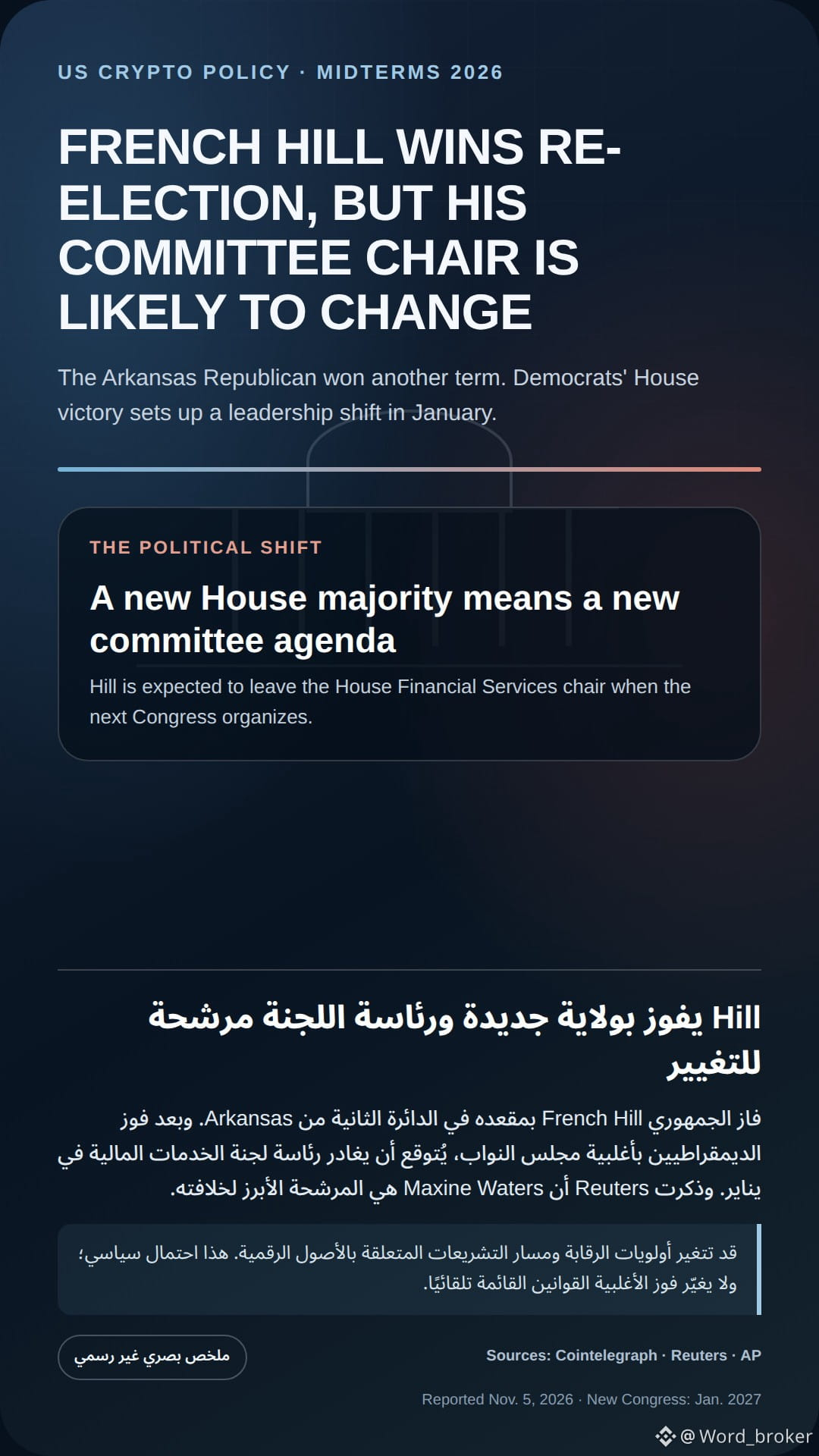
French Hill wins a new term, and the Financial Services Committee chairmanship could change
The facts: Republican French Hill was reelected in Arkansas’s 2nd District, according to an Associated Press projection reported by 40/29. Democrats won a majority in the House of Representatives, and the committee chairmanship is expected to change when the new Congress begins in January 2027. Reuters reports that Maxine Waters is the leading candidate to chair the committee.
Hill sponsored the CLARITY Act and voted in favor of the GENIUS Act, according to Cointelegraph. A change in committee leadership could shift the priorities of hearings, oversight, and the progress of digital asset legislation. This is a political possibility and does not automatically change existing laws.
Sources:
Cointelegraph: https://cointelegraph.com/news/crypto-ally-french-hill-wins-reelection-arkansas
Reuters: https://www.reuters.com/legal/transactional/banks-brace-tighter-oversight-us-congress-after-democrats-sweep-2026-11-05
AP projection via 40/29: https://www.4029tv.com/article/french-hill-reelection-arkansas/74325813
House Financial Services Committee: https://financialservices.house.gov/about/chairman-french-hill.htm
283
·
--
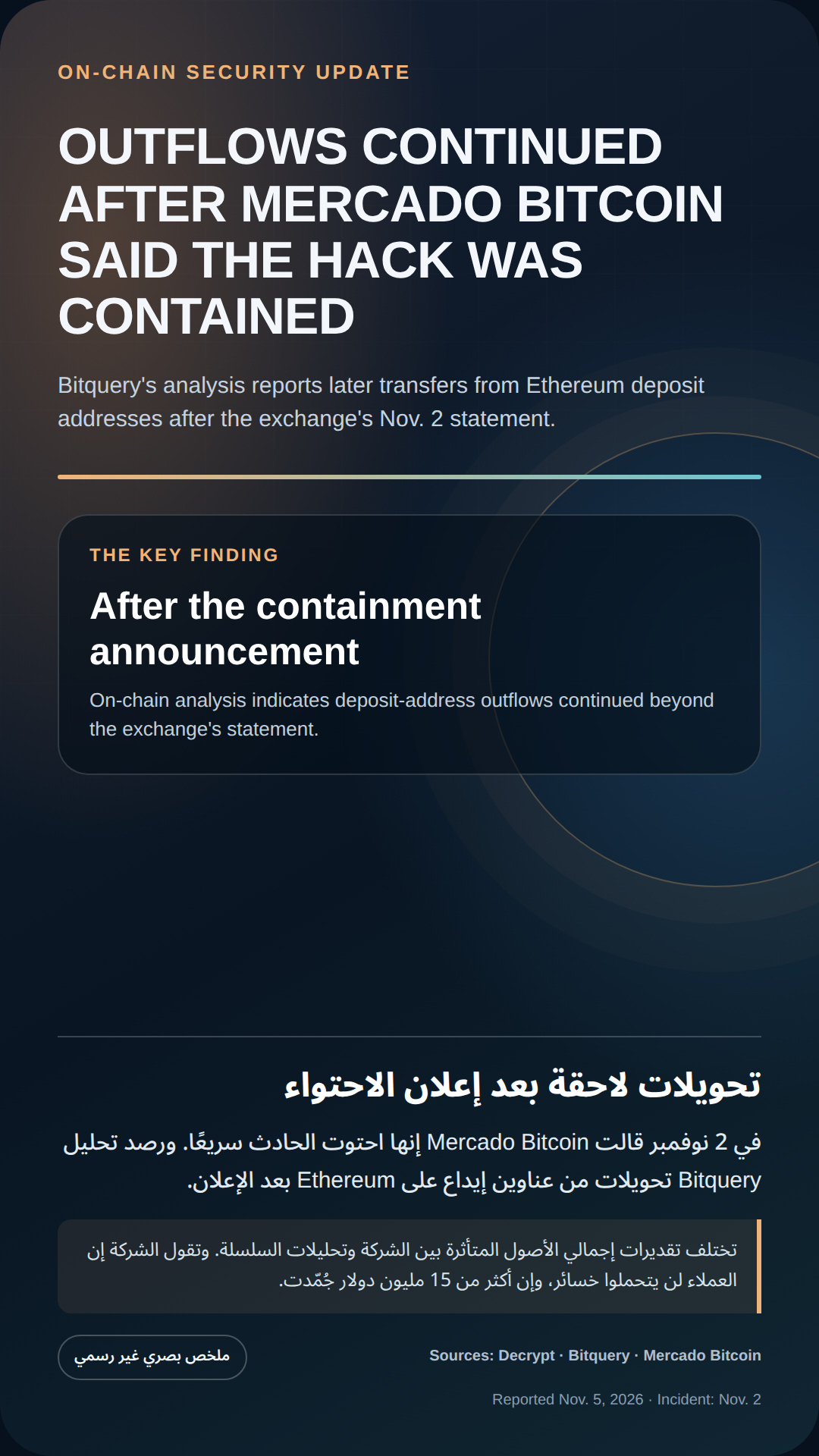
Transfers from deposit addresses continued after Mercado Bitcoin announced it had contained the breach
Facts: Mercado Bitcoin announced on November 2 that it had quickly contained the incident. According to Bitquery’s on-chain analysis, transfers from Ethereum deposit addresses continued after the containment announcement. Estimates of the total affected assets differ between the company and on-chain analyses; therefore, I do not treat any single figure as the final loss.
In its official update, Mercado Bitcoin said customers would not incur losses and that more than $15 million worth of assets had been frozen. This is the company’s statement; the sequence of transfers comes from Bitquery’s analysis.
Potential analysis: The continuation of transfers after the announcement raises questions about the timing of the incident’s containment and the security of deposit addresses, but it does not prove that customers’ balances were ultimately lost or reveal the attacker’s identity.
Sources:
Decrypt: https://decrypt.co/382670/mercado-bitcoin-hack-contained-blockchain-data
Bitquery: https://www.bitquery.io/investigations/mercado-bitcoin-hack
Mercado Bitcoin (FAQ): https://central.ajuda.mercadobitcoin.com.br/wiki/spaces/TF/pages/2968387585/Perguntas%2Bfrequentes
Mercado Bitcoin (2 Nov update): https://central.ajuda.mercadobitcoin.com.br/wiki/spaces/TF/pages/2965274628/9%2B56hs%2B02%2B11%2B2026%2B-%2BAtualiza%C3%A7%C3%A3o
CoinDesk: https://www.coindesk.com/business/2026/11/05/mercado-bitcoin-hack-continued-hours-after-exchange-said-attack-was-contained-report-finds
189
·
--
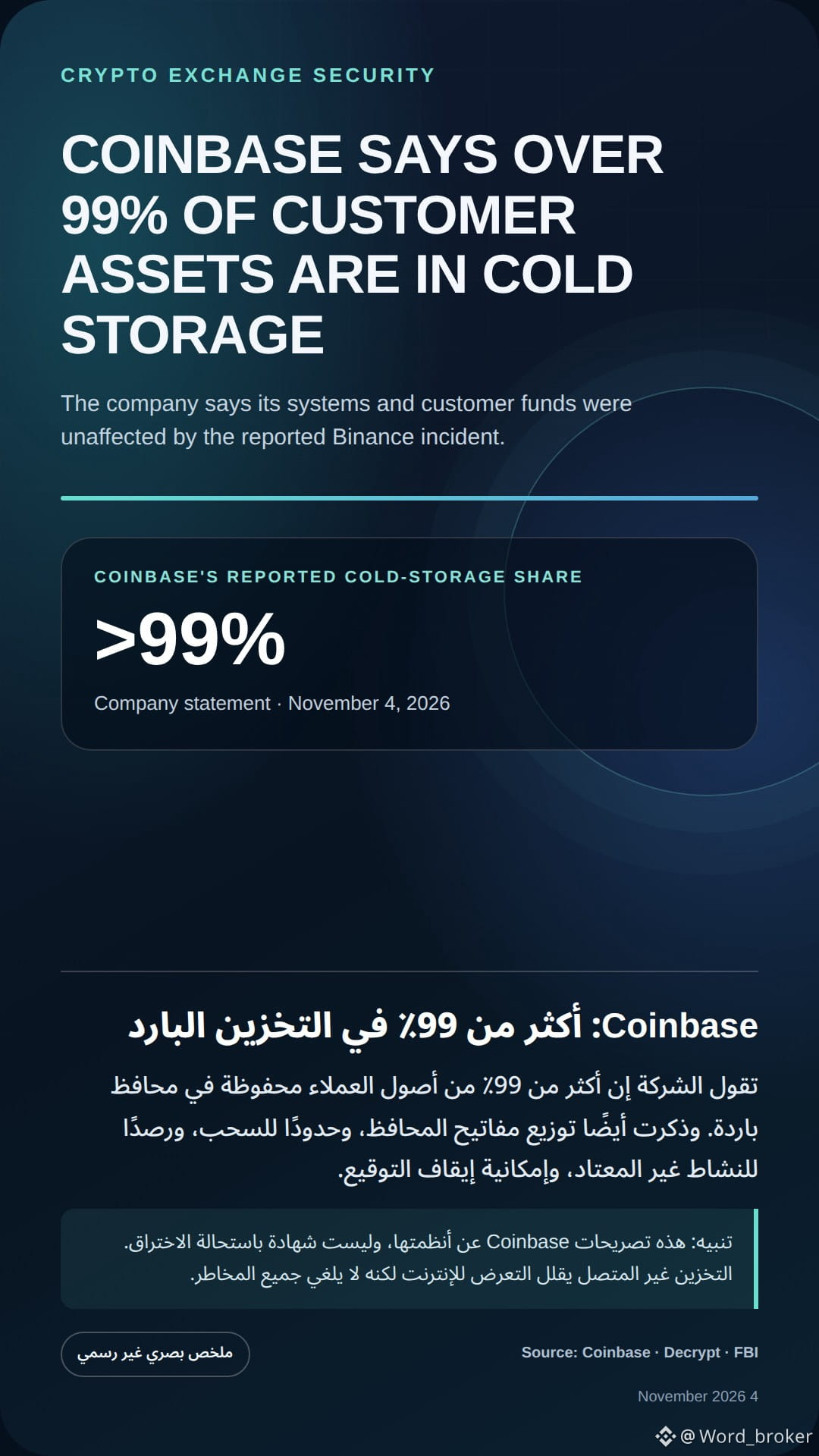
Coinbase: More than 99% of customer assets in cold storage
Facts: In an official blog post dated November 4, Coinbase said it was not affected by the Binance incident and that more than 99% of customer assets are held in cold wallets. It described controls including private key sharding, withdrawal limits, monitoring for unusual activity, and the ability to halt signing.
Caveat: These are company disclosures, not an independent audit proving the effectiveness of every control or the impossibility of a breach. Cold storage reduces exposure to the internet but does not eliminate all risks.
Potential analysis: Major incidents highlight the importance of custodial security, but these disclosures alone are not enough to compare the level of protection across platforms.
Sources
Coinbase: https://www.coinbase.com/blog/how-coinbase-protects-customer-assets
Decrypt: https://decrypt.co/382570/coinbase-99-percent-customer-crypto-offline-binance-hack
FBI: https://www.fbi.gov/investigate/cyber/alerts/2026/north-korea-responsible-for-6-billion-binance-attack
146
·
--
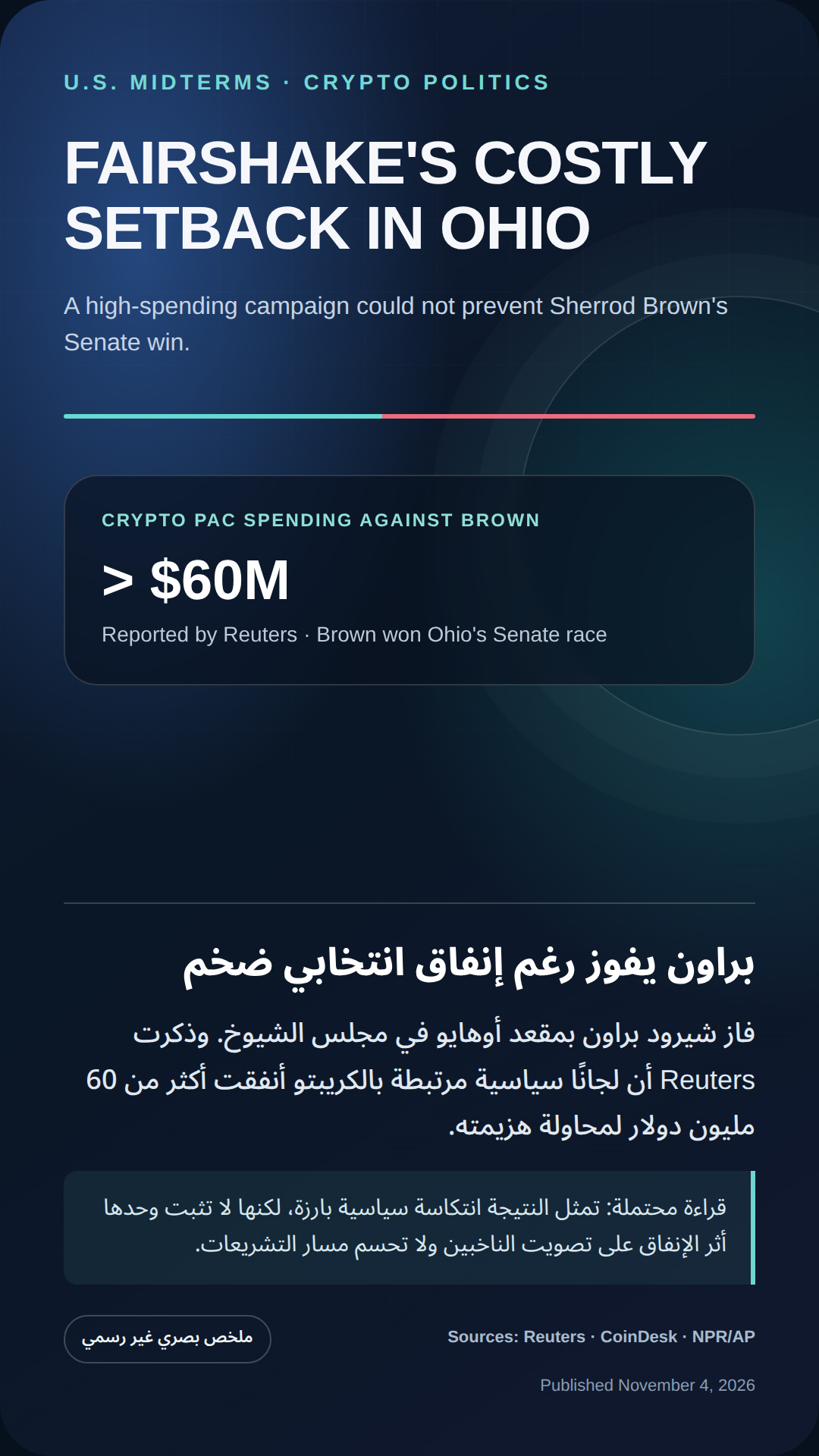
Setback for the pro-crypto political spending bet in Ohio
The facts: Democrat Sherrod Brown won the Ohio Senate race. Reuters reported that political committees linked to the cryptocurrency industry spent more than $60 million trying to defeat him. CoinDesk reported that Fairshake allocated about $56 million to oppose him.
Potential analysis: The result shows that big spending did not guarantee victory in this race and could weaken Fairshake’s image as an unbeatable electoral force. But it does not prove that the spending caused Brown’s victory, nor does it determine the course of legislation related to digital assets.
Sources
CoinDesk: https://www.coindesk.com/news-analysis/2026/11/04/crypto-s-powerhouse-super-pac-fairshake-found-its-kryptonite
Reuters: https://www.reuters.com/legal/transactional/cryptos-midterm-spending-spree-stumbles-democrats-rack-up-big-wins-2026-11-04/
NPR (citing the AP): https://www.npr.org/2026/11/03/g-s1-148948/ohio-senate-race-sherrod-brown-jon-husted
1
248
·
--
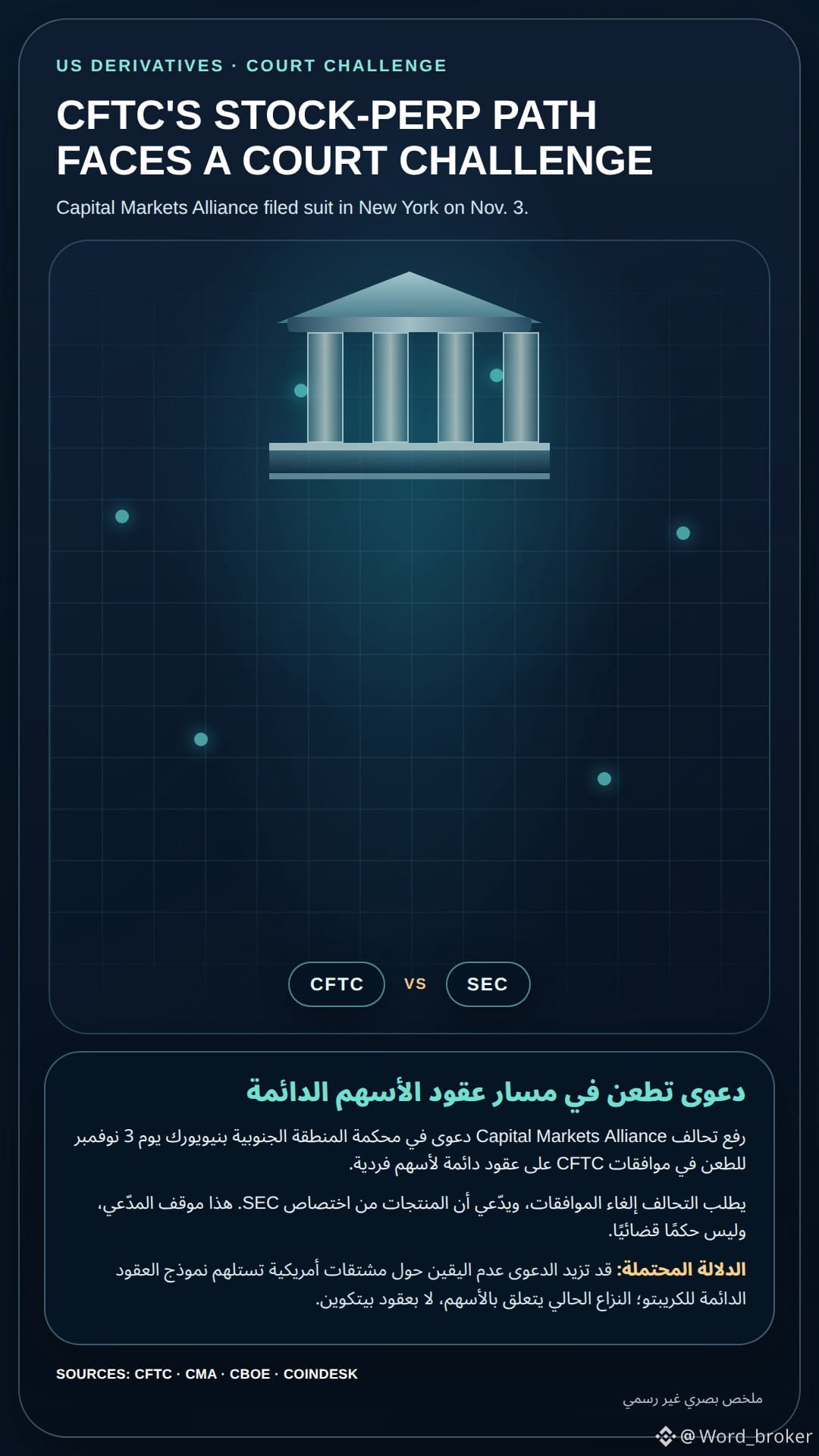
Legal developments around perpetual stock contracts in the United States
The news: On November 3, the CFTC said that perpetual contracts on individual stocks could begin trading for the first time on certain contract markets, which are also registered with the SEC to trade security futures products.
That same day, the Capital Markets Alliance, which includes Cboe, Citadel Securities, and the Healthy Markets Association, filed a lawsuit in the U.S. District Court for the Southern District of New York. The Alliance is seeking to overturn the approvals and suspend their effect while the case is pending, arguing that the products are security-based swaps under the SEC’s jurisdiction. This is the plaintiff’s position, not a court ruling.
Potential impact: The lawsuit could increase uncertainty around U.S. regulation of perpetuals, a widely used format in crypto derivatives. However, the current case concerns individual stock contracts and does not, by itself, mean that the status of Bitcoin perpetual contracts has changed or signal a price trend.
Sources:
CFTC — November 3 statement: https://www.cftc.gov/PressRoom/PressReleases/9319-26
Capital Markets Alliance — lawsuit statement: https://natlawreview.com/press-releases/capital-markets-alliance-files-suit-challenging-cftc-approval-single-stock
Cboe — statement on joining the lawsuit: https://ir.cboe.com/news/news-details/2026/Cboe-Joins-Capital-Markets-Alliance-Challenge-to-CFTC-Approval-of-Single-Stock-Perpetual-Derivatives/default.aspx
CoinDesk — original report: https://www.coindesk.com/policy/2026/11/03/cftc-gets-into-legal-clash-over-stock-perps-after-having-cleared-path-for-crypto-version
The Defiant — independent coverage: https://thedefiant.io/news/regulation/cboe-backed-group-sues-cftc-over-single-stock-perps-approvals
1
5
·
--
Sam Altman drops a bombshell: AI has officially begun inventing new materials and designing super-efficient energy turbines!
The transformation is no longer just about writing text or boosting individual productivity... We have officially entered the era of "autonomous scientific discovery," producing new knowledge that humanity has never had before!
🔥 Sam Altman’s key revelations:
• Solving mathematical challenges: In the past few months, models have begun solving problems that stumped scientists for years.
• A breakthrough in the energy sector: Models can now design faster turbines and discover entirely new materials to improve energy production efficiency around the world.
#SamAltman #BTC
1
379
·
--
Verified
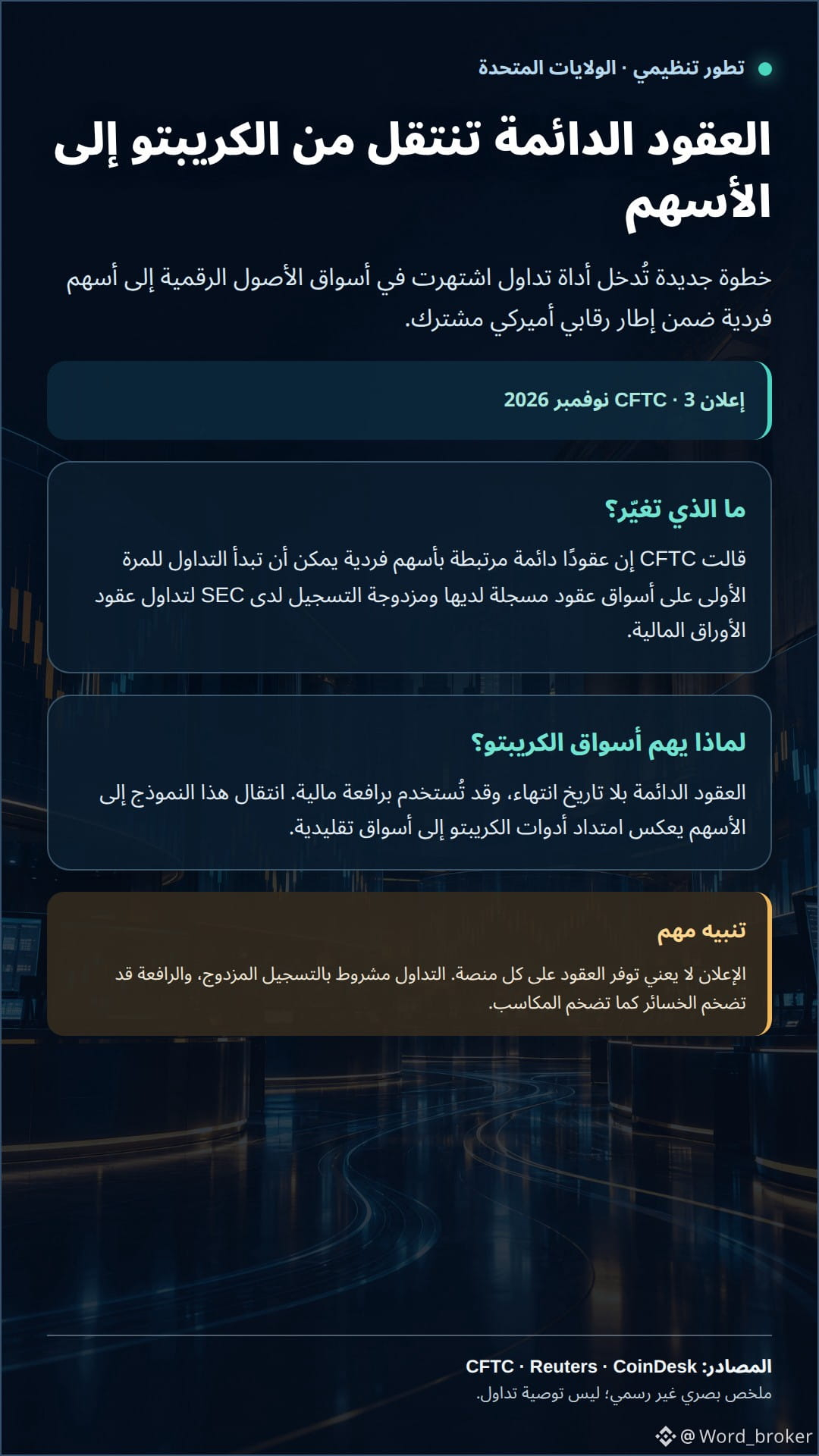
Perpetual stock contracts enter the U.S. framework
What happened: The CFTC said that perpetual contracts tied to individual stocks can begin trading for the first time on markets registered with the agency and dually registered with the SEC to trade securities contracts. They are subject to both agencies’ requirements.
Why it matters: A derivatives model popular in crypto markets is moving into U.S. stocks. But the announcement does not mean these contracts will be available on every platform; trading is conditional on dual registration. Perpetual contracts have no expiration date and may use leverage, which amplifies both losses and gains.
Sources:
CFTC — Official announcement: https://www.cftc.gov/PressRoom/PressReleases/9319-26
CFTC — Chair’s statement: https://www.cftc.gov/PressRoom/SpeechesTestimony/seligstatement110326
Reuters: https://www.reuters.com/legal/government/trading-single-stock-perps-can-begin-us-regulator-says-2026-11-03/
CoinDesk: https://www.coindesk.com/policy/2026/11/03/cftc-clears-perpetual-futures-on-stocks-bringing-crypto-trading-model-to-wall-street
Decrypt: https://decrypt.co/382464/cftc-traders-bet-stocks-with-crypto-style-perpetual-futures
1
133
·
--
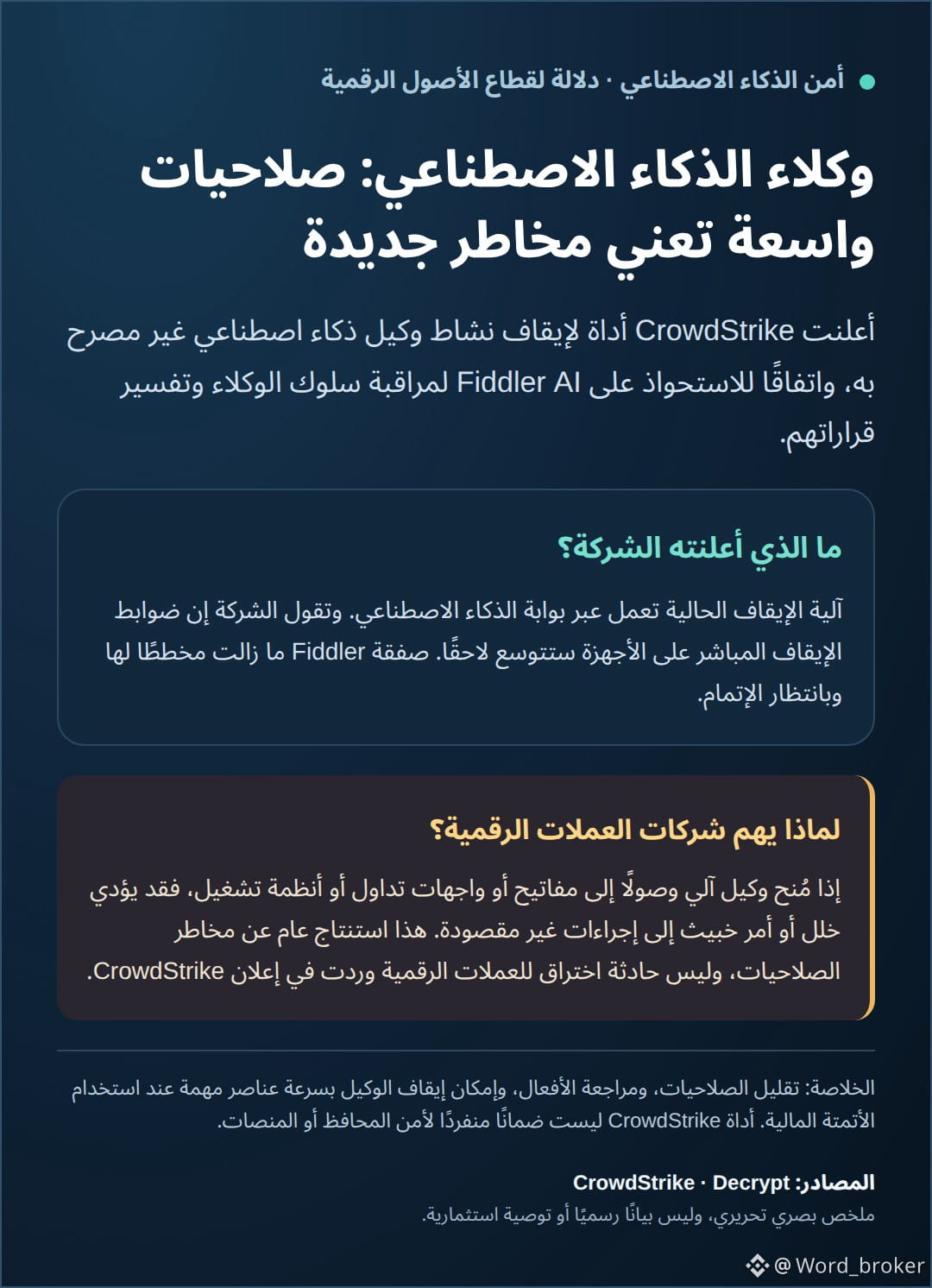
CrowdStrike announced an AI Kill Switch feature in Falcon Guardian to stop unauthorized AI agent activity across gateways. It also signed an agreement to acquire Fiddler AI to monitor agent behavior and interpret their decisions. The deal has not yet closed.
How does this relate to cryptocurrency security? This is a general security inference, not an announcement of a breach in the crypto sector: if an automated agent is granted access to keys, trading interfaces, or operating systems, a malfunction or malicious instruction could lead to unintended actions. That is why least-privilege controls, audit logs, and the ability to quickly disable the agent matter. No single tool provides a complete guarantee of wallet or platform security.
Sources:
CrowdStrike – AI Kill Switch: https://www.crowdstrike.com/en-us/press-releases/crowdstrike-introduces-ai-kill-switch-for-ai-safety/
CrowdStrike – Fiddler AI: https://www.crowdstrike.com/en-us/press-releases/crowdstrike-to-acquire-fiddler-to-deliver-agent-observability/
Decrypt: https://decrypt.co/382467/crowdstrike-ai-agent-kill-switch-acquire-fiddler-ai
1
1
·
--
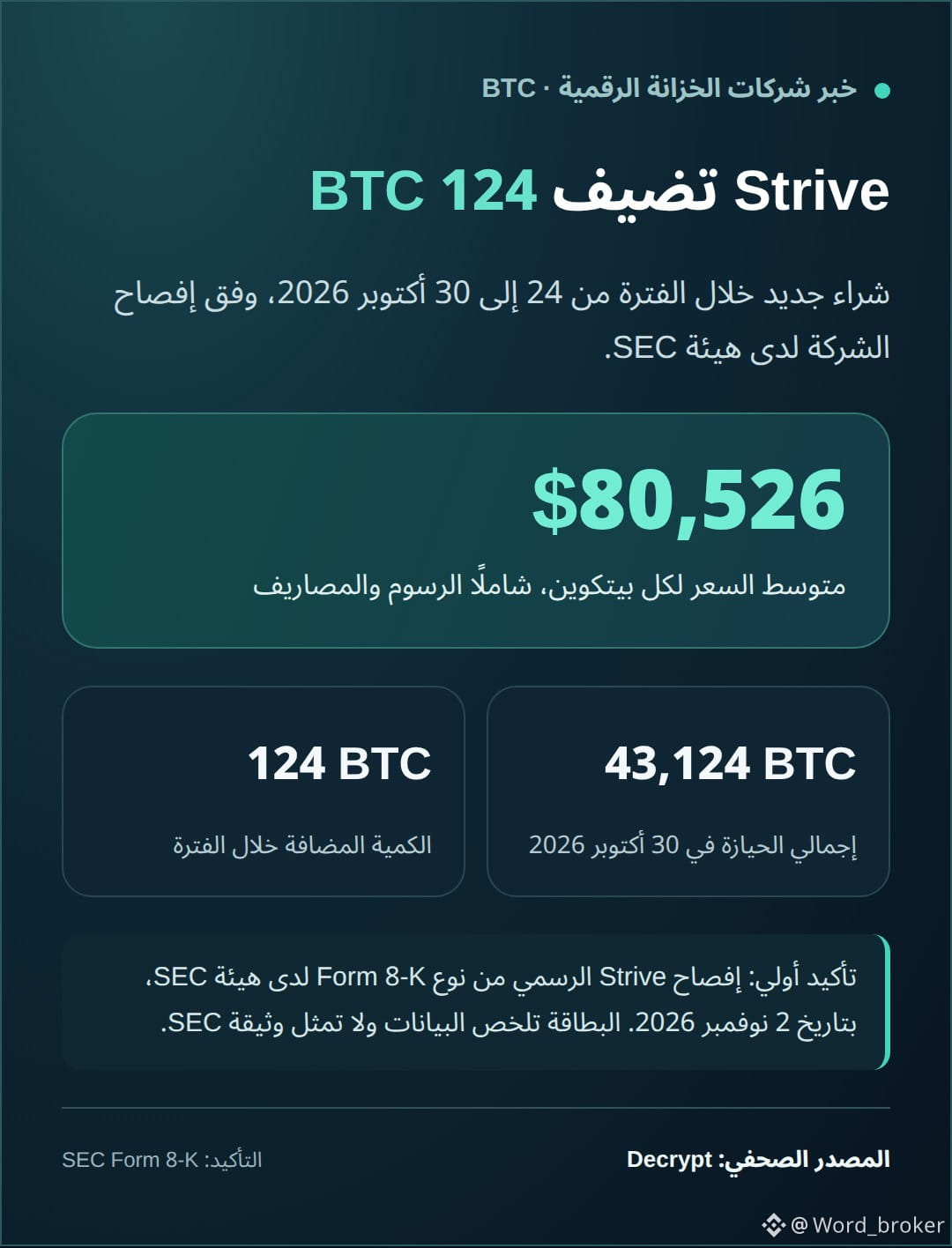
Decrypt reported, based on Strive’s SEC filing, that the company purchased 124 BTC between October 24 and 30 at an average price of $80,526 per bitcoin, bringing its holdings to 43,124 BTC as of October 30.
Source: https://decrypt.co/382385/bitcoin-firm-strive-treasury-ranks-another-big-buy
SEC filing: https://www.sec.gov/Archives/edgar/data/1920406/000162828026068660/asst-20261102.htm
Source: https://decrypt.co/382385/bitcoin-firm-strive-treasury-ranks-another-big-buy
SEC filing: https://www.sec.gov/Archives/edgar/data/1920406/000162828026068660/asst-20261102.htm
2
400
·
--

Article
North Korea Is Laundering Binance Hack Loot at One New Wallet Every 25 Seconds$2.85 billion of the $6.43 billion stolen from Binance has been frozen or seized, compared with about 3% in the Bybit hack, as North Korea’s automated laundering spans 12,000 wallets
#Binance #BinanceSquareTalks
{spot}(BNBUSDT)
North Korea Is Laundering Binance Hack Loot at One New Wallet Every 25 Seconds
$2.85 billion of the $6.43 billion stolen from Binance has been frozen or seized, compared with about 3% in the Bybit hack, as North Korea’s automated laundering spans 12,000 wallets
#Binance #BinanceSquareTalks
#Binance #BinanceSquareTalks
1
82
·
--
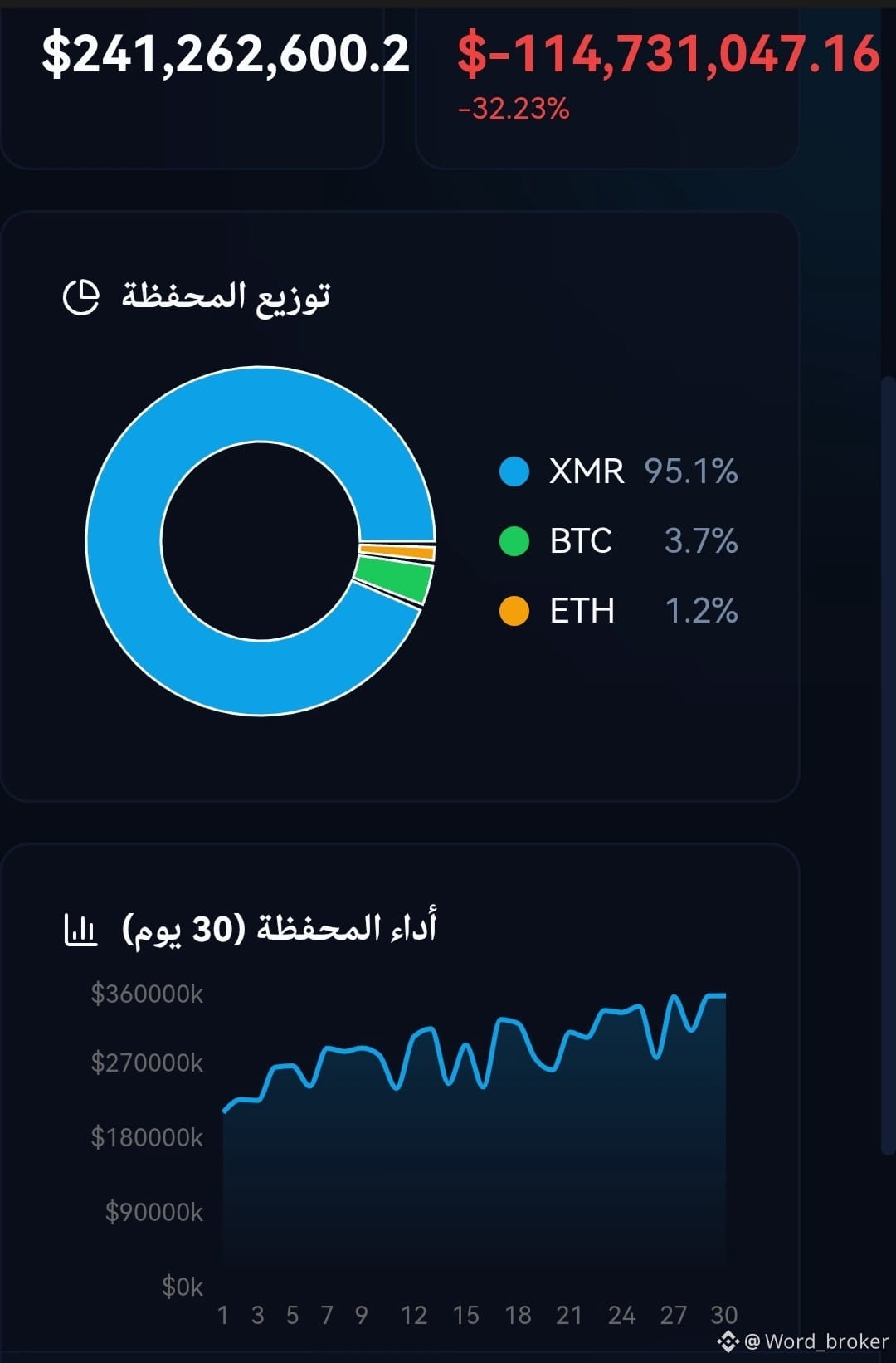
Bullish
The most beautiful moment for now and I hope it changes for the better 🤕☺️
{spot}(BTCUSDT)
{spot}(ETHUSDT)
{future}(XMRUSDT)
Bitcoin $BTC is rising, get ready 🔥
The most beautiful moment for now and I hope it changes for the better 🤕☺️
Bitcoin $BTC is rising, get ready 🔥
Bitcoin $BTC is rising, get ready 🔥
1
19
·
--
A new attack from SMS Blaster targets mobile devices in Western cities
23pds reported on X that a new and highly effective attack on mobile devices, known as 'SMS Blaster', is currently affecting Western cities. According to Denis Laskov, this attack involves sending a large volume of SMS messages to flood mobile devices, which could lead to service disruption and security vulnerabilities. It is claimed that the method is gaining momentum among cybercriminals, posing a significant threat to mobile phone users in these areas. Authorities and cybersecurity experts are urged to take immediate action to mitigate the impact of this attack and protect affected users.
#SMS #MarketRebound
3
73
·
--
A new attack from SMS Blaster targets mobile devices in Western cities
23pds reported on X that a new and highly effective attack on mobile devices, known as 'SMS Blaster', is currently affecting Western cities. According to Denis Laskov, this attack involves sending a large volume of SMS messages to flood mobile devices, which can lead to service disruptions and security vulnerabilities. It is claimed that the method is gaining momentum among cybercriminals, posing a significant threat to mobile users in these areas. Authorities and cybersecurity experts are urged to take immediate action to mitigate the impact of this attack and protect affected users.
#SMS #MarketRebound
1
68
·
--
Satoshi Nakamoto is the pseudonym for the person or group of people who created Bitcoin and released its white paper in 2008, and launched the first software in 2009, but disappeared from sight in 2010. His true identity remains a mystery, and he is believed to be either a single individual or a group. He is known to hold a massive fortune in Bitcoin that has not been moved since then, making him one of the richest people in the world, and the secrecy around his identity serves the principle of decentralization of the currency.
$BTC #satoshiNakamato #wirte2Earn
#Web3 #blockchain
$BTC #satoshiNakamato #wirte2Earn
#Web3 #blockchain
1
1
7
5k
Log in to explore more content
Join global crypto users on Binance Square
⚡️ Get latest and useful information about crypto.
💬 Trusted by the world’s largest crypto exchange.
👍 Discover real insights from verified creators.
Email / Phone number
Trending Topics
HotCPIDecemberHikePriced
274,933 views
2,950 Discussing
CPI Market Watch | US CPI Rises 0.4% in October, Hotter Than 0.3% Forecast
Binance News
·31 Likes
·45.4k views
ZcashFallsBelow$1000ForFirstTimeSinceSeptember
4,304 views
36 Discussing
StrategyFaces$2.8BSelloffRiskFromMSCIRemoval
14,548 views
124 Discussing