
Web3Sage
61 Posts

Web3Sage
Report
Block User
Open Trade
Occasional Trader
5.1 Years
6 Following
22 Followers
64 Liked
Posts
Portfolio
All
Quotes
·
--
Bullish
🚨 Why HTLC + RFQ Could Change Cross Chain Swaps
Cross chain transfers have improved significantly over the past few years, but they still face familiar challenges.
Wrapped assets, settlement delays, price changes during execution, and bridge security have all influenced how users think about moving liquidity between blockchains.
This is why a new approach is gaining attention.
Instead of relying solely on traditional bridges, modern cross chain infrastructure is beginning to combine RFQ and HTLC into a single workflow.
Here's why that matters.
🔹 RFQ (Request for Quote) allows professional liquidity providers to compete and offer a firm quote before a transaction is executed. This helps improve pricing and gives users greater certainty about the expected outcome.
🔹 HTLC (Hashed Timelock Contracts) acts as the settlement layer. It uses cryptographic conditions and time limits so that either both sides of the swap complete successfully or the assets can be refunded according to the protocol's rules.
Individually, both approaches have strengths.
Together, they create a more efficient model for cross chain execution.
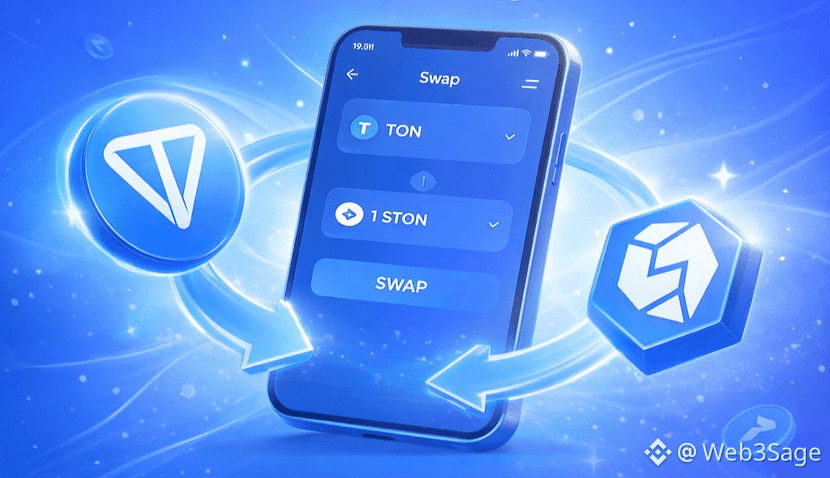
💡 This is the approach being developed with Omniston within the $STON ecosystem. By combining competitive quote discovery with HTLC based settlement, the goal is to enable native asset swaps without relying on wrapped tokens, while improving execution efficiency and reducing counterparty risk.
As cross chain activity continues to grow, the conversation is shifting beyond simply moving assets between networks. The focus is increasingly on how those assets are exchanged securely, efficiently, and with greater confidence.
The next evolution of DeFi may not be another bridge.
It may be smarter infrastructure that rethinks how cross chain swaps are executed from the ground up.
💬 Would you trust a traditional bridge for large transfers, or do you think HTLC based settlement represents the future of cross chain swaps?
#ston #Omniston #GRAM
🚨 Why HTLC + RFQ Could Change Cross Chain Swaps
Cross chain transfers have improved significantly over the past few years, but they still face familiar challenges.
Wrapped assets, settlement delays, price changes during execution, and bridge security have all influenced how users think about moving liquidity between blockchains.
This is why a new approach is gaining attention.
Instead of relying solely on traditional bridges, modern cross chain infrastructure is beginning to combine RFQ and HTLC into a single workflow.
Here's why that matters.
🔹 RFQ (Request for Quote) allows professional liquidity providers to compete and offer a firm quote before a transaction is executed. This helps improve pricing and gives users greater certainty about the expected outcome.
🔹 HTLC (Hashed Timelock Contracts) acts as the settlement layer. It uses cryptographic conditions and time limits so that either both sides of the swap complete successfully or the assets can be refunded according to the protocol's rules.
Individually, both approaches have strengths.
Together, they create a more efficient model for cross chain execution.
💡 This is the approach being developed with Omniston within the $STON ecosystem. By combining competitive quote discovery with HTLC based settlement, the goal is to enable native asset swaps without relying on wrapped tokens, while improving execution efficiency and reducing counterparty risk.
As cross chain activity continues to grow, the conversation is shifting beyond simply moving assets between networks. The focus is increasingly on how those assets are exchanged securely, efficiently, and with greater confidence.
The next evolution of DeFi may not be another bridge.
It may be smarter infrastructure that rethinks how cross chain swaps are executed from the ground up.
💬 Would you trust a traditional bridge for large transfers, or do you think HTLC based settlement represents the future of cross chain swaps?
#ston #Omniston #GRAM
Cross chain transfers have improved significantly over the past few years, but they still face familiar challenges.
Wrapped assets, settlement delays, price changes during execution, and bridge security have all influenced how users think about moving liquidity between blockchains.
This is why a new approach is gaining attention.
Instead of relying solely on traditional bridges, modern cross chain infrastructure is beginning to combine RFQ and HTLC into a single workflow.
Here's why that matters.
🔹 RFQ (Request for Quote) allows professional liquidity providers to compete and offer a firm quote before a transaction is executed. This helps improve pricing and gives users greater certainty about the expected outcome.
🔹 HTLC (Hashed Timelock Contracts) acts as the settlement layer. It uses cryptographic conditions and time limits so that either both sides of the swap complete successfully or the assets can be refunded according to the protocol's rules.
Individually, both approaches have strengths.
Together, they create a more efficient model for cross chain execution.
💡 This is the approach being developed with Omniston within the $STON ecosystem. By combining competitive quote discovery with HTLC based settlement, the goal is to enable native asset swaps without relying on wrapped tokens, while improving execution efficiency and reducing counterparty risk.
As cross chain activity continues to grow, the conversation is shifting beyond simply moving assets between networks. The focus is increasingly on how those assets are exchanged securely, efficiently, and with greater confidence.
The next evolution of DeFi may not be another bridge.
It may be smarter infrastructure that rethinks how cross chain swaps are executed from the ground up.
💬 Would you trust a traditional bridge for large transfers, or do you think HTLC based settlement represents the future of cross chain swaps?
#ston #Omniston #GRAM
1
196
·
--
Bullish
Every Great DeFi Ecosystem Needs a Liquidity Engine
A blockchain can have fast transactions.
It can have low fees.
It can attract developers and new users.
But without efficient liquidity, even the strongest ecosystem struggles to unlock its full potential.
Liquidity is what transforms a blockchain from a network into an economy.
As the TON ecosystem continues to grow, so does the number of tokens, protocols, and trading opportunities. While this growth is exciting, it also introduces a familiar challenge: liquidity becomes more distributed, making efficient trade execution increasingly important.
This is where Omniston brings a different perspective.
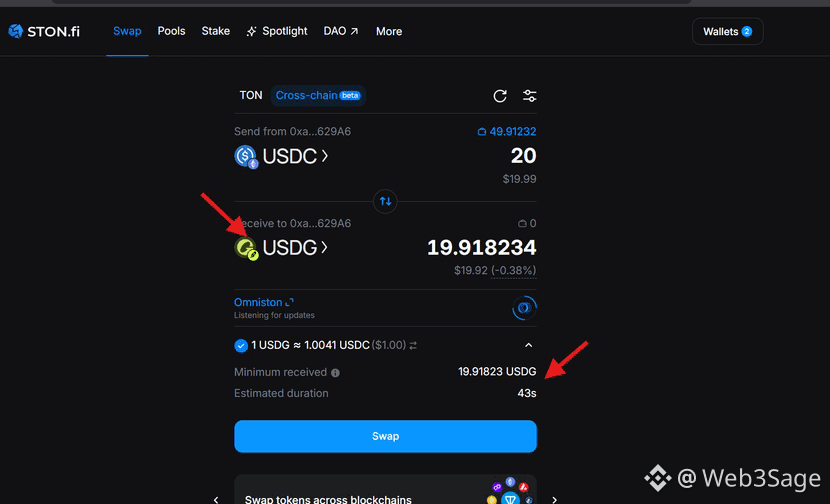
Rather than focusing solely on creating another place to trade, Omniston is designed to aggregate liquidity from supported sources and help applications access it through a unified execution layer.
In simple terms, it's about helping users find efficient execution without requiring them to search across multiple liquidity venues themselves.
For the $STON ecosystem, this represents an important evolution.
The conversation is no longer just about facilitating swaps, it's about improving how those swaps happen. Better routing, smarter liquidity access, and stronger developer infrastructure all contribute to a smoother DeFi experience.
As more applications are built on TON, infrastructure like Omniston could play an increasingly important role in connecting liquidity and reducing friction across the ecosystem.
The strongest DeFi ecosystems aren't defined only by how much liquidity they have.
They're also defined by how effectively that liquidity can be accessed.
💬 As TON continues to expand, what do you think will have the biggest impact on user experience: deeper liquidity, smarter execution, or better developer infrastructure?
#ston #TON #Omniston
Every Great DeFi Ecosystem Needs a Liquidity Engine
A blockchain can have fast transactions.
It can have low fees.
It can attract developers and new users.
But without efficient liquidity, even the strongest ecosystem struggles to unlock its full potential.
Liquidity is what transforms a blockchain from a network into an economy.
As the TON ecosystem continues to grow, so does the number of tokens, protocols, and trading opportunities. While this growth is exciting, it also introduces a familiar challenge: liquidity becomes more distributed, making efficient trade execution increasingly important.
This is where Omniston brings a different perspective.
Rather than focusing solely on creating another place to trade, Omniston is designed to aggregate liquidity from supported sources and help applications access it through a unified execution layer.
In simple terms, it's about helping users find efficient execution without requiring them to search across multiple liquidity venues themselves.
For the $STON ecosystem, this represents an important evolution.
The conversation is no longer just about facilitating swaps, it's about improving how those swaps happen. Better routing, smarter liquidity access, and stronger developer infrastructure all contribute to a smoother DeFi experience.
As more applications are built on TON, infrastructure like Omniston could play an increasingly important role in connecting liquidity and reducing friction across the ecosystem.
The strongest DeFi ecosystems aren't defined only by how much liquidity they have.
They're also defined by how effectively that liquidity can be accessed.
💬 As TON continues to expand, what do you think will have the biggest impact on user experience: deeper liquidity, smarter execution, or better developer infrastructure?
#ston #TON #Omniston
A blockchain can have fast transactions.
It can have low fees.
It can attract developers and new users.
But without efficient liquidity, even the strongest ecosystem struggles to unlock its full potential.
Liquidity is what transforms a blockchain from a network into an economy.
As the TON ecosystem continues to grow, so does the number of tokens, protocols, and trading opportunities. While this growth is exciting, it also introduces a familiar challenge: liquidity becomes more distributed, making efficient trade execution increasingly important.
This is where Omniston brings a different perspective.
Rather than focusing solely on creating another place to trade, Omniston is designed to aggregate liquidity from supported sources and help applications access it through a unified execution layer.
In simple terms, it's about helping users find efficient execution without requiring them to search across multiple liquidity venues themselves.
For the $STON ecosystem, this represents an important evolution.
The conversation is no longer just about facilitating swaps, it's about improving how those swaps happen. Better routing, smarter liquidity access, and stronger developer infrastructure all contribute to a smoother DeFi experience.
As more applications are built on TON, infrastructure like Omniston could play an increasingly important role in connecting liquidity and reducing friction across the ecosystem.
The strongest DeFi ecosystems aren't defined only by how much liquidity they have.
They're also defined by how effectively that liquidity can be accessed.
💬 As TON continues to expand, what do you think will have the biggest impact on user experience: deeper liquidity, smarter execution, or better developer infrastructure?
#ston #TON #Omniston
1
88
·
--
Bullish
What If the Fastest Swap Isn't Actually the Best Swap?
When most traders swap tokens, they judge the experience by one thing: speed.
If the transaction confirms in seconds, it feels like a success.
But speed is only one piece of the puzzle.
A swap can be incredibly fast and still execute at a less competitive price if it doesn't access the most suitable liquidity. Likewise, a slightly longer execution that intelligently evaluates multiple liquidity sources may deliver a better overall outcome.
As DeFi ecosystems continue to expand, this distinction becomes increasingly important.
More protocols mean more liquidity.
More liquidity means more fragmentation.
And more fragmentation means finding the best execution becomes a technical challenge rather than a simple transaction.
That's why the conversation is gradually shifting from "How fast is my swap?" to "How well was my swap executed?"
This is where projects like Omniston become interesting.
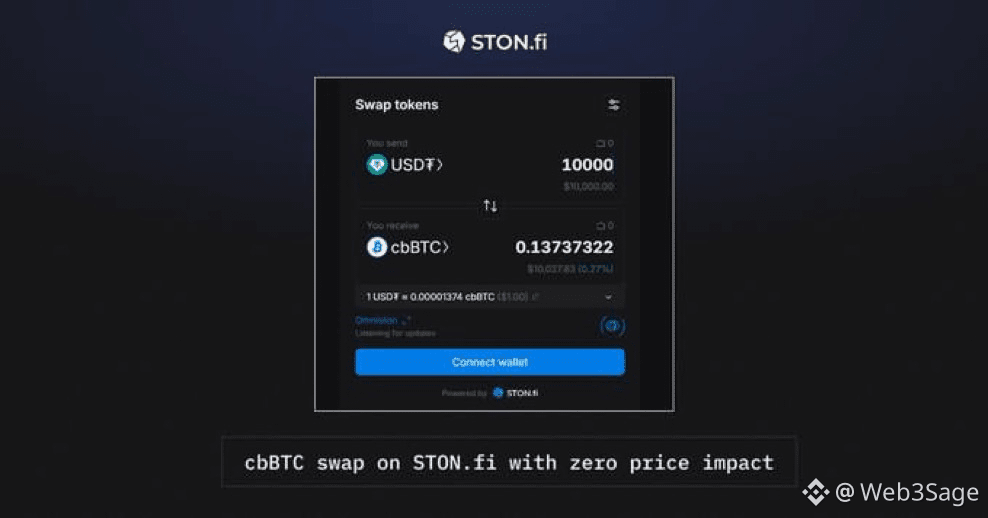
Instead of treating every swap as a direct path between two assets, Omniston is designed to aggregate supported liquidity sources and identify an efficient execution route. The goal isn't simply to execute a transaction quickly, it's to help ensure users receive competitive execution without needing to manually compare different liquidity options.
For the $STON ecosystem, this represents more than another feature. It reflects a broader vision where infrastructure works quietly in the background, allowing users to focus on the outcome rather than the complexity behind it.
As TON continues to grow, efficient execution may become one of the defining factors that separates good DeFi experiences from great ones.
💬 If you had to choose just one, what matters more to you when swapping assets: the fastest confirmation, the best execution price, or the lowest overall cost?
#ston #bitcoin #Omniston
What If the Fastest Swap Isn't Actually the Best Swap?
When most traders swap tokens, they judge the experience by one thing: speed.
If the transaction confirms in seconds, it feels like a success.
But speed is only one piece of the puzzle.
A swap can be incredibly fast and still execute at a less competitive price if it doesn't access the most suitable liquidity. Likewise, a slightly longer execution that intelligently evaluates multiple liquidity sources may deliver a better overall outcome.
As DeFi ecosystems continue to expand, this distinction becomes increasingly important.
More protocols mean more liquidity.
More liquidity means more fragmentation.
And more fragmentation means finding the best execution becomes a technical challenge rather than a simple transaction.
That's why the conversation is gradually shifting from "How fast is my swap?" to "How well was my swap executed?"
This is where projects like Omniston become interesting.
Instead of treating every swap as a direct path between two assets, Omniston is designed to aggregate supported liquidity sources and identify an efficient execution route. The goal isn't simply to execute a transaction quickly, it's to help ensure users receive competitive execution without needing to manually compare different liquidity options.
For the $STON ecosystem, this represents more than another feature. It reflects a broader vision where infrastructure works quietly in the background, allowing users to focus on the outcome rather than the complexity behind it.
As TON continues to grow, efficient execution may become one of the defining factors that separates good DeFi experiences from great ones.
💬 If you had to choose just one, what matters more to you when swapping assets: the fastest confirmation, the best execution price, or the lowest overall cost?
#ston #bitcoin #Omniston
When most traders swap tokens, they judge the experience by one thing: speed.
If the transaction confirms in seconds, it feels like a success.
But speed is only one piece of the puzzle.
A swap can be incredibly fast and still execute at a less competitive price if it doesn't access the most suitable liquidity. Likewise, a slightly longer execution that intelligently evaluates multiple liquidity sources may deliver a better overall outcome.
As DeFi ecosystems continue to expand, this distinction becomes increasingly important.
More protocols mean more liquidity.
More liquidity means more fragmentation.
And more fragmentation means finding the best execution becomes a technical challenge rather than a simple transaction.
That's why the conversation is gradually shifting from "How fast is my swap?" to "How well was my swap executed?"
This is where projects like Omniston become interesting.
Instead of treating every swap as a direct path between two assets, Omniston is designed to aggregate supported liquidity sources and identify an efficient execution route. The goal isn't simply to execute a transaction quickly, it's to help ensure users receive competitive execution without needing to manually compare different liquidity options.
For the $STON ecosystem, this represents more than another feature. It reflects a broader vision where infrastructure works quietly in the background, allowing users to focus on the outcome rather than the complexity behind it.
As TON continues to grow, efficient execution may become one of the defining factors that separates good DeFi experiences from great ones.
💬 If you had to choose just one, what matters more to you when swapping assets: the fastest confirmation, the best execution price, or the lowest overall cost?
#ston #bitcoin #Omniston
1
37
·
--
Bullish
Why Omniston Could Become One of TON's Most Important Infrastructure Layers
When people evaluate a DeFi project, they often look at metrics like TVL, trading volume, or the number of supported tokens. While those metrics matter, they don't always tell the full story.
Sometimes, the biggest innovation isn't another DEX, it's the infrastructure that helps every DEX perform better.
That's what makes Omniston interesting.
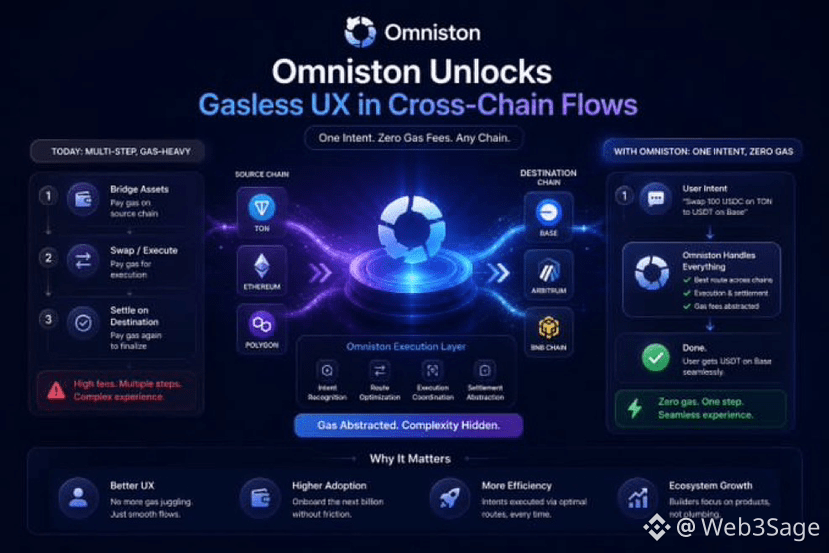
Instead of competing to become another liquidity destination, Omniston is designed to aggregate liquidity from multiple supported sources, helping applications access more efficient execution through a single integration layer.
Think of it this way.
Imagine visiting one supermarket looking for the best price. You'll only see what's available on those shelves.
Now imagine having an assistant that instantly checks every supermarket nearby and brings back the best available option.
That's the difference between relying on a single liquidity source and using an aggregation layer.
As the $TON ecosystem grows, liquidity will naturally become more distributed. New protocols, pools, and market participants create opportunities, but they also introduce fragmentation.
This is where Omniston has the potential to become increasingly valuable.
Rather than asking users or developers to manually navigate growing complexity, it focuses on making liquidity easier to discover and access.
For me, that's what makes the $STON ecosystem exciting.
It's not just about enabling swaps today, it's about building the infrastructure that can support a more efficient TON DeFi ecosystem tomorrow.
As DeFi continues to mature, projects that quietly improve the experience behind the scenes may prove just as important as the applications users interact with every day.
What's your take?
Do you think liquidity aggregation will become a standard layer for every major blockchain ecosystem, or will individual DEXs continue to dominate swap execution?
#ston #grvt #DeFi
Why Omniston Could Become One of TON's Most Important Infrastructure Layers
When people evaluate a DeFi project, they often look at metrics like TVL, trading volume, or the number of supported tokens. While those metrics matter, they don't always tell the full story.
Sometimes, the biggest innovation isn't another DEX, it's the infrastructure that helps every DEX perform better.
That's what makes Omniston interesting.
Instead of competing to become another liquidity destination, Omniston is designed to aggregate liquidity from multiple supported sources, helping applications access more efficient execution through a single integration layer.
Think of it this way.
Imagine visiting one supermarket looking for the best price. You'll only see what's available on those shelves.
Now imagine having an assistant that instantly checks every supermarket nearby and brings back the best available option.
That's the difference between relying on a single liquidity source and using an aggregation layer.
As the $TON ecosystem grows, liquidity will naturally become more distributed. New protocols, pools, and market participants create opportunities, but they also introduce fragmentation.
This is where Omniston has the potential to become increasingly valuable.
Rather than asking users or developers to manually navigate growing complexity, it focuses on making liquidity easier to discover and access.
For me, that's what makes the $STON ecosystem exciting.
It's not just about enabling swaps today, it's about building the infrastructure that can support a more efficient TON DeFi ecosystem tomorrow.
As DeFi continues to mature, projects that quietly improve the experience behind the scenes may prove just as important as the applications users interact with every day.
What's your take?
Do you think liquidity aggregation will become a standard layer for every major blockchain ecosystem, or will individual DEXs continue to dominate swap execution?
#ston #grvt #DeFi
When people evaluate a DeFi project, they often look at metrics like TVL, trading volume, or the number of supported tokens. While those metrics matter, they don't always tell the full story.
Sometimes, the biggest innovation isn't another DEX, it's the infrastructure that helps every DEX perform better.
That's what makes Omniston interesting.
Instead of competing to become another liquidity destination, Omniston is designed to aggregate liquidity from multiple supported sources, helping applications access more efficient execution through a single integration layer.
Think of it this way.
Imagine visiting one supermarket looking for the best price. You'll only see what's available on those shelves.
Now imagine having an assistant that instantly checks every supermarket nearby and brings back the best available option.
That's the difference between relying on a single liquidity source and using an aggregation layer.
As the $TON ecosystem grows, liquidity will naturally become more distributed. New protocols, pools, and market participants create opportunities, but they also introduce fragmentation.
This is where Omniston has the potential to become increasingly valuable.
Rather than asking users or developers to manually navigate growing complexity, it focuses on making liquidity easier to discover and access.
For me, that's what makes the $STON ecosystem exciting.
It's not just about enabling swaps today, it's about building the infrastructure that can support a more efficient TON DeFi ecosystem tomorrow.
As DeFi continues to mature, projects that quietly improve the experience behind the scenes may prove just as important as the applications users interact with every day.
What's your take?
Do you think liquidity aggregation will become a standard layer for every major blockchain ecosystem, or will individual DEXs continue to dominate swap execution?
#ston #grvt #DeFi
1
9
·
--
Bullish
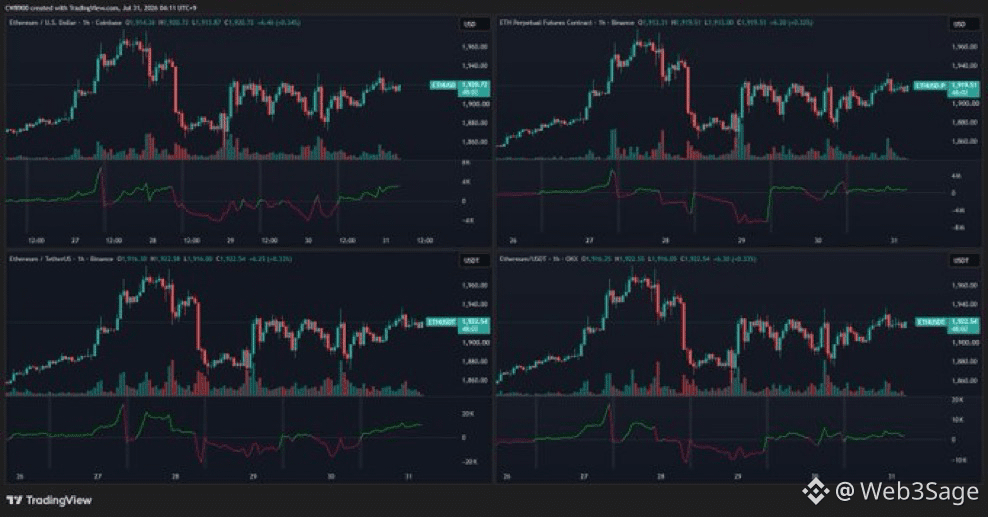
📊 ETH Accumulation Continues Beneath the Surface
$ETH is seeing a slow but steady increase in spot market buying, suggesting gradual accumulation rather than aggressive chasing.
Meanwhile, futures positioning remains largely neutral, with little sign of excessive leverage entering the market.
This divergence points to measured spot demand while derivatives traders stay on the sidelines, a setup that could strengthen if futures participation begins to follow the spot buying trend.
#ETH #BULLISH
📊 ETH Accumulation Continues Beneath the Surface
$ETH is seeing a slow but steady increase in spot market buying, suggesting gradual accumulation rather than aggressive chasing.
Meanwhile, futures positioning remains largely neutral, with little sign of excessive leverage entering the market.
This divergence points to measured spot demand while derivatives traders stay on the sidelines, a setup that could strengthen if futures participation begins to follow the spot buying trend.
#ETH #BULLISH
$ETH is seeing a slow but steady increase in spot market buying, suggesting gradual accumulation rather than aggressive chasing.
Meanwhile, futures positioning remains largely neutral, with little sign of excessive leverage entering the market.
This divergence points to measured spot demand while derivatives traders stay on the sidelines, a setup that could strengthen if futures participation begins to follow the spot buying trend.
#ETH #BULLISH
1
36
·
--
Bullish
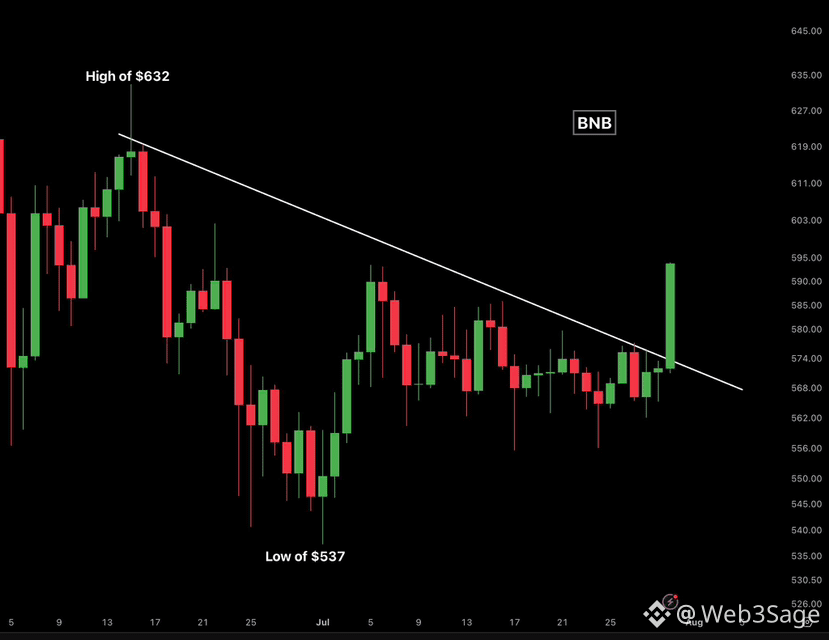
🚀 BNB Flashes a Bullish Breakout
After spending 45 days in a downtrend, $BNB has finally broken above its descending structure.
This breakout signals a potential shift in momentum, with buyers reclaiming control after weeks of sustained selling pressure.
If $BNB can hold above the breakout level, it could pave the way for a stronger bullish continuation.
#bnb #crypto #Bullish
🚀 BNB Flashes a Bullish Breakout
After spending 45 days in a downtrend, $BNB has finally broken above its descending structure.
This breakout signals a potential shift in momentum, with buyers reclaiming control after weeks of sustained selling pressure.
If $BNB can hold above the breakout level, it could pave the way for a stronger bullish continuation.
#bnb #crypto #Bullish
After spending 45 days in a downtrend, $BNB has finally broken above its descending structure.
This breakout signals a potential shift in momentum, with buyers reclaiming control after weeks of sustained selling pressure.
If $BNB can hold above the breakout level, it could pave the way for a stronger bullish continuation.
#bnb #crypto #Bullish
1
29
·
--
Bullish
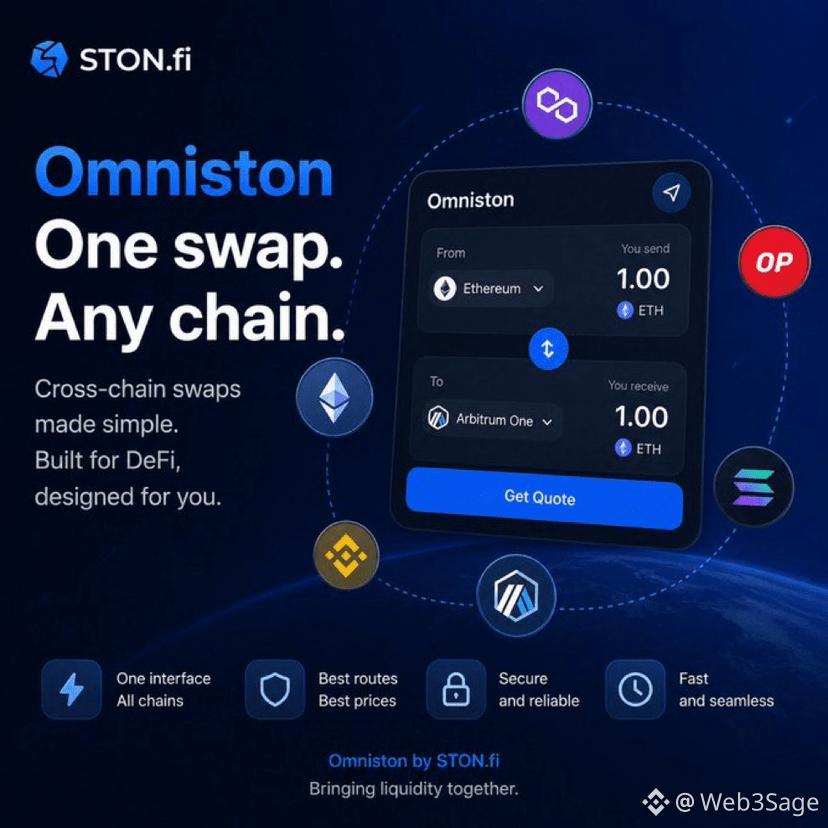
🔍 Is Liquidity the Real Product in DeFi? Here's Why Omniston Matters
In DeFi, it's easy to focus on what users see—wallets, DEXs, charts, and token prices. But behind every successful swap is something far more important: liquidity.
Without liquidity, even the most beautifully designed trading platform becomes ineffective. The challenge today isn't that liquidity is scarce, it's that it's increasingly fragmented across different pools, protocols, and market participants.
As the TON ecosystem continues to expand, this challenge becomes more relevant. More users and more applications naturally mean more places where liquidity can exist. While that's a sign of ecosystem growth, it also makes efficient trade execution more complex.
This is where Omniston enters the picture.
Rather than creating another destination for traders, Omniston is designed to serve as a liquidity aggregation layer, helping applications access available liquidity more intelligently. Instead of depending on a single source, it can evaluate supported liquidity providers and determine an efficient execution path for a swap.
Why does that matter?
Because most users don't care where liquidity comes from—they care about the result. They want competitive pricing, reliable execution, and a seamless experience. If the underlying infrastructure can quietly improve those outcomes, everyone benefits.
That's what makes Omniston an interesting development within the $STON ecosystem. It's a reminder that the next stage of DeFi innovation may not be about adding more interfaces, it may be about making the infrastructure beneath those interfaces smarter.
As TON continues to mature, efficient liquidity access could become just as important as liquidity itself.
💬 If you could improve one part of the DeFi trading experience, what would it be: lower slippage, faster execution, or smarter liquidity routing?
#ston #Omniston #GRVT
🔍 Is Liquidity the Real Product in DeFi? Here's Why Omniston Matters
In DeFi, it's easy to focus on what users see—wallets, DEXs, charts, and token prices. But behind every successful swap is something far more important: liquidity.
Without liquidity, even the most beautifully designed trading platform becomes ineffective. The challenge today isn't that liquidity is scarce, it's that it's increasingly fragmented across different pools, protocols, and market participants.
As the TON ecosystem continues to expand, this challenge becomes more relevant. More users and more applications naturally mean more places where liquidity can exist. While that's a sign of ecosystem growth, it also makes efficient trade execution more complex.
This is where Omniston enters the picture.
Rather than creating another destination for traders, Omniston is designed to serve as a liquidity aggregation layer, helping applications access available liquidity more intelligently. Instead of depending on a single source, it can evaluate supported liquidity providers and determine an efficient execution path for a swap.
Why does that matter?
Because most users don't care where liquidity comes from—they care about the result. They want competitive pricing, reliable execution, and a seamless experience. If the underlying infrastructure can quietly improve those outcomes, everyone benefits.
That's what makes Omniston an interesting development within the $STON ecosystem. It's a reminder that the next stage of DeFi innovation may not be about adding more interfaces, it may be about making the infrastructure beneath those interfaces smarter.
As TON continues to mature, efficient liquidity access could become just as important as liquidity itself.
💬 If you could improve one part of the DeFi trading experience, what would it be: lower slippage, faster execution, or smarter liquidity routing?
#ston #Omniston #GRVT
In DeFi, it's easy to focus on what users see—wallets, DEXs, charts, and token prices. But behind every successful swap is something far more important: liquidity.
Without liquidity, even the most beautifully designed trading platform becomes ineffective. The challenge today isn't that liquidity is scarce, it's that it's increasingly fragmented across different pools, protocols, and market participants.
As the TON ecosystem continues to expand, this challenge becomes more relevant. More users and more applications naturally mean more places where liquidity can exist. While that's a sign of ecosystem growth, it also makes efficient trade execution more complex.
This is where Omniston enters the picture.
Rather than creating another destination for traders, Omniston is designed to serve as a liquidity aggregation layer, helping applications access available liquidity more intelligently. Instead of depending on a single source, it can evaluate supported liquidity providers and determine an efficient execution path for a swap.
Why does that matter?
Because most users don't care where liquidity comes from—they care about the result. They want competitive pricing, reliable execution, and a seamless experience. If the underlying infrastructure can quietly improve those outcomes, everyone benefits.
That's what makes Omniston an interesting development within the $STON ecosystem. It's a reminder that the next stage of DeFi innovation may not be about adding more interfaces, it may be about making the infrastructure beneath those interfaces smarter.
As TON continues to mature, efficient liquidity access could become just as important as liquidity itself.
💬 If you could improve one part of the DeFi trading experience, what would it be: lower slippage, faster execution, or smarter liquidity routing?
#ston #Omniston #GRVT
1
70
·
--
Bullish
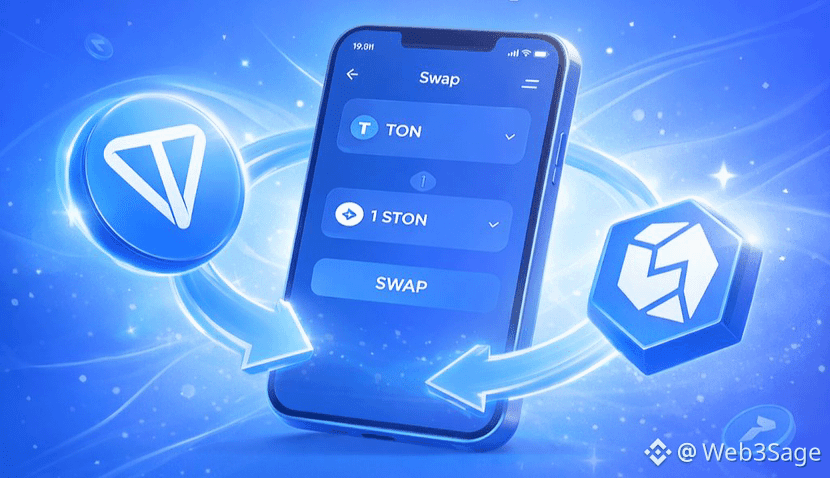
🚀 $STON Is Quietly Evolving Beyond Swaps
When people hear $STON, the first thing that often comes to mind is decentralized trading on TON. But the ecosystem is growing beyond that familiar use case.
One of the most interesting developments is Omniston—a liquidity aggregation protocol designed to help applications discover and access liquidity more efficiently. Instead of relying on a single liquidity source, Omniston is built to gather quotes from supported providers and determine an efficient execution path for swaps.
Why is this important?
As the TON ecosystem expands, liquidity naturally becomes more distributed. While more liquidity is generally positive, it also makes finding the best execution more challenging. Users don't want to compare multiple pools or think about routing, they simply want reliable swaps at competitive prices.
That's where infrastructure matters.
Rather than building another trading interface, Omniston focuses on improving what happens behind the scenes. Developers gain access to a unified liquidity layer, while users benefit from a smoother swapping experience without needing to understand the underlying routing process.
This reflects a broader trend across DeFi: protocols are increasingly competing on execution quality rather than just liquidity size.
For $STON, that evolution is worth watching. As infrastructure becomes a larger part of the ecosystem, projects that simplify liquidity access could play an increasingly important role in TON's continued growth.
💬 Do you think liquidity aggregation will become a core layer of DeFi infrastructure, or will individual DEXs remain the primary destination for traders?
#ston #Omniston #TON
🚀 $STON Is Quietly Evolving Beyond Swaps
When people hear $STON, the first thing that often comes to mind is decentralized trading on TON. But the ecosystem is growing beyond that familiar use case.
One of the most interesting developments is Omniston—a liquidity aggregation protocol designed to help applications discover and access liquidity more efficiently. Instead of relying on a single liquidity source, Omniston is built to gather quotes from supported providers and determine an efficient execution path for swaps.
Why is this important?
As the TON ecosystem expands, liquidity naturally becomes more distributed. While more liquidity is generally positive, it also makes finding the best execution more challenging. Users don't want to compare multiple pools or think about routing, they simply want reliable swaps at competitive prices.
That's where infrastructure matters.
Rather than building another trading interface, Omniston focuses on improving what happens behind the scenes. Developers gain access to a unified liquidity layer, while users benefit from a smoother swapping experience without needing to understand the underlying routing process.
This reflects a broader trend across DeFi: protocols are increasingly competing on execution quality rather than just liquidity size.
For $STON, that evolution is worth watching. As infrastructure becomes a larger part of the ecosystem, projects that simplify liquidity access could play an increasingly important role in TON's continued growth.
💬 Do you think liquidity aggregation will become a core layer of DeFi infrastructure, or will individual DEXs remain the primary destination for traders?
#ston #Omniston #TON
When people hear $STON, the first thing that often comes to mind is decentralized trading on TON. But the ecosystem is growing beyond that familiar use case.
One of the most interesting developments is Omniston—a liquidity aggregation protocol designed to help applications discover and access liquidity more efficiently. Instead of relying on a single liquidity source, Omniston is built to gather quotes from supported providers and determine an efficient execution path for swaps.
Why is this important?
As the TON ecosystem expands, liquidity naturally becomes more distributed. While more liquidity is generally positive, it also makes finding the best execution more challenging. Users don't want to compare multiple pools or think about routing, they simply want reliable swaps at competitive prices.
That's where infrastructure matters.
Rather than building another trading interface, Omniston focuses on improving what happens behind the scenes. Developers gain access to a unified liquidity layer, while users benefit from a smoother swapping experience without needing to understand the underlying routing process.
This reflects a broader trend across DeFi: protocols are increasingly competing on execution quality rather than just liquidity size.
For $STON, that evolution is worth watching. As infrastructure becomes a larger part of the ecosystem, projects that simplify liquidity access could play an increasingly important role in TON's continued growth.
💬 Do you think liquidity aggregation will become a core layer of DeFi infrastructure, or will individual DEXs remain the primary destination for traders?
#ston #Omniston #TON
1
50
·
--
Article
Convenience Is Winning: Why the Best DeFi Infrastructure Is Becoming InvisibleThe greatest technological breakthroughs are often the ones users never notice. In decentralized finance, the future may belong to protocols that quietly remove complexity rather than add new features.
Introduction
Ask a DeFi veteran what makes a protocol successful, and you might hear terms like decentralization, security, liquidity, composability, or scalability.
Ask a newer user the same question, and the answer is often much simpler:
"It just worked."
That difference reveals an important shift in decentralized finance.
For years, innovation focused on giving users more control. More wallets. More chains. More decentralized exchanges. More bridges. More choices.
While these innovations expanded the ecosystem, they also introduced a new problem: complexity.
Today, many users interact with multiple wallets, manage assets across several blockchains, compare prices on different decentralized exchanges, estimate gas fees, bridge tokens between ecosystems, and manually search for better execution.
Ironically, the technology designed to remove intermediaries often requires users to become infrastructure experts themselves.
The next phase of DeFi may change that.
Technology Matures by Becoming Simpler
History offers a familiar pattern.
Very few people understand how internet packets travel across global networks.
Most smartphone users couldn't explain how GPS calculates their location.
Streaming services don't require viewers to understand content delivery networks.
Complex systems became mainstream because the complexity disappeared behind intuitive experiences.
Blockchain technology is beginning to follow the same path.
Success may increasingly depend not on exposing every technical process to users, but on abstracting those processes into reliable infrastructure.
Choice Isn't Always Better
One of DeFi's greatest strengths is optionality.
Users can choose between protocols, liquidity pools, trading routes, and networks.
But more choices also create decision fatigue.
Imagine swapping a stablecoin.
Should you:
Compare three DEXs?Check slippage manually?Estimate network fees?Wait for another block?Bridge first?Split the order?
Most users don't want to answer these questions every time they trade.
They simply want the transaction to execute efficiently.
Infrastructure that reduces unnecessary decisions becomes increasingly valuable.
The Rise of Invisible Infrastructure
Many of the most important innovations happening in DeFi aren't new tokens or user interfaces.
They're backend systems that most users never see.
Examples include:
Intelligent routingLiquidity aggregationAutomated quote discoveryTransaction optimizationCross-chain messagingIntent-based executionEfficient settlement mechanisms
These technologies don't necessarily attract headlines.
Yet they often have a greater impact on everyday user experience than visible application updates.
Why Execution Is Becoming a User Experience Feature
Execution quality was once considered a purely technical concern.
Today, it directly shapes how users perceive a protocol.
A successful swap is no longer judged solely by whether it completed.
Users increasingly expect:
Competitive pricingMinimal slippageReliable confirmationEfficient routingFewer unnecessary interactions
When these expectations are consistently met, users often don't ask why.
They simply trust the application.
This illustrates an important principle:
Good infrastructure builds confidence without demanding attention.
STON.fi and the Shift Toward Invisible Infrastructure
Within the TON ecosystem, STON.fi's development of Omniston reflects this broader industry direction.
Rather than asking users to understand how liquidity is discovered or how routes are optimized, the underlying infrastructure is designed to handle much of that complexity automatically.
From a user's perspective, the experience remains straightforward:
Choose assets.
Confirm the transaction.
Receive the swap.
Behind that simplicity lies increasingly sophisticated infrastructure coordinating liquidity discovery and execution.
This mirrors a broader trend occurring throughout decentralized finance.
Protocols are competing not only on features, but on how effectively they reduce complexity.
The Cost of Complexity
Every additional step in a transaction introduces friction.
Friction affects:
New user adoptionTransaction completion ratesTrading confidenceUser retention
Complexity doesn't only create inconvenience.
It creates opportunities for mistakes.
Selecting the wrong bridge.
Choosing an inefficient route.
Accepting excessive slippage.
Misunderstanding transaction costs.
Reducing these risks may ultimately matter more than adding another advanced feature.
Building for the Next Hundred Million Users
The next wave of DeFi adoption will likely look different from the first.
Early adopters accepted complexity because they valued experimentation.
Future users may judge DeFi by the standards established by modern consumer technology.
They will expect applications to feel intuitive.
They will expect transactions to work reliably.
And they may never care which routing algorithm or settlement mechanism operates behind the scenes.
For infrastructure builders, that represents a different design philosophy.
Success is measured by how little users need to think.
Final Thoughts
The evolution of DeFi isn't only about adding more functionality.
It's increasingly about removing unnecessary complexity.
The protocols that quietly simplify execution, optimize liquidity access, and reduce friction may ultimately have the greatest impact—even if users never recognize the technology making those improvements possible.
In many ways, the future of decentralized finance isn't about making users smarter.
It's about making infrastructure smarter on their behalf.
And perhaps that's the strongest sign that the industry is maturing.
#Omniston #BTC #bullish
Convenience Is Winning: Why the Best DeFi Infrastructure Is Becoming Invisible
The greatest technological breakthroughs are often the ones users never notice. In decentralized finance, the future may belong to protocols that quietly remove complexity rather than add new features.
Introduction
Ask a DeFi veteran what makes a protocol successful, and you might hear terms like decentralization, security, liquidity, composability, or scalability.
Ask a newer user the same question, and the answer is often much simpler:
"It just worked."
That difference reveals an important shift in decentralized finance.
For years, innovation focused on giving users more control. More wallets. More chains. More decentralized exchanges. More bridges. More choices.
While these innovations expanded the ecosystem, they also introduced a new problem: complexity.
Today, many users interact with multiple wallets, manage assets across several blockchains, compare prices on different decentralized exchanges, estimate gas fees, bridge tokens between ecosystems, and manually search for better execution.
Ironically, the technology designed to remove intermediaries often requires users to become infrastructure experts themselves.
The next phase of DeFi may change that.
Technology Matures by Becoming Simpler
History offers a familiar pattern.
Very few people understand how internet packets travel across global networks.
Most smartphone users couldn't explain how GPS calculates their location.
Streaming services don't require viewers to understand content delivery networks.
Complex systems became mainstream because the complexity disappeared behind intuitive experiences.
Blockchain technology is beginning to follow the same path.
Success may increasingly depend not on exposing every technical process to users, but on abstracting those processes into reliable infrastructure.
Choice Isn't Always Better
One of DeFi's greatest strengths is optionality.
Users can choose between protocols, liquidity pools, trading routes, and networks.
But more choices also create decision fatigue.
Imagine swapping a stablecoin.
Should you:
Compare three DEXs?Check slippage manually?Estimate network fees?Wait for another block?Bridge first?Split the order?
Most users don't want to answer these questions every time they trade.
They simply want the transaction to execute efficiently.
Infrastructure that reduces unnecessary decisions becomes increasingly valuable.
The Rise of Invisible Infrastructure
Many of the most important innovations happening in DeFi aren't new tokens or user interfaces.
They're backend systems that most users never see.
Examples include:
Intelligent routingLiquidity aggregationAutomated quote discoveryTransaction optimizationCross-chain messagingIntent-based executionEfficient settlement mechanisms
These technologies don't necessarily attract headlines.
Yet they often have a greater impact on everyday user experience than visible application updates.
Why Execution Is Becoming a User Experience Feature
Execution quality was once considered a purely technical concern.
Today, it directly shapes how users perceive a protocol.
A successful swap is no longer judged solely by whether it completed.
Users increasingly expect:
Competitive pricingMinimal slippageReliable confirmationEfficient routingFewer unnecessary interactions
When these expectations are consistently met, users often don't ask why.
They simply trust the application.
This illustrates an important principle:
Good infrastructure builds confidence without demanding attention.
STON.fi and the Shift Toward Invisible Infrastructure
Within the TON ecosystem, STON.fi's development of Omniston reflects this broader industry direction.
Rather than asking users to understand how liquidity is discovered or how routes are optimized, the underlying infrastructure is designed to handle much of that complexity automatically.
From a user's perspective, the experience remains straightforward:
Choose assets.
Confirm the transaction.
Receive the swap.
Behind that simplicity lies increasingly sophisticated infrastructure coordinating liquidity discovery and execution.
This mirrors a broader trend occurring throughout decentralized finance.
Protocols are competing not only on features, but on how effectively they reduce complexity.
The Cost of Complexity
Every additional step in a transaction introduces friction.
Friction affects:
New user adoptionTransaction completion ratesTrading confidenceUser retention
Complexity doesn't only create inconvenience.
It creates opportunities for mistakes.
Selecting the wrong bridge.
Choosing an inefficient route.
Accepting excessive slippage.
Misunderstanding transaction costs.
Reducing these risks may ultimately matter more than adding another advanced feature.
Building for the Next Hundred Million Users
The next wave of DeFi adoption will likely look different from the first.
Early adopters accepted complexity because they valued experimentation.
Future users may judge DeFi by the standards established by modern consumer technology.
They will expect applications to feel intuitive.
They will expect transactions to work reliably.
And they may never care which routing algorithm or settlement mechanism operates behind the scenes.
For infrastructure builders, that represents a different design philosophy.
Success is measured by how little users need to think.
Final Thoughts
The evolution of DeFi isn't only about adding more functionality.
It's increasingly about removing unnecessary complexity.
The protocols that quietly simplify execution, optimize liquidity access, and reduce friction may ultimately have the greatest impact—even if users never recognize the technology making those improvements possible.
In many ways, the future of decentralized finance isn't about making users smarter.
It's about making infrastructure smarter on their behalf.
And perhaps that's the strongest sign that the industry is maturing.
#Omniston #BTC #bullish
Introduction
Ask a DeFi veteran what makes a protocol successful, and you might hear terms like decentralization, security, liquidity, composability, or scalability.
Ask a newer user the same question, and the answer is often much simpler:
"It just worked."
That difference reveals an important shift in decentralized finance.
For years, innovation focused on giving users more control. More wallets. More chains. More decentralized exchanges. More bridges. More choices.
While these innovations expanded the ecosystem, they also introduced a new problem: complexity.
Today, many users interact with multiple wallets, manage assets across several blockchains, compare prices on different decentralized exchanges, estimate gas fees, bridge tokens between ecosystems, and manually search for better execution.
Ironically, the technology designed to remove intermediaries often requires users to become infrastructure experts themselves.
The next phase of DeFi may change that.
Technology Matures by Becoming Simpler
History offers a familiar pattern.
Very few people understand how internet packets travel across global networks.
Most smartphone users couldn't explain how GPS calculates their location.
Streaming services don't require viewers to understand content delivery networks.
Complex systems became mainstream because the complexity disappeared behind intuitive experiences.
Blockchain technology is beginning to follow the same path.
Success may increasingly depend not on exposing every technical process to users, but on abstracting those processes into reliable infrastructure.
Choice Isn't Always Better
One of DeFi's greatest strengths is optionality.
Users can choose between protocols, liquidity pools, trading routes, and networks.
But more choices also create decision fatigue.
Imagine swapping a stablecoin.
Should you:
Compare three DEXs?Check slippage manually?Estimate network fees?Wait for another block?Bridge first?Split the order?
Most users don't want to answer these questions every time they trade.
They simply want the transaction to execute efficiently.
Infrastructure that reduces unnecessary decisions becomes increasingly valuable.
The Rise of Invisible Infrastructure
Many of the most important innovations happening in DeFi aren't new tokens or user interfaces.
They're backend systems that most users never see.
Examples include:
Intelligent routingLiquidity aggregationAutomated quote discoveryTransaction optimizationCross-chain messagingIntent-based executionEfficient settlement mechanisms
These technologies don't necessarily attract headlines.
Yet they often have a greater impact on everyday user experience than visible application updates.
Why Execution Is Becoming a User Experience Feature
Execution quality was once considered a purely technical concern.
Today, it directly shapes how users perceive a protocol.
A successful swap is no longer judged solely by whether it completed.
Users increasingly expect:
Competitive pricingMinimal slippageReliable confirmationEfficient routingFewer unnecessary interactions
When these expectations are consistently met, users often don't ask why.
They simply trust the application.
This illustrates an important principle:
Good infrastructure builds confidence without demanding attention.
STON.fi and the Shift Toward Invisible Infrastructure
Within the TON ecosystem, STON.fi's development of Omniston reflects this broader industry direction.
Rather than asking users to understand how liquidity is discovered or how routes are optimized, the underlying infrastructure is designed to handle much of that complexity automatically.
From a user's perspective, the experience remains straightforward:
Choose assets.
Confirm the transaction.
Receive the swap.
Behind that simplicity lies increasingly sophisticated infrastructure coordinating liquidity discovery and execution.
This mirrors a broader trend occurring throughout decentralized finance.
Protocols are competing not only on features, but on how effectively they reduce complexity.
The Cost of Complexity
Every additional step in a transaction introduces friction.
Friction affects:
New user adoptionTransaction completion ratesTrading confidenceUser retention
Complexity doesn't only create inconvenience.
It creates opportunities for mistakes.
Selecting the wrong bridge.
Choosing an inefficient route.
Accepting excessive slippage.
Misunderstanding transaction costs.
Reducing these risks may ultimately matter more than adding another advanced feature.
Building for the Next Hundred Million Users
The next wave of DeFi adoption will likely look different from the first.
Early adopters accepted complexity because they valued experimentation.
Future users may judge DeFi by the standards established by modern consumer technology.
They will expect applications to feel intuitive.
They will expect transactions to work reliably.
And they may never care which routing algorithm or settlement mechanism operates behind the scenes.
For infrastructure builders, that represents a different design philosophy.
Success is measured by how little users need to think.
Final Thoughts
The evolution of DeFi isn't only about adding more functionality.
It's increasingly about removing unnecessary complexity.
The protocols that quietly simplify execution, optimize liquidity access, and reduce friction may ultimately have the greatest impact—even if users never recognize the technology making those improvements possible.
In many ways, the future of decentralized finance isn't about making users smarter.
It's about making infrastructure smarter on their behalf.
And perhaps that's the strongest sign that the industry is maturing.
#Omniston #BTC #bullish
1
68
·
--
Bullish
We've Been Solving the Wrong Problem...
Everyone talks about cross-chain.
But what if the next evolution of DeFi is actually cross-liquidity?
Moving assets between chains is only part of the experience.
The bigger challenge is finding the best liquidity once those assets arrive.
As DeFi grows, liquidity becomes increasingly fragmented across:
🔹 DEXs
🔹 Liquidity pools
🔹 Market makers
🔹 Blockchain ecosystems
This is why liquidity aggregation is becoming such an important layer of DeFi infrastructure.
Instead of asking users to search for the best execution manually, aggregation protocols aim to discover and route through available liquidity more intelligently.
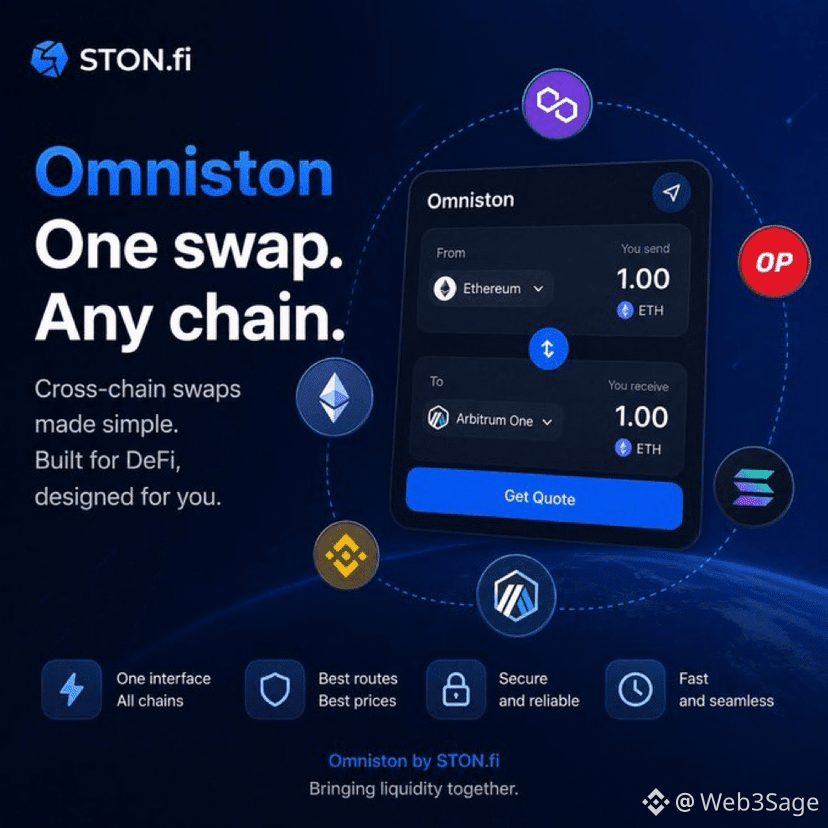
Within TON, Omniston by STON.fi is an example of this trend, focusing on connecting applications with multiple liquidity sources to improve swap execution.
The future of DeFi may not belong to the protocol with the biggest liquidity pool.
It may belong to the infrastructure that helps users reach all available liquidity efficiently.
💬 Do you think liquidity aggregation will become as essential to DeFi as search engines became to the internet? Why or why not?
#Omniston #Gram #XRP
We've Been Solving the Wrong Problem...
Everyone talks about cross-chain.
But what if the next evolution of DeFi is actually cross-liquidity?
Moving assets between chains is only part of the experience.
The bigger challenge is finding the best liquidity once those assets arrive.
As DeFi grows, liquidity becomes increasingly fragmented across:
🔹 DEXs
🔹 Liquidity pools
🔹 Market makers
🔹 Blockchain ecosystems
This is why liquidity aggregation is becoming such an important layer of DeFi infrastructure.
Instead of asking users to search for the best execution manually, aggregation protocols aim to discover and route through available liquidity more intelligently.
Within TON, Omniston by STON.fi is an example of this trend, focusing on connecting applications with multiple liquidity sources to improve swap execution.
The future of DeFi may not belong to the protocol with the biggest liquidity pool.
It may belong to the infrastructure that helps users reach all available liquidity efficiently.
💬 Do you think liquidity aggregation will become as essential to DeFi as search engines became to the internet? Why or why not?
#Omniston #Gram #XRP
Everyone talks about cross-chain.
But what if the next evolution of DeFi is actually cross-liquidity?
Moving assets between chains is only part of the experience.
The bigger challenge is finding the best liquidity once those assets arrive.
As DeFi grows, liquidity becomes increasingly fragmented across:
🔹 DEXs
🔹 Liquidity pools
🔹 Market makers
🔹 Blockchain ecosystems
This is why liquidity aggregation is becoming such an important layer of DeFi infrastructure.
Instead of asking users to search for the best execution manually, aggregation protocols aim to discover and route through available liquidity more intelligently.
Within TON, Omniston by STON.fi is an example of this trend, focusing on connecting applications with multiple liquidity sources to improve swap execution.
The future of DeFi may not belong to the protocol with the biggest liquidity pool.
It may belong to the infrastructure that helps users reach all available liquidity efficiently.
💬 Do you think liquidity aggregation will become as essential to DeFi as search engines became to the internet? Why or why not?
#Omniston #Gram #XRP
1
210
·
--
Article
The Next Frontier of DeFi Isn't Cross-Chain, It's Cross-LiquidityFor years, the crypto industry has focused on connecting blockchains. But what if the real challenge isn't connecting chains at all? What if it's connecting liquidity?
Introduction
Ask anyone about the future of decentralized finance, and you'll likely hear the phrase "cross-chain."
Cross-chain bridges.
Cross-chain messaging.
Cross-chain interoperability.
These innovations have transformed blockchain from isolated ecosystems into a connected network of digital economies.
But despite this progress, traders still experience familiar frustrations.
The transaction completes.
The bridge works.
The assets arrive.
Yet somehow...
The execution still isn't ideal.
Prices differ between platforms.
Liquidity feels inconsistent.
Large trades move the market more than expected.
The reality is that connecting blockchains doesn't automatically connect liquidity.
And that distinction may define the next phase of DeFi.
Chains Can Communicate.
Liquidity Doesn't Automatically Follow.
Modern interoperability protocols allow information and assets to move across networks more efficiently than ever before.
But liquidity behaves differently.
Every blockchain has:
Different usersDifferent trading activityDifferent market makersDifferent liquidity providersDifferent incentives
Moving an asset from Chain A to Chain B doesn't magically combine both markets into one.
Liquidity remains distributed.
This is why two exchanges trading the same token can produce noticeably different execution prices.
The Illusion of Infinite Liquidity
To many users, DeFi appears limitless.
Thousands of tokens.
Hundreds of exchanges.
Billions locked in protocols.
Yet execution often tells another story.
A trader attempting a $500 swap may notice little difference.
A trader executing $100,000 may discover liquidity isn't nearly as deep as expected.
Not because liquidity doesn't exist.
Because it's fragmented.
Imagine trying to fill a swimming pool using hundreds of small buckets scattered across a city.
The water exists.
Accessing it efficiently is the real challenge.
Liquidity Has Become a Discovery Problem
Search engines didn't create the internet.
They made it usable.
Likewise...
Aggregation isn't creating liquidity.
It's helping users discover it.
This shift changes how we should think about DeFi infrastructure.
Perhaps the most valuable protocol isn't the one with the biggest liquidity pool.
Perhaps it's the one that helps users intelligently access liquidity wherever it already exists.
Execution Is Becoming Infrastructure
Years ago, users chose exchanges.
Today, increasingly, applications choose execution infrastructure.
Instead of asking:
Which DEX should I integrate?
Developers are beginning to ask:
Which infrastructure gives my users better execution?
This subtle change represents a major architectural evolution.
Execution itself is becoming a service.
Where Omniston Fits
Within the TON ecosystem, Omniston by STON.fi represents this broader movement toward execution-focused infrastructure.
Rather than positioning itself solely as another decentralized exchange, its architecture is designed to aggregate liquidity from multiple supported sources and determine an efficient execution path for swaps within its ecosystem.
The significance isn't simply another routing algorithm.
It's the growing recognition that execution quality has become a competitive advantage.
As ecosystems expand and liquidity becomes increasingly distributed, helping users access that liquidity efficiently may prove just as valuable as creating new liquidity itself.
The Infrastructure Nobody Notices
Think about GPS.
Few people understand satellite triangulation.
They simply expect accurate directions.
Likewise...
Most traders don't want to understand:
Route optimizationLiquidity aggregationSolver networksRFQ modelsAtomic settlement
They simply expect:
"I clicked Swap."
"I received a competitive price."
"It worked."
That's success.
Great infrastructure disappears into the background.
Why This Matters Beyond TON
The ideas discussed here aren't exclusive to a single blockchain.
Ethereum...
Solana...
Base...
Arbitrum...
Avalanche...
Every growing ecosystem eventually faces the same challenge.
Liquidity expands faster than user interfaces.
Execution becomes increasingly complex.
Infrastructure becomes increasingly valuable.
The protocols that simplify this complexity may quietly become some of DeFi's most important building blocks.
The Future Isn't More Liquidity
It's Better Access.
For years, DeFi celebrated bigger liquidity pools.
Tomorrow...
We may celebrate something different.
Infrastructure capable of intelligently discovering, comparing, and accessing liquidity wherever it exists.
Because users don't measure innovation by architecture diagrams.
They measure it by experience.
Did my trade execute smoothly?
Did I receive a fair price?
Did everything simply work?
Final Thoughts
Every generation of DeFi solves a different problem.
The first created decentralized exchanges.
The second connected blockchains.
The third may connect liquidity itself.
If that happens, the winners won't necessarily be the protocols with the largest pools.
They may be the protocols that make every pool feel larger by helping users reach it intelligently.
Perhaps the future of DeFi isn't about making blockchains talk.
It's about making liquidity work together.
#Gram #Omniston #BTC
The Next Frontier of DeFi Isn't Cross-Chain, It's Cross-Liquidity
For years, the crypto industry has focused on connecting blockchains. But what if the real challenge isn't connecting chains at all? What if it's connecting liquidity?
Introduction
Ask anyone about the future of decentralized finance, and you'll likely hear the phrase "cross-chain."
Cross-chain bridges.
Cross-chain messaging.
Cross-chain interoperability.
These innovations have transformed blockchain from isolated ecosystems into a connected network of digital economies.
But despite this progress, traders still experience familiar frustrations.
The transaction completes.
The bridge works.
The assets arrive.
Yet somehow...
The execution still isn't ideal.
Prices differ between platforms.
Liquidity feels inconsistent.
Large trades move the market more than expected.
The reality is that connecting blockchains doesn't automatically connect liquidity.
And that distinction may define the next phase of DeFi.
Chains Can Communicate.
Liquidity Doesn't Automatically Follow.
Modern interoperability protocols allow information and assets to move across networks more efficiently than ever before.
But liquidity behaves differently.
Every blockchain has:
Different usersDifferent trading activityDifferent market makersDifferent liquidity providersDifferent incentives
Moving an asset from Chain A to Chain B doesn't magically combine both markets into one.
Liquidity remains distributed.
This is why two exchanges trading the same token can produce noticeably different execution prices.
The Illusion of Infinite Liquidity
To many users, DeFi appears limitless.
Thousands of tokens.
Hundreds of exchanges.
Billions locked in protocols.
Yet execution often tells another story.
A trader attempting a $500 swap may notice little difference.
A trader executing $100,000 may discover liquidity isn't nearly as deep as expected.
Not because liquidity doesn't exist.
Because it's fragmented.
Imagine trying to fill a swimming pool using hundreds of small buckets scattered across a city.
The water exists.
Accessing it efficiently is the real challenge.
Liquidity Has Become a Discovery Problem
Search engines didn't create the internet.
They made it usable.
Likewise...
Aggregation isn't creating liquidity.
It's helping users discover it.
This shift changes how we should think about DeFi infrastructure.
Perhaps the most valuable protocol isn't the one with the biggest liquidity pool.
Perhaps it's the one that helps users intelligently access liquidity wherever it already exists.
Execution Is Becoming Infrastructure
Years ago, users chose exchanges.
Today, increasingly, applications choose execution infrastructure.
Instead of asking:
Which DEX should I integrate?
Developers are beginning to ask:
Which infrastructure gives my users better execution?
This subtle change represents a major architectural evolution.
Execution itself is becoming a service.
Where Omniston Fits
Within the TON ecosystem, Omniston by STON.fi represents this broader movement toward execution-focused infrastructure.
Rather than positioning itself solely as another decentralized exchange, its architecture is designed to aggregate liquidity from multiple supported sources and determine an efficient execution path for swaps within its ecosystem.
The significance isn't simply another routing algorithm.
It's the growing recognition that execution quality has become a competitive advantage.
As ecosystems expand and liquidity becomes increasingly distributed, helping users access that liquidity efficiently may prove just as valuable as creating new liquidity itself.
The Infrastructure Nobody Notices
Think about GPS.
Few people understand satellite triangulation.
They simply expect accurate directions.
Likewise...
Most traders don't want to understand:
Route optimizationLiquidity aggregationSolver networksRFQ modelsAtomic settlement
They simply expect:
"I clicked Swap."
"I received a competitive price."
"It worked."
That's success.
Great infrastructure disappears into the background.
Why This Matters Beyond TON
The ideas discussed here aren't exclusive to a single blockchain.
Ethereum...
Solana...
Base...
Arbitrum...
Avalanche...
Every growing ecosystem eventually faces the same challenge.
Liquidity expands faster than user interfaces.
Execution becomes increasingly complex.
Infrastructure becomes increasingly valuable.
The protocols that simplify this complexity may quietly become some of DeFi's most important building blocks.
The Future Isn't More Liquidity
It's Better Access.
For years, DeFi celebrated bigger liquidity pools.
Tomorrow...
We may celebrate something different.
Infrastructure capable of intelligently discovering, comparing, and accessing liquidity wherever it exists.
Because users don't measure innovation by architecture diagrams.
They measure it by experience.
Did my trade execute smoothly?
Did I receive a fair price?
Did everything simply work?
Final Thoughts
Every generation of DeFi solves a different problem.
The first created decentralized exchanges.
The second connected blockchains.
The third may connect liquidity itself.
If that happens, the winners won't necessarily be the protocols with the largest pools.
They may be the protocols that make every pool feel larger by helping users reach it intelligently.
Perhaps the future of DeFi isn't about making blockchains talk.
It's about making liquidity work together.
#Gram #Omniston #BTC
Introduction
Ask anyone about the future of decentralized finance, and you'll likely hear the phrase "cross-chain."
Cross-chain bridges.
Cross-chain messaging.
Cross-chain interoperability.
These innovations have transformed blockchain from isolated ecosystems into a connected network of digital economies.
But despite this progress, traders still experience familiar frustrations.
The transaction completes.
The bridge works.
The assets arrive.
Yet somehow...
The execution still isn't ideal.
Prices differ between platforms.
Liquidity feels inconsistent.
Large trades move the market more than expected.
The reality is that connecting blockchains doesn't automatically connect liquidity.
And that distinction may define the next phase of DeFi.
Chains Can Communicate.
Liquidity Doesn't Automatically Follow.
Modern interoperability protocols allow information and assets to move across networks more efficiently than ever before.
But liquidity behaves differently.
Every blockchain has:
Different usersDifferent trading activityDifferent market makersDifferent liquidity providersDifferent incentives
Moving an asset from Chain A to Chain B doesn't magically combine both markets into one.
Liquidity remains distributed.
This is why two exchanges trading the same token can produce noticeably different execution prices.
The Illusion of Infinite Liquidity
To many users, DeFi appears limitless.
Thousands of tokens.
Hundreds of exchanges.
Billions locked in protocols.
Yet execution often tells another story.
A trader attempting a $500 swap may notice little difference.
A trader executing $100,000 may discover liquidity isn't nearly as deep as expected.
Not because liquidity doesn't exist.
Because it's fragmented.
Imagine trying to fill a swimming pool using hundreds of small buckets scattered across a city.
The water exists.
Accessing it efficiently is the real challenge.
Liquidity Has Become a Discovery Problem
Search engines didn't create the internet.
They made it usable.
Likewise...
Aggregation isn't creating liquidity.
It's helping users discover it.
This shift changes how we should think about DeFi infrastructure.
Perhaps the most valuable protocol isn't the one with the biggest liquidity pool.
Perhaps it's the one that helps users intelligently access liquidity wherever it already exists.
Execution Is Becoming Infrastructure
Years ago, users chose exchanges.
Today, increasingly, applications choose execution infrastructure.
Instead of asking:
Which DEX should I integrate?
Developers are beginning to ask:
Which infrastructure gives my users better execution?
This subtle change represents a major architectural evolution.
Execution itself is becoming a service.
Where Omniston Fits
Within the TON ecosystem, Omniston by STON.fi represents this broader movement toward execution-focused infrastructure.
Rather than positioning itself solely as another decentralized exchange, its architecture is designed to aggregate liquidity from multiple supported sources and determine an efficient execution path for swaps within its ecosystem.
The significance isn't simply another routing algorithm.
It's the growing recognition that execution quality has become a competitive advantage.
As ecosystems expand and liquidity becomes increasingly distributed, helping users access that liquidity efficiently may prove just as valuable as creating new liquidity itself.
The Infrastructure Nobody Notices
Think about GPS.
Few people understand satellite triangulation.
They simply expect accurate directions.
Likewise...
Most traders don't want to understand:
Route optimizationLiquidity aggregationSolver networksRFQ modelsAtomic settlement
They simply expect:
"I clicked Swap."
"I received a competitive price."
"It worked."
That's success.
Great infrastructure disappears into the background.
Why This Matters Beyond TON
The ideas discussed here aren't exclusive to a single blockchain.
Ethereum...
Solana...
Base...
Arbitrum...
Avalanche...
Every growing ecosystem eventually faces the same challenge.
Liquidity expands faster than user interfaces.
Execution becomes increasingly complex.
Infrastructure becomes increasingly valuable.
The protocols that simplify this complexity may quietly become some of DeFi's most important building blocks.
The Future Isn't More Liquidity
It's Better Access.
For years, DeFi celebrated bigger liquidity pools.
Tomorrow...
We may celebrate something different.
Infrastructure capable of intelligently discovering, comparing, and accessing liquidity wherever it exists.
Because users don't measure innovation by architecture diagrams.
They measure it by experience.
Did my trade execute smoothly?
Did I receive a fair price?
Did everything simply work?
Final Thoughts
Every generation of DeFi solves a different problem.
The first created decentralized exchanges.
The second connected blockchains.
The third may connect liquidity itself.
If that happens, the winners won't necessarily be the protocols with the largest pools.
They may be the protocols that make every pool feel larger by helping users reach it intelligently.
Perhaps the future of DeFi isn't about making blockchains talk.
It's about making liquidity work together.
#Gram #Omniston #BTC
1
225
·
--

Article
From DEX to Execution Layer: What Is Changing in DeFi Trading?The next phase of decentralized trading may not be about building another exchange. It may be about building infrastructure that connects exchanges, liquidity sources, and applications.
Introduction
For years, decentralized exchanges were at the center of DeFi.
A user would connect a wallet, select two tokens, confirm a transaction, and receive the asset they wanted. The model was simple: the DEX was the market.
But DeFi has changed.
Today, liquidity can exist across multiple DEXs, automated market makers, RFQ-based liquidity providers, and increasingly, different blockchain ecosystems. As the number of liquidity sources grows, simply operating a DEX is no longer the only challenge.
A new question is becoming more important:
How can applications access the broader liquidity landscape without building all of that infrastructure themselves?
This is where the concept of an execution layer becomes interesting.
The DEX Was Only the Beginning
A traditional AMM has a relatively straightforward role.
It maintains liquidity pools and allows users to trade against them according to its pricing mechanism.
That model remains fundamental to DeFi.
But imagine an application that wants to provide users with the best available execution.
It could build integrations with every DEX individually.
It could maintain its own routing system.
It could monitor liquidity constantly.
It could handle different quote formats and execution mechanisms.
Or it could connect to infrastructure that already aggregates those sources.
The last approach is where liquidity aggregation becomes increasingly important.
Aggregation Changes the Architecture
A liquidity aggregator doesn't necessarily replace the underlying exchanges.
Instead, it can act as a coordination layer between applications and liquidity sources.
According to STON.fi's current documentation, Omniston is designed as a decentralized liquidity aggregation protocol for TON, connecting applications with multiple DEXs and RFQ resolvers. Its documented flow involves an application sending a swap request to Omniston, which then obtains quotes from liquidity sources before selecting an execution route.
That creates a different architecture:
User → Application → Aggregation Layer → Liquidity Sources → Execution
Rather than:
User → One DEX
That distinction may become increasingly important as DeFi becomes more interconnected.
Why Developers Care About This
For a DeFi application, liquidity is only useful if users can access it.
Developers therefore have to think about two separate problems:
Liquidity
Where can the application obtain competitive quotes?
Execution
How can those quotes actually be turned into a completed swap?
Solving both independently can create considerable technical complexity.
Aggregation infrastructure attempts to abstract some of that complexity away.
STON.fi describes Omniston as providing a single integration point for applications seeking access to multiple liquidity sources.
Omniston's Evolution Is Worth Watching
This is where the STON story becomes particularly interesting.
Omniston initially focused on liquidity aggregation within TON. But STON.fi's current materials describe a broader direction, with cross-chain capabilities being developed and Omniston increasingly positioned as execution infrastructure rather than simply a routing tool.
STON.fi has also reported that Omniston became the default routing system in its own dApp, sourcing liquidity from multiple DEXs.
That progression reflects a broader pattern across DeFi:
DEX → Aggregator → Execution Infrastructure
Each stage attempts to abstract more complexity from the user and developer.
The Importance of RFQ Liquidity
One interesting part of Omniston's architecture is its use of request-for-quote (RFQ) resolvers alongside DEX liquidity.
This matters because decentralized liquidity doesn't have to come exclusively from traditional AMM pools.
An RFQ model can allow a liquidity provider or resolver to respond to a specific trade request with a quote.
Omniston's documented architecture allows quotes to come from both DEXs and resolvers before selecting an execution path.
That creates a broader liquidity marketplace rather than limiting execution to one type of liquidity source.
What About Security?
Aggregation creates another important question:
What happens if something goes wrong during execution?
STON.fi's documentation describes Omniston's swaps as operating in a zero-trust manner, with atomicity and refundability built into the protocol design. The documentation also describes hashed timelock contracts (HTLCs) in the relevant swap architecture.
These mechanisms are important because cross-party execution requires participants to have clear conditions under which a trade either completes or unwinds.
However, as with any decentralized protocol, architecture does not eliminate all risk.
Smart contracts, liquidity providers, resolvers, network conditions, and implementation details still matter.
That distinction is important when evaluating any DeFi infrastructure.
The Invisible Infrastructure Thesis
The most interesting part of this evolution may be that users don't necessarily need to know any of this exists.
A user might simply open an application and click Swap.
Behind that simple action could be:
Multiple liquidity sourcesQuote requestsRoute selectionSettlement logicSmart contractsNetwork transactions
The better the infrastructure becomes, the less of that complexity the user has to see.
That's often how mature technology works.
The complexity doesn't disappear.
It moves underneath the interface.
What Comes Next?
If DeFi continues moving toward a multi-chain environment, execution infrastructure could become increasingly important.
Applications may not want to maintain dozens of individual integrations.
Liquidity providers may want access to more applications.
Users may want competitive execution without manually comparing markets.
And protocols may increasingly compete on the quality of the infrastructure connecting these three groups.
This is why the evolution of systems like Omniston deserves attention—not simply because of one protocol, but because it illustrates where decentralized trading infrastructure may be heading.
Final Thoughts
The decentralized exchange was one of DeFi's foundational innovations.
But the next generation may look different.
Instead of every application interacting with every liquidity source independently, specialized execution layers can act as connective infrastructure between them.
STON.fi's Omniston is one example of this model, combining liquidity aggregation with DEX and RFQ liquidity sources and moving toward broader execution capabilities.
The important question isn't whether aggregators will replace DEXs.
They probably won't.
The more interesting possibility is that DEXs become liquidity sources within a much larger execution ecosystem.
And if that happens, the most important DeFi infrastructure may increasingly be the part users never see.
#Omniston #GRAM #BTC
From DEX to Execution Layer: What Is Changing in DeFi Trading?
The next phase of decentralized trading may not be about building another exchange. It may be about building infrastructure that connects exchanges, liquidity sources, and applications.
Introduction
For years, decentralized exchanges were at the center of DeFi.
A user would connect a wallet, select two tokens, confirm a transaction, and receive the asset they wanted. The model was simple: the DEX was the market.
But DeFi has changed.
Today, liquidity can exist across multiple DEXs, automated market makers, RFQ-based liquidity providers, and increasingly, different blockchain ecosystems. As the number of liquidity sources grows, simply operating a DEX is no longer the only challenge.
A new question is becoming more important:
How can applications access the broader liquidity landscape without building all of that infrastructure themselves?
This is where the concept of an execution layer becomes interesting.
The DEX Was Only the Beginning
A traditional AMM has a relatively straightforward role.
It maintains liquidity pools and allows users to trade against them according to its pricing mechanism.
That model remains fundamental to DeFi.
But imagine an application that wants to provide users with the best available execution.
It could build integrations with every DEX individually.
It could maintain its own routing system.
It could monitor liquidity constantly.
It could handle different quote formats and execution mechanisms.
Or it could connect to infrastructure that already aggregates those sources.
The last approach is where liquidity aggregation becomes increasingly important.
Aggregation Changes the Architecture
A liquidity aggregator doesn't necessarily replace the underlying exchanges.
Instead, it can act as a coordination layer between applications and liquidity sources.
According to STON.fi's current documentation, Omniston is designed as a decentralized liquidity aggregation protocol for TON, connecting applications with multiple DEXs and RFQ resolvers. Its documented flow involves an application sending a swap request to Omniston, which then obtains quotes from liquidity sources before selecting an execution route.
That creates a different architecture:
User → Application → Aggregation Layer → Liquidity Sources → Execution
Rather than:
User → One DEX
That distinction may become increasingly important as DeFi becomes more interconnected.
Why Developers Care About This
For a DeFi application, liquidity is only useful if users can access it.
Developers therefore have to think about two separate problems:
Liquidity
Where can the application obtain competitive quotes?
Execution
How can those quotes actually be turned into a completed swap?
Solving both independently can create considerable technical complexity.
Aggregation infrastructure attempts to abstract some of that complexity away.
STON.fi describes Omniston as providing a single integration point for applications seeking access to multiple liquidity sources.
Omniston's Evolution Is Worth Watching
This is where the STON story becomes particularly interesting.
Omniston initially focused on liquidity aggregation within TON. But STON.fi's current materials describe a broader direction, with cross-chain capabilities being developed and Omniston increasingly positioned as execution infrastructure rather than simply a routing tool.
STON.fi has also reported that Omniston became the default routing system in its own dApp, sourcing liquidity from multiple DEXs.
That progression reflects a broader pattern across DeFi:
DEX → Aggregator → Execution Infrastructure
Each stage attempts to abstract more complexity from the user and developer.
The Importance of RFQ Liquidity
One interesting part of Omniston's architecture is its use of request-for-quote (RFQ) resolvers alongside DEX liquidity.
This matters because decentralized liquidity doesn't have to come exclusively from traditional AMM pools.
An RFQ model can allow a liquidity provider or resolver to respond to a specific trade request with a quote.
Omniston's documented architecture allows quotes to come from both DEXs and resolvers before selecting an execution path.
That creates a broader liquidity marketplace rather than limiting execution to one type of liquidity source.
What About Security?
Aggregation creates another important question:
What happens if something goes wrong during execution?
STON.fi's documentation describes Omniston's swaps as operating in a zero-trust manner, with atomicity and refundability built into the protocol design. The documentation also describes hashed timelock contracts (HTLCs) in the relevant swap architecture.
These mechanisms are important because cross-party execution requires participants to have clear conditions under which a trade either completes or unwinds.
However, as with any decentralized protocol, architecture does not eliminate all risk.
Smart contracts, liquidity providers, resolvers, network conditions, and implementation details still matter.
That distinction is important when evaluating any DeFi infrastructure.
The Invisible Infrastructure Thesis
The most interesting part of this evolution may be that users don't necessarily need to know any of this exists.
A user might simply open an application and click Swap.
Behind that simple action could be:
Multiple liquidity sourcesQuote requestsRoute selectionSettlement logicSmart contractsNetwork transactions
The better the infrastructure becomes, the less of that complexity the user has to see.
That's often how mature technology works.
The complexity doesn't disappear.
It moves underneath the interface.
What Comes Next?
If DeFi continues moving toward a multi-chain environment, execution infrastructure could become increasingly important.
Applications may not want to maintain dozens of individual integrations.
Liquidity providers may want access to more applications.
Users may want competitive execution without manually comparing markets.
And protocols may increasingly compete on the quality of the infrastructure connecting these three groups.
This is why the evolution of systems like Omniston deserves attention—not simply because of one protocol, but because it illustrates where decentralized trading infrastructure may be heading.
Final Thoughts
The decentralized exchange was one of DeFi's foundational innovations.
But the next generation may look different.
Instead of every application interacting with every liquidity source independently, specialized execution layers can act as connective infrastructure between them.
STON.fi's Omniston is one example of this model, combining liquidity aggregation with DEX and RFQ liquidity sources and moving toward broader execution capabilities.
The important question isn't whether aggregators will replace DEXs.
They probably won't.
The more interesting possibility is that DEXs become liquidity sources within a much larger execution ecosystem.
And if that happens, the most important DeFi infrastructure may increasingly be the part users never see.
#Omniston #GRAM #BTC
Introduction
For years, decentralized exchanges were at the center of DeFi.
A user would connect a wallet, select two tokens, confirm a transaction, and receive the asset they wanted. The model was simple: the DEX was the market.
But DeFi has changed.
Today, liquidity can exist across multiple DEXs, automated market makers, RFQ-based liquidity providers, and increasingly, different blockchain ecosystems. As the number of liquidity sources grows, simply operating a DEX is no longer the only challenge.
A new question is becoming more important:
How can applications access the broader liquidity landscape without building all of that infrastructure themselves?
This is where the concept of an execution layer becomes interesting.
The DEX Was Only the Beginning
A traditional AMM has a relatively straightforward role.
It maintains liquidity pools and allows users to trade against them according to its pricing mechanism.
That model remains fundamental to DeFi.
But imagine an application that wants to provide users with the best available execution.
It could build integrations with every DEX individually.
It could maintain its own routing system.
It could monitor liquidity constantly.
It could handle different quote formats and execution mechanisms.
Or it could connect to infrastructure that already aggregates those sources.
The last approach is where liquidity aggregation becomes increasingly important.
Aggregation Changes the Architecture
A liquidity aggregator doesn't necessarily replace the underlying exchanges.
Instead, it can act as a coordination layer between applications and liquidity sources.
According to STON.fi's current documentation, Omniston is designed as a decentralized liquidity aggregation protocol for TON, connecting applications with multiple DEXs and RFQ resolvers. Its documented flow involves an application sending a swap request to Omniston, which then obtains quotes from liquidity sources before selecting an execution route.
That creates a different architecture:
User → Application → Aggregation Layer → Liquidity Sources → Execution
Rather than:
User → One DEX
That distinction may become increasingly important as DeFi becomes more interconnected.
Why Developers Care About This
For a DeFi application, liquidity is only useful if users can access it.
Developers therefore have to think about two separate problems:
Liquidity
Where can the application obtain competitive quotes?
Execution
How can those quotes actually be turned into a completed swap?
Solving both independently can create considerable technical complexity.
Aggregation infrastructure attempts to abstract some of that complexity away.
STON.fi describes Omniston as providing a single integration point for applications seeking access to multiple liquidity sources.
Omniston's Evolution Is Worth Watching
This is where the STON story becomes particularly interesting.
Omniston initially focused on liquidity aggregation within TON. But STON.fi's current materials describe a broader direction, with cross-chain capabilities being developed and Omniston increasingly positioned as execution infrastructure rather than simply a routing tool.
STON.fi has also reported that Omniston became the default routing system in its own dApp, sourcing liquidity from multiple DEXs.
That progression reflects a broader pattern across DeFi:
DEX → Aggregator → Execution Infrastructure
Each stage attempts to abstract more complexity from the user and developer.
The Importance of RFQ Liquidity
One interesting part of Omniston's architecture is its use of request-for-quote (RFQ) resolvers alongside DEX liquidity.
This matters because decentralized liquidity doesn't have to come exclusively from traditional AMM pools.
An RFQ model can allow a liquidity provider or resolver to respond to a specific trade request with a quote.
Omniston's documented architecture allows quotes to come from both DEXs and resolvers before selecting an execution path.
That creates a broader liquidity marketplace rather than limiting execution to one type of liquidity source.
What About Security?
Aggregation creates another important question:
What happens if something goes wrong during execution?
STON.fi's documentation describes Omniston's swaps as operating in a zero-trust manner, with atomicity and refundability built into the protocol design. The documentation also describes hashed timelock contracts (HTLCs) in the relevant swap architecture.
These mechanisms are important because cross-party execution requires participants to have clear conditions under which a trade either completes or unwinds.
However, as with any decentralized protocol, architecture does not eliminate all risk.
Smart contracts, liquidity providers, resolvers, network conditions, and implementation details still matter.
That distinction is important when evaluating any DeFi infrastructure.
The Invisible Infrastructure Thesis
The most interesting part of this evolution may be that users don't necessarily need to know any of this exists.
A user might simply open an application and click Swap.
Behind that simple action could be:
Multiple liquidity sourcesQuote requestsRoute selectionSettlement logicSmart contractsNetwork transactions
The better the infrastructure becomes, the less of that complexity the user has to see.
That's often how mature technology works.
The complexity doesn't disappear.
It moves underneath the interface.
What Comes Next?
If DeFi continues moving toward a multi-chain environment, execution infrastructure could become increasingly important.
Applications may not want to maintain dozens of individual integrations.
Liquidity providers may want access to more applications.
Users may want competitive execution without manually comparing markets.
And protocols may increasingly compete on the quality of the infrastructure connecting these three groups.
This is why the evolution of systems like Omniston deserves attention—not simply because of one protocol, but because it illustrates where decentralized trading infrastructure may be heading.
Final Thoughts
The decentralized exchange was one of DeFi's foundational innovations.
But the next generation may look different.
Instead of every application interacting with every liquidity source independently, specialized execution layers can act as connective infrastructure between them.
STON.fi's Omniston is one example of this model, combining liquidity aggregation with DEX and RFQ liquidity sources and moving toward broader execution capabilities.
The important question isn't whether aggregators will replace DEXs.
They probably won't.
The more interesting possibility is that DEXs become liquidity sources within a much larger execution ecosystem.
And if that happens, the most important DeFi infrastructure may increasingly be the part users never see.
#Omniston #GRAM #BTC
1
213
·
--
Verified

Article
Beyond Bridges: Why the Future of Cross-Chain Trading Is About Execution, Not Just Asset TransfersMoving assets between blockchains has become easier than it was a few years ago. But for many users, transferring tokens is only one part of the journey. The bigger challenge is executing trades efficiently once those assets reach their destination.
Introduction
Cross-chain interoperability has become one of blockchain's most active areas of innovation. Today, users can move assets between dozens of networks using bridges, messaging protocols, and interoperability frameworks.
While this progress has significantly improved connectivity, it has also revealed a misconception: moving assets between chains is not the same as providing a seamless trading experience.
Imagine transferring USDT from Ethereum to TON. The bridge completes successfully, but the user still needs to find the best decentralized exchange, compare prices, estimate slippage, and manually execute a swap.
The transfer worked—but the trading experience remains fragmented.
As DeFi matures, attention is shifting from simply enabling cross-chain transfers to improving how trades are executed across interconnected ecosystems.
Bridges Solved Connectivity
Bridges play an essential role in modern blockchain infrastructure.
They enable assets or messages to move between otherwise isolated blockchains, helping users access applications and liquidity beyond their native network.
Without bridges, multi-chain DeFi would be significantly more limited.
However, bridges primarily solve one problem:
They move assets.
They don't necessarily determine:
Where the best liquidity exists.Which execution path minimizes slippage.Whether splitting a trade improves pricing.How to optimize execution across multiple liquidity sources.
Those challenges belong to a different layer of infrastructure.
Why Execution Matters
Consider two traders making the same swap.
Both bridge their assets successfully.
The first accepts the first available route and experiences noticeable price impact.
The second uses infrastructure that automatically evaluates multiple liquidity sources and executes the trade through a more efficient route.
Both completed the same transfer.
Only one received optimal execution.
As trading volumes increase and liquidity spreads across more protocols, execution quality becomes increasingly important.
The Rise of Liquidity Routing
Modern DeFi infrastructure is evolving beyond simple token swaps.
Protocols increasingly focus on routing orders intelligently by evaluating:
Available liquidityExpected slippageNetwork costsTransaction efficiencyExecution reliability
Rather than asking users to understand every liquidity pool, these systems attempt to make complex routing decisions automatically.
The goal is simple:
Provide better outcomes without increasing user complexity.
The TON Ecosystem's Growing Infrastructure
As the TON ecosystem expands, trading activity continues to grow alongside wallets, decentralized applications, and stablecoin usage.
This growth creates new opportunities—but also introduces familiar challenges surrounding liquidity distribution and efficient trade execution.
Infrastructure capable of discovering and accessing liquidity efficiently becomes increasingly valuable as participation grows.
Omniston's Approach
Within the TON ecosystem, Omniston, developed by STON.fi, focuses on liquidity aggregation rather than acting solely as another decentralized exchange interface.
Instead of assuming liquidity exists in one location, its architecture is designed to identify and route orders through available liquidity sources to improve execution efficiency.
This reflects a broader industry movement toward execution-focused infrastructure.
Rather than competing only through larger liquidity pools, protocols increasingly compete by helping users access liquidity more intelligently.
Why This Matters for Mainstream Adoption
Most users don't evaluate routing algorithms before making a trade.
They simply expect:
Fair pricingFast executionMinimal frictionReliable transactions
The infrastructure responsible for delivering those outcomes is becoming one of DeFi's most important competitive advantages.
As blockchain technology matures, successful protocols may be those that make complexity invisible rather than requiring users to understand it.
Looking Ahead
Cross-chain technology has already transformed decentralized finance.
The next phase is likely to focus less on whether assets can move between ecosystems and more on whether users can interact with those ecosystems efficiently.
Bridges will remain essential infrastructure.
But execution, routing, and liquidity aggregation are becoming equally important components of the decentralized trading experience.
Protocols that successfully combine these capabilities may help define the next generation of DeFi infrastructure.
Conclusion
The future of cross-chain trading is no longer just about transferring assets.
It's about ensuring that once those assets arrive, users receive efficient, reliable, and intelligent trade execution with as little friction as possible.
As DeFi continues evolving, execution quality may become one of the industry's most valuable differentiators—turning infrastructure into an invisible advantage that benefits every trader.
Beyond Bridges: Why the Future of Cross-Chain Trading Is About Execution, Not Just Asset Transfers
Moving assets between blockchains has become easier than it was a few years ago. But for many users, transferring tokens is only one part of the journey. The bigger challenge is executing trades efficiently once those assets reach their destination.
Introduction
Cross-chain interoperability has become one of blockchain's most active areas of innovation. Today, users can move assets between dozens of networks using bridges, messaging protocols, and interoperability frameworks.
While this progress has significantly improved connectivity, it has also revealed a misconception: moving assets between chains is not the same as providing a seamless trading experience.
Imagine transferring USDT from Ethereum to TON. The bridge completes successfully, but the user still needs to find the best decentralized exchange, compare prices, estimate slippage, and manually execute a swap.
The transfer worked—but the trading experience remains fragmented.
As DeFi matures, attention is shifting from simply enabling cross-chain transfers to improving how trades are executed across interconnected ecosystems.
Bridges Solved Connectivity
Bridges play an essential role in modern blockchain infrastructure.
They enable assets or messages to move between otherwise isolated blockchains, helping users access applications and liquidity beyond their native network.
Without bridges, multi-chain DeFi would be significantly more limited.
However, bridges primarily solve one problem:
They move assets.
They don't necessarily determine:
Where the best liquidity exists.Which execution path minimizes slippage.Whether splitting a trade improves pricing.How to optimize execution across multiple liquidity sources.
Those challenges belong to a different layer of infrastructure.
Why Execution Matters
Consider two traders making the same swap.
Both bridge their assets successfully.
The first accepts the first available route and experiences noticeable price impact.
The second uses infrastructure that automatically evaluates multiple liquidity sources and executes the trade through a more efficient route.
Both completed the same transfer.
Only one received optimal execution.
As trading volumes increase and liquidity spreads across more protocols, execution quality becomes increasingly important.
The Rise of Liquidity Routing
Modern DeFi infrastructure is evolving beyond simple token swaps.
Protocols increasingly focus on routing orders intelligently by evaluating:
Available liquidityExpected slippageNetwork costsTransaction efficiencyExecution reliability
Rather than asking users to understand every liquidity pool, these systems attempt to make complex routing decisions automatically.
The goal is simple:
Provide better outcomes without increasing user complexity.
The TON Ecosystem's Growing Infrastructure
As the TON ecosystem expands, trading activity continues to grow alongside wallets, decentralized applications, and stablecoin usage.
This growth creates new opportunities—but also introduces familiar challenges surrounding liquidity distribution and efficient trade execution.
Infrastructure capable of discovering and accessing liquidity efficiently becomes increasingly valuable as participation grows.
Omniston's Approach
Within the TON ecosystem, Omniston, developed by STON.fi, focuses on liquidity aggregation rather than acting solely as another decentralized exchange interface.
Instead of assuming liquidity exists in one location, its architecture is designed to identify and route orders through available liquidity sources to improve execution efficiency.
This reflects a broader industry movement toward execution-focused infrastructure.
Rather than competing only through larger liquidity pools, protocols increasingly compete by helping users access liquidity more intelligently.
Why This Matters for Mainstream Adoption
Most users don't evaluate routing algorithms before making a trade.
They simply expect:
Fair pricingFast executionMinimal frictionReliable transactions
The infrastructure responsible for delivering those outcomes is becoming one of DeFi's most important competitive advantages.
As blockchain technology matures, successful protocols may be those that make complexity invisible rather than requiring users to understand it.
Looking Ahead
Cross-chain technology has already transformed decentralized finance.
The next phase is likely to focus less on whether assets can move between ecosystems and more on whether users can interact with those ecosystems efficiently.
Bridges will remain essential infrastructure.
But execution, routing, and liquidity aggregation are becoming equally important components of the decentralized trading experience.
Protocols that successfully combine these capabilities may help define the next generation of DeFi infrastructure.
Conclusion
The future of cross-chain trading is no longer just about transferring assets.
It's about ensuring that once those assets arrive, users receive efficient, reliable, and intelligent trade execution with as little friction as possible.
As DeFi continues evolving, execution quality may become one of the industry's most valuable differentiators—turning infrastructure into an invisible advantage that benefits every trader.
Introduction
Cross-chain interoperability has become one of blockchain's most active areas of innovation. Today, users can move assets between dozens of networks using bridges, messaging protocols, and interoperability frameworks.
While this progress has significantly improved connectivity, it has also revealed a misconception: moving assets between chains is not the same as providing a seamless trading experience.
Imagine transferring USDT from Ethereum to TON. The bridge completes successfully, but the user still needs to find the best decentralized exchange, compare prices, estimate slippage, and manually execute a swap.
The transfer worked—but the trading experience remains fragmented.
As DeFi matures, attention is shifting from simply enabling cross-chain transfers to improving how trades are executed across interconnected ecosystems.
Bridges Solved Connectivity
Bridges play an essential role in modern blockchain infrastructure.
They enable assets or messages to move between otherwise isolated blockchains, helping users access applications and liquidity beyond their native network.
Without bridges, multi-chain DeFi would be significantly more limited.
However, bridges primarily solve one problem:
They move assets.
They don't necessarily determine:
Where the best liquidity exists.Which execution path minimizes slippage.Whether splitting a trade improves pricing.How to optimize execution across multiple liquidity sources.
Those challenges belong to a different layer of infrastructure.
Why Execution Matters
Consider two traders making the same swap.
Both bridge their assets successfully.
The first accepts the first available route and experiences noticeable price impact.
The second uses infrastructure that automatically evaluates multiple liquidity sources and executes the trade through a more efficient route.
Both completed the same transfer.
Only one received optimal execution.
As trading volumes increase and liquidity spreads across more protocols, execution quality becomes increasingly important.
The Rise of Liquidity Routing
Modern DeFi infrastructure is evolving beyond simple token swaps.
Protocols increasingly focus on routing orders intelligently by evaluating:
Available liquidityExpected slippageNetwork costsTransaction efficiencyExecution reliability
Rather than asking users to understand every liquidity pool, these systems attempt to make complex routing decisions automatically.
The goal is simple:
Provide better outcomes without increasing user complexity.
The TON Ecosystem's Growing Infrastructure
As the TON ecosystem expands, trading activity continues to grow alongside wallets, decentralized applications, and stablecoin usage.
This growth creates new opportunities—but also introduces familiar challenges surrounding liquidity distribution and efficient trade execution.
Infrastructure capable of discovering and accessing liquidity efficiently becomes increasingly valuable as participation grows.
Omniston's Approach
Within the TON ecosystem, Omniston, developed by STON.fi, focuses on liquidity aggregation rather than acting solely as another decentralized exchange interface.
Instead of assuming liquidity exists in one location, its architecture is designed to identify and route orders through available liquidity sources to improve execution efficiency.
This reflects a broader industry movement toward execution-focused infrastructure.
Rather than competing only through larger liquidity pools, protocols increasingly compete by helping users access liquidity more intelligently.
Why This Matters for Mainstream Adoption
Most users don't evaluate routing algorithms before making a trade.
They simply expect:
Fair pricingFast executionMinimal frictionReliable transactions
The infrastructure responsible for delivering those outcomes is becoming one of DeFi's most important competitive advantages.
As blockchain technology matures, successful protocols may be those that make complexity invisible rather than requiring users to understand it.
Looking Ahead
Cross-chain technology has already transformed decentralized finance.
The next phase is likely to focus less on whether assets can move between ecosystems and more on whether users can interact with those ecosystems efficiently.
Bridges will remain essential infrastructure.
But execution, routing, and liquidity aggregation are becoming equally important components of the decentralized trading experience.
Protocols that successfully combine these capabilities may help define the next generation of DeFi infrastructure.
Conclusion
The future of cross-chain trading is no longer just about transferring assets.
It's about ensuring that once those assets arrive, users receive efficient, reliable, and intelligent trade execution with as little friction as possible.
As DeFi continues evolving, execution quality may become one of the industry's most valuable differentiators—turning infrastructure into an invisible advantage that benefits every trader.
1
11
·
--
Article
Why Liquidity Fragmentation Is Still DeFi's Biggest Challenge—and How Modern Aggregation Is EvolvingLiquidity is everywhere in DeFi, yet users often struggle to access it efficiently. The problem isn't necessarily a lack of capital—it's where that capital resides.
Introduction
Over the past few years, decentralized finance (DeFi) has expanded from a handful of automated market makers (AMMs) into an ecosystem spanning hundreds of blockchains, Layer 2 networks, and decentralized exchanges. While this growth has created more opportunities for users, it has also introduced one of the industry's most persistent challenges: liquidity fragmentation.
Today, billions of dollars are distributed across multiple chains and protocols. Ethereum, BNB Chain, Solana, TON, Arbitrum, Base, Avalanche, and many others each host their own liquidity pools, trading venues, and user communities. Although this diversity strengthens the ecosystem, it also makes efficient trading increasingly complex.
The question is no longer whether liquidity exists, it clearly does. The challenge is how users can access the best available liquidity without manually navigating numerous platforms.
Understanding Liquidity Fragmentation
Liquidity fragmentation occurs when trading liquidity is divided across multiple markets rather than concentrated in one place.
For example, the same asset may have trading pairs on several decentralized exchanges, each with different liquidity depths and pricing. Instead of benefiting from a unified market, traders encounter separate pools that may offer significantly different execution outcomes.
This fragmentation affects users in several ways:
Higher slippage on large tradesInconsistent pricing across platformsAdditional transaction costsTime spent comparing multiple exchangesIncreased complexity when assets exist on different blockchains
As DeFi continues expanding across ecosystems, these issues become even more pronounced.
Why More Blockchains Increase Complexity
Multi-chain growth has undoubtedly improved scalability and innovation. However, every new blockchain introduces another isolated liquidity environment.
Each network maintains its own:
Native assetsWallet infrastructureDecentralized exchangesTransaction feesConsensus mechanismsLiquidity providers
As a result, users often need bridges, multiple wallets, and different interfaces simply to move value between ecosystems.
The experience can feel fragmented, even when the underlying technology works as intended.
Traditional Aggregation Solved Only Part of the Problem
The first generation of DEX aggregators significantly improved trading within individual blockchains.
Instead of requiring users to compare exchanges manually, aggregators automatically searched multiple liquidity sources and selected more efficient trading routes.
This reduced:
Manual price comparisonTrading inefficienciesSome forms of slippageExecution complexity
However, most early aggregators primarily optimized within a single blockchain.
Cross-chain execution remained a separate challenge, often requiring external bridges and multiple transaction approvals.
The Next Evolution: Cross-Chain Liquidity Aggregation
As DeFi matures, infrastructure is evolving beyond single-chain optimization.
Modern aggregation increasingly focuses on helping users interact with liquidity regardless of where it resides. Rather than treating each blockchain as an isolated marketplace, newer systems aim to coordinate execution across multiple ecosystems while minimizing unnecessary steps for the user.
Different protocols approach this challenge in different ways.
Some emphasize native asset swaps, others specialize in bridge aggregation, while newer designs focus on routing orders through decentralized solver or intent-based models that determine efficient execution paths.
There is no universal architecture yet, and each approach involves trade-offs involving security assumptions, speed, supported networks, and user experience.
Where STON and Omniston Fit
Within the TON ecosystem, STON.fi has expanded beyond operating as a decentralized exchange by developing Omniston, a liquidity aggregation protocol designed to improve swap execution.
Rather than functioning solely as another trading interface, Omniston is designed to aggregate liquidity from multiple sources while providing routing infrastructure that can help optimize trade execution inside its supported environment.
Its architecture reflects a broader industry trend: shifting focus from simply offering more liquidity pools toward improving how available liquidity is discovered and accessed.
This distinction is important.
As DeFi grows, efficient execution becomes just as valuable as the amount of liquidity itself.
Why User Experience Matters More Than Ever
Many users entering DeFi today are less interested in the underlying routing algorithms than in obtaining reliable outcomes.
Most simply want to:
Receive competitive pricingMinimize unnecessary feesAvoid excessive slippageComplete transactions quicklyUse fewer interfaces
The infrastructure responsible for achieving these goals is becoming increasingly sophisticated, but ideally it remains invisible to the end user.
This mirrors the evolution of the internet itself, where improvements in networking infrastructure made online services faster without requiring users to understand the underlying protocols.
The Road Ahead
Liquidity fragmentation is unlikely to disappear entirely.
As blockchain ecosystems continue innovating independently, liquidity will naturally remain distributed across different networks and protocols.
The industry's focus, therefore, is shifting from eliminating fragmentation to managing it more effectively.
Aggregation, intelligent routing, interoperability standards, and improved execution models are becoming foundational components of modern DeFi infrastructure.
Rather than competing solely on the size of liquidity pools, protocols are increasingly competing on how efficiently they connect users with that liquidity.
Final Thoughts
DeFi has entered a stage where access to liquidity is becoming just as important as liquidity itself.
The future of decentralized trading will likely be shaped less by individual exchanges and more by the infrastructure that intelligently coordinates liquidity across increasingly diverse ecosystems.
Protocols such as STON.fi's Omniston represent one approach within this broader evolution, focusing on improving execution and liquidity access within the growing TON ecosystem. At the same time, other projects continue exploring different architectures for interoperability and cross-chain execution.
As these technologies mature, users may spend less time thinking about where liquidity resides—and more time simply achieving efficient, reliable trades.
If DeFi is to reach mainstream adoption, solving liquidity fragmentation won't depend on a single protocol. It will depend on an ecosystem of interoperable infrastructure that makes decentralized trading feel as seamless as the internet itself.
Why Liquidity Fragmentation Is Still DeFi's Biggest Challenge—and How Modern Aggregation Is Evolving
Liquidity is everywhere in DeFi, yet users often struggle to access it efficiently. The problem isn't necessarily a lack of capital—it's where that capital resides.
Introduction
Over the past few years, decentralized finance (DeFi) has expanded from a handful of automated market makers (AMMs) into an ecosystem spanning hundreds of blockchains, Layer 2 networks, and decentralized exchanges. While this growth has created more opportunities for users, it has also introduced one of the industry's most persistent challenges: liquidity fragmentation.
Today, billions of dollars are distributed across multiple chains and protocols. Ethereum, BNB Chain, Solana, TON, Arbitrum, Base, Avalanche, and many others each host their own liquidity pools, trading venues, and user communities. Although this diversity strengthens the ecosystem, it also makes efficient trading increasingly complex.
The question is no longer whether liquidity exists, it clearly does. The challenge is how users can access the best available liquidity without manually navigating numerous platforms.
Understanding Liquidity Fragmentation
Liquidity fragmentation occurs when trading liquidity is divided across multiple markets rather than concentrated in one place.
For example, the same asset may have trading pairs on several decentralized exchanges, each with different liquidity depths and pricing. Instead of benefiting from a unified market, traders encounter separate pools that may offer significantly different execution outcomes.
This fragmentation affects users in several ways:
Higher slippage on large tradesInconsistent pricing across platformsAdditional transaction costsTime spent comparing multiple exchangesIncreased complexity when assets exist on different blockchains
As DeFi continues expanding across ecosystems, these issues become even more pronounced.
Why More Blockchains Increase Complexity
Multi-chain growth has undoubtedly improved scalability and innovation. However, every new blockchain introduces another isolated liquidity environment.
Each network maintains its own:
Native assetsWallet infrastructureDecentralized exchangesTransaction feesConsensus mechanismsLiquidity providers
As a result, users often need bridges, multiple wallets, and different interfaces simply to move value between ecosystems.
The experience can feel fragmented, even when the underlying technology works as intended.
Traditional Aggregation Solved Only Part of the Problem
The first generation of DEX aggregators significantly improved trading within individual blockchains.
Instead of requiring users to compare exchanges manually, aggregators automatically searched multiple liquidity sources and selected more efficient trading routes.
This reduced:
Manual price comparisonTrading inefficienciesSome forms of slippageExecution complexity
However, most early aggregators primarily optimized within a single blockchain.
Cross-chain execution remained a separate challenge, often requiring external bridges and multiple transaction approvals.
The Next Evolution: Cross-Chain Liquidity Aggregation
As DeFi matures, infrastructure is evolving beyond single-chain optimization.
Modern aggregation increasingly focuses on helping users interact with liquidity regardless of where it resides. Rather than treating each blockchain as an isolated marketplace, newer systems aim to coordinate execution across multiple ecosystems while minimizing unnecessary steps for the user.
Different protocols approach this challenge in different ways.
Some emphasize native asset swaps, others specialize in bridge aggregation, while newer designs focus on routing orders through decentralized solver or intent-based models that determine efficient execution paths.
There is no universal architecture yet, and each approach involves trade-offs involving security assumptions, speed, supported networks, and user experience.
Where STON and Omniston Fit
Within the TON ecosystem, STON.fi has expanded beyond operating as a decentralized exchange by developing Omniston, a liquidity aggregation protocol designed to improve swap execution.
Rather than functioning solely as another trading interface, Omniston is designed to aggregate liquidity from multiple sources while providing routing infrastructure that can help optimize trade execution inside its supported environment.
Its architecture reflects a broader industry trend: shifting focus from simply offering more liquidity pools toward improving how available liquidity is discovered and accessed.
This distinction is important.
As DeFi grows, efficient execution becomes just as valuable as the amount of liquidity itself.
Why User Experience Matters More Than Ever
Many users entering DeFi today are less interested in the underlying routing algorithms than in obtaining reliable outcomes.
Most simply want to:
Receive competitive pricingMinimize unnecessary feesAvoid excessive slippageComplete transactions quicklyUse fewer interfaces
The infrastructure responsible for achieving these goals is becoming increasingly sophisticated, but ideally it remains invisible to the end user.
This mirrors the evolution of the internet itself, where improvements in networking infrastructure made online services faster without requiring users to understand the underlying protocols.
The Road Ahead
Liquidity fragmentation is unlikely to disappear entirely.
As blockchain ecosystems continue innovating independently, liquidity will naturally remain distributed across different networks and protocols.
The industry's focus, therefore, is shifting from eliminating fragmentation to managing it more effectively.
Aggregation, intelligent routing, interoperability standards, and improved execution models are becoming foundational components of modern DeFi infrastructure.
Rather than competing solely on the size of liquidity pools, protocols are increasingly competing on how efficiently they connect users with that liquidity.
Final Thoughts
DeFi has entered a stage where access to liquidity is becoming just as important as liquidity itself.
The future of decentralized trading will likely be shaped less by individual exchanges and more by the infrastructure that intelligently coordinates liquidity across increasingly diverse ecosystems.
Protocols such as STON.fi's Omniston represent one approach within this broader evolution, focusing on improving execution and liquidity access within the growing TON ecosystem. At the same time, other projects continue exploring different architectures for interoperability and cross-chain execution.
As these technologies mature, users may spend less time thinking about where liquidity resides—and more time simply achieving efficient, reliable trades.
If DeFi is to reach mainstream adoption, solving liquidity fragmentation won't depend on a single protocol. It will depend on an ecosystem of interoperable infrastructure that makes decentralized trading feel as seamless as the internet itself.
Introduction
Over the past few years, decentralized finance (DeFi) has expanded from a handful of automated market makers (AMMs) into an ecosystem spanning hundreds of blockchains, Layer 2 networks, and decentralized exchanges. While this growth has created more opportunities for users, it has also introduced one of the industry's most persistent challenges: liquidity fragmentation.
Today, billions of dollars are distributed across multiple chains and protocols. Ethereum, BNB Chain, Solana, TON, Arbitrum, Base, Avalanche, and many others each host their own liquidity pools, trading venues, and user communities. Although this diversity strengthens the ecosystem, it also makes efficient trading increasingly complex.
The question is no longer whether liquidity exists, it clearly does. The challenge is how users can access the best available liquidity without manually navigating numerous platforms.
Understanding Liquidity Fragmentation
Liquidity fragmentation occurs when trading liquidity is divided across multiple markets rather than concentrated in one place.
For example, the same asset may have trading pairs on several decentralized exchanges, each with different liquidity depths and pricing. Instead of benefiting from a unified market, traders encounter separate pools that may offer significantly different execution outcomes.
This fragmentation affects users in several ways:
Higher slippage on large tradesInconsistent pricing across platformsAdditional transaction costsTime spent comparing multiple exchangesIncreased complexity when assets exist on different blockchains
As DeFi continues expanding across ecosystems, these issues become even more pronounced.
Why More Blockchains Increase Complexity
Multi-chain growth has undoubtedly improved scalability and innovation. However, every new blockchain introduces another isolated liquidity environment.
Each network maintains its own:
Native assetsWallet infrastructureDecentralized exchangesTransaction feesConsensus mechanismsLiquidity providers
As a result, users often need bridges, multiple wallets, and different interfaces simply to move value between ecosystems.
The experience can feel fragmented, even when the underlying technology works as intended.
Traditional Aggregation Solved Only Part of the Problem
The first generation of DEX aggregators significantly improved trading within individual blockchains.
Instead of requiring users to compare exchanges manually, aggregators automatically searched multiple liquidity sources and selected more efficient trading routes.
This reduced:
Manual price comparisonTrading inefficienciesSome forms of slippageExecution complexity
However, most early aggregators primarily optimized within a single blockchain.
Cross-chain execution remained a separate challenge, often requiring external bridges and multiple transaction approvals.
The Next Evolution: Cross-Chain Liquidity Aggregation
As DeFi matures, infrastructure is evolving beyond single-chain optimization.
Modern aggregation increasingly focuses on helping users interact with liquidity regardless of where it resides. Rather than treating each blockchain as an isolated marketplace, newer systems aim to coordinate execution across multiple ecosystems while minimizing unnecessary steps for the user.
Different protocols approach this challenge in different ways.
Some emphasize native asset swaps, others specialize in bridge aggregation, while newer designs focus on routing orders through decentralized solver or intent-based models that determine efficient execution paths.
There is no universal architecture yet, and each approach involves trade-offs involving security assumptions, speed, supported networks, and user experience.
Where STON and Omniston Fit
Within the TON ecosystem, STON.fi has expanded beyond operating as a decentralized exchange by developing Omniston, a liquidity aggregation protocol designed to improve swap execution.
Rather than functioning solely as another trading interface, Omniston is designed to aggregate liquidity from multiple sources while providing routing infrastructure that can help optimize trade execution inside its supported environment.
Its architecture reflects a broader industry trend: shifting focus from simply offering more liquidity pools toward improving how available liquidity is discovered and accessed.
This distinction is important.
As DeFi grows, efficient execution becomes just as valuable as the amount of liquidity itself.
Why User Experience Matters More Than Ever
Many users entering DeFi today are less interested in the underlying routing algorithms than in obtaining reliable outcomes.
Most simply want to:
Receive competitive pricingMinimize unnecessary feesAvoid excessive slippageComplete transactions quicklyUse fewer interfaces
The infrastructure responsible for achieving these goals is becoming increasingly sophisticated, but ideally it remains invisible to the end user.
This mirrors the evolution of the internet itself, where improvements in networking infrastructure made online services faster without requiring users to understand the underlying protocols.
The Road Ahead
Liquidity fragmentation is unlikely to disappear entirely.
As blockchain ecosystems continue innovating independently, liquidity will naturally remain distributed across different networks and protocols.
The industry's focus, therefore, is shifting from eliminating fragmentation to managing it more effectively.
Aggregation, intelligent routing, interoperability standards, and improved execution models are becoming foundational components of modern DeFi infrastructure.
Rather than competing solely on the size of liquidity pools, protocols are increasingly competing on how efficiently they connect users with that liquidity.
Final Thoughts
DeFi has entered a stage where access to liquidity is becoming just as important as liquidity itself.
The future of decentralized trading will likely be shaped less by individual exchanges and more by the infrastructure that intelligently coordinates liquidity across increasingly diverse ecosystems.
Protocols such as STON.fi's Omniston represent one approach within this broader evolution, focusing on improving execution and liquidity access within the growing TON ecosystem. At the same time, other projects continue exploring different architectures for interoperability and cross-chain execution.
As these technologies mature, users may spend less time thinking about where liquidity resides—and more time simply achieving efficient, reliable trades.
If DeFi is to reach mainstream adoption, solving liquidity fragmentation won't depend on a single protocol. It will depend on an ecosystem of interoperable infrastructure that makes decentralized trading feel as seamless as the internet itself.
1
1
94
·
--
Bridging Assets Is Only Half the Journey
Cross-chain technology has made it easier than ever to move assets between blockchains. But here's something that's often overlooked:
A successful bridge doesn't always guarantee the best trade.
After assets reach their destination, users still face questions like:
🔹 Which DEX offers the best price?
🔹 Where is the deepest liquidity?
🔹 How can slippage be minimized?
🔹 Is there a more efficient execution route?
This is why the conversation is shifting beyond bridges and toward execution infrastructure.
Liquidity aggregation protocols aim to simplify this process by discovering and routing trades through available liquidity sources, reducing the need for users to manually compare multiple platforms.
Within the TON ecosystem, Omniston by STON.fi represents this broader trend, focusing on improving how liquidity is accessed and how swaps are executed.
As DeFi becomes increasingly multi-chain, the question is evolving:
It's no longer just "Can assets move between blockchains?"
It's becoming "Can users access the best execution once they get there?"
The strongest DeFi ecosystems of the future may not be those with the most bridges, but those with the smartest execution infrastructure.
💬 What do you think will matter more over the next few years: faster bridges, deeper liquidity, or smarter trade execution? Share your thoughts below!
#GRAM #Omniston
Bridging Assets Is Only Half the Journey
Cross-chain technology has made it easier than ever to move assets between blockchains. But here's something that's often overlooked:
A successful bridge doesn't always guarantee the best trade.
After assets reach their destination, users still face questions like:
🔹 Which DEX offers the best price?
🔹 Where is the deepest liquidity?
🔹 How can slippage be minimized?
🔹 Is there a more efficient execution route?
This is why the conversation is shifting beyond bridges and toward execution infrastructure.
Liquidity aggregation protocols aim to simplify this process by discovering and routing trades through available liquidity sources, reducing the need for users to manually compare multiple platforms.
Within the TON ecosystem, Omniston by STON.fi represents this broader trend, focusing on improving how liquidity is accessed and how swaps are executed.
As DeFi becomes increasingly multi-chain, the question is evolving:
It's no longer just "Can assets move between blockchains?"
It's becoming "Can users access the best execution once they get there?"
The strongest DeFi ecosystems of the future may not be those with the most bridges, but those with the smartest execution infrastructure.
💬 What do you think will matter more over the next few years: faster bridges, deeper liquidity, or smarter trade execution? Share your thoughts below!
#GRAM #Omniston
Cross-chain technology has made it easier than ever to move assets between blockchains. But here's something that's often overlooked:
A successful bridge doesn't always guarantee the best trade.
After assets reach their destination, users still face questions like:
🔹 Which DEX offers the best price?
🔹 Where is the deepest liquidity?
🔹 How can slippage be minimized?
🔹 Is there a more efficient execution route?
This is why the conversation is shifting beyond bridges and toward execution infrastructure.
Liquidity aggregation protocols aim to simplify this process by discovering and routing trades through available liquidity sources, reducing the need for users to manually compare multiple platforms.
Within the TON ecosystem, Omniston by STON.fi represents this broader trend, focusing on improving how liquidity is accessed and how swaps are executed.
As DeFi becomes increasingly multi-chain, the question is evolving:
It's no longer just "Can assets move between blockchains?"
It's becoming "Can users access the best execution once they get there?"
The strongest DeFi ecosystems of the future may not be those with the most bridges, but those with the smartest execution infrastructure.
💬 What do you think will matter more over the next few years: faster bridges, deeper liquidity, or smarter trade execution? Share your thoughts below!
#GRAM #Omniston

1
206
·
--
Bullish
Is Liquidity Really DeFi's Biggest Bottleneck?
As DeFi has expanded across Ethereum, Solana, TON, Base, Arbitrum, and many other ecosystems, one challenge has quietly become more noticeable: liquidity fragmentation.
It's not that DeFi lacks liquidity—far from it. The real issue is that liquidity is spread across countless decentralized exchanges, blockchains, and liquidity pools. For traders, this can mean different prices for the same asset, higher slippage, and the hassle of comparing multiple platforms before executing a swap.
This is where liquidity aggregation comes into play.
Rather than forcing users to search for the best route themselves, aggregation protocols are designed to discover and combine available liquidity, aiming to deliver more efficient trade execution. The concept isn't new, but its role is becoming increasingly important as DeFi evolves into a truly multi-chain ecosystem.
Within the TON ecosystem, STONFIis contributing to this evolution through Omniston, a liquidity aggregation protocol focused on improving how swaps are executed by accessing available liquidity more efficiently. While different protocols take different architectural approaches, the broader trend is clear: better execution is becoming just as important as deeper liquidity.
As more chains and decentralized applications emerge, the future of trading may depend less on where liquidity exists and more on how effectively users can access it.
The question is no longer, "Which DEX has the most liquidity?"
It's becoming, "Which infrastructure can connect users to the best available liquidity with the least friction?"
💬 What do you think is the biggest obstacle to seamless DeFi trading today, fragmented liquidity, cross-chain complexity, or something else? Let's discuss below.
#ston #GRAM #OMNISTON
Is Liquidity Really DeFi's Biggest Bottleneck?
As DeFi has expanded across Ethereum, Solana, TON, Base, Arbitrum, and many other ecosystems, one challenge has quietly become more noticeable: liquidity fragmentation.
It's not that DeFi lacks liquidity—far from it. The real issue is that liquidity is spread across countless decentralized exchanges, blockchains, and liquidity pools. For traders, this can mean different prices for the same asset, higher slippage, and the hassle of comparing multiple platforms before executing a swap.
This is where liquidity aggregation comes into play.
Rather than forcing users to search for the best route themselves, aggregation protocols are designed to discover and combine available liquidity, aiming to deliver more efficient trade execution. The concept isn't new, but its role is becoming increasingly important as DeFi evolves into a truly multi-chain ecosystem.
Within the TON ecosystem, STONFIis contributing to this evolution through Omniston, a liquidity aggregation protocol focused on improving how swaps are executed by accessing available liquidity more efficiently. While different protocols take different architectural approaches, the broader trend is clear: better execution is becoming just as important as deeper liquidity.
As more chains and decentralized applications emerge, the future of trading may depend less on where liquidity exists and more on how effectively users can access it.
The question is no longer, "Which DEX has the most liquidity?"
It's becoming, "Which infrastructure can connect users to the best available liquidity with the least friction?"
💬 What do you think is the biggest obstacle to seamless DeFi trading today, fragmented liquidity, cross-chain complexity, or something else? Let's discuss below.
#ston #GRAM #OMNISTON
As DeFi has expanded across Ethereum, Solana, TON, Base, Arbitrum, and many other ecosystems, one challenge has quietly become more noticeable: liquidity fragmentation.
It's not that DeFi lacks liquidity—far from it. The real issue is that liquidity is spread across countless decentralized exchanges, blockchains, and liquidity pools. For traders, this can mean different prices for the same asset, higher slippage, and the hassle of comparing multiple platforms before executing a swap.
This is where liquidity aggregation comes into play.
Rather than forcing users to search for the best route themselves, aggregation protocols are designed to discover and combine available liquidity, aiming to deliver more efficient trade execution. The concept isn't new, but its role is becoming increasingly important as DeFi evolves into a truly multi-chain ecosystem.
Within the TON ecosystem, STONFIis contributing to this evolution through Omniston, a liquidity aggregation protocol focused on improving how swaps are executed by accessing available liquidity more efficiently. While different protocols take different architectural approaches, the broader trend is clear: better execution is becoming just as important as deeper liquidity.
As more chains and decentralized applications emerge, the future of trading may depend less on where liquidity exists and more on how effectively users can access it.
The question is no longer, "Which DEX has the most liquidity?"
It's becoming, "Which infrastructure can connect users to the best available liquidity with the least friction?"
💬 What do you think is the biggest obstacle to seamless DeFi trading today, fragmented liquidity, cross-chain complexity, or something else? Let's discuss below.
#ston #GRAM #OMNISTON

1
154
·
--
🚀 Do you just want to participate in DeFi? No.
It’s time to LEAD it!
With Omniston, you’re not just providing liquidity—you’re helping shape the future of finance on $TON .
🌐 Why TON?
The Open Network (TON) isn’t just another blockchain. It’s fast, scalable, and built for mass adoption.
DeFi on TON is still in its early stages, which means the ones who build and provide liquidity today will define the ecosystem tomorrow.
💧 Why Omniston?
Every swap, every trade, every protocol built on TON depends on liquidity providers.
When you provide liquidity on Omniston, you’re not just earning yield—you’re powering the growth of TON DeFi.
You’re not a spectator. You’re the engine. 🔥
🌟 Be the Pioneer, Not the Follower
The biggest DeFi revolutions always start with early believers who recognize potential before the crowd. TON’s story is still being written, and this is your chance to write the future with it.
✨ The future of DeFi isn’t somewhere else.
It’s here. It’s $TON . And with Omniston, you can secure your front-row seat in history—today.
👉 Join the movement. Provide liquidity. Shape the future.
🔗 Become a liquid provider
#TON #defi #omniston
{spot}(TONUSDT)
🚀 Do you just want to participate in DeFi? No.
It’s time to LEAD it!
With Omniston, you’re not just providing liquidity—you’re helping shape the future of finance on $TON .
🌐 Why TON?
The Open Network (TON) isn’t just another blockchain. It’s fast, scalable, and built for mass adoption.
DeFi on TON is still in its early stages, which means the ones who build and provide liquidity today will define the ecosystem tomorrow.
💧 Why Omniston?
Every swap, every trade, every protocol built on TON depends on liquidity providers.
When you provide liquidity on Omniston, you’re not just earning yield—you’re powering the growth of TON DeFi.
You’re not a spectator. You’re the engine. 🔥
🌟 Be the Pioneer, Not the Follower
The biggest DeFi revolutions always start with early believers who recognize potential before the crowd. TON’s story is still being written, and this is your chance to write the future with it.
✨ The future of DeFi isn’t somewhere else.
It’s here. It’s $TON . And with Omniston, you can secure your front-row seat in history—today.
👉 Join the movement. Provide liquidity. Shape the future.
🔗 Become a liquid provider
#TON #defi #omniston
It’s time to LEAD it!
With Omniston, you’re not just providing liquidity—you’re helping shape the future of finance on $TON .
🌐 Why TON?
The Open Network (TON) isn’t just another blockchain. It’s fast, scalable, and built for mass adoption.
DeFi on TON is still in its early stages, which means the ones who build and provide liquidity today will define the ecosystem tomorrow.
💧 Why Omniston?
Every swap, every trade, every protocol built on TON depends on liquidity providers.
When you provide liquidity on Omniston, you’re not just earning yield—you’re powering the growth of TON DeFi.
You’re not a spectator. You’re the engine. 🔥
🌟 Be the Pioneer, Not the Follower
The biggest DeFi revolutions always start with early believers who recognize potential before the crowd. TON’s story is still being written, and this is your chance to write the future with it.
✨ The future of DeFi isn’t somewhere else.
It’s here. It’s $TON . And with Omniston, you can secure your front-row seat in history—today.
👉 Join the movement. Provide liquidity. Shape the future.
🔗 Become a liquid provider
#TON #defi #omniston
1
177
·
--
GHope
GHope

KobbyFlex
·
--
BullishHopeum’s token release schedule features a 15% initial circulating supply (150M $HPM) at launch, with presale tokens vesting over a 3-month cliff and 12-month linear period.
More details at: https://medium.com/@hopeum/hopeum-tokenomics-introduction-b98469137d3f
#Hopeum @Hopeum
More details at: https://medium.com/@hopeum/hopeum-tokenomics-introduction-b98469137d3f
#Hopeum @Hopeum

4
·
--
Bullish
🚨 Audit Update: Omniston Escrow Passes Security Review
#STONfi has announced that Omniston’s escrow contracts have successfully completed an audit by TonTech, marking a key security milestone for the project.
Key Highlights
🔹 Audit Passed – All escrow logic matches design specs
🔹 Production-Ready – Contracts validated for efficiency & use
🔹 No Critical Issues – Zero major vulnerabilities found
🔹 Enhanced Security – Safer swap operations for users
What is Omniston?
Omniston is #STONfi liquidity aggregation protocol that sources liquidity across multiple venues to deliver optimal swap rates with minimal slippage. Its escrow contracts act as automated safety vaults, ensuring funds move only under predefined conditions — removing the need for trust.
STON.fi has emphasized that comprehensive audits are standard practice, with previous reviews conducted by Trail of Bits, a firm known for securing Ethereum 2.0, Uniswap, and Chainlink.
👉 This milestone strengthens STONfi vision of building secure, cross-chain DeFi infrastructure on $TON.
#TON #STONfi #STON
🚨 Audit Update: Omniston Escrow Passes Security Review
#STONfi has announced that Omniston’s escrow contracts have successfully completed an audit by TonTech, marking a key security milestone for the project.
Key Highlights
🔹 Audit Passed – All escrow logic matches design specs
🔹 Production-Ready – Contracts validated for efficiency & use
🔹 No Critical Issues – Zero major vulnerabilities found
🔹 Enhanced Security – Safer swap operations for users
What is Omniston?
Omniston is #STONfi liquidity aggregation protocol that sources liquidity across multiple venues to deliver optimal swap rates with minimal slippage. Its escrow contracts act as automated safety vaults, ensuring funds move only under predefined conditions — removing the need for trust.
STON.fi has emphasized that comprehensive audits are standard practice, with previous reviews conducted by Trail of Bits, a firm known for securing Ethereum 2.0, Uniswap, and Chainlink.
👉 This milestone strengthens STONfi vision of building secure, cross-chain DeFi infrastructure on $TON.
#TON #STONfi #STON
#STONfi has announced that Omniston’s escrow contracts have successfully completed an audit by TonTech, marking a key security milestone for the project.
Key Highlights
🔹 Audit Passed – All escrow logic matches design specs
🔹 Production-Ready – Contracts validated for efficiency & use
🔹 No Critical Issues – Zero major vulnerabilities found
🔹 Enhanced Security – Safer swap operations for users
What is Omniston?
Omniston is #STONfi liquidity aggregation protocol that sources liquidity across multiple venues to deliver optimal swap rates with minimal slippage. Its escrow contracts act as automated safety vaults, ensuring funds move only under predefined conditions — removing the need for trust.
STON.fi has emphasized that comprehensive audits are standard practice, with previous reviews conducted by Trail of Bits, a firm known for securing Ethereum 2.0, Uniswap, and Chainlink.
👉 This milestone strengthens STONfi vision of building secure, cross-chain DeFi infrastructure on $TON.
#TON #STONfi #STON

1
7
·
--
STONfi: Building Sustainable DeFi Infrastructure on $TON
In a space often dominated by short-term speculation, STONfi is focused on long-term value creation through sustainable liquidity.
As a leading DEX on The Open Network,
STON.fi
is more than just a place to swap tokens. It's the foundational liquidity layer powering the TON ecosystem.
How?
· For LPs: Earn real yield by providing liquidity to robust, well-utilized pools.
· For Traders: Enjoy seamless swaps with minimal slippage and low fees.
· For TON: Drive mass adoption by providing the critical financial infrastructure needed for scale.
Discover the infrastructure that's building the future of DeFi on $TON .
#STONfi #TON #defi #DEX
{spot}(TONUSDT)
STONfi: Building Sustainable DeFi Infrastructure on $TON
In a space often dominated by short-term speculation, STONfi is focused on long-term value creation through sustainable liquidity.
As a leading DEX on The Open Network,
STON.fi
is more than just a place to swap tokens. It's the foundational liquidity layer powering the TON ecosystem.
How?
· For LPs: Earn real yield by providing liquidity to robust, well-utilized pools.
· For Traders: Enjoy seamless swaps with minimal slippage and low fees.
· For TON: Drive mass adoption by providing the critical financial infrastructure needed for scale.
Discover the infrastructure that's building the future of DeFi on $TON .
#STONfi #TON #defi #DEX
In a space often dominated by short-term speculation, STONfi is focused on long-term value creation through sustainable liquidity.
As a leading DEX on The Open Network,
STON.fi
is more than just a place to swap tokens. It's the foundational liquidity layer powering the TON ecosystem.
How?
· For LPs: Earn real yield by providing liquidity to robust, well-utilized pools.
· For Traders: Enjoy seamless swaps with minimal slippage and low fees.
· For TON: Drive mass adoption by providing the critical financial infrastructure needed for scale.
Discover the infrastructure that's building the future of DeFi on $TON .
#STONfi #TON #defi #DEX
1
12
Log in to explore more content
Join global crypto users on Binance Square
⚡️ Get latest and useful information about crypto.
💬 Trusted by the world’s largest crypto exchange.
👍 Discover real insights from verified creators.
Email / Phone number
Trending Topics
BTCBreaks80K
87,341 views
1,591 Discussing
$BTC
What price is BTC going to hit in 2026?
Spot is sitting at $80,748. 104 days to go
↑ $90k - 58%
↑ $100k - 24%
↓ $70k dip first - 48%
The bull case floating around the floor:
>August had a proper run from $62,275 up to $81,479 — up 31% bottom to top
>The CLARITY Act flopped its Senate cloture vote 49-50 on 15 Sept. BTC was already sliding well before the vote, touched $74,968 in that hour, and won it all back inside three days
>The Fed hiked rates on 16 Sept — first time since July 2023. Spot is currently floating 7.4% above that day's low
>The altcoins are proper outrunning it. 30-day view: SOL up 38%, XRP up 35%, ETH up 32% versus BTC up 23%
>The timeline is still packed with reasons why this ought to break down — and that’s precisely the wall of worry bull markets tend to climb
>The midterms land on 3 Nov, right smack in the middle of this market window
So, what would you put down for a punt at +24% in 104 days?
$ETH
$SOL
#BTCBreaks80K #solonapumping #ETH🔥🔥🔥🔥🔥🔥 #BullMarket📈
Wealthy bloke
·5 Likes
·4.9k views
BuffettBecomesBerkshireChairmanEmeritus
22,423 views
552 Discussing
ZcashSpotETFTops$230MMonthlyInflow
5,791 views
82 Discussing