
God_Is_Great-
907 Posts

God_Is_Great-
Report
Block User
Crypto Analyst | BTC & Altcoin Signals | Hard Work & Smart Analysis | Market Trends | Risk Management | DYOR
183 Following
42 Followers
88 Liked
Posts
All
Quotes
🔥LET'S TALK CRYPTO!
If you could choose only ONE cryptocurrency to hold for the next 5 years, which one would you choose?
Bitcoin (BTC), Ethereum (ETH), BNB, XRP, or another altcoin?
Tell us your choice and why!
Let's discuss!
#CryptoDiscussion #bitcoin #altcoins #CryptoCommunity #BinanceSquare $BTC $BNB $ETH
{future}(ETHUSDT)
{future}(BNBUSDT)
{future}(BTCUSDT)
🔥LET'S TALK CRYPTO!
If you could choose only ONE cryptocurrency to hold for the next 5 years, which one would you choose?
Bitcoin (BTC), Ethereum (ETH), BNB, XRP, or another altcoin?
Tell us your choice and why!
Let's discuss!
#CryptoDiscussion #bitcoin #altcoins #CryptoCommunity #BinanceSquare $BTC $BNB $ETH
If you could choose only ONE cryptocurrency to hold for the next 5 years, which one would you choose?
Bitcoin (BTC), Ethereum (ETH), BNB, XRP, or another altcoin?
Tell us your choice and why!
Let's discuss!
#CryptoDiscussion #bitcoin #altcoins #CryptoCommunity #BinanceSquare $BTC $BNB $ETH
19
🔥 LET'S TALK ABOUT BITCOIN!
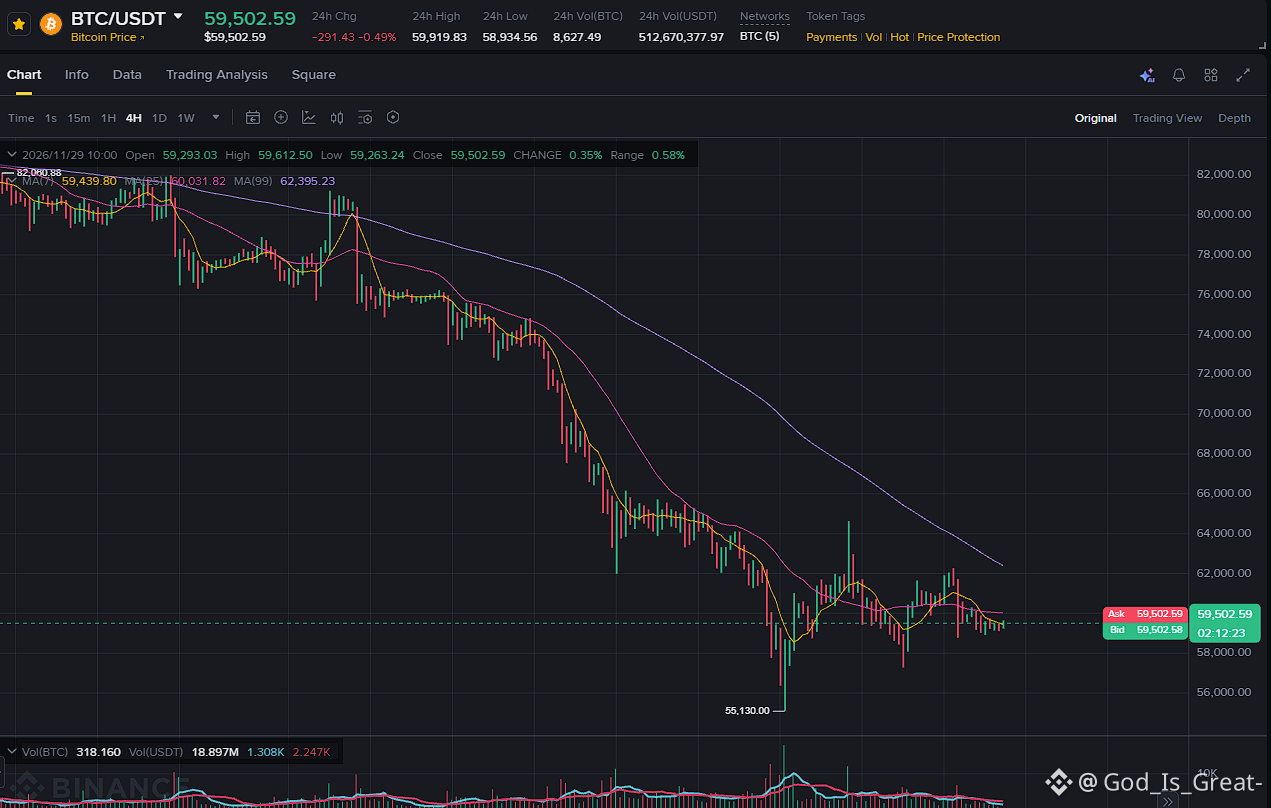
Bitcoin is showing interesting market activity, and everyone has a different opinion about its next move.
Some traders expect a bullish breakout, while others believe another correction could happen.
🚀I want to hear your honest opinion:
1.Are you bullish or bearish on BTC?
2.What price level are you watching?
3.Are you buying, selling, or waiting?
Let's share our analysis and learn from each other!
#bitcoin #BTC #CryptoMarket #BinanceSquare #CryptoAnalysis
$BTC
{future}(BTCUSDT)
🔥 LET'S TALK ABOUT BITCOIN!
Bitcoin is showing interesting market activity, and everyone has a different opinion about its next move.
Some traders expect a bullish breakout, while others believe another correction could happen.
🚀I want to hear your honest opinion:
1.Are you bullish or bearish on BTC?
2.What price level are you watching?
3.Are you buying, selling, or waiting?
Let's share our analysis and learn from each other!
#bitcoin #BTC #CryptoMarket #BinanceSquare #CryptoAnalysis
$BTC
71

Article
CZ SPEAKS OUT AT BINANCE BLOCKCHAIN WEEK: THE HACK, AI REVOLUTION, CRYPTO INVESTMENT AND THE FUTUREChangpeng Zhao (CZ), the founder and former CEO of Binance, delivered several important messages during a fireside chat at Binance Blockchain Week Bangkok on November 28. Speaking with Gareth Jenkinson of The Block, CZ discussed the recent Binance security incident, the growing role of artificial intelligence, investment opportunities, founder leadership, and the future of the cryptocurrency industry.
His discussion offered valuable insights into where the crypto market stands today and what could come next.
1. Binance Security Incident: A Wake-Up Call for the Entire Industry
One of the biggest topics was the recent sophisticated cyberattack targeting Binance.
CZ admitted that the company had become somewhat complacent after several years without major security incidents. He emphasized that security must always remain the highest priority, regardless of how successful a company becomes.
According to his explanation, attackers reportedly targeted more than 1,000 Binance employees through sophisticated social engineering techniques. Fake recruitment interviews and malicious software helped attackers gain access to internal systems.
The attackers then used AI to analyze source code and identify potential weaknesses much faster than traditional methods.
CZ explained that work that might previously have taken months could now be completed in just one day with AI assistance.
He also praised Binance's response, highlighting its commitment to protecting users and covering their losses.
His biggest message was clear: no crypto company should ever underestimate cybersecurity.
2. CZ Wants a Global Crypto Security Alliance
CZ believes the industry needs stronger cooperation to fight increasingly sophisticated cyberattacks.
He proposed an industry-wide security alliance built around three major priorities:
Instant communication and coordinated incident response.Sharing security knowledge and best practices.Cross-checking security systems between companies.
He specifically acknowledged the assistance Binance received from Circle, Tether, and U.S. agencies, including the Secret Service and FBI, during the incident.
CZ also warned that keeping source code secret is no longer enough to protect companies. Hackers are increasingly using AI tools to discover vulnerabilities.
His warning to the industry was powerful: defending a system requires fixing every weakness, while attackers only need to find one.
3. CZ Supports Strong Founder Leadership
Another interesting topic was Nvidia and its founder Jensen Huang.
CZ expressed his support for founder-led companies, explaining that founders often play a critical role in building a company's long-term vision.
He also discussed the risks of government interference in private businesses and argued that competitive markets should allow the strongest companies to succeed.
For CZ, founders should build businesses that can eventually operate independently, but removing experienced founders too early can create unnecessary risks.
4. AI, Crypto and Biotech: Where YZi Labs Sees Opportunities
CZ confirmed that YZi Labs continues to focus on three major investment sectors:
Cryptocurrency and Web3.Artificial Intelligence.Biotechnology.
He explained that AI is becoming increasingly powerful, especially in software development, automation, and security research.
Interestingly, CZ believes AI will not replace blockchain or money.
Instead, AI agents could create more demand for digital payments, financial infrastructure, and blockchain-based transactions.
He also suggested that the current market environment could offer attractive opportunities for crypto investors because significant investment attention and capital have shifted toward AI.
This is an interesting perspective: rather than viewing AI as a competitor to crypto, CZ sees the two technologies as potentially complementary.
5. Is the Crypto Bear Market Near Its Bottom?
CZ also shared his thoughts about the current bearish market conditions.
He compared Bitcoin's previous bear-market lows:
2015: Around $150.2018: Around $3,100.2022: Around $16,000.Current cycle: Around $60,000 has already created significant fear among investors.
His point was that the cryptocurrency market has matured considerably over the years.
CZ suggested that the market could be getting closer to a bottom because fear and negative sentiment are becoming widespread. However, he avoided making any specific Bitcoin price predictions.
For investors, this is an important reminder that market cycles are part of crypto. Strong emotions, uncertainty, and volatility often create some of the most challenging periods for market participants.
6. Blockchain, AI and the Future of Money
CZ believes the internet, blockchain, and artificial intelligence are three major technologies that will continue shaping the future.
Importantly, he does not believe these technologies will replace one another.
AI will need financial services, payment systems, and more transactions as autonomous agents become increasingly common.
Blockchain could play an important role in providing the financial infrastructure needed for this next generation of technology.
His long-term outlook remains optimistic: humans and AI agents will both need money, and blockchain technology could become an important part of that financial future.
My Final Thoughts
CZ's appearance at Binance Blockchain Week delivered an important message to the entire crypto community.
Security must become a priority, AI is changing how businesses operate, and blockchain still has significant room for innovation.
The current bear market may be uncomfortable, but the long-term development of the industry has not stopped.
For investors, the key is to avoid emotional decisions, understand the risks, follow technological developments, and focus on projects with real utility rather than hype.
The combination of AI, blockchain, and digital finance could create major opportunities in the coming years. However, nobody can guarantee market recovery or future profits.
The biggest takeaway from CZ's discussion: Crypto is not going away. The industry is evolving, and the next chapter could look very different from the last one.
Stay informed, do your own research (DYOR), and always manage your risk.
#EvolveAtBinanceBlockchainWeek #BTC #Binance #NVDA #SPCX
$BTC $SPCX $NVDA
{future}(NVDAUSDT)
{future}(SPCXUSDT)
{future}(BTCUSDT)
CZ SPEAKS OUT AT BINANCE BLOCKCHAIN WEEK: THE HACK, AI REVOLUTION, CRYPTO INVESTMENT AND THE FUTURE
Changpeng Zhao (CZ), the founder and former CEO of Binance, delivered several important messages during a fireside chat at Binance Blockchain Week Bangkok on November 28. Speaking with Gareth Jenkinson of The Block, CZ discussed the recent Binance security incident, the growing role of artificial intelligence, investment opportunities, founder leadership, and the future of the cryptocurrency industry.
His discussion offered valuable insights into where the crypto market stands today and what could come next.
1. Binance Security Incident: A Wake-Up Call for the Entire Industry
One of the biggest topics was the recent sophisticated cyberattack targeting Binance.
CZ admitted that the company had become somewhat complacent after several years without major security incidents. He emphasized that security must always remain the highest priority, regardless of how successful a company becomes.
According to his explanation, attackers reportedly targeted more than 1,000 Binance employees through sophisticated social engineering techniques. Fake recruitment interviews and malicious software helped attackers gain access to internal systems.
The attackers then used AI to analyze source code and identify potential weaknesses much faster than traditional methods.
CZ explained that work that might previously have taken months could now be completed in just one day with AI assistance.
He also praised Binance's response, highlighting its commitment to protecting users and covering their losses.
His biggest message was clear: no crypto company should ever underestimate cybersecurity.
2. CZ Wants a Global Crypto Security Alliance
CZ believes the industry needs stronger cooperation to fight increasingly sophisticated cyberattacks.
He proposed an industry-wide security alliance built around three major priorities:
Instant communication and coordinated incident response.Sharing security knowledge and best practices.Cross-checking security systems between companies.
He specifically acknowledged the assistance Binance received from Circle, Tether, and U.S. agencies, including the Secret Service and FBI, during the incident.
CZ also warned that keeping source code secret is no longer enough to protect companies. Hackers are increasingly using AI tools to discover vulnerabilities.
His warning to the industry was powerful: defending a system requires fixing every weakness, while attackers only need to find one.
3. CZ Supports Strong Founder Leadership
Another interesting topic was Nvidia and its founder Jensen Huang.
CZ expressed his support for founder-led companies, explaining that founders often play a critical role in building a company's long-term vision.
He also discussed the risks of government interference in private businesses and argued that competitive markets should allow the strongest companies to succeed.
For CZ, founders should build businesses that can eventually operate independently, but removing experienced founders too early can create unnecessary risks.
4. AI, Crypto and Biotech: Where YZi Labs Sees Opportunities
CZ confirmed that YZi Labs continues to focus on three major investment sectors:
Cryptocurrency and Web3.Artificial Intelligence.Biotechnology.
He explained that AI is becoming increasingly powerful, especially in software development, automation, and security research.
Interestingly, CZ believes AI will not replace blockchain or money.
Instead, AI agents could create more demand for digital payments, financial infrastructure, and blockchain-based transactions.
He also suggested that the current market environment could offer attractive opportunities for crypto investors because significant investment attention and capital have shifted toward AI.
This is an interesting perspective: rather than viewing AI as a competitor to crypto, CZ sees the two technologies as potentially complementary.
5. Is the Crypto Bear Market Near Its Bottom?
CZ also shared his thoughts about the current bearish market conditions.
He compared Bitcoin's previous bear-market lows:
2015: Around $150.2018: Around $3,100.2022: Around $16,000.Current cycle: Around $60,000 has already created significant fear among investors.
His point was that the cryptocurrency market has matured considerably over the years.
CZ suggested that the market could be getting closer to a bottom because fear and negative sentiment are becoming widespread. However, he avoided making any specific Bitcoin price predictions.
For investors, this is an important reminder that market cycles are part of crypto. Strong emotions, uncertainty, and volatility often create some of the most challenging periods for market participants.
6. Blockchain, AI and the Future of Money
CZ believes the internet, blockchain, and artificial intelligence are three major technologies that will continue shaping the future.
Importantly, he does not believe these technologies will replace one another.
AI will need financial services, payment systems, and more transactions as autonomous agents become increasingly common.
Blockchain could play an important role in providing the financial infrastructure needed for this next generation of technology.
His long-term outlook remains optimistic: humans and AI agents will both need money, and blockchain technology could become an important part of that financial future.
My Final Thoughts
CZ's appearance at Binance Blockchain Week delivered an important message to the entire crypto community.
Security must become a priority, AI is changing how businesses operate, and blockchain still has significant room for innovation.
The current bear market may be uncomfortable, but the long-term development of the industry has not stopped.
For investors, the key is to avoid emotional decisions, understand the risks, follow technological developments, and focus on projects with real utility rather than hype.
The combination of AI, blockchain, and digital finance could create major opportunities in the coming years. However, nobody can guarantee market recovery or future profits.
The biggest takeaway from CZ's discussion: Crypto is not going away. The industry is evolving, and the next chapter could look very different from the last one.
Stay informed, do your own research (DYOR), and always manage your risk.
#EvolveAtBinanceBlockchainWeek #BTC #Binance #NVDA #SPCX
$BTC $SPCX $NVDA
544
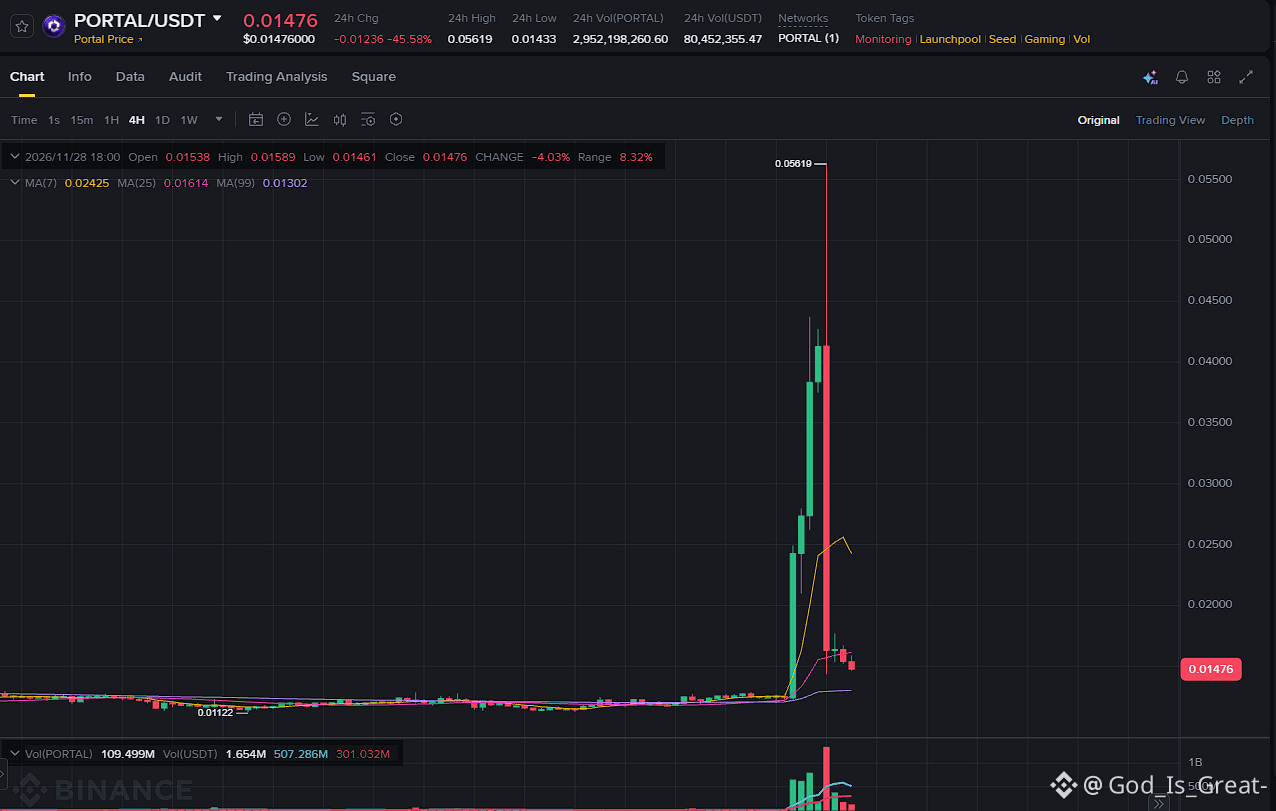
$PORTAL coin
🚀One day ago up 0.012 - 0.043 and
today falling 0.056 - 0.014
$PORTAL
{future}(PORTALUSDT)
$PORTAL coin
🚀One day ago up 0.012 - 0.043 and
today falling 0.056 - 0.014
$PORTAL
🚀One day ago up 0.012 - 0.043 and
today falling 0.056 - 0.014
$PORTAL
190

Article
Binance Blockchain Week Bangkok: Richard Teng Reveals How Crypto and Traditional Finance Will ShapeBinance Blockchain Week officially opened in Bangkok on November 28, bringing together industry leaders, investors, developers, regulators, and crypto enthusiasts to discuss the future of digital finance.
Delivering the opening keynote, Binance Co-CEO Richard Teng shared a powerful vision of how cryptocurrency, traditional finance, and blockchain technology are increasingly coming together to create the next generation of financial infrastructure.
According to Teng, crypto is moving beyond its identity as a standalone industry. The next wave of adoption will focus on real-world financial needs, including payments, savings, investments, and access to global opportunities.
He explained that future users may not even consider themselves crypto users. Instead, they will care about whether they can receive payments, protect their savings, and participate in international financial markets more easily.
Crypto and Traditional Finance Are Converging
One of the biggest themes of Teng's keynote was the growing connection between traditional financial markets and blockchain technology.
He highlighted the increasing importance of stablecoins, tokenized assets, and institutional participation in the digital asset ecosystem.
Tokenized equities could create new opportunities for people who face barriers to accessing international markets. Blockchain infrastructure may also improve how financial assets are distributed, traded, and settled.
Teng described Binance's broader ambition as evolving from a crypto exchange into a 24/7 multi-asset platform, bringing different financial opportunities together through a single account.
Trust and Security Remain Essential
Teng emphasized that innovation cannot succeed without trust, transparency, and strong security.
Discussing a recent coordinated security incident affecting the industry, he highlighted Binance's response, including its commitment to protecting users and restoring impacted assets.
He stated that 95% of affected assets were replenished within two days, with all assets subsequently restored.
He also highlighted Proof of Reserves and independent security reviews involving Mandiant, SlowMist, and Verichains.
Another major concern was the growing use of artificial intelligence in cyberattacks. Fake recruiters, fraudulent interviews, impersonation, and sophisticated scams are creating new challenges for companies across the financial industry.
Stablecoins and Regulation Could Transform Global Payments
Teng also highlighted the important role of stablecoins in the global financial system.
From freelancers receiving international payments to small businesses handling cross-border transactions and families sending money overseas, stablecoins could make financial services faster and more accessible.
He noted that stablecoin issuers froze more than $2 billion in stolen funds during the recent security incident, demonstrating how blockchain technology can support rapid responses and cooperation across borders.
On regulation, Teng shared a clear message: regulation should be a bridge to growth rather than an obstacle to innovation.
Clear regulatory frameworks can encourage institutional participation, improve consumer protection, and create confidence in the broader digital asset ecosystem.
Why Asia Matters for the Future of Crypto
Bangkok's role as the host city also reflected Asia's growing influence in the global digital asset industry.
Teng described Asia as an important meeting point for traditional finance and technological innovation.
Across the Asia-Pacific region, different jurisdictions are developing regulatory approaches and financial infrastructure that could help shape the future of digital assets.
The Bigger Vision: One Connected Financial Ecosystem
In his closing remarks, Teng explained that future users will not want separate platforms for banking, payments, transfers, and investments.
They will expect a connected financial experience that provides access to different services in one place.
His vision is to help create a financial ecosystem that is open, flexible, interoperable, and accessible to users worldwide.
Final Thoughts
Richard Teng's opening keynote delivered an important message at Binance Blockchain Week Bangkok: the future of finance is not simply about cryptocurrency. It is about bringing blockchain technology and traditional financial systems together to create better financial opportunities.
With stablecoins, tokenization, institutional adoption, stronger security, and clearer regulations gaining importance, the industry could be entering a new chapter of financial innovation.
The biggest question now is how quickly this vision becomes reality.
#EvolveAtBinanceBlockchainWeek #Binance #crypto #blockchain #DigitalFinance $BNB
{future}(BNBUSDT)
Binance Blockchain Week Bangkok: Richard Teng Reveals How Crypto and Traditional Finance Will Shape
Binance Blockchain Week officially opened in Bangkok on November 28, bringing together industry leaders, investors, developers, regulators, and crypto enthusiasts to discuss the future of digital finance.
Delivering the opening keynote, Binance Co-CEO Richard Teng shared a powerful vision of how cryptocurrency, traditional finance, and blockchain technology are increasingly coming together to create the next generation of financial infrastructure.
According to Teng, crypto is moving beyond its identity as a standalone industry. The next wave of adoption will focus on real-world financial needs, including payments, savings, investments, and access to global opportunities.
He explained that future users may not even consider themselves crypto users. Instead, they will care about whether they can receive payments, protect their savings, and participate in international financial markets more easily.
Crypto and Traditional Finance Are Converging
One of the biggest themes of Teng's keynote was the growing connection between traditional financial markets and blockchain technology.
He highlighted the increasing importance of stablecoins, tokenized assets, and institutional participation in the digital asset ecosystem.
Tokenized equities could create new opportunities for people who face barriers to accessing international markets. Blockchain infrastructure may also improve how financial assets are distributed, traded, and settled.
Teng described Binance's broader ambition as evolving from a crypto exchange into a 24/7 multi-asset platform, bringing different financial opportunities together through a single account.
Trust and Security Remain Essential
Teng emphasized that innovation cannot succeed without trust, transparency, and strong security.
Discussing a recent coordinated security incident affecting the industry, he highlighted Binance's response, including its commitment to protecting users and restoring impacted assets.
He stated that 95% of affected assets were replenished within two days, with all assets subsequently restored.
He also highlighted Proof of Reserves and independent security reviews involving Mandiant, SlowMist, and Verichains.
Another major concern was the growing use of artificial intelligence in cyberattacks. Fake recruiters, fraudulent interviews, impersonation, and sophisticated scams are creating new challenges for companies across the financial industry.
Stablecoins and Regulation Could Transform Global Payments
Teng also highlighted the important role of stablecoins in the global financial system.
From freelancers receiving international payments to small businesses handling cross-border transactions and families sending money overseas, stablecoins could make financial services faster and more accessible.
He noted that stablecoin issuers froze more than $2 billion in stolen funds during the recent security incident, demonstrating how blockchain technology can support rapid responses and cooperation across borders.
On regulation, Teng shared a clear message: regulation should be a bridge to growth rather than an obstacle to innovation.
Clear regulatory frameworks can encourage institutional participation, improve consumer protection, and create confidence in the broader digital asset ecosystem.
Why Asia Matters for the Future of Crypto
Bangkok's role as the host city also reflected Asia's growing influence in the global digital asset industry.
Teng described Asia as an important meeting point for traditional finance and technological innovation.
Across the Asia-Pacific region, different jurisdictions are developing regulatory approaches and financial infrastructure that could help shape the future of digital assets.
The Bigger Vision: One Connected Financial Ecosystem
In his closing remarks, Teng explained that future users will not want separate platforms for banking, payments, transfers, and investments.
They will expect a connected financial experience that provides access to different services in one place.
His vision is to help create a financial ecosystem that is open, flexible, interoperable, and accessible to users worldwide.
Final Thoughts
Richard Teng's opening keynote delivered an important message at Binance Blockchain Week Bangkok: the future of finance is not simply about cryptocurrency. It is about bringing blockchain technology and traditional financial systems together to create better financial opportunities.
With stablecoins, tokenization, institutional adoption, stronger security, and clearer regulations gaining importance, the industry could be entering a new chapter of financial innovation.
The biggest question now is how quickly this vision becomes reality.
#EvolveAtBinanceBlockchainWeek #Binance #crypto #blockchain #DigitalFinance $BNB
37
🚀Binance Blockchain Week is officially happening on November 28–29 in Bangkok, and the crypto community has plenty to look forward to!
The event brings together industry leaders, traders, creators, and blockchain enthusiasts to discuss the future of crypto under this year's theme, “Evolve.”
Here's what I'm looking forward to:
Main Stage Livestreams: Hear from industry experts about the latest innovations and real-world blockchain adoption.
Trading Competitions: Watch the Aster Open Qualifier and Binance Trading Master Tournament live.
The Blockchain 100 Awards: Celebrate the creators and community members making a difference in the blockchain space.
Community Discussions: Share your thoughts, experiences, and favorite moments using #EvolveAtBinanceBlockchainWeek.
Even if you're not in Bangkok, you can still be part of the event through the livestreams and Binance Square.
It's a great opportunity to learn, connect, and see where the crypto industry is heading next.
What are you most excited to watch during Binance Blockchain Week?
#BinanceBlockchainWeek #EvolveAtBinanceBlockchainWeek #CryptoCommunity #blockchain #Binance $BNB
{future}(BNBUSDT)
🚀Binance Blockchain Week is officially happening on November 28–29 in Bangkok, and the crypto community has plenty to look forward to!
The event brings together industry leaders, traders, creators, and blockchain enthusiasts to discuss the future of crypto under this year's theme, “Evolve.”
Here's what I'm looking forward to:
Main Stage Livestreams: Hear from industry experts about the latest innovations and real-world blockchain adoption.
Trading Competitions: Watch the Aster Open Qualifier and Binance Trading Master Tournament live.
The Blockchain 100 Awards: Celebrate the creators and community members making a difference in the blockchain space.
Community Discussions: Share your thoughts, experiences, and favorite moments using #EvolveAtBinanceBlockchainWeek.
Even if you're not in Bangkok, you can still be part of the event through the livestreams and Binance Square.
It's a great opportunity to learn, connect, and see where the crypto industry is heading next.
What are you most excited to watch during Binance Blockchain Week?
#BinanceBlockchainWeek #EvolveAtBinanceBlockchainWeek #CryptoCommunity #blockchain #Binance $BNB
69
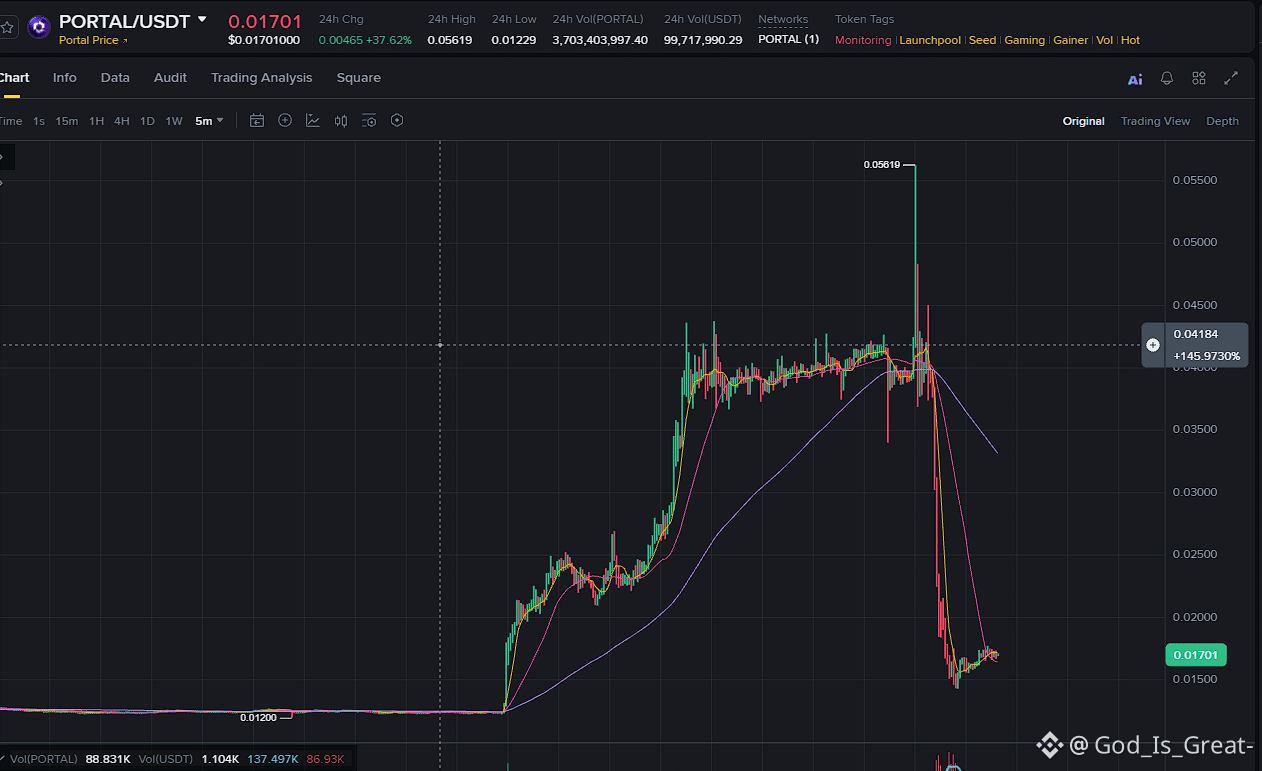
$PORTAL UP+230%🤯🤯🤯
Jast For 8 Hours Candel now -1% 😂😂
It's Touch Again 0.01$ ???
$PORTAL
{future}(PORTALUSDT)
$PORTAL UP+230%🤯🤯🤯
Jast For 8 Hours Candel now -1% 😂😂
It's Touch Again 0.01$ ???
$PORTAL
Jast For 8 Hours Candel now -1% 😂😂
It's Touch Again 0.01$ ???
$PORTAL
288
🎁🎁🎁Claim it
🚀Binance new update
The Best Black Friday Deal is on Binance
$BTC $ETH $BNB
{future}(BNBUSDT)
{future}(ETHUSDT)
{future}(BTCUSDT)
🎁🎁🎁Claim it
🚀Binance new update
The Best Black Friday Deal is on Binance
$BTC $ETH $BNB
🚀Binance new update
The Best Black Friday Deal is on Binance
$BTC $ETH $BNB

3
616
🔥 CAN $LUNC REALLY REACH $10? — DREAM OR REAL POSSIBILITY? 👀🚀
The Terra Classic community continues to believe in the long-term potential of $LUNC.
But can LUNC realistically reach $10?
Several factors could influence its future:
🔥 Community Support: The LUNC Army remains committed to the project.
🔥 Token Burns: Reducing the circulating supply could improve long-term scarcity.
🔥 Ecosystem Development: Continued development and increased adoption could support demand.
⚠️ The Big Challenge: Reaching $10 would require an enormous increase in market capitalization under the current supply. Token burns alone may not be enough.
Could LUNC surprise the market in the coming years, or is $10 too ambitious?
What's your realistic LUNC price target? Share your prediction below! 👇
Hashtags:
#LUNC #TerraClassic #LuncArmy #CryptoCommunity #CryptoPredictions $LUNC
{spot}(LUNCUSDT)
🔥 CAN $LUNC REALLY REACH $10? — DREAM OR REAL POSSIBILITY? 👀🚀
The Terra Classic community continues to believe in the long-term potential of $LUNC .
But can LUNC realistically reach $10?
Several factors could influence its future:
🔥 Community Support: The LUNC Army remains committed to the project.
🔥 Token Burns: Reducing the circulating supply could improve long-term scarcity.
🔥 Ecosystem Development: Continued development and increased adoption could support demand.
⚠️ The Big Challenge: Reaching $10 would require an enormous increase in market capitalization under the current supply. Token burns alone may not be enough.
Could LUNC surprise the market in the coming years, or is $10 too ambitious?
What's your realistic LUNC price target? Share your prediction below! 👇
Hashtags:
#LUNC #TerraClassic #LuncArmy #CryptoCommunity #CryptoPredictions $LUNC
10
5
865
Article
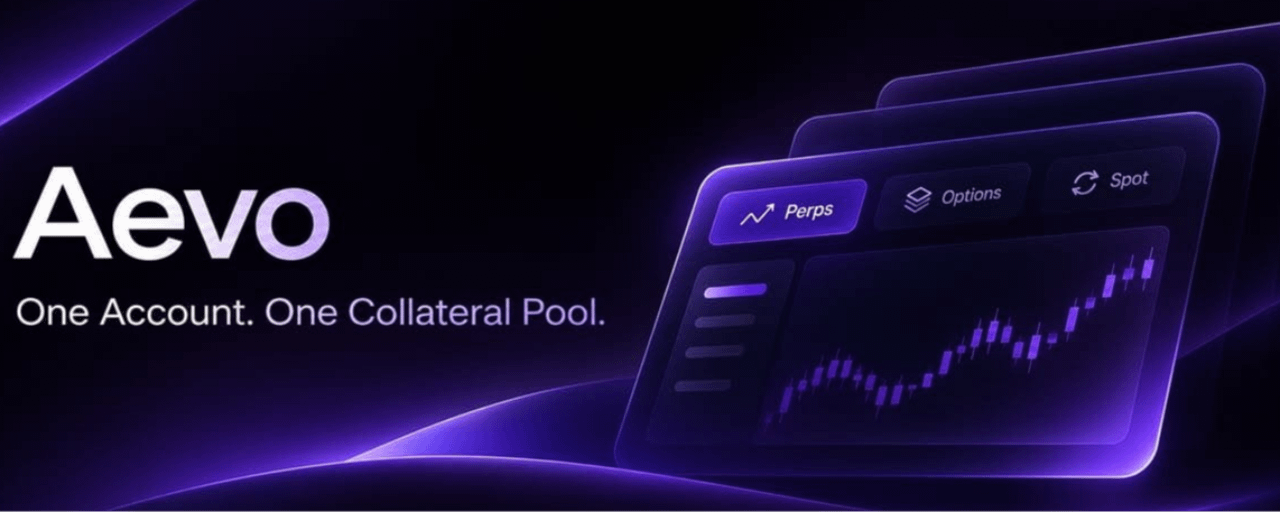
Aevo ($AEVO) Is Bringing Crypto, Stocks, and Commodities Together on One Trading PlatformThe global trading landscape is evolving, and Aevo ($AEVO ) is positioning itself to become part of that transformation by bringing multiple financial markets into a single trading environment.
Imagine being able to trade Bitcoin, explore options strategies, take positions in equities, and gain exposure to commodities without switching between different platforms. This is the vision behind Aevo's expanding derivatives ecosystem.
One Platform, Multiple Markets
Aevo aims to simplify the trading experience by providing access to different financial markets through one platform.
Its key offerings include:
Crypto Perpetuals and Options: Access cryptocurrency derivatives and explore different trading strategies.Equity Perpetuals: Gain exposure to equity markets through perpetual contracts.Commodity Markets: Explore trading opportunities beyond traditional cryptocurrencies.Unified Collateral: Manage multiple positions using one collateral pool.Portfolio Margin: Eligible traders may benefit from reduced margin requirements when positions offset each other.
Why Portfolio Margin Matters
One of the most interesting features is Portfolio Margin.
Traditionally, traders often need to distribute their capital across multiple platforms and trading accounts. This can make portfolio management more complicated and less capital-efficient.
With a unified collateral system, traders can potentially manage different positions within one account.
Portfolio Margin can also consider the combined risk of multiple positions rather than evaluating every position independently. When positions offset each other, eligible traders may benefit from lower margin requirements.
However, margin requirements and liquidation risks still apply.
Connecting Traditional Finance and Crypto
The financial markets are gradually becoming more interconnected. Cryptocurrency markets operate around the clock, while traditional financial markets are increasingly exploring extended trading hours.
This creates opportunities for platforms that can bring different asset classes into a more connected trading environment.
Aevo's approach focuses on making access to multiple markets simpler while giving traders more flexibility in managing their strategies and capital.
What Makes Aevo Interesting?
The biggest opportunity is not simply the number of markets available. It is the possibility of managing different trading strategies within one ecosystem.
Instead of constantly moving between platforms, traders can potentially access crypto derivatives, equities, and commodities through a unified trading experience.
Final Thoughts
Aevo ($AEVO) is working toward a more connected derivatives trading environment where different financial markets can exist within one platform.
As the boundaries between traditional finance and cryptocurrency continue to evolve, unified trading platforms could become increasingly important.
The future of derivatives trading may not be limited to crypto alone. It could be about accessing global markets through a single, connected ecosystem.
Always do your own research (DYOR). Understand the risks before trading derivatives, and never invest more than you can afford to lose.
#aevo #cryptotrading #defi #Derivatives #CorePCEBeatLiftsFedHikeOdds $AEVO
{future}(AEVOUSDT)
Aevo ($AEVO) Is Bringing Crypto, Stocks, and Commodities Together on One Trading Platform
The global trading landscape is evolving, and Aevo ($AEVO ) is positioning itself to become part of that transformation by bringing multiple financial markets into a single trading environment.
Imagine being able to trade Bitcoin, explore options strategies, take positions in equities, and gain exposure to commodities without switching between different platforms. This is the vision behind Aevo's expanding derivatives ecosystem.
One Platform, Multiple Markets
Aevo aims to simplify the trading experience by providing access to different financial markets through one platform.
Its key offerings include:
Crypto Perpetuals and Options: Access cryptocurrency derivatives and explore different trading strategies.Equity Perpetuals: Gain exposure to equity markets through perpetual contracts.Commodity Markets: Explore trading opportunities beyond traditional cryptocurrencies.Unified Collateral: Manage multiple positions using one collateral pool.Portfolio Margin: Eligible traders may benefit from reduced margin requirements when positions offset each other.
Why Portfolio Margin Matters
One of the most interesting features is Portfolio Margin.
Traditionally, traders often need to distribute their capital across multiple platforms and trading accounts. This can make portfolio management more complicated and less capital-efficient.
With a unified collateral system, traders can potentially manage different positions within one account.
Portfolio Margin can also consider the combined risk of multiple positions rather than evaluating every position independently. When positions offset each other, eligible traders may benefit from lower margin requirements.
However, margin requirements and liquidation risks still apply.
Connecting Traditional Finance and Crypto
The financial markets are gradually becoming more interconnected. Cryptocurrency markets operate around the clock, while traditional financial markets are increasingly exploring extended trading hours.
This creates opportunities for platforms that can bring different asset classes into a more connected trading environment.
Aevo's approach focuses on making access to multiple markets simpler while giving traders more flexibility in managing their strategies and capital.
What Makes Aevo Interesting?
The biggest opportunity is not simply the number of markets available. It is the possibility of managing different trading strategies within one ecosystem.
Instead of constantly moving between platforms, traders can potentially access crypto derivatives, equities, and commodities through a unified trading experience.
Final Thoughts
Aevo ($AEVO ) is working toward a more connected derivatives trading environment where different financial markets can exist within one platform.
As the boundaries between traditional finance and cryptocurrency continue to evolve, unified trading platforms could become increasingly important.
The future of derivatives trading may not be limited to crypto alone. It could be about accessing global markets through a single, connected ecosystem.
Always do your own research (DYOR). Understand the risks before trading derivatives, and never invest more than you can afford to lose.
#aevo #cryptotrading #defi #Derivatives #CorePCEBeatLiftsFedHikeOdds $AEVO
1
1
187
Article
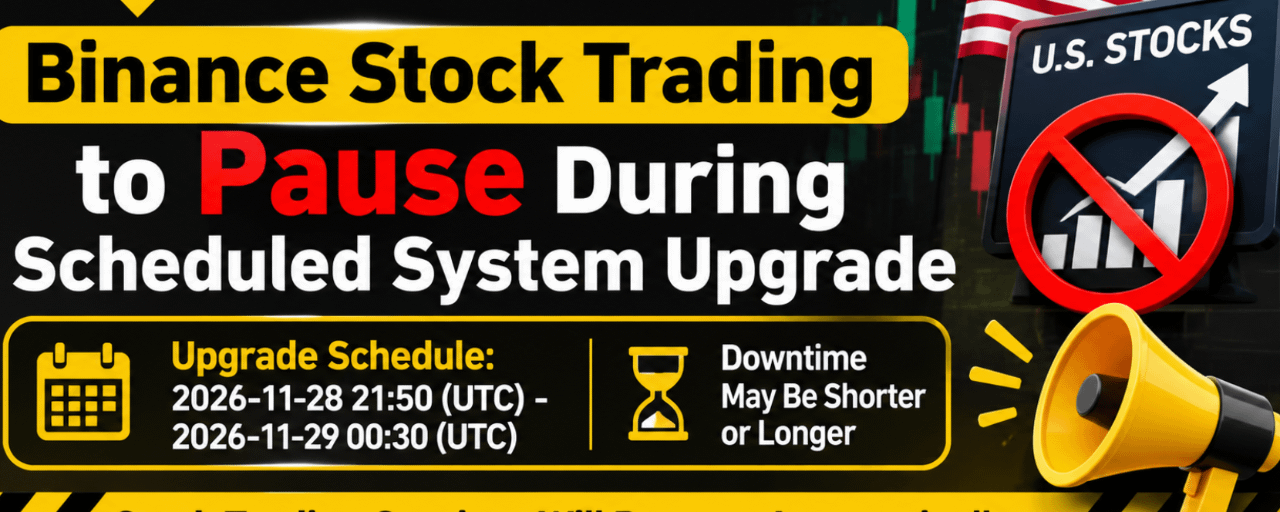
Binance Stock Trading to Pause During Scheduled System Upgrade: What Users Need to KnowBinance has announced a temporary suspension of its U.S. Stock Trading services due to a scheduled system upgrade by its partner broker. During this maintenance period, users will be unable to place stock trading orders through the platform.
The planned upgrade is part of routine system maintenance aimed at improving the broker's infrastructure and maintaining service reliability.
Upgrade Schedule
According to the announcement, the maintenance window is scheduled as follows:
Start: November 28, 2026, at 21:50 UTCEnd: November 29, 2026, at 00:30 UTCExpected duration: Approximately 2 hours and 40 minutes.
The upgrade is scheduled outside regular U.S. stock market trading hours, helping reduce potential disruption to normal trading activity.
What Will Happen During the Upgrade?
During the scheduled maintenance period:
U.S. Stock Trading services on Binance will be temporarily unavailable.Users will not be able to place stock trading orders.The downtime may end earlier than expected or extend if additional technical work is required.
When Will Trading Resume?
Binance has indicated that stock trading services will automatically resume once the system upgrade is successfully completed. Users should monitor official Binance announcements for any additional updates or changes to the maintenance schedule.
What Should Investors Do?
Users interested in U.S. stock trading should plan ahead and review their trading activities before the scheduled maintenance begins. Avoid relying on the platform during the upgrade window, and check the latest official updates before placing new orders.
Final Thoughts
This scheduled maintenance is a temporary service interruption rather than an announcement of permanent changes to Binance's stock trading services. Investors should stay informed, plan their activities accordingly, and follow official Binance communication channels.
Source: Binance Official Announcement.
$BTC $BNB
{future}(BNBUSDT)
{future}(BTCUSDT)
Binance Stock Trading to Pause During Scheduled System Upgrade: What Users Need to Know
Binance has announced a temporary suspension of its U.S. Stock Trading services due to a scheduled system upgrade by its partner broker. During this maintenance period, users will be unable to place stock trading orders through the platform.
The planned upgrade is part of routine system maintenance aimed at improving the broker's infrastructure and maintaining service reliability.
Upgrade Schedule
According to the announcement, the maintenance window is scheduled as follows:
Start: November 28, 2026, at 21:50 UTCEnd: November 29, 2026, at 00:30 UTCExpected duration: Approximately 2 hours and 40 minutes.
The upgrade is scheduled outside regular U.S. stock market trading hours, helping reduce potential disruption to normal trading activity.
What Will Happen During the Upgrade?
During the scheduled maintenance period:
U.S. Stock Trading services on Binance will be temporarily unavailable.Users will not be able to place stock trading orders.The downtime may end earlier than expected or extend if additional technical work is required.
When Will Trading Resume?
Binance has indicated that stock trading services will automatically resume once the system upgrade is successfully completed. Users should monitor official Binance announcements for any additional updates or changes to the maintenance schedule.
What Should Investors Do?
Users interested in U.S. stock trading should plan ahead and review their trading activities before the scheduled maintenance begins. Avoid relying on the platform during the upgrade window, and check the latest official updates before placing new orders.
Final Thoughts
This scheduled maintenance is a temporary service interruption rather than an announcement of permanent changes to Binance's stock trading services. Investors should stay informed, plan their activities accordingly, and follow official Binance communication channels.
Source: Binance Official Announcement.
$BTC $BNB
35
Article
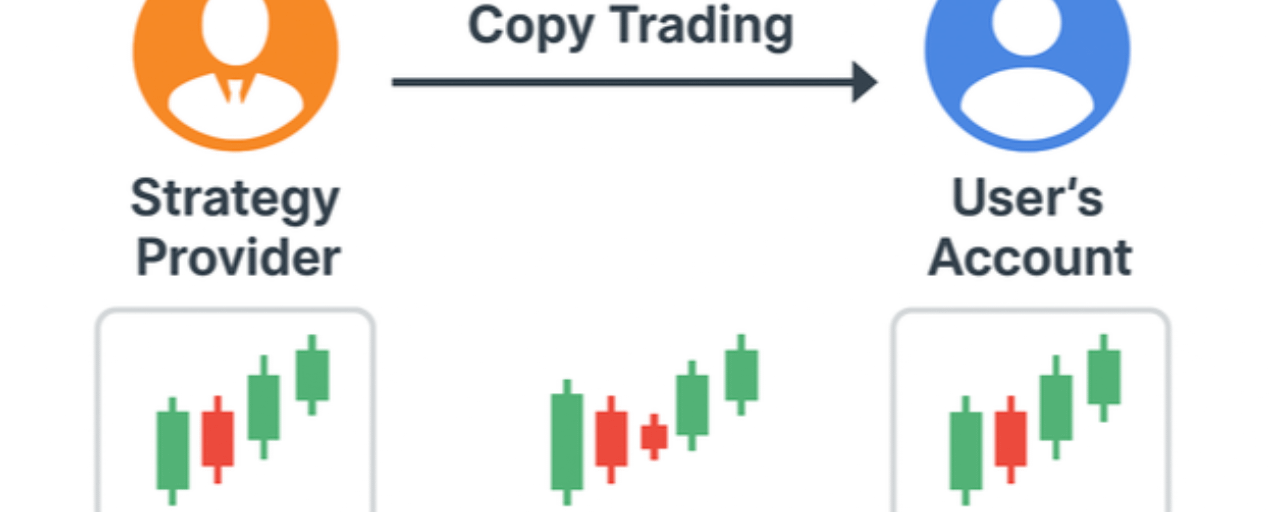
Copy Trading Is Not a Shortcut to Success: Build Your Own Trading StrategyMany people want to join a copy-trading strategy only after seeing someone else make huge profits. But entering the market simply because a trader is making money is similar to buying gold when its price is already at its peak.
During my first three months of leading trades, I achieved significant gains, but the drawdowns were also massive. There were multiple entries and exits every day, and surviving such volatility required strong discipline and patience.
My first WLD trade was devastating, with copy traders experiencing losses of up to 85%. Even a top-performing South American trader, who reportedly turned an initial $100,000 investment into an $800,000 trading record, experienced a dramatic drop to just $14,000 after the first trade.
The journey was not easy. Despite experiencing a drawdown of nearly 90%, I continued trading. Within two days, I multiplied my remaining capital by 10, recovered to break-even, and continued working toward much bigger returns.
However, copy trading has limitations. Protective mechanisms, execution delays, and order-size restrictions can create significant differences between a lead trader's performance and a copy trader's actual results.
The Biggest Lesson: Don't Blindly Follow Other Traders.
If you genuinely want to become a better trader:
Learn from experienced traders and understand their strategies.Join a positive trading community and exchange knowledge.Develop your own trading approach instead of blindly copying others.Understand risk management before entering any position.Research every trade and never rely entirely on someone else's decisions.
A few days after I stopped leading trades, several new lead traders reportedly faced liquidation. This highlights an important reality: following someone else's trades without understanding the strategy or managing your own risk can be extremely dangerous.
Think more. Research more. Listen more. Analyze more.
Successful trading is not about copying someone else's profits. It is about developing your own knowledge, discipline, strategy, and risk management.
Remember: Past performance does not guarantee future results. Always do your own research (DYOR) and never risk more than you can afford to lose.
$XAU
{future}(XAUUSDT)
Copy Trading Is Not a Shortcut to Success: Build Your Own Trading Strategy
Many people want to join a copy-trading strategy only after seeing someone else make huge profits. But entering the market simply because a trader is making money is similar to buying gold when its price is already at its peak.
During my first three months of leading trades, I achieved significant gains, but the drawdowns were also massive. There were multiple entries and exits every day, and surviving such volatility required strong discipline and patience.
My first WLD trade was devastating, with copy traders experiencing losses of up to 85%. Even a top-performing South American trader, who reportedly turned an initial $100,000 investment into an $800,000 trading record, experienced a dramatic drop to just $14,000 after the first trade.
The journey was not easy. Despite experiencing a drawdown of nearly 90%, I continued trading. Within two days, I multiplied my remaining capital by 10, recovered to break-even, and continued working toward much bigger returns.
However, copy trading has limitations. Protective mechanisms, execution delays, and order-size restrictions can create significant differences between a lead trader's performance and a copy trader's actual results.
The Biggest Lesson: Don't Blindly Follow Other Traders.
If you genuinely want to become a better trader:
Learn from experienced traders and understand their strategies.Join a positive trading community and exchange knowledge.Develop your own trading approach instead of blindly copying others.Understand risk management before entering any position.Research every trade and never rely entirely on someone else's decisions.
A few days after I stopped leading trades, several new lead traders reportedly faced liquidation. This highlights an important reality: following someone else's trades without understanding the strategy or managing your own risk can be extremely dangerous.
Think more. Research more. Listen more. Analyze more.
Successful trading is not about copying someone else's profits. It is about developing your own knowledge, discipline, strategy, and risk management.
Remember: Past performance does not guarantee future results. Always do your own research (DYOR) and never risk more than you can afford to lose.
$XAU
146
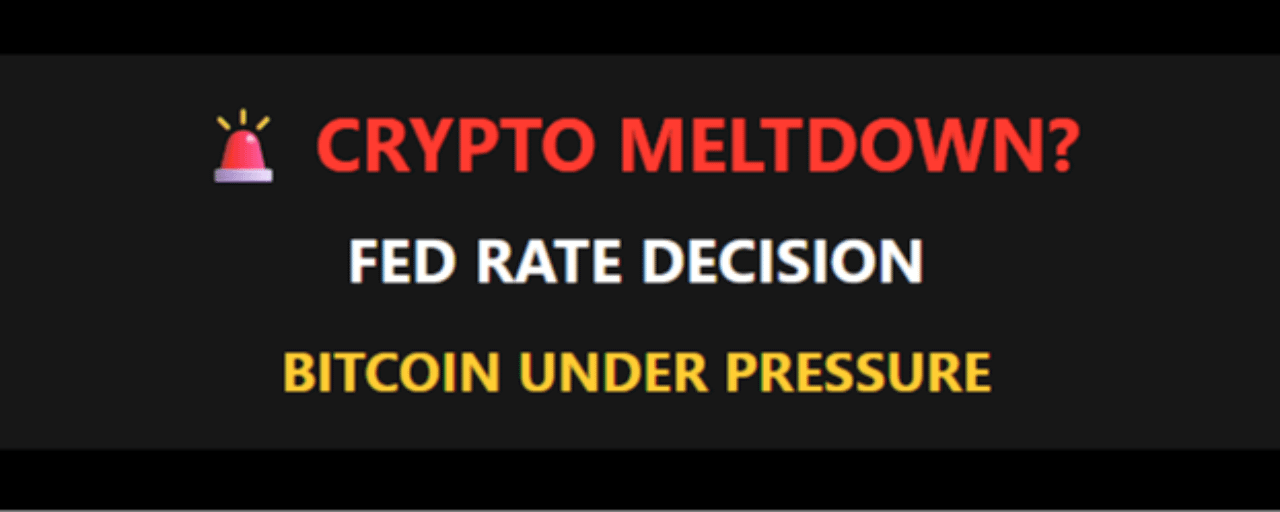
Article
CRYPTO MARKET WARNING: A FULL MARKET MELTDOWN COULD BE COMING BEFORE THE FED'S DECEMBER RATE DECISIThe global financial markets are facing another period of growing uncertainty as investors prepare for the Federal Reserve's upcoming December monetary policy decision. A new warning from economist Robin Brooks has raised serious concerns about the possibility of a major sell-off across cryptocurrencies, US stocks, gold, and other risk-sensitive assets.
According to Brooks, a senior fellow at the Brookings Institution and former chief foreign exchange strategist at Goldman Sachs, financial markets could experience a "full meltdown" before the Federal Reserve's December 8–9 Federal Open Market Committee (FOMC) meeting if policymakers continue to maintain an aggressive, hawkish approach toward monetary policy.
The warning comes at a particularly sensitive moment for global markets. Bitcoin and other cryptocurrencies remain exposed to changes in interest-rate expectations, while traditional financial markets are already experiencing selling pressure. At the same time, the US dollar has strengthened, oil prices have declined, and gold has experienced an unusually severe correction.
These developments are creating a complicated environment for investors. Although lower oil prices could help reduce inflationary pressure, the Federal Reserve's continued willingness to keep interest rates elevated could make financial conditions even tighter.
For cryptocurrency investors, the biggest question is whether the Federal Reserve will continue prioritizing inflation control or respond to growing market stress before its December policy announcement.
1. ROBIN BROOKS WARNS OF A POTENTIAL FULL MARKET MELTDOWN
Economist Robin Brooks has issued a serious warning about the direction of global financial markets, suggesting that continued hawkish signals from the Federal Reserve could trigger a much deeper correction across risk assets.
Brooks believes that monetary tightening at a time when oil prices are declining could become a significant policy mistake.
His argument is based on the relationship between inflation, interest rates, currency movements, and financial conditions.
When central banks maintain high interest rates, borrowing becomes more expensive for businesses and consumers. Companies may reduce investment, households may cut spending, and investors may become less willing to take risks.
This can create pressure across several financial markets simultaneously.
Brooks argues that the combination of falling oil prices, a strengthening US dollar, and rising real interest rates is already creating significant pressure.
If the Federal Reserve continues communicating that additional rate increases may be necessary, investors could begin reducing exposure to risky investments even more aggressively.
This could affect:
Bitcoin and the broader cryptocurrency market.Ethereum and major altcoins.Technology and growth stocks.Emerging-market currencies.Gold and other precious metals.High-risk investment funds.Companies that depend heavily on borrowing.
The concern is not simply that one asset class could decline. It is that several interconnected markets could experience selling pressure at the same time.
For cryptocurrency investors, this is particularly important because digital assets are generally considered risk-sensitive investments. When investors become concerned about economic uncertainty or tighter financial conditions, speculative assets can experience substantial volatility.
2. WHY THE FEDERAL RESERVE'S DECEMBER DECISION MATTERS
The Federal Reserve is one of the most influential institutions in the global financial system.
Its decisions regarding interest rates affect borrowing costs, investment activity, currency valuations, bond yields, and liquidity throughout the economy.
The December 8–9 FOMC meeting is therefore attracting considerable attention from investors.
Markets are currently focused on whether policymakers will maintain their existing target rate, consider another increase, or communicate a willingness to adjust their position as economic conditions change.
According to the information reported in the market update, investors overwhelmingly expected a 25-basis-point increase.
However, the possibility of a more aggressive monetary policy has created additional uncertainty.
A 25-basis-point increase represents a 0.25 percentage-point adjustment, while a 50-basis-point increase represents a 0.50 percentage-point adjustment.
Although the numerical difference appears relatively small, the market reaction can be substantial because investors make decisions based not only on the actual interest-rate change but also on what that decision communicates about future monetary policy.
If the Federal Reserve signals that additional increases could follow, investors may begin preparing for a longer period of expensive borrowing.
That expectation alone can place pressure on financial markets.
For Bitcoin, the implications are particularly important.
Cryptocurrency prices are influenced by many factors, including institutional demand, investor sentiment, regulatory developments, adoption, liquidity, and macroeconomic conditions.
Interest-rate expectations are one of the major macroeconomic factors that can influence these markets.
When investors expect tighter monetary conditions, demand for speculative investments may weaken.
When investors expect easier monetary conditions, risk appetite can improve.
This is why the December Federal Reserve meeting has become such an important event for cryptocurrency traders.
3. CHRISTOPHER WALLER'S 50-BASIS-POINT WARNING ADDS TO MARKET FEARS
Another important development is the warning from Federal Reserve Governor Christopher Waller.
Last week, Waller suggested that policymakers might need to deliver a 50-basis-point interest-rate increase to prevent businesses from passing higher prices on to consumers.
His comments introduced the possibility of a more aggressive policy response.
The concern behind this approach is that inflation can become persistent when businesses continue increasing prices and consumers remain willing or able to absorb those increases.
If inflation expectations become difficult to control, central banks may feel pressure to maintain restrictive monetary policy for longer.
However, a more aggressive approach also carries economic risks.
Higher borrowing costs can make it more difficult for businesses to finance operations, expand production, hire workers, and invest in new projects.
Consumers may also face higher costs when financing homes, vehicles, credit-card balances, and other purchases.
For financial markets, the possibility of a 50-basis-point increase could create a negative reaction.
Investors may interpret such a move as a signal that the Federal Reserve is more concerned about inflation than the stability of financial markets.
That could increase uncertainty across equities, cryptocurrencies, and emerging markets.
Nevertheless, comments from individual Federal Reserve officials should not automatically be interpreted as a final policy decision.
The actual decision depends on the full committee's assessment of inflation, employment, economic growth, and financial conditions.
4. FALLING OIL PRICES CREATE A COMPLICATED INFLATION PICTURE
One of the most interesting developments in the current market environment is the decline in crude oil prices.
US WTI crude oil reportedly fell below $80 per barrel for the first time since August 10, reaching approximately $79.25.
This decline is significant because energy prices influence a wide range of economic activities.
Lower oil prices can reduce transportation expenses, production costs, and some consumer energy costs.
They can also help reduce inflationary pressure over time.
For households, cheaper fuel can improve disposable income.
For businesses, lower transportation and operating expenses can improve profit margins.
In theory, declining energy prices could give central banks more room to avoid additional monetary tightening.
However, the relationship between oil prices and inflation is not always straightforward.
Energy prices are volatile and can be affected by geopolitical developments, production decisions, global demand, supply disruptions, and economic expectations.
The Federal Reserve also considers broader inflation measures rather than relying exclusively on crude oil prices.
This is where Robin Brooks' criticism becomes important.
He argues that maintaining or increasing interest rates while oil prices are falling could unnecessarily tighten financial conditions.
If inflationary pressure is already weakening in certain areas, additional monetary tightening could place excessive pressure on businesses, consumers, and financial markets.
For cryptocurrency investors, lower oil prices are therefore not automatically bullish or bearish.
The market reaction depends on whether declining oil prices are interpreted as positive inflation news or as a warning of weakening global economic demand.
5. THE US DOLLAR IS BECOMING A MAJOR PROBLEM FOR RISK ASSETS
Another major concern is the strength of the US dollar.
According to the reported market data, the US Dollar Index (DXY) reached approximately 104.5 on Monday, its highest level since March.
The index has also remained above 100 since mid-September.
The US Dollar Index measures the dollar's performance against a basket of major international currencies.
A strengthening dollar can have significant consequences for global financial markets.
When the dollar rises, dollar-denominated assets become more expensive for international investors using weaker currencies.
It can also increase the burden of dollar-denominated debt for companies and governments outside the United States.
This is especially important for emerging markets.
Many emerging economies depend on international financing, foreign investment, and access to dollar liquidity.
When the dollar strengthens, some investors may move capital away from emerging markets and toward dollar-denominated investments.
This can create additional pressure on local currencies, financial institutions, and equity markets.
Brooks has highlighted this relationship, arguing that the strengthening dollar is intensifying pressure on emerging markets as carry trades unwind.
A carry trade generally involves borrowing in a currency with relatively low financing costs and investing in assets or currencies offering higher returns.
When currency movements become unfavorable or financial conditions change, investors may rapidly unwind these positions.
This can create sudden movements in foreign-exchange markets.
For cryptocurrencies, a stronger dollar can also become a headwind.
Although Bitcoin has its own market structure and long-term investment drivers, it often experiences pressure during periods of strong dollar performance and declining global risk appetite.
If the dollar continues strengthening, investors may become more cautious about speculative investments.
That could increase volatility across Bitcoin, Ethereum, and smaller cryptocurrencies.
6. THE FEDERAL RESERVE'S BLACKOUT PERIOD COULD INCREASE UNCERTAINTY
Another important date for investors is November 28.
According to the reported schedule, the Federal Reserve's blackout period begins ahead of its December 8–9 FOMC meeting.
During this period, Federal Reserve officials are restricted from publicly discussing monetary policy and macroeconomic developments covered by the blackout rules.
This creates a potentially difficult situation for financial markets.
Before the blackout period, investors may closely examine every statement from Federal Reserve officials to understand the direction of monetary policy.
Once the blackout begins, there will be fewer opportunities for policymakers to clarify their positions through public comments.
As a result, markets may become more sensitive to incoming economic data, financial-market movements, and changing investor expectations.
Brooks believes that market stress could intensify if the Federal Reserve does not take action to calm investors before the blackout period begins.
His warning suggests that policymakers may eventually face a difficult choice.
They could continue communicating a hawkish position to demonstrate their commitment to fighting inflation.
Alternatively, they could acknowledge the growing pressure in financial markets and adopt a more cautious communication strategy.
However, investors should remember that the blackout period does not mean the Federal Reserve stops monitoring financial markets or evaluating economic conditions.
It simply limits certain public communications ahead of the policy meeting.
7. US STOCK MARKETS ARE ALREADY SHOWING SIGNS OF WEAKNESS
The concerns surrounding monetary policy are not limited to cryptocurrencies.
Traditional US equity markets have also experienced significant pressure.
According to the reported figures, the S&P 500 declined to approximately 6,882 points on Friday, reaching a level last seen in mid-April.
This development has increased concerns about the broader investment environment.
The S&P 500 is one of the most important indicators of US equity-market performance because it tracks a broad selection of major American companies.
When this index experiences significant selling pressure, investors often examine whether the weakness is concentrated in particular sectors or spreading across the wider market.
Technology stocks, growth companies, and businesses with high valuations can be particularly sensitive to changes in interest-rate expectations.
This is because a large portion of their expected value may depend on future earnings.
When interest rates rise, future cash flows become less valuable in present-value calculations.
Consequently, higher interest rates can place downward pressure on company valuations.
For cryptocurrency markets, weakness in technology stocks can also influence sentiment.
Some investors who participate in both technology equities and digital assets may reduce risk exposure across their portfolios during periods of market uncertainty.
This creates the possibility of simultaneous selling pressure.
If the S&P 500 continues declining while the dollar strengthens and bond yields remain elevated, cryptocurrency investors may face a more challenging environment.
8. NVIDIA'S MARKET INFLUENCE COULD NOT RESTORE INVESTOR CONFIDENCE
The market update also highlighted comments from Brooks regarding NVIDIA and its chief executive, Jensen Huang.
Despite the importance of NVIDIA in the global artificial intelligence industry, positive developments surrounding the company reportedly failed to restore broader investor sentiment.
This highlights an important point about financial markets.
Even strong company-specific developments may not be sufficient to reverse a wider macroeconomic downturn.
NVIDIA is one of the most influential companies in the artificial intelligence and semiconductor industries.
Its performance can affect investor expectations surrounding AI investment, technology spending, semiconductor demand, and future economic growth.
However, when investors become concerned about interest rates, liquidity, and economic uncertainty, broader macroeconomic factors can dominate individual company news.
The same principle applies to cryptocurrencies.
A positive announcement from a major blockchain project, a new institutional investment, or an exchange listing may temporarily improve sentiment.
But if the overall financial environment becomes increasingly restrictive, those positive developments may have limited influence on the broader market.
This is why investors should avoid evaluating cryptocurrency prices through individual headlines alone.
Macroeconomic conditions remain an important part of the overall picture.
9. GOLD'S HISTORIC SELL-OFF ADDS ANOTHER WARNING SIGNAL
Gold has traditionally been viewed as a defensive asset during periods of financial uncertainty.
However, according to Brooks, gold recently recorded its worst 60-day sell-off in more than 40 years.
This is an unusual development because gold is often associated with protection against inflation, currency weakness, and financial instability.
There are several possible reasons why gold could decline even during a period of market uncertainty.
A stronger US dollar can make gold more expensive for investors holding other currencies.
Higher real interest rates can also increase the opportunity cost of holding gold because the metal does not generate interest income.
Additionally, investors may sell profitable gold positions to raise cash or meet liquidity requirements during periods of market stress.
This means that a decline in gold does not necessarily indicate that investors are becoming more confident about the global economy.
In some situations, investors sell multiple assets simultaneously because they need liquidity or want to reduce overall portfolio risk.
For cryptocurrency markets, this is an important distinction.
Bitcoin is sometimes described as digital gold, but its short-term price behavior can differ considerably from traditional precious metals.
During periods of financial stress, Bitcoin can behave more like a high-volatility risk asset than a traditional defensive investment.
Therefore, gold's weakness should be considered alongside the dollar, Treasury yields, equity markets, and broader liquidity conditions.
10. WHAT DOES THIS MEAN FOR BITCOIN?
Bitcoin remains at the center of the cryptocurrency market.
Its price movements often influence the direction of Ethereum and the wider altcoin market.
When Bitcoin experiences a major correction, smaller cryptocurrencies can sometimes experience even greater losses because they generally have higher volatility and less liquidity.
The current Federal Reserve uncertainty creates several potential challenges for BTC.
First, higher interest-rate expectations could reduce investor appetite for speculative investments.
Second, a stronger US dollar could create additional pressure on dollar-denominated assets.
Third, weakness in US equities could reduce confidence across broader financial markets.
Fourth, uncertainty surrounding the Federal Reserve's December decision could encourage investors to reduce leverage and maintain larger cash positions.
These factors could create a difficult environment for Bitcoin.
However, it is important not to assume that a market meltdown is inevitable.
Bitcoin is influenced by more than Federal Reserve policy.
Institutional demand, spot exchange-traded fund flows, long-term holder behavior, exchange reserves, derivatives positioning, network activity, and regulatory developments can all affect its price.
A positive development in any of these areas could help offset some macroeconomic pressure.
The most important question is whether demand remains strong enough to absorb potential selling pressure.
If institutional and long-term investors continue accumulating Bitcoin, the market could demonstrate greater resilience.
But if demand weakens while leverage remains elevated, a sudden decline could become more severe.
11. WHY ALTCOINS COULD FACE EVEN GREATER PRESSURE
Although Bitcoin receives the most attention, the broader altcoin market may be more vulnerable during periods of tightening financial conditions.
Smaller cryptocurrencies often depend heavily on speculative capital.
When investors become optimistic, capital can move from Bitcoin into Ethereum, Solana, XRP, and smaller digital assets.
This process can support broad market rallies.
However, during periods of fear, investors frequently reverse that behavior.
They may reduce exposure to smaller cryptocurrencies and move toward assets they consider more liquid or relatively established.
This can create a situation in which altcoins fall faster than Bitcoin.
The risk can be particularly high for tokens with:
Low trading liquidity.Excessive speculative leverage.Weak market demand.Large token unlock schedules.Limited real-world adoption.High dependence on social-media attention.Concentrated ownership.Uncertain project fundamentals.
During a severe market correction, even projects with promising technology can experience substantial price declines.
This is because short-term market behavior is often driven by liquidity and investor positioning rather than long-term fundamentals.
For altcoin traders, capital preservation and position sizing become especially important.
A falling market can create attractive opportunities, but entering too early without a risk-management strategy can result in significant losses.
12. THE CARRY TRADE UNWIND COULD CREATE GLOBAL FINANCIAL PRESSURE
One of the less discussed aspects of the current situation is the potential unwinding of international carry trades.
Carry trades can become popular when investors borrow money in currencies with lower interest rates and invest in currencies or assets that offer higher returns.
These strategies can generate attractive returns while currency movements and financing conditions remain favorable.
However, when the US dollar strengthens or market volatility increases, investors may decide to close their positions.
This can create a chain reaction.
Investors sell their existing investments, repay borrowed funds, and move capital back toward safer or more liquid assets.
If many investors attempt to exit similar positions simultaneously, currency markets can experience significant volatility.
Emerging-market currencies can become particularly vulnerable.
The effects may also spread to equity markets and other financial assets.
Cryptocurrency markets are connected to this wider financial environment through institutional investors, hedge funds, trading firms, and international capital flows.
Therefore, a major unwinding of leveraged positions could contribute to broader risk reduction.
This does not mean every carry-trade disruption automatically causes a cryptocurrency crash.
However, it represents another potential source of volatility that investors should monitor.
13. CME FEDWATCH DATA SHOWS MARKETS STILL EXPECT A RATE INCREASE
Despite the warnings about a possible market meltdown, interest-rate expectations remain an important part of the story.
According to the reported CME FedWatch figures, markets overwhelmingly expected a 25-basis-point increase at the December meeting.
The probability of the Federal Reserve holding its target rate at 3.75%–4% was reportedly just 0.5% as of Thursday.
This suggests that investors had largely priced in an increase rather than a pause.
However, interest-rate probabilities are not guarantees.
They are market-implied estimates that can change quickly as new economic data and policy statements become available.
If inflation continues showing signs of persistence, expectations for higher rates could strengthen.
On the other hand, if financial conditions deteriorate sharply or economic indicators weaken, investors may begin reconsidering the likelihood of another increase.
This creates an important distinction between what the market currently expects and what the Federal Reserve eventually decides.
The market can be wrong.
The Federal Reserve can also change its position when economic conditions evolve.
For cryptocurrency traders, tracking changes in rate expectations may be more useful than focusing exclusively on the final decision.
A significant shift in expectations before the meeting could produce substantial price movements across financial markets.
14. THREE POSSIBLE SCENARIOS FOR THE CRYPTO MARKET
The upcoming Federal Reserve decision creates several possible outcomes for Bitcoin and other digital assets.
No scenario is guaranteed, but understanding these possibilities can help investors prepare for different market conditions.
SCENARIO 1: THE FED MAINTAINS A HAWKISH POSITION
This is potentially the most challenging scenario for risk-sensitive assets.
If policymakers continue emphasizing inflation risks and the possibility of additional rate increases, investors may become increasingly concerned about restrictive financial conditions.
Possible consequences include:
Stronger demand for the US dollar.Higher pressure on growth stocks.Reduced appetite for speculative investments.Increased volatility in Bitcoin.Greater downside risk for altcoins.Additional pressure on emerging-market currencies.
In this scenario, cryptocurrency traders may become more defensive.
Bitcoin could experience increased selling pressure, while smaller tokens could face larger percentage declines.
However, the actual reaction would depend on how much of the hawkish outlook is already reflected in market prices.
SCENARIO 2: THE FED ADOPTS A MORE CAUTIOUS APPROACH
Another possibility is that policymakers acknowledge the growing pressure across financial markets.
If inflation indicators improve or economic conditions weaken, the Federal Reserve may communicate a more balanced approach.
This could reduce some uncertainty surrounding future monetary policy.
A less aggressive outlook may improve investor confidence.
Possible consequences include:
Reduced pressure on the US dollar.Improved risk appetite.Stabilization in US equities.Stronger demand for selected cryptocurrencies.Potential recovery in Bitcoin and major altcoins.
However, a more cautious tone would not automatically guarantee a major crypto rally.
Investors would still need evidence of improving liquidity and sustained buying demand.
SCENARIO 3: FINANCIAL MARKET STRESS FORCES A REASSESSMENT
The third scenario is the one highlighted by Robin Brooks.
If market turmoil becomes severe before the December meeting, policymakers could face increasing pressure to reconsider their expected rate path.
Brooks suggested that the resulting stress could ultimately lead to no rate increase on December 9.
Such an outcome would represent a significant change from the market's reported expectations.
If investors interpret a pause as evidence that the Federal Reserve is responding to financial instability, risk assets could initially recover.
However, there is another possibility.
If the Fed pauses because the economy or financial system is deteriorating rapidly, investors may interpret the decision as a warning rather than a positive development.
In that situation, Bitcoin and equities could remain under pressure despite the absence of a rate increase.
This is why traders should examine the reason behind any policy decision rather than assuming that every rate pause is automatically bullish.
15. WHAT CRYPTO INVESTORS SHOULD WATCH BEFORE DECEMBER 9
The period leading up to the Federal Reserve meeting could be particularly important for cryptocurrency traders.
Instead of reacting emotionally to every headline, investors should monitor several major indicators.
1. US Dollar Index (DXY)
The dollar's performance can provide useful information about global currency conditions.
A continued rise in DXY may indicate stronger demand for dollar liquidity and potentially tighter financial conditions.
A sustained decline could help improve sentiment across risk-sensitive assets.
2. US Treasury Yields
Treasury yields are another important indicator.
Rising yields can make traditional fixed-income investments more attractive relative to speculative assets.
They can also increase borrowing costs across the economy.
Investors should pay attention to both nominal yields and inflation-adjusted real yields.
3. Federal Reserve Statements
Comments from Federal Reserve officials can change market expectations quickly.
Investors should examine whether policymakers are becoming more concerned about inflation or increasingly acknowledging economic and financial-market risks.
4. Bitcoin Spot ETF Flows
Institutional investment flows can provide useful information about demand for Bitcoin.
Consistent inflows may indicate continued institutional interest.
Persistent outflows may signal weakening demand or a reduction in risk exposure.
However, ETF flows should not be treated as a perfect predictor of Bitcoin's future price.
5. Bitcoin Trading Volume
Price movements accompanied by strong trading volume may provide more meaningful information than movements occurring during thin trading conditions.
Investors should examine whether buying or selling activity is increasing.
6. Derivatives Market Positioning
Funding rates, open interest, liquidation levels, and futures positioning can help traders understand the amount of leverage in the market.
Excessive leverage can increase the risk of sudden liquidations.
7. Global Economic Data
Inflation, employment, consumer spending, and business activity can influence expectations surrounding Federal Reserve policy.
Investors should avoid relying on one economic indicator when evaluating the broader outlook.
16. WHY MARKET LIQUIDITY IS SO IMPORTANT FOR BITCOIN
Liquidity is one of the most important factors influencing financial-market stability.
In simple terms, liquidity refers to how easily investors can buy or sell assets without causing significant price movements.
When financial conditions are favorable, investors and institutions may have greater access to capital.
This can support trading activity, investment demand, and speculative positioning.
When financial conditions tighten, investors may become more selective.
They may reduce borrowing, close leveraged positions, and hold more cash.
This can reduce the amount of capital flowing into risk-sensitive investments.
Cryptocurrency markets are particularly sensitive to liquidity changes because they operate continuously and can experience significant volatility outside traditional market hours.
A sudden change in investor positioning can trigger rapid price movements.
During periods of low liquidity, even relatively small orders can produce larger price fluctuations.
This can be especially dangerous for smaller altcoins.
The Federal Reserve does not directly control every source of global cryptocurrency liquidity, but its monetary policy can influence broader financing conditions and investor behavior.
That is why traders continue paying close attention to the Fed's balance sheet, interest-rate expectations, Treasury yields, and dollar movements.
17. COULD THIS BECOME A REPEAT OF PREVIOUS CRYPTO MARKET CORRECTIONS?
Financial markets have experienced multiple periods in which monetary tightening contributed to pressure on speculative investments.
When interest rates rise rapidly, investors often reassess the value of assets that depend heavily on future growth expectations.
Cryptocurrencies can be especially affected because their valuations are influenced by changing expectations about adoption, technology, institutional participation, and future demand.
However, every market cycle is different.
The current cryptocurrency ecosystem includes institutional investment products, more established trading infrastructure, greater participation from traditional financial companies, and a wider range of digital-asset applications.
These developments may influence how the market responds to macroeconomic stress.
Nevertheless, greater institutional participation does not eliminate volatility.
Large investors can also reduce exposure quickly when market conditions deteriorate.
A significant macroeconomic shock could therefore create substantial selling pressure even in a more mature cryptocurrency market.
Investors should avoid assuming that previous market patterns will repeat exactly.
Instead, they should examine current liquidity, positioning, valuation, and demand.
18. IS BITCOIN STILL A SAFE HAVEN DURING FINANCIAL TURMOIL?
Bitcoin is often described as digital gold because of its limited supply and decentralized monetary structure.
However, its short-term market behavior does not always match the behavior of traditional safe-haven assets.
During some periods of financial uncertainty, Bitcoin has attracted demand from investors seeking alternatives to traditional currencies and financial institutions.
During other periods, it has declined alongside technology stocks and other speculative investments.
This difference is important.
Bitcoin's long-term investment narrative and its short-term market behavior are not necessarily the same.
Long-term supporters often focus on its limited supply, decentralized network, and potential role in the global financial system.
Short-term traders, meanwhile, pay attention to liquidity, derivatives positioning, investor sentiment, and macroeconomic announcements.
If financial conditions become extremely restrictive, Bitcoin could experience short-term selling pressure even if its long-term fundamentals remain unchanged.
Therefore, investors should distinguish between long-term conviction and short-term risk management.
19. THE BIGGER PICTURE: GLOBAL MARKETS ARE BECOMING MORE CONNECTED
The current situation demonstrates how interconnected the global financial system has become.
A change in US monetary policy can influence currency markets.
Currency movements can affect emerging-market financing.
Oil prices can influence inflation expectations.
Treasury yields can change equity valuations.
Equity-market weakness can affect investor confidence.
And changes in overall risk appetite can spread into cryptocurrency markets.
This interconnected structure means that digital assets cannot be evaluated entirely in isolation.
Bitcoin may operate on a decentralized blockchain, but its market price is still influenced by global financial conditions.
Institutional investors, hedge funds, trading firms, and individual traders respond to many of the same macroeconomic developments.
As a result, Federal Reserve decisions can become important catalysts for the entire cryptocurrency ecosystem.
The December meeting could therefore become one of the most closely watched macroeconomic events for investors during this period.
20. FINAL OUTLOOK: WILL THE FED CHANGE COURSE BEFORE DECEMBER 9?
Robin Brooks' warning has highlighted a growing disagreement between the Federal Reserve's inflation-focused policy approach and the financial-market pressures emerging across the global economy.
Falling oil prices, a stronger US dollar, weakening equity markets, and a historic gold correction are creating a complicated environment.
At the same time, the possibility of another interest-rate increase is keeping investors cautious.
The key question is whether the Federal Reserve believes inflation remains sufficiently dangerous to justify additional monetary tightening, even if financial-market conditions continue deteriorating.
If policymakers maintain a strongly hawkish position, Bitcoin, Ethereum, altcoins, US equities, and emerging-market assets could face additional volatility.
If the Federal Reserve adopts a more cautious approach, some risk assets could find support.
But if a major market correction forces policymakers to reassess their position, the initial reaction could be unpredictable.
A pause in rate increases might support risk appetite, but a pause caused by serious economic or financial instability could create another wave of uncertainty.
For cryptocurrency investors, the most important lesson is to prepare for volatility rather than attempt to predict every Federal Reserve decision.
The market is entering a sensitive period in which interest-rate expectations, currency movements, institutional demand, and global liquidity could influence prices simultaneously.
December 9 could become an important turning point for financial markets, but the direction of Bitcoin and other cryptocurrencies will ultimately depend on how investors interpret the Federal Reserve's decision and the economic conditions behind it.
A full market meltdown is not guaranteed. However, the combination of monetary-policy uncertainty and existing financial-market pressure deserves serious attention.
Investors should monitor the latest economic data, manage leverage carefully, avoid emotional decisions, and maintain a disciplined risk-management strategy.
The biggest question remains: Will the Federal Reserve continue fighting inflation with higher interest rates, or will growing financial-market pressure force policymakers to reconsider their approach?
The answer could shape the next major move in Bitcoin and the broader cryptocurrency market.
MARKET DISCLAIMER: This article is for informational and educational purposes only. It does not constitute financial or investment advice. Cryptocurrency markets are highly volatile, and investors should conduct independent research (DYOR), manage risk carefully, and never invest more than they can afford to lose.
$XAU $CL $BZ
{future}(BZUSDT)
{future}(CLUSDT)
{future}(XAUUSDT)
CRYPTO MARKET WARNING: A FULL MARKET MELTDOWN COULD BE COMING BEFORE THE FED'S DECEMBER RATE DECISI
The global financial markets are facing another period of growing uncertainty as investors prepare for the Federal Reserve's upcoming December monetary policy decision. A new warning from economist Robin Brooks has raised serious concerns about the possibility of a major sell-off across cryptocurrencies, US stocks, gold, and other risk-sensitive assets.
According to Brooks, a senior fellow at the Brookings Institution and former chief foreign exchange strategist at Goldman Sachs, financial markets could experience a "full meltdown" before the Federal Reserve's December 8–9 Federal Open Market Committee (FOMC) meeting if policymakers continue to maintain an aggressive, hawkish approach toward monetary policy.
The warning comes at a particularly sensitive moment for global markets. Bitcoin and other cryptocurrencies remain exposed to changes in interest-rate expectations, while traditional financial markets are already experiencing selling pressure. At the same time, the US dollar has strengthened, oil prices have declined, and gold has experienced an unusually severe correction.
These developments are creating a complicated environment for investors. Although lower oil prices could help reduce inflationary pressure, the Federal Reserve's continued willingness to keep interest rates elevated could make financial conditions even tighter.
For cryptocurrency investors, the biggest question is whether the Federal Reserve will continue prioritizing inflation control or respond to growing market stress before its December policy announcement.
1. ROBIN BROOKS WARNS OF A POTENTIAL FULL MARKET MELTDOWN
Economist Robin Brooks has issued a serious warning about the direction of global financial markets, suggesting that continued hawkish signals from the Federal Reserve could trigger a much deeper correction across risk assets.
Brooks believes that monetary tightening at a time when oil prices are declining could become a significant policy mistake.
His argument is based on the relationship between inflation, interest rates, currency movements, and financial conditions.
When central banks maintain high interest rates, borrowing becomes more expensive for businesses and consumers. Companies may reduce investment, households may cut spending, and investors may become less willing to take risks.
This can create pressure across several financial markets simultaneously.
Brooks argues that the combination of falling oil prices, a strengthening US dollar, and rising real interest rates is already creating significant pressure.
If the Federal Reserve continues communicating that additional rate increases may be necessary, investors could begin reducing exposure to risky investments even more aggressively.
This could affect:
Bitcoin and the broader cryptocurrency market.Ethereum and major altcoins.Technology and growth stocks.Emerging-market currencies.Gold and other precious metals.High-risk investment funds.Companies that depend heavily on borrowing.
The concern is not simply that one asset class could decline. It is that several interconnected markets could experience selling pressure at the same time.
For cryptocurrency investors, this is particularly important because digital assets are generally considered risk-sensitive investments. When investors become concerned about economic uncertainty or tighter financial conditions, speculative assets can experience substantial volatility.
2. WHY THE FEDERAL RESERVE'S DECEMBER DECISION MATTERS
The Federal Reserve is one of the most influential institutions in the global financial system.
Its decisions regarding interest rates affect borrowing costs, investment activity, currency valuations, bond yields, and liquidity throughout the economy.
The December 8–9 FOMC meeting is therefore attracting considerable attention from investors.
Markets are currently focused on whether policymakers will maintain their existing target rate, consider another increase, or communicate a willingness to adjust their position as economic conditions change.
According to the information reported in the market update, investors overwhelmingly expected a 25-basis-point increase.
However, the possibility of a more aggressive monetary policy has created additional uncertainty.
A 25-basis-point increase represents a 0.25 percentage-point adjustment, while a 50-basis-point increase represents a 0.50 percentage-point adjustment.
Although the numerical difference appears relatively small, the market reaction can be substantial because investors make decisions based not only on the actual interest-rate change but also on what that decision communicates about future monetary policy.
If the Federal Reserve signals that additional increases could follow, investors may begin preparing for a longer period of expensive borrowing.
That expectation alone can place pressure on financial markets.
For Bitcoin, the implications are particularly important.
Cryptocurrency prices are influenced by many factors, including institutional demand, investor sentiment, regulatory developments, adoption, liquidity, and macroeconomic conditions.
Interest-rate expectations are one of the major macroeconomic factors that can influence these markets.
When investors expect tighter monetary conditions, demand for speculative investments may weaken.
When investors expect easier monetary conditions, risk appetite can improve.
This is why the December Federal Reserve meeting has become such an important event for cryptocurrency traders.
3. CHRISTOPHER WALLER'S 50-BASIS-POINT WARNING ADDS TO MARKET FEARS
Another important development is the warning from Federal Reserve Governor Christopher Waller.
Last week, Waller suggested that policymakers might need to deliver a 50-basis-point interest-rate increase to prevent businesses from passing higher prices on to consumers.
His comments introduced the possibility of a more aggressive policy response.
The concern behind this approach is that inflation can become persistent when businesses continue increasing prices and consumers remain willing or able to absorb those increases.
If inflation expectations become difficult to control, central banks may feel pressure to maintain restrictive monetary policy for longer.
However, a more aggressive approach also carries economic risks.
Higher borrowing costs can make it more difficult for businesses to finance operations, expand production, hire workers, and invest in new projects.
Consumers may also face higher costs when financing homes, vehicles, credit-card balances, and other purchases.
For financial markets, the possibility of a 50-basis-point increase could create a negative reaction.
Investors may interpret such a move as a signal that the Federal Reserve is more concerned about inflation than the stability of financial markets.
That could increase uncertainty across equities, cryptocurrencies, and emerging markets.
Nevertheless, comments from individual Federal Reserve officials should not automatically be interpreted as a final policy decision.
The actual decision depends on the full committee's assessment of inflation, employment, economic growth, and financial conditions.
4. FALLING OIL PRICES CREATE A COMPLICATED INFLATION PICTURE
One of the most interesting developments in the current market environment is the decline in crude oil prices.
US WTI crude oil reportedly fell below $80 per barrel for the first time since August 10, reaching approximately $79.25.
This decline is significant because energy prices influence a wide range of economic activities.
Lower oil prices can reduce transportation expenses, production costs, and some consumer energy costs.
They can also help reduce inflationary pressure over time.
For households, cheaper fuel can improve disposable income.
For businesses, lower transportation and operating expenses can improve profit margins.
In theory, declining energy prices could give central banks more room to avoid additional monetary tightening.
However, the relationship between oil prices and inflation is not always straightforward.
Energy prices are volatile and can be affected by geopolitical developments, production decisions, global demand, supply disruptions, and economic expectations.
The Federal Reserve also considers broader inflation measures rather than relying exclusively on crude oil prices.
This is where Robin Brooks' criticism becomes important.
He argues that maintaining or increasing interest rates while oil prices are falling could unnecessarily tighten financial conditions.
If inflationary pressure is already weakening in certain areas, additional monetary tightening could place excessive pressure on businesses, consumers, and financial markets.
For cryptocurrency investors, lower oil prices are therefore not automatically bullish or bearish.
The market reaction depends on whether declining oil prices are interpreted as positive inflation news or as a warning of weakening global economic demand.
5. THE US DOLLAR IS BECOMING A MAJOR PROBLEM FOR RISK ASSETS
Another major concern is the strength of the US dollar.
According to the reported market data, the US Dollar Index (DXY) reached approximately 104.5 on Monday, its highest level since March.
The index has also remained above 100 since mid-September.
The US Dollar Index measures the dollar's performance against a basket of major international currencies.
A strengthening dollar can have significant consequences for global financial markets.
When the dollar rises, dollar-denominated assets become more expensive for international investors using weaker currencies.
It can also increase the burden of dollar-denominated debt for companies and governments outside the United States.
This is especially important for emerging markets.
Many emerging economies depend on international financing, foreign investment, and access to dollar liquidity.
When the dollar strengthens, some investors may move capital away from emerging markets and toward dollar-denominated investments.
This can create additional pressure on local currencies, financial institutions, and equity markets.
Brooks has highlighted this relationship, arguing that the strengthening dollar is intensifying pressure on emerging markets as carry trades unwind.
A carry trade generally involves borrowing in a currency with relatively low financing costs and investing in assets or currencies offering higher returns.
When currency movements become unfavorable or financial conditions change, investors may rapidly unwind these positions.
This can create sudden movements in foreign-exchange markets.
For cryptocurrencies, a stronger dollar can also become a headwind.
Although Bitcoin has its own market structure and long-term investment drivers, it often experiences pressure during periods of strong dollar performance and declining global risk appetite.
If the dollar continues strengthening, investors may become more cautious about speculative investments.
That could increase volatility across Bitcoin, Ethereum, and smaller cryptocurrencies.
6. THE FEDERAL RESERVE'S BLACKOUT PERIOD COULD INCREASE UNCERTAINTY
Another important date for investors is November 28.
According to the reported schedule, the Federal Reserve's blackout period begins ahead of its December 8–9 FOMC meeting.
During this period, Federal Reserve officials are restricted from publicly discussing monetary policy and macroeconomic developments covered by the blackout rules.
This creates a potentially difficult situation for financial markets.
Before the blackout period, investors may closely examine every statement from Federal Reserve officials to understand the direction of monetary policy.
Once the blackout begins, there will be fewer opportunities for policymakers to clarify their positions through public comments.
As a result, markets may become more sensitive to incoming economic data, financial-market movements, and changing investor expectations.
Brooks believes that market stress could intensify if the Federal Reserve does not take action to calm investors before the blackout period begins.
His warning suggests that policymakers may eventually face a difficult choice.
They could continue communicating a hawkish position to demonstrate their commitment to fighting inflation.
Alternatively, they could acknowledge the growing pressure in financial markets and adopt a more cautious communication strategy.
However, investors should remember that the blackout period does not mean the Federal Reserve stops monitoring financial markets or evaluating economic conditions.
It simply limits certain public communications ahead of the policy meeting.
7. US STOCK MARKETS ARE ALREADY SHOWING SIGNS OF WEAKNESS
The concerns surrounding monetary policy are not limited to cryptocurrencies.
Traditional US equity markets have also experienced significant pressure.
According to the reported figures, the S&P 500 declined to approximately 6,882 points on Friday, reaching a level last seen in mid-April.
This development has increased concerns about the broader investment environment.
The S&P 500 is one of the most important indicators of US equity-market performance because it tracks a broad selection of major American companies.
When this index experiences significant selling pressure, investors often examine whether the weakness is concentrated in particular sectors or spreading across the wider market.
Technology stocks, growth companies, and businesses with high valuations can be particularly sensitive to changes in interest-rate expectations.
This is because a large portion of their expected value may depend on future earnings.
When interest rates rise, future cash flows become less valuable in present-value calculations.
Consequently, higher interest rates can place downward pressure on company valuations.
For cryptocurrency markets, weakness in technology stocks can also influence sentiment.
Some investors who participate in both technology equities and digital assets may reduce risk exposure across their portfolios during periods of market uncertainty.
This creates the possibility of simultaneous selling pressure.
If the S&P 500 continues declining while the dollar strengthens and bond yields remain elevated, cryptocurrency investors may face a more challenging environment.
8. NVIDIA'S MARKET INFLUENCE COULD NOT RESTORE INVESTOR CONFIDENCE
The market update also highlighted comments from Brooks regarding NVIDIA and its chief executive, Jensen Huang.
Despite the importance of NVIDIA in the global artificial intelligence industry, positive developments surrounding the company reportedly failed to restore broader investor sentiment.
This highlights an important point about financial markets.
Even strong company-specific developments may not be sufficient to reverse a wider macroeconomic downturn.
NVIDIA is one of the most influential companies in the artificial intelligence and semiconductor industries.
Its performance can affect investor expectations surrounding AI investment, technology spending, semiconductor demand, and future economic growth.
However, when investors become concerned about interest rates, liquidity, and economic uncertainty, broader macroeconomic factors can dominate individual company news.
The same principle applies to cryptocurrencies.
A positive announcement from a major blockchain project, a new institutional investment, or an exchange listing may temporarily improve sentiment.
But if the overall financial environment becomes increasingly restrictive, those positive developments may have limited influence on the broader market.
This is why investors should avoid evaluating cryptocurrency prices through individual headlines alone.
Macroeconomic conditions remain an important part of the overall picture.
9. GOLD'S HISTORIC SELL-OFF ADDS ANOTHER WARNING SIGNAL
Gold has traditionally been viewed as a defensive asset during periods of financial uncertainty.
However, according to Brooks, gold recently recorded its worst 60-day sell-off in more than 40 years.
This is an unusual development because gold is often associated with protection against inflation, currency weakness, and financial instability.
There are several possible reasons why gold could decline even during a period of market uncertainty.
A stronger US dollar can make gold more expensive for investors holding other currencies.
Higher real interest rates can also increase the opportunity cost of holding gold because the metal does not generate interest income.
Additionally, investors may sell profitable gold positions to raise cash or meet liquidity requirements during periods of market stress.
This means that a decline in gold does not necessarily indicate that investors are becoming more confident about the global economy.
In some situations, investors sell multiple assets simultaneously because they need liquidity or want to reduce overall portfolio risk.
For cryptocurrency markets, this is an important distinction.
Bitcoin is sometimes described as digital gold, but its short-term price behavior can differ considerably from traditional precious metals.
During periods of financial stress, Bitcoin can behave more like a high-volatility risk asset than a traditional defensive investment.
Therefore, gold's weakness should be considered alongside the dollar, Treasury yields, equity markets, and broader liquidity conditions.
10. WHAT DOES THIS MEAN FOR BITCOIN?
Bitcoin remains at the center of the cryptocurrency market.
Its price movements often influence the direction of Ethereum and the wider altcoin market.
When Bitcoin experiences a major correction, smaller cryptocurrencies can sometimes experience even greater losses because they generally have higher volatility and less liquidity.
The current Federal Reserve uncertainty creates several potential challenges for BTC.
First, higher interest-rate expectations could reduce investor appetite for speculative investments.
Second, a stronger US dollar could create additional pressure on dollar-denominated assets.
Third, weakness in US equities could reduce confidence across broader financial markets.
Fourth, uncertainty surrounding the Federal Reserve's December decision could encourage investors to reduce leverage and maintain larger cash positions.
These factors could create a difficult environment for Bitcoin.
However, it is important not to assume that a market meltdown is inevitable.
Bitcoin is influenced by more than Federal Reserve policy.
Institutional demand, spot exchange-traded fund flows, long-term holder behavior, exchange reserves, derivatives positioning, network activity, and regulatory developments can all affect its price.
A positive development in any of these areas could help offset some macroeconomic pressure.
The most important question is whether demand remains strong enough to absorb potential selling pressure.
If institutional and long-term investors continue accumulating Bitcoin, the market could demonstrate greater resilience.
But if demand weakens while leverage remains elevated, a sudden decline could become more severe.
11. WHY ALTCOINS COULD FACE EVEN GREATER PRESSURE
Although Bitcoin receives the most attention, the broader altcoin market may be more vulnerable during periods of tightening financial conditions.
Smaller cryptocurrencies often depend heavily on speculative capital.
When investors become optimistic, capital can move from Bitcoin into Ethereum, Solana, XRP, and smaller digital assets.
This process can support broad market rallies.
However, during periods of fear, investors frequently reverse that behavior.
They may reduce exposure to smaller cryptocurrencies and move toward assets they consider more liquid or relatively established.
This can create a situation in which altcoins fall faster than Bitcoin.
The risk can be particularly high for tokens with:
Low trading liquidity.Excessive speculative leverage.Weak market demand.Large token unlock schedules.Limited real-world adoption.High dependence on social-media attention.Concentrated ownership.Uncertain project fundamentals.
During a severe market correction, even projects with promising technology can experience substantial price declines.
This is because short-term market behavior is often driven by liquidity and investor positioning rather than long-term fundamentals.
For altcoin traders, capital preservation and position sizing become especially important.
A falling market can create attractive opportunities, but entering too early without a risk-management strategy can result in significant losses.
12. THE CARRY TRADE UNWIND COULD CREATE GLOBAL FINANCIAL PRESSURE
One of the less discussed aspects of the current situation is the potential unwinding of international carry trades.
Carry trades can become popular when investors borrow money in currencies with lower interest rates and invest in currencies or assets that offer higher returns.
These strategies can generate attractive returns while currency movements and financing conditions remain favorable.
However, when the US dollar strengthens or market volatility increases, investors may decide to close their positions.
This can create a chain reaction.
Investors sell their existing investments, repay borrowed funds, and move capital back toward safer or more liquid assets.
If many investors attempt to exit similar positions simultaneously, currency markets can experience significant volatility.
Emerging-market currencies can become particularly vulnerable.
The effects may also spread to equity markets and other financial assets.
Cryptocurrency markets are connected to this wider financial environment through institutional investors, hedge funds, trading firms, and international capital flows.
Therefore, a major unwinding of leveraged positions could contribute to broader risk reduction.
This does not mean every carry-trade disruption automatically causes a cryptocurrency crash.
However, it represents another potential source of volatility that investors should monitor.
13. CME FEDWATCH DATA SHOWS MARKETS STILL EXPECT A RATE INCREASE
Despite the warnings about a possible market meltdown, interest-rate expectations remain an important part of the story.
According to the reported CME FedWatch figures, markets overwhelmingly expected a 25-basis-point increase at the December meeting.
The probability of the Federal Reserve holding its target rate at 3.75%–4% was reportedly just 0.5% as of Thursday.
This suggests that investors had largely priced in an increase rather than a pause.
However, interest-rate probabilities are not guarantees.
They are market-implied estimates that can change quickly as new economic data and policy statements become available.
If inflation continues showing signs of persistence, expectations for higher rates could strengthen.
On the other hand, if financial conditions deteriorate sharply or economic indicators weaken, investors may begin reconsidering the likelihood of another increase.
This creates an important distinction between what the market currently expects and what the Federal Reserve eventually decides.
The market can be wrong.
The Federal Reserve can also change its position when economic conditions evolve.
For cryptocurrency traders, tracking changes in rate expectations may be more useful than focusing exclusively on the final decision.
A significant shift in expectations before the meeting could produce substantial price movements across financial markets.
14. THREE POSSIBLE SCENARIOS FOR THE CRYPTO MARKET
The upcoming Federal Reserve decision creates several possible outcomes for Bitcoin and other digital assets.
No scenario is guaranteed, but understanding these possibilities can help investors prepare for different market conditions.
SCENARIO 1: THE FED MAINTAINS A HAWKISH POSITION
This is potentially the most challenging scenario for risk-sensitive assets.
If policymakers continue emphasizing inflation risks and the possibility of additional rate increases, investors may become increasingly concerned about restrictive financial conditions.
Possible consequences include:
Stronger demand for the US dollar.Higher pressure on growth stocks.Reduced appetite for speculative investments.Increased volatility in Bitcoin.Greater downside risk for altcoins.Additional pressure on emerging-market currencies.
In this scenario, cryptocurrency traders may become more defensive.
Bitcoin could experience increased selling pressure, while smaller tokens could face larger percentage declines.
However, the actual reaction would depend on how much of the hawkish outlook is already reflected in market prices.
SCENARIO 2: THE FED ADOPTS A MORE CAUTIOUS APPROACH
Another possibility is that policymakers acknowledge the growing pressure across financial markets.
If inflation indicators improve or economic conditions weaken, the Federal Reserve may communicate a more balanced approach.
This could reduce some uncertainty surrounding future monetary policy.
A less aggressive outlook may improve investor confidence.
Possible consequences include:
Reduced pressure on the US dollar.Improved risk appetite.Stabilization in US equities.Stronger demand for selected cryptocurrencies.Potential recovery in Bitcoin and major altcoins.
However, a more cautious tone would not automatically guarantee a major crypto rally.
Investors would still need evidence of improving liquidity and sustained buying demand.
SCENARIO 3: FINANCIAL MARKET STRESS FORCES A REASSESSMENT
The third scenario is the one highlighted by Robin Brooks.
If market turmoil becomes severe before the December meeting, policymakers could face increasing pressure to reconsider their expected rate path.
Brooks suggested that the resulting stress could ultimately lead to no rate increase on December 9.
Such an outcome would represent a significant change from the market's reported expectations.
If investors interpret a pause as evidence that the Federal Reserve is responding to financial instability, risk assets could initially recover.
However, there is another possibility.
If the Fed pauses because the economy or financial system is deteriorating rapidly, investors may interpret the decision as a warning rather than a positive development.
In that situation, Bitcoin and equities could remain under pressure despite the absence of a rate increase.
This is why traders should examine the reason behind any policy decision rather than assuming that every rate pause is automatically bullish.
15. WHAT CRYPTO INVESTORS SHOULD WATCH BEFORE DECEMBER 9
The period leading up to the Federal Reserve meeting could be particularly important for cryptocurrency traders.
Instead of reacting emotionally to every headline, investors should monitor several major indicators.
1. US Dollar Index (DXY)
The dollar's performance can provide useful information about global currency conditions.
A continued rise in DXY may indicate stronger demand for dollar liquidity and potentially tighter financial conditions.
A sustained decline could help improve sentiment across risk-sensitive assets.
2. US Treasury Yields
Treasury yields are another important indicator.
Rising yields can make traditional fixed-income investments more attractive relative to speculative assets.
They can also increase borrowing costs across the economy.
Investors should pay attention to both nominal yields and inflation-adjusted real yields.
3. Federal Reserve Statements
Comments from Federal Reserve officials can change market expectations quickly.
Investors should examine whether policymakers are becoming more concerned about inflation or increasingly acknowledging economic and financial-market risks.
4. Bitcoin Spot ETF Flows
Institutional investment flows can provide useful information about demand for Bitcoin.
Consistent inflows may indicate continued institutional interest.
Persistent outflows may signal weakening demand or a reduction in risk exposure.
However, ETF flows should not be treated as a perfect predictor of Bitcoin's future price.
5. Bitcoin Trading Volume
Price movements accompanied by strong trading volume may provide more meaningful information than movements occurring during thin trading conditions.
Investors should examine whether buying or selling activity is increasing.
6. Derivatives Market Positioning
Funding rates, open interest, liquidation levels, and futures positioning can help traders understand the amount of leverage in the market.
Excessive leverage can increase the risk of sudden liquidations.
7. Global Economic Data
Inflation, employment, consumer spending, and business activity can influence expectations surrounding Federal Reserve policy.
Investors should avoid relying on one economic indicator when evaluating the broader outlook.
16. WHY MARKET LIQUIDITY IS SO IMPORTANT FOR BITCOIN
Liquidity is one of the most important factors influencing financial-market stability.
In simple terms, liquidity refers to how easily investors can buy or sell assets without causing significant price movements.
When financial conditions are favorable, investors and institutions may have greater access to capital.
This can support trading activity, investment demand, and speculative positioning.
When financial conditions tighten, investors may become more selective.
They may reduce borrowing, close leveraged positions, and hold more cash.
This can reduce the amount of capital flowing into risk-sensitive investments.
Cryptocurrency markets are particularly sensitive to liquidity changes because they operate continuously and can experience significant volatility outside traditional market hours.
A sudden change in investor positioning can trigger rapid price movements.
During periods of low liquidity, even relatively small orders can produce larger price fluctuations.
This can be especially dangerous for smaller altcoins.
The Federal Reserve does not directly control every source of global cryptocurrency liquidity, but its monetary policy can influence broader financing conditions and investor behavior.
That is why traders continue paying close attention to the Fed's balance sheet, interest-rate expectations, Treasury yields, and dollar movements.
17. COULD THIS BECOME A REPEAT OF PREVIOUS CRYPTO MARKET CORRECTIONS?
Financial markets have experienced multiple periods in which monetary tightening contributed to pressure on speculative investments.
When interest rates rise rapidly, investors often reassess the value of assets that depend heavily on future growth expectations.
Cryptocurrencies can be especially affected because their valuations are influenced by changing expectations about adoption, technology, institutional participation, and future demand.
However, every market cycle is different.
The current cryptocurrency ecosystem includes institutional investment products, more established trading infrastructure, greater participation from traditional financial companies, and a wider range of digital-asset applications.
These developments may influence how the market responds to macroeconomic stress.
Nevertheless, greater institutional participation does not eliminate volatility.
Large investors can also reduce exposure quickly when market conditions deteriorate.
A significant macroeconomic shock could therefore create substantial selling pressure even in a more mature cryptocurrency market.
Investors should avoid assuming that previous market patterns will repeat exactly.
Instead, they should examine current liquidity, positioning, valuation, and demand.
18. IS BITCOIN STILL A SAFE HAVEN DURING FINANCIAL TURMOIL?
Bitcoin is often described as digital gold because of its limited supply and decentralized monetary structure.
However, its short-term market behavior does not always match the behavior of traditional safe-haven assets.
During some periods of financial uncertainty, Bitcoin has attracted demand from investors seeking alternatives to traditional currencies and financial institutions.
During other periods, it has declined alongside technology stocks and other speculative investments.
This difference is important.
Bitcoin's long-term investment narrative and its short-term market behavior are not necessarily the same.
Long-term supporters often focus on its limited supply, decentralized network, and potential role in the global financial system.
Short-term traders, meanwhile, pay attention to liquidity, derivatives positioning, investor sentiment, and macroeconomic announcements.
If financial conditions become extremely restrictive, Bitcoin could experience short-term selling pressure even if its long-term fundamentals remain unchanged.
Therefore, investors should distinguish between long-term conviction and short-term risk management.
19. THE BIGGER PICTURE: GLOBAL MARKETS ARE BECOMING MORE CONNECTED
The current situation demonstrates how interconnected the global financial system has become.
A change in US monetary policy can influence currency markets.
Currency movements can affect emerging-market financing.
Oil prices can influence inflation expectations.
Treasury yields can change equity valuations.
Equity-market weakness can affect investor confidence.
And changes in overall risk appetite can spread into cryptocurrency markets.
This interconnected structure means that digital assets cannot be evaluated entirely in isolation.
Bitcoin may operate on a decentralized blockchain, but its market price is still influenced by global financial conditions.
Institutional investors, hedge funds, trading firms, and individual traders respond to many of the same macroeconomic developments.
As a result, Federal Reserve decisions can become important catalysts for the entire cryptocurrency ecosystem.
The December meeting could therefore become one of the most closely watched macroeconomic events for investors during this period.
20. FINAL OUTLOOK: WILL THE FED CHANGE COURSE BEFORE DECEMBER 9?
Robin Brooks' warning has highlighted a growing disagreement between the Federal Reserve's inflation-focused policy approach and the financial-market pressures emerging across the global economy.
Falling oil prices, a stronger US dollar, weakening equity markets, and a historic gold correction are creating a complicated environment.
At the same time, the possibility of another interest-rate increase is keeping investors cautious.
The key question is whether the Federal Reserve believes inflation remains sufficiently dangerous to justify additional monetary tightening, even if financial-market conditions continue deteriorating.
If policymakers maintain a strongly hawkish position, Bitcoin, Ethereum, altcoins, US equities, and emerging-market assets could face additional volatility.
If the Federal Reserve adopts a more cautious approach, some risk assets could find support.
But if a major market correction forces policymakers to reassess their position, the initial reaction could be unpredictable.
A pause in rate increases might support risk appetite, but a pause caused by serious economic or financial instability could create another wave of uncertainty.
For cryptocurrency investors, the most important lesson is to prepare for volatility rather than attempt to predict every Federal Reserve decision.
The market is entering a sensitive period in which interest-rate expectations, currency movements, institutional demand, and global liquidity could influence prices simultaneously.
December 9 could become an important turning point for financial markets, but the direction of Bitcoin and other cryptocurrencies will ultimately depend on how investors interpret the Federal Reserve's decision and the economic conditions behind it.
A full market meltdown is not guaranteed. However, the combination of monetary-policy uncertainty and existing financial-market pressure deserves serious attention.
Investors should monitor the latest economic data, manage leverage carefully, avoid emotional decisions, and maintain a disciplined risk-management strategy.
The biggest question remains: Will the Federal Reserve continue fighting inflation with higher interest rates, or will growing financial-market pressure force policymakers to reconsider their approach?
The answer could shape the next major move in Bitcoin and the broader cryptocurrency market.
MARKET DISCLAIMER: This article is for informational and educational purposes only. It does not constitute financial or investment advice. Cryptocurrency markets are highly volatile, and investors should conduct independent research (DYOR), manage risk carefully, and never invest more than they can afford to lose.
$XAU $CL $BZ
660
🚀 $SHIB SURGES 6.07% — SHIBA INU SHOWS STRONG BULLISH MOMENTUM! 🔥
Shiba Inu ($SHIB) is gaining momentum, rising +6.07% in the last 24 hours to reach $0.00000367 as of November 26, 2026.
📊 MARKET UPDATE:
Current Price: $0.00000367
24H Change: +6.07%
24H High: $0.00000367
24H Low: $0.00000339
🔥 WHAT'S HAPPENING?
SHIB has climbed to its 24-hour high, showing strong short-term buying pressure. However, traders should be careful because prices near local highs can experience profit-taking and sudden pullbacks.
KEY LEVELS TO WATCH:
Resistance: $0.00000367
Support: $0.00000339
Bullish Signal: A breakout above the current high with strong volume.
Risk: A rejection could trigger a short-term correction.
👀 Can SHIB continue its rally, or will sellers take control?
Stay alert, manage risk, and always DYOR.$SHIB
{spot}(SHIBUSDT)
🚀 $SHIB SURGES 6.07% — SHIBA INU SHOWS STRONG BULLISH MOMENTUM! 🔥
Shiba Inu ($SHIB ) is gaining momentum, rising +6.07% in the last 24 hours to reach $0.00000367 as of November 26, 2026.
📊 MARKET UPDATE:
Current Price: $0.00000367
24H Change: +6.07%
24H High: $0.00000367
24H Low: $0.00000339
🔥 WHAT'S HAPPENING?
SHIB has climbed to its 24-hour high, showing strong short-term buying pressure. However, traders should be careful because prices near local highs can experience profit-taking and sudden pullbacks.
KEY LEVELS TO WATCH:
Resistance: $0.00000367
Support: $0.00000339
Bullish Signal: A breakout above the current high with strong volume.
Risk: A rejection could trigger a short-term correction.
👀 Can SHIB continue its rally, or will sellers take control?
Stay alert, manage risk, and always DYOR.$SHIB

92
#evolveatbinanceblockchainweek
🚀 BINANCE BLOCKCHAIN WEEK 2026 IS COMING TO BANGKOK! 🇹🇭
The future of blockchain is getting closer! Binance Blockchain Week 2026 will take place in Bangkok on November 28–29, bringing together industry leaders, developers, builders, investors, and crypto communities from around the world.
🌍 This Year's Theme: EVOLVE
From groundbreaking blockchain technology to real-world crypto applications, this event will explore how the industry is changing and what opportunities lie ahead.
🔥 What I'm Looking Forward To:
The latest blockchain innovations.
Real-world crypto and Web3 adoption.
Insights from industry leaders.
New ideas, partnerships, and opportunities.
The future direction of the crypto ecosystem.
🎁 50 USDT GIVEAWAY!
20 lucky Binance Square users will each receive 50 USDT!
To participate:
Follow the official account.
Publish a Binance Square post.
Include an image.
Use #EvolveAtBinanceBlockchainWeek.
⏰ Entry deadline: November 29, 2026, at 23:59 UTC.
The blockchain industry never stops evolving. Let's learn, connect, and build the future together!
Evolve Today. Build Tomorrow.
#EvolveAtBinanceBlockchainWeek #blockchain #crypto #Web3 $BTC $BNB
{future}(BNBUSDT)
{future}(BTCUSDT)
#evolveatbinanceblockchainweek
🚀 BINANCE BLOCKCHAIN WEEK 2026 IS COMING TO BANGKOK! 🇹🇭
The future of blockchain is getting closer! Binance Blockchain Week 2026 will take place in Bangkok on November 28–29, bringing together industry leaders, developers, builders, investors, and crypto communities from around the world.
🌍 This Year's Theme: EVOLVE
From groundbreaking blockchain technology to real-world crypto applications, this event will explore how the industry is changing and what opportunities lie ahead.
🔥 What I'm Looking Forward To:
The latest blockchain innovations.
Real-world crypto and Web3 adoption.
Insights from industry leaders.
New ideas, partnerships, and opportunities.
The future direction of the crypto ecosystem.
🎁 50 USDT GIVEAWAY!
20 lucky Binance Square users will each receive 50 USDT!
To participate:
Follow the official account.
Publish a Binance Square post.
Include an image.
Use #EvolveAtBinanceBlockchainWeek.
⏰ Entry deadline: November 29, 2026, at 23:59 UTC.
The blockchain industry never stops evolving. Let's learn, connect, and build the future together!
Evolve Today. Build Tomorrow.
#EvolveAtBinanceBlockchainWeek #blockchain #crypto #Web3 $BTC $BNB

1
79
🚨 BITCOIN RECLAIMS $60,000 — BUT IS THIS RECOVERY A TRAP? 📉
Bitcoin is showing signs of recovery, climbing toward $61,000 after successfully closing above the important $60,000 level on Wednesday. However, market analysts warn that the rebound may not be strong enough to support a sustained recovery.
According to Cointelegraph, digital asset manager Talos believes the latest bounce lacks strong buying demand, especially as Thanksgiving holiday liquidity remains thin.
🔥 WHAT'S HAPPENING IN THE MARKET?
🔹 Bitcoin gained approximately 0.8%, trading near $61,000.
🔹 S&P 500 and Nasdaq futures climbed around 0.5%.
🔹 Bitcoin's correlation with the Nasdaq Composite reached 0.73.
🔹 Crypto order books continue to show stronger selling pressure.
🔹 Short-term market recovery has not yet translated into sustained spot buying.
📊 BEARISH WARNING FROM CRYPTOQUANT
CryptoQuant data shows Bitcoin's 30-day annualized downside volatility in derivatives markets at 46%, compared with just 19% for upside volatility.
This imbalance suggests traders are facing significantly greater downside volatility, raising concerns about further price weakness.
⚠️ IMPORTANT BITCOIN SUPPORT LEVEL
Bitcoin is still trading above its realized price, an important on-chain metric that has historically acted as support since the end of the 2022 bear market.
However, previous bear markets have seen Bitcoin fall below this level for extended periods, sometimes lasting as long as 301 days.
🚀 WHAT'S NEXT FOR BTC?
The $60,000 level remains an important psychological area to watch. A sustained move toward $61,000–$62,000 with strong spot buying could improve market sentiment.
But if buying demand remains weak and selling pressure increases, Bitcoin could face another downside move. $BTC $NVDA
{future}(NVDAUSDT)
{future}(BTCUSDT)
🚨 BITCOIN RECLAIMS $60,000 — BUT IS THIS RECOVERY A TRAP? 📉
Bitcoin is showing signs of recovery, climbing toward $61,000 after successfully closing above the important $60,000 level on Wednesday. However, market analysts warn that the rebound may not be strong enough to support a sustained recovery.
According to Cointelegraph, digital asset manager Talos believes the latest bounce lacks strong buying demand, especially as Thanksgiving holiday liquidity remains thin.
🔥 WHAT'S HAPPENING IN THE MARKET?
🔹 Bitcoin gained approximately 0.8%, trading near $61,000.
🔹 S&P 500 and Nasdaq futures climbed around 0.5%.
🔹 Bitcoin's correlation with the Nasdaq Composite reached 0.73.
🔹 Crypto order books continue to show stronger selling pressure.
🔹 Short-term market recovery has not yet translated into sustained spot buying.
📊 BEARISH WARNING FROM CRYPTOQUANT
CryptoQuant data shows Bitcoin's 30-day annualized downside volatility in derivatives markets at 46%, compared with just 19% for upside volatility.
This imbalance suggests traders are facing significantly greater downside volatility, raising concerns about further price weakness.
⚠️ IMPORTANT BITCOIN SUPPORT LEVEL
Bitcoin is still trading above its realized price, an important on-chain metric that has historically acted as support since the end of the 2022 bear market.
However, previous bear markets have seen Bitcoin fall below this level for extended periods, sometimes lasting as long as 301 days.
🚀 WHAT'S NEXT FOR BTC?
The $60,000 level remains an important psychological area to watch. A sustained move toward $61,000–$62,000 with strong spot buying could improve market sentiment.
But if buying demand remains weak and selling pressure increases, Bitcoin could face another downside move. $BTC $NVDA
8
🚨🇺🇸🇮🇷 U.S.–IRAN WAR TENSIONS RISE AGAIN — WILL BITCOIN AND CRYPTO MARKETS FACE MORE PRESSURE?
Global markets are watching the growing tensions between the United States and Iran as the conflict continues to create uncertainty across the Middle East.
Diplomatic efforts remain stalled, while military tensions and disruptions around the strategically important Strait of Hormuz are keeping investors on alert.
🔥 WHAT'S HAPPENING?
🔴 1. U.S.–Iran Tensions Continue
The conflict that began with U.S. and Israeli strikes on Iran in February 2026 remains unresolved. Both sides have continued exchanging attacks, although fighting has not returned to its initial intensity.
🔴 2. Peace Talks Face Challenges
Negotiations remain stalled, with Iran demanding conditions before further talks. President Donald Trump has also indicated that an agreement has not yet been reached.
🔴 3. Strait of Hormuz Under Pressure
The strategic shipping route remains a major concern. Disruptions to oil transportation could increase energy prices and create additional pressure on the global economy.
📉 WHAT COULD THIS MEAN FOR CRYPTO?
Bitcoin could experience increased volatility as investors react to geopolitical developments.
Rising oil prices could increase inflation concerns.
Risk-off sentiment could put pressure on cryptocurrencies and other risk assets.
Altcoins could face sharper price swings than Bitcoin.
👀 BUT THERE IS ANOTHER SIDE!
Geopolitical uncertainty does not automatically mean Bitcoin will fall. Some investors may view Bitcoin as an alternative asset, while others may reduce exposure to volatile markets.
The direction will depend on market liquidity, investor sentiment, oil prices, and the next developments in the conflict.
🔥 THE BIG QUESTION:
Will tensions between Washington and Tehran trigger another major crypto sell-off, or can Bitcoin remain strong despite global uncertainty?
What is your view on BTC right now?
DYOR. Stay alert and manage your risk.
#Bitcoin #BTC #iranwar #GeopoliticalTensions #OilPrices $BTC
{future}(BTCUSDT)
🚨🇺🇸🇮🇷 U.S.–IRAN WAR TENSIONS RISE AGAIN — WILL BITCOIN AND CRYPTO MARKETS FACE MORE PRESSURE?
Global markets are watching the growing tensions between the United States and Iran as the conflict continues to create uncertainty across the Middle East.
Diplomatic efforts remain stalled, while military tensions and disruptions around the strategically important Strait of Hormuz are keeping investors on alert.
🔥 WHAT'S HAPPENING?
🔴 1. U.S.–Iran Tensions Continue
The conflict that began with U.S. and Israeli strikes on Iran in February 2026 remains unresolved. Both sides have continued exchanging attacks, although fighting has not returned to its initial intensity.
🔴 2. Peace Talks Face Challenges
Negotiations remain stalled, with Iran demanding conditions before further talks. President Donald Trump has also indicated that an agreement has not yet been reached.
🔴 3. Strait of Hormuz Under Pressure
The strategic shipping route remains a major concern. Disruptions to oil transportation could increase energy prices and create additional pressure on the global economy.
📉 WHAT COULD THIS MEAN FOR CRYPTO?
Bitcoin could experience increased volatility as investors react to geopolitical developments.
Rising oil prices could increase inflation concerns.
Risk-off sentiment could put pressure on cryptocurrencies and other risk assets.
Altcoins could face sharper price swings than Bitcoin.
👀 BUT THERE IS ANOTHER SIDE!
Geopolitical uncertainty does not automatically mean Bitcoin will fall. Some investors may view Bitcoin as an alternative asset, while others may reduce exposure to volatile markets.
The direction will depend on market liquidity, investor sentiment, oil prices, and the next developments in the conflict.
🔥 THE BIG QUESTION:
Will tensions between Washington and Tehran trigger another major crypto sell-off, or can Bitcoin remain strong despite global uncertainty?
What is your view on BTC right now?
DYOR. Stay alert and manage your risk.
#Bitcoin #BTC #iranwar #GeopoliticalTensions #OilPrices $BTC
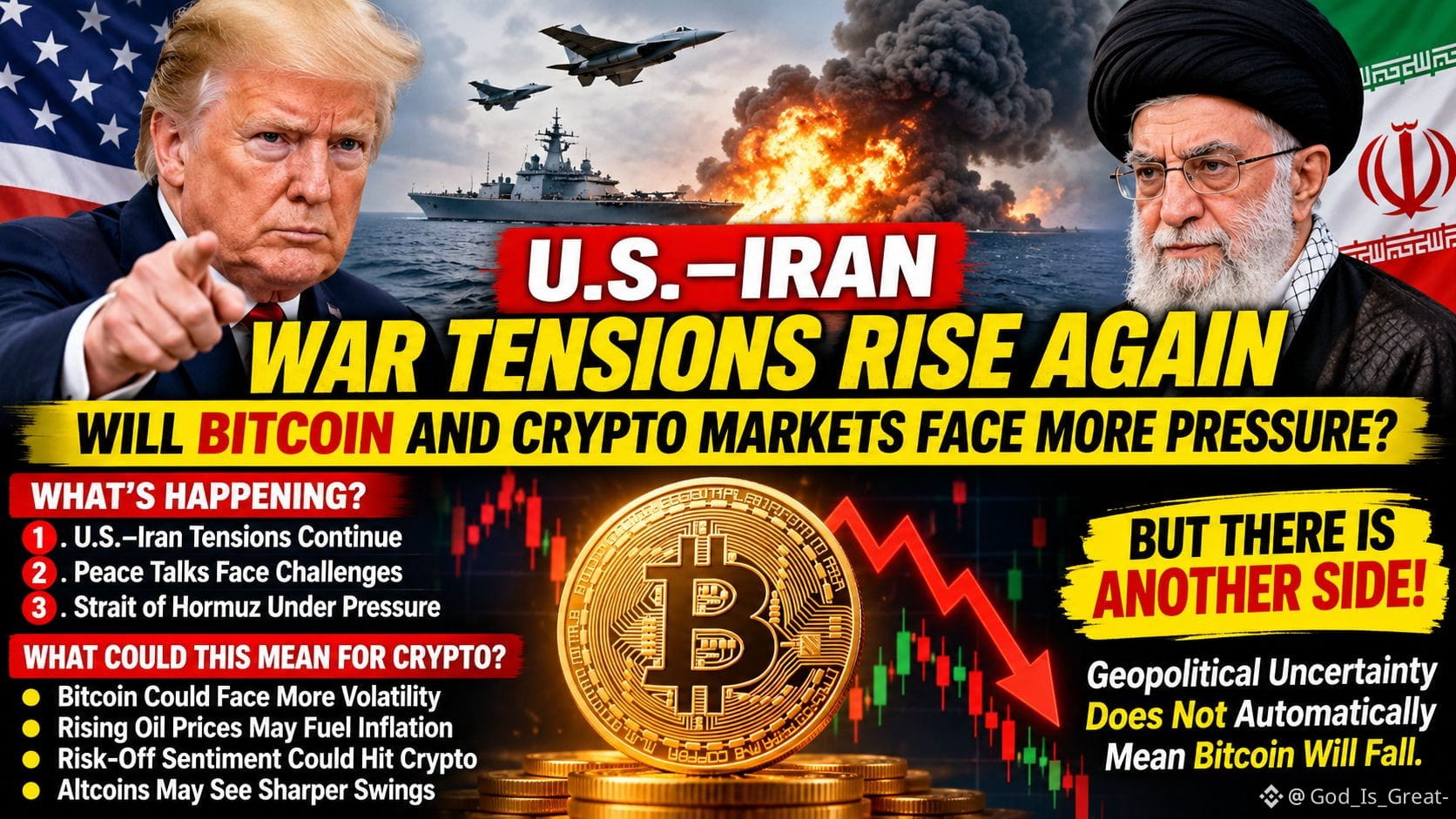
14
🚨🇺🇸 U.S. INFLATION RISES AGAIN — IS BITCOIN UNDER PRESSURE?
Another inflation warning is putting the crypto market on alert! The latest October PCE report suggests that inflation remains stubborn, raising fresh concerns about the Federal Reserve's next interest rate decision.
📊 HERE ARE THE KEY NUMBERS:
🔴 Headline PCE Inflation
Monthly increase: 0.3%
Annual rate climbed from 3.6% to 3.8%.
🔴 Core PCE Inflation
Monthly increase: 0.3%
Annual rate increased from 3.1% to 3.3%.
⚠️ WHY IS THIS IMPORTANT?
The Federal Reserve's inflation target is 2%. With inflation remaining above that level, the possibility of interest rate cuts could become more complicated.
If the Fed maintains higher interest rates for longer, financial conditions could remain tight, potentially affecting risk assets like Bitcoin and other cryptocurrencies.
📉 WHAT COULD HAPPEN TO CRYPTO?
Bitcoin could face renewed selling pressure.
Altcoins could experience greater volatility.
Investors may become more cautious.
Reduced liquidity could create additional pressure across the crypto market.
👀 BUT THERE IS ANOTHER POSSIBILITY!
Bitcoin has already experienced losses over the past two days. After a sharp decline, short-term buying activity and bearish traders taking profits could trigger a relief rally.
That means the next move is not necessarily downward. Both bullish and bearish scenarios remain possible.
🔥 THE BIG QUESTION:
Will the Federal Reserve keep interest rates higher for longer, or could upcoming economic data create room for rate cuts?
And more importantly, will BTC recover or face another correction?
Share your thoughts in the comments!
DYOR. Manage your risk.
#BinanceSquare
#CorePCEBeatLiftsFedHikeOdds #USOctoberPCEPriceIndexAt0.3%MoM #AnthropicBreaksBelowIPOPriceAmidAISlump
$BTC $Jager
{future}(BTCUSDT)
🚨🇺🇸 U.S. INFLATION RISES AGAIN — IS BITCOIN UNDER PRESSURE?
Another inflation warning is putting the crypto market on alert! The latest October PCE report suggests that inflation remains stubborn, raising fresh concerns about the Federal Reserve's next interest rate decision.
📊 HERE ARE THE KEY NUMBERS:
🔴 Headline PCE Inflation
Monthly increase: 0.3%
Annual rate climbed from 3.6% to 3.8%.
🔴 Core PCE Inflation
Monthly increase: 0.3%
Annual rate increased from 3.1% to 3.3%.
⚠️ WHY IS THIS IMPORTANT?
The Federal Reserve's inflation target is 2%. With inflation remaining above that level, the possibility of interest rate cuts could become more complicated.
If the Fed maintains higher interest rates for longer, financial conditions could remain tight, potentially affecting risk assets like Bitcoin and other cryptocurrencies.
📉 WHAT COULD HAPPEN TO CRYPTO?
Bitcoin could face renewed selling pressure.
Altcoins could experience greater volatility.
Investors may become more cautious.
Reduced liquidity could create additional pressure across the crypto market.
👀 BUT THERE IS ANOTHER POSSIBILITY!
Bitcoin has already experienced losses over the past two days. After a sharp decline, short-term buying activity and bearish traders taking profits could trigger a relief rally.
That means the next move is not necessarily downward. Both bullish and bearish scenarios remain possible.
🔥 THE BIG QUESTION:
Will the Federal Reserve keep interest rates higher for longer, or could upcoming economic data create room for rate cuts?
And more importantly, will BTC recover or face another correction?
Share your thoughts in the comments!
DYOR. Manage your risk.
#BinanceSquare
#CorePCEBeatLiftsFedHikeOdds #USOctoberPCEPriceIndexAt0.3%MoM #AnthropicBreaksBelowIPOPriceAmidAISlump
$BTC $Jager
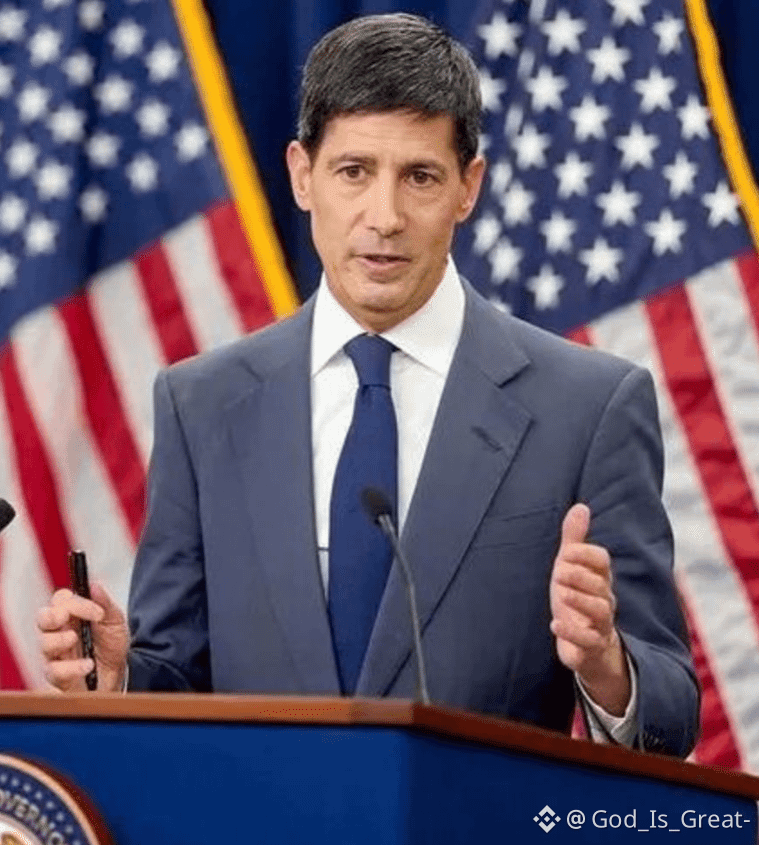
48
🚨 TOP WICKS TRAPPED? GUA & MANTRA Showing Bearish Signals!
The latest charts are raising concerns for traders watching GUA and MANTRA. Both tokens are showing signs of possible downside pressure.
🔴 GUA — Rejected
Previous Top: 0.0479
Current Price: 0.036
RSI: 55
EMA 7: 0.0362
Potential Target: 0.030
Key Level: 0.0362
GUA has faced rejection from its previous high, suggesting that bullish momentum may be weakening.
🟡 MANTRA — Overbought
Recent Move: +30%
RSI: 86.5
Top: 0.00239
EMA 7: 0.00198
Potential Target: 0.00189
MANTRA has gained around 30%, but its RSI of 86.5 indicates extremely overbought conditions. A pullback could happen if buying pressure weakens.
Trading Strategy:
Rather than rushing into a short position, watch for the first confirmed red candle and bearish confirmation before considering an entry.
⚠️ These are potential bearish setups, not guaranteed price movements. Wait for confirmation and manage your risk carefully.
$GUA $MANTA
{future}(MANTAUSDT)
{future}(GUAUSDT)
🚨 TOP WICKS TRAPPED? GUA & MANTRA Showing Bearish Signals!
The latest charts are raising concerns for traders watching GUA and MANTRA. Both tokens are showing signs of possible downside pressure.
🔴 GUA — Rejected
Previous Top: 0.0479
Current Price: 0.036
RSI: 55
EMA 7: 0.0362
Potential Target: 0.030
Key Level: 0.0362
GUA has faced rejection from its previous high, suggesting that bullish momentum may be weakening.
🟡 MANTRA — Overbought
Recent Move: +30%
RSI: 86.5
Top: 0.00239
EMA 7: 0.00198
Potential Target: 0.00189
MANTRA has gained around 30%, but its RSI of 86.5 indicates extremely overbought conditions. A pullback could happen if buying pressure weakens.
Trading Strategy:
Rather than rushing into a short position, watch for the first confirmed red candle and bearish confirmation before considering an entry.
⚠️ These are potential bearish setups, not guaranteed price movements. Wait for confirmation and manage your risk carefully.
$GUA $MANTA
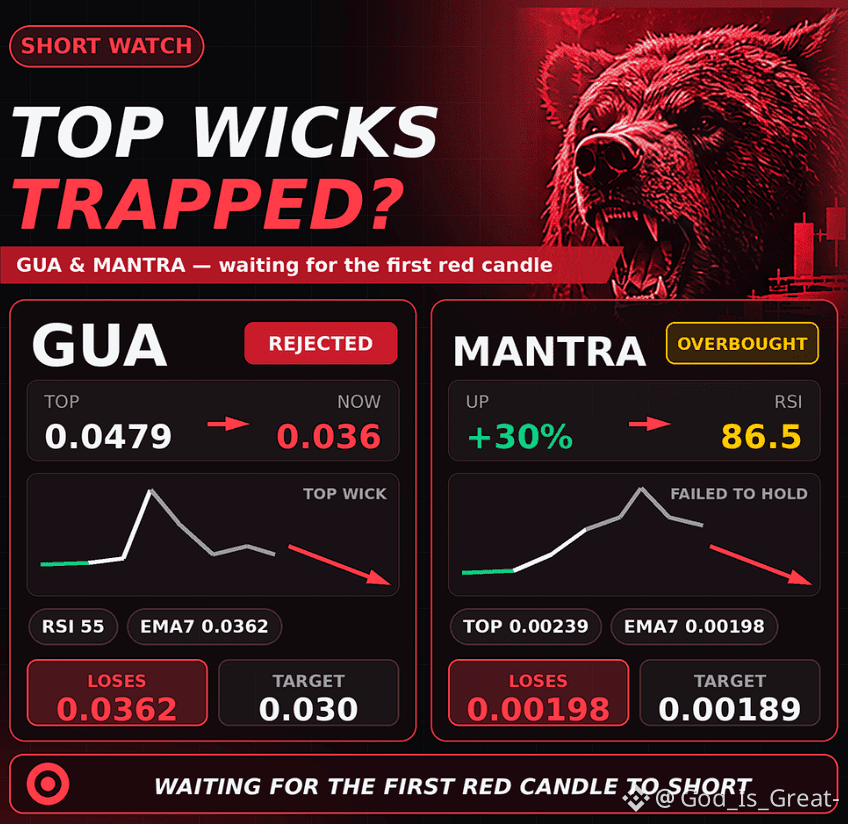
526
$BTC $LUNC
Now Nobody want this.
Later he reach $150000.And LUNC $0.001.
Everybody he want it.
{spot}(LUNCUSDT)
{spot}(BTCUSDT)
$BTC $LUNC
Now Nobody want this.
Later he reach $150000.And LUNC $0.001.
Everybody he want it.
Now Nobody want this.
Later he reach $150000.And LUNC $0.001.
Everybody he want it.
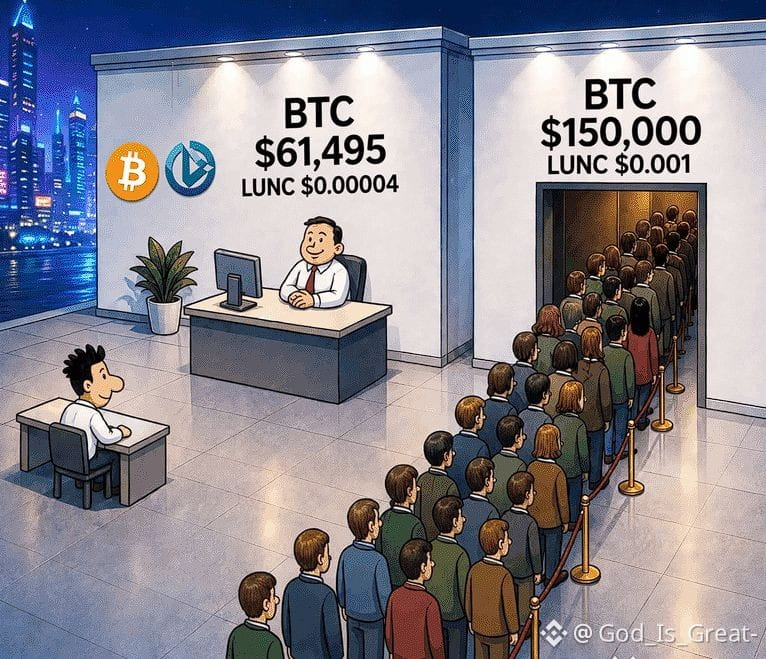
48
Log in to explore more content
Join global crypto users on Binance Square
⚡️ Get latest and useful information about crypto.
💬 Trusted by the world’s largest crypto exchange.
👍 Discover real insights from verified creators.
Email / Phone number
Trending Topics
EvolveAtBinanceBlockchainWeek
2.5M views
20,611 Discussing
Binance Blockchain Week is officially underway! 🌍
On November 28–29, whether you’re in Bangkok or joining from afar, tune in to the livestreams and join the conversation on Binance Square!
Here’s what’s in store 👇
📺 Watch the main stage live
Tune in throughout both days as industry speakers share their perspectives on this year’s theme, “Evolve” From technological innovation to real-world applications, explore what’s next for crypto.
⚔️ Watch two trading competitions
The Aster Open Qualifier and the Binance Trading Master Tournament will both be streamed live. Tune in to follow the traders in action.
🏆 Watch The Blockchain 100 Awards Ceremony
The Blockchain 100 list was selected by the community. Join us in celebrating the creators and the ideas they share!
💬 Join the community conversation
Use #EvolveAtBinanceBlockchainWeek in a post with a photo to share what you’re looking forward to, your views on the industry, or your favorite moments from the event.
The event page is now live! Subscribe to all livestreams with one click so you don’t miss a moment 👏
Binance Blockchain Week
·615 Likes
·955.3k views
WorldLibertyActsToCutLiquidationRisk
35,684 views
367 Discussing
LiquidHackerMoves598BTC
27,584 views
263 Discussing