
mOST_1398
20 Posts

mOST_1398
Report
Block User
Open Trade
Occasional Trader
4 Years
11 Following
39 Followers
25 Liked
Posts
Portfolio
·
--
BStocks 101: How to Explore US Stocks on Binance – A Beginner’s GuideFor many people, investing in US Stocks can seem complicated, especially if they are new to traditional financial markets. If you already use Binance for crypto, you may also be interested in learning about Stocks and BStocks as another part of your investment journey.
So, what should beginners know?
1. Understand what you are investing in
Before exploring any stock, take time to understand the company, its business model, industry, financial performance, and the factors that may affect its price. A popular company is not automatically a suitable investment for everyone.
2. Learn how Stocks differ from Crypto
Stocks represent ownership in a company, while cryptocurrencies are digital assets with different characteristics and risks. Stock markets generally operate according to market hours, while crypto markets are commonly available 24/7. Understanding these differences can help beginners make more informed decisions.
3. Explore the available information
When using a platform such as Binance to explore Stocks or BStocks, beginners should first become familiar with the available market information, price charts, company details, and other relevant data. Take time to learn how the platform works before making any transaction.
4. Think about risk management
Every investment involves risk. Stock prices can rise or fall because of company performance, economic conditions, interest rates, market sentiment, and unexpected events. Never assume that past performance guarantees future results.
5. Start with knowledge, not emotions
One of the most important lessons for beginners is to avoid making decisions simply because a stock is trending or because other people are buying it. Build your own understanding, research carefully, and consider how much risk you are comfortable taking.
For me, learning about Stocks and BStocks is not only about finding opportunities. It is also about expanding financial knowledge and understanding how different markets work.
If you are new to US Stocks, start by learning the basics, exploring the available information, and understanding the risks before making any investment decision.
💡 Learn first. Research carefully. Manage risk. Invest responsibly.
@BinanceLaotian
#SEABstock #SEAstock #Stocks #BStocks #USStocks
BStocks 101: How to Explore US Stocks on Binance – A Beginner’s Guide
For many people, investing in US Stocks can seem complicated, especially if they are new to traditional financial markets. If you already use Binance for crypto, you may also be interested in learning about Stocks and BStocks as another part of your investment journey.
So, what should beginners know?
1. Understand what you are investing in
Before exploring any stock, take time to understand the company, its business model, industry, financial performance, and the factors that may affect its price. A popular company is not automatically a suitable investment for everyone.
2. Learn how Stocks differ from Crypto
Stocks represent ownership in a company, while cryptocurrencies are digital assets with different characteristics and risks. Stock markets generally operate according to market hours, while crypto markets are commonly available 24/7. Understanding these differences can help beginners make more informed decisions.
3. Explore the available information
When using a platform such as Binance to explore Stocks or BStocks, beginners should first become familiar with the available market information, price charts, company details, and other relevant data. Take time to learn how the platform works before making any transaction.
4. Think about risk management
Every investment involves risk. Stock prices can rise or fall because of company performance, economic conditions, interest rates, market sentiment, and unexpected events. Never assume that past performance guarantees future results.
5. Start with knowledge, not emotions
One of the most important lessons for beginners is to avoid making decisions simply because a stock is trending or because other people are buying it. Build your own understanding, research carefully, and consider how much risk you are comfortable taking.
For me, learning about Stocks and BStocks is not only about finding opportunities. It is also about expanding financial knowledge and understanding how different markets work.
If you are new to US Stocks, start by learning the basics, exploring the available information, and understanding the risks before making any investment decision.
💡 Learn first. Research carefully. Manage risk. Invest responsibly.
@Binance Laotian
#SEABstock #SEAstock #Stocks #BStocks #USStocks
So, what should beginners know?
1. Understand what you are investing in
Before exploring any stock, take time to understand the company, its business model, industry, financial performance, and the factors that may affect its price. A popular company is not automatically a suitable investment for everyone.
2. Learn how Stocks differ from Crypto
Stocks represent ownership in a company, while cryptocurrencies are digital assets with different characteristics and risks. Stock markets generally operate according to market hours, while crypto markets are commonly available 24/7. Understanding these differences can help beginners make more informed decisions.
3. Explore the available information
When using a platform such as Binance to explore Stocks or BStocks, beginners should first become familiar with the available market information, price charts, company details, and other relevant data. Take time to learn how the platform works before making any transaction.
4. Think about risk management
Every investment involves risk. Stock prices can rise or fall because of company performance, economic conditions, interest rates, market sentiment, and unexpected events. Never assume that past performance guarantees future results.
5. Start with knowledge, not emotions
One of the most important lessons for beginners is to avoid making decisions simply because a stock is trending or because other people are buying it. Build your own understanding, research carefully, and consider how much risk you are comfortable taking.
For me, learning about Stocks and BStocks is not only about finding opportunities. It is also about expanding financial knowledge and understanding how different markets work.
If you are new to US Stocks, start by learning the basics, exploring the available information, and understanding the risks before making any investment decision.
💡 Learn first. Research carefully. Manage risk. Invest responsibly.
@Binance Laotian
#SEABstock #SEAstock #Stocks #BStocks #USStocks
54
·
--
How Can Beginners Build Wealth with US Stocks? A Simple Guide to Getting StartedMany people want to build an additional source of income, but they may not know where to start. US Stocks can be one option to explore, especially for people who want to learn about investing and potentially build long-term wealth.
For beginners, the most important thing is not trying to make money quickly. It is understanding how the stock market works, choosing an approach that matches your goals, and managing risk carefully.
1. What does “making money from Stocks” mean?
There are generally two ways investors can potentially benefit from stocks:
Capital appreciation: You buy a stock and its market price increases. If you later sell it at a higher price, you may make a profit.
Dividends: Some companies distribute part of their profits to shareholders through dividends. However, not every company pays dividends, and dividend payments can change.
For example, if you invest $500 in a stock and its value later increases to $550, the unrealized gain would be $50 before considering fees, taxes, and other costs. But the price can also fall, meaning you could lose money.
2. Start with Knowledge, Not Money
Before putting money into the market, beginners should understand some basic concepts:
• What is a stock?
• How does a company make money?
• What is market capitalization?
• What are earnings and revenue?
• What is a dividend?
• Why do stock prices move?
• What are the risks of investing?
Learning these basics can help investors make decisions based on information rather than emotions.
3. Think Long Term
One common mistake beginners make is focusing only on short-term price movements.
The stock market can move up and down because of company results, economic conditions, interest rates, market sentiment, and global events.
A long-term approach means focusing on the underlying business and your investment objective instead of reacting emotionally to every daily price change.
4. Don't Put Everything Into One Stock
Diversification is another important concept.
Instead of putting all your available money into one company, investors can learn about different companies, sectors, and asset classes. Diversification does not eliminate risk, but it can help reduce the impact of one investment performing poorly.
5. How Can BStocks Help Beginners Explore Stocks?
For people who already use Binance and are interested in learning about traditional markets, BStocks can provide another way to explore US Stocks through the Binance ecosystem, where available.
However, availability, products, fees, eligibility, and other conditions can vary by location and product. Always check the latest information available on Binance before making any investment decision.
6. My Beginner Checklist
Before buying a stock, I would ask myself:
☑ Do I understand what the company does?
☑ Have I researched the company?
☑ Am I investing or simply chasing a price increase?
☑ How much money can I afford to risk?
☑ Do I have a clear investment goal?
☑ Have I considered diversification?
☑ Do I understand the risks?
☑ Am I prepared for the possibility of losing money?
Final Thoughts
Building wealth through Stocks is not a shortcut to getting rich. It is a process of learning, researching, managing risk, and making decisions based on your own financial situation.
For beginners, the goal should be to understand the market first and invest responsibly rather than chasing quick profits.
I am also continuing to learn about US Stocks and BStocks, and I hope this guide can help other beginners in the community start their learning journey.
Always do your own research and understand the risks before investing.
@BinanceLaotian
#SEABstock
#SEAstock #BStocks #USStocks #Investing
How Can Beginners Build Wealth with US Stocks? A Simple Guide to Getting Started
Many people want to build an additional source of income, but they may not know where to start. US Stocks can be one option to explore, especially for people who want to learn about investing and potentially build long-term wealth.
For beginners, the most important thing is not trying to make money quickly. It is understanding how the stock market works, choosing an approach that matches your goals, and managing risk carefully.
1. What does “making money from Stocks” mean?
There are generally two ways investors can potentially benefit from stocks:
Capital appreciation: You buy a stock and its market price increases. If you later sell it at a higher price, you may make a profit.
Dividends: Some companies distribute part of their profits to shareholders through dividends. However, not every company pays dividends, and dividend payments can change.
For example, if you invest $500 in a stock and its value later increases to $550, the unrealized gain would be $50 before considering fees, taxes, and other costs. But the price can also fall, meaning you could lose money.
2. Start with Knowledge, Not Money
Before putting money into the market, beginners should understand some basic concepts:
• What is a stock?
• How does a company make money?
• What is market capitalization?
• What are earnings and revenue?
• What is a dividend?
• Why do stock prices move?
• What are the risks of investing?
Learning these basics can help investors make decisions based on information rather than emotions.
3. Think Long Term
One common mistake beginners make is focusing only on short-term price movements.
The stock market can move up and down because of company results, economic conditions, interest rates, market sentiment, and global events.
A long-term approach means focusing on the underlying business and your investment objective instead of reacting emotionally to every daily price change.
4. Don't Put Everything Into One Stock
Diversification is another important concept.
Instead of putting all your available money into one company, investors can learn about different companies, sectors, and asset classes. Diversification does not eliminate risk, but it can help reduce the impact of one investment performing poorly.
5. How Can BStocks Help Beginners Explore Stocks?
For people who already use Binance and are interested in learning about traditional markets, BStocks can provide another way to explore US Stocks through the Binance ecosystem, where available.
However, availability, products, fees, eligibility, and other conditions can vary by location and product. Always check the latest information available on Binance before making any investment decision.
6. My Beginner Checklist
Before buying a stock, I would ask myself:
☑ Do I understand what the company does?
☑ Have I researched the company?
☑ Am I investing or simply chasing a price increase?
☑ How much money can I afford to risk?
☑ Do I have a clear investment goal?
☑ Have I considered diversification?
☑ Do I understand the risks?
☑ Am I prepared for the possibility of losing money?
Final Thoughts
Building wealth through Stocks is not a shortcut to getting rich. It is a process of learning, researching, managing risk, and making decisions based on your own financial situation.
For beginners, the goal should be to understand the market first and invest responsibly rather than chasing quick profits.
I am also continuing to learn about US Stocks and BStocks, and I hope this guide can help other beginners in the community start their learning journey.
Always do your own research and understand the risks before investing.
@Binance Laotian
#SEABstock
#SEAstock #BStocks #USStocks #Investing
For beginners, the most important thing is not trying to make money quickly. It is understanding how the stock market works, choosing an approach that matches your goals, and managing risk carefully.
1. What does “making money from Stocks” mean?
There are generally two ways investors can potentially benefit from stocks:
Capital appreciation: You buy a stock and its market price increases. If you later sell it at a higher price, you may make a profit.
Dividends: Some companies distribute part of their profits to shareholders through dividends. However, not every company pays dividends, and dividend payments can change.
For example, if you invest $500 in a stock and its value later increases to $550, the unrealized gain would be $50 before considering fees, taxes, and other costs. But the price can also fall, meaning you could lose money.
2. Start with Knowledge, Not Money
Before putting money into the market, beginners should understand some basic concepts:
• What is a stock?
• How does a company make money?
• What is market capitalization?
• What are earnings and revenue?
• What is a dividend?
• Why do stock prices move?
• What are the risks of investing?
Learning these basics can help investors make decisions based on information rather than emotions.
3. Think Long Term
One common mistake beginners make is focusing only on short-term price movements.
The stock market can move up and down because of company results, economic conditions, interest rates, market sentiment, and global events.
A long-term approach means focusing on the underlying business and your investment objective instead of reacting emotionally to every daily price change.
4. Don't Put Everything Into One Stock
Diversification is another important concept.
Instead of putting all your available money into one company, investors can learn about different companies, sectors, and asset classes. Diversification does not eliminate risk, but it can help reduce the impact of one investment performing poorly.
5. How Can BStocks Help Beginners Explore Stocks?
For people who already use Binance and are interested in learning about traditional markets, BStocks can provide another way to explore US Stocks through the Binance ecosystem, where available.
However, availability, products, fees, eligibility, and other conditions can vary by location and product. Always check the latest information available on Binance before making any investment decision.
6. My Beginner Checklist
Before buying a stock, I would ask myself:
☑ Do I understand what the company does?
☑ Have I researched the company?
☑ Am I investing or simply chasing a price increase?
☑ How much money can I afford to risk?
☑ Do I have a clear investment goal?
☑ Have I considered diversification?
☑ Do I understand the risks?
☑ Am I prepared for the possibility of losing money?
Final Thoughts
Building wealth through Stocks is not a shortcut to getting rich. It is a process of learning, researching, managing risk, and making decisions based on your own financial situation.
For beginners, the goal should be to understand the market first and invest responsibly rather than chasing quick profits.
I am also continuing to learn about US Stocks and BStocks, and I hope this guide can help other beginners in the community start their learning journey.
Always do your own research and understand the risks before investing.
@Binance Laotian
#SEABstock
#SEAstock #BStocks #USStocks #Investing
69
·
--

Article
How to Start Investing in US Stocks: A Beginner’s ChecklistHow to Start Investing in US Stocks: A Beginner’s Checklist
Investing in US stocks can be an interesting way to participate in the global economy and build long-term wealth. The US stock market includes many well-known companies across technology, healthcare, finance, consumer goods, energy, and other industries.
However, getting started should not be about simply buying a popular stock. Beginners should first understand how the market works, choose a suitable investment platform, manage risk, and create a clear investment plan.
This beginner’s checklist will walk you through the essential steps before making your first US stock investment.
1. Understand What US Stocks Are
US stocks represent ownership in companies listed on US stock exchanges, such as the New York Stock Exchange (NYSE) and Nasdaq.
When you buy shares of a company, you become a shareholder. Your investment may increase or decrease in value depending on the company’s performance, market conditions, investor expectations, and other factors.
US stocks include individual companies as well as Exchange-Traded Funds (ETFs), which hold a collection of different investments.
Before investing, learn some basic terms:
Stock: A share of ownership in a company.
ETF: A fund that holds a basket of assets and trades like a stock.
Ticker symbol: A short symbol used to identify a stock.
Market price: The current price at which a stock trades.
Dividend: A payment that some companies make to shareholders.
Capital gain: The profit that may occur when an investment is sold for more than its purchase price.
Understanding these terms will make the investment process much easier.
2. Set Your Investment Goal
Before opening a brokerage account, ask yourself why you want to invest.
Your goal might be:
Building long-term wealth
Saving for retirement
Creating an additional source of potential income
Learning about financial markets
Building a diversified investment portfolio
Your investment goal can influence how much risk you are willing and able to take.
For example, someone investing for a long-term goal may have a different approach from someone who needs the money within a few months.
A clear goal can also help prevent emotional decisions when the market becomes volatile.
3. Check Your Financial Situation
Investing should generally come after taking care of essential financial needs.
Before investing, consider whether you have:
A stable source of income
Emergency savings
Manageable debt
Money available for long-term investment
A budget that allows you to invest consistently
Never invest money that you may urgently need for rent, food, medical expenses, or other essential costs.
The stock market can rise and fall, and there is no guarantee that you will receive your original investment back.
4. Choose a Suitable Investment Platform
To buy US stocks, you normally need an investment platform or brokerage account that provides access to US markets.
When comparing platforms, check important factors such as:
Whether residents of your country are eligible
Available US stocks and ETFs
Trading fees and other charges
Currency conversion costs
Deposit and withdrawal methods
Account security
Identity verification requirements
Customer support
Tax documentation
Do not choose a platform simply because it has low trading fees. Consider the complete cost structure and whether the service is legally and practically available to you.
Always use the official website or application when opening an account and carefully verify the company before depositing money.
5. Complete Identity Verification
Most regulated financial platforms require identity verification before you can invest.
You may be asked to provide information such as:
Full name
Date of birth
Residential address
Government-issued identification
Tax information
Source-of-funds information
Make sure the information you provide is accurate and consistent with your official documents.
Never share your password, authentication codes, or private security information with another person.
6. Learn How to Fund Your Account
After your account is approved, you need to deposit money before purchasing investments.
Depending on your location and platform, funding may involve your local currency or US dollars.
Pay attention to:
Deposit fees
Currency exchange rates
Bank transfer fees
Minimum deposit requirements
Processing times
Withdrawal fees
Currency movements can also affect your investment results. If your income is in a currency other than USD, changes in the exchange rate may increase or reduce your overall return when measured in your home currency.
7. Research Before Buying
One of the most important rules for beginners is simple: understand what you are buying.
Before purchasing an individual stock, research the company and consider factors such as:
What products or services does the company provide?
How does the company make money?
Is revenue growing?
Is the company profitable?
How much debt does it have?
What are its major risks?
Who are its competitors?
Is the current valuation reasonable relative to your expectations?
Do not invest simply because a stock is trending on social media or because someone says that its price will definitely rise.
There are no guaranteed returns in the stock market.
8. Understand Diversification
Putting all your money into one company can expose you to significant company-specific risk.
Diversification means spreading investments across different companies, industries, or assets.
For beginners, diversified ETFs can be one way to gain exposure to a broad group of companies rather than relying entirely on the performance of a single stock.
However, diversification does not eliminate risk. Broad markets can still decline during periods of economic or financial stress.
9. Decide How Much to Invest
You do not need a large amount of money to begin learning about investing, depending on the platform and available investment products.
Consider starting with an amount that fits comfortably within your budget.
Some investors use a regular investment approach, putting a fixed amount into investments at regular intervals. This can help create consistency and reduce the temptation to make decisions based entirely on short-term market movements.
The important point is to choose an amount and frequency that you can maintain without putting your essential finances under pressure.
10. Create a Risk Management Plan
Risk management is an essential part of investing.
Before buying an investment, understand how much you could potentially lose.
Avoid using borrowed money to invest unless you fully understand the risks and costs involved. Leveraged products can magnify both gains and losses.
Also be careful with emotional decisions. When prices fall sharply, beginners may panic and sell. When prices rise rapidly, they may feel pressure to buy because of fear of missing out.
Having a written investment plan can help you stay focused on your long-term objectives.
11. Learn About Taxes and Regulations
Investing internationally can involve tax and regulatory considerations.
Depending on your country of residence and the type of investment, you may need to understand:
Tax on investment profits
Dividend withholding tax
Reporting requirements
Currency-related considerations
US tax forms or documentation
Local investment regulations
Tax rules can be complicated and may change. If you are unsure about your responsibilities, consider consulting a qualified tax professional or financial adviser familiar with cross-border investments.
12. Monitor Your Portfolio — But Don’t Obsess Over It
After making your first investment, continue learning.
Review your portfolio periodically and check whether your investments still match your goals and risk tolerance.
You do not necessarily need to watch stock prices every minute.
A long-term investor may benefit more from understanding company fundamentals, economic developments, portfolio allocation, and personal financial goals than from reacting to every short-term price movement.
Beginner’s Final Checklist
Before making your first US stock investment, make sure you can answer “yes” to these questions:
☐ I understand the basic principles of stock investing.
☐ I have a clear investment goal.
☐ I have considered my financial situation and emergency savings.
☐ I have selected a suitable and legitimate investment platform.
☐ I understand the platform’s fees.
☐ I have completed the required identity verification.
☐ I understand how deposits, withdrawals, and currency conversion work.
☐ I have researched the investment before buying it.
☐ I understand the risks of losing money.
☐ I have considered diversification.
☐ I understand the relevant tax and regulatory requirements.
☐ I have a plan for how much and how often I will invest.
Conclusion
Starting to invest in US stocks does not require knowing everything about the market on day one. The most important first step is building a strong foundation.
Learn the basics, understand your financial situation, choose an appropriate investment platform, research before buying, diversify when appropriate, and manage risk carefully.
Most importantly, remember that investing is different from gambling or trying to predict the market every day. A disciplined approach focuses on understanding investments and making decisions that fit your own financial goals, time horizon, and risk tolerance.
Use this checklist as a starting point for your investment journey, and continue learning as your experience grows.
How to Start Investing in US Stocks: A Beginner’s Checklist
How to Start Investing in US Stocks: A Beginner’s Checklist
Investing in US stocks can be an interesting way to participate in the global economy and build long-term wealth. The US stock market includes many well-known companies across technology, healthcare, finance, consumer goods, energy, and other industries.
However, getting started should not be about simply buying a popular stock. Beginners should first understand how the market works, choose a suitable investment platform, manage risk, and create a clear investment plan.
This beginner’s checklist will walk you through the essential steps before making your first US stock investment.
1. Understand What US Stocks Are
US stocks represent ownership in companies listed on US stock exchanges, such as the New York Stock Exchange (NYSE) and Nasdaq.
When you buy shares of a company, you become a shareholder. Your investment may increase or decrease in value depending on the company’s performance, market conditions, investor expectations, and other factors.
US stocks include individual companies as well as Exchange-Traded Funds (ETFs), which hold a collection of different investments.
Before investing, learn some basic terms:
Stock: A share of ownership in a company.
ETF: A fund that holds a basket of assets and trades like a stock.
Ticker symbol: A short symbol used to identify a stock.
Market price: The current price at which a stock trades.
Dividend: A payment that some companies make to shareholders.
Capital gain: The profit that may occur when an investment is sold for more than its purchase price.
Understanding these terms will make the investment process much easier.
2. Set Your Investment Goal
Before opening a brokerage account, ask yourself why you want to invest.
Your goal might be:
Building long-term wealth
Saving for retirement
Creating an additional source of potential income
Learning about financial markets
Building a diversified investment portfolio
Your investment goal can influence how much risk you are willing and able to take.
For example, someone investing for a long-term goal may have a different approach from someone who needs the money within a few months.
A clear goal can also help prevent emotional decisions when the market becomes volatile.
3. Check Your Financial Situation
Investing should generally come after taking care of essential financial needs.
Before investing, consider whether you have:
A stable source of income
Emergency savings
Manageable debt
Money available for long-term investment
A budget that allows you to invest consistently
Never invest money that you may urgently need for rent, food, medical expenses, or other essential costs.
The stock market can rise and fall, and there is no guarantee that you will receive your original investment back.
4. Choose a Suitable Investment Platform
To buy US stocks, you normally need an investment platform or brokerage account that provides access to US markets.
When comparing platforms, check important factors such as:
Whether residents of your country are eligible
Available US stocks and ETFs
Trading fees and other charges
Currency conversion costs
Deposit and withdrawal methods
Account security
Identity verification requirements
Customer support
Tax documentation
Do not choose a platform simply because it has low trading fees. Consider the complete cost structure and whether the service is legally and practically available to you.
Always use the official website or application when opening an account and carefully verify the company before depositing money.
5. Complete Identity Verification
Most regulated financial platforms require identity verification before you can invest.
You may be asked to provide information such as:
Full name
Date of birth
Residential address
Government-issued identification
Tax information
Source-of-funds information
Make sure the information you provide is accurate and consistent with your official documents.
Never share your password, authentication codes, or private security information with another person.
6. Learn How to Fund Your Account
After your account is approved, you need to deposit money before purchasing investments.
Depending on your location and platform, funding may involve your local currency or US dollars.
Pay attention to:
Deposit fees
Currency exchange rates
Bank transfer fees
Minimum deposit requirements
Processing times
Withdrawal fees
Currency movements can also affect your investment results. If your income is in a currency other than USD, changes in the exchange rate may increase or reduce your overall return when measured in your home currency.
7. Research Before Buying
One of the most important rules for beginners is simple: understand what you are buying.
Before purchasing an individual stock, research the company and consider factors such as:
What products or services does the company provide?
How does the company make money?
Is revenue growing?
Is the company profitable?
How much debt does it have?
What are its major risks?
Who are its competitors?
Is the current valuation reasonable relative to your expectations?
Do not invest simply because a stock is trending on social media or because someone says that its price will definitely rise.
There are no guaranteed returns in the stock market.
8. Understand Diversification
Putting all your money into one company can expose you to significant company-specific risk.
Diversification means spreading investments across different companies, industries, or assets.
For beginners, diversified ETFs can be one way to gain exposure to a broad group of companies rather than relying entirely on the performance of a single stock.
However, diversification does not eliminate risk. Broad markets can still decline during periods of economic or financial stress.
9. Decide How Much to Invest
You do not need a large amount of money to begin learning about investing, depending on the platform and available investment products.
Consider starting with an amount that fits comfortably within your budget.
Some investors use a regular investment approach, putting a fixed amount into investments at regular intervals. This can help create consistency and reduce the temptation to make decisions based entirely on short-term market movements.
The important point is to choose an amount and frequency that you can maintain without putting your essential finances under pressure.
10. Create a Risk Management Plan
Risk management is an essential part of investing.
Before buying an investment, understand how much you could potentially lose.
Avoid using borrowed money to invest unless you fully understand the risks and costs involved. Leveraged products can magnify both gains and losses.
Also be careful with emotional decisions. When prices fall sharply, beginners may panic and sell. When prices rise rapidly, they may feel pressure to buy because of fear of missing out.
Having a written investment plan can help you stay focused on your long-term objectives.
11. Learn About Taxes and Regulations
Investing internationally can involve tax and regulatory considerations.
Depending on your country of residence and the type of investment, you may need to understand:
Tax on investment profits
Dividend withholding tax
Reporting requirements
Currency-related considerations
US tax forms or documentation
Local investment regulations
Tax rules can be complicated and may change. If you are unsure about your responsibilities, consider consulting a qualified tax professional or financial adviser familiar with cross-border investments.
12. Monitor Your Portfolio — But Don’t Obsess Over It
After making your first investment, continue learning.
Review your portfolio periodically and check whether your investments still match your goals and risk tolerance.
You do not necessarily need to watch stock prices every minute.
A long-term investor may benefit more from understanding company fundamentals, economic developments, portfolio allocation, and personal financial goals than from reacting to every short-term price movement.
Beginner’s Final Checklist
Before making your first US stock investment, make sure you can answer “yes” to these questions:
☐ I understand the basic principles of stock investing.
☐ I have a clear investment goal.
☐ I have considered my financial situation and emergency savings.
☐ I have selected a suitable and legitimate investment platform.
☐ I understand the platform’s fees.
☐ I have completed the required identity verification.
☐ I understand how deposits, withdrawals, and currency conversion work.
☐ I have researched the investment before buying it.
☐ I understand the risks of losing money.
☐ I have considered diversification.
☐ I understand the relevant tax and regulatory requirements.
☐ I have a plan for how much and how often I will invest.
Conclusion
Starting to invest in US stocks does not require knowing everything about the market on day one. The most important first step is building a strong foundation.
Learn the basics, understand your financial situation, choose an appropriate investment platform, research before buying, diversify when appropriate, and manage risk carefully.
Most importantly, remember that investing is different from gambling or trying to predict the market every day. A disciplined approach focuses on understanding investments and making decisions that fit your own financial goals, time horizon, and risk tolerance.
Use this checklist as a starting point for your investment journey, and continue learning as your experience grows.
Investing in US stocks can be an interesting way to participate in the global economy and build long-term wealth. The US stock market includes many well-known companies across technology, healthcare, finance, consumer goods, energy, and other industries.
However, getting started should not be about simply buying a popular stock. Beginners should first understand how the market works, choose a suitable investment platform, manage risk, and create a clear investment plan.
This beginner’s checklist will walk you through the essential steps before making your first US stock investment.
1. Understand What US Stocks Are
US stocks represent ownership in companies listed on US stock exchanges, such as the New York Stock Exchange (NYSE) and Nasdaq.
When you buy shares of a company, you become a shareholder. Your investment may increase or decrease in value depending on the company’s performance, market conditions, investor expectations, and other factors.
US stocks include individual companies as well as Exchange-Traded Funds (ETFs), which hold a collection of different investments.
Before investing, learn some basic terms:
Stock: A share of ownership in a company.
ETF: A fund that holds a basket of assets and trades like a stock.
Ticker symbol: A short symbol used to identify a stock.
Market price: The current price at which a stock trades.
Dividend: A payment that some companies make to shareholders.
Capital gain: The profit that may occur when an investment is sold for more than its purchase price.
Understanding these terms will make the investment process much easier.
2. Set Your Investment Goal
Before opening a brokerage account, ask yourself why you want to invest.
Your goal might be:
Building long-term wealth
Saving for retirement
Creating an additional source of potential income
Learning about financial markets
Building a diversified investment portfolio
Your investment goal can influence how much risk you are willing and able to take.
For example, someone investing for a long-term goal may have a different approach from someone who needs the money within a few months.
A clear goal can also help prevent emotional decisions when the market becomes volatile.
3. Check Your Financial Situation
Investing should generally come after taking care of essential financial needs.
Before investing, consider whether you have:
A stable source of income
Emergency savings
Manageable debt
Money available for long-term investment
A budget that allows you to invest consistently
Never invest money that you may urgently need for rent, food, medical expenses, or other essential costs.
The stock market can rise and fall, and there is no guarantee that you will receive your original investment back.
4. Choose a Suitable Investment Platform
To buy US stocks, you normally need an investment platform or brokerage account that provides access to US markets.
When comparing platforms, check important factors such as:
Whether residents of your country are eligible
Available US stocks and ETFs
Trading fees and other charges
Currency conversion costs
Deposit and withdrawal methods
Account security
Identity verification requirements
Customer support
Tax documentation
Do not choose a platform simply because it has low trading fees. Consider the complete cost structure and whether the service is legally and practically available to you.
Always use the official website or application when opening an account and carefully verify the company before depositing money.
5. Complete Identity Verification
Most regulated financial platforms require identity verification before you can invest.
You may be asked to provide information such as:
Full name
Date of birth
Residential address
Government-issued identification
Tax information
Source-of-funds information
Make sure the information you provide is accurate and consistent with your official documents.
Never share your password, authentication codes, or private security information with another person.
6. Learn How to Fund Your Account
After your account is approved, you need to deposit money before purchasing investments.
Depending on your location and platform, funding may involve your local currency or US dollars.
Pay attention to:
Deposit fees
Currency exchange rates
Bank transfer fees
Minimum deposit requirements
Processing times
Withdrawal fees
Currency movements can also affect your investment results. If your income is in a currency other than USD, changes in the exchange rate may increase or reduce your overall return when measured in your home currency.
7. Research Before Buying
One of the most important rules for beginners is simple: understand what you are buying.
Before purchasing an individual stock, research the company and consider factors such as:
What products or services does the company provide?
How does the company make money?
Is revenue growing?
Is the company profitable?
How much debt does it have?
What are its major risks?
Who are its competitors?
Is the current valuation reasonable relative to your expectations?
Do not invest simply because a stock is trending on social media or because someone says that its price will definitely rise.
There are no guaranteed returns in the stock market.
8. Understand Diversification
Putting all your money into one company can expose you to significant company-specific risk.
Diversification means spreading investments across different companies, industries, or assets.
For beginners, diversified ETFs can be one way to gain exposure to a broad group of companies rather than relying entirely on the performance of a single stock.
However, diversification does not eliminate risk. Broad markets can still decline during periods of economic or financial stress.
9. Decide How Much to Invest
You do not need a large amount of money to begin learning about investing, depending on the platform and available investment products.
Consider starting with an amount that fits comfortably within your budget.
Some investors use a regular investment approach, putting a fixed amount into investments at regular intervals. This can help create consistency and reduce the temptation to make decisions based entirely on short-term market movements.
The important point is to choose an amount and frequency that you can maintain without putting your essential finances under pressure.
10. Create a Risk Management Plan
Risk management is an essential part of investing.
Before buying an investment, understand how much you could potentially lose.
Avoid using borrowed money to invest unless you fully understand the risks and costs involved. Leveraged products can magnify both gains and losses.
Also be careful with emotional decisions. When prices fall sharply, beginners may panic and sell. When prices rise rapidly, they may feel pressure to buy because of fear of missing out.
Having a written investment plan can help you stay focused on your long-term objectives.
11. Learn About Taxes and Regulations
Investing internationally can involve tax and regulatory considerations.
Depending on your country of residence and the type of investment, you may need to understand:
Tax on investment profits
Dividend withholding tax
Reporting requirements
Currency-related considerations
US tax forms or documentation
Local investment regulations
Tax rules can be complicated and may change. If you are unsure about your responsibilities, consider consulting a qualified tax professional or financial adviser familiar with cross-border investments.
12. Monitor Your Portfolio — But Don’t Obsess Over It
After making your first investment, continue learning.
Review your portfolio periodically and check whether your investments still match your goals and risk tolerance.
You do not necessarily need to watch stock prices every minute.
A long-term investor may benefit more from understanding company fundamentals, economic developments, portfolio allocation, and personal financial goals than from reacting to every short-term price movement.
Beginner’s Final Checklist
Before making your first US stock investment, make sure you can answer “yes” to these questions:
☐ I understand the basic principles of stock investing.
☐ I have a clear investment goal.
☐ I have considered my financial situation and emergency savings.
☐ I have selected a suitable and legitimate investment platform.
☐ I understand the platform’s fees.
☐ I have completed the required identity verification.
☐ I understand how deposits, withdrawals, and currency conversion work.
☐ I have researched the investment before buying it.
☐ I understand the risks of losing money.
☐ I have considered diversification.
☐ I understand the relevant tax and regulatory requirements.
☐ I have a plan for how much and how often I will invest.
Conclusion
Starting to invest in US stocks does not require knowing everything about the market on day one. The most important first step is building a strong foundation.
Learn the basics, understand your financial situation, choose an appropriate investment platform, research before buying, diversify when appropriate, and manage risk carefully.
Most importantly, remember that investing is different from gambling or trying to predict the market every day. A disciplined approach focuses on understanding investments and making decisions that fit your own financial goals, time horizon, and risk tolerance.
Use this checklist as a starting point for your investment journey, and continue learning as your experience grows.
26
·
--
BStocks 101: How to Access and Explore US Stocks Through BinanceBStocks 101: How to Access and Explore US Stocks Through Binance
Introduction
The US stock market is one of the most well-known and widely followed financial markets in the world. Many leading global companies, such as Apple, Microsoft, Amazon, and Tesla, are listed on US stock exchanges and attract investors from different countries.
For people who are already familiar with Binance and cryptocurrency trading, exploring stock-related products through the platform can be an interesting way to learn more about traditional financial markets. BStocks 101 is designed as a simple introduction for beginners who want to understand how to access and explore US stock-related products through Binance.
However, it is important to understand exactly what product is being offered. A stock-related product on a cryptocurrency platform may not be the same as directly owning shares through a traditional stockbroker. Depending on the product, it may represent a tokenized asset, a derivative, or another financial product linked to the price of a stock.
1. What Is BStocks?
BStocks can refer to stock-related products or services available through Binance. These products may allow users to gain exposure to the price movements of selected US stocks without necessarily purchasing traditional shares through a conventional brokerage account.
Before using any stock-related product, users should carefully check the product description, issuer, trading conditions, fees, and available services.
It is also important to understand the difference between owning an actual stock and holding a token or financial product that tracks the price of a stock. These products may have different rights, fees, risks, and conditions.
Availability can also depend on the user's country or region because financial products are subject to local regulations and restrictions.
2. Getting Started
Before exploring US stock-related products on Binance, users should make sure their account is properly set up.
First, create or log in to a Binance account and complete the required identity verification process. Users should also make sure that the relevant service is legally and officially available in their location.
It is recommended to keep the Binance application updated to the latest version and activate strong account-security features, such as two-factor authentication (2FA).
Users should never share their password, verification codes, private keys, or other sensitive account information with anyone.
3. How to Access and Explore US Stocks
The exact menu names and available features may vary depending on the user's location, account type, and Binance application version. In general, the process can be approached as follows:
Step 1: Open the Binance application and log in to your account.
Step 2: Go to the relevant market, trading, or investment section available on your account.
Step 3: Use the search function to look for the stock or stock-related product you are interested in. For example, users may search for well-known stock symbols such as AAPL, MSFT, or TSLA if those products are available.
Step 4: Select the relevant product and review its information carefully.
Step 5: Check the product type. Make sure you understand whether it represents an actual stock, a tokenized stock, a derivative, or another type of financial product.
Never assume that a product with the name of a US company automatically means that you own the underlying shares.
4. What Information Should You Check?
Before considering any investment, users should examine several important pieces of information.
Current Price: Check the current price and how much it has changed over different periods.
Price Chart: Review the historical price chart to understand previous price movements. Different timeframes can help users observe short-term and long-term trends.
Market Capitalization: Market capitalization provides an indication of the overall size of a company.
Trading Volume: Trading volume shows how actively an asset is being traded and can provide additional market information.
Company Information: Learn what the company does, how it generates revenue, its financial performance, and the major risks associated with its business.
Charts can be useful for analysis, but historical price movements do not guarantee future performance.
5. Fees and Risks
Before making a transaction, users should carefully review all applicable fees and conditions. These may include trading fees, conversion fees, withdrawal fees, spreads, or other charges depending on the product.
Users should also understand the risks associated with market volatility. Stock prices can move significantly because of company earnings, economic conditions, interest rates, market sentiment, and major news events.
If a product involves leverage or derivatives, the potential risks can be significantly higher. Users should understand how the product works before using it and should never invest money that they cannot afford to lose.
6. Start With Education
For beginners, the best starting point is education. Learn the basics of stock markets, company financial statements, valuation, technical analysis, and risk management before making real investments.
It can also be useful to create a watchlist and observe selected stocks without immediately investing money. This allows beginners to understand how prices react to company news and market conditions.
Investors should separate investment money from essential living expenses and avoid making decisions based only on social-media recommendations, short-term price movements, or fear of missing out (FOMO).
Conclusion
BStocks 101 provides a starting point for anyone interested in exploring US stock-related products through Binance. The most important step is not simply learning how to find a stock, but understanding what product you are actually buying, how it works, what fees apply, and what risks are involved.
Before making any investment, always check the latest information from official sources and carefully consider your own financial situation and risk tolerance.
Learn first. Check the product. Understand the risks. Then make your own decision.
BStocks 101: How to Access and Explore US Stocks Through Binance
BStocks 101: How to Access and Explore US Stocks Through Binance
Introduction
The US stock market is one of the most well-known and widely followed financial markets in the world. Many leading global companies, such as Apple, Microsoft, Amazon, and Tesla, are listed on US stock exchanges and attract investors from different countries.
For people who are already familiar with Binance and cryptocurrency trading, exploring stock-related products through the platform can be an interesting way to learn more about traditional financial markets. BStocks 101 is designed as a simple introduction for beginners who want to understand how to access and explore US stock-related products through Binance.
However, it is important to understand exactly what product is being offered. A stock-related product on a cryptocurrency platform may not be the same as directly owning shares through a traditional stockbroker. Depending on the product, it may represent a tokenized asset, a derivative, or another financial product linked to the price of a stock.
1. What Is BStocks?
BStocks can refer to stock-related products or services available through Binance. These products may allow users to gain exposure to the price movements of selected US stocks without necessarily purchasing traditional shares through a conventional brokerage account.
Before using any stock-related product, users should carefully check the product description, issuer, trading conditions, fees, and available services.
It is also important to understand the difference between owning an actual stock and holding a token or financial product that tracks the price of a stock. These products may have different rights, fees, risks, and conditions.
Availability can also depend on the user's country or region because financial products are subject to local regulations and restrictions.
2. Getting Started
Before exploring US stock-related products on Binance, users should make sure their account is properly set up.
First, create or log in to a Binance account and complete the required identity verification process. Users should also make sure that the relevant service is legally and officially available in their location.
It is recommended to keep the Binance application updated to the latest version and activate strong account-security features, such as two-factor authentication (2FA).
Users should never share their password, verification codes, private keys, or other sensitive account information with anyone.
3. How to Access and Explore US Stocks
The exact menu names and available features may vary depending on the user's location, account type, and Binance application version. In general, the process can be approached as follows:
Step 1: Open the Binance application and log in to your account.
Step 2: Go to the relevant market, trading, or investment section available on your account.
Step 3: Use the search function to look for the stock or stock-related product you are interested in. For example, users may search for well-known stock symbols such as AAPL, MSFT, or TSLA if those products are available.
Step 4: Select the relevant product and review its information carefully.
Step 5: Check the product type. Make sure you understand whether it represents an actual stock, a tokenized stock, a derivative, or another type of financial product.
Never assume that a product with the name of a US company automatically means that you own the underlying shares.
4. What Information Should You Check?
Before considering any investment, users should examine several important pieces of information.
Current Price: Check the current price and how much it has changed over different periods.
Price Chart: Review the historical price chart to understand previous price movements. Different timeframes can help users observe short-term and long-term trends.
Market Capitalization: Market capitalization provides an indication of the overall size of a company.
Trading Volume: Trading volume shows how actively an asset is being traded and can provide additional market information.
Company Information: Learn what the company does, how it generates revenue, its financial performance, and the major risks associated with its business.
Charts can be useful for analysis, but historical price movements do not guarantee future performance.
5. Fees and Risks
Before making a transaction, users should carefully review all applicable fees and conditions. These may include trading fees, conversion fees, withdrawal fees, spreads, or other charges depending on the product.
Users should also understand the risks associated with market volatility. Stock prices can move significantly because of company earnings, economic conditions, interest rates, market sentiment, and major news events.
If a product involves leverage or derivatives, the potential risks can be significantly higher. Users should understand how the product works before using it and should never invest money that they cannot afford to lose.
6. Start With Education
For beginners, the best starting point is education. Learn the basics of stock markets, company financial statements, valuation, technical analysis, and risk management before making real investments.
It can also be useful to create a watchlist and observe selected stocks without immediately investing money. This allows beginners to understand how prices react to company news and market conditions.
Investors should separate investment money from essential living expenses and avoid making decisions based only on social-media recommendations, short-term price movements, or fear of missing out (FOMO).
Conclusion
BStocks 101 provides a starting point for anyone interested in exploring US stock-related products through Binance. The most important step is not simply learning how to find a stock, but understanding what product you are actually buying, how it works, what fees apply, and what risks are involved.
Before making any investment, always check the latest information from official sources and carefully consider your own financial situation and risk tolerance.
Learn first. Check the product. Understand the risks. Then make your own decision.
Introduction
The US stock market is one of the most well-known and widely followed financial markets in the world. Many leading global companies, such as Apple, Microsoft, Amazon, and Tesla, are listed on US stock exchanges and attract investors from different countries.
For people who are already familiar with Binance and cryptocurrency trading, exploring stock-related products through the platform can be an interesting way to learn more about traditional financial markets. BStocks 101 is designed as a simple introduction for beginners who want to understand how to access and explore US stock-related products through Binance.
However, it is important to understand exactly what product is being offered. A stock-related product on a cryptocurrency platform may not be the same as directly owning shares through a traditional stockbroker. Depending on the product, it may represent a tokenized asset, a derivative, or another financial product linked to the price of a stock.
1. What Is BStocks?
BStocks can refer to stock-related products or services available through Binance. These products may allow users to gain exposure to the price movements of selected US stocks without necessarily purchasing traditional shares through a conventional brokerage account.
Before using any stock-related product, users should carefully check the product description, issuer, trading conditions, fees, and available services.
It is also important to understand the difference between owning an actual stock and holding a token or financial product that tracks the price of a stock. These products may have different rights, fees, risks, and conditions.
Availability can also depend on the user's country or region because financial products are subject to local regulations and restrictions.
2. Getting Started
Before exploring US stock-related products on Binance, users should make sure their account is properly set up.
First, create or log in to a Binance account and complete the required identity verification process. Users should also make sure that the relevant service is legally and officially available in their location.
It is recommended to keep the Binance application updated to the latest version and activate strong account-security features, such as two-factor authentication (2FA).
Users should never share their password, verification codes, private keys, or other sensitive account information with anyone.
3. How to Access and Explore US Stocks
The exact menu names and available features may vary depending on the user's location, account type, and Binance application version. In general, the process can be approached as follows:
Step 1: Open the Binance application and log in to your account.
Step 2: Go to the relevant market, trading, or investment section available on your account.
Step 3: Use the search function to look for the stock or stock-related product you are interested in. For example, users may search for well-known stock symbols such as AAPL, MSFT, or TSLA if those products are available.
Step 4: Select the relevant product and review its information carefully.
Step 5: Check the product type. Make sure you understand whether it represents an actual stock, a tokenized stock, a derivative, or another type of financial product.
Never assume that a product with the name of a US company automatically means that you own the underlying shares.
4. What Information Should You Check?
Before considering any investment, users should examine several important pieces of information.
Current Price: Check the current price and how much it has changed over different periods.
Price Chart: Review the historical price chart to understand previous price movements. Different timeframes can help users observe short-term and long-term trends.
Market Capitalization: Market capitalization provides an indication of the overall size of a company.
Trading Volume: Trading volume shows how actively an asset is being traded and can provide additional market information.
Company Information: Learn what the company does, how it generates revenue, its financial performance, and the major risks associated with its business.
Charts can be useful for analysis, but historical price movements do not guarantee future performance.
5. Fees and Risks
Before making a transaction, users should carefully review all applicable fees and conditions. These may include trading fees, conversion fees, withdrawal fees, spreads, or other charges depending on the product.
Users should also understand the risks associated with market volatility. Stock prices can move significantly because of company earnings, economic conditions, interest rates, market sentiment, and major news events.
If a product involves leverage or derivatives, the potential risks can be significantly higher. Users should understand how the product works before using it and should never invest money that they cannot afford to lose.
6. Start With Education
For beginners, the best starting point is education. Learn the basics of stock markets, company financial statements, valuation, technical analysis, and risk management before making real investments.
It can also be useful to create a watchlist and observe selected stocks without immediately investing money. This allows beginners to understand how prices react to company news and market conditions.
Investors should separate investment money from essential living expenses and avoid making decisions based only on social-media recommendations, short-term price movements, or fear of missing out (FOMO).
Conclusion
BStocks 101 provides a starting point for anyone interested in exploring US stock-related products through Binance. The most important step is not simply learning how to find a stock, but understanding what product you are actually buying, how it works, what fees apply, and what risks are involved.
Before making any investment, always check the latest information from official sources and carefully consider your own financial situation and risk tolerance.
Learn first. Check the product. Understand the risks. Then make your own decision.
43
·
--
🇺🇸 *FED WATCH*
The Fed just raised rates.
Markets now see more than a 50% chance they raise them AGAIN in October.
Goldman Sachs agrees.
🇺🇸 *FED WATCH*
The Fed just raised rates.
Markets now see more than a 50% chance they raise them AGAIN in October.
Goldman Sachs agrees.
The Fed just raised rates.
Markets now see more than a 50% chance they raise them AGAIN in October.
Goldman Sachs agrees.

51
·
--
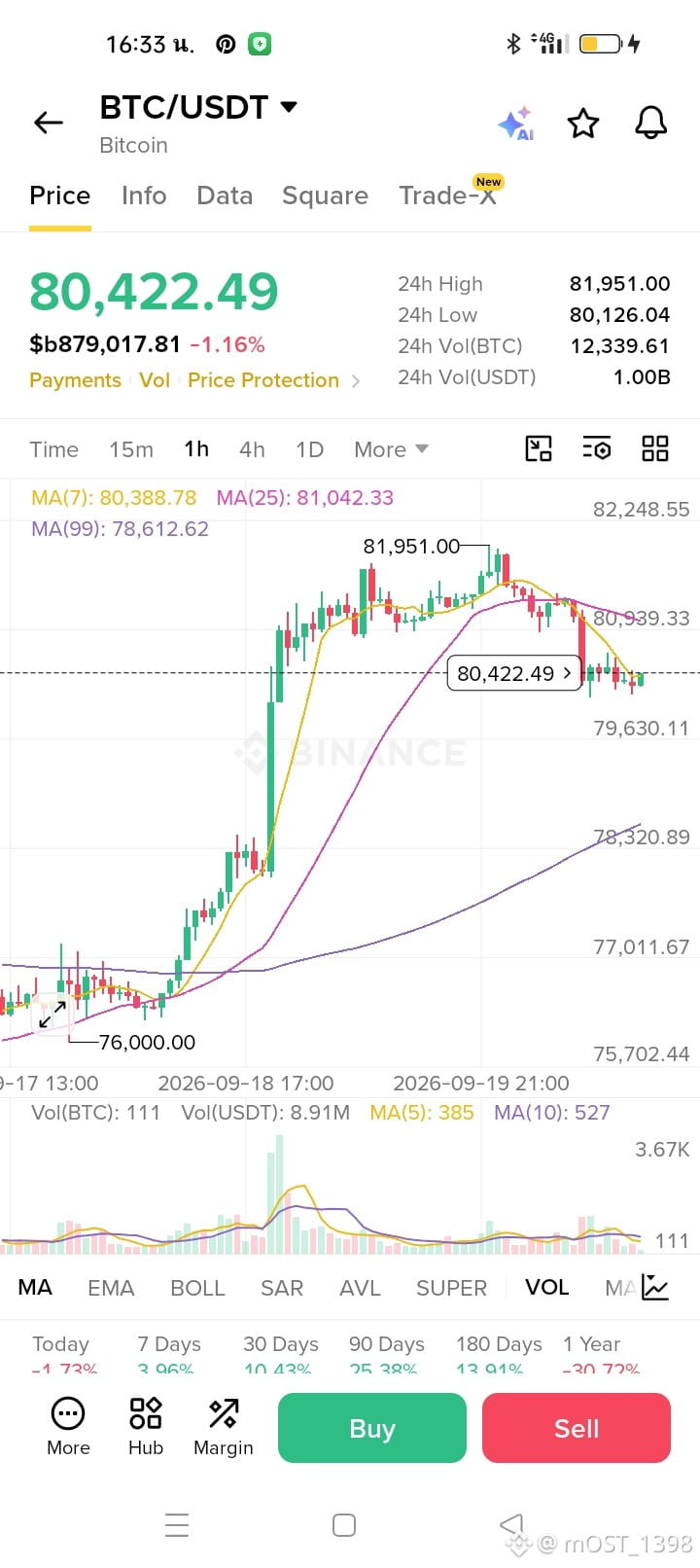
💰🚨 Bitcoin held strong and pumped despite 4–5 big bearish headlines hitting the market.
But if a bigger bearish catalyst hits, the current strength may not hold.
$BTC is also looking overbought on some timeframes, while significant downside leverage has built up, if it starts unwinding, the move could be sharp.
Considering this, we’re currently swing short on BTC, ETH, SOL & BNB.
💰🚨 Bitcoin held strong and pumped despite 4–5 big bearish headlines hitting the market.
But if a bigger bearish catalyst hits, the current strength may not hold.
$BTC is also looking overbought on some timeframes, while significant downside leverage has built up, if it starts unwinding, the move could be sharp.
Considering this, we’re currently swing short on BTC, ETH, SOL & BNB.
But if a bigger bearish catalyst hits, the current strength may not hold.
$BTC is also looking overbought on some timeframes, while significant downside leverage has built up, if it starts unwinding, the move could be sharp.
Considering this, we’re currently swing short on BTC, ETH, SOL & BNB.
55
·
--
*TRADE ALERT – $ETH/USDT*
*Position:* Long(Buy)
*Leverage:* 50x
*Entry Zone:*
$2397 – $2350
*Targets:*
$2445
$2486
$2545
*Stop Loss:*
$2310
⚠️ Stay disciplined, manage risk, and consider booking partial profits along the way.
*TRADE ALERT – $ETH/USDT*
*Position:* Long(Buy)
*Leverage:* 50x
*Entry Zone:*
$2397 – $2350
*Targets:*
$2445
$2486
$2545
*Stop Loss:*
$2310
⚠️ Stay disciplined, manage risk, and consider booking partial profits along the way.
*Position:* Long(Buy)
*Leverage:* 50x
*Entry Zone:*
$2397 – $2350
*Targets:*
$2445
$2486
$2545
*Stop Loss:*
$2310
⚠️ Stay disciplined, manage risk, and consider booking partial profits along the way.
71
·
--
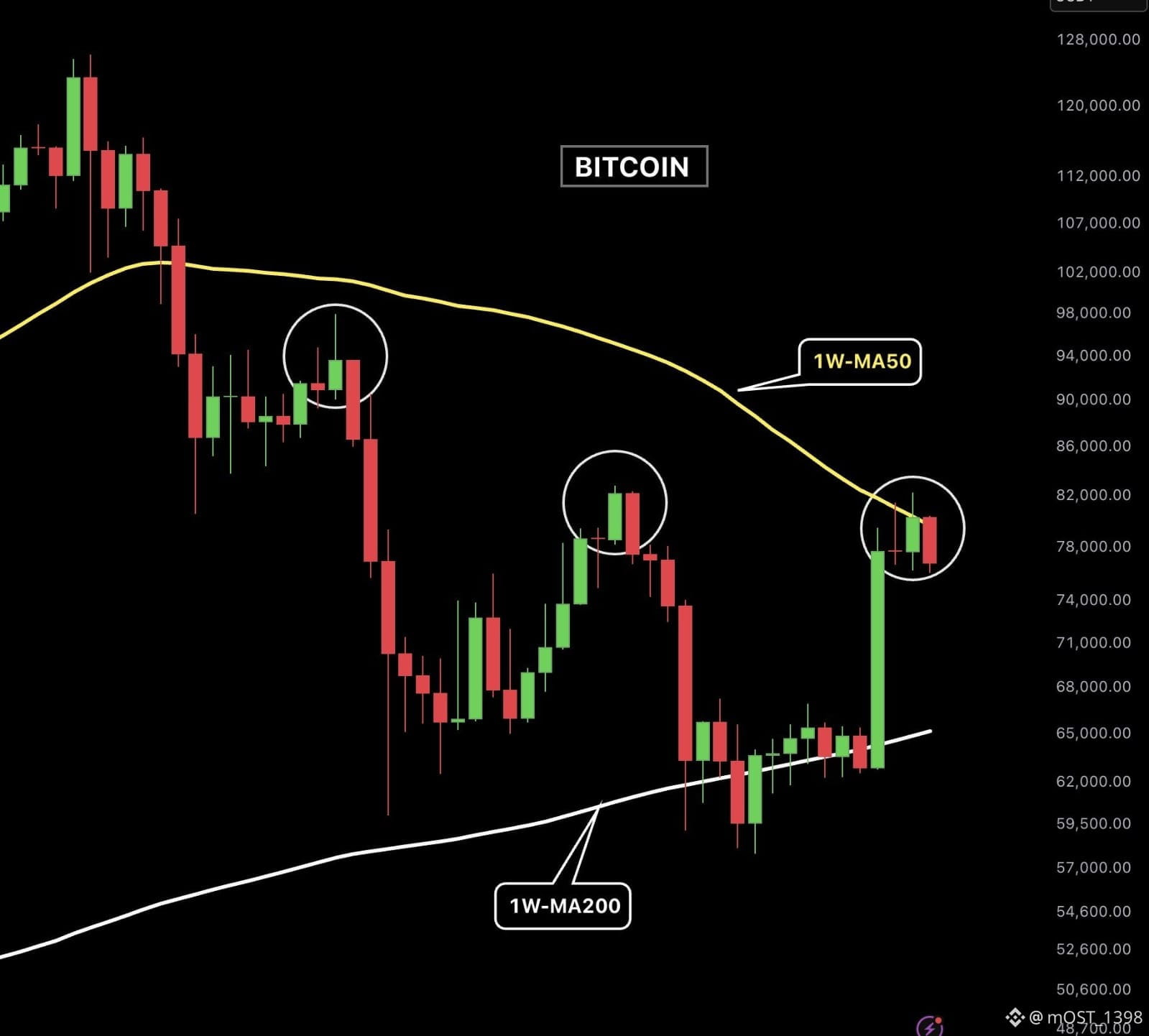
This is not looking good boys.
Bitcoin got rejected from the 50W MA. We need to close the weekly candle back above it to confirm $57K was the bottom and the real bull market has started.
What's concerning is that the last two times Bitcoin got rejected here, a major crash followed.
If $BTC closes below the 50W MA, $75,500 is the next support. If that breaks, the next major level to watch is the 200W MA, currently around $65K.
This is not looking good boys.
Bitcoin got rejected from the 50W MA. We need to close the weekly candle back above it to confirm $57K was the bottom and the real bull market has started.
What's concerning is that the last two times Bitcoin got rejected here, a major crash followed.
If $BTC closes below the 50W MA, $75,500 is the next support. If that breaks, the next major level to watch is the 200W MA, currently around $65K.
Bitcoin got rejected from the 50W MA. We need to close the weekly candle back above it to confirm $57K was the bottom and the real bull market has started.
What's concerning is that the last two times Bitcoin got rejected here, a major crash followed.
If $BTC closes below the 50W MA, $75,500 is the next support. If that breaks, the next major level to watch is the 200W MA, currently around $65K.
66
·
--
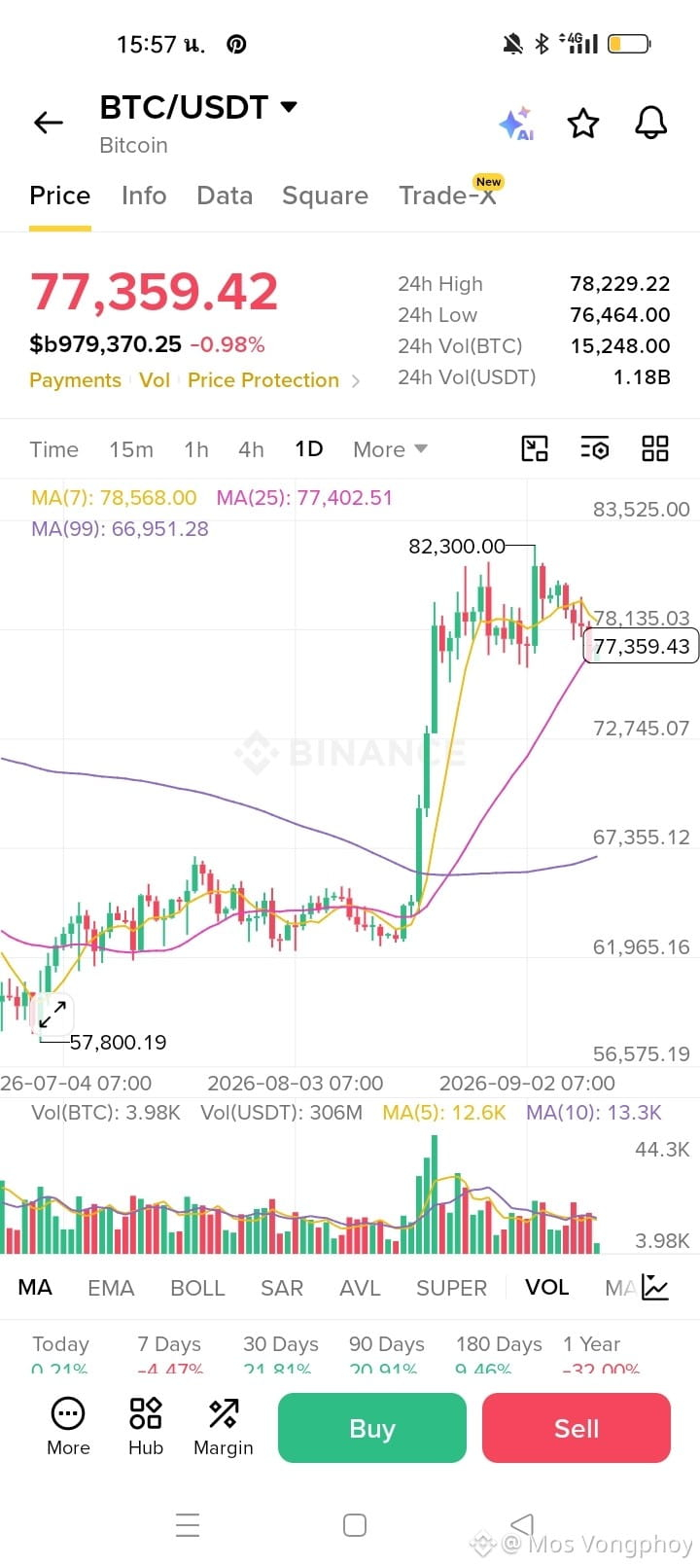
Spot BTC Insights 2026-09-11 08:00 UTC
TLDR
1. BTC faces downward pressure around $77.2K driven by surging Treasury yields and $282M in tactical ETF outflows.
Key Drivers
1. - **Macroeconomic pressure (High)**: Surging 30-year US Treasury yields to 5.37% and high PPI data (5.4%) are driving investors toward risk-free assets, pressuring prices downward.
- **Institutional de-risking (High)**: Spot ETFs saw $282.7M in daily net outflows, signaling tactical institutional shifts ahead of key inflation data.
- **Corporate accumulation (Medium)**: Continued corporate purchases and expanded institutional access via Asian liquidity pools provide underlying structural support.
Risk Assessment
1. - **Inflation data volatility (High)**: The upcoming US CPI release and rising oil prices from geopolitical tensions could cement higher interest rates, triggering further drawdowns.
- **Technical vulnerability (Medium)**: A recent sharp drop to $76.8K on massive volume (634M USDT) highlights fragile support, despite a short-term RSI bounce from oversold levels.
- **Security concerns (Low)**: Decreasing costs for quantum computing attacks introduce long-term theoretical vulnerabilities.
Macro headwinds and ETF outflows create a precarious environment ahead of the CPI print.
Install Binance app to catch the latest BTC insights at https://app.binance.com/uni-qr/token-ai-report?token=BTC&symbol=BTCUSDT&product=spot&reportAt=1789113600000"eToken=USDT&utm_term=BTC&ref=514701768&utm_source=Brm8cLnPPfw7BoYTCqg55k&utm_medium=spot_insight®isterChannel=trading_insight
Spot BTC Insights 2026-09-11 08:00 UTC
TLDR
1. BTC faces downward pressure around $77.2K driven by surging Treasury yields and $282M in tactical ETF outflows.
Key Drivers
1. - **Macroeconomic pressure (High)**: Surging 30-year US Treasury yields to 5.37% and high PPI data (5.4%) are driving investors toward risk-free assets, pressuring prices downward.
- **Institutional de-risking (High)**: Spot ETFs saw $282.7M in daily net outflows, signaling tactical institutional shifts ahead of key inflation data.
- **Corporate accumulation (Medium)**: Continued corporate purchases and expanded institutional access via Asian liquidity pools provide underlying structural support.
Risk Assessment
1. - **Inflation data volatility (High)**: The upcoming US CPI release and rising oil prices from geopolitical tensions could cement higher interest rates, triggering further drawdowns.
- **Technical vulnerability (Medium)**: A recent sharp drop to $76.8K on massive volume (634M USDT) highlights fragile support, despite a short-term RSI bounce from oversold levels.
- **Security concerns (Low)**: Decreasing costs for quantum computing attacks introduce long-term theoretical vulnerabilities.
Macro headwinds and ETF outflows create a precarious environment ahead of the CPI print.
Install Binance app to catch the latest BTC insights at https://app.binance.com/uni-qr/token-ai-report?token=BTC&symbol=BTCUSDT&product=spot&reportAt=1789113600000"eToken=USDT&utm_term=BTC&ref=514701768&utm_source=Brm8cLnPPfw7BoYTCqg55k&utm_medium=spot_insight®isterChannel=trading_insight
TLDR
1. BTC faces downward pressure around $77.2K driven by surging Treasury yields and $282M in tactical ETF outflows.
Key Drivers
1. - **Macroeconomic pressure (High)**: Surging 30-year US Treasury yields to 5.37% and high PPI data (5.4%) are driving investors toward risk-free assets, pressuring prices downward.
- **Institutional de-risking (High)**: Spot ETFs saw $282.7M in daily net outflows, signaling tactical institutional shifts ahead of key inflation data.
- **Corporate accumulation (Medium)**: Continued corporate purchases and expanded institutional access via Asian liquidity pools provide underlying structural support.
Risk Assessment
1. - **Inflation data volatility (High)**: The upcoming US CPI release and rising oil prices from geopolitical tensions could cement higher interest rates, triggering further drawdowns.
- **Technical vulnerability (Medium)**: A recent sharp drop to $76.8K on massive volume (634M USDT) highlights fragile support, despite a short-term RSI bounce from oversold levels.
- **Security concerns (Low)**: Decreasing costs for quantum computing attacks introduce long-term theoretical vulnerabilities.
Macro headwinds and ETF outflows create a precarious environment ahead of the CPI print.
Install Binance app to catch the latest BTC insights at https://app.binance.com/uni-qr/token-ai-report?token=BTC&symbol=BTCUSDT&product=spot&reportAt=1789113600000"eToken=USDT&utm_term=BTC&ref=514701768&utm_source=Brm8cLnPPfw7BoYTCqg55k&utm_medium=spot_insight®isterChannel=trading_insight
67
·
--
From the BTC/USDT daily chart you provided:
Current price is around 78,739 USDT, down -1.23%
Recently dropped to a low of 74,508 USDT before a small rebound
RSI is at 27.11, in the oversold zone (a short-term rebound is possible but no clear reversal signal yet)
MACD is negative and DIF is below DEA, indicating the bearish trend is still ongoing
The price is below all key moving averages (MA7, MA25, MA99), which confirms a bearish outlook
Conclusion for tomorrow:
There is a chance the price could drop further, especially if it breaks below the 74,500 support level.
However, due to the low RSI, a short-term bounce might also occur.
From the BTC/USDT daily chart you provided:
Current price is around 78,739 USDT, down -1.23%
Recently dropped to a low of 74,508 USDT before a small rebound
RSI is at 27.11, in the oversold zone (a short-term rebound is possible but no clear reversal signal yet)
MACD is negative and DIF is below DEA, indicating the bearish trend is still ongoing
The price is below all key moving averages (MA7, MA25, MA99), which confirms a bearish outlook
Conclusion for tomorrow:
There is a chance the price could drop further, especially if it breaks below the 74,500 support level.
However, due to the low RSI, a short-term bounce might also occur.
Current price is around 78,739 USDT, down -1.23%
Recently dropped to a low of 74,508 USDT before a small rebound
RSI is at 27.11, in the oversold zone (a short-term rebound is possible but no clear reversal signal yet)
MACD is negative and DIF is below DEA, indicating the bearish trend is still ongoing
The price is below all key moving averages (MA7, MA25, MA99), which confirms a bearish outlook
Conclusion for tomorrow:
There is a chance the price could drop further, especially if it breaks below the 74,500 support level.
However, due to the low RSI, a short-term bounce might also occur.
4
·
--
$BTC From the BTC/USDT daily chart you provided:
Current price is around 78,739 USDT, down -1.23%
Recently dropped to a low of 74,508 USDT before a small rebound
RSI is at 27.11, in the oversold zone (a short-term rebound is possible but no clear reversal signal yet)
MACD is negative and DIF is below DEA, indicating the bearish trend is still ongoing
The price is below all key moving averages (MA7, MA25, MA99), which confirms a bearish outlook
Conclusion for tomorrow:
There is a chance the price could drop further, especially if it breaks below the 74,500 support level.
However, due to the low RSI, a short-term bounce might also occur.
$BTC From the BTC/USDT daily chart you provided:
Current price is around 78,739 USDT, down -1.23%
Recently dropped to a low of 74,508 USDT before a small rebound
RSI is at 27.11, in the oversold zone (a short-term rebound is possible but no clear reversal signal yet)
MACD is negative and DIF is below DEA, indicating the bearish trend is still ongoing
The price is below all key moving averages (MA7, MA25, MA99), which confirms a bearish outlook
Conclusion for tomorrow:
There is a chance the price could drop further, especially if it breaks below the 74,500 support level.
However, due to the low RSI, a short-term bounce might also occur.
Current price is around 78,739 USDT, down -1.23%
Recently dropped to a low of 74,508 USDT before a small rebound
RSI is at 27.11, in the oversold zone (a short-term rebound is possible but no clear reversal signal yet)
MACD is negative and DIF is below DEA, indicating the bearish trend is still ongoing
The price is below all key moving averages (MA7, MA25, MA99), which confirms a bearish outlook
Conclusion for tomorrow:
There is a chance the price could drop further, especially if it breaks below the 74,500 support level.
However, due to the low RSI, a short-term bounce might also occur.
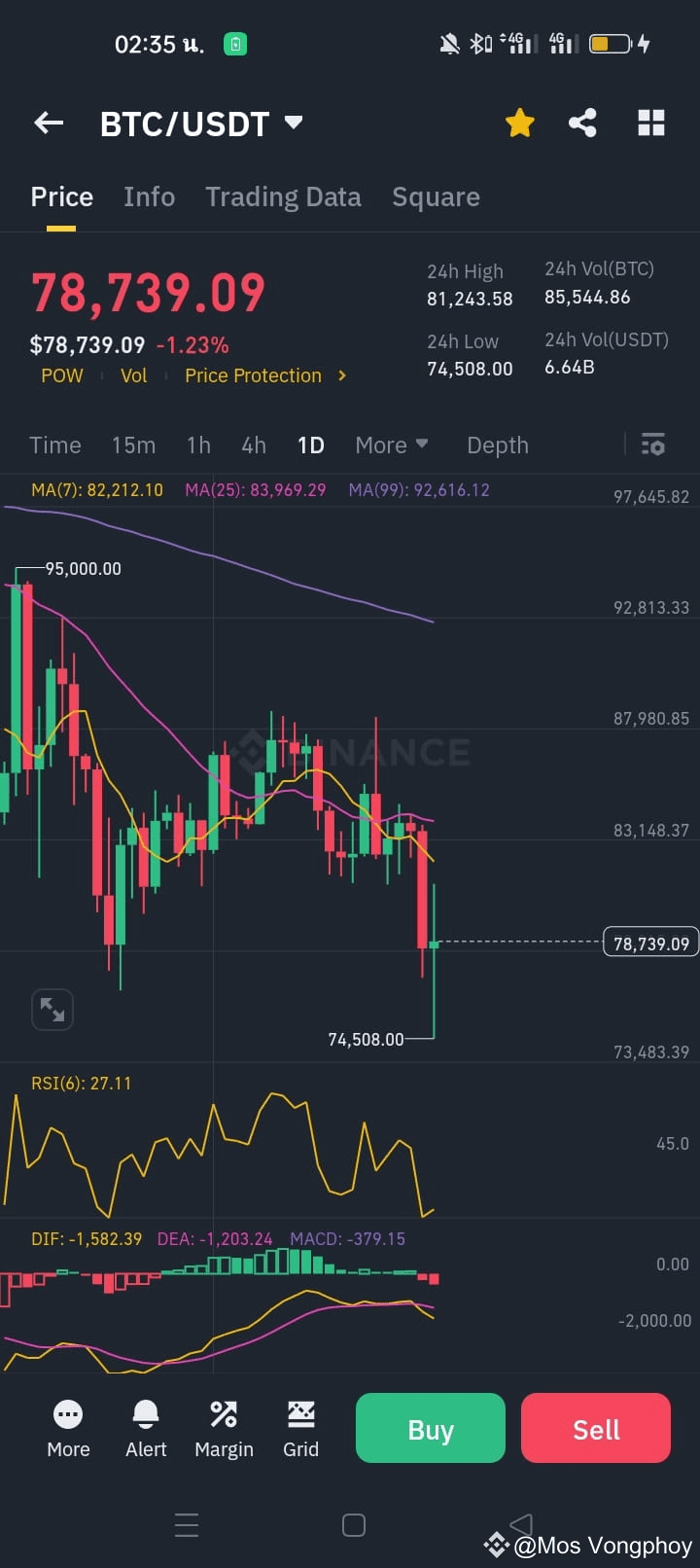
3
·
--
#BTCBelow80K From the BTC/USDT daily chart you provided:
Current price is around 78,739 USDT, down -1.23%
Recently dropped to a low of 74,508 USDT before a small rebound
RSI is at 27.11, in the oversold zone (a short-term rebound is possible but no clear reversal signal yet)
MACD is negative and DIF is below DEA, indicating the bearish trend is still ongoing
The price is below all key moving averages (MA7, MA25, MA99), which confirms a bearish outlook
Conclusion for tomorrow:
There is a chance the price could drop further, especially if it breaks below the 74,500 support level.
However, due to the low RSI, a short-term bounce might also occur.
#BTCBelow80K From the BTC/USDT daily chart you provided:
Current price is around 78,739 USDT, down -1.23%
Recently dropped to a low of 74,508 USDT before a small rebound
RSI is at 27.11, in the oversold zone (a short-term rebound is possible but no clear reversal signal yet)
MACD is negative and DIF is below DEA, indicating the bearish trend is still ongoing
The price is below all key moving averages (MA7, MA25, MA99), which confirms a bearish outlook
Conclusion for tomorrow:
There is a chance the price could drop further, especially if it breaks below the 74,500 support level.
However, due to the low RSI, a short-term bounce might also occur.
Current price is around 78,739 USDT, down -1.23%
Recently dropped to a low of 74,508 USDT before a small rebound
RSI is at 27.11, in the oversold zone (a short-term rebound is possible but no clear reversal signal yet)
MACD is negative and DIF is below DEA, indicating the bearish trend is still ongoing
The price is below all key moving averages (MA7, MA25, MA99), which confirms a bearish outlook
Conclusion for tomorrow:
There is a chance the price could drop further, especially if it breaks below the 74,500 support level.
However, due to the low RSI, a short-term bounce might also occur.
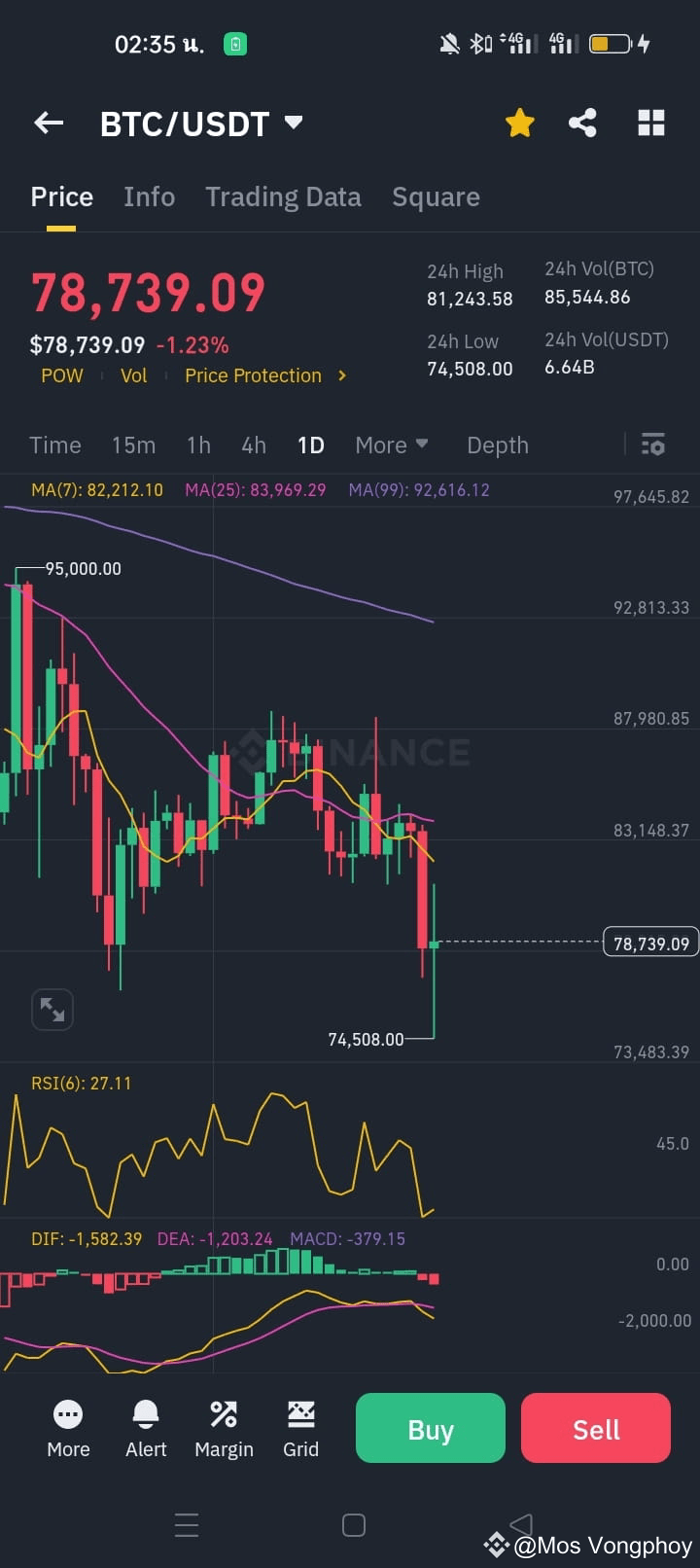
2
·
--
#BTCBelow80K From the BTC/USDT daily chart you provided:
Current price is around 78,739 USDT, down -1.23%
Recently dropped to a low of 74,508 USDT before a small rebound
RSI is at 27.11, in the oversold zone (a short-term rebound is possible but no clear reversal signal yet)
MACD is negative and DIF is below DEA, indicating the bearish trend is still ongoing
The price is below all key moving averages (MA7, MA25, MA99), which confirms a bearish outlook
Conclusion for tomorrow:
There is a chance the price could drop further, especially if it breaks below the 74,500 support level.
However, due to the low RSI, a short-term bounce might also occur.
#BTCBelow80K From the BTC/USDT daily chart you provided:
Current price is around 78,739 USDT, down -1.23%
Recently dropped to a low of 74,508 USDT before a small rebound
RSI is at 27.11, in the oversold zone (a short-term rebound is possible but no clear reversal signal yet)
MACD is negative and DIF is below DEA, indicating the bearish trend is still ongoing
The price is below all key moving averages (MA7, MA25, MA99), which confirms a bearish outlook
Conclusion for tomorrow:
There is a chance the price could drop further, especially if it breaks below the 74,500 support level.
However, due to the low RSI, a short-term bounce might also occur.
Current price is around 78,739 USDT, down -1.23%
Recently dropped to a low of 74,508 USDT before a small rebound
RSI is at 27.11, in the oversold zone (a short-term rebound is possible but no clear reversal signal yet)
MACD is negative and DIF is below DEA, indicating the bearish trend is still ongoing
The price is below all key moving averages (MA7, MA25, MA99), which confirms a bearish outlook
Conclusion for tomorrow:
There is a chance the price could drop further, especially if it breaks below the 74,500 support level.
However, due to the low RSI, a short-term bounce might also occur.
248
·
--
$BTC Based on the current chart for BTC/USDT, here’s an analysis to help you decide whether to BUY or SELL:
Key Observations:
Current Price: $84,123.79
24h High: $84,720
24h Low: $81,659
Price is near a short-term resistance level.
Moving Averages:
MA(7) (Short-Term): $83,228.58 (Price is above this, showing slight bullish momentum)
MA(25) (Mid-Term): $84,259.52 (Price is just below this, indicating resistance)
MA(99) (Long-Term): $93,049.09 (Far above current price, meaning the long-term trend is still bearish)
RSI (6): 50.79
RSI is neutral, meaning no clear overbought or oversold signal.
MACD Indicator:
MACD is slightly positive (92.87), showing that buying pressure is increasing, but still uncertain.
Decision Guide:
BUY if:
BTC breaks above $84,720 resistance with strong volume.
MACD continues upward and RSI moves above 60 (indicating strong bullish momentum).
BTC maintains price above MA(25) ($84,259) for confirmation.
SELL if:
BTC drops below $81,659, indicating a bearish breakdown.
RSI falls below 40 (showing increasing selling pressure).
MACD crosses downward, showing trend reversal to bearish.
Recommendation:
Short-term traders: Wait for BTC to confirm a breakout above $84,720 before buying.
Long-term investors: If BTC drops near $81,659 - $80,000, it might be a better buying opportunity.
If you already hold BTC: Consider taking partial profit if it struggles to break $84,720.
$BTC Based on the current chart for BTC/USDT, here’s an analysis to help you decide whether to BUY or SELL:
Key Observations:
Current Price: $84,123.79
24h High: $84,720
24h Low: $81,659
Price is near a short-term resistance level.
Moving Averages:
MA(7) (Short-Term): $83,228.58 (Price is above this, showing slight bullish momentum)
MA(25) (Mid-Term): $84,259.52 (Price is just below this, indicating resistance)
MA(99) (Long-Term): $93,049.09 (Far above current price, meaning the long-term trend is still bearish)
RSI (6): 50.79
RSI is neutral, meaning no clear overbought or oversold signal.
MACD Indicator:
MACD is slightly positive (92.87), showing that buying pressure is increasing, but still uncertain.
Decision Guide:
BUY if:
BTC breaks above $84,720 resistance with strong volume.
MACD continues upward and RSI moves above 60 (indicating strong bullish momentum).
BTC maintains price above MA(25) ($84,259) for confirmation.
SELL if:
BTC drops below $81,659, indicating a bearish breakdown.
RSI falls below 40 (showing increasing selling pressure).
MACD crosses downward, showing trend reversal to bearish.
Recommendation:
Short-term traders: Wait for BTC to confirm a breakout above $84,720 before buying.
Long-term investors: If BTC drops near $81,659 - $80,000, it might be a better buying opportunity.
If you already hold BTC: Consider taking partial profit if it struggles to break $84,720.
Key Observations:
Current Price: $84,123.79
24h High: $84,720
24h Low: $81,659
Price is near a short-term resistance level.
Moving Averages:
MA(7) (Short-Term): $83,228.58 (Price is above this, showing slight bullish momentum)
MA(25) (Mid-Term): $84,259.52 (Price is just below this, indicating resistance)
MA(99) (Long-Term): $93,049.09 (Far above current price, meaning the long-term trend is still bearish)
RSI (6): 50.79
RSI is neutral, meaning no clear overbought or oversold signal.
MACD Indicator:
MACD is slightly positive (92.87), showing that buying pressure is increasing, but still uncertain.
Decision Guide:
BUY if:
BTC breaks above $84,720 resistance with strong volume.
MACD continues upward and RSI moves above 60 (indicating strong bullish momentum).
BTC maintains price above MA(25) ($84,259) for confirmation.
SELL if:
BTC drops below $81,659, indicating a bearish breakdown.
RSI falls below 40 (showing increasing selling pressure).
MACD crosses downward, showing trend reversal to bearish.
Recommendation:
Short-term traders: Wait for BTC to confirm a breakout above $84,720 before buying.
Long-term investors: If BTC drops near $81,659 - $80,000, it might be a better buying opportunity.
If you already hold BTC: Consider taking partial profit if it struggles to break $84,720.
264
·
--
#BinanceEarnYieldArena Based on the current chart for BTC/USDT, here’s an analysis to help you decide whether to BUY or SELL:
Key Observations:
Current Price: $84,123.79
24h High: $84,720
24h Low: $81,659
Price is near a short-term resistance level.
Moving Averages:
MA(7) (Short-Term): $83,228.58 (Price is above this, showing slight bullish momentum)
MA(25) (Mid-Term): $84,259.52 (Price is just below this, indicating resistance)
MA(99) (Long-Term): $93,049.09 (Far above current price, meaning the long-term trend is still bearish)
RSI (6): 50.79
RSI is neutral, meaning no clear overbought or oversold signal.
MACD Indicator:
MACD is slightly positive (92.87), showing that buying pressure is increasing, but still uncertain.
Decision Guide:
BUY if:
BTC breaks above $84,720 resistance with strong volume.
MACD continues upward and RSI moves above 60 (indicating strong bullish momentum).
BTC maintains price above MA(25) ($84,259) for confirmation.
SELL if:
BTC drops below $81,659, indicating a bearish breakdown.
RSI falls below 40 (showing increasing selling pressure).
MACD crosses downward, showing trend reversal to bearish.
Recommendation:
Short-term traders: Wait for BTC to confirm a breakout above $84,720 before buying.
Long-term investors: If BTC drops near $81,659 - $80,000, it might be a better buying opportunity.
If you already hold BTC: Consider taking partial profit if it struggles to break $84,720.
#BinanceEarnYieldArena Based on the current chart for BTC/USDT, here’s an analysis to help you decide whether to BUY or SELL:
Key Observations:
Current Price: $84,123.79
24h High: $84,720
24h Low: $81,659
Price is near a short-term resistance level.
Moving Averages:
MA(7) (Short-Term): $83,228.58 (Price is above this, showing slight bullish momentum)
MA(25) (Mid-Term): $84,259.52 (Price is just below this, indicating resistance)
MA(99) (Long-Term): $93,049.09 (Far above current price, meaning the long-term trend is still bearish)
RSI (6): 50.79
RSI is neutral, meaning no clear overbought or oversold signal.
MACD Indicator:
MACD is slightly positive (92.87), showing that buying pressure is increasing, but still uncertain.
Decision Guide:
BUY if:
BTC breaks above $84,720 resistance with strong volume.
MACD continues upward and RSI moves above 60 (indicating strong bullish momentum).
BTC maintains price above MA(25) ($84,259) for confirmation.
SELL if:
BTC drops below $81,659, indicating a bearish breakdown.
RSI falls below 40 (showing increasing selling pressure).
MACD crosses downward, showing trend reversal to bearish.
Recommendation:
Short-term traders: Wait for BTC to confirm a breakout above $84,720 before buying.
Long-term investors: If BTC drops near $81,659 - $80,000, it might be a better buying opportunity.
If you already hold BTC: Consider taking partial profit if it struggles to break $84,720.
Key Observations:
Current Price: $84,123.79
24h High: $84,720
24h Low: $81,659
Price is near a short-term resistance level.
Moving Averages:
MA(7) (Short-Term): $83,228.58 (Price is above this, showing slight bullish momentum)
MA(25) (Mid-Term): $84,259.52 (Price is just below this, indicating resistance)
MA(99) (Long-Term): $93,049.09 (Far above current price, meaning the long-term trend is still bearish)
RSI (6): 50.79
RSI is neutral, meaning no clear overbought or oversold signal.
MACD Indicator:
MACD is slightly positive (92.87), showing that buying pressure is increasing, but still uncertain.
Decision Guide:
BUY if:
BTC breaks above $84,720 resistance with strong volume.
MACD continues upward and RSI moves above 60 (indicating strong bullish momentum).
BTC maintains price above MA(25) ($84,259) for confirmation.
SELL if:
BTC drops below $81,659, indicating a bearish breakdown.
RSI falls below 40 (showing increasing selling pressure).
MACD crosses downward, showing trend reversal to bearish.
Recommendation:
Short-term traders: Wait for BTC to confirm a breakout above $84,720 before buying.
Long-term investors: If BTC drops near $81,659 - $80,000, it might be a better buying opportunity.
If you already hold BTC: Consider taking partial profit if it struggles to break $84,720.
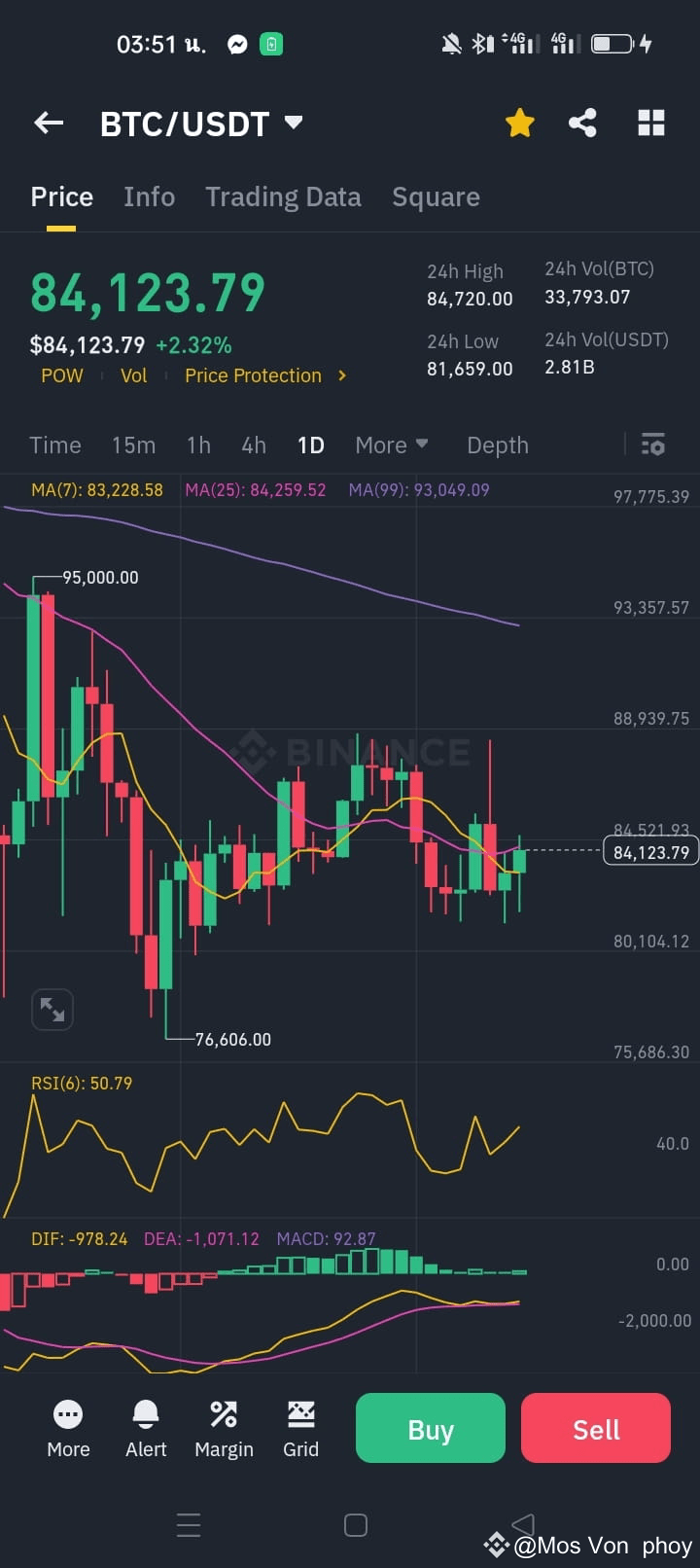
396
·
--
Based on the current chart for BTC/USDT, here’s an analysis to help you decide whether to BUY or SELL:
Key Observations:
1. Current Price: $84,123.79
24h High: $84,720
24h Low: $81,659
Price is near a short-term resistance level.
2. Moving Averages:
MA(7) (Short-Term): $83,228.58 (Price is above this, showing slight bullish momentum)
MA(25) (Mid-Term): $84,259.52 (Price is just below this, indicating resistance)
MA(99) (Long-Term): $93,049.09 (Far above current price, meaning the long-term trend is still bearish)
3. RSI (6): 50.79
RSI is neutral, meaning no clear overbought or oversold signal.
4. MACD Indicator:
MACD is slightly positive (92.87), showing that buying pressure is increasing, but still uncertain.
Decision Guide:
BUY if:
BTC breaks above $84,720 resistance with strong volume.
MACD continues upward and RSI moves above 60 (indicating strong bullish momentum).
BTC maintains price above MA(25) ($84,259) for confirmation.
SELL if:
BTC drops below $81,659, indicating a bearish breakdown.
RSI falls below 40 (showing increasing selling pressure).
MACD crosses downward, showing trend reversal to bearish.
Recommendation:
Short-term traders: Wait for BTC to confirm a breakout above $84,720 before buying.
Long-term investors: If BTC drops near $81,659 - $80,000, it might be a better buying opportunity.
If you already hold BTC: Consider taking partial profit if it struggles to break $84,720.
Based on the current chart for BTC/USDT, here’s an analysis to help you decide whether to BUY or SELL:
Key Observations:
1. Current Price: $84,123.79
24h High: $84,720
24h Low: $81,659
Price is near a short-term resistance level.
2. Moving Averages:
MA(7) (Short-Term): $83,228.58 (Price is above this, showing slight bullish momentum)
MA(25) (Mid-Term): $84,259.52 (Price is just below this, indicating resistance)
MA(99) (Long-Term): $93,049.09 (Far above current price, meaning the long-term trend is still bearish)
3. RSI (6): 50.79
RSI is neutral, meaning no clear overbought or oversold signal.
4. MACD Indicator:
MACD is slightly positive (92.87), showing that buying pressure is increasing, but still uncertain.
Decision Guide:
BUY if:
BTC breaks above $84,720 resistance with strong volume.
MACD continues upward and RSI moves above 60 (indicating strong bullish momentum).
BTC maintains price above MA(25) ($84,259) for confirmation.
SELL if:
BTC drops below $81,659, indicating a bearish breakdown.
RSI falls below 40 (showing increasing selling pressure).
MACD crosses downward, showing trend reversal to bearish.
Recommendation:
Short-term traders: Wait for BTC to confirm a breakout above $84,720 before buying.
Long-term investors: If BTC drops near $81,659 - $80,000, it might be a better buying opportunity.
If you already hold BTC: Consider taking partial profit if it struggles to break $84,720.
Key Observations:
1. Current Price: $84,123.79
24h High: $84,720
24h Low: $81,659
Price is near a short-term resistance level.
2. Moving Averages:
MA(7) (Short-Term): $83,228.58 (Price is above this, showing slight bullish momentum)
MA(25) (Mid-Term): $84,259.52 (Price is just below this, indicating resistance)
MA(99) (Long-Term): $93,049.09 (Far above current price, meaning the long-term trend is still bearish)
3. RSI (6): 50.79
RSI is neutral, meaning no clear overbought or oversold signal.
4. MACD Indicator:
MACD is slightly positive (92.87), showing that buying pressure is increasing, but still uncertain.
Decision Guide:
BUY if:
BTC breaks above $84,720 resistance with strong volume.
MACD continues upward and RSI moves above 60 (indicating strong bullish momentum).
BTC maintains price above MA(25) ($84,259) for confirmation.
SELL if:
BTC drops below $81,659, indicating a bearish breakdown.
RSI falls below 40 (showing increasing selling pressure).
MACD crosses downward, showing trend reversal to bearish.
Recommendation:
Short-term traders: Wait for BTC to confirm a breakout above $84,720 before buying.
Long-term investors: If BTC drops near $81,659 - $80,000, it might be a better buying opportunity.
If you already hold BTC: Consider taking partial profit if it struggles to break $84,720.
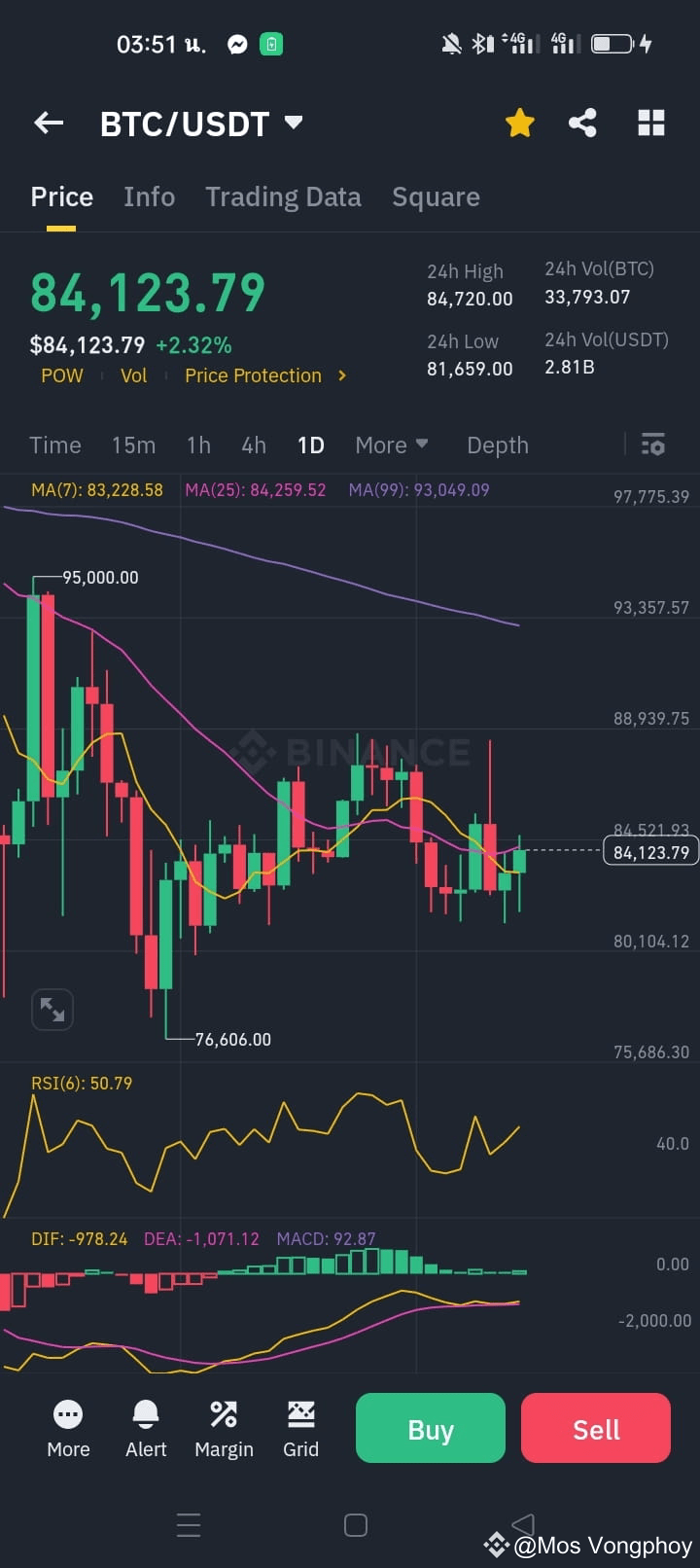
2
282
·
--
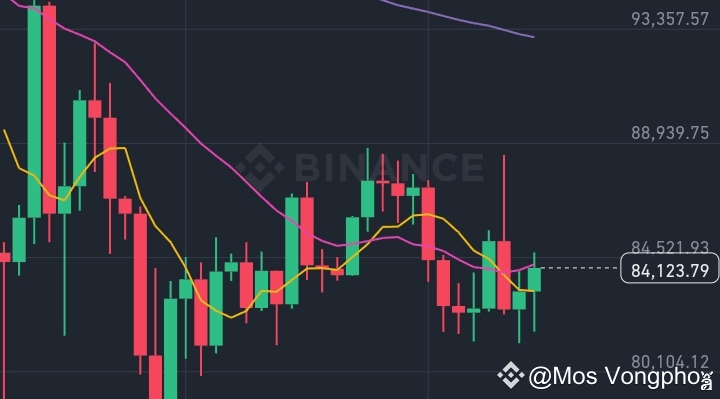
Article
Bitcoin todayFrom the graph shown in the Binance app and technical factors, there are several interesting points:
Short-term trend of BTC/USDT
Moving Average (MA)
MA(7) = 83,228.58 (short-term moving average)
MA(25) = 84,259.52 (medium-term moving average)
MA(99) = 93,049.09 (long-term moving average)
Bitcoin today
From the graph shown in the Binance app and technical factors, there are several interesting points:
Short-term trend of BTC/USDT
Moving Average (MA)
MA(7) = 83,228.58 (short-term moving average)
MA(25) = 84,259.52 (medium-term moving average)
MA(99) = 93,049.09 (long-term moving average)
Short-term trend of BTC/USDT
Moving Average (MA)
MA(7) = 83,228.58 (short-term moving average)
MA(25) = 84,259.52 (medium-term moving average)
MA(99) = 93,049.09 (long-term moving average)
1
100
·
--
Based on the chart, Bitcoin (BTC) is currently at $84,300, showing an upward trend of 5.10%. The 24-hour high is $85,309.71, and the low is $79,939.90. Technical indicators like RSI (66.95) suggest a strong momentum, while the price is moving towards the 99-period moving average ($85,322.55).
For Bitcoin to reach $100,000, it needs to break key resistance levels around $86,500 and $90,000. If the bullish momentum continues and BTC maintains support above $80,000, it has the potential to test new highs. However, market conditions and external factors like macroeconomic trends and investor sentiment will play a crucial role.#BTC #Binance
Based on the chart, Bitcoin (BTC) is currently at $84,300, showing an upward trend of 5.10%. The 24-hour high is $85,309.71, and the low is $79,939.90. Technical indicators like RSI (66.95) suggest a strong momentum, while the price is moving towards the 99-period moving average ($85,322.55).
For Bitcoin to reach $100,000, it needs to break key resistance levels around $86,500 and $90,000. If the bullish momentum continues and BTC maintains support above $80,000, it has the potential to test new highs. However, market conditions and external factors like macroeconomic trends and investor sentiment will play a crucial role.#BTC #Binance
For Bitcoin to reach $100,000, it needs to break key resistance levels around $86,500 and $90,000. If the bullish momentum continues and BTC maintains support above $80,000, it has the potential to test new highs. However, market conditions and external factors like macroeconomic trends and investor sentiment will play a crucial role.#BTC #Binance
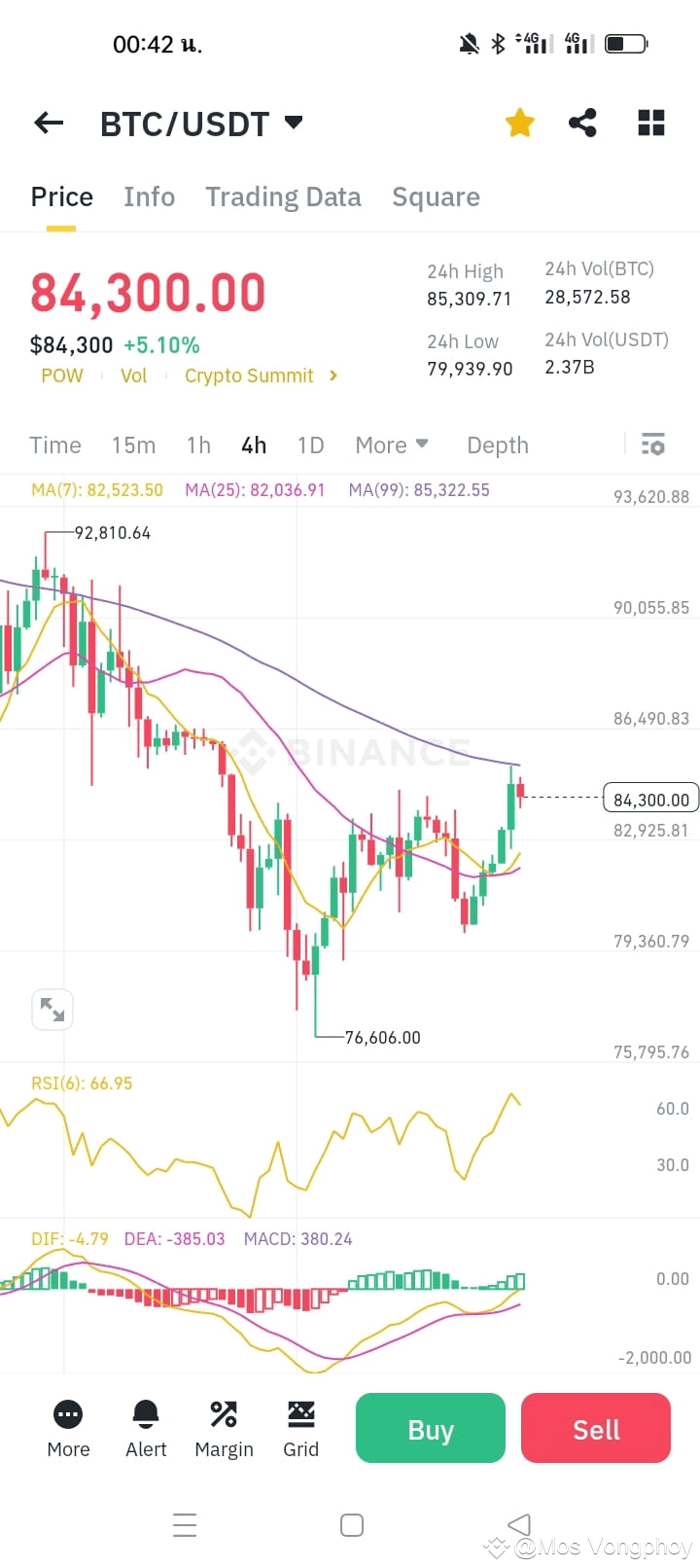
7
246
·
--
Bearish
BNB/USDT Price Trend Analysis
Based on the chart and indicators, here are key factors to consider:
Price Trend and Moving Averages (MA)
The current price is 578.28 USDT
The 7-day MA (567.68) is below the price, indicating potential recovery
However, the 25-day MA (608.12) and 99-day MA (663.83) remain higher, suggesting that the downtrend is still intact
Support and Resistance Levels
Support: Around 567.99 USDT
Resistance: First at 590.48 USDT, then at 608.12 USDT
RSI (Relative Strength Index)
RSI(6) is at 50.62, which is neutral, indicating no strong buying or selling momentum
MACD (Moving Average Convergence Divergence)
DIF (-20.70) and DEA (-18.82) are below zero, indicating a long-term downtrend
MACD (-1.88) is starting to turn upward, hinting at a possible short-term recovery
Conclusion
There are signs of a short-term recovery as the price moves above the MA7
However, the long-term trend is still bearish due to higher MAs pointing downward
RSI suggests a neutral market with no strong momentum
If the price breaks above 590.48 USDT and MA25 (608.12 USDT), further upside is possible
If it drops below 567.99 USDT, it may retest support around 500 USDT$BNB
BNB/USDT Price Trend Analysis
Based on the chart and indicators, here are key factors to consider:
Price Trend and Moving Averages (MA)
The current price is 578.28 USDT
The 7-day MA (567.68) is below the price, indicating potential recovery
However, the 25-day MA (608.12) and 99-day MA (663.83) remain higher, suggesting that the downtrend is still intact
Support and Resistance Levels
Support: Around 567.99 USDT
Resistance: First at 590.48 USDT, then at 608.12 USDT
RSI (Relative Strength Index)
RSI(6) is at 50.62, which is neutral, indicating no strong buying or selling momentum
MACD (Moving Average Convergence Divergence)
DIF (-20.70) and DEA (-18.82) are below zero, indicating a long-term downtrend
MACD (-1.88) is starting to turn upward, hinting at a possible short-term recovery
Conclusion
There are signs of a short-term recovery as the price moves above the MA7
However, the long-term trend is still bearish due to higher MAs pointing downward
RSI suggests a neutral market with no strong momentum
If the price breaks above 590.48 USDT and MA25 (608.12 USDT), further upside is possible
If it drops below 567.99 USDT, it may retest support around 500 USDT$BNB
Based on the chart and indicators, here are key factors to consider:
Price Trend and Moving Averages (MA)
The current price is 578.28 USDT
The 7-day MA (567.68) is below the price, indicating potential recovery
However, the 25-day MA (608.12) and 99-day MA (663.83) remain higher, suggesting that the downtrend is still intact
Support and Resistance Levels
Support: Around 567.99 USDT
Resistance: First at 590.48 USDT, then at 608.12 USDT
RSI (Relative Strength Index)
RSI(6) is at 50.62, which is neutral, indicating no strong buying or selling momentum
MACD (Moving Average Convergence Divergence)
DIF (-20.70) and DEA (-18.82) are below zero, indicating a long-term downtrend
MACD (-1.88) is starting to turn upward, hinting at a possible short-term recovery
Conclusion
There are signs of a short-term recovery as the price moves above the MA7
However, the long-term trend is still bearish due to higher MAs pointing downward
RSI suggests a neutral market with no strong momentum
If the price breaks above 590.48 USDT and MA25 (608.12 USDT), further upside is possible
If it drops below 567.99 USDT, it may retest support around 500 USDT$BNB
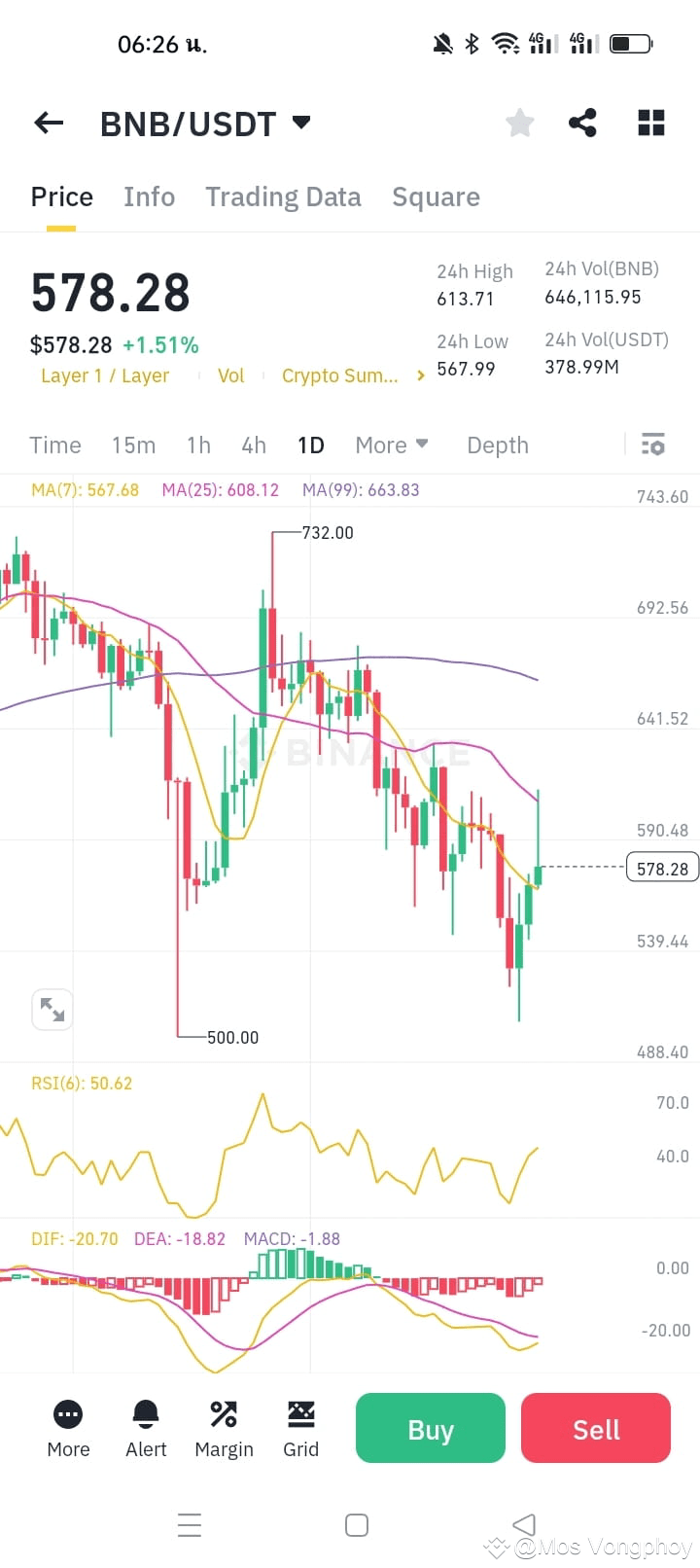
6
334
·
--
Ethereum (ETH/USDT) Chart Analysis
Key Information from the Chart:
Price: $1,871.08 (-1.96%)
Trend: Downtrend (Bearish)
Key Support Level: Around $1,800
Key Resistance Level: Around $2,000
Chart Analysis Details:
Candlestick Chart:
The price has been continuously decreasing.
There are many red candles, indicating strong selling pressure.
Trading Volume:
Volume has increased during price declines, suggesting strong selling momentum.
MACD Indicator:
The MACD line (blue) is below the Signal line (orange).
The histogram is negative and declining, confirming a bearish momentum.
Overall Trend:
The price is in a clear downtrend.
There is a possibility of testing the $1,800 support level.
If the price fails to hold above this level, it may drop further to $1,700 or even $1,600.
This suggests a cautious approach, as the market is showing strong bearish signals.#FollowTheLeadTrader
Ethereum (ETH/USDT) Chart Analysis
Key Information from the Chart:
Price: $1,871.08 (-1.96%)
Trend: Downtrend (Bearish)
Key Support Level: Around $1,800
Key Resistance Level: Around $2,000
Chart Analysis Details:
Candlestick Chart:
The price has been continuously decreasing.
There are many red candles, indicating strong selling pressure.
Trading Volume:
Volume has increased during price declines, suggesting strong selling momentum.
MACD Indicator:
The MACD line (blue) is below the Signal line (orange).
The histogram is negative and declining, confirming a bearish momentum.
Overall Trend:
The price is in a clear downtrend.
There is a possibility of testing the $1,800 support level.
If the price fails to hold above this level, it may drop further to $1,700 or even $1,600.
This suggests a cautious approach, as the market is showing strong bearish signals.#FollowTheLeadTrader
Key Information from the Chart:
Price: $1,871.08 (-1.96%)
Trend: Downtrend (Bearish)
Key Support Level: Around $1,800
Key Resistance Level: Around $2,000
Chart Analysis Details:
Candlestick Chart:
The price has been continuously decreasing.
There are many red candles, indicating strong selling pressure.
Trading Volume:
Volume has increased during price declines, suggesting strong selling momentum.
MACD Indicator:
The MACD line (blue) is below the Signal line (orange).
The histogram is negative and declining, confirming a bearish momentum.
Overall Trend:
The price is in a clear downtrend.
There is a possibility of testing the $1,800 support level.
If the price fails to hold above this level, it may drop further to $1,700 or even $1,600.
This suggests a cautious approach, as the market is showing strong bearish signals.#FollowTheLeadTrader
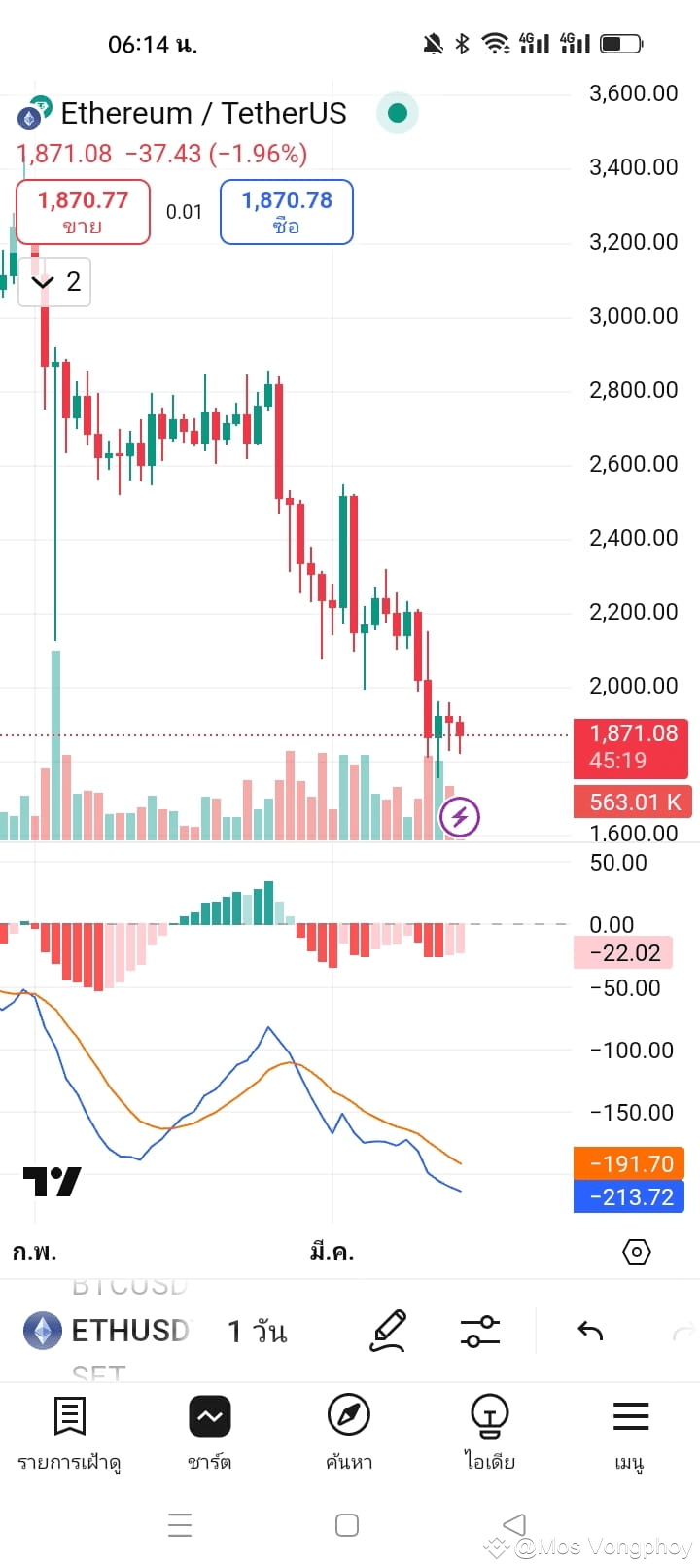
9
232
Log in to explore more content
Join global crypto users on Binance Square
⚡️ Get latest and useful information about crypto.
💬 Trusted by the world’s largest crypto exchange.
👍 Discover real insights from verified creators.
Email / Phone number
Trending Topics
AIStocksWhatNext
578,023 views
4,343 Discussing
Share & Win Traffic Reward in our Trending Hashtag Campaign
✨Topic: What Other Investment Opportunities Remain as AI Stocks Keep Rising?
👉How to Join:
Publish a short post or article with hashtag #AIStocksWhatNext
Share whether you’re bullish or bearish, and post your AI stock holdings or trade — using the trade widget may improve your eligibility.
You can also strengthen your post by sharing data or charts, and avoiding AI-generated images.
✍️Create content based on the below angles:
- Nvidia says chip sales will double next year, and top AI companies keep hitting record revenue, the compute spend behind it is just as staggering. Is AI demand really taking off? And how long can it last? AI stocks are up across the board. Is this a real breakout, or just a short-term bounce?
- Industry leaders are calling to slow down AI development, while Trump plans to build an “AI Force”, claiming AI could account for 25% of U.S. GDP in the future. Whose side are you on? Will state-level backing be a long-term win for AI stocks?
- Are you buying AI stocks? Share your AI-related trade/holdings with our trade sharing widget.
⏰Campaign Period:
- 2026-09-22 7:00 - 2026-09-24 4:00 UTC
🎁Reward:
- Qualified posts that comply with the above guidelines and contain more than 100 words will be reviewed and may receive a random traffic boost of 500 to 3,000 views. You will receive a notification from your feed secretary if your post is selected.
- Get a chance to have your article featured on Binance Square Official
Need ideas for your post? Visit the topic page #AIStocksWhatNext or the Square Guide on How to Post for Better Reach.
Binance Square Official
·455 Likes
·1.2M views
21SharesLaunchesEuropesFirstZcashETP
2,489 views
153 Discussing
CardanoJoinsX402PaymentStandard
1,782 views
128 Discussing