
莱觅哥
322 Posts

莱觅哥
Report
Block User
BP-71DFE6B025C0
155 Following
9.9K+ Followers
837 Liked
Posts
All
Quotes
Live
·
--
It's been a long time since I posted. It's lively here again. $BNB
{future}(BNBUSDT)
It's been a long time since I posted. It's lively here again. $BNB
107
·
--
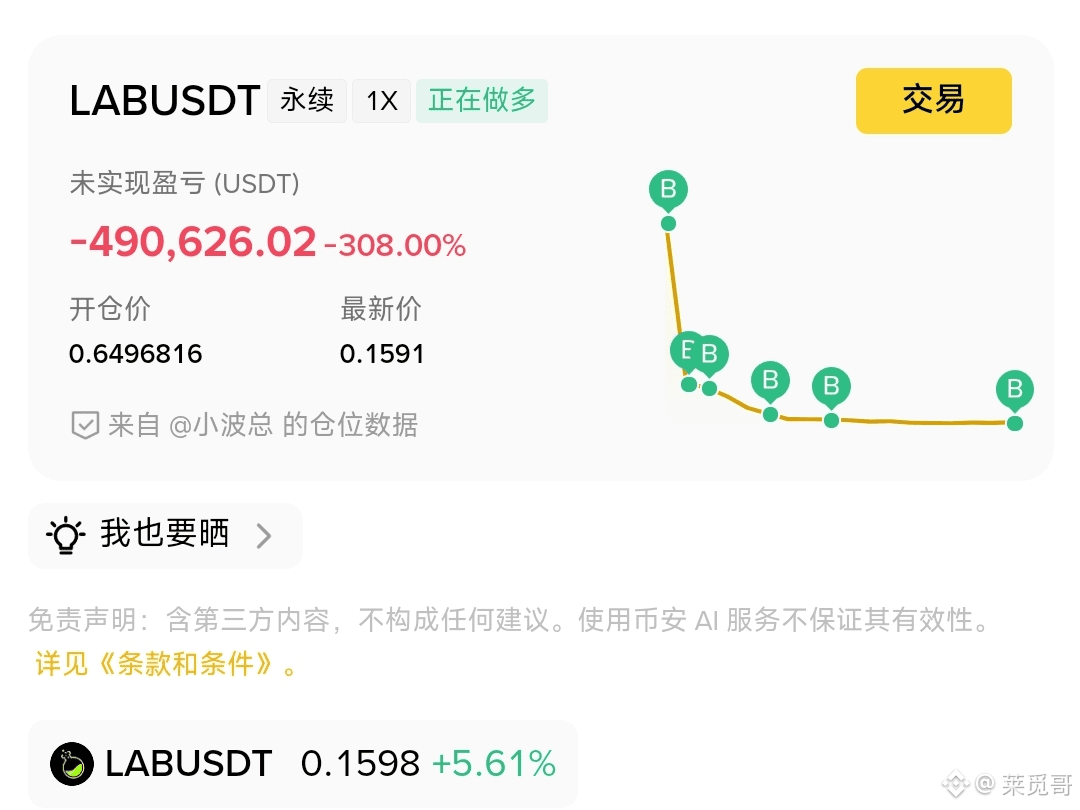
How did he do it? The wireless position has been losing money all along, $LAB
{future}(LABUSDT)
How did he do it? The wireless position has been losing money all along, $LAB
1
2k
·
--
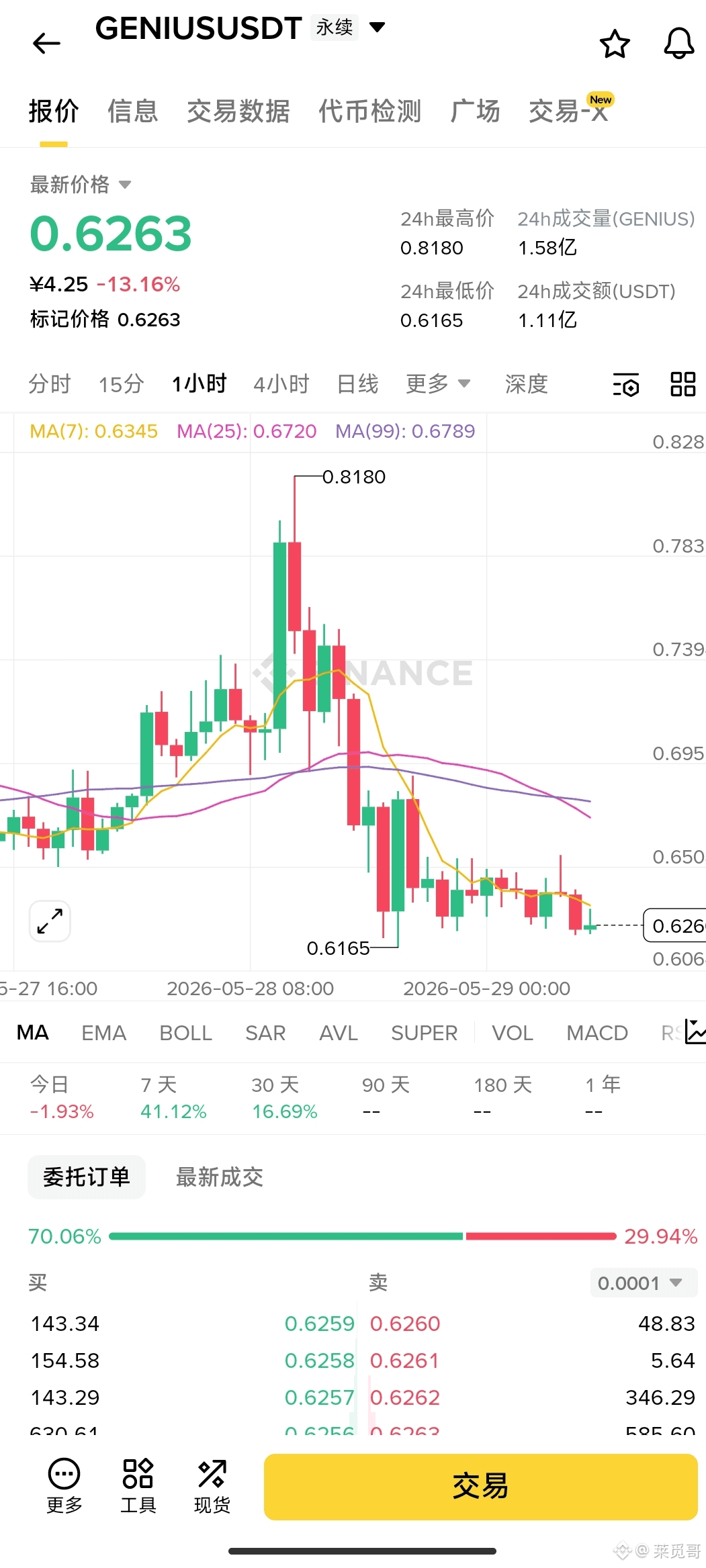
Genius Terminal is now my go-to tool for daily trading. It really solves the pain points of DeFi fragmentation, managing spot, perpetuals, presales, and yield all from one dashboard. My portfolio shows a unified cross-chain balance and earnings, so no more connecting to each protocol individually.
The feature I use the most is the atomic routing. No matter which chain I'm placing orders on, it automatically selects the best DEX path behind the scenes, optimizing slippage with positive returns. On the privacy front, Ghost Orders are super handy; when executing large orders, it’s almost invisible on-chain, perfect for pro traders who don’t want to expose their positions. The whole process is zero signatures, zero bridging, and zero waiting—it feels like using a centralized exchange when I open the app, but it’s completely non-custodial, providing a great sense of security.
Recently, the update from @GeniusOfficial mentioned that they've added more chain support and market insight tools. It’s clear the team is continuously iterating based on user feedback. The role of token $GENIUS is becoming increasingly crucial here; you can earn points just by trading, redeem rewards during Season events, and share in the platform's growth dividends. Holding it feels like a direct investment in the long-term development of the entire ecosystem. For someone like me who treats trading as a full-time job, this is not just a tool; it’s the gateway that simplifies the on-chain world into a daily app. With features like yield farming and RWAs launching soon, the experience is only going to get better.
#genius #bnb $BNB
107
·
--
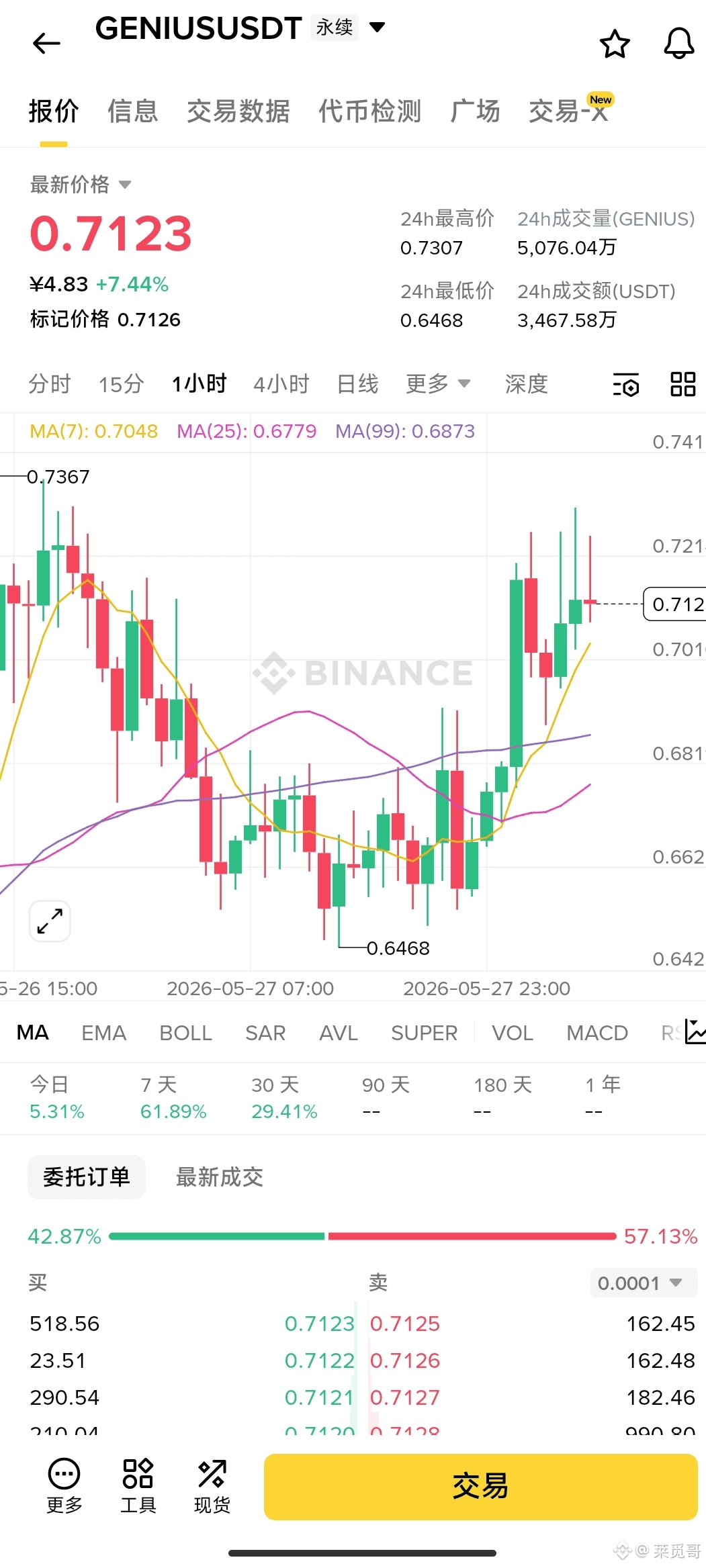
I recently spent some time reading the Genius Protocol whitepaper from start to finish, and the GeniusBridgeProtocol (GBP) really caught my attention. It's not just a simple bridge; it uses the LitProtocol as a global decentralized solver. Orchestrators execute logic through programmable key pairs (PKP), with all cross-chain routing and liquidity rebalancing running on deterministic JS code in a secure multi-party computation environment, completely avoiding the centralization risks of traditional solvers. @GeniusOfficial
GeniusTerminal serves as the frontend, turning all of this into a truly usable trading OS. The 'chain-invisible' experience emphasized repeatedly in the whitepaper is something I'm experiencing firsthand: MagicSpend treats multi-chain USDC as a single balance, allowing me to buy stuff across Solana, Base, and EVM chains with just a click, without worrying about addresses, signatures, or gas fees. Behind the scenes, GBP's liquidity vault and native DEX routing are all handled automatically. Previously, opening a perp required switching wallets, bridging assets, and waiting for confirmations; now everything is condensed into a single click, with speeds comparable to CEX, but with full self-custody.
The whitepaper also mentions that GBP supports any calldata execution, so in the future, unified perp markets and yield farming won't require hopping between third-party dApps, effectively solving the fragmentation issue in DeFi. @GeniusOfficial Recent iterations shared are also moving in this direction. $GENIUS As a native token, not only does it drive governance and fee reductions, but it’s also tied to the growth and incentives of the entire ecosystem. Holding it feels like directly participating in the construction of this 'on-chain final destination.'
After reading the whitepaper, I'm even more convinced that this project isn't just a short-term tool; it's aimed at reshaping the way ordinary people access on-chain finance. For those looking to enjoy multi-chain trading without the hassle, I strongly recommend checking it out.
#genius #bnb
159
·
--
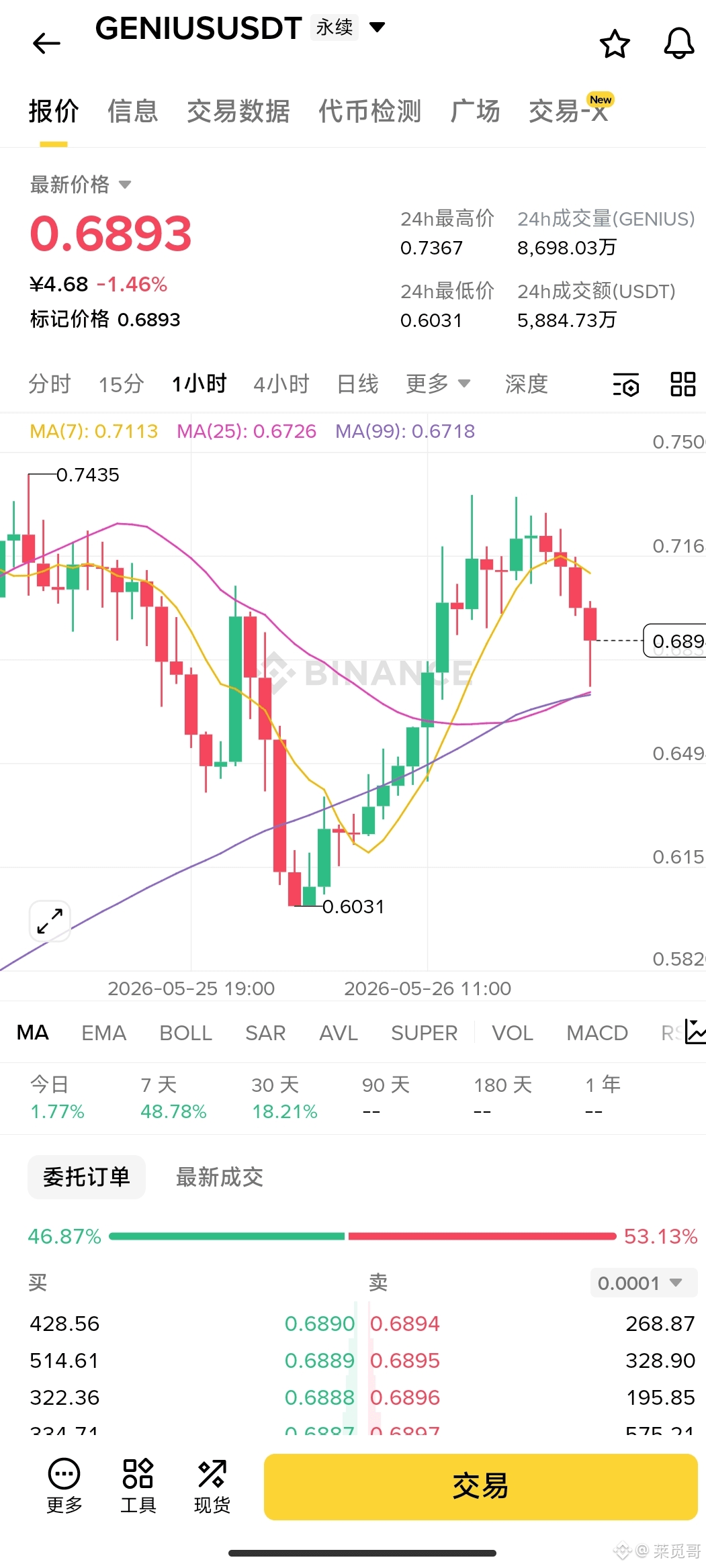
Genius Terminal really makes me feel like DeFi can be as user-friendly as any everyday tool. I used to jump between wallets all the time, but now I can manage spot, perpetuals, and cross-chain all in one place. The execution speed is lightning fast, and the experience is stable.
What stands out the most is how it truly puts users first, no complicated processes. The @GeniusOfficial team is always listening to the community and iterating on the product. $GENIUS is not just fuel for trading; it connects the entire ecosystem's incentives and governance—holding it feels like being part of the construction process.
For those efficiently trading on-chain, this is a solid choice.
#genius $BNB
118
·
--
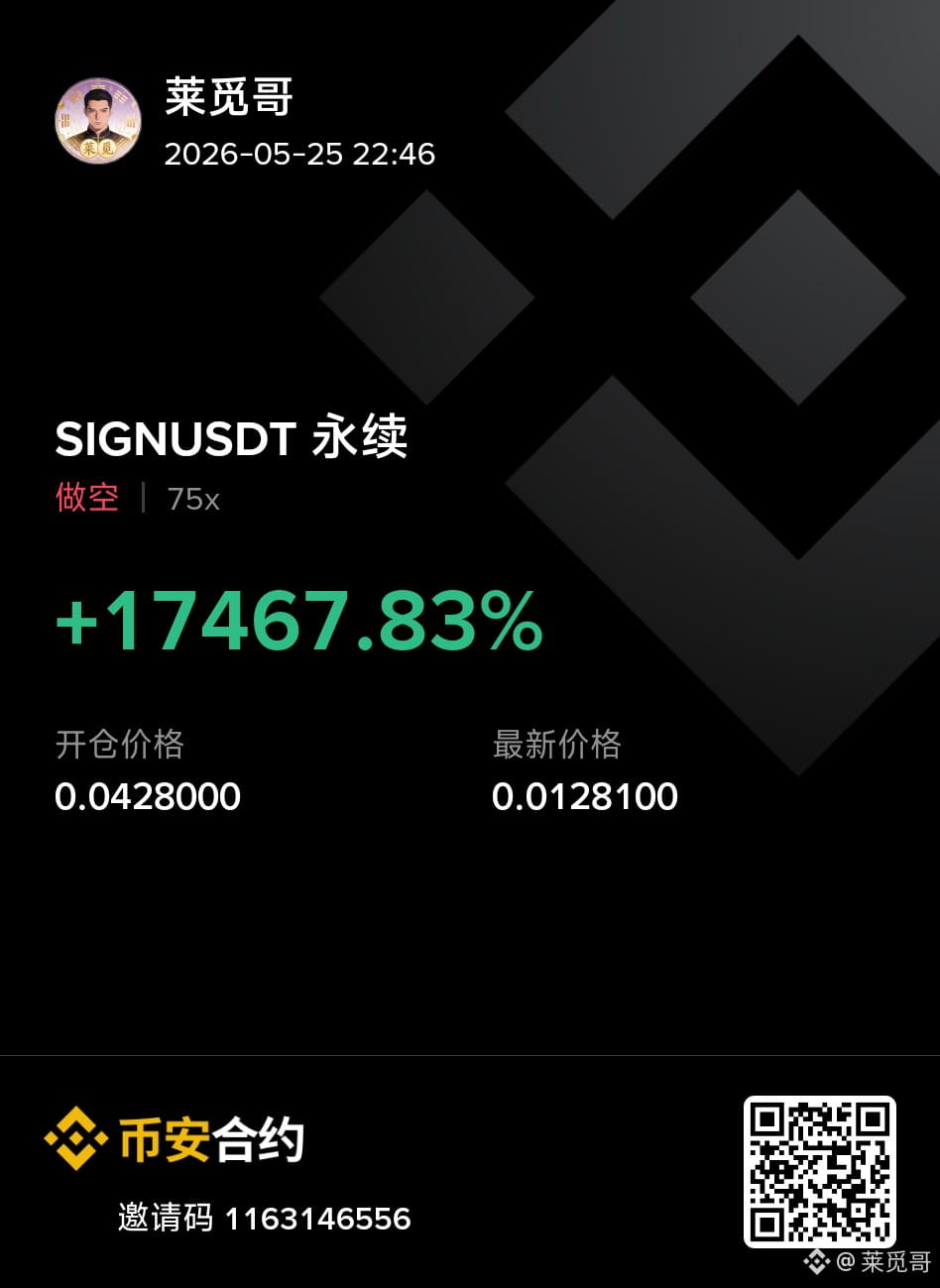
Hey fam, it's time to cash in, 175x for the first time!
Today, I wanna introduce you to @GeniusOfficial . It's made my on-chain trading significantly smoother. It combines spot trading, perpetual contracts, and cross-chain swaps all in one interface, supporting multiple chains like Solana and Base, so you won't have to keep switching wallets or pay those high gas fees.
One of the features I find most useful is the non-signature trading; it’s super straightforward to use, plus it has Ghost Orders for privacy on splitting large orders, making it tough for others to keep tabs on big trades. Recently, they’ve optimized the cross-chain speed, and the experience is getting closer to a CEX while still maintaining self-custody security.
$GENIUS serves as the native token, currently participating in governance and ecosystem incentives, so there's some solid potential there. If you're looking to play DeFi efficiently, you should definitely check it out.
#genius
3
346
·
--
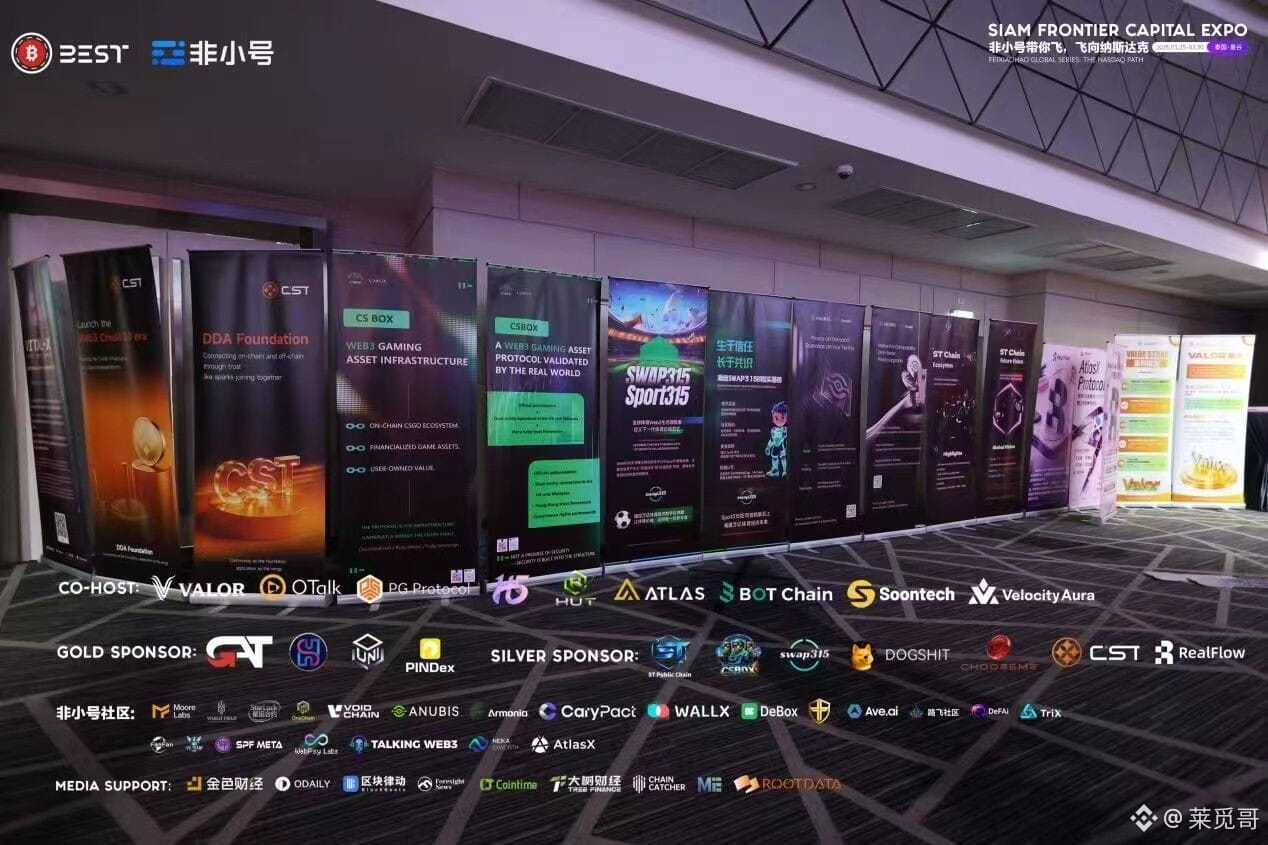
After playing with cryptocurrency for so many years, what kind of projects are worth following? To be honest, I've seen many that just shout slogans and make grand promises, and in the end, they generally don't go far. DDA and CST feel different to me during this period; their actions are frequent, but every step is solid—first, they put out 2 million U to let tech enthusiasts from around the world find flaws, then they took the stage at an international summit to showcase themselves, with technical advisors publicly clarifying the future blueprint, followed by a 3 million U real monetary incentive plan, with the pool exceeding 1 million U. After this series of actions, I am truly impressed. #DDA基金会 #CST
After playing with cryptocurrency for so many years, what kind of projects are worth following? To be honest, I've seen many that just shout slogans and make grand promises, and in the end, they generally don't go far. DDA and CST feel different to me during this period; their actions are frequent, but every step is solid—first, they put out 2 million U to let tech enthusiasts from around the world find flaws, then they took the stage at an international summit to showcase themselves, with technical advisors publicly clarifying the future blueprint, followed by a 3 million U real monetary incentive plan, with the pool exceeding 1 million U. After this series of actions, I am truly impressed. #DDA基金会 #CST
2
126
·
--
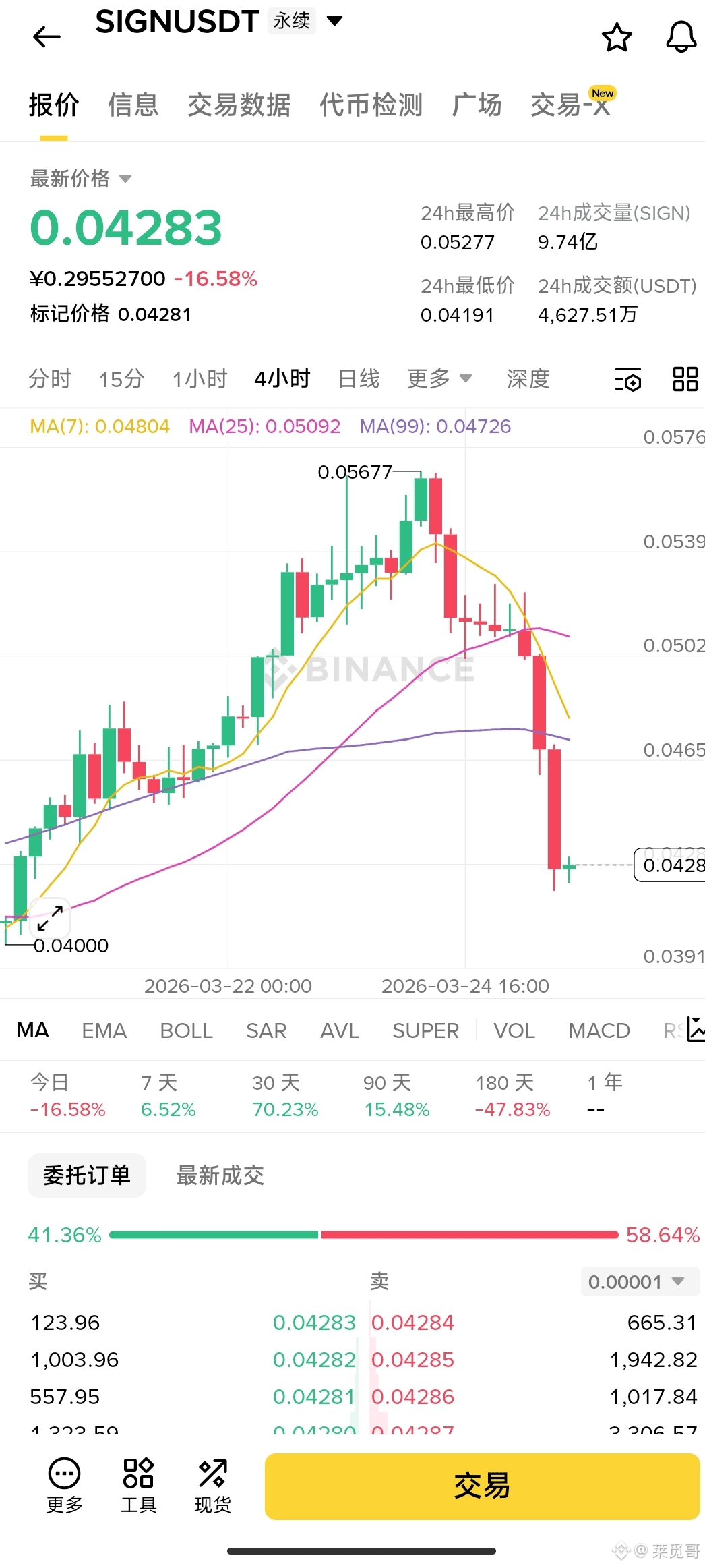
Families, does this trend indicate a plummet? Why is the market recovering, but it continues to decline?
From a macro perspective on capital accumulation: Why will enterprise-level B2B nodes become the ultimate liquidity black hole of $SIGN ? When analyzing infrastructure projects with significant commercial prospects, if you still monitor and calculate selling pressure from the perspective of retail investors, your research report is bound to be subpar. When we clarify that @SignOfficial is deeply involved in the underlying construction of RWA on-chain and cross-border supply chain finance, we must introduce a core macro variable that determines the future direction of the market: the passive lock-up mechanism of enterprise-level nodes.
In stark contrast to the logic of retail investors pursuing high-frequency trading to profit from price differences, when Fortune 500 companies, multinational credit institutions, or top asset management firms begin to deploy their high-frequency commercial rights confirmation, asset status synchronization, and ZK privacy verification on the Sign network, they have extremely strict, even zero-tolerance requirements for network security.
To ensure that their commercial logic is not maliciously altered, these giants have no choice but to personally operate their exclusive validation nodes. According to the underlying game theory of decentralized networks to prevent witch attacks, operating these high-privilege nodes that carry billions of funds must pledge massive amounts of $SIGN as "Security Bonds" in smart contracts. As long as this enterprise's multinational business continues to circulate, this enormous amount of tokens will be permanently isolated from circulation. This rigid lock-up, driven by the genuine business needs of B2B, is the liquidity black hole that large funds are truly constructing at the foundational level.
#Sign地缘政治基建
1
1
47
·
--
Article
Breaking the Game of 'Trade Secrets' and 'On-Chain Transparency': Analyzing How the ZK Verifier of Sign Protocol Achieves Dimensionality Reduction in Supply Chain FinanceIn the current context of accelerating global macroeconomic restructuring, the supply chain systems of large multinational enterprises are undergoing an unprecedented digital migration. Supply Chain Finance, a massive sector worth trillions of dollars, has long been choked by 'information silos' and 'trust erosion.' Small and medium-sized suppliers often face severe liquidity crises because they cannot prove the authenticity of their accounts receivable to core enterprises or multinational banks.
In the past few years, countless blockchain projects have attempted to enter this sector, trying to solve the trust issues in the supply chain with 'distributed ledgers.' But the reality is extremely harsh: the vast majority of Fortune 500 companies fundamentally refuse to put core business data on the blockchain. The reason is incredibly simple and cold-blooded: trade secrets. In the highly competitive global trade, a multinational manufacturing giant's supplier list, procurement price floor, and capital flow cycle are its highest-level trade secrets for survival. Exposing these underlying business data nakedly on public ledgers for global competitors to scrutinize, in pursuit of so-called 'decentralized trust,' is tantamount to commercial suicide.
Breaking the Game of 'Trade Secrets' and 'On-Chain Transparency': Analyzing How the ZK Verifier of Sign Protocol Achieves Dimensionality Reduction in Supply Chain Finance
In the current context of accelerating global macroeconomic restructuring, the supply chain systems of large multinational enterprises are undergoing an unprecedented digital migration. Supply Chain Finance, a massive sector worth trillions of dollars, has long been choked by 'information silos' and 'trust erosion.' Small and medium-sized suppliers often face severe liquidity crises because they cannot prove the authenticity of their accounts receivable to core enterprises or multinational banks.
In the past few years, countless blockchain projects have attempted to enter this sector, trying to solve the trust issues in the supply chain with 'distributed ledgers.' But the reality is extremely harsh: the vast majority of Fortune 500 companies fundamentally refuse to put core business data on the blockchain. The reason is incredibly simple and cold-blooded: trade secrets. In the highly competitive global trade, a multinational manufacturing giant's supplier list, procurement price floor, and capital flow cycle are its highest-level trade secrets for survival. Exposing these underlying business data nakedly on public ledgers for global competitors to scrutinize, in pursuit of so-called 'decentralized trust,' is tantamount to commercial suicide.
In the past few years, countless blockchain projects have attempted to enter this sector, trying to solve the trust issues in the supply chain with 'distributed ledgers.' But the reality is extremely harsh: the vast majority of Fortune 500 companies fundamentally refuse to put core business data on the blockchain. The reason is incredibly simple and cold-blooded: trade secrets. In the highly competitive global trade, a multinational manufacturing giant's supplier list, procurement price floor, and capital flow cycle are its highest-level trade secrets for survival. Exposing these underlying business data nakedly on public ledgers for global competitors to scrutinize, in pursuit of so-called 'decentralized trust,' is tantamount to commercial suicide.
4
4
62
·
--
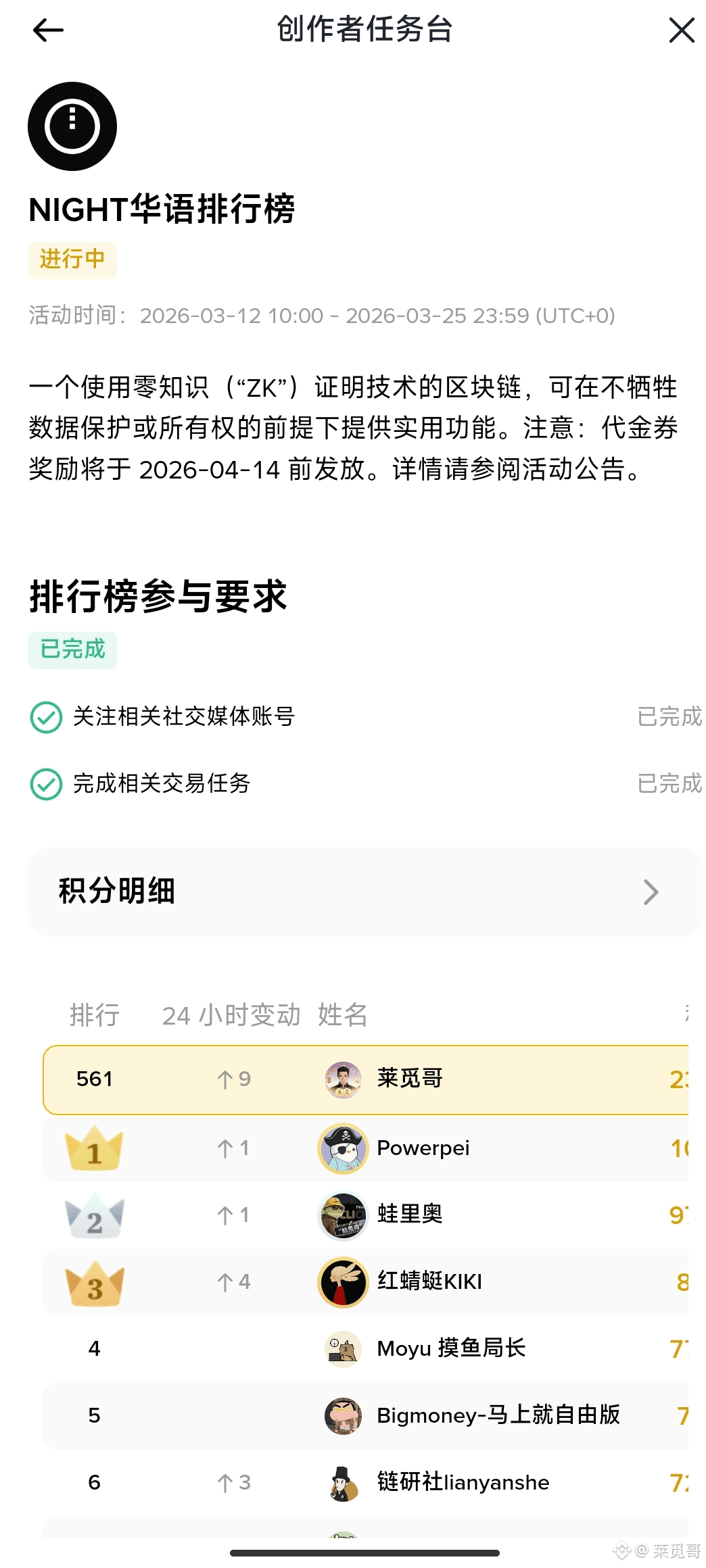
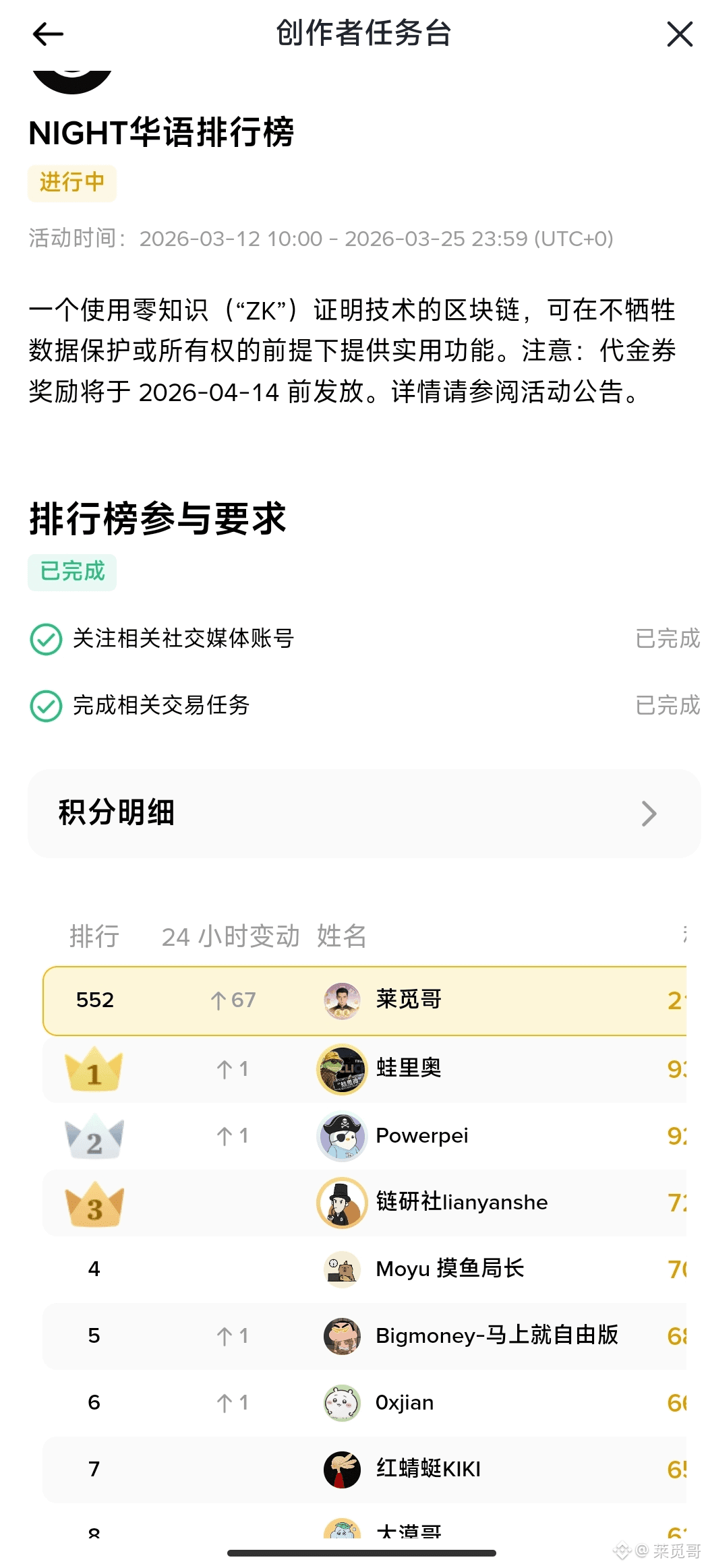
Family, I am currently ranked 561st in NIGHT. If this continues for two more weeks, all my efforts will be in vain. This is the final sprint, and I hope to make it into the top 500.
In discussing the global compliance process of Web3, there is a particularly thorny legal and engineering conflict that has left countless public chain teams at a loss: how to reconcile the immutable blockchain ledger with the 'right to be forgotten' as explicitly stated in the EU GDPR (General Data Protection Regulation)? In traditional privacy chain solutions, project parties typically encrypt and store users' KYC identity information or transaction metadata on-chain. However, this is not feasible under stringent compliance audits. Once EU citizens request to exercise their right to data deletion, due to the immutability of blockchain blocks, even if encrypted, the system cannot physically erase it from the historical distributed nodes. This results in a high risk of compliance standstill for many financial DApps targeting the European market.
The white paper of @MidnightNetwork provides an extremely clear and fundamentally solution-oriented architectural proposal: Local Data Storage and Selective Disclosure. Midnight deeply understands that the only way to solve the problem of non-deletable on-chain data is to absolutely prevent sensitive PII (Personally Identifiable Information) from going on-chain. In Midnight's underlying design, users' real identity data and transaction credentials are always securely retained on the user's own terminal device or in a trusted local environment.
When it is necessary to prove identity to a compliance protocol, the local device generates an extremely lightweight mathematical proof for on-chain verification through zero-knowledge proof. Once users wish to be 'forgotten' in the future, they simply need to clear the data on their local device. Because Midnight's mainnet has only ever stored mathematical proofs that do not contain any user characteristic entropy, it perfectly avoids the legal deadlock associated with residual on-chain data.
This design directly smooths the conflict between the immutability of blockchain and real-world compliance law from the underlying architecture, demonstrating Midnight's high level of enterprise engineering maturity. For developers and institutions eager to enter the global compliance market, the completely isolated compliance privacy paradigm provided by $NIGHT is undoubtedly the safest and most feasible underlying infrastructure solution in the current industry. #night
3
463
·
--
Article
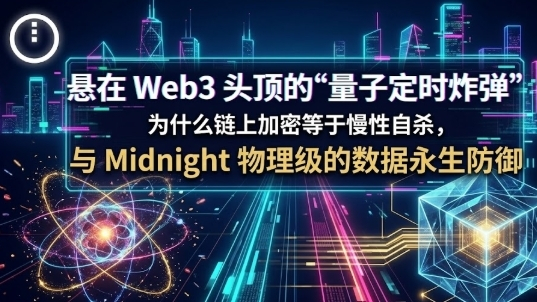
The 'Quantum Time Bomb' Hanging Over Web3: Why On-chain Encryption Equals Chronic Suicide, and the Midnight Physical-Level Data Immortality DefenseWhen evaluating any underlying technology that will integrate into the core lifecycle of enterprises, we must not only look at its performance tomorrow but also project its safety margin ten or fifteen years down the line. As we examine the current Web3 privacy infrastructure from this cyclical perspective, a system-level risk that is highly regarded in top cryptographic research circles yet selectively ignored by most public chain developers comes to light. In the field of security engineering, we refer to this as the 'Harvest Now, Decrypt Later' (HNDL) threat.#night
The 'Quantum Time Bomb' Hanging Over Web3: Why On-chain Encryption Equals Chronic Suicide, and the Midnight Physical-Level Data Immortality Defense
When evaluating any underlying technology that will integrate into the core lifecycle of enterprises, we must not only look at its performance tomorrow but also project its safety margin ten or fifteen years down the line. As we examine the current Web3 privacy infrastructure from this cyclical perspective, a system-level risk that is highly regarded in top cryptographic research circles yet selectively ignored by most public chain developers comes to light. In the field of security engineering, we refer to this as the 'Harvest Now, Decrypt Later' (HNDL) threat.#night
2
2
74
·
--
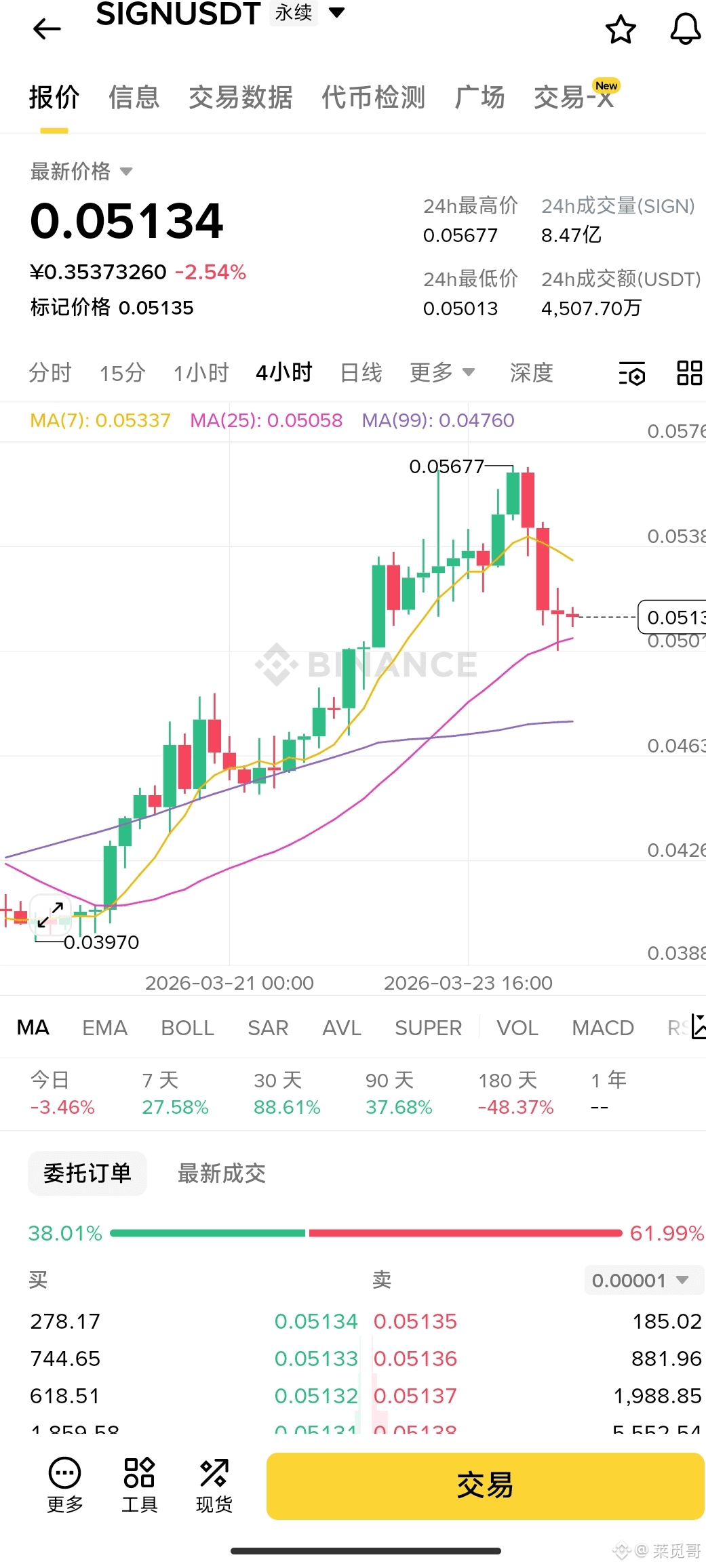
Family members are gradually moving away from @SignOfficial .
Today, let's talk about the digital infrastructure upgrade in Pakistan, which validates the 'anti-fragility' of decentralized proof. Currently, SIGN has begun to show a pullback after a short-term surge, hovering around 0.051, breaking out of the short-term K-line fluctuations, and examining @SignOfficial 's strategic implementation in the Pakistan Ministry of Digital Communication. In emerging market countries, traditional centralized databases and paper certification systems often face the pain points of low verification efficiency and trust erosion.
The introduction of Sign's full-chain proof network means that the digital identities, enterprise qualifications, and compliance records in these regions can all be packaged as verifiable credentials (VCs) on the blockchain. This 'anti-fragility' built using cryptography ensures that critical credit data no longer relies on a single physical server but is maintained by globally distributed nodes. This is not just a technological upgrade but a crucial step for emerging market countries to integrate into the global digital trust network, and the maintenance of this consensus will continue to translate into rigid support for the underlying value of the $SIGN token.
#Sign地缘政治基建 @SignOfficial $SIGN
1
75
·
--
Article
Abandoning Retail Perspective Anxiety: Deriving the Restructuring Logic of Enterprise-Level and Sovereign Node Access on SIGN LiquidityWhen family members evaluate any protocol with macro-infrastructure attributes, if they limit their focus solely to early circulating volume and secondary market turnover rates, a serious valuation misalignment is bound to occur. For networks like @SignOfficial that aim to deliver underlying trust architecture to large global institutions, their token economics model must introduce the core factor of 'enterprise-level passive lockup'. In light of recent strategic collaborations in the Middle East and elsewhere, it can be clearly deduced from a purely token economics and game theory perspective how institutional capital will invisibly 'siphon' liquidity from the secondary market.
Abandoning Retail Perspective Anxiety: Deriving the Restructuring Logic of Enterprise-Level and Sovereign Node Access on SIGN Liquidity
When family members evaluate any protocol with macro-infrastructure attributes, if they limit their focus solely to early circulating volume and secondary market turnover rates, a serious valuation misalignment is bound to occur. For networks like @SignOfficial that aim to deliver underlying trust architecture to large global institutions, their token economics model must introduce the core factor of 'enterprise-level passive lockup'. In light of recent strategic collaborations in the Middle East and elsewhere, it can be clearly deduced from a purely token economics and game theory perspective how institutional capital will invisibly 'siphon' liquidity from the secondary market.
2
54
·
--
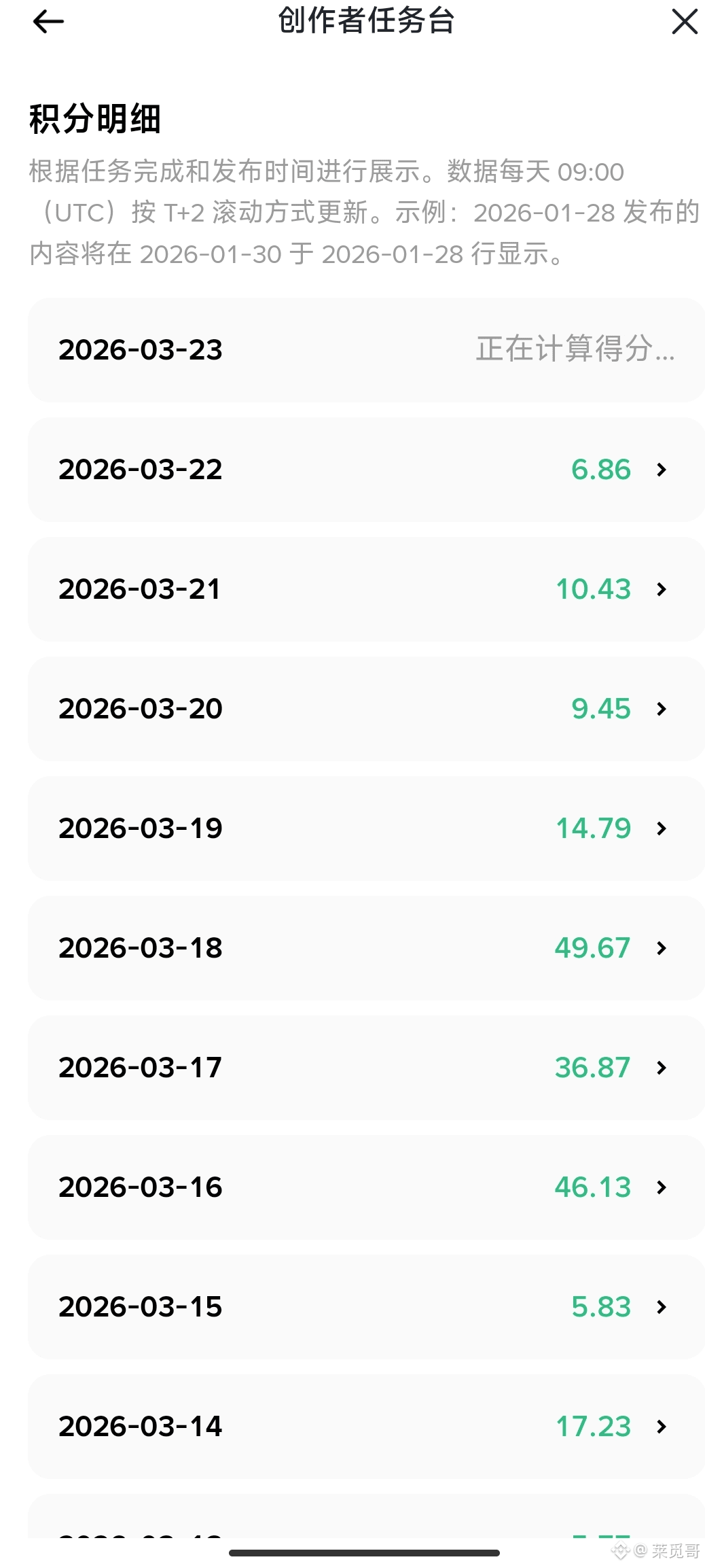
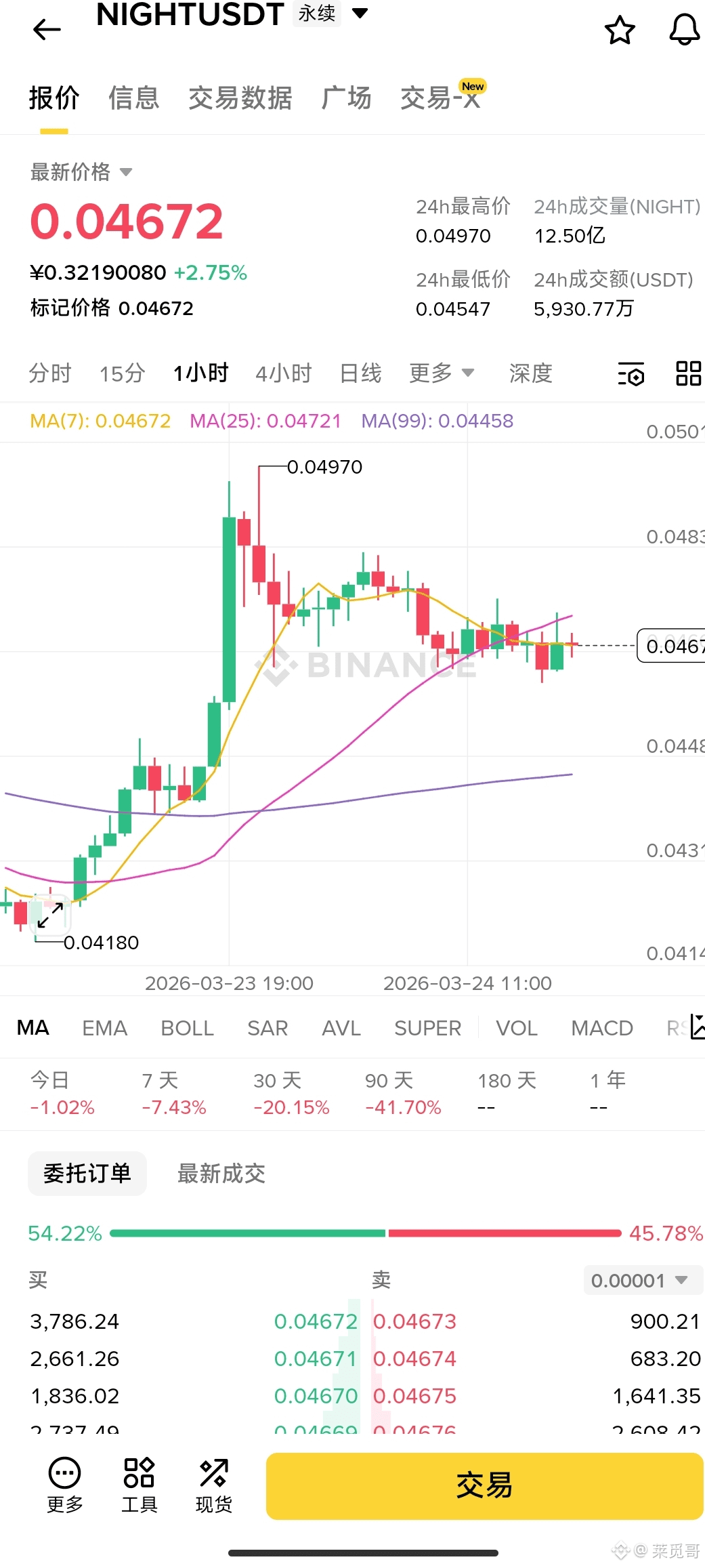
Insist on completing a transaction every day, but every single one incurs a loss; write an article every day, but none scores any points. How do we break this curse, my friends?
Today, I continue to talk about a highway with 100 lanes, but only one toll collector? Many ZK L2 expansion plans are now being promoted with loud slogans, claiming TPS that crushes Ethereum. However, if you understand a bit of the underlying architecture, you will find that they are a complete "pseudo-decentralized" monstrosity.
All of the user's transactions must be sent to a "centralized sequencer" controlled by the project team to generate proofs. Once this server goes down, is hacked, or faces regulatory pressure and is unplugged, the entire chain with hundreds of billions of funds is instantly frozen. This is not called Web3; this is a test environment of Alipay.
@MidnightNetwork starkly exposes this lie. It abandons the fragile centralized sequencer and pioneered the "edge proof network." Your mobile phone and computer calculate the ZK proof locally, while decentralized nodes are only responsible for verification. There is no single point server that can go down, and no institution can examine your transaction generation. Returning computational power to edge terminals, replacing the privileges of centralized servers with pure mathematics, is precisely why $NIGHT can become the core lifeline of the next generation of never-down financial infrastructure. #night
1
95
·
--
Article
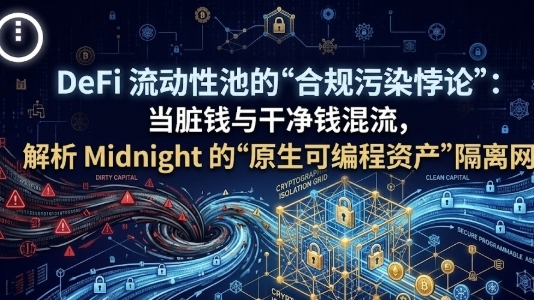
The "Compliance Contagion Paradox" of DeFi Liquidity Pools: When Dirty Money and Clean Money Flow Together, Analyzing Midnight's "Native Programmable Asset" Isolation NetworkIf you were to ask the compliance executives on Wall Street: "Why have you not dared to inject hundreds of billions of dollars in liquidity on a large scale into the existing DEX (decentralized exchange) liquidity pools?"
The answer they provide is definitely not about "smart contract vulnerabilities," but rather a term that sends shivers down the spine of all traditional financial institutions: Compliance Contagion. To help you understand this extremely deadly financial poison on a transparent public chain, let's conduct a highly destructive thought experiment. Suppose you are an extremely law-abiding quantitative fund, and you provide $10 million in USDC/ETH liquidity (LP) on a mainstream DEX. Your funds are absolutely clean.
The "Compliance Contagion Paradox" of DeFi Liquidity Pools: When Dirty Money and Clean Money Flow Together, Analyzing Midnight's "Native Programmable Asset" Isolation Network
If you were to ask the compliance executives on Wall Street: "Why have you not dared to inject hundreds of billions of dollars in liquidity on a large scale into the existing DEX (decentralized exchange) liquidity pools?"
The answer they provide is definitely not about "smart contract vulnerabilities," but rather a term that sends shivers down the spine of all traditional financial institutions: Compliance Contagion. To help you understand this extremely deadly financial poison on a transparent public chain, let's conduct a highly destructive thought experiment. Suppose you are an extremely law-abiding quantitative fund, and you provide $10 million in USDC/ETH liquidity (LP) on a mainstream DEX. Your funds are absolutely clean.
The answer they provide is definitely not about "smart contract vulnerabilities," but rather a term that sends shivers down the spine of all traditional financial institutions: Compliance Contagion. To help you understand this extremely deadly financial poison on a transparent public chain, let's conduct a highly destructive thought experiment. Suppose you are an extremely law-abiding quantitative fund, and you provide $10 million in USDC/ETH liquidity (LP) on a mainstream DEX. Your funds are absolutely clean.
1
168
·
--
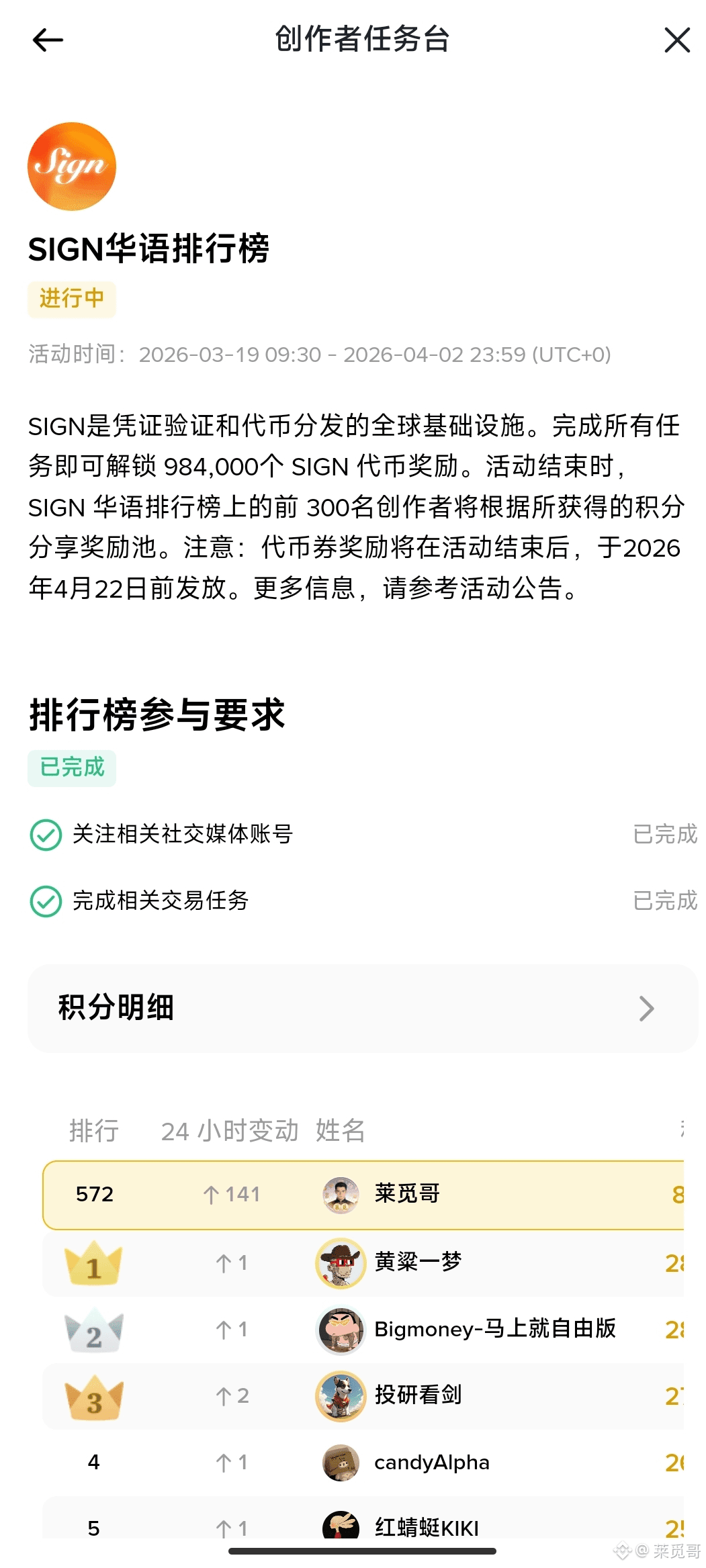
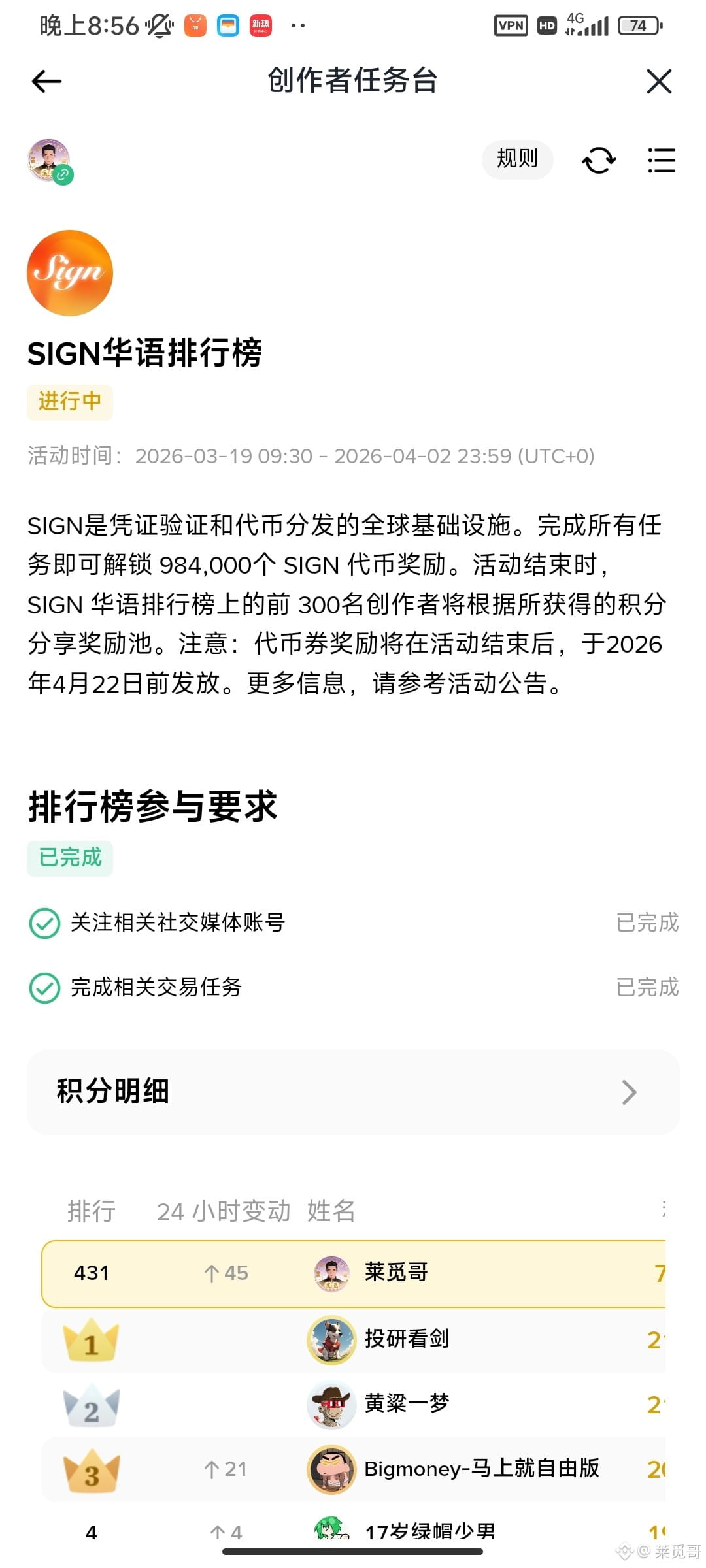
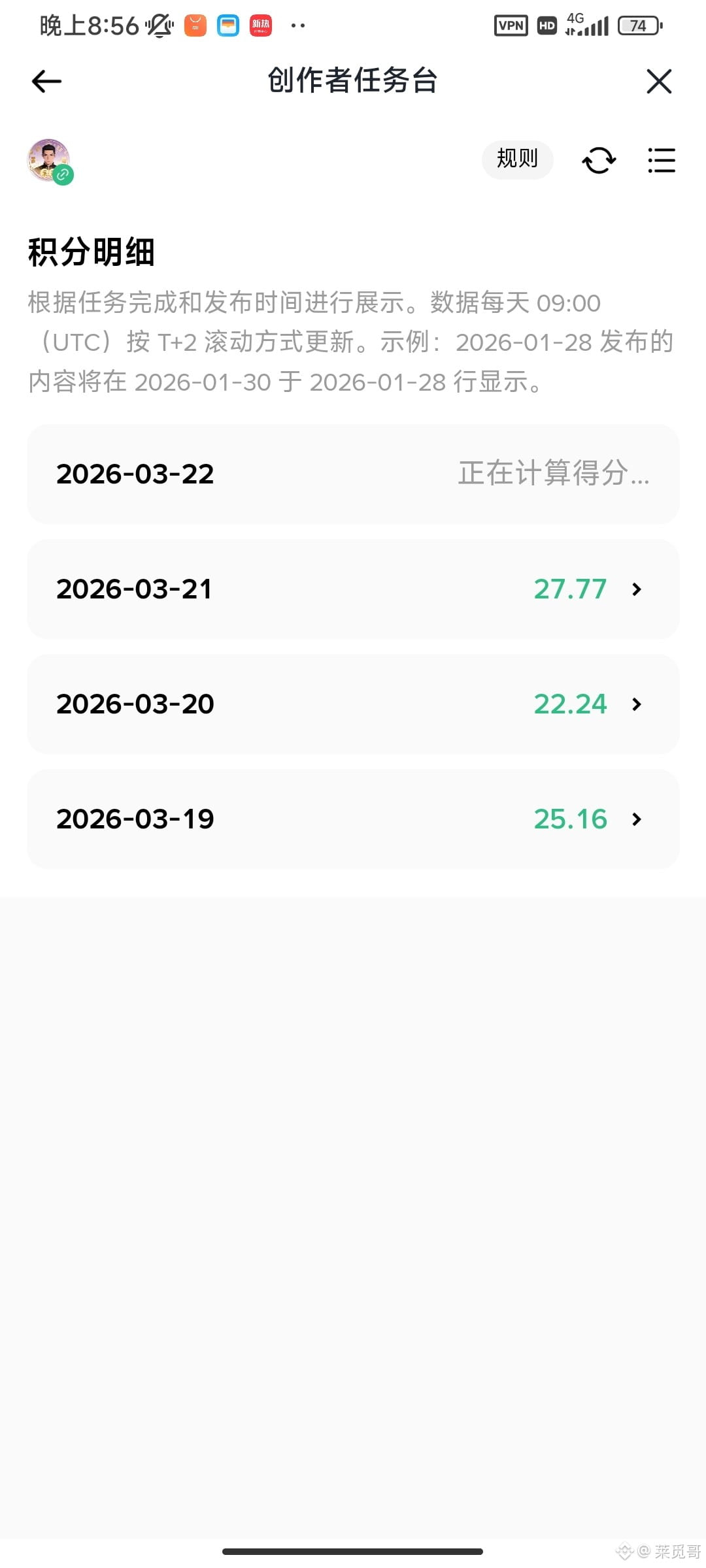
Family, the SIGN project points are very stable but just can't get into the top 300, it's really annoying. Always outside the top 300.
Why are Middle Eastern tycoons interested in Sign's “ZK Privacy Prover”? Today, looking at the market liquidity fluctuating sideways, but the underlying technical interaction data of @SignOfficial remains strong. In the current geopolitical landscape, Middle Eastern oil capital is more obsessed than anyone else with two things: decentralized settlement and absolute technologically neutral privacy. Many people think that blockchain means everything is open and transparent; this naive understanding is completely unsuitable for national-level strategic assets.
Sign's full-chain proof network integrates ZK (Zero-Knowledge) verifiers, delivering a dimensionality reduction strike: the core confidential sovereign data (Schema Data) stays on local servers in the Middle East, and only a cryptographic ZK proof is generated on-chain—“I prove my crude oil is clean and compliant.” Verification nodes can validate and trigger settlements without looking at the ledger.
This “digital firewall” that can bypass centralized bottlenecks while protecting sovereign privacy is the digital defense that trillions of non-US dollar oil dreams long for. And the $SIGN token is the only trust deposit that keeps this privacy proof network operational. Hold tight to the spot, don't get easily washed out before dawn.
#Sign地缘政治基建
1
2
58
·
--

Article
Abandoning Dependence on US Dollar Settlement: Dissecting How SignOfficial Reconstructs the Trust Underpinning Oil Trade with Schema?In the context of global macro hedging, Saudi Arabia's 'Vision 2030' and the UAE's digital economy experiment are essentially seeking a form of 'digital sovereignty' independent of the Western centralized clearing system. Especially in the cross-border trade of strategic resources like crude oil, the traditional SWIFT and US dollar settlement systems, while efficient, come with the risk of long-arm jurisdiction, making non-American capital feel like a thorn in the throat.
Yesterday, while reviewing the fluctuations in the crude oil market, I was pondering a highly hardcore technical question: If the oil giants in the Middle East want to establish a non-dollar settlement corridor, what underlying technology do they truly need? It's certainly not just about accepting Bitcoin or stablecoin payments; that only addresses value transfer and does not resolve complex business trust and compliance auditing. Opening the SDK documentation of @SignOfficial , I saw a technological mechanism capable of dimensionally attacking the traditional letter of credit system—a programmable schema (proof model) under the S.I.G.N. architecture.
Abandoning Dependence on US Dollar Settlement: Dissecting How SignOfficial Reconstructs the Trust Underpinning Oil Trade with Schema?
In the context of global macro hedging, Saudi Arabia's 'Vision 2030' and the UAE's digital economy experiment are essentially seeking a form of 'digital sovereignty' independent of the Western centralized clearing system. Especially in the cross-border trade of strategic resources like crude oil, the traditional SWIFT and US dollar settlement systems, while efficient, come with the risk of long-arm jurisdiction, making non-American capital feel like a thorn in the throat.
Yesterday, while reviewing the fluctuations in the crude oil market, I was pondering a highly hardcore technical question: If the oil giants in the Middle East want to establish a non-dollar settlement corridor, what underlying technology do they truly need? It's certainly not just about accepting Bitcoin or stablecoin payments; that only addresses value transfer and does not resolve complex business trust and compliance auditing. Opening the SDK documentation of @SignOfficial , I saw a technological mechanism capable of dimensionally attacking the traditional letter of credit system—a programmable schema (proof model) under the S.I.G.N. architecture.
Yesterday, while reviewing the fluctuations in the crude oil market, I was pondering a highly hardcore technical question: If the oil giants in the Middle East want to establish a non-dollar settlement corridor, what underlying technology do they truly need? It's certainly not just about accepting Bitcoin or stablecoin payments; that only addresses value transfer and does not resolve complex business trust and compliance auditing. Opening the SDK documentation of @SignOfficial , I saw a technological mechanism capable of dimensionally attacking the traditional letter of credit system—a programmable schema (proof model) under the S.I.G.N. architecture.
2
50
·
--
Brothers, what's going on? A huge bullish candlestick has caused huge losses.
Regardless, I still need to write what needs to be written. Is the leak of the Viewing Key industrial espionage? Midnight uses MPC to cage the power of God. We are all talking about "selective disclosure" and the compliance narrative of showing data to regulators using the viewing key. But if I were to present this scheme to the CTO of a Swiss private bank today, he would definitely think I’m crazy. Because if the Viewing Key is a complete whole, as soon as a hacker breaks into the corporate server and steals the key, all the company's secrets are exposed on the dark web. Handing over the "power of God" to any single point of failure is an engineering disaster.
The fundamental barrier to institutional large funds entering the market is not privacy, but the "single point risk of the God who holds the key." @MidnightNetwork has proposed a hardcore redemptive solution using MPC (multi-party computation) to manage the keys. It completely destroys the "complete God key," shattering the Viewing Key into several shards, which are jointly held by the enterprise, regulators, and an independent third party. Only by reaching cryptographic consensus can we collaborate to perform decryption computations. It is both compliant and reasonable, while firmly holding the commercial trump card. Recognize $NIGHT , this is the highest level of defense against human greed and vulnerability at the underlying architecture level. #night
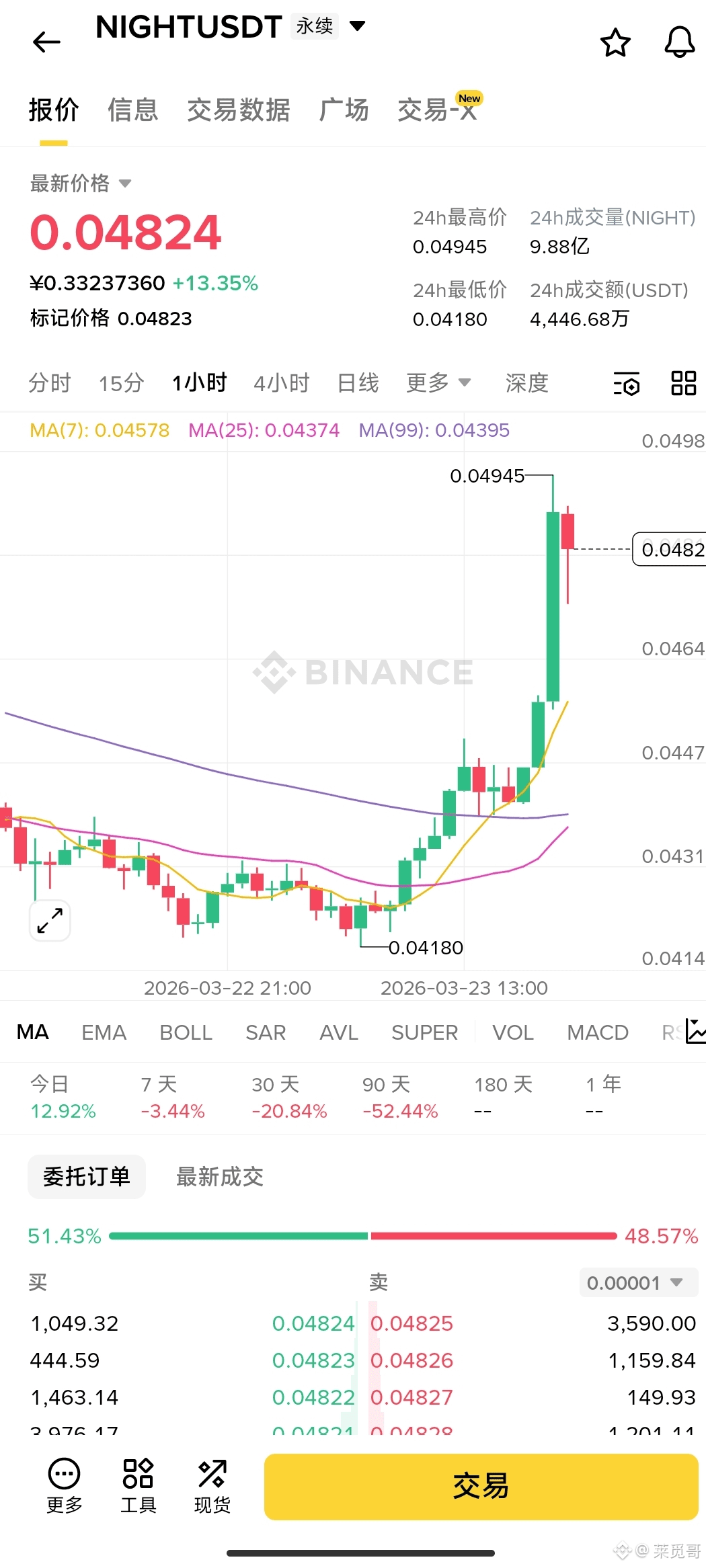
3
134
·
--
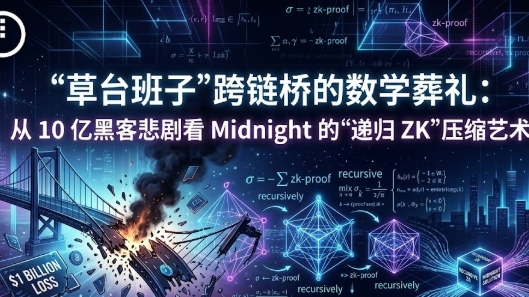
Article
The Mathematical Funeral of the 'Grass Stage' Cross-Chain Bridge: The 'Recursive ZK' Compression Art of Midnight from the Tragedy of 1 Billion HackersAs a bottom-level trader who has been wandering between the mempool of various public chains to conduct cross-chain arbitrage of privacy assets for years, I have become utterly desperate about the current cross-chain bridge ecosystem. Every time I need to move a shielded asset worth millions from one chain to another, I undergo a deep-seated cyber panic. Why? Because if you are a hardcore geek who understands system architecture, you will find that 99% of the cross-chain bridges on the market, whether it’s Wormhole, Nomad, or various so-called optimistic bridges, are essentially built on an air castle called the 'grass stage trust model.'
The Mathematical Funeral of the 'Grass Stage' Cross-Chain Bridge: The 'Recursive ZK' Compression Art of Midnight from the Tragedy of 1 Billion Hackers
As a bottom-level trader who has been wandering between the mempool of various public chains to conduct cross-chain arbitrage of privacy assets for years, I have become utterly desperate about the current cross-chain bridge ecosystem. Every time I need to move a shielded asset worth millions from one chain to another, I undergo a deep-seated cyber panic. Why? Because if you are a hardcore geek who understands system architecture, you will find that 99% of the cross-chain bridges on the market, whether it’s Wormhole, Nomad, or various so-called optimistic bridges, are essentially built on an air castle called the 'grass stage trust model.'
345
·
--
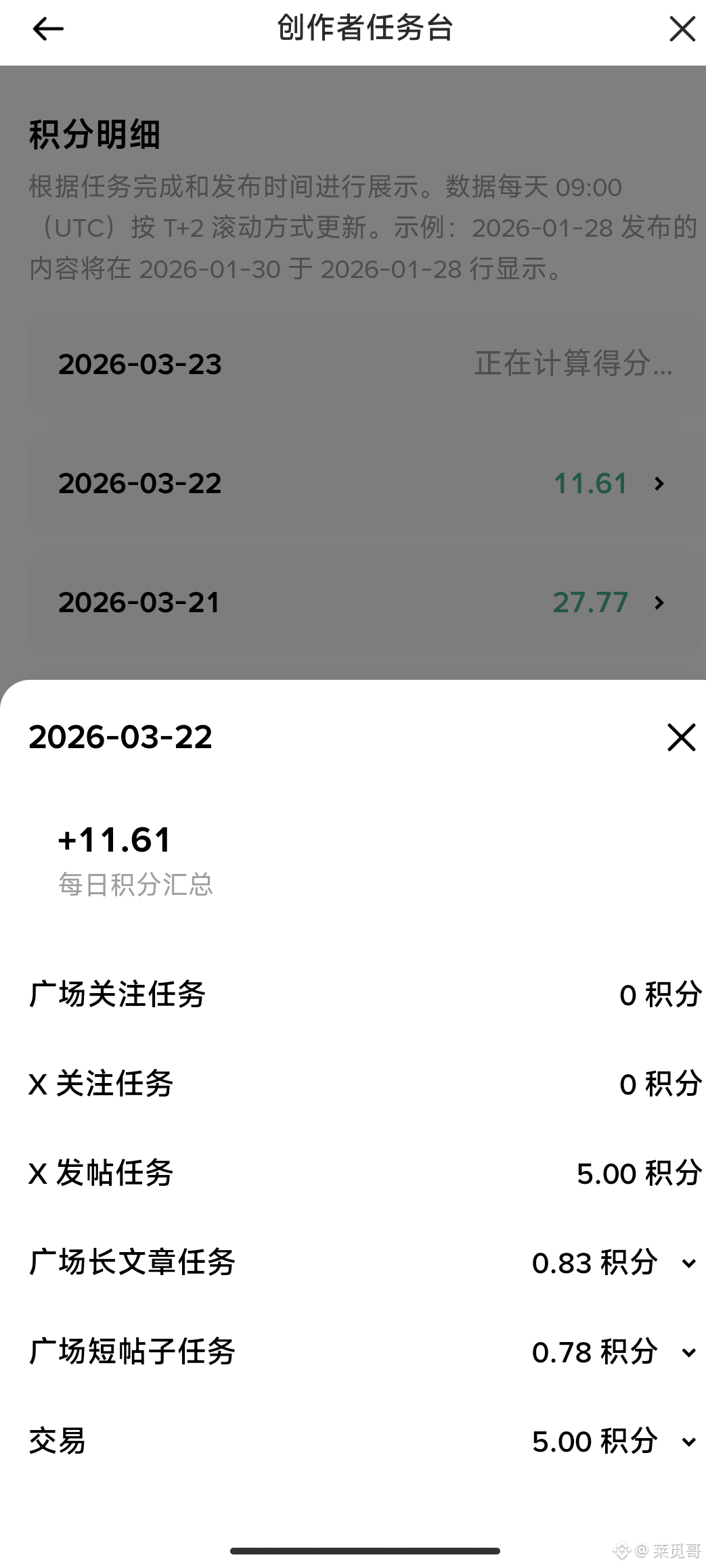
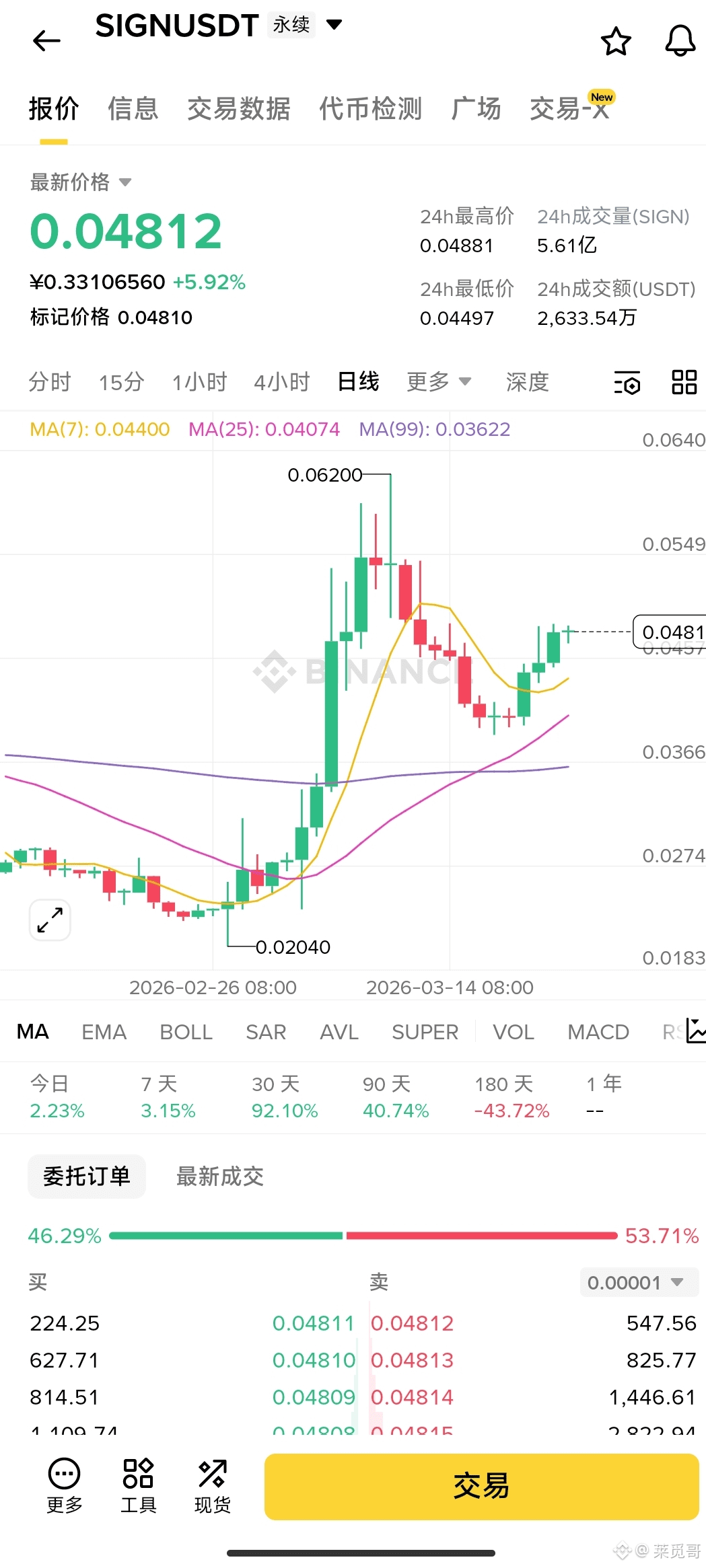
Recently, the scores have been a bit low, and there's no way to continue the review.
Putting aside emotions, let's break down the "liquidity black hole" caused by national-level capital scheduling. The liquidity on the market today is relatively poor, with many targets experiencing a downward trend, but if you track the underlying activity of @SignOfficial , you will find it remains extremely resilient. This is due to the irreplaceability of its business model.
As more and more B-end institutions that hold vast resources, even national-level sovereign funds, begin to use TokenTable as their default "on-chain asset scheduling engine," an extremely terrifying logical closed loop is formed: every step of locking, releasing, and the accompanying compliance proof verification of massive assets consumes the network resources of the underlying system. And all this "capital flow wear and tear" will ultimately translate into a rigid consumption and staking demand for the $SIGN token.
Retail investors' buying and selling are just the surface waves of the ocean, while sovereign-level funds utilizing infrastructure for asset allocation are the true deep-sea black holes draining liquidity. Do not easily give up strategic chips that can capture national-level cash flow at the bottom.
#Sign地缘政治基建
1
54
Log in to explore more content
Join global crypto users on Binance Square
⚡️ Get latest and useful information about crypto.
💬 Trusted by the world’s largest crypto exchange.
👍 Discover real insights from verified creators.
Email / Phone number
Trending Topics
WhoWillSucceedJensenHuangatNvidia?
75,531 views
1,015 Discussing
Nvidia Says No CEO Talks Underway as "Stand With Jensen" Petition Tops 77,900 Signatures
Binance News
·26 Likes
·32.7k views
WhatWillDriveCryptoandStocks’NextRebound?
421,091 views
2,946 Discussing
BitcoinActiveSupplyInProfitDropsBelow45%
17,593 views
273 Discussing