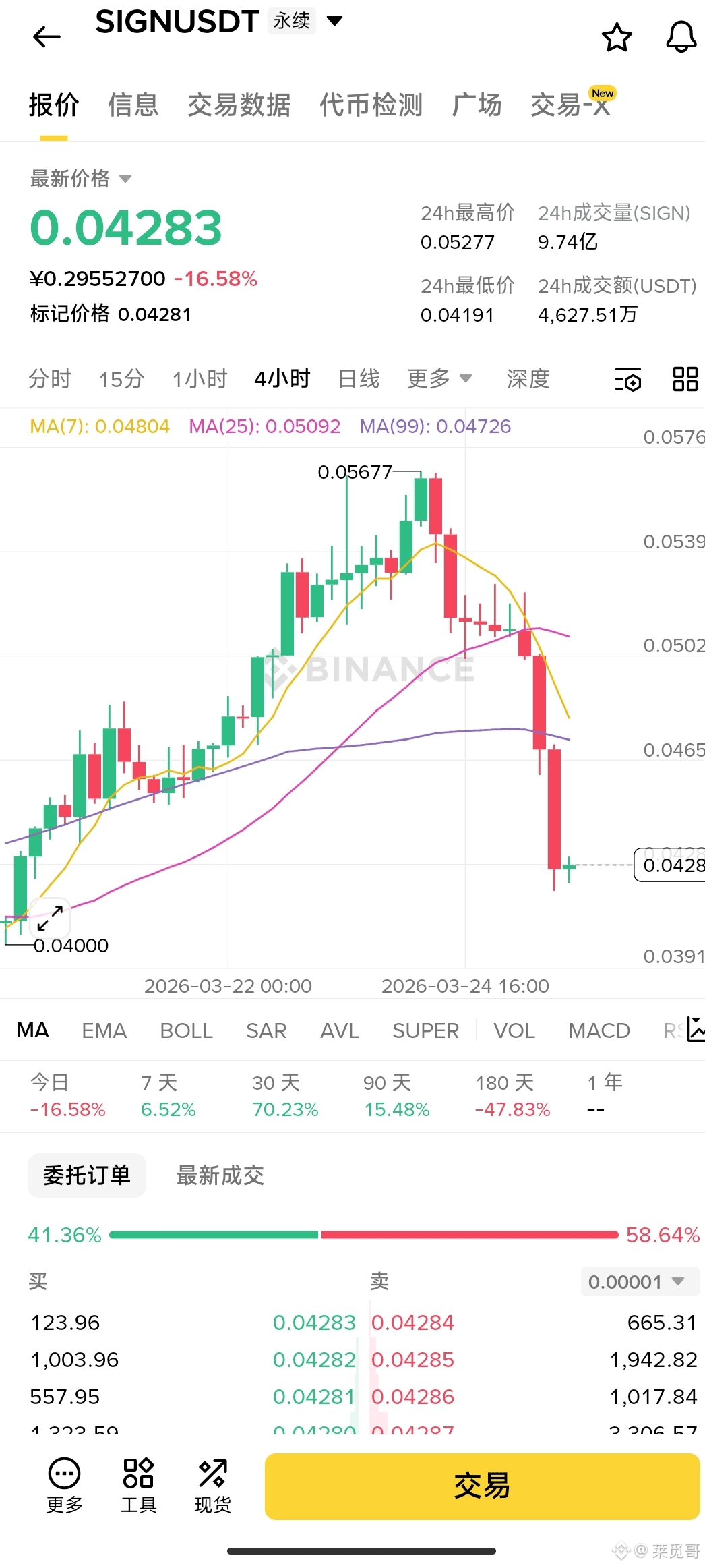
Families, does this trend indicate a plummet? Why is the market recovering, but it continues to decline?
From a macro perspective on capital accumulation: Why will enterprise-level B2B nodes become the ultimate liquidity black hole of $SIGN ? When analyzing infrastructure projects with significant commercial prospects, if you still monitor and calculate selling pressure from the perspective of retail investors, your research report is bound to be subpar. When we clarify that @SignOfficial is deeply involved in the underlying construction of RWA on-chain and cross-border supply chain finance, we must introduce a core macro variable that determines the future direction of the market: the passive lock-up mechanism of enterprise-level nodes.
In stark contrast to the logic of retail investors pursuing high-frequency trading to profit from price differences, when Fortune 500 companies, multinational credit institutions, or top asset management firms begin to deploy their high-frequency commercial rights confirmation, asset status synchronization, and ZK privacy verification on the Sign network, they have extremely strict, even zero-tolerance requirements for network security.
To ensure that their commercial logic is not maliciously altered, these giants have no choice but to personally operate their exclusive validation nodes. According to the underlying game theory of decentralized networks to prevent witch attacks, operating these high-privilege nodes that carry billions of funds must pledge massive amounts of $SIGN as "Security Bonds" in smart contracts. As long as this enterprise's multinational business continues to circulate, this enormous amount of tokens will be permanently isolated from circulation. This rigid lock-up, driven by the genuine business needs of B2B, is the liquidity black hole that large funds are truly constructing at the foundational level.
#Sign地缘政治基建