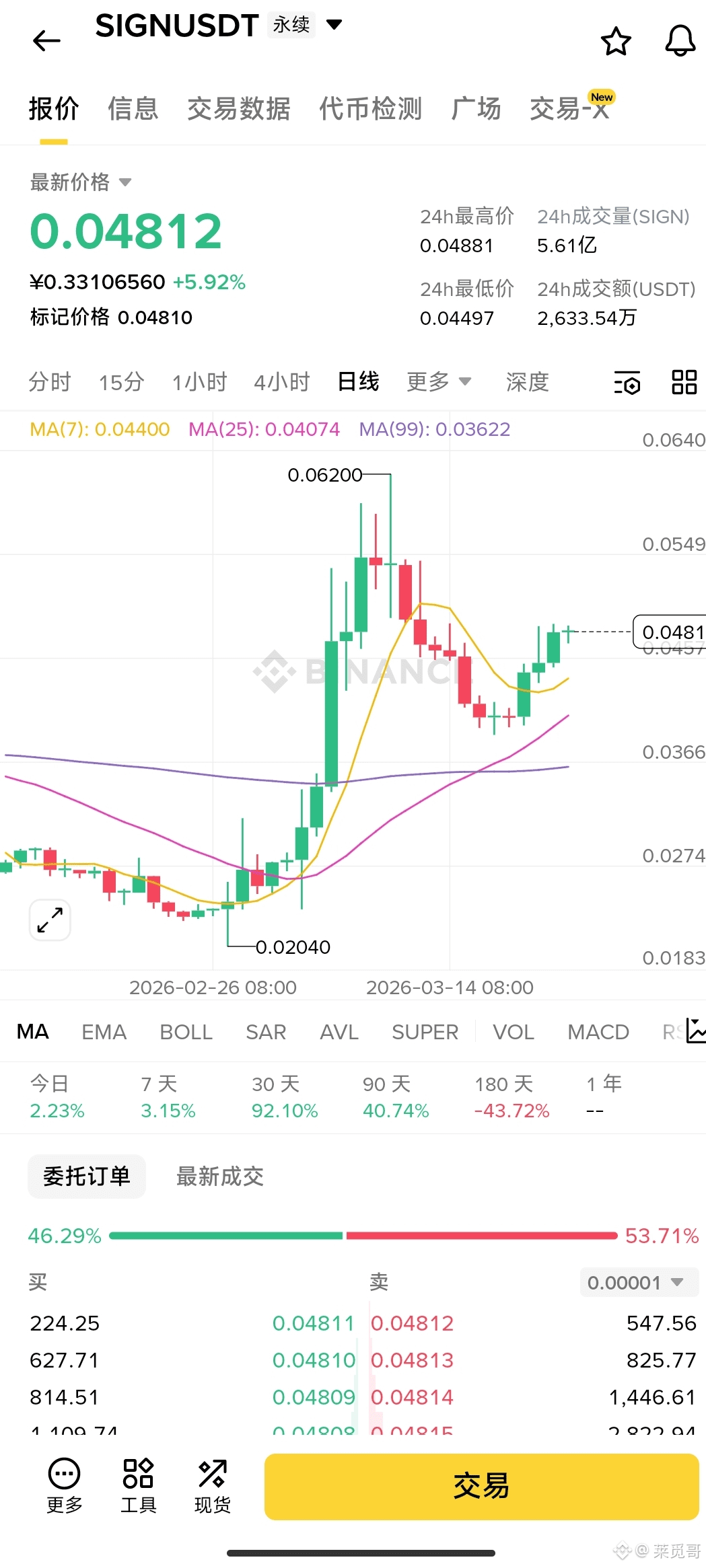
Recently, the scores have been a bit low, and there's no way to continue the review.
Putting aside emotions, let's break down the "liquidity black hole" caused by national-level capital scheduling. The liquidity on the market today is relatively poor, with many targets experiencing a downward trend, but if you track the underlying activity of @SignOfficial , you will find it remains extremely resilient. This is due to the irreplaceability of its business model.
As more and more B-end institutions that hold vast resources, even national-level sovereign funds, begin to use TokenTable as their default "on-chain asset scheduling engine," an extremely terrifying logical closed loop is formed: every step of locking, releasing, and the accompanying compliance proof verification of massive assets consumes the network resources of the underlying system. And all this "capital flow wear and tear" will ultimately translate into a rigid consumption and staking demand for the $SIGN token.
Retail investors' buying and selling are just the surface waves of the ocean, while sovereign-level funds utilizing infrastructure for asset allocation are the true deep-sea black holes draining liquidity. Do not easily give up strategic chips that can capture national-level cash flow at the bottom.
#Sign地缘政治基建