

HangSingQT
52 Posts

HangSingQT
Report
Block User
专注 Crypto 量化套利与 AI 交易策略开发。
拒绝情绪化梭哈,用智能数据捕捉每一次 Alpha。
👨💻 无需下载/繁琐配置,点击网页直接试用:
http://hangsing.tech/#
📩 觉得策略有效?私信我解锁高级参数/合作。
0 Following
20 Followers
5 Liked
Posts
·
--
Today’s Strategy-selling-BTC headline shouldn’t be taken as simply a “bearish BTC” signal.
In public reporting, Strategy sold about 3,588 BTC, raising roughly $216 million in cash; at the same time, the company still holds about 843,775 BTC.
Based on how it was disclosed, this move looks more like capital management around preferred-share distributions, cash reserves, and balance-sheet needs.
So the key point isn’t “how much it sold,” but that the market now needs to re-evaluate something:
In the prior BTC treasury narrative, Strategy has long been viewed as a steady marginal buyer.
But once selling appears, the market starts to ask:
Is this still a long-term buyer that’s “only buying, not selling”?
Or, when it needs cash, will it treat BTC as a configurable, deployable asset?
I don’t interpret this as a direct collapse signal.
But it will definitely change expectations for marginal buying.
What’s worth watching next isn’t sentiment, but three structural variables:
1. Whether spot BTC absorption remains stable;
2. Whether ETF / treasury-related flows still have continuous buying;
3. Whether altcoins and high-leverage positions will see risk appetite contract first.
If BTC absorption holds up, the market will likely digest this news gradually.
If absorption weakens, high-beta assets may feel the pain sooner than BTC.
With today’s kind of market, don’t rush to call for longs, and don’t rush to call for shorts.
First check absorption, then positions, then risk tiering.
Today’s Strategy-selling-BTC headline shouldn’t be taken as simply a “bearish BTC” signal.
In public reporting, Strategy sold about 3,588 BTC, raising roughly $216 million in cash; at the same time, the company still holds about 843,775 BTC.
Based on how it was disclosed, this move looks more like capital management around preferred-share distributions, cash reserves, and balance-sheet needs.
So the key point isn’t “how much it sold,” but that the market now needs to re-evaluate something:
In the prior BTC treasury narrative, Strategy has long been viewed as a steady marginal buyer.
But once selling appears, the market starts to ask:
Is this still a long-term buyer that’s “only buying, not selling”?
Or, when it needs cash, will it treat BTC as a configurable, deployable asset?
I don’t interpret this as a direct collapse signal.
But it will definitely change expectations for marginal buying.
What’s worth watching next isn’t sentiment, but three structural variables:
1. Whether spot BTC absorption remains stable;
2. Whether ETF / treasury-related flows still have continuous buying;
3. Whether altcoins and high-leverage positions will see risk appetite contract first.
If BTC absorption holds up, the market will likely digest this news gradually.
If absorption weakens, high-beta assets may feel the pain sooner than BTC.
With today’s kind of market, don’t rush to call for longs, and don’t rush to call for shorts.
First check absorption, then positions, then risk tiering.
In public reporting, Strategy sold about 3,588 BTC, raising roughly $216 million in cash; at the same time, the company still holds about 843,775 BTC.
Based on how it was disclosed, this move looks more like capital management around preferred-share distributions, cash reserves, and balance-sheet needs.
So the key point isn’t “how much it sold,” but that the market now needs to re-evaluate something:
In the prior BTC treasury narrative, Strategy has long been viewed as a steady marginal buyer.
But once selling appears, the market starts to ask:
Is this still a long-term buyer that’s “only buying, not selling”?
Or, when it needs cash, will it treat BTC as a configurable, deployable asset?
I don’t interpret this as a direct collapse signal.
But it will definitely change expectations for marginal buying.
What’s worth watching next isn’t sentiment, but three structural variables:
1. Whether spot BTC absorption remains stable;
2. Whether ETF / treasury-related flows still have continuous buying;
3. Whether altcoins and high-leverage positions will see risk appetite contract first.
If BTC absorption holds up, the market will likely digest this news gradually.
If absorption weakens, high-beta assets may feel the pain sooner than BTC.
With today’s kind of market, don’t rush to call for longs, and don’t rush to call for shorts.
First check absorption, then positions, then risk tiering.

93
·
--
What I’ve been focusing on these days isn’t where BTC has moved, but that the entry point for crypto is changing.
After MiCA fully takes effect on July 1, Europe’s market is entering a new tiered phase. The key isn’t just to say “regulatory headwinds” or to shout that USDT or Binance has problems; it’s to look at a more realistic chain of events:
Who can continue to serve European users?
Which stablecoins can still smoothly handle on-ramps, trading pairs, and margin?
Will liquidity move from unauthorized platforms to more compliant ecosystems—exchanges, custody, clearing, and market-making infrastructure?
The limits on Binance’s licenses and services in Europe, and the compliance usability issues for USDT in Europe—all point to the same thing at the core:
crypto trading entry is shifting from “where liquidity runs deep” to “where it’s compliant, sustainable, and able to absorb institutional and stablecoin liquidity.”
This also explains why we can’t just keep staring at whether low-cap clones are bouncing.
At the same time, trading entry points and event markets like HYPE, Kalshi, and Polymarket are still very active. This shows that money isn’t fully standing still—it’s just more selective about entry points: platform-based assets, event contracts, prediction markets, derivatives, and the underlying clearing and market-making infrastructure may attract attention sooner than long-tail clones.
So today I’ll look at two lines:
First, how Europe’s compliant entry points will migrate.
Among USDT, USDC, and EUR stablecoins, which ones become the more convenient tools for deposits and margin.
Second, what trading capital is actually buying.
If more funds are flowing into HYPE, prediction markets, and platform-type assets, you can’t simply say, “The altcoin season is back.”
You can acknowledge BTC’s rebound, but that isn’t the most interesting part today.
What’s truly worth tracking is this: regulation is changing the entry points, and capital is choosing where to go.
These kinds of changes won’t finish overnight, but they will gradually reshape exchange market share, stablecoin usage habits, and where the next wave of crypto liquidity gets absorbed.
For market structure observation only; not investment advice.
What I’ve been focusing on these days isn’t where BTC has moved, but that the entry point for crypto is changing.
After MiCA fully takes effect on July 1, Europe’s market is entering a new tiered phase. The key isn’t just to say “regulatory headwinds” or to shout that USDT or Binance has problems; it’s to look at a more realistic chain of events:
Who can continue to serve European users?
Which stablecoins can still smoothly handle on-ramps, trading pairs, and margin?
Will liquidity move from unauthorized platforms to more compliant ecosystems—exchanges, custody, clearing, and market-making infrastructure?
The limits on Binance’s licenses and services in Europe, and the compliance usability issues for USDT in Europe—all point to the same thing at the core:
crypto trading entry is shifting from “where liquidity runs deep” to “where it’s compliant, sustainable, and able to absorb institutional and stablecoin liquidity.”
This also explains why we can’t just keep staring at whether low-cap clones are bouncing.
At the same time, trading entry points and event markets like HYPE, Kalshi, and Polymarket are still very active. This shows that money isn’t fully standing still—it’s just more selective about entry points: platform-based assets, event contracts, prediction markets, derivatives, and the underlying clearing and market-making infrastructure may attract attention sooner than long-tail clones.
So today I’ll look at two lines:
First, how Europe’s compliant entry points will migrate.
Among USDT, USDC, and EUR stablecoins, which ones become the more convenient tools for deposits and margin.
Second, what trading capital is actually buying.
If more funds are flowing into HYPE, prediction markets, and platform-type assets, you can’t simply say, “The altcoin season is back.”
You can acknowledge BTC’s rebound, but that isn’t the most interesting part today.
What’s truly worth tracking is this: regulation is changing the entry points, and capital is choosing where to go.
These kinds of changes won’t finish overnight, but they will gradually reshape exchange market share, stablecoin usage habits, and where the next wave of crypto liquidity gets absorbed.
For market structure observation only; not investment advice.
After MiCA fully takes effect on July 1, Europe’s market is entering a new tiered phase. The key isn’t just to say “regulatory headwinds” or to shout that USDT or Binance has problems; it’s to look at a more realistic chain of events:
Who can continue to serve European users?
Which stablecoins can still smoothly handle on-ramps, trading pairs, and margin?
Will liquidity move from unauthorized platforms to more compliant ecosystems—exchanges, custody, clearing, and market-making infrastructure?
The limits on Binance’s licenses and services in Europe, and the compliance usability issues for USDT in Europe—all point to the same thing at the core:
crypto trading entry is shifting from “where liquidity runs deep” to “where it’s compliant, sustainable, and able to absorb institutional and stablecoin liquidity.”
This also explains why we can’t just keep staring at whether low-cap clones are bouncing.
At the same time, trading entry points and event markets like HYPE, Kalshi, and Polymarket are still very active. This shows that money isn’t fully standing still—it’s just more selective about entry points: platform-based assets, event contracts, prediction markets, derivatives, and the underlying clearing and market-making infrastructure may attract attention sooner than long-tail clones.
So today I’ll look at two lines:
First, how Europe’s compliant entry points will migrate.
Among USDT, USDC, and EUR stablecoins, which ones become the more convenient tools for deposits and margin.
Second, what trading capital is actually buying.
If more funds are flowing into HYPE, prediction markets, and platform-type assets, you can’t simply say, “The altcoin season is back.”
You can acknowledge BTC’s rebound, but that isn’t the most interesting part today.
What’s truly worth tracking is this: regulation is changing the entry points, and capital is choosing where to go.
These kinds of changes won’t finish overnight, but they will gradually reshape exchange market share, stablecoin usage habits, and where the next wave of crypto liquidity gets absorbed.
For market structure observation only; not investment advice.

114
·
--
BTC has indeed been rising these past two days—there’s no need to avoid that.
But I think this rebound can’t be viewed only within the crypto bubble. Behind it, there are actually two macro lines moving at the same time.
The first is that after US employment data cooled, the market no longer has to keep trading as if the Fed will be more hawkish, higher for longer, and even reopen discussions about further rate hikes.
This doesn’t mean a rate cut has been confirmed, and it doesn’t mean risk assets have directly entered a loose-cycle bull market. It only means that the tightest macro pressure has been loosened a bit—for now.
The second is that AI is still propping up the US growth narrative.
Current US stock market valuations, tech sector capital expenditures, and the imagination surrounding the dollar’s credit are all deeply tied to AI.
The market is willing to give the US high valuations not only because of current earnings, but because it still believes AI could drive the next round of productivity gains.
So an AI bubble can’t be treated as just a regular bubble. It’s also the market’s bet on whether the US can still produce new assets, new productivity, and new credit stories.
That’s also why BTC’s rebound these two days has a bit of a macro foundation:
employment cooling, which lowers the tail risk of the Fed becoming hawkish again.
The AI narrative remains intact, so the market doesn’t immediately price in a collapse in US growth.
With both working together, risk assets naturally see a repair window first.
But a window isn’t the same as trend confirmation.
Whether BTC can turn a repair into a stronger uptrend still depends on the underlying capital structure itself.
Going forward, I mainly watch for a few things:
whether BTC / ETH ETF flows improve consecutively.
whether stablecoin supply is expanding again.
whether funding and OI represent healthy repair, or whether short-term sentiment is rebuilding leverage.
whether exchange capital flows are cooperating—not just prices moving first.
If none of these improve in sync, then this rebound is more like a bounce after macro pressure eases, rather than a full-on risk-on.
My view is:
BTC can be a bit less pessimistic than a few days ago, because some of the expectations for further rate hikes at the tail end have been toned down; but it’s still not to the point where we can skip confirmation and directly call for a trend reversal.
What’s truly important isn’t that BTC has risen for two days. It’s whether, behind this rally, it’s just pressure being released—or whether ETFs, stablecoins, derivatives, and exchange capital flows genuinely come back together.
BTC has indeed been rising these past two days—there’s no need to avoid that.
But I think this rebound can’t be viewed only within the crypto bubble. Behind it, there are actually two macro lines moving at the same time.
The first is that after US employment data cooled, the market no longer has to keep trading as if the Fed will be more hawkish, higher for longer, and even reopen discussions about further rate hikes.
This doesn’t mean a rate cut has been confirmed, and it doesn’t mean risk assets have directly entered a loose-cycle bull market. It only means that the tightest macro pressure has been loosened a bit—for now.
The second is that AI is still propping up the US growth narrative.
Current US stock market valuations, tech sector capital expenditures, and the imagination surrounding the dollar’s credit are all deeply tied to AI.
The market is willing to give the US high valuations not only because of current earnings, but because it still believes AI could drive the next round of productivity gains.
So an AI bubble can’t be treated as just a regular bubble. It’s also the market’s bet on whether the US can still produce new assets, new productivity, and new credit stories.
That’s also why BTC’s rebound these two days has a bit of a macro foundation:
employment cooling, which lowers the tail risk of the Fed becoming hawkish again.
The AI narrative remains intact, so the market doesn’t immediately price in a collapse in US growth.
With both working together, risk assets naturally see a repair window first.
But a window isn’t the same as trend confirmation.
Whether BTC can turn a repair into a stronger uptrend still depends on the underlying capital structure itself.
Going forward, I mainly watch for a few things:
whether BTC / ETH ETF flows improve consecutively.
whether stablecoin supply is expanding again.
whether funding and OI represent healthy repair, or whether short-term sentiment is rebuilding leverage.
whether exchange capital flows are cooperating—not just prices moving first.
If none of these improve in sync, then this rebound is more like a bounce after macro pressure eases, rather than a full-on risk-on.
My view is:
BTC can be a bit less pessimistic than a few days ago, because some of the expectations for further rate hikes at the tail end have been toned down; but it’s still not to the point where we can skip confirmation and directly call for a trend reversal.
What’s truly important isn’t that BTC has risen for two days. It’s whether, behind this rally, it’s just pressure being released—or whether ETFs, stablecoins, derivatives, and exchange capital flows genuinely come back together.
But I think this rebound can’t be viewed only within the crypto bubble. Behind it, there are actually two macro lines moving at the same time.
The first is that after US employment data cooled, the market no longer has to keep trading as if the Fed will be more hawkish, higher for longer, and even reopen discussions about further rate hikes.
This doesn’t mean a rate cut has been confirmed, and it doesn’t mean risk assets have directly entered a loose-cycle bull market. It only means that the tightest macro pressure has been loosened a bit—for now.
The second is that AI is still propping up the US growth narrative.
Current US stock market valuations, tech sector capital expenditures, and the imagination surrounding the dollar’s credit are all deeply tied to AI.
The market is willing to give the US high valuations not only because of current earnings, but because it still believes AI could drive the next round of productivity gains.
So an AI bubble can’t be treated as just a regular bubble. It’s also the market’s bet on whether the US can still produce new assets, new productivity, and new credit stories.
That’s also why BTC’s rebound these two days has a bit of a macro foundation:
employment cooling, which lowers the tail risk of the Fed becoming hawkish again.
The AI narrative remains intact, so the market doesn’t immediately price in a collapse in US growth.
With both working together, risk assets naturally see a repair window first.
But a window isn’t the same as trend confirmation.
Whether BTC can turn a repair into a stronger uptrend still depends on the underlying capital structure itself.
Going forward, I mainly watch for a few things:
whether BTC / ETH ETF flows improve consecutively.
whether stablecoin supply is expanding again.
whether funding and OI represent healthy repair, or whether short-term sentiment is rebuilding leverage.
whether exchange capital flows are cooperating—not just prices moving first.
If none of these improve in sync, then this rebound is more like a bounce after macro pressure eases, rather than a full-on risk-on.
My view is:
BTC can be a bit less pessimistic than a few days ago, because some of the expectations for further rate hikes at the tail end have been toned down; but it’s still not to the point where we can skip confirmation and directly call for a trend reversal.
What’s truly important isn’t that BTC has risen for two days. It’s whether, behind this rally, it’s just pressure being released—or whether ETFs, stablecoins, derivatives, and exchange capital flows genuinely come back together.

394
·
--
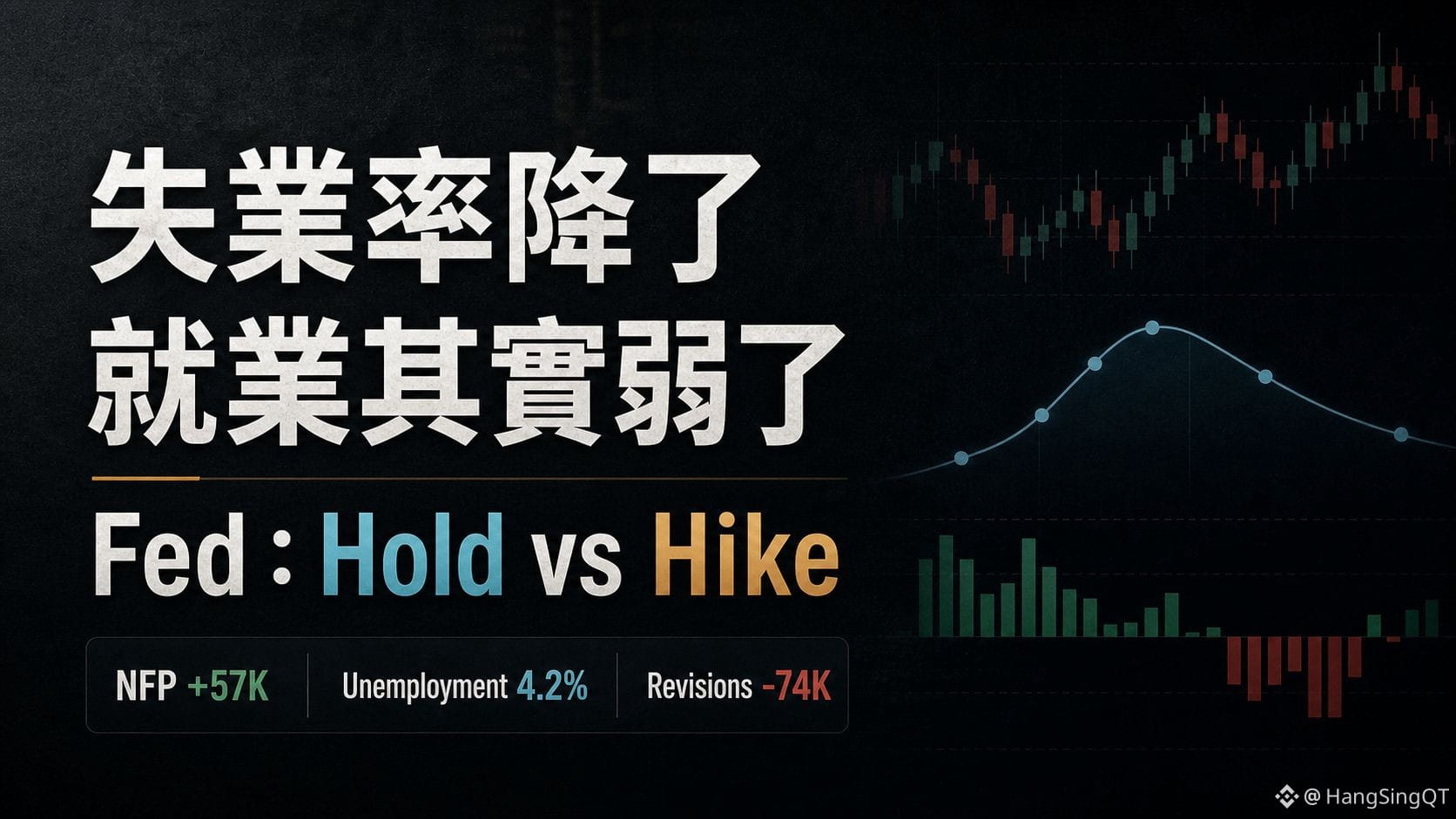
The unemployment rate fell, but jobs are actually weaker.
The easiest place to misread last night’s nonfarm report is right here.
On the surface, the U.S. unemployment rate fell from 4.3% to 4.2%, making it seem like the labor market is still holding up.
But what really caused the market to reprice is a set of other figures:
June nonfarm added only 57,000 jobs, clearly below expectations;
April and May were revised down by a combined 74,000 jobs;
the decline in the labor force participation rate makes the unemployment rate look better than employment momentum.
So last night, the market wasn’t trading “the rate-cut bull market is here.”
More precisely, the pressure for an immediate rate hike in July eased a bit, giving the Fed a chance to wait.
But this doesn’t mean the high-rate environment is over.
Inflation hasn’t returned to the level the Fed wants, wages still have stickiness, and the long-end yields (10Y/30Y) haven’t truly loosened. That’s why the same weak nonfarm data can both let short-end rates breathe and still make the market reluctant to call for a full risk-on move.
The same applies to BTC.
A rebound is understandable as macro pressure temporarily easing, but it still can’t be written off as trend confirmation. We still need to watch three things next:
1. Whether the BTC/ETH ETF final prints show continuous improvement;
2. Whether stablecoin supply and exchange balances rebound;
3. Whether funding/OI repairs become overheated.
Macro may open the window, but the capital structure is what determines whether the window can turn into a trend.
That’s also what I’m more focused on today: not whether the unemployment rate improves or worsens in isolation, but whether the Fed’s path, long-end yields, and crypto’s own capital flows can line up.
Market data and publicly expressed views are for research and reference only and do not constitute investment advice.
The unemployment rate fell, but jobs are actually weaker.
The easiest place to misread last night’s nonfarm report is right here.
On the surface, the U.S. unemployment rate fell from 4.3% to 4.2%, making it seem like the labor market is still holding up.
But what really caused the market to reprice is a set of other figures:
June nonfarm added only 57,000 jobs, clearly below expectations;
April and May were revised down by a combined 74,000 jobs;
the decline in the labor force participation rate makes the unemployment rate look better than employment momentum.
So last night, the market wasn’t trading “the rate-cut bull market is here.”
More precisely, the pressure for an immediate rate hike in July eased a bit, giving the Fed a chance to wait.
But this doesn’t mean the high-rate environment is over.
Inflation hasn’t returned to the level the Fed wants, wages still have stickiness, and the long-end yields (10Y/30Y) haven’t truly loosened. That’s why the same weak nonfarm data can both let short-end rates breathe and still make the market reluctant to call for a full risk-on move.
The same applies to BTC.
A rebound is understandable as macro pressure temporarily easing, but it still can’t be written off as trend confirmation. We still need to watch three things next:
1. Whether the BTC/ETH ETF final prints show continuous improvement;
2. Whether stablecoin supply and exchange balances rebound;
3. Whether funding/OI repairs become overheated.
Macro may open the window, but the capital structure is what determines whether the window can turn into a trend.
That’s also what I’m more focused on today: not whether the unemployment rate improves or worsens in isolation, but whether the Fed’s path, long-end yields, and crypto’s own capital flows can line up.
Market data and publicly expressed views are for research and reference only and do not constitute investment advice.
The easiest place to misread last night’s nonfarm report is right here.
On the surface, the U.S. unemployment rate fell from 4.3% to 4.2%, making it seem like the labor market is still holding up.
But what really caused the market to reprice is a set of other figures:
June nonfarm added only 57,000 jobs, clearly below expectations;
April and May were revised down by a combined 74,000 jobs;
the decline in the labor force participation rate makes the unemployment rate look better than employment momentum.
So last night, the market wasn’t trading “the rate-cut bull market is here.”
More precisely, the pressure for an immediate rate hike in July eased a bit, giving the Fed a chance to wait.
But this doesn’t mean the high-rate environment is over.
Inflation hasn’t returned to the level the Fed wants, wages still have stickiness, and the long-end yields (10Y/30Y) haven’t truly loosened. That’s why the same weak nonfarm data can both let short-end rates breathe and still make the market reluctant to call for a full risk-on move.
The same applies to BTC.
A rebound is understandable as macro pressure temporarily easing, but it still can’t be written off as trend confirmation. We still need to watch three things next:
1. Whether the BTC/ETH ETF final prints show continuous improvement;
2. Whether stablecoin supply and exchange balances rebound;
3. Whether funding/OI repairs become overheated.
Macro may open the window, but the capital structure is what determines whether the window can turn into a trend.
That’s also what I’m more focused on today: not whether the unemployment rate improves or worsens in isolation, but whether the Fed’s path, long-end yields, and crypto’s own capital flows can line up.
Market data and publicly expressed views are for research and reference only and do not constitute investment advice.
87
·
--

Article
Soft Data and Hard Yields: The Rate-Cut Trade Still Lacks ConfirmationA jigsaw puzzle of data from the last week of June—putting it all together makes for a rather uncomfortable picture.
ADP private payrolls at 98,000 gave the market a signal that employment momentum is weakening at the margin. The first reaction is to bet on easier policy, and risk assets may want to trade in that direction early on. But I doubt whether that reaction can be sustained.
The divergence between ADP and BLS has shown up repeatedly over the past two years, and the signal value of any single-month ADP release is often overestimated. The real answer will have to wait for the U.S. Nonfarm Payrolls, unemployment rate, and average hourly earnings on July 2. Until then, any macro conclusion based on one soft data point is a bit like betting with only half the puzzle.
Soft Data and Hard Yields: The Rate-Cut Trade Still Lacks Confirmation
A jigsaw puzzle of data from the last week of June—putting it all together makes for a rather uncomfortable picture.
ADP private payrolls at 98,000 gave the market a signal that employment momentum is weakening at the margin. The first reaction is to bet on easier policy, and risk assets may want to trade in that direction early on. But I doubt whether that reaction can be sustained.
The divergence between ADP and BLS has shown up repeatedly over the past two years, and the signal value of any single-month ADP release is often overestimated. The real answer will have to wait for the U.S. Nonfarm Payrolls, unemployment rate, and average hourly earnings on July 2. Until then, any macro conclusion based on one soft data point is a bit like betting with only half the puzzle.
ADP private payrolls at 98,000 gave the market a signal that employment momentum is weakening at the margin. The first reaction is to bet on easier policy, and risk assets may want to trade in that direction early on. But I doubt whether that reaction can be sustained.
The divergence between ADP and BLS has shown up repeatedly over the past two years, and the signal value of any single-month ADP release is often overestimated. The real answer will have to wait for the U.S. Nonfarm Payrolls, unemployment rate, and average hourly earnings on July 2. Until then, any macro conclusion based on one soft data point is a bit like betting with only half the puzzle.
85
·
--

Article
FOMC outcome, no suspense—but the questions the market is asking have changedThe FOMC results are out. No surprises, they kept things steady; the market priced this conclusion in days ago.
So that volatility last night was actually interesting—not because of the outcome, but because what happens next has become an open question.
The event-driven phase is over, and the next layer of logic begins.
Right now, I’m not focused on the interest rates themselves, but on whether a few variables have changed marginally around this "no suspense" moment:
First off, the 2-year U.S. Treasury and the dollar index. Short-term interest rate trends and dollar strength are the most direct risk appetite barometers. After the FOMC decision, if the 2Y yield doesn’t rebound significantly and the dollar doesn’t bounce back to grab some gains, it indicates that the market isn’t betting on a "tightening" direction again, which would ease macro pressure on risk assets. Conversely, if the dollar strengthens, many current accumulation strategies will need to reassess their cost basis.
FOMC outcome, no suspense—but the questions the market is asking have changed
The FOMC results are out. No surprises, they kept things steady; the market priced this conclusion in days ago.
So that volatility last night was actually interesting—not because of the outcome, but because what happens next has become an open question.
The event-driven phase is over, and the next layer of logic begins.
Right now, I’m not focused on the interest rates themselves, but on whether a few variables have changed marginally around this "no suspense" moment:
First off, the 2-year U.S. Treasury and the dollar index. Short-term interest rate trends and dollar strength are the most direct risk appetite barometers. After the FOMC decision, if the 2Y yield doesn’t rebound significantly and the dollar doesn’t bounce back to grab some gains, it indicates that the market isn’t betting on a "tightening" direction again, which would ease macro pressure on risk assets. Conversely, if the dollar strengthens, many current accumulation strategies will need to reassess their cost basis.
So that volatility last night was actually interesting—not because of the outcome, but because what happens next has become an open question.
The event-driven phase is over, and the next layer of logic begins.
Right now, I’m not focused on the interest rates themselves, but on whether a few variables have changed marginally around this "no suspense" moment:
First off, the 2-year U.S. Treasury and the dollar index. Short-term interest rate trends and dollar strength are the most direct risk appetite barometers. After the FOMC decision, if the 2Y yield doesn’t rebound significantly and the dollar doesn’t bounce back to grab some gains, it indicates that the market isn’t betting on a "tightening" direction again, which would ease macro pressure on risk assets. Conversely, if the dollar strengthens, many current accumulation strategies will need to reassess their cost basis.
240
·
--
BTC is still bouncing around 76K-78K, don't rush to call a reversal today.
In a nutshell: BTC is still in the support zone of 76K-78K; until the ETF and macro conditions improve, altcoins are only worth watching for independent catalysts.
Today I'm looking at three lines:
1. The price hasn't reclaimed 80K. CoinDesk reports BTC at around 76,744 USD, ETH at about 2,108 USD; after breaking 77K, the market is still testing the 76K-78K support.
2. Capital flows haven't recovered. Farside shows that on May 18, the US spot BTC ETF had a net outflow of 648.6 million USD, and the ETH ETF had a net outflow of 86.4 million USD; CoinShares' weekly report also indicates a net outflow of about 1.074 billion USD in digital asset investment products.
3. Macro still leans towards pressure. Polymarket shows about a 98% bet on the Fed not changing in June, and about a 70% chance of no rate cuts this year. This is just a prediction market signal, not a news fact, but it indicates that near-term rate cut trades aren't strong.
From the KOL side, the focus is clearer:
- TiAfiRo and BTV are both discussing BTC's support and resistance, leaning cautious.
- Andrei Jikh is tying Iran/Hormuz/Bitcoin together, more like a narrative on geopolitics, energy settlements, and currency, rather than a short-term BTC trading signal.
- Altcoin Daily is discussing crypto opportunities after the CLARITY Act, but the bill hasn't been signed into law yet, so we can't directly translate this into an altcoin season.
- MrBlock mentions AI is siphoning off capital and attention, which explains why the crypto space isn't going to warm up just because of a policy headline.
My framework for today:
BTC: Watch the support at 76K-78K first; until it reclaims 80K, don’t call the bounce a trend reversal.
ETH: Can follow BTC’s recovery, but ETF/capital flows are still weak.
Altcoins: Only look at those with independent catalysts, such as RWA, compliant trading, and DeFi infrastructure; don't chase those without catalysts.
Contracts: Long liquidations don’t mean all risk is cleared; funding rates and OI are just indicators of crowding.
Conclusion: What the market lacks today isn’t a story, but capital flow, price support, and macro conditions realigning. You can watch for a pullback, but don’t prematurely call a reversal in the support zone.
Risk Warning: This is merely a compilation of market information and research observations, not investment advice. The blogger's views, market price predictions, ETF/fund flows, and contract data may change rapidly; past performance and strategy observations do not guarantee future results.
BTC is still bouncing around 76K-78K, don't rush to call a reversal today.
In a nutshell: BTC is still in the support zone of 76K-78K; until the ETF and macro conditions improve, altcoins are only worth watching for independent catalysts.
Today I'm looking at three lines:
1. The price hasn't reclaimed 80K. CoinDesk reports BTC at around 76,744 USD, ETH at about 2,108 USD; after breaking 77K, the market is still testing the 76K-78K support.
2. Capital flows haven't recovered. Farside shows that on May 18, the US spot BTC ETF had a net outflow of 648.6 million USD, and the ETH ETF had a net outflow of 86.4 million USD; CoinShares' weekly report also indicates a net outflow of about 1.074 billion USD in digital asset investment products.
3. Macro still leans towards pressure. Polymarket shows about a 98% bet on the Fed not changing in June, and about a 70% chance of no rate cuts this year. This is just a prediction market signal, not a news fact, but it indicates that near-term rate cut trades aren't strong.
From the KOL side, the focus is clearer:
- TiAfiRo and BTV are both discussing BTC's support and resistance, leaning cautious.
- Andrei Jikh is tying Iran/Hormuz/Bitcoin together, more like a narrative on geopolitics, energy settlements, and currency, rather than a short-term BTC trading signal.
- Altcoin Daily is discussing crypto opportunities after the CLARITY Act, but the bill hasn't been signed into law yet, so we can't directly translate this into an altcoin season.
- MrBlock mentions AI is siphoning off capital and attention, which explains why the crypto space isn't going to warm up just because of a policy headline.
My framework for today:
BTC: Watch the support at 76K-78K first; until it reclaims 80K, don’t call the bounce a trend reversal.
ETH: Can follow BTC’s recovery, but ETF/capital flows are still weak.
Altcoins: Only look at those with independent catalysts, such as RWA, compliant trading, and DeFi infrastructure; don't chase those without catalysts.
Contracts: Long liquidations don’t mean all risk is cleared; funding rates and OI are just indicators of crowding.
Conclusion: What the market lacks today isn’t a story, but capital flow, price support, and macro conditions realigning. You can watch for a pullback, but don’t prematurely call a reversal in the support zone.
Risk Warning: This is merely a compilation of market information and research observations, not investment advice. The blogger's views, market price predictions, ETF/fund flows, and contract data may change rapidly; past performance and strategy observations do not guarantee future results.
In a nutshell: BTC is still in the support zone of 76K-78K; until the ETF and macro conditions improve, altcoins are only worth watching for independent catalysts.
Today I'm looking at three lines:
1. The price hasn't reclaimed 80K. CoinDesk reports BTC at around 76,744 USD, ETH at about 2,108 USD; after breaking 77K, the market is still testing the 76K-78K support.
2. Capital flows haven't recovered. Farside shows that on May 18, the US spot BTC ETF had a net outflow of 648.6 million USD, and the ETH ETF had a net outflow of 86.4 million USD; CoinShares' weekly report also indicates a net outflow of about 1.074 billion USD in digital asset investment products.
3. Macro still leans towards pressure. Polymarket shows about a 98% bet on the Fed not changing in June, and about a 70% chance of no rate cuts this year. This is just a prediction market signal, not a news fact, but it indicates that near-term rate cut trades aren't strong.
From the KOL side, the focus is clearer:
- TiAfiRo and BTV are both discussing BTC's support and resistance, leaning cautious.
- Andrei Jikh is tying Iran/Hormuz/Bitcoin together, more like a narrative on geopolitics, energy settlements, and currency, rather than a short-term BTC trading signal.
- Altcoin Daily is discussing crypto opportunities after the CLARITY Act, but the bill hasn't been signed into law yet, so we can't directly translate this into an altcoin season.
- MrBlock mentions AI is siphoning off capital and attention, which explains why the crypto space isn't going to warm up just because of a policy headline.
My framework for today:
BTC: Watch the support at 76K-78K first; until it reclaims 80K, don’t call the bounce a trend reversal.
ETH: Can follow BTC’s recovery, but ETF/capital flows are still weak.
Altcoins: Only look at those with independent catalysts, such as RWA, compliant trading, and DeFi infrastructure; don't chase those without catalysts.
Contracts: Long liquidations don’t mean all risk is cleared; funding rates and OI are just indicators of crowding.
Conclusion: What the market lacks today isn’t a story, but capital flow, price support, and macro conditions realigning. You can watch for a pullback, but don’t prematurely call a reversal in the support zone.
Risk Warning: This is merely a compilation of market information and research observations, not investment advice. The blogger's views, market price predictions, ETF/fund flows, and contract data may change rapidly; past performance and strategy observations do not guarantee future results.
223
·
--

Article
5/18 Crypto Daily Report | Institutional narratives remain, but today we can't treat 'long-term buys' as 'short-term chasing.'In a nutshell: BTC still has institutional allocation narratives, but there's been a weekly net outflow from ETFs, and expectations for near-term rate cuts are weak. Altcoins can only be monitored for selective catalysts; it's not a full-blown alt season yet.
1. BTC
Over the weekend, BTC dipped to around 78K, and the 78K-80K range is where we're watching for support today. The rebound in risk assets hasn't fully transmitted to crypto, indicating that the market is still more focused on capital flows.
From an observation standpoint, it's not that we can't be bullish, but we need to see if ETF/spot demand flows back in before any breakouts.
2. ETF
Last week, the US spot BTC ETF saw a net outflow of about $1 billion, and the ETH ETF is under pressure as well. The institutional allocation story is still in play, but short-term marginal capital isn't cooperating; we can't just say, 'institutions are all buying.'
5/18 Crypto Daily Report | Institutional narratives remain, but today we can't treat 'long-term buys' as 'short-term chasing.'
In a nutshell: BTC still has institutional allocation narratives, but there's been a weekly net outflow from ETFs, and expectations for near-term rate cuts are weak. Altcoins can only be monitored for selective catalysts; it's not a full-blown alt season yet.
1. BTC
Over the weekend, BTC dipped to around 78K, and the 78K-80K range is where we're watching for support today. The rebound in risk assets hasn't fully transmitted to crypto, indicating that the market is still more focused on capital flows.
From an observation standpoint, it's not that we can't be bullish, but we need to see if ETF/spot demand flows back in before any breakouts.
2. ETF
Last week, the US spot BTC ETF saw a net outflow of about $1 billion, and the ETH ETF is under pressure as well. The institutional allocation story is still in play, but short-term marginal capital isn't cooperating; we can't just say, 'institutions are all buying.'
1. BTC
Over the weekend, BTC dipped to around 78K, and the 78K-80K range is where we're watching for support today. The rebound in risk assets hasn't fully transmitted to crypto, indicating that the market is still more focused on capital flows.
From an observation standpoint, it's not that we can't be bullish, but we need to see if ETF/spot demand flows back in before any breakouts.
2. ETF
Last week, the US spot BTC ETF saw a net outflow of about $1 billion, and the ETH ETF is under pressure as well. The institutional allocation story is still in play, but short-term marginal capital isn't cooperating; we can't just say, 'institutions are all buying.'
257
·
--
Article
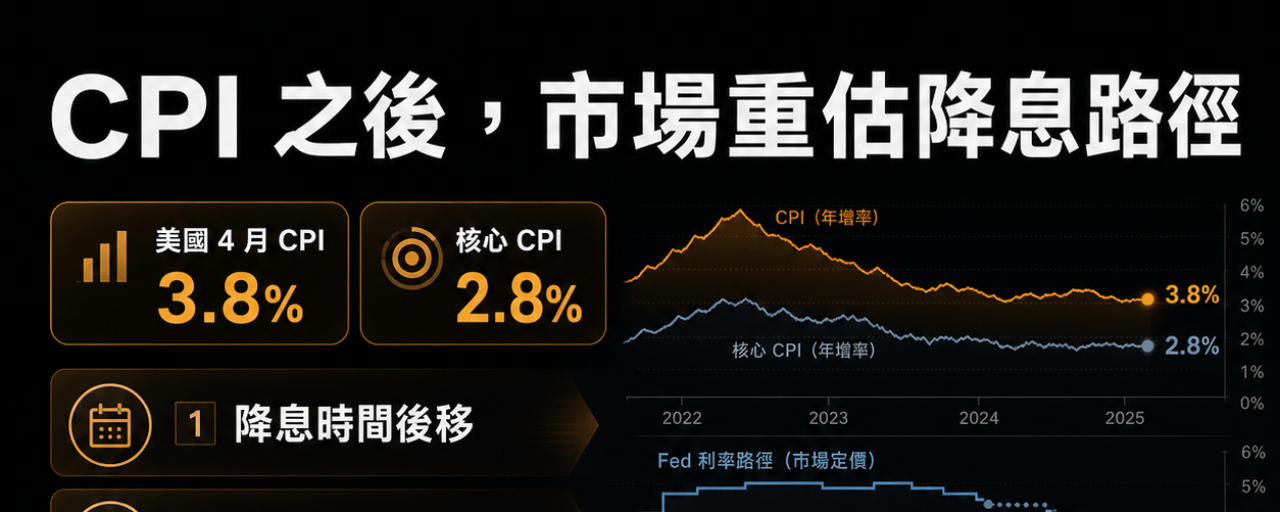
Post-CPI, what the market really needs to reprice isn’t just a single candlestick, but the path of rate cuts.The US April CPI rose year-on-year to 3.8%, with core CPI at 2.8%. More crucially, core inflation remains sticky, with energy and housing continuing to drive up inflation expectations.
What does this mean?
If inflation expectations rise again, the Fed will find it harder to pivot to rate cuts quickly. The market was initially trading on the notion that 'rates were about to loosen', but after the CPI data dropped, the logic shifts to:
The timing of rate cuts continues to be pushed back.
Real yields on US treasuries remain elevated.
Dollar liquidity isn’t going to ease quickly.
Risk asset valuations will face renewed pressure.
So this isn’t just a simple 'CPI bearish for BTC', but rather that macro liquidity isn’t providing crypto with a comfortable uptrend environment.
Post-CPI, what the market really needs to reprice isn’t just a single candlestick, but the path of rate cuts.
The US April CPI rose year-on-year to 3.8%, with core CPI at 2.8%. More crucially, core inflation remains sticky, with energy and housing continuing to drive up inflation expectations.
What does this mean?
If inflation expectations rise again, the Fed will find it harder to pivot to rate cuts quickly. The market was initially trading on the notion that 'rates were about to loosen', but after the CPI data dropped, the logic shifts to:
The timing of rate cuts continues to be pushed back.
Real yields on US treasuries remain elevated.
Dollar liquidity isn’t going to ease quickly.
Risk asset valuations will face renewed pressure.
So this isn’t just a simple 'CPI bearish for BTC', but rather that macro liquidity isn’t providing crypto with a comfortable uptrend environment.
What does this mean?
If inflation expectations rise again, the Fed will find it harder to pivot to rate cuts quickly. The market was initially trading on the notion that 'rates were about to loosen', but after the CPI data dropped, the logic shifts to:
The timing of rate cuts continues to be pushed back.
Real yields on US treasuries remain elevated.
Dollar liquidity isn’t going to ease quickly.
Risk asset valuations will face renewed pressure.
So this isn’t just a simple 'CPI bearish for BTC', but rather that macro liquidity isn’t providing crypto with a comfortable uptrend environment.
86
·
--

Article
Before tonight's CPI, BTC holds steady at 80K, but it's not yet a no-brainer long window.Tonight at 20:30 CST, the US April CPI will be released.
This will be the most important macro trigger for BTC, ETH, and altcoins today.
Right now, BTC is still hovering around 81K, holding the 80K level for now, which indicates that the structure isn't showing any significant weakness. But the issue is, ETH/BTC still looks weak; ETH hasn't kept pace with BTC, meaning market risk appetite hasn't really spread out yet.
So my take on today's market is:
BTC holding 80K only suggests that the bulls are still defending that line;
but to confirm a stronger rebound, it would be best to see it break above 82K-84K after the CPI and have ETF funds continue to support.
Before tonight's CPI, BTC holds steady at 80K, but it's not yet a no-brainer long window.
Tonight at 20:30 CST, the US April CPI will be released.
This will be the most important macro trigger for BTC, ETH, and altcoins today.
Right now, BTC is still hovering around 81K, holding the 80K level for now, which indicates that the structure isn't showing any significant weakness. But the issue is, ETH/BTC still looks weak; ETH hasn't kept pace with BTC, meaning market risk appetite hasn't really spread out yet.
So my take on today's market is:
BTC holding 80K only suggests that the bulls are still defending that line;
but to confirm a stronger rebound, it would be best to see it break above 82K-84K after the CPI and have ETF funds continue to support.
This will be the most important macro trigger for BTC, ETH, and altcoins today.
Right now, BTC is still hovering around 81K, holding the 80K level for now, which indicates that the structure isn't showing any significant weakness. But the issue is, ETH/BTC still looks weak; ETH hasn't kept pace with BTC, meaning market risk appetite hasn't really spread out yet.
So my take on today's market is:
BTC holding 80K only suggests that the bulls are still defending that line;
but to confirm a stronger rebound, it would be best to see it break above 82K-84K after the CPI and have ETF funds continue to support.
1
318
·
--
Article
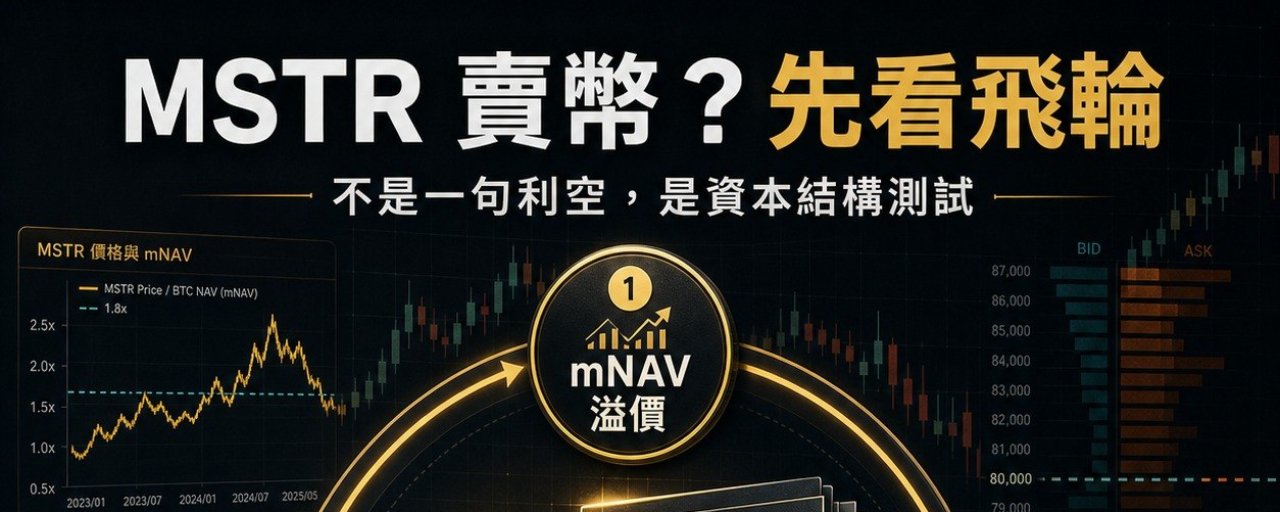
Is MSTR really going to sell BTC? Hold your horses before crying bearish.Lately, there's been a lot of chatter in the market about Michael Saylor and his strategy potentially to short some BTC, but we can't just focus on the headlines.
From the context of this Bonnie Blockchain video, the highlight isn't that 'Saylor is flipping the script and no longer HODLing', but rather that MSTR is no longer just a BTC holding company; it's essentially a capital market machine that bundles BTC, stocks, preferred shares, and credit instruments.
What we really need to look at isn't whether they're selling BTC, but three key questions:
First off, is MSTR a net seller of BTC?
If the company sells a small amount of BTC, it's to maintain STRC dividends and stabilize credit instruments, and then they might leverage to buy back more BTC, which doesn't really equate to the traditional sense of dumping.
Is MSTR really going to sell BTC? Hold your horses before crying bearish.
Lately, there's been a lot of chatter in the market about Michael Saylor and his strategy potentially to short some BTC, but we can't just focus on the headlines.
From the context of this Bonnie Blockchain video, the highlight isn't that 'Saylor is flipping the script and no longer HODLing', but rather that MSTR is no longer just a BTC holding company; it's essentially a capital market machine that bundles BTC, stocks, preferred shares, and credit instruments.
What we really need to look at isn't whether they're selling BTC, but three key questions:
First off, is MSTR a net seller of BTC?
If the company sells a small amount of BTC, it's to maintain STRC dividends and stabilize credit instruments, and then they might leverage to buy back more BTC, which doesn't really equate to the traditional sense of dumping.
From the context of this Bonnie Blockchain video, the highlight isn't that 'Saylor is flipping the script and no longer HODLing', but rather that MSTR is no longer just a BTC holding company; it's essentially a capital market machine that bundles BTC, stocks, preferred shares, and credit instruments.
What we really need to look at isn't whether they're selling BTC, but three key questions:
First off, is MSTR a net seller of BTC?
If the company sells a small amount of BTC, it's to maintain STRC dividends and stabilize credit instruments, and then they might leverage to buy back more BTC, which doesn't really equate to the traditional sense of dumping.
171
·
--
A lot of folks see BTC oscillating around $80,000 and immediately ask:
Is it a breakout or a fakeout?
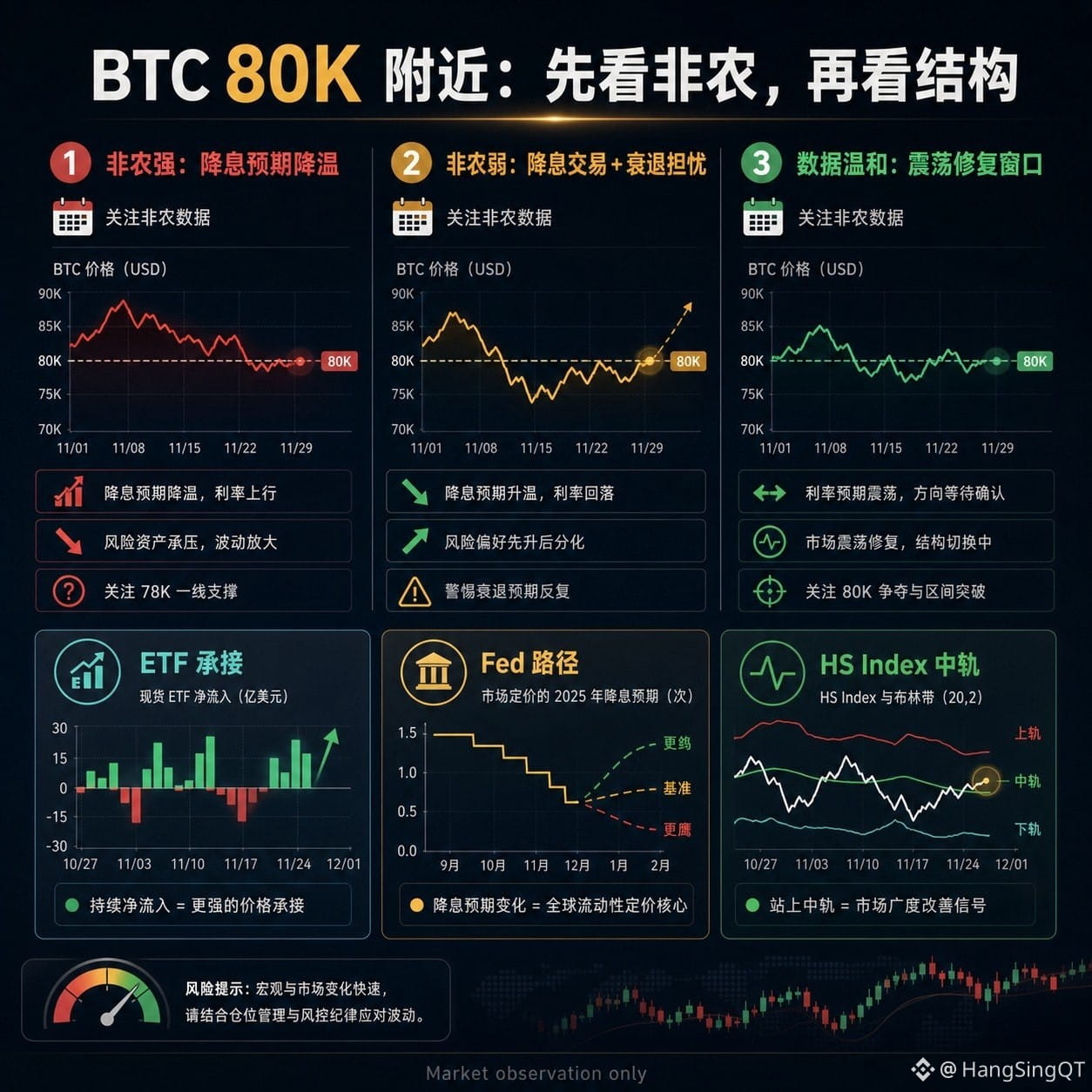
But today, what really moves the market isn’t just the price level, but whether the U.S. non-farm payroll data will shift the market's view on the Fed's rate cut path.
I’m looking at this in three scenarios:
1. Non-farm data significantly beats expectations
This indicates that employment is still holding up, and the Fed doesn’t need to pivot to easing too quickly.
In this case, upward pressure on BTC will be more apparent, and it’s likely to keep bouncing around $80,000.
2. Non-farm data significantly misses expectations
The market might initially price in a “rate cut expectations heating up,” which could be a short-term boost for risk assets.
However, if the data is really poor, it could trigger recession fears, meaning it’s not purely bullish.
3. Data comes in warm
This is the most comfortable scenario for BTC.
ETF buying continues, macro pressures aren’t ramping up, and the market is more likely to maintain a range-bound recovery.
So here, I’m not just watching if BTC can hold above $80,000.
I’m more focused on three confirmation signals:
Is ETH following BTC?
Is BTC’s market share dropping?
Is the HS Index holding above the Bollinger midline?
If only BTC is strong while market breadth doesn’t expand, it looks more like funds are clustering into top coins rather than a full-blown market rally.
In a nutshell:
Non-farm data dictates macro sentiment, ETFs determine the support below, and the HS Index assesses whether there’s real market expansion.
Now isn't the time to chase sentiment; it's about waiting for the data and structure to confirm together.
#BTC #ETH #BinanceSquare #NonFarm #Fed #Crypto #HSIndex #MarketAnalysis
Risk Disclaimer: The above is only market observation and does not constitute investment advice.
A lot of folks see BTC oscillating around $80,000 and immediately ask:
Is it a breakout or a fakeout?
But today, what really moves the market isn’t just the price level, but whether the U.S. non-farm payroll data will shift the market's view on the Fed's rate cut path.
I’m looking at this in three scenarios:
1. Non-farm data significantly beats expectations
This indicates that employment is still holding up, and the Fed doesn’t need to pivot to easing too quickly.
In this case, upward pressure on BTC will be more apparent, and it’s likely to keep bouncing around $80,000.
2. Non-farm data significantly misses expectations
The market might initially price in a “rate cut expectations heating up,” which could be a short-term boost for risk assets.
However, if the data is really poor, it could trigger recession fears, meaning it’s not purely bullish.
3. Data comes in warm
This is the most comfortable scenario for BTC.
ETF buying continues, macro pressures aren’t ramping up, and the market is more likely to maintain a range-bound recovery.
So here, I’m not just watching if BTC can hold above $80,000.
I’m more focused on three confirmation signals:
Is ETH following BTC?
Is BTC’s market share dropping?
Is the HS Index holding above the Bollinger midline?
If only BTC is strong while market breadth doesn’t expand, it looks more like funds are clustering into top coins rather than a full-blown market rally.
In a nutshell:
Non-farm data dictates macro sentiment, ETFs determine the support below, and the HS Index assesses whether there’s real market expansion.
Now isn't the time to chase sentiment; it's about waiting for the data and structure to confirm together.
#BTC #ETH #BinanceSquare #NonFarm #Fed #Crypto #HSIndex #MarketAnalysis
Risk Disclaimer: The above is only market observation and does not constitute investment advice.
Is it a breakout or a fakeout?
But today, what really moves the market isn’t just the price level, but whether the U.S. non-farm payroll data will shift the market's view on the Fed's rate cut path.
I’m looking at this in three scenarios:
1. Non-farm data significantly beats expectations
This indicates that employment is still holding up, and the Fed doesn’t need to pivot to easing too quickly.
In this case, upward pressure on BTC will be more apparent, and it’s likely to keep bouncing around $80,000.
2. Non-farm data significantly misses expectations
The market might initially price in a “rate cut expectations heating up,” which could be a short-term boost for risk assets.
However, if the data is really poor, it could trigger recession fears, meaning it’s not purely bullish.
3. Data comes in warm
This is the most comfortable scenario for BTC.
ETF buying continues, macro pressures aren’t ramping up, and the market is more likely to maintain a range-bound recovery.
So here, I’m not just watching if BTC can hold above $80,000.
I’m more focused on three confirmation signals:
Is ETH following BTC?
Is BTC’s market share dropping?
Is the HS Index holding above the Bollinger midline?
If only BTC is strong while market breadth doesn’t expand, it looks more like funds are clustering into top coins rather than a full-blown market rally.
In a nutshell:
Non-farm data dictates macro sentiment, ETFs determine the support below, and the HS Index assesses whether there’s real market expansion.
Now isn't the time to chase sentiment; it's about waiting for the data and structure to confirm together.
#BTC #ETH #BinanceSquare #NonFarm #Fed #Crypto #HSIndex #MarketAnalysis
Risk Disclaimer: The above is only market observation and does not constitute investment advice.
266
·
--

Article
BTC is consolidating at high levels; the real variables aren't just in the candlestick patterns.BTC is still hovering around $81,000, and on the surface, it seems like 'no drop, no breakout', but what really matters at this level goes beyond just the sentiment in the crypto sphere.
The upcoming macro variables will be crucial:
Non-farm payroll data will impact the market's assessment of the resilience of the US economy; expectations for Fed rate cuts will affect the valuation of risk assets; if the dollar continues to strengthen, the overhead pressure on BTC will increase; if oil prices are pushed up due to disturbances in the Middle East or the Strait of Hormuz, it will again influence inflation expectations.
So, right now, BTC can't just be summed up as 'strong' or 'weak'.
BTC is consolidating at high levels; the real variables aren't just in the candlestick patterns.
BTC is still hovering around $81,000, and on the surface, it seems like 'no drop, no breakout', but what really matters at this level goes beyond just the sentiment in the crypto sphere.
The upcoming macro variables will be crucial:
Non-farm payroll data will impact the market's assessment of the resilience of the US economy; expectations for Fed rate cuts will affect the valuation of risk assets; if the dollar continues to strengthen, the overhead pressure on BTC will increase; if oil prices are pushed up due to disturbances in the Middle East or the Strait of Hormuz, it will again influence inflation expectations.
So, right now, BTC can't just be summed up as 'strong' or 'weak'.
The upcoming macro variables will be crucial:
Non-farm payroll data will impact the market's assessment of the resilience of the US economy; expectations for Fed rate cuts will affect the valuation of risk assets; if the dollar continues to strengthen, the overhead pressure on BTC will increase; if oil prices are pushed up due to disturbances in the Middle East or the Strait of Hormuz, it will again influence inflation expectations.
So, right now, BTC can't just be summed up as 'strong' or 'weak'.
203
·
--

Article
Stablecoin yield rules have changed, BTC is back at 78K: This time, the market is speculating on more than just price.In the past couple of days, Binance Square has been buzzing, and it's not just BTC that's rising.
Notably, two lines are popping up simultaneously:
One narrative is from Arthur Hayes:
He still sees BTC hitting $125,000 by year-end. The core reason isn't just the 'halving' or 'ETF', but rather the war spending, fiscal expansion, bank credit, and a loosening of dollar liquidity.
Another point is the stablecoin yield rules from the US CLARITY Act:
The new text direction is to discourage stablecoins from being treated like bank deposits that just 'earn interest for holding', but to allow rewards based on real transactions, payments, transfers, and DeFi activities.
Stablecoin yield rules have changed, BTC is back at 78K: This time, the market is speculating on more than just price.
In the past couple of days, Binance Square has been buzzing, and it's not just BTC that's rising.
Notably, two lines are popping up simultaneously:
One narrative is from Arthur Hayes:
He still sees BTC hitting $125,000 by year-end. The core reason isn't just the 'halving' or 'ETF', but rather the war spending, fiscal expansion, bank credit, and a loosening of dollar liquidity.
Another point is the stablecoin yield rules from the US CLARITY Act:
The new text direction is to discourage stablecoins from being treated like bank deposits that just 'earn interest for holding', but to allow rewards based on real transactions, payments, transfers, and DeFi activities.
Notably, two lines are popping up simultaneously:
One narrative is from Arthur Hayes:
He still sees BTC hitting $125,000 by year-end. The core reason isn't just the 'halving' or 'ETF', but rather the war spending, fiscal expansion, bank credit, and a loosening of dollar liquidity.
Another point is the stablecoin yield rules from the US CLARITY Act:
The new text direction is to discourage stablecoins from being treated like bank deposits that just 'earn interest for holding', but to allow rewards based on real transactions, payments, transfers, and DeFi activities.
223
·
--

Article
In the current crypto scene, it's not that there aren't stories; it's that money isn't cheap enough.This market is pretty interesting today.
If you only look at crypto news, you'd think it's all bullish everywhere:
BTC ETFs are still on the table, and institutional narratives are alive;
Visa is expanding its stablecoin settlement pilot;
The regulatory framework is also way clearer than a few years back;
Plus, with all sorts of 'traditional finance is going on-chain' stories, it definitely sounds lively.
But why is the price still grinding so slowly?
I think the core reason is simple:
The story is hot, but money isn't cheap enough.
The Fed hasn't really eased yet, US bond yields are still high, and oil prices are getting shaken up due to risks in the Middle East and Hormuz.
In the current crypto scene, it's not that there aren't stories; it's that money isn't cheap enough.
This market is pretty interesting today.
If you only look at crypto news, you'd think it's all bullish everywhere:
BTC ETFs are still on the table, and institutional narratives are alive;
Visa is expanding its stablecoin settlement pilot;
The regulatory framework is also way clearer than a few years back;
Plus, with all sorts of 'traditional finance is going on-chain' stories, it definitely sounds lively.
But why is the price still grinding so slowly?
I think the core reason is simple:
The story is hot, but money isn't cheap enough.
The Fed hasn't really eased yet, US bond yields are still high, and oil prices are getting shaken up due to risks in the Middle East and Hormuz.
If you only look at crypto news, you'd think it's all bullish everywhere:
BTC ETFs are still on the table, and institutional narratives are alive;
Visa is expanding its stablecoin settlement pilot;
The regulatory framework is also way clearer than a few years back;
Plus, with all sorts of 'traditional finance is going on-chain' stories, it definitely sounds lively.
But why is the price still grinding so slowly?
I think the core reason is simple:
The story is hot, but money isn't cheap enough.
The Fed hasn't really eased yet, US bond yields are still high, and oil prices are getting shaken up due to risks in the Middle East and Hormuz.
1
1
382
·
--

Article
Today, we're not discussing BTC's ups and downs, but a more pressing question: Why can't you hold onto your profits?Many think the hardest part of trading is 'getting the buy right'.
But those who have actually traded through multiple cycles know that picking the right entry is just the first step; the real challenge comes afterward:
Can you hold on?
When to take profits?
What level of pullback is still acceptable?
When you see others raking in profits, do you ever change your plan on the fly?
This kind of market action is quite typical lately.
BTC has a strong narrative with ETF approvals, institutional buying, and bullish sentiment; but ETH and altcoins haven't fully kept pace. The market isn't devoid of opportunities, but they're not evenly distributed.
Many people experience a state where:
When prices are up, afraid of selling too soon;
Today, we're not discussing BTC's ups and downs, but a more pressing question: Why can't you hold onto your profits?
Many think the hardest part of trading is 'getting the buy right'.
But those who have actually traded through multiple cycles know that picking the right entry is just the first step; the real challenge comes afterward:
Can you hold on?
When to take profits?
What level of pullback is still acceptable?
When you see others raking in profits, do you ever change your plan on the fly?
This kind of market action is quite typical lately.
BTC has a strong narrative with ETF approvals, institutional buying, and bullish sentiment; but ETH and altcoins haven't fully kept pace. The market isn't devoid of opportunities, but they're not evenly distributed.
Many people experience a state where:
When prices are up, afraid of selling too soon;
But those who have actually traded through multiple cycles know that picking the right entry is just the first step; the real challenge comes afterward:
Can you hold on?
When to take profits?
What level of pullback is still acceptable?
When you see others raking in profits, do you ever change your plan on the fly?
This kind of market action is quite typical lately.
BTC has a strong narrative with ETF approvals, institutional buying, and bullish sentiment; but ETH and altcoins haven't fully kept pace. The market isn't devoid of opportunities, but they're not evenly distributed.
Many people experience a state where:
When prices are up, afraid of selling too soon;
171
·
--
Article
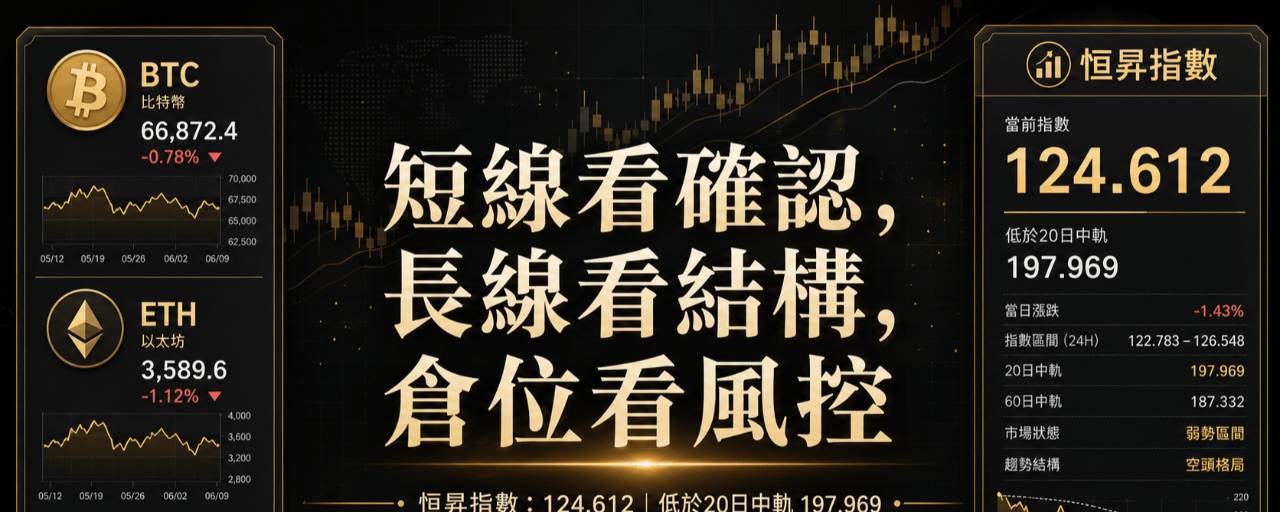
The Tug-of-War Between 'Sentiment Rebound' and 'Risk Confirmation'.BTC has been oscillating around 76k-80k recently.
On one hand, institutions and corporations keep stacking BTC on their balance sheets, the long-term narrative is still intact; on the other hand, liquidity is waiting for clearer signals from the Fed, USD, oil prices, and regulatory news.
This kind of market easily leads to two misconceptions:
1. Seeing institutional positions and long-term narratives, I just FOMO in at the highs;
2. Spotting a short-term pullback and a quiet market, I immediately think the rally is over.
But what really matters isn’t the sentiment, it’s confirmation:
• Is the price holding key levels?
• Is there sustained capital inflow?
The Tug-of-War Between 'Sentiment Rebound' and 'Risk Confirmation'.
BTC has been oscillating around 76k-80k recently.
On one hand, institutions and corporations keep stacking BTC on their balance sheets, the long-term narrative is still intact; on the other hand, liquidity is waiting for clearer signals from the Fed, USD, oil prices, and regulatory news.
This kind of market easily leads to two misconceptions:
1. Seeing institutional positions and long-term narratives, I just FOMO in at the highs;
2. Spotting a short-term pullback and a quiet market, I immediately think the rally is over.
But what really matters isn’t the sentiment, it’s confirmation:
• Is the price holding key levels?
• Is there sustained capital inflow?
On one hand, institutions and corporations keep stacking BTC on their balance sheets, the long-term narrative is still intact; on the other hand, liquidity is waiting for clearer signals from the Fed, USD, oil prices, and regulatory news.
This kind of market easily leads to two misconceptions:
1. Seeing institutional positions and long-term narratives, I just FOMO in at the highs;
2. Spotting a short-term pullback and a quiet market, I immediately think the rally is over.
But what really matters isn’t the sentiment, it’s confirmation:
• Is the price holding key levels?
• Is there sustained capital inflow?
165
·
--
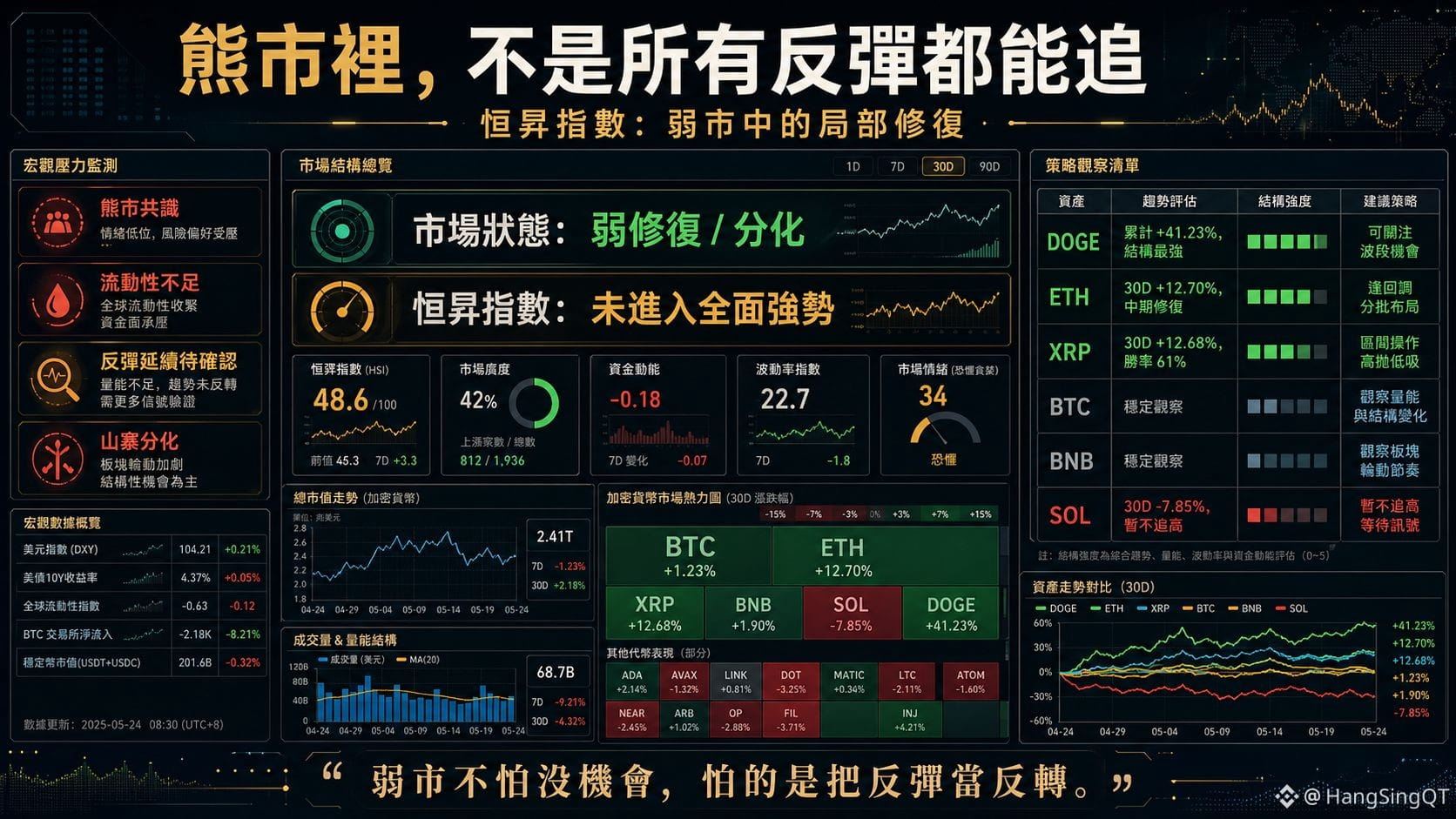
The market is still in a bearish framework, but the capital isn't completely flat.
It's just testing a few altcoins.
This explains why the strategy log shows such divergence.
DOGE has a cumulative return of +41.23%, making it the strongest in this batch.
ETH 30D +12.70%, cumulative +30.05%, indicating there's still some adaptability in the mid-term.
XRP 30D +12.68%, with a win rate of 61%, recently starting to gain strength.
But SOL is a different story.
24H is in the green, but 30D is still -7.85%.
This suggests not all rebounds are worth chasing.
So, today I won't say, 'the bull market is here.'
That statement is too early and too expensive.
I prefer to say:
In a bear market, the most important thing isn't to guess the bottom,
but to see which coins are the first to break out from weakness.
BTC and BNB are stable and worth monitoring.
DOGE, ETH, and XRP are the structures worth watching today.
Don't rush into SOL yet.
A weak market doesn't mean there are no opportunities.
But the opportunities in a weak market usually belong to a select few.
Chasing the wrong move means catching a rebound;
seeing it right is structural recovery.
This is not investment advice, just observations from real trading strategies.
#BTC #ETH #DOGE #XRP #SOL #BNB #BearMarketRebound #QuantTrading #BinanceSquare
The market is still in a bearish framework, but the capital isn't completely flat.
It's just testing a few altcoins.
This explains why the strategy log shows such divergence.
DOGE has a cumulative return of +41.23%, making it the strongest in this batch.
ETH 30D +12.70%, cumulative +30.05%, indicating there's still some adaptability in the mid-term.
XRP 30D +12.68%, with a win rate of 61%, recently starting to gain strength.
But SOL is a different story.
24H is in the green, but 30D is still -7.85%.
This suggests not all rebounds are worth chasing.
So, today I won't say, 'the bull market is here.'
That statement is too early and too expensive.
I prefer to say:
In a bear market, the most important thing isn't to guess the bottom,
but to see which coins are the first to break out from weakness.
BTC and BNB are stable and worth monitoring.
DOGE, ETH, and XRP are the structures worth watching today.
Don't rush into SOL yet.
A weak market doesn't mean there are no opportunities.
But the opportunities in a weak market usually belong to a select few.
Chasing the wrong move means catching a rebound;
seeing it right is structural recovery.
This is not investment advice, just observations from real trading strategies.
#BTC #ETH #DOGE #XRP #SOL #BNB #BearMarketRebound #QuantTrading #BinanceSquare
It's just testing a few altcoins.
This explains why the strategy log shows such divergence.
DOGE has a cumulative return of +41.23%, making it the strongest in this batch.
ETH 30D +12.70%, cumulative +30.05%, indicating there's still some adaptability in the mid-term.
XRP 30D +12.68%, with a win rate of 61%, recently starting to gain strength.
But SOL is a different story.
24H is in the green, but 30D is still -7.85%.
This suggests not all rebounds are worth chasing.
So, today I won't say, 'the bull market is here.'
That statement is too early and too expensive.
I prefer to say:
In a bear market, the most important thing isn't to guess the bottom,
but to see which coins are the first to break out from weakness.
BTC and BNB are stable and worth monitoring.
DOGE, ETH, and XRP are the structures worth watching today.
Don't rush into SOL yet.
A weak market doesn't mean there are no opportunities.
But the opportunities in a weak market usually belong to a select few.
Chasing the wrong move means catching a rebound;
seeing it right is structural recovery.
This is not investment advice, just observations from real trading strategies.
#BTC #ETH #DOGE #XRP #SOL #BNB #BearMarketRebound #QuantTrading #BinanceSquare
356
·
--

Article
Macro Pressures Persist, Crypto Enters Structural DivergenceToday, the core of the market isn't just about bullish or bearish trends; it's about whether macro pressures continue to expand.
From the external environment over the past couple of days, the market is mainly trading three things:
1. The Fed is still holding steady, and expectations for rate cuts haven't really heated up.
Currently, the market's expectation for easing isn't strong enough, which means that while risk assets might have some bounce potential, it's tough to enter a solid bullish run.
2. US Treasury yields are still hovering at high levels, and the dollar isn't genuinely weakening.
This indicates that the global liquidity environment isn't particularly friendly.
As long as the dollar and interest rates don't show a clear reversal, Crypto is more likely to move in a 'potential opportunity, but skewed' structure rather than a full-blown rally.
Macro Pressures Persist, Crypto Enters Structural Divergence
Today, the core of the market isn't just about bullish or bearish trends; it's about whether macro pressures continue to expand.
From the external environment over the past couple of days, the market is mainly trading three things:
1. The Fed is still holding steady, and expectations for rate cuts haven't really heated up.
Currently, the market's expectation for easing isn't strong enough, which means that while risk assets might have some bounce potential, it's tough to enter a solid bullish run.
2. US Treasury yields are still hovering at high levels, and the dollar isn't genuinely weakening.
This indicates that the global liquidity environment isn't particularly friendly.
As long as the dollar and interest rates don't show a clear reversal, Crypto is more likely to move in a 'potential opportunity, but skewed' structure rather than a full-blown rally.
From the external environment over the past couple of days, the market is mainly trading three things:
1. The Fed is still holding steady, and expectations for rate cuts haven't really heated up.
Currently, the market's expectation for easing isn't strong enough, which means that while risk assets might have some bounce potential, it's tough to enter a solid bullish run.
2. US Treasury yields are still hovering at high levels, and the dollar isn't genuinely weakening.
This indicates that the global liquidity environment isn't particularly friendly.
As long as the dollar and interest rates don't show a clear reversal, Crypto is more likely to move in a 'potential opportunity, but skewed' structure rather than a full-blown rally.
277
·
--
If you’re just looking at market ups and downs today, it’s easy to miss the main point. What’s really worth watching is where the money is continuing to concentrate.
From the info over the past couple of days, the market is currently trading on a few fronts:
On one hand, exchanges are still piling into the derivatives profit pools, indicating that the internal competition for trading activity and leverage demand hasn’t stopped; on the other hand, Tether has frozen about $344 million USDT on the Tron chain at the request of law enforcement, reminding everyone that the key words around stablecoins are no longer just 'scale,' but also compliance, control, and the ability to freeze.
Adding to this, the ripples from KelpDAO haven’t settled yet, and the trust discount on high-risk on-chain protocols is still present.
When you look at these factors alongside the macro situation, the market hasn’t entered a phase where risk appetite can be indiscriminately spread. High oil prices, weak economic data from Europe, and fluctuating interest rate cut expectations all suggest that funds will skew towards top assets, compliant platforms, and protocols with higher transparency.
Also, when you check the Hengsheng Index, it seems like structural rotation rather than a broad spread. The market hasn’t entered an overheated zone; it looks more like mainstream directions are maintaining support, rather than all sectors heating up together.
Yesterday’s trading log aligns with this assessment. Current positions are still concentrated in BTC, ETH, BNB, SOL, with XRP on the sidelines and DOGE in a long position. This set of signals is quite interesting:
It indicates that the market isn’t completely out of opportunities, but the distribution of opportunities isn’t even. The mainstream framework is still in place, but there’s internal inconsistency in strength; high beta has elastic windows, but it’s not blooming all at once.
So if I had to sum up today’s market in one sentence, I would lean towards:
Mainstream support is still there, local elasticity is present, but the spread isn’t enough, and structural differentiation remains the main theme.
In this kind of phase, the biggest fear isn’t a lack of opportunities,
but mistaking local activity for a full-blown market.
If you’re just looking at market ups and downs today, it’s easy to miss the main point. What’s really worth watching is where the money is continuing to concentrate.
From the info over the past couple of days, the market is currently trading on a few fronts:
On one hand, exchanges are still piling into the derivatives profit pools, indicating that the internal competition for trading activity and leverage demand hasn’t stopped; on the other hand, Tether has frozen about $344 million USDT on the Tron chain at the request of law enforcement, reminding everyone that the key words around stablecoins are no longer just 'scale,' but also compliance, control, and the ability to freeze.
Adding to this, the ripples from KelpDAO haven’t settled yet, and the trust discount on high-risk on-chain protocols is still present.
When you look at these factors alongside the macro situation, the market hasn’t entered a phase where risk appetite can be indiscriminately spread. High oil prices, weak economic data from Europe, and fluctuating interest rate cut expectations all suggest that funds will skew towards top assets, compliant platforms, and protocols with higher transparency.
Also, when you check the Hengsheng Index, it seems like structural rotation rather than a broad spread. The market hasn’t entered an overheated zone; it looks more like mainstream directions are maintaining support, rather than all sectors heating up together.
Yesterday’s trading log aligns with this assessment. Current positions are still concentrated in BTC, ETH, BNB, SOL, with XRP on the sidelines and DOGE in a long position. This set of signals is quite interesting:
It indicates that the market isn’t completely out of opportunities, but the distribution of opportunities isn’t even. The mainstream framework is still in place, but there’s internal inconsistency in strength; high beta has elastic windows, but it’s not blooming all at once.
So if I had to sum up today’s market in one sentence, I would lean towards:
Mainstream support is still there, local elasticity is present, but the spread isn’t enough, and structural differentiation remains the main theme.
In this kind of phase, the biggest fear isn’t a lack of opportunities,
but mistaking local activity for a full-blown market.
From the info over the past couple of days, the market is currently trading on a few fronts:
On one hand, exchanges are still piling into the derivatives profit pools, indicating that the internal competition for trading activity and leverage demand hasn’t stopped; on the other hand, Tether has frozen about $344 million USDT on the Tron chain at the request of law enforcement, reminding everyone that the key words around stablecoins are no longer just 'scale,' but also compliance, control, and the ability to freeze.
Adding to this, the ripples from KelpDAO haven’t settled yet, and the trust discount on high-risk on-chain protocols is still present.
When you look at these factors alongside the macro situation, the market hasn’t entered a phase where risk appetite can be indiscriminately spread. High oil prices, weak economic data from Europe, and fluctuating interest rate cut expectations all suggest that funds will skew towards top assets, compliant platforms, and protocols with higher transparency.
Also, when you check the Hengsheng Index, it seems like structural rotation rather than a broad spread. The market hasn’t entered an overheated zone; it looks more like mainstream directions are maintaining support, rather than all sectors heating up together.
Yesterday’s trading log aligns with this assessment. Current positions are still concentrated in BTC, ETH, BNB, SOL, with XRP on the sidelines and DOGE in a long position. This set of signals is quite interesting:
It indicates that the market isn’t completely out of opportunities, but the distribution of opportunities isn’t even. The mainstream framework is still in place, but there’s internal inconsistency in strength; high beta has elastic windows, but it’s not blooming all at once.
So if I had to sum up today’s market in one sentence, I would lean towards:
Mainstream support is still there, local elasticity is present, but the spread isn’t enough, and structural differentiation remains the main theme.
In this kind of phase, the biggest fear isn’t a lack of opportunities,
but mistaking local activity for a full-blown market.

293
Log in to explore more content
Join global crypto users on Binance Square
⚡️ Get latest and useful information about crypto.
💬 Trusted by the world’s largest crypto exchange.
👍 Discover real insights from verified creators.
Email / Phone number