

ARAUJO 28
824 Posts
ARAUJO 28
Report
Block User
Soy un Joven Venezolano con ganas de progresar en el mundo cripto a mis 18 años de edad, Viviendo actualmente en RD 🇻🇪🇩🇴🔥
3.2K+ Following
1.3K+ Followers
1.1K+ Liked
Posts
All
Quotes
Videos
Live
·
--
Article
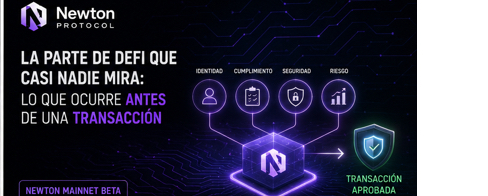
The DeFi part that almost nobody looks at: what happens before a transaction When we talk about blockchain, we usually think of transparency, decentralization, and automatic execution.
But as the ecosystem grows more and more, a different question starts to appear:
What happens before an operation occurs?
Because recording a transaction after it’s executed is one thing.
Having a layer that can evaluate whether that transaction meets certain conditions before it happens is something completely different.
That’s the idea that seems interesting to me behind @NewtonProtocol y Newton Mainnet Beta.
The DeFi part that almost nobody looks at: what happens before a transaction
When we talk about blockchain, we usually think of transparency, decentralization, and automatic execution.
But as the ecosystem grows more and more, a different question starts to appear:
What happens before an operation occurs?
Because recording a transaction after it’s executed is one thing.
Having a layer that can evaluate whether that transaction meets certain conditions before it happens is something completely different.
That’s the idea that seems interesting to me behind @NewtonProtocol y Newton Mainnet Beta.
But as the ecosystem grows more and more, a different question starts to appear:
What happens before an operation occurs?
Because recording a transaction after it’s executed is one thing.
Having a layer that can evaluate whether that transaction meets certain conditions before it happens is something completely different.
That’s the idea that seems interesting to me behind @NewtonProtocol y Newton Mainnet Beta.
4
56
·
--
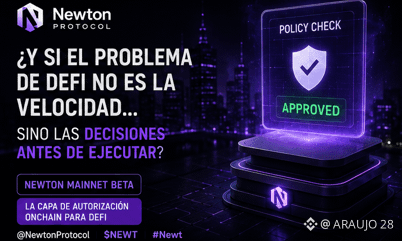
What if the problem with DeFi isn’t that transactions are fast… but that nobody decides what should happen before?
Something I’ve been thinking about lately is that blockchain solved a huge part of the problem: we can move value without relying on a central entity and everything is recorded.
But there’s a part that I’ve always found interesting.
The moment before the transaction.
Because once an operation has already happened, we can analyze it, review it, and see its results. But the most important question is often different:
Did that action follow the correct rules before it was executed?
That’s where I started looking at @NewtonProtocol differently.
Newton Mainnet Beta is building an onchain authorization layer where transactions can be compared against active policies before settlement.
And I think that idea makes a lot of sense as DeFi keeps growing.
Because it’s not the same to handle a small operation as it is to have vaults, institutions, and automated systems moving large amounts of capital.
At that point, more important questions come up:
How do we control risk?
How do we apply security rules?
How do we verify identity and compliance without breaking the open nature of blockchain?
Maybe the next stage of DeFi won’t be just doing more things.
It will be doing them with better decisions before executing them.
#newt $NEWT @NewtonProtocol
What if the problem with DeFi isn’t that transactions are fast… but that nobody decides what should happen before?
Something I’ve been thinking about lately is that blockchain solved a huge part of the problem: we can move value without relying on a central entity and everything is recorded.
But there’s a part that I’ve always found interesting.
The moment before the transaction.
Because once an operation has already happened, we can analyze it, review it, and see its results. But the most important question is often different:
Did that action follow the correct rules before it was executed?
That’s where I started looking at @NewtonProtocol differently.
Newton Mainnet Beta is building an onchain authorization layer where transactions can be compared against active policies before settlement.
And I think that idea makes a lot of sense as DeFi keeps growing.
Because it’s not the same to handle a small operation as it is to have vaults, institutions, and automated systems moving large amounts of capital.
At that point, more important questions come up:
How do we control risk?
How do we apply security rules?
How do we verify identity and compliance without breaking the open nature of blockchain?
Maybe the next stage of DeFi won’t be just doing more things.
It will be doing them with better decisions before executing them.
#newt $NEWT @NewtonProtocol
Something I’ve been thinking about lately is that blockchain solved a huge part of the problem: we can move value without relying on a central entity and everything is recorded.
But there’s a part that I’ve always found interesting.
The moment before the transaction.
Because once an operation has already happened, we can analyze it, review it, and see its results. But the most important question is often different:
Did that action follow the correct rules before it was executed?
That’s where I started looking at @NewtonProtocol differently.
Newton Mainnet Beta is building an onchain authorization layer where transactions can be compared against active policies before settlement.
And I think that idea makes a lot of sense as DeFi keeps growing.
Because it’s not the same to handle a small operation as it is to have vaults, institutions, and automated systems moving large amounts of capital.
At that point, more important questions come up:
How do we control risk?
How do we apply security rules?
How do we verify identity and compliance without breaking the open nature of blockchain?
Maybe the next stage of DeFi won’t be just doing more things.
It will be doing them with better decisions before executing them.
#newt $NEWT @NewtonProtocol
2
74
·
--
Article
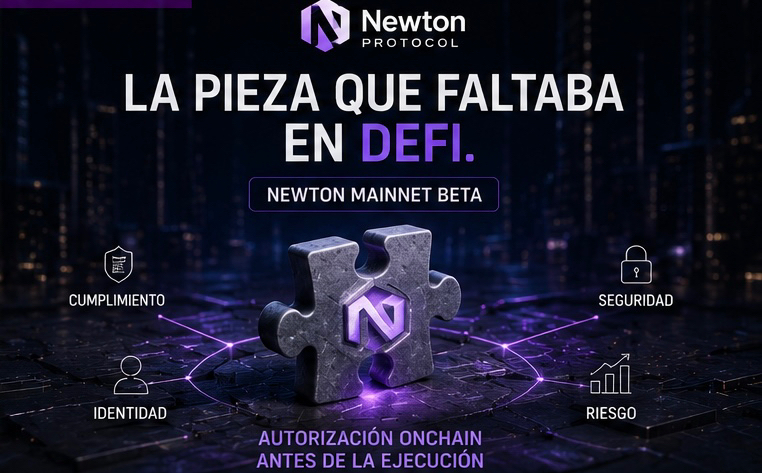
The layer DeFi still didn’t have: deciding before executingFor years, blockchain solved a huge problem: allowing people to move value without depending on a central authority. But as the ecosystem grew, another question emerged—one that is rarely discussed.
What happens before a transaction occurs?
Because one thing is knowing what happened after an operation, and a completely different one is having a layer that can evaluate whether that operation complies with certain rules before it is executed.
That shift in perspective is what caught my attention in Newton Protocol.
The layer DeFi still didn’t have: deciding before executing
For years, blockchain solved a huge problem: allowing people to move value without depending on a central authority. But as the ecosystem grew, another question emerged—one that is rarely discussed.
What happens before a transaction occurs?
Because one thing is knowing what happened after an operation, and a completely different one is having a layer that can evaluate whether that operation complies with certain rules before it is executed.
That shift in perspective is what caught my attention in Newton Protocol.
What happens before a transaction occurs?
Because one thing is knowing what happened after an operation, and a completely different one is having a layer that can evaluate whether that operation complies with certain rules before it is executed.
That shift in perspective is what caught my attention in Newton Protocol.
77
·
--
What if the future of DeFi doesn’t depend on making more transactions… but on knowing which ones should happen?
Something that has always seemed strange to me about blockchain is that we have enormous transparency after something has already occurred. We can see movements, contracts, and operations, but many times the most important question comes too late: who verified that this action made sense before it was executed?
Because in traditional financial systems there’s something we often take for granted. Before money moves, there are rules, permissions, and controls. It’s not only about recording what happened—it's also about deciding under what conditions it was allowed to happen.
The more DeFi grows, the more I think this layer will be necessary. Because if we want more capital, institutions, and users to enter the ecosystem, the question won’t be only whether a transaction can be executed.
It will be whether it should be executed.
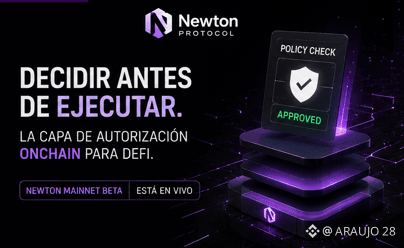
That’s why I started looking at @NewtonProtocol y Newton Mainnet Beta from another angle. Not as just another tool within crypto, but as an idea to create an onchain authorization layer where policies can be applied before value moves.
And that’s where something interesting comes up:
What happens when vaults can have rules that are truly enforced on-chain? What happens when security, risk, identity, and compliance stop being separate processes?
I think that will be one of the most important conversations of the next stage of DeFi.
Because blockchain has already learned to record actions.
Now the next step could be learning to control decisions.
#newt $NEWT @NewtonProtocol
{future}(NEWTUSDT)
What if the future of DeFi doesn’t depend on making more transactions… but on knowing which ones should happen?
Something that has always seemed strange to me about blockchain is that we have enormous transparency after something has already occurred. We can see movements, contracts, and operations, but many times the most important question comes too late: who verified that this action made sense before it was executed?
Because in traditional financial systems there’s something we often take for granted. Before money moves, there are rules, permissions, and controls. It’s not only about recording what happened—it's also about deciding under what conditions it was allowed to happen.
The more DeFi grows, the more I think this layer will be necessary. Because if we want more capital, institutions, and users to enter the ecosystem, the question won’t be only whether a transaction can be executed.
It will be whether it should be executed.
That’s why I started looking at @NewtonProtocol y Newton Mainnet Beta from another angle. Not as just another tool within crypto, but as an idea to create an onchain authorization layer where policies can be applied before value moves.
And that’s where something interesting comes up:
What happens when vaults can have rules that are truly enforced on-chain? What happens when security, risk, identity, and compliance stop being separate processes?
I think that will be one of the most important conversations of the next stage of DeFi.
Because blockchain has already learned to record actions.
Now the next step could be learning to control decisions.
#newt $NEWT @NewtonProtocol
Something that has always seemed strange to me about blockchain is that we have enormous transparency after something has already occurred. We can see movements, contracts, and operations, but many times the most important question comes too late: who verified that this action made sense before it was executed?
Because in traditional financial systems there’s something we often take for granted. Before money moves, there are rules, permissions, and controls. It’s not only about recording what happened—it's also about deciding under what conditions it was allowed to happen.
The more DeFi grows, the more I think this layer will be necessary. Because if we want more capital, institutions, and users to enter the ecosystem, the question won’t be only whether a transaction can be executed.
It will be whether it should be executed.
That’s why I started looking at @NewtonProtocol y Newton Mainnet Beta from another angle. Not as just another tool within crypto, but as an idea to create an onchain authorization layer where policies can be applied before value moves.
And that’s where something interesting comes up:
What happens when vaults can have rules that are truly enforced on-chain? What happens when security, risk, identity, and compliance stop being separate processes?
I think that will be one of the most important conversations of the next stage of DeFi.
Because blockchain has already learned to record actions.
Now the next step could be learning to control decisions.
#newt $NEWT @NewtonProtocol
97
·
--
Bullish
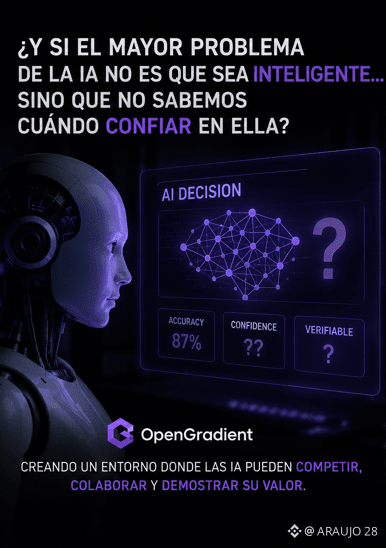
What if the biggest issue with AI isn't that it's smart... but that we don't know when to trust it?
For a long time, the conversation around artificial intelligence was pretty straightforward.
More models.
More parameters.
More speed.
But as technology advances, I find myself asking:
If an AI makes an important decision... how do we know that decision deserves our trust? 🍭
Because generating a response is one thing.
Building a system where that response can be verified is a whole different ball game.
And I think that's one of the most crucial discussions coming up for the next phase of AI.
It's not just about having more powerful models.
It's about having an infrastructure where different systems can interact, compete, and prove their worth.
That's why I started looking at OpenGradient from a different angle. 🤷
Not as "just another AI platform."
But as a bigger question:
What happens when artificial intelligence stops being a tool we use and starts becoming a layer where new applications are built?
Because the future of AI won't only depend on who has the biggest model.
It will also depend on who can create an environment where that intelligence is more accessible, verifiable, and useful.
Maybe the next AI revolution isn't about crafting a bigger mind.
Maybe it's about building a system where many intelligences can work together 📆
#opg $OPG @OpenGradient
What if the biggest issue with AI isn't that it's smart... but that we don't know when to trust it?
For a long time, the conversation around artificial intelligence was pretty straightforward.
More models.
More parameters.
More speed.
But as technology advances, I find myself asking:
If an AI makes an important decision... how do we know that decision deserves our trust? 🍭
Because generating a response is one thing.
Building a system where that response can be verified is a whole different ball game.
And I think that's one of the most crucial discussions coming up for the next phase of AI.
It's not just about having more powerful models.
It's about having an infrastructure where different systems can interact, compete, and prove their worth.
That's why I started looking at OpenGradient from a different angle. 🤷
Not as "just another AI platform."
But as a bigger question:
What happens when artificial intelligence stops being a tool we use and starts becoming a layer where new applications are built?
Because the future of AI won't only depend on who has the biggest model.
It will also depend on who can create an environment where that intelligence is more accessible, verifiable, and useful.
Maybe the next AI revolution isn't about crafting a bigger mind.
Maybe it's about building a system where many intelligences can work together 📆
#opg $OPG @OpenGradient
For a long time, the conversation around artificial intelligence was pretty straightforward.
More models.
More parameters.
More speed.
But as technology advances, I find myself asking:
If an AI makes an important decision... how do we know that decision deserves our trust? 🍭
Because generating a response is one thing.
Building a system where that response can be verified is a whole different ball game.
And I think that's one of the most crucial discussions coming up for the next phase of AI.
It's not just about having more powerful models.
It's about having an infrastructure where different systems can interact, compete, and prove their worth.
That's why I started looking at OpenGradient from a different angle. 🤷
Not as "just another AI platform."
But as a bigger question:
What happens when artificial intelligence stops being a tool we use and starts becoming a layer where new applications are built?
Because the future of AI won't only depend on who has the biggest model.
It will also depend on who can create an environment where that intelligence is more accessible, verifiable, and useful.
Maybe the next AI revolution isn't about crafting a bigger mind.
Maybe it's about building a system where many intelligences can work together 📆
#opg $OPG @OpenGradient
235
·
--
The market rewards the obsessed... until it stops doing so
There's something strange I've started to notice in crypto.
Many of the best trades I've seen came from obsession.
Hours of research.
Hours of reading.
Hours searching for something that no one else has spotted. But I've also noticed something equally curious.
Some of the worst mistakes originated from the exact same place.
Because there's a point where research stops giving you an edge.
And starts convincing you of things that don't exist.
The more time you spend staring at something, the easier it is to fall in love with your own thesis.
And when that happens, you stop searching for the truth.
You start looking for confirmation.
That's why I found it interesting something I thought while reviewing Bedrock.
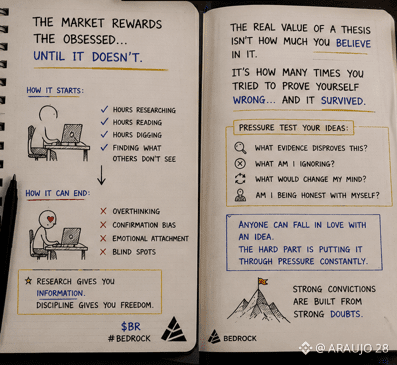
Sometimes the true value of a thesis isn't in how much you believe in it.
It's in how many times you tried to prove yourself wrong and it still held up.
Because anyone can fall in love with an idea.
The tough part is putting it under constant pressure.
And honestly, I believe that the strongest convictions come from the strongest doubts.
#bedrock $BR @Bedrock
{future}(BRUSDT)
The market rewards the obsessed... until it stops doing so
There's something strange I've started to notice in crypto.
Many of the best trades I've seen came from obsession.
Hours of research.
Hours of reading.
Hours searching for something that no one else has spotted. But I've also noticed something equally curious.
Some of the worst mistakes originated from the exact same place.
Because there's a point where research stops giving you an edge.
And starts convincing you of things that don't exist.
The more time you spend staring at something, the easier it is to fall in love with your own thesis.
And when that happens, you stop searching for the truth.
You start looking for confirmation.
That's why I found it interesting something I thought while reviewing Bedrock.
Sometimes the true value of a thesis isn't in how much you believe in it.
It's in how many times you tried to prove yourself wrong and it still held up.
Because anyone can fall in love with an idea.
The tough part is putting it under constant pressure.
And honestly, I believe that the strongest convictions come from the strongest doubts.
#bedrock $BR @Bedrock
There's something strange I've started to notice in crypto.
Many of the best trades I've seen came from obsession.
Hours of research.
Hours of reading.
Hours searching for something that no one else has spotted. But I've also noticed something equally curious.
Some of the worst mistakes originated from the exact same place.
Because there's a point where research stops giving you an edge.
And starts convincing you of things that don't exist.
The more time you spend staring at something, the easier it is to fall in love with your own thesis.
And when that happens, you stop searching for the truth.
You start looking for confirmation.
That's why I found it interesting something I thought while reviewing Bedrock.
Sometimes the true value of a thesis isn't in how much you believe in it.
It's in how many times you tried to prove yourself wrong and it still held up.
Because anyone can fall in love with an idea.
The tough part is putting it under constant pressure.
And honestly, I believe that the strongest convictions come from the strongest doubts.
#bedrock $BR @Bedrock

193
·
--
Araujo 28
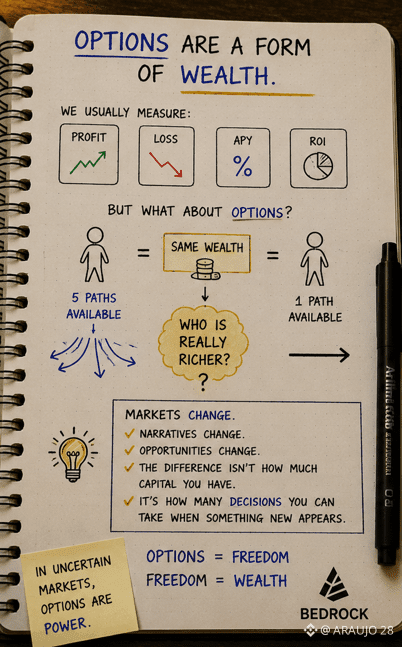
Sometimes I think the biggest mistake in crypto is that it taught us to measure everything in fiat.
Profit.
Loss.
APY.
ROI.
But we rarely measure something equally important: the options.
For example, imagine two people with exactly the same net worth.
Both have the same amount of BTC.
Both have the same amount of time in the market.
Both are bullish.
But one of them has five paths available.
The other only has one.
Who is really wealthier?
That question seems much more interesting than talking about price.
Because markets change.
Narratives change.
Opportunities change.
And often the difference isn’t how much capital you have.
It’s how many decisions you can make when something new pops up.
That’s why I see more value in protocols that expand user possibilities instead of just promising higher yields.
Because in uncertain markets, options are also a form of wealth.
#bedrock $BR @Bedrock
{future}(BRUSDT)
Araujo 28
Sometimes I think the biggest mistake in crypto is that it taught us to measure everything in fiat.
Profit.
Loss.
APY.
ROI.
But we rarely measure something equally important: the options.
For example, imagine two people with exactly the same net worth.
Both have the same amount of BTC.
Both have the same amount of time in the market.
Both are bullish.
But one of them has five paths available.
The other only has one.
Who is really wealthier?
That question seems much more interesting than talking about price.
Because markets change.
Narratives change.
Opportunities change.
And often the difference isn’t how much capital you have.
It’s how many decisions you can make when something new pops up.
That’s why I see more value in protocols that expand user possibilities instead of just promising higher yields.
Because in uncertain markets, options are also a form of wealth.
#bedrock $BR @Bedrock
Sometimes I think the biggest mistake in crypto is that it taught us to measure everything in fiat.
Profit.
Loss.
APY.
ROI.
But we rarely measure something equally important: the options.
For example, imagine two people with exactly the same net worth.
Both have the same amount of BTC.
Both have the same amount of time in the market.
Both are bullish.
But one of them has five paths available.
The other only has one.
Who is really wealthier?
That question seems much more interesting than talking about price.
Because markets change.
Narratives change.
Opportunities change.
And often the difference isn’t how much capital you have.
It’s how many decisions you can make when something new pops up.
That’s why I see more value in protocols that expand user possibilities instead of just promising higher yields.
Because in uncertain markets, options are also a form of wealth.
#bedrock $BR @Bedrock
1
135
·
--
There’s something strange about crypto that I never really thought about until recently.
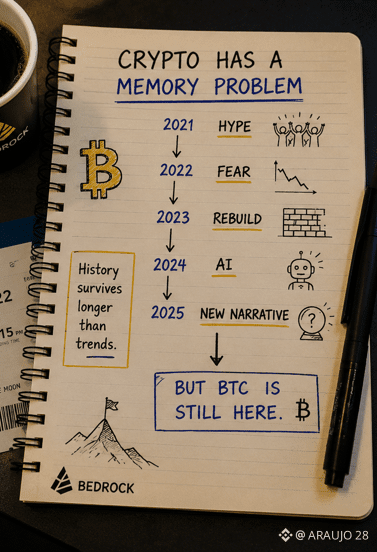
Bitcoin is 17 years old.
Ethereum has been around for more than a decade.
Yet the market behaves like it was born yesterday.
Every cycle seems to erase the memory of the previous one.
People forget what worked.
Forget what failed.
Forget what survived.
And then chase the exact same ideas under different names.
That’s why a recent conversation about Bedrock caught my attention.
While much of the market is focused on finding the next narrative, there are protocols building around assets that have already proven they can survive multiple cycles.
And honestly, that feels harder than launching a new trend.
Creating something new is difficult.
Making something already proven more useful may be even harder.
Maybe that’s why I’m paying more attention to projects trying to extend the usefulness of crypto’s strongest assets instead of replacing them.
Narratives move fast.
History moves slowly.
And in crypto, surviving long enough to become part of history is already a competitive advantage.
$BR BR #Bedrock @Bedrock
{alpha}(560xff7d6a96ae471bbcd7713af9cb1feeb16cf56b41)
There’s something strange about crypto that I never really thought about until recently.
Bitcoin is 17 years old.
Ethereum has been around for more than a decade.
Yet the market behaves like it was born yesterday.
Every cycle seems to erase the memory of the previous one.
People forget what worked.
Forget what failed.
Forget what survived.
And then chase the exact same ideas under different names.
That’s why a recent conversation about Bedrock caught my attention.
While much of the market is focused on finding the next narrative, there are protocols building around assets that have already proven they can survive multiple cycles.
And honestly, that feels harder than launching a new trend.
Creating something new is difficult.
Making something already proven more useful may be even harder.
Maybe that’s why I’m paying more attention to projects trying to extend the usefulness of crypto’s strongest assets instead of replacing them.
Narratives move fast.
History moves slowly.
And in crypto, surviving long enough to become part of history is already a competitive advantage.
$BR BR #Bedrock @Bedrock
Bitcoin is 17 years old.
Ethereum has been around for more than a decade.
Yet the market behaves like it was born yesterday.
Every cycle seems to erase the memory of the previous one.
People forget what worked.
Forget what failed.
Forget what survived.
And then chase the exact same ideas under different names.
That’s why a recent conversation about Bedrock caught my attention.
While much of the market is focused on finding the next narrative, there are protocols building around assets that have already proven they can survive multiple cycles.
And honestly, that feels harder than launching a new trend.
Creating something new is difficult.
Making something already proven more useful may be even harder.
Maybe that’s why I’m paying more attention to projects trying to extend the usefulness of crypto’s strongest assets instead of replacing them.
Narratives move fast.
History moves slowly.
And in crypto, surviving long enough to become part of history is already a competitive advantage.
$BR BR #Bedrock @Bedrock
1
140
·
--
Araujo 28
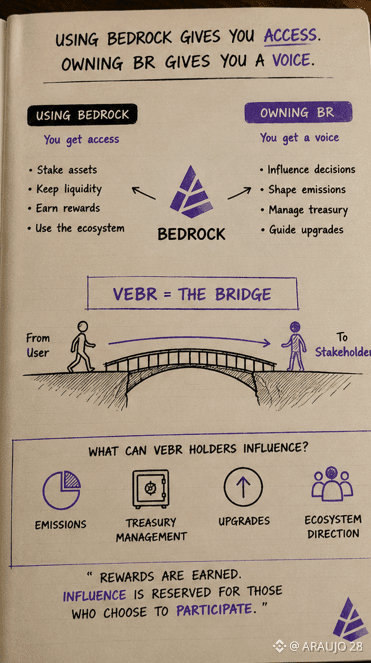
For a long time, I thought tokens only existed for two reasons: speculation or utility fees.
Honestly, I think most people still see the market that way.
But the other day I found myself thinking about a strange question.
If every crypto chart disappeared for an entire week, which tokens would still matter? 📈
Not price.
Not volume.
Not narratives.
Actual utility.
Because there’s a big difference between owning something that goes up and owning something that lets you participate in the direction of an ecosystem.
That’s when I started looking at $BR differently.
Most users spend years thinking about how rewards are generated, but very few stop and ask who gets to influence where those rewards go in the first place.
The more I read about veBR, the more interesting that idea became.
Every economy eventually separates into two groups.
The people who participate.🪅
And the people who help shape the rules.
Maybe that’s why I’m becoming more interested in protocols that turn users into stakeholders rather than spectators.
Not because it guarantees returns.
But because it changes the relationship between a person and the ecosystem they use.
And honestly, I think a lot of people are still looking at BR as just another token.
Kkkkkk
#bedrock $BR $BTC @Bedrock
{alpha}(560xff7d6a96ae471bbcd7713af9cb1feeb16cf56b41)
Araujo 28
For a long time, I thought tokens only existed for two reasons: speculation or utility fees.
Honestly, I think most people still see the market that way.
But the other day I found myself thinking about a strange question.
If every crypto chart disappeared for an entire week, which tokens would still matter? 📈
Not price.
Not volume.
Not narratives.
Actual utility.
Because there’s a big difference between owning something that goes up and owning something that lets you participate in the direction of an ecosystem.
That’s when I started looking at $BR differently.
Most users spend years thinking about how rewards are generated, but very few stop and ask who gets to influence where those rewards go in the first place.
The more I read about veBR, the more interesting that idea became.
Every economy eventually separates into two groups.
The people who participate.🪅
And the people who help shape the rules.
Maybe that’s why I’m becoming more interested in protocols that turn users into stakeholders rather than spectators.
Not because it guarantees returns.
But because it changes the relationship between a person and the ecosystem they use.
And honestly, I think a lot of people are still looking at BR as just another token.
Kkkkkk
#bedrock $BR $BTC @Bedrock
For a long time, I thought tokens only existed for two reasons: speculation or utility fees.
Honestly, I think most people still see the market that way.
But the other day I found myself thinking about a strange question.
If every crypto chart disappeared for an entire week, which tokens would still matter? 📈
Not price.
Not volume.
Not narratives.
Actual utility.
Because there’s a big difference between owning something that goes up and owning something that lets you participate in the direction of an ecosystem.
That’s when I started looking at $BR differently.
Most users spend years thinking about how rewards are generated, but very few stop and ask who gets to influence where those rewards go in the first place.
The more I read about veBR, the more interesting that idea became.
Every economy eventually separates into two groups.
The people who participate.🪅
And the people who help shape the rules.
Maybe that’s why I’m becoming more interested in protocols that turn users into stakeholders rather than spectators.
Not because it guarantees returns.
But because it changes the relationship between a person and the ecosystem they use.
And honestly, I think a lot of people are still looking at BR as just another token.
Kkkkkk
#bedrock $BR $BTC @Bedrock
1
112
·
--
Araujo 28
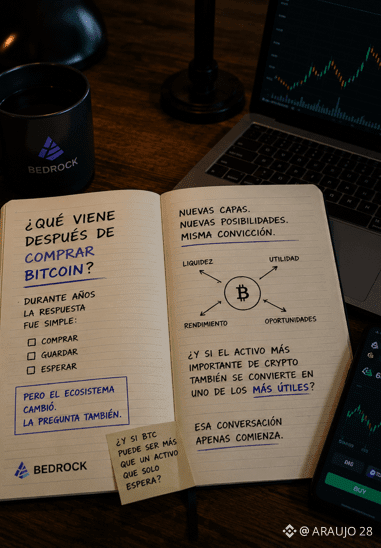
A few years back, holding Bitcoin was a choice. Today, it feels like owning Bitcoin is becoming a responsibility.
💎And I’m not saying that because of the price.
I’m saying it because as the industry matures, it gets harder to ignore an uncomfortable question: what should you do with your capital after it hits your wallet?
For a long time, the answer was simple. Nothing.
🅱️Buy BTC.
💂HODL it.
👽Wait.
And honestly, that worked pretty well.
But something curious is happening. Every cycle, new financial layers, new infrastructures, and new ways to utilize assets that used to just sit idle come into play. The strange part is that many people still view Bitcoin the same way they did five years ago, while the ecosystem around it has changed completely.🚖
That’s why Bedrock caught my eye from a different angle. Not because it promises higher returns. But because it made me question an idea I’d never challenged before. What if the most important asset in crypto also becomes one of the most useful?
I’m not sure if that’s the right direction.
I don’t know if all BTC should be put to work.👨🏻🏭
But I do believe the coming years will be filled with folks asking something that once seemed irrelevant:
What comes after buying Bitcoin?
And honestly, I think that conversation is just getting started. @Bedrock
#bedrock $BR $BTC
{alpha}(560xff7d6a96ae471bbcd7713af9cb1feeb16cf56b41)
Araujo 28
A few years back, holding Bitcoin was a choice. Today, it feels like owning Bitcoin is becoming a responsibility.
💎And I’m not saying that because of the price.
I’m saying it because as the industry matures, it gets harder to ignore an uncomfortable question: what should you do with your capital after it hits your wallet?
For a long time, the answer was simple. Nothing.
🅱️Buy BTC.
💂HODL it.
👽Wait.
And honestly, that worked pretty well.
But something curious is happening. Every cycle, new financial layers, new infrastructures, and new ways to utilize assets that used to just sit idle come into play. The strange part is that many people still view Bitcoin the same way they did five years ago, while the ecosystem around it has changed completely.🚖
That’s why Bedrock caught my eye from a different angle. Not because it promises higher returns. But because it made me question an idea I’d never challenged before. What if the most important asset in crypto also becomes one of the most useful?
I’m not sure if that’s the right direction.
I don’t know if all BTC should be put to work.👨🏻🏭
But I do believe the coming years will be filled with folks asking something that once seemed irrelevant:
What comes after buying Bitcoin?
And honestly, I think that conversation is just getting started. @Bedrock
#bedrock $BR $BTC
A few years back, holding Bitcoin was a choice. Today, it feels like owning Bitcoin is becoming a responsibility.
💎And I’m not saying that because of the price.
I’m saying it because as the industry matures, it gets harder to ignore an uncomfortable question: what should you do with your capital after it hits your wallet?
For a long time, the answer was simple. Nothing.
🅱️Buy BTC.
💂HODL it.
👽Wait.
And honestly, that worked pretty well.
But something curious is happening. Every cycle, new financial layers, new infrastructures, and new ways to utilize assets that used to just sit idle come into play. The strange part is that many people still view Bitcoin the same way they did five years ago, while the ecosystem around it has changed completely.🚖
That’s why Bedrock caught my eye from a different angle. Not because it promises higher returns. But because it made me question an idea I’d never challenged before. What if the most important asset in crypto also becomes one of the most useful?
I’m not sure if that’s the right direction.
I don’t know if all BTC should be put to work.👨🏻🏭
But I do believe the coming years will be filled with folks asking something that once seemed irrelevant:
What comes after buying Bitcoin?
And honestly, I think that conversation is just getting started. @Bedrock
#bedrock $BR $BTC
1
1
209
·
--
Bullish
Araujo 28
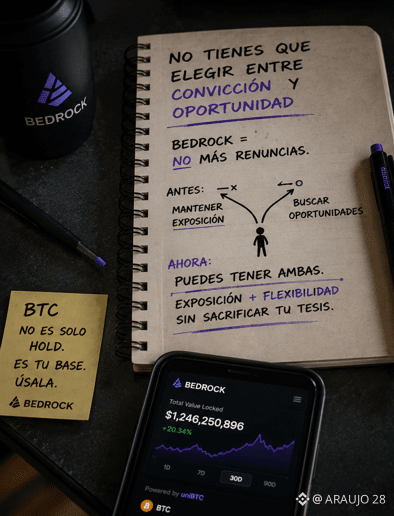
I recently saw a buddy sell BTC to jump on an opportunity that popped up out of nowhere. Two weeks later, he wanted to buy BTC back because he still believed in it. The funny thing is, he never changed his thesis. He never stopped being bullish. The only thing that changed was that the market forced him to choose between a new opportunity and an old position.📈
And that’s when I realized something weird. A big part of crypto still operates as if capital has to be in one place at a time. Like every move is a sacrifice❌. If you do one thing, you stop doing another. If you maintain exposure, you sacrifice flexibility. If you seek flexibility, you lose exposure.
That’s why Bedrock seems interesting to me from a different angle than what people usually discuss. Not because it promises higher returns. But because every time I research BTCFi🧠, I feel that the real battle isn't about finding better assets. It's about avoiding having to abandon a thesis every time a new opportunity arises. And honestly, I believe that will be way more important in two years than any APY that's trending today. 🙅
#bedrock $BR @Bedrock
Araujo 28
I recently saw a buddy sell BTC to jump on an opportunity that popped up out of nowhere. Two weeks later, he wanted to buy BTC back because he still believed in it. The funny thing is, he never changed his thesis. He never stopped being bullish. The only thing that changed was that the market forced him to choose between a new opportunity and an old position.📈
And that’s when I realized something weird. A big part of crypto still operates as if capital has to be in one place at a time. Like every move is a sacrifice❌. If you do one thing, you stop doing another. If you maintain exposure, you sacrifice flexibility. If you seek flexibility, you lose exposure.
That’s why Bedrock seems interesting to me from a different angle than what people usually discuss. Not because it promises higher returns. But because every time I research BTCFi🧠, I feel that the real battle isn't about finding better assets. It's about avoiding having to abandon a thesis every time a new opportunity arises. And honestly, I believe that will be way more important in two years than any APY that's trending today. 🙅
#bedrock $BR @Bedrock
I recently saw a buddy sell BTC to jump on an opportunity that popped up out of nowhere. Two weeks later, he wanted to buy BTC back because he still believed in it. The funny thing is, he never changed his thesis. He never stopped being bullish. The only thing that changed was that the market forced him to choose between a new opportunity and an old position.📈
And that’s when I realized something weird. A big part of crypto still operates as if capital has to be in one place at a time. Like every move is a sacrifice❌. If you do one thing, you stop doing another. If you maintain exposure, you sacrifice flexibility. If you seek flexibility, you lose exposure.
That’s why Bedrock seems interesting to me from a different angle than what people usually discuss. Not because it promises higher returns. But because every time I research BTCFi🧠, I feel that the real battle isn't about finding better assets. It's about avoiding having to abandon a thesis every time a new opportunity arises. And honestly, I believe that will be way more important in two years than any APY that's trending today. 🙅
#bedrock $BR @Bedrock
167
·
--
A few years back, folks were dreaming of working from anywhere in the world. Now it’s wild to see so many in crypto who’ve achieved that, yet ended up shackled to the charts. I’ve seen people at the beach staring at candlesticks, in restaurants checking their positions, and on vacation glued to notifications every ten minutes. And honestly, when I see that, I wonder if we’re really using technology to gain freedom or if we just swapped one office for another. ❌
Lately, I've been paying more attention to protocols like @Bedrock . While much of the market is still competing over who can promise the most ridiculous APY, Bedrock seems to focus on something more sustainable: making assets work more efficiently without forcing users to be glued to their screens. I think that detail goes unnoticed by a lot of people. In DeFi, everyone talks about yield, but hardly anyone mentions the mental toll of managing that yield every day. 🅿️
Maybe the next big evolution in crypto won’t be a new narrative, a new chain, or a new meme coin. Maybe it’ll be something much simpler: protocols that allow users to reclaim their time. Because in the end, the scarcest asset isn’t Bitcoin, or Ethereum, or any coin. It’s time. And the more I dig into Bedrock, the more I feel that idea is much closer to the heart of the conversation than it seems. 🥋
#bedrock $BR @Bedrock
A few years back, folks were dreaming of working from anywhere in the world. Now it’s wild to see so many in crypto who’ve achieved that, yet ended up shackled to the charts. I’ve seen people at the beach staring at candlesticks, in restaurants checking their positions, and on vacation glued to notifications every ten minutes. And honestly, when I see that, I wonder if we’re really using technology to gain freedom or if we just swapped one office for another. ❌
Lately, I've been paying more attention to protocols like @Bedrock . While much of the market is still competing over who can promise the most ridiculous APY, Bedrock seems to focus on something more sustainable: making assets work more efficiently without forcing users to be glued to their screens. I think that detail goes unnoticed by a lot of people. In DeFi, everyone talks about yield, but hardly anyone mentions the mental toll of managing that yield every day. 🅿️
Maybe the next big evolution in crypto won’t be a new narrative, a new chain, or a new meme coin. Maybe it’ll be something much simpler: protocols that allow users to reclaim their time. Because in the end, the scarcest asset isn’t Bitcoin, or Ethereum, or any coin. It’s time. And the more I dig into Bedrock, the more I feel that idea is much closer to the heart of the conversation than it seems. 🥋
#bedrock $BR @Bedrock
Lately, I've been paying more attention to protocols like @Bedrock . While much of the market is still competing over who can promise the most ridiculous APY, Bedrock seems to focus on something more sustainable: making assets work more efficiently without forcing users to be glued to their screens. I think that detail goes unnoticed by a lot of people. In DeFi, everyone talks about yield, but hardly anyone mentions the mental toll of managing that yield every day. 🅿️
Maybe the next big evolution in crypto won’t be a new narrative, a new chain, or a new meme coin. Maybe it’ll be something much simpler: protocols that allow users to reclaim their time. Because in the end, the scarcest asset isn’t Bitcoin, or Ethereum, or any coin. It’s time. And the more I dig into Bedrock, the more I feel that idea is much closer to the heart of the conversation than it seems. 🥋
#bedrock $BR @Bedrock

123
·
--
Bullish
I'm traveling 🛩️ and still logging into Genius Terminal several times a day. Honestly, it made me realize something: very few crypto projects manage to stay in your routine when you're away from your setup, away from TradingVie_w, and away from the desk. Most tokens only exist while the chart is pumping. Then they vanish from the map. But with $GENIUS , it's different for me because I often log in "just to check quickly" and end up watching launches, wallet movements, or narratives before they explode on Twitte_r.🧬
And I feel that's where the real value of tools like this lies. The market no longer rewards only those who research better... now it heavily favors those who get in early. Meme coins, AI coins, random launches, and cross-chain flows move so fast that when the timeline starts talking about something, smart wallets have probably already positioned themselves a while ago. Honestly, I think a lot of people still don't understand that. The current problem isn't a lack of information. The problem is an overload of information and not being able to process it in time.🧞
That's why I see @GeniusOfficial differently. Not because it "uses AI"—every crypto claims to use AI now. What catches my attention is that several features do seem built around real market problems: tracking, speed, launches, smart money, and execution. 🥇And if Genius keeps improving that while simplifying the experience for retail, I feel that $GENIUS could end up becoming a daily tool for traders... not just another narrative token. 🎐
#genius $GENIUS
I'm traveling 🛩️ and still logging into Genius Terminal several times a day. Honestly, it made me realize something: very few crypto projects manage to stay in your routine when you're away from your setup, away from TradingVie_w, and away from the desk. Most tokens only exist while the chart is pumping. Then they vanish from the map. But with $GENIUS , it's different for me because I often log in "just to check quickly" and end up watching launches, wallet movements, or narratives before they explode on Twitte_r.🧬
And I feel that's where the real value of tools like this lies. The market no longer rewards only those who research better... now it heavily favors those who get in early. Meme coins, AI coins, random launches, and cross-chain flows move so fast that when the timeline starts talking about something, smart wallets have probably already positioned themselves a while ago. Honestly, I think a lot of people still don't understand that. The current problem isn't a lack of information. The problem is an overload of information and not being able to process it in time.🧞
That's why I see @GeniusOfficial differently. Not because it "uses AI"—every crypto claims to use AI now. What catches my attention is that several features do seem built around real market problems: tracking, speed, launches, smart money, and execution. 🥇And if Genius keeps improving that while simplifying the experience for retail, I feel that $GENIUS could end up becoming a daily tool for traders... not just another narrative token. 🎐
#genius $GENIUS
And I feel that's where the real value of tools like this lies. The market no longer rewards only those who research better... now it heavily favors those who get in early. Meme coins, AI coins, random launches, and cross-chain flows move so fast that when the timeline starts talking about something, smart wallets have probably already positioned themselves a while ago. Honestly, I think a lot of people still don't understand that. The current problem isn't a lack of information. The problem is an overload of information and not being able to process it in time.🧞
That's why I see @GeniusOfficial differently. Not because it "uses AI"—every crypto claims to use AI now. What catches my attention is that several features do seem built around real market problems: tracking, speed, launches, smart money, and execution. 🥇And if Genius keeps improving that while simplifying the experience for retail, I feel that $GENIUS could end up becoming a daily tool for traders... not just another narrative token. 🎐
#genius $GENIUS

1
180
·
--
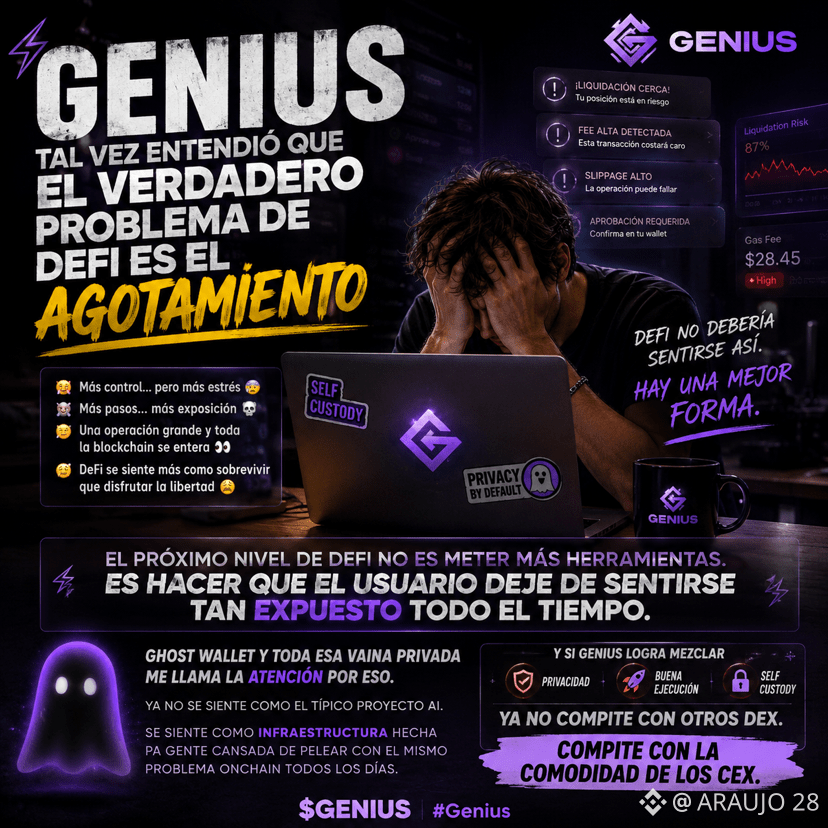
🔥 GENIUS TAL MAY HAVE REALIZED THAT THE TRUE ISSUE WITH DEFI IS MENTAL FATIGUE 🧘
My brothers, the more time I spend in crypto, the more I feel that the problem isn't trading
It's being on guard ALL the time 📋
On guard for MEV.
On guard for slippage.
On guard for bots.
On guard for trackers.
On guard for signing something sketchy and messing up the wallet
Man, there comes a point where DeFi stops feeling like freedom and starts to feel like premium stress
Because yeah, you have self custody, more control,
much more freedom… but you also feel like the entire blockchain is watching every move you make 🎐
And honestly, looking at @GeniusOfficial , I understood something heavy
Maybe the future of DeFi isn't about adding 40 more tools for the user t🐈
It's about removing the feeling of being exposed 24/7
That's why Ghost Wallet and all that private infrastructure caught my attention
It doesn't feel like the typical AI project trying to look futuristic 🔮
It feels more like infrastructure built for traders tired of battling the same on-chain issues every day
Because in the end…
many traders still use CEX not because they love centralization
But because operating publicly on-chain still feels uncomfortable 📲
And if Genius can mix:
privacy +
clean execution +
self custody
it wouldn't just be competing with other DEXs
It would be competing directly with the convenience of Binance 🅱️ I hope you like my opinion, guys
#genius $GENIUS
🔥 GENIUS TAL MAY HAVE REALIZED THAT THE TRUE ISSUE WITH DEFI IS MENTAL FATIGUE 🧘
My brothers, the more time I spend in crypto, the more I feel that the problem isn't trading
It's being on guard ALL the time 📋
On guard for MEV.
On guard for slippage.
On guard for bots.
On guard for trackers.
On guard for signing something sketchy and messing up the wallet
Man, there comes a point where DeFi stops feeling like freedom and starts to feel like premium stress
Because yeah, you have self custody, more control,
much more freedom… but you also feel like the entire blockchain is watching every move you make 🎐
And honestly, looking at @GeniusOfficial , I understood something heavy
Maybe the future of DeFi isn't about adding 40 more tools for the user t🐈
It's about removing the feeling of being exposed 24/7
That's why Ghost Wallet and all that private infrastructure caught my attention
It doesn't feel like the typical AI project trying to look futuristic 🔮
It feels more like infrastructure built for traders tired of battling the same on-chain issues every day
Because in the end…
many traders still use CEX not because they love centralization
But because operating publicly on-chain still feels uncomfortable 📲
And if Genius can mix:
privacy +
clean execution +
self custody
it wouldn't just be competing with other DEXs
It would be competing directly with the convenience of Binance 🅱️ I hope you like my opinion, guys
#genius $GENIUS
My brothers, the more time I spend in crypto, the more I feel that the problem isn't trading
It's being on guard ALL the time 📋
On guard for MEV.
On guard for slippage.
On guard for bots.
On guard for trackers.
On guard for signing something sketchy and messing up the wallet
Man, there comes a point where DeFi stops feeling like freedom and starts to feel like premium stress
Because yeah, you have self custody, more control,
much more freedom… but you also feel like the entire blockchain is watching every move you make 🎐
And honestly, looking at @GeniusOfficial , I understood something heavy
Maybe the future of DeFi isn't about adding 40 more tools for the user t🐈
It's about removing the feeling of being exposed 24/7
That's why Ghost Wallet and all that private infrastructure caught my attention
It doesn't feel like the typical AI project trying to look futuristic 🔮
It feels more like infrastructure built for traders tired of battling the same on-chain issues every day
Because in the end…
many traders still use CEX not because they love centralization
But because operating publicly on-chain still feels uncomfortable 📲
And if Genius can mix:
privacy +
clean execution +
self custody
it wouldn't just be competing with other DEXs
It would be competing directly with the convenience of Binance 🅱️ I hope you like my opinion, guys
#genius $GENIUS
144
·
--
Bullish
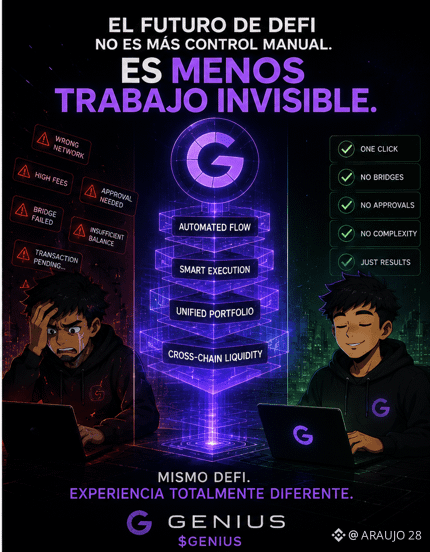
Guys, I've been thinking about something weird for a while 😭
Crypto has romanticized the whole "doing it manually" thing way too much.
Like:
doing manual bridges 😭moving funds manually 😭signing everything manually 😭looking for liquidity manually 😭
And if you do all that, you're a "pro"
But honestly…what if all of this is just poorly designed stuff disguised as crypto culture? 👨🏻🏭
That's when @GeniusOfficial started to seem interesting to me.
Because it doesn't feel built for you to admire the complexity.
It feels built to eliminate those invisible tasks that nobody enjoys doing 🧶
And bro, that's important.
Because one thing is having financial freedom.
Another completely different thing is forcing users to suffer through every technical step just to use it 🧳
That's why Genius gives me the feeling that they're betting on something deeper: that the future of DeFi may not be about giving users MORE manual control… but rather taking away unnecessary work without stripping them of their freedom 🪼
And honestly, guys, if someone masters that balance, it could change way more than just trading 😭
#genius $GENIUS
Guys, I've been thinking about something weird for a while 😭
Crypto has romanticized the whole "doing it manually" thing way too much.
Like:
doing manual bridges 😭moving funds manually 😭signing everything manually 😭looking for liquidity manually 😭
And if you do all that, you're a "pro"
But honestly…what if all of this is just poorly designed stuff disguised as crypto culture? 👨🏻🏭
That's when @GeniusOfficial started to seem interesting to me.
Because it doesn't feel built for you to admire the complexity.
It feels built to eliminate those invisible tasks that nobody enjoys doing 🧶
And bro, that's important.
Because one thing is having financial freedom.
Another completely different thing is forcing users to suffer through every technical step just to use it 🧳
That's why Genius gives me the feeling that they're betting on something deeper: that the future of DeFi may not be about giving users MORE manual control… but rather taking away unnecessary work without stripping them of their freedom 🪼
And honestly, guys, if someone masters that balance, it could change way more than just trading 😭
#genius $GENIUS
Crypto has romanticized the whole "doing it manually" thing way too much.
Like:
doing manual bridges 😭moving funds manually 😭signing everything manually 😭looking for liquidity manually 😭
And if you do all that, you're a "pro"
But honestly…what if all of this is just poorly designed stuff disguised as crypto culture? 👨🏻🏭
That's when @GeniusOfficial started to seem interesting to me.
Because it doesn't feel built for you to admire the complexity.
It feels built to eliminate those invisible tasks that nobody enjoys doing 🧶
And bro, that's important.
Because one thing is having financial freedom.
Another completely different thing is forcing users to suffer through every technical step just to use it 🧳
That's why Genius gives me the feeling that they're betting on something deeper: that the future of DeFi may not be about giving users MORE manual control… but rather taking away unnecessary work without stripping them of their freedom 🪼
And honestly, guys, if someone masters that balance, it could change way more than just trading 😭
#genius $GENIUS
123
·
--
Bullish
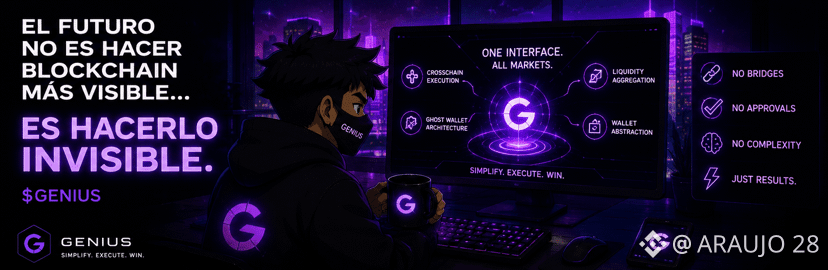
THE MOMENT WHEN BLOCKCHAIN DISAPPEARS… MAYBE THAT'S WHEN CRYPTO REALLY WINS
I don't know if it's just me, bro, but I feel like a lot of crypto projects still think users want to see ALL the gears turning 😭
Like…
"check out this bridge"
"look at this routing"
"see this infrastructure"
"look at how many chains we support"
And yeah, technically that sounds heavy.
But honestly… after years of watching DeFi, I think there's something weird going on:
the more visible the complexity is… the smaller the audience gets 💀
Because the average user doesn’t want to study blockchain architecture just to make a simple trade.
And that's when I started thinking differently after seeing @GeniusOfficial .
Not because they invented trading.
Not because they have AI.
Not because they say "we're revolutionary".
But because the project seems to be heading in a direction that almost nobody is saying out loud:
to make blockchain disappear from the experience.
And that sounds contradictory 😭
Because crypto spent years trying to showcase the technology… but now it seems like the smartest projects are trying to hide it beneath the product.
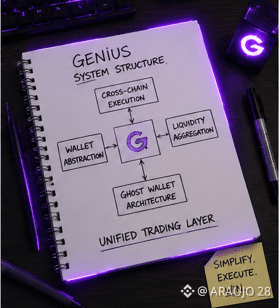
Ghost Wallet.
Crosschain execution.
Unified flows.
Liquidity aggregation.
All of that is technically complex.
But the real goal seems to be that the user DOESN'T have to think about it.
#genius $GENIUS
THE MOMENT WHEN BLOCKCHAIN DISAPPEARS… MAYBE THAT'S WHEN CRYPTO REALLY WINS
I don't know if it's just me, bro, but I feel like a lot of crypto projects still think users want to see ALL the gears turning 😭
Like…
"check out this bridge"
"look at this routing"
"see this infrastructure"
"look at how many chains we support"
And yeah, technically that sounds heavy.
But honestly… after years of watching DeFi, I think there's something weird going on:
the more visible the complexity is… the smaller the audience gets 💀
Because the average user doesn’t want to study blockchain architecture just to make a simple trade.
And that's when I started thinking differently after seeing @GeniusOfficial .
Not because they invented trading.
Not because they have AI.
Not because they say "we're revolutionary".
But because the project seems to be heading in a direction that almost nobody is saying out loud:
to make blockchain disappear from the experience.
And that sounds contradictory 😭
Because crypto spent years trying to showcase the technology… but now it seems like the smartest projects are trying to hide it beneath the product.
Ghost Wallet.
Crosschain execution.
Unified flows.
Liquidity aggregation.
All of that is technically complex.
But the real goal seems to be that the user DOESN'T have to think about it.
#genius $GENIUS
I don't know if it's just me, bro, but I feel like a lot of crypto projects still think users want to see ALL the gears turning 😭
Like…
"check out this bridge"
"look at this routing"
"see this infrastructure"
"look at how many chains we support"
And yeah, technically that sounds heavy.
But honestly… after years of watching DeFi, I think there's something weird going on:
the more visible the complexity is… the smaller the audience gets 💀
Because the average user doesn’t want to study blockchain architecture just to make a simple trade.
And that's when I started thinking differently after seeing @GeniusOfficial .
Not because they invented trading.
Not because they have AI.
Not because they say "we're revolutionary".
But because the project seems to be heading in a direction that almost nobody is saying out loud:
to make blockchain disappear from the experience.
And that sounds contradictory 😭
Because crypto spent years trying to showcase the technology… but now it seems like the smartest projects are trying to hide it beneath the product.
Ghost Wallet.
Crosschain execution.
Unified flows.
Liquidity aggregation.
All of that is technically complex.
But the real goal seems to be that the user DOESN'T have to think about it.
#genius $GENIUS
169
·
--
Bullish
THE REAL ISSUE WITH DEFI DOESN'T EVEN SEEM LIKE TRADING 💀⚡
Man, the more I check out on-chain trading stuff, the more I feel like the problem isn't trading itself 😭
It's ALL the other stuff to trade 🤣 LOL
One wallet here, another chain there, approvals, bridges, weird gas fees, slippage, lost liquidity, funds on another network… BRO, you end up more exhausted setting up the trade than actually trading 💀
And that's when I realized something watching @GeniusOfficial
They don't seem to be competing to “be faster.”
It feels more like they want to take the mental stress off your back.
Like… you just dive in and that's it.
Without overthinking where everything is.
Ghost Wallet, cross-chain execution, liquidity aggregation… normally those technical names put you to sleep 😭 but here they feel like tools to stop the user from suffering with so much fragmentation.
And honestly, guys,
I think the next big project in crypto won't be the one with the MOST features.
It'll be the one that makes using crypto stop feeling like solving a puzzle every day 💠
#genius $GENIUS
THE REAL ISSUE WITH DEFI DOESN'T EVEN SEEM LIKE TRADING 💀⚡
Man, the more I check out on-chain trading stuff, the more I feel like the problem isn't trading itself 😭
It's ALL the other stuff to trade 🤣 LOL
One wallet here, another chain there, approvals, bridges, weird gas fees, slippage, lost liquidity, funds on another network… BRO, you end up more exhausted setting up the trade than actually trading 💀
And that's when I realized something watching @GeniusOfficial
They don't seem to be competing to “be faster.”
It feels more like they want to take the mental stress off your back.
Like… you just dive in and that's it.
Without overthinking where everything is.
Ghost Wallet, cross-chain execution, liquidity aggregation… normally those technical names put you to sleep 😭 but here they feel like tools to stop the user from suffering with so much fragmentation.
And honestly, guys,
I think the next big project in crypto won't be the one with the MOST features.
It'll be the one that makes using crypto stop feeling like solving a puzzle every day 💠
#genius $GENIUS
Man, the more I check out on-chain trading stuff, the more I feel like the problem isn't trading itself 😭
It's ALL the other stuff to trade 🤣 LOL
One wallet here, another chain there, approvals, bridges, weird gas fees, slippage, lost liquidity, funds on another network… BRO, you end up more exhausted setting up the trade than actually trading 💀
And that's when I realized something watching @GeniusOfficial
They don't seem to be competing to “be faster.”
It feels more like they want to take the mental stress off your back.
Like… you just dive in and that's it.
Without overthinking where everything is.
Ghost Wallet, cross-chain execution, liquidity aggregation… normally those technical names put you to sleep 😭 but here they feel like tools to stop the user from suffering with so much fragmentation.
And honestly, guys,
I think the next big project in crypto won't be the one with the MOST features.
It'll be the one that makes using crypto stop feeling like solving a puzzle every day 💠
#genius $GENIUS
201
·
--
Article
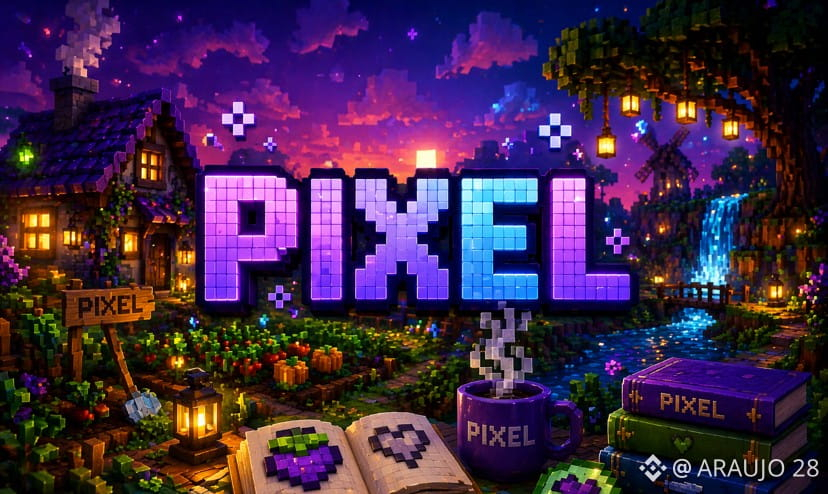
WHEN YOUR FARM STOPS BEING DECORATION AND STARTS FUNCTIONING AS PART OF YOUThe most interesting part of Pixels is not always in the farm or in the tokens. Sometimes it's in smaller things, but much tougher to debate. The Genesis Pets, for example, were introduced as play-to-mint NFTs, with only 200 units available. And the important fact is not just the scarcity. It's the relationship between scarcity and function. Because the pet is not there just to decorate the profile; it increases your storage capacity, gives you a larger interaction radius, and has a happiness meter that adds another layer of care to the bond.
WHEN YOUR FARM STOPS BEING DECORATION AND STARTS FUNCTIONING AS PART OF YOU
The most interesting part of Pixels is not always in the farm or in the tokens. Sometimes it's in smaller things, but much tougher to debate. The Genesis Pets, for example, were introduced as play-to-mint NFTs, with only 200 units available. And the important fact is not just the scarcity. It's the relationship between scarcity and function. Because the pet is not there just to decorate the profile; it increases your storage capacity, gives you a larger interaction radius, and has a happiness meter that adds another layer of care to the bond.
1
150
·
--
Bullish
WHAT SEEMS LIKE DECORATION IN PIXELS ENDS UP BEHAVING AS PART OF THE SYSTEM 🧚
Did you know that the strange thing about Genesis Pets in Pixels is not just that they are limited NFTs? The strange thing is that they don't feel like an empty trophy. Ronin explained that there were only 200 Genesis Pets and that they were play-to-mint, meaning you had to play Pixels to be able to mint them. 🖥️ But what catches my attention the most is that the pet does not just look nice: it increases your storage capacity, expands your interaction radius, and even brings a happiness meter. That's not just decoration, brooou. That's a piece that changes how you exist within the game.
And there's the good question: does a pet still remain a pet when it enhances your way of playing so much? Because it’s not just companionship. It’s reach. It’s capacity. It’s a real boost within the world. And if less than 1% of players could have one at that time, then the pet not only signifies rarity, but also marks a difference in presence. @pixels 🥶🦖
#pixel $PIXEL
WHAT SEEMS LIKE DECORATION IN PIXELS ENDS UP BEHAVING AS PART OF THE SYSTEM 🧚
Did you know that the strange thing about Genesis Pets in Pixels is not just that they are limited NFTs? The strange thing is that they don't feel like an empty trophy. Ronin explained that there were only 200 Genesis Pets and that they were play-to-mint, meaning you had to play Pixels to be able to mint them. 🖥️ But what catches my attention the most is that the pet does not just look nice: it increases your storage capacity, expands your interaction radius, and even brings a happiness meter. That's not just decoration, brooou. That's a piece that changes how you exist within the game.
And there's the good question: does a pet still remain a pet when it enhances your way of playing so much? Because it’s not just companionship. It’s reach. It’s capacity. It’s a real boost within the world. And if less than 1% of players could have one at that time, then the pet not only signifies rarity, but also marks a difference in presence. @Pixels 🥶🦖
#pixel $PIXEL
Did you know that the strange thing about Genesis Pets in Pixels is not just that they are limited NFTs? The strange thing is that they don't feel like an empty trophy. Ronin explained that there were only 200 Genesis Pets and that they were play-to-mint, meaning you had to play Pixels to be able to mint them. 🖥️ But what catches my attention the most is that the pet does not just look nice: it increases your storage capacity, expands your interaction radius, and even brings a happiness meter. That's not just decoration, brooou. That's a piece that changes how you exist within the game.
And there's the good question: does a pet still remain a pet when it enhances your way of playing so much? Because it’s not just companionship. It’s reach. It’s capacity. It’s a real boost within the world. And if less than 1% of players could have one at that time, then the pet not only signifies rarity, but also marks a difference in presence. @Pixels 🥶🦖
#pixel $PIXEL

180
Log in to explore more content
Join global crypto users on Binance Square
⚡️ Get latest and useful information about crypto.
💬 Trusted by the world’s largest crypto exchange.
👍 Discover real insights from verified creators.
Email / Phone number
Trending Topics
QNTRises287%
771 views
75 Discussing
#qntrises287%
🚨 $QNT JUST EXPLODED +287%! 🚀🔥
Quant is making a massive move, sending traders into full FOMO mode. 👀
📈 +287% SURGE
🔥 Momentum accelerating
🐂 Bulls taking control
🎯 Now the BIG question: WHAT’S NEXT?
After a move this explosive, traders are watching closely to see whether $QNT can keep the bullish trend going or enter a cooldown.
NEW ATH NEXT? 👀🚀
👇 What’s your next $QNT target?
#QNT #Quant #crypto
Faizan Crypto Learner
·0 Likes
·160 views
TrumpRejectsAIRulesForVoluntaryAudits
4,486 views
233 Discussing
BitgetHotWalletBreachTiedToThirdPartySecurityFlaw
2,253 views
176 Discussing