

小恐龙说趋势
424 Posts
 LIVE
LIVE小恐龙说趋势
Report
Block User
X:XiaoKongLong_88 , 6 年加密市场经历 , 牛市里见过疯狂,熊市里见过人性
6 Following
2.0K+ Followers
2.4K+ Liked
Posts
All
Live
·
--
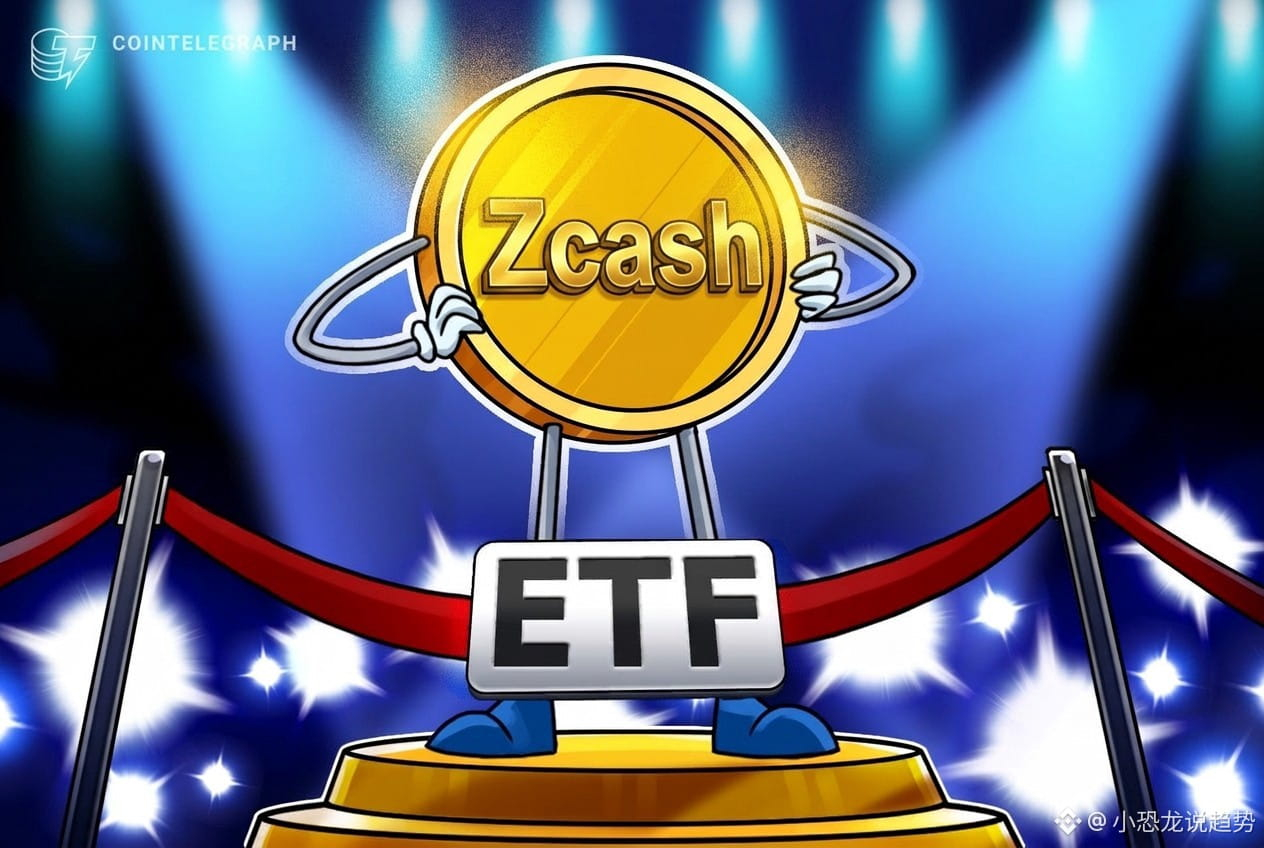
🦖 A privacy coin that regulators have kept under scrutiny for a decade has pulled in $1 billion in a month—and become the hottest new frontier for ETFs
[📈 进群一起分析行情](https://app.binance.com/uni-qr/JpwCPfBj)
One line from Grayscale trading director Krista Lynch brought the market to its senses: crypto ETFs are moving beyond the era of just Bitcoin and Ethereum.
First, the facts: Grayscale’s spot Zcash ETF, ZCSH, listed on the NYSE this August and attracted nearly $1 billion in assets in just over a month. Meanwhile, the Winklevoss brothers filed a new application with the SEC for a Zcash ETF, ticker WINK, planning to list it on Nasdaq. The management fee is just 0.25%, and the issuer plans to spend up to $100 million of its own money buying shares of the fund.
The real significance of this news isn’t Zcash itself, but another thing Lynch said: the SEC’s generic listing standards cover around 15 tokens. That means issuers no longer have to wait for approval one by one—they can choose from those 15 assets and list them directly.
Put simply, for the past two years, crypto ETFs have been almost entirely a two-horse race between Bitcoin and Ethereum. Now that barrier has come down, and investors are looking for stories in smaller coins. Zcash happens to tick two boxes.
First, price: ZEC has gained more than sevenfold over the past year, with a market cap of around $23 billion, putting it in the global top ten. It was trading at around $1,354 on Tuesday.
Second, the narrative: AI is making it cheaper and faster to deanonymize on-chain activity. Software in 2026 can trace a 2019 transaction back to a real person. Grayscale Research has described the privacy concerns driven by AI as a third wave of demand for privacy. Meanwhile, around 4.9 million coins are now in ZEC’s shielded pool—close to 29% of the total ever mined. 🛡️
The most striking contrast is that regulators around the world have treated privacy coins as major money-laundering risks for a decade, and exchanges have delisted them in wave after wave. Now the same coin has put on a new guise and entered mainstream brokerage accounts in the form of an ETF. Same coin, completely different identity.
My take: this isn’t just a rally in Zcash; it’s the beginning of crypto ETFs expanding from a single category to many. The first assets covered by the generic standards could have a chance to replicate Bitcoin ETFs’ inflow trajectory. Of course, that’s where the risks lie too: the compliance questions around privacy coins remain unresolved, and no one can guarantee that selective disclosure will satisfy regulators. ⚠️
Do you think Zcash will be the next asset to get a boost from ETFs, or the first fire to burn out in this wave of multi-category expansion? 🔥 Let’s talk in the comments.
Tap the profile picture to watch the livestream.
Every day, we bring you the latest on Bitcoin and the crypto market—not just what’s happening, but the logic and opportunities behind it. 👀🚀
🦖 A privacy coin that regulators have kept under scrutiny for a decade has pulled in $1 billion in a month—and become the hottest new frontier for ETFs
📈 进群一起分析行情
One line from Grayscale trading director Krista Lynch brought the market to its senses: crypto ETFs are moving beyond the era of just Bitcoin and Ethereum.
First, the facts: Grayscale’s spot Zcash ETF, ZCSH, listed on the NYSE this August and attracted nearly $1 billion in assets in just over a month. Meanwhile, the Winklevoss brothers filed a new application with the SEC for a Zcash ETF, ticker WINK, planning to list it on Nasdaq. The management fee is just 0.25%, and the issuer plans to spend up to $100 million of its own money buying shares of the fund.
The real significance of this news isn’t Zcash itself, but another thing Lynch said: the SEC’s generic listing standards cover around 15 tokens. That means issuers no longer have to wait for approval one by one—they can choose from those 15 assets and list them directly.
Put simply, for the past two years, crypto ETFs have been almost entirely a two-horse race between Bitcoin and Ethereum. Now that barrier has come down, and investors are looking for stories in smaller coins. Zcash happens to tick two boxes.
First, price: ZEC has gained more than sevenfold over the past year, with a market cap of around $23 billion, putting it in the global top ten. It was trading at around $1,354 on Tuesday.
Second, the narrative: AI is making it cheaper and faster to deanonymize on-chain activity. Software in 2026 can trace a 2019 transaction back to a real person. Grayscale Research has described the privacy concerns driven by AI as a third wave of demand for privacy. Meanwhile, around 4.9 million coins are now in ZEC’s shielded pool—close to 29% of the total ever mined. 🛡️
The most striking contrast is that regulators around the world have treated privacy coins as major money-laundering risks for a decade, and exchanges have delisted them in wave after wave. Now the same coin has put on a new guise and entered mainstream brokerage accounts in the form of an ETF. Same coin, completely different identity.
My take: this isn’t just a rally in Zcash; it’s the beginning of crypto ETFs expanding from a single category to many. The first assets covered by the generic standards could have a chance to replicate Bitcoin ETFs’ inflow trajectory. Of course, that’s where the risks lie too: the compliance questions around privacy coins remain unresolved, and no one can guarantee that selective disclosure will satisfy regulators. ⚠️
Do you think Zcash will be the next asset to get a boost from ETFs, or the first fire to burn out in this wave of multi-category expansion? 🔥 Let’s talk in the comments.
Tap the profile picture to watch the livestream.
Every day, we bring you the latest on Bitcoin and the crypto market—not just what’s happening, but the logic and opportunities behind it. 👀🚀
📈 进群一起分析行情
One line from Grayscale trading director Krista Lynch brought the market to its senses: crypto ETFs are moving beyond the era of just Bitcoin and Ethereum.
First, the facts: Grayscale’s spot Zcash ETF, ZCSH, listed on the NYSE this August and attracted nearly $1 billion in assets in just over a month. Meanwhile, the Winklevoss brothers filed a new application with the SEC for a Zcash ETF, ticker WINK, planning to list it on Nasdaq. The management fee is just 0.25%, and the issuer plans to spend up to $100 million of its own money buying shares of the fund.
The real significance of this news isn’t Zcash itself, but another thing Lynch said: the SEC’s generic listing standards cover around 15 tokens. That means issuers no longer have to wait for approval one by one—they can choose from those 15 assets and list them directly.
Put simply, for the past two years, crypto ETFs have been almost entirely a two-horse race between Bitcoin and Ethereum. Now that barrier has come down, and investors are looking for stories in smaller coins. Zcash happens to tick two boxes.
First, price: ZEC has gained more than sevenfold over the past year, with a market cap of around $23 billion, putting it in the global top ten. It was trading at around $1,354 on Tuesday.
Second, the narrative: AI is making it cheaper and faster to deanonymize on-chain activity. Software in 2026 can trace a 2019 transaction back to a real person. Grayscale Research has described the privacy concerns driven by AI as a third wave of demand for privacy. Meanwhile, around 4.9 million coins are now in ZEC’s shielded pool—close to 29% of the total ever mined. 🛡️
The most striking contrast is that regulators around the world have treated privacy coins as major money-laundering risks for a decade, and exchanges have delisted them in wave after wave. Now the same coin has put on a new guise and entered mainstream brokerage accounts in the form of an ETF. Same coin, completely different identity.
My take: this isn’t just a rally in Zcash; it’s the beginning of crypto ETFs expanding from a single category to many. The first assets covered by the generic standards could have a chance to replicate Bitcoin ETFs’ inflow trajectory. Of course, that’s where the risks lie too: the compliance questions around privacy coins remain unresolved, and no one can guarantee that selective disclosure will satisfy regulators. ⚠️
Do you think Zcash will be the next asset to get a boost from ETFs, or the first fire to burn out in this wave of multi-category expansion? 🔥 Let’s talk in the comments.
Tap the profile picture to watch the livestream.
Every day, we bring you the latest on Bitcoin and the crypto market—not just what’s happening, but the logic and opportunities behind it. 👀🚀
200
·
--
82 million phones can now send dollars directly—without installing any crypto apps 🦖
[⚡ 有大动静群里说](https://app.binance.com/uni-qr/JpwCPfBj)
On October 7, the Solana Foundation announced in a press release that Samsung Wallet and Samsung Pay will natively support stablecoins on Solana. Starting in the last week of October, Samsung Galaxy users in the U.S. will be able to send cross-border remittances directly from their wallets using USDC. The launch will cover 82 million Galaxy devices in the U.S. 📱
Here’s what matters: it’s not just another blockchain adding stablecoin support. For the first time, stablecoins are being built into one of the world’s most widely used mobile wallets. And this isn’t a standalone crypto app—it’s integrated into the interface people already use every day to tap onto buses, check boarding passes, and show ID. It’s also connected to fiat on- and off-ramps. Users won’t see the blockchain or even feel like they’re using crypto.
How big could this get? There are more than 800 million Galaxy devices worldwide. The 82 million in the U.S. are just the first wave. Future markets will depend on local regulations. As Woncheol Chai, head of the wallet team, put it: “We want Galaxy users to enjoy the convenience of stablecoins without having to deal with the complicated processes involved in traditional crypto tools.” 🌍
Solana’s numbers are impressive, too. Stablecoin supply on the chain has grown by nearly 20% over the past year. In 2026 alone, the network processed more than $5.25 trillion in stablecoin transaction volume. PayPal and Western Union are already using it for stablecoin services. Solana Foundation President Lily Liu put it this way: “What stablecoins have always lacked isn’t the technology—it’s a way to reach the mainstream.”
My take: the real turning point here is distribution. For the past decade, stablecoin growth has relied on exchanges and on-chain users bringing people in themselves. Now the model is shifting to a phone that comes with a dollar account right out of the box. If this works, stablecoins won’t just be competing with other coins—they’ll be competing with bank transfers and remittance companies, in a cross-border remittance market worth nearly a trillion dollars a year. 💵
But let’s keep a cool head. The timeline depends on two things: first, the last week of October is only the U.S. launch; second, account opening, cross-border remittances, and more payment use cases will all need regulatory approval. Samsung itself hasn’t presented them as a done deal. One other detail remains unclear: how long will fee-free transfers last, and who will foot the bill once the initial promotional period ends? ⚖️
What’s worth watching is how many of the 82 million U.S. users actually use the feature to send money once it launches at the end of October—and whether Samsung will bring it to Europe and Asia. Once it expands beyond the U.S., this will stop being just a partnership and become a rewrite of the global payments landscape.
Would you use your mobile wallet to send and receive dollar stablecoins directly, or do you think this is just another crypto-world spectacle? Let’s talk in the comments.
Tap the profile picture to watch the livestream.
Every day, we bring you the latest on stablecoins and crypto. We don’t just report what’s happening—we help you understand the ideas and opportunities behind it. 👀🚀
82 million phones can now send dollars directly—without installing any crypto apps 🦖
⚡ 有大动静群里说
On October 7, the Solana Foundation announced in a press release that Samsung Wallet and Samsung Pay will natively support stablecoins on Solana. Starting in the last week of October, Samsung Galaxy users in the U.S. will be able to send cross-border remittances directly from their wallets using USDC. The launch will cover 82 million Galaxy devices in the U.S. 📱
Here’s what matters: it’s not just another blockchain adding stablecoin support. For the first time, stablecoins are being built into one of the world’s most widely used mobile wallets. And this isn’t a standalone crypto app—it’s integrated into the interface people already use every day to tap onto buses, check boarding passes, and show ID. It’s also connected to fiat on- and off-ramps. Users won’t see the blockchain or even feel like they’re using crypto.
How big could this get? There are more than 800 million Galaxy devices worldwide. The 82 million in the U.S. are just the first wave. Future markets will depend on local regulations. As Woncheol Chai, head of the wallet team, put it: “We want Galaxy users to enjoy the convenience of stablecoins without having to deal with the complicated processes involved in traditional crypto tools.” 🌍
Solana’s numbers are impressive, too. Stablecoin supply on the chain has grown by nearly 20% over the past year. In 2026 alone, the network processed more than $5.25 trillion in stablecoin transaction volume. PayPal and Western Union are already using it for stablecoin services. Solana Foundation President Lily Liu put it this way: “What stablecoins have always lacked isn’t the technology—it’s a way to reach the mainstream.”
My take: the real turning point here is distribution. For the past decade, stablecoin growth has relied on exchanges and on-chain users bringing people in themselves. Now the model is shifting to a phone that comes with a dollar account right out of the box. If this works, stablecoins won’t just be competing with other coins—they’ll be competing with bank transfers and remittance companies, in a cross-border remittance market worth nearly a trillion dollars a year. 💵
But let’s keep a cool head. The timeline depends on two things: first, the last week of October is only the U.S. launch; second, account opening, cross-border remittances, and more payment use cases will all need regulatory approval. Samsung itself hasn’t presented them as a done deal. One other detail remains unclear: how long will fee-free transfers last, and who will foot the bill once the initial promotional period ends? ⚖️
What’s worth watching is how many of the 82 million U.S. users actually use the feature to send money once it launches at the end of October—and whether Samsung will bring it to Europe and Asia. Once it expands beyond the U.S., this will stop being just a partnership and become a rewrite of the global payments landscape.
Would you use your mobile wallet to send and receive dollar stablecoins directly, or do you think this is just another crypto-world spectacle? Let’s talk in the comments.
Tap the profile picture to watch the livestream.
Every day, we bring you the latest on stablecoins and crypto. We don’t just report what’s happening—we help you understand the ideas and opportunities behind it. 👀🚀
⚡ 有大动静群里说
On October 7, the Solana Foundation announced in a press release that Samsung Wallet and Samsung Pay will natively support stablecoins on Solana. Starting in the last week of October, Samsung Galaxy users in the U.S. will be able to send cross-border remittances directly from their wallets using USDC. The launch will cover 82 million Galaxy devices in the U.S. 📱
Here’s what matters: it’s not just another blockchain adding stablecoin support. For the first time, stablecoins are being built into one of the world’s most widely used mobile wallets. And this isn’t a standalone crypto app—it’s integrated into the interface people already use every day to tap onto buses, check boarding passes, and show ID. It’s also connected to fiat on- and off-ramps. Users won’t see the blockchain or even feel like they’re using crypto.
How big could this get? There are more than 800 million Galaxy devices worldwide. The 82 million in the U.S. are just the first wave. Future markets will depend on local regulations. As Woncheol Chai, head of the wallet team, put it: “We want Galaxy users to enjoy the convenience of stablecoins without having to deal with the complicated processes involved in traditional crypto tools.” 🌍
Solana’s numbers are impressive, too. Stablecoin supply on the chain has grown by nearly 20% over the past year. In 2026 alone, the network processed more than $5.25 trillion in stablecoin transaction volume. PayPal and Western Union are already using it for stablecoin services. Solana Foundation President Lily Liu put it this way: “What stablecoins have always lacked isn’t the technology—it’s a way to reach the mainstream.”
My take: the real turning point here is distribution. For the past decade, stablecoin growth has relied on exchanges and on-chain users bringing people in themselves. Now the model is shifting to a phone that comes with a dollar account right out of the box. If this works, stablecoins won’t just be competing with other coins—they’ll be competing with bank transfers and remittance companies, in a cross-border remittance market worth nearly a trillion dollars a year. 💵
But let’s keep a cool head. The timeline depends on two things: first, the last week of October is only the U.S. launch; second, account opening, cross-border remittances, and more payment use cases will all need regulatory approval. Samsung itself hasn’t presented them as a done deal. One other detail remains unclear: how long will fee-free transfers last, and who will foot the bill once the initial promotional period ends? ⚖️
What’s worth watching is how many of the 82 million U.S. users actually use the feature to send money once it launches at the end of October—and whether Samsung will bring it to Europe and Asia. Once it expands beyond the U.S., this will stop being just a partnership and become a rewrite of the global payments landscape.
Would you use your mobile wallet to send and receive dollar stablecoins directly, or do you think this is just another crypto-world spectacle? Let’s talk in the comments.
Tap the profile picture to watch the livestream.
Every day, we bring you the latest on stablecoins and crypto. We don’t just report what’s happening—we help you understand the ideas and opportunities behind it. 👀🚀

129
·
--
A nine-year Ethereum position that hadn’t moved has just been emptied in one go: 9,618 ETH exchanged for about $24.58 million
On-chain analyst Ember spotted an early investor called pinosaur.eth transferring all 9,618 ETH they had held for exactly nine years to an exchange six hours ago. At the time, it was worth about $24.58 million
[🔎 进群看完整分析](https://app.binance.com/uni-qr/JpwCPfBj)
The story of this position goes back to April 2017, when they withdrew 7,459 ETH from another exchange at an average price of just $50, for an initial investment of about $370,000.
Over nine years, $370,000 turned into $24.58 million—a net profit of $24.21 million, or roughly 65x 🐋
What’s interesting is that this 65x return didn’t come entirely from ETH’s price rising. Ethereum is currently around $2,579, only about 51x its $50 price. The rest came from the investor accumulating more coins: from 7,459 to 9,618, an increase of about 29%. Most likely, that came from staking rewards, airdrops, or additional purchases along the way.
That works out to an annualized return of about 58%. Sustained over nine years, that’s a more astonishing figure than the long-term performance of most fund managers 📈
My take: when a dormant wallet like this wakes up, it often acts as a market barometer. Historically, when long-held positions are sold off in large amounts, it generally happens at one of two moments: either prices are high enough that holders feel they’ve made enough, or sentiment is weakening and holders fear giving back their gains 🦖
Ethereum isn’t at its hottest right now. It’s around $2,579, down 1.2% over the past 24 hours. Bitcoin is around $83,102 and also edging lower. An early investor who held for nine years choosing this moment to exit completely suggests, at the very least, that they don’t plan to wait for the next leg up.
Of course, one whale reducing their holdings doesn’t by itself point to a trend. In Ethereum’s daily trading volume of tens of billions of dollars, $24.58 million is just a ripple. But it’s still a signal: early investors are sitting on substantial unrealized gains, and any rebound could bring fresh selling pressure ⚠️
What’s really worth watching is how many other old wallets from around 2017 move their coins to exchanges over the next few days. That’s what could put a lid on prices.
Do you think this nine-year holder’s exit is smart money taking profits, or just a normal rotation midway through an uptrend? Let’s talk in the comments.
Tap the profile picture to watch the livestream.
Every day, I’ll help you keep up with Ethereum and Bitcoin. We won’t just cover what’s happening—we’ll help you understand the logic and opportunities behind it 👀🚀
A nine-year Ethereum position that hadn’t moved has just been emptied in one go: 9,618 ETH exchanged for about $24.58 million
On-chain analyst Ember spotted an early investor called pinosaur.eth transferring all 9,618 ETH they had held for exactly nine years to an exchange six hours ago. At the time, it was worth about $24.58 million
🔎 进群看完整分析
The story of this position goes back to April 2017, when they withdrew 7,459 ETH from another exchange at an average price of just $50, for an initial investment of about $370,000.
Over nine years, $370,000 turned into $24.58 million—a net profit of $24.21 million, or roughly 65x 🐋
What’s interesting is that this 65x return didn’t come entirely from ETH’s price rising. Ethereum is currently around $2,579, only about 51x its $50 price. The rest came from the investor accumulating more coins: from 7,459 to 9,618, an increase of about 29%. Most likely, that came from staking rewards, airdrops, or additional purchases along the way.
That works out to an annualized return of about 58%. Sustained over nine years, that’s a more astonishing figure than the long-term performance of most fund managers 📈
My take: when a dormant wallet like this wakes up, it often acts as a market barometer. Historically, when long-held positions are sold off in large amounts, it generally happens at one of two moments: either prices are high enough that holders feel they’ve made enough, or sentiment is weakening and holders fear giving back their gains 🦖
Ethereum isn’t at its hottest right now. It’s around $2,579, down 1.2% over the past 24 hours. Bitcoin is around $83,102 and also edging lower. An early investor who held for nine years choosing this moment to exit completely suggests, at the very least, that they don’t plan to wait for the next leg up.
Of course, one whale reducing their holdings doesn’t by itself point to a trend. In Ethereum’s daily trading volume of tens of billions of dollars, $24.58 million is just a ripple. But it’s still a signal: early investors are sitting on substantial unrealized gains, and any rebound could bring fresh selling pressure ⚠️
What’s really worth watching is how many other old wallets from around 2017 move their coins to exchanges over the next few days. That’s what could put a lid on prices.
Do you think this nine-year holder’s exit is smart money taking profits, or just a normal rotation midway through an uptrend? Let’s talk in the comments.
Tap the profile picture to watch the livestream.
Every day, I’ll help you keep up with Ethereum and Bitcoin. We won’t just cover what’s happening—we’ll help you understand the logic and opportunities behind it 👀🚀
On-chain analyst Ember spotted an early investor called pinosaur.eth transferring all 9,618 ETH they had held for exactly nine years to an exchange six hours ago. At the time, it was worth about $24.58 million
🔎 进群看完整分析
The story of this position goes back to April 2017, when they withdrew 7,459 ETH from another exchange at an average price of just $50, for an initial investment of about $370,000.
Over nine years, $370,000 turned into $24.58 million—a net profit of $24.21 million, or roughly 65x 🐋
What’s interesting is that this 65x return didn’t come entirely from ETH’s price rising. Ethereum is currently around $2,579, only about 51x its $50 price. The rest came from the investor accumulating more coins: from 7,459 to 9,618, an increase of about 29%. Most likely, that came from staking rewards, airdrops, or additional purchases along the way.
That works out to an annualized return of about 58%. Sustained over nine years, that’s a more astonishing figure than the long-term performance of most fund managers 📈
My take: when a dormant wallet like this wakes up, it often acts as a market barometer. Historically, when long-held positions are sold off in large amounts, it generally happens at one of two moments: either prices are high enough that holders feel they’ve made enough, or sentiment is weakening and holders fear giving back their gains 🦖
Ethereum isn’t at its hottest right now. It’s around $2,579, down 1.2% over the past 24 hours. Bitcoin is around $83,102 and also edging lower. An early investor who held for nine years choosing this moment to exit completely suggests, at the very least, that they don’t plan to wait for the next leg up.
Of course, one whale reducing their holdings doesn’t by itself point to a trend. In Ethereum’s daily trading volume of tens of billions of dollars, $24.58 million is just a ripple. But it’s still a signal: early investors are sitting on substantial unrealized gains, and any rebound could bring fresh selling pressure ⚠️
What’s really worth watching is how many other old wallets from around 2017 move their coins to exchanges over the next few days. That’s what could put a lid on prices.
Do you think this nine-year holder’s exit is smart money taking profits, or just a normal rotation midway through an uptrend? Let’s talk in the comments.
Tap the profile picture to watch the livestream.
Every day, I’ll help you keep up with Ethereum and Bitcoin. We won’t just cover what’s happening—we’ll help you understand the logic and opportunities behind it 👀🚀
1
211
·
--
Verified
$500 billion in trading volume over 5 years, $2 billion in loans over 1.5 years. Two of Solana’s veteran protocols have suddenly announced a merger. Their new name is Formation 🦖
[🕐 最新解读群里更新](https://app.binance.com/uni-qr/JpwCPfBj)
On October 7, two protocols in the Solana ecosystem, Orca and Loopscale, announced they were merging to form a new entity called Formation. The official goal is to provide capital markets services to so-called frontier economies such as AI, energy, robotics, and defense—in other words, to redirect decentralized lending and liquidity tools away from crypto trading and toward financing real-world industries 🤖
First, let’s look at what each brings to the table. Orca is one of the earliest decentralized exchanges on Solana, specializing in concentrated liquidity. Since launching in 2021, it has processed more than $500 billion in cumulative trading volume. Loopscale, meanwhile, is a lending protocol that has facilitated more than $2 billion in loans since April 2025. One is a gateway for trading activity; the other is a lending ledger for capital. Together, they form a complete chain from issuance to the secondary market.
The merged entity’s strategy is also clear: Formation doesn’t plan to serve only crypto-native users. It’s targeting capital-intensive industries with limited access to financing, such as AI computing, energy, robotics, and defense, and aims to connect them with on-chain credit and liquidity tools. This shift addresses a real problem: for years, DeFi has been chasing yields within its own ecosystem, while frontier industries that genuinely need capital have struggled to borrow cheaply. Whoever can bridge the two sides could capture the next wave of growth.
But it’s not that simple. Lending to industries such as AI and defense entails real credit and regulatory risks. The collateral and liquidation rules used by on-chain protocols may not translate well to the cash flows and legal jurisdictions of traditional businesses. Solana itself is also under pressure: SOL is trading at around $116, down about 3.6% over 24 hours; Bitcoin is around $83,260, down about 2.7%; and Ethereum is around $2,572, down about 4.6%. The broader market is pulling back 📉
In my view, the real significance of this merger isn’t two protocols banding together for safety. It’s that DeFi is trying to move beyond zero-sum competition within crypto and address the financing needs of the real economy. If this works, DeFi’s valuation model will need to be rewritten. If it doesn’t, this may just be another rebrand—old assets wrapped in a new narrative.
Two things are worth watching: first, which industry will receive Formation’s first real-world financing deal; and second, whether it can bridge the hard rules of on-chain liquidation with the softer credit considerations of industries such as AI and defense. If it succeeds, Formation could go from being a protocol on Solana to a financing gateway for traditional industries.
Would you trust DeFi to lend to industries like AI and defense, or do you think it will ultimately stay within its own bubble? Join the discussion in the comments.
Tap the profile picture to watch the livestream. Every day, we bring you the latest developments in crypto and DeFi—not just what’s happening, but the logic and opportunities behind the headlines 👀🚀
$500 billion in trading volume over 5 years, $2 billion in loans over 1.5 years. Two of Solana’s veteran protocols have suddenly announced a merger. Their new name is Formation 🦖
🕐 最新解读群里更新
On October 7, two protocols in the Solana ecosystem, Orca and Loopscale, announced they were merging to form a new entity called Formation. The official goal is to provide capital markets services to so-called frontier economies such as AI, energy, robotics, and defense—in other words, to redirect decentralized lending and liquidity tools away from crypto trading and toward financing real-world industries 🤖
First, let’s look at what each brings to the table. Orca is one of the earliest decentralized exchanges on Solana, specializing in concentrated liquidity. Since launching in 2021, it has processed more than $500 billion in cumulative trading volume. Loopscale, meanwhile, is a lending protocol that has facilitated more than $2 billion in loans since April 2025. One is a gateway for trading activity; the other is a lending ledger for capital. Together, they form a complete chain from issuance to the secondary market.
The merged entity’s strategy is also clear: Formation doesn’t plan to serve only crypto-native users. It’s targeting capital-intensive industries with limited access to financing, such as AI computing, energy, robotics, and defense, and aims to connect them with on-chain credit and liquidity tools. This shift addresses a real problem: for years, DeFi has been chasing yields within its own ecosystem, while frontier industries that genuinely need capital have struggled to borrow cheaply. Whoever can bridge the two sides could capture the next wave of growth.
But it’s not that simple. Lending to industries such as AI and defense entails real credit and regulatory risks. The collateral and liquidation rules used by on-chain protocols may not translate well to the cash flows and legal jurisdictions of traditional businesses. Solana itself is also under pressure: SOL is trading at around $116, down about 3.6% over 24 hours; Bitcoin is around $83,260, down about 2.7%; and Ethereum is around $2,572, down about 4.6%. The broader market is pulling back 📉
In my view, the real significance of this merger isn’t two protocols banding together for safety. It’s that DeFi is trying to move beyond zero-sum competition within crypto and address the financing needs of the real economy. If this works, DeFi’s valuation model will need to be rewritten. If it doesn’t, this may just be another rebrand—old assets wrapped in a new narrative.
Two things are worth watching: first, which industry will receive Formation’s first real-world financing deal; and second, whether it can bridge the hard rules of on-chain liquidation with the softer credit considerations of industries such as AI and defense. If it succeeds, Formation could go from being a protocol on Solana to a financing gateway for traditional industries.
Would you trust DeFi to lend to industries like AI and defense, or do you think it will ultimately stay within its own bubble? Join the discussion in the comments.
Tap the profile picture to watch the livestream. Every day, we bring you the latest developments in crypto and DeFi—not just what’s happening, but the logic and opportunities behind the headlines 👀🚀
🕐 最新解读群里更新
On October 7, two protocols in the Solana ecosystem, Orca and Loopscale, announced they were merging to form a new entity called Formation. The official goal is to provide capital markets services to so-called frontier economies such as AI, energy, robotics, and defense—in other words, to redirect decentralized lending and liquidity tools away from crypto trading and toward financing real-world industries 🤖
First, let’s look at what each brings to the table. Orca is one of the earliest decentralized exchanges on Solana, specializing in concentrated liquidity. Since launching in 2021, it has processed more than $500 billion in cumulative trading volume. Loopscale, meanwhile, is a lending protocol that has facilitated more than $2 billion in loans since April 2025. One is a gateway for trading activity; the other is a lending ledger for capital. Together, they form a complete chain from issuance to the secondary market.
The merged entity’s strategy is also clear: Formation doesn’t plan to serve only crypto-native users. It’s targeting capital-intensive industries with limited access to financing, such as AI computing, energy, robotics, and defense, and aims to connect them with on-chain credit and liquidity tools. This shift addresses a real problem: for years, DeFi has been chasing yields within its own ecosystem, while frontier industries that genuinely need capital have struggled to borrow cheaply. Whoever can bridge the two sides could capture the next wave of growth.
But it’s not that simple. Lending to industries such as AI and defense entails real credit and regulatory risks. The collateral and liquidation rules used by on-chain protocols may not translate well to the cash flows and legal jurisdictions of traditional businesses. Solana itself is also under pressure: SOL is trading at around $116, down about 3.6% over 24 hours; Bitcoin is around $83,260, down about 2.7%; and Ethereum is around $2,572, down about 4.6%. The broader market is pulling back 📉
In my view, the real significance of this merger isn’t two protocols banding together for safety. It’s that DeFi is trying to move beyond zero-sum competition within crypto and address the financing needs of the real economy. If this works, DeFi’s valuation model will need to be rewritten. If it doesn’t, this may just be another rebrand—old assets wrapped in a new narrative.
Two things are worth watching: first, which industry will receive Formation’s first real-world financing deal; and second, whether it can bridge the hard rules of on-chain liquidation with the softer credit considerations of industries such as AI and defense. If it succeeds, Formation could go from being a protocol on Solana to a financing gateway for traditional industries.
Would you trust DeFi to lend to industries like AI and defense, or do you think it will ultimately stay within its own bubble? Join the discussion in the comments.
Tap the profile picture to watch the livestream. Every day, we bring you the latest developments in crypto and DeFi—not just what’s happening, but the logic and opportunities behind the headlines 👀🚀

1
491
·
--
Fewer than 11 people. Nearly $20 billion in market cap. Registered in Singapore, yet never applied for a single license 🦖
[📣 盘面异动群里喊](https://app.binance.com/uni-qr/JpwCPfBj)
In 2024, Jeff Yan, co-founder of the on-chain derivatives platform Hyperliquid, moved his team to Singapore. The entire team has only about 11 people. Its HYPE token has a market cap of around $19.6 billion, but the platform has confirmed that it has never applied for a license from the Monetary Authority of Singapore (MAS). Here’s the more subtle point: according to the Financial Times, MAS does not consider this decentralized exchange to fall under its jurisdiction. In other words, the existing rules simply don’t apply to it ⚖️
The timeline is clear: MAS added Hyperliquid to its Investor Alert List on June 26. The list is intended to warn the public not to assume that a platform is regulated; it is not a ban. Singapore’s rules require local companies serving only overseas customers to obtain a license by June 30, 2025, or stop the relevant business. MAS has also made clear that such licenses are generally not granted. In other words, a platform with a team based in Singapore and a company registered there has landed in a gap: it can’t get a license, but may not necessarily need one either.
Hyperliquid’s response is that it provides permissionless infrastructure, users always retain control of their funds, and trades settle on-chain. But that claim was challenged just days later: Forward Industries chairman Kyle Samani said Hyperliquid is not permissionless at all and should stop misleading the public.
What’s really giving regulators a headache is its perpetual futures. These leveraged contracts let users go long or short on all kinds of global assets. Prices can swing fast and sharply, yet they lack the consumer protections found in traditional finance. A consumer advocate cited by the Financial Times called them the most dangerous product in crypto. Meanwhile, HYPE was trading at around $88, down about 4.1% in 24 hours and roughly 10% below its all-time high of $97.96. Its circulating supply is about 222 million tokens, its fully diluted valuation is around $84 billion, and its market cap is about $19.6 billion 📉 The broader market is also pulling back: Bitcoin is around $83,159, down about 2.7%, while Ethereum is around $2,567, down about 4.8%.
My take is that the key issue isn’t whether it gets fined, but that there’s a gap in jurisdiction itself. In theory, a truly decentralized protocol has no entity that can issue it a license or order it to shut down. But it does have a team of 11, a registered address in Singapore, and a founder who can speak on its behalf. Regulators can’t find a handle to govern it, but are also wary of leaving retail investors to use one of the most dangerous products without any protection. And this gray area is tied to another development: Hyperliquid was reported to be in talks with US regulators about a regulated perpetual futures offering, suggesting that it too understands that to grow, it needs to enter a framework where someone can oversee it.
Two things are worth watching: first, whether Singapore’s position that this is outside its jurisdiction will be adopted by other jurisdictions; and second, whether its compliance talks with the US can actually come to fruition. If they do, it will go from an invisible champion in a regulatory blind spot to an ordinary player subject to scrutiny.
Do you think decentralized protocols should be regulated, or are they inherently beyond regulators’ reach? Let’s discuss in the comments.
Tap the profile picture to watch the livestream. Every day, we bring you the latest in crypto regulation and on-chain trading—not just what’s happening, but the logic and opportunities behind it 👀🚀
Fewer than 11 people. Nearly $20 billion in market cap. Registered in Singapore, yet never applied for a single license 🦖
📣 盘面异动群里喊
In 2024, Jeff Yan, co-founder of the on-chain derivatives platform Hyperliquid, moved his team to Singapore. The entire team has only about 11 people. Its HYPE token has a market cap of around $19.6 billion, but the platform has confirmed that it has never applied for a license from the Monetary Authority of Singapore (MAS). Here’s the more subtle point: according to the Financial Times, MAS does not consider this decentralized exchange to fall under its jurisdiction. In other words, the existing rules simply don’t apply to it ⚖️
The timeline is clear: MAS added Hyperliquid to its Investor Alert List on June 26. The list is intended to warn the public not to assume that a platform is regulated; it is not a ban. Singapore’s rules require local companies serving only overseas customers to obtain a license by June 30, 2025, or stop the relevant business. MAS has also made clear that such licenses are generally not granted. In other words, a platform with a team based in Singapore and a company registered there has landed in a gap: it can’t get a license, but may not necessarily need one either.
Hyperliquid’s response is that it provides permissionless infrastructure, users always retain control of their funds, and trades settle on-chain. But that claim was challenged just days later: Forward Industries chairman Kyle Samani said Hyperliquid is not permissionless at all and should stop misleading the public.
What’s really giving regulators a headache is its perpetual futures. These leveraged contracts let users go long or short on all kinds of global assets. Prices can swing fast and sharply, yet they lack the consumer protections found in traditional finance. A consumer advocate cited by the Financial Times called them the most dangerous product in crypto. Meanwhile, HYPE was trading at around $88, down about 4.1% in 24 hours and roughly 10% below its all-time high of $97.96. Its circulating supply is about 222 million tokens, its fully diluted valuation is around $84 billion, and its market cap is about $19.6 billion 📉 The broader market is also pulling back: Bitcoin is around $83,159, down about 2.7%, while Ethereum is around $2,567, down about 4.8%.
My take is that the key issue isn’t whether it gets fined, but that there’s a gap in jurisdiction itself. In theory, a truly decentralized protocol has no entity that can issue it a license or order it to shut down. But it does have a team of 11, a registered address in Singapore, and a founder who can speak on its behalf. Regulators can’t find a handle to govern it, but are also wary of leaving retail investors to use one of the most dangerous products without any protection. And this gray area is tied to another development: Hyperliquid was reported to be in talks with US regulators about a regulated perpetual futures offering, suggesting that it too understands that to grow, it needs to enter a framework where someone can oversee it.
Two things are worth watching: first, whether Singapore’s position that this is outside its jurisdiction will be adopted by other jurisdictions; and second, whether its compliance talks with the US can actually come to fruition. If they do, it will go from an invisible champion in a regulatory blind spot to an ordinary player subject to scrutiny.
Do you think decentralized protocols should be regulated, or are they inherently beyond regulators’ reach? Let’s discuss in the comments.
Tap the profile picture to watch the livestream. Every day, we bring you the latest in crypto regulation and on-chain trading—not just what’s happening, but the logic and opportunities behind it 👀🚀
📣 盘面异动群里喊
In 2024, Jeff Yan, co-founder of the on-chain derivatives platform Hyperliquid, moved his team to Singapore. The entire team has only about 11 people. Its HYPE token has a market cap of around $19.6 billion, but the platform has confirmed that it has never applied for a license from the Monetary Authority of Singapore (MAS). Here’s the more subtle point: according to the Financial Times, MAS does not consider this decentralized exchange to fall under its jurisdiction. In other words, the existing rules simply don’t apply to it ⚖️
The timeline is clear: MAS added Hyperliquid to its Investor Alert List on June 26. The list is intended to warn the public not to assume that a platform is regulated; it is not a ban. Singapore’s rules require local companies serving only overseas customers to obtain a license by June 30, 2025, or stop the relevant business. MAS has also made clear that such licenses are generally not granted. In other words, a platform with a team based in Singapore and a company registered there has landed in a gap: it can’t get a license, but may not necessarily need one either.
Hyperliquid’s response is that it provides permissionless infrastructure, users always retain control of their funds, and trades settle on-chain. But that claim was challenged just days later: Forward Industries chairman Kyle Samani said Hyperliquid is not permissionless at all and should stop misleading the public.
What’s really giving regulators a headache is its perpetual futures. These leveraged contracts let users go long or short on all kinds of global assets. Prices can swing fast and sharply, yet they lack the consumer protections found in traditional finance. A consumer advocate cited by the Financial Times called them the most dangerous product in crypto. Meanwhile, HYPE was trading at around $88, down about 4.1% in 24 hours and roughly 10% below its all-time high of $97.96. Its circulating supply is about 222 million tokens, its fully diluted valuation is around $84 billion, and its market cap is about $19.6 billion 📉 The broader market is also pulling back: Bitcoin is around $83,159, down about 2.7%, while Ethereum is around $2,567, down about 4.8%.
My take is that the key issue isn’t whether it gets fined, but that there’s a gap in jurisdiction itself. In theory, a truly decentralized protocol has no entity that can issue it a license or order it to shut down. But it does have a team of 11, a registered address in Singapore, and a founder who can speak on its behalf. Regulators can’t find a handle to govern it, but are also wary of leaving retail investors to use one of the most dangerous products without any protection. And this gray area is tied to another development: Hyperliquid was reported to be in talks with US regulators about a regulated perpetual futures offering, suggesting that it too understands that to grow, it needs to enter a framework where someone can oversee it.
Two things are worth watching: first, whether Singapore’s position that this is outside its jurisdiction will be adopted by other jurisdictions; and second, whether its compliance talks with the US can actually come to fruition. If they do, it will go from an invisible champion in a regulatory blind spot to an ordinary player subject to scrutiny.
Do you think decentralized protocols should be regulated, or are they inherently beyond regulators’ reach? Let’s discuss in the comments.
Tap the profile picture to watch the livestream. Every day, we bring you the latest in crypto regulation and on-chain trading—not just what’s happening, but the logic and opportunities behind it 👀🚀

1
407
·
--
Satoshi Nakamoto’s 1 million bitcoins could be the first to be moved 🦖
[🧭 群里聊方向](https://app.binance.com/uni-qr/JpwCPfBj)
A core researcher at the Ethereum Foundation has suddenly urged everyone to move their coins to new addresses that have never signed a transaction. In the worst-case scenario, the signature algorithms used across the crypto world might not be broken by quantum computers years from now—they could be broken by AI within months.
The person sounding the alarm is researcher Justin Drake. On Wednesday, October 7, he posted on X, urging the entire industry to start preparing for what he calls “bunker mode”—moving assets in batches to addresses that have never sent a transaction. The public keys for these addresses are hidden behind hashes, so outsiders can’t see them.
His main concern is ECDSA, the signature algorithm used by both Bitcoin and Ethereum. Whenever a transaction is signed, the wallet’s public key is permanently exposed on-chain. If the algorithm is cracked, attackers could use the public key to work out the private key and drain the wallet completely 💥
Drake’s assessment is blunt: in the worst case, this could happen not years from now, but within months. By “cracked,” he means that a large GPU cluster could recover a private key in about a week. One piece of evidence he cited was the 722 AI mathematics manuscripts OpenAI released all at once on Tuesday. He believes structures such as elliptic curves are especially vulnerable to superintelligence ⚠️
He also mentioned one detail: wallets holding fewer than 50 bitcoins may currently get some protection from what’s known as the “Satoshi shield.” That’s because there are roughly 20,000 addresses associated with Satoshi Nakamoto across the network, each holding 50 bitcoins, for a total of nearly 1 million. At today’s price of over $80,000 per coin, that’s worth about $83 billion. These addresses would be among the first targets.
My take is that the real significance of this news isn’t when quantum computing will arrive, but that the risk timeline has moved up. People used to assume there was another decade of breathing room. Now even core developers are saying we may need to be ready within months. For ordinary coin holders, this isn’t a call to move your funds tonight—it’s a reminder that if you have a large wallet that’s been inactive for a long time, it’s best to plan your migration path in advance 🛡️
What’s worth watching is whether the Ethereum Foundation really speeds up its transition to quantum-resistant hash-based signatures, and whether major exchanges and stablecoin issuers begin publicly hardening their cold wallets. Once a major institution announces a migration, this narrative will move beyond tech-circle discussions and become a market-level action.
Let’s talk in the comments: if your private key could one day be calculated, would you move your money in advance, or bet that day is still far away?
Tap the profile picture to watch the livestream
Every day, we bring you the latest in on-chain security—not just what’s happening, but the reasoning and opportunities behind it 👀🚀
Satoshi Nakamoto’s 1 million bitcoins could be the first to be moved 🦖
🧭 群里聊方向
A core researcher at the Ethereum Foundation has suddenly urged everyone to move their coins to new addresses that have never signed a transaction. In the worst-case scenario, the signature algorithms used across the crypto world might not be broken by quantum computers years from now—they could be broken by AI within months.
The person sounding the alarm is researcher Justin Drake. On Wednesday, October 7, he posted on X, urging the entire industry to start preparing for what he calls “bunker mode”—moving assets in batches to addresses that have never sent a transaction. The public keys for these addresses are hidden behind hashes, so outsiders can’t see them.
His main concern is ECDSA, the signature algorithm used by both Bitcoin and Ethereum. Whenever a transaction is signed, the wallet’s public key is permanently exposed on-chain. If the algorithm is cracked, attackers could use the public key to work out the private key and drain the wallet completely 💥
Drake’s assessment is blunt: in the worst case, this could happen not years from now, but within months. By “cracked,” he means that a large GPU cluster could recover a private key in about a week. One piece of evidence he cited was the 722 AI mathematics manuscripts OpenAI released all at once on Tuesday. He believes structures such as elliptic curves are especially vulnerable to superintelligence ⚠️
He also mentioned one detail: wallets holding fewer than 50 bitcoins may currently get some protection from what’s known as the “Satoshi shield.” That’s because there are roughly 20,000 addresses associated with Satoshi Nakamoto across the network, each holding 50 bitcoins, for a total of nearly 1 million. At today’s price of over $80,000 per coin, that’s worth about $83 billion. These addresses would be among the first targets.
My take is that the real significance of this news isn’t when quantum computing will arrive, but that the risk timeline has moved up. People used to assume there was another decade of breathing room. Now even core developers are saying we may need to be ready within months. For ordinary coin holders, this isn’t a call to move your funds tonight—it’s a reminder that if you have a large wallet that’s been inactive for a long time, it’s best to plan your migration path in advance 🛡️
What’s worth watching is whether the Ethereum Foundation really speeds up its transition to quantum-resistant hash-based signatures, and whether major exchanges and stablecoin issuers begin publicly hardening their cold wallets. Once a major institution announces a migration, this narrative will move beyond tech-circle discussions and become a market-level action.
Let’s talk in the comments: if your private key could one day be calculated, would you move your money in advance, or bet that day is still far away?
Tap the profile picture to watch the livestream
Every day, we bring you the latest in on-chain security—not just what’s happening, but the reasoning and opportunities behind it 👀🚀
🧭 群里聊方向
A core researcher at the Ethereum Foundation has suddenly urged everyone to move their coins to new addresses that have never signed a transaction. In the worst-case scenario, the signature algorithms used across the crypto world might not be broken by quantum computers years from now—they could be broken by AI within months.
The person sounding the alarm is researcher Justin Drake. On Wednesday, October 7, he posted on X, urging the entire industry to start preparing for what he calls “bunker mode”—moving assets in batches to addresses that have never sent a transaction. The public keys for these addresses are hidden behind hashes, so outsiders can’t see them.
His main concern is ECDSA, the signature algorithm used by both Bitcoin and Ethereum. Whenever a transaction is signed, the wallet’s public key is permanently exposed on-chain. If the algorithm is cracked, attackers could use the public key to work out the private key and drain the wallet completely 💥
Drake’s assessment is blunt: in the worst case, this could happen not years from now, but within months. By “cracked,” he means that a large GPU cluster could recover a private key in about a week. One piece of evidence he cited was the 722 AI mathematics manuscripts OpenAI released all at once on Tuesday. He believes structures such as elliptic curves are especially vulnerable to superintelligence ⚠️
He also mentioned one detail: wallets holding fewer than 50 bitcoins may currently get some protection from what’s known as the “Satoshi shield.” That’s because there are roughly 20,000 addresses associated with Satoshi Nakamoto across the network, each holding 50 bitcoins, for a total of nearly 1 million. At today’s price of over $80,000 per coin, that’s worth about $83 billion. These addresses would be among the first targets.
My take is that the real significance of this news isn’t when quantum computing will arrive, but that the risk timeline has moved up. People used to assume there was another decade of breathing room. Now even core developers are saying we may need to be ready within months. For ordinary coin holders, this isn’t a call to move your funds tonight—it’s a reminder that if you have a large wallet that’s been inactive for a long time, it’s best to plan your migration path in advance 🛡️
What’s worth watching is whether the Ethereum Foundation really speeds up its transition to quantum-resistant hash-based signatures, and whether major exchanges and stablecoin issuers begin publicly hardening their cold wallets. Once a major institution announces a migration, this narrative will move beyond tech-circle discussions and become a market-level action.
Let’s talk in the comments: if your private key could one day be calculated, would you move your money in advance, or bet that day is still far away?
Tap the profile picture to watch the livestream
Every day, we bring you the latest in on-chain security—not just what’s happening, but the reasoning and opportunities behind it 👀🚀
1
403
·
--
Verified
#winklevoss向美国sec提交现货zcashetf申请
Privacy coin ETF tops $1 billion in assets—but 70% of that wasn’t newly invested 🦖
[💡 群里更新数据解读](https://app.binance.com/uni-qr/JpwCPfBj)
On October 7, Grayscale’s spot Zcash ETF, ticker ZCSH, officially surpassed $1 billion in total assets. The fund only began trading on the NYSE on August 25, and is the first spot ETF in the U.S. focused on privacy coins. Grayscale also announced that the crypto ETF market is entering a new phase—one that no longer belongs solely to Bitcoin and Ethereum.
But break down the fund, and the numbers look less impressive. Actual cumulative net inflows total only about $306 million. In other words, nearly 70% of its $1 billion in assets comes from ZEC the fund held before it was established, plus paper gains from the coin’s price appreciation 💡—not from investors newly buying in.
The timing is even more telling. New money has basically stopped flowing in since September 22. From September 23 to 25, the fund saw zero net inflows for three consecutive days. Then, in October, the ETF recorded its first weekly net outflow since listing: $93.6 million was redeemed in a single week. It took just six weeks to go from inflows only to investors starting to head for the exits.
Meanwhile, competition is closing in. On October 6, the Winklevoss twins filed an application with the U.S. SEC for a spot Zcash ETF, ticker WINK, with a target fee of 0.25%—a full ten times cheaper than Grayscale’s comparable product, which charges 2.5%. Custody will be handled by the twins’ own exchange, making it clear they’re aiming to take business from Grayscale ⚔️
My take is straightforward: this privacy coin rally looks more like a price narrative than a capital-flow narrative. Over the past year, ZEC has surged from a little over $800 to more than $1,600, gaining over sevenfold, while Bitcoin fell about 30% over the same period. That contrast has made Zcash the sexiest alternative asset in institutional investors’ eyes. But when an ETF’s assets tell a story of explosive growth, how much comes from sustained, real-money buying—and how much is simply the result of a coin’s rising price inflating its net asset value? That’s the key to judging how much further this rally can go.
The reality right now: ZEC is at $1,321, down about 1.2% in 24 hours, with a market cap of about $22.4 billion 📉. Bitcoin is at $83,333, down 2.6%, and Ethereum is at $2,572, down 4.6%. The broader market is pulling back, while money is flowing out of privacy coins. Those two signals together warrant caution.
Do you think this Zcash rally marks the true beginning of the privacy sector, or is it a short-lived frenzy packaged as an ETF? Join the discussion in the comments 👀🚀
Tap the profile picture to watch the livestream
Every day, we’ll keep you up to date on privacy coin trends—not just what’s happening, but also the logic and opportunities behind it 👀🚀
#winklevoss向美国sec提交现货zcashetf申请
Privacy coin ETF tops $1 billion in assets—but 70% of that wasn’t newly invested 🦖
💡 群里更新数据解读
On October 7, Grayscale’s spot Zcash ETF, ticker ZCSH, officially surpassed $1 billion in total assets. The fund only began trading on the NYSE on August 25, and is the first spot ETF in the U.S. focused on privacy coins. Grayscale also announced that the crypto ETF market is entering a new phase—one that no longer belongs solely to Bitcoin and Ethereum.
But break down the fund, and the numbers look less impressive. Actual cumulative net inflows total only about $306 million. In other words, nearly 70% of its $1 billion in assets comes from ZEC the fund held before it was established, plus paper gains from the coin’s price appreciation 💡—not from investors newly buying in.
The timing is even more telling. New money has basically stopped flowing in since September 22. From September 23 to 25, the fund saw zero net inflows for three consecutive days. Then, in October, the ETF recorded its first weekly net outflow since listing: $93.6 million was redeemed in a single week. It took just six weeks to go from inflows only to investors starting to head for the exits.
Meanwhile, competition is closing in. On October 6, the Winklevoss twins filed an application with the U.S. SEC for a spot Zcash ETF, ticker WINK, with a target fee of 0.25%—a full ten times cheaper than Grayscale’s comparable product, which charges 2.5%. Custody will be handled by the twins’ own exchange, making it clear they’re aiming to take business from Grayscale ⚔️
My take is straightforward: this privacy coin rally looks more like a price narrative than a capital-flow narrative. Over the past year, ZEC has surged from a little over $800 to more than $1,600, gaining over sevenfold, while Bitcoin fell about 30% over the same period. That contrast has made Zcash the sexiest alternative asset in institutional investors’ eyes. But when an ETF’s assets tell a story of explosive growth, how much comes from sustained, real-money buying—and how much is simply the result of a coin’s rising price inflating its net asset value? That’s the key to judging how much further this rally can go.
The reality right now: ZEC is at $1,321, down about 1.2% in 24 hours, with a market cap of about $22.4 billion 📉. Bitcoin is at $83,333, down 2.6%, and Ethereum is at $2,572, down 4.6%. The broader market is pulling back, while money is flowing out of privacy coins. Those two signals together warrant caution.
Do you think this Zcash rally marks the true beginning of the privacy sector, or is it a short-lived frenzy packaged as an ETF? Join the discussion in the comments 👀🚀
Tap the profile picture to watch the livestream
Every day, we’ll keep you up to date on privacy coin trends—not just what’s happening, but also the logic and opportunities behind it 👀🚀
Privacy coin ETF tops $1 billion in assets—but 70% of that wasn’t newly invested 🦖
💡 群里更新数据解读
On October 7, Grayscale’s spot Zcash ETF, ticker ZCSH, officially surpassed $1 billion in total assets. The fund only began trading on the NYSE on August 25, and is the first spot ETF in the U.S. focused on privacy coins. Grayscale also announced that the crypto ETF market is entering a new phase—one that no longer belongs solely to Bitcoin and Ethereum.
But break down the fund, and the numbers look less impressive. Actual cumulative net inflows total only about $306 million. In other words, nearly 70% of its $1 billion in assets comes from ZEC the fund held before it was established, plus paper gains from the coin’s price appreciation 💡—not from investors newly buying in.
The timing is even more telling. New money has basically stopped flowing in since September 22. From September 23 to 25, the fund saw zero net inflows for three consecutive days. Then, in October, the ETF recorded its first weekly net outflow since listing: $93.6 million was redeemed in a single week. It took just six weeks to go from inflows only to investors starting to head for the exits.
Meanwhile, competition is closing in. On October 6, the Winklevoss twins filed an application with the U.S. SEC for a spot Zcash ETF, ticker WINK, with a target fee of 0.25%—a full ten times cheaper than Grayscale’s comparable product, which charges 2.5%. Custody will be handled by the twins’ own exchange, making it clear they’re aiming to take business from Grayscale ⚔️
My take is straightforward: this privacy coin rally looks more like a price narrative than a capital-flow narrative. Over the past year, ZEC has surged from a little over $800 to more than $1,600, gaining over sevenfold, while Bitcoin fell about 30% over the same period. That contrast has made Zcash the sexiest alternative asset in institutional investors’ eyes. But when an ETF’s assets tell a story of explosive growth, how much comes from sustained, real-money buying—and how much is simply the result of a coin’s rising price inflating its net asset value? That’s the key to judging how much further this rally can go.
The reality right now: ZEC is at $1,321, down about 1.2% in 24 hours, with a market cap of about $22.4 billion 📉. Bitcoin is at $83,333, down 2.6%, and Ethereum is at $2,572, down 4.6%. The broader market is pulling back, while money is flowing out of privacy coins. Those two signals together warrant caution.
Do you think this Zcash rally marks the true beginning of the privacy sector, or is it a short-lived frenzy packaged as an ETF? Join the discussion in the comments 👀🚀
Tap the profile picture to watch the livestream
Every day, we’ll keep you up to date on privacy coin trends—not just what’s happening, but also the logic and opportunities behind it 👀🚀

1
381
·
--
#美联储纪要聚焦10月暂停加息
The odds of an October rate hike plunged from 51% to 19% in a week, but the Fed’s own minutes pointed in another direction 🦖
[⚡ 有大动静群里说](https://app.binance.com/uni-qr/JpwCPfBj)
The minutes of the Fed’s September meeting, released on October 7, laid bare the divide in the market. Of the 18 officials who submitted economic projections, 16 thought another rate hike would be needed this year. In other words, the September 16 hike wasn’t the last move in this cycle.
But the document never made clear whether that second hike would come at the October 28 meeting or the December 9 meeting 📅
First, some context: On September 16, the Fed raised its benchmark interest rate by 25 basis points, to a range of 3.75%–4.00%. It was the first rate hike since July 2023, and the decision was unanimous. The minutes said that “most participants” considered another increase by year-end likely to be appropriate. Chair Warsh described the move at his press conference as withdrawing a dose of monetary easing. Since taking office in May, he hasn’t submitted his own projections.
That’s the issue: The message was forceful, but no timing was given. Officials stressed that they approach every meeting with an open mind and that decisions depend on incoming data. In other words, the question is no longer whether they’ll hike, but when ⚖️
So why doesn’t the market believe it? Because the data changed over the past week. The Fed’s favored inflation gauge, core PCE, came in at 3.0% in August, while headline PCE was 3.4%. Both are still well above the 2% target, but they were much lower than expected. Traders’ bets on an October hike dropped from 51% to 19% in a week—a very sharp shift.
Here’s the contrarian take I’m seeing: Many people are reading “an October hike is unlikely” as “the hiking cycle is over.” But the minutes are actually saying the opposite. It’s not over; the hike has just been pushed back. The real variable isn’t inflation data, but the bond market. Yields on 10- and 30-year Treasuries have climbed to their highest levels since 2002. The bond market has effectively tightened financial conditions ahead of the Fed, which actually gives it a reason to hold steady.
For crypto markets, the interest-rate path is practically the switch that controls liquidity. Bitcoin is now at $83,395, down 2.5% over 24 hours. Ethereum is at $2,562, down 4.7%. The clearer the prospect of rates peaking, the more reason there is for valuations that have been under pressure for a year to breathe a sigh of relief. But as long as a December hike is still on the table, any rebound will feel like it’s behind a pane of glass.
My view: The Fed will most likely hit pause in October, but that won’t be the end. December is the real test in this cycle 💥
Do you think the Fed will pause in October, or make up for it with a hike in December? Let’s talk in the comments.
Tap my profile picture to watch the livestream.
Every day, I’ll bring you the latest Fed policy updates—not just what’s happening, but the logic and opportunities behind it 👀🚀
#美联储纪要聚焦10月暂停加息
The odds of an October rate hike plunged from 51% to 19% in a week, but the Fed’s own minutes pointed in another direction 🦖
⚡ 有大动静群里说
The minutes of the Fed’s September meeting, released on October 7, laid bare the divide in the market. Of the 18 officials who submitted economic projections, 16 thought another rate hike would be needed this year. In other words, the September 16 hike wasn’t the last move in this cycle.
But the document never made clear whether that second hike would come at the October 28 meeting or the December 9 meeting 📅
First, some context: On September 16, the Fed raised its benchmark interest rate by 25 basis points, to a range of 3.75%–4.00%. It was the first rate hike since July 2023, and the decision was unanimous. The minutes said that “most participants” considered another increase by year-end likely to be appropriate. Chair Warsh described the move at his press conference as withdrawing a dose of monetary easing. Since taking office in May, he hasn’t submitted his own projections.
That’s the issue: The message was forceful, but no timing was given. Officials stressed that they approach every meeting with an open mind and that decisions depend on incoming data. In other words, the question is no longer whether they’ll hike, but when ⚖️
So why doesn’t the market believe it? Because the data changed over the past week. The Fed’s favored inflation gauge, core PCE, came in at 3.0% in August, while headline PCE was 3.4%. Both are still well above the 2% target, but they were much lower than expected. Traders’ bets on an October hike dropped from 51% to 19% in a week—a very sharp shift.
Here’s the contrarian take I’m seeing: Many people are reading “an October hike is unlikely” as “the hiking cycle is over.” But the minutes are actually saying the opposite. It’s not over; the hike has just been pushed back. The real variable isn’t inflation data, but the bond market. Yields on 10- and 30-year Treasuries have climbed to their highest levels since 2002. The bond market has effectively tightened financial conditions ahead of the Fed, which actually gives it a reason to hold steady.
For crypto markets, the interest-rate path is practically the switch that controls liquidity. Bitcoin is now at $83,395, down 2.5% over 24 hours. Ethereum is at $2,562, down 4.7%. The clearer the prospect of rates peaking, the more reason there is for valuations that have been under pressure for a year to breathe a sigh of relief. But as long as a December hike is still on the table, any rebound will feel like it’s behind a pane of glass.
My view: The Fed will most likely hit pause in October, but that won’t be the end. December is the real test in this cycle 💥
Do you think the Fed will pause in October, or make up for it with a hike in December? Let’s talk in the comments.
Tap my profile picture to watch the livestream.
Every day, I’ll bring you the latest Fed policy updates—not just what’s happening, but the logic and opportunities behind it 👀🚀
The odds of an October rate hike plunged from 51% to 19% in a week, but the Fed’s own minutes pointed in another direction 🦖
⚡ 有大动静群里说
The minutes of the Fed’s September meeting, released on October 7, laid bare the divide in the market. Of the 18 officials who submitted economic projections, 16 thought another rate hike would be needed this year. In other words, the September 16 hike wasn’t the last move in this cycle.
But the document never made clear whether that second hike would come at the October 28 meeting or the December 9 meeting 📅
First, some context: On September 16, the Fed raised its benchmark interest rate by 25 basis points, to a range of 3.75%–4.00%. It was the first rate hike since July 2023, and the decision was unanimous. The minutes said that “most participants” considered another increase by year-end likely to be appropriate. Chair Warsh described the move at his press conference as withdrawing a dose of monetary easing. Since taking office in May, he hasn’t submitted his own projections.
That’s the issue: The message was forceful, but no timing was given. Officials stressed that they approach every meeting with an open mind and that decisions depend on incoming data. In other words, the question is no longer whether they’ll hike, but when ⚖️
So why doesn’t the market believe it? Because the data changed over the past week. The Fed’s favored inflation gauge, core PCE, came in at 3.0% in August, while headline PCE was 3.4%. Both are still well above the 2% target, but they were much lower than expected. Traders’ bets on an October hike dropped from 51% to 19% in a week—a very sharp shift.
Here’s the contrarian take I’m seeing: Many people are reading “an October hike is unlikely” as “the hiking cycle is over.” But the minutes are actually saying the opposite. It’s not over; the hike has just been pushed back. The real variable isn’t inflation data, but the bond market. Yields on 10- and 30-year Treasuries have climbed to their highest levels since 2002. The bond market has effectively tightened financial conditions ahead of the Fed, which actually gives it a reason to hold steady.
For crypto markets, the interest-rate path is practically the switch that controls liquidity. Bitcoin is now at $83,395, down 2.5% over 24 hours. Ethereum is at $2,562, down 4.7%. The clearer the prospect of rates peaking, the more reason there is for valuations that have been under pressure for a year to breathe a sigh of relief. But as long as a December hike is still on the table, any rebound will feel like it’s behind a pane of glass.
My view: The Fed will most likely hit pause in October, but that won’t be the end. December is the real test in this cycle 💥
Do you think the Fed will pause in October, or make up for it with a hike in December? Let’s talk in the comments.
Tap my profile picture to watch the livestream.
Every day, I’ll bring you the latest Fed policy updates—not just what’s happening, but the logic and opportunities behind it 👀🚀

1.4k
·
--
Verified
Ethereum’s biggest buyer is about to stop — just 100,000 coins away from hitting its own 5% hard cap 🦖
[📢 ⏰ 消息群里第一时间说](https://app.binance.com/uni-qr/JpwCPfBj)
Bitmine Chairman Tom Lee said on stage at Token2049 in Singapore on Wednesday that the company would stop buying Ethereum once it reached 5% of the circulating supply. He called that level a hard cap. Bitmine currently holds 6,016,414 ETH, or about 4.9% of the total supply. It’s only around 100,000 coins short of 5%. At last week’s buying pace, that’s just another six to seven weeks of purchases. Listed on the New York Stock Exchange, the company is the world’s largest Ethereum treasury. It has bought ETH every week since June 2025, adding about $41 million worth just last week.
The twist is that this isn’t profit-taking. The company is choosing to stop while sitting on about $4.5 billion in losses, because most of its holdings were accumulated near the top of last year’s bull market. Lee’s exact words were: “We thought this would take five years. We got it done in a little over a year—and we did it in a bear market. Now we’re going to stop.”
Here’s what matters: It’s not whether Bitmine has made money. It’s that one of the steadiest sources of buying over the past year or so is about to disappear from the market. Every week, there’s been a buyer consistently soaking up supply, giving sellers in Ethereum someone to sell to. Now that backstop is pulling out first, and the market has to find another buyer. Today’s price action has already offered a preview: Ethereum fell much more than most major coins, with the sell-off coming during Asian trading hours, right around Lee’s remarks. 📉
Here are the numbers: Ethereum is currently at $2,570, down 4.7% over 24 hours, with a market cap of about $313.8 billion. Bitcoin is at $83,475, down 2.5%; Solana is at $116.9, down 2.9%; and XRP is at $1.43, down 4.8%. Right now, the bull-versus-bear divide is clear: the next move is either a push toward $3,000 or a slide to $1,500.
My take: Corporate treasury buying is one of the easiest forces in the market to overlook. Unlike ETFs, it doesn’t come with daily disclosures, and unlike whale transfers, it isn’t tracked on-chain. But the scale is large enough to shift supply and demand for a while. When a weekly buyer that has been buying for 16 months stops, short-term sentiment will react before the fundamentals do. The next question is whether Bitmine will sell the rewards it earns from staking to stay under the 5% limit. If it starts selling, that changes the nature of the story completely. ⚠️
What’s worth watching is whether Ethereum can hold around $2,500, and whether Bitmine’s upcoming holdings disclosures show a slowdown in buying over the next few weeks. The slower it buys, the sooner the market will start to front-run the pause.
Do you think this Ethereum move is a shakeout, or is it really losing support? Share your thoughts in the comments.
Every day, I bring you the latest on Ethereum and crypto—not just what’s happening, but the logic and opportunities behind it. 👀🚀
Ethereum’s biggest buyer is about to stop — just 100,000 coins away from hitting its own 5% hard cap 🦖
📢 ⏰ 消息群里第一时间说
Bitmine Chairman Tom Lee said on stage at Token2049 in Singapore on Wednesday that the company would stop buying Ethereum once it reached 5% of the circulating supply. He called that level a hard cap. Bitmine currently holds 6,016,414 ETH, or about 4.9% of the total supply. It’s only around 100,000 coins short of 5%. At last week’s buying pace, that’s just another six to seven weeks of purchases. Listed on the New York Stock Exchange, the company is the world’s largest Ethereum treasury. It has bought ETH every week since June 2025, adding about $41 million worth just last week.
The twist is that this isn’t profit-taking. The company is choosing to stop while sitting on about $4.5 billion in losses, because most of its holdings were accumulated near the top of last year’s bull market. Lee’s exact words were: “We thought this would take five years. We got it done in a little over a year—and we did it in a bear market. Now we’re going to stop.”
Here’s what matters: It’s not whether Bitmine has made money. It’s that one of the steadiest sources of buying over the past year or so is about to disappear from the market. Every week, there’s been a buyer consistently soaking up supply, giving sellers in Ethereum someone to sell to. Now that backstop is pulling out first, and the market has to find another buyer. Today’s price action has already offered a preview: Ethereum fell much more than most major coins, with the sell-off coming during Asian trading hours, right around Lee’s remarks. 📉
Here are the numbers: Ethereum is currently at $2,570, down 4.7% over 24 hours, with a market cap of about $313.8 billion. Bitcoin is at $83,475, down 2.5%; Solana is at $116.9, down 2.9%; and XRP is at $1.43, down 4.8%. Right now, the bull-versus-bear divide is clear: the next move is either a push toward $3,000 or a slide to $1,500.
My take: Corporate treasury buying is one of the easiest forces in the market to overlook. Unlike ETFs, it doesn’t come with daily disclosures, and unlike whale transfers, it isn’t tracked on-chain. But the scale is large enough to shift supply and demand for a while. When a weekly buyer that has been buying for 16 months stops, short-term sentiment will react before the fundamentals do. The next question is whether Bitmine will sell the rewards it earns from staking to stay under the 5% limit. If it starts selling, that changes the nature of the story completely. ⚠️
What’s worth watching is whether Ethereum can hold around $2,500, and whether Bitmine’s upcoming holdings disclosures show a slowdown in buying over the next few weeks. The slower it buys, the sooner the market will start to front-run the pause.
Do you think this Ethereum move is a shakeout, or is it really losing support? Share your thoughts in the comments.
Every day, I bring you the latest on Ethereum and crypto—not just what’s happening, but the logic and opportunities behind it. 👀🚀
📢 ⏰ 消息群里第一时间说
Bitmine Chairman Tom Lee said on stage at Token2049 in Singapore on Wednesday that the company would stop buying Ethereum once it reached 5% of the circulating supply. He called that level a hard cap. Bitmine currently holds 6,016,414 ETH, or about 4.9% of the total supply. It’s only around 100,000 coins short of 5%. At last week’s buying pace, that’s just another six to seven weeks of purchases. Listed on the New York Stock Exchange, the company is the world’s largest Ethereum treasury. It has bought ETH every week since June 2025, adding about $41 million worth just last week.
The twist is that this isn’t profit-taking. The company is choosing to stop while sitting on about $4.5 billion in losses, because most of its holdings were accumulated near the top of last year’s bull market. Lee’s exact words were: “We thought this would take five years. We got it done in a little over a year—and we did it in a bear market. Now we’re going to stop.”
Here’s what matters: It’s not whether Bitmine has made money. It’s that one of the steadiest sources of buying over the past year or so is about to disappear from the market. Every week, there’s been a buyer consistently soaking up supply, giving sellers in Ethereum someone to sell to. Now that backstop is pulling out first, and the market has to find another buyer. Today’s price action has already offered a preview: Ethereum fell much more than most major coins, with the sell-off coming during Asian trading hours, right around Lee’s remarks. 📉
Here are the numbers: Ethereum is currently at $2,570, down 4.7% over 24 hours, with a market cap of about $313.8 billion. Bitcoin is at $83,475, down 2.5%; Solana is at $116.9, down 2.9%; and XRP is at $1.43, down 4.8%. Right now, the bull-versus-bear divide is clear: the next move is either a push toward $3,000 or a slide to $1,500.
My take: Corporate treasury buying is one of the easiest forces in the market to overlook. Unlike ETFs, it doesn’t come with daily disclosures, and unlike whale transfers, it isn’t tracked on-chain. But the scale is large enough to shift supply and demand for a while. When a weekly buyer that has been buying for 16 months stops, short-term sentiment will react before the fundamentals do. The next question is whether Bitmine will sell the rewards it earns from staking to stay under the 5% limit. If it starts selling, that changes the nature of the story completely. ⚠️
What’s worth watching is whether Ethereum can hold around $2,500, and whether Bitmine’s upcoming holdings disclosures show a slowdown in buying over the next few weeks. The slower it buys, the sooner the market will start to front-run the pause.
Do you think this Ethereum move is a shakeout, or is it really losing support? Share your thoughts in the comments.
Every day, I bring you the latest on Ethereum and crypto—not just what’s happening, but the logic and opportunities behind it. 👀🚀

2
389
·
--
Verified
Moody’s has rated a stablecoin protocol for the first time. It received a B3 rating, which is speculative grade—and its own token fell 10% the same day 🦖
[📊 进群看每日策略](https://app.binance.com/uni-qr/JpwCPfBj)
The Sky Frontier Foundation announced on Wednesday that Moody’s had assigned Sky Protocol a B3 issuer rating with a stable outlook. This is the first time in Moody’s history that it has rated a stablecoin protocol. Just a few weeks ago, S&P Global gave it a B- rating. The two agencies completed their reviews independently, using their own teams and standards, and reached separate conclusions. That makes Sky the only stablecoin protocol currently to have been formally rated by both major agencies. The stablecoin it issues is called USDS.
To put that in perspective, both B3 and B- fall into speculative-grade territory, several notches below investment grade. Moody’s highlighted a key concern: the Sky Reserves pool is too thin. Reports say it accounts for less than 1% of assets ⚖️ So this rating isn’t a seal of excellence—it’s a ticket to get in the door. Institutional investors can now assess a fully on-chain protocol using the credit scale they already know from traditional finance.
The contrast is that the market was selling its token on the very day the rating came through 📉 SKY is now trading at $0.079, down 10% over 24 hours, with a market cap of about $1.85 billion. Meanwhile, its USDS supply is around $10.2 billion, and the token is priced at $0.9992, close to $1. The broader market is also down: Bitcoin is at $83,377, down 2.8%, and Ethereum is at $2,568, down 5%. Oil prices and Treasury yields are also weighing on the market.
My take: a rating answers whether an asset can fit into an institutional portfolio framework; it doesn’t answer whether it’s worth buying. The first thing institutions look at isn’t yield, but whether they can describe an asset in terms their existing risk-management systems understand. A B3 rating moves Sky from impossible to describe to describable. That’s a step from zero to one. But speculative grade also means its cost of capital will be significantly higher than that of investment-grade assets. The protocol has stated that obtaining an investment-grade rating is a long-term goal, and the road there is a long one.
There are three things worth watching. First, can the reserve pool actually be filled to the minimum level set by governance? Second, will the framework for building reserves over time using retained net profits be implemented according to the roadmap? Third, what share of the reserves will be held in stable assets? The protocol has previously cited $150 million in reserves, with half allocated to stable assets 🔍
One more point of context: this ratings race signals a shift in strategy across the stablecoin sector. Until now, the competition was about who offered the highest yield and the deepest on-chain liquidity. Now it’s about whose balance sheet can withstand scrutiny from a third party. The entry of traditional rating agencies means that regulated capital is starting to view on-chain protocols as counterparties that can be scored. A low score isn’t necessarily bad; having no score is.
When choosing a stablecoin, do you prioritize yield or whether it has a rating? Let’s talk in the comments.
I bring you the latest on stablecoins and crypto every day—not just what’s happening, but the logic and opportunities behind the headlines 👀🚀
Moody’s has rated a stablecoin protocol for the first time. It received a B3 rating, which is speculative grade—and its own token fell 10% the same day 🦖
📊 进群看每日策略
The Sky Frontier Foundation announced on Wednesday that Moody’s had assigned Sky Protocol a B3 issuer rating with a stable outlook. This is the first time in Moody’s history that it has rated a stablecoin protocol. Just a few weeks ago, S&P Global gave it a B- rating. The two agencies completed their reviews independently, using their own teams and standards, and reached separate conclusions. That makes Sky the only stablecoin protocol currently to have been formally rated by both major agencies. The stablecoin it issues is called USDS.
To put that in perspective, both B3 and B- fall into speculative-grade territory, several notches below investment grade. Moody’s highlighted a key concern: the Sky Reserves pool is too thin. Reports say it accounts for less than 1% of assets ⚖️ So this rating isn’t a seal of excellence—it’s a ticket to get in the door. Institutional investors can now assess a fully on-chain protocol using the credit scale they already know from traditional finance.
The contrast is that the market was selling its token on the very day the rating came through 📉 SKY is now trading at $0.079, down 10% over 24 hours, with a market cap of about $1.85 billion. Meanwhile, its USDS supply is around $10.2 billion, and the token is priced at $0.9992, close to $1. The broader market is also down: Bitcoin is at $83,377, down 2.8%, and Ethereum is at $2,568, down 5%. Oil prices and Treasury yields are also weighing on the market.
My take: a rating answers whether an asset can fit into an institutional portfolio framework; it doesn’t answer whether it’s worth buying. The first thing institutions look at isn’t yield, but whether they can describe an asset in terms their existing risk-management systems understand. A B3 rating moves Sky from impossible to describe to describable. That’s a step from zero to one. But speculative grade also means its cost of capital will be significantly higher than that of investment-grade assets. The protocol has stated that obtaining an investment-grade rating is a long-term goal, and the road there is a long one.
There are three things worth watching. First, can the reserve pool actually be filled to the minimum level set by governance? Second, will the framework for building reserves over time using retained net profits be implemented according to the roadmap? Third, what share of the reserves will be held in stable assets? The protocol has previously cited $150 million in reserves, with half allocated to stable assets 🔍
One more point of context: this ratings race signals a shift in strategy across the stablecoin sector. Until now, the competition was about who offered the highest yield and the deepest on-chain liquidity. Now it’s about whose balance sheet can withstand scrutiny from a third party. The entry of traditional rating agencies means that regulated capital is starting to view on-chain protocols as counterparties that can be scored. A low score isn’t necessarily bad; having no score is.
When choosing a stablecoin, do you prioritize yield or whether it has a rating? Let’s talk in the comments.
I bring you the latest on stablecoins and crypto every day—not just what’s happening, but the logic and opportunities behind the headlines 👀🚀
📊 进群看每日策略
The Sky Frontier Foundation announced on Wednesday that Moody’s had assigned Sky Protocol a B3 issuer rating with a stable outlook. This is the first time in Moody’s history that it has rated a stablecoin protocol. Just a few weeks ago, S&P Global gave it a B- rating. The two agencies completed their reviews independently, using their own teams and standards, and reached separate conclusions. That makes Sky the only stablecoin protocol currently to have been formally rated by both major agencies. The stablecoin it issues is called USDS.
To put that in perspective, both B3 and B- fall into speculative-grade territory, several notches below investment grade. Moody’s highlighted a key concern: the Sky Reserves pool is too thin. Reports say it accounts for less than 1% of assets ⚖️ So this rating isn’t a seal of excellence—it’s a ticket to get in the door. Institutional investors can now assess a fully on-chain protocol using the credit scale they already know from traditional finance.
The contrast is that the market was selling its token on the very day the rating came through 📉 SKY is now trading at $0.079, down 10% over 24 hours, with a market cap of about $1.85 billion. Meanwhile, its USDS supply is around $10.2 billion, and the token is priced at $0.9992, close to $1. The broader market is also down: Bitcoin is at $83,377, down 2.8%, and Ethereum is at $2,568, down 5%. Oil prices and Treasury yields are also weighing on the market.
My take: a rating answers whether an asset can fit into an institutional portfolio framework; it doesn’t answer whether it’s worth buying. The first thing institutions look at isn’t yield, but whether they can describe an asset in terms their existing risk-management systems understand. A B3 rating moves Sky from impossible to describe to describable. That’s a step from zero to one. But speculative grade also means its cost of capital will be significantly higher than that of investment-grade assets. The protocol has stated that obtaining an investment-grade rating is a long-term goal, and the road there is a long one.
There are three things worth watching. First, can the reserve pool actually be filled to the minimum level set by governance? Second, will the framework for building reserves over time using retained net profits be implemented according to the roadmap? Third, what share of the reserves will be held in stable assets? The protocol has previously cited $150 million in reserves, with half allocated to stable assets 🔍
One more point of context: this ratings race signals a shift in strategy across the stablecoin sector. Until now, the competition was about who offered the highest yield and the deepest on-chain liquidity. Now it’s about whose balance sheet can withstand scrutiny from a third party. The entry of traditional rating agencies means that regulated capital is starting to view on-chain protocols as counterparties that can be scored. A low score isn’t necessarily bad; having no score is.
When choosing a stablecoin, do you prioritize yield or whether it has a rating? Let’s talk in the comments.
I bring you the latest on stablecoins and crypto every day—not just what’s happening, but the logic and opportunities behind the headlines 👀🚀

1
170
·
--
#比特币跌破8.4万美元
Liquidations surged 235% overnight, with $547 million in leveraged positions forcibly closed—but the sell-off wasn’t driven by crypto itself 🦖
[📣 盘面异动群里喊](https://app.binance.com/uni-qr/JpwCPfBj)
In the early hours of October 7, Bitcoin fell below $84,000. The immediate cause wasn’t on-chain activity, but Iran stepping up attacks on oil tankers in the Strait of Hormuz. Brent crude surged to $101 a barrel, pushing Treasury yields and the U.S. dollar higher along with it.
The real flashpoint was the derivatives market. Over the past 24 hours, total crypto liquidations surged 235% to $547 million, with Ethereum-related positions accounting for $174 million. Ether itself was trading around $2,600, down 3.5% on the day 💥
The further down the market you look, the worse it gets. The CoinDesk 80 Index, which tracks a basket of smaller coins, fell nearly 4% over 24 hours, while the CoinDesk 5, which represents the top names, dropped just 2.5%. The DeFi sector fell nearly 6%, and the meme coin index lost about 5%. Almost the only ones still rising were SAND, PUMP, and STX. This round has laid bare just how much leverage smaller coins carry 📉
One detail is especially worth considering: Spot Bitcoin ETFs still saw net inflows of $119 million on Tuesday—the fourth day of net inflows in the past five trading days. In other words, spot money is still gradually coming in. The positions being liquidated were mainly leveraged futures traders.
Now look at derivatives: 24-hour futures trading volume rose 16% to $182.85 billion, but open interest actually edged down 1% to $152.6 billion. Shorts accounted for more than 52% of taker volume. Trading picked up, open interest stayed flat, and sellers remained in control. This suggests traders aren’t opening new bullish positions; they’re readjusting their positions and picking sides ⚡
So rather than saying something has gone wrong with crypto, it’s more accurate to say the macro tide is going out. Rising oil prices, a stronger dollar, and higher Treasury yields put pressure on risk assets across the board. Bitcoin was simply no exception.
The key thing to watch next is the Federal Reserve’s September meeting minutes, due out tonight. The Fed had just raised rates by 25 basis points at that meeting, while recent weakness in employment data has led markets to see a lower probability of another hike in October. Whether the minutes strike a patient tone or still hint at one more hike before year-end could determine which way risk assets move in the short term ⚠️
My view is straightforward: $547 million in liquidations sounds alarming, but this looks more like a leverage flush than the end of the trend. The real question is whether the money that’s been gradually buying spot will still be there once the macro tensions ease 🦕
What do you think—was this a macro-driven sell-off, or is the market simply deleveraging? Let’s talk in the comments.
Tap the profile picture to watch the livestream.
Every day, I’ll help you follow the latest in crypto—not just what’s happening, but also the logic and opportunities behind it 👀🚀
#比特币跌破8.4万美元
Liquidations surged 235% overnight, with $547 million in leveraged positions forcibly closed—but the sell-off wasn’t driven by crypto itself 🦖
📣 盘面异动群里喊
In the early hours of October 7, Bitcoin fell below $84,000. The immediate cause wasn’t on-chain activity, but Iran stepping up attacks on oil tankers in the Strait of Hormuz. Brent crude surged to $101 a barrel, pushing Treasury yields and the U.S. dollar higher along with it.
The real flashpoint was the derivatives market. Over the past 24 hours, total crypto liquidations surged 235% to $547 million, with Ethereum-related positions accounting for $174 million. Ether itself was trading around $2,600, down 3.5% on the day 💥
The further down the market you look, the worse it gets. The CoinDesk 80 Index, which tracks a basket of smaller coins, fell nearly 4% over 24 hours, while the CoinDesk 5, which represents the top names, dropped just 2.5%. The DeFi sector fell nearly 6%, and the meme coin index lost about 5%. Almost the only ones still rising were SAND, PUMP, and STX. This round has laid bare just how much leverage smaller coins carry 📉
One detail is especially worth considering: Spot Bitcoin ETFs still saw net inflows of $119 million on Tuesday—the fourth day of net inflows in the past five trading days. In other words, spot money is still gradually coming in. The positions being liquidated were mainly leveraged futures traders.
Now look at derivatives: 24-hour futures trading volume rose 16% to $182.85 billion, but open interest actually edged down 1% to $152.6 billion. Shorts accounted for more than 52% of taker volume. Trading picked up, open interest stayed flat, and sellers remained in control. This suggests traders aren’t opening new bullish positions; they’re readjusting their positions and picking sides ⚡
So rather than saying something has gone wrong with crypto, it’s more accurate to say the macro tide is going out. Rising oil prices, a stronger dollar, and higher Treasury yields put pressure on risk assets across the board. Bitcoin was simply no exception.
The key thing to watch next is the Federal Reserve’s September meeting minutes, due out tonight. The Fed had just raised rates by 25 basis points at that meeting, while recent weakness in employment data has led markets to see a lower probability of another hike in October. Whether the minutes strike a patient tone or still hint at one more hike before year-end could determine which way risk assets move in the short term ⚠️
My view is straightforward: $547 million in liquidations sounds alarming, but this looks more like a leverage flush than the end of the trend. The real question is whether the money that’s been gradually buying spot will still be there once the macro tensions ease 🦕
What do you think—was this a macro-driven sell-off, or is the market simply deleveraging? Let’s talk in the comments.
Tap the profile picture to watch the livestream.
Every day, I’ll help you follow the latest in crypto—not just what’s happening, but also the logic and opportunities behind it 👀🚀
Liquidations surged 235% overnight, with $547 million in leveraged positions forcibly closed—but the sell-off wasn’t driven by crypto itself 🦖
📣 盘面异动群里喊
In the early hours of October 7, Bitcoin fell below $84,000. The immediate cause wasn’t on-chain activity, but Iran stepping up attacks on oil tankers in the Strait of Hormuz. Brent crude surged to $101 a barrel, pushing Treasury yields and the U.S. dollar higher along with it.
The real flashpoint was the derivatives market. Over the past 24 hours, total crypto liquidations surged 235% to $547 million, with Ethereum-related positions accounting for $174 million. Ether itself was trading around $2,600, down 3.5% on the day 💥
The further down the market you look, the worse it gets. The CoinDesk 80 Index, which tracks a basket of smaller coins, fell nearly 4% over 24 hours, while the CoinDesk 5, which represents the top names, dropped just 2.5%. The DeFi sector fell nearly 6%, and the meme coin index lost about 5%. Almost the only ones still rising were SAND, PUMP, and STX. This round has laid bare just how much leverage smaller coins carry 📉
One detail is especially worth considering: Spot Bitcoin ETFs still saw net inflows of $119 million on Tuesday—the fourth day of net inflows in the past five trading days. In other words, spot money is still gradually coming in. The positions being liquidated were mainly leveraged futures traders.
Now look at derivatives: 24-hour futures trading volume rose 16% to $182.85 billion, but open interest actually edged down 1% to $152.6 billion. Shorts accounted for more than 52% of taker volume. Trading picked up, open interest stayed flat, and sellers remained in control. This suggests traders aren’t opening new bullish positions; they’re readjusting their positions and picking sides ⚡
So rather than saying something has gone wrong with crypto, it’s more accurate to say the macro tide is going out. Rising oil prices, a stronger dollar, and higher Treasury yields put pressure on risk assets across the board. Bitcoin was simply no exception.
The key thing to watch next is the Federal Reserve’s September meeting minutes, due out tonight. The Fed had just raised rates by 25 basis points at that meeting, while recent weakness in employment data has led markets to see a lower probability of another hike in October. Whether the minutes strike a patient tone or still hint at one more hike before year-end could determine which way risk assets move in the short term ⚠️
My view is straightforward: $547 million in liquidations sounds alarming, but this looks more like a leverage flush than the end of the trend. The real question is whether the money that’s been gradually buying spot will still be there once the macro tensions ease 🦕
What do you think—was this a macro-driven sell-off, or is the market simply deleveraging? Let’s talk in the comments.
Tap the profile picture to watch the livestream.
Every day, I’ll help you follow the latest in crypto—not just what’s happening, but also the logic and opportunities behind it 👀🚀
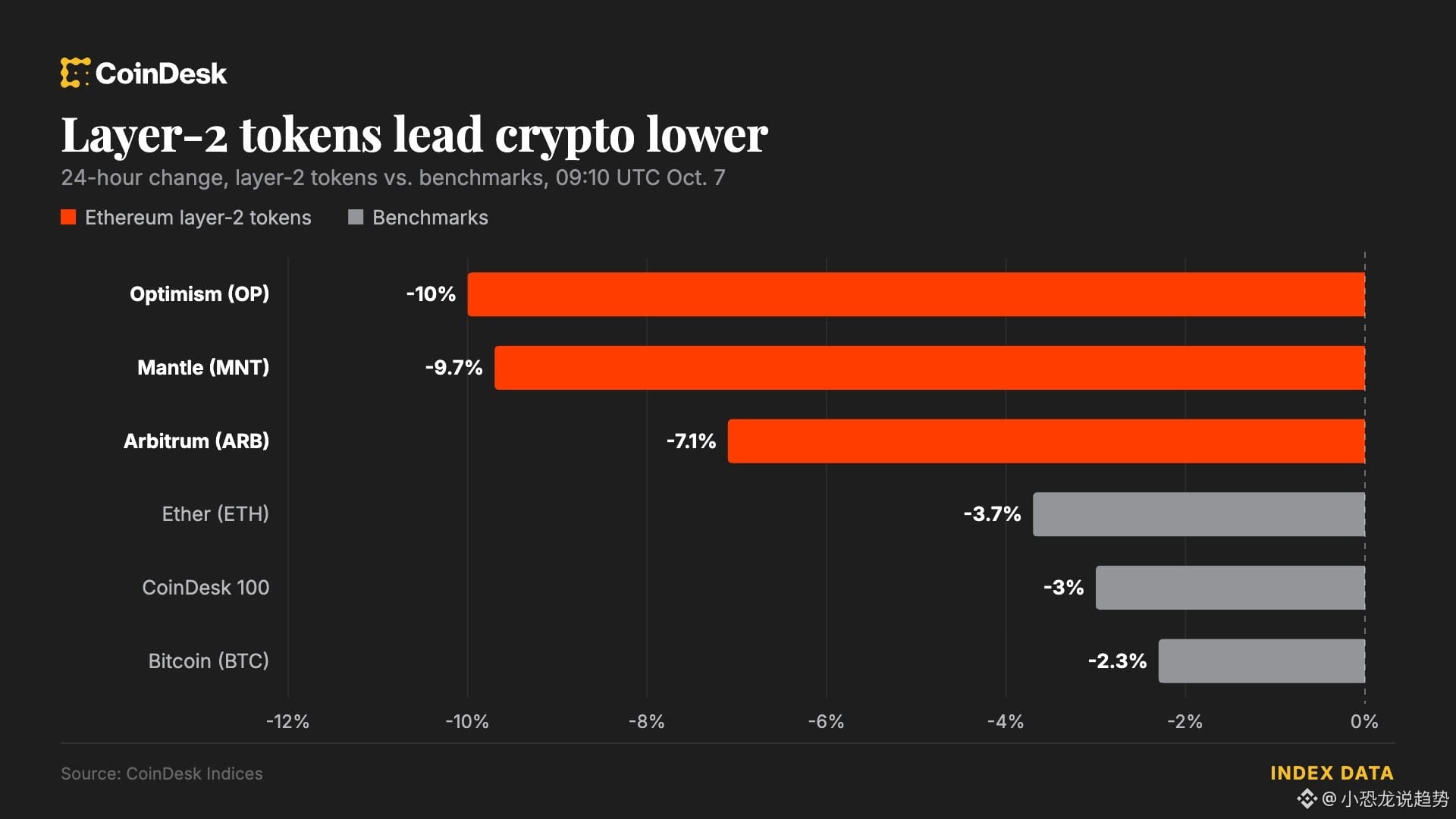
738
·
--
Verified
A U.S.-listed company has amassed 6 million ETH, or 4.9% of the entire supply. Today, it announced a hard cap 🦖
[🔎 进群看完整分析](https://app.binance.com/uni-qr/JpwCPfBj)
On October 7, BitMine Chairman Tom Lee said during his speech at the Token2049 conference in Singapore that the company’s ETH holdings would be capped at 5% of the total supply. He put it plainly: it won’t buy more than 5% of all ETH.
Just how big is that? The total ETH supply is about 122 million, and BitMine already holds around 6 million—equivalent to 4.9%. It’s just about 100,000 ETH shy of that 5% hard limit. At current prices, those holdings represent a crypto treasury worth roughly $15.8 billion 💰
The next thing he said is even more thought-provoking: the company built most of its position during the bear market. It’s stopping further purchases now to prepare for the 25x move ahead 📈
Why set a ceiling now? The logic is actually quite practical. For years, BitMine has raised capital in the markets by issuing preferred shares and convertible bonds, using the proceeds to buy crypto. It kept buying while diluting existing shareholders along the way. Now, stopping at 5% means putting down the fundraising lever. In his words, with a hard 5% cap, the company can outperform ETH when its price rises, because investors won’t have to worry about it continually raising funds to buy more.
There’s another part of the equation: the $15.8 billion treasury is being staked. The company expects to earn about $334 million a year from staking. Even if it stops buying, staking rewards will continue to generate more ETH. The company has also said it may sell the ETH earned from staking to keep its holdings from exceeding the 5% limit.
Here’s my take: For the past two years, the market has been worried that institutions would accumulate ETH without limit, locking up the circulating supply. Now, for the first time, an institution is voluntarily hitting the brakes. That signal is more worth watching than how much it has bought. But stopping purchases doesn’t mean selling. Staking will continue to generate income, and the 5% cap looks more like a line the company has drawn for itself than a promise to the market.
Do you think an institution putting a cap on its crypto holdings is good news or bad news for Ethereum? Let’s discuss in the comments.
Tap the profile picture to watch the livestream.
Every day, I’ll help you follow the latest Ethereum developments—not just what’s happening, but also the logic and opportunities behind it 👀🚀
A U.S.-listed company has amassed 6 million ETH, or 4.9% of the entire supply. Today, it announced a hard cap 🦖
🔎 进群看完整分析
On October 7, BitMine Chairman Tom Lee said during his speech at the Token2049 conference in Singapore that the company’s ETH holdings would be capped at 5% of the total supply. He put it plainly: it won’t buy more than 5% of all ETH.
Just how big is that? The total ETH supply is about 122 million, and BitMine already holds around 6 million—equivalent to 4.9%. It’s just about 100,000 ETH shy of that 5% hard limit. At current prices, those holdings represent a crypto treasury worth roughly $15.8 billion 💰
The next thing he said is even more thought-provoking: the company built most of its position during the bear market. It’s stopping further purchases now to prepare for the 25x move ahead 📈
Why set a ceiling now? The logic is actually quite practical. For years, BitMine has raised capital in the markets by issuing preferred shares and convertible bonds, using the proceeds to buy crypto. It kept buying while diluting existing shareholders along the way. Now, stopping at 5% means putting down the fundraising lever. In his words, with a hard 5% cap, the company can outperform ETH when its price rises, because investors won’t have to worry about it continually raising funds to buy more.
There’s another part of the equation: the $15.8 billion treasury is being staked. The company expects to earn about $334 million a year from staking. Even if it stops buying, staking rewards will continue to generate more ETH. The company has also said it may sell the ETH earned from staking to keep its holdings from exceeding the 5% limit.
Here’s my take: For the past two years, the market has been worried that institutions would accumulate ETH without limit, locking up the circulating supply. Now, for the first time, an institution is voluntarily hitting the brakes. That signal is more worth watching than how much it has bought. But stopping purchases doesn’t mean selling. Staking will continue to generate income, and the 5% cap looks more like a line the company has drawn for itself than a promise to the market.
Do you think an institution putting a cap on its crypto holdings is good news or bad news for Ethereum? Let’s discuss in the comments.
Tap the profile picture to watch the livestream.
Every day, I’ll help you follow the latest Ethereum developments—not just what’s happening, but also the logic and opportunities behind it 👀🚀
🔎 进群看完整分析
On October 7, BitMine Chairman Tom Lee said during his speech at the Token2049 conference in Singapore that the company’s ETH holdings would be capped at 5% of the total supply. He put it plainly: it won’t buy more than 5% of all ETH.
Just how big is that? The total ETH supply is about 122 million, and BitMine already holds around 6 million—equivalent to 4.9%. It’s just about 100,000 ETH shy of that 5% hard limit. At current prices, those holdings represent a crypto treasury worth roughly $15.8 billion 💰
The next thing he said is even more thought-provoking: the company built most of its position during the bear market. It’s stopping further purchases now to prepare for the 25x move ahead 📈
Why set a ceiling now? The logic is actually quite practical. For years, BitMine has raised capital in the markets by issuing preferred shares and convertible bonds, using the proceeds to buy crypto. It kept buying while diluting existing shareholders along the way. Now, stopping at 5% means putting down the fundraising lever. In his words, with a hard 5% cap, the company can outperform ETH when its price rises, because investors won’t have to worry about it continually raising funds to buy more.
There’s another part of the equation: the $15.8 billion treasury is being staked. The company expects to earn about $334 million a year from staking. Even if it stops buying, staking rewards will continue to generate more ETH. The company has also said it may sell the ETH earned from staking to keep its holdings from exceeding the 5% limit.
Here’s my take: For the past two years, the market has been worried that institutions would accumulate ETH without limit, locking up the circulating supply. Now, for the first time, an institution is voluntarily hitting the brakes. That signal is more worth watching than how much it has bought. But stopping purchases doesn’t mean selling. Staking will continue to generate income, and the 5% cap looks more like a line the company has drawn for itself than a promise to the market.
Do you think an institution putting a cap on its crypto holdings is good news or bad news for Ethereum? Let’s discuss in the comments.
Tap the profile picture to watch the livestream.
Every day, I’ll help you follow the latest Ethereum developments—not just what’s happening, but also the logic and opportunities behind it 👀🚀

1
305
·
--
Ethereum ETFs see net outflows for six straight days, with $202 million outflow on the latest day, while Bitcoin ETFs log net inflows for eight straight days 🦖
[💬 群里一起聊行情](https://app.binance.com/uni-qr/JpwCPfBj)
U.S. spot Ethereum ETFs saw net outflows of $202 million on the latest trading day. That marks the sixth consecutive trading day of net redemptions, with not a single day of net inflows during that stretch. A one-way bleed.
The timeline is even more telling. Just about two weeks ago, in late September, spot Ethereum ETFs recorded $270 million in net inflows in a single day. BlackRock’s ETHA alone contributed $110 million. From a $270 million daily inflow to six straight days of outflows— institutional sentiment made a sharp U-turn in just two weeks 📈
On the same track, spot Bitcoin ETFs tell the exact opposite story: $31.1 million in net inflows on the latest day, marking their eighth consecutive trading day of net inflows. Not a single day in those eight was outweighed by redemptions. Spot Solana ETFs also recorded $26.1 million in net inflows in a single day over the same period 💰
Put these figures together and the takeaway is clear: money hasn’t left crypto ETFs. It has simply moved from Ethereum to Bitcoin and Solana. This is a reshuffling within crypto, not a retreat from the asset class as a whole.
Mechanically, net outflows from spot ETFs mean redemptions exceed creations. Authorized participants typically have to sell the corresponding spot Ethereum to meet those redemptions, so outflows directly add selling pressure to the spot market. But they’re only a demand signal, not a price directive ⚠️
The market is reflecting this too: Bitcoin is currently at $84,322, down 1.28% over 24 hours; Ethereum is at $2,620, down 2.79%; and Solana is at $118.82, down 0.61%. Ethereum’s decline is clearly steeper than Bitcoin’s, fully aligning with the direction of the fund flows 📉
My take is that Bitcoin is currently acting as crypto’s safe haven, while Ethereum is behaving like a risk asset. If the next report still shows net outflows, the redemption pressure that has lasted six straight days could spill over into the altcoin sector. On the other hand, a return to positive flows would signal that this wave of redemptions is starting to exhaust itself.
The number to watch is the next trading day’s figure. Another day of outflows would deepen the trend; a reversal to inflows would mean the pressure has largely eased. There’s no gray area in between.
Let’s talk in the comments: do you think institutions are abandoning Ethereum, or are funds just temporarily changing seats?
Every day, I bring you the latest on Ethereum and Bitcoin fund flows—not just what’s happening in the news, but also the logic and opportunities behind it 👀🚀
Ethereum ETFs see net outflows for six straight days, with $202 million outflow on the latest day, while Bitcoin ETFs log net inflows for eight straight days 🦖
💬 群里一起聊行情
U.S. spot Ethereum ETFs saw net outflows of $202 million on the latest trading day. That marks the sixth consecutive trading day of net redemptions, with not a single day of net inflows during that stretch. A one-way bleed.
The timeline is even more telling. Just about two weeks ago, in late September, spot Ethereum ETFs recorded $270 million in net inflows in a single day. BlackRock’s ETHA alone contributed $110 million. From a $270 million daily inflow to six straight days of outflows— institutional sentiment made a sharp U-turn in just two weeks 📈
On the same track, spot Bitcoin ETFs tell the exact opposite story: $31.1 million in net inflows on the latest day, marking their eighth consecutive trading day of net inflows. Not a single day in those eight was outweighed by redemptions. Spot Solana ETFs also recorded $26.1 million in net inflows in a single day over the same period 💰
Put these figures together and the takeaway is clear: money hasn’t left crypto ETFs. It has simply moved from Ethereum to Bitcoin and Solana. This is a reshuffling within crypto, not a retreat from the asset class as a whole.
Mechanically, net outflows from spot ETFs mean redemptions exceed creations. Authorized participants typically have to sell the corresponding spot Ethereum to meet those redemptions, so outflows directly add selling pressure to the spot market. But they’re only a demand signal, not a price directive ⚠️
The market is reflecting this too: Bitcoin is currently at $84,322, down 1.28% over 24 hours; Ethereum is at $2,620, down 2.79%; and Solana is at $118.82, down 0.61%. Ethereum’s decline is clearly steeper than Bitcoin’s, fully aligning with the direction of the fund flows 📉
My take is that Bitcoin is currently acting as crypto’s safe haven, while Ethereum is behaving like a risk asset. If the next report still shows net outflows, the redemption pressure that has lasted six straight days could spill over into the altcoin sector. On the other hand, a return to positive flows would signal that this wave of redemptions is starting to exhaust itself.
The number to watch is the next trading day’s figure. Another day of outflows would deepen the trend; a reversal to inflows would mean the pressure has largely eased. There’s no gray area in between.
Let’s talk in the comments: do you think institutions are abandoning Ethereum, or are funds just temporarily changing seats?
Every day, I bring you the latest on Ethereum and Bitcoin fund flows—not just what’s happening in the news, but also the logic and opportunities behind it 👀🚀
💬 群里一起聊行情
U.S. spot Ethereum ETFs saw net outflows of $202 million on the latest trading day. That marks the sixth consecutive trading day of net redemptions, with not a single day of net inflows during that stretch. A one-way bleed.
The timeline is even more telling. Just about two weeks ago, in late September, spot Ethereum ETFs recorded $270 million in net inflows in a single day. BlackRock’s ETHA alone contributed $110 million. From a $270 million daily inflow to six straight days of outflows— institutional sentiment made a sharp U-turn in just two weeks 📈
On the same track, spot Bitcoin ETFs tell the exact opposite story: $31.1 million in net inflows on the latest day, marking their eighth consecutive trading day of net inflows. Not a single day in those eight was outweighed by redemptions. Spot Solana ETFs also recorded $26.1 million in net inflows in a single day over the same period 💰
Put these figures together and the takeaway is clear: money hasn’t left crypto ETFs. It has simply moved from Ethereum to Bitcoin and Solana. This is a reshuffling within crypto, not a retreat from the asset class as a whole.
Mechanically, net outflows from spot ETFs mean redemptions exceed creations. Authorized participants typically have to sell the corresponding spot Ethereum to meet those redemptions, so outflows directly add selling pressure to the spot market. But they’re only a demand signal, not a price directive ⚠️
The market is reflecting this too: Bitcoin is currently at $84,322, down 1.28% over 24 hours; Ethereum is at $2,620, down 2.79%; and Solana is at $118.82, down 0.61%. Ethereum’s decline is clearly steeper than Bitcoin’s, fully aligning with the direction of the fund flows 📉
My take is that Bitcoin is currently acting as crypto’s safe haven, while Ethereum is behaving like a risk asset. If the next report still shows net outflows, the redemption pressure that has lasted six straight days could spill over into the altcoin sector. On the other hand, a return to positive flows would signal that this wave of redemptions is starting to exhaust itself.
The number to watch is the next trading day’s figure. Another day of outflows would deepen the trend; a reversal to inflows would mean the pressure has largely eased. There’s no gray area in between.
Let’s talk in the comments: do you think institutions are abandoning Ethereum, or are funds just temporarily changing seats?
Every day, I bring you the latest on Ethereum and Bitcoin fund flows—not just what’s happening in the news, but also the logic and opportunities behind it 👀🚀

1
339
·
--
#比特币跌破8.4万美元
$487 million in long positions liquidated overnight 💥 Bitcoin plunges back below $84,000 🦖
[👉 进群看盘面](https://app.binance.com/uni-qr/JpwCPfBj)
In the early Asian session on October 7, Bitcoin suddenly plunged from around $86,600, where it had been trading during the day on Tuesday, to a low of $83,840—a drop of about 1.5%. It fell straight through the $84,000 level that FxPro had previously flagged as a key threshold for the bears.
More importantly, the trigger didn’t come from crypto. Attacks on oil tankers in the Strait of Hormuz escalated, sending Brent crude up nearly 1% to around $101.50 a barrel. Oil prices, the dollar, and Treasury yields all rose at the same time 🛢️
According to data from The Block, around $487 million in long positions were liquidated in this crypto market sell-off. Nearly all major coins were in the red. Dogecoin (DOGE) led the declines, down about 5% to around 9 cents. Ethereum fell 3.5% to about $2,610, XRP dropped around 3% to $1.46, and HYPE fell 4% to about $91. BNB, SOL, ZEC, and TRX each lost between 1% and 2.5%.
On the macro front, the yield on 10-year U.S. Treasuries rose 3 basis points to 5.31%. The U.S. dollar strengthened against all G10 currencies, and Asian stocks also retreated. Risk assets were drained of liquidity across the board 📉
The key level now is $83,000. FxPro’s view is that if Bitcoin breaks decisively below it, $80,000 could come quickly. The current price is only about $1,200 above this line of defense. Meanwhile, the market is also waiting for the minutes of the Fed’s September meeting, due later today. The Fed cut rates by 25 basis points in September, and weaker-than-expected employment data has made another move this month seem less certain. Whether the minutes strike a patient tone or leave the door open to another move this year could determine the market’s next direction ⚠️
My take: this sell-off isn’t a crypto-specific problem. Oil prices, the dollar, and Treasury yields are working together to drain liquidity from the market, with volatile assets taking the first hit. The real question isn’t how much prices fell today, but whether $83,000 holds. If it does, this is a retest. If it breaks, $80,000 could arrive faster than anyone expects.
Let’s talk in the comments: do you think this is a pullback driven by oil prices, or the beginning of the end of the rebound?
I bring you the latest crypto market trends every day—not just what’s happening, but also the logic and opportunities behind the headlines 👀🚀
Tap my profile picture to watch the livestream
#比特币跌破8.4万美元
$487 million in long positions liquidated overnight 💥 Bitcoin plunges back below $84,000 🦖
👉 进群看盘面
In the early Asian session on October 7, Bitcoin suddenly plunged from around $86,600, where it had been trading during the day on Tuesday, to a low of $83,840—a drop of about 1.5%. It fell straight through the $84,000 level that FxPro had previously flagged as a key threshold for the bears.
More importantly, the trigger didn’t come from crypto. Attacks on oil tankers in the Strait of Hormuz escalated, sending Brent crude up nearly 1% to around $101.50 a barrel. Oil prices, the dollar, and Treasury yields all rose at the same time 🛢️
According to data from The Block, around $487 million in long positions were liquidated in this crypto market sell-off. Nearly all major coins were in the red. Dogecoin (DOGE) led the declines, down about 5% to around 9 cents. Ethereum fell 3.5% to about $2,610, XRP dropped around 3% to $1.46, and HYPE fell 4% to about $91. BNB, SOL, ZEC, and TRX each lost between 1% and 2.5%.
On the macro front, the yield on 10-year U.S. Treasuries rose 3 basis points to 5.31%. The U.S. dollar strengthened against all G10 currencies, and Asian stocks also retreated. Risk assets were drained of liquidity across the board 📉
The key level now is $83,000. FxPro’s view is that if Bitcoin breaks decisively below it, $80,000 could come quickly. The current price is only about $1,200 above this line of defense. Meanwhile, the market is also waiting for the minutes of the Fed’s September meeting, due later today. The Fed cut rates by 25 basis points in September, and weaker-than-expected employment data has made another move this month seem less certain. Whether the minutes strike a patient tone or leave the door open to another move this year could determine the market’s next direction ⚠️
My take: this sell-off isn’t a crypto-specific problem. Oil prices, the dollar, and Treasury yields are working together to drain liquidity from the market, with volatile assets taking the first hit. The real question isn’t how much prices fell today, but whether $83,000 holds. If it does, this is a retest. If it breaks, $80,000 could arrive faster than anyone expects.
Let’s talk in the comments: do you think this is a pullback driven by oil prices, or the beginning of the end of the rebound?
I bring you the latest crypto market trends every day—not just what’s happening, but also the logic and opportunities behind the headlines 👀🚀
Tap my profile picture to watch the livestream
$487 million in long positions liquidated overnight 💥 Bitcoin plunges back below $84,000 🦖
👉 进群看盘面
In the early Asian session on October 7, Bitcoin suddenly plunged from around $86,600, where it had been trading during the day on Tuesday, to a low of $83,840—a drop of about 1.5%. It fell straight through the $84,000 level that FxPro had previously flagged as a key threshold for the bears.
More importantly, the trigger didn’t come from crypto. Attacks on oil tankers in the Strait of Hormuz escalated, sending Brent crude up nearly 1% to around $101.50 a barrel. Oil prices, the dollar, and Treasury yields all rose at the same time 🛢️
According to data from The Block, around $487 million in long positions were liquidated in this crypto market sell-off. Nearly all major coins were in the red. Dogecoin (DOGE) led the declines, down about 5% to around 9 cents. Ethereum fell 3.5% to about $2,610, XRP dropped around 3% to $1.46, and HYPE fell 4% to about $91. BNB, SOL, ZEC, and TRX each lost between 1% and 2.5%.
On the macro front, the yield on 10-year U.S. Treasuries rose 3 basis points to 5.31%. The U.S. dollar strengthened against all G10 currencies, and Asian stocks also retreated. Risk assets were drained of liquidity across the board 📉
The key level now is $83,000. FxPro’s view is that if Bitcoin breaks decisively below it, $80,000 could come quickly. The current price is only about $1,200 above this line of defense. Meanwhile, the market is also waiting for the minutes of the Fed’s September meeting, due later today. The Fed cut rates by 25 basis points in September, and weaker-than-expected employment data has made another move this month seem less certain. Whether the minutes strike a patient tone or leave the door open to another move this year could determine the market’s next direction ⚠️
My take: this sell-off isn’t a crypto-specific problem. Oil prices, the dollar, and Treasury yields are working together to drain liquidity from the market, with volatile assets taking the first hit. The real question isn’t how much prices fell today, but whether $83,000 holds. If it does, this is a retest. If it breaks, $80,000 could arrive faster than anyone expects.
Let’s talk in the comments: do you think this is a pullback driven by oil prices, or the beginning of the end of the rebound?
I bring you the latest crypto market trends every day—not just what’s happening, but also the logic and opportunities behind the headlines 👀🚀
Tap my profile picture to watch the livestream

656
·
--
After a full six weeks of silence, it suddenly made a move: a U.S. government wallet transferred 833.6 Bitcoin in one go, worth about $71.5 million at current prices 🐋
[🕐 最新解读群里更新](https://app.binance.com/uni-qr/JpwCPfBj)
On-chain monitoring tools detected the unusual transfer at around 11 a.m. local time on October 6. The coins came from two old cases: the Potapenko and Turogin fraud case, and the 2016 exchange hack that shocked the entire industry. The last time these specific addresses were active was August 26.
There was another, more low-key transaction the same day: 40,285 BNB, worth about $31.63 million, passed through multiple intermediary addresses before eventually landing in an unlabeled wallet. Combined, the two transfers totaled nearly $103 million 💥
Let’s be clear about one thing: a government wallet transfer does not mean an immediate sell-off. These coins are generally held by the U.S. Marshals Service and the Department of Justice. Seized coins may be moved to a different custodian internally or prepared for future disposal. But historically, when long-dormant addresses like these become active, it often foreshadows an auction or disposal ⚠️
That’s why the market is nervous. The U.S. government holds hundreds of thousands of Bitcoin. Every unusual transfer is seen as potential overhead supply—even when only 833.6 coins are actually moved.
Here’s some context: BTC’s total market cap is currently about $1.7 trillion. $71.5 million accounts for just 0.04%. By itself, that amount isn’t enough to move the price. The real impact is on sentiment. Bulls aren’t most worried about these 833 coins; they’re worried about whether this is the first shot in a larger wave of disposals.
The current prices suggest the market isn’t taking much notice: BTC is at $84,418, down 1.39% over 24 hours; ETH is at $2,661, down 1.68%; and BNB is at $770.53. What’s weighing more heavily on the market right now is Bitcoin being rejected near $87,000 for the third time, along with Fed officials collectively striking a hawkish tone 🦖
My take: this transfer alone is not a sell signal, but it is a reminder that government-held coins are always hanging over the market. If the pace of disposals changes, both supply expectations and sentiment will be repriced. What’s worth watching next is whether funds flow to trading platforms and whether an auction announcement appears.
Do you think the U.S. government will eventually dump these coins on the market, or keep holding them? Let’s discuss in the comments. Do you know anyone who’s keeping an eye on government wallet activity?
I bring you the latest Bitcoin and on-chain whale activity every day—not just what’s happening, but also the logic and opportunities behind the headlines 👀🚀
After a full six weeks of silence, it suddenly made a move: a U.S. government wallet transferred 833.6 Bitcoin in one go, worth about $71.5 million at current prices 🐋
🕐 最新解读群里更新
On-chain monitoring tools detected the unusual transfer at around 11 a.m. local time on October 6. The coins came from two old cases: the Potapenko and Turogin fraud case, and the 2016 exchange hack that shocked the entire industry. The last time these specific addresses were active was August 26.
There was another, more low-key transaction the same day: 40,285 BNB, worth about $31.63 million, passed through multiple intermediary addresses before eventually landing in an unlabeled wallet. Combined, the two transfers totaled nearly $103 million 💥
Let’s be clear about one thing: a government wallet transfer does not mean an immediate sell-off. These coins are generally held by the U.S. Marshals Service and the Department of Justice. Seized coins may be moved to a different custodian internally or prepared for future disposal. But historically, when long-dormant addresses like these become active, it often foreshadows an auction or disposal ⚠️
That’s why the market is nervous. The U.S. government holds hundreds of thousands of Bitcoin. Every unusual transfer is seen as potential overhead supply—even when only 833.6 coins are actually moved.
Here’s some context: BTC’s total market cap is currently about $1.7 trillion. $71.5 million accounts for just 0.04%. By itself, that amount isn’t enough to move the price. The real impact is on sentiment. Bulls aren’t most worried about these 833 coins; they’re worried about whether this is the first shot in a larger wave of disposals.
The current prices suggest the market isn’t taking much notice: BTC is at $84,418, down 1.39% over 24 hours; ETH is at $2,661, down 1.68%; and BNB is at $770.53. What’s weighing more heavily on the market right now is Bitcoin being rejected near $87,000 for the third time, along with Fed officials collectively striking a hawkish tone 🦖
My take: this transfer alone is not a sell signal, but it is a reminder that government-held coins are always hanging over the market. If the pace of disposals changes, both supply expectations and sentiment will be repriced. What’s worth watching next is whether funds flow to trading platforms and whether an auction announcement appears.
Do you think the U.S. government will eventually dump these coins on the market, or keep holding them? Let’s discuss in the comments. Do you know anyone who’s keeping an eye on government wallet activity?
I bring you the latest Bitcoin and on-chain whale activity every day—not just what’s happening, but also the logic and opportunities behind the headlines 👀🚀
🕐 最新解读群里更新
On-chain monitoring tools detected the unusual transfer at around 11 a.m. local time on October 6. The coins came from two old cases: the Potapenko and Turogin fraud case, and the 2016 exchange hack that shocked the entire industry. The last time these specific addresses were active was August 26.
There was another, more low-key transaction the same day: 40,285 BNB, worth about $31.63 million, passed through multiple intermediary addresses before eventually landing in an unlabeled wallet. Combined, the two transfers totaled nearly $103 million 💥
Let’s be clear about one thing: a government wallet transfer does not mean an immediate sell-off. These coins are generally held by the U.S. Marshals Service and the Department of Justice. Seized coins may be moved to a different custodian internally or prepared for future disposal. But historically, when long-dormant addresses like these become active, it often foreshadows an auction or disposal ⚠️
That’s why the market is nervous. The U.S. government holds hundreds of thousands of Bitcoin. Every unusual transfer is seen as potential overhead supply—even when only 833.6 coins are actually moved.
Here’s some context: BTC’s total market cap is currently about $1.7 trillion. $71.5 million accounts for just 0.04%. By itself, that amount isn’t enough to move the price. The real impact is on sentiment. Bulls aren’t most worried about these 833 coins; they’re worried about whether this is the first shot in a larger wave of disposals.
The current prices suggest the market isn’t taking much notice: BTC is at $84,418, down 1.39% over 24 hours; ETH is at $2,661, down 1.68%; and BNB is at $770.53. What’s weighing more heavily on the market right now is Bitcoin being rejected near $87,000 for the third time, along with Fed officials collectively striking a hawkish tone 🦖
My take: this transfer alone is not a sell signal, but it is a reminder that government-held coins are always hanging over the market. If the pace of disposals changes, both supply expectations and sentiment will be repriced. What’s worth watching next is whether funds flow to trading platforms and whether an auction announcement appears.
Do you think the U.S. government will eventually dump these coins on the market, or keep holding them? Let’s discuss in the comments. Do you know anyone who’s keeping an eye on government wallet activity?
I bring you the latest Bitcoin and on-chain whale activity every day—not just what’s happening, but also the logic and opportunities behind the headlines 👀🚀
2
1.4k
·
--
#比特币三度受阻8.7万美元
Two whale accounts are betting big in the same direction, holding $1.58 billion in shorts—but Bitcoin is stuck just below $87,000 🐋
[📈 进群看今日思路](https://app.binance.com/uni-qr/JpwCPfBj)
On the afternoon of October 6, on-chain monitors showed that two linked Hyperliquid wallets held a combined net short position worth around $1.58 billion, targeting Bitcoin and Ethereum. Their shorts included 189,400 ETH and 5,120 BTC, worth about $948 million combined.
Even more intriguing is who’s behind them. On-chain analytics platforms Nansen and Arkham have both labeled the addresses as belonging to Abraxas Capital Management, a London-based investment firm managing billions of dollars in assets. Its fund is called Heka Funds.
Interestingly, both short positions are currently underwater, with combined unrealized losses of about $115 million. But the wallets have plenty of assets to back them up, including millions of dollars in recent deposits. In other words, they can afford to take the hit.
Besides Bitcoin and Ethereum, the wallets are also short SOL, HYPE, ENA, XRP, SUI, and PUMP—almost a ready-made list of bearish bets.
My take: don’t rush to treat whales as oracles. On-chain data is public, and whales know better than anyone that everyone is watching them. Visible positions like these can easily sway retail sentiment. Plus, many institutions short as a hedge, and their spot long positions may have already offset the shorts. Short positions alone don’t prove that they’re truly bearish on the broader market.
What’s worth watching is that Bitcoin climbed above $86,000 twice on Tuesday but still couldn’t break $87,000. That’s the third time it’s been turned back ⚠️ On one side, whales are adding to their shorts; on the other, Bitcoin is holding on to its October gains. With the price around $85,600, we’ll soon see who blinks first in this standoff.
Do you think the bears will win this round, or will they be forced to close their positions in a short squeeze? Let’s talk in the comments 🦖
Tap the profile picture to watch the livestream
Every day, we bring you the latest on Bitcoin, whale activity, and market trends. We don’t just tell you what’s happening—we help you understand the logic and opportunities behind it 👀🚀
#比特币三度受阻8.7万美元
Two whale accounts are betting big in the same direction, holding $1.58 billion in shorts—but Bitcoin is stuck just below $87,000 🐋
📈 进群看今日思路
On the afternoon of October 6, on-chain monitors showed that two linked Hyperliquid wallets held a combined net short position worth around $1.58 billion, targeting Bitcoin and Ethereum. Their shorts included 189,400 ETH and 5,120 BTC, worth about $948 million combined.
Even more intriguing is who’s behind them. On-chain analytics platforms Nansen and Arkham have both labeled the addresses as belonging to Abraxas Capital Management, a London-based investment firm managing billions of dollars in assets. Its fund is called Heka Funds.
Interestingly, both short positions are currently underwater, with combined unrealized losses of about $115 million. But the wallets have plenty of assets to back them up, including millions of dollars in recent deposits. In other words, they can afford to take the hit.
Besides Bitcoin and Ethereum, the wallets are also short SOL, HYPE, ENA, XRP, SUI, and PUMP—almost a ready-made list of bearish bets.
My take: don’t rush to treat whales as oracles. On-chain data is public, and whales know better than anyone that everyone is watching them. Visible positions like these can easily sway retail sentiment. Plus, many institutions short as a hedge, and their spot long positions may have already offset the shorts. Short positions alone don’t prove that they’re truly bearish on the broader market.
What’s worth watching is that Bitcoin climbed above $86,000 twice on Tuesday but still couldn’t break $87,000. That’s the third time it’s been turned back ⚠️ On one side, whales are adding to their shorts; on the other, Bitcoin is holding on to its October gains. With the price around $85,600, we’ll soon see who blinks first in this standoff.
Do you think the bears will win this round, or will they be forced to close their positions in a short squeeze? Let’s talk in the comments 🦖
Tap the profile picture to watch the livestream
Every day, we bring you the latest on Bitcoin, whale activity, and market trends. We don’t just tell you what’s happening—we help you understand the logic and opportunities behind it 👀🚀
Two whale accounts are betting big in the same direction, holding $1.58 billion in shorts—but Bitcoin is stuck just below $87,000 🐋
📈 进群看今日思路
On the afternoon of October 6, on-chain monitors showed that two linked Hyperliquid wallets held a combined net short position worth around $1.58 billion, targeting Bitcoin and Ethereum. Their shorts included 189,400 ETH and 5,120 BTC, worth about $948 million combined.
Even more intriguing is who’s behind them. On-chain analytics platforms Nansen and Arkham have both labeled the addresses as belonging to Abraxas Capital Management, a London-based investment firm managing billions of dollars in assets. Its fund is called Heka Funds.
Interestingly, both short positions are currently underwater, with combined unrealized losses of about $115 million. But the wallets have plenty of assets to back them up, including millions of dollars in recent deposits. In other words, they can afford to take the hit.
Besides Bitcoin and Ethereum, the wallets are also short SOL, HYPE, ENA, XRP, SUI, and PUMP—almost a ready-made list of bearish bets.
My take: don’t rush to treat whales as oracles. On-chain data is public, and whales know better than anyone that everyone is watching them. Visible positions like these can easily sway retail sentiment. Plus, many institutions short as a hedge, and their spot long positions may have already offset the shorts. Short positions alone don’t prove that they’re truly bearish on the broader market.
What’s worth watching is that Bitcoin climbed above $86,000 twice on Tuesday but still couldn’t break $87,000. That’s the third time it’s been turned back ⚠️ On one side, whales are adding to their shorts; on the other, Bitcoin is holding on to its October gains. With the price around $85,600, we’ll soon see who blinks first in this standoff.
Do you think the bears will win this round, or will they be forced to close their positions in a short squeeze? Let’s talk in the comments 🦖
Tap the profile picture to watch the livestream
Every day, we bring you the latest on Bitcoin, whale activity, and market trends. We don’t just tell you what’s happening—we help you understand the logic and opportunities behind it 👀🚀
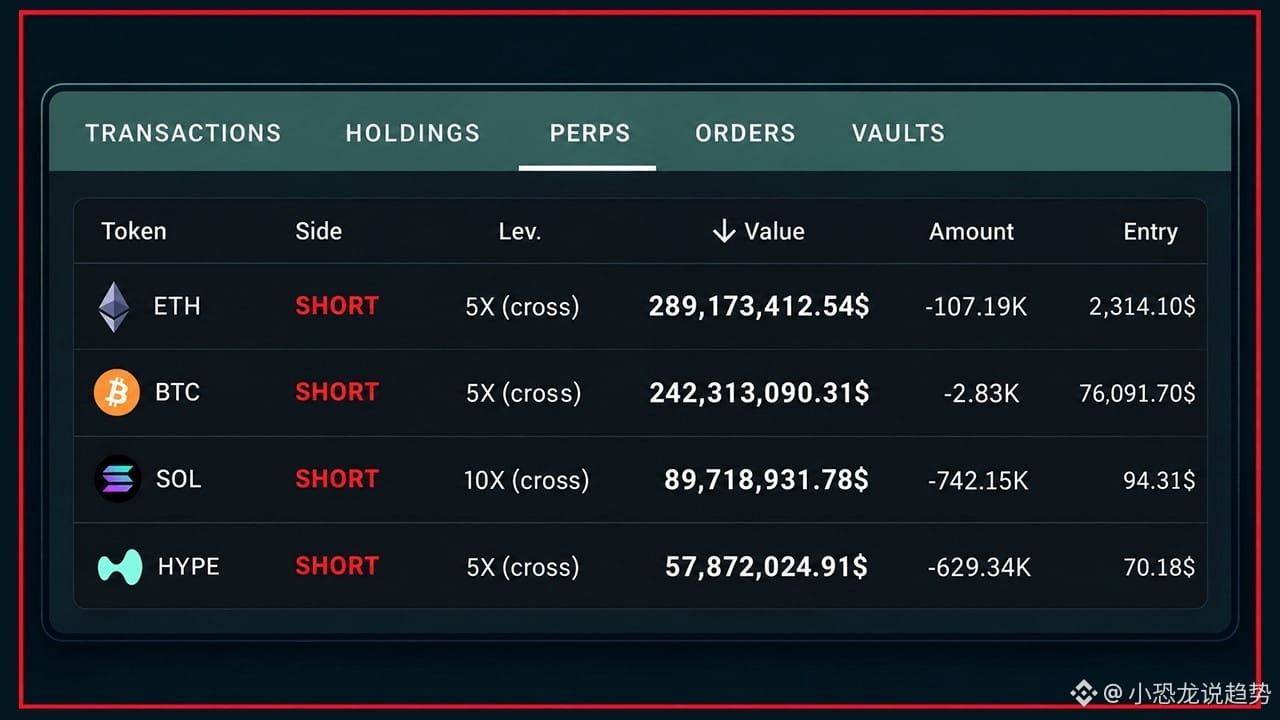
1.2k
·
--
#比特币三度受阻8.7万美元
Rejected at $87,000 for the Third Time: Bitcoin Gets Slapped Back 🦖
[🧭 群里聊方向](https://app.binance.com/uni-qr/JpwCPfBj)
Bitcoin failed for the third time early this morning to break through $87,000. Its price fell 1.2% to around $85,600, and the total crypto market cap shrank to about $2.93 trillion. Since September 23, this same wall has turned it back three times.
First, what exactly is this wall? Every time the price climbs above $87,000, a wave of sell orders appears and pushes it back down. That suggests a crowd of holders is waiting to sell at that level. Analysts explain that Bitcoin has reached the apex of a triangle, with rising support below and resistance at $87,000 overhead—a level that’s been holding firm for more than ten days. Volatility will only increase before a breakout.
Now let’s look at what actually happened overnight. U.S. Bitcoin ETFs saw net outflows of around $90 million in a single day 🔴 Meanwhile, the yield on 10-year U.S. Treasuries rose to 5.32%, its highest level since 2002, while the two-year yield climbed to 4.83%. The Nasdaq 100 closed at a record high, and the S&P 500 was just 0.5% shy of its record. In other words, money hasn’t disappeared—it’s moving into U.S. stocks and bonds, not Bitcoin.
The most interesting part is the rotation within the crypto market. ADA surged 11% in a day, NEAR and GRT each gained around 7%, and HYPE rose 3% against the trend to $94. Meanwhile, Ethereum, XRP, SOL, and Dogecoin all fell 1% to 2%, while BNB dropped 2.5% ⚠️ This isn’t a market-wide collapse. It’s capital moving out of large-cap leaders and into smaller coins in search of greater upside.
My take: Bitcoin needs real spot buying to absorb the selling pressure before it can truly clear $87,000. A rebound driven by leverage and short covering will just get knocked back by the same sell orders. If it can establish itself above that level, the way opens to highs not seen in eight months 📈 To the downside, $84,000 is the short-term support level. If it breaks, $80,000 will come back into view.
Put simply, bulls and bears are locked in a tight range, each trying to outlast the other. Whoever blinks first loses. The real direction won’t be decided by today’s small red candle, but by whether fresh money is willing to buy at these prices.
Do you think this is the final shakeout before a push to new highs, or a sign the rebound has run its course? Share your take in the comments.
I bring you the latest Bitcoin news every day—not just what’s happening, but the logic and opportunities behind it 👀🚀
Tap my profile picture to watch the livestream
#比特币三度受阻8.7万美元
Rejected at $87,000 for the Third Time: Bitcoin Gets Slapped Back 🦖
🧭 群里聊方向
Bitcoin failed for the third time early this morning to break through $87,000. Its price fell 1.2% to around $85,600, and the total crypto market cap shrank to about $2.93 trillion. Since September 23, this same wall has turned it back three times.
First, what exactly is this wall? Every time the price climbs above $87,000, a wave of sell orders appears and pushes it back down. That suggests a crowd of holders is waiting to sell at that level. Analysts explain that Bitcoin has reached the apex of a triangle, with rising support below and resistance at $87,000 overhead—a level that’s been holding firm for more than ten days. Volatility will only increase before a breakout.
Now let’s look at what actually happened overnight. U.S. Bitcoin ETFs saw net outflows of around $90 million in a single day 🔴 Meanwhile, the yield on 10-year U.S. Treasuries rose to 5.32%, its highest level since 2002, while the two-year yield climbed to 4.83%. The Nasdaq 100 closed at a record high, and the S&P 500 was just 0.5% shy of its record. In other words, money hasn’t disappeared—it’s moving into U.S. stocks and bonds, not Bitcoin.
The most interesting part is the rotation within the crypto market. ADA surged 11% in a day, NEAR and GRT each gained around 7%, and HYPE rose 3% against the trend to $94. Meanwhile, Ethereum, XRP, SOL, and Dogecoin all fell 1% to 2%, while BNB dropped 2.5% ⚠️ This isn’t a market-wide collapse. It’s capital moving out of large-cap leaders and into smaller coins in search of greater upside.
My take: Bitcoin needs real spot buying to absorb the selling pressure before it can truly clear $87,000. A rebound driven by leverage and short covering will just get knocked back by the same sell orders. If it can establish itself above that level, the way opens to highs not seen in eight months 📈 To the downside, $84,000 is the short-term support level. If it breaks, $80,000 will come back into view.
Put simply, bulls and bears are locked in a tight range, each trying to outlast the other. Whoever blinks first loses. The real direction won’t be decided by today’s small red candle, but by whether fresh money is willing to buy at these prices.
Do you think this is the final shakeout before a push to new highs, or a sign the rebound has run its course? Share your take in the comments.
I bring you the latest Bitcoin news every day—not just what’s happening, but the logic and opportunities behind it 👀🚀
Tap my profile picture to watch the livestream
Rejected at $87,000 for the Third Time: Bitcoin Gets Slapped Back 🦖
🧭 群里聊方向
Bitcoin failed for the third time early this morning to break through $87,000. Its price fell 1.2% to around $85,600, and the total crypto market cap shrank to about $2.93 trillion. Since September 23, this same wall has turned it back three times.
First, what exactly is this wall? Every time the price climbs above $87,000, a wave of sell orders appears and pushes it back down. That suggests a crowd of holders is waiting to sell at that level. Analysts explain that Bitcoin has reached the apex of a triangle, with rising support below and resistance at $87,000 overhead—a level that’s been holding firm for more than ten days. Volatility will only increase before a breakout.
Now let’s look at what actually happened overnight. U.S. Bitcoin ETFs saw net outflows of around $90 million in a single day 🔴 Meanwhile, the yield on 10-year U.S. Treasuries rose to 5.32%, its highest level since 2002, while the two-year yield climbed to 4.83%. The Nasdaq 100 closed at a record high, and the S&P 500 was just 0.5% shy of its record. In other words, money hasn’t disappeared—it’s moving into U.S. stocks and bonds, not Bitcoin.
The most interesting part is the rotation within the crypto market. ADA surged 11% in a day, NEAR and GRT each gained around 7%, and HYPE rose 3% against the trend to $94. Meanwhile, Ethereum, XRP, SOL, and Dogecoin all fell 1% to 2%, while BNB dropped 2.5% ⚠️ This isn’t a market-wide collapse. It’s capital moving out of large-cap leaders and into smaller coins in search of greater upside.
My take: Bitcoin needs real spot buying to absorb the selling pressure before it can truly clear $87,000. A rebound driven by leverage and short covering will just get knocked back by the same sell orders. If it can establish itself above that level, the way opens to highs not seen in eight months 📈 To the downside, $84,000 is the short-term support level. If it breaks, $80,000 will come back into view.
Put simply, bulls and bears are locked in a tight range, each trying to outlast the other. Whoever blinks first loses. The real direction won’t be decided by today’s small red candle, but by whether fresh money is willing to buy at these prices.
Do you think this is the final shakeout before a push to new highs, or a sign the rebound has run its course? Share your take in the comments.
I bring you the latest Bitcoin news every day—not just what’s happening, but the logic and opportunities behind it 👀🚀
Tap my profile picture to watch the livestream
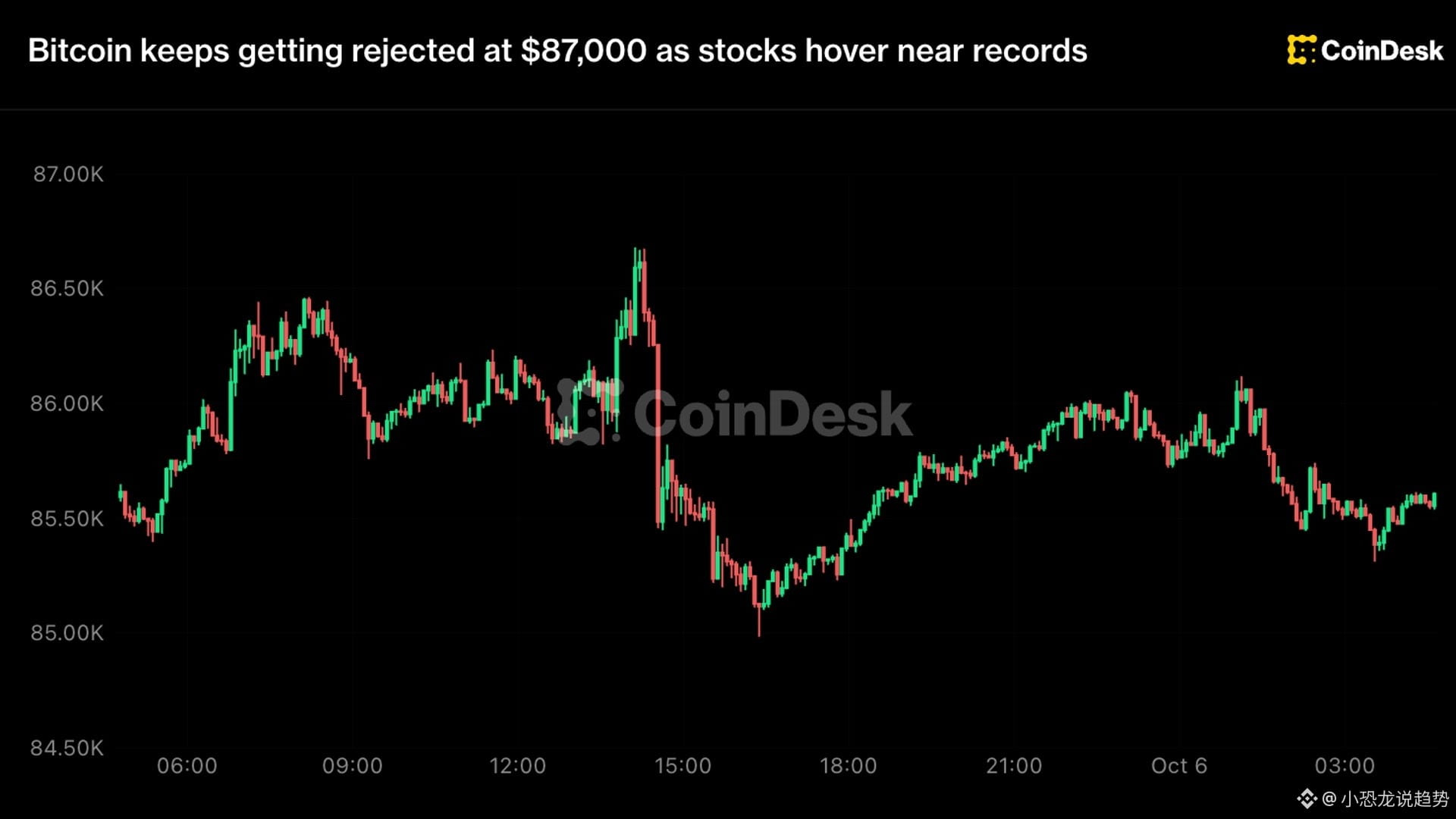
1.3k
·
--
#以太坊q3涨70%流动性下降
Ethereum surged 70% in Q3, but its order-book depth is now just 40% of Bitcoin’s 🦖
[📊 进群看每日策略](https://app.binance.com/uni-qr/JpwCPfBj)
Ethereum rose 70% in Q3, outperforming Bitcoin’s 42% gain. But a CoinGecko report compiled by TechFlow reveals a striking contrast: the asset that rose the most is seeing its order book get thinner.
CoinGecko measured the median daily market depth for Ethereum from July 6 to September 30. It was only 35% to 45% of Bitcoin’s. At the same time last year, the ratio was at least 60%. 📉
The numbers make it even clearer: within 0.15% of the market price, Ethereum’s depth was just $13 million to $14 million. In other words, a trade worth tens of millions of dollars could move the price by 0.15%. It’s getting harder for large orders to enter and exit smoothly without making waves. ⚠️
Ethereum isn’t the only one seeing thinner order books. SOL’s depth within 2% of the market price has fallen from about $28 million on each side of the order book last year to around $20 million now. This 2% depth is precisely what determines how much selling or buying pressure the market can absorb during a sharp move. 🐋
By comparison, XRP’s total depth has remained steady at around $30 million, with about $18 million in buy orders and $14 million in sell orders—a clear imbalance. More interestingly, XRP’s market cap is about 40% higher than SOL’s, yet its 2% depth is still lower. One reason is that SOL’s average daily trading volume is 25% higher than XRP’s.
Put simply, a 70% gain doesn’t mean stronger market support. Price gains reflect sentiment; depth is the foundation. A thin order book has a straightforward consequence: the same amount of capital can cause a bigger swing. It feels great on the way up, but if a large sell order hits, prices can fall faster than most people can trigger their stop-losses.
Adding to the backdrop, spot Ethereum ETFs saw net outflows of about $51 million on Monday, marking five consecutive trading days of outflows. The total outflow over those five days was about $206 million. Meanwhile, the 10-year U.S. Treasury yield is above 5%, and risk-free assets are competing with risk assets for capital.
What I think is worth watching isn’t how much higher ETH can go, but whether its market depth can recover. If prices keep rising without depth returning, volatility in this rally will increase, and pullbacks could bring a string of further drops.
Do you hold ETH or SOL? Do you think this rally is driven by real demand, or is it just a flash of excitement in a thin market?
I bring you the latest crypto market trends every day—not just what’s happening in the news, but also the logic and opportunities behind it. 👀🚀
Tap my profile picture to watch the livestream
#以太坊q3涨70%流动性下降
Ethereum surged 70% in Q3, but its order-book depth is now just 40% of Bitcoin’s 🦖
📊 进群看每日策略
Ethereum rose 70% in Q3, outperforming Bitcoin’s 42% gain. But a CoinGecko report compiled by TechFlow reveals a striking contrast: the asset that rose the most is seeing its order book get thinner.
CoinGecko measured the median daily market depth for Ethereum from July 6 to September 30. It was only 35% to 45% of Bitcoin’s. At the same time last year, the ratio was at least 60%. 📉
The numbers make it even clearer: within 0.15% of the market price, Ethereum’s depth was just $13 million to $14 million. In other words, a trade worth tens of millions of dollars could move the price by 0.15%. It’s getting harder for large orders to enter and exit smoothly without making waves. ⚠️
Ethereum isn’t the only one seeing thinner order books. SOL’s depth within 2% of the market price has fallen from about $28 million on each side of the order book last year to around $20 million now. This 2% depth is precisely what determines how much selling or buying pressure the market can absorb during a sharp move. 🐋
By comparison, XRP’s total depth has remained steady at around $30 million, with about $18 million in buy orders and $14 million in sell orders—a clear imbalance. More interestingly, XRP’s market cap is about 40% higher than SOL’s, yet its 2% depth is still lower. One reason is that SOL’s average daily trading volume is 25% higher than XRP’s.
Put simply, a 70% gain doesn’t mean stronger market support. Price gains reflect sentiment; depth is the foundation. A thin order book has a straightforward consequence: the same amount of capital can cause a bigger swing. It feels great on the way up, but if a large sell order hits, prices can fall faster than most people can trigger their stop-losses.
Adding to the backdrop, spot Ethereum ETFs saw net outflows of about $51 million on Monday, marking five consecutive trading days of outflows. The total outflow over those five days was about $206 million. Meanwhile, the 10-year U.S. Treasury yield is above 5%, and risk-free assets are competing with risk assets for capital.
What I think is worth watching isn’t how much higher ETH can go, but whether its market depth can recover. If prices keep rising without depth returning, volatility in this rally will increase, and pullbacks could bring a string of further drops.
Do you hold ETH or SOL? Do you think this rally is driven by real demand, or is it just a flash of excitement in a thin market?
I bring you the latest crypto market trends every day—not just what’s happening in the news, but also the logic and opportunities behind it. 👀🚀
Tap my profile picture to watch the livestream
Ethereum surged 70% in Q3, but its order-book depth is now just 40% of Bitcoin’s 🦖
📊 进群看每日策略
Ethereum rose 70% in Q3, outperforming Bitcoin’s 42% gain. But a CoinGecko report compiled by TechFlow reveals a striking contrast: the asset that rose the most is seeing its order book get thinner.
CoinGecko measured the median daily market depth for Ethereum from July 6 to September 30. It was only 35% to 45% of Bitcoin’s. At the same time last year, the ratio was at least 60%. 📉
The numbers make it even clearer: within 0.15% of the market price, Ethereum’s depth was just $13 million to $14 million. In other words, a trade worth tens of millions of dollars could move the price by 0.15%. It’s getting harder for large orders to enter and exit smoothly without making waves. ⚠️
Ethereum isn’t the only one seeing thinner order books. SOL’s depth within 2% of the market price has fallen from about $28 million on each side of the order book last year to around $20 million now. This 2% depth is precisely what determines how much selling or buying pressure the market can absorb during a sharp move. 🐋
By comparison, XRP’s total depth has remained steady at around $30 million, with about $18 million in buy orders and $14 million in sell orders—a clear imbalance. More interestingly, XRP’s market cap is about 40% higher than SOL’s, yet its 2% depth is still lower. One reason is that SOL’s average daily trading volume is 25% higher than XRP’s.
Put simply, a 70% gain doesn’t mean stronger market support. Price gains reflect sentiment; depth is the foundation. A thin order book has a straightforward consequence: the same amount of capital can cause a bigger swing. It feels great on the way up, but if a large sell order hits, prices can fall faster than most people can trigger their stop-losses.
Adding to the backdrop, spot Ethereum ETFs saw net outflows of about $51 million on Monday, marking five consecutive trading days of outflows. The total outflow over those five days was about $206 million. Meanwhile, the 10-year U.S. Treasury yield is above 5%, and risk-free assets are competing with risk assets for capital.
What I think is worth watching isn’t how much higher ETH can go, but whether its market depth can recover. If prices keep rising without depth returning, volatility in this rally will increase, and pullbacks could bring a string of further drops.
Do you hold ETH or SOL? Do you think this rally is driven by real demand, or is it just a flash of excitement in a thin market?
I bring you the latest crypto market trends every day—not just what’s happening in the news, but also the logic and opportunities behind it. 👀🚀
Tap my profile picture to watch the livestream

627
·
--
Verified
#ada涨10%突破0.27美元
Bitcoin stays put while ADA rockets 12% in a day to a five-month high 🦖
[📢 ⏰ 消息群里第一时间说](https://app.binance.com/uni-qr/JpwCPfBj)
On October 5, Cardano’s native token ADA touched an intraday high of $0.27, gaining around 12% on the day. It was ADA’s strongest day since May this year and its highest price in five months. Meanwhile, Bitcoin barely moved around $85,700, and Ethereum hovered around $2,712—the rally wasn’t following the broader market; it was doing its own thing.
The momentum came from two things. On the fundamentals side: RealFi launched its mainnet on October 1, bringing real-world assets (RWAs) onto the Cardano mainnet. At the same time, the USDr stablecoin was integrated into three DeFi apps: Lace, Liqwid, and SundaeSwap. On the narrative side: after ADA started climbing, its founder posted a 15-minute ADA/USDT chart showing the price rise from around 0.244 to 0.264, along with the hashtag #LeiosIsComing. It became the community’s rallying cry that day 📈.
So what exactly is Leios? Its full name is Linear Leios, its specification number is CIP-164, and it’s part of the Dijkstra hard fork. The idea isn’t to replace the existing main chain—Ouroboros Praos will continue to handle security and ordering, with an additional layer of “endorsement blocks” to bundle more transactions. Stake pools will verify these blocks using BLS signatures before they’re added to the ledger. Since June 2026, the system has been running on the Musashi Dojo testnet, with data processing speeds reaching around 6 times higher. Developers estimate that under ideal conditions, throughput could increase by 10 to 65 times.
The technical indicators are also lining up: the 50-day moving average has crossed above the 200-day moving average, forming a golden cross, while the daily momentum indicator has climbed to 68.69, nearing overbought territory. The next major hurdle above is $0.28.
But there’s a contrast worth watching. Actual trading volume for ADA on decentralized exchanges (DEXs) hasn’t kept pace with the price surge—the hype is running ahead of real usage. And Leios won’t actually go live until the end of 2026, alongside Dijkstra. After launch, stake pool operators will also need to manually register their cryptographic keys, and throughput will be increased gradually by tuning parameters—it won’t reach full power at the flip of a switch ⚠️.
In other words: this looks more like a “narrative-first” rally—a hashtag and a roadmap were enough to send a coin that had been decoupled from the broader market up 12%. What will really determine whether it can hold above $0.27 or even test $0.28 isn’t the next post, but whether DEX trading and staking interest on-chain can catch up.
Let’s talk in the comments: do you think this rally is pricing in upgrade expectations early, or is it another case of “news pumps the price, but on-chain activity doesn’t follow”?
Every day, we bring you the latest crypto market trends—not just what’s happening, but the logic and opportunities behind it 👀🚀
Tap the profile picture to watch the livestream
#ada涨10%突破0.27美元
Bitcoin stays put while ADA rockets 12% in a day to a five-month high 🦖
📢 ⏰ 消息群里第一时间说
On October 5, Cardano’s native token ADA touched an intraday high of $0.27, gaining around 12% on the day. It was ADA’s strongest day since May this year and its highest price in five months. Meanwhile, Bitcoin barely moved around $85,700, and Ethereum hovered around $2,712—the rally wasn’t following the broader market; it was doing its own thing.
The momentum came from two things. On the fundamentals side: RealFi launched its mainnet on October 1, bringing real-world assets (RWAs) onto the Cardano mainnet. At the same time, the USDr stablecoin was integrated into three DeFi apps: Lace, Liqwid, and SundaeSwap. On the narrative side: after ADA started climbing, its founder posted a 15-minute ADA/USDT chart showing the price rise from around 0.244 to 0.264, along with the hashtag #LeiosIsComing. It became the community’s rallying cry that day 📈.
So what exactly is Leios? Its full name is Linear Leios, its specification number is CIP-164, and it’s part of the Dijkstra hard fork. The idea isn’t to replace the existing main chain—Ouroboros Praos will continue to handle security and ordering, with an additional layer of “endorsement blocks” to bundle more transactions. Stake pools will verify these blocks using BLS signatures before they’re added to the ledger. Since June 2026, the system has been running on the Musashi Dojo testnet, with data processing speeds reaching around 6 times higher. Developers estimate that under ideal conditions, throughput could increase by 10 to 65 times.
The technical indicators are also lining up: the 50-day moving average has crossed above the 200-day moving average, forming a golden cross, while the daily momentum indicator has climbed to 68.69, nearing overbought territory. The next major hurdle above is $0.28.
But there’s a contrast worth watching. Actual trading volume for ADA on decentralized exchanges (DEXs) hasn’t kept pace with the price surge—the hype is running ahead of real usage. And Leios won’t actually go live until the end of 2026, alongside Dijkstra. After launch, stake pool operators will also need to manually register their cryptographic keys, and throughput will be increased gradually by tuning parameters—it won’t reach full power at the flip of a switch ⚠️.
In other words: this looks more like a “narrative-first” rally—a hashtag and a roadmap were enough to send a coin that had been decoupled from the broader market up 12%. What will really determine whether it can hold above $0.27 or even test $0.28 isn’t the next post, but whether DEX trading and staking interest on-chain can catch up.
Let’s talk in the comments: do you think this rally is pricing in upgrade expectations early, or is it another case of “news pumps the price, but on-chain activity doesn’t follow”?
Every day, we bring you the latest crypto market trends—not just what’s happening, but the logic and opportunities behind it 👀🚀
Tap the profile picture to watch the livestream
Bitcoin stays put while ADA rockets 12% in a day to a five-month high 🦖
📢 ⏰ 消息群里第一时间说
On October 5, Cardano’s native token ADA touched an intraday high of $0.27, gaining around 12% on the day. It was ADA’s strongest day since May this year and its highest price in five months. Meanwhile, Bitcoin barely moved around $85,700, and Ethereum hovered around $2,712—the rally wasn’t following the broader market; it was doing its own thing.
The momentum came from two things. On the fundamentals side: RealFi launched its mainnet on October 1, bringing real-world assets (RWAs) onto the Cardano mainnet. At the same time, the USDr stablecoin was integrated into three DeFi apps: Lace, Liqwid, and SundaeSwap. On the narrative side: after ADA started climbing, its founder posted a 15-minute ADA/USDT chart showing the price rise from around 0.244 to 0.264, along with the hashtag #LeiosIsComing. It became the community’s rallying cry that day 📈.
So what exactly is Leios? Its full name is Linear Leios, its specification number is CIP-164, and it’s part of the Dijkstra hard fork. The idea isn’t to replace the existing main chain—Ouroboros Praos will continue to handle security and ordering, with an additional layer of “endorsement blocks” to bundle more transactions. Stake pools will verify these blocks using BLS signatures before they’re added to the ledger. Since June 2026, the system has been running on the Musashi Dojo testnet, with data processing speeds reaching around 6 times higher. Developers estimate that under ideal conditions, throughput could increase by 10 to 65 times.
The technical indicators are also lining up: the 50-day moving average has crossed above the 200-day moving average, forming a golden cross, while the daily momentum indicator has climbed to 68.69, nearing overbought territory. The next major hurdle above is $0.28.
But there’s a contrast worth watching. Actual trading volume for ADA on decentralized exchanges (DEXs) hasn’t kept pace with the price surge—the hype is running ahead of real usage. And Leios won’t actually go live until the end of 2026, alongside Dijkstra. After launch, stake pool operators will also need to manually register their cryptographic keys, and throughput will be increased gradually by tuning parameters—it won’t reach full power at the flip of a switch ⚠️.
In other words: this looks more like a “narrative-first” rally—a hashtag and a roadmap were enough to send a coin that had been decoupled from the broader market up 12%. What will really determine whether it can hold above $0.27 or even test $0.28 isn’t the next post, but whether DEX trading and staking interest on-chain can catch up.
Let’s talk in the comments: do you think this rally is pricing in upgrade expectations early, or is it another case of “news pumps the price, but on-chain activity doesn’t follow”?
Every day, we bring you the latest crypto market trends—not just what’s happening, but the logic and opportunities behind it 👀🚀
Tap the profile picture to watch the livestream

2
2.3k
Log in to explore more content
Join global crypto users on Binance Square
⚡️ Get latest and useful information about crypto.
💬 Trusted by the world’s largest crypto exchange.
👍 Discover real insights from verified creators.
Email / Phone number
Trending Topics
FedMinutesFocusOnOctoberPause
344,880 views
2,133 Discussing
🚨 THE FED JUST DROPPED A HUGE HINT — OCTOBER PAUSE INCOMING?
Wall Street is betting the Fed will HIT THE BRAKES in October. And crypto traders are watching closely. 👀
The latest FOMC minutes have shifted attention toward a potential pause at the October 27–28 meeting.
📊 The market setup:
🔥 October rate hold: approximately 82.8% in the latest previously reported pricing.
🔥 Rate hike probability: approximately 17.2%.
🔥 Weakening labor-market data is making an immediate hike harder to justify.
But here's the twist.
A PAUSE IS NOT A RATE CUT.
The Fed could hold in October while keeping the door open for additional tightening later.
For $BTC, $ ETH and $XAU, that distinction matters.
A pause could ease immediate pressure on risk assets. But persistent inflation and elevated Treasury yields could still crush bullish momentum.
⚠️ THE BIG QUESTION:
Is Wall Street positioning for a crypto breakout — or setting up another massive bull trap before the next Fed decision?
$BTC $ETH $BNB $SOL $XAU
#fedminutesfocusonoctoberpause #BinanceLaunchesBinanceIntelligence #EvernorthDelaysNasdaqDebutToOct12 #RobinhoodAdds$25MInBitcoinToBalanceSheet #SP500AndNasdaqHitRecordHighs
KimHotbae
·24 Likes
·31.2k views
XRPSpotETFsHold$1.7BWeeklyInflowsSlow
82 views
17 Discussing
FrenchHillUrgesCLARITYActPassageInLameDuck
1,006 views
80 Discussing