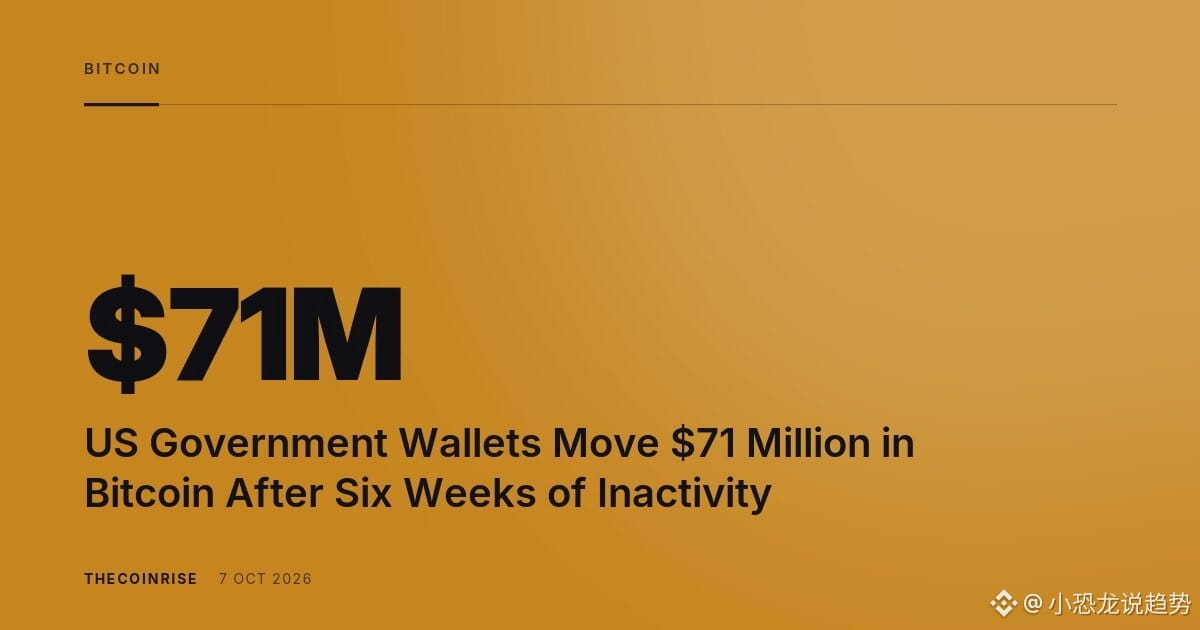
After a full six weeks of silence, it suddenly made a move: a U.S. government wallet transferred 833.6 Bitcoin in one go, worth about $71.5 million at current prices 🐋
🕐 最新解读群里更新
On-chain monitoring tools detected the unusual transfer at around 11 a.m. local time on October 6. The coins came from two old cases: the Potapenko and Turogin fraud case, and the 2016 exchange hack that shocked the entire industry. The last time these specific addresses were active was August 26.
There was another, more low-key transaction the same day: 40,285 BNB, worth about $31.63 million, passed through multiple intermediary addresses before eventually landing in an unlabeled wallet. Combined, the two transfers totaled nearly $103 million 💥
Let’s be clear about one thing: a government wallet transfer does not mean an immediate sell-off. These coins are generally held by the U.S. Marshals Service and the Department of Justice. Seized coins may be moved to a different custodian internally or prepared for future disposal. But historically, when long-dormant addresses like these become active, it often foreshadows an auction or disposal ⚠️
That’s why the market is nervous. The U.S. government holds hundreds of thousands of Bitcoin. Every unusual transfer is seen as potential overhead supply—even when only 833.6 coins are actually moved.
Here’s some context: BTC’s total market cap is currently about $1.7 trillion. $71.5 million accounts for just 0.04%. By itself, that amount isn’t enough to move the price. The real impact is on sentiment. Bulls aren’t most worried about these 833 coins; they’re worried about whether this is the first shot in a larger wave of disposals.
The current prices suggest the market isn’t taking much notice: BTC is at $84,418, down 1.39% over 24 hours; ETH is at $2,661, down 1.68%; and BNB is at $770.53. What’s weighing more heavily on the market right now is Bitcoin being rejected near $87,000 for the third time, along with Fed officials collectively striking a hawkish tone 🦖
My take: this transfer alone is not a sell signal, but it is a reminder that government-held coins are always hanging over the market. If the pace of disposals changes, both supply expectations and sentiment will be repriced. What’s worth watching next is whether funds flow to trading platforms and whether an auction announcement appears.
Do you think the U.S. government will eventually dump these coins on the market, or keep holding them? Let’s discuss in the comments. Do you know anyone who’s keeping an eye on government wallet activity?
I bring you the latest Bitcoin and on-chain whale activity every day—not just what’s happening, but also the logic and opportunities behind the headlines 👀🚀
🕐 最新解读群里更新
On-chain monitoring tools detected the unusual transfer at around 11 a.m. local time on October 6. The coins came from two old cases: the Potapenko and Turogin fraud case, and the 2016 exchange hack that shocked the entire industry. The last time these specific addresses were active was August 26.
There was another, more low-key transaction the same day: 40,285 BNB, worth about $31.63 million, passed through multiple intermediary addresses before eventually landing in an unlabeled wallet. Combined, the two transfers totaled nearly $103 million 💥
Let’s be clear about one thing: a government wallet transfer does not mean an immediate sell-off. These coins are generally held by the U.S. Marshals Service and the Department of Justice. Seized coins may be moved to a different custodian internally or prepared for future disposal. But historically, when long-dormant addresses like these become active, it often foreshadows an auction or disposal ⚠️
That’s why the market is nervous. The U.S. government holds hundreds of thousands of Bitcoin. Every unusual transfer is seen as potential overhead supply—even when only 833.6 coins are actually moved.
Here’s some context: BTC’s total market cap is currently about $1.7 trillion. $71.5 million accounts for just 0.04%. By itself, that amount isn’t enough to move the price. The real impact is on sentiment. Bulls aren’t most worried about these 833 coins; they’re worried about whether this is the first shot in a larger wave of disposals.
The current prices suggest the market isn’t taking much notice: BTC is at $84,418, down 1.39% over 24 hours; ETH is at $2,661, down 1.68%; and BNB is at $770.53. What’s weighing more heavily on the market right now is Bitcoin being rejected near $87,000 for the third time, along with Fed officials collectively striking a hawkish tone 🦖
My take: this transfer alone is not a sell signal, but it is a reminder that government-held coins are always hanging over the market. If the pace of disposals changes, both supply expectations and sentiment will be repriced. What’s worth watching next is whether funds flow to trading platforms and whether an auction announcement appears.
Do you think the U.S. government will eventually dump these coins on the market, or keep holding them? Let’s discuss in the comments. Do you know anyone who’s keeping an eye on government wallet activity?
I bring you the latest Bitcoin and on-chain whale activity every day—not just what’s happening, but also the logic and opportunities behind the headlines 👀🚀