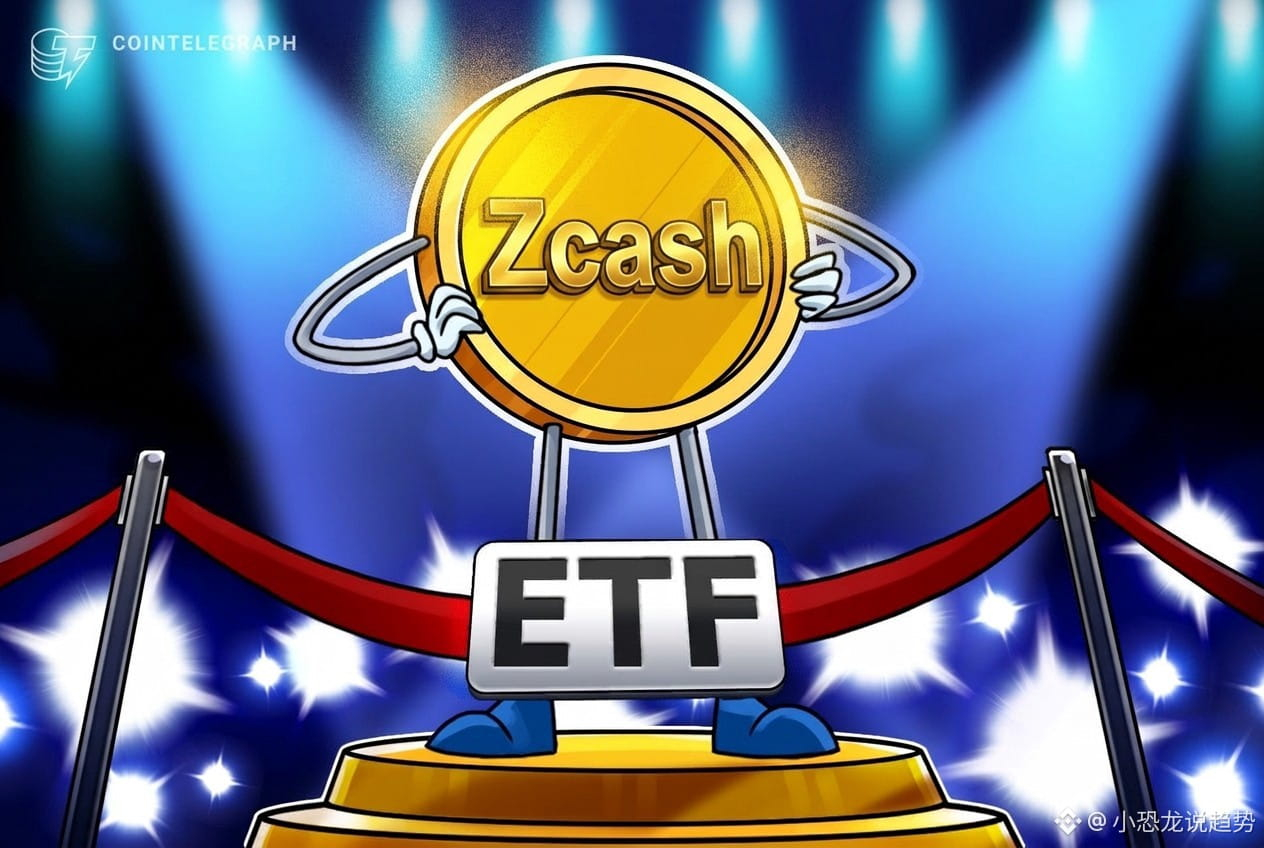
🦖 A privacy coin that regulators have kept under scrutiny for a decade has pulled in $1 billion in a month—and become the hottest new frontier for ETFs
📈 进群一起分析行情
One line from Grayscale trading director Krista Lynch brought the market to its senses: crypto ETFs are moving beyond the era of just Bitcoin and Ethereum.
First, the facts: Grayscale’s spot Zcash ETF, ZCSH, listed on the NYSE this August and attracted nearly $1 billion in assets in just over a month. Meanwhile, the Winklevoss brothers filed a new application with the SEC for a Zcash ETF, ticker WINK, planning to list it on Nasdaq. The management fee is just 0.25%, and the issuer plans to spend up to $100 million of its own money buying shares of the fund.
The real significance of this news isn’t Zcash itself, but another thing Lynch said: the SEC’s generic listing standards cover around 15 tokens. That means issuers no longer have to wait for approval one by one—they can choose from those 15 assets and list them directly.
Put simply, for the past two years, crypto ETFs have been almost entirely a two-horse race between Bitcoin and Ethereum. Now that barrier has come down, and investors are looking for stories in smaller coins. Zcash happens to tick two boxes.
First, price: ZEC has gained more than sevenfold over the past year, with a market cap of around $23 billion, putting it in the global top ten. It was trading at around $1,354 on Tuesday.
Second, the narrative: AI is making it cheaper and faster to deanonymize on-chain activity. Software in 2026 can trace a 2019 transaction back to a real person. Grayscale Research has described the privacy concerns driven by AI as a third wave of demand for privacy. Meanwhile, around 4.9 million coins are now in ZEC’s shielded pool—close to 29% of the total ever mined. 🛡️
The most striking contrast is that regulators around the world have treated privacy coins as major money-laundering risks for a decade, and exchanges have delisted them in wave after wave. Now the same coin has put on a new guise and entered mainstream brokerage accounts in the form of an ETF. Same coin, completely different identity.
My take: this isn’t just a rally in Zcash; it’s the beginning of crypto ETFs expanding from a single category to many. The first assets covered by the generic standards could have a chance to replicate Bitcoin ETFs’ inflow trajectory. Of course, that’s where the risks lie too: the compliance questions around privacy coins remain unresolved, and no one can guarantee that selective disclosure will satisfy regulators. ⚠️
Do you think Zcash will be the next asset to get a boost from ETFs, or the first fire to burn out in this wave of multi-category expansion? 🔥 Let’s talk in the comments.
Tap the profile picture to watch the livestream.
Every day, we bring you the latest on Bitcoin and the crypto market—not just what’s happening, but the logic and opportunities behind it. 👀🚀
📈 进群一起分析行情
One line from Grayscale trading director Krista Lynch brought the market to its senses: crypto ETFs are moving beyond the era of just Bitcoin and Ethereum.
First, the facts: Grayscale’s spot Zcash ETF, ZCSH, listed on the NYSE this August and attracted nearly $1 billion in assets in just over a month. Meanwhile, the Winklevoss brothers filed a new application with the SEC for a Zcash ETF, ticker WINK, planning to list it on Nasdaq. The management fee is just 0.25%, and the issuer plans to spend up to $100 million of its own money buying shares of the fund.
The real significance of this news isn’t Zcash itself, but another thing Lynch said: the SEC’s generic listing standards cover around 15 tokens. That means issuers no longer have to wait for approval one by one—they can choose from those 15 assets and list them directly.
Put simply, for the past two years, crypto ETFs have been almost entirely a two-horse race between Bitcoin and Ethereum. Now that barrier has come down, and investors are looking for stories in smaller coins. Zcash happens to tick two boxes.
First, price: ZEC has gained more than sevenfold over the past year, with a market cap of around $23 billion, putting it in the global top ten. It was trading at around $1,354 on Tuesday.
Second, the narrative: AI is making it cheaper and faster to deanonymize on-chain activity. Software in 2026 can trace a 2019 transaction back to a real person. Grayscale Research has described the privacy concerns driven by AI as a third wave of demand for privacy. Meanwhile, around 4.9 million coins are now in ZEC’s shielded pool—close to 29% of the total ever mined. 🛡️
The most striking contrast is that regulators around the world have treated privacy coins as major money-laundering risks for a decade, and exchanges have delisted them in wave after wave. Now the same coin has put on a new guise and entered mainstream brokerage accounts in the form of an ETF. Same coin, completely different identity.
My take: this isn’t just a rally in Zcash; it’s the beginning of crypto ETFs expanding from a single category to many. The first assets covered by the generic standards could have a chance to replicate Bitcoin ETFs’ inflow trajectory. Of course, that’s where the risks lie too: the compliance questions around privacy coins remain unresolved, and no one can guarantee that selective disclosure will satisfy regulators. ⚠️
Do you think Zcash will be the next asset to get a boost from ETFs, or the first fire to burn out in this wave of multi-category expansion? 🔥 Let’s talk in the comments.
Tap the profile picture to watch the livestream.
Every day, we bring you the latest on Bitcoin and the crypto market—not just what’s happening, but the logic and opportunities behind it. 👀🚀