

小恐龙说趋势
413 Posts
 LIVE
LIVE小恐龙说趋势
Report
Block User
X:XiaoKongLong_88 , 6 年加密市场经历 , 牛市里见过疯狂,熊市里见过人性
6 Following
2.0K+ Followers
2.4K+ Liked
Posts
All
Live
·
--
Ethereum ETFs see net outflows for six straight days, with $202 million outflow on the latest day, while Bitcoin ETFs log net inflows for eight straight days 🦖
[💬 群里一起聊行情](https://app.binance.com/uni-qr/JpwCPfBj)
U.S. spot Ethereum ETFs saw net outflows of $202 million on the latest trading day. That marks the sixth consecutive trading day of net redemptions, with not a single day of net inflows during that stretch. A one-way bleed.
The timeline is even more telling. Just about two weeks ago, in late September, spot Ethereum ETFs recorded $270 million in net inflows in a single day. BlackRock’s ETHA alone contributed $110 million. From a $270 million daily inflow to six straight days of outflows— institutional sentiment made a sharp U-turn in just two weeks 📈
On the same track, spot Bitcoin ETFs tell the exact opposite story: $31.1 million in net inflows on the latest day, marking their eighth consecutive trading day of net inflows. Not a single day in those eight was outweighed by redemptions. Spot Solana ETFs also recorded $26.1 million in net inflows in a single day over the same period 💰
Put these figures together and the takeaway is clear: money hasn’t left crypto ETFs. It has simply moved from Ethereum to Bitcoin and Solana. This is a reshuffling within crypto, not a retreat from the asset class as a whole.
Mechanically, net outflows from spot ETFs mean redemptions exceed creations. Authorized participants typically have to sell the corresponding spot Ethereum to meet those redemptions, so outflows directly add selling pressure to the spot market. But they’re only a demand signal, not a price directive ⚠️
The market is reflecting this too: Bitcoin is currently at $84,322, down 1.28% over 24 hours; Ethereum is at $2,620, down 2.79%; and Solana is at $118.82, down 0.61%. Ethereum’s decline is clearly steeper than Bitcoin’s, fully aligning with the direction of the fund flows 📉
My take is that Bitcoin is currently acting as crypto’s safe haven, while Ethereum is behaving like a risk asset. If the next report still shows net outflows, the redemption pressure that has lasted six straight days could spill over into the altcoin sector. On the other hand, a return to positive flows would signal that this wave of redemptions is starting to exhaust itself.
The number to watch is the next trading day’s figure. Another day of outflows would deepen the trend; a reversal to inflows would mean the pressure has largely eased. There’s no gray area in between.
Let’s talk in the comments: do you think institutions are abandoning Ethereum, or are funds just temporarily changing seats?
Every day, I bring you the latest on Ethereum and Bitcoin fund flows—not just what’s happening in the news, but also the logic and opportunities behind it 👀🚀
Ethereum ETFs see net outflows for six straight days, with $202 million outflow on the latest day, while Bitcoin ETFs log net inflows for eight straight days 🦖
💬 群里一起聊行情
U.S. spot Ethereum ETFs saw net outflows of $202 million on the latest trading day. That marks the sixth consecutive trading day of net redemptions, with not a single day of net inflows during that stretch. A one-way bleed.
The timeline is even more telling. Just about two weeks ago, in late September, spot Ethereum ETFs recorded $270 million in net inflows in a single day. BlackRock’s ETHA alone contributed $110 million. From a $270 million daily inflow to six straight days of outflows— institutional sentiment made a sharp U-turn in just two weeks 📈
On the same track, spot Bitcoin ETFs tell the exact opposite story: $31.1 million in net inflows on the latest day, marking their eighth consecutive trading day of net inflows. Not a single day in those eight was outweighed by redemptions. Spot Solana ETFs also recorded $26.1 million in net inflows in a single day over the same period 💰
Put these figures together and the takeaway is clear: money hasn’t left crypto ETFs. It has simply moved from Ethereum to Bitcoin and Solana. This is a reshuffling within crypto, not a retreat from the asset class as a whole.
Mechanically, net outflows from spot ETFs mean redemptions exceed creations. Authorized participants typically have to sell the corresponding spot Ethereum to meet those redemptions, so outflows directly add selling pressure to the spot market. But they’re only a demand signal, not a price directive ⚠️
The market is reflecting this too: Bitcoin is currently at $84,322, down 1.28% over 24 hours; Ethereum is at $2,620, down 2.79%; and Solana is at $118.82, down 0.61%. Ethereum’s decline is clearly steeper than Bitcoin’s, fully aligning with the direction of the fund flows 📉
My take is that Bitcoin is currently acting as crypto’s safe haven, while Ethereum is behaving like a risk asset. If the next report still shows net outflows, the redemption pressure that has lasted six straight days could spill over into the altcoin sector. On the other hand, a return to positive flows would signal that this wave of redemptions is starting to exhaust itself.
The number to watch is the next trading day’s figure. Another day of outflows would deepen the trend; a reversal to inflows would mean the pressure has largely eased. There’s no gray area in between.
Let’s talk in the comments: do you think institutions are abandoning Ethereum, or are funds just temporarily changing seats?
Every day, I bring you the latest on Ethereum and Bitcoin fund flows—not just what’s happening in the news, but also the logic and opportunities behind it 👀🚀
💬 群里一起聊行情
U.S. spot Ethereum ETFs saw net outflows of $202 million on the latest trading day. That marks the sixth consecutive trading day of net redemptions, with not a single day of net inflows during that stretch. A one-way bleed.
The timeline is even more telling. Just about two weeks ago, in late September, spot Ethereum ETFs recorded $270 million in net inflows in a single day. BlackRock’s ETHA alone contributed $110 million. From a $270 million daily inflow to six straight days of outflows— institutional sentiment made a sharp U-turn in just two weeks 📈
On the same track, spot Bitcoin ETFs tell the exact opposite story: $31.1 million in net inflows on the latest day, marking their eighth consecutive trading day of net inflows. Not a single day in those eight was outweighed by redemptions. Spot Solana ETFs also recorded $26.1 million in net inflows in a single day over the same period 💰
Put these figures together and the takeaway is clear: money hasn’t left crypto ETFs. It has simply moved from Ethereum to Bitcoin and Solana. This is a reshuffling within crypto, not a retreat from the asset class as a whole.
Mechanically, net outflows from spot ETFs mean redemptions exceed creations. Authorized participants typically have to sell the corresponding spot Ethereum to meet those redemptions, so outflows directly add selling pressure to the spot market. But they’re only a demand signal, not a price directive ⚠️
The market is reflecting this too: Bitcoin is currently at $84,322, down 1.28% over 24 hours; Ethereum is at $2,620, down 2.79%; and Solana is at $118.82, down 0.61%. Ethereum’s decline is clearly steeper than Bitcoin’s, fully aligning with the direction of the fund flows 📉
My take is that Bitcoin is currently acting as crypto’s safe haven, while Ethereum is behaving like a risk asset. If the next report still shows net outflows, the redemption pressure that has lasted six straight days could spill over into the altcoin sector. On the other hand, a return to positive flows would signal that this wave of redemptions is starting to exhaust itself.
The number to watch is the next trading day’s figure. Another day of outflows would deepen the trend; a reversal to inflows would mean the pressure has largely eased. There’s no gray area in between.
Let’s talk in the comments: do you think institutions are abandoning Ethereum, or are funds just temporarily changing seats?
Every day, I bring you the latest on Ethereum and Bitcoin fund flows—not just what’s happening in the news, but also the logic and opportunities behind it 👀🚀

98
·
--
#比特币跌破8.4万美元
$487 million in long positions liquidated overnight 💥 Bitcoin plunges back below $84,000 🦖
[👉 进群看盘面](https://app.binance.com/uni-qr/JpwCPfBj)
In the early Asian session on October 7, Bitcoin suddenly plunged from around $86,600, where it had been trading during the day on Tuesday, to a low of $83,840—a drop of about 1.5%. It fell straight through the $84,000 level that FxPro had previously flagged as a key threshold for the bears.
More importantly, the trigger didn’t come from crypto. Attacks on oil tankers in the Strait of Hormuz escalated, sending Brent crude up nearly 1% to around $101.50 a barrel. Oil prices, the dollar, and Treasury yields all rose at the same time 🛢️
According to data from The Block, around $487 million in long positions were liquidated in this crypto market sell-off. Nearly all major coins were in the red. Dogecoin (DOGE) led the declines, down about 5% to around 9 cents. Ethereum fell 3.5% to about $2,610, XRP dropped around 3% to $1.46, and HYPE fell 4% to about $91. BNB, SOL, ZEC, and TRX each lost between 1% and 2.5%.
On the macro front, the yield on 10-year U.S. Treasuries rose 3 basis points to 5.31%. The U.S. dollar strengthened against all G10 currencies, and Asian stocks also retreated. Risk assets were drained of liquidity across the board 📉
The key level now is $83,000. FxPro’s view is that if Bitcoin breaks decisively below it, $80,000 could come quickly. The current price is only about $1,200 above this line of defense. Meanwhile, the market is also waiting for the minutes of the Fed’s September meeting, due later today. The Fed cut rates by 25 basis points in September, and weaker-than-expected employment data has made another move this month seem less certain. Whether the minutes strike a patient tone or leave the door open to another move this year could determine the market’s next direction ⚠️
My take: this sell-off isn’t a crypto-specific problem. Oil prices, the dollar, and Treasury yields are working together to drain liquidity from the market, with volatile assets taking the first hit. The real question isn’t how much prices fell today, but whether $83,000 holds. If it does, this is a retest. If it breaks, $80,000 could arrive faster than anyone expects.
Let’s talk in the comments: do you think this is a pullback driven by oil prices, or the beginning of the end of the rebound?
I bring you the latest crypto market trends every day—not just what’s happening, but also the logic and opportunities behind the headlines 👀🚀
Tap my profile picture to watch the livestream
#比特币跌破8.4万美元
$487 million in long positions liquidated overnight 💥 Bitcoin plunges back below $84,000 🦖
👉 进群看盘面
In the early Asian session on October 7, Bitcoin suddenly plunged from around $86,600, where it had been trading during the day on Tuesday, to a low of $83,840—a drop of about 1.5%. It fell straight through the $84,000 level that FxPro had previously flagged as a key threshold for the bears.
More importantly, the trigger didn’t come from crypto. Attacks on oil tankers in the Strait of Hormuz escalated, sending Brent crude up nearly 1% to around $101.50 a barrel. Oil prices, the dollar, and Treasury yields all rose at the same time 🛢️
According to data from The Block, around $487 million in long positions were liquidated in this crypto market sell-off. Nearly all major coins were in the red. Dogecoin (DOGE) led the declines, down about 5% to around 9 cents. Ethereum fell 3.5% to about $2,610, XRP dropped around 3% to $1.46, and HYPE fell 4% to about $91. BNB, SOL, ZEC, and TRX each lost between 1% and 2.5%.
On the macro front, the yield on 10-year U.S. Treasuries rose 3 basis points to 5.31%. The U.S. dollar strengthened against all G10 currencies, and Asian stocks also retreated. Risk assets were drained of liquidity across the board 📉
The key level now is $83,000. FxPro’s view is that if Bitcoin breaks decisively below it, $80,000 could come quickly. The current price is only about $1,200 above this line of defense. Meanwhile, the market is also waiting for the minutes of the Fed’s September meeting, due later today. The Fed cut rates by 25 basis points in September, and weaker-than-expected employment data has made another move this month seem less certain. Whether the minutes strike a patient tone or leave the door open to another move this year could determine the market’s next direction ⚠️
My take: this sell-off isn’t a crypto-specific problem. Oil prices, the dollar, and Treasury yields are working together to drain liquidity from the market, with volatile assets taking the first hit. The real question isn’t how much prices fell today, but whether $83,000 holds. If it does, this is a retest. If it breaks, $80,000 could arrive faster than anyone expects.
Let’s talk in the comments: do you think this is a pullback driven by oil prices, or the beginning of the end of the rebound?
I bring you the latest crypto market trends every day—not just what’s happening, but also the logic and opportunities behind the headlines 👀🚀
Tap my profile picture to watch the livestream
$487 million in long positions liquidated overnight 💥 Bitcoin plunges back below $84,000 🦖
👉 进群看盘面
In the early Asian session on October 7, Bitcoin suddenly plunged from around $86,600, where it had been trading during the day on Tuesday, to a low of $83,840—a drop of about 1.5%. It fell straight through the $84,000 level that FxPro had previously flagged as a key threshold for the bears.
More importantly, the trigger didn’t come from crypto. Attacks on oil tankers in the Strait of Hormuz escalated, sending Brent crude up nearly 1% to around $101.50 a barrel. Oil prices, the dollar, and Treasury yields all rose at the same time 🛢️
According to data from The Block, around $487 million in long positions were liquidated in this crypto market sell-off. Nearly all major coins were in the red. Dogecoin (DOGE) led the declines, down about 5% to around 9 cents. Ethereum fell 3.5% to about $2,610, XRP dropped around 3% to $1.46, and HYPE fell 4% to about $91. BNB, SOL, ZEC, and TRX each lost between 1% and 2.5%.
On the macro front, the yield on 10-year U.S. Treasuries rose 3 basis points to 5.31%. The U.S. dollar strengthened against all G10 currencies, and Asian stocks also retreated. Risk assets were drained of liquidity across the board 📉
The key level now is $83,000. FxPro’s view is that if Bitcoin breaks decisively below it, $80,000 could come quickly. The current price is only about $1,200 above this line of defense. Meanwhile, the market is also waiting for the minutes of the Fed’s September meeting, due later today. The Fed cut rates by 25 basis points in September, and weaker-than-expected employment data has made another move this month seem less certain. Whether the minutes strike a patient tone or leave the door open to another move this year could determine the market’s next direction ⚠️
My take: this sell-off isn’t a crypto-specific problem. Oil prices, the dollar, and Treasury yields are working together to drain liquidity from the market, with volatile assets taking the first hit. The real question isn’t how much prices fell today, but whether $83,000 holds. If it does, this is a retest. If it breaks, $80,000 could arrive faster than anyone expects.
Let’s talk in the comments: do you think this is a pullback driven by oil prices, or the beginning of the end of the rebound?
I bring you the latest crypto market trends every day—not just what’s happening, but also the logic and opportunities behind the headlines 👀🚀
Tap my profile picture to watch the livestream

402
·
--
A German crypto trading platform with 1.1 million users has been shut down for nearly four months. Its own regulator rejected its license application to its face 🦖
[🚨 行情变了群里说](https://app.binance.com/uni-qr/JpwCPfBj)
Germany’s Federal Financial Supervisory Authority, BaFin, has just rejected a crypto trading platform’s application for MiCA authorization, according to an announcement from its operator on October 6. The platform has more than 1.1 million registered users, and it is operated by a publicly listed German financial group that also owns a bank.
Here’s the most painful part: the platform had effectively halted trading as early as June 12 while waiting for its MiCA license. Under the original plan, it was supposed to relaunch with a fresh look by the end of June, offering more than 100 cryptocurrencies, crypto-to-crypto trading, and staking. But the license never came through, and the relaunch kept getting delayed. In an August update to customers, it said assets had been migrated to new custody infrastructure and the old trading system had been shut down. In other words, users could see their assets but couldn’t trade: the balances were still there, but the access was gone.
The operator said it had anticipated the possibility of rejection and was looking into alternative operating models. It also reserved the right to file an objection or submit a new application. BaFin’s decision effectively overturned a deal that was already on the table. The company’s CEO, Moritz Eckert, said: “Our top priority now is to implement an alternative model and transparently inform customers about what happens next.”
There’s a piece of context that’s easy to overlook: MiCA is the EU’s unified crypto regulatory framework, intended to let licensed platforms operate across the entire bloc. At the same time, 50,000 Europeans are petitioning the EU to ease restrictions on stablecoin rewards as part of its MiCA review. On one side, there are licensing requirements; on the other, calls to loosen the rules. The two are colliding ⚖️
My take: MiCA has never been just a set of rules on paper. It’s a real gatekeeper for market entry. A platform with a million users can be put on pause for nearly four months because of a single license. For ordinary users, your ability to trade is tied to the platform’s compliance status, not your account balance. For the industry, compliance has gone from a bonus to a matter of survival 📉
But there’s another side to this: rejection doesn’t have to be the end of the road. The company could restore trading through a regulated partner. The things to watch are whether it files an objection or a new application, how long it takes to restore trading under an alternative model, and whether the EU will loosen MiCA rules as part of its review.
Let’s discuss in the comments: who should bear the cost of users’ lost time during these months of disruption?
Every day, I bring you the latest in crypto regulation—not just what’s happening, but the logic and opportunities behind the headlines 👀🚀
Tap my profile picture to watch the livestream
A German crypto trading platform with 1.1 million users has been shut down for nearly four months. Its own regulator rejected its license application to its face 🦖
🚨 行情变了群里说
Germany’s Federal Financial Supervisory Authority, BaFin, has just rejected a crypto trading platform’s application for MiCA authorization, according to an announcement from its operator on October 6. The platform has more than 1.1 million registered users, and it is operated by a publicly listed German financial group that also owns a bank.
Here’s the most painful part: the platform had effectively halted trading as early as June 12 while waiting for its MiCA license. Under the original plan, it was supposed to relaunch with a fresh look by the end of June, offering more than 100 cryptocurrencies, crypto-to-crypto trading, and staking. But the license never came through, and the relaunch kept getting delayed. In an August update to customers, it said assets had been migrated to new custody infrastructure and the old trading system had been shut down. In other words, users could see their assets but couldn’t trade: the balances were still there, but the access was gone.
The operator said it had anticipated the possibility of rejection and was looking into alternative operating models. It also reserved the right to file an objection or submit a new application. BaFin’s decision effectively overturned a deal that was already on the table. The company’s CEO, Moritz Eckert, said: “Our top priority now is to implement an alternative model and transparently inform customers about what happens next.”
There’s a piece of context that’s easy to overlook: MiCA is the EU’s unified crypto regulatory framework, intended to let licensed platforms operate across the entire bloc. At the same time, 50,000 Europeans are petitioning the EU to ease restrictions on stablecoin rewards as part of its MiCA review. On one side, there are licensing requirements; on the other, calls to loosen the rules. The two are colliding ⚖️
My take: MiCA has never been just a set of rules on paper. It’s a real gatekeeper for market entry. A platform with a million users can be put on pause for nearly four months because of a single license. For ordinary users, your ability to trade is tied to the platform’s compliance status, not your account balance. For the industry, compliance has gone from a bonus to a matter of survival 📉
But there’s another side to this: rejection doesn’t have to be the end of the road. The company could restore trading through a regulated partner. The things to watch are whether it files an objection or a new application, how long it takes to restore trading under an alternative model, and whether the EU will loosen MiCA rules as part of its review.
Let’s discuss in the comments: who should bear the cost of users’ lost time during these months of disruption?
Every day, I bring you the latest in crypto regulation—not just what’s happening, but the logic and opportunities behind the headlines 👀🚀
Tap my profile picture to watch the livestream
🚨 行情变了群里说
Germany’s Federal Financial Supervisory Authority, BaFin, has just rejected a crypto trading platform’s application for MiCA authorization, according to an announcement from its operator on October 6. The platform has more than 1.1 million registered users, and it is operated by a publicly listed German financial group that also owns a bank.
Here’s the most painful part: the platform had effectively halted trading as early as June 12 while waiting for its MiCA license. Under the original plan, it was supposed to relaunch with a fresh look by the end of June, offering more than 100 cryptocurrencies, crypto-to-crypto trading, and staking. But the license never came through, and the relaunch kept getting delayed. In an August update to customers, it said assets had been migrated to new custody infrastructure and the old trading system had been shut down. In other words, users could see their assets but couldn’t trade: the balances were still there, but the access was gone.
The operator said it had anticipated the possibility of rejection and was looking into alternative operating models. It also reserved the right to file an objection or submit a new application. BaFin’s decision effectively overturned a deal that was already on the table. The company’s CEO, Moritz Eckert, said: “Our top priority now is to implement an alternative model and transparently inform customers about what happens next.”
There’s a piece of context that’s easy to overlook: MiCA is the EU’s unified crypto regulatory framework, intended to let licensed platforms operate across the entire bloc. At the same time, 50,000 Europeans are petitioning the EU to ease restrictions on stablecoin rewards as part of its MiCA review. On one side, there are licensing requirements; on the other, calls to loosen the rules. The two are colliding ⚖️
My take: MiCA has never been just a set of rules on paper. It’s a real gatekeeper for market entry. A platform with a million users can be put on pause for nearly four months because of a single license. For ordinary users, your ability to trade is tied to the platform’s compliance status, not your account balance. For the industry, compliance has gone from a bonus to a matter of survival 📉
But there’s another side to this: rejection doesn’t have to be the end of the road. The company could restore trading through a regulated partner. The things to watch are whether it files an objection or a new application, how long it takes to restore trading under an alternative model, and whether the EU will loosen MiCA rules as part of its review.
Let’s discuss in the comments: who should bear the cost of users’ lost time during these months of disruption?
Every day, I bring you the latest in crypto regulation—not just what’s happening, but the logic and opportunities behind the headlines 👀🚀
Tap my profile picture to watch the livestream

3
·
--
U.S. regulators are stepping in. A draft proposal splits the crypto market in two: coins held on exchanges will require a license; coins kept in your own wallet get a green light 🦖
[⚡ 有大动静群里说](https://app.binance.com/uni-qr/JpwCPfBj)
On Monday, the U.S. Commodity Futures Trading Commission (CFTC) issued an advance notice of proposed rulemaking, laying out two complementary frameworks: Regulation CTX and Regulation CAM. One tightens the rules, the other opens the door. And there’s just one thing that draws the line between them: who holds your private keys ⚖️
Here’s the most counterintuitive part: if an exchange can offer you leverage—even if that leverage is mentioned only in its terms of service—and the coins you buy sit on the exchange’s own books rather than in your personal wallet, that fully paid transaction could still attract the CFTC’s attention. There’s only one way to avoid the rules: what’s known as “actual delivery.” And the CFTC suggests that the standard for actual delivery may be that customers hold their own private keys 🔑
By contrast, on-chain trading protocols would generally pass the test outright. In other words, the same leveraged trade gets treated differently when it happens on-chain. For the first time, this framework draws a clear regulatory distinction between centralized and decentralized platforms.
The rules for platforms are even more straightforward. The CAM framework would require exchanges that continue to keep customer assets on their own books while also offering leverage to obtain a crypto asset market license. The model is copied directly from futures exchanges. Once licensed, trades would have to go through futures commission merchants and brokers subject to compliance reviews. Leverage could be provided only by these institutions or by banks they endorse. By contrast, exchanges that don’t offer leverage could continue operating under state money transmitter licenses.
There’s also a revealing phrase in the document: the notice describes several previous cases against a U.S. exchange, a DAO, and a decentralized protocol as “regulation by enforcement.” Those four words amount to an official admission that the approach over the past few years was to make it up as they went along, case by case.
The timeline also shows how urgent this move is. Congress failed to pass the market structure bill, the CLARITY Act, in September. The CFTC then sent its framework to the White House for review. In August, Chair Michael Selig said, “If Congress doesn’t act, we will write the rules ourselves.” He also stressed that the rules are meant to head off fraud like FTX before it happens, rather than chase after it with fines afterward. Meanwhile, the SEC proposed its own Regulation Crypto Assets in August. How the two frameworks will fit together remains unknown.
My take: this isn’t an ordinary regulatory update. For the first time, the U.S. is saying outright that who holds your coins determines who has the authority to regulate you. For centralized leveraged exchanges, this means higher compliance costs. For self-custody wallets and on-chain protocols, it’s a relative win. But don’t celebrate just yet: the private-key standard is only an initial proposal, not a final rule. Reserve proof requirements and standards for preventing market manipulation in token listings are also still under consideration. The real thing to watch is whether this line shifts during the 60-day public comment period.
Do you think this is the right line to draw? Are coins in your own wallet really safe? Share your thoughts in the comments ⚠️
Tap the profile picture to watch the livestream
Every day, I’ll help you keep up with the latest crypto regulatory developments—not just what’s happening, but also the logic and opportunities behind it 👀🚀
U.S. regulators are stepping in. A draft proposal splits the crypto market in two: coins held on exchanges will require a license; coins kept in your own wallet get a green light 🦖
⚡ 有大动静群里说
On Monday, the U.S. Commodity Futures Trading Commission (CFTC) issued an advance notice of proposed rulemaking, laying out two complementary frameworks: Regulation CTX and Regulation CAM. One tightens the rules, the other opens the door. And there’s just one thing that draws the line between them: who holds your private keys ⚖️
Here’s the most counterintuitive part: if an exchange can offer you leverage—even if that leverage is mentioned only in its terms of service—and the coins you buy sit on the exchange’s own books rather than in your personal wallet, that fully paid transaction could still attract the CFTC’s attention. There’s only one way to avoid the rules: what’s known as “actual delivery.” And the CFTC suggests that the standard for actual delivery may be that customers hold their own private keys 🔑
By contrast, on-chain trading protocols would generally pass the test outright. In other words, the same leveraged trade gets treated differently when it happens on-chain. For the first time, this framework draws a clear regulatory distinction between centralized and decentralized platforms.
The rules for platforms are even more straightforward. The CAM framework would require exchanges that continue to keep customer assets on their own books while also offering leverage to obtain a crypto asset market license. The model is copied directly from futures exchanges. Once licensed, trades would have to go through futures commission merchants and brokers subject to compliance reviews. Leverage could be provided only by these institutions or by banks they endorse. By contrast, exchanges that don’t offer leverage could continue operating under state money transmitter licenses.
There’s also a revealing phrase in the document: the notice describes several previous cases against a U.S. exchange, a DAO, and a decentralized protocol as “regulation by enforcement.” Those four words amount to an official admission that the approach over the past few years was to make it up as they went along, case by case.
The timeline also shows how urgent this move is. Congress failed to pass the market structure bill, the CLARITY Act, in September. The CFTC then sent its framework to the White House for review. In August, Chair Michael Selig said, “If Congress doesn’t act, we will write the rules ourselves.” He also stressed that the rules are meant to head off fraud like FTX before it happens, rather than chase after it with fines afterward. Meanwhile, the SEC proposed its own Regulation Crypto Assets in August. How the two frameworks will fit together remains unknown.
My take: this isn’t an ordinary regulatory update. For the first time, the U.S. is saying outright that who holds your coins determines who has the authority to regulate you. For centralized leveraged exchanges, this means higher compliance costs. For self-custody wallets and on-chain protocols, it’s a relative win. But don’t celebrate just yet: the private-key standard is only an initial proposal, not a final rule. Reserve proof requirements and standards for preventing market manipulation in token listings are also still under consideration. The real thing to watch is whether this line shifts during the 60-day public comment period.
Do you think this is the right line to draw? Are coins in your own wallet really safe? Share your thoughts in the comments ⚠️
Tap the profile picture to watch the livestream
Every day, I’ll help you keep up with the latest crypto regulatory developments—not just what’s happening, but also the logic and opportunities behind it 👀🚀
⚡ 有大动静群里说
On Monday, the U.S. Commodity Futures Trading Commission (CFTC) issued an advance notice of proposed rulemaking, laying out two complementary frameworks: Regulation CTX and Regulation CAM. One tightens the rules, the other opens the door. And there’s just one thing that draws the line between them: who holds your private keys ⚖️
Here’s the most counterintuitive part: if an exchange can offer you leverage—even if that leverage is mentioned only in its terms of service—and the coins you buy sit on the exchange’s own books rather than in your personal wallet, that fully paid transaction could still attract the CFTC’s attention. There’s only one way to avoid the rules: what’s known as “actual delivery.” And the CFTC suggests that the standard for actual delivery may be that customers hold their own private keys 🔑
By contrast, on-chain trading protocols would generally pass the test outright. In other words, the same leveraged trade gets treated differently when it happens on-chain. For the first time, this framework draws a clear regulatory distinction between centralized and decentralized platforms.
The rules for platforms are even more straightforward. The CAM framework would require exchanges that continue to keep customer assets on their own books while also offering leverage to obtain a crypto asset market license. The model is copied directly from futures exchanges. Once licensed, trades would have to go through futures commission merchants and brokers subject to compliance reviews. Leverage could be provided only by these institutions or by banks they endorse. By contrast, exchanges that don’t offer leverage could continue operating under state money transmitter licenses.
There’s also a revealing phrase in the document: the notice describes several previous cases against a U.S. exchange, a DAO, and a decentralized protocol as “regulation by enforcement.” Those four words amount to an official admission that the approach over the past few years was to make it up as they went along, case by case.
The timeline also shows how urgent this move is. Congress failed to pass the market structure bill, the CLARITY Act, in September. The CFTC then sent its framework to the White House for review. In August, Chair Michael Selig said, “If Congress doesn’t act, we will write the rules ourselves.” He also stressed that the rules are meant to head off fraud like FTX before it happens, rather than chase after it with fines afterward. Meanwhile, the SEC proposed its own Regulation Crypto Assets in August. How the two frameworks will fit together remains unknown.
My take: this isn’t an ordinary regulatory update. For the first time, the U.S. is saying outright that who holds your coins determines who has the authority to regulate you. For centralized leveraged exchanges, this means higher compliance costs. For self-custody wallets and on-chain protocols, it’s a relative win. But don’t celebrate just yet: the private-key standard is only an initial proposal, not a final rule. Reserve proof requirements and standards for preventing market manipulation in token listings are also still under consideration. The real thing to watch is whether this line shifts during the 60-day public comment period.
Do you think this is the right line to draw? Are coins in your own wallet really safe? Share your thoughts in the comments ⚠️
Tap the profile picture to watch the livestream
Every day, I’ll help you keep up with the latest crypto regulatory developments—not just what’s happening, but also the logic and opportunities behind it 👀🚀

45
·
--
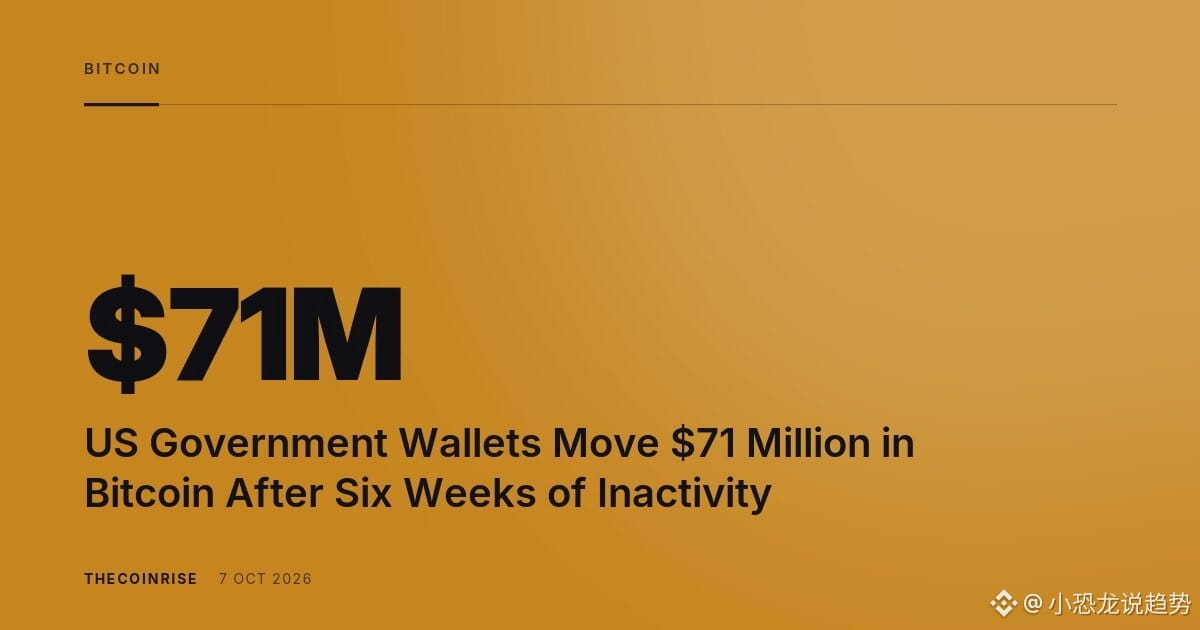
After a full six weeks of silence, it suddenly made a move: a U.S. government wallet transferred 833.6 Bitcoin in one go, worth about $71.5 million at current prices 🐋
[🕐 最新解读群里更新](https://app.binance.com/uni-qr/JpwCPfBj)
On-chain monitoring tools detected the unusual transfer at around 11 a.m. local time on October 6. The coins came from two old cases: the Potapenko and Turogin fraud case, and the 2016 exchange hack that shocked the entire industry. The last time these specific addresses were active was August 26.
There was another, more low-key transaction the same day: 40,285 BNB, worth about $31.63 million, passed through multiple intermediary addresses before eventually landing in an unlabeled wallet. Combined, the two transfers totaled nearly $103 million 💥
Let’s be clear about one thing: a government wallet transfer does not mean an immediate sell-off. These coins are generally held by the U.S. Marshals Service and the Department of Justice. Seized coins may be moved to a different custodian internally or prepared for future disposal. But historically, when long-dormant addresses like these become active, it often foreshadows an auction or disposal ⚠️
That’s why the market is nervous. The U.S. government holds hundreds of thousands of Bitcoin. Every unusual transfer is seen as potential overhead supply—even when only 833.6 coins are actually moved.
Here’s some context: BTC’s total market cap is currently about $1.7 trillion. $71.5 million accounts for just 0.04%. By itself, that amount isn’t enough to move the price. The real impact is on sentiment. Bulls aren’t most worried about these 833 coins; they’re worried about whether this is the first shot in a larger wave of disposals.
The current prices suggest the market isn’t taking much notice: BTC is at $84,418, down 1.39% over 24 hours; ETH is at $2,661, down 1.68%; and BNB is at $770.53. What’s weighing more heavily on the market right now is Bitcoin being rejected near $87,000 for the third time, along with Fed officials collectively striking a hawkish tone 🦖
My take: this transfer alone is not a sell signal, but it is a reminder that government-held coins are always hanging over the market. If the pace of disposals changes, both supply expectations and sentiment will be repriced. What’s worth watching next is whether funds flow to trading platforms and whether an auction announcement appears.
Do you think the U.S. government will eventually dump these coins on the market, or keep holding them? Let’s discuss in the comments. Do you know anyone who’s keeping an eye on government wallet activity?
I bring you the latest Bitcoin and on-chain whale activity every day—not just what’s happening, but also the logic and opportunities behind the headlines 👀🚀
After a full six weeks of silence, it suddenly made a move: a U.S. government wallet transferred 833.6 Bitcoin in one go, worth about $71.5 million at current prices 🐋
🕐 最新解读群里更新
On-chain monitoring tools detected the unusual transfer at around 11 a.m. local time on October 6. The coins came from two old cases: the Potapenko and Turogin fraud case, and the 2016 exchange hack that shocked the entire industry. The last time these specific addresses were active was August 26.
There was another, more low-key transaction the same day: 40,285 BNB, worth about $31.63 million, passed through multiple intermediary addresses before eventually landing in an unlabeled wallet. Combined, the two transfers totaled nearly $103 million 💥
Let’s be clear about one thing: a government wallet transfer does not mean an immediate sell-off. These coins are generally held by the U.S. Marshals Service and the Department of Justice. Seized coins may be moved to a different custodian internally or prepared for future disposal. But historically, when long-dormant addresses like these become active, it often foreshadows an auction or disposal ⚠️
That’s why the market is nervous. The U.S. government holds hundreds of thousands of Bitcoin. Every unusual transfer is seen as potential overhead supply—even when only 833.6 coins are actually moved.
Here’s some context: BTC’s total market cap is currently about $1.7 trillion. $71.5 million accounts for just 0.04%. By itself, that amount isn’t enough to move the price. The real impact is on sentiment. Bulls aren’t most worried about these 833 coins; they’re worried about whether this is the first shot in a larger wave of disposals.
The current prices suggest the market isn’t taking much notice: BTC is at $84,418, down 1.39% over 24 hours; ETH is at $2,661, down 1.68%; and BNB is at $770.53. What’s weighing more heavily on the market right now is Bitcoin being rejected near $87,000 for the third time, along with Fed officials collectively striking a hawkish tone 🦖
My take: this transfer alone is not a sell signal, but it is a reminder that government-held coins are always hanging over the market. If the pace of disposals changes, both supply expectations and sentiment will be repriced. What’s worth watching next is whether funds flow to trading platforms and whether an auction announcement appears.
Do you think the U.S. government will eventually dump these coins on the market, or keep holding them? Let’s discuss in the comments. Do you know anyone who’s keeping an eye on government wallet activity?
I bring you the latest Bitcoin and on-chain whale activity every day—not just what’s happening, but also the logic and opportunities behind the headlines 👀🚀
🕐 最新解读群里更新
On-chain monitoring tools detected the unusual transfer at around 11 a.m. local time on October 6. The coins came from two old cases: the Potapenko and Turogin fraud case, and the 2016 exchange hack that shocked the entire industry. The last time these specific addresses were active was August 26.
There was another, more low-key transaction the same day: 40,285 BNB, worth about $31.63 million, passed through multiple intermediary addresses before eventually landing in an unlabeled wallet. Combined, the two transfers totaled nearly $103 million 💥
Let’s be clear about one thing: a government wallet transfer does not mean an immediate sell-off. These coins are generally held by the U.S. Marshals Service and the Department of Justice. Seized coins may be moved to a different custodian internally or prepared for future disposal. But historically, when long-dormant addresses like these become active, it often foreshadows an auction or disposal ⚠️
That’s why the market is nervous. The U.S. government holds hundreds of thousands of Bitcoin. Every unusual transfer is seen as potential overhead supply—even when only 833.6 coins are actually moved.
Here’s some context: BTC’s total market cap is currently about $1.7 trillion. $71.5 million accounts for just 0.04%. By itself, that amount isn’t enough to move the price. The real impact is on sentiment. Bulls aren’t most worried about these 833 coins; they’re worried about whether this is the first shot in a larger wave of disposals.
The current prices suggest the market isn’t taking much notice: BTC is at $84,418, down 1.39% over 24 hours; ETH is at $2,661, down 1.68%; and BNB is at $770.53. What’s weighing more heavily on the market right now is Bitcoin being rejected near $87,000 for the third time, along with Fed officials collectively striking a hawkish tone 🦖
My take: this transfer alone is not a sell signal, but it is a reminder that government-held coins are always hanging over the market. If the pace of disposals changes, both supply expectations and sentiment will be repriced. What’s worth watching next is whether funds flow to trading platforms and whether an auction announcement appears.
Do you think the U.S. government will eventually dump these coins on the market, or keep holding them? Let’s discuss in the comments. Do you know anyone who’s keeping an eye on government wallet activity?
I bring you the latest Bitcoin and on-chain whale activity every day—not just what’s happening, but also the logic and opportunities behind the headlines 👀🚀
1
1.4k
·
--
#美联储10月维持利率概率升至82.3%
Markets’ bets on the Fed holding steady in October surged to 89.5%, but Fed officials spoke out that same evening: there’s still work to do on short-term rates 🦖
[🔍 进群聊行情](https://app.binance.com/uni-qr/JpwCPfBj)
Early in the morning on October 7 Beijing time, two Fed officials spoke in quick succession: Kansas City Fed President Schmid and San Francisco Fed President Daly. Their message was remarkably consistent. Just three weeks after the latest rate hike, they’re now saying inflation is picking up again—and it’s not yet time to call off this tightening cycle.
The numbers best illustrate the divide. On October 5, CME FedWatch showed an 82.3% probability that rates would remain unchanged in October, and just a 17.7% probability of a 25-basis-point hike. But in the same data, the probability of no change in December fell to 17.3%. The odds of another 25 basis points of cumulative hikes stood at a hefty 68.7%, while the chance of another 50 basis points was 14%. 📊 By October 7, the odds of holding steady in October had climbed again, to 89.5%. In a nutshell: bets are on a pause in the near term, but more hikes before year-end.
Schmid was the most direct. He said inflation is a thief that harms the lower half of income earners far more than the higher half. If the Fed doesn’t keep acting to bring inflation back down to 2%, its credibility will be at risk. He listed energy prices as one of the biggest challenges for monetary policy, and singled out AI as driving up demand through data centers and semiconductors. He stressed that the sharp rise in 5-, 10- and 30-year Treasury yields is indeed changing the cost of capital—but the Fed focuses on short-term rates, and there’s still work to do there.
Daly’s focus was a little different. She reiterated that she strongly supported the rate hike three weeks ago, saying a hike was entirely necessary at this point. What really worries her is that AI-driven chip demand could spill over into autos and home appliances. Companies have already started locking in forward contracts, and in her view, this isn’t a one-off shock; it may take longer to ease. As for whether rates should rise further, that will depend on tariffs, oil prices amid the Middle East conflict, and how the effects of AI evolve.
Interestingly, the officials struck a hawkish tone, but markets didn’t seem to care. On Tuesday, the Dow rose 0.49% and the S&P 500 gained 0.58%. Both the Nasdaq and S&P 500 closed at record highs. Bitcoin, meanwhile, hovered around $85,463, down 0.66% over 24 hours, while Ethereum fell 0.89% to $2,694.
My take: the real question this time isn’t whether the Fed hikes in October, but what the path looks like for the rest of the year. A 68.7% chance of another hike before December shows that the market doesn’t see a pause as the end point—it sees it as a halftime break. ⚠️ If the officials’ hawkish outlook is borne out by the data, U.S. stocks still hitting new highs and Bitcoin hovering around $85,000 will both have to be repriced. On the other hand, if inflation data cooperate, markets will once again mark down the odds of a hike. That’s why every inflation and jobs report from here on will carry more weight.
Let’s talk in the comments: do you think the Fed will hike rates again this year? 📈
Every day, I bring you the latest on the Fed and crypto markets—not just what’s happening, but the logic and opportunities behind it. 👀🚀
#美联储10月维持利率概率升至82.3%
Markets’ bets on the Fed holding steady in October surged to 89.5%, but Fed officials spoke out that same evening: there’s still work to do on short-term rates 🦖
🔍 进群聊行情
Early in the morning on October 7 Beijing time, two Fed officials spoke in quick succession: Kansas City Fed President Schmid and San Francisco Fed President Daly. Their message was remarkably consistent. Just three weeks after the latest rate hike, they’re now saying inflation is picking up again—and it’s not yet time to call off this tightening cycle.
The numbers best illustrate the divide. On October 5, CME FedWatch showed an 82.3% probability that rates would remain unchanged in October, and just a 17.7% probability of a 25-basis-point hike. But in the same data, the probability of no change in December fell to 17.3%. The odds of another 25 basis points of cumulative hikes stood at a hefty 68.7%, while the chance of another 50 basis points was 14%. 📊 By October 7, the odds of holding steady in October had climbed again, to 89.5%. In a nutshell: bets are on a pause in the near term, but more hikes before year-end.
Schmid was the most direct. He said inflation is a thief that harms the lower half of income earners far more than the higher half. If the Fed doesn’t keep acting to bring inflation back down to 2%, its credibility will be at risk. He listed energy prices as one of the biggest challenges for monetary policy, and singled out AI as driving up demand through data centers and semiconductors. He stressed that the sharp rise in 5-, 10- and 30-year Treasury yields is indeed changing the cost of capital—but the Fed focuses on short-term rates, and there’s still work to do there.
Daly’s focus was a little different. She reiterated that she strongly supported the rate hike three weeks ago, saying a hike was entirely necessary at this point. What really worries her is that AI-driven chip demand could spill over into autos and home appliances. Companies have already started locking in forward contracts, and in her view, this isn’t a one-off shock; it may take longer to ease. As for whether rates should rise further, that will depend on tariffs, oil prices amid the Middle East conflict, and how the effects of AI evolve.
Interestingly, the officials struck a hawkish tone, but markets didn’t seem to care. On Tuesday, the Dow rose 0.49% and the S&P 500 gained 0.58%. Both the Nasdaq and S&P 500 closed at record highs. Bitcoin, meanwhile, hovered around $85,463, down 0.66% over 24 hours, while Ethereum fell 0.89% to $2,694.
My take: the real question this time isn’t whether the Fed hikes in October, but what the path looks like for the rest of the year. A 68.7% chance of another hike before December shows that the market doesn’t see a pause as the end point—it sees it as a halftime break. ⚠️ If the officials’ hawkish outlook is borne out by the data, U.S. stocks still hitting new highs and Bitcoin hovering around $85,000 will both have to be repriced. On the other hand, if inflation data cooperate, markets will once again mark down the odds of a hike. That’s why every inflation and jobs report from here on will carry more weight.
Let’s talk in the comments: do you think the Fed will hike rates again this year? 📈
Every day, I bring you the latest on the Fed and crypto markets—not just what’s happening, but the logic and opportunities behind it. 👀🚀
Markets’ bets on the Fed holding steady in October surged to 89.5%, but Fed officials spoke out that same evening: there’s still work to do on short-term rates 🦖
🔍 进群聊行情
Early in the morning on October 7 Beijing time, two Fed officials spoke in quick succession: Kansas City Fed President Schmid and San Francisco Fed President Daly. Their message was remarkably consistent. Just three weeks after the latest rate hike, they’re now saying inflation is picking up again—and it’s not yet time to call off this tightening cycle.
The numbers best illustrate the divide. On October 5, CME FedWatch showed an 82.3% probability that rates would remain unchanged in October, and just a 17.7% probability of a 25-basis-point hike. But in the same data, the probability of no change in December fell to 17.3%. The odds of another 25 basis points of cumulative hikes stood at a hefty 68.7%, while the chance of another 50 basis points was 14%. 📊 By October 7, the odds of holding steady in October had climbed again, to 89.5%. In a nutshell: bets are on a pause in the near term, but more hikes before year-end.
Schmid was the most direct. He said inflation is a thief that harms the lower half of income earners far more than the higher half. If the Fed doesn’t keep acting to bring inflation back down to 2%, its credibility will be at risk. He listed energy prices as one of the biggest challenges for monetary policy, and singled out AI as driving up demand through data centers and semiconductors. He stressed that the sharp rise in 5-, 10- and 30-year Treasury yields is indeed changing the cost of capital—but the Fed focuses on short-term rates, and there’s still work to do there.
Daly’s focus was a little different. She reiterated that she strongly supported the rate hike three weeks ago, saying a hike was entirely necessary at this point. What really worries her is that AI-driven chip demand could spill over into autos and home appliances. Companies have already started locking in forward contracts, and in her view, this isn’t a one-off shock; it may take longer to ease. As for whether rates should rise further, that will depend on tariffs, oil prices amid the Middle East conflict, and how the effects of AI evolve.
Interestingly, the officials struck a hawkish tone, but markets didn’t seem to care. On Tuesday, the Dow rose 0.49% and the S&P 500 gained 0.58%. Both the Nasdaq and S&P 500 closed at record highs. Bitcoin, meanwhile, hovered around $85,463, down 0.66% over 24 hours, while Ethereum fell 0.89% to $2,694.
My take: the real question this time isn’t whether the Fed hikes in October, but what the path looks like for the rest of the year. A 68.7% chance of another hike before December shows that the market doesn’t see a pause as the end point—it sees it as a halftime break. ⚠️ If the officials’ hawkish outlook is borne out by the data, U.S. stocks still hitting new highs and Bitcoin hovering around $85,000 will both have to be repriced. On the other hand, if inflation data cooperate, markets will once again mark down the odds of a hike. That’s why every inflation and jobs report from here on will carry more weight.
Let’s talk in the comments: do you think the Fed will hike rates again this year? 📈
Every day, I bring you the latest on the Fed and crypto markets—not just what’s happening, but the logic and opportunities behind it. 👀🚀

280
·
--
$2.76 million frozen just like that, with no explanation for over a year. A company has taken the world’s largest stablecoin issuer to court 🦖
[📣 盘面异动群里喊](https://app.binance.com/uni-qr/JpwCPfBj)
The plaintiff is cross-border payments company Conduit Technology. It filed a complaint in the U.S. District Court for the Southern District of New York, accusing Tether of freezing $2.76 million in USDT held in its treasury wallet on September 24, 2025. The reason still hasn’t been made clear, and the money had been used as the company’s operating account.
According to the complaint, the wallet was opened in May 2025 and processed more than $1.1 billion in transactions in just four months. After the freeze, the company couldn’t stay afloat: it laid off staff and closed its offices ⚠️
Tether’s stated basis was a 2024 investigation by Brazil’s Federal Police into a company called Onix. Onix did use Conduit’s platform, but Conduit says its wallet was created nearly a month after Onix’s last transaction and never held a single cent belonging to Onix. Brazilian police also confirmed that they had never flagged the wallet. The decision was actually made by Tether’s own T3 Financial Crime Unit, based on its own standards and its own judgment.
The complaint lists four claims: conversion, unjust enrichment, breach of fiduciary duty, and computer fraud. The demand is simple: give the money back. An even more galling point is that while the tokens remain frozen, Tether continues to collect the interest on the U.S. Treasury securities backing them, while all the costs of the freeze fall on someone else 💰
This isn’t the first time. Just about a month ago, two Thai citizens also sued Tether over $42.4 million in frozen funds. Before that, hundreds of millions of USDT flagged as linked to illegal activity were frozen over time. The irony is that the same company is criticized for freezing funds too readily, while also being accused of not freezing enough. It can’t win either way.
My take: the real significance of this case isn’t the $2.76 million. It’s a question everyone will eventually have to face: Is the stablecoin in your wallet actually your money? ⚖️ The answer for now is that it is only yours if the issuer says so. The issuer can make its own judgment and enforce it without a court ruling first. By taking this case to court, Conduit is effectively forcing the courts to clarify this gray area for the first time.
If the court requires issuers to provide evidence and pay compensation, they may be more cautious about freezing tokens in the future, and people whose funds are frozen by mistake will have a path to seek recourse. But on the other hand, it could also slow down the recovery of illicit funds. That’s the double-edged nature of it.
Let’s talk in the comments: do you think stablecoin issuers should have this kind of one-click freezing power?
Every day, I bring you the latest on stablecoins and regulatory developments—not just what’s happening, but the logic and opportunities behind the headlines 👀🚀
$2.76 million frozen just like that, with no explanation for over a year. A company has taken the world’s largest stablecoin issuer to court 🦖
📣 盘面异动群里喊
The plaintiff is cross-border payments company Conduit Technology. It filed a complaint in the U.S. District Court for the Southern District of New York, accusing Tether of freezing $2.76 million in USDT held in its treasury wallet on September 24, 2025. The reason still hasn’t been made clear, and the money had been used as the company’s operating account.
According to the complaint, the wallet was opened in May 2025 and processed more than $1.1 billion in transactions in just four months. After the freeze, the company couldn’t stay afloat: it laid off staff and closed its offices ⚠️
Tether’s stated basis was a 2024 investigation by Brazil’s Federal Police into a company called Onix. Onix did use Conduit’s platform, but Conduit says its wallet was created nearly a month after Onix’s last transaction and never held a single cent belonging to Onix. Brazilian police also confirmed that they had never flagged the wallet. The decision was actually made by Tether’s own T3 Financial Crime Unit, based on its own standards and its own judgment.
The complaint lists four claims: conversion, unjust enrichment, breach of fiduciary duty, and computer fraud. The demand is simple: give the money back. An even more galling point is that while the tokens remain frozen, Tether continues to collect the interest on the U.S. Treasury securities backing them, while all the costs of the freeze fall on someone else 💰
This isn’t the first time. Just about a month ago, two Thai citizens also sued Tether over $42.4 million in frozen funds. Before that, hundreds of millions of USDT flagged as linked to illegal activity were frozen over time. The irony is that the same company is criticized for freezing funds too readily, while also being accused of not freezing enough. It can’t win either way.
My take: the real significance of this case isn’t the $2.76 million. It’s a question everyone will eventually have to face: Is the stablecoin in your wallet actually your money? ⚖️ The answer for now is that it is only yours if the issuer says so. The issuer can make its own judgment and enforce it without a court ruling first. By taking this case to court, Conduit is effectively forcing the courts to clarify this gray area for the first time.
If the court requires issuers to provide evidence and pay compensation, they may be more cautious about freezing tokens in the future, and people whose funds are frozen by mistake will have a path to seek recourse. But on the other hand, it could also slow down the recovery of illicit funds. That’s the double-edged nature of it.
Let’s talk in the comments: do you think stablecoin issuers should have this kind of one-click freezing power?
Every day, I bring you the latest on stablecoins and regulatory developments—not just what’s happening, but the logic and opportunities behind the headlines 👀🚀
📣 盘面异动群里喊
The plaintiff is cross-border payments company Conduit Technology. It filed a complaint in the U.S. District Court for the Southern District of New York, accusing Tether of freezing $2.76 million in USDT held in its treasury wallet on September 24, 2025. The reason still hasn’t been made clear, and the money had been used as the company’s operating account.
According to the complaint, the wallet was opened in May 2025 and processed more than $1.1 billion in transactions in just four months. After the freeze, the company couldn’t stay afloat: it laid off staff and closed its offices ⚠️
Tether’s stated basis was a 2024 investigation by Brazil’s Federal Police into a company called Onix. Onix did use Conduit’s platform, but Conduit says its wallet was created nearly a month after Onix’s last transaction and never held a single cent belonging to Onix. Brazilian police also confirmed that they had never flagged the wallet. The decision was actually made by Tether’s own T3 Financial Crime Unit, based on its own standards and its own judgment.
The complaint lists four claims: conversion, unjust enrichment, breach of fiduciary duty, and computer fraud. The demand is simple: give the money back. An even more galling point is that while the tokens remain frozen, Tether continues to collect the interest on the U.S. Treasury securities backing them, while all the costs of the freeze fall on someone else 💰
This isn’t the first time. Just about a month ago, two Thai citizens also sued Tether over $42.4 million in frozen funds. Before that, hundreds of millions of USDT flagged as linked to illegal activity were frozen over time. The irony is that the same company is criticized for freezing funds too readily, while also being accused of not freezing enough. It can’t win either way.
My take: the real significance of this case isn’t the $2.76 million. It’s a question everyone will eventually have to face: Is the stablecoin in your wallet actually your money? ⚖️ The answer for now is that it is only yours if the issuer says so. The issuer can make its own judgment and enforce it without a court ruling first. By taking this case to court, Conduit is effectively forcing the courts to clarify this gray area for the first time.
If the court requires issuers to provide evidence and pay compensation, they may be more cautious about freezing tokens in the future, and people whose funds are frozen by mistake will have a path to seek recourse. But on the other hand, it could also slow down the recovery of illicit funds. That’s the double-edged nature of it.
Let’s talk in the comments: do you think stablecoin issuers should have this kind of one-click freezing power?
Every day, I bring you the latest on stablecoins and regulatory developments—not just what’s happening, but the logic and opportunities behind the headlines 👀🚀

83
·
--
#比特币三度受阻8.7万美元
Two whale accounts are betting big in the same direction, holding $1.58 billion in shorts—but Bitcoin is stuck just below $87,000 🐋
[📈 进群看今日思路](https://app.binance.com/uni-qr/JpwCPfBj)
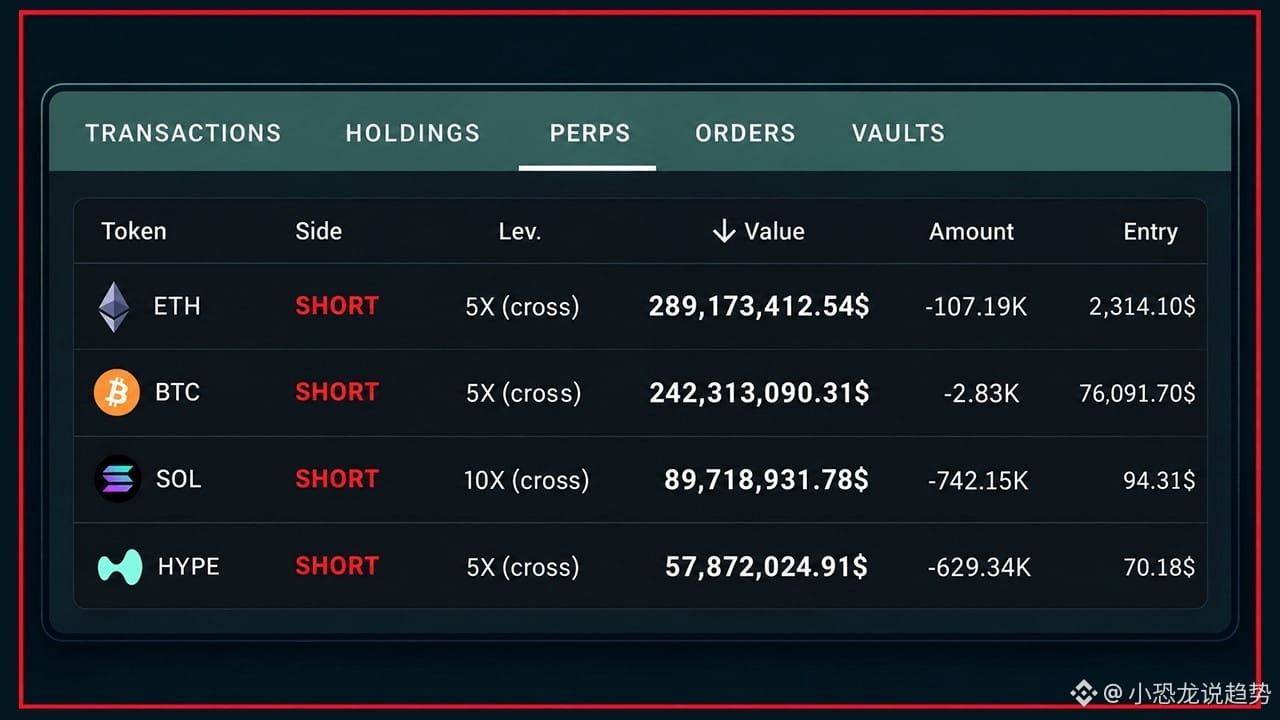
On the afternoon of October 6, on-chain monitors showed that two linked Hyperliquid wallets held a combined net short position worth around $1.58 billion, targeting Bitcoin and Ethereum. Their shorts included 189,400 ETH and 5,120 BTC, worth about $948 million combined.
Even more intriguing is who’s behind them. On-chain analytics platforms Nansen and Arkham have both labeled the addresses as belonging to Abraxas Capital Management, a London-based investment firm managing billions of dollars in assets. Its fund is called Heka Funds.
Interestingly, both short positions are currently underwater, with combined unrealized losses of about $115 million. But the wallets have plenty of assets to back them up, including millions of dollars in recent deposits. In other words, they can afford to take the hit.
Besides Bitcoin and Ethereum, the wallets are also short SOL, HYPE, ENA, XRP, SUI, and PUMP—almost a ready-made list of bearish bets.
My take: don’t rush to treat whales as oracles. On-chain data is public, and whales know better than anyone that everyone is watching them. Visible positions like these can easily sway retail sentiment. Plus, many institutions short as a hedge, and their spot long positions may have already offset the shorts. Short positions alone don’t prove that they’re truly bearish on the broader market.
What’s worth watching is that Bitcoin climbed above $86,000 twice on Tuesday but still couldn’t break $87,000. That’s the third time it’s been turned back ⚠️ On one side, whales are adding to their shorts; on the other, Bitcoin is holding on to its October gains. With the price around $85,600, we’ll soon see who blinks first in this standoff.
Do you think the bears will win this round, or will they be forced to close their positions in a short squeeze? Let’s talk in the comments 🦖
Tap the profile picture to watch the livestream
Every day, we bring you the latest on Bitcoin, whale activity, and market trends. We don’t just tell you what’s happening—we help you understand the logic and opportunities behind it 👀🚀
#比特币三度受阻8.7万美元
Two whale accounts are betting big in the same direction, holding $1.58 billion in shorts—but Bitcoin is stuck just below $87,000 🐋
📈 进群看今日思路
On the afternoon of October 6, on-chain monitors showed that two linked Hyperliquid wallets held a combined net short position worth around $1.58 billion, targeting Bitcoin and Ethereum. Their shorts included 189,400 ETH and 5,120 BTC, worth about $948 million combined.
Even more intriguing is who’s behind them. On-chain analytics platforms Nansen and Arkham have both labeled the addresses as belonging to Abraxas Capital Management, a London-based investment firm managing billions of dollars in assets. Its fund is called Heka Funds.
Interestingly, both short positions are currently underwater, with combined unrealized losses of about $115 million. But the wallets have plenty of assets to back them up, including millions of dollars in recent deposits. In other words, they can afford to take the hit.
Besides Bitcoin and Ethereum, the wallets are also short SOL, HYPE, ENA, XRP, SUI, and PUMP—almost a ready-made list of bearish bets.
My take: don’t rush to treat whales as oracles. On-chain data is public, and whales know better than anyone that everyone is watching them. Visible positions like these can easily sway retail sentiment. Plus, many institutions short as a hedge, and their spot long positions may have already offset the shorts. Short positions alone don’t prove that they’re truly bearish on the broader market.
What’s worth watching is that Bitcoin climbed above $86,000 twice on Tuesday but still couldn’t break $87,000. That’s the third time it’s been turned back ⚠️ On one side, whales are adding to their shorts; on the other, Bitcoin is holding on to its October gains. With the price around $85,600, we’ll soon see who blinks first in this standoff.
Do you think the bears will win this round, or will they be forced to close their positions in a short squeeze? Let’s talk in the comments 🦖
Tap the profile picture to watch the livestream
Every day, we bring you the latest on Bitcoin, whale activity, and market trends. We don’t just tell you what’s happening—we help you understand the logic and opportunities behind it 👀🚀
Two whale accounts are betting big in the same direction, holding $1.58 billion in shorts—but Bitcoin is stuck just below $87,000 🐋
📈 进群看今日思路
On the afternoon of October 6, on-chain monitors showed that two linked Hyperliquid wallets held a combined net short position worth around $1.58 billion, targeting Bitcoin and Ethereum. Their shorts included 189,400 ETH and 5,120 BTC, worth about $948 million combined.
Even more intriguing is who’s behind them. On-chain analytics platforms Nansen and Arkham have both labeled the addresses as belonging to Abraxas Capital Management, a London-based investment firm managing billions of dollars in assets. Its fund is called Heka Funds.
Interestingly, both short positions are currently underwater, with combined unrealized losses of about $115 million. But the wallets have plenty of assets to back them up, including millions of dollars in recent deposits. In other words, they can afford to take the hit.
Besides Bitcoin and Ethereum, the wallets are also short SOL, HYPE, ENA, XRP, SUI, and PUMP—almost a ready-made list of bearish bets.
My take: don’t rush to treat whales as oracles. On-chain data is public, and whales know better than anyone that everyone is watching them. Visible positions like these can easily sway retail sentiment. Plus, many institutions short as a hedge, and their spot long positions may have already offset the shorts. Short positions alone don’t prove that they’re truly bearish on the broader market.
What’s worth watching is that Bitcoin climbed above $86,000 twice on Tuesday but still couldn’t break $87,000. That’s the third time it’s been turned back ⚠️ On one side, whales are adding to their shorts; on the other, Bitcoin is holding on to its October gains. With the price around $85,600, we’ll soon see who blinks first in this standoff.
Do you think the bears will win this round, or will they be forced to close their positions in a short squeeze? Let’s talk in the comments 🦖
Tap the profile picture to watch the livestream
Every day, we bring you the latest on Bitcoin, whale activity, and market trends. We don’t just tell you what’s happening—we help you understand the logic and opportunities behind it 👀🚀
1.2k
·
--
#比特币三度受阻8.7万美元
Rejected at $87,000 for the Third Time: Bitcoin Gets Slapped Back 🦖
[🧭 群里聊方向](https://app.binance.com/uni-qr/JpwCPfBj)
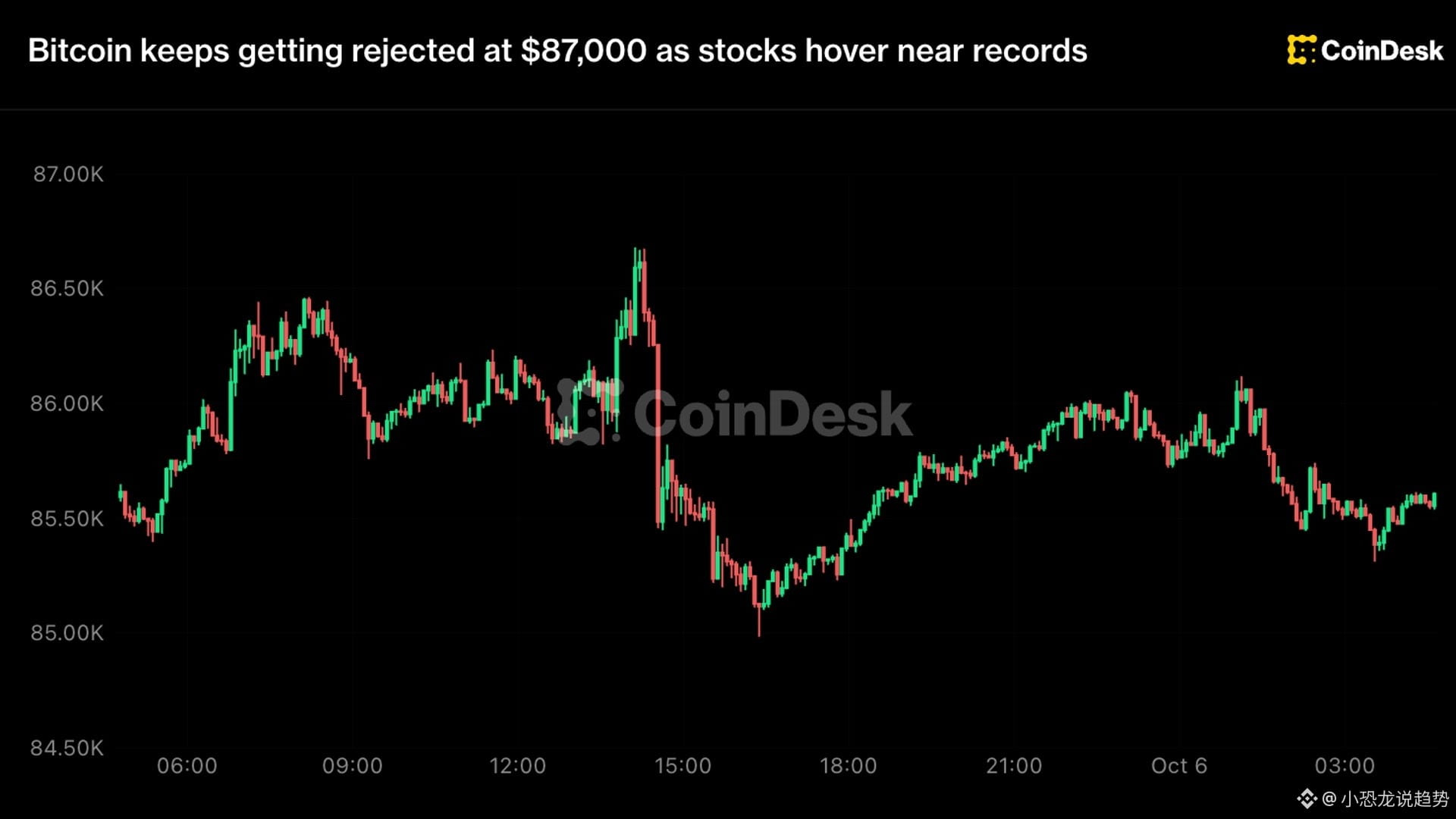
Bitcoin failed for the third time early this morning to break through $87,000. Its price fell 1.2% to around $85,600, and the total crypto market cap shrank to about $2.93 trillion. Since September 23, this same wall has turned it back three times.
First, what exactly is this wall? Every time the price climbs above $87,000, a wave of sell orders appears and pushes it back down. That suggests a crowd of holders is waiting to sell at that level. Analysts explain that Bitcoin has reached the apex of a triangle, with rising support below and resistance at $87,000 overhead—a level that’s been holding firm for more than ten days. Volatility will only increase before a breakout.
Now let’s look at what actually happened overnight. U.S. Bitcoin ETFs saw net outflows of around $90 million in a single day 🔴 Meanwhile, the yield on 10-year U.S. Treasuries rose to 5.32%, its highest level since 2002, while the two-year yield climbed to 4.83%. The Nasdaq 100 closed at a record high, and the S&P 500 was just 0.5% shy of its record. In other words, money hasn’t disappeared—it’s moving into U.S. stocks and bonds, not Bitcoin.
The most interesting part is the rotation within the crypto market. ADA surged 11% in a day, NEAR and GRT each gained around 7%, and HYPE rose 3% against the trend to $94. Meanwhile, Ethereum, XRP, SOL, and Dogecoin all fell 1% to 2%, while BNB dropped 2.5% ⚠️ This isn’t a market-wide collapse. It’s capital moving out of large-cap leaders and into smaller coins in search of greater upside.
My take: Bitcoin needs real spot buying to absorb the selling pressure before it can truly clear $87,000. A rebound driven by leverage and short covering will just get knocked back by the same sell orders. If it can establish itself above that level, the way opens to highs not seen in eight months 📈 To the downside, $84,000 is the short-term support level. If it breaks, $80,000 will come back into view.
Put simply, bulls and bears are locked in a tight range, each trying to outlast the other. Whoever blinks first loses. The real direction won’t be decided by today’s small red candle, but by whether fresh money is willing to buy at these prices.
Do you think this is the final shakeout before a push to new highs, or a sign the rebound has run its course? Share your take in the comments.
I bring you the latest Bitcoin news every day—not just what’s happening, but the logic and opportunities behind it 👀🚀
Tap my profile picture to watch the livestream
#比特币三度受阻8.7万美元
Rejected at $87,000 for the Third Time: Bitcoin Gets Slapped Back 🦖
🧭 群里聊方向
Bitcoin failed for the third time early this morning to break through $87,000. Its price fell 1.2% to around $85,600, and the total crypto market cap shrank to about $2.93 trillion. Since September 23, this same wall has turned it back three times.
First, what exactly is this wall? Every time the price climbs above $87,000, a wave of sell orders appears and pushes it back down. That suggests a crowd of holders is waiting to sell at that level. Analysts explain that Bitcoin has reached the apex of a triangle, with rising support below and resistance at $87,000 overhead—a level that’s been holding firm for more than ten days. Volatility will only increase before a breakout.
Now let’s look at what actually happened overnight. U.S. Bitcoin ETFs saw net outflows of around $90 million in a single day 🔴 Meanwhile, the yield on 10-year U.S. Treasuries rose to 5.32%, its highest level since 2002, while the two-year yield climbed to 4.83%. The Nasdaq 100 closed at a record high, and the S&P 500 was just 0.5% shy of its record. In other words, money hasn’t disappeared—it’s moving into U.S. stocks and bonds, not Bitcoin.
The most interesting part is the rotation within the crypto market. ADA surged 11% in a day, NEAR and GRT each gained around 7%, and HYPE rose 3% against the trend to $94. Meanwhile, Ethereum, XRP, SOL, and Dogecoin all fell 1% to 2%, while BNB dropped 2.5% ⚠️ This isn’t a market-wide collapse. It’s capital moving out of large-cap leaders and into smaller coins in search of greater upside.
My take: Bitcoin needs real spot buying to absorb the selling pressure before it can truly clear $87,000. A rebound driven by leverage and short covering will just get knocked back by the same sell orders. If it can establish itself above that level, the way opens to highs not seen in eight months 📈 To the downside, $84,000 is the short-term support level. If it breaks, $80,000 will come back into view.
Put simply, bulls and bears are locked in a tight range, each trying to outlast the other. Whoever blinks first loses. The real direction won’t be decided by today’s small red candle, but by whether fresh money is willing to buy at these prices.
Do you think this is the final shakeout before a push to new highs, or a sign the rebound has run its course? Share your take in the comments.
I bring you the latest Bitcoin news every day—not just what’s happening, but the logic and opportunities behind it 👀🚀
Tap my profile picture to watch the livestream
Rejected at $87,000 for the Third Time: Bitcoin Gets Slapped Back 🦖
🧭 群里聊方向
Bitcoin failed for the third time early this morning to break through $87,000. Its price fell 1.2% to around $85,600, and the total crypto market cap shrank to about $2.93 trillion. Since September 23, this same wall has turned it back three times.
First, what exactly is this wall? Every time the price climbs above $87,000, a wave of sell orders appears and pushes it back down. That suggests a crowd of holders is waiting to sell at that level. Analysts explain that Bitcoin has reached the apex of a triangle, with rising support below and resistance at $87,000 overhead—a level that’s been holding firm for more than ten days. Volatility will only increase before a breakout.
Now let’s look at what actually happened overnight. U.S. Bitcoin ETFs saw net outflows of around $90 million in a single day 🔴 Meanwhile, the yield on 10-year U.S. Treasuries rose to 5.32%, its highest level since 2002, while the two-year yield climbed to 4.83%. The Nasdaq 100 closed at a record high, and the S&P 500 was just 0.5% shy of its record. In other words, money hasn’t disappeared—it’s moving into U.S. stocks and bonds, not Bitcoin.
The most interesting part is the rotation within the crypto market. ADA surged 11% in a day, NEAR and GRT each gained around 7%, and HYPE rose 3% against the trend to $94. Meanwhile, Ethereum, XRP, SOL, and Dogecoin all fell 1% to 2%, while BNB dropped 2.5% ⚠️ This isn’t a market-wide collapse. It’s capital moving out of large-cap leaders and into smaller coins in search of greater upside.
My take: Bitcoin needs real spot buying to absorb the selling pressure before it can truly clear $87,000. A rebound driven by leverage and short covering will just get knocked back by the same sell orders. If it can establish itself above that level, the way opens to highs not seen in eight months 📈 To the downside, $84,000 is the short-term support level. If it breaks, $80,000 will come back into view.
Put simply, bulls and bears are locked in a tight range, each trying to outlast the other. Whoever blinks first loses. The real direction won’t be decided by today’s small red candle, but by whether fresh money is willing to buy at these prices.
Do you think this is the final shakeout before a push to new highs, or a sign the rebound has run its course? Share your take in the comments.
I bring you the latest Bitcoin news every day—not just what’s happening, but the logic and opportunities behind it 👀🚀
Tap my profile picture to watch the livestream
1.3k
·
--
#以太坊q3涨70%流动性下降
Ethereum surged 70% in Q3, but its order-book depth is now just 40% of Bitcoin’s 🦖
[📊 进群看每日策略](https://app.binance.com/uni-qr/JpwCPfBj)
Ethereum rose 70% in Q3, outperforming Bitcoin’s 42% gain. But a CoinGecko report compiled by TechFlow reveals a striking contrast: the asset that rose the most is seeing its order book get thinner.
CoinGecko measured the median daily market depth for Ethereum from July 6 to September 30. It was only 35% to 45% of Bitcoin’s. At the same time last year, the ratio was at least 60%. 📉
The numbers make it even clearer: within 0.15% of the market price, Ethereum’s depth was just $13 million to $14 million. In other words, a trade worth tens of millions of dollars could move the price by 0.15%. It’s getting harder for large orders to enter and exit smoothly without making waves. ⚠️
Ethereum isn’t the only one seeing thinner order books. SOL’s depth within 2% of the market price has fallen from about $28 million on each side of the order book last year to around $20 million now. This 2% depth is precisely what determines how much selling or buying pressure the market can absorb during a sharp move. 🐋
By comparison, XRP’s total depth has remained steady at around $30 million, with about $18 million in buy orders and $14 million in sell orders—a clear imbalance. More interestingly, XRP’s market cap is about 40% higher than SOL’s, yet its 2% depth is still lower. One reason is that SOL’s average daily trading volume is 25% higher than XRP’s.
Put simply, a 70% gain doesn’t mean stronger market support. Price gains reflect sentiment; depth is the foundation. A thin order book has a straightforward consequence: the same amount of capital can cause a bigger swing. It feels great on the way up, but if a large sell order hits, prices can fall faster than most people can trigger their stop-losses.
Adding to the backdrop, spot Ethereum ETFs saw net outflows of about $51 million on Monday, marking five consecutive trading days of outflows. The total outflow over those five days was about $206 million. Meanwhile, the 10-year U.S. Treasury yield is above 5%, and risk-free assets are competing with risk assets for capital.
What I think is worth watching isn’t how much higher ETH can go, but whether its market depth can recover. If prices keep rising without depth returning, volatility in this rally will increase, and pullbacks could bring a string of further drops.
Do you hold ETH or SOL? Do you think this rally is driven by real demand, or is it just a flash of excitement in a thin market?
I bring you the latest crypto market trends every day—not just what’s happening in the news, but also the logic and opportunities behind it. 👀🚀
Tap my profile picture to watch the livestream
#以太坊q3涨70%流动性下降
Ethereum surged 70% in Q3, but its order-book depth is now just 40% of Bitcoin’s 🦖
📊 进群看每日策略
Ethereum rose 70% in Q3, outperforming Bitcoin’s 42% gain. But a CoinGecko report compiled by TechFlow reveals a striking contrast: the asset that rose the most is seeing its order book get thinner.
CoinGecko measured the median daily market depth for Ethereum from July 6 to September 30. It was only 35% to 45% of Bitcoin’s. At the same time last year, the ratio was at least 60%. 📉
The numbers make it even clearer: within 0.15% of the market price, Ethereum’s depth was just $13 million to $14 million. In other words, a trade worth tens of millions of dollars could move the price by 0.15%. It’s getting harder for large orders to enter and exit smoothly without making waves. ⚠️
Ethereum isn’t the only one seeing thinner order books. SOL’s depth within 2% of the market price has fallen from about $28 million on each side of the order book last year to around $20 million now. This 2% depth is precisely what determines how much selling or buying pressure the market can absorb during a sharp move. 🐋
By comparison, XRP’s total depth has remained steady at around $30 million, with about $18 million in buy orders and $14 million in sell orders—a clear imbalance. More interestingly, XRP’s market cap is about 40% higher than SOL’s, yet its 2% depth is still lower. One reason is that SOL’s average daily trading volume is 25% higher than XRP’s.
Put simply, a 70% gain doesn’t mean stronger market support. Price gains reflect sentiment; depth is the foundation. A thin order book has a straightforward consequence: the same amount of capital can cause a bigger swing. It feels great on the way up, but if a large sell order hits, prices can fall faster than most people can trigger their stop-losses.
Adding to the backdrop, spot Ethereum ETFs saw net outflows of about $51 million on Monday, marking five consecutive trading days of outflows. The total outflow over those five days was about $206 million. Meanwhile, the 10-year U.S. Treasury yield is above 5%, and risk-free assets are competing with risk assets for capital.
What I think is worth watching isn’t how much higher ETH can go, but whether its market depth can recover. If prices keep rising without depth returning, volatility in this rally will increase, and pullbacks could bring a string of further drops.
Do you hold ETH or SOL? Do you think this rally is driven by real demand, or is it just a flash of excitement in a thin market?
I bring you the latest crypto market trends every day—not just what’s happening in the news, but also the logic and opportunities behind it. 👀🚀
Tap my profile picture to watch the livestream
Ethereum surged 70% in Q3, but its order-book depth is now just 40% of Bitcoin’s 🦖
📊 进群看每日策略
Ethereum rose 70% in Q3, outperforming Bitcoin’s 42% gain. But a CoinGecko report compiled by TechFlow reveals a striking contrast: the asset that rose the most is seeing its order book get thinner.
CoinGecko measured the median daily market depth for Ethereum from July 6 to September 30. It was only 35% to 45% of Bitcoin’s. At the same time last year, the ratio was at least 60%. 📉
The numbers make it even clearer: within 0.15% of the market price, Ethereum’s depth was just $13 million to $14 million. In other words, a trade worth tens of millions of dollars could move the price by 0.15%. It’s getting harder for large orders to enter and exit smoothly without making waves. ⚠️
Ethereum isn’t the only one seeing thinner order books. SOL’s depth within 2% of the market price has fallen from about $28 million on each side of the order book last year to around $20 million now. This 2% depth is precisely what determines how much selling or buying pressure the market can absorb during a sharp move. 🐋
By comparison, XRP’s total depth has remained steady at around $30 million, with about $18 million in buy orders and $14 million in sell orders—a clear imbalance. More interestingly, XRP’s market cap is about 40% higher than SOL’s, yet its 2% depth is still lower. One reason is that SOL’s average daily trading volume is 25% higher than XRP’s.
Put simply, a 70% gain doesn’t mean stronger market support. Price gains reflect sentiment; depth is the foundation. A thin order book has a straightforward consequence: the same amount of capital can cause a bigger swing. It feels great on the way up, but if a large sell order hits, prices can fall faster than most people can trigger their stop-losses.
Adding to the backdrop, spot Ethereum ETFs saw net outflows of about $51 million on Monday, marking five consecutive trading days of outflows. The total outflow over those five days was about $206 million. Meanwhile, the 10-year U.S. Treasury yield is above 5%, and risk-free assets are competing with risk assets for capital.
What I think is worth watching isn’t how much higher ETH can go, but whether its market depth can recover. If prices keep rising without depth returning, volatility in this rally will increase, and pullbacks could bring a string of further drops.
Do you hold ETH or SOL? Do you think this rally is driven by real demand, or is it just a flash of excitement in a thin market?
I bring you the latest crypto market trends every day—not just what’s happening in the news, but also the logic and opportunities behind it. 👀🚀
Tap my profile picture to watch the livestream

622
·
--
Verified
#ada涨10%突破0.27美元
Bitcoin stays put while ADA rockets 12% in a day to a five-month high 🦖
[📢 ⏰ 消息群里第一时间说](https://app.binance.com/uni-qr/JpwCPfBj)
On October 5, Cardano’s native token ADA touched an intraday high of $0.27, gaining around 12% on the day. It was ADA’s strongest day since May this year and its highest price in five months. Meanwhile, Bitcoin barely moved around $85,700, and Ethereum hovered around $2,712—the rally wasn’t following the broader market; it was doing its own thing.
The momentum came from two things. On the fundamentals side: RealFi launched its mainnet on October 1, bringing real-world assets (RWAs) onto the Cardano mainnet. At the same time, the USDr stablecoin was integrated into three DeFi apps: Lace, Liqwid, and SundaeSwap. On the narrative side: after ADA started climbing, its founder posted a 15-minute ADA/USDT chart showing the price rise from around 0.244 to 0.264, along with the hashtag #LeiosIsComing. It became the community’s rallying cry that day 📈.
So what exactly is Leios? Its full name is Linear Leios, its specification number is CIP-164, and it’s part of the Dijkstra hard fork. The idea isn’t to replace the existing main chain—Ouroboros Praos will continue to handle security and ordering, with an additional layer of “endorsement blocks” to bundle more transactions. Stake pools will verify these blocks using BLS signatures before they’re added to the ledger. Since June 2026, the system has been running on the Musashi Dojo testnet, with data processing speeds reaching around 6 times higher. Developers estimate that under ideal conditions, throughput could increase by 10 to 65 times.
The technical indicators are also lining up: the 50-day moving average has crossed above the 200-day moving average, forming a golden cross, while the daily momentum indicator has climbed to 68.69, nearing overbought territory. The next major hurdle above is $0.28.
But there’s a contrast worth watching. Actual trading volume for ADA on decentralized exchanges (DEXs) hasn’t kept pace with the price surge—the hype is running ahead of real usage. And Leios won’t actually go live until the end of 2026, alongside Dijkstra. After launch, stake pool operators will also need to manually register their cryptographic keys, and throughput will be increased gradually by tuning parameters—it won’t reach full power at the flip of a switch ⚠️.
In other words: this looks more like a “narrative-first” rally—a hashtag and a roadmap were enough to send a coin that had been decoupled from the broader market up 12%. What will really determine whether it can hold above $0.27 or even test $0.28 isn’t the next post, but whether DEX trading and staking interest on-chain can catch up.
Let’s talk in the comments: do you think this rally is pricing in upgrade expectations early, or is it another case of “news pumps the price, but on-chain activity doesn’t follow”?
Every day, we bring you the latest crypto market trends—not just what’s happening, but the logic and opportunities behind it 👀🚀
Tap the profile picture to watch the livestream
#ada涨10%突破0.27美元
Bitcoin stays put while ADA rockets 12% in a day to a five-month high 🦖
📢 ⏰ 消息群里第一时间说
On October 5, Cardano’s native token ADA touched an intraday high of $0.27, gaining around 12% on the day. It was ADA’s strongest day since May this year and its highest price in five months. Meanwhile, Bitcoin barely moved around $85,700, and Ethereum hovered around $2,712—the rally wasn’t following the broader market; it was doing its own thing.
The momentum came from two things. On the fundamentals side: RealFi launched its mainnet on October 1, bringing real-world assets (RWAs) onto the Cardano mainnet. At the same time, the USDr stablecoin was integrated into three DeFi apps: Lace, Liqwid, and SundaeSwap. On the narrative side: after ADA started climbing, its founder posted a 15-minute ADA/USDT chart showing the price rise from around 0.244 to 0.264, along with the hashtag #LeiosIsComing. It became the community’s rallying cry that day 📈.
So what exactly is Leios? Its full name is Linear Leios, its specification number is CIP-164, and it’s part of the Dijkstra hard fork. The idea isn’t to replace the existing main chain—Ouroboros Praos will continue to handle security and ordering, with an additional layer of “endorsement blocks” to bundle more transactions. Stake pools will verify these blocks using BLS signatures before they’re added to the ledger. Since June 2026, the system has been running on the Musashi Dojo testnet, with data processing speeds reaching around 6 times higher. Developers estimate that under ideal conditions, throughput could increase by 10 to 65 times.
The technical indicators are also lining up: the 50-day moving average has crossed above the 200-day moving average, forming a golden cross, while the daily momentum indicator has climbed to 68.69, nearing overbought territory. The next major hurdle above is $0.28.
But there’s a contrast worth watching. Actual trading volume for ADA on decentralized exchanges (DEXs) hasn’t kept pace with the price surge—the hype is running ahead of real usage. And Leios won’t actually go live until the end of 2026, alongside Dijkstra. After launch, stake pool operators will also need to manually register their cryptographic keys, and throughput will be increased gradually by tuning parameters—it won’t reach full power at the flip of a switch ⚠️.
In other words: this looks more like a “narrative-first” rally—a hashtag and a roadmap were enough to send a coin that had been decoupled from the broader market up 12%. What will really determine whether it can hold above $0.27 or even test $0.28 isn’t the next post, but whether DEX trading and staking interest on-chain can catch up.
Let’s talk in the comments: do you think this rally is pricing in upgrade expectations early, or is it another case of “news pumps the price, but on-chain activity doesn’t follow”?
Every day, we bring you the latest crypto market trends—not just what’s happening, but the logic and opportunities behind it 👀🚀
Tap the profile picture to watch the livestream
Bitcoin stays put while ADA rockets 12% in a day to a five-month high 🦖
📢 ⏰ 消息群里第一时间说
On October 5, Cardano’s native token ADA touched an intraday high of $0.27, gaining around 12% on the day. It was ADA’s strongest day since May this year and its highest price in five months. Meanwhile, Bitcoin barely moved around $85,700, and Ethereum hovered around $2,712—the rally wasn’t following the broader market; it was doing its own thing.
The momentum came from two things. On the fundamentals side: RealFi launched its mainnet on October 1, bringing real-world assets (RWAs) onto the Cardano mainnet. At the same time, the USDr stablecoin was integrated into three DeFi apps: Lace, Liqwid, and SundaeSwap. On the narrative side: after ADA started climbing, its founder posted a 15-minute ADA/USDT chart showing the price rise from around 0.244 to 0.264, along with the hashtag #LeiosIsComing. It became the community’s rallying cry that day 📈.
So what exactly is Leios? Its full name is Linear Leios, its specification number is CIP-164, and it’s part of the Dijkstra hard fork. The idea isn’t to replace the existing main chain—Ouroboros Praos will continue to handle security and ordering, with an additional layer of “endorsement blocks” to bundle more transactions. Stake pools will verify these blocks using BLS signatures before they’re added to the ledger. Since June 2026, the system has been running on the Musashi Dojo testnet, with data processing speeds reaching around 6 times higher. Developers estimate that under ideal conditions, throughput could increase by 10 to 65 times.
The technical indicators are also lining up: the 50-day moving average has crossed above the 200-day moving average, forming a golden cross, while the daily momentum indicator has climbed to 68.69, nearing overbought territory. The next major hurdle above is $0.28.
But there’s a contrast worth watching. Actual trading volume for ADA on decentralized exchanges (DEXs) hasn’t kept pace with the price surge—the hype is running ahead of real usage. And Leios won’t actually go live until the end of 2026, alongside Dijkstra. After launch, stake pool operators will also need to manually register their cryptographic keys, and throughput will be increased gradually by tuning parameters—it won’t reach full power at the flip of a switch ⚠️.
In other words: this looks more like a “narrative-first” rally—a hashtag and a roadmap were enough to send a coin that had been decoupled from the broader market up 12%. What will really determine whether it can hold above $0.27 or even test $0.28 isn’t the next post, but whether DEX trading and staking interest on-chain can catch up.
Let’s talk in the comments: do you think this rally is pricing in upgrade expectations early, or is it another case of “news pumps the price, but on-chain activity doesn’t follow”?
Every day, we bring you the latest crypto market trends—not just what’s happening, but the logic and opportunities behind it 👀🚀
Tap the profile picture to watch the livestream

2
2.3k
·
--
#美联储10月维持利率概率升至82.3%
Bitcoin rose 43% in three months, but hit a 5% wall 🦖
[⚡ 有大动静群里说](https://app.binance.com/uni-qr/JpwCPfBj)
This was Bitcoin’s best third quarter since 2017, but research firm Delphi Digital poured cold water on the rally in its latest weekly report: the real obstacle isn’t the crypto market itself—it’s U.S. Treasury yields, which have climbed above 5%, their highest level in decades.
Here’s what they said, translated: “When a government bond can offer a risk-free return of more than 5%, every risk asset has to work twice as hard to justify the investment.” 💥
Here are the numbers: Bitcoin briefly surged to $87,000 last week, gaining more than 35% since mid-August and 43% over the third quarter as a whole. Meanwhile, the U.S. Treasury repeatedly increased the scale of its long-term bond buybacks, taking them all the way up to $6 billion just to support liquidity in the bond market. The money hasn’t disappeared—it’s just found a more comfortable place to go.
The real turning point came last Friday. The U.S. added just 29,000 jobs in September, far below the market’s expectation of 80,000, according to the Bureau of Labor Statistics. That sent the market’s odds of a rate hike in October tumbling from above 75% a week earlier to around 24% (CME FedWatch). New York Fed President Williams also said: “Given what we’ve already done in September, there’s no need to rush.”
My take: In the short term, this gives Bitcoin some breathing room. Cooling rate expectations give risk assets a chance to catch their breath. But in the medium term, its real rival isn’t the Fed—it’s that 5% Treasury yield. As long as “5% risk-free” remains on offer, every Bitcoin rally has to prove it’s “worth more than Treasuries.” The “debasement trade”—the idea that government debt and money printing will dilute the dollar—makes sense in theory, but it takes time, not a sudden breakout.
Two things are worth watching: whether the Fed really holds rates steady at its October meeting, and whether long-term Treasury yields can fall back below 5%. A change in either could shift Bitcoin’s direction. 📉
Let’s talk in the comments: If risk-free returns really are 5%, how much of your portfolio would you still allocate to Bitcoin?
Tap the profile picture to watch the livestream.
Every day, we bring you the latest in crypto—not just what’s happening, but the logic and opportunities behind it 👀🚀
#美联储10月维持利率概率升至82.3%
Bitcoin rose 43% in three months, but hit a 5% wall 🦖
⚡ 有大动静群里说
This was Bitcoin’s best third quarter since 2017, but research firm Delphi Digital poured cold water on the rally in its latest weekly report: the real obstacle isn’t the crypto market itself—it’s U.S. Treasury yields, which have climbed above 5%, their highest level in decades.
Here’s what they said, translated: “When a government bond can offer a risk-free return of more than 5%, every risk asset has to work twice as hard to justify the investment.” 💥
Here are the numbers: Bitcoin briefly surged to $87,000 last week, gaining more than 35% since mid-August and 43% over the third quarter as a whole. Meanwhile, the U.S. Treasury repeatedly increased the scale of its long-term bond buybacks, taking them all the way up to $6 billion just to support liquidity in the bond market. The money hasn’t disappeared—it’s just found a more comfortable place to go.
The real turning point came last Friday. The U.S. added just 29,000 jobs in September, far below the market’s expectation of 80,000, according to the Bureau of Labor Statistics. That sent the market’s odds of a rate hike in October tumbling from above 75% a week earlier to around 24% (CME FedWatch). New York Fed President Williams also said: “Given what we’ve already done in September, there’s no need to rush.”
My take: In the short term, this gives Bitcoin some breathing room. Cooling rate expectations give risk assets a chance to catch their breath. But in the medium term, its real rival isn’t the Fed—it’s that 5% Treasury yield. As long as “5% risk-free” remains on offer, every Bitcoin rally has to prove it’s “worth more than Treasuries.” The “debasement trade”—the idea that government debt and money printing will dilute the dollar—makes sense in theory, but it takes time, not a sudden breakout.
Two things are worth watching: whether the Fed really holds rates steady at its October meeting, and whether long-term Treasury yields can fall back below 5%. A change in either could shift Bitcoin’s direction. 📉
Let’s talk in the comments: If risk-free returns really are 5%, how much of your portfolio would you still allocate to Bitcoin?
Tap the profile picture to watch the livestream.
Every day, we bring you the latest in crypto—not just what’s happening, but the logic and opportunities behind it 👀🚀
Bitcoin rose 43% in three months, but hit a 5% wall 🦖
⚡ 有大动静群里说
This was Bitcoin’s best third quarter since 2017, but research firm Delphi Digital poured cold water on the rally in its latest weekly report: the real obstacle isn’t the crypto market itself—it’s U.S. Treasury yields, which have climbed above 5%, their highest level in decades.
Here’s what they said, translated: “When a government bond can offer a risk-free return of more than 5%, every risk asset has to work twice as hard to justify the investment.” 💥
Here are the numbers: Bitcoin briefly surged to $87,000 last week, gaining more than 35% since mid-August and 43% over the third quarter as a whole. Meanwhile, the U.S. Treasury repeatedly increased the scale of its long-term bond buybacks, taking them all the way up to $6 billion just to support liquidity in the bond market. The money hasn’t disappeared—it’s just found a more comfortable place to go.
The real turning point came last Friday. The U.S. added just 29,000 jobs in September, far below the market’s expectation of 80,000, according to the Bureau of Labor Statistics. That sent the market’s odds of a rate hike in October tumbling from above 75% a week earlier to around 24% (CME FedWatch). New York Fed President Williams also said: “Given what we’ve already done in September, there’s no need to rush.”
My take: In the short term, this gives Bitcoin some breathing room. Cooling rate expectations give risk assets a chance to catch their breath. But in the medium term, its real rival isn’t the Fed—it’s that 5% Treasury yield. As long as “5% risk-free” remains on offer, every Bitcoin rally has to prove it’s “worth more than Treasuries.” The “debasement trade”—the idea that government debt and money printing will dilute the dollar—makes sense in theory, but it takes time, not a sudden breakout.
Two things are worth watching: whether the Fed really holds rates steady at its October meeting, and whether long-term Treasury yields can fall back below 5%. A change in either could shift Bitcoin’s direction. 📉
Let’s talk in the comments: If risk-free returns really are 5%, how much of your portfolio would you still allocate to Bitcoin?
Tap the profile picture to watch the livestream.
Every day, we bring you the latest in crypto—not just what’s happening, but the logic and opportunities behind it 👀🚀

1
517
·
--
#solana代币化股票9月交易量破44亿美元
Tokenized stocks: a month of trading volume reaches $4.4 billion. The NYSE parent company now wants to personally move 60+ U.S. stocks onto the blockchain 🦖
[💬 群里一起聊行情](https://app.binance.com/uni-qr/JpwCPfBj)
First, let’s talk about the new move. A leading crypto exchange has formed a 50-50 joint venture with the New York Stock Exchange’s parent company, Intercontinental Exchange (ICE). This month, the JV has already filed an application with the U.S. SEC, planning to operate a “Tokenized Securities Trading Venue” (TSV). The first batch will cover stocks from more than 60 companies listed in the U.S. The basis is the SEC’s “Innovation Exemption” issued in September—allowing certain on-chain venues to conduct limited trading of tokenized U.S. stocks. Trades would go through automated market makers and liquidity-pool matching, without needing to route through traditional matching venues.
Why is this timing worth watching? Because this track has already started heating up. Tokenized stocks on Solana saw trading volume exceed $4.4 billion in September, setting a monthly record. The main drivers are the on-chain trading venues Raydium and Orca. But here’s the cold shower: $4.4 billion is the cumulative trading amount between both buyers and sellers—it is not market cap, and it’s not new capital flowing in. In fact, the value of tokenized stocks truly circulating on Solana in September was only about $684 million.
Put the two together, and the context becomes clear: first, the SEC exemption cracks open the gate; then major institutions with licenses rush to get in. A player of this level from the NYSE parent company matters more than short-term trading volume—it signals that “stocks on-chain” is moving from a crypto-native niche into legitimate business that traditional exchanges also want to compete for.
For ordinary users, the most direct change could be this: in the future, you really may be able to trade U.S. stocks 24/7 using stablecoins, without waiting for traditional brokerages to open. But on the flip side, the pricing, clearing, and which country’s securities laws govern tokenized stocks—these gaps still haven’t been filled. ⚖️
There’s another more realistic problem: the current “pool” is only on the order of a few hundred million dollars. If a large institution truly moves in funds at the tens-of-millions or even millions scale, insufficient depth would immediately amplify the issue. You might think you’re buying “U.S. stocks,” but you may actually just be buying a thinly liquid instrument—or a voucher with regulatory questions still hanging over it. 📉
If one day Apple or Nvidia can truly buy U.S. stocks on-chain 24/7 with stablecoins, would you move part of your U.S. stock positions onto the chain? Let’s discuss in the comments.
Click the avatar to watch the livestream
Every day, I’ll take you through crypto hot topics—not just what happens in the news, but also the logic and opportunities behind it 👀🚀
#solana代币化股票9月交易量破44亿美元
Tokenized stocks: a month of trading volume reaches $4.4 billion. The NYSE parent company now wants to personally move 60+ U.S. stocks onto the blockchain 🦖
💬 群里一起聊行情
First, let’s talk about the new move. A leading crypto exchange has formed a 50-50 joint venture with the New York Stock Exchange’s parent company, Intercontinental Exchange (ICE). This month, the JV has already filed an application with the U.S. SEC, planning to operate a “Tokenized Securities Trading Venue” (TSV). The first batch will cover stocks from more than 60 companies listed in the U.S. The basis is the SEC’s “Innovation Exemption” issued in September—allowing certain on-chain venues to conduct limited trading of tokenized U.S. stocks. Trades would go through automated market makers and liquidity-pool matching, without needing to route through traditional matching venues.
Why is this timing worth watching? Because this track has already started heating up. Tokenized stocks on Solana saw trading volume exceed $4.4 billion in September, setting a monthly record. The main drivers are the on-chain trading venues Raydium and Orca. But here’s the cold shower: $4.4 billion is the cumulative trading amount between both buyers and sellers—it is not market cap, and it’s not new capital flowing in. In fact, the value of tokenized stocks truly circulating on Solana in September was only about $684 million.
Put the two together, and the context becomes clear: first, the SEC exemption cracks open the gate; then major institutions with licenses rush to get in. A player of this level from the NYSE parent company matters more than short-term trading volume—it signals that “stocks on-chain” is moving from a crypto-native niche into legitimate business that traditional exchanges also want to compete for.
For ordinary users, the most direct change could be this: in the future, you really may be able to trade U.S. stocks 24/7 using stablecoins, without waiting for traditional brokerages to open. But on the flip side, the pricing, clearing, and which country’s securities laws govern tokenized stocks—these gaps still haven’t been filled. ⚖️
There’s another more realistic problem: the current “pool” is only on the order of a few hundred million dollars. If a large institution truly moves in funds at the tens-of-millions or even millions scale, insufficient depth would immediately amplify the issue. You might think you’re buying “U.S. stocks,” but you may actually just be buying a thinly liquid instrument—or a voucher with regulatory questions still hanging over it. 📉
If one day Apple or Nvidia can truly buy U.S. stocks on-chain 24/7 with stablecoins, would you move part of your U.S. stock positions onto the chain? Let’s discuss in the comments.
Click the avatar to watch the livestream
Every day, I’ll take you through crypto hot topics—not just what happens in the news, but also the logic and opportunities behind it 👀🚀
Tokenized stocks: a month of trading volume reaches $4.4 billion. The NYSE parent company now wants to personally move 60+ U.S. stocks onto the blockchain 🦖
💬 群里一起聊行情
First, let’s talk about the new move. A leading crypto exchange has formed a 50-50 joint venture with the New York Stock Exchange’s parent company, Intercontinental Exchange (ICE). This month, the JV has already filed an application with the U.S. SEC, planning to operate a “Tokenized Securities Trading Venue” (TSV). The first batch will cover stocks from more than 60 companies listed in the U.S. The basis is the SEC’s “Innovation Exemption” issued in September—allowing certain on-chain venues to conduct limited trading of tokenized U.S. stocks. Trades would go through automated market makers and liquidity-pool matching, without needing to route through traditional matching venues.
Why is this timing worth watching? Because this track has already started heating up. Tokenized stocks on Solana saw trading volume exceed $4.4 billion in September, setting a monthly record. The main drivers are the on-chain trading venues Raydium and Orca. But here’s the cold shower: $4.4 billion is the cumulative trading amount between both buyers and sellers—it is not market cap, and it’s not new capital flowing in. In fact, the value of tokenized stocks truly circulating on Solana in September was only about $684 million.
Put the two together, and the context becomes clear: first, the SEC exemption cracks open the gate; then major institutions with licenses rush to get in. A player of this level from the NYSE parent company matters more than short-term trading volume—it signals that “stocks on-chain” is moving from a crypto-native niche into legitimate business that traditional exchanges also want to compete for.
For ordinary users, the most direct change could be this: in the future, you really may be able to trade U.S. stocks 24/7 using stablecoins, without waiting for traditional brokerages to open. But on the flip side, the pricing, clearing, and which country’s securities laws govern tokenized stocks—these gaps still haven’t been filled. ⚖️
There’s another more realistic problem: the current “pool” is only on the order of a few hundred million dollars. If a large institution truly moves in funds at the tens-of-millions or even millions scale, insufficient depth would immediately amplify the issue. You might think you’re buying “U.S. stocks,” but you may actually just be buying a thinly liquid instrument—or a voucher with regulatory questions still hanging over it. 📉
If one day Apple or Nvidia can truly buy U.S. stocks on-chain 24/7 with stablecoins, would you move part of your U.S. stock positions onto the chain? Let’s discuss in the comments.
Click the avatar to watch the livestream
Every day, I’ll take you through crypto hot topics—not just what happens in the news, but also the logic and opportunities behind it 👀🚀

736
·
--
Verified
#以太坊验证者退出队列增392%
850,000 ETH wait in line to “get off” : Verifiers exiting the queue—up 392% since early October, directly setting a 2026 high.🦖
[⚡ 有大动静群里说](https://app.binance.com/uni-qr/JpwCPfBj)
According to beaconcha.in’s data on validator exits, there are currently 850,736 ETH stuck in the queue waiting to withdraw. Estimated at about $2,700 per ETH, that’s worth roughly $2.3 billion. The wait time has been extended to about 14 days and 18 hours, with only 256 validators allowed through per epoch.
The trigger wasn’t a market crash—it was a wallet’s risk-control action. On September 30, MetaMask disclosed a security incident affecting its staking infrastructure. It then proactively and preventively exited around 17,000 validators, totaling about 523,000 ETH (around $1.4 billion). ⚠️ The official position is that users’ wallets weren’t directly threatened, but this batch of “preventive evacuations” was enough by itself to push the queue to the top.
Breaking down the numbers 📊: Total staked ETH across the network is about 43.6 million, with 878,089 active validators. This queue volume is about 2% of that. The proportion isn’t huge, but the direction is telling—it proves something: the large-scale migration of validators is driven not just by price, but by operational and security decisions.
My take: the exit queue is a “buffer valve,” not a sell-pressure switch. For ETH to go out, it has to wait for more than two weeks. The pace at which it truly hits spot is being deliberately slowed. So don’t read “850,000 ETH queued” as “850,000 ETH about to dump immediately.” What’s more worth watching is the metric “queue time” itself—once it keeps stretching, it indicates that exit demand exceeds the network’s processing capacity. That pressure then propagates into discounting on liquid staking derivatives, staking yields, and the redemption timing of related protocols.
What’s really being repriced this time is, in effect, “who is holding your staking.” A wallet’s risk-control decision can instantly change the flow of funds across the chain. The knock-on effects caused by this concentration are more worth worrying about than any price chart.
Do you think this wave of exits is just for risk avoidance, or a convenient profit-taking move? Let’s discuss in the comments.
Click the avatar to watch the live stream
Every day, I’ll keep you updated on Ethereum and the on-chain data hot spots—not only what happens in the news, but also how to understand the underlying logic and opportunities behind it 👀🚀
#以太坊验证者退出队列增392%
850,000 ETH wait in line to “get off” : Verifiers exiting the queue—up 392% since early October, directly setting a 2026 high.🦖
⚡ 有大动静群里说
According to beaconcha.in’s data on validator exits, there are currently 850,736 ETH stuck in the queue waiting to withdraw. Estimated at about $2,700 per ETH, that’s worth roughly $2.3 billion. The wait time has been extended to about 14 days and 18 hours, with only 256 validators allowed through per epoch.
The trigger wasn’t a market crash—it was a wallet’s risk-control action. On September 30, MetaMask disclosed a security incident affecting its staking infrastructure. It then proactively and preventively exited around 17,000 validators, totaling about 523,000 ETH (around $1.4 billion). ⚠️ The official position is that users’ wallets weren’t directly threatened, but this batch of “preventive evacuations” was enough by itself to push the queue to the top.
Breaking down the numbers 📊: Total staked ETH across the network is about 43.6 million, with 878,089 active validators. This queue volume is about 2% of that. The proportion isn’t huge, but the direction is telling—it proves something: the large-scale migration of validators is driven not just by price, but by operational and security decisions.
My take: the exit queue is a “buffer valve,” not a sell-pressure switch. For ETH to go out, it has to wait for more than two weeks. The pace at which it truly hits spot is being deliberately slowed. So don’t read “850,000 ETH queued” as “850,000 ETH about to dump immediately.” What’s more worth watching is the metric “queue time” itself—once it keeps stretching, it indicates that exit demand exceeds the network’s processing capacity. That pressure then propagates into discounting on liquid staking derivatives, staking yields, and the redemption timing of related protocols.
What’s really being repriced this time is, in effect, “who is holding your staking.” A wallet’s risk-control decision can instantly change the flow of funds across the chain. The knock-on effects caused by this concentration are more worth worrying about than any price chart.
Do you think this wave of exits is just for risk avoidance, or a convenient profit-taking move? Let’s discuss in the comments.
Click the avatar to watch the live stream
Every day, I’ll keep you updated on Ethereum and the on-chain data hot spots—not only what happens in the news, but also how to understand the underlying logic and opportunities behind it 👀🚀
850,000 ETH wait in line to “get off” : Verifiers exiting the queue—up 392% since early October, directly setting a 2026 high.🦖
⚡ 有大动静群里说
According to beaconcha.in’s data on validator exits, there are currently 850,736 ETH stuck in the queue waiting to withdraw. Estimated at about $2,700 per ETH, that’s worth roughly $2.3 billion. The wait time has been extended to about 14 days and 18 hours, with only 256 validators allowed through per epoch.
The trigger wasn’t a market crash—it was a wallet’s risk-control action. On September 30, MetaMask disclosed a security incident affecting its staking infrastructure. It then proactively and preventively exited around 17,000 validators, totaling about 523,000 ETH (around $1.4 billion). ⚠️ The official position is that users’ wallets weren’t directly threatened, but this batch of “preventive evacuations” was enough by itself to push the queue to the top.
Breaking down the numbers 📊: Total staked ETH across the network is about 43.6 million, with 878,089 active validators. This queue volume is about 2% of that. The proportion isn’t huge, but the direction is telling—it proves something: the large-scale migration of validators is driven not just by price, but by operational and security decisions.
My take: the exit queue is a “buffer valve,” not a sell-pressure switch. For ETH to go out, it has to wait for more than two weeks. The pace at which it truly hits spot is being deliberately slowed. So don’t read “850,000 ETH queued” as “850,000 ETH about to dump immediately.” What’s more worth watching is the metric “queue time” itself—once it keeps stretching, it indicates that exit demand exceeds the network’s processing capacity. That pressure then propagates into discounting on liquid staking derivatives, staking yields, and the redemption timing of related protocols.
What’s really being repriced this time is, in effect, “who is holding your staking.” A wallet’s risk-control decision can instantly change the flow of funds across the chain. The knock-on effects caused by this concentration are more worth worrying about than any price chart.
Do you think this wave of exits is just for risk avoidance, or a convenient profit-taking move? Let’s discuss in the comments.
Click the avatar to watch the live stream
Every day, I’ll keep you updated on Ethereum and the on-chain data hot spots—not only what happens in the news, but also how to understand the underlying logic and opportunities behind it 👀🚀
2
552
·
--
Three months, $10.2 billion in inflows: Bitcoin took $6.3 billion, yet its growth rate ranks last; the fastest mover only added $480 million 🦖
[🔎 进群看完整分析](https://app.binance.com/uni-qr/JpwCPfBj)
In the U.S. spot crypto ETFs, total net inflows in Q3 2026 came to $10.2 billion (SoSoValue data). Among them, the Bitcoin funds took $6.3 billion to secure the #1 spot; Ethereum funds received $3.1 billion, ranking second; Solana funds brought in $480 million, and XRP funds $308 million. In terms of sheer amount, Bitcoin is the biggest winner.
But when we switch the lens to “growth rate,” the story flips instantly 📈.
Looking at cumulative net inflows since listing, the Solana fund grew 42% in a quarter (from $1.1 billion to $1.6 billion), Ethereum +28%, XRP +21%, while Bitcoin was only +12%. Then consider an even more intuitive metric: net inflows this quarter as a percentage of the fund’s own net assets. Solana is 25.1%—the money that entered in just three months equals a full quarter of its total size. Ethereum is 17.3%, XRP 18.3%, and Bitcoin only 5.9%.
Where does the contrast come from? The answer is the base effect. By quarter-end, the Bitcoin ETF’s net assets are already $108 billion, while Solana has just $1.9 billion—over 50x difference. The bigger the “plate,” the smaller the percentage a same-sized amount can move. Because Solana’s “plate” is smaller, a single large inflow can push its growth rate up ⚠️.
To put it plainly: large money is still defaulting to Bitcoin—BlackRock’s IBIT is the industry’s “standard allocation.” But the incremental capital that truly changes direction at the margin is moving toward small-cap ETFs, with Solana getting the most of this round. Still, stay clear-eyed: part of what looks like #1 in growth rate is arithmetic from a low base, not necessarily that Solana’s absolute demand has already caught up with Ethereum. For the Solana fund to replicate another 42% next quarter, it would need additional net inflows of about $680 million—more than this quarter’s $480 million. That’s not easy.
For ordinary investors, ETF inflows are a slow variable, but they are also an “evidence of deposits” for institutional sentiment. If in Q4 Solana can still pull in more than $480 million, that would suggest this isn’t just a one-off momentum trade, but that the capital structure is quietly shifting tracks.
Do you think next quarter’s money will keep rotating toward small-cap ETFs like Solana, or will it flow back to Bitcoin? Let’s discuss in the comments.
Click the avatar to watch the live stream
Every day, I’ll help you track crypto ETF hotspots—not just what’s happening in the news, but also the logic and opportunities behind it 👀🚀
Three months, $10.2 billion in inflows: Bitcoin took $6.3 billion, yet its growth rate ranks last; the fastest mover only added $480 million 🦖
🔎 进群看完整分析
In the U.S. spot crypto ETFs, total net inflows in Q3 2026 came to $10.2 billion (SoSoValue data). Among them, the Bitcoin funds took $6.3 billion to secure the #1 spot; Ethereum funds received $3.1 billion, ranking second; Solana funds brought in $480 million, and XRP funds $308 million. In terms of sheer amount, Bitcoin is the biggest winner.
But when we switch the lens to “growth rate,” the story flips instantly 📈.
Looking at cumulative net inflows since listing, the Solana fund grew 42% in a quarter (from $1.1 billion to $1.6 billion), Ethereum +28%, XRP +21%, while Bitcoin was only +12%. Then consider an even more intuitive metric: net inflows this quarter as a percentage of the fund’s own net assets. Solana is 25.1%—the money that entered in just three months equals a full quarter of its total size. Ethereum is 17.3%, XRP 18.3%, and Bitcoin only 5.9%.
Where does the contrast come from? The answer is the base effect. By quarter-end, the Bitcoin ETF’s net assets are already $108 billion, while Solana has just $1.9 billion—over 50x difference. The bigger the “plate,” the smaller the percentage a same-sized amount can move. Because Solana’s “plate” is smaller, a single large inflow can push its growth rate up ⚠️.
To put it plainly: large money is still defaulting to Bitcoin—BlackRock’s IBIT is the industry’s “standard allocation.” But the incremental capital that truly changes direction at the margin is moving toward small-cap ETFs, with Solana getting the most of this round. Still, stay clear-eyed: part of what looks like #1 in growth rate is arithmetic from a low base, not necessarily that Solana’s absolute demand has already caught up with Ethereum. For the Solana fund to replicate another 42% next quarter, it would need additional net inflows of about $680 million—more than this quarter’s $480 million. That’s not easy.
For ordinary investors, ETF inflows are a slow variable, but they are also an “evidence of deposits” for institutional sentiment. If in Q4 Solana can still pull in more than $480 million, that would suggest this isn’t just a one-off momentum trade, but that the capital structure is quietly shifting tracks.
Do you think next quarter’s money will keep rotating toward small-cap ETFs like Solana, or will it flow back to Bitcoin? Let’s discuss in the comments.
Click the avatar to watch the live stream
Every day, I’ll help you track crypto ETF hotspots—not just what’s happening in the news, but also the logic and opportunities behind it 👀🚀
🔎 进群看完整分析
In the U.S. spot crypto ETFs, total net inflows in Q3 2026 came to $10.2 billion (SoSoValue data). Among them, the Bitcoin funds took $6.3 billion to secure the #1 spot; Ethereum funds received $3.1 billion, ranking second; Solana funds brought in $480 million, and XRP funds $308 million. In terms of sheer amount, Bitcoin is the biggest winner.
But when we switch the lens to “growth rate,” the story flips instantly 📈.
Looking at cumulative net inflows since listing, the Solana fund grew 42% in a quarter (from $1.1 billion to $1.6 billion), Ethereum +28%, XRP +21%, while Bitcoin was only +12%. Then consider an even more intuitive metric: net inflows this quarter as a percentage of the fund’s own net assets. Solana is 25.1%—the money that entered in just three months equals a full quarter of its total size. Ethereum is 17.3%, XRP 18.3%, and Bitcoin only 5.9%.
Where does the contrast come from? The answer is the base effect. By quarter-end, the Bitcoin ETF’s net assets are already $108 billion, while Solana has just $1.9 billion—over 50x difference. The bigger the “plate,” the smaller the percentage a same-sized amount can move. Because Solana’s “plate” is smaller, a single large inflow can push its growth rate up ⚠️.
To put it plainly: large money is still defaulting to Bitcoin—BlackRock’s IBIT is the industry’s “standard allocation.” But the incremental capital that truly changes direction at the margin is moving toward small-cap ETFs, with Solana getting the most of this round. Still, stay clear-eyed: part of what looks like #1 in growth rate is arithmetic from a low base, not necessarily that Solana’s absolute demand has already caught up with Ethereum. For the Solana fund to replicate another 42% next quarter, it would need additional net inflows of about $680 million—more than this quarter’s $480 million. That’s not easy.
For ordinary investors, ETF inflows are a slow variable, but they are also an “evidence of deposits” for institutional sentiment. If in Q4 Solana can still pull in more than $480 million, that would suggest this isn’t just a one-off momentum trade, but that the capital structure is quietly shifting tracks.
Do you think next quarter’s money will keep rotating toward small-cap ETFs like Solana, or will it flow back to Bitcoin? Let’s discuss in the comments.
Click the avatar to watch the live stream
Every day, I’ll help you track crypto ETF hotspots—not just what’s happening in the news, but also the logic and opportunities behind it 👀🚀
2
672
·
--
Verified
#zcash现货etf首现周度净流出9360万美元
Two weeks ago, it pulled in $98.2 million—ranked No. 1 across the entire crypto ETF market. This week, however, it saw a net outflow of $93.6 million—the Zcash ETF’s first-ever pattern of “only out, never in” 🦖
[💡 群里更新数据解读](https://app.binance.com/uni-qr/JpwCPfBj)
Grayscale’s Zcash spot ETF (ticker: ZCSH) has, since its launch in August, recorded its first weekly net outflow. This week, $93.6 million was redeemed. Meanwhile, over the same period, ZEC’s price slid from about $1,585 at the start of the week to around $1,300. Money flows and price—first time pointing in the same direction.
The details are even more straightforward: as of October 3, ZEC was trading around $1,308, down about 17.5% over the week, and retreating roughly 23% from its recent high of $1,690. According to SoSoValue data, this ETF hasn’t posted any single-day net inflow since September 22. The redemptions have been consecutive, not a one-off transaction 💰.
The contrast is stark: two weeks ago, ZCSH attracted $98.2 million in a single week—the largest inflow among all crypto ETFs that week. Going from inflow champion to the main outflow driver, the fund’s flow direction flipped by nearly $190 million. And remember, Zcash has gained over 20x this year—ETF inflows are one of the key fuels behind this leg of the rally. With the fuel being withdrawn in the opposite direction, the price naturally loses a pillar ⚠️.
But don’t put all the blame on the ETF. The report is clear: redemptions can explain some of the pressure, but they can’t explain the entire drop. What you really need to watch is the price itself: the $1,270 to $1,300 area below is where recent buyers have been stepping in. On the four-hour chart, the longer-term moving averages are also hovering around this level. As long as it holds, there’s reason to expect a rebound; if it breaks, the next reference point is $1,155—about 12% lower than the current price 📉.
Upward, short-term selling pressure is starting to ease. There may be a chance to bounce first toward $1,320 to $1,360. If it can reclaim and hold above $1,380 to $1,425, then the logic of challenging $1,500 in the latter part of October would be back on track. In one sentence: this round is “a two-legged story”—the privacy-coin narrative and ETF funds are walking on two legs, and now the funds’ leg is the first to feel weak.
Do you think this move in ZEC is a deep overextension correction, or that the market has truly topped? Let’s discuss in the comments.
Click your avatar to watch the livestream
Every day, I’ll take you through Zcash highlights—more than just reporting what happened, I’ll help you understand the underlying logic and opportunities 👀🚀
#zcash现货etf首现周度净流出9360万美元
Two weeks ago, it pulled in $98.2 million—ranked No. 1 across the entire crypto ETF market. This week, however, it saw a net outflow of $93.6 million—the Zcash ETF’s first-ever pattern of “only out, never in” 🦖
💡 群里更新数据解读
Grayscale’s Zcash spot ETF (ticker: ZCSH) has, since its launch in August, recorded its first weekly net outflow. This week, $93.6 million was redeemed. Meanwhile, over the same period, ZEC’s price slid from about $1,585 at the start of the week to around $1,300. Money flows and price—first time pointing in the same direction.
The details are even more straightforward: as of October 3, ZEC was trading around $1,308, down about 17.5% over the week, and retreating roughly 23% from its recent high of $1,690. According to SoSoValue data, this ETF hasn’t posted any single-day net inflow since September 22. The redemptions have been consecutive, not a one-off transaction 💰.
The contrast is stark: two weeks ago, ZCSH attracted $98.2 million in a single week—the largest inflow among all crypto ETFs that week. Going from inflow champion to the main outflow driver, the fund’s flow direction flipped by nearly $190 million. And remember, Zcash has gained over 20x this year—ETF inflows are one of the key fuels behind this leg of the rally. With the fuel being withdrawn in the opposite direction, the price naturally loses a pillar ⚠️.
But don’t put all the blame on the ETF. The report is clear: redemptions can explain some of the pressure, but they can’t explain the entire drop. What you really need to watch is the price itself: the $1,270 to $1,300 area below is where recent buyers have been stepping in. On the four-hour chart, the longer-term moving averages are also hovering around this level. As long as it holds, there’s reason to expect a rebound; if it breaks, the next reference point is $1,155—about 12% lower than the current price 📉.
Upward, short-term selling pressure is starting to ease. There may be a chance to bounce first toward $1,320 to $1,360. If it can reclaim and hold above $1,380 to $1,425, then the logic of challenging $1,500 in the latter part of October would be back on track. In one sentence: this round is “a two-legged story”—the privacy-coin narrative and ETF funds are walking on two legs, and now the funds’ leg is the first to feel weak.
Do you think this move in ZEC is a deep overextension correction, or that the market has truly topped? Let’s discuss in the comments.
Click your avatar to watch the livestream
Every day, I’ll take you through Zcash highlights—more than just reporting what happened, I’ll help you understand the underlying logic and opportunities 👀🚀
Two weeks ago, it pulled in $98.2 million—ranked No. 1 across the entire crypto ETF market. This week, however, it saw a net outflow of $93.6 million—the Zcash ETF’s first-ever pattern of “only out, never in” 🦖
💡 群里更新数据解读
Grayscale’s Zcash spot ETF (ticker: ZCSH) has, since its launch in August, recorded its first weekly net outflow. This week, $93.6 million was redeemed. Meanwhile, over the same period, ZEC’s price slid from about $1,585 at the start of the week to around $1,300. Money flows and price—first time pointing in the same direction.
The details are even more straightforward: as of October 3, ZEC was trading around $1,308, down about 17.5% over the week, and retreating roughly 23% from its recent high of $1,690. According to SoSoValue data, this ETF hasn’t posted any single-day net inflow since September 22. The redemptions have been consecutive, not a one-off transaction 💰.
The contrast is stark: two weeks ago, ZCSH attracted $98.2 million in a single week—the largest inflow among all crypto ETFs that week. Going from inflow champion to the main outflow driver, the fund’s flow direction flipped by nearly $190 million. And remember, Zcash has gained over 20x this year—ETF inflows are one of the key fuels behind this leg of the rally. With the fuel being withdrawn in the opposite direction, the price naturally loses a pillar ⚠️.
But don’t put all the blame on the ETF. The report is clear: redemptions can explain some of the pressure, but they can’t explain the entire drop. What you really need to watch is the price itself: the $1,270 to $1,300 area below is where recent buyers have been stepping in. On the four-hour chart, the longer-term moving averages are also hovering around this level. As long as it holds, there’s reason to expect a rebound; if it breaks, the next reference point is $1,155—about 12% lower than the current price 📉.
Upward, short-term selling pressure is starting to ease. There may be a chance to bounce first toward $1,320 to $1,360. If it can reclaim and hold above $1,380 to $1,425, then the logic of challenging $1,500 in the latter part of October would be back on track. In one sentence: this round is “a two-legged story”—the privacy-coin narrative and ETF funds are walking on two legs, and now the funds’ leg is the first to feel weak.
Do you think this move in ZEC is a deep overextension correction, or that the market has truly topped? Let’s discuss in the comments.
Click your avatar to watch the livestream
Every day, I’ll take you through Zcash highlights—more than just reporting what happened, I’ll help you understand the underlying logic and opportunities 👀🚀
1.6k
·
--
The U.S. Senate stalled the crypto bill—and the market went absolutely wild: one token surged 104% in 15 days 📈
[⚡ 有大动静群里说](https://app.binance.com/uni-qr/JpwCPfBj)
Let’s get the facts straight. On September 15, the U.S. Senate failed to advance the CLARITY Act (a bill on crypto market structure). At the time, nearly everyone treated it as a major bearish signal. But in a memo dated September 30, Matt Hougan, Chief Investment Officer at Bitwise Asset Management, reached the exact opposite conclusion: the bill died—and instead it loosened restrictions for four categories of businesses, sending token prices and stock prices soaring together.
The four categories he singled out are: stablecoin platforms, legacy exchanges, tokenization businesses, and projects that use revenue to repurchase their own tokens. For stablecoins, Hougan directly called out one leading U.S. compliant exchange as the biggest winner—because the “balance rewards” that the bill intended to tighten were preserved. Legacy exchanges also kept the competitive advantages they might have had trimmed.
What makes the point most clearly is the numbers. From the September 15 vote to September 30, among the projects that repurchase tokens: NEAR rose 104%, Uniswap rose 49%, Pump rose 19%, Hyperliquid rose 15%, and Lighter rose 10%. Over the same window, Bitcoin rose only 8% and Ethereum rose 7% 🌊
Hougan’s takeaway was blunt: “Crypto traded long-term certainty for faster, better rules.” The logic is that in the legislative negotiations, the industry had already accepted the proposed limits; when the bill failed to pass, those limits never took effect. But the SEC moved faster instead—opening a five-year trial pathway for trading venues for tokenized U.S. stocks.
My view: this is a classic case of a “regulatory vacuum windfall”—don’t get too excited too soon. Hougan himself also warned that decisions made by regulators are far less stable than legislation. When the government changes hands in January 2029 and the SEC and CFTC get a new batch of tougher leaders, the direction could change overnight ⚠️
So I want to ask you: would you rather have rules that are faster now—but could change anytime—or rules that take longer, but can provide certainty for a decade?🦖
Let’s chat in the comments.
Click the avatar to watch the livestream
Every day, I’ll take you through crypto regulatory hot spots—not just what’s happening, but the logic and the opportunities behind it 👀🚀
The U.S. Senate stalled the crypto bill—and the market went absolutely wild: one token surged 104% in 15 days 📈
⚡ 有大动静群里说
Let’s get the facts straight. On September 15, the U.S. Senate failed to advance the CLARITY Act (a bill on crypto market structure). At the time, nearly everyone treated it as a major bearish signal. But in a memo dated September 30, Matt Hougan, Chief Investment Officer at Bitwise Asset Management, reached the exact opposite conclusion: the bill died—and instead it loosened restrictions for four categories of businesses, sending token prices and stock prices soaring together.
The four categories he singled out are: stablecoin platforms, legacy exchanges, tokenization businesses, and projects that use revenue to repurchase their own tokens. For stablecoins, Hougan directly called out one leading U.S. compliant exchange as the biggest winner—because the “balance rewards” that the bill intended to tighten were preserved. Legacy exchanges also kept the competitive advantages they might have had trimmed.
What makes the point most clearly is the numbers. From the September 15 vote to September 30, among the projects that repurchase tokens: NEAR rose 104%, Uniswap rose 49%, Pump rose 19%, Hyperliquid rose 15%, and Lighter rose 10%. Over the same window, Bitcoin rose only 8% and Ethereum rose 7% 🌊
Hougan’s takeaway was blunt: “Crypto traded long-term certainty for faster, better rules.” The logic is that in the legislative negotiations, the industry had already accepted the proposed limits; when the bill failed to pass, those limits never took effect. But the SEC moved faster instead—opening a five-year trial pathway for trading venues for tokenized U.S. stocks.
My view: this is a classic case of a “regulatory vacuum windfall”—don’t get too excited too soon. Hougan himself also warned that decisions made by regulators are far less stable than legislation. When the government changes hands in January 2029 and the SEC and CFTC get a new batch of tougher leaders, the direction could change overnight ⚠️
So I want to ask you: would you rather have rules that are faster now—but could change anytime—or rules that take longer, but can provide certainty for a decade?🦖
Let’s chat in the comments.
Click the avatar to watch the livestream
Every day, I’ll take you through crypto regulatory hot spots—not just what’s happening, but the logic and the opportunities behind it 👀🚀
⚡ 有大动静群里说
Let’s get the facts straight. On September 15, the U.S. Senate failed to advance the CLARITY Act (a bill on crypto market structure). At the time, nearly everyone treated it as a major bearish signal. But in a memo dated September 30, Matt Hougan, Chief Investment Officer at Bitwise Asset Management, reached the exact opposite conclusion: the bill died—and instead it loosened restrictions for four categories of businesses, sending token prices and stock prices soaring together.
The four categories he singled out are: stablecoin platforms, legacy exchanges, tokenization businesses, and projects that use revenue to repurchase their own tokens. For stablecoins, Hougan directly called out one leading U.S. compliant exchange as the biggest winner—because the “balance rewards” that the bill intended to tighten were preserved. Legacy exchanges also kept the competitive advantages they might have had trimmed.
What makes the point most clearly is the numbers. From the September 15 vote to September 30, among the projects that repurchase tokens: NEAR rose 104%, Uniswap rose 49%, Pump rose 19%, Hyperliquid rose 15%, and Lighter rose 10%. Over the same window, Bitcoin rose only 8% and Ethereum rose 7% 🌊
Hougan’s takeaway was blunt: “Crypto traded long-term certainty for faster, better rules.” The logic is that in the legislative negotiations, the industry had already accepted the proposed limits; when the bill failed to pass, those limits never took effect. But the SEC moved faster instead—opening a five-year trial pathway for trading venues for tokenized U.S. stocks.
My view: this is a classic case of a “regulatory vacuum windfall”—don’t get too excited too soon. Hougan himself also warned that decisions made by regulators are far less stable than legislation. When the government changes hands in January 2029 and the SEC and CFTC get a new batch of tougher leaders, the direction could change overnight ⚠️
So I want to ask you: would you rather have rules that are faster now—but could change anytime—or rules that take longer, but can provide certainty for a decade?🦖
Let’s chat in the comments.
Click the avatar to watch the livestream
Every day, I’ll take you through crypto regulatory hot spots—not just what’s happening, but the logic and the opportunities behind it 👀🚀

893
·
--
#比特币升至8.5万美元附近
The odds of a rate hike in October dropped from 70% to 30% over one week. Bitcoin has risen for four straight days, climbing to $86,000 🦖
[⚡ 有大动静群里说](https://app.binance.com/uni-qr/JpwCPfBj)
Federal Reserve Vice Chair Jefferson’s remarks on Thursday caused the market’s rate-hike expectations to suddenly hit the brakes: the probability of another rate hike at the October 28 meeting fell from 70% to 30% within a week. The probability that there will be at least one more rate hike before year-end also slipped from 95% to 80%. Bitcoin rose for the fourth consecutive trading day, trading at about $86,200, up roughly 3% over 24 hours.📈
This rebound is also supported by the bond market. The 2-year U.S. Treasury yield fell 12.3 basis points in a day to 4.764%, and the 10-year yield dropped 9.4 basis points to 5.217%, briefly touching 5.36% intraday. Jefferson’s exact words were that since the September meeting, yields across various maturities have continued to rise, indicating investors are re-evaluating the macro environment. “My colleagues and I need to form our own judgment—this may require more time”—translated, it means: wait for more data, don’t rush.
But two signals can’t be ignored. First, the September ISM Manufacturing PMI came in at 54.5 and is still expanding, while the Prices Paid subcomponent jumped from 71.1 to 77.9—so inflation pressures are actually getting heavier. Second, August PCE year-over-year at 3.4% was below the 3.7% forecast, but this time the data methodology was adjusted. Some institutions estimate that the change in the definition alone could make core PCE look up to 20 basis points lower; plus, July was also revised down by 30 basis points. So the market is discounting those four words—“inflation cooling.” ⚠️
On-chain, there’s a bit of comfort. Glassnode pointed out that the coin-denominated open interest has shrunk by nearly 20% since the August low, while the price has risen 35%. Open interest is already at the lowest level since March—less leverage means this rally is less likely to be wiped back to square one by a single liquidation cascade. Bitcoin rose 42.7% in Q3, the strongest Q3 since 2017; Citi also raised its 12-month target price from $82,000 to $113,000. Ahead of Thursday’s U.S. stock market open, Strategy was up more than 3%, and one exchange/ Circle was up more than 2%.
My take: the core driver of this move isn’t something happening in the crypto sector itself—it’s that “rate hikes may be paused.” But tonight, if the U.S. September nonfarm payrolls report comes out and employment is still strong, the 30% rate-hike probability can bounce right back, and the key support at $82,500 could be tested again. Before you take action, look at the data.📉
After tonight’s jobs report, do you think Bitcoin will first surge to $90,000, or first pull back to $82,000? Let’s discuss in the comments.
Click the profile picture to watch the live stream
Every day, I’ll help you track Bitcoin hot topics—not just what’s happening in the news, but also the logic and opportunities behind it 👀🚀
#比特币升至8.5万美元附近
The odds of a rate hike in October dropped from 70% to 30% over one week. Bitcoin has risen for four straight days, climbing to $86,000 🦖
⚡ 有大动静群里说
Federal Reserve Vice Chair Jefferson’s remarks on Thursday caused the market’s rate-hike expectations to suddenly hit the brakes: the probability of another rate hike at the October 28 meeting fell from 70% to 30% within a week. The probability that there will be at least one more rate hike before year-end also slipped from 95% to 80%. Bitcoin rose for the fourth consecutive trading day, trading at about $86,200, up roughly 3% over 24 hours.📈
This rebound is also supported by the bond market. The 2-year U.S. Treasury yield fell 12.3 basis points in a day to 4.764%, and the 10-year yield dropped 9.4 basis points to 5.217%, briefly touching 5.36% intraday. Jefferson’s exact words were that since the September meeting, yields across various maturities have continued to rise, indicating investors are re-evaluating the macro environment. “My colleagues and I need to form our own judgment—this may require more time”—translated, it means: wait for more data, don’t rush.
But two signals can’t be ignored. First, the September ISM Manufacturing PMI came in at 54.5 and is still expanding, while the Prices Paid subcomponent jumped from 71.1 to 77.9—so inflation pressures are actually getting heavier. Second, August PCE year-over-year at 3.4% was below the 3.7% forecast, but this time the data methodology was adjusted. Some institutions estimate that the change in the definition alone could make core PCE look up to 20 basis points lower; plus, July was also revised down by 30 basis points. So the market is discounting those four words—“inflation cooling.” ⚠️
On-chain, there’s a bit of comfort. Glassnode pointed out that the coin-denominated open interest has shrunk by nearly 20% since the August low, while the price has risen 35%. Open interest is already at the lowest level since March—less leverage means this rally is less likely to be wiped back to square one by a single liquidation cascade. Bitcoin rose 42.7% in Q3, the strongest Q3 since 2017; Citi also raised its 12-month target price from $82,000 to $113,000. Ahead of Thursday’s U.S. stock market open, Strategy was up more than 3%, and one exchange/ Circle was up more than 2%.
My take: the core driver of this move isn’t something happening in the crypto sector itself—it’s that “rate hikes may be paused.” But tonight, if the U.S. September nonfarm payrolls report comes out and employment is still strong, the 30% rate-hike probability can bounce right back, and the key support at $82,500 could be tested again. Before you take action, look at the data.📉
After tonight’s jobs report, do you think Bitcoin will first surge to $90,000, or first pull back to $82,000? Let’s discuss in the comments.
Click the profile picture to watch the live stream
Every day, I’ll help you track Bitcoin hot topics—not just what’s happening in the news, but also the logic and opportunities behind it 👀🚀
The odds of a rate hike in October dropped from 70% to 30% over one week. Bitcoin has risen for four straight days, climbing to $86,000 🦖
⚡ 有大动静群里说
Federal Reserve Vice Chair Jefferson’s remarks on Thursday caused the market’s rate-hike expectations to suddenly hit the brakes: the probability of another rate hike at the October 28 meeting fell from 70% to 30% within a week. The probability that there will be at least one more rate hike before year-end also slipped from 95% to 80%. Bitcoin rose for the fourth consecutive trading day, trading at about $86,200, up roughly 3% over 24 hours.📈
This rebound is also supported by the bond market. The 2-year U.S. Treasury yield fell 12.3 basis points in a day to 4.764%, and the 10-year yield dropped 9.4 basis points to 5.217%, briefly touching 5.36% intraday. Jefferson’s exact words were that since the September meeting, yields across various maturities have continued to rise, indicating investors are re-evaluating the macro environment. “My colleagues and I need to form our own judgment—this may require more time”—translated, it means: wait for more data, don’t rush.
But two signals can’t be ignored. First, the September ISM Manufacturing PMI came in at 54.5 and is still expanding, while the Prices Paid subcomponent jumped from 71.1 to 77.9—so inflation pressures are actually getting heavier. Second, August PCE year-over-year at 3.4% was below the 3.7% forecast, but this time the data methodology was adjusted. Some institutions estimate that the change in the definition alone could make core PCE look up to 20 basis points lower; plus, July was also revised down by 30 basis points. So the market is discounting those four words—“inflation cooling.” ⚠️
On-chain, there’s a bit of comfort. Glassnode pointed out that the coin-denominated open interest has shrunk by nearly 20% since the August low, while the price has risen 35%. Open interest is already at the lowest level since March—less leverage means this rally is less likely to be wiped back to square one by a single liquidation cascade. Bitcoin rose 42.7% in Q3, the strongest Q3 since 2017; Citi also raised its 12-month target price from $82,000 to $113,000. Ahead of Thursday’s U.S. stock market open, Strategy was up more than 3%, and one exchange/ Circle was up more than 2%.
My take: the core driver of this move isn’t something happening in the crypto sector itself—it’s that “rate hikes may be paused.” But tonight, if the U.S. September nonfarm payrolls report comes out and employment is still strong, the 30% rate-hike probability can bounce right back, and the key support at $82,500 could be tested again. Before you take action, look at the data.📉
After tonight’s jobs report, do you think Bitcoin will first surge to $90,000, or first pull back to $82,000? Let’s discuss in the comments.
Click the profile picture to watch the live stream
Every day, I’ll help you track Bitcoin hot topics—not just what’s happening in the news, but also the logic and opportunities behind it 👀🚀
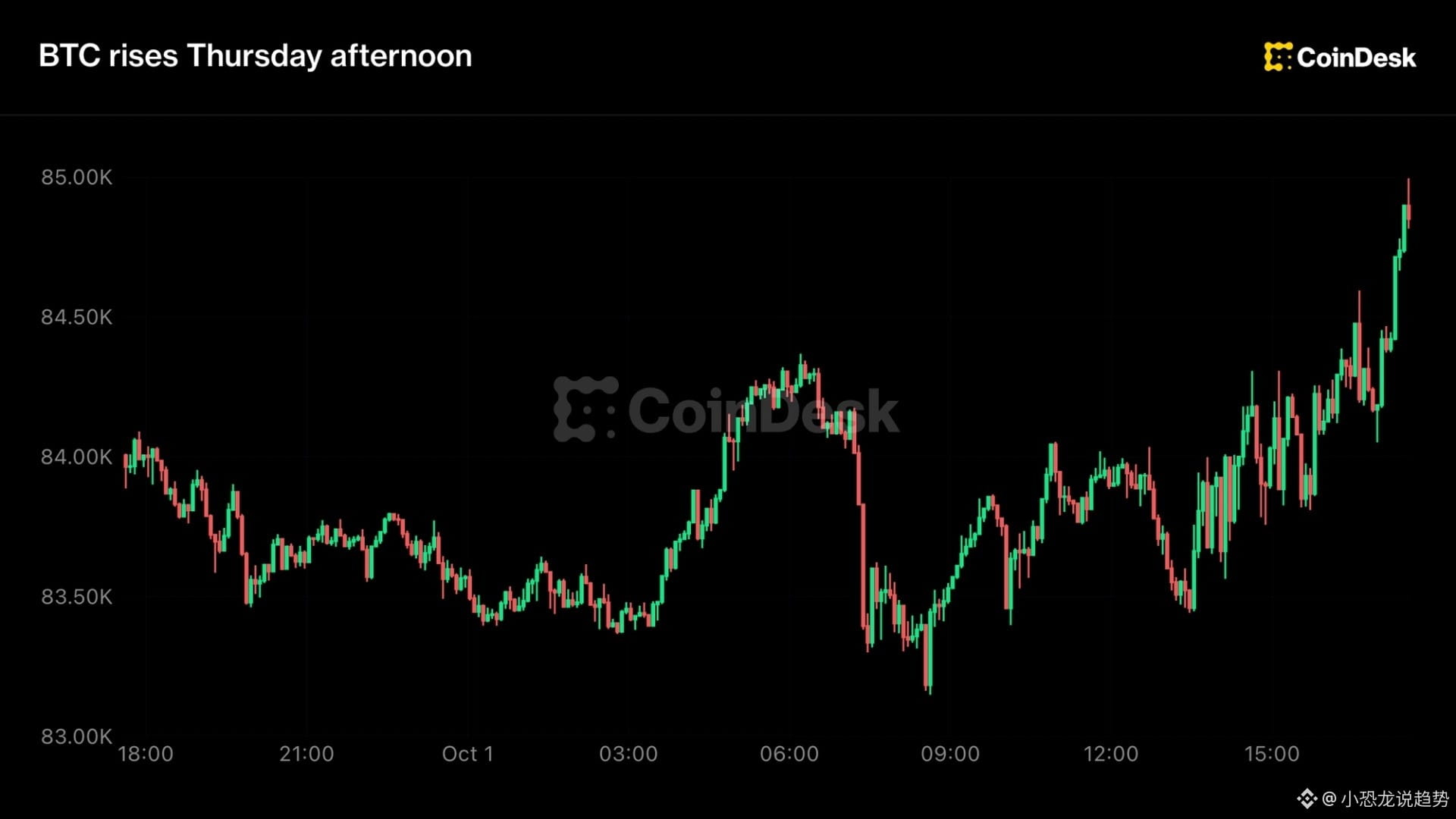
2
1.5k
·
--
#以太坊三季度涨70.9% #比特币etf三季度净流入63.4亿美元
A quarter saw $1.26 billion stolen—while Bitcoin in the same period rose by 40% 🦖
[📈 进群一起分析行情](https://app.binance.com/uni-qr/JpwCPfBj)
The third quarter has just wrapped up: CertiK’s latest data shows that in Q3 2026, the crypto industry suffered $1.26 billion in losses from security incidents, up 53.9% from the $819.4 million in Q2; the number of incidents rose from 219 to 247. The single largest theft was $387.5 million from a major exchange on September 24—accounting for 31% of the quarter’s total losses in one incident 💥
But in the very same quarter, Bitcoin rose by about 40% and Ethereum surged 70.9%. Bitcoin ETFs saw net inflows of $6.34 billion. On one side, a hackers’ harvest season; on the other, a bulls’ celebration season—this is the most unflattering side of a bull market ⚠️
First, let’s lay out the hackers’ scoreboard. September was the worst-hit month: $769 million lost in a single month, with 99 incidents—96% of which came from exploits. Besides that exchange’s $387.5 million, Liquid Network was hit for $319 million, Tectonic lost $120 million, and Coldcard was stolen for $112.7 million. Fortunately, about $273 million was frozen or recovered, bringing September’s net loss down to $495.3 million. The bigger trouble is money laundering pathways: the stolen funds are being transferred through privacy pools, making on-chain tracking increasingly difficult.
Now, let’s look at the bulls’ performance report. Bitcoin is back above $84,000, with $82,500 as the key support level. Citigroup has just raised its 12-month target price from $82,000 to $113,000, bullish on ETF fund returning; Ethereum’s quarterly gain is 70.9%, and the target price is set at $3,028 📈
My take: this cold and hot swing is actually two sides of the same thing. Institutional money is pouring in at scale through ETFs, inflating the total size of crypto assets—and pushing the amount stolen per incident into the hundreds-of-millions. Paper gains in a bull market can be very tempting, but the risk that “the assets are in someone else’s hands” is also being amplified at the same time. For everyday people, the biggest lesson of this quarter isn’t chasing pumps—it’s figuring out whose pocket your coins are really in.
Do you think this wave of hacks will slow down institutions’ pace of entry? Or do you think ETF buyers simply don’t care about these events? Let’s discuss in the comments.
Click the profile picture to watch the live stream
Every day, I’ll help you track crypto hotspots—not just what happened in the news, but also the logic and opportunities behind it 👀🚀
#以太坊三季度涨70.9% #比特币etf三季度净流入63.4亿美元
A quarter saw $1.26 billion stolen—while Bitcoin in the same period rose by 40% 🦖
📈 进群一起分析行情
The third quarter has just wrapped up: CertiK’s latest data shows that in Q3 2026, the crypto industry suffered $1.26 billion in losses from security incidents, up 53.9% from the $819.4 million in Q2; the number of incidents rose from 219 to 247. The single largest theft was $387.5 million from a major exchange on September 24—accounting for 31% of the quarter’s total losses in one incident 💥
But in the very same quarter, Bitcoin rose by about 40% and Ethereum surged 70.9%. Bitcoin ETFs saw net inflows of $6.34 billion. On one side, a hackers’ harvest season; on the other, a bulls’ celebration season—this is the most unflattering side of a bull market ⚠️
First, let’s lay out the hackers’ scoreboard. September was the worst-hit month: $769 million lost in a single month, with 99 incidents—96% of which came from exploits. Besides that exchange’s $387.5 million, Liquid Network was hit for $319 million, Tectonic lost $120 million, and Coldcard was stolen for $112.7 million. Fortunately, about $273 million was frozen or recovered, bringing September’s net loss down to $495.3 million. The bigger trouble is money laundering pathways: the stolen funds are being transferred through privacy pools, making on-chain tracking increasingly difficult.
Now, let’s look at the bulls’ performance report. Bitcoin is back above $84,000, with $82,500 as the key support level. Citigroup has just raised its 12-month target price from $82,000 to $113,000, bullish on ETF fund returning; Ethereum’s quarterly gain is 70.9%, and the target price is set at $3,028 📈
My take: this cold and hot swing is actually two sides of the same thing. Institutional money is pouring in at scale through ETFs, inflating the total size of crypto assets—and pushing the amount stolen per incident into the hundreds-of-millions. Paper gains in a bull market can be very tempting, but the risk that “the assets are in someone else’s hands” is also being amplified at the same time. For everyday people, the biggest lesson of this quarter isn’t chasing pumps—it’s figuring out whose pocket your coins are really in.
Do you think this wave of hacks will slow down institutions’ pace of entry? Or do you think ETF buyers simply don’t care about these events? Let’s discuss in the comments.
Click the profile picture to watch the live stream
Every day, I’ll help you track crypto hotspots—not just what happened in the news, but also the logic and opportunities behind it 👀🚀
A quarter saw $1.26 billion stolen—while Bitcoin in the same period rose by 40% 🦖
📈 进群一起分析行情
The third quarter has just wrapped up: CertiK’s latest data shows that in Q3 2026, the crypto industry suffered $1.26 billion in losses from security incidents, up 53.9% from the $819.4 million in Q2; the number of incidents rose from 219 to 247. The single largest theft was $387.5 million from a major exchange on September 24—accounting for 31% of the quarter’s total losses in one incident 💥
But in the very same quarter, Bitcoin rose by about 40% and Ethereum surged 70.9%. Bitcoin ETFs saw net inflows of $6.34 billion. On one side, a hackers’ harvest season; on the other, a bulls’ celebration season—this is the most unflattering side of a bull market ⚠️
First, let’s lay out the hackers’ scoreboard. September was the worst-hit month: $769 million lost in a single month, with 99 incidents—96% of which came from exploits. Besides that exchange’s $387.5 million, Liquid Network was hit for $319 million, Tectonic lost $120 million, and Coldcard was stolen for $112.7 million. Fortunately, about $273 million was frozen or recovered, bringing September’s net loss down to $495.3 million. The bigger trouble is money laundering pathways: the stolen funds are being transferred through privacy pools, making on-chain tracking increasingly difficult.
Now, let’s look at the bulls’ performance report. Bitcoin is back above $84,000, with $82,500 as the key support level. Citigroup has just raised its 12-month target price from $82,000 to $113,000, bullish on ETF fund returning; Ethereum’s quarterly gain is 70.9%, and the target price is set at $3,028 📈
My take: this cold and hot swing is actually two sides of the same thing. Institutional money is pouring in at scale through ETFs, inflating the total size of crypto assets—and pushing the amount stolen per incident into the hundreds-of-millions. Paper gains in a bull market can be very tempting, but the risk that “the assets are in someone else’s hands” is also being amplified at the same time. For everyday people, the biggest lesson of this quarter isn’t chasing pumps—it’s figuring out whose pocket your coins are really in.
Do you think this wave of hacks will slow down institutions’ pace of entry? Or do you think ETF buyers simply don’t care about these events? Let’s discuss in the comments.
Click the profile picture to watch the live stream
Every day, I’ll help you track crypto hotspots—not just what happened in the news, but also the logic and opportunities behind it 👀🚀

515
Log in to explore more content
Join global crypto users on Binance Square
⚡️ Get latest and useful information about crypto.
💬 Trusted by the world’s largest crypto exchange.
👍 Discover real insights from verified creators.
Email / Phone number
Trending Topics
BinanceLaunchesBinanceIntelligence
667,443 views
4,134 Discussing
#binancelaunchesbinanceintelligence 🚨 WHAT IF THE NEXT BIG EXCHANGE BATTLE ISN’T ABOUT FEES? 👀
Binance just made a bigger move than adding another AI chatbot.
With Binance Intelligence, AI is moving deeper into the exchange — from understanding market data to building trading workflows. 🤖⚡
The real question is:
Who has the best liquidity?
Or who has the smartest AI layer?
If users can research, test ideas and manage trading workflows without switching between different tools, the exchange itself could become a financial assistant.
That could be a much bigger shift than it looks today.
If Binance Intelligence drives more users, more strategies and more trading activity, $BNB could become one of the tokens to watch. 👀
Is Binance building the future of AI-powered finance?
$BNB
#binancelaunchesbinanceintelligence #BinanceAI #CryptoAI #AITrading
Suleman Khan Haqqani
·9 Likes
·15.2k views
BTCFallsBelow$84K
14,805 views
62 Discussing
DubaiVARAIssuesReserveAssetAuditCircular
586 views
122 Discussing