
小恐龙Dinosaur
6.9k Posts

小恐龙Dinosaur
 Square Verified+
Web3经营/项目孵化0-1运营/Alpha忠实粉丝,打狗、撸毛、钱包任务、现货、合约通✅,帅气🦖
688 Following
50.2K+ Followers
34.9K+ Liked
Posts
All
Quotes
Videos
Live
PINNED
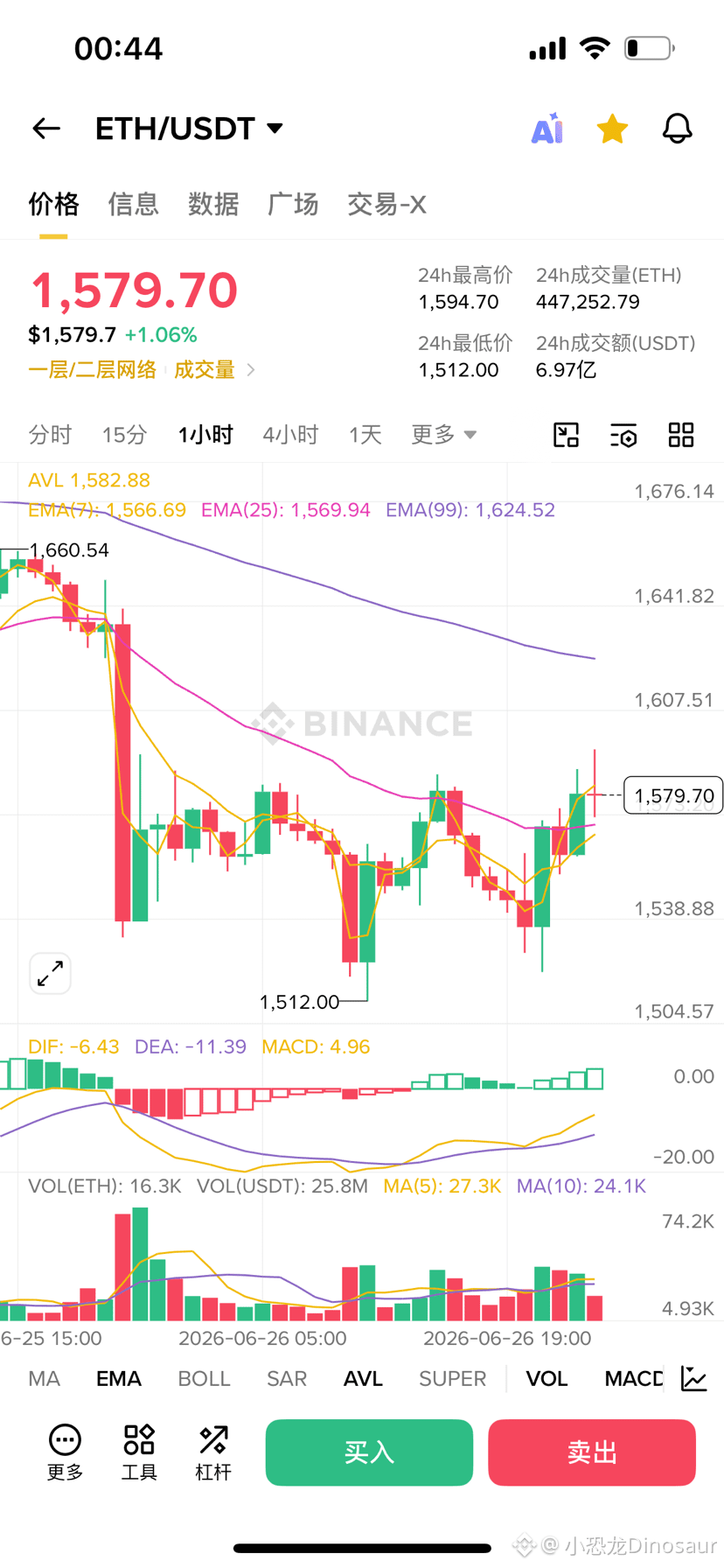
#以太坊跌5.6%至1555美元
Honestly, this drop in Ethereum really hurts market sentiment.
When the price falls to around $1,555, many people’s first reaction is definitely: is it about to crash again? Especially for a longstanding asset like ETH—once it starts falling, it doesn’t just drag itself down; sentiment across DeFi, L2s, and altcoins will basically shake too. Because in the market, Ethereum isn’t just a coin—it’s more like a thermometer for the entire on-chain ecosystem.
But personally, I think at this level we should stay calm and look carefully, not start yelling “to zero” just because it dips.
In the short term, ETH is down 5.6%. On the surface, it looks like a price issue, but underneath it’s really about shrinking risk appetite. The market may still have stories, but there are too many of them now, and capital is more selective. In the past, if someone said “ecosystem explosion,” “L2 growth,” or “spot ETF expectations,” people might just rush in. Now it’s different—because the market is more realistic. It will look at on-chain activity, fee revenue, staking yields, whether institutional capital is continuing to flow in, and whether macro liquidity truly supports things.
Put simply, ETH’s most awkward situation right now isn’t that it has no value, but that it needs to prove again its growth elasticity.
Ethereum is still the core foundation for directions like DeFi, stablecoins, RWA, NFTs, and L2s. Its security and developer ecosystem remain strong. But the market trades expectations, not sentiment. Even if your ecosystem is strong, if there isn’t obvious incremental growth in the short term, the price will still get hammered by capital. That’s the most real situation right now.
However, I also don’t think this drop is completely a bad thing. Many times, the market needs a bearish candle to wash out the impatient. The truly patient, in situations like this, will actually observe again: has on-chain data deteriorated? Are there any abnormal staking withdrawals? Is L2 activity still there? Are big holders dumping or just rotating?
From a short-term perspective, $1,555 will definitely make people uncomfortable and sentiment will be weaker. But looking at the mid-to-long term, ETH’s core issue isn’t one day’s rise or fall—it’s whether it can continue to keep real applications and capital accumulation on-chain.
So I won’t be completely pessimistic just because it’s down, and I also won’t blindly bottom-fish because it drops. The market fears not the decline itself—it fears that while prices are falling, you lose your judgment along with them.
Honestly, this drop in Ethereum really hurts market sentiment.
When the price falls to around $1,555, many people’s first reaction is definitely: is it about to crash again? Especially for a longstanding asset like ETH—once it starts falling, it doesn’t just drag itself down; sentiment across DeFi, L2s, and altcoins will basically shake too. Because in the market, Ethereum isn’t just a coin—it’s more like a thermometer for the entire on-chain ecosystem.
But personally, I think at this level we should stay calm and look carefully, not start yelling “to zero” just because it dips.
In the short term, ETH is down 5.6%. On the surface, it looks like a price issue, but underneath it’s really about shrinking risk appetite. The market may still have stories, but there are too many of them now, and capital is more selective. In the past, if someone said “ecosystem explosion,” “L2 growth,” or “spot ETF expectations,” people might just rush in. Now it’s different—because the market is more realistic. It will look at on-chain activity, fee revenue, staking yields, whether institutional capital is continuing to flow in, and whether macro liquidity truly supports things.
Put simply, ETH’s most awkward situation right now isn’t that it has no value, but that it needs to prove again its growth elasticity.
Ethereum is still the core foundation for directions like DeFi, stablecoins, RWA, NFTs, and L2s. Its security and developer ecosystem remain strong. But the market trades expectations, not sentiment. Even if your ecosystem is strong, if there isn’t obvious incremental growth in the short term, the price will still get hammered by capital. That’s the most real situation right now.
However, I also don’t think this drop is completely a bad thing. Many times, the market needs a bearish candle to wash out the impatient. The truly patient, in situations like this, will actually observe again: has on-chain data deteriorated? Are there any abnormal staking withdrawals? Is L2 activity still there? Are big holders dumping or just rotating?
From a short-term perspective, $1,555 will definitely make people uncomfortable and sentiment will be weaker. But looking at the mid-to-long term, ETH’s core issue isn’t one day’s rise or fall—it’s whether it can continue to keep real applications and capital accumulation on-chain.
So I won’t be completely pessimistic just because it’s down, and I also won’t blindly bottom-fish because it drops. The market fears not the decline itself—it fears that while prices are falling, you lose your judgment along with them.
Verified
#纽约白银期货跌3%
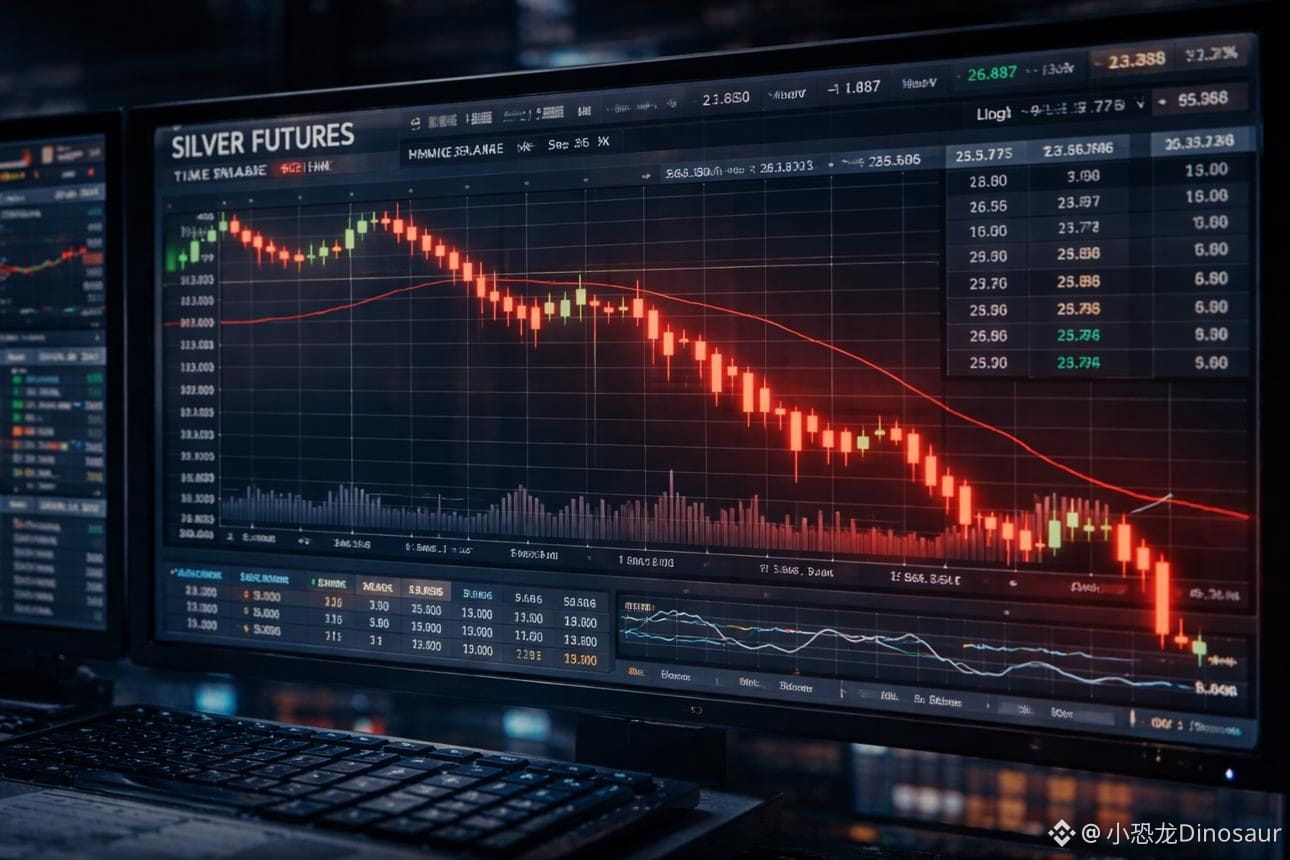
Silver is down 3%. I actually think it’s more worth examining than gold’s drop.
Because silver is a very interesting asset.
One foot of it stands in precious metals, while the other foot steps onto industrial demand. So it trades not only alongside gold for hedging and interest rates, but also gets influenced by the economic cycle, manufacturing, and industrial demand.
After this remarks from Wosh, silver was clearly under pressure. Spot silver at one point fell more than 4%, and the decline was even noticeably larger than gold’s.
Why? It’s simple.
When interest-rate expectations rise and the U.S. dollar strengthens, non-yielding assets suffer first.
But silver faces a second layer of pressure: if the market starts worrying that high rates will suppress the economy and industrial demand, then silver will naturally be more sensitive than gold.
So I won’t simply interpret this silver selloff as “the precious metals rally is over.”
Quite the opposite—this looks more like the market has started pricing the two things separately:
Gold is priced with a currency attribute, while silver is priced with a combination of currency attribute plus industrial attribute.
That’s also why, when facing the same backdrop of a stronger dollar and rate-hike expectations, silver often drops faster and harder.
Of course, silver’s prior rally was also substantial. Profit-taking positioning was already fairly thick, so a correction of around 3% isn’t strange.
What traders should really watch is this: when the dollar continues strengthening, will silver keep making new lows—or after the drop, will it quickly find support and bounce?
If the latter happens, it suggests funds are just washing out short-term positions.
If the former holds true, then be careful—this may not be a simple pullback. It could mean the market is starting to reassess industrial demand and the interest-rate cycle.
Silver is down 3%. I actually think it’s more worth examining than gold’s drop.
Because silver is a very interesting asset.
One foot of it stands in precious metals, while the other foot steps onto industrial demand. So it trades not only alongside gold for hedging and interest rates, but also gets influenced by the economic cycle, manufacturing, and industrial demand.
After this remarks from Wosh, silver was clearly under pressure. Spot silver at one point fell more than 4%, and the decline was even noticeably larger than gold’s.
Why? It’s simple.
When interest-rate expectations rise and the U.S. dollar strengthens, non-yielding assets suffer first.
But silver faces a second layer of pressure: if the market starts worrying that high rates will suppress the economy and industrial demand, then silver will naturally be more sensitive than gold.
So I won’t simply interpret this silver selloff as “the precious metals rally is over.”
Quite the opposite—this looks more like the market has started pricing the two things separately:
Gold is priced with a currency attribute, while silver is priced with a combination of currency attribute plus industrial attribute.
That’s also why, when facing the same backdrop of a stronger dollar and rate-hike expectations, silver often drops faster and harder.
Of course, silver’s prior rally was also substantial. Profit-taking positioning was already fairly thick, so a correction of around 3% isn’t strange.
What traders should really watch is this: when the dollar continues strengthening, will silver keep making new lows—or after the drop, will it quickly find support and bounce?
If the latter happens, it suggests funds are just washing out short-term positions.
If the former holds true, then be careful—this may not be a simple pullback. It could mean the market is starting to reassess industrial demand and the interest-rate cycle.
Verified
#美联储9月加息概率升至57%
September rate hike odds reach 57%. What’s truly being repriced isn’t the interest rate itself, but liquidity.
In his speech at Jackson Hole this time, Wosh didn’t directly announce that September would definitely see a rate hike, but the market could already clearly hear the “hawkish” tone.
Federal funds futures show that the probability of a rate hike in September jumped rapidly from around 35% before the speech to roughly 57%. The yields on 2-year U.S. Treasuries also rose to a one-month high.
This number itself isn’t that important.
What matters is why the market suddenly changed its stance.
Earlier, everyone was discussing rate cuts, easing, and risk assets continuing their frenzy—yet now it suddenly becomes:
Inflation hasn’t been fully brought down, and financial conditions are still somewhat loose—so shouldn’t we keep tightening?
Once that logic takes hold, the first to suffer are usually assets that tell stories based on “future growth.”
Tech stock valuations will be recalculated; the carrying cost of holding gold and silver will be recalculated; and even BTC’s liquidity premium will have to be recalculated too.
So I think the most dangerous thing right now isn’t that “a rate hike in September is certain,” but that the market has already begun trading as if the world is one where hikes are happening.
Next, U.S. employment and inflation data are the real test. If the data continue to run hot, the 57% could be only the starting point. If the data clearly weaken, this hawkish outlook could quickly recede.
In fact, the market is now betting on these data releases.
What trading fears most is when expectations suddenly turn.
And this time, the turn has already happened.
September rate hike odds reach 57%. What’s truly being repriced isn’t the interest rate itself, but liquidity.
In his speech at Jackson Hole this time, Wosh didn’t directly announce that September would definitely see a rate hike, but the market could already clearly hear the “hawkish” tone.
Federal funds futures show that the probability of a rate hike in September jumped rapidly from around 35% before the speech to roughly 57%. The yields on 2-year U.S. Treasuries also rose to a one-month high.
This number itself isn’t that important.
What matters is why the market suddenly changed its stance.
Earlier, everyone was discussing rate cuts, easing, and risk assets continuing their frenzy—yet now it suddenly becomes:
Inflation hasn’t been fully brought down, and financial conditions are still somewhat loose—so shouldn’t we keep tightening?
Once that logic takes hold, the first to suffer are usually assets that tell stories based on “future growth.”
Tech stock valuations will be recalculated; the carrying cost of holding gold and silver will be recalculated; and even BTC’s liquidity premium will have to be recalculated too.
So I think the most dangerous thing right now isn’t that “a rate hike in September is certain,” but that the market has already begun trading as if the world is one where hikes are happening.
Next, U.S. employment and inflation data are the real test. If the data continue to run hot, the 57% could be only the starting point. If the data clearly weaken, this hawkish outlook could quickly recede.
In fact, the market is now betting on these data releases.
What trading fears most is when expectations suddenly turn.
And this time, the turn has already happened.

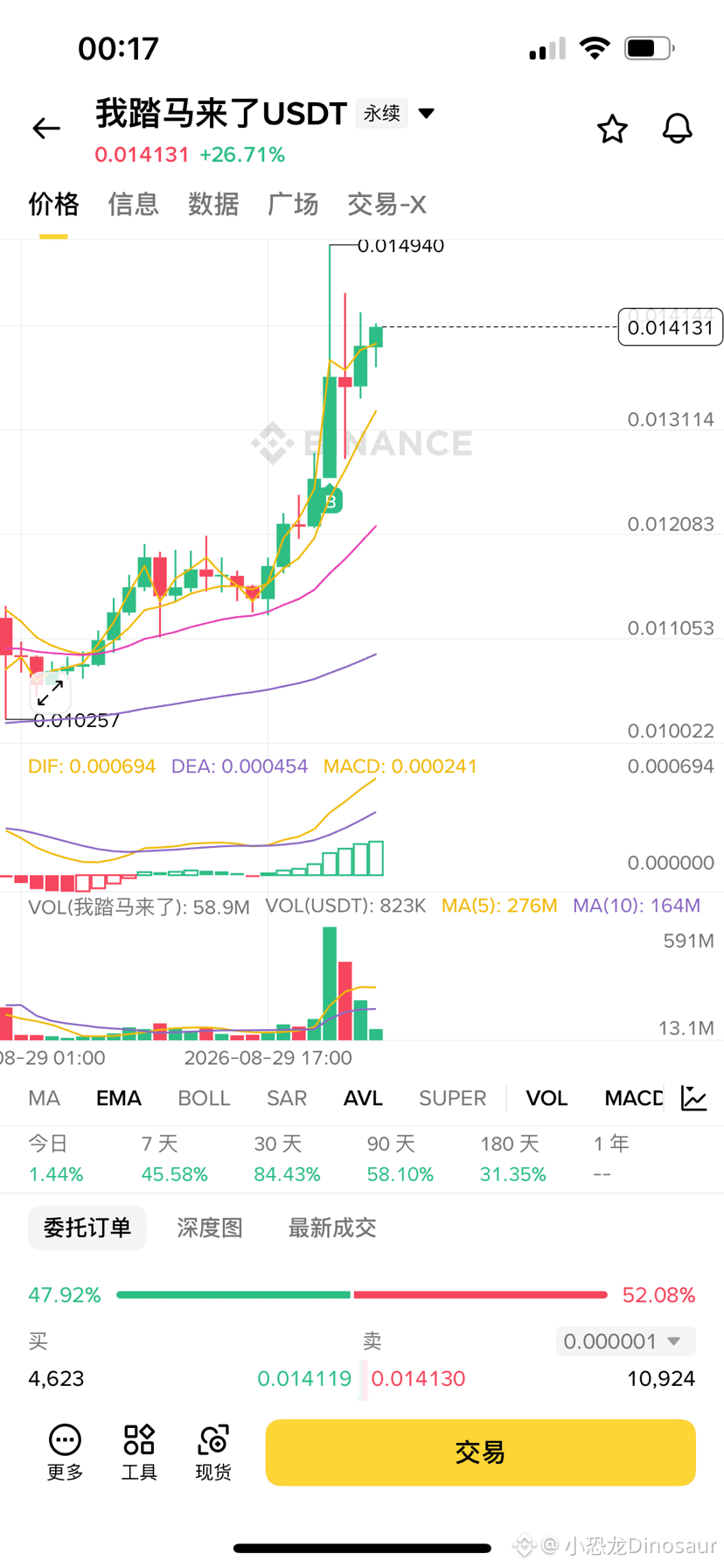
$我踏马来了 Go for it. Set the take-profit. Tomorrow I hope I wake up and earn about five hundred bucks is enough 😂
#比特币24小时跌3.4%至7.74万美元
BTC drops 3.4%, but I actually feel it’s not that simple.
The timing of this selloff is crucial. After Mr. Wosch spoke, the market suddenly began trading again on a “September rate hike.” BTC then fell below the $77,000 area, and over the past 24 hours nearly $490 million in crypto positions were liquidated.
To put it plainly: the market had already priced in a fair amount of “easing expectations” beforehand.
Now it suddenly tells you: buddy, interest rates might still go higher.
Then of course high-beta assets take the first hit.
But I’m not really willing to interpret this dip as the end of the BTC bull run. It seems more like the market is repricing liquidity.
Earlier, BTC rebounded from the lows all the way up. Risk sentiment clearly heated up, and leverage naturally piled on as well. When the market direction is right, leverage acts like a booster; the moment the direction flips, it immediately becomes a siphon.
So what’s truly worth watching next isn’t how scary today’s 3.4% drop is, but whether the $77,000 area can hold and attract bids.
If selling pressure slows and price stabilizes on low volume, it suggests this is just leverage being flushed out by a macro shock. If the rebound lacks strength and selling continues with rising volume, that would indicate market risk appetite may really be cooling down.
$BTC What people fear most right now isn’t the drop itself—it’s that everyone suddenly realizes: in this rally, leverage is even greater than belief.
BTC drops 3.4%, but I actually feel it’s not that simple.
The timing of this selloff is crucial. After Mr. Wosch spoke, the market suddenly began trading again on a “September rate hike.” BTC then fell below the $77,000 area, and over the past 24 hours nearly $490 million in crypto positions were liquidated.
To put it plainly: the market had already priced in a fair amount of “easing expectations” beforehand.
Now it suddenly tells you: buddy, interest rates might still go higher.
Then of course high-beta assets take the first hit.
But I’m not really willing to interpret this dip as the end of the BTC bull run. It seems more like the market is repricing liquidity.
Earlier, BTC rebounded from the lows all the way up. Risk sentiment clearly heated up, and leverage naturally piled on as well. When the market direction is right, leverage acts like a booster; the moment the direction flips, it immediately becomes a siphon.
So what’s truly worth watching next isn’t how scary today’s 3.4% drop is, but whether the $77,000 area can hold and attract bids.
If selling pressure slows and price stabilizes on low volume, it suggests this is just leverage being flushed out by a macro shock. If the rebound lacks strength and selling continues with rising volume, that would indicate market risk appetite may really be cooling down.
$BTC What people fear most right now isn’t the drop itself—it’s that everyone suddenly realizes: in this rally, leverage is even greater than belief.
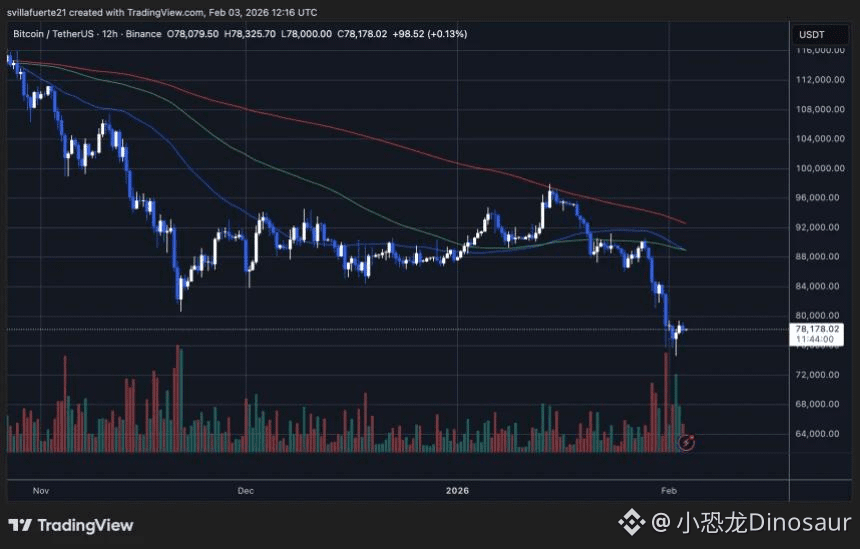
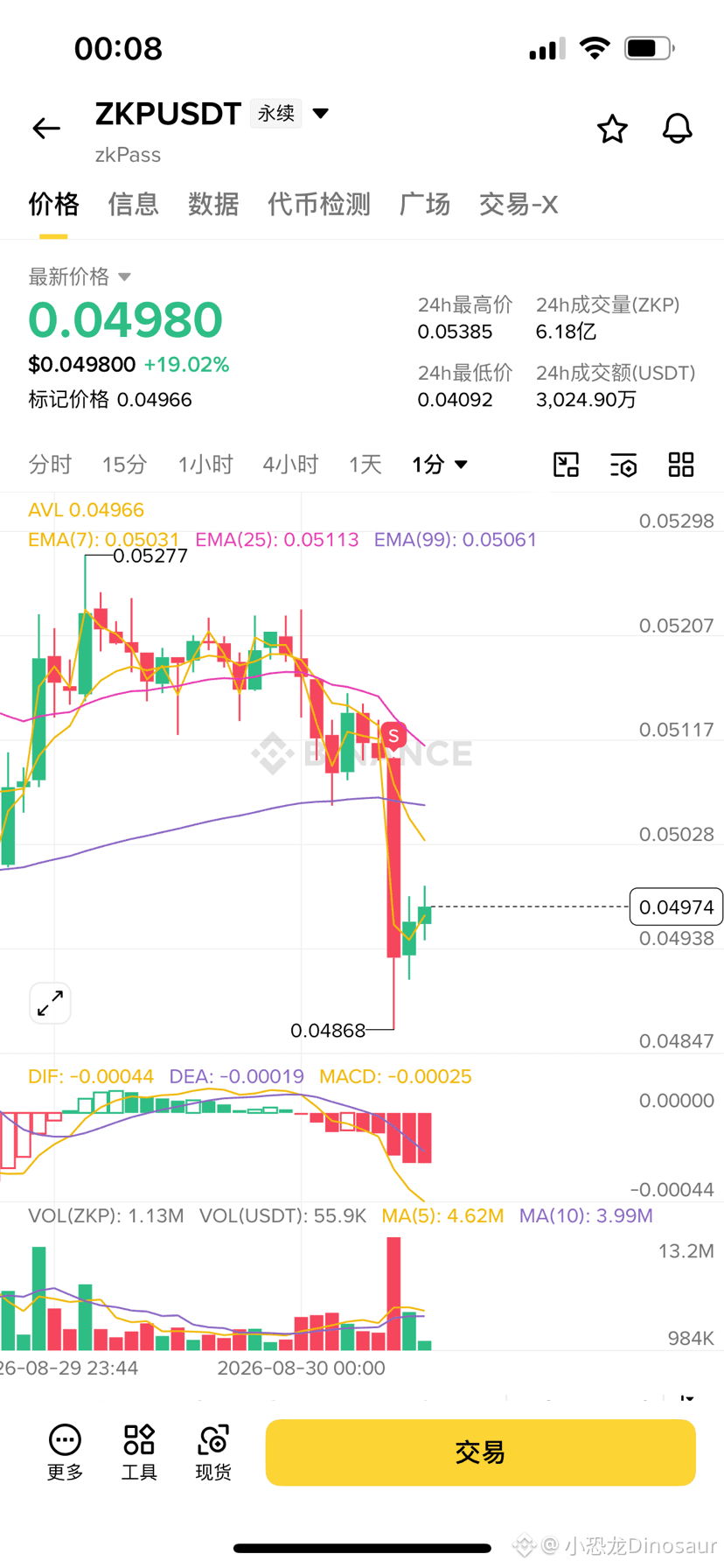
$ZKP This move is for real! The bottom at 0.040 surged straight to 0.052—up 22 points in a single day, with trading volume of over 400 million. This isn’t a rebound; it’s preparing for takeoff! 🐶
All the moving averages are curling upward. EMA7 (0.0496) has firmly held its ground. The MACD golden cross is still widening. If the pullback near 0.049 holds and doesn’t break, the previous high at 0.0536 is very likely to get touched. And if it goes higher than that? Then it depends on the big boss’s mood.
All the moving averages are curling upward. EMA7 (0.0496) has firmly held its ground. The MACD golden cross is still widening. If the pullback near 0.049 holds and doesn’t break, the previous high at 0.0536 is very likely to get touched. And if it goes higher than that? Then it depends on the big boss’s mood.
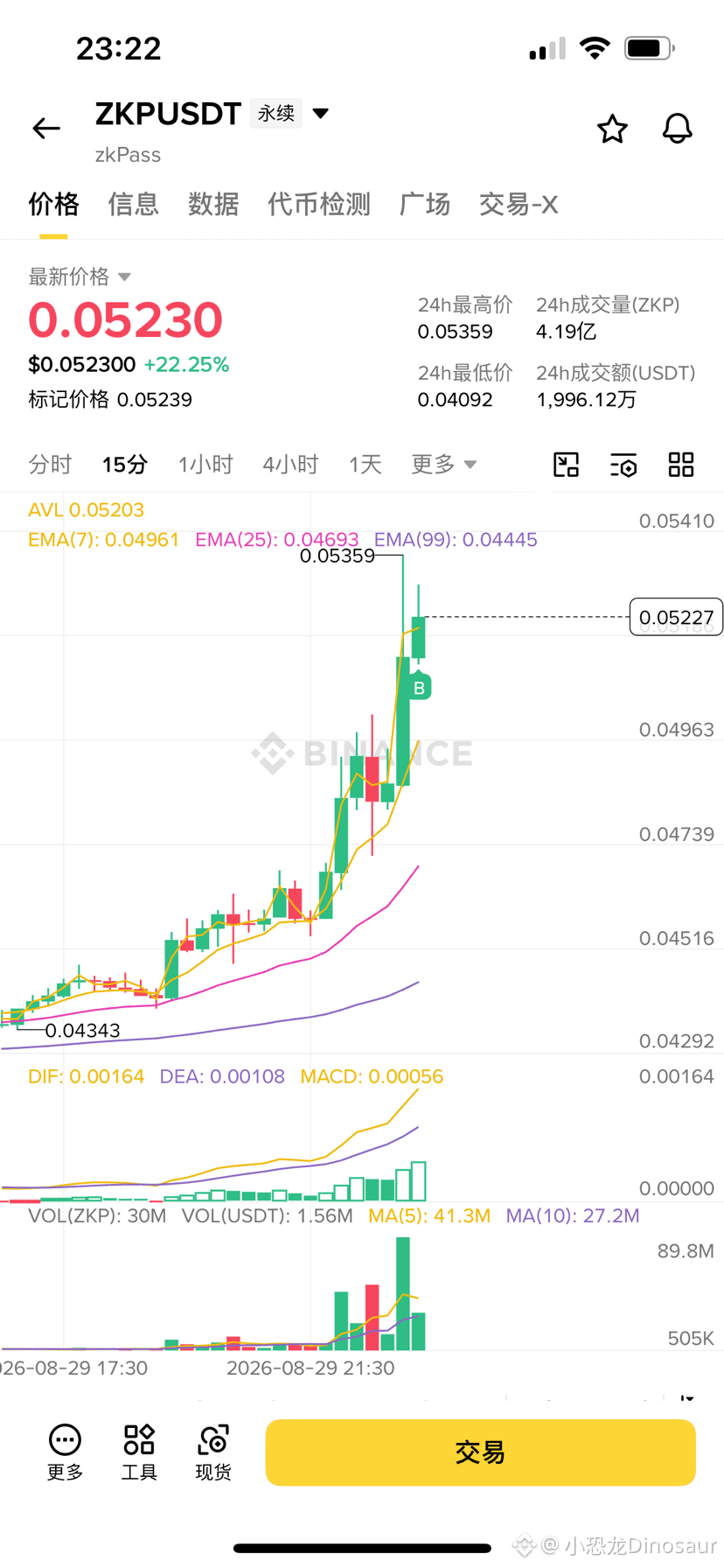
$我踏马来了 Running into higher places and leaving right away, brothers—don’t be too greedy. Take it slow and handle it steadily 💵
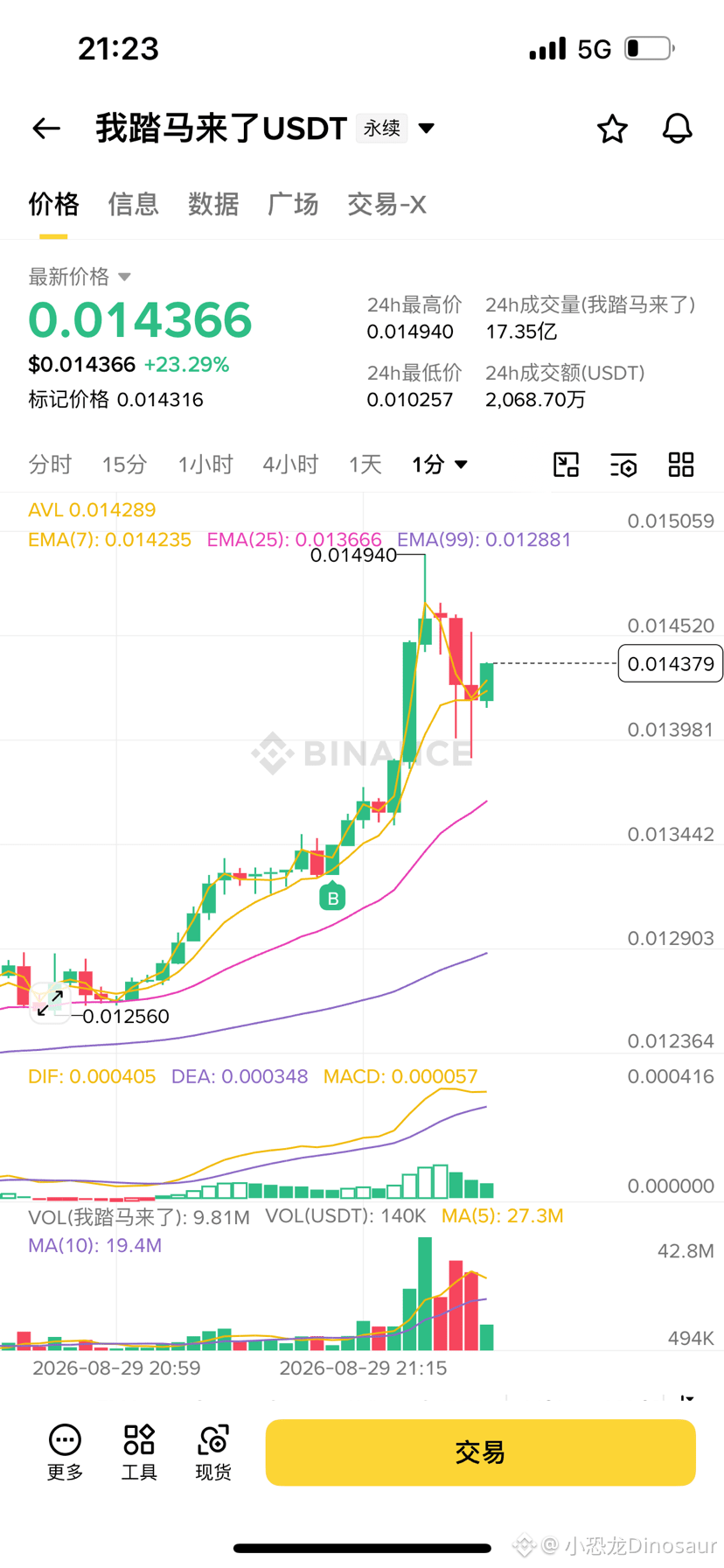
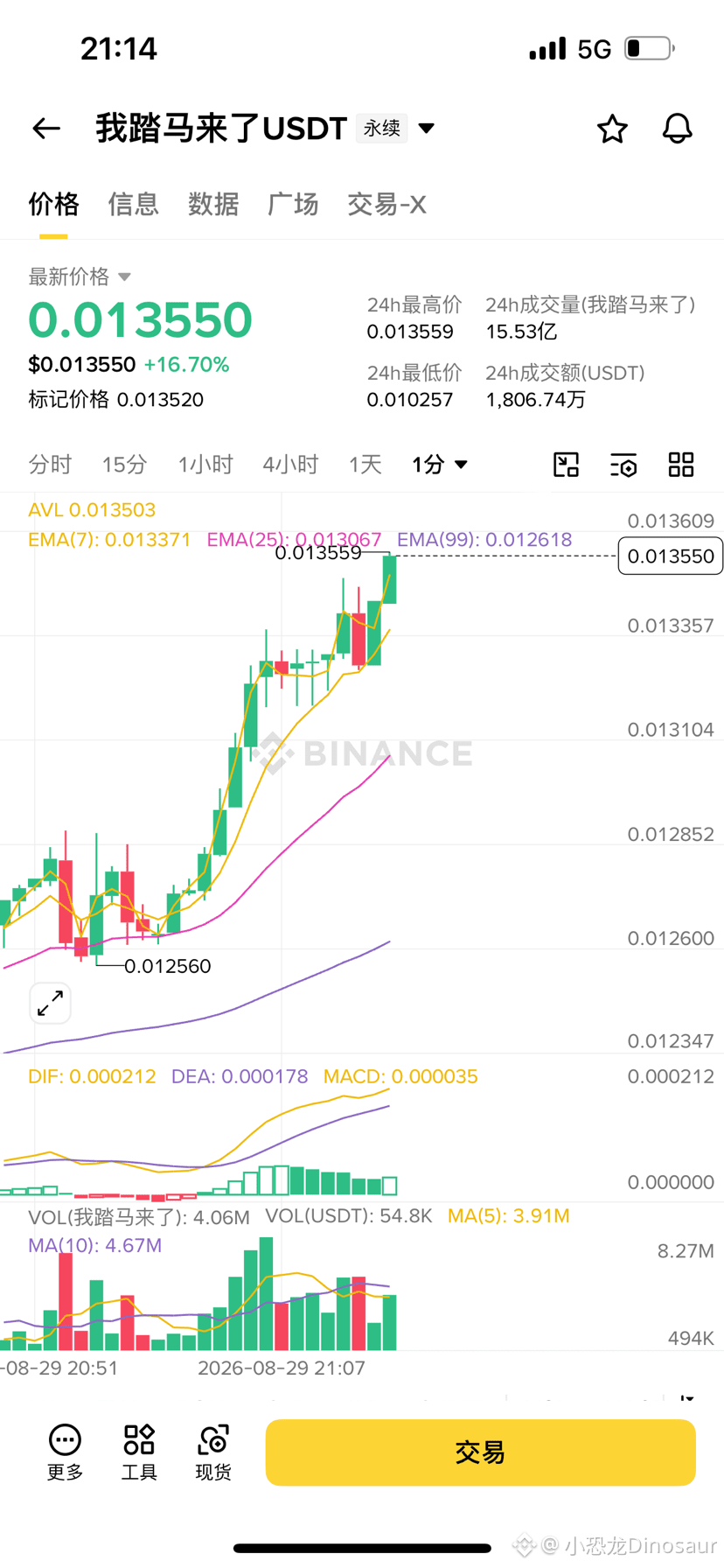
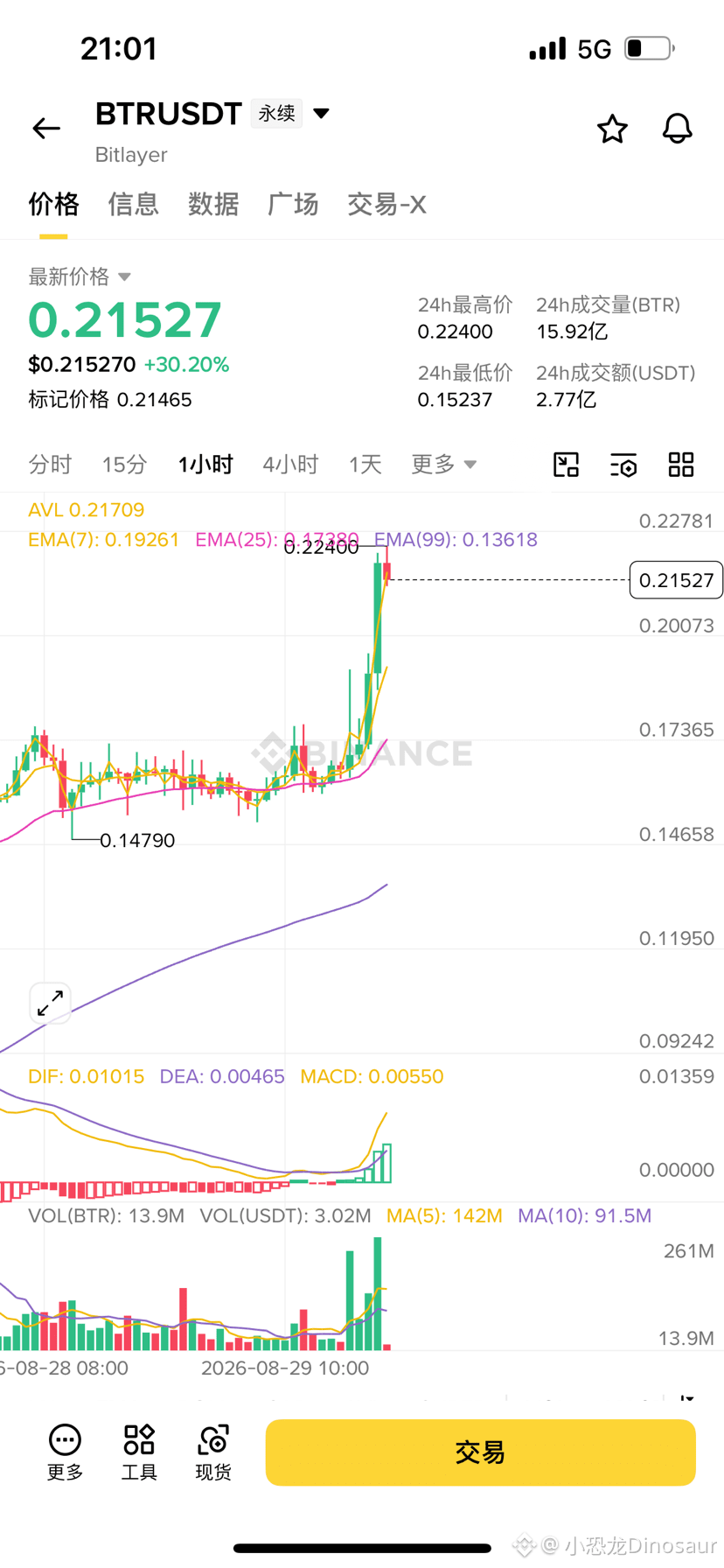
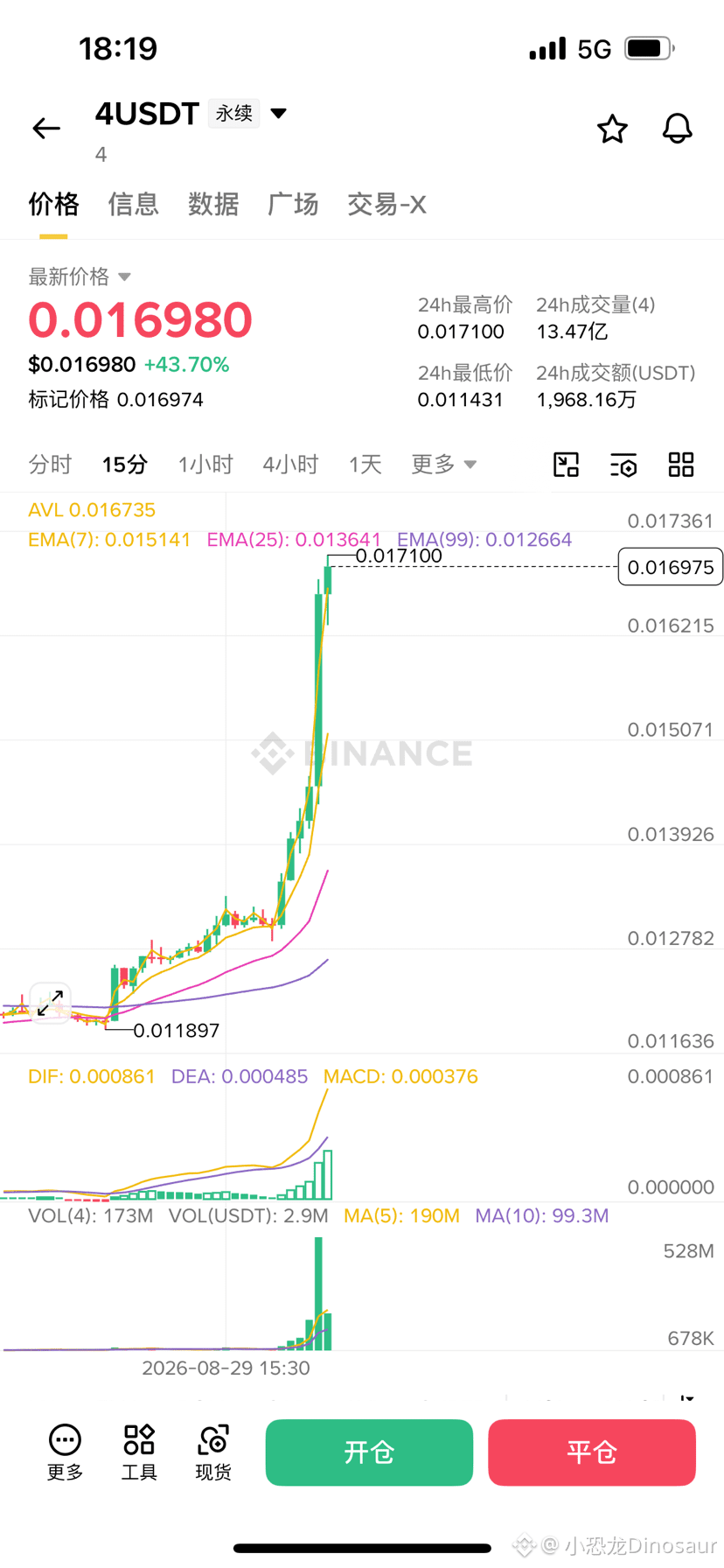
At the bottom, a massive “rising morning star”—$BTR , is this going to cause some trouble?
Brothers, take a look at BTR’s move. To be honest, there’s something there. The 24h low was 0.152, and it’s now pushed straight up to 0.215—an increase of 30% with barely a blink. A trading volume of 1.59 billion alongside trading value of 277 million—this kind of volume is not something retail investors can produce.
The EMA7 (0.192) is about to cross above the EMA25 (0.212). The MACD golden cross is opening wider and wider; the DIF is almost flying off the screen. A pullback that fails to break 0.20—first target overhead is 0.224, the prior high. If it breaks through, it’s a whole new world. Don’t forget, the EMA99 is still down at 0.136, and the moving-average system has only just begun to diverge—signs of a bullish alignment are already taking shape.
The Bitlayer ecosystem is starting to gain momentum. As BTR is a core asset, is this move just a bounce or a full reversal?
Brothers, take a look at BTR’s move. To be honest, there’s something there. The 24h low was 0.152, and it’s now pushed straight up to 0.215—an increase of 30% with barely a blink. A trading volume of 1.59 billion alongside trading value of 277 million—this kind of volume is not something retail investors can produce.
The EMA7 (0.192) is about to cross above the EMA25 (0.212). The MACD golden cross is opening wider and wider; the DIF is almost flying off the screen. A pullback that fails to break 0.20—first target overhead is 0.224, the prior high. If it breaks through, it’s a whole new world. Don’t forget, the EMA99 is still down at 0.136, and the moving-average system has only just begun to diverge—signs of a bullish alignment are already taking shape.
The Bitlayer ecosystem is starting to gain momentum. As BTR is a core asset, is this move just a bounce or a full reversal?
Verified
#沃什称通胀是美联储首要关注
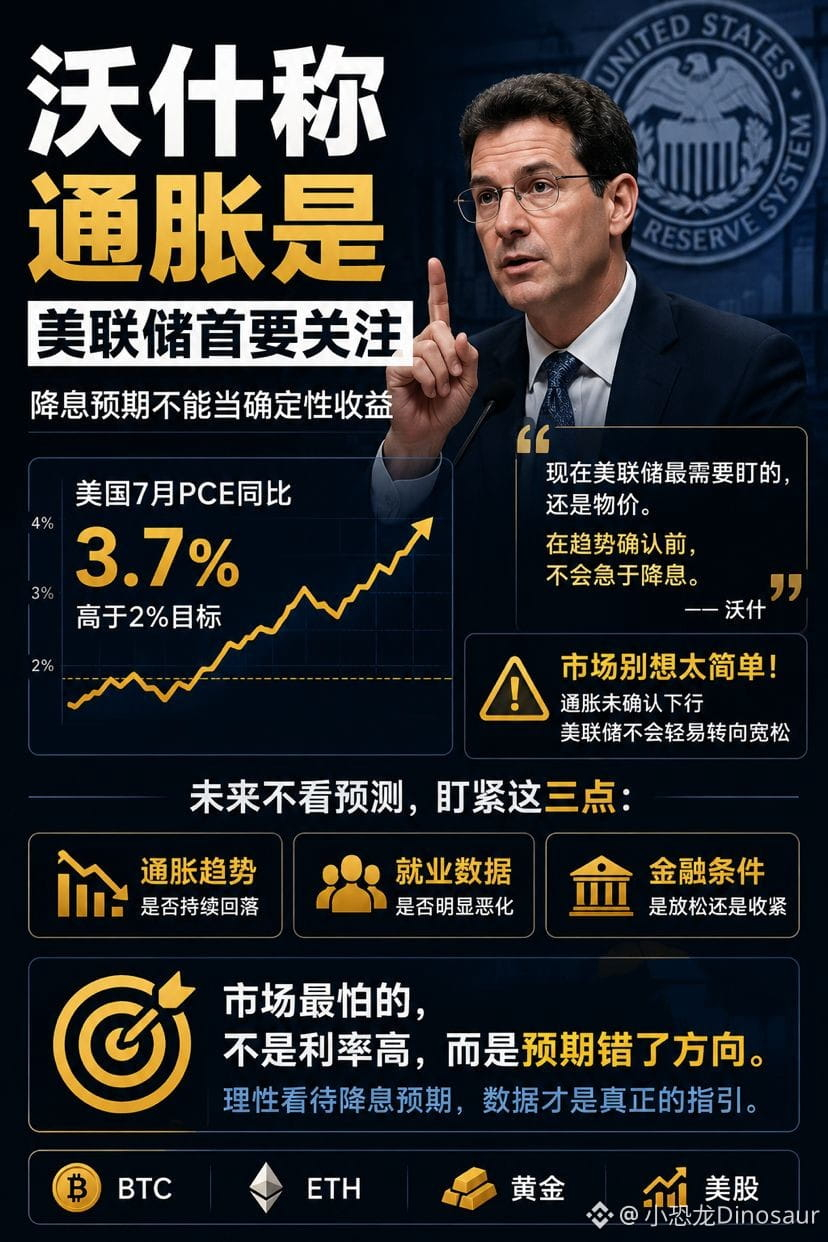
To be honest, when I watched Waller’s speech in Jackson Hole last night, my first reaction wasn’t, “Oh no, more rate hikes.” It was:
Has the market been thinking about rate cuts too simply?
This time, Waller was pretty straightforward: what the Federal Reserve most needs to keep an eye on right now is still prices.
U.S. July PCE year-over-year is already 3.7%, clearly above the 2% target. Waller believes that even though the data over the past few months has been a bit better than expected, it’s still not enough to prove that inflation is moving toward 2% at a fast enough pace. Unless this trend is confirmed, the Fed can’t just celebrate early.
These words are honestly pretty brutal.
Because for traders, one of the easiest mistakes to make is:
turning “possible” into “about to happen” too early.
Not long ago, people talked about rate cuts as if they had already been implemented. Stocks went up, gold went up, and BTC also got pulled along as liquidity expectations were traded.
But now Waller is basically reminding everyone:
Don’t guess what the Fed will do next—first look to see whether inflation has truly cooled down.
That’s especially important for the crypto market.
Because risk assets like BTC and ETH are still fundamentally very dependent on global liquidity. Once the market starts trading again on “higher rates kept in place for longer,” and the dollar and U.S. Treasury yields start moving up, the first assets to feel uncomfortable are usually those with high valuations, high leverage, and especially hot sentiment.
So right now, I actually don’t like speculating on whether they will cut rates in September.
What’s really worth watching are three things:
Whether inflation continues to fall,
Whether employment deteriorates noticeably,
And whether financial conditions are actually loosening or tightening.
These three data points matter more than anyone’s mouth.
And there’s another really interesting attitude from Waller this time: he’s not particularly willing to keep feeding the market “forward guidance.” Instead, he emphasizes letting the market judge based on real-time data.
In plain terms, it’s like:
Don’t expect the Fed to tell you the answer in advance.
For traders, that’s not necessarily a bad thing.
Because the real big moves never start only after everyone already knows the answer—they start while people still haven’t figured it out clearly, when capital has already begun repricing.
So going forward, I’ll be even more cautious.
To be honest, when I watched Waller’s speech in Jackson Hole last night, my first reaction wasn’t, “Oh no, more rate hikes.” It was:
Has the market been thinking about rate cuts too simply?
This time, Waller was pretty straightforward: what the Federal Reserve most needs to keep an eye on right now is still prices.
U.S. July PCE year-over-year is already 3.7%, clearly above the 2% target. Waller believes that even though the data over the past few months has been a bit better than expected, it’s still not enough to prove that inflation is moving toward 2% at a fast enough pace. Unless this trend is confirmed, the Fed can’t just celebrate early.
These words are honestly pretty brutal.
Because for traders, one of the easiest mistakes to make is:
turning “possible” into “about to happen” too early.
Not long ago, people talked about rate cuts as if they had already been implemented. Stocks went up, gold went up, and BTC also got pulled along as liquidity expectations were traded.
But now Waller is basically reminding everyone:
Don’t guess what the Fed will do next—first look to see whether inflation has truly cooled down.
That’s especially important for the crypto market.
Because risk assets like BTC and ETH are still fundamentally very dependent on global liquidity. Once the market starts trading again on “higher rates kept in place for longer,” and the dollar and U.S. Treasury yields start moving up, the first assets to feel uncomfortable are usually those with high valuations, high leverage, and especially hot sentiment.
So right now, I actually don’t like speculating on whether they will cut rates in September.
What’s really worth watching are three things:
Whether inflation continues to fall,
Whether employment deteriorates noticeably,
And whether financial conditions are actually loosening or tightening.
These three data points matter more than anyone’s mouth.
And there’s another really interesting attitude from Waller this time: he’s not particularly willing to keep feeding the market “forward guidance.” Instead, he emphasizes letting the market judge based on real-time data.
In plain terms, it’s like:
Don’t expect the Fed to tell you the answer in advance.
For traders, that’s not necessarily a bad thing.
Because the real big moves never start only after everyone already knows the answer—they start while people still haven’t figured it out clearly, when capital has already begun repricing.
So going forward, I’ll be even more cautious.
#SOL本周上涨20% , who is actually buying?
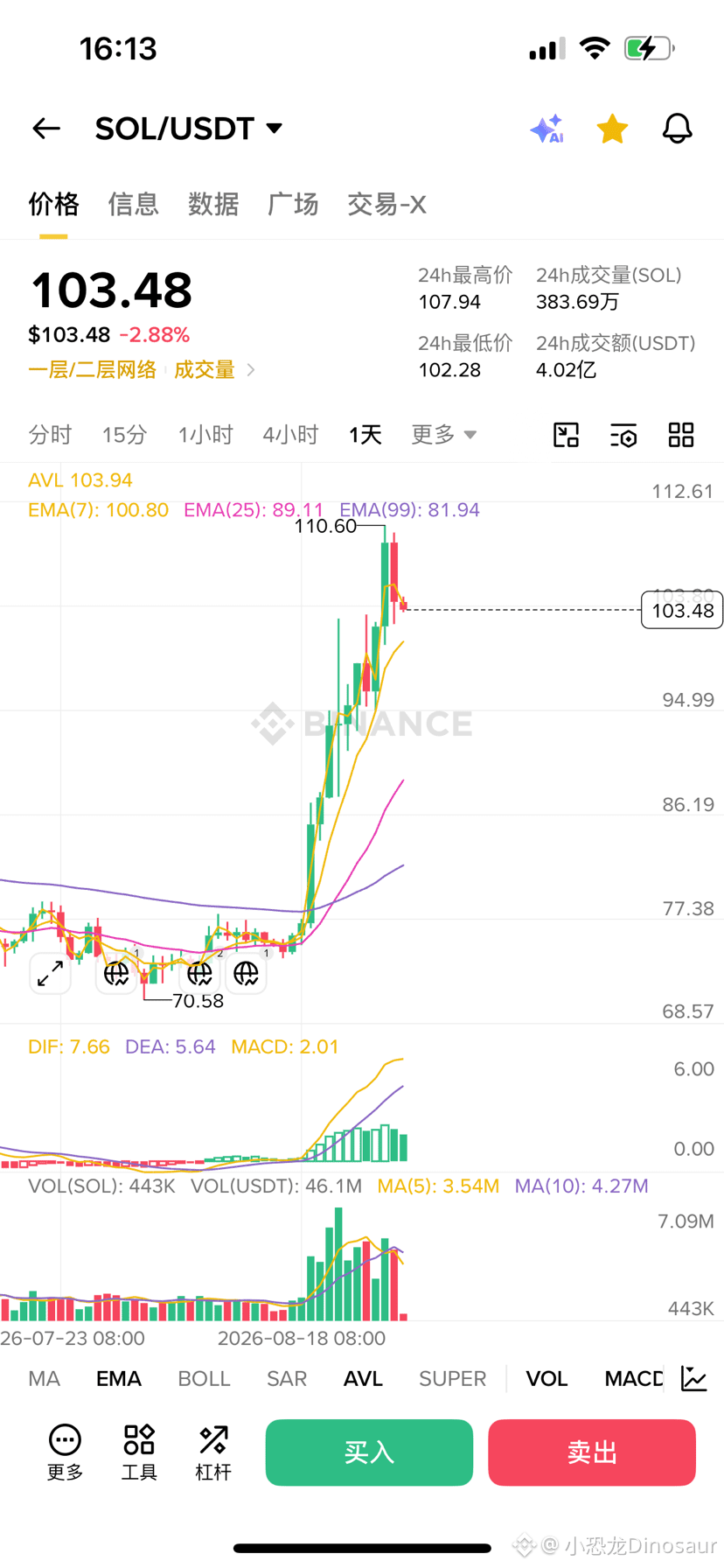
First, some data: SOL started around $74 in mid-August, once broke above $110, and surged 46.9% in a single month—ending a streak of 10 consecutive months of declines. A 20% gain in one week is certainly eye-catching among mainstream assets.
But what’s the core driver? Three things.
First, ETF inflows are continuously sweeping the market. The US spot Solana ETF has had five straight days of net inflows, totaling $1.22 billion. On August 24 alone, inflows reached $33.5 million—its largest single-day net inflow since 2026. Bitwise’s BSOL alone absorbed 80% of the entire Solana ETF market’s capital, with assets under management exceeding $1 billion. This isn’t the kind of movement that retail investors can create—institutions are genuinely allocating.
Second, a supply shock at the code level. On August 28, Solana validators approved the SGP-0002 proposal with 67% support, raising the annual inflation reduction rate from 15% to 30%. That means the SOL issuance over the next six years will be reduced by about 18.9 million coins, and the timeline for reaching a final inflation rate of 1.5% will move up from 2032 to 2029. On one side, institutions are buying; on the other, supply is tightening—an imbalance between supply and demand is forming.
Third, the on-chain ecosystem hasn’t fallen behind. Sanctum, with $1.66 billion in TVL, overtook Jupiter to become the largest protocol in the Solana ecosystem. Solana’s on-chain stablecoin supply reached $16.5 billion. Monthly transaction volume hit 4.48 billion, setting a new all-time high. Real demand is growing—not just speculative hot air.
On the day the proposal passed, SOL was around $105 but fell 1.2% instead. Markets always price in ahead of time. Validator staking rewards are set to drop: the nominal staking yield will fall from roughly 5.25% to 2.25% in the third year. Of the 738 validators, 30 in the third year may turn unprofitable. Whether the narrative can hold depends on whether Solana’s ecosystem can make up validators’ losses through transaction fees.
Now let’s look at the current market.
SOL has pulled back from above $110 and is currently consolidating around $104. Whales are still buying—two major addresses scooped up 320,000 SOL within 10 hours, about $33.55 million. Open interest climbed to $7.12 billion, suggesting leverage is building; volatility could amplify at any moment.
First, some data: SOL started around $74 in mid-August, once broke above $110, and surged 46.9% in a single month—ending a streak of 10 consecutive months of declines. A 20% gain in one week is certainly eye-catching among mainstream assets.
But what’s the core driver? Three things.
First, ETF inflows are continuously sweeping the market. The US spot Solana ETF has had five straight days of net inflows, totaling $1.22 billion. On August 24 alone, inflows reached $33.5 million—its largest single-day net inflow since 2026. Bitwise’s BSOL alone absorbed 80% of the entire Solana ETF market’s capital, with assets under management exceeding $1 billion. This isn’t the kind of movement that retail investors can create—institutions are genuinely allocating.
Second, a supply shock at the code level. On August 28, Solana validators approved the SGP-0002 proposal with 67% support, raising the annual inflation reduction rate from 15% to 30%. That means the SOL issuance over the next six years will be reduced by about 18.9 million coins, and the timeline for reaching a final inflation rate of 1.5% will move up from 2032 to 2029. On one side, institutions are buying; on the other, supply is tightening—an imbalance between supply and demand is forming.
Third, the on-chain ecosystem hasn’t fallen behind. Sanctum, with $1.66 billion in TVL, overtook Jupiter to become the largest protocol in the Solana ecosystem. Solana’s on-chain stablecoin supply reached $16.5 billion. Monthly transaction volume hit 4.48 billion, setting a new all-time high. Real demand is growing—not just speculative hot air.
On the day the proposal passed, SOL was around $105 but fell 1.2% instead. Markets always price in ahead of time. Validator staking rewards are set to drop: the nominal staking yield will fall from roughly 5.25% to 2.25% in the third year. Of the 738 validators, 30 in the third year may turn unprofitable. Whether the narrative can hold depends on whether Solana’s ecosystem can make up validators’ losses through transaction fees.
Now let’s look at the current market.
SOL has pulled back from above $110 and is currently consolidating around $104. Whales are still buying—two major addresses scooped up 320,000 SOL within 10 hours, about $33.55 million. Open interest climbed to $7.12 billion, suggesting leverage is building; volatility could amplify at any moment.
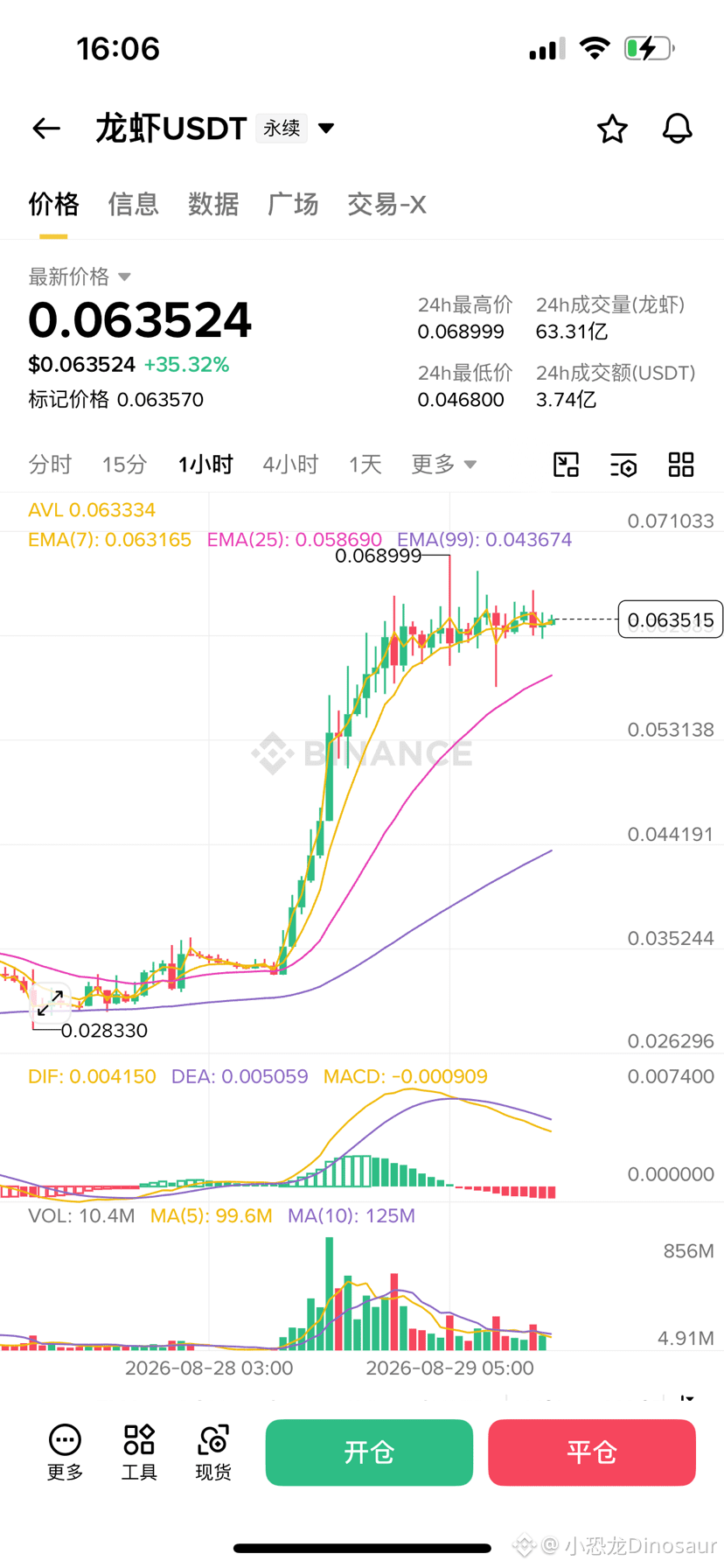
$龙虾 Has this wave finished? Let me say something that most people don’t dare to.
First, don’t rush in—watch the whole picture.
From the low of 0.0468 to the high of 0.069 in a single day, it nearly doubled. Now it’s retraced back to 0.0635. It looks like it’s up 35%, but if you chased the high, you’re already down about 8% on paper. Does it hurt? Good—this is crypto.
A few key details:
1. Trading volume: 6.3 billion coins; trading value: 370 million U. This isn’t volume that small retail can smash out—there are genuinely big funds moving around inside. But with this kind of volume, the price didn’t hold its previous high; instead, it pulled back—meaning selling pressure was just as fierce. Who is selling? Most likely bottom-lot holders taking profits in batches. Their cost may only be a couple of cents—so doubling and selling at that time is totally reasonable.
2. What’s the market sentiment right now? I’ve scrolled around—everywhere I see “lobster to the moon,” “buy and it’s over.” When everyone is shouting for signals, what do the whales love most? To ride the momentum and distribute. Pumping takes money; dumping only needs liquidity/coins. So when price is chopping sideways at high levels, it’s basically testing how much follower demand is left.
3. This coin is called “Lobster,” and it has a mystical, almost cursed kind of “luck” body. In crypto, people trade names like this aren’t new, but narratives come fast and go fast too. Today it’s lobster, tomorrow it’s pippi shrimp, the day after it’s baby lobster—once the hype fades, liquidity shrinks. By then, looking at the candlestick chart is already too late.
4. Look at the whole picture again. Bitcoin hasn’t moved, and the alts are just hyping themselves. What are the biggest risks for an independent move like this? If the overall market pulls back, it can leak immediately. Lobster isn’t BTC—there’s no “belief/faith” to protect it. Funds are here to make quick money, and they can run faster than anyone else.
So what do we do now?
My stance is very clear: Spot—hold your core position, but don’t go all-in. For perps, in this spot, neither long nor short feels good. Better to wait for a clearer signal: either a breakout with volume above 0.069 and holding it, or a pullback to around 0.058 with reduced volume and stabilization—then you can act.
Don’t be afraid of missing out. Crypto never lacks opportunities—what it lacks is capital.
First, don’t rush in—watch the whole picture.
From the low of 0.0468 to the high of 0.069 in a single day, it nearly doubled. Now it’s retraced back to 0.0635. It looks like it’s up 35%, but if you chased the high, you’re already down about 8% on paper. Does it hurt? Good—this is crypto.
A few key details:
1. Trading volume: 6.3 billion coins; trading value: 370 million U. This isn’t volume that small retail can smash out—there are genuinely big funds moving around inside. But with this kind of volume, the price didn’t hold its previous high; instead, it pulled back—meaning selling pressure was just as fierce. Who is selling? Most likely bottom-lot holders taking profits in batches. Their cost may only be a couple of cents—so doubling and selling at that time is totally reasonable.
2. What’s the market sentiment right now? I’ve scrolled around—everywhere I see “lobster to the moon,” “buy and it’s over.” When everyone is shouting for signals, what do the whales love most? To ride the momentum and distribute. Pumping takes money; dumping only needs liquidity/coins. So when price is chopping sideways at high levels, it’s basically testing how much follower demand is left.
3. This coin is called “Lobster,” and it has a mystical, almost cursed kind of “luck” body. In crypto, people trade names like this aren’t new, but narratives come fast and go fast too. Today it’s lobster, tomorrow it’s pippi shrimp, the day after it’s baby lobster—once the hype fades, liquidity shrinks. By then, looking at the candlestick chart is already too late.
4. Look at the whole picture again. Bitcoin hasn’t moved, and the alts are just hyping themselves. What are the biggest risks for an independent move like this? If the overall market pulls back, it can leak immediately. Lobster isn’t BTC—there’s no “belief/faith” to protect it. Funds are here to make quick money, and they can run faster than anyone else.
So what do we do now?
My stance is very clear: Spot—hold your core position, but don’t go all-in. For perps, in this spot, neither long nor short feels good. Better to wait for a clearer signal: either a breakout with volume above 0.069 and holding it, or a pullback to around 0.058 with reduced volume and stabilization—then you can act.
Don’t be afraid of missing out. Crypto never lacks opportunities—what it lacks is capital.
#SOL本周上涨20%
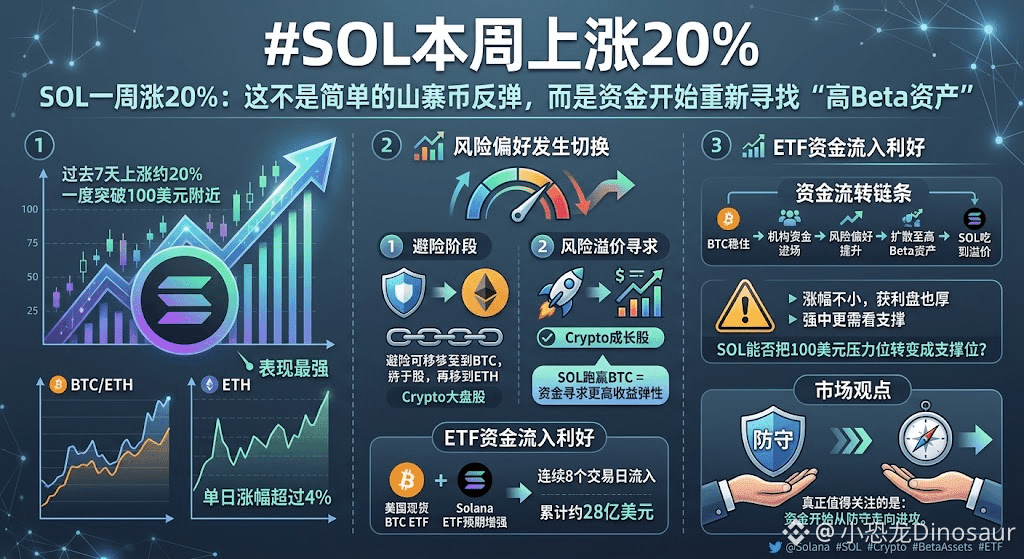
$SOL One-week rally up 20%: This isn’t just a simple rebound of a copycat coin; it’s that capital has started looking again for “high-beta assets.”
Recently, SOL’s performance really has been stealing the spotlight.
Over the past 7 days it’s risen about 20%, once breaking near the $100 mark, and it’s clearly outperformed BTC and ETH. The latest market data also shows that among the main cryptocurrencies in this cycle, SOL is one of the strongest performers, with a daily gain of over 4%.
I actually think the most worth watching here isn’t SOL itself.
It’s that risk appetite is changing.
What does that mean?
When the market is especially afraid of risk, capital usually goes first to BTC, then to ETH, and only finally to high-beta assets like SOL.
Because BTC is relatively like a “blue-chip stock” in crypto, while SOL is more like a growth stock.
So when SOL starts noticeably outperforming BTC, it often means capital is no longer satisfied with “conservative positioning,” and is instead hunting for higher upside and yield elasticity.
There’s also another important backdrop this time:
The U.S. spot BTC ETF has received inflows for eight straight trading days, with total inflows reaching about $2.8 billion. The environment for large crypto capital is improving. At the same time, SOL itself is starting to show signs of increasing demand from ETF-related flows.
This creates a pretty interesting chain:
BTC stabilizes → institutional money moves in → market risk appetite rises → capital starts spreading into high-beta assets → SOL is the first to capture the premium.
But I still want to pour a bit of cold water here.
A 20% gain in a week isn’t small.
The stronger SOL gets, the thicker the short-term profit-taking pile-up becomes.
A truly healthy rally isn’t about pumping every day—it’s about having buyers when it rises, and buyers when it dips.
So right now, I’m more focused on one question:
After SOL breaks above $100, can it turn $100 from a resistance level into support?
If it can, then this rally may be more than just short-term capital getting excited—it could mean the market’s risk appetite has truly switched gears.
In the end, SOL’s 20% rise is just the result. What traders should really care about is that capital is moving again from “defense” toward “offense.”
$SOL One-week rally up 20%: This isn’t just a simple rebound of a copycat coin; it’s that capital has started looking again for “high-beta assets.”
Recently, SOL’s performance really has been stealing the spotlight.
Over the past 7 days it’s risen about 20%, once breaking near the $100 mark, and it’s clearly outperformed BTC and ETH. The latest market data also shows that among the main cryptocurrencies in this cycle, SOL is one of the strongest performers, with a daily gain of over 4%.
I actually think the most worth watching here isn’t SOL itself.
It’s that risk appetite is changing.
What does that mean?
When the market is especially afraid of risk, capital usually goes first to BTC, then to ETH, and only finally to high-beta assets like SOL.
Because BTC is relatively like a “blue-chip stock” in crypto, while SOL is more like a growth stock.
So when SOL starts noticeably outperforming BTC, it often means capital is no longer satisfied with “conservative positioning,” and is instead hunting for higher upside and yield elasticity.
There’s also another important backdrop this time:
The U.S. spot BTC ETF has received inflows for eight straight trading days, with total inflows reaching about $2.8 billion. The environment for large crypto capital is improving. At the same time, SOL itself is starting to show signs of increasing demand from ETF-related flows.
This creates a pretty interesting chain:
BTC stabilizes → institutional money moves in → market risk appetite rises → capital starts spreading into high-beta assets → SOL is the first to capture the premium.
But I still want to pour a bit of cold water here.
A 20% gain in a week isn’t small.
The stronger SOL gets, the thicker the short-term profit-taking pile-up becomes.
A truly healthy rally isn’t about pumping every day—it’s about having buyers when it rises, and buyers when it dips.
So right now, I’m more focused on one question:
After SOL breaks above $100, can it turn $100 from a resistance level into support?
If it can, then this rally may be more than just short-term capital getting excited—it could mean the market’s risk appetite has truly switched gears.
In the end, SOL’s 20% rise is just the result. What traders should really care about is that capital is moving again from “defense” toward “offense.”
Verified
#黄金8月上涨约14%
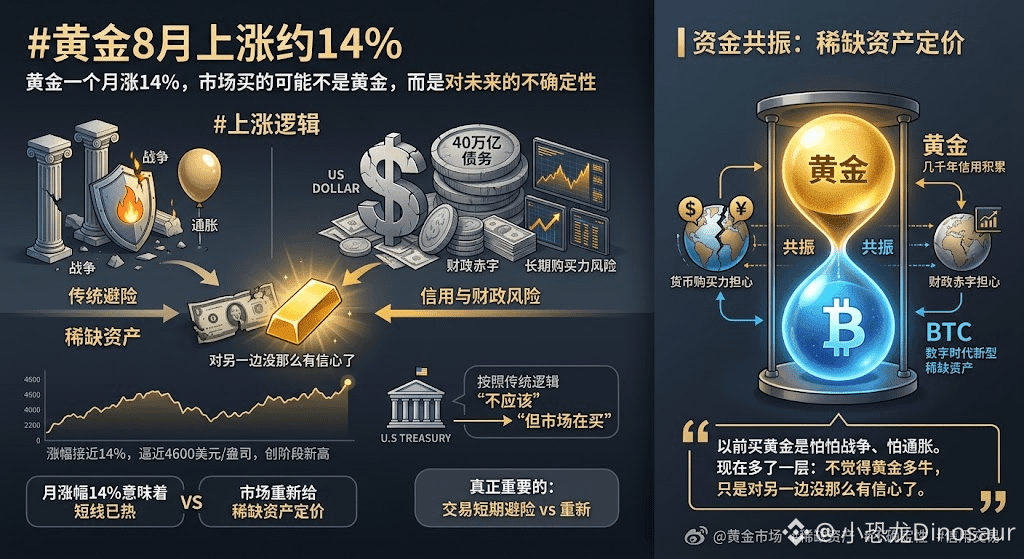
Gold rose 14% in one month—what the market is buying may not be gold, but uncertainty about the future.
This gold rally is a bit exaggerated.
August’s gain is already close to 14%. Prices once pushed toward $4,600 per ounce and hit a new phase high. Even more intriguing is that this surge happened against a backdrop where the market is still concerned about the Federal Reserve’s rate-hike risk.
By traditional logic, this “shouldn’t” be the case.
With high interest rates, gold pays no yield, so it should theoretically face downward pressure.
But the market, for some reason, is buying.
Why?
I think the answer may not be that everyone suddenly loves gold—it may be that the market is starting to weigh financial risk, monetary credibility, and long-term purchasing power more heavily.
Especially lately, U.S. fiscal deficits, debt in the $40 trillion range, long-term Treasury yields, and the U.S. dollar’s trend are all influencing each other. At the same time, the U.S. Treasury has increased long-term Treasury repo operations, which has also prompted market discussion about so-called “value-decline trades.”
In plain terms:
Previously, people bought gold because they feared war and inflation.
Now there’s an additional layer:
I don’t necessarily think gold is that amazing—I’m just less confident in the other side.
That’s what’s truly worth studying about gold’s rally.
And this logic actually resembles BTC more and more.
Both gold and BTC are scarce assets: one has built up thousands of years of credibility, while the other is a new kind of scarce asset in the digital age. When the market starts worrying about purchasing power, fiscal deficits, and policy uncertainty, they tend to experience capital “resonance.”
Of course, a 14% monthly surge also means the short-term is already getting hot.
So I won’t simply interpret it as “gold will keep surging.”
What really matters is: in this rally, is gold being traded as a short-term hedge, or is the market re-pricing scarce assets?
If it’s the latter, then the significance of this move goes far beyond a 14% one-month gain.
Gold rose 14% in one month—what the market is buying may not be gold, but uncertainty about the future.
This gold rally is a bit exaggerated.
August’s gain is already close to 14%. Prices once pushed toward $4,600 per ounce and hit a new phase high. Even more intriguing is that this surge happened against a backdrop where the market is still concerned about the Federal Reserve’s rate-hike risk.
By traditional logic, this “shouldn’t” be the case.
With high interest rates, gold pays no yield, so it should theoretically face downward pressure.
But the market, for some reason, is buying.
Why?
I think the answer may not be that everyone suddenly loves gold—it may be that the market is starting to weigh financial risk, monetary credibility, and long-term purchasing power more heavily.
Especially lately, U.S. fiscal deficits, debt in the $40 trillion range, long-term Treasury yields, and the U.S. dollar’s trend are all influencing each other. At the same time, the U.S. Treasury has increased long-term Treasury repo operations, which has also prompted market discussion about so-called “value-decline trades.”
In plain terms:
Previously, people bought gold because they feared war and inflation.
Now there’s an additional layer:
I don’t necessarily think gold is that amazing—I’m just less confident in the other side.
That’s what’s truly worth studying about gold’s rally.
And this logic actually resembles BTC more and more.
Both gold and BTC are scarce assets: one has built up thousands of years of credibility, while the other is a new kind of scarce asset in the digital age. When the market starts worrying about purchasing power, fiscal deficits, and policy uncertainty, they tend to experience capital “resonance.”
Of course, a 14% monthly surge also means the short-term is already getting hot.
So I won’t simply interpret it as “gold will keep surging.”
What really matters is: in this rally, is gold being traded as a short-term hedge, or is the market re-pricing scarce assets?
If it’s the latter, then the significance of this move goes far beyond a 14% one-month gain.
$HEMI
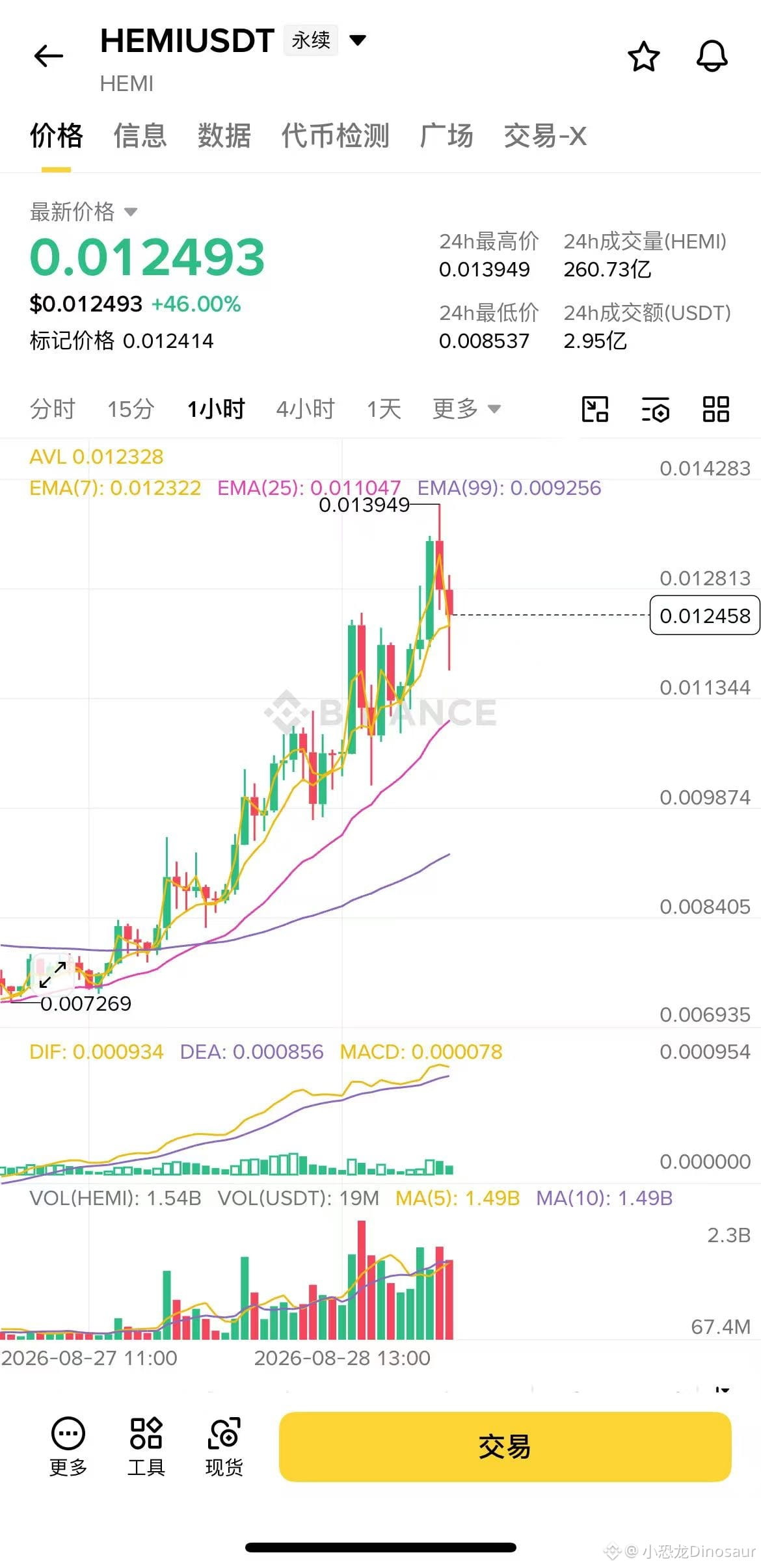
In the span of one hour, it surged 46%—rising from around 0.007 all the way to 0.01395. Trading volume has expanded significantly. EMA7, EMA25, and EMA99 are all also in a bullish alignment, so the trend looks fine.
The issue is that after it just pushed up to 0.01395, there’s already been a clear pullback. Currently it’s around 0.0125, which is essentially profit-taking after the spike.
At this point, I won’t rush to judge that it has “topped.”
Because in a strong market, a pullback from a high is not necessarily bad—the key is whether there’s support after the pullback.
For the short term, I’m watching two levels:
Around 0.0123, which is close to EMA7 and the current price. If it can hold there, it means the short-term bulls aren’t getting messy yet. And lower than that is around 0.011. If it can’t hold there either, it suggests this rapid rally may be entering a deeper shakeout.
In the span of one hour, it surged 46%—rising from around 0.007 all the way to 0.01395. Trading volume has expanded significantly. EMA7, EMA25, and EMA99 are all also in a bullish alignment, so the trend looks fine.
The issue is that after it just pushed up to 0.01395, there’s already been a clear pullback. Currently it’s around 0.0125, which is essentially profit-taking after the spike.
At this point, I won’t rush to judge that it has “topped.”
Because in a strong market, a pullback from a high is not necessarily bad—the key is whether there’s support after the pullback.
For the short term, I’m watching two levels:
Around 0.0123, which is close to EMA7 and the current price. If it can hold there, it means the short-term bulls aren’t getting messy yet. And lower than that is around 0.011. If it can’t hold there either, it suggests this rapid rally may be entering a deeper shakeout.
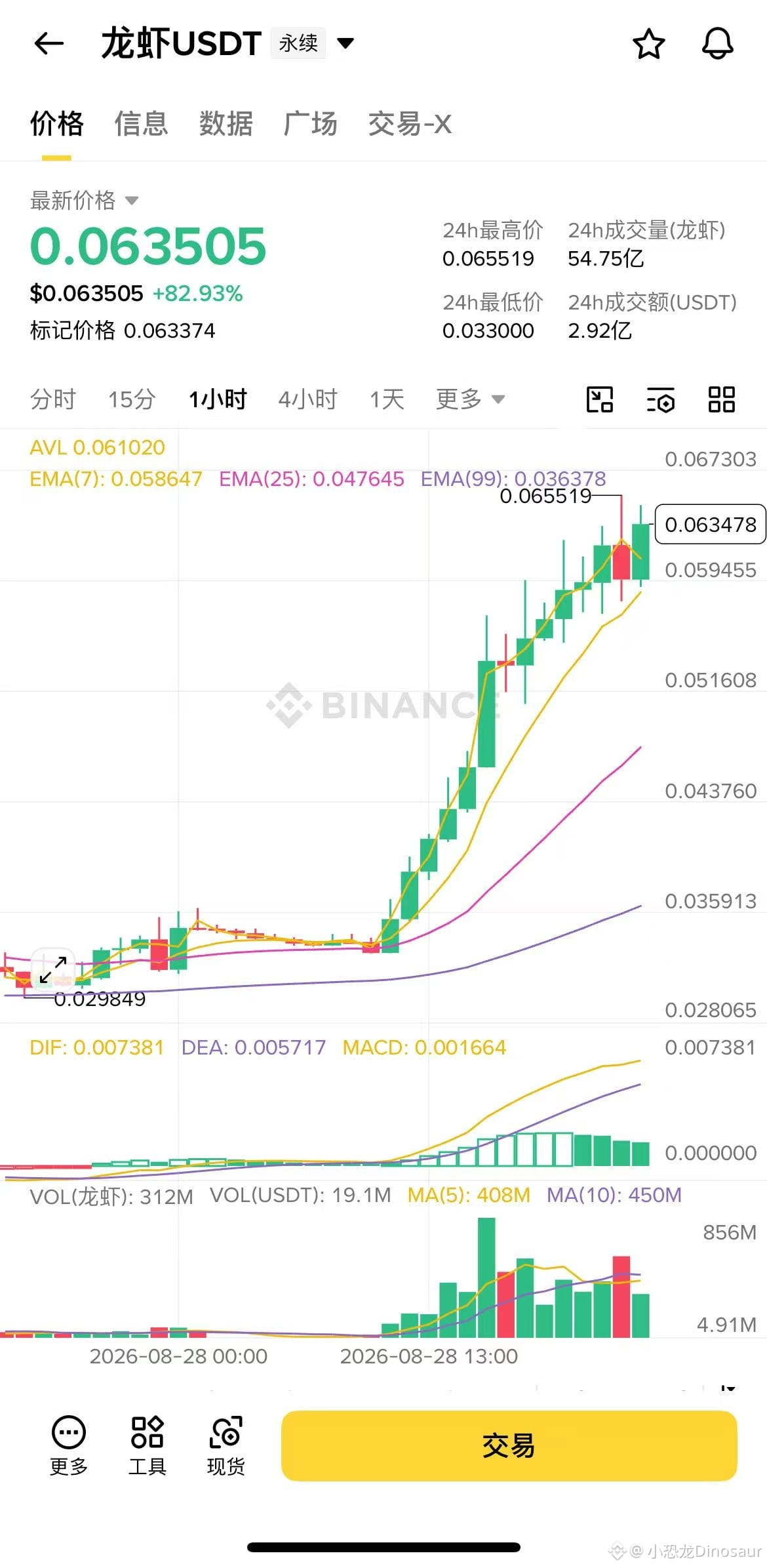
This wave of “lobster” is no longer a question of whether it will go up or not, but rather: who still dares to buy in at this level.
In just one hour it surged by 82.93%, jumping from around 0.03 all the way to 0.0655, and trading volume has clearly expanded too. EMA7, EMA25, and EMA99 are all aligned in a bullish order—the trend is genuinely strong.
But when traders see this kind of candlestick, their first reaction definitely isn’t “quick, go all in,” but instead to check whether it can break through and hold around 0.0655.
Now the price is trading right up against the previous high. Although the MACD is still bullish, the histogram bars are starting to show signs of contraction, suggesting that upward momentum isn’t as fierce as before. In simple terms: the bulls are still there, but the buyers are getting pricier.
If there’s a volume-backed breakout above 0.0655 and a pullback can hold, then there’s still a chance for further push. On the other hand, if it’s breaking out with heavy volume at a high level but keeps failing to clear the previous high for a long time, I’d be more cautious about a wave of profit-taking sell-off.
The worst thing for this kind of coin is to get excited when you see green candles, and then panic when you see red candles.
After a 80% move up, both profit room and risk room expand at the same time. What matters now isn’t courage—it’s your entry position. $龙虾
In just one hour it surged by 82.93%, jumping from around 0.03 all the way to 0.0655, and trading volume has clearly expanded too. EMA7, EMA25, and EMA99 are all aligned in a bullish order—the trend is genuinely strong.
But when traders see this kind of candlestick, their first reaction definitely isn’t “quick, go all in,” but instead to check whether it can break through and hold around 0.0655.
Now the price is trading right up against the previous high. Although the MACD is still bullish, the histogram bars are starting to show signs of contraction, suggesting that upward momentum isn’t as fierce as before. In simple terms: the bulls are still there, but the buyers are getting pricier.
If there’s a volume-backed breakout above 0.0655 and a pullback can hold, then there’s still a chance for further push. On the other hand, if it’s breaking out with heavy volume at a high level but keeps failing to clear the previous high for a long time, I’d be more cautious about a wave of profit-taking sell-off.
The worst thing for this kind of coin is to get excited when you see green candles, and then panic when you see red candles.
After a 80% move up, both profit room and risk room expand at the same time. What matters now isn’t courage—it’s your entry position. $龙虾
Verified
#英伟达开盘140分钟成交335亿美元
NVIDIA in 140 minutes: $33.5 billion in trading — what’s truly crazy isn’t the 8.7% gain, but the fact that funds have started taking the wheel again in the AI direction
This move by NVIDIA is really something.
In just 140 minutes after the open, the trading volume already hit $33.5 billion—exceeding the normal daily trading scale of many U.S. stocks. On the previous trading day, NVIDIA surged 8.7%, with its market value increasing by about $441.5 billion in a single day, directly setting a new record for one-day market cap gains.
But I think traders should not focus on “how much it went up.”
Instead, the real question is: with this enormous amount of capital, what exactly is being bought?
The answer is actually quite clear: the market is once again repricing AI capital expenditures.
NVIDIA’s latest quarterly revenue reached $96.2 billion, up 106% year over year, and its data center business hit $89.0 billion, up 117%. Even more importantly, the company’s revenue growth outlook for the next fiscal year is about 70%—far above the roughly 40% that the market had previously expected.
That’s where it gets interesting.
Recently, the market has been worrying about one key issue:
Has AI already burned too much money?
Now NVIDIA is using its financial report to tell the market that—at least for now—demand hasn’t hit a ceiling.
So these $33.5 billion, at its core, are essentially a re-vote.
This isn’t just capital buying a single chip company—it’s a bet that the capex cycle for AI infrastructure is not over yet.
Of course, I won’t just chase a surge on a spike in volume.
At this level of trading volume, both bulls and bears are scrambling for positioning, and volatility ahead will only get bigger. Especially because NVIDIA has become the “barometer” for all AI trading; the moment it shows disagreement at high levels, semiconductors, cloud computing—even the entire Nasdaq—will likely shake too.
So the most important thing to watch this time isn’t how much more NVIDIA can rise—it’s whether AI capital can shift from “chasing gains on sentiment” to “delivering continued performance.”
If the results keep up, then the $33.5 billion is just capital lining up again.
If the results can’t keep up, then it’s a crowded rush at high levels.
NVIDIA in 140 minutes: $33.5 billion in trading — what’s truly crazy isn’t the 8.7% gain, but the fact that funds have started taking the wheel again in the AI direction
This move by NVIDIA is really something.
In just 140 minutes after the open, the trading volume already hit $33.5 billion—exceeding the normal daily trading scale of many U.S. stocks. On the previous trading day, NVIDIA surged 8.7%, with its market value increasing by about $441.5 billion in a single day, directly setting a new record for one-day market cap gains.
But I think traders should not focus on “how much it went up.”
Instead, the real question is: with this enormous amount of capital, what exactly is being bought?
The answer is actually quite clear: the market is once again repricing AI capital expenditures.
NVIDIA’s latest quarterly revenue reached $96.2 billion, up 106% year over year, and its data center business hit $89.0 billion, up 117%. Even more importantly, the company’s revenue growth outlook for the next fiscal year is about 70%—far above the roughly 40% that the market had previously expected.
That’s where it gets interesting.
Recently, the market has been worrying about one key issue:
Has AI already burned too much money?
Now NVIDIA is using its financial report to tell the market that—at least for now—demand hasn’t hit a ceiling.
So these $33.5 billion, at its core, are essentially a re-vote.
This isn’t just capital buying a single chip company—it’s a bet that the capex cycle for AI infrastructure is not over yet.
Of course, I won’t just chase a surge on a spike in volume.
At this level of trading volume, both bulls and bears are scrambling for positioning, and volatility ahead will only get bigger. Especially because NVIDIA has become the “barometer” for all AI trading; the moment it shows disagreement at high levels, semiconductors, cloud computing—even the entire Nasdaq—will likely shake too.
So the most important thing to watch this time isn’t how much more NVIDIA can rise—it’s whether AI capital can shift from “chasing gains on sentiment” to “delivering continued performance.”
If the results keep up, then the $33.5 billion is just capital lining up again.
If the results can’t keep up, then it’s a crowded rush at high levels.

#美元创近四周最大涨幅
The U.S. dollar suddenly rebounds—don’t just watch the Dollar Index: global risk assets may need to be repriced again
I think this dollar rebound is actually the most worth watching among the three pieces of news.
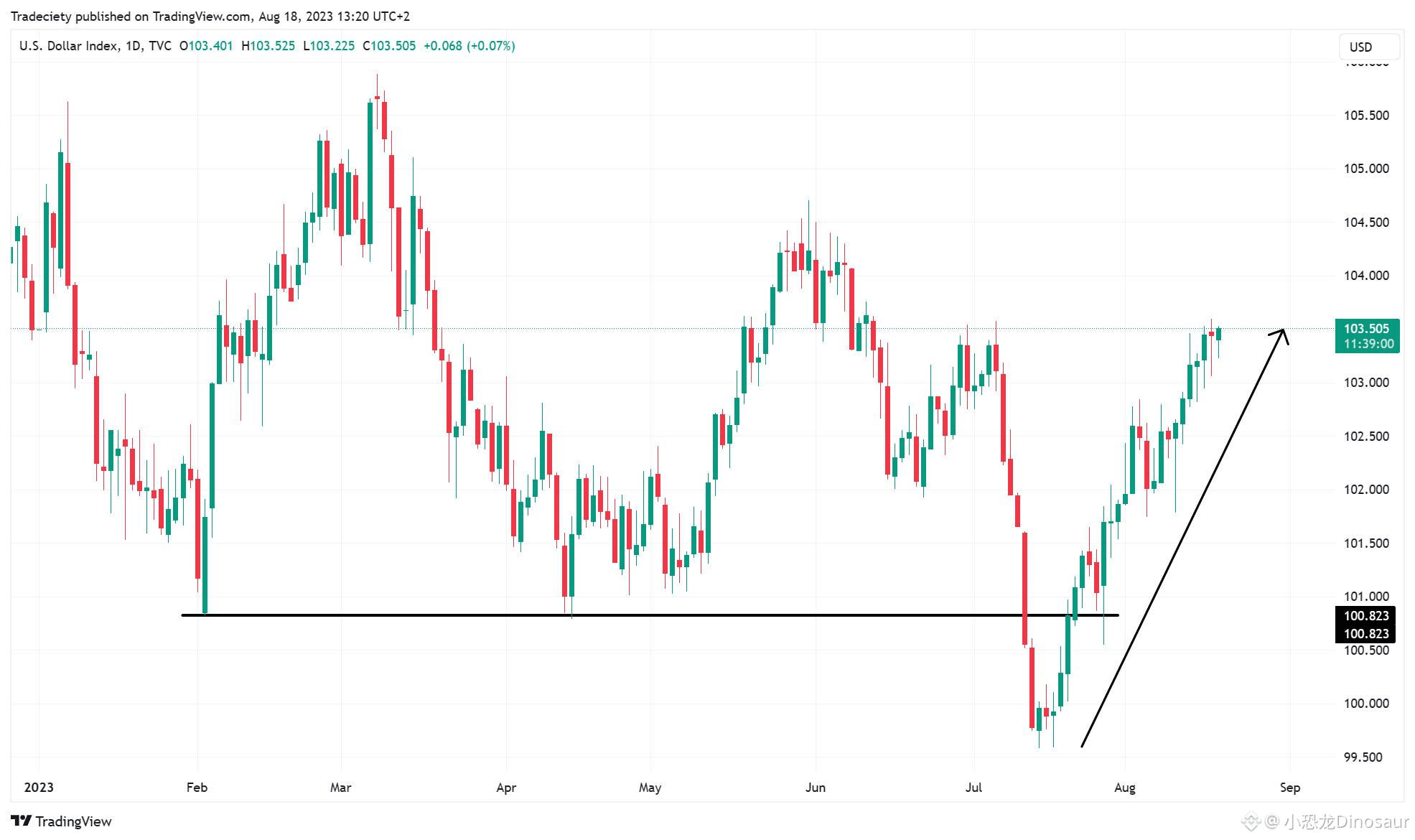
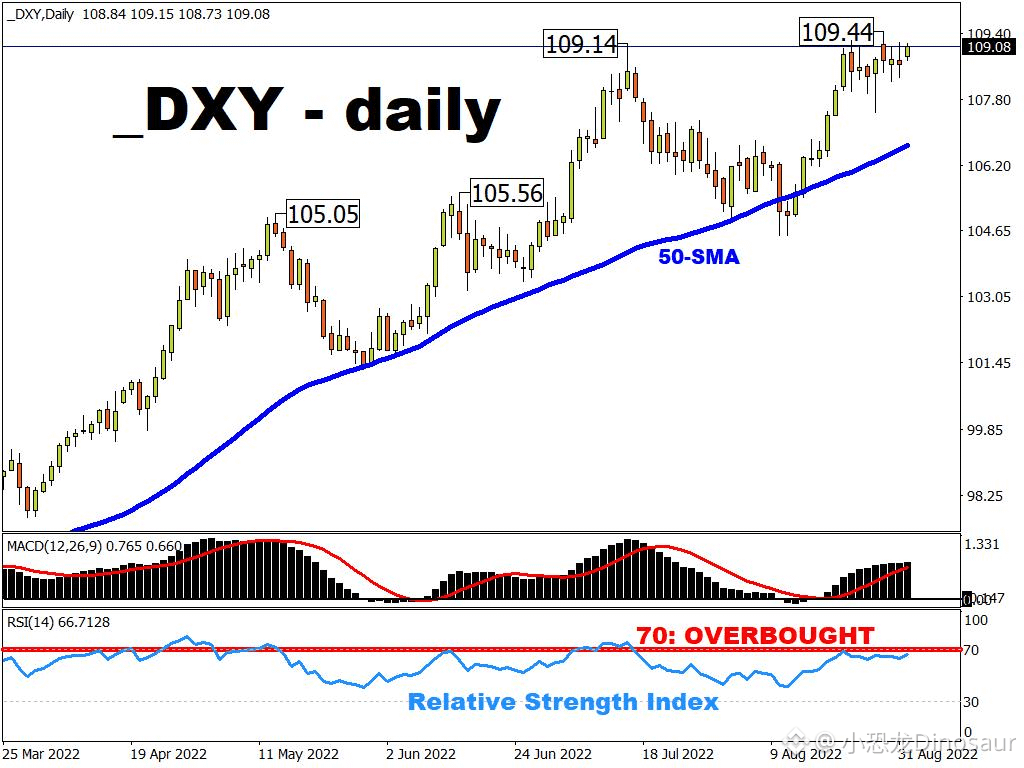
Latest data shows the U.S. Dollar Index once rose to around 99.14. At the same time, the market is paying attention to U.S. inflation data, employment data, and the policy signals Fed Chair Jerome Powell is set to deliver at Jackson Hole. Recently stronger employment data and still-elevated inflation pressure have also caused the market to readjust expectations for rate cuts—and even rate hikes.
Why should crypto traders get nervous when the dollar rises a few points?
Because the U.S. dollar is, in essence, the “water tap” for global risk assets.
When the dollar is weak, capital is more willing to flow into high-beta assets such as BTC, gold, emerging markets, and tech stocks.
When the dollar suddenly strengthens, capital has to reconsider:
Why should I take such big risk?
Especially now that BTC has just surged to around $80,000, and many altcoins have also gone through a rapid round of gains.
At this moment, a sudden dollar rebound is like someone slightly turning down the volume on the music for high-priced assets.
It doesn’t necessarily mean an immediate collapse.
But those who chase the rally will start hesitating.
What’s more troublesome is that U.S. long-term Treasury yields, inflation expectations, and Fed policy are currently tangled together again. Reuters noted that the market is waiting for Warsh’s remarks at the Jackson Hole meeting, while recent data has already caused some fluctuation in rate-cut expectations.
So next, I’ll look at the U.S. dollar, Treasury yields, and BTC together.
Whether BTC can continue higher depends not only on whether there’s money in crypto, but also on whether global capital is willing to keep taking risk.
A stronger dollar doesn’t necessarily mean the bull market is over, but it at least reminds us not to take price increases for granted.
When the market feels the most comfortable, it’s often when people are easiest to let their guard down.
The U.S. dollar suddenly rebounds—don’t just watch the Dollar Index: global risk assets may need to be repriced again
I think this dollar rebound is actually the most worth watching among the three pieces of news.
Latest data shows the U.S. Dollar Index once rose to around 99.14. At the same time, the market is paying attention to U.S. inflation data, employment data, and the policy signals Fed Chair Jerome Powell is set to deliver at Jackson Hole. Recently stronger employment data and still-elevated inflation pressure have also caused the market to readjust expectations for rate cuts—and even rate hikes.
Why should crypto traders get nervous when the dollar rises a few points?
Because the U.S. dollar is, in essence, the “water tap” for global risk assets.
When the dollar is weak, capital is more willing to flow into high-beta assets such as BTC, gold, emerging markets, and tech stocks.
When the dollar suddenly strengthens, capital has to reconsider:
Why should I take such big risk?
Especially now that BTC has just surged to around $80,000, and many altcoins have also gone through a rapid round of gains.
At this moment, a sudden dollar rebound is like someone slightly turning down the volume on the music for high-priced assets.
It doesn’t necessarily mean an immediate collapse.
But those who chase the rally will start hesitating.
What’s more troublesome is that U.S. long-term Treasury yields, inflation expectations, and Fed policy are currently tangled together again. Reuters noted that the market is waiting for Warsh’s remarks at the Jackson Hole meeting, while recent data has already caused some fluctuation in rate-cut expectations.
So next, I’ll look at the U.S. dollar, Treasury yields, and BTC together.
Whether BTC can continue higher depends not only on whether there’s money in crypto, but also on whether global capital is willing to keep taking risk.
A stronger dollar doesn’t necessarily mean the bull market is over, but it at least reminds us not to take price increases for granted.
When the market feels the most comfortable, it’s often when people are easiest to let their guard down.
Log in to explore more content