
#SOL本周上涨20% , who is actually buying?
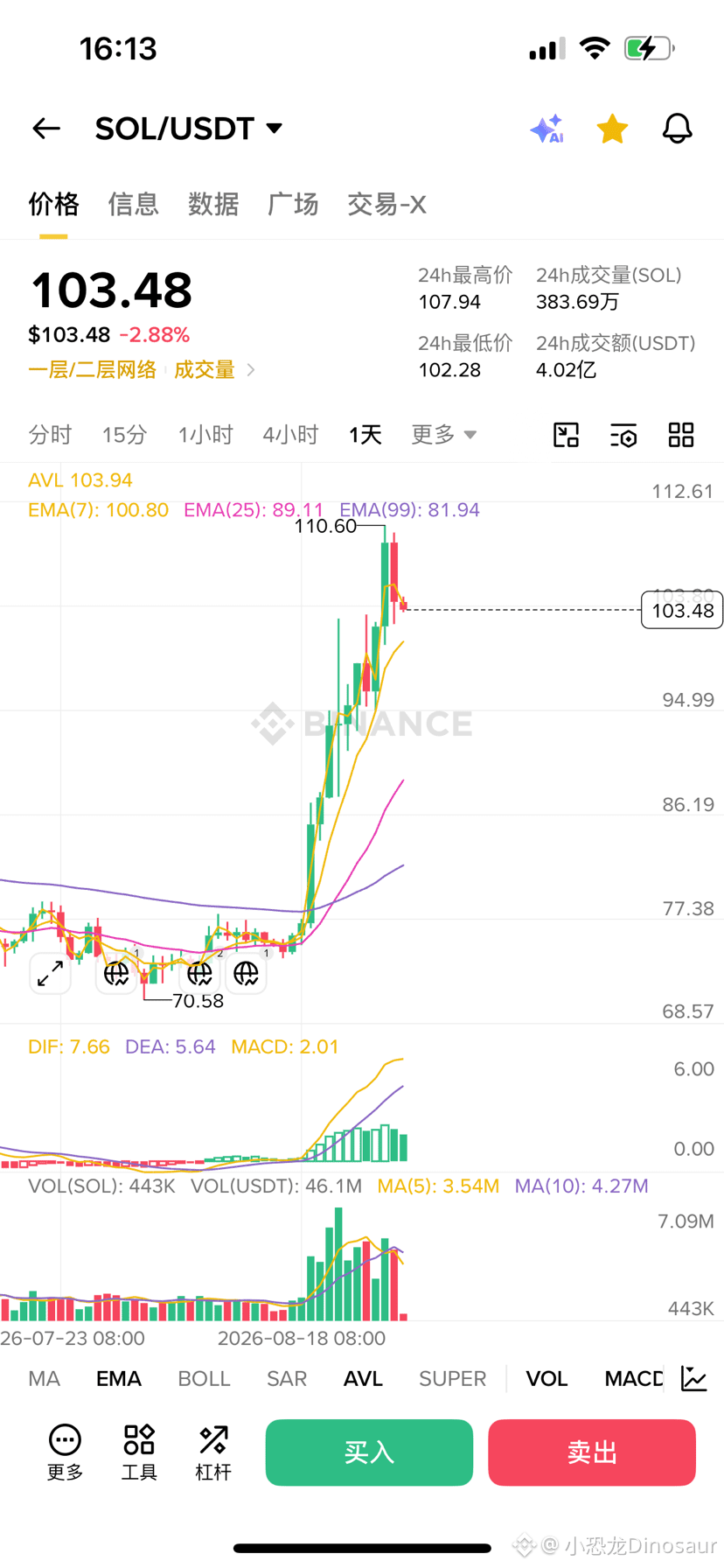
First, some data: SOL started around $74 in mid-August, once broke above $110, and surged 46.9% in a single month—ending a streak of 10 consecutive months of declines. A 20% gain in one week is certainly eye-catching among mainstream assets.
But what’s the core driver? Three things.
First, ETF inflows are continuously sweeping the market. The US spot Solana ETF has had five straight days of net inflows, totaling $1.22 billion. On August 24 alone, inflows reached $33.5 million—its largest single-day net inflow since 2026. Bitwise’s BSOL alone absorbed 80% of the entire Solana ETF market’s capital, with assets under management exceeding $1 billion. This isn’t the kind of movement that retail investors can create—institutions are genuinely allocating.
Second, a supply shock at the code level. On August 28, Solana validators approved the SGP-0002 proposal with 67% support, raising the annual inflation reduction rate from 15% to 30%. That means the SOL issuance over the next six years will be reduced by about 18.9 million coins, and the timeline for reaching a final inflation rate of 1.5% will move up from 2032 to 2029. On one side, institutions are buying; on the other, supply is tightening—an imbalance between supply and demand is forming.
Third, the on-chain ecosystem hasn’t fallen behind. Sanctum, with $1.66 billion in TVL, overtook Jupiter to become the largest protocol in the Solana ecosystem. Solana’s on-chain stablecoin supply reached $16.5 billion. Monthly transaction volume hit 4.48 billion, setting a new all-time high. Real demand is growing—not just speculative hot air.
On the day the proposal passed, SOL was around $105 but fell 1.2% instead. Markets always price in ahead of time. Validator staking rewards are set to drop: the nominal staking yield will fall from roughly 5.25% to 2.25% in the third year. Of the 738 validators, 30 in the third year may turn unprofitable. Whether the narrative can hold depends on whether Solana’s ecosystem can make up validators’ losses through transaction fees.
Now let’s look at the current market.
SOL has pulled back from above $110 and is currently consolidating around $104. Whales are still buying—two major addresses scooped up 320,000 SOL within 10 hours, about $33.55 million. Open interest climbed to $7.12 billion, suggesting leverage is building; volatility could amplify at any moment.
First, some data: SOL started around $74 in mid-August, once broke above $110, and surged 46.9% in a single month—ending a streak of 10 consecutive months of declines. A 20% gain in one week is certainly eye-catching among mainstream assets.
But what’s the core driver? Three things.
First, ETF inflows are continuously sweeping the market. The US spot Solana ETF has had five straight days of net inflows, totaling $1.22 billion. On August 24 alone, inflows reached $33.5 million—its largest single-day net inflow since 2026. Bitwise’s BSOL alone absorbed 80% of the entire Solana ETF market’s capital, with assets under management exceeding $1 billion. This isn’t the kind of movement that retail investors can create—institutions are genuinely allocating.
Second, a supply shock at the code level. On August 28, Solana validators approved the SGP-0002 proposal with 67% support, raising the annual inflation reduction rate from 15% to 30%. That means the SOL issuance over the next six years will be reduced by about 18.9 million coins, and the timeline for reaching a final inflation rate of 1.5% will move up from 2032 to 2029. On one side, institutions are buying; on the other, supply is tightening—an imbalance between supply and demand is forming.
Third, the on-chain ecosystem hasn’t fallen behind. Sanctum, with $1.66 billion in TVL, overtook Jupiter to become the largest protocol in the Solana ecosystem. Solana’s on-chain stablecoin supply reached $16.5 billion. Monthly transaction volume hit 4.48 billion, setting a new all-time high. Real demand is growing—not just speculative hot air.
On the day the proposal passed, SOL was around $105 but fell 1.2% instead. Markets always price in ahead of time. Validator staking rewards are set to drop: the nominal staking yield will fall from roughly 5.25% to 2.25% in the third year. Of the 738 validators, 30 in the third year may turn unprofitable. Whether the narrative can hold depends on whether Solana’s ecosystem can make up validators’ losses through transaction fees.
Now let’s look at the current market.
SOL has pulled back from above $110 and is currently consolidating around $104. Whales are still buying—two major addresses scooped up 320,000 SOL within 10 hours, about $33.55 million. Open interest climbed to $7.12 billion, suggesting leverage is building; volatility could amplify at any moment.