
MR_SPONDY_13
8k Posts

MR_SPONDY_13
 Square Verified+
Open Trade

SOL Holder
High-Frequency Trader
4 Years
1.0K+ Following
48.1K+ Followers
37.6K+ Liked
Posts
Portfolio
All
Quotes
Videos
Live
🚀 $BROCCOLI714 -CAN IT MAKE A NEW ATH?
$BROCCOLI714 is heating up again, with momentum building around the CZ’s Dog narrative.
The previous ATH was near $0.285. A new ATH would require a massive move, but meme coins can move fast when volume and community hype return.
🔥 Break above key resistance + strong volume = ATH attempt?
I’m watching closely. 👀
#broccoli714 #BROCCOLI #BNB
$BROCCOLI714
$BROCCOLI714 is heating up again, with momentum building around the CZ’s Dog narrative.
The previous ATH was near $0.285. A new ATH would require a massive move, but meme coins can move fast when volume and community hype return.
🔥 Break above key resistance + strong volume = ATH attempt?
I’m watching closely. 👀
#broccoli714 #BROCCOLI #BNB
$BROCCOLI714

🔥 CALDERA ($ERA )-ONE TO WATCH?
Caldera is building infrastructure for customizable Ethereum L2s, while its Metalayer vision aims to connect rollups and improve interoperability.
With 60+ rollups launched through its ecosystem, the project is building a serious position in the Layer-2 infrastructure narrative.
Now the interesting part is $ERA .
📈 My price outlook:
Short term: $0.08–$0.10
Bullish breakout: $0.12–$0.15
Strong market: $0.20–$0.30
Extreme bull case: $0.50+
The key level I’m watching is $0.10. A sustained breakout above it could open the door toward $0.12–$0.15.
However, token unlocks and supply pressure remain important risks, so volatility could stay high.
$ERA is definitely a project I’m keeping on my radar.
Not financial advice.
#Caldera #ERA
$ERA
Caldera is building infrastructure for customizable Ethereum L2s, while its Metalayer vision aims to connect rollups and improve interoperability.
With 60+ rollups launched through its ecosystem, the project is building a serious position in the Layer-2 infrastructure narrative.
Now the interesting part is $ERA .
📈 My price outlook:
Short term: $0.08–$0.10
Bullish breakout: $0.12–$0.15
Strong market: $0.20–$0.30
Extreme bull case: $0.50+
The key level I’m watching is $0.10. A sustained breakout above it could open the door toward $0.12–$0.15.
However, token unlocks and supply pressure remain important risks, so volatility could stay high.
$ERA is definitely a project I’m keeping on my radar.
Not financial advice.
#Caldera #ERA
$ERA

🚀💥💥 BOUNDLESS ($ZKC ) 🚀💥💥
Boundless is building decentralized infrastructure for verifiable computation using zero-knowledge proofs.
With ZK adoption growing, $ZKC could attract more attention.
📈 Prediction:
$0.08–$0.10 short term
$0.12–$0.15 if breakout confirms
$0.20+ in a strong bull market
Watching $ZKC closely. 👀
#ZKC #Boundless #ZK
$ZKC
Boundless is building decentralized infrastructure for verifiable computation using zero-knowledge proofs.
With ZK adoption growing, $ZKC could attract more attention.
📈 Prediction:
$0.08–$0.10 short term
$0.12–$0.15 if breakout confirms
$0.20+ in a strong bull market
Watching $ZKC closely. 👀
#ZKC #Boundless #ZK
$ZKC

Verified
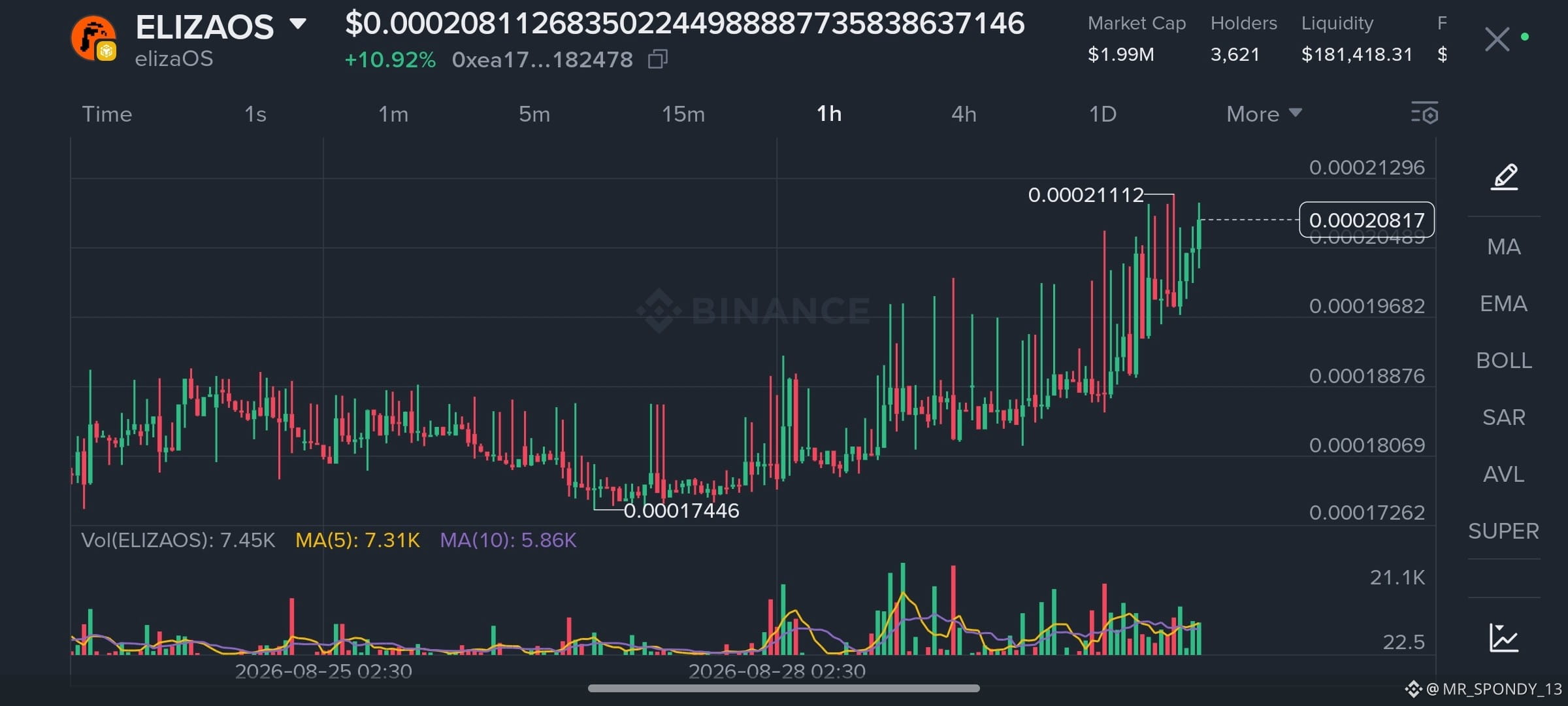
🔥 SHAW IS COOKING SOMETHING STRONG…
The founder of ElizaOS, Shaw, looks like he’s preparing something that could turn heads across the AI + crypto space.
No need to rush the reveal. Let him cook. 👀
The real question is: WHAT’S COMING NEXT?
I’m watching closely.
Get ready. ⚡
HOLD ELIZAOS 🚀 🚀🚀🚀💥💥💥
$ELIZAOS
#ElizaOS
The founder of ElizaOS, Shaw, looks like he’s preparing something that could turn heads across the AI + crypto space.
No need to rush the reveal. Let him cook. 👀
The real question is: WHAT’S COMING NEXT?
I’m watching closely.
Get ready. ⚡
HOLD ELIZAOS 🚀 🚀🚀🚀💥💥💥
$ELIZAOS
#ElizaOS

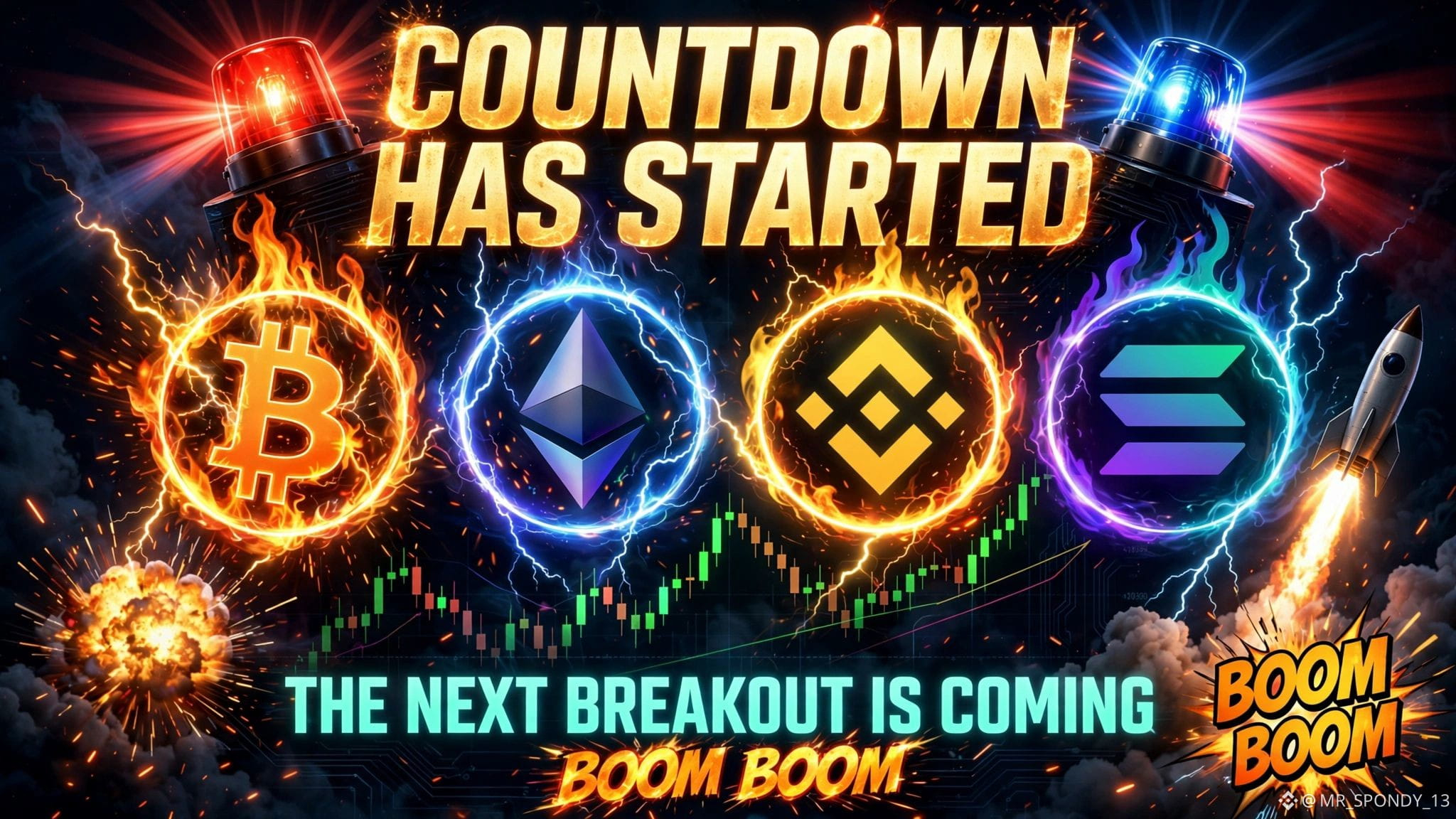
🚨 COUNTDOWN HAS STARTED 🚨
The market is getting ready for a potential BIG move. Momentum is building, sentiment is turning bullish, and the next breakout could come faster than expected.
🔥$BTC
⚡$ETH
💥 $SOL
🚀 BNB
The setup is getting interesting…
If the bulls take control, we could see BOOM BOOM 💥💥 across the market.
Eyes on the charts. The countdown has begun. ⏳📈
#Bitcoin #Ethereum #BNB #Solana #Bullish
The market is getting ready for a potential BIG move. Momentum is building, sentiment is turning bullish, and the next breakout could come faster than expected.
🔥$BTC
⚡$ETH
💥 $SOL
🚀 BNB
The setup is getting interesting…
If the bulls take control, we could see BOOM BOOM 💥💥 across the market.
Eyes on the charts. The countdown has begun. ⏳📈
#Bitcoin #Ethereum #BNB #Solana #Bullish
Verified
🚀 ELIZAOS ($ELIZA) — THE NEXT AI + CRYPTO EXPERIMENT?
The AI-agent narrative is becoming stronger in crypto, and ElizaOS is building an interesting position in this space.
ElizaOS focuses on an open-source ecosystem for autonomous AI agents, enabling them to interact with blockchains, dApps and different platforms.
What interests me isn’t just the AI hype, but the possibility of AI agents becoming real participants in the on-chain economy.
If the ecosystem continues attracting developers, users and real applications, $ELIZA could become an important project to watch within the AI-agent sector.
But hype alone isn’t enough. Execution and real adoption will matter most.
🔎 Key things to watch: • Developer activity
• New AI agents & integrations
• Ecosystem adoption
• Trading volume & liquidity
• Community growth
If the AI-agent narrative continues to gain momentum, $ELIZA is definitely a project worth keeping on the watchlist.
$ELIZAOS
#ELIZA #ElizaOS #AI #Crypto
The AI-agent narrative is becoming stronger in crypto, and ElizaOS is building an interesting position in this space.
ElizaOS focuses on an open-source ecosystem for autonomous AI agents, enabling them to interact with blockchains, dApps and different platforms.
What interests me isn’t just the AI hype, but the possibility of AI agents becoming real participants in the on-chain economy.
If the ecosystem continues attracting developers, users and real applications, $ELIZA could become an important project to watch within the AI-agent sector.
But hype alone isn’t enough. Execution and real adoption will matter most.
🔎 Key things to watch: • Developer activity
• New AI agents & integrations
• Ecosystem adoption
• Trading volume & liquidity
• Community growth
If the AI-agent narrative continues to gain momentum, $ELIZA is definitely a project worth keeping on the watchlist.
$ELIZAOS
#ELIZA #ElizaOS #AI #Crypto

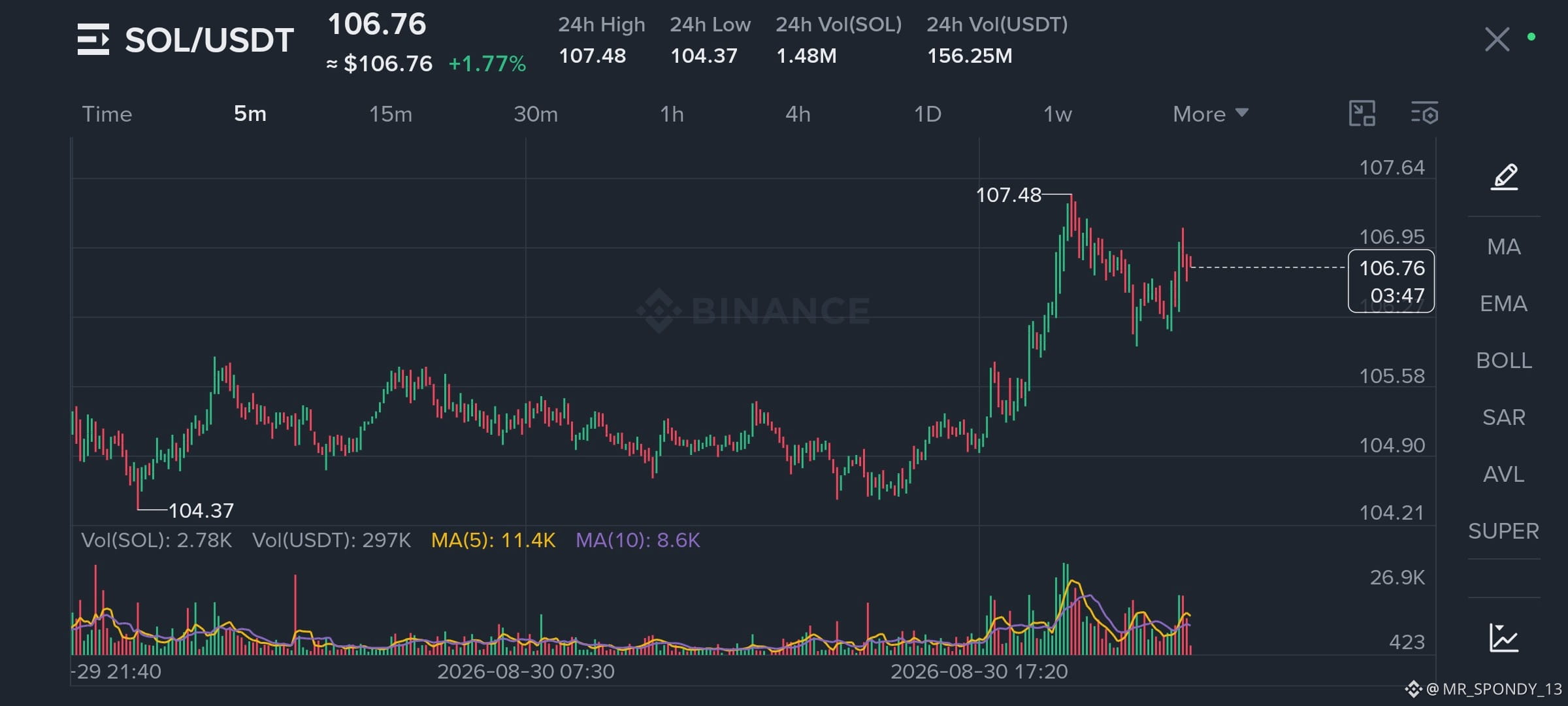
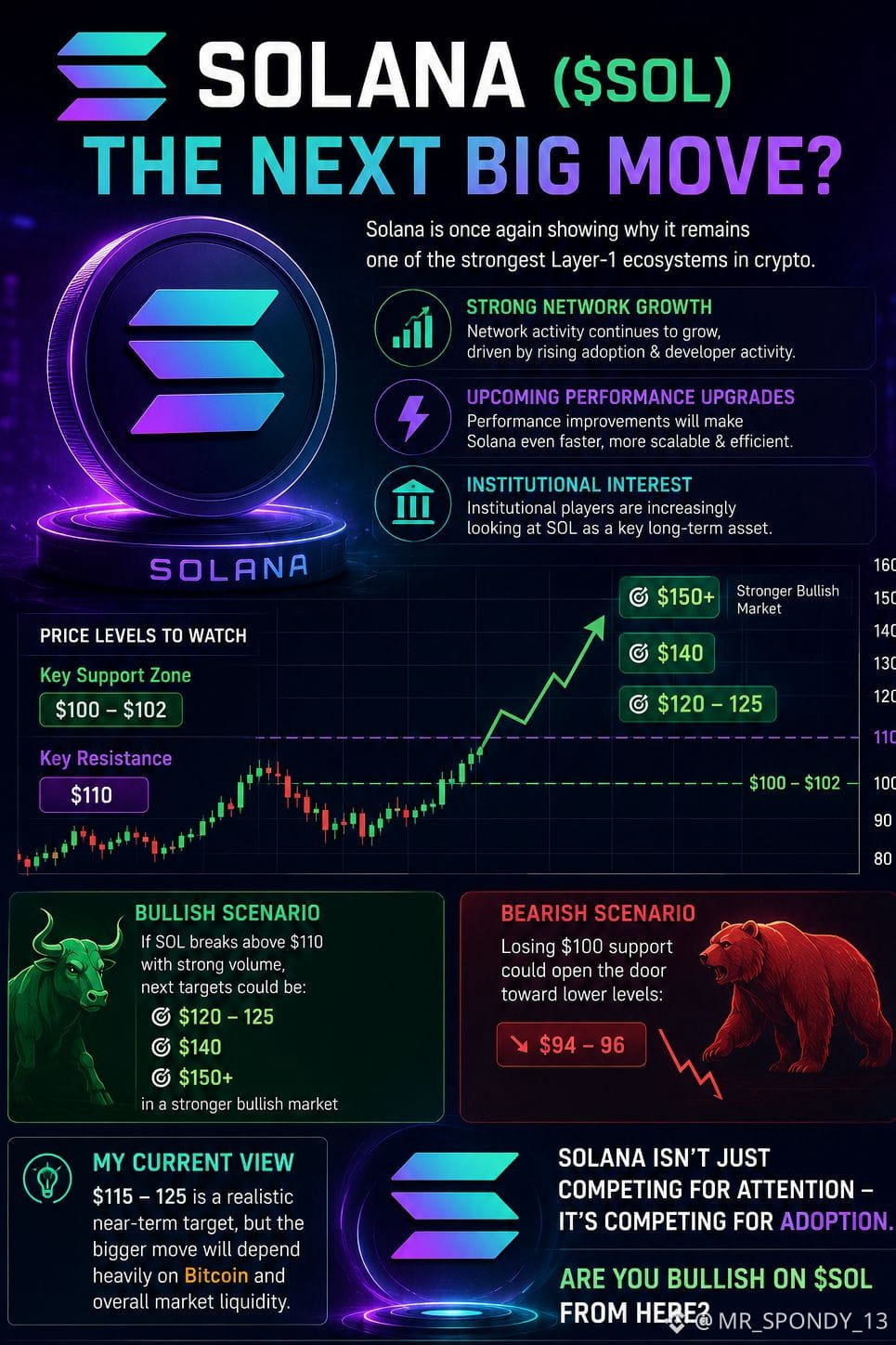
🚀 SOLANA ($SOL ): THE NEXT BIG MOVE?
Solana is once again showing why it remains one of the strongest Layer-1 ecosystems in crypto.
Network activity continues to grow, while upcoming performance upgrades could further improve speed, scalability and efficiency. At the same time, institutional interest in SOL is becoming an important narrative for the market.
From a price perspective, $100–$102 is an important support zone, while $110 remains a key resistance.
If SOL breaks above $110 with strong volume, the next targets could be:
🎯 $120–125
🎯 $140
🔥 $150+ in a stronger bullish market
On the downside, losing $100 could open the door toward $94–96.
My current view: $115–125 is a realistic near-term target, but the bigger move will depend heavily on Bitcoin and overall market liquidity.
Solana isn’t just competing for attention -
it’s competing for adoption.
Are you bullish on $SOL from here?
#Solana #SOL $SOL
Solana is once again showing why it remains one of the strongest Layer-1 ecosystems in crypto.
Network activity continues to grow, while upcoming performance upgrades could further improve speed, scalability and efficiency. At the same time, institutional interest in SOL is becoming an important narrative for the market.
From a price perspective, $100–$102 is an important support zone, while $110 remains a key resistance.
If SOL breaks above $110 with strong volume, the next targets could be:
🎯 $120–125
🎯 $140
🔥 $150+ in a stronger bullish market
On the downside, losing $100 could open the door toward $94–96.
My current view: $115–125 is a realistic near-term target, but the bigger move will depend heavily on Bitcoin and overall market liquidity.
Solana isn’t just competing for attention -
it’s competing for adoption.
Are you bullish on $SOL from here?
#Solana #SOL $SOL
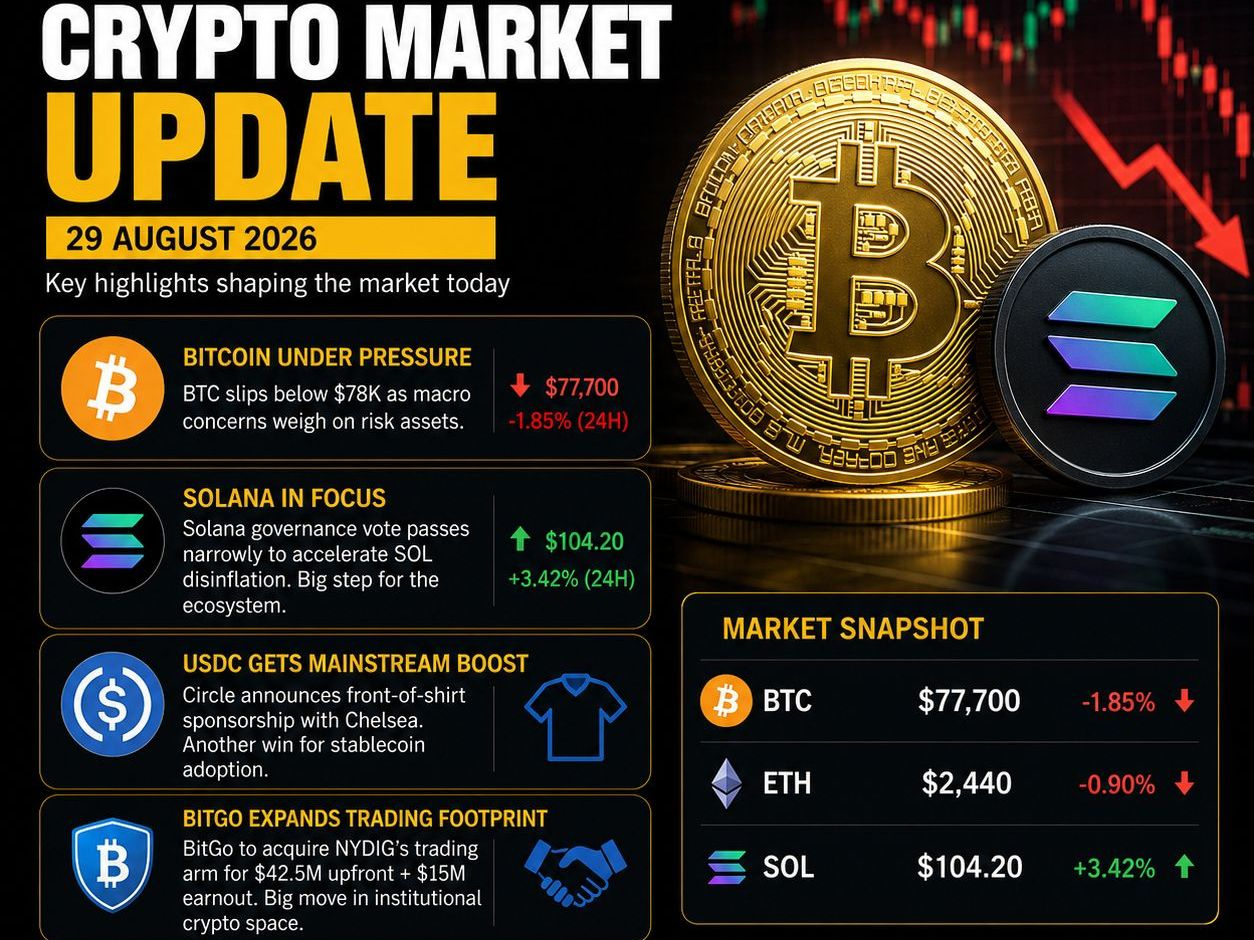
🚨 CRYPTO MARKET UPDATE | KEEP AN EYE ON THIS
The crypto market is once again showing why patience matters.
Bitcoin is facing selling pressure around the $78K level, while Solana is getting fresh attention after an important governance development that could impact its long-term token economics.
At the same time, macro factors remain a major driver for the entire crypto market. Any change in expectations around interest rates could quickly bring volatility back to BTC, ETH and altcoins.
For traders, these are the moments where chasing pumps can be risky. Watching BTC support levels, market liquidity and overall sentiment may be more important than reacting to every candle.
The big question now:
Will Bitcoin reclaim momentum, or are we heading into another period of consolidation?
What are you doing right now - BUY, HOLD or WAIT?
#Bitcoin #BTC #Ethereum #SOL
$SOL
$BTC
$ETH
The crypto market is once again showing why patience matters.
Bitcoin is facing selling pressure around the $78K level, while Solana is getting fresh attention after an important governance development that could impact its long-term token economics.
At the same time, macro factors remain a major driver for the entire crypto market. Any change in expectations around interest rates could quickly bring volatility back to BTC, ETH and altcoins.
For traders, these are the moments where chasing pumps can be risky. Watching BTC support levels, market liquidity and overall sentiment may be more important than reacting to every candle.
The big question now:
Will Bitcoin reclaim momentum, or are we heading into another period of consolidation?
What are you doing right now - BUY, HOLD or WAIT?
#Bitcoin #BTC #Ethereum #SOL
$SOL
$BTC
$ETH
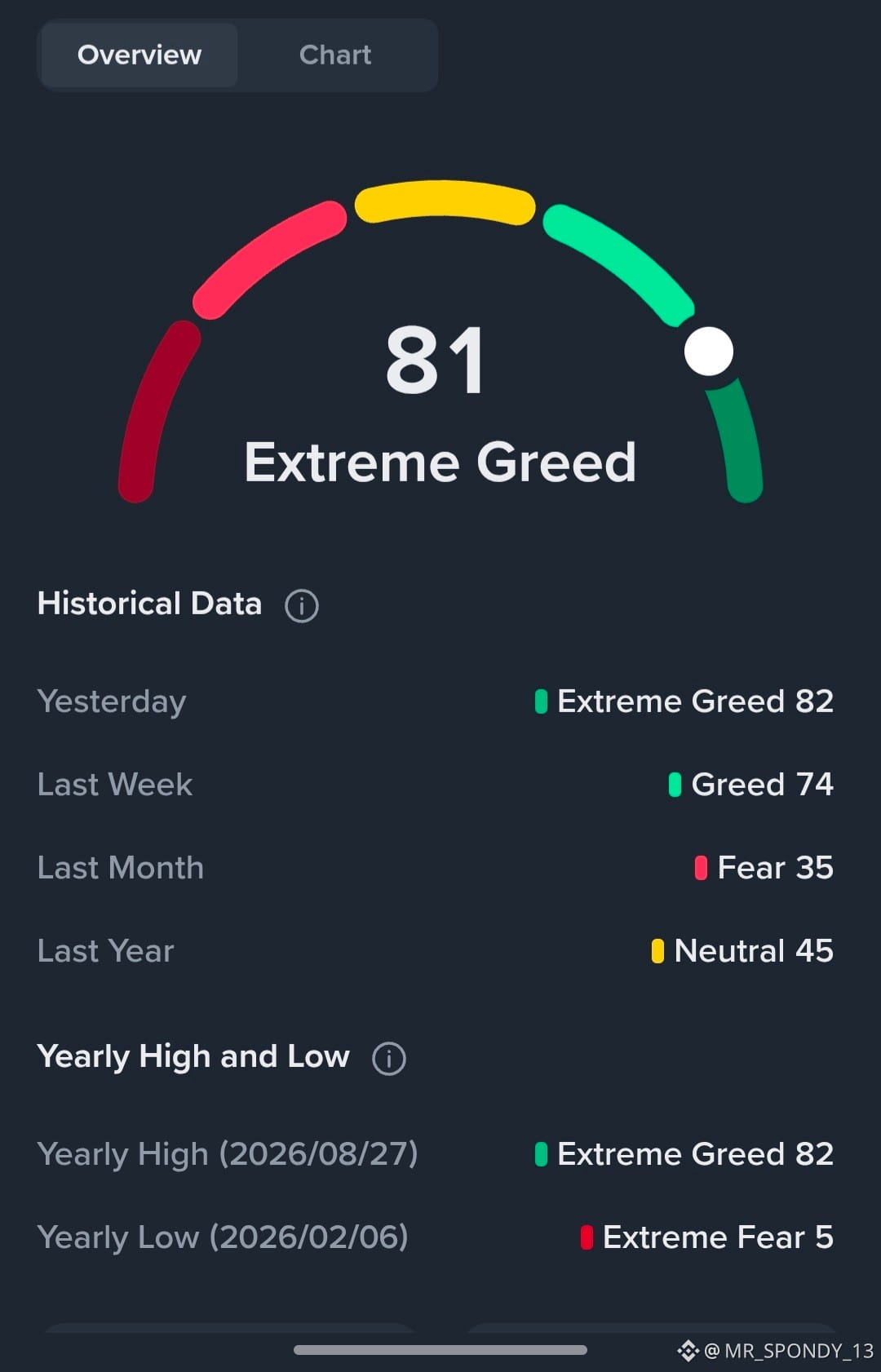
🔥 Crypto Market Sentiment Update
The Fear & Greed Index is now at 81 — Extreme Greed.
Yesterday: 82
Last Week: 74
Last Month: 35 (Fear)
Last Year: 45 (Neutral)
The shift from Fear 35 → Extreme Greed 81 shows how quickly market sentiment has changed.
But remember: extreme greed can mean strong momentum and higher short-term correction risk.
I’m staying bullish, but not blindly chasing pumps. 👀
#Crypto #Bitcoin #Ethereum #ETH #BTC
$SOL
$ETH
$BTC
The Fear & Greed Index is now at 81 — Extreme Greed.
Yesterday: 82
Last Week: 74
Last Month: 35 (Fear)
Last Year: 45 (Neutral)
The shift from Fear 35 → Extreme Greed 81 shows how quickly market sentiment has changed.
But remember: extreme greed can mean strong momentum and higher short-term correction risk.
I’m staying bullish, but not blindly chasing pumps. 👀
#Crypto #Bitcoin #Ethereum #ETH #BTC
$SOL
$ETH
$BTC
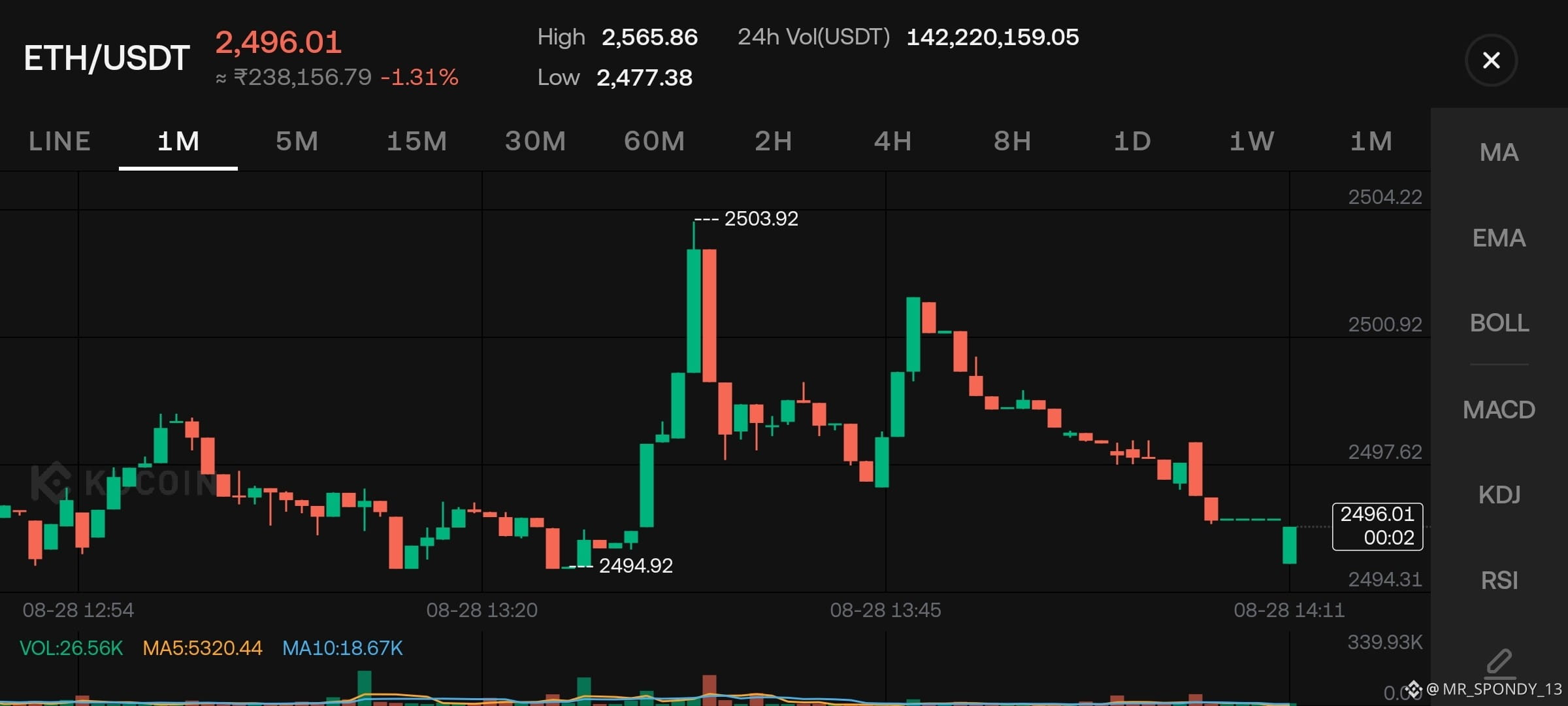
$ETH Prediction 🚀
Ethereum is approaching a crucial zone. If ETH decisively breaks $2,500–$2,530, I think the next move could target $2,800 first.
My bullish target: $3,500.
If momentum, ETF flows and market liquidity strengthen, $4,000+ cannot be ruled out.
Not financial advice. DYOR.
#Ethereum #ETH $ETH
Ethereum is approaching a crucial zone. If ETH decisively breaks $2,500–$2,530, I think the next move could target $2,800 first.
My bullish target: $3,500.
If momentum, ETF flows and market liquidity strengthen, $4,000+ cannot be ruled out.
Not financial advice. DYOR.
#Ethereum #ETH $ETH
Verified
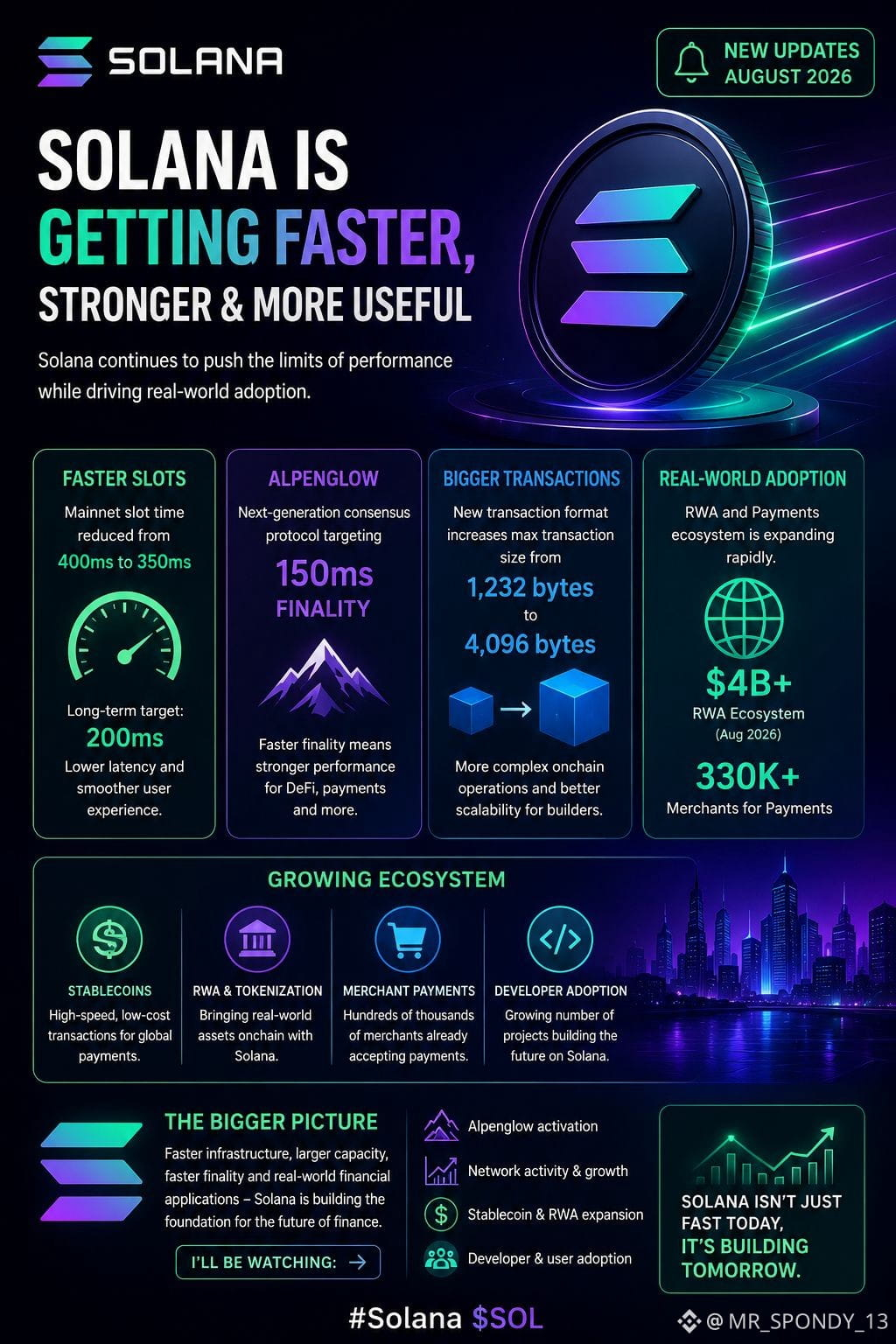
Solana is quietly becoming much faster
I think $SOL ka real story sirf price chart nahi hai. What’s happening in the network’s infrastructure upgrades is more interesting.
Recently Solana reduced mainnet slot time from 400ms to 350ms, with a longer-term target of 200ms. The simple meaning of faster slots is: lower latency and potentially better throughput for applications that need near-instant execution.
Another major development is Alpenglow.
Solana’s next-generation consensus protocol is targeting roughly 150ms finality. If the implementation reaches mainnet smoothly, then Solana’s already-fast user experience can become even stronger.
Transaction capacity is also improving. Along with a new transaction format, the proposed upgrade path increases the maximum transaction size from 1,232 bytes to 4,096 bytes, which can make more complex onchain operations practical.
And the most interesting part for me is real-world adoption.
In the Solana ecosystem, tokenized assets, stablecoin payments, RWA, and merchant payments are expanding. In July, the Solana Foundation reported RWA value of $3.73B and 330,000+ merchants for payments; in August, there were also reports that the RWA ecosystem crossed $4B.
So, for me, the bigger SOL thesis is becoming:
Faster infrastructure + larger transaction capacity + faster finality + real-world financial applications.
Price obviously will follow market sentiment, but the infrastructure is quietly moving forward.
I’ll be watching Alpenglow activation, network activity, stablecoin/RWA growth, and developer adoption closely.
#solana $SOL
I think $SOL ka real story sirf price chart nahi hai. What’s happening in the network’s infrastructure upgrades is more interesting.
Recently Solana reduced mainnet slot time from 400ms to 350ms, with a longer-term target of 200ms. The simple meaning of faster slots is: lower latency and potentially better throughput for applications that need near-instant execution.
Another major development is Alpenglow.
Solana’s next-generation consensus protocol is targeting roughly 150ms finality. If the implementation reaches mainnet smoothly, then Solana’s already-fast user experience can become even stronger.
Transaction capacity is also improving. Along with a new transaction format, the proposed upgrade path increases the maximum transaction size from 1,232 bytes to 4,096 bytes, which can make more complex onchain operations practical.
And the most interesting part for me is real-world adoption.
In the Solana ecosystem, tokenized assets, stablecoin payments, RWA, and merchant payments are expanding. In July, the Solana Foundation reported RWA value of $3.73B and 330,000+ merchants for payments; in August, there were also reports that the RWA ecosystem crossed $4B.
So, for me, the bigger SOL thesis is becoming:
Faster infrastructure + larger transaction capacity + faster finality + real-world financial applications.
Price obviously will follow market sentiment, but the infrastructure is quietly moving forward.
I’ll be watching Alpenglow activation, network activity, stablecoin/RWA growth, and developer adoption closely.
#solana $SOL
#termmax @TermMax
Variable borrowing rates are useful, but they can become a real problem when markets get volatile. Borrowing costs can move quickly, making it harder to plan trades, hedge positions, or manage capital over a longer period.
That’s where TermMax takes a different approach. Its fixed-rate model lets borrowers lock in their borrowing cost through maturity, giving them more certainty even when market rates move sharply.
The Curator framework is another part worth watching. Curators can allocate capital across different markets and capture rate differences, while timelocks and protocol controls add another layer of protection around user funds.
But the bigger question for me isn’t simply the headline yield.
Fixed-rate lending only works well if each maturity has enough liquidity and the people managing that liquidity stay disciplined when markets become stressed. Without both, predictable rates alone don’t solve the deeper efficiency problem.
So I’d watch liquidity depth, curator performance, and how the system behaves during volatility. That will tell us much more about TermMax’s long-term sustainability than yield numbers alone.
#TermMax #TMX
Variable borrowing rates are useful, but they can become a real problem when markets get volatile. Borrowing costs can move quickly, making it harder to plan trades, hedge positions, or manage capital over a longer period.
That’s where TermMax takes a different approach. Its fixed-rate model lets borrowers lock in their borrowing cost through maturity, giving them more certainty even when market rates move sharply.
The Curator framework is another part worth watching. Curators can allocate capital across different markets and capture rate differences, while timelocks and protocol controls add another layer of protection around user funds.
But the bigger question for me isn’t simply the headline yield.
Fixed-rate lending only works well if each maturity has enough liquidity and the people managing that liquidity stay disciplined when markets become stressed. Without both, predictable rates alone don’t solve the deeper efficiency problem.
So I’d watch liquidity depth, curator performance, and how the system behaves during volatility. That will tell us much more about TermMax’s long-term sustainability than yield numbers alone.
#TermMax #TMX
#termmax @TermMax
I’m looking at TermMax ($TMX), and the growth numbers definitely stand out to me. Crossing $90M TVL across 10 EVM chains with 1.5M+ wallets shows strong early interest.
At the same time, I see the usual multi-chain challenges around bridge safety and split liquidity.
What I find interesting is TermMax’s connections with Morpho, Aave, Pendle, and Keyrock. Working alongside established liquidity hubs makes sense, although multi-chain risk still needs careful management.
For me, the bigger question is long-term utility. Will regular users actually prefer predictable fixed rates over fluctuating variable pools?
That’s what I’ll be watching.
#TermMax #TMX #DeFi
I’m looking at TermMax ($TMX), and the growth numbers definitely stand out to me. Crossing $90M TVL across 10 EVM chains with 1.5M+ wallets shows strong early interest.
At the same time, I see the usual multi-chain challenges around bridge safety and split liquidity.
What I find interesting is TermMax’s connections with Morpho, Aave, Pendle, and Keyrock. Working alongside established liquidity hubs makes sense, although multi-chain risk still needs careful management.
For me, the bigger question is long-term utility. Will regular users actually prefer predictable fixed rates over fluctuating variable pools?
That’s what I’ll be watching.
#TermMax #TMX #DeFi
#termmax @TermMax
TermMax’s Real Utility: Beyond Token and Campaign Hype
When evaluating a DeFi protocol, the first question should not be:
“How much reward can I get?”
A better question is:
“What practical problem does this protocol solve?”
For TermMax, the interesting part is its focus on fixed-rate and fixed-term lending and borrowing.
Here is where the practical utility becomes easier to understand.
1. Borrowing with clearer costs
A borrower can agree to a fixed rate for a defined period. This makes the financing cost easier to estimate instead of relying entirely on changing market rates.
2. Lending with a defined timeframe
For lenders, maturity provides another way to think about where capital is being deployed and for how long.
This can make lending decisions more structured.
3. Using collateral more efficiently
TermMax supports different types of collateral, including crypto assets, yield-bearing assets, Pendle PT tokens and certain RWA-related assets. That creates practical use cases beyond simply depositing stablecoins for yield.
4. Building more complex strategies
The protocol also has vaults and leverage-related infrastructure. In simple terms, this means the underlying lending markets can potentially become building blocks for more advanced DeFi strategies rather than being an isolated lending product.
Why Does This Matter?
Think about DeFi as financial infrastructure.
Liquidity is important, but liquidity becomes more useful when users have different ways to borrow, lend, manage maturity and structure capital.
That is where TermMax’s utility can be evaluated.
Not by the campaign.
Not by XP.
Not by short-term attention.
But by whether people actually use its financial infrastructure because it solves a real problem.
The most important metrics to watch are therefore:
Real users → Borrowing demand → Liquidity → Market depth → Maturity activity → Sustainable usage
That is the difference between a campaign narrative and actual product utility.
#TermMax #cryptoeducation
TermMax’s Real Utility: Beyond Token and Campaign Hype
When evaluating a DeFi protocol, the first question should not be:
“How much reward can I get?”
A better question is:
“What practical problem does this protocol solve?”
For TermMax, the interesting part is its focus on fixed-rate and fixed-term lending and borrowing.
Here is where the practical utility becomes easier to understand.
1. Borrowing with clearer costs
A borrower can agree to a fixed rate for a defined period. This makes the financing cost easier to estimate instead of relying entirely on changing market rates.
2. Lending with a defined timeframe
For lenders, maturity provides another way to think about where capital is being deployed and for how long.
This can make lending decisions more structured.
3. Using collateral more efficiently
TermMax supports different types of collateral, including crypto assets, yield-bearing assets, Pendle PT tokens and certain RWA-related assets. That creates practical use cases beyond simply depositing stablecoins for yield.
4. Building more complex strategies
The protocol also has vaults and leverage-related infrastructure. In simple terms, this means the underlying lending markets can potentially become building blocks for more advanced DeFi strategies rather than being an isolated lending product.
Why Does This Matter?
Think about DeFi as financial infrastructure.
Liquidity is important, but liquidity becomes more useful when users have different ways to borrow, lend, manage maturity and structure capital.
That is where TermMax’s utility can be evaluated.
Not by the campaign.
Not by XP.
Not by short-term attention.
But by whether people actually use its financial infrastructure because it solves a real problem.
The most important metrics to watch are therefore:
Real users → Borrowing demand → Liquidity → Market depth → Maturity activity → Sustainable usage
That is the difference between a campaign narrative and actual product utility.
#TermMax #cryptoeducation

#termmax @TermMax
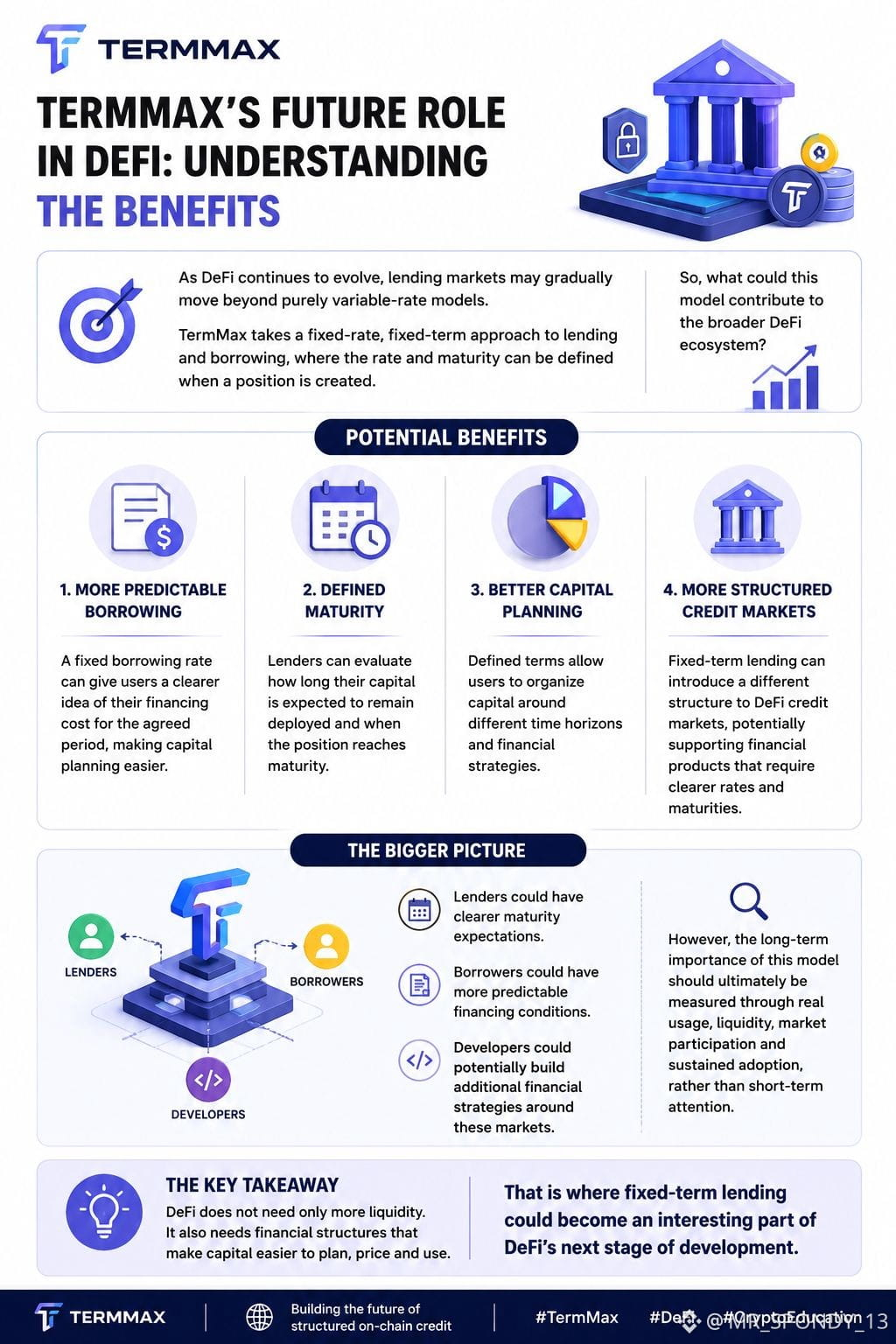
TermMax’s Future Role in DeFi: Benefits to Understand
As DeFi continues to evolve, lending markets may not be able to remain limited to only variable-rate models over time.
TermMax uses a fixed-rate and fixed-term approach for lending and borrowing, where you can define the rate and maturity when creating a position.
So what can this model contribute to the broader DeFi ecosystem?
Potential Benefits
1. More predictable borrowing
With a fixed borrowing rate, users can get a clearer idea of their financing cost for an agreed period. This can make capital planning comparatively easier.
2. Defined maturity
Lenders can evaluate how long their capital can remain deployed and when the position will mature.
3. Better capital planning
Defined terms can help users organize their capital according to different time horizons and financial strategies.
4. More structured credit markets
Fixed-term lending can give DeFi credit markets a different structure, making it possible to develop future financial products with clearer rates and maturities.
The Bigger Picture
If adoption grows sustainably, fixed-term markets can become an additional building block for on-chain credit.
Lenders can get clearer expectations for maturity.
Borrowers can get more predictable financing conditions.
Developers around these markets can build new financial strategies.
But the long-term importance shouldn’t be judged by short-term attention alone.
Real usage, liquidity, market participation, and sustained adoption will be more important metrics.
The Key Takeaway
DeFi doesn’t just need more liquidity.
It also needs financial structures that make it easier to plan, price, and use capital.
From this perspective, fixed-term lending could become an interesting part of DeFi’s next stage of development.
#TermMax #DeFi #CryptoEducation
TermMax’s Future Role in DeFi: Benefits to Understand
As DeFi continues to evolve, lending markets may not be able to remain limited to only variable-rate models over time.
TermMax uses a fixed-rate and fixed-term approach for lending and borrowing, where you can define the rate and maturity when creating a position.
So what can this model contribute to the broader DeFi ecosystem?
Potential Benefits
1. More predictable borrowing
With a fixed borrowing rate, users can get a clearer idea of their financing cost for an agreed period. This can make capital planning comparatively easier.
2. Defined maturity
Lenders can evaluate how long their capital can remain deployed and when the position will mature.
3. Better capital planning
Defined terms can help users organize their capital according to different time horizons and financial strategies.
4. More structured credit markets
Fixed-term lending can give DeFi credit markets a different structure, making it possible to develop future financial products with clearer rates and maturities.
The Bigger Picture
If adoption grows sustainably, fixed-term markets can become an additional building block for on-chain credit.
Lenders can get clearer expectations for maturity.
Borrowers can get more predictable financing conditions.
Developers around these markets can build new financial strategies.
But the long-term importance shouldn’t be judged by short-term attention alone.
Real usage, liquidity, market participation, and sustained adoption will be more important metrics.
The Key Takeaway
DeFi doesn’t just need more liquidity.
It also needs financial structures that make it easier to plan, price, and use capital.
From this perspective, fixed-term lending could become an interesting part of DeFi’s next stage of development.
#TermMax #DeFi #CryptoEducation
#termmax @TermMax
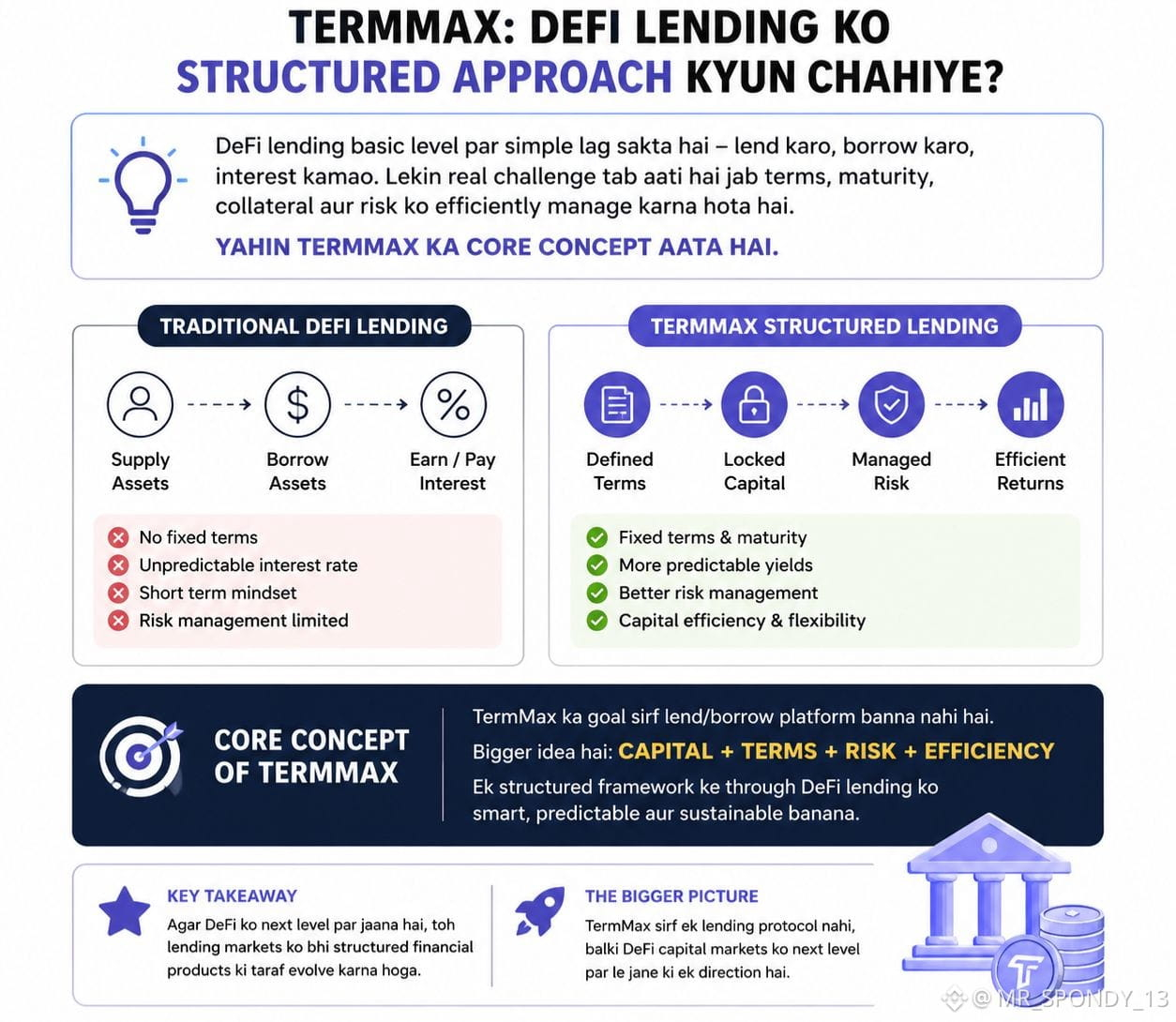
TermMax: DeFi Lending Ko Structured Approach Kyun Chahiye?
The basic model of DeFi lending is simple: one user provides assets, another borrows, and returns are generated through interest.
But the problem arises when maturity, borrowing terms, collateral, and risk are not managed properly.
That’s where the core concept of TermMax becomes interesting.
TermMax approaches DeFi lending and borrowing within a more structured framework—where capital can be utilized with defined terms and financial mechanics, rather than simply lending or borrowing it.
For me, the important point is that TermMax is not only focused on showing a “higher yield.” The bigger idea is:
Capital + Terms + Risk + Efficiency
If DeFi is to go to the next level, then lending markets also need to evolve toward more predictable and flexible financial products.
From this perspective, TermMax looks more interesting—not just as another lending protocol, but as an attempt to bring more structure into DeFi capital markets.
Of course, adoption, liquidity, and risk management will ultimately determine how successful this model becomes.
#TermMax #defi
TermMax: DeFi Lending Ko Structured Approach Kyun Chahiye?
The basic model of DeFi lending is simple: one user provides assets, another borrows, and returns are generated through interest.
But the problem arises when maturity, borrowing terms, collateral, and risk are not managed properly.
That’s where the core concept of TermMax becomes interesting.
TermMax approaches DeFi lending and borrowing within a more structured framework—where capital can be utilized with defined terms and financial mechanics, rather than simply lending or borrowing it.
For me, the important point is that TermMax is not only focused on showing a “higher yield.” The bigger idea is:
Capital + Terms + Risk + Efficiency
If DeFi is to go to the next level, then lending markets also need to evolve toward more predictable and flexible financial products.
From this perspective, TermMax looks more interesting—not just as another lending protocol, but as an attempt to bring more structure into DeFi capital markets.
Of course, adoption, liquidity, and risk management will ultimately determine how successful this model becomes.
#TermMax #defi
PLAY AND WIN 💪 💪💪
“Invest $5 for a chance to spin and win up to $1,000 in bSTOCKS!”
https://www.binance.com/activity/chance/bstocks-south-asia-aug-2026?ref=499806157&utm_medium=web_share_copy
“Invest $5. Spin to Win up to $1,000 in bSTOCKS!”
$SPCXB
$AAPLB
$NVDAB
“Invest $5 for a chance to spin and win up to $1,000 in bSTOCKS!”
https://www.binance.com/activity/chance/bstocks-south-asia-aug-2026?ref=499806157&utm_medium=web_share_copy
“Invest $5. Spin to Win up to $1,000 in bSTOCKS!”
$SPCXB
$AAPLB
$NVDAB

#baby $BABY @BabylonLabs_io
Most conversations about Bitcoin begin with one question.
"How can Bitcoin generate yield?"
Lately, I've been asking a different one.
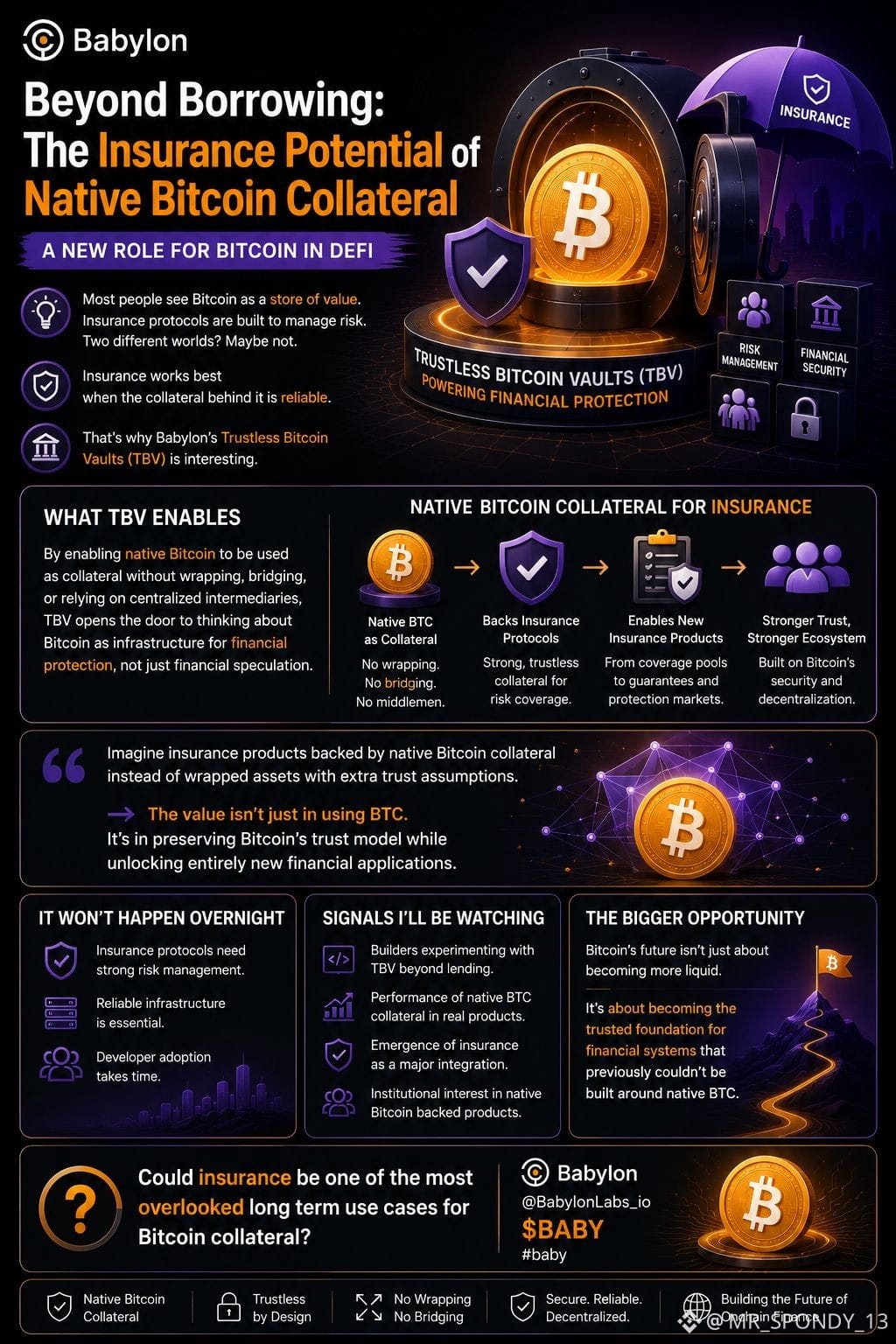
"What if Bitcoin's greatest contribution to DeFi isn't yield at all, but trust?"
Think about insurance.
An insurance protocol can only be as strong as the collateral standing behind it. If the collateral carries unnecessary trust assumptions, the entire system inherits that risk.
That's where Babylon's Trustless Bitcoin Vaults (TBV) changed my perspective.
Instead of turning Bitcoin into a wrapped asset or routing it through bridges, Trustless Bitcoin Vaults (TBV) allows native Bitcoin to become collateral while preserving Bitcoin's original trust model. To me, that's more than a technical improvement. It's a shift in how financial security can be designed.
Imagine insurance protocols where the foundation isn't another synthetic asset, but native Bitcoin itself. The goal isn't simply to use BTC. It's to build financial protection on top of one of crypto's most trusted assets without introducing additional intermediaries.
What excites me is that this idea extends far beyond borrowing. Insurance, guarantees, protection markets, and other forms of onchain risk management could all benefit from infrastructure that keeps Bitcoin native while making it economically productive.
Of course, vision alone isn't enough. The real test will be whether developers experiment with TBV beyond lending, whether institutions recognise the value of native Bitcoin collateral, and whether entirely new financial products emerge because this infrastructure exists.
The biggest innovation isn't always creating a new asset.
Sometimes it's discovering a better role for the asset the market already trusts the most.
If Bitcoin becomes the foundation of onchain financial protection, we may look back and realise that borrowing was only the beginning.
Most conversations about Bitcoin begin with one question.
"How can Bitcoin generate yield?"
Lately, I've been asking a different one.
"What if Bitcoin's greatest contribution to DeFi isn't yield at all, but trust?"
Think about insurance.
An insurance protocol can only be as strong as the collateral standing behind it. If the collateral carries unnecessary trust assumptions, the entire system inherits that risk.
That's where Babylon's Trustless Bitcoin Vaults (TBV) changed my perspective.
Instead of turning Bitcoin into a wrapped asset or routing it through bridges, Trustless Bitcoin Vaults (TBV) allows native Bitcoin to become collateral while preserving Bitcoin's original trust model. To me, that's more than a technical improvement. It's a shift in how financial security can be designed.
Imagine insurance protocols where the foundation isn't another synthetic asset, but native Bitcoin itself. The goal isn't simply to use BTC. It's to build financial protection on top of one of crypto's most trusted assets without introducing additional intermediaries.
What excites me is that this idea extends far beyond borrowing. Insurance, guarantees, protection markets, and other forms of onchain risk management could all benefit from infrastructure that keeps Bitcoin native while making it economically productive.
Of course, vision alone isn't enough. The real test will be whether developers experiment with TBV beyond lending, whether institutions recognise the value of native Bitcoin collateral, and whether entirely new financial products emerge because this infrastructure exists.
The biggest innovation isn't always creating a new asset.
Sometimes it's discovering a better role for the asset the market already trusts the most.
If Bitcoin becomes the foundation of onchain financial protection, we may look back and realise that borrowing was only the beginning.
Log in to explore more content