

#tinfed
tinfed
129,788 views
504 Discussing
Hot
Latest

·
--
Partly True
Background: The Fed decides to raise interest rates by another 0.25 percentage points in October
U.S. inflation: Headline CPI in August came in at around 3.7%, while core PCE was 3.4%, both higher than previously forecast. The Fed projects that inflation will not return to its 2% target until 2029.
Labor market: The unemployment rate remains at 4.1%, and job growth is strong, indicating that the economy can withstand higher interest rates.
Energy pressures: Oil and energy prices are climbing due to the Middle East conflict and the war with Iran, increasing the risk of “second-round effects” on transportation, goods, and service costs.#TinFed #Nikkei225Jumps2.5%ToThreeMonthHigh
Background: The Fed decides to raise interest rates by another 0.25 percentage points in October
U.S. inflation: Headline CPI in August came in at around 3.7%, while core PCE was 3.4%, both higher than previously forecast. The Fed projects that inflation will not return to its 2% target until 2029.
Labor market: The unemployment rate remains at 4.1%, and job growth is strong, indicating that the economy can withstand higher interest rates.
Energy pressures: Oil and energy prices are climbing due to the Middle East conflict and the war with Iran, increasing the risk of “second-round effects” on transportation, goods, and service costs.#TinFed #Nikkei225Jumps2.5%ToThreeMonthHigh
U.S. inflation: Headline CPI in August came in at around 3.7%, while core PCE was 3.4%, both higher than previously forecast. The Fed projects that inflation will not return to its 2% target until 2029.
Labor market: The unemployment rate remains at 4.1%, and job growth is strong, indicating that the economy can withstand higher interest rates.
Energy pressures: Oil and energy prices are climbing due to the Middle East conflict and the war with Iran, increasing the risk of “second-round effects” on transportation, goods, and service costs.#TinFed #Nikkei225Jumps2.5%ToThreeMonthHigh
5.2k

·
--
Verified
Article
CITIBANK PUSHES BACK ITS FED RATE-CUT FORECAST — BTC IS STILL RISING, WHAT’S GOING ON?🚨 Citibank has just pushed back its forecast for the next Fed rate cut to June 2027.
This means the “higher for longer” scenario could last longer, often putting pressure on risk assets like crypto.
But BTC isn’t moving in a straight line—after dropping sharply, it quickly bounced back.
1️⃣ NEWS — CITIBANK PUSHES BACK EXPECTATIONS FOR RATE CUTS
After the August jobs report came in stronger than expected, Citibank removed the milestones for cuts that had been previously expected by:
CITIBANK PUSHES BACK ITS FED RATE-CUT FORECAST — BTC IS STILL RISING, WHAT’S GOING ON?
🚨 Citibank has just pushed back its forecast for the next Fed rate cut to June 2027.
This means the “higher for longer” scenario could last longer, often putting pressure on risk assets like crypto.
But BTC isn’t moving in a straight line—after dropping sharply, it quickly bounced back.
1️⃣ NEWS — CITIBANK PUSHES BACK EXPECTATIONS FOR RATE CUTS
After the August jobs report came in stronger than expected, Citibank removed the milestones for cuts that had been previously expected by:
This means the “higher for longer” scenario could last longer, often putting pressure on risk assets like crypto.
But BTC isn’t moving in a straight line—after dropping sharply, it quickly bounced back.
1️⃣ NEWS — CITIBANK PUSHES BACK EXPECTATIONS FOR RATE CUTS
After the August jobs report came in stronger than expected, Citibank removed the milestones for cuts that had been previously expected by:
741

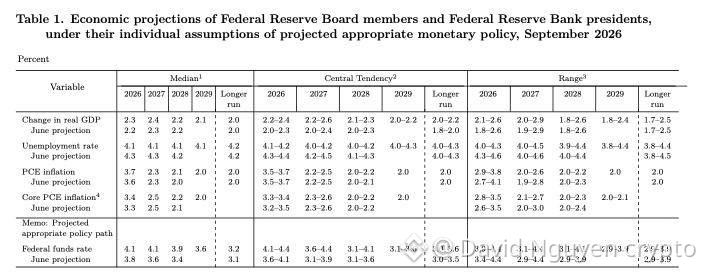
👋 ECONOMIC & FED INTEREST RATE OUTLOOK SUMMARY (17/9/2026)
1️⃣ Interest rate decision
The Fed INCREASED the interest rate by 0.25 percentage points, bringing it to 3.75% - 4.0%. This is the first rate hike since July 2023.
The decision was approved with a 12-0 vote, meaning all voting members were in agreement.
The Fed said this round of rate increases will help inflation return to the 2% target faster. The Fed still assesses that economic growth is solid, while inflation remains high.
2️⃣ Economic outlook
• PCE inflation for 2026: 3.6% -> 3.7%
• Core PCE inflation for 2026: 3.3% -> 3.4%
=> The Fed continues to raise its inflation forecast, despite having increased interest rates in this meeting.
3️⃣ Interest rate outlook – Dot Plot
• End of 2026: 4.1%, up from 3.8% in June
• End of 2027: 4.1%, up sharply from 3.6%
• End of 2028: 3.9%, up from 3.4%
• Long-term rate: 3.2%, up from 3.1%
=> 16 out of 18 Fed officials believe at least one more rate hike is needed in 2026.
More notably, the median projected rate will remain at 4.1% all the way through the end of 2027, and only then will it fall to 3.9% in 2028. Keeping rates high for longer is returning quite clearly in this Dot Plot.
#TinFed #btc
👋 ECONOMIC & FED INTEREST RATE OUTLOOK SUMMARY (17/9/2026)
1️⃣ Interest rate decision
The Fed INCREASED the interest rate by 0.25 percentage points, bringing it to 3.75% - 4.0%. This is the first rate hike since July 2023.
The decision was approved with a 12-0 vote, meaning all voting members were in agreement.
The Fed said this round of rate increases will help inflation return to the 2% target faster. The Fed still assesses that economic growth is solid, while inflation remains high.
2️⃣ Economic outlook
• PCE inflation for 2026: 3.6% -> 3.7%
• Core PCE inflation for 2026: 3.3% -> 3.4%
=> The Fed continues to raise its inflation forecast, despite having increased interest rates in this meeting.
3️⃣ Interest rate outlook – Dot Plot
• End of 2026: 4.1%, up from 3.8% in June
• End of 2027: 4.1%, up sharply from 3.6%
• End of 2028: 3.9%, up from 3.4%
• Long-term rate: 3.2%, up from 3.1%
=> 16 out of 18 Fed officials believe at least one more rate hike is needed in 2026.
More notably, the median projected rate will remain at 4.1% all the way through the end of 2027, and only then will it fall to 3.9% in 2028. Keeping rates high for longer is returning quite clearly in this Dot Plot.
#TinFed #btc
1️⃣ Interest rate decision
The Fed INCREASED the interest rate by 0.25 percentage points, bringing it to 3.75% - 4.0%. This is the first rate hike since July 2023.
The decision was approved with a 12-0 vote, meaning all voting members were in agreement.
The Fed said this round of rate increases will help inflation return to the 2% target faster. The Fed still assesses that economic growth is solid, while inflation remains high.
2️⃣ Economic outlook
• PCE inflation for 2026: 3.6% -> 3.7%
• Core PCE inflation for 2026: 3.3% -> 3.4%
=> The Fed continues to raise its inflation forecast, despite having increased interest rates in this meeting.
3️⃣ Interest rate outlook – Dot Plot
• End of 2026: 4.1%, up from 3.8% in June
• End of 2027: 4.1%, up sharply from 3.6%
• End of 2028: 3.9%, up from 3.4%
• Long-term rate: 3.2%, up from 3.1%
=> 16 out of 18 Fed officials believe at least one more rate hike is needed in 2026.
More notably, the median projected rate will remain at 4.1% all the way through the end of 2027, and only then will it fall to 3.9% in 2028. Keeping rates high for longer is returning quite clearly in this Dot Plot.
#TinFed #btc
175

·
--
BofA: The Fed could raise rates by more than 5%, investors should prepare mentally.
Bank of America strategists believe investors should be prepared for the possibility that the Fed could raise interest rates to above 5%, given that the market currently expects an additional three rate hikes of 0.25 percentage point each. The market is currently pricing in the Fed raising rates three more times, each by 0.25 percentage point. If this scenario occurs, the federal funds rate could move toward around 4.5% - 4.75%.
However, BofA strategists believe the “neutral” rate could return to the highs previously seen in the 2022-2023 rate-hiking cycle. At that time, the Fed raised the interest rate range to 5.25% - 5.5% in July 2023. Using the measure that BofA applies, this rule suggests the federal funds rate should be around 5.3%.
$BTC $AKE $RAYSOL
#TinFed
BofA: The Fed could raise rates by more than 5%, investors should prepare mentally.
Bank of America strategists believe investors should be prepared for the possibility that the Fed could raise interest rates to above 5%, given that the market currently expects an additional three rate hikes of 0.25 percentage point each. The market is currently pricing in the Fed raising rates three more times, each by 0.25 percentage point. If this scenario occurs, the federal funds rate could move toward around 4.5% - 4.75%.
However, BofA strategists believe the “neutral” rate could return to the highs previously seen in the 2022-2023 rate-hiking cycle. At that time, the Fed raised the interest rate range to 5.25% - 5.5% in July 2023. Using the measure that BofA applies, this rule suggests the federal funds rate should be around 5.3%.
$BTC $AKE $RAYSOL
#TinFed
Bank of America strategists believe investors should be prepared for the possibility that the Fed could raise interest rates to above 5%, given that the market currently expects an additional three rate hikes of 0.25 percentage point each. The market is currently pricing in the Fed raising rates three more times, each by 0.25 percentage point. If this scenario occurs, the federal funds rate could move toward around 4.5% - 4.75%.
However, BofA strategists believe the “neutral” rate could return to the highs previously seen in the 2022-2023 rate-hiking cycle. At that time, the Fed raised the interest rate range to 5.25% - 5.5% in July 2023. Using the measure that BofA applies, this rule suggests the federal funds rate should be around 5.3%.
$BTC $AKE $RAYSOL
#TinFed
200

·
--
Bearish
Background: The Fed decides to raise interest rates by another 0.25 percentage points in October
U.S. inflation: Headline CPI in August was around 3.7%, core PCE at 3.4%, higher than the previous forecast. The Fed expects inflation to return to the 2% target level in 2029.
Labor market: The unemployment rate stays at 4.1%, while the number of new jobs increases strongly, indicating the economy can withstand higher interest rates.
Energy pressure: Oil and energy prices rise due to conflicts in the Middle East and fighting with Iran, increasing the risk of a “second-round effect” on transportation costs, goods, and services.
#TinFed
Background: The Fed decides to raise interest rates by another 0.25 percentage points in October
U.S. inflation: Headline CPI in August was around 3.7%, core PCE at 3.4%, higher than the previous forecast. The Fed expects inflation to return to the 2% target level in 2029.
Labor market: The unemployment rate stays at 4.1%, while the number of new jobs increases strongly, indicating the economy can withstand higher interest rates.
Energy pressure: Oil and energy prices rise due to conflicts in the Middle East and fighting with Iran, increasing the risk of a “second-round effect” on transportation costs, goods, and services.
#TinFed
U.S. inflation: Headline CPI in August was around 3.7%, core PCE at 3.4%, higher than the previous forecast. The Fed expects inflation to return to the 2% target level in 2029.
Labor market: The unemployment rate stays at 4.1%, while the number of new jobs increases strongly, indicating the economy can withstand higher interest rates.
Energy pressure: Oil and energy prices rise due to conflicts in the Middle East and fighting with Iran, increasing the risk of a “second-round effect” on transportation costs, goods, and services.
#TinFed
1
320

🔥 #TinFed The probability of the Fed raising rates is up to 89% — so why hasn't BTC crashed?
Markets have essentially priced in a 25bp rate hike at the September FOMC. So why hasn't BTC been dumped?
Because the market doesn’t just trade the question of “whether rates will be raised or not”—it also trades what the Fed will say afterward.
📊 I’m watching 3 things:
① 77K
This is an important defense zone.
If 77K holds, I’m not going bearish yet—just because I expect high rate-hike odds.
② 80K
This is the level the Bulls need to reclaim.
Break 80K with volume → sentiment could improve significantly, with the next targets at 82K–83K.
③ The post-FOMC message
This is the part I care about most.
If the Fed raises 25bp but its statement isn’t as hawkish as the market fears, then the “bad news has already been priced in” could instead become a catalyst for BTC.
On the other hand, higher rates + a hawkish tone → be careful with repricing pressure.
🍑 My plan is very simple:
• 77K holds → keep observing the Bulls
• 80K breakout → look for 82K–83K
• 82K–83K holds firm → reopen upside space
• Lose 77K → shift to defense in the short term
I’m not panicking because of the 89% figure, and I’m not FOMO-ing because BTC is rebounding.
Wait for the data. Wait for the FOMC. Wait for price confirmation.
No guessing bottoms. No chasing tops.
Personal opinion only, not investment advice. Capital management always comes first.
🔥 #TinFed The probability of the Fed raising rates is up to 89% — so why hasn't BTC crashed?
Markets have essentially priced in a 25bp rate hike at the September FOMC. So why hasn't BTC been dumped?
Because the market doesn’t just trade the question of “whether rates will be raised or not”—it also trades what the Fed will say afterward.
📊 I’m watching 3 things:
① 77K
This is an important defense zone.
If 77K holds, I’m not going bearish yet—just because I expect high rate-hike odds.
② 80K
This is the level the Bulls need to reclaim.
Break 80K with volume → sentiment could improve significantly, with the next targets at 82K–83K.
③ The post-FOMC message
This is the part I care about most.
If the Fed raises 25bp but its statement isn’t as hawkish as the market fears, then the “bad news has already been priced in” could instead become a catalyst for BTC.
On the other hand, higher rates + a hawkish tone → be careful with repricing pressure.
🍑 My plan is very simple:
• 77K holds → keep observing the Bulls
• 80K breakout → look for 82K–83K
• 82K–83K holds firm → reopen upside space
• Lose 77K → shift to defense in the short term
I’m not panicking because of the 89% figure, and I’m not FOMO-ing because BTC is rebounding.
Wait for the data. Wait for the FOMC. Wait for price confirmation.
No guessing bottoms. No chasing tops.
Personal opinion only, not investment advice. Capital management always comes first.
Markets have essentially priced in a 25bp rate hike at the September FOMC. So why hasn't BTC been dumped?
Because the market doesn’t just trade the question of “whether rates will be raised or not”—it also trades what the Fed will say afterward.
📊 I’m watching 3 things:
① 77K
This is an important defense zone.
If 77K holds, I’m not going bearish yet—just because I expect high rate-hike odds.
② 80K
This is the level the Bulls need to reclaim.
Break 80K with volume → sentiment could improve significantly, with the next targets at 82K–83K.
③ The post-FOMC message
This is the part I care about most.
If the Fed raises 25bp but its statement isn’t as hawkish as the market fears, then the “bad news has already been priced in” could instead become a catalyst for BTC.
On the other hand, higher rates + a hawkish tone → be careful with repricing pressure.
🍑 My plan is very simple:
• 77K holds → keep observing the Bulls
• 80K breakout → look for 82K–83K
• 82K–83K holds firm → reopen upside space
• Lose 77K → shift to defense in the short term
I’m not panicking because of the 89% figure, and I’m not FOMO-ing because BTC is rebounding.
Wait for the data. Wait for the FOMC. Wait for price confirmation.
No guessing bottoms. No chasing tops.
Personal opinion only, not investment advice. Capital management always comes first.
990

·
--
Article
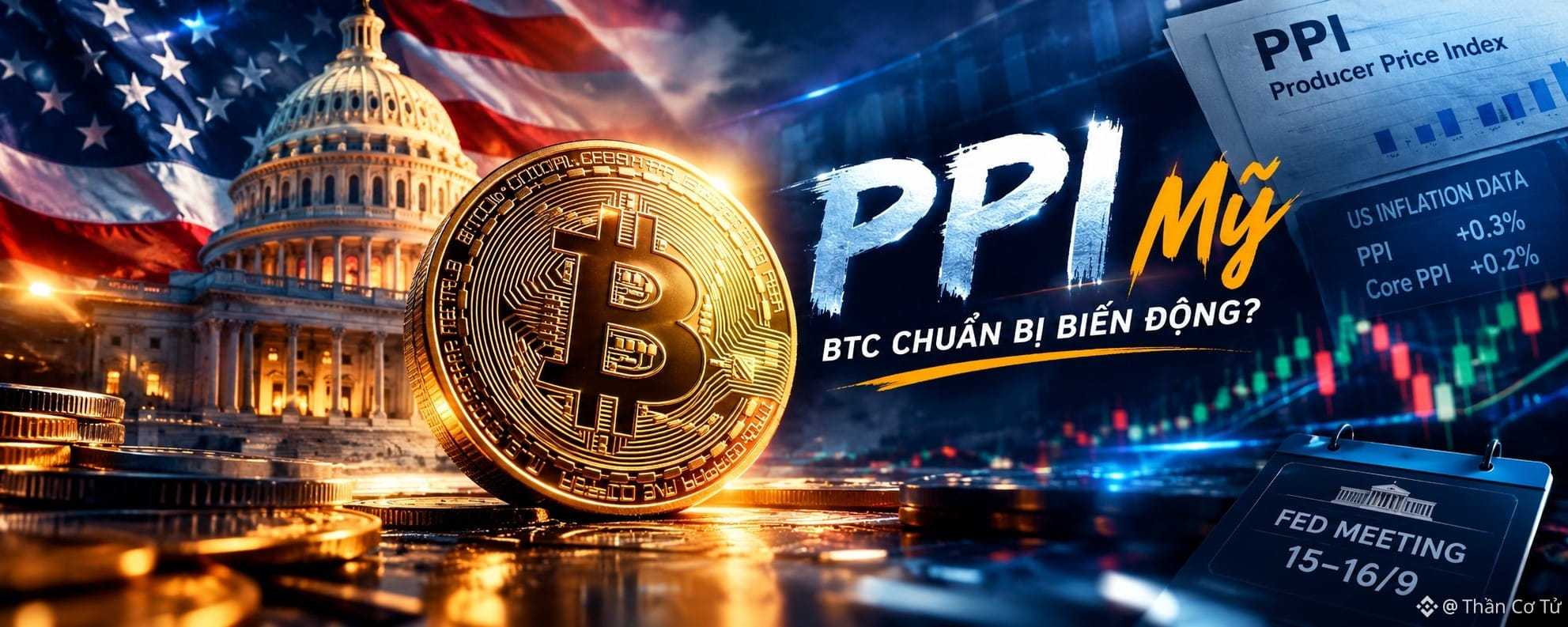
US PPI IS COMING UP - WHAT WILL HAPPEN TO BTC AND THE MARKET?Today, the market will be looking at the US August PPI. This is one of the final data points that could strongly affect expectations for the FED ahead of the 15–16/9 meeting.
• PPI forecast: +0.3–0.4% MoM
• Core PPI forecast: +0.3% MoM
• US CPI: to be released on 11/9
• FED: meeting on 15–16/9
• The market is still divided over the interest rate decision.
🟢 Positive scenario for BTC
Lower-than-forecast PPI → easing of inflation pressure → softer FED expectations → yields and the USD may cool down → money flows back into risk assets.
US PPI IS COMING UP - WHAT WILL HAPPEN TO BTC AND THE MARKET?
Today, the market will be looking at the US August PPI. This is one of the final data points that could strongly affect expectations for the FED ahead of the 15–16/9 meeting.
• PPI forecast: +0.3–0.4% MoM
• Core PPI forecast: +0.3% MoM
• US CPI: to be released on 11/9
• FED: meeting on 15–16/9
• The market is still divided over the interest rate decision.
🟢 Positive scenario for BTC
Lower-than-forecast PPI → easing of inflation pressure → softer FED expectations → yields and the USD may cool down → money flows back into risk assets.
• PPI forecast: +0.3–0.4% MoM
• Core PPI forecast: +0.3% MoM
• US CPI: to be released on 11/9
• FED: meeting on 15–16/9
• The market is still divided over the interest rate decision.
🟢 Positive scenario for BTC
Lower-than-forecast PPI → easing of inflation pressure → softer FED expectations → yields and the USD may cool down → money flows back into risk assets.
1
400
·
--
Bullish
Waller is leaning toward keeping interest rates unchanged at the Fed meeting on September 16, if August inflation continues to cool.
Compared with July, Waller’s stance has become less hawkish. With the U.S. economy and labor market still in good shape, he will focus on inflation data to make a decision.
The CPI 🇺🇸 for August on September 11 will be a key marker:
• Continuing to move closer to the 2% target -> Keep interest rates unchanged.
• Higher than expected -> Slightly raise interest rates.
The probability of the Fed raising interest rates in September has already dropped from 66% → 54%.$
#TinFed
Waller is leaning toward keeping interest rates unchanged at the Fed meeting on September 16, if August inflation continues to cool.
Compared with July, Waller’s stance has become less hawkish. With the U.S. economy and labor market still in good shape, he will focus on inflation data to make a decision.
The CPI 🇺🇸 for August on September 11 will be a key marker:
• Continuing to move closer to the 2% target -> Keep interest rates unchanged.
• Higher than expected -> Slightly raise interest rates.
The probability of the Fed raising interest rates in September has already dropped from 66% → 54%.$
#TinFed
Compared with July, Waller’s stance has become less hawkish. With the U.S. economy and labor market still in good shape, he will focus on inflation data to make a decision.
The CPI 🇺🇸 for August on September 11 will be a key marker:
• Continuing to move closer to the 2% target -> Keep interest rates unchanged.
• Higher than expected -> Slightly raise interest rates.
The probability of the Fed raising interest rates in September has already dropped from 66% → 54%.$
#TinFed
401

Article
📊 BTC Economic Bulletin 23/08/2026📊 BTC Economic Bulletin — morning of 23/08/2026
Overall assessment: 🟡 Conditional Risk-On — Macro Score: 66/100. Compared with the previous bulletin, the environment for BTC has improved slightly, mainly because ETF flows remain extremely strong, the USD is still under pressure, and the U.S. Treasury’s buyback program for long-term bonds continues to support liquidity. However, the Fed remains hawkish, long-term yields are still high, and oil remains a key risk variable.
📊 BTC Economic Bulletin 23/08/2026
📊 BTC Economic Bulletin — morning of 23/08/2026
Overall assessment: 🟡 Conditional Risk-On — Macro Score: 66/100. Compared with the previous bulletin, the environment for BTC has improved slightly, mainly because ETF flows remain extremely strong, the USD is still under pressure, and the U.S. Treasury’s buyback program for long-term bonds continues to support liquidity. However, the Fed remains hawkish, long-term yields are still high, and oil remains a key risk variable.
Overall assessment: 🟡 Conditional Risk-On — Macro Score: 66/100. Compared with the previous bulletin, the environment for BTC has improved slightly, mainly because ETF flows remain extremely strong, the USD is still under pressure, and the U.S. Treasury’s buyback program for long-term bonds continues to support liquidity. However, the Fed remains hawkish, long-term yields are still high, and oil remains a key risk variable.
2
304

·
--
Bullish
Verified
The Fed just dropped the FOMC minutes and boy, it’s a total drama! 🎭
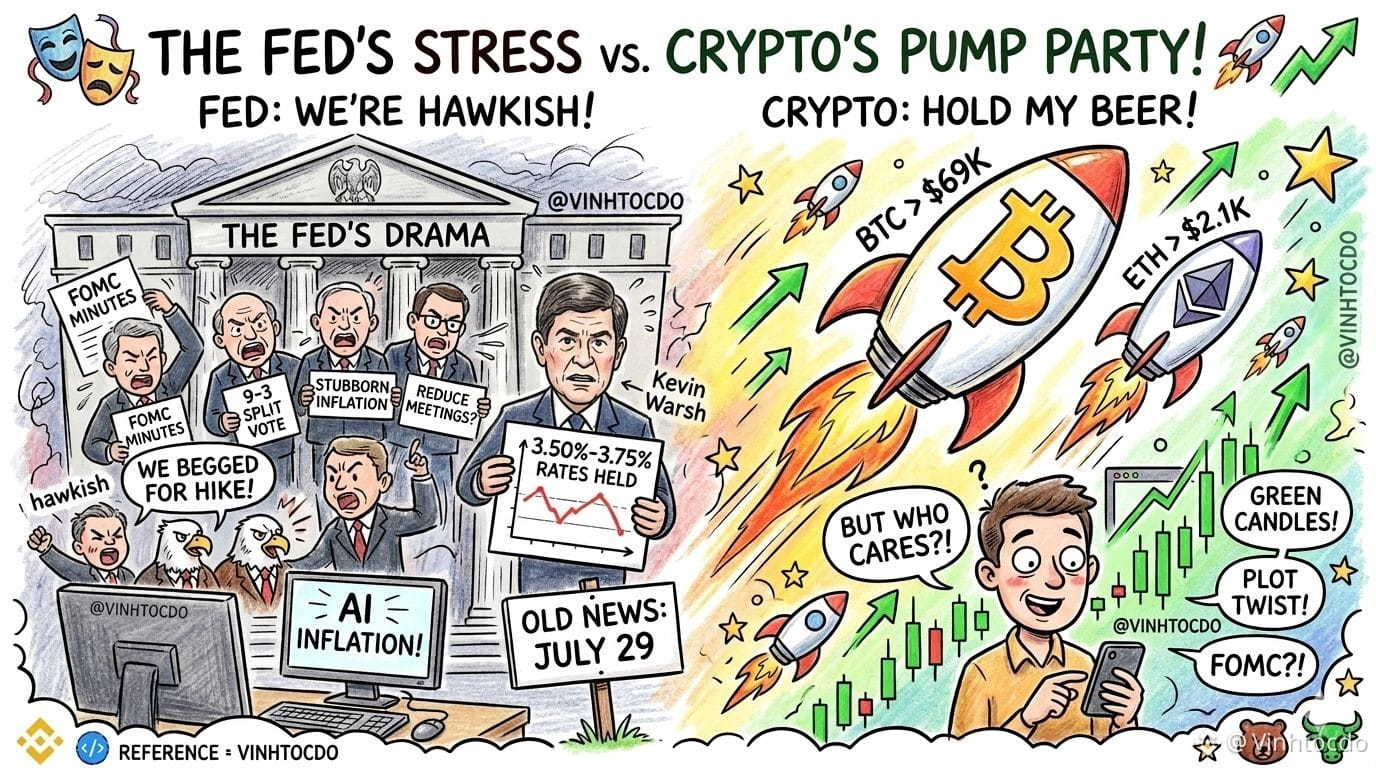
Old news from July 29: rates held at 3.50%-3.75% after a tense 9-3 split vote (3 hawkish members literally begged for a rate hike to fight that stubborn AI-fueled inflation). New Chair Kevin Warsh even wants to cut down meeting schedules because apparently, 8 times a year is too much stress.
BUT WHO CARES?! While Kevin Warsh and the Fed were acting super hawkish, BTC magically pumped past $69K and ETH crossed $2.1K! 🚀 Plot twist of the century.
What should traders do? Don't fight the Fed, but don't fight the green candles either. Manage your risk, keep your eyes on the chart, and breathe!
Not financial advice.
Trade with me on Binance! Use code VINHTOCDO or join here: [https://www.binance.com/register?ref=VINHTOCDO](https://www.binance.com/register?ref=VINHTOCDO)
#TinFed #TheoDõiFOMC #FOMCWatch #FOMC #VINHTOCDO
$BTC
{future}(BTCUSDT)
$ETH
{future}(ETHUSDT)
$BNB
{future}(BNBUSDT)
The Fed just dropped the FOMC minutes and boy, it’s a total drama! 🎭
Old news from July 29: rates held at 3.50%-3.75% after a tense 9-3 split vote (3 hawkish members literally begged for a rate hike to fight that stubborn AI-fueled inflation). New Chair Kevin Warsh even wants to cut down meeting schedules because apparently, 8 times a year is too much stress.
BUT WHO CARES?! While Kevin Warsh and the Fed were acting super hawkish, BTC magically pumped past $69K and ETH crossed $2.1K! 🚀 Plot twist of the century.
What should traders do? Don't fight the Fed, but don't fight the green candles either. Manage your risk, keep your eyes on the chart, and breathe!
Not financial advice.
Trade with me on Binance! Use code VINHTOCDO or join here: https://www.binance.com/register?ref=VINHTOCDO
#TinFed #TheoDõiFOMC #FOMCWatch #FOMC #VINHTOCDO
$BTC
$ETH
$BNB
Old news from July 29: rates held at 3.50%-3.75% after a tense 9-3 split vote (3 hawkish members literally begged for a rate hike to fight that stubborn AI-fueled inflation). New Chair Kevin Warsh even wants to cut down meeting schedules because apparently, 8 times a year is too much stress.
BUT WHO CARES?! While Kevin Warsh and the Fed were acting super hawkish, BTC magically pumped past $69K and ETH crossed $2.1K! 🚀 Plot twist of the century.
What should traders do? Don't fight the Fed, but don't fight the green candles either. Manage your risk, keep your eyes on the chart, and breathe!
Not financial advice.
Trade with me on Binance! Use code VINHTOCDO or join here: https://www.binance.com/register?ref=VINHTOCDO
#TinFed #TheoDõiFOMC #FOMCWatch #FOMC #VINHTOCDO
$BTC
$ETH
$BNB
2
318

The Federal Reserve just released the minutes from the FOMC meeting, man… this is a full-on production! 🎭
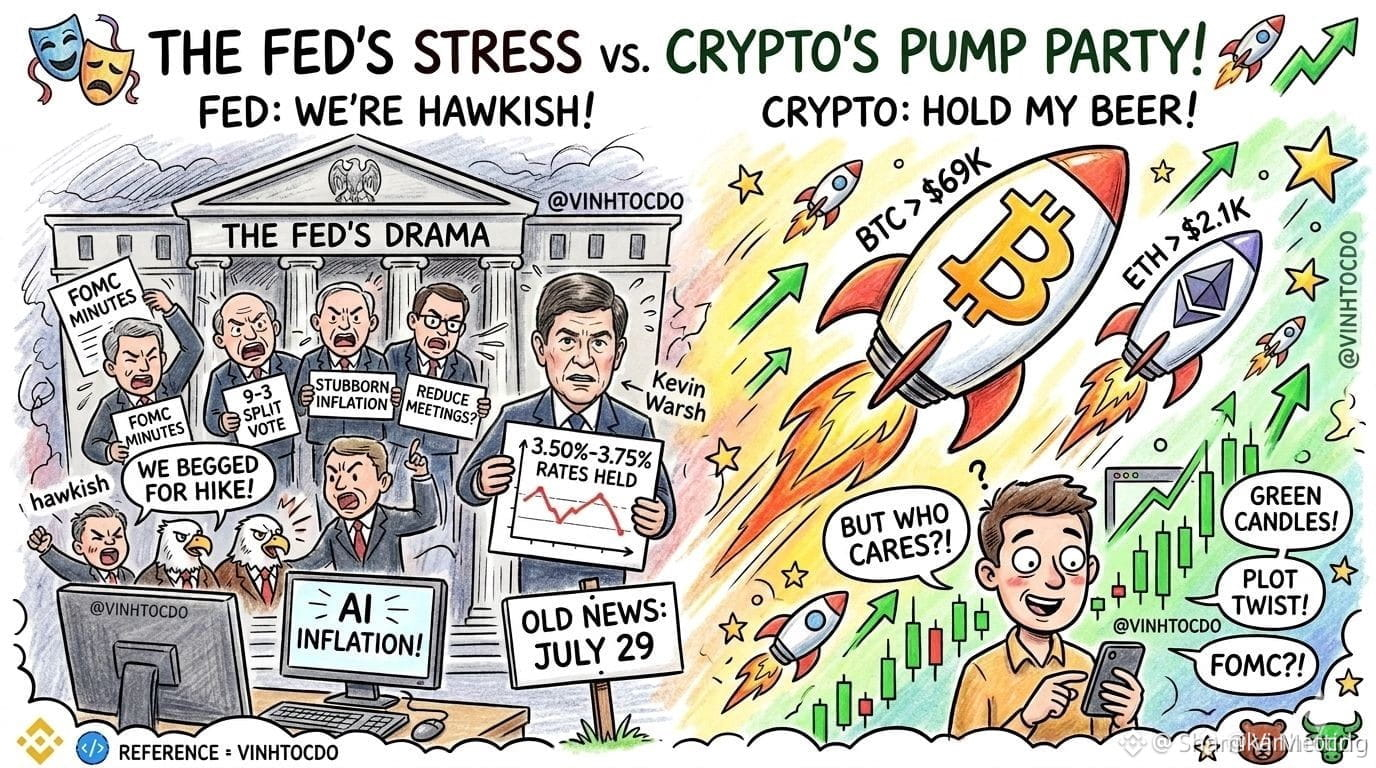
Old news from July 29: the rate was set at 3.50%-3.75% after a tense vote of 9-3 (where three hawkish members literally demanded a rate hike to fight that stubborn inflation fueled by AI). Even the new Fed chair, Kevin Warsh, wants to cut the meeting schedules because what seems to be 8 times a year is causing too much strain.
But who cares?! While Kevin Warsh and the Federal Reserve were acting extremely hawkish, the BTC price exploded in a magical burst and pushed past $69K, and ETH broke above $2.1K! 🚀 The plot of the century.
What should traders do? Don’t fight the Fed, but also don’t fight the green candles. Manage your risk, watch the chart, and take a breath!
Not financial advice.
Please follow up
#TinFed #theodõifomc #FOMCWatch #FOMC
$BTC
{future}(BTCUSDT)
The Federal Reserve just released the minutes from the FOMC meeting, man… this is a full-on production! 🎭
Old news from July 29: the rate was set at 3.50%-3.75% after a tense vote of 9-3 (where three hawkish members literally demanded a rate hike to fight that stubborn inflation fueled by AI). Even the new Fed chair, Kevin Warsh, wants to cut the meeting schedules because what seems to be 8 times a year is causing too much strain.
But who cares?! While Kevin Warsh and the Federal Reserve were acting extremely hawkish, the BTC price exploded in a magical burst and pushed past $69K, and ETH broke above $2.1K! 🚀 The plot of the century.
What should traders do? Don’t fight the Fed, but also don’t fight the green candles. Manage your risk, watch the chart, and take a breath!
Not financial advice.
Please follow up
#TinFed #theodõifomc #FOMCWatch #FOMC
$BTC
Old news from July 29: the rate was set at 3.50%-3.75% after a tense vote of 9-3 (where three hawkish members literally demanded a rate hike to fight that stubborn inflation fueled by AI). Even the new Fed chair, Kevin Warsh, wants to cut the meeting schedules because what seems to be 8 times a year is causing too much strain.
But who cares?! While Kevin Warsh and the Federal Reserve were acting extremely hawkish, the BTC price exploded in a magical burst and pushed past $69K, and ETH broke above $2.1K! 🚀 The plot of the century.
What should traders do? Don’t fight the Fed, but also don’t fight the green candles. Manage your risk, watch the chart, and take a breath!
Not financial advice.
Please follow up
#TinFed #theodõifomc #FOMCWatch #FOMC
$BTC
2
216
·
--
Bullish
🔥 Fed vs. Your Portfolio: The Inflation Nightmare! 🔥
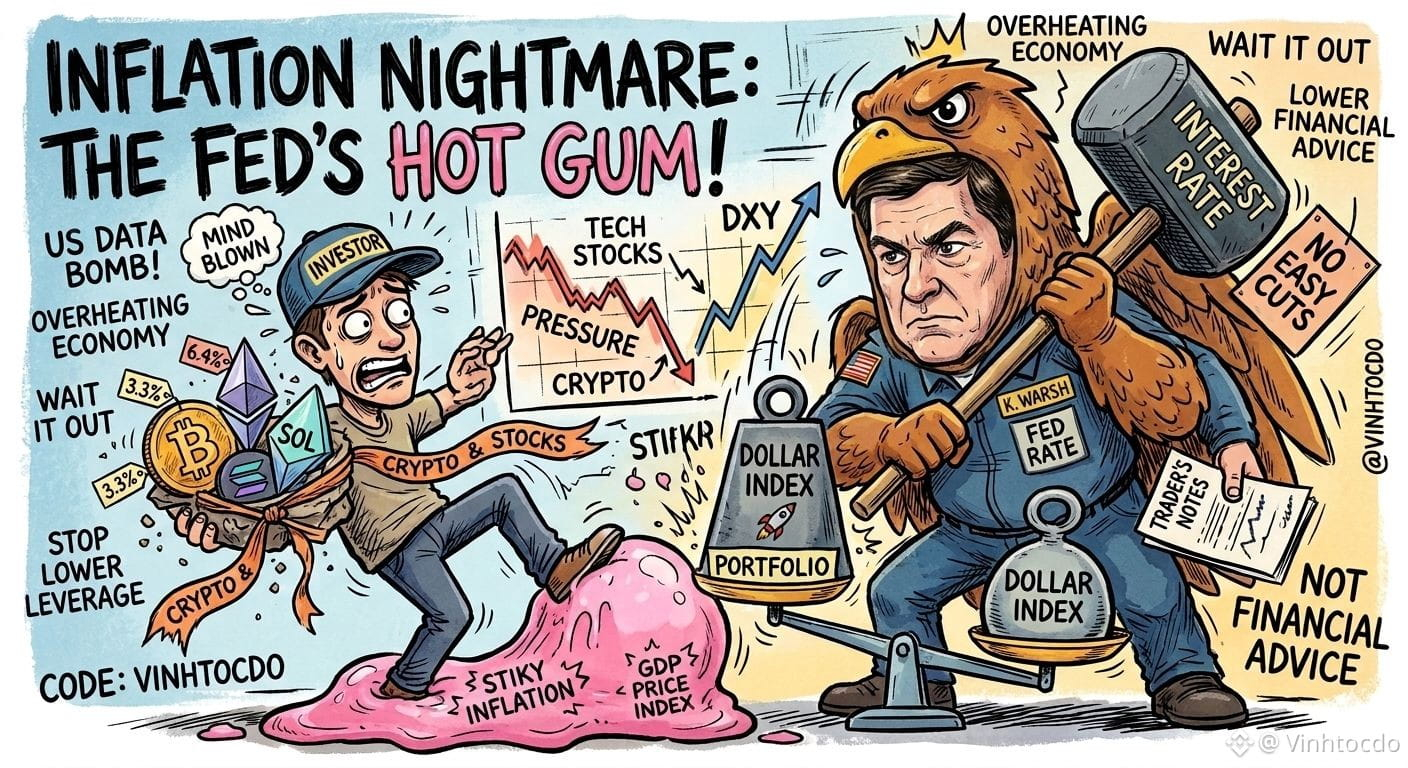
The latest US data dropped a bomb! Core PCE inflation hit 3.3% and GDP price index vọt lên 6.4%! 🤯 Translation? US inflation is stickier than gum on your shoe, and the economy is overheating.
What does this mean?
🏦 The Fed: Will keep interest rates high for longer (or forever at this rate). No easy cuts!
📉 Stocks & Crypto: High rates hate tech stocks and crypto. DXY goes 🚀, while BTC and Gold feel the pressure.
What’s the play, traders?
❌ Stop FOMOing: Don't chase the crazy wick volatility.
🛡️ Lower Leverage: Use strict Stop Losses. Slippage will ream your account!
⏱️ Wait it out: Let the market swallow the news before jumping in.
⚠️ Not financial advice.
Survive the Fed chaos with code VINHTOCDO or click: [https://www.binance.com/register?ref=VINHTOCDO](https://www.binance.com/register?ref=VINHTOCDO)
#TinFed #TheoDõiFOMC #PCEData #FedRate #VINHTOCDO
$BTC
{future}(BTCUSDT)
$ETH
{future}(ETHUSDT)
$BNB
{future}(BNBUSDT)
🔥 Fed vs. Your Portfolio: The Inflation Nightmare! 🔥
The latest US data dropped a bomb! Core PCE inflation hit 3.3% and GDP price index vọt lên 6.4%! 🤯 Translation? US inflation is stickier than gum on your shoe, and the economy is overheating.
What does this mean?
🏦 The Fed: Will keep interest rates high for longer (or forever at this rate). No easy cuts!
📉 Stocks & Crypto: High rates hate tech stocks and crypto. DXY goes 🚀, while BTC and Gold feel the pressure.
What’s the play, traders?
❌ Stop FOMOing: Don't chase the crazy wick volatility.
🛡️ Lower Leverage: Use strict Stop Losses. Slippage will ream your account!
⏱️ Wait it out: Let the market swallow the news before jumping in.
⚠️ Not financial advice.
Survive the Fed chaos with code VINHTOCDO or click: https://www.binance.com/register?ref=VINHTOCDO
#TinFed #TheoDõiFOMC #PCEData #FedRate #VINHTOCDO
$BTC
$ETH
$BNB
The latest US data dropped a bomb! Core PCE inflation hit 3.3% and GDP price index vọt lên 6.4%! 🤯 Translation? US inflation is stickier than gum on your shoe, and the economy is overheating.
What does this mean?
🏦 The Fed: Will keep interest rates high for longer (or forever at this rate). No easy cuts!
📉 Stocks & Crypto: High rates hate tech stocks and crypto. DXY goes 🚀, while BTC and Gold feel the pressure.
What’s the play, traders?
❌ Stop FOMOing: Don't chase the crazy wick volatility.
🛡️ Lower Leverage: Use strict Stop Losses. Slippage will ream your account!
⏱️ Wait it out: Let the market swallow the news before jumping in.
⚠️ Not financial advice.
Survive the Fed chaos with code VINHTOCDO or click: https://www.binance.com/register?ref=VINHTOCDO
#TinFed #TheoDõiFOMC #PCEData #FedRate #VINHTOCDO
$BTC
$ETH
$BNB
3
209


·
--
Strong factors impacting the market this time: Fed hawkish + yields rise + BTC ETF reverses.
Fed Chair Kevin Warsh sent a fairly “hawkish” signal, saying that if inflation does not move quickly toward the 2% target, the Fed may have to raise interest rates.
After a streak of 9 sessions of net outflows, the US spot Bitcoin ETF recorded approximately $201.8 million in net redemptions.
Pi, meanwhile, is relatively more stable than BTC. Expectations for the Protocol 27/Mainnet upgrade are providing psychological support for the price. At present, PI’s liquidity remains quite low $BTC #45NgayTuDoTaiChinh #TheoDõiFOMC #TinFed $BNB $ETH
Strong factors impacting the market this time: Fed hawkish + yields rise + BTC ETF reverses.
Fed Chair Kevin Warsh sent a fairly “hawkish” signal, saying that if inflation does not move quickly toward the 2% target, the Fed may have to raise interest rates.
After a streak of 9 sessions of net outflows, the US spot Bitcoin ETF recorded approximately $201.8 million in net redemptions.
Pi, meanwhile, is relatively more stable than BTC. Expectations for the Protocol 27/Mainnet upgrade are providing psychological support for the price. At present, PI’s liquidity remains quite low $BTC #45NgayTuDoTaiChinh #TheoDõiFOMC #TinFed $BNB $ETH
Fed Chair Kevin Warsh sent a fairly “hawkish” signal, saying that if inflation does not move quickly toward the 2% target, the Fed may have to raise interest rates.
After a streak of 9 sessions of net outflows, the US spot Bitcoin ETF recorded approximately $201.8 million in net redemptions.
Pi, meanwhile, is relatively more stable than BTC. Expectations for the Protocol 27/Mainnet upgrade are providing psychological support for the price. At present, PI’s liquidity remains quite low $BTC #45NgayTuDoTaiChinh #TheoDõiFOMC #TinFed $BNB $ETH
408

·
--
Article
🇺🇸 US GDP SLOWS DOWN, INFLATION STILL HIGH: IS THE FED TRAPPED?Hey guys, the US has just released a series of important economic data on August 26, and the current picture is quite unusual:
👉 Economic growth is slowing down
👉 Inflation is still far above the Fed’s 2% target
👉 Therefore, the Fed doesn’t have much room for aggressive easing
This has a huge impact on BTC, ETH, and the altcoin market.
1. US GDP in Q2 rose by 1.5%
Real GDP Q2/2026 increased by 1.5% on an annualized basis, unchanged from the previous estimate.
🇺🇸 US GDP SLOWS DOWN, INFLATION STILL HIGH: IS THE FED TRAPPED?
Hey guys, the US has just released a series of important economic data on August 26, and the current picture is quite unusual:
👉 Economic growth is slowing down
👉 Inflation is still far above the Fed’s 2% target
👉 Therefore, the Fed doesn’t have much room for aggressive easing
This has a huge impact on BTC, ETH, and the altcoin market.
1. US GDP in Q2 rose by 1.5%
Real GDP Q2/2026 increased by 1.5% on an annualized basis, unchanged from the previous estimate.
👉 Economic growth is slowing down
👉 Inflation is still far above the Fed’s 2% target
👉 Therefore, the Fed doesn’t have much room for aggressive easing
This has a huge impact on BTC, ETH, and the altcoin market.
1. US GDP in Q2 rose by 1.5%
Real GDP Q2/2026 increased by 1.5% on an annualized basis, unchanged from the previous estimate.
7
1.7k

$BTC IS APPROACHING A VERY IMPORTANT LEVEL
Bitcoin has just returned to the $87,000 range but still hasn’t broken above $87,570, which is also the opening price for 2026.
This is the level Mây is watching most closely.
If BTC breaks above $86,700 and holds above $87,570, the likelihood of an extended rally will become clearer.
On the other hand, if it continues to be rejected, BTC could still return to the $82,500 range.
Another factor worth watching closely this week is the Fed’s FOMC minutes.
U.S. Treasury yields remain high, so if the Fed signals “higher for longer,” the crypto market could come under pressure again.
Simply put, BTC is caught between two scenarios:
$87,570 is the gateway to further gains.
$82,500 is the level that needs to hold.
Mây will watch BTC’s reaction around these two levels before assessing its next move.
October is off to a pretty good start, but Mây still prefers to focus on capital flows and macroeconomic data rather than relying solely on the Uptober narrative.
Follow Mây to keep up with the market together. #BinanceLaunchesBinanceIntelligence #BitcoinTargets2026OpenAt$87570 #TheoDõiFOMC #TinFed
{future}(BTCUSDT)
$BTC IS APPROACHING A VERY IMPORTANT LEVEL
Bitcoin has just returned to the $87,000 range but still hasn’t broken above $87,570, which is also the opening price for 2026.
This is the level Mây is watching most closely.
If BTC breaks above $86,700 and holds above $87,570, the likelihood of an extended rally will become clearer.
On the other hand, if it continues to be rejected, BTC could still return to the $82,500 range.
Another factor worth watching closely this week is the Fed’s FOMC minutes.
U.S. Treasury yields remain high, so if the Fed signals “higher for longer,” the crypto market could come under pressure again.
Simply put, BTC is caught between two scenarios:
$87,570 is the gateway to further gains.
$82,500 is the level that needs to hold.
Mây will watch BTC’s reaction around these two levels before assessing its next move.
October is off to a pretty good start, but Mây still prefers to focus on capital flows and macroeconomic data rather than relying solely on the Uptober narrative.
Follow Mây to keep up with the market together. #BinanceLaunchesBinanceIntelligence #BitcoinTargets2026OpenAt$87570 #TheoDõiFOMC #TinFed
Bitcoin has just returned to the $87,000 range but still hasn’t broken above $87,570, which is also the opening price for 2026.
This is the level Mây is watching most closely.
If BTC breaks above $86,700 and holds above $87,570, the likelihood of an extended rally will become clearer.
On the other hand, if it continues to be rejected, BTC could still return to the $82,500 range.
Another factor worth watching closely this week is the Fed’s FOMC minutes.
U.S. Treasury yields remain high, so if the Fed signals “higher for longer,” the crypto market could come under pressure again.
Simply put, BTC is caught between two scenarios:
$87,570 is the gateway to further gains.
$82,500 is the level that needs to hold.
Mây will watch BTC’s reaction around these two levels before assessing its next move.
October is off to a pretty good start, but Mây still prefers to focus on capital flows and macroeconomic data rather than relying solely on the Uptober narrative.
Follow Mây to keep up with the market together. #BinanceLaunchesBinanceIntelligence #BitcoinTargets2026OpenAt$87570 #TheoDõiFOMC #TinFed
1
307

·
--
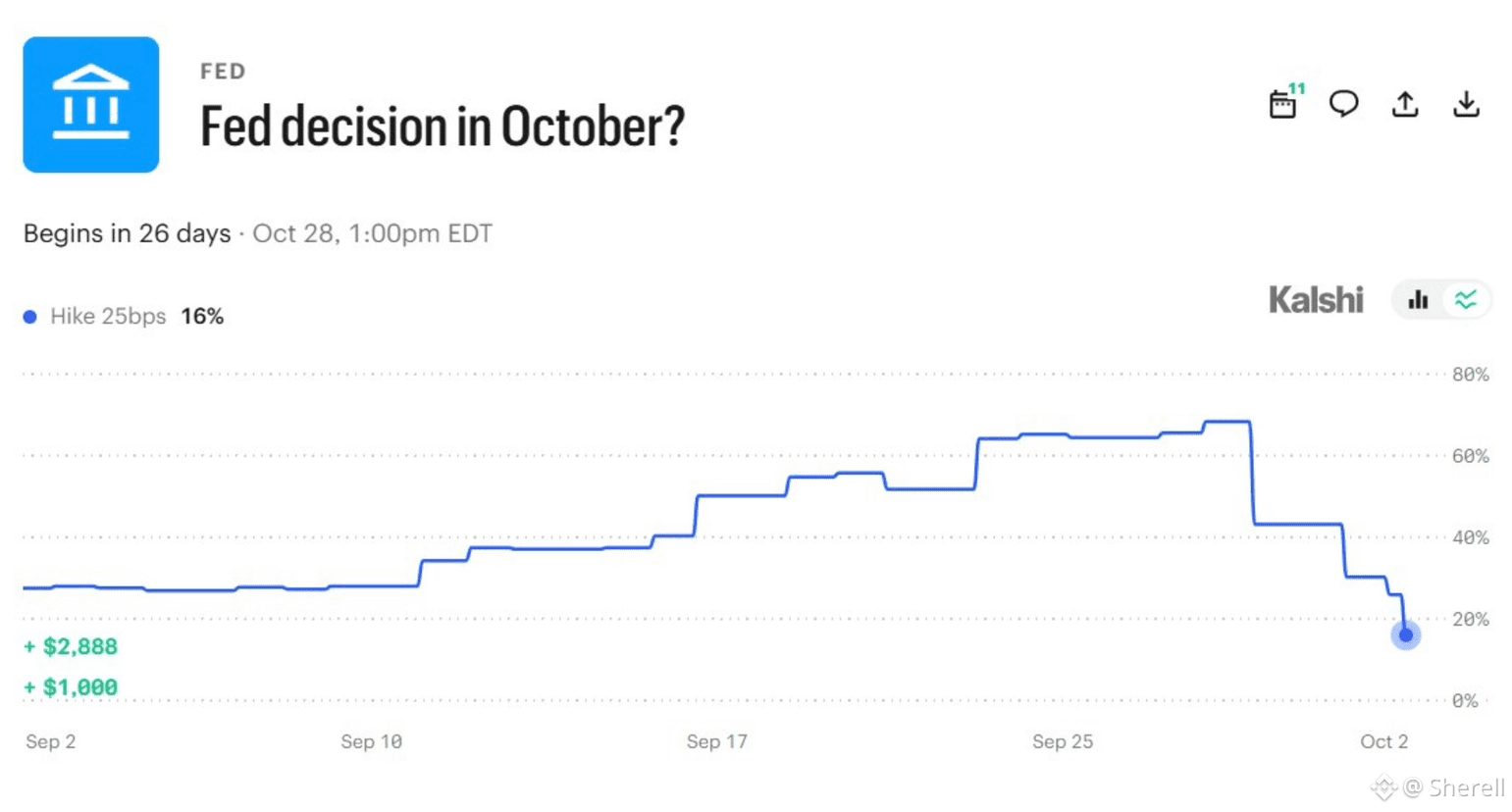
The likelihood of a Fed rate hike dropping to just 16% after weak employment data.
The market no longer expects the Fed to raise rates this month.
#tinfed
The likelihood of a Fed rate hike dropping to just 16% after weak employment data.
The market no longer expects the Fed to raise rates this month.
#tinfed
The market no longer expects the Fed to raise rates this month.
#tinfed
119

·
--
🔥 **MARKET SNAPSHOT | FRIDAY – 02/10**
🟡 **Gold** continues to trade sideways around **$4.1K**, while **BTC edges up to $85K**. U.S. stocks also closed in the green.
🏦 **Fed interest rate expectations:** The probability of a rate hike in October falls from **38% → 25%** after Fed Vice Chair Philip said more time is needed to assess the impact from the September rate increase.
🇺🇸 **19:30 tonight:** The U.S. will release the **September Nonfarm Payrolls report**
• New jobs: **Forecast 89–90K | Previous 162K**
• Unemployment rate: **Forecast 4.1% | Previous 4.1%**
👉 This will be a key piece of data for **BTC and the crypto market**, as it could directly affect expectations for Fed interest-rate policy.
🇺🇸 **Illinois** proposes postponing the plan to impose a **0.2% tax on crypto transactions** from **1/1 → 1/7/2027**.
📌 **Today’s focus: NONFARM 19:30 🇺🇸**
The market may see significant volatility after the data is released.
#TinFed
🔥 **MARKET SNAPSHOT | FRIDAY – 02/10**
🟡 **Gold** continues to trade sideways around **$4.1K**, while **BTC edges up to $85K**. U.S. stocks also closed in the green.
🏦 **Fed interest rate expectations:** The probability of a rate hike in October falls from **38% → 25%** after Fed Vice Chair Philip said more time is needed to assess the impact from the September rate increase.
🇺🇸 **19:30 tonight:** The U.S. will release the **September Nonfarm Payrolls report**
• New jobs: **Forecast 89–90K | Previous 162K**
• Unemployment rate: **Forecast 4.1% | Previous 4.1%**
👉 This will be a key piece of data for **BTC and the crypto market**, as it could directly affect expectations for Fed interest-rate policy.
🇺🇸 **Illinois** proposes postponing the plan to impose a **0.2% tax on crypto transactions** from **1/1 → 1/7/2027**.
📌 **Today’s focus: NONFARM 19:30 🇺🇸**
The market may see significant volatility after the data is released.
#TinFed
🟡 **Gold** continues to trade sideways around **$4.1K**, while **BTC edges up to $85K**. U.S. stocks also closed in the green.
🏦 **Fed interest rate expectations:** The probability of a rate hike in October falls from **38% → 25%** after Fed Vice Chair Philip said more time is needed to assess the impact from the September rate increase.
🇺🇸 **19:30 tonight:** The U.S. will release the **September Nonfarm Payrolls report**
• New jobs: **Forecast 89–90K | Previous 162K**
• Unemployment rate: **Forecast 4.1% | Previous 4.1%**
👉 This will be a key piece of data for **BTC and the crypto market**, as it could directly affect expectations for Fed interest-rate policy.
🇺🇸 **Illinois** proposes postponing the plan to impose a **0.2% tax on crypto transactions** from **1/1 → 1/7/2027**.
📌 **Today’s focus: NONFARM 19:30 🇺🇸**
The market may see significant volatility after the data is released.
#TinFed
1
604

·
--
Bullish
Verified
Important news points to note this week:
*14–20/9/2026, converted to Vietnam time (UTC+7). This is a very important week for crypto, because three major variables — the Fed, the CLARITY Act, and the BoJ — are all compressed into a few days.
The key thing I’m especially watching: the market is currently leaning toward the possibility of the Fed raising rates by 25 basis points, after U.S. inflation came in hotter than expected; Reuters reported that Goldman Sachs and JPMorgan have raised their expectations for a 25 bp Fed hike in September, with about an 87% probability.
🔥 Schedule of important events — Vietnam time
*16/9 – ~01:15 🇺🇸 The U.S. Senate begins procedures/voting related to the CLARITY Act
*16/9 – 19:30 🇺🇸 U.S. Retail Sales for August
*17/9 – 01:00 🇺🇸 Fed announces its rate decision
*17/9 – 01:30 🇺🇸 Fed press conference + Dot Plot/SEP
*17/9 🇬🇧 Bank of England rate decision
*18/9 – ~09:30 🇯🇵 BoJ rate decision
*18/9 – 19:00 🇺🇸 Industrial Production/Capacity Utilization
🔴 Fed — the most important event of the week
The official FOMC schedule of the Federal Reserve
The Fed meets on 15–16/9, with the decision at 14:00 ET on 16/9, and the press conference at 14:30 ET. Converted to Vietnam time:
01:00 AM on 17/9: rate decision
01:30 AM on 17/9: press conference
It also includes the Summary of Economic Projections / Dot Plot.
⏰ Two time windows I will especially avoid FOMO
01:00–02:30 AM on 17/9
Fed + Dot Plot + press conference
This could be an area of extremely high volatility.
Don’t just look at the first candle and conclude the trend.
19:30 on 16/9 → 02:30 on 17/9
This is a "super session":
Retail Sales → CLARITY aftermath → Fed → Dot Plot → Press Conference
$🥰🥰🥰
Wishing you all sharp judgment to make decisions before trading and win big this week!!!!
#TinFed #TheoDõiFOMC
Important news points to note this week:
*14–20/9/2026, converted to Vietnam time (UTC+7). This is a very important week for crypto, because three major variables — the Fed, the CLARITY Act, and the BoJ — are all compressed into a few days.
The key thing I’m especially watching: the market is currently leaning toward the possibility of the Fed raising rates by 25 basis points, after U.S. inflation came in hotter than expected; Reuters reported that Goldman Sachs and JPMorgan have raised their expectations for a 25 bp Fed hike in September, with about an 87% probability.
🔥 Schedule of important events — Vietnam time
*16/9 – ~01:15 🇺🇸 The U.S. Senate begins procedures/voting related to the CLARITY Act
*16/9 – 19:30 🇺🇸 U.S. Retail Sales for August
*17/9 – 01:00 🇺🇸 Fed announces its rate decision
*17/9 – 01:30 🇺🇸 Fed press conference + Dot Plot/SEP
*17/9 🇬🇧 Bank of England rate decision
*18/9 – ~09:30 🇯🇵 BoJ rate decision
*18/9 – 19:00 🇺🇸 Industrial Production/Capacity Utilization
🔴 Fed — the most important event of the week
The official FOMC schedule of the Federal Reserve
The Fed meets on 15–16/9, with the decision at 14:00 ET on 16/9, and the press conference at 14:30 ET. Converted to Vietnam time:
01:00 AM on 17/9: rate decision
01:30 AM on 17/9: press conference
It also includes the Summary of Economic Projections / Dot Plot.
⏰ Two time windows I will especially avoid FOMO
01:00–02:30 AM on 17/9
Fed + Dot Plot + press conference
This could be an area of extremely high volatility.
Don’t just look at the first candle and conclude the trend.
19:30 on 16/9 → 02:30 on 17/9
This is a "super session":
Retail Sales → CLARITY aftermath → Fed → Dot Plot → Press Conference
$🥰🥰🥰
Wishing you all sharp judgment to make decisions before trading and win big this week!!!!
#TinFed #TheoDõiFOMC
*14–20/9/2026, converted to Vietnam time (UTC+7). This is a very important week for crypto, because three major variables — the Fed, the CLARITY Act, and the BoJ — are all compressed into a few days.
The key thing I’m especially watching: the market is currently leaning toward the possibility of the Fed raising rates by 25 basis points, after U.S. inflation came in hotter than expected; Reuters reported that Goldman Sachs and JPMorgan have raised their expectations for a 25 bp Fed hike in September, with about an 87% probability.
🔥 Schedule of important events — Vietnam time
*16/9 – ~01:15 🇺🇸 The U.S. Senate begins procedures/voting related to the CLARITY Act
*16/9 – 19:30 🇺🇸 U.S. Retail Sales for August
*17/9 – 01:00 🇺🇸 Fed announces its rate decision
*17/9 – 01:30 🇺🇸 Fed press conference + Dot Plot/SEP
*17/9 🇬🇧 Bank of England rate decision
*18/9 – ~09:30 🇯🇵 BoJ rate decision
*18/9 – 19:00 🇺🇸 Industrial Production/Capacity Utilization
🔴 Fed — the most important event of the week
The official FOMC schedule of the Federal Reserve
The Fed meets on 15–16/9, with the decision at 14:00 ET on 16/9, and the press conference at 14:30 ET. Converted to Vietnam time:
01:00 AM on 17/9: rate decision
01:30 AM on 17/9: press conference
It also includes the Summary of Economic Projections / Dot Plot.
⏰ Two time windows I will especially avoid FOMO
01:00–02:30 AM on 17/9
Fed + Dot Plot + press conference
This could be an area of extremely high volatility.
Don’t just look at the first candle and conclude the trend.
19:30 on 16/9 → 02:30 on 17/9
This is a "super session":
Retail Sales → CLARITY aftermath → Fed → Dot Plot → Press Conference
$🥰🥰🥰
Wishing you all sharp judgment to make decisions before trading and win big this week!!!!
#TinFed #TheoDõiFOMC

843

·
--
$BTC 4H. Update the BITCOIN price before the FOMC meeting on 16/9.
The expected interest rate increase is 0.25. Up to 86.2%
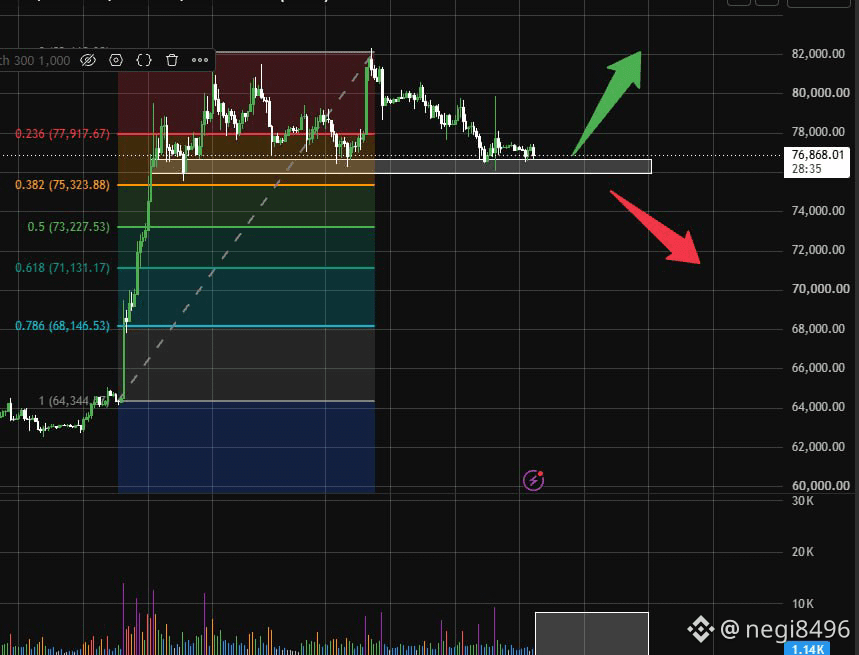
As in the plan I mentioned the day before, BTC should pull back the “wick” and break the order at 76k, then move up. Right now, BTC is at 76.7K.
I still hope BTC. If it can hold the RANGE 75k5 as mentioned in the plan the other day.
If 75k5 breaks down to the 0.5 fib level, then it’s 73k2.
Remember: raising the rate isn’t necessarily bad, but the subsequent price action could get pretty uncomfortable.
Fellows should protect their positions.
Not investment advice #BTC #TinFed #Wyckoff
$BTC 4H. Update the BITCOIN price before the FOMC meeting on 16/9.
The expected interest rate increase is 0.25. Up to 86.2%
As in the plan I mentioned the day before, BTC should pull back the “wick” and break the order at 76k, then move up. Right now, BTC is at 76.7K.
I still hope BTC. If it can hold the RANGE 75k5 as mentioned in the plan the other day.
If 75k5 breaks down to the 0.5 fib level, then it’s 73k2.
Remember: raising the rate isn’t necessarily bad, but the subsequent price action could get pretty uncomfortable.
Fellows should protect their positions.
Not investment advice #BTC #TinFed #Wyckoff
The expected interest rate increase is 0.25. Up to 86.2%
As in the plan I mentioned the day before, BTC should pull back the “wick” and break the order at 76k, then move up. Right now, BTC is at 76.7K.
I still hope BTC. If it can hold the RANGE 75k5 as mentioned in the plan the other day.
If 75k5 breaks down to the 0.5 fib level, then it’s 73k2.
Remember: raising the rate isn’t necessarily bad, but the subsequent price action could get pretty uncomfortable.
Fellows should protect their positions.
Not investment advice #BTC #TinFed #Wyckoff
273

·
--
Bullish
Floor for home twice and still can’t cut it so now I have to hold it again 🥸🥸
The pressure from the Fed’s news is too much, it could collapse at any time. Hope the price goes up again so I can get out before the 15th 😥😥😥$ETH #TinFed #TinFed #TheoDõiFOMC #BitcoinSurpasses$79K
Floor for home twice and still can’t cut it so now I have to hold it again 🥸🥸
The pressure from the Fed’s news is too much, it could collapse at any time. Hope the price goes up again so I can get out before the 15th 😥😥😥$ETH #TinFed #TinFed #TheoDõiFOMC #BitcoinSurpasses$79K
The pressure from the Fed’s news is too much, it could collapse at any time. Hope the price goes up again so I can get out before the 15th 😥😥😥$ETH #TinFed #TinFed #TheoDõiFOMC #BitcoinSurpasses$79K
136
Log in to explore more content
Join global crypto users on Binance Square
⚡️ Get latest and useful information about crypto.
💬 Trusted by the world’s largest crypto exchange.
👍 Discover real insights from verified creators.
Email / Phone number
Trending Topics
1
#BinanceLaunchesBinanceIntelligence
492,063 views
3,347 Discussing
2
#BitcoinTargets2026OpenAt$87570
3,467 views
92 Discussing
3
#BitcoinRejectedAt$87KThirdTime
3,140 views
74 Discussing
4
#StrategyMarketCapSurpassesRumble
20,872 views
530 Discussing
5
#StriveBuys2000BTCFor$169M
15,164 views
143 Discussing
6
#EvernorthXRPTreasuryCompletesSPACMerger
198,663 views
1,755 Discussing
7
#ADAGains10%Above$0.27
72,065 views
262 Discussing
8
#ETHUp70%InQ3ButLiquidityFalls
399,295 views
2,718 Discussing
9
#EthStakingExitQueueHits2026High
170,761 views
1,771 Discussing
10
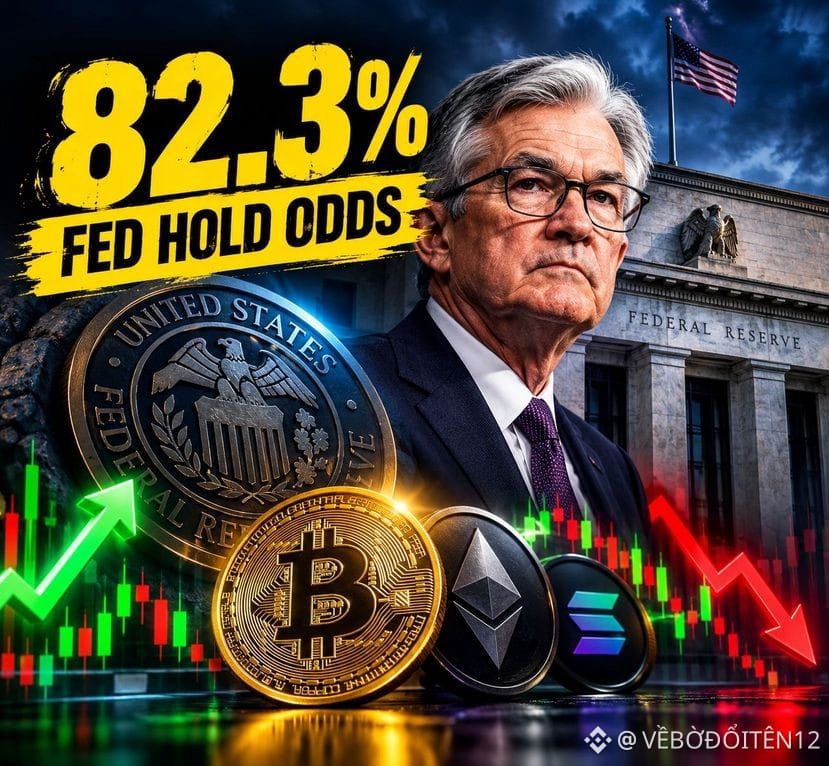
#FedOctoberHoldOdds82.3%
192,079 views
1,706 Discussing