

#sanctions
sanctions
223,558 views
809 Discussing
Hot
Latest
🚨 U.S. SANCTIONS RUSSIAN CRYPTO MIDDLEMEN OVER NORTH KOREAN IT-WORKER CASH-OUTS
📝 Summary
The U.S. Treasury has sanctioned individuals and an entity accused of helping North Korean IT-worker networks convert cryptocurrency and route earnings through financial intermediaries. Authorities say these schemes generate revenue for North Korea’s weapons programs.
🔑 Key Points
1. Sanctions Announced: OFAC designated 10 individuals and one entity connected to North Korean IT-worker schemes.
2. $3.5M Crypto Conversion: Russian national Ilya Boykov allegedly converted about $3.5 million in crypto for a North Korean-linked IT company.
3. Nearly $2M in Crypto: Vitold Obertas allegedly handled nearly $2 million in crypto conversions for North Korean officials, plus at least $1.25 million in other currency transfers.
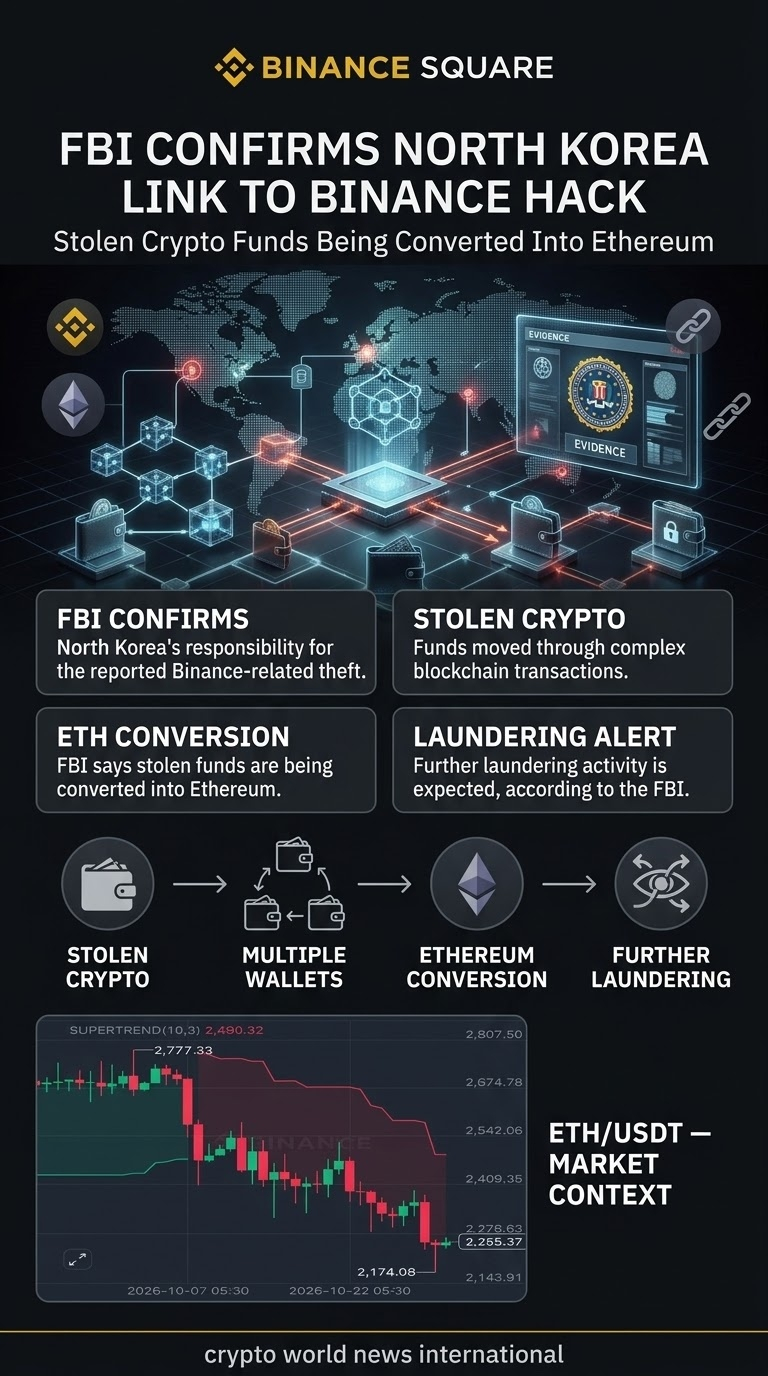
4. FBI Confirms North Korean Responsibility: The FBI has officially attributed the Binance-related theft to North Korea.
5. Stolen Funds Converted to ETH: The FBI says the stolen funds are being converted into Ethereum, with further laundering activity expected.
📊 Market Insight
The sanctions highlight how crypto cash-out networks can connect fraudulent employment schemes with cross-border financial activity. Exchanges and businesses should monitor official sanctions lists and wallet alerts. The allegations do not establish that every transaction involving the named wallets is illicit.
#CryptoSecurity #OFAC #northkorea #Blockchain #Sanctions $TRX $BTC $ETH
{future}(ETHUSDT)
{future}(BTCUSDT)
{future}(TRXUSDT)
🚨 U.S. SANCTIONS RUSSIAN CRYPTO MIDDLEMEN OVER NORTH KOREAN IT-WORKER CASH-OUTS
📝 Summary
The U.S. Treasury has sanctioned individuals and an entity accused of helping North Korean IT-worker networks convert cryptocurrency and route earnings through financial intermediaries. Authorities say these schemes generate revenue for North Korea’s weapons programs.
🔑 Key Points
1. Sanctions Announced: OFAC designated 10 individuals and one entity connected to North Korean IT-worker schemes.
2. $3.5M Crypto Conversion: Russian national Ilya Boykov allegedly converted about $3.5 million in crypto for a North Korean-linked IT company.
3. Nearly $2M in Crypto: Vitold Obertas allegedly handled nearly $2 million in crypto conversions for North Korean officials, plus at least $1.25 million in other currency transfers.
4. FBI Confirms North Korean Responsibility: The FBI has officially attributed the Binance-related theft to North Korea.
5. Stolen Funds Converted to ETH: The FBI says the stolen funds are being converted into Ethereum, with further laundering activity expected.
📊 Market Insight
The sanctions highlight how crypto cash-out networks can connect fraudulent employment schemes with cross-border financial activity. Exchanges and businesses should monitor official sanctions lists and wallet alerts. The allegations do not establish that every transaction involving the named wallets is illicit.
#CryptoSecurity #OFAC #northkorea #Blockchain #Sanctions $TRX $BTC $ETH
255

KuCoin has just aggressively "cut off" all products and services for users in Russia and Belarus! The reason: regulatory compliance. No more business as usual.
This isn't the first time. MEXC and Bitget have done the same. Clearly, pressure from Western sanctions and anti-money laundering (AML) regulations is weighing heavily on CEXs.
Think crypto is untouchable? Wrong! This shows that governments are tightening their grip on cryptocurrency, forcing exchanges to choose sides and comply. The legal risks are real.
Affected users will receive instructions on withdrawing their assets. But the bigger question is: could this be the start of a new wave forcing CEXs to scale back their operations? Will global liquidity be affected?
So, where is "financial freedom" in crypto headed as major exchanges are continually pressured to comply? Could DeFi be the only way out?
#Crypto #Sanctions
2

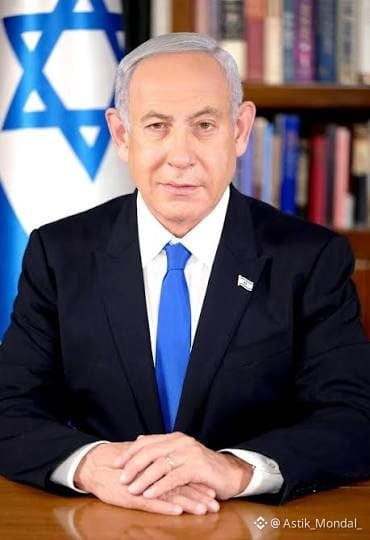
🇮🇱 JUST IN: Netanyahu says he has asked for a blockchain plan to prepare Israel for possible banking sanctions.
In a Channel 10 interview days before the election, the Prime Minister said Israel must be ready for the possibility of sanctions "including banking sanctions" and needs "an economy that can bypass them." Asked whether blockchain is an alternative, he answered: "One of them. Certainly. And I've already asked for a plan to be prepared for that."
He gave no details. He did not say who is preparing the plan, which blockchain or currencies it would use, or when it might be ready. He did not name a country he expects sanctions from.
The same interview carried a second headline. Netanyahu said Israel should prepare for a drop in US military aid and build up its ability to manufacture weapons and ammunition itself.
The reaction split along campaign lines. Opposition leader Yair Lapid said Netanyahu's own words show a re-elected government would face sanctions that "devastate our economy" and drive up prices, and one Haaretz analysis dubbed it an "Iran-style blockchain economy." Supporters of the approach argue a prime minister should hold contingency plans for worst-case financial scenarios.
Analysts add a caveat. Blockchain transfers can skip traditional intermediaries, but they don't automatically escape sanctions exposure, because exchanges, stablecoin issuers and on-ramps can still be targeted.
#Israel #Netanyahu #Blockchain #Sanctions #Crypto
1
295
·
--
📰 ‘Get used to it’: Netanyahu warns US military aid will end, eyes blockchain to bypass sanctions
Days before Israel's election, the prime minister says he has ordered plans for alternative financial arrangements amid fears of banking restrictions and warns that decades of American defense assistance will not continue indefinitely
Source : Ynet News
Time : 2026-10-23 15:06:47
Credit : ynet
#united_states #sanctions #benjamin_netanyahu
$JST $ONE $SNT
Share your opinion in the comment section below
1
98
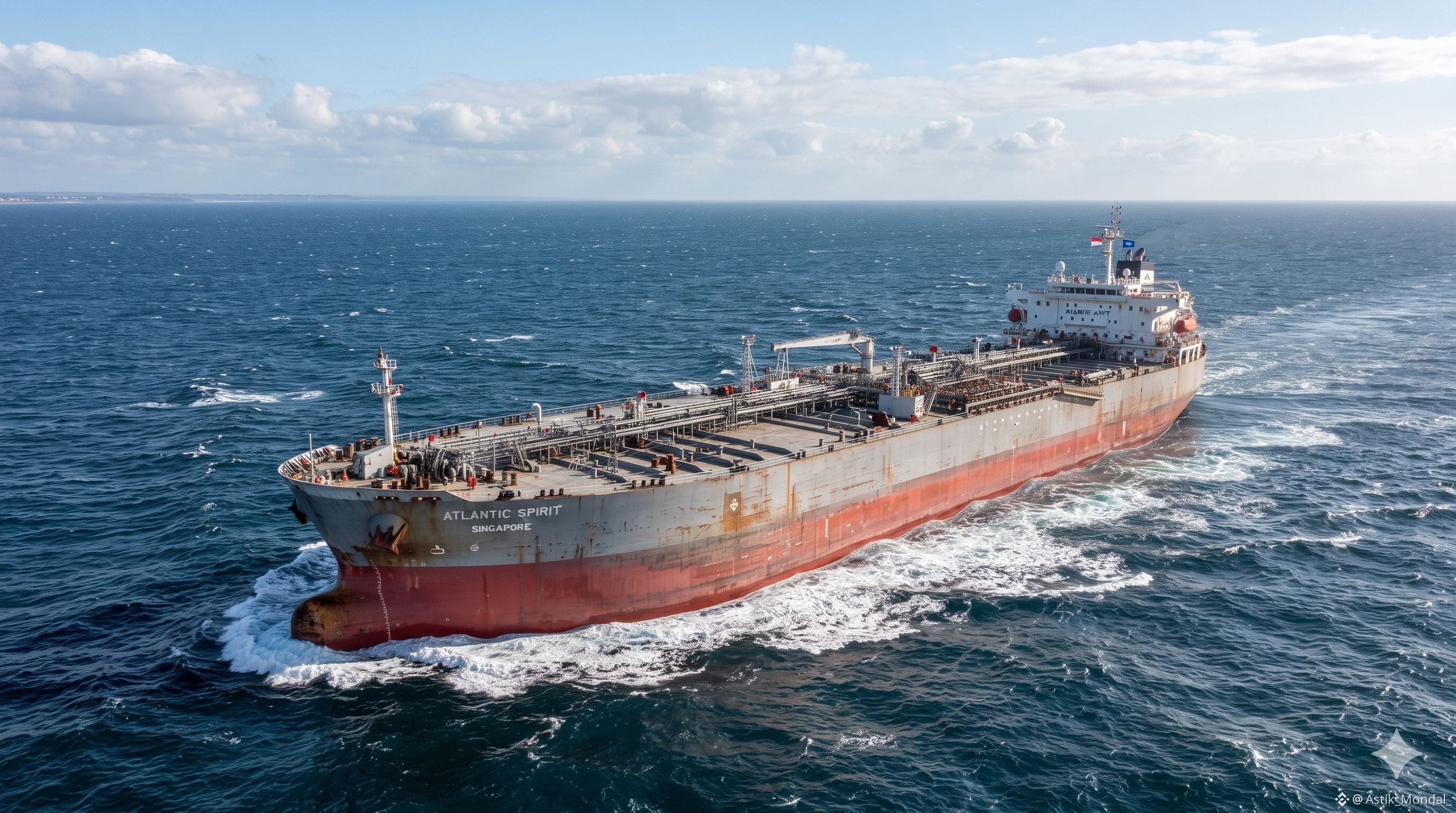
🇷🇺🇺🇸 JUST IN: Russia's first diesel tanker bound for the United States is set to sail, carrying 40,000 tons under the deal announced by President Trump.
Deputy Prime Minister Alexander Novak said more shipments will follow. Trump announced the arrangement on October 9 after a call with Vladimir Putin, saying Russia would immediately export 300,000 tons of diesel, then 500,000 tons in November and 1 million tons after that. Russia lifted its self-imposed diesel export ban that same week, and the US Treasury issued a temporary license allowing the fuel, which had been sanctioned since 2022.
Supporters of the move point to the numbers. US retail diesel has stayed above $6 a gallon since September, and Putin claimed global diesel prices fell 5% to 6% after the announcement.
But the scale is small. Kpler estimates the first 300,000 tons works out to roughly 73,000 barrels per day over a month, which probably won't move global prices much. Ukraine's sanctions commissioner says this single cargo would cover less than two hours of American diesel consumption.
The politics are heated. President Zelensky has called the arrangement "an investment in a war that must be ended." A bipartisan group of 12 senators urged Trump to rescind it, and a bill to block it has been introduced in Congress. Washington's argument is that the supply eases fuel costs at a time of Gulf disruption.
One tanker, 40,000 tons, and a very large debate.
#Russia #Diesel #Trump #Energy #Sanctions
1
387
Holding $USDC 0.3 USDT
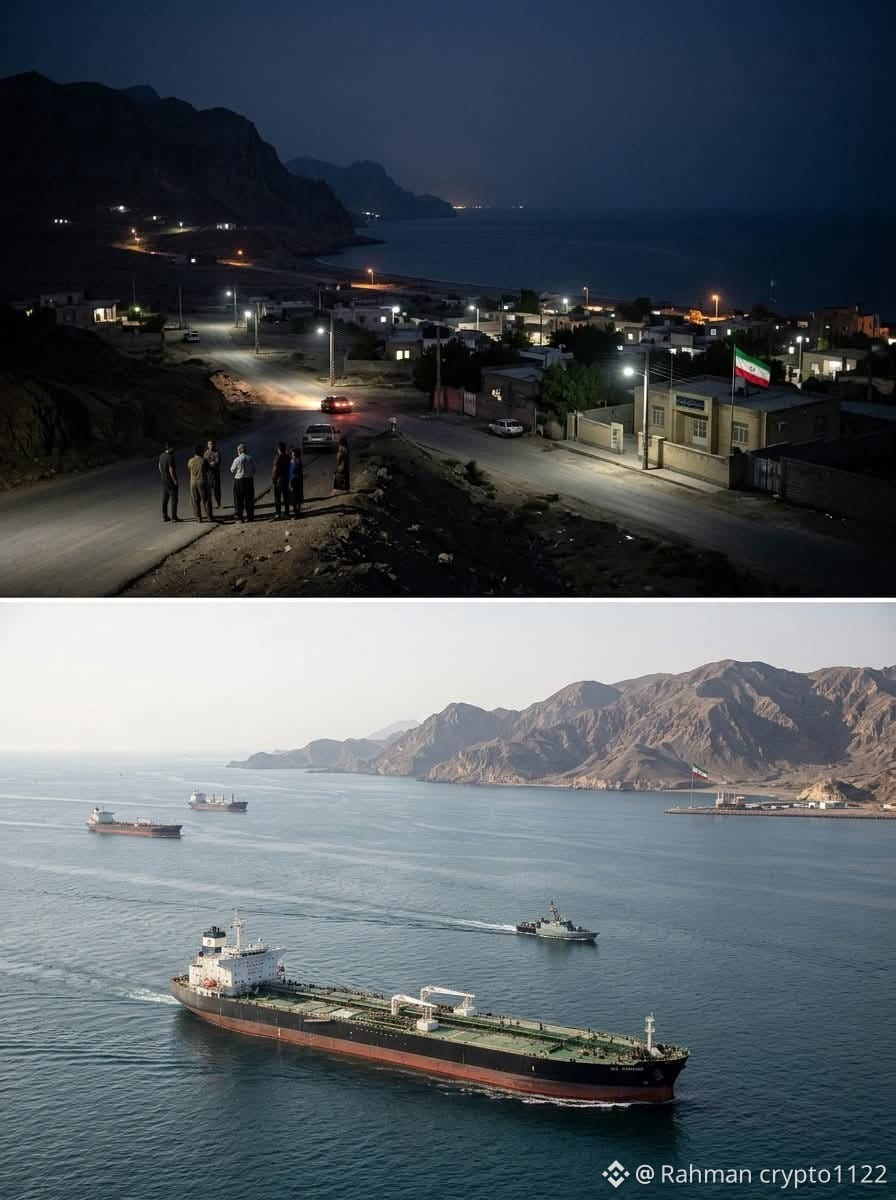
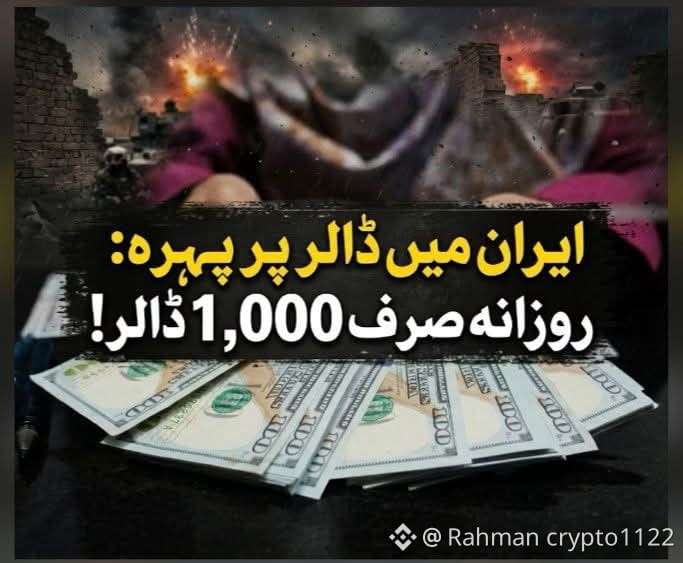
isdt🟥 IRAN TIGHTENS DOLLAR ACCESS AS CURRENCY PRESSURES GROW 💵🇮🇷
Iran has introduced measures to expand official foreign-currency sales through selected banks, allowing eligible citizens to purchase up to $10,000 under the announced program. Meanwhile, the rial remains under pressure amid sanctions and economic challenges.
📉 On October 22, 2026, the open-market dollar traded at approximately 264,000–265,000 tomans, according to currency-market trackers. <Cite refs={["turn863129search0","turn863129search3"]}/>
Rising exchange rates increase the cost of imports and put additional pressure on ordinary households.
🔎 Can tighter currency controls stabilize Iran’s economy, or are deeper economic reforms needed?
📌 Reference: "Trend News Agency — Iran’s foreign-currency sales measures" (https://www.trend.az/iran/4230830.html)
#Iran #IranEconomy #USDollar #Sanctions #CurrencyCrisis
$USDS $USDT $USDC
32
·
--
Tether CEO slams Senate report on Iran‑linked USDT freezes.
Paolo Ardoino replied on X to a Sep 28 Senate subcommittee report that says Tether was slow to freeze wallets tied to Iran and its proxies.
He says Tether has frozen reported addresses an average of four weeks before formal designations by the U.S. Treasury’s OFAC and Israel’s NBCTF, and in 99% of cases before Chainalysis labeled them. He cites a 94% decline in Iran‑linked stablecoin volumes thanks to law‑enforcement partnerships.
The report examined 846 wallets, finding 84% transacted almost exclusively in USDT. It notes that after NBCTF designated 39 wallets in Jun 2023, Tether froze only five then blocked the remaining 34 in Mar 2024, with more than $34.6 million USDT leaving those wallets after the seizure notice. It also highlights three Modex‑linked wallets that received $575 million in USDT Apr‑Jun 2025 and were not blacklisted.
Tether says it helped freeze nearly $550 million in Iran‑linked USDT this year—including over $344 million in two Central Bank of Iran addresses—plus $22 million across 40 Israel‑referred cases, and a total of more than $4.9 billion (over $2.4 billion with U.S. authorities).
Do you think stablecoin issuers should freeze wallets before or after official sanctions designations?
#Tether #USDT #Sanctions #CryptoCompliance
1
3
·
--
Bearish
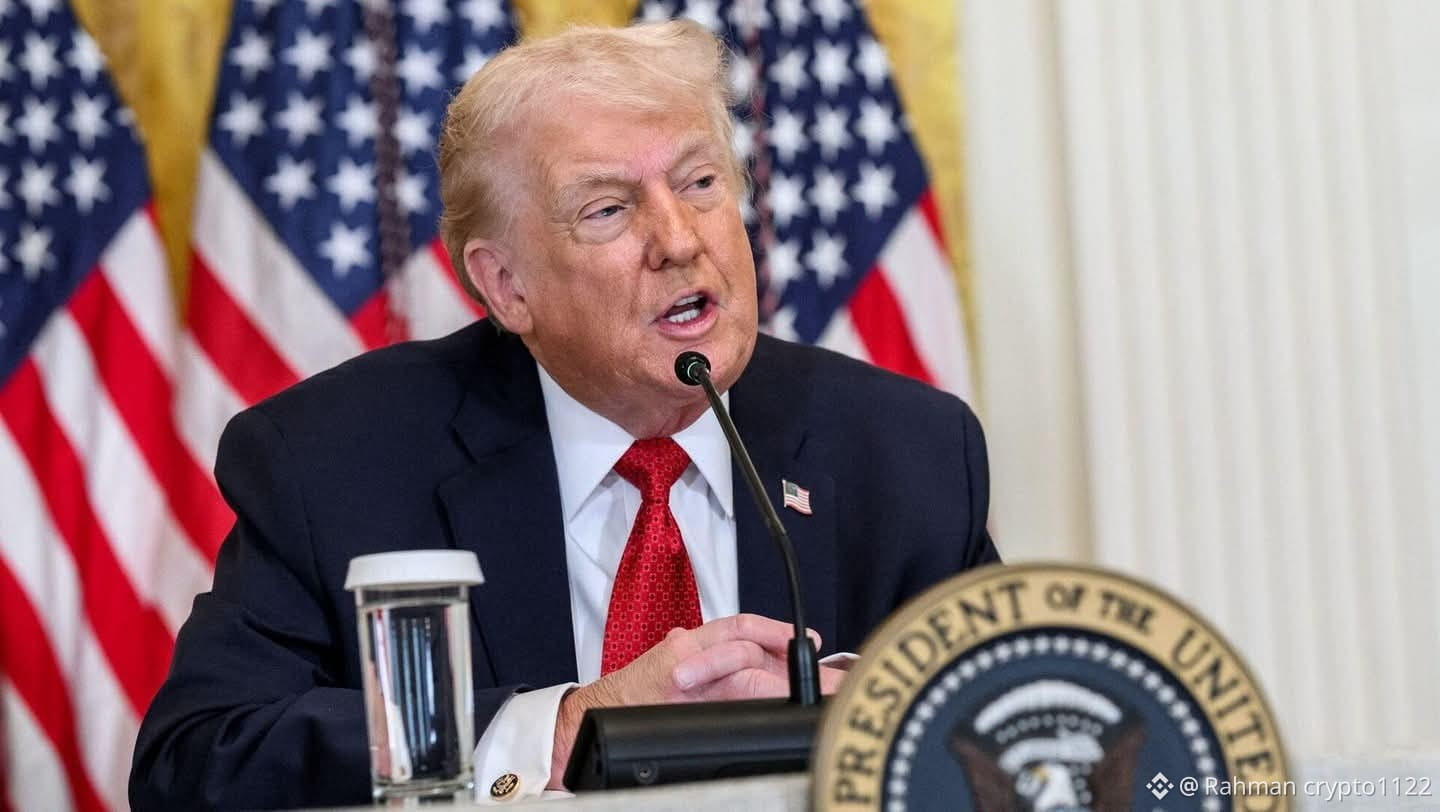
🚨 Trump Waives Russia Sanctions: Energy Prices Over Ukraine?
U.S. President Donald Trump has waived key Russia-related sanctions and tariffs, citing America’s national interests, just days before the measures were due to take effect.
⛽ Why the sudden U-turn?
• Energy prices: The administration is seeking to ease fuel-price pressures ahead of the November midterm elections.
• Russia ties: Trump’s diesel deal with Moscow has sparked controversy.
• Ukraine concerns: Critics warn that easing restrictions could provide Russia with additional revenue while its war against Ukraine continues.
• Political backlash: A bipartisan group of 12 U.S. senators has urged Trump to reverse the diesel deal.
⚠️ The Big Question: Is Washington prioritizing domestic economic pressures and diplomatic engagement with Moscow over maintaining pressure on Russia?
The decision could further strain U.S.–Ukraine relations and complicate Western efforts to end the war.
📌 Sources: Reuters, October 13–16, 2026.
🔗 "Reuters: Trump waives key Russia-related sanctions"
#Trump #Russia #Ukraine #Sanctions
$XAUT $XAG $BTC
1
457
·
--
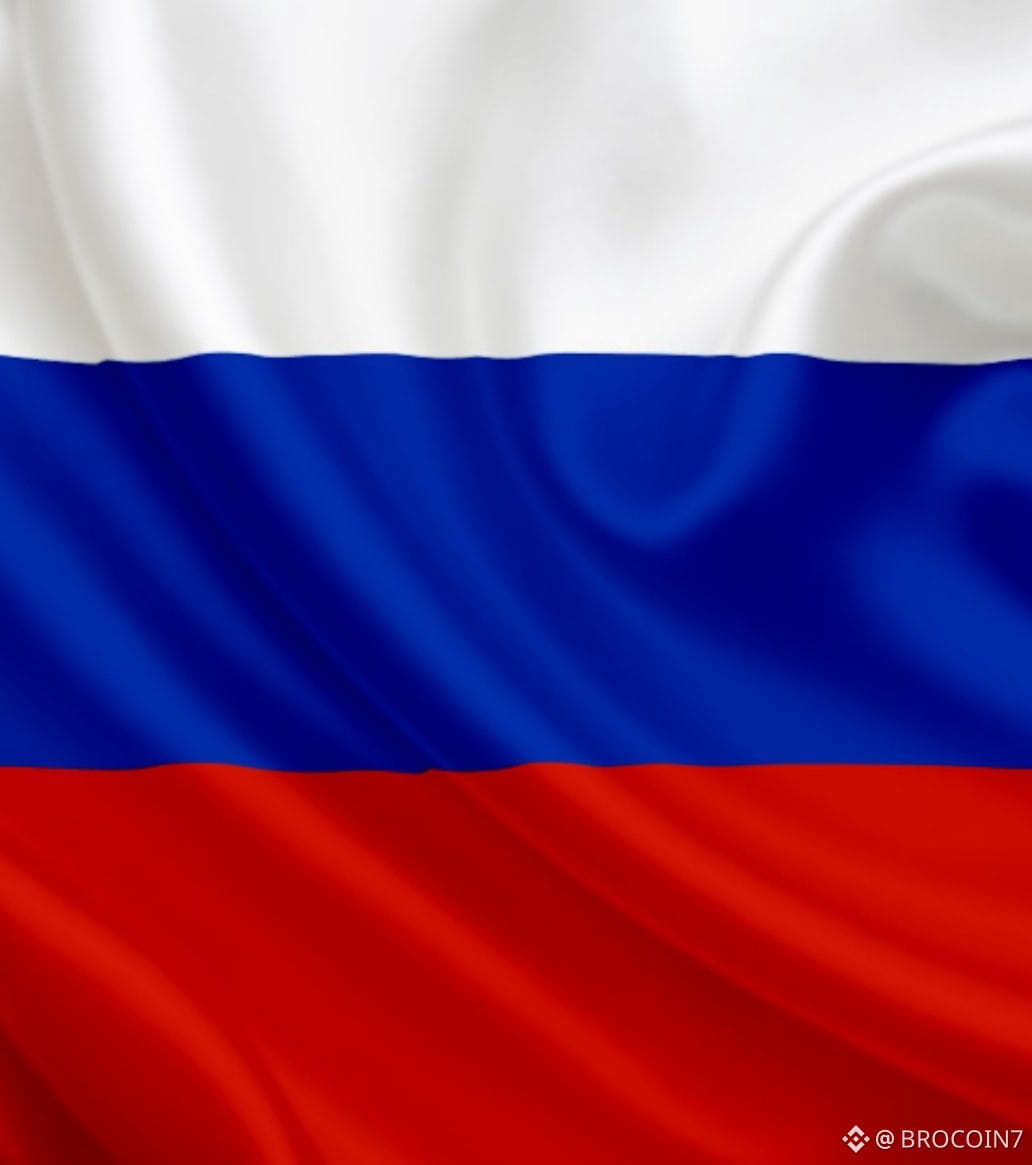
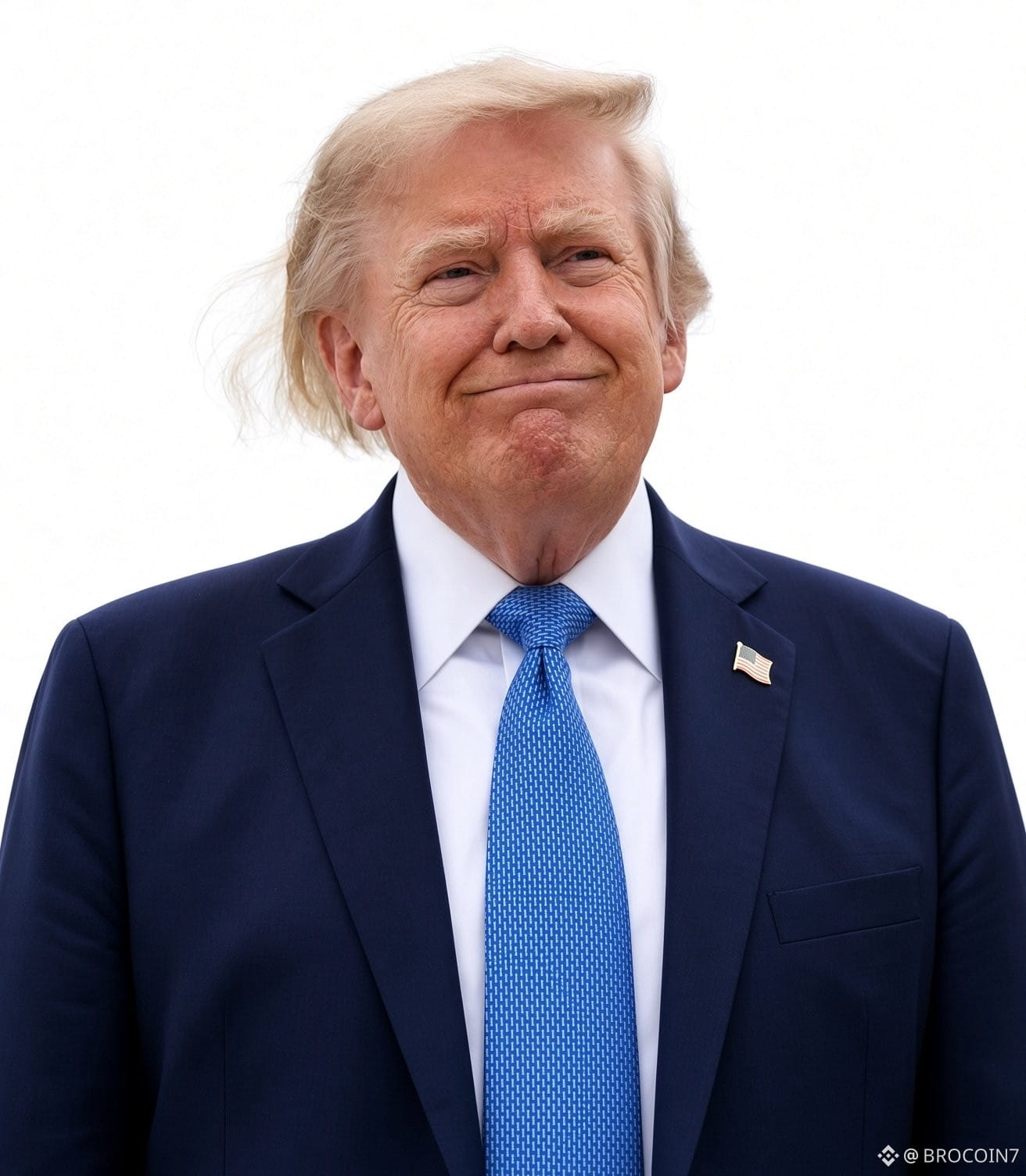
JUST IN: Trump issues an executive order pausing Russia sanctions and tariffs set to start this weekend.
#Trump #Russia #Sanctions #CelestiaLaunchesEdenToTestAIAgentTrading #ETHDropsBelow2400USDT $BTC $BNB
{future}(BNBUSDT)
{future}(BTCUSDT)
JUST IN: Trump issues an executive order pausing Russia sanctions and tariffs set to start this weekend.
#Trump #Russia #Sanctions #CelestiaLaunchesEdenToTestAIAgentTrading #ETHDropsBelow2400USDT $BTC $BNB
#Trump #Russia #Sanctions #CelestiaLaunchesEdenToTestAIAgentTrading #ETHDropsBelow2400USDT $BTC $BNB
1
127
🔥🇪🇺🇷🇺#sanctions #russia
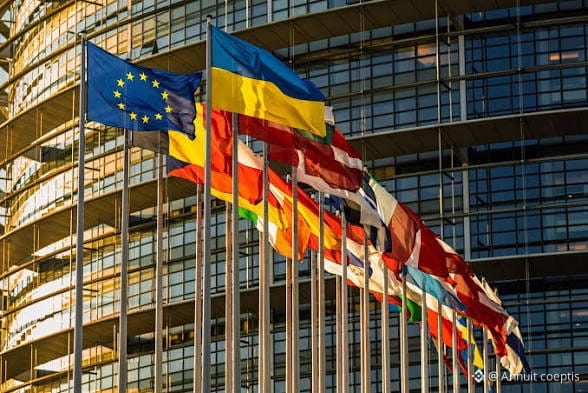
EU COUNTRIES APPROVED THE 22ND PACKAGE OF SANCTIONS AGAINST RUSSIA
The sanctions will affect approximately 1,600 companies and individuals associated with the Russian military-industrial complex, particularly missile production.
🔥🇪🇺🇷🇺#sanctions #russia
EU COUNTRIES APPROVED THE 22ND PACKAGE OF SANCTIONS AGAINST RUSSIA
The sanctions will affect approximately 1,600 companies and individuals associated with the Russian military-industrial complex, particularly missile production.
EU COUNTRIES APPROVED THE 22ND PACKAGE OF SANCTIONS AGAINST RUSSIA
The sanctions will affect approximately 1,600 companies and individuals associated with the Russian military-industrial complex, particularly missile production.
2
5
1.4k
⚠️🇪🇺🇷🇺#sanctions #russia
The EU is expected to adopt the 22nd package of sanctions against Russia today.
The sanctions will affect approximately 1,600 companies and individuals associated with the Russian military-industrial complex, particularly missile production.
Kallas stated that the package will be the largest since the beginning of the war.
88

Kaja Kallas, the EU High Representative for Foreign Affairs and Security Policy, announced today that the European Union is adding nearly 1,600 entries to its sanctions list targeting Russia's military-industrial entities. This development marks the largest single expansion of the EU sanctions package since the conflict began.
This aggressive regulatory move signals a major ramp-up in Western economic pressure aimed at choking supply chains and dual-use technology flows. The unprecedented scale of the package indicates that geopolitical friction will remain elevated, dispelling near-term hopes for diplomatic de-escalation.
Traditional financial markets face renewed headwinds from trade friction and potential supply bottlenecks, particularly across crude oil and industrial metals. Heightened geopolitical uncertainty typically bolsters safe-haven demand for gold and the US dollar while pressuring European risk assets.
For the digital asset market, rising geopolitical tensions generally trigger short-term risk-off sentiment across $BTC and broader altcoins. However, persistent global sanctions regimes continue to highlight the narrative of non-sovereign settlement networks, driving steady long-term interest in decentralized liquidity.
#Sanctions #Geopolitics #CryptoMarket
14
·
--
Be careful! Switching from Cryptomus to Heleket still means dealing with the same UK-sanctioned entity, Xeltox. Don't switch platforms blindly—make sure to check the settlement routes! #加密监管 #金融合规 $SAN
Heads up! Switching from Cryptomus to Heleket still lands you with the same UK sanctions target, Xeltox. Don't jump ship blindly—always check settlement routes! #CryptoCompliance #Sanctions $SAN
Heads up! Switching from Cryptomus to Heleket still lands you with the same UK sanctions target, Xeltox. Don't jump ship blindly—always check settlement routes! #CryptoCompliance #Sanctions $SAN
9

·
--
The EU’s High Representative for Foreign Affairs and Security Policy, Kaja Kallas, announced in Brussels that the EU had officially added nearly 1,600 entities and individuals to its Russia sanctions list today. The action primarily targets Russia’s military-industrial complex and marks the EU’s largest expansion of sanctions since the outbreak of the Russia-Ukraine conflict. It shows that the West is not easing its restrictions on Russia, but is continuing to increase pressure through supply chains and trade.
The largest single sanctions package ever introduced, this move directly targets military manufacturing and related financial channels. Markets had already anticipated ongoing geopolitical tensions, but a crackdown on entities on this scale still underscores Europe’s firm stance on security policy. Further fragmentation of supply chains could drive up cross-border compliance costs and add to uncertainty in Eurasian trade links.
In traditional financial markets, risk aversion has ticked up moderately, while crude oil and precious metals have remained relatively firm amid expectations of supply constraints and safe-haven buying. Meanwhile, the US dollar index has received some support as a haven for liquidity. European equity and foreign exchange markets are assessing the potential impact of a new round of trade barriers on local businesses’ costs, with a broadly cautious mood prevailing.
For crypto markets, sudden geopolitical developments typically strengthen investors’ short-term preference for safe havens, prompting some to exit the market and wait on the sidelines. However, tighter restrictions on cross-border settlements have also prompted greater discussion of decentralized tools and censorship-resistant assets. Given current liquidity conditions, $BTC and major assets are likely to remain range-bound in the short term as the market waits for macro sentiment to settle. 👀
#Geopolitics #Sanctions #CryptoMarket
186

The EU’s High Representative for Foreign Affairs and Security Policy, Kaja Kallas, formally announced today that the EU will add nearly 1,600 entities linked to Russia’s military-industrial complex to its latest sanctions list. This is the largest expansion of EU sanctions since the conflict began, marking a significant tightening of the West’s economic and industrial restrictions on Russia.
The scale of these sanctions far exceeds market expectations, further dispelling hopes that diplomacy could ease tensions in the short term. The sweeping severance of supply chains and industrial ties not only heightens the risk of disruptions to critical raw material and energy supplies, but also puts pressure on global manufacturing and reinforces persistent inflation.
Against a backdrop of renewed geopolitical tensions, safe-haven sentiment is gaining ground in traditional financial markets. Oil prices and gold are supported by safe-haven buying, while fluctuations in the U.S. Dollar Index and Treasury yields reflect investor concerns about the risk of global stagflation. Risk assets as a whole are under heavy pressure.
For crypto markets, tighter macro liquidity preferences directly curb the willingness of new over-the-counter funds to enter the market. If geopolitical tensions continue to spill over and trigger a flight of safe-haven capital back into the U.S. dollar, risk assets such as $BTC could face more severe liquidity constraints and heightened volatility in the short term.⚠️
#Geopolitics #Sanctions #MacroEconomy
3

The EU’s High Representative for Foreign Affairs and Security Policy, Kaja Kallas, officially announced today that the EU will add nearly 1,600 entities linked to Russia’s military-industrial complex to its sanctions list. This is the largest single-round expansion of EU sanctions since the conflict began, marking a new phase in the economic and industrial blockade of Russia.
From a technical and macroeconomic perspective, markets had already become less sensitive to routine sanctions, but the scale of this move—adding nearly 1,600 entities at once—far exceeded expectations. The widespread disruption of supply chains and financial settlement channels will compel non-U.S. capital to accelerate the restructuring of global trade settlement and hedging routes.
In traditional financial markets, commodities such as crude oil found event-driven buying support near key support levels, while risk aversion tightened liquidity in the U.S. dollar and short-term sovereign bonds. However, risk appetite in capital markets has not collapsed in panic; instead, markets have shown remarkable resilience and an ability to absorb selling pressure.
For crypto assets, this extreme escalation of geopolitical sanctions has once again reinforced structural demand for censorship-resistant, decentralized assets. $BTC has shown steady buying momentum within a key technical support zone, and the trend of capital diversifying into these assets could bring a fresh liquidity premium to Risk-on assets.🚀
#Geopolitics #Sanctions #MacroEconomics
38

·
--
EU High Representative for Foreign Affairs and Security Policy Kaja Kallas has officially announced a decision to add nearly 1,600 entities to the sanctions list targeting Russia’s military-industrial complex. This is considered the largest expansion of sanctions since the conflict began, marking an unprecedented tightening of economic controls by Europe.
The move highlights Western efforts to completely sever supply chains for components and financing that support Moscow’s military production capacity. The record-scale expansion of sanctions has also dashed near-term hopes of easing geopolitical tensions between the parties.
The immediate impact on financial markets has been a broad rise in caution. Crude oil, energy commodities, and base metals face volatility as the risk of renewed disruption to global supply chains returns, while also driving safe-haven flows toward the US dollar and gold.
For crypto markets, macroeconomic risks could tighten short-term liquidity as investors prioritize defensive positions. However, periods of heightened cross-border financial tension are often an important test, further reinforcing the role of $BTC as a decentralized, censorship-resistant asset.
#Geopolitics #Sanctions #MacroEconomics
309

·
--
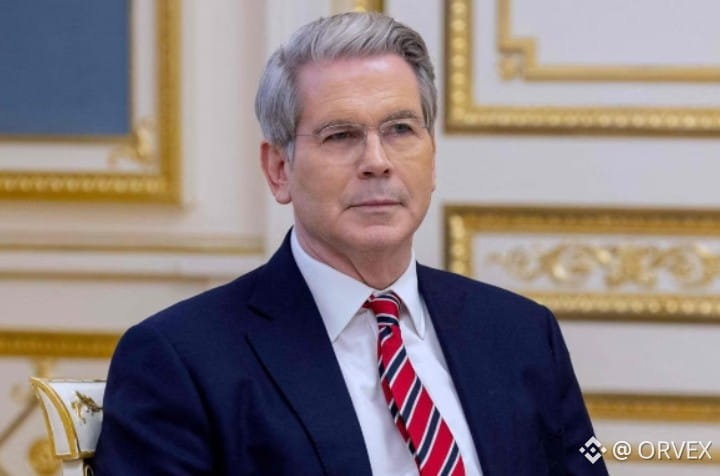
THE US GOVERNMENT SAYS IT IS ABOUT TO SEIZE $1 BILLION IN IRANIAN CRYPTO. 🚨
Treasury Secretary Scott Bessent said it out loud on Thursday: "We're probably going to seize $1 billion of crypto this week." He added that the US knows where the assets are and is isolating them.
I went through every report on this so you don't have to. Here is what is actually going on:
🔒 In April, the US said it had already seized about $500 million of Iran-linked crypto
💵 Tether, the company behind USDT, says it froze $550 million this year on US sanctions orders
🏦 On September 17, the US sanctioned an Iranian crypto exchange called BitBank for allegedly moving hundreds of millions in Bitcoin to the Revolutionary Guard
FOR BEGINNERS
governments can't touch Bitcoin directly the way they freeze a bank account. But they CAN pressure the companies that sit around it, like exchanges and stablecoin issuers. When Tether freezes a wallet, that money is stuck. That is how a "decentralized" asset still ends up getting frozen when the government decides to act.
Iran has been using crypto to get around sanctions and settle trade. Now the US is going straight after those wallets.
Nobody knows yet exactly which wallets or how it will be done. But a $1 billion move would be the biggest crypto seizure tied to a country in the middle of an active conflict.
Do you think crypto is still a way around sanctions, or is that era ending? 👇
$BTC #Sanctions #Bessent #USTreasury #CryptoSeizure #BinanceSquare
2
757
·
--
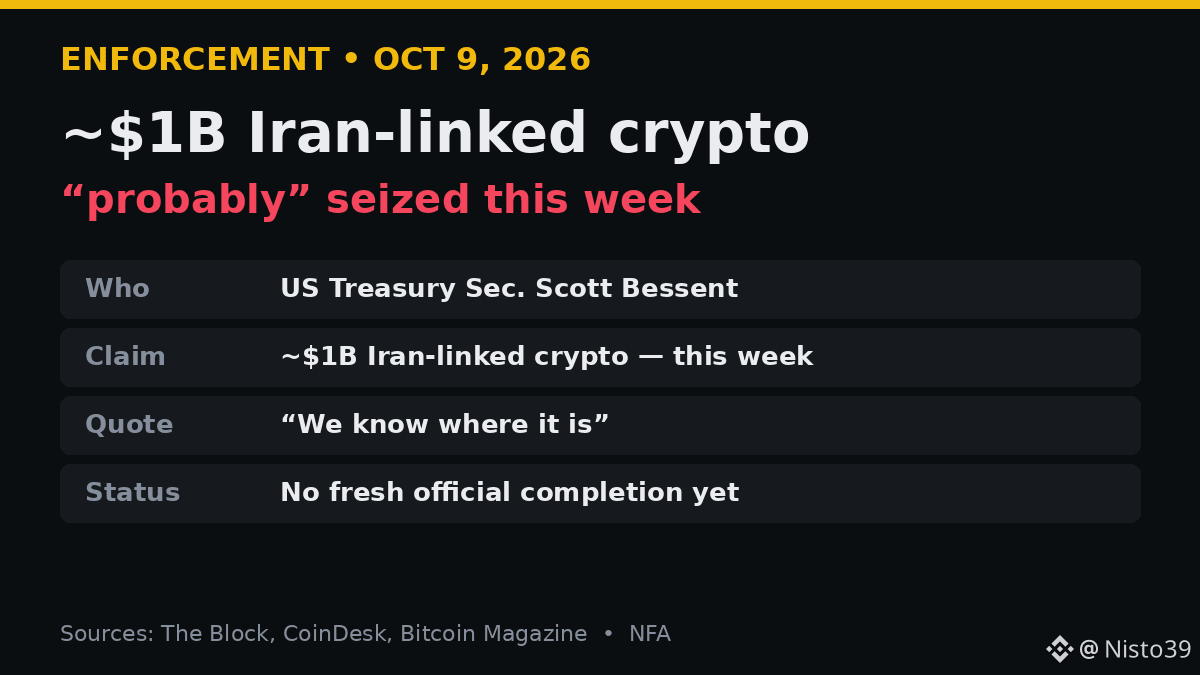
US Treasury: “probably” ~$1B Iran-linked crypto seizure this week
Treasury Secretary Scott Bessent (Oct 9, NPolicy Summit):
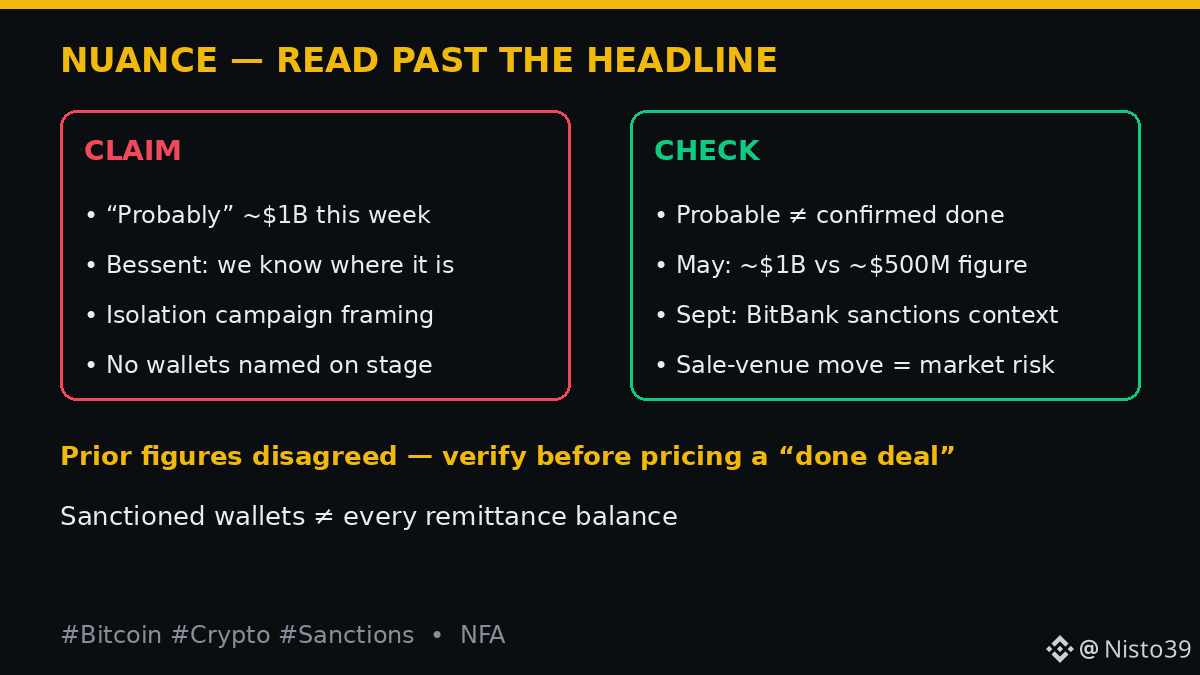
• Said the US will “probably” seize about $1 billion in Iran-linked cryptocurrency “this week”
• “We know where it is” — framed as part of an “absolute isolation” campaign
• Did NOT name wallets, exchanges, or tokens on stage
• Important: Treasury has NOT published a fresh official confirmation of a completed new seizure yet
Context (not the same headline):
• May: Bessent cited ~$1B seized; a Treasury release around then pointed to ~$500M
• Sept: sanctions action on BitBank (alleged BTC flow to IRGC-linked actors)
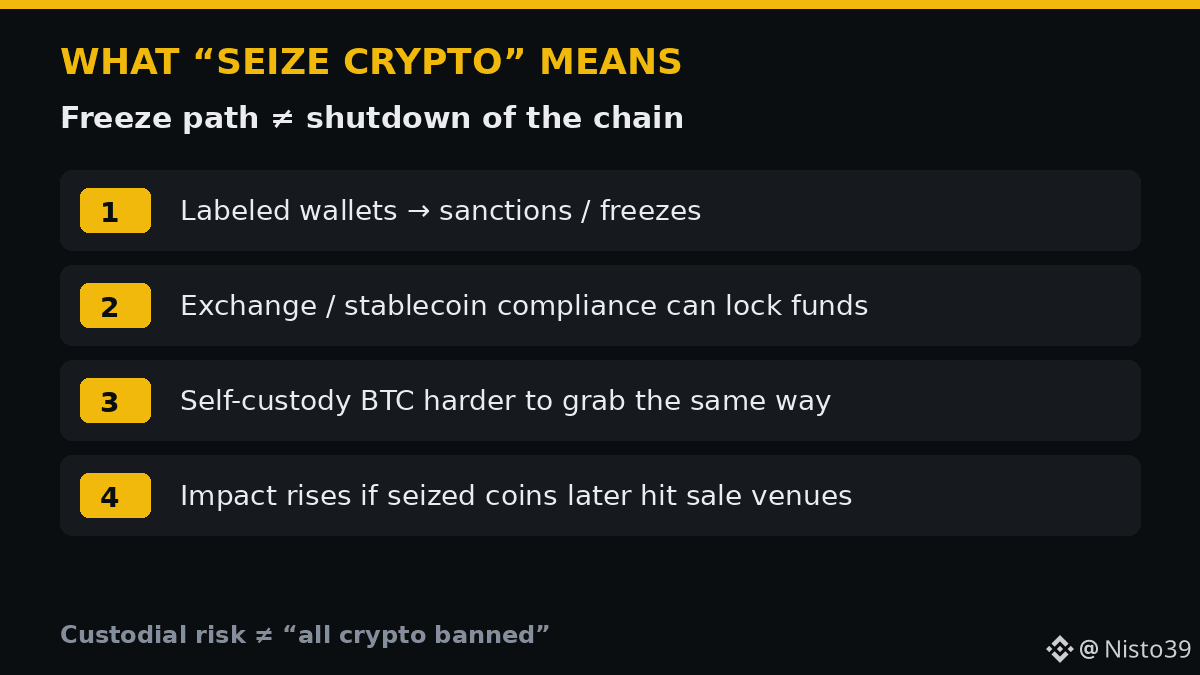
What “seize crypto” usually means (plain words):
On a chain, coins sit at addresses. Governments often freeze or seize through custodians (exchanges, stablecoin issuers) or by sanctioning labeled wallets. Self-custody $BTC that never touches a compliant venue is harder to “grab” the same way — but labeled funds can still become radioactive if they later move to sale venues.
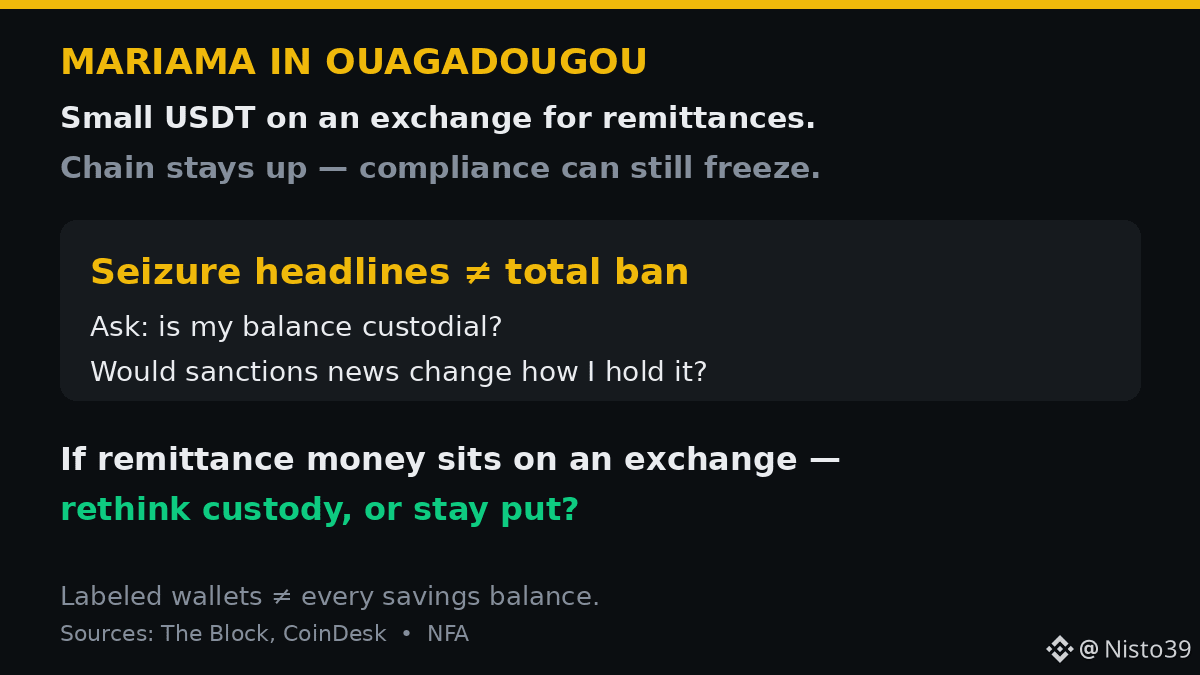
Why this matters for Mariama in Ouagadougou:
She keeps a small USDT balance on an exchange for family remittances. Headlines like this are a reminder: “crypto on an exchange” can be frozen by compliance even when the blockchain itself is not shut down. Seizing sanctioned wallets ≠ banning all crypto — but custodial risk is real.
Nuance: “probably this week” ≠ already done. Market impact depends on whether seized funds later hit sale venues.
If you hold remittance money on an exchange — does a sanctions headline make you rethink custody, or stay put? 👇
Not financial advice. Not a forecast. DYOR. Sources: The Block, CoinDesk, Bitcoin Magazine (Bessent Oct 9 remarks; prior May/Sept enforcement context).
#Bitcoin #Crypto #Sanctions
70

UK sanctions 3 crypto exchanges linked to Russia
- UK imposes sanctions on 3 crypto exchanges and 2 payment services
- Reason: accused of helping Russia evade financial sanctions
- 2 of them processed transactions linked to the Kremlin-backed A7 network
- Specific details have not been disclosed in the RSS source
#BinanceSquare #CryptoNews #Sanctions #UK #Russia
$btc $eth
vlikevn Titanbot
Source: CoinDesk
5
Log in to explore more content
Join global crypto users on Binance Square
⚡️ Get latest and useful information about crypto.
💬 Trusted by the world’s largest crypto exchange.
👍 Discover real insights from verified creators.
Email / Phone number
Trending Topics
1
#BinanceToResumePhaseOneOfWithdrawals
14 views
19 Discussing
2
#BinanceHadAlreadyCovered$6BofHackLoss
488 views
14 Discussing
3
#FBIConfirmsNorthKoreaIsResponsibleForBinanceCryptoHack
2,321 views
29 Discussing
4
#BinanceSAFUFundTransferCompleted7499BTC
60,675 views
1,086 Discussing
5
#BinanceRecovery90% of stolen assets
179,376 views
199 Discussing
6
#YiHe:ProofOfReserves:10TokensAt100%Backing
163,659 views
931 Discussing
7
#BackedNotBroken:RichardTengSaysUsersBearNoLoss
57,238 views
605 Discussing
8
#B14gReportsUnauthorizedTransferOfAbout97MCORE
2,663 views
78 Discussing
9
#USSpotETHETFsPost23StraightDaysOfNetOutflows
2,766 views
82 Discussing
10
#CZSaysCompensationIsinPlaceUsersAreProtected
147,303 views
1,491 Discussing