

ATB Cryptos
1.2k Posts

ATB Cryptos
Report
Block User
Crypto Analyst || Alpha Content and Blockchain Enthusiast ||Do Your Own Research & always Trade at your own risk.
378 Following
195 Followers
1.8K+ Liked
Posts
All
Quotes
Videos
·
--
Bitcoin reclaims $81,000 — a possible major sign of strength
Bitcoin rebounded 2% in the past 24 hours and briefly reclaimed $81,000.
It also retook its 50‑day exponential moving average, which analysts call the first major sign of strength.
More than $1 billion of Bitcoin left exchanges for self‑custody over the same period.
A mysterious investor opened a $72.1 million long position on Bitcoin with 30x leverage.
The Federal Reserve’s FOMC meeting today could drive volatility; experts expect rates to stay unchanged, but a surprise move may cause turbulence.
Whales have realized $156 million in profits, their total holdings fell by 8,162 units, and the Coinbase Premium index dropped to –0.17.
Key support sits near $81,000; a breach could test $67,000, while bullish targets are $84,500, $92,000 and $104,000.
Will the upcoming FOMC spark a Bitcoin rally or trigger a correction?
#Bitcoin #FOMC #Whales #CryptoMarket #MacroEconomy

37
·
--
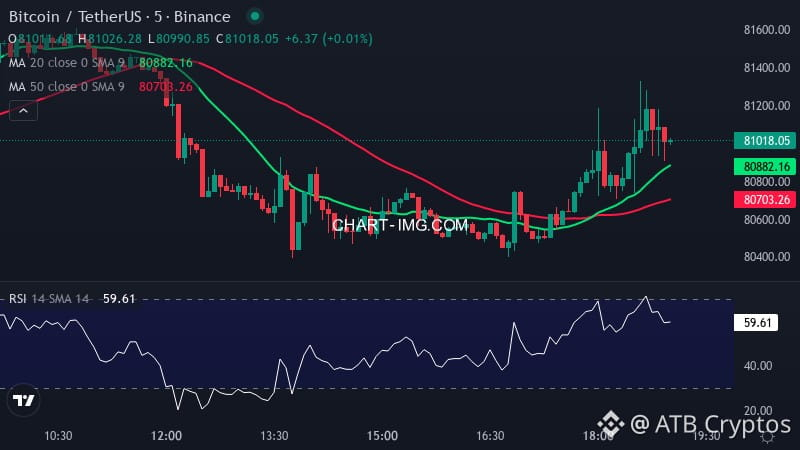
BTC is holding just above key moving averages, eyes on $81327.24 resistance.
🔹 Trend Structure: Current price $81011.68 sits above the 20‑SMA $80881.84 and 50‑SMA $80703.13, confirming bullish alignment.
🔹 Momentum: RSI (14) at 58.26, indicating neutral/healthy momentum.
🔹 Key Levels: Resistance $81327.24, Support $80472.39 for the next 24 hours.
What’s your bias for BTC/USDT in the next hour?
$BTC #BTC #Crypto #TechnicalAnalysis #ATBCryptos
4
·
--
Bitcoin sees its biggest exchange outflow in five weeks ahead of the Fed decision.
Santiment recorded a net outflow of 14,942 BTC from trading platforms, the largest daily outflow in five weeks.
The move precedes the Federal Reserve’s decision on Wednesday and the release of GDP and PCE data on Thursday.
Santiment noted that moving Bitcoin off exchanges could signal less immediate selling pressure, referencing a similar 17,755 BTC outflow on September 22 that preceded a rise above $86,600.
Spot BTC ETFs have posted over $26 million of net outflows this October after previous inflows totalling $6.2 billion in August‑September.
MARA Holdings transferred 1,000 BTC (≈$80.19 million) to BitGo, a transaction flagged by Lookonchain but not confirming a sale.
Do you see these outflows as a bullish signal or a warning of upcoming volatility?
#Bitcoin #ExchangeOutflow #FedDecision #SpotBTCETF #Crypto

1
1
·
--
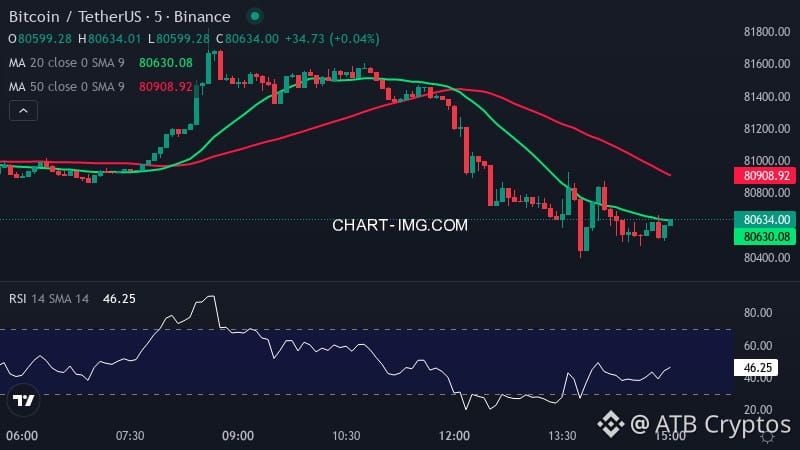
BTC/USDT slides below short‑term averages, testing support.
🔹 Trend Structure: Current $80606.00 sits below 20 SMA $80628.68 and 50 SMA $80908.36, confirming bearish alignment.
🔹 Momentum: RSI (14) 51.23 – neutral / healthy.
🔹 Key Levels: 24H Resistance $80927.51, Support $80397.14.
Will you go short or hold for a bounce on BTC/USDT?
$BTC #BTC #Crypto #TechnicalAnalysis #ATBCryptos
1
26
·
--
Bitcoin heads for a second October loss as demand weakens.
Bitcoin is down 3.3% as of October 28, trading near $81,350, below September’s close of $83,570.
From 2020 to 2024 the cryptocurrency posted average October gains of about 18%, but October 2025 recorded a 3.8% loss, extending the losing streak.
CryptoQuant’s 30‑day apparent demand metric read –76,000 BTC on October 25 and has stayed negative since October 14, indicating fewer buyers than new supply.
The Coinbase Premium fell to –0.146 on October 24, its lowest since late June, with an October average of –0.093, roughly three times September’s level.
Short‑term traders’ paper profits dropped from roughly 33% in September to 8%.
CryptoQuant’s Bull Score Index slid from 90 in late September to 60 since October 19, though six of ten components remain positive.
Bitcoin now sits near key support: 365‑day moving average $77,585, short‑term cost basis $74,041, and 200‑day average $73,028.
Do you see this as a temporary dip or the start of a broader shift in Bitcoin demand?
#Bitcoin #Crypto #FinTech #MarketAnalysis

1
29
·
--
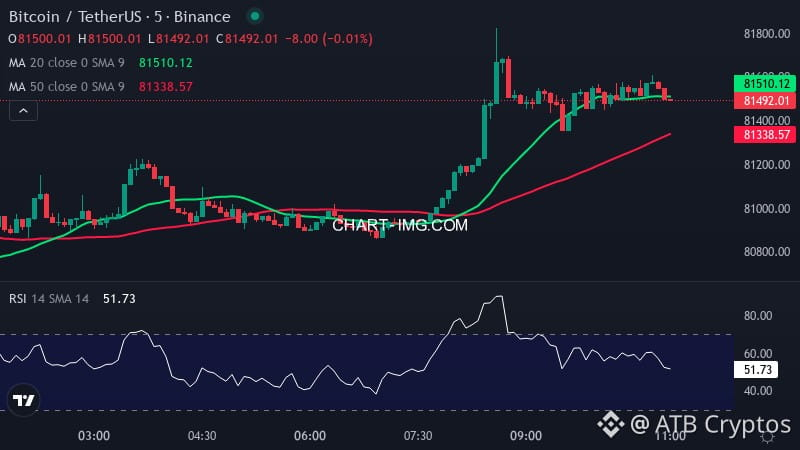
BTC/USDT holds steady in a tight range around $81,500.
🔹 Trend Structure: Current Price $81500.01 sits just below the 20‑SMA $81510.52 while remaining above the 50‑SMA $81338.73.
🔹 Momentum: RSI (14) is 54.47, indicating neutral, healthy momentum.
🔹 Key Levels: 24‑hour Resistance at $81606.86 and Support at $81351.05.
Are you leaning bullish or bearish on BTC/USDT?
$BTC #BTC #Crypto #TechnicalAnalysis #ATBCryptos
1
44
·
--
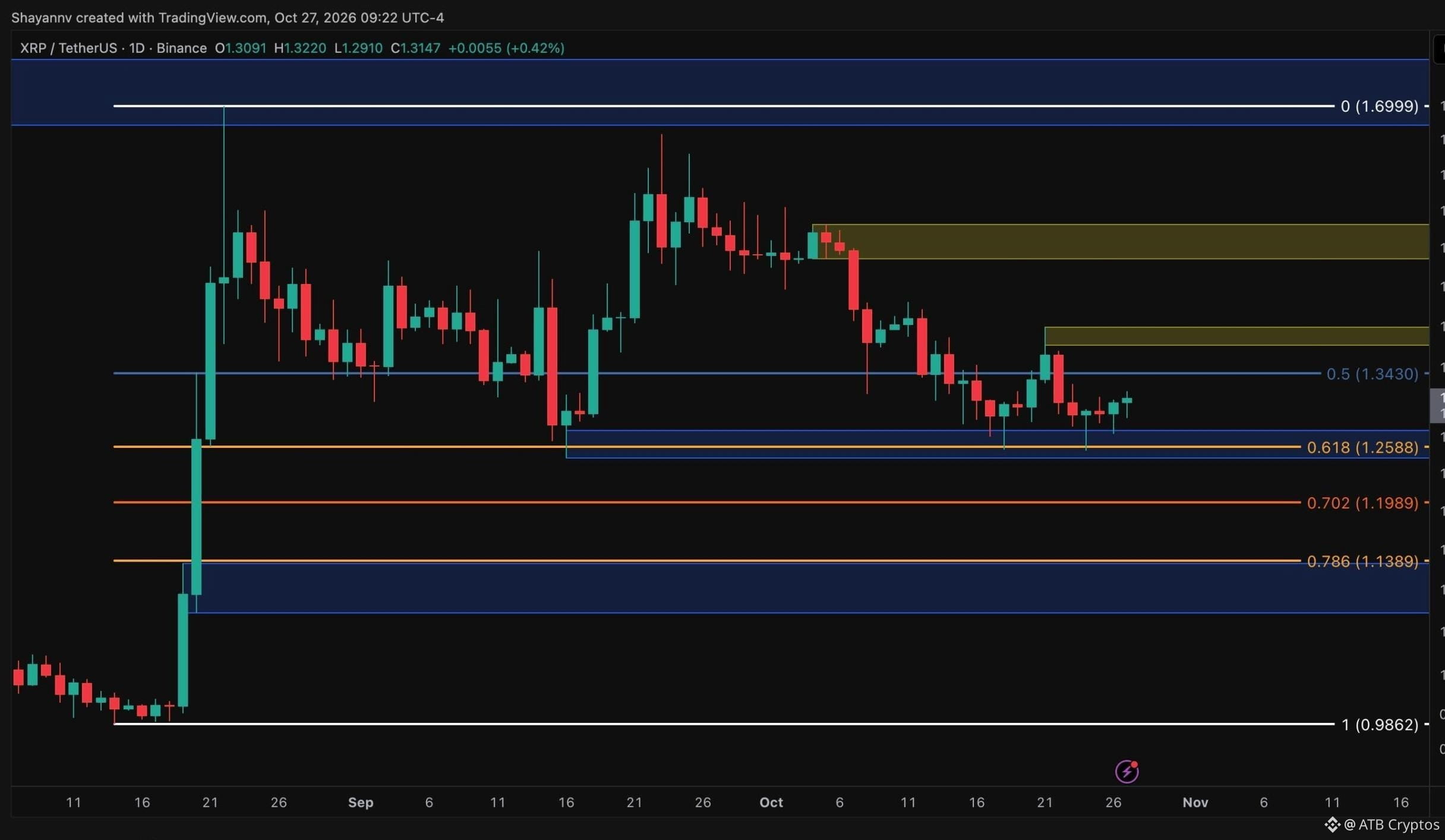
XRP eyes $1.34 — can it reclaim the level to reignite the rally?
• On the daily chart XRP is correcting the August rally from $0.99 to the $1.70 high.
• The price sits just below the 0.5 Fibonacci retracement at $1.34, now acting as resistance.
• The key support at $1.26 (0.618 retracement) has held twice, though a reversal is not confirmed.
• A breakout above $1.34 would open the path toward the $1.40 supply zone and eventually the $1.50 overhead barrier.
• Conversely, a decisive daily close below $1.26 could push the pair toward $1.20 (0.702 retracement) and further to $1.14 (0.786 demand block).
• The 4‑hour chart shows a descending channel since the late‑September high near $1.65, with the upper boundary around $1.34 overlapping the daily 0.5 retracement.
• A clear breakout could trigger a relief rally to $1.40; a rejection would likely send price back to test $1.26 and then $1.20.
Do you think the $1.34 barrier will hold or break, and what would that mean for XRP's next move?
#XRP #CryptoAnalysis #Ripple #TechnicalAnalysis #MarketStructure
1
67
·
--
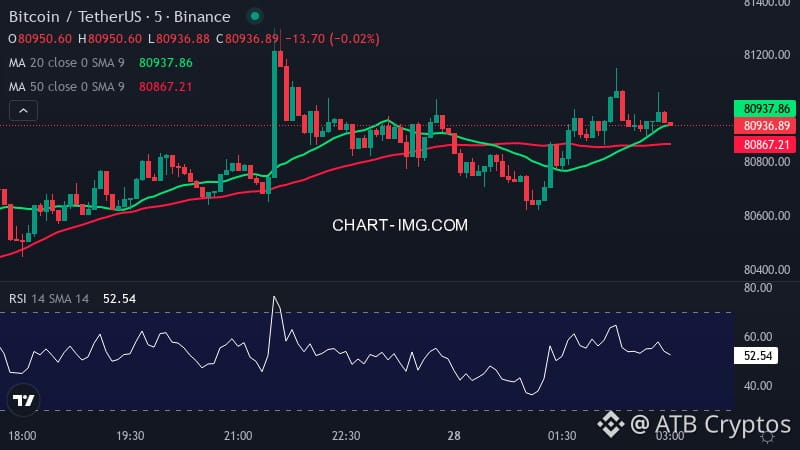
BTC/USDT hovers just above its 20‑period SMA, keeping bullish momentum.
🔹 Trend Structure: Price $80950.59 sits above 20 SMA $80934.42 and 50 SMA $80866.87, confirming bullish alignment.
🔹 Momentum: RSI (14) is 54.6, indicating neutral but healthy momentum.
🔹 Key Levels: 24‑hour resistance $81150, support $80621.22.
What’s your bias on BTC/USDT—long or short?
$BTC #BTC #Crypto #TechnicalAnalysis #ATBCryptos
1
67
·
--
South Korea eyes a 2029 start for its crypto tax, delaying implementation again.
A Blue House official confirmed on October 25 that “taxation of virtual assets is being discussed with a view to delaying implementation,” marking a fourth postponement. The most likely new start date is January 2029, when the United States is set to join the OECD’s Crypto‑Asset Reporting Framework (CARF) for data sharing.
The proposed levy is 22 % of gains above 2.5 million won (about $1,886) after acquisition costs are deducted. Lawmakers will amend the Income Tax Act during the tax‑law reform debate beginning in November, with a final decision expected between late November and early December.
A petition to postpone the tax for two years reached 50,000 signatures, warning that most crypto investors are facing heavy losses and that the tax could drive users to offshore platforms. Regulators have recently blocked 27 overseas exchanges, including KuCoin and MEXC.
Will further delays protect investors or weaken future tax compliance?
#SouthKorea #CryptoTax #OECD #VirtualAssets #FinTech

1
1
·
--
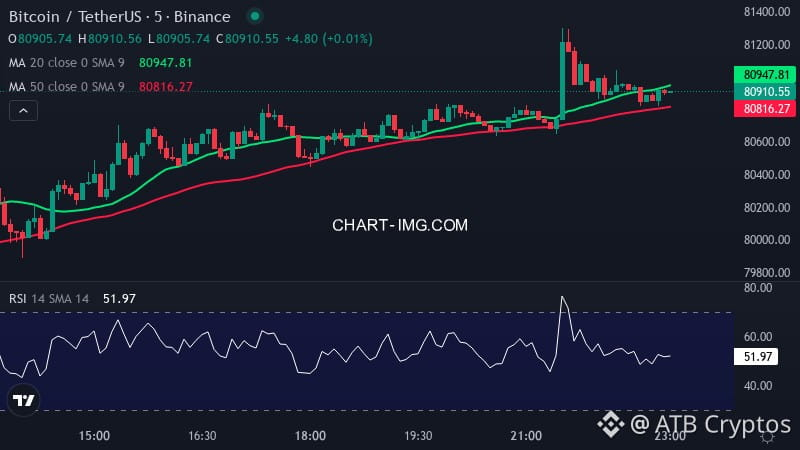
BTC/USDT holds steady in a tight range as buyers eye the 20‑SMA.
🔹 Trend Structure: Current Price $80905.74 sits just below the 20 SMA $80947.57 and above the 50 SMA $80816.17, indicating consolidation.
🔹 Momentum: RSI (14) 43.96 (Neutral / Healthy).
🔹 Key Levels: 24‑hour Resistance $81300, Support $80652.
What’s your bias—long, short, or wait?
$BTC #BTC #Crypto #TechnicalAnalysis #ATBCryptos
1
1
·
--
Ripple taps the XRP Ledger for instant supplier payments.
On October 27 Ripple and C2FO announced C2FO Instant Pay, using the XRP Ledger and RLUSD to settle business payments in seconds, cutting the days‑long wait of traditional bank transfers.
Suppliers receive funds instantly while invoice terms and due dates remain unchanged; capital providers fund the payments and the XRPL handles settlement.
RLUSD, Ripple’s US‑dollar‑backed stablecoin, now has a market capitalization of more than $2.5 billion with over $1 billion issued on the XRP Ledger, expanding its use into supply‑chain finance.
How will faster, deterministic settlement on the XRP Ledger reshape supplier financing?
#XRP #FinTech #SupplyChainFinance #Stablecoin

7
·
--
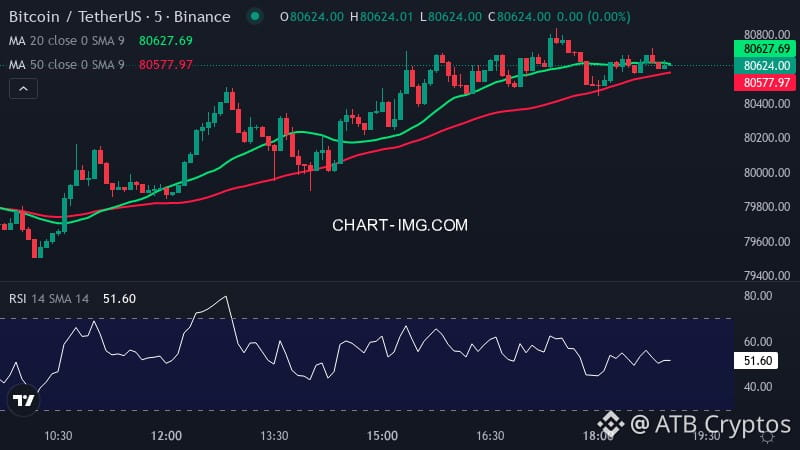
BTC eyes a tight range as price hovers near key SMAs.
🔹 Trend Structure: Current $80624.00 sits just below the 20-SMA $80627.69 and above the 50-SMA $80577.97, indicating a flat bias.
🔹 Momentum: RSI (14) at 62.16, suggesting neutral but healthy momentum.
🔹 Key Levels: Resistance $80836.01, Support $80443.85.
What’s your next bias on BTC—still range-bound or gearing up for a breakout?
$BTC #BTC #Crypto #TechnicalAnalysis #ATBCryptos
·
--
Arthur Hayes proposes futures contracts for AI compute.
On October 27 he published an essay outlining futures and perpetual swaps tied to Flop Network’s proposed compute market, where AI agents would pay for computing power using FLOP.
The Flop Reference Compute Rate (FRCR) would be calculated hourly using a volume‑weighted FLOP price per GigaFLOP of computing capacity.
Quarterly futures would settle on the last Friday of March, June, September and December, with contracts using US dollars for margin and profits, creating a quanto derivative because the underlying is priced in FLOP.
The perpetual swap would use an eight‑hour time‑weighted average of the difference between its trading price and the FRCR to calculate funding payments, mirroring crypto perpetuals where traders on the expensive side pay those on the cheaper side.
Market makers could recreate futures exposure by buying or supplying Flop Compute Units (FCUs), and suppliers would post FLOP bonds that they could lose if they fail to deliver the promised computing work.
The design relies on Flop Network first establishing a functional spot market; network blocks would record inference tasks, completed work, and fees paid to miners, providing the exchange rate between FLOP and computing capacity.
Do you think a dollar‑denominated compute futures market can attract enough liquidity, or will the need for a reliable spot market be the limiting factor?
#AI #Derivatives #FinTech #Crypto

26
·
--
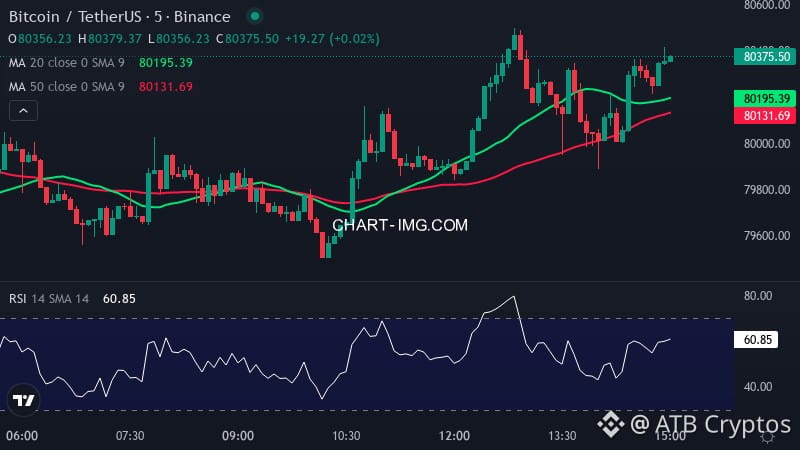
BTC is nudging higher, sitting just above key moving averages.
🔹 Trend Structure: Current price $80356.23 > 20 SMA $80194.42 > 50 SMA $80131.31 (Bullish Alignment)
🔹 Momentum: RSI (14) 69.42 – Neutral / Healthy
🔹 Key Levels: 24H Resistance $80415, Support $79890
What’s your bias for BTC in the next few hours?
$BTC #BTC #Crypto #TechnicalAnalysis #ATBCryptos
🔹 Trend Structure: Current price $80356.23 > 20 SMA $80194.42 > 50 SMA $80131.31 (Bullish Alignment)
🔹 Momentum: RSI (14) 69.42 – Neutral / Healthy
🔹 Key Levels: 24H Resistance $80415, Support $79890
What’s your bias for BTC in the next few hours?
$BTC #BTC #Crypto #TechnicalAnalysis #ATBCryptos
26
·
--
Ripple scores final OCC approval for its National Trust Bank
The Office of the Comptroller of the Currency granted final approval, creating a federally supervised platform for Ripple’s RLUSD stablecoin and enterprise digital‑asset custody.
The charter follows conditional OCC approval in December 2025 and mirrors moves by Circle, BitGo, Fidelity and Paxos to shift trust companies to the federal system.
The bank will manage reserves backing RLUSD and act as collateral trustee, bringing federal banking oversight to the infrastructure institutions already use.
Do you think federal charters will become the new standard for stablecoin issuers?
#Ripple #Stablecoin #FinTech #DigitalAssets #OCC

35
·
--
Zcash’s meteoric rise just hit a rough patch.
ZEC surged to near $1,700 in September, then shed more than 20% in the last month.
Grayscale’s ZEC ETF recorded $41.09 million of inflows last week, ending three weeks of outflows.
Monday saw $10.45 million exit, Tuesday $1.61 million entered, Wednesday $15.18 million, Thursday $14.23 million, and Friday $20.52 million, putting the fund back in positive territory for the first time in four weeks.
Network Upgrade 7, slated for mainnet activation on November 5 2026, shortens block time from 75 seconds to 25 seconds.
Developers also plan post‑quantum signature opcodes in January 2027 to protect wallets from future quantum attacks.
Analysts cite $834 as critical support; a break could push ZEC toward $480, $300, $200, or $74.
Cameron Winklevoss forecasts potential price above $5,000, calls Zcash an “AI hedge” and a “quantum hedge,” and notes a market value around $25 billion—about 2 % of Bitcoin’s market cap.
Do you think Zcash can rebound, or is a deeper correction inevitable?
#Zcash #Crypto #PrivacyCoin #FinTech #Blockchain
62
·
--
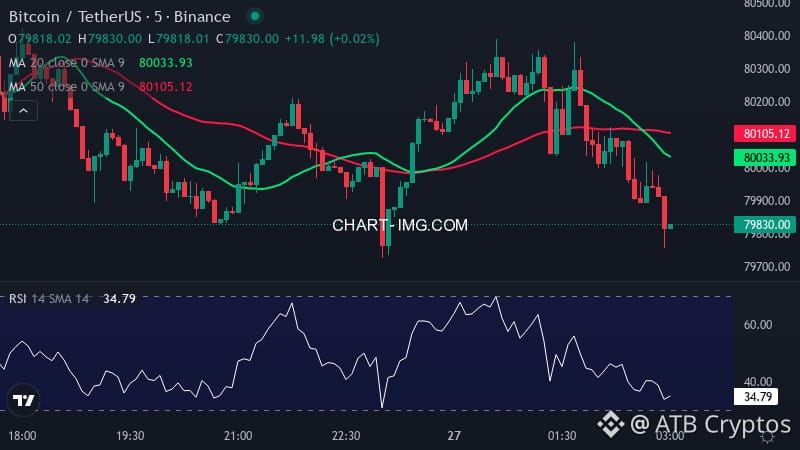
BTC eyes a potential bounce as price hovers near key SMA clusters.
🔹 Trend Structure: Current Price $79818.01 sits below 20‑SMA $80044.63 and 50‑SMA $80108.04, indicating bearish alignment.
🔹 Momentum: RSI (14) 21.14 (Oversold)
🔹 Key Levels: 24‑hour Resistance $80379.37, Support $79756
What’s your next bias on BTC – short or long?
$BTC #BTC #Crypto #TechnicalAnalysis #ATBCryptos
73
·
--
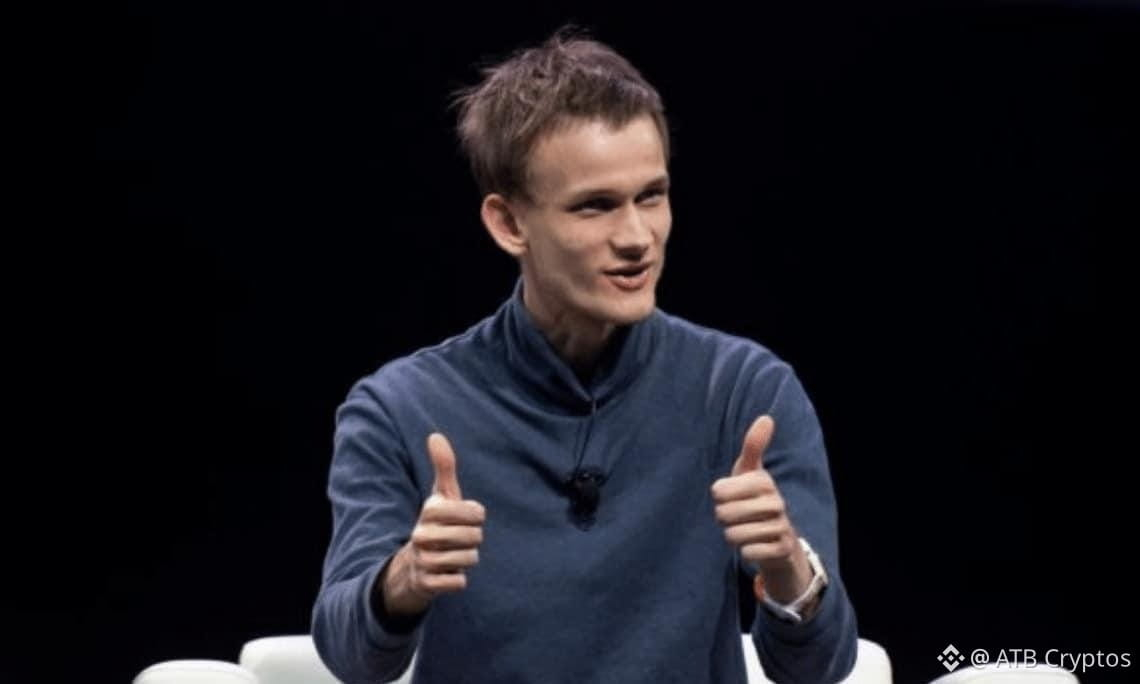
Vitalik Buterin backs Kimi 3.1’s self‑imposed limits on offensive AI tools.
He posted on X on Monday saying he is comfortable with the AI model Kimi 3.1 deliberately leaving top‑end offensive cyber capabilities out of its training data.
He argues the trade‑off buys defenders more time to prepare.
“Discriminating against use cases is MUCH less bad than discriminating against users,” he wrote, noting the world needs time to harden systems and check old code before the full weight of very powerful cyber attacks is upon us.
He prefers a model that declines certain tasks for everyone over one that turns certain people away.
In May 19 he countered fears that AI‑powered bug hunting would overwhelm developers, saying AI‑assisted formal verification could become one of the strongest defenses in crypto.
He said a model can now write both code and its proof, leaving developers to confirm the intended statement.
On October 8 he warned AI‑assisted mathematics could weaken ECDSA and similar cryptographic systems sooner than expected, but advised users not to scramble to move funds to new wallets today.
Do you think restricting AI model use cases is a sustainable path for cybersecurity, or does it risk creating an elitist access system?
#AI #Cybersecurity #Ethereum #FormalVerification
·
--
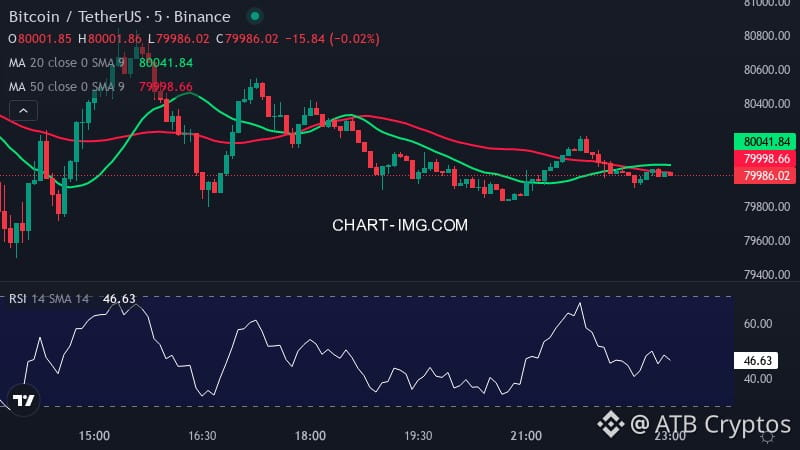
BTC is stuck in a tight range as price hovers near key averages.
🔹 Trend Structure: Current Price $80001.86 is below the 20 SMA $80042.64 and just above the 50 SMA $79998.97.
🔹 Momentum: RSI (14) 32.47 (Neutral / Healthy).
🔹 Key Levels: 24H Resistance $80211.47, Support $79888.93.
What’s your next bias on BTC – short or long?
$BTC #BTC #Crypto #TechnicalAnalysis #ATBCryptos
2
·
--
AI altcoins could face steep drops, warns analyst.
Ali Martinez mapped bearish chart setups for Venice Token (VVV), OriginTrail (TRAC) and AI Rig Complex (ARC), calling the sector “in big trouble.”
• Venice Token shows a head‑and‑shoulders pattern.
Neckline near $21; a four‑hour close below would confirm reversal and could send VVV to $13 or $11.
CoinGecko lists VVV around $24, about 16% above the neckline, after a 30‑day decline of over 18% and sitting 29% below its September 21 all‑time high of $35, while still up roughly 1,500% from a year ago.
• OriginTrail trades inside a descending triangle with a floor near $0.38.
A four‑hour close under that floor could trigger a move to $0.26.
TRAC is currently around $0.36, daily volume $6.5 million, and down 9.5% in the past week.
• AI Rig Complex bounced from the bottom of its channel near $0.030 to the mid‑range around $0.060.
Rejection there could push ARC back to $0.014 or $0.0075.
ARC sits near $0.06, posted a 44.5% weekly gain, yet is down 14.5% over the past month.
Bitcoin hovered near $81,000 and the total crypto market cap slipped below $2.7 trillion.
Do you think these technical levels will hold, or could the AI altcoin sector stabilize soon?
#Crypto #AIAltcoins #TechnicalAnalysis #AltcoinMarket

27
Log in to explore more content
Join global crypto users on Binance Square
⚡️ Get latest and useful information about crypto.
💬 Trusted by the world’s largest crypto exchange.
👍 Discover real insights from verified creators.
Email / Phone number