

#lido
lido
255,554 views
664 Discussing
Hot
Latest

·
--
🚨 Lido introduces a new validator model requiring a 32 ETH operator bond, separating capital from staking duties. This structural shift aims to decentralize ETH validation while managing protocol risk. Market participants should monitor activation rates and bond liquidity as key sentiment indicators.
Implication: Increased operator accountability could shift ETH staking dynamics.
💡 What does the new operator bond mean for ETH decentralization? #Lido #Ethereum
$ETH #TradingSignal #CryptoAnalysis
Implication: Increased operator accountability could shift ETH staking dynamics.
💡 What does the new operator bond mean for ETH decentralization? #Lido #Ethereum
$ETH #TradingSignal #CryptoAnalysis

54


·
--
Bullish
🛡️ Lido Unveils "Turbulence Controls" for Lido Lend: What You Need to Know!
Lido DAO is introducing Turbulence Controls—a new safety framework designed for its upcoming lending platform, Lido Lend (a modified fork of Morpho Blue)!
The mechanism aims to protect protocol liquidity during black swan events like collateral hacks, dust attacks, or liquidity squeezes—without giving controllers access to user funds! 🔒
⚙️ How It Works: Two Intervention Modes
1️⃣ Market Freeze 🛑
* Action: Halts new borrowing.
* Flexibility: Borrowers can still repay/close positions and lenders can withdraw.
* Control: Triggered by the Risk Management Committee; lifted via Lido DAO governance.
2️⃣ Market Pause ⏸️
* Action: Full emergency circuit-breaker—suspends all borrowing, repayments, and settlements temporarily.
* Control: Triggered by the Circuit-Breaker Committee; managed & extended via Dual-Governance.
> 💡 Key Takeaway: Market Controllers can restrict market operations during extreme events, but CANNOT access or transfer user assets. Security first!
>
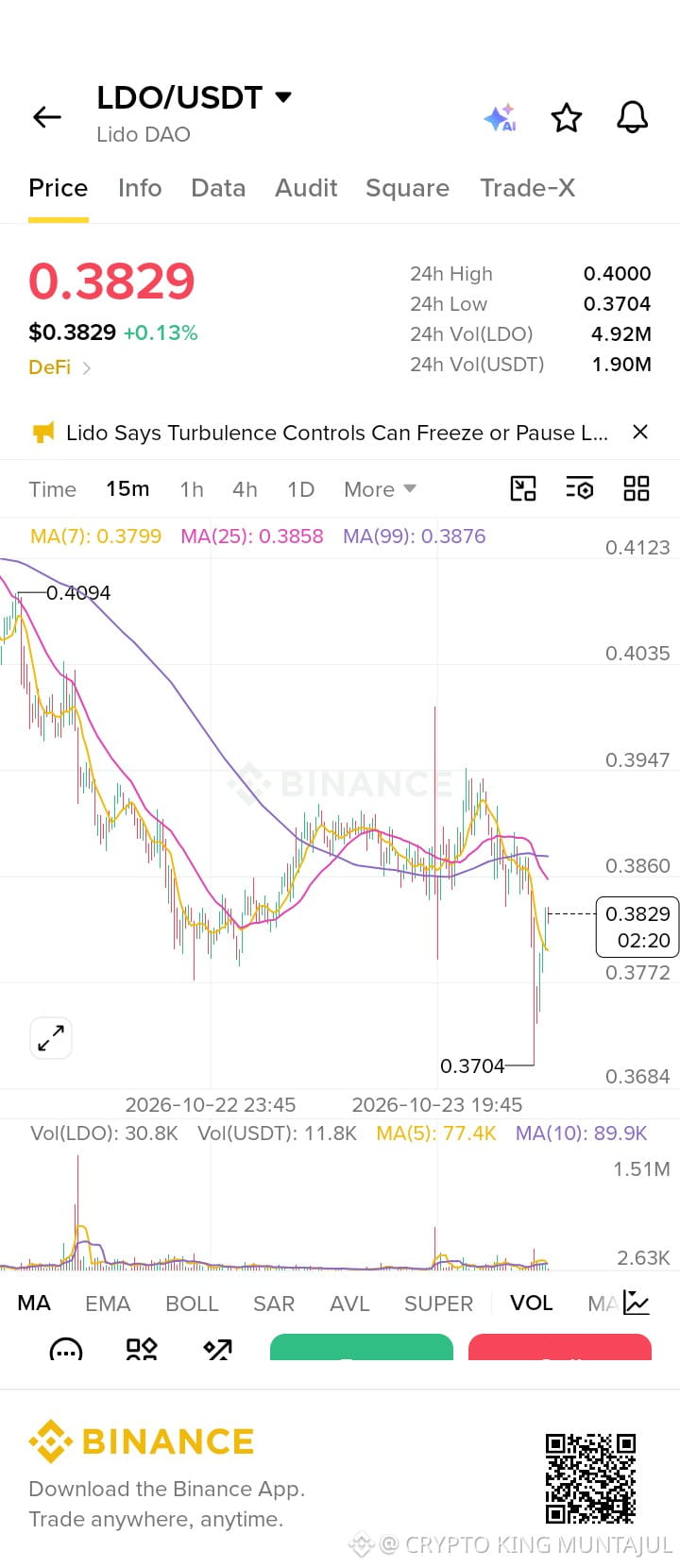
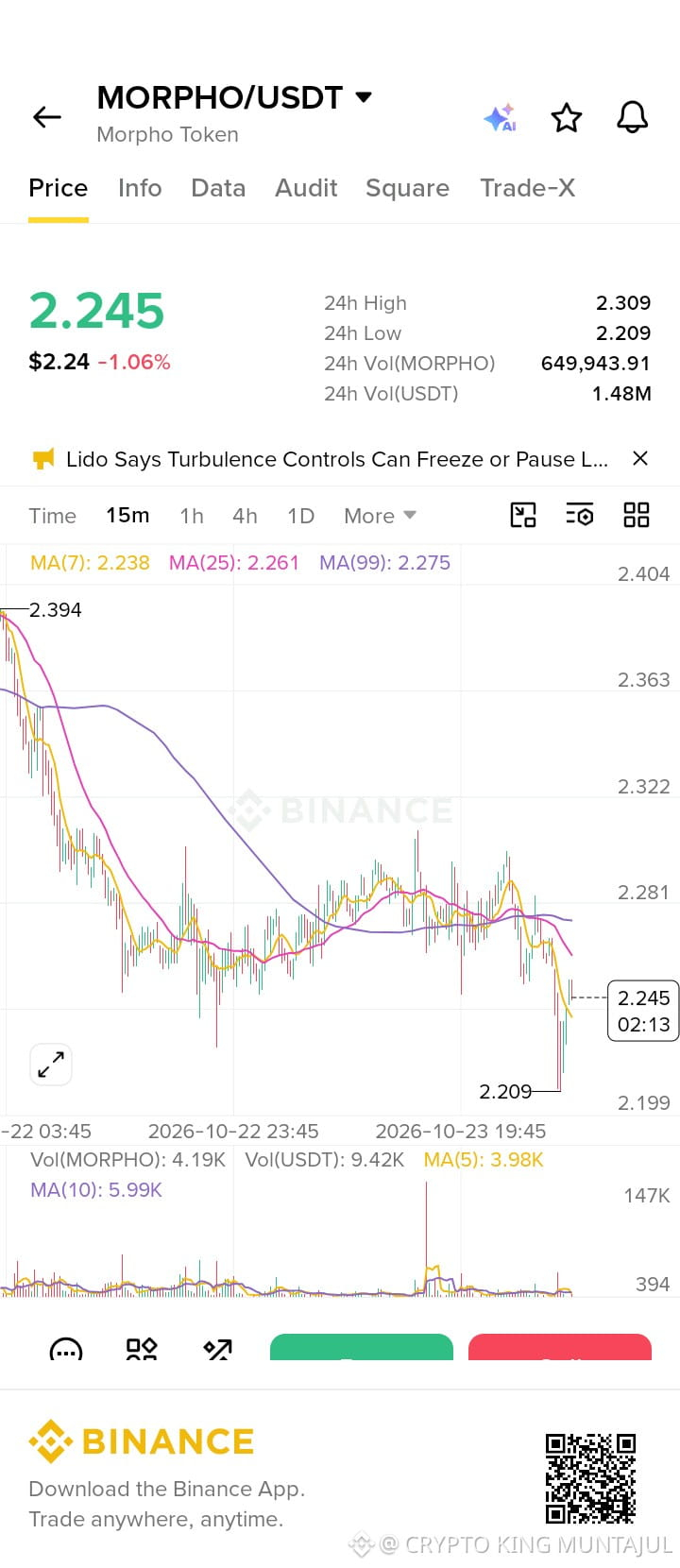
📊 Market Snapshot & Price Action
* $LDO
{future}(LDOUSDT)
: Currently trading at $0.3829 (+0.13%) after touching a local low of $0.3704.
* $MORPHO
{future}(MORPHOUSDT)
: Trading around $2.245 (-1.06%), holding steady near its recent range.
💬 What’s Your Take?
Do circuit breakers like Turbulence Controls make DeFi lending safer, or do they compromise decentralization? 👇 Drop your thoughts below!
Hashtags:
#Lido #LDO #Morpho #defi #BinanceSquare #CryptoNews
🛡️ Lido Unveils "Turbulence Controls" for Lido Lend: What You Need to Know!
Lido DAO is introducing Turbulence Controls—a new safety framework designed for its upcoming lending platform, Lido Lend (a modified fork of Morpho Blue)!
The mechanism aims to protect protocol liquidity during black swan events like collateral hacks, dust attacks, or liquidity squeezes—without giving controllers access to user funds! 🔒
⚙️ How It Works: Two Intervention Modes
1️⃣ Market Freeze 🛑
* Action: Halts new borrowing.
* Flexibility: Borrowers can still repay/close positions and lenders can withdraw.
* Control: Triggered by the Risk Management Committee; lifted via Lido DAO governance.
2️⃣ Market Pause ⏸️
* Action: Full emergency circuit-breaker—suspends all borrowing, repayments, and settlements temporarily.
* Control: Triggered by the Circuit-Breaker Committee; managed & extended via Dual-Governance.
> 💡 Key Takeaway: Market Controllers can restrict market operations during extreme events, but CANNOT access or transfer user assets. Security first!
>
📊 Market Snapshot & Price Action
* $LDO
: Currently trading at $0.3829 (+0.13%) after touching a local low of $0.3704.
* $MORPHO
: Trading around $2.245 (-1.06%), holding steady near its recent range.
💬 What’s Your Take?
Do circuit breakers like Turbulence Controls make DeFi lending safer, or do they compromise decentralization? 👇 Drop your thoughts below!
Hashtags:
#Lido #LDO #Morpho #defi #BinanceSquare #CryptoNews
1
1
104

Lido launches an Ethereum community staking module for large balances, with a small initial rollout
- Lido launches the Community Staking Module (0x02), enabling permissionless access to Ethereum validators with larger effective balances.
- The initial stake allocation is deliberately kept small to manage risk.
- The goal is to separate access from the maximum stake a validator can support.
#BinanceSquare #CryptoNews #Lido #ETH
$eth
#vlikevn Titanbot
Source: NewsBTC
52
Lido highlights the role of liquidity buffers in Ethereum ETP yields
- Lido compared Ethereum exchange-traded products (ETPs) in Europe on October 23.
- Ethereum investment products may advertise staking exposure without putting all their ETH to work in staking.
- Lido’s comparison highlights the cash management choices behind the reward figures investors see.
- The RSS feed did not provide further details.
#Lido #Ethereum #ETP #Staking #CryptoNews BinanceSquare
$eth $ldo ldo
vlikevn Titanbot
Source: NewsBTC
59

·
--
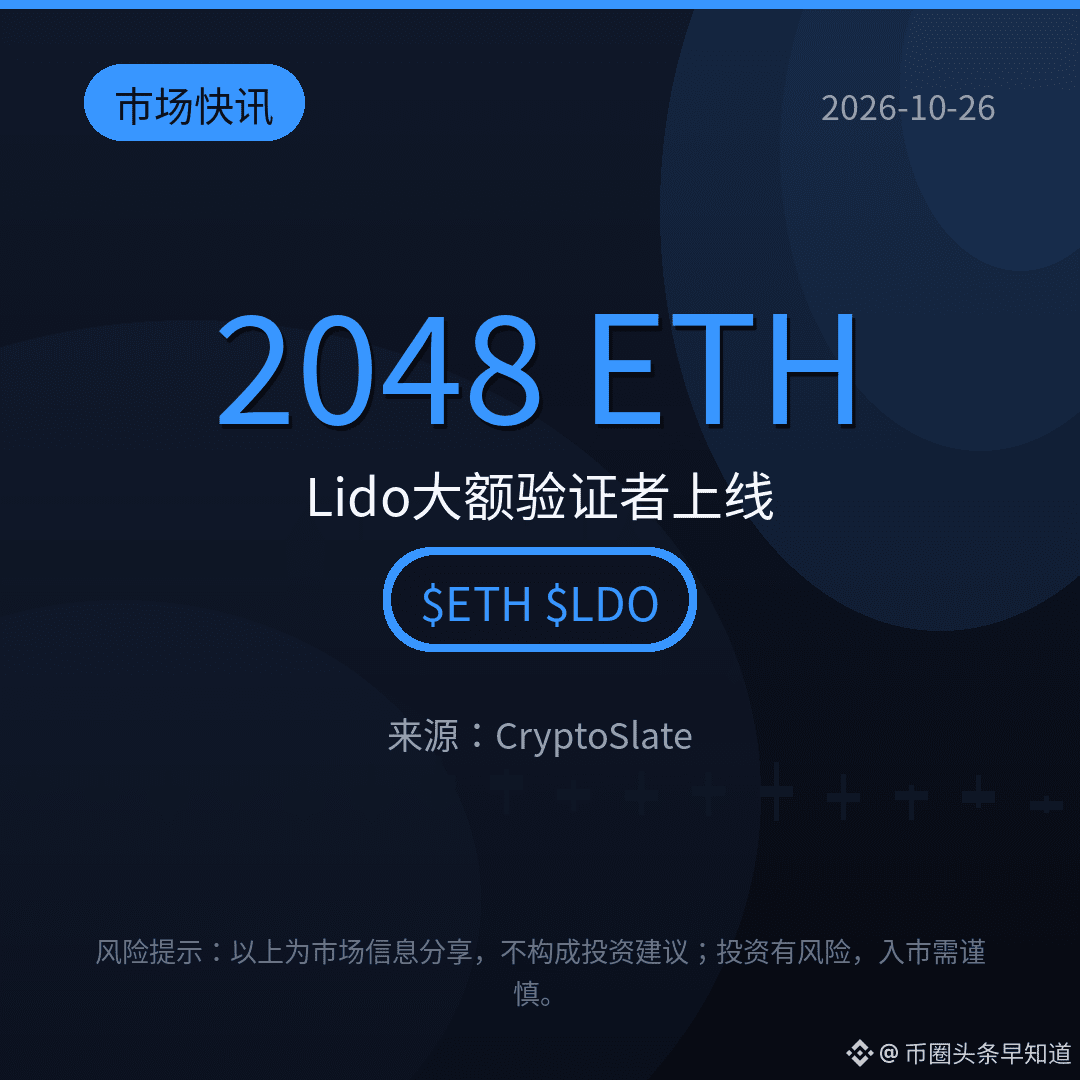
【Market Flash】With a 32 ETH bond, you can run 2,048 validators—Lido 0x02 CSM is here.
Launching October 23: 32 ETH for the first key, then 30 ETH per key; the protocol tops up the stake. The initial allocation is just 0.01% of total value locked, with 32 slots.
The 2,048 is not a committed cap; quotas will be allocated in batches. The barrier is lower, but each node manages more funds—is that good for decentralization or a potential risk for $ETH ?
$ETH $LDO $SOL
#以太坊 #Lido #Staking
(Source: CryptoSlate)
⚠️Risk warning: The above is shared for market information purposes only and does not constitute investment advice. Investing involves risk; please exercise caution.
268

·
--
Moving to a new wallet while a Lido withdrawal is pending? The withdrawal claim is a separate asset to account for.
When you request ETH back through Lido using stETH, its liquid staking token, the protocol issues an unstETH NFT. This non-fungible token represents your place in the withdrawal queue and the right to claim the ETH once the request is finalized.
Lido's contract documentation says that right belongs to the NFT's current owner. Transferring the NFT transfers ownership of the withdrawal request. Moving other tokens to a new address leaves this claim with the address that still holds the NFT.
For a wallet move, include the withdrawal NFT in the asset inventory and verify which address owns it. Finalization makes the ETH claimable; it doesn't automatically send it to the wallet. The owner still has to claim, and that claim burns the NFT.
Source: Lido's existing WithdrawalQueueERC721 documentation.
https://docs.lido.fi/contracts/withdrawal-queue-erc721/
#Ethereum #Lido
80

·
--
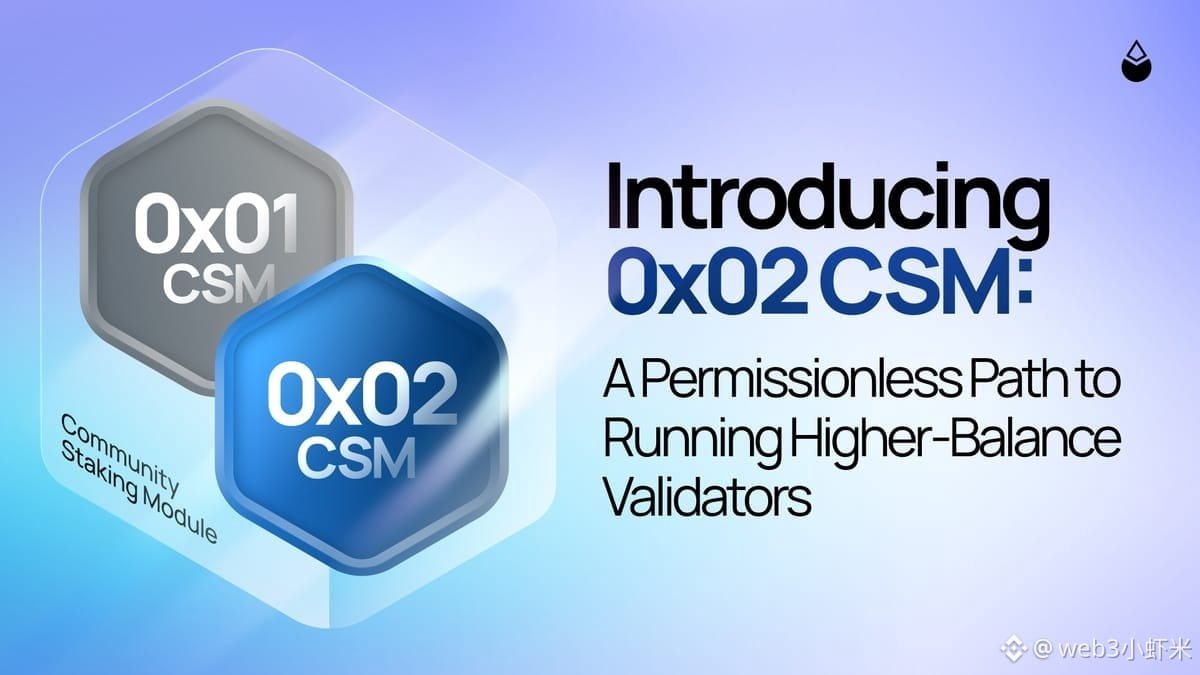
Lido’s 0x02 CSM is officially live (csm.lido.fi).
Previously, managing around 2,048 ETH in stake meant running 64 keys with 32 ETH each. Now, permissionless operators can post a 32–30 ETH bond to run a single validator through CSM with a maximum effective balance of 2,048 ETH, for an approximate capital multiplier of 2.18–2.26x compared with solo staking.
Running alongside the original 0x01 CSM, the initial allocation is just 0.01% of Lido Core TVL (seeding around 32 keys). The process uses two queues—seed deposit → activation → then top-up—with capacity gradually increasing afterward.
The permissionless path for Ethereum validators just got a little wider. $LDO #Lido #ETH
10

·
--
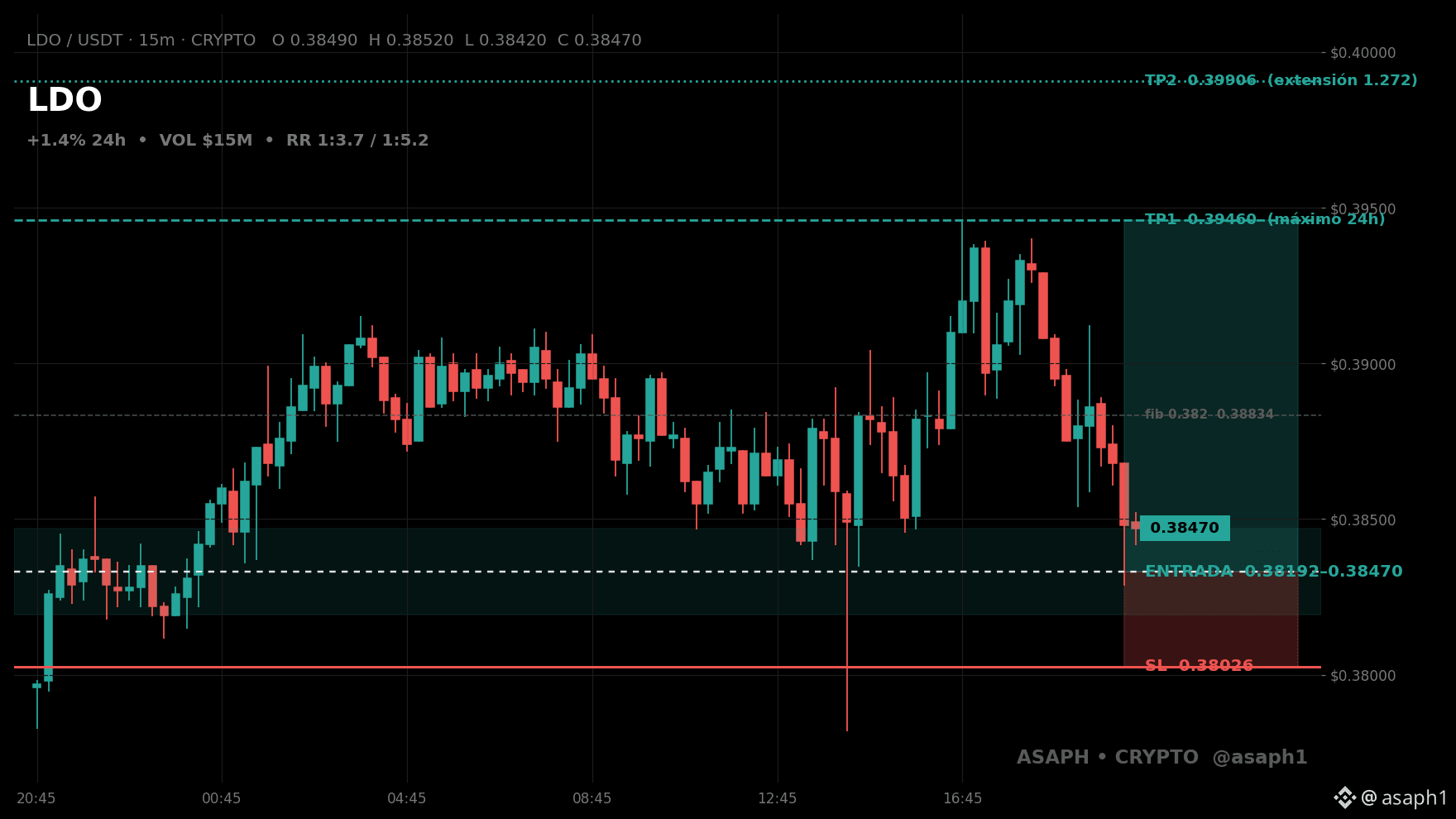
🏦 $LDO: $23B in TVL and the price coiled up — I’m buying the bounce calmly
Blockworks highlighted Lido as the transparency leader among major protocols: $23.09B in TVL. The price has been trading within a one-cent range all day.
Volume is down -22.1% vs. yesterday: there’s no one pushing the decline.
15m RSI at 38.8: there’s still room before it gets overbought.
The Fear and Greed Index reads 50, neutral: no one’s panicking or euphoric; the market is waiting.
Blockchair: 44,977 txs in the BTC mempool—the major network is still moving.
With the decline happening on low volume and TVL intact, this is where the bounce can breathe.
📊 LDO LONG signal
📍 Current price: $0.3847
🎯 Zone: $0.381925–$0.38470 (dist. 0.0%)
I’m entering with a limit order, splitting it equally across the zone.
🛑 Stop: $0.38026 (-0.80% from the average entry, confirmed BEFORE entering)
Risk per trade: 2% of capital.
✅ TP1: $0.3946, the 24h high: I’ll take profit on 50% and move the stop to break-even.
🏁 TP2: $0.3990608, the 1.272 extension if the high gives way.
R/R: 1:3.70 · 1:5.16
⏳ Valid: next 4h / as long as $0.38026 holds
Will LDO break $0.3946, or will volume dry up and stop me out?
If you’re serious about trading DeFi, follow the profile — live price here 👇 LDO
LDO #LDO #Lido #DeFi
This is a plan, not financial advice.
🏦 $LDO : $23B in TVL and the price coiled up — I’m buying the bounce calmly
Blockworks highlighted Lido as the transparency leader among major protocols: $23.09B in TVL. The price has been trading within a one-cent range all day.
Volume is down -22.1% vs. yesterday: there’s no one pushing the decline.
15m RSI at 38.8: there’s still room before it gets overbought.
The Fear and Greed Index reads 50, neutral: no one’s panicking or euphoric; the market is waiting.
Blockchair: 44,977 txs in the BTC mempool—the major network is still moving.
With the decline happening on low volume and TVL intact, this is where the bounce can breathe.
📊 LDO LONG signal
📍 Current price: $0.3847
🎯 Zone: $0.381925–$0.38470 (dist. 0.0%)
I’m entering with a limit order, splitting it equally across the zone.
🛑 Stop: $0.38026 (-0.80% from the average entry, confirmed BEFORE entering)
Risk per trade: 2% of capital.
✅ TP1: $0.3946, the 24h high: I’ll take profit on 50% and move the stop to break-even.
🏁 TP2: $0.3990608, the 1.272 extension if the high gives way.
R/R: 1:3.70 · 1:5.16
⏳ Valid: next 4h / as long as $0.38026 holds
Will LDO break $0.3946, or will volume dry up and stop me out?
If you’re serious about trading DeFi, follow the profile — live price here 👇 LDO
LDO #LDO #Lido #DeFi
This is a plan, not financial advice.
JRcriptoBTC:
analizando ese stop loos va ser barrido por q el precio tiene q bajaras para ir por esa liquides de más abajo
1
49

·
--
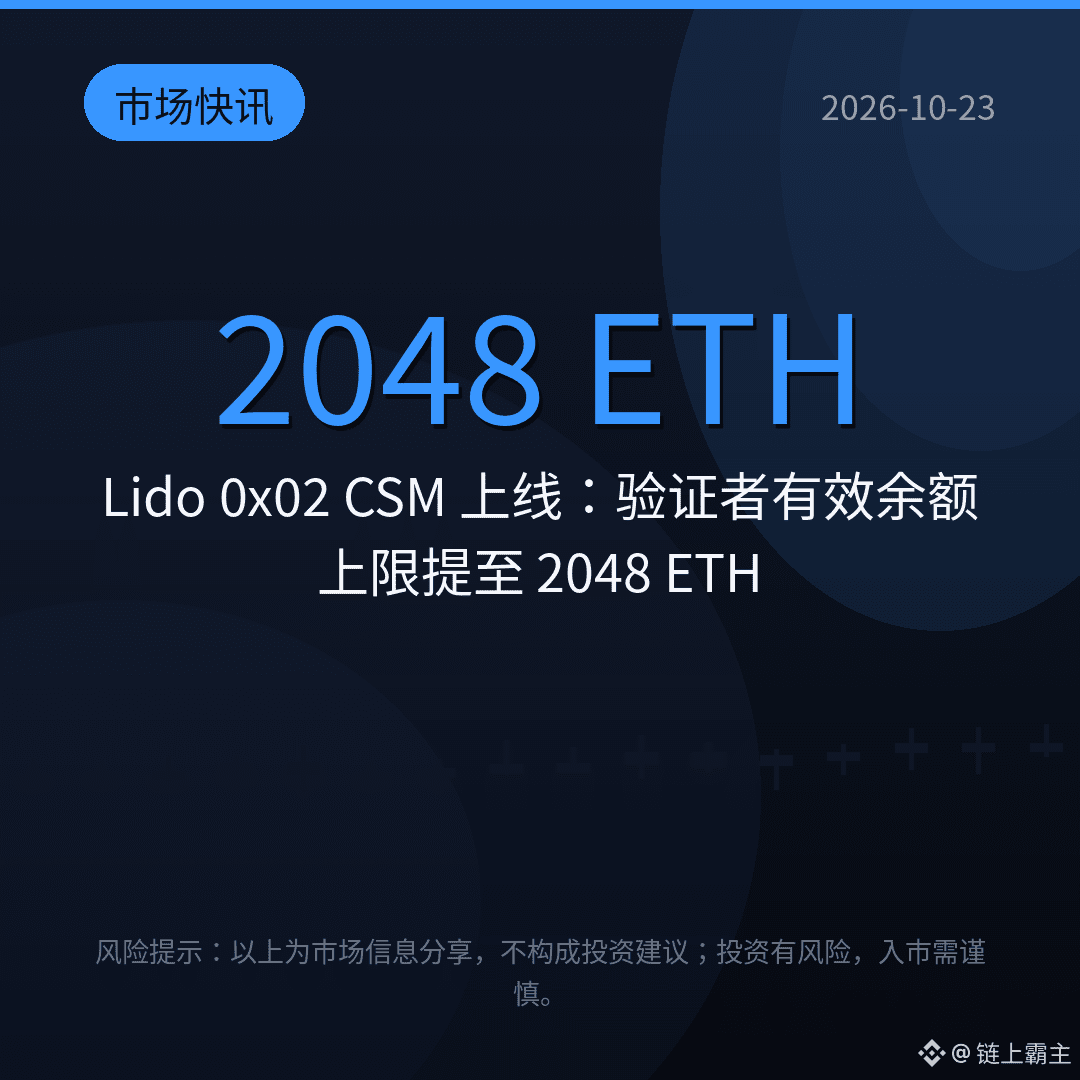
【Market Update】Lido 0x02 staking module launches: the maximum effective balance for validators has been raised to 2048 ETH.
0x02 CSM complements 0x01 CSM (for users with 32 ETH), opening a permissionless path for independent operators and potentially enhancing network security.
Adoption is key: the faster it ramps up, the greater the disruption. Would you stake ETH in the new module? Share your thoughts in the comments.
$ETH $LDO $SSV
#以太坊 #ETH质押 #Lido
(Source: Coinfomania)
⚠️Risk disclaimer: The above is for informational purposes only and does not constitute investment advice. Investing involves risks; please exercise caution.
426
·
--
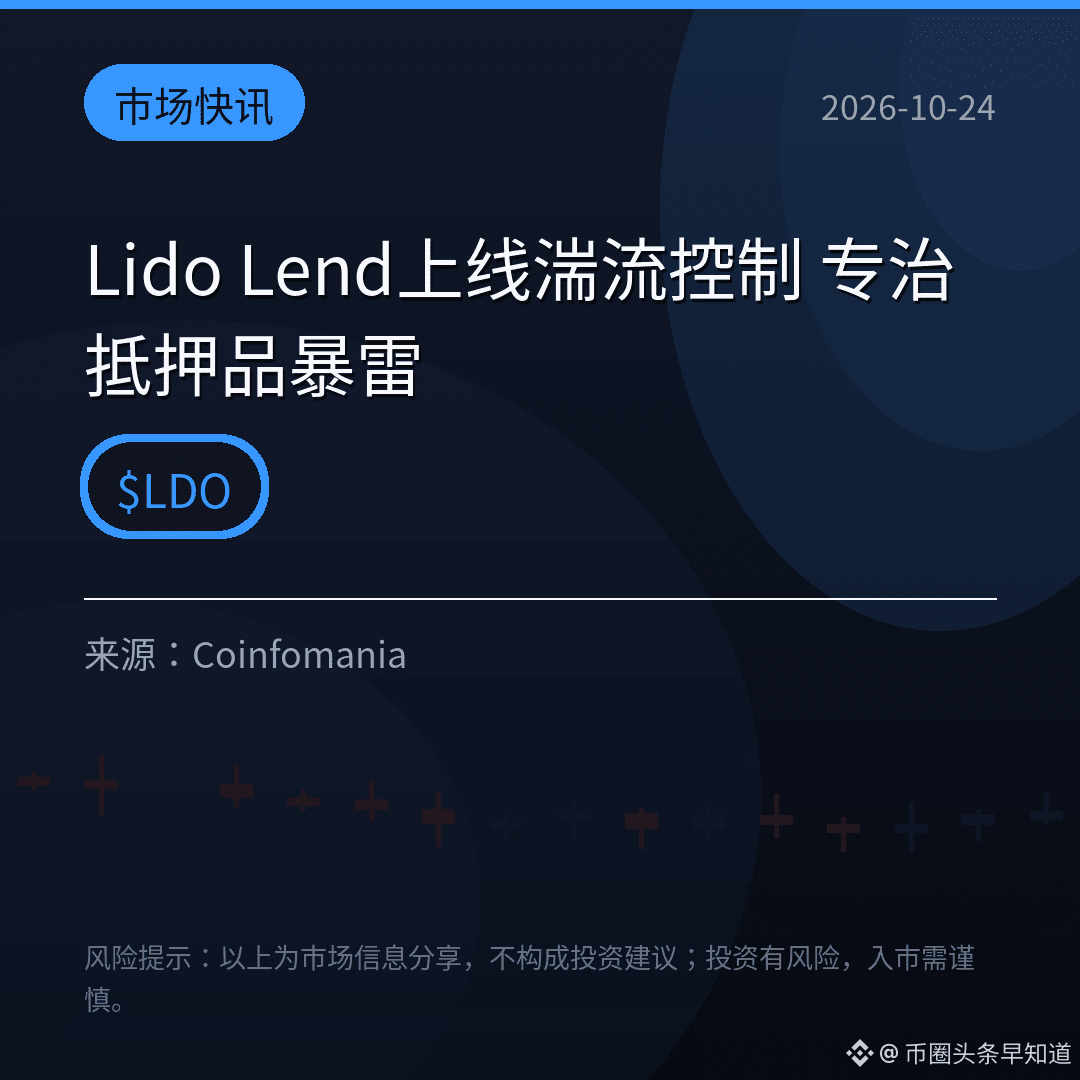
【Market Flash】Lido equips Lido Lend with “Turbulence Control”—designed to tackle collateral blowups. Hacks and liquidity crunches are the Achilles’ heel of DeFi lending. Lido is taking a proactive approach this time: putting safeguards in place before trouble strikes, rather than apologizing after the crash. In the end, lending comes down to one thing: “don’t blow up.” Selling safety takes confidence—and real turbulence will put that confidence to the test. Is “Turbulence Control” a moat or just marketing spin? Comment 1 if you’re bullish, 2 if you’re bearish.
$LDO $ETH $stETH
#DeFi #借贷 #Lido
(Source: Coinfomania)
⚠️Risk Warning: The above is shared for market information purposes only and does not constitute investment advice. Investing involves risks; please exercise caution when entering the market.
$LDO $ETH $stETH
#DeFi #借贷 #Lido
(Source: Coinfomania)
⚠️Risk Warning: The above is shared for market information purposes only and does not constitute investment advice. Investing involves risks; please exercise caution when entering the market.
247

·
--
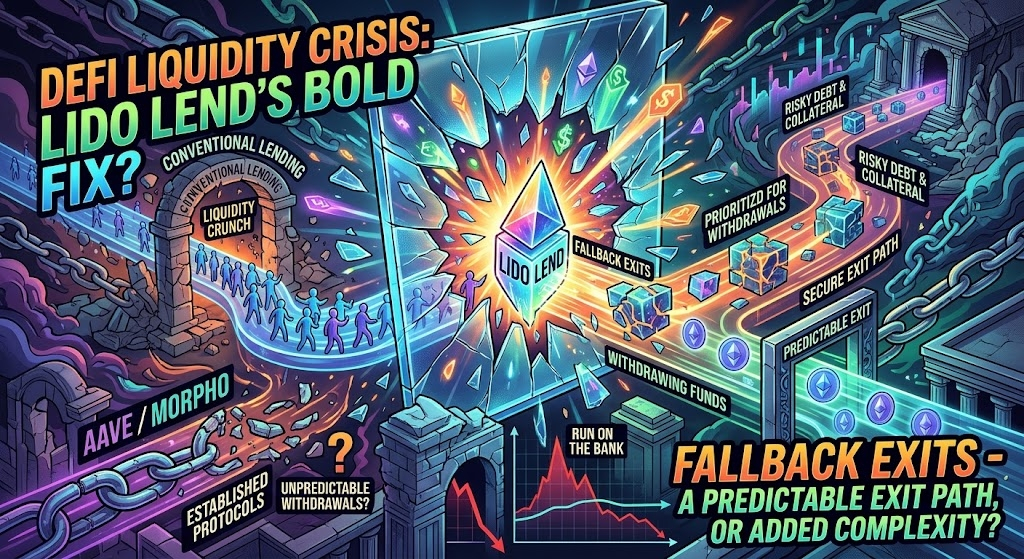
🚨 Lido wants to solve one of DeFi lending's hardest problems: what happens when everyone wants to withdraw at once?
Its proposed product, Lido Lend, introduces a feature called Fallback Exits.
The idea is straightforward.
If a lending market lacks enough ETH for lenders to withdraw, eligible borrower debt and collateral could be used to supplement the withdrawal. The mechanism would prioritize collateral from riskier borrower positions.
That could offer a more predictable exit path during a liquidity crunch.
But it isn't a free guarantee.
The mechanism depends on collateral quality, market correlations, valuation and the rules governing which borrowers are affected.
Lido Lend is still awaiting the required governance acceptance.
Detailed technical specifications and audit reports are still to come.
There is another question: why build a separate lending system when established protocols such as Morpho and Aave already exist?
The proposed answer is stronger security controls and more predictable withdrawals. Whether those benefits justify the additional complexity remains to be demonstrated.
For $LDO holders, product expansion is interesting. Sustainable revenue and a clear value-capture mechanism would be more convincing.
Does Lido's security-first approach solve a real DeFi weakness—or add complexity that established lending markets already handle?
Not financial advice.
$LDO
{future}(LDOUSDT)
#Lido #defi #Binance #MarketAnalysis #MarketWatch
🚨 Lido wants to solve one of DeFi lending's hardest problems: what happens when everyone wants to withdraw at once?
Its proposed product, Lido Lend, introduces a feature called Fallback Exits.
The idea is straightforward.
If a lending market lacks enough ETH for lenders to withdraw, eligible borrower debt and collateral could be used to supplement the withdrawal. The mechanism would prioritize collateral from riskier borrower positions.
That could offer a more predictable exit path during a liquidity crunch.
But it isn't a free guarantee.
The mechanism depends on collateral quality, market correlations, valuation and the rules governing which borrowers are affected.
Lido Lend is still awaiting the required governance acceptance.
Detailed technical specifications and audit reports are still to come.
There is another question: why build a separate lending system when established protocols such as Morpho and Aave already exist?
The proposed answer is stronger security controls and more predictable withdrawals. Whether those benefits justify the additional complexity remains to be demonstrated.
For $LDO holders, product expansion is interesting. Sustainable revenue and a clear value-capture mechanism would be more convincing.
Does Lido's security-first approach solve a real DeFi weakness—or add complexity that established lending markets already handle?
Not financial advice.
$LDO
#Lido #defi #Binance #MarketAnalysis #MarketWatch
1
202

·
--
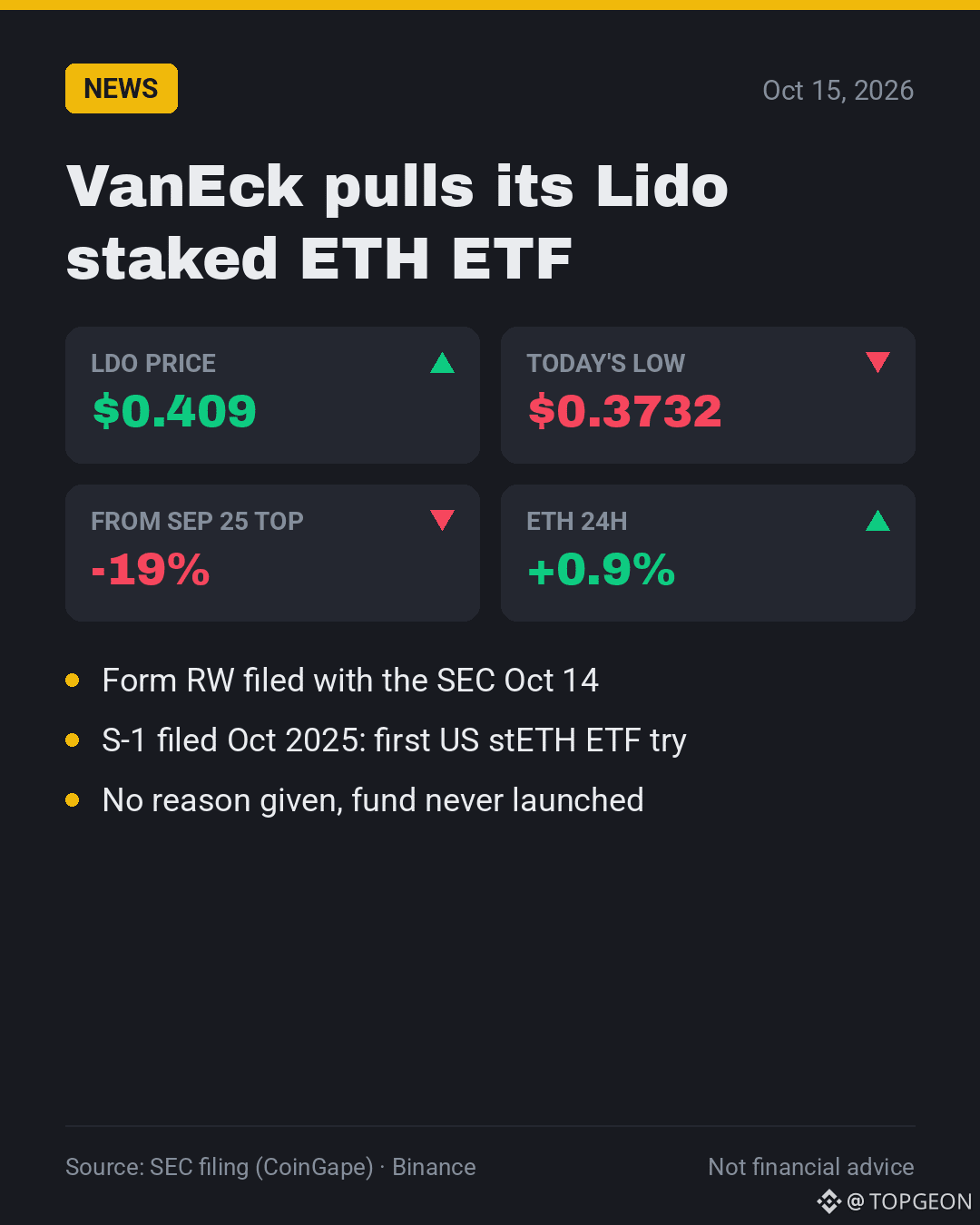
📉 $LDO loses its ETF story: VanEck drops the stETH fund
• Withdrawal (Form RW) filed with the SEC on Oct 14
• S-1 came Oct 2025: first US ETF built on stETH
• No reason given; the fund never went live
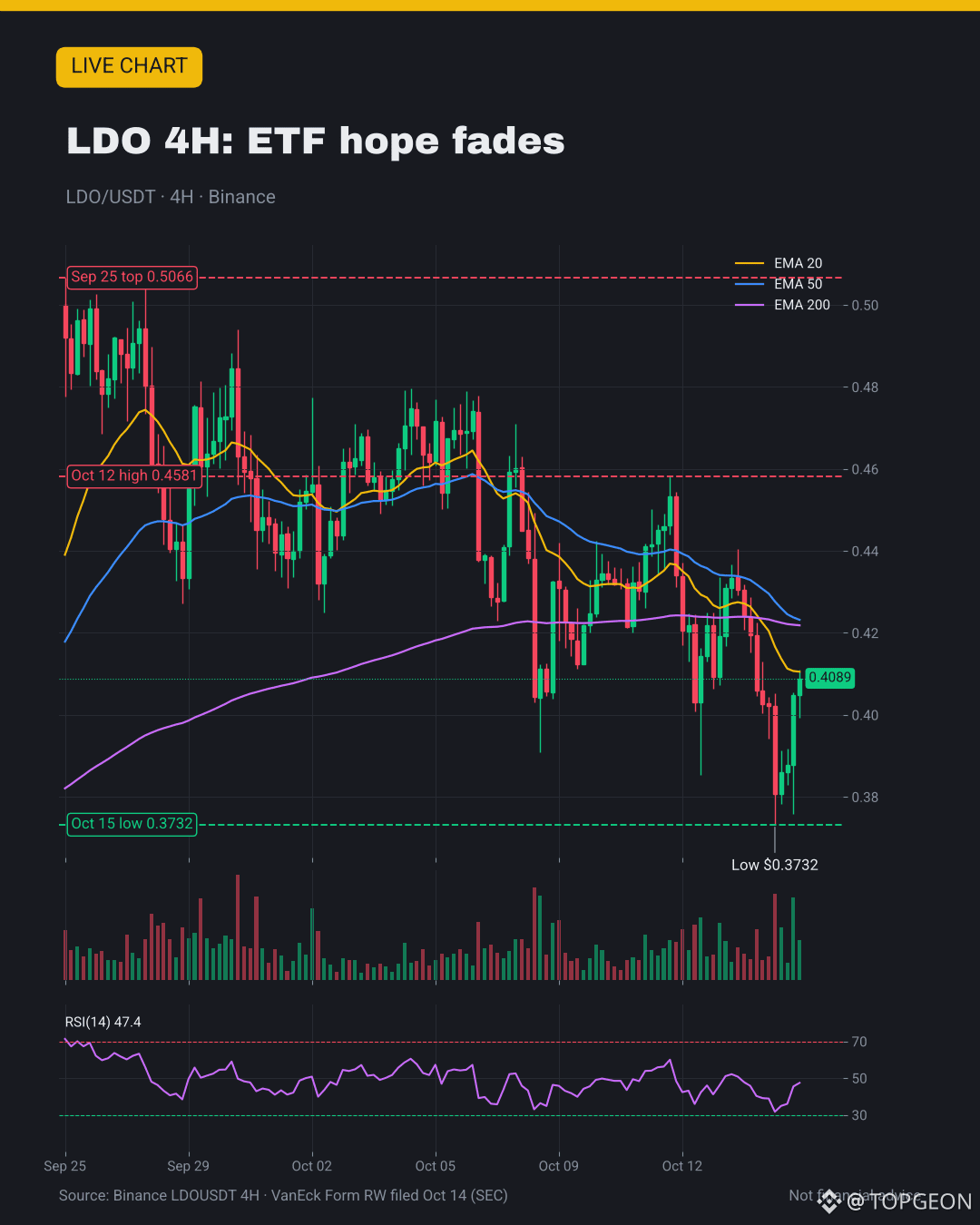
• LDO $0.409, low $0.3732 today = lowest since Sep 18
• $ETH $2,456, +6% off today's $2,318 wick
🎯 My take: under ~$0.42 EMAs LDO stays heavy; lose $0.373 → Sep lows
💬 Do staking ETFs still matter for LDO, or priced in? 👇
#Lido #ETF #Ethereum
19

Seeing an ETF application withdrawn doesn’t mean you should rush to call ETH’s direction. 🙂
According to Felix Ng’s report in Cointelegraph on October 15, 2026, VanEck said it would no longer proceed with the share issuance for its proposed Lido staked Ether (stETH) ETF, but did not explain why or say whether it would launch an alternative product. Voluntarily withdrawing an application is not the same as a regulatory rejection.
My take: What makes this worth watching is how difficult it is to bring staked assets into traditional financial products. stETH represents staked assets, but also involves smart contracts, validator slashing, and the risk of trading at a discount to ETH when market liquidity is tight. Packaging it as an ETF would also require arrangements for custody, valuation, and redemptions.
So, the withdrawal of a single product is not enough to prove that institutions are broadly bearish on ETH. What’s more worth checking next are the reasons for the withdrawal, the progress of similar applications, and how products address staking risks. The reason hasn’t been disclosed, so don’t make up a story on the issuer’s behalf.
Source: Felix Ng | Cointelegraph
https://cointelegraph.com/news/vaneck-seeks-to-withdraw-application-for-lido-staked-ether-etf
Disclaimer: The above is only my personal observation and does not constitute investment, legal, or tax advice. Crypto assets are highly volatile, and staking and related products carry a risk of loss. Please verify information independently, make prudent decisions based on your own risk tolerance, and bear responsibility for the consequences of your decisions.
#以太坊 #Lido #ETF #风险管理 $ETH
Reference source: Felix Ng, 2026-10-15T01:21:52.386000+00:00 (link: https://cointelegraph.com/news/vaneck-seeks-to-withdraw-application-for-lido-staked-ether-etf).
The above is for reference only and does not constitute any investment advice. Markets involve risk; invest with caution.
118

·
--
Lido brings four L2s under one roof: no more manually bridging back to mainnet to stakePreviously, if you wanted to stake $ETH on Base or Arbitrum, you had to bridge it back to mainnet and then bridge it back again—a lot of steps, and it was easy to slip up.
Today, Lido is bringing direct staking back to its own UI (stake.lido.fi): on Arbitrum, Base, Linea, and Optimism, you can get wstETH in a single transaction. You first swap into wstETH through a liquidity pool on the same chain. Behind the scenes, Chainlink CCIP automatically bridges the $ETH to mainnet for staking, then replenishes the local pool with wstETH. The protocol fee remains 10% of rewards, with users receiving 90%.
This isn’t being built from scratch: Linea already offered direct staking in 2025, and a few other networks previously rolled it out in stages through partners. This time, all four are available in one place on Lido’s own interface. One side note: VanEck withdrew its application for an ETF holding stETH just the day before—that’s a separate matter.
Lido brings four L2s under one roof: no more manually bridging back to mainnet to stake
Previously, if you wanted to stake $ETH on Base or Arbitrum, you had to bridge it back to mainnet and then bridge it back again—a lot of steps, and it was easy to slip up.
Today, Lido is bringing direct staking back to its own UI (stake.lido.fi): on Arbitrum, Base, Linea, and Optimism, you can get wstETH in a single transaction. You first swap into wstETH through a liquidity pool on the same chain. Behind the scenes, Chainlink CCIP automatically bridges the $ETH to mainnet for staking, then replenishes the local pool with wstETH. The protocol fee remains 10% of rewards, with users receiving 90%.
This isn’t being built from scratch: Linea already offered direct staking in 2025, and a few other networks previously rolled it out in stages through partners. This time, all four are available in one place on Lido’s own interface. One side note: VanEck withdrew its application for an ETF holding stETH just the day before—that’s a separate matter.
359
·
--
Lido announced the launch of direct $ETH staking on four Layer 2 networks: Arbitrum, Base, Linea, and Optimism. Users no longer need to manually bridge their assets back to the Ethereum mainnet; they can stake in a single transaction through Lido’s official interface and receive wstETH instantly. Cross-chain coordination is handled by Chainlink CCIP, while the underlying staking operation still takes place on the Ethereum mainnet. Lido said the feature may be expanded to more networks in the future.
#ETH #Lido #Layer2
(Source: CoinGape)
⚠️Risk Disclaimer: The above is for informational purposes only and does not constitute investment advice. Investing involves risk; please exercise caution.
#ETH #Lido #Layer2
(Source: CoinGape)
⚠️Risk Disclaimer: The above is for informational purposes only and does not constitute investment advice. Investing involves risk; please exercise caution.
107

·
--
Lido DAO is revisiting the budget logic for the $LDO automatic buyback engine, NEST, and proposing to tie the 2027 allocation budget to buyback thresholds. A discussion on October 7 put forward two options: link NEST’s revenue threshold to approved spending, or periodically reset the buyback engine’s negative-spending counter. NEST’s baseline is staking revenue of about $109,600 per day (approximately $40 million annualized). As of October 13, the counter was still negative $564,000, so this round’s allocation was skipped. Estimates show that resetting the counter annually could grow the buyback model by about 8%, but would not actually improve profitability.
#Lido #LDO #DeFi
(Source: X)
⚠️Risk warning: The above is shared for market information only and does not constitute investment advice. Investing involves risk; exercise caution when entering the market.
#Lido #LDO #DeFi
(Source: X)
⚠️Risk warning: The above is shared for market information only and does not constitute investment advice. Investing involves risk; exercise caution when entering the market.
42

·
--
🎯 The staking sector is quietly bleeding
📰 DefiLlama shows that Lido’s TVL shrank by 8.9% in a week, ether.fi fell 7.8%, and EigenCloud dropped 6.7%. ETH is recovering, but they haven’t kept up.
💬 Coin prices have just bounced back, but staking leaders are already taking a hit. Capital is moving away from passive yield and elsewhere, while leveraged players are starting to pull back. That’s a lot more honest than candlestick charts.
🏷️ #DeFi #Lido #质押 #EigenLayer
338
·
--
🎯 The LST sector has been bleeding across the board for 7 days
📰 Lido’s TVL fell 8.4% in a week, while ether.fi, SSV, and EigenCloud all dropped 7%+
💬 ETH is down just 6.9%, but staked assets are fleeing faster—some are unstaking, withdrawing, and leaving. On-chain capital is more honest than the candlestick chart; watch to see when this wave of redemptions stops
🏷️ #Lido #以太坊质押 #DeFi #TVL #LSD
87
Log in to explore more content
Join global crypto users on Binance Square
⚡️ Get latest and useful information about crypto.
💬 Trusted by the world’s largest crypto exchange.
👍 Discover real insights from verified creators.
Email / Phone number
Trending Topics
1
#BinancePick
2.6M views
140,561 Discussing
2
#EarningsSeason
5M views
24,244 Discussing
3
#FranklinTempletonFilesForTwoDividendToBitcoinETFs
427 views
46 Discussing
4
#StrategyMSTRSurpassesNasdaqInMarketCap
439 views
57 Discussing
5
#CanadaProposesStablecoinRedemptionWithin3BusinessDays
52 views
9 Discussing
6
#ElectrumWalletBugLetRogueServersStealFunds
6,731 views
213 Discussing
7
#ArgentineCourtDismissesLIBRACaseAgainstMilei
15,667 views
291 Discussing
8
#SKHynixReportedlyPlansSpecialDividendFromKioxiaStakeSale
2,944 views
48 Discussing
9
#KeystoneWebsiteBreachExposesBuyersShippingAddresses
1,599 views
40 Discussing
10
#USQ3GDPAndSeptemberPCEDueNextWeek
92,514 views
1,109 Discussing