
Easytradingpw
227 Posts
Easytradingpw
Report
Block User
I build XTester Studio and CopyTrader. Sharing strategy research, product development and lessons from building tools for crypto traders.
Frequent Trader
8.7 Years
2 Following
35 Followers
37 Liked
Posts
All
Videos
PINNED
I build software for crypto traders: XTester Studio for strategy research and backtesting, and CopyTrader for traders who want to offer trade copying to their own audience.
Here I'll share what I'm working on, the experiments behind it and the product decisions along the way. That includes how to test a strategy idea, what a backtest can tell you, and the practical work of building a copy-trading service.
If you research strategies or run a trading community, I'd like to hear what takes the most time in your workflow.
My projects: https://easytrading.pw
#Backtesting #CopyTrading
4
3
461
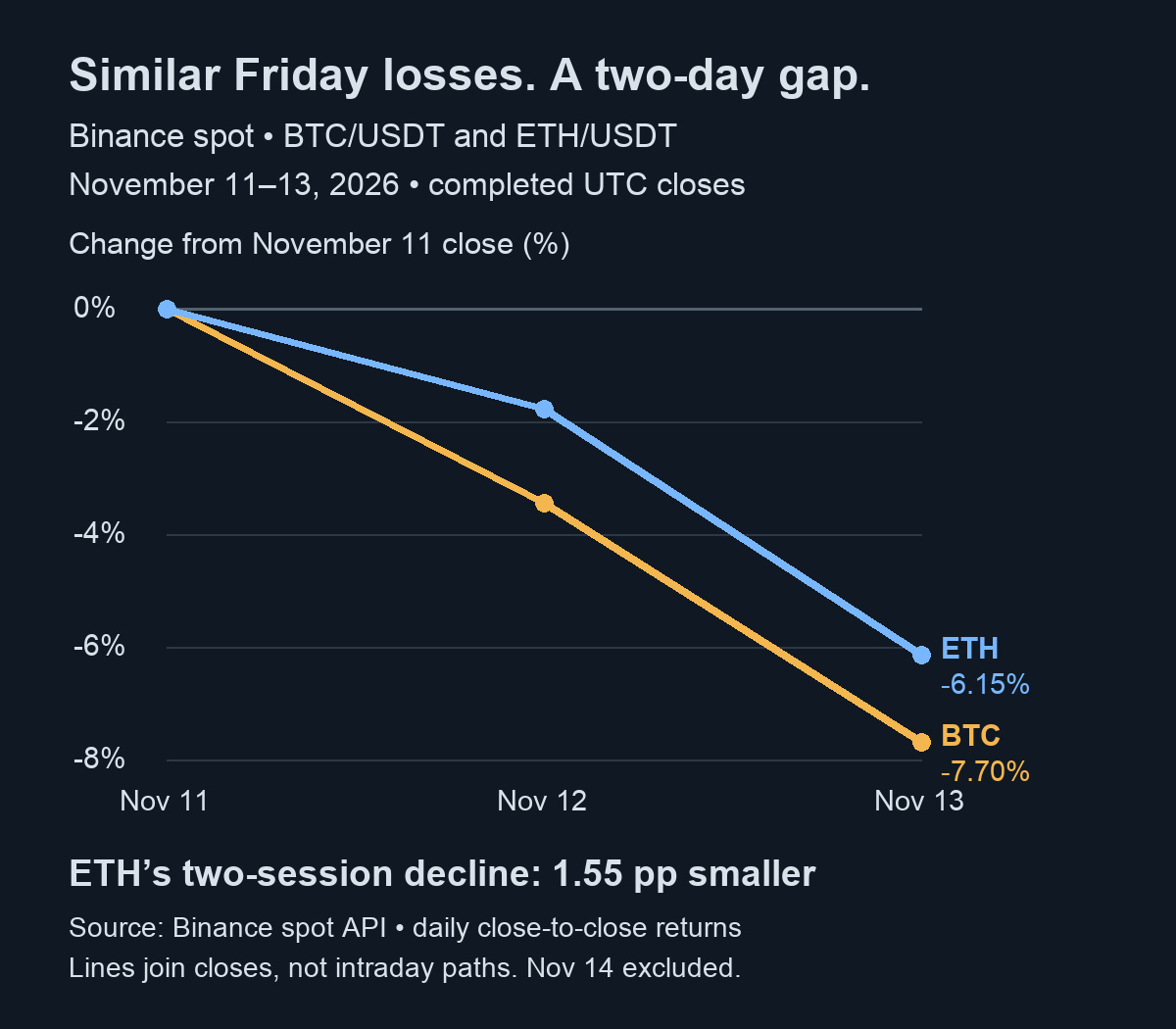
Bitcoin and Ether both lost about 4.4% on Friday, but their two-day losses were further apart.
On Binance spot, BTC fell 4.40% and ETH 4.45% from Thursday’s close to Friday’s. Across Thursday and Friday combined, BTC lost 7.70% versus 6.15% for ETH—a 1.55-percentage-point smaller decline for Ether.
The difference came on Thursday, when Bitcoin fell more sharply. Friday’s near-equal declines left that gap largely intact.
Chart: Binance BTC/USDT and ETH/USDT, November 11–13, 2026 UTC daily closes. November 14’s unfinished session is excluded. Source: Binance spot candles, retrieved November 14 at 02:13 UTC.
#Bitcoin #Ethereum
139
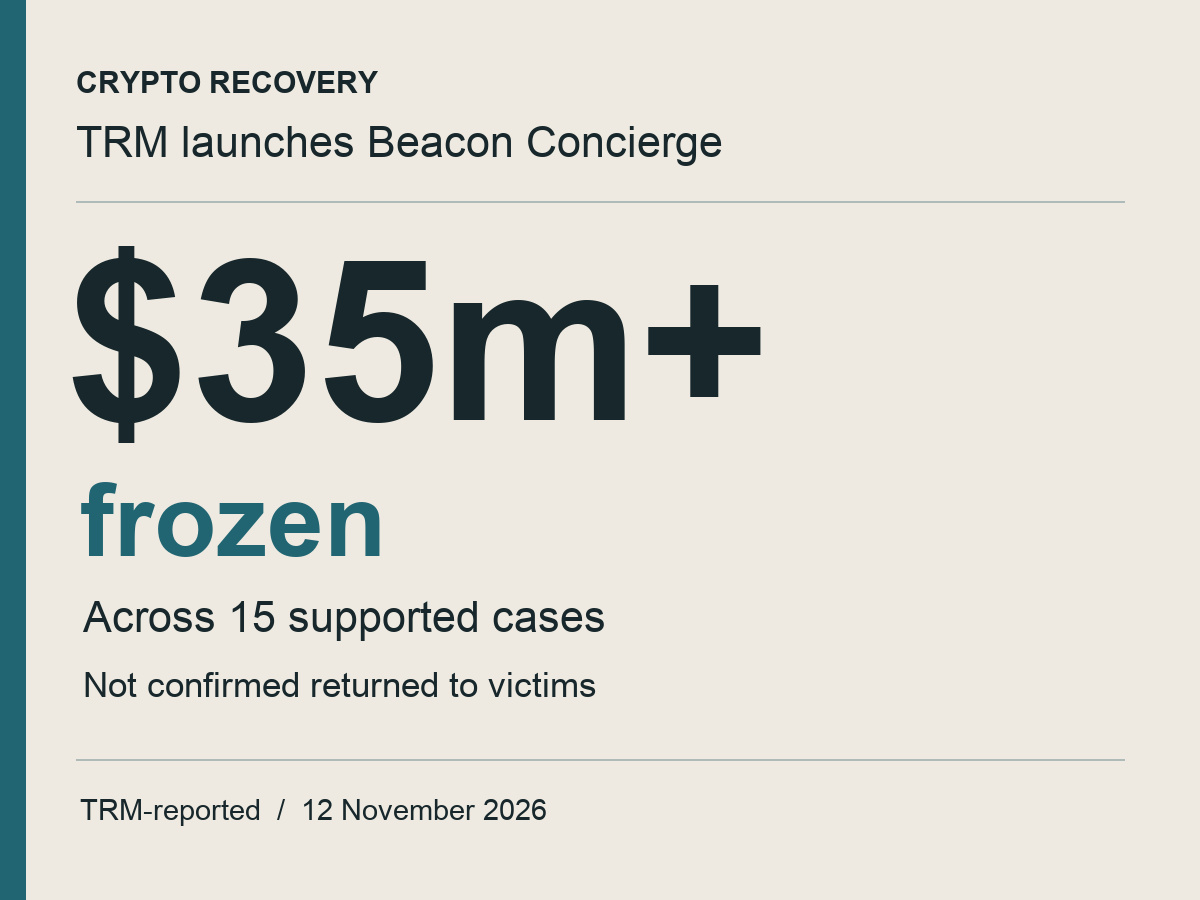
TRM Labs says its new crypto-recovery service has already helped freeze more than $35 million across 15 cases.
Beacon Concierge, announced November 12, gives verified law enforcement agencies access to TRM investigators and its network of exchanges and stablecoin issuers without requiring a TRM software license. The team traces funds, prepares evidence and routes requests to the issuers that can act.
The change addresses a bottleneck after stolen crypto has been located: an agency still needs to reach the right counterparty with a usable request. TRM says one submission covers participating issuers and supported chains, with its investigators staying involved through the issuer’s decision.
The reported $35 million is frozen funds, not money confirmed returned to victims. The service has supported 14 agencies in 10 countries; it is available to verified law enforcement, rather than a direct recovery service for individual holders.
Source: TRM Labs, November 12, 2026.
https://www.trmlabs.com/resources/blog/trm-labs-launches-beacon-concierge-to-help-law-enforcement-worldwide-interdict-and-seize-illicit-crypto-funds-on-any-chain-in-any-asset
#Crypto #CryptoSecurity
134
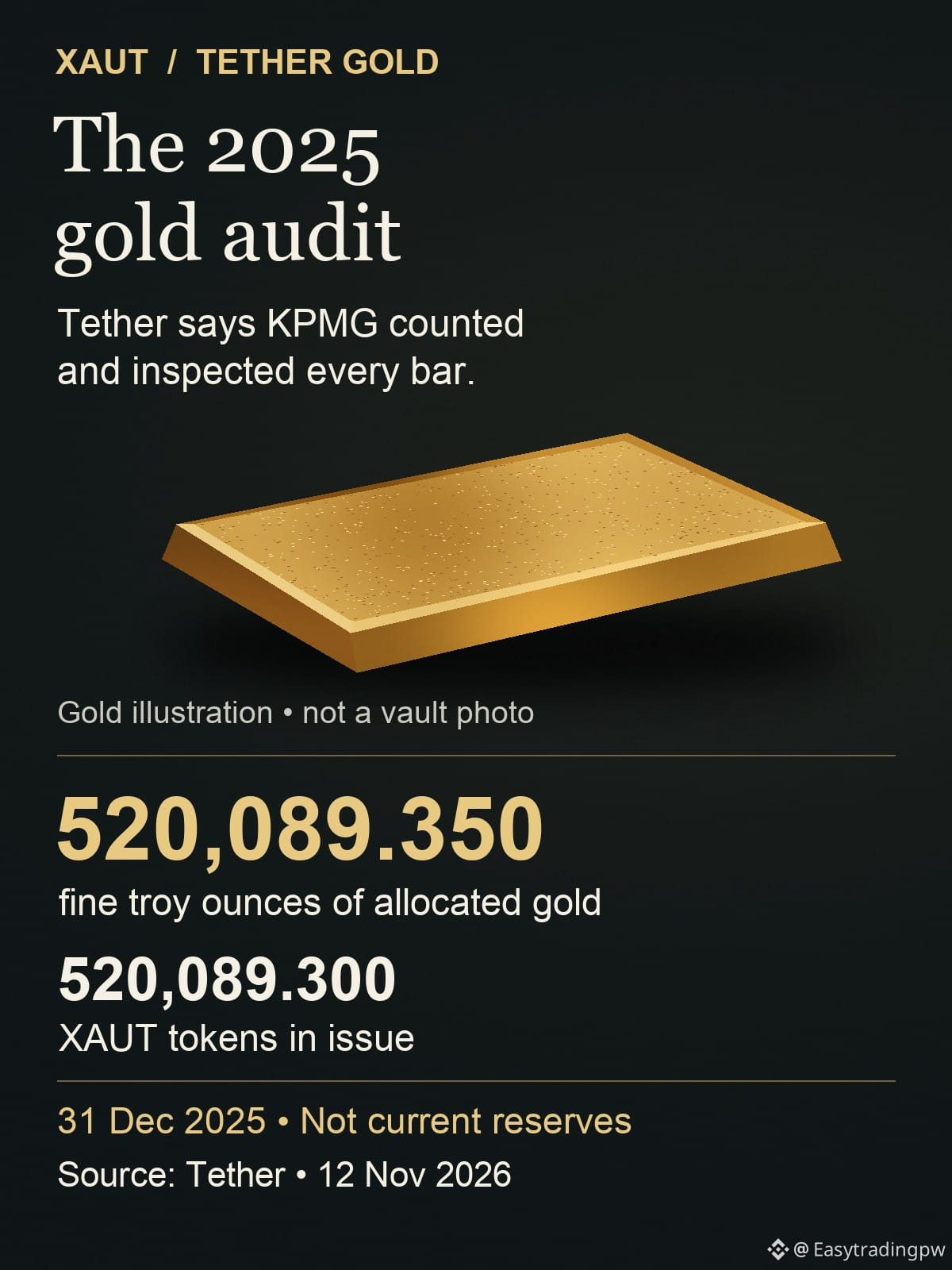
Tether says KPMG physically inspected every gold bar backing XAUT as part of the issuer’s 2025 audit.
The November 12 announcement puts a useful number beside that claim: 520,089.350 fine troy ounces of allocated gold against 520,089.300 tokens at December 31, 2025. Tether says KPMG issued an unqualified opinion on TG Commodities’ annual financial statements under US accounting standards.
For holders, the distinction is how the backing was checked. According to Tether, the audit included counting the bars and checking their identifying details, rather than relying only on confirmations from the custodian. The gold is held in Switzerland; each token represents an ownership interest in specified bars.
The date matters when comparing this with a current reserve report. These are audited year-end 2025 figures, announced in November 2026, not a count of today’s gold or tokens. The announcement provides evidence about the custody behind the token; it does not fix the market price of gold.
Source: Tether, November 12, 2026.
https://tether.io/news/tether-gold-xaut-becomes-tethers-second-stablecoin-to-complete-a-big-four-audit/
#XAUT #TokenizedGold
152
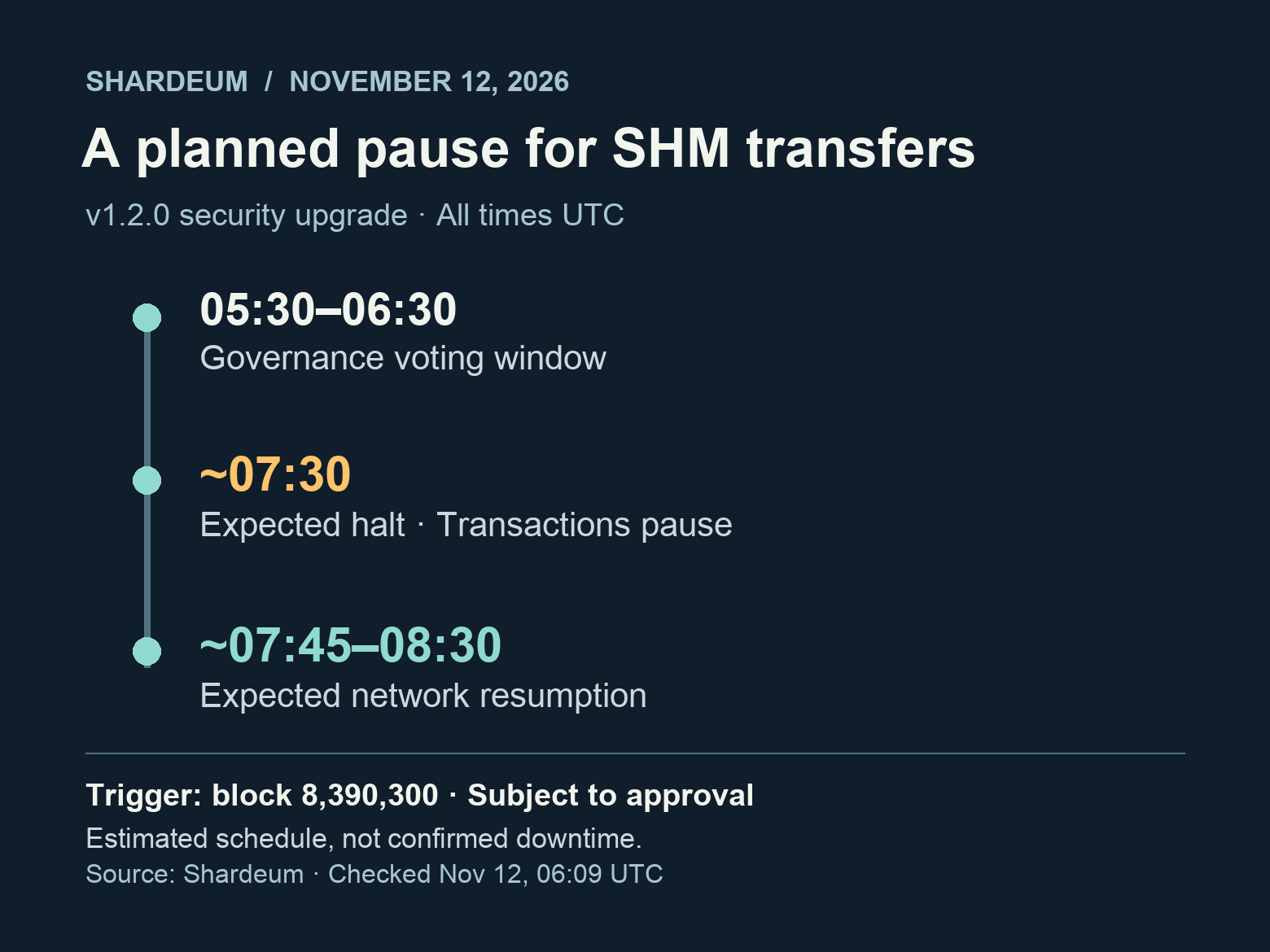
SHM transfers are expected to pause during Shardeum's November 12 security upgrade. The network plans to stop processing transactions while validators restart with the new software.
Shardeum's schedule puts the halt around 07:30 UTC and resumption around 07:45–08:30 UTC. Those times are estimates: the upgrade triggers at block 8,390,300 and depends on governance approval and block progression. The cached announcement served at 06:37 UTC, after the scheduled voting close, still listed the outcome as unconfirmed.
Version 1.2.0 incorporates four upstream Cosmos EVM security fixes. Regular holders do not need to upgrade anything themselves, according to Shardeum.
Exchanges may also pause SHM deposits and withdrawals. They will reopen those services on their own schedules after the network restarts, so transfers through an exchange may remain unavailable for longer.
Source: Shardeum's November 11 announcement, checked November 12, 2026.
https://shardeum.org/blog/v1-2-0-mainnet-upgrade/
#Shardeum #SHM
70
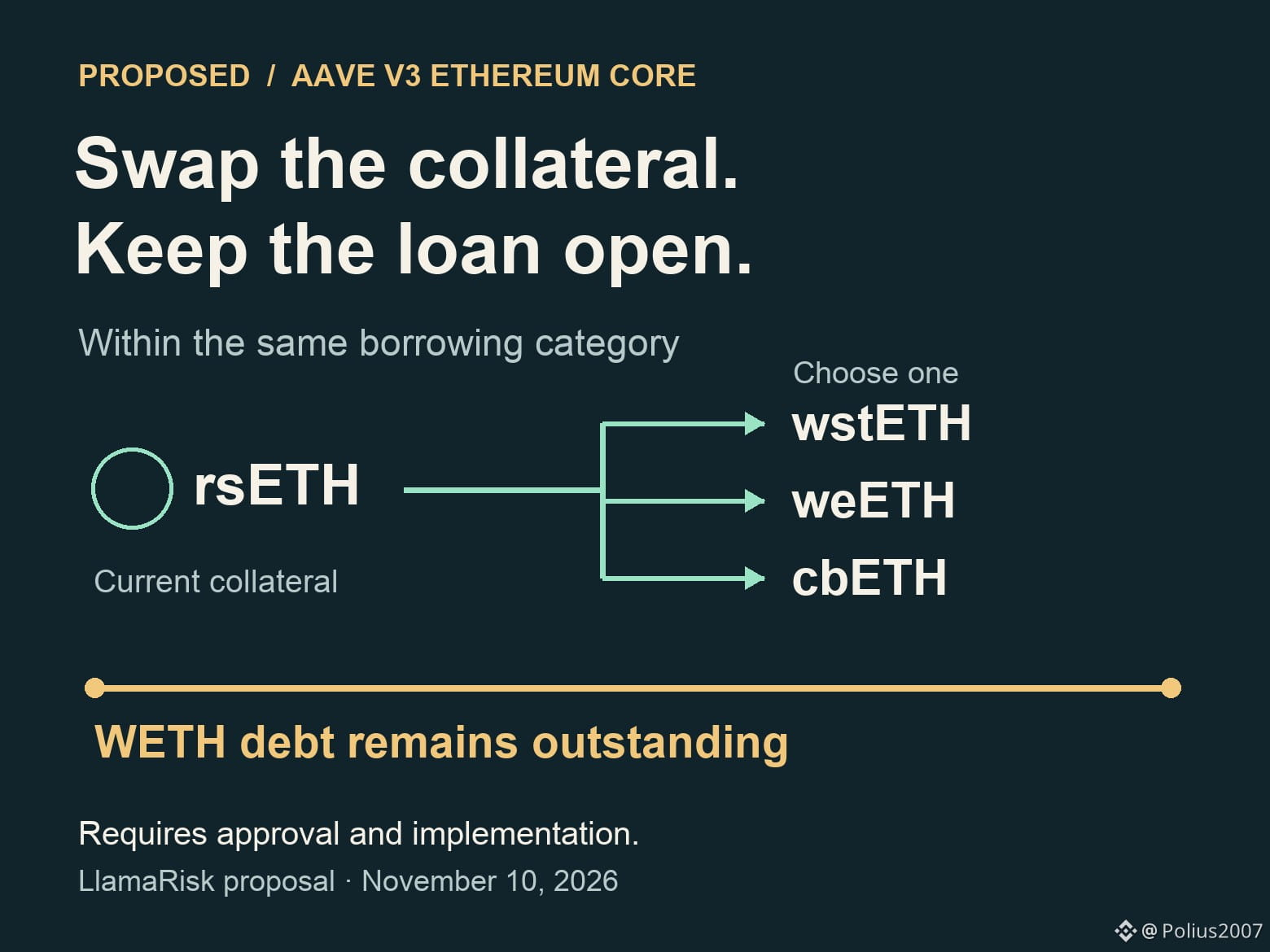
Aave borrowers using rsETH as collateral could get a way to switch to another ETH staking token without first repaying their whole loan.
LlamaRisk’s November 10 proposal would add wstETH, weETH and cbETH to the high-efficiency borrowing category used by rsETH on Aave V3 Ethereum Core. Borrowers could then swap collateral within that category while keeping their WETH (wrapped ETH) debt open.
The proposed swap route is part of a broader plan to wind down selected collateral on Core, including rsETH, osETH, LBTC, tBTC and rETH. LlamaRisk’s November 9 snapshot puts the debt backed by all assets in scope at about $1.03 billion.
The first stage would stop new deposits and new borrowing against affected collateral, while leaving existing loans open. rsETH and tBTC are already frozen, according to the proposal. Further measures, including lower liquidation thresholds or higher borrowing costs depending on the asset, would be considered if exposure fails to decline.
StakeWise and Rocket Pool representatives have asked for osETH and rETH to be assessed separately, so the asset scope remains under discussion. Approval would still need to be followed by an implementation vote before the proposed changes take effect.
Source: LlamaRisk’s November 10, 2026 Aave governance proposal and replies through November 12.
#Aave #DeFi
147
Verified
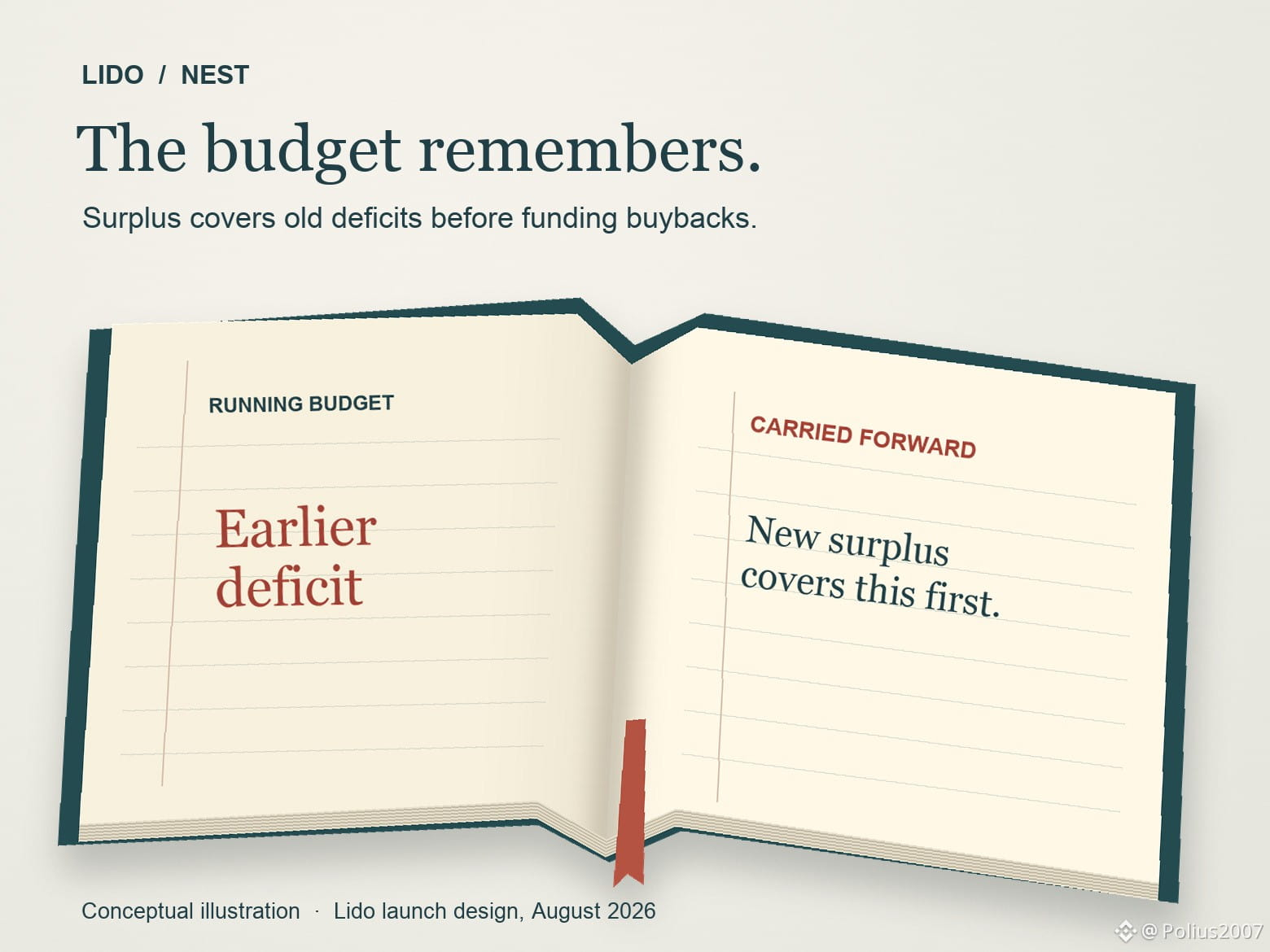
Lido's automated LDO buybacks remember earlier revenue shortfalls.
Under the NEST launch rules described in Lido's August 14, 2026 overview, 50% of the difference between the DAO's staking revenue and its operating baseline feeds a running budget. If that budget falls below zero, new surplus has to cover the accumulated deficit before it can fund more purchases. A good revenue day can still leave buybacks waiting.
Even with a positive budget, purchases need funding in the contract and remain subject to spending caps. In the launch mode, bought LDO goes to the DAO treasury rather than being burned.
https://blog.lido.fi/ldo-automated-buybacks-overview/
https://github.com/lidofinance/lido-improvement-proposals/blob/develop/LIPS/lip-36.md
#Lido #LDO
556
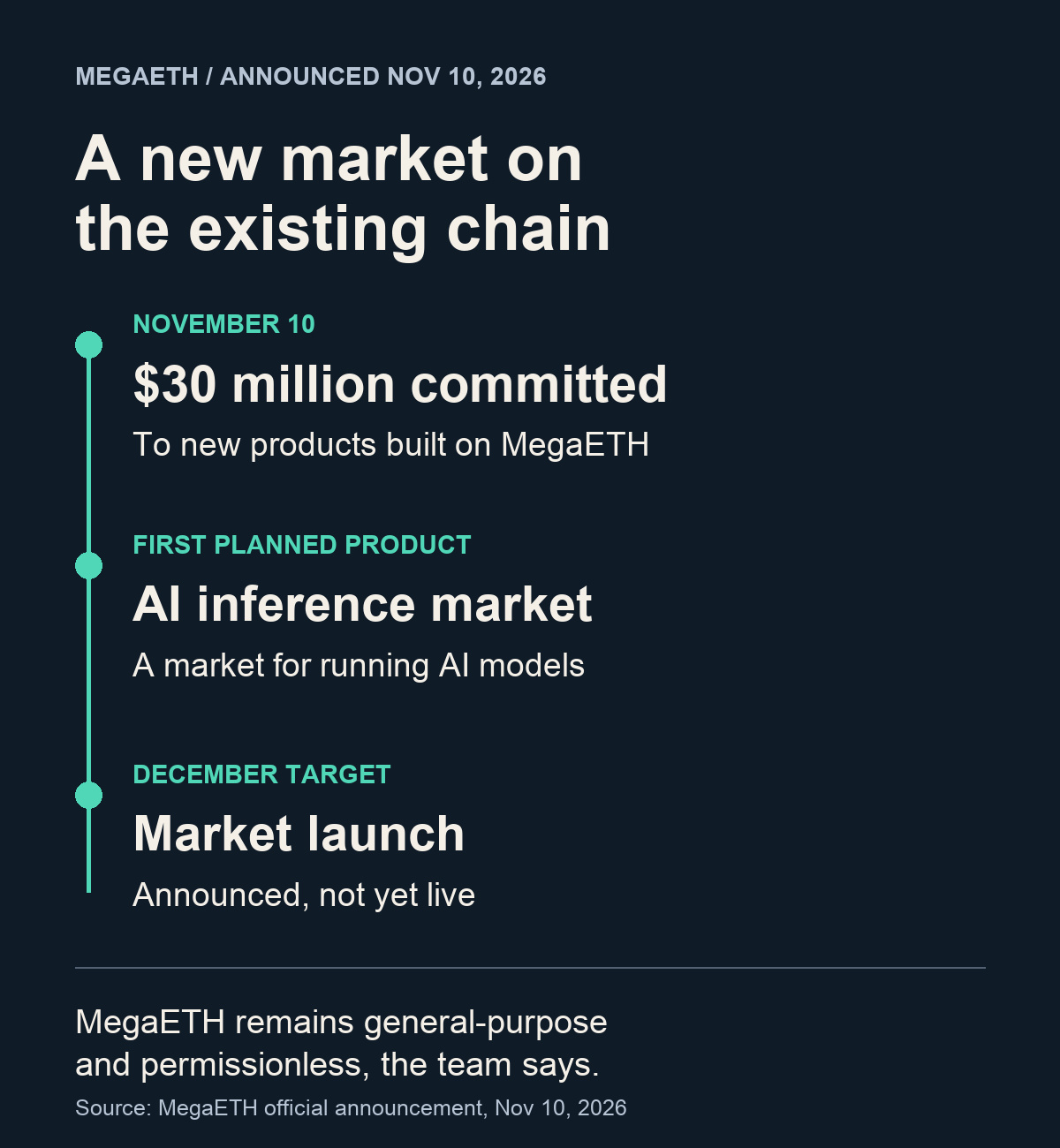
MEGA, formerly the MegaETH Foundation, has committed $30 million to new products on MegaETH, starting with AI inference: running trained models to answer requests.
Its first planned product is an inference market on the blockchain, targeted for December. The team announced the expansion on November 10, 2026, with MegaETH becoming one of MEGA’s projects.
The team says MegaETH will remain general-purpose and permissionless. Existing ecosystem builders will continue to receive technical, business and network support as MEGA develops the new market.
Source: MegaETH’s November 10, 2026 announcement and MEGA’s website.
https://x.com/megaeth/status/2120185003716092188
https://mega.holdings
#MegaETH #Crypto
45
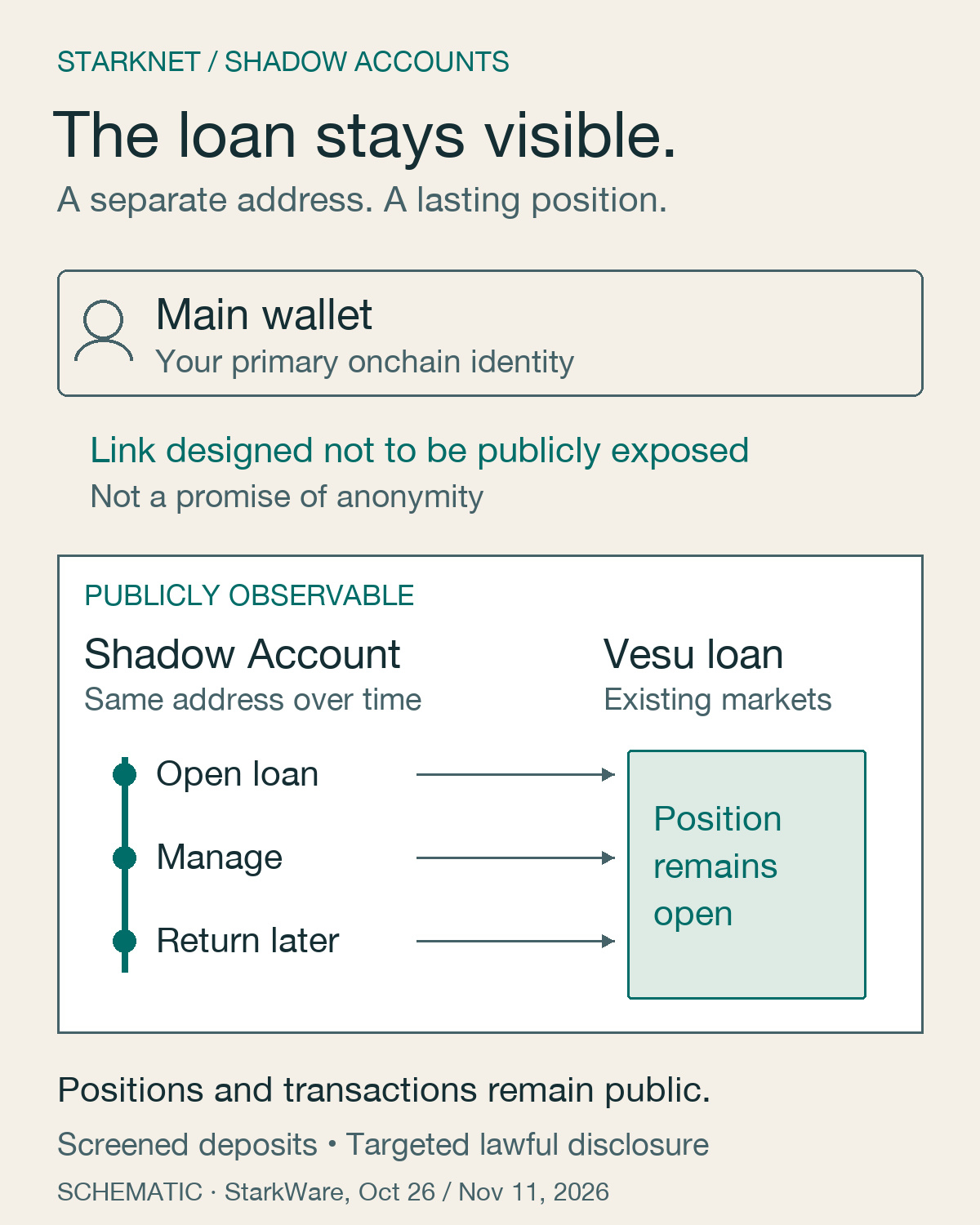
A loan stays onchain long after you close the app. Anyone looking at its account can still see the position and its transactions.
Starknet’s Shadow Accounts let you keep managing that loan through a separate, persistent address, designed not to expose its link to your main wallet. You can use a different account for each app or position, rather than collect everything under one public address.
That makes StarkWare’s November 11 report of a Vesu integration interesting: the separate account uses Vesu’s existing lending markets. The loan can stay where the liquidity already is, with an account you can return to while it remains open.
The choice is how to separate your accounts, not whether the loan is visible. StarkWare also describes screened deposits and targeted disclosure for lawful requests, so this shouldn’t be read as a promise of anonymity.
Sources: StarkWare, November 11 and October 26, 2026.
https://starkware.co/blog/programmable-privacy/
https://starkware.co/blog/shadow-accounts/
#Starknet #DeFi
4
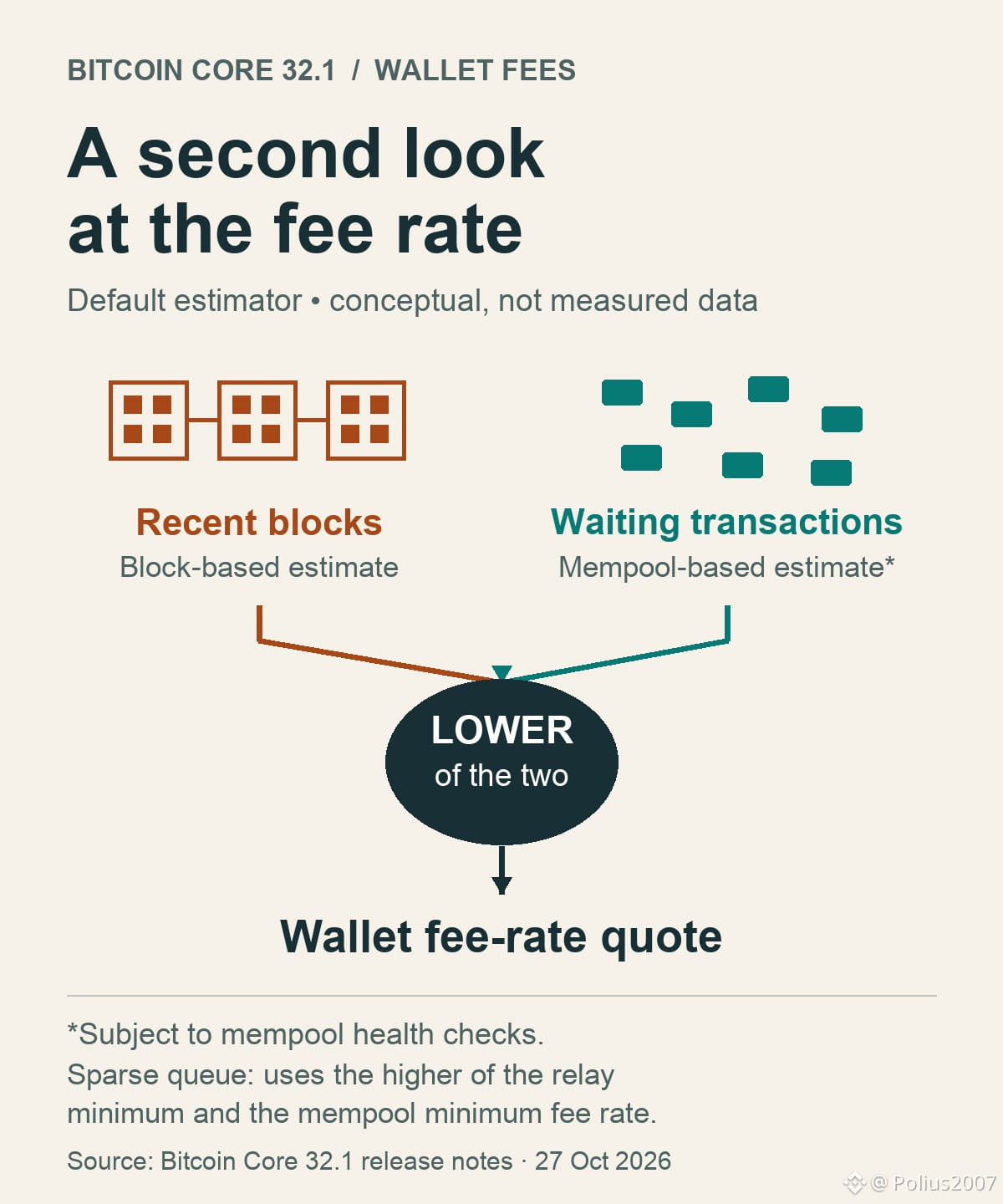
A clearing Bitcoin transaction queue can matter to the fee rate quoted by Bitcoin Core’s wallet, even while recent blocks still reflect busier conditions.
Core 32.1 adds an estimator that looks at the node’s mempool—the transactions waiting for confirmation. By default, the wallet uses the lower result from this and the existing block-based estimator, so its quote needn’t rely on recent blocks alone.
The change is in Core’s October 27 release notes. It gives the wallet another way to account for easing demand, not a promise that a cheaper transaction will confirm on time.
https://bitcoincore.org/en/releases/32.1/
#Bitcoin
49
Bittensor's proposed Gamma credits would burn tokens when customers top up, before a service bills them.
Each subnet, a specialized network within Bittensor, has its own token called alpha. Customers could use TAO to buy and burn that alpha, or burn alpha they already have staked, in exchange for dollar-valued service credits for that subnet. The alpha would already be gone even if the credits sat unspent.
The service then deducts credits from the balance to bill the customer. The guide describes billing ahead of the work; the chain does not verify delivery. Each deduction destroys credits and pays no TAO or alpha to the service's designated spender. The customer is using up a prepaid balance, not triggering another alpha burn with each bill.
Sources: Bittensor's Gamma guide and Release 487 page, checked November 11, 2026.
https://www.bittensor.com/docs/guides/gamma
https://www.bittensor.com/releases/v487-upgrade
#Bittensor #TAO
1
103
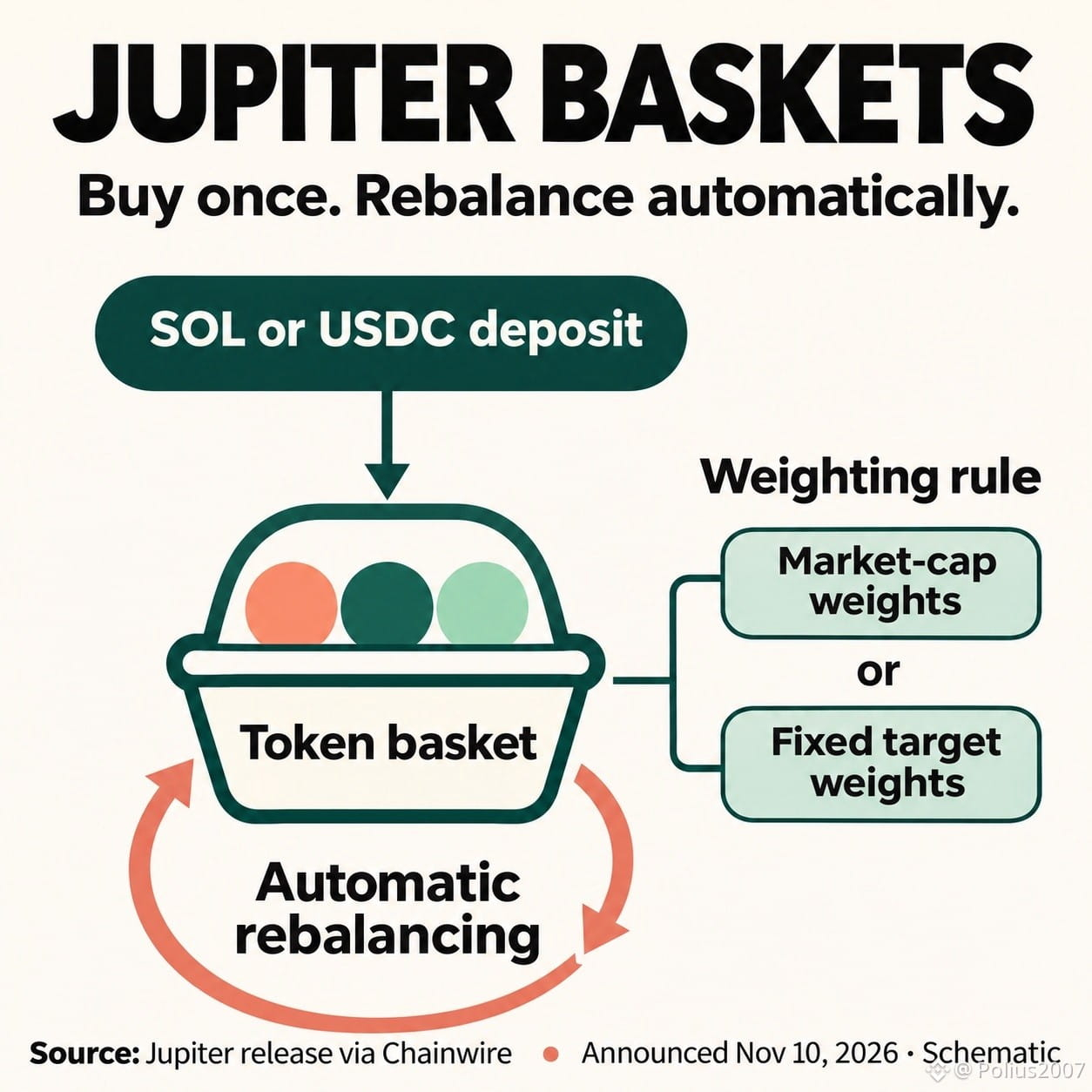
Buying a group of tokens takes one SOL or USDC deposit in Jupiter's new Baskets offering. Keeping their proportions in place is an ongoing job.
Jupiter's November 10 announcement says a single SOL or USDC deposit buys the basket. It offers market-cap weights or fixed target weights, with automatic rebalancing. With fixed weights, price moves can change each token's share of the portfolio, so maintaining the allocation requires further trades. Deposits, rebalances and exits all use Jupiter's swap routing.
That puts the initial purchase and subsequent allocation maintenance together. The announcement leaves the rebalancing schedule and costs unspecified. Jupiter says the products in this release are rolling out over the days ahead of November 15.
Source: Jupiter's November 10, 2026 release via Chainwire.
#Jupiter #Solana #DeFi
140
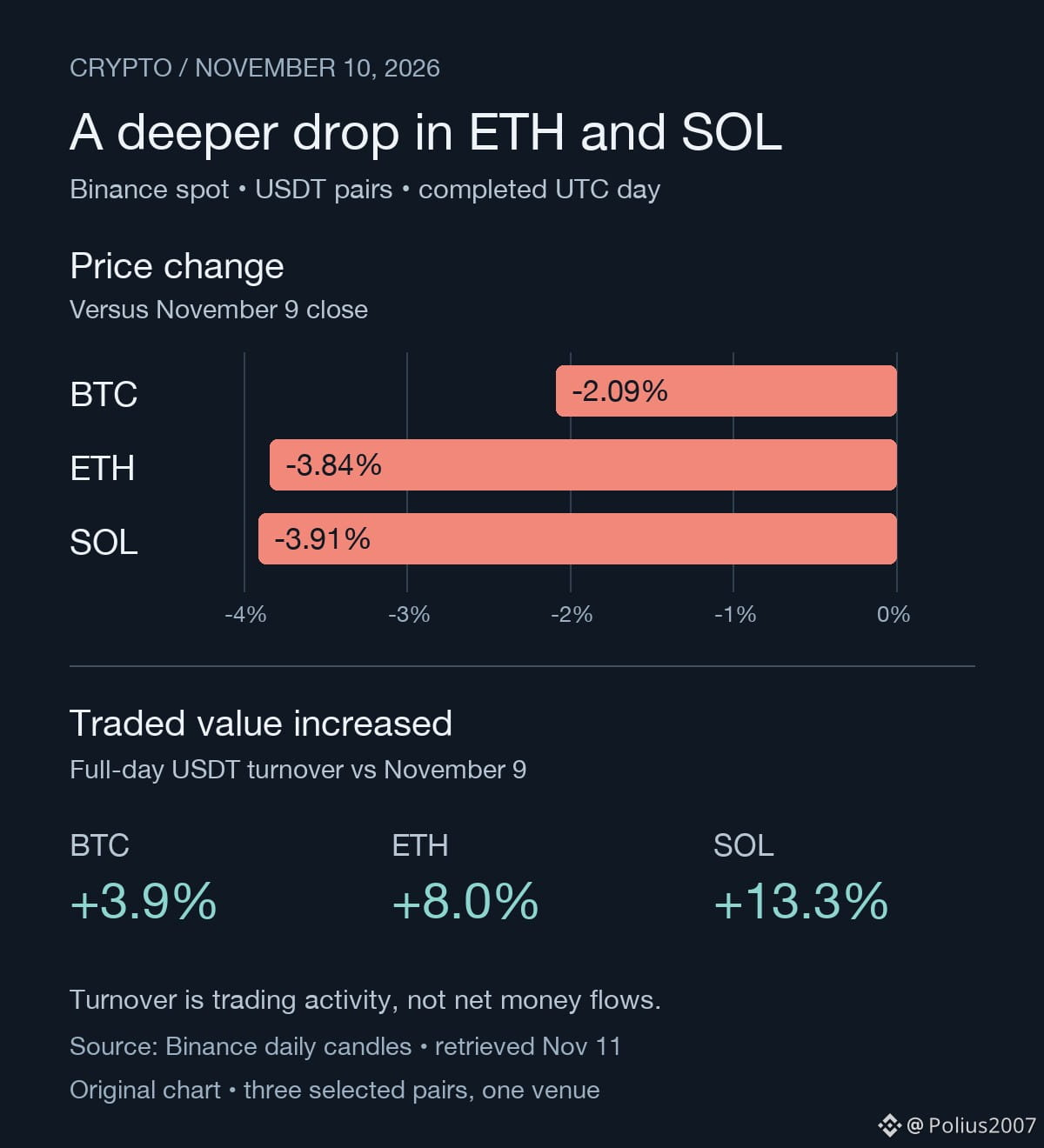
Ether and Solana fell almost twice as far as Bitcoin on Tuesday, while spot trading picked up across all three.
On Binance’s USDT spot pairs, November 10 closed with BTC down 2.09%, ETH down 3.84% and SOL down 3.91% from Monday’s close. SOL had the largest increase in traded value, up 13.3% from Monday, compared with 8.0% for ETH and 3.9% for BTC.
That puts Solana at the weak end of this three-coin comparison on price, and at the strong end on trading activity. Higher turnover tells us more changed hands; it doesn’t tell us that money flowed into the coin.
The chart compares completed November 9 and 10 UTC sessions using Binance spot daily candles. Turnover is each pair’s daily USDT traded value. November 11 trading is excluded.
#Bitcoin #Ethereum #Solana
104
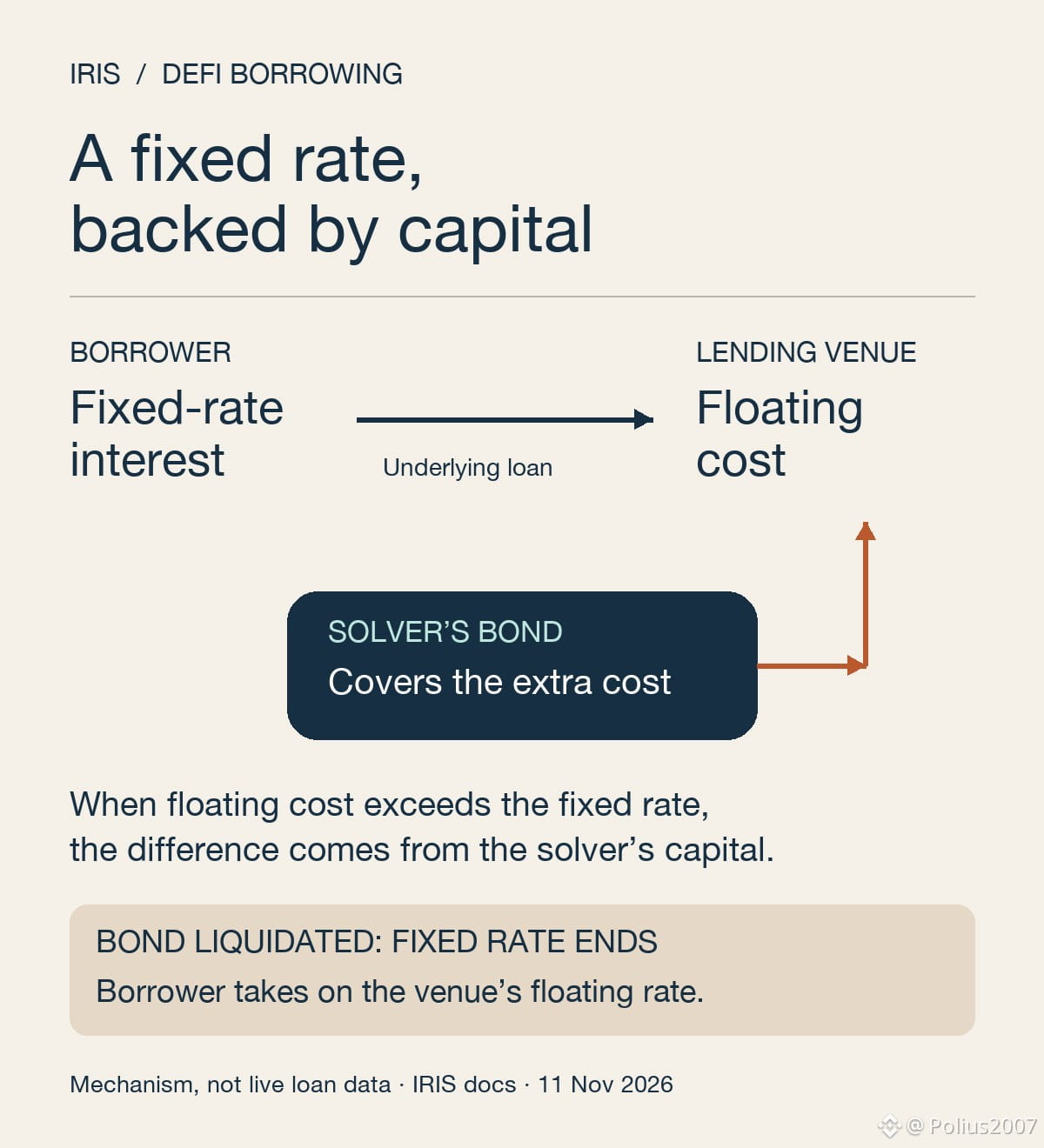
IRIS borrowers can choose a fixed rate for 1–90 days, with another party putting up capital to absorb changes in the underlying lending cost.
The loan still draws on a floating-rate market such as Spark. A market maker called a solver quotes the fixed rate and backs that particular loan with a bond. When the market charges less, the solver keeps the difference. When it charges more, the difference comes out of the solver’s bond.
That backing has a limit. IRIS’s documentation says that if accumulated costs eat far enough into the bond, it can be liquidated. The borrower then takes over the market’s floating rate. This event does not itself take the borrower’s collateral; ordinary collateral-liquidation risk remains separate.
For someone choosing how long to fix a borrowing cost, the term matters too: repaying early still incurs the full term’s interest. A longer quote commits to a longer interest bill, rather than buying a free option to leave early.
Sources: IRIS’s current product page and borrowing documentation, checked November 11, 2026. Diagram shows the documented mechanism, not a live loan or quoted rates.
https://iris.credit/
https://docs.iris.credit/home/user-guide/borrowing
https://docs.iris.credit/home/user-guide/solver-backing
#DeFi #Crypto
106
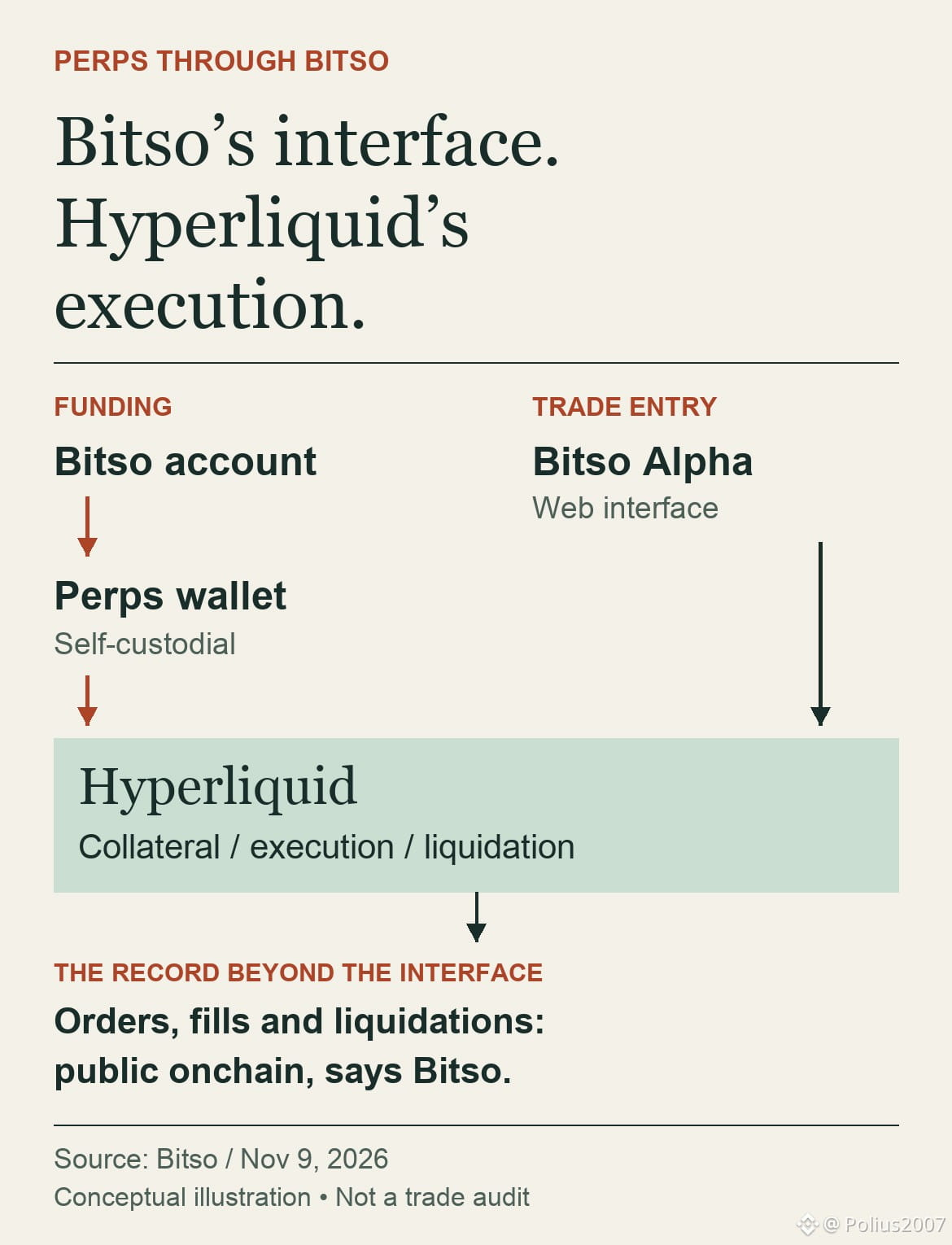
Bitso is giving its users a route into Hyperliquid without leaving the Bitso Alpha interface. Its November 9 rollout includes Bitcoin and Ether perpetual futures, with trading funds supplied from a Bitso account.
Activating Perps creates a separate self-custodial wallet. Users then manage their Hyperliquid account through Bitso Alpha on the web, including mobile browsers. The collateral sits on Hyperliquid and trades settle in USDC.
This also changes where users can check what happened to a trade. Bitso says every order, fill and liquidation is public and verifiable onchain. A trade entered through the exchange's screen leaves a record outside that interface.
Access is restricted to adults in supported jurisdictions. Hyperliquid handles execution and liquidation, and Bitso cannot reverse a liquidation or refund it. The new route brings exchange-account funding and publicly checkable execution into the same trading workflow.
Source: Bitso, November 9, 2026.
https://bitso.com/blog/perps-through-bitso-hyperliquid
#Hyperliquid #Crypto
16
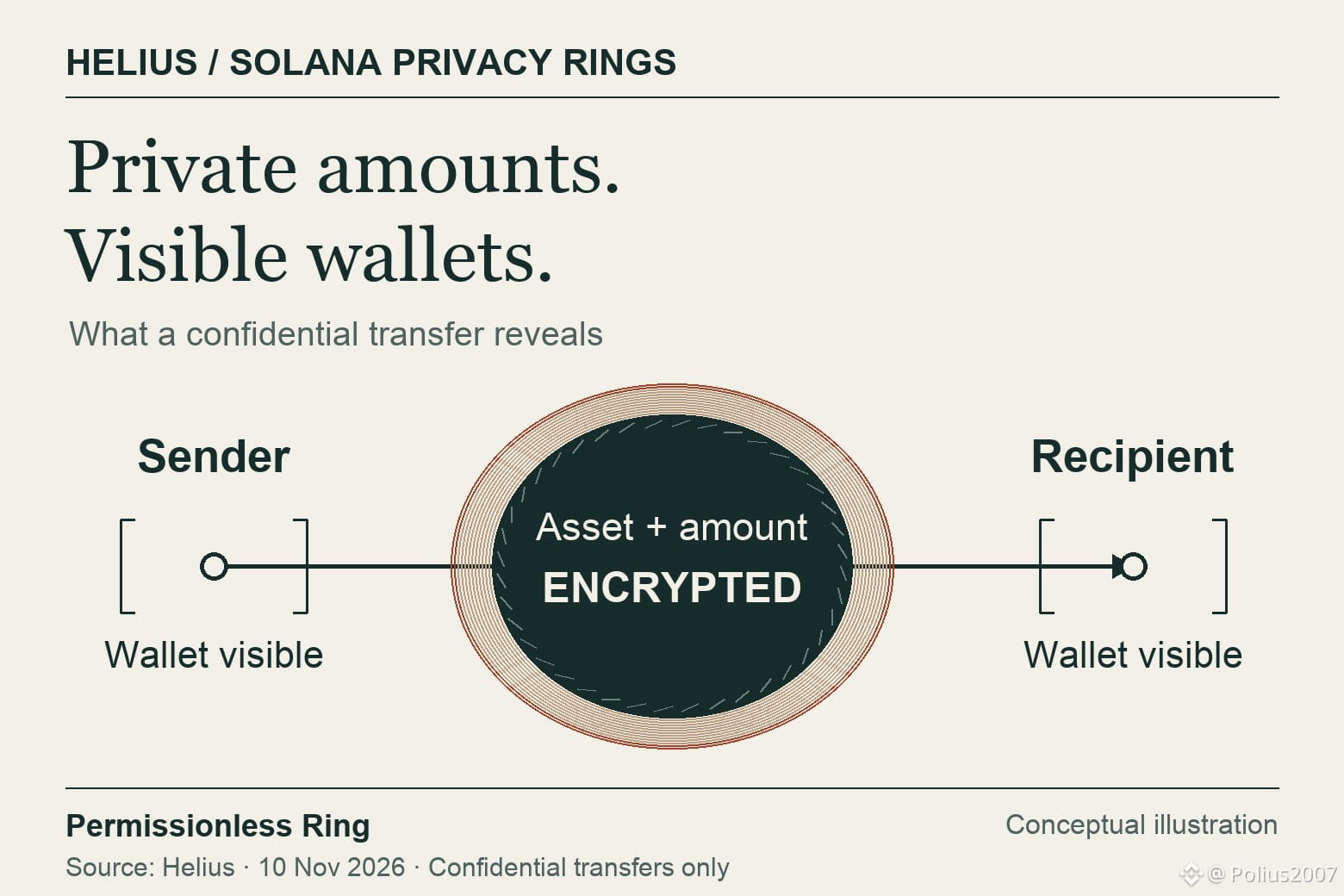
Solana users can now transfer tokens through Helius's Privacy Rings with the asset and amount encrypted onchain. The sender's and recipient's wallets remain visible.
Helius announced the permissionless Ring's mainnet launch on November 10. Users deposit assets into a private balance, transfer them to another Solana wallet address, and withdraw to a public balance. The encrypted data and transaction execution stay on Solana.
That gives payments a different kind of privacy: someone watching a confidential transfer can see which wallets interact without seeing what asset or amount changes hands. It does not make the participants anonymous.
Helius says Decrypt, Ore and Aurora Intents already have live products using the Ring. Custom Rings, including a version designed to hide counterparties as well, are still being audited, with a mainnet release targeted for the fourth quarter of 2026.
Source: Helius, November 10, 2026.
https://www.helius.dev/blog/solana-privacy-rings
#Solana #Privacy
114
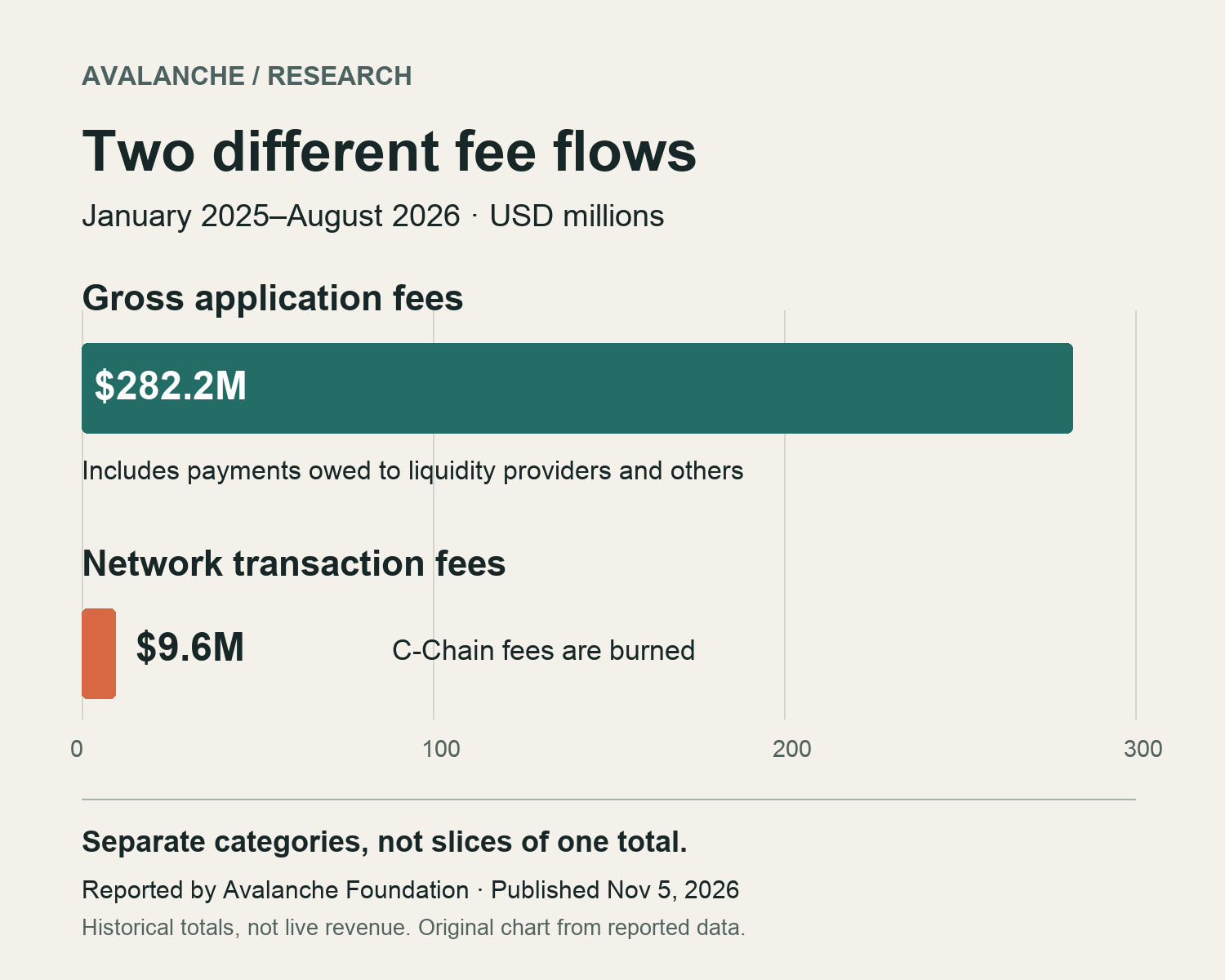
Avalanche applications generated about $282.2 million in gross fees from January 2025 through August 2026, compared with $9.6 million in network transaction fees, according to the Avalanche Foundation.
The application total includes payments owed to liquidity providers, depositors and other participants, not just money retained by app owners. The network fees follow a different path: the C-Chain burns them, including tips, in AVAX. The larger application figure does not measure that burn.
Chart: two separate fee flows, not parts of one total.
Source: Avalanche Foundation, November 5, 2026.
https://www.avalanche.com/about/blog/the-price-of-a-transaction-benchmarking-the-avalanche-c-chain-on-cost-and-capture
#Avalanche #AVAX
496
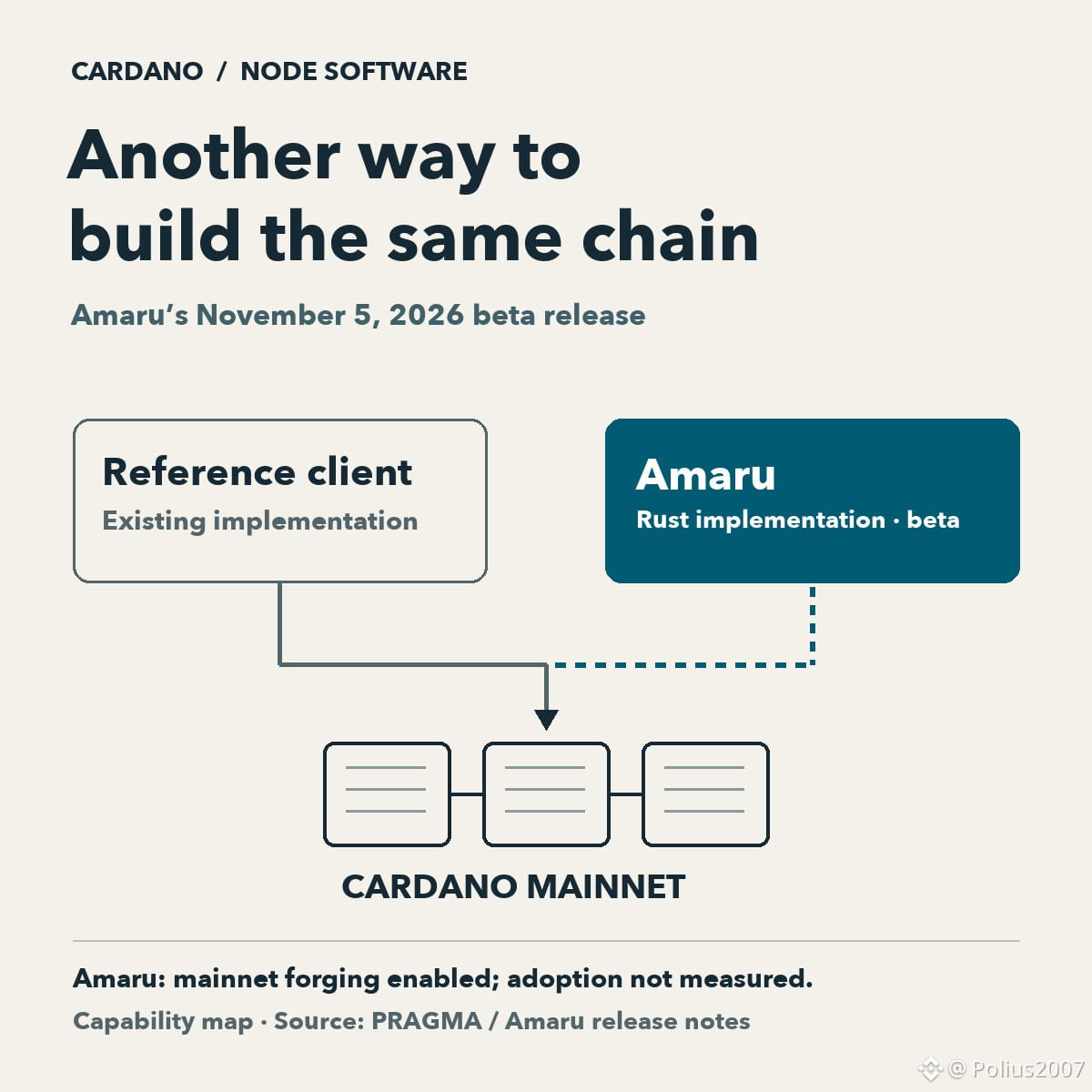
Amaru can now produce blocks on Cardano mainnet, giving stake-pool operators another implementation of the software that runs the network. Its November 5 beta release removes the testnet-only restriction on block production.
Different implementations can reduce dependence on one codebase: a bug in one need not be shared by the others. They still have to agree on which blocks are valid. That is what makes a separately built client useful to the same network.
How much diversity Cardano gains will depend on operators adopting it. Amaru remains an exploratory beta, so the software milestone comes ahead of any claim about its share of mainnet blocks.
Source: PRAGMA's Amaru release notes and repository, checked November 10, 2026. Diagram shows software capability, not measured deployment.
https://github.com/pragma-org/amaru/releases/tag/v10.11.20261105
https://github.com/pragma-org/amaru
#Cardano #ADA
1
253
Zcash developers are proposing 20-second blocks, down from 25 seconds, to shorten the wait for payments to get their first confirmation.
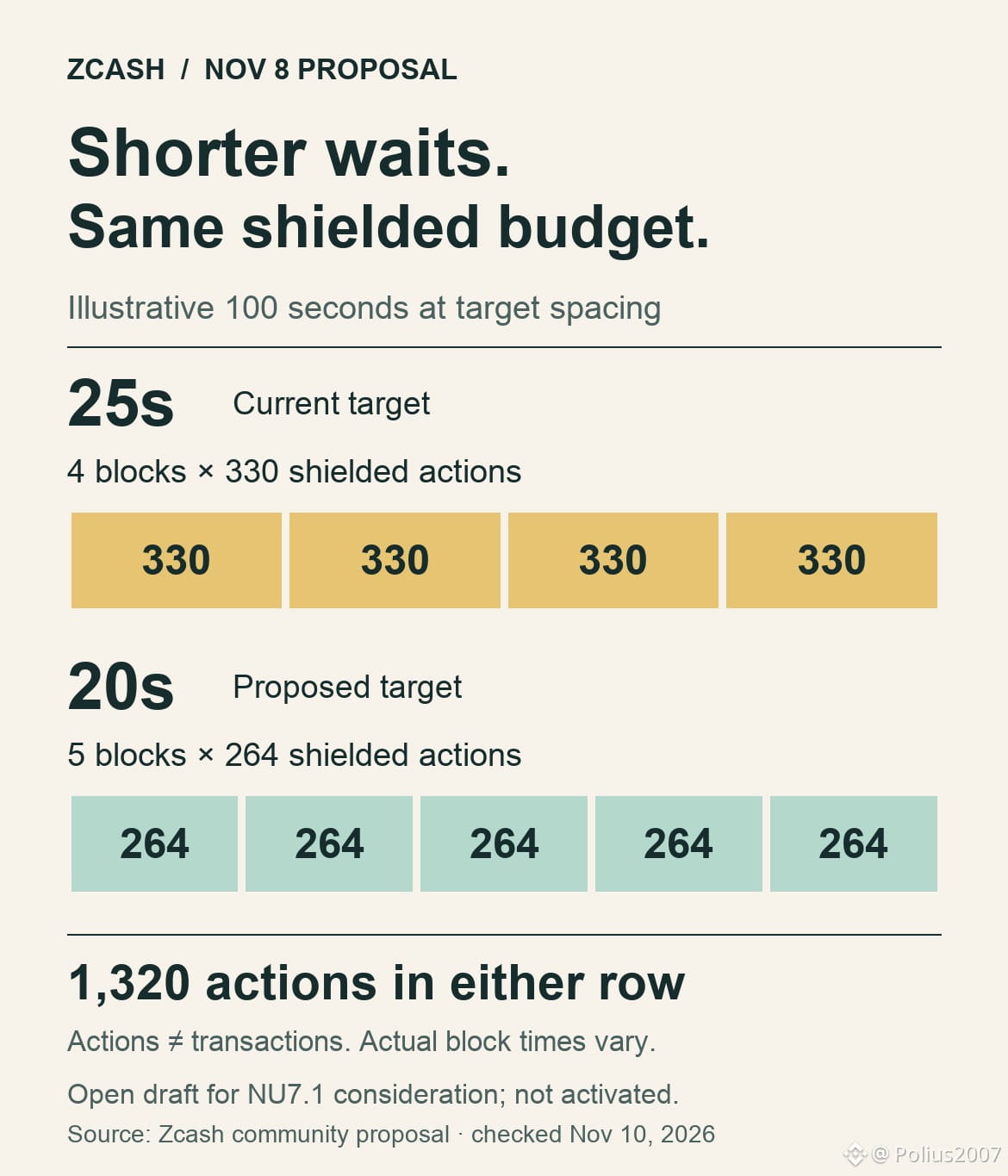
The November 8 proposal deliberately leaves the daily shielded-activity ceiling unchanged. More frequent blocks would each carry a smaller budget: 264 shielded actions instead of 330. These are units of private-transaction work, not a count of transactions.
At the target spacing, an illustrative 100 seconds would fit four blocks of 330 actions today or five blocks of 264 under the proposal. Both total 1,320. The reason for shrinking each block's allowance is to avoid increasing the worst-case daily work that light wallets must download and decrypt.
For someone paying with ZEC, the intended gain is a shorter wait to enter a block, rather than more shielded capacity overall. The proposal also scales rewards per block to preserve expected issuance per day.
The authors want the change considered in the next community poll and for NU7.1. It remains an open draft, not an activated upgrade.
Source: ValarDragon and Evan Forbes, Zcash community proposal, November 8, 2026; checked November 10. Diagram uses target intervals, not observed block times.
https://forum.zcashcommunity.com/t/proposal-lower-zcash-block-target-spacing-from-25s-to-20s/59035
#Zcash #ZEC
1
369
Echo Protocol's wind-down notice gives borrowers two different repayment deadlines: November 14 in the instructions, and November 19 at 23:59 UTC in its timeline.
The Bitcoin-focused protocol on Aptos announced its closure on October 19. It tells borrowers to repay debt and release collateral, and warns that unpaid loans may lead to liquidation. Final liquidation and distribution dates are still marked "TBC" in that notice.
For anyone with an Echo loan, the two dates are a reason to seek clarification through the project's official support channel before relying on the later deadline. The notice itself does not resolve the conflict.
The original announcement was still the newest post visible on Echo's public X profile when checked on November 10. That limited view does not rule out a clarification in its replies or Discord.
Source: Echo Protocol's October 19, 2026 wind-down notice.
https://x.com/EchoProtocol_/status/2112182551792242811
#DeFi #Bitcoin
100
Log in to explore more content
Join global crypto users on Binance Square
⚡️ Get latest and useful information about crypto.
💬 Trusted by the world’s largest crypto exchange.
👍 Discover real insights from verified creators.
Email / Phone number