
#bnbchain
bnbchain
9M views
24,959 Discussing
Hot
Latest


·
--
BNB Chain Wants To Hit Over 100,000 Transactions Per Second. What Would That Actually Take?Visa's card network can reportedly process somewhere around 65,000 transactions per second at peak capacity. Some BNB Chain scaling efforts and layer-2 components like opBNB have floated throughput targets in the tens of thousands and beyond, though there's no single confirmed mainnet benchmark at exactly 100,000 TPS. That's a big number to chase. It amounts to trying to outrun one of the largest payment rails on the planet.
BNB Chain didn't start anywhere near that number. It launched in 2020, built as a faster, cheaper alternative running alongside Ethereum at a time when Ethereum's fees were becoming a real problem for regular users. That timeline alone says a lot about how fast infrastructure can change when there's real demand pushing it. Getting from those early days to six figures of throughput has meant a long string of upgrades most users never notice: shorter block times, higher gas limits, and changes to how validators process blocks, each one squeezing out more capacity without breaking the apps already running on top.
The stated reason for chasing that kind of speed comes down to three words: stablecoins, payments, and RWA, meaning tokenized versions of real assets like funds or credit. None of that works at real scale if a network chokes every time volume spikes. A payments rail that occasionally jams during busy hours doesn't get chosen by anyone processing serious volume, no matter how good the marketing sounds.
Raw speed always comes with a tradeoff most roadmaps don't lead with. The faster and cheaper a chain tries to become, the more it tends to lean on fewer, more powerful validators to keep up with demand. That's the same tension every high throughput chain runs into eventually. Push hard on speed and you usually give up some ground on having thousands of small, independent validators spread out everywhere.
Whether BNB Chain hits triple digit thousands of TPS under real, messy, adversarial conditions, rather than a clean lab benchmark, is still an open question nobody can answer today. Plenty of chains have hit big numbers in controlled tests and then behaved very differently once real users and real attackers showed up at the same time.
What's clearer is the direction the whole industry is leaning. Every major chain right now is racing toward higher throughput because the entire RWA and stablecoin thesis depends on blockspace being cheap and fast enough that people stop thinking about it entirely, the same way nobody thinks about how many transactions per second their debit card can handle at the grocery store.
BNB sits at $715.56 today, a token that started out as a simple discount on Binance trading fees back in 2017 and is now tied to a chain trying to process transactions faster than a global card network.
Picture this playing out over the next several years. If the throughput numbers hold up under real load, most users still won't notice a chart or a headline about it. They'll just notice things feel instant, transfers clear before the page even finishes loading, and nobody bothers checking which chain is underneath. That's usually how infrastructure wins in the end, quietly, long after the number itself stopped being the story anyone talks about.
Do you think raw speed is what actually decides which chain wins the stablecoin and RWA race, or is it something else entirely?
Personal view, not advice. Do your own research.
#BNB #BNBChain
BNB Chain Wants To Hit Over 100,000 Transactions Per Second. What Would That Actually Take?
Visa's card network can reportedly process somewhere around 65,000 transactions per second at peak capacity. Some BNB Chain scaling efforts and layer-2 components like opBNB have floated throughput targets in the tens of thousands and beyond, though there's no single confirmed mainnet benchmark at exactly 100,000 TPS. That's a big number to chase. It amounts to trying to outrun one of the largest payment rails on the planet.
BNB Chain didn't start anywhere near that number. It launched in 2020, built as a faster, cheaper alternative running alongside Ethereum at a time when Ethereum's fees were becoming a real problem for regular users. That timeline alone says a lot about how fast infrastructure can change when there's real demand pushing it. Getting from those early days to six figures of throughput has meant a long string of upgrades most users never notice: shorter block times, higher gas limits, and changes to how validators process blocks, each one squeezing out more capacity without breaking the apps already running on top.
The stated reason for chasing that kind of speed comes down to three words: stablecoins, payments, and RWA, meaning tokenized versions of real assets like funds or credit. None of that works at real scale if a network chokes every time volume spikes. A payments rail that occasionally jams during busy hours doesn't get chosen by anyone processing serious volume, no matter how good the marketing sounds.
Raw speed always comes with a tradeoff most roadmaps don't lead with. The faster and cheaper a chain tries to become, the more it tends to lean on fewer, more powerful validators to keep up with demand. That's the same tension every high throughput chain runs into eventually. Push hard on speed and you usually give up some ground on having thousands of small, independent validators spread out everywhere.
Whether BNB Chain hits triple digit thousands of TPS under real, messy, adversarial conditions, rather than a clean lab benchmark, is still an open question nobody can answer today. Plenty of chains have hit big numbers in controlled tests and then behaved very differently once real users and real attackers showed up at the same time.
What's clearer is the direction the whole industry is leaning. Every major chain right now is racing toward higher throughput because the entire RWA and stablecoin thesis depends on blockspace being cheap and fast enough that people stop thinking about it entirely, the same way nobody thinks about how many transactions per second their debit card can handle at the grocery store.
BNB sits at $715.56 today, a token that started out as a simple discount on Binance trading fees back in 2017 and is now tied to a chain trying to process transactions faster than a global card network.
Picture this playing out over the next several years. If the throughput numbers hold up under real load, most users still won't notice a chart or a headline about it. They'll just notice things feel instant, transfers clear before the page even finishes loading, and nobody bothers checking which chain is underneath. That's usually how infrastructure wins in the end, quietly, long after the number itself stopped being the story anyone talks about.
Do you think raw speed is what actually decides which chain wins the stablecoin and RWA race, or is it something else entirely?
Personal view, not advice. Do your own research.
#BNB #BNBChain
BNB Chain didn't start anywhere near that number. It launched in 2020, built as a faster, cheaper alternative running alongside Ethereum at a time when Ethereum's fees were becoming a real problem for regular users. That timeline alone says a lot about how fast infrastructure can change when there's real demand pushing it. Getting from those early days to six figures of throughput has meant a long string of upgrades most users never notice: shorter block times, higher gas limits, and changes to how validators process blocks, each one squeezing out more capacity without breaking the apps already running on top.
The stated reason for chasing that kind of speed comes down to three words: stablecoins, payments, and RWA, meaning tokenized versions of real assets like funds or credit. None of that works at real scale if a network chokes every time volume spikes. A payments rail that occasionally jams during busy hours doesn't get chosen by anyone processing serious volume, no matter how good the marketing sounds.
Raw speed always comes with a tradeoff most roadmaps don't lead with. The faster and cheaper a chain tries to become, the more it tends to lean on fewer, more powerful validators to keep up with demand. That's the same tension every high throughput chain runs into eventually. Push hard on speed and you usually give up some ground on having thousands of small, independent validators spread out everywhere.
Whether BNB Chain hits triple digit thousands of TPS under real, messy, adversarial conditions, rather than a clean lab benchmark, is still an open question nobody can answer today. Plenty of chains have hit big numbers in controlled tests and then behaved very differently once real users and real attackers showed up at the same time.
What's clearer is the direction the whole industry is leaning. Every major chain right now is racing toward higher throughput because the entire RWA and stablecoin thesis depends on blockspace being cheap and fast enough that people stop thinking about it entirely, the same way nobody thinks about how many transactions per second their debit card can handle at the grocery store.
BNB sits at $715.56 today, a token that started out as a simple discount on Binance trading fees back in 2017 and is now tied to a chain trying to process transactions faster than a global card network.
Picture this playing out over the next several years. If the throughput numbers hold up under real load, most users still won't notice a chart or a headline about it. They'll just notice things feel instant, transfers clear before the page even finishes loading, and nobody bothers checking which chain is underneath. That's usually how infrastructure wins in the end, quietly, long after the number itself stopped being the story anyone talks about.
Do you think raw speed is what actually decides which chain wins the stablecoin and RWA race, or is it something else entirely?
Personal view, not advice. Do your own research.
#BNB #BNBChain
34

·
--
🚨 $BNB JUST GOT A BIGGER ROAD
BNB Smart Chain is pushing its block gas limit toward 70M as network utilization has been running above 95%.
That’s not just a technical upgrade.
It’s a bet that the chain can handle more activity without hitting its capacity ceiling.
The interesting part for BNB holders?
More capacity can support more DeFi, payments, trading and on-chain applications but it does NOT automatically mean a higher token price.
📊 $BNB is around $721.
Key levels I’m watching:
🟢 $718–$720 → Support
🔴 $730–$735 → Resistance
Above $735 → structure improves.
Below $718 → short-term weakness increases.
For me, the real signal is simple:
Can network activity keep growing after the upgrade?
Infrastructure first. Price reaction second. 👀
What matters more for BNB next — stronger on-chain activity or the Fed?
Follow QuantVanta for daily crypto market updates.
$BNB
{future}(BNBUSDT)
#bnb #BNBChain #crypto #Altcoin #CryptoMarket
🚨 $BNB JUST GOT A BIGGER ROAD
BNB Smart Chain is pushing its block gas limit toward 70M as network utilization has been running above 95%.
That’s not just a technical upgrade.
It’s a bet that the chain can handle more activity without hitting its capacity ceiling.
The interesting part for BNB holders?
More capacity can support more DeFi, payments, trading and on-chain applications but it does NOT automatically mean a higher token price.
📊 $BNB is around $721.
Key levels I’m watching:
🟢 $718–$720 → Support
🔴 $730–$735 → Resistance
Above $735 → structure improves.
Below $718 → short-term weakness increases.
For me, the real signal is simple:
Can network activity keep growing after the upgrade?
Infrastructure first. Price reaction second. 👀
What matters more for BNB next — stronger on-chain activity or the Fed?
Follow QuantVanta for daily crypto market updates.
$BNB
#bnb #BNBChain #crypto #Altcoin #CryptoMarket
BNB Smart Chain is pushing its block gas limit toward 70M as network utilization has been running above 95%.
That’s not just a technical upgrade.
It’s a bet that the chain can handle more activity without hitting its capacity ceiling.
The interesting part for BNB holders?
More capacity can support more DeFi, payments, trading and on-chain applications but it does NOT automatically mean a higher token price.
📊 $BNB is around $721.
Key levels I’m watching:
🟢 $718–$720 → Support
🔴 $730–$735 → Resistance
Above $735 → structure improves.
Below $718 → short-term weakness increases.
For me, the real signal is simple:
Can network activity keep growing after the upgrade?
Infrastructure first. Price reaction second. 👀
What matters more for BNB next — stronger on-chain activity or the Fed?
Follow QuantVanta for daily crypto market updates.
$BNB
#bnb #BNBChain #crypto #Altcoin #CryptoMarket

48
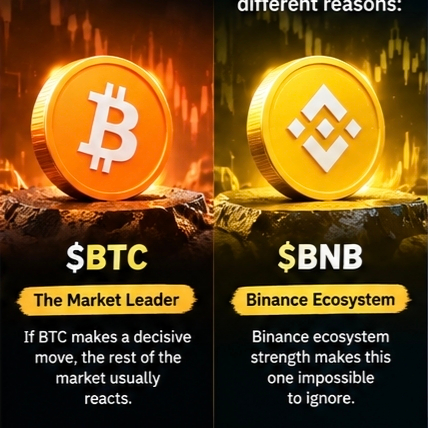
BNB Ecosystem: Utility Over Hype
Ready-to-publish Binance Square post:
🟡 $BNB: PRICE HYPE OR REAL ECOSYSTEM UTILITY?
A token can attract attention for two very different reasons:
1️⃣ Short-term speculation
2️⃣ Real usage across an ecosystem
For $BNB, I’m watching the second category:
✅ Network activity
✅ DeFi and on-chain applications
✅ Transaction-fee demand
✅ Developer and user growth
✅ Whether utility continues during weak market conditions
The strongest ecosystems are not judged only by green candles.
They are judged by what people still use when the market becomes boring.
So here’s the question:
👉 What matters more for $BNB over the long term — price momentum or ecosystem adoption?
My answer: adoption first, price second.
What’s your view?
#BNB $BNB
{spot}(BNBUSDT)
#BNBChain #altcoins #Web3
BNB Ecosystem: Utility Over Hype
Ready-to-publish Binance Square post:
🟡 $BNB : PRICE HYPE OR REAL ECOSYSTEM UTILITY?
A token can attract attention for two very different reasons:
1️⃣ Short-term speculation
2️⃣ Real usage across an ecosystem
For $BNB , I’m watching the second category:
✅ Network activity
✅ DeFi and on-chain applications
✅ Transaction-fee demand
✅ Developer and user growth
✅ Whether utility continues during weak market conditions
The strongest ecosystems are not judged only by green candles.
They are judged by what people still use when the market becomes boring.
So here’s the question:
👉 What matters more for $BNB over the long term — price momentum or ecosystem adoption?
My answer: adoption first, price second.
What’s your view?
#BNB $BNB
#BNBChain #altcoins #Web3
Ready-to-publish Binance Square post:
🟡 $BNB : PRICE HYPE OR REAL ECOSYSTEM UTILITY?
A token can attract attention for two very different reasons:
1️⃣ Short-term speculation
2️⃣ Real usage across an ecosystem
For $BNB , I’m watching the second category:
✅ Network activity
✅ DeFi and on-chain applications
✅ Transaction-fee demand
✅ Developer and user growth
✅ Whether utility continues during weak market conditions
The strongest ecosystems are not judged only by green candles.
They are judged by what people still use when the market becomes boring.
So here’s the question:
👉 What matters more for $BNB over the long term — price momentum or ecosystem adoption?
My answer: adoption first, price second.
What’s your view?
#BNB $BNB
#BNBChain #altcoins #Web3
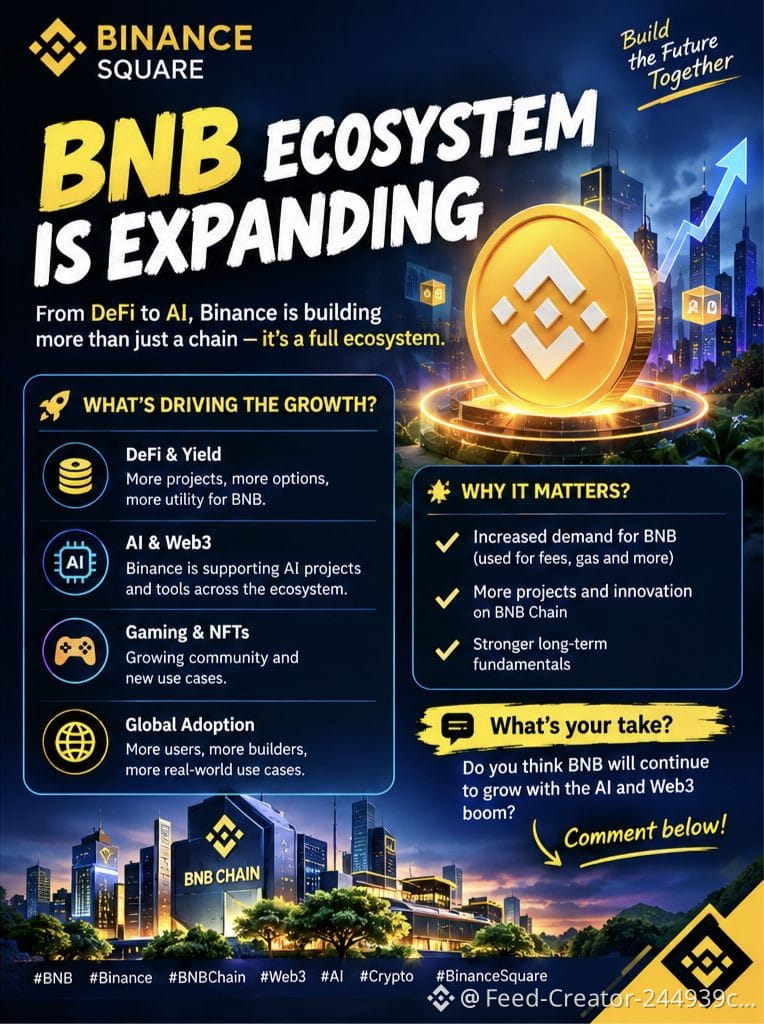
48

No fees, no owners The math behind BRIC$TORM 🛡️🔥
In the memecoin market, security and transparency are everything. Retail investors are tired of projects with exorbitant fees or the risk of "rug pulls." That is why BRIC$TORM was designed with built-in security:
True Multichain: operations split between BSC liquidity and Solana speed.
Renounced Contract: on the BSC network, contract ownership has been 100% renounced (no surprise changes).
Zero Fees: no hidden percentages for developers on transactions.
Automatic Burn: an LP burn system via Pump on the Solana network.
Cutting-edge technology combined with the power of community capital. Want to verify the contracts yourself? Official addresses are available on the community's official channels. The Storm is real, and it is secure. ⚡
#Solana #BNBChain #CryptoSecurity #DeFi #BRICSTORMToTheMoon
No fees, no owners The math behind BRIC$TORM 🛡️🔥
In the memecoin market, security and transparency are everything. Retail investors are tired of projects with exorbitant fees or the risk of "rug pulls." That is why BRIC$TORM was designed with built-in security:
True Multichain: operations split between BSC liquidity and Solana speed.
Renounced Contract: on the BSC network, contract ownership has been 100% renounced (no surprise changes).
Zero Fees: no hidden percentages for developers on transactions.
Automatic Burn: an LP burn system via Pump on the Solana network.
Cutting-edge technology combined with the power of community capital. Want to verify the contracts yourself? Official addresses are available on the community's official channels. The Storm is real, and it is secure. ⚡
#Solana #BNBChain #CryptoSecurity #DeFi #BRICSTORMToTheMoon
In the memecoin market, security and transparency are everything. Retail investors are tired of projects with exorbitant fees or the risk of "rug pulls." That is why BRIC$TORM was designed with built-in security:
True Multichain: operations split between BSC liquidity and Solana speed.
Renounced Contract: on the BSC network, contract ownership has been 100% renounced (no surprise changes).
Zero Fees: no hidden percentages for developers on transactions.
Automatic Burn: an LP burn system via Pump on the Solana network.
Cutting-edge technology combined with the power of community capital. Want to verify the contracts yourself? Official addresses are available on the community's official channels. The Storm is real, and it is secure. ⚡
#Solana #BNBChain #CryptoSecurity #DeFi #BRICSTORMToTheMoon
CrivemChain:
Eu já tenho o #Token BRIC$TORM na minha carteira. #BRICSTORM #BRICSTORMING #BRICSTORMToTheMoon
1
1
2
59

$BNCB
🚀 Traditional stocks are going on-chain.
bStocks brings tokenized exposure to U.S. equities with 24/🚀 Traditional stocks are going on-chain.
bStocks brings tokenized exposure to U.S. equities with 24/7 trading, 1:1 backing, and on-chain accessibility.
🔹 Fully backed by underlying equities
🔹 24/7 trading
🔹 1:1 conversion
🔹 Built on BNB Smart Chain
🔹 Transparent Proof of Collateral
Stocks are becoming more accessible, flexible, and on-chain.
Onchain. Always On. 🔥
#bStocks #Binance #RWA #Tokenization #BNBChain
{spot}(BNCBUSDT)
$BNCB
🚀 Traditional stocks are going on-chain.
bStocks brings tokenized exposure to U.S. equities with 24/🚀 Traditional stocks are going on-chain.
bStocks brings tokenized exposure to U.S. equities with 24/7 trading, 1:1 backing, and on-chain accessibility.
🔹 Fully backed by underlying equities
🔹 24/7 trading
🔹 1:1 conversion
🔹 Built on BNB Smart Chain
🔹 Transparent Proof of Collateral
Stocks are becoming more accessible, flexible, and on-chain.
Onchain. Always On. 🔥
#bStocks #Binance #RWA #Tokenization #BNBChain
🚀 Traditional stocks are going on-chain.
bStocks brings tokenized exposure to U.S. equities with 24/🚀 Traditional stocks are going on-chain.
bStocks brings tokenized exposure to U.S. equities with 24/7 trading, 1:1 backing, and on-chain accessibility.
🔹 Fully backed by underlying equities
🔹 24/7 trading
🔹 1:1 conversion
🔹 Built on BNB Smart Chain
🔹 Transparent Proof of Collateral
Stocks are becoming more accessible, flexible, and on-chain.
Onchain. Always On. 🔥
#bStocks #Binance #RWA #Tokenization #BNBChain
343

🚀 BNB Chain Just Hit a Massive Milestone! Why $BNB is Fast Approaching $950+ 📈The crypto space is rotating fast, and all eyes are back on the BNB Chain ecosystem! 💎While the market experiences rapid shifts, the latest on-chain data proves that BNB Chain has become the fastest-growing blockchain for Real-World Asset (RWA) tokenization, bringing in a staggering $3.6 billion in new value. It is officially outpacing both Solana and Ethereum in institutional asset growth this quarter.
Here is what you need to know to stay ahead of the next massive move:
🔥 1. The $BNB BreakoutAfter building strong structural support, $BNB has finally smashed through the crucial $745 resistance level. Technical signals are heavily leaning bullish, with analysts pointing to a clear macro path toward $950 to $1,000 if this momentum holds.
🥞 2. Ecosystem RotationAs the main hub thrives, decentralized exchange volume on the network has skyrocketed by over 65%. Watch out for top-tier ecosystem utilities like $CAKE as liquidity flows directly out of the main layer and into these established protocols.
🐕 3. The Meme Coin Ecosystem BoomThe BNB Chain memecoin sector is catching a massive second wind. Keep a very close watch on community favorites like $FLOKI and high-volume breakout projects making waves across social layers.
💡 My Strategy: I am dynamically scaling my positions into BNB on the short-term retests of previous resistance while letting my CAKE compound.
What is your play? Are you accumulating $BNB at these levels or hunting low-caps? Drop your targets below! 👇#BNBChain #RWA #Write2Earn
{spot}(BNBUSDT)
🚀 BNB Chain Just Hit a Massive Milestone! Why $BNB is Fast Approaching $950+ 📈The crypto space is rotating fast, and all eyes are back on the BNB Chain ecosystem! 💎While the market experiences rapid shifts, the latest on-chain data proves that BNB Chain has become the fastest-growing blockchain for Real-World Asset (RWA) tokenization, bringing in a staggering $3.6 billion in new value. It is officially outpacing both Solana and Ethereum in institutional asset growth this quarter.
Here is what you need to know to stay ahead of the next massive move:
🔥 1. The $BNB BreakoutAfter building strong structural support, $BNB has finally smashed through the crucial $745 resistance level. Technical signals are heavily leaning bullish, with analysts pointing to a clear macro path toward $950 to $1,000 if this momentum holds.
🥞 2. Ecosystem RotationAs the main hub thrives, decentralized exchange volume on the network has skyrocketed by over 65%. Watch out for top-tier ecosystem utilities like $CAKE as liquidity flows directly out of the main layer and into these established protocols.
🐕 3. The Meme Coin Ecosystem BoomThe BNB Chain memecoin sector is catching a massive second wind. Keep a very close watch on community favorites like $FLOKI and high-volume breakout projects making waves across social layers.
💡 My Strategy: I am dynamically scaling my positions into BNB on the short-term retests of previous resistance while letting my CAKE compound.
What is your play? Are you accumulating $BNB at these levels or hunting low-caps? Drop your targets below! 👇#BNBChain #RWA #Write2Earn
Here is what you need to know to stay ahead of the next massive move:
🔥 1. The $BNB BreakoutAfter building strong structural support, $BNB has finally smashed through the crucial $745 resistance level. Technical signals are heavily leaning bullish, with analysts pointing to a clear macro path toward $950 to $1,000 if this momentum holds.
🥞 2. Ecosystem RotationAs the main hub thrives, decentralized exchange volume on the network has skyrocketed by over 65%. Watch out for top-tier ecosystem utilities like $CAKE as liquidity flows directly out of the main layer and into these established protocols.
🐕 3. The Meme Coin Ecosystem BoomThe BNB Chain memecoin sector is catching a massive second wind. Keep a very close watch on community favorites like $FLOKI and high-volume breakout projects making waves across social layers.
💡 My Strategy: I am dynamically scaling my positions into BNB on the short-term retests of previous resistance while letting my CAKE compound.
What is your play? Are you accumulating $BNB at these levels or hunting low-caps? Drop your targets below! 👇#BNBChain #RWA #Write2Earn
207

·
--
🔥 $BNB /USDT — RWA Narrative Is Heating Up!
BNB Chain is showing strong momentum as the Real-World Assets (RWA) narrative continues to expand. 📈
While capital keeps moving into tokenized financial products, BNB Chain is increasingly becoming a serious contender in the on-chain finance race. 👀
💰 RWA Growth + Ecosystem Expansion
📊 Tokenized securities are seeing major growth
⚡ On-chain trading activity is accelerating
🏦 More traditional financial assets are moving on-chain
And the chart? 👇
BNB is holding above the key moving averages, with price around $724.70 and a recent push toward $725.72.
If buyers maintain momentum, the next breakout could get very interesting. 🚀
But remember: RWA growth alone doesn't guarantee a sustained pump. Liquidity, real demand and regulation will ultimately decide how far this narrative can run.
👀 $BNB is definitely one to watch.
#BNB #BNBChain #RWA #Crypto #Binance #DeFi #Altcoins #Web3
{spot}(BNBUSDT)
🔥 $BNB /USDT — RWA Narrative Is Heating Up!
BNB Chain is showing strong momentum as the Real-World Assets (RWA) narrative continues to expand. 📈
While capital keeps moving into tokenized financial products, BNB Chain is increasingly becoming a serious contender in the on-chain finance race. 👀
💰 RWA Growth + Ecosystem Expansion
📊 Tokenized securities are seeing major growth
⚡ On-chain trading activity is accelerating
🏦 More traditional financial assets are moving on-chain
And the chart? 👇
BNB is holding above the key moving averages, with price around $724.70 and a recent push toward $725.72.
If buyers maintain momentum, the next breakout could get very interesting. 🚀
But remember: RWA growth alone doesn't guarantee a sustained pump. Liquidity, real demand and regulation will ultimately decide how far this narrative can run.
👀 $BNB is definitely one to watch.
#BNB #BNBChain #RWA #Crypto #Binance #DeFi #Altcoins #Web3
BNB Chain is showing strong momentum as the Real-World Assets (RWA) narrative continues to expand. 📈
While capital keeps moving into tokenized financial products, BNB Chain is increasingly becoming a serious contender in the on-chain finance race. 👀
💰 RWA Growth + Ecosystem Expansion
📊 Tokenized securities are seeing major growth
⚡ On-chain trading activity is accelerating
🏦 More traditional financial assets are moving on-chain
And the chart? 👇
BNB is holding above the key moving averages, with price around $724.70 and a recent push toward $725.72.
If buyers maintain momentum, the next breakout could get very interesting. 🚀
But remember: RWA growth alone doesn't guarantee a sustained pump. Liquidity, real demand and regulation will ultimately decide how far this narrative can run.
👀 $BNB is definitely one to watch.
#BNB #BNBChain #RWA #Crypto #Binance #DeFi #Altcoins #Web3
53

·
--
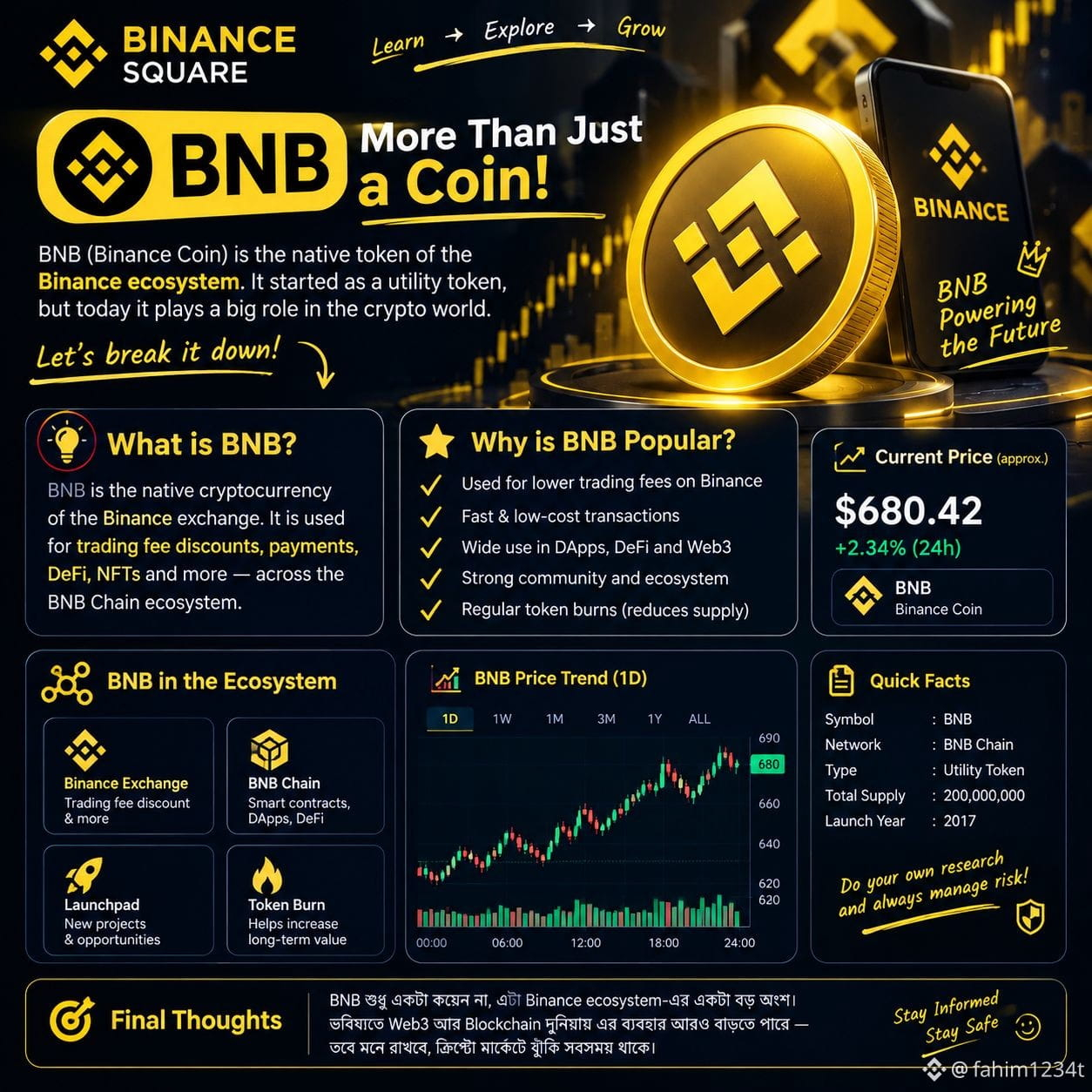
🔥 BNB: More Than Just a Coin!
BNB is one of the most important tokens in the Binance ecosystem.
It has many uses across trading, BNB Chain, DeFi and Web3.
📌 What do you think about BNB’s future?
Could BNB become even more important in the crypto market? 👇
#BNB #BİNANCE #crypto #BNBChain #BinanceSquare
⚠️ This is for educational purposes, not financial advice.
🔥 BNB: More Than Just a Coin!
BNB is one of the most important tokens in the Binance ecosystem.
It has many uses across trading, BNB Chain, DeFi and Web3.
📌 What do you think about BNB’s future?
Could BNB become even more important in the crypto market? 👇
#BNB #BİNANCE #crypto #BNBChain #BinanceSquare
⚠️ This is for educational purposes, not financial advice.
BNB is one of the most important tokens in the Binance ecosystem.
It has many uses across trading, BNB Chain, DeFi and Web3.
📌 What do you think about BNB’s future?
Could BNB become even more important in the crypto market? 👇
#BNB #BİNANCE #crypto #BNBChain #BinanceSquare
⚠️ This is for educational purposes, not financial advice.
106

Verified
🚀 NEW ON BINANCE!
🔥 MarsCoin ($MARSCOIN ) is now live on Binance Spot!
⛓️ BNB Chain
💱 $MarsCoin /USDT & $MARSCOIN/USDC
🏷️ Seed Tag
Is $MARSCOIN ready for another move? 👀🚀
#Binance #MarsCoin #BNBChain #MemeCoin #BinanceSquare
🚀 NEW ON BINANCE!
🔥 MarsCoin ($MARSCOIN ) is now live on Binance Spot!
⛓️ BNB Chain
💱 $MarsCoin /USDT & $MARSCOIN /USDC
🏷️ Seed Tag
Is $MARSCOIN ready for another move? 👀🚀
#Binance #MarsCoin #BNBChain #MemeCoin #BinanceSquare
🔥 MarsCoin ($MARSCOIN ) is now live on Binance Spot!
⛓️ BNB Chain
💱 $MarsCoin /USDT & $MARSCOIN /USDC
🏷️ Seed Tag
Is $MARSCOIN ready for another move? 👀🚀
#Binance #MarsCoin #BNBChain #MemeCoin #BinanceSquare
AngelOfCrypto_-:
nice
1
1
1
808

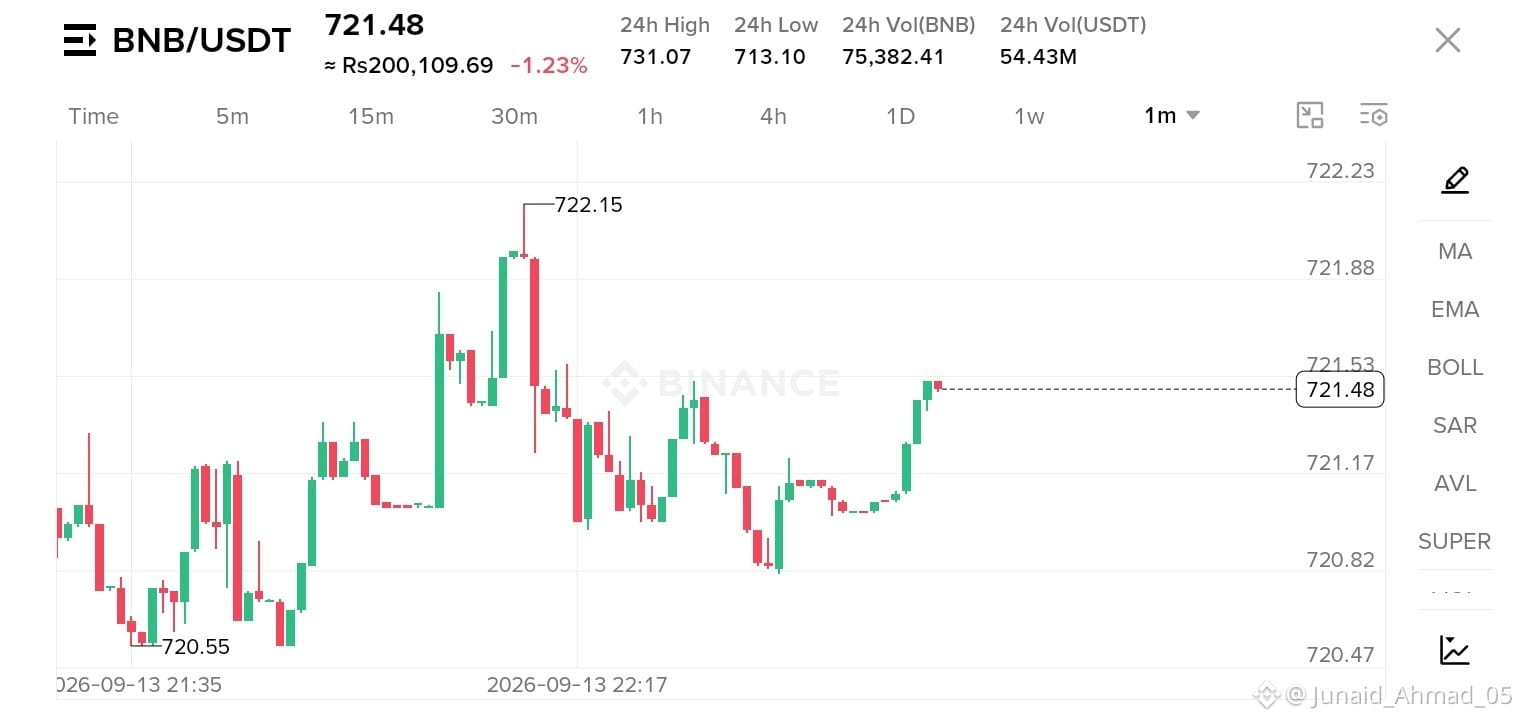
$BNB 🚨 BNB/USDT Market Update
BNB is currently trading around $721.48, after bouncing from the $720.55 support zone on the short-term chart.
📈 Key Resistance: $721.53 → $722.15
📉 Key Support: $720.55 → $720.47
Bulls are trying to regain momentum, but BNB needs a clean break above $722.15 to confirm stronger short-term upside momentum. If support fails, another pullback could follow.
Watching the breakout closely. 👀🔥
#bnb #BNBChain #Binance #Crypto #BNBUSDT
{spot}(BNBUSDT)
$BNB 🚨 BNB/USDT Market Update
BNB is currently trading around $721.48, after bouncing from the $720.55 support zone on the short-term chart.
📈 Key Resistance: $721.53 → $722.15
📉 Key Support: $720.55 → $720.47
Bulls are trying to regain momentum, but BNB needs a clean break above $722.15 to confirm stronger short-term upside momentum. If support fails, another pullback could follow.
Watching the breakout closely. 👀🔥
#bnb #BNBChain #Binance #Crypto #BNBUSDT
BNB is currently trading around $721.48, after bouncing from the $720.55 support zone on the short-term chart.
📈 Key Resistance: $721.53 → $722.15
📉 Key Support: $720.55 → $720.47
Bulls are trying to regain momentum, but BNB needs a clean break above $722.15 to confirm stronger short-term upside momentum. If support fails, another pullback could follow.
Watching the breakout closely. 👀🔥
#bnb #BNBChain #Binance #Crypto #BNBUSDT
6

·
--
Article
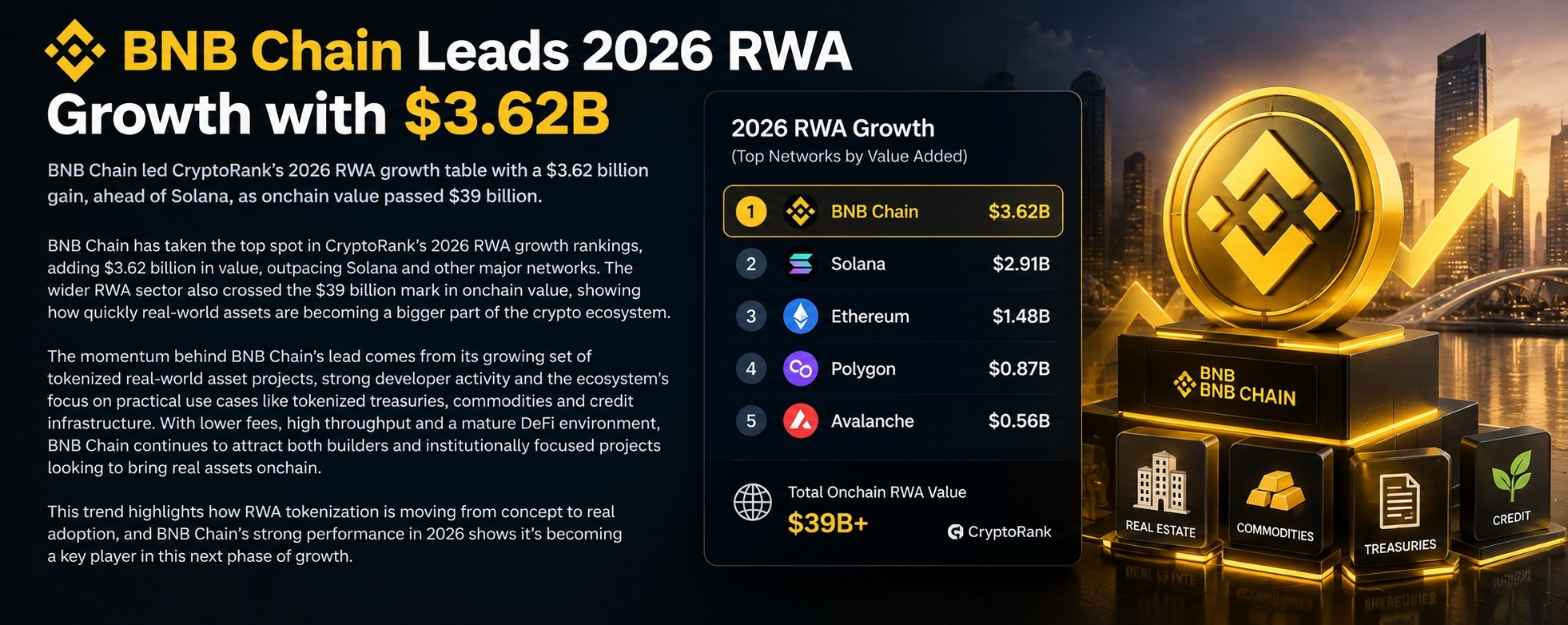
BNB Chain Is Quietly Becoming One of the Biggest RWA Growth Stories of 2026$BNB is sitting at the center of a narrative that is becoming increasingly important across crypto: the tokenization of real world assets. According to the latest CryptoRank data, BNB Chain recorded roughly $3.62 billion in RWA value growth during 2026, putting it ahead of Solana at $2.66 billion and Stellar at $2.50 billion. At the same time, the overall on-chain RWA market has crossed $39 billion, representing growth of more than 50% since the beginning of the year.
The headline number is impressive, but the more interesting part is what it says about the direction of BNB Chain. Real-world assets are moving beyond the early experimental stage of crypto. Treasuries, equities, credit products, commodities and other traditional financial assets are increasingly being represented on public blockchains. That creates a different kind of demand for blockchain infrastructure because these applications are not primarily built around speculation or short-term token narratives. They depend on settlement, liquidity, accessibility and the ability to bring financial products onto a transparent digital network.
BNB Chain appears to be benefiting from that shift. Binance Research reported that BNB Chain became the leading venue for tokenized equities during the first half of 2026, while the market capitalization of tokenized RWAs on the network increased by 107% in H1 2026. Its share of on-chain RWA value also increased from 9.8% to 13.5% during that period. Those numbers provide useful context behind the later CryptoRank growth ranking: BNB Chain’s RWA expansion is not coming from a single headline alone, but from a broader increase in tokenized asset activity.
What stands out to me is how different this growth is from the usual crypto cycle. When a new narrative appears, attention often arrives first and actual usage follows later. RWAs work differently. The underlying assets already exist in traditional finance; the blockchain is essentially becoming another layer for issuing, transferring, settling or accessing them. That means the important question is not simply whether RWA tokens become popular, but whether blockchain infrastructure can make these markets more efficient and accessible.
BNB Chain has several characteristics that make it competitive for this environment. It is a large EVM-compatible ecosystem with established DeFi infrastructure, wallets, exchanges and developers. That existing environment matters because tokenized assets need somewhere to go after they are issued. A tokenized treasury, equity or credit product becomes more useful when it can interact with lending markets, trading venues, liquidity pools and other on chain applications rather than remaining isolated in a single contract.
The network’s RWA expansion also fits into a broader shift happening across the industry. Ethereum still holds the largest share of RWA value, meaning BNB Chain has not replaced Ethereum as the dominant RWA network. However, the growth figures show that the competitive landscape is changing. Solana, Stellar and several other networks are also attracting meaningful RWA activity, while the total market continues expanding. CryptoRank’s latest ranking puts BNB Chain first in dollar growth for 2026, but that should be understood as a measure of growth rather than a statement that BNB Chain has the largest overall RWA market.
There is another number worth watching. CryptoRank previously reported that the number of RWA holders across major ecosystems grew from about 576,000 to more than 775,000 during 2026, excluding stablecoins. BNB Chain recorded the fastest percentage growth in RWA holders, rising by more than 500% from its January level. That suggests the story is not only about larger assets being tokenized; participation is also expanding.
Still, I would not treat the $3.62 billion figure as proof that BNB itself must automatically benefit by the same amount. RWA growth and token demand are related ecosystem questions, but they are not identical. The value of assets represented on a blockchain does not directly translate into the market value of its native token. Adoption, transaction activity, liquidity, network economics and continued developer interest will ultimately matter.
That is the part I am watching most closely. If BNB Chain can turn RWA growth into sustained activity across trading, settlement and DeFi applications, then the current numbers could represent something more meaningful than a temporary ranking. If tokenized assets continue moving onto multiple chains, competition will become increasingly focused on infrastructure quality and actual usage rather than simply who announces the biggest RWA partnership.
For now, BNB Chain has clearly established itself as one of the strongest RWA growth stories of 2026. The $3.62 billion increase, the 107% first-half expansion in tokenized RWA market capitalization, and the broader $39 billion-plus RWA market all point toward the same trend: traditional assets are becoming a much larger part of the on-chain economy.
The bigger question is what happens next. If real-world asset tokenization continues expanding at this pace, blockchains will increasingly compete not just for crypto-native users, but for a share of traditional financial infrastructure itself. BNB Chain’s recent growth suggests it intends to be one of the networks competing aggressively for that role.
#BNBChain
BNB Chain Is Quietly Becoming One of the Biggest RWA Growth Stories of 2026
$BNB is sitting at the center of a narrative that is becoming increasingly important across crypto: the tokenization of real world assets. According to the latest CryptoRank data, BNB Chain recorded roughly $3.62 billion in RWA value growth during 2026, putting it ahead of Solana at $2.66 billion and Stellar at $2.50 billion. At the same time, the overall on-chain RWA market has crossed $39 billion, representing growth of more than 50% since the beginning of the year.
The headline number is impressive, but the more interesting part is what it says about the direction of BNB Chain. Real-world assets are moving beyond the early experimental stage of crypto. Treasuries, equities, credit products, commodities and other traditional financial assets are increasingly being represented on public blockchains. That creates a different kind of demand for blockchain infrastructure because these applications are not primarily built around speculation or short-term token narratives. They depend on settlement, liquidity, accessibility and the ability to bring financial products onto a transparent digital network.
BNB Chain appears to be benefiting from that shift. Binance Research reported that BNB Chain became the leading venue for tokenized equities during the first half of 2026, while the market capitalization of tokenized RWAs on the network increased by 107% in H1 2026. Its share of on-chain RWA value also increased from 9.8% to 13.5% during that period. Those numbers provide useful context behind the later CryptoRank growth ranking: BNB Chain’s RWA expansion is not coming from a single headline alone, but from a broader increase in tokenized asset activity.
What stands out to me is how different this growth is from the usual crypto cycle. When a new narrative appears, attention often arrives first and actual usage follows later. RWAs work differently. The underlying assets already exist in traditional finance; the blockchain is essentially becoming another layer for issuing, transferring, settling or accessing them. That means the important question is not simply whether RWA tokens become popular, but whether blockchain infrastructure can make these markets more efficient and accessible.
BNB Chain has several characteristics that make it competitive for this environment. It is a large EVM-compatible ecosystem with established DeFi infrastructure, wallets, exchanges and developers. That existing environment matters because tokenized assets need somewhere to go after they are issued. A tokenized treasury, equity or credit product becomes more useful when it can interact with lending markets, trading venues, liquidity pools and other on chain applications rather than remaining isolated in a single contract.
The network’s RWA expansion also fits into a broader shift happening across the industry. Ethereum still holds the largest share of RWA value, meaning BNB Chain has not replaced Ethereum as the dominant RWA network. However, the growth figures show that the competitive landscape is changing. Solana, Stellar and several other networks are also attracting meaningful RWA activity, while the total market continues expanding. CryptoRank’s latest ranking puts BNB Chain first in dollar growth for 2026, but that should be understood as a measure of growth rather than a statement that BNB Chain has the largest overall RWA market.
There is another number worth watching. CryptoRank previously reported that the number of RWA holders across major ecosystems grew from about 576,000 to more than 775,000 during 2026, excluding stablecoins. BNB Chain recorded the fastest percentage growth in RWA holders, rising by more than 500% from its January level. That suggests the story is not only about larger assets being tokenized; participation is also expanding.
Still, I would not treat the $3.62 billion figure as proof that BNB itself must automatically benefit by the same amount. RWA growth and token demand are related ecosystem questions, but they are not identical. The value of assets represented on a blockchain does not directly translate into the market value of its native token. Adoption, transaction activity, liquidity, network economics and continued developer interest will ultimately matter.
That is the part I am watching most closely. If BNB Chain can turn RWA growth into sustained activity across trading, settlement and DeFi applications, then the current numbers could represent something more meaningful than a temporary ranking. If tokenized assets continue moving onto multiple chains, competition will become increasingly focused on infrastructure quality and actual usage rather than simply who announces the biggest RWA partnership.
For now, BNB Chain has clearly established itself as one of the strongest RWA growth stories of 2026. The $3.62 billion increase, the 107% first-half expansion in tokenized RWA market capitalization, and the broader $39 billion-plus RWA market all point toward the same trend: traditional assets are becoming a much larger part of the on-chain economy.
The bigger question is what happens next. If real-world asset tokenization continues expanding at this pace, blockchains will increasingly compete not just for crypto-native users, but for a share of traditional financial infrastructure itself. BNB Chain’s recent growth suggests it intends to be one of the networks competing aggressively for that role.
#BNBChain
The headline number is impressive, but the more interesting part is what it says about the direction of BNB Chain. Real-world assets are moving beyond the early experimental stage of crypto. Treasuries, equities, credit products, commodities and other traditional financial assets are increasingly being represented on public blockchains. That creates a different kind of demand for blockchain infrastructure because these applications are not primarily built around speculation or short-term token narratives. They depend on settlement, liquidity, accessibility and the ability to bring financial products onto a transparent digital network.
BNB Chain appears to be benefiting from that shift. Binance Research reported that BNB Chain became the leading venue for tokenized equities during the first half of 2026, while the market capitalization of tokenized RWAs on the network increased by 107% in H1 2026. Its share of on-chain RWA value also increased from 9.8% to 13.5% during that period. Those numbers provide useful context behind the later CryptoRank growth ranking: BNB Chain’s RWA expansion is not coming from a single headline alone, but from a broader increase in tokenized asset activity.
What stands out to me is how different this growth is from the usual crypto cycle. When a new narrative appears, attention often arrives first and actual usage follows later. RWAs work differently. The underlying assets already exist in traditional finance; the blockchain is essentially becoming another layer for issuing, transferring, settling or accessing them. That means the important question is not simply whether RWA tokens become popular, but whether blockchain infrastructure can make these markets more efficient and accessible.
BNB Chain has several characteristics that make it competitive for this environment. It is a large EVM-compatible ecosystem with established DeFi infrastructure, wallets, exchanges and developers. That existing environment matters because tokenized assets need somewhere to go after they are issued. A tokenized treasury, equity or credit product becomes more useful when it can interact with lending markets, trading venues, liquidity pools and other on chain applications rather than remaining isolated in a single contract.
The network’s RWA expansion also fits into a broader shift happening across the industry. Ethereum still holds the largest share of RWA value, meaning BNB Chain has not replaced Ethereum as the dominant RWA network. However, the growth figures show that the competitive landscape is changing. Solana, Stellar and several other networks are also attracting meaningful RWA activity, while the total market continues expanding. CryptoRank’s latest ranking puts BNB Chain first in dollar growth for 2026, but that should be understood as a measure of growth rather than a statement that BNB Chain has the largest overall RWA market.
There is another number worth watching. CryptoRank previously reported that the number of RWA holders across major ecosystems grew from about 576,000 to more than 775,000 during 2026, excluding stablecoins. BNB Chain recorded the fastest percentage growth in RWA holders, rising by more than 500% from its January level. That suggests the story is not only about larger assets being tokenized; participation is also expanding.
Still, I would not treat the $3.62 billion figure as proof that BNB itself must automatically benefit by the same amount. RWA growth and token demand are related ecosystem questions, but they are not identical. The value of assets represented on a blockchain does not directly translate into the market value of its native token. Adoption, transaction activity, liquidity, network economics and continued developer interest will ultimately matter.
That is the part I am watching most closely. If BNB Chain can turn RWA growth into sustained activity across trading, settlement and DeFi applications, then the current numbers could represent something more meaningful than a temporary ranking. If tokenized assets continue moving onto multiple chains, competition will become increasingly focused on infrastructure quality and actual usage rather than simply who announces the biggest RWA partnership.
For now, BNB Chain has clearly established itself as one of the strongest RWA growth stories of 2026. The $3.62 billion increase, the 107% first-half expansion in tokenized RWA market capitalization, and the broader $39 billion-plus RWA market all point toward the same trend: traditional assets are becoming a much larger part of the on-chain economy.
The bigger question is what happens next. If real-world asset tokenization continues expanding at this pace, blockchains will increasingly compete not just for crypto-native users, but for a share of traditional financial infrastructure itself. BNB Chain’s recent growth suggests it intends to be one of the networks competing aggressively for that role.
#BNBChain
1
51

·
--
Bullish
🟡 Quick Guide: What Makes $BNB the Engine of Binance
Whether you are new to crypto or a seasoned trader, understanding BNB is key to maximizing your Binance experience. Here are the core utilities driving its value:
* Trading Fee Discounts: Pay fees with $BNB on Spot, Margin, and Futures to instantly save up to 25% on trading costs.
* Launchpool & Launchpad: Stake your BNB to farm upcoming tokens for free before they list.
* Gas for BNB Chain: Powers high-speed, low-cost decentralized transactions on BSC (BNB Smart Chain) and opBNB.
* Auto-Burn Mechanism: Quarterly automated burns permanently remove BNB from circulation, steadily reducing total supply.
💡 Pro Tip: Keep a small BNB balance in your Binance wallet and toggle "Use BNB to pay for fees" in your settings so you never miss a discount!
👇 Are you holding BNB for long-term utility or Launchpool farming? Share your strategy below!
#BNB #CryptoTips #BNBChain #CryptoEducation
🟡 Quick Guide: What Makes $BNB the Engine of Binance
Whether you are new to crypto or a seasoned trader, understanding BNB is key to maximizing your Binance experience. Here are the core utilities driving its value:
* Trading Fee Discounts: Pay fees with $BNB on Spot, Margin, and Futures to instantly save up to 25% on trading costs.
* Launchpool & Launchpad: Stake your BNB to farm upcoming tokens for free before they list.
* Gas for BNB Chain: Powers high-speed, low-cost decentralized transactions on BSC (BNB Smart Chain) and opBNB.
* Auto-Burn Mechanism: Quarterly automated burns permanently remove BNB from circulation, steadily reducing total supply.
💡 Pro Tip: Keep a small BNB balance in your Binance wallet and toggle "Use BNB to pay for fees" in your settings so you never miss a discount!
👇 Are you holding BNB for long-term utility or Launchpool farming? Share your strategy below!
#BNB #CryptoTips #BNBChain #CryptoEducation
Whether you are new to crypto or a seasoned trader, understanding BNB is key to maximizing your Binance experience. Here are the core utilities driving its value:
* Trading Fee Discounts: Pay fees with $BNB on Spot, Margin, and Futures to instantly save up to 25% on trading costs.
* Launchpool & Launchpad: Stake your BNB to farm upcoming tokens for free before they list.
* Gas for BNB Chain: Powers high-speed, low-cost decentralized transactions on BSC (BNB Smart Chain) and opBNB.
* Auto-Burn Mechanism: Quarterly automated burns permanently remove BNB from circulation, steadily reducing total supply.
💡 Pro Tip: Keep a small BNB balance in your Binance wallet and toggle "Use BNB to pay for fees" in your settings so you never miss a discount!
👇 Are you holding BNB for long-term utility or Launchpool farming? Share your strategy below!
#BNB #CryptoTips #BNBChain #CryptoEducation
64

·
--
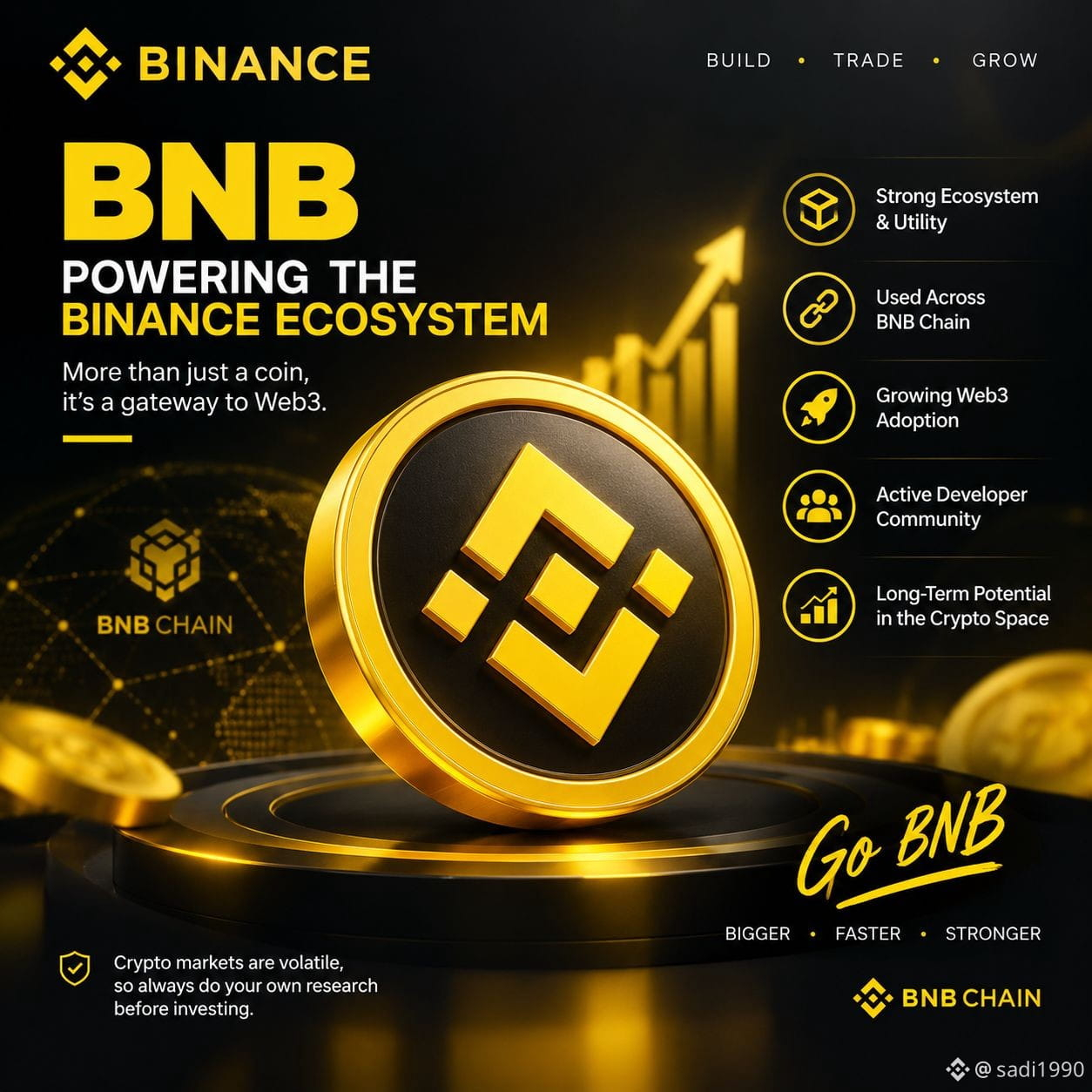
$BNB — Powering the Binance Ecosystem!
BNB continues to be one of the most recognized cryptocurrencies in the market, powering the BNB Chain ecosystem and supporting a wide range of Web3 applications.
📈 Why keep an eye on BNB?
• Strong ecosystem & utility
• Used across $BNB Chain
• Growing Web3 adoption
• Active developer community
• Long-term potential in the crypto space
💡 Crypto markets are volatile, so always do your own research before investing.
Are you bullish on $BNB ?
#BNB #Binance #BNBChain #Crypto
{spot}(BNBUSDT)
$BNB — Powering the Binance Ecosystem!
BNB continues to be one of the most recognized cryptocurrencies in the market, powering the BNB Chain ecosystem and supporting a wide range of Web3 applications.
📈 Why keep an eye on BNB?
• Strong ecosystem & utility
• Used across $BNB Chain
• Growing Web3 adoption
• Active developer community
• Long-term potential in the crypto space
💡 Crypto markets are volatile, so always do your own research before investing.
Are you bullish on $BNB ?
#BNB #Binance #BNBChain #Crypto
BNB continues to be one of the most recognized cryptocurrencies in the market, powering the BNB Chain ecosystem and supporting a wide range of Web3 applications.
📈 Why keep an eye on BNB?
• Strong ecosystem & utility
• Used across $BNB Chain
• Growing Web3 adoption
• Active developer community
• Long-term potential in the crypto space
💡 Crypto markets are volatile, so always do your own research before investing.
Are you bullish on $BNB ?
#BNB #Binance #BNBChain #Crypto
51

BNB Chain is crushing the RWA narrative with a 3.62 billion dollar growth surge, outperforming Solana as total onchain RWA value hits 39 billion.
#BNBChain #RWATrends
BNB Chain is crushing the RWA narrative with a 3.62 billion dollar growth surge, outperforming Solana as total onchain RWA value hits 39 billion.
#BNBChain #RWATrends
#BNBChain #RWATrends
4

$BNB: Underrated or Ready for Another Move?
BNB remains one of the major assets traders are watching, with its role across the Binance ecosystem and BNB Chain keeping it firmly on the crypto radar.
The real question:
Can $BNB become one of the strongest large-cap altcoins in the next market cycle?
👇 What's your view?
🟢 Bullish
🟡 Neutral
🔴 Bearish
🤔 Not sure
#BNB #Binance #BNBChain #BinanceSquare #CryptoTrading
$BNB: Underrated or Ready for Another Move?
BNB remains one of the major assets traders are watching, with its role across the Binance ecosystem and BNB Chain keeping it firmly on the crypto radar.
The real question:
Can $BNB become one of the strongest large-cap altcoins in the next market cycle?
👇 What's your view?
🟢 Bullish
🟡 Neutral
🔴 Bearish
🤔 Not sure
#BNB #Binance #BNBChain #BinanceSquare #CryptoTrading
BNB remains one of the major assets traders are watching, with its role across the Binance ecosystem and BNB Chain keeping it firmly on the crypto radar.
The real question:
Can $BNB become one of the strongest large-cap altcoins in the next market cycle?
👇 What's your view?
🟢 Bullish
🟡 Neutral
🔴 Bearish
🤔 Not sure
#BNB #Binance #BNBChain #BinanceSquare #CryptoTrading
1
12

·
--

Article
How to Swap USDT on BNB Chain for USDT on STONFiOne thing that can be confusing when you first start using different chains is seeing the same token name on different networks.
$USDT is a good example.
You can hold USDT on $BNB Chain and USDT on Stonfi, but they aren't sitting on the same network. So even though the asset is called USDT on both sides, moving from one to the other isn't simply a normal token transfer.
That’s where cross-chain execution comes in.
I’ve found it much easier to think about it as:
BNB Chain + USDT → $GRAM + USDT
You are keeping the asset you want, but changing the network it lives on.
First, make sure you’re using USDT on BNB Chain
If your USDT is on BNB Chain, you're dealing with the BNB Chain version of USDT, commonly identified as a BEP-20 token.
That network detail matters.
Sending a token to the wrong network or assuming that every USDT address works everywhere can create unnecessary problems. Before doing anything, I’d check the network shown in your wallet and make sure the source asset is actually USDT on BNB Chain.
The destination is different:
Source: BNB Chain / USDT
Destination: TON / USDT
Once you look at it this way, the reason for using a cross-chain swap becomes much clearer.
Why can't I just send the USDT directly?
Because the two assets are living on different networks.
A normal transfer keeps you within the same blockchain. If your USDT is on BNB Chain and you want USDT on TON, something needs to coordinate the transaction across both networks.
That is what cross-chain execution is designed to handle.
Instead of manually moving the asset through several steps and figuring out what to swap afterward, you can specify what you have and what you want to receive.
For example, on STON.fi, you can set:
BNB Chain → USDT → TON → USDT
The important part is that the destination asset is already USDT on TON.
How I would approach the swap
Before confirming any transaction, I’d first check the quote.
You want to know:
How much USDT you're sendingHow much USDT you're expected to receive on TONThe fees involvedWhich wallet is receiving the USDTThe source and destination networks
This is one of those steps I wouldn't rush.
Even when you're swapping the same asset, the amount you receive can be affected by execution costs and the route being used.
The goal isn't simply to see “USDT → USDT” and click confirm.
You want to understand exactly what is happening:
BNB Chain USDT leaves the source side → cross-chain execution takes place → TON USDT arrives in the destination wallet.
What happens behind the scenes?
This is where STON.fi's Omniston infrastructure becomes interesting.
Omniston is designed to handle cross-chain execution by connecting liquidity and execution across different networks. Instead of requiring the user to manually figure out every step, the system works around the requested source and destination assets.
The user experience can therefore stay relatively simple:
I have USDT on BNB Chain.
I want USDT on TON.
You don't necessarily need to understand every piece of infrastructure underneath that request to use it, just like you don't need to understand how every internet server works before opening a website.
What matters at the user level is that you review the route, quote, fees and destination before signing.
What can I do with the USDT once it reaches TON?
This is another part I find useful.
Getting USDT onto TON doesn't have to be the end of the journey.
Once you have USDT on TON, you can use Omniston's aggregated TON liquidity for your next swap.
For example, you could move from:
BNB Chain USDT → TON USDT → another TON asset
Instead of treating the cross-chain move and the next trade as completely unrelated problems, you can think of them as two steps in the same journey.
First, get the asset onto the network you want.
Then, once you're on TON, look for the best available execution for the next swap.
A simple way to remember it
If you're trying this for the first time, I’d keep the mental model simple:
1. Identify what you actually hold
USDT on BNB Chain, not just “USDT.”
2. Choose the destination
USDT on TON.
3. Review the quote
Check the expected amount, fees and route.
4. Check the destination wallet
Make sure the wallet receiving the funds supports TON and that the address is correct.
5. Confirm only after everything looks right.
Then, once the USDT arrives on TON, you can use the available TON liquidity for whatever swap you want to make next.
Why I like this approach
For me, the interesting part isn't just that you can move USDT from one chain to another.
It's the fact that the user doesn't necessarily have to think about the whole process as a collection of disconnected steps.
You start with one asset on one network and tell the interface what you want to end up with on another network.
BNB Chain / USDT → TON / USDT
Then TON becomes your new starting point for whatever comes next.
Of course, cross-chain transactions still deserve the same caution as any other DeFi transaction. Always verify the network, destination wallet, quoted amount and fees before signing, and remember that routes, fees and supported assets can change.
But once you understand that the main challenge is changing networks, rather than simply swapping USDT for another token, the whole process becomes much easier to understand.
#BNBChain
How to Swap USDT on BNB Chain for USDT on STONFi
One thing that can be confusing when you first start using different chains is seeing the same token name on different networks.
$USDT is a good example.
You can hold USDT on $BNB Chain and USDT on Stonfi, but they aren't sitting on the same network. So even though the asset is called USDT on both sides, moving from one to the other isn't simply a normal token transfer.
That’s where cross-chain execution comes in.
I’ve found it much easier to think about it as:
BNB Chain + USDT → $GRAM + USDT
You are keeping the asset you want, but changing the network it lives on.
First, make sure you’re using USDT on BNB Chain
If your USDT is on BNB Chain, you're dealing with the BNB Chain version of USDT, commonly identified as a BEP-20 token.
That network detail matters.
Sending a token to the wrong network or assuming that every USDT address works everywhere can create unnecessary problems. Before doing anything, I’d check the network shown in your wallet and make sure the source asset is actually USDT on BNB Chain.
The destination is different:
Source: BNB Chain / USDT
Destination: TON / USDT
Once you look at it this way, the reason for using a cross-chain swap becomes much clearer.
Why can't I just send the USDT directly?
Because the two assets are living on different networks.
A normal transfer keeps you within the same blockchain. If your USDT is on BNB Chain and you want USDT on TON, something needs to coordinate the transaction across both networks.
That is what cross-chain execution is designed to handle.
Instead of manually moving the asset through several steps and figuring out what to swap afterward, you can specify what you have and what you want to receive.
For example, on STON.fi, you can set:
BNB Chain → USDT → TON → USDT
The important part is that the destination asset is already USDT on TON.
How I would approach the swap
Before confirming any transaction, I’d first check the quote.
You want to know:
How much USDT you're sendingHow much USDT you're expected to receive on TONThe fees involvedWhich wallet is receiving the USDTThe source and destination networks
This is one of those steps I wouldn't rush.
Even when you're swapping the same asset, the amount you receive can be affected by execution costs and the route being used.
The goal isn't simply to see “USDT → USDT” and click confirm.
You want to understand exactly what is happening:
BNB Chain USDT leaves the source side → cross-chain execution takes place → TON USDT arrives in the destination wallet.
What happens behind the scenes?
This is where STON.fi's Omniston infrastructure becomes interesting.
Omniston is designed to handle cross-chain execution by connecting liquidity and execution across different networks. Instead of requiring the user to manually figure out every step, the system works around the requested source and destination assets.
The user experience can therefore stay relatively simple:
I have USDT on BNB Chain.
I want USDT on TON.
You don't necessarily need to understand every piece of infrastructure underneath that request to use it, just like you don't need to understand how every internet server works before opening a website.
What matters at the user level is that you review the route, quote, fees and destination before signing.
What can I do with the USDT once it reaches TON?
This is another part I find useful.
Getting USDT onto TON doesn't have to be the end of the journey.
Once you have USDT on TON, you can use Omniston's aggregated TON liquidity for your next swap.
For example, you could move from:
BNB Chain USDT → TON USDT → another TON asset
Instead of treating the cross-chain move and the next trade as completely unrelated problems, you can think of them as two steps in the same journey.
First, get the asset onto the network you want.
Then, once you're on TON, look for the best available execution for the next swap.
A simple way to remember it
If you're trying this for the first time, I’d keep the mental model simple:
1. Identify what you actually hold
USDT on BNB Chain, not just “USDT.”
2. Choose the destination
USDT on TON.
3. Review the quote
Check the expected amount, fees and route.
4. Check the destination wallet
Make sure the wallet receiving the funds supports TON and that the address is correct.
5. Confirm only after everything looks right.
Then, once the USDT arrives on TON, you can use the available TON liquidity for whatever swap you want to make next.
Why I like this approach
For me, the interesting part isn't just that you can move USDT from one chain to another.
It's the fact that the user doesn't necessarily have to think about the whole process as a collection of disconnected steps.
You start with one asset on one network and tell the interface what you want to end up with on another network.
BNB Chain / USDT → TON / USDT
Then TON becomes your new starting point for whatever comes next.
Of course, cross-chain transactions still deserve the same caution as any other DeFi transaction. Always verify the network, destination wallet, quoted amount and fees before signing, and remember that routes, fees and supported assets can change.
But once you understand that the main challenge is changing networks, rather than simply swapping USDT for another token, the whole process becomes much easier to understand.
#BNBChain
$USDT is a good example.
You can hold USDT on $BNB Chain and USDT on Stonfi, but they aren't sitting on the same network. So even though the asset is called USDT on both sides, moving from one to the other isn't simply a normal token transfer.
That’s where cross-chain execution comes in.
I’ve found it much easier to think about it as:
BNB Chain + USDT → $GRAM + USDT
You are keeping the asset you want, but changing the network it lives on.
First, make sure you’re using USDT on BNB Chain
If your USDT is on BNB Chain, you're dealing with the BNB Chain version of USDT, commonly identified as a BEP-20 token.
That network detail matters.
Sending a token to the wrong network or assuming that every USDT address works everywhere can create unnecessary problems. Before doing anything, I’d check the network shown in your wallet and make sure the source asset is actually USDT on BNB Chain.
The destination is different:
Source: BNB Chain / USDT
Destination: TON / USDT
Once you look at it this way, the reason for using a cross-chain swap becomes much clearer.
Why can't I just send the USDT directly?
Because the two assets are living on different networks.
A normal transfer keeps you within the same blockchain. If your USDT is on BNB Chain and you want USDT on TON, something needs to coordinate the transaction across both networks.
That is what cross-chain execution is designed to handle.
Instead of manually moving the asset through several steps and figuring out what to swap afterward, you can specify what you have and what you want to receive.
For example, on STON.fi, you can set:
BNB Chain → USDT → TON → USDT
The important part is that the destination asset is already USDT on TON.
How I would approach the swap
Before confirming any transaction, I’d first check the quote.
You want to know:
How much USDT you're sendingHow much USDT you're expected to receive on TONThe fees involvedWhich wallet is receiving the USDTThe source and destination networks
This is one of those steps I wouldn't rush.
Even when you're swapping the same asset, the amount you receive can be affected by execution costs and the route being used.
The goal isn't simply to see “USDT → USDT” and click confirm.
You want to understand exactly what is happening:
BNB Chain USDT leaves the source side → cross-chain execution takes place → TON USDT arrives in the destination wallet.
What happens behind the scenes?
This is where STON.fi's Omniston infrastructure becomes interesting.
Omniston is designed to handle cross-chain execution by connecting liquidity and execution across different networks. Instead of requiring the user to manually figure out every step, the system works around the requested source and destination assets.
The user experience can therefore stay relatively simple:
I have USDT on BNB Chain.
I want USDT on TON.
You don't necessarily need to understand every piece of infrastructure underneath that request to use it, just like you don't need to understand how every internet server works before opening a website.
What matters at the user level is that you review the route, quote, fees and destination before signing.
What can I do with the USDT once it reaches TON?
This is another part I find useful.
Getting USDT onto TON doesn't have to be the end of the journey.
Once you have USDT on TON, you can use Omniston's aggregated TON liquidity for your next swap.
For example, you could move from:
BNB Chain USDT → TON USDT → another TON asset
Instead of treating the cross-chain move and the next trade as completely unrelated problems, you can think of them as two steps in the same journey.
First, get the asset onto the network you want.
Then, once you're on TON, look for the best available execution for the next swap.
A simple way to remember it
If you're trying this for the first time, I’d keep the mental model simple:
1. Identify what you actually hold
USDT on BNB Chain, not just “USDT.”
2. Choose the destination
USDT on TON.
3. Review the quote
Check the expected amount, fees and route.
4. Check the destination wallet
Make sure the wallet receiving the funds supports TON and that the address is correct.
5. Confirm only after everything looks right.
Then, once the USDT arrives on TON, you can use the available TON liquidity for whatever swap you want to make next.
Why I like this approach
For me, the interesting part isn't just that you can move USDT from one chain to another.
It's the fact that the user doesn't necessarily have to think about the whole process as a collection of disconnected steps.
You start with one asset on one network and tell the interface what you want to end up with on another network.
BNB Chain / USDT → TON / USDT
Then TON becomes your new starting point for whatever comes next.
Of course, cross-chain transactions still deserve the same caution as any other DeFi transaction. Always verify the network, destination wallet, quoted amount and fees before signing, and remember that routes, fees and supported assets can change.
But once you understand that the main challenge is changing networks, rather than simply swapping USDT for another token, the whole process becomes much easier to understand.
#BNBChain
1
116

Holding $BNB 0.7 USDT
BNB has grown far beyond its original role as a utility token for trading fee discounts. Today, it plays an important role across the wider Binance ecosystem and BNB Chain, supporting transactions, decentralized applications, DeFi activity, and other blockchain use cases.
This broader utility is one of the main reasons traders and long-term investors continue to watch BNB closely. As activity across the ecosystem increases, demand for BNB can become an important factor in its market performance.
From a price perspective, traders are focused on whether BNB can maintain its momentum and attract sustained buying interest. Like the rest of the crypto market, however, BNB remains sensitive to Bitcoin’s direction, overall market sentiment, liquidity, and broader macroeconomic conditions.
For long-term holders, the bigger story may not simply be the next price target. The real question is whether Binance and BNB Chain can continue expanding their user base, applications, and real-world utility.
If ecosystem growth continues, BNB could remain one of the major assets to watch in the crypto market. 📈
#BNB #BNBChain #BinanceSquare
$BNB
BNB has grown far beyond its original role as a utility token for trading fee discounts. Today, it plays an important role across the wider Binance ecosystem and BNB Chain, supporting transactions, decentralized applications, DeFi activity, and other blockchain use cases.
This broader utility is one of the main reasons traders and long-term investors continue to watch BNB closely. As activity across the ecosystem increases, demand for BNB can become an important factor in its market performance.
From a price perspective, traders are focused on whether BNB can maintain its momentum and attract sustained buying interest. Like the rest of the crypto market, however, BNB remains sensitive to Bitcoin’s direction, overall market sentiment, liquidity, and broader macroeconomic conditions.
For long-term holders, the bigger story may not simply be the next price target. The real question is whether Binance and BNB Chain can continue expanding their user base, applications, and real-world utility.
If ecosystem growth continues, BNB could remain one of the major assets to watch in the crypto market. 📈
#BNB #BNBChain #BinanceSquare
$BNB
This broader utility is one of the main reasons traders and long-term investors continue to watch BNB closely. As activity across the ecosystem increases, demand for BNB can become an important factor in its market performance.
From a price perspective, traders are focused on whether BNB can maintain its momentum and attract sustained buying interest. Like the rest of the crypto market, however, BNB remains sensitive to Bitcoin’s direction, overall market sentiment, liquidity, and broader macroeconomic conditions.
For long-term holders, the bigger story may not simply be the next price target. The real question is whether Binance and BNB Chain can continue expanding their user base, applications, and real-world utility.
If ecosystem growth continues, BNB could remain one of the major assets to watch in the crypto market. 📈
#BNB #BNBChain #BinanceSquare
$BNB
64

·
--
Immediate takeaway: BNB Chain releases draft Agent Lifecycle Protocol (ALP) v0.4—turn the identity, wallet, self-funded capital, transactions, and retirement of autonomous agents into a set of chain-agnostic specifications, along with an open-source reference implementation called BNB Agent Studio.
According to the BNB Chain official blog (2026-09-15): ALP does not invent new primitives; instead, it assembles a lifecycle standard by combining existing specifications including ERC-8004, ERC-8183, x402, EIP-3009, A2A, MCP, and others. Spending guardrails are handled at the wallet signing layer, and prompt injection cannot change payment to addresses that are not in the whitelist. Agent Studio (CLI / Python SDK / MCP) serves as a reference toolchain. The official says it can run conforming agents from scaffolding to payment on the BSC mainnet in roughly the order of ten minutes. The protocol plans to contribute toward the Linux Foundation Decentralized Trust direction, positioning it as chain-neutral.
Independent verification: AiCoin’s news flash on the same day (2026-09-15 05:02) restates the same line—ALP covers identity, wallets, funds, business use and retirement, with BNB Agent Studio as the reference implementation.
The image is the original cover image from the BNB Chain official blog.
Data as of: 2026-09-15 (official blog; AiCoin news flash on the same day)
For information sharing only and does not constitute investment advice.
#BNBChain #AIAgent
Immediate takeaway: BNB Chain releases draft Agent Lifecycle Protocol (ALP) v0.4—turn the identity, wallet, self-funded capital, transactions, and retirement of autonomous agents into a set of chain-agnostic specifications, along with an open-source reference implementation called BNB Agent Studio.
According to the BNB Chain official blog (2026-09-15): ALP does not invent new primitives; instead, it assembles a lifecycle standard by combining existing specifications including ERC-8004, ERC-8183, x402, EIP-3009, A2A, MCP, and others. Spending guardrails are handled at the wallet signing layer, and prompt injection cannot change payment to addresses that are not in the whitelist. Agent Studio (CLI / Python SDK / MCP) serves as a reference toolchain. The official says it can run conforming agents from scaffolding to payment on the BSC mainnet in roughly the order of ten minutes. The protocol plans to contribute toward the Linux Foundation Decentralized Trust direction, positioning it as chain-neutral.
Independent verification: AiCoin’s news flash on the same day (2026-09-15 05:02) restates the same line—ALP covers identity, wallets, funds, business use and retirement, with BNB Agent Studio as the reference implementation.
The image is the original cover image from the BNB Chain official blog.
Data as of: 2026-09-15 (official blog; AiCoin news flash on the same day)
For information sharing only and does not constitute investment advice.
#BNBChain #AIAgent
According to the BNB Chain official blog (2026-09-15): ALP does not invent new primitives; instead, it assembles a lifecycle standard by combining existing specifications including ERC-8004, ERC-8183, x402, EIP-3009, A2A, MCP, and others. Spending guardrails are handled at the wallet signing layer, and prompt injection cannot change payment to addresses that are not in the whitelist. Agent Studio (CLI / Python SDK / MCP) serves as a reference toolchain. The official says it can run conforming agents from scaffolding to payment on the BSC mainnet in roughly the order of ten minutes. The protocol plans to contribute toward the Linux Foundation Decentralized Trust direction, positioning it as chain-neutral.
Independent verification: AiCoin’s news flash on the same day (2026-09-15 05:02) restates the same line—ALP covers identity, wallets, funds, business use and retirement, with BNB Agent Studio as the reference implementation.
The image is the original cover image from the BNB Chain official blog.
Data as of: 2026-09-15 (official blog; AiCoin news flash on the same day)
For information sharing only and does not constitute investment advice.
#BNBChain #AIAgent

47

·
--
Agentum completes $7 million funding, with institutions behind it including MEXC, BingX, Arca, Blocktower Capital, and more.
What it focuses on is not building yet another chatbot, but the missing layer when AI agents collaborate: trust and settlement. Agents can post tasks, bid, and deliver on BNB Chain, and automatically release funds via a custody/escrow mechanism. The protocol also combines Agent NFT / .agent ID, TEE confidential computing, and zkVM verifiable evaluation to reduce the “is the other party real, and are the results credible?” problem.
So far, progress remains early: the mainnet has not yet fully launched, while the BSC testnet already has hundreds of registered agents that have completed transactions. What’s worth tracking next is the real volume of tasks, reuse rate, and whether this settlement layer can form network effects. The project has not disclosed clear token information for now, so participants should be mindful of the gap between testnet and mainnet rollout.
#AIAgent #BNBChain #Web3 funding
Agentum completes $7 million funding, with institutions behind it including MEXC, BingX, Arca, Blocktower Capital, and more.
What it focuses on is not building yet another chatbot, but the missing layer when AI agents collaborate: trust and settlement. Agents can post tasks, bid, and deliver on BNB Chain, and automatically release funds via a custody/escrow mechanism. The protocol also combines Agent NFT / .agent ID, TEE confidential computing, and zkVM verifiable evaluation to reduce the “is the other party real, and are the results credible?” problem.
So far, progress remains early: the mainnet has not yet fully launched, while the BSC testnet already has hundreds of registered agents that have completed transactions. What’s worth tracking next is the real volume of tasks, reuse rate, and whether this settlement layer can form network effects. The project has not disclosed clear token information for now, so participants should be mindful of the gap between testnet and mainnet rollout.
#AIAgent #BNBChain #Web3 funding
What it focuses on is not building yet another chatbot, but the missing layer when AI agents collaborate: trust and settlement. Agents can post tasks, bid, and deliver on BNB Chain, and automatically release funds via a custody/escrow mechanism. The protocol also combines Agent NFT / .agent ID, TEE confidential computing, and zkVM verifiable evaluation to reduce the “is the other party real, and are the results credible?” problem.
So far, progress remains early: the mainnet has not yet fully launched, while the BSC testnet already has hundreds of registered agents that have completed transactions. What’s worth tracking next is the real volume of tasks, reuse rate, and whether this settlement layer can form network effects. The project has not disclosed clear token information for now, so participants should be mindful of the gap between testnet and mainnet rollout.
#AIAgent #BNBChain #Web3 funding
66
Log in to explore more content
Join global crypto users on Binance Square
⚡️ Get latest and useful information about crypto.
💬 Trusted by the world’s largest crypto exchange.
👍 Discover real insights from verified creators.
Email / Phone number
Trending Topics
1
#FedRateWatch
709,282 views
3,349 Discussing
2
#ArgentinaCommitsToOECDCryptoReportingBy2029
10 views
11 Discussing
3
#EthereumFallsBelow$2400
1,091 views
39 Discussing
4
#USSenateBlocksClarityAct
7,298 views
213 Discussing
5
#BitcoinSlidesTo$76000
30,656 views
142 Discussing
6
#BitcoinReboundsTo$79K
65,161 views
419 Discussing
7
#StrategyMarketCapPassesFord
52,962 views
817 Discussing
8
#ClarityActOddsHalveOnPolymarket
87,647 views
725 Discussing
9
#US30YTreasuryYieldTops5.40%
44,906 views
463 Discussing
10
#BessentEndorsesFinalClarityActDraft
68,500 views
844 Discussing