

#japanmofstudygroupontokenizedgovtbonds
japanmofstudygroupontokenizedgovtbonds
Hot
Latest

#JapanMOFStudyGroupOnTokenizedGovtBonds
Japan Eyes Tokenized Government Bonds: MOF Launches Study Group 🇯🇵
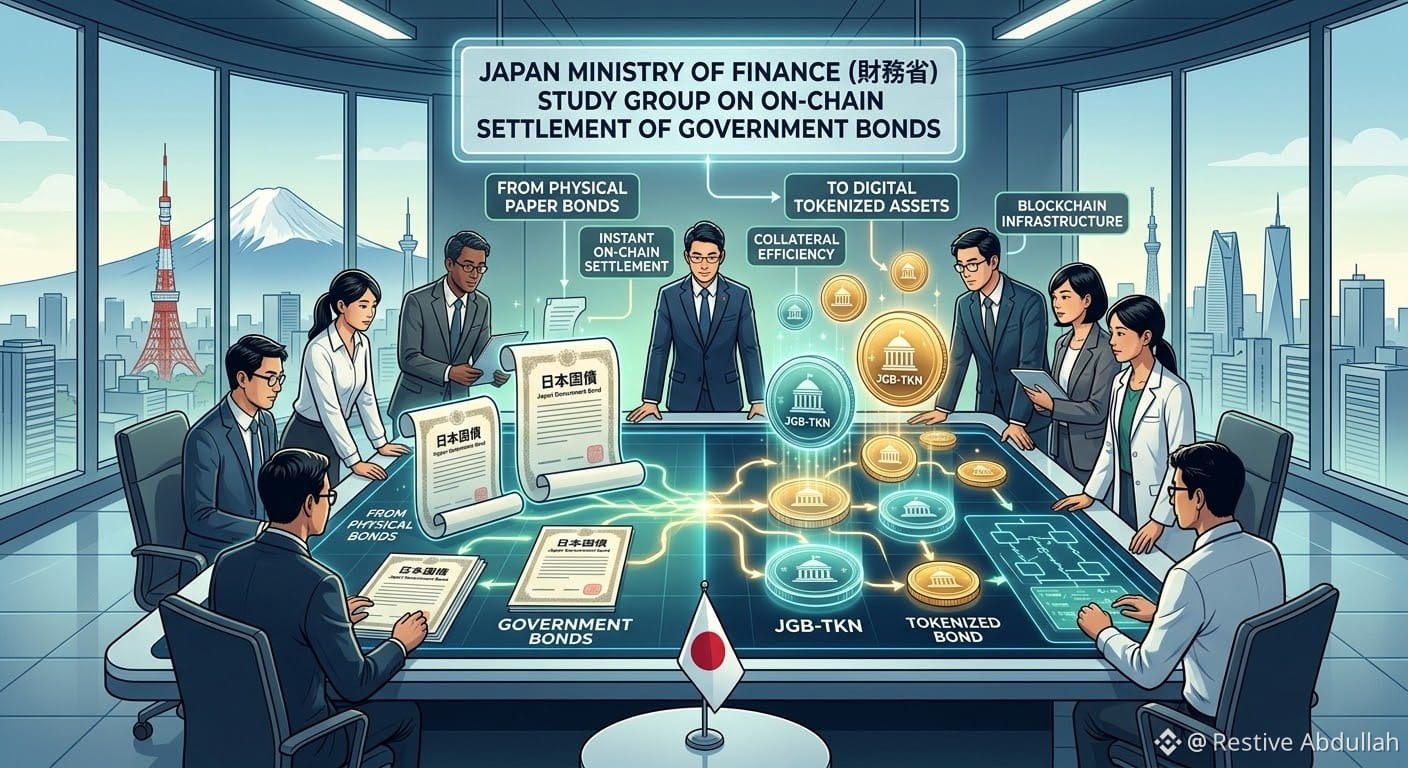
Japan’s Ministry of Finance (MOF) has officially established a dedicated study group to evaluate the tokenization and on-chain settlement of Japanese Government Bonds (JGBs).
Here is the quick breakdown about MOF :
Real-Time Settlement: JGBs currently settle on a next-business-day basis. The MOF is exploring blockchain rails to achieve instantaneous settlement, drastically cutting operational friction.
Institutional Backing: The initiative includes prominent researchers from the University of Tokyo and Waseda University, with direct observation from the Bank of Japan (BOJ) and the Financial Services Agency (FSA).
Collateral Efficiency: Moving JGBs on-chain enables instant, 24/7 collateralization in repurchase (repo) agreements, unlocking massive capital efficiency and liquidity.
Timeline: The first closed-door session meets on October 8, 2026, with initial findings and discussion points slated for release between December 2026 and January 2027.
Sovereign debt moving on-chain is one of the strongest validations for Real-World Asset (RWA) tokenization to date.
Will tokenized sovereign bonds become standard treasury practice sooner than the market expects? Drop your view below! 👇
#JapanMOFStudyGroupOnTokenizedGovtBonds
Japan Eyes Tokenized Government Bonds: MOF Launches Study Group 🇯🇵
Japan’s Ministry of Finance (MOF) has officially established a dedicated study group to evaluate the tokenization and on-chain settlement of Japanese Government Bonds (JGBs).
Here is the quick breakdown about MOF :
Real-Time Settlement: JGBs currently settle on a next-business-day basis. The MOF is exploring blockchain rails to achieve instantaneous settlement, drastically cutting operational friction.
Institutional Backing: The initiative includes prominent researchers from the University of Tokyo and Waseda University, with direct observation from the Bank of Japan (BOJ) and the Financial Services Agency (FSA).
Collateral Efficiency: Moving JGBs on-chain enables instant, 24/7 collateralization in repurchase (repo) agreements, unlocking massive capital efficiency and liquidity.
Timeline: The first closed-door session meets on October 8, 2026, with initial findings and discussion points slated for release between December 2026 and January 2027.
Sovereign debt moving on-chain is one of the strongest validations for Real-World Asset (RWA) tokenization to date.
Will tokenized sovereign bonds become standard treasury practice sooner than the market expects? Drop your view below! 👇
Japan Eyes Tokenized Government Bonds: MOF Launches Study Group 🇯🇵
Japan’s Ministry of Finance (MOF) has officially established a dedicated study group to evaluate the tokenization and on-chain settlement of Japanese Government Bonds (JGBs).
Here is the quick breakdown about MOF :
Real-Time Settlement: JGBs currently settle on a next-business-day basis. The MOF is exploring blockchain rails to achieve instantaneous settlement, drastically cutting operational friction.
Institutional Backing: The initiative includes prominent researchers from the University of Tokyo and Waseda University, with direct observation from the Bank of Japan (BOJ) and the Financial Services Agency (FSA).
Collateral Efficiency: Moving JGBs on-chain enables instant, 24/7 collateralization in repurchase (repo) agreements, unlocking massive capital efficiency and liquidity.
Timeline: The first closed-door session meets on October 8, 2026, with initial findings and discussion points slated for release between December 2026 and January 2027.
Sovereign debt moving on-chain is one of the strongest validations for Real-World Asset (RWA) tokenization to date.
Will tokenized sovereign bonds become standard treasury practice sooner than the market expects? Drop your view below! 👇
1
97

·
--
Bullish
#JapanMOFStudyGroupOnTokenizedGovtBonds
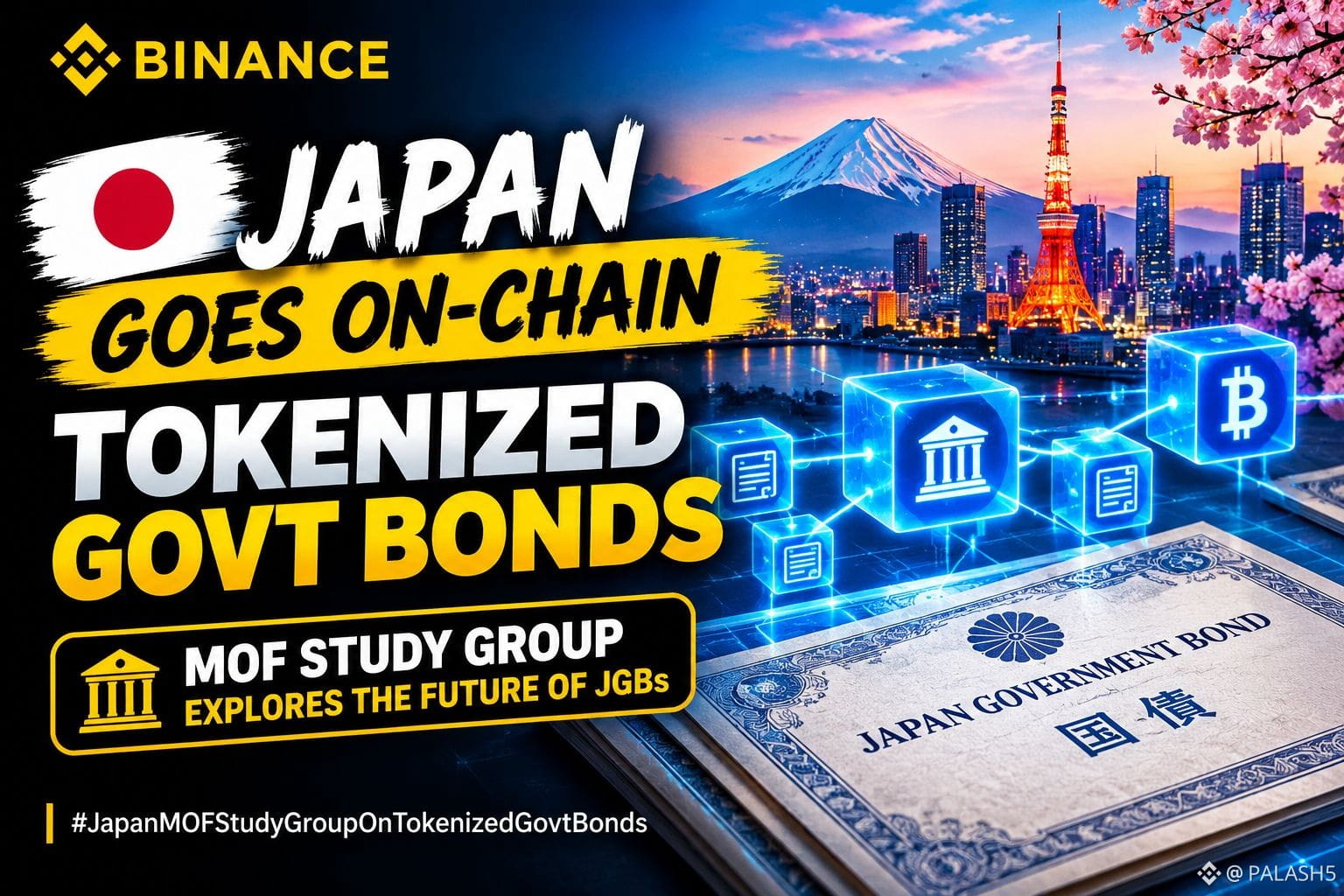
Japan’s move to study tokenized government bonds is an interesting step toward bringing traditional fixed-income markets on-chain.
The potential benefits include faster settlement, greater transparency, programmable transactions, and more efficient market infrastructure. But questions around regulation, liquidity, investor protection, custody, and interoperability still need to be addressed.
If Japan develops a practical framework for tokenized JGBs, it could provide an important test case for how blockchain technology can connect with established financial markets.
#JapanMOFStudyGroupOnTokenizedGovtBonds #Tokenization #RWA #Blockchain #JGBs
#JapanMOFStudyGroupOnTokenizedGovtBonds
Japan’s move to study tokenized government bonds is an interesting step toward bringing traditional fixed-income markets on-chain.
The potential benefits include faster settlement, greater transparency, programmable transactions, and more efficient market infrastructure. But questions around regulation, liquidity, investor protection, custody, and interoperability still need to be addressed.
If Japan develops a practical framework for tokenized JGBs, it could provide an important test case for how blockchain technology can connect with established financial markets.
#JapanMOFStudyGroupOnTokenizedGovtBonds #Tokenization #RWA #Blockchain #JGBs
Japan’s move to study tokenized government bonds is an interesting step toward bringing traditional fixed-income markets on-chain.
The potential benefits include faster settlement, greater transparency, programmable transactions, and more efficient market infrastructure. But questions around regulation, liquidity, investor protection, custody, and interoperability still need to be addressed.
If Japan develops a practical framework for tokenized JGBs, it could provide an important test case for how blockchain technology can connect with established financial markets.
#JapanMOFStudyGroupOnTokenizedGovtBonds #Tokenization #RWA #Blockchain #JGBs
EWJETF+1.60%
26

·
--
Verified
🚨Japan's JGB Experiment..
#japanmofstudygroupontokenizedgovtbonds
Japan may be testing something much bigger than tokenized government bonds.
The real experiment is happening in the repo market.
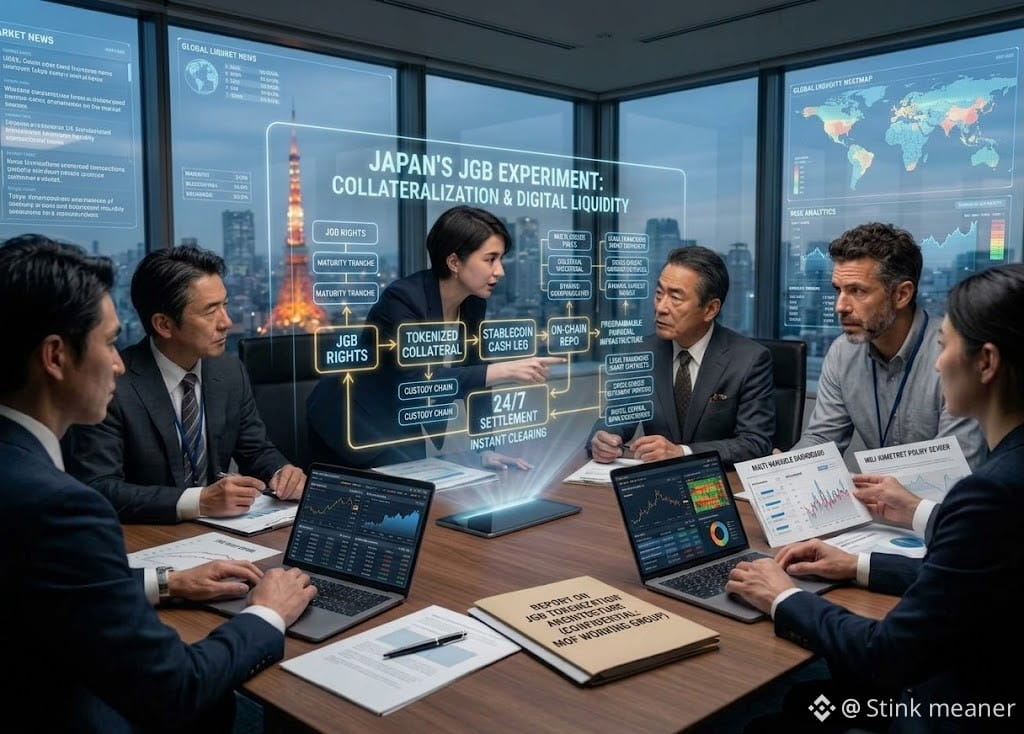
A Japanese financial-industry working group is studying how to put JGB rights on-chain and use tokenized JGBs as collateral while stablecoins provide the cash leg of repo transactions. Its report is targeted for October.
That sounds niche.
It isn't.
JGBs are among the world's most important pools of collateral—and Japan is simultaneously testing blockchain-based JGB collateral management with Mizuho, Nomura, JSCC and Digital Asset.
Now add the timing:
Japan's 10-year JGB yield recently hit 3.075%, its highest level since 1996.
So Japan isn't experimenting with tokenization in a vacuum.
It's testing whether one of the world's biggest bond markets can make collateral move 24/7, settle faster and interact with programmable digital cash.
That's the hidden loop:
JGB → tokenized collateral → stablecoin cash → on-chain repo → faster settlement.
And if that works, the bigger prize isn't the bond token.
It's turning government debt into programmable financial infrastructure.
The question is whether Japan can make the technology work without fragmenting liquidity or weakening the legal certainty that makes JGBs valuable in the first place.
That's the test I'm watching.DYOR
$BTC $ETH
#JapanMOFStudyGroupOnTokenizedGovtBonds #JGB #Tokenization #Stablecoins #Japan
🚨Japan's JGB Experiment..
#japanmofstudygroupontokenizedgovtbonds
Japan may be testing something much bigger than tokenized government bonds.
The real experiment is happening in the repo market.
A Japanese financial-industry working group is studying how to put JGB rights on-chain and use tokenized JGBs as collateral while stablecoins provide the cash leg of repo transactions. Its report is targeted for October.
That sounds niche.
It isn't.
JGBs are among the world's most important pools of collateral—and Japan is simultaneously testing blockchain-based JGB collateral management with Mizuho, Nomura, JSCC and Digital Asset.
Now add the timing:
Japan's 10-year JGB yield recently hit 3.075%, its highest level since 1996.
So Japan isn't experimenting with tokenization in a vacuum.
It's testing whether one of the world's biggest bond markets can make collateral move 24/7, settle faster and interact with programmable digital cash.
That's the hidden loop:
JGB → tokenized collateral → stablecoin cash → on-chain repo → faster settlement.
And if that works, the bigger prize isn't the bond token.
It's turning government debt into programmable financial infrastructure.
The question is whether Japan can make the technology work without fragmenting liquidity or weakening the legal certainty that makes JGBs valuable in the first place.
That's the test I'm watching.DYOR
$BTC $ETH
#JapanMOFStudyGroupOnTokenizedGovtBonds #JGB #Tokenization #Stablecoins #Japan
#japanmofstudygroupontokenizedgovtbonds
Japan may be testing something much bigger than tokenized government bonds.
The real experiment is happening in the repo market.
A Japanese financial-industry working group is studying how to put JGB rights on-chain and use tokenized JGBs as collateral while stablecoins provide the cash leg of repo transactions. Its report is targeted for October.
That sounds niche.
It isn't.
JGBs are among the world's most important pools of collateral—and Japan is simultaneously testing blockchain-based JGB collateral management with Mizuho, Nomura, JSCC and Digital Asset.
Now add the timing:
Japan's 10-year JGB yield recently hit 3.075%, its highest level since 1996.
So Japan isn't experimenting with tokenization in a vacuum.
It's testing whether one of the world's biggest bond markets can make collateral move 24/7, settle faster and interact with programmable digital cash.
That's the hidden loop:
JGB → tokenized collateral → stablecoin cash → on-chain repo → faster settlement.
And if that works, the bigger prize isn't the bond token.
It's turning government debt into programmable financial infrastructure.
The question is whether Japan can make the technology work without fragmenting liquidity or weakening the legal certainty that makes JGBs valuable in the first place.
That's the test I'm watching.DYOR
$BTC $ETH
#JapanMOFStudyGroupOnTokenizedGovtBonds #JGB #Tokenization #Stablecoins #Japan
4
3.8k

·
--
Verified
🚨 Japan's MOF just made a historic move!
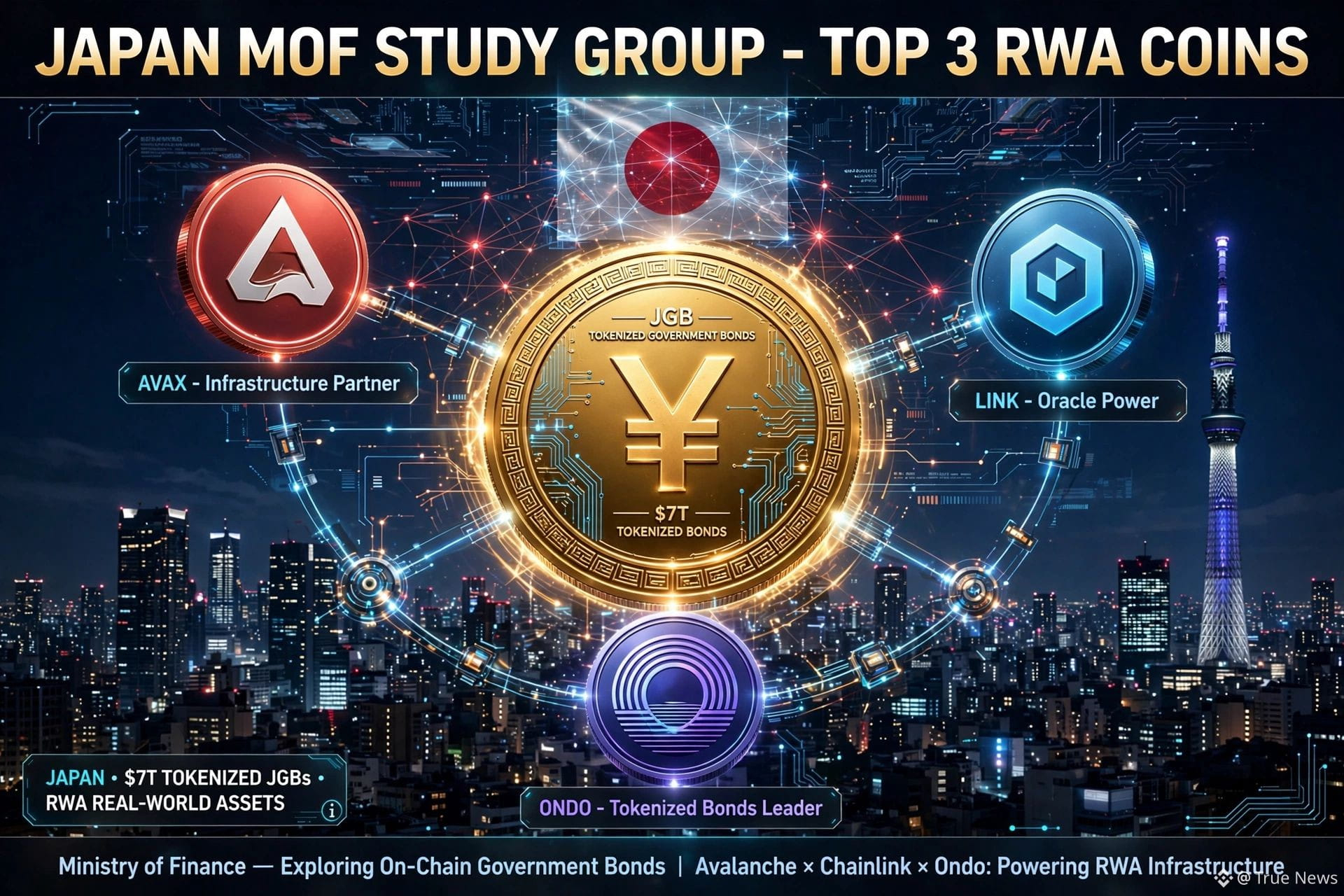
A 5-member panel will study tokenized Japanese Government Bonds (JGBs). First meeting Oct 8, report due Jan 2027. This is for Japan's $7 Trillion bond market.
But Progmat already launched the real working group in May 2026 with $MUFG, $Mizuho,$SMBC, BlackRock Japan and Avalanche $AVAX as infra partner.
Goal: T+0, 24/7 settlement with stablecoins, not T+1. They tokenize economic rights to keep BOJ-NET tax benefits.
My Top 3 RWA coins for this news:
$AVAX - Official partner
$LINK - Oracle for RWA data
$ONDO - Leader in tokenized gov bonds
{spot}(ONDOUSDT)
{spot}(LINKUSDT)
{spot}(AVAXUSDT)
RWA summer is here. Which coin will pump first?
#RWA #JGB #JapanMOF #Tokenization #BinanceSquare#japanmofstudygroupontokenizedgovtbonds
🚨 Japan's MOF just made a historic move!
A 5-member panel will study tokenized Japanese Government Bonds (JGBs). First meeting Oct 8, report due Jan 2027. This is for Japan's $7 Trillion bond market.
But Progmat already launched the real working group in May 2026 with $MUFG, $Mizuho,$SMBC, BlackRock Japan and Avalanche $AVAX as infra partner.
Goal: T+0, 24/7 settlement with stablecoins, not T+1. They tokenize economic rights to keep BOJ-NET tax benefits.
My Top 3 RWA coins for this news:
$AVAX - Official partner
$LINK - Oracle for RWA data
$ONDO - Leader in tokenized gov bonds
RWA summer is here. Which coin will pump first?
#RWA #JGB #JapanMOF #Tokenization #BinanceSquare#japanmofstudygroupontokenizedgovtbonds
A 5-member panel will study tokenized Japanese Government Bonds (JGBs). First meeting Oct 8, report due Jan 2027. This is for Japan's $7 Trillion bond market.
But Progmat already launched the real working group in May 2026 with $MUFG, $Mizuho,$SMBC, BlackRock Japan and Avalanche $AVAX as infra partner.
Goal: T+0, 24/7 settlement with stablecoins, not T+1. They tokenize economic rights to keep BOJ-NET tax benefits.
My Top 3 RWA coins for this news:
$AVAX - Official partner
$LINK - Oracle for RWA data
$ONDO - Leader in tokenized gov bonds
RWA summer is here. Which coin will pump first?
#RWA #JGB #JapanMOF #Tokenization #BinanceSquare#japanmofstudygroupontokenizedgovtbonds
6
3.5k

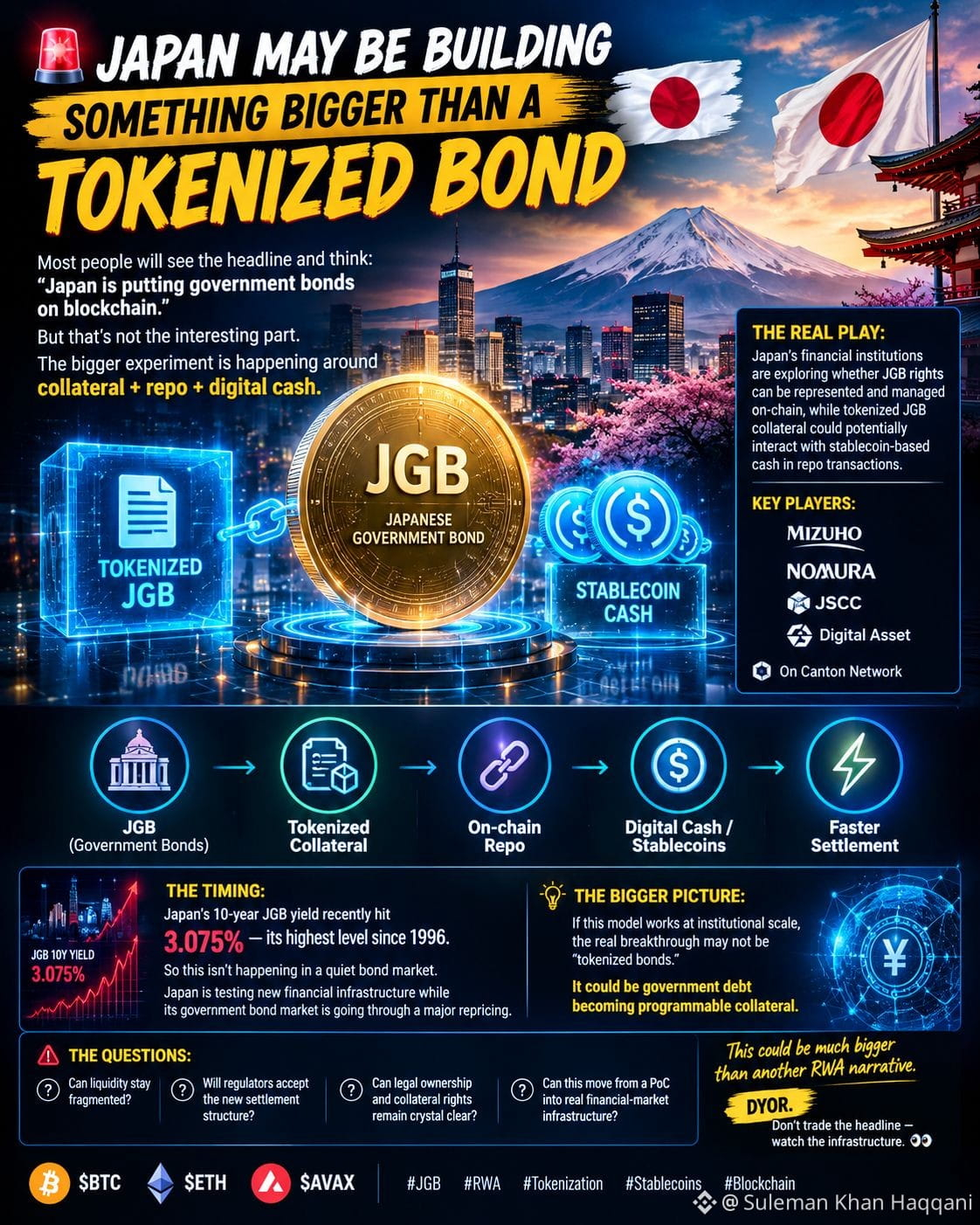
#JapanMOFStudyGroupOnTokenizedGovtBonds 🚨🇯🇵 JAPAN ISN’T JUST TOKENIZING BONDS… IT MAY BE TOKENIZING THE COLLATERAL SYSTEM. 👀 Most people see “JGBs on blockchain” and scroll past. But the real story is COLLATERAL + REPO + DIGITAL CASH. Japan is exploring whether tokenized JGBs can move on-chain as collateral and interact with stablecoin-based cash in repo transactions. And this isn’t just theory. Mizuho, Nomura, JSCC and Digital Asset are already testing blockchain-based JGB collateral management on Canton Network. 🔥 WHY THIS MATTERS: ⚡ 24/7 collateral movement ⚡ Faster settlement ⚡ Less manual processing ⚡ Cross-border collateral mobility. Then look at the timing… Japan’s 10Y JGB yield recently hit 3.075% — the highest level since 1996. 📈 THE POTENTIAL FLOW: JGB → TOKENIZED COLLATERAL → ON-CHAIN REPO → DIGITAL CASH/STABLECOINS → FASTER SETTLEMENT If this works at institutional scale, the bigger innovation may NOT be “tokenized bonds.” It could be GOVERNMENT DEBT AS PROGRAMMABLE COLLATERAL. 🤯 Japan is testing the infrastructure. The big question now: Can a PoC become real financial-market infrastructure? 👀 DYOR. Don’t just watch the tokenization headline — WATCH THE INFRASTRUCTURE. $BTC $ETH $AVAX #JGB #RWA #Tokenization #Stablecoins
#JapanMOFStudyGroupOnTokenizedGovtBonds 🚨🇯🇵 JAPAN ISN’T JUST TOKENIZING BONDS… IT MAY BE TOKENIZING THE COLLATERAL SYSTEM. 👀 Most people see “JGBs on blockchain” and scroll past. But the real story is COLLATERAL + REPO + DIGITAL CASH. Japan is exploring whether tokenized JGBs can move on-chain as collateral and interact with stablecoin-based cash in repo transactions. And this isn’t just theory. Mizuho, Nomura, JSCC and Digital Asset are already testing blockchain-based JGB collateral management on Canton Network. 🔥 WHY THIS MATTERS: ⚡ 24/7 collateral movement ⚡ Faster settlement ⚡ Less manual processing ⚡ Cross-border collateral mobility. Then look at the timing… Japan’s 10Y JGB yield recently hit 3.075% — the highest level since 1996. 📈 THE POTENTIAL FLOW: JGB → TOKENIZED COLLATERAL → ON-CHAIN REPO → DIGITAL CASH/STABLECOINS → FASTER SETTLEMENT If this works at institutional scale, the bigger innovation may NOT be “tokenized bonds.” It could be GOVERNMENT DEBT AS PROGRAMMABLE COLLATERAL. 🤯 Japan is testing the infrastructure. The big question now: Can a PoC become real financial-market infrastructure? 👀 DYOR. Don’t just watch the tokenization headline — WATCH THE INFRASTRUCTURE. $BTC $ETH $AVAX #JGB #RWA #Tokenization #Stablecoins
93

📊 Why Tokenized Government Bonds Matter
Japan's study is examining the potential benefits, costs and market impact of putting JGB-related transactions on-chain.
Faster settlement could also make government bonds easier to use as collateral in repo markets. 💴⚡
$ETH $QNT $AVAX
#japanmofstudygroupontokenizedgovtbonds
📊 Why Tokenized Government Bonds Matter
Japan's study is examining the potential benefits, costs and market impact of putting JGB-related transactions on-chain.
Faster settlement could also make government bonds easier to use as collateral in repo markets. 💴⚡
$ETH $QNT $AVAX
#japanmofstudygroupontokenizedgovtbonds
Japan's study is examining the potential benefits, costs and market impact of putting JGB-related transactions on-chain.
Faster settlement could also make government bonds easier to use as collateral in repo markets. 💴⚡
$ETH $QNT $AVAX
#japanmofstudygroupontokenizedgovtbonds
168
💴 Japan's Digital Bond Experiment
Japan is studying how blockchain could support government-bond transactions and faster settlement.
This could create new infrastructure connecting traditional finance with digital assets. 🔗
$BTC $ETH $AVAX
#japanmofstudygroupontokenizedgovtbonds
💴 Japan's Digital Bond Experiment
Japan is studying how blockchain could support government-bond transactions and faster settlement.
This could create new infrastructure connecting traditional finance with digital assets. 🔗
$BTC $ETH $AVAX
#japanmofstudygroupontokenizedgovtbonds
Japan is studying how blockchain could support government-bond transactions and faster settlement.
This could create new infrastructure connecting traditional finance with digital assets. 🔗
$BTC $ETH $AVAX
#japanmofstudygroupontokenizedgovtbonds
15
🔗 From JGBs to Tokenized Assets
Japan's financial sector is exploring blockchain settlement for Japanese government bonds.
Imagine buying a government bond where the asset transfer and payment happen almost simultaneously instead of waiting through traditional settlement processes.
That could be an important step toward institutional blockchain adoption. 🇯🇵
#japanmofstudygroupontokenizedgovtbonds
🔗 From JGBs to Tokenized Assets
Japan's financial sector is exploring blockchain settlement for Japanese government bonds.
Imagine buying a government bond where the asset transfer and payment happen almost simultaneously instead of waiting through traditional settlement processes.
That could be an important step toward institutional blockchain adoption. 🇯🇵
#japanmofstudygroupontokenizedgovtbonds
Japan's financial sector is exploring blockchain settlement for Japanese government bonds.
Imagine buying a government bond where the asset transfer and payment happen almost simultaneously instead of waiting through traditional settlement processes.
That could be an important step toward institutional blockchain adoption. 🇯🇵
#japanmofstudygroupontokenizedgovtbonds
9
🇯🇵 Japan Goes On-Chain
Japan is studying how tokenized government bonds could move through blockchain-based financial infrastructure.
The bigger idea isn't simply putting bonds on-chain — it's making settlement faster, more automated, and potentially more efficient.
Traditional finance is increasingly testing what happens when blockchain meets government securities. 📊
$BTC $ETH
#japanmofstudygroupontokenizedgovtbonds
🇯🇵 Japan Goes On-Chain
Japan is studying how tokenized government bonds could move through blockchain-based financial infrastructure.
The bigger idea isn't simply putting bonds on-chain — it's making settlement faster, more automated, and potentially more efficient.
Traditional finance is increasingly testing what happens when blockchain meets government securities. 📊
$BTC $ETH
#japanmofstudygroupontokenizedgovtbonds
Japan is studying how tokenized government bonds could move through blockchain-based financial infrastructure.
The bigger idea isn't simply putting bonds on-chain — it's making settlement faster, more automated, and potentially more efficient.
Traditional finance is increasingly testing what happens when blockchain meets government securities. 📊
$BTC $ETH
#japanmofstudygroupontokenizedgovtbonds
10

·
--
Japan tokenized bonds are just legacy finance coping
Old money hates losing grip so they wrap debt in tech to look modern
Traders care about liquidity not state paperwork wrappers
I am ignoring this news entirely until real volume shows up
Prove me wrong by showing me the exact trading desk using this tomorrow
Agree or disagree
#JapanMOFStudyGroupOnTokenizedGovtBonds #CryptoNews
Japan tokenized bonds are just legacy finance coping
Old money hates losing grip so they wrap debt in tech to look modern
Traders care about liquidity not state paperwork wrappers
I am ignoring this news entirely until real volume shows up
Prove me wrong by showing me the exact trading desk using this tomorrow
Agree or disagree
#JapanMOFStudyGroupOnTokenizedGovtBonds #CryptoNews
Old money hates losing grip so they wrap debt in tech to look modern
Traders care about liquidity not state paperwork wrappers
I am ignoring this news entirely until real volume shows up
Prove me wrong by showing me the exact trading desk using this tomorrow
Agree or disagree
#JapanMOFStudyGroupOnTokenizedGovtBonds #CryptoNews
12
·
--
#JapanMOFStudyGroupOnTokenizedGovtBonds
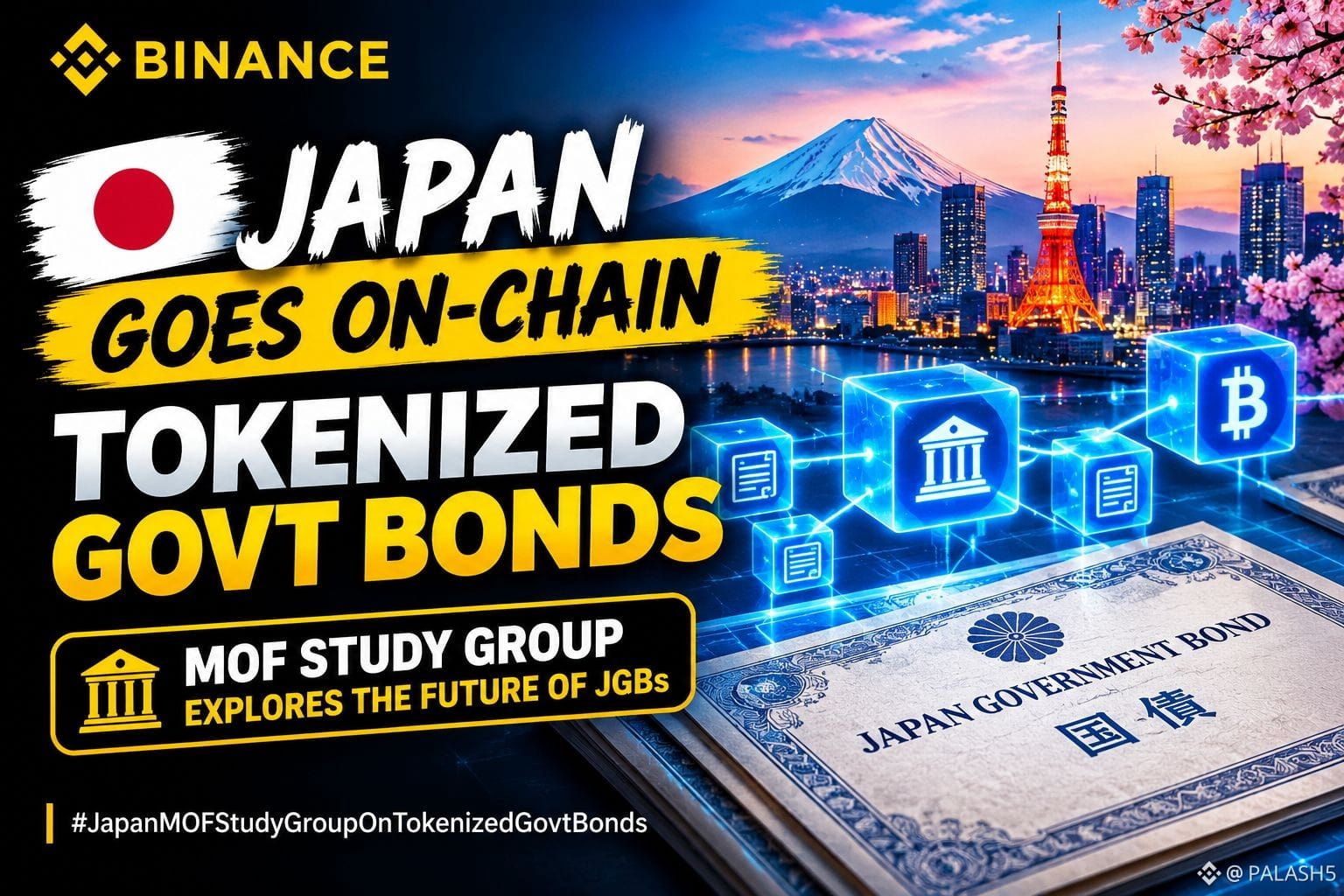
Objective: The group will evaluate the core benefits, technical costs, and broader market impacts of transitioning JGB transactions to an on-chain environment. A primary goal is shifting from the traditional next-business-day (T+1) settlement framework to continuous, instantaneous (T+0) processing. This transition would allow JGB to be used immediately as digital collateral in repo transactions. [1, 2, 3]
Composition: The study group features five core members, including academic researchers from the University of Tokyo and Waseda University, alongside private-sector financial strategists. The Bank of Japan (BOJ) and the Financial Services Agency (FSA) are participating as official observers. [1, 2]
Schedule: The inaugural meeting is scheduled for October 8, 2026. While the sessions will be closed to the public, meeting minutes and supporting materials will be released later. The MoF aims to compile the findings and discussion results between December 2026 and January 2027. [1, 2]
$FSM.US
{stock_us}(FSM.US)
$FIL
{future}(FILUSDT)
$HEI
{future}(HEIUSDT)
#JapanMOFStudyGroupOnTokenizedGovtBonds
Objective: The group will evaluate the core benefits, technical costs, and broader market impacts of transitioning JGB transactions to an on-chain environment. A primary goal is shifting from the traditional next-business-day (T+1) settlement framework to continuous, instantaneous (T+0) processing. This transition would allow JGB to be used immediately as digital collateral in repo transactions. [1, 2, 3]
Composition: The study group features five core members, including academic researchers from the University of Tokyo and Waseda University, alongside private-sector financial strategists. The Bank of Japan (BOJ) and the Financial Services Agency (FSA) are participating as official observers. [1, 2]
Schedule: The inaugural meeting is scheduled for October 8, 2026. While the sessions will be closed to the public, meeting minutes and supporting materials will be released later. The MoF aims to compile the findings and discussion results between December 2026 and January 2027. [1, 2]
$FSM.US
$FIL
$HEI
Objective: The group will evaluate the core benefits, technical costs, and broader market impacts of transitioning JGB transactions to an on-chain environment. A primary goal is shifting from the traditional next-business-day (T+1) settlement framework to continuous, instantaneous (T+0) processing. This transition would allow JGB to be used immediately as digital collateral in repo transactions. [1, 2, 3]
Composition: The study group features five core members, including academic researchers from the University of Tokyo and Waseda University, alongside private-sector financial strategists. The Bank of Japan (BOJ) and the Financial Services Agency (FSA) are participating as official observers. [1, 2]
Schedule: The inaugural meeting is scheduled for October 8, 2026. While the sessions will be closed to the public, meeting minutes and supporting materials will be released later. The MoF aims to compile the findings and discussion results between December 2026 and January 2027. [1, 2]
$FSM.US
$FIL
$HEI
1
339

·
--
🇯🇵 Japan’s exploration of tokenized government bonds could be another important step toward bringing traditional finance on-chain.
Tokenization has the potential to improve transparency, accessibility, and settlement efficiency while connecting TradFi with blockchain infrastructure.
The future of finance is increasingly looking on-#JapanMOFStudyGroupOnTokenizedGovtBonds
🇯🇵 Japan’s exploration of tokenized government bonds could be another important step toward bringing traditional finance on-chain.
Tokenization has the potential to improve transparency, accessibility, and settlement efficiency while connecting TradFi with blockchain infrastructure.
The future of finance is increasingly looking on-#JapanMOFStudyGroupOnTokenizedGovtBonds
Tokenization has the potential to improve transparency, accessibility, and settlement efficiency while connecting TradFi with blockchain infrastructure.
The future of finance is increasingly looking on-#JapanMOFStudyGroupOnTokenizedGovtBonds
1
83

#JapanMOFStudyGroupOnTokenizedGovtBonds
“Japan’s Ministry of Finance is studying tokenized government bonds.”
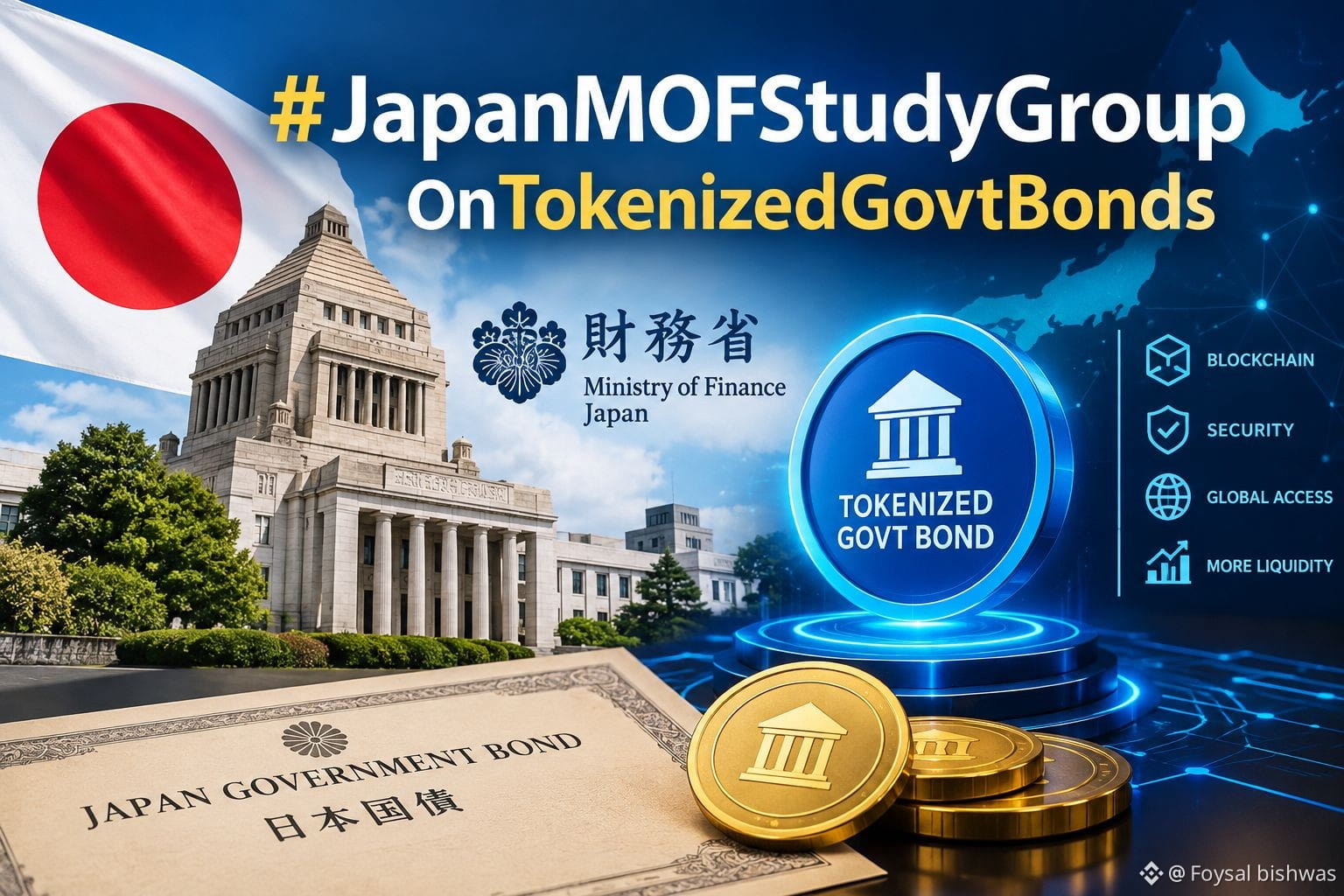
In simple terms, Japan’s Ministry of Finance (MOF) is looking into how government bonds could be issued, traded, or managed using blockchain/tokenization technology. Tokenized government bonds are digital representations of bonds recorded on a blockchain or similar technology.
#JapanMOFStudyGroupOnTokenizedGovtBonds
This could potentially make bond transactions more digital, efficient, and transparent, but the hashtag itself does not necessarily mean Japan has officially launched tokenized government bonds.
#JapanMOFStudyGroupOnTokenizedGovtBonds
#JapanMOFStudyGroupOnTokenizedGovtBonds
“Japan’s Ministry of Finance is studying tokenized government bonds.”
In simple terms, Japan’s Ministry of Finance (MOF) is looking into how government bonds could be issued, traded, or managed using blockchain/tokenization technology. Tokenized government bonds are digital representations of bonds recorded on a blockchain or similar technology.
#JapanMOFStudyGroupOnTokenizedGovtBonds
This could potentially make bond transactions more digital, efficient, and transparent, but the hashtag itself does not necessarily mean Japan has officially launched tokenized government bonds.
#JapanMOFStudyGroupOnTokenizedGovtBonds
“Japan’s Ministry of Finance is studying tokenized government bonds.”
In simple terms, Japan’s Ministry of Finance (MOF) is looking into how government bonds could be issued, traded, or managed using blockchain/tokenization technology. Tokenized government bonds are digital representations of bonds recorded on a blockchain or similar technology.
#JapanMOFStudyGroupOnTokenizedGovtBonds
This could potentially make bond transactions more digital, efficient, and transparent, but the hashtag itself does not necessarily mean Japan has officially launched tokenized government bonds.
#JapanMOFStudyGroupOnTokenizedGovtBonds
2
73

·
--
Bullish
#japanmofstudygroupontokenizedgovtbonds
🇯🇵🚨 JAPAN IS EXPLORING TOKENIZED GOVERNMENT BONDS!
Japan’s Ministry of Finance (MOF) is reportedly studying the use of blockchain technology for tokenized Japanese government bonds.
🏦 Government bonds on-chain
🔗 Blockchain-based settlement
💰 Potentially faster & more efficient markets
🌐 Another major step toward tokenized real-world assets
If government debt starts moving onto blockchain rails, RWA and tokenization could become an even bigger crypto narrative. 👀🔥
Could Japan’s government bonds become a major on-chain asset?
#Japan #RWA #crypto
#japanmofstudygroupontokenizedgovtbonds
🇯🇵🚨 JAPAN IS EXPLORING TOKENIZED GOVERNMENT BONDS!
Japan’s Ministry of Finance (MOF) is reportedly studying the use of blockchain technology for tokenized Japanese government bonds.
🏦 Government bonds on-chain
🔗 Blockchain-based settlement
💰 Potentially faster & more efficient markets
🌐 Another major step toward tokenized real-world assets
If government debt starts moving onto blockchain rails, RWA and tokenization could become an even bigger crypto narrative. 👀🔥
Could Japan’s government bonds become a major on-chain asset?
#Japan #RWA #crypto
🇯🇵🚨 JAPAN IS EXPLORING TOKENIZED GOVERNMENT BONDS!
Japan’s Ministry of Finance (MOF) is reportedly studying the use of blockchain technology for tokenized Japanese government bonds.
🏦 Government bonds on-chain
🔗 Blockchain-based settlement
💰 Potentially faster & more efficient markets
🌐 Another major step toward tokenized real-world assets
If government debt starts moving onto blockchain rails, RWA and tokenization could become an even bigger crypto narrative. 👀🔥
Could Japan’s government bonds become a major on-chain asset?
#Japan #RWA #crypto
1
75

·
--
Bullish
#japanmofstudygroupontokenizedgovtbonds
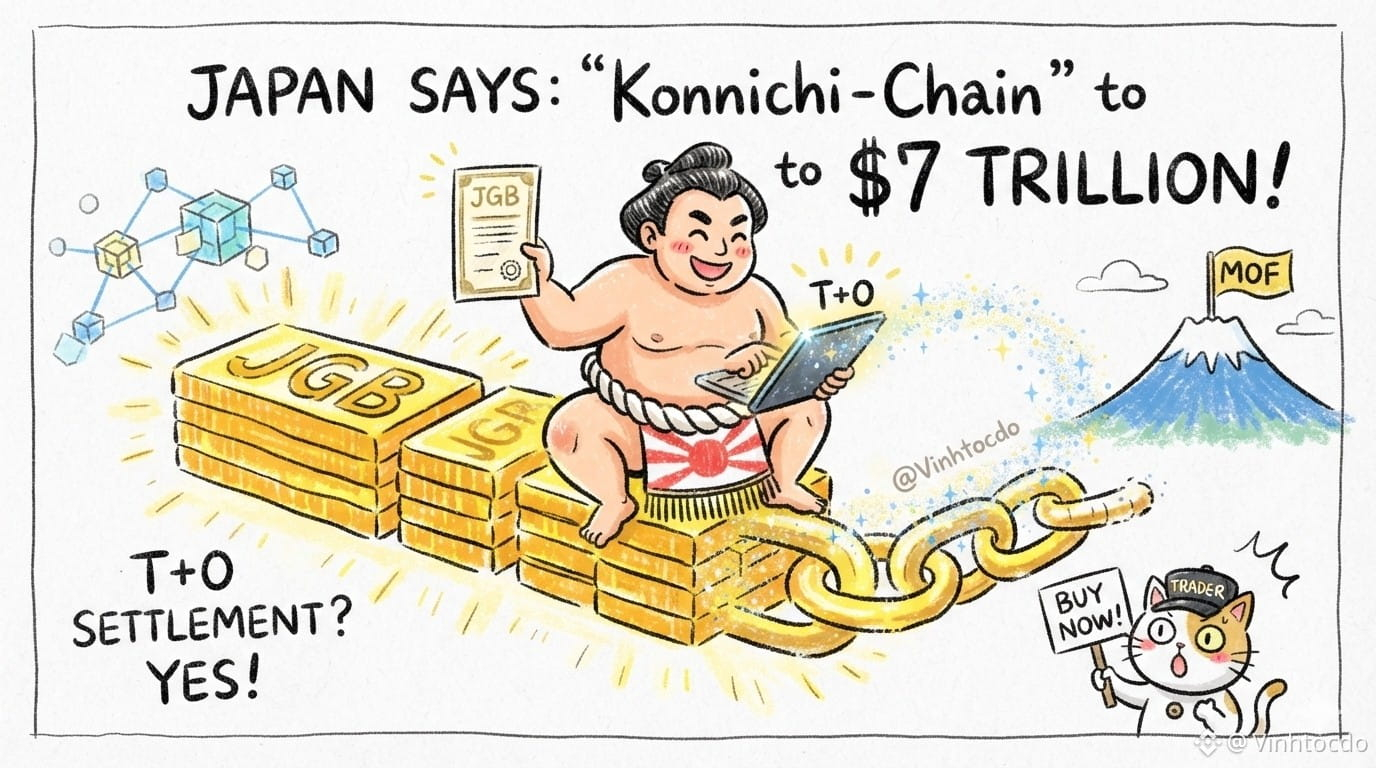
The era of Tokenization is here! 🚀 Japan’s MOF is moving a massive $7T government bond market onto the Blockchain! From a Sandbox with Mizuho & MUFG to a official study group on Sept 30, they are locking in a T+0 instant settlement system running 24/7/365.
What should traders do?
1️⃣ Watch out for the RWA narrative—it's getting massive.
2️⃣ Stay calm, the comprehensive plan drops in Jan 2027.
3️⃣ Accumulate solid infrastructure tokens.
Not financial advice! 🛑
Sign up on Binance with code VINHTOCDO: [https://www.binance.com/register?ref=VINHTOCDO](https://www.binance.com/register?ref=VINHTOCDO)
👇 Click & Trade below to support me:
$BTC
{future}(BTCUSDT)
| $AVAX
{future}(AVAXUSDT)
|$LINK
{future}(LINKUSDT)
#RWA #Tokenization #Blockchain #CryptoTrending #VINHTOCDO
#japanmofstudygroupontokenizedgovtbonds
The era of Tokenization is here! 🚀 Japan’s MOF is moving a massive $7T government bond market onto the Blockchain! From a Sandbox with Mizuho & MUFG to a official study group on Sept 30, they are locking in a T+0 instant settlement system running 24/7/365.
What should traders do?
1️⃣ Watch out for the RWA narrative—it's getting massive.
2️⃣ Stay calm, the comprehensive plan drops in Jan 2027.
3️⃣ Accumulate solid infrastructure tokens.
Not financial advice! 🛑
Sign up on Binance with code VINHTOCDO: https://www.binance.com/register?ref=VINHTOCDO
👇 Click & Trade below to support me:
$BTC
| $AVAX
|$LINK
#RWA #Tokenization #Blockchain #CryptoTrending #VINHTOCDO
The era of Tokenization is here! 🚀 Japan’s MOF is moving a massive $7T government bond market onto the Blockchain! From a Sandbox with Mizuho & MUFG to a official study group on Sept 30, they are locking in a T+0 instant settlement system running 24/7/365.
What should traders do?
1️⃣ Watch out for the RWA narrative—it's getting massive.
2️⃣ Stay calm, the comprehensive plan drops in Jan 2027.
3️⃣ Accumulate solid infrastructure tokens.
Not financial advice! 🛑
Sign up on Binance with code VINHTOCDO: https://www.binance.com/register?ref=VINHTOCDO
👇 Click & Trade below to support me:
$BTC
| $AVAX
|$LINK
#RWA #Tokenization #Blockchain #CryptoTrending #VINHTOCDO
3
179
Verified
🚀 Japan's Blockchain Financial Infrastructure
Japan's Ministry of Finance plans to study on-chain government-bond transactions, while other Japanese institutions are already testing blockchain-based JGB infrastructure.
Traditional finance is steadily experimenting with on-chain settlement. 🇯🇵🔗
$BTC $ETH $BNB $AVAX
#japanmofstudygroupontokenizedgovtbonds
🚀 Japan's Blockchain Financial Infrastructure
Japan's Ministry of Finance plans to study on-chain government-bond transactions, while other Japanese institutions are already testing blockchain-based JGB infrastructure.
Traditional finance is steadily experimenting with on-chain settlement. 🇯🇵🔗
$BTC $ETH $BNB $AVAX
#japanmofstudygroupontokenizedgovtbonds
Japan's Ministry of Finance plans to study on-chain government-bond transactions, while other Japanese institutions are already testing blockchain-based JGB infrastructure.
Traditional finance is steadily experimenting with on-chain settlement. 🇯🇵🔗
$BTC $ETH $BNB $AVAX
#japanmofstudygroupontokenizedgovtbonds
2
365

·
--
Japan is taking the lead in researching the tokenization of government bonds, which is seen as an important step forward in global financial innovation. I believe this is very necessary, as it can improve the efficiency and transparency of bond trading and reduce issuance costs. As Japan is an economic powerhouse, its推动 this process will have far-reaching effects on global financial markets. Citing the latest reports, Japan’s Ministry of Finance is working with financial institutions to plan the release of preliminary proposals in 2023. This is not only a technological advancement, but also a reflection of financial openness and inclusiveness. #JapanMOFStudyGroupOnTokenizedGovtBonds
Japan is taking the lead in researching the tokenization of government bonds, which is seen as an important step forward in global financial innovation. I believe this is very necessary, as it can improve the efficiency and transparency of bond trading and reduce issuance costs. As Japan is an economic powerhouse, its推动 this process will have far-reaching effects on global financial markets. Citing the latest reports, Japan’s Ministry of Finance is working with financial institutions to plan the release of preliminary proposals in 2023. This is not only a technological advancement, but also a reflection of financial openness and inclusiveness. #JapanMOFStudyGroupOnTokenizedGovtBonds
9

·
--
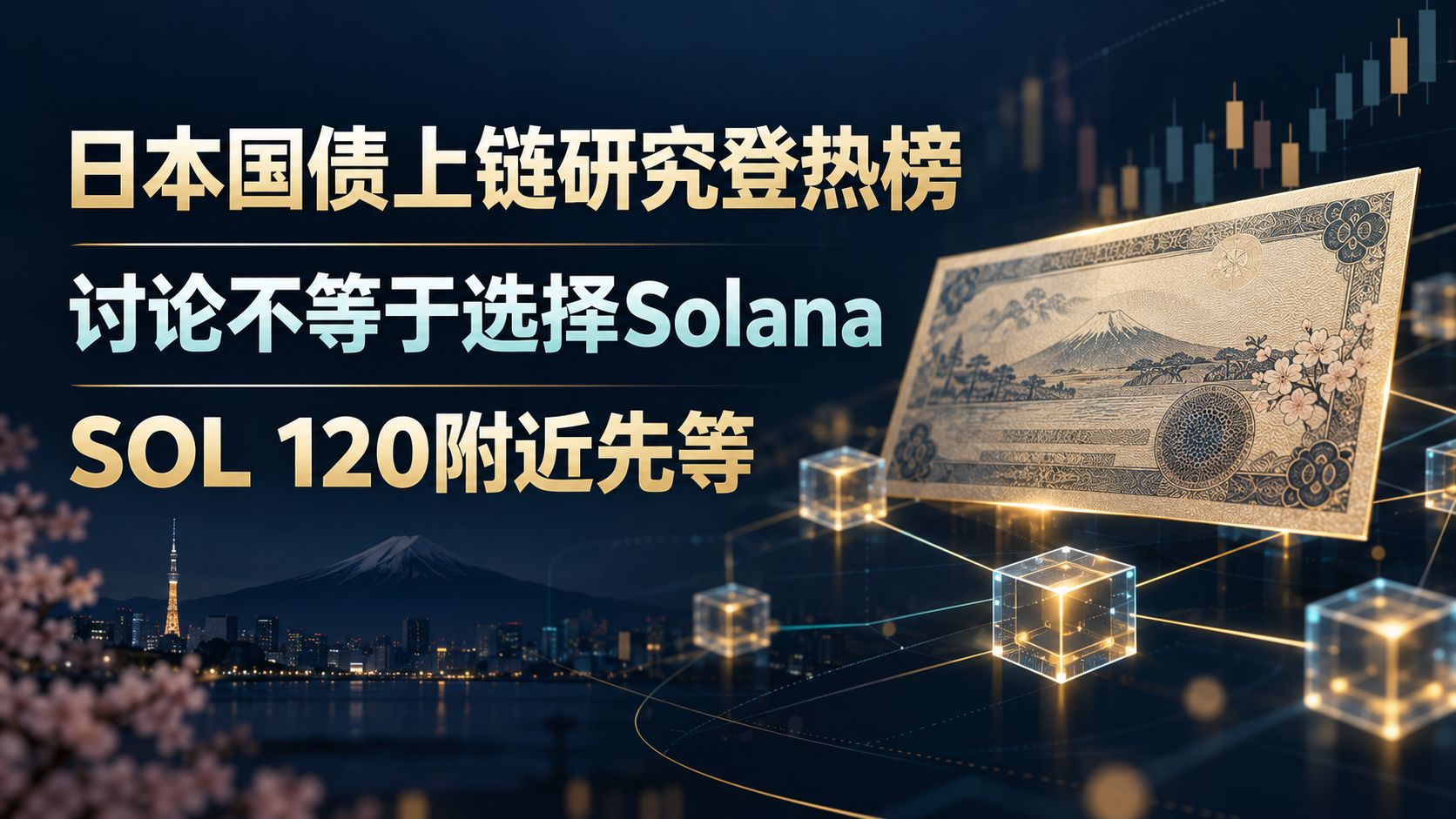
Japan National Debt On-Chain Study Tops Trending | Official Discussion ≠ Choosing Solana | SOL Around 120—I'll Wait
My attitude is to watch, not to chase. On Binance Square’s Trending Topics, you’ll see a post tag like #JapanMOFStudyGroupOnTokenizedGovtBonds, but that’s not an announcement from the Japanese government about issuing national bonds on Solana. Reuters today cited Japan’s Ministry of Finance saying that on October 8, a meeting will be held to study the tokenization/on-chain issuance of government bonds—covering the pros and cons of trading, settlement, and repo collateral transfer. Japan’s Financial Services Agency’s website confirms that the first on-chain finance forum will be held this afternoon, and the meeting summary will be released later. These are not the same event, and neither has specified a blockchain network. I haven’t seen the complete materials from the Ministry of Finance’s website yet, so I won’t treat any proposal or technical selection as settled fact.
Why could this potentially move SOL? If, in the future, government bonds adopt on-chain registration and the collateral flow is transferred on-chain, financial institutions would need compliant transfer, identity restrictions, cash-leg settlement, and custody processes. The RWA overview page from the Solana Foundation shows tokenized government bond and fund case studies, and also lists tools like transfer hooks and allowlists; that’s capability background—not evidence that the Japanese project has signed with Solana. Having assets tokenized on-chain doesn’t automatically mean equivalent SOL spot buying. Institutions may choose other chains or permissioned networks, or even conclude after research that the cost isn’t worth it. Skipping “research” and jumping straight to “SOL must pump,” while ignoring the institutional, selection, launch, and actual-trading hurdles, is how you lose track.
You also need to read the market reaction correctly. At the time of writing, Binance SOL/USDT is about $119.72, up roughly 0.29% over the past 24 hours, with a range of $117.36—$121.69. This is not enough to prove that the Japan topic alone caused buy pressure. And ahead of US macro data releases, overall risk appetite can also influence SOL. Around $120 is the observation zone; $121.69 is the intraday high and $117.36 the low. If the number of discussing participants rises but spot trading doesn’t follow, then the “hotness” isn’t necessarily capital flow.
What’s worth tracking is the Ministry of Finance’s official minutes, executable方案, and whether the project team actually pilots with partners.
If I were trading this myself: I wouldn’t participate. I’d keep a zero SOL position. My plan would be only low-risk, unleveraged spot exposure (light position long), and I wouldn’t place limit orders just because of a news headline. After an hour, if the 1-hour candle closes fully above $122, I’d then wait for a pullback to $121.5—$122 and confirm it holds, provided BTC hasn’t clearly broken down and that evening macro data doesn’t cause liquidity to suddenly drop. Only then would I use at most 0.4% of total funds for a trial trade. First target: $124.5 (take partial on the way); remaining position closed around $127. After entry, if within fifteen minutes price reclaims above $121, I’d cut the position by half. If it drops below $119.5, I’d stop out and close the remaining position. If before entry price breaks $117.36 first, the long setup is cancelled—no averaging down.
If the final discussion from the Ministry of Finance is about a closed network, or if official documents exclude public chains, then the narrative that “Solana might benefit” gets overturned. Even if price spikes briefly, I wouldn’t chase buys based on that logic.
I’d rather miss the first emotional K-line than fail to verify, separately, the regulatory exploration, the project’s commercial contracts, and the actual token buy pressure. The verified information today is the timing, scope of discussion, and Solana’s existing compliant technical case studies. There’s no evidence that Japan’s national debt will use SOL for settlement, and no evidence that SOL ETFs will gain new funds because of this. Testing the story using the authorities’ follow-up documents and real money/real trades—that’s the trading discipline I can accept. #JapanMOFStudyGroupOnTokenizedGovtBonds #SOL
The above is only my personal market observation and does not constitute investment advice.
Japan National Debt On-Chain Study Tops Trending | Official Discussion ≠ Choosing Solana | SOL Around 120—I'll Wait
My attitude is to watch, not to chase. On Binance Square’s Trending Topics, you’ll see a post tag like #JapanMOFStudyGroupOnTokenizedGovtBonds, but that’s not an announcement from the Japanese government about issuing national bonds on Solana. Reuters today cited Japan’s Ministry of Finance saying that on October 8, a meeting will be held to study the tokenization/on-chain issuance of government bonds—covering the pros and cons of trading, settlement, and repo collateral transfer. Japan’s Financial Services Agency’s website confirms that the first on-chain finance forum will be held this afternoon, and the meeting summary will be released later. These are not the same event, and neither has specified a blockchain network. I haven’t seen the complete materials from the Ministry of Finance’s website yet, so I won’t treat any proposal or technical selection as settled fact.
Why could this potentially move SOL? If, in the future, government bonds adopt on-chain registration and the collateral flow is transferred on-chain, financial institutions would need compliant transfer, identity restrictions, cash-leg settlement, and custody processes. The RWA overview page from the Solana Foundation shows tokenized government bond and fund case studies, and also lists tools like transfer hooks and allowlists; that’s capability background—not evidence that the Japanese project has signed with Solana. Having assets tokenized on-chain doesn’t automatically mean equivalent SOL spot buying. Institutions may choose other chains or permissioned networks, or even conclude after research that the cost isn’t worth it. Skipping “research” and jumping straight to “SOL must pump,” while ignoring the institutional, selection, launch, and actual-trading hurdles, is how you lose track.
You also need to read the market reaction correctly. At the time of writing, Binance SOL/USDT is about $119.72, up roughly 0.29% over the past 24 hours, with a range of $117.36—$121.69. This is not enough to prove that the Japan topic alone caused buy pressure. And ahead of US macro data releases, overall risk appetite can also influence SOL. Around $120 is the observation zone; $121.69 is the intraday high and $117.36 the low. If the number of discussing participants rises but spot trading doesn’t follow, then the “hotness” isn’t necessarily capital flow.
What’s worth tracking is the Ministry of Finance’s official minutes, executable方案, and whether the project team actually pilots with partners.
If I were trading this myself: I wouldn’t participate. I’d keep a zero SOL position. My plan would be only low-risk, unleveraged spot exposure (light position long), and I wouldn’t place limit orders just because of a news headline. After an hour, if the 1-hour candle closes fully above $122, I’d then wait for a pullback to $121.5—$122 and confirm it holds, provided BTC hasn’t clearly broken down and that evening macro data doesn’t cause liquidity to suddenly drop. Only then would I use at most 0.4% of total funds for a trial trade. First target: $124.5 (take partial on the way); remaining position closed around $127. After entry, if within fifteen minutes price reclaims above $121, I’d cut the position by half. If it drops below $119.5, I’d stop out and close the remaining position. If before entry price breaks $117.36 first, the long setup is cancelled—no averaging down.
If the final discussion from the Ministry of Finance is about a closed network, or if official documents exclude public chains, then the narrative that “Solana might benefit” gets overturned. Even if price spikes briefly, I wouldn’t chase buys based on that logic.
I’d rather miss the first emotional K-line than fail to verify, separately, the regulatory exploration, the project’s commercial contracts, and the actual token buy pressure. The verified information today is the timing, scope of discussion, and Solana’s existing compliant technical case studies. There’s no evidence that Japan’s national debt will use SOL for settlement, and no evidence that SOL ETFs will gain new funds because of this. Testing the story using the authorities’ follow-up documents and real money/real trades—that’s the trading discipline I can accept. #JapanMOFStudyGroupOnTokenizedGovtBonds #SOL
The above is only my personal market observation and does not constitute investment advice.
My attitude is to watch, not to chase. On Binance Square’s Trending Topics, you’ll see a post tag like #JapanMOFStudyGroupOnTokenizedGovtBonds, but that’s not an announcement from the Japanese government about issuing national bonds on Solana. Reuters today cited Japan’s Ministry of Finance saying that on October 8, a meeting will be held to study the tokenization/on-chain issuance of government bonds—covering the pros and cons of trading, settlement, and repo collateral transfer. Japan’s Financial Services Agency’s website confirms that the first on-chain finance forum will be held this afternoon, and the meeting summary will be released later. These are not the same event, and neither has specified a blockchain network. I haven’t seen the complete materials from the Ministry of Finance’s website yet, so I won’t treat any proposal or technical selection as settled fact.
Why could this potentially move SOL? If, in the future, government bonds adopt on-chain registration and the collateral flow is transferred on-chain, financial institutions would need compliant transfer, identity restrictions, cash-leg settlement, and custody processes. The RWA overview page from the Solana Foundation shows tokenized government bond and fund case studies, and also lists tools like transfer hooks and allowlists; that’s capability background—not evidence that the Japanese project has signed with Solana. Having assets tokenized on-chain doesn’t automatically mean equivalent SOL spot buying. Institutions may choose other chains or permissioned networks, or even conclude after research that the cost isn’t worth it. Skipping “research” and jumping straight to “SOL must pump,” while ignoring the institutional, selection, launch, and actual-trading hurdles, is how you lose track.
You also need to read the market reaction correctly. At the time of writing, Binance SOL/USDT is about $119.72, up roughly 0.29% over the past 24 hours, with a range of $117.36—$121.69. This is not enough to prove that the Japan topic alone caused buy pressure. And ahead of US macro data releases, overall risk appetite can also influence SOL. Around $120 is the observation zone; $121.69 is the intraday high and $117.36 the low. If the number of discussing participants rises but spot trading doesn’t follow, then the “hotness” isn’t necessarily capital flow.
What’s worth tracking is the Ministry of Finance’s official minutes, executable方案, and whether the project team actually pilots with partners.
If I were trading this myself: I wouldn’t participate. I’d keep a zero SOL position. My plan would be only low-risk, unleveraged spot exposure (light position long), and I wouldn’t place limit orders just because of a news headline. After an hour, if the 1-hour candle closes fully above $122, I’d then wait for a pullback to $121.5—$122 and confirm it holds, provided BTC hasn’t clearly broken down and that evening macro data doesn’t cause liquidity to suddenly drop. Only then would I use at most 0.4% of total funds for a trial trade. First target: $124.5 (take partial on the way); remaining position closed around $127. After entry, if within fifteen minutes price reclaims above $121, I’d cut the position by half. If it drops below $119.5, I’d stop out and close the remaining position. If before entry price breaks $117.36 first, the long setup is cancelled—no averaging down.
If the final discussion from the Ministry of Finance is about a closed network, or if official documents exclude public chains, then the narrative that “Solana might benefit” gets overturned. Even if price spikes briefly, I wouldn’t chase buys based on that logic.
I’d rather miss the first emotional K-line than fail to verify, separately, the regulatory exploration, the project’s commercial contracts, and the actual token buy pressure. The verified information today is the timing, scope of discussion, and Solana’s existing compliant technical case studies. There’s no evidence that Japan’s national debt will use SOL for settlement, and no evidence that SOL ETFs will gain new funds because of this. Testing the story using the authorities’ follow-up documents and real money/real trades—that’s the trading discipline I can accept. #JapanMOFStudyGroupOnTokenizedGovtBonds #SOL
The above is only my personal market observation and does not constitute investment advice.
29

·
--
Bullish
💰 #BCH Analysis- 🚀 🚀 🚀
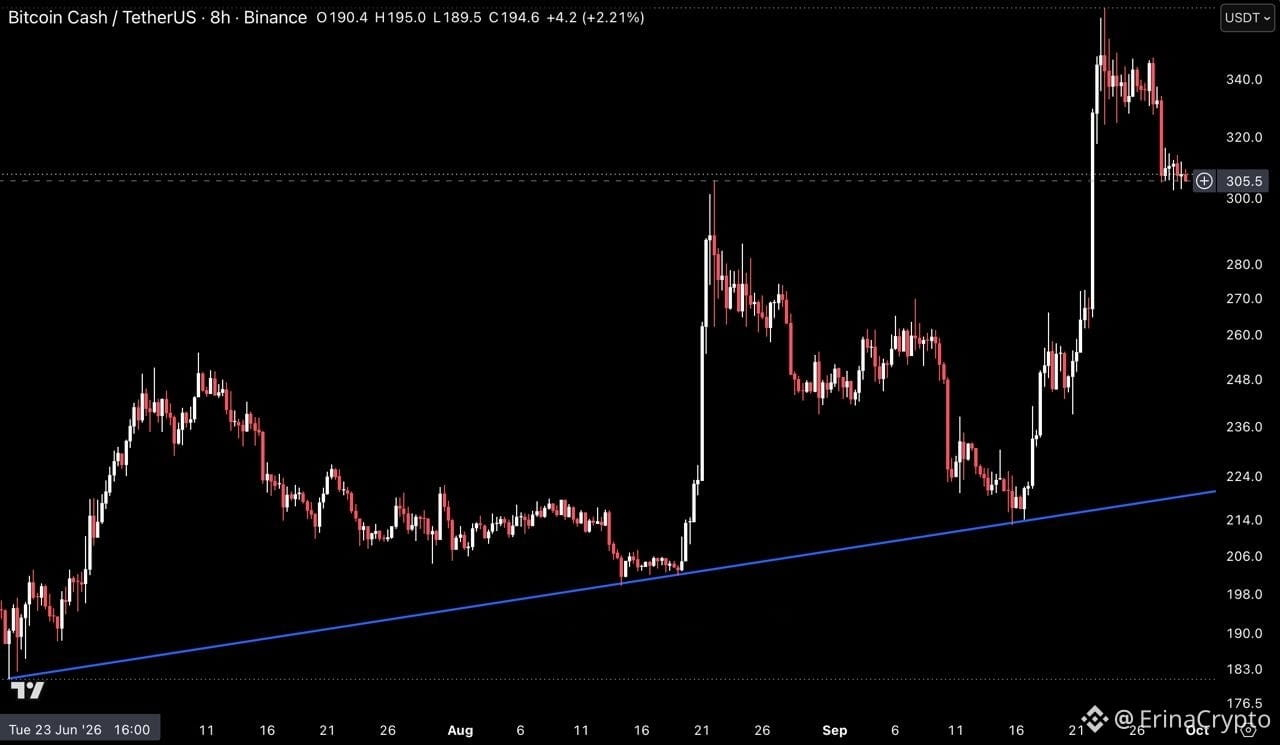
BCH is trading at 305.5, holding above the rising trendline from June near 224.0 after a sharp rejection from highs near 345.0.
Hold this trendline and this pushes back toward 320.0 and higher.
$BCH
{spot}(BCHUSDT)
$MOVR
{spot}(MOVRUSDT)
#UKFCAOpensCryptoFirmAuthorization #JapanMOFStudyGroupOnTokenizedGovtBonds #QNTRises287% #Erinacrypto
💰 #BCH Analysis- 🚀 🚀 🚀
BCH is trading at 305.5, holding above the rising trendline from June near 224.0 after a sharp rejection from highs near 345.0.
Hold this trendline and this pushes back toward 320.0 and higher.
$BCH
$MOVR
#UKFCAOpensCryptoFirmAuthorization #JapanMOFStudyGroupOnTokenizedGovtBonds #QNTRises287% #Erinacrypto
BCH is trading at 305.5, holding above the rising trendline from June near 224.0 after a sharp rejection from highs near 345.0.
Hold this trendline and this pushes back toward 320.0 and higher.
$BCH
$MOVR
#UKFCAOpensCryptoFirmAuthorization #JapanMOFStudyGroupOnTokenizedGovtBonds #QNTRises287% #Erinacrypto
AngelOfCrypto_-:
nice
3
2
1.2k

·
--
#BTC — Analysis- 👀
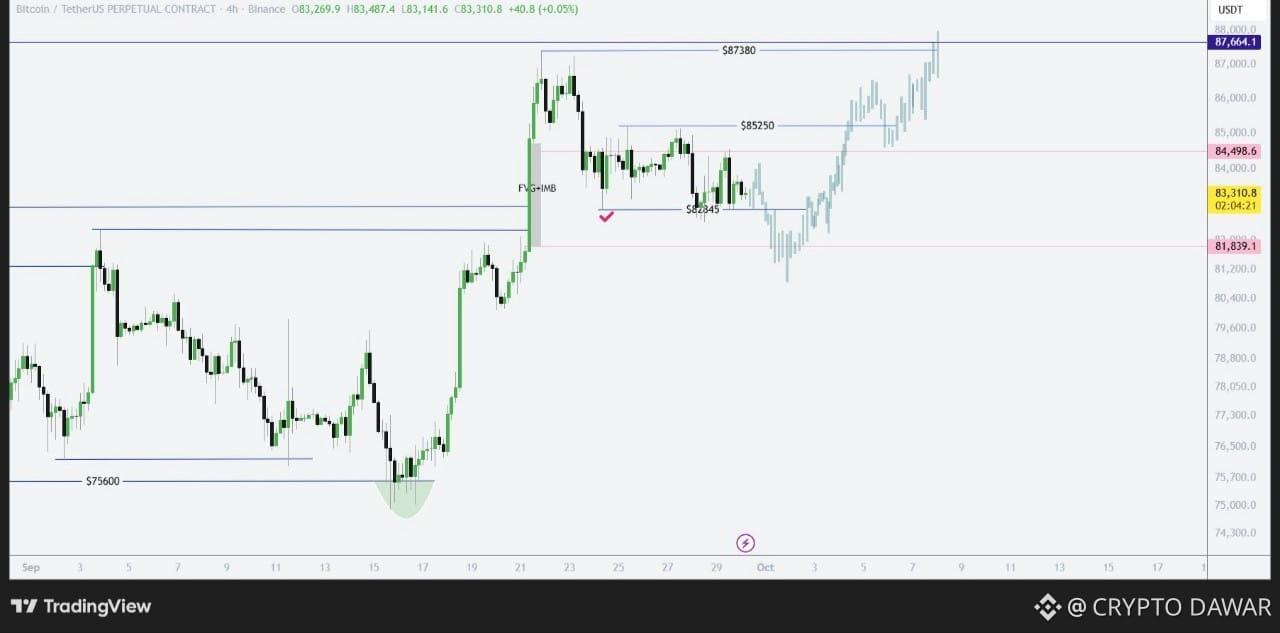
Price is still stuck between these two zones, and there’s no change in the game plan.
I still think there’s a possibility of one more move to a lower level.✍️
$BTC
{spot}(BTCUSDT)
$BNB
{spot}(BNBUSDT)
$XRP
{spot}(XRPUSDT)
#UKFCAOpensCryptoFirmAuthorization #JapanMOFStudyGroupOnTokenizedGovtBonds #QNTRises287% #CryptoDawar
#BTC — Analysis- 👀
Price is still stuck between these two zones, and there’s no change in the game plan.
I still think there’s a possibility of one more move to a lower level.✍️
$BTC
$BNB
$XRP
#UKFCAOpensCryptoFirmAuthorization #JapanMOFStudyGroupOnTokenizedGovtBonds #QNTRises287% #CryptoDawar
Price is still stuck between these two zones, and there’s no change in the game plan.
I still think there’s a possibility of one more move to a lower level.✍️
$BTC
$BNB
$XRP
#UKFCAOpensCryptoFirmAuthorization #JapanMOFStudyGroupOnTokenizedGovtBonds #QNTRises287% #CryptoDawar
1
3
303
Log in to explore more content
Join global crypto users on Binance Square
⚡️ Get latest and useful information about crypto.
💬 Trusted by the world’s largest crypto exchange.
👍 Discover real insights from verified creators.
Email / Phone number
Trending Topics
1
#BitcoinClears$85200
508 views
66 Discussing
2
#AltcoinSeasonIndexHoldsAbove60For5Days
6,169 views
410 Discussing
3
#USADPAdds90000JobsInSeptember
1,361 views
189 Discussing
4
#USCorePCEEasesTo3%InAugust
1,338 views
166 Discussing
5
#KospiPostsWorstQuarterSince2020
2,247 views
220 Discussing
6
#SECToClarifyOnChainFundraisingRules
8,085 views
389 Discussing
7
#UKFCAOpensCryptoFirmAuthorization
11,619 views
363 Discussing
8
#JapanMOFStudyGroupOnTokenizedGovtBonds
10,043 views
306 Discussing
9
#QNTRises287%
51,208 views
700 Discussing
10
#TrumpRejectsAIRulesForVoluntaryAudits
33,775 views
620 Discussing