

#depin
depin
3.8M views
13,491 Discussing
Hot
Latest

·
--
Bullish
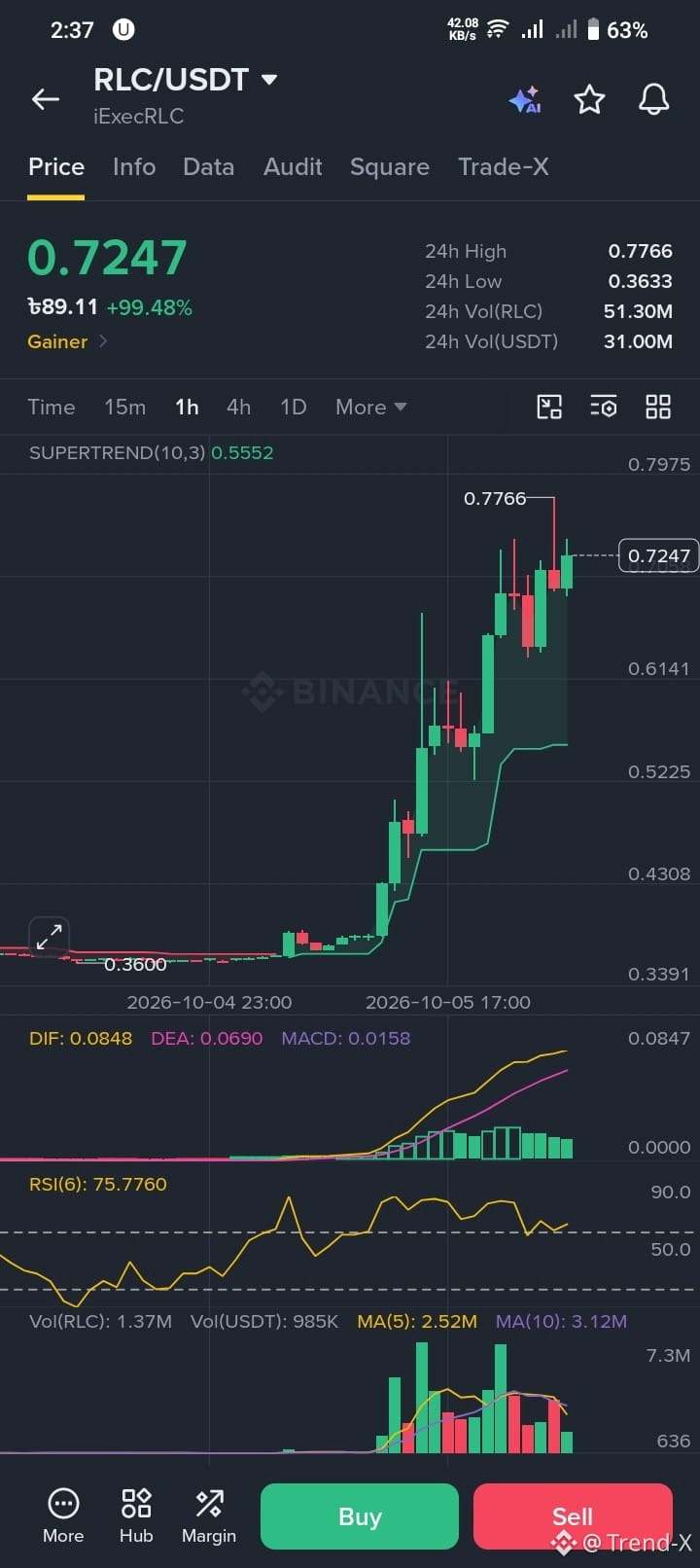
🚀 $RLC — Could This Be the Next Move?
RLC is building a decentralized cloud-computing ecosystem where users can access computing power and data without relying entirely on centralized providers.
{spot}(RLCUSDT)
🔥 Why RLC is interesting: • Decentralized computing narrative • AI + Web3 infrastructure potential • Real utility within the iExec ecosystem • Strong narrative if demand for decentralized compute grows
📈 If RLC starts attracting volume and breaks key resistance, another strong move could follow.
👀 Would you hold RLC for the next crypto cycle?
⚠️ Do your own research. Crypto is highly volatile.
#RLC #iExec #DePIN #AI #BinanceSquare
🚀 $RLC — Could This Be the Next Move?
RLC is building a decentralized cloud-computing ecosystem where users can access computing power and data without relying entirely on centralized providers.
🔥 Why RLC is interesting: • Decentralized computing narrative • AI + Web3 infrastructure potential • Real utility within the iExec ecosystem • Strong narrative if demand for decentralized compute grows
📈 If RLC starts attracting volume and breaks key resistance, another strong move could follow.
👀 Would you hold RLC for the next crypto cycle?
⚠️ Do your own research. Crypto is highly volatile.
#RLC #iExec #DePIN #AI #BinanceSquare
RLC is building a decentralized cloud-computing ecosystem where users can access computing power and data without relying entirely on centralized providers.
🔥 Why RLC is interesting: • Decentralized computing narrative • AI + Web3 infrastructure potential • Real utility within the iExec ecosystem • Strong narrative if demand for decentralized compute grows
📈 If RLC starts attracting volume and breaks key resistance, another strong move could follow.
👀 Would you hold RLC for the next crypto cycle?
⚠️ Do your own research. Crypto is highly volatile.
#RLC #iExec #DePIN #AI #BinanceSquare
1
1
23

·
--
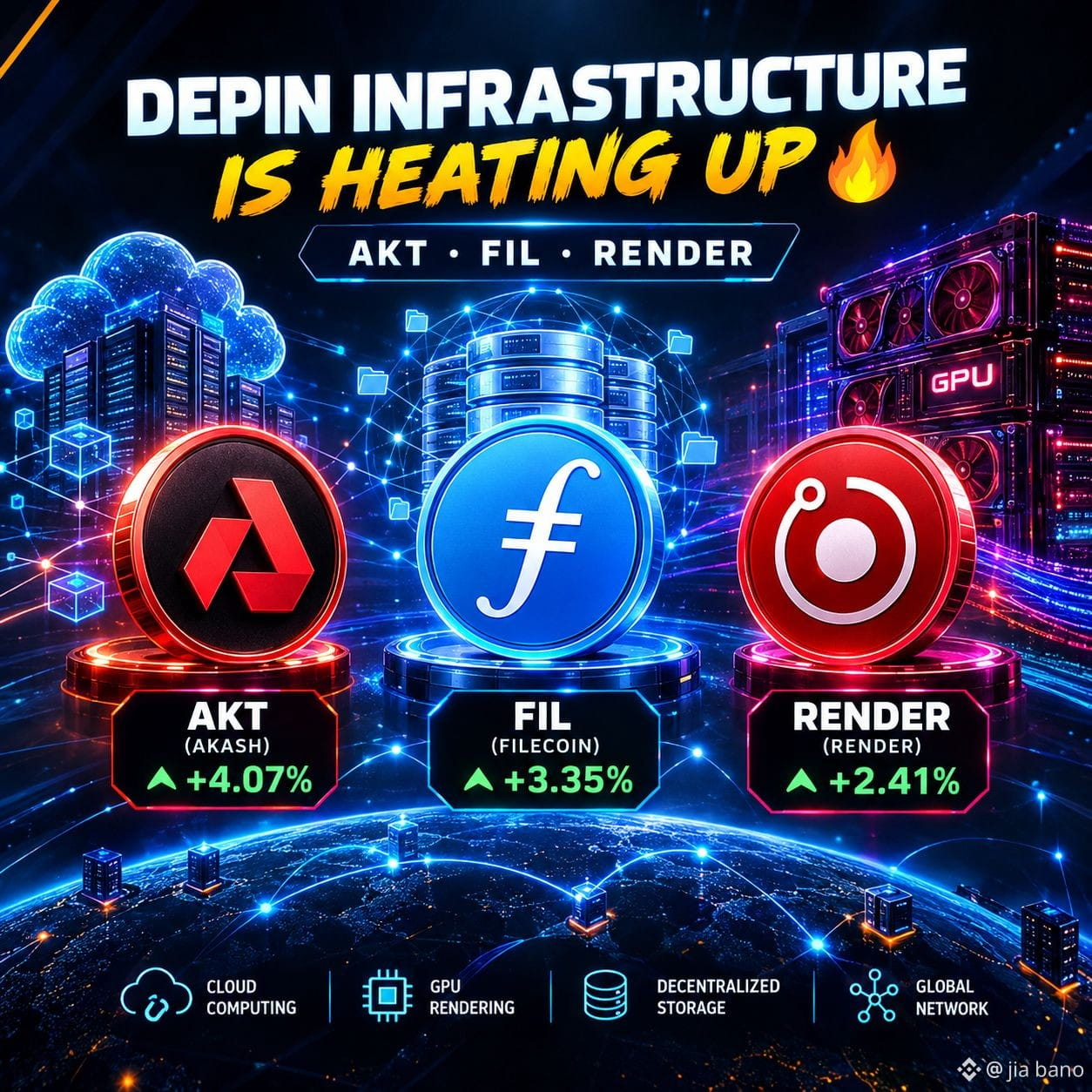
🚀 DePIN Infrastructure Is Heating Up! 🔥
The DePIN sector is showing strong momentum, with three projects standing out:
☁️ $AKT — +4.07% | Decentralized cloud computing
💾 $FIL — +3.35% | Decentralized data storage
🎨 $RENDER — +2.41% | GPU rendering power
These projects are building the infrastructure behind the decentralized digital economy. 🌐⚡
👀 Which one are you watching most closely — AKT, FIL or RENDER?
{future}(FILUSDT)
#DePIN #AKT #FIL #RENDER
🚀 DePIN Infrastructure Is Heating Up! 🔥
The DePIN sector is showing strong momentum, with three projects standing out:
☁️ $AKT — +4.07% | Decentralized cloud computing
💾 $FIL — +3.35% | Decentralized data storage
🎨 $RENDER — +2.41% | GPU rendering power
These projects are building the infrastructure behind the decentralized digital economy. 🌐⚡
👀 Which one are you watching most closely — AKT, FIL or RENDER?
#DePIN #AKT #FIL #RENDER
The DePIN sector is showing strong momentum, with three projects standing out:
☁️ $AKT — +4.07% | Decentralized cloud computing
💾 $FIL — +3.35% | Decentralized data storage
🎨 $RENDER — +2.41% | GPU rendering power
These projects are building the infrastructure behind the decentralized digital economy. 🌐⚡
👀 Which one are you watching most closely — AKT, FIL or RENDER?
#DePIN #AKT #FIL #RENDER
444


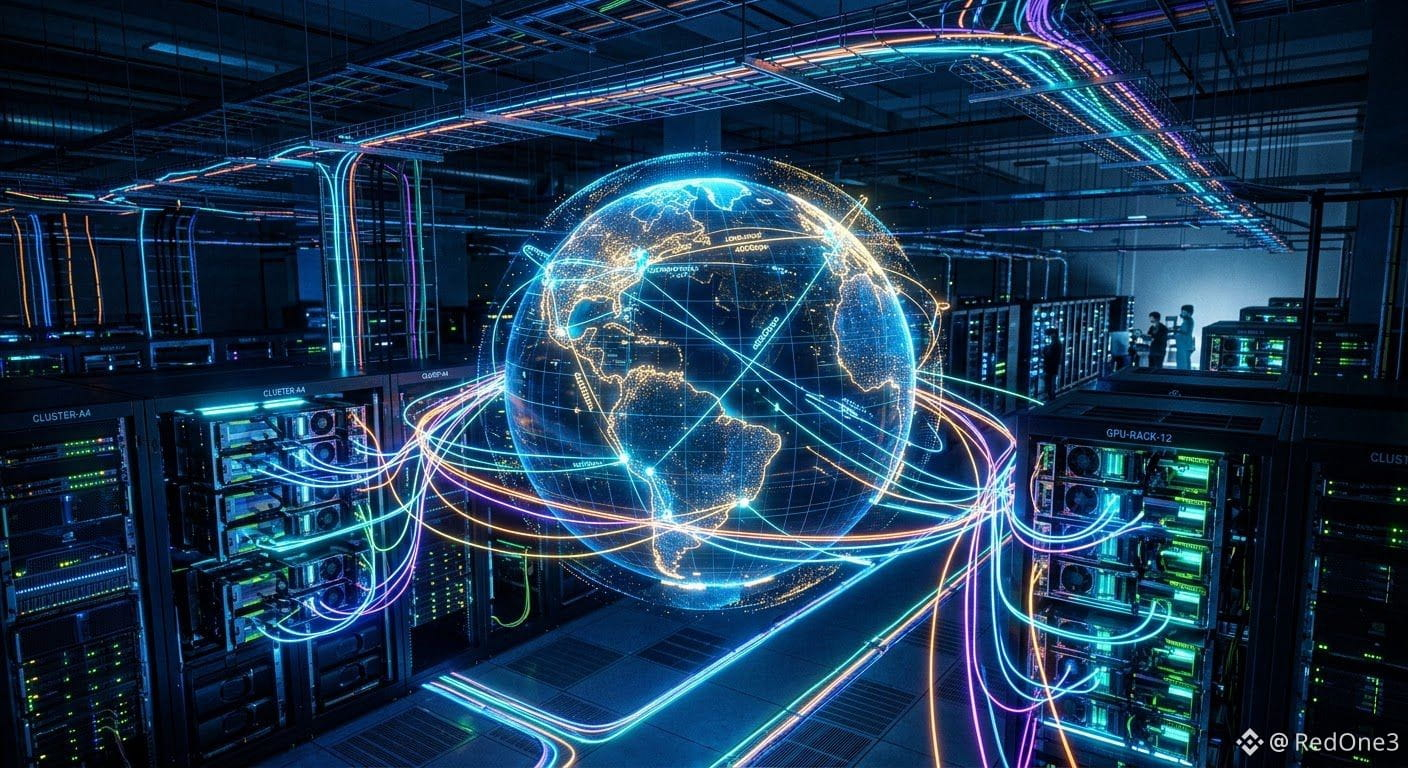
In the quiet expansion of decentralized physical infrastructure, networks coordinating real-world resources continue demonstrating tangible utility beyond pure narrative. As sensors, bandwidth, and compute find on-chain coordination, capital begins recognizing grounded value creation. Echoing the 2021 infrastructure waves that rewarded practical deployment, this chapter carries a 64% probability of steady growth through the season if adoption metrics and partnership integrations keep compounding.
$RNDR $AKT $IO #RadaRI124 #CoinVahini #DePIN #Infrastructure
In the quiet expansion of decentralized physical infrastructure, networks coordinating real-world resources continue demonstrating tangible utility beyond pure narrative. As sensors, bandwidth, and compute find on-chain coordination, capital begins recognizing grounded value creation. Echoing the 2021 infrastructure waves that rewarded practical deployment, this chapter carries a 64% probability of steady growth through the season if adoption metrics and partnership integrations keep compounding.
$RNDR $AKT $IO #RadaRI124 #CoinVahini #DePIN #Infrastructure
$RNDR $AKT $IO #RadaRI124 #CoinVahini #DePIN #Infrastructure
410


·
--
Decentralized Compute Networks & AI Infrastructure
AI models require massive processing power. Decentralized compute networks are filling this demand by providing scalable GPU resources.
Why Decentralized Infrastructure Matters
Key Benefits:
💻 Distributed Processing Power: Tokenized GPU marketplaces allow developers to train and run inference at lower costs.
🌐 Censorship Resistance: Open networks guarantee continuous runtime without single-point cloud failures.
💰 Resource Monetization: Hardware owners earn yields by provisioning idle computing capacity.
The Synergy Between Compute & Crypto Decentralized physical infrastructure networks ensure AI model availability remains open, verifiable, and permissionless for everyone.
Have you explored decentralized compute networks yet?
#DePIN #CryptoAI #Web3 .
Decentralized Compute Networks & AI Infrastructure
AI models require massive processing power. Decentralized compute networks are filling this demand by providing scalable GPU resources.
Why Decentralized Infrastructure Matters
Key Benefits:
💻 Distributed Processing Power: Tokenized GPU marketplaces allow developers to train and run inference at lower costs.
🌐 Censorship Resistance: Open networks guarantee continuous runtime without single-point cloud failures.
💰 Resource Monetization: Hardware owners earn yields by provisioning idle computing capacity.
The Synergy Between Compute & Crypto Decentralized physical infrastructure networks ensure AI model availability remains open, verifiable, and permissionless for everyone.
Have you explored decentralized compute networks yet?
#DePIN #CryptoAI #Web3 .
AI models require massive processing power. Decentralized compute networks are filling this demand by providing scalable GPU resources.
Why Decentralized Infrastructure Matters
Key Benefits:
💻 Distributed Processing Power: Tokenized GPU marketplaces allow developers to train and run inference at lower costs.
🌐 Censorship Resistance: Open networks guarantee continuous runtime without single-point cloud failures.
💰 Resource Monetization: Hardware owners earn yields by provisioning idle computing capacity.
The Synergy Between Compute & Crypto Decentralized physical infrastructure networks ensure AI model availability remains open, verifiable, and permissionless for everyone.
Have you explored decentralized compute networks yet?
#DePIN #CryptoAI #Web3 .
200

·
--
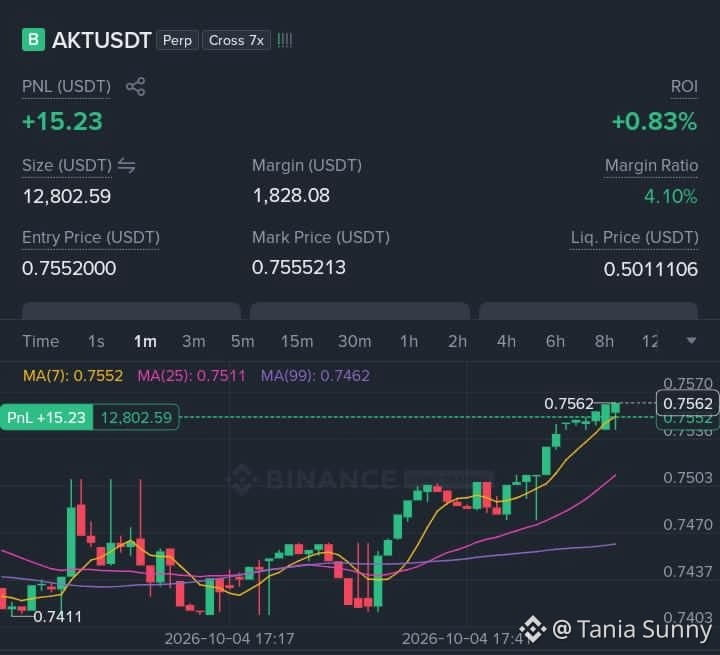
$AKT is PUMPING +17% today and no one is talking about it
Akash Network (AKT) - The Decentralized Google Cloud is waking up.
Price: $0.75 and pushing. My position already in green +$15 PNL.
Why AKT will explode:
1. AI needs GPU, AKT provides cheap decentralized GPU
2. Nvidia chips shortage = AKT demand up
3. All moving averages aligned - MA7, MA25, MA99 bullish cross on 1m
People still sleeping on DePIN + AI narrative. This is where next 10x will come.
I entered at $0.7552 - Are you in ?
#AKT #Akash #DePIN #Aİ
$AKT is PUMPING +17% today and no one is talking about it
Akash Network (AKT) - The Decentralized Google Cloud is waking up.
Price: $0.75 and pushing. My position already in green +$15 PNL.
Why AKT will explode:
1. AI needs GPU, AKT provides cheap decentralized GPU
2. Nvidia chips shortage = AKT demand up
3. All moving averages aligned - MA7, MA25, MA99 bullish cross on 1m
People still sleeping on DePIN + AI narrative. This is where next 10x will come.
I entered at $0.7552 - Are you in ?
#AKT #Akash #DePIN #Aİ
Akash Network (AKT) - The Decentralized Google Cloud is waking up.
Price: $0.75 and pushing. My position already in green +$15 PNL.
Why AKT will explode:
1. AI needs GPU, AKT provides cheap decentralized GPU
2. Nvidia chips shortage = AKT demand up
3. All moving averages aligned - MA7, MA25, MA99 bullish cross on 1m
People still sleeping on DePIN + AI narrative. This is where next 10x will come.
I entered at $0.7552 - Are you in ?
#AKT #Akash #DePIN #Aİ

2
233

·
--
CRYPTO QUESTIONS NOBODY ASKS #07
⚡🌐 CAN A BLOCKCHAIN BECOME A UTILITY COMPANY?
When most people hear “blockchain,” they think:
Bitcoin.
Ethereum.
Trading.
DeFi.
But what if blockchain technology could coordinate physical infrastructure?
Imagine thousands of people operating physical devices:
📡 Internet hotspots
🛰️ Wireless networks
💾 Storage devices
⚡ Energy infrastructure
🚗 Sensors and connected vehicles
These devices provide real-world services.
A blockchain could potentially be used to coordinate participants, record contributions and distribute digital rewards according to predefined rules.
This concept is often called:
DePIN — Decentralized Physical Infrastructure Networks.
The interesting part is that the product isn't necessarily the token.
The product could be the real-world service.
For example:
A person provides wireless coverage.
Another provides storage.
Another contributes computing resources.
Users consume those services.
The network records activity and participants may receive digital incentives.
So instead of:
“Buy this token because it might go up.”
The more important question becomes:
“Is anyone actually using the infrastructure?”
That distinction matters.
A project can have an interesting token and still have little real-world demand.
But if people are genuinely paying for a useful service, the economics become much more interesting.
DePIN therefore raises a bigger question about crypto:
Can decentralized networks compete with traditional companies in building physical infrastructure?
Maybe the future of crypto isn't only about digital assets.
Maybe part of it is about using digital incentives to coordinate real-world resources.
👇 What physical infrastructure would you most like to see decentralized?
Internet, electricity, storage, computing or something else?
#CryptoQuestions #DePIN #Blockchain #Infrastructure
CRYPTO QUESTIONS NOBODY ASKS #07
⚡🌐 CAN A BLOCKCHAIN BECOME A UTILITY COMPANY?
When most people hear “blockchain,” they think:
Bitcoin.
Ethereum.
Trading.
DeFi.
But what if blockchain technology could coordinate physical infrastructure?
Imagine thousands of people operating physical devices:
📡 Internet hotspots
🛰️ Wireless networks
💾 Storage devices
⚡ Energy infrastructure
🚗 Sensors and connected vehicles
These devices provide real-world services.
A blockchain could potentially be used to coordinate participants, record contributions and distribute digital rewards according to predefined rules.
This concept is often called:
DePIN — Decentralized Physical Infrastructure Networks.
The interesting part is that the product isn't necessarily the token.
The product could be the real-world service.
For example:
A person provides wireless coverage.
Another provides storage.
Another contributes computing resources.
Users consume those services.
The network records activity and participants may receive digital incentives.
So instead of:
“Buy this token because it might go up.”
The more important question becomes:
“Is anyone actually using the infrastructure?”
That distinction matters.
A project can have an interesting token and still have little real-world demand.
But if people are genuinely paying for a useful service, the economics become much more interesting.
DePIN therefore raises a bigger question about crypto:
Can decentralized networks compete with traditional companies in building physical infrastructure?
Maybe the future of crypto isn't only about digital assets.
Maybe part of it is about using digital incentives to coordinate real-world resources.
👇 What physical infrastructure would you most like to see decentralized?
Internet, electricity, storage, computing or something else?
#CryptoQuestions #DePIN #Blockchain #Infrastructure
⚡🌐 CAN A BLOCKCHAIN BECOME A UTILITY COMPANY?
When most people hear “blockchain,” they think:
Bitcoin.
Ethereum.
Trading.
DeFi.
But what if blockchain technology could coordinate physical infrastructure?
Imagine thousands of people operating physical devices:
📡 Internet hotspots
🛰️ Wireless networks
💾 Storage devices
⚡ Energy infrastructure
🚗 Sensors and connected vehicles
These devices provide real-world services.
A blockchain could potentially be used to coordinate participants, record contributions and distribute digital rewards according to predefined rules.
This concept is often called:
DePIN — Decentralized Physical Infrastructure Networks.
The interesting part is that the product isn't necessarily the token.
The product could be the real-world service.
For example:
A person provides wireless coverage.
Another provides storage.
Another contributes computing resources.
Users consume those services.
The network records activity and participants may receive digital incentives.
So instead of:
“Buy this token because it might go up.”
The more important question becomes:
“Is anyone actually using the infrastructure?”
That distinction matters.
A project can have an interesting token and still have little real-world demand.
But if people are genuinely paying for a useful service, the economics become much more interesting.
DePIN therefore raises a bigger question about crypto:
Can decentralized networks compete with traditional companies in building physical infrastructure?
Maybe the future of crypto isn't only about digital assets.
Maybe part of it is about using digital incentives to coordinate real-world resources.
👇 What physical infrastructure would you most like to see decentralized?
Internet, electricity, storage, computing or something else?
#CryptoQuestions #DePIN #Blockchain #Infrastructure
92

·
--
Most DePIN protocols look completely flawless during staged live demos until real-world hardware friction destroys user adoption.
Most investors jump headfirst into spatial computing and DePIN plays right after seeing a clean demo, only to watch their bags bleed when deployment outside controlled retail setups hits massive roadblocks.
Nils just showcased what Auki is building, demonstrating how spatial tech functions in retail settings while simultaneously developing a generic harness for home environments. But expanding from controlled commercial spaces into messy consumer living rooms is where projects usually bleed cash and face harsh edge cases. When you look at how infrastructure plays like $AUKI, $RENDER, and $IOTX try bridging off-chain physical spaces with on-chain coordination, the hardest hurdle is rarely the tech itself; it is whether everyday users will actually install generic hardware harnesses without breaking the whole loop.
Retail implementations can subsidize expensive hardware setups, but consumer home adoption carries huge churn risks if the integration isn't completely seamless from day one.
Do you think spatial DePIN can actually break into consumer households, or are these projects destined to remain stuck in enterprise pilots?
#DePIN #CryptoAnalysis #Web3Infrastructure
Most DePIN protocols look completely flawless during staged live demos until real-world hardware friction destroys user adoption.
Most investors jump headfirst into spatial computing and DePIN plays right after seeing a clean demo, only to watch their bags bleed when deployment outside controlled retail setups hits massive roadblocks.
Nils just showcased what Auki is building, demonstrating how spatial tech functions in retail settings while simultaneously developing a generic harness for home environments. But expanding from controlled commercial spaces into messy consumer living rooms is where projects usually bleed cash and face harsh edge cases. When you look at how infrastructure plays like $AUKI, $RENDER , and $IOTX try bridging off-chain physical spaces with on-chain coordination, the hardest hurdle is rarely the tech itself; it is whether everyday users will actually install generic hardware harnesses without breaking the whole loop.
Retail implementations can subsidize expensive hardware setups, but consumer home adoption carries huge churn risks if the integration isn't completely seamless from day one.
Do you think spatial DePIN can actually break into consumer households, or are these projects destined to remain stuck in enterprise pilots?
#DePIN #CryptoAnalysis #Web3Infrastructure
Most investors jump headfirst into spatial computing and DePIN plays right after seeing a clean demo, only to watch their bags bleed when deployment outside controlled retail setups hits massive roadblocks.
Nils just showcased what Auki is building, demonstrating how spatial tech functions in retail settings while simultaneously developing a generic harness for home environments. But expanding from controlled commercial spaces into messy consumer living rooms is where projects usually bleed cash and face harsh edge cases. When you look at how infrastructure plays like $AUKI, $RENDER , and $IOTX try bridging off-chain physical spaces with on-chain coordination, the hardest hurdle is rarely the tech itself; it is whether everyday users will actually install generic hardware harnesses without breaking the whole loop.
Retail implementations can subsidize expensive hardware setups, but consumer home adoption carries huge churn risks if the integration isn't completely seamless from day one.
Do you think spatial DePIN can actually break into consumer households, or are these projects destined to remain stuck in enterprise pilots?
#DePIN #CryptoAnalysis #Web3Infrastructure
160

·
--
DePIN — Decentralized Physical Infrastructure Networks — may be crypto's most underappreciated growth thesis right now.
The pitch is simple: instead of Amazon or Google owning the compute, storage, and bandwidth infrastructure that powers the internet, DePIN protocols let anyone contribute hardware and earn token rewards for doing so. The network pays contributors in crypto; users access services at lower cost.
What makes DePIN structurally interesting:
• Marginal cost asymmetry — idle hardware contributes excess capacity that would otherwise go to waste, compressing service costs significantly below centralized cloud pricing.
• Bootstrapping flywheel — token incentives allow networks to build supply-side capacity before demand arrives, solving the cold-start problem that kills most marketplace businesses.
• Real utility, real revenue — unlike speculative DeFi yields, DePIN cash flows come from actual usage of physical infrastructure, making token value accrual more defensible.
• Convergence with AI — decentralized GPU compute networks are now directly in the path of AI workload demand. The compute bottleneck is real and DePIN offers a credible alternative supply.
The risk is clear: token inflation to incentivize hardware can outpace demand growth. Projects that reach fee-revenue sustainability before incentives exhaust are the ones to watch.
Decentralized infrastructure is slow to build but durable once established. The race to own the physical layer of Web3 is just beginning.
$BTC $SOL
#DePIN #Web3Infrastructure #CryptoInvesting #Blockchain #DecentralizedCompute
DePIN — Decentralized Physical Infrastructure Networks — may be crypto's most underappreciated growth thesis right now.
The pitch is simple: instead of Amazon or Google owning the compute, storage, and bandwidth infrastructure that powers the internet, DePIN protocols let anyone contribute hardware and earn token rewards for doing so. The network pays contributors in crypto; users access services at lower cost.
What makes DePIN structurally interesting:
• Marginal cost asymmetry — idle hardware contributes excess capacity that would otherwise go to waste, compressing service costs significantly below centralized cloud pricing.
• Bootstrapping flywheel — token incentives allow networks to build supply-side capacity before demand arrives, solving the cold-start problem that kills most marketplace businesses.
• Real utility, real revenue — unlike speculative DeFi yields, DePIN cash flows come from actual usage of physical infrastructure, making token value accrual more defensible.
• Convergence with AI — decentralized GPU compute networks are now directly in the path of AI workload demand. The compute bottleneck is real and DePIN offers a credible alternative supply.
The risk is clear: token inflation to incentivize hardware can outpace demand growth. Projects that reach fee-revenue sustainability before incentives exhaust are the ones to watch.
Decentralized infrastructure is slow to build but durable once established. The race to own the physical layer of Web3 is just beginning.
$BTC $SOL
#DePIN #Web3Infrastructure #CryptoInvesting #Blockchain #DecentralizedCompute
The pitch is simple: instead of Amazon or Google owning the compute, storage, and bandwidth infrastructure that powers the internet, DePIN protocols let anyone contribute hardware and earn token rewards for doing so. The network pays contributors in crypto; users access services at lower cost.
What makes DePIN structurally interesting:
• Marginal cost asymmetry — idle hardware contributes excess capacity that would otherwise go to waste, compressing service costs significantly below centralized cloud pricing.
• Bootstrapping flywheel — token incentives allow networks to build supply-side capacity before demand arrives, solving the cold-start problem that kills most marketplace businesses.
• Real utility, real revenue — unlike speculative DeFi yields, DePIN cash flows come from actual usage of physical infrastructure, making token value accrual more defensible.
• Convergence with AI — decentralized GPU compute networks are now directly in the path of AI workload demand. The compute bottleneck is real and DePIN offers a credible alternative supply.
The risk is clear: token inflation to incentivize hardware can outpace demand growth. Projects that reach fee-revenue sustainability before incentives exhaust are the ones to watch.
Decentralized infrastructure is slow to build but durable once established. The race to own the physical layer of Web3 is just beginning.
$BTC $SOL
#DePIN #Web3Infrastructure #CryptoInvesting #Blockchain #DecentralizedCompute
43

Have you noticed how crypto investors keep chasing micro-cap meme coins while real-world tech giants are quietly outperforming entire ecosystems?
Most traders lose their portfolio balance jumping between overhyped launches and getting chopped up in choppy market cycles. They constantly stress over 15-minute charts just to miss the massive macro structural trends right in front of them.
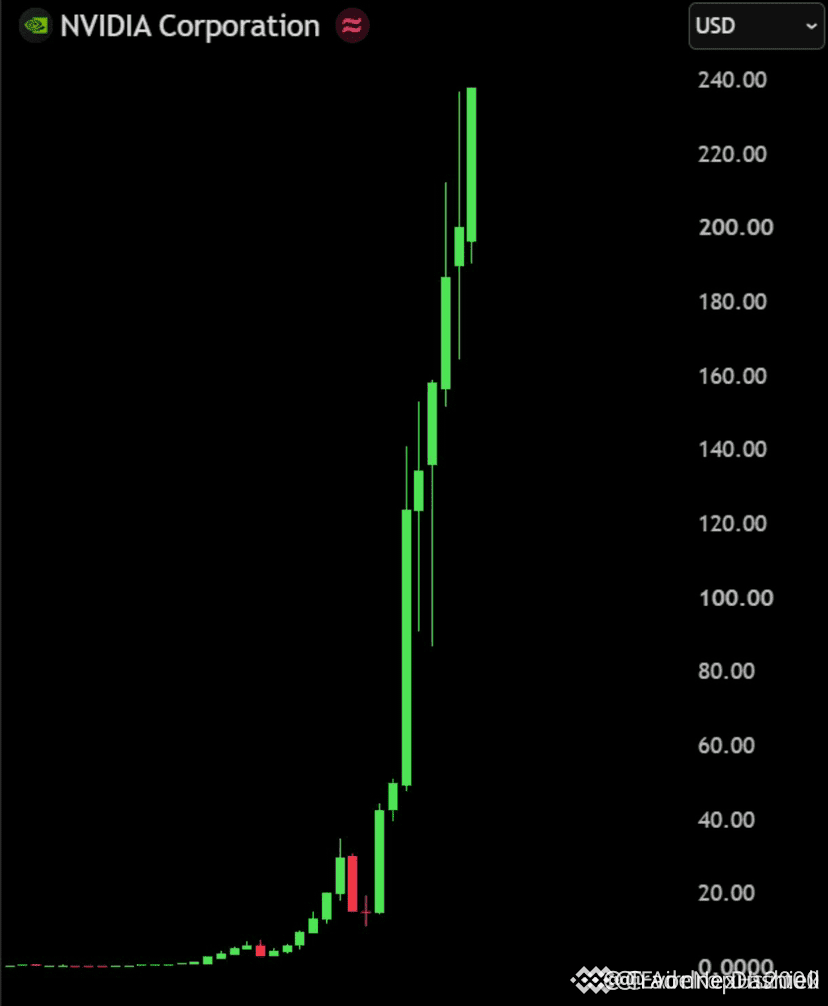
Look at the numbers on Wall Street. Nvidia just pushed past a $5.7T market cap, where a simple $10,000 spot allocation a decade ago is worth around $1.58M today. That is compounding driven by actual compute demand rather than pure speculative rotation.
This growth is already spilling over into decentralized compute and infrastructure plays like $RENDER, $NEAR, and $FET. The real opportunity in decentralized AI is not betting on tokens with zero utility, but identifying the networks providing verifiable compute rails to meet this unprecedented hardware demand.
Where do you think decentralized AI infrastructure fits into this massive compute expansion over the next decade?
#CryptoAI #DePIN #ArtificialIntelligence
Have you noticed how crypto investors keep chasing micro-cap meme coins while real-world tech giants are quietly outperforming entire ecosystems?
Most traders lose their portfolio balance jumping between overhyped launches and getting chopped up in choppy market cycles. They constantly stress over 15-minute charts just to miss the massive macro structural trends right in front of them.
Look at the numbers on Wall Street. Nvidia just pushed past a $5.7T market cap, where a simple $10,000 spot allocation a decade ago is worth around $1.58M today. That is compounding driven by actual compute demand rather than pure speculative rotation.
This growth is already spilling over into decentralized compute and infrastructure plays like $RENDER , $NEAR , and $FET . The real opportunity in decentralized AI is not betting on tokens with zero utility, but identifying the networks providing verifiable compute rails to meet this unprecedented hardware demand.
Where do you think decentralized AI infrastructure fits into this massive compute expansion over the next decade?
#CryptoAI #DePIN #ArtificialIntelligence
Most traders lose their portfolio balance jumping between overhyped launches and getting chopped up in choppy market cycles. They constantly stress over 15-minute charts just to miss the massive macro structural trends right in front of them.
Look at the numbers on Wall Street. Nvidia just pushed past a $5.7T market cap, where a simple $10,000 spot allocation a decade ago is worth around $1.58M today. That is compounding driven by actual compute demand rather than pure speculative rotation.
This growth is already spilling over into decentralized compute and infrastructure plays like $RENDER , $NEAR , and $FET . The real opportunity in decentralized AI is not betting on tokens with zero utility, but identifying the networks providing verifiable compute rails to meet this unprecedented hardware demand.
Where do you think decentralized AI infrastructure fits into this massive compute expansion over the next decade?
#CryptoAI #DePIN #ArtificialIntelligence
175
·
--
If you are still ignoring the massive capital rotation between traditional tech and decentralized computing, you might be making a costly mistake.
Most traders get trapped chasing late-stage rallies on mega caps while completely missing early infrastructure plays. You watch traditional giants break records, experience severe FOMO, and end up buying near local tops instead of positioning where the next asymmetric upside lives.
Nvidia just touched a historic 5.7T market cap milestone, where a 10,000 USD position from a decade ago sits at roughly 1.58M today. While traditional equity bulls argue that centralized hardware dominance is untouchable, that exact scale makes future 10x returns mathematically difficult.
The real debate is whether decentralized AI compute protocols like $NEAR, $RENDER, or $FET can capture market share from centralized silicon monopolies. I lean toward decentralized physical infrastructure networks taking serious ground as compute shortages worsen, offering the kind of asymmetric multiple that legacy tech simply cannot deliver anymore.
Do you believe decentralized compute will actually disrupt traditional silicon giants this cycle, or is traditional tech going to keep taking all the enterprise volume?
#Nvidia #CryptoAI #DePIN
If you are still ignoring the massive capital rotation between traditional tech and decentralized computing, you might be making a costly mistake.
Most traders get trapped chasing late-stage rallies on mega caps while completely missing early infrastructure plays. You watch traditional giants break records, experience severe FOMO, and end up buying near local tops instead of positioning where the next asymmetric upside lives.
Nvidia just touched a historic 5.7T market cap milestone, where a 10,000 USD position from a decade ago sits at roughly 1.58M today. While traditional equity bulls argue that centralized hardware dominance is untouchable, that exact scale makes future 10x returns mathematically difficult.
The real debate is whether decentralized AI compute protocols like $NEAR , $RENDER , or $FET can capture market share from centralized silicon monopolies. I lean toward decentralized physical infrastructure networks taking serious ground as compute shortages worsen, offering the kind of asymmetric multiple that legacy tech simply cannot deliver anymore.
Do you believe decentralized compute will actually disrupt traditional silicon giants this cycle, or is traditional tech going to keep taking all the enterprise volume?
#Nvidia #CryptoAI #DePIN
Most traders get trapped chasing late-stage rallies on mega caps while completely missing early infrastructure plays. You watch traditional giants break records, experience severe FOMO, and end up buying near local tops instead of positioning where the next asymmetric upside lives.
Nvidia just touched a historic 5.7T market cap milestone, where a 10,000 USD position from a decade ago sits at roughly 1.58M today. While traditional equity bulls argue that centralized hardware dominance is untouchable, that exact scale makes future 10x returns mathematically difficult.
The real debate is whether decentralized AI compute protocols like $NEAR , $RENDER , or $FET can capture market share from centralized silicon monopolies. I lean toward decentralized physical infrastructure networks taking serious ground as compute shortages worsen, offering the kind of asymmetric multiple that legacy tech simply cannot deliver anymore.
Do you believe decentralized compute will actually disrupt traditional silicon giants this cycle, or is traditional tech going to keep taking all the enterprise volume?
#Nvidia #CryptoAI #DePIN

197
·
--
Picture this: a decade ago, you put $10,000 into a hardware company making graphics chips for gamers, and today you are casually sitting on $1.58 million.
Most traders spend years chasing volatile low-cap pumps only to get chopped up by bad entries and brutal drawdowns, completely missing the macro shifts happening in plain sight.
When Nvidia crossed the $5.7T market cap mark, it confirmed what compute-heavy narratives have been signaling for quarters. In traditional finance, capturing an asymmetric 158x return over ten years usually requires picking an infrastructure king before the world realizes it needs it. We saw similar structural dominance when $ETH built the foundational settlement layer for DeFi back in 2017, outlasting thousands of hype-driven alternatives that went to zero.
The crypto parallel today is unfolding across decentralized physical infrastructure and artificial intelligence networks. While legacy markets funnel trillions into centralized silicon, decentralized compute plays like $NEAR and decentralized AI networks like $FET are trying to solve the exact same bottleneck from the permissionless side. The real winners in every tech cycle are rarely the flashiest front-end apps; they are almost always the underlying compute and base layer infrastructure that everyone else is forced to build on.
Do you think decentralized AI infrastructure can ever capture market share from traditional tech giants, or will centralized compute retain the entire pie?
#CryptoAI #DePIN #ArtificialIntelligence
Picture this: a decade ago, you put $10,000 into a hardware company making graphics chips for gamers, and today you are casually sitting on $1.58 million.
Most traders spend years chasing volatile low-cap pumps only to get chopped up by bad entries and brutal drawdowns, completely missing the macro shifts happening in plain sight.
When Nvidia crossed the $5.7T market cap mark, it confirmed what compute-heavy narratives have been signaling for quarters. In traditional finance, capturing an asymmetric 158x return over ten years usually requires picking an infrastructure king before the world realizes it needs it. We saw similar structural dominance when $ETH built the foundational settlement layer for DeFi back in 2017, outlasting thousands of hype-driven alternatives that went to zero.
The crypto parallel today is unfolding across decentralized physical infrastructure and artificial intelligence networks. While legacy markets funnel trillions into centralized silicon, decentralized compute plays like $NEAR and decentralized AI networks like $FET are trying to solve the exact same bottleneck from the permissionless side. The real winners in every tech cycle are rarely the flashiest front-end apps; they are almost always the underlying compute and base layer infrastructure that everyone else is forced to build on.
Do you think decentralized AI infrastructure can ever capture market share from traditional tech giants, or will centralized compute retain the entire pie?
#CryptoAI #DePIN #ArtificialIntelligence
Most traders spend years chasing volatile low-cap pumps only to get chopped up by bad entries and brutal drawdowns, completely missing the macro shifts happening in plain sight.
When Nvidia crossed the $5.7T market cap mark, it confirmed what compute-heavy narratives have been signaling for quarters. In traditional finance, capturing an asymmetric 158x return over ten years usually requires picking an infrastructure king before the world realizes it needs it. We saw similar structural dominance when $ETH built the foundational settlement layer for DeFi back in 2017, outlasting thousands of hype-driven alternatives that went to zero.
The crypto parallel today is unfolding across decentralized physical infrastructure and artificial intelligence networks. While legacy markets funnel trillions into centralized silicon, decentralized compute plays like $NEAR and decentralized AI networks like $FET are trying to solve the exact same bottleneck from the permissionless side. The real winners in every tech cycle are rarely the flashiest front-end apps; they are almost always the underlying compute and base layer infrastructure that everyone else is forced to build on.
Do you think decentralized AI infrastructure can ever capture market share from traditional tech giants, or will centralized compute retain the entire pie?
#CryptoAI #DePIN #ArtificialIntelligence

11

·
--
Bullish
🚀 Important update from the Filecoin ($FIL) network
The Filecoin network has announced details of its Filecoin Warm Storage Service:
📌 Key highlights:
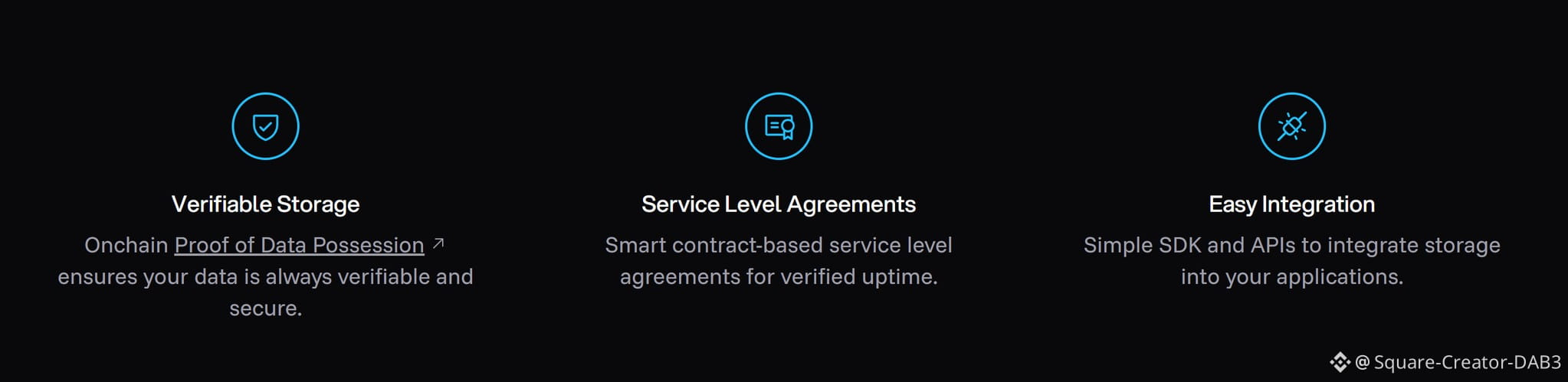
Continuous proof of storage: Storage providers commit to submitting hourly proofs that the data is present.
Speed and security: Proofs are verified directly on-chain within seconds.
Competitive pricing: Storage costs $2.50 per TiB per month per replica, with a minimum of two replicas required.
Developer-ready: Developers can get started right away using the Synapse SDK.
💡 Expected impact on $FIL:
Positive in the medium to long term: Lower storage costs and faster, more secure verification could boost adoption of the Filecoin network by developers and institutions as an alternative to traditional cloud services, increasing practical demand and actual use of $FIL.
#fil #Filecoin #DePIN #CryptoNews $FIL
{spot}(FILUSDT)
🚀 Important update from the Filecoin ($FIL ) network
The Filecoin network has announced details of its Filecoin Warm Storage Service:
📌 Key highlights:
Continuous proof of storage: Storage providers commit to submitting hourly proofs that the data is present.
Speed and security: Proofs are verified directly on-chain within seconds.
Competitive pricing: Storage costs $2.50 per TiB per month per replica, with a minimum of two replicas required.
Developer-ready: Developers can get started right away using the Synapse SDK.
💡 Expected impact on $FIL :
Positive in the medium to long term: Lower storage costs and faster, more secure verification could boost adoption of the Filecoin network by developers and institutions as an alternative to traditional cloud services, increasing practical demand and actual use of $FIL .
#fil #Filecoin #DePIN #CryptoNews $FIL
The Filecoin network has announced details of its Filecoin Warm Storage Service:
📌 Key highlights:
Continuous proof of storage: Storage providers commit to submitting hourly proofs that the data is present.
Speed and security: Proofs are verified directly on-chain within seconds.
Competitive pricing: Storage costs $2.50 per TiB per month per replica, with a minimum of two replicas required.
Developer-ready: Developers can get started right away using the Synapse SDK.
💡 Expected impact on $FIL :
Positive in the medium to long term: Lower storage costs and faster, more secure verification could boost adoption of the Filecoin network by developers and institutions as an alternative to traditional cloud services, increasing practical demand and actual use of $FIL .
#fil #Filecoin #DePIN #CryptoNews $FIL
1
172

·
--
DePIN is one of the most underrated narratives in crypto right now — and it may quietly become one of the most durable.
Decentralized Physical Infrastructure Networks use token incentives to coordinate real-world hardware: wireless hotspots, compute nodes, storage devices, energy sensors. Instead of a corporation deploying expensive infrastructure, a global crowd of individual operators does it — earning tokens in return.
What makes DePIN compelling from a fundamentals lens:
1. Real revenue from day one. Users pay for bandwidth, compute, or storage. That demand is independent of token speculation — it exists because the service has utility.
2. Marginal cost advantage. Crowdsourced hardware deployment can undercut centralized providers on cost by distributing capex across thousands of participants.
3. Tokenomics with a demand floor. When the token is the payment rail for a real service, there is always some baseline buy pressure — not just speculation.
This is where $SOL has quietly won mindshare. Its low fees and high throughput make it the preferred settlement layer for micro-payment-heavy DePIN protocols. $ETH hosts several DePIN projects via L2s, while $BNB ecosystem is expanding into real-world compute and asset infrastructure.
DePIN bridges crypto into the physical economy. That is not a small thing — it is a entirely new class of revenue-generating protocol.
#DePIN #CryptoInfrastructure #Web3 #CryptoTrends #BinanceSquare
DePIN is one of the most underrated narratives in crypto right now — and it may quietly become one of the most durable.
Decentralized Physical Infrastructure Networks use token incentives to coordinate real-world hardware: wireless hotspots, compute nodes, storage devices, energy sensors. Instead of a corporation deploying expensive infrastructure, a global crowd of individual operators does it — earning tokens in return.
What makes DePIN compelling from a fundamentals lens:
1. Real revenue from day one. Users pay for bandwidth, compute, or storage. That demand is independent of token speculation — it exists because the service has utility.
2. Marginal cost advantage. Crowdsourced hardware deployment can undercut centralized providers on cost by distributing capex across thousands of participants.
3. Tokenomics with a demand floor. When the token is the payment rail for a real service, there is always some baseline buy pressure — not just speculation.
This is where $SOL has quietly won mindshare. Its low fees and high throughput make it the preferred settlement layer for micro-payment-heavy DePIN protocols. $ETH hosts several DePIN projects via L2s, while $BNB ecosystem is expanding into real-world compute and asset infrastructure.
DePIN bridges crypto into the physical economy. That is not a small thing — it is a entirely new class of revenue-generating protocol.
#DePIN #CryptoInfrastructure #Web3 #CryptoTrends #BinanceSquare
Decentralized Physical Infrastructure Networks use token incentives to coordinate real-world hardware: wireless hotspots, compute nodes, storage devices, energy sensors. Instead of a corporation deploying expensive infrastructure, a global crowd of individual operators does it — earning tokens in return.
What makes DePIN compelling from a fundamentals lens:
1. Real revenue from day one. Users pay for bandwidth, compute, or storage. That demand is independent of token speculation — it exists because the service has utility.
2. Marginal cost advantage. Crowdsourced hardware deployment can undercut centralized providers on cost by distributing capex across thousands of participants.
3. Tokenomics with a demand floor. When the token is the payment rail for a real service, there is always some baseline buy pressure — not just speculation.
This is where $SOL has quietly won mindshare. Its low fees and high throughput make it the preferred settlement layer for micro-payment-heavy DePIN protocols. $ETH hosts several DePIN projects via L2s, while $BNB ecosystem is expanding into real-world compute and asset infrastructure.
DePIN bridges crypto into the physical economy. That is not a small thing — it is a entirely new class of revenue-generating protocol.
#DePIN #CryptoInfrastructure #Web3 #CryptoTrends #BinanceSquare
31

·
--
Verified
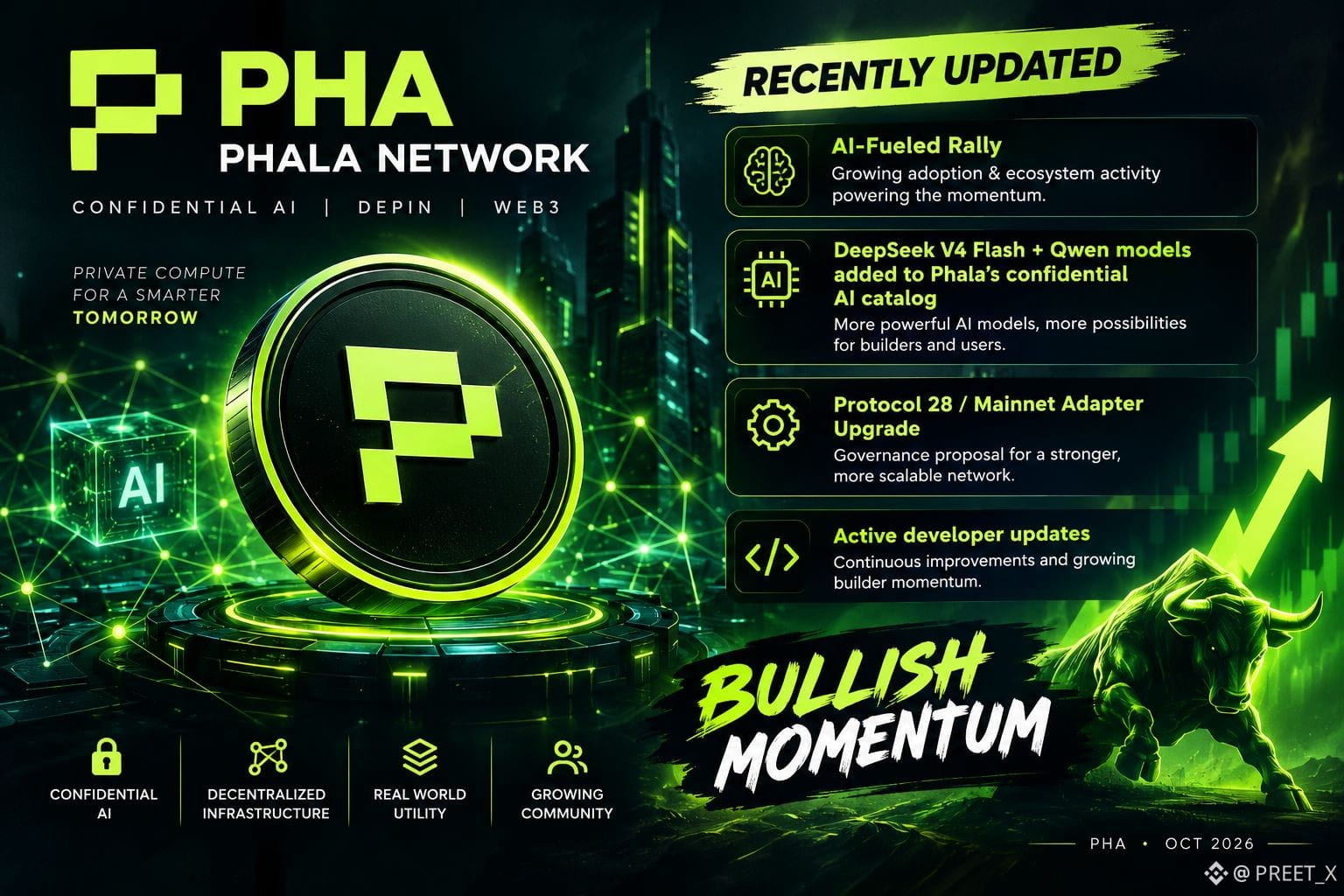
🔥 $PHA — CONFIDENTIAL AI IS HEATING UP
Phala Network is pushing deeper into the Confidential AI + TEE narrative. ⚡
🧠 RECENT UPDATES
• Qwen3.8-27B is now live on Phala with TDX-attested GPU TEE
• DeepSeek & Qwen models are being integrated into Phala’s confidential AI ecosystem
• Phala Confidential AI has recently processed tens of billions of tokens in 24-hour periods
• Continued development around private, verifiable AI infrastructure
📈 WHY THE NARRATIVE IS INTERESTING
AI + Privacy + Decentralized Infrastructure = a powerful Web3 theme.
$PHA is showing strong ecosystem activity, but crypto remains highly volatile and these developments do not guarantee price appreciation.
🚀 $PHA
{spot}(PHAUSDT)
— BULLISH NARRATIVE
Confidential AI × Web3 × TEE
#PhalaNetwork #AI #crypto #Web3 #DePIN
🔥 $PHA — CONFIDENTIAL AI IS HEATING UP
Phala Network is pushing deeper into the Confidential AI + TEE narrative. ⚡
🧠 RECENT UPDATES
• Qwen3.8-27B is now live on Phala with TDX-attested GPU TEE
• DeepSeek & Qwen models are being integrated into Phala’s confidential AI ecosystem
• Phala Confidential AI has recently processed tens of billions of tokens in 24-hour periods
• Continued development around private, verifiable AI infrastructure
📈 WHY THE NARRATIVE IS INTERESTING
AI + Privacy + Decentralized Infrastructure = a powerful Web3 theme.
$PHA is showing strong ecosystem activity, but crypto remains highly volatile and these developments do not guarantee price appreciation.
🚀 $PHA
— BULLISH NARRATIVE
Confidential AI × Web3 × TEE
#PhalaNetwork #AI #crypto #Web3 #DePIN
Phala Network is pushing deeper into the Confidential AI + TEE narrative. ⚡
🧠 RECENT UPDATES
• Qwen3.8-27B is now live on Phala with TDX-attested GPU TEE
• DeepSeek & Qwen models are being integrated into Phala’s confidential AI ecosystem
• Phala Confidential AI has recently processed tens of billions of tokens in 24-hour periods
• Continued development around private, verifiable AI infrastructure
📈 WHY THE NARRATIVE IS INTERESTING
AI + Privacy + Decentralized Infrastructure = a powerful Web3 theme.
$PHA is showing strong ecosystem activity, but crypto remains highly volatile and these developments do not guarantee price appreciation.
🚀 $PHA
— BULLISH NARRATIVE
Confidential AI × Web3 × TEE
#PhalaNetwork #AI #crypto #Web3 #DePIN
610

·
--
DePIN projects love to brag about the number of devices, but there’s one thing people rarely mention: are there actually customers paying to use these machines? If they’re just sitting idle and mining, then the token is just a mining token, and it can’t escape the mine-and-dump cycle.
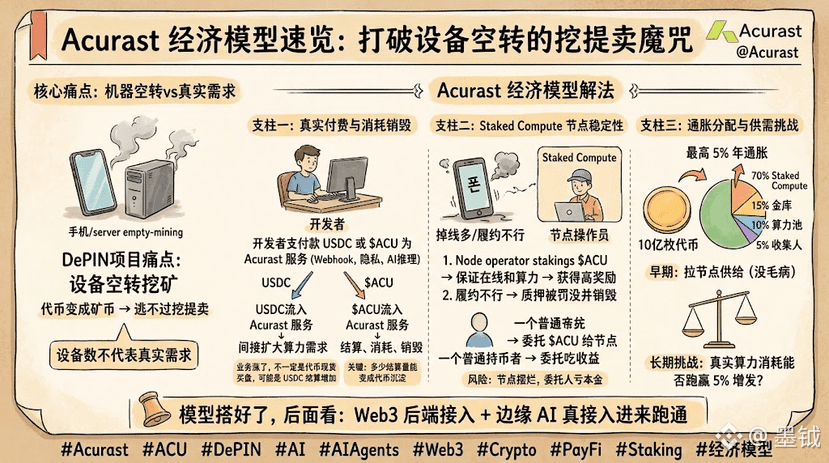
I took a look at @Acurast’s economic model, and a few things seem pretty solid.
First, payments. Developers can use $ACU to pay for running Webhooks, privacy processing, and lightweight AI inference on the platform. Those tokens get used up and may even be burned. But payments in USDC are also supported. So don’t assume that more business automatically means more spot-market buying. USDC payments mostly drive an indirect increase in demand for computing power. Real compute demand is the foundation, but the key question is how much of the settlement volume actually turns into lasting demand for the token.
Next, nodes. The biggest problem with running nodes on phones is reliability. Acurast has introduced Staked Compute: nodes that want higher rewards have to stake $ACU and ensure they stay online and deliver computing power. Too much downtime or poor performance can result in their stake being slashed and burned. Regular holders can delegate their tokens to nodes to earn rewards, but it’s not a risk-free investment—if a node slacks off, delegators can lose their principal too.
As for inflation, the initial supply is 1 billion tokens, with annual inflation capped at 5%: 70% goes to Staked Compute, 15% to the treasury, 10% to the compute pool, and 5% to collectors. Using inflation to grow the supply of nodes early on makes sense. In the long run, it comes down to whether real compute usage can outpace that 5% annual issuance.
The model is pretty comprehensive. Now it’s a matter of seeing how many Web3 backends and edge AI applications actually come on board.
If you want to connect an idle device or stake tokens, get started here:
hub.acurast.com/rebellion?ref=…
#Acurast #ACU #DePIN
DePIN projects love to brag about the number of devices, but there’s one thing people rarely mention: are there actually customers paying to use these machines? If they’re just sitting idle and mining, then the token is just a mining token, and it can’t escape the mine-and-dump cycle.
I took a look at @Acurast’s economic model, and a few things seem pretty solid.
First, payments. Developers can use $ACU to pay for running Webhooks, privacy processing, and lightweight AI inference on the platform. Those tokens get used up and may even be burned. But payments in USDC are also supported. So don’t assume that more business automatically means more spot-market buying. USDC payments mostly drive an indirect increase in demand for computing power. Real compute demand is the foundation, but the key question is how much of the settlement volume actually turns into lasting demand for the token.
Next, nodes. The biggest problem with running nodes on phones is reliability. Acurast has introduced Staked Compute: nodes that want higher rewards have to stake $ACU and ensure they stay online and deliver computing power. Too much downtime or poor performance can result in their stake being slashed and burned. Regular holders can delegate their tokens to nodes to earn rewards, but it’s not a risk-free investment—if a node slacks off, delegators can lose their principal too.
As for inflation, the initial supply is 1 billion tokens, with annual inflation capped at 5%: 70% goes to Staked Compute, 15% to the treasury, 10% to the compute pool, and 5% to collectors. Using inflation to grow the supply of nodes early on makes sense. In the long run, it comes down to whether real compute usage can outpace that 5% annual issuance.
The model is pretty comprehensive. Now it’s a matter of seeing how many Web3 backends and edge AI applications actually come on board.
If you want to connect an idle device or stake tokens, get started here:
hub.acurast.com/rebellion?ref=…
#Acurast #ACU #DePIN
I took a look at @Acurast’s economic model, and a few things seem pretty solid.
First, payments. Developers can use $ACU to pay for running Webhooks, privacy processing, and lightweight AI inference on the platform. Those tokens get used up and may even be burned. But payments in USDC are also supported. So don’t assume that more business automatically means more spot-market buying. USDC payments mostly drive an indirect increase in demand for computing power. Real compute demand is the foundation, but the key question is how much of the settlement volume actually turns into lasting demand for the token.
Next, nodes. The biggest problem with running nodes on phones is reliability. Acurast has introduced Staked Compute: nodes that want higher rewards have to stake $ACU and ensure they stay online and deliver computing power. Too much downtime or poor performance can result in their stake being slashed and burned. Regular holders can delegate their tokens to nodes to earn rewards, but it’s not a risk-free investment—if a node slacks off, delegators can lose their principal too.
As for inflation, the initial supply is 1 billion tokens, with annual inflation capped at 5%: 70% goes to Staked Compute, 15% to the treasury, 10% to the compute pool, and 5% to collectors. Using inflation to grow the supply of nodes early on makes sense. In the long run, it comes down to whether real compute usage can outpace that 5% annual issuance.
The model is pretty comprehensive. Now it’s a matter of seeing how many Web3 backends and edge AI applications actually come on board.
If you want to connect an idle device or stake tokens, get started here:
hub.acurast.com/rebellion?ref=…
#Acurast #ACU #DePIN
101

·
--
Brothers, just saw another zero-cost activity that’s actually meant to be played seriously.
The creator event for @Acurast × @EchoHunt_ai is now live. Time: 9/30–10/25. Prize pool: 200,000 $ACU. Impact Share goes to the top 150.
This one is a bit different from before: content is 60%, and invitations are 40%. It’s not about who posts more and wins—having a community and being able to bring friends to play together is actually more advantageous.
Joining isn’t hard either. Just go to EchoHunt to register, and make sure your X and payout address are linked.
Each week, at most 2 valid pieces of content will be counted. If you also sync them to the Binance Square in the same week, you’ll get an additional bonus, and it won’t take up those 2 content slots.
Acurast itself connects idle phone computing power into a decentralized computing network. The official says there are currently around 300,000 computing units, covering 175+ countries, and the mainnet is already live. $ACU is used to pay for network fees, distribute compute incentives, and it can also be staked and used for governance.
With a community behind you, this time you can really play it out. @Acurast @EchoHunt_ai
#Acurast #ACU #DePIN
Brothers, just saw another zero-cost activity that’s actually meant to be played seriously.
The creator event for @Acurast × @EchoHunt_ai is now live. Time: 9/30–10/25. Prize pool: 200,000 $ACU. Impact Share goes to the top 150.
This one is a bit different from before: content is 60%, and invitations are 40%. It’s not about who posts more and wins—having a community and being able to bring friends to play together is actually more advantageous.
Joining isn’t hard either. Just go to EchoHunt to register, and make sure your X and payout address are linked.
Each week, at most 2 valid pieces of content will be counted. If you also sync them to the Binance Square in the same week, you’ll get an additional bonus, and it won’t take up those 2 content slots.
Acurast itself connects idle phone computing power into a decentralized computing network. The official says there are currently around 300,000 computing units, covering 175+ countries, and the mainnet is already live. $ACU is used to pay for network fees, distribute compute incentives, and it can also be staked and used for governance.
With a community behind you, this time you can really play it out. @Acurast @EchoHunt_ai
#Acurast #ACU #DePIN
The creator event for @Acurast × @EchoHunt_ai is now live. Time: 9/30–10/25. Prize pool: 200,000 $ACU. Impact Share goes to the top 150.
This one is a bit different from before: content is 60%, and invitations are 40%. It’s not about who posts more and wins—having a community and being able to bring friends to play together is actually more advantageous.
Joining isn’t hard either. Just go to EchoHunt to register, and make sure your X and payout address are linked.
Each week, at most 2 valid pieces of content will be counted. If you also sync them to the Binance Square in the same week, you’ll get an additional bonus, and it won’t take up those 2 content slots.
Acurast itself connects idle phone computing power into a decentralized computing network. The official says there are currently around 300,000 computing units, covering 175+ countries, and the mainnet is already live. $ACU is used to pay for network fees, distribute compute incentives, and it can also be staked and used for governance.
With a community behind you, this time you can really play it out. @Acurast @EchoHunt_ai
#Acurast #ACU #DePIN

161

·
--

Article
Acurast: Turn idle phones into valueWhenever we talk about AI compute power, the first things everyone thinks of are GPUs, data centers, and cloud providers. But what @Acurast made me start thinking about is this: out of all those phones we’ve replaced, how much computing capability has not been put to use—besides sitting in a drawer collecting dust?
“Outdated” phones are often not truly obsolete—many times it’s just that the battery doesn’t last, the storage isn’t enough, or we simply want a new device. Its processor doesn’t necessarily lose its value. What Acurast does is connect these scattered phones to a computing network, so developers can run applications on them.
Acurast: Turn idle phones into value
Whenever we talk about AI compute power, the first things everyone thinks of are GPUs, data centers, and cloud providers. But what @Acurast made me start thinking about is this: out of all those phones we’ve replaced, how much computing capability has not been put to use—besides sitting in a drawer collecting dust?
“Outdated” phones are often not truly obsolete—many times it’s just that the battery doesn’t last, the storage isn’t enough, or we simply want a new device. Its processor doesn’t necessarily lose its value. What Acurast does is connect these scattered phones to a computing network, so developers can run applications on them.
“Outdated” phones are often not truly obsolete—many times it’s just that the battery doesn’t last, the storage isn’t enough, or we simply want a new device. Its processor doesn’t necessarily lose its value. What Acurast does is connect these scattered phones to a computing network, so developers can run applications on them.
278

Log in to explore more content
Join global crypto users on Binance Square
⚡️ Get latest and useful information about crypto.
💬 Trusted by the world’s largest crypto exchange.
👍 Discover real insights from verified creators.
Email / Phone number
Trending Topics
1
#BinanceLaunchesBinanceIntelligence
21,947 views
287 Discussing
2
#EvernorthXRPTreasuryCompletesSPACMerger
21,824 views
212 Discussing
3
#ADAGains10%Above$0.27
28,624 views
199 Discussing
4
#ETHUp70%InQ3ButLiquidityFalls
214,881 views
1,297 Discussing
5
#EthStakingExitQueueHits2026High
79,026 views
887 Discussing
6
#FedOctoberHoldOdds82.3%
78,968 views
870 Discussing
7
#Nikkei225Jumps2.5%ToThreeMonthHigh
91,987 views
1,203 Discussing
8
#CircleMints$2.75BUSDCOnSolanaIn7Days
2,482 views
53 Discussing
9
#DriftHackVictimsBeginClaims
194,077 views
1,858 Discussing
10
#SolanaTokenizedStockVolumeTops$4.4BInSeptember
14,519 views
136 Discussing