

#binancep2pantoan
binancep2pantoan
1.8M views
8,344 Discussing
Hot
Latest

·
--
Article
7 "Blood and Sweat" Rules for Safe Binance P2P Trading and Never Losing MoneyP2P (Peer-to-Peer) trading on Binance is currently the most popular and convenient channel for depositing/withdrawing fiat currency (VND). However, convenience also comes with many risks, such as getting involved with "dirty money," which can lead to bank account freezes, or being scammed by malicious opponents.
Whether you are a newbie or a long-time investor, mastering the safety rules when trading P2P is a must to protect your own assets.
7 "Blood and Sweat" Rules for Safe Binance P2P Trading and Never Losing Money
P2P (Peer-to-Peer) trading on Binance is currently the most popular and convenient channel for depositing/withdrawing fiat currency (VND). However, convenience also comes with many risks, such as getting involved with "dirty money," which can lead to bank account freezes, or being scammed by malicious opponents.
Whether you are a newbie or a long-time investor, mastering the safety rules when trading P2P is a must to protect your own assets.
Whether you are a newbie or a long-time investor, mastering the safety rules when trading P2P is a must to protect your own assets.
1
151

·
--
#binancep2pantoan @Binance_Vietnam
#BinanceP2PAnToan $HEMI $RICE $BTW
This morning, I almost used last week’s transaction details to pay for today’s Order.
I bought 700 USDT on Binance P2P. I met the same old seller, so I went into my bank history and tapped “Transfer again.” The name and account number (STK) were both correct, and it looked very reassuring. But at the confirmation step, I realized the amount and the content were still from the previous transaction.
I stopped right away, went back to the Order to retrieve the information currently displayed, and checked each item carefully before transferring. If anything was unclear, I kept it in the Order Chat; if issues arise, I still have the Order ID and proof to appeal or ask Binance Support.
Lesson learned: the seller can be old, but the Order is always new. “Transfer again” doesn’t know which Order you’re paying for.
Could I ask everyone for your opinion: if the seller is familiar, do you use “Transfer again” right away?
#binancep2pantoan @Binance Vietnam
#BinanceP2PAnToan $HEMI $RICE $BTW
This morning, I almost used last week’s transaction details to pay for today’s Order.
I bought 700 USDT on Binance P2P. I met the same old seller, so I went into my bank history and tapped “Transfer again.” The name and account number (STK) were both correct, and it looked very reassuring. But at the confirmation step, I realized the amount and the content were still from the previous transaction.
I stopped right away, went back to the Order to retrieve the information currently displayed, and checked each item carefully before transferring. If anything was unclear, I kept it in the Order Chat; if issues arise, I still have the Order ID and proof to appeal or ask Binance Support.
Lesson learned: the seller can be old, but the Order is always new. “Transfer again” doesn’t know which Order you’re paying for.
Could I ask everyone for your opinion: if the seller is familiar, do you use “Transfer again” right away?
#BinanceP2PAnToan $HEMI $RICE $BTW
This morning, I almost used last week’s transaction details to pay for today’s Order.
I bought 700 USDT on Binance P2P. I met the same old seller, so I went into my bank history and tapped “Transfer again.” The name and account number (STK) were both correct, and it looked very reassuring. But at the confirmation step, I realized the amount and the content were still from the previous transaction.
I stopped right away, went back to the Order to retrieve the information currently displayed, and checked each item carefully before transferring. If anything was unclear, I kept it in the Order Chat; if issues arise, I still have the Order ID and proof to appeal or ask Binance Support.
Lesson learned: the seller can be old, but the Order is always new. “Transfer again” doesn’t know which Order you’re paying for.
Could I ask everyone for your opinion: if the seller is familiar, do you use “Transfer again” right away?
Có, tiện mà
50%
Không, đọc lại Order
33%
Chỉ chuyển khi đối chiếu
17%
Tùy từng Order
0%
6 votes • Voting closed
3.8k

#binancep2pantoan @Binance_Vietnam 🔐 BINANCE P2P TRANSACTION CHECKLIST (SAFE)
When trading on P2P, I always follow a few simple rules to limit risks:
✅ Only exchange and complete transactions within the Binance P2P system, and avoid switching to external communication channels.
✅ When selling crypto, only confirm the release of assets after you’ve checked your own bank account and are certain that the money has truly been credited. Don’t rely only on screenshots or the buyer’s transfer notification.
✅ Carefully verify the sender/recipient name and the order details before paying.
✅ Do not cancel an order at the other party’s request if there’s an unresolved issue. In case of disputes or unusual signs, use the Binance P2P complaint function.
✅ Never provide anyone with your password, OTP code, or any account security information.
P2P is very convenient, but the most important rule remains: double-check everything—follow the process correctly—don’t rush to release assets.
#binancep2pantoan @Binance Vietnam 🔐 BINANCE P2P TRANSACTION CHECKLIST (SAFE)
When trading on P2P, I always follow a few simple rules to limit risks:
✅ Only exchange and complete transactions within the Binance P2P system, and avoid switching to external communication channels.
✅ When selling crypto, only confirm the release of assets after you’ve checked your own bank account and are certain that the money has truly been credited. Don’t rely only on screenshots or the buyer’s transfer notification.
✅ Carefully verify the sender/recipient name and the order details before paying.
✅ Do not cancel an order at the other party’s request if there’s an unresolved issue. In case of disputes or unusual signs, use the Binance P2P complaint function.
✅ Never provide anyone with your password, OTP code, or any account security information.
P2P is very convenient, but the most important rule remains: double-check everything—follow the process correctly—don’t rush to release assets.
When trading on P2P, I always follow a few simple rules to limit risks:
✅ Only exchange and complete transactions within the Binance P2P system, and avoid switching to external communication channels.
✅ When selling crypto, only confirm the release of assets after you’ve checked your own bank account and are certain that the money has truly been credited. Don’t rely only on screenshots or the buyer’s transfer notification.
✅ Carefully verify the sender/recipient name and the order details before paying.
✅ Do not cancel an order at the other party’s request if there’s an unresolved issue. In case of disputes or unusual signs, use the Binance P2P complaint function.
✅ Never provide anyone with your password, OTP code, or any account security information.
P2P is very convenient, but the most important rule remains: double-check everything—follow the process correctly—don’t rush to release assets.
70
·
--
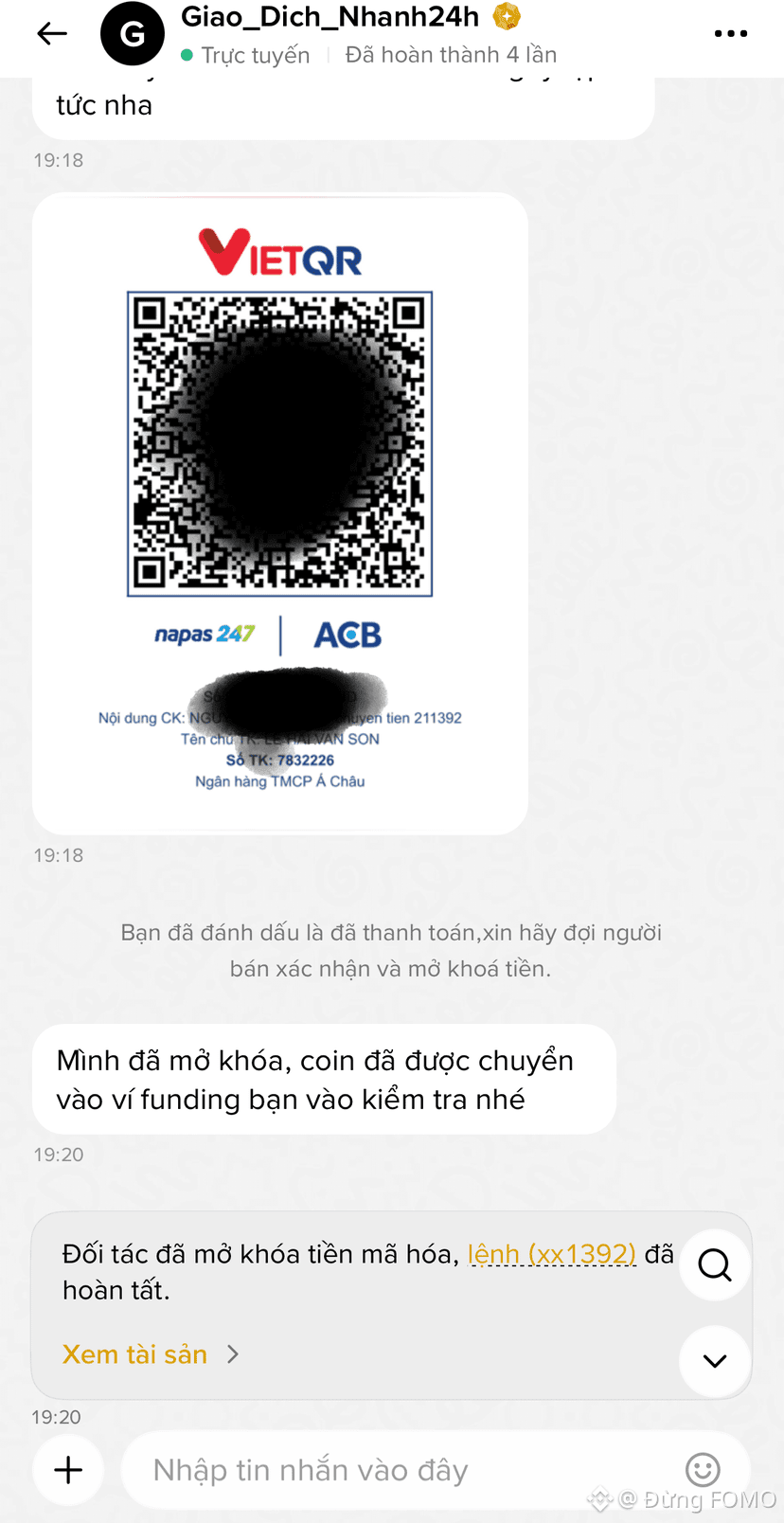
Traders integrate QR codes directly into P2P orders: convenient, but there’s one special thing to note ⚠️
Recently I encountered a case where a trader had QR payment codes already built into the P2P order. Buyers only need to scan the QR to transfer money—no need to manually enter the bank account number or the amount.
Advantages:
* ✅ Faster payments, reducing mistakes entering the account number.
* ✅ The amount is filled in automatically, minimizing amount mix-ups.
* ✅ A more convenient trading experience, especially for newcomers.
* ✅ Transfer information is standardized, saving time otherwise spent exchanging details.
Disadvantages/Risks:
* ⚠️ Buyers may develop a mindset of “just scan the QR and you’re done,” but they still must carefully check the recipient account holder’s name before confirming.
* ⚠️ QR codes can make users overconfident, causing them to skip verifying the recipient’s information.
* ⚠️ If the QR is generated from account information that doesn’t match the seller/trader, a dispute may arise.
* ⚠️ Especially for P2P, don’t assume it’s automatically safe just because you see the bank’s QR.
👉 A QR code only makes payments more convenient—it does not replace the step of checking transaction details.
Scan the QR quickly, but still double-check before hitting the transfer button.
#BinanceP2PAnToan @Binance_Vietnam
$BTC
{future}(BTCUSDT)
Traders integrate QR codes directly into P2P orders: convenient, but there’s one special thing to note ⚠️
Recently I encountered a case where a trader had QR payment codes already built into the P2P order. Buyers only need to scan the QR to transfer money—no need to manually enter the bank account number or the amount.
Advantages:
* ✅ Faster payments, reducing mistakes entering the account number.
* ✅ The amount is filled in automatically, minimizing amount mix-ups.
* ✅ A more convenient trading experience, especially for newcomers.
* ✅ Transfer information is standardized, saving time otherwise spent exchanging details.
Disadvantages/Risks:
* ⚠️ Buyers may develop a mindset of “just scan the QR and you’re done,” but they still must carefully check the recipient account holder’s name before confirming.
* ⚠️ QR codes can make users overconfident, causing them to skip verifying the recipient’s information.
* ⚠️ If the QR is generated from account information that doesn’t match the seller/trader, a dispute may arise.
* ⚠️ Especially for P2P, don’t assume it’s automatically safe just because you see the bank’s QR.
👉 A QR code only makes payments more convenient—it does not replace the step of checking transaction details.
Scan the QR quickly, but still double-check before hitting the transfer button.
#BinanceP2PAnToan @Binance Vietnam
$BTC
Recently I encountered a case where a trader had QR payment codes already built into the P2P order. Buyers only need to scan the QR to transfer money—no need to manually enter the bank account number or the amount.
Advantages:
* ✅ Faster payments, reducing mistakes entering the account number.
* ✅ The amount is filled in automatically, minimizing amount mix-ups.
* ✅ A more convenient trading experience, especially for newcomers.
* ✅ Transfer information is standardized, saving time otherwise spent exchanging details.
Disadvantages/Risks:
* ⚠️ Buyers may develop a mindset of “just scan the QR and you’re done,” but they still must carefully check the recipient account holder’s name before confirming.
* ⚠️ QR codes can make users overconfident, causing them to skip verifying the recipient’s information.
* ⚠️ If the QR is generated from account information that doesn’t match the seller/trader, a dispute may arise.
* ⚠️ Especially for P2P, don’t assume it’s automatically safe just because you see the bank’s QR.
👉 A QR code only makes payments more convenient—it does not replace the step of checking transaction details.
Scan the QR quickly, but still double-check before hitting the transfer button.
#BinanceP2PAnToan @Binance Vietnam
$BTC
3
3
440

#binancep2pantoan @Binance_Vietnam
858 USDT is the amount I bought to hold BTC back in January 2026. I transferred the full 22.551 million VND to the seller’s MB Bank account. The bank reported the transaction as successful, the money was sent. But it was pretty tense: Fiat had gone through, while the USDT was still stuck.
At first I thought it was just a delayed transaction. Until the seller messaged on Binance P2P that the bank had sent a warning and locked the account. I also had no idea what was actually happening on their side. So I stopped guessing and just focused on what I had.
I paid directly in the order, all communication stayed on Binance P2P and the documents were kept in full. When Support needed to cross-check, they asked for the original PDF statement from Internet Banking, matching the exact time period.
At first I felt a bit tense. But thinking about it, it made sense: a screenshot only proves that there was a transaction, while the PDF from the bank helps Support check the amount, time and account more clearly, while also avoiding edited files.
After this, I realized that a P2P transaction shouldn’t be looked at through screenshots alone. The Order ID, chat and bank statement placed side by side will tell the whole process: when the money went out, how much was sent and what happened. Keeping the whole set is still more solid than a single image.
I submitted everything Support needed and after the review was completed, the USDT finally came through. I didn’t go deeper into what the seller was dealing with. What I needed to know was that the transaction had been processed based on what I provided.
In the end, what I took away was pretty interesting: Good proof isn’t about how “trustworthy” it looks, but whether it has a clear origin and other people can check it again when things go sideways.
Since then, I’ve kept the Order ID, P2P chat and original PDF for every order. Now I see saving proof as the final step before closing a transaction, not something I do just for the sake of it.
#binancep2pantoan @Binance Vietnam
858 USDT is the amount I bought to hold BTC back in January 2026. I transferred the full 22.551 million VND to the seller’s MB Bank account. The bank reported the transaction as successful, the money was sent. But it was pretty tense: Fiat had gone through, while the USDT was still stuck.
At first I thought it was just a delayed transaction. Until the seller messaged on Binance P2P that the bank had sent a warning and locked the account. I also had no idea what was actually happening on their side. So I stopped guessing and just focused on what I had.
I paid directly in the order, all communication stayed on Binance P2P and the documents were kept in full. When Support needed to cross-check, they asked for the original PDF statement from Internet Banking, matching the exact time period.
At first I felt a bit tense. But thinking about it, it made sense: a screenshot only proves that there was a transaction, while the PDF from the bank helps Support check the amount, time and account more clearly, while also avoiding edited files.
After this, I realized that a P2P transaction shouldn’t be looked at through screenshots alone. The Order ID, chat and bank statement placed side by side will tell the whole process: when the money went out, how much was sent and what happened. Keeping the whole set is still more solid than a single image.
I submitted everything Support needed and after the review was completed, the USDT finally came through. I didn’t go deeper into what the seller was dealing with. What I needed to know was that the transaction had been processed based on what I provided.
In the end, what I took away was pretty interesting: Good proof isn’t about how “trustworthy” it looks, but whether it has a clear origin and other people can check it again when things go sideways.
Since then, I’ve kept the Order ID, P2P chat and original PDF for every order. Now I see saving proof as the final step before closing a transaction, not something I do just for the sake of it.
858 USDT is the amount I bought to hold BTC back in January 2026. I transferred the full 22.551 million VND to the seller’s MB Bank account. The bank reported the transaction as successful, the money was sent. But it was pretty tense: Fiat had gone through, while the USDT was still stuck.
At first I thought it was just a delayed transaction. Until the seller messaged on Binance P2P that the bank had sent a warning and locked the account. I also had no idea what was actually happening on their side. So I stopped guessing and just focused on what I had.
I paid directly in the order, all communication stayed on Binance P2P and the documents were kept in full. When Support needed to cross-check, they asked for the original PDF statement from Internet Banking, matching the exact time period.
At first I felt a bit tense. But thinking about it, it made sense: a screenshot only proves that there was a transaction, while the PDF from the bank helps Support check the amount, time and account more clearly, while also avoiding edited files.
After this, I realized that a P2P transaction shouldn’t be looked at through screenshots alone. The Order ID, chat and bank statement placed side by side will tell the whole process: when the money went out, how much was sent and what happened. Keeping the whole set is still more solid than a single image.
I submitted everything Support needed and after the review was completed, the USDT finally came through. I didn’t go deeper into what the seller was dealing with. What I needed to know was that the transaction had been processed based on what I provided.
In the end, what I took away was pretty interesting: Good proof isn’t about how “trustworthy” it looks, but whether it has a clear origin and other people can check it again when things go sideways.
Since then, I’ve kept the Order ID, P2P chat and original PDF for every order. Now I see saving proof as the final step before closing a transaction, not something I do just for the sake of it.
3
2
4.7k

#binancep2pantoan @Binance_Vietnam
Want smooth Binance P2P transactions without getting into “drama”? Here are a few tricks to keep things safe.
First up is the name—everything must be correct and 100% in your own name. If the name on your banking app doesn’t match the KYC name on Binance by even a tiny bit, don’t trade at all. Absolutely no transactions through a third party. When receiving money, do the same: open your banking app fully, check that the balance is actually credited, and only then press the button to unlock the coins. Screenshots or SMS notifications that there’s money involved can sometimes be nothing more than a “high-tech scam.”
If you’re the buyer, after the payment is made, remember to press the confirm button—don’t fiddle around by pressing cancel or the coin won’t come back. If you have any questions or something goes wrong, use the Binance system chat to communicate so later there will be proof for the platform to support you.
Follow the rules and you’ll be both safe and at ease while picking up the cash!
#binancep2pantoan @Binance Vietnam
Want smooth Binance P2P transactions without getting into “drama”? Here are a few tricks to keep things safe.
First up is the name—everything must be correct and 100% in your own name. If the name on your banking app doesn’t match the KYC name on Binance by even a tiny bit, don’t trade at all. Absolutely no transactions through a third party. When receiving money, do the same: open your banking app fully, check that the balance is actually credited, and only then press the button to unlock the coins. Screenshots or SMS notifications that there’s money involved can sometimes be nothing more than a “high-tech scam.”
If you’re the buyer, after the payment is made, remember to press the confirm button—don’t fiddle around by pressing cancel or the coin won’t come back. If you have any questions or something goes wrong, use the Binance system chat to communicate so later there will be proof for the platform to support you.
Follow the rules and you’ll be both safe and at ease while picking up the cash!
Want smooth Binance P2P transactions without getting into “drama”? Here are a few tricks to keep things safe.
First up is the name—everything must be correct and 100% in your own name. If the name on your banking app doesn’t match the KYC name on Binance by even a tiny bit, don’t trade at all. Absolutely no transactions through a third party. When receiving money, do the same: open your banking app fully, check that the balance is actually credited, and only then press the button to unlock the coins. Screenshots or SMS notifications that there’s money involved can sometimes be nothing more than a “high-tech scam.”
If you’re the buyer, after the payment is made, remember to press the confirm button—don’t fiddle around by pressing cancel or the coin won’t come back. If you have any questions or something goes wrong, use the Binance system chat to communicate so later there will be proof for the platform to support you.
Follow the rules and you’ll be both safe and at ease while picking up the cash!
81

·
--
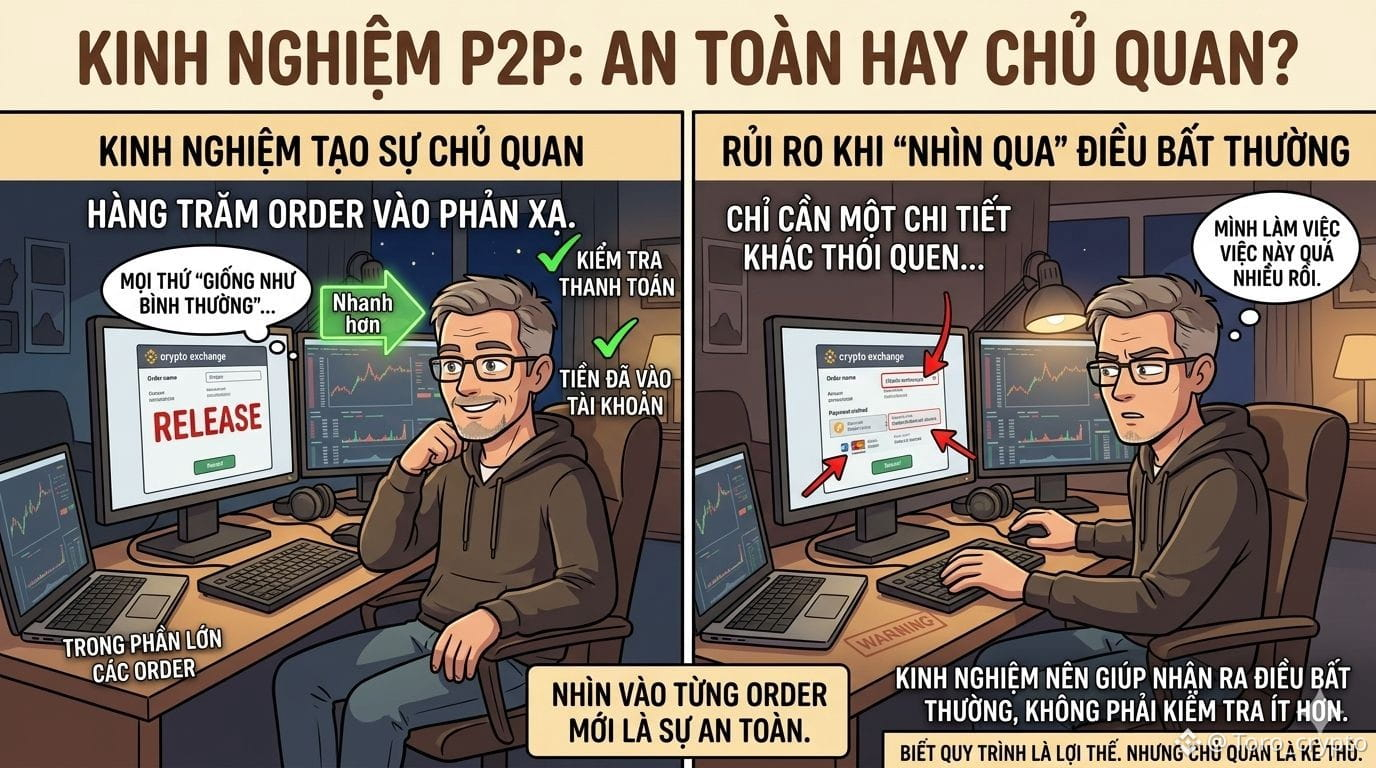
Experience is not always what makes you safer.
Sometimes it makes you more complacent.
Try imagining someone who has traded on P2P hundreds of times.
They know exactly where to open the Order.
They know how to check the payment.
They know when not to release.
Those steps become so familiar they turn into something like reflex.
And that—this—is what’s worth thinking about.
When you do something enough times, the brain starts finding ways to do it faster.
You no longer read every detail.
You skim a few familiar pieces of information, see everything looks normal, then move on.
In most Orders, that might not cause any issues.
But just one Order with a detail that differs from your usual pattern can cause that old reflex to make you overlook it.
A different payment method.
A different payment account.
Or simply a condition in the Order that doesn’t look like the ones from before.
What’s scary is that experienced people don’t always realize they’ve become complacent.
Because they don’t think:
“I’m skipping the verification step.”
They think:
“I’ve done this so many times.”
So I have a pretty simple rule when trading P2P:
Experience should help me spot abnormalities faster—not help me verify less.
Each Order still has its own conditions.
Each payment still needs to be matched.
And each release must still be based on the information from that specific transaction.
Perhaps the hardest part of long-term trading isn’t learning an additional rule.
It’s knowing when experience is helping you—and when it has turned into a habit.
Knowing the process is an advantage.
But truly looking at every new Order is what keeps you safe.
@Binance_Vietnam #BinanceP2PAnToan
Experience is not always what makes you safer.
Sometimes it makes you more complacent.
Try imagining someone who has traded on P2P hundreds of times.
They know exactly where to open the Order.
They know how to check the payment.
They know when not to release.
Those steps become so familiar they turn into something like reflex.
And that—this—is what’s worth thinking about.
When you do something enough times, the brain starts finding ways to do it faster.
You no longer read every detail.
You skim a few familiar pieces of information, see everything looks normal, then move on.
In most Orders, that might not cause any issues.
But just one Order with a detail that differs from your usual pattern can cause that old reflex to make you overlook it.
A different payment method.
A different payment account.
Or simply a condition in the Order that doesn’t look like the ones from before.
What’s scary is that experienced people don’t always realize they’ve become complacent.
Because they don’t think:
“I’m skipping the verification step.”
They think:
“I’ve done this so many times.”
So I have a pretty simple rule when trading P2P:
Experience should help me spot abnormalities faster—not help me verify less.
Each Order still has its own conditions.
Each payment still needs to be matched.
And each release must still be based on the information from that specific transaction.
Perhaps the hardest part of long-term trading isn’t learning an additional rule.
It’s knowing when experience is helping you—and when it has turned into a habit.
Knowing the process is an advantage.
But truly looking at every new Order is what keeps you safe.
@Binance Vietnam #BinanceP2PAnToan
Sometimes it makes you more complacent.
Try imagining someone who has traded on P2P hundreds of times.
They know exactly where to open the Order.
They know how to check the payment.
They know when not to release.
Those steps become so familiar they turn into something like reflex.
And that—this—is what’s worth thinking about.
When you do something enough times, the brain starts finding ways to do it faster.
You no longer read every detail.
You skim a few familiar pieces of information, see everything looks normal, then move on.
In most Orders, that might not cause any issues.
But just one Order with a detail that differs from your usual pattern can cause that old reflex to make you overlook it.
A different payment method.
A different payment account.
Or simply a condition in the Order that doesn’t look like the ones from before.
What’s scary is that experienced people don’t always realize they’ve become complacent.
Because they don’t think:
“I’m skipping the verification step.”
They think:
“I’ve done this so many times.”
So I have a pretty simple rule when trading P2P:
Experience should help me spot abnormalities faster—not help me verify less.
Each Order still has its own conditions.
Each payment still needs to be matched.
And each release must still be based on the information from that specific transaction.
Perhaps the hardest part of long-term trading isn’t learning an additional rule.
It’s knowing when experience is helping you—and when it has turned into a habit.
Knowing the process is an advantage.
But truly looking at every new Order is what keeps you safe.
@Binance Vietnam #BinanceP2PAnToan
12
7
237
·
--
I think I used to judge a P2P trade too early.
If everything went smoothly, I considered it a good trade.
But that’s only half the story.
The more important question is:
What happens when something doesn’t go as planned?
That’s where I started paying more attention to Binance’s Appeal process.
Technical point: If a P2P transaction has a problem, keeping the order on Binance matters. The order details, in-order chat, payment records, and other transaction information can provide useful context when seeking help through the official process.
That changed one thing for me.
I stopped thinking of support as something you use only after making a mistake.
It’s simply another part of the trading process.
If something feels wrong, I don’t try to solve everything privately with the other person.
I pause.
Keep the records.
And use the official channel.
Self-critique: I used to think being a careful trader meant avoiding every possible problem.
That’s unrealistic.
Sometimes something unexpected happens.
Being prepared for that moment is what matters.
A safe process isn’t one where nothing ever goes wrong.
It’s one where you know what to do when something does.
Question: What matters when things go wrong?
#binancep2pantoan @Binance Vietnam
I think I used to judge a P2P trade too early.
If everything went smoothly, I considered it a good trade.
But that’s only half the story.
The more important question is:
What happens when something doesn’t go as planned?
That’s where I started paying more attention to Binance’s Appeal process.
Technical point: If a P2P transaction has a problem, keeping the order on Binance matters. The order details, in-order chat, payment records, and other transaction information can provide useful context when seeking help through the official process.
That changed one thing for me.
I stopped thinking of support as something you use only after making a mistake.
It’s simply another part of the trading process.
If something feels wrong, I don’t try to solve everything privately with the other person.
I pause.
Keep the records.
And use the official channel.
Self-critique: I used to think being a careful trader meant avoiding every possible problem.
That’s unrealistic.
Sometimes something unexpected happens.
Being prepared for that moment is what matters.
A safe process isn’t one where nothing ever goes wrong.
It’s one where you know what to do when something does.
Question: What matters when things go wrong?
#binancep2pantoan @Binance Vietnam
If everything went smoothly, I considered it a good trade.
But that’s only half the story.
The more important question is:
What happens when something doesn’t go as planned?
That’s where I started paying more attention to Binance’s Appeal process.
Technical point: If a P2P transaction has a problem, keeping the order on Binance matters. The order details, in-order chat, payment records, and other transaction information can provide useful context when seeking help through the official process.
That changed one thing for me.
I stopped thinking of support as something you use only after making a mistake.
It’s simply another part of the trading process.
If something feels wrong, I don’t try to solve everything privately with the other person.
I pause.
Keep the records.
And use the official channel.
Self-critique: I used to think being a careful trader meant avoiding every possible problem.
That’s unrealistic.
Sometimes something unexpected happens.
Being prepared for that moment is what matters.
A safe process isn’t one where nothing ever goes wrong.
It’s one where you know what to do when something does.
Question: What matters when things go wrong?
#binancep2pantoan @Binance Vietnam
📝 Good records
100%
🆘 Official support
0%
🔗 Both matter
0%
1 votes • Voting closed
1
995

·
--
#binancep2pantoan @Binance_Vietnam
Binance is one of the largest cryptocurrency ecosystems in the world, offering a wide range of services from spot and futures trading to savings products (Earn). In Vietnam, this platform attracts a large investor community thanks to its user-friendly interface, high liquidity, and flexible domestic deposit/withdrawal support features.
1. Overview of Binance in Vietnam
Leading position: Binance has outstanding trading volume and user base in the Vietnamese market.
Diverse ecosystem: Provides a full range of financial tools such as Spot Trading, Futures, Staking, Launchpad, and Binance Pay.
User support: A fully Vietnamese interface, a large support community, and a 24/7 help center.
2. P2P (Peer-to-Peer) features on Binance
Binance P2P is a peer-to-peer trading solution between users, allowing direct conversion between fiat currency (VND) and cryptocurrencies (USDT, BTC, ETH...) through bank accounts or local e-wallets.
How it works:
Secure escrow: When a trade order is created, Binance’s system temporarily locks the seller’s cryptocurrency. The cryptocurrency is only released to the buyer after the seller confirms receipt of the full VND amount in their bank account.
Diverse payment methods: Supports most major banks in Vietnam (Vietcombank, Techcombank, VPBank...) and popular e-wallets.
Free trading: Users who buy/sell on P2P typically do not incur trading fees from the exchange.
#binancep2pantoan @Binance Vietnam
Binance is one of the largest cryptocurrency ecosystems in the world, offering a wide range of services from spot and futures trading to savings products (Earn). In Vietnam, this platform attracts a large investor community thanks to its user-friendly interface, high liquidity, and flexible domestic deposit/withdrawal support features.
1. Overview of Binance in Vietnam
Leading position: Binance has outstanding trading volume and user base in the Vietnamese market.
Diverse ecosystem: Provides a full range of financial tools such as Spot Trading, Futures, Staking, Launchpad, and Binance Pay.
User support: A fully Vietnamese interface, a large support community, and a 24/7 help center.
2. P2P (Peer-to-Peer) features on Binance
Binance P2P is a peer-to-peer trading solution between users, allowing direct conversion between fiat currency (VND) and cryptocurrencies (USDT, BTC, ETH...) through bank accounts or local e-wallets.
How it works:
Secure escrow: When a trade order is created, Binance’s system temporarily locks the seller’s cryptocurrency. The cryptocurrency is only released to the buyer after the seller confirms receipt of the full VND amount in their bank account.
Diverse payment methods: Supports most major banks in Vietnam (Vietcombank, Techcombank, VPBank...) and popular e-wallets.
Free trading: Users who buy/sell on P2P typically do not incur trading fees from the exchange.
Binance is one of the largest cryptocurrency ecosystems in the world, offering a wide range of services from spot and futures trading to savings products (Earn). In Vietnam, this platform attracts a large investor community thanks to its user-friendly interface, high liquidity, and flexible domestic deposit/withdrawal support features.
1. Overview of Binance in Vietnam
Leading position: Binance has outstanding trading volume and user base in the Vietnamese market.
Diverse ecosystem: Provides a full range of financial tools such as Spot Trading, Futures, Staking, Launchpad, and Binance Pay.
User support: A fully Vietnamese interface, a large support community, and a 24/7 help center.
2. P2P (Peer-to-Peer) features on Binance
Binance P2P is a peer-to-peer trading solution between users, allowing direct conversion between fiat currency (VND) and cryptocurrencies (USDT, BTC, ETH...) through bank accounts or local e-wallets.
How it works:
Secure escrow: When a trade order is created, Binance’s system temporarily locks the seller’s cryptocurrency. The cryptocurrency is only released to the buyer after the seller confirms receipt of the full VND amount in their bank account.
Diverse payment methods: Supports most major banks in Vietnam (Vietcombank, Techcombank, VPBank...) and popular e-wallets.
Free trading: Users who buy/sell on P2P typically do not incur trading fees from the exchange.
129

#binancep2pantoan @Binance_Vietnam
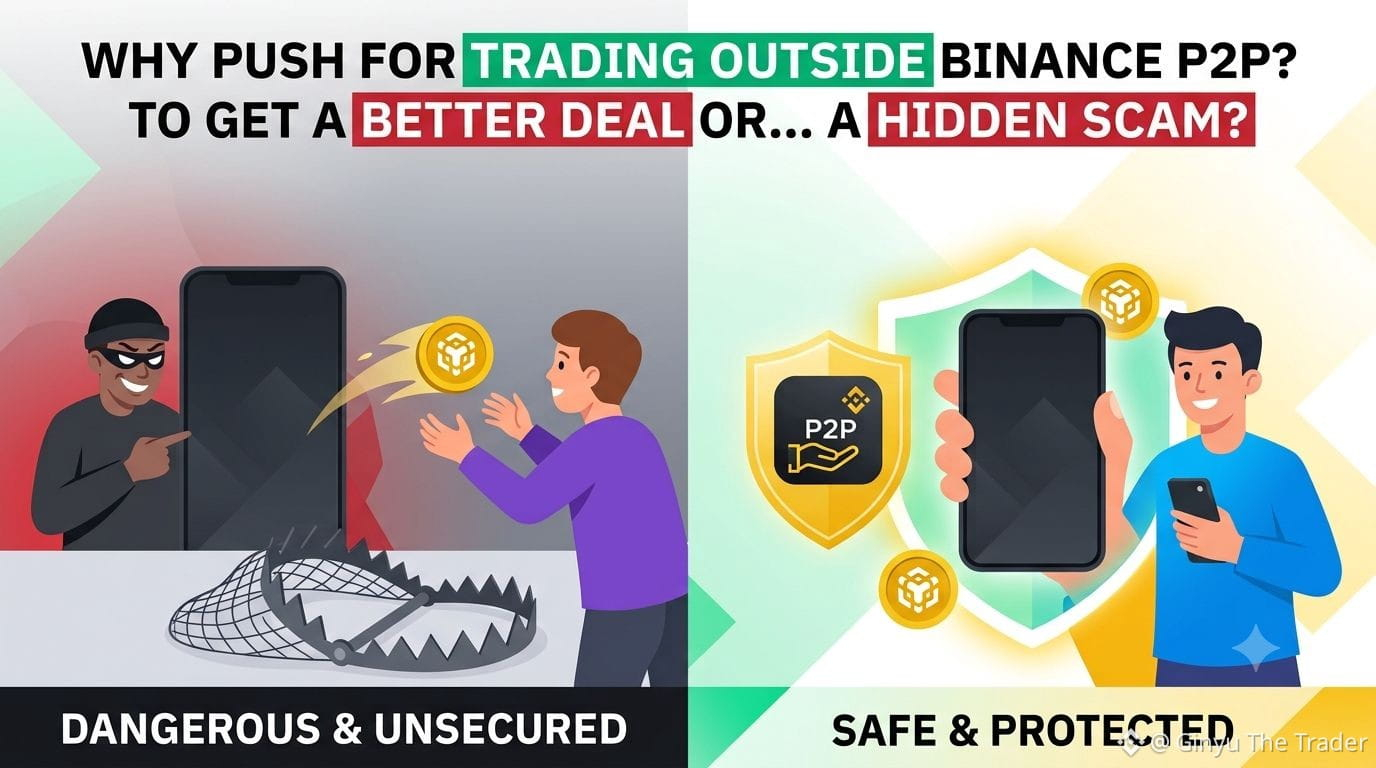
A trick I’ve noticed appearing quite often lately is the invitation to trade crypto outside Binance P2P, usually with the excuse of saving fees or getting a better price than the market. I want to break down why this is usually a trap, based on several times I’ve encountered similar offers.
Logically speaking, the fees on Binance P2P are not so high that they would justify taking on the risk of trading outside the platform. So whenever someone promises a significantly better rate, the first question I ask myself is: what’s the real motive behind this generosity?
In most cases I’ve observed, the scenario follows a familiar pattern. The scammer builds trust with a few friendly messages, sometimes even sending screenshots of supposed past transactions with other people to create a sense of credibility. Then, they push the victim to transfer money or crypto first, using reasons like “it saves time” or “we have to trust each other anyway.”
The common signs in these situations are always the same: there’s a reason to move away from Binance P2P, there’s pressure to act quickly, and one side is asked to transfer first without any protective mechanism in place. Without escrow, without recorded history, and without the ability to file a dispute, the loss almost always falls on the person who trusted the wrong party.
I’ve noticed that scammers often target newcomers - those unfamiliar with the standard process and more easily swayed by promises of attractive deals rather than sticking to the safe steps already established.
#binancep2pantoan @Binance Vietnam
A trick I’ve noticed appearing quite often lately is the invitation to trade crypto outside Binance P2P, usually with the excuse of saving fees or getting a better price than the market. I want to break down why this is usually a trap, based on several times I’ve encountered similar offers.
Logically speaking, the fees on Binance P2P are not so high that they would justify taking on the risk of trading outside the platform. So whenever someone promises a significantly better rate, the first question I ask myself is: what’s the real motive behind this generosity?
In most cases I’ve observed, the scenario follows a familiar pattern. The scammer builds trust with a few friendly messages, sometimes even sending screenshots of supposed past transactions with other people to create a sense of credibility. Then, they push the victim to transfer money or crypto first, using reasons like “it saves time” or “we have to trust each other anyway.”
The common signs in these situations are always the same: there’s a reason to move away from Binance P2P, there’s pressure to act quickly, and one side is asked to transfer first without any protective mechanism in place. Without escrow, without recorded history, and without the ability to file a dispute, the loss almost always falls on the person who trusted the wrong party.
I’ve noticed that scammers often target newcomers - those unfamiliar with the standard process and more easily swayed by promises of attractive deals rather than sticking to the safe steps already established.
A trick I’ve noticed appearing quite often lately is the invitation to trade crypto outside Binance P2P, usually with the excuse of saving fees or getting a better price than the market. I want to break down why this is usually a trap, based on several times I’ve encountered similar offers.
Logically speaking, the fees on Binance P2P are not so high that they would justify taking on the risk of trading outside the platform. So whenever someone promises a significantly better rate, the first question I ask myself is: what’s the real motive behind this generosity?
In most cases I’ve observed, the scenario follows a familiar pattern. The scammer builds trust with a few friendly messages, sometimes even sending screenshots of supposed past transactions with other people to create a sense of credibility. Then, they push the victim to transfer money or crypto first, using reasons like “it saves time” or “we have to trust each other anyway.”
The common signs in these situations are always the same: there’s a reason to move away from Binance P2P, there’s pressure to act quickly, and one side is asked to transfer first without any protective mechanism in place. Without escrow, without recorded history, and without the ability to file a dispute, the loss almost always falls on the person who trusted the wrong party.
I’ve noticed that scammers often target newcomers - those unfamiliar with the standard process and more easily swayed by promises of attractive deals rather than sticking to the safe steps already established.
63

·
--
#binancep2pantoan Prohibition of "Official owner" (Information matches)This is the most critical rule to avoid getting caught up in lawsuits that freeze bank accounts:When buying: Only transfer to a bank account whose name matches EXACTLY the seller’s verified real name (KYC) on Binance.When selling: If you receive money from an unfamiliar bank account (whose name does not match the buyer’s name on Binance), contact support immediately and ABSOLUTELY DO NOT unlock (release) the crypto.@Binance_Vietnam
#binancep2pantoan Prohibition of "Official owner" (Information matches)This is the most critical rule to avoid getting caught up in lawsuits that freeze bank accounts:When buying: Only transfer to a bank account whose name matches EXACTLY the seller’s verified real name (KYC) on Binance.When selling: If you receive money from an unfamiliar bank account (whose name does not match the buyer’s name on Binance), contact support immediately and ABSOLUTELY DO NOT unlock (release) the crypto.@Binance Vietnam
68

·
--
#binancep2pantoan @Binance_Vietnam
Long-time traders probably have seen a customer buy 100$ but accidentally overpaid, leaving the bank transfer with an extra $1,000. Then they frantically message: "Sir, return the coins then transfer the overage back into the account number xyz for me, my wife will kill me".
When a customer transfers too much, many brothers can’t help but feel sorry and urgently ask the bank to refund. Wait! You’re directly hitting the risk of a triangular scam. To handle these “hard to give birth” cases, brothers need to be cold and calm—just like when you’re holding positions to maximize profits:
First, don’t rely on photos of receipts. Open the official banking app yourself to check whether the money really arrived. Next, you must cross-check the sender’s account name. Only if the identifier matches should you proceed with anything.
And the ultimate rule: firmly do not trade outside the platform. Absolutely do not manually refund money to an unknown third-party account, to avoid getting involved with a dirty money scheme.
The extra funds are just sitting there and won’t go anywhere, and your coins are also protected by the Escrow mechanism. Don’t handle it on your own! Copy the Order ID code immediately, then click Appeal (Dispute/Claim). Binance Support 24/7 will step in as the arbitrator, guide you in getting your money back through the correct channel, according to the rules. Do it by the book—so you can all rest easy, brothers!
#binancep2pantoan @Binance Vietnam
Long-time traders probably have seen a customer buy 100$ but accidentally overpaid, leaving the bank transfer with an extra $1,000. Then they frantically message: "Sir, return the coins then transfer the overage back into the account number xyz for me, my wife will kill me".
When a customer transfers too much, many brothers can’t help but feel sorry and urgently ask the bank to refund. Wait! You’re directly hitting the risk of a triangular scam. To handle these “hard to give birth” cases, brothers need to be cold and calm—just like when you’re holding positions to maximize profits:
First, don’t rely on photos of receipts. Open the official banking app yourself to check whether the money really arrived. Next, you must cross-check the sender’s account name. Only if the identifier matches should you proceed with anything.
And the ultimate rule: firmly do not trade outside the platform. Absolutely do not manually refund money to an unknown third-party account, to avoid getting involved with a dirty money scheme.
The extra funds are just sitting there and won’t go anywhere, and your coins are also protected by the Escrow mechanism. Don’t handle it on your own! Copy the Order ID code immediately, then click Appeal (Dispute/Claim). Binance Support 24/7 will step in as the arbitrator, guide you in getting your money back through the correct channel, according to the rules. Do it by the book—so you can all rest easy, brothers!
Long-time traders probably have seen a customer buy 100$ but accidentally overpaid, leaving the bank transfer with an extra $1,000. Then they frantically message: "Sir, return the coins then transfer the overage back into the account number xyz for me, my wife will kill me".
When a customer transfers too much, many brothers can’t help but feel sorry and urgently ask the bank to refund. Wait! You’re directly hitting the risk of a triangular scam. To handle these “hard to give birth” cases, brothers need to be cold and calm—just like when you’re holding positions to maximize profits:
First, don’t rely on photos of receipts. Open the official banking app yourself to check whether the money really arrived. Next, you must cross-check the sender’s account name. Only if the identifier matches should you proceed with anything.
And the ultimate rule: firmly do not trade outside the platform. Absolutely do not manually refund money to an unknown third-party account, to avoid getting involved with a dirty money scheme.
The extra funds are just sitting there and won’t go anywhere, and your coins are also protected by the Escrow mechanism. Don’t handle it on your own! Copy the Order ID code immediately, then click Appeal (Dispute/Claim). Binance Support 24/7 will step in as the arbitrator, guide you in getting your money back through the correct channel, according to the rules. Do it by the book—so you can all rest easy, brothers!
93
·
--
#binancep2pantoan @Binance_Vietnam
Below are 5 golden principles to help you carry out P2P trading on Binance with absolute safety, avoiding common scam risks:
1. Trade only with the correct owner information
The bank account name of the person sending/receiving money must match 100% with the name verified via KYC on Binance.
Never accept payments from a third party’s account (the other person’s relatives or friends). If you receive money from a third party, request a refund immediately.
2. Confirm the money has actually arrived in your bank account
Always open your Banking app to check the actual Available Balance.
Never rely on SMS messages, transfer receipts/invoices (which can be forged), or notifications from anyone else.
3. Never release Crypto before payment is confirmed
Only click the button “Confirm that payment has been received” (Release) after you have verified that the money has truly arrived in your bank account.
No matter how urgently the buyer催促 you or sends images claiming a successful transfer, stick to the rule: No money seen—No coin unlocked.
4. Make sure the transfer description is “clean”
When transferring money to the seller, do not include keywords related to crypto such as: Binance, USDT, BTC, Crypto, P2P, Buy/sell coins...
Only write the correct Trade Order ID or the transfer content instructed by Binance’s system to avoid having your bank account locked.
5. Use the Appeal feature when something goes wrong
If you encounter any abnormal situation (the other party doesn’t transfer money but presses “I have paid,” funds are stuck, or you suspect a scam), keep the status unchanged and click the Appeal button so the Binance P2P team can intervene and handle the case.
Tag: @Binance_Vietnam
Hashtag: #BinanceP2PAnToan
#binancep2pantoan @Binance Vietnam
Below are 5 golden principles to help you carry out P2P trading on Binance with absolute safety, avoiding common scam risks:
1. Trade only with the correct owner information
The bank account name of the person sending/receiving money must match 100% with the name verified via KYC on Binance.
Never accept payments from a third party’s account (the other person’s relatives or friends). If you receive money from a third party, request a refund immediately.
2. Confirm the money has actually arrived in your bank account
Always open your Banking app to check the actual Available Balance.
Never rely on SMS messages, transfer receipts/invoices (which can be forged), or notifications from anyone else.
3. Never release Crypto before payment is confirmed
Only click the button “Confirm that payment has been received” (Release) after you have verified that the money has truly arrived in your bank account.
No matter how urgently the buyer催促 you or sends images claiming a successful transfer, stick to the rule: No money seen—No coin unlocked.
4. Make sure the transfer description is “clean”
When transferring money to the seller, do not include keywords related to crypto such as: Binance, USDT, BTC, Crypto, P2P, Buy/sell coins...
Only write the correct Trade Order ID or the transfer content instructed by Binance’s system to avoid having your bank account locked.
5. Use the Appeal feature when something goes wrong
If you encounter any abnormal situation (the other party doesn’t transfer money but presses “I have paid,” funds are stuck, or you suspect a scam), keep the status unchanged and click the Appeal button so the Binance P2P team can intervene and handle the case.
Tag: @Binance Vietnam
Hashtag: #BinanceP2PAnToan
Below are 5 golden principles to help you carry out P2P trading on Binance with absolute safety, avoiding common scam risks:
1. Trade only with the correct owner information
The bank account name of the person sending/receiving money must match 100% with the name verified via KYC on Binance.
Never accept payments from a third party’s account (the other person’s relatives or friends). If you receive money from a third party, request a refund immediately.
2. Confirm the money has actually arrived in your bank account
Always open your Banking app to check the actual Available Balance.
Never rely on SMS messages, transfer receipts/invoices (which can be forged), or notifications from anyone else.
3. Never release Crypto before payment is confirmed
Only click the button “Confirm that payment has been received” (Release) after you have verified that the money has truly arrived in your bank account.
No matter how urgently the buyer催促 you or sends images claiming a successful transfer, stick to the rule: No money seen—No coin unlocked.
4. Make sure the transfer description is “clean”
When transferring money to the seller, do not include keywords related to crypto such as: Binance, USDT, BTC, Crypto, P2P, Buy/sell coins...
Only write the correct Trade Order ID or the transfer content instructed by Binance’s system to avoid having your bank account locked.
5. Use the Appeal feature when something goes wrong
If you encounter any abnormal situation (the other party doesn’t transfer money but presses “I have paid,” funds are stuck, or you suspect a scam), keep the status unchanged and click the Appeal button so the Binance P2P team can intervene and handle the case.
Tag: @Binance Vietnam
Hashtag: #BinanceP2PAnToan
77

#binancep2pantoan
@Binance_Vietnam
Safe Binance P2P transaction checklist: 7 steps I always check before clicking “Confirm” 🔐
P2P transactions aren’t difficult, but just one careless step can lead to trouble. This is the checklist I think new users should save:
✅ 1. Check the counterparty’s profile
Review the number of transactions, completion rate, and ratings before choosing a buyer/seller.
✅ 2. Only trade on Binance P2P
Don’t move to Telegram, Zalo, or other external channels to “make private arrangements” or handle transactions.
✅ 3. Verify the correct payment details
Before transferring money, carefully match the account name, amount, and payment method.
✅ 4. Seller: the money must really arrive in the account
Don’t just rely on screenshots, SMS, or transfer notifications. Check your own bank account first, then proceed to the next step.
✅ 5. Buyer: keep evidence
Save the receipt/transaction documents and all related messages in the P2P order.
✅ 6. Don’t follow unusual requests
If the other party asks you to transfer to a different account, cancel the order and trade outside the platform, or provide sensitive information → stop and double-check.
✅ 7. If there’s a problem, use the Dispute/Complaint function
Don’t try to resolve it on your own through off-system transactions. Use Binance’s support/dispute tool and provide complete evidence.
👉 The simplest rule: the right person — the right account — the right amount — check real money — trade within the system.
I’m sharing this checklist so new P2P traders can save it and check before every order.
#binancep2pantoan
@Binance Vietnam
Safe Binance P2P transaction checklist: 7 steps I always check before clicking “Confirm” 🔐
P2P transactions aren’t difficult, but just one careless step can lead to trouble. This is the checklist I think new users should save:
✅ 1. Check the counterparty’s profile
Review the number of transactions, completion rate, and ratings before choosing a buyer/seller.
✅ 2. Only trade on Binance P2P
Don’t move to Telegram, Zalo, or other external channels to “make private arrangements” or handle transactions.
✅ 3. Verify the correct payment details
Before transferring money, carefully match the account name, amount, and payment method.
✅ 4. Seller: the money must really arrive in the account
Don’t just rely on screenshots, SMS, or transfer notifications. Check your own bank account first, then proceed to the next step.
✅ 5. Buyer: keep evidence
Save the receipt/transaction documents and all related messages in the P2P order.
✅ 6. Don’t follow unusual requests
If the other party asks you to transfer to a different account, cancel the order and trade outside the platform, or provide sensitive information → stop and double-check.
✅ 7. If there’s a problem, use the Dispute/Complaint function
Don’t try to resolve it on your own through off-system transactions. Use Binance’s support/dispute tool and provide complete evidence.
👉 The simplest rule: the right person — the right account — the right amount — check real money — trade within the system.
I’m sharing this checklist so new P2P traders can save it and check before every order.
@Binance Vietnam
Safe Binance P2P transaction checklist: 7 steps I always check before clicking “Confirm” 🔐
P2P transactions aren’t difficult, but just one careless step can lead to trouble. This is the checklist I think new users should save:
✅ 1. Check the counterparty’s profile
Review the number of transactions, completion rate, and ratings before choosing a buyer/seller.
✅ 2. Only trade on Binance P2P
Don’t move to Telegram, Zalo, or other external channels to “make private arrangements” or handle transactions.
✅ 3. Verify the correct payment details
Before transferring money, carefully match the account name, amount, and payment method.
✅ 4. Seller: the money must really arrive in the account
Don’t just rely on screenshots, SMS, or transfer notifications. Check your own bank account first, then proceed to the next step.
✅ 5. Buyer: keep evidence
Save the receipt/transaction documents and all related messages in the P2P order.
✅ 6. Don’t follow unusual requests
If the other party asks you to transfer to a different account, cancel the order and trade outside the platform, or provide sensitive information → stop and double-check.
✅ 7. If there’s a problem, use the Dispute/Complaint function
Don’t try to resolve it on your own through off-system transactions. Use Binance’s support/dispute tool and provide complete evidence.
👉 The simplest rule: the right person — the right account — the right amount — check real money — trade within the system.
I’m sharing this checklist so new P2P traders can save it and check before every order.
79

#binancep2pantoan @Binance_Vietnam
THE IMBALANCE IN IDENTITY-VERIFICATION TOOLS IS A DESIGN GAP WORTH NOTICING ON BINANCE P2P.
When you look closely at the merchant’s Ad Terms (Trading Conditions), it’s not hard to find classification requests such as: "New customers, please provide your phone number/ID card number; returning customers can trade normally." From a theoretical risk-management perspective, this kind of layered control sounds quite reasonable. But from the standpoint of technical infrastructure, it turns out to be an entirely operational workflow that lacks supporting tools.
Binance P2P provides merchants with a full set of public metrics to assess buyers: completion rate, total number of orders, and average payment time. However, the system does not provide any mechanism to identify the relationship (relationship-level data) between any two specific accounts.
There’s no label for "Returning customer," no automatically displayed Counterparty Trading History, and no separate trust-accumulation score between that particular buyer and seller.
As a result, the "new customer" or "returning customer" label is pushed entirely onto the merchant’s subjective judgment:
Dependence on personal memory: A merchant handling hundreds of orders per day simply cannot remember every customer’s label or bank account name from past transactions.
Imposing inconsistent criteria: For safety, merchants have to apply strict controls (such as requiring a phone number or additional verification) to anyone they are "not sure they have encountered before," even if that buyer may have traded with them a dozen times previously.
#binancep2pantoan @Binance Vietnam
THE IMBALANCE IN IDENTITY-VERIFICATION TOOLS IS A DESIGN GAP WORTH NOTICING ON BINANCE P2P.
When you look closely at the merchant’s Ad Terms (Trading Conditions), it’s not hard to find classification requests such as: "New customers, please provide your phone number/ID card number; returning customers can trade normally." From a theoretical risk-management perspective, this kind of layered control sounds quite reasonable. But from the standpoint of technical infrastructure, it turns out to be an entirely operational workflow that lacks supporting tools.
Binance P2P provides merchants with a full set of public metrics to assess buyers: completion rate, total number of orders, and average payment time. However, the system does not provide any mechanism to identify the relationship (relationship-level data) between any two specific accounts.
There’s no label for "Returning customer," no automatically displayed Counterparty Trading History, and no separate trust-accumulation score between that particular buyer and seller.
As a result, the "new customer" or "returning customer" label is pushed entirely onto the merchant’s subjective judgment:
Dependence on personal memory: A merchant handling hundreds of orders per day simply cannot remember every customer’s label or bank account name from past transactions.
Imposing inconsistent criteria: For safety, merchants have to apply strict controls (such as requiring a phone number or additional verification) to anyone they are "not sure they have encountered before," even if that buyer may have traded with them a dozen times previously.
THE IMBALANCE IN IDENTITY-VERIFICATION TOOLS IS A DESIGN GAP WORTH NOTICING ON BINANCE P2P.
When you look closely at the merchant’s Ad Terms (Trading Conditions), it’s not hard to find classification requests such as: "New customers, please provide your phone number/ID card number; returning customers can trade normally." From a theoretical risk-management perspective, this kind of layered control sounds quite reasonable. But from the standpoint of technical infrastructure, it turns out to be an entirely operational workflow that lacks supporting tools.
Binance P2P provides merchants with a full set of public metrics to assess buyers: completion rate, total number of orders, and average payment time. However, the system does not provide any mechanism to identify the relationship (relationship-level data) between any two specific accounts.
There’s no label for "Returning customer," no automatically displayed Counterparty Trading History, and no separate trust-accumulation score between that particular buyer and seller.
As a result, the "new customer" or "returning customer" label is pushed entirely onto the merchant’s subjective judgment:
Dependence on personal memory: A merchant handling hundreds of orders per day simply cannot remember every customer’s label or bank account name from past transactions.
Imposing inconsistent criteria: For safety, merchants have to apply strict controls (such as requiring a phone number or additional verification) to anyone they are "not sure they have encountered before," even if that buyer may have traded with them a dozen times previously.
58

·
--
#binancep2pantoan @Binance_Vietnam
Strategy for allocating three separate bank accounts specialized for P2P trading
To manage my personal finances in a scientific and secure way, I applied a strategy of separating bank accounts:
Account A: Solely receives salary and covers family living expenses (Absolutely do not use for P2P).
Account B: Long-term savings account.
Account C: A secondary account opened at a reputable bank, used exclusively for transferring/receiving P2P Crypto payments.
Thanks to this setup, my investment cash flow is completely separate, making it easy to manage statements and ensuring it never affects my family life if the P2P account encounters an issue during verification.
Never use the single salary/primary bank account to conduct P2P transactions.
Open 1–2 dedicated secondary bank accounts specifically for P2P to make it easier to track cash flow and contain financial risk.
#binancep2pantoan @Binance Vietnam
Strategy for allocating three separate bank accounts specialized for P2P trading
To manage my personal finances in a scientific and secure way, I applied a strategy of separating bank accounts:
Account A: Solely receives salary and covers family living expenses (Absolutely do not use for P2P).
Account B: Long-term savings account.
Account C: A secondary account opened at a reputable bank, used exclusively for transferring/receiving P2P Crypto payments.
Thanks to this setup, my investment cash flow is completely separate, making it easy to manage statements and ensuring it never affects my family life if the P2P account encounters an issue during verification.
Never use the single salary/primary bank account to conduct P2P transactions.
Open 1–2 dedicated secondary bank accounts specifically for P2P to make it easier to track cash flow and contain financial risk.
Strategy for allocating three separate bank accounts specialized for P2P trading
To manage my personal finances in a scientific and secure way, I applied a strategy of separating bank accounts:
Account A: Solely receives salary and covers family living expenses (Absolutely do not use for P2P).
Account B: Long-term savings account.
Account C: A secondary account opened at a reputable bank, used exclusively for transferring/receiving P2P Crypto payments.
Thanks to this setup, my investment cash flow is completely separate, making it easy to manage statements and ensuring it never affects my family life if the P2P account encounters an issue during verification.
Never use the single salary/primary bank account to conduct P2P transactions.
Open 1–2 dedicated secondary bank accounts specifically for P2P to make it easier to track cash flow and contain financial risk.
1
51
·
--
Bullish
#binancep2pantoan @Binance_Vietnam
Binance P2P – convenient but still needs caution
I find Binance P2P quite convenient when you need to buy or sell USDT. Users can browse many ads, compare prices, quantities, and choose a payment method that suits their needs.
However, when trading, you shouldn’t only look at the price. Carefully check your counterparty’s information, the trading terms, and the payment status before confirming the transaction is completed.
In my opinion, understanding the process and carefully checking each step is the most important thing when using P2P.
@Binance_Vietnam @Binance_Square_Official
#BinanceP2P #Binance #P2P #USDT
#binancep2pantoan @Binance Vietnam
Binance P2P – convenient but still needs caution
I find Binance P2P quite convenient when you need to buy or sell USDT. Users can browse many ads, compare prices, quantities, and choose a payment method that suits their needs.
However, when trading, you shouldn’t only look at the price. Carefully check your counterparty’s information, the trading terms, and the payment status before confirming the transaction is completed.
In my opinion, understanding the process and carefully checking each step is the most important thing when using P2P.
@Binance Vietnam @Binance Square Official
#BinanceP2P #Binance #P2P #USDT
Binance P2P – convenient but still needs caution
I find Binance P2P quite convenient when you need to buy or sell USDT. Users can browse many ads, compare prices, quantities, and choose a payment method that suits their needs.
However, when trading, you shouldn’t only look at the price. Carefully check your counterparty’s information, the trading terms, and the payment status before confirming the transaction is completed.
In my opinion, understanding the process and carefully checking each step is the most important thing when using P2P.
@Binance Vietnam @Binance Square Official
#BinanceP2P #Binance #P2P #USDT
68

·
--
#binancep2pantoan @Binance_Vietnam #BinanceP2PAnToan
🔐 How to make P2P trading on Binance safe?
P2P is actually not too complicated if you remember a few basic rules:
When buying, carefully check the seller’s information, the trading terms, and pay only according to the exact details shown in the order.
When selling, don’t just rely on the receipt image or a message saying the transfer was made. Open your banking app yourself and confirm that the money has truly been credited to your account, then only release the crypto after that.
In addition, keep the conversation on Binance P2P and avoid moving it to Telegram/Zalo or making private agreements outside the platform. If something goes wrong, don’t rush to follow the other party’s request—keep the evidence and use the Appeal feature on Binance.
📌 In short: verify the right person — the right amount — money has been received — then confirm.
P2P has protective layers such as KYC and escrow, but the caution of the trader is still extremely important.
This article is intended to share safe trading knowledge and experience, not investment advice.
#binancep2pantoan @Binance Vietnam #BinanceP2PAnToan
🔐 How to make P2P trading on Binance safe?
P2P is actually not too complicated if you remember a few basic rules:
When buying, carefully check the seller’s information, the trading terms, and pay only according to the exact details shown in the order.
When selling, don’t just rely on the receipt image or a message saying the transfer was made. Open your banking app yourself and confirm that the money has truly been credited to your account, then only release the crypto after that.
In addition, keep the conversation on Binance P2P and avoid moving it to Telegram/Zalo or making private agreements outside the platform. If something goes wrong, don’t rush to follow the other party’s request—keep the evidence and use the Appeal feature on Binance.
📌 In short: verify the right person — the right amount — money has been received — then confirm.
P2P has protective layers such as KYC and escrow, but the caution of the trader is still extremely important.
This article is intended to share safe trading knowledge and experience, not investment advice.
🔐 How to make P2P trading on Binance safe?
P2P is actually not too complicated if you remember a few basic rules:
When buying, carefully check the seller’s information, the trading terms, and pay only according to the exact details shown in the order.
When selling, don’t just rely on the receipt image or a message saying the transfer was made. Open your banking app yourself and confirm that the money has truly been credited to your account, then only release the crypto after that.
In addition, keep the conversation on Binance P2P and avoid moving it to Telegram/Zalo or making private agreements outside the platform. If something goes wrong, don’t rush to follow the other party’s request—keep the evidence and use the Appeal feature on Binance.
📌 In short: verify the right person — the right amount — money has been received — then confirm.
P2P has protective layers such as KYC and escrow, but the caution of the trader is still extremely important.
This article is intended to share safe trading knowledge and experience, not investment advice.
68

#binancep2pantoan @Binance_Vietnam
Binance P2P protects you through an escrow mechanism: the seller’s crypto is locked until they confirm they have received the full payment and click “release.” Along with that is a chat system for traceability, merchant badges, and a dispute process—but all of it only works when you trade on the platform. Off-platform transactions (pay first, exchange via Zalo/Telegram separately) mean you lose all of these protective layers.
Before you trade: check the merchant badge, completion rate, and the counterparty’s history. Match the name on the payment account with the information in the order—if the name differs or the account is changed at the last minute, stop.
When making payment: the seller must never release just because they see a screenshot of the transfer—check the actual amount received in your bank app/wallet yourself. If you’re not sure, just wait.
Red flags: being pressured to complete quickly, the counterparty changing accounts mid-way, suggesting off-platform transactions, or the transfer content/amount not matching the agreed terms.
After the transaction: save the order code (Order ID), the receipt, and the chat history. If there’s a dispute, file a complaint immediately—don’t let the order expire on its own. Binance Support is available 24/7.
Quick recap: verify the counterparty → trade on the platform → confirm the actual received funds before release → save evidence → if anything seems suspicious, stop and contact Support.
#BinanceP2PAnToan @Binance_Vietnam
#binancep2pantoan @Binance Vietnam
Binance P2P protects you through an escrow mechanism: the seller’s crypto is locked until they confirm they have received the full payment and click “release.” Along with that is a chat system for traceability, merchant badges, and a dispute process—but all of it only works when you trade on the platform. Off-platform transactions (pay first, exchange via Zalo/Telegram separately) mean you lose all of these protective layers.
Before you trade: check the merchant badge, completion rate, and the counterparty’s history. Match the name on the payment account with the information in the order—if the name differs or the account is changed at the last minute, stop.
When making payment: the seller must never release just because they see a screenshot of the transfer—check the actual amount received in your bank app/wallet yourself. If you’re not sure, just wait.
Red flags: being pressured to complete quickly, the counterparty changing accounts mid-way, suggesting off-platform transactions, or the transfer content/amount not matching the agreed terms.
After the transaction: save the order code (Order ID), the receipt, and the chat history. If there’s a dispute, file a complaint immediately—don’t let the order expire on its own. Binance Support is available 24/7.
Quick recap: verify the counterparty → trade on the platform → confirm the actual received funds before release → save evidence → if anything seems suspicious, stop and contact Support.
#BinanceP2PAnToan @Binance Vietnam
Binance P2P protects you through an escrow mechanism: the seller’s crypto is locked until they confirm they have received the full payment and click “release.” Along with that is a chat system for traceability, merchant badges, and a dispute process—but all of it only works when you trade on the platform. Off-platform transactions (pay first, exchange via Zalo/Telegram separately) mean you lose all of these protective layers.
Before you trade: check the merchant badge, completion rate, and the counterparty’s history. Match the name on the payment account with the information in the order—if the name differs or the account is changed at the last minute, stop.
When making payment: the seller must never release just because they see a screenshot of the transfer—check the actual amount received in your bank app/wallet yourself. If you’re not sure, just wait.
Red flags: being pressured to complete quickly, the counterparty changing accounts mid-way, suggesting off-platform transactions, or the transfer content/amount not matching the agreed terms.
After the transaction: save the order code (Order ID), the receipt, and the chat history. If there’s a dispute, file a complaint immediately—don’t let the order expire on its own. Binance Support is available 24/7.
Quick recap: verify the counterparty → trade on the platform → confirm the actual received funds before release → save evidence → if anything seems suspicious, stop and contact Support.
#BinanceP2PAnToan @Binance Vietnam
2
73

·
--
#binancep2pantoan @Binance_Vietnam
😂 FIRST TIME USING P2P, I THOUGHT IT WAS MUCH EASIER
That day I needed to buy USDT. I opened P2P and saw an ad with a pretty good price.
My brain had only one thought at the time:
“Good price → lock it in!” 🤣
I didn’t check the merchant properly.
I didn’t pay attention to the transaction limits.
And I didn’t even read all the instructions.
Luckily, before I hit confirm, a friend asked:
“Have you checked carefully?”
Me: “Check what?” 🥲
So I got a free lesson.
From then on, every time I trade on P2P, I always spend a few extra dozen seconds checking the price, completion rate, number of transactions, payment method—and especially checking the recipient account/remittance account very carefully.
Looking back, P2P is just like going to a real market.
You can’t just rush to buy because you see a stall that looks cheapest.
You have to check the seller, the price, the goods—then only make the payment. 😂
Crypto sometimes doesn’t require the fastest action.
It’s better to take a few extra seconds to check than to act fast and then lose an entire day dealing with issues.
Fellow long-time P2P folks, you’ve definitely had at least one “heart-stopping” moment like mine, right? 👀
#BinanceP2P #P2PAnToan #CryptoVietnam
#binancep2pantoan @Binance Vietnam
😂 FIRST TIME USING P2P, I THOUGHT IT WAS MUCH EASIER
That day I needed to buy USDT. I opened P2P and saw an ad with a pretty good price.
My brain had only one thought at the time:
“Good price → lock it in!” 🤣
I didn’t check the merchant properly.
I didn’t pay attention to the transaction limits.
And I didn’t even read all the instructions.
Luckily, before I hit confirm, a friend asked:
“Have you checked carefully?”
Me: “Check what?” 🥲
So I got a free lesson.
From then on, every time I trade on P2P, I always spend a few extra dozen seconds checking the price, completion rate, number of transactions, payment method—and especially checking the recipient account/remittance account very carefully.
Looking back, P2P is just like going to a real market.
You can’t just rush to buy because you see a stall that looks cheapest.
You have to check the seller, the price, the goods—then only make the payment. 😂
Crypto sometimes doesn’t require the fastest action.
It’s better to take a few extra seconds to check than to act fast and then lose an entire day dealing with issues.
Fellow long-time P2P folks, you’ve definitely had at least one “heart-stopping” moment like mine, right? 👀
#BinanceP2P #P2PAnToan #CryptoVietnam
😂 FIRST TIME USING P2P, I THOUGHT IT WAS MUCH EASIER
That day I needed to buy USDT. I opened P2P and saw an ad with a pretty good price.
My brain had only one thought at the time:
“Good price → lock it in!” 🤣
I didn’t check the merchant properly.
I didn’t pay attention to the transaction limits.
And I didn’t even read all the instructions.
Luckily, before I hit confirm, a friend asked:
“Have you checked carefully?”
Me: “Check what?” 🥲
So I got a free lesson.
From then on, every time I trade on P2P, I always spend a few extra dozen seconds checking the price, completion rate, number of transactions, payment method—and especially checking the recipient account/remittance account very carefully.
Looking back, P2P is just like going to a real market.
You can’t just rush to buy because you see a stall that looks cheapest.
You have to check the seller, the price, the goods—then only make the payment. 😂
Crypto sometimes doesn’t require the fastest action.
It’s better to take a few extra seconds to check than to act fast and then lose an entire day dealing with issues.
Fellow long-time P2P folks, you’ve definitely had at least one “heart-stopping” moment like mine, right? 👀
#BinanceP2P #P2PAnToan #CryptoVietnam
1
1
56
Log in to explore more content
Join global crypto users on Binance Square
⚡️ Get latest and useful information about crypto.
💬 Trusted by the world’s largest crypto exchange.
👍 Discover real insights from verified creators.
Email / Phone number
Trending Topics
1
#NFPWatch
10.8M views
19,230 Discussing
2
#BitcoinFundingRateTriplesTo10%
162,497 views
1,163 Discussing
3
#BitcoinSurpasses$86KUp2.99%
52,804 views
113 Discussing
4
#ZcashFalls21%FromSeptemberPeak
86,926 views
833 Discussing
5
#USSeptemberPayrollsAdd29KUnemploymentRises4.2%
71,441 views
509 Discussing
6
#XRPPostsFirstThreeGreenMonthsInQ3
59,184 views
692 Discussing
7
#BNBChainTokenizedStocksTop$1BAt30%Share
26,799 views
38 Discussing
8
#BitcoinRisesToward$85K
123,359 views
157 Discussing
9
#AmazonPlansToSell$8BNvidiaChips
8,056 views
91 Discussing
10
#NEARFallsToAround$4.70Down14%
49,981 views
118 Discussing