

加密货币专家
94 Posts
加密货币专家
Report
Block User
📈 专注加密货币市场分析|分享市场趋势、交易策略和行业动态|理性分析,持续学习 🚀
0 Following
0 Followers
1 Liked
Posts
·
--
#BNBSurpasses$790#BNBSurpasses$790 as BNB pushes beyond a major milestone, fueling fresh excitement across the crypto community. Momentum is building, attention is rising, and the next move could be significant. Keep BNB on your watchlist, do your own research, assess the risks, and decide whether this opportunity fits your crypto strategy.
#BNBSurpasses$790#BNBSurpasses$790 as BNB pushes beyond a major milestone, fueling fresh excitement across the crypto community. Momentum is building, attention is rising, and the next move could be significant. Keep BNB on your watchlist, do your own research, assess the risks, and decide whether this opportunity fits your crypto strategy.
67
·
--
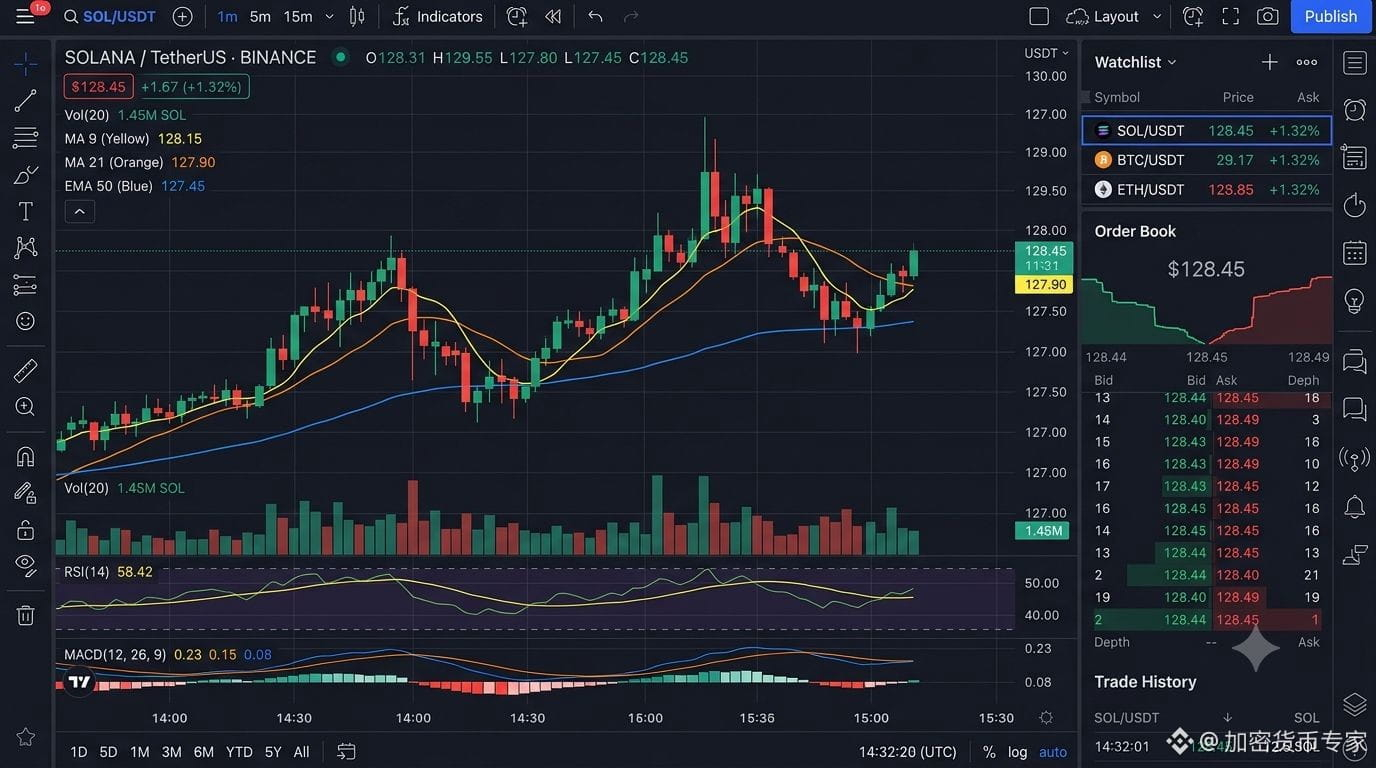
Solana is built for speed — thousands of transactions per second with fees that barely register. Popular for trading, gaming, and NFTs where low latency actually matters. The tradeoff for speed has historically been network stability, but it keeps improving. #Solana #sol $SOL
{future}(SOLUSDT)
Solana is built for speed — thousands of transactions per second with fees that barely register. Popular for trading, gaming, and NFTs where low latency actually matters. The tradeoff for speed has historically been network stability, but it keeps improving. #Solana #sol $SOL
68
·
--
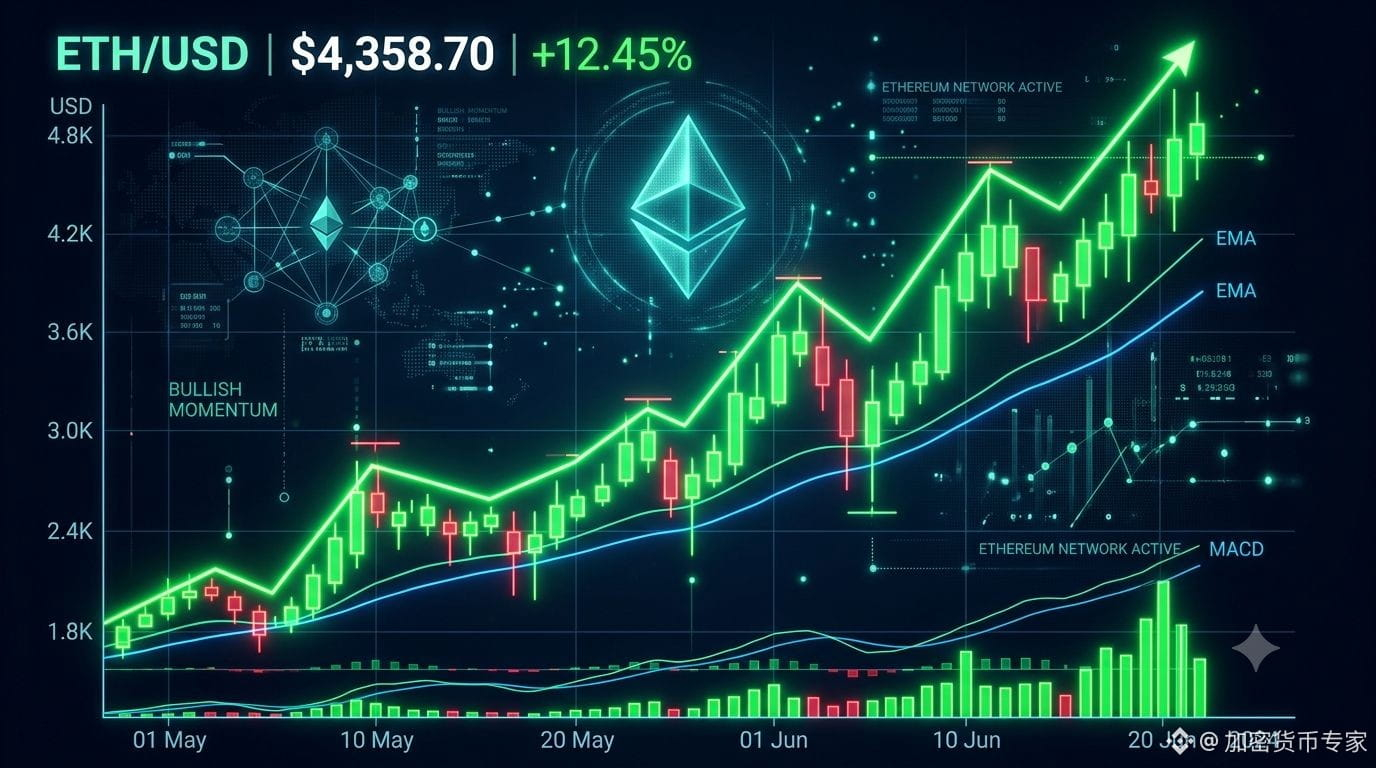
⟠ Ethereum isn't just a currency — it's a programmable blockchain powering smart contracts, DeFi, and NFTs. Think of it as the internet's decentralized app platform, with ETH as the fuel that runs it all. #Ethereum #ETHETFsApproved $ETH
{spot}(ETHUSDT)
⟠ Ethereum isn't just a currency — it's a programmable blockchain powering smart contracts, DeFi, and NFTs. Think of it as the internet's decentralized app platform, with ETH as the fuel that runs it all. #Ethereum #ETHETFsApproved $ETH
59
·
--
₿ Bitcoin remains the OG of crypto — the first decentralized digital currency, capped at 21 million coins. No central authority, no printing press, just math and consensus. Still the benchmark everything else gets measured against. #Bitcoin #BTC $BTC
{future}(BTCUSDT)
₿ Bitcoin remains the OG of crypto — the first decentralized digital currency, capped at 21 million coins. No central authority, no printing press, just math and consensus. Still the benchmark everything else gets measured against. #Bitcoin #BTC $BTC

94
·
--
Hyperliquid (HYPE)
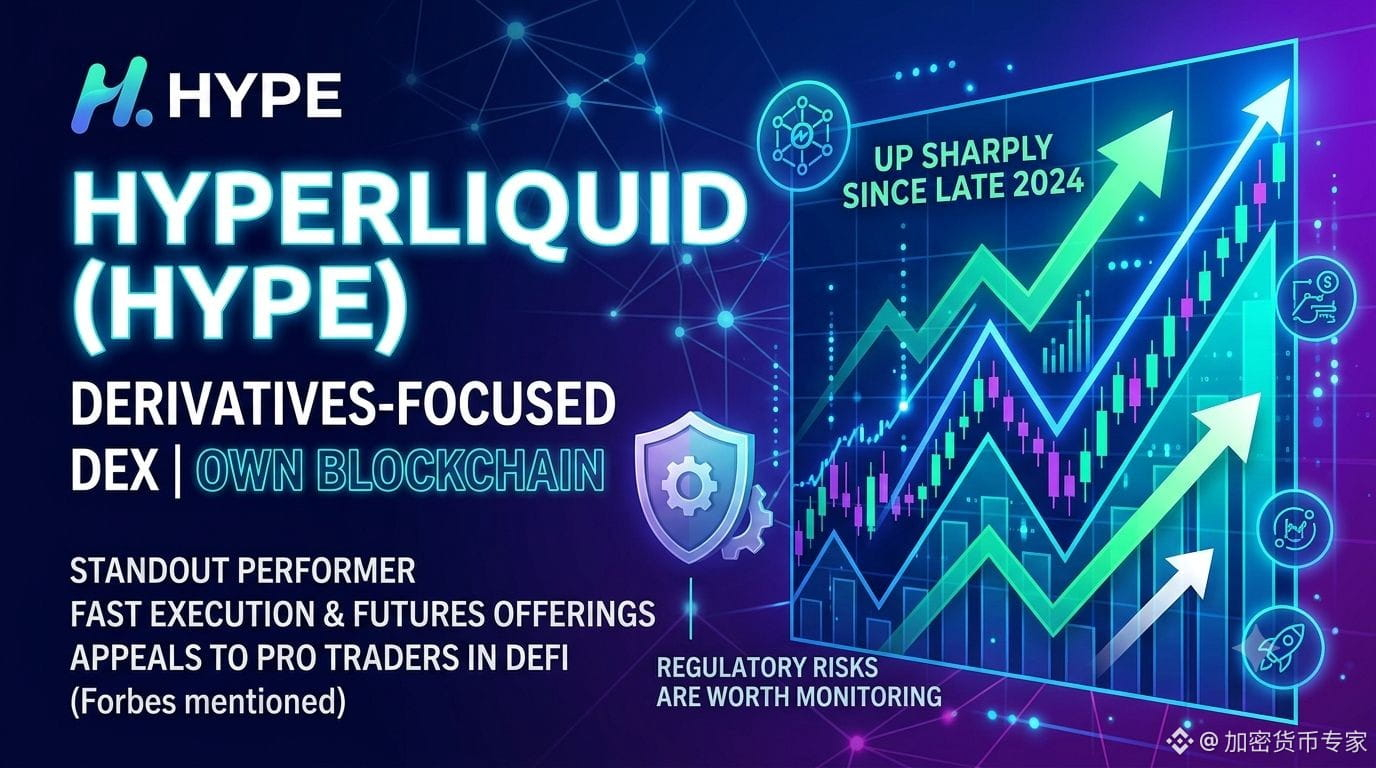
HYPE, the derivatives-focused DEX with its own blockchain, remains a standout performer, up sharply since its late-2024 launch. It appeals strongly to pro traders in DeFi thanks to fast execution and futures offerings (Forbes) , though liquidity and regulatory risks around derivatives are worth monitoring. #Hyperliquid #HYPE #defi $HYPE
{future}(HYPEUSDT)
$ETH
{spot}(ETHUSDT)
Hyperliquid (HYPE)
HYPE, the derivatives-focused DEX with its own blockchain, remains a standout performer, up sharply since its late-2024 launch. It appeals strongly to pro traders in DeFi thanks to fast execution and futures offerings (Forbes) , though liquidity and regulatory risks around derivatives are worth monitoring. #Hyperliquid #HYPE #defi $HYPE
$ETH
HYPE, the derivatives-focused DEX with its own blockchain, remains a standout performer, up sharply since its late-2024 launch. It appeals strongly to pro traders in DeFi thanks to fast execution and futures offerings (Forbes) , though liquidity and regulatory risks around derivatives are worth monitoring. #Hyperliquid #HYPE #defi $HYPE
$ETH
67
·
--
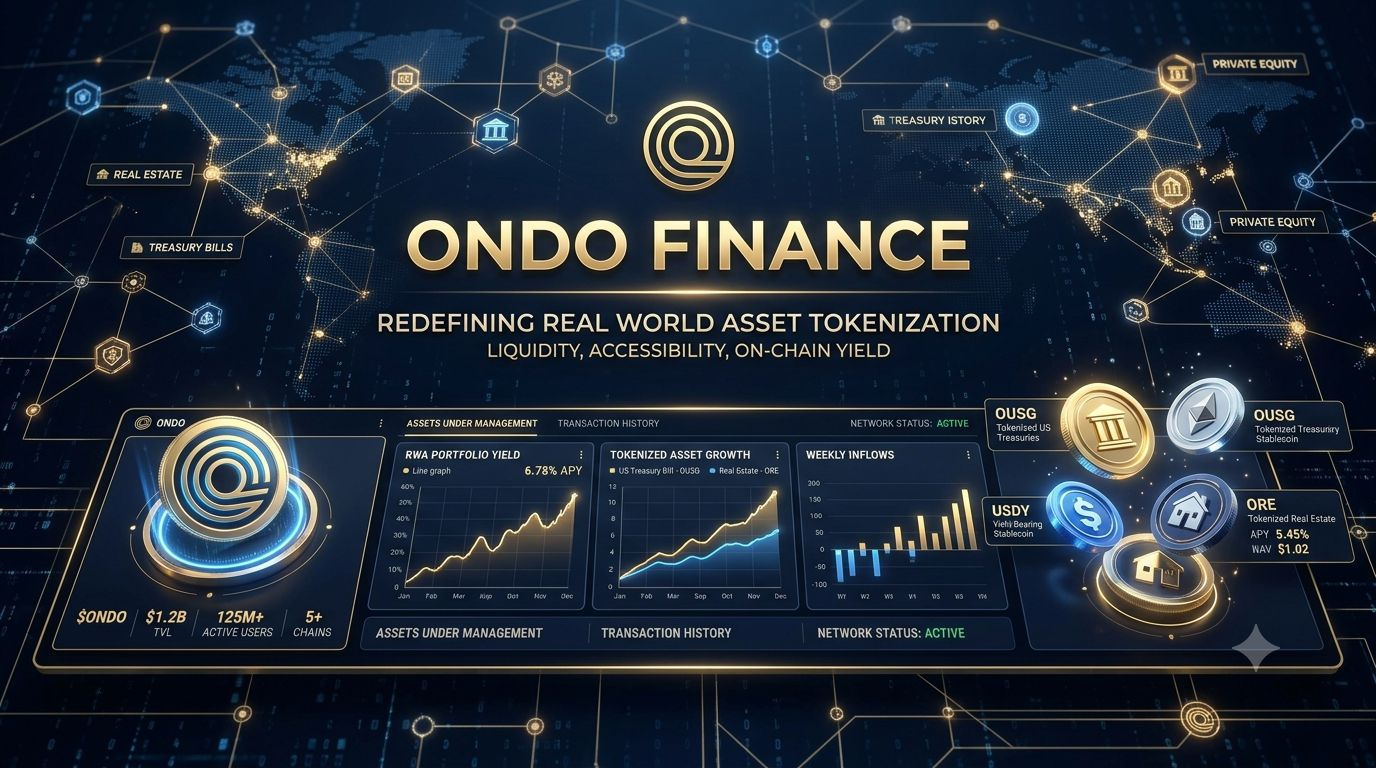
Ondo Finance (ONDO)
ONDO continues riding the real-world-asset tokenization wave, with the project rolling out tokenized US stocks and ETFs across multiple chains while expanding institutional partnerships. (Mudrex) As RWA narratives gain traction industry-wide, ONDO stays a name to watch for exposure to tokenized traditional assets. #Ondo #RWA #DEFİ $ONDO
{future}(ONDOUSDT)
$BTC
{spot}(BTCUSDT)
#KoreaSingleStockLeveragedETFTradingFalls
Ondo Finance (ONDO)
ONDO continues riding the real-world-asset tokenization wave, with the project rolling out tokenized US stocks and ETFs across multiple chains while expanding institutional partnerships. (Mudrex) As RWA narratives gain traction industry-wide, ONDO stays a name to watch for exposure to tokenized traditional assets. #Ondo #RWA #DEFİ $ONDO
$BTC
#KoreaSingleStockLeveragedETFTradingFalls
ONDO continues riding the real-world-asset tokenization wave, with the project rolling out tokenized US stocks and ETFs across multiple chains while expanding institutional partnerships. (Mudrex) As RWA narratives gain traction industry-wide, ONDO stays a name to watch for exposure to tokenized traditional assets. #Ondo #RWA #DEFİ $ONDO
$BTC
#KoreaSingleStockLeveragedETFTradingFalls
69
·
--
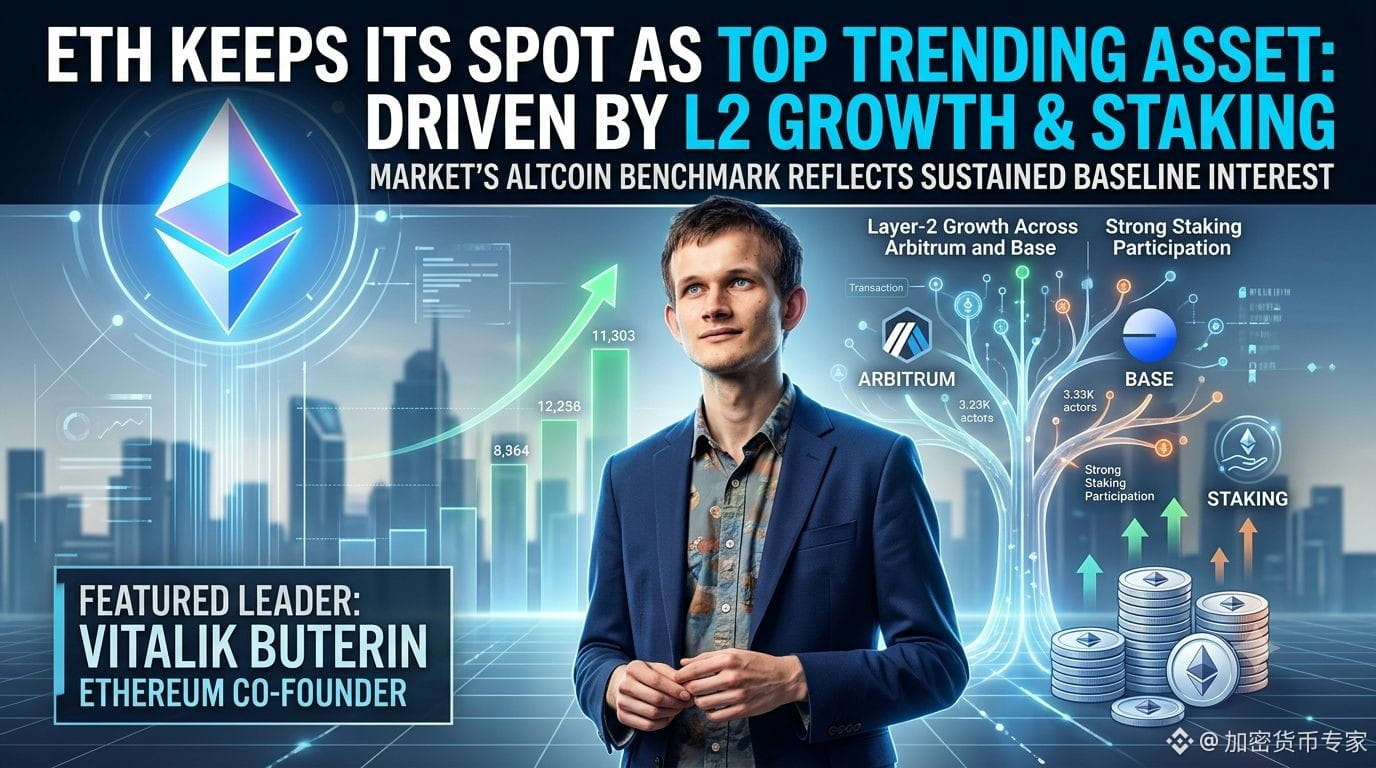
ETH keeps its spot as a top trending asset, driven by steady Layer-2 growth across Arbitrum and Base plus strong staking participation. Its trending status this month reflects sustained baseline interest rather than a single catalyst. (Mudrex) As the market's altcoin benchmark, ETH remains a core watch for traders tracking broader sentiment shifts. #Ethereum #ETH #crypto $ETH
{spot}(ETHUSDT)
$BTC
{spot}(BTCUSDT)
ETH keeps its spot as a top trending asset, driven by steady Layer-2 growth across Arbitrum and Base plus strong staking participation. Its trending status this month reflects sustained baseline interest rather than a single catalyst. (Mudrex) As the market's altcoin benchmark, ETH remains a core watch for traders tracking broader sentiment shifts. #Ethereum #ETH #crypto $ETH
$BTC
$BTC
50
·
--
Bearish
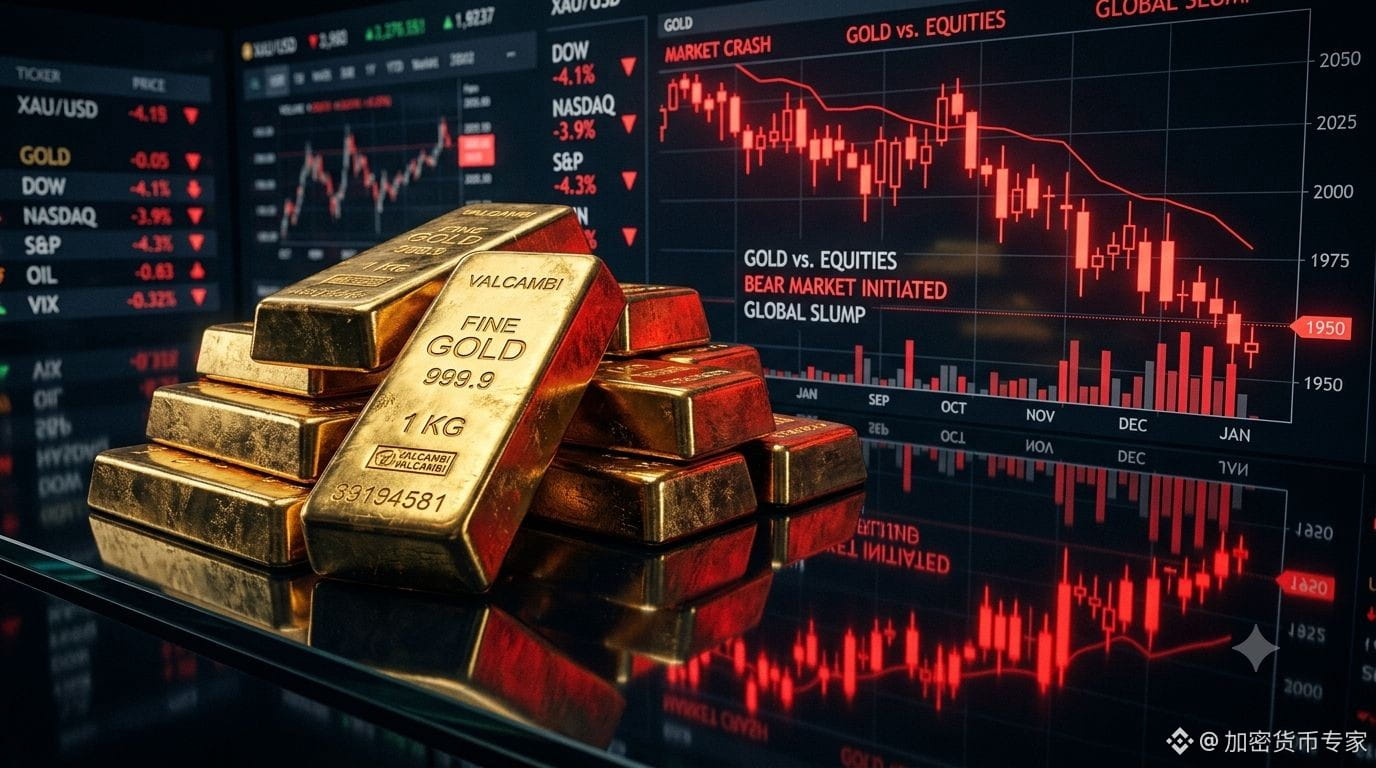
#GoldFalls3.24%ThisWeek — 6,448 views, 254 discussing. Discussion of gold's 3.24% weekly pullback amid shifting sentiment on interest rates, the dollar, and global risk, with traders watching key support levels for a possible rebound or deeper decline$GOLD.US
{stock_us}(GOLD.US)
#GoldFalls3.24%ThisWeek — 6,448 views, 254 discussing. Discussion of gold's 3.24% weekly pullback amid shifting sentiment on interest rates, the dollar, and global risk, with traders watching key support levels for a possible rebound or deeper decline$GOLD.US
97
·
--
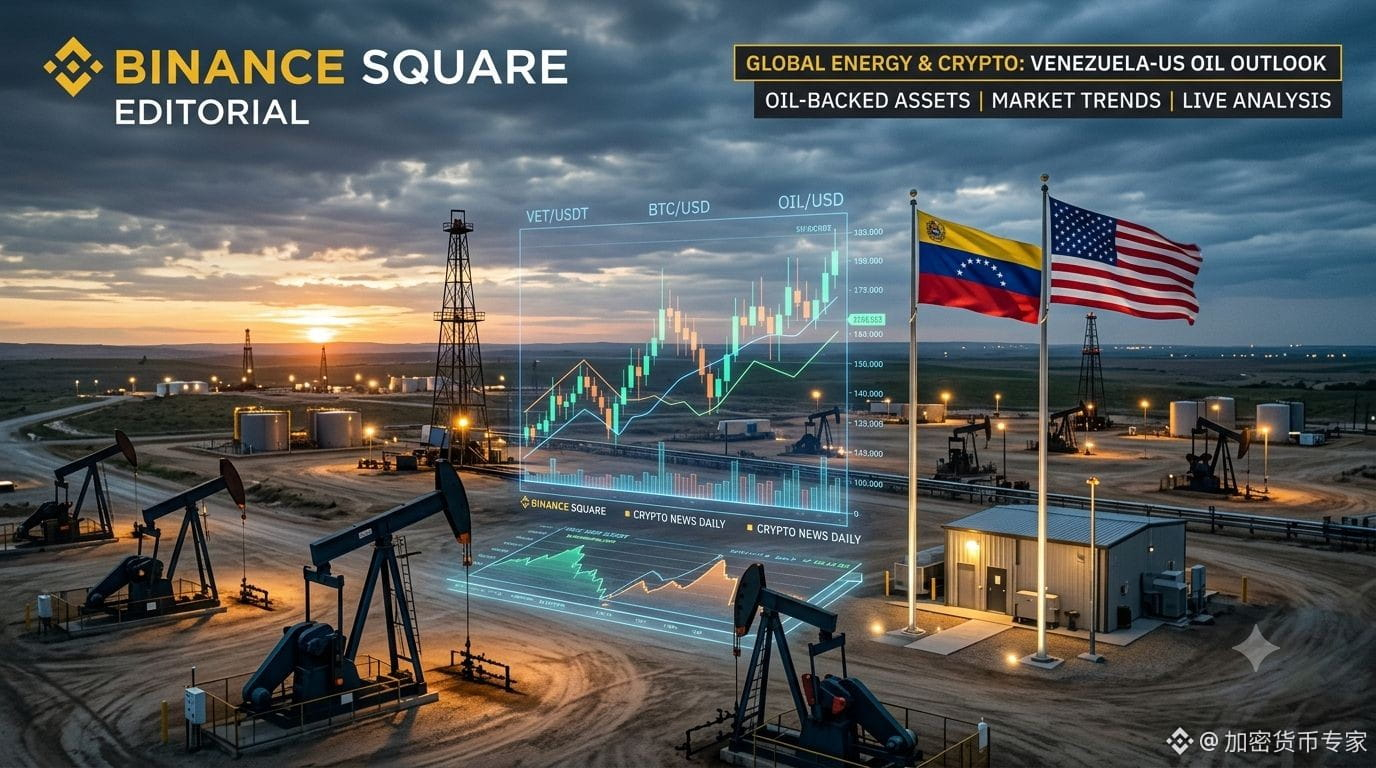
#VenezuelaUSSign25YearOilDeal — 4,024 views, 158 discussing. Coverage of the newly formed U.S.-Venezuela oil partnership, under which a joint venture was granted long-term rights to develop the country's untapped reserves. Acting President Delcy Rodríguez called it a "historic milestone," while officials say it could take years for actual production gains to materialize.$BTC
{spot}(BTCUSDT)
#VenezuelaUSSign25YearOilDeal — 4,024 views, 158 discussing. Coverage of the newly formed U.S.-Venezuela oil partnership, under which a joint venture was granted long-term rights to develop the country's untapped reserves. Acting President Delcy Rodríguez called it a "historic milestone," while officials say it could take years for actual production gains to materialize.$BTC
70
·
--
#TrumpReachesVenezuelaOilDealOn17Fields — 11,339 views, 270 discussing. Trump announced what he called "the biggest oil deal in world history," giving the U.S. a majority stake in developing 17 Venezuelan oil fields holding a proven potential of 65 billion barrels (CBC News) . The deal calls for over $100 billion in investment and more than $209 billion in projected tax revenue (ABC News) .$TRUMP
{spot}(TRUMPUSDT)
$BTC
{spot}(BTCUSDT)
#TrumpReachesVenezuelaOilDealOn17Fields — 11,339 views, 270 discussing. Trump announced what he called "the biggest oil deal in world history," giving the U.S. a majority stake in developing 17 Venezuelan oil fields holding a proven potential of 65 billion barrels (CBC News) . The deal calls for over $100 billion in investment and more than $209 billion in projected tax revenue (ABC News) .$TRUMP
$BTC
$BTC

58
·
--
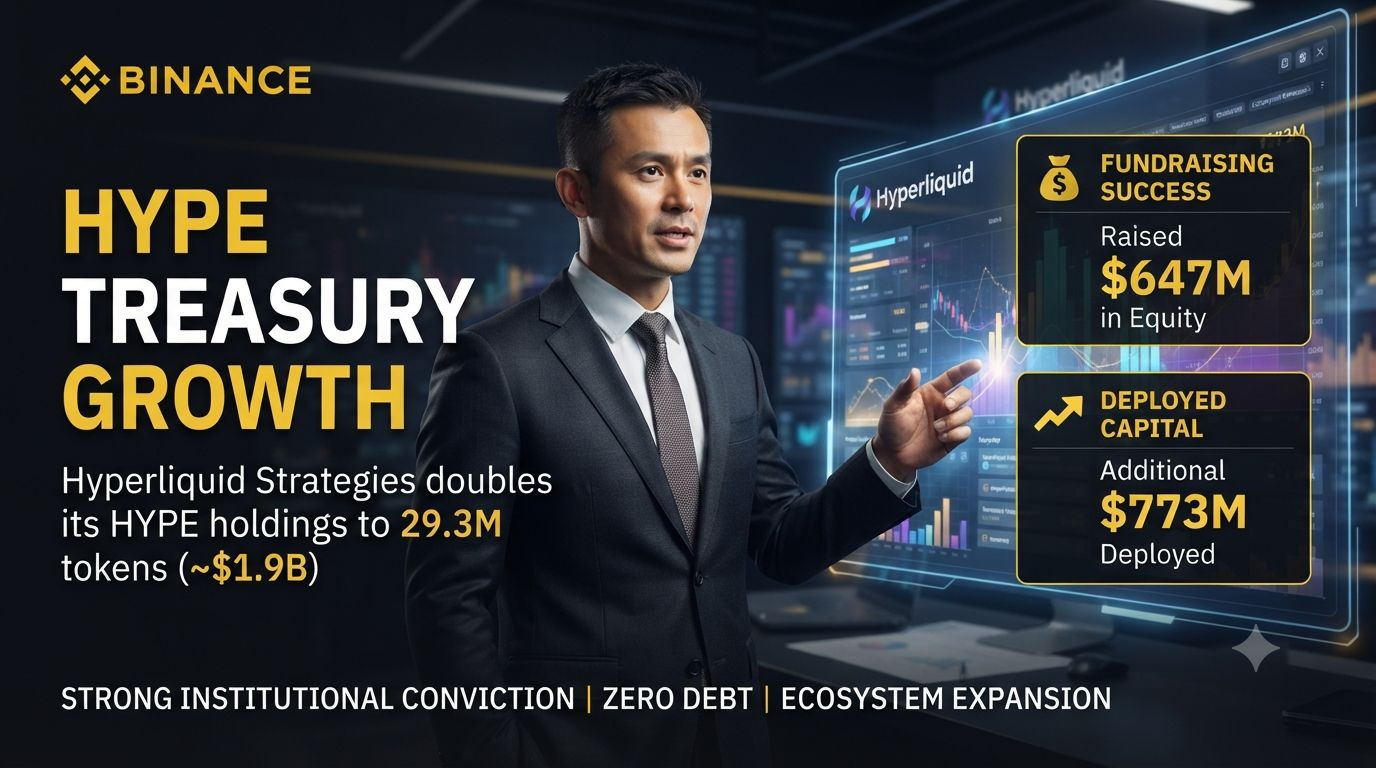
HYPE Treasury Growth
💰 Hyperliquid Strategies raised $647M in equity, more than doubling its HYPE treasury to 29.3M tokens (~$1.9B) with zero debt. The firm then deployed another $773M to buy 16.5M more HYPE at ~$46.77 avg. Strong conviction from institutional players in the Hyperliquid ecosystem. #HYPE #Hyperliquid $HYPE
{future}(HYPEUSDT)
HYPE Treasury Growth
💰 Hyperliquid Strategies raised $647M in equity, more than doubling its HYPE treasury to 29.3M tokens (~$1.9B) with zero debt. The firm then deployed another $773M to buy 16.5M more HYPE at ~$46.77 avg. Strong conviction from institutional players in the Hyperliquid ecosystem. #HYPE #Hyperliquid $HYPE
💰 Hyperliquid Strategies raised $647M in equity, more than doubling its HYPE treasury to 29.3M tokens (~$1.9B) with zero debt. The firm then deployed another $773M to buy 16.5M more HYPE at ~$46.77 avg. Strong conviction from institutional players in the Hyperliquid ecosystem. #HYPE #Hyperliquid $HYPE
75
·
--
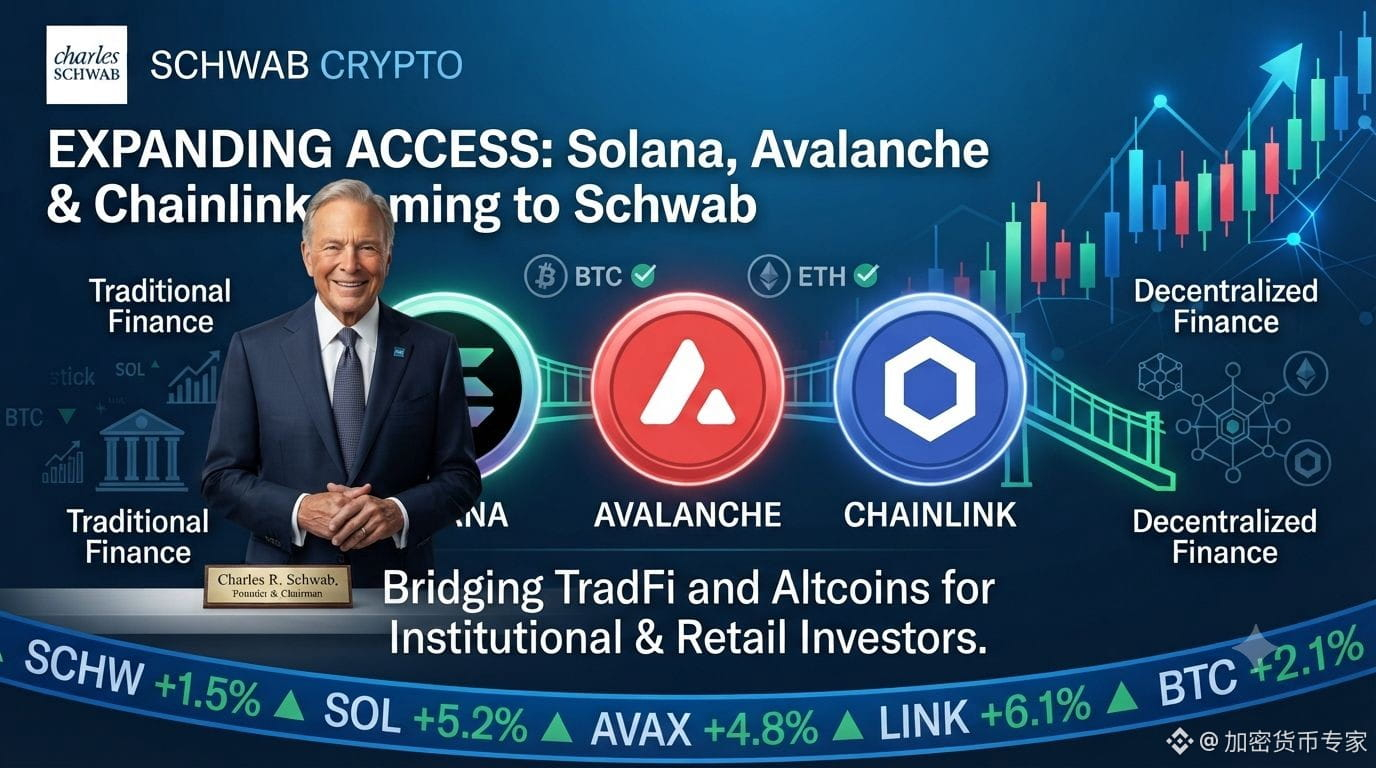
📈 Charles Schwab announced plans to add Solana, Avalanche & Chainlink to Schwab Crypto, expanding beyond existing BTC/ETH offerings. This signals growing institutional appetite for altcoin exposure through regulated brokerages. Traditional finance continues bridging into crypto, potentially unlocking new retail demand for SOL, AVAX, and LINK. #Crypto #TradFi $SOL
{spot}(SOLUSDT)
$LINK
{spot}(LINKUSDT)
📈 Charles Schwab announced plans to add Solana, Avalanche & Chainlink to Schwab Crypto, expanding beyond existing BTC/ETH offerings. This signals growing institutional appetite for altcoin exposure through regulated brokerages. Traditional finance continues bridging into crypto, potentially unlocking new retail demand for SOL, AVAX, and LINK. #Crypto #TradFi $SOL
$LINK
$LINK
45
·
--
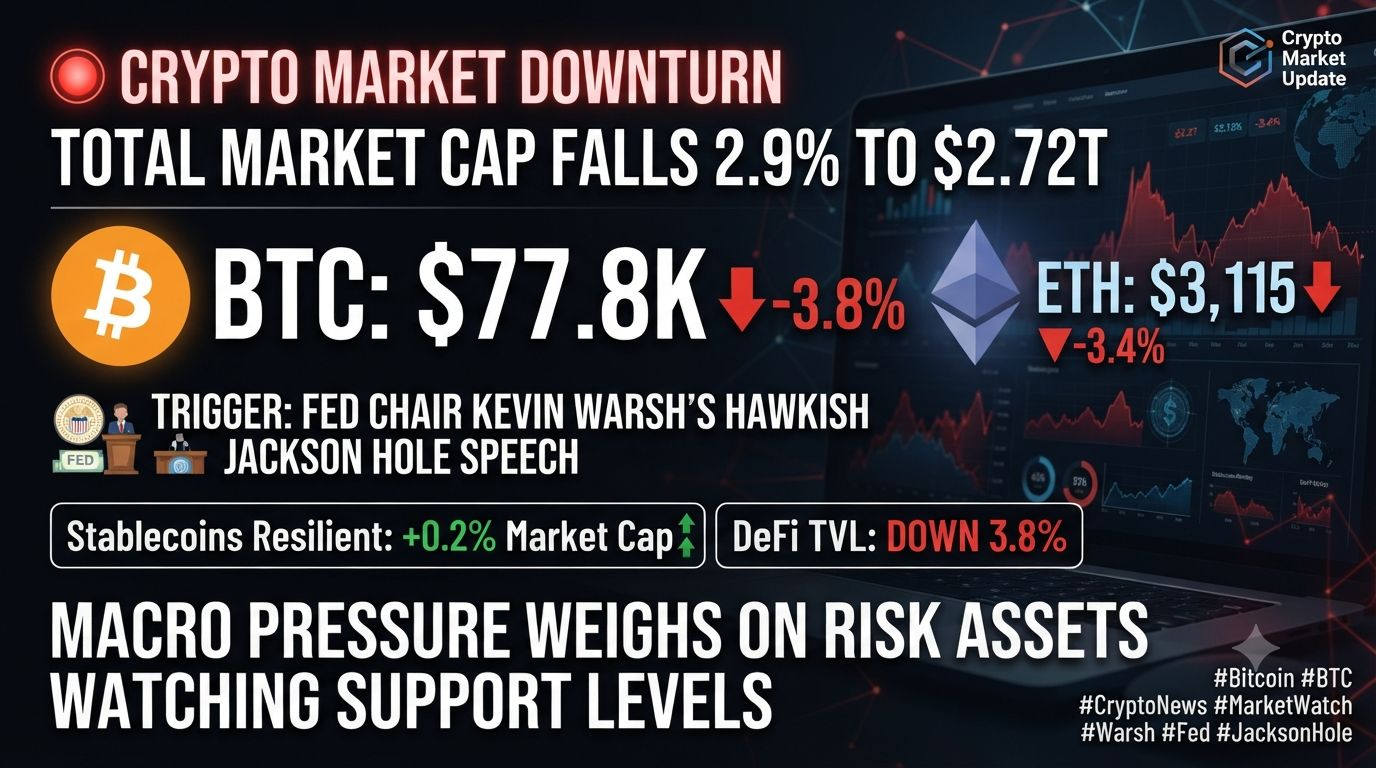
🔴 Crypto market cap fell 2.9% to $2.72T today. Bitcoin dropped ~3.8% to $77.8K, Ethereum also declined. Trigger: Fed Chair Kevin Warsh's hawkish Jackson Hole speech, raising rate-cut doubts. Stablecoins stayed resilient (+0.2%). DeFi TVL down 3.8%. Watching for support levels as macro pressure weighs on risk assets. #Bitcoin #BTC $BTC
{spot}(BTCUSDT)
🔴 Crypto market cap fell 2.9% to $2.72T today. Bitcoin dropped ~3.8% to $77.8K, Ethereum also declined. Trigger: Fed Chair Kevin Warsh's hawkish Jackson Hole speech, raising rate-cut doubts. Stablecoins stayed resilient (+0.2%). DeFi TVL down 3.8%. Watching for support levels as macro pressure weighs on risk assets. #Bitcoin #BTC $BTC
48
·
--
Bearish
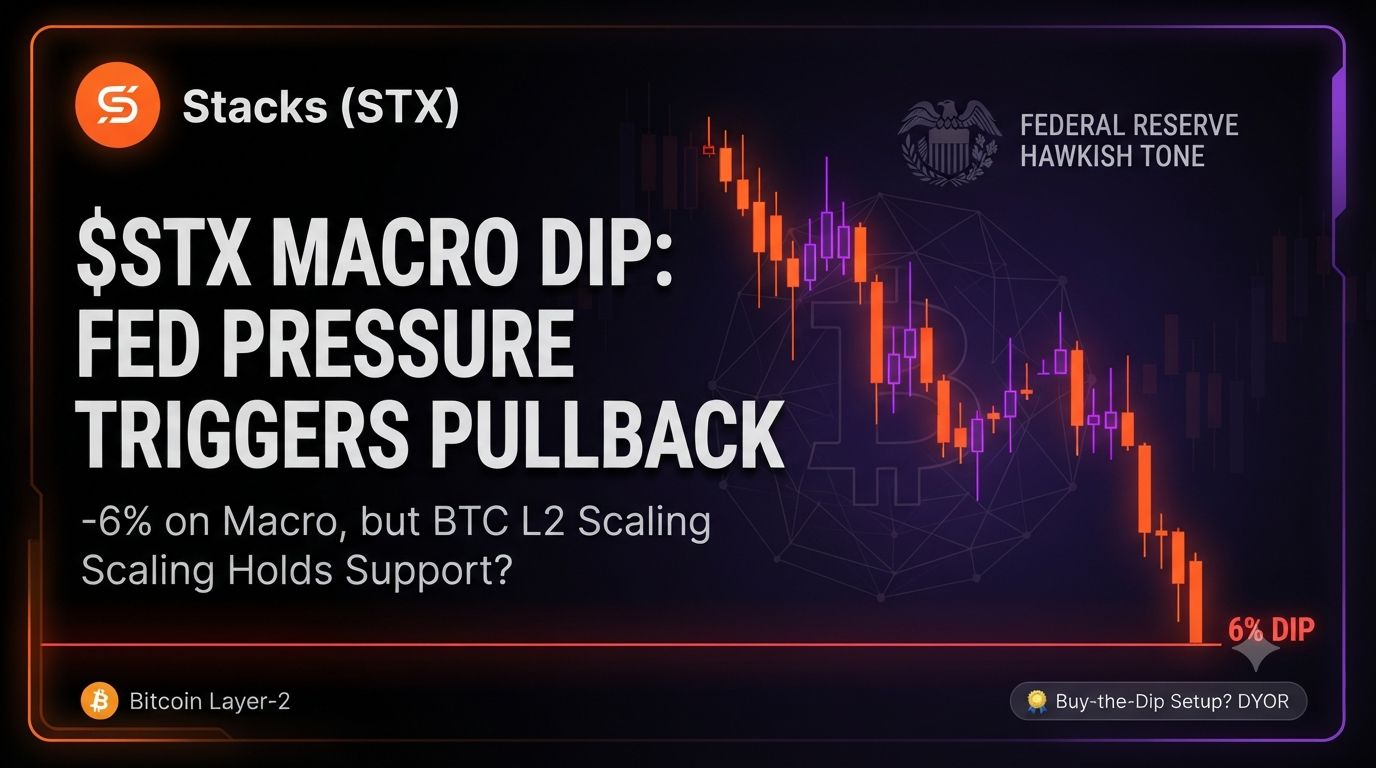
$STX dipped 6% as the Fed's hawkish tone triggered a broader market pullback, with high-beta BTC layer-2 tokens like Stacks feeling it most. No project-specific bad news — just macro pressure. Could be a buy-the-dip setup for believers in Bitcoin L2 scaling. DYOR. #Stacks #STX $STX
{spot}(STXUSDT)
$BTC
{spot}(BTCUSDT)
$STX dipped 6% as the Fed's hawkish tone triggered a broader market pullback, with high-beta BTC layer-2 tokens like Stacks feeling it most. No project-specific bad news — just macro pressure. Could be a buy-the-dip setup for believers in Bitcoin L2 scaling. DYOR. #Stacks #STX $STX
$BTC
$BTC
103
·
--
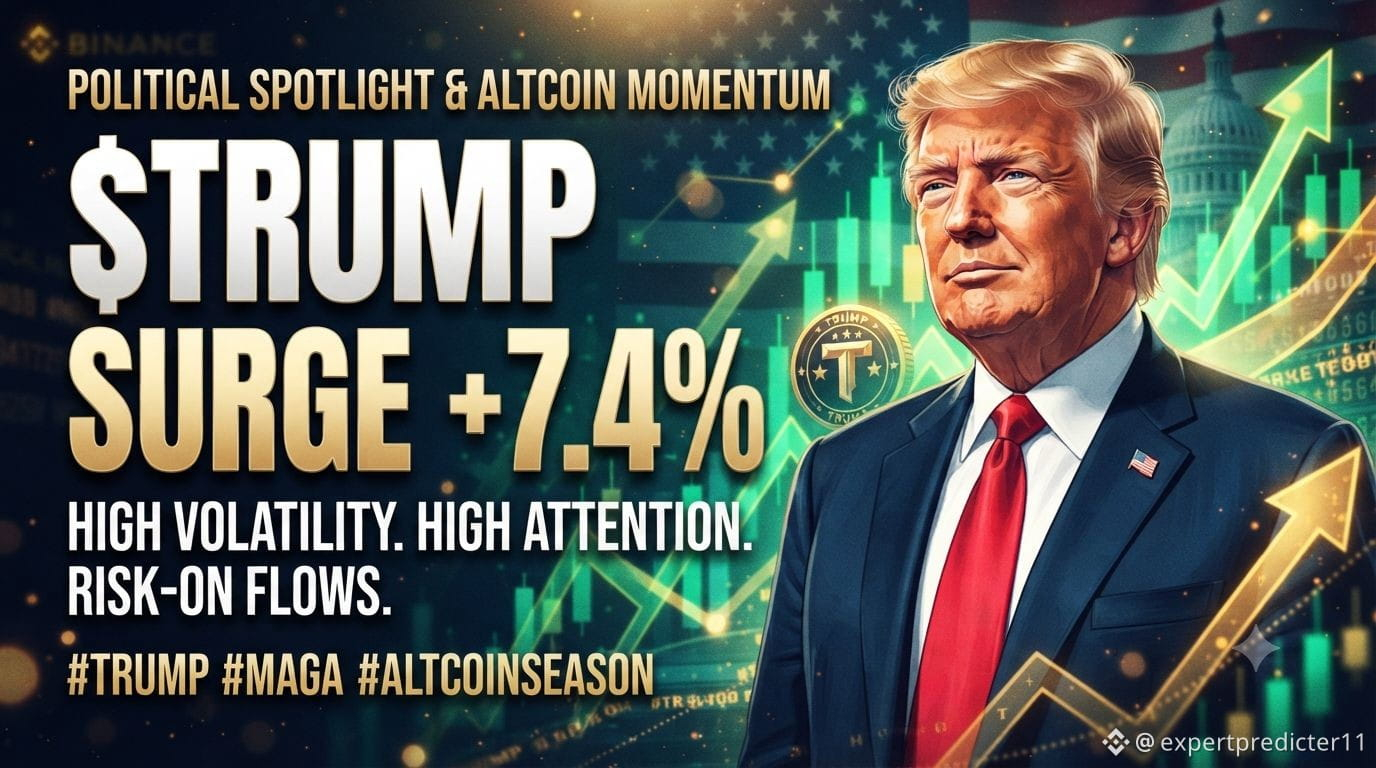
$TRUMP surged over 7% today amid fresh political and media spotlight, riding a wave of risk-on altcoin flows. High volatility, high attention — this one's a headline mover. As always, size positions carefully around politically-charged tokens; sentiment can flip as fast as it forms. #TRUMP #altcoinseason $TRUMP
{future}(TRUMPUSDT)
$BTC
{spot}(BTCUSDT)
{future}(ETHUSDT)
$TRUMP surged over 7% today amid fresh political and media spotlight, riding a wave of risk-on altcoin flows. High volatility, high attention — this one's a headline mover. As always, size positions carefully around politically-charged tokens; sentiment can flip as fast as it forms. #TRUMP #altcoinseason $TRUMP
$BTC
$BTC
225
·
--
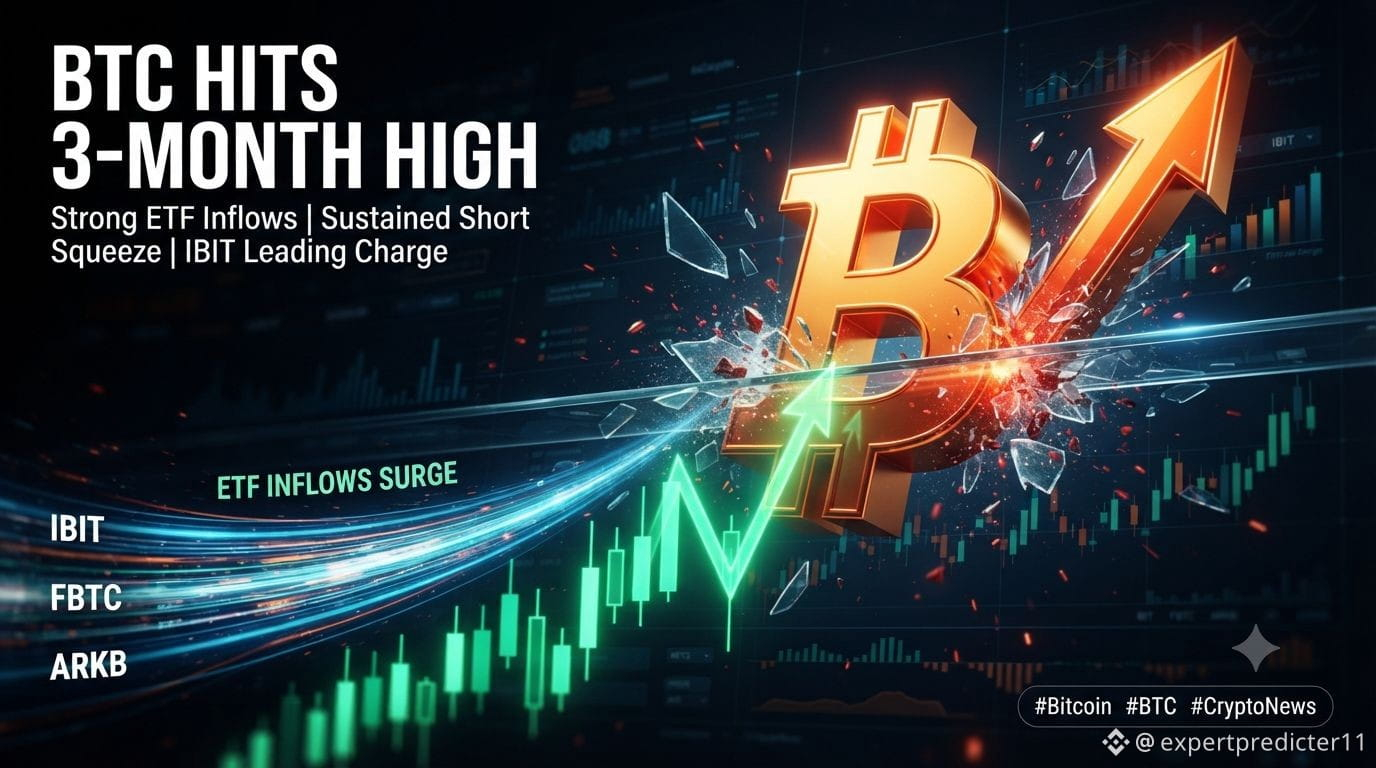
BTC just touched a three-month high 🔥 Strong ETF inflows and a sustained short squeeze are fueling the move, with BlackRock's IBIT leading the charge. Bulls are eyeing higher levels, but macro headwinds from a hawkish Fed stance could test conviction. Watching for continuation above key resistance. #Bitcoin #BTC $BTC
{spot}(BTCUSDT)
BTC just touched a three-month high 🔥 Strong ETF inflows and a sustained short squeeze are fueling the move, with BlackRock's IBIT leading the charge. Bulls are eyeing higher levels, but macro headwinds from a hawkish Fed stance could test conviction. Watching for continuation above key resistance. #Bitcoin #BTC $BTC
94
·
--
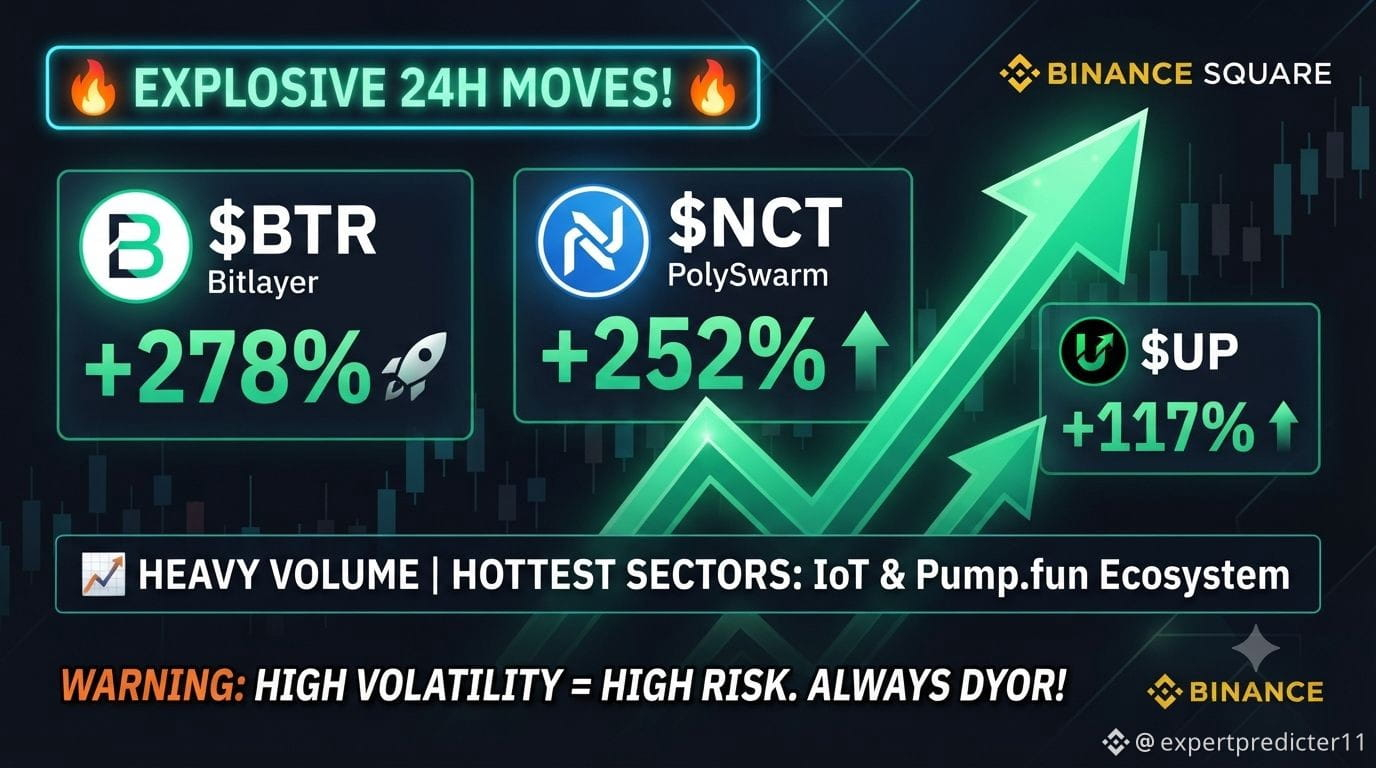
🚀 $BTR (Bitlayer) : +278%
🚀 $NCT (PolySwarm) : +252%
🚀 $UP : +117%🔥 Explosive 24h moves: $BTR (Bitlayer) rocketed 278%, $NCT (PolySwarm) surged 252%, and $UP jumped 117% amid heavy volume. IoT and Pump.fun ecosystem tokens are the sector's hottest categories right now. High volatility = high risk — always DYOR before trading! #Altcoins #Binance #crypto $BTR
{future}(BTRUSDT)
🚀 $BTR (Bitlayer) : +278%
🚀 $NCT (PolySwarm) : +252%
🚀 $UP : +117%🔥 Explosive 24h moves: $BTR (Bitlayer) rocketed 278%, $NCT (PolySwarm) surged 252%, and $UP jumped 117% amid heavy volume. IoT and Pump.fun ecosystem tokens are the sector's hottest categories right now. High volatility = high risk — always DYOR before trading! #Altcoins #Binance #crypto $BTR
🚀 $NCT (PolySwarm) : +252%
🚀 $UP : +117%🔥 Explosive 24h moves: $BTR (Bitlayer) rocketed 278%, $NCT (PolySwarm) surged 252%, and $UP jumped 117% amid heavy volume. IoT and Pump.fun ecosystem tokens are the sector's hottest categories right now. High volatility = high risk — always DYOR before trading! #Altcoins #Binance #crypto $BTR
225
·
--
Post 1 — Major Movers
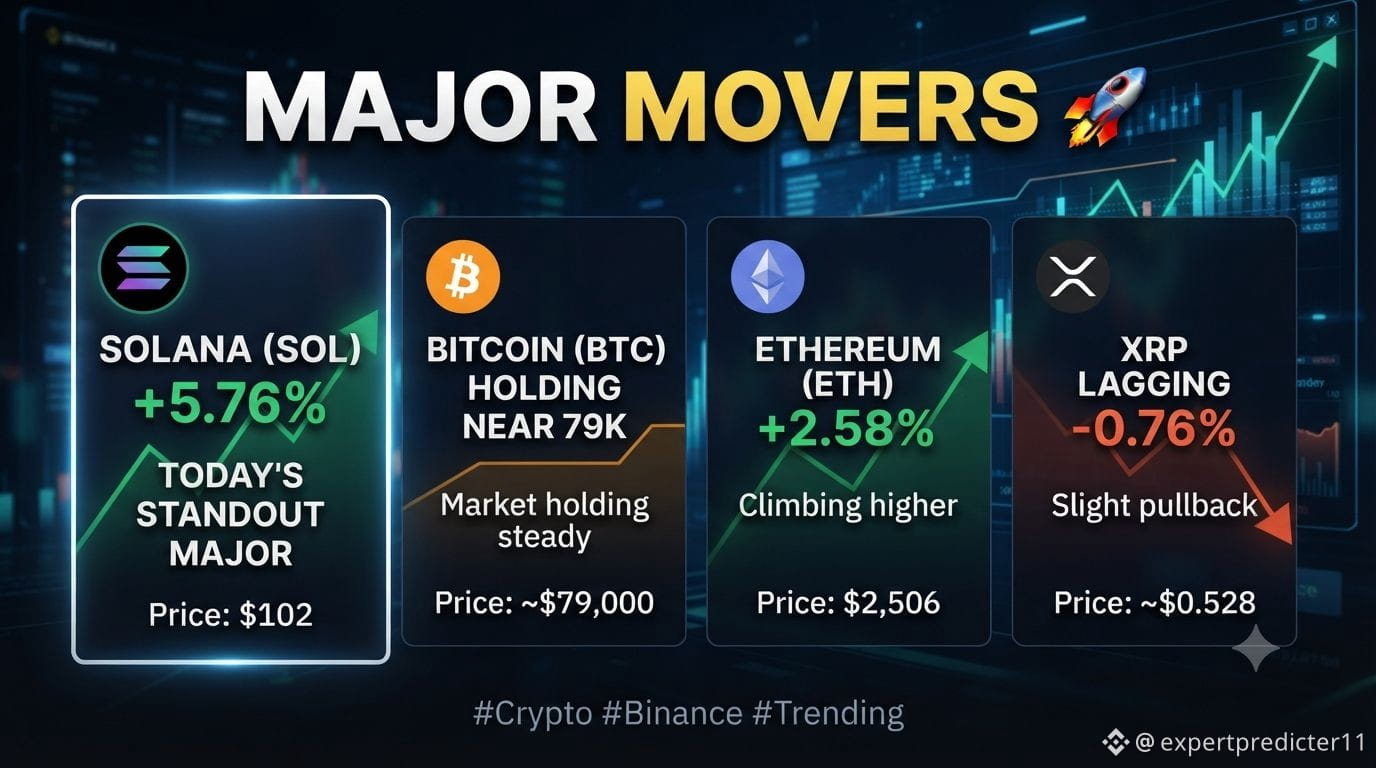
🚀 Solana (SOL) is today's standout major, up 5.76% to 102 as traders rotate out of leveraged BTC bets. Bitcoin (BTC) holds near 79K after a brief dip below 78K. Ethereum (ETH) climbs 2.58% to $2,506. $XRP lags, down 0.76%. Momentum favors alts today! #Crypto #Binance #trending $SOL
{spot}(SOLUSDT)
Post 1 — Major Movers
🚀 Solana (SOL) is today's standout major, up 5.76% to 102 as traders rotate out of leveraged BTC bets. Bitcoin (BTC) holds near 79K after a brief dip below 78K. Ethereum (ETH) climbs 2.58% to $2,506. $XRP lags, down 0.76%. Momentum favors alts today! #Crypto #Binance #trending $SOL
🚀 Solana (SOL) is today's standout major, up 5.76% to 102 as traders rotate out of leveraged BTC bets. Bitcoin (BTC) holds near 79K after a brief dip below 78K. Ethereum (ETH) climbs 2.58% to $2,506. $XRP lags, down 0.76%. Momentum favors alts today! #Crypto #Binance #trending $SOL
108
·
--
PYTH Attention 🔥
PYTH is getting increased attention on Binance, especially with Binance recently highlighting a PYTH trading tournament. Increased trading activity can bring more eyes to a token, but volatility can also rise quickly. Traders should watch volume, momentum, and market sentiment carefully. Is PYTH ready for another big move? 👀📊 #PYTH #Binance #Crypto $PYTH
PYTH Attention 🔥
PYTH is getting increased attention on Binance, especially with Binance recently highlighting a PYTH trading tournament. Increased trading activity can bring more eyes to a token, but volatility can also rise quickly. Traders should watch volume, momentum, and market sentiment carefully. Is PYTH ready for another big move? 👀📊 #PYTH #Binance #Crypto $PYTH
PYTH is getting increased attention on Binance, especially with Binance recently highlighting a PYTH trading tournament. Increased trading activity can bring more eyes to a token, but volatility can also rise quickly. Traders should watch volume, momentum, and market sentiment carefully. Is PYTH ready for another big move? 👀📊 #PYTH #Binance #Crypto $PYTH
72
·
--
Ethereum Watch 👀
Ethereum remains one of the biggest names in crypto, with traders closely watching its momentum alongside Bitcoin. ETH often becomes a major focus when market confidence improves. The key question now is whether buyers can maintain pressure and push Ethereum toward stronger levels. What’s your ETH outlook? 🚀 #ETH #Ethereum #Binance
$ETH
{spot}(ETHUSDT)
Ethereum Watch 👀
Ethereum remains one of the biggest names in crypto, with traders closely watching its momentum alongside Bitcoin. ETH often becomes a major focus when market confidence improves. The key question now is whether buyers can maintain pressure and push Ethereum toward stronger levels. What’s your ETH outlook? 🚀 #ETH #Ethereum #Binance
$ETH
Ethereum remains one of the biggest names in crypto, with traders closely watching its momentum alongside Bitcoin. ETH often becomes a major focus when market confidence improves. The key question now is whether buyers can maintain pressure and push Ethereum toward stronger levels. What’s your ETH outlook? 🚀 #ETH #Ethereum #Binance
$ETH
46
Log in to explore more content
Join global crypto users on Binance Square
⚡️ Get latest and useful information about crypto.
💬 Trusted by the world’s largest crypto exchange.
👍 Discover real insights from verified creators.
Email / Phone number
Trending Topics
BinanceLaunchesBinanceIntelligence
585,201 views
3,651 Discussing
Picture this: you are juggling five different analytics tabs, watching order books flicker, and trying to decipher whether a sudden price spike is genuine volume or just another liquidity trap.
Most traders end up losing money not because they lack passion, but because they are constantly drowning in noisy data and entering positions five minutes too late. When information is fragmented across dozens of complex dashboards, retail investors usually end up holding the bag while faster players front-run the actionable insights.
The rollout of Binance Intelligence feels very similar to the early days when on-chain analytics first went mainstream. Back in previous cycles, tracking wallet movements or sentiment shifts required specialized technical setups. Having deep market analytics and pattern recognition integrated directly into the core trading interface changes the dynamic, much like when real-time order flow data became accessible to everyday holders of $BNB and $BTC.
When retail gets access to structured intelligence directly at the point of execution, the edge shifts from who has the fastest raw data feeds to who can actually interpret market context better. We saw a similar maturation curve with $ETH analytics years ago, where better data transparency gradually reduced blind FOMO and forced traders to develop disciplined risk management.
Do you think integrated intelligence tools will actually level the playing field for retail traders, or will sophisticated algorithms always stay one step ahead?
#BinanceLaunchesBinanceIntelligence #BitcoinTargets2026OpenAt #ETHUp70
Evonne Dashiell
·1 Likes
·278 views
WinklevossFilesSpotZcashETFApplication
1,086 views
44 Discussing
SouthKoreaAITradeLiftsWorldcoinTo$7.41B
108 views
9 Discussing