

#smartcontract
smartcontract
91,031 views
196 Discussing
Hot
Latest

🚨 $WEMIX UNDER SIEGE — $6.25M EXPLOIT SHAKES THE SMART CONTRACT! 💥
No Trade Signal — Alert Only
🔴 The exploit hit like a flash loan nightmare: an attacker minted and transferred WEMIX tokens directly from the smart contract. 📊 Initial reaction suggests liquidity pools are bleeding, but the team's swift response could act as a firewall. 📌 This isn't a full-blown collapse yet — it's a test of their incident response muscle. 💡 History shows fast-recovering projects often trap late sellers. 🛡️
💬 Will the WEMIX team freeze the exploited contract and claw back funds, or are we watching a slow bleed into support levels? 👇
⚠️ Not financial advice. Always manage your risk. 🛡️
🏷️ #WEMIX #Exploit #CryptoAlert #SmartContract
💥 🦈
🚨 $WEMIX UNDER SIEGE — $6.25M EXPLOIT SHAKES THE SMART CONTRACT! 💥
No Trade Signal — Alert Only
🔴 The exploit hit like a flash loan nightmare: an attacker minted and transferred WEMIX tokens directly from the smart contract. 📊 Initial reaction suggests liquidity pools are bleeding, but the team's swift response could act as a firewall. 📌 This isn't a full-blown collapse yet — it's a test of their incident response muscle. 💡 History shows fast-recovering projects often trap late sellers. 🛡️
💬 Will the WEMIX team freeze the exploited contract and claw back funds, or are we watching a slow bleed into support levels? 👇
⚠️ Not financial advice. Always manage your risk. 🛡️
🏷️ #WEMIX #Exploit #CryptoAlert #SmartContract
💥 🦈
No Trade Signal — Alert Only
🔴 The exploit hit like a flash loan nightmare: an attacker minted and transferred WEMIX tokens directly from the smart contract. 📊 Initial reaction suggests liquidity pools are bleeding, but the team's swift response could act as a firewall. 📌 This isn't a full-blown collapse yet — it's a test of their incident response muscle. 💡 History shows fast-recovering projects often trap late sellers. 🛡️
💬 Will the WEMIX team freeze the exploited contract and claw back funds, or are we watching a slow bleed into support levels? 👇
⚠️ Not financial advice. Always manage your risk. 🛡️
🏷️ #WEMIX #Exploit #CryptoAlert #SmartContract
💥 🦈


68

🚨 BREAKING !!!
AI FRONTIER CAN SPOT DEFI VULNERABILITIES — ANTHROPIC DROPS CLAUDE FABLE 5 🔥🟡📉
Anthropic has officially launched Claude Fable 5 — the first publicly announced Mythos-class AI model, marking a major leap in frontier AI capabilities 🛠
The model integrates an automatic safety mechanism: queries related to cyber attacks, bioweapons, or model replication will be redirected to the less dangerous Claude Opus 4.8 💰
Noteworthy point: Opus 4.8 previously helped uncover a serious vulnerability in the Orchard protocol of Zcash 📊
Major concern: next-gen frontier AIs could accelerate the discovery — or even creation — of vulnerabilities in smart contracts, privacy coins, and unaudited DeFi protocols 🎯
A double-edged sword: it enables auditing firms to work faster, but poses real risks with unvetted code. This is not investment advice.
#DeFiSecurity #AIRisk #SmartContract
$ZEC $ETH $VELVET
🚨 BREAKING !!!
AI FRONTIER CAN SPOT DEFI VULNERABILITIES — ANTHROPIC DROPS CLAUDE FABLE 5 🔥🟡📉
Anthropic has officially launched Claude Fable 5 — the first publicly announced Mythos-class AI model, marking a major leap in frontier AI capabilities 🛠
The model integrates an automatic safety mechanism: queries related to cyber attacks, bioweapons, or model replication will be redirected to the less dangerous Claude Opus 4.8 💰
Noteworthy point: Opus 4.8 previously helped uncover a serious vulnerability in the Orchard protocol of Zcash 📊
Major concern: next-gen frontier AIs could accelerate the discovery — or even creation — of vulnerabilities in smart contracts, privacy coins, and unaudited DeFi protocols 🎯
A double-edged sword: it enables auditing firms to work faster, but poses real risks with unvetted code. This is not investment advice.
#DeFiSecurity #AIRisk #SmartContract
$ZEC $ETH $VELVET
AI FRONTIER CAN SPOT DEFI VULNERABILITIES — ANTHROPIC DROPS CLAUDE FABLE 5 🔥🟡📉
Anthropic has officially launched Claude Fable 5 — the first publicly announced Mythos-class AI model, marking a major leap in frontier AI capabilities 🛠
The model integrates an automatic safety mechanism: queries related to cyber attacks, bioweapons, or model replication will be redirected to the less dangerous Claude Opus 4.8 💰
Noteworthy point: Opus 4.8 previously helped uncover a serious vulnerability in the Orchard protocol of Zcash 📊
Major concern: next-gen frontier AIs could accelerate the discovery — or even creation — of vulnerabilities in smart contracts, privacy coins, and unaudited DeFi protocols 🎯
A double-edged sword: it enables auditing firms to work faster, but poses real risks with unvetted code. This is not investment advice.
#DeFiSecurity #AIRisk #SmartContract
$ZEC $ETH $VELVET
256

SMART SCAM: HOW THEY STRIP YOU OF YOUR CASH THROUGH UPGRADABLE SMART CONTRACTS (PROXY) 💻🕸️
You checked the token with code scanners, audit passed, no Honeypot functions (sell restrictions). You buy in, the coin pumps, you hit the Sell button — and the transaction gets rejected. You're stuck. How is this possible if the audit was clean?
• Proxy Trap: Scammers use upgradable smart contracts. On day one, the code is perfectly clean. But as soon as enough USDT is pumped into the pool, the admin can change the contract logic to a scam with a single transaction.
• Remember: If the token contract has a function `upgradeTo()`, this project can turn into a pumpkin at any second.
👇 Open the BNB widget. Are you trading blind based on TikTok tips or checking the contract structures?
#DeFi #SmartContract $BNB
{spot}(BNBUSDT)
#CryptoFREEMEN
SMART SCAM: HOW THEY STRIP YOU OF YOUR CASH THROUGH UPGRADABLE SMART CONTRACTS (PROXY) 💻🕸️
You checked the token with code scanners, audit passed, no Honeypot functions (sell restrictions). You buy in, the coin pumps, you hit the Sell button — and the transaction gets rejected. You're stuck. How is this possible if the audit was clean?
• Proxy Trap: Scammers use upgradable smart contracts. On day one, the code is perfectly clean. But as soon as enough USDT is pumped into the pool, the admin can change the contract logic to a scam with a single transaction.
• Remember: If the token contract has a function `upgradeTo()`, this project can turn into a pumpkin at any second.
👇 Open the BNB widget. Are you trading blind based on TikTok tips or checking the contract structures?
#DeFi #SmartContract $BNB
#CryptoFREEMEN
You checked the token with code scanners, audit passed, no Honeypot functions (sell restrictions). You buy in, the coin pumps, you hit the Sell button — and the transaction gets rejected. You're stuck. How is this possible if the audit was clean?
• Proxy Trap: Scammers use upgradable smart contracts. On day one, the code is perfectly clean. But as soon as enough USDT is pumped into the pool, the admin can change the contract logic to a scam with a single transaction.
• Remember: If the token contract has a function `upgradeTo()`, this project can turn into a pumpkin at any second.
👇 Open the BNB widget. Are you trading blind based on TikTok tips or checking the contract structures?
#DeFi #SmartContract $BNB
#CryptoFREEMEN
1
152

·
--
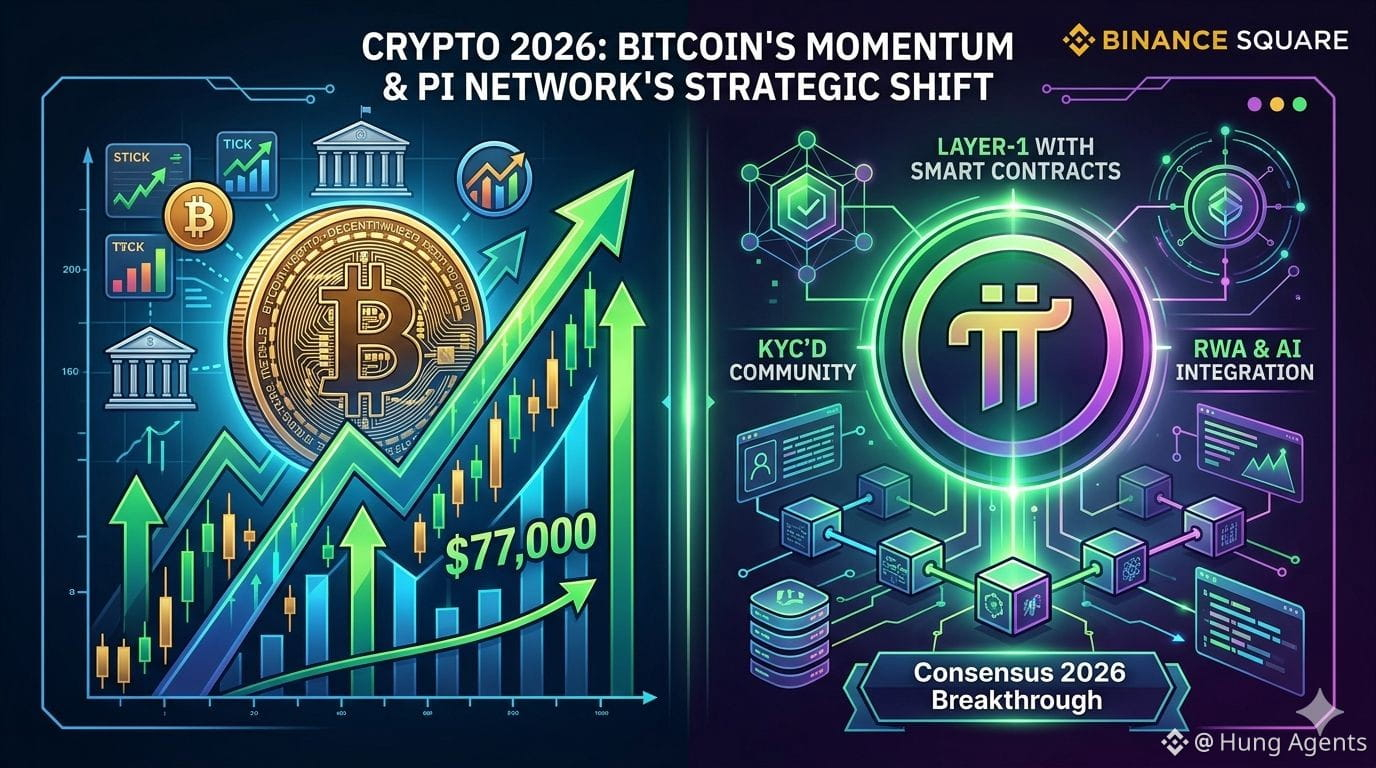
⚡ The overall market: Bitcoin is coiling tightly around the $77,000 region.
In this unpredictable market, smart money is sharply shifting towards ecosystems with real value (AI, Identity, Utility).
{spot}(BTCUSDT)
Highlight on Pi Network:
After the hype at the Consensus 2026 event in Miami by the two founders, Pi is solidifying its unique position. The completion of the technical upgrade is turning Pi into a Layer-1 with comprehensive Smart Contracts, ready for dApps and RWA to explode.
Core: In the AI era flooded with bots, the network of tens of millions of users who have completed KYC for Pi is the "gold mine" of identity that the Web3 world is craving.
The game in 2026 is no longer about short-term speculation, but a race of real technology and real communities!
$BNB
#Crypto2026 #Bitcoin #PiNetwork #Web3 #SmartContract
⚡ The overall market: Bitcoin is coiling tightly around the $77,000 region.
In this unpredictable market, smart money is sharply shifting towards ecosystems with real value (AI, Identity, Utility).
Highlight on Pi Network:
After the hype at the Consensus 2026 event in Miami by the two founders, Pi is solidifying its unique position. The completion of the technical upgrade is turning Pi into a Layer-1 with comprehensive Smart Contracts, ready for dApps and RWA to explode.
Core: In the AI era flooded with bots, the network of tens of millions of users who have completed KYC for Pi is the "gold mine" of identity that the Web3 world is craving.
The game in 2026 is no longer about short-term speculation, but a race of real technology and real communities!
$BNB
#Crypto2026 #Bitcoin #PiNetwork #Web3 #SmartContract
In this unpredictable market, smart money is sharply shifting towards ecosystems with real value (AI, Identity, Utility).
Highlight on Pi Network:
After the hype at the Consensus 2026 event in Miami by the two founders, Pi is solidifying its unique position. The completion of the technical upgrade is turning Pi into a Layer-1 with comprehensive Smart Contracts, ready for dApps and RWA to explode.
Core: In the AI era flooded with bots, the network of tens of millions of users who have completed KYC for Pi is the "gold mine" of identity that the Web3 world is craving.
The game in 2026 is no longer about short-term speculation, but a race of real technology and real communities!
$BNB
#Crypto2026 #Bitcoin #PiNetwork #Web3 #SmartContract
323

·
--
Smart contracts are self-executing programs on blockchains. But, like any code, they can contain errors or security vulnerabilities. That's why code auditing is essential to ensure the security and reliability of decentralized applications. #SmartContract # Security #Blockchain
Smart contracts are self-executing programs on blockchains. But, like any code, they can contain errors or security vulnerabilities. That's why code auditing is essential to ensure the security and reliability of decentralized applications. #SmartContract # Security #Blockchain
115

·
--
Most traders are fixated on price action, but savvy investors know that real catalysts often lie beneath the surface.
THE SIGNAL: #Cardano has activated the van Rossem hard fork, slashing smart contract execution costs by up to 60%. This crucial upgrade paves the way for the highly anticipated Ouroboros Leios scalability boost due later this year. #smartcontract #scalability
THE INTERPRETATION: As Cardano's usability and efficiency improve, ADA's adoption potential just skyrocketed. This could be the wake-up call for bulls, hinting at explosive growth down the line.
THE WATCH LIST: Keep a close eye on ADA's gas fee trends as we head into Q3. Falling costs will unlock an avalanche of DApps and DeFi projects.
THE THOUGHT CLOSER: Will Cardano's infrastructure overhauls be the trigger that finally catapults ADA into the top tiers of the crypto universe?
Most traders are fixated on price action, but savvy investors know that real catalysts often lie beneath the surface.
THE SIGNAL: #Cardano has activated the van Rossem hard fork, slashing smart contract execution costs by up to 60%. This crucial upgrade paves the way for the highly anticipated Ouroboros Leios scalability boost due later this year. #smartcontract #scalability
THE INTERPRETATION: As Cardano's usability and efficiency improve, ADA's adoption potential just skyrocketed. This could be the wake-up call for bulls, hinting at explosive growth down the line.
THE WATCH LIST: Keep a close eye on ADA's gas fee trends as we head into Q3. Falling costs will unlock an avalanche of DApps and DeFi projects.
THE THOUGHT CLOSER: Will Cardano's infrastructure overhauls be the trigger that finally catapults ADA into the top tiers of the crypto universe?
THE SIGNAL: #Cardano has activated the van Rossem hard fork, slashing smart contract execution costs by up to 60%. This crucial upgrade paves the way for the highly anticipated Ouroboros Leios scalability boost due later this year. #smartcontract #scalability
THE INTERPRETATION: As Cardano's usability and efficiency improve, ADA's adoption potential just skyrocketed. This could be the wake-up call for bulls, hinting at explosive growth down the line.
THE WATCH LIST: Keep a close eye on ADA's gas fee trends as we head into Q3. Falling costs will unlock an avalanche of DApps and DeFi projects.
THE THOUGHT CLOSER: Will Cardano's infrastructure overhauls be the trigger that finally catapults ADA into the top tiers of the crypto universe?
66

$KAS IS TESTING CRITICAL SUPPORT THAT COULD DICTATE Q3 🚀
KAS has been grinding lower since January — from $0.053 down to $0.0302 — but the bleeding has stalled. The Toccata hard fork just went live, turning Kaspa into a programmable smart contract platform, and the Kasplex EVM Layer 2 launch is scheduled for August. That's two catalysts in a tight window.
What matters now is whether Bitcoin can lift itself back toward $80K. If risk appetite returns, Kaspa historically catches a bid fast. With 95% of supply already mined, any demand spike hits harder than early days.
The range is $0.025-$0.04 for now. Where do you see KAS trading by October?
Not financial advice. Always manage your risk.
#KAS #AltcoinSeason #SmartContract #CryptoAnalysis
🚀
$KAS IS TESTING CRITICAL SUPPORT THAT COULD DICTATE Q3 🚀
KAS has been grinding lower since January — from $0.053 down to $0.0302 — but the bleeding has stalled. The Toccata hard fork just went live, turning Kaspa into a programmable smart contract platform, and the Kasplex EVM Layer 2 launch is scheduled for August. That's two catalysts in a tight window.
What matters now is whether Bitcoin can lift itself back toward $80K. If risk appetite returns, Kaspa historically catches a bid fast. With 95% of supply already mined, any demand spike hits harder than early days.
The range is $0.025-$0.04 for now. Where do you see KAS trading by October?
Not financial advice. Always manage your risk.
#KAS #AltcoinSeason #SmartContract #CryptoAnalysis
🚀
KAS has been grinding lower since January — from $0.053 down to $0.0302 — but the bleeding has stalled. The Toccata hard fork just went live, turning Kaspa into a programmable smart contract platform, and the Kasplex EVM Layer 2 launch is scheduled for August. That's two catalysts in a tight window.
What matters now is whether Bitcoin can lift itself back toward $80K. If risk appetite returns, Kaspa historically catches a bid fast. With 95% of supply already mined, any demand spike hits harder than early days.
The range is $0.025-$0.04 for now. Where do you see KAS trading by October?
Not financial advice. Always manage your risk.
#KAS #AltcoinSeason #SmartContract #CryptoAnalysis
🚀
78

·
--
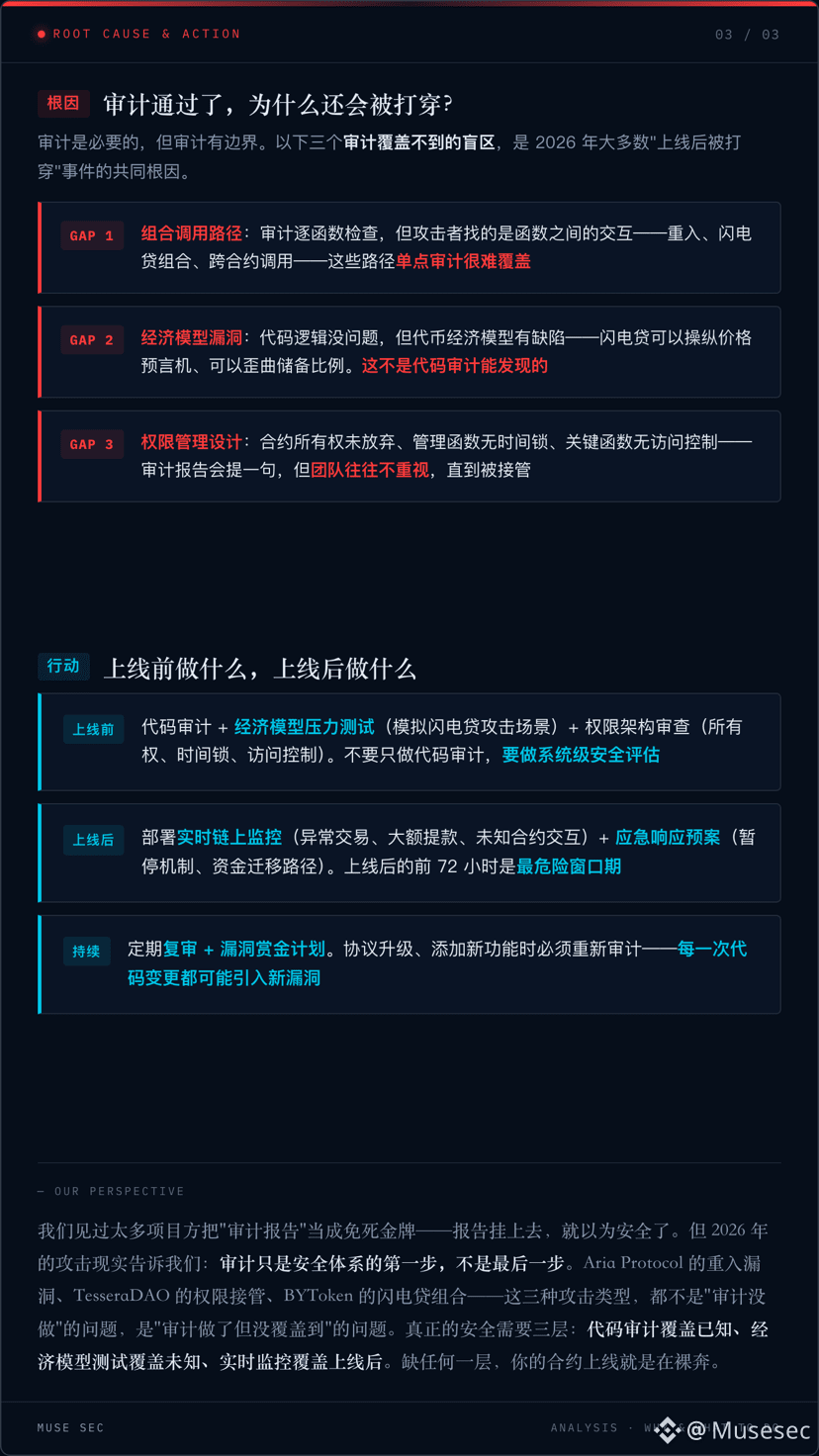
Audits passed ≠ it is safe.
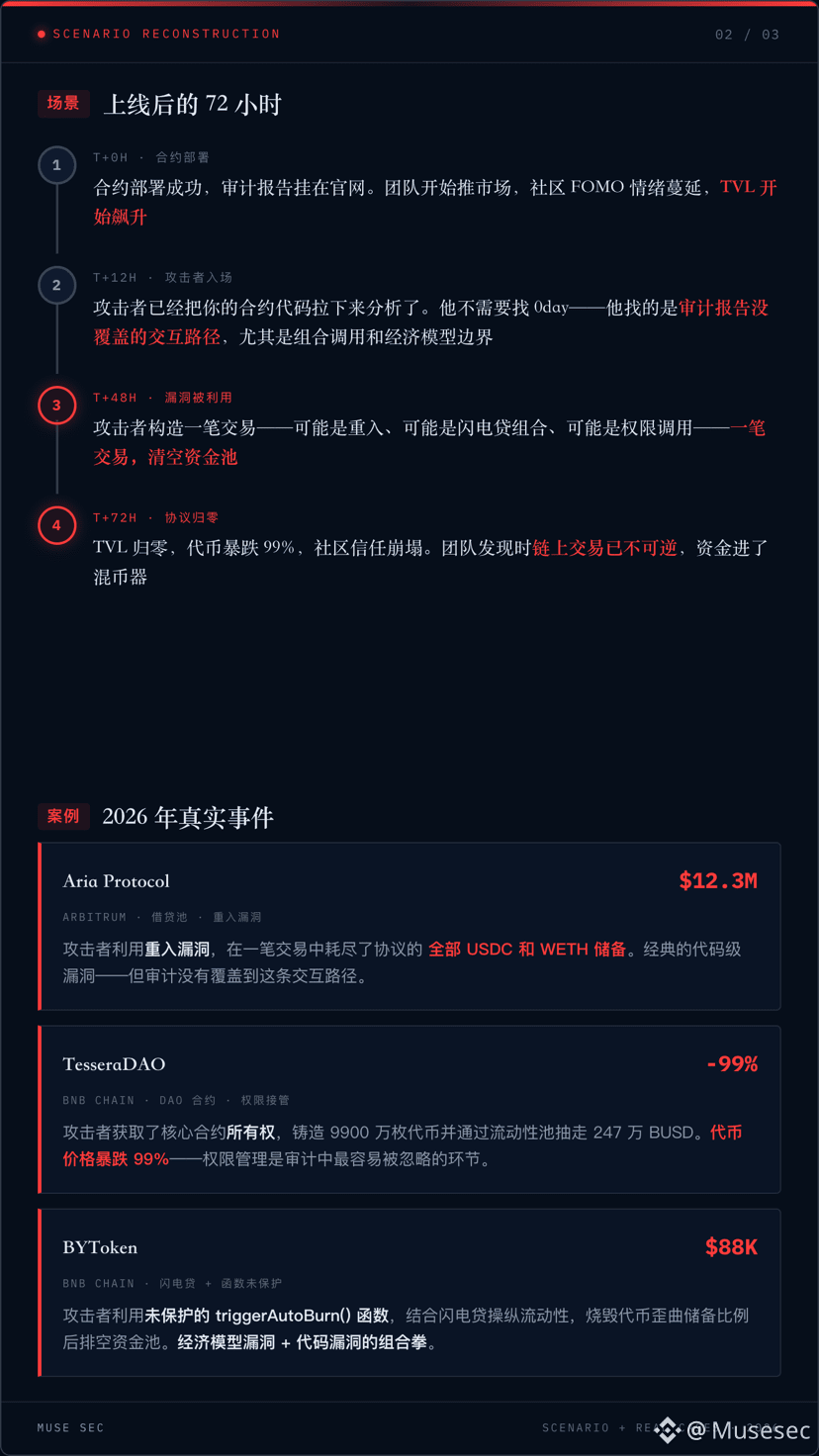
Within 72h of going live: Aria was emptied of $12.3M, TesseraDAO tokens crashed 99%, and BYToken suffered a flash-loan combination attack. An audit is just the first step, not the last step.
#Web3Security #defi #SmartContract
Audits passed ≠ it is safe.
Within 72h of going live: Aria was emptied of $12.3M, TesseraDAO tokens crashed 99%, and BYToken suffered a flash-loan combination attack. An audit is just the first step, not the last step.
#Web3Security #defi #SmartContract
Within 72h of going live: Aria was emptied of $12.3M, TesseraDAO tokens crashed 99%, and BYToken suffered a flash-loan combination attack. An audit is just the first step, not the last step.
#Web3Security #defi #SmartContract

295

·
--
𝗪𝗵𝗶𝗹𝗲 𝗼𝘁𝗵𝗲𝗿𝘀 𝘀𝗹𝗲𝗽𝘁, $𝗣𝗔𝗥𝗧𝗜 𝗾𝘂𝗶𝗲𝘁𝗹𝘆 𝗽𝗿𝗶𝗻𝘁𝗲𝗱 +𝟳.𝟮𝟲% 𝘁𝗼𝗱𝗮𝘆 𝘄𝗵𝘆 𝗻𝗼𝘄?
SmartContract season + Chain Abstraction narrative is waking buyers up 👀
Undervalued sleeper gem with real UX direction from @ParticleNtwrk timing usually beats hype ⚡ #SmartContract
𝗪𝗵𝗶𝗹𝗲 𝗼𝘁𝗵𝗲𝗿𝘀 𝘀𝗹𝗲𝗽𝘁, $𝗣𝗔𝗥𝗧𝗜 𝗾𝘂𝗶𝗲𝘁𝗹𝘆 𝗽𝗿𝗶𝗻𝘁𝗲𝗱 +𝟳.𝟮𝟲% 𝘁𝗼𝗱𝗮𝘆 𝘄𝗵𝘆 𝗻𝗼𝘄?
SmartContract season + Chain Abstraction narrative is waking buyers up 👀
Undervalued sleeper gem with real UX direction from @ParticleNtwrk timing usually beats hype ⚡ #SmartContract
SmartContract season + Chain Abstraction narrative is waking buyers up 👀
Undervalued sleeper gem with real UX direction from @ParticleNtwrk timing usually beats hype ⚡ #SmartContract
68

·
--
$TAIKO VULNERABILITY IDENTIFIED AND REMEDIATION PLAN IN PROGRESS 🔍
The recent exploit of the $TAIKO ERC20 Vault on Ethereum, resulting in a loss exceeding $1 million, has been traced to a specific root cause. The development team has confirmed that a remediation plan is currently in motion to restore blockchain operations within the coming days.
Market participants should monitor the protocol for stability updates as the team collaborates with the DAO Council to address user impact. Given the sensitivity of smart contract exploits, maintaining caution until the network is fully restored is the prudent approach. How do you evaluate the protocol's recovery speed in this situation?
Not financial advice. Always manage your risk.
#TAIKO #SmartContract #CryptoSecurity #Blockchain
⚡
$TAIKO VULNERABILITY IDENTIFIED AND REMEDIATION PLAN IN PROGRESS 🔍
The recent exploit of the $TAIKO ERC20 Vault on Ethereum, resulting in a loss exceeding $1 million, has been traced to a specific root cause. The development team has confirmed that a remediation plan is currently in motion to restore blockchain operations within the coming days.
Market participants should monitor the protocol for stability updates as the team collaborates with the DAO Council to address user impact. Given the sensitivity of smart contract exploits, maintaining caution until the network is fully restored is the prudent approach. How do you evaluate the protocol's recovery speed in this situation?
Not financial advice. Always manage your risk.
#TAIKO #SmartContract #CryptoSecurity #Blockchain
⚡
The recent exploit of the $TAIKO ERC20 Vault on Ethereum, resulting in a loss exceeding $1 million, has been traced to a specific root cause. The development team has confirmed that a remediation plan is currently in motion to restore blockchain operations within the coming days.
Market participants should monitor the protocol for stability updates as the team collaborates with the DAO Council to address user impact. Given the sensitivity of smart contract exploits, maintaining caution until the network is fully restored is the prudent approach. How do you evaluate the protocol's recovery speed in this situation?
Not financial advice. Always manage your risk.
#TAIKO #SmartContract #CryptoSecurity #Blockchain
⚡
81

📚 Important lesson on $SAND today as 500M tokens unexpectedly enter circulation! 🎯
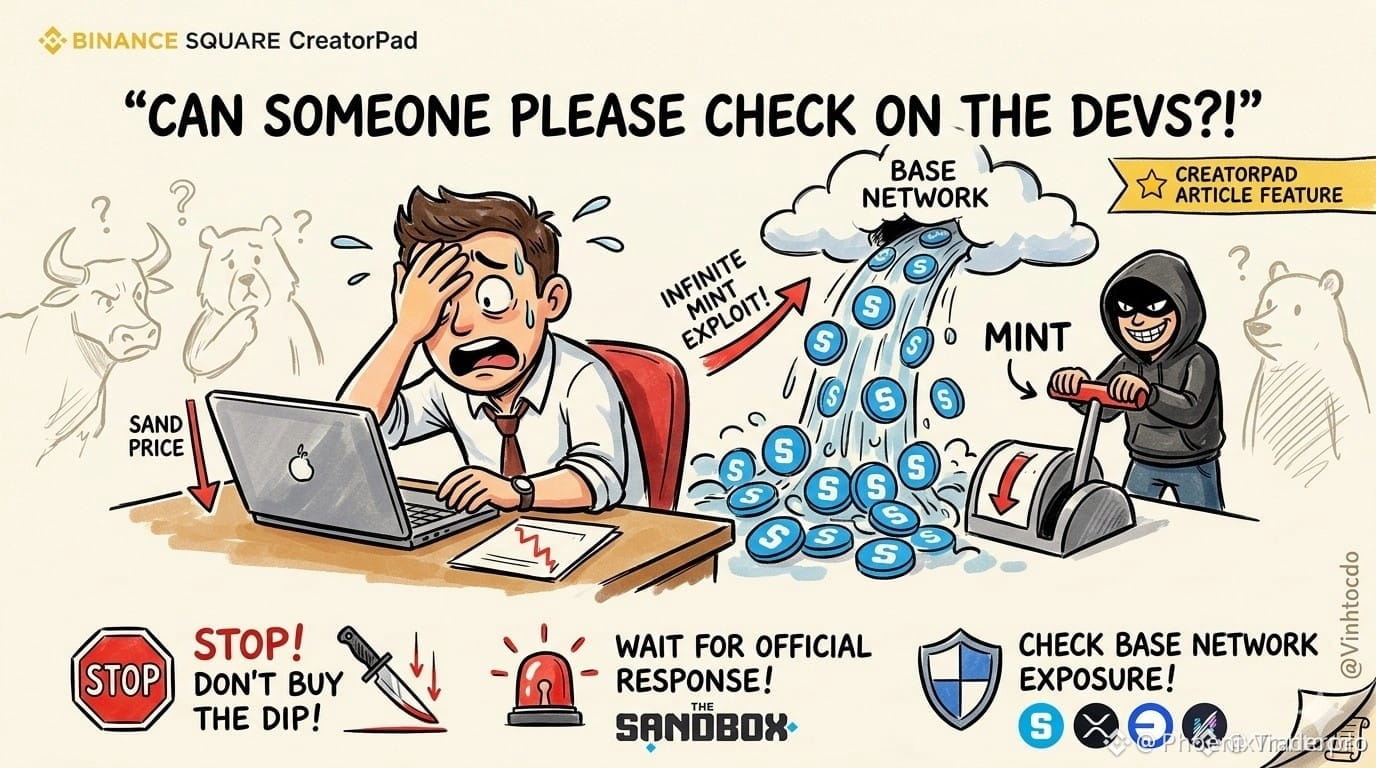
There's a lot of noise in the market after a contract flaw on Base printed over 500M $SAND out of thin air. 🔍 Think of it like flooding a market with extra supply—when supply inflates instantly, the traditional demand zones break down until the market recalibrates to find true equilibrium.
Trying to long this high-volatility event right now isn't trading; it's gambling. Remember team: risk first, always. Slow is smooth when navigating heavy token dilution. The best move is to step aside, monitor the official protocol response, do your homework, and protect your capital before touching the price action.
💬 Are you keeping your capital safe on the sidelines, or waiting for solid confirmation before re-evaluating structural support? 👍
⚠️ Not financial advice. Always manage your risk. 🛡️
#SAND #SmartContract #Crypto #RiskManagement
Learn it. Trade it. Repeat.
📚 Important lesson on $SAND today as 500M tokens unexpectedly enter circulation! 🎯
There's a lot of noise in the market after a contract flaw on Base printed over 500M $SAND out of thin air. 🔍 Think of it like flooding a market with extra supply—when supply inflates instantly, the traditional demand zones break down until the market recalibrates to find true equilibrium.
Trying to long this high-volatility event right now isn't trading; it's gambling. Remember team: risk first, always. Slow is smooth when navigating heavy token dilution. The best move is to step aside, monitor the official protocol response, do your homework, and protect your capital before touching the price action.
💬 Are you keeping your capital safe on the sidelines, or waiting for solid confirmation before re-evaluating structural support? 👍
⚠️ Not financial advice. Always manage your risk. 🛡️
#SAND #SmartContract #Crypto #RiskManagement
Learn it. Trade it. Repeat.
There's a lot of noise in the market after a contract flaw on Base printed over 500M $SAND out of thin air. 🔍 Think of it like flooding a market with extra supply—when supply inflates instantly, the traditional demand zones break down until the market recalibrates to find true equilibrium.
Trying to long this high-volatility event right now isn't trading; it's gambling. Remember team: risk first, always. Slow is smooth when navigating heavy token dilution. The best move is to step aside, monitor the official protocol response, do your homework, and protect your capital before touching the price action.
💬 Are you keeping your capital safe on the sidelines, or waiting for solid confirmation before re-evaluating structural support? 👍
⚠️ Not financial advice. Always manage your risk. 🛡️
#SAND #SmartContract #Crypto #RiskManagement
Learn it. Trade it. Repeat.
62

·
--
$ETH
At 16:00 UTC on the 18th, it plunged to 2327.32. At 12:00 UTC on the 20th, a single 4h bullish candle surged from 2383 to 2477.7 on $3842.4M in volume—the heaviest of the last 30 candles.
This isn't an oversold bounce.
The second-largest smart contract chain and the heart of the DeFi ecosystem. For a coin like this, the structure of one big bullish candle is worth more than a hundred headlines.
【Price Action Signals】
30-candle range: high 2493.48, low 2327.32. Two tests after the low: 2333.18 and 2370.74, with the second low higher. 2477.7 had been resistance over the last 10 candles, and one candle broke straight through it. The only single bearish candle after the breakout was the pullback candle. The breached resistance has flipped to support; above it is the 30-candle high at 2493.48.
【Market Sentiment】
Funding rate: +0.0076%/8h, slightly positive and nowhere near overheated. 24h: +1.43%. Mark price and spot price are almost identical, with no divergence between futures and spot. No panic, no euphoria—just a quiet market starting to reach a consensus.
【Whale Activity】
The $3842.4M breakout candle was driven by market orders, not retail volume. Look at the next pullback candle: $908.5M, only about a quarter of the breakout candle's volume. No one bailed after the breakout. The pullback closed above the midpoint of the breakout candle, without dipping deep—buyers are stepping in below.
【Volume and Price Structure】
Volume sequence: $1390.5M on the candle that made the 2327.32 low, $1530.3M on the first recovery, $3842.4M on the breakout, and $908.5M on the pullback. Latest volume ratio: 0.78, with pullback volume below the average of the previous 20 candles. Total 24h volume: $8163.0M; liquidity isn't an issue. Volume rises as price rises, and contracts as price pulls back—textbook action.
【Candlestick Details】
The candle at 16:00 on the 18th opened at its high of 2378.22 and immediately moved down—a panic low. The next candle rebounded from 2333.18 and closed at 2409.12, leaving a long lower wick. At 00:00 on the 20th, another wick dipped to 2370.74. The two wicks are clearly visible on the chart. The breakout candle at 12:00 had a very short upper wick—not a fakeout.
【Nini's Plan】
Bullish bias. Current price: 2437.51.
- Holding: Stay in if price holds above 2477.7 on strong volume. Room to move opens up only above 2493.48.
- No position: Don't chase. Wait for a retest of 2424 or the 2370–2383 area.
- Stop-loss: If a 4h candle closes below 2370.74, the double-bottom thesis is invalidated. Exit.
After a high-volume bottom, there's usually a move up. I'm not betting on when the top will come; I'm betting on whether the bottom holds.
For a customized strategy, you can contact Nini.
#ETH #Layer1 #SmartContract
$ETH
At 16:00 UTC on the 18th, it plunged to 2327.32. At 12:00 UTC on the 20th, a single 4h bullish candle surged from 2383 to 2477.7 on $3842.4M in volume—the heaviest of the last 30 candles.
This isn't an oversold bounce.
The second-largest smart contract chain and the heart of the DeFi ecosystem. For a coin like this, the structure of one big bullish candle is worth more than a hundred headlines.
【Price Action Signals】
30-candle range: high 2493.48, low 2327.32. Two tests after the low: 2333.18 and 2370.74, with the second low higher. 2477.7 had been resistance over the last 10 candles, and one candle broke straight through it. The only single bearish candle after the breakout was the pullback candle. The breached resistance has flipped to support; above it is the 30-candle high at 2493.48.
【Market Sentiment】
Funding rate: +0.0076%/8h, slightly positive and nowhere near overheated. 24h: +1.43%. Mark price and spot price are almost identical, with no divergence between futures and spot. No panic, no euphoria—just a quiet market starting to reach a consensus.
【Whale Activity】
The $3842.4M breakout candle was driven by market orders, not retail volume. Look at the next pullback candle: $908.5M, only about a quarter of the breakout candle's volume. No one bailed after the breakout. The pullback closed above the midpoint of the breakout candle, without dipping deep—buyers are stepping in below.
【Volume and Price Structure】
Volume sequence: $1390.5M on the candle that made the 2327.32 low, $1530.3M on the first recovery, $3842.4M on the breakout, and $908.5M on the pullback. Latest volume ratio: 0.78, with pullback volume below the average of the previous 20 candles. Total 24h volume: $8163.0M; liquidity isn't an issue. Volume rises as price rises, and contracts as price pulls back—textbook action.
【Candlestick Details】
The candle at 16:00 on the 18th opened at its high of 2378.22 and immediately moved down—a panic low. The next candle rebounded from 2333.18 and closed at 2409.12, leaving a long lower wick. At 00:00 on the 20th, another wick dipped to 2370.74. The two wicks are clearly visible on the chart. The breakout candle at 12:00 had a very short upper wick—not a fakeout.
【Nini's Plan】
Bullish bias. Current price: 2437.51.
- Holding: Stay in if price holds above 2477.7 on strong volume. Room to move opens up only above 2493.48.
- No position: Don't chase. Wait for a retest of 2424 or the 2370–2383 area.
- Stop-loss: If a 4h candle closes below 2370.74, the double-bottom thesis is invalidated. Exit.
After a high-volume bottom, there's usually a move up. I'm not betting on when the top will come; I'm betting on whether the bottom holds.
For a customized strategy, you can contact Nini.
#ETH #Layer1 #SmartContract
At 16:00 UTC on the 18th, it plunged to 2327.32. At 12:00 UTC on the 20th, a single 4h bullish candle surged from 2383 to 2477.7 on $3842.4M in volume—the heaviest of the last 30 candles.
This isn't an oversold bounce.
The second-largest smart contract chain and the heart of the DeFi ecosystem. For a coin like this, the structure of one big bullish candle is worth more than a hundred headlines.
【Price Action Signals】
30-candle range: high 2493.48, low 2327.32. Two tests after the low: 2333.18 and 2370.74, with the second low higher. 2477.7 had been resistance over the last 10 candles, and one candle broke straight through it. The only single bearish candle after the breakout was the pullback candle. The breached resistance has flipped to support; above it is the 30-candle high at 2493.48.
【Market Sentiment】
Funding rate: +0.0076%/8h, slightly positive and nowhere near overheated. 24h: +1.43%. Mark price and spot price are almost identical, with no divergence between futures and spot. No panic, no euphoria—just a quiet market starting to reach a consensus.
【Whale Activity】
The $3842.4M breakout candle was driven by market orders, not retail volume. Look at the next pullback candle: $908.5M, only about a quarter of the breakout candle's volume. No one bailed after the breakout. The pullback closed above the midpoint of the breakout candle, without dipping deep—buyers are stepping in below.
【Volume and Price Structure】
Volume sequence: $1390.5M on the candle that made the 2327.32 low, $1530.3M on the first recovery, $3842.4M on the breakout, and $908.5M on the pullback. Latest volume ratio: 0.78, with pullback volume below the average of the previous 20 candles. Total 24h volume: $8163.0M; liquidity isn't an issue. Volume rises as price rises, and contracts as price pulls back—textbook action.
【Candlestick Details】
The candle at 16:00 on the 18th opened at its high of 2378.22 and immediately moved down—a panic low. The next candle rebounded from 2333.18 and closed at 2409.12, leaving a long lower wick. At 00:00 on the 20th, another wick dipped to 2370.74. The two wicks are clearly visible on the chart. The breakout candle at 12:00 had a very short upper wick—not a fakeout.
【Nini's Plan】
Bullish bias. Current price: 2437.51.
- Holding: Stay in if price holds above 2477.7 on strong volume. Room to move opens up only above 2493.48.
- No position: Don't chase. Wait for a retest of 2424 or the 2370–2383 area.
- Stop-loss: If a 4h candle closes below 2370.74, the double-bottom thesis is invalidated. Exit.
After a high-volume bottom, there's usually a move up. I'm not betting on when the top will come; I'm betting on whether the bottom holds.
For a customized strategy, you can contact Nini.
#ETH #Layer1 #SmartContract
22
·
--
$ADA Today's chart is interesting. Not the way it fell—down 5.49% in 24 hours isn't unusual for a Layer 1. What's unusual is where it fell from, and who's selling.
Market signals. The 4-hour candle at 10-14 12:00 opened at 0.2346 and closed at 0.2268, with 70.2M in trading volume—the largest in nearly 30 candles. That single candle broke below 0.234, the bottom of the previous six-candle range. Then at 10-15 00:00, another candle came in at 58.4M, with a low of 0.2155. The 24-hour high was 0.2371, the low was 0.2155, and trading volume was $214.4 million.
Whale activity. Look at the candle at 10-13 00:00: 64.1M in volume, a dip to 0.2239, then a recovery to close at 0.2367. A long downside wick, then a full recovery—a textbook bullish defense. After that, six 4-hour candles moved sideways between 0.2367 and 0.239, while volume gradually shrank to 10.9M. It looked like calm consolidation, but at 10-14 12:00, 70.2M came crashing in. Retail panic doesn't happen this neatly. This was a planned breakdown.
Market sentiment. The funding rate is -0.0026%/8h, meaning shorts are paying longs, and the rate is still very small. After a 5.49% drop, a funding rate at this level suggests nobody is heavily betting on a further decline. This isn't a wave of shorts entering the market—it's longs getting out. Those are two completely different things.
Volume and price structure. Since 10-12 12:00, every move down has come with high volume: 48.1M, 42.4M, 70.2M, and 58.4M—four large bearish candles. The rebound volume is much smaller: 18.7M and 17.7M. Heavy selling, light buying—the structure is bearish.
Candlestick details. After 0.2155, there were two consecutive bullish candles, at 0.2221 and 0.2223. But the latest candle's volume was only 5.0M, with a volume ratio of 0.15 compared with the average of the previous 20 candles. This isn't a rebound; the downward momentum hasn't run its course. The 0.2155 support has held—for now.
ADA is Cardano, a Layer 1 with smart contracts, settlement, and finality. No need to rehash the project; let's look at the price. Across 30 candles, the high was 0.2594 and the low was 0.2155—a nearly 17% pullback in five days. When a large-cap asset falls like this and nobody steps in to buy, the market has already given its answer.
Nini's plan:
Current price: 0.2222. Outlook: neutral to bearish.
0.2155 is the line in the sand. If it breaks on high volume, don't buy the dip; wait for the price to stabilize.
If it holds, first watch for a recovery above 0.2268—the opening price of the large bearish candle at 10-14 12:00—then 0.2312.
The real resistance is at 0.239. Only a high-volume bullish candle closing back above that level would confirm this breakdown was a false move and make a sentiment recovery plausible.
With a volume ratio of 0.15, the selling momentum hasn't run out. Don't act on a low-volume rebound. Wait.
If you need a customized strategy, you can reach out to Nini.
#ADA #Layer1 #SmartContract
$ADA Today's chart is interesting. Not the way it fell—down 5.49% in 24 hours isn't unusual for a Layer 1. What's unusual is where it fell from, and who's selling.
Market signals. The 4-hour candle at 10-14 12:00 opened at 0.2346 and closed at 0.2268, with 70.2M in trading volume—the largest in nearly 30 candles. That single candle broke below 0.234, the bottom of the previous six-candle range. Then at 10-15 00:00, another candle came in at 58.4M, with a low of 0.2155. The 24-hour high was 0.2371, the low was 0.2155, and trading volume was $214.4 million.
Whale activity. Look at the candle at 10-13 00:00: 64.1M in volume, a dip to 0.2239, then a recovery to close at 0.2367. A long downside wick, then a full recovery—a textbook bullish defense. After that, six 4-hour candles moved sideways between 0.2367 and 0.239, while volume gradually shrank to 10.9M. It looked like calm consolidation, but at 10-14 12:00, 70.2M came crashing in. Retail panic doesn't happen this neatly. This was a planned breakdown.
Market sentiment. The funding rate is -0.0026%/8h, meaning shorts are paying longs, and the rate is still very small. After a 5.49% drop, a funding rate at this level suggests nobody is heavily betting on a further decline. This isn't a wave of shorts entering the market—it's longs getting out. Those are two completely different things.
Volume and price structure. Since 10-12 12:00, every move down has come with high volume: 48.1M, 42.4M, 70.2M, and 58.4M—four large bearish candles. The rebound volume is much smaller: 18.7M and 17.7M. Heavy selling, light buying—the structure is bearish.
Candlestick details. After 0.2155, there were two consecutive bullish candles, at 0.2221 and 0.2223. But the latest candle's volume was only 5.0M, with a volume ratio of 0.15 compared with the average of the previous 20 candles. This isn't a rebound; the downward momentum hasn't run its course. The 0.2155 support has held—for now.
ADA is Cardano, a Layer 1 with smart contracts, settlement, and finality. No need to rehash the project; let's look at the price. Across 30 candles, the high was 0.2594 and the low was 0.2155—a nearly 17% pullback in five days. When a large-cap asset falls like this and nobody steps in to buy, the market has already given its answer.
Nini's plan:
Current price: 0.2222. Outlook: neutral to bearish.
0.2155 is the line in the sand. If it breaks on high volume, don't buy the dip; wait for the price to stabilize.
If it holds, first watch for a recovery above 0.2268—the opening price of the large bearish candle at 10-14 12:00—then 0.2312.
The real resistance is at 0.239. Only a high-volume bullish candle closing back above that level would confirm this breakdown was a false move and make a sentiment recovery plausible.
With a volume ratio of 0.15, the selling momentum hasn't run out. Don't act on a low-volume rebound. Wait.
If you need a customized strategy, you can reach out to Nini.
#ADA #Layer1 #SmartContract
Market signals. The 4-hour candle at 10-14 12:00 opened at 0.2346 and closed at 0.2268, with 70.2M in trading volume—the largest in nearly 30 candles. That single candle broke below 0.234, the bottom of the previous six-candle range. Then at 10-15 00:00, another candle came in at 58.4M, with a low of 0.2155. The 24-hour high was 0.2371, the low was 0.2155, and trading volume was $214.4 million.
Whale activity. Look at the candle at 10-13 00:00: 64.1M in volume, a dip to 0.2239, then a recovery to close at 0.2367. A long downside wick, then a full recovery—a textbook bullish defense. After that, six 4-hour candles moved sideways between 0.2367 and 0.239, while volume gradually shrank to 10.9M. It looked like calm consolidation, but at 10-14 12:00, 70.2M came crashing in. Retail panic doesn't happen this neatly. This was a planned breakdown.
Market sentiment. The funding rate is -0.0026%/8h, meaning shorts are paying longs, and the rate is still very small. After a 5.49% drop, a funding rate at this level suggests nobody is heavily betting on a further decline. This isn't a wave of shorts entering the market—it's longs getting out. Those are two completely different things.
Volume and price structure. Since 10-12 12:00, every move down has come with high volume: 48.1M, 42.4M, 70.2M, and 58.4M—four large bearish candles. The rebound volume is much smaller: 18.7M and 17.7M. Heavy selling, light buying—the structure is bearish.
Candlestick details. After 0.2155, there were two consecutive bullish candles, at 0.2221 and 0.2223. But the latest candle's volume was only 5.0M, with a volume ratio of 0.15 compared with the average of the previous 20 candles. This isn't a rebound; the downward momentum hasn't run its course. The 0.2155 support has held—for now.
ADA is Cardano, a Layer 1 with smart contracts, settlement, and finality. No need to rehash the project; let's look at the price. Across 30 candles, the high was 0.2594 and the low was 0.2155—a nearly 17% pullback in five days. When a large-cap asset falls like this and nobody steps in to buy, the market has already given its answer.
Nini's plan:
Current price: 0.2222. Outlook: neutral to bearish.
0.2155 is the line in the sand. If it breaks on high volume, don't buy the dip; wait for the price to stabilize.
If it holds, first watch for a recovery above 0.2268—the opening price of the large bearish candle at 10-14 12:00—then 0.2312.
The real resistance is at 0.239. Only a high-volume bullish candle closing back above that level would confirm this breakdown was a false move and make a sentiment recovery plausible.
With a volume ratio of 0.15, the selling momentum hasn't run out. Don't act on a low-volume rebound. Wait.
If you need a customized strategy, you can reach out to Nini.
#ADA #Layer1 #SmartContract
45

Odos Protocol will cease operations on July 30. Users have exactly 7 days to withdraw.
The team suddenly goes silent. Legal pressure is tightening, or operating costs exceed revenue, forcing the project to shut down. The DeFi market loses an optimal gas-fee routing tool.
Impact: Trading transaction flows will shift to competing DEX aggregator platforms. Local network congestion risks may occur.
Emergency action: Connect your personal wallet. Withdraw all liquidity before the July 30 deadline. After that point, the web interface will be closed. Direct smart contract interactions require a high level of technical expertise. Beware of scam links impersonating support.
Lesson: DeFi models always carry the risk of sudden collapse. Self-custody your private keys. Diversify trading wallets to reduce systemic risk. DYOR.
#DeFi #Altcoin #DEX #SmartContract
Odos Protocol will cease operations on July 30. Users have exactly 7 days to withdraw.
The team suddenly goes silent. Legal pressure is tightening, or operating costs exceed revenue, forcing the project to shut down. The DeFi market loses an optimal gas-fee routing tool.
Impact: Trading transaction flows will shift to competing DEX aggregator platforms. Local network congestion risks may occur.
Emergency action: Connect your personal wallet. Withdraw all liquidity before the July 30 deadline. After that point, the web interface will be closed. Direct smart contract interactions require a high level of technical expertise. Beware of scam links impersonating support.
Lesson: DeFi models always carry the risk of sudden collapse. Self-custody your private keys. Diversify trading wallets to reduce systemic risk. DYOR.
#DeFi #Altcoin #DEX #SmartContract
The team suddenly goes silent. Legal pressure is tightening, or operating costs exceed revenue, forcing the project to shut down. The DeFi market loses an optimal gas-fee routing tool.
Impact: Trading transaction flows will shift to competing DEX aggregator platforms. Local network congestion risks may occur.
Emergency action: Connect your personal wallet. Withdraw all liquidity before the July 30 deadline. After that point, the web interface will be closed. Direct smart contract interactions require a high level of technical expertise. Beware of scam links impersonating support.
Lesson: DeFi models always carry the risk of sudden collapse. Self-custody your private keys. Diversify trading wallets to reduce systemic risk. DYOR.
#DeFi #Altcoin #DEX #SmartContract
78
·
--
$ETH
A single long upper wick wiped out all bullish fantasies.
On the 4-hour timeframe, starting from 1855 it rallied in a straight line up to 1982. Then, a massive long upper-wick candle with a trading volume of 1.6 million tokens directly pushed the price back to 1917. After that, all rebounds failed. Twice, 1928 was met with resistance, and the price slid all the way down to 1903.
The bulls made a big move. A single bearish candle took back everything.
Ethereum, the king of public chains, the ancestor of smart contracts. Now the price is at this level—no more talk, just look at the chart.
Chart signals—1982 is a clear near-term iron ceiling. After touching it, three consecutive 4h candles closed lower, with each high lower than the last. 1928 has turned into a pressure level; both attempts to push up were knocked back. Price has already fallen below the short-term moving-average cluster, and the 1900 psychological level is in danger. If it can’t hold, then you should look at 1865.
Market sentiment—funding rate is 0.0027%, extremely low, with almost no directional bias. Bulls don’t have the confidence to add aggressively, and bears also aren’t making large-scale short positions. This kind of calm usually precedes a breakout. During the rally from 1855 to 1982, retail chased the price aggressively, sending sentiment to the max—then it was taken away with one move. The market is now quiet; the people who chased are trapped, and those considering cutting losses haven’t acted yet.
Whale activity—those 1.6 million tokens of the top candle were not done by retail. Around 1982, whales concentrated distribution, with clean and decisive tactics. After that, every rebound came with reduced positioning: 1928, 1910, 1903—each bounce was sold into. Total 4h trading volume is $9.1 billion, but the bulk is concentrated in the top area. Smart money has already left; what remains is standing guard.
Volume-price structure—when price was pushed from 1855 to 1982, volume expanded. But as it fell from 1982, volume also expanded. A drop on rising volume isn’t a good sign—it suggests that at each layer, people are急着赶紧跑 (eagerly fleeing). In the rebound range from 1919 to 1928, the volume and momentum clearly shrank—this is a low-volume rebound and isn’t sustainable. Support lies around 1865 to 1870, which is the launch point and the final line of defense.
Candlestick details—on the top candle, the highest point was 1982; the close was 1926; the upper wick was 56 USD. The body is a bearish candle, and bears controlled the field from the open. The next two candles both surged then failed, with upper wicks getting longer each time. Every attempt by the bulls to counterattack was pressed back by the bears. In the most recent candles, the bodies have been getting smaller and volatility has narrowed—quiet before the storm.
My view—slightly bearish. The top structure is clear, distribution is complete, and rebounds lack strength. The probability that 1900 cannot be held is high.
Nini’s plan—current price: 1903. Don’t catch falling knives on the short term. If it breaks below 1890, short with light size; stop-loss at 1928; target 1865. If 1900 can hold, wait for a second pullback that doesn’t break before considering a short-term long. No rush.
#ETH #Layer1 #SmartContract
$ETH
A single long upper wick wiped out all bullish fantasies.
On the 4-hour timeframe, starting from 1855 it rallied in a straight line up to 1982. Then, a massive long upper-wick candle with a trading volume of 1.6 million tokens directly pushed the price back to 1917. After that, all rebounds failed. Twice, 1928 was met with resistance, and the price slid all the way down to 1903.
The bulls made a big move. A single bearish candle took back everything.
Ethereum, the king of public chains, the ancestor of smart contracts. Now the price is at this level—no more talk, just look at the chart.
Chart signals—1982 is a clear near-term iron ceiling. After touching it, three consecutive 4h candles closed lower, with each high lower than the last. 1928 has turned into a pressure level; both attempts to push up were knocked back. Price has already fallen below the short-term moving-average cluster, and the 1900 psychological level is in danger. If it can’t hold, then you should look at 1865.
Market sentiment—funding rate is 0.0027%, extremely low, with almost no directional bias. Bulls don’t have the confidence to add aggressively, and bears also aren’t making large-scale short positions. This kind of calm usually precedes a breakout. During the rally from 1855 to 1982, retail chased the price aggressively, sending sentiment to the max—then it was taken away with one move. The market is now quiet; the people who chased are trapped, and those considering cutting losses haven’t acted yet.
Whale activity—those 1.6 million tokens of the top candle were not done by retail. Around 1982, whales concentrated distribution, with clean and decisive tactics. After that, every rebound came with reduced positioning: 1928, 1910, 1903—each bounce was sold into. Total 4h trading volume is $9.1 billion, but the bulk is concentrated in the top area. Smart money has already left; what remains is standing guard.
Volume-price structure—when price was pushed from 1855 to 1982, volume expanded. But as it fell from 1982, volume also expanded. A drop on rising volume isn’t a good sign—it suggests that at each layer, people are急着赶紧跑 (eagerly fleeing). In the rebound range from 1919 to 1928, the volume and momentum clearly shrank—this is a low-volume rebound and isn’t sustainable. Support lies around 1865 to 1870, which is the launch point and the final line of defense.
Candlestick details—on the top candle, the highest point was 1982; the close was 1926; the upper wick was 56 USD. The body is a bearish candle, and bears controlled the field from the open. The next two candles both surged then failed, with upper wicks getting longer each time. Every attempt by the bulls to counterattack was pressed back by the bears. In the most recent candles, the bodies have been getting smaller and volatility has narrowed—quiet before the storm.
My view—slightly bearish. The top structure is clear, distribution is complete, and rebounds lack strength. The probability that 1900 cannot be held is high.
Nini’s plan—current price: 1903. Don’t catch falling knives on the short term. If it breaks below 1890, short with light size; stop-loss at 1928; target 1865. If 1900 can hold, wait for a second pullback that doesn’t break before considering a short-term long. No rush.
#ETH #Layer1 #SmartContract
A single long upper wick wiped out all bullish fantasies.
On the 4-hour timeframe, starting from 1855 it rallied in a straight line up to 1982. Then, a massive long upper-wick candle with a trading volume of 1.6 million tokens directly pushed the price back to 1917. After that, all rebounds failed. Twice, 1928 was met with resistance, and the price slid all the way down to 1903.
The bulls made a big move. A single bearish candle took back everything.
Ethereum, the king of public chains, the ancestor of smart contracts. Now the price is at this level—no more talk, just look at the chart.
Chart signals—1982 is a clear near-term iron ceiling. After touching it, three consecutive 4h candles closed lower, with each high lower than the last. 1928 has turned into a pressure level; both attempts to push up were knocked back. Price has already fallen below the short-term moving-average cluster, and the 1900 psychological level is in danger. If it can’t hold, then you should look at 1865.
Market sentiment—funding rate is 0.0027%, extremely low, with almost no directional bias. Bulls don’t have the confidence to add aggressively, and bears also aren’t making large-scale short positions. This kind of calm usually precedes a breakout. During the rally from 1855 to 1982, retail chased the price aggressively, sending sentiment to the max—then it was taken away with one move. The market is now quiet; the people who chased are trapped, and those considering cutting losses haven’t acted yet.
Whale activity—those 1.6 million tokens of the top candle were not done by retail. Around 1982, whales concentrated distribution, with clean and decisive tactics. After that, every rebound came with reduced positioning: 1928, 1910, 1903—each bounce was sold into. Total 4h trading volume is $9.1 billion, but the bulk is concentrated in the top area. Smart money has already left; what remains is standing guard.
Volume-price structure—when price was pushed from 1855 to 1982, volume expanded. But as it fell from 1982, volume also expanded. A drop on rising volume isn’t a good sign—it suggests that at each layer, people are急着赶紧跑 (eagerly fleeing). In the rebound range from 1919 to 1928, the volume and momentum clearly shrank—this is a low-volume rebound and isn’t sustainable. Support lies around 1865 to 1870, which is the launch point and the final line of defense.
Candlestick details—on the top candle, the highest point was 1982; the close was 1926; the upper wick was 56 USD. The body is a bearish candle, and bears controlled the field from the open. The next two candles both surged then failed, with upper wicks getting longer each time. Every attempt by the bulls to counterattack was pressed back by the bears. In the most recent candles, the bodies have been getting smaller and volatility has narrowed—quiet before the storm.
My view—slightly bearish. The top structure is clear, distribution is complete, and rebounds lack strength. The probability that 1900 cannot be held is high.
Nini’s plan—current price: 1903. Don’t catch falling knives on the short term. If it breaks below 1890, short with light size; stop-loss at 1928; target 1865. If 1900 can hold, wait for a second pullback that doesn’t break before considering a short-term long. No rush.
#ETH #Layer1 #SmartContract
373
·
--
$NEAR fell from 1.748 to 1.574, five straight days of declines, with not even a decent bounce. Today it barely managed to close as a small bullish candle back to 1.623—nowhere near enough to fill even a fraction of the drop.
The signals on the board are very clean. The bears are in control. On the 4-hour timeframe, it has been slipping from 1.748 all the way down; every rebound gets pushed back again. 1.734, 1.729, 1.700, 1.692, 1.672, 1.642, 1.612, 1.589—each 4-hour closing price is below the previous one. This is not consolidation; it’s a trend-driven drop. Today’s small bullish candle has a high of 1.629 and a low of 1.610, with an amplitude of only 1.2%. Volume is 2.85 million coins, one of the smallest among the last 30 candlesticks. The market isn’t even giving volatility—this isn’t ranging, because nobody wants to take the bag.
Sentiment is already cold. A 24-hour turnover of 45 million for an asset of NEAR’s size is relatively low. Volume at 27.81 million, weighted average price 1.6211, is almost the same as the current price, indicating there’s no directional buying/selling power throughout the day. Retail isn’t looking at this anymore. Funding rate is 0.01%, positive—meaning there are still some longs opening on the derivatives side, but the weak bullish willingness can’t support the spot. Mark price is 1.6234, index price is 1.6250; the mark is slightly below the index, which suggests the futures side is pressing down.
The actions of the big players are even more straightforward. The 4-hour candle at 1.586 had 10.5 million coins of volume—panic selling came out, and someone absorbed it. But after absorbing it, they didn’t lift price; it continued to be driven down to 1.574. Then came another 4-hour candle with 11.87 million in volume, and it still didn’t stop the fall. This suggests the main players are accumulating at lower levels, but the volume isn’t large enough, so they’re absorbing slowly. They’re waiting for a better price—or waiting for the overall market to give direction. This isn’t the time for the main players to do their work.
The volume-price structure tells the whole story: falling on expanding volume, rebounding on shrinking volume. In the move down from 1.693 to 1.650, the candlestick volume ranged from 8 million to 11 million—heavy volume with downward movement. What about the rebound phase? Volume dropped to 3 million to 5 million. That’s a classic volume-price divergence. Without volume support, any rebound is nothing but a paper tiger in front of overhead resistance. The 24-hour high is 1.637, the low is 1.605, amplitude only 2%—there isn’t even enough room to reliably do T.
The candlestick details are worth watching. In the last 30 4-hour candles, bullish closes are fewer than a third. The bullish bodies are generally smaller than 0.02. Upper wicks appear frequently, indicating heavy sell pressure overhead. 1.637 is the recent peak—hit three times and failed to break through. Below, 1.583 is the final line of defense, tested three times repeatedly; each time it gets yanked back with a long lower wick, but the rebounds are getting weaker each time. This kind of price action is called “a slow blade cutting—” not fatal, but it drains you.
NEAR’s blockchain and its sharding-based expansion tech are solid, and the ecosystem is being built out. But right now the market isn’t pricing in technology—it’s pricing in liquidity. Liquidity isn’t here. Big money is playing elsewhere.
Nini’s plan: slightly bearish. Current price is 1.6230 USDT. Don’t chase longs on a rebound into the 1.635–1.637 area—that’s prior high resistance; if it can’t break through, it gets sold/hammered down. If it breaks below 1.583 with volume, then look for 1.55 below. If you want to go long, wait for a bullish candle with volume to hold above 1.65—this isn’t the time. Keep position size within 20%. Place a stop loss below 1.57. Don’t fight the trend—wait until the trend turns before acting.
#NEAR #Layer1 #SmartContract
$NEAR fell from 1.748 to 1.574, five straight days of declines, with not even a decent bounce. Today it barely managed to close as a small bullish candle back to 1.623—nowhere near enough to fill even a fraction of the drop.
The signals on the board are very clean. The bears are in control. On the 4-hour timeframe, it has been slipping from 1.748 all the way down; every rebound gets pushed back again. 1.734, 1.729, 1.700, 1.692, 1.672, 1.642, 1.612, 1.589—each 4-hour closing price is below the previous one. This is not consolidation; it’s a trend-driven drop. Today’s small bullish candle has a high of 1.629 and a low of 1.610, with an amplitude of only 1.2%. Volume is 2.85 million coins, one of the smallest among the last 30 candlesticks. The market isn’t even giving volatility—this isn’t ranging, because nobody wants to take the bag.
Sentiment is already cold. A 24-hour turnover of 45 million for an asset of NEAR’s size is relatively low. Volume at 27.81 million, weighted average price 1.6211, is almost the same as the current price, indicating there’s no directional buying/selling power throughout the day. Retail isn’t looking at this anymore. Funding rate is 0.01%, positive—meaning there are still some longs opening on the derivatives side, but the weak bullish willingness can’t support the spot. Mark price is 1.6234, index price is 1.6250; the mark is slightly below the index, which suggests the futures side is pressing down.
The actions of the big players are even more straightforward. The 4-hour candle at 1.586 had 10.5 million coins of volume—panic selling came out, and someone absorbed it. But after absorbing it, they didn’t lift price; it continued to be driven down to 1.574. Then came another 4-hour candle with 11.87 million in volume, and it still didn’t stop the fall. This suggests the main players are accumulating at lower levels, but the volume isn’t large enough, so they’re absorbing slowly. They’re waiting for a better price—or waiting for the overall market to give direction. This isn’t the time for the main players to do their work.
The volume-price structure tells the whole story: falling on expanding volume, rebounding on shrinking volume. In the move down from 1.693 to 1.650, the candlestick volume ranged from 8 million to 11 million—heavy volume with downward movement. What about the rebound phase? Volume dropped to 3 million to 5 million. That’s a classic volume-price divergence. Without volume support, any rebound is nothing but a paper tiger in front of overhead resistance. The 24-hour high is 1.637, the low is 1.605, amplitude only 2%—there isn’t even enough room to reliably do T.
The candlestick details are worth watching. In the last 30 4-hour candles, bullish closes are fewer than a third. The bullish bodies are generally smaller than 0.02. Upper wicks appear frequently, indicating heavy sell pressure overhead. 1.637 is the recent peak—hit three times and failed to break through. Below, 1.583 is the final line of defense, tested three times repeatedly; each time it gets yanked back with a long lower wick, but the rebounds are getting weaker each time. This kind of price action is called “a slow blade cutting—” not fatal, but it drains you.
NEAR’s blockchain and its sharding-based expansion tech are solid, and the ecosystem is being built out. But right now the market isn’t pricing in technology—it’s pricing in liquidity. Liquidity isn’t here. Big money is playing elsewhere.
Nini’s plan: slightly bearish. Current price is 1.6230 USDT. Don’t chase longs on a rebound into the 1.635–1.637 area—that’s prior high resistance; if it can’t break through, it gets sold/hammered down. If it breaks below 1.583 with volume, then look for 1.55 below. If you want to go long, wait for a bullish candle with volume to hold above 1.65—this isn’t the time. Keep position size within 20%. Place a stop loss below 1.57. Don’t fight the trend—wait until the trend turns before acting.
#NEAR #Layer1 #SmartContract
The signals on the board are very clean. The bears are in control. On the 4-hour timeframe, it has been slipping from 1.748 all the way down; every rebound gets pushed back again. 1.734, 1.729, 1.700, 1.692, 1.672, 1.642, 1.612, 1.589—each 4-hour closing price is below the previous one. This is not consolidation; it’s a trend-driven drop. Today’s small bullish candle has a high of 1.629 and a low of 1.610, with an amplitude of only 1.2%. Volume is 2.85 million coins, one of the smallest among the last 30 candlesticks. The market isn’t even giving volatility—this isn’t ranging, because nobody wants to take the bag.
Sentiment is already cold. A 24-hour turnover of 45 million for an asset of NEAR’s size is relatively low. Volume at 27.81 million, weighted average price 1.6211, is almost the same as the current price, indicating there’s no directional buying/selling power throughout the day. Retail isn’t looking at this anymore. Funding rate is 0.01%, positive—meaning there are still some longs opening on the derivatives side, but the weak bullish willingness can’t support the spot. Mark price is 1.6234, index price is 1.6250; the mark is slightly below the index, which suggests the futures side is pressing down.
The actions of the big players are even more straightforward. The 4-hour candle at 1.586 had 10.5 million coins of volume—panic selling came out, and someone absorbed it. But after absorbing it, they didn’t lift price; it continued to be driven down to 1.574. Then came another 4-hour candle with 11.87 million in volume, and it still didn’t stop the fall. This suggests the main players are accumulating at lower levels, but the volume isn’t large enough, so they’re absorbing slowly. They’re waiting for a better price—or waiting for the overall market to give direction. This isn’t the time for the main players to do their work.
The volume-price structure tells the whole story: falling on expanding volume, rebounding on shrinking volume. In the move down from 1.693 to 1.650, the candlestick volume ranged from 8 million to 11 million—heavy volume with downward movement. What about the rebound phase? Volume dropped to 3 million to 5 million. That’s a classic volume-price divergence. Without volume support, any rebound is nothing but a paper tiger in front of overhead resistance. The 24-hour high is 1.637, the low is 1.605, amplitude only 2%—there isn’t even enough room to reliably do T.
The candlestick details are worth watching. In the last 30 4-hour candles, bullish closes are fewer than a third. The bullish bodies are generally smaller than 0.02. Upper wicks appear frequently, indicating heavy sell pressure overhead. 1.637 is the recent peak—hit three times and failed to break through. Below, 1.583 is the final line of defense, tested three times repeatedly; each time it gets yanked back with a long lower wick, but the rebounds are getting weaker each time. This kind of price action is called “a slow blade cutting—” not fatal, but it drains you.
NEAR’s blockchain and its sharding-based expansion tech are solid, and the ecosystem is being built out. But right now the market isn’t pricing in technology—it’s pricing in liquidity. Liquidity isn’t here. Big money is playing elsewhere.
Nini’s plan: slightly bearish. Current price is 1.6230 USDT. Don’t chase longs on a rebound into the 1.635–1.637 area—that’s prior high resistance; if it can’t break through, it gets sold/hammered down. If it breaks below 1.583 with volume, then look for 1.55 below. If you want to go long, wait for a bullish candle with volume to hold above 1.65—this isn’t the time. Keep position size within 20%. Place a stop loss below 1.57. Don’t fight the trend—wait until the trend turns before acting.
#NEAR #Layer1 #SmartContract
92

Beyond the Metaverse: The Tech Bridging Blockchains to the Real World
Everyone focuses on digital currencies, but the most complex engineering challenge in Web3 right now is RWA (Real-World Asset) tokenization.
How do you accurately represent physical real estate, bonds, or commodities on a blockchain? You cannot just write a smart contract; you need a flawless, tamper-proof data bridge. This is where Decentralized Oracles come in. Networks like $LINK act as the secure middleware, feeding off-chain data into on-chain environments without relying on a single centralized server.
Meanwhile, high-throughput chains like AVAX and ICP are optimizing their consensus mechanisms specifically to handle the legal and technical weight of institutional asset tokenization. We are moving from speculative tokens to blockchain architectures that execute real-world financial logic.
As a developer, I am fascinated by the Oracle problem. Which infrastructure protocol do you think is best equipped to handle trillions of dollars in real-world assets? Drop your thoughts below! 👇
#RWA #Web3 #BlockchainTech #SmartContract #CryptoNarratives $LINK
Beyond the Metaverse: The Tech Bridging Blockchains to the Real World
Everyone focuses on digital currencies, but the most complex engineering challenge in Web3 right now is RWA (Real-World Asset) tokenization.
How do you accurately represent physical real estate, bonds, or commodities on a blockchain? You cannot just write a smart contract; you need a flawless, tamper-proof data bridge. This is where Decentralized Oracles come in. Networks like $LINK act as the secure middleware, feeding off-chain data into on-chain environments without relying on a single centralized server.
Meanwhile, high-throughput chains like AVAX and ICP are optimizing their consensus mechanisms specifically to handle the legal and technical weight of institutional asset tokenization. We are moving from speculative tokens to blockchain architectures that execute real-world financial logic.
As a developer, I am fascinated by the Oracle problem. Which infrastructure protocol do you think is best equipped to handle trillions of dollars in real-world assets? Drop your thoughts below! 👇
#RWA #Web3 #BlockchainTech #SmartContract #CryptoNarratives $LINK
Everyone focuses on digital currencies, but the most complex engineering challenge in Web3 right now is RWA (Real-World Asset) tokenization.
How do you accurately represent physical real estate, bonds, or commodities on a blockchain? You cannot just write a smart contract; you need a flawless, tamper-proof data bridge. This is where Decentralized Oracles come in. Networks like $LINK act as the secure middleware, feeding off-chain data into on-chain environments without relying on a single centralized server.
Meanwhile, high-throughput chains like AVAX and ICP are optimizing their consensus mechanisms specifically to handle the legal and technical weight of institutional asset tokenization. We are moving from speculative tokens to blockchain architectures that execute real-world financial logic.
As a developer, I am fascinated by the Oracle problem. Which infrastructure protocol do you think is best equipped to handle trillions of dollars in real-world assets? Drop your thoughts below! 👇
#RWA #Web3 #BlockchainTech #SmartContract #CryptoNarratives $LINK
1
327

⚠️ LATEST SECURITY REPORT: $1.18 BILLION VANISHED, AND THE “AUDITED PROJECT” TRAP IS STILL GETTING HACKED! 🛑
The crypto market security report has officially released a figure that has sent shockwaves through the community: total losses from cyberattacks have reached $1.18 billion. The most alarming part is that as much as 77% of the stolen assets were not lost because of traditional smart contract bugs, but due to third-party infrastructure, node providers, developer tools, and components outside the scope of audits!
This shatters a classic illusion held by many investors: “If a project is labeled Audited, it’s absolutely safe.” Hackers today don’t waste time attacking well-protected core contracts directly. Instead, they break in through poorly secured supporting tools and extensions.
🔍 Critical vulnerabilities traders should watch out for right now:
1️⃣ Unlimited Approval: Granting unfamiliar dApps permission to automatically withdraw tokens and forgetting to revoke that permission afterward.
2️⃣ Vulnerabilities in external infrastructure: Bridges, signing systems, oracles, and other components outside the scope of an audit are often critical weak points.
3️⃣ Exposed wallet configuration details: Storing your seed phrase on insecure devices or using a browser infected with malware.
🛡️ Take action now: Open your Web3 wallet, check your permissions, and revoke any approvals you no longer use to protect your assets!
Have you reviewed your wallet’s approval history recently? Share your thoughts in the comments below! 🎯
#BinanceSquare #CryptoSecurity #Web3Safety #SmartContract #RiskManagement
⚠️ LATEST SECURITY REPORT: $1.18 BILLION VANISHED, AND THE “AUDITED PROJECT” TRAP IS STILL GETTING HACKED! 🛑
The crypto market security report has officially released a figure that has sent shockwaves through the community: total losses from cyberattacks have reached $1.18 billion. The most alarming part is that as much as 77% of the stolen assets were not lost because of traditional smart contract bugs, but due to third-party infrastructure, node providers, developer tools, and components outside the scope of audits!
This shatters a classic illusion held by many investors: “If a project is labeled Audited, it’s absolutely safe.” Hackers today don’t waste time attacking well-protected core contracts directly. Instead, they break in through poorly secured supporting tools and extensions.
🔍 Critical vulnerabilities traders should watch out for right now:
1️⃣ Unlimited Approval: Granting unfamiliar dApps permission to automatically withdraw tokens and forgetting to revoke that permission afterward.
2️⃣ Vulnerabilities in external infrastructure: Bridges, signing systems, oracles, and other components outside the scope of an audit are often critical weak points.
3️⃣ Exposed wallet configuration details: Storing your seed phrase on insecure devices or using a browser infected with malware.
🛡️ Take action now: Open your Web3 wallet, check your permissions, and revoke any approvals you no longer use to protect your assets!
Have you reviewed your wallet’s approval history recently? Share your thoughts in the comments below! 🎯
#BinanceSquare #CryptoSecurity #Web3Safety #SmartContract #RiskManagement
The crypto market security report has officially released a figure that has sent shockwaves through the community: total losses from cyberattacks have reached $1.18 billion. The most alarming part is that as much as 77% of the stolen assets were not lost because of traditional smart contract bugs, but due to third-party infrastructure, node providers, developer tools, and components outside the scope of audits!
This shatters a classic illusion held by many investors: “If a project is labeled Audited, it’s absolutely safe.” Hackers today don’t waste time attacking well-protected core contracts directly. Instead, they break in through poorly secured supporting tools and extensions.
🔍 Critical vulnerabilities traders should watch out for right now:
1️⃣ Unlimited Approval: Granting unfamiliar dApps permission to automatically withdraw tokens and forgetting to revoke that permission afterward.
2️⃣ Vulnerabilities in external infrastructure: Bridges, signing systems, oracles, and other components outside the scope of an audit are often critical weak points.
3️⃣ Exposed wallet configuration details: Storing your seed phrase on insecure devices or using a browser infected with malware.
🛡️ Take action now: Open your Web3 wallet, check your permissions, and revoke any approvals you no longer use to protect your assets!
Have you reviewed your wallet’s approval history recently? Share your thoughts in the comments below! 🎯
#BinanceSquare #CryptoSecurity #Web3Safety #SmartContract #RiskManagement

149
⚠️ URGENT SECURITY REPORT: 77% OF STOLEN ASSETS CAME FROM TOOLS OUTSIDE THE SCOPE OF AUDITS! 🛑
The latest quarterly Crypto cybersecurity report has just revealed a shocking figure: total losses from attacks reached $1.18 billion, with as much as 77% of the losses originating from third-party tools, infrastructure providers, and signing systems outside the scope of audits!
This shatters the belief held by many investors that “an audited project is 100% safe.”
🔍 Vulnerabilities traders should be especially wary of:
- Compromised admin keys: Private key leaks involving development teams or node operators.
- Attacks on service providers: Hackers target third-party tools (oracles, bridges, developers’ management software) instead of attacking smart contracts directly.
- Unlimited transaction approvals: Users of dApps that integrate external tools may have their wallets drained if a third party’s infrastructure is compromised.
🛡️ Protect your wallet: Regularly check and revoke access permissions for dApps you no longer use in your Web3 wallet!
Have you revoked any old contract approvals in your wallet recently?
#Binance #CryptoSafety #SmartContract #Web3 #SecurityAudit
⚠️ URGENT SECURITY REPORT: 77% OF STOLEN ASSETS CAME FROM TOOLS OUTSIDE THE SCOPE OF AUDITS! 🛑
The latest quarterly Crypto cybersecurity report has just revealed a shocking figure: total losses from attacks reached $1.18 billion, with as much as 77% of the losses originating from third-party tools, infrastructure providers, and signing systems outside the scope of audits!
This shatters the belief held by many investors that “an audited project is 100% safe.”
🔍 Vulnerabilities traders should be especially wary of:
- Compromised admin keys: Private key leaks involving development teams or node operators.
- Attacks on service providers: Hackers target third-party tools (oracles, bridges, developers’ management software) instead of attacking smart contracts directly.
- Unlimited transaction approvals: Users of dApps that integrate external tools may have their wallets drained if a third party’s infrastructure is compromised.
🛡️ Protect your wallet: Regularly check and revoke access permissions for dApps you no longer use in your Web3 wallet!
Have you revoked any old contract approvals in your wallet recently?
#Binance #CryptoSafety #SmartContract #Web3 #SecurityAudit
The latest quarterly Crypto cybersecurity report has just revealed a shocking figure: total losses from attacks reached $1.18 billion, with as much as 77% of the losses originating from third-party tools, infrastructure providers, and signing systems outside the scope of audits!
This shatters the belief held by many investors that “an audited project is 100% safe.”
🔍 Vulnerabilities traders should be especially wary of:
- Compromised admin keys: Private key leaks involving development teams or node operators.
- Attacks on service providers: Hackers target third-party tools (oracles, bridges, developers’ management software) instead of attacking smart contracts directly.
- Unlimited transaction approvals: Users of dApps that integrate external tools may have their wallets drained if a third party’s infrastructure is compromised.
🛡️ Protect your wallet: Regularly check and revoke access permissions for dApps you no longer use in your Web3 wallet!
Have you revoked any old contract approvals in your wallet recently?
#Binance #CryptoSafety #SmartContract #Web3 #SecurityAudit

100

·
--
My Crypto Safety Roadmap (Part 2): How I Verify Smart Contracts to Avoid Phishing and Fake Airdrops📌️📌️
📌️The allure of free tokens is one of the easiest ways retail investors get trapped in the crypto space. In my journey, I frequently encounter sophisticated phishing links on social media platforms mimicking official blockchain foundations. To maintain absolute capital survival, I implemented a strict verification routine before interacting with any promotional asset event.
📌️I never click on sponsored search result links or direct messages claiming immediate rewards. Instead, I navigate exclusively through official, verified ecosystem project handles to locate target smart contract addresses. Before approving any wallet transaction request, I carefully audit the contract interaction permissions inside my app extension, ensuring it only interacts with public, reputable platforms. Filtering out the noise with raw digital verification is how I prevent malicious contract exploits from ever threatening my balance.
#CryptoSafety #PhishingAwareness #SmartContract #Web3Security #MyJourney $NVDAB $AAPLB $MSFTB
💥Not Financial Advice
{spot}(SPCXBUSDT)
My Crypto Safety Roadmap (Part 2): How I Verify Smart Contracts to Avoid Phishing and Fake Airdrops📌️📌️
📌️The allure of free tokens is one of the easiest ways retail investors get trapped in the crypto space. In my journey, I frequently encounter sophisticated phishing links on social media platforms mimicking official blockchain foundations. To maintain absolute capital survival, I implemented a strict verification routine before interacting with any promotional asset event.
📌️I never click on sponsored search result links or direct messages claiming immediate rewards. Instead, I navigate exclusively through official, verified ecosystem project handles to locate target smart contract addresses. Before approving any wallet transaction request, I carefully audit the contract interaction permissions inside my app extension, ensuring it only interacts with public, reputable platforms. Filtering out the noise with raw digital verification is how I prevent malicious contract exploits from ever threatening my balance.
#CryptoSafety #PhishingAwareness #SmartContract #Web3Security #MyJourney $NVDAB $AAPLB $MSFTB
💥Not Financial Advice
📌️The allure of free tokens is one of the easiest ways retail investors get trapped in the crypto space. In my journey, I frequently encounter sophisticated phishing links on social media platforms mimicking official blockchain foundations. To maintain absolute capital survival, I implemented a strict verification routine before interacting with any promotional asset event.
📌️I never click on sponsored search result links or direct messages claiming immediate rewards. Instead, I navigate exclusively through official, verified ecosystem project handles to locate target smart contract addresses. Before approving any wallet transaction request, I carefully audit the contract interaction permissions inside my app extension, ensuring it only interacts with public, reputable platforms. Filtering out the noise with raw digital verification is how I prevent malicious contract exploits from ever threatening my balance.
#CryptoSafety #PhishingAwareness #SmartContract #Web3Security #MyJourney $NVDAB $AAPLB $MSFTB
💥Not Financial Advice

1
4
169
Log in to explore more content
Join global crypto users on Binance Square
⚡️ Get latest and useful information about crypto.
💬 Trusted by the world’s largest crypto exchange.
👍 Discover real insights from verified creators.
Email / Phone number
Trending Topics
1
#BinancePick
2.9M views
149,602 Discussing
2
#EarningsSeason
5.2M views
25,518 Discussing
3
#AnthropicTTMRevenueGrewAbout1200%
9,136 views
240 Discussing
4
#AnthropicS1ExpectedToday
12,593 views
224 Discussing
5
#SouthKoreaReportedlyWeighsFourthCryptoTaxDelay
20,162 views
363 Discussing
6
#FranklinTempletonFilesForTwoDividendToBitcoinETFs
27,393 views
467 Discussing
7
#StrategyMSTRSurpassesNasdaqInMarketCap
20,533 views
342 Discussing
8
#CanadaProposesStablecoinRedemptionWithin3BusinessDays
958 views
33 Discussing
9
#ElectrumWalletBugLetRogueServersStealFunds
24,144 views
433 Discussing
10
#ArgentineCourtDismissesLIBRACaseAgainstMilei
35,969 views
527 Discussing