

BcryptexBTC
9.1k Posts

BcryptexBTC
Report
Block User
Bitcoin market structure & fractal analysis | Macro behavior | Risk-aware scenarios. Data-driven insights, no hype.
Open Trade
Occasional Trader
4.8 Years
400 Following
713 Followers
4.7K+ Liked
Posts
Portfolio
All
Quotes
Live
PINNED
·
--
Partly True
See translation
$BNB 's Move Today Is About More Than Price
Yes, Binance teased a June 1 announcement.
Yes, CZ posted a cryptic comment.
And yes, BNB surged above $710.
But one of the most discussed narratives today was not the breakout itself.
It was AI agents.
Most AI systems still depend on humans for payments, API access, and compute infrastructure.
BNB Chain offers something important for that future:
fast settlement, low fees, and smart contracts capable of autonomous transactions.
That is why some traders are starting to look at BNB as infrastructure — not just an exchange token.
#BNB #Binance #AI
18
4
68
59.1k
·
--
See translation
📊 $XRP Is Another Major Rally Taking Shape?
XRP’s 21, 50 & 100 monthly EMAs are showing similarities to previous cycles—but history doesn’t guarantee a repeat.
🔑 $3.67 is the key level to watch. A confirmed breakout could open the door to $5.25, $6.33 and $8.28, while $13.69 remains a highly speculative long-term target.
If resistance holds, the bullish scenario remains unconfirmed.
Are we approaching another major XRP cycle, or is confirmation still missing?
#XRP
{spot}(XRPUSDT)
#CryptoAnalysis #BinanceSquare
📊 $XRP Is Another Major Rally Taking Shape?
XRP’s 21, 50 & 100 monthly EMAs are showing similarities to previous cycles—but history doesn’t guarantee a repeat.
🔑 $3.67 is the key level to watch. A confirmed breakout could open the door to $5.25, $6.33 and $8.28, while $13.69 remains a highly speculative long-term target.
If resistance holds, the bullish scenario remains unconfirmed.
Are we approaching another major XRP cycle, or is confirmation still missing?
#XRP
#CryptoAnalysis #BinanceSquare
1
1
845
·
--
See translation
🔥 $MAGMA Recovery or Real Trend Reversal?
MAGMA is rebounding after a sharp sell-off, but momentum alone doesn't confirm a trend change.
📊 Key levels:
- $0.44: Resistance to watch. A breakout with sustained volume could open the way toward $0.55.
- $0.31: Support zone. Losing it could weaken the recovery.
The key signal is whether buyers can defend higher prices and sustain volume—not just push a short-lived rally.
Is $MAGMA building a genuine recovery, or is another pullback ahead?
#MAGMA #DeFi #CryptoAnalysis
1
364
·
--
See translation
🚀 $IDOL Breakout or Bull Trap?
MEET48 is gaining momentum, but the real test is whether buyers can sustain it.
📊 Key levels to watch:
- $0.03035 — Previous spike high
- $0.024 — Level to reclaim and hold
- $0.018–$0.019 — Potential support zone
⚠️ High trading volume doesn’t automatically mean sustainable demand. Without a confirmed catalyst, profit-taking could quickly change the picture.
My view The next move matters more than the recent pump. A breakout needs confirmation, not hype.
Do you see $IDOL pushing toward new highs, or is a correction more likely?
#IDOL #MEET48 #CryptoAnalysis
1
391
·
--
See translation
$ONDO Adoption Is Growing. Will Token Demand Follow?
Ondo’s Intelligent Portfolios are now live on Solana, while its involvement in DTCC’s Tokenization Service highlights the growing convergence of traditional finance and blockchain.
📊 Over $40M in TVL across these portfolios on Ethereum and BNB Chain signals growing adoption.
But ecosystem growth doesn’t automatically mean more buying pressure for $ONDO . The key is whether adoption translates into sustainable token demand.
Is this rally supported by real growth, or is the market getting ahead of itself?
#ONDO #RWA #Crypto
2
396
·
--
See translation
🚀 $IDOL Breakout or Bull Trap?
MEET48 is gaining attention, with $IDOL up 38.55% and $50.17M in 24H trading volume in the latest snapshot.
📊 Key levels to watch:
- $0.020–$0.024: Potential resistance
- $0.015: Potential support
The real test isn't how fast price rises, but whether buyers can defend the breakout. Sustained volume could support further upside, while fading momentum may trigger profit-taking.
Is $IDOL building a sustainable trend, or is speculation driving this rally?
#IDOL #MEET48 #CryptoAnalysis
1
646
·
--
See translation
🚨 Binance Shock: Is Crypto Facing a Deeper Confidence Crisis?
An estimated $6.3B in crypto assets was stolen in the reported security breach. $BTC fell toward $76.4K, while $1.53B in leveraged positions were liquidated across the market within 24 hours.
With roughly 84% of liquidations coming from long positions, forced selling may have amplified the decline.
📊 What matters now? Whether $BTC can reclaim lost levels as liquidation pressure fades. A sustainable recovery needs stronger demand, not just a short-term bounce.
Is this a temporary leverage flush or a broader risk-off signal for crypto?
#Bitcoin #Binance #CryptoMarket
1
190
·
--
See translation
🐸 $PEPE Can Buyers Absorb the Selling Pressure?
A reported sale of 7.77 trillion $PEPE linked to a suspected hack raises a key question: can buyers absorb the selling pressure?
📊 Key levels:
🔴 Resistance: $0.0000052–$0.0000057
🟢 Support: $0.0000042–$0.0000043
A confirmed breakout with sustained volume could signal renewed strength. Losing support would weaken the bullish setup.
Would you trust a rebound here, or wait for confirmation?
#PEPE #CryptoAnalysis #BinanceSquare

3
15
2.2k
·
--
Verified
See translation
$Q The Real Test Isn't the Rally. It's What Comes Next.
Quack AI is attracting attention, but high trading volume doesn't automatically mean sustainable demand.
📊 Market snapshot:
- Market Cap: $236.5M
- 24H Volume: $144.4M
- Liquidity: $1.45M
The gap between trading volume and liquidity deserves attention. Thin liquidity can amplify moves in both directions.
With a token unlock reportedly scheduled for November 2, the key question is whether demand can absorb potential new supply without weakening price support.
Will $Q sustain its momentum, or will the unlock expose how fragile the rally is?
#QuackAI #CryptoAnalysis #BNBChain
1
719
·
--
Verified
See translation
$GOOGL AI’s Biggest Opportunity Could Also Be Its Biggest Risk. 🔎
Alphabet’s Q2 2026 revenue grew 24% to $119.8B, while Google Cloud surged 82% to $24.8B.
But there’s a deeper challenge: AI can improve Search while potentially reducing traditional ad clicks. Meanwhile, heavy infrastructure spending raises a key question: will AI growth translate into sustainable profits?
The real battle isn’t just winning the AI race — it’s monetizing AI without weakening Search.
Can Google achieve both?
#GOOGL #AI #Crypto

1
982
·
--
See translation
$BTC Self-Custody Is Only as Strong as the Device You Trust
The Keystone incident raises an important security question: could counterfeit hardware wallets pass authenticity checks after an authentication key was compromised?
This doesn’t automatically mean users’ funds are at risk, but it exposes a critical weakness in device verification.
For $BTC holders, keeping private keys offline is not enough if the device itself cannot be trusted. Stronger verification and transparent security updates are essential.
Would this change how you choose a hardware wallet?
#Bitcoin #CryptoSecurity #SelfCustody
1
138
·
--
See translation
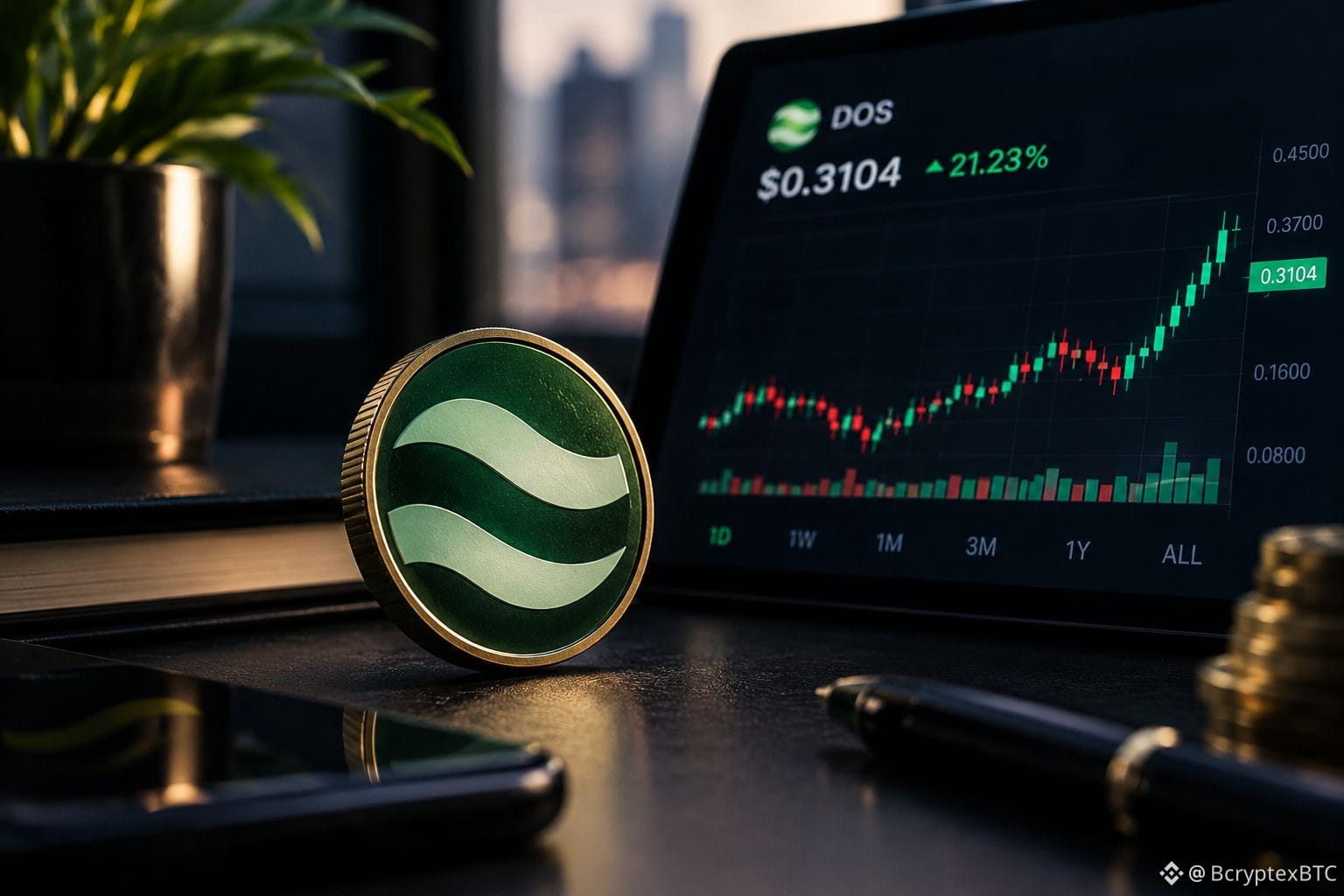
$DOS Is Moving Fast — But Momentum Needs Confirmation
$DOS is up 21.23%, with $83.66M in 24h volume against $1.03M in reported liquidity.
That gap highlights a key risk: sharp moves can reverse just as quickly when liquidity is limited.
With only 20% of its total supply circulating, future token unlocks are another factor to watch.
The real signal is whether buying demand holds after the initial excitement fades.
Would you wait for confirmation or consider this move too risky?
#DOS #Crypto #MarketAnalysis
1
477
·
--
See translation
$ZIG: Ecosystem Growth Is Only Half the Story
ZIG Finance is expanding into tokenized private credit and real-world assets. But ecosystem growth matters to token holders only if it translates into sustainable demand.
24h trading volume reached $80M against a $59M market cap. That signals intense activity, not necessarily accumulation.
Price remains below the 30-day moving average near $0.0532. Reclaiming it would strengthen the recovery case, while continued weakness leaves the reversal unconfirmed.
The key question: Can real-world adoption create lasting value for $ZIG holders?
#ZIG #RWA #Crypto
1
109
·
--
See translation
$XRP A Banking Milestone Doesn’t Automatically Mean Price Growth
Ripple’s final OCC approval marks an important step toward regulated financial services and institutional digital-asset custody.
But here’s what matters for XRP holders: Ripple’s expansion and XRP’s demand are two different things.
The real catalyst is whether this progress translates into measurable XRP usage across payments, liquidity, and the $XRP Ledger.
Regulatory progress creates opportunity. Actual adoption is what could make the difference.
Will Ripple’s institutional growth eventually translate into stronger demand for $XRP ?
#XRP #Ripple #CryptoAnalysis
1
416
·
--
See translation
$AIN Up 191% — The Real Test Starts After the Rally
$AIN has attracted attention with a sharp rally and a reported $3M token buyback. But momentum alone doesn’t prove a sustainable recovery.
24h trading volume reached $160.72M, while reported liquidity stood at $1.62M. That gap makes volatility and slippage important risks to monitor.
The $48.69M market cap versus $152.65M FDV also puts future token supply and distribution under the spotlight.
The key signal now is whether buyers can defend the move once profit-taking begins.
Would you trust this rally without stronger evidence of sustained demand?
#AIN #Crypto #MarketAnalysis

1
518
·
--
See translation
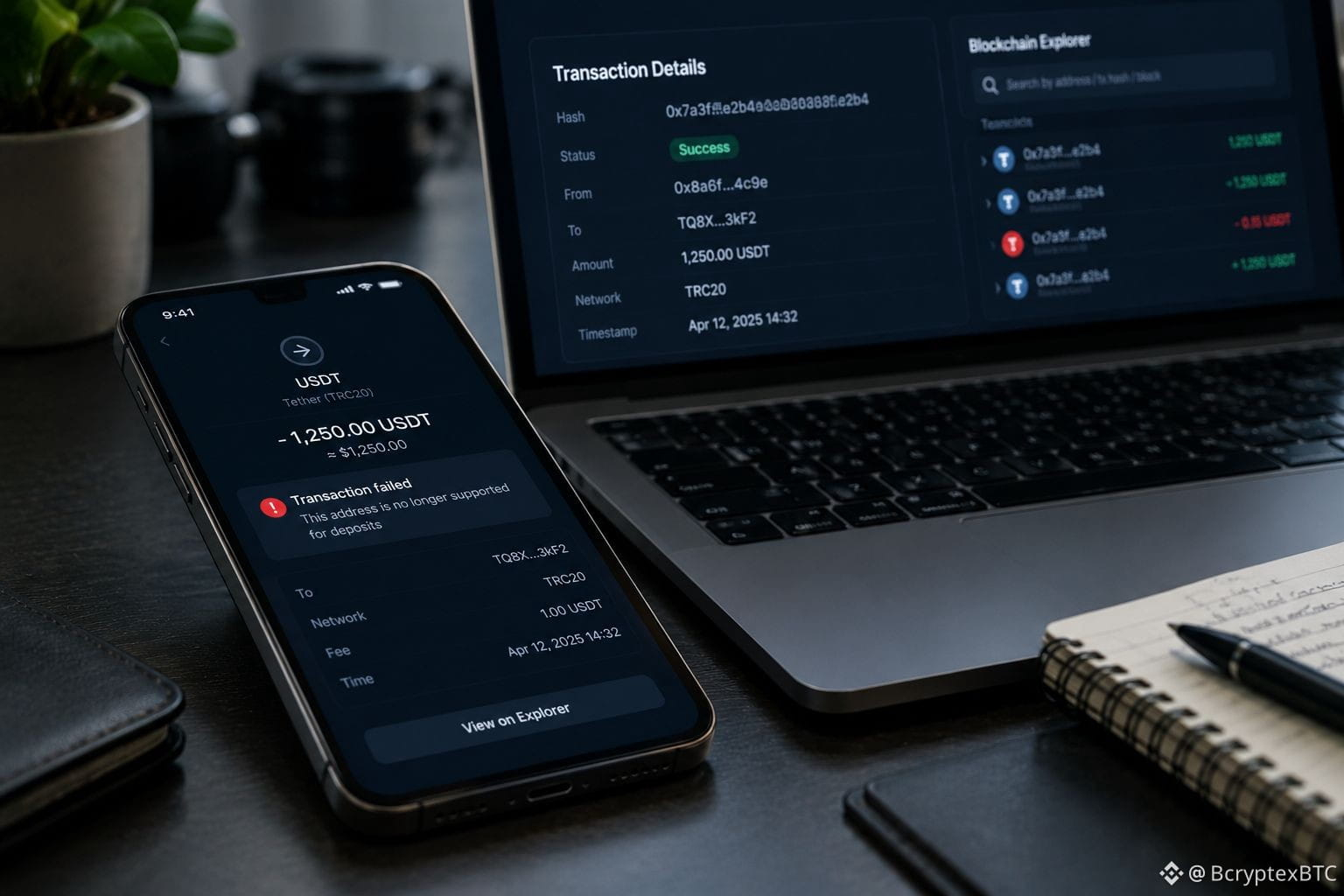
$16M Lost — Who Is Responsible When Old Deposit Addresses Still Work?
CoinDCX reportedly absorbed a $15.99M $USDT loss after users sent funds to retired deposit addresses following its 2025 security breach. Customer balances reportedly remain unaffected.
A retired address doesn’t disappear from the blockchain. Users may still send funds to it, even when an exchange no longer supports deposits through that address.
This highlights a critical security gap: users must verify deposit details, while exchanges need clear warnings and effective recovery procedures.
Should the responsibility fall on the user, the exchange, or both?
#CryptoSecurity #CoinDCX #Blockchain $BTC
1
121
·
--
See translation
$Q A Sharp Rally Is Easy. Sustaining It Is the Real Challenge.
Quack AI gained strong momentum in October, but the sharp pullback shows why a rally alone doesn’t confirm a trend reversal.
The key now is whether buyers can defend support and absorb selling pressure. If they fail, another bounce could become an opportunity for sellers rather than the start of a recovery.
Volume attracts attention, but sustained demand is what matters.
What would convince you that $Q is recovering — stronger support or a confirmed breakout?
#QuackAI #CryptoAnalysis #Altcoins

1
484
·
--
See translation
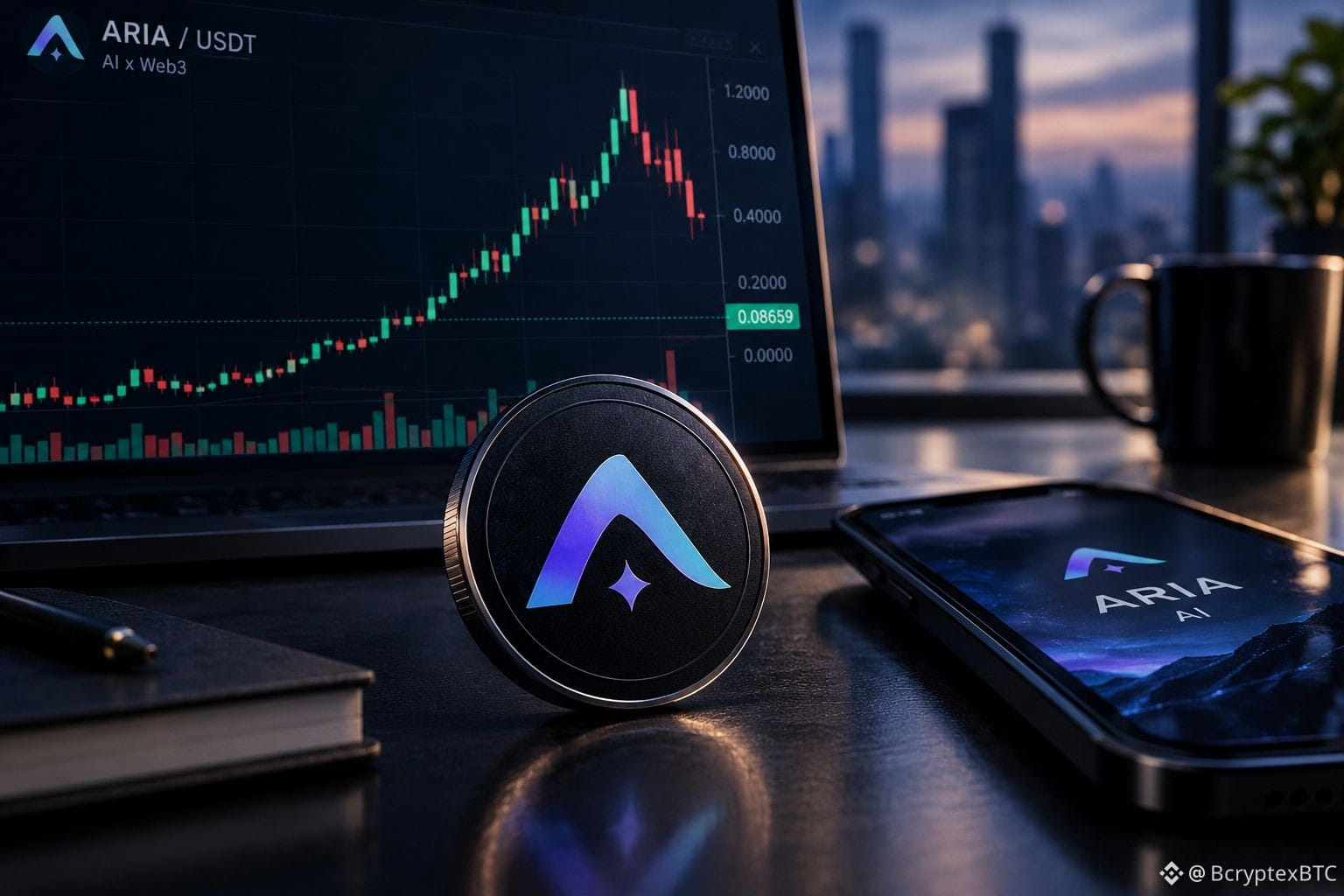
$ARIA A Green Candle Is Not a Confirmed Reversal
ARIA gained 18.8% in 24 hours, with $24.14M in trading volume against a $38.02M market cap. Strong activity is worth watching, but it doesn’t automatically mean sustainable buying pressure.
Liquidity stands at $1.63M, making slippage and sharp price swings important risks. After such extreme volatility, the key question is whether $ARIA can hold its gains when momentum cools.
A real recovery needs sustained demand, not just a short-lived rally.
Would you enter now, or wait for stronger confirmation?
#ARIA #CryptoAnalysis #Altcoins
1
399
·
--
See translation
$QNT The Technology May Win — But What About the Token?
Quant’s involvement in The Clearing House’s On-Chain Money Initiative puts institutional blockchain infrastructure in the spotlight, with rollout targeted for the first half of 2027.
But institutional adoption alone doesn’t guarantee demand for $QNT . The key question is whether real network usage will create a measurable economic role for the token.
Until implementation progresses and that link becomes clearer, the long-term opportunity remains a thesis — not a certainty.
Is the market getting ahead of the fundamentals, or recognizing Quant’s long-term potential?
#QNT #Quant #CryptoAnalysis

1
242
·
--
See translation
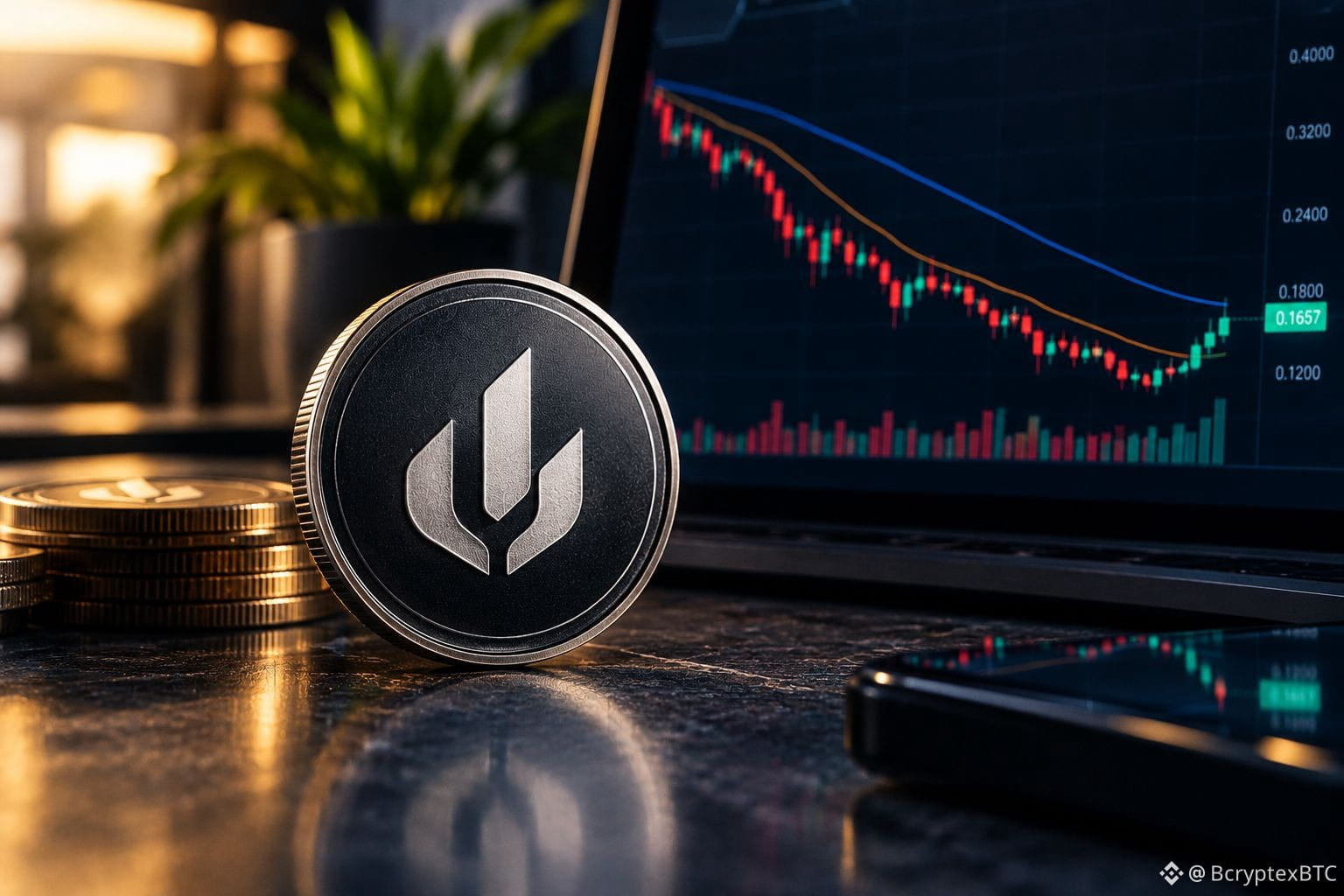
$UP A 13% Bounce Is Easy — Sustaining It Is the Real Test
$UP climbed 13.44% to $0.1657 after rebounding from $0.1228. But a sharp recovery doesn't automatically mean the downtrend is over.
The key level to watch is $0.1858, the 30-day moving average shown in the chart. A sustained reclaim could strengthen the recovery case, while rejection may signal another relief rally.
Liquidity is also worth watching: $1.31M against $11.26M in reported 24-hour volume leaves room for volatility and slippage.
The question isn't whether $UP can bounce — it's whether buyers can hold their ground.
Would you wait for confirmation, or is this rebound worth watching closely?
#Unitas #CryptoAnalysis #Altcoins
1
297
Log in to explore more content
Join global crypto users on Binance Square
⚡️ Get latest and useful information about crypto.
💬 Trusted by the world’s largest crypto exchange.
👍 Discover real insights from verified creators.
Email / Phone number
Trending Topics
BinanceToResumePhaseOneOfWithdrawals
4,354 views
231 Discussing
Security Incident | Recovery Update #4: Withdrawals Resume in Phases (2026-11-01)
Binance Announcement
·222 Likes
·247.7k views
BinanceHadAlreadyCovered$6BofHackLoss
1,316 views
43 Discussing
FBIConfirmsNorthKoreaIsResponsibleForBinanceCryptoHack
7,556 views
54 Discussing