

Rahi Crypto Intel Pro
9.4k Posts

Rahi Crypto Intel Pro
Report
Block User
Spot Trader | Intraday • Swing • DCA 📊 Market insights, trade setups & Binance campaigns. Follow for clear crypto updates, research & opportunities.
Open Trade
Frequent Trader
5.5 Years
66 Following
1.6K+ Followers
11.2K+ Liked
Posts
Portfolio
All
Quotes
Videos
See translation
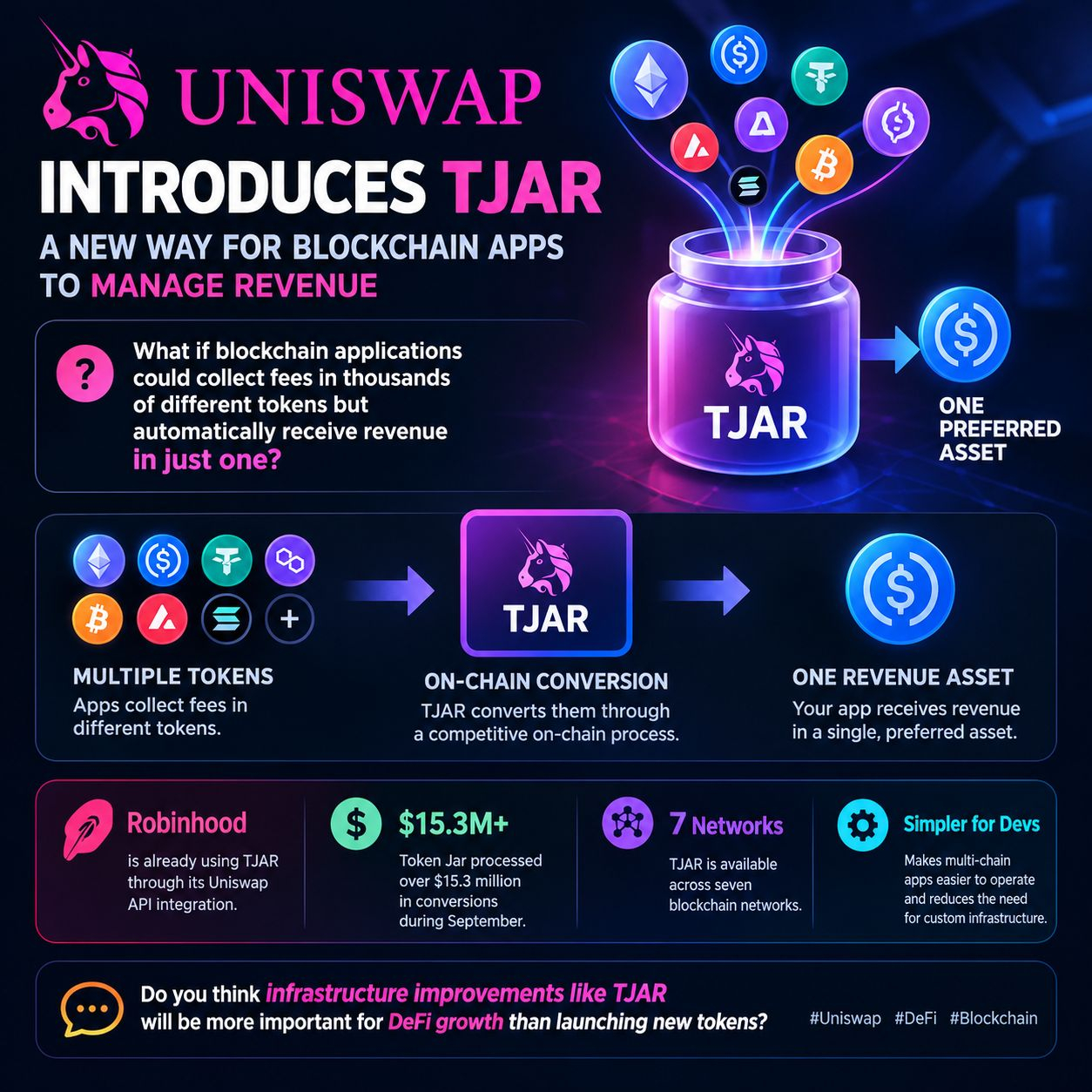
UNISWAP INTRODUCES TJAR — A NEW WAY FOR BLOCKCHAIN APPS TO MANAGE REVENUE
What if blockchain applications could collect fees in thousands of different tokens but automatically receive revenue in just one?
Uniswap Labs has introduced TJAR, a permissionless infrastructure designed to solve this problem.
The system allows applications to collect fees in different tokens and convert them into a single preferred asset through a competitive on-chain process.
An interesting development is that Robinhood is already using TJAR through its Uniswap API integration.
Uniswap also reported that its original Token Jar system processed more than $15.3 million in conversions during September. TJAR is now available across seven blockchain networks.
Simplifying fee management could make multi-chain applications easier to operate and reduce the need for custom conversion infrastructure.
However, long-term adoption will depend on developer demand, transaction activity, and actual usage.
Do you think infrastructure improvements like TJAR will be more important for DeFi growth than launching new tokens?
#Uniswap #DeFi #Blockchain $UNI
{future}(UNIUSDT)
$RIVN
{future}(RIVNUSDT)
$RUNE
{future}(RUNEUSDT)
UNISWAP INTRODUCES TJAR — A NEW WAY FOR BLOCKCHAIN APPS TO MANAGE REVENUE
What if blockchain applications could collect fees in thousands of different tokens but automatically receive revenue in just one?
Uniswap Labs has introduced TJAR, a permissionless infrastructure designed to solve this problem.
The system allows applications to collect fees in different tokens and convert them into a single preferred asset through a competitive on-chain process.
An interesting development is that Robinhood is already using TJAR through its Uniswap API integration.
Uniswap also reported that its original Token Jar system processed more than $15.3 million in conversions during September. TJAR is now available across seven blockchain networks.
Simplifying fee management could make multi-chain applications easier to operate and reduce the need for custom conversion infrastructure.
However, long-term adoption will depend on developer demand, transaction activity, and actual usage.
Do you think infrastructure improvements like TJAR will be more important for DeFi growth than launching new tokens?
#Uniswap #DeFi #Blockchain $UNI
$RIVN
$RUNE
235
See translation
NYSE'S PARENT COMPANY MAKES A MAJOR MOVE INTO HYPERLIQUID'S ECOSYSTEM
Traditional finance and decentralized trading are moving closer together.
Intercontinental Exchange (ICE), the parent company of the New York Stock Exchange, has announced a partnership with Trade[XYZ] to bring Hyperliquid-based perpetual futures markets into the United States.
The proposed platform aims to offer exposure to cryptocurrencies, stocks, commodities, indices, and foreign exchange through a regulated market structure.
ICE will operate the exchange and clearing infrastructure, while Trade[XYZ] will contribute its expertise in Hyperliquid-based markets.
ICE is also making a strategic investment in Trade[XYZ].
Importantly, the proposed US platform still requires regulatory approvals.
This signals growing institutional interest in blockchain-based trading infrastructure and could expand the role of decentralized technology in traditional financial markets.
Do you believe traditional financial institutions will eventually become major users of decentralized trading infrastructure?
#Hyperliquid #HYPE #Crypto
$HYPE
{future}(HYPEUSDT)
$RUNE
{future}(RUNEUSDT)
$POL
{future}(POLUSDT)
NYSE'S PARENT COMPANY MAKES A MAJOR MOVE INTO HYPERLIQUID'S ECOSYSTEM
Traditional finance and decentralized trading are moving closer together.
Intercontinental Exchange (ICE), the parent company of the New York Stock Exchange, has announced a partnership with Trade[XYZ] to bring Hyperliquid-based perpetual futures markets into the United States.
The proposed platform aims to offer exposure to cryptocurrencies, stocks, commodities, indices, and foreign exchange through a regulated market structure.
ICE will operate the exchange and clearing infrastructure, while Trade[XYZ] will contribute its expertise in Hyperliquid-based markets.
ICE is also making a strategic investment in Trade[XYZ].
Importantly, the proposed US platform still requires regulatory approvals.
This signals growing institutional interest in blockchain-based trading infrastructure and could expand the role of decentralized technology in traditional financial markets.
Do you believe traditional financial institutions will eventually become major users of decentralized trading infrastructure?
#Hyperliquid #HYPE #Crypto
$HYPE
$RUNE
$POL

234
See translation
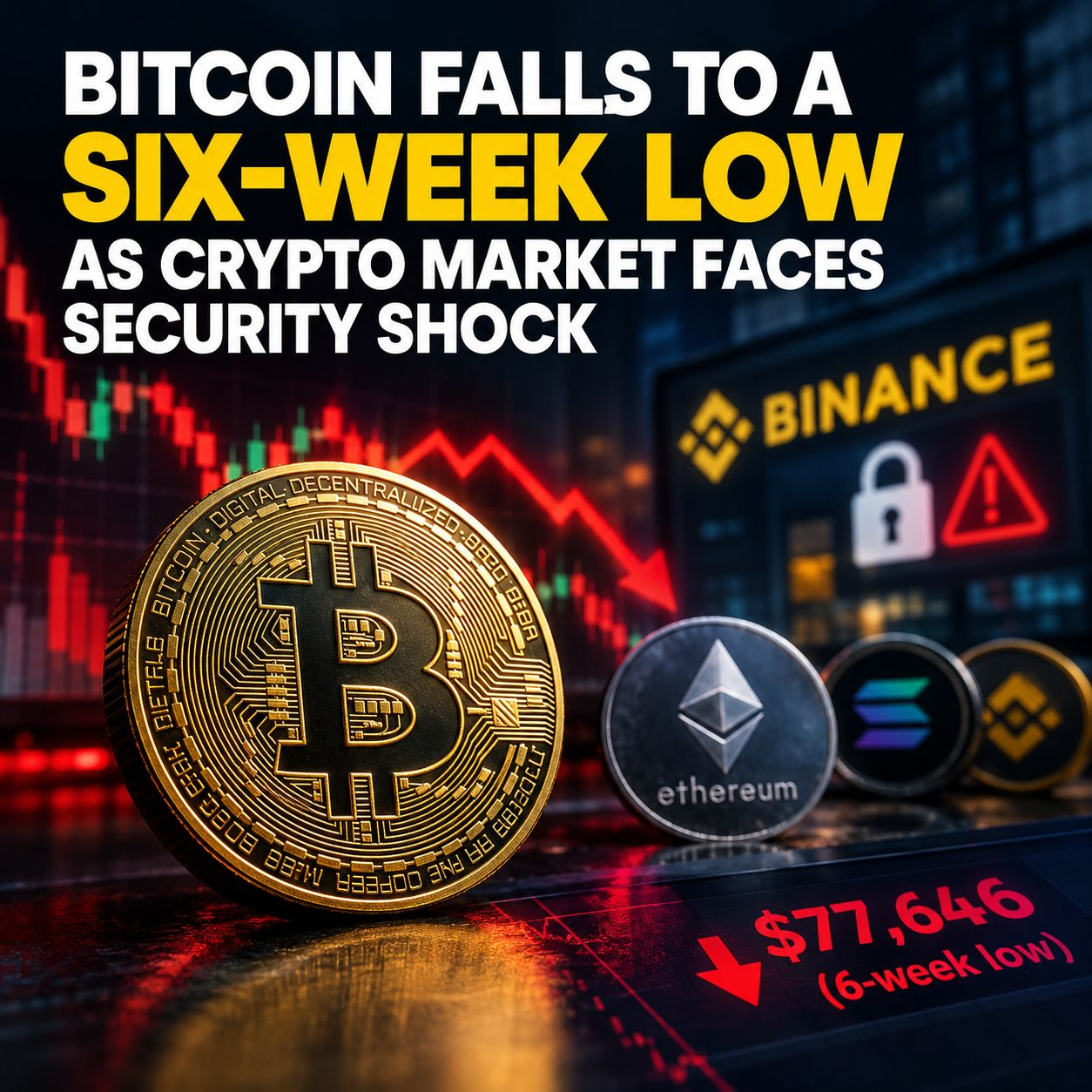
BITCOIN FALLS TO A SIX-WEEK LOW AS CRYPTO MARKET FACES SECURITY SHOCK
Bitcoin's latest decline is a reminder that crypto markets remain highly sensitive to major industry risks.
On October 30, Bitcoin dropped to approximately $77,646, reaching a six-week low amid concerns surrounding a major security incident involving Binance.
Ethereum also declined, while several other major cryptocurrencies experienced selling pressure.
The situation highlights an important relationship: even when a security incident affects one exchange, uncertainty can spread across the entire crypto market.
For Bitcoin investors, the key question is whether this correction is primarily driven by temporary panic or whether broader market confidence is beginning to weaken.
Traders should watch trading volume, institutional demand, support levels, and developments surrounding the security investigation.
Short-term volatility does not automatically change Bitcoin's long-term fundamentals, but market confidence matters.
Do you think Bitcoin can recover above $80,000, or could further downside follow?
#Bitcoin #BTC #CryptoMarket
$BTC
{future}(BTCUSDT)
$HYPE
{future}(HYPEUSDT)
$RUNE
{future}(RUNEUSDT)
BITCOIN FALLS TO A SIX-WEEK LOW AS CRYPTO MARKET FACES SECURITY SHOCK
Bitcoin's latest decline is a reminder that crypto markets remain highly sensitive to major industry risks.
On October 30, Bitcoin dropped to approximately $77,646, reaching a six-week low amid concerns surrounding a major security incident involving Binance.
Ethereum also declined, while several other major cryptocurrencies experienced selling pressure.
The situation highlights an important relationship: even when a security incident affects one exchange, uncertainty can spread across the entire crypto market.
For Bitcoin investors, the key question is whether this correction is primarily driven by temporary panic or whether broader market confidence is beginning to weaken.
Traders should watch trading volume, institutional demand, support levels, and developments surrounding the security investigation.
Short-term volatility does not automatically change Bitcoin's long-term fundamentals, but market confidence matters.
Do you think Bitcoin can recover above $80,000, or could further downside follow?
#Bitcoin #BTC #CryptoMarket
$BTC
$HYPE
$RUNE
65
See translation
IS BITCOIN STILL THE BEST LONG-TERM CRYPTO INVESTMENT, OR ARE ALTCOINS OFFERING BETTER OPPORTUNITIES?
One thing I find interesting about crypto markets is how differently investors approach long-term opportunities.
Some believe Bitcoin remains the strongest choice because of its established position, limited supply, and wider institutional recognition.
Others argue that promising altcoins could offer greater growth potential, especially in sectors like AI, DeFi, and real-world asset tokenization. However, higher potential returns often come with significantly higher risks.
There is also a third perspective: holding a combination of Bitcoin and carefully selected altcoins may provide a more balanced approach rather than relying on one category.
Personally, I think the answer depends on an investor's risk tolerance, research, and time horizon.
My question for the community:
If you had to hold only one crypto asset for the next 3 years, would you choose BTC or an altcoin, and what is the main reason behind your decision?
$BTC
{future}(BTCUSDT)
$RUNE
{future}(RUNEUSDT)
$POL
{future}(POLUSDT)
IS BITCOIN STILL THE BEST LONG-TERM CRYPTO INVESTMENT, OR ARE ALTCOINS OFFERING BETTER OPPORTUNITIES?
One thing I find interesting about crypto markets is how differently investors approach long-term opportunities.
Some believe Bitcoin remains the strongest choice because of its established position, limited supply, and wider institutional recognition.
Others argue that promising altcoins could offer greater growth potential, especially in sectors like AI, DeFi, and real-world asset tokenization. However, higher potential returns often come with significantly higher risks.
There is also a third perspective: holding a combination of Bitcoin and carefully selected altcoins may provide a more balanced approach rather than relying on one category.
Personally, I think the answer depends on an investor's risk tolerance, research, and time horizon.
My question for the community:
If you had to hold only one crypto asset for the next 3 years, would you choose BTC or an altcoin, and what is the main reason behind your decision?
$BTC
$RUNE
$POL

166
See translation
The Next Big Crypto Opportunity May Be Hiding in Plain Sight
What if the most interesting crypto opportunity is not the coin everyone is talking about, but the blockchain project quietly solving a real problem?
The crypto market offers more than price speculation. The Binance ecosystem and the wider altcoin market provide several areas worth watching, including decentralized finance (DeFi), real-world asset tokenization, blockchain infrastructure, and AI-powered applications.
But here is what separates a promising project from temporary hype:
1\. Real Utility Does the project solve a genuine problem, or is it driven mainly by marketing?
2\. Active Development Consistent improvements, useful products, and developer activity can offer valuable insights into a project's progress.
3\. Sustainable Demand A token's long-term potential depends on factors such as its actual use, token supply, demand, and overall market conditions.
4\. Risk Awareness Even innovative projects can fail. Low liquidity, excessive token unlocks, security vulnerabilities, and unrealistic expectations can put investors at risk.
The smartest approach is to research the fundamentals rather than follow every trending coin. Popularity can attract attention, but real utility and sustainable adoption deserve closer examination.
The next opportunity might come from an established ecosystem or an emerging project. The challenge is learning to separate genuine progress from temporary excitement.
Your turn: If you could choose one crypto sector to watch for the next major wave of adoption, would it be DeFi, AI, RWA tokenization, or blockchain infrastructure? Why?
#BinancePick #Crypto #Altcoins
$BTC
{future}(BTCUSDT)
$ETH
{future}(ETHUSDT)
$SOL
{future}(SOLUSDT)
The Next Big Crypto Opportunity May Be Hiding in Plain Sight
What if the most interesting crypto opportunity is not the coin everyone is talking about, but the blockchain project quietly solving a real problem?
The crypto market offers more than price speculation. The Binance ecosystem and the wider altcoin market provide several areas worth watching, including decentralized finance (DeFi), real-world asset tokenization, blockchain infrastructure, and AI-powered applications.
But here is what separates a promising project from temporary hype:
1\. Real Utility Does the project solve a genuine problem, or is it driven mainly by marketing?
2\. Active Development Consistent improvements, useful products, and developer activity can offer valuable insights into a project's progress.
3\. Sustainable Demand A token's long-term potential depends on factors such as its actual use, token supply, demand, and overall market conditions.
4\. Risk Awareness Even innovative projects can fail. Low liquidity, excessive token unlocks, security vulnerabilities, and unrealistic expectations can put investors at risk.
The smartest approach is to research the fundamentals rather than follow every trending coin. Popularity can attract attention, but real utility and sustainable adoption deserve closer examination.
The next opportunity might come from an established ecosystem or an emerging project. The challenge is learning to separate genuine progress from temporary excitement.
Your turn: If you could choose one crypto sector to watch for the next major wave of adoption, would it be DeFi, AI, RWA tokenization, or blockchain infrastructure? Why?
#BinancePick #Crypto #Altcoins
$BTC
$ETH
$SOL

102
See translation
$BNB
BNB CHAIN’S SMART CONTRACT ACTIVITY SURGES — BUT THERE’S A CATCH
BNB Chain has shown a sharp increase in reported smart contract deployments, pointing to growing development activity across its ecosystem.
More deployments can indicate that developers are experimenting with new applications, infrastructure, and blockchain-based services.
But there is an important distinction: more smart contracts do not automatically mean more real users.
To understand whether this growth is sustainable, investors should also monitor active addresses, transaction activity, application usage, and network revenue.
For BNB, the bigger question is whether developer momentum translates into lasting adoption and stronger ecosystem demand.
Will BNB Chain turn development growth into meaningful user growth?
#BNB #BNBChain #Altcoins $BNB
{future}(BNBUSDT)
$BNB
BNB CHAIN’S SMART CONTRACT ACTIVITY SURGES — BUT THERE’S A CATCH
BNB Chain has shown a sharp increase in reported smart contract deployments, pointing to growing development activity across its ecosystem.
More deployments can indicate that developers are experimenting with new applications, infrastructure, and blockchain-based services.
But there is an important distinction: more smart contracts do not automatically mean more real users.
To understand whether this growth is sustainable, investors should also monitor active addresses, transaction activity, application usage, and network revenue.
For BNB, the bigger question is whether developer momentum translates into lasting adoption and stronger ecosystem demand.
Will BNB Chain turn development growth into meaningful user growth?
#BNB #BNBChain #Altcoins $BNB

17
See translation
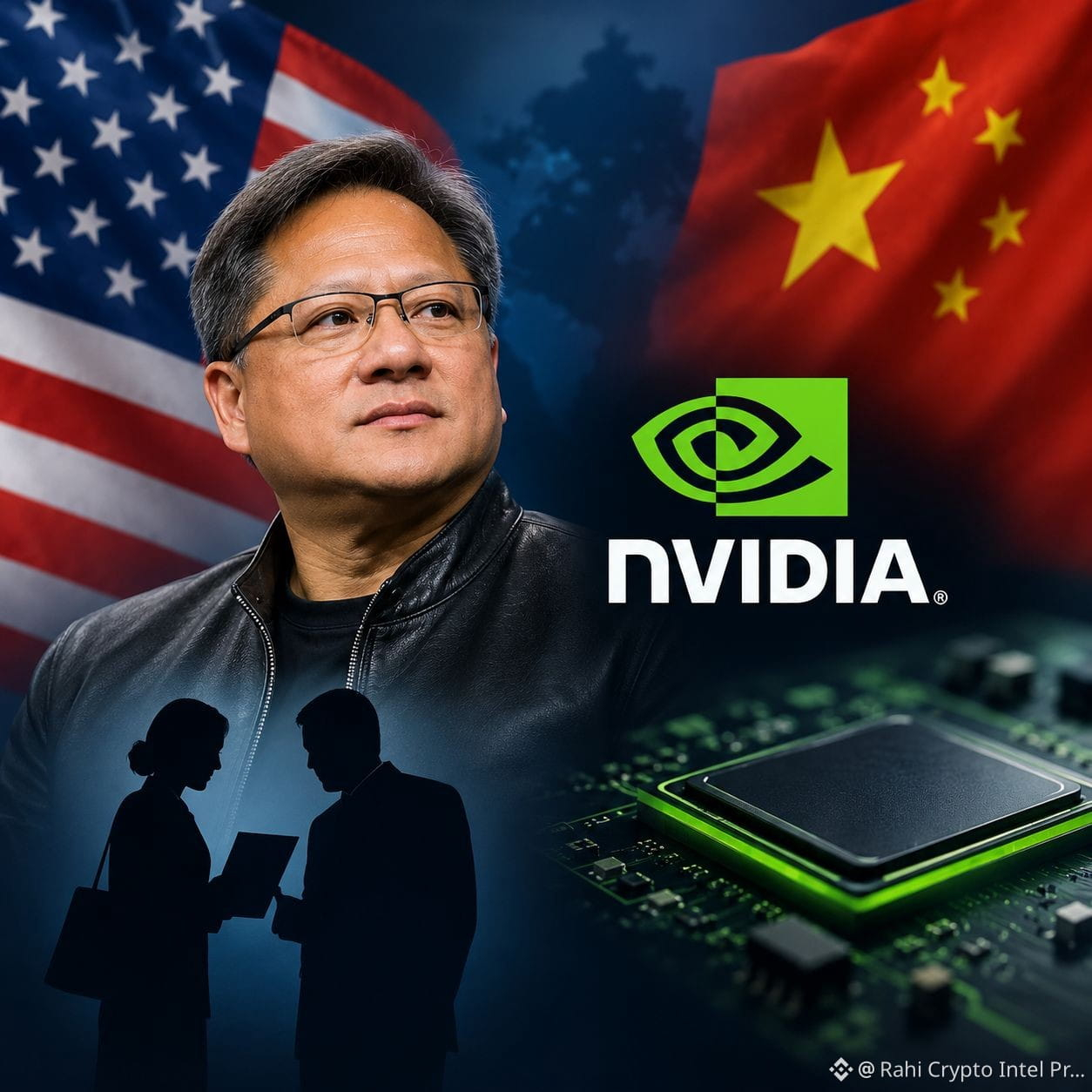
NVIDIA CEO Faces Spotlight as US–China Tech Tensions Intensify
U.S. intelligence agencies reportedly alleged that a Chinese businesswoman who had contact with NVIDIA CEO Jensen Huang was passing information to Beijing.
China denied the allegation, while NVIDIA disputed the characterization of the information shared, stating that it involved routine business matters rather than trade secrets or information related to national security.
Why This Matters
- The allegations highlight growing scrutiny of international business relationships.
- US–China tensions continue to create challenges for the global semiconductor industry.
- NVIDIA ($NVDA ) operates in a technology sector increasingly affected by geopolitical competition and national security concerns.
These are allegations, not established facts. The differing statements underline the importance of distinguishing claims from verified information.
Do you think rising geopolitical tensions will change how global technology companies operate internationally?
#NVIDIA #NVDA #Geopolitics
$LSK
{future}(LSKUSDT)
$HYPE
{future}(HYPEUSDT)
NVIDIA CEO Faces Spotlight as US–China Tech Tensions Intensify
U.S. intelligence agencies reportedly alleged that a Chinese businesswoman who had contact with NVIDIA CEO Jensen Huang was passing information to Beijing.
China denied the allegation, while NVIDIA disputed the characterization of the information shared, stating that it involved routine business matters rather than trade secrets or information related to national security.
Why This Matters
- The allegations highlight growing scrutiny of international business relationships.
- US–China tensions continue to create challenges for the global semiconductor industry.
- NVIDIA ($NVDA ) operates in a technology sector increasingly affected by geopolitical competition and national security concerns.
These are allegations, not established facts. The differing statements underline the importance of distinguishing claims from verified information.
Do you think rising geopolitical tensions will change how global technology companies operate internationally?
#NVIDIA #NVDA #Geopolitics
$LSK
$HYPE
442
See translation
#FedWatch
🚨 #FEDWATCH: WHAT’S NEXT FOR INTEREST RATES? 🇺🇸📊
🔥 Crypto traders are closely watching the Federal Reserve as interest rate expectations continue to influence market sentiment.
👀 Why It Matters for Crypto:
🏦 Fed Policy: Future rate decisions could influence liquidity and investor confidence.
₿ Bitcoin Reaction: A more supportive rate outlook could help risk assets, while tighter financial conditions may increase selling pressure.
📉 Altcoin Volatility: Ethereum and other altcoins could react to changes in market expectations.
📊 What to Watch Next:
• US inflation data
• Federal Reserve policy signals
• US dollar strength and Treasury yields
• Bitcoin price action and trading volume
⚡ Market Outlook: The direction of interest rates may play an important role in crypto’s next move, but no outcome is guaranteed.
⚠️ Remember: Market expectations can change quickly. Always manage risk and avoid making decisions based on headlines alone.
💬 Your Take: Will the Fed keep rates unchanged, or could another hike be on the table?
Follow Rahi Crypto Intel for more crypto market insights.
#Bitcoin #CryptoMarket
$BTC
{future}(BTCUSDT)
$BAT
{future}(BATUSDT)
$MSFTB
{spot}(MSFTBUSDT)
#FedWatch
🚨 #FEDWATCH: WHAT’S NEXT FOR INTEREST RATES? 🇺🇸📊
🔥 Crypto traders are closely watching the Federal Reserve as interest rate expectations continue to influence market sentiment.
👀 Why It Matters for Crypto:
🏦 Fed Policy: Future rate decisions could influence liquidity and investor confidence.
₿ Bitcoin Reaction: A more supportive rate outlook could help risk assets, while tighter financial conditions may increase selling pressure.
📉 Altcoin Volatility: Ethereum and other altcoins could react to changes in market expectations.
📊 What to Watch Next:
• US inflation data
• Federal Reserve policy signals
• US dollar strength and Treasury yields
• Bitcoin price action and trading volume
⚡ Market Outlook: The direction of interest rates may play an important role in crypto’s next move, but no outcome is guaranteed.
⚠️ Remember: Market expectations can change quickly. Always manage risk and avoid making decisions based on headlines alone.
💬 Your Take: Will the Fed keep rates unchanged, or could another hike be on the table?
Follow Rahi Crypto Intel for more crypto market insights.
#Bitcoin #CryptoMarket
$BTC
$BAT
$MSFTB
39
See translation
#USMidtermElections
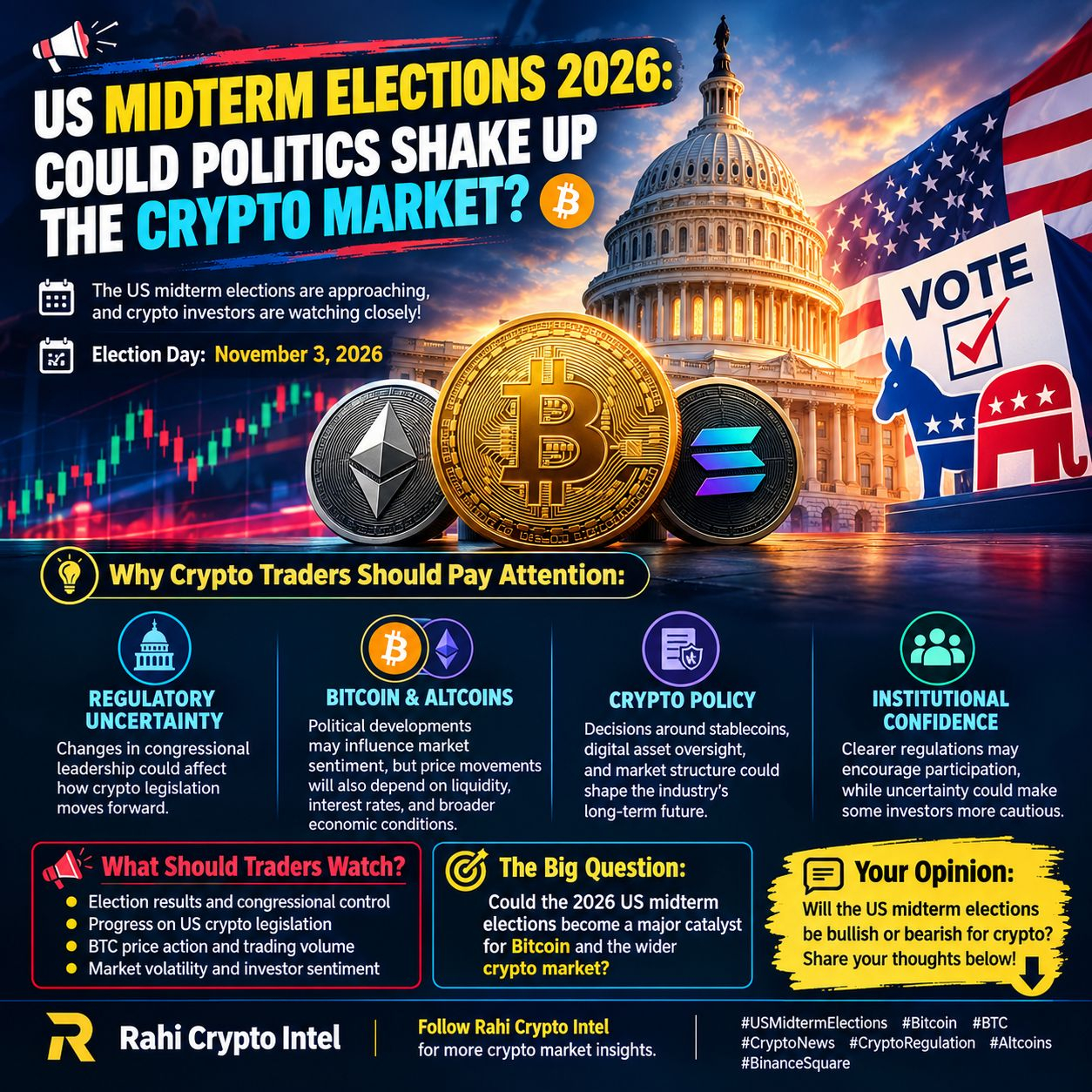
🇺🇸 US MIDTERM ELECTIONS 2026: COULD POLITICS SHAKE UP THE CRYPTO MARKET? ₿
🔥 The US midterm elections are approaching, and crypto investors are watching closely!
📅 With Election Day set for November 3, the political battle could influence the future direction of US crypto regulation and digital asset policy.
💡 Why Crypto Traders Should Pay Attention:
🏛️ Regulatory Uncertainty: Changes in congressional leadership could affect how crypto legislation moves forward.
📊 Bitcoin & Altcoins: Political developments may influence market sentiment, but price movements will also depend on liquidity, interest rates, and broader economic conditions.
⚖️ Crypto Policy: Decisions around stablecoins, digital asset oversight, and market structure could shape the industry's long-term future.
🐋 Institutional Confidence: Clearer regulations may encourage participation, while uncertainty could make some investors more cautious.
🚨 What Should Traders Watch?
• Election results and congressional control
• Progress on US crypto legislation
• BTC price action and trading volume
• Market volatility and investor sentiment
🎯 The Big Question: Could the 2026 US midterm elections become a major catalyst for Bitcoin and the wider crypto market?
One thing is certain: political headlines can move sentiment, but they don't guarantee a bullish rally or a market crash. Stay informed, manage risk, and avoid trading based on hype alone.
💬 Your Opinion: Will the US midterm elections be bullish or bearish for crypto? Share your thoughts below! 👇
Follow Rahi Crypto Intel for more crypto market insights.
$BTC
{future}(BTCUSDT)
$ETH
{future}(ETHUSDT)
$SOL
{future}(SOLUSDT)
#USMidtermElections
🇺🇸 US MIDTERM ELECTIONS 2026: COULD POLITICS SHAKE UP THE CRYPTO MARKET? ₿
🔥 The US midterm elections are approaching, and crypto investors are watching closely!
📅 With Election Day set for November 3, the political battle could influence the future direction of US crypto regulation and digital asset policy.
💡 Why Crypto Traders Should Pay Attention:
🏛️ Regulatory Uncertainty: Changes in congressional leadership could affect how crypto legislation moves forward.
📊 Bitcoin & Altcoins: Political developments may influence market sentiment, but price movements will also depend on liquidity, interest rates, and broader economic conditions.
⚖️ Crypto Policy: Decisions around stablecoins, digital asset oversight, and market structure could shape the industry's long-term future.
🐋 Institutional Confidence: Clearer regulations may encourage participation, while uncertainty could make some investors more cautious.
🚨 What Should Traders Watch?
• Election results and congressional control
• Progress on US crypto legislation
• BTC price action and trading volume
• Market volatility and investor sentiment
🎯 The Big Question: Could the 2026 US midterm elections become a major catalyst for Bitcoin and the wider crypto market?
One thing is certain: political headlines can move sentiment, but they don't guarantee a bullish rally or a market crash. Stay informed, manage risk, and avoid trading based on hype alone.
💬 Your Opinion: Will the US midterm elections be bullish or bearish for crypto? Share your thoughts below! 👇
Follow Rahi Crypto Intel for more crypto market insights.
$BTC
$ETH
$SOL
48
See translation
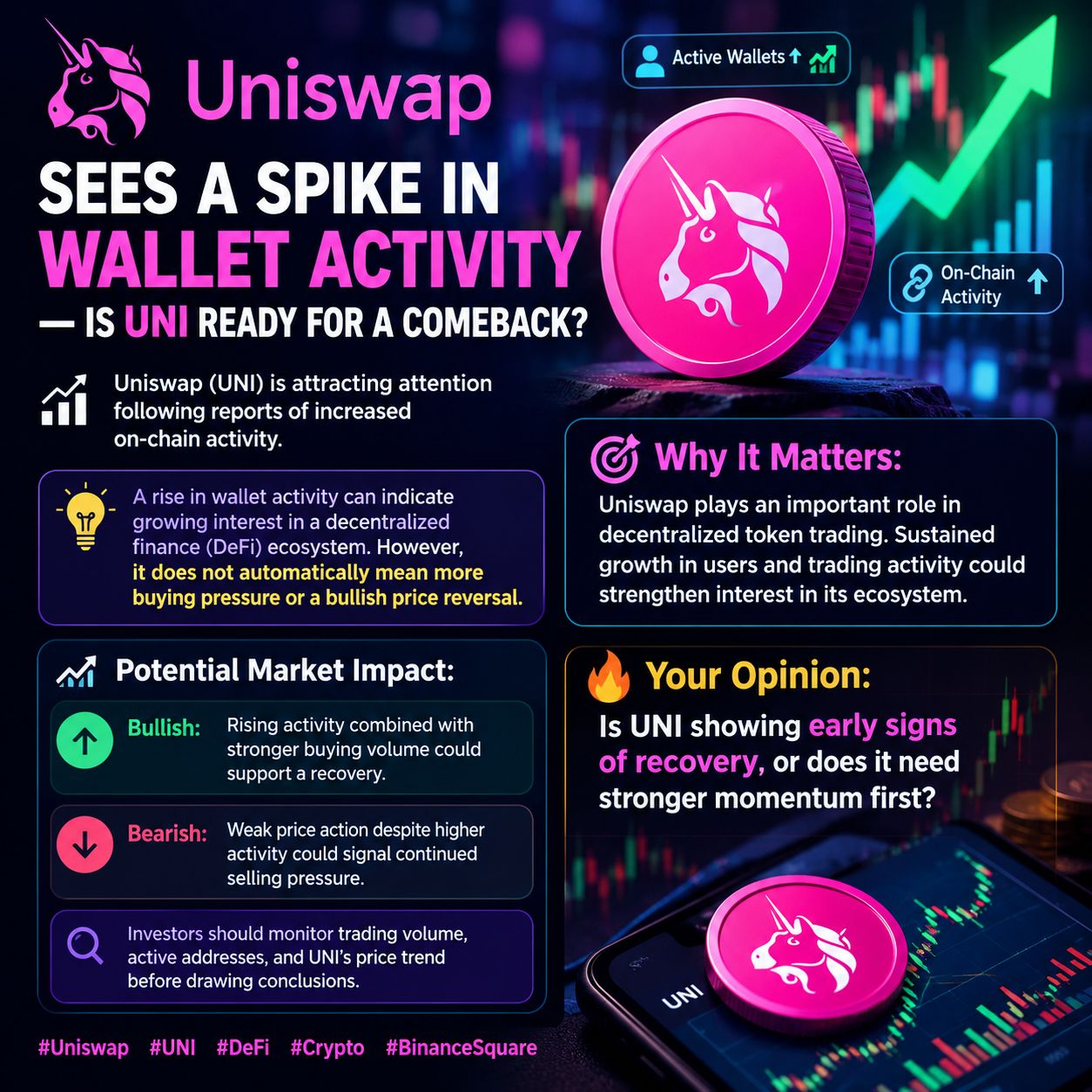
🦄 UNISWAP SEES A SPIKE IN WALLET ACTIVITY — IS UNI READY FOR A COMEBACK?
📊 Uniswap (UNI) is attracting attention following reports of increased on-chain activity.
A rise in wallet activity can indicate growing interest in a decentralized finance (DeFi) ecosystem. However, it does not automatically mean more buying pressure or a bullish price reversal.
💡 Why It Matters:
Uniswap plays an important role in decentralized token trading. Sustained growth in users and trading activity could strengthen interest in its ecosystem.
📈 Potential Market Impact:
🟢 Bullish: Rising activity combined with stronger buying volume could support a recovery.
🔴 Bearish: Weak price action despite higher activity could signal continued selling pressure.
Investors should monitor trading volume, active addresses, and UNI's price trend before drawing conclusions.
🔥 Your Opinion: Is UNI showing early signs of recovery, or does it need stronger momentum first?
#Uniswap #UNI #DeFi #Crypto #BinanceSquare
$UNI
{future}(UNIUSDT)
$ZRO
{future}(ZROUSDT)
$ZEC
{future}(ZECUSDT)
🦄 UNISWAP SEES A SPIKE IN WALLET ACTIVITY — IS UNI READY FOR A COMEBACK?
📊 Uniswap (UNI) is attracting attention following reports of increased on-chain activity.
A rise in wallet activity can indicate growing interest in a decentralized finance (DeFi) ecosystem. However, it does not automatically mean more buying pressure or a bullish price reversal.
💡 Why It Matters:
Uniswap plays an important role in decentralized token trading. Sustained growth in users and trading activity could strengthen interest in its ecosystem.
📈 Potential Market Impact:
🟢 Bullish: Rising activity combined with stronger buying volume could support a recovery.
🔴 Bearish: Weak price action despite higher activity could signal continued selling pressure.
Investors should monitor trading volume, active addresses, and UNI's price trend before drawing conclusions.
🔥 Your Opinion: Is UNI showing early signs of recovery, or does it need stronger momentum first?
#Uniswap #UNI #DeFi #Crypto #BinanceSquare
$UNI
$ZRO
$ZEC
98
See translation
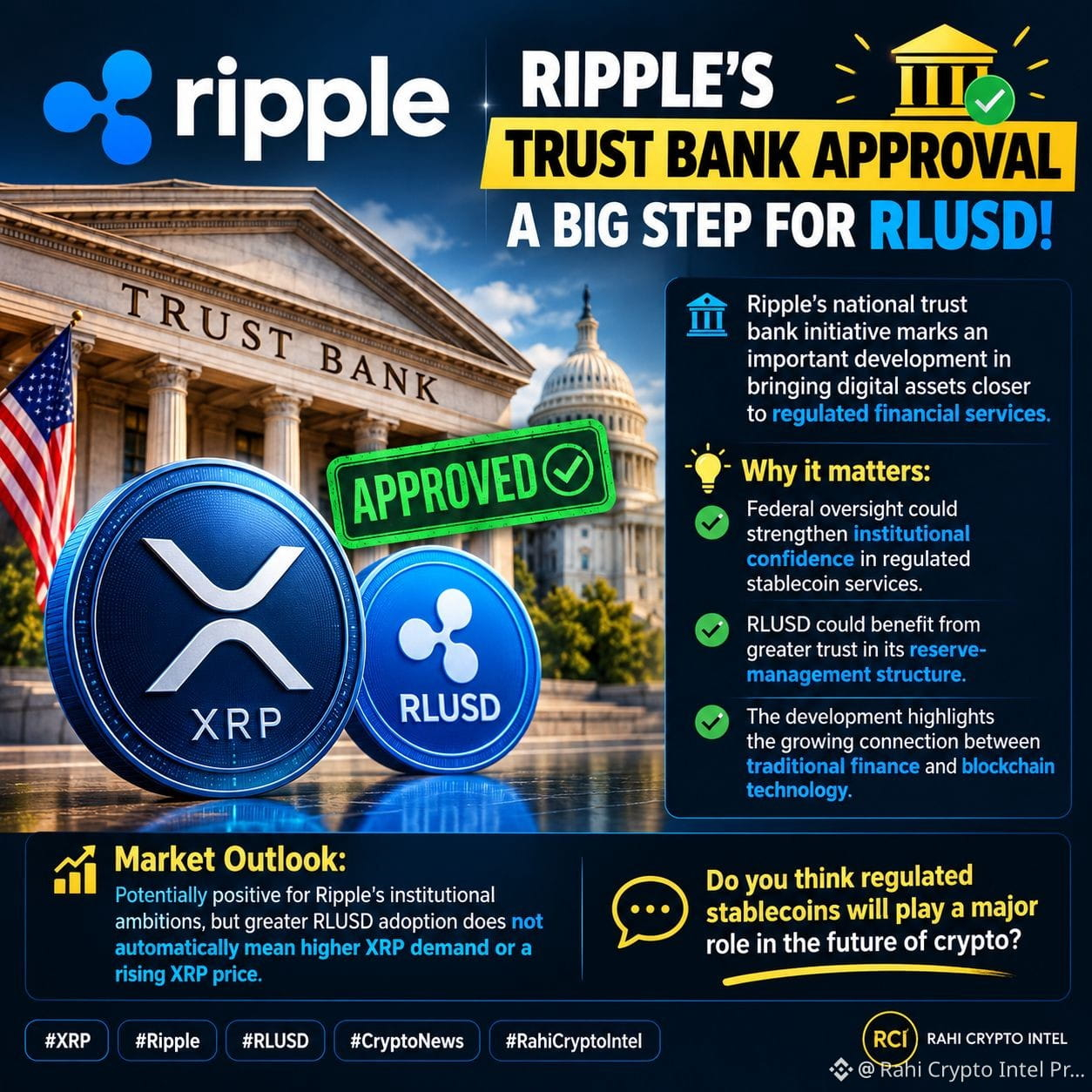
🚀 RIPPLE’S TRUST BANK APPROVAL — A BIG STEP FOR RLUSD!
🏦 Ripple’s national trust bank initiative marks an important development in bringing digital assets closer to regulated financial services.
💡 Why it matters: • Federal oversight could strengthen institutional confidence in regulated stablecoin services. • RLUSD could benefit from greater trust in its reserve-management structure. • The development highlights the growing connection between traditional finance and blockchain technology.
📊 Market Outlook: Potentially positive for Ripple’s institutional ambitions, but greater RLUSD adoption does not automatically mean higher XRP demand or a rising XRP price.
💬 Do you think regulated stablecoins will play a major role in the future of crypto?
#XRP #Ripple #RLUSD #RahiCryptoIntel
$XRP
{future}(XRPUSDT)
$RLUSD
{spot}(RLUSDUSDT)
🚀 RIPPLE’S TRUST BANK APPROVAL — A BIG STEP FOR RLUSD!
🏦 Ripple’s national trust bank initiative marks an important development in bringing digital assets closer to regulated financial services.
💡 Why it matters: • Federal oversight could strengthen institutional confidence in regulated stablecoin services. • RLUSD could benefit from greater trust in its reserve-management structure. • The development highlights the growing connection between traditional finance and blockchain technology.
📊 Market Outlook: Potentially positive for Ripple’s institutional ambitions, but greater RLUSD adoption does not automatically mean higher XRP demand or a rising XRP price.
💬 Do you think regulated stablecoins will play a major role in the future of crypto?
#XRP #Ripple #RLUSD #RahiCryptoIntel
$XRP
$RLUSD
48
See translation
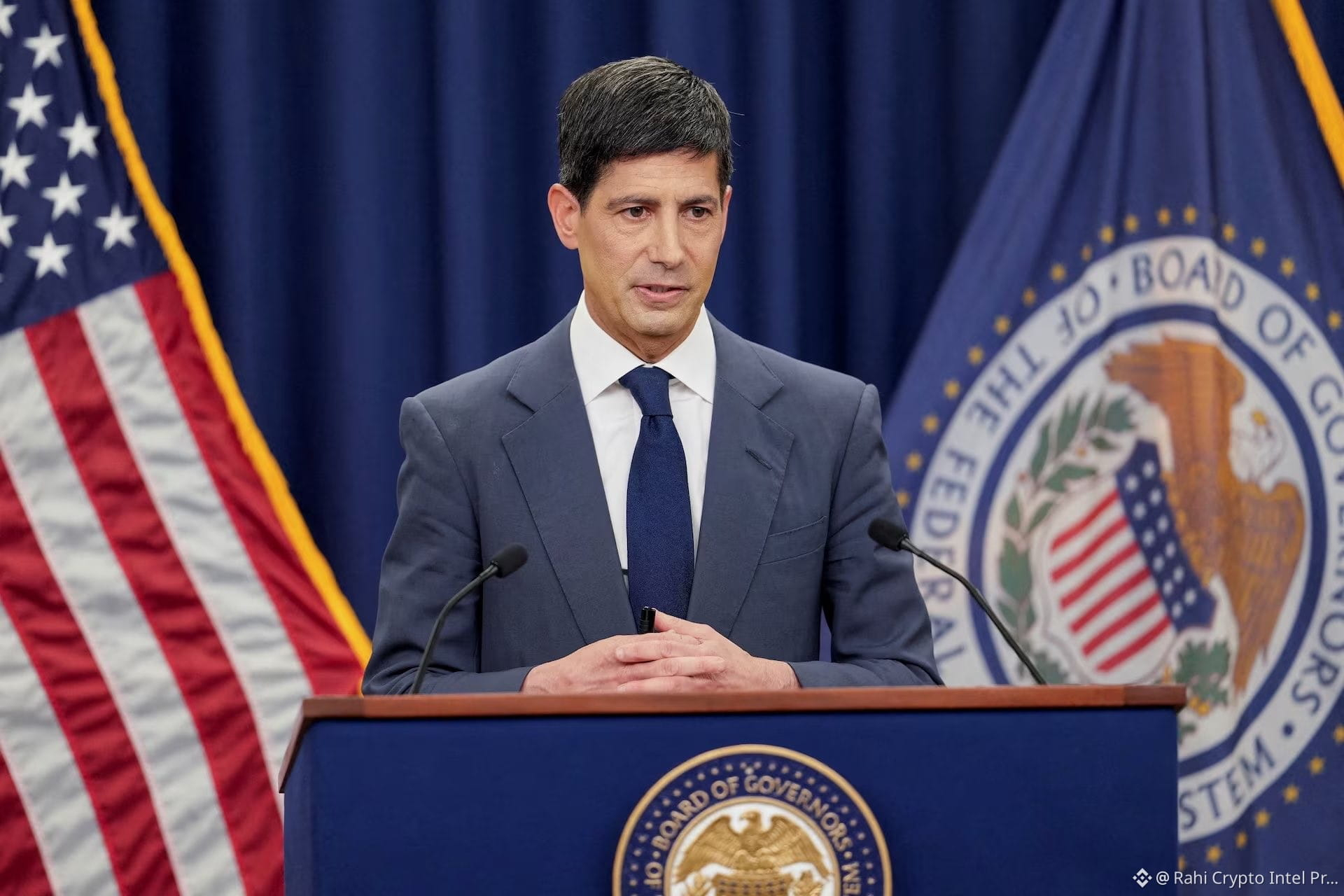
🚨 BREAKING: FED HOLDS INTEREST RATES STEADY! 🇺🇸
📢 The Federal Reserve has reportedly decided to keep interest rates unchanged.
📊 What Could This Mean for Crypto?
₿ Bitcoin: Traders will watch for clues about the Fed’s next move.
🚀 Altcoins: Market sentiment could shift depending on how investors interpret the decision.
⚠️ Market Alert: Volatility may increase as traders react to the Fed’s decision and upcoming comments. No immediate price direction is guaranteed.
💬 Your Take: Is this good news for Bitcoin and altcoins, or will the market remain under pressure? Share your thoughts below! 👇
#Bitcoin #CryptoNews #FOMC #Altcoins #RahiCryptoIntelPro
$NIL
{future}(NILUSDT)
$AVA
{future}(AVAUSDT)
$RIVER
{future}(RIVERUSDT)
🚨 BREAKING: FED HOLDS INTEREST RATES STEADY! 🇺🇸
📢 The Federal Reserve has reportedly decided to keep interest rates unchanged.
📊 What Could This Mean for Crypto?
₿ Bitcoin: Traders will watch for clues about the Fed’s next move.
🚀 Altcoins: Market sentiment could shift depending on how investors interpret the decision.
⚠️ Market Alert: Volatility may increase as traders react to the Fed’s decision and upcoming comments. No immediate price direction is guaranteed.
💬 Your Take: Is this good news for Bitcoin and altcoins, or will the market remain under pressure? Share your thoughts below! 👇
#Bitcoin #CryptoNews #FOMC #Altcoins #RahiCryptoIntelPro
$NIL
$AVA
$RIVER
32
Verified
See translation
🚨 MARKET ALERT 🚨
🇺🇸 FED RATE DECISION IN LESS THAN 60 MINUTES!
⚠️ Expect heightened volatility across the financial markets.
📊 Stay alert, manage your risk, and trade with caution!
#BinancePick
$RIVER
{future}(RIVERUSDT)
$WDCB
{spot}(WDCBUSDT)
$MUB
{spot}(MUBUSDT)
🚨 MARKET ALERT 🚨
🇺🇸 FED RATE DECISION IN LESS THAN 60 MINUTES!
⚠️ Expect heightened volatility across the financial markets.
📊 Stay alert, manage your risk, and trade with caution!
#BinancePick
$RIVER
$WDCB
$MUB
🇺🇸 FED RATE DECISION IN LESS THAN 60 MINUTES!
⚠️ Expect heightened volatility across the financial markets.
📊 Stay alert, manage your risk, and trade with caution!
#BinancePick
$RIVER
$WDCB
$MUB
260
See translation
U.S. Crypto Rules May Move Forward Without the CLARITY Act
Is the setback for U.S. crypto regulation the end of the road? Not necessarily.
Treasury Secretary Scott Bessent has indicated that the U.S. Treasury can work with the SEC and CFTC to advance crypto regulations even after the CLARITY Act failed to move forward in the Senate.
Why does this matter?
Better coordination between these agencies could help clarify regulatory responsibilities, establish clearer rules for crypto businesses, and reduce uncertainty for the industry.
However, cooperation is not the same as passing a comprehensive law. Important regulatory questions remain unresolved, and the next steps will determine how much clarity the industry actually gains.
Do you think agency cooperation can deliver meaningful crypto regulation without new legislation?
$APR
{future}(APRUSDT)
$WDCB
{spot}(WDCBUSDT)
$RIVER
{future}(RIVERUSDT)
U.S. Crypto Rules May Move Forward Without the CLARITY Act
Is the setback for U.S. crypto regulation the end of the road? Not necessarily.
Treasury Secretary Scott Bessent has indicated that the U.S. Treasury can work with the SEC and CFTC to advance crypto regulations even after the CLARITY Act failed to move forward in the Senate.
Why does this matter?
Better coordination between these agencies could help clarify regulatory responsibilities, establish clearer rules for crypto businesses, and reduce uncertainty for the industry.
However, cooperation is not the same as passing a comprehensive law. Important regulatory questions remain unresolved, and the next steps will determine how much clarity the industry actually gains.
Do you think agency cooperation can deliver meaningful crypto regulation without new legislation?
$APR
$WDCB
$RIVER

1
447
See translation
Anthropic’s $120.5 Billion AI Deal: Opportunity or Risk?
The AI race is becoming more expensive, and computing power is now a major competitive advantage.
Anthropic, the company behind Claude AI, has reportedly agreed to a computing arrangement with SpaceX AI that could involve up to $120.5 billion in spending through 2029.
Once the full computing capacity is delivered, monthly payments are expected to reach approximately $3.1 billion, with full capacity currently expected in December 2026.
But there’s an important distinction: $120.5 billion is potential total spending, not guaranteed revenue.
For SpaceX AI, this could create a major business opportunity. For Anthropic, access to more computing power could help expand Claude and support growing AI demand.
The challenge is cost. Advanced AI requires enormous computing resources, electricity, and infrastructure investment.
As competition intensifies, companies must balance technological growth with financial sustainability.
Do you think massive computing investments will give AI companies a lasting advantage, or become a major financial risk?
$WDCB
{spot}(WDCBUSDT)
$KORUB
{spot}(KORUBUSDT)
$SOXLB
{spot}(SOXLBUSDT)
Anthropic’s $120.5 Billion AI Deal: Opportunity or Risk?
The AI race is becoming more expensive, and computing power is now a major competitive advantage.
Anthropic, the company behind Claude AI, has reportedly agreed to a computing arrangement with SpaceX AI that could involve up to $120.5 billion in spending through 2029.
Once the full computing capacity is delivered, monthly payments are expected to reach approximately $3.1 billion, with full capacity currently expected in December 2026.
But there’s an important distinction: $120.5 billion is potential total spending, not guaranteed revenue.
For SpaceX AI, this could create a major business opportunity. For Anthropic, access to more computing power could help expand Claude and support growing AI demand.
The challenge is cost. Advanced AI requires enormous computing resources, electricity, and infrastructure investment.
As competition intensifies, companies must balance technological growth with financial sustainability.
Do you think massive computing investments will give AI companies a lasting advantage, or become a major financial risk?
$WDCB
$KORUB
$SOXLB
1
117
See translation
RLUSD Earns Strong Credit Ratings — But What Does This Mean for Stablecoin Holders?
Trust is one of the biggest factors in the stablecoin market, and Ripple’s RLUSD has taken a significant step toward strengthening its institutional credibility.
Moody’s has assigned RLUSD an A2 long-term deposit rating and a P-1 short-term deposit rating. The A2 grade indicates upper-medium credit quality, while P-1 is the highest short-term rating on Moody’s scale.
What supports this assessment?
RLUSD’s reserves consist mainly of short-term U.S. government securities and cash. Its reserve manager targets 103% coverage, meaning the target is $1.03 in reserves for every $1 of RLUSD issued.
Another important development: Ripple announced on October 26 that it had received final U.S. approval to establish Ripple National Trust Bank. The proposed bank is authorized to manage RLUSD’s segregated reserves, act as their collateral trustee, and provide digital asset custody services.
Why does this matter?
Stronger oversight, liquid reserves, and credible credit assessments could make RLUSD more attractive to institutions exploring stablecoins for payments and digital asset operations.
However, an investment-grade rating is not a guarantee that RLUSD is risk-free or will maintain its dollar peg under every circumstance. Moody’s has also highlighted legal risks surrounding holders’ claims on reserves if the issuer faces bankruptcy.
The key question now is whether stronger institutional credibility will translate into wider real-world adoption.
Do you think RLUSD could become a major competitor in the stablecoin market, or will established players remain ahead?
$RLUSD
{spot}(RLUSDUSDT)
$XRP
{future}(XRPUSDT)
RLUSD Earns Strong Credit Ratings — But What Does This Mean for Stablecoin Holders?
Trust is one of the biggest factors in the stablecoin market, and Ripple’s RLUSD has taken a significant step toward strengthening its institutional credibility.
Moody’s has assigned RLUSD an A2 long-term deposit rating and a P-1 short-term deposit rating. The A2 grade indicates upper-medium credit quality, while P-1 is the highest short-term rating on Moody’s scale.
What supports this assessment?
RLUSD’s reserves consist mainly of short-term U.S. government securities and cash. Its reserve manager targets 103% coverage, meaning the target is $1.03 in reserves for every $1 of RLUSD issued.
Another important development: Ripple announced on October 26 that it had received final U.S. approval to establish Ripple National Trust Bank. The proposed bank is authorized to manage RLUSD’s segregated reserves, act as their collateral trustee, and provide digital asset custody services.
Why does this matter?
Stronger oversight, liquid reserves, and credible credit assessments could make RLUSD more attractive to institutions exploring stablecoins for payments and digital asset operations.
However, an investment-grade rating is not a guarantee that RLUSD is risk-free or will maintain its dollar peg under every circumstance. Moody’s has also highlighted legal risks surrounding holders’ claims on reserves if the issuer faces bankruptcy.
The key question now is whether stronger institutional credibility will translate into wider real-world adoption.
Do you think RLUSD could become a major competitor in the stablecoin market, or will established players remain ahead?
$RLUSD
$XRP

45
See translation
#CanGoogleDefindItsCore
Can Google Adapt to the AI Revolution Without Losing Its Identity?
Google built its name by helping people find information quickly. But as AI transforms how we search, learn, and work, the company faces a major challenge: How can it embrace the future without losing what made it successful?
For years, Google Search has been a starting point for billions of information searches. People use it to explore websites, compare products, discover new ideas, and find answers to everyday questions.
Now, AI is changing user expectations.
Instead of clicking through multiple links, people increasingly want direct answers, clear summaries, and tools that help them complete tasks more efficiently. This gives Google an opportunity to make its services smarter and more useful.
But the transition comes with risks.
AI-powered answers could change how users interact with traditional search results, creating new challenges for Google's established business model. At the same time, competition from AI assistants and advanced language models is pushing the company to keep innovating.
Google has significant advantages, including its technology, established products, and broad ecosystem. Integrating AI across Search, Workspace, Android, and other services could create a more connected experience for users.
However, finding the right balance will be crucial. Moving too slowly could allow competitors to gain ground, while changing familiar products too aggressively could frustrate users and disrupt existing revenue streams.
The bigger picture goes beyond Google. The AI revolution is testing whether established technology companies can adapt to changing expectations while maintaining user trust and building sustainable business models.
Google doesn't necessarily need to abandon its roots. It needs to decide how to evolve while preserving the qualities that made people rely on it in the first place.
What do you think: Will AI strengthen Google's position, or will it fundamentally change how people use Google in the years ahead?
$GOOGL

GOOGL-2.97%
GOOGUS-0.76%
157
See translation
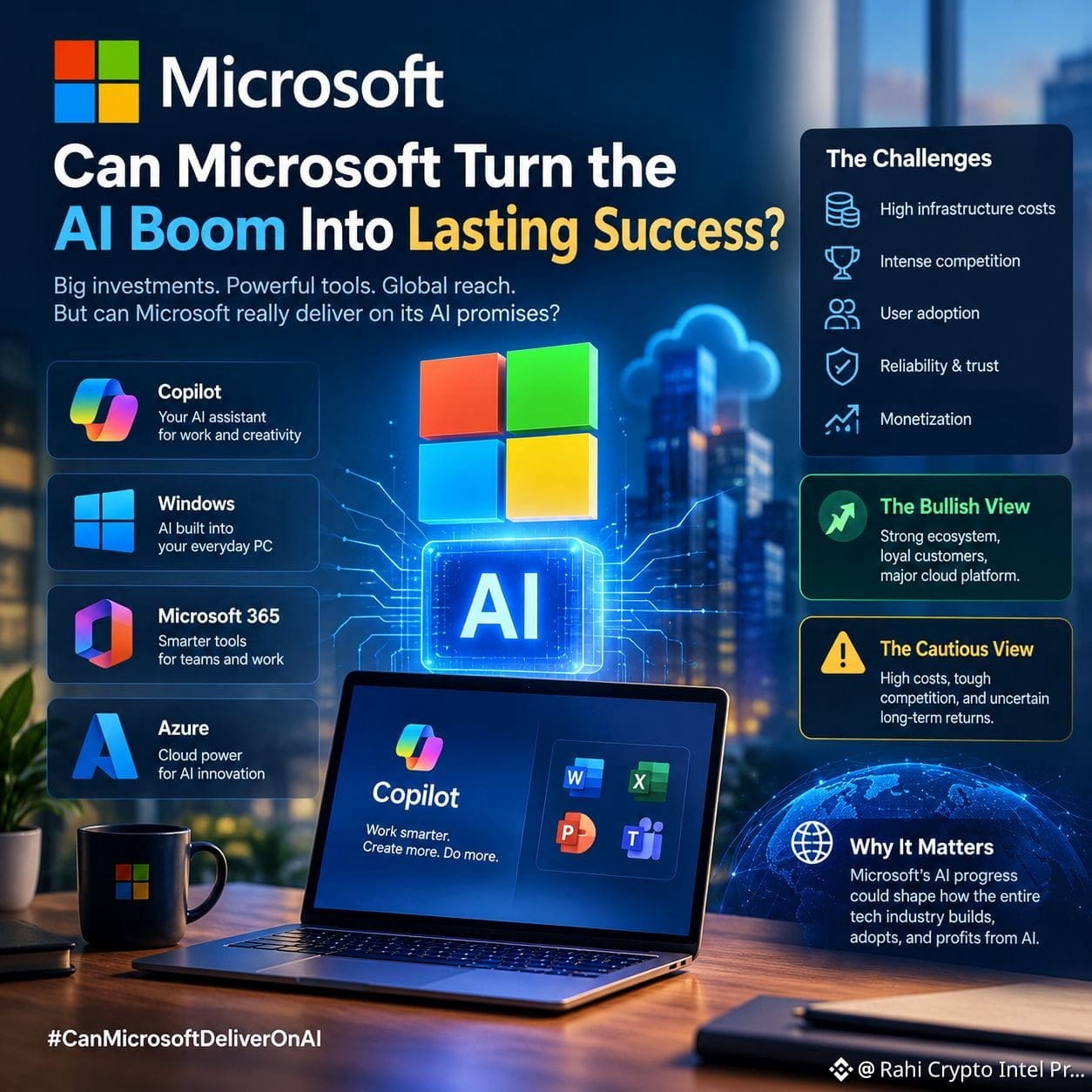
#CanMicrosoftDeliverOnAI
Can Microsoft Turn Its AI Investments Into Long-Term Growth?
Microsoft is investing heavily in AI, but the real challenge is turning that investment into lasting business success.
Its strategy goes beyond building smarter technology.
Copilot is designed to help people work faster, analyze information, and automate everyday tasks. AI features across Windows and Microsoft 365 could improve productivity, while Azure gives businesses the cloud infrastructure needed to build and run AI applications.
The opportunity is significant.
Microsoft already has millions of users, strong business relationships, and a powerful cloud platform. If AI delivers measurable productivity gains, more companies may be willing to pay for these tools.
But there are risks.
AI infrastructure requires enormous investment. Competition is growing, and businesses still need reliable results before fully trusting AI with important tasks. Microsoft must prove that its AI services can generate enough revenue to justify their costs.
The biggest question is simple: Can Microsoft turn AI hype into sustainable profits?
Its long-term success will depend on more than technological breakthroughs. It will require useful products, consistent adoption, satisfied customers, and a business model that delivers real value.
Microsoft's next chapter could offer important clues about the future of the entire AI industry.
What’s your view? Will Microsoft become one of AI’s biggest long-term winners, or will rising costs and competition limit its growth?
$GOOGL
{future}(GOOGLUSDT)
$MSFT
{future}(MSFTUSDT)
#CanMicrosoftDeliverOnAI
Can Microsoft Turn Its AI Investments Into Long-Term Growth?
Microsoft is investing heavily in AI, but the real challenge is turning that investment into lasting business success.
Its strategy goes beyond building smarter technology.
Copilot is designed to help people work faster, analyze information, and automate everyday tasks. AI features across Windows and Microsoft 365 could improve productivity, while Azure gives businesses the cloud infrastructure needed to build and run AI applications.
The opportunity is significant.
Microsoft already has millions of users, strong business relationships, and a powerful cloud platform. If AI delivers measurable productivity gains, more companies may be willing to pay for these tools.
But there are risks.
AI infrastructure requires enormous investment. Competition is growing, and businesses still need reliable results before fully trusting AI with important tasks. Microsoft must prove that its AI services can generate enough revenue to justify their costs.
The biggest question is simple: Can Microsoft turn AI hype into sustainable profits?
Its long-term success will depend on more than technological breakthroughs. It will require useful products, consistent adoption, satisfied customers, and a business model that delivers real value.
Microsoft's next chapter could offer important clues about the future of the entire AI industry.
What’s your view? Will Microsoft become one of AI’s biggest long-term winners, or will rising costs and competition limit its growth?
$GOOGL
$MSFT
1
19
See translation
#EarningsSeason
Earnings Season Could Influence Crypto Sentiment More Than You Think
Earnings season is not just about company profits. It also reveals how confident investors feel about the economy, business growth, and future opportunities.
When major companies report earnings, traders look beyond the numbers. Revenue growth, profit margins, and future guidance can all influence market sentiment. Even a profitable company can disappoint investors if expectations were too high.
What does this mean for crypto?
If corporate results are strong and companies deliver optimistic guidance, investors may become more comfortable taking risks. That could support demand for assets like Bitcoin and altcoins.
But disappointing earnings or cautious outlooks can trigger uncertainty. If investors reduce exposure to riskier assets, crypto markets may also face pressure.
However, Bitcoin does not always follow stocks. Crypto-specific factors, liquidity, regulation, and institutional demand can lead the market in a different direction.
The bullish case: Strong earnings and improving confidence could create a more favorable environment for risk assets.
The bearish case: Weak guidance and rising uncertainty could make investors more defensive, increasing volatility across financial markets.
A useful lesson for beginners: Don't react to an earnings headline alone. Compare the results with market expectations, read the company's future guidance, and observe how investors respond afterward.
During #EarningsSeason, the market's reaction can matter just as much as the reported results.
What's your view? Do you think strong corporate earnings could support Bitcoin's next move, or will crypto follow its own catalysts regardless of the stock market?
$BTC
{future}(BTCUSDT)
#EarningsSeason
Earnings Season Could Influence Crypto Sentiment More Than You Think
Earnings season is not just about company profits. It also reveals how confident investors feel about the economy, business growth, and future opportunities.
When major companies report earnings, traders look beyond the numbers. Revenue growth, profit margins, and future guidance can all influence market sentiment. Even a profitable company can disappoint investors if expectations were too high.
What does this mean for crypto?
If corporate results are strong and companies deliver optimistic guidance, investors may become more comfortable taking risks. That could support demand for assets like Bitcoin and altcoins.
But disappointing earnings or cautious outlooks can trigger uncertainty. If investors reduce exposure to riskier assets, crypto markets may also face pressure.
However, Bitcoin does not always follow stocks. Crypto-specific factors, liquidity, regulation, and institutional demand can lead the market in a different direction.
The bullish case: Strong earnings and improving confidence could create a more favorable environment for risk assets.
The bearish case: Weak guidance and rising uncertainty could make investors more defensive, increasing volatility across financial markets.
A useful lesson for beginners: Don't react to an earnings headline alone. Compare the results with market expectations, read the company's future guidance, and observe how investors respond afterward.
During #EarningsSeason, the market's reaction can matter just as much as the reported results.
What's your view? Do you think strong corporate earnings could support Bitcoin's next move, or will crypto follow its own catalysts regardless of the stock market?
$BTC

1
39
See translation
PEPE Whale Activity Is Getting Attention — But Should Traders Follow the Money?
Large crypto transactions can attract attention quickly, especially when a popular meme coin is involved.
But there is a major difference between observing a large wallet and knowing what its owner plans to do.
A whale holding a substantial amount of PEPE does not automatically mean another rally is coming. The wallet could continue holding, transfer tokens elsewhere, or eventually sell.
Here is what matters more than the headline:
Are exchange inflows increasing?
Is trading volume supporting the price move?
Are buyers continuing to defend important support?
Is the rally holding, or is selling pressure returning?
The bullish scenario is stronger when demand continues and price action confirms the move.
The bearish scenario becomes more concerning when momentum fades, exchange inflows rise, or the price loses support.
Whale activity can influence sentiment, but it cannot guarantee the next direction.
Would you trade PEPE based on whale activity, or would you wait for price confirmation first?
$PEPE
{spot}(PEPEUSDT)
$WENB
{spot}(WENBUSDT)
$INIT
{future}(INITUSDT)
PEPE Whale Activity Is Getting Attention — But Should Traders Follow the Money?
Large crypto transactions can attract attention quickly, especially when a popular meme coin is involved.
But there is a major difference between observing a large wallet and knowing what its owner plans to do.
A whale holding a substantial amount of PEPE does not automatically mean another rally is coming. The wallet could continue holding, transfer tokens elsewhere, or eventually sell.
Here is what matters more than the headline:
Are exchange inflows increasing?
Is trading volume supporting the price move?
Are buyers continuing to defend important support?
Is the rally holding, or is selling pressure returning?
The bullish scenario is stronger when demand continues and price action confirms the move.
The bearish scenario becomes more concerning when momentum fades, exchange inflows rise, or the price loses support.
Whale activity can influence sentiment, but it cannot guarantee the next direction.
Would you trade PEPE based on whale activity, or would you wait for price confirmation first?
$PEPE
$WENB
$INIT

242
Log in to explore more content
Join global crypto users on Binance Square
⚡️ Get latest and useful information about crypto.
💬 Trusted by the world’s largest crypto exchange.
👍 Discover real insights from verified creators.
Email / Phone number
Trending Topics
$1.5BInLeveragedCryptoBetsLiquidated
2,241 views
44 Discussing
@CZ warned users not to click links in emails or download attachments, even from people they trust, as they could contain viruses. #ElonMusk reacted to CZ’s post with fire and laughing emojis.
$DOGE $BNB $BTC
#$1.5BInLeveragedCryptoBetsLiquidated #USMidtermElections #BinanceWillListPredictPREDICT #CZ
Crypto Ahmet
·6 Likes
·4k views
KOSPIFalls3.53%BackBelow6000
5,017 views
213 Discussing
USMidtermElections
112,755 views
1,465 Discussing