
#solana2027roadmaptargetsdoublecomputecapacity
solana2027roadmaptargetsdoublecomputecapacity
Hot
Latest

Verified
See translation
Anza just unveiled Solana’s 2027 roadmap at Breakpoint London—and the numbers are built for serious scale.
Following October’s Alpenglow upgrade, core devs are shifting from consensus speed to raw execution efficiency:
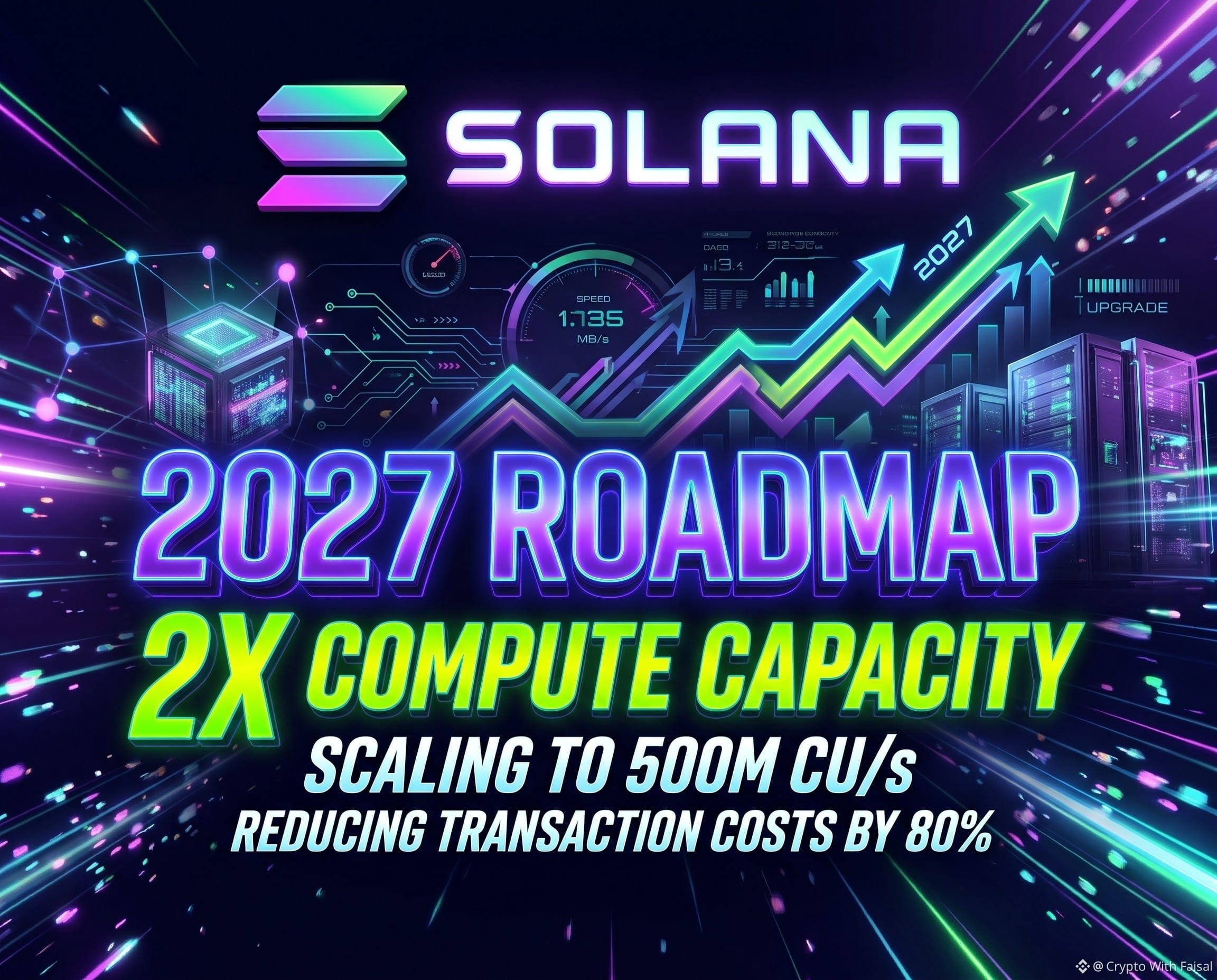
⚡ 2x Compute Ceiling: Network capacity targets a jump from 250M to 500M compute units per second by end of 2027.
📉 80% Lower Token-Account CU: Swaps, stablecoin transfers, and SPL token moves will require 80% fewer compute units—freeing massive blockspace without heavier validator hardware.
🔓 Deeper Composability: Per-transaction account limits rise from 64 to 96, alongside SIMD-0437 storage rent cuts.
Trader Takeaway:
Roadmaps don’t move candles overnight, especially with SOL trading near $75. Still, slashing execution bloat while doubling throughput widens Solana’s moat for high-frequency DeFi and on-chain AI.
Are you positioning in SOL on long-term tech milestones or waiting for live rollouts? Share your view below 👇
$SOL $MMT $HUMA
{future}(HUMAUSDT)
{future}(MMTUSDT)
{future}(SOLUSDT)
#solana2027roadmaptargetsdoublecomputecapacity
Anza just unveiled Solana’s 2027 roadmap at Breakpoint London—and the numbers are built for serious scale.
Following October’s Alpenglow upgrade, core devs are shifting from consensus speed to raw execution efficiency:
⚡ 2x Compute Ceiling: Network capacity targets a jump from 250M to 500M compute units per second by end of 2027.
📉 80% Lower Token-Account CU: Swaps, stablecoin transfers, and SPL token moves will require 80% fewer compute units—freeing massive blockspace without heavier validator hardware.
🔓 Deeper Composability: Per-transaction account limits rise from 64 to 96, alongside SIMD-0437 storage rent cuts.
Trader Takeaway:
Roadmaps don’t move candles overnight, especially with SOL trading near $75. Still, slashing execution bloat while doubling throughput widens Solana’s moat for high-frequency DeFi and on-chain AI.
Are you positioning in SOL on long-term tech milestones or waiting for live rollouts? Share your view below 👇
$SOL $MMT $HUMA
#solana2027roadmaptargetsdoublecomputecapacity
AndersonMarreta:
Eu casei com a Solana e moramos em uma casa ampla cheio de filhos e filhas correndo pela casa. Solana eu te amo meu amor!
1
2
2.3k

·
--
See translation
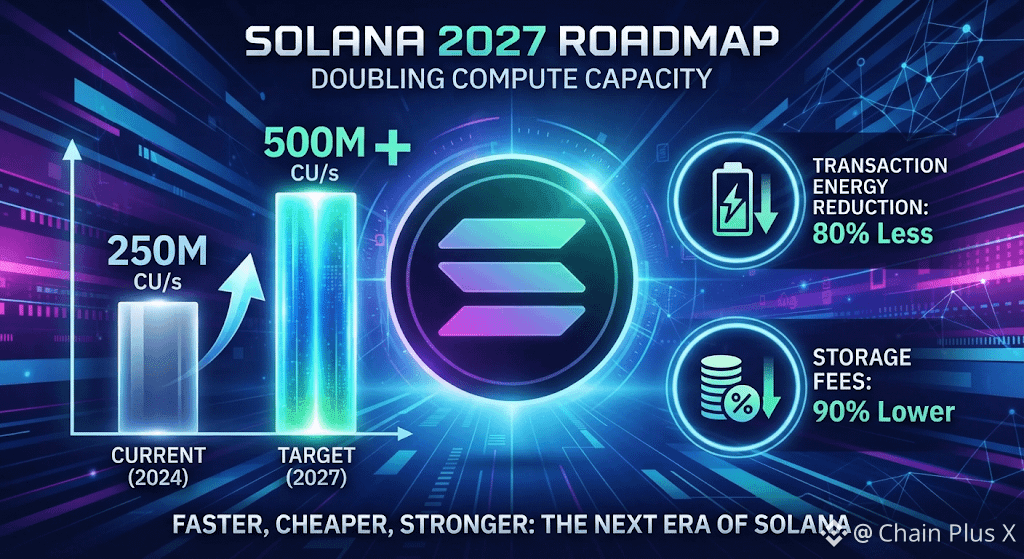
#solana2027roadmaptargetsdoublecomputecapacity Solana just shared its big new plan for 2027! The core developer team, Anza, wants to double the network's computing power from 250 million to 500 million units per second. This upgrade will help the blockchain handle twice as much work smoothly. They also plan to cut the computing energy needed for token transactions by 80% and lower data storage fees by 90%. Following the recent Alpenglow speed boost, Solana is getting faster, cheaper, and stronger for everyday users.
$SOL $BTC
{spot}(BTCUSDT)
{spot}(SOLUSDT)
#solana2027roadmaptargetsdoublecomputecapacity Solana just shared its big new plan for 2027! The core developer team, Anza, wants to double the network's computing power from 250 million to 500 million units per second. This upgrade will help the blockchain handle twice as much work smoothly. They also plan to cut the computing energy needed for token transactions by 80% and lower data storage fees by 90%. Following the recent Alpenglow speed boost, Solana is getting faster, cheaper, and stronger for everyday users.
$SOL $BTC
$SOL $BTC
300
·
--
Verified
See translation
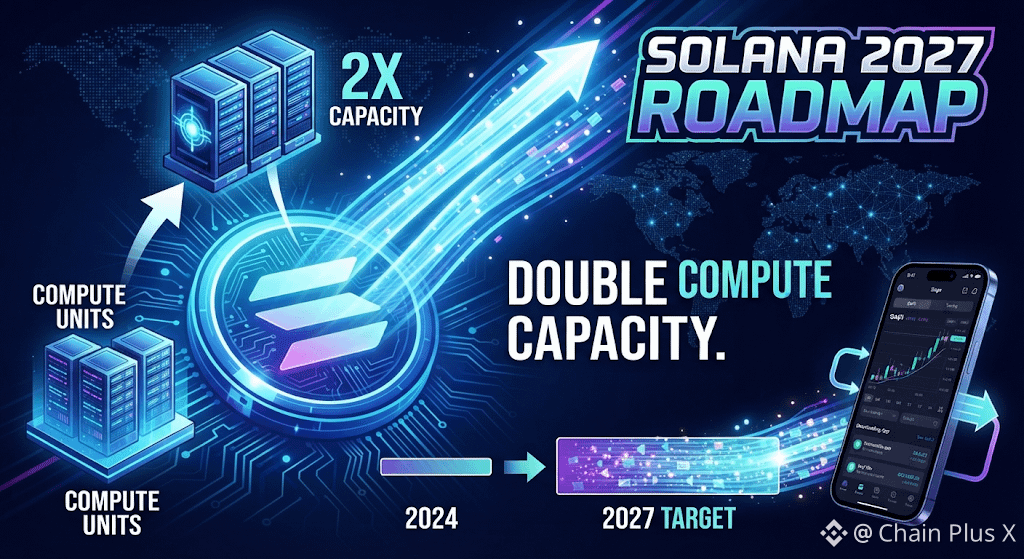
#solana2027roadmaptargetsdoublecomputecapacity Solana just shared its big plans for 2027 at the Breakpoint event in London. The main goal is to double the network's computing power to handle way more activity. Developers also want to cut the power needed for normal token trades by 80%. Following the fast Alpenglow upgrade, these changes will make Solana much cheaper, smoother, and stronger. It is an exciting step forward for faster apps and everyday crypto users.
$SOL
$THE
$BTC
{spot}(BTCUSDT)
{spot}(SOLUSDT)
{spot}(THEUSDT)
#solana2027roadmaptargetsdoublecomputecapacity Solana just shared its big plans for 2027 at the Breakpoint event in London. The main goal is to double the network's computing power to handle way more activity. Developers also want to cut the power needed for normal token trades by 80%. Following the fast Alpenglow upgrade, these changes will make Solana much cheaper, smoother, and stronger. It is an exciting step forward for faster apps and everyday crypto users.
$SOL
$THE
$BTC
$SOL
$THE
$BTC
1
1.7k

·
--
Bearish
Verified
See translation
#Solana2027RoadmapTargetsDoubleComputeCapacity
🚀 SOLANA GETS A JET ENGINE: TWICE THE POWER, 80 PERCENT LOWER COMPUTE FEES!
The Anza team has just unveiled Solana 2027 roadmap after the Alpenglow upgrade. The goal is to double computing capacity, reduce the CU units needed for token transactions by 80 percent, and raise the per-transaction account limit to 96.
Let me explain in very simple words what this means:
◽ In addition to making block propagation faster through Constellation, support for vector processing will also help Solana run complex models fully on-chain.
◽ This is a massive infrastructure step to welcome large-scale institutional capital, AI, and RWA!
💡 So what should we do?
In my opinion, please keep a close eye on SOL and DeFi, AI, and RWA infrastructure projects in the Solana ecosystem. And please consider building up gradually near strong support levels, and avoid FOMO-buying at the top on long-term roadmap news.
⚠️ This is not financial advice.
👇
$SOL - This is the main coin in this story, its speed and low fees are the whole point here.
$JUP - This one lives on Solana, so when Solana gets stronger, it also gets attention.
$BREV - This is a small coin, it can fall fast even on good news, so please be careful with it.
#Solana #CryptoNews #Blockchain #DeFi #Web3
✨𝐅𝐀𝐑𝐙𝐀𝐍𝐀 𝐇𝐀𝐌𝐄𝐄𝐃 𝐎𝐅𝐅𝐈𝐂𝐈𝐀𝐋 • 🦋
{future}(SOLUSDT)
{future}(JUPUSDT)
{future}(BREVUSDT)
#Solana2027RoadmapTargetsDoubleComputeCapacity
🚀 SOLANA GETS A JET ENGINE: TWICE THE POWER, 80 PERCENT LOWER COMPUTE FEES!
The Anza team has just unveiled Solana 2027 roadmap after the Alpenglow upgrade. The goal is to double computing capacity, reduce the CU units needed for token transactions by 80 percent, and raise the per-transaction account limit to 96.
Let me explain in very simple words what this means:
◽ In addition to making block propagation faster through Constellation, support for vector processing will also help Solana run complex models fully on-chain.
◽ This is a massive infrastructure step to welcome large-scale institutional capital, AI, and RWA!
💡 So what should we do?
In my opinion, please keep a close eye on SOL and DeFi, AI, and RWA infrastructure projects in the Solana ecosystem. And please consider building up gradually near strong support levels, and avoid FOMO-buying at the top on long-term roadmap news.
⚠️ This is not financial advice.
👇
$SOL - This is the main coin in this story, its speed and low fees are the whole point here.
$JUP - This one lives on Solana, so when Solana gets stronger, it also gets attention.
$BREV - This is a small coin, it can fall fast even on good news, so please be careful with it.
#Solana #CryptoNews #Blockchain #DeFi #Web3
✨𝐅𝐀𝐑𝐙𝐀𝐍𝐀 𝐇𝐀𝐌𝐄𝐄𝐃 𝐎𝐅𝐅𝐈𝐂𝐈𝐀𝐋 • 🦋

8
616

·
--
See translation
🚨 SOLANA IS NOT DONE SCALING — 2027 COULD CHANGE EVERYTHING! 🔥
Solana’s 2027 roadmap is targeting 2X network compute capacity and an incredible 80% reduction in compute usage for token-account transactions!
⚡ What’s coming?
2X network computing capacity.
80% less compute usage for token-account transactions.
Transaction account limit rising from 64 to 96.
On-chain vector processing for advanced applications.
Faster block distribution and improved validator competition.
This is bigger than just speed. It’s about making Solana more powerful, efficient, and ready for the next generation of DeFi, AI, and blockchain applications.
🔥 THE BIG QUESTION: Can Solana become the ultimate high-performance blockchain by 2027?
👇 Comment your prediction: BULLISH SOLANA 🚀 or STILL NOT CONVINCED?
#Solana2027RoadmapTargetsDoubleComputeCapacity $SOL
{future}(SOLUSDT)
🚨 SOLANA IS NOT DONE SCALING — 2027 COULD CHANGE EVERYTHING! 🔥
Solana’s 2027 roadmap is targeting 2X network compute capacity and an incredible 80% reduction in compute usage for token-account transactions!
⚡ What’s coming?
2X network computing capacity.
80% less compute usage for token-account transactions.
Transaction account limit rising from 64 to 96.
On-chain vector processing for advanced applications.
Faster block distribution and improved validator competition.
This is bigger than just speed. It’s about making Solana more powerful, efficient, and ready for the next generation of DeFi, AI, and blockchain applications.
🔥 THE BIG QUESTION: Can Solana become the ultimate high-performance blockchain by 2027?
👇 Comment your prediction: BULLISH SOLANA 🚀 or STILL NOT CONVINCED?
#Solana2027RoadmapTargetsDoubleComputeCapacity $SOL
Luis_Herrera:
Ojala que si
1
29

·
--
See translation
Solana 2027 Roadmap Targets Double Compute Capacity — SOL Going To The Next Level!
Solana 2027 roadmap targets double compute capacity — and this could change everything for SOL.
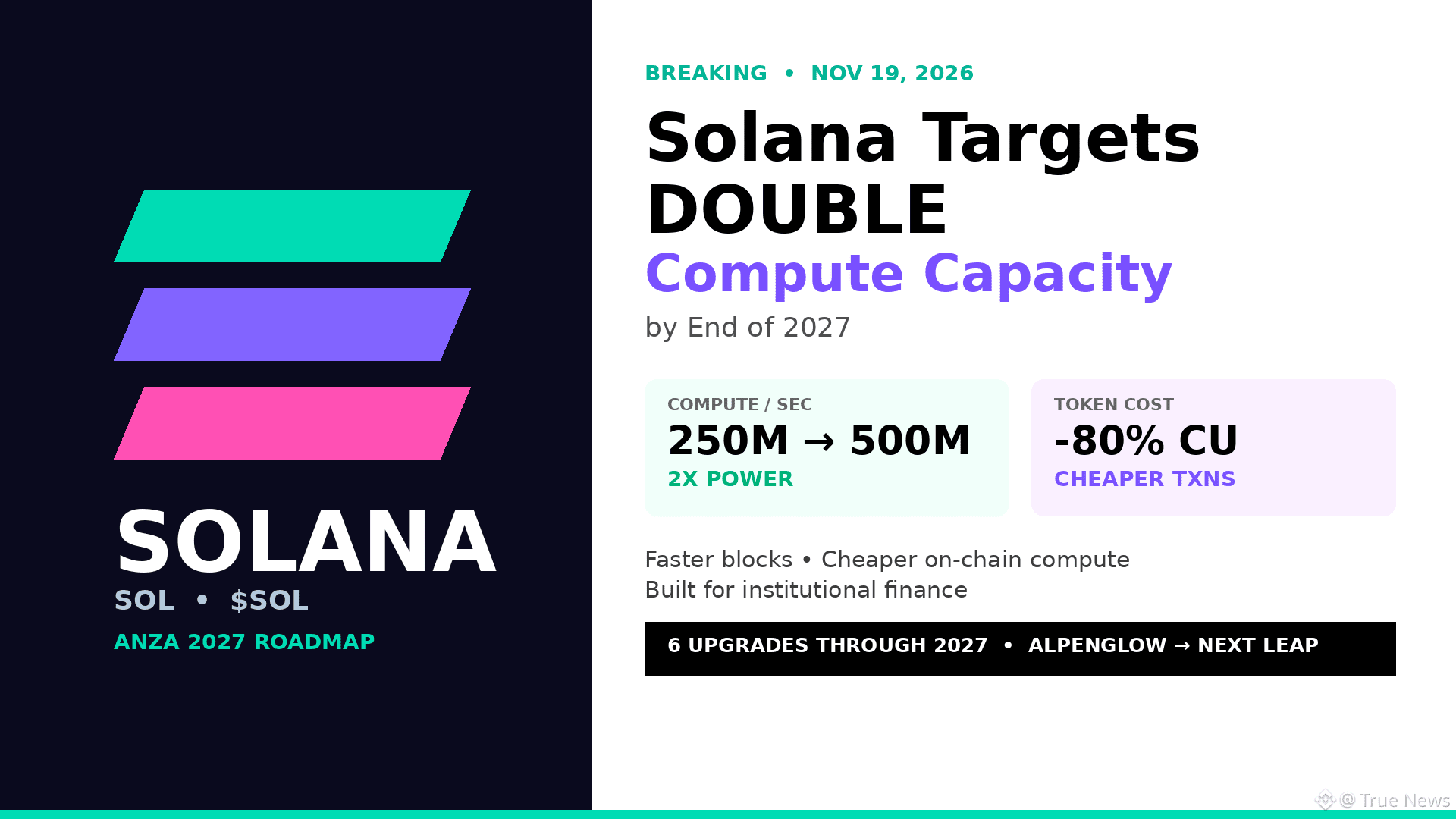
Anza, the core development firm behind Solana, unveiled its 2027 technical roadmap at Breakpoint 2026 in London on Nov 19. Anza CEO Brennan Watt presented the plan, and the headline goals are huge.
First, Solana wants to double its network compute capacity from 250 million to 500 million compute units per second by end of 2027. That means double the throughput, faster block distribution, and support for much more demanding financial applications.
Second, it wants to cut compute-unit use for token-account operations by 80%. That means cheaper token transactions, cheaper on-chain computation, and a complete rewrite of storage and programs.
This follows Alpenglow earlier in 2026, which already cut finality latency by over 98% and doubled throughput. Now Solana is building for institutional finance beyond just spot trading — with faster ordering, on-chain vector processing, and six major upgrades through 2027.
Is Solana now the fastest chain for Wall Street? Comment SOL TO $500 or STILL ETH below 👇
{spot}(SOLUSDT)
#Blockchain #Web3 #DeFi #CryptoTrading #Investing #Altcoins #Bullish #SolanaEcosystem#solana2027roadmaptargetsdoublecomputecapacity
Solana 2027 Roadmap Targets Double Compute Capacity — SOL Going To The Next Level!
Solana 2027 roadmap targets double compute capacity — and this could change everything for SOL.
Anza, the core development firm behind Solana, unveiled its 2027 technical roadmap at Breakpoint 2026 in London on Nov 19. Anza CEO Brennan Watt presented the plan, and the headline goals are huge.
First, Solana wants to double its network compute capacity from 250 million to 500 million compute units per second by end of 2027. That means double the throughput, faster block distribution, and support for much more demanding financial applications.
Second, it wants to cut compute-unit use for token-account operations by 80%. That means cheaper token transactions, cheaper on-chain computation, and a complete rewrite of storage and programs.
This follows Alpenglow earlier in 2026, which already cut finality latency by over 98% and doubled throughput. Now Solana is building for institutional finance beyond just spot trading — with faster ordering, on-chain vector processing, and six major upgrades through 2027.
Is Solana now the fastest chain for Wall Street? Comment SOL TO $500 or STILL ETH below 👇
#Blockchain #Web3 #DeFi #CryptoTrading #Investing #Altcoins #Bullish #SolanaEcosystem#solana2027roadmaptargetsdoublecomputecapacity
61

·
--
See translation
$SOL: Anza's 2027 roadmap promises to double Solana's compute capacity. Does a plan change anything a trader can price today?
Short answer: not yet. The numbers are targets for the end of 2027, not shipped code, and the report attaches no delivery schedule or benchmark method.
What the roadmap actually said:
- Anza CEO Brennan Watt presented the 2027 roadmap at Solana Breakpoint 2026 in London, and Solana shared the video on X on Nov. 19 (cryptonews.net, Nov. 19, 14:24 UTC).
- Compute capacity goes from a current benchmark of 250 million compute units per second to a target of 500 million by the end of 2027, while token-account transactions get an 80% cut in compute units and the accounts one transaction can touch rise from 64 to 96.
- Alpenglow, live since Oct. 21, cut finality from about 12.8 seconds to a target of 150 milliseconds, per the same report.
Why it matters:
- Compute units are the network's metering unit, so more headroom means less peak congestion, and the 80% token-account cut hits the most common activity, from swaps to stablecoin moves.
- A capacity number is a promise about future supply: it pays off only if apps fill it and validators upgrade, and no ship dates are attached to the individual items.
My checkpoints:
- Whether Anza publishes a release schedule and the benchmark it will use for the 500 million figure; the report names neither.
- SOLUSDT at 73.91 USDT at 21:32 Kyiv, +0.83% over rolling 24h, day range 72.32-75.65 (Binance). A dated reading, not a reaction window.
- The first client releases announced with measured compute numbers rather than slides.
My rule from roadmap weeks: reward the benchmark, not the slide.
#Solana2027RoadmapTargetsDoubleComputeCapacity #Write2Earn
Which Solana upgrade have you actually felt in fees or speed, and why did that one matter more than the roadmap?
$SOL : Anza's 2027 roadmap promises to double Solana's compute capacity. Does a plan change anything a trader can price today?
Short answer: not yet. The numbers are targets for the end of 2027, not shipped code, and the report attaches no delivery schedule or benchmark method.
What the roadmap actually said:
- Anza CEO Brennan Watt presented the 2027 roadmap at Solana Breakpoint 2026 in London, and Solana shared the video on X on Nov. 19 (cryptonews.net, Nov. 19, 14:24 UTC).
- Compute capacity goes from a current benchmark of 250 million compute units per second to a target of 500 million by the end of 2027, while token-account transactions get an 80% cut in compute units and the accounts one transaction can touch rise from 64 to 96.
- Alpenglow, live since Oct. 21, cut finality from about 12.8 seconds to a target of 150 milliseconds, per the same report.
Why it matters:
- Compute units are the network's metering unit, so more headroom means less peak congestion, and the 80% token-account cut hits the most common activity, from swaps to stablecoin moves.
- A capacity number is a promise about future supply: it pays off only if apps fill it and validators upgrade, and no ship dates are attached to the individual items.
My checkpoints:
- Whether Anza publishes a release schedule and the benchmark it will use for the 500 million figure; the report names neither.
- SOLUSDT at 73.91 USDT at 21:32 Kyiv, +0.83% over rolling 24h, day range 72.32-75.65 (Binance). A dated reading, not a reaction window.
- The first client releases announced with measured compute numbers rather than slides.
My rule from roadmap weeks: reward the benchmark, not the slide.
#Solana2027RoadmapTargetsDoubleComputeCapacity #Write2Earn
Which Solana upgrade have you actually felt in fees or speed, and why did that one matter more than the roadmap?
39

·
--
See translation
🚨 SOLANA IS TARGETING A MASSIVE UPGRADE FOR 2027! 🚀
Anza has revealed an ambitious roadmap for $SOL (Solana), targeting:
🔥 2X network computing capacity
⚡ 80% lower compute usage for token-account transactions
📈 Transaction account limit increased from 64 to 96
🤖 On-chain vector processing for AI applications
These upgrades could strengthen Solana's DeFi, AI, and RWA ecosystem and attract more institutional interest.
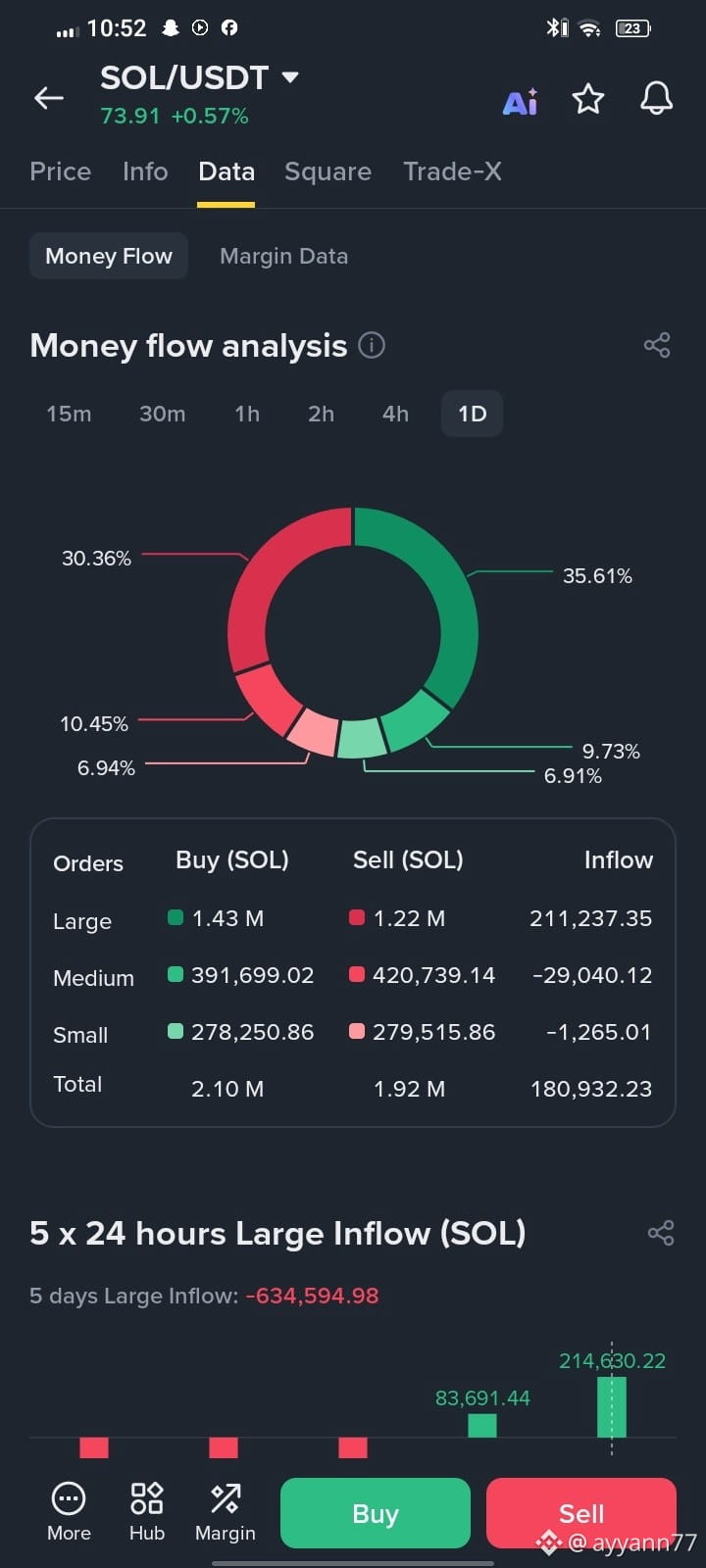
$SOL is trading near $75, so keep an eye on strong support zones. Gradual accumulation may be worth watching, but avoid FOMO buying.
The long-term vision for Solana is getting bigger! 👀🔥#Solana2027RoadmapTargetsDoubleComputeCapacity
{future}(SOLUSDT)
🚨 SOLANA IS TARGETING A MASSIVE UPGRADE FOR 2027! 🚀
Anza has revealed an ambitious roadmap for $SOL (Solana), targeting:
🔥 2X network computing capacity
⚡ 80% lower compute usage for token-account transactions
📈 Transaction account limit increased from 64 to 96
🤖 On-chain vector processing for AI applications
These upgrades could strengthen Solana's DeFi, AI, and RWA ecosystem and attract more institutional interest.
$SOL is trading near $75, so keep an eye on strong support zones. Gradual accumulation may be worth watching, but avoid FOMO buying.
The long-term vision for Solana is getting bigger! 👀🔥#Solana2027RoadmapTargetsDoubleComputeCapacity
1
18

Article
See translation
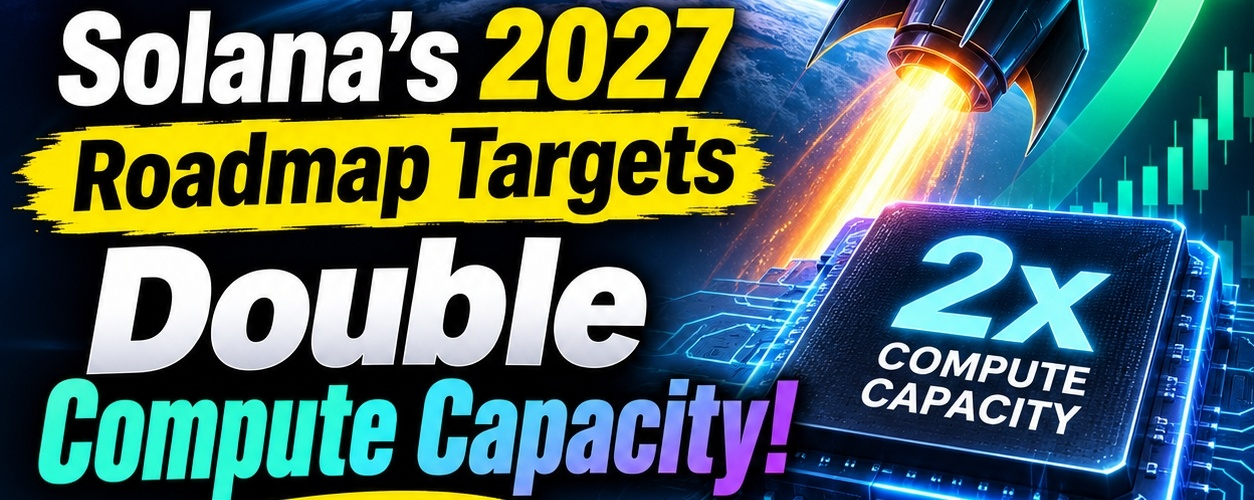
SOLANA ROADMAP 2027:#Solana2027RoadmapTargetsDoubleComputeCapacity 🚀 Solana's 2027 Roadmap Targets Double Compute Capacity
Solana is preparing for a major network performance upgrade as part of its 2027 roadmap, with a target of doubling its compute capacity.
The planned improvement aims to increase network efficiency, support more transactions, and strengthen Solana's ability to handle growing demand from DeFi, gaming, and other blockchain applications.
⚡ Key Highlights:
- Targeting a 2x increase in compute capacity.
- Improving network scalability and transaction efficiency.
- Reducing computational requirements for certain token-account transactions.
- Supporting the growth of Solana's ecosystem.
📈 Why It Matters
Higher compute capacity could help Solana handle more complex applications and increased network activity. If successfully implemented, these improvements could strengthen its competitiveness among major blockchain networks.
👀 Market Watch
SOL investors and developers will be watching the roadmap's progress as Solana works toward its 2027 performance goals.
What do you think? Could this upgrade make Solana even stronger?
$SOL #Solana #Crypto #Blockchain #DeFi
$ANT $GOOGLB
Disclaimer: This is for educational purposes only, not financial advice (NFA). Always do your own research (DYOR).
SOLANA ROADMAP 2027:
#Solana2027RoadmapTargetsDoubleComputeCapacity 🚀 Solana's 2027 Roadmap Targets Double Compute Capacity
Solana is preparing for a major network performance upgrade as part of its 2027 roadmap, with a target of doubling its compute capacity.
The planned improvement aims to increase network efficiency, support more transactions, and strengthen Solana's ability to handle growing demand from DeFi, gaming, and other blockchain applications.
⚡ Key Highlights:
- Targeting a 2x increase in compute capacity.
- Improving network scalability and transaction efficiency.
- Reducing computational requirements for certain token-account transactions.
- Supporting the growth of Solana's ecosystem.
📈 Why It Matters
Higher compute capacity could help Solana handle more complex applications and increased network activity. If successfully implemented, these improvements could strengthen its competitiveness among major blockchain networks.
👀 Market Watch
SOL investors and developers will be watching the roadmap's progress as Solana works toward its 2027 performance goals.
What do you think? Could this upgrade make Solana even stronger?
$SOL #Solana #Crypto #Blockchain #DeFi
$ANT $GOOGLB
Disclaimer: This is for educational purposes only, not financial advice (NFA). Always do your own research (DYOR).
20

·
--
See translation
#Solana2027RoadmapTargetsDoubleComputeCapacity
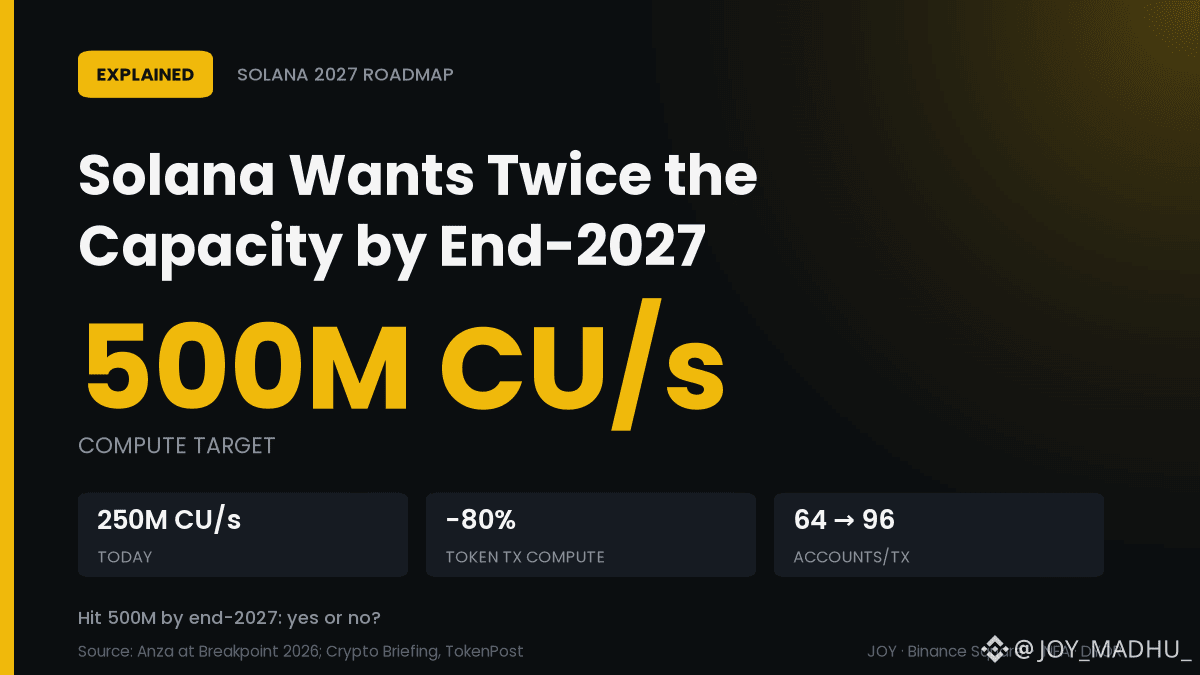
⚡ 250M to 500M: Solana Wants Twice the Room by End-2027
Anza's 2027 roadmap aims to double Solana's capacity while making its most common transactions cheaper.
📈 Compute target: 250M to 500M CUs per second by end-2027
📉 Token-account transactions: 80% fewer compute units
📊 Accounts per transaction: 64 to 96
📅 Builds on Alpenglow (live Oct 21): finality ~12.8s to 150ms target
The catch: these are targets, and Anza hasn't given dates for most items.
Will Solana really hit 500M CUs/s by end-2027, yes or no? 👇
$SOL
#Solana2027RoadmapTargetsDoubleComputeCapacity #Solana #Write2Earn
31


·
--
Bullish
See translation
#Solana2027RoadmapTargetsDoubleComputeCapacity
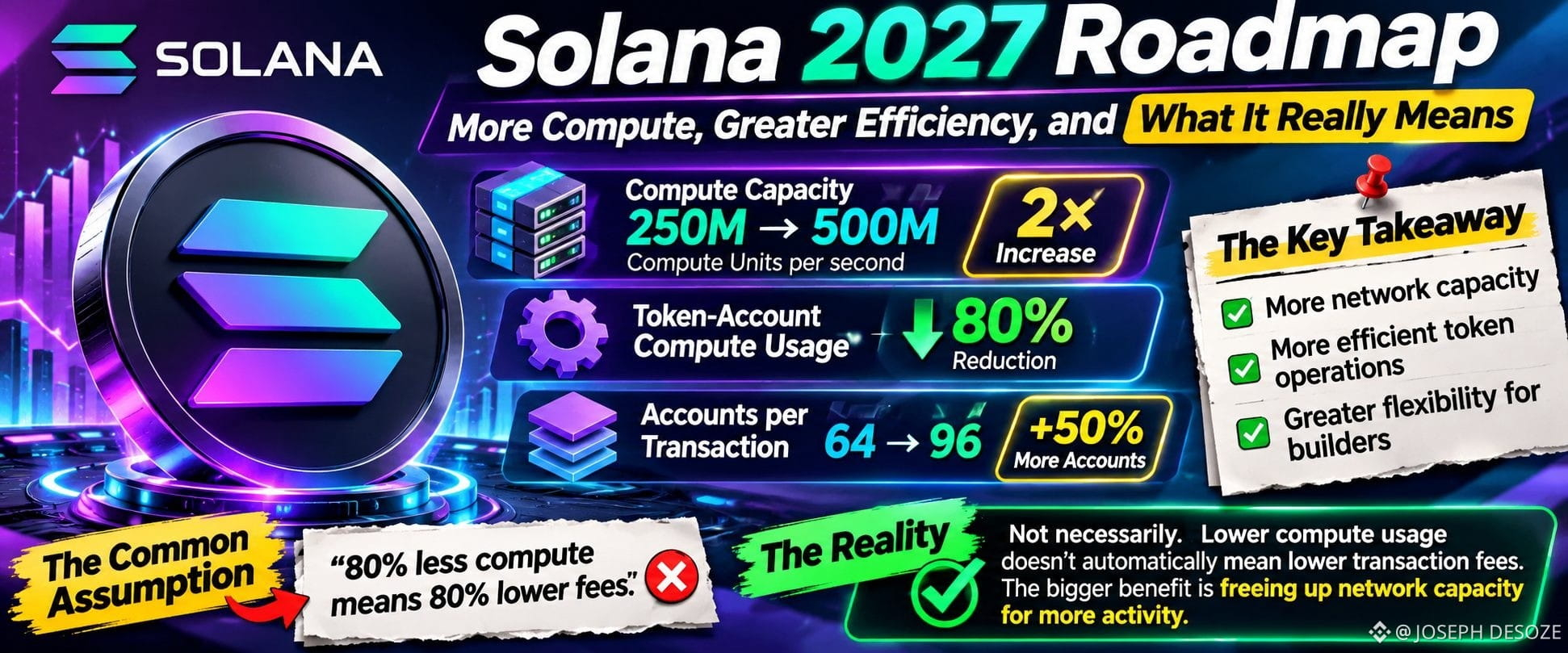
The most interesting part of Solana's 2027 roadmap isn't just doubling compute capacity. It's the plan to make common token-account operations use up to 80% less computing power.
Here's why that distinction matters.
Anza wants to increase network compute capacity from 250 million to 500 million compute units per second. At the same time, it is targeting an 80% reduction in compute consumption for token-account-related transactions. BigGo Finance +1
At first, it's easy to assume that cheaper computation automatically means cheaper transactions for users. But that's not necessarily how it works.
Compute units measure the processing work required by the network. Transaction fees are a separate mechanism. So an 80% reduction in compute usage does not promise an 80% reduction in fees.
The bigger opportunity is efficiency.
If common token operations require less processing, more of the network's existing resources could become available for other transactions. Combine that with the planned increase from 64 to 96 accounts per transaction, and developers could have more room to build complex applications. Solana Media +1
That's what makes this roadmap interesting to me. Solana isn't only trying to process more activity; it's trying to make existing resources work harder.
But there's one thing worth watching: how much of the promised efficiency actually reaches mainnet, and whether real transaction workloads benefit as much as the roadmap targets suggest.
VERIFY BEFORE POSTING:
* 250M to 500M compute units per second is a roadmap target, not an achieved result.
* The 80% reduction applies specifically to token-account-related operations.
* Confirm the 64-to-96 account increase applies to v1 transactions and check activation status.
* Do not describe the compute reduction as an equivalent reduction in transaction fees.
146
See translation
#Solana2027RoadmapTargetsDoubleComputeCapacity
🟣 SOLANA 2027 ROADMAP: 2x COMPUTE, 80% CHEAPER!
Solana Declares War On Every L1!
⚡ Compute: 250M → 500M CU/Sec By End 2027!
💰 Token Cost: -80% Compute Units!
📉 Storage Rent: -90% Target!
🤖 AI On-Chain: Full Model Execution + Vector Processing!
📦 Accounts Per Tx: 64 → 96!
📅 Announced: Nov 19, Breakpoint London!
👨💼 By: Anza CEO Brennan Watt!
✅ Proof: Alpenglow LIVE — Finality 12.8s → 150ms!
Your call? 👇
SOL TO $500 🟣
FOLLOWS BTC 🟡
TOO AMBITIOUS 🔴
$SOL $ETH $SUI
#SolanaUSTD #sol #Anza2027 #CryptoNews

1
86

·
--
Verified
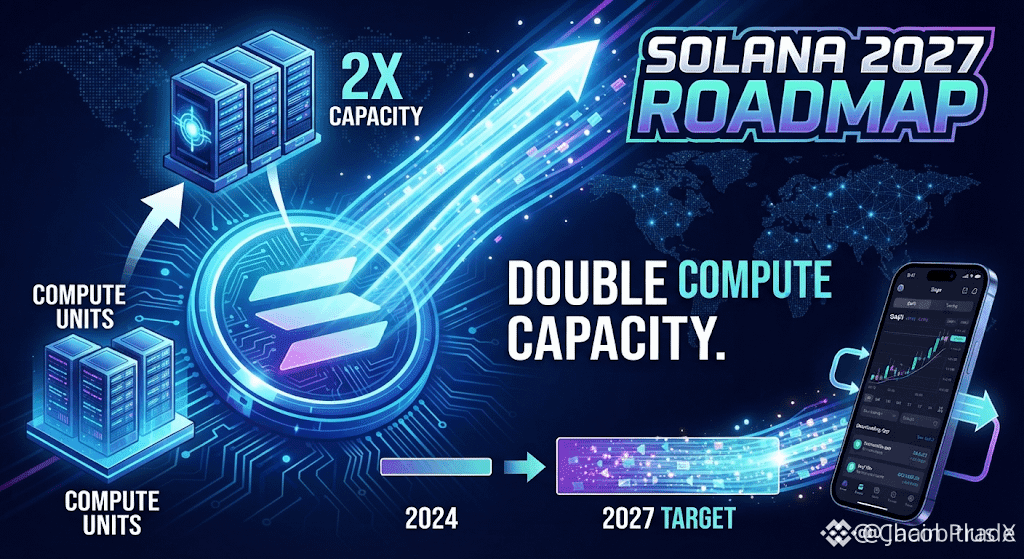
#solana2027roadmaptargetsdoublecomputecapacity Solana has just unveiled its major plans for 2027 at the Breakpoint event in London. The main goal is to double the network’s computing power to handle much more activity. Developers also want to reduce the energy required for typical token transactions by 80%. Following the rapid Alpenglow upgrade, these changes will make Solana much cheaper, smoother, and more robust. This is an exciting step forward for faster applications and everyday cryptocurrency users.
$SOL
{future}(SOLUSDT)
$ICNT
{future}(ICNTUSDT)
$IRYS
{future}(IRYSUSDT)
#solana2027roadmaptargetsdoublecomputecapacity Solana has just unveiled its major plans for 2027 at the Breakpoint event in London. The main goal is to double the network’s computing power to handle much more activity. Developers also want to reduce the energy required for typical token transactions by 80%. Following the rapid Alpenglow upgrade, these changes will make Solana much cheaper, smoother, and more robust. This is an exciting step forward for faster applications and everyday cryptocurrency users.
$SOL
$ICNT
$IRYS
$SOL
$ICNT
$IRYS
2
2.5k
·
--
Verified
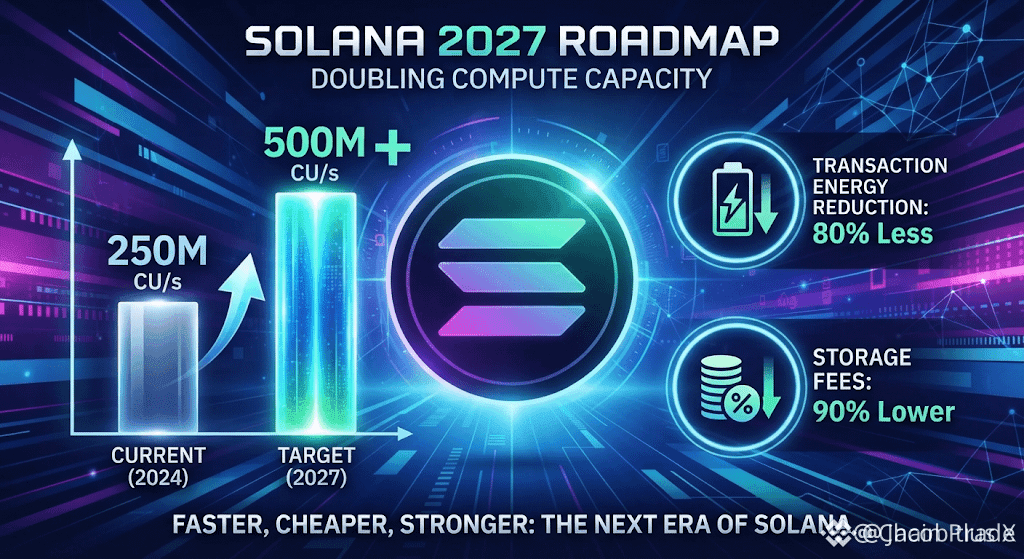
#solana2027roadmaptargetsdoublecomputecapacity Solana has just unveiled its major plan for 2027! The core development team, Anza, wants to double the network’s computing power, increasing it from 250 million to 500 million units per second. This upgrade will enable the blockchain to handle twice as many operations with ease. The team also plans to reduce the computing energy required for token transactions by 80% and cut data storage fees by 90%. Following the recent speed boost from Alpenglow, Solana is becoming faster, less expensive, and more efficient for everyday users.
$SOL
{future}(SOLUSDT)
$EVAA
{future}(EVAAUSDT)
$IRYS
{future}(IRYSUSDT)
#solana2027roadmaptargetsdoublecomputecapacity Solana has just unveiled its major plan for 2027! The core development team, Anza, wants to double the network’s computing power, increasing it from 250 million to 500 million units per second. This upgrade will enable the blockchain to handle twice as many operations with ease. The team also plans to reduce the computing energy required for token transactions by 80% and cut data storage fees by 90%. Following the recent speed boost from Alpenglow, Solana is becoming faster, less expensive, and more efficient for everyday users.
$SOL
$EVAA
$IRYS
$SOL
$EVAA
$IRYS
2
2.5k

·
--
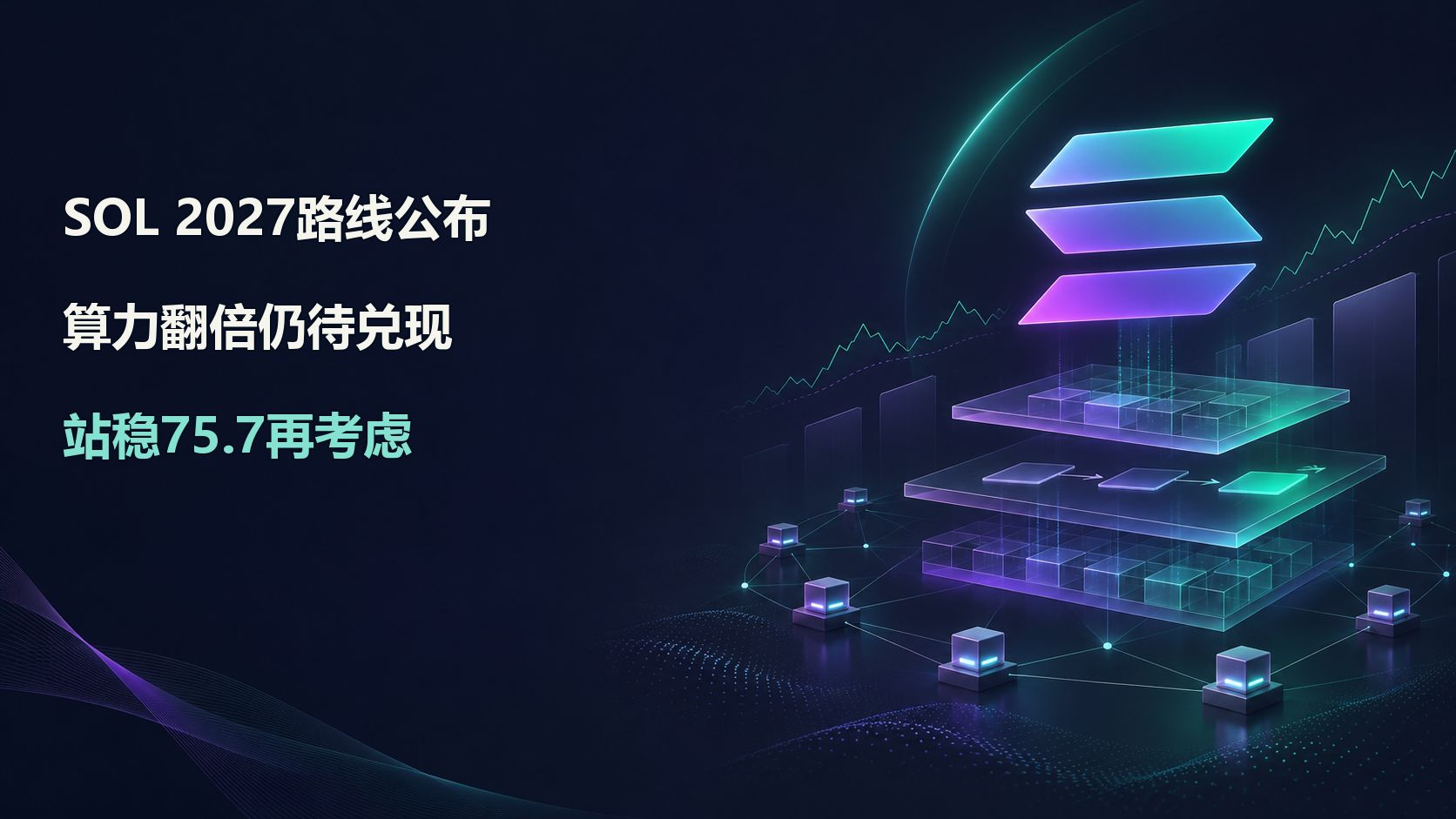
Solana proposes doubling computing capacity by 2027|Technical roadmap still to be delivered|Consider SOL only after it holds above 75.7
My stance is to follow the progress, but not chase news-driven candles. The hot topic #Solana2027RoadmapTargetsDoubleComputeCapacity is being discussed on Binance Square, and SOL also appeared among the Most Searched assets over the past 6 hours. On November 19, Solana’s official account shared the 2027 roadmap from core development team Anza: the goal is to double the network’s computing capacity and reduce the compute units consumed by token-account-related transactions by 80%. The roadmap also lists on-chain vector processing, increasing the number of accounts accessible per transaction from 64 to 96, improving block dissemination, and using Constellation to make ordering rules clearer. Binance’s official News account also repeated these goals, so the direction can be cross-checked.
The most important word here is “roadmap,” not “launched.” Doubling computing capacity means a goal for the amount of computational work the network can handle; it does not mean SOL’s price should double. Reducing the compute units consumed by token accounts by 80% does not mean every user’s fees will immediately fall by 80%, nor does it mean exchanges must buy more SOL today. Actual network fees are also affected by priority fees, demand, application design, and validator execution. If the new transaction ordering and more distributed competition among validators are implemented as planned, they could improve transaction execution certainty during peak periods. If the design fails testing or stability issues arise at launch, the market could instead lower its valuation expectations.
I’m more interested in three pieces of evidence to come: whether Anza publishes an implementation and benchmark tests that can be reviewed; whether the features go through validator and community processes; and whether real applications show improvements in failure rates, fees, and user numbers under heavy load. Goals mentioned in a presentation alone are still a long way from continuous, stable mainnet operation. Other news from the past day includes tighter expectations for macro interest rates and pending ETF flow data, so SOL’s candle cannot be attributed entirely to the roadmap. Farside’s current table shows total SOL fund flows of 0.0 on November 18; for the 19th, the individual products still show dashes. The automatic total of 0.0 should not be treated as confirmation of zero subscriptions or redemptions on the 19th.
The market reaction has not confirmed strength. At the time of writing, SOL/USDT on Binance was around $73.97, up about 0.27% over the rolling 24 hours, with a high of 75.65 and a low of 72.32; the price is still within the range. It needs to hold convincingly above 75.7, while around 72.3 is the lower boundary. I would reverse my short-term recovery view if key targets are later postponed by the official team, tests show no efficiency gains, or the price breaks below 72.3 and rebounds weakly. Conversely, holding above 75.7 alongside improvements in fund flows and on-chain usage would warrant closer attention.
If I were trading this myself, I would stay out for now, with a position size of zero; the only direction I’d consider is a leveraged-free spot long. I would enter with no more than 1% of total capital only after two complete 15-minute candles close above $75.7, the price then retests and holds between $75.2 and $75.7, and there is no new network security or outage announcement. I’d take half off at the first target of 77.4 and close the remainder at the second target of 79.2. After entry, if a 15-minute candle closes back below 74.7, I’d reduce the position by half; if it breaks below 73.9, I’d close the entire position at a stop loss. If the price first breaks below 72.3 before entry, I’d cancel the plan and remain out of the market. A plan is not a trade, nor does it guarantee a profit.
#Solana2027RoadmapTargetsDoubleComputeCapacity #SOL
The above is solely my personal market observation and does not constitute investment advice.
12

·
--
Bearish
#Solana2027RoadmapTargetsDoubleComputeCapacity
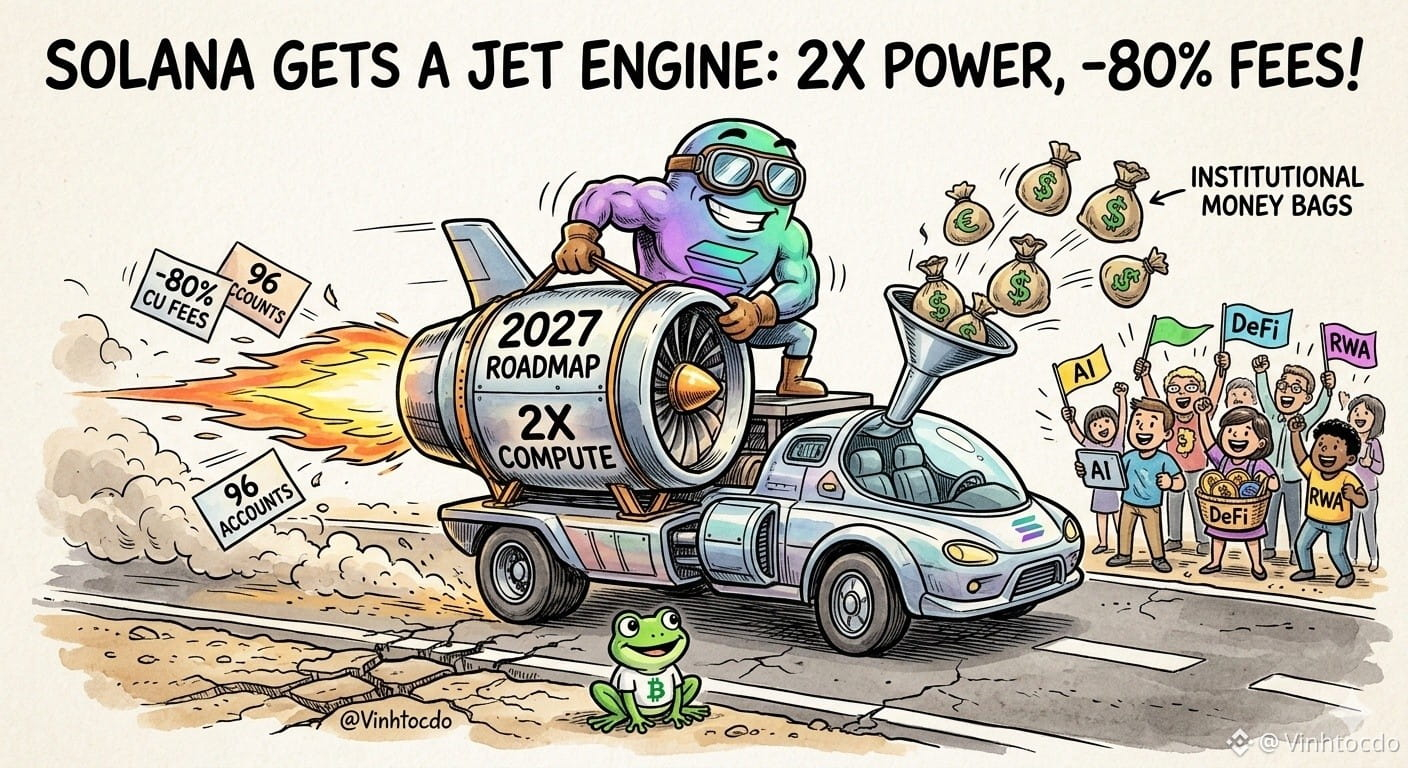
SOLANA GETS A “JET ENGINE”: TWICE THE POWER, 80% LOWER COMPUTE FEES!
The Anza team has just unveiled Solana’s 2027 roadmap following the Alpenglow upgrade: the goal is to double computing capacity, reduce the CU units required for token transactions by 80%, and raise the per-transaction account limit to 96.
🔍 Analysis: In addition to optimizing block propagation speed through Constellation, support for vector processing will also help Solana smoothly run complex models entirely on-chain.
This is a massive infrastructure stepping stone to welcome large-scale institutional capital, AI, and RWA!
🛠️ What should traders do?
• Keep a close eye on SOL and DeFi, AI, and RWA infrastructure projects in the Solana ecosystem.
• Consider accumulating gradually near strong support levels, and avoid FOMO-buying at the top based on long-term roadmap news.
This is not financial advice.
👇 Click below to trade and support me:
$SOL
{future}(SOLUSDT)
$JUP
{future}(JUPUSDT)
$BREV
{future}(BREVUSDT)
#Solana #CryptoNews #Blockchain #DeFi #Web3 #VINHTOCDO
#Solana2027RoadmapTargetsDoubleComputeCapacity
SOLANA GETS A “JET ENGINE”: TWICE THE POWER, 80% LOWER COMPUTE FEES!
The Anza team has just unveiled Solana’s 2027 roadmap following the Alpenglow upgrade: the goal is to double computing capacity, reduce the CU units required for token transactions by 80%, and raise the per-transaction account limit to 96.
🔍 Analysis: In addition to optimizing block propagation speed through Constellation, support for vector processing will also help Solana smoothly run complex models entirely on-chain.
This is a massive infrastructure stepping stone to welcome large-scale institutional capital, AI, and RWA!
🛠️ What should traders do?
• Keep a close eye on SOL and DeFi, AI, and RWA infrastructure projects in the Solana ecosystem.
• Consider accumulating gradually near strong support levels, and avoid FOMO-buying at the top based on long-term roadmap news.
This is not financial advice.
👇 Click below to trade and support me:
$SOL
$JUP
$BREV
#Solana #CryptoNews #Blockchain #DeFi #Web3 #VINHTOCDO
5
208
·
--
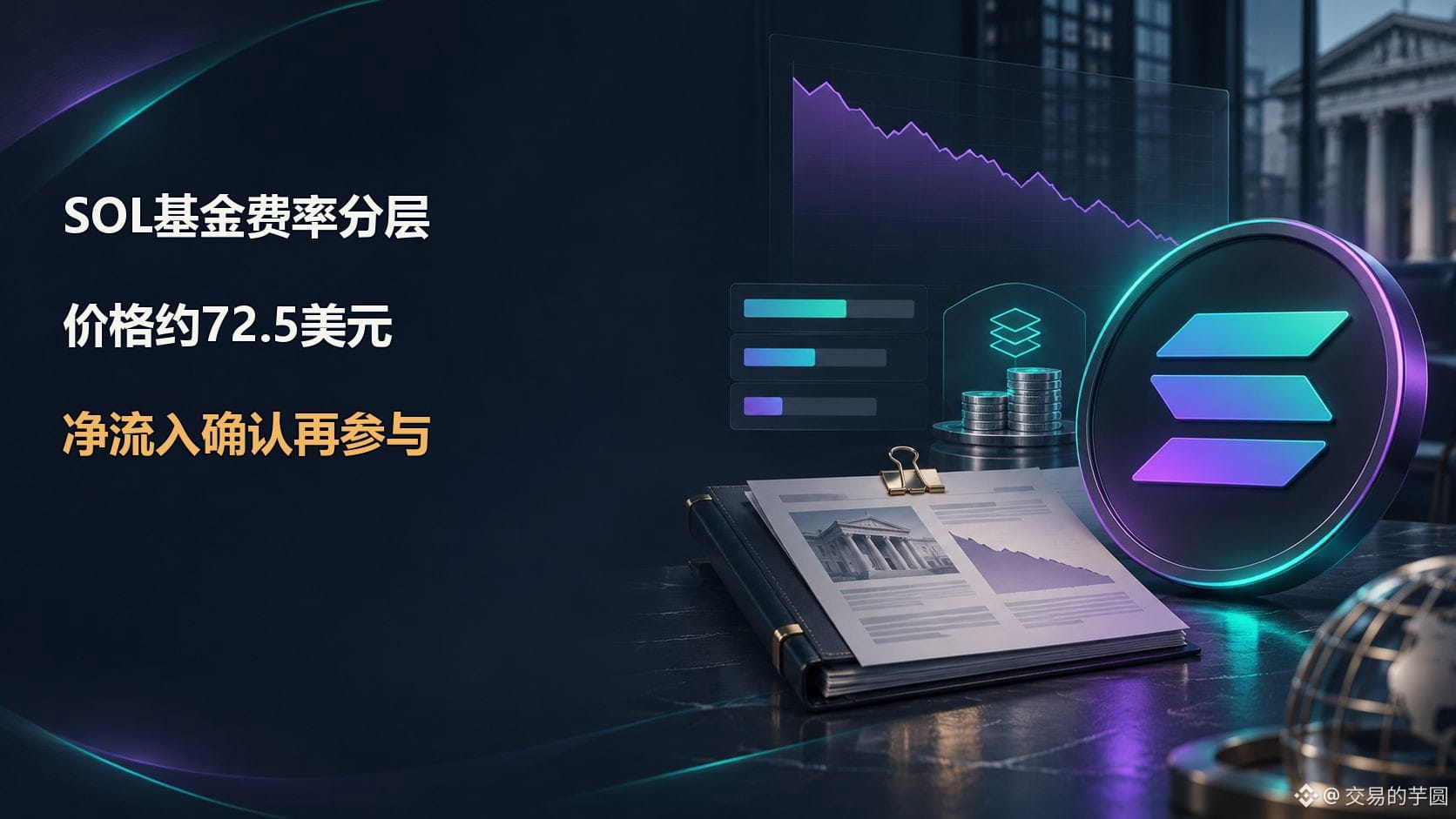
SOL Fund Fee Tiers | Price Returns to 72.5 | I’m Looking at Net Returns First
My stance remains cautious: SOL appears on the Square six-hour search leaderboard, but trending searches don’t necessarily mean new money is coming in. Farside’s U.S. SOL fund tracker lists the management fees and staking reward splits for several products. Management fees are approximately 0.14% to 0.30%, while staking fees range from 5% to 25%; the impact on holders’ final net returns varies from product to product. These are product terms listed in the table, not an announcement of fee changes today. The fund flows for November 19 are still shown as dashes, with an automatic total of 0.0; I treat this as pending data, not as confirmation that the entire industry saw zero inflows. The complete rows for November 17 and 18 also show 0.0, representing only the net flows of the products covered by this table.
Why should traders care about a fee table? When institutions gain SOL exposure through ETFs, they compare more than just the coin’s price: they also consider fund management fees, deductions from staking rewards, liquidity, and the efficiency of subscriptions and redemptions. Staking fees are a share of rewards, not the same percentage deducted annually from all fund assets; the two types of fees cannot simply be added together. If reward rates, staking participation, or fund tracking error change, fund net returns may differ even if spot SOL moves sideways. For the spot market, only actual subscriptions that create demand for underlying SOL count; having more products or lower fees does not, by itself, mean immediate buying. Farside also notes that GSOL’s seed assets include the conversion of an older product, so the seed amount should not all be counted as new money entering that day.
This logic also shapes how I view the Square topic #Solana2027RoadmapTargetsDoubleComputeCapacity: increasing compute capacity is a technical roadmap goal, while fund fees are investment product terms. Both need to be backed by real adoption and funding data before they can translate into sustainable demand for SOL. I previously noted the distinction between Solana’s stated 2027 roadmap goals and what has yet to be delivered; this time, I’m discussing only ETF net returns and the scope of the flow data, not treating roadmap goals as achieved performance. SOL/USDT on Binance is currently trading at around $72.51 over the past 24 hours, within a range of $72.10 to $75.65, with a change of approximately -0.58%. The weak price action suggests the market has not yet confirmed new institutional demand through price, but the decline should not be attributed to fund fees.
If I were trading this myself, I’d stay out for now, with a 0% position. I’d consider buying spot with 4% of my total capital only if SOL moves back above $74, holds that level on a retest, and subsequent complete fund data shows consecutive net inflows. My first target is $75.6, where I’d reduce the position by half; my second target is $78, where I’d move the protection level up for the remaining position. After entering, I’d stop out if SOL decisively falls back below $72.8. If it drops below $72, or revised fund data confirms sustained outflows, I’d close the entire position and cancel the plan. If SOL stays below $74, I won’t place an early bet on the expectation that “low fees might attract institutions.” If it breaks above $78 and on-chain activity improves alongside genuine capital inflows, I’ll reassess my cautious stance.
Sources: Farside Solana ETF flow and fee table, official Solana roadmap information, Binance SOL/USDT 24-hour market data. #Solana2027RoadmapTargetsDoubleComputeCapacity #SOL
This is solely my personal market observation and does not constitute investment advice.
14

·
--
Bullish
See translation
Trade Now $ICNT
Enter Now
Tp1: 0.430
Tp2: 0.440
Tp3: 0.450
SL 0.395
#BTCRemainsUnderPressureAfterHawkishFOMCMinutes
#NvidiaBoardReportedlySplitOverHuang’sReturn
#MASToUpgradeSGDTestnetToSGDigitalLedger
#CanGTA6'sLaunchLiftTTWOShares?
#Solana2027RoadmapTargetsDoubleComputeCapacity
Trade Now $ICNT
Enter Now
Tp1: 0.430
Tp2: 0.440
Tp3: 0.450
SL 0.395
#BTCRemainsUnderPressureAfterHawkishFOMCMinutes
#NvidiaBoardReportedlySplitOverHuang’sReturn
#MASToUpgradeSGDTestnetToSGDigitalLedger
#CanGTA6'sLaunchLiftTTWOShares?
#Solana2027RoadmapTargetsDoubleComputeCapacity
Enter Now
Tp1: 0.430
Tp2: 0.440
Tp3: 0.450
SL 0.395
#BTCRemainsUnderPressureAfterHawkishFOMCMinutes
#NvidiaBoardReportedlySplitOverHuang’sReturn
#MASToUpgradeSGDTestnetToSGDigitalLedger
#CanGTA6'sLaunchLiftTTWOShares?
#Solana2027RoadmapTargetsDoubleComputeCapacity
1
299

Partly True
Article
See translation
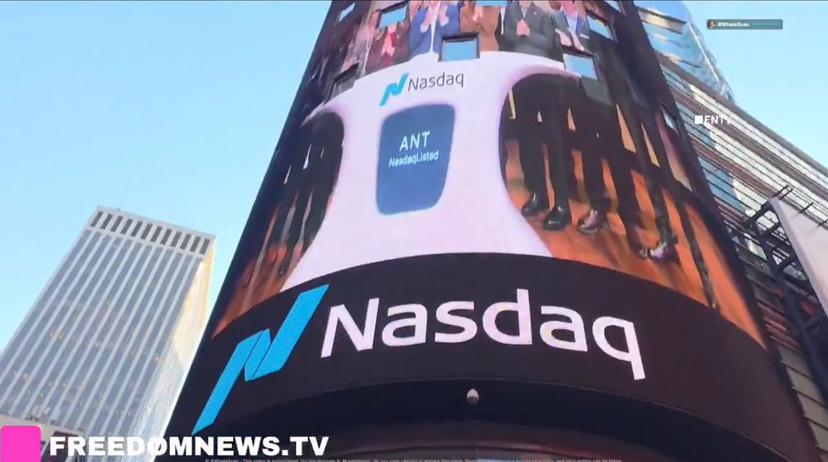
Big Storm Brewing…3.2.1.🚨 WARNING: ANTHROPIC IPO IS A REAL BIG STORM FOR MARKETS!!
Everyone thinks $ANT IPO will be free money.
But people thought the same about Meta in 2012.
After Meta went public, the stock dumped more than 50% in the first 110 days.
Retail bought the hype.
Then insiders and early investors got liquidity.
Now the same setup is here again.
Anthropic goes public today at a $1.5 TRILLION valuation.
That instantly makes it one of the biggest companies in the US market.
But here’s the problem.
This is not just an IPO.
This is a massive liquidity event.
Anthropic $ANT priced at $83 per share, and over half of the ~1,200 institutions that bid got ZERO shares.
That means $107.3 BILLION was raised, the biggest IPO in history.
Read that again.
$107.3 BILLION of liquidity absorbed before day one.
And everyone still thinks this is bullish.
Insiders and early backers own over 90% of Anthropic shares.
The public float is only around 5%.
That means insiders are sitting on more than $1.3 TRILLION of paper wealth.
And after the IPO, that paper wealth starts becoming real exit liquidity.
So now connect the dots.
Meta IPO dumped after the hype.
AI stocks are already crowded.
Anthropic IPO just pulled $107.3 BILLION of liquidity from the market.
Stocks.
High beta tech.
Everything retail is already holding.
Most people will see the AI hype.
I see the liquidity drain.
This could become one of the biggest insider cashout events in modern market history.
#AnthropicToDebutAfter$83IPOPricing #NvidiaBoardReportedlySplitOverHuang’sReturn #MASToUpgradeSGDTestnetToSGDigitalLedger #Solana2027RoadmapTargetsDoubleComputeCapacity #InjectiveTokenizedRealEstateMortgagesTop$1.5B
Big Storm Brewing…3.2.1.
🚨 WARNING: ANTHROPIC IPO IS A REAL BIG STORM FOR MARKETS!!
Everyone thinks $ANT IPO will be free money.
But people thought the same about Meta in 2012.
After Meta went public, the stock dumped more than 50% in the first 110 days.
Retail bought the hype.
Then insiders and early investors got liquidity.
Now the same setup is here again.
Anthropic goes public today at a $1.5 TRILLION valuation.
That instantly makes it one of the biggest companies in the US market.
But here’s the problem.
This is not just an IPO.
This is a massive liquidity event.
Anthropic $ANT priced at $83 per share, and over half of the ~1,200 institutions that bid got ZERO shares.
That means $107.3 BILLION was raised, the biggest IPO in history.
Read that again.
$107.3 BILLION of liquidity absorbed before day one.
And everyone still thinks this is bullish.
Insiders and early backers own over 90% of Anthropic shares.
The public float is only around 5%.
That means insiders are sitting on more than $1.3 TRILLION of paper wealth.
And after the IPO, that paper wealth starts becoming real exit liquidity.
So now connect the dots.
Meta IPO dumped after the hype.
AI stocks are already crowded.
Anthropic IPO just pulled $107.3 BILLION of liquidity from the market.
Stocks.
High beta tech.
Everything retail is already holding.
Most people will see the AI hype.
I see the liquidity drain.
This could become one of the biggest insider cashout events in modern market history.
#AnthropicToDebutAfter$83IPOPricing #NvidiaBoardReportedlySplitOverHuang’sReturn #MASToUpgradeSGDTestnetToSGDigitalLedger #Solana2027RoadmapTargetsDoubleComputeCapacity #InjectiveTokenizedRealEstateMortgagesTop$1.5B
772

·
--
See translation
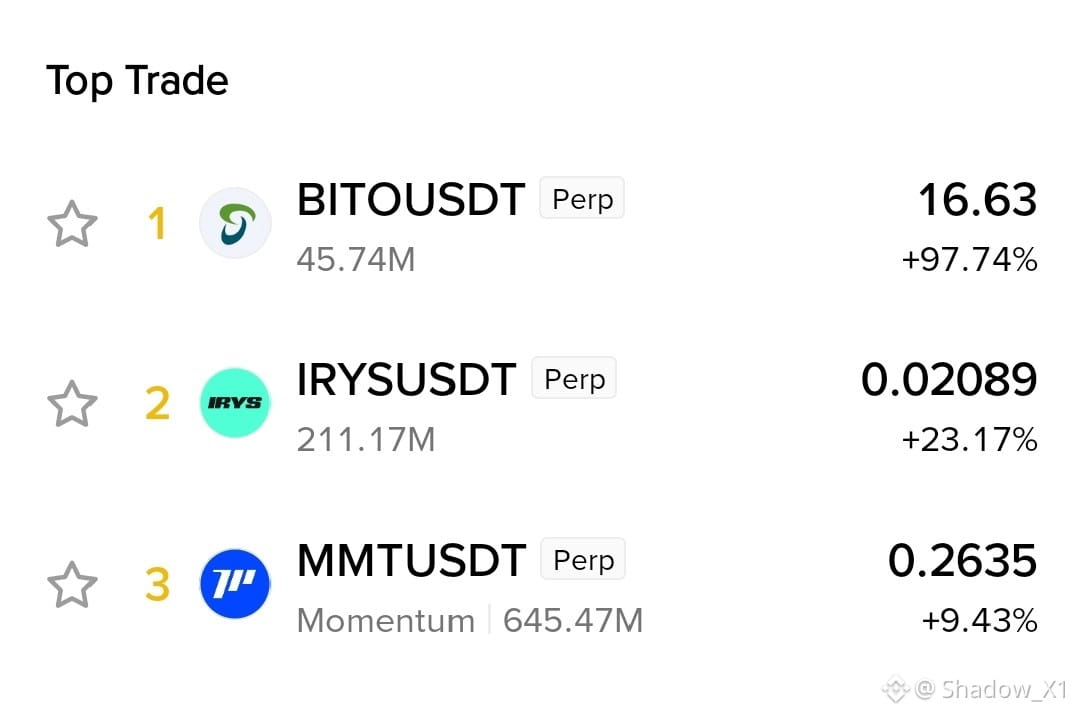
$BITO
{future}(BITOUSDT)
$IRYS
{future}(IRYSUSDT)
$MMT
{spot}(MMTUSDT)
are the top three coins with high trading volume.
These coins are catching everyone's attention⚠️ in the market and are on 🔥 right now .
Do your own research before trading, trade at your own risk.
Always use SL and TP.
#BTCRemainsUnderPressureAfterHawkishFOMCMinutes #NvidiaBoardReportedlySplitOverHuang’sReturn #MASToUpgradeSGDTestnetToSGDigitalLedger #CanGTA6'sLaunchLiftTTWOShares? #Solana2027RoadmapTargetsDoubleComputeCapacity
$BITO
$IRYS
$MMT
are the top three coins with high trading volume.
These coins are catching everyone's attention⚠️ in the market and are on 🔥 right now .
Do your own research before trading, trade at your own risk.
Always use SL and TP.
#BTCRemainsUnderPressureAfterHawkishFOMCMinutes #NvidiaBoardReportedlySplitOverHuang’sReturn #MASToUpgradeSGDTestnetToSGDigitalLedger #CanGTA6'sLaunchLiftTTWOShares? #Solana2027RoadmapTargetsDoubleComputeCapacity
2
655
Log in to explore more content
Join global crypto users on Binance Square
⚡️ Get latest and useful information about crypto.
💬 Trusted by the world’s largest crypto exchange.
👍 Discover real insights from verified creators.
Email / Phone number
Trending Topics
1
#IsAnthropic’s$1.5TMarketCapJustified?
11,465 views
93 Discussing
2
#BTCRemainsUnderPressureAfterHawkishFOMCMinutes
251,137 views
2,115 Discussing
3
#NvidiaBoardReportedlySplitOverHuang’sReturn
122,402 views
1,143 Discussing
4
#StrategySTRCPreferredSlips3.65%Below$100Par
8,145 views
78 Discussing
5
#MASToUpgradeSGDTestnetToSGDigitalLedger
22,865 views
268 Discussing
6
#CanGTA6'sLaunchLiftTTWOShares?
88,222 views
828 Discussing
7
#Solana2027RoadmapTargetsDoubleComputeCapacity
9,953 views
140 Discussing
8
#InjectiveTokenizedRealEstateMortgagesTop$1.5B
1,208 views
28 Discussing
9
#TetherMakesStrategicInvestmentInSCRYPT
7,067 views
112 Discussing
10
#CapitalGroupAdds1264500StrategyShares
32,215 views
242 Discussing