
#cryptoeducation
cryptoeducation
3.6M views
23,435 Discussing
Hot
Latest

See translation
Bitcoin Is Up Today, But Here Is What Most People MissBitcoin is trading near $78,500 this morning. That is about 2% higher than yesterday, when it sat close to $77,000.
If you only look at the green candle, it feels like good news. Now zoom out.
One month ago, Bitcoin was around $84,700. That means it is still down more than 7% over the month. One year ago, it was above $101,000. So even after today's bounce, it is roughly 22% lower than this time last year.
Same coin, same day, three different stories. And this is exactly where most beginners get tricked.
A friend of mine bought Bitcoin during a sharp green day a while back. His reasoning was simple: it is going up, so I should get in before it leaves. Two days later the price slipped back, and he sold in panic. He had not made a bad choice because of Bitcoin. He made it because he only looked at one day.
Short-term moves are noisy. A 2% jump can be gone by tomorrow. It tells you how traders feel right now, not where the market is heading.
So how do you read a day like today? Here is a simple three-step check I use before I make any decision.
First, check the timeframe. Open the chart and look at one day, one month, and one year. If all three tell the same story, the trend is clear. If they disagree, like today, be careful. Today is a small bounce inside a bigger pullback.
Second, know your reason. Are you buying because you believe in Bitcoin for the next few years, or because you saw a green number and felt left out? Only the first reason survives a bad week.
Third, decide your amount before you click buy. Never put in money you will need for rent, school fees, or bills. In Pakistan, many people buy crypto through peer-to-peer trading, where you pay a seller directly in rupees. It is convenient, but it also makes it easy to act on emotion at midnight. Set your amount in the daytime, when you are calm.
Now let me talk about the number everyone is watching: $78,000. When a price bounces around a round level, traders treat it like a floor. If Bitcoin stays above it, confidence slowly returns. If it falls through, many people will rush to sell at the same time. That is why you will see so much talk about this level today.
But a floor is not a promise. Nobody can guarantee it will hold, and anyone who says they can is guessing.
What I would do on a day like this is simple. I would not chase the price. I would not panic either. I would check my plan, look at the bigger chart, and ask one honest question: would I still be comfortable with this decision if Bitcoin dropped 10% next week?
If the answer is yes, you are probably investing. If the answer is no, you are probably gambling.
One more habit worth building is writing down your entry price and your reason in a note on your phone. Three months later, you will learn more from reading that note than from any video or tweet.
Bitcoin has been through many cycles of excitement and fear, and it will go through more. The people who do well are usually not the ones with the best predictions. They are the ones with a plan and the patience to follow it.
{spot}(BTCUSDT)
So today, enjoy the green candle. Just remember it is one page of a very long book.
What is your rule before you buy during a pump? Share it in the comments, because I would love to learn from you too.
This article is for educational purposes only and is not financial advice. Crypto is highly volatile, so always do your own research and never invest more than you can afford to lose.
$BTC
#Bitcoin #BTC #BinanceSquare #cryptoeducation
Bitcoin Is Up Today, But Here Is What Most People Miss
Bitcoin is trading near $78,500 this morning. That is about 2% higher than yesterday, when it sat close to $77,000.
If you only look at the green candle, it feels like good news. Now zoom out.
One month ago, Bitcoin was around $84,700. That means it is still down more than 7% over the month. One year ago, it was above $101,000. So even after today's bounce, it is roughly 22% lower than this time last year.
Same coin, same day, three different stories. And this is exactly where most beginners get tricked.
A friend of mine bought Bitcoin during a sharp green day a while back. His reasoning was simple: it is going up, so I should get in before it leaves. Two days later the price slipped back, and he sold in panic. He had not made a bad choice because of Bitcoin. He made it because he only looked at one day.
Short-term moves are noisy. A 2% jump can be gone by tomorrow. It tells you how traders feel right now, not where the market is heading.
So how do you read a day like today? Here is a simple three-step check I use before I make any decision.
First, check the timeframe. Open the chart and look at one day, one month, and one year. If all three tell the same story, the trend is clear. If they disagree, like today, be careful. Today is a small bounce inside a bigger pullback.
Second, know your reason. Are you buying because you believe in Bitcoin for the next few years, or because you saw a green number and felt left out? Only the first reason survives a bad week.
Third, decide your amount before you click buy. Never put in money you will need for rent, school fees, or bills. In Pakistan, many people buy crypto through peer-to-peer trading, where you pay a seller directly in rupees. It is convenient, but it also makes it easy to act on emotion at midnight. Set your amount in the daytime, when you are calm.
Now let me talk about the number everyone is watching: $78,000. When a price bounces around a round level, traders treat it like a floor. If Bitcoin stays above it, confidence slowly returns. If it falls through, many people will rush to sell at the same time. That is why you will see so much talk about this level today.
But a floor is not a promise. Nobody can guarantee it will hold, and anyone who says they can is guessing.
What I would do on a day like this is simple. I would not chase the price. I would not panic either. I would check my plan, look at the bigger chart, and ask one honest question: would I still be comfortable with this decision if Bitcoin dropped 10% next week?
If the answer is yes, you are probably investing. If the answer is no, you are probably gambling.
One more habit worth building is writing down your entry price and your reason in a note on your phone. Three months later, you will learn more from reading that note than from any video or tweet.
Bitcoin has been through many cycles of excitement and fear, and it will go through more. The people who do well are usually not the ones with the best predictions. They are the ones with a plan and the patience to follow it.
So today, enjoy the green candle. Just remember it is one page of a very long book.
What is your rule before you buy during a pump? Share it in the comments, because I would love to learn from you too.
This article is for educational purposes only and is not financial advice. Crypto is highly volatile, so always do your own research and never invest more than you can afford to lose.
$BTC
#Bitcoin #BTC #BinanceSquare #cryptoeducation
117

See translation
🌱 The Best Crypto Investment Starts With Knowledge!
Many people enter the crypto market looking for quick profits.
But the real question is: Are we investing in knowledge or just chasing prices?
Here are 3 lessons every beginner should remember:
📚 Learn how blockchain works. 🛡️ Understand the risks before investing. 💡 Never let emotions control your decisions.
Crypto is not just about making money. It's also about learning, patience, and smart decisions.
I believe the people who keep learning will be better prepared for the future.
👇 Let's discuss!
If you could give ONE piece of advice to a new crypto investor, what would it be?
#BinanceSquare #CryptoEducation #Bitcoin #Web3 #CryptoCommunity
8

See translation
🌟 Crypto Opportunities Start with Knowledge!
The crypto world is always moving, and every day brings new opportunities to learn and grow.
Here are 5 things every Binance beginner should know:
₿ Bitcoin ($BTC ): The leading cryptocurrency and a major market indicator.
♦️ Ethereum ($ETH ): Powering smart contracts and decentralized applications.
🟡 $BNB : The native coin of the BNB ecosystem.
💵 USDT: A stablecoin designed to follow the US dollar.
🌱 Binance Earn: Explore options like Simple Earn and learn how crypto rewards work.
💡 Remember: You don't need to be an expert to start learning. Begin with knowledge, understand the risks, and make informed decisions.
🔥 Learn Today. Grow Tomorrow. Stay Ahead!
#Binance #Crypto #Bitcoin #Ethereum #BNB #USDT #BinanceEarn #CryptoEducation

50

See translation
🚀 Bitcoin : Why Does Everyone Watch It?
Bitcoin is more than just a cryptocurrency. It introduced the world to decentralized digital money.
Here are 3 interesting facts about $BTC :
1️⃣ Bitcoin has a limited supply of 21 million coins.
2️⃣ It operates on a decentralized blockchain network.
3️⃣ Its market movements often influence the wider crypto market.
💡 What do you think?
Will Bitcoin remain the leading cryptocurrency over the next 5 years?
Share your thoughts in the comments!
#$BTC #BTC #Crypto #blockchain #BinanceSqua #CryptoEducation

75

·
--
Bullish
See translation
🚨 THE NEXT BIG CRYPTO MOVE? 👀
📊 CRYPTO MARKET WATCH 🔥
The crypto market never sleeps — and smart investors know that patience matters more than hype! 🚀
💡 3 THINGS EVERY CRYPTO BEGINNER SHOULD WATCH:
₿ BITCOIN: Watch the overall market trend.
📈 VOLUME: Rising volume can help confirm a price move.
🛡️ RISK MANAGEMENT: Never make decisions based on FOMO.
🎯 Remember: A green candle doesn't always mean more upside, and a red candle doesn't always mean the end.
The key is to study the chart, understand the trend, and avoid emotional decisions.
👇 LET'S TALK!
What interests you most in crypto?
₿ Bitcoin
💎 Altcoins
🤖 AI Crypto Projects
Comment below! 👇
🔔 Follow for more crypto education, market insights, and technical analysis.
⚠️ Crypto is volatile. This post is for educational purposes, not financial advice.
$BTC
#Crypto #Bitcoin #altcoins #CryptoEducation #BinanceSquare
{spot}(BTCUSDT)
🚨 THE NEXT BIG CRYPTO MOVE? 👀
📊 CRYPTO MARKET WATCH 🔥
The crypto market never sleeps — and smart investors know that patience matters more than hype! 🚀
💡 3 THINGS EVERY CRYPTO BEGINNER SHOULD WATCH:
₿ BITCOIN: Watch the overall market trend.
📈 VOLUME: Rising volume can help confirm a price move.
🛡️ RISK MANAGEMENT: Never make decisions based on FOMO.
🎯 Remember: A green candle doesn't always mean more upside, and a red candle doesn't always mean the end.
The key is to study the chart, understand the trend, and avoid emotional decisions.
👇 LET'S TALK!
What interests you most in crypto?
₿ Bitcoin
💎 Altcoins
🤖 AI Crypto Projects
Comment below! 👇
🔔 Follow for more crypto education, market insights, and technical analysis.
⚠️ Crypto is volatile. This post is for educational purposes, not financial advice.
$BTC
#Crypto #Bitcoin #altcoins #CryptoEducation #BinanceSquare

61
See translation
📉 The Most Important Rule in Crypto!
Protecting your capital is more important than chasing profits.
Here are 3 simple lessons:
1️⃣ Never invest money you cannot afford to lose. 2️⃣ Avoid emotional trading. 3️⃣ Learn before you invest.
A smart investor focuses on survival first and profits second.
💬 What is your #1 rule for managing crypto risk?
#RiskManagement #CryptoEducation #BinanceSquare
32

·
--
See translation
🚀 The Easiest Way to Invest in Crypto With Lower Risk!
Are you new to crypto and worried about losing your money? 💰
You don't need to be a professional trader to start investing. The key is to follow a simple strategy, manage your risk, and stay consistent.
📌 1. Start With a Small Amount
Never invest your entire savings. Start with an amount you can afford to lose.
📌 2. Focus on Established Cryptocurrencies
For beginners, research established assets such as:
🔸 $BTC – The largest cryptocurrency by market capitalization.
🔸 $ETH – A major blockchain ecosystem.
🔸 $BNB – The native token of the BNB Chain ecosystem.
Remember: Even established coins can experience significant losses.
📌 3. Use Dollar-Cost Averaging (DCA)
Instead of investing all your money at once, invest a fixed amount regularly.
Example: If your monthly budget is 5,000 PKR:
• 2,500 PKR → BTC
• 1,500 PKR → ETH
• 1,000 PKR → BNB
This is an illustrative allocation, not a guaranteed low-risk portfolio.
📌 4. Avoid These Common Mistakes
❌ Investing borrowed money
❌ Buying coins because of hype
❌ Using leverage or futures as a beginner
❌ Panic selling during market corrections
❌ Believing in guaranteed profits
📌 5. Think Long-Term
Crypto investing requires patience, research, and discipline. Review your portfolio regularly and protect your account with strong security.
💡 Remember: The best investment strategy isn't about getting rich overnight. It's about making informed decisions and managing risk.
What is your preferred crypto investment strategy: DCA, long-term holding, or active trading?
#BinanceSquare #Crypto #Bitcoin #Ethereum #BNB #CryptoInvesting #DCA #RiskManagement #CryptoEducation

84

·
--
See translation
📉 𝗧𝗵𝗲 𝗕𝗶𝗴𝗴𝗲𝘀𝘁 𝗠𝗶𝘀𝘁𝗮𝗸𝗲 𝗡𝗲𝘄 𝗖𝗿𝘆𝗽𝘁𝗼 𝗜𝗻𝘃𝗲𝘀𝘁𝗼𝗿𝘀 𝗠𝗮𝗸𝗲
- Most beginners enter crypto because they want quick profits.
- But experienced investors understand something different:
"𝙎𝙪𝙧𝙫𝙞𝙫𝙖𝙡 𝙘𝙤𝙢𝙚𝙨 𝙗𝙚𝙛𝙤𝙧𝙚 𝙥𝙧𝙤𝙛𝙞𝙩𝙨."
*** 𝙃𝙚𝙧𝙚 𝙖𝙧𝙚 5 𝙡𝙚𝙨𝙨𝙤𝙣𝙨 𝙚𝙫𝙚𝙧𝙮 𝙗𝙚𝙜𝙞𝙣𝙣𝙚𝙧 𝙨𝙝𝙤𝙪𝙡𝙙 𝙡𝙚𝙖𝙧𝙣:
1️⃣ Never invest money you cannot afford to lose.
2️⃣ Don't buy just because a coin is trending.
3️⃣ Understand what you're investing in before putting money into it.
4️⃣ Avoid emotional decisions when prices rise or fall.
5️⃣ Think about long-term risk management, not overnight riches.
Take 𝘽𝙞𝙩𝙘𝙤𝙞𝙣 ($BTC ) as an example. Its technology and long-term potential attract investors, but its price can still experience significant volatility.
💡𝗥𝗲𝗺𝗲𝗺𝗯𝗲𝗿: The goal isn't to get rich overnight. It's to make smarter decisions and avoid mistakes that destroy your capital.
❓𝗤𝗨𝗘𝗦𝗧𝗜𝗢𝗡: What's the biggest mistake you think beginners make in crypto?
#CryptoEducation #Bitcoin #Binance #BinanceSquare #CryptoTrading $BTC
{spot}(BTCUSDT)
📉 𝗧𝗵𝗲 𝗕𝗶𝗴𝗴𝗲𝘀𝘁 𝗠𝗶𝘀𝘁𝗮𝗸𝗲 𝗡𝗲𝘄 𝗖𝗿𝘆𝗽𝘁𝗼 𝗜𝗻𝘃𝗲𝘀𝘁𝗼𝗿𝘀 𝗠𝗮𝗸𝗲
- Most beginners enter crypto because they want quick profits.
- But experienced investors understand something different:
"𝙎𝙪𝙧𝙫𝙞𝙫𝙖𝙡 𝙘𝙤𝙢𝙚𝙨 𝙗𝙚𝙛𝙤𝙧𝙚 𝙥𝙧𝙤𝙛𝙞𝙩𝙨."
*** 𝙃𝙚𝙧𝙚 𝙖𝙧𝙚 5 𝙡𝙚𝙨𝙨𝙤𝙣𝙨 𝙚𝙫𝙚𝙧𝙮 𝙗𝙚𝙜𝙞𝙣𝙣𝙚𝙧 𝙨𝙝𝙤𝙪𝙡𝙙 𝙡𝙚𝙖𝙧𝙣:
1️⃣ Never invest money you cannot afford to lose.
2️⃣ Don't buy just because a coin is trending.
3️⃣ Understand what you're investing in before putting money into it.
4️⃣ Avoid emotional decisions when prices rise or fall.
5️⃣ Think about long-term risk management, not overnight riches.
Take 𝘽𝙞𝙩𝙘𝙤𝙞𝙣 ($BTC ) as an example. Its technology and long-term potential attract investors, but its price can still experience significant volatility.
💡𝗥𝗲𝗺𝗲𝗺𝗯𝗲𝗿: The goal isn't to get rich overnight. It's to make smarter decisions and avoid mistakes that destroy your capital.
❓𝗤𝗨𝗘𝗦𝗧𝗜𝗢𝗡: What's the biggest mistake you think beginners make in crypto?
#CryptoEducation #Bitcoin #Binance #BinanceSquare #CryptoTrading $BTC
1
90

See translation
🚨 The Biggest Mistake Beginners Make in Crypto! (Read Before You Lose Money) 🛑📉
Most people enter the crypto market thinking it’s a quick-rich lottery ticket. But the brutal truth? Without a strategy, you are just exit liquidity for the whales. 🐳
Here are 3 golden rules to survive and win:
1️⃣ Never trade with emotion (FOMO & Panic are your biggest enemies). 🧠❌
2️⃣ Always take partial profits instead of waiting for the absolute top. 💰
3️⃣ DYOR (Do Your Own Research) before buying any random coin. 🔍
Do you agree with these rules, or learned it the hard way? Let me know below! 👇
Hit the Follow button for daily no-nonsense crypto tips! 📈🔥
#BinanceSquare oTips #tradingmindset t #Write2Earn! #cryptoeducation

73

·
--
See translation
💡 Did you know?
Ethereum (ETH) is more than just a cryptocurrency. It is a blockchain network that allows developers to build applications, create digital assets and develop smart contracts.
Technology is changing, and learning about crypto today can help us understand tomorrow's digital world.
#Ethereum #ETH #Binance #CryptoEducation #USMidterms-WhatAreMarketsExpecting? #USOctoberNFP-AreRateCutsStillPossible #BinanceReopensWithdrawalsForMoreAssets #HongKongToLicenseVirtualAssetCustodyAndAdvisory @Square-Creator-8019bfa0fef2 @Square-Creator-52674f79053a @Square-Creator-362ba827c33f @Square-Creator-8264d516caad @mgcb6767 $NVDAB $MSFTB $SPCXB
💡 Did you know?
Ethereum (ETH) is more than just a cryptocurrency. It is a blockchain network that allows developers to build applications, create digital assets and develop smart contracts.
Technology is changing, and learning about crypto today can help us understand tomorrow's digital world.
#Ethereum #ETH #Binance #CryptoEducation #USMidterms-WhatAreMarketsExpecting? #USOctoberNFP-AreRateCutsStillPossible #BinanceReopensWithdrawalsForMoreAssets #HongKongToLicenseVirtualAssetCustodyAndAdvisory @yaoyao-妖妖 @老猪互相跟随我 @Rehan Asif @Professor ChartPro @上海米哥挑战3年100U合约干到100万U $NVDAB $MSFTB $SPCXB
70

Article
See translation
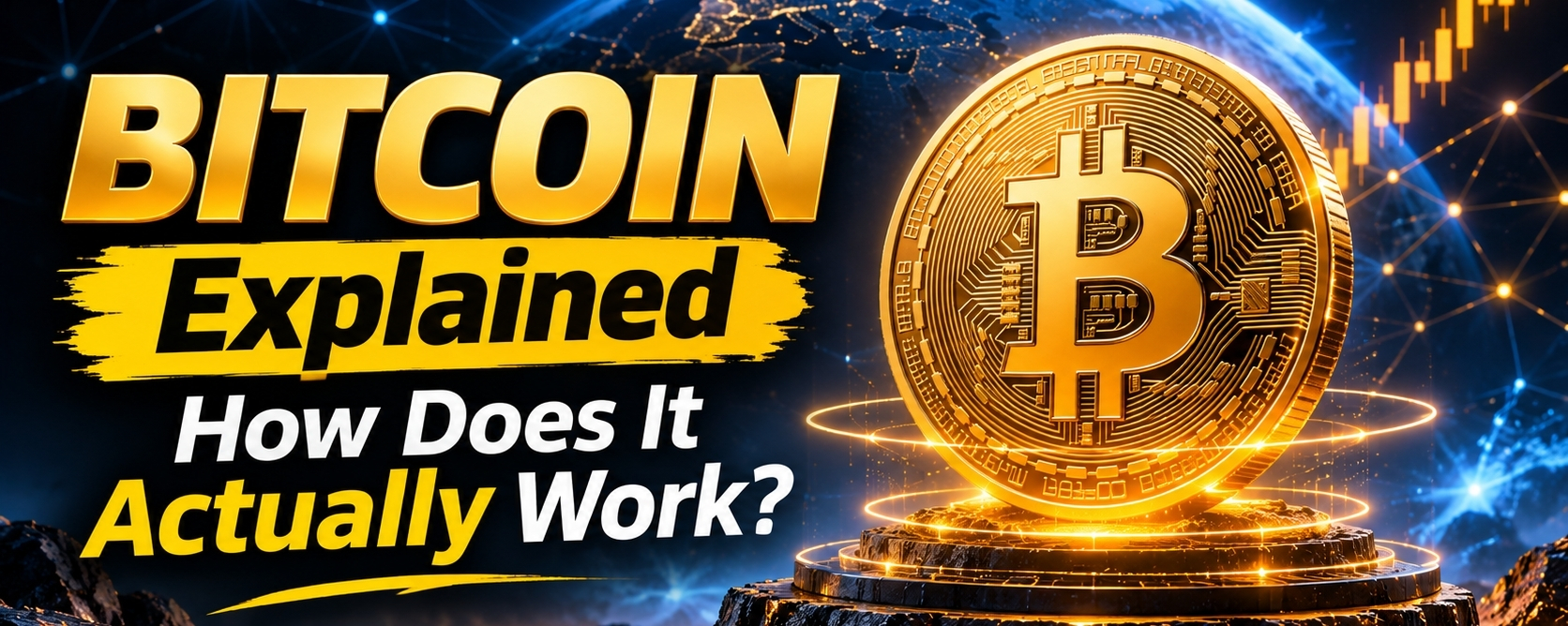
Bitcoin Explained: How Does It Actually Work?Bitcoin is probably the most recognized name in the cryptocurrency world.
But beyond its price movements and headlines, there's an interesting technology that makes it work.
Bitcoin introduced a way for people to transfer digital value over a network without depending on a central financial institution to maintain the transaction ledger.
So how does it actually work?
Let's break it down.
1. What Is Bitcoin?
Bitcoin is a decentralized digital currency introduced in 2009 under the name Satoshi Nakamoto.
It operates on a public blockchain where transactions are recorded and verified by a distributed network of participants.
Unlike traditional currencies issued by central banks, Bitcoin has no single organization controlling its monetary issuance.
Its protocol defines how new bitcoins are created and how transactions are processed.
2. How Does a Bitcoin Transaction Work?
Imagine you want to send Bitcoin to another person.
Here's a simplified explanation:
Step 1: Create a transaction
You use your Bitcoin wallet to create a transaction specifying the recipient and amount.
Step 2: Sign the transaction
Your wallet uses your private key to create a digital signature that proves authorization.
Step 3: Broadcast to the network
The transaction is shared with Bitcoin nodes.
Step 4: Verification
Nodes check whether the transaction follows Bitcoin's consensus rules.
Step 5: Mining and block confirmation
Miners compete through Proof of Work to create valid blocks containing transactions.
Once a block is accepted by the network, the included transactions receive confirmation.
Additional blocks increase the confidence that a transaction will remain part of the accepted history.
3. What Is Bitcoin Mining?
Bitcoin uses a consensus mechanism called Proof of Work.
Miners use computing power to compete in solving a cryptographic puzzle.
The successful miner gets the opportunity to add a new block to the blockchain and receive the protocol-defined block reward and transaction fees.
Mining serves two important purposes:
- It helps secure the Bitcoin network.
- It helps establish agreement about the order of transactions.
Mining is not simply about creating new bitcoins. It is also an important part of the network's security model.
4. Why Does Bitcoin Have a Limited Supply?
One of Bitcoin's most discussed features is its maximum supply of 21 million BTC.
New bitcoins enter circulation through block rewards.
Approximately every 210,000 blocks, Bitcoin undergoes an event called the halving, which reduces the block subsidy by half.
This creates a predictable issuance schedule.
However, limited supply alone does not guarantee market value. Demand, adoption, regulation, and market conditions also matter.
5. What Makes Bitcoin Different?
Bitcoin has several distinctive characteristics:
Decentralization: It operates without a central authority controlling the network.
Limited supply: Its protocol sets a maximum supply of 21 million BTC.
Transparency: Transactions are publicly recorded on the blockchain.
Security: Proof of Work and cryptography help protect the network.
Permissionless access: Anyone can participate in the network, subject to its technical requirements.
6. Is Bitcoin Only Digital Gold?
Not necessarily.
Bitcoin was originally introduced as a peer-to-peer electronic cash system.
Today, it is also widely discussed as a store-of-value asset and a decentralized monetary network.
Different people have different views about its primary purpose.
Its usefulness as a payment method also depends on factors such as fees, confirmation times, and payment infrastructure.
Final Thoughts
Bitcoin changed how people think about digital money and decentralized networks.
Its importance isn't limited to being the first widely adopted cryptocurrency.
It introduced a system where transactions can be verified through a distributed network without depending on a traditional central authority.
Understanding how Bitcoin works is an important foundation for exploring the wider blockchain ecosystem.
Let's discuss:
What do you think is Bitcoin's greatest innovation: its limited supply, Proof of Work, decentralization, or its peer-to-peer payment system?
#bitcoin #BTC #blockchain #cryptoeducation
Bitcoin Explained: How Does It Actually Work?
Bitcoin is probably the most recognized name in the cryptocurrency world.
But beyond its price movements and headlines, there's an interesting technology that makes it work.
Bitcoin introduced a way for people to transfer digital value over a network without depending on a central financial institution to maintain the transaction ledger.
So how does it actually work?
Let's break it down.
1. What Is Bitcoin?
Bitcoin is a decentralized digital currency introduced in 2009 under the name Satoshi Nakamoto.
It operates on a public blockchain where transactions are recorded and verified by a distributed network of participants.
Unlike traditional currencies issued by central banks, Bitcoin has no single organization controlling its monetary issuance.
Its protocol defines how new bitcoins are created and how transactions are processed.
2. How Does a Bitcoin Transaction Work?
Imagine you want to send Bitcoin to another person.
Here's a simplified explanation:
Step 1: Create a transaction
You use your Bitcoin wallet to create a transaction specifying the recipient and amount.
Step 2: Sign the transaction
Your wallet uses your private key to create a digital signature that proves authorization.
Step 3: Broadcast to the network
The transaction is shared with Bitcoin nodes.
Step 4: Verification
Nodes check whether the transaction follows Bitcoin's consensus rules.
Step 5: Mining and block confirmation
Miners compete through Proof of Work to create valid blocks containing transactions.
Once a block is accepted by the network, the included transactions receive confirmation.
Additional blocks increase the confidence that a transaction will remain part of the accepted history.
3. What Is Bitcoin Mining?
Bitcoin uses a consensus mechanism called Proof of Work.
Miners use computing power to compete in solving a cryptographic puzzle.
The successful miner gets the opportunity to add a new block to the blockchain and receive the protocol-defined block reward and transaction fees.
Mining serves two important purposes:
- It helps secure the Bitcoin network.
- It helps establish agreement about the order of transactions.
Mining is not simply about creating new bitcoins. It is also an important part of the network's security model.
4. Why Does Bitcoin Have a Limited Supply?
One of Bitcoin's most discussed features is its maximum supply of 21 million BTC.
New bitcoins enter circulation through block rewards.
Approximately every 210,000 blocks, Bitcoin undergoes an event called the halving, which reduces the block subsidy by half.
This creates a predictable issuance schedule.
However, limited supply alone does not guarantee market value. Demand, adoption, regulation, and market conditions also matter.
5. What Makes Bitcoin Different?
Bitcoin has several distinctive characteristics:
Decentralization: It operates without a central authority controlling the network.
Limited supply: Its protocol sets a maximum supply of 21 million BTC.
Transparency: Transactions are publicly recorded on the blockchain.
Security: Proof of Work and cryptography help protect the network.
Permissionless access: Anyone can participate in the network, subject to its technical requirements.
6. Is Bitcoin Only Digital Gold?
Not necessarily.
Bitcoin was originally introduced as a peer-to-peer electronic cash system.
Today, it is also widely discussed as a store-of-value asset and a decentralized monetary network.
Different people have different views about its primary purpose.
Its usefulness as a payment method also depends on factors such as fees, confirmation times, and payment infrastructure.
Final Thoughts
Bitcoin changed how people think about digital money and decentralized networks.
Its importance isn't limited to being the first widely adopted cryptocurrency.
It introduced a system where transactions can be verified through a distributed network without depending on a traditional central authority.
Understanding how Bitcoin works is an important foundation for exploring the wider blockchain ecosystem.
Let's discuss:
What do you think is Bitcoin's greatest innovation: its limited supply, Proof of Work, decentralization, or its peer-to-peer payment system?
#bitcoin #BTC #blockchain #cryptoeducation
92

·
--
See translation
Beginner tip: a $0.001 coin is not "cheap"
Price alone tells you almost nothing. What matters is market cap = price x circulating supply.
Coin A: $50 with 10 million coins out = $500M
Coin B: $0.001 with 1 trillion coins out = $1B
Coin B is the bigger project by value. For it to reach $1, its market cap would have to hit $1 trillion.
So before buying something "because it's under a penny", check the supply on the coin's info page and do the math first.
Ever bought a coin just because the price looked low?
#cryptoeducation #crypto #altcoins #Binance
45

See translation
🔍 DON'T JUST TRUST THE PROTOCOL. VERIFY IT.
In decentralized finance (DeFi), transparency is powerful, but transparency alone doesn't guarantee security.
A project may publish its smart contract code, display impressive statistics, and promise an open financial ecosystem. But have you taken the time to verify what is actually happening behind the scenes?
Before trusting a DeFi protocol with your digital assets, consider:
🔹 Smart contract audits: Has the code been independently reviewed for vulnerabilities?
🔹 On-chain activity: Can you verify transactions, liquidity, and protocol activity on the blockchain?
🔹 Team transparency: Is there credible information about the people or organization behind the project?
🔹 Protocol permissions: Are there administrative controls that could affect your funds?
🔹 Security history: Has the protocol experienced exploits, suspicious activity, or unresolved vulnerabilities?
💡 The golden rule: Don't confuse visibility with verification. Learn to investigate, question assumptions, and verify information independently.
👇 LET'S TALK!
When evaluating a DeFi project, what gives you greater confidence: a third-party security audit, transparent on-chain data, or a proven track record?
Drop your thoughts in the comments! 💬
📌 Save this post as a reminder to verify before you invest.
🔁 Share it with someone exploring DeFi.
🚀 Follow @onchainvoice for more practical blockchain, cryptocurrency, and Web3 education.
Don't blindly trust. Verify. Stay informed. Stay on chain.
$MSFTB $GEVB
#theonchainvoice #defi #blockchainsecurity #smartcontracts #cryptoeducation

1
115

·
--
See translation
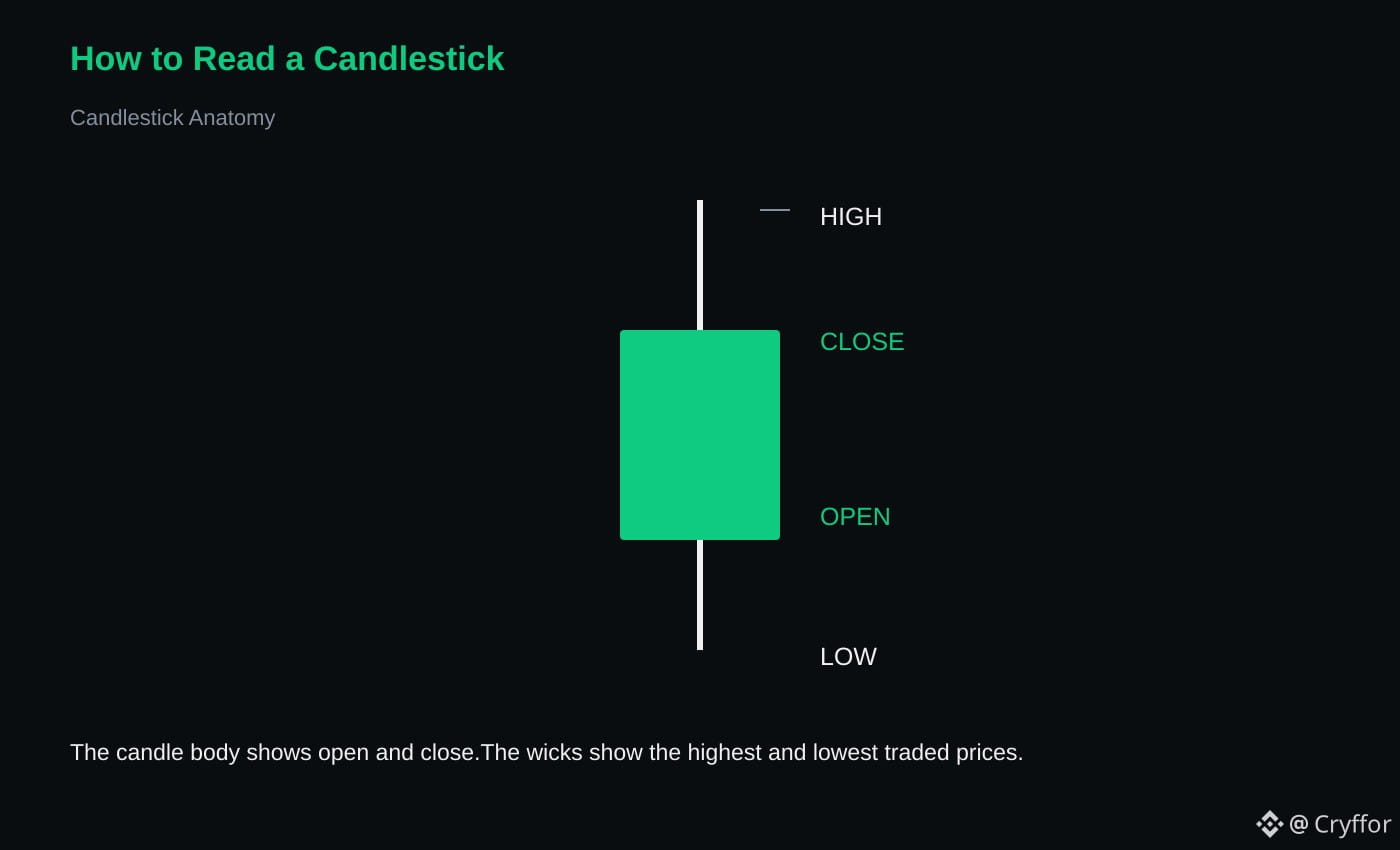
📚 Crypto Education — Candlesticks
🟢 Bullish candle: buyers controlled the period.
🔴 Bearish candle: sellers controlled the period.
📍 The wick shows where price traded but failed to hold.
📊 Candles become more useful with:
🔎 Support/resistance
📈 Trend
⚡ Volume
👀 Higher-timeframe structure
🤔 Which candle pattern do you watch most?
#CryptoEducation #Binance #Candlesticks #Trading
29


Article
See translation
📚 Crypto Education: Before Investing in Cryptocurrency, Understand These 5 Important Things! 🚀Cryptocurrency is creating new opportunities in the digital world, but investing without proper knowledge can lead to serious losses.
Before entering the crypto market, every beginner should understand these five important things.
1️⃣ Understand the Project
Never invest in a coin just because its price is increasing. Research its purpose, technology, development team and real-world utility.
2️⃣ Learn About Market Volatility
Crypto prices can rise or fall dramatically within a short period. Always remember that high volatility means higher risk.
3️⃣ Never Ignore Risk Management
Avoid investing all your money in one cryptocurrency. Manage your capital carefully and never invest money you cannot afford to lose.
4️⃣ Understand Bitcoin's Market Influence
Bitcoin often influences the overall crypto market. Its major price movements can affect many altcoins, so understanding BTC trends is important.
5️⃣ Avoid FOMO and Emotional Decisions
Don't buy a coin just because everyone is talking about it. Make decisions based on research, not excitement or fear.
🔥 Final Thoughts
Knowledge is one of the most powerful tools in cryptocurrency.
Successful crypto investing is not about finding a coin that pumps overnight. It's about understanding the market, managing risk and making informed decisions.
Learn First. Research Always. Invest Wisely. 🚀
#cryptoeducation #bitcoin #blockchain #CryptoKnowledge🚀 #BinanceSquare
📚 Crypto Education: Before Investing in Cryptocurrency, Understand These 5 Important Things! 🚀
Cryptocurrency is creating new opportunities in the digital world, but investing without proper knowledge can lead to serious losses.
Before entering the crypto market, every beginner should understand these five important things.
1️⃣ Understand the Project
Never invest in a coin just because its price is increasing. Research its purpose, technology, development team and real-world utility.
2️⃣ Learn About Market Volatility
Crypto prices can rise or fall dramatically within a short period. Always remember that high volatility means higher risk.
3️⃣ Never Ignore Risk Management
Avoid investing all your money in one cryptocurrency. Manage your capital carefully and never invest money you cannot afford to lose.
4️⃣ Understand Bitcoin's Market Influence
Bitcoin often influences the overall crypto market. Its major price movements can affect many altcoins, so understanding BTC trends is important.
5️⃣ Avoid FOMO and Emotional Decisions
Don't buy a coin just because everyone is talking about it. Make decisions based on research, not excitement or fear.
🔥 Final Thoughts
Knowledge is one of the most powerful tools in cryptocurrency.
Successful crypto investing is not about finding a coin that pumps overnight. It's about understanding the market, managing risk and making informed decisions.
Learn First. Research Always. Invest Wisely. 🚀
#cryptoeducation #bitcoin #blockchain #CryptoKnowledge🚀 #BinanceSquare
74

See translation
The Truth Nobody Should Ignore About Crypto
Everyone talks about making money in crypto.
But why does nobody talk enough about losing money?
A beginner sees Bitcoin going up and thinks:
"I should buy before it's too late."
Then the market drops, fear takes over, and panic selling begins.
Here's what I believe:
- Never invest money you cannot afford to lose.
- Don't follow influencers blindly.
- Don't confuse luck with skill.
- Learn before you invest.
The real question isn't how quickly you can make money. It's how well you understand the risks.
What's the biggest mistake you've seen beginners make in crypto?
#CryptoReality #bitcoin #CryptoEducation #Beginnersguide
1
194

·
--
See translation
💰 CAN YOU REALLY START YOUR CRYPTO JOURNEY WITH JUST $10?
Many people think you need thousands of dollars to enter the crypto market. That's not true!
You can start small, learn the basics, and gradually build your knowledge.
🚀 Here are 3 important tips for beginners:
1️⃣ Start with an amount you can afford to lose.
2️⃣ Learn about Bitcoin, Ethereum, and BNB.
3️⃣ Avoid emotional decisions and unrealistic profit promises.
💡 Remember: Your first goal shouldn't be to get rich overnight. It should be to become a smarter investor.
🔥 LET'S TALK!
If you had $10 to invest in crypto today, which would you choose?
₿ Bitcoin (BTC) Ξ Ethereum (ETH) 🟡 BNB
Drop your answer below! 👇
Follow me for more crypto education and insights.
#Binance #BinanceSquare #Bitcoin #Ethereum #CryptoEducation
1
194

See translation
Bitcoin: More Than Just a Cryptocurrency
Bitcoin ($BTC) is the first decentralized cryptocurrency, introduced in 2009.
What makes Bitcoin different?
* Decentralization: No central bank controls it.
* Limited supply: Only 21 million BTC can ever exist.
* Transparency: Transactions are recorded on a public blockchain.
* Security: It uses cryptography to protect transactions.
Bitcoin has changed the way people think about digital money, but its price remains volatile.
Learn first. Research carefully. Never invest more than you can afford to lose.
#Bitcoin #BTC #CryptoEducation
1
107

See translation
Mastering Risk Management in Crypto Trading: A Systematic Framework for Capital PreservationIn the digital asset market, retail and intermediate traders often spend hundreds of hours researching entry signals, chart patterns, and technical indicators. However, market history consistently demonstrates that operational survival relies far less on entry precision and far more on risk management. Digital assets operate in a 24/7 trading environment characterized by sharp volatility, rapid liquidity shifts, and macroeconomic sensitivity. Without a structured risk framework, even a strategy with a high win rate can succumb to sudden drawdowns.
This article provides a practical, quantitative framework designed for intermediate traders looking to transition from speculative trading to systematic capital preservation.
---
### 1. The Mathematics of Capital Preservation
To build a resilient trading strategy, one must first understand the asymmetric nature of financial drawdowns. Loss recovery is non-linear; as losses deepen, the gain required to break even expands exponentially.
* A **10% loss** requires an **11.1% gain** to regain starting capital.
* A **25% loss** requires a **33.3% gain** to break even.
* A **50% loss** requires a **100% gain** to recover.
* An **80% loss** requires a **400% gain** to return to baseline.
When capital declines significantly, a trader is forced to take on disproportionately higher risk simply to regain initial balance. The primary objective of any systematic trader, therefore, is not maximizing returns on winning trades, but limiting drawdowns so that compounding interest can function over long time horizons.
---
### 2. The Core Rule: Account Equity Risk Sizing
One of the most frequent mistakes made by intermediate traders is confusing **position size** with **trade risk**. Risk is defined strictly as the absolute dollar amount lost if a trade hits its invalidation point (stop-loss).
A standard benchmark utilized by quantitative funds and professional traders is the **1% to 2% Rule**. Under this constraint, a trader never risks more than 1% to 2% of their total account equity on any single setup.
#### The Position Sizing Formula
To calculate precise position sizing based on risk tolerance, use the following equation:
$$\text{Trade Risk Amount (\$) } = \text{Total Portfolio Value} \times \text{Risk Percentage}$$
$$\text{Position Size (in units)} = \frac{\text{Trade Risk Amount (\$)}}{\text{Entry Price} - \text{Stop-Loss Price}}$$
#### Practical Example
Consider a trader with a portfolio value of **$10,000** who wishes to risk **1.5%** on a trade setup.
1. **Calculate Total Risk Amount**:
$$\$10,000 \times 0.015 = \$150$$
The maximum allowable loss for this trade is $150.
2. **Define Technical Invalidation**:
Suppose Bitcoin is trading at **$60,000**, and technical support dictates that the trade thesis is invalid if the price breaks below **$57,000**.
$$\text{Risk per Unit} = \$60,000 - \$57,000 = \$3,000$$
3. **Determine Position Size**:
$$\text{Position Size} = \frac{\$150}{\$3,000} = 0.05 \text{ Bitcoin}$$
4. **Calculate Total Capital Allocated**:
$$0.05 \text{ Bitcoin} \times \$60,000 = \$3,000$$
In this scenario, the trader enters a position worth $3,000 (30% of portfolio capital), but the actual monetary risk remains strictly locked at $150 (1.5% of equity). If the price touches $57,000, the trade triggers a stop-loss, leaving the remaining portfolio equity at $9,850.
---
### 3. Structural vs. Arbitrary Stop-Loss Placement
A common pitfall is assigning arbitrary percentage-based stop-losses (e.g., placing a stop exactly 2% below entry regardless of chart context). Markets do not respect arbitrary percentages; they react to structural supply and demand zones, liquidity pools, and volatility ranges.
#### Technical Structure Placement
Stop-loss levels should be placed at points of technical invalidation—prices where the initial trade thesis becomes explicitly wrong. This includes levels slightly beyond major swing highs/lows, established order blocks, or key support levels.
#### Volatility-Adjusted Stops (ATR)
Because market volatility fluctuates constantly, static distance stops can lead to premature exits during high-volatility regimes. Utilizing tools like the Average True Range (ATR) helps adjust stop distance based on market conditions. For instance, setting a stop at a distance of $1.5 \times \text{ATR}$ below a support zone provides market noise buffer while maintaining logical boundaries.
---
### 4. Mathematical Expectancy and Risk-to-Reward Ratios
A profitable trading system does not require a high win rate. In fact, many successful trend-following systems operate with win rates between 35% and 45%. The viability of a system depends on the interaction between its **win rate** and its **Risk-to-Reward Ratio (RRR)**.
#### Defining Expected Value (EV)
mathematical expectancy measures the average amount a trader can expect to win or lose per dollar at risk.
$$\text{EV} = (\text{Win Rate} \times \text{Average Win}) - (\text{Loss Rate} \times \text{Average Loss})$$
#### Comparing Two Strategies
* **Strategy A (High Win Rate, Poor RRR)**:
* Win Rate: 80%
* Average Win: $50
* Average Loss: $250
* $$\text{EV} = (0.80 \times 50) - (0.20 \times 250) = 40 - 50 = -\$10$$
* *Result*: Negative expectancy. Despite winning 8 out of 10 trades, the strategy loses capital over time.
* **Strategy B (Lower Win Rate, Strong RRR)**:
* Win Rate: 40%
* Average Win: $300 (1:3 Risk-to-Reward)
* Average Loss: $100
* $$\text{EV} = (0.40 \times 300) - (0.60 \times 100) = 120 - 60 = +\$60$$
* *Result*: Positive expectancy. The strategy generates average gains of $60 per trade over a statistical sample size.
Maintaining a minimum target RRR of 1:2 ensures that a trader remains profitable even if more than half of their executed trades hit stop-loss levels.
---
### 5. Managing Correlation and Macro Portfolio Exposure
Crypto assets exhibit high cross-asset correlation. During market-wide corrections, altcoins generally display high directional beta relative to major benchmark assets like Bitcoin and Ethereum.
#### The Fallacy of Multi-Asset Diversification
If a trader opens five distinct long positions on alternative Layer-1 tokens simultaneously, they may believe they have diversified their holdings. However, if those assets possess a correlation coefficient close to +0.9 relative to Bitcoin, the trader has actually opened one single, large position split across five assets. If the broader market contracts, all five positions are likely to hit their stop-loss levels simultaneously, compounding total account drawdown to 5x the intended single-trade risk.
#### Rule for Aggregate Portfolio Exposure
* Limit aggregate open risk across all correlated trades to a fixed maximum (e.g., 5% total account risk).
* If three active trades each carry 1.5% risk, new trade setups should be rejected until existing positions are closed or stop-losses are trailed to break-even.
---
### 6. Limitations, Systemic Risks, and Execution Realities
While quantitative frameworks provide structure, risk models carry practical constraints that traders must factor into execution:
1. **Slippage in Illiquid Markets**: During extreme market events, buy/sell order books thin out rapidy. A stop-market order placed at a specific price may execute at a worse level if market liquidity is depleted. Position sizes must be scaled down when trading lower-market-cap assets with shallow depth.
2. **Leverage and Liquidation Hazards**: Leverage does not inherently alter market odds; it merely reduces required margin while accelerating capital depletion. When using leverage, position sizing calculations must remain tied to absolute asset values rather than margin collateral. Relying on exchange liquidation points instead of setting defined stop-losses introduces extreme capital ruin risk.
3. **Psychological Slippage**: The strongest risk management framework fails if execution breaks down due to psychological fatigue, revenge trading, or moving stop-loss orders mid-trade. Implementing mechanical rules—such as daily max loss limits (e.g., stopping trade activity for the day after 3 consecutive losses)—helps protect capital from emotional bias.
---
### Summary Checklist for Systematic Risk Management
1. **Determine Invalidation First**: Identify structural stop-loss levels prior to calculating entry points.
2. **Size Positions Dynamically**: Calculate unit size using account percentage risk (1-2%), not arbitrary dollar amounts.
3. **Enforce Positive Expectancy**: Target trades offering a structural Risk-to-Reward Ratio of at least 1:2.
4. **Monitor Asset Correlations**: Treat highly correlated digital assets as part of a single combined exposure pool.
5. **Respect Operational Constraints**: Adjust sizes downward during high-volatility regimes or low-liquidity market conditions.
#CryptoEducation #RiskManagement #TradingStrategy
Mastering Risk Management in Crypto Trading: A Systematic Framework for Capital Preservation
In the digital asset market, retail and intermediate traders often spend hundreds of hours researching entry signals, chart patterns, and technical indicators. However, market history consistently demonstrates that operational survival relies far less on entry precision and far more on risk management. Digital assets operate in a 24/7 trading environment characterized by sharp volatility, rapid liquidity shifts, and macroeconomic sensitivity. Without a structured risk framework, even a strategy with a high win rate can succumb to sudden drawdowns.
This article provides a practical, quantitative framework designed for intermediate traders looking to transition from speculative trading to systematic capital preservation.
---
### 1. The Mathematics of Capital Preservation
To build a resilient trading strategy, one must first understand the asymmetric nature of financial drawdowns. Loss recovery is non-linear; as losses deepen, the gain required to break even expands exponentially.
* A **10% loss** requires an **11.1% gain** to regain starting capital.
* A **25% loss** requires a **33.3% gain** to break even.
* A **50% loss** requires a **100% gain** to recover.
* An **80% loss** requires a **400% gain** to return to baseline.
When capital declines significantly, a trader is forced to take on disproportionately higher risk simply to regain initial balance. The primary objective of any systematic trader, therefore, is not maximizing returns on winning trades, but limiting drawdowns so that compounding interest can function over long time horizons.
---
### 2. The Core Rule: Account Equity Risk Sizing
One of the most frequent mistakes made by intermediate traders is confusing **position size** with **trade risk**. Risk is defined strictly as the absolute dollar amount lost if a trade hits its invalidation point (stop-loss).
A standard benchmark utilized by quantitative funds and professional traders is the **1% to 2% Rule**. Under this constraint, a trader never risks more than 1% to 2% of their total account equity on any single setup.
#### The Position Sizing Formula
To calculate precise position sizing based on risk tolerance, use the following equation:
$$\text{Trade Risk Amount (\$) } = \text{Total Portfolio Value} \times \text{Risk Percentage}$$
$$\text{Position Size (in units)} = \frac{\text{Trade Risk Amount (\$)}}{\text{Entry Price} - \text{Stop-Loss Price}}$$
#### Practical Example
Consider a trader with a portfolio value of **$10,000** who wishes to risk **1.5%** on a trade setup.
1. **Calculate Total Risk Amount**:
$$\$10,000 \times 0.015 = \$150$$
The maximum allowable loss for this trade is $150.
2. **Define Technical Invalidation**:
Suppose Bitcoin is trading at **$60,000**, and technical support dictates that the trade thesis is invalid if the price breaks below **$57,000**.
$$\text{Risk per Unit} = \$60,000 - \$57,000 = \$3,000$$
3. **Determine Position Size**:
$$\text{Position Size} = \frac{\$150}{\$3,000} = 0.05 \text{ Bitcoin}$$
4. **Calculate Total Capital Allocated**:
$$0.05 \text{ Bitcoin} \times \$60,000 = \$3,000$$
In this scenario, the trader enters a position worth $3,000 (30% of portfolio capital), but the actual monetary risk remains strictly locked at $150 (1.5% of equity). If the price touches $57,000, the trade triggers a stop-loss, leaving the remaining portfolio equity at $9,850.
---
### 3. Structural vs. Arbitrary Stop-Loss Placement
A common pitfall is assigning arbitrary percentage-based stop-losses (e.g., placing a stop exactly 2% below entry regardless of chart context). Markets do not respect arbitrary percentages; they react to structural supply and demand zones, liquidity pools, and volatility ranges.
#### Technical Structure Placement
Stop-loss levels should be placed at points of technical invalidation—prices where the initial trade thesis becomes explicitly wrong. This includes levels slightly beyond major swing highs/lows, established order blocks, or key support levels.
#### Volatility-Adjusted Stops (ATR)
Because market volatility fluctuates constantly, static distance stops can lead to premature exits during high-volatility regimes. Utilizing tools like the Average True Range (ATR) helps adjust stop distance based on market conditions. For instance, setting a stop at a distance of $1.5 \times \text{ATR}$ below a support zone provides market noise buffer while maintaining logical boundaries.
---
### 4. Mathematical Expectancy and Risk-to-Reward Ratios
A profitable trading system does not require a high win rate. In fact, many successful trend-following systems operate with win rates between 35% and 45%. The viability of a system depends on the interaction between its **win rate** and its **Risk-to-Reward Ratio (RRR)**.
#### Defining Expected Value (EV)
mathematical expectancy measures the average amount a trader can expect to win or lose per dollar at risk.
$$\text{EV} = (\text{Win Rate} \times \text{Average Win}) - (\text{Loss Rate} \times \text{Average Loss})$$
#### Comparing Two Strategies
* **Strategy A (High Win Rate, Poor RRR)**:
* Win Rate: 80%
* Average Win: $50
* Average Loss: $250
* $$\text{EV} = (0.80 \times 50) - (0.20 \times 250) = 40 - 50 = -\$10$$
* *Result*: Negative expectancy. Despite winning 8 out of 10 trades, the strategy loses capital over time.
* **Strategy B (Lower Win Rate, Strong RRR)**:
* Win Rate: 40%
* Average Win: $300 (1:3 Risk-to-Reward)
* Average Loss: $100
* $$\text{EV} = (0.40 \times 300) - (0.60 \times 100) = 120 - 60 = +\$60$$
* *Result*: Positive expectancy. The strategy generates average gains of $60 per trade over a statistical sample size.
Maintaining a minimum target RRR of 1:2 ensures that a trader remains profitable even if more than half of their executed trades hit stop-loss levels.
---
### 5. Managing Correlation and Macro Portfolio Exposure
Crypto assets exhibit high cross-asset correlation. During market-wide corrections, altcoins generally display high directional beta relative to major benchmark assets like Bitcoin and Ethereum.
#### The Fallacy of Multi-Asset Diversification
If a trader opens five distinct long positions on alternative Layer-1 tokens simultaneously, they may believe they have diversified their holdings. However, if those assets possess a correlation coefficient close to +0.9 relative to Bitcoin, the trader has actually opened one single, large position split across five assets. If the broader market contracts, all five positions are likely to hit their stop-loss levels simultaneously, compounding total account drawdown to 5x the intended single-trade risk.
#### Rule for Aggregate Portfolio Exposure
* Limit aggregate open risk across all correlated trades to a fixed maximum (e.g., 5% total account risk).
* If three active trades each carry 1.5% risk, new trade setups should be rejected until existing positions are closed or stop-losses are trailed to break-even.
---
### 6. Limitations, Systemic Risks, and Execution Realities
While quantitative frameworks provide structure, risk models carry practical constraints that traders must factor into execution:
1. **Slippage in Illiquid Markets**: During extreme market events, buy/sell order books thin out rapidy. A stop-market order placed at a specific price may execute at a worse level if market liquidity is depleted. Position sizes must be scaled down when trading lower-market-cap assets with shallow depth.
2. **Leverage and Liquidation Hazards**: Leverage does not inherently alter market odds; it merely reduces required margin while accelerating capital depletion. When using leverage, position sizing calculations must remain tied to absolute asset values rather than margin collateral. Relying on exchange liquidation points instead of setting defined stop-losses introduces extreme capital ruin risk.
3. **Psychological Slippage**: The strongest risk management framework fails if execution breaks down due to psychological fatigue, revenge trading, or moving stop-loss orders mid-trade. Implementing mechanical rules—such as daily max loss limits (e.g., stopping trade activity for the day after 3 consecutive losses)—helps protect capital from emotional bias.
---
### Summary Checklist for Systematic Risk Management
1. **Determine Invalidation First**: Identify structural stop-loss levels prior to calculating entry points.
2. **Size Positions Dynamically**: Calculate unit size using account percentage risk (1-2%), not arbitrary dollar amounts.
3. **Enforce Positive Expectancy**: Target trades offering a structural Risk-to-Reward Ratio of at least 1:2.
4. **Monitor Asset Correlations**: Treat highly correlated digital assets as part of a single combined exposure pool.
5. **Respect Operational Constraints**: Adjust sizes downward during high-volatility regimes or low-liquidity market conditions.
#CryptoEducation #RiskManagement #TradingStrategy
119

·
--
See translation
🌍 What Is DeFi?
DeFi stands for Decentralized Finance. It refers to blockchain-based services designed to provide financial functions through smart contracts.
💡 Learn about how it works, its fees, and its risks before interacting with any DeFi application.
#DeFi #Blockchain #cryptoeducation
🌍 What Is DeFi?
DeFi stands for Decentralized Finance. It refers to blockchain-based services designed to provide financial functions through smart contracts.
💡 Learn about how it works, its fees, and its risks before interacting with any DeFi application.
#DeFi #Blockchain #cryptoeducation
DeFi stands for Decentralized Finance. It refers to blockchain-based services designed to provide financial functions through smart contracts.
💡 Learn about how it works, its fees, and its risks before interacting with any DeFi application.
#DeFi #Blockchain #cryptoeducation
78
Log in to explore more content
Join global crypto users on Binance Square
⚡️ Get latest and useful information about crypto.
💬 Trusted by the world’s largest crypto exchange.
👍 Discover real insights from verified creators.
Email / Phone number
Trending Topics
1
#BTCRebounds80K
2,920 views
239 Discussing
2
#Binance98PercentReplenished
5,904 views
310 Discussing
3
#USMidterms-WhatAreMarketsExpecting?
229,201 views
1,755 Discussing
4
#USOctoberNFP-AreRateCutsStillPossible
331,525 views
2,627 Discussing
5
#AMDBeatsExpectations-AINarrativeContinues
63,089 views
672 Discussing
6
#CircleQ3Revenue865M
13,596 views
359 Discussing
7
#BinanceIncidentReport
411,238 views
1,951 Discussing
8
#USStocksOpenHigherAsDowGains1.9%
1,060 views
45 Discussing
9
#ADPUSPrivateEmployersAdd86000JobsInOctober
482 views
27 Discussing
10
#FrenchAssemblyPassesSelfCustodiedCryptoReportingAmendment
353 views
12 Discussing