
#web3infrastructure
web3infrastructure
207,281 views
2,945 Discussing
Hot
Latest

The next wave of crypto adoption will not come from retail or institutions — it will come from machines.
AI agents are already executing trades, managing wallets, and routing payments autonomously. The question is no longer whether AI will use crypto. The question is which infrastructure captures the most machine-generated volume.
AI agents need settlement rails that are fast, cheap, programmable, and censorship-resistant. Traditional banking was never built for non-human actors. Stablecoins and smart contract networks were. The GENIUS Act legitimized stablecoin infrastructure right as AI agent deployment accelerates — that convergence is the real trade.
$ETH leads with smart contract composability and account abstraction, making it the natural AI agent coordination layer. $BNB powers programmable money at scale with BNB Chain AI integrations. $SOL adds high throughput and sub-cent fees ideal for micropayment loops.
The machines do not care about price action. They care about uptime, finality speed, and fee predictability. Position accordingly.
#AIAgents #Web3Infrastructure #CryptoAI #BinanceSquare
AI agents are already executing trades, managing wallets, and routing payments autonomously. The question is no longer whether AI will use crypto. The question is which infrastructure captures the most machine-generated volume.
AI agents need settlement rails that are fast, cheap, programmable, and censorship-resistant. Traditional banking was never built for non-human actors. Stablecoins and smart contract networks were. The GENIUS Act legitimized stablecoin infrastructure right as AI agent deployment accelerates — that convergence is the real trade.
$ETH leads with smart contract composability and account abstraction, making it the natural AI agent coordination layer. $BNB powers programmable money at scale with BNB Chain AI integrations. $SOL adds high throughput and sub-cent fees ideal for micropayment loops.
The machines do not care about price action. They care about uptime, finality speed, and fee predictability. Position accordingly.
#AIAgents #Web3Infrastructure #CryptoAI #BinanceSquare
AI agents do not just use crypto — they are increasingly being designed around it.
Most crypto discussions focus on what humans do with blockchains: trade, store, borrow. But a fast-moving shift is underway. Autonomous AI agents need permissionless, programmable money to function at scale — and crypto infrastructure is the only stack built for that.
Consider what an AI agent actually needs to operate autonomously: micropayments without KYC friction, deterministic smart contract execution, trustless multi-party settlement, and composable financial primitives it can call like code. TradFi offers none of that. Ethereum and Solana are already the proving grounds — agent frameworks are deploying wallets, signing transactions, and interacting with DeFi protocols without any human in the loop.
Low-fee chains with customizable execution environments are positioning as infrastructure for enterprise AI agent deployments. This is not speculative — agent economies paying each other in stablecoins are already running on testnets.
The implication for holders: chains with programmable accounts, cheap execution, and strong dev tooling are not just DeFi plays anymore. They are AI infrastructure plays. That dual demand curve is one of the most underpriced dynamics in crypto right now.
AI + crypto is not a narrative. It is a convergence. The chains that win that overlap will look very different in 24 months.
$ETH $BNB $SOL
#CryptoAI #Web3Infrastructure #AIAgents #BinanceSquare
Most crypto discussions focus on what humans do with blockchains: trade, store, borrow. But a fast-moving shift is underway. Autonomous AI agents need permissionless, programmable money to function at scale — and crypto infrastructure is the only stack built for that.
Consider what an AI agent actually needs to operate autonomously: micropayments without KYC friction, deterministic smart contract execution, trustless multi-party settlement, and composable financial primitives it can call like code. TradFi offers none of that. Ethereum and Solana are already the proving grounds — agent frameworks are deploying wallets, signing transactions, and interacting with DeFi protocols without any human in the loop.
Low-fee chains with customizable execution environments are positioning as infrastructure for enterprise AI agent deployments. This is not speculative — agent economies paying each other in stablecoins are already running on testnets.
The implication for holders: chains with programmable accounts, cheap execution, and strong dev tooling are not just DeFi plays anymore. They are AI infrastructure plays. That dual demand curve is one of the most underpriced dynamics in crypto right now.
AI + crypto is not a narrative. It is a convergence. The chains that win that overlap will look very different in 24 months.
$ETH $BNB $SOL
#CryptoAI #Web3Infrastructure #AIAgents #BinanceSquare

The DePIN (Decentralized Physical Infrastructure Networks) sector is absolutely booming, and one project quietly building a massive paradigm shift is Acurast. While traditional cloud computing relies on massive, energy-hungry data centers controlled by centralized giants, Acurast takes a completely different approach. It leverages the compute power of something you likely have lying in a drawer right now: old smartphones.
By repurposing decommissioned mobile phones, Acurast is establishing a decentralized, serverless cloud. But how does it ensure security? The secret lies in the Hardware Security Modules and Trusted Execution Environments (TEEs) already built into modern mobile processors. This hardware-level security ensures that the compute is completely tamper-proof and trustless. No one, not even the owner of the phone, can manipulate the execution of the code.
This setup offers a triple-win scenario. First, it is highly cost-effective, drastically lowering the barrier to entry for developers compared to traditional Web2 cloud services. Second, it is highly sustainable, breathing new life into electronic waste instead of building massive new server farms. Third, it provides true decentralization, distributing compute globally across thousands of individual mobile devices.
For developers, Acurast opens up endless possibilities. From deploying decentralized oracles to running complex off-chain computations and fetching Web2 APIs securely, it acts as a universal execution layer. It is a zero-trust environment where developers do not have to trust a centralized middleman.
As Web3 continues to merge with real-world infrastructure, DePIN projects like Acurast are proving that decentralized networks can be faster, cheaper, and more secure than traditional alternatives. Keep an eye on this space as the demand for decentralized compute grows.
#DePIN #Acurast #Web3Infrastructure
By repurposing decommissioned mobile phones, Acurast is establishing a decentralized, serverless cloud. But how does it ensure security? The secret lies in the Hardware Security Modules and Trusted Execution Environments (TEEs) already built into modern mobile processors. This hardware-level security ensures that the compute is completely tamper-proof and trustless. No one, not even the owner of the phone, can manipulate the execution of the code.
This setup offers a triple-win scenario. First, it is highly cost-effective, drastically lowering the barrier to entry for developers compared to traditional Web2 cloud services. Second, it is highly sustainable, breathing new life into electronic waste instead of building massive new server farms. Third, it provides true decentralization, distributing compute globally across thousands of individual mobile devices.
For developers, Acurast opens up endless possibilities. From deploying decentralized oracles to running complex off-chain computations and fetching Web2 APIs securely, it acts as a universal execution layer. It is a zero-trust environment where developers do not have to trust a centralized middleman.
As Web3 continues to merge with real-world infrastructure, DePIN projects like Acurast are proving that decentralized networks can be faster, cheaper, and more secure than traditional alternatives. Keep an eye on this space as the demand for decentralized compute grows.
#DePIN #Acurast #Web3Infrastructure

💾🌐 Filecoin (FIL) — Decentralized storage for the Web3 world!
What if you could store your data over a decentralized network instead of relying on a single central server? 🤔
That’s the core goal of Filecoin: a decentralized storage network that lets users store data and rent storage space from service providers around the world.
🔹 Name: Filecoin
🔹 Ticker: FIL
🔹 Category: Web3 / Decentralized Storage
🔹 Purpose: Store data in a decentralized way
🔹 Technology: Blockchain + IPFS
💡 The system is built on a decentralized storage marketplace, where storage providers can offer the available space they have in exchange for rewards in FIL.
🌐 Filecoin aims to turn cloud storage into a global decentralized marketplace.
#Filecoin #FIL #Web3 #Crypto #Blockchain #DePIN #DecentralizedStorage #IPFS #Web3Infrastructure
What if you could store your data over a decentralized network instead of relying on a single central server? 🤔
That’s the core goal of Filecoin: a decentralized storage network that lets users store data and rent storage space from service providers around the world.
🔹 Name: Filecoin
🔹 Ticker: FIL
🔹 Category: Web3 / Decentralized Storage
🔹 Purpose: Store data in a decentralized way
🔹 Technology: Blockchain + IPFS
💡 The system is built on a decentralized storage marketplace, where storage providers can offer the available space they have in exchange for rewards in FIL.
🌐 Filecoin aims to turn cloud storage into a global decentralized marketplace.
#Filecoin #FIL #Web3 #Crypto #Blockchain #DePIN #DecentralizedStorage #IPFS #Web3Infrastructure

Blockchain doesn't have an enterprise adoption problem.
It has an infrastructure complexity problem.
Most companies don't want to become blockchain operators. They want secure, scalable infrastructure that lets them launch products faster without hiring protocol engineers or managing validators.
That's why managed blockchain platforms are becoming increasingly important. By abstracting deployment and network operations, they reduce technical overhead, shorten Time-To-Market, and let businesses focus on solving real customer problems instead of maintaining infrastructure.
The next wave of enterprise adoption won't be determined by which blockchain has the most features. It will be driven by the platforms that make blockchain infrastructure almost invisible. When the technology fades into the background, businesses can concentrate on innovation, efficiency, and creating value. 🚀
@avax @Avalanche
$AVAX $LINK $QAT.ETF
#AvalancheUpdate #EnterpriseBlockchain #Web3Infrastructure
It has an infrastructure complexity problem.
Most companies don't want to become blockchain operators. They want secure, scalable infrastructure that lets them launch products faster without hiring protocol engineers or managing validators.
That's why managed blockchain platforms are becoming increasingly important. By abstracting deployment and network operations, they reduce technical overhead, shorten Time-To-Market, and let businesses focus on solving real customer problems instead of maintaining infrastructure.
The next wave of enterprise adoption won't be determined by which blockchain has the most features. It will be driven by the platforms that make blockchain infrastructure almost invisible. When the technology fades into the background, businesses can concentrate on innovation, efficiency, and creating value. 🚀
@avax @Avalanche
$AVAX $LINK $QAT.ETF
#AvalancheUpdate #EnterpriseBlockchain #Web3Infrastructure


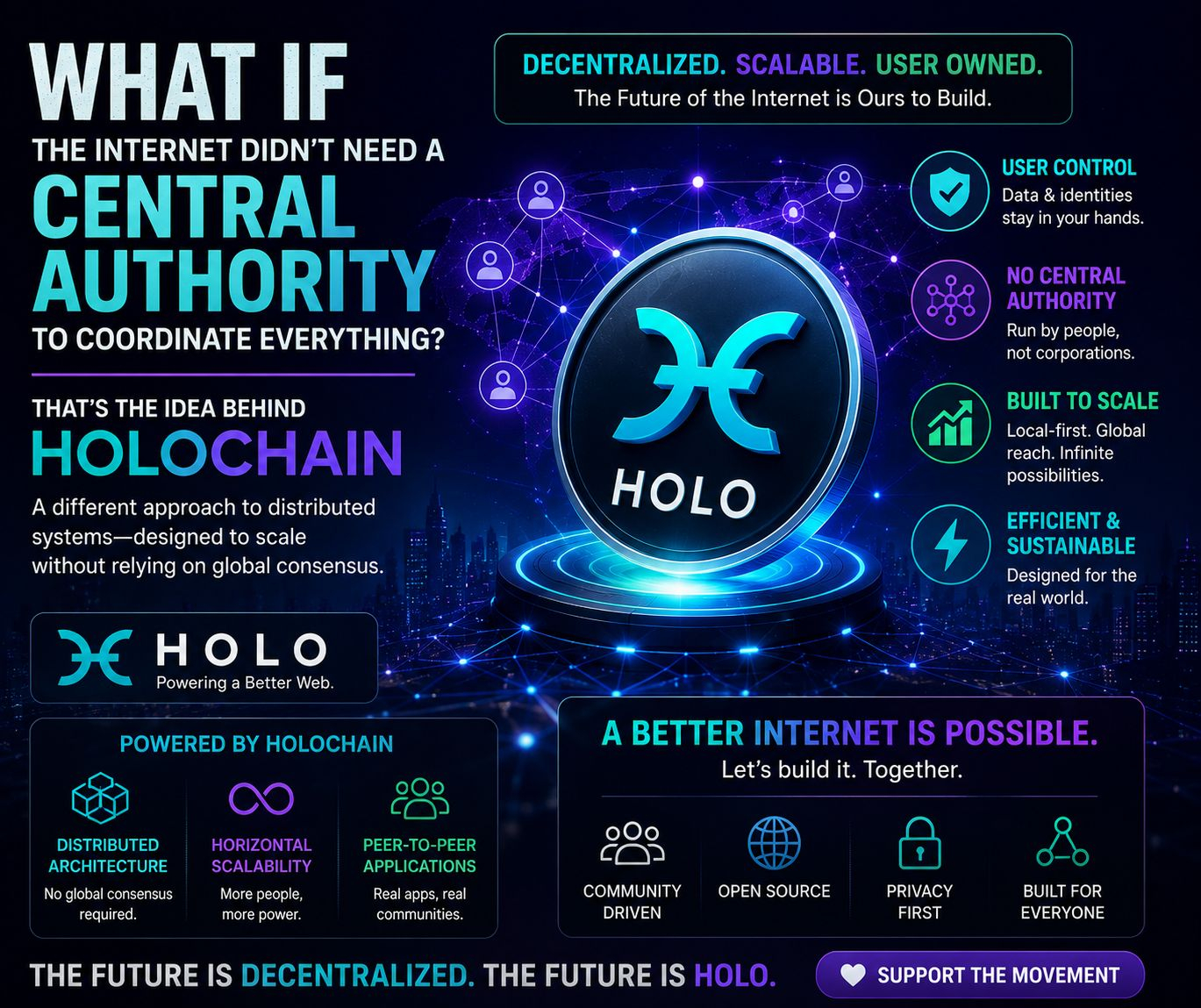
🌐 **What if the internet didn’t need a central authority to coordinate everything?**
That’s the idea behind **Holochain**.
Holo’s white papers explore a different approach to distributed systems—one designed to scale without relying on global consensus. Holo is positioned as the bridge connecting Holochain technology with everyday users, while its currency design explores efficient, globally scalable infrastructure without specialized hardware.
The bigger question is: can decentralized networks become more scalable without sacrificing user control?
👀 **Holochain is definitely a project worth watching.**
#Holo #holochain #HOT #Web3 #DePIN. #decentralization #Crypto #Blockchain #Web3Infrastructure
That’s the idea behind **Holochain**.
Holo’s white papers explore a different approach to distributed systems—one designed to scale without relying on global consensus. Holo is positioned as the bridge connecting Holochain technology with everyday users, while its currency design explores efficient, globally scalable infrastructure without specialized hardware.
The bigger question is: can decentralized networks become more scalable without sacrificing user control?
👀 **Holochain is definitely a project worth watching.**
#Holo #holochain #HOT #Web3 #DePIN. #decentralization #Crypto #Blockchain #Web3Infrastructure

Unlocking dormant Bitcoin liquidity while maintaining total self-custody is a game-changer for decentralized finance. The Trustless Bitcoin Vaults (TBV) developed by @BabylonLabs_io BabylonLabs_io provide a groundbreaking security architecture that enables BTC holders to earn native staking yield without sacrificing asset control or relying on risky third-party custodians. By integrating cryptographic time-locks and slashable security mechanisms, the network allows Baby ecosystem participants to scale Proof-of-Stake security seamlessly. Understanding how TBV bridges Bitcoin's security with broader Web3 utility is essential for the future of decentralized yield generation. 🔒⚡
#baby $BABY #BitcoinStaking #DeFi: #Web3Infrastructure
#baby $BABY #BitcoinStaking #DeFi: #Web3Infrastructure



We need to stop treating decentralized node placement like a basic game of Risk.
Most people look at a global map of nodes and think, "Great, we have global coverage." But a recent latency test I ran on @OpenGradient proved just how deceptive a pretty map can be.
The scheduler did exactly what it was programmed to do: it routed a request to the absolute closest inference node geographically. On paper, it was a flawless decision. In reality, it was a disaster.
The local node didn’t have the specific model ready and had to start pulling it from scratch. Meanwhile, a "warm" node slightly further away was sitting completely idle, ready to go. Because of a blind spot in routing, the shortest physical distance turned into the slowest execution time.
This is the hidden trap. Decentralized AI routing isn't a geography problem; it’s a fluid coordination problem.If you're only measuring physical distance, you're ignoring real-time GPU capacity, queue bottlenecks, live model states, and failure correlations.
Worse, visual distribution is often an illusion. You can place two nodes in entirely different cities, but if they rely on the same cloud provider, the same underlying operator, or the same regional fiber backbone, they aren't independent. They represent a shared failure point waiting to happen.
The complexity goes even deeper when you realize that full nodes shouldn't even share the same footprint as inference nodes. Their priority is optimizing proof propagation, not user ping. Then you throw data nodes into the mix, where being close to the data source matters way more than being close to the end-user.
Traditional facility-location models can map these trade-offs, but the real wildcard is how the economic incentives will drive node deployment.
The next milestone for $OPG shouldn't be about spreading nodes randomly across a map. It’s about whether new infrastructure actually plugs these invisible latency gaps and cuts down the shared dependencies that users actually experience.
#OPG #OpenGradient #DeAI #Web3Infrastructure
Most people look at a global map of nodes and think, "Great, we have global coverage." But a recent latency test I ran on @OpenGradient proved just how deceptive a pretty map can be.
The scheduler did exactly what it was programmed to do: it routed a request to the absolute closest inference node geographically. On paper, it was a flawless decision. In reality, it was a disaster.
The local node didn’t have the specific model ready and had to start pulling it from scratch. Meanwhile, a "warm" node slightly further away was sitting completely idle, ready to go. Because of a blind spot in routing, the shortest physical distance turned into the slowest execution time.
This is the hidden trap. Decentralized AI routing isn't a geography problem; it’s a fluid coordination problem.If you're only measuring physical distance, you're ignoring real-time GPU capacity, queue bottlenecks, live model states, and failure correlations.
Worse, visual distribution is often an illusion. You can place two nodes in entirely different cities, but if they rely on the same cloud provider, the same underlying operator, or the same regional fiber backbone, they aren't independent. They represent a shared failure point waiting to happen.
The complexity goes even deeper when you realize that full nodes shouldn't even share the same footprint as inference nodes. Their priority is optimizing proof propagation, not user ping. Then you throw data nodes into the mix, where being close to the data source matters way more than being close to the end-user.
Traditional facility-location models can map these trade-offs, but the real wildcard is how the economic incentives will drive node deployment.
The next milestone for $OPG shouldn't be about spreading nodes randomly across a map. It’s about whether new infrastructure actually plugs these invisible latency gaps and cuts down the shared dependencies that users actually experience.
#OPG #OpenGradient #DeAI #Web3Infrastructure
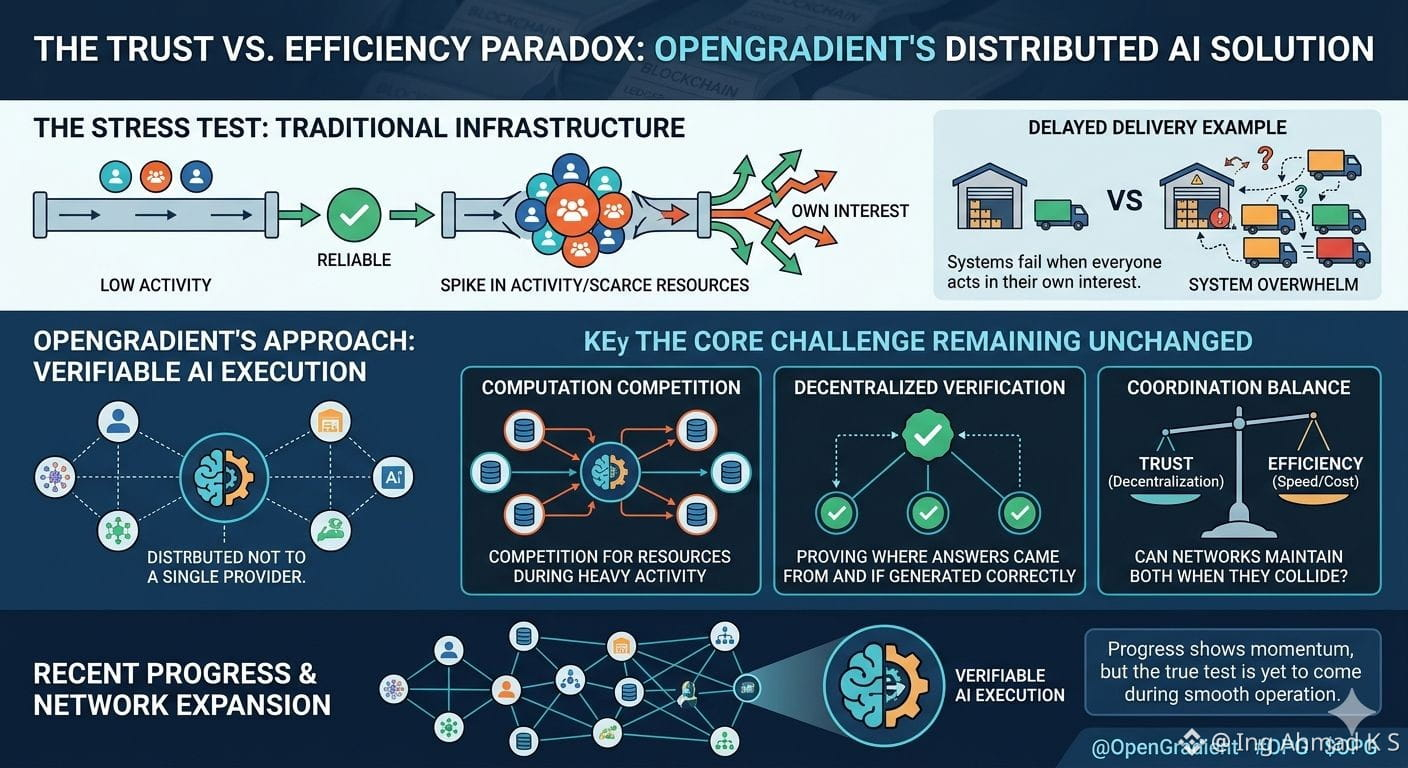
🌩️ The Stress Test: Why Verifiable AI Infrastructure is the Ultimate Flex for Web3
Most Web3 infrastructure looks flawless when the network is quiet. But we all know what happens when gas fees spike, activity explodes, and everyone rushes for the exit at once. Human nature takes over, systems clog, and theoretical assumptions fall apart.
That is exactly the chaos that @OpenGradient (#OPG) is built to withstand.
🤖 Moving Beyond Just "Distributed AI"
OpenGradient isn’t just about tossing AI models onto a network and hoping for the best. It’s tackling the real bottleneck: decentralized verification.
Think of it like a massive global delivery network. When demand is low, everything arrives on time. But when a massive surge hits, warehouses back up, drivers get rerouted, and small inefficiencies trigger a total system meltdown.
In the AI world, that "meltdown" looks like computation bottlenecks and broken trust. As decentralized applications (dApps) scale, just getting an answer from an AI model isn't enough. You have to prove:
Where that answer came from.
How it was generated.
That no single provider tampered with the result.
⚖️ The Ultimate Crypto Paradox: Trust vs. Efficiency
OpenGradient’s recent technical milestones show serious momentum in verifiable AI execution and network expansion. But the ultimate challenge for $OPG remains the ultimate challenge for Web3: Can a network maintain absolute trust without sacrificing hyper-efficiency?
Usually, these two goals move in opposite directions. When the next major market surge collides with these systems, we’ll see which networks are actually built for the future, and which ones were just enjoying the quiet.
Keep your eyes on the infrastructure layer.
What are your thoughts on the intersection of AI and decentralized verification? Drop your comments below! 👇
#OPG $OPG #AI #DeFi #Web3Infrastructure
Most Web3 infrastructure looks flawless when the network is quiet. But we all know what happens when gas fees spike, activity explodes, and everyone rushes for the exit at once. Human nature takes over, systems clog, and theoretical assumptions fall apart.
That is exactly the chaos that @OpenGradient (#OPG) is built to withstand.
🤖 Moving Beyond Just "Distributed AI"
OpenGradient isn’t just about tossing AI models onto a network and hoping for the best. It’s tackling the real bottleneck: decentralized verification.
Think of it like a massive global delivery network. When demand is low, everything arrives on time. But when a massive surge hits, warehouses back up, drivers get rerouted, and small inefficiencies trigger a total system meltdown.
In the AI world, that "meltdown" looks like computation bottlenecks and broken trust. As decentralized applications (dApps) scale, just getting an answer from an AI model isn't enough. You have to prove:
Where that answer came from.
How it was generated.
That no single provider tampered with the result.
⚖️ The Ultimate Crypto Paradox: Trust vs. Efficiency
OpenGradient’s recent technical milestones show serious momentum in verifiable AI execution and network expansion. But the ultimate challenge for $OPG remains the ultimate challenge for Web3: Can a network maintain absolute trust without sacrificing hyper-efficiency?
Usually, these two goals move in opposite directions. When the next major market surge collides with these systems, we’ll see which networks are actually built for the future, and which ones were just enjoying the quiet.
Keep your eyes on the infrastructure layer.
What are your thoughts on the intersection of AI and decentralized verification? Drop your comments below! 👇
#OPG $OPG #AI #DeFi #Web3Infrastructure

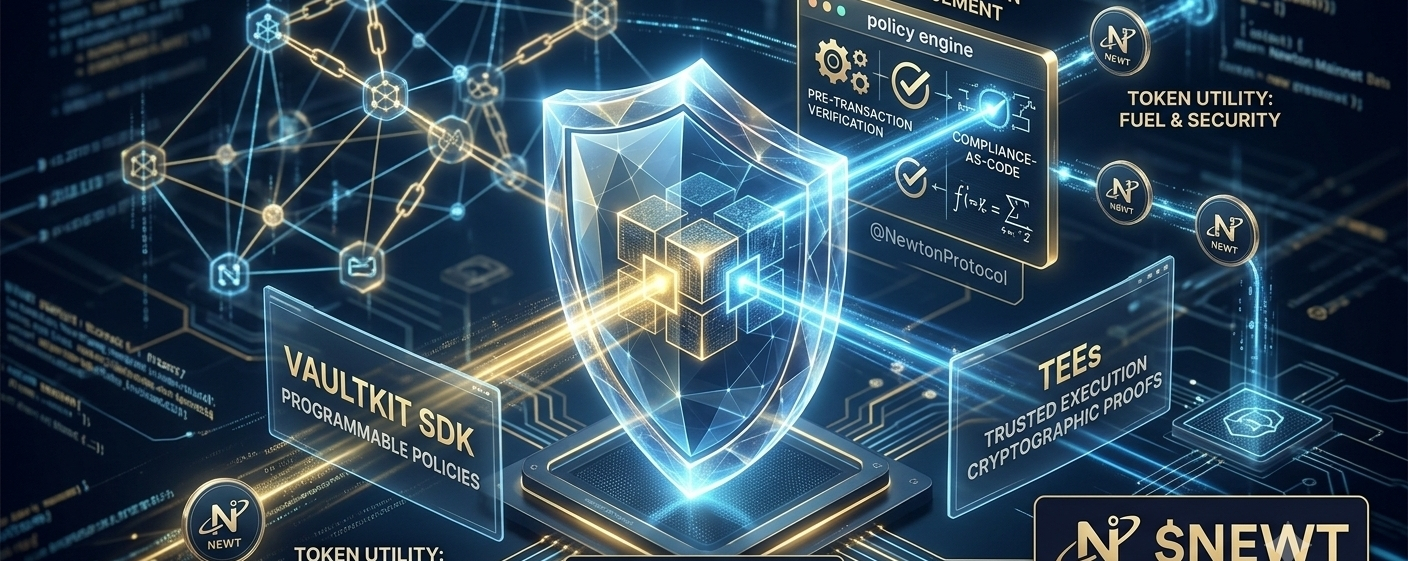
The shift toward on-chain automation is moving fast, but speed doesn't matter if security and compliance are left behind. That is why the recent launch of the Newton Mainnet Beta by @NewtonProtocol is such a massive milestone for the Web3 space.
Instead of reactive post-transaction monitoring, they are introducing a true "compliance-as-code" architecture. By combining programmable policies, zero-knowledge proofs (ZKPs), and secure rollups, it evaluates and authorizes transactions before they ever hit the settlement layer. For builders using VaultKit to deploy complex AI-driven strategies or institutional vaults, this provides a tamper-proof execution environment that enforces strict risk rules seamlessly.
It is incredibly exciting to see the $NEWT token find real-world utility in a live ecosystem that bridges the gap between intelligent AI agents and decentralized finance infrastructure.
#Newt #MainnetBeta #Web3Infrastructure
Instead of reactive post-transaction monitoring, they are introducing a true "compliance-as-code" architecture. By combining programmable policies, zero-knowledge proofs (ZKPs), and secure rollups, it evaluates and authorizes transactions before they ever hit the settlement layer. For builders using VaultKit to deploy complex AI-driven strategies or institutional vaults, this provides a tamper-proof execution environment that enforces strict risk rules seamlessly.
It is incredibly exciting to see the $NEWT token find real-world utility in a live ecosystem that bridges the gap between intelligent AI agents and decentralized finance infrastructure.
#Newt #MainnetBeta #Web3Infrastructure

The market is completely distracted by short-term noise, but real wealth is built by focusing on solid infrastructure. This is exactly why @NewtonProtocol is on my radar right now.
They are quietly solving major Web3 scalability issues with their Mainnet Beta. No empty AI hype, just pure technological execution.
Are you accumulating $NEWT before the rest of the market wakes up? Let me know your targets below! 👇
$NEWT #Newt #Web3Infrastructure #MainnetBeta #Crypto
They are quietly solving major Web3 scalability issues with their Mainnet Beta. No empty AI hype, just pure technological execution.
Are you accumulating $NEWT before the rest of the market wakes up? Let me know your targets below! 👇
$NEWT #Newt #Web3Infrastructure #MainnetBeta #Crypto


Partly True
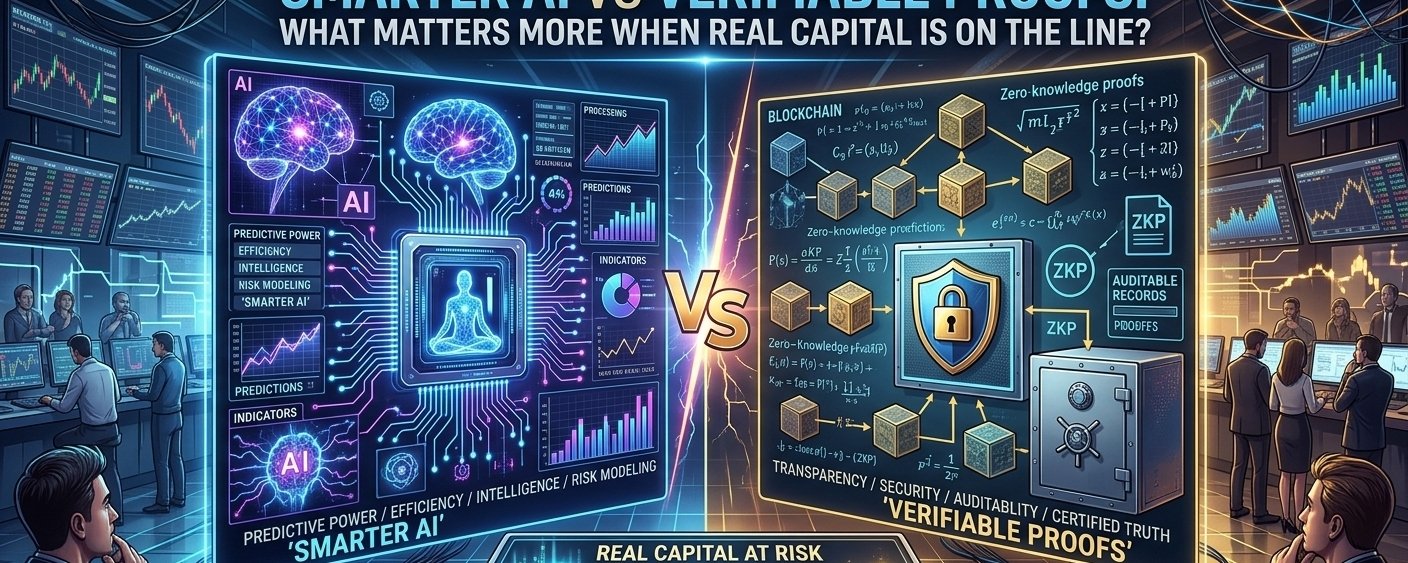
A project that has genuinely caught my attention recently is Space and Time. The reason is not because of a trend or a short-term narrative. It's because I think one of Web3's biggest limitations has always been overlooked: smart contracts can execute rules, but they still struggle to understand and verify large amounts of data.
That is where SXT becomes interesting. With Proof of SQL, The goal is to make complex data queries verifiable instead of relying on trusted intermediaries. If this approach works at scale, it could unlock more advanced applications across DeFi, RWAs, AI, gaming, and cross-chain ecosystems.
I’m not assuming success is guaranteed. Technology, adoption, and developer demand will decide the long-term outcome. But I usually pay attention to projects that solve infrastructure problems before they become obvious to the market. For me, SXT is a long-term infrastructure bet worth watching closely.
Will verified data become the foundation layer for the next wave of Web3 applications?💭
#SpaceAndTime
#ZKProofs
#Web3Infrastructure $SXT $XRP $DN
That is where SXT becomes interesting. With Proof of SQL, The goal is to make complex data queries verifiable instead of relying on trusted intermediaries. If this approach works at scale, it could unlock more advanced applications across DeFi, RWAs, AI, gaming, and cross-chain ecosystems.
I’m not assuming success is guaranteed. Technology, adoption, and developer demand will decide the long-term outcome. But I usually pay attention to projects that solve infrastructure problems before they become obvious to the market. For me, SXT is a long-term infrastructure bet worth watching closely.
Will verified data become the foundation layer for the next wave of Web3 applications?💭
#SpaceAndTime
#ZKProofs
#Web3Infrastructure $SXT $XRP $DN


Verified
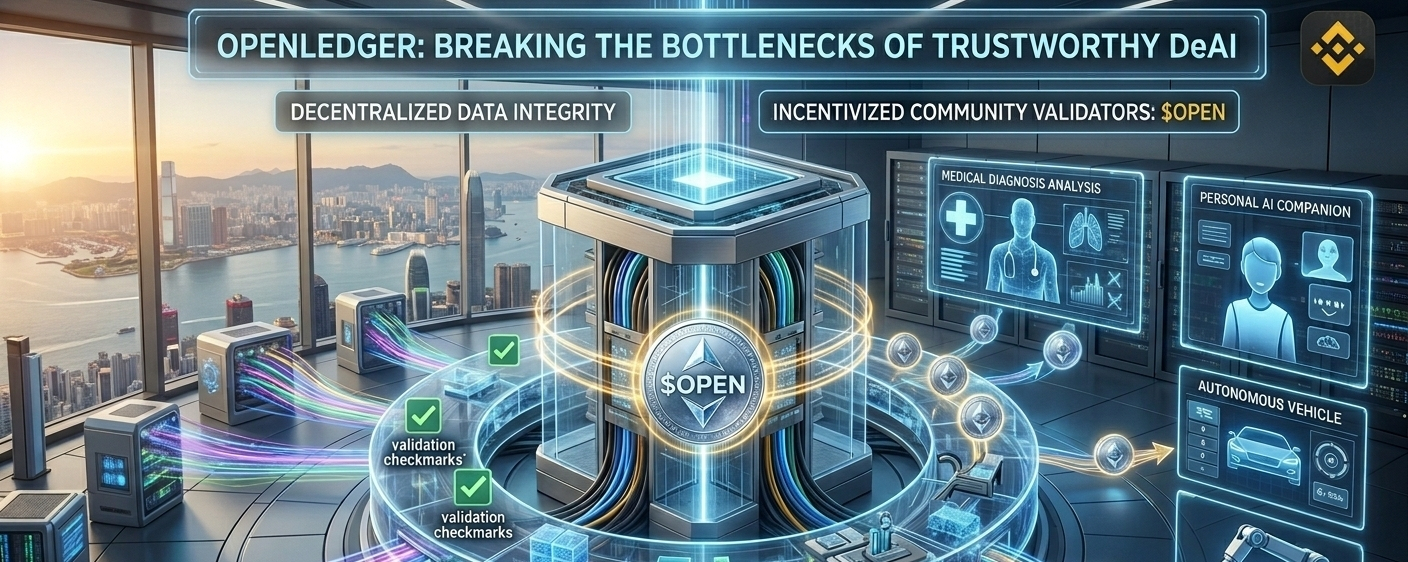
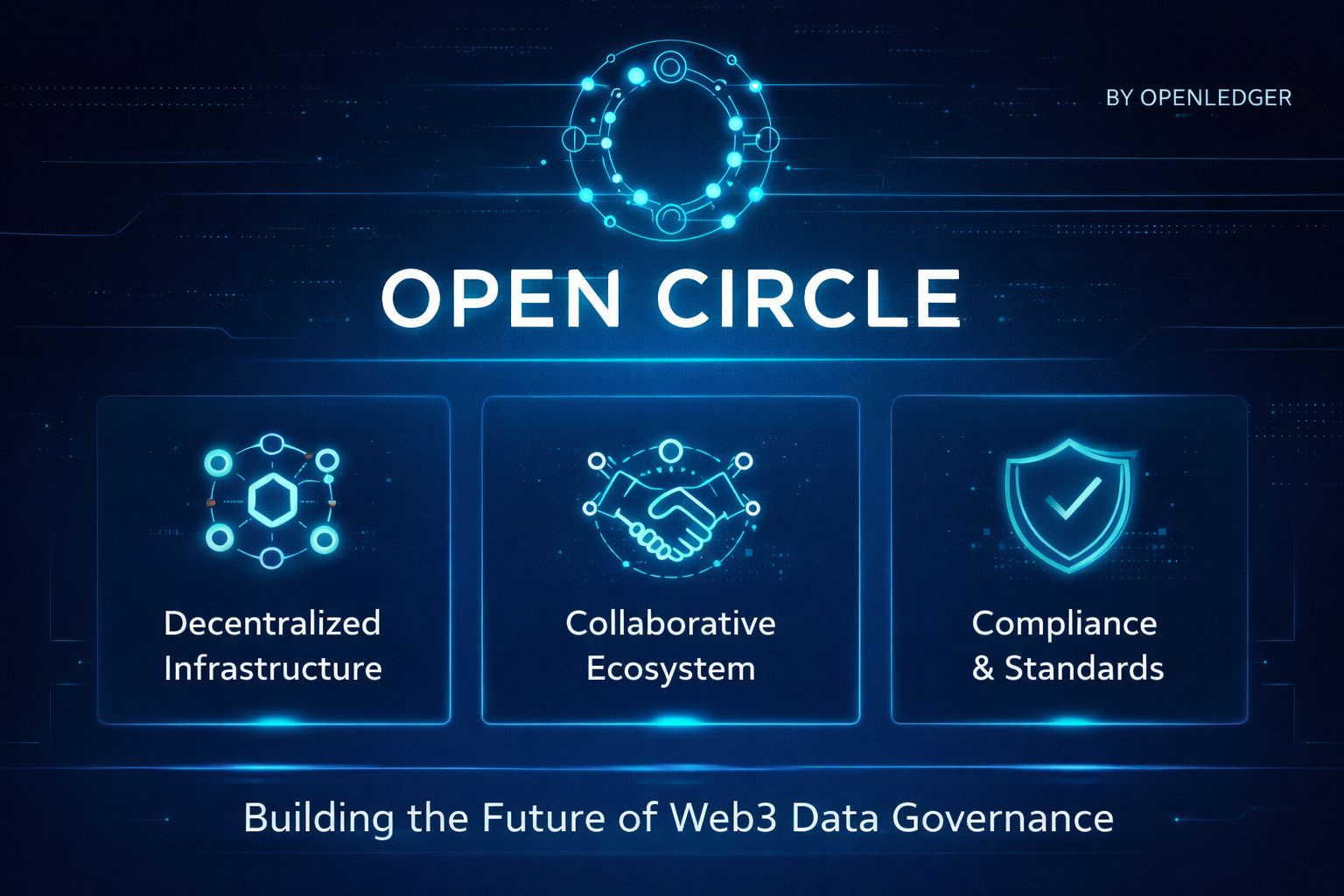
Open Circle is a project of @OpenLedger designed to Build Decentralized Data Governance and Infrastructure.
Web3 does not just need Decentralized Finance, it also needs New Ways to Own, Validate and Utilize Data. Developing the foundation of Decentralized Data Governance is the primary focus of the Open Circle Project - OpenLedger is Leading the Way.
Why Is This Important To The Web3 Ecosystem?
Data is one of the most valuable assets in today's Digital Economy. The current methods of Data Management all fail to be Transparent and Decentralized. Through Open Circle, we develop a Collaborative Platform that includes Developers, Data Producers, and Network Operators to establish an open Data Pipeline for Creating NEW Opportunities to Manage Data.
Key Features of $OPEN Circle
>> Decentralized Data Infrastructure: No Longer will Data Repositories be Controlled by a Few Dominant Cloud Providers/Innovators with Limited Options to Access & Utilize Data.
>> Collaborative Ecosystem: Open Circle Will Create a Connection Between Everyone Who Participates in Creating NEW Data Pipelines.
>> Practice-Based Compliance & Standards: Open Circle Will Support Practical Applications and Translucent Technology Over Hype and Buzzwords.
As Blockchain Technology Matures Every Day, Developing Infrastructure-Related Projects to Further Support the Growth of the Web3 Ecosystem Will Eventually Become Critical to the Future of the Web3 Market. Then Being Informed About New Infrastructure Projects Will Be Vital to Finding and Capitalizing on the Utility of the New Web3.
Disclaimer: DYOR.
#Web3Infrastructure #DecentralizedData #cryptoeducation #DataSovereignty #openledger $OPEN
Web3 does not just need Decentralized Finance, it also needs New Ways to Own, Validate and Utilize Data. Developing the foundation of Decentralized Data Governance is the primary focus of the Open Circle Project - OpenLedger is Leading the Way.
Why Is This Important To The Web3 Ecosystem?
Data is one of the most valuable assets in today's Digital Economy. The current methods of Data Management all fail to be Transparent and Decentralized. Through Open Circle, we develop a Collaborative Platform that includes Developers, Data Producers, and Network Operators to establish an open Data Pipeline for Creating NEW Opportunities to Manage Data.
Key Features of $OPEN Circle
>> Decentralized Data Infrastructure: No Longer will Data Repositories be Controlled by a Few Dominant Cloud Providers/Innovators with Limited Options to Access & Utilize Data.
>> Collaborative Ecosystem: Open Circle Will Create a Connection Between Everyone Who Participates in Creating NEW Data Pipelines.
>> Practice-Based Compliance & Standards: Open Circle Will Support Practical Applications and Translucent Technology Over Hype and Buzzwords.
As Blockchain Technology Matures Every Day, Developing Infrastructure-Related Projects to Further Support the Growth of the Web3 Ecosystem Will Eventually Become Critical to the Future of the Web3 Market. Then Being Informed About New Infrastructure Projects Will Be Vital to Finding and Capitalizing on the Utility of the New Web3.
Disclaimer: DYOR.
#Web3Infrastructure #DecentralizedData #cryptoeducation #DataSovereignty #openledger $OPEN
GM_Crypto01:
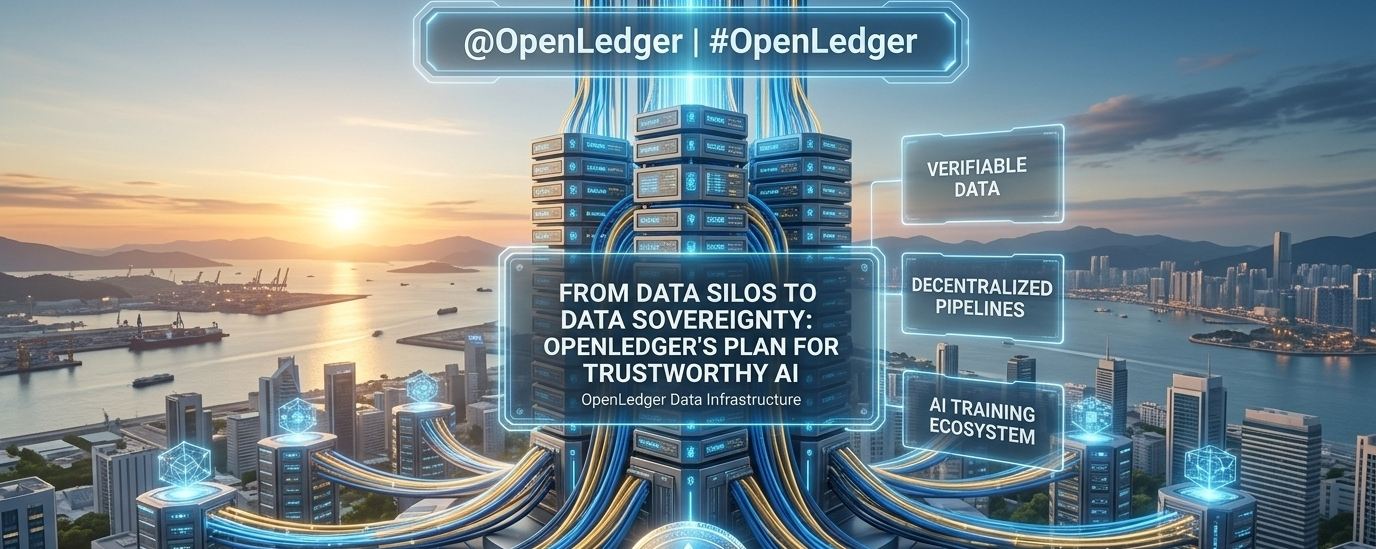
AI trained collectively deserves collective rewards. $OPEN
’s attribution layer makes that possible—early, but essential.


Verified
To understand where decentralized infrastructure development is headed, you need to follow the footprints of the multimillion-dollar corporate investments from Big Tech. 🏛️📈
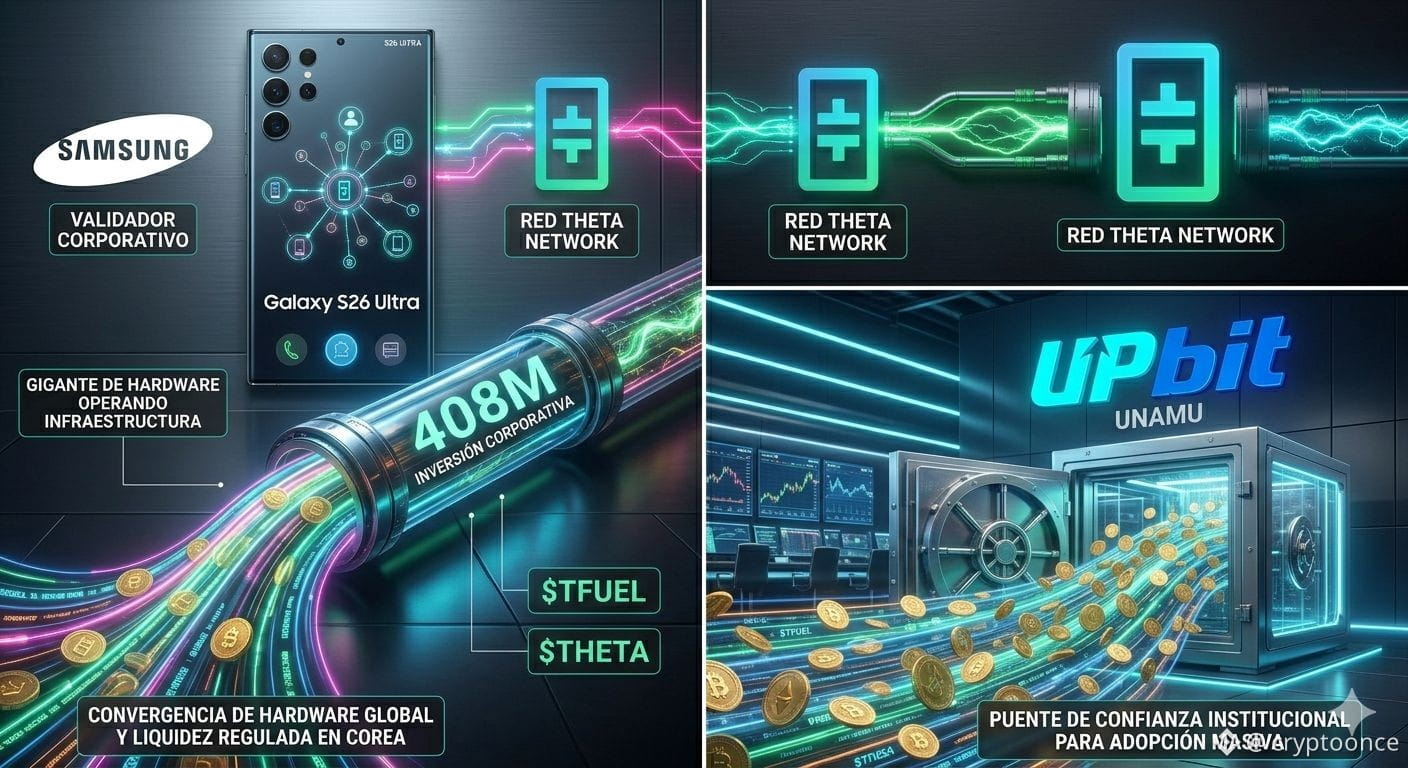
Affiliates of @Samsung (a long-time player in validator node operations at @Theta_Network) just snagged a $408M stake in Dunamu, the parent company of Upbit (the largest regulated digital asset exchange in South Korea).
This opens a key chapter in the DePIN plumbing:
1️⃣ Fusion of capabilities: the biggest Asian titan in consumer hardware and chips is tightening its direct ties with the core of regulated liquidity in its home country.
2️⃣ Ecosystem synergy: it's not just a financial investment, but a validation that smart capital secures the exchange platforms where high-performance decentralized computing networks see their biggest adoption and volume.
The pieces on the Asian board are moving fast, and the physical infrastructure is finding its ultimate liquidity lane. Time is aligning the roadmaps. 👁️⚡
$THETA $TFUEL
#DePIN #Samsung #Web3infrastructure
Affiliates of @Samsung (a long-time player in validator node operations at @Theta_Network) just snagged a $408M stake in Dunamu, the parent company of Upbit (the largest regulated digital asset exchange in South Korea).
This opens a key chapter in the DePIN plumbing:
1️⃣ Fusion of capabilities: the biggest Asian titan in consumer hardware and chips is tightening its direct ties with the core of regulated liquidity in its home country.
2️⃣ Ecosystem synergy: it's not just a financial investment, but a validation that smart capital secures the exchange platforms where high-performance decentralized computing networks see their biggest adoption and volume.
The pieces on the Asian board are moving fast, and the physical infrastructure is finding its ultimate liquidity lane. Time is aligning the roadmaps. 👁️⚡
$THETA $TFUEL
#DePIN #Samsung #Web3infrastructure
Log in to explore more content