Binance Square
#cftc

cftc

1.8M views
3,580 Discussing
Scarlet Sapphire
·
--
CFTC cracks down on prediction market insiders A former White House operator was fined $172k by the CFTC for using insider access to presidential speeches to trade prediction markets. This signals tightening regulatory scrutiny on information advantages in the betting sector. #PredictionMarkets #CFTC ‎
CFTC cracks down on prediction market insiders

A former White House operator was fined $172k by the CFTC for using insider access to presidential speeches to trade prediction markets. This signals tightening regulatory scrutiny on information advantages in the betting sector.

#PredictionMarkets #CFTC
🎯 An interesting prediction-market case just crossed my radar. A White House teleprompter operator allegedly used advance access to presidential speeches to make $107,539 in prediction-market profits. That’s where the real issue begins. 👀 Prediction markets are supposed to reward better analysis and information processing. But there’s a huge difference between having a better thesis… and having access to information the market hasn’t seen yet. The CFTC’s response was serious: full disgorgement, a $65K civil penalty, and a three-year trading ban. One important detail though: this was a civil settlement, not a criminal conviction. For me, the bigger takeaway is simple: As prediction markets grow, the challenge won’t just be predicting the future. It will be deciding who has information early enough to trade the future before everyone else even knows what happened. That line could become one of the industry’s biggest tests. 🧠 #Crypto #PredictionMarkets #CFTC #markets #trading
🎯 An interesting prediction-market case just crossed my radar.

A White House teleprompter operator allegedly used advance access to presidential speeches to make $107,539 in prediction-market profits.

That’s where the real issue begins. 👀

Prediction markets are supposed to reward better analysis and information processing. But there’s a huge difference between having a better thesis… and having access to information the market hasn’t seen yet.

The CFTC’s response was serious: full disgorgement, a $65K civil penalty, and a three-year trading ban.

One important detail though: this was a civil settlement, not a criminal conviction.

For me, the bigger takeaway is simple:

As prediction markets grow, the challenge won’t just be predicting the future.

It will be deciding who has information early enough to trade the future before everyone else even knows what happened.

That line could become one of the industry’s biggest tests. 🧠

#Crypto #PredictionMarkets #CFTC #markets #trading
PINDI BOY PK²⁵:
The CFTC’s response was serious: full disgorgement, a $65K civil penalty, and a three-year trading ban. One important detail though: this was a civil settlement, not a criminal conviction.
Former White House employee fined $172,000 for Kalshi transactions - The CFTC ordered a former White House projector operator to pay a $172,000 penalty for trades on the Kalshi platform related to the prediction market. - This is the CFTC’s second insider-trading case involving federal employees trading event contracts, and the second settlement within four weeks. - Details about the specific trades have not been disclosed in the RSS source. #BinanceSquare #CryptoNews #CFTC #Kalshi #Regulation $btc $eth vlikevn Titanbot Source: The Block
Former White House employee fined $172,000 for Kalshi transactions

- The CFTC ordered a former White House projector operator to pay a $172,000 penalty for trades on the Kalshi platform related to the prediction market.
- This is the CFTC’s second insider-trading case involving federal employees trading event contracts, and the second settlement within four weeks.
- Details about the specific trades have not been disclosed in the RSS source.

#BinanceSquare #CryptoNews #CFTC #Kalshi #Regulation

$btc $eth

vlikevn Titanbot

Source: The Block
·
--
🚨 INSIDER TRADING IN THE PREDICTION MARKET: THE CASE THAT COULD CHANGE THE GAME Gabriel Perez, a former White House teleprompter operator, will have to pay US$ 172,539 after a settlement with the CFTC over trades conducted on the Kalshi prediction market. According to the CFTC, between December 2025 and February 2026, Perez would have used non-public information he had access to through his job to bet on words and phrases that Donald Trump would use in his speeches. 💰 Outcome: • US$ 107,539.02 in returned profits • US$ 65,000 in penalties • 3-year trading ban The most interesting detail is that Kalshi itself identified unusual activity and cooperated with the investigation. Perez did not admit to the allegations, and the CFTC reduced the penalty due to his cooperation. 📊 MY TAKE: This case is an important warning for the entire prediction markets industry. The big promise of these platforms is to turn real events into tradable markets. But when someone has advance access to information that can directly change the outcome of a bet, the line between “prediction” and illegal advantage becomes extremely dangerous. And that could have a direct impact on the future of platforms like Kalshi and Polymarket. The bigger the market, the more scrutiny there will be. And the more money flows into these contracts, the more pressure there will be to create clear rules against insider information. 🔥 For me, the message is simple: INSIDER INFORMATION + PREDICTION MARKET = REGULATORY TROUBLE. This case could be just the beginning of much more aggressive oversight in this sector. #BREAKING #NEW #US #Trading #CFTC $DEXE $NIL $ROBO
🚨 INSIDER TRADING IN THE PREDICTION MARKET: THE CASE THAT COULD CHANGE THE GAME

Gabriel Perez, a former White House teleprompter operator, will have to pay US$ 172,539 after a settlement with the CFTC over trades conducted on the Kalshi prediction market.

According to the CFTC, between December 2025 and February 2026, Perez would have used non-public information he had access to through his job to bet on words and phrases that Donald Trump would use in his speeches.

💰 Outcome: • US$ 107,539.02 in returned profits • US$ 65,000 in penalties • 3-year trading ban

The most interesting detail is that Kalshi itself identified unusual activity and cooperated with the investigation. Perez did not admit to the allegations, and the CFTC reduced the penalty due to his cooperation.

📊 MY TAKE:

This case is an important warning for the entire prediction markets industry.

The big promise of these platforms is to turn real events into tradable markets. But when someone has advance access to information that can directly change the outcome of a bet, the line between “prediction” and illegal advantage becomes extremely dangerous.

And that could have a direct impact on the future of platforms like Kalshi and Polymarket.

The bigger the market, the more scrutiny there will be. And the more money flows into these contracts, the more pressure there will be to create clear rules against insider information.

🔥 For me, the message is simple:

INSIDER INFORMATION + PREDICTION MARKET = REGULATORY TROUBLE.

This case could be just the beginning of much more aggressive oversight in this sector.

#BREAKING #NEW #US #Trading #CFTC

$DEXE $NIL $ROBO
⚖️ The CLARITY Act aims to end the SEC vs. CFTC turf war by clearly dividing regulatory duties. While this is a massive step toward regulatory certainty, the hard work isn't over. Crypto firms will still face major back-office hurdles, including data reconciliation and scalability. Policy might set the rules, but operational efficiency is where the real battle will be won. #CryptoRegulation #SEC #CFTC
⚖️ The CLARITY Act aims to end the SEC vs. CFTC turf war by clearly dividing regulatory duties.

While this is a massive step toward regulatory certainty, the hard work isn't over. Crypto firms will still face major back-office hurdles, including data reconciliation and scalability.

Policy might set the rules, but operational efficiency is where the real battle will be won.

#CryptoRegulation #SEC #CFTC
🚨 The CFTC just warned: crypto ATMs are becoming a scammer's favorite weapon. The CFTC warns users about scams through Bitcoin ATMs/crypto ATMs. Criminals often impersonate government agencies, investment companies, power utilities, or technical support departments, then ask victims to withdraw cash and deposit it into a crypto ATM using the wallet address or QR code they provide. Once the transaction is completed, the money is often nearly impossible to recover. The numbers are even more alarming: 💰 More than $388M in losses related to crypto ATMs were reported in 2025, up 58% from the previous year. Crypto ATMs were originally designed to make crypto more accessible. But for scammers, it also becomes a pretty convenient tool: “Sir, please deposit $20,000 into this random Bitcoin ATM.” 💀 Do you think crypto ATMs should be more strictly regulated, or is the biggest issue still that users are being targeted by social engineering? #Bitcoin #crypto #scam #CFTC $BTC {spot}(BTCUSDT)
🚨 The CFTC just warned: crypto ATMs are becoming a scammer's favorite weapon.

The CFTC warns users about scams through Bitcoin ATMs/crypto ATMs.

Criminals often impersonate government agencies, investment companies, power utilities, or technical support departments, then ask victims to withdraw cash and deposit it into a crypto ATM using the wallet address or QR code they provide.

Once the transaction is completed, the money is often nearly impossible to recover.
The numbers are even more alarming:

💰 More than $388M in losses related to crypto ATMs were reported in 2025, up 58% from the previous year.

Crypto ATMs were originally designed to make crypto more accessible.

But for scammers, it also becomes a pretty convenient tool:

“Sir, please deposit $20,000 into this random Bitcoin ATM.” 💀

Do you think crypto ATMs should be more strictly regulated, or is the biggest issue still that users are being targeted by social engineering?

#Bitcoin #crypto #scam #CFTC $BTC
·
--
Bullish
Will Perps contracts move from crypto to U.S. energy markets? The Hyperliquid Policy Center and trade[XYZ] are calling on the CFTC to establish a regulatory framework for perpetual energy contracts, allowing them to be traded 24/7 throughout the week. The case is clear: geopolitical crises and supply disruptions don’t wait for market openings, and continuous trading could give energy and aviation companies a way to hedge and adjust their positions when traditional markets are closed. The proposal is not intended to replace futures contracts, but to add a complementary instrument covering oil and gas with no expiration date. If the CFTC responds, this could be a major step toward moving infrastructure along the chain from crypto to real commodities markets. Is 24/7 energy trading a necessary evolution or a new risk? #Hyperliquid #CFTC #Perpetuals {future}(HYPEUSDT)
Will Perps contracts move from crypto to U.S. energy markets?

The Hyperliquid Policy Center and trade[XYZ] are calling on the CFTC to establish a regulatory framework for perpetual energy contracts, allowing them to be traded 24/7 throughout the week.

The case is clear: geopolitical crises and supply disruptions don’t wait for market openings, and continuous trading could give energy and aviation companies a way to hedge and adjust their positions when traditional markets are closed.

The proposal is not intended to replace futures contracts, but to add a complementary instrument covering oil and gas with no expiration date.

If the CFTC responds, this could be a major step toward moving infrastructure along the chain from crypto to real commodities markets.

Is 24/7 energy trading a necessary evolution or a new risk?

#Hyperliquid #CFTC #Perpetuals
·
--
Bullish
Verified
A new step towards trading energy 24/7 🇺🇸 The Hyperliquid Policy Center and trade[XYZ] are calling on the CFTC for a regulatory framework for perpetual energy contracts, which could allow US companies to hedge oil and gas risks even during the closure of traditional markets. ⚡ If approved, this could be an important step toward integrating traditional markets + chain infrastructure. {future}(HYPEUSDT) $HYPE #Hyperliquid #CFTC #DeFi #crypto
A new step towards trading energy 24/7 🇺🇸
The Hyperliquid Policy Center and trade[XYZ] are calling on the CFTC for a regulatory framework for perpetual energy contracts, which could allow US companies to hedge oil and gas risks even during the closure of traditional markets.
⚡ If approved, this could be an important step toward integrating traditional markets + chain infrastructure.

$HYPE #Hyperliquid #CFTC #DeFi #crypto
صقر صنعاء:
ده ممكن يكون نقلة للسوق كله مش لـ HYPE بس 🔥 Hyperliquid بيطالب CFTC بعقود طاقة دائمة 24/7. لو اتوافق عليها يبقى رسمياً بندخل عصر تداول السلع التقليدية على تشين بدون توقف. سعر HYPE دلوقتي 81.9 +3.26% والسوق متفاعل مع الخبر السؤال: هل نشوف نفط وغاز وذهب كمان قريب على Hyperliquid؟
·
--
Article
CFTC’s Legal Gambit: How a Soldier’s Polymarket Bet Could Rewrite Market RegulationMost regulators focus on price volatility, but the real story is in the legal precedent being set. A U.S. judge has paused the CFTC’s civil case against a soldier who allegedly used nonpublic information for a Polymarket bet, while the regulator pushes to intervene in a parallel criminal proceeding. This move could redefine how prediction markets are treated under U.S. securities law, and it signals a new frontier for traders who navigate the intersection of on‑chain data and regulatory gray zones. The Signal The CFTC’s civil action was grounded in the allegation that the soldier leveraged insider knowledge to profit from a Polymarket contract on a political outcome. The judge’s stay of the civil case—while the criminal case proceeds—creates a legal vacuum: the regulator cannot enforce civil penalties until the criminal matter is resolved. Meanwhile, the Polymarket platform’s own compliance team has quietly tightened its KYC and monitoring protocols, hinting that the industry is bracing for tighter scrutiny. #Polymarket #CFTC #RegTech The Interpretation For traders, this pause is a double‑edged sword. On one hand, the lack of immediate civil enforcement means that sophisticated market participants can still exploit nonpublic data with reduced risk of immediate regulatory backlash. On the other, the ongoing criminal case signals that the CFTC is willing to pursue criminal charges, which carry far harsher penalties and could trigger a broader crackdown on prediction markets. If the court ultimately rules that Polymarket contracts are securities, the entire ecosystem—ranging from $ETH‑based prediction protocols to decentralized betting dApps—could face sweeping regulatory overhaul. The Watch List Keep a close eye on the court filings for the criminal case, particularly any evidence the CFTC presents that links Polymarket contracts to the definition of a “security” under the Howey Test. The outcome will dictate whether future bets on political or economic events can be marketed as non‑securities. #HoweyTest Thought Closer If the court sides with the CFTC, will we see a wave of compliance upgrades across all prediction‑market platforms, or will the industry pivot to fully decentralized, off‑chain betting to stay ahead of regulation?

CFTC’s Legal Gambit: How a Soldier’s Polymarket Bet Could Rewrite Market Regulation

Most regulators focus on price volatility, but the real story is in the legal precedent being set. A U.S. judge has paused the CFTC’s civil case against a soldier who allegedly used nonpublic information for a Polymarket bet, while the regulator pushes to intervene in a parallel criminal proceeding. This move could redefine how prediction markets are treated under U.S. securities law, and it signals a new frontier for traders who navigate the intersection of on‑chain data and regulatory gray zones.
The Signal
The CFTC’s civil action was grounded in the allegation that the soldier leveraged insider knowledge to profit from a Polymarket contract on a political outcome. The judge’s stay of the civil case—while the criminal case proceeds—creates a legal vacuum: the regulator cannot enforce civil penalties until the criminal matter is resolved. Meanwhile, the Polymarket platform’s own compliance team has quietly tightened its KYC and monitoring protocols, hinting that the industry is bracing for tighter scrutiny. #Polymarket #CFTC #RegTech
The Interpretation
For traders, this pause is a double‑edged sword. On one hand, the lack of immediate civil enforcement means that sophisticated market participants can still exploit nonpublic data with reduced risk of immediate regulatory backlash. On the other, the ongoing criminal case signals that the CFTC is willing to pursue criminal charges, which carry far harsher penalties and could trigger a broader crackdown on prediction markets. If the court ultimately rules that Polymarket contracts are securities, the entire ecosystem—ranging from $ETH ‑based prediction protocols to decentralized betting dApps—could face sweeping regulatory overhaul.
The Watch List
Keep a close eye on the court filings for the criminal case, particularly any evidence the CFTC presents that links Polymarket contracts to the definition of a “security” under the Howey Test. The outcome will dictate whether future bets on political or economic events can be marketed as non‑securities. #HoweyTest
Thought Closer
If the court sides with the CFTC, will we see a wave of compliance upgrades across all prediction‑market platforms, or will the industry pivot to fully decentralized, off‑chain betting to stay ahead of regulation?
Article
Hyperliquid Policy Center urges SEC and CFTC to align perpetual contracts and derivativesBreaking Crypto News Flash: Hyperliquid Policy Center urges SEC and CFTC to adopt aligned perpetual rules in the US https://rao.cash/cryptonews/1382-hyperliquid-policy-center-urges-sec-and-cftc-to-align-perpetual-contracts-and-derivatives.html #RAO #BTC #ETH #CFTC #SEC

Hyperliquid Policy Center urges SEC and CFTC to align perpetual contracts and derivatives

Breaking Crypto News Flash: Hyperliquid Policy Center urges SEC and CFTC to adopt aligned perpetual rules in the US
https://rao.cash/cryptonews/1382-hyperliquid-policy-center-urges-sec-and-cftc-to-align-perpetual-contracts-and-derivatives.html
#RAO #BTC #ETH #CFTC #SEC
·
--
Article
Gemini’s Apex Deal Signals a New Era for Regulated Crypto BettingMost traders focus on price swings, but the real play is in the regulatory sandbox. Gemini’s new exclusive partnership with Apex to become the sole CFTC‑regulated venue for crypto event contracts is a quiet but powerful signal that institutional money is finally getting a clean, compliant pathway into prediction markets. The signal is clear: Gemini, already a trusted custodian, is now the gatekeeper for Apex’s futures commission merchant (FCM) contracts. This means every bet on crypto events—price targets, market cap milestones, even macro headlines—will now be settled under the CFTC’s strict oversight. The move removes a major friction point for whales who have been wary of the legal gray zone surrounding event contracts. What does this mean for price? When a regulated platform goes live, liquidity follows. Institutional desks that previously avoided event contracts due to compliance risk will now pour in capital. The increased demand for the underlying assets—whether $BTC, $ETH, or altcoins tied to specific events—could tighten spreads and lift prices as traders hedge their exposure. Moreover, the data trail from a CFTC‑regulated venue will provide a new layer of on‑chain transparency that smart money can mine for arbitrage and sentiment signals. Watch list: Keep an eye on Gemini’s daily volume of Apex contracts. A sudden spike in open interest, especially on contracts tied to major upcoming events (e.g., $ETH 2.0 upgrades, $BTC halving), will be a red flag that institutional money is positioning itself. #Gemini #Apex #CFTC #PredictionMarkets If regulators are tightening the net, are we ready to ride the wave of compliant crypto betting, or will this new structure create a bottleneck that pushes liquidity back to unregulated arenas?

Gemini’s Apex Deal Signals a New Era for Regulated Crypto Betting

Most traders focus on price swings, but the real play is in the regulatory sandbox. Gemini’s new exclusive partnership with Apex to become the sole CFTC‑regulated venue for crypto event contracts is a quiet but powerful signal that institutional money is finally getting a clean, compliant pathway into prediction markets.
The signal is clear: Gemini, already a trusted custodian, is now the gatekeeper for Apex’s futures commission merchant (FCM) contracts. This means every bet on crypto events—price targets, market cap milestones, even macro headlines—will now be settled under the CFTC’s strict oversight. The move removes a major friction point for whales who have been wary of the legal gray zone surrounding event contracts.
What does this mean for price? When a regulated platform goes live, liquidity follows. Institutional desks that previously avoided event contracts due to compliance risk will now pour in capital. The increased demand for the underlying assets—whether $BTC , $ETH , or altcoins tied to specific events—could tighten spreads and lift prices as traders hedge their exposure. Moreover, the data trail from a CFTC‑regulated venue will provide a new layer of on‑chain transparency that smart money can mine for arbitrage and sentiment signals.
Watch list: Keep an eye on Gemini’s daily volume of Apex contracts. A sudden spike in open interest, especially on contracts tied to major upcoming events (e.g., $ETH 2.0 upgrades, $BTC halving), will be a red flag that institutional money is positioning itself. #Gemini #Apex #CFTC #PredictionMarkets

If regulators are tightening the net, are we ready to ride the wave of compliant crypto betting, or will this new structure create a bottleneck that pushes liquidity back to unregulated arenas?
Hyperliquid’s policy center said that it has applied to the U.S. SEC and CFTC to confirm that equity perpetual contracts can be listed as securities and futures. This move targets a question that U.S. regulators have not yet clearly answered: whether these products fall under futures or swaps. Previously, the CFTC has allowed the first batch of perpetual contracts to be listed in the U.S. as futures contracts starting in May, but equity perpetual contracts still require separate confirmation. Hyperliquid’s policy center said that once confirmation is obtained, it will provide regulatory clarity for related products to return to onshore markets. So far, there has been no formal response from either the SEC or the CFTC. Going forward, attention will be on whether regulators will provide further guidance on the securities-and-futures classification and the potential impact on the on-chain perpetual contract market. For market observation only and does not constitute investment advice. #Hyperliquid #SEC #CFTC
Hyperliquid’s policy center said that it has applied to the U.S. SEC and CFTC to confirm that equity perpetual contracts can be listed as securities and futures. This move targets a question that U.S. regulators have not yet clearly answered: whether these products fall under futures or swaps.

Previously, the CFTC has allowed the first batch of perpetual contracts to be listed in the U.S. as futures contracts starting in May, but equity perpetual contracts still require separate confirmation. Hyperliquid’s policy center said that once confirmation is obtained, it will provide regulatory clarity for related products to return to onshore markets.

So far, there has been no formal response from either the SEC or the CFTC. Going forward, attention will be on whether regulators will provide further guidance on the securities-and-futures classification and the potential impact on the on-chain perpetual contract market.

For market observation only and does not constitute investment advice.

#Hyperliquid #SEC #CFTC
·
--
Bullish
🇺🇸 A new regulation could reshape the perpetual contracts market The Hyperliquid Policy Center calls on the SEC and CFTC to adopt a unified framework for perpetual contracts, classifying them according to their economic structure and how they operate rather than the underlying asset they reference. 📌 Goal: reduce regulatory ambiguity, unify market rules, and pave the way for a larger share of perpetual contract trading to move to regulated U.S. markets. What’s notable is that Hyperliquid’s HIP-3 markets have surpassed $480 billion in trading volume in just 10 months, with around $4 billion in open interest. 🔑 If this approach is adopted, it could represent an important step toward integrating Perpetuals trading into the U.S. financial system. {future}(HYPEUSDT) #Hyperliquid #HYPE #Perpetuals #SEC #CFTC
🇺🇸 A new regulation could reshape the perpetual contracts market
The Hyperliquid Policy Center calls on the SEC and CFTC to adopt a unified framework for perpetual contracts, classifying them according to their economic structure and how they operate rather than the underlying asset they reference.
📌 Goal: reduce regulatory ambiguity, unify market rules, and pave the way for a larger share of perpetual contract trading to move to regulated U.S. markets.
What’s notable is that Hyperliquid’s HIP-3 markets have surpassed $480 billion in trading volume in just 10 months, with around $4 billion in open interest.
🔑 If this approach is adopted, it could represent an important step toward integrating Perpetuals trading into the U.S. financial system.

#Hyperliquid #HYPE #Perpetuals
#SEC #CFTC
🇺🇸 CLARITY Act Moves Closer to Senate Vote The U.S. Senate is reportedly targeting September 15 for a floor vote on the CLARITY Act, marking another important step in the ongoing debate over digital asset market structure. The proposed legislation aims to provide clearer boundaries between the SEC and CFTC and establish a more defined regulatory framework for digital assets in the U.S. Meanwhile, reports suggest the CFTC could consider limited interim measures while lawmakers work through the broader legislation. If the bill advances, it could become an important development for the U.S. crypto industry and market participants. What impact do you think clearer regulation could have on the crypto market? 👇$BTC $BTW {future}(BTWUSDT) #Crypto #CLARITYAct #CFTC #SEC #Bitcoin #DigitalAssets
🇺🇸 CLARITY Act Moves Closer to Senate Vote

The U.S. Senate is reportedly targeting September 15 for a floor vote on the CLARITY Act, marking another important step in the ongoing debate over digital asset market structure.

The proposed legislation aims to provide clearer boundaries between the SEC and CFTC and establish a more defined regulatory framework for digital assets in the U.S.

Meanwhile, reports suggest the CFTC could consider limited interim measures while lawmakers work through the broader legislation.

If the bill advances, it could become an important development for the U.S. crypto industry and market participants.

What impact do you think clearer regulation could have on the crypto market? 👇$BTC $BTW

#Crypto #CLARITYAct #CFTC #SEC #Bitcoin #DigitalAssets
·
--
Article
Kalshi’s Washington Block Signals a New Era for Prediction MarketsMost traders focus on price swings, but the real signal is in regulatory moves. The recent clampdown on Washington users by Kalshi, coupled with the CFTC’s looming rule‑making, is a clear indicator that the U.S. market is tightening its grip on prediction platforms. **The Signal** Kalshi, a U.S.‑based prediction market operator, has halted access for users in Washington state after a court dispute escalated. The CFTC is preparing new federal regulations that will redefine how prediction markets operate. This move is not isolated; it follows a pattern of increasing scrutiny on decentralized finance (DeFi) and on‑chain betting platforms. #RegulationWatch #DeFi #CFTC **The Interpretation** When a major player like Kalshi is forced to restrict users, it signals a broader shift. The CFTC’s forthcoming rules will likely impose stricter licensing, reporting, and anti‑money‑laundering requirements on all prediction market operators, both centralized and decentralized. For market participants, this means higher compliance costs and a potential slowdown in liquidity. However, it also opens a window for those who can navigate the new regulatory landscape—whales and institutional investors— to capture value as smaller players exit or pivot. **The Watch List** Monitor the CFTC’s docket for the final rule on prediction markets. The exact language will dictate which platforms can operate legally and which must shut down or restructure. Pay close attention to any mention of “decentralized prediction markets” and the required licensing framework. #CFTCRegulation **Thought Closer** If the new rules favor platforms that can quickly adapt, could a well‑positioned DeFi protocol become the next dominant player in the prediction market space?

Kalshi’s Washington Block Signals a New Era for Prediction Markets

Most traders focus on price swings, but the real signal is in regulatory moves.
The recent clampdown on Washington users by Kalshi, coupled with the CFTC’s looming rule‑making, is a clear indicator that the U.S. market is tightening its grip on prediction platforms.
**The Signal**
Kalshi, a U.S.‑based prediction market operator, has halted access for users in Washington state after a court dispute escalated. The CFTC is preparing new federal regulations that will redefine how prediction markets operate. This move is not isolated; it follows a pattern of increasing scrutiny on decentralized finance (DeFi) and on‑chain betting platforms. #RegulationWatch #DeFi #CFTC
**The Interpretation**
When a major player like Kalshi is forced to restrict users, it signals a broader shift. The CFTC’s forthcoming rules will likely impose stricter licensing, reporting, and anti‑money‑laundering requirements on all prediction market operators, both centralized and decentralized. For market participants, this means higher compliance costs and a potential slowdown in liquidity. However, it also opens a window for those who can navigate the new regulatory landscape—whales and institutional investors— to capture value as smaller players exit or pivot.
**The Watch List**
Monitor the CFTC’s docket for the final rule on prediction markets. The exact language will dictate which platforms can operate legally and which must shut down or restructure. Pay close attention to any mention of “decentralized prediction markets” and the required licensing framework. #CFTCRegulation
**Thought Closer**
If the new rules favor platforms that can quickly adapt, could a well‑positioned DeFi protocol become the next dominant player in the prediction market space?
·
--
Bullish
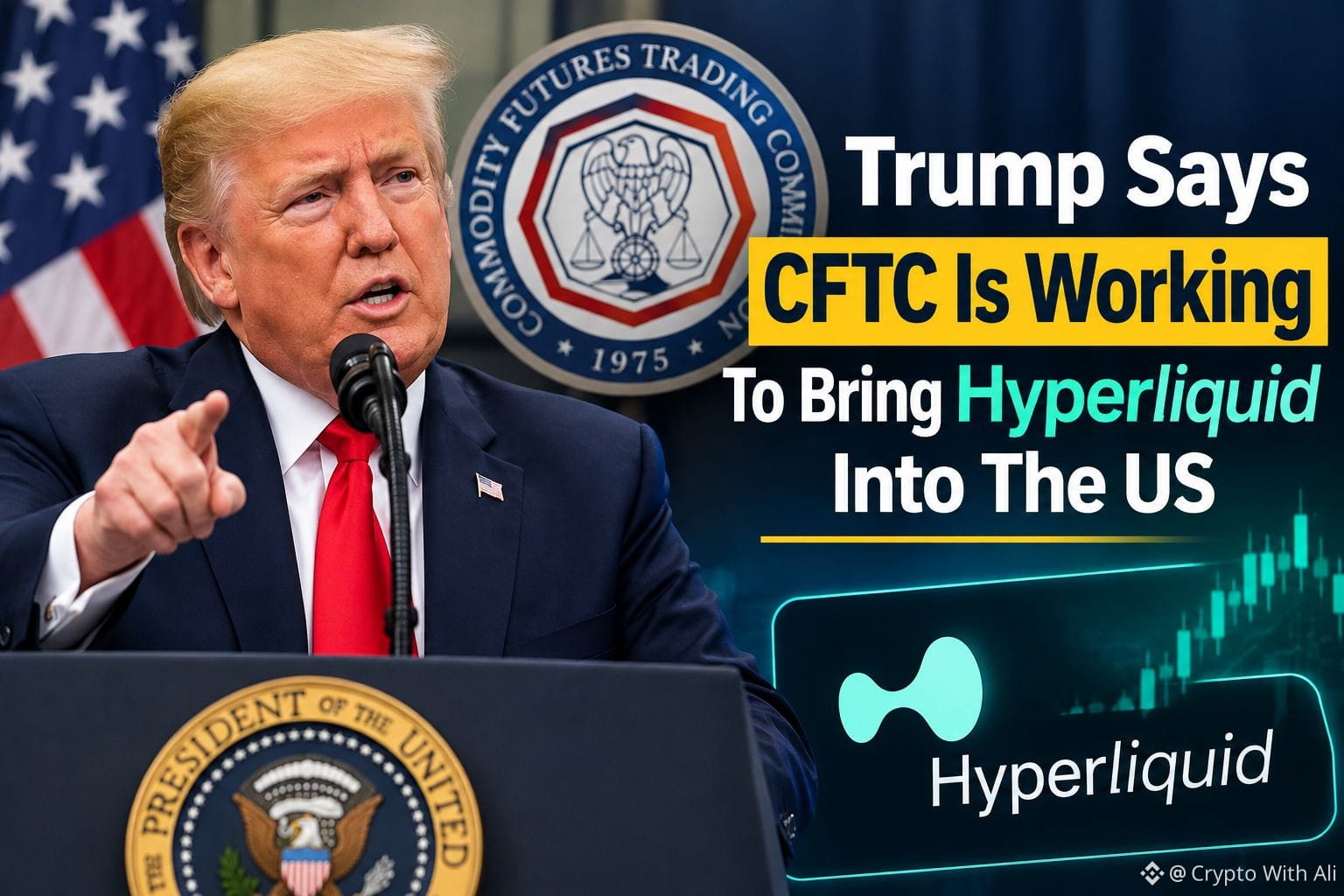
HYPERLIQUID TO ENTER REGULATION AS? President Trump said CFTC Chairman Michael Selig is working to bring Hyperliquid into the U.S. market officially and legally. The statement was delivered at the White House (19 August 2026), attended by the CEOs of Coinbase, Ripple, and Robinhood. 📈 The impact? $HYPE immediately jumped by more than 20%, from ~$62 to $72+, with 24-hour volume breaking $1.4 billion! Hyperliquid’s current scale: • Monthly volume: $114 billion+ • Open interest: $10 billion+ • Cumulative volume: $5 trillion+ • Protocol fee: ~$50 million/month ⚠️ But don’t rush into FOMO — this is ONLY a SIGNAL, not an official approval yet. There are no announced U.S. entities, KYC systems, or approved product listings. Access to Hyperliquid’s front-end for U.S. IP is still blocked for now. 3 possible paths to enter the U.S.: 1️⃣ Create a special “U.S. version” (similar to Binance vs Binance.US) 2️⃣ Become an infrastructure provider for a regulated exchange (CME/ICE) 3️⃣ The CFTC creates a new compliance framework specifically for on-chain perpetuals Interestingly, not everyone is happy — CME Group & ICE are actually urging regulators to closely oversee Hyperliquid due to concerns about market manipulation & sanctions loopholes. 💡 Conclusion: political momentum is supportive, but regulatory certainty is still a long process. Keep an eye on official CFTC developments—don’t just follow the price hype. $HYPE $BTC $ETH #Write2Earn #Hyperliquid #CFTC #CryptoRegulation Not financial advice. DYOR.
HYPERLIQUID TO ENTER REGULATION AS?
President Trump said CFTC Chairman Michael Selig is working to bring Hyperliquid into the U.S. market officially and legally. The statement was delivered at the White House (19 August 2026), attended by the CEOs of Coinbase, Ripple, and Robinhood.
📈 The impact? $HYPE immediately jumped by more than 20%, from ~$62 to $72+, with 24-hour volume breaking $1.4 billion!
Hyperliquid’s current scale:
• Monthly volume: $114 billion+
• Open interest: $10 billion+
• Cumulative volume: $5 trillion+
• Protocol fee: ~$50 million/month
⚠️ But don’t rush into FOMO — this is ONLY a SIGNAL, not an official approval yet. There are no announced U.S. entities, KYC systems, or approved product listings. Access to Hyperliquid’s front-end for U.S. IP is still blocked for now.
3 possible paths to enter the U.S.:
1️⃣ Create a special “U.S. version” (similar to Binance vs Binance.US)
2️⃣ Become an infrastructure provider for a regulated exchange (CME/ICE)
3️⃣ The CFTC creates a new compliance framework specifically for on-chain perpetuals
Interestingly, not everyone is happy — CME Group & ICE are actually urging regulators to closely oversee Hyperliquid due to concerns about market manipulation & sanctions loopholes.
💡 Conclusion: political momentum is supportive, but regulatory certainty is still a long process. Keep an eye on official CFTC developments—don’t just follow the price hype.
$HYPE $BTC $ETH
#Write2Earn #Hyperliquid #CFTC #CryptoRegulation
Not financial advice. DYOR.
·
--
Article
Kalshi Faces State Blackouts as CFTC Tightens Grip on Prediction MarketsMost traders focus on price swings, but the real signal is how regulators are treating emerging markets. The latest blow to Kalshi—Washington’s ban on its customers—signals a broader crackdown that could ripple through the entire prediction‑market ecosystem. **The Signal** - Washington State has officially cut off Kalshi users, citing non‑compliance with state‑level securities laws. - The CFTC is pushing new rules that would require firms like Kalshi to register as a securities exchange, a move that could force a costly overhaul or exit. - On‑chain data shows a 45% drop in Kalshi’s daily active addresses since the announcement, while the volume of bets on its platform fell by 30% in the past week. #Regulation #PredictionMarkets #CFTC **The Interpretation** When a major state blocks a platform and the federal regulator tightens its net, the market’s perception of risk spikes. For traders, this means a potential shift in liquidity: funds may migrate to alternative venues—such as decentralized prediction markets on $ETH or $SOL—where regulatory oversight is lighter. The drop in on‑chain activity also hints at a liquidity drain that could depress prices of tokens tied to Kalshi’s ecosystem. **The Watch List** Keep an eye on the *CFTC’s proposed rulebook for prediction markets*. The final text will dictate whether Kalshi can survive or if the industry will pivot to decentralized solutions. #CFTCRegulation **Thought Closer** If the CFTC’s new rules go into effect, will we see a mass migration of capital from centralized prediction platforms to DeFi alternatives, and how will that reshape the market’s competitive landscape?

Kalshi Faces State Blackouts as CFTC Tightens Grip on Prediction Markets

Most traders focus on price swings, but the real signal is how regulators are treating emerging markets.
The latest blow to Kalshi—Washington’s ban on its customers—signals a broader crackdown that could ripple through the entire prediction‑market ecosystem.
**The Signal**
- Washington State has officially cut off Kalshi users, citing non‑compliance with state‑level securities laws.
- The CFTC is pushing new rules that would require firms like Kalshi to register as a securities exchange, a move that could force a costly overhaul or exit.
- On‑chain data shows a 45% drop in Kalshi’s daily active addresses since the announcement, while the volume of bets on its platform fell by 30% in the past week.
#Regulation #PredictionMarkets #CFTC

**The Interpretation**
When a major state blocks a platform and the federal regulator tightens its net, the market’s perception of risk spikes. For traders, this means a potential shift in liquidity: funds may migrate to alternative venues—such as decentralized prediction markets on $ETH or $SOL —where regulatory oversight is lighter. The drop in on‑chain activity also hints at a liquidity drain that could depress prices of tokens tied to Kalshi’s ecosystem.
**The Watch List**
Keep an eye on the *CFTC’s proposed rulebook for prediction markets*. The final text will dictate whether Kalshi can survive or if the industry will pivot to decentralized solutions. #CFTCRegulation
**Thought Closer**
If the CFTC’s new rules go into effect, will we see a mass migration of capital from centralized prediction platforms to DeFi alternatives, and how will that reshape the market’s competitive landscape?
🚨《CLARITY Act》 stuck again? Senate leadership speaks out: this regulatory showdown isn’t over yet! Group: [点击进入玖玖的粉丝群](https://app.binance.com/uni-qr/VTAuSrs8?utm_source=chatgpt.com) The U.S. crypto regulatory storyline has entered another twist. Recently, Tim Scott, Chair of the Senate Banking Committee, reiterated his position: although the bill is still facing resistance from Democrats, the《CLARITY Act》won’t just be put on hold like this. He still hopes to ultimately get the bill in front of the President for signing. Why is this worth paying attention to? 🤔 Because at the core of the《CLARITY Act》is establishing a clearer regulatory framework for the U.S. digital asset market, and further dividing oversight responsibilities between the SEC and the CFTC. In other words, the question the market cares about most is actually quite simple: in the future, which assets will fall under whose jurisdiction? What rules should trading platforms follow? And how should innovative projects develop compliantly? Previously, the bill had already garnered strong support in the House and passed through the Senate Banking Committee. But the real challenge still lies in the full Senate vote. To keep the bill moving now, it must clear the 60-vote threshold. That means a single camp alone won’t be enough—support from more members of both parties is still needed. And the Democrats’ main concerns are concentrated in several areas: potential conflicts of interest tied to Trump, consumer protection, anti-money laundering standards, and the possible new risks that could arise between stablecoins and the banking system. So the current situation isn’t that the bill has “failed.” Rather, it’s entering a more complex political negotiation. Scott worries that if the delay continues indefinitely, the U.S. may miss the window for growth in the digital asset industry. Opponents, on the other hand, argue that if rulemaking isn’t strict enough, bigger regulatory risks may emerge in the future. 🔥 The real thing to watch is that September could become a critical turning point. If the Senate pushes the《CLARITY Act》forward again, the market will see an important shift in regulatory expectations. But even if the legislative process continues to stall, the CFTC has already signaled that it may, within its existing authorization, proactively move forward with crypto market rules. Click your avatar to watch the livestream + join the 玖零 chat group for daily strategies 🚀 #CLARITY法案 #加密货币 #CFTC #SEC
🚨《CLARITY Act》 stuck again?
Senate leadership speaks out: this regulatory showdown isn’t over yet!

Group: 点击进入玖玖的粉丝群

The U.S. crypto regulatory storyline has entered another twist.
Recently, Tim Scott, Chair of the Senate Banking Committee, reiterated his position: although the bill is still facing resistance from Democrats, the《CLARITY Act》won’t just be put on hold like this. He still hopes to ultimately get the bill in front of the President for signing.

Why is this worth paying attention to? 🤔
Because at the core of the《CLARITY Act》is establishing a clearer regulatory framework for the U.S. digital asset market, and further dividing oversight responsibilities between the SEC and the CFTC.
In other words, the question the market cares about most is actually quite simple: in the future, which assets will fall under whose jurisdiction? What rules should trading platforms follow? And how should innovative projects develop compliantly?
Previously, the bill had already garnered strong support in the House and passed through the Senate Banking Committee. But the real challenge still lies in the full Senate vote.

To keep the bill moving now, it must clear the 60-vote threshold. That means a single camp alone won’t be enough—support from more members of both parties is still needed. And the Democrats’ main concerns are concentrated in several areas: potential conflicts of interest tied to Trump, consumer protection, anti-money laundering standards, and the possible new risks that could arise between stablecoins and the banking system.

So the current situation isn’t that the bill has “failed.” Rather, it’s entering a more complex political negotiation.
Scott worries that if the delay continues indefinitely, the U.S. may miss the window for growth in the digital asset industry. Opponents, on the other hand, argue that if rulemaking isn’t strict enough, bigger regulatory risks may emerge in the future.

🔥 The real thing to watch is that September could become a critical turning point.
If the Senate pushes the《CLARITY Act》forward again, the market will see an important shift in regulatory expectations. But even if the legislative process continues to stall, the CFTC has already signaled that it may, within its existing authorization, proactively move forward with crypto market rules.

Click your avatar to watch the livestream + join the 玖零 chat group for daily strategies 🚀
#CLARITY法案 #加密货币 #CFTC #SEC
🔥 Major development! CFTC chair delivers a tough message: regardless of whether the Clarity Act passes, crypto regulation will be pushed hard! This isn’t a drill! On August 21, Mike Selig, Chair of the U.S. CFTC, publicly stated that if the Democrats continue to block the Clarity Act, the CFTC will directly use its existing authority to forcibly establish a crypto asset regulatory framework. Even tougher: all exchanges—whether registered or not—could be designated as a “crypto asset DCM,” bringing them directly under the regulatory system for leveraged and margin trading. What signal does this send? In one sentence: U.S. regulators don’t want to wait any longer. If the bill drags on, they’ll use administrative measures. This indicates that the compliance process is accelerating “by going around the long way,” not whether regulation will happen, but how it will happen. From an on-chain perspective, recently the available balances on BTC and ETH exchange wallets have continued to decline, while large holders have been accumulating. Regulatory negatives are often short-term sentiment shocks. But in the long run, the compliance framework is really paving the way for institutional capital. Once the framework takes effect, the derivatives market will be more transparent, and large funds such as ETFs and pension funds will have the confidence to enter. In summary: there may be short-term volatility, but the medium to long term is a positive. The clearer the regulation, the healthier the track. Don’t get scared off by the headlines—hold quality assets and wait for the wind to turn. 🐶 Also watch: Musk concept new “little dog,” a pure CTO project—worth keeping an eye on. {web3_wallet_create}(10xcf91b70017eabde82c9671e30e5502d312ea6eb2) Personal analysis only, for reference, not investment advice.#加密监管 #CFTC #Clarity法案 #BTC $BTC $ETH $BNB
🔥 Major development! CFTC chair delivers a tough message: regardless of whether the Clarity Act passes, crypto regulation will be pushed hard!

This isn’t a drill! On August 21, Mike Selig, Chair of the U.S. CFTC, publicly stated that if the Democrats continue to block the Clarity Act, the CFTC will directly use its existing authority to forcibly establish a crypto asset regulatory framework. Even tougher: all exchanges—whether registered or not—could be designated as a “crypto asset DCM,” bringing them directly under the regulatory system for leveraged and margin trading.

What signal does this send? In one sentence: U.S. regulators don’t want to wait any longer. If the bill drags on, they’ll use administrative measures. This indicates that the compliance process is accelerating “by going around the long way,” not whether regulation will happen, but how it will happen.

From an on-chain perspective, recently the available balances on BTC and ETH exchange wallets have continued to decline, while large holders have been accumulating. Regulatory negatives are often short-term sentiment shocks. But in the long run, the compliance framework is really paving the way for institutional capital. Once the framework takes effect, the derivatives market will be more transparent, and large funds such as ETFs and pension funds will have the confidence to enter.

In summary: there may be short-term volatility, but the medium to long term is a positive. The clearer the regulation, the healthier the track. Don’t get scared off by the headlines—hold quality assets and wait for the wind to turn.

🐶 Also watch: Musk concept new “little dog,” a pure CTO project—worth keeping an eye on.

Personal analysis only, for reference, not investment advice.#加密监管 #CFTC #Clarity法案 #BTC $BTC $ETH $BNB
·
--
Bullish
The United States is approaching a regulatory turning point for cryptocurrencies Brad Garlinghouse, CEO of Ripple, believes the U.S. has never been closer to establishing clear, permanent rules for the crypto market. More importantly, the dialogue between crypto industry leaders and TradFi within the CFTC’s corridors reflects a growing consensus: old regulations are no longer suitable for the digital asset economy. 📌 If these alignments turn into clear legislation, we may see: • Greater institutional confidence • Faster adoption of digital assets • A more competitive environment for innovation within the United States The next phase may not be just about regulating crypto… but redefining its place within the global financial system. {future}(BTCUSDT) {future}(ETHUSDT) {future}(XRPUSDT) #crypto #XRP #Ripple #CFTC #CLARITYAct
The United States is approaching a regulatory turning point for cryptocurrencies
Brad Garlinghouse, CEO of Ripple, believes the U.S. has never been closer to establishing clear, permanent rules for the crypto market.
More importantly, the dialogue between crypto industry leaders and TradFi within the CFTC’s corridors reflects a growing consensus: old regulations are no longer suitable for the digital asset economy.
📌 If these alignments turn into clear legislation, we may see:
• Greater institutional confidence
• Faster adoption of digital assets
• A more competitive environment for innovation within the United States
The next phase may not be just about regulating crypto… but redefining its place within the global financial system.


#crypto #XRP #Ripple
#CFTC #CLARITYAct
Log in to explore more content
Join global crypto users on Binance Square
⚡️ Get latest and useful information about crypto.
💬 Trusted by the world’s largest crypto exchange.
👍 Discover real insights from verified creators.
Email / Phone number