

Mr_Crypt0o
14 Posts
Mr_Crypt0o
Report
Block User
Creador de contenido y trader 😎
2 Following
54 Followers
64 Liked
Posts
·
--
Article
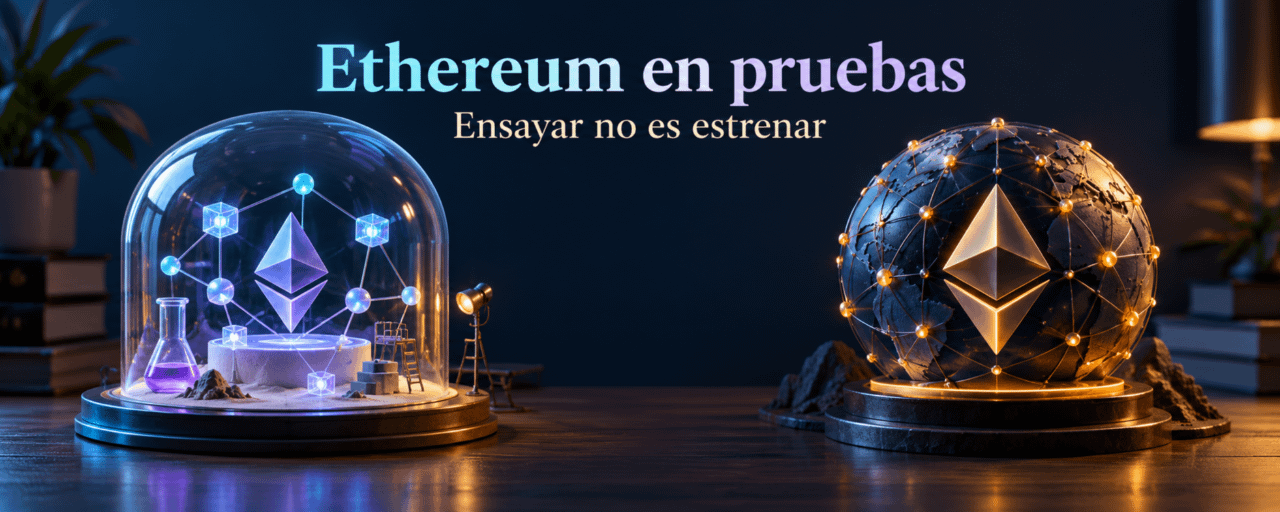
Ethereum: a testnet trial is not a mainnet launch🧪 Testing an Ethereum upgrade does not mean it is already available to people using the mainnet. A testnet is for experimenting; a production launch has a different scope.
Two networks, separate balances
On mainnet, $ETH is the asset used to pay fees. A testnet uses test units designed for experimentation; they do not automatically represent ETH on mainnet.
Networks keep separate records. The same address can exist on both, but the balance and history on one do not carry over to the other. Seeing a test balance does not prove that amount exists on mainnet.
Ethereum: a testnet trial is not a mainnet launch
🧪 Testing an Ethereum upgrade does not mean it is already available to people using the mainnet. A testnet is for experimenting; a production launch has a different scope.
Two networks, separate balances
On mainnet, $ETH is the asset used to pay fees. A testnet uses test units designed for experimentation; they do not automatically represent ETH on mainnet.
Networks keep separate records. The same address can exist on both, but the balance and history on one do not carry over to the other. Seeing a test balance does not prove that amount exists on mainnet.
36
·
--
🔎 Ethereum rises: two reference points to understand the move.
📍 $ETH was hovering around US$2,363, up 2.20% over 24 hours.
⬆️ 24-hour high: US$2,383
⬇️ 24-hour low: US$2,309
Data from [Binance](https://www.binance.com/en/price/ethereum): 28/10/2026, 11:35 UTC. Figures rounded.
👀 My take:
🟢 Moving above the observed high and staying above it would signal greater strength.
🔴 Falling below the observed low would signal greater weakness.
↔️ Between these two extremes, it remains within the reference range. That range does not confirm a trend.
🛡️ Risk of [ruptura falsa](https://www.binance.com/es/academy/glossary/fakeout): the price may break through a level and quickly return to the range. A single spike does not guarantee continuation.
#Ethereum #Criptomonedas
The author may receive rewards from Binance.
🔎 Ethereum rises: two reference points to understand the move.
📍 $ETH was hovering around US$2,363, up 2.20% over 24 hours.
⬆️ 24-hour high: US$2,383
⬇️ 24-hour low: US$2,309
Data from Binance: 28/10/2026, 11:35 UTC. Figures rounded.
👀 My take:
🟢 Moving above the observed high and staying above it would signal greater strength.
🔴 Falling below the observed low would signal greater weakness.
↔️ Between these two extremes, it remains within the reference range. That range does not confirm a trend.
🛡️ Risk of ruptura falsa: the price may break through a level and quickly return to the range. A single spike does not guarantee continuation.
#Ethereum #Criptomonedas
The author may receive rewards from Binance.
122
·
--
🔎 $SOL Under the microscope: an announcement is not the same as adoption.
On October 7, 2026, the Solana Foundation announced international transfers with USDC in Samsung Wallet for users in the United States, expected in the last week of October.
We’re in that window; the announcement alone doesn’t confirm availability for everyone or active users.
SOL pays the network fees. My take: recurring use and a reliable experience would strengthen its utility; delays, security incidents, or low adoption would weaken that outlook.
The potential reach of an integration does not guarantee proportional demand for the token or a price increase.
What would you watch first: availability, recurring users, or reliability?
Sources: Solana Foundation, “Samsung Wallet” (7/10/2026) · [Binance Academy — SOL](https://www.binance.com/es/academy/articles/what-is-solana-sol)
#solana #Criptomonedas
The author may receive rewards from Binance.
🔎 $SOL Under the microscope: an announcement is not the same as adoption.
On October 7, 2026, the Solana Foundation announced international transfers with USDC in Samsung Wallet for users in the United States, expected in the last week of October.
We’re in that window; the announcement alone doesn’t confirm availability for everyone or active users.
SOL pays the network fees. My take: recurring use and a reliable experience would strengthen its utility; delays, security incidents, or low adoption would weaken that outlook.
The potential reach of an integration does not guarantee proportional demand for the token or a price increase.
What would you watch first: availability, recurring users, or reliability?
Sources: Solana Foundation, “Samsung Wallet” (7/10/2026) · Binance Academy — SOL
#solana #Criptomonedas
The author may receive rewards from Binance.
122
·
--
💧 High volume doesn’t mean liquidity at any price.
In a market of $BTC , volume tracks the amount traded over a period; depth shows the orders available at different prices.
A large trade may find little available at the expected price and execute across several price levels. The difference between the expected price and the average price received is called slippage.
It can be favorable or unfavorable. Depth, trade size, and volatility all play a role.
That’s why two markets for the same asset can behave differently.
Which concept confused you the most: volume, depth, or slippage?
Source: [Binance Academy — Liquidez y deslizamiento](https://www.binance.com/es/academy/articles/bid-ask-spread-and-slippage-explained)
#bitcoin #Criptomonedas
The author may receive rewards from Binance.
💧 High volume doesn’t mean liquidity at any price.
In a market of $BTC , volume tracks the amount traded over a period; depth shows the orders available at different prices.
A large trade may find little available at the expected price and execute across several price levels. The difference between the expected price and the average price received is called slippage.
It can be favorable or unfavorable. Depth, trade size, and volatility all play a role.
That’s why two markets for the same asset can behave differently.
Which concept confused you the most: volume, depth, or slippage?
Source: Binance Academy — Liquidez y deslizamiento
#bitcoin #Criptomonedas
The author may receive rewards from Binance.
65
·
--
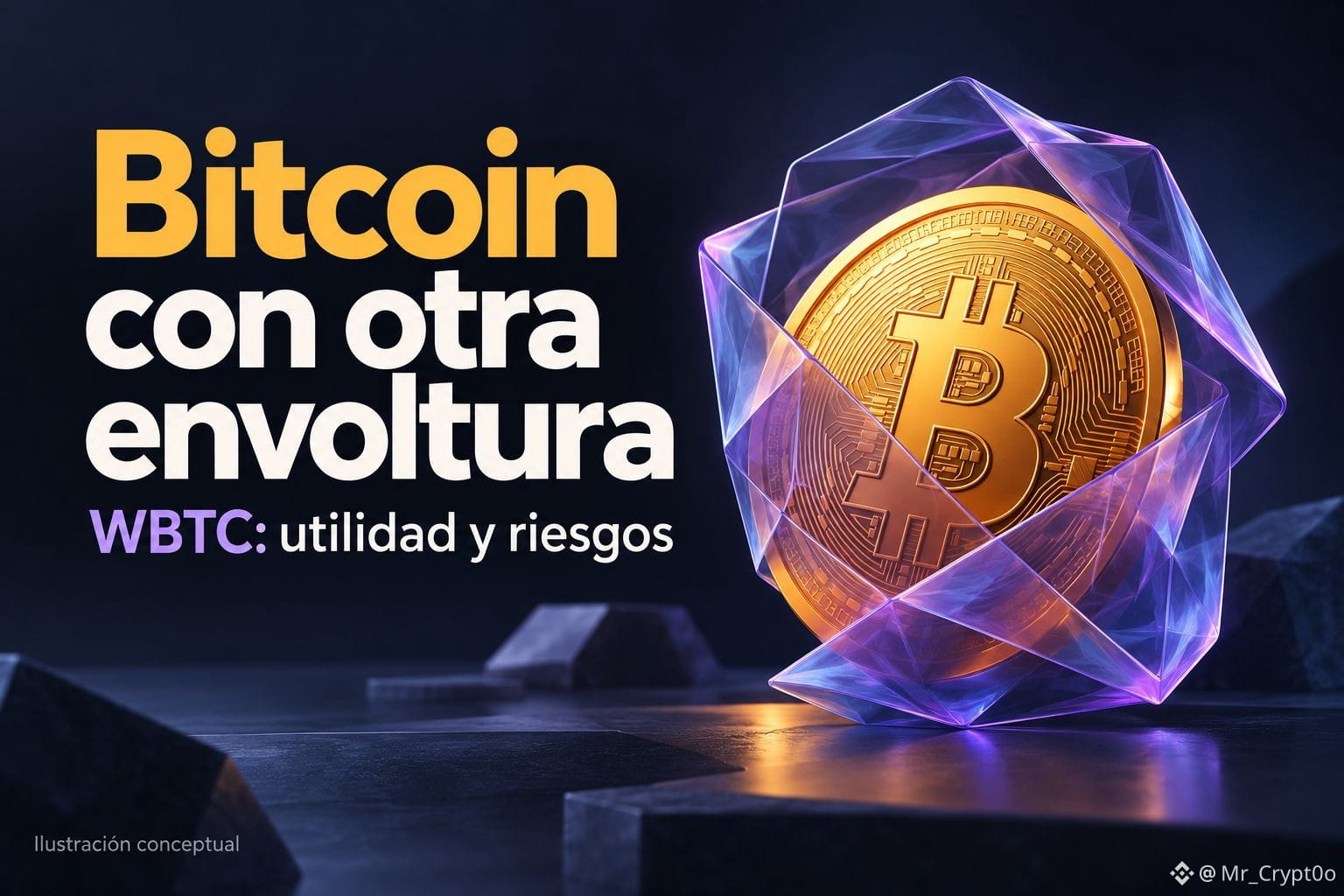
🎁 What changes when Bitcoin is “wrapped”?
$WBTC es Wrapped Bitcoin: a token that represents $BTC en on other networks, such as Ethereum. This allows that representation to be used in DeFi applications.
Its design aims to provide backing of 1 BTC for every WBTC issued. Its operation depends on custodians and issuance and redemption mechanisms.
In addition to bitcoin price risk, custody and smart contract risks also arise. Sharing a reference value does not make their risks identical.
That’s why the backing, network, and token contract matter.
What would you like to understand better: reserves or redemption?
Source: [Binance Academy — Wrapped tokens](https://www.binance.com/es/academy/articles/what-are-wrapped-tokens)
#bitcoin #defi #Seguridad
The author may receive rewards from Binance.
🎁 What changes when Bitcoin is “wrapped”?
$WBTC es Wrapped Bitcoin: a token that represents $BTC en on other networks, such as Ethereum. This allows that representation to be used in DeFi applications.
Its design aims to provide backing of 1 BTC for every WBTC issued. Its operation depends on custodians and issuance and redemption mechanisms.
In addition to bitcoin price risk, custody and smart contract risks also arise. Sharing a reference value does not make their risks identical.
That’s why the backing, network, and token contract matter.
What would you like to understand better: reserves or redemption?
Source: Binance Academy — Wrapped tokens
#bitcoin #defi #Seguridad
The author may receive rewards from Binance.
2
·
--
🌦️ A smart contract doesn’t know whether it’s raining.
It can execute rules on the blockchain, but it can’t independently check the weather or the result of a game.
Oracles connect that code to external data: they query sources and provide information that the contract can use.
Chainlink is one example of an oracle network. Its token $LINK is used to pay the operators who provide these services.
The key point: correctly executing a rule doesn’t guarantee that the data received is correct. The quality of the sources and the design of the oracle matter too.
What other real-world data would be useful to a smart contract?
Source: [Binance Academy — Chainlink](https://www.binance.com/es/academy/articles/what-is-chainlink-link)
#Chainlink #blockchain #Web3
The author may receive rewards from Binance.
🌦️ A smart contract doesn’t know whether it’s raining.
It can execute rules on the blockchain, but it can’t independently check the weather or the result of a game.
Oracles connect that code to external data: they query sources and provide information that the contract can use.
Chainlink is one example of an oracle network. Its token $LINK is used to pay the operators who provide these services.
The key point: correctly executing a rule doesn’t guarantee that the data received is correct. The quality of the sources and the design of the oracle matter too.
What other real-world data would be useful to a smart contract?
Source: Binance Academy — Chainlink
#Chainlink #blockchain #Web3
The author may receive rewards from Binance.

141
·
--
🔓 Closing the page doesn’t erase a permission on the blockchain.
Connecting a wallet to an app and authorizing it to spend tokens are two different permissions.
For example, an approval of $USDC on Ethereum allows a specific address to spend up to the authorized amount. It doesn’t automatically authorize all other tokens.
Disconnecting the app doesn’t revoke that approval: it may remain active even if you no longer visit the site.
Before signing, check the authorized address, the token, and the limit. Unlimited approvals increase your exposure if the contract is malicious or compromised.
Have you ever confused disconnecting with revoking?
Source: [Binance — Aprobaciones en blockchain](https://www.binance.com/es-LA/support/faq/detail/78def429ca0c470abb60a852f8fbef75)
#Seguridad #Web3 #Criptomonedas
The author may receive rewards from Binance.
🔓 Closing the page doesn’t erase a permission on the blockchain.
Connecting a wallet to an app and authorizing it to spend tokens are two different permissions.
For example, an approval of $USDC on Ethereum allows a specific address to spend up to the authorized amount. It doesn’t automatically authorize all other tokens.
Disconnecting the app doesn’t revoke that approval: it may remain active even if you no longer visit the site.
Before signing, check the authorized address, the token, and the limit. Unlimited approvals increase your exposure if the contract is malicious or compromised.
Have you ever confused disconnecting with revoking?
Source: Binance — Aprobaciones en blockchain
#Seguridad #Web3 #Criptomonedas
The author may receive rewards from Binance.
39
·
--
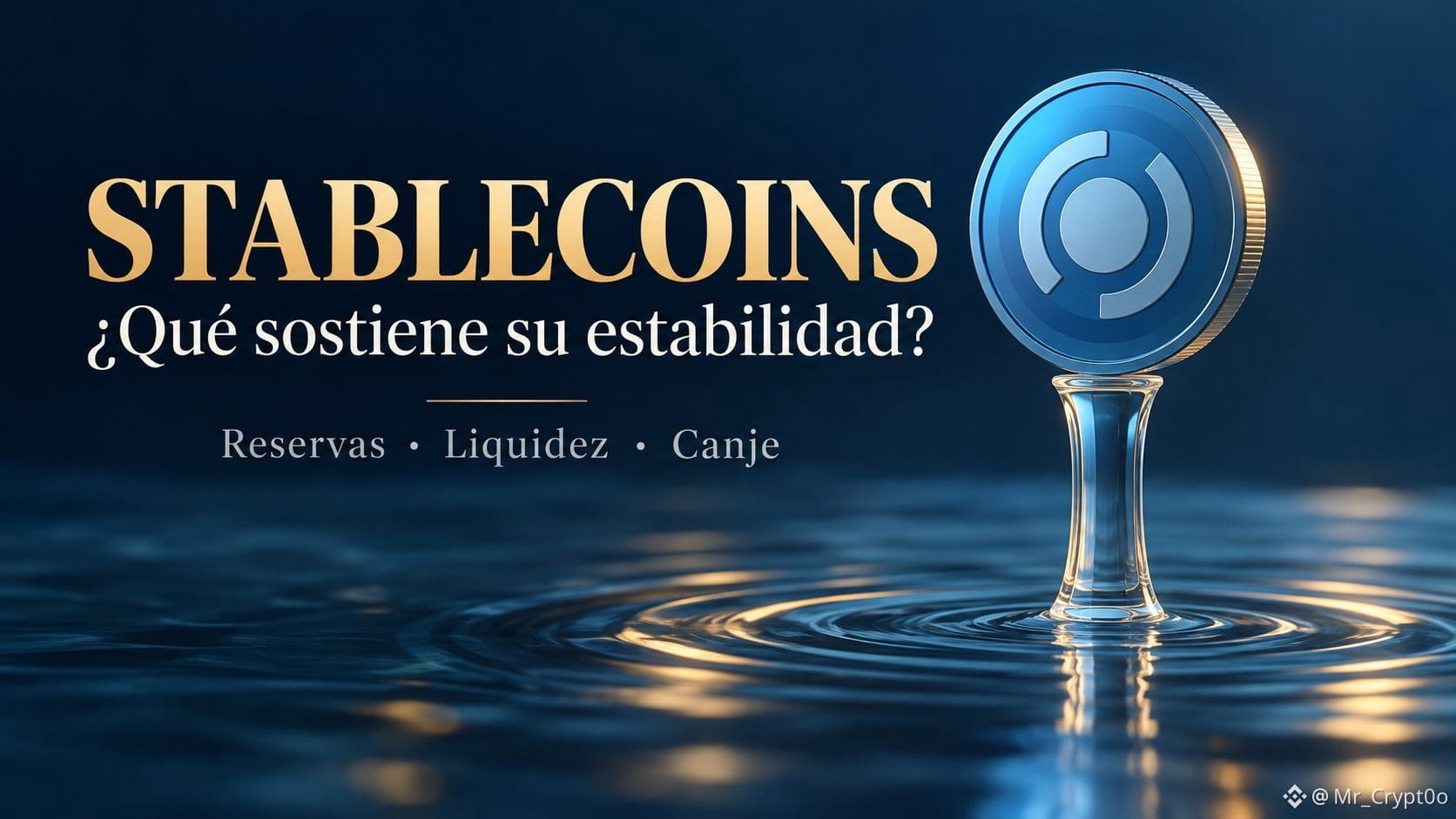
🧊 What keeps a stablecoin stable?
For example, $USDC aims to maintain parity with the dollar. But that goal doesn’t guarantee its market price will be identical at all times.
When its price moves away from its benchmark, we call it a depeg, or loss of parity. This can be influenced by a lack of liquidity, doubts about reserves, or difficulties redeeming tokens.
Three questions to understand how it works:
• Reserves: What assets back the token?
• Redemption: Who can convert it directly with the issuer, and under what conditions?
• Liquidity: Is there enough market depth?
Each stablecoin has its own design and risks. Its name doesn’t make them go away.
What would you like to understand better: reserves or redemption?
Source: [Binance Academy — Paridad de las stablecoins](https://www.binance.com/es/academy/articles/why-do-stablecoins-depeg)
#Stablecoins #USDC #Criptomonedas
The author may receive rewards from Binance.
🧊 What keeps a stablecoin stable?
For example, $USDC aims to maintain parity with the dollar. But that goal doesn’t guarantee its market price will be identical at all times.
When its price moves away from its benchmark, we call it a depeg, or loss of parity. This can be influenced by a lack of liquidity, doubts about reserves, or difficulties redeeming tokens.
Three questions to understand how it works:
• Reserves: What assets back the token?
• Redemption: Who can convert it directly with the issuer, and under what conditions?
• Liquidity: Is there enough market depth?
Each stablecoin has its own design and risks. Its name doesn’t make them go away.
What would you like to understand better: reserves or redemption?
Source: Binance Academy — Paridad de las stablecoins
#Stablecoins #USDC #Criptomonedas
The author may receive rewards from Binance.
1
86
·
--
⛽ Did a transaction fail and still incur a fee?
On Ethereum, fees are paid in $ETH , and gas measures the work required to execute an operation.
If a transaction is included in a block and fails during execution, its changes are reverted, but the work already done still has a cost. That’s why it can consume gas even if it doesn’t achieve what you intended.
Keep in mind the difference: if it’s rejected during validation, before being included in a block, it doesn’t consume gas.
The gas limit is the maximum amount of work allowed; it is not the fee price.
What did you find more confusing: gas, the limit, or the fee?
Source: [Binance Academy — Límite de gas](https://www.binance.com/en/academy/glossary/gas-limit)
#Ethereum #blockchain #Criptomonedas
The author may receive rewards from Binance.
⛽ Did a transaction fail and still incur a fee?
On Ethereum, fees are paid in $ETH , and gas measures the work required to execute an operation.
If a transaction is included in a block and fails during execution, its changes are reverted, but the work already done still has a cost. That’s why it can consume gas even if it doesn’t achieve what you intended.
Keep in mind the difference: if it’s rejected during validation, before being included in a block, it doesn’t consume gas.
The gas limit is the maximum amount of work allowed; it is not the fee price.
What did you find more confusing: gas, the limit, or the fee?
Source: Binance Academy — Límite de gas
#Ethereum #blockchain #Criptomonedas
The author may receive rewards from Binance.
50
·
--
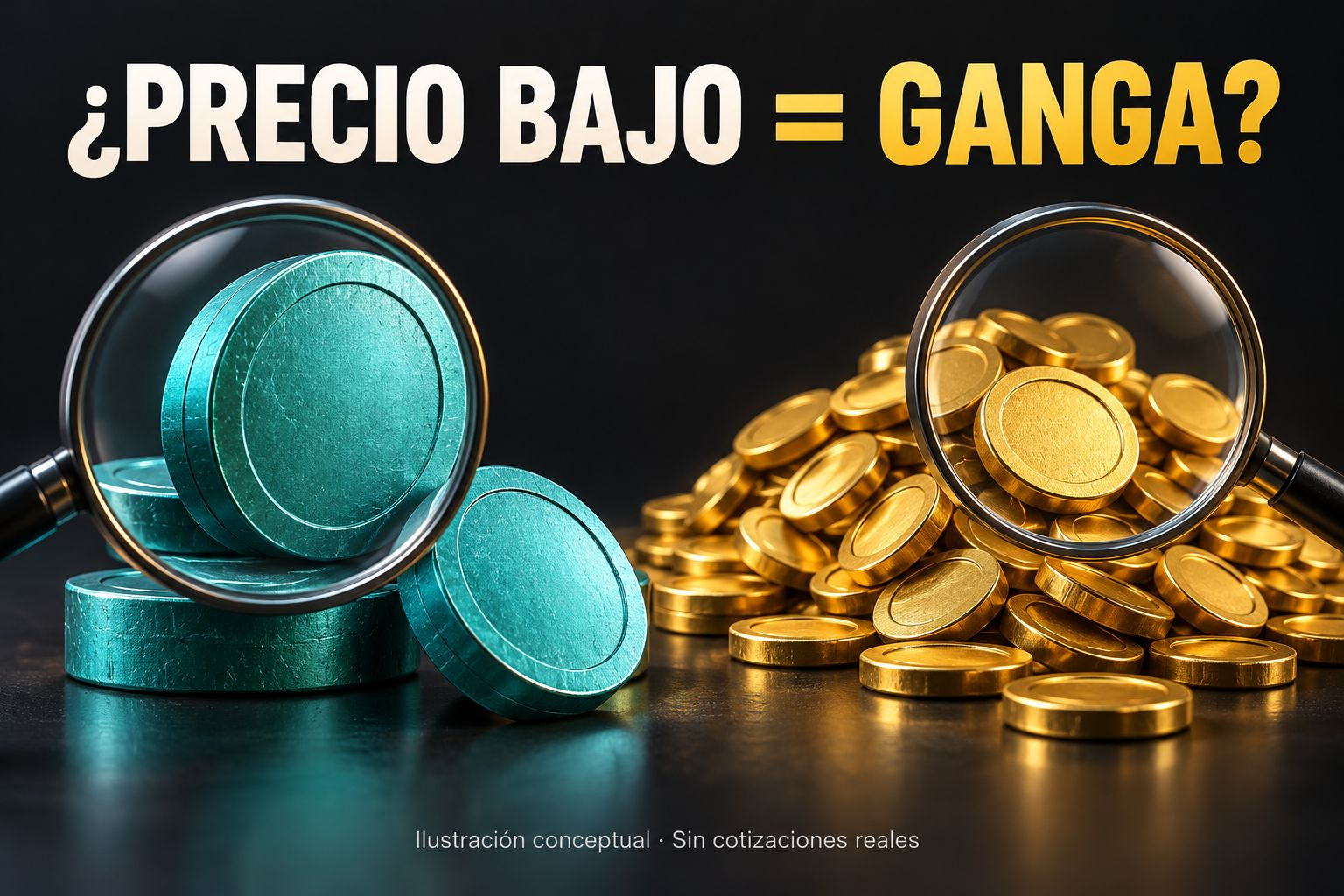
🪙 A coin priced in cents isn’t automatically a bargain.
Comparing $BTC and $ETH by their unit price can be misleading. To compare their size, the number of coins in circulation matters too.
Market capitalization = price × coins in circulation.
Hypothetical example:
• A: US$0.10 × 1 billion = US$100 million.
• B: US$10 × 1 million = US$10 million.
A costs less per unit, but has a higher market capitalization. That doesn’t prove it’s a better investment either: liquidity, utility, and future issuance also matter.
Also, market capitalization isn’t the same as the amount of money that has flowed into the project.
What did you look at first: price or market capitalization?
Source: [Binance Academy — Capitalización de mercado](https://www.binance.com/en/academy/articles/crypto-market-capitalization-explained)
#bitcoin #Ethereum #Criptomonedas
The author may receive rewards from Binance.
🪙 A coin priced in cents isn’t automatically a bargain.
Comparing $BTC and $ETH by their unit price can be misleading. To compare their size, the number of coins in circulation matters too.
Market capitalization = price × coins in circulation.
Hypothetical example:
• A: US$0.10 × 1 billion = US$100 million.
• B: US$10 × 1 million = US$10 million.
A costs less per unit, but has a higher market capitalization. That doesn’t prove it’s a better investment either: liquidity, utility, and future issuance also matter.
Also, market capitalization isn’t the same as the amount of money that has flowed into the project.
What did you look at first: price or market capitalization?
Source: Binance Academy — Capitalización de mercado
#bitcoin #Ethereum #Criptomonedas
The author may receive rewards from Binance.
258
·
--
🔐 Three concepts to understand your wallet at $BTC
1️⃣ Public address: lets you receive funds. You can share it, although its activity can be viewed on the blockchain.
2️⃣ Private key: authorizes transactions. It must remain secret.
3️⃣ Recovery phrase: in wallets that use one, it lets you restore access. It should not be shared either.
There’s another important difference: with custodial wallets, a third party manages the keys; with non-custodial wallets, that responsibility is yours.
Which concept did you have the most questions about?
Source: [Binance Academy — Billeteras de criptomonedas](https://www.binance.com/es/academy/articles/crypto-wallet-types-explained)
#bitcoin #Criptomonedas #Seguridad
The author may receive rewards from Binance.
🔐 Three concepts to understand your wallet at $BTC
1️⃣ Public address: lets you receive funds. You can share it, although its activity can be viewed on the blockchain.
2️⃣ Private key: authorizes transactions. It must remain secret.
3️⃣ Recovery phrase: in wallets that use one, it lets you restore access. It should not be shared either.
There’s another important difference: with custodial wallets, a third party manages the keys; with non-custodial wallets, that responsibility is yours.
Which concept did you have the most questions about?
Source: Binance Academy — Billeteras de criptomonedas
#bitcoin #Criptomonedas #Seguridad
The author may receive rewards from Binance.
1
123
Log in to explore more content
Join global crypto users on Binance Square
⚡️ Get latest and useful information about crypto.
💬 Trusted by the world’s largest crypto exchange.
👍 Discover real insights from verified creators.
Email / Phone number