
Dear_Crypto
953 Posts
Dear_Crypto
Report
Block User
Hi, I'm Crypto Enthusiast | Market Analyst 📊 | Scouting the next 100x gems. Turning signals into success. Join the journey to the moon! 🌕✨
Frequent Trader
2.6 Years
21 Following
154 Followers
922 Liked
Posts
All
Quotes
Videos
PINNED
·
--
Bullish
See translation
🚨JUST IN: CZ jokes he is “poor again,” recalling he said the same when $BTC fell from $67K to $30K. $ETH
$C98 He’s currently worth about $78.8B.
🚨JUST IN: CZ jokes he is “poor again,” recalling he said the same when $BTC fell from $67K to $30K. $ETH
$C98 He’s currently worth about $78.8B.
$C98 He’s currently worth about $78.8B.

1
2
1.4k
PINNED
·
--
Bullish
See translation
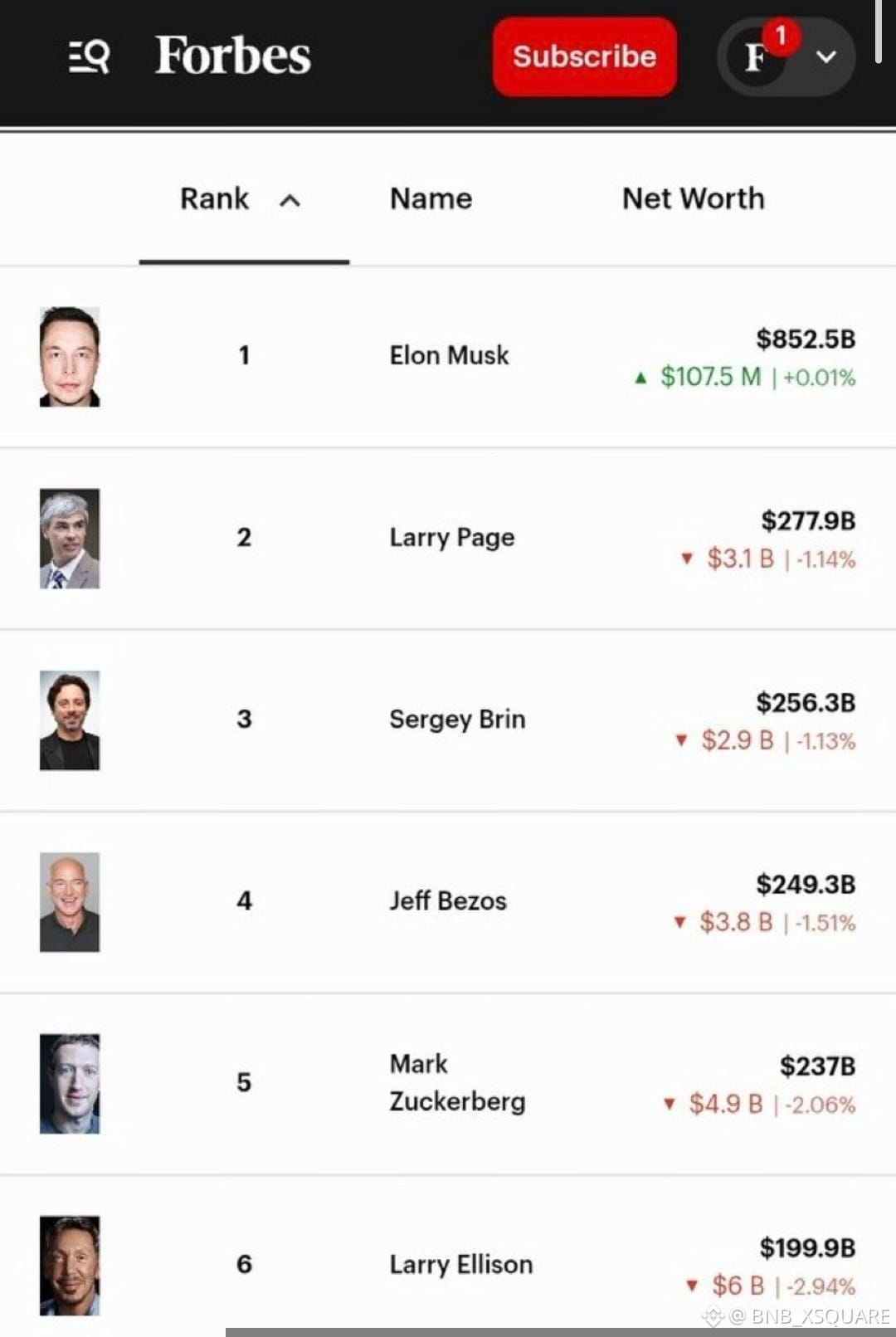
Elon Musk is now worth $852,000,000,000 🤯
The population of earth is 8.3 Billion.$SYN
If he gave every single person an equal share, we’d all get $102.65 $SOL
This is literally CRAZY!!!!!$BTC
Elon Musk is now worth $852,000,000,000 🤯
The population of earth is 8.3 Billion.$SYN
If he gave every single person an equal share, we’d all get $102.65 $SOL
This is literally CRAZY!!!!!$BTC
The population of earth is 8.3 Billion.$SYN
If he gave every single person an equal share, we’d all get $102.65 $SOL
This is literally CRAZY!!!!!$BTC

1
1
3
7.8k
·
--
Bullish
See translation
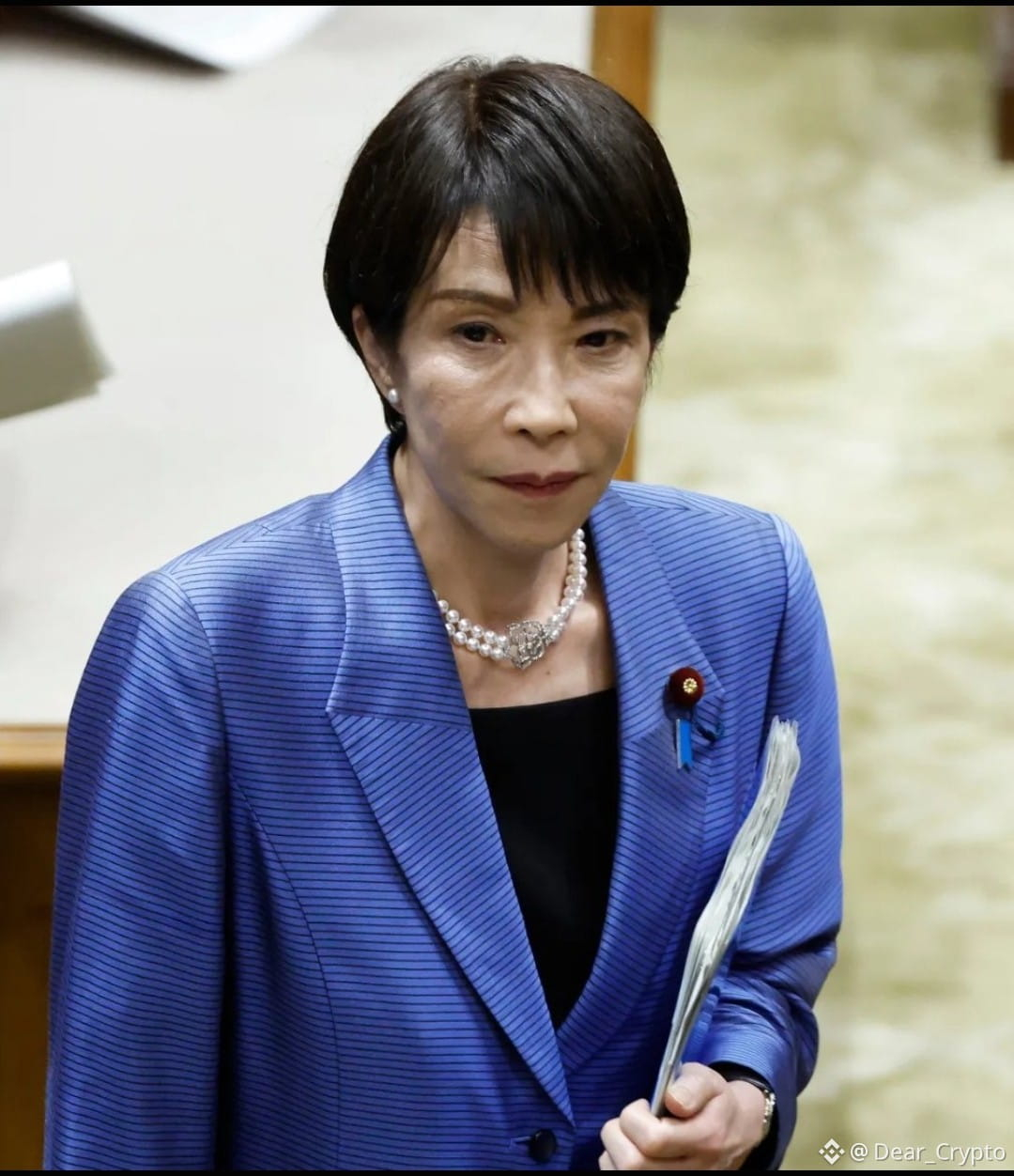
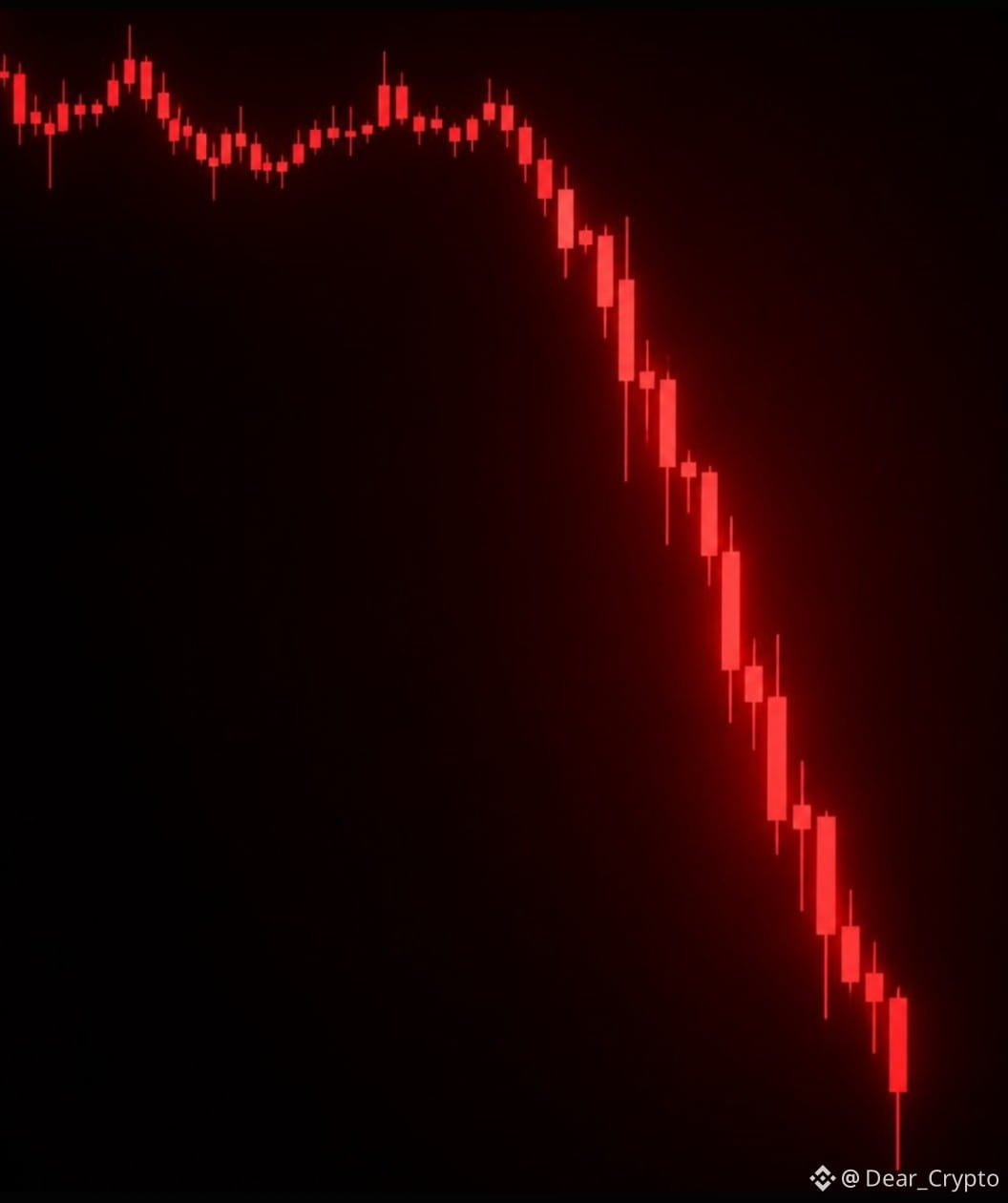
🚨 Pay Attention: 🇯🇵 JAPAN JUST DROPPED A MASSIVE CRYPTO BOMBSHELL!
Japan has officially presented its own version of the CLARITY ACT:
Crypto is now recognized as a FINANCIAL ASSET, banks can hold DIGITAL ASSETS, and the government plans to CUT crypto taxes from 55% down to 20%.🔥
#Japan #interestrates #JapanEconomy
#crypto #BTC
$AVA
{spot}(AVAUSDT)
$FIL
{spot}(FILUSDT)
$BNB
{spot}(BNBUSDT)
🚨 Pay Attention: 🇯🇵 JAPAN JUST DROPPED A MASSIVE CRYPTO BOMBSHELL!
Japan has officially presented its own version of the CLARITY ACT:
Crypto is now recognized as a FINANCIAL ASSET, banks can hold DIGITAL ASSETS, and the government plans to CUT crypto taxes from 55% down to 20%.🔥
#Japan #interestrates #JapanEconomy
#crypto #BTC
$AVA
$FIL
$BNB
Japan has officially presented its own version of the CLARITY ACT:
Crypto is now recognized as a FINANCIAL ASSET, banks can hold DIGITAL ASSETS, and the government plans to CUT crypto taxes from 55% down to 20%.🔥
#Japan #interestrates #JapanEconomy
#crypto #BTC
$AVA
$FIL
$BNB
102
·
--
Bullish
See translation
🚨Attention Guys: Wall Street is MORE bearish on Bitcoin than gold right now.
JPMorgan says that's exactly why Bitcoin has more upside, with gold ETFs recovering ALL their 2026 outflows while Bitcoin ETFs have recovered only HALF.
BlackRock's IBIT has short interest near its highest level of the year while gold's GLD sits below its historical average.
If this hedging unwinds, Bitcoin could get MORE support than gold because there are simply more shorts to cover, per JPMorgan.
#JPMorgan
#Morgan
#bitcoin
#GOLD
#ParadigmDisclosesZECHolding
$XAU $BTC $NVDAB
🚨Attention Guys: Wall Street is MORE bearish on Bitcoin than gold right now.
JPMorgan says that's exactly why Bitcoin has more upside, with gold ETFs recovering ALL their 2026 outflows while Bitcoin ETFs have recovered only HALF.
BlackRock's IBIT has short interest near its highest level of the year while gold's GLD sits below its historical average.
If this hedging unwinds, Bitcoin could get MORE support than gold because there are simply more shorts to cover, per JPMorgan.
#JPMorgan
#Morgan
#bitcoin
#GOLD
#ParadigmDisclosesZECHolding
$XAU $BTC $NVDAB
JPMorgan says that's exactly why Bitcoin has more upside, with gold ETFs recovering ALL their 2026 outflows while Bitcoin ETFs have recovered only HALF.
BlackRock's IBIT has short interest near its highest level of the year while gold's GLD sits below its historical average.
If this hedging unwinds, Bitcoin could get MORE support than gold because there are simply more shorts to cover, per JPMorgan.
#JPMorgan
#Morgan
#bitcoin
#GOLD
#ParadigmDisclosesZECHolding
$XAU $BTC $NVDAB

3

·
--
Article
See translation
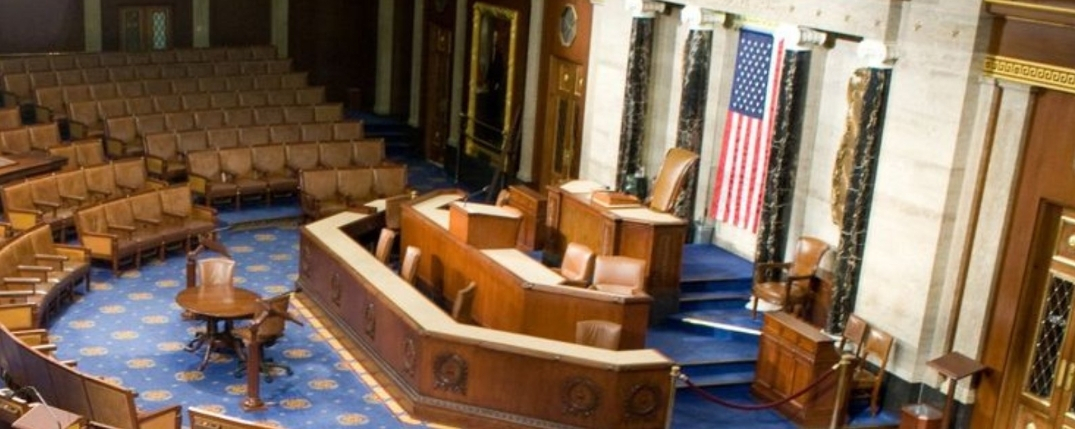
🚨 What if some of the biggest U.S. policy decisions simply… don’t happen before the midterms?Right now, the Senate has a surprisingly short window to move several major pieces of legislation forward.
And the clock is ticking.
There are reportedly just 10 Senate working days remaining before the pre-midterm recess.
On the table are several major issues:
🌾 The Farm Bill — covering agriculture and food policy.
🛡️ The NDAA — the annual defense authorization covering military and national-security policy.
💰 FY2026 Appropriations — with 9 of the 12 full-year spending bills still unfinished, according to the information provided.
⚡ Permitting Reform — potentially affecting how energy and infrastructure projects receive approvals.
🤖 AI Legislation — including proposals involving artificial intelligence and data-center regulation.
But here's where the timeline becomes important.
The Senate is scheduled to be away for much of October and into early November around Election Day.
That means legislation that doesn't move through the Senate's remaining working period could face a much longer wait.
And there's another deadline hanging over the spending process:
The current funding patch expires December 11.
So the real question isn't simply which bills matter?
It's:
Which ones can actually make it through the legislative process before the calendar runs out?
For some of these bills, the next few weeks could determine whether they move forward—or whether Congress has to revisit them after the midterm elections.
#BitcoinSurpasses$77000
#Binance
#crypto
$FIL $ONDO $BTC
🚨 What if some of the biggest U.S. policy decisions simply… don’t happen before the midterms?
Right now, the Senate has a surprisingly short window to move several major pieces of legislation forward.
And the clock is ticking.
There are reportedly just 10 Senate working days remaining before the pre-midterm recess.
On the table are several major issues:
🌾 The Farm Bill — covering agriculture and food policy.
🛡️ The NDAA — the annual defense authorization covering military and national-security policy.
💰 FY2026 Appropriations — with 9 of the 12 full-year spending bills still unfinished, according to the information provided.
⚡ Permitting Reform — potentially affecting how energy and infrastructure projects receive approvals.
🤖 AI Legislation — including proposals involving artificial intelligence and data-center regulation.
But here's where the timeline becomes important.
The Senate is scheduled to be away for much of October and into early November around Election Day.
That means legislation that doesn't move through the Senate's remaining working period could face a much longer wait.
And there's another deadline hanging over the spending process:
The current funding patch expires December 11.
So the real question isn't simply which bills matter?
It's:
Which ones can actually make it through the legislative process before the calendar runs out?
For some of these bills, the next few weeks could determine whether they move forward—or whether Congress has to revisit them after the midterm elections.
#BitcoinSurpasses$77000
#Binance
#crypto
$FIL $ONDO $BTC
And the clock is ticking.
There are reportedly just 10 Senate working days remaining before the pre-midterm recess.
On the table are several major issues:
🌾 The Farm Bill — covering agriculture and food policy.
🛡️ The NDAA — the annual defense authorization covering military and national-security policy.
💰 FY2026 Appropriations — with 9 of the 12 full-year spending bills still unfinished, according to the information provided.
⚡ Permitting Reform — potentially affecting how energy and infrastructure projects receive approvals.
🤖 AI Legislation — including proposals involving artificial intelligence and data-center regulation.
But here's where the timeline becomes important.
The Senate is scheduled to be away for much of October and into early November around Election Day.
That means legislation that doesn't move through the Senate's remaining working period could face a much longer wait.
And there's another deadline hanging over the spending process:
The current funding patch expires December 11.
So the real question isn't simply which bills matter?
It's:
Which ones can actually make it through the legislative process before the calendar runs out?
For some of these bills, the next few weeks could determine whether they move forward—or whether Congress has to revisit them after the midterm elections.
#BitcoinSurpasses$77000
#Binance
#crypto
$FIL $ONDO $BTC
195
·
--
Bullish
See translation
The Hard Truth About Market Cycles
Most people lose money in crypto not because of bad tokens, but because of bad timing driven by emotions.
Bull market: Everyone is a genius, FOMO peaks, and green candles blind risk management.
Bear/Correction market: Panic selling, disbelief, and checking portfolios every 5 minutes.
The real money is usually made in the boring zones when volume dries up and narratives reset.
Quick question for you:
What is the single biggest lesson a previous market dip taught you about managing your portfolio?
Always take profits on the way up
Keep a cash/USDT reserve for deep pullbacks
Don't touch leverage without a strict stop-loss
Drop your comment or your own golden rule below! ⬇️
#CryptoStrategy #BinanceSquare #RiskManagement #TradingDiscipline
#crypto
$BTC
{spot}(BTCUSDT)
$NVDAB
{spot}(NVDABUSDT)
$GOOGL.US
{stock_us}(GOOGL.US)
The Hard Truth About Market Cycles
Most people lose money in crypto not because of bad tokens, but because of bad timing driven by emotions.
Bull market: Everyone is a genius, FOMO peaks, and green candles blind risk management.
Bear/Correction market: Panic selling, disbelief, and checking portfolios every 5 minutes.
The real money is usually made in the boring zones when volume dries up and narratives reset.
Quick question for you:
What is the single biggest lesson a previous market dip taught you about managing your portfolio?
Always take profits on the way up
Keep a cash/USDT reserve for deep pullbacks
Don't touch leverage without a strict stop-loss
Drop your comment or your own golden rule below! ⬇️
#CryptoStrategy #BinanceSquare #RiskManagement #TradingDiscipline
#crypto
$BTC
$NVDAB
$GOOGL.US
Most people lose money in crypto not because of bad tokens, but because of bad timing driven by emotions.
Bull market: Everyone is a genius, FOMO peaks, and green candles blind risk management.
Bear/Correction market: Panic selling, disbelief, and checking portfolios every 5 minutes.
The real money is usually made in the boring zones when volume dries up and narratives reset.
Quick question for you:
What is the single biggest lesson a previous market dip taught you about managing your portfolio?
Always take profits on the way up
Keep a cash/USDT reserve for deep pullbacks
Don't touch leverage without a strict stop-loss
Drop your comment or your own golden rule below! ⬇️
#CryptoStrategy #BinanceSquare #RiskManagement #TradingDiscipline
#crypto
$BTC
$NVDAB
$GOOGL.US

BTC+1.45%
GOOGLUS+1.52%
14
·
--
See translation
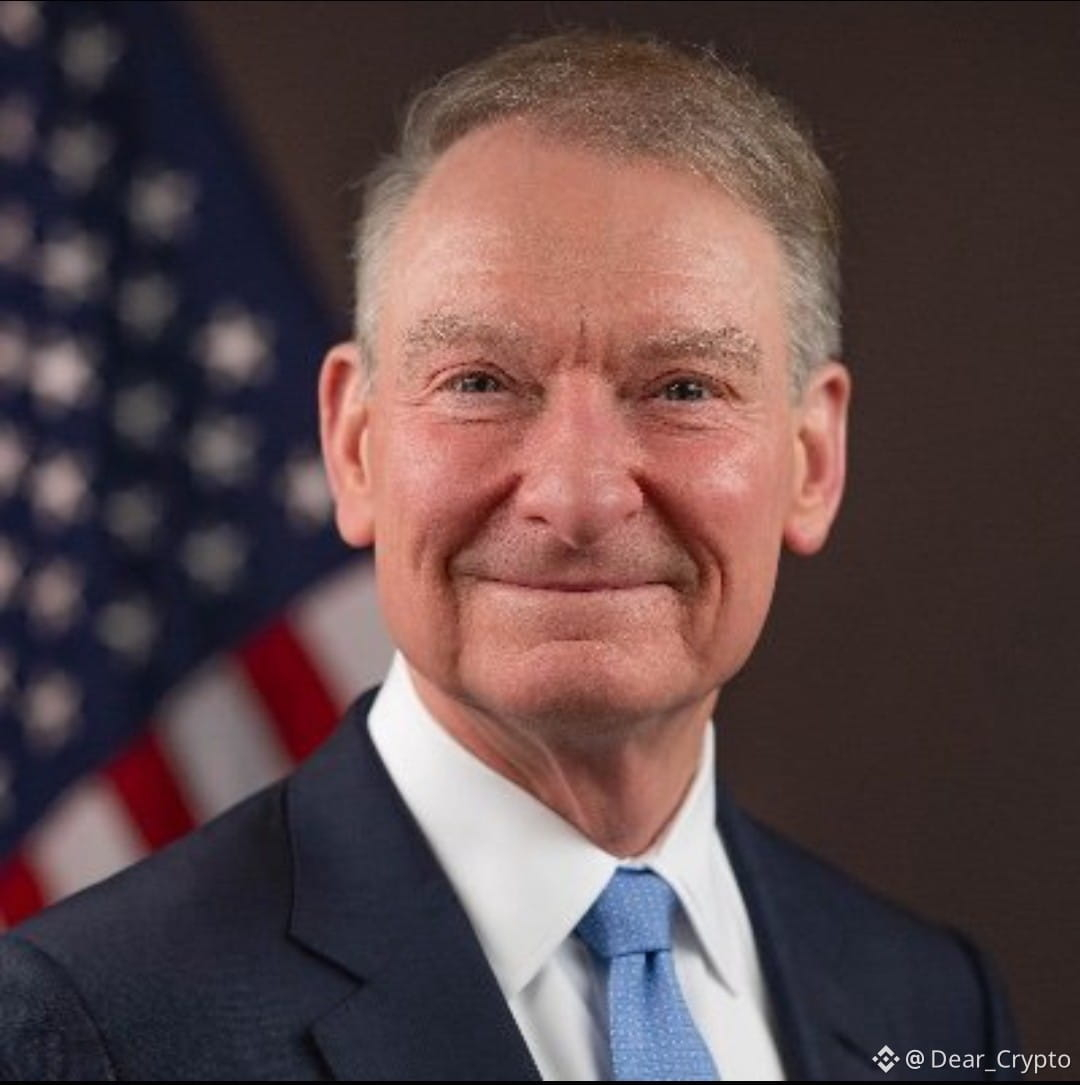
JUST IN: 📜 SEC unveils "Innovation Exemption" to facilitate on-chain trading of tokenized securities.
"For too long, regulatory uncertainty has prevented responsible, yet critical innovation from taking root in the United States," SEC Chairman says.
#SEC
#PaulAtkins
#usa
#America
#crypto
$BTC
{future}(BTCUSDT)
$NVDAB
{spot}(NVDABUSDT)
$AAPL.US
{stock_us}(AAPL.US)
JUST IN: 📜 SEC unveils "Innovation Exemption" to facilitate on-chain trading of tokenized securities.
"For too long, regulatory uncertainty has prevented responsible, yet critical innovation from taking root in the United States," SEC Chairman says.
#SEC
#PaulAtkins
#usa
#America
#crypto
$BTC
$NVDAB
$AAPL.US
"For too long, regulatory uncertainty has prevented responsible, yet critical innovation from taking root in the United States," SEC Chairman says.
#SEC
#PaulAtkins
#usa
#America
#crypto
$BTC
$NVDAB
$AAPL.US
24
·
--
Bullish
See translation
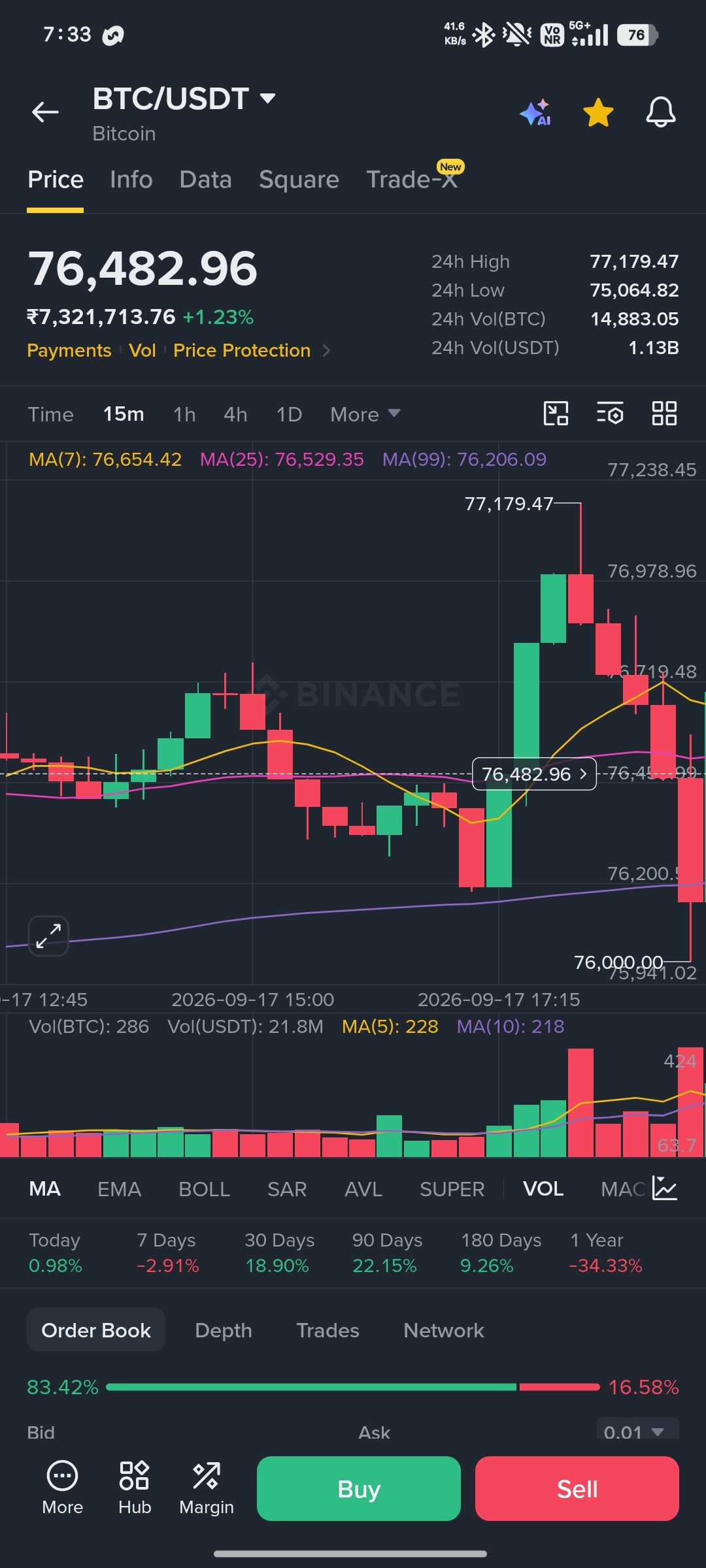
🚨 BTC/USDT — NEXT 15 MINUTES SETUP 🚨
₿ BTC is around $76.4K.
📈 LONG
Break + 15M close above $76.8K–$77.1K
🎯 TP: $77.4K → $77.8K
🛑 SL: $76.4K
📉 SHORT
15M close below $75K
🎯 TP: $74.6K → $74.2K
🛑 SL: $75.5K
⚠️ $75K–$77K = WAIT ZONE
No confirmation = NO TRADE.
🔥 WATCH THE LEVELS.
⏱️ SET YOUR ALERTS.
📲 FOLLOW FOR MORE REAL-TIME CRYPTO SETUPS.
💬 COMMENT “BTC” IF YOU’RE WATCHING THIS MOVE.
DYOR • Strict Risk Management • Not Financial Advice
#BTC #bitcoin #BTCUSDT #Binance #CryptoTrading
$BTC
🚨 BTC/USDT — NEXT 15 MINUTES SETUP 🚨
₿ BTC is around $76.4K.
📈 LONG
Break + 15M close above $76.8K–$77.1K
🎯 TP: $77.4K → $77.8K
🛑 SL: $76.4K
📉 SHORT
15M close below $75K
🎯 TP: $74.6K → $74.2K
🛑 SL: $75.5K
⚠️ $75K–$77K = WAIT ZONE
No confirmation = NO TRADE.
🔥 WATCH THE LEVELS.
⏱️ SET YOUR ALERTS.
📲 FOLLOW FOR MORE REAL-TIME CRYPTO SETUPS.
💬 COMMENT “BTC” IF YOU’RE WATCHING THIS MOVE.
DYOR • Strict Risk Management • Not Financial Advice
#BTC #bitcoin #BTCUSDT #Binance #CryptoTrading
$BTC
₿ BTC is around $76.4K.
📈 LONG
Break + 15M close above $76.8K–$77.1K
🎯 TP: $77.4K → $77.8K
🛑 SL: $76.4K
📉 SHORT
15M close below $75K
🎯 TP: $74.6K → $74.2K
🛑 SL: $75.5K
⚠️ $75K–$77K = WAIT ZONE
No confirmation = NO TRADE.
🔥 WATCH THE LEVELS.
⏱️ SET YOUR ALERTS.
📲 FOLLOW FOR MORE REAL-TIME CRYPTO SETUPS.
💬 COMMENT “BTC” IF YOU’RE WATCHING THIS MOVE.
DYOR • Strict Risk Management • Not Financial Advice
#BTC #bitcoin #BTCUSDT #Binance #CryptoTrading
$BTC
10
·
--
Bullish
See translation
🔥 WALL STREET IS GETTING MORE CRYPTO-NATIVE
Binance has added GoPro (GPROB) and Reddit (RDDTB) bStock trading pairs.
This is another interesting development in the growing connection between traditional assets and blockchain-based trading infrastructure. 🌐
Crypto isn't only about Bitcoin anymore.
Stablecoins.
Tokenized assets.
On-chain markets.
24/7 infrastructure.
The industry keeps expanding. 👀
#Binance #crypto #Bitcoin #Tokenization #Web3
$BTC $ETH $BNB
🔥 WALL STREET IS GETTING MORE CRYPTO-NATIVE
Binance has added GoPro (GPROB) and Reddit (RDDTB) bStock trading pairs.
This is another interesting development in the growing connection between traditional assets and blockchain-based trading infrastructure. 🌐
Crypto isn't only about Bitcoin anymore.
Stablecoins.
Tokenized assets.
On-chain markets.
24/7 infrastructure.
The industry keeps expanding. 👀
#Binance #crypto #Bitcoin #Tokenization #Web3
$BTC $ETH $BNB
Binance has added GoPro (GPROB) and Reddit (RDDTB) bStock trading pairs.
This is another interesting development in the growing connection between traditional assets and blockchain-based trading infrastructure. 🌐
Crypto isn't only about Bitcoin anymore.
Stablecoins.
Tokenized assets.
On-chain markets.
24/7 infrastructure.
The industry keeps expanding. 👀
#Binance #crypto #Bitcoin #Tokenization #Web3
$BTC $ETH $BNB

237
·
--
Bullish
See translation
⚠️ BINANCE TRADING ALERT:
Binance announced the removal of these Spot trading pairs on September 18, 2026 at 03:00 UTC:
🔸 BREV/USDC
🔸 COOKIE/USDC
🔸 LA/USDC
🔸 QNT/USDC
Important: Binance says the removal of these specific trading pairs does NOT mean the tokens themselves are being completely delisted from Binance Spot.
Always check the official announcement before making a trading decision. 🧠
#Binance #CryptoNews #crypto #trading #altcoins
$BTC $ETH $NVDAB
⚠️ BINANCE TRADING ALERT:
Binance announced the removal of these Spot trading pairs on September 18, 2026 at 03:00 UTC:
🔸 BREV/USDC
🔸 COOKIE/USDC
🔸 LA/USDC
🔸 QNT/USDC
Important: Binance says the removal of these specific trading pairs does NOT mean the tokens themselves are being completely delisted from Binance Spot.
Always check the official announcement before making a trading decision. 🧠
#Binance #CryptoNews #crypto #trading #altcoins
$BTC $ETH $NVDAB
Binance announced the removal of these Spot trading pairs on September 18, 2026 at 03:00 UTC:
🔸 BREV/USDC
🔸 COOKIE/USDC
🔸 LA/USDC
🔸 QNT/USDC
Important: Binance says the removal of these specific trading pairs does NOT mean the tokens themselves are being completely delisted from Binance Spot.
Always check the official announcement before making a trading decision. 🧠
#Binance #CryptoNews #crypto #trading #altcoins
$BTC $ETH $NVDAB

30
·
--
Bullish
See translation
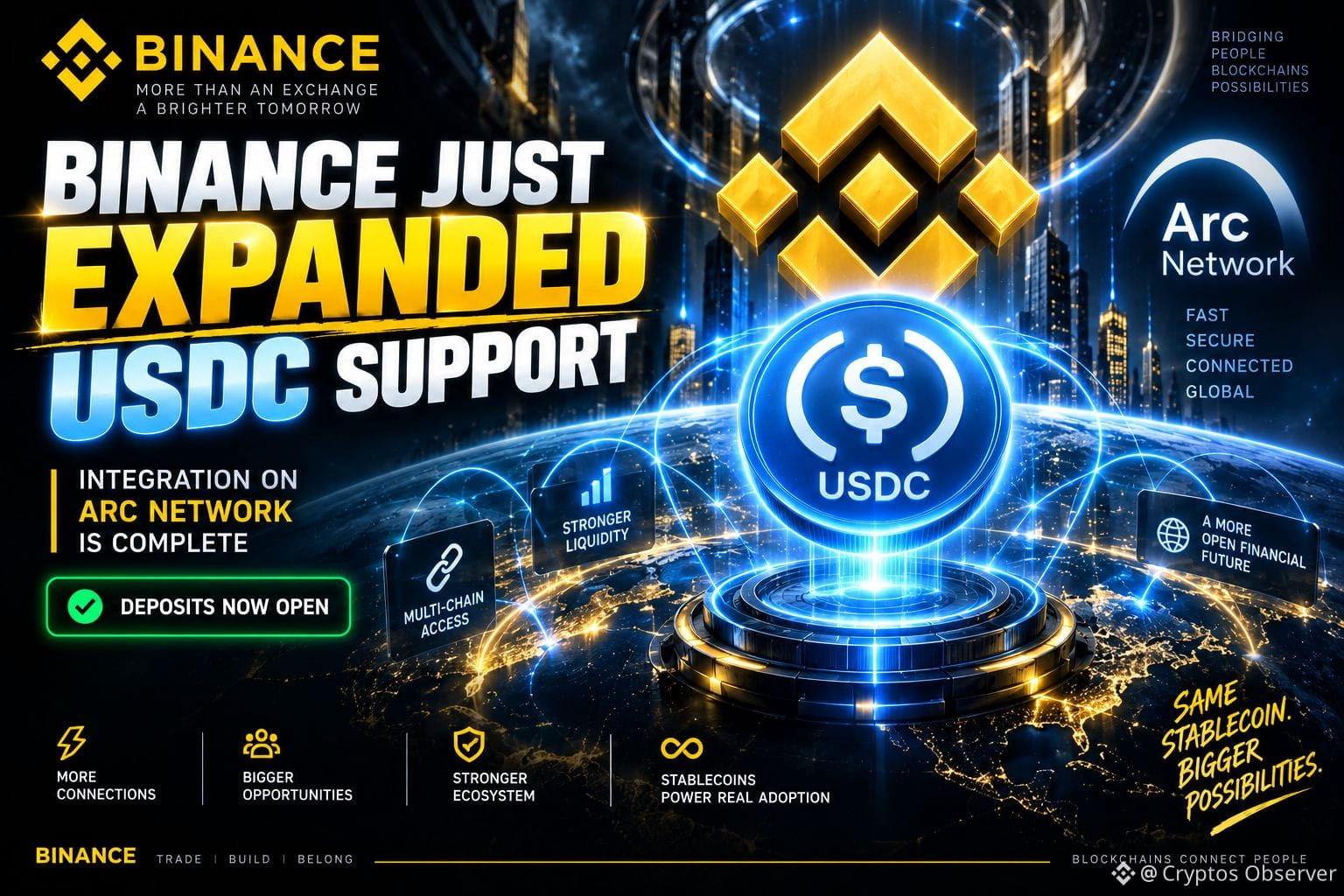
🚨 BINANCE JUST EXPANDED USDC SUPPORT
Binance has completed its USDC integration on the Arc Network and deposits are now open. 🟡
Another step toward making stablecoins more connected across blockchain infrastructure.
USDC + new networks + deeper exchange infrastructure = 👀
The stablecoin race is getting more interesting.
Crypto infrastructure is evolving FAST. ⚡
#Binance #USDC #crypto #Stablecoins #RobinhoodToSupportCircleArcNetwork
$BTC $ETH $USDC
🚨 BINANCE JUST EXPANDED USDC SUPPORT
Binance has completed its USDC integration on the Arc Network and deposits are now open. 🟡
Another step toward making stablecoins more connected across blockchain infrastructure.
USDC + new networks + deeper exchange infrastructure = 👀
The stablecoin race is getting more interesting.
Crypto infrastructure is evolving FAST. ⚡
#Binance #USDC #crypto #Stablecoins #RobinhoodToSupportCircleArcNetwork
$BTC $ETH $USDC
Binance has completed its USDC integration on the Arc Network and deposits are now open. 🟡
Another step toward making stablecoins more connected across blockchain infrastructure.
USDC + new networks + deeper exchange infrastructure = 👀
The stablecoin race is getting more interesting.
Crypto infrastructure is evolving FAST. ⚡
#Binance #USDC #crypto #Stablecoins #RobinhoodToSupportCircleArcNetwork
$BTC $ETH $USDC
1
49
·
--
Bullish
See translation
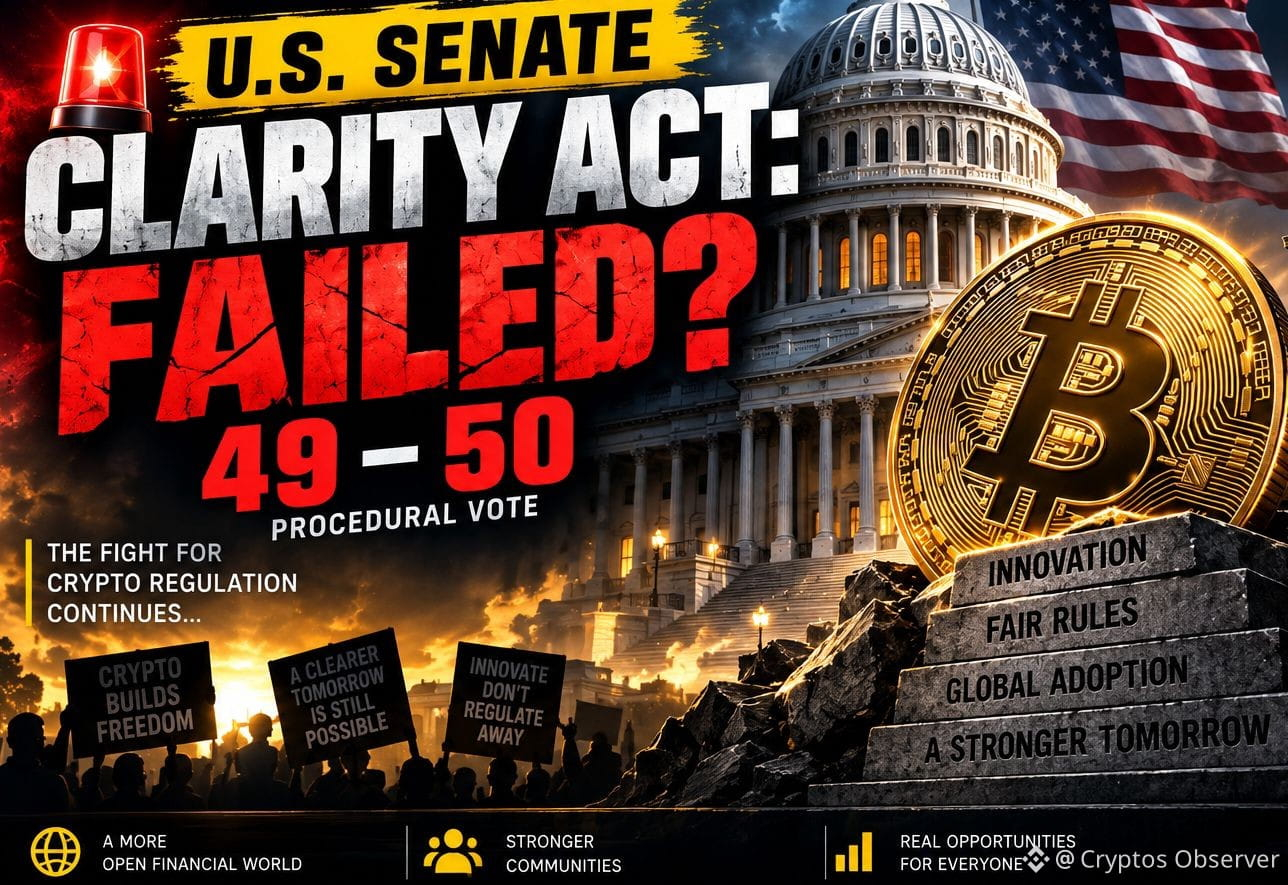
🚨 CRYPTO REGULATION JUST HIT A WALL 🇺🇸
The U.S. Senate failed to advance the CLARITY Act in a 49–50 procedural vote.
That means the fight over clearer crypto rules in the U.S. is far from over. 👀
Now the spotlight shifts back to regulators, lawmakers and the crypto industry.
⚡ One vote can change the narrative.
⚡ One regulation can change the market.
Crypto isn’t just about charts anymore.
It’s about regulation, infrastructure and adoption.
What happens next? 👀
#crypto #BTC #Binance #Web3 #CryptoNews
$NVDAB $GOOGL.US $BTC
🚨 CRYPTO REGULATION JUST HIT A WALL 🇺🇸
The U.S. Senate failed to advance the CLARITY Act in a 49–50 procedural vote.
That means the fight over clearer crypto rules in the U.S. is far from over. 👀
Now the spotlight shifts back to regulators, lawmakers and the crypto industry.
⚡ One vote can change the narrative.
⚡ One regulation can change the market.
Crypto isn’t just about charts anymore.
It’s about regulation, infrastructure and adoption.
What happens next? 👀
#crypto #BTC #Binance #Web3 #CryptoNews
$NVDAB $GOOGL.US $BTC
The U.S. Senate failed to advance the CLARITY Act in a 49–50 procedural vote.
That means the fight over clearer crypto rules in the U.S. is far from over. 👀
Now the spotlight shifts back to regulators, lawmakers and the crypto industry.
⚡ One vote can change the narrative.
⚡ One regulation can change the market.
Crypto isn’t just about charts anymore.
It’s about regulation, infrastructure and adoption.
What happens next? 👀
#crypto #BTC #Binance #Web3 #CryptoNews
$NVDAB $GOOGL.US $BTC
62
·
--
See translation
Why did the CLARITY Act defeat trigger $480M liquidations?The Digital Asset Market CLARITY Act was a broad US bill to define federal rules for digital assets and split responsibilities between the SEC and CFTC. It failed a cloture vote in the Senate, 49-50, well short of the 60 votes needed to proceed to full debate, leaving it effectively shelved for 2026.
Reports highlight ethics provisions as the key sticking point, with Democrats objecting to perceived weak limits on how President Trump and other officials could profit from crypto while shaping its rules. Several Republicans also voted no, leaving industry advocates without the bipartisan margin they had worked on for over a year.
With midterm elections close and the calendar compressed, most coverage now treats the bill’s path this year as closed, even if, technically, a procedural reconsideration remains possible.
How Liquidations Hit Markets
Following the vote, derivatives analytics firm estimated that nearly 480 million dollars in crypto positions were liquidated within 24 hours, including about 363 million on longs and 114 million on shorts, affecting close to 100,000 traders. One widely cited report put 24 hour liquidations near that 480 million figure.
Other datasets over the same window show even larger totals, with some sources pointing to more than 570 million dollars in long liquidations as highly leveraged Bitcoin, Ethereum and XRP positions were force closed. Immediate reactions included Bitcoin dropping from near 80,000 dollars to below 75,000 dollars, while XRP fell around 10 percent, and US spot ETFs saw roughly 450 million dollars of net outflows.
Yet, aggregate data show the total crypto market cap at about 2.61 trillion dollars, up roughly 1.24 percent over the last 24 hours, while total derivatives open interest is around 461 billion dollars, down only a few percent. That suggests a sharp leverage flush rather than a structural collapse.
What this means: This was a painful event for over-levered traders, but so far it looks more like a clearance of crowded bets than a broad exit from crypto.
What To Watch Next
With the CLARITY Act stalled, the center of gravity shifts to regulators. Public statements from SEC and CFTC leadership indicate they intend to keep advancing crypto rules under existing authority, even without new legislation. That path is less permanent than statute but can still reshape market structure.
For traders and investors, three signals now matter more than this single vote: how quickly leverage rebuilds after the liquidation spike, whether ETF flows stabilize or persistently bleed, and whether any revised market structure bills or narrower tax or stablecoin measures gain traction in Congress.
Macro also remains a parallel driver, as this legislative shock arrived alongside heightened expectations for Federal Reserve rate moves, which can pressure risk assets regardless of crypto-specific news.
Conclusion
The CLARITY Act defeat removed a major near term “regulatory clarity” catalyst and exposed how heavily the market had positioned for a positive outcome, triggering roughly half a billion dollars of forced liquidations. So far, though, overall market size and open interest remain robust, indicating a leverage reset more than a fundamental breakdown. The next phase will be shaped by agency rulemaking, future legislative attempts, and broader macro conditions, rather than this single vote alone.
#CLARITYAct #Binance #crypto #ACT
$NVDAB $AAPLB $NVDA.US
Why did the CLARITY Act defeat trigger $480M liquidations?
The Digital Asset Market CLARITY Act was a broad US bill to define federal rules for digital assets and split responsibilities between the SEC and CFTC. It failed a cloture vote in the Senate, 49-50, well short of the 60 votes needed to proceed to full debate, leaving it effectively shelved for 2026.
Reports highlight ethics provisions as the key sticking point, with Democrats objecting to perceived weak limits on how President Trump and other officials could profit from crypto while shaping its rules. Several Republicans also voted no, leaving industry advocates without the bipartisan margin they had worked on for over a year.
With midterm elections close and the calendar compressed, most coverage now treats the bill’s path this year as closed, even if, technically, a procedural reconsideration remains possible.
How Liquidations Hit Markets
Following the vote, derivatives analytics firm estimated that nearly 480 million dollars in crypto positions were liquidated within 24 hours, including about 363 million on longs and 114 million on shorts, affecting close to 100,000 traders. One widely cited report put 24 hour liquidations near that 480 million figure.
Other datasets over the same window show even larger totals, with some sources pointing to more than 570 million dollars in long liquidations as highly leveraged Bitcoin, Ethereum and XRP positions were force closed. Immediate reactions included Bitcoin dropping from near 80,000 dollars to below 75,000 dollars, while XRP fell around 10 percent, and US spot ETFs saw roughly 450 million dollars of net outflows.
Yet, aggregate data show the total crypto market cap at about 2.61 trillion dollars, up roughly 1.24 percent over the last 24 hours, while total derivatives open interest is around 461 billion dollars, down only a few percent. That suggests a sharp leverage flush rather than a structural collapse.
What this means: This was a painful event for over-levered traders, but so far it looks more like a clearance of crowded bets than a broad exit from crypto.
What To Watch Next
With the CLARITY Act stalled, the center of gravity shifts to regulators. Public statements from SEC and CFTC leadership indicate they intend to keep advancing crypto rules under existing authority, even without new legislation. That path is less permanent than statute but can still reshape market structure.
For traders and investors, three signals now matter more than this single vote: how quickly leverage rebuilds after the liquidation spike, whether ETF flows stabilize or persistently bleed, and whether any revised market structure bills or narrower tax or stablecoin measures gain traction in Congress.
Macro also remains a parallel driver, as this legislative shock arrived alongside heightened expectations for Federal Reserve rate moves, which can pressure risk assets regardless of crypto-specific news.
Conclusion
The CLARITY Act defeat removed a major near term “regulatory clarity” catalyst and exposed how heavily the market had positioned for a positive outcome, triggering roughly half a billion dollars of forced liquidations. So far, though, overall market size and open interest remain robust, indicating a leverage reset more than a fundamental breakdown. The next phase will be shaped by agency rulemaking, future legislative attempts, and broader macro conditions, rather than this single vote alone.
#CLARITYAct #Binance #crypto #ACT
$NVDAB $AAPLB $NVDA.US
Reports highlight ethics provisions as the key sticking point, with Democrats objecting to perceived weak limits on how President Trump and other officials could profit from crypto while shaping its rules. Several Republicans also voted no, leaving industry advocates without the bipartisan margin they had worked on for over a year.
With midterm elections close and the calendar compressed, most coverage now treats the bill’s path this year as closed, even if, technically, a procedural reconsideration remains possible.
How Liquidations Hit Markets
Following the vote, derivatives analytics firm estimated that nearly 480 million dollars in crypto positions were liquidated within 24 hours, including about 363 million on longs and 114 million on shorts, affecting close to 100,000 traders. One widely cited report put 24 hour liquidations near that 480 million figure.
Other datasets over the same window show even larger totals, with some sources pointing to more than 570 million dollars in long liquidations as highly leveraged Bitcoin, Ethereum and XRP positions were force closed. Immediate reactions included Bitcoin dropping from near 80,000 dollars to below 75,000 dollars, while XRP fell around 10 percent, and US spot ETFs saw roughly 450 million dollars of net outflows.
Yet, aggregate data show the total crypto market cap at about 2.61 trillion dollars, up roughly 1.24 percent over the last 24 hours, while total derivatives open interest is around 461 billion dollars, down only a few percent. That suggests a sharp leverage flush rather than a structural collapse.
What this means: This was a painful event for over-levered traders, but so far it looks more like a clearance of crowded bets than a broad exit from crypto.
What To Watch Next
With the CLARITY Act stalled, the center of gravity shifts to regulators. Public statements from SEC and CFTC leadership indicate they intend to keep advancing crypto rules under existing authority, even without new legislation. That path is less permanent than statute but can still reshape market structure.
For traders and investors, three signals now matter more than this single vote: how quickly leverage rebuilds after the liquidation spike, whether ETF flows stabilize or persistently bleed, and whether any revised market structure bills or narrower tax or stablecoin measures gain traction in Congress.
Macro also remains a parallel driver, as this legislative shock arrived alongside heightened expectations for Federal Reserve rate moves, which can pressure risk assets regardless of crypto-specific news.
Conclusion
The CLARITY Act defeat removed a major near term “regulatory clarity” catalyst and exposed how heavily the market had positioned for a positive outcome, triggering roughly half a billion dollars of forced liquidations. So far, though, overall market size and open interest remain robust, indicating a leverage reset more than a fundamental breakdown. The next phase will be shaped by agency rulemaking, future legislative attempts, and broader macro conditions, rather than this single vote alone.
#CLARITYAct #Binance #crypto #ACT
$NVDAB $AAPLB $NVDA.US
65
·
--
Bullish
See translation
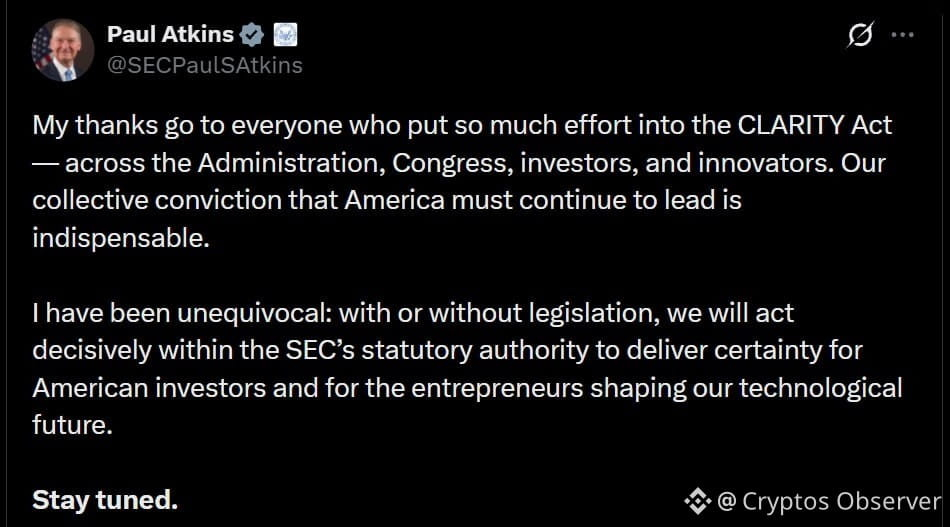
📣 SEC DROPS A BIG CRYPTO UPDATE
The SEC Chairman says that even without the CLARITY Act, the SEC will use its existing authority to provide more regulatory clarity for crypto investors and builders.
↗️ Is this good or bad for crypto?
Potentially GOOD for the crypto industry.
More regulatory clarity could make it easier for crypto companies and builders to operate in the US and give investors clearer rules to follow. The SEC has already taken steps this year to clarify how securities laws apply to different types of crypto assets.
⚠️ However, the actual impact will depend on the rules and actions that come next.
The Chairman ended with:
“Stay tuned.” 👀
Big crypto regulation updates could be coming soon.
#SECCrypto #SECCryptoRule #crypto #UpdateAlert #Binance
$NVDAB $AAPLB $NVDA.US
📣 SEC DROPS A BIG CRYPTO UPDATE
The SEC Chairman says that even without the CLARITY Act, the SEC will use its existing authority to provide more regulatory clarity for crypto investors and builders.
↗️ Is this good or bad for crypto?
Potentially GOOD for the crypto industry.
More regulatory clarity could make it easier for crypto companies and builders to operate in the US and give investors clearer rules to follow. The SEC has already taken steps this year to clarify how securities laws apply to different types of crypto assets.
⚠️ However, the actual impact will depend on the rules and actions that come next.
The Chairman ended with:
“Stay tuned.” 👀
Big crypto regulation updates could be coming soon.
#SECCrypto #SECCryptoRule #crypto #UpdateAlert #Binance
$NVDAB $AAPLB $NVDA.US
The SEC Chairman says that even without the CLARITY Act, the SEC will use its existing authority to provide more regulatory clarity for crypto investors and builders.
↗️ Is this good or bad for crypto?
Potentially GOOD for the crypto industry.
More regulatory clarity could make it easier for crypto companies and builders to operate in the US and give investors clearer rules to follow. The SEC has already taken steps this year to clarify how securities laws apply to different types of crypto assets.
⚠️ However, the actual impact will depend on the rules and actions that come next.
The Chairman ended with:
“Stay tuned.” 👀
Big crypto regulation updates could be coming soon.
#SECCrypto #SECCryptoRule #crypto #UpdateAlert #Binance
$NVDAB $AAPLB $NVDA.US
72
·
--
Bullish
See translation
🚨BIG BREAKING: 🏦 Deutsche Bank enters crypto custody
$1.7T German banking giant plans institutional custody for BTC, ETH & stablecoins.
TradFi keeps coming… even when regulation stalls.
#DeutscheBank #InstitutionalCrypto
$NVDAB $AAPLB $NVDA.US
🚨BIG BREAKING: 🏦 Deutsche Bank enters crypto custody
$1.7T German banking giant plans institutional custody for BTC, ETH & stablecoins.
TradFi keeps coming… even when regulation stalls.
#DeutscheBank #InstitutionalCrypto
$NVDAB $AAPLB $NVDA.US
$1.7T German banking giant plans institutional custody for BTC, ETH & stablecoins.
TradFi keeps coming… even when regulation stalls.
#DeutscheBank #InstitutionalCrypto
$NVDAB $AAPLB $NVDA.US

121
·
--
Bullish
See translation
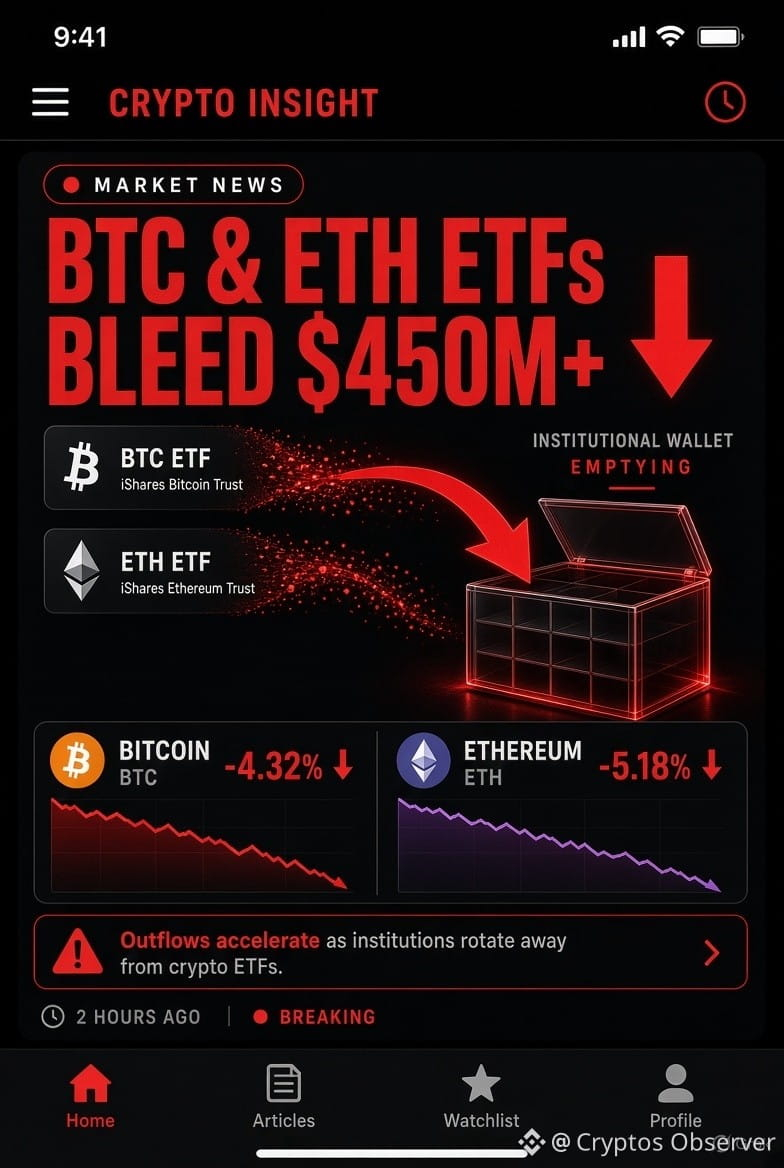
🚨BIG BREAKING: 📉 Bitcoin & Ethereum ETFs bleed hard
Biggest single-day outflows in months after the Senate vote.
BTC ETFs: ~$450M out • ETH also deep in the red.
Institutions are hitting the pause button.
#BitcoinETFs #ETH
$NVDAB $AAPLB $NVDA.US
🚨BIG BREAKING: 📉 Bitcoin & Ethereum ETFs bleed hard
Biggest single-day outflows in months after the Senate vote.
BTC ETFs: ~$450M out • ETH also deep in the red.
Institutions are hitting the pause button.
#BitcoinETFs #ETH
$NVDAB $AAPLB $NVDA.US
Biggest single-day outflows in months after the Senate vote.
BTC ETFs: ~$450M out • ETH also deep in the red.
Institutions are hitting the pause button.
#BitcoinETFs #ETH
$NVDAB $AAPLB $NVDA.US
125
·
--
Bullish
See translation
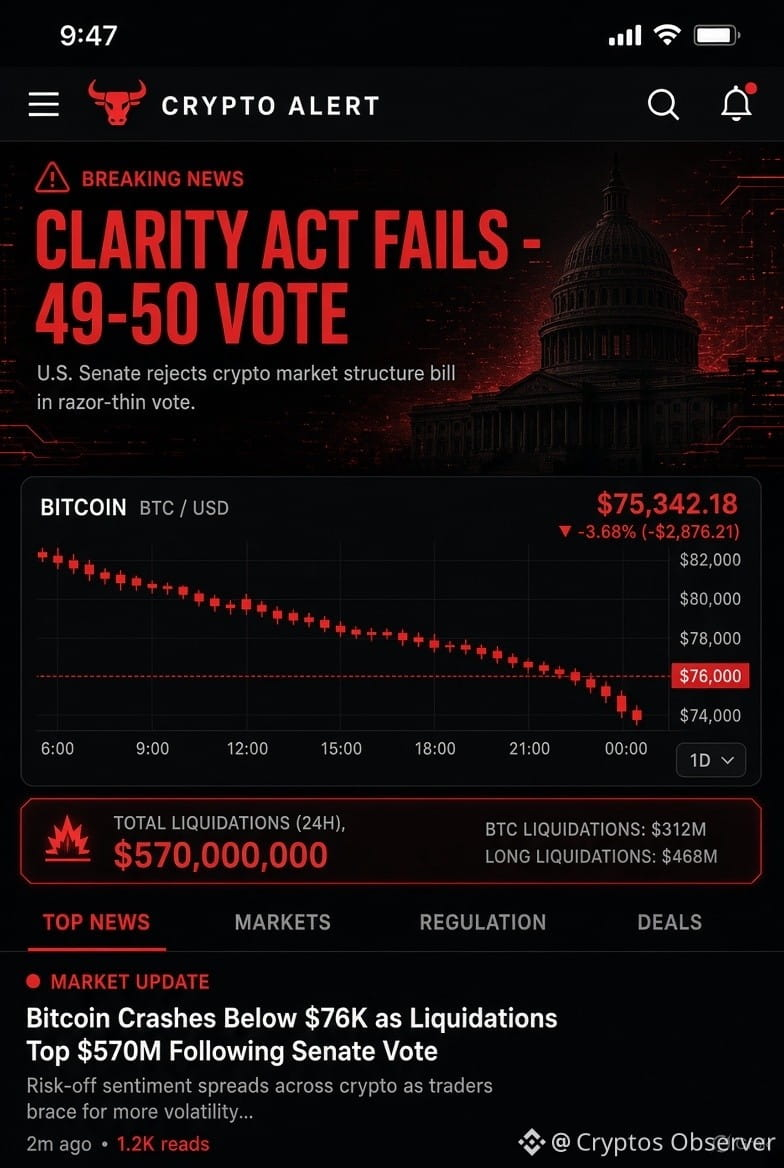
🚨BIG BREAKING: CLARITY Act FAILS in US Senate (49-50 vote)
Biggest crypto bill of the year is dead for 2026.
BTC drops below $76K • XRP -10% • $570M+ liquidations
Regulatory winter just got colder.
$NVDAB $AAPLB $NVDA.US
#CLARITYAct #bitcoin #CryptoNewsCommunity
🚨BIG BREAKING: CLARITY Act FAILS in US Senate (49-50 vote)
Biggest crypto bill of the year is dead for 2026.
BTC drops below $76K • XRP -10% • $570M+ liquidations
Regulatory winter just got colder.
$NVDAB $AAPLB $NVDA.US
#CLARITYAct #bitcoin #CryptoNewsCommunity
Biggest crypto bill of the year is dead for 2026.
BTC drops below $76K • XRP -10% • $570M+ liquidations
Regulatory winter just got colder.
$NVDAB $AAPLB $NVDA.US
#CLARITYAct #bitcoin #CryptoNewsCommunity
167
·
--
Bullish
See translation
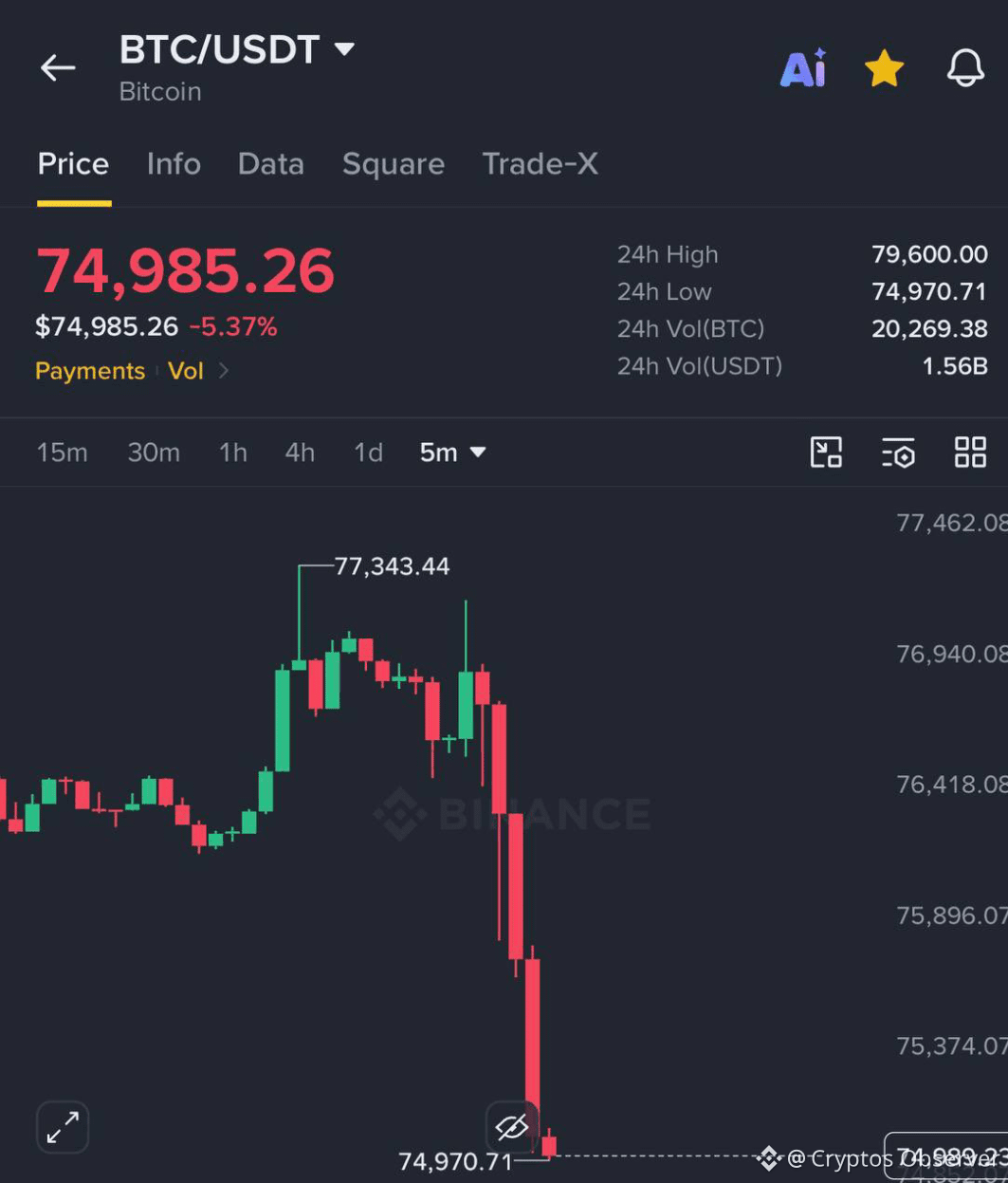
🚨Breaking: I said that if $BTC dumps to $75,000, I’d give away $10,000 in Bitcoin to 5 people.
Well, we made it.
As promised, I’m giving away $10,000 in $BTC to 5 lucky winners today.
To enter:
✅ Like
✅ follow
✅ Comment “Bitcoin” 🔔
Entries close in 24 hours. Good luck!
🚨Breaking: I said that if $BTC dumps to $75,000, I’d give away $10,000 in Bitcoin to 5 people.
Well, we made it.
As promised, I’m giving away $10,000 in $BTC to 5 lucky winners today.
To enter:
✅ Like
✅ follow
✅ Comment “Bitcoin” 🔔
Entries close in 24 hours. Good luck!
Well, we made it.
As promised, I’m giving away $10,000 in $BTC to 5 lucky winners today.
To enter:
✅ Like
✅ follow
✅ Comment “Bitcoin” 🔔
Entries close in 24 hours. Good luck!
3
·
--
Bullish
See translation
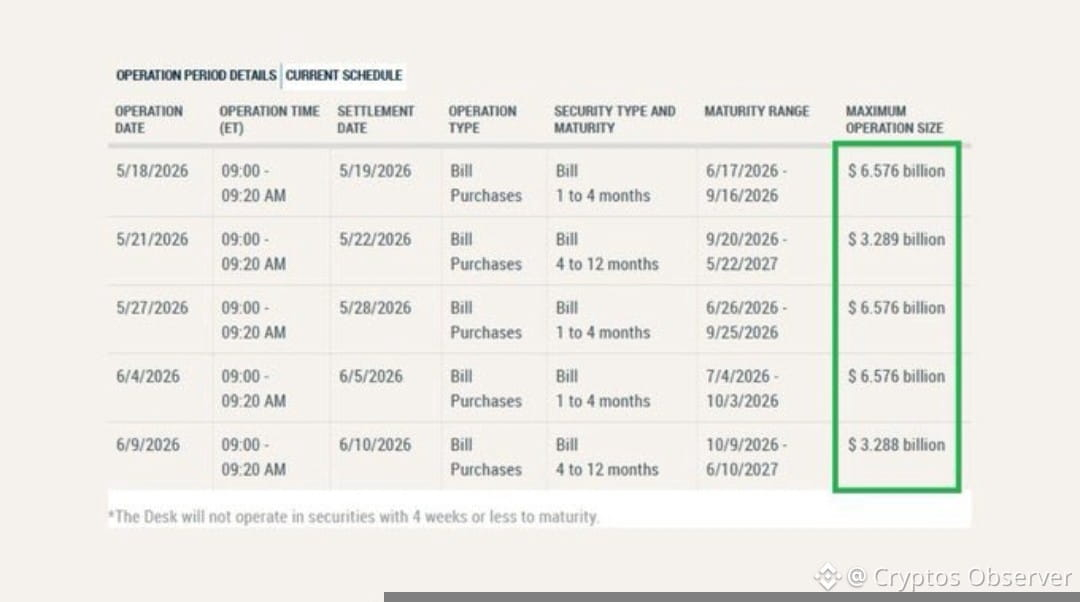
The Fed is quietly injecting $26.3B into the markets over the next three weeks.
At the same time, the Fed balance sheet is expanding again for the first time since 2020.
Every time this happened before, crypto eventually went parabolic.
Stocks are already pumping as money flows back into risk assets.
Crypto is still bleeding, and it could bleed even more - but eventually, after finding a bottom, it usually catches the move harder than everything else
The Fed is quietly injecting $26.3B into the markets over the next three weeks.
At the same time, the Fed balance sheet is expanding again for the first time since 2020.
Every time this happened before, crypto eventually went parabolic.
Stocks are already pumping as money flows back into risk assets.
Crypto is still bleeding, and it could bleed even more - but eventually, after finding a bottom, it usually catches the move harder than everything else
At the same time, the Fed balance sheet is expanding again for the first time since 2020.
Every time this happened before, crypto eventually went parabolic.
Stocks are already pumping as money flows back into risk assets.
Crypto is still bleeding, and it could bleed even more - but eventually, after finding a bottom, it usually catches the move harder than everything else

1
291
Log in to explore more content
Join global crypto users on Binance Square
⚡️ Get latest and useful information about crypto.
💬 Trusted by the world’s largest crypto exchange.
👍 Discover real insights from verified creators.
Email / Phone number
Trending Topics
ChainlinkPowersBottomlinePaymentPlatform
42 views
27 Discussing
Another bridge exploit made headlines this week. Security funds and insurance reserves aren't marketing buzzwords — they're the difference between "inconvenience" and "catastrophe."
#ChainlinkPowersBottomlinePaymentPlatform #catastrophic
SA-Trades
·1 Likes
·14 views
StellarActivatesProtocol28At211TPS
6,631 views
218 Discussing
SECGrantsInnovationExemptionForTokenizedStocks
5,973 views
190 Discussing