

#yield
yield
123,421 views
2,032 Discussing
Hot
Latest

·
--
See translation
XAUT at $4,007. Down 1.4% while spot gold sits flat. Tether printing $2B this week, but the real action? Stablecoin yields.
$XAUT bleeding while gold holds tells you who's winning the reserve fight. Not institutions. Not ETFs. Yield farmers.
DeFi rates on USDT/USD pushing 15% annual. XAUT stuck at 3.2%. Smart money isn't chasing gold — they're chasing yield, and it's not even close.
Same with $NEAR at $4.93. Down 0.9% but sitting in 8.4% annualized staking. Utility yield beats store-of-value narrative every time.
$WLD at $0.053. Down 3.8% — but iris scans are generating data revenue. Real yield from biometric data. That's what the market's pricing in.
Not chasing any of these. Just watching the yield gap. When stablecoin rates crack 18%, we'll see the real rotation.
#DeFi #Yield #Stablecoins
XAUT at $4,007. Down 1.4% while spot gold sits flat. Tether printing $2B this week, but the real action? Stablecoin yields.
$XAUT bleeding while gold holds tells you who's winning the reserve fight. Not institutions. Not ETFs. Yield farmers.
DeFi rates on USDT/USD pushing 15% annual. XAUT stuck at 3.2%. Smart money isn't chasing gold — they're chasing yield, and it's not even close.
Same with $NEAR at $4.93. Down 0.9% but sitting in 8.4% annualized staking. Utility yield beats store-of-value narrative every time.
$WLD at $0.053. Down 3.8% — but iris scans are generating data revenue. Real yield from biometric data. That's what the market's pricing in.
Not chasing any of these. Just watching the yield gap. When stablecoin rates crack 18%, we'll see the real rotation.
#DeFi #Yield #Stablecoins
$XAUT bleeding while gold holds tells you who's winning the reserve fight. Not institutions. Not ETFs. Yield farmers.
DeFi rates on USDT/USD pushing 15% annual. XAUT stuck at 3.2%. Smart money isn't chasing gold — they're chasing yield, and it's not even close.
Same with $NEAR at $4.93. Down 0.9% but sitting in 8.4% annualized staking. Utility yield beats store-of-value narrative every time.
$WLD at $0.053. Down 3.8% — but iris scans are generating data revenue. Real yield from biometric data. That's what the market's pricing in.
Not chasing any of these. Just watching the yield gap. When stablecoin rates crack 18%, we'll see the real rotation.
#DeFi #Yield #Stablecoins
65

See translation
🚀 $USDC SET TO UNLOCK YIELD PLAY AS GENIUS ACT RULES APPROVED! 🟢
📊 The OCC just green‑lit the final GENIUS Act framework, letting American holders earn on stablecoin balances. This regulatory win clears the fog around compliant yield products, nudging institutional cash toward $USDC ’s liquidity pool.
⚡ Expect a swift influx of capital as banks and fintechs roll out interest‑bearing accounts, sharpening the demand‑supply curve and potentially nudging the price upward. Smart money will likely scout the newly minted order‑blocks for entry points.
💬 How will you position your stablecoin exposure now that earnings are back on the table? 👇
⚠️ Not financial advice. Always manage your risk. 🛡️
🏷️ #USDC #Stablecoin #Yield #Crypto
🚀 💎
🚀 $USDC SET TO UNLOCK YIELD PLAY AS GENIUS ACT RULES APPROVED! 🟢
📊 The OCC just green‑lit the final GENIUS Act framework, letting American holders earn on stablecoin balances. This regulatory win clears the fog around compliant yield products, nudging institutional cash toward $USDC ’s liquidity pool.
⚡ Expect a swift influx of capital as banks and fintechs roll out interest‑bearing accounts, sharpening the demand‑supply curve and potentially nudging the price upward. Smart money will likely scout the newly minted order‑blocks for entry points.
💬 How will you position your stablecoin exposure now that earnings are back on the table? 👇
⚠️ Not financial advice. Always manage your risk. 🛡️
🏷️ #USDC #Stablecoin #Yield #Crypto
🚀 💎
📊 The OCC just green‑lit the final GENIUS Act framework, letting American holders earn on stablecoin balances. This regulatory win clears the fog around compliant yield products, nudging institutional cash toward $USDC ’s liquidity pool.
⚡ Expect a swift influx of capital as banks and fintechs roll out interest‑bearing accounts, sharpening the demand‑supply curve and potentially nudging the price upward. Smart money will likely scout the newly minted order‑blocks for entry points.
💬 How will you position your stablecoin exposure now that earnings are back on the table? 👇
⚠️ Not financial advice. Always manage your risk. 🛡️
🏷️ #USDC #Stablecoin #Yield #Crypto
🚀 💎
5

·
--
Bullish
See translation
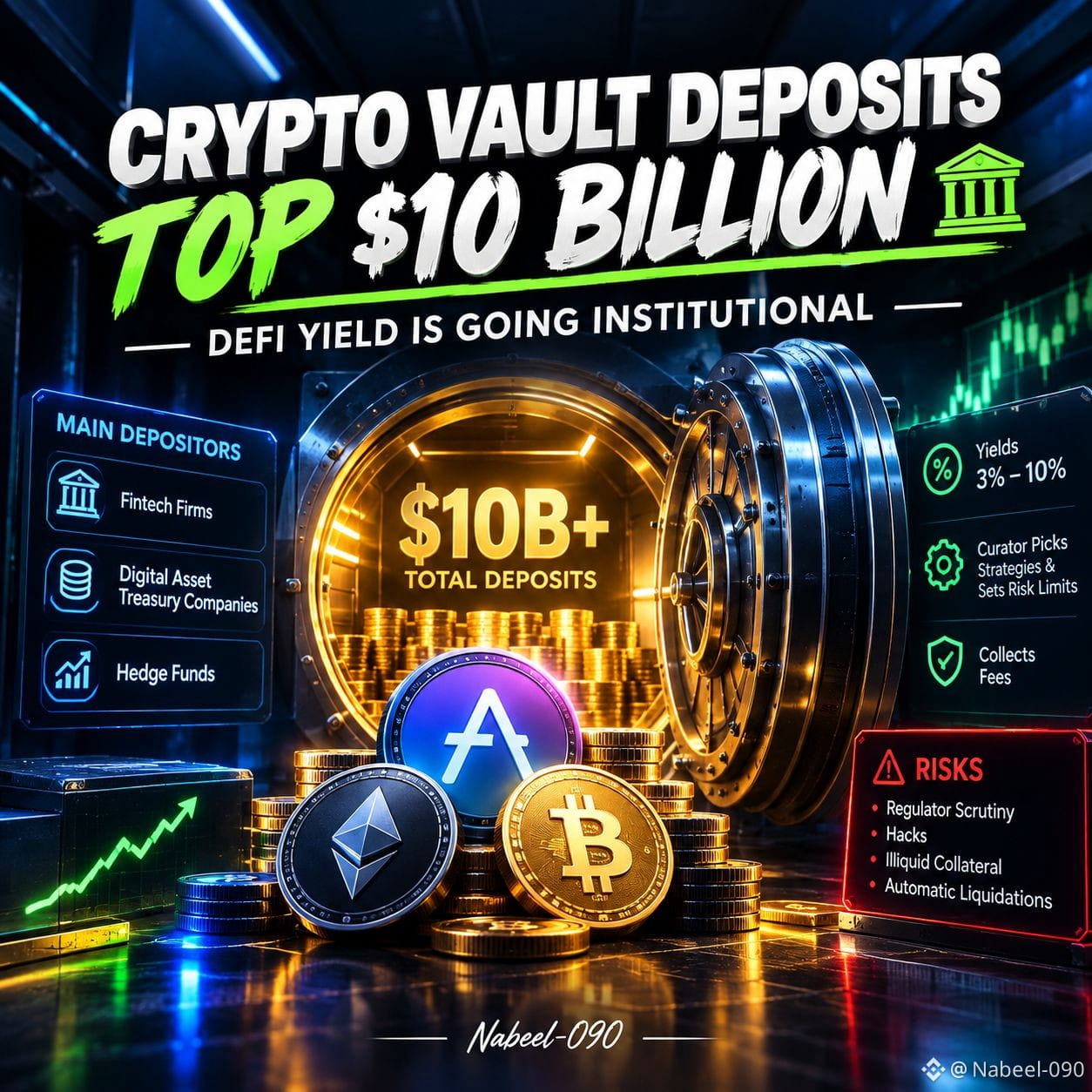
#CryptoVaultDepositsTop$10Billion 🏦
DeFi yield is going institutional.
🔹 Crypto vault deposits have passed $10 billion, up from about $4 billion at the start of 2025.
🔹 Fintech firms, digital asset treasury companies and hedge funds are the main depositors.
🔹 Each vault has a curator who picks lending strategies, sets risk limits and collects fees, like a fund manager.
🔹 Yields run 3% to 10%, and riskier strategies go higher.
⚠️ Regulators in the US and Europe are examining oversight, as hacks, illiquid collateral and automatic liquidations create risk. Higher yield means higher risk.
📈 Prediction: UP for $AAVE and DeFi lending tokens. Money growing 2.5x in under two years shows real demand for onchain yield, and the Grayscale DeFi Fund adds institutional attention to the same sector.
Would you put your coins in a vault, or is the risk too high? 👇
Not financial advice. Vaults can lose money. $AAVE $ETH $BTC
#CryptoVaultDepositsTop$10Billion #defi #yield #crypto
The Oct 28 Fed decision could still move everything short term, so the call is UP over the next few weeks, not a guarantee for the next 24 hours.
#CryptoVaultDepositsTop$10Billion 🏦
DeFi yield is going institutional.
🔹 Crypto vault deposits have passed $10 billion, up from about $4 billion at the start of 2025.
🔹 Fintech firms, digital asset treasury companies and hedge funds are the main depositors.
🔹 Each vault has a curator who picks lending strategies, sets risk limits and collects fees, like a fund manager.
🔹 Yields run 3% to 10%, and riskier strategies go higher.
⚠️ Regulators in the US and Europe are examining oversight, as hacks, illiquid collateral and automatic liquidations create risk. Higher yield means higher risk.
📈 Prediction: UP for $AAVE and DeFi lending tokens. Money growing 2.5x in under two years shows real demand for onchain yield, and the Grayscale DeFi Fund adds institutional attention to the same sector.
Would you put your coins in a vault, or is the risk too high? 👇
Not financial advice. Vaults can lose money. $AAVE $ETH $BTC
#CryptoVaultDepositsTop$10Billion #defi #yield #crypto
The Oct 28 Fed decision could still move everything short term, so the call is UP over the next few weeks, not a guarantee for the next 24 hours.
DeFi yield is going institutional.
🔹 Crypto vault deposits have passed $10 billion, up from about $4 billion at the start of 2025.
🔹 Fintech firms, digital asset treasury companies and hedge funds are the main depositors.
🔹 Each vault has a curator who picks lending strategies, sets risk limits and collects fees, like a fund manager.
🔹 Yields run 3% to 10%, and riskier strategies go higher.
⚠️ Regulators in the US and Europe are examining oversight, as hacks, illiquid collateral and automatic liquidations create risk. Higher yield means higher risk.
📈 Prediction: UP for $AAVE and DeFi lending tokens. Money growing 2.5x in under two years shows real demand for onchain yield, and the Grayscale DeFi Fund adds institutional attention to the same sector.
Would you put your coins in a vault, or is the risk too high? 👇
Not financial advice. Vaults can lose money. $AAVE $ETH $BTC
#CryptoVaultDepositsTop$10Billion #defi #yield #crypto
The Oct 28 Fed decision could still move everything short term, so the call is UP over the next few weeks, not a guarantee for the next 24 hours.
1
264

See translation
INSTITUTIONAL CAPITAL JUST FLOODED $AAVE VAULTS PAST THE $10 BILLION THRESHOLD! 🌊 🦈
Smart money is rotating aggressively into on-chain yield mechanics. 📊 Total deposits across decentralized lending vaults surged from $4B to over $10B, confirming deep-pocketed allocators are no longer sitting on the sidelines.
💡 While capital chases yields stretching north of 20%, regulators and rating desks are already circling to audit collateral and smart contract exposure. High yields always demand premium vigilance, and when liquidity clusters this fast, sharp market repricing follows.
💬 Are you locking capital into high-yield vaults right now, or keeping dry powder ready on the bid? 👇
⚠️ Not financial advice. Always manage your risk. 🛡️
🏷️ #AAVE #DeFi #Yield #Crypto
🦈 ⚡
INSTITUTIONAL CAPITAL JUST FLOODED $AAVE VAULTS PAST THE $10 BILLION THRESHOLD! 🌊 🦈
Smart money is rotating aggressively into on-chain yield mechanics. 📊 Total deposits across decentralized lending vaults surged from $4B to over $10B, confirming deep-pocketed allocators are no longer sitting on the sidelines.
💡 While capital chases yields stretching north of 20%, regulators and rating desks are already circling to audit collateral and smart contract exposure. High yields always demand premium vigilance, and when liquidity clusters this fast, sharp market repricing follows.
💬 Are you locking capital into high-yield vaults right now, or keeping dry powder ready on the bid? 👇
⚠️ Not financial advice. Always manage your risk. 🛡️
🏷️ #AAVE #DeFi #Yield #Crypto
🦈 ⚡
Smart money is rotating aggressively into on-chain yield mechanics. 📊 Total deposits across decentralized lending vaults surged from $4B to over $10B, confirming deep-pocketed allocators are no longer sitting on the sidelines.
💡 While capital chases yields stretching north of 20%, regulators and rating desks are already circling to audit collateral and smart contract exposure. High yields always demand premium vigilance, and when liquidity clusters this fast, sharp market repricing follows.
💬 Are you locking capital into high-yield vaults right now, or keeping dry powder ready on the bid? 👇
⚠️ Not financial advice. Always manage your risk. 🛡️
🏷️ #AAVE #DeFi #Yield #Crypto
🦈 ⚡
11

·
--
See translation
A 20% yield looks attractive until you ask what’s inside the vault.
DeFi lending vaults have crossed a major milestone: deposits now exceed 10 billion USD, up from roughly 4 billion at the start of last year.
But here’s the part many yield hunters overlook.
A vault is not risk free just because deposits and transactions are visible on-chain.
Three risks deserve attention:
Collateral risk: borrowers may be backed by assets that lose value or become difficult to sell.
Liquidity risk: withdrawals can become harder when a market is stressed.
Curator risk: someone still chooses the lending strategy, risk limits and asset exposure.
My take: the next test for DeFi yield products isn’t just how much capital they attract. It’s how transparently they manage risk when markets turn against them.
A high advertised APY is a potential return not proof of safety.
What matters more to you when evaluating a DeFi vault: APY, collateral quality, or the curator’s track record?
#DeFi #ETH #crypto #RiskManagement #yield
A 20% yield looks attractive until you ask what’s inside the vault.
DeFi lending vaults have crossed a major milestone: deposits now exceed 10 billion USD, up from roughly 4 billion at the start of last year.
But here’s the part many yield hunters overlook.
A vault is not risk free just because deposits and transactions are visible on-chain.
Three risks deserve attention:
Collateral risk: borrowers may be backed by assets that lose value or become difficult to sell.
Liquidity risk: withdrawals can become harder when a market is stressed.
Curator risk: someone still chooses the lending strategy, risk limits and asset exposure.
My take: the next test for DeFi yield products isn’t just how much capital they attract. It’s how transparently they manage risk when markets turn against them.
A high advertised APY is a potential return not proof of safety.
What matters more to you when evaluating a DeFi vault: APY, collateral quality, or the curator’s track record?
#DeFi #ETH #crypto #RiskManagement #yield
DeFi lending vaults have crossed a major milestone: deposits now exceed 10 billion USD, up from roughly 4 billion at the start of last year.
But here’s the part many yield hunters overlook.
A vault is not risk free just because deposits and transactions are visible on-chain.
Three risks deserve attention:
Collateral risk: borrowers may be backed by assets that lose value or become difficult to sell.
Liquidity risk: withdrawals can become harder when a market is stressed.
Curator risk: someone still chooses the lending strategy, risk limits and asset exposure.
My take: the next test for DeFi yield products isn’t just how much capital they attract. It’s how transparently they manage risk when markets turn against them.
A high advertised APY is a potential return not proof of safety.
What matters more to you when evaluating a DeFi vault: APY, collateral quality, or the curator’s track record?
#DeFi #ETH #crypto #RiskManagement #yield

85

See translation
Crypto lending vaults just blew past 10 billion dollars in deposits
That is up from 4 billion at the start of last year
A jump of roughly 150 percent in under two years
And it is happening while Bitcoin sits flat because capital is chasing yield not price
US and European regulators are now circling
The SEC is looking at whether vaults fall under securities law
ESMA wants gatekeepers who connect users to DeFi to face rules
The worry is simple a published APY looks like a promise but vault depositors are unsecured creditors with no bank backstop
Curators pick the strategies and set the risk parameters just like fund managers
When redemptions spike nobody knows if the yield was real or just thin collateral and long duration
Over 10 billion dollars is now sitting in that gray zone
$AGT $Q $ETH #Crypto #DeFi #Regulation #SEC #Yield
{spot}(ETHUSDT)
{future}(QUSDT)
Crypto lending vaults just blew past 10 billion dollars in deposits
That is up from 4 billion at the start of last year
A jump of roughly 150 percent in under two years
And it is happening while Bitcoin sits flat because capital is chasing yield not price
US and European regulators are now circling
The SEC is looking at whether vaults fall under securities law
ESMA wants gatekeepers who connect users to DeFi to face rules
The worry is simple a published APY looks like a promise but vault depositors are unsecured creditors with no bank backstop
Curators pick the strategies and set the risk parameters just like fund managers
When redemptions spike nobody knows if the yield was real or just thin collateral and long duration
Over 10 billion dollars is now sitting in that gray zone
$AGT $Q $ETH #Crypto #DeFi #Regulation #SEC #Yield
That is up from 4 billion at the start of last year
A jump of roughly 150 percent in under two years
And it is happening while Bitcoin sits flat because capital is chasing yield not price
US and European regulators are now circling
The SEC is looking at whether vaults fall under securities law
ESMA wants gatekeepers who connect users to DeFi to face rules
The worry is simple a published APY looks like a promise but vault depositors are unsecured creditors with no bank backstop
Curators pick the strategies and set the risk parameters just like fund managers
When redemptions spike nobody knows if the yield was real or just thin collateral and long duration
Over 10 billion dollars is now sitting in that gray zone
$AGT $Q $ETH #Crypto #DeFi #Regulation #SEC #Yield


1
1k
See translation
🦈 $USDT YIELD TIERS TIGHTEN AS EXCHANGES SQUEEZE PASSIVE RETURNS ACROSS THE BOARD! 📉
📊 Major exchanges are aggressively capping passive yields, restricting double-digit returns on $USDT and $USDC strictly to microscopic entry tiers before dumping rates toward sub-3%.
💡 Smart money is feeling the pinch as larger balances get hit with steep tier reductions, forcing active capital allocators to re-evaluate their idle vault holdings. 🌊
💬 Are you keeping your $USDT parked for base yield, or holding dry powder ready to bid the next market breakout? 👇
⚠️ Not financial advice. Always manage your risk. 🛡️
🏷️ #USDT #Stablecoins #Yield #Crypto
🦈 ⚡
🦈 $USDT YIELD TIERS TIGHTEN AS EXCHANGES SQUEEZE PASSIVE RETURNS ACROSS THE BOARD! 📉
📊 Major exchanges are aggressively capping passive yields, restricting double-digit returns on $USDT and $USDC strictly to microscopic entry tiers before dumping rates toward sub-3%.
💡 Smart money is feeling the pinch as larger balances get hit with steep tier reductions, forcing active capital allocators to re-evaluate their idle vault holdings. 🌊
💬 Are you keeping your $USDT parked for base yield, or holding dry powder ready to bid the next market breakout? 👇
⚠️ Not financial advice. Always manage your risk. 🛡️
🏷️ #USDT #Stablecoins #Yield #Crypto
🦈 ⚡
📊 Major exchanges are aggressively capping passive yields, restricting double-digit returns on $USDT and $USDC strictly to microscopic entry tiers before dumping rates toward sub-3%.
💡 Smart money is feeling the pinch as larger balances get hit with steep tier reductions, forcing active capital allocators to re-evaluate their idle vault holdings. 🌊
💬 Are you keeping your $USDT parked for base yield, or holding dry powder ready to bid the next market breakout? 👇
⚠️ Not financial advice. Always manage your risk. 🛡️
🏷️ #USDT #Stablecoins #Yield #Crypto
🦈 ⚡
9

·
--
See translation
How US inflation and interest rates affect markets
Higher inflation and rising interest rates typically push US Treasury yields higher (with the 10-year yield touching 5.33%), put downward pressure on stock markets (such as the S&P 500 and Nasdaq), and affect alternative assets like gold and cryptocurrencies.
$BTC $ETH $XAUT
#10YearYield #usa #yield
How US inflation and interest rates affect markets
Higher inflation and rising interest rates typically push US Treasury yields higher (with the 10-year yield touching 5.33%), put downward pressure on stock markets (such as the S&P 500 and Nasdaq), and affect alternative assets like gold and cryptocurrencies.
$BTC $ETH $XAUT
#10YearYield #usa #yield
Higher inflation and rising interest rates typically push US Treasury yields higher (with the 10-year yield touching 5.33%), put downward pressure on stock markets (such as the S&P 500 and Nasdaq), and affect alternative assets like gold and cryptocurrencies.
$BTC $ETH $XAUT
#10YearYield #usa #yield
182


·
--
See translation
Tokenised Treasury Bills for On-Chain Yield 🃏
Tokenized U.S. Treasury Bills (T-Bills) have become the risk-free benchmark rate for decentralized finance.
Why On-Chain T-Bills Matter
Key Factors: 🛡️ Low-Risk On-Chain Yield: Native yield backed by real government debt instruments rather than inflationary token emission. 🔄 Collateral Efficiency: Using tokenized treasuries as productive collateral across DeFi lending platforms. 💵 Stablecoin Diversification: Providing treasury management solutions for Web3 projects and DAOs.
The Shift Stablecoin issuers and protocols are moving idle capital into yield-bearing real-world debt instruments to maximize returns securely.
Is safe RWA yield better than volatile DeFi farming returns? 🤔
#Yield #RWAs #DeFi .
Tokenised Treasury Bills for On-Chain Yield 🃏
Tokenized U.S. Treasury Bills (T-Bills) have become the risk-free benchmark rate for decentralized finance.
Why On-Chain T-Bills Matter
Key Factors: 🛡️ Low-Risk On-Chain Yield: Native yield backed by real government debt instruments rather than inflationary token emission. 🔄 Collateral Efficiency: Using tokenized treasuries as productive collateral across DeFi lending platforms. 💵 Stablecoin Diversification: Providing treasury management solutions for Web3 projects and DAOs.
The Shift Stablecoin issuers and protocols are moving idle capital into yield-bearing real-world debt instruments to maximize returns securely.
Is safe RWA yield better than volatile DeFi farming returns? 🤔
#Yield #RWAs #DeFi .
Tokenized U.S. Treasury Bills (T-Bills) have become the risk-free benchmark rate for decentralized finance.
Why On-Chain T-Bills Matter
Key Factors: 🛡️ Low-Risk On-Chain Yield: Native yield backed by real government debt instruments rather than inflationary token emission. 🔄 Collateral Efficiency: Using tokenized treasuries as productive collateral across DeFi lending platforms. 💵 Stablecoin Diversification: Providing treasury management solutions for Web3 projects and DAOs.
The Shift Stablecoin issuers and protocols are moving idle capital into yield-bearing real-world debt instruments to maximize returns securely.
Is safe RWA yield better than volatile DeFi farming returns? 🤔
#Yield #RWAs #DeFi .

AGGETF+0.16%
129

See translation
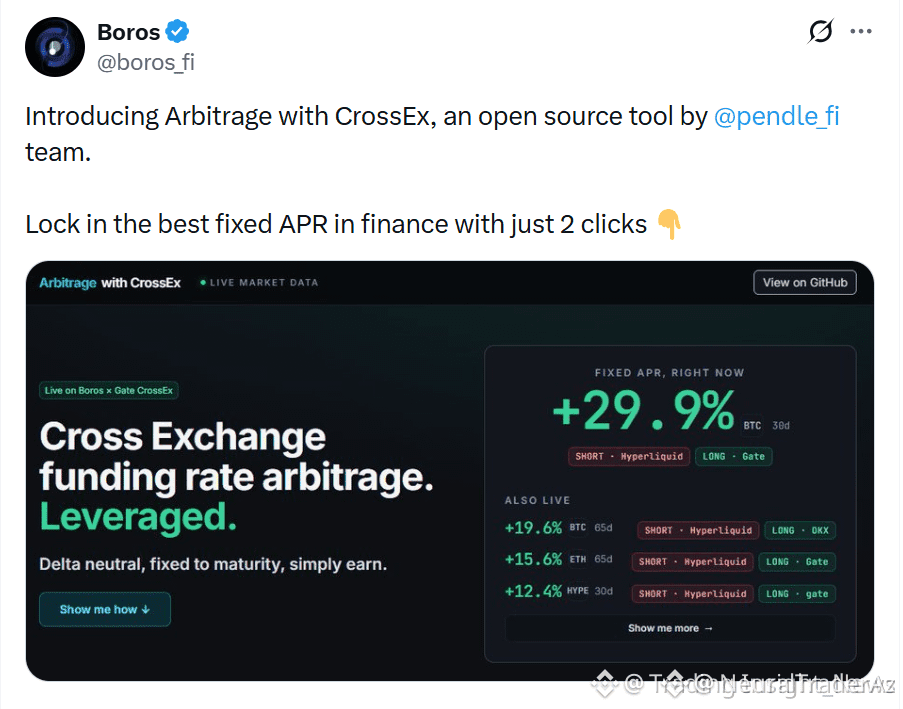
🚨 $PENDLE UNLOCKS INSTITUTIONAL-GRADE FUNDING ARBITRAGE TOOLS TO DEMOCRATIZE HIGH YIELD CAPTURE ⚡
Pendle and Boros just deployed CrossEx, an open-source execution layer bridging cross-exchange funding rate discrepancies. 🔍 This institutional framework automates delta-neutral yield strategies that previously peaked above 40% APY without exposing capital to directional price volatility.
💡 By lowering technical friction, yield mechanics once monopolized by quantitative funds are shifting directly to retail liquidity providers. 📊 As capital efficiency expands across DeFi protocols, structural demand for $PENDLE ecosystem products continues to strengthen. 💬 Will you be deploying capital into delta-neutral arbitrage strategies, or do you prefer holding spot directional exposure? 👇
⚠️ Not financial advice. Always manage your risk. 🛡️
🏷️ #PENDLE #DeFi #Arbitrage #Yield
🎯 🦈
🚨 $PENDLE UNLOCKS INSTITUTIONAL-GRADE FUNDING ARBITRAGE TOOLS TO DEMOCRATIZE HIGH YIELD CAPTURE ⚡
Pendle and Boros just deployed CrossEx, an open-source execution layer bridging cross-exchange funding rate discrepancies. 🔍 This institutional framework automates delta-neutral yield strategies that previously peaked above 40% APY without exposing capital to directional price volatility.
💡 By lowering technical friction, yield mechanics once monopolized by quantitative funds are shifting directly to retail liquidity providers. 📊 As capital efficiency expands across DeFi protocols, structural demand for $PENDLE ecosystem products continues to strengthen. 💬 Will you be deploying capital into delta-neutral arbitrage strategies, or do you prefer holding spot directional exposure? 👇
⚠️ Not financial advice. Always manage your risk. 🛡️
🏷️ #PENDLE #DeFi #Arbitrage #Yield
🎯 🦈
Pendle and Boros just deployed CrossEx, an open-source execution layer bridging cross-exchange funding rate discrepancies. 🔍 This institutional framework automates delta-neutral yield strategies that previously peaked above 40% APY without exposing capital to directional price volatility.
💡 By lowering technical friction, yield mechanics once monopolized by quantitative funds are shifting directly to retail liquidity providers. 📊 As capital efficiency expands across DeFi protocols, structural demand for $PENDLE ecosystem products continues to strengthen. 💬 Will you be deploying capital into delta-neutral arbitrage strategies, or do you prefer holding spot directional exposure? 👇
⚠️ Not financial advice. Always manage your risk. 🛡️
🏷️ #PENDLE #DeFi #Arbitrage #Yield
🎯 🦈
143

Article
See translation
ASIA MARKET BRIEFING: Tokyo & Seoul Face Pressure From Wall Street Slump and Yield Surge; Hong KongAsian equities kicked off the session on a cautious note this morning, echoing an intense overnight sell-off on Wall Street. Persistent upward momentum in U.S. Treasury yields and renewed macroeconomic anxiety have prompted institutional investors to re-assess risk exposure across major APAC boards.
Here is how key regional indices navigated the opening bell and what it signals for broader risk assets, including crypto.
📉 Regional Performance Breakdown
Tokyo & Seoul: Both regional heavyweights dipped at the open. Heavy tech weighting and profit-taking accelerated the decline as traders reacted to the U.S. tech-sector correction and surging bond returns.
Hong Kong: Stood out as a relative safe haven in the region, opening flat as local investors digested mixed monetary signals and localized policy supports.
Overall Market Vibe: Risk aversion is currently driving capital allocation, putting a temporary ceiling on aggressive equity rallies.
🔍 Macro Catalysts Driving the Shift
To understand today's regional pullback, traders need to look at the cross-border catalysts:
The Wall Street Spillover: Overnight U.S. sessions lost significant ground, dragging global sentiment down as growth and tech stocks faced broad-based liquidations.
U.S. Treasury Yields Creep Higher: Fixed-income yields continue to pressure equity valuations, offering stiff competition to risk-on assets as risk-free returns become more lucrative.
Liquidity Tightening Expectations: Shifting expectations surrounding central bank interest rate trajectories are keeping institutional market makers on their toes.
⚡ What This Means for Crypto Traders
When traditional Asian markets open lower on the back of rising bond yields and Wall Street weakness, digital assets often experience synchronized friction. High-beta assets like cryptocurrencies are tightly bound to global liquidity trends:
Short-Term Volatility: Expect choppy price action across major crypto pairs as leveraged long positions are flushed out during macro-driven dips.
The Yield Correlation: When bond yields climb aggressively, capital tends to rotate away from speculative risk curves, creating temporary headwinds for altcoins and mid-cap tokens.
Strategic Outlook: Savvy traders are watching key support levels on major crypto indices, looking for accumulation zones while traditional macro volatility settles.
#cryptotrading
#MarketUpdate
#MacroEconomics
#FedPolicy
#yield
ASIA MARKET BRIEFING: Tokyo & Seoul Face Pressure From Wall Street Slump and Yield Surge; Hong Kong
Asian equities kicked off the session on a cautious note this morning, echoing an intense overnight sell-off on Wall Street. Persistent upward momentum in U.S. Treasury yields and renewed macroeconomic anxiety have prompted institutional investors to re-assess risk exposure across major APAC boards.
Here is how key regional indices navigated the opening bell and what it signals for broader risk assets, including crypto.
📉 Regional Performance Breakdown
Tokyo & Seoul: Both regional heavyweights dipped at the open. Heavy tech weighting and profit-taking accelerated the decline as traders reacted to the U.S. tech-sector correction and surging bond returns.
Hong Kong: Stood out as a relative safe haven in the region, opening flat as local investors digested mixed monetary signals and localized policy supports.
Overall Market Vibe: Risk aversion is currently driving capital allocation, putting a temporary ceiling on aggressive equity rallies.
🔍 Macro Catalysts Driving the Shift
To understand today's regional pullback, traders need to look at the cross-border catalysts:
The Wall Street Spillover: Overnight U.S. sessions lost significant ground, dragging global sentiment down as growth and tech stocks faced broad-based liquidations.
U.S. Treasury Yields Creep Higher: Fixed-income yields continue to pressure equity valuations, offering stiff competition to risk-on assets as risk-free returns become more lucrative.
Liquidity Tightening Expectations: Shifting expectations surrounding central bank interest rate trajectories are keeping institutional market makers on their toes.
⚡ What This Means for Crypto Traders
When traditional Asian markets open lower on the back of rising bond yields and Wall Street weakness, digital assets often experience synchronized friction. High-beta assets like cryptocurrencies are tightly bound to global liquidity trends:
Short-Term Volatility: Expect choppy price action across major crypto pairs as leveraged long positions are flushed out during macro-driven dips.
The Yield Correlation: When bond yields climb aggressively, capital tends to rotate away from speculative risk curves, creating temporary headwinds for altcoins and mid-cap tokens.
Strategic Outlook: Savvy traders are watching key support levels on major crypto indices, looking for accumulation zones while traditional macro volatility settles.
#cryptotrading
#MarketUpdate
#MacroEconomics
#FedPolicy
#yield
Here is how key regional indices navigated the opening bell and what it signals for broader risk assets, including crypto.
📉 Regional Performance Breakdown
Tokyo & Seoul: Both regional heavyweights dipped at the open. Heavy tech weighting and profit-taking accelerated the decline as traders reacted to the U.S. tech-sector correction and surging bond returns.
Hong Kong: Stood out as a relative safe haven in the region, opening flat as local investors digested mixed monetary signals and localized policy supports.
Overall Market Vibe: Risk aversion is currently driving capital allocation, putting a temporary ceiling on aggressive equity rallies.
🔍 Macro Catalysts Driving the Shift
To understand today's regional pullback, traders need to look at the cross-border catalysts:
The Wall Street Spillover: Overnight U.S. sessions lost significant ground, dragging global sentiment down as growth and tech stocks faced broad-based liquidations.
U.S. Treasury Yields Creep Higher: Fixed-income yields continue to pressure equity valuations, offering stiff competition to risk-on assets as risk-free returns become more lucrative.
Liquidity Tightening Expectations: Shifting expectations surrounding central bank interest rate trajectories are keeping institutional market makers on their toes.
⚡ What This Means for Crypto Traders
When traditional Asian markets open lower on the back of rising bond yields and Wall Street weakness, digital assets often experience synchronized friction. High-beta assets like cryptocurrencies are tightly bound to global liquidity trends:
Short-Term Volatility: Expect choppy price action across major crypto pairs as leveraged long positions are flushed out during macro-driven dips.
The Yield Correlation: When bond yields climb aggressively, capital tends to rotate away from speculative risk curves, creating temporary headwinds for altcoins and mid-cap tokens.
Strategic Outlook: Savvy traders are watching key support levels on major crypto indices, looking for accumulation zones while traditional macro volatility settles.
#cryptotrading
#MarketUpdate
#MacroEconomics
#FedPolicy
#yield
112


·
--
Crypto Dividend News Every Day Is Here! Strategy is seeking shareholder approval to convert STRC and other preferred stocks into daily dividend payouts, following Bitcoin treasury firm Strive’s innovative model. Earn daily, liquidate flexibly—crypto is redefining how wealth is distributed! #crypto #dividends $STRC $BTC
Daily dividends in crypto are coming! Strategy is seeking shareholder approval to switch STRC and other preferred stocks to daily payouts, following Bitcoin treasury firm Strive's lead. Get returns daily with maximum flexibility - crypto is reshaping wealth distribution! #crypto #yield $STRC $BTC
Crypto Dividend News Every Day Is Here! Strategy is seeking shareholder approval to convert STRC and other preferred stocks into daily dividend payouts, following Bitcoin treasury firm Strive’s innovative model. Earn daily, liquidate flexibly—crypto is redefining how wealth is distributed! #crypto #dividends $STRC $BTC
Daily dividends in crypto are coming! Strategy is seeking shareholder approval to switch STRC and other preferred stocks to daily payouts, following Bitcoin treasury firm Strive's lead. Get returns daily with maximum flexibility - crypto is reshaping wealth distribution! #crypto #yield $STRC $BTC
Daily dividends in crypto are coming! Strategy is seeking shareholder approval to switch STRC and other preferred stocks to daily payouts, following Bitcoin treasury firm Strive's lead. Get returns daily with maximum flexibility - crypto is reshaping wealth distribution! #crypto #yield $STRC $BTC
126

·
--
Article
See translation
The Rise Of Yield-Backed StablecoinsFor years, stablecoins were treated like parking lots.
You move your money into them…
hold during volatility…
send payments…
maybe use them for trading pairs…
…but most of the time, your capital just sat there doing nothing.
That model is starting to change.
Now imagine holding a stablecoin that doesn’t only preserve value…
but also puts your capital to work inside DeFi.
That’s where yield-backed systems like 𝐬𝐔𝐒𝐃𝐃 come in.👇
Before we continue, let’s quickly understand something important.
Most people in crypto chase yield the wrong way.
They jump into:
• risky farms
• unsustainable APYs
• inflationary reward systems
• protocols that collapse once incentives disappear
And we’ve seen how that story usually ends.
High APY screenshots…
then liquidity disappears.
Then panic starts.
The real question is no longer:
“Which protocol gives the highest yield?”
It is:
“Which yield system can actually survive?”
That is the interesting part about 𝐬𝐔𝐒𝐃𝐃.
Instead of separating stability and yield…
USDD tries to combine both into one ecosystem.
➠ What Is sUSDD?
sUSDD is the yield-bearing version of USDD.
Think of it like this:
• USDD acts as the stable asset.
• sUSDD acts as the productive version of that asset.
So instead of your stablecoins sitting idle…
they continue generating returns while remaining inside the USDD ecosystem.
And that changes how users interact with stablecoins entirely.
Now here’s where things get more interesting.👇
Most traditional yield systems lock your money.
You deposit.
Then wait.
Then hope market conditions don’t change before unlock periods end.
But USDD’s yield structure leans heavily toward flexibility.
➠ No lock-up periods.
➠ No capped participation.
➠ Capital can move more freely.
That matters more than people think.
Because in crypto…
flexibility itself becomes an advantage.
If market conditions shift tomorrow, users are not trapped waiting weeks just to access their own liquidity.
Now let’s talk about how users actually earn inside the ecosystem.
There are different layers depending on experience level.
➠ The Simple Layer.
Some users simply mint USDD and participate through official USDD channels or supported platforms.
Straightforward.
Passive.
Easy to understand.
➠ Incentive Campaigns.
Sometimes boosted yield campaigns appear through ecosystem partners like wallets and exchanges.
These campaigns temporarily increase earning opportunities and attract more liquidity into the ecosystem.
➠ Advanced DeFi Strategies.
This is where experienced users start becoming more strategic.
Users can explore:
• liquidity provision
• leveraged yield strategies
• looping strategies
• cross-platform yield optimization
This is where stablecoins stop behaving like “digital cash”…
and start behaving like productive capital.
But here’s the part many people overlook:
Yield alone means nothing if stability breaks.
That’s the mistake many DeFi systems made in the past.
They focused entirely on rewards…
while ignoring sustainability.
USDD appears to be approaching this differently.
The ecosystem is trying to build yield around:
• over-collateralization
• reserve-backed structure
• ecosystem utility
• DeFi integrations
• and broader capital efficiency
So the goal is not simply “high APY.”
The bigger goal is:
creating a stablecoin ecosystem where yield can exist without depending entirely on reckless inflation.
And honestly…
that’s where the market itself is heading.
We are slowly moving away from:
“Which protocol gives crazy returns?”
Toward:
“Which protocol can survive long enough for those returns to matter?”
𝐌𝐲 𝐅𝐢𝐧𝐚𝐥 𝐓𝐡𝐨𝐮𝐠𝐡𝐭𝐬
Stablecoins are evolving.
The old model was simple:
hold stable value and wait.
But newer systems like sUSDD are trying to turn stablecoins into active financial instruments instead of passive storage assets.
And whether you’re a casual holder or an advanced DeFi user…
that changes the conversation completely.
Because in modern DeFi, capital efficiency matters.
Not just protecting value…
but making value productive while still maintaining stability.
That’s the bigger idea behind sUSDD.
Official Links:
⤞ 𝕏:
@usddio
⤞ Website:
usdd.io
⤞ Telegram:
t.me/usddio
⤞ Meduim:
medium.com/@usddio
@usddio
@@JustinSun
#defi
#crypto
#yield
#TRONEcoStar
The Rise Of Yield-Backed Stablecoins
For years, stablecoins were treated like parking lots.
You move your money into them…
hold during volatility…
send payments…
maybe use them for trading pairs…
…but most of the time, your capital just sat there doing nothing.
That model is starting to change.
Now imagine holding a stablecoin that doesn’t only preserve value…
but also puts your capital to work inside DeFi.
That’s where yield-backed systems like 𝐬𝐔𝐒𝐃𝐃 come in.👇
Before we continue, let’s quickly understand something important.
Most people in crypto chase yield the wrong way.
They jump into:
• risky farms
• unsustainable APYs
• inflationary reward systems
• protocols that collapse once incentives disappear
And we’ve seen how that story usually ends.
High APY screenshots…
then liquidity disappears.
Then panic starts.
The real question is no longer:
“Which protocol gives the highest yield?”
It is:
“Which yield system can actually survive?”
That is the interesting part about 𝐬𝐔𝐒𝐃𝐃.
Instead of separating stability and yield…
USDD tries to combine both into one ecosystem.
➠ What Is sUSDD?
sUSDD is the yield-bearing version of USDD.
Think of it like this:
• USDD acts as the stable asset.
• sUSDD acts as the productive version of that asset.
So instead of your stablecoins sitting idle…
they continue generating returns while remaining inside the USDD ecosystem.
And that changes how users interact with stablecoins entirely.
Now here’s where things get more interesting.👇
Most traditional yield systems lock your money.
You deposit.
Then wait.
Then hope market conditions don’t change before unlock periods end.
But USDD’s yield structure leans heavily toward flexibility.
➠ No lock-up periods.
➠ No capped participation.
➠ Capital can move more freely.
That matters more than people think.
Because in crypto…
flexibility itself becomes an advantage.
If market conditions shift tomorrow, users are not trapped waiting weeks just to access their own liquidity.
Now let’s talk about how users actually earn inside the ecosystem.
There are different layers depending on experience level.
➠ The Simple Layer.
Some users simply mint USDD and participate through official USDD channels or supported platforms.
Straightforward.
Passive.
Easy to understand.
➠ Incentive Campaigns.
Sometimes boosted yield campaigns appear through ecosystem partners like wallets and exchanges.
These campaigns temporarily increase earning opportunities and attract more liquidity into the ecosystem.
➠ Advanced DeFi Strategies.
This is where experienced users start becoming more strategic.
Users can explore:
• liquidity provision
• leveraged yield strategies
• looping strategies
• cross-platform yield optimization
This is where stablecoins stop behaving like “digital cash”…
and start behaving like productive capital.
But here’s the part many people overlook:
Yield alone means nothing if stability breaks.
That’s the mistake many DeFi systems made in the past.
They focused entirely on rewards…
while ignoring sustainability.
USDD appears to be approaching this differently.
The ecosystem is trying to build yield around:
• over-collateralization
• reserve-backed structure
• ecosystem utility
• DeFi integrations
• and broader capital efficiency
So the goal is not simply “high APY.”
The bigger goal is:
creating a stablecoin ecosystem where yield can exist without depending entirely on reckless inflation.
And honestly…
that’s where the market itself is heading.
We are slowly moving away from:
“Which protocol gives crazy returns?”
Toward:
“Which protocol can survive long enough for those returns to matter?”
𝐌𝐲 𝐅𝐢𝐧𝐚𝐥 𝐓𝐡𝐨𝐮𝐠𝐡𝐭𝐬
Stablecoins are evolving.
The old model was simple:
hold stable value and wait.
But newer systems like sUSDD are trying to turn stablecoins into active financial instruments instead of passive storage assets.
And whether you’re a casual holder or an advanced DeFi user…
that changes the conversation completely.
Because in modern DeFi, capital efficiency matters.
Not just protecting value…
but making value productive while still maintaining stability.
That’s the bigger idea behind sUSDD.
Official Links:
⤞ 𝕏:
@USDD - Decentralized USD
⤞ Website:
usdd.io
⤞ Telegram:
t.me/usddio
⤞ Meduim:
medium.com/@usddio
@USDD - Decentralized USD
@@Justin Sun孙宇晨
#defi
#crypto
#yield
#TRONEcoStar
You move your money into them…
hold during volatility…
send payments…
maybe use them for trading pairs…
…but most of the time, your capital just sat there doing nothing.
That model is starting to change.
Now imagine holding a stablecoin that doesn’t only preserve value…
but also puts your capital to work inside DeFi.
That’s where yield-backed systems like 𝐬𝐔𝐒𝐃𝐃 come in.👇
Before we continue, let’s quickly understand something important.
Most people in crypto chase yield the wrong way.
They jump into:
• risky farms
• unsustainable APYs
• inflationary reward systems
• protocols that collapse once incentives disappear
And we’ve seen how that story usually ends.
High APY screenshots…
then liquidity disappears.
Then panic starts.
The real question is no longer:
“Which protocol gives the highest yield?”
It is:
“Which yield system can actually survive?”
That is the interesting part about 𝐬𝐔𝐒𝐃𝐃.
Instead of separating stability and yield…
USDD tries to combine both into one ecosystem.
➠ What Is sUSDD?
sUSDD is the yield-bearing version of USDD.
Think of it like this:
• USDD acts as the stable asset.
• sUSDD acts as the productive version of that asset.
So instead of your stablecoins sitting idle…
they continue generating returns while remaining inside the USDD ecosystem.
And that changes how users interact with stablecoins entirely.
Now here’s where things get more interesting.👇
Most traditional yield systems lock your money.
You deposit.
Then wait.
Then hope market conditions don’t change before unlock periods end.
But USDD’s yield structure leans heavily toward flexibility.
➠ No lock-up periods.
➠ No capped participation.
➠ Capital can move more freely.
That matters more than people think.
Because in crypto…
flexibility itself becomes an advantage.
If market conditions shift tomorrow, users are not trapped waiting weeks just to access their own liquidity.
Now let’s talk about how users actually earn inside the ecosystem.
There are different layers depending on experience level.
➠ The Simple Layer.
Some users simply mint USDD and participate through official USDD channels or supported platforms.
Straightforward.
Passive.
Easy to understand.
➠ Incentive Campaigns.
Sometimes boosted yield campaigns appear through ecosystem partners like wallets and exchanges.
These campaigns temporarily increase earning opportunities and attract more liquidity into the ecosystem.
➠ Advanced DeFi Strategies.
This is where experienced users start becoming more strategic.
Users can explore:
• liquidity provision
• leveraged yield strategies
• looping strategies
• cross-platform yield optimization
This is where stablecoins stop behaving like “digital cash”…
and start behaving like productive capital.
But here’s the part many people overlook:
Yield alone means nothing if stability breaks.
That’s the mistake many DeFi systems made in the past.
They focused entirely on rewards…
while ignoring sustainability.
USDD appears to be approaching this differently.
The ecosystem is trying to build yield around:
• over-collateralization
• reserve-backed structure
• ecosystem utility
• DeFi integrations
• and broader capital efficiency
So the goal is not simply “high APY.”
The bigger goal is:
creating a stablecoin ecosystem where yield can exist without depending entirely on reckless inflation.
And honestly…
that’s where the market itself is heading.
We are slowly moving away from:
“Which protocol gives crazy returns?”
Toward:
“Which protocol can survive long enough for those returns to matter?”
𝐌𝐲 𝐅𝐢𝐧𝐚𝐥 𝐓𝐡𝐨𝐮𝐠𝐡𝐭𝐬
Stablecoins are evolving.
The old model was simple:
hold stable value and wait.
But newer systems like sUSDD are trying to turn stablecoins into active financial instruments instead of passive storage assets.
And whether you’re a casual holder or an advanced DeFi user…
that changes the conversation completely.
Because in modern DeFi, capital efficiency matters.
Not just protecting value…
but making value productive while still maintaining stability.
That’s the bigger idea behind sUSDD.
Official Links:
⤞ 𝕏:
@USDD - Decentralized USD
⤞ Website:
usdd.io
⤞ Telegram:
t.me/usddio
⤞ Meduim:
medium.com/@usddio
@USDD - Decentralized USD
@@Justin Sun孙宇晨
#defi
#crypto
#yield
#TRONEcoStar
87

·
--
See translation
Why $PENDLE Is Still One of the Most Interesting DeFi Projects
While many altcoins are chasing narratives, $PENDLE continues to build around a real use case: yield trading.
In 2026, Pendle introduced sPENDLE, replacing its old locking model with a more flexible staking system. The new design allows holders to remain liquid while benefiting from protocol rewards and token buybacks. Up to 80% of protocol revenue may be used for PENDLE buybacks, creating a stronger value-accrual mechanism for long-term holders.
Recent developments remain bullish:
✅ Expansion into fixed-yield products
✅ Growing institutional interest
✅ New integrations with major DeFi ecosystems
✅ Listing exposure through large fintech platforms
✅ Continued focus on RWA (Real World Asset) and yield markets
What makes PENDLE unique is that it doesn't compete directly as another Layer-1 or meme coin. Instead, it sits at the center of the growing on-chain yield economy.
If DeFi enters a new growth phase, protocols generating real fees and revenue could outperform purely speculative projects.
The question is:
Will $PENDLE become the leading yield marketplace of this cycle?
#PENDLE #DeFi #Yield #Altcoins
{future}(PENDLEUSDT)
Why $PENDLE Is Still One of the Most Interesting DeFi Projects
While many altcoins are chasing narratives, $PENDLE continues to build around a real use case: yield trading.
In 2026, Pendle introduced sPENDLE, replacing its old locking model with a more flexible staking system. The new design allows holders to remain liquid while benefiting from protocol rewards and token buybacks. Up to 80% of protocol revenue may be used for PENDLE buybacks, creating a stronger value-accrual mechanism for long-term holders.
Recent developments remain bullish:
✅ Expansion into fixed-yield products
✅ Growing institutional interest
✅ New integrations with major DeFi ecosystems
✅ Listing exposure through large fintech platforms
✅ Continued focus on RWA (Real World Asset) and yield markets
What makes PENDLE unique is that it doesn't compete directly as another Layer-1 or meme coin. Instead, it sits at the center of the growing on-chain yield economy.
If DeFi enters a new growth phase, protocols generating real fees and revenue could outperform purely speculative projects.
The question is:
Will $PENDLE become the leading yield marketplace of this cycle?
#PENDLE #DeFi #Yield #Altcoins
While many altcoins are chasing narratives, $PENDLE continues to build around a real use case: yield trading.
In 2026, Pendle introduced sPENDLE, replacing its old locking model with a more flexible staking system. The new design allows holders to remain liquid while benefiting from protocol rewards and token buybacks. Up to 80% of protocol revenue may be used for PENDLE buybacks, creating a stronger value-accrual mechanism for long-term holders.
Recent developments remain bullish:
✅ Expansion into fixed-yield products
✅ Growing institutional interest
✅ New integrations with major DeFi ecosystems
✅ Listing exposure through large fintech platforms
✅ Continued focus on RWA (Real World Asset) and yield markets
What makes PENDLE unique is that it doesn't compete directly as another Layer-1 or meme coin. Instead, it sits at the center of the growing on-chain yield economy.
If DeFi enters a new growth phase, protocols generating real fees and revenue could outperform purely speculative projects.
The question is:
Will $PENDLE become the leading yield marketplace of this cycle?
#PENDLE #DeFi #Yield #Altcoins
1
80

🚨💼 BIG NEWS ON WALL STREET! BlackRock submits a historic amendment to add yield to its Bitcoin ETF
A definitive step towards institutional maturity of the market. BlackRock, the largest asset manager on the planet, has officially filed an amendment with the SEC aimed at enabling passive yield generation within its spot Bitcoin ETF. 📊📈
Key points of this strategic move:
* Digital Fixed Income: The fund aims to put a portion of its custody Bitcoin to work through over-collateralized institutional loans, turning the ETF into a dividend-generating instrument. 💸❌
* Giant Capital Attraction: By offering yield, the ETF becomes eligible for global pension and retirement fund investment mandates, opening a massive long-term liquidity channel.
* Supply Shock: This amendment reduces selling incentives and encourages structural asset retention, serving as a strong bullish catalyst that alleviates pressure from recent market corrections.
⚠️ OpSec Alert for Traders: Remember that an amendment proposal takes time to be evaluated by the SEC; don’t over-leverage in the futures market at @Binance chasing the FOMO of the immediate headline. If you decide to move stablecoins or secure positions by transferring funds to your Web3 Wallet, always check the addresses character by character manually to completely negate wallet poisoning attacks (Address Poisoning). 🔒
Will the SEC approve this revolutionary step from BlackRock, or will we see another regulatory brake on Wall Street? Let me know below! 👇
#blackRock #BitcoinETFs #yield #CryptoNewss $BTC
🚨💼 BIG NEWS ON WALL STREET! BlackRock submits a historic amendment to add yield to its Bitcoin ETF
A definitive step towards institutional maturity of the market. BlackRock, the largest asset manager on the planet, has officially filed an amendment with the SEC aimed at enabling passive yield generation within its spot Bitcoin ETF. 📊📈
Key points of this strategic move:
* Digital Fixed Income: The fund aims to put a portion of its custody Bitcoin to work through over-collateralized institutional loans, turning the ETF into a dividend-generating instrument. 💸❌
* Giant Capital Attraction: By offering yield, the ETF becomes eligible for global pension and retirement fund investment mandates, opening a massive long-term liquidity channel.
* Supply Shock: This amendment reduces selling incentives and encourages structural asset retention, serving as a strong bullish catalyst that alleviates pressure from recent market corrections.
⚠️ OpSec Alert for Traders: Remember that an amendment proposal takes time to be evaluated by the SEC; don’t over-leverage in the futures market at @Binance chasing the FOMO of the immediate headline. If you decide to move stablecoins or secure positions by transferring funds to your Web3 Wallet, always check the addresses character by character manually to completely negate wallet poisoning attacks (Address Poisoning). 🔒
Will the SEC approve this revolutionary step from BlackRock, or will we see another regulatory brake on Wall Street? Let me know below! 👇
#blackRock #BitcoinETFs #yield #CryptoNewss $BTC
A definitive step towards institutional maturity of the market. BlackRock, the largest asset manager on the planet, has officially filed an amendment with the SEC aimed at enabling passive yield generation within its spot Bitcoin ETF. 📊📈
Key points of this strategic move:
* Digital Fixed Income: The fund aims to put a portion of its custody Bitcoin to work through over-collateralized institutional loans, turning the ETF into a dividend-generating instrument. 💸❌
* Giant Capital Attraction: By offering yield, the ETF becomes eligible for global pension and retirement fund investment mandates, opening a massive long-term liquidity channel.
* Supply Shock: This amendment reduces selling incentives and encourages structural asset retention, serving as a strong bullish catalyst that alleviates pressure from recent market corrections.
⚠️ OpSec Alert for Traders: Remember that an amendment proposal takes time to be evaluated by the SEC; don’t over-leverage in the futures market at @Binance chasing the FOMO of the immediate headline. If you decide to move stablecoins or secure positions by transferring funds to your Web3 Wallet, always check the addresses character by character manually to completely negate wallet poisoning attacks (Address Poisoning). 🔒
Will the SEC approve this revolutionary step from BlackRock, or will we see another regulatory brake on Wall Street? Let me know below! 👇
#blackRock #BitcoinETFs #yield #CryptoNewss $BTC

1
171

·
--
🚨 Fear & Greed in 17 – total panic. But DeFi TVL? Holding steady.
While $BTC falls to $60k, protocols like AAVE and Lido keep paying real yield. On-chain liquidity isn’t going anywhere. Pendle? Structured interest turning into a craze.
Extreme fear is the fuel for smart money. $NEAR growing in DeFi too. Yield doesn’t lie.
Bull or bear? Are you harvesting or crying?
#DeFi #Bitcoin #Ethereum #Yield
— Crypto Zion 🌿
🚨 Fear & Greed in 17 – total panic. But DeFi TVL? Holding steady.
While $BTC falls to $60k, protocols like AAVE and Lido keep paying real yield. On-chain liquidity isn’t going anywhere. Pendle? Structured interest turning into a craze.
Extreme fear is the fuel for smart money. $NEAR growing in DeFi too. Yield doesn’t lie.
Bull or bear? Are you harvesting or crying?
#DeFi #Bitcoin #Ethereum #Yield
— Crypto Zion 🌿
While $BTC falls to $60k, protocols like AAVE and Lido keep paying real yield. On-chain liquidity isn’t going anywhere. Pendle? Structured interest turning into a craze.
Extreme fear is the fuel for smart money. $NEAR growing in DeFi too. Yield doesn’t lie.
Bull or bear? Are you harvesting or crying?
#DeFi #Bitcoin #Ethereum #Yield
— Crypto Zion 🌿
129

·
--
See translation
sUSDD has officially claimed the top spot.
Now ranked as the #1 Hot Incentivized Market on Pendle, sUSDD is capturing attention across DeFi as users continue searching for capital-efficient yield opportunities.
Current Long Yield APY: 1,667%
This milestone highlights growing demand for yield strategies built around the USDD ecosystem and reinforces sUSDD’s position as one of the most compelling stablecoin opportunities in the market today.
Why are users paying attention?
➺ High yield potential.
➺ Multiple reward streams, including USDD incentives, PENDLE rewards, and TRX airdrops.
➺ Flexible strategies through PT, YT, and LP positions.
➺ Expanding utility across the broader DeFi ecosystem.
As more capital flows into the market, sUSDD continues demonstrating how stablecoins can evolve from passive holdings into productive assets designed for modern DeFi participants.
The momentum is building, and the market is taking notice.
Explore the opportunity and see why sUSDD is leading the rankings on Pendle.
🔗 app.pendle.finance/trade/markets
@usddio @JustinSun #sUSDD #PENDLE #defi #yield #TRONEcoStar
sUSDD has officially claimed the top spot.
Now ranked as the #1 Hot Incentivized Market on Pendle, sUSDD is capturing attention across DeFi as users continue searching for capital-efficient yield opportunities.
Current Long Yield APY: 1,667%
This milestone highlights growing demand for yield strategies built around the USDD ecosystem and reinforces sUSDD’s position as one of the most compelling stablecoin opportunities in the market today.
Why are users paying attention?
➺ High yield potential.
➺ Multiple reward streams, including USDD incentives, PENDLE rewards, and TRX airdrops.
➺ Flexible strategies through PT, YT, and LP positions.
➺ Expanding utility across the broader DeFi ecosystem.
As more capital flows into the market, sUSDD continues demonstrating how stablecoins can evolve from passive holdings into productive assets designed for modern DeFi participants.
The momentum is building, and the market is taking notice.
Explore the opportunity and see why sUSDD is leading the rankings on Pendle.
🔗 app.pendle.finance/trade/markets
@USDD - Decentralized USD @Justin Sun孙宇晨 #sUSDD #PENDLE #defi #yield #TRONEcoStar
Now ranked as the #1 Hot Incentivized Market on Pendle, sUSDD is capturing attention across DeFi as users continue searching for capital-efficient yield opportunities.
Current Long Yield APY: 1,667%
This milestone highlights growing demand for yield strategies built around the USDD ecosystem and reinforces sUSDD’s position as one of the most compelling stablecoin opportunities in the market today.
Why are users paying attention?
➺ High yield potential.
➺ Multiple reward streams, including USDD incentives, PENDLE rewards, and TRX airdrops.
➺ Flexible strategies through PT, YT, and LP positions.
➺ Expanding utility across the broader DeFi ecosystem.
As more capital flows into the market, sUSDD continues demonstrating how stablecoins can evolve from passive holdings into productive assets designed for modern DeFi participants.
The momentum is building, and the market is taking notice.
Explore the opportunity and see why sUSDD is leading the rankings on Pendle.
🔗 app.pendle.finance/trade/markets
@USDD - Decentralized USD @Justin Sun孙宇晨 #sUSDD #PENDLE #defi #yield #TRONEcoStar

30

·
--
See translation
$BR YIELD HYPE IS NOT THE REAL TEST ⚖️
High headline returns can attract fast capital, but durability matters more once market momentum fades. For long-term participants, the key metric is capital efficiency across different conditions, not short-lived reward spikes.
Sustainable protocols tend to prove themselves through risk-adjusted performance, liquidity depth, and consistent demand when incentives normalize. Chasing yield without assessing structure can expose traders to poor exits and unstable returns. A disciplined approach favors resilience over temporary optics.
Not financial advice. Manage your risk.
#Crypto #DeFi #Yield #BinanceSquare #BR
🧭
{future}(BREVUSDT)
$BR YIELD HYPE IS NOT THE REAL TEST ⚖️
High headline returns can attract fast capital, but durability matters more once market momentum fades. For long-term participants, the key metric is capital efficiency across different conditions, not short-lived reward spikes.
Sustainable protocols tend to prove themselves through risk-adjusted performance, liquidity depth, and consistent demand when incentives normalize. Chasing yield without assessing structure can expose traders to poor exits and unstable returns. A disciplined approach favors resilience over temporary optics.
Not financial advice. Manage your risk.
#Crypto #DeFi #Yield #BinanceSquare #BR
🧭
High headline returns can attract fast capital, but durability matters more once market momentum fades. For long-term participants, the key metric is capital efficiency across different conditions, not short-lived reward spikes.
Sustainable protocols tend to prove themselves through risk-adjusted performance, liquidity depth, and consistent demand when incentives normalize. Chasing yield without assessing structure can expose traders to poor exits and unstable returns. A disciplined approach favors resilience over temporary optics.
Not financial advice. Manage your risk.
#Crypto #DeFi #Yield #BinanceSquare #BR
🧭
30
Log in to explore more content
Join global crypto users on Binance Square
⚡️ Get latest and useful information about crypto.
💬 Trusted by the world’s largest crypto exchange.
👍 Discover real insights from verified creators.
Email / Phone number
Trending Topics
1
#CanMicrosoftDeliverOnAI
74,501 views
733 Discussing
2
#CanGoogleDefindItsCore
39,037 views
539 Discussing
3
#FOMCWatch
9.1M views
27,941 Discussing
4
#EthereumDropsBelow$2300
10,716 views
157 Discussing
5
#BitcoinSlipsBelow$80KAgain
30,151 views
119 Discussing
6
#ThailandLaunchesWORPTStablecoinToQRPaymentApp
61,136 views
788 Discussing
7
#StrategySkipsBitcoinPurchasesSpends$205MOnSTRCBuybacks
11,628 views
98 Discussing
8
#BitmineAdds10452ETH
105,657 views
1,189 Discussing
9
#SouthKoreaConsidersEducationTaxOnCryptoExchanges
62,531 views
843 Discussing
10
#OCCUrgesCommunityBanksToEnterStablecoinPayments
43,120 views
600 Discussing