
Kaelix Alpha
2.2k Posts

Kaelix Alpha
 Square Verified
Report
Block User
ALPHA OVER NOISE 🎗

Traders League Badge Expert

NIL Holder
Frequent Trader
5.2 Years
57 Following
30.3K+ Followers
13.1K+ Liked
1 Badges
Posts
All
Quotes
Videos
Live
PINNED
·
--
Verified
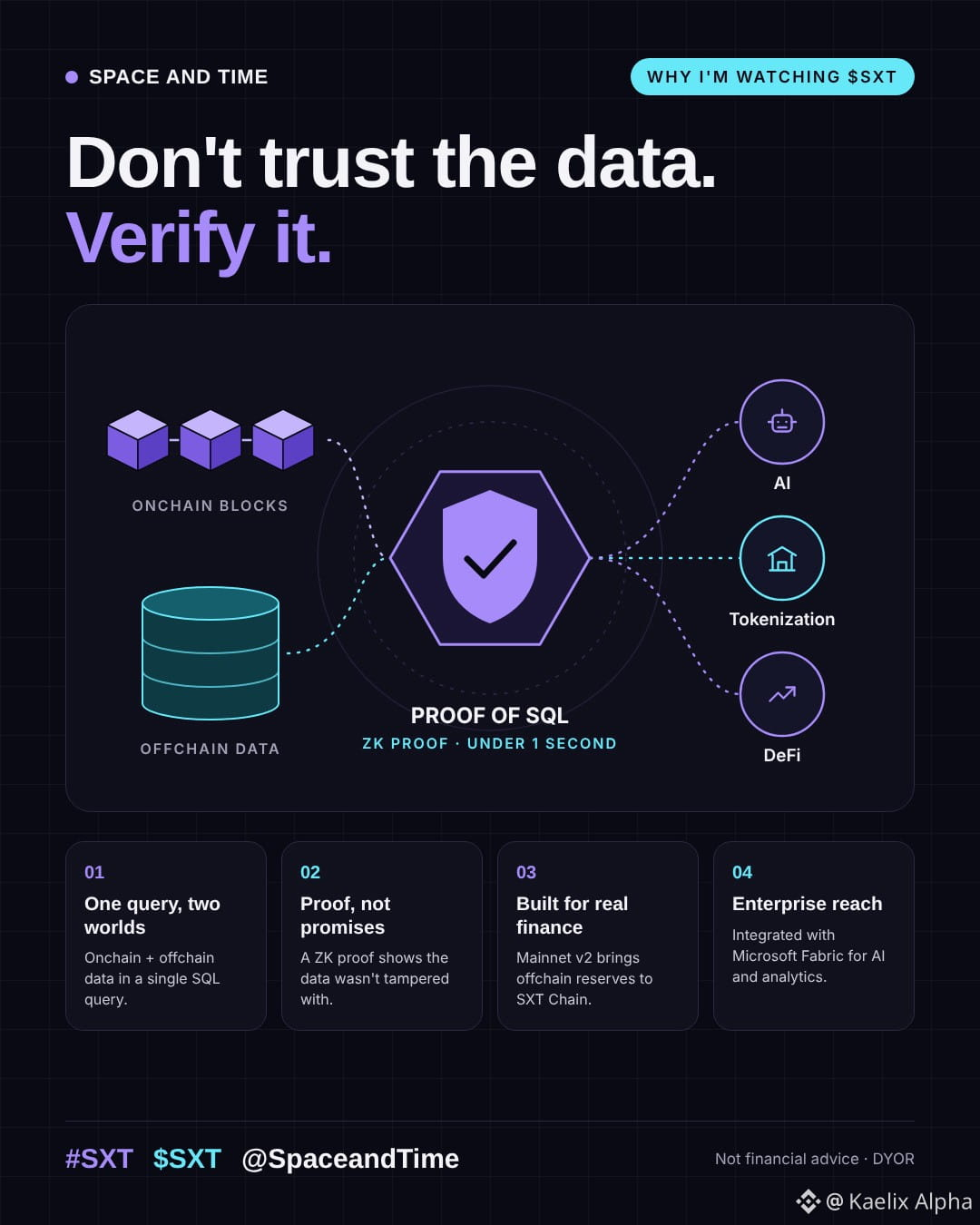
Don't Trust the Data. Verify It. That's Why I'm Watching $SXT
During my research I kept coming back to one simple question: when an AI agent or a DeFi app makes a decision, who checks the data it used?
Most of the time, nobody does. Apps simply trust whatever feed they're given
@SpaceandTimeDB is built to change that
Here's what I found:
✅ One query, two worlds: a single SQL query can combine onchain and offchain data, such as a price feed or reserve records
✅ Proof, not promises: Proof of SQL attaches a ZK proof to the result, showing the data wasn't tampered with
✅ Built for real finance: Mainnet v2 lets institutions put offchain financial data like reserves on SXT Chain, backing stablecoins and tokenized assets
✅ Enterprise reach: Space and Time is integrated with Microsoft Fabric, so businesses can use verified blockchain data for AI and analytics
My takeaway: AI, tokenization and DeFi are all growing fast, and every one of them depends on accurate data.
Space and Time is building that layer of proof, and #SXT secures it through staking and pays for its queries
This one is going on my long-term watchlist 👀
#sxt $SXT
@SpaceandTimeDB
Don't Trust the Data. Verify It. That's Why I'm Watching $SXT
During my research I kept coming back to one simple question: when an AI agent or a DeFi app makes a decision, who checks the data it used?
Most of the time, nobody does. Apps simply trust whatever feed they're given
@SpaceandTime is built to change that
Here's what I found:
✅ One query, two worlds: a single SQL query can combine onchain and offchain data, such as a price feed or reserve records
✅ Proof, not promises: Proof of SQL attaches a ZK proof to the result, showing the data wasn't tampered with
✅ Built for real finance: Mainnet v2 lets institutions put offchain financial data like reserves on SXT Chain, backing stablecoins and tokenized assets
✅ Enterprise reach: Space and Time is integrated with Microsoft Fabric, so businesses can use verified blockchain data for AI and analytics
My takeaway: AI, tokenization and DeFi are all growing fast, and every one of them depends on accurate data.
Space and Time is building that layer of proof, and #SXT secures it through staking and pays for its queries
This one is going on my long-term watchlist 👀
#sxt $SXT
@SpaceandTime
24
1
36
8.4k
·
--
𝗕𝗘𝗙𝗢𝗥𝗘 𝗬𝗢𝗨 𝗦𝗟𝗘𝗘𝗣: 𝗧𝗛𝗘 𝗟𝗘𝗩𝗘𝗟𝗦 𝗧𝗛𝗔𝗧 𝗠𝗔𝗧𝗧𝗘𝗥 𝗢𝗩𝗘𝗥𝗡𝗜𝗚𝗛𝗧
𝗧𝗵𝗲 𝗱𝗮𝘆 𝗶𝗻 𝘀𝗵𝗼𝗿𝘁
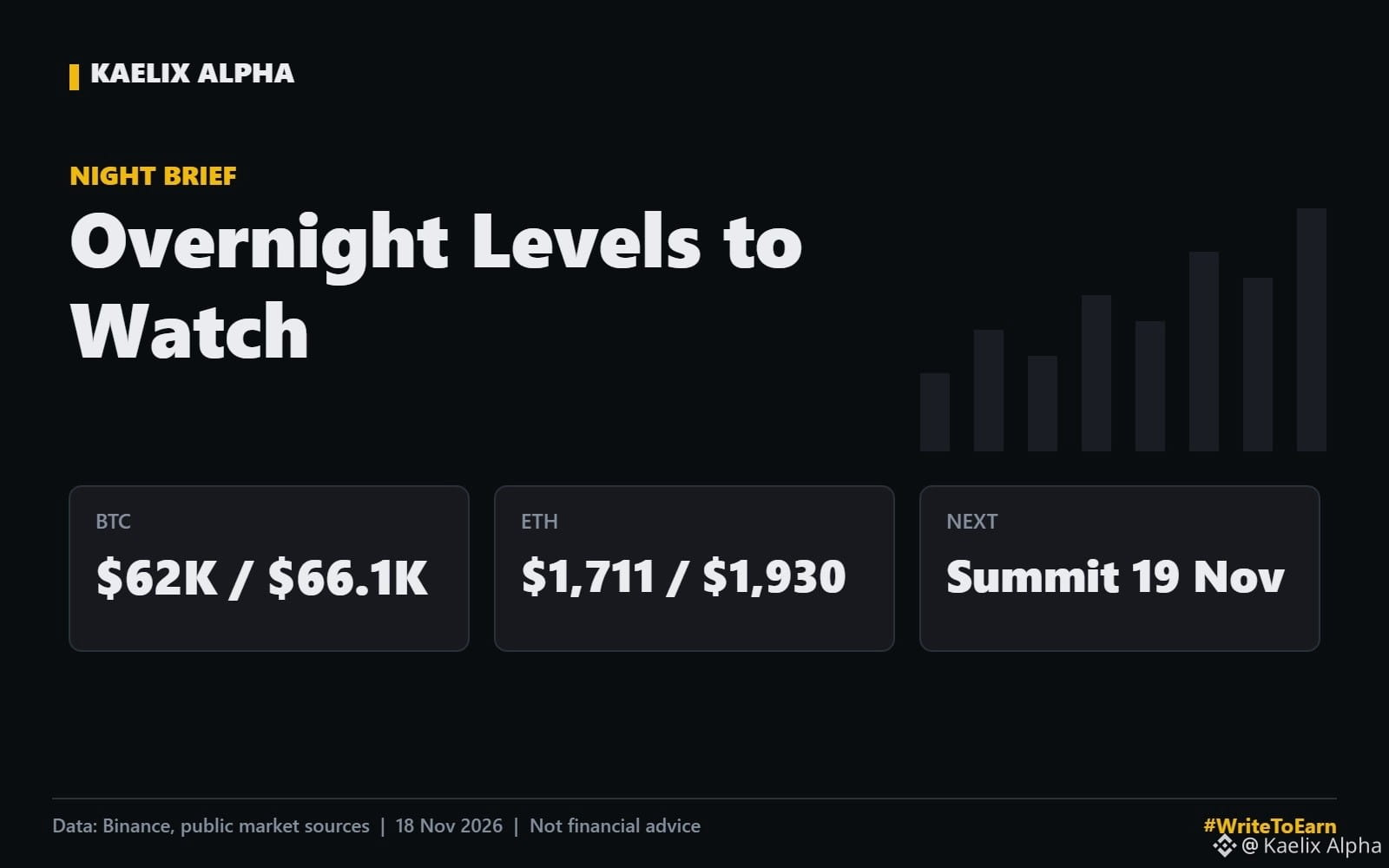
Today's posts covered extreme fear, ETF outflows, the Fed minutes and 10 full chart breakdowns. $SOL , $NEAR and $ZEC showed the best relative strength yesterday morning while BTC sat inside its $62,000 to $66,000 range.
𝗪𝗵𝗮𝘁 𝗜 𝘁𝗮𝗸𝗲 𝗳𝗿𝗼𝗺 𝗶𝘁
Momentum on the majors is oversold, but flows and structure have not confirmed a bottom. Patience is still the trade.
𝗖𝗼𝗺𝗶𝗻𝗴 𝘂𝗽
The US, China and Russia summit, more Fed speakers, and the next round of ETF flow data.
𝗟𝗲𝘃𝗲𝗹𝘀 𝘁𝗼 𝘄𝗮𝘁𝗰𝗵
BTC: $62,000 support, $66,100 resistance
ETH: $1,711 support, $1,930 resistance
Follow for daily analysis. If this helped, share it with one friend who trades.
#WriteToEarn #Write2Earn #CryptoNews #DailyRecap #BTC
Not financial advice. Do your own research.
1
1
205
·
--
$SUI 𝗕𝗘𝗟𝗢𝗪 $0.75. 𝗧𝗛𝗘 𝗟𝗘𝗩𝗘𝗟 𝗧𝗛𝗔𝗧 𝗗𝗘𝗖𝗜𝗗𝗘𝗦 𝗧𝗛𝗘 𝗡𝗘𝗫𝗧 𝟮𝟬%.
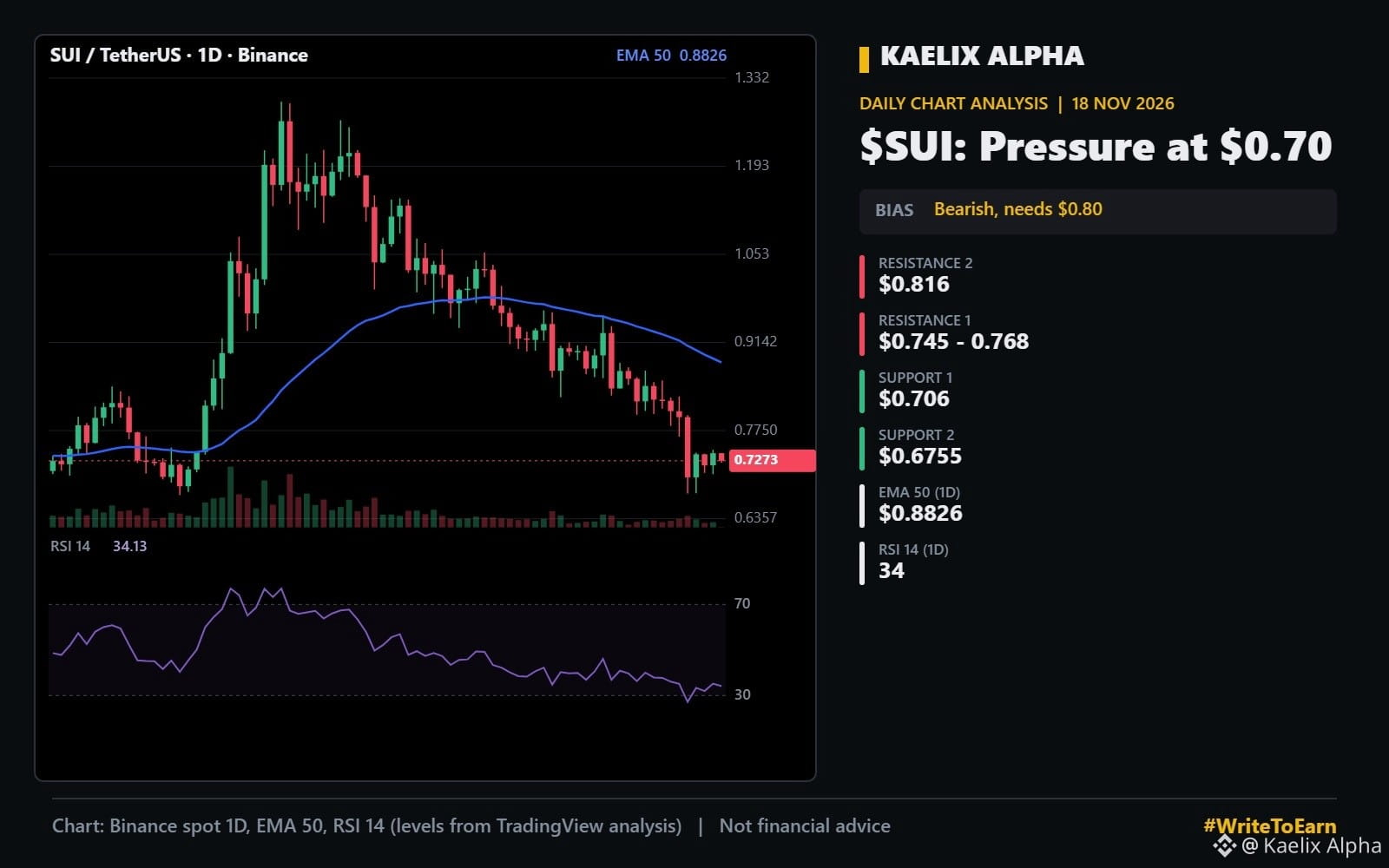
SUI is down 27% in a month and 44% from its September high of $1.29. TradingView breakdown:
𝗧𝗵𝗲 𝘀𝘁𝗿𝘂𝗰𝘁𝘂𝗿𝗲
SUI lost the 50-day EMA (around $0.88) in mid-October and has stair-stepped lower since. This week's low at $0.6755 matches the September base, which makes it a key support.
𝗧𝗵𝗲 𝗺𝗼𝗺𝗲𝗻𝘁𝘂𝗺
Daily RSI is 34. Not deeply oversold, which tells me SUI has been selling off in an orderly way rather than crashing.
𝗞𝗲𝘆 𝗹𝗲𝘃𝗲𝗹𝘀
Resistance: $0.745, then $0.768 (4H 50 EMA), then $0.816 (20-day EMA)
Support: $0.706, then $0.6755
Trend line: 50-day EMA $0.8826
𝗠𝘆 𝗽𝗹𝗮𝗻
Hold $0.6755 and reclaim $0.768, and a move to $0.816 (about 12% higher) is on the table. Lose $0.6755, and the September base breaks, which could mean another 15% to 20% lower.
Bullish or bearish on SUI this month?
#WriteToEarn #Write2Earn #SUI #Altcoins #TechnicalAnalysis
Not financial advice. Do your own research.
1
227
·
--
𝗧𝗛𝗘 𝟯 𝗡𝗨𝗠𝗕𝗘𝗥𝗦 𝗜 𝗖𝗛𝗘𝗖𝗞 𝗘𝗩𝗘𝗥𝗬 𝗡𝗜𝗚𝗛𝗧 𝗕𝗘𝗙𝗢𝗥𝗘 𝗕𝗘𝗗
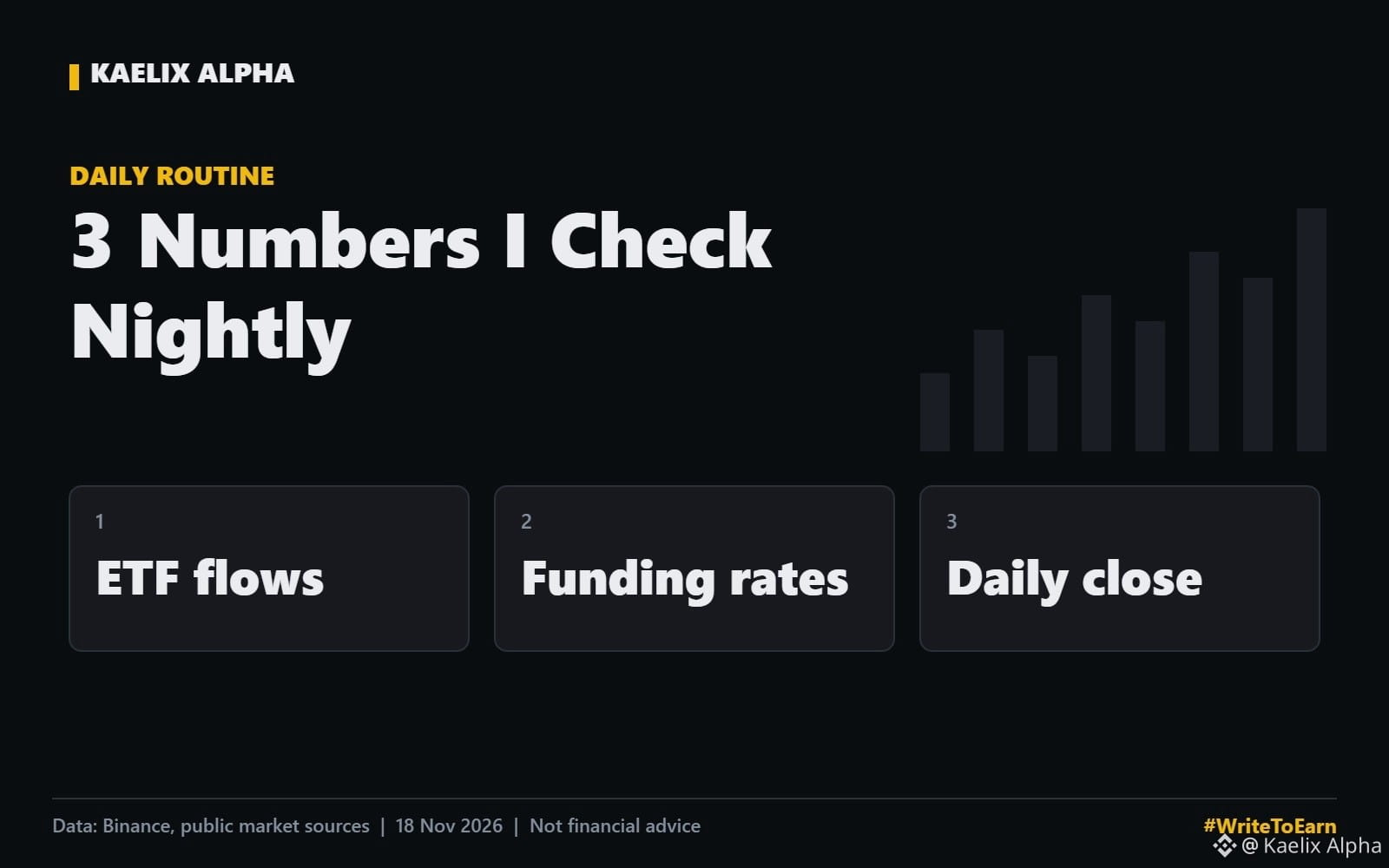
I do not stare at charts all day. I check three things every night.
1. ETF flows
Are institutions adding or reducing? This is the clearest view of big money. November has been heavy outflows so far.
2. Funding rates
Positive and high means longs are crowded. Deeply negative means shorts are crowded. Crowded trades get squeezed.
3. The daily close versus my key levels
For $BTC right now: above $66,100 or below $62,000. Intraday wicks do not count. Closes do.
𝗪𝗵𝘆 𝘁𝗵𝗶𝘀 𝘄𝗼𝗿𝗸𝘀
Three numbers, five minutes, no emotional decisions at 3 AM.
What is the one number you check every day?
#WriteToEarn #Write2Earn #TradingRoutine #BTC #CryptoMarket
Not financial advice. Do your own research.
134
·
--
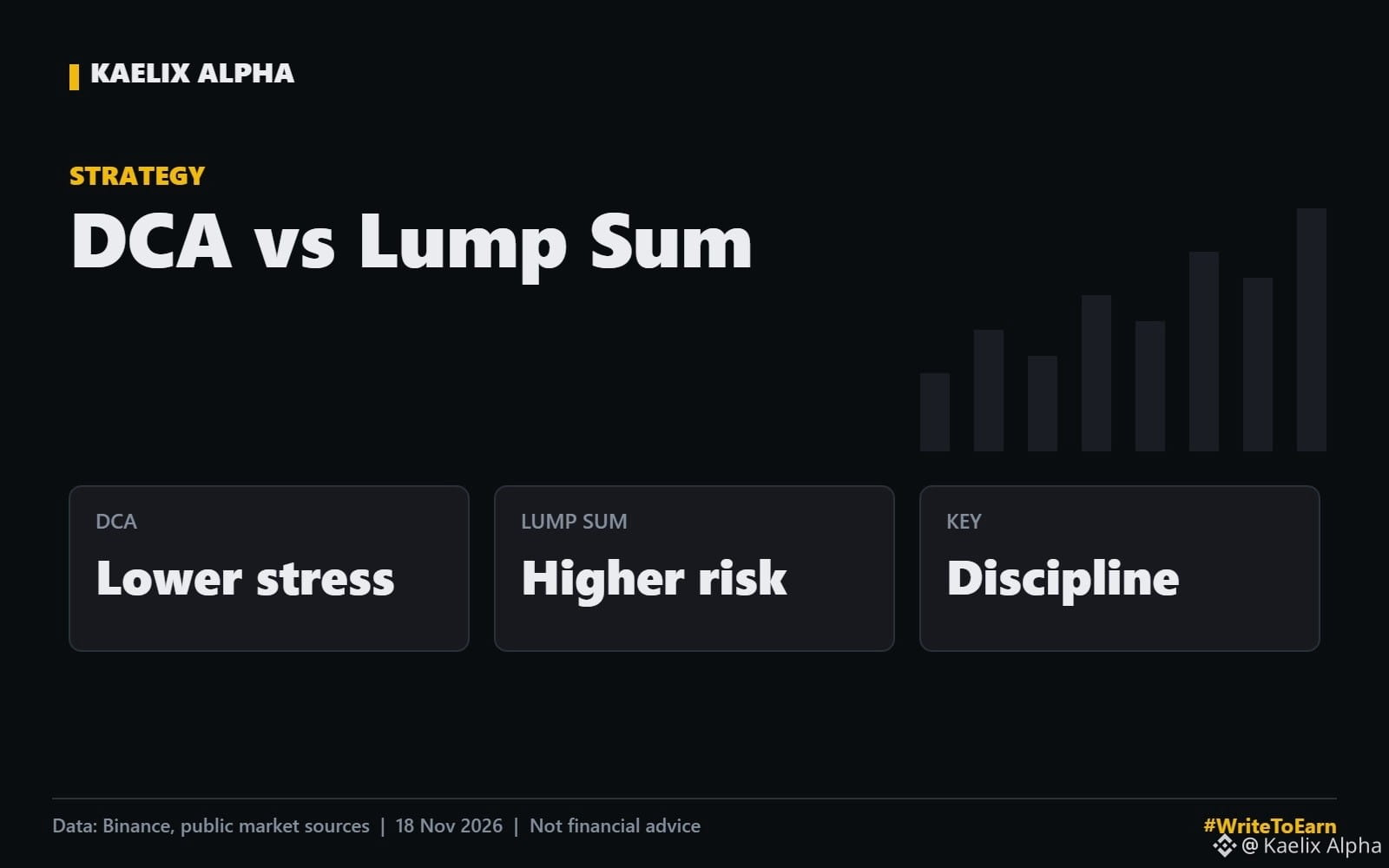
𝗗𝗖𝗔 𝗩𝗦 𝗟𝗨𝗠𝗣 𝗦𝗨𝗠 𝗜𝗡 𝗔 𝗕𝗘𝗔𝗥 𝗠𝗔𝗥𝗞𝗘𝗧: 𝗧𝗛𝗘 𝗡𝗨𝗠𝗕𝗘𝗥𝗦
Every crash brings the same question: buy now, or buy slowly?
𝗦𝗶𝗺𝗽𝗹𝗲 𝗲𝘅𝗮𝗺𝗽𝗹𝗲
You have $1,000 to invest in $BTC .
Lump sum at $64,500 gets you about 0.0155 BTC. If BTC goes to $60,000 next, you are down 7%.
DCA: $250 each at $64,500, $62,000, $60,000 and $66,000 gets you about 0.0159 BTC at an average near $63,000. You end with more BTC and less regret.
𝗪𝗵𝗲𝗻 𝗹𝘂𝗺𝗽 𝘀𝘂𝗺 𝘄𝗶𝗻𝘀
If the bottom is already in and price only goes up, lump sum wins. Nobody knows that in advance.
𝗪𝗵𝗲𝗻 𝗗𝗖𝗔 𝘄𝗶𝗻𝘀
In choppy, uncertain markets like this one, DCA reduces timing risk and keeps emotions out.
𝗠𝘆 𝘁𝗮𝗸𝗲
In extreme fear, I prefer DCA with a fixed schedule. It removes the need to be right about the exact bottom.
Team DCA or team lump sum?
#WriteToEarn #Write2Earn #DCA #Bitcoin #Investing
Not financial advice. Do your own research.
69
·
--
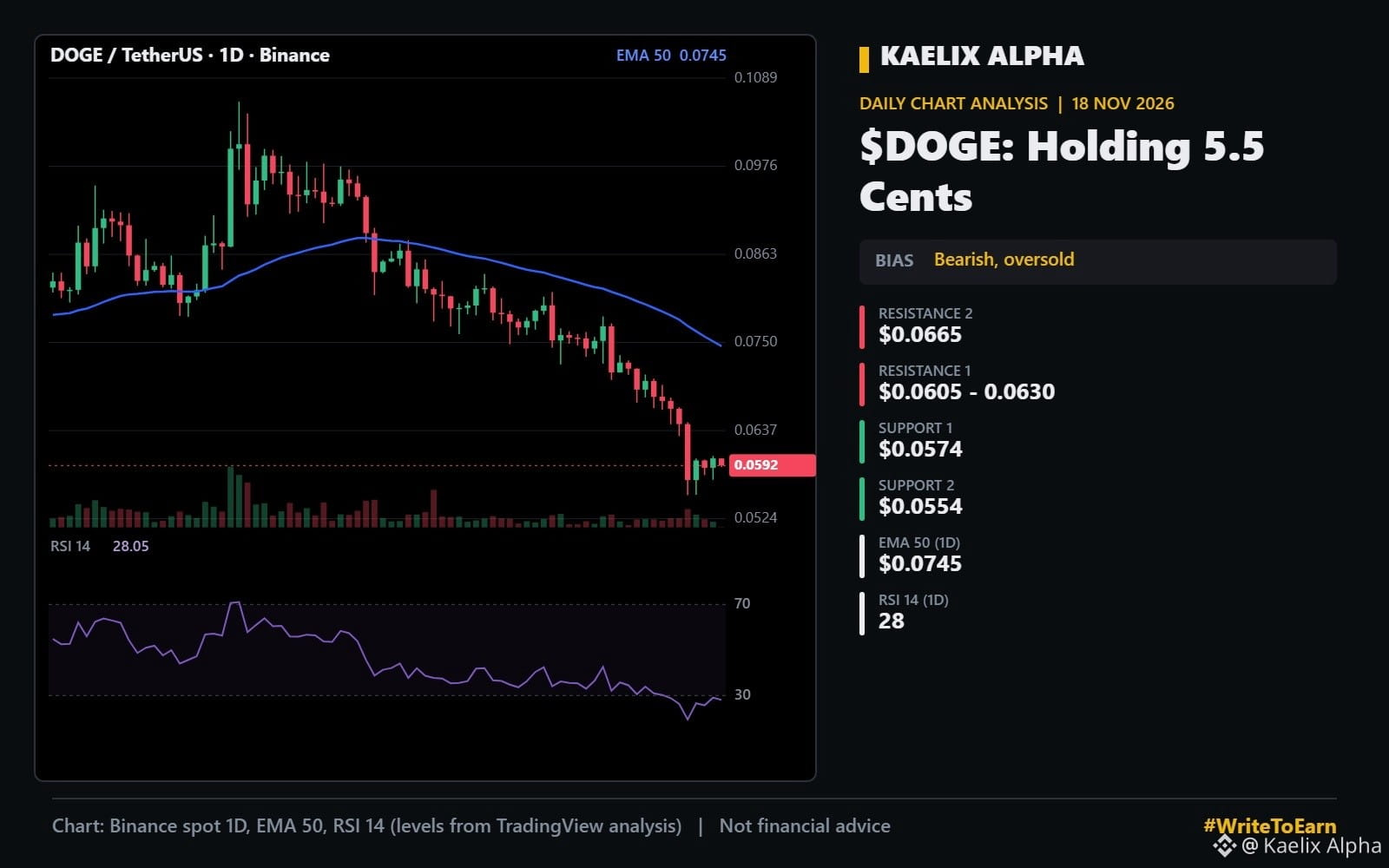
$DOGE 𝗔𝗧 𝟲 𝗖𝗘𝗡𝗧𝗦. 𝗠𝗘𝗠𝗘𝗖𝗢𝗜𝗡𝗦 𝗔𝗥𝗘 𝗧𝗘𝗦𝗧𝗜𝗡𝗚 𝗘𝗩𝗘𝗥𝗬𝗢𝗡𝗘'𝗦 𝗣𝗔𝗧𝗜𝗘𝗡𝗖𝗘.
Dogecoin is down 25% in a month and 44% from its September high near $0.106. Here is my TradingView read.
𝗧𝗵𝗲 𝘀𝘁𝗿𝘂𝗰𝘁𝘂𝗿𝗲
DOGE has printed lower highs since early October. This week it flushed to $0.0554 and bounced. The 50-day EMA at $0.0745 is far above price.
𝗧𝗵𝗲 𝗺𝗼𝗺𝗲𝗻𝘁𝘂𝗺
Daily RSI is 28 and trying to curl up. Memecoins usually move last and hardest when sentiment turns.
𝗞𝗲𝘆 𝗹𝗲𝘃𝗲𝗹𝘀
Resistance: $0.0605, then $0.0630 (4H 50 EMA), then $0.0665
Support: $0.0574, then $0.0554
Trend line: 50-day EMA $0.0745
𝗠𝘆 𝗿𝗲𝗮𝗱
A close above $0.0630 is the first step. Losing $0.0554 opens a deeper move. DOGE is a sentiment coin, so I watch BTC first and DOGE second.
Is DOGE a bargain at 6 cents or a value trap?
#WriteToEarn #Write2Earn #DOGE #Dogecoin #Memecoins
Not financial advice. Do your own research.
2
115
·
--
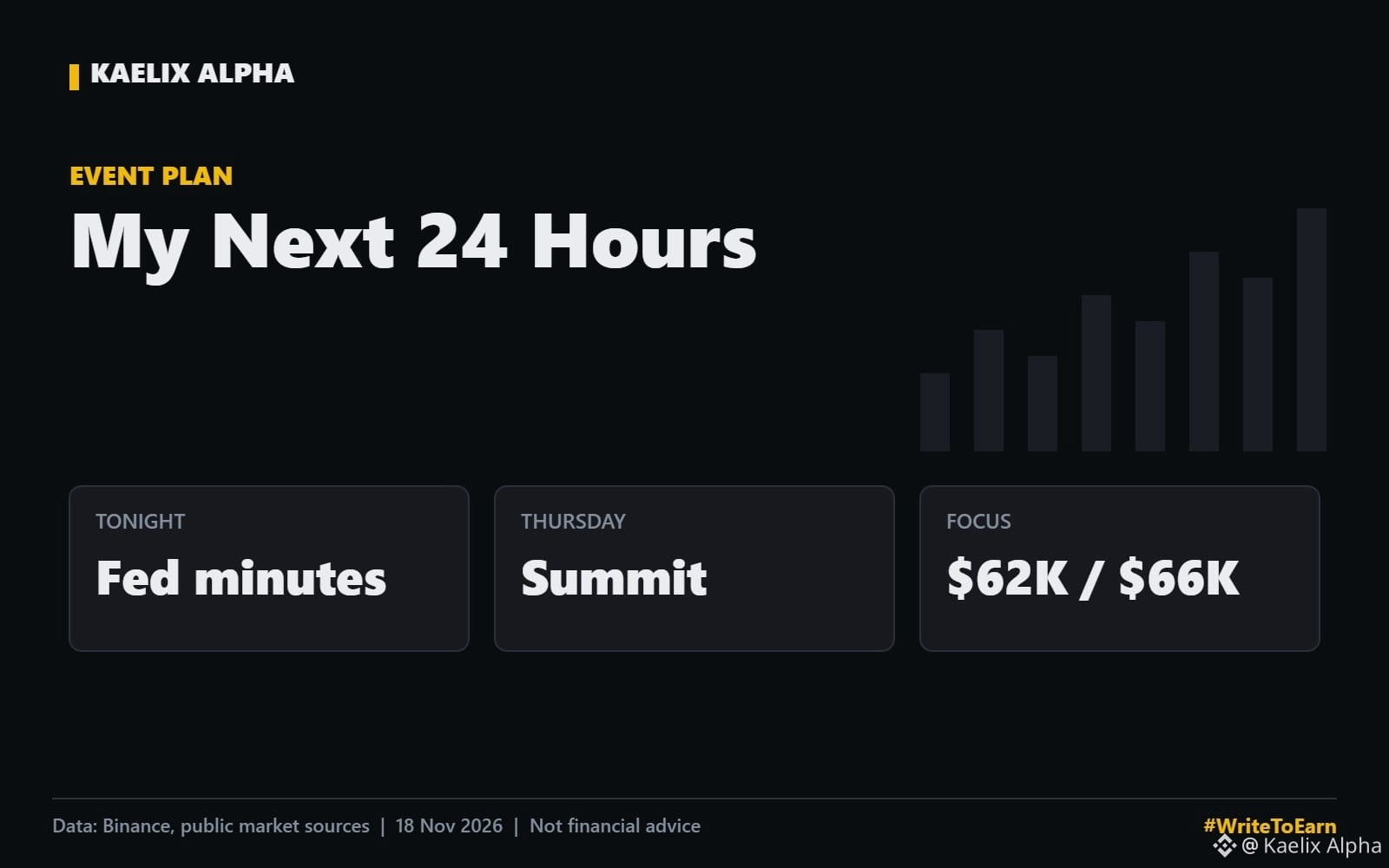
𝗙𝗘𝗗 𝗠𝗜𝗡𝗨𝗧𝗘𝗦 𝗔𝗥𝗘 𝗢𝗨𝗧 𝗦𝗢𝗢𝗡. 𝗠𝗬 𝗚𝗔𝗠𝗘 𝗣𝗟𝗔𝗡 𝗙𝗢𝗥 𝗧𝗛𝗘 𝗡𝗘𝗫𝗧 𝟮𝟰 𝗛𝗢𝗨𝗥𝗦.
Two big events, back to back: the Fed minutes tonight and the US, China and Russia summit tomorrow.
My levels on $BTC
Upside trigger: daily close above $66,100
Downside trigger: daily close below $62,000
Anything in between is noise.
My levels on $ETH
Upside trigger: above $1,930
Downside trigger: below $1,711
𝗪𝗵𝗮𝘁 𝗜 𝘄𝗶𝗹𝗹 𝗡𝗢𝗧 𝗱𝗼
Open leveraged trades in the first 15 minutes after the release. The first candle is usually a trap.
𝗪𝗵𝗮𝘁 𝗜 𝗪𝗜𝗟𝗟 𝗱𝗼
Let the market show direction, then act on a confirmed close.
What is your plan for tonight?
#WriteToEarn #Write2Earn #Fed #BTC #ETH
Not financial advice. Do your own research.
135
·
--
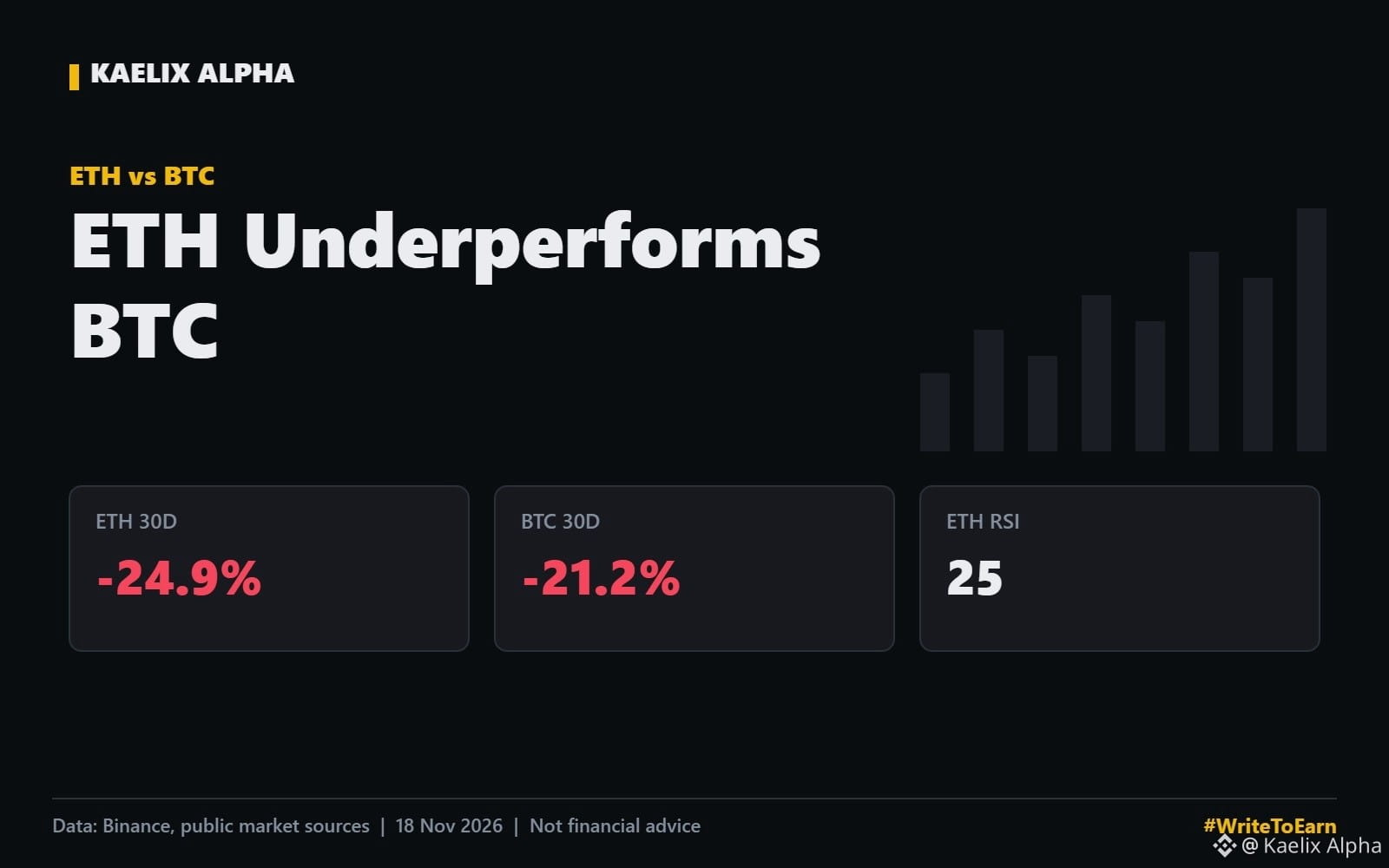
𝗘𝗧𝗛𝗘𝗥𝗘𝗨𝗠 𝗜𝗦 𝗙𝗔𝗟𝗟𝗜𝗡𝗚 𝗙𝗔𝗦𝗧𝗘𝗥 𝗧𝗛𝗔𝗡 𝗕𝗜𝗧𝗖𝗢𝗜𝗡. 𝗪𝗛𝗬 𝗧𝗛𝗔𝗧 𝗠𝗔𝗧𝗧𝗘𝗥𝗦.
Over the last 30 days:
$ETH : -24.9%
$BTC : -21.2%
𝗪𝗵𝗮𝘁 𝗶𝘁 𝘁𝗲𝗹𝗹𝘀 𝘂𝘀
When ETH falls harder than BTC, money is moving from risk to relative safety. Altcoins usually follow ETH, not BTC. That is why most alts are down 25% to 30% this month.
𝗧𝗵𝗲 𝘀𝗶𝗴𝗻𝗮𝗹 𝘁𝗼 𝘄𝗮𝘁𝗰𝗵
When ETH starts outperforming BTC again, it is usually the first sign that risk appetite is coming back. That shift has historically come before strong alt rallies.
𝗪𝗵𝗲𝗿𝗲 𝘄𝗲 𝗮𝗿𝗲
Not there yet. ETH is still weaker. But it is deeply oversold, and these trends can flip quickly once sentiment turns.
Do you hold more BTC or more ETH right now?
#WriteToEarn #Write2Earn #ETH #BTC #Altcoins
Not financial advice. Do your own research.
147
·
--
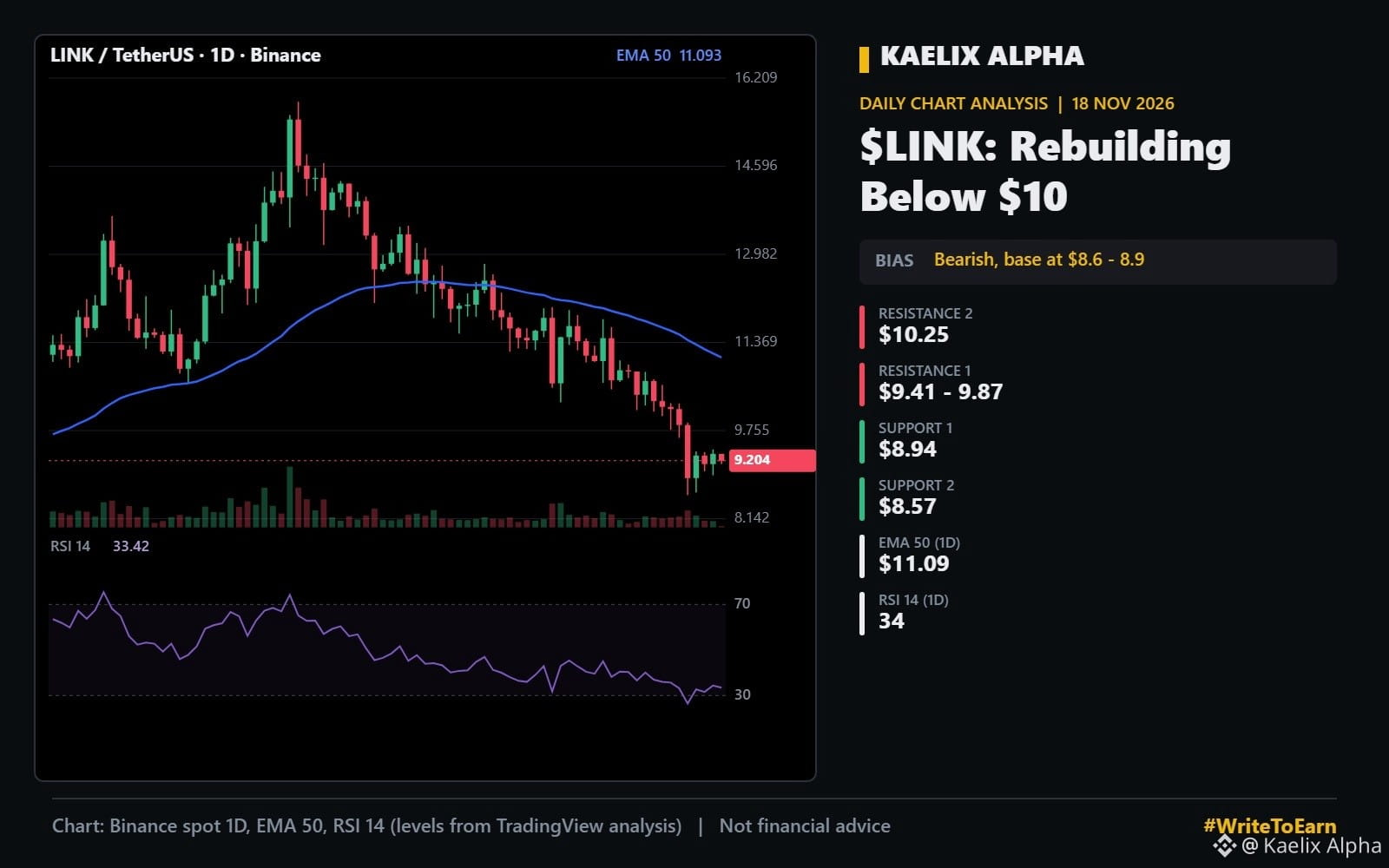
$LINK 𝗨𝗡𝗗𝗘𝗥 $10. 𝗛𝗘𝗥𝗘 𝗔𝗥𝗘 𝗠𝗬 𝗟𝗘𝗩𝗘𝗟𝗦 𝗙𝗢𝗥 𝗧𝗛𝗘 𝗡𝗘𝗫𝗧 𝗠𝗢𝗩𝗘.
Chainlink is down 23% in 30 days and trading below every major moving average. TradingView breakdown:
𝗧𝗵𝗲 𝘀𝘁𝗿𝘂𝗰𝘁𝘂𝗿𝗲
LINK topped near $15.78 in late September and has made lower highs ever since. It lost the 200-day EMA (about $10.63) and dropped to $8.57 this week before buyers stepped in.
𝗧𝗵𝗲 𝗺𝗼𝗺𝗲𝗻𝘁𝘂𝗺
Daily RSI is at 34, recovering from oversold. Still below its moving average, so the trend has not turned.
𝗞𝗲𝘆 𝗹𝗲𝘃𝗲𝗹𝘀
Resistance: $9.41, then $9.87, then $10.25 (20-day EMA)
Support: $8.94, then $8.57
Trend lines: 50-day EMA $11.09, 200-day EMA $10.63
𝗠𝘆 𝗽𝗹𝗮𝗻
I want to see a daily close back above $10.25 before calling this a recovery. Below $8.57, there is little support until the low $8s.
Long-term holders, are you adding LINK at these levels?
#WriteToEarn #Write2Earn #LINK #Chainlink #TechnicalAnalysis
Not financial advice. Do your own research.
150
·
--
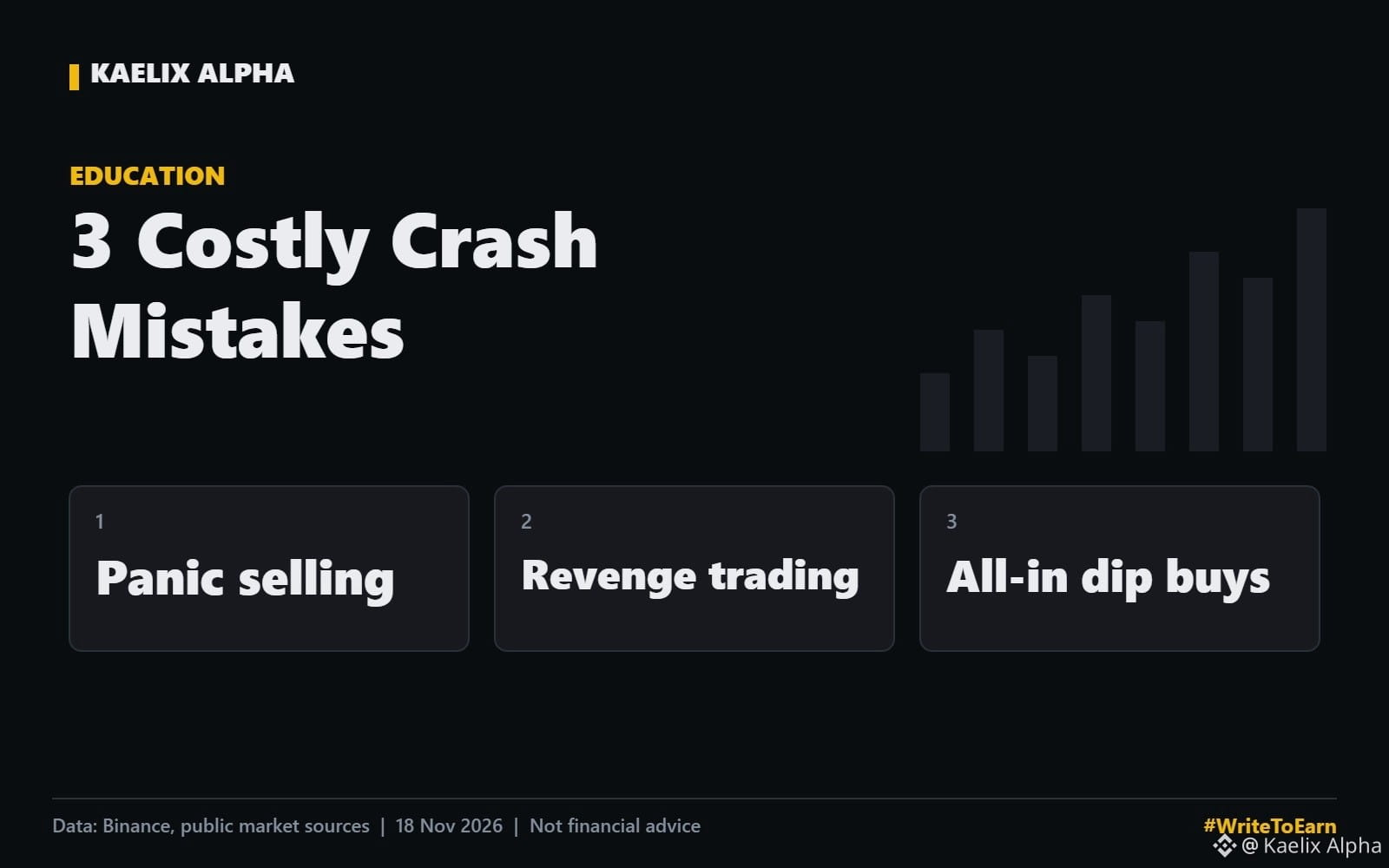
𝗕𝗘𝗚𝗜𝗡𝗡𝗘𝗥𝗦: 𝟯 𝗠𝗜𝗦𝗧𝗔𝗞𝗘𝗦 𝗧𝗛𝗔𝗧 𝗖𝗢𝗦𝗧 𝗧𝗛𝗘 𝗠𝗢𝗦𝗧 𝗜𝗡 𝗔 𝗖𝗥𝗔𝗦𝗛
I have seen these three mistakes destroy more portfolios than any bear market.
𝗠𝗶𝘀𝘁𝗮𝗸𝗲 𝟭: 𝗦𝗲𝗹𝗹𝗶𝗻𝗴 𝗮𝘁 𝘁𝗵𝗲 𝗯𝗼𝘁𝘁𝗼𝗺 𝗼𝗳 𝗮 𝗽𝗮𝗻𝗶𝗰
Fear is highest at the low. If your thesis has not changed, price alone is not a reason to sell.
𝗠𝗶𝘀𝘁𝗮𝗸𝗲 𝟮: 𝗥𝗲𝘃𝗲𝗻𝗴𝗲 𝘁𝗿𝗮𝗱𝗶𝗻𝗴
After a loss, people double size to "win it back". That is how small losses turn into account-ending losses.
𝗠𝗶𝘀𝘁𝗮𝗸𝗲 𝟯: 𝗚𝗼𝗶𝗻𝗴 𝗮𝗹𝗹 𝗶𝗻 𝗼𝗻 𝘁𝗵𝗲 𝗳𝗶𝗿𝘀𝘁 𝗱𝗶𝗽
The first dip is rarely the last. Spread entries across levels and time.
𝗪𝗵𝗮𝘁 𝘁𝗼 𝗱𝗼 𝗶𝗻𝘀𝘁𝗲𝗮𝗱
Write your plan before you trade: entry, invalidation, target, size. Then follow it.
Which of these three have you done? No judgment here.
#WriteToEarn #Write2Earn #CryptoBeginners #TradingTips #Education
Not financial advice. Do your own research.
89
·
--
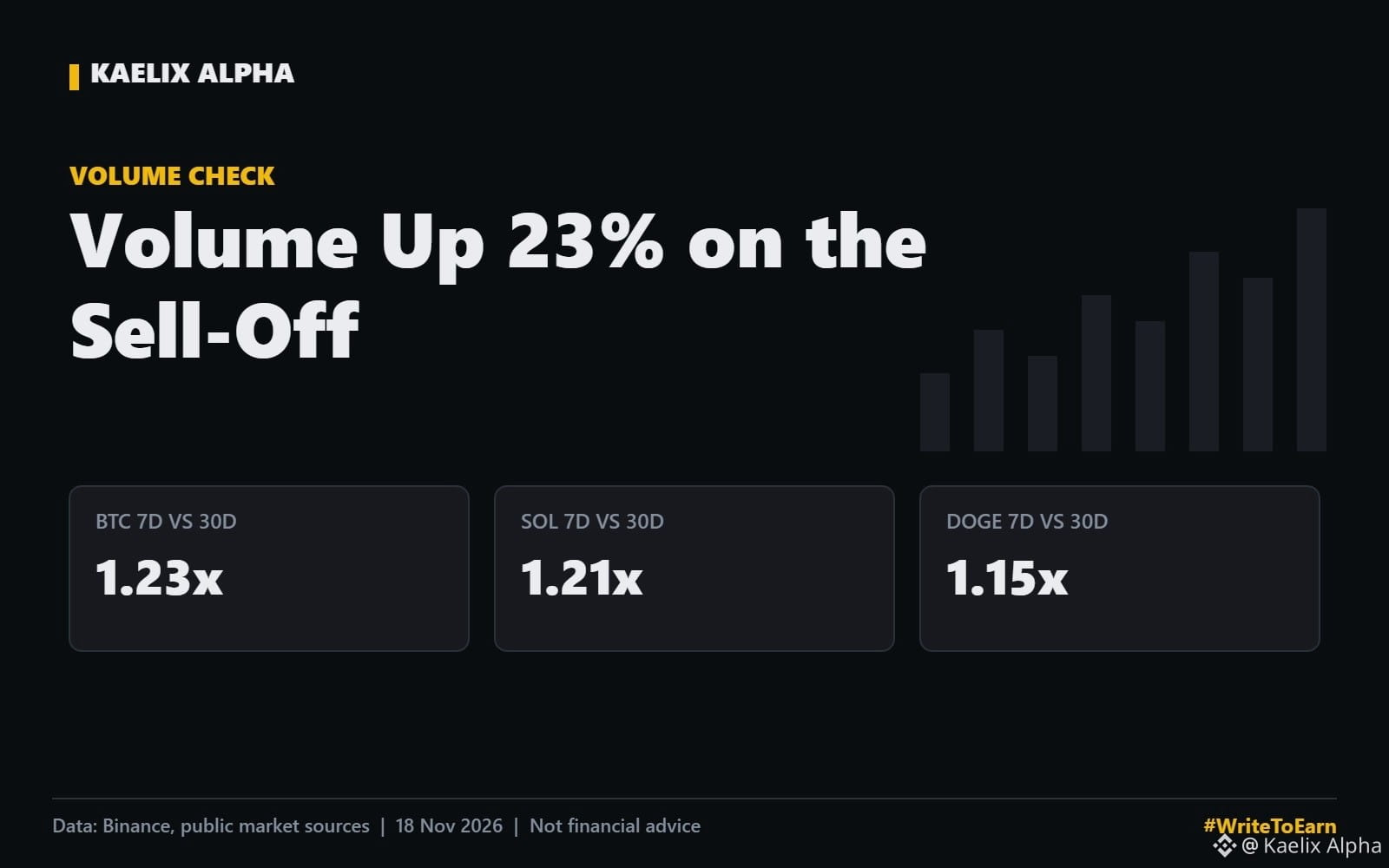
𝗦𝗘𝗟𝗟𝗜𝗡𝗚 𝗩𝗢𝗟𝗨𝗠𝗘 𝗝𝗨𝗦𝗧 𝗦𝗣𝗜𝗞𝗘𝗗. 𝗧𝗛𝗔𝗧 𝗖𝗔𝗡 𝗕𝗘 𝗔 𝗚𝗢𝗢𝗗 𝗦𝗜𝗚𝗡.
Most people panic when they see big red volume bars. Experienced traders look closer.
𝗧𝗵𝗲 𝗱𝗮𝘁𝗮 (𝗕𝗶𝗻𝗮𝗻𝗰𝗲 𝘀𝗽𝗼𝘁, 𝗱𝗮𝗶𝗹𝘆)
$BTC : last 7 days of volume are 1.23x the 30-day average
$SOL : 1.21x
$DOGE : 1.15x
𝗪𝗵𝘆 𝗵𝗶𝗴𝗵 𝘃𝗼𝗹𝘂𝗺𝗲 𝗼𝗻 𝗮 𝗱𝗿𝗼𝗽 𝗰𝗮𝗻 𝗯𝗲 𝗴𝗼𝗼𝗱
Capitulation needs volume. It is the moment when weak hands sell everything to strong hands. Market bottoms usually form on a high volume flush, followed by quieter days where price stops falling.
𝗪𝗵𝗮𝘁 𝗜 𝘄𝗮𝗻𝘁 𝘁𝗼 𝘀𝗲𝗲 𝗻𝗲𝘅𝘁
Volume dropping while price holds above the low. That tells me sellers are exhausted.
𝗪𝗵𝗮𝘁 𝘄𝗼𝘂𝗹𝗱 𝘄𝗼𝗿𝗿𝘆 𝗺𝗲
Another high volume red day that breaks the weekly low. That means the selling is not done.
Are you reading volume, or only price?
#WriteToEarn #Write2Earn #Volume #TechnicalAnalysis #CryptoMarket
Not financial advice. Do your own research.
168
·
--
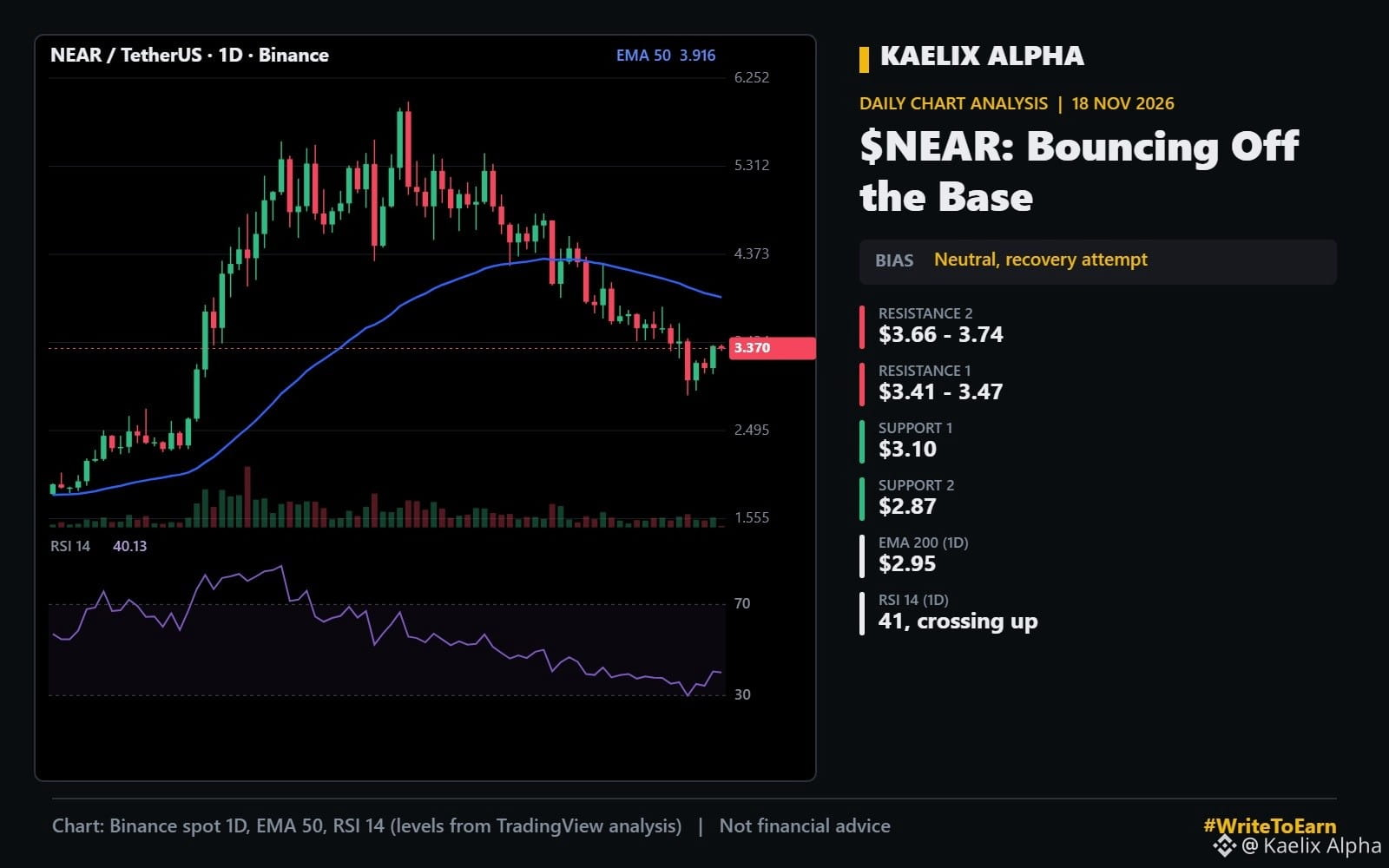
$NEAR 𝗨𝗣 𝟰.𝟲% 𝗪𝗛𝗜𝗟𝗘 𝗧𝗛𝗘 𝗠𝗔𝗥𝗞𝗘𝗧 𝗕𝗟𝗘𝗘𝗗𝗦. 𝗧𝗛𝗘 𝗖𝗛𝗔𝗥𝗧 𝗘𝗫𝗣𝗟𝗔𝗜𝗡𝗦 𝗪𝗛𝗬.
NEAR was one of this morning's top performers among large caps. My TradingView read:
𝗧𝗵𝗲 𝘀𝘁𝗿𝘂𝗰𝘁𝘂𝗿𝗲
NEAR had a huge run from about $2 to $6 between September and early October. It has since corrected 50%, but the low at $2.87 held right above the 200-day EMA (about $2.95). That is a textbook higher-timeframe retest.
𝗧𝗵𝗲 𝗺𝗼𝗺𝗲𝗻𝘁𝘂𝗺
Daily RSI is 41 and just crossed above its moving average. On the 4 hour chart RSI is 58. Buyers are clearly active.
𝗞𝗲𝘆 𝗹𝗲𝘃𝗲𝗹𝘀
Resistance: $3.41 to $3.47, then $3.66 to $3.74 (20-day EMA zone)
Support: $3.10, then $2.87
Trend line: 50-day EMA near $3.92
𝗠𝘆 𝗿𝗲𝗮𝗱
A daily close above $3.47 opens room to the 20-day EMA. As long as $2.87 holds, the bigger uptrend from September is still intact.
Is NEAR the strongest alt on your watchlist?
#WriteToEarn #Write2Earn #NEAR #NEARProtocol #TechnicalAnalysis
Not financial advice. Do your own research.
1
144
·
--
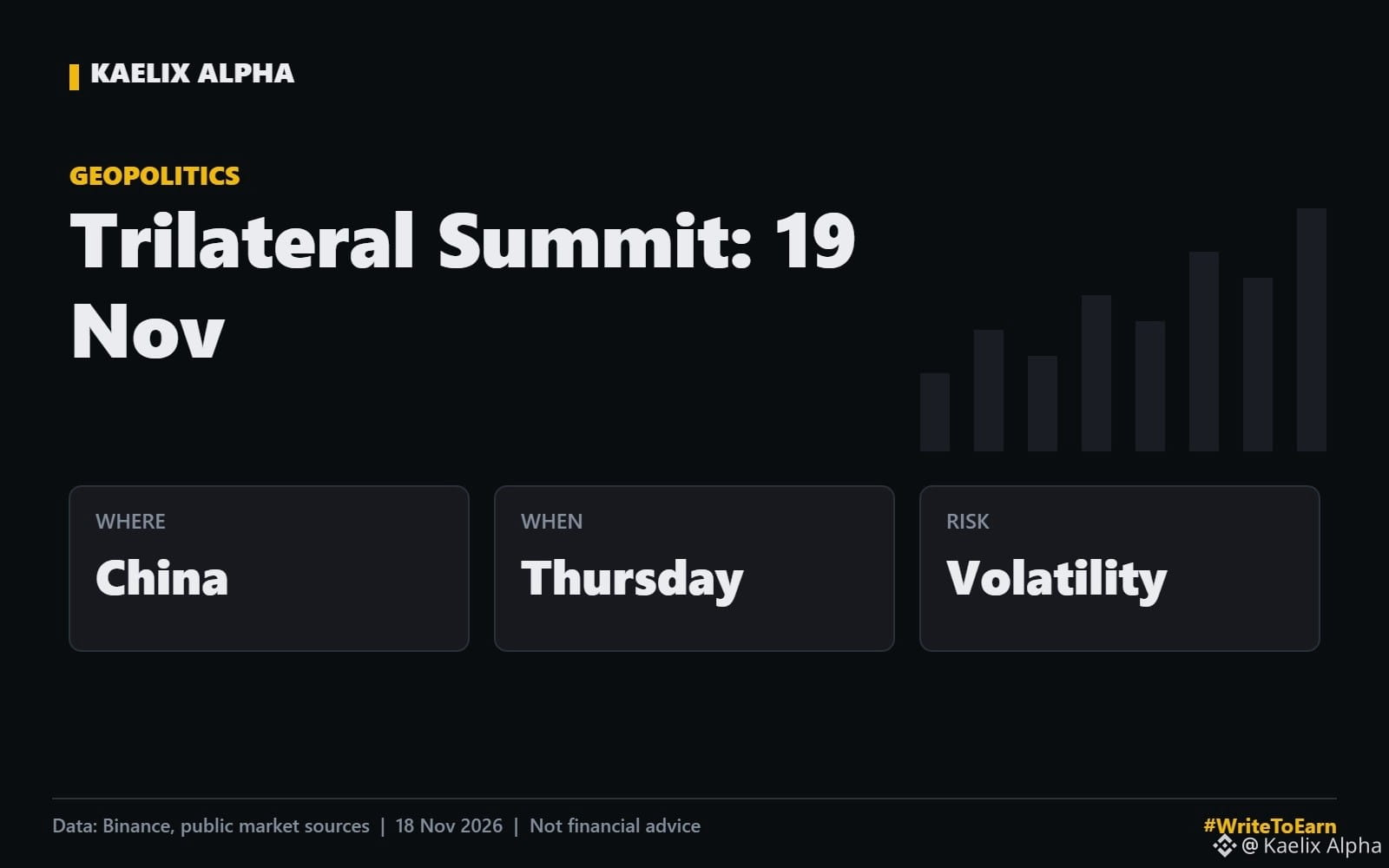
𝗧𝗢𝗠𝗢𝗥𝗥𝗢𝗪 𝗧𝗥𝗨𝗠𝗣, 𝗫𝗜 𝗔𝗡𝗗 𝗣𝗨𝗧𝗜𝗡 𝗠𝗘𝗘𝗧. 𝗖𝗥𝗬𝗣𝗧𝗢 𝗜𝗦 𝗡𝗢𝗧 𝗥𝗘𝗔𝗗𝗬.
The first trilateral summit between the US, China and Russia is scheduled in China on 19 November.
𝗪𝗵𝘆 𝗰𝗿𝘆𝗽𝘁𝗼 𝘁𝗿𝗮𝗱𝗲𝗿𝘀 𝘀𝗵𝗼𝘂𝗹𝗱 𝗰𝗮𝗿𝗲
Trade, tariffs, energy and conflict risk all feed into the dollar, oil and bond yields. Those are the same forces pushing crypto lower right now.
𝗧𝘄𝗼 𝗼𝘂𝘁𝗰𝗼𝗺𝗲𝘀
De-escalation: a weaker dollar and lower risk premium would be a tailwind for BTC and alts.
Tension: a stronger dollar and risk-off flows could push the market to retest this week's lows.
𝗠𝘆 𝗮𝗽𝗽𝗿𝗼𝗮𝗰𝗵
Event risk is not a time to be over-positioned. I keep stops tight and size small into headline days.
Will the summit be bullish or bearish for crypto?
$BTC
#WriteToEarn #Write2Earn #Geopolitics #Macro #CryptoNews
Not financial advice. Do your own research.
264
·
--
𝟱 𝗖𝗥𝗬𝗣𝗧𝗢 𝗠𝗬𝗧𝗛𝗦 𝗧𝗛𝗔𝗧 𝗔𝗥𝗘 𝗖𝗢𝗦𝗧𝗜𝗡𝗚 𝗬𝗢𝗨 𝗠𝗢𝗡𝗘𝗬
Some beliefs sound smart but quietly destroy portfolios. Let's separate myth from fact.
𝗠𝗬𝗧𝗛 𝟭: "It already dropped a lot, it can't go lower."
𝗙𝗔𝗖𝗧: Price has no memory. An asset down 50% can still fall another 50%.
𝗠𝗬𝗧𝗛 𝟮: "Low price per coin means it's cheap."
𝗙𝗔𝗖𝗧: A $0.001 token can be more overvalued than a coin priced in five figures. Look at market cap, not unit price.
𝗠𝗬𝗧𝗛 𝟯: "More leverage means more profit."
𝗙𝗔𝗖𝗧: More leverage means a smaller move can liquidate you. Most profitable traders use low leverage or none at all.
𝗠𝗬𝗧𝗛 𝟰: "If it's trending on social media, it must be a good buy."
𝗙𝗔𝗖𝗧: By the time something is trending everywhere, early buyers may already be selling to latecomers.
𝗠𝗬𝗧𝗛 𝟱: "I'll sell when I'm back to break-even."
𝗙𝗔𝗖𝗧: The market doesn't know your entry price. Make decisions based on the chart and your plan, not your past mistakes.
𝗧𝗛𝗘 𝗥𝗘𝗔𝗟 𝗘𝗗𝗚𝗘
In crypto, avoiding big mistakes is worth more than finding the next big coin.
Which myth did you believe when you started? Comment the number.
$BTC $ETH $BNB
#WriteToEarn #BinanceSquare #CryptoEducation #CryptoTrading

139
·
--
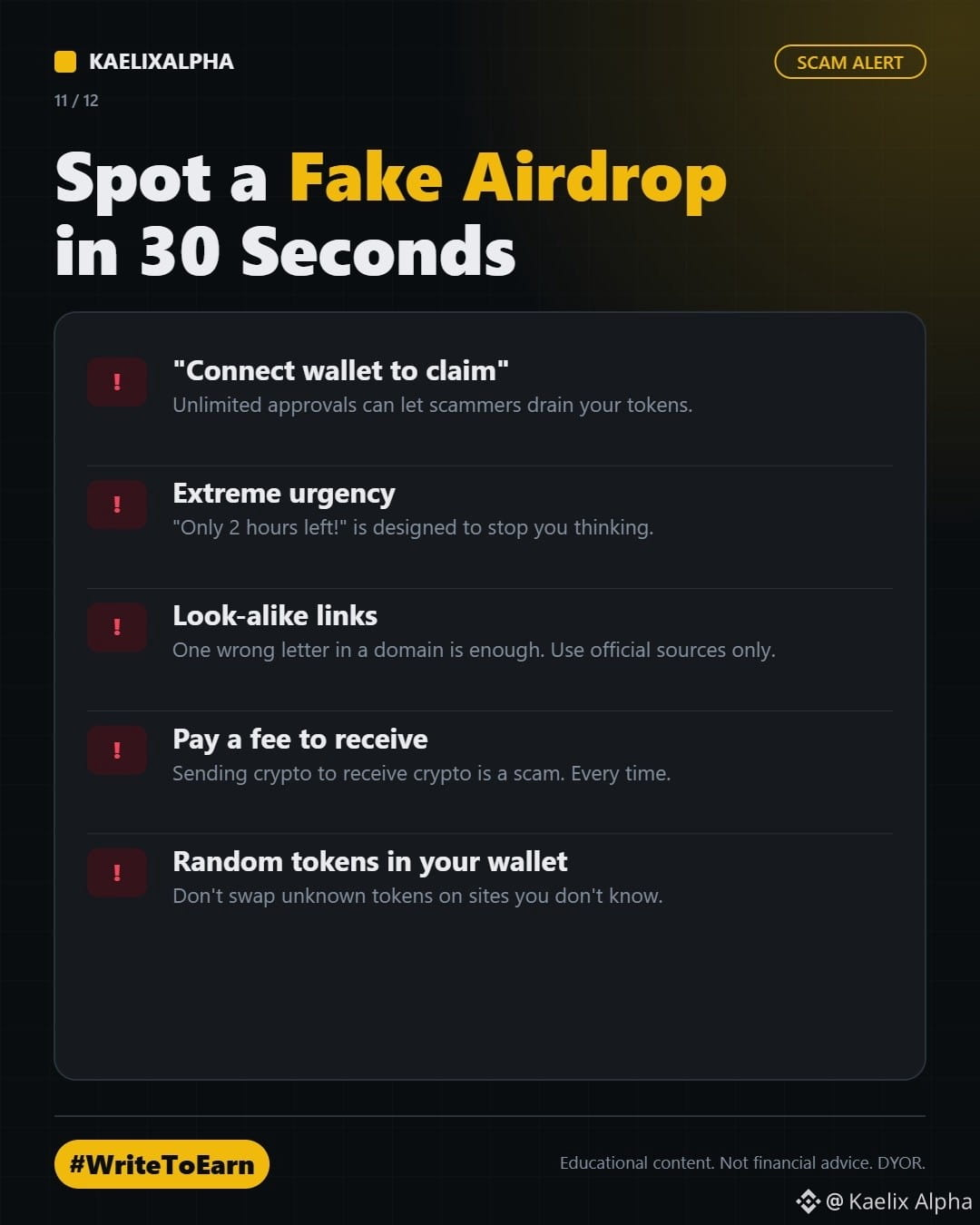
𝗦𝗖𝗔𝗠 𝗔𝗟𝗘𝗥𝗧: 𝗛𝗢𝗪 𝗧𝗢 𝗦𝗣𝗢𝗧 𝗔 𝗙𝗔𝗞𝗘 𝗔𝗜𝗥𝗗𝗥𝗢𝗣 𝗜𝗡 𝟯𝟬 𝗦𝗘𝗖𝗢𝗡𝗗𝗦
Fake airdrops are one of the most common ways people lose crypto, and they get more aggressive when the market is down and people are desperate for "free money".
𝗥𝗘𝗗 𝗙𝗟𝗔𝗚 𝟭 — "𝗖𝗢𝗡𝗡𝗘𝗖𝗧 𝗬𝗢𝗨𝗥 𝗪𝗔𝗟𝗟𝗘𝗧 𝗧𝗢 𝗖𝗟𝗔𝗜𝗠"
A real airdrop rarely requires you to sign an unlimited approval. That signature can give a scammer permission to drain your tokens.
𝗥𝗘𝗗 𝗙𝗟𝗔𝗚 𝟮 — 𝗨𝗥𝗚𝗘𝗡𝗖𝗬
"Only 2 hours left!" Pressure is designed to stop you from thinking.
𝗥𝗘𝗗 𝗙𝗟𝗔𝗚 𝟯 — 𝗟𝗢𝗢𝗞-𝗔𝗟𝗜𝗞𝗘 𝗟𝗜𝗡𝗞𝗦
One wrong letter in a domain name is enough. Always reach a project through its official website or verified accounts, never through a DM or a random link.
𝗥𝗘𝗗 𝗙𝗟𝗔𝗚 𝟰 — 𝗣𝗔𝗬 𝗔 𝗙𝗘𝗘 𝗧𝗢 𝗥𝗘𝗖𝗘𝗜𝗩𝗘
If you have to send crypto to receive crypto, it's a scam. Every time.
𝗥𝗘𝗗 𝗙𝗟𝗔𝗚 𝟱 — 𝗥𝗔𝗡𝗗𝗢𝗠 𝗧𝗢𝗞𝗘𝗡𝗦 𝗜𝗡 𝗬𝗢𝗨𝗥 𝗪𝗔𝗟𝗟𝗘𝗧
Unknown tokens that suddenly appear in your wallet can be bait. Don't try to sell or swap them through a site you don't know.
𝗛𝗢𝗪 𝗧𝗢 𝗦𝗧𝗔𝗬 𝗦𝗔𝗙𝗘
- Use a separate "burner" wallet for airdrops and new dApps.
- Regularly review and revoke old token approvals.
- Verify every announcement from at least two official sources.
If it sounds too good to be true in crypto, it almost always is.
Share this with a friend who loves airdrops.
$BNB $ETH
#WriteToEarn #BinanceSquare #CryptoSecurity #Airdrop
116
·
--
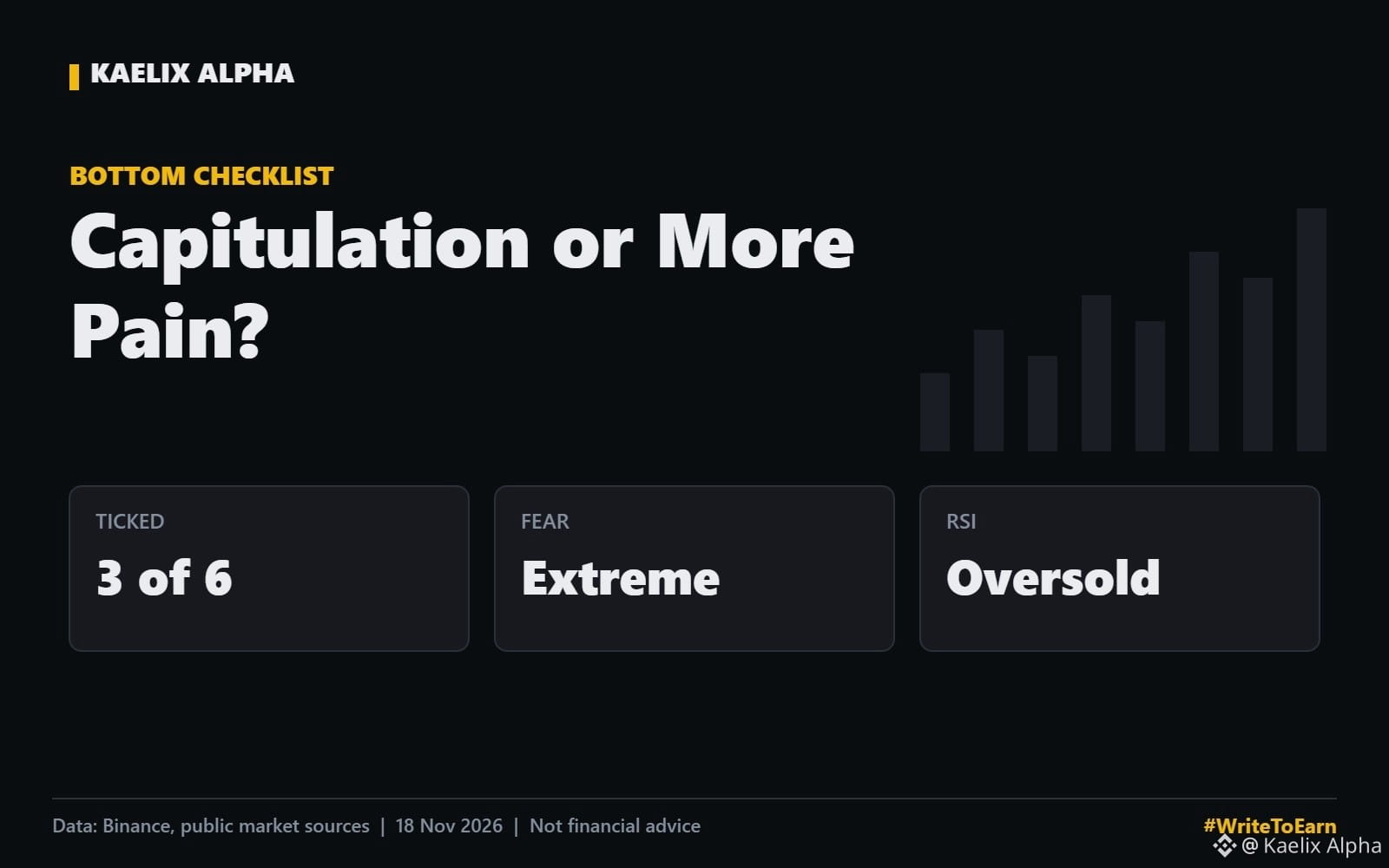
𝗖𝗔𝗣𝗜𝗧𝗨𝗟𝗔𝗧𝗜𝗢𝗡 𝗢𝗥 𝗠𝗢𝗥𝗘 𝗣𝗔𝗜𝗡? 𝗠𝗬 𝟲-𝗣𝗢𝗜𝗡𝗧 𝗕𝗢𝗧𝗧𝗢𝗠 𝗖𝗛𝗘𝗖𝗞𝗟𝗜𝗦𝗧
I do not guess bottoms. I check boxes. Here is where we stand today.
1. Extreme fear reading: YES
The Fear & Greed Index is at 12.
2. Oversold momentum on majors: YES
BTC daily RSI 23, ETH 25, BNB 27.
3. Volume spike on the sell-off: YES
BTC 7-day average volume is about 23% above its 30-day average.
4. ETF flows turning positive: NO
Outflows are still running.
5. Reclaim of a key level: NO
BTC is still below $65,300 and far below the 200-day EMA.
6. Macro relief: NO
Rate hike expectations remain high.
𝗧𝗵𝗲 𝘀𝗰𝗼𝗿𝗲: 𝟯 𝗼𝘂𝘁 𝗼𝗳 𝟲
Sentiment and momentum say "close to a bottom". Flows, structure and macro say "not yet".
𝗛𝗼𝘄 𝗜 𝗮𝗰𝘁 𝗼𝗻 𝘁𝗵𝗶𝘀
3 out of 6 means I start small, scaled entries only. At 5 out of 6 I get more aggressive.
How many boxes do you need ticked before you buy?
$BTC $ETH
#WriteToEarn #Write2Earn #Bitcoin #CryptoMarket #Investing
Not financial advice. Do your own research.
1
1
108
·
--
𝗧𝗛𝗘 𝗠𝗢𝗦𝗧 𝗘𝗫𝗣𝗘𝗡𝗦𝗜𝗩𝗘 𝗟𝗘𝗦𝗦𝗢𝗡 𝗜𝗡 𝗖𝗥𝗬𝗣𝗧𝗢 (𝗔𝗡𝗗 𝗜𝗧'𝗦 𝗡𝗢𝗧 𝗔𝗕𝗢𝗨𝗧 𝗖𝗛𝗔𝗥𝗧𝗦)
Ask any trader who has been here for more than one cycle and they'll tell you the same thing: the market teaches its biggest lessons through losses.
𝗧𝗛𝗘 𝗟𝗘𝗦𝗦𝗢𝗡
The money you make in a bull market means nothing if you don't have a plan for the bear market.
𝗛𝗢𝗪 𝗜𝗧 𝗨𝗦𝗨𝗔𝗟𝗟𝗬 𝗛𝗔𝗣𝗣𝗘𝗡𝗦
1. Prices go up. Everything feels easy.
2. Confidence turns into overconfidence. Position sizes grow.
3. Profits are never taken, because "it's going higher".
4. The trend turns. Gains disappear faster than they came.
5. Panic, revenge trades, more losses.
𝗪𝗛𝗔𝗧 𝗘𝗫𝗣𝗘𝗥𝗜𝗘𝗡𝗖𝗘𝗗 𝗧𝗥𝗔𝗗𝗘𝗥𝗦 𝗗𝗢 𝗗𝗜𝗙𝗙𝗘𝗥𝗘𝗡𝗧𝗟𝗬
- They take partial profits on the way up.
- They write their plan down before entering a trade.
- They keep a portion in stablecoins.
- They accept that missing a move is cheaper than losing capital.
𝗢𝗡𝗘 𝗤𝗨𝗘𝗦𝗧𝗜𝗢𝗡 𝗧𝗢 𝗔𝗦𝗞 𝗬𝗢𝗨𝗥𝗦𝗘𝗟𝗙 𝗧𝗢𝗗𝗔𝗬
"If the market dropped another 30% tomorrow, would I be okay?"
If the answer is no, your position is too big.
What's the most expensive lesson crypto has taught YOU? Share it below. Someone new might avoid the same mistake.
$BTC $ETH
#WriteToEarn #BinanceSquare #TradingPsychology #CryptoCommunity

58
·
--
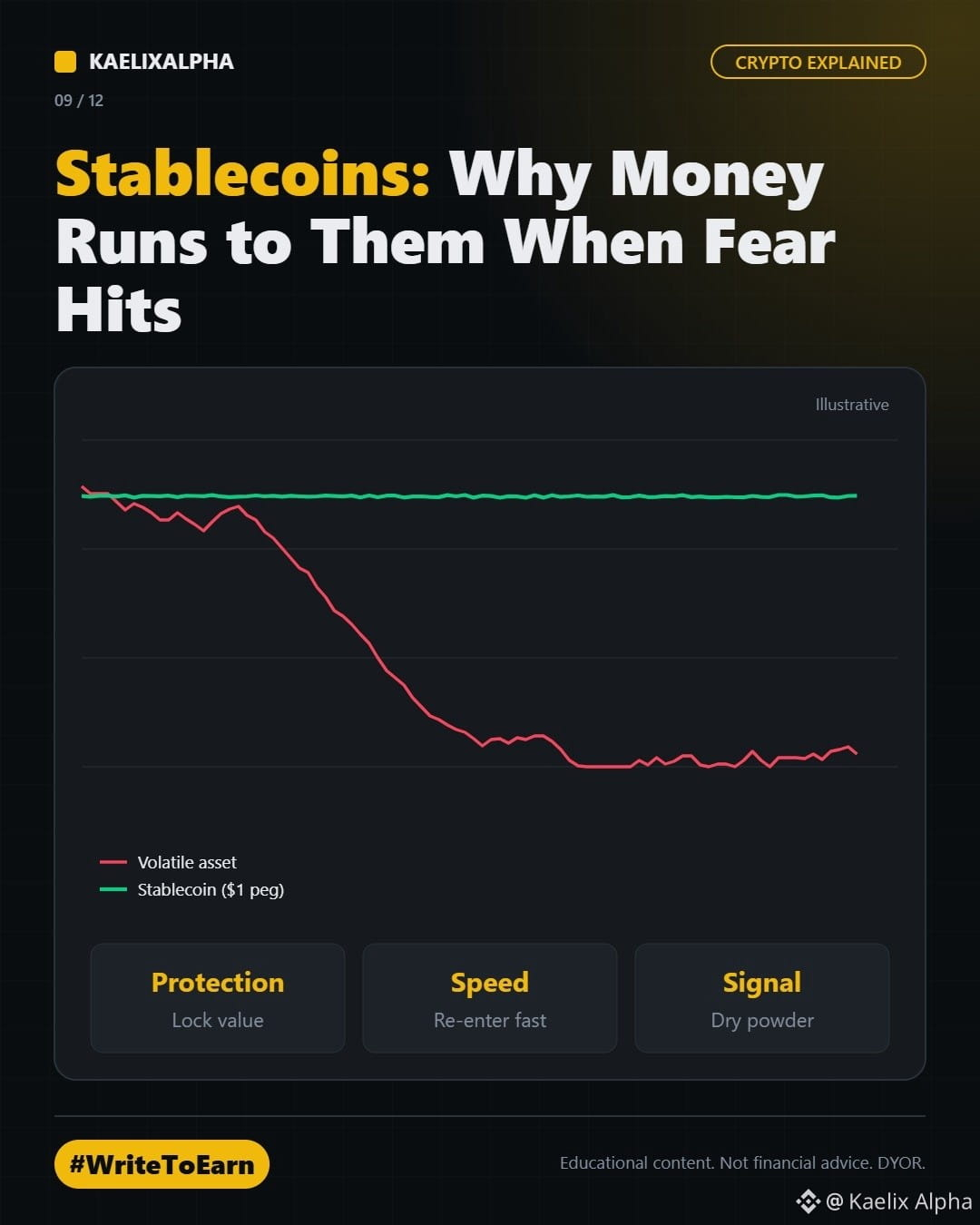
𝗦𝗧𝗔𝗕𝗟𝗘𝗖𝗢𝗜𝗡𝗦 𝗘𝗫𝗣𝗟𝗔𝗜𝗡𝗘𝗗: 𝗪𝗛𝗬 𝗠𝗢𝗡𝗘𝗬 𝗥𝗨𝗡𝗦 𝗧𝗢 𝗧𝗛𝗘𝗠 𝗪𝗛𝗘𝗡 𝗙𝗘𝗔𝗥 𝗛𝗜𝗧𝗦
When the market crashes, traders don't always leave crypto. Many simply move into stablecoins. Here's why.
𝗪𝗛𝗔𝗧 𝗜𝗦 𝗔 𝗦𝗧𝗔𝗕𝗟𝗘𝗖𝗢𝗜𝗡?
A crypto token designed to keep a steady value, usually 1 US dollar. Examples: USDT, USDC and FDUSD.
𝗛𝗢𝗪 𝗗𝗢 𝗧𝗛𝗘𝗬 𝗦𝗧𝗔𝗬 𝗦𝗧𝗔𝗕𝗟𝗘?
Fiat-backed: backed by cash and short-term government bonds held in reserve.
Crypto-backed: backed by other crypto, usually over-collateralised.
Algorithmic: rely on code and incentives. Historically the riskiest type.
𝗪𝗛𝗬 𝗧𝗥𝗔𝗗𝗘𝗥𝗦 𝗨𝗦𝗘 𝗧𝗛𝗘𝗠 𝗜𝗡 𝗔 𝗕𝗘𝗔𝗥 𝗠𝗔𝗥𝗞𝗘𝗧
1. Protection: lock in value without leaving the crypto ecosystem.
2. Speed: re-enter the market in seconds when an opportunity appears.
3. Earning: some platforms offer yield on stablecoin holdings.
4. Measuring sentiment: rising stablecoin balances on exchanges can mean "dry powder" waiting to buy.
𝗧𝗛𝗘 𝗥𝗜𝗦𝗞𝗦 𝗡𝗢𝗕𝗢𝗗𝗬 𝗧𝗔𝗟𝗞𝗦 𝗔𝗕𝗢𝗨𝗧
- A stablecoin is only as good as its reserves.
- Regulation can affect which stablecoins are available where.
- "De-pegs" have happened before, especially with algorithmic designs.
𝗧𝗛𝗘 𝗧𝗔𝗞𝗘𝗔𝗪𝗔𝗬
Stablecoins are not exciting, but in a fearful market they are a strategic tool, not a waiting room.
Do you keep part of your portfolio in stablecoins? What percentage?
$USDC $FDUSD $BTC
#WriteToEarn #BinanceSquare #Stablecoins #CryptoEducation
88
·
--
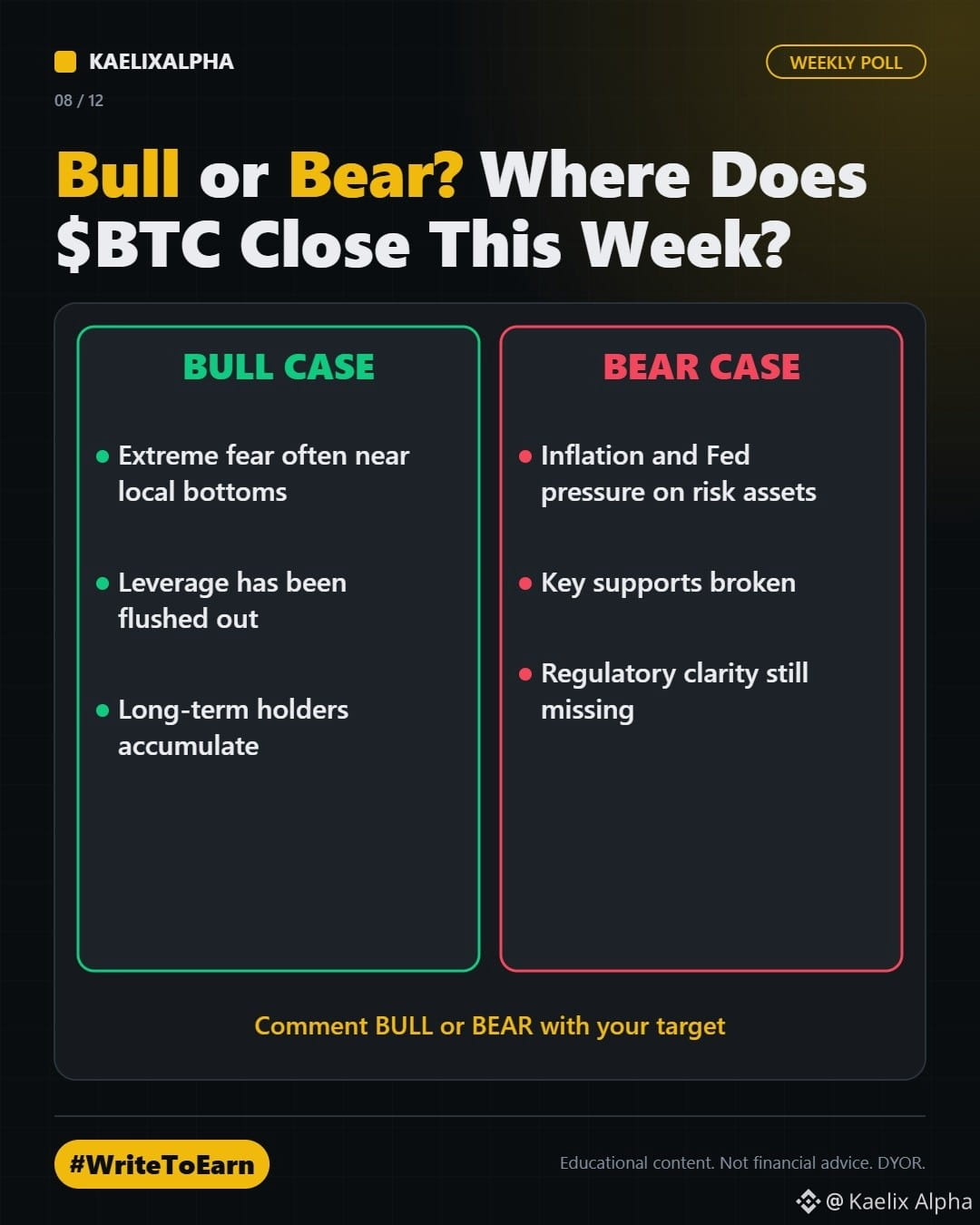
𝗕𝗨𝗟𝗟 𝗢𝗥 𝗕𝗘𝗔𝗥: 𝗪𝗛𝗘𝗥𝗘 𝗗𝗢𝗘𝗦 $𝗕𝗧𝗖 𝗖𝗟𝗢𝗦𝗘 𝗧𝗛𝗜𝗦 𝗪𝗘𝗘𝗞?
Sentiment is in extreme fear, liquidations have been heavy, and the macro picture is uncertain. Now I want to hear from YOU.
𝗧𝗛𝗘 𝗕𝗨𝗟𝗟 𝗖𝗔𝗦𝗘
- Extreme fear has historically appeared near local bottoms.
- Leverage has been flushed out, which can reset the market.
- Long-term holders often accumulate during these phases.
𝗧𝗛𝗘 𝗕𝗘𝗔𝗥 𝗖𝗔𝗦𝗘
- Inflation data and Fed rate expectations are pressuring all risk assets.
- Key support levels have been broken.
- Regulatory clarity is still missing.
𝗪𝗛𝗔𝗧 𝗜'𝗠 𝗪𝗔𝗧𝗖𝗛𝗜𝗡𝗚
- Whether price can reclaim the most recent broken support.
- Daily volume on green vs red days.
- Spot ETF flows and funding rates.
𝗬𝗢𝗨𝗥 𝗧𝗨𝗥𝗡
Comment BULL if you think $BTC closes the week higher.
Comment BEAR if you think it closes lower.
Bonus points if you share your target level.
I'll check back at the weekly close and reply to the closest call.
$BTC $ETH
#WriteToEarn #BinanceSquare #CryptoTrading #MarketUpdate
114
Log in to explore more content
Join global crypto users on Binance Square
⚡️ Get latest and useful information about crypto.
💬 Trusted by the world’s largest crypto exchange.
👍 Discover real insights from verified creators.
Email / Phone number
Trending Topics
CanBTCReboundAfterFallingBelow60K?
331,989 views
1,448 Discussing
Bitcoin News | Bitcoin Falls Below $60,000 for the First Time Since July as IBIT Posts Record $541 Million Outflow
Binance News
·51 Likes
·97.6k views
GlobalStocksFaceLongestLosingStreakSince2023
113,883 views
1,039 Discussing
BlackRockIBITPostsRecord$541MSingleDayOutflow
503 views
14 Discussing